

mangroves, or pollution incidents? All
Editorial
donations will be gratefully received. Originals
will be returned once we have scanned the
picture and created an electronic file. We will
Dear Readers,
also send you a copy of the file, by email, so
Welcome to edition 11, the first edition of the
you can post the picture on your own website.
new millennium. PERSGA has been through a
Dr. Dirar Nasr & Roderick Fleming (Editors)
very busy period. There have been Workshops
and important progress made towards
completing the protocol on the Protection of the
In this issue of
Marine Environment from Land-based Sources
Al Sambouk:
of Pollution. Preparations are also being made
for the protocol on Biodiversity and the
Establishment of Protected Areas.
Editorial
1
Within the Strategic Action Programme, in
PERSGA Portraits
addition to three Working Group meetings these
Mr. Ahmed Daoud
2
past few months have been characterised by the
essential processes of planning and preparation.
PERSGA Activities
There has, as a consequence, been an apparent
Training course on Sea-level
reduction in the visible output. This is an
Observation and Data Analysis
2
illusion; it is the calm before the storm.
Signing of a Technical Assistance
Insufficient time spent on planning and
Agreement with IDB
3
budgeting can lead a project into troubled
Between CEDARE and PERSGA
3
waters. This is a prospect we intend to avoid if
at all possible.
The Strategic Action Programme (SAP)
One of the difficulties for an editor preparing a
Management Training Course
4
newsletter is locating sufficient graphics to run
A Field Visit to Yemen
4
alongside the text. I know you don't want to
SAP Working Group Meetings
6
read all the words, - you just want to look at the
Editorial and Translation Assistance
7
pictures! That's human nature. I am therefore
The Lead Specialist for Public
sending out a request for pictures - all sorts,
Awareness and Participation arrives
7
35mm slides, prints, colour or black & white, so
long as there are no copyright problems
Conferences
associated with using them in Al Sambouk. All
BirdLife International Kuala Lumpur
7
personal material used will be credited to the
Coral Bleaching in the Arabian Region
original supplier. Do you want to join the ranks
- Riyadh
7
of famous underwater photographers? Send in
your favourite fish or marine invertebrate. Have
Articles
you got some good coastal shots, or views of
Living Marine Resources
8
marine protected areas, coastal waders, seabirds,
Women and Environmental Awareness
10
Al Sambouk, No. 11, April 2000, page 1.

Mr. Ahmed Daoud
PERSGA operated under the umbrella of the
Arab League at that time. The financial and
administrative duties involved in running
PERSGA have been his responsibilities ever
since.
Ahmed Daoud is married with two daughters
and two sons. His interests and hobbies include
reading and boxing. We had better treat him
with a little more respect in the future or we
may find that he too can "dance like a butterfly
and sting like a bee..."
Training Course in Sea-level
Ahmed Daoud has been the Finance and
Observation and Data Analysis
Administration Manager for PERSGA, here in
Jeddah, for the past eleven years. He arrived
from his previous posting in Somalia in 1989
In the framework of joint projects between
and has faithfully served the organisation ever
PERSGA and ALECSO, a regional training
since.
workshop was held at the HQ of PERSGA over
Sudanese by parentage, he was brought up and
the period 15-19 April 2000, on Sea-level
educated in Cairo, where he received both
Observation and Data Analysis. It was organised
elementary and secondary schooling. In the
by both PERSGA and ALECSO in co-operation
early 1970's he moved to Khartoum and studied
with IOC, MEPA, and Saudi Aramco.
in the Faculty of Commerce at the Khartoum
The training course was opened by Dr.
branch of Cairo University, graduating in 1977.
Mohamed Abdulrahman Fawzi, Deputy
Alongside his studies he worked with Sudanese
Secretary-General of PERSGA. He welcomed
government television in the News Department
the participants and gave a brief account of
at the Ministry of Culture and Information.
PERSGA's activities in regional capacity
Following graduation Ahmed Daoud joined
building for the conservation of marine and
ALECSO, the Arab League Educational,
coastal areas.
Cultural and Scientific Organization, and served
Fifteen specialists participated in this Workshop
in several of their branch offices, in Egypt,
from Djibouti, Jordan, Saudi Arabia, Egypt,
Sudan and then in Somalia. During his time in
Sudan, and Yemen in addition to the
Mogadishu, which extended over more than five
representative of ALECSO. Lectures were given
years, he also supervised activities at the
by Mr. David Dixon, IOC consultant, and
`Institute of Arabisation for Administrative
Dr. Mohammed Ayoub from King Abdul Aziz
Affairs' and taught courses on `mathematics for
University in Jeddah - in English and Arabic
finance', writing a book on the subject. Readers
respectively. The lectures concentrated on
of the local newspaper `October Star' may not
`Theory of Tides, Modern Tide Gauge Systems,
have realised that Ahmed Daoud regularly
edited the page on education and culture.
Not one to "let the grass grow under his feet"
Ahmed has, throughout his career, maintained
an interest in pursuing further education. He was
awarded a Diploma in Economics from the
Islamic University of Omdurman in 1984 and is
currently registered as an MSc student at the
Arabic Academy for Science and Technology in
Alexandria.
In 1989 when Ahmed moved to PERSGA in
Jeddah he retained his link with ALECSO as
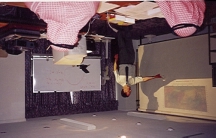
David Dixon lectures to the participants
Al Sambouk, No. 11, April 2000, page 2.
Analysis of Observed Tidal Data, POL Task
Agreement between the Islamic
Program for Data Analysis, and the Levelling of
Tide Gauge Benchmarks. Participants also gave
Development Bank and
presentations on the status of tide gauges and
PERSGA
data analysis in their countries.
A field visit took place to Saudi Aramco where
operational tide gauges were inspected and
Upon a request from PERSGA, the IDB
where two staff members gave an explanation
have kindly agreed to provide a technical
on their operation and the data analysis. The
assistance grant of USD 448,850. The
speakers used computers and PowerPoint
agreement was signed on 8th March 2000 in
presentations to train the participants on the use
the IDB Headquarters. His Excellency Dr.
of modern programmes prepared by IOC.
Ahmed Mohammed Ali (President of IDB)
The evaluation of the Workshop, as done by
signed on behalf of the Bank and Dr. Nizar
questionnaire and distributed to participants,
Tawfiq (Secretary-General) signed on behalf
showed that the workshop was very successful.
of PERSGA. Among the witnesses at the
The participants were well satisfied the level of
signing ceremony were Eng. Mahmoud Al
the speakers, the benefit they gained from the
Kushman from the Bank, and Dr. Dirar Nasr
field-visit and use of training equipment, and the
and Mr. Carlos Haddad from PERSGA.
documents provided by the workshop. It was the
consensus of PERSGA and the participants that
Between PERSGA and
an expert should visit the Tide Gauge system in
all the PERSGA countries and evaluate the
CEDARE
system.
It should be mentioned that IOC covered the
In mid April an opening ceremony was held for
expenses of the consultant while PERSGA and
the Headquarters of CEDARE in Cairo, under
ALECSO covered the expenses of the other
the patronage and in the presence of Mrs. Susan
participants. At the end of the Workshop
Mubarak, His Highness Emir Fahd bin Abdullah
Dr.
Al
Bahlool Al Yaqoobi, the ALECSO
Al Saud, and Dr. Atif Obaid. Dr. Nizar Tawfiq,
representative, distributed certificates to the
Secretary-General of PERSGA, also participated
participants and expressed his satisfaction with
in the opening ceremony. The new Headquarters
the success of the course.
receives funding from Egypt, the Arabic Fund
for Economic and Social Development, and
Signing of a Technical
UNDP.
The CEDARE centre aims to promote
coordination and cooperation, between Arabic
and European efforts to protect and conserve the
marine environment. It aims to help with the
implementation of relevant projects and also to
assist countries in the region in capacity
building when facing environmental problems.
This may be done through feasibility studies for
environmental protection activities and through
agreements for cooperation with national
institutions and organisations in the region.
A joint cooperation agreement was signed in
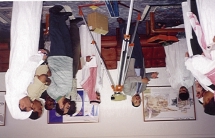
Mustafa Fahmi from Leica explains the
Cairo between PERSGA and CEDARE in July
use of levelling equipment
1999 under the patronage of the Government of
Custodian of the Two Holy Mosques. It was
agreed that cooperation would take place in the
implementation of a programme for the
Al Sambouk, No. 11, April 2000, page 3.
protection of the Red Sea by safeguarding
how information should flow between the
navigation.
personnel and organizations, was prepared. It
The PERSGA staff send their congratulations
demonstrated how the project interacts at
and best wishes to CEDARE.
national, regional and international levels.
Field Visit to Yemen
The Strategic Action Programme
During the period 6-20 December 1999, three
SAP Lead Specialists made a two-week trip to
Management Training Course
Sana'a, Aden, and Mukalla in the Republic of
Yemen. The visit was efficiently organised by
the SAP National Programme Coordinator
The staff at PERSGA, including the Strategic
Dr. M. Abubakr and the Environment Protection
Action Programme (SAP) Coordinators from
Council (EPC) of Yemen. The fortunate-three
Sudan, Yemen, NE & NW Somalia and
included Drs K.
Hariri, (Living Marine
representatives from UNDP in Riyadh, took part
Resources), R. Batayneh (ICZM) and Mr. M.
in a five-day Management Training Course from
Younis (Marine Protected Areas). They held
16-20 January. The course was delivered by an
several meetings with officials from the
international management consultant from the
ministries expected to be involved with the
University of Bradford, UK and concentrated on
implementation of the SAP, together with local
techniques for project analysis, planning, and
Working Group Members and representatives
communication. It was appropriately slanted to
from two NGOs concerned with environmental
meet the needs of PERSGA and the SAP by
protection.
Dr. Abdul-Majeid
Haddad
(SAP-UNDP
Coordinator), who effectively customised the
Initial meetings were held in Sana'a. Here the
course for the target group by selecting suitable
SAP Lead Specialists were able to introduce
case studies and linking the theoretical concepts
their components to several key officials. These
to the reality of the project components
included HE Eng. Mohsen Al Hamdani
currently under development.
(Chairman, EPC), Mr. M. Saghairy (Deputy
Minister, Ministry of Fish Wealth), and Mr.
The course was very successful. It explained the
Abdel Rahman Mahyoub (Chairman, General
processes involved in project identification,
Tourism Authority GTA). Future plans for
planning, implementation, monitoring, and
ICZM pilot projects, the establishment of a
evaluation and it taught the specialised
National ICZM Working Group, training in
techniques of the Logical Framework Approach,
Environmental Impact Assessment as a planning
Network Analysis, and Work Breakdown
tool, fisheries stock assessment, catch sizes, and
Structure as well as touching upon the
data collection methods were all reviewed.
psychology involved in hiring and evaluating
consultants.
The SAP team proceeded to Aden where they
spent the following four days. Presentations on
The course was followed by a two-day "retreat"
the SAP and useful discussions took place with
held at tourist village on the outskirts of Jeddah.
Dr. Jamal Lawzi (Director, EPC Aden), Eng.
This was not a time for play, though we did get
Wahid Ali Rasheed (Deputy Governor, Aden),
a free ride on the space simulator in the evening,
Mr. Omar Subaih (Director General, Fisheries
but an opportunity for the group to meet and
Project IV), Mr. Mohammed Musa (Director
discuss, in an informal setting, the methods of
General for Aden Municipality) and
project implementation and the lines of
Mr. Abdullah Abadan, (Deputy Minister - the
communication. In fact it was the first time that
Ministry of Planning and Development, Aden).
the entire SAP project team (minus the two
Lead Specialists for Navigation Risk and Public
The team visited the Fisheries Training Institute
Awareness) had had the opportunity to meet
(FTI) and the Marine Sciences and Resources
together as a unit.
Research Center (MSRRC), together with the
Mariculture Research Center and the Marine
The complexity of the SAP was addressed and a
Pollution Center. One objective of the visit was
detailed SAP communication chart, showing
Al Sambouk, No. 11, April 2000, page 4.
to assess their potential future use as regional or
Aden and the Arish area near the Aden-Mukalla
sub-regional research and training centres for
highway where a sewage treatment plant is
the study of Living Marine Resources.
under construction. In the Mukalla area the team
In Mukalla the SAP Lead Specialists met with
had site visits to Bir Ali fishing community
Mr. Mohsin bin Shamlan (Deputy Governor)
centre and to the Sharma and Jethmun turtle
and Mr Awad A. Hatim (Deputy Governor for
nesting grounds. The former area has been
Coastal Affairs) and were informed about the
declared as a Marine Park but the decision is not
key challenges facing the area which include the
yet operational. Both sites are to become pilot
control of rapid coastal development, improper
sites for a project funded by GEF on integrated
sanitation, uncontrolled fishing and poaching of
coastal zone management.
turtles.
The meetings with the officials in Yemen
Back in Sana'a, the trip was wound up with two
ensured a common understanding of the
more days of meetings. Mr. M. Abdelraheem
anticipated role of the SAP in coastal
(Director of the Environmental Information
management. Emphasis was placed on the
Department, EPC) discussed use of GIS and the
regional coverage of planned activities. It was
need to upgrade the current Archview software
agreed that the facilities available at the
and train more personnel.
Fisheries Training Institute and the MSRRC in
Aden would be used for sub-regional and
Further productive discussions were held with
regional training activities in the field of Living
Eng. Ahmed H. Odaini (Vice Minister, Ministry
Marine Resource Management. The necessary
of Construction, Housing and Urban Planning),
support, in terms of equipment, material, and
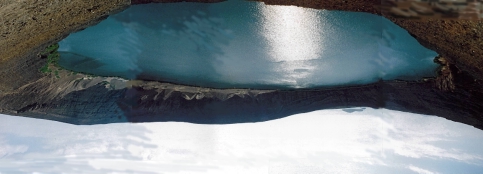
View of the crater at Khor Shoran (Bay of Mangroves) near Belhaf-Bir Ali
Photo by Mr. M. Younis
with Ms Najat Al Sahmi (GTA) and with Mr.
specialists would be provided by the SAP.
Aktouf Bu Alam (UNDP Acting Resident
Potential pilot sites for Marine Protected Areas
Representative).
and for ICZM projects were discussed. It was
During the course of the visit to Yemen the SAP
foreseen that the SAP would, wherever possible,
team were able to take part in a number of field
fill gaps and complement current projects that
visits to complement the numerous meetings.
have regional impacts.
Site visits included a trip to the fishing
Drs K. Hariri and R. Batayneh
community centres of Fuqum and Imran west of
Al Sambouk, No. 11, April 2000, page 5.
SAP Working Group Meetings
marine science station took place.
The Habitats & Biodiversity WG met at the
Headquarters of the National Commission for
The Working Groups (WG) for the SAP
Wildlife Conservation and Development, Saudi
components have now been officially
Arabia, hosted by H.E. Prof. Dr. Abdulaziz
established and some of the first Working Group
Abuzinada. The meeting took place immediately
meetings have been held. These include:
after the International Workshop on Coral Reef
Bleaching. The WG meeting concentrated on an
· ICZM, Amman, 31 Jan- 01 Feb. 2000
exchange of information about the formulation
· Habitats & Biodiversity, Riyadh, 12-14 Feb.
of the SAP with special emphasis on the
2000.
Habitats and Biodiversity component. The WG
· Marine Protected Areas, Port Sudan, 26-28
suggested that the plan for the year 2000 should
Feb. 2000.
concentrate on `capacity building' and the
The Living Marine Resources Working Group is
`conservation of key habitats'.
scheduled to meet in Aden at the end of April.
The Marine Protected Areas WG met at the Sea
The ICZM Working Group Meeting divided its
Ports Corporation Training Centre in Port Sudan
time between Amman and Aqaba. The meeting
during the period 26-28 February. The director
in Amman was opened by Dr. Suliman Jaafri the
Eng. Hamza El Fadhlabi gave a welcoming
Director-General of the General Corporation for
address, and Dr. Abdel El Gader Daff Allah
Environment Protection (Jordan). The SAP and
gave a short presentation on the Role of
the ICZM component were presented to the WG
Protected Areas in Marine and Coastal Zone
participants. The participants then gave an
Conservation. Dr. Abdul Majeid Haddad
outline of their experience with ICZM in their
(UNDP) introduced the Strategic Action
home countries. Capacity building for
Programme as a whole and Mr. Mohammed
Environmental Management, the environmental
Younis (SAP Lead Specialist) outlined the
impacts of waste-water treatment plants, the use
important role each Member would play in
of GIS in managing protected areas, and coastal
helping to establish a network of representative
zone management in Aqaba were discussed.
marine protected areas. Each Member then gave
The WG Members then travelled to Aqaba
a short presentation on the status of MPAs in
where they had the opportunity to tour the
their county.
coastline of Jordan to see the interaction
On the last day everyone set out on an
between the land-use planning system and
expedition to Sanganeb Atoll Marine National
current conservation measures. A visit to an
Park. Unfortunately the weather was so bad and
industrial pollution control facility, a
the sea so rough that the trip had to be
wastewater treatment plant, and the Aqaba
abandoned on safety grounds!
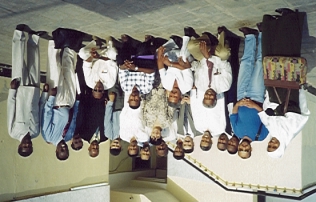
The Marine Protected Areas
Working Group meets in
Port Sudan.
The photo includes the
National Programme
Coordinator and
representatives from:
UNDP
The Red Sea University
The Sea Ports Corporation
IW:Learn Programme
Train-Sea-Coast
Private sector tourism
operators
Photo by Mohammed Younis
Al Sambouk, No. 11, April 2000, page 6.
Editorial and Translation
International and PERSGA, and to discuss
future coordination and cooperation between the
Assistance
two organisations, especially in the field of
capacity building and public awareness.
Back in February PERSGA/SAP advertised for
Meetings were held with the regional
editors and translators who would like to have
representatives of BirdLife International
their names included on a list, or roster, of
(Middle East & NW Africa) where current
consultants. We would then contact them on an
strategies notably the Middle East Regional
as-needs basis to help out with work in times of
Programme - were discussed and reviewed.
peak activity i.e. most of the time.
The trip proved valuable in establishing contacts
The editor foolishly agreed to act as the focal
and setting up a coordination mechanism to
point and spent the best part of a week
avoid overlap in existing and future projects. As
underneath a pile of 250 application forms that
BirdLife International already has considerable
sat 20 cm high on the desk. Image reading a
experience in the field of developing public
book that thick, it makes War and Peace look
awareness programmes, a useful link can be
easy! Having completed the task we now have
made with the SAP Lead Specialist for Public
our rosters complete and the editor begs you not
Awareness.
to send any more applications to him. We do
Abdullah Alsuhaibany
regret that, because of the number of applicants,
it is simply not possible to write to all those
An International Workshop on
persons who were unsuccessful. We would like
to take this opportunity to thank everyone that
the Impact of Coral-bleaching in
showed interest in the organisation and took
the Arabian Region
such care in the preparation of their letters and
c.v.'s. Some very well qualified candidates
came forward.
An international gathering of coral-reef
scientists, managers and representatives of
Arrival of the Lead Specialist for
global and regional environmental organizations
Public Awareness and
took place between the 5th 9th February 2000,
in Riyadh. The objectives of the meeting were to
Participation
assess the affects of the 1997/98 coral-bleaching
event in the Arabian region and to set out the
scope of a Regional Coral Reef Action Plan.
We are more than happy to announce that the
Lead Specialist for Public Awareness and
The Workshop was hosted by the National
Participation - Ms Khulood Tubaishat - has
Commission for Wildlife Conservation and
arrived in Jeddah. We all offer her our warmest
Development (NCWCD) in collaboration with
welcome.
PERSGA and ROPME. The meeting was
supported by UNDP, UNEP, ROWA, and the
Conferences
World Bank. A number of international flight
tickets were provided by Saudia and the IDB.
During the first three days, status reports were
given by representatives from nearly every
BirdLife International
country in the region. Further presentations
covered the regional extent of coral bleaching,
other threats to coral reefs, and coral reef
Abdullah Alsuhaibany, Lead Specialist for
monitoring programmes.
Habitats and Biodiversity, a well-known and
highly respected Saudi Arabian ornithologist
Many participants felt that the workshop had
attended the BirdLife International Conference
provided a unique platform for the exchange of
in Kuala Lumpur between 9-18 October 1999.
information between the members of
The primary objectives of the trip were to
international coral reef programmes such as the
establish communication between BirdLife
International Coral Reef Initiative (ICRI), the
Al Sambouk, No. 11, April 2000, page 7.
Global Coral Reef Monitoring Network
are not identified. The weights are, at best,
(GCRMN) and ReefCheck, and the scientists
rough estimates since they are recorded in the
from the Arabian region.
wholesale markets where fish sales are either
Recommendations were made by working
`by the bundle' - for small sizes - or by
groups on key issues such as ICZM (legal and
individual fishes if larger. No regular, seasonal
institutional aspects), marine protected areas,
sampling is made in order to determine the
monitoring, research and socio-economic
average weights and then to calculate, with an
assessments, capacity building, education,
acceptable degree of accuracy, the total quantity
training, and the economic valuation of reefs.
landed for each species. Furthermore, records on
These recommendations have been compiled
fishing effort are incomplete. Existing records in
into a draft Regional Action Plan which will be
some countries are simple registers of the
circulated to the Workshop participants for
fishing boats' main particulars, and the power of
comments and further refinement. The final
the engines used. There are no details on the
version will be consistent with other Regional
fishing gear, the fishing grounds, or the fishing
Action Plans prepared under the umbrella of the
techniques. Changes in fishing techniques, or
International Coral Reef Initiative (ICRI).
the introduction of new technology on board the
vessel which may result in an increase of fishing
The results of the meetings will be made
effort, are not recorded. The problem of
available in a set of Workshop Proceedings.
recording the total fishing effort exerted on the
commercially important species is made more
Helge Vogte
difficult by poaching carried out by fishing
vessels from countries outside the region.
Articles
The second major problem is the lack of stock
assessment studies. These are the cornerstones
for management decisions. The last report on
Living Marine Resources
stock assessment studies of important species in
the region was compiled by Dr. Sanders of FAO
in 1998. Support for research activities from
Dr. Khaled Hariri, SAP Lead Specialist for
governments' regular budgets, or bilateral or
Living Marine Resources, has provided a
multilateral funding sources has been meagre,
twenty-minute talk for students on the
despite both the scientific and the socio-
I.W.LEARN programme based at the Royal
economic significance of the LMRs. This region
Holloway University in SW London. In the talk
has all the coastal and marine habitats
he highlights the most significant problems
characteristic of tropical waters except for river
faced by fisheries managers in the region and
estuaries. Such habitats include fringing coral
outlines, in general terms, the role of the SAP in
reefs along the mainland coastlines, numerous
addressing them. An edited version of the talk is
islands, seagrass beds, and turtle nesting
provided below:
grounds. The upwelling phenomenon in the Gulf
of Aden and the Arabian Sea during the
Three water bodies are located in this region;
monsoons, especially in summer (July-Sept.)
the Red Sea, the Gulf of Aden, and the southern
when the S.W. winds prevail, enriches the
part of the Arabian Sea. All these waters form
primary productivity of those waters. The
the western part of the Indian Ocean.
marine biodiversity and the percentage of
Conventionally, they represent Area 51 in the
endemism are high. There is still much work to
FAO Fisheries Statistics Yearbooks.
be done in the field of taxonomic identification.
The first problem confronting those involved in
The geographic nature of the Red Sea, as a
the management of LMR in this region, is the
semi-enclosed sea and as an embryonic
inadequacy, and sometimes the total lack of
developing ocean, with coastal countries having
proper statistical records. In most countries of
opposite and adjacent narrow continental
the region, the statistics on fish species landed
shelves, places the problem of managing
by artisanal fishermen are very poor. Often the
transboundary stocks on the top of the list of
recorded catches do not cover all the landing
priorities in LMR management. Highly
sites and the quantities of each species caught
migratory species deserve particular attention.
Al Sambouk, No. 11, April 2000, page 8.
With the boom in the export trade of dried shark
Overfishing a certain species may lead to its
fins from countries of the region to the S.E.
extinction or to a very slow recovery over a
Asian markets since the early seventies, several
prolonged period of time. Another erroneous
shark species have become endangered. In
concept is that access to fisheries resources
addition, the use of non-selective and
should be open and uncontrolled because of
destructive gear for shark fishing in the region
their `common-property' nature. This false idea
requires prompt management actions. The large
can lead to intensive exploitation in a short
increase in mid-water and bottom trawling for
period, especially if the species fetches high
fishing shrimp, cuttlefish, deep-sea lobsters, and
prices in the international market and can result
demersal fish species has resulted in the
in a rapid and devastating decline of the species.
destruction of several benthic fishing-grounds.
The sharp decline in numbers and size of the
The decline in the stocks of the targeted species
rock lobsters caught from Gulf of Aden waters
has endangered the lives of turtles and marine
illustrates the case in point.
mammals, like dolphins and dugongs.
Another issue deserving particular attention in
The third problem hindering the sustainable
environmental awareness campaigns relates to
development of the LMRs is related to the weak
methods of handling, preserving and
and inadequate institutional and legal
transportation of fish and other fishery products.
frameworks at the regional and at the national
Quality control is generally poor in the region. It
levels. There is no regional institution
is not only the technology, equipment, materials
empowered with the authority to decide on
and know-how that is required, but also a
fisheries management measures, based on
considerable amount of effort has to be made in
fisheries management plans, which are then
order to change the behaviour and attitude of the
adhered to by the respective countries. Such a
people towards LMRs.
forum has been established in other marine
areas for managing single or multiple species.
Interventions of the SAP through the LMR
Official decision-makers from governments
component
participate in the forum, with advice from
The main objective of the LMR component is to
marine biologists and legal experts. Many of
contribute to capacity building at the regional
these bodies work in close collaboration with
and national levels, in areas directly leading to
international organizations such as the FAO.
the achievement of development outcomes
Another major problem affecting LMRs is
which assist in the alleviation of the
pollution from landbased and sea-based
aforementioned problems. The structure of the
sources. The region is an important international
SAP allows for dependence, right from the
lane for the maritime transportation of oil, other
beginning, on regional and local experts to carry
goods, and people. The potential risks to marine
out the designed assignments with limited input
life resulting from a major oil spill or a traffic
from experts from outside the region.
accident are high. The demographic increase,
Specifically, it is envisaged that the LMR
and urbanisation in the coastal cities without
component will intervene to achieve the
proper ICZM plans, is increasingly causing
following:
negative impacts on coastal LMRs.
· Standardisation of data collection, and the
Finally, it is noticeable that the level of
formation of a database
awareness concerning the need for immediate
· Upgrading two sub-regional LMR research
measures to mitigate the degradation of the
and training centres
coastal and marine habitats is low. This is not
· Development of a management plan for
only common among the public at large, but also
transboundary stocks, particularly for
prevails among the officials in government.
sharks
· Training of regional and national scientists
There are a number of misconceptions regarding
on LMR species taxonomy, identification,
the nature of LMRs. For example, LMRs are
stock assessment and management
considered correctly as renewable resources, -
measures
but frequently the term renewable is equated
with the term `unlimited' which is totally false.
· Improving regional and national LMR
LMRs are renewable but they are also limited.
legislation
Al Sambouk, No. 11, April 2000, page 9.
· Providing, on a pilot scale, selective and
mathematics, by incorporating the ideas into the
non-destructive gear for certain species
subject matter. For example, a lesson on the ear
may include both its role in hearing and the
· Providing, on a limited pilot scale, small
problems of noise pollution; on the eyes, sight
fishing boats, engines and fishing gear for
and how to avoid air pollution. The link can be
some of the poorest fishermen
drawn between general health and the way
In addition, if sufficient funds are made
environmental pollution causes diseases that
available, the LMR component will contribute
lead to loss of life, economic and social
towards: managing stock assessment surveys,
resources.
publishing a field guide for species
The role of women has no end. It forms the
identification, making a reference collection,
basis of the development of society and the
developing quality control standards, and
preparation of the new generation.
establishing an authorised, regional, LMR
management forum.
To be continued...
Dr. Khaled Hariri
Noha El Maraghy
Women and Environmental
Expected Activities for PERSGA
Awareness
during the year 2000
Women make up half of society; they are
SAP Task Force Meeting
mothers, wives, daughters, sisters, teachers, and
(September)
physicians. The role of women in bringing-up
the new generation is an ancient one. However,
Executive Committee of PERSGA
scientific discoveries have led to the
and Preparatory Meeting for the
development of new technologies, equipment,
Council (October)
and labour-saving devices. Many of these have
become so common as to be considered the
PERSGA Council Meeting
basic necessities of life. The natural role of the
(November)
mother, to be restricted within her domestic
environment, is no longer the same as it once
Expert Meeting for revising the
was in the past.
Protocol on the Protection of the
The importance of the women's role in the
Marine Environment from Land-
family is quite clear. Her activities include her
based Sources of Pollution (date
role as supervisor and teacher of children. She
to be finalised)
introduces to them environmental concepts
through the things that surround them in their
daily life. For example, she always give
This issue of Al Sambouk has been produced
instruction in conserving the use of water, in not
at the PERSGA Secretariat by Dr. Dirar
wasting electricity (turning off the air
Nasr and Roderick Fleming (Editors).
conditioning and the lights when not needed),
Translation by Dr. Dirar Nasr with
and by ensuring that litter and refuse are put in
assistance from Dr. Khaled Hariri and Ms.
the waste-bin. These basic environmental
Reem Al-Qawwas; Arabic proof-reading by
instructions complement the teachings found in
Ms. Noha El-Maraghy.
our Islamic religion and in the Holy Qur'an.
Additional copies can be obtained from:
The role of teachers is important and
PERSGA, P.O. Box 53662, Jeddah 21583,
complementary to the role of the mother.
Kingdom of Saudi Arabia.
Environmental awareness and concepts may be
Tel.: 966 2 657 3224
introduced in all the lessons she teaches and
Fax: 966 2 652 1901
linked to the natural environment at the national
Email: dirar.nasr@persga.org
and international level. Such awareness can be
taught in all courses, - science, religion,
Al Sambouk, No. 11, April 2000, page 10.
Document Outline