TABLE OF CONTENTS
Page
List of Acronyms
iv
Executive Summary
vii
Unique contribution of PEMSEA
vii
Findings
vii
Recommendations
viii
A. All PEMSEA partners
viii
B. Donor support (GEF, UNDP, IMO and other donors)
viii
C. Governments
ix
D. PEMSEA management team
ix
Taking the recommendations forward
x
1.0 Project concept and design summary
1
Context of the problem
1
Effectiveness of the PEMSEA programme concept and design
1
Assessment of the fit of the SDS-SEA to the objectives of
4
Agenda 21, WSSD, MDG, Capacity 2015 and the results of
the Third Replenishment of the GEF Trust Fund
2.0 Project
results
11
3.0 Progress towards outcomes
14
Overall development objective, project development objectives
15
and planned outputs
Progress towards achievement of project outcomes
15
Knowledge management
18
4.0 Impacts of the PEMSEA programme
21
Review and evaluation of the extent to which project impacts
22
have reached the intended beneficiaries
Likelihood of continuation of project outcomes and benefits
23
after completion of GEF funding
Key factors and issues that require attention
25
Other concerns that the programme should look into
28
5.0 Project
Management
30
The project's adaptive management strategy
30
Roles and responsibilities of the various institutional
31
arrangements for project implementation and the level of
coordination between relevant players
Partnership arrangements with other donors
32
Public involvement in the project
33
Efforts of UNDP and IMO in support of the programme office
34
and national institutions
Use of the logical framework approach and performance
36
indicators as project management tools
Implementation of the projects' monitoring and evaluation plans
36
6.0 Main Lessons Learned
37
Strengthening country ownership/drivenness
37
Strengthening regional cooperation and inter-governmental
38
cooperation
Strengthening stakeholder participation
38
Application of adaptive management strategies
38
Efforts to secure sustainability
38
Role of monitoring and evaluation in project implementation
39
7.0 Recommendations
39
Overview
39
Specific Recommendations
40
All PEMSEA partners
40
Donor Support: Recommendations to GEF, UNDP, IMO
40
ii
and other donor partners
Governments
41
PEMSEA management team
41
Annexes
45
Annex 1 Progress towards meeting objectives of GEF
Operational Programs 8, 9 and 10
Annex 2 IMO Supported Trainings/Workshops
Annex 3 PEMSEA Logframe Matrix: Key Performance
Indicators
Annex 4 Internal Evaluation of ICM Sites Performance
Annex 5 Knowledge Management Strategies and
Applications
Annex 6 Knowledge Management Case Studies: Batangas
Bay and Bataan, Philippines
Annex 7 Resource Mobilization
Annex 8 PEMSEA Cooperation and Collaboration with
Partners
Annex 9 An example of implementation of a comprehensive
set of performance indicators
iii
LIST OF ACRONYMS
ADB
Asian Development Bank
ASEAN
Association of South East Asian Nations
BC
Benefit Cost
BCCF
Bataan Coastal Care Foundation
CITES
Convention on Trade in Endangered Species
CMC
Coastal Management Center
DA
Department
of
Agriculture
DANIDA
Danish Agency for Development Assistance
DENR
Department of Environment and Natural Resources
DSS
Decision Support System
EIA
Environmental Impact Assessment
ERA
Environmental Risk Assessment
GEF
Global Environment Facilty
GPA
Global Programme of Action
ICM
Integrated Coastal Management
IEIA
Integrated Environmental Impact Assessment
IIMS
Integrated Information Management System
IMO
International Maritime Organization
IRR
Internal Rate of Return
ISO
International Organization for Standardization
IT Information
Technology
ITC-CSD
International Training Center for Coastal Sustainable Development
IW
International Waters
JICA
Japan International Cooperation Agency
KM
Knowledge
Management
LFA
Logical Framework Approach
LUAS
Lembaga Urus Air Selangor
MBEMP
Manila Bay Environmental Management Project
MDG
Millennium Development Goals
MED
Marine Environment Division
MEG
Multidisciplinary Expert Group
MMCC
Marine Management and Coordination Committee
MOA
Memorandum of Agreement
MOU
Memorandum of Understanding
NGO
Non Government Organizations
PCC
Project Coordinating Committee
PEMSEA
Partnerships in Environmental Management for the Seas of East Asia
PG-ENRO
Provincial Government - Environment and Natural Resources Office
PIR
Project Implementation Review
PMO
Project Management Office
PMMP-EAS Prevention and Management of Marine Pollution of the East Asian Seas
PPP
Public-Private Partnerships
PSC
Project Steering Committee
PSEMS
Port Safety Environmental Management System
RNLG
Regional Network of Local Governments
RPD
Regional
Programme
Director
RPO
Regional Programme Office
RTF
Regional Task Force
iv
SIDA
Swedish International Development Agency
SDS-SEA
Sustainable Development Strategy for the Seas of East Asia
SMPR
Secretariat Managed Project Review
SOM
Senior Officials Meeting
TCD
Technical
Cooperation
Division
UN
United Nations
UNDP
United Nations Development Programme
UNEP
United Nations Environment Programme
UNFAO
United Nations Food and Agriculture Organization
WB
World
Bank
WSSD
World Summit on Sustainable Development
v
EXECUTIVE SUMMARY
Unique Contribution of PEMSEA
The unique and distinctive characteristic of Partnerships in Environmental Management
for the Seas of East Asia (PEMSEA) is that it is the first international programme to
develop a core base of practical knowledge in integrated management of coasts and
oceans within the Seas of East Asia based firmly on its network of local demonstration
and parallel sites. This has generated a wealth of intellectual capital that moves beyond
technical know-how and scientific endeavour towards developing a cohesive network of
relationships that makes the integrated management approach a living reality in this
region. This core competence of PEMSEA has enabled nations to accelerate their
progress in implementation of coastal and oceans governance through the development
of institutional frameworks, mutual sharing of lessons and greater South-South dialogue.
There are dangers that this international asset could be lost at the end of this
programme unless the intellectual capital is nurtured by national governments and donor
agencies.
Findings
The PEMSEA programme has achieved substantial progress in meeting the Overall
Development Objective "To protect the life support systems and enable the
sustainable use and management of coastal and marine resources through
intergovernmental, intersectoral and interagency partnerships for improved quality of life
in the East Asian Seas Region."
The ten stated Project Development Objectives and fourteen planned Outputs as set
out in the ProDoc are appropriate to the Overall Development Objective and are being
implemented within, or in advance of, the planned time frame and in a cost effective
manner. These achievements are the result of both good project design and innovative
and adaptive management, which are producing commendable outcomes and beneficial
social, economic and environmental impacts.
There are areas where the programme could be strengthened and the Evaluation Team
is confident that the PEMSEA will be able to address these in a manner that will
enhance the impact of the program at a local, national and regional level.
It is important for the Global Environment Facility (GEF), United Nations Development
Programme (UNDP), and International Maritime Organization (IMO) to fully recognize
the valuable information, experience and public and private support the PEMSEA
programme has developed by focusing on achieving tangible progress in environmental
improvements that help to form a sound basis for the expansion and diversification of
economic development. This has been achieved through implementation of an
Integrated Management approach and developing effective partnerships for
environmental improvements at a trans-national and wider regional level.
vi
Together, these achievements have created a very valuable asset that supports the
objectives of all three United Nations programs and forms a very sound foundation for
helping the nations of East Asia in achieving sustainable economic development that is
integrated with sound environmental management. This asset needs to be fostered and
developed further as it forms an invaluable resource to help in the implementation of
Agenda 21, the World Summit on Sustainable Development (WSSD) Plan of
Implementation, and the Millennium Development Goals (MDG) as well as related
international and national efforts to promote sustainable development of natural
resources and assets of the marine and coastal areas of the region.
Recommendations
The Evaluation Team recommends the following actions to be taken by the PEMSEA
partners:
A. All PEMSEA partners
1. Make full use of the momentum that has been achieved through the PEMSEA,
seek continuity in funding and other forms of support for PEMSEA beyond 2005
to maximize the potential benefits to the East Asian Region and beyond.
2. Seek the transformation of PEMSEA into a new regional arrangement for wider
exploitation and future development of its intellectual capital to improve the
integration of environmental management and economic and social development
through the further development of local, national and regional ICM and ocean
governance initiatives.
3. Implement the Sustainable Development Strategy for the Seas of East Asia
(SDS-SEA) as a collective international effort in the regional implementation of
the commitments of Agenda 21, WSSD, MDG and other international instruments
related to the sustainable development of coasts and oceans.
B. Donor support (GEF, UNDP, IMO and other donors)
1. The GEF, UNDP, IMO, international donors and other donor partners should
capitalize on the achievements of PEMSEA in helping each other meet their
respective sustainable development objectives by:
a) maintaining core roles especially in building national and local capacity in the
further development and implementation of PEMSEA and SDS-SEA;
b) fostering cooperation and partnerships with and among nations in Asia;
c) creating a wider partnership among international donors for supporting the
future of PEMSEA;
d) supporting an international working party made up of representatives from
East Asian nations with a remit to examine options for new institutional and
funding arrangements for taking PEMSEA forward.
vii
C. Governments
1. Give careful consideration to maximizing the potential benefits that could be
gained from what has been achieved by the PEMSEA programme, how this can
be extended and expanded to further support national and international
development objectives.
2. National Governments set up review panels to determine what they need most in
order to make integrated management of coasts and oceans more effective;
3. Initiate a country-driven donors meeting in 2003 to demonstrate support for the
future development of PEMSEA and to communicate priorities for funding and
technical assistance.
D. PEMSEA management team
1. Adopt a broader view of adaptive management so that a wider array of issues
are taken into consideration, while incremental, small-scale actions at the local
level are pursued towards solving problems and issues.
2. Strengthen national capacities in EIA system where required, as an interim
measure till zoning guidelines are put in place.
3. Accelerate national buy-in by using clear examples of the benefits of ICM,
supporting the finalization of national coastal policies, the replication of ICM sites
and mainstreaming of the approaches, policies, lessons learned in the
implementation of sites and in the program as a whole into major strategic
development plans.
4. Enhance efforts to establish public-private partnerships (PPP) in environmental
investments, particularly for small and medium sized enterprises.
5. Promote national commitment to the planned Senior Officials Meeting and the
Ministerial Meeting being organized by the program.
6. Develop a monitoring and evaluation system that takes into account activity-
based and cumulative impacts.
6. Target the development of an ISO 14001 Certification for ICM using the
PEMSEA experience and outcomes.
8. Fully implement the Port Safety Audits and the Port Safety Environmental
Management System (PSEMS) and further develop certification mechanisms.
9. Seek greater integration of river basin management, coastal land and water use
management, and sea use zoning.
10. Explore ways that knowledge management practices could help expand and
sustain the intellectual capital developed by PEMSEA.
viii
Taking the Recommendations Forward
The Evaluation Team recommends that an international working party be set up to
explore options for a new institutional mechanism and funding to take the PEMSEA
program forward. The Working Party should be made up of no more than 5 senior
government officials representing the countries taking an active part in the PEMSEA
program. Technical advice should be made available to the Working Group as and
when necessary. The Working Party should meet at least on a bi-monthly basis starting
as soon as possible to allow time to develop and test the feasibility of alternatives, with a
view to presenting their final recommendations by the end of 2004. This would allow
actions to be put in place in 2005 to allow a smooth transition and continuity in staffing
arrangements from the existing phase of PEMSEA to the new arrangements.
ix
I.0
PROJECT CONCEPT AND DESIGN SUMMARY
Context of the problem
1.1
East Asia is a region of dynamic economic growth amidst trends of globalization.
The financial crisis only strengthened the resolve of the countries of the region
for economic growth while the global economic recession gave focus for
intraregional trade and commerce, creating in the process a new East Asian
Economy comprised of Association of South East Asian Nations (ASEAN) + 3.
1.2
At the same time, there is rapid urban population growth in the region. The
annual growth rate of the urban population of East Asia from the mid-1990's to
2025 is estimated to be four times that of the highest income countries. A large
number of this urban population will be coastal dwellers. Over the next 25 years,
half of the total population of the region will come from coastal urban centers with
more than 300 million inhabitants. Many of these inhabitants will belong to
sectors of the poor. Presently, majority of the 75 million people living in the
coastal areas of the region are below the poverty line.
1.3
This combination of aggressive drive for economic development, high population
growth and poverty will increasingly put pressure on the region's coastal
environment. Coastal environments in the countries of the region are in danger of
being overexploited and rapidly degraded. So too is the regional marine
environment given that the seas of the region are semi-enclosed with high
ecological interconnectivities.
1.4
While there is growing awareness of "sustainable development" as the vision for
development, there is also the lack of appropriate and practical mechanisms for
putting it into action. The need is to have a dynamic process that would deal with
conflicts of use, using the increasing recognition of the important role that could
be played by local governments, the private sector and other local stakeholders
as initiators.
1.5
One of the major benefits of the PEMSEA programme is the generation of
intellectual capital in the form of human capital, social capital, organisational
capital and stakeholder capital related to the implementation of ICM in the region.
This valuable intangible asset is difficult to assess quantitatively due to the lack
of sophistication of models for such applications. However, case studies, stories,
narratives and anecdotes provide useful guides to the strength and depth of
these intangible assets. Care needs to be exercised not to assume that
economic development is directly related to high levels of social and stakeholder
capital in ICM as this is often not the case in planned economies.
Effectiveness of the PEMSEA programme concept and design
1.6
The focus of the programme on starting at the local site level allowed fast action
to proceed at many sites. Practical field experience is developed. Appropriate
demonstration sites were also selected, sites that would later exemplify how
integrated management including ICM efforts could create a balance between
1
rapid economic growth and environmental management. Xiamen is a designated
international economic city. Danang has an aggressive plan to develop the city
for industry and for tourism. Batangas port was designated as an international
port. Port Klang is already an international port with planned expansion. In all of
these cases, there would be increased port activities, extensive infrastructure
development, rapid increase in population, and various economic activities. All
these will exert pressure on the environment, directly and indirectly. All these
sites require an ICM approach.
1.7
PEMSEA's strategy is to come in to speed up the process of ICM problem
solving. As such it selects sites where people and government are already keen
to do something. This has led to fast action. The downside to this is that the
experience of these sites will have low utility to sites where supportive local
people and governments do not yet exist unless public awareness is created.
1.8
The programme's comprehensive landscape approach (i.e. integrating the
coastal area with its linked land and sea-based ecosystems) provides more
effective management than a habitat approach. The close and direct ecological
as well as socio-economic interconnectivities of the various habitats or
ecosystems comprising the coastal area require an integrated approach.
1.9
An integrated approach such as ICM requires partnerships with different sectors
and at various levels. The shift from the Phase 1 programme title of "Regional
Programme for the Prevention and Management of Marine Pollution of the East
Asian Seas to the Phase 2 title of "Building Partnerships on the Environmental
Management of the Seas of East Asia" is thus very appropriate. The new title
also broadens the concern to extend beyond pollution management to that of
environmental management. This then appropriately covers many other relevant
concerns that should be part of the programme if it is to be called an ICM effort.
1.10 The partnerships that are developed are not only at various institutional levels
site, national, subregional and regional. There is also the partnership between
sectors particularly public-private partnerships. At the conceptual level, the
"partnership" or linking of environment and development underlies PEMSEA's
approach. As such the programme also becomes a way by which various global
agreements on maritime concerns as well as on the broader sustainable
development agreements of the WSSD Plan of Implementation, the MDG,
Agenda 21, Capacity 2015 and other environmental conventions could be
operationalized at the local level. It should be noted that partnerships are also
linked to the development of a critical mass of countries, organizations and
people which is the only way that these global agreements can be put into
practice. Using the PPP framework, there is considerable potential to develop
cost effective solutions especially when industries come together and generate
economies of scale for environmental facilities.
1.11 The diversity of sites implementing the programme provides an advantage.
Demonstration sites pioneer the ICM approach, provide for capacity building,
make lessons available for other sites, and are used to convince the country to
adopt ICM as a management approach. Parallel sites show that the effort could
be replicated using mostly local resources, provide a way to adapt lessons from
the demonstration sites to other situations, and would additionally convince the
2
country to adopt the ICM approach. Hotspot sites provide the opportunity to
address cross-boundary issues.
1.12 The sites cover a typology of governance mechanisms, from highly centralized
governance systems (Xiamen, Danang, Nampo), decentralized governance but
with strong central direction (Port Klang) and those with highly decentralized
governance practice (Batangas, Bataan, Manila Bay, Bali and Sihanoukville) as
shown in Figure 1. The sites also relate to different socio-economic situations.
Fast economic growth is exemplified by Xiamen and Port Klang. Relatively
slower economic growth areas are in Batangas, Bataan, and Manila Bay. Given
this diverse typology of sites the programme would be able to provide a variety of
models that could meet the needs of a region with countries of differing
environmental, socio-economic and governance situations.
Bataan
Sihanoukville
Philippines
Cambodia
Danang
Vietnam
Batangas Bay
Philippines
Port Klang
Malaysia
COMMITTEE BASED
Xiamen
CENTRALISED
DECENTRALISED
COMMUNITY BASED
FASTER
PR China
LEARNING
LEARNING
SLOWER
PROGRESS
Chonburi
PROGRESS
Thailand
Bali
Indonesia
Nampo
DPR Korea
Shihwa
Sukabumi
RO Korea
Indonesia
Figure1. Organisational learning at demonstration and paral el sites
1.13 The programme has taken the "soft approach", employing resource use and
environmental concerns as the entry point and avoiding security and boundary
issues that could lead to inter-country conflicts and debate. Use of conventions
already agreed upon as a guide and with focus on sustainable development as a
goal, the programme is able to acquire immediate acceptance. In addition, with
the countries developing and implementing their national strategies following the
ICM approach, these countries are then in a sense already implementing the
programme's proposed regional strategy, the SDS-SEA. This would make it
easier for such a regional strategy to be approved and a regional mechanism for
its implementation to be agreed upon.
1.14 The programme's study tours, internships, cross-visits and Regional Task Force
(RTF) provided the opportunities for South-South exchange of experiences and
knowledge. Together with regional bodies such as the RNLG, Regional Experts
Group, and the Project Coordinating Committee (PCC), they have helped create
a feeling of regional programme participation.
1.15 The co-financing approach of the programme allows local ownership to be
developed. At the same time, the ability of PEMSEA to provide a certain level of
funding support and technical assistance allows it to stimulate attention and
3
participation at certain strategically important activities. It allows the programme
to be a catalyst of certain processes and decisions.
1.16 PEMSEA states that its budget allocation is more for "people management"
rather than the provision of physical facilities. This relatively low level of funding
allocated by the programme to sites builds not only capacity but also prevents
the creation of false expectations and dependence. Provision of knowledge,
through technical assistance and sharing mechanisms augments the funding
support and is well appreciated.
1.17 The most difficult aspect of PEMSEA is the many institutional levels involved in
the programme. It makes the programme an exercise in the "management of
complexity". Links have to be maintained with various focal points the focal
points of IMO, UNDP and GEF in the 12 countries involved. Relationships at the
local, national, subregional, and regional levels have to be developed and
appropriate coordinative mechanisms established. At the country level, there is
the complexity of linking agencies in-charged of land-based concerns with those
for marine and coastal resources. There are also the other coastal and marine
resources management projects at the regional and country levels that are
supported by other donor agencies. Differences in site and focal implementing
agency as well as the tendency to focus on its own approach make it difficult to
get coordination amongst these many programmes and projects. An
understanding of some of the levels of complexity are shown in Figure 2.
1.18 As the major outputs from this programme are developing tacit knowledge in
ICM, promoting best practice and sharing lessons learnt across the region, the
programme concept and design could be improved by making knowledge sharing
practices more central in its approach. There is a danger that the action
orientation of implementation processes could place the creation, organisation,
evaluation, storage and retrieval of new knowledge secondary to the primary
purpose of meeting outputs in the logframe.
Assessment of the fit of the SDS-SEA to the objectives of Agenda 21, WSSD, MDG,
Capacity 2015 and the results of the Third Replenishment of the GEF Trust Fund
1.19 PEMSEA's development objective "to protect the life support systems, and
enable the sustainable use and management of coastal and marine resources
through intergovernmental, interagency and intersectoral partnerships, for the
improved quality of life in the East Asian region" is in a sense an operational
definition of sustainable development. The coastal and ocean systems of the
East Asia is the region's natural heritage and source of food and livelihood for the
millions of poor in the region. In addition, the social and cultural values of the
people of the region are linked to these resources. Properties and investments
are also dependent on how well these resources are managed. PEMSEA's
activities on bringing ICM into the countries of the region, building sustainability
on such management through capacity building, scientific inputs, integrated
information management system (IIMS), stakeholder participation, environmental
investments, and national coastal/marine policies as well as upscaling and
complementing all these with efforts to create inter-country partnerships through
a regional mechanism are therefore not only for the environment's sake but also
for supporting two other pillars of sustainable development -- social development
4
and economic development. Bringing the sustainable development direction of
PEMSEA into the regional level would be facilitated by one of its outcomes, the
SDS-SEA.
1.20 The 2002 WSSD was quite unique from that of the United Nations Conference on
Environment and Development (UNCED) held in 1992 in that it emphasized good
governance within each country and at the international level as essential to
sustainable development. PEMSEA's efforts at getting local governments to take
the lead in ICM activities as well as in helping promote stakeholder participation
and national level policy-making support WSSD's call for strengthening good
governance at the country level. The process of developing the SDS-SEA, on the
other hand, supports the effort for strengthening good global governance, in
particular ocean governance.
1.21 The foundation of the SDS-SEA are based on the prescriptions of global and
regional instruments relevant to the environment as well as on the regional
programmes of action developed by ASEAN, UNEP Regional Seas Programme,
Economic and Social Commission for Asia and the Pacific (ESCAP), Asia-Pacific
Economic Cooperation (APEC) and others. As such it is implementing WSSD's
call for strengthening institutional arrangements for sustainable development at
the regional level. As stated in the WSSD Plan of Implementation, the
"implementation of Agenda 21 and the outcomes of the Summit should be
effectively pursued at the regional and subregional levels, through the regional
commissions and the other regional and subregional institutions and bodies".
1.22 The SDS-SEA provides for the active participation of all stakeholders and not just
national governments and international agencies as often is the case for regional
agreements and mechanisms. The participation of the local governments, the
private sector, civil society and communities are given importance, the same
importance that the WSSD Plan of Implementation, in numerous provisions,
gives to these stakeholders. The WSSD Plan of Implementation has called for
action to "enhance the role and capacity of local authorities", "enhance corporate
environmental and social responsibility and accountability", "foster full public
participation in sustainable development policy formulation and implementation"
and "to enhance partnerships between governmental and non-governmental
actors, including all major groups, as well as volunteer groups". The WSSD Plan
of Implementation and the SDS-SEA Action Programs both give importance to
community-based management and the recognition of the usefulness of
appropriate indigenous/traditional knowledge and practices. A slight difference is
in the weak reference of the WSSD Plan of Implementation to concerns of
artisanal fisherfolks. This is where the SDS-SEA is quite strong. Thus, the
Strategy augments that which should have been given importance but was
somehow not given enough attention at the WSSD negotiations.
1.23 The WSSD Plan of Implementation reiterates Chapter 17 of Agenda 21 which
calls for "integrated management and sustainable development of coastal areas,
including exclusive economic zones; marine environmental protection;
sustainable use and conservation of marine living resources; addressing critical
uncertainties for the management of the marine environment and climate
change; strengthening international, including regional cooperation and
coordination; and sustainable development of small islands". A close look at the
5
various action programs of the SDS-SEA shows that these programme areas
called for by WSSD and Agenda 21 are tackled at an operational level relevant to
the region.
1.24 The other output of the WSSD was the promotion of Type II partnerships. These
are partnerships that bring in not only donors and international bodies but most
especially civil society groups and the private sector as well. The objective is to
draw in additional resources for the immediate implementation of actions called
for by the WSSD Plan of Implementation. The SDS-SEA becomes a framework
to stimulate Type II partnerships for coastal and ocean governance in the region
as it is built on the pillar of "partnerships". The SDS-SEA is "meant to be
implemented by all the different stakeholders men and women, public and
private, local and national, non-government organizations, governments, and
international communities working in concert with each other".
1.25 In the SDS-SEA Action Programs, there are many elements that would facilitate
formation of Type II partnerships. Objective 3 of the "Develop" Section of the
Strategy is on "Partnerships in Sustainable Financing and Environmental
Investments". All the action programs under this objective are important in
supporting Type II partnerships. Similar action programs are similarly
emphasized in other sections of the Strategy. Some examples are action
programs for "institutionalizing innovative administrative, legal, economic and
financial instruments that encourage partnership among local and national
stakeholders" and "creating partnerships among national agencies, local
governments and civil society that vest responsibility in concerned stakeholders
for use planning, development and management of coastal and marine
resources". Some examples that would facilitate public-private partnership
include the following: "enhancing corporate responsibility for sustainable
development of natural resources through application of appropriate policy,
regulatory and economic incentive packages", "exploring innovative investment
opportunities, such as `carbon credits' for greenhouse gas mitigation, and user
fees for ecological services" and "levying economic incentives and disincentives".
For promoting partnerships at the regional level, the SDS-SEA Action Programs
call for "promoting south-south and north-south technical cooperation, technology
transfer and information-sharing networks" and working with international
financial institutions, regional development banks and other international financial
mechanisms to facilitate and expeditiously finance environmental infrastructure
and services". The communication action programs of the Strategy would further
strengthen the development of Type II partnerships by raising public awareness
and mobilizing various stakeholders to act.
1.26 The SDS-SEA, in many senses, also supports the MDG, in particular three of its
goals: (1) eradicate extreme poverty and hunger; (2) ensure environmental
sustainability, and; (3) develop a global partnership for development. As noted in
Agenda 21: "More than half the world's population lives within 60 km of the
shoreline, and this could rise to three quarters by the year 2020. Many of the
world's poor are crowded in coastal areas. Coastal resources are vital for many
local communities and indigenous people." The Strategy's Action Programs
under the sections on "Sustain" (East Asian countries shall ensure sustainable
use of coastal and marine resources), "Preserve" (East Asian countries shall
preserve species and areas of the coastal and marine environment that are
6
pristine or of ecological, social and cultural significance), "Protect" (East Asian
countries shall protect ecosystems, human health and society from risks which
occur as a consequence of human activity) all directly contribute to ensuring
environmental sustainability and consequently the maintenance of the coastal
resources and oceans as source of livelihood and food. The Strategy's "Develop"
section states the link between environment and development more succinctly:
"East Asian countries shall develop areas and opportunities in the coastal and
marine environment that contribute to economic prosperity and social well-being
while safeguarding ecological values". The Action Programs on the promotion of
sustainable economic development in coastal and marine areas and on building
partnerships in sustainable financing and environmental investments with their
implications on sustaining or increasing productivity and jobs generation directly
relate to eradication of poverty and hunger.
1.27 The effort for meeting environment needs as well as the eradication of poverty
and hunger extends beyond the local and national levels. Objective 2 of the
Strategy's "Develop" section relates to incorporating transboundary
environmental management programs in subregional growth areas or what is
alternatively known as East Asia's international growth triangles. The success of
SDS-SEA implementation of this will provide other developing country regions an
example to look at and adapt.
1.28 The link of the SDS-SEA to the MDG goal of developing a global partnership for
development is exemplified by its "Implement" section which states that "East
Asian countries shall implement international instruments relevant to the
management of the coastal and marine environment." Its action programs call for
national government accession to and compliance with relevant international
conventions and agreements and regional cooperation in integrated
implementation of international instruments. The Strategy, however, goes a step
further to deepen the reach of global partnership by calling for the execution of
obligations under international conventions and agreements at the local
government level.
1.29 The strong links between SDS-SEA implementation and that of meeting the
objectives of the WSSD Plan of Implementation and the MDG also then link the
Strategy to UNDP's Capacity 2015 programme. The goal of Capacity 2015 is to
develop the capacities needed by developing countries and countries in transition
to meet their sustainable development goals under Agenda 21 and the MDG. It
seeks to build local level capacities for sustainable development and local
implementation of Multilateral Environmental Agreements. The SDS-SEA
highlights this in its Action Programs.
1.30 Capacity 2015 also seeks to maximize benefits of globalization at the local level.
SDS-SEA reflects a similar objective by holistically linking the promotion of
regional cooperation and the incorporation of sustainable development in
subregional growth areas as a way to further support efforts (i.e. through South-
South or North-South exchanges of technical assistance and of environmental
investments for key coastal and marine sites) at the local level. The ASEAN + 3
framework of the Strategy is therefore very relevant not only because it allows
management of the ecological interconnectivities of the semi-enclosed East
Asian seas, including interconnectivities in risk due to a common pattern of oil
7
tanker routes in the region, but at the same time, the framework is able to draw in
the economic dynamism of fast growing economies of the region (Japan,
Republic of Korea, and China) and draws them to support the low and middle-
income economies. Trade between the countries of the region is growing and the
closer economic links that will develop could lead to a similar strengthening of
links on environmental investments. The mainstreaming of SDS-SEA action
programs in the national economic development plans of the countries of the
region as well as in the regional trade and other economic agreements will do
well to further strengthen the implementation of the Strategy.
1.31 The consistency of the SDS-SEA with GEF policy has been strengthened with
the results of the negotiations for the Third Replenishment of the GEF Trust
Fund. The Third Replenishment of the GEF Trust Fund underscored and affirmed
the critical importance of supporting the goals of the United Nations Millennium
Declaration and of Agenda 21. Other policy recommendations include the
following:
· GEF to support a more systematic approach to capacity building. Where
capacity is a need and acts as a barrier, then it should be addressed first.
· Country ownership is essential to achieving sustainable results. Thus
integration into national priorities, strategies and programs for sustainable
development is vital. Mainstreaming and co-financing are also important.
· Need to increase interagency cooperation between the UN system and
the Bretton Woods institutions at the country level such as linking the
Poverty Reduction Strategy Programme (PRSP) and the United Nations
Development Assistance Framework (UNDAF) processes to bring
together poverty reduction strategies and sustainable development
processes.
· Greater participation in the development and management of GEF
projects of other executing agencies (i.e. ADB) designated under
expanded opportunities.
· All activities of the GEF should be undertaken in a spirit of enhanced
partnership. Cross-learning should be strengthened and accelerated.
· Document best practices of stakeholder participation.
· Better engagement with the private sector.
1.32 All of the above is similar to the direction taken by SDS-SEA. The strategy also
puts great importance to capacity-building. The adoption of the Strategy will be
through a process that builds country ownership. The plan for adoption also
states that "consultations will be undertaken with a view to harnessing the
objectives of intergovernmental bodies and multilateral financial institutions,
including World Bank, ADB, GEF and official development assistance (ODA)."
Once the Strategy is adopted, this will be used by these same partners to act
decisively and proactively to conserve the Seas of East Asia. The Strategy puts
emphasis on partnership, particularly public-private partnerships. The
strengthening and acceleration of cross-learning and the documentation of best
practices of stakeholder participation can be found in the Strategy's
Objectives/Action Programs for the establishment of information technology (IT)
as a vital tool in environmental management programs, partnerships with
scientists and scientific institutions to encourage information and knowledge
8
sharing, and the utilization of innovative communication methods for the
mobilization of governments, civil society and the private sector.
1.33 The results of the GEF replenishment negotiation also points out that a new
strategic thrust would be to catalyze implementation that builds on foundational
work. The development of the SDS-SEA is one such foundational work which,
with more financial and political support, would contribute significantly to meeting
the action objectives of Agenda 21, the WSSD Plan of Implementation, and the
MDG.
1.34 The replenishment negotiation documents also pointed at indicators for meeting
the objectives of the International Waters portfolio. These indicators are:
· Global Coverage (transboundary waterbodies with management
framework of priority actions agreed by riparian countries);
· Agreed Joint Management Actions (countries with national policies,
regulations, institutions, etc. re-aligned to be consistent with agreed joint
management actions);
· Regional Cooperation (regional bodies and management authorities with
strengthened capacities);
· Local Technological Development (countries with demonstration
technologies and management practices viable under local conditions).
1.35 Note that these indicators could be the same indicators for monitoring the SDS-
SEA as the Strategy has strongly brought in Action Programs that lead to
meeting the same objectives served by these indicators.
1.36 The Beijing Declaration of the Second GEF Assembly contains the same focus
as that of the policy recommendations resulting from the replenishment
negotiations. The Beijing Declaration also emphasized the need for GEF to assist
in the implementation of the WSSD, in particular the importance placed by the
Summit on regional and sub-regional initiatives and on public participation,
stakeholder involvement and partnerships. It also pointed at the importance of
capacity building and the enhancement of technology transfer through public-
private partnerships and technology cooperation, both North/South and
South/South. As previously noted, the SDS-SEA has placed the same high level
of importance to these aspects.
1.37 The Beijing Declaration also noted that the expanded mandate of the GEF would
now include dealing with Persistent Organic Pollutants (POP). In as much as the
SDS-SEA also desires control of land-based pollutants getting into coastal and
marine areas, the implementation of the Strategy then also contributes to the
meeting this new mandate of the GEF.
1.38 The SDS-SEA indeed has strong links and consistency in objectives and action
programs with the WSSD Plan of Implementation, the MDG, the strategic
directions of the GEF coming out of the Third Replenishment negotiations, and
the Capacity 2015 programme. What now needs to be done is to move the
9
WSSD, MDG, Agenda 21, Capacity 2015, Conventions
Donor Agencies: GEF, UNDP, UNEP, IMO, World Bank, ADB, Bilateral donors
GLOBAL
ASEAN Ministerial
Meetings
Ministerial Conference,
Malaysia, December 2003
Competing projects
Regional Network of
such as USAID
Local Governments
and DANNIDA
(PMOs, NGOs, national
and local governments)
Gulf of
Thailand
Local
Govt.
PMO
REGIONAL
PCC
PPP
Roundtable
Discussions
Bohai Sea,
Manila Bay,
PR China
Philippines
Local
Local
Govt.
PMO
Govt.
PMO
PCC
PCC
NATIONAL
Bataan,
Philippines
Local
Govt.
PMO
PCC
Shihwa,
Korea
Batangas Bay,
Xiamen,
Local
Philippines
PR China
LOCAL
Govt.
PMO
Local
Local
Govt.
PMO
Govt.
PMO
PCC
PCC
PCC
Nampo,
DPR Korea
Chonburi,
Thailand
Local
Govt.
PMO
Local
Govt.
PMO
PCC
PCC
Sihanoukville,
Management
Cambodia
Sukabumi,
Team
Bali,
Indonesia
Local
Indonesia
Govt.
PMO
Local
Local
Govt.
PMO
Govt.
PMO
PCC
PCC
PCC
Danang,
Vietnam
Port Klang,
Local
Malaysia
Govt.
PMO
Local
Govt.
PMO
PCC
Site
PCC
Management
PEMSEA
Team
Figure 2. Organisational Networks at PEMSEA
10
Strategy forward beyond the endorsement of the 8th Programme Steering
Committee Meeting and that of the UNDP. The planned PEMSEA Ministerial
Meeting of countries participating in the programme would be a good opportunity
to get higher-level approval and commitment to SDS-SEA. UNDP's Capacity
2015 could then give it further impetus by providing immediate support in
translating its action programs for local level implementation. This would open up
additions which could further enhance its validity at the local level such as
bringing in a stronger reference to the participation of women and youth and a
special consideration for vulnerable groups. Where local coastal sites are
repositories of high levels of runoff from chemical-based agriculture, due
attention to POP issues could also be made. A link to the other expanded
mandate of the GEF which is land degradation primarily desertification and
deforestation could also be looked into especially where drought and siltation
impact on the coastal ecosystems.
2.0
PROJECT
RESULTS
2.1
This mid-term evaluation of the PEMSEA programme is based upon two
fundamental observations, namely:
2.1.1 Integrated management approaches attempt to address extremely complex
problems and issues affecting the sustainable development of highly dynamic
coastal ecosystems whose rich and diverse natural resources have generated
powerful and often competing demands from a wide array of economic sectors.
This means that ICM is perhaps the most complex form of human activity, far
more complex in fact than managing upland or purely marine areas and
activities. For this reason alone, the achievement of major outcomes takes a
considerable period of time and requires the development of strong political
commitment to integrated rather than sectoral approaches to the formulation and
implementation of human activities that influence the ability of coastal systems to
sustain planned development activities;
2.1.2 When evaluating the progress of the PEMSEA programme, the four most critical
features to examine are progress towards the development of:
a. A robust and self-sustaining process for applying ICM concepts,
frameworks, principles and good practices;
b. Strong ICM strategies and their practical implementation at a project level
that are also supported by strong political commitment at a national level;
c. A critical mass of successful ICM projects at a local level that inform and
support the development of national ICM policies and supporting
measures;
d. A regional mechanism to facilitate the sharing of knowledge, experience,
technical assistance, and lessons learned to help nations to work together
to a common purpose in solving problems and issues which affect the
achievement of sustainable development objectives.
11
2.2
Given the challenge of managing the very complex issues facing the coastal
nations in East Asia, it is important to understand a number of key issues that
influence the progress made by the PEMSEA programme towards the
development of ICM at a site, national and regional level. These include:
a. A long tradition of economic development planning based on
transformation of natural systems to meet the needs of individual sectoral
activities. This forms a barrier to multiple use management of complex
coastal systems, such as mangrove, which can sustain more than one
economic activity;
b. Different political systems characterized by strong, centralized policy
making where top-down decision making concerning investment and the
allocation of land and water resources takes precedence over local
decision making. In some countries, such as Indonesia, the recent move
towards decentralization and deconcentration of decision making has
created a hiatus where considerable adjustment in policy making and
adoption of local priorities for development is taking place;
c. Where local development priorities and plans to address coastal
management issues are being formulated, these are often obstructed by
a legacy of prior commitments and approvals of plans by centralized
agencies and powerful investors and political interests;
d. Awareness of the dynamics and functions of coastal systems, and the
hazards to life, property and investment from their inappropriate
development is generally low in most developing nations. This limits the
perceptions of problems and issues that hinder sustainable economic
development;
e. The direct and indirect linkages between coastal ecosystem functions and
economic development are poorly perceived. This lack of awareness
constrains the development of comprehensive and accurate analyses of
problems and issues affecting specific areas and limits the utility of risk
assessments and feasibility studies, and the evaluation of management
alternatives available to meet stated development objectives;
f. Where the use of the English language is not widespread its use as the
medium of communication can form a barrier to effective sharing of
knowledge and experience in the adoption and use of complex ICM
concepts, methodologies and examples of good practice;
g. Low level of understanding of ICM and acceptance of the PEMSEA
framework and process as viable and valuable planning and management
tools at a national and regional level.
2.3
These constraints add to the complexity of managing development processes in
coastal areas and help to explain why the achievement of even modest advances
in developing a robust ICM process take considerable time-often 5 to 10 years,
consistent technical assistance tailored to the needs of individual sites, continuity
12
of funding, and the progressive development of political acceptance of ICM as a
tool to help sustain development rather than adding bureaucratic hurdles.
2.4
It is clear that ICM frameworks and practices have a good deal to offer the
nations of East Asia in promoting effective solutions to very complex problems
and issues that undermine efforts to develop sustainable use of coastal areas
and natural resources.
2.5
The PEMSEA programme is well suited to meet the needs of the new
programmatic approach adopted by the GEF. Major advances have been
achieved in developing the practical implementation of ICM concepts and
practices across a wide spectrum of different environmental, social and economic
situations in six East Asian nations. The Evaluation Team has been impressed
by the commitment of the PEMSEA core staff, staff and counterparts at the 6
project sites visited, and the developing support for environmental investment
from the private sector. All involved are to be congratulated on their combined
achievements.
2.6
While the Evaluation Team is aware of the difficulties that the PEMSEA team and
their partners have overcome and that there have been advances in the adoption
and application of ICM, certification procedures for ports and the SDS-SEA, it
has proven very difficult to assess the actual impact of the Program. There are
good examples of ICM practice. Some have been catalysed by PEMSEA, while
others may not be a direct result of PEMSEA activities. For example, the LUAS
river basin framework in Selangor is designed to improve the integration and
sectoral planning for land and water use management in watersheds associated
with the environmental management of the Klang river which drains into the Port
Klang ICM project site. However, this initiative was in place before the Port Klang
coastal area was selected as a PEMSEA site. In fact, this initiative by the State
Government made the Port Klang area more attractive to the PEMSEA
management team and has helped strengthen the potential for longer-term
positive impacts of PEMSEA efforts.
2.7
The careful choice of sites based on evidence of political commitment, available
information, clearly perceived problems, and other criteria have helped form a
series of sites where PEMSEA should be able to demonstrate rapid results and
thus gain greater political buy-in to the ICM process. However, the Evaluation
Team believes that truly integrated forms of coastal management are at an early
stage of development in the sites visited. There remain major obstacles, such as
lack of understanding of how coastal systems function and continuing sectoral
emphases in planning for and managing human activities that will take a
considerable period of time and effort by the PEMSEA Team to overcome.
2.8
Having expressed these concerns, the Evaluation Team does believe that the
PEMSEA Program has achieved significant progress towards potentially very
beneficial outcomes and, in time, major positive impacts on environmental quality
and sustainable use of the coastal lands and waters of the East Asian Region.
The following paragraphs attempt to set out progress towards outcomes.
13
3.0
PROGRESS TOWARDS OUTCOMES
3.1
Given the above considerations and that the project is at the mid-point in the
implementation of the second phase, the evaluation team believes it is too early
to fully assess the outcomes and impact of the project beyond what we have
witnessed during field visits and through discussions with the intended
participants.
3.2
The Evaluation Team is convinced that the PEMSEA programme has achieved
substantial progress in the development and implementation of ICM frameworks,
processes and good management practices. There is substantial evidence of
emerging outcomes resulting from one or more program outputs. These include:
a.
Acceptance of ICM as a tool to help sectoral agencies reduce conflicts
with other sectoral agencies and improve the effectiveness of the
respective efforts to help fulfill mandates, improve the efficiency of public
investment, and meet national development objectives;
b.
Enhanced awareness of the added value ICM can bring to the resolution
of national, provincial and local development issues;
c.
Adoption of ICM in the project sites as a tool for resolving local
environmental, economic and social management issues;
d.
Major progress in developing practical measures for the formulation and
implementation of sustainable ICM initiatives;
e.
Learning shared between project sites, sharing of knowledge,
development of shared understanding of problems and potential for
complementary solutions at varying ecosystem and geographic levels;
f.
Innovative and usable technologies that is strengthening comprehension
of complex sets of data and information to inform ICM processes;
g.
Evolution of a local, sub-regional, national and transnational cooperation
and development of solutions to common problems;
h.
Development of a comprehensive data base that can be developed to
provide information to better inform planning and decision taking process
and investment. Examples include: environmental profiles, risk
assessments, feasibility studies, maps and scientific reports for the
project and parallel sites;
i.
Positive influence on investment in measures to improve environmental
conditions and reduce stress within coastal and marine ecosystems;
j.
Engaging private enterprises to focus on coastal management issues in
their corporate responsibility agendas;
k.
Support to national governments in the formulation of national coastal
policies.
14
3.3
All of the above contribute to meeting the project's regional and global
environmental objectives as per GEF Operational Programs 8 (Waterbody-Based
Operational Program), 9 (Integrated Land and Water Multifocal Area Operational
Program), and 10 (Contaminant-Based Operational Program). Progress in
meeting the targets and indicators that support these objectives are discussed in
the various sections of this evaluation. Additional discussion on PEMSEA
activities as they relate to the stipulations and expected outputs of GEF OP 8, 9,
and 10 is also in Annex 1.
Overall development objective, project development objectives, and planned outputs
3.4 The
stated
Overall Development Objective is "To protect the life support
systems and enable the sustainable use and management of costal and marine
resources through intergovernmental partnerships for improved quality of life in
the East Asian Seas Region." This is a most ambitious higher order objective or
longer-term goal. The emphasis upon protecting the life support systems that
underpin sustainable production of marine and costal resources is a key element
in enabling the sustainable use and management of these resources to help
improve the quality of life in the East Asian Seas Region.
3.5
The ten stated Project Development Objectives (See Annex 3 ) and fourteen
planned Outputs are appropriate to the Overall Development Objective.
Progress towards achievement of project outcomes
3.6
A clear distinction must be made between project outputs, outcomes and
impacts. The Logical Framework Approach is used to test the internal logic of a
project design and to monitor and assess the progress in meeting intended
objectives through the implementation of planned activities. The outputs are the
stated targets of the project activities. For example, training to enhance human
resource capacities may have a target of 12 people trained in Environmental Risk
Assessment (ERA) by the 7th month of the project. The intended output is 12
trained people. The outcome will be different depending on a number of factors,
including the additive or synergistic effects of other outputs from the project (e.g.
the design and implementation of an ERA system and the provision of
appropriate hardware and software), the starting competence of the trainee and
social and economic conditions beyond the control of the project managers.
3.7
The Evaluation Team concurs with the findings of the GEF Secretariat Managed
Project Review (SMPR) 2002 and the UNDP Project Implementation Review
(PIR) 2002 evaluations. It is clear from a comparison of the original logframe and
progress reports, verbal presentations of the staff, official reports, published
materials and interviews with participants that the project is performing very well
and that planned activities are on course for completion within the planned time
frame or ahead of schedule. There do not appear to be any significant cost-over-
runs and it is significant that additional funding from partners has enhanced the
use of the GEF funding and has made up for the unfortunate shortfall in planned
UNDP counterpart funding. Careful project management and energetic sourcing
of funding from participants and external funding bodies has allowed the project
team to expand participation in planned activities and to add new activities.
15
3.8
Internal evaluations indicate that there are specific areas where the achievement
of objectives has already been met, while some objectives are expected to be
fulfilled during the remaining life of the project. Please refer to Annex 4 for
illustrative charts prepared by the PEMSEA staff to denote progress in meeting
planned activities. The Evaluation Team sees a need to strengthen the
objectively verifiable indicators and methods used to track progress in the
implementation of activities and performance of the individual projects as these
may not give a full and accurate picture of what has been achieved. For
example, where an advisory group has been established this is counted as an
output. However, the actual range of expertise available in that advisory group
may be limited, essential disciplines may not be available, and there may be little
experience in the group of working in an inter-disciplinary mode and providing
scientific advice in a form that will be valued and applied by planners and
managers. By adopting more perceptive indicators to assess outputs, it would be
possible to identify areas where selective inputs or corrections by the PEMSEA
management team would help provide stronger support to local project activities
and thus enhance outcomes and impacts.
3.9
It is understood that the PEMSEA staff are preparing an assessment of indicators
and methods used to evaluate progress towards implementing activities and
achieving stated outputs directed towards fulfilling the ten project objectives. The
preliminary draft of this paper is most helpful. It explains how expanded criteria
and assessment techniques could be applied and reinforces the Evaluation
Team's assessment that the program is actively strengthening project
management tools.
3.10 The report of the Proceedings of the First Meeting of the Multidisciplinary Expert
Group (MEG) held in May 2002 makes specific reference to PEMSEA activities
that have helped strengthen scientific support to the program at a regional level
and at individual project level. Specific emphasis has been given to a) enriching
the application of "indigenous and emerging technologies", b) addressing
"cutting-edge scientific issues of leading environmental and resource concerns",
and c) promoting management-oriented research to support the demonstration
projects. These efforts are commendable and illustrate the determination of the
program staff to better integrate information from indigenous knowledge and
more formal science to enrich ICM in practice.
3.11 However, the Evaluation Team believe that action needs to be taken within the
remaining life of the project to strengthen specific activities to help PEMSEA
move further forward in addressing its Overall Development Objective. These
are set out below:
3.11.1 The Evaluation Team is concerned that insufficient emphasis is being given in
the implementation of planned activities to the protection of the life support
systems that enable the sustainable use and management of costal and marine
resources. Throughout the study tour of the six project and parallel sites visited it
was very clear that coastal ecosystems were under great stress from
inappropriate development. When this was raised with project staff it was clear
that the staff were operating under very difficult political, institutional and
economic conditions which made it almost impossible to protect and effectively
16
manage the coastal ecosystems on a sustainable basis. The Evaluation Team
have identified four principal areas where the implementation of the project could
be strengthened with the result that the protection of the life support systems
could be addressed more effectively, namely:
a. The Training Program needs to strengthen emphasis on the functions of
the coastal ecosystems. This would include: environmental linkages
among different ecosystems, established management guidelines and
good practices that help protect the functional integrity of the different
coastal ecosystems and the resources they generate, and the hazards to
life, property and public and private investment associated with the
inappropriate planning and management of human activities within both
the terrestrial and marine components of the coastal zone. The Risk
Assessment training materials and exercises do address some of the
risks associated with coastal systems, however the Evaluation Team
believes the design of the Training Program and materials need to be
strengthened to address these subjects as a matter of urgency;
b. Greater effort is required to enhance awareness of the role of coastal
ecosystems in sustaining human activities and the risks associated with
their inappropriate development on the part of participants and
stakeholders in the PEMSEA programme at all levels. The initial training
of all PEMSEA staff and participants needs to be reinforced by the
application of the materials in 1 above in a "refresher" program. This
should then be extended in a very carefully designed and highly graphic
and hard hitting manner to the senior managers, policy makers and
decision makers associated with the PEMSEA programme;
c. The IIMS is intended to provide a data base for factors relevant to the
management of coastal and marine areas. The Evaluation Team sees a
need to avoid the IIMS being data driven and for more emphasis to be
given to ensuring the data collected will be transformed into information
that will be effective in informing coastal and ocean management decision
making. For example, more attention could be given to the dynamics of
coastal systems and good management practices- such as soft
engineering- that would help coastal planners and managers develop
more sustainable and economically equitable uses;
d. The Stakeholder based Coastal Management Strategies for various sites
should more adequately address the risks associated with major
interventions in coastal processes. This would help avoid increased
hazards to life, property and investment.
3.11.2 Strengthening efforts to address these four factors can enhance the impact of the
PEMSEA program outputs and will help remove constraints that hinder progress
towards meeting Project Development Objectives and the Overall
Development Objectives of protecting the life support systems and enable the
sustainable use and management of costal and marine resources.
17
Knowledge Management
3.12 There have been local differences in organisational learning at demonstration
and parallel sites. One major distinction is between `centralised learning' and
`decentralised learning' as shown in Figure 1. Project sites based in command
economies such as China and Vietnam favoured centralised learning aimed
more at mobilising committees rather than communities. This is not to say that
public awareness and consultation was not important at these sites. Instead,
progress in ICM implementation was much faster at these sites due to strong
committee decision making structures in local government. In contrast,
decentralised learning was more evident at project sites such as Bali which is
based more on community oriented decision making. Progress at these sites was
much slower as considerable efforts were placed on mobilising local
stakeholders and community leaders. The distinction can be developed further as
a difference between `top down' approaches in centralised learning and `bottom
up' approaches in decentralised learning.
3.13 There are a number of examples of innovative and creative practices in Phase 2
arising from double-loop learning. Such double-loop learning involves
questioning underlying assumptions and moving beyond the confines of the
iterative ICM development cycle in Phase. These innovations have included:
a. The establishment of self funding parallel sites.
b. The development of `hotspots' exploring cross boundary issues.
c. The examination of PPP funding mechanism for sustainable development.
d. The establishment of the RNLG to promote greater South-South dialogue on
ICM implementation.
e. The promotion of a regional SDS through a Ministerial Conference in 2003.
DOUBLE-LOOP
Forms of
LEARNING (DLL)
DLL
Ministerial
Conference
RNLG
PPP
Initiating
Developing
Preparing
`Hotspots'
SINGLE-LOOP
LEARNING
Parallel Sites
Adopting
Development of further
Implementing
demonstration sites
Refining and
Consolidating
Figure 3. Single-loop and double-loop learning on the PEMSEA Programme
18
3.14 Some of the difficulties in effective impact with key stakeholders is likely to arise
from the fact that the current communications strategy is trying to cover too many
stakeholders at the same time with limited resources and giving each stakeholder
equal importance. The danger with the current strategy is that PEMSEA may be
`preaching to the converted' such as the 312 regular subscribers to `Tropical
Coasts'. The result is that the media approaches chosen may become too bland
as they try to please a wide variety of stakeholders and lose effective impact on
particular segments. Instead, an adaptive management strategy used in other
parts of the PEMSEA project could be used to help improve the communications
strategy. This could be based on a force field analysis1 identifying key
stakeholders actively driving PEMSEA's goals and stakeholders resisting
PEMSEA's goals at local, national and regional levels. Reinforcement
communications strategies could be used for supportive stakeholders and
awareness building strategies for stakeholders resistant to PEMSEA's approach.
In such cases, a few stakeholders are identified, segmented and the
communications activities are directly targeted at them.
3.15 Knowledge sharing across demonstration and parallel sites is currently limited. At
present, staff at PMO sites share their knowledge centrally with site managers at
the RPO rather than horizontally across other regional sites. The linkages in
knowledge sharing mechanisms between local and national levels are weak and
not well defined. The main knowledge sharing occurs formally through national
focal points reporting site activities to the Project Steering Committee (PSC) and
their local PCC. However, there is no direct linkage between staff at local site
level in the region. This needs to be addressed to consolidate ICM practices and
promote best practice more widely within the region. One future challenge at
local level is overcoming language barriers to ensure that shared understandings
are developed and similar mistakes are avoided across the East Asia Seas
region.
3.16 An ontology or taxonomy to describe the ICM knowledge domain is currently
implicit in PEMSEA's activities. A more explicit ontology would be useful to
provide a `knowledge map' of the area and develop shared conceptualisations of
how integration occurs between technological, social, economic and political
factors. Such ontologies could be used for codifying knowledge in a systematic
manner and provide a further mechanism for creating, organising and sharing
knowledge across sites. There have been attempts in the past to capture coastal
management ontologies through simulation models such as `Simcoast'. However,
the advantage of developing an ICM ontology at PEMSEA would be that it is
embedded in practice.
3.17 The poor standing of the IW: LEARN site on search engine rankings may be
principally due to its aim to develop global communities in international waters
rather than supply direct explicit knowledge through a search engine. One of the
difficulties in maintaining global communities of practice is sustaining the passion
and interest in any given area over time. Face to face meetings are essential to
renew and revitalise trust in these relationships. Community members need to
1 Force field analysis is a simple tool used in strategy to identify those forces driving a change process and those
forces retarding it. Strategies are developed to support and enhance the driving forces and examine ways to
undermine the restraining forces. Such an analysis has a background in military planning.
19
feel that they are contributing and receiving in equal measure. If these
relationships become unbalanced, commitment to such communities is likely to
waver. From the IW: LEARN brochure, there appears to be a few hundred solid
participants with a possible few thousand other interested parties globally.
However, there are a number of unanswered questions that arise from IW:
LEARN's e-forums:
1. How are the interest areas identified and promoted?
2. How are champions or e-forum co-ordinators selected to ensure that they
bring the necessary passion, commitment, contacts and expertise to
online discussions?
3. Are e-forums problem centred or theme based?
4. Is there a critical mass of participants to sustain these communities
globally with all the cultural differences and language problems?
5. What role does storytelling play in these communities of practice?
3.18 Currently, none of the staff at PEMSEA are actively engaged in IW: LEARN
communities of practice as there appears to be an imbalance in benefits gained
from their contributions and pressures on their time. For example, IW: LEARN
does not provide a one-stop shop on ICM issues in the East Asian Seas which
would make the site much more valuable and useful. One way of enhancing IW:
LEARN's communities of practice may be to develop and co-ordinate a few
regional websites such as East Asian Seas, Caribbean and so on. These
regional sites could be more problem centred encouraging deeper debate and
dialogue and sharing knowledge through regional stories. It is more likely that
these communities could be nurtured through face to face meetings at regional
forums or conferences such as the Regional Network of Local Governments
(RNLG). As these regional networks and communities develop over time, there is
a greater likelihood that global communities would be much more successful as
they become embedded in local and regional practice.
3.19 The IIMS is still in its development phase and poses a number of challenges for
PEMSEA. There is limited capacity of staff in database management for its
successful future development and a limited understanding of its use at local
project level. There are 192 data entry forms; much of which is uncollected at
local level due to the scarcity or paucity of data. There is also some hesitancy
among certain countries and agencies to share their data. In essence, IIMS
should be made into a decision support system (DSS) that combines data
analysis with sophisticated models to support non-routine decision-making. The
current IIMS incarnation suffers from being data driven rather than user driven.
The argument is that it encourages the development of baseline data to make
comparisons with future interventions. However, there is limited understanding at
local project level on how IIMS will help make better policies or decisions in a
practical manner. Some examples identifying key indicators and mechanisms for
monitoring and predicting the effect of policy and management options at a local
level would be helpful. This may help to bridge the gap between the scientific
community and decision makers in local government, central government and the
private sector. Care needs to be taken that the IIMS doesn't become an end in
itself and consumes excessive resources that could be better prioritised
elsewhere.
20
3.20 At PEMSEA, the existing networks are more formalised and characteristic of
professional networks rather than communities of practice. For instance, there is
a Friday club where all RPO staff get together monthly and receive a
presentation from a staff member on a certain aspect of PEMSEA's activities.
There is also an annual retreat to reflect and encourage knowledge sharing
between participants. There is no formalised network among PMO staff across
regional countries such as the use of online discussion groups. Language is
likely to be a deterrent. More formalised networks also exist at national level at
`hotspot' sites and at regional level through the annual RNLG forum. Each of
these networks (including the study tours) are likely to result in some informal
groupings and promote certain dialogue between participants. The challenge is
how to keep this dialogue alive. In its true sense, the networks at PEMSEA are
more characteristic of professional networks rather than communities of practice.
4.0
IMPACTS OF THE PEMSEA PROGRAMME
4.1
The field visits and discussions with project personnel, counterpart staff,
stakeholders and senior government officials have helped the Evaluation Team
to relate planned program activities to outputs and emerging social, economic
and environment impacts. Caution must be exercised in assessing the relative
importance of outcomes and impacts as these are relative to the specific
conditions at individual sites and the extent to which the outcomes and impacts
have had a measurable effect at a national or broader regional level.
4.2
Examples of Outcomes of the PEMSEA Programme include:
· Training has increased the competence of project staff to support local
projects
· Training has increased the competence of Project staff to apply ICM concepts
and methods to the resolution of complex environmental problems
· The IIMS is establishing the basis for standardizing information formats to
facilitate information exchange among projects and to expand the knowledge
base for managers to use in formulating and implementing ICM;
· Enhanced political awareness of coastal problems and issues that adversely
influence sustainable economic, social and environmental development;
4.3
Examples of impacts of the PEMSEA Programme include:
· In Danang and Port Klang the PEMSEA ICM Framework influenced
counterpart staff to undertake stakeholder consultations;
· Knowledge sharing emerging within the region through the RNLG;
· Strengthening and enhancement of intellectual capital particularly in the form
of human, social and stakeholder capital particularly in the more community-
based sites where interactions and interrelationships between stakeholders
become critical.
4.4
The evaluation team reiterates the need to measure the extent or durability of
these outcomes and impacts. The PEMSEA Programme is in the process of
developing criteria and a stronger system for monitoring outcomes and impacts.
21
These efforts should be beneficial to the Programme, the GEF, UNDP, and IMO,
and the counterparts in demonstrating the outcomes and impacts of their
combined efforts.
Review and evaluation of the extent to which project impacts have reached the intended
beneficiaries, both within and outside the project sites:
4.5
The extent of project impacts depends very much on how much the activities on
the ground have progressed. In most cases, site activities relative to the larger
ICM goals are at the early stages and still with pilot communities. Where initial
site consultations have been held, the concept of caring for the coastal
environment has been started and the need to work together on this task. There
seems, however, still a need to follow-up these consultations with deeper
discussions, and community acceptance, of what ICM really should be. This
would be a challenging task given that at grassroots level the PMO staff in the
countries visited emphasized the need to proceed with simple concepts and on a
step-by-step process. Beach clean-ups have been used as the first step for
awareness raising and public involvement. The challenge is sustaining
stakeholder interest beyond beach clean ups. The succeeding process of land
and sea use zoning would provide the opportunity for broadening the public and
inter-agency understanding of ICM. Many of the sites, however, are still at the
start-up process on this.
4.6
In Xiamen, there was a major effort in place to clean up Yuandang Lake/Bay and
reclaim land before PEMSEA chose the area as a pilot site. The rehabilitation of
the Yuandang Lake is promoted by PEMSEA as a fine example of environmental
investment that has created handsome returns in respect to enhanced property
values and taxation for the municipal government. Care must be taken in using
this example as an example of good practice as it may create a negative impact
on PEMSEA. The true positive and negative impacts of the environmental
investment would depend on how the increased revenues from increased land
values, tourism, port activities, and commerce would benefit the citizens. It is
understood that there is an on-going study on this, and the Evaluation Team
would expect that this study should include a balanced account of environmental
and economic goods and services gained or lost through the reclamation and
large scale engineering intervention in Yuandang Lake. This would be important
as Xiamen is used as a "Model" study tour destination. A comprehensive
evaluation of the economic, environmental and socio-cultural impacts of the
various environmental improvement and ICM activities in Xiamen would prove
useful to International Training Center on Coastal Sustainable Development
(ITC-CSD) of Coastal Areas in Xiamen and in training and information
dissemination for the government officials and their staff in the countries
participating in PEMSEA.
4.7
South-South exchange through internship, trainings at various levels and study
tours have had a significant positive impact. These trainings were considered
valuable by the participants as "ICM is new" to them. The study tours have been
helpful in showing how colleagues in similar situations have dealt with ICM
issues and problems. These trainings and study tours have also provided
opportunities for networking. Many of the participants met during the evaluation
stated that contacts, though more on an informal level, have been maintained
22
with their co-participants. The Xiamen study tours have inspired local
government officials and other participants on what could be accomplished by
strong political will and coordinated action. These trainings and study tours have
created the core of leaders and staff that would put ICM into operation in their
project sites and have the willingness to coordinate at a regional level.
4.8 While beach clean-ups are very simple activities, it has benefited local
stakeholders. In the three Danang communes selected as pilot areas for beach
clean-up and waste segregation, the commune members mentioned the
heightened awareness that was developed and the attitude change of the local
residents. Where before, the sea was used for waste disposal and as a toilet,
people are now segregating waste and are actively involved in regular beach
clean-up. While there is almost no income that can be derived from waste
segregation, recyclable waste being of low resale value, indirect income from
increased services such as from motorcycle parking and sale of bottled water to
increased number of beach visitors was pointed out.
4.9
In Bataan, the beach clean up was a major success. While garbage would most
likely be a continuing feature of Bataan's coastline since it comes from adjacent
Metro Manila and not from its residents, the clean-up campaigns has created
awareness amongst the public and became an opportunity to organize joint
efforts between government, civil society and the private sector. An example of
the coastal dynamics in Bataan is shown in Figure 4. More long-term effort,
however, has to be directed at getting the Manila Bay Coastal Strategy to reduce
the waste that eventually ends up in Bay and into Bataan. Bataan's alternative
livelihood projects with pilot coastal communities have just started and the
positive experience of income gains that could institutionalize mangrove
rehabilitation and sustainable mariculture in these communities have not yet
come in.
Likelihood of continuation of project outcomes and benefits after completion of GEF
funding
4.10 In Xiamen, the likelihood of ICM proceeding is high, due mainly to its
institutionalization in the form of a strong coordinative mechanism, a
management office, a support system in the marine expert group, the
establishment of the ITC-CSD and the high revenue of the city and thus its ability
to fund its own projects.
4.11 Sustainability is also dependent on how well the local sites can mainstream their
action plans and zoning into the development plans and regulations of the local
government and with strong "buy in" at the national level meaning that national
agency decisions and national leadership will respect coastal strategy and action
plan and zoning developed for the site.
4.12 Continuation of project outcomes and benefits will influence on how the sites
would later be considered as models of good practice in the eyes of political
decision makers with effective documentation and information dissemination.
There is a need to develop a critical mass of champions and stakeholders that do
not change with changes in political administration.
23
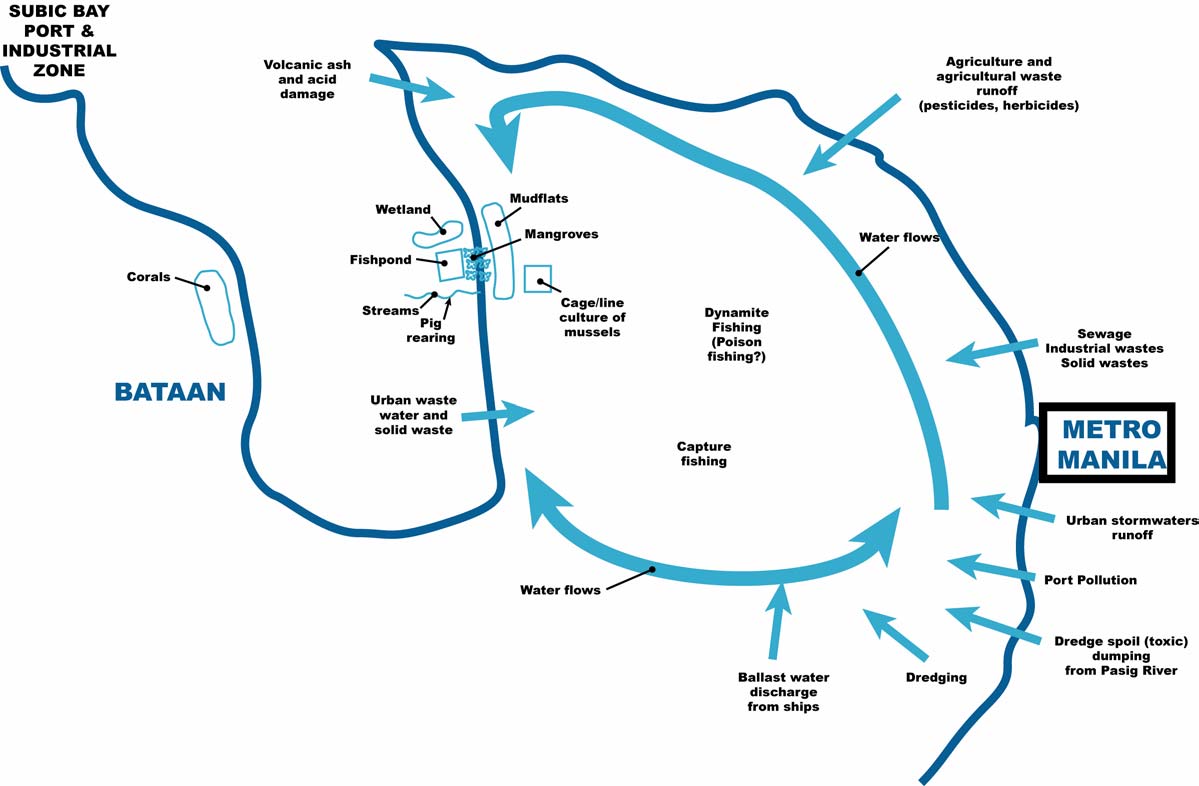
Figure 4 Coastal systems dynamics at fisherfolk livelihood project in Bataan
24
Key factors and issues that require attention
4.13 There are some elements of the programme that could be strengthened to
support consistent and cost-effective investment of both public and private funds
to sustain current and projected activities directed towards meeting the
GEF/UNDP and IMO objectives. These are associated with:
4.13.1 Relationships between the PEMSEA programme and other donor assisted
coastal management programs and projects could be strengthened.
PEMSEA staff have made attempts to communicate with other coastal and
ocean projects as part of their efforts to build partnerships. However, there
appears to have been limited positive response from other donor based
programs, which inhibits sharing of knowledge, experience and expertise, and
inhibits the development of mutually supporting initiatives where added value
could be brought to the PEMSEA programme. This point was raised by a
number of individuals and agencies during the field visits. National governments
could play a leading role in enhancing and promoting greater knowledge sharing
between donor projects as PEMSEA's efforts have been relatively unsuccessful
so far;
4.13.2 A need to expand the number of PEMSEA core staff with practical
experience in the formulation and implementation of ICM activities. Given
the resources available to the Programme, there are practical limits to the human
resources available in the PEMSEA regional office and the level of support that
can be given to projects. A Concern that PEMSEA could not provide timely and
effective technical support to individual ICM initiatives was expressed by national
as well as local project staff in four of the countries visited. This brings into
question the concept that PEMSEA can serve as a catalyst and the individual
projects must rely on their own resources to carry forward the PEMSEA
framework and six-stage system for developing and implementing ICM initiatives.
Staff in a number of the projects visited said that they feel that the PEMSEA
framework and procedures are at times inflexible (i.e. having to go through, step-
by-step, the six-stage process) and can waste time and effort in developing
solutions to complex and urgent problems. In discussions with the national and
local project staff in Danang, Bali and other sites, adopting complementary
approaches (i.e. an inception report approach where urgent problems are
identified and immediate solutions are put forward) that are used in other coastal
management programs and projects into the PEMSEA framework was seen as
desirable. This suggests that an opportunity to gain added support and value
from other complementary activities is being lost, but it is difficult to see how this
can be solved where other donor projects do not encourage partnerships.
4.13.3 Need for expanded scientific support to PEMSEA initiatives. While the
PEMSEA programme's emphasis on pragmatic implementation of often-
experimental solutions to complex coastal problems and issues is to be
commended, there remains a need to strengthen the integration of scientific
knowledge and advice into the ICM process. This is not advocating more
research to meet scientific curiosity. Instead, it has been observed that, social
and environmental performance of some PEMSEA ICM initiatives could be
enhanced through the integration of existing knowledge from different sciences.
Examples are set out in the section on Recommendations for improving the
Xiamen Model.
25
4.13.4 SDS-SEA: The Evaluation Team supports the recommendations of the Multi-
Disciplinary Expert Group (PEMSEA/WP/2002/06, pages 3-4) for strengthening
the scientific basis of the SDS-SEA.
4.13.5 PPP: The development of Private Public Partnerships (PPPs) is a good example
of the pioneering work of the PEMSEA programme to develop sustainable
financing mechanisms for ICM. Environmental and social factors, however, need
to be comprehensively incorporated into the more broadly based economic
assessment of the PPP mechanism. In the Maluan Bay rehabilitation project, as
presented by the engineering consultants, for example, there was an observed
fundamental weakness. This is the simplistic assumption that reclamation of
further areas of the former wetlands is the best way to attract private investment
when in truth there is need to examine the benefits and costs of this approach
within a broader framework. In fact, the suggestion was made that the application
of an Integrated EIA, as was the case for making the decision to remove the dike
across the Bay, should also be made for the rehabilitation project. These
assessments have to consider that: (1) urban development of the reclaimed land
may incur high costs for piling and protection against sea-level rise, which may
make this proposition less viable; (2) that the placement of new roads in a
position as planned will reduce the natural functions of the remaining wetlands
with the result that their ability to remove pollution, store storm water and reduce
flooding hazards and other environmental services would be reduced; (3)
reduction in the planned social, economic and environmental benefits with the
loss of these environmental services will occur and thus the need for additional
PPP investment to compensate. In the end, all these will weaken the B/C ratio
and internal rate of return. Such considerations therefore should be incorporated
into a more broadly based economic assessment of the PPP mechanism. This
brings into fore the need to strengthen the effectiveness of the Risk Assessment
methods and procedures, the EIA methods, and the methods used to assess the
economic feasibility of PPP proposals. If the project was indeed approved or
would be approved without these considerations, then there appears to be a
grave risk that internal rates of return have been or would be calculated that
would not stand up to critical economic, environmental or social evaluations, that
property, lives and investment may be placed in jeopardy, and that planned
activities may not be sustainable at costs that would be acceptable to either
private or public sectors.
4.13.5a By taking a broader view of the economic, social and environmental costs and
benefits it should be possible to improve the economic performance of both the
public and private capital invested. For example, by placing less emphasis
upon further destruction of the Bay's ecosystem through land reclamation,
flooding hazards in the surrounding area may be reduced thus reducing the
need for investment in hard engineering structures. This would reduce the
costs and increase the security of investment in urban development in the
wider bay area.
4.13.6 Enhancing the use of Xiamen as a Model and Demonstration Site The
complexity of issues and problems faced at the various sites and the focus on
attaining short-term and tangible results can cause the wrong signals to be
transmitted to the local stakeholders and observers visiting demonstration sites
used by PEMSEA as model examples of ICM in practice.
26
4.13.6a Although admirable progress has been made in redressing the issue of
pollution of the Yuandang Bay, more could be done to develop a truly
integrated approach to coastal management. The coastal development efforts
are predicated on hard engineering approaches to removal of pollution and the
enhancement of public revenues and private profits through the reclamation of
wetlands. Both approaches have been challenged as rational practices in
other parts of the world as they send very negative signals concerning the
management of coastal systems and can increase hazards to lives, property
and public and private investment. There is a consequent danger of negative
lessons being transmitted from the demonstration sites.
4.13.6b It would be beneficial to better integrate fundamental knowledge of dynamic
coastal processes and modern "Soft-Engineering" into plans to "rehabilitate"
the Maluang Bay in Xiamen. It may well be that by adopting a broader analysis
of options to address issues, such as pollution and flood hazard reduction
through the rehabilitation of Maluang Bay, benefits to navigation and reduction
in dredging costs in the West Sea of Xiamen could be achieved by restoring
the estuarine functions of the former estuarine bays. In turn, this should be
seen as part of a broader strategy to restore tidal flushing between the East
Sea and West Sea which would assist efforts to develop the deep water port,
restore capture fisheries, redevelop aquaculture, and reduce marine pollution
as part of a broader ICM strategy for the sustainable development of the
Coastal City. In the above example, it would be helpful to bring in additional
expertise on coastal geomorphology, systems modeling, coastal ecosystem
functions and resource economics to help expand the analytical framework
being applied by the marine expert group, urban planners and ocean
managers.
4.13.6c A further example is the need to examine the proposal to dredge the Maluan
Bay and to place the fine sediments along the margins of the planned open
water areas to form the substrate for the replanting of mangrove. The nature of
the sediments needs to be examined and compared with the long-shore
currents, tidal amplitude and other factors that will have an influence on
whether the fine sediments stay where they are placed, and whether they will
support the proposed mangrove species. There is a possibility that the
sediments may return to the areas dredged or be exported into the shipping
channels in the West Sea, and that the mangrove may not survive. It must be
stressed that PEMSEA has not been directly involved in the current plans for
the Bay. PEMSEA may be able to encourage the local government in Xiamen
to further apply ICM practices in revising the engineering and PPP proposals.
4.13.6d The restoration of the Gold Coast in Xiamen, where sand mining had degrared
the shoreline and beaches, illustrates a commitment to improving the coastal
environment. Valuable lessons were learned in the process; for example, well-
established trees that form the natural vegetation of the beach-dune system
were removed and replaced by grass. The grass could not maintain the
dynamic stability of the beach-dune system with the result that erosion took
place which required considerable effort and expenditure of public capital to
correct. The current landscape approach to the management of this coast
could be improved by working with the local management team to enhance
27
their knowledge of beach and dune systems. At the moment, a significant
portion of the fore-dune areas have been built over, have had tarmacadam and
concrete paths inserted, and exotic trees have been planted. This disrupts the
dynamic relationships between the beaches and dune systems. When a major
storm hits this coast, much of this infrastructure and landscaping could be
damaged and the beach eroded. The dunes will then erode to supply sand to
replenish the beach. In time, the sand eroded from the beach during a storm
will be returned from off-shore sand banks, and the dunes will be replenished
by wind blown sand. This is a natural process and future management of this
coast should allow to seek to establish a system of dynamic equilibrium where
the beach and dune systems can be free to interact. This is a good example
where the application of available knowledge of these coastal ecosystems
would have saved money and helped to provide sustainable use to meet
increasing demands for tourism and recreation.
4.13.7 The ISO 14001 certification status for the Gulangyu Island is a major
achievement that demonstrates the value of a clean environment for tourism
development. However, the ISO award may be in jeopardy. The management
of the island is flawed by contraventions of the International Convention on
Trade in Endangered Species (CITES). Specific examples are the widespread
sale of corals and shells such as the increasingly rare Indian Ocean Cowrie,
and the sale of stuffed marine turtles. Reportedly, senior PEMSEA staff, as well
as some public opinion, have attempted to raise attention on these issues with
the local government. The local government still has to fully address this issue.
There is a danger that people visiting the island will receive the signal that the
over commercialization of the island and sale of marine organisms is perfectly
acceptable. Greater efforts should be taken by the PEMSEA staff to point out
these poor ICM practices to local officials and visitors as they pose a risk that
the ISO 14001 certification could be withdrawn should international NGOs and
the ISO authorities discover these blatant contraventions to international
treaties and conventions.
4.13.8 There appears to have been a significant impact of the PEMSEA programme in
supporting the LUAS team managing the Port Klang ICM demonstration site in
their efforts to make sectoral agencies aware of ICM. However, there remains
a major challenge in reducing the current rigid, top-down approach in the
development of plans for the "rehabilitation" and tourist development of Crab
Island. This could be achieved by putting more emphasis upon a rights-based
approach where local stakeholders are given a greater role in formulation and
implementing ICM strategies and plans that affect their lives and welfare. This
would certainly help improve the Crab Island initiative as a model for local ICM.
Other concerns that the programme should look into include:
4.14 Concern that because of the need to keep the concept simple for local people,
that the comprehensive nature of ICM is being missed. It seems that the "working
with nature" principle is lost amidst the aggressive drive for man-made theme
parks (e.g. dancing fountains, man-made lagoons, cemented riverbanks, etc.).
4.15 Changes in political leadership either through elections or new appointments
would cause delays particularly where institutional mechanisms such as the
28
Marine Management Office and Marine Expert Group in Xiamen, and the
Provincial Government-Environment and Natural Resources Office (PG-ENRO)
in Batangas are absent.
4.16 Lack of buy-in by national level political leaders in some countries (due to lack of
information, exacerbated by rapid leadership changes, as well as weak sense of
ownership for locally led ICMs such as in Bataan and Batangas) and by
perceived competition of other national and regional coastal management
projects and programmes.
4.17 Decisions at the national or federal level could easily negate decisions at the
local level (Batangas, Bali and also expressed in Kuala Lumpur and Danang).
National government agencies have decision-making powers over the country's
overall direction for development and in many cases these have been exercised
in the approval of major development projects prior to ICM planning and zoning
activities. As such, there is the concern that ICM strategies and zoning at local
sites would be very difficult to enforce unless it is championed by the strongest
national agencies or, better still, mandated by national legislation. The LUAS
head in Selangor, Malaysia related difficulties as regards coordination with
various levels of the bureaucracy. Part of the difficulty lies in the residual
resistance of federal agencies to transfer their powers to a newly formed local
body, LUAS. Politicians also gave a lower priority to environmental issues. While
many senior political leaders have not obstructed environmental efforts, they
have neither been champions to the cause. The head of LUAS is looking for legal
ways, possibly using maritime and navigation laws, to have more powers on
environmental management (i.e. auditing of EIAs) transferred to it. This situation
is very similar to that of Batangas where the PMO is trying to negotiate a MOA
with the DENR to transfer some EIA powers to it.
4.18 As many economic development projects have already been approved or
implemented prior to ICM activities (Danang coastal road, reclamation in Turtle
Island in Bali, reclamation of about 10,000 hectares of a peninsula and some
islands in Kuala Lumpur), the challenge to ICM strategies and zoning is to
mitigate against the negative impacts of on-going and past developments. At the
PMO level, there is a resignation that once top political decisions have been
made on a development project, there is little they could do to change it. An
insistence on independently made and reviewed EIAs (better still utilizing the
Integrated EIA tool developed by PEMSEA) as basis for approval of projects
could serve as stop-gap measure till detailed zoning is made and strong
institutional support for such zoning (i.e. gazetting in the case of Port Klang, local
ownership through participatory mapping as planned in Bali) is gathered. There
has to be intensive training, however, for the PMO staff as well as even the
expert groups on EIA of coastal projects. A link to independent experts within and
outside the country would also do well to increase the objectivity of the EIA.
PEMSEA could identify these needs and the type of training and expert linkages
when the sites do their EIA.
4.19 The lack of rigorous studies on the economic and social benefits arising out of
ICM. Xiamen has applied an Integrated EIA approach to predicting the impact of
a planned project but there is also need for doing the same in a post-project
situation. Without credible economic and social benefit studies (credibility in
29
terms of methodology, data, and evaluators), there would be difficulty in
convincing others of advantage of investing in an ICM approach. It seems that at
present, the monitoring of impacts, particularly in a complex approach as ICM, is
spotty and weak.
4.20 The expectation is that successful ICM activities eventually lead to increased
tourism income. In Xiamen, Danang, Crab Island and Bali, the ICM related plans
of the local governments are directed at tourism development. The question is
whether the PMO is well equipped to guide these tourism development projects
towards sustainable tourism principles and approaches. Where tourism leads to
the sale of corals and endangered species of shells, capture of turtles for their
shell or for feeding by tourists as they swim in murky pools, then the objectives of
ICM become violated. There is a need to develop sustainable tourism guidelines
and train staff to make sure that these are integrated in the planning process and
in operations.
4.21 The problem of "projectization" of ICM activities (i.e. Manila Bay Coastal
Management Project). As a "project", the efforts are seen as short-term and a
special task rather than one that should be integrated into the province or city
development plans and budgets.
4.22 The Regional Mechanism still has to be developed. Such mechanism will have to
consider other regional institutions as well as financing concerns (i.e. can a future
PEMSEA commercialize its services and products?). This mechanism should be
one that does not depend solely on government financial support while at the
same time able to get away from UN bureaucracy. As first steps, there is the
need to get regional support for the SDS-SEA.
5.0 PROJECT
MANAGEMENT
The project's adaptive management strategy
5.1 The concept of "Adaptive Environmental Management" has been with us for more
than 35 years. Originally, it was developed as a tool for integrating different
experts and different interest groups to provide a comprehensive definition of
specific environmental problems, to explore options for solving those problems,
developing a consensus on the most effective management solution and building
cooperation in applying the preferred solution and then monitoring its
effectiveness and-where necessary- adapting various elements of the solution to
ensure its effectiveness. Although adaptive management has been used to good
effect in the management of the PEMSEA program, the concept could be applied
more widely in the development of individual projects and communications
programs to develop a more robust definition of the problems and issues at
project sites, and the development of alternatives for management solutions.
5.2 From observations in the field it is clear that there are broader issues that may
overwhelm the coastal strategies that are being developed for the project sites.
A case in point is Bali where major reclamation works that have had a major
impact on islands close to shore and proposals for port expansion, dredging, and
30
further land reclamation in the project area could overwhelm the discrete actions
set out in the Coastal Strategy for the southeastern coast of Bali.
5.3 The PEMSEA strategy has been to focus on achieving implementation of actions
that can demonstrate that ICM can make a difference. In successive iterations of
the ICM process new issues, problems and corresponding actions can be
applied. However, there is a danger that in sites such as Bali, an opportunity to
take a more holistic view of problems and issues that threaten the sustainability
of tourism, fisheries, and nature conservation will be lost as time taken for the
process delays immediate action and as too much focus on site activities blinds
stakeholders to the powerful influences coming from the national and even global
levels. The result is that the effectiveness of the planned PEMSEA ICM actions
to reduce pollution, develop responsible fishing practice and sea use zoning will
be undermined. This would adversely affect the credibility of PEMSEA and
degrade confidence in the utility of ICM. There is need for adaptive management
in terms of being able to extend assessments beyond the site and in
implementing timely interventions.
5.4
An example of an adaptive management strategy is the decentralization of
certain decisions from IMO to that of the Regional Programme Office (RPO).
These decisions include the recruitment of local staff, approval of contracts up to
US$50,000 and procurement up to US$100,000. This has been made possible
by designing standard contracts that do not anymore need scrutiny by lawyers of
IMO. This has facilitated operations of the program. Audit findings show that this
is also cost effective.
5.5
The need to establish linkages with other programs yet bypassing institutional
bureaucracies has led to the practice of developing programme to programme
memoranda of agreements (i.e. PEMSEA with UNEP-Global Program of Action
(UNEP-GPA) on sharing of knowledge and experiences rather than UNDP with
UNEP).
5.6
Adaptive management through a decentralized, non-bureaucratic system is
important for the programme to be able to respond quickly to country requests.
This should be further developed to cover other aspects of program
management.
Roles and responsibilities of the various institutional arrangements for project
implementation and the level of coordination between relevant players
5.7
The city of Xiamen exemplifies the strong inter-agency coordination needed to
make ICM a success. Its Marine Management and Coordination Committee has
very well clarified the roles and responsibilities of the various government
agencies involved in the city's ICM. On top of this, the Deputy Mayor who heads
this Committee is in charge of both the infrastructure development and the
coastal management concerns of the city. There is, however, no private sector
and national government agency participation in Xiamen. This might well be
allright for Xiamen but is a problem in other governance systems such as in
Batangas and Bataan where decisions on the use of coastal resources is still
very much within the jurisdiction of national agencies such as the Department of
31
Environment and Natural Resources (DENR) and the Department of Agriculture
(DA).
5.8
Decentralization has provided advantages. Local government units are more able
to direct their own development plans and promulgate the regulations that would
enforce its implementation. They can therefore commit to the establishment of an
ICM site and the co-financing for it. But there are disadvantages as well when
more than one level of political jurisdiction is involved. In Bali, where the site
involves five regencies, there has to be coordination between the governor and
the heads of the regencies. The ability of the governor to coordinate has been
weakened, however, because Indonesia's latest decentralization policy has given
substantial level of autonomy to the regencies. The same applies to Philippine
sites Batangas, Bataan, Manila Bay where mayors, governors, and national
agencies have their own particular level of political power and autonomy.
5.9
A strong political champion, one that wields political power beyond what
decentralization policies provide, is needed to create the "good coordination in
the making of decisions" approach (as stated by the National Focal Point for
Indonesia). But accounts from heads of PMOs (Port Klang, Manila Bay) say that
even when heads of political units have given their approval, the middle level
bureaucracy would still make timely decision-making and action difficult. A
suggested solution would be to start at the very lowest political level, with the city
or regency rather than with a province or sub-region. It has been pointed out,
however, that this would not allow the many interactions that go beyond a city or
regency to be considered in the project. In a sense, the notion of an ICM
approach would be placed into question.
5.10 There is thus an advantage in countries with centralized governance
mechanisms. There is much stronger coordination among local agencies and
decisions are made much more quickly. The concern, however, is that when the
basic principles of ICM are not well understood, such as when short-term
economic considerations are placed above that of environmental imperatives,
then erroneous decisions maybe made rashly with detrimental consequences.
Partnership arrangements with other donors
5.11 Local governments have been the more substantive donors so far. Recent MOAs
attest to this. The MOA signed by the Selangor Chief Minister on 19 July 2001
designating Klang as an ICM project demonstration site allocated counterpart
support of US$491,895. Similarly, the Chonburi Provincial Government pledged a
counterpart support of US$287,394 when Chonburi was designated a National
ICM Demonstration Site in a MOA signed August 2001. National governments,
however, have also put in substantial support funds. The Government of the
Philippines had committed US$948,347 for 2001 and US$142,000 for 2002 for
the Manila Bay Environmental Management as well as US$777,000 as support
for PEMSEA. The State Oceanic Administration (SOA) of the People's Republic
of China had committed US$2,647,300 for the Bohai Sea Environmental
Management activities. In total government contributions have totaled
US$8,954,546. In comparison, private sector contributions have totaled
US$400,000 while that of Swedish International Development Agency
32
(SIDA)/Coastal Management Center (CMC) was at US$163,820. The detailed
breakdown of these contributions are in Annex 7.
5.12 The advantage of local government counterpart funding is that it helps develop
local ownership of the local project. There is interest in the city bureaucracy to
follow up on the project as it has an investment in it. The weakness lies in the
size of the counterpart funding. These funds are mostly for support services,
primarily for PMO operations, for consultations, and information campaigns.
Substantial financing for needed environmental infrastructures such as for
wastewater treatment and solid waste or hazardous waste management would
still have to be negotiated with private investors or another set of donors.
5.13 As there is no substantial counterpart funding coming from many national
governments, national level ownership or buy-in is that much weaker. National
level agencies have tended to give more attention to other much larger donor-
assisted coastal management projects. On the other hand, the lesser
requirement for substantial national level co-financing has allowed the local
project sites to proceed with start-up action almost autonomously and with less
delay. National buy-in has to be developed in other ways than the requirement of
substantial co-financing.
5.14 There are other coastal management projects funded by other donors in all the
countries visited (e.g. ADB and World Bank in the Philippines, DANIDA in
Malaysia, Dutch Government in Vietnam, JICA in Bali). There has been no active
formal mechanism at the country level to get these projects and donors to link up
with PEMSEA sites. There has been the assumption that membership of the
focal agency or the focal point person to the steering committees of these other
projects would create the link. Some PEMSEA PMOs have also not been active
in linking with these other projects and donors. Outside of donors and donor-
assisted projects, however, there is active collaboration. These are with the
private sector, NGOs, government agencies and universities. A listing of
PEMSEA cooperation and collaboration with these other partners are in Annex 8.
Public involvement in the project
5.15 All of the ICM project sites visited exerted efforts to provide opportunities for
public involvement. The level and type of public involvement has depended on
the governance mechanism of the local and national government. Public
consultations have been relatively more government-led in the centrally planned
economies. Where decentralized governance mechanisms exist, many non-
governmental or traditional organizations were involved in the process.
5.16 Public involvement was a way of assuring social equity (i.e. compensation for
aquaculturists to be relocated out of Maluan Bay in Xiamen), organizing a
political constituency (i.e. formation of the Coastal Care Foundation in Bataan),
and sustaining actions initiated at the local level (i.e. mainstreaming into
commune activities in Danang).
5.17 Public involvement was also necessary since much of coastal environmental
problems emanate from the social practices of local people (i.e. using the sea as
33
toilet in Danang or as a garbage dump in Manila Bay) and their economic
activities (i.e. dynamite fishing in Bataan).
5.18 In decentralized governance systems, public involvement is vital to the political
sustainability of the site projects. The governor or mayor derives political power
from strong public support and could therefore make difficult political decisions in
favor of coastal environmental measures. For the governors of both Batangas
and Bataan, the continuation of what they have started after their terms of office
depends on the continued demand of environmental issues from their
constituencies and the engagement of private sector enterprises in their
localities.
5.19 Public involvement, however, is still basically focused on coastal pilot sites and
has yet to expand to cover the whole landscape, particularly the upland
watershed areas. This is the added task of the programme for the coming years,
noting that in the GEF Operational Program documents, it has been noted that
this would take a long-term effort, much beyond GEF's funding. This expansion
then would have to come in time when commitment and capacity building of
various stakeholders along the coastal areas can be directed towards the upland
areas.
5.20 It has been observed that where major development projects have already been
decided at the top level, public involvement in decision-making is not sought or
given enough weight. Perhaps, the concern is that public participation at this
point could lead to opposition and protests. Given this, the approach would then
have to be preventive rather than curative. Public participation has to be brought
in early before any other developments are given final approval. The land and
sea-use zoning of the sites, and intensive public participation in this area have to
be speeded up to match the speed by which other developments are being
planned.
5.21 Aside from consultations and beach clean ups, there are other ways by which
public participation can be enhanced. The "willingness to pay" surveys can be
implemented in such a way as to enhance public participation. The PPP
therefore is not just for the government and the private sector to be involved in.
The public will eventually have to pay. The prospect of paying a fee certainly
generates public interest and public participation is critical to ensure acceptability
and public commitment to any future decisions.
Efforts of UNDP and IMO in support of the programme office and national institutions
5.22 IMO is the Executing Agency and is thus legally responsible for the management
of the Programme both in terms of hiring staff as well as the execution of the
programme activities. The Marine Environment Division (MED) of the IMO is
responsible for overseeing the RPO. IMO has established a PEMSEA
Management Committee in London which is made up of representatives from
various concerned administrative and technical divisions of the organization in
London to provide management support to PEMSEA. All MOAs, MOUs and other
partnership agreements with governments and other partners that PEMSEA
developed will have to be cleared by the Legal Office of IMO. The Personnel Unit
34
of IMO handles the recruitment of international staff in consultation with the RPO
while the RPO is solely responsible for the recruitment of national staff.
5.23 At the start of the programme, the finalization of MOAs, MOUs, other partnership
agreements and contracts thus took time as they had to sent to IMO
headquarters in London. Thus, the decentralization by IMO of some of its
executing responsibility to the RPO through a Memorandum of Agreement dated
08 July 1999 was a welcome move. PEMSEA was able to operate more
effectively and efficiently with minimum supervision and management support
from IMO.
5.24 The IMO Secretary-General visited the Regional Programme twice during Phase
I. The Director of MED also visited in this initial phase. No senior officers,
however, were able to visit the office in Phase 2 of the Programme.
5.25 A much closer working relationship, due partly to proximity, exists between the
Programme and UNDP. UNDP is not supposed to be involved in project
execution as an Implementing Agency of the GEF. Substantial support, however,
was given to the RPO through the direct involvement of the Principal Project
Resident Representative. Support has come in the way of: (1) overcoming
obstacles related to the frequent change of and uncertainty in government
administrative arrangements; (2) facilitating the use of the UNDP field offices in
PEMSEA participating countries, and (3) providing valuable donor and
government contacts of the UNDP, particularly that of the UNDP Manila Resident
Representative.
5.26 UNDP Manila's Resident Representative have also made personal efforts to find
ways of fulfilling UNDP's co-financing commitment to the programme, which to
date have not yet been met. There would also be difficulties for UNDP country
offices where PEMSEA sites are located to provide additional funds. UNDP
country offices also have their own operational fund problems and could only
utilize the funds available from its programs for the project if the national
Government focal point specifically allocates the funds for the project when the
Country Program Outline is developed.
5.27 IMO's contribution to co-financing is realized through the implementation of IMO's
Technical Cooperation Division supported projects. IMO's contribution has
reached US$350,000. An additional US$480,000 is being planned for 2004-5. As
the Regional Programme is also providing technical support in the
implementation of IMO's Technical Cooperation Projects in East Asia, IMO could
further strengthen the RPO by providing technical staff to implement IMO related
activities.
5.28 IMO has no medical plan for locally recruited field staff. Unfortunately, the local
field staff cannot also avail of the UNDP medical insurance plan as such plan is
exclusive to UNDP staff only. While the Regional Programme Office was able to
secure its own medical insurance plan, such plan exposes the Regional
Programme to a major financial burden if there is a major medical catastrophe.
35
Use of the Logical Framework Approach (LFA) and performance indicators as project
management tools
5.29 The programme and its project sites have adhered to the logical framework
approach and the performance indicators they have set for themselves. Reports
and presentations indicate where programme and the project sites are in relation
to the targets and indicators they have set. This has the advantage of helping the
programme and the project sites see where they are well in advance and where
they are lagging behind. But this is only as far as the workplan is concerned.
There is a difference between outputs and outcomes or impacts and where
indicators are more linked to outputs, then there could be situations where
outputs have been met but impacts are not commensurate to the need of the
situation. Some PMOs, for example, were well satisfied with reaching stage 3 of
the framework as called for in the workplan. The need of the situation, however,
called for immediate zoning of the coastal area in order to address the impacts of
rapid developments (i.e. construction of a major coastal road on the beach sand
dunes or reclamation) which have been planned and/or are already under
implementation.
Implementation of the project's monitoring and evaluation plans
5.30 Monitoring and evaluation of progress in achieving logframe indicators and
workplan targets are done through reports and presentation of progress in
various levels of project management. Meetings of experts, RNLG and the PCC
provide the venues for monitoring and evaluating progress in programme and
site activities.
5.31 There are also site managers assigned for each site. Site visits by these site
managers, aside from site visits from senior staff and the Programme Director,
are conducted for technical assistance as well as for monitoring and evaluation
purposes. Mission reports are prepared after each visit, circulated and filed for
reference. Case studies have also been written and published.
5.32 From the sites visited, there is what can be called disciplined monitoring of how
far they have progressed in terms of the ICM framework provided by PEMSEA.
But there seems to be a lack of organized monitoring and evaluation of impacts
particularly the cumulative impacts of many activities coming from the project as
well as the effect on such impacts of the many other activities outside the project.
Note that ICM has a complex set of activities and institutional arrangements.
Monitoring and evaluation of their impacts must also be at a programmatic and
strategic level.
5.33 The monitoring and evaluation of impacts must be set at the outset using
appropriate mechanisms (i.e. case studies) that could surface out what could be
incremental value added benefits arising out of site ICM activities. Note that
much of what PEMSEA would be setting up are processes -- products that are
non-physical and non-infrastructure -- and therefore difficult to identify, much less
measure, unless there is a proactive effort and the proper instrument to do so. In
many cases, no grandiose monuments of success will be evident. The "balancing
act" that will be implemented in most areas will have its "steps forward" (i.e.
removal of waste from coastal areas) but also its "steps backward" (i.e. damage
36
from massive reclamation from a previously approved development). The
damage would most likely be noticed more. Clean-ups are only appreciated by
those who have seen how polluted the area was before. The argument that
situations would have been worse had ICM activities not been there would not
hold unless proper documentation and credible evaluation of the complex
processes involved and their impacts are made.
5.34 The same difficulty exists with the monitoring and evaluation of awareness
campaigns. Awareness raising is incremental and there are issues concerning
the lack of follow-up of campaigns, the risk of not being able to reach those
stakeholders that really count and the problem of trying to reach too many people
with too few resources. The communications plan needs to give some
consideration on how the impact of various communication activities would be
monitored and evaluated. A clear understanding of the size and nature of the
target audience would help determine the most appropriate methods in this
respect.
5.35 Some efforts have been made to develop a way to monitor and evaluate the ICM
programme (see Annex 4). The system uses four categories of indicators that
relate to: (1) Problem Identification and Program Formulation; (2) Program
Implementation; (3) Program Sustainability, and; (4) Program Impacts. While the
list of indicators under each of the categories need to be expanded to take in new
findings, the use of the system allows the program manager and staff to see
which sites are progressing fast and which ones are not (see Annex 9). However,
the current indicators give very little indication of the quality of progress and
some of the richness may be lost. Some form of narrative with key indicators
could help capture the depth of progress at PEMSEA.
5.36 The programme is developing an IIMS, an environmental database designed to
provide storage, retrieval and analytical capabilities for multi-sectoral user
groups. As such it can also be a tool for monitoring, particularly environmental
impacts of ICM activities. The development, however, of the IIMS is at an early
stage. Site stakeholders interviewed still find difficulty meeting the data
requirements of the system. They also do not yet see the potential of the
system's analytical capabilities in solving their immediate problems.
6.0
MAIN LESSONS LEARNED
Strengthening country ownership/drivenness
6.1
Local ownership and drivenness is strengthened when contributions derive from
local sources. Financial resources from the local budget, focal agency staff
assignment and time provided for the project, and the participation of officials
from various agencies in coordinating and technical committees are considered
co-investments. The monetary co-financing from local sources in many sites are
at least half of the total costs. The non-monetary contributions are not intensively
monitored and valued but these are most likely significant given the many
meetings and consultations that a complex project such as PEMSEA requires. At
least one of the stakeholders interviewed, in comparing this project with others
which received much higher funding and foreign consultant support from donors,
37
stated preference for this project because its participants are working for it
because of their commitment to their country. There is better chance of
sustainability at the end of programme support.
Strengthening regional cooperation and inter-governmental cooperation
6.2 Regional cooperation and inter-governmental cooperation is strengthened
through shared activities. The study tours strengthen regional cooperation by
bringing different country participants together. It also helps create a common
vision of what ICM could eventually accomplish with committed political
leadership and strong inter-agency cooperation as exemplified by Xiamen. The
Regional Task Force shows how South-South cooperation can assist countries of
the region. The RNLG further deepens this sharing with leaders of the site
exchanging lessons learned, thus benefiting each other and the programme.
Strengthening stakeholder participation
6.3
Stakeholder participation is vital in that a comprehensive approach such as ICM
which covers a wide spatial area, a multitude of often competing concerns, and
an array of institutions at various levels requires a critical mass of people and
institutions working together. This critical mass is necessary for the political
support it conveys in the initiation of site ICM activities and their sustainability.
This critical mass also refers to the large coastal populations whose present
overexploitation and pollution of the coastal areas have to be shifted to positive
practices such as clean ups, patrols against dynamite and cyanide fishing, and
"willingness to pay" for solid and hazardous waste facilities and sewage
management systems.
Application of adaptive management strategies
6.4
An ICM program or project that deals with the management of complexity within
a highly dynamic social, economic, and political environment must have adaptive
management as its strategy. At the programme level, there is always the need to
respond quickly to changing needs of countries. Decentralization of decisions at
the programme office has been most effective. At site level, other developments
are impinging on the project area, requiring redirection of efforts to meet what
could be negative impacts of such developments. All these are only possible
within an adaptive management framework.
Efforts to secure sustainability
6.5
The effort to secure sustainability is supported by: (1) strong government action
(i.e. permanent management structure with operational funds already allocated to
it as in the Xiamen Marine Management Office and also the Batangas PG-
ENRO ; (2) supportive legal system (i.e. Batangas and Port Klang trying to come
up with legislation to transfer environmental powers from national to local
government bodies; (3) sound scientific basis (i.e. organization of a Marine
Expert Group as in Xiamen and the access to scientific expertise from
universities in the other sites), and (4) enhanced capacity building (i.e. through
continuous training for staff, study tours for government officials, and intensive
information campaigns and public participation.
38
6.6
There is need for innovative mechanisms for developing financial sustainability.
Xiamen provides an example with its adoption and enforcement of a user fee
permit system. In Kuala Lumpur, a user fee system is planned, with one half of
the fees going to LUAS to provide it financial sustainability while the other half to
be shared with agencies but specifically allocated to support their environmental
activities. In the other sites, the development of such mechanisms has not yet
been well conceptualized. Their participation, however, in PPP activities would
stimulate and facilitate the development of financial resource mobilization
mechanisms.
Role of monitoring & evaluation in project implementation
6.7 ICM is the management of complexity towards the goal of sustainable
development. As such it is also the balancing of competing uses. Given these,
the building up of capacity and the generation of positive outcomes come in
increments, with full attainment of goals being reached only after several ICM
cycles. Unlike infrastructure projects, many of its outcomes and impacts are not
easily evident (i.e. change in government officials' attitudes). The development
and application of appropriate monitoring and evaluation systems, particularly for
cumulative impacts is therefore critical.
7.0 RECOMMENDATIONS
A. Overview
7.1
The investment over Phases I and II has yielded very significant outputs that
have greatly improved expertise and other supporting measures for the
application of ICM by the participating nations. This is money well spent and has
created an asset of great value in helping to meet sustainable development
goals. Careful consideration needs to be given by the participating agencies to
capitalizing on this investment to maximize the potential benefits that could be
gained from what has been achieved by the PEMSEA programme that can be
extended and expanded to further support their respective development
objectives.
7.2
This raises the issue of whether the momentum that has been achieved can be
sustained if no further international support is given. Our assessment is that
there is a danger that the momentum that has been achieved in developing local,
national and regional cooperation could evaporate unless the PEMSEA ICM
process and activities is not nurtured for 3 to five further years. This would
jeopardize the development and successful implementation of the emerging
SDS-SEA, which would undermine the advances that the investment by the GEF,
UNDP, IMO and other organizations has achieved. The Evaluation Team sees
great value to the GEF, UNDP, IMO and other Partners in maintaining their
support for and active participation in the future development of PEMSEA.
7.3
The evaluation has identified an urgent need for the GEF, UNDP, IMO and other
prospective partners to consider adopting a common vision for adopting the
PEMSEA concept of using ICM to foster cooperation among nations in Asia in
39
developing sustainable environmental, economic and social benefits from the use
of their coastal resource heritage. The SDS-SEA offers a logical progression of
the PEMSEA programme and opportunities for selective investment by the
participating UN agencies that would add value to what has been achieved and
maintain continuity in the development of regional capacities to use the ICM
process and supporting measures to meet their respective sustainable
development objectives across sectors of interest whether on land or in the
marine environment. To this end we would like to propose the following
recommendations:
B. Specific Recommendations
All PEMSEA partners
7.4
Make full use of the momentum that has been achieved through the PEMSEA,
seek continuity in funding and other forms of support for PEMSEA beyond 2005
to maximize the potential benefits to the East Asian Region and beyond;
7.5
The Evaluation Team suggests that the PEMSEA Programme be transformed
into a new regional arrangement that will capitalize on the PEMSEA intellectual
capital to improve the integration of environmental management and economic
and social development through a wider integration of the application of available
financial, technical and information resources to the further development of local,
national and regional ICM initiatives.
7.6
Implement the Sustainable Development Strategy for the Seas of East Asia as a
collective international effort in the regional implementation of the commitments
of Agenda 21, WSSD, MDG, and other international instruments related to the
sustainable development of coasts and oceans.
Donor Support: Recommendations to GEF, UNDP, IMO and other donor partners
7.7
The GEF, UNDP, IMO, international donors and other donor partners should
capitalize on the achievements of PEMSEA in helping each other meet their
respective sustainable development objectives by maintaining core roles in the
further development and implementation of the PEMSEA programme and SDS-
SEA.
7.8
Seek a wider partnership for developing the future of the PEMSEA programme. It
is recommended that a new diversified funding approach be adopted that will:
a. Expand beyond dependence on UN based funding which is most likely to
become more limited due to a number of circumstances beyond the UN's
control;
b. Provide secure core funding that will allow PEMSEA to evolve into a more
robust regional mechanism to support the further development and
expansion of integrated coastal management initiatives at a local, national
and regional level;
40
c. Increase the number and range of the PEMSEA core staff available to
provide technical assistance that is appropriate to the needs of different
sites;
d. Promote a wider partnership among international donors seeking to
strengthen ICM within the East Asian region
7.9 Make more full use of technical and funding support available through
international financing mechanisms, including: UN organizations, International
Banks, Bi-Lateral and Multi-Lateral donor assistance programs, Charitable
Foundations, Universities, and Technical and Research based institutes;
7.10 Foster cooperation and partnerships with and among nations in Asia in their
sustainable development efforts particularly in coastal and ocean governance as
this would further support the SDS-SEA and the regional arrangements for its
implementation.
7.11 Support an international working party made up of representatives from East
Asian nations with a remit to examine options for new institutional and funding
arrangements for taking PEMSEA forward.
Governments
7.12 Give careful consideration to maximizing the potential benefits that could be
gained from what has been achieved by the PEMSEA programme, how this can
be extended and expanded to further support national and international
development objectives.
7.13 National Governments set up review panels to determine what they need most in
order to make ICM as well as ocean management more effective.
7.14 Initiate a country-driven donors meeting in 2003 to demonstrate support for the
future development of PEMSEA and to communicate priorities for funding and
technical assistance.
7.15 A major donors' meeting should be planned well in advanced of the end of this
phase of the programme. UNDP, IMO and the GEF should be leading players in
preparing, supporting and taking the lead in this. It would do well, however,
following the policies of the GEF, UNDP and many donors that the whole process
be country driven, meaning that the call for such a donor's meeting be made by
the countries of the region and the lead institutions managing such a meeting be
decided on by the same countries.
PEMSEA management team
7.16 The concept of Adaptive Management should be applied more widely in the
development of individual projects to develop a more robust definition of the
problems and issues at project sites, and the development of alternatives for
management solutions. The concept could be applied more widely in the
development of individual projects to develop a more robust definition of the
41
problems and issues at project sites, and the development of alternatives for
management solutions.
7.16.1 By adopting a broader view of Adaptive Management, it may be possible to
promote greater interaction between the PMO in Bali and the Governor's Office
and key staff who appear to be resisting major pressure for port development
and expansion of the airport because they sense these developments may cause
extensive and irreparable damage to the environment and degrade opportunities
to expand tourism. However, they lack comprehensive advice to elaborate their
concerns and to develop more integrated management strategies. There is a
good opportunity for PEMSEA to have a greater positive impact in Bali.
However, this would require stronger technical support from the PEMSEA office
to strengthen the existing project and build stronger communications with the
Governor and his staff and to set out the implications of the cumulative effect of
the sectoral plans and investment proposals. This broader application of
adaptive management could pay positive dividends in terms of building greater
awareness of risks to the environment and sustainable economic development,
promoting improved environmental impact assessment of the proposed
development projects, and strengthening the role of ICM.
7.17 Where developments are occurring fast, the sites have to find ways of speeding
up their zoning activities. In the interim, other mechanisms of ensuring the
balance between development and environment should be fully utilized. The EIA
system is one such mechanism. It would have to be strengthened, however,
through policies of non-exemption of projects and the strong participation of the
site PMOs and their expert groups in the review of EIA and in the monitoring or
audit of mitigative measures as is being negotiated by the Batangas and Port
Klang PMOs. The Integrated EIA tool developed by PEMSEA should be further
developed using experience so far gained in its implementation (i.e. in Xiamen)
and be made part of the training offered by the programme, either in-country or in
ITC-CSD in Xiamen.
7.18 With two and a half years remaining under the present phase, national buy-in has
to be speeded up. While the best way would have been for demonstration as well
as parallel sites to show the significant benefits of ICM, SDS-SEA and other
PEMSEA initiatives, this would still take time in most of the countries involved. In
the more advanced sites, however, could already be seen the benefits that come
from implementing ICM. These could be used as examples and arguments for
appropriate adoption. In some countries the entry point for speeding up national
buy-in is through the countries' on-going development of their national coastal
policy (Malaysia, Philippines). In others, it could be through plans for replication
(China, Indonesia). It has also been strongly suggested by key stakeholders that
the approaches, policies and lessons learned in the implementation of sites and
in the programme as a whole be mainstreamed into major strategic development
plans. Another form of buy-in is to support the establishment of PPP in
environmental investments. The planned Senior Officials Meeting that is
preparatory to the Ministerial Meeting, as well as the Ministerial Meeting itself
would be critical activities as far as developing national support and commitment
to ICM is concerned.
42
7.19 PEMSEA should further develop their system of monitoring and evaluation that
takes into account not just the accomplishment of outputs in the programme
logframe but also the impacts of various activities as well as their cumulative
impact as a whole. Due attention should be given to those aspects, such as
social and institutional changes, that are not so easily evident. Process
documentation leading to case studies would be one such approach. The
Integrated EIA developed by PEMSEA could also be utilized to look at impacts. It
is important though that as much as possible, independent expert groups be
utilized with PEMSEA staff, to conduct these studies-cum-M & E activities. This
will not only enhance the credibility of the results but at the same time be a way
of expanding the community of ICM champions. The results of such an M & E
system should then help provide strategic guidance to the programme. A similar
M & E system should be developed for site level activities.
7.20 ISO 14001 Certification- One means of extending the value of the PEMSEA
programme would be to develop an accreditation system and standards for ICM
program, projects and capacity building initiatives, Port Safety Audits and other
activities similar to the ones used for Quality Assurance and Quality Control (ISO
9000, ISO 14001). The iterative ICM process has now become well established
in many parts of the world and would serve as a common basis for establishing
an accreditation system. The PEMSEA programme is in the process of achieving
significant advances in the development of ICM practices based on this process.
In fact, many of these advances could set standards for Integrated Coastal
Management that could usefully be adopted in other regions to improve both the
outputs of other coastal management projects and help ensure the cost-effective
use of public and private funds. The GEF and UNDP might well consider this as
a task in an advanced phase of the PEMSEA programme. The iterative ICM
process has now become well established and would serve as the basis for
establishing an accreditation system. Specific tasks to elaborate the system
could include:
1. Developing a system for comparing experience from different ICM
initiatives from around the world and deriving lessons learned for good
practice. This has been done as part of Phase I and would need to be
updated through linking with the Cross Portfolio Learning Program that is
being developed by the University of Rhode Island and the University of
Hawaii, the UNDP initiative to examine means of evaluating the "success"
of ICM programs and projects, and other international initiatives;
2. Promoting the adoption of internationally agreed standards of practice for
the six main elements of the ICM process, such as building public
awareness, capacity building, knowledge management, etc.
3. Devising an International Code of Practice for the design and
implementation of ICM initiatives, including: policy, plans and
management arrangements;
4. Developing the procedures for gaining accreditation for an ICM initiative
in based on current ISO 9000 and 14001 procedures and standards of
practice.
7.21 The integration of river basin management, coastal land use planning and
management, and sea use zoning represents a major advance in ICM in Asia.
Valuable lessons are being learned from this project on how to promote greater
43
integration of these concepts and PEMSEA is encouraged to use these lessons
to promote wider application of the integration of river basin management and
coastal management, including marine systems where feasible.
7.22 In order to develop and sustain the high levels of intellectual capital2 generated
on the PEMSEA programme, there are six areas that need critical consideration
(see Appendix for further elaboration):
a. Develop a self-sustained funding mechanism to broaden and enhance the
knowledge management dimensions of ICM implementation in the East Asian
Seas region.
b. Articulate a clear ontology of ICM knowledge to promote a shared
understanding of the complexity of coastal systems among diverse
stakeholders.
c. Review the current public awareness strategy and action plan to increase
knowledge sharing of PEMSEA's activities and to achieve greater impact.
d. Review the current KM tools and systems and explore how technology could
be used to enhance and embed tacit knowledge more effectively.
e. Build on current professional networks to further develop communities of
practice to enhance the creative and innovative capabilities at PEMSEA.
f. Establish a `Regional ICM Knowledge Centre' focused on implementation
issues and responsible for developing an ICM knowledge repository on best
practices in the region as well as maintaining a specialised extranet to
promote knowledge sharing practices especially the facilitation of
communities of practice in the East Asia Seas region.
2 Intellectual capital is more than what is in people's heads. It is about the competence of people developed
through capacity building exercises and enabling environments at PEMSEA, namely human capital. Competence
on its own is not enough and what PEMSEA has developed is a strong web of relationships at different levels in
the form of social and stakeholder capital. This is not easily replicated and has taken years to develop through
PEMSEA's adaptive management approach. A small fraction of this knowledge has manifested itself in a tangible
form such as the IIMS and become part of PEMSEA's organisational capital. All these rich forms of intellectual
capital contribute to PEMSEA's uniqueness in the field of ICM implementation.
44
Annex 1
Progress Towards Meeting Objectives of
GEF Operational Programs 8, 9 & 10
Progress Towards Meeting Objectives of
GEF Operational Programs 8, 9, and 10
PEMSEA has ten (10) components: (1) Integrated Coastal Management; (2) Risk
Assessment and Risk Management in Subregional Sea Areas and Pollution Hotspots;
(3) Capacity Building; (4) Regional Networks and Regional Task Force; (5)
Environmental Investments; (6) Scientific Inputs; (7) Integrated Information Management
System; (8) Civil Society; (9) Coastal/Marine Policy, and; (10) Regional Mechanism.
These components are managed and implemented in a programmatic manner. As such
the synergy created contributes to meeting expected outputs of GEF's Operational
Programs Number 8 (Waterbody-Based Operational Program), Number 9 (Integrated
Land and Water Multifocal Area Operational Program) and Number 10 (Contaminant-
Based Operational Program). GEF's Operational Programs 8, 9, and 10 are themselves
interrelated. The implementation of one supports the others. PEMSEA's accomplishment
in any one of these operational programs therefore has a direct positive impact on the
others.
Progress toward meeting GEF Operational Program Number 8
PEMSEA's Component 2 (Risk Assessment and Risk Management in Subregional Sea
Areas and Pollution Hotspots) directly relates to meeting GEF's Operational Program
Number 8 (Waterbody-Based Operational Program). Three hotspots have been
identified for interventions by the programme, namely, the Bohai Sea, Gulf of Thailand
and Manila Bay.
PEMSEA's own evaluation of progress of work in these hotspots show that 70 percent
accomplishment for Manila Bay, 50% for Bohai Sea and 25% for Gulf of Thailand. The
lower accomplishment level for the Gulf of Thailand is due to its large area coverage and
the many other coastal and marine projects that have to be coordinated with.
Nonetheless, PEMSEA has already organized a regional workshop involving the littoral
States and international agencies working in the Gulf of Thailand resulting in an action
plan for the integration of PEMSEA activities with ongoing national/international
programs. As such the programme meets a stipulation of GEF's Operational Program
Number 8 for interagency coordination.
GEF's Operational Program Number 8 is also expected to help develop monitoring and
evaluation indicators related to international waters. At present, there are difficulties for
developing countries to gather and put oceanographic data into the global data base.
PEMSEA is helping break this barrier by helping in the environmental profiling and risk
assessment of local ICM sites and hotspots. Networking and data sharing between sites
and hotspots (i.e. Bohai Sea Web Site) then makes the data gathered more available.
This also puts into practice the call of GEF OP 8, and also of GEF OP 10, for "linkage
through computer-based networks".
GEF Operation Program Number 8 particularly mentions in its expected outcomes that
"collaborative processes are fostered through a logical progression of GEF-funded
activities -- from project development to analyses of transboundary priority
environmental concerns to formulation of an international water Strategic Action
Program to eventual regional capacity building". Aside from such an approach also being
taken in as PEMSEA's approach, the programme's support in developing an SDS-SEA
and getting it adopted directly contributes to the formulation of an international water
Strategic Action Program and regional capacity building. The SDS-SEA has already
adopted in principle by the 8th PSC Meeting. The planned Ministerial Meeting at the end
of 2003 to consider its finalization and formal adoption would be critical.
Regional collaboration and capacity building is also supported by the formation of the
Regional Network of Local Governments (RNLG). A Network of Coastal Ocean
Governance was also initiated.
Progress toward meeting GEF Operational Program Number 9
Integrated Coastal Management is a dynamic process of developing the expertise,
institutional capacity and stakeholder support for the creation of pragmatic solutions to
problems and issues that threaten the sustainability of human use of coastal ecosystems
and their natural resources. Emphasis is placed on the concept of developing a robust
ICM process rather than an end product such as a paper plan. This emphasis allow for
progressive development of the human resources capacity, sophistication of legal and
institutional arrangements, range of issues and problems dealt with and the geographic
scale of the management effort. The iterative nature of the ICM process supports this
notion that learning by doing is more important than attempting to solve all the complex
problems associated with human development of coastal systems using a land-use
planning approach.
It is important for the GEF, UNDP, IMO and other participating organizations to
recognize that the PEMSEA programme has made major advances in developing the
utility of the ICM process by creating a number of sound management procedures,
practices, and pragmatic tools that support the practical application of ICM in both
developing and more developed nations. Momentum has been established that has
taken the Program well beyond other similar initiatives that have made the mistake of
focusing on science and information creation rather than on improved application of
available information and experience, development of a wide body of public support, and
building the capacity to solve common issues and problems that face nations in Asia and
other parts of the world.
The PEMSEA programme has achieved major progress in meeting GEF Objective 9 by
focusing on building the capacity to formulate and implement integrated coastal
management initiatives that provide viable solutions to complex coastal development
issues. By focusing on capacity building and pragmatic approaches to the development
of the institutional mechanisms for implementation of ICM, PEMSEA has achieved a
higher level of ICM in practice than can be seen in other international efforts. Emphasis
has also been placed on developing a robust ICM process that overcomes limitations in
institutional capacities and scientific information by using an adaptive management
approach where iterative cycles of ICM promote increased experience and confidence
and the practice of ICM becomes a mutually reinforcing process.
2
A major strength of the PEMSEA programme is the horizontal and vertical integration of
policies, investment and day-to-day management among sectoral agencies. One
example is Xiamen, an emerging coastal city in China where the integration of the
economic development and investment in environmental management has provided the
basis for sustainable economic and social development of the terrestrial and marine
resource base. Valuable lessons have been learned through adopting an adaptive
management approach that have been taken on board by the municipal, provincial and
national administrations which are being used to improve the environmental, economic
and social performance of successive ICM efforts. The experience gained from the
successes and mistakes are providing valuable illustrations of how to develop ICM
programs and project in other areas of China and in other nations in Asia and in other
regions.
This emphasis upon developing comprehensive integration of different stakeholders
interests across economic sectors in the formulation of priorities for action and adaptive
management in the process of implementation of planned actions makes the PEMSEA
programme different from other international efforts in developing ICM. For example, the
UNFAO efforts in ICM have focused mainly on fisheries, efforts by UNEP have focused
primarily on the landward part of the coastal zone, and most donors have based their
ICM initiatives on improving the information base through investment in various science
based studies in the belief that better information will lead to the improved formulation of
coastal management strategies, plans and management arrangements. By placing
emphasis on developing the human resources capacity and institutional capacity to
develop innovative solutions to complex land and ocean issues in a variety of different
political, social and economic situations throughout East Asia, the PEMSEA programme
has created conditions conducive to the demonstration of how ICM can be used to
develop robust solutions that can be shared and eventually form the basis for the
development of concerted provincial, national and wider regional solutions to common
issues and problems that undermine sustainable development.
Progress toward meeting GEF Operational Program Number 10
PEMSEA had already supported a substantial number of training programs related to
controlling contaminants released from ships and resulting from port activities. These
included Oil Pollution Preparedness Response and Cooperation (OPRC) Level 2
trainings in which all countries participating in PEMSEA have sent trainees to. Other
trainings are on chemical spill prevention and port audit from which participants from
Malaysia and the Philippines were able to attend. Except for the Democratic People's
Republic of Korea and Indonesia, all PEMSEA participating countries have been able to
send participants to the Regional Consultative Workshop on Strengthening Recovery of
Ship Pollution.
A recent output related to this is the development, field testing and publication of a Port
Safety Audit Manual for use by port authorities and port operators in improved
environmental management of port operations. Study tours to Xiamen also exemplify
concretely how good port management can lead to environmental sustainability. The
rare white dolphin was spotted several times in the bay close by the port during the
March 2003 bayside tour of the Xiamen's international port joined by the evaluation
team.
3
The development of an Integrated Information Management System (Component 7)
directly contributes to meeting the expected output of GEF OP 10 for the "development
of computer simulation models, use of remote sensing technology and information
systems". At present, an IIMS software has been developed with a guide for
establishment of an IIMS and a user manual. Project personnel from all sites have been
trained with follow-on training in IMS applications scheduled for 2003. This follow-on
training is important in that some of the IIMS focal persons in the sites have to be given
further orientation on the utility of the data and analysis that could come from the IIMS.
Although still early in their implementation, several sites have prepared for the
integration of strategies to address land-based activities. The LUAS, the local focal
agency implementing the ICM demonstration site in Klang, Malaysia has taken not just
the coastal area but the river basins feeding into the coast. The Manila Bay hotspot site
is another example in the way it has delineated and included watershed areas under its
jurisdiction. The success in these efforts contribute to the success of objectives of GEF's
OP 9 and 10.
Progress towards common objectives of GEF Operational Programs 8, 9, and 10
In all of GEF OP 8, 9, and 10, emphasis is made that projects under these programs
require long-term commitment on the part of governments. PEMSEA's approach in
requiring co-financing from local governments and policy support from national
governments goes a long way in helping create this commitment. This is further
strengthened with local ICM sites developing their coastal strategies. Certain sites and
hotspots have also already succeeded in getting commitments from government and
other stakeholders through signed "declarations". The "Bohai Declaration" committed the
local authorities in the provinces, coastal cities, municipalities and districts surrounding
the Bohai Sea to adopt the ecosystem management approach, functional zoning
schemes, reduction of sewage and discharge of industrial wastes and promotion of
environmental awareness. The "Manila Bay Declaration" brought in the commitment of
representatives from the national government, provinces, cities and municipalities in the
Bay and adjacent watersheds. Business and industry, civil society, UN agencies and the
donor community as well joined in. The declaration and the Manila Bay Coastal Strategy
was then presented to the Philippine President. These activities of the PEMSEA will
serve as the foundation for mainstreaming objectives of GEF Operational Programs 8, 9,
and 10 into national strategic development plans, a task that the programme should
pursue in its remaining years.
The promotion of private sector participation is also emphasized by GEF Operational
Programs 8, 9, and 10. Towards this, PEMSEA has already identified more than US$600
million of environmental investment opportunities at Bohai Sea, Manila Bay, Danang,
Klang, Bali, Xiamen and Bataan. Aside from PEMSEA's direct implementation of its
Component 5 (Environmental Investments) particularly its Public-Private Partnership
(PPP) activities, private sector contribution is promoted by the fact that with ICM
programs resulting in comprehensive coastal strategies and strengthened regulatory
policies, the risks for environmental investments are reduced.
Private sector contribution is also promoted with PEMSEA's support in the conduct and
analysis of "willingness to pay" surveys. Sites which are now seriously looking at PPP
projects have also started the conceptualization of possible economic or market-based
4
instruments for sustainable financing. These activities all contribute to meeting the call
for innovative market approaches in Operational Program 8, ensuring financial
sustainability in Operational Program 9, and the high priority given for demonstrations
involving the use of economic instruments in Operational Program 10. Broadening the
range of economic incentives or market based instruments available for sustainable
financing from what has already been initiated would further strengthen the programme's
contribution to the objectives of Operational Programs 8, 9, and 10.
The challenge now faced by the programme is putting PPP projects into actual
implementation. This is not as easy as it seems. Many countries of the region are still
recovering from the Asian financial crisis. This has made in some cases, donor offers for
low interest loans to influence government to take on government-led and government
guaranteed investments to be given higher attention.
GEF Operational Programs 8, 9, and 10 all note the importance of capacity building. In
this, PEMSEA has been most active. Trainings have been held at various levels. From
1999 2002, there has been 8 Regional Training Courses and Workshops with 142
participants from PMO, national/local governments, academe and private sector. A
Leadership Seminar in Ocean and Coastal Governance was held in 2002 with 82 senior
officials in attendance. At the site level, 23 training courses and workshops were held
with 387 participants from PMO, local governments, academe and the private sector.
Four ICM study tours, which have been most effective in terms of sharing of
experiences, have also been implemented. A total of 116 senior officials have benefited
from these study tours. The forums of the RNLG, the 1st Forum in Seoul, Republic of
Korea and the 2nd in Xiamen, China, both with 80 participants not only from local
governments but other sectors as well, could also be considered as capacity building. In
these forums, rich exchange of lessons learned from projects undertaken (an explicit
objective of GEF OP 10) had occurred.
It has been noted though that more trainings had to be conducted by the programme
than the number targeted in its logframe. It may do well for the programme to do so
because creating a "critical mass" of technically prepared advocates for ICM and for
coastal and ocean governance will mean more than just those in the selected
demonstration, parallel and hotspot sites. The establishment of the Regional ICM
Training Center in Xiamen does a lot to answer this need. Strengthening the Regional
ICM Training Center by incorporating in its system the lessons learned and experiences
of the other ICM sites in the region, as per the thinking of the Vice-Mayor of Xiamen
himself, is an immediate priority.
The importance of stakeholder participation has also been highlighted in GEF OP 8, 9,
and 10. PEMSEA's Component 8: Civil Society has been designed to meet this
objective. While the intensity of civil society participation is uneven, there is effort from
participating countries to bring in stakeholder participation as fully as it could be
organized. Some of the site managers noted that in the past they were not keen on
stakeholder participation. The emphasis that PEMSEA's ICM framework puts to this,
however, served to guide them to put effort into it. The participation of NGOs has had
value added to the total effort. In Bali, for example, NGOs are the ones helping the focal
government agency on participatory mapping and on alternative livelihood (i.e. seaweed
farming) for fisherfolks affected by the downturn in tourism.
5
The call for capacity building and the adoption of best practices implies that scientific
expert support is created. Component 6 (Scientific Inputs) of the programme answers
this. At the site level, links with experts and academic institutions have been made.
Many sites, however, would still have to organize their expert group to the level of
Xiamen which has a Marine Expert Group broadened to include those in the social and
economic sciences. At the regional level, the programme has organized a
Multidisciplinary Expert Group (MEG). The MEG has the potential to produce updated
regional synthesis of available information on science and management focusing on
regional critical issues such as transboundary impact assessment. A self-sustained MEG
would also help facilitate the implementation of the SDS-SEA.
6
Annex 2
IMO Supported Trainings/Workshops
List of Trainings/ Workshops Supported by IMO
October 1999 to February 2003 (by country)
Other
Title of Training/ Workshop Brunei
Cambodia PR China DPR Korea Indonesia Malaysia Philippines RO Korea Singapore Thailand Vietnam countries
TOTAL
Darussalam
PARTICIPANTS
2
2
2
2
2
2
3
2
0
2
2
21
OPRC "Train-the-Trainer"
Course
25-29 October 1999,
Singapore
Chemical Spill Prevention and
Port
13
13
Audit Training Workshop
10-15 January 2000, Manila
Chemical Spill Prevention and
Port
10
10
Audit Training Workshop
24-29 January 2000, Klang
Chemical Spill Prevention and
Port
10
10
Audit Final Workshop
26-30 June 2000, Manila
Chemical Spill Prevention and
Port
11
11
Audit Final Workshop
3-7 July 2000,Klang
OPRC Level 2
2
2
2
1
2
3
1
2
2
2
19
16-20 October 2000,
Singapore
Regional Consultative
Workshop on Strengthening
2
3
2
2
4
3
2
2
20
Recovery of Ship Pollution
Clean-up Costs and Damage
Claims
5-6 September 2001,
Singapore
1
Title of Training/ Workshop
Brunei
Cambodia PR China DPR Korea Indonesia Malaysia Philippines RO Korea Singapore Thailand Vietnam Sweden
TOTAL
Darussalam
PARTICIPANTS
OPRC Level 2 for Gulf of
Thailand
2
8
2
7
4
23
29 October - 2 November
2001, Bangkok
OPRC Level 2 for Manila Bay
28
28
5-9 November 2001, Manila
OPRC Level 2 for Bohai Sea
20
24-28 June 2002, Yantai, PR
China
20
Claims Recovery and
Contingency
22
22
Planning, Feb 18-21, 2003,
Manila,
Philippines
Total Trained per Country:
4
8
27
3
14
30
81
4
3
13
10
197
2
Annex 3
PEMSEA Logframe Matrix:
Key Performance Indicators
LOGFRAME MATRIX I:
KEY PERFORMANCE INDICATORS
Narrative Summary
Key Performance Indicators
Monitoring and Supervision
Critical Assumptions and Risks
Overall Development Objective
To protect the life support systems · Framework and implementation · Quarterly progress reports
Risk is minimized as a consequence of the following critical
and enable the sustainable use and
strategy for a regional
· Annual reports
assumptions:
management of coastal and marine
intergovernmental mechanism
· Programme Steering Committee · The East Asian Seas are critical to the economic
resources through
developed and adopted by the (PSC) and Tripartite Review development of the coastal countries, therefore mutual
intergovernmental, interagency and
participating governments;
(TPR) assessments;
benefit may be achieved through cooperation;
intersectoral partnerships, for
· Multisectoral participation in the · Mid-term and final project · Countries are already investing in environmental
improved quality of life in the East
management of coastal areas and
evaluations.
programs indicating a willingness to address the
Asian Seas Region.
subregional seas evidenced through
problem;
institutional arrangements and
· The GEF pilot project established working mechanisms
activities.
and regional networks that can be developed and
extended to other countries in the region.
Project Development Objectives
To establish six national
· Operationalization of six national · Same as above
· Build upon the ICM working model which was verified in
demonstration sites covering the
ICM demonstration sites;
Xiamen and Batangas Bay during the GEF pilot project;
application of integrated coastal · ICM framework, planning and
· There are existing national environment management
management (ICM) for systematic
management processes, institutional
efforts;
and effective management of land
arrangements in place;
· Related coastal management training existed in the
and water resource uses, and to · SEMPs, action plans, monitoring
region;
develop these sites for long term "in-
programmes, networks and IIMS
· National expertise available in most countries;
house" training and capacity-
developed and implemented;
· The level of achievement, as measured by performance
building.
· Local officials trained in coastal
indicators, may vary among the countries;
planning and management;
· The risk is limited.
· National universities/institutions
linked with demonstration sites;
· doption and replication of ICM
methodology and working model at
parallel sites in participating
countries.
To apply the environmental risk · Operationalization of risk assessment ·
Same as above
· Build upon the RA/RM working model which was
assessment and risk management
and risk management framework at
developed and verified in the Malacca Straits;
process to address transboundary
three pollution "hot spots" in the
· There are existing national environmental management
environmental issues in subregional
region;
efforts;
sea areas under stress.
· Strategic environmental management
· The level of achievement of management actions among
plans, action plans and
the sites depends on political will , funding and technical
environmental monitoring
and scientific capabilities;
programmes established and
· Regional expertise is available;
implemented at each location;
· Some risks exist in the implementation of action plans,
· Regional Task Force developed to
especially pertaining to transboundary issues, but these
replicate environmental risk
will be greatly minimized with the adoption of the
assessment/risk management in
RA/RM approach.
other hot spots and/or to train and
assist others to implement the
process.
1
LOGFRAME MATRIX I:
KEY PERFORMANCE INDICATORS
Narrative Summary
Key Performance Indicators
Monitoring and Supervision
Critical Assumptions and Risks
Project Development Objectives
To assist human resource
· 2 regional train-the-trainer
· Same as above
· Regional train-the trainer programmes enhance national
development in participating programmes developed and
capacity and promote diffusion of knowledge;
countries in areas of planning and
implemented;
· Some training materials and manuals have already been
sustainable management of coastal · 16 specialized training courses
prepared and tested under the GEF pilot phase;
and marine areas, especially at the
conducted.
· The risk is minimal.
local level.
To develop and reinforce regional · 4 regional networks established, · Same as above
· Build upon the momentum of two existing networks of
networks and a Regional Task Force
operationalized and coordinated;
the GEF pilot project;
to provide support services for · Regional integrated information
· Participating individuals and institutions will be
effective management of the coastal
management network set in place;
committed to provide regular input; incentives for
and marine environment.
· A multi-disciplinary Regional Task
network members will be available;
Force established;
· The risk is limited.
· Regional advisory and analytical
support services provided to project
implementors and to participating
governments.
To create investment opportunities · Specific investment opportunities · Same as above
· Private sector exists within the participating country;
and mechanisms for environmental
identified, assessed and developed;
· Private sector (local and/or foreign) has available
improvement and coastal/marine · Investors roundtables organized to
resources and increasing awareness of investment
resource development and promote public and private sector
opportunities in the environmental sector;
management, in selected areas of the
investment in environment;
· Private investors concur that financial risks and potential
region.
· Working models of public-private
returns on investment are within acceptable limits;
partnerships, and other types of
· Government and multilateral, bilateral and other partners
partnership arrangements or
are willing to work within a cooperative framework;
mechanisms for investment, are
· Financial crisis in Asia may reduce availability of private
established at ICM demonstration
sector resources;
sites and "pollution hot spots";
· Risk is associated with the degree to which cooperation
· $600 million in environmental
and trust can be nurtured between the public and private
investments implemented.
sectors within and among participating countries.
2
LOGFRAME MATRIX I:
KEY PERFORMANCE INDICATORS
Narrative Summary
Key Performance Indicators
Monitoring and Supervision
Critical Assumptions and Risks
Project Development Objectives
To advance scientific inputs in · 5 scientific working groups · Peer review of approaches, · Ongoing studies and use of scientific information in
support of decision- making for
established to analyze key coastal and
methodologies and outputs, participating countries imply recognition of need for
coastal and marine environmental
marine environmental concerns;
through scientific workshops scientific input to decision-making;
management.
· 5 working group reports translated
and seminars;
· Appropriate scientific expertise is available within the
into policy briefs and disseminated to · Progress and final reports region;
governments;
reviewed by the
· Recognized need for a multidisciplinary expert group on
· Policy briefs used by participating
Multidisciplinary Expert Group;
coastal and marine environmental issues in East Asia,
countries to address relevant issues · PSC and TPR reviews.
with participation and links to like-minded international
in coastal and marine policy.
organizations;
· Risk is limited.
To establish an integrated
· Information infrastructure installed · Progress reports;
· A regional network of ICM sites and pollution `hot spot'
information management system and operationalized at 6 ICM national · PSC and TPR review;
locations is deemed desirable and helpful by participating
(IIMS) for coastal and marine demonstration sites and 3 subregional · Project evaluation report;
governments;
environmental assessment, planning
seas pollution hotspots;
· Assessment report on the · Substantial holistic information is available at the ICM
monitoring and management.
· Integrated information management
effective use of IIMS.
sites and hot spots and will be accessible;
systems used by local and national
· There is a legal obligation and interest within
agencies for environmental
participating governments in EIA and other types of
management, EIA, etc., within the
environmental assessment;
ICM and RA/RM frameworks;
· Preliminary efforts in IIMS software development are
· IIMS used by external groups and
already initiated in the GEF pilot phase
communities (research, academe,
· Risk is limited.
media, NGOs, private sector, public
etc.).
enhance collaboration with and ·
Key officials of NGOs, CBOs, POs · Progress reports;
· NGOs, CBOs, POs and/or religious groups exist in the
among non-government and grass-
and religious groups from selected · PSC and TPR reviews;
country and coastal and marine environmental protection
roots organizations, religious groups,
sites trained in coastal and marine · Workshop reports;
and management is within the scope of their interest and
environmental journalists and other
environmental management issues · Project evaluation.
activities;
stakeholder groups in coastal and
and methodologies;
.
· Increased understanding and interest in environmental
marine environmental management.
·
Media resource information
issues by all sectors;
capability established;
· Risk is limited.
·
2 specialized training workshops
for environmental journalists
implemented.
3
LOGFRAME MATRIX I:
KEY PERFORMANCE INDICATORS
Narrative Summary
Key Performance Indicators
Monitoring and Supervision
Critical Assumptions and Risks
Project Development Objectives
facilitate the formulation and · Cross sector reviews of relevant · Same as above
· Increasing recognition of use conflicts and environmental
adoption of integrated approaches in
national policies undertaken and
degradation warrants countries to develop national
managing land and water uses as
policy guidelines established;
coastal and marine policies and programmes;
part of a State's coastal/marine · National policy "good practices"
· Coastal nations recognize the need to establish
policy and strategies for addressing
developed in consultation with, and
appropriate policy and programmes for their own social
transboundary environmental issues,
disseminated to, participating
and economic development and benefit;
so as to achieve sustainable governments;
· Existing marine affairs institutions in the region can assist
development goals and to contribute
· Regional policy framework and
in maritime policy development;
to financial recovery in the region.
implementation strategy developed;
· The level of adoption of recommended policy varies with
· Workshops organized to build
the conditions in each participating country.
consensus among countries on a
regional policy framework;
· Consensus achieved among
participating countries.
support the development of a · Review and analysis completed on · Same as above
· Most countries have already signed international
sustainable regional mechanism national, regional and extra-regional
conventions concerning marine environment protection;
which augments the regional regimes and their capacities and
· Countries realize the common benefits and increased
commitment to implementation of
effectiveness in implementing
effectiveness through cooperation in implementing
international conventions related to
pertinent international conventions;
international conventions;
the protection and management of · Regional working group on
· Some existing regional mechanisms are in place (e.g.,
the coastal and marine environment
international waters projects
ASEAN; COBSEA) and the project will be working with
of the East Asian Seas.
established;
these bodies;
· Regional framework and sustainable
· There is a risk that some governments may take a longer
financing mechanisms drafted in
time to agree to a regional mechanism than others.
consultation with participating
countries;
· Policy conference convened and a
strategy and action plan for a
regional mechanism endorsed;
· Implementing arrangements
established for the regional
mechanism, including a marine
environment resource facility.
4
LOGFRAME MATRIX I:
KEY PERFORMANCE INDICATORS
Summary
Key Performance Indicators
Monitoring and Supervision
Critical Assumptions and Risks
Project Outputs
· Establish national ICM
· 6 national ICM demonstration sites · NPCC review of project · Experience developed in Xiamen, Batangas Bay and
demonstration sites, ICM parallel
established;
progress;
Malacca Straits are transferable;
sites and develop fast track ICM · 10 national ICM parallel sites · PMO's quarterly and annual
· Training courses developed during GEF pilot phase will
programmes;
implemented;
reports;
be employed;
· Develop regional capacity to · 3 subregional sea area pollution · Reports of technical studies at · There will be variation in terms of achievement and rate
implement environmental risk hotspots implemented risk each site;
of progress from site to site;
management programs in sub-
assessment/risk management
· Mid-term and final project · Risk is low.
regional sea areas of LMEs;
programmes;
evalution;
· Organize special training program · 16 specialized training courses · Participants' assessments of
for upgrading of technical skills;
conducted;
training programmes
· Build capacity through regional · 5 regional networks established;
networks and a Regional Task · Regional Task Force engaged.
Force.
· Set up a series of public-private · At least US $600 million in · PMO review of project · Sustainable financing mechanisms developed during GEF
investments;
investment opportunities identified;
feasibility studies;
pilot phase will be employed.
· Package bankable project
· At least 6 project proposals for ICM · Progress reports;
proposals;
sites and 3 proposals for pollution hot · Opportunity briefs and project
· Develop project operating spots developed;
proposals;
companies, responsible for design, · At least 3 project operating · Round Table meetings with
financing, construction and companies established.
investors.
operation of projects.
· Case studies in relatively · 5 selected case studies undertaken, · MEG progress reports;
· Scientific capability available within the region;
unexplored key areas of applied
peer reviewed, published and · Peer review of case studies;
· Secondary scientific data accessible and of appropriate
scientific research in coastal and
disseminated to participating
· On-site evaluation of
quality;
marine environmental
governments;
recommendations;
· Indigenous and emerging technologies appropriate for
management.
· Multidisciplinary expert group · Review of scientific input to
priority concerns at ICM demonstration sites and
(MEG) and case study working group
project policy or decision-
pollution hot spots;
recommendations incorporated into
making activities.
· Indigenous and emerging technologies are cost-effective
project activities.
and competitive.
5
LOGFRAME MATRIX I:
KEY PERFORMANCE INDICATORS
Summary
Key Performance Indicators
Monitoring and Supervision
Critical Assumptions and Risks
Project Outputs
· A functional IIMS established at · Hardware and software obtained · Progress and milestone reports;
· Practitioners at ICM sites are interested and willing to
project sites;
and installed at relevant sites / · PSC and TPR reviews;
share information;
· A regional IIMS network linking
locations;
· Mid-term and final evaluations.
· Countries have sufficiently developed communication
project sites and international · Programme and project personnel
infrastructure;
waters projects in the region.
trained in IIMS system;
· Communities / sites / locations have access to broad
· Connectivity established between
bandwidth Internet.
network hub and, where possible,
various and relevant project sites;
· Key technical personnel engaged,
and technical applications of IIMS
emerged.
· Mechanism to promote
· NGOs, etc. participating as active · Same as above
· NGOs, etc. are active in participating countries and are
collaboration and involvement of
members on established ICM councils
interested in environmental issues.
concerned NGOs, CBOs, POs,
or similar bodies for environmental
religious groups and
management;
environmental journalists.
· Multimedia materials related to the
project developed and disseminated;
· edia resource information center
established.
· Guidelines for national and · Guidelines drafted, published and · Same as above
· Incremental benefits of national marine and coastal
regional policy on coastal and
disseminated;
policies are recognized by participating countries.
marine environmental
· Study of regional policy framework
management issues;
undertaken and report produced and
· Recommendations for a regional
disseminated;
policy framework for
· High level consultative processes
environmental protection and implemented for consensus building.
management of the East Asian
Seas.
· Set up a regional mechanism · Policy conference convened;
· Same as above
· Recognition among participating countries that it is
which strengthens technical · Marine resource center established;
desirable to collaborate when addressing increasing
capacity of participating
· Sustainable financing mechanisms
environmental transboundary issues;
governments and promotes verified;
· Existing regional mechanisms can be used as starting
greater cooperation in
· Implementing arrangements defined
points.
implementing related global and executed.
instruments.
6
Annex 4
Internal Evaluation of ICM Sites Performance
ICM Performance
Project Document Requirements : Overall 61% (1999-2002)
Average
100
1.18 10 Parallel site
1.1 Six Demo.Sites
1.17 ICM training
80
1.2 Project Mech.
60
1.16 Lessons Learned
1.3 Staff Training
40
1.15 Proj. Monitoring
1.4 Env.Profile
20
0
1.14 Implementation
1.5 Public Perception
1.13 Adoption
1.6 ERA
1.12 Financing
1.7 SEMP
1.11 IIMS
1.8 Action Plan (Zoning)
1.10 Env.Monitoring
1.9 Institu. Arrng.
Site Performance (PD) & Budget Expenditure
(1999-2002)
34
Sihanoukville
64
29
Nampo
49
28
Klang
60
45
Danang
69
30
Chonburi
55
48
Bali
69
36
Overall
61
0
10
20
30
40
50
60
70
80
Performance(%)
Budget Expenditure(%)
Problem Identification and Program
Formulation
Shihwa
Bataan
Xiamen
Batangas
SHV
Nampo
Klang
Danang
Chonburi
Bali
0
2
4
6
8
10
12
14
Program Implementation
Shihwa
Bataan
Xiamen
Batangas
SHV
Nampo
Klang
Danang
Chonburi
Bali
0
2
4
6
8
10
12
Program Sustainability
Shihwa
Bataan
Xiamen
Batangas
SHV
Nampo
Klang
Danang
Chonburi
Bali
0
1
2
3
4
5
6
7
Program's Impacts
Shihwa
Bataan
Xiamen
Batangas
SHV
Nampo
Klang
Danang
Chonburi
Bali
0
1
2
3
4
5
6
7
8
Annex 5
Knowledge Management Strategies and Applications
Dr Ashok Jashapara
Knowledge Management Consultant
KNOWLEDGE MANAGEMENT
STRATEGIES & APPLICATIONS
"Partnerships in Environmental Management for the
Seas of East Asia" (PEMSEA)
Knowledge Management Evaluation March 2003
Executive Summary
The most important contribution of the PEMSEA programme is the unique knowledge it has
developed on ICM implementation at local, national and regional levels. This includes technical
knowledge on understanding complex ecosystems, political knowledge on securing
commitment from regional leaders, social knowledge on engaging local communities through
stakeholder consultations, cultural knowledge on adapting the ICM framework to different
contexts, religious knowledge on mobilising religious tenets and financial knowledge on
securing commitment for PPP. In this process, numerous lessons have been learnt in each of
these areas and PEMSEA has played a vital role in sharing this distinctive knowledge.
Even though knowledge management is not strictly part of PEMSEA's TOR, many of its
practices have followed KM principles and approaches. For instance, PEMSEA has engaged
in `single-loop learning' through consolidating its learning from Phase 1 and developing
routines to replicate their experience at new demonstration sites in the region. PEMSEA has
also developed creative and innovative insights in the form of `double-loop learning' through
pursuing parallel sites, `hotspots', PPP, RNLG forums and a ministerial conference. Each has
deepened PEMSEA's knowledge of ICM implementation.
There is a danger that the significant intellectual capital arising from the PEMSEA programme
could be lost unless it is cultivated. This is not simply the explicit knowledge but the tacit
knowledge, social relationships and commitment developed at different levels which would be
difficult to replicate in the future. There are a number of KM interventions that PEMSEA could
pursue using its limited resources such as making the IIMS more user friendly and developing
its communities of practice. However, such interventions are likely to be piecemeal and leave
the real value of KM practices unrealised. The principal challenge for PEMSEA is to secure
additional funding for strengthening KM strategies for sustainable ICM. This could come from
co-financing arrangements from GEF or an independent foundation. The opportunity for any
donor agency is ensuring that this valuable knowledge is cultivated, embedded in local
communities, codified and shared rather than dissipated where the same mistakes would be
perpetuated across the region. PEMSEA is an excellent example of South-South co-operation
that is leading international knowledge and thinking on the implementation of ICM. However, it
is not currently being communicated or shared effectively.
There appears to be little knowledge sharing between different donor projects in the same
country such as USAID and DANIDA so that best practices are rarely shared. This needs to be
driven by national governments. PEMSEA could play a role in helping national governments
integrate the lessons learnt through a `Regional Learning Centre' for knowledge generation,
sharing and dissemination. Five recommendations are presented, namely, developing a
funding mechanism for enhancing KM strategies and practices, articulating a clear ontology of
ICM knowledge and systems dynamics at local sites, enhancing the communications strategy,
developing the KM systems base and building communities of practice.
Executive Summary
i
Table of Contents
Executive Summary...................................................................................................................... i
Table of Contents........................................................................................................................ iii
List of Figures .............................................................................................................................iv
1.0 Introduction
....................................................................................................................... 1
2.0 Knowledge Management Strategy ................................................................................... 2
3.0 Organisational & Network Learning.................................................................................. 4
4.0 Knowledge Sharing Practices ........................................................................................... 9
5.0 Knowledge Management Tools & Systems ................................................................... 13
6.0 Communities
of
Practice ................................................................................................. 18
7.0 Intellectual
Capital............................................................................................................ 19
8.0 Recommendations........................................................................................................... 20
Table of Contents
iii
List of Figures & Tables
Figure 1 PEMSEA's Knowledge Management Strategy ................................................3
Figure 2 Organisational Networks at PEMSEA .............................................................5
Figure 3 Organisational learning at demonstration and parallel sites ..................................6
Figure 4 Single and double-loop learning on the PEMSEA Programme ...............................9
Figure 5 Example of a technically based ICM knowledge taxonomy .................................14
Table 1 Keyword Ranking for PEMSEA & IW: LEARN on internet search engine ............... 16
List of Figures iv
1.0 Introduction
1.1 A common criticism of many integrated coastal management (ICM) projects today is
that they tend to be donor or consultant driven or habitat or conservation based.
Each has merits in its own right but it is common that many global coastal
management related projects have poor coordination.
1.2 In contrast, a major strength of the PEMSEA approach is its ability to move beyond
the design phase and focus on the difficult and real-life issues of implementing ICM.
This requires developing partnerships between public and private sector
stakeholders, generating and sustaining commitment and responding to everyday
opportunities and threats that may aid or hinder the project. Nothing is ever certain
in this environment.
1.3 If PEMSEA was a single issue project, the traditional modes of knowledge creation
and sharing would be based on strict scientific principles with dissemination directed
towards professional and local stakeholder audiences. However, PEMSEA is
engaged in the challenging world of ICM implementation where sound scientific
principles on their own cannot suffice. Knowledge creation, representation,
organisation, storing and sharing become critical assets to effectively manage ICM
in these unchartered waters. The project has increasingly become one of managing
complexity where the complexity has increased exponential y when one considers
the everyday variations in socio-economic and political environments at the local,
national and regional levels across the East Asian Seas.
1.4 In response to the knowledge management terms of reference (see Appendix 1),
this evaluation report shall address the following areas from a knowledge
management perspective:
PEMSEA's management and implementation goals, strategies, processes,
outputs and achievements to assess the extent of knowledge management
applications at different levels of the program.
Linkages of knowledge management applications to monitoring and evaluation,
communication, dissemination of information, public awareness and adaptive
management processes.
An assessment of the systems developed and/or used by PEMSEA to gather,
manage and transfer knowledge optimally.
Identification of key lessons, experiences and practices that are being/have been
captured, and adapted at these levels
PEMSEA's ongoing management.
PEMSEA's ICM and sub-regional seas/pollution hotspot sites.
1
Participating nations or other agencies/projects in the region, or
elsewhere.
2.0 Knowledge Management Strategy
2.1 The knowledge management (KM) strategy at PEMSEA is clearly informed by its
overarching strategic approach employing an `adaptive management strategy'. In
strategic management schools of thought, this resembles an institutionalist
approach whereby strategy is seen as dynamic, impermanent and a continual
process informed by people's day to day learning1. In more simplistic terms, this is a
problem centred approach whereby strategy is seen as a process of responding
effectively to environmental changes over time.
2.2 There is also no blueprint for an adaptive management strategy apart from the
general process articulated in the six stage ICM development cycle: preparing,
initiating, developing, adopting, implementing and refining and consolidating. The
important aspect is to get stakeholders to identify and define their problems through
active participation, suggest solutions and gain ownership of the overall process.
The strategy is intended to develop localised solutions to localised problems that
may involve a variety of technical and institutional arrangements. Some examples of
effective adaptive management strategy at PEMSEA include overcoming
constraints due to shortages in funding, evolving PPP and adapting the ICM cycle to
local situations such as the religious tenets in Bali. A major challenge for PEMSEA's
adaptive management strategy is the continual change of political leaders at local,
national and regional levels.
2.3 A knowledge management strategy is implicit rather than explicit in the current
PEMSEA approach. The dominant KM strategy at PEMSEA can be described as a
`personalisation strategy'2. The characteristics of this strategy are that it is people-
led, has a tacit knowledge orientation and channels its expertise towards innovative
practices. This strategy is less about technology and more about people.
Knowledge sharing, mentoring and the use of creative and analytical skil s are key
elements of this approach. This is encapsulated by the major focus on capacity
building and enabling environments at PEMSEA.
2.4 There have been a number of attempts to package and exploit knowledge at
PEMSEA such as technical reports, mission reports and the use of the internet.
Some tools such as ICM, risk assessment and resource valuation developed in
Phase 1 have been packaged into guides, training materials and audit manuals in
Phase 2. However, such `codification strategies' are relatively in their infancy
compared to their `personalisation strategies'. Codification strategies are
characterised as technology-led and driven by the codification of explicit knowledge.
1 The dominant school of thought in strategic management treats strategy as a plan (known as the `industrial organisation'
perspective) rather than a process of everyday learning (known as the `institutionalist' perspective). The drawback of the industrial
organisation tradition is that only 10% of formulated strategies ever get implemented which brings the whole planing process into
question. For further details, please see Jashapara, A. (2003). Knowledge Management: An Integrated Approach, Prentice Hall
(forthcoming), Harlow Essex.
2 For further elaboration on personalisation and codification strategies, please refer to Hansen, M., Nohria, N., and Tierney, T.
(1999). "What's your strategy for managing knowledge." Harvard Business Review, March-April, 106-16.
2
These strategies are often employed in organisations where efficiency is the
dominant force controlling the organisation. A model to understand the KM strategy
and its drivers is shown in Figure 2.1.
2.5 In PEMSEA's current stage of development, a personalisation strategy has enabled
the program to break new ground in ICM and develop creative ways to implement
and adapt various conceptual tools in unique and varying environments across the
East Asia Seas region. These innovative practices have arisen predominantly from
face to face communication at local level to gain deeper insights into the nature and
context of environmental problems. A codification strategy at this stage would have
been inappropriate as the lessons learnt in one environment may not have been
easily or directly transferable to another. Also, a common ontology of issues at
technological, economic and political levels has not been currently developed to
enable a codification strategy to be meaningful.
PERSONALIZATION
STRATEGY
(PEMSEA KM Strategy)
Innovation-led
Exploration Strategy
P
O
LI
TI
F
D
C
I
R
S
N
F
I
A
R
N
V
A
C
M
E
E
E
R
W
O
S
R
CRISIS
DISCONTINUITY
K
D
K
R
M
I
S
V
Y
S
E
T
R
E
S
M
S
CODIFICATION
STRATEGY
Efficiency-led
Exploration Strategy
Figure 1 PEMSEA's Knowledge Management Strategy
3
2.6 The strategic intent of PEMSEA is to create sustainable development of ICM using
a regional mechanism based on implementation of ICM at a local level. The
commitment and motivation of staff at PEMSEA's RPO towards this vision is strong
and self evident. It is clear that the core competence3 of PEMSEA lies in the
implementation of ICM and creating enabling environments at national and regional
levels. PEMSEA staff have suggested that, at best, only a few programmes globally
have achieved such a high level of competence in ICM implementation. PEMSEA is
considerably stretched due to its high aspirations and ambitions but limited
resources.
3.0 Organisational
and
Network
Learning
3.1 PEMSEA represents a complex network of organisational learning at local, national
and regional levels. Certain levels of learning in Phase 1 from demonstration sites
at Xiamen and Batangas Bay have been extended and transferred to a large
number of demonstration and parallel sites around the East Asia Seas. At national
level, there has been knowledge developed through two `hotspot' sites at Manila
Bay and Bohai Sea. In addition, there are initiatives towards developing public-
private partnerships (PPP) to help embed the ICM programme financially and
secure a more sustainable future. At regional level, there have been two forums for
the Regional Network of Local Governments (RNLG) to share experiences, good
practice and resources to encourage greater South-South co-operation. A sub-
regional `hotspot' site at the Gulf of Thailand involves collaboration between three
sovereign nations. A Ministerial Conference has been scheduled for December
2003 in Malaysia to gain greater commitment from national ministers in the region.
The complexity of the different forms of learning and knowledge generation is
shown in Figure 3.1.
3 For further elaboration on strategies based on core competencies, strategic intent and stretch, please refer to Hamel, G., and
Prahalad, C. K. (1993). "Strategy as Stretch and Leverage." Ibid., 71(2), 75-84.
4
WSSD, MDG, Agenda 21, Capacity 2015, Conventions
Donor Agencies: GEF, UNDP, UNEP, IMO, World Bank, ADB, Bilateral donors
GLOBAL
ASEAN Ministerial
Meetings
Ministerial Conference,
Malaysia, December 2003
Competing projects
Regional Network of
such as USAID
Local Governments
and DANNIDA
(PMOs, NGOs, national
and local governments)
Gulf of
Thailand
Local
Govt.
PMO
REGIONAL
PCC
PPP
Roundtable
Discussions
Bohai Sea,
Manila Bay,
PR China
Philippines
Local
Local
Govt.
PMO
Govt.
PMO
PCC
PCC
NATIONAL
Bataan,
Philippines
Local
Govt.
PMO
PCC
Shihwa,
Korea
Batangas Bay,
Xiamen,
Local
Philippines
PR China
LOCAL
Govt.
PMO
Local
Local
Govt.
PMO
Govt.
PMO
PCC
PCC
PCC
Nampo,
DPR Korea
Chonburi,
Thailand
Local
Govt.
PMO
Local
Govt.
PMO
PCC
PCC
Sihanoukville,
Management
Cambodia
Team
Bali,
Sukabumi,
Indonesia
Local
Indonesia
Govt.
PMO
Local
Local
Govt.
PMO
Govt.
PMO
PCC
PCC
PCC
Danang,
Vietnam
Port Klang,
Local
Malaysia
Govt.
PMO
Local
Govt.
PMO
PCC
Site
PCC
Management
PEMSEA
Team
Figure 2 Organisational Networks at PEMSEA
5
3.2 The extension of the demonstration sites regionally represents a refinement and
consolidation of lessons learnt in Phase 1. These include lessons such as the ICM
development and implementation cycle, capacity building and stakeholder
consultations have been replicated and applied to different demonstration sites in
eight countries across the East Asia Seas. The replication of demonstration sites
represents a form of single-loop learning4 where the same processes have been
applied with certain refinements depending on the country context. The ICM cycle
developed is a modification of UN and other organisation project cycles.
3.3 The main form of exploration or double-loop learning in the new demonstration sites
has been the greater use of stakeholder consultation to mobilise stakeholders,
identify management priorities and gain ownership for the programme. This has
resulted in the development of coastal strategies locally rather than the strategic
environmental management plan (SEMP) in Phase 1.
3.4 There have been local differences in organisational learning at demonstration and
paral el sites. One major distinction is between `centralised learning' and
`decentralised learning' as shown in Figure 3.2. Project sites based in command
economies such as China and Vietnam favoured centralised learning aimed more at
mobilising committees rather than communities. This is not to say that public
awareness and consultation was not important at these sites. Instead, progress in
ICM implementation was much faster at these sites due to strong committee
decision making structures in local government. In contrast, decentralised learning
was more evident at project sites such as Bali based more on community oriented
decision making. Progress at these sites was much slower as considerable efforts
were placed on mobilising local stakeholders and community leaders. The
distinction can be developed further as a difference between `top down' approaches
in centralised learning and `bottom up' approaches in decentralised learning.
Bataan
Sihanoukville
Philippines
Cambodia
Danang
Vietnam
Batangas Bay
Philippines
Port Klang
Malaysia
COMMITTEE BASED
Xiamen
CENTRALISED
DECENTRALISED
COMMUNITY BASED
FASTER
PR China
LEARNING
LEARNING
SLOWER
PROGRESS
Chonburi
PROGRESS
Thailand
Bali
Indonesia
Nampo
DPR Korea
Shihwa
Sukabumi
RO Korea
Indonesia
Figure 3 Organisational Learning at demonstration and parallel sites
4 Single loop learning refers to organisations fol owing traditional patterns of working in response to organisational problems. In
contrast, double-loop learning is where organisations question the assumptions and values underlying their actions and look at
ways of doing things differently (Argyris, C., and Schon, D. A. (1978). Organizational Learning: A Theory of Action Perspective,
Addison-Wesley, Reading, MA.) Double-loop learning encourages greater exploration behaviours such as risk taking and
experimenting with ideas whereas single loop learning is more concerned with exploitation behaviours such as the refinement of
processes to suit efficiency goals.
6
3.5 The ICM implementation cycle has been adapted to local circumstances and the
traditional routines of knowledge creation at each site have been subject to some
variations. These have included:
Setting up a Regional Task Force Team (3 members from PEMSEA and 2
members from Shihwa Lake) to assist the PMO at Sihanhoukville (Cambodia)
due to their low level of technical expertise in ICM. This meant that many
activities were shortened to take advantage of two months of external
assistance. Knowledge was acquired through vicarious learning adopting an
imitation or mimicry approach5. The PMO was able to continue with all the
respective activities such as consultations and communications plans by
themselves.
Nampo (DPR Korea) wasn't able to apply risk assessment techniques due to the
non-availability of data. This may be due to political sensitivities around the use
of the data.
Chonburi (Thailand) has had the lowest level of government ownership and
commitment out of all the current projects. This may be due to competing
interests from other externally funded projects in Thailand.
Chomburi (Thailand) and Port Klang (Malaysia) signed their Memorandum of
Agreement (MOA) one year later than planned due to legal problems with the
government. This meant that separate activities such as the environmental
profile were included in the coastal management strategy as one activity.
3.6 Shihwa Lake (RO Korea) is an atypical paral el site as it has accumulated
considerable knowledge over a decade in coastal management and environmental
monitoring prior to joining the program. There is no Project Co-ordination Committee
as it is considered as a national concern and driven by the national government.
Instead, the Shihwa Watershed Management Committee was set up in 2002 by
national legislation to promote interagency dialogue. In 2000, Shihwa Lake became
a Special Management Area and has developed an action and implementation plan
in the past two years. There is also legislation that has helped speed progress at
Shihwa Lake; the 1987 Marine Pol ution Prevention Act and the 1999 Coastal
Management Act.
3.7 There are regional differences in the implementation of the ICM framework such as
the lack of the private sector involvement in the project co-ordination committee
(PCC) in Xiamen, the principal religious driver ("Tri Hita Karana") in Bali and some
concerns about knowledge sharing in Nampo, North Korea. These concerns are
likely to be overcome through the consensus building efforts at a regional level.
Tacit knowledge has been developed through a steep learning curve in Phase 1
and applied to the new parallel and demonstration sites in the following manner:
Mobilising public support and commitment through coastal clean up campaigns.
Following the ICM development and implementation cycle.
5 See Huber, G. P. (1991). "Organizational learning: The contributing processes and the literatures." Organization Science, 2, 88-
115.
7
Building local capacity through training and internships.
Gathering political support from political leaders through study tours, use of
media and public awareness campaigns.
Developing local partnerships through engaging key stakeholders in the Project
Co-ordination Committee (PCC) and PPP initiatives.
3.8 There are a number of good examples of double-loop learning in Phase 2 of the
programme that have led to innovative practices in the implementation of ICM as
shown in Figure 3.3. These include:
The establishment of parallel sites in Bataan in Philippines, Shihwa Lake in
Korea and Sukabumi in Indonesia. These sites allow the knowledge of ICM to be
embedded in local practices through ownership of the process by local
governments, private sector and other stakeholders. It is very encouraging that
there have been official requests for parallel sites from Cambodia and Malaysia
and informal requests from Japan, Philippines, PR China, RO Korea and
Vietnam.
The development of national `hotspots' at Manila Bay and Bohai Sea and a sub-
regional `hotspot' at the Gulf of Thailand. This encourages the further
development of dynamic capabilities6 at a local level to consider transboundary
issues at provincial and national levels.
An exploration of financing mechanisms such as PPP to provide a secure basis
for sustainable development. This represents a significant challenge at PEMSEA
to acquire the necessary knowledge, expertise and financial networks to make
this a reality.
The establishment of the Regional Network of Local Governments (RNLG). This
encourages South-South cooperation and encourages knowledge sharing and
good practice in ICM across the region.
The promotion of a regional Sustainable Development Strategy (SDS) through
the Ministrial Conference in 2003. This will develop an enabling environment to
promote greater political commitment as a further driver for ICM knowledge
creation and sharing. This consensus building with political leaders in the region
is vital to avoid knowledge stagnation and to act as an exemplar in ICM learning
and practice throughout the world.
6 A dynamic capability is a learned and stable pattern of collective activity through which an organisation systematical y generates
and modifies its operating routines in pursuit of improved effectiveness. For further details, please refer to Zol o, M., and Winter, S.
G. (2002). "Deliberate Learning and the Evolution of Dynamic Capabilities." Ibid., 13(3), 339-351.
8
DOUBLE-LOOP
Forms of
LEARNING (DLL)
DLL
Ministerial
Conference
RNLG
PPP
Initiating
Developing
Preparing
`Hotspots'
SINGLE-LOOP
LEARNING
Parallel Sites
Adopting
Development of further
Implementing
demonstration sites
Refining and
Consolidating
Figure 4 Single and double-loop learning on the PEMSEA Programme
4.0 Knowledge Sharing Practices
4.1 Different forms of learning have developed considerable levels of knowledge on this
programme. The chal enge is how to share this valuable tacit knowledge so that
other projects and countries may benefit from the experiences of PEMSEA. There
are numerous examples where the same mistakes have been repeated within a
programme and across related donor funded programmes. PEMSEA has
approached its knowledge sharing practices in the fol owing manner:
Mission reports are used by RPO staff to record issues, problems and lessons
learnt after a site visit or conference. These reports are shared among RPO staff
in a hard copy format.
Technical reports and publications on programme findings are distributed to a
professional audience.
Study Tours are used as examples of good practice to mobilise and motivate
environmental champions among political leaders and key stakeholders in the
region.
Capacity building practices have employed training courses, internships and
linkages with local universities.
Use of the intranet and internet for knowledge dissemination.
RNLG provides a network for sharing experiences and lessons learnt among
demonstration sites, parallel sites and `hotspots' in the region.
Communications activities to engage media such as newspapers, radio and
television to share knowledge from the ICM programme to a wider audience.
9
4.2 The use of mission reports, technical reports and publications for knowledge sharing
among RPO staff doesn't occur with the ease and regularity that may encourage
new ways of looking at everyday problems. This is predominantly caused by staff
being overstretched with tight project deadlines and little room to assimilate new
knowledge and ideas. Information fatigue can result in key sources of knowledge
being overlooked. A document management system is currently not employed to
enable staff to search and retrieve appropriate knowledge when required.
4.3 Study tours provide a strong medium to captivate participants and share knowledge
about lessons learnt at a demonstration site. Xiamen is an excellent site for these
purposes as it shows how an environmental disaster has been mitigated through
investment in waste management to reduce pollution. However, there are major
elements of poor ICM practice that the project needs to address (see MTE report for
further details). Also, participants can see some of the socio-economic benefits of
ICM directly that are likely to lead to sustainable development in other parts of the
region. The Xiamen site has been a strong motivator for convincing political leaders
and government officials of what can be achieved through an ICM approach.
4.4 As knowledge of ICM processes is developed and refined across the regional sites,
the resulting knowledge is captured, organised and shared through PEMSEA's
capacity building exercises. This includes training PMO staff, local government staff
and various stakeholders. In addition, specialised courses such as oil spill response,
cost recovery damage claims and risk assessment have catered for specific
audiences. New staff at the RPO are also given extra support through a mentor to
give them extra confidence and embed their knowledge in practice.
4.5 Training has been further enhanced through collaboration with universities and the
setting up of a Regional ICM Training Centre at Xiamen. This has the potential to
develop an international profile in ICM but has not achieved this as yet. However,
we found that the current training hasn't engendered a fully integrated approach at
all sites where local staff truly understand the broader picture and the systems
dynamics of ICM. This is most likely to arise from a lack of maturity at many sites
after two years of existence. Ground level understanding was still at an issue based
level without significant foresight on how certain actions and interventions may have
detrimental outcomes on certain parts of the system. In part, this is due to structural
and sectoral deliniations in countries where agricultural, forestry and fisheries issues
are separate and consider problems from their own perspectives rather than an
integrated whole. Integration is often left to PMO staff and it wasn't evident whether
staff had the necessary training in leadership and technical skills to bring this about.
4.6 PEMSEA's internship programme has encouraged vicarious learning through direct
exposure to practical aspects of ICM at the RPO. This has created a critical mass of
practitioners; some of whom have joined PMOs at the end of their internships.
Vicarious learning can also occur through local staff using valuable resources in
ICM in their own countries such as links with ICM experts at universities, UN
representatives, ICM consultants and specialised libraries. As the project is in its
infancy, there hasn't been strong evidence of using local sources for vicarious
learning. There is still an assumption that western sources of knowledge have a
greater value which is clearly not the case in the PEMSEA programme. However,
10
there appears to be a fundamental lack of understanding of coastal systems and
dynamics of coastal processes among some staff.
4.7 The RNLG annual forum has provided a formal regional network for knowledge
sharing. These meetings have helped strengthen ties between participants and
sharing lessons learnt on local projects. The deepening of social relationships has
been important to help forge partnerships and mobilise commitment among political
leaders. At a regional level, capacity building can be seen as the cumulative effect
of knowledge sharing and participation. The intensity of this knowledge sharing at a
regional level is somewhat restricted at present but is likely to grow as the critical
mass of experience, learning from mistakes and open dialogue develops. It is at this
level where the leverage of knowledge sharing experiences is likely to occur.
4.8 A detailed communications strategy has been developed at PEMSEA through a
public awareness plan to encourage knowledge sharing of PEMSEA's activities and
findings to a wider community in an accessible manner. The plan needs to be
commended for its widespread consideration of intended audiences and media
interventions to share knowledge and increase general awareness of PEMSEA's
activities. The types of interventions used by the communications unit have
included:
Involving journalists in study tours in Xiamen. Also, a specialised website for
media professionals cal ed the `Media Information Resource Centre'.
Conducting a youth summer camp each year and the launching of a young
environmentalists section on the website. Production of a few environmental
comics.
Producing two issues of `Tropical Coasts' each year in an informal and popular
magazine format. There are currently 312 regular subscribers.
Designing and developing a dynamic and popular website exceeding 100000
hits per month. There are monthly e-updates to keep potential browsers up to
date with PEMSEA's activities.
Producing a variety of publications for a professional audience such as technical
reports, conference proceedings and meeting reports of the Programme
Steering Committee (PSC).
Development of a number of videos to increase public awareness. Also,
constructing exhibits for the use in conferences and workshops.
4.9 Given this extensive communications coverage, it is surprising that there wasn't
greater awareness of PEMSEA's activities at grassroots levels at some sites. For
instance, the fisherfolk involved in the mangove rehabilitation initiative in Bataan had
very little understanding of PEMSEA's activities and the likely effects on their lives.
These grassroots stakeholders were unlikely to see PEMSEA's videos, read their
literature or use the internet.
11
4.10 Language also poses a communications challenge to the programme as many key
stakeholders in the East Asia Seas Region may not have the same ease with the
English language to develop a shared understanding of the project. This has been
overcome to a certain extent by producing leaflets and brochures in local
languages. Nevertheless, the common language for more technical y related
documents is still English.
4.11 Some of the difficulties in effective impact with key stakeholders is likely to arise
from the fact that the current communications strategy is trying to cover too many
stakeholders at the same time with limited resources and giving each stakeholder
equal importance. The danger with the current strategy is that PEMSEA may be
`preaching to the converted' such as the 312 regular subscribers to `Tropical
Coasts'. The result is that the media approaches chosen may become too bland as
they try to please a wide variety of stakeholders and lose effective impact on
particular segments. Instead, an adaptive management strategy used in other parts
of the PEMSEA project could be used to help improve the communications strategy.
This could be based on a force field analysis7 identifying key stakeholders actively
driving PEMSEA's goals and stakeholders resisting PEMSEA's goals at local,
national and regional levels. Reinforcement communications strategies could be
used for supportive stakeholders and awareness building strategies for stakeholders
resistant to PEMSEA's approach. In such cases, a few stakeholders are identified,
segmented and the communications activities are directly targeted at them.
4.12 In our visit to UNDP offices in Malaysia, we found that UNDP does have country
communications managers associated with promoting country level activities.
However, PEMSEA is not currently exploiting this opportunity to strengthen its
communication strategy and col aborate on the most effective ways to target certain
key stakeholders and audiences. There may also be opportunities to combine
communications efforts with other coastal management projects in the region.
4.13 Knowledge sharing across demonstration and parallel sites is currently limited. At
present, staff at PMO sites share their knowledge centrally with site managers at the
RPO rather than horizontally across other regional sites. The linkages in knowledge
sharing mechanisms between local and national levels are weak and not wel
defined. The main knowledge sharing occurs formally through national focal points
reporting site activities to the Project Steering Committee (PSC) and their local
PCC. However, there is no direct linkage between staff at local site level in the
region. This needs to be addressed to consolidate ICM practices and promote best
practice more widely within the region. One future challenge at local level is
overcoming language barriers to ensure that shared understandings are developed
and similar mistakes are avoided across the East Asia Seas region.
4.14 A major challenge among GEF International Waters (IW) projects is to increase and
improve the use of limited resources through greater inter-project col aboration,
better co-ordination of project interventions and improved knowledge sharing across
projects. One approach to enhanced knowledge sharing is to strengthen the IW:
LEARN internet site. There is a danger in this approach of investing considerable
7 Force field analysis is a simple tool used in strategy to identify those forces driving a change process and those forces retarding
it. Strategies are developed to support and enhance the driving forces and examine ways to undermine the restraining forces.
Such an analysis has a background in military planning.
12
resources in a knowledge repository and finding that few people visit the site.
Instead, cultural factors need to be considered as participation in collaborative
ventures may be low as participants feel that such interventions add an extra layer
of co-ordination. Another approach to breaking down some of the project and
institutional rivalry may be the use of job rotation for short periods among senior
staff of related projects in a region. This could be formulated as a contractual
requirement on new GEF projects. However, there may be problems of continuity
such as the high turnover of PEMSEA staff. This may cause the loss of institutional
memory and disruption as new staff have to learn their new roles.
5.0 Knowledge
Management Tools & Systems
5.1 PEMSEA's knowledge management approach is currently focused more on human
resource development, such as capacity building, rather than the utilisation of
technology to promote sustainable development goals. At the present time, the use
of technology could be described as a `data processing' approach for automating
tasks as typified by the Integrated Information Management System (IIMS).
Technology has not been used to leverage change in the nature of relationships
with key stakeholders through knowledge based systems for capturing, organising,
evaluating, storing and retrieving knowledge. As PEMSEA has developed
considerable practical knowledge in ICM implementation, a forward looking
approach may be to make this new knowledge much more explicit and integrated
through the use of technology. This would develop a valuable knowledge repository
or knowledge centre in ICM that could be used in a practical manner at local,
national, regional and international levels.
5.2 The current knowledge repository at PEMSEA is a library with a col ection of over
22,000 titles. The library contains a current awareness service and selective
dissemination of information through the local area network. The knowledge
repository provides a service predominantly focused on PEMSEA staff in the RPO
rather than practical tacit knowledge that could be useful to staff at local site level.
Even though the library service is available to all programme staff, it is currently
under-utilised at local site level.
5.3 A key aspect of ICM is an understanding of the dynamic coastal management
systems and the different inter-relationships between key elements. At local site
level, there was a limited understanding of the complexity of coastal systems and
how certain simplistic interventions may have detrimental effects to coastal areas.
There exists an opportunity to develop simple systems dynamic models by diverse
stakeholders such as fisheries, forestry and agriculture to develop shared
understandings of coastal problems and aid effective decision making.
13
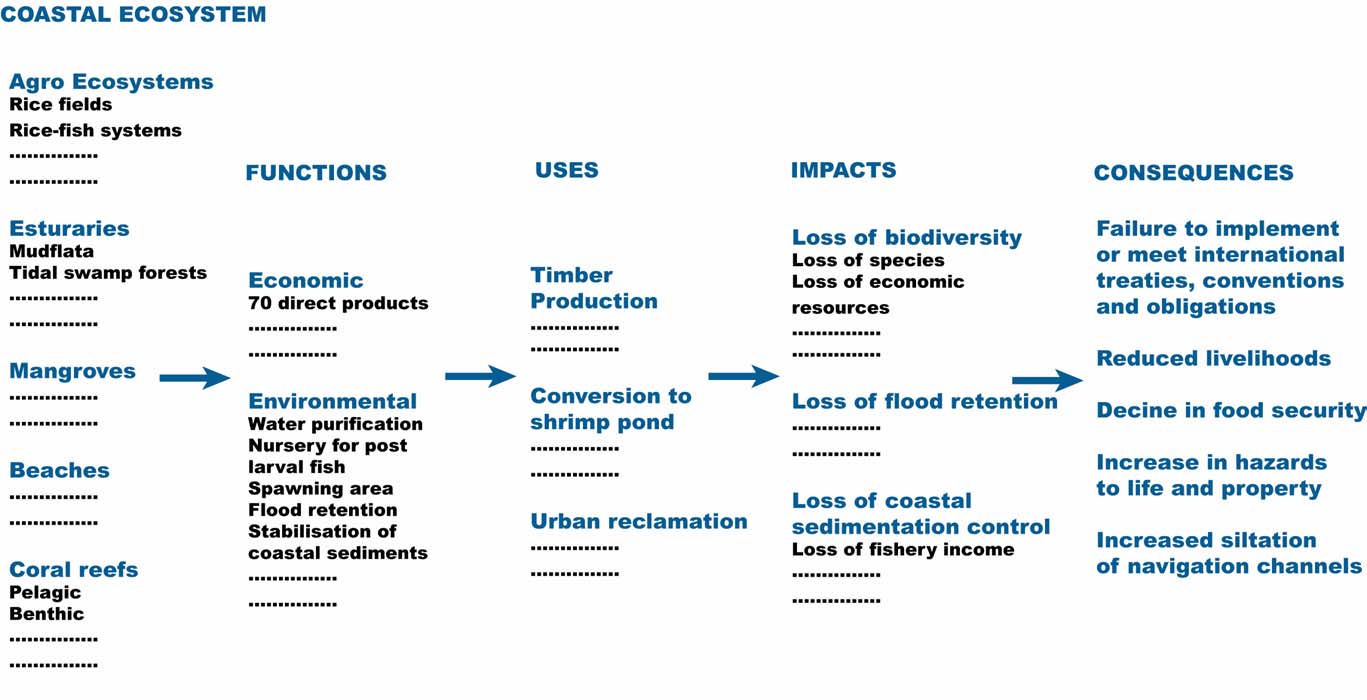
Figure 5 Example of a technically based ICM knowledge taxonomy
14
5.4 An ontology or taxonomy to describe the ICM knowledge domain is currently implicit
in PEMSEA's activities. A more explicit ontology would be useful to provide a
`knowledge map' of the area and develop shared conceptualisations of how
integration occurs between technological, social, economic and political factors.
Such ontologies could be used for codifying knowledge in a systematic manner and
provide a further mechanism for creating, organising and sharing knowledge across
sites. There have been attempts in the past to capture coastal management
ontologies through simulation models such as `Simcoast'. However, the advantage
of developing an ICM ontology at PEMSEA would be that it is embedded in practice.
As ontologies are dynamic, the RNLG could be used as a forum to new meanings
and relationships as they develop over time. An example of a technical ICM
ontology is shown in Figure 5.1
5.5 The PEMSEA web site has been developed professionally and the most dynamic
aspect is the media resources centre with a photo library, story ideas and news
releases. There are currently 16 media partners mainly from the Philippines and
there is scope to develop this media network much more widely in the region.
Another innovative aspect of the web site is the Young Environmentalists section
with potential to grow substantially given the much higher internet usage by young
people. The current target audience of the web site tends to be focused more on the
general public rather than the practitioner audience. To a certain extent, this may
be overcome by the development of websites for local sites. Even though the
dominant language of the website is English, the local websites could be published
in native languages to promote greater ownership and diversity of the regional
network. The search engine on the current site needs greater visibility and updating
as many publications after 2000 are not currently on its database.
5.6 There is tremendous potential to develop an exclusive extranet for all regional
participants in the PEMSEA programme. This would build on PEMSEA's
uniqueness of a repository of practical ICM knowledge based on ground level
operations. The extranet could serve two important purposes; namely developing a
`Regional Learning Centre' and supporting online communities of practice that are
problem centred. The social relationships in these communities could strengthened
and nurtured through the annual RNLG conference. At first, practical tacit
knowledge could be placed on an extranet by the RPO in line with local user needs
and frequently asked questions (FAQs) of site managers. This would take some of
the pressure of site managers and allow them to focus more on atypical issues. In
time, local and national sites could be encouraged to contribute to this knowledge
repository so that valuable knowledge and lessons were shared and it engendered
greater two-way dialogue promoting sustainability.
5.7 The current PEMSEA website still has a Philippines bias given that the top
keywords as `PEMSEA', `Manila Bay' and `Land pol ution in the Philippines' and the
three top visiting countries are Philippines, Netherlands and Thailand. As the
internet is principally about sharing knowledge and information, a survey was
conducted to ascertain how easy it was for users to find PEMSEA and IW: LEARN
on internet search engines. The results are shown in Table 5.1. It should be noted
15
that users tend to lose interest in internet searches after scrolling 30-40 results. The
IW: LEARN web site scored poorly in all the relevant keywords related to this
programme.
Keyword PEMSEA
IW:
LEARN
Integrated Coastal Management
30
>100
Sustainable development marine water
44
>100
Marine zonation
69
>100
Coastal zonation
82
>100
Coastal partnership
>100
>100
Coastal management
>100
>100
Integrated information management system
>100
>100
Table 1 Keyword Ranking for PEMSEA & IW: LEARN on internet search engine8
5.8 The poor standing of the IW: LEARN site on search engine ranking may be
principally due to its aim to develop global communities in international waters rather
than supply direct explicit knowledge through a search engine. One of the difficulties
in maintaining global communities of practice is sustaining the passion and interest
in any given area over time. Face to face meetings are essential to renew and
revitalise trust in these relationships. Community members need to feel that they are
contributing and receiving in equal measure. If these relationships become
unbalanced, commitment to such communities is likely to waver. From the IW:
LEARN brochure, there appears to be a few hundred solid participants with a
possible few thousand other interested parties global y. However, there are a
number of unanswered questions that arise from IW: LEARN's e-forums:
How are the interest areas identified and promoted?
How are champions or e-forum co-ordinators selected to ensure that they bring
the necessary passion, commitment, contacts and expertise to online
discussions?
Are e-forums problem centred or theme based?
Is there a critical mass of participants to sustain these communities globally with
all the cultural differences and language problems?
What role does storytel ing play in these communities of practice?
Currently, none of the staff at PEMSEA are actively engaged in IW: LEARN
communities of practice as there appears to be an imbalance in benefits gained
from their contributions and pressures on their time. For example, IW: LEARN does
not provide a one-stop shop on ICM issues in the East Asian Seas which would
make the site much more valuable and useful. One way of enhancing IW: LEARN's
communities of practice may be to develop and co-ordinate a few regional websites
such as East Asian Seas, Caribbean and so on. These regional sites could be more
problem centred encouraging deeper debate and dialogue and sharing knowledge
8 The internet survey was conducted on 28th March 2003 using the Google search engine at www.google.com.
16
through regional stories. It is more likely that these communities could be nurtured
through face to face meetings at regional forums or conferences such as the RNLG.
As these regional networks and communities develop over time, there is a greater
likelihood that global communities would be much more successful as they become
embedded in local and regional practice.
5.9 As RPO site managers are over-stretched, timely support to local sites may not
always be available when required. A document management system (DMS) is not
currently employed to facilitate frequently asked questions (FAQs) leaving site
managers to spend more time on more complex issues. Documents and templates
such as examples of Memorandum of Agreements, Environmental Impact Analysis
and Pre-feasibility studies could be indexed and published on the intranet/extranet.
On the one hand, local users at site level could search and retrieve necessary
documents to help them solve their current problems through certain level of
knowledge duplication. On the other hand, the DMS could facilitate a two-way
exchange of documents from local sites so that their new knowledge in the form of
documents could be shared more widely in the region. The key design criteria for a
DMS would be the usefulness and relevance of the knowledge to the end user.
5.10 The two core competencies of PEMSEA are its technical expertise and its political
persuasion skil s. The political persuasion skills are derived primarily through its
strong leadership at the top. However, as PEMSEA develops, these skills will be
needed more widely throughout PEMSEA. A KM system used in many
organisations to get closer and be more responsive to customers and stakeholders
is the use of customer relationship management (CRM) systems. This moves the
relationship with each customer or stakeholder away from traditional segmentation
approaches and more towards customer centric orientations. Each stakeholder is
treated individually and uniquely. For example, the CRM system would check its
database of any incoming cal and display all the details of the caller on the
receiver's desktop including al transactions, emails, notes from previous phone
conversations, letters, faxes and so on. Such CRM systems are not currently used
at PEMSEA.
5.11 Apart from a strong technical knowledge base at PEMSEA, there is a wide range of
expertise developing at local site level and local universities. However, many local
site staff may not know that there are `experts' with knowledge in their problem
areas at other local sites or local universities. One approach to enhance
sustainability through local knowledge sharing is to use a Who's Who or Expertise
Yellow Pages. This would make local staff more self reliant through exploring
different approaches using vicarious learning and developing greater horizontal
integration between project sites. The directory would contain a listing of local
project staff and external experts such as local universities and other donor funded
projects who were prepared to share their knowledge and expertise in ICM.
5.12 As PEMSEA has developed considerable strengths in multimedia and video
production, there is a tremendous opportunity to widen its dissemination of training
materials through e-learning. Knowledge from training sessions could be
encapsulated in CD format using video recordings of training sessions, case studies
and Powerpoint presentations. There would still be a need to run training sessions
to develop bonding and social cohesion between participants but e-learning
17
techniques could make capacity building exercises much more efficient and more
easily accessible to local trainers via CD-ROM and the internet.
5.13 A number of PEMSEA case studies have been developed encapsulating lessons
learnt in ICM implementation. As the number and complexity of cases rises, a case
based reasoning (CBR) system could be employed to see if past cases could throw
insights into current problems. CBR offers a technique for acquiring and storing past
problems, their solutions and the reasoning behind them into a retrieval system. The
CBR system could be developed in terms of descriptors such problem identification,
project delivery solutions and project outcomes.
5.14 The Integrated Information Management System (IIMS) is still in its development
phase and poses a number of challenges for PEMSEA. There is limited capacity of
staff in database management for its successful future development and a limited
understanding of its use at local project level. There are 192 data entry forms; much
of which is uncollected at local level due to the scarcity or paucity of data. There is
also some hesitancy among certain countries and agencies to share their data. In
essence, IIMS is a decision support system (DSS) that combines data analysis with
sophisticated models to support non-routine decision making. The current IIMS
incarnation suffers from being data driven rather than user driven. The argument is
that it encourages the development of baseline data to make comparisons with
future interventions. However, there is limited understanding at local project level on
how IIMS will help make better policies or decisions in a practical manner. Some
examples identifying key indicators and mechanisms for monitoring and predicting
the effect of policy and management options at a local level would be helpful. This
may help to bridge the gap between the scientific community and decision makers
in local government, central government and the private sector. Care needs to be
taken that the IIMS doesn't become an end in itself and consumes excessive
resources that could be better prioritised elsewhere.
6.0 Communities of Practice
6.1 One of the major strengths of PEMSEA is the tacit knowledge of ICM developed at
different levels and embedded in the minds of different people. One of the principal
challenges is how to externalise, share and integrate this valuable tacit knowledge
throughout PEMSEA and its stakeholders. Once the knowledge is made explicit
there are a variety of KM tools and systems that can be employed to codify, store
and retrieve this knowledge. Informal settings are more conducive for externalising
tacit knowledge rather than more formal work groups or project teams. This is why
organisations have recognised the intrinsic value of water coolers, coffee machines
and subsidised canteens for encouraging greater informal dialogue and knowledge
sharing.
6.2 Another approach to cultivating tacit knowledge sharing is the promotion of
`communities of practice'. These are informal, self selecting groups that are open
ended without any deadlines or deliverables. People come together from similar
backgrounds with a passion and interest in improving practice. Storytelling and
narratives are important for embedding the tacit knowledge socially in a community
of practice. Each story has a connection with certain ideas, lessons and best
18
practice. Stories are self perpetuating creating new knowledge that reinforces and
renews itself.
6.3 At PEMSEA, the existing networks are more formalised and characteristic of
professional networks rather than communities of practice. For instance, there is a
Friday club where all RPO staff get together monthly and receive a presentation
from a staff member on a certain aspect of PEMSEA's activities. There is also an
annual retreat to reflect and encourage knowledge sharing between participants.
There is no formalised network among PMO staff across regional countries such as
the use of online discussion groups. Language is likely to be a deterrent. More
formalised networks also exist at national level at `hotspot' sites and at regional level
through the annual RNLG forum. Each of these networks (including the study tours)
are likely to result in some informal groupings and promote certain dialogue
between participants. The chal enge is how to keep this dialogue alive. In its true
sense, the networks at PEMSEA are more characteristic of professional networks
rather than communities of practice.
6.4 PEMSEA has an opportunity to build on its professional networks and cultivate a
variety of communities of practice for greater sharing of tacit knowledge. This can be
promoted in the fol owing manner:
Providing leadership for a community of practice from a `community coordinator'.
Establishing events to bring the community together and giving staff time to
attend these meetings.
Having a critical mass of members in the community to avoid loss of participation
or interest.
Developing a learning agenda with some learning projects.
Producing knowledge artefacts such as documents, tools, stories and websites.
7.0 Intellectual
Capital
7.1 The real benefits of the PEMSEA programme are the considerable development of
intellectual capital in ICM across the East Asia Seas Region. This intellectual capital
could be further enhanced through the application of KM principles and practices.
Intellectual capital is the economic value of two categories of intangible assets of a
company: organisational ("structural") capital and human capital9.
7.2 Human capital is based on the competence of employees such as their capacity to
act in a certain situation. This is clearly evident through PEMSEA's focus on
capacity building, enabling environments and stakeholder awareness activities. A
closely related aspect of human capital is high level of social capital developed at
9 This definition of intellectual capital comes from OECD. "Guidelines and instructions for OECD symposium." International
Symposium Measuring and Reporting Intellectual Capital: Experiences, Issues and Prospects, Amsterdam. There is consensus in
the literature customer capital needs to be included in the OECD definition. For example, please refer to Stewart, T. A. (1997).
Intellectual Capital: The New Wealth of Organizations, Doubleday/Currency, New York, Svieby, K. (1997). The New
Organizational Wealth: Managing and Measuring Knowledge-Based Assets, Berrett-Koehler, San Francisco.
19
local, national and regional levels. In Phase 2, the emerging networks are forming
social communities along three dimensions:
Strengthening linkages and connections between members of different
networks.
Increasing interactions between different individuals regionally resulting in
greater levels of trust, norms and expectations.
Developing shared meanings, interpretations and alignment of views regionally
on ICM issues.
7.3 Organisational capital refers to tangible elements within PEMSEA that remain after
employees go home at night. For PEMSEA, this includes its ICM development
framework, IIMS, internal systems, models and databases. Given the strong political
persuasion skills developed at PEMSEA, an additional important factor in intellectual
capital is customer capital. This includes the reputation and influence it has build up
over key stakeholders and political leaders in the region and the strength and
influencing power of these external relationships.
7.4 The col ective experience at PEMSEA including its skills and general know how in
ICM has led to the development of various intellectual assets. These intellectual
assets exist in the form of documents, drawing (zonation plans), IIMS, data and the
processes adopted at PEMSEA such as the ICM development cycle. The resulting
intellectual property could be used in the development of a certification process
such as ISO14001 in the future. This would require a much greater strategic and
concerted effort by donor agencies and international bodies to share knowledge,
expertise and best practice internationally.
7.5 There is a danger that progress may be misinterpreted at community based
demonstration and parallel sites shown in Figure 3.2. Committee based learning
may produce much greater results in terms of concrete developments and
organisational capital. However, community based sites can be shown to develop
much greater levels of social capital in local communities and more likely to lead to
greater sustainability in the future.
8.0 Recommendations
8.1 The most valuable asset at PEMSEA is the tacit knowledge in ICM implementation
developed over the past eight years. There is a danger that the richness of this
knowledge may be lost and the same environmental mistakes perpetuated in the
region if the resulting intellectual capital is not managed effectively. There are five
key KM recommendations that arise from this report:
20
8.2 Develop a funding mechanism to broaden and enhance the knowledge
management dimensions of ICM implementation in the East Asia Seas region
through:
Exploring a medium sized grant from GEF focused on capturing, organising,
evaluating, storing and retrieving the vast range of ICM knowledge and expertise
through human resource interventions and the effective use of KM systems and
technology.
Exploring independent sources of funding and co-financing arrangements with
other donors to ensure the future sustainability and development of ICM
knowledge in this region. For such a venture to be successful, it is likely to
involve much greater levels of co-operation and dialogue with other donor
funded projects such as USAID and DANIDA.
8.3 Articulate a clear ontology of ICM knowledge to promote a shared
understanding of the complexity of coastal systems among diverse
stakeholders through:
Bringing together all the key stakeholders in the PEMSEA programme such as
forestry, fisheries, agriculture and economics to develop a common ontology of
knowledge in ICM and its inter-relationships. This can be updated regularly at the
RNLG forum.
Institutionalising the use of a common and simple systems model showing the
nature and dynamics of the coastal problem at each project site to aid enhanced
decision making by PCC and PMO staff. This common understanding of the
problem is more likely to lead to concerted action by various stakeholders and
avoid the pursuance of simplistic and ill-defined sectoral interests. Systems
modelling could be included as part of the current ICM development cycle.
8.4 Review the current public awareness strategy and action plan to increase
knowledge sharing of PEMSEA's activities and to achieve greater impact by:
Adopting an adaptive management approach to the communications strategy so
that the communications team is more responsive to immediate changes in the
behaviour of key stakeholders on the programme.
Reducing the number of stakeholders targeted through `force field analysis' by
identifying the key stakeholders at any given time who may need to be
influenced through media and PR interventions. This may include targeting
provincial governors who's political support is required to speed up a process or
fisherfolk who need greater awareness of PMO interventions in their
neighbourhood. Stakeholder priorities could be established in conjunction with
the management committee on a monthly basis.
Reviewing and developing PEMSEA's stakeholder database to ensure that
awareness campaigns are not misdirected to those already familiar with
PEMSEA's programme. The review may provide the opportunity to segment
21
certain audiences so that the communications efforts are more focused and
targeted to certain individuals.
Exploring ways of collaborating more fully with the communications activities of
communications managers at UNDP and other related coastal management
programmes in the region.
8.5 Review the current KM tools and systems and explore how technology could
be used to enhance and embed tacit knowledge more effectively through:
Exploring whether the data from 192 forms in the current IIMS system is really
necessary and examining how this data could be used to aid policy and decision
making by providing concrete examples at local level. Future development of the
IIMS needs to be more user led with greater consultation of PMO staff on the
likely nature of their policies and decision making in coastal management at local
and national levels and how the analytical tools in the IIMS could aid them in this
process.
Developing a knowledge repository of practical ICM issues that could be used by
all PMO staff in participating countries. Again consultations with PMO staff and
site managers will reveal the commonly used knowledge and information that
they require on a daily basis. This may include templates of documents such as
EIA, lots of examples of completed documents, legal arrangements and zonation
drawings. Such a knowledge repository could be linked to a document
management system and disseminated over the internet and/or via a CD-ROM.
Constructing a Who's Who or Expertise Yellow Pages database will enhance
greater horizontal integration between project sites and increase the dialogue
between different stakeholders. At the same time, this may result in a reduced
reliance on RPO staff and greater use of other ICM resources regionally.
Exploring e-learning tools to improve the efficiency and overall effectiveness of
the capacity building exercises.
Examining the use of case based reasoning (CBR) systems to maximise lessons
learnt from storing different ICM cases regionally and retrieving them based on
problem identification, project delivery solutions and project outcomes.
Developing an exclusive extranet for all regional participants encompassing a
`Regional Knowledge Centre' of user led ICM knowledge and supporting online
communities of practice depending on changing user interests and needs.
22
8.6 Build on current professional networks to further develop communities of
practice to enhance the creative and innovative capabilities at PEMSEA by:
Providing training on the nature of communities of practice and their value.
Ascertaining interests and passions among RPO and PMO staff and identifying
people willing to assume the role and responsibilities of `community co-
ordinators'.
Providing time for staff attendance at communities of practice and giving them
responsibility to pursue their own learning agendas. Given the regional nature of
the PEMSEA programme, some communities of practice may decide to engage
as online discussion groups at a particular time of their choosing.
Encouraging staff to regularly question assumptions and values on the PEMSEA
programmme to further develop innovative insights and create new ways of
looking at ICM implementation.
Dr Ashok Jashapara
Knowledge Management Consultant
March 2003
23
Annex 6
Knowledge Management Case Studies:
Batangas and Bataan Bay, Philippines
Dr Ashok Jashapara
Knowledge Management Consultant
BATANGAS BAY AND BATAAN
CASE STUDY
"Partnerships in Environmental Management for the
Seas of East Asian" (PEMSEA)
Knowledge Management Perspective
Batangas Bay & Bataan - Case Study
Introduction
Batangas Bay and Bataan are respectively demonstration and parallel sites in the Philippines
for the PEMSEA ICM programme. Batangas Bay has a much longer heritage as it was
involved as a demonstration site in Phase 1 of the programme between 1994 and 1998 in
conjunction with Xiamen in the PR China. The role of a demonstration site in this programme is
to act as a role model for ICM in a country and, consequently, it receives the necessary
training, financial and technical support. In contrast, a parallel site is self-funding and funds its
own training and technical support through PEMSEA.
This case study shall explore the forms of learning, lessons learnt and knowledge sharing
practices at these two sites, the current results and achievements or lack thereof, and the
possible reasons for these outcomes. As a caveat, the reader needs to be aware that
knowledge management practices were not an explicit part of PEMSEA's original TOR and,
hence, any observations or assessments need to be taken in this context.
Organisational Learning
In Phase 1, the dominant form of learning for Batangas Bay was understanding and
implementing the six phase ICM development cycle. One of the key lessons learnt at this time
was the importance of local government commitment and political support. The Project
Management Office (PMO) was established in 1994 and was absorbed into the PG-ENRO
established by the Provincial Government in 1995 as part of the ICM institutional arrangement.
The PG-ENRO was responsible for the operational management activities. In 1996, the
Batangas Bay Environmental Protection Council (BEPC) was established by Provincial
Ordinance to act as the Project Co-ordinating Committee (PCC). The Batangas Coastal
Resources Management Foundation (BCRMF) was established in 1991 and is composed of
23 private member organisations. This body is represented on the BEPC to allow greater
involvement between the private sector and local government on environmental concerns. The
dominant learning outputs in Phase 1 were the publication of the Strategic Environmental
Management Plan (SEMP), the Coastal Environmental Profile for Batangas Bay and the
integrated waste management action plan.
In Phase 2, Batangas Bay and Bataan started to develop organisational routines to embed the
generic ICM development cycle in their day to day activities. This was a form of single-loop
learning where predictable behaviours and patterns were perpetuated. Using hindsight from
Phase 1, Bataan was able to engage in much greater stakeholder consultation than Batangas
Bay for its coastal zoning scheme.
1
The political opportunity for Bataan came in 1999 when Marilou Erni (Executive Director of
Petron Foundation, Inc) contacted PEMSEA about Petron's desire to engage in corporate
responsibility activities linked with coastal management in the spirit of BCRMF. As is common
to many local sites, a coastal cleanup campaign was organised in September 1999 to mobilise
the community using the slogan `Kontra Kalat sa Dagat' meaning `Movement against Sea
Littering'. One continuing chal enge is how to sustain stakeholder interest after a campaign.
Political support for ICM was soon forthcoming from the Bataan Governor Leonardo Roman
who saw coastal management as his lasting legacy. There were numerous coastal
environment problems that needed addressing such as habitat destruction of mangrove areas,
oil spills from shipping and `red tide' phenomena caused by domestic sewage and agricultural
run off along the coastline. The level of political will allowed the formation of a PMO office
named `Bigay Galing sa Kalikasan ng Bataan' or BIGKIS-Bataan in February 2000 to
implement ICM practices. A local name was used meaning `united or bundled' to make the
project more appealing and secure popular support.
However, there are risks to the sustainability of BIGKIS-Bataan as it is stil considered as a
`special project' rather than being institutionalised in local government policy. Governor
Leonardo Roman's final term of office comes to an end in 2004 and there is a likelihood of
succeeding governors shelving the legacies of their predecessors. The loss of political
commitment would pose a serious threat to the parallel site. However, there appears to be
considerable commitment from the Bataan Coastal Care Foundation composed of 16 private
sector organisations locally who contribute financial resources to the BIGKIS-Bataan in equal
measure to the local government. They are also represented on the local PCC and monitor the
performance of the PMO.
The organisational learning at these two sites has been more institutionally or management
focused rather than technically focused on ecological problems and the likely impacts of
interventions on coastal systems. There has been some articulation of coastal dynamics in
SEMP but this understanding is not commonly shared among PMO staff. This narrow focus
can inhibit the further development of shared understanding of coastal problems among
stakeholders and reduce any aspirations towards `integration' in coastal management. For
instance, neither PMO teams made explicit their understanding of coastal dynamics in their
locality, and the fisherfolk at the mangrove seedling nursery project were unsure of the benefits
of the project. This suggests the need for developing a common ontology and deeper
understanding of coastal systems dynamics through stakeholder discussions and
consultations. This would allow shared understandings to be embedded within PMO staff and
the local communities. An example of the coastal systems dynamics at the alternative
livelihood project in Bataan is shown in Figure 1. Another example of problem identification and
consequences at the Bataan mangrove nursery is shown in Figure 2. Such shared mental
models would represent a form of double-loop learning as assumptions concerning coastal
dynamics could be questioned more easily and new insights developed. These maps are
dynamic and represent a starting point for further exploration.
2
Figure 1 Coastal systems dynamics at fisherfolk livelihood project in Bataan
3
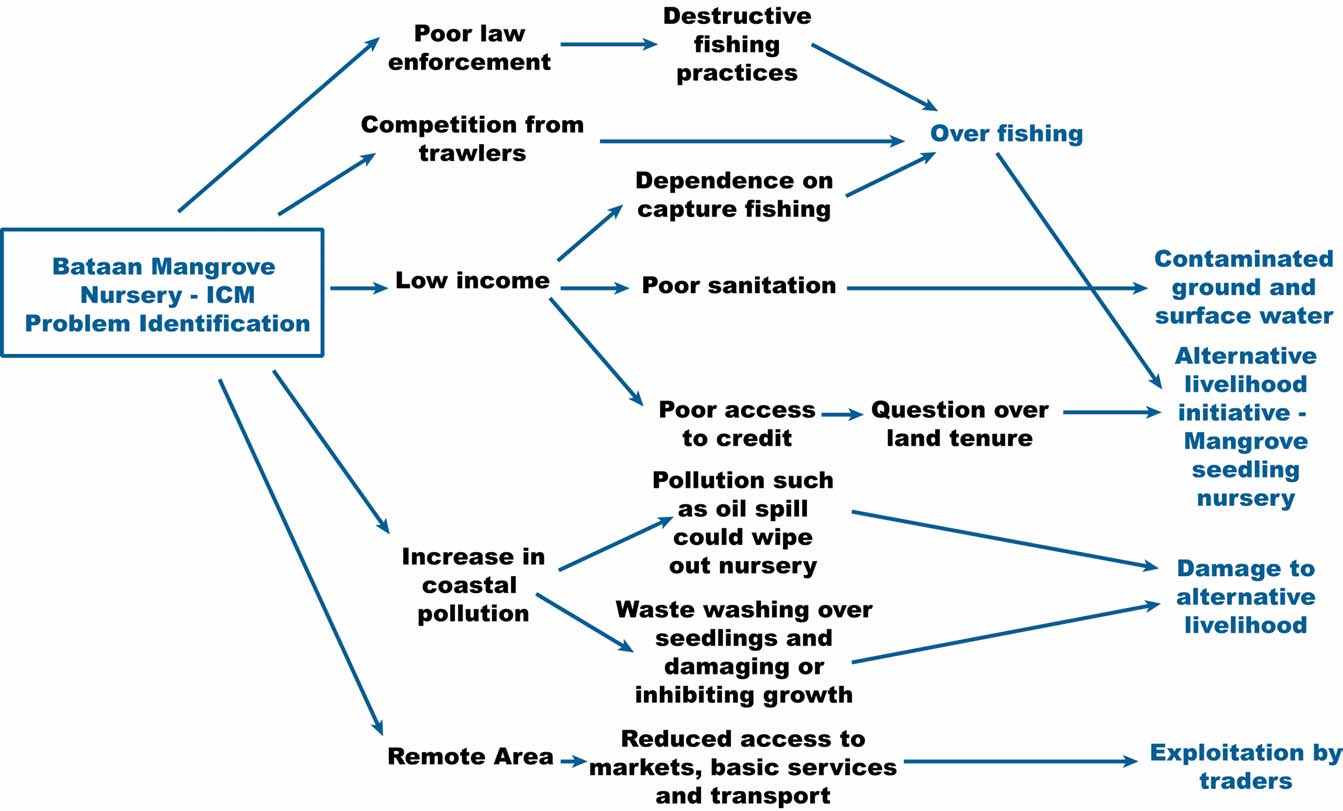
Figure 2 Problem Identification at the Bataan Mangrove
4
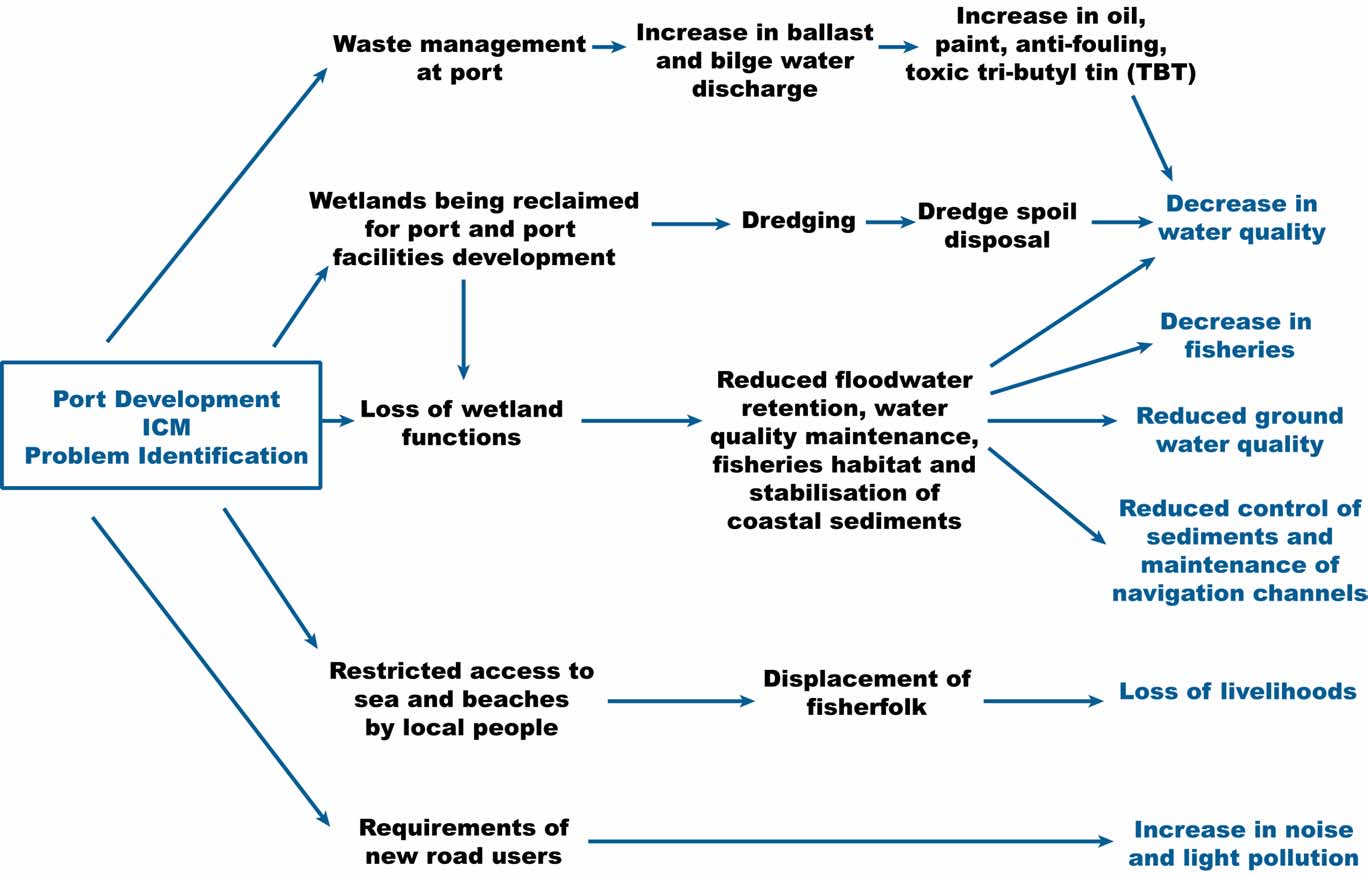
Figure 3 Problem Identification at Batangas Bay Port Authority Development
5
The current expansion of Batangas Bay Port Authority poses a number of serious challenges
to PG-ENRO. There are many problems and potential conflicts that arise from this situation.
For example, the plan to increase dredging and reclamation of wetlands will lead to a loss of
wetland functions resulting in reduced water quality, fish stocks, control of sediments and
maintenance of navigation channels. The complexity of the current problem is illustrated in
Figure 3. The PCC as a policy forum has thus far prevented the ocean dumping of dredged
materials. It is certain that without a mechanism such as the PCC, occurance of adverse
impacts would be more likely. Significant lessons will arise from examining how PG-ENRO
resolves the potential conflict of interest between a large stakeholder in the region and a
member of their PCC.
A form of double-loop learning that has questioned basic assumptions and moved the two sites
outside the confines of the ICM development cycle has been their explorations around public
private partnerships (PPP). As local governments do not have the financial means or technical
capabilities to address the growing concerns over solid waste generation in their region, the
Batangas Environmental Services, Inc. (BESI), a public corporation of 11 municipalities and 2
cities, was registered in May 2001. There was an ongoing dialogue with a consortium of New
Zealand private companies identified after the pre-feasibility studies but the Governor withdrew
his support for PPP for unstated political reasons. Such ventures that break new ground can
suffer from loss of political will arising from `NIMTO' (not in my term of office) and `NIMBY' (not
in my back yard) syndromes.
Batangas Bay has had a major achievement in the development of a junk shop operator co-
operative for recycling waste. The co-operative is called `BBREC' locally meaning `drinking
wine'. The key lesson learnt was continuous engagement with junk shop operators to develop
trust even though many early meetings were very poorly attended. Junk shop operators tend to
be sole and low volume operators resulting in fierce competition among them and fluctuating
sales prices due to the strong buying power of intermediaries based in Metro Manila. As a
consequence of training and seminars, 17 junk shop operators agreed to form a cooperative
with a Board of Directors and contributions towards membership fees and monthly
subscriptions. The co-operative collects paper, soft drink bottles and tin cans from households,
schools, a variety of offices, dump sites and a Memorandum of Agreement was endorsed by
the municipal government to allow them to collect waste in their region. The co-operative is
thriving resulting in higher income and employment and a reduction in the volume of waste in
the region.
This level of success has been absent in the alternative livelihood project linked with a
mangrove nursery and mussel culture project in Bataan. The same level of engagement hasn't
occurred leaving ordinary fisherfolk unsure of the true project benefits. This is most likely due to
the fact that the junk operator co-operative has been functioning for 4-5 years and supported
by a project officer funded by a Dutch NGO. In contrast, the alternative livelihood project in
Bataan was only initiated a few months back. Soft loans were provided for the project but these
are not being invested back into the project. Closer working with these communities and
training could help increase awareness of ICM issues and provide the much needed financial
advice to help poverty alleviation.
An important aspect of organisational learning is the notion of organisational or institutional
memory. At both Bataan and Batangas Bay, the institutional memory is predominantly held
within the heads of individuals. High turnover of staff at local sites and PEMSEA has led to a
6
loss of learning and institutional memory. New staff need to be trained, undergo a steep
learning curve and much depends on their starting competencies in this area. The only ways to
mitigate against this loss is to develop employee-friendly human resource practices to retain
staff, promote communities of practice or codify key elements of knowledge in some form of
knowledge repository for easy search and retrieval. The challenge is how to externalise this
valuable tacit knowledge on a regular basis and share it effectively between site members and
externally between sites.
Knowledge Sharing Practices
At site level, knowledge sharing occurs naturally through continual dialogue between a small
project team. A site manager from the Regional Programme Office (RPO) is assigned to
provide technical assistance and co-ordination between Bataan and Batangas Bay. Practical
knowledge is shared regularly through email, phone and site visits. The site visits from the
RPO are written up formally as `mission reports' but they have limited effectiveness as staff are
often overstretched and suffer from information fatigue. A document management system
would help search and retrieve the necessary knowledge when required.
Study tours have played an important role in knowledge sharing particularly in mobilising
political commitment from local leaders such as Governor Leonardo Roman. Staff at Batangas
Bay and Bataan have published articles on lessons learnt in `Tropical Coasts' (a bi-annual
magazine), e-updates (monthly bulletins published on the PEMSEA website) and the regional
RNLG forum. PEMSEA training has allowed local staff to develop their capacities in various
aspects of ICM and develop informal networks with participants from other regional sites. The
training tends to develop competencies in the ICM framework rather than technical
competencies in coastal eco-systems. There is vertical integration between the RPO and local
sites but very litlle horizontal integration so that relevant lessons learnt at other regional sites
could be applied effectively to Bataan and Batangas Bay. These issues could be addressed
more fully in the future.
Knowledge management systems
The main KM systems used at Bataan and Batangas Bay are the internet and the Integrated
Information Management System (IIMS). The internet allows knowledge sharing more widely
through the use of e-updates and contributions of news stories and items to the Media
Resource Centre. The PEMSEA internet site has not been designed to enable greater
knowledge sharing between local sites through a regional extranet. Such an extranet could
provide a knowledge repository of practitioner knowledge useful at local level as well as
facilitating online ICM communities of practice in the region.
The IIMS has been unwieldy comprising 192 data entry forms and more data driven rather than
user driven. Batangas Bay has made the most progress in data generation due to its modern
marine monitoring laboratory. Apart from some applications in coastal zoning, it has been
unclear how this volume of data (much of it uncollected) would help local sites and
governments make more effective decisions and policies.
The current PEMSEA library with over 22,000 titles is not utilised by local staff at Bataan or
Batangas Bay. The library contains a wealth of knowledge that could help local sites question
their thinking and explore new and creative ways of addressing their problems. This could
7
provide a valuable source of external knowledge at site level that goes over and above the
conventional training at PEMSEA. Some innovative ways of using KM systems at local sites
include:
Developing a Who's Who directory or expertise database on the internet to
encourage greater knowledge sharing.
Producing continuous development materials for updating staff skills through
distance learning channels such as e-learning.
Developing an exclusive regional extranet for knowledge sharing and promoting
communities of practice.
Exploring case based reasoning (CBR) systems for acquiring, storing and
retrieving past problems, their solutions and reasoning for knowledge sharing
across the region.
Communities of Practice
Communities of practice are in their infancy at local site level. There is scattered informal
dialogue between local staff in Bataan and Batangas Bay and other regional sites. These
predominantly arise from chance meetings at study tours, training or RNLG. The RNLG has
provided a forum for local sites to share their knowledge formally each year. However, informal
networks are not currently present or supported more explicitly. The same situation arises
among site managers in the RPO where valuable tacit knowledge is more likely to be shared
through chance encounters. There is an opportunity to explore the development of
communities of practice as part of the regional capacity building exercises.
Intellectual Capital
Batangas Bay has been much slower than Xiamen to show external signs of ecological and
socio-economic impacts. This is principal y linked to Batangas Bay dealing with a more
fragmented political system compared with the centralised system in Xiamen. Once political will
is mobilised in a centralised system, action is always faster as decisions are made top-down
through a committee structure. Nevertheless, in the absence of physical manifestations, the
significant benefits of the Bataan and Batangas Bay sites have been their development of
intangible assets such as human and stakeholder capital1. It is not purely the explicit
knowledge and actions that matter but the linkages between stakeholders, the strength of
these relationships and the shared meanings and mental models between them. In the case of
Bataan and Batangas Bay, such social capital has been more evident. Organisational capital
could be strengthened in the future through the appropriate use of KM systems and help
increase the level of organisational and institutional memory.
1 Stakeholder capital is used rather the more common term `customer capital' as it is more appropriate in this context.
8
Conclusions
The principal lesson learnt in Bataan and Batangas Bay has been the importance of political
will for institutionalising and embedding ICM practices locally. The change in political leadership
does provide considerable challenges for future progress in this area. Hence, the main source
of intangible assets have been the strengthening and deepening of stakeholder relationships in
their area. Progress has been characterised as `two steps forward and one step back'2 due to
the changing nature of the political climate.
The ICM development cycle from Phase 1 has been perpetuated through routines as a form of
single-loop learning. Technical learning on coastal systems and processes needs to be
embedded more clearly at site level to ensure that integration moves beyond a theoretical
concept. This would allow much greater shared understanding among stakeholders of coastal
management issues and their inter-relationships. Some good examples of double-learning
were present in the PPP developments where some underlying assumptions have been
questioned. The success of the junk operator co-operative in Batangas Bay was more
attributable to the engagement and perseverance of local staff which was less evident in the
Bataan alternative livelihood project. This may be attributable to the longer time frame and
greater resources found in Batangas Bay.
There is relatively low use of technology to enhance knowledge sharing at site level. This could
be enhanced by better use of the internet and establishing a regional extranet. Implementation
of any new KM systems at site level would require extra resources and thorough training of
staff in their effective use. The IIMS is still very data driven and there is need to examine how it
could be more user led to help decision and policy making at local level.
Communities of practice can help tap valuable tacit knowledge being developed at Bataan,
Batangas Bay and other local sites in the region. However, such self sustaining informal
networks are not currently evident. They could be developed through problem centred on-line
discussion forums and reinforced through more formal networks such as the RNLG. This would
allow much greater horizontal integration of learning between regional sites and create greater
balance between knowledge flows from PEMSEA's RPO.
Dr Ashok Jashapara
Knowledge Management Consultant
March 2003.
2 Please refer to Chua, Thia-Eng, S. Adrian Ross, Huming Yu, Gil Jacinto and Stella Regina Bernad, (1999), Sharing lessons and
experiences in marine pol ution management, Quezon City, Philippines: GEF/UNDP/IMO, pp. 12.
9
Annex 7
Resource Mobilization
(as of December 2002)
RESOURCE MOBILIZATION (as of December 2002)
Partner Counterpart
Purpose Remarks
Support (US$)
Government:
Municipal Government of Sihanoukville (Cambodia)
596,500.00
ICM demonstration site (5 yr)
MOA of 12 June 2000
GBCIO1 (DPR Korea)
698,435.00
ICM demonstration site (5 yr)
MOA of 08 Sept 2000
Provincial Government of Bali (Indonesia)
520,000.00
ICM demonstration site (5 yr)
MOA of 13 March 2000
State Government of Selangor (Malaysia)
491,895.00
ICM demonstration site (3 yr)
MOA of 19 July 2001
Provincial Government of Chonburi (Thailand)
287,394.00
ICM demonstration site (5 yr)
MOA of August 2001
People's Committee of Danang Municipality
709,250.00
ICM demonstration site (5 yr)
MOA of 07 June 2000
(Vietnam)
Provincial Government of Bataan (Philippines)
50,000.00
ICM parallel site (first yr)
MOA of 10 Feb. 2000
State Oceanic Administration (PR China)
2,647,300.00
Bohai Sea Environmental Management
MOA of 23 July 2000
Department of Environment and Natural Resources
948,347.00
Manila Bay Environmental Management
MOA of 8 January 2001
Government of the Philippines
777,000.00
Support for PEMSEA
MOA of 8 January 2001
Government of the Philippines
142,000.00
Manila Bay Environmental Management
Letter, January 2002
MOMAF2 (RO Korea)
600,000.00
Shihwa ICM parallel site
MOA of 15 March 2001
MOMAF (RO Korea)
40,000.00
Workshop on Local Govt. Network
MOMAF (RO Korea)
80,000.00
Environmental Investment Support Fund
Municipal Government of Xiamen (PR China)
350,000.00
Second Cycle ICM
MOA of July 2001
Municipal Government of Xiamen (PR China)
16,425.00
RNLG workshop, Leadership training, Study
tour
Total government
8,954,546.00
Private:
Wastes Systems New Zealand
200,000.00
Waste management facility (Batangas)
MOA of 14 July 1999
Hatfield Consultants
150,000.00
Quest simulation model (Bali)
Proj. Doc. 22 June 2000
Bataan Coastal Care Foundation
50,000.00
ICM parallel site
Total private sector
400,000.00
Sida/CMC
36,000.00
Tropical Coast
39,480.00
Regional Training on IEIA
38,700.00
Regional Training on Proj Dev't. Management
49,640.00
Regional Training on ICM
Total: Sida/CMC
163,820.00
IMO
200,000.00
Training/Regional Mechanism (2000 2001)
150,000.00
Port Safety & Environmental Management
PID, 08 Feb 2002
System 2002 2003)
Total IMO
350,000.00
Grand Total
9,868,366.00
1General Bureau for Cooperation with International Organizations
2 Ministry of Maritime Affairs and Fisheries
Annex 8
PEMSEA Cooperation and Collaboration with Partners
PEMSEA Cooperation and Collaboration with Partners
1. Collaborative activities that the Regional Programme has undertaken from July
2000 to December 2001.
(1) Oil Pollution Preparedness, Response and Cooperation (OPRC) training with
the Harbour Department (Thailand), the Philippine Coast Guard, and East Asia
Response, Ltd. (EARL). The Regional Programme in cooperation with IMO
Technical Cooperation Division and EARL conducted an OPRC training course
for supervisors and on-scene commanders in Bangkok, Thailand and Manila,
Philippines. The training aimed to build the skills of relevant personnel in
planning, coordinating and supervising response operations to oil spills along
Manila Bay and the Gulf of Thailand and to promote intergovernmental, inter-
agency and inter-sectoral partnerships.
(2) A regional training on Strengthening Recovery of Ship Pollution Clean-up Costs
and Damage Claims was conducted in partnership with the Maritime Port
Authority of Singapore (MPA).
(3) A workshop on Regional Network for Local Governments, implementation of
the Shihwa ICM parallel site, and development of an environmental investment
support fund with MOMAF, Kyonggi Provincial Government, City Governments
of Ansan and Siheung, and the County of Hwasung, RO Korea.
(4) Establishment of an ICM parallel site in Bataan, Philippines with the Bataan
Coastal Care Foundation.
(5) Waste management facility in Batangas, Philippines with Waste Systems New
Zealand Ltd. and Batangas Environmental Services, Inc.
(6) Development of a simulation model for Bali, Indonesia with Hatfield Consultants
and Envision Sustainability Tools, Inc.
(7) Development of a hydrodynamic and water quality model with Seaconsult
Marine Research, Ltd.
1
(8) Collaboration with Burapha University for the conduct of the risk assessment
training and development of the initial risk assessment for the Chonburi
national ICM demonstration site.
(9) Collaboration with the Universiti Kebangsaan Malaysia on the conduct of initial
risk assessment for the national ICM demonstration site in Klang, Malaysia.
(10) Cooperation with Universiti Putra Malaysia and Malacca Straits Development
Centre (MASDEC) for the organization and conduct of an international
conference on the Straits of Malacca.
(11)
Establishment of a PEMSEA regional ICM training center with Xiamen
University. The Regional Programme in cooperation with Xiamen University's
International Training Center for Sustainable Coastal Development conducted a
regional training on ICM. The course was designed to provide participants with
the opportunity to analyze practical issues and problems arising from multiple
resource use conflicts and resulting environmental impacts and learn about the
process of integrated management planning and implementation for marine
environmental protection and management as applied in Xiamen.
(12) Cooperative activities with the Coastal Management Center (CMC) and the
Swedish International Development Cooperation Agency (Sida) including
organization and conduct of regional training courses and publication of
Tropical Coasts magazine.
(13) The Ministry of Maritime Affairs and Fisheries (MOMAF), RO Korea is jointly
undertaking with PEMSEA a study on the establishment of an environmental
investment support fund and environmental investment center.
(14) Cooperation with World Wildlife Fund (WWF), Philippines in the development
of an environmental sensitivity index mapping process for Batangas Bay,
Philippines.
2
Collaborative activities undertaken by the Regional Programme during the period
January December 2002.
(15)
The Regional Programme co-sponsored the Asia-Pacific Conference on
Marine Science and Technology, which was organized by the Malaysian
Society of Marine Sciences, the National Oceanography Directorate of
Malaysia's Ministry of Science, Technology and the Environment, and the
Institute of Biological Sciences of the University of Malaya.
(16)
The Regional Programme col aborated with the Environmental Studies
Institute of Miriam College, Globe Programme, Philippine Science High School,
Volunteer Service Overseas and the World Wildlife Fund for the Development
and Implementation of an Environmental Youth Camp Program.
(17) The Regional Programme, in cooperation with the East Asia Response PTE
Limited (EARL) and Yantai Maritime Safety Administration and with the financial
support of IMO, conducted a training course on Oil Pollution Preparedness,
Response and Cooperation for Supervisors and On-Scene Commanders
(OPRC Level 2) in Yantai, PR China.
(18) In PR China, the Regional Programme co sponsored and jointly organized
with the State Oceanic Administration (SOA) the Regional Workshop on
Sharing Lessons Learned Towards Sustainable Coastal Development, which
was hosted by the Xiamen Municipal Government. This Regional Workshop
coincided with the Second Forum of the Regional Network of Local
Government, Leadership Seminar and Study Tour held on 20-24 September
2002.
(19) The Regional Programme participated in the World Summit on Sustainable
Development in Johannesburg by setting up the PEMSEA exhibit and
participating in the panel discussion at the workshop on Large Marine
Ecosystems, as well as in ocean partnership group meetings and a plenary
session of the intergovernmental meetings.
(20) The Malaysia Institute of Maritime Affairs (MIMA) hosted the "Experts Meeting
on Better Coastal and Ocean Governance" in Kuala Lumpur on 18-20
3
November 2002.
(21) An Agreement was issued with GMA Network, Inc. for granting gratis et amore,
the right to use the excerpts from the motion picture Muro-Ami to be included in
the documentary entitled, "The PEMSEA Story";
2. For
2003:
(1) Letter of Intention with the Ship and Ocean Foundation formalizing
partnership with the Ship and Ocean Foundation to undertake activities
including promotion and development of regional strategy for sustainable
development of Seas of East Asia, building national capacities,
establishment and operation of regional think tank, organizing workshops
and conferences.
(2) The Marine Department (formerly the Harbor Department) will host the 9th
Programme Steering Committee (PSC) Meeting in Pattaya, Chonburi province,
on 6-8 August 2003.
(3) The East Asian Seas Congress, December 2003:
· Co-organizer Department of Environment, Malaysia
· Host - Ministry of Science, Technology and Environment (MOSTE) of
Malaysia
· Workshop co-organizers IMO, UNEP/GPA, Ship and Ocean Foundation,
UNDP-GEF Regional Service Centre, WorldFish Center
3. During the 8th PSC Meeting, potential collaboration with the following observers
were discussed:
(1) ILO in the development of a complementary manual to PEMSEA's Port Safety
Audit Manual, which covers aspects related to port worker safety in the
landside port operations;
(2) INTERTANKO on issues and initiatives relating to tanker port safety, oil spill
response, and the ratification and implementation of international conventions
by various countries in the region;
(3) IOC/WESTPAC concerning testing of NEAR-GOOS and Remote Sensing
4
Application for coastal management at PEMSEA sites;
(4) Nippon Foundation concerning joint research toward a graduate degree
program in ocean governance, and the establishment of a regional ocean think
tank;
(5) The Global Ballast Water Management Project on the development of a
regional action plan for ballast water control and management;
(6) The IMO Technical Cooperation Project on Particularly Sensitive Seas Areas;
(7) The IAEA in technical cooperation projects related to harmful algal blooms;
(8) The Maritime State University (MSU), Vladivostok, Russia, on hosting
PEMSEA trainings using facilities of MSU and development of GIS for the Far
Eastern Seas;
(9) Tohoku University, Japan, concerning the IOC-related activities as well as
aspects of satellite/physical oceanography;
(10) UNEP/EAS on the Action Plan and the GEF project in the South China Sea;
and
(11) The World Bank on policy advice and financing of national coastalrelated
projects and programs.
5
Annex 9
An Example of Implementation of a Comprehensive Set of
Performance Indicators (Chua, 1998)1
1 Chua, T.E. 1998. Lessons Learned from Practicing Integrated Coastal Management in Southeast Asia. Ambio. Vol.
27(8): 599-609.
1
ICM Performance Assessment
Site: DANANG
Indicators
Danang
Background Information
I. Problem Identification and Program
Formulation
Environmental profile prepared (1); problems
3
· Inception workshop conducted, June 2000
identified and prioritized (1); management boundary
· Environmental profile prepared, September 2000
defined (1)
Program planning undertaken (1), stakeholder
2
· Stakeholders consultation workshop held, June
consulted (1)
2000
Primary data related to program formulation
1
· Data gathered for IIMS, risk assessment and
gathered (1)
coastal strategy
Public awareness created (1)
1
· ICM project newsletter published and
disseminated, December 2000, May, June, October
and December 2001, April, September, October
and December 2002
· Action plan on beach clean up submitted, July 2001
· Action plan on waste segregation submitted,
August 2001
· Flyers on waste segregation published and
disseminated, August 2001, May and June 2002
· Posters on beach clean up published and
disseminated, August 2002, May and June 2002
· Flyers on ISO 14001 published and disseminated,
September 2001
· Communication plan completed and revised,
December 2001
· Regular contribution to PEMSEA E-Updates
March, June, September & December 2000;
January, February, March, April, May & October
2001; January, July, August and December 2002
EIA/risk assessment performed (1)
1
· Risk assessment team established, September
2001
· Training workshop conducted, December 2001
· Preliminary risk assessment report submitted,
January 2002
· Final draft IRA submitted, January 2003
Strategic management plan formulated/ 1) and
2
· Coastal strategy completed, November 2001
adopted (1)
· Coastal strategy adopted by the People's
Committee, December 2001
· Declaration for coastal strategy implementation,
June 2002
Issue or special area plan developed (1) and
0
adopted (1)
Organizational (1) and legal (1) arrangements
0
proposed
Financial options developed (1)
0
Environmental monitoring protocol developed (1)
0
Information management system established (1)
1
· IIMS Guide and User's Manual prepared and
distributed, February 2001
· IIMS installed and operationalized, July 2001
· Assessment report on site capacities submitted,
November 2001
· Data encoded in IIMS submitted, November 2002
· Report on application of IIMS and GIS for
generation of data, tables, graphs and maps
submitted, November 2002
· Final report on establishment of IIMS/GIS and plan
for updating and maintenance submitted, January
2003
II. Program Implementation
Interagency, intersectoral council/committee/group
1
· Project Coordinating Committee established, July
established (1)
2000
· Communicators Network established, November
2000
· Green Productivity Group established, May(?) 02
· PPP Task Force for environmental investments
established, June 2002
· Multisectoral committee on the development and
implementation of coastal use zoning established,
October 2002
Coordinating agency/office for program
1
· Project Management Office established, August
implementation established (1)
2000
Capacity (1) and information generating
2 Regional
Training
arrangements
· Regional training course on the development,
established (1)
implementation and management of coastal and
marine environmental projects, April 2000 &
October 2001, Manila, Philippines
· Regional training course on OPRC level 2 for
supervisors/on-scene commanders, October 2000,
Singapore
· Regional training course on environmental impact
assessment for coastal and marine areas,
December 2000, Hong Kong
· Regional training on integrated coastal
management, November 2001, Manila, Philippines
& Xiamen, PR China
· Regional training on environmental risk
assessment, July 2000, Manila, Philippines
· Regional training workshop on the development
and implementation of coastal use zoning and
institutional framework, August 2002, Manila,
Philippines
Site Training
· Training on coastal strategy development, February
2001
· IIMS Training, February 2001
· Workshop on public awareness and planning for
2
ICM, April 2001
· Training on risk assessment and management,
December 2001
· Training workshop on public perception and
willingness to pay using CVM, July 2002
· Training for project task team and multisectoral
committee on the development and implementation
of coastal use zoning, October 2002
Internship at RPO
· Pham Thi Chin, May-November 2002
Information generating arrangements
· Information sharing on risk assessment
· Information sharing on IIMS
· Information sharing through the Communicators
Network
· Information sharing through the Multisectoral
Committee in-charge of zoning
Prioritized agenda for management action
1
· Coastal strategy adopted, December 2001
undertaken (1)
Financial mechanism for program implementation
0
established (1)
Environmental monitoring mechanism established
0
(1) and operational (1)
Concerned ordinance/legislation developed (1) and
0
approved (1)
Law enforcement mechanism established (1)
0
Program monitoring and evaluation protocols
2
· Monthly reports submitted, July 2000-February
developed (1) and implemented (1)
2003
· Quarterly reports submitted, January 2000
December 2002
· PCC meetings held, June & October 2000, April
and August 2001, January & December 2002 to
discuss project implementation
III. Program Sustainability
Perception and attitude changes among
1
· Participation in study tours and RNLG Forum
stakeholders detected (1)
· Participation in PA activities
Critical mass of local/national officials
1
· Participation in trainings, study tours and RNLG
knowledgeable about ICM formed (1)
Forum
Major stakeholders participated in program
1
· Stakeholder consultation, January 2000
implementation (1)
· Communication planning and survey on public
awareness and participation, April 2001
· Stakeholders consultation on waste segregation
and beach clean up, August 2001
· Waste segregation campaign and beach clean up,
mid-2001 to 2002
· Coastal strategy development, February-November
2001
3
· Coastal strategy declaration, June 2002
· Public consultation on environmental investments,
May-June 2002
· Contingent valuation survey, July-August 2002
Human and financial resources by government and
0
stakeholders for continuation of program committed
(1)
Continue implementation of prioritized agenda of the 0
action plan committed by local government (1)
Integration of ICM program into local government
0
environmental management and sustainable
development framework undertaken (1)
IV. Program's Impacts
Environmental quality shows sign of improvement
1
· Cleaner beaches
(1)
· Proper handling of waste in coordination with
URENCO, the local waste management authority
Some environmental degradation arrested (1)
0
Interagency conflicts reduced or resolved (1)
1
· Through the establishments of interagency,
intersectoral council/committee/groups and ICM
Project Coordinating Mechanism
Use conflicts minimized or resolved (1)
0
Evidence of ecological improvement (1)
0
Evidence of socioeconomic benefits (1)
0
Additional financial support from national
0
government/
External sources (1)
23
Note: numbers in parentheses represent scores
4
Document Outline