GEF Pipeline Entry
Project Concept and PDF-B Request
Country:
Serbia and Montenegro
Project Title:
Serbia: Reduction of Enterprise Nutrient Discharges Project
(RENDR) (under the WB-GEF Investment Fund for Nutrient
Reduction in the Black Sea/Danube Basin)
GEF Implementing Agency: World Bank
GEF Focal Area:
International Waters
GEF Operational Program: OP. 8 Waterbody-based Operational Program
GEF Grant Amount:
USD 6-9 million
Total Project Cost:
USD 12-18 million
PDF-B Requested:
US$ 350,000
PDF-B Cofinancing:
US$ 35,000 (from government)
Executing Agency:
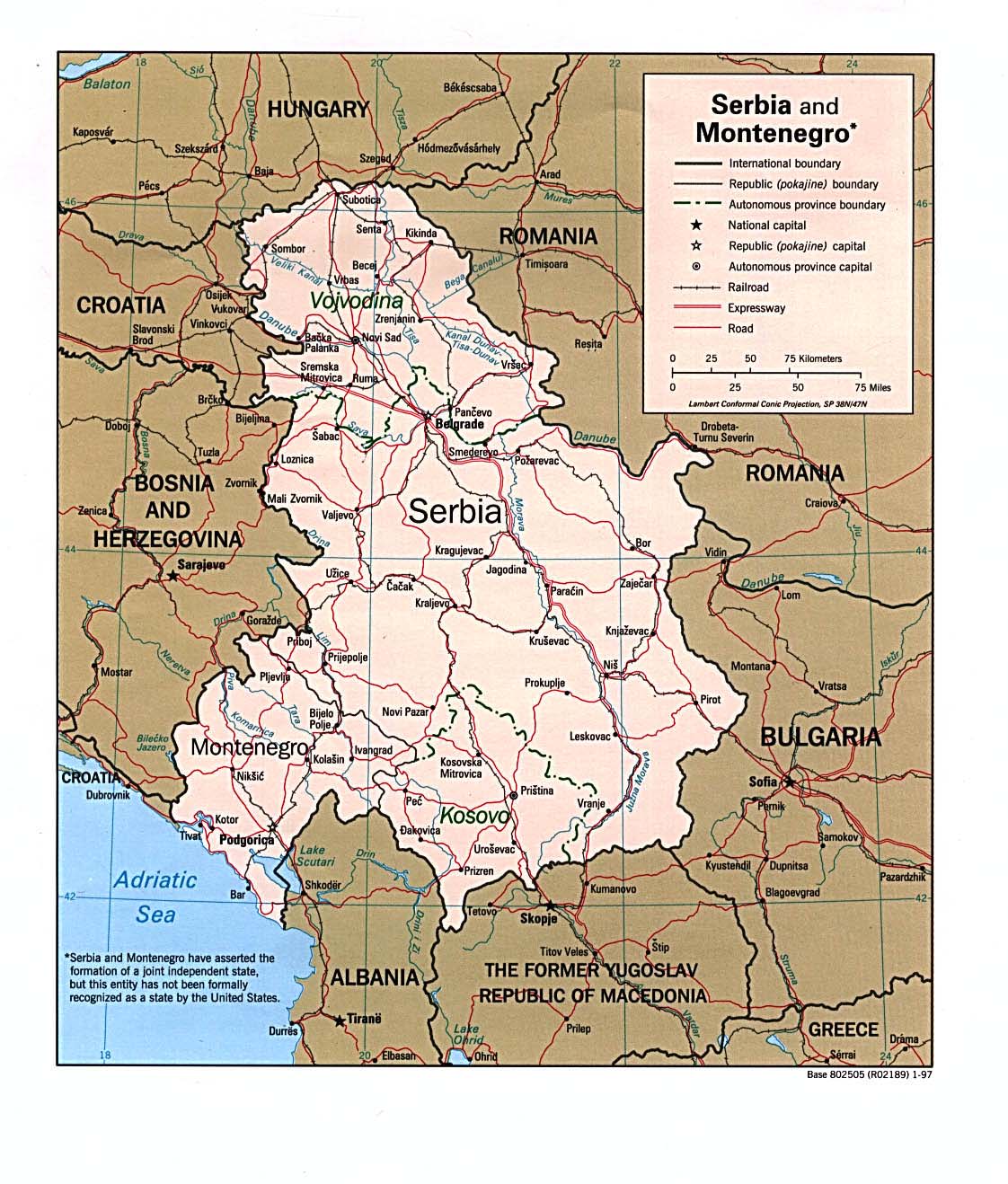
Ministry of Environment and Natural Resources of Serbia
Implementation Start:
January 2005
Duration:
5 years
1. Project
Summary
Serbia is among the largest nutrient polluters of the Danube River and enterprises, notably
agro-processing and large scale livestock breeding farms are major sources of pollution. The
global environment objective of the Reduction of Enterprise Nutrient Discharges Project
would be to reduce nutrient pollution from hotspot enterprises located in the Republic of
Serbia. This would also help the country of Serbia and Montenegro (SAM, the union of the
Republic of Serbia and the Republic of Montenegro) meet its international commitments
under the Danube River Convention. The development objective would be to reduce the
negative public health, economic and amenity impact associated with water and soil pollution
from enterprise pollutant discharges. The proposed project would consist of four
components: (i) Regulatory Reform and Capacity Building; (ii) Investment in Industrial
Nutrient Reduction (incl. fertilizer factories, agro-processors, and large-scale livestock
farms); (iii) Awareness Raising and Replicability Strategy; and (iv) Project Management and
Monitoring.
2. Country
Ownership
(a)
Country Eligibility
SAM has signed (2002) and ratified (2003) the Convention on Cooperation for the Protection
and Sustainable Use of the Danube River (Danube Convention) (1994). Please refer to
para.s 5 and 6 for more information on this.
(b)
Country Drivenness
June 2002
1
In August 2002, the Ministry for the Protection of Natural Resources and Environment
(MENR) of the Republic of Serbia (ROS) which is also the GEF Operational Focal Point for
this republic officially requested World Bank support in preparing a project under the GEF
WB Investment Fund for Nutrient Reduction in the Black Sea/Danube Basin. Please refer to
para. 8 for a more detailed discussion of this issue.
3.
Program & Policy Conformity
(a)
Project Design
Without GEF grant funding the regulatory framework and monitoring and enforcement
capacity of the State for inducing polluting enterprises to reduce their nutrient discharges and
run-off will remain weak. Furthermore, given the State very limited budgetary resources,
remediation and mitigation activities will remain limited to those areas of environmental
pollution that have direct economic and public health consequences. With GEF funding
would allow putting in strengthening regulatory, monitoring and enforcement capacity of the
state and provide incentives to enterprises to reduce their nutrient discharges and run-off into
the Danube system.
(b)
Sustainability (including financial sustainability)
The project will support regulatory, monitoring and enforcement measures to induce
polluting enterprises to take measures for nutrient reduction. In particular, the integrated
permitting system introduced under the New Framework Law for Environmental Protection
will contribute to the sustainability of the project interventions. Under the new system,
enterprises will agree on compliance plans with the Ministry of Environment that may also
involve the introduction of cleaner production and or enhanced treatment technologies.. The
project would demonstrate production and nutrient containing waste management
technologies that are cost effective means to achieve compliance with regulations and may
even decrease enterprises production costs. This is the main factor that would ensure
sustainability.
(c)
Replicability
The project interventions listed under "sustainability" are also expected to ensure
replicability. The project will also produce a replication strategy.
(d)
Stakeholder Involvement
The project will be designed with direct involvement of relevant government agencies,
notably the ministries responsible for environment and natural resources, agriculture and
privatization, municipalities, enterprise managers, NGOs and monitoring institutions. The
project will also experiment a pilot program on "Public Environmental Information Sharing
Scheme" in which information on pollution emissions from industrial enterprises and their
potential impact on public health and the economy would be shared with the public in an
easily interpretable manner.
June 2002
2
(e)
Monitoring and Evaluation
The project will strengthen the capacity of agencies involved in water quality monitoring.
Regulatory reform will be supported to better measure nutrient discharges from point
sources. A monitoring and evaluation sub-component to gauge project impact on water
quality will be developed during project preparation.
4.
Financing Modality and Cost-Effectiveness
Grant funds will be allocated to private enterprises on a competitive basis whereby the level
of co-funding enterprises are willing to provide will be one of the criteria of selection.
Further co-funding will come from municipalities and the Ministry for Protection and Natural
Resources (MENR) in the form of cash and in-kind contributions. Furthermore, MENR has
requested Bank assistance with a Hazardous Waste Management Project which would be
very complementary to RENDR should it be included in the Country Assistance Strategy
which is currently being discussed between the SAM Government and the Bank and is
expected to be finalized in the Fall of 2003.
5.
Institutional Coordination & Support
(a)
Core commitments & Linkages
The project has been included in the SAM's Transitional Support Strategy and recommended
by the Bank Country environmental Analysis completed in February 2003. The MENR and
GEF Focal point requested the project officially in August 2002.
(b) Consultation, Coordination and Collaboration between IAs, and IAs and EAs, if
appropriate
The Project Team has done a thorough analysis of ongoing and planned donor and IFI
projects in Serbia and has determined that REND would complement them. In particular, it
would help implement the regulatory reform process that is supported by the EU. The team
will remain in close contact with other donors and IFIs to realize synergies and continue
building on each other's work. It should be noted that MENR has played an exemplary role
of coordination between various donors and IFIs.
June 2002
3
Serbia and Montenegro
Republic of Serbia
REDUCTION OF ENTERPRISE NUTRIENT DISCHARGES PROJECT
(WB GEF Investment Fund for Nutrient Reduction in the Black Sea/Danube Basin)
Preliminary Project Concept Note
Background
1.
The section of the Danube that flows through the Republic of Serbia (ROS) is 588 km
long of which about 138 km constitute the state border with Croatia and about 213 km with
Romania. Danube's largest tributaries, Drava, Sava and Tisa, empty into the Danube on
Serbian territory increasing its flow about 2.5 times. Other significant tributaries that empty
into the Danube on FRY territory include Velika Morova, Tamish which comes from
Romania, and Timok which constitutes parts of the Serbian-Bulgarian state border.
2.
SAM is one of the largest contributors to the Nitrogen (N) and Phosphorus (P)
pollution of the Danube River. The Danube Water Quality Model developed in support of
the Transboundary Diagnostic Analysis (TDA) for the Danube River, estimated FRY's
annual discharges at 72,000 N t/y and 7,000 P t/y, representing 13% and 14% of total loads,
respectively. These values place SAM third in N discharges and second in P discharges
among the 13 countries of the DRB. NR identified wastewaters from industrial enterprises,
notably fertilizers and agro-processors, as the largest source of N and P in SAM's Danube
Watershed.1 The same document emphasizes runoff from large pig farms as a major
contributor to nutrient loads from SAM into the Danube and its tributaries.
1 Source: Danube Pollution Reduction Programme, National Reviews, 1998 Federal Republic of Yugoslavia,
Technical Report, Table 2.1.1
June 2002
4
3.
Lack of municipal wastewater treatment (WWT) in FRY cities is also a major
problem in terms of water pollution in the Danube river Basin. Discharge figures listed in
NR indicate that municipal wastewater is the second most significant source of nutrient loads
in SAM.2 The gravity of the situation may be understood if one considers the fact the city of
Belgrade which is located at the confluence of the Save and Danube Rivers and houses a
population of about 1.5 million people does not have any WWT whatsoever and discharges
row sewage into these rivers. Keen to solve this problem, the City of Belgrade has sought
the cooperation of the European Union and in early 2003 the latter tendered two studies a
pre-feasibility study for Belgrade wastewater management (Euro 0.5 million) and a
feasibility study/technical assistance to the City of Belgrade on the development of a Public
Private Partnership project for water and wastewater treatment in Belgrade (Euro 2.6
million). However, the cost of establishing primary and secondary treatment facilities are
daunting and presently no international financial organization or private operator has
committed any resources to such a project. Hence the establishment of the basic WWT
facilities is likely to take a significant amount of time. However, once such a project is
underway, the Bank intends to explore possibilities to add to the scheme advanced treatment,
including through a GEF grant under the Partnership. In the mean time there is a possibility
to promote nutrient reduction by polluting enterprises, as the present concept proposes.
4.
During the 1990s, SAM experienced a significant decline in economic activity,
including in the industrial and livestock sectors. As a result, nutrient containing discharges
and run-off has decreased compared to the levels reported in NR. However, since 2000 the
SAM economy has been on an upward trend again. Demand for chemical fertilizers is
increasing slowly from the current bottom levels and the livestock sector is regaining its
traditional export markets. As a result water pollution is expected to rise again. As part of
the economic reforms that the country has been carrying out, the industry is undergoing
restructuring and privatization which will lead to more efficient production decisions by
private investors. During this process issues are arising regarding responsibilities for the
remediation of past damages and mitigation of current / ongoing damages which have also
been caused by extensive nutrient discharges. There is also a recognition that the current
regulatory framework needs to be reformed and enforcement improved in order to provide
the right incentives for enterprises to comply with environmental standards. This is
especially the case for reduction of nutrient discharges which, not having immediate local
public health and economic impacts, has been most undercontrolled by the regulatory
agencies.
Country Ownership
Country Eligibility
5.
SAM has signed and ratified the Convention on Cooperation for the Protection and
Sustainable Use of the Danube River (Danube Convention) (1994). SAM is also member of
the International Commission for the Protection of the Danube River (ICPDR) and was in
full cooperation with ICPDR during the 1990s. It participated in the preparation of the
2 Source: Danube Pollution Reduction Programme, National Reviews, 1998 Federal Republic of Yugoslavia,
Technical Report, Table 2.1.1
June 2002
5
Danube River TDA, prepared a National Review and held a National Planning Workshop in
1998, and contributed a national action plan for SAM to the Five Year Nutrient Reduction
Action Plan (2000). In 2002, the Republic of Serbia participated in two Joint Investigations
within the International JDS-ITR program, one of the Danube and another of the Tisa River.3
Most recently, in December 2002, SAM signed together with Croatia, Bosnia and
Herzegovina and Slovenia the Sava River Agreement which aims to institute integrated river
basin management in the basin.4
6.
The "Report on the State of the Environment in 2000 and Priorities in 2001+ for
Serbia" published by MENR in June 2002 identified water pollution in the Danube River
system as a major environmental problem that requires immediate action. A World Bank
Country Environmental Analysis for Serbia and Montenegro also recommended a project to
reduce nutrient pollution of the Danube as one of the 10 highest priorities for action.
Country Drivenness
7.
In August 2002, the Ministry for the Protection of Natural Resources and
Environment (MENR) of the Republic of Serbia (ROS) which is also the GEF Operational
Focal Point for this republic officially requested World Bank support in preparing a project
under the GEF WB Investment Fund for Nutrient Reduction in the Black Sea/Danube Basin.
(Letter attached.) In discussions since then, MENR has indicated that a project to
demonstrate cost-effective investment measures to reduce nutrient discharges from hotspot
enterprises and to help strengthen the regulatory and institutional framework for the
replication of such investments by enterprises would fit perfectly into the Republic's
priorities regarding environmental protection. The project idea is also strongly supported by
ROS Ministry of Agriculture, Forestry and Water Resources (MAFW).
Description of the Project and its Objectives
8.
The project would reduce nutrient pollution from hotspot enterprises on the Danube
River and its tributaries through investment in cleaner production and better waste
management technologies as well as institutional and monitoring& enforcement
development. As such, it would address some of the main root causes of serious pollution of
a threatened transboundary waterbody, the Black Sea by way of the Danube River. Being
proposed for implementation under the Strategic Partnership on the Danube and Black Sea
Basin, the project would be in conformity with GEF OP No. 8 "Waterbody-based
Operational Program" and the GEF Operational Strategy. The project would also serve as
model for replication in other parts of the basin.
3 Two reports were published on the results of these investigations: "Report on the Joint Investigation of the
Danube River on the Territory of the FR Yugoslavia within the International JDS-ITR Program" and "Report on
the Joint Investigation of the Tisa River on the Territory of the FR Yugoslavia within the International JDS-ITR
Program", both published jointly by the MENR and the Federal Hydro-Meteorological Institute, in Belgrade in
2002.
4 Its priorities are reestablishment and development of international navigation on the Sava and its main
tributaries Drina and Una; establishment of sustainable water management and undertaking of measures to
prevent or limit hazards and reduce the adverse consequences of floods, droughts and incidents involving
hazardous substances.
June 2002
6
9. The
global environment objective of the Reduction of Enterprise Nutrient Discharges
Project would be to reduce nutrient pollution from hotspot enterprises. This would also help
SAM meet its international commitments under the Danube River Convention. The
development objective would be to reduce the negative public health, economic and amenity
impact associated with water and soil pollution from enterprise pollutant discharges. The
project would also provide a working model for the implementation of the ongoing
regulatory and institutional reforms in the republic, in particular the new Law on System of
Environmental Protection, the new Law on Integrated Pollution Prevention and Control and
the new Law on Environmental Impact Assessment. It would also strengthen the regulatory
capacity to specifically deal with nutrient pollution of water bodies in harmony with relevant
European Union Directives.
10.
The project would consist of four components: (i) Regulatory Reform and Capacity
Building; (ii) Investment in Industrial Nutrient Reduction (incl. fertilizer factories, agro-
processors, and large-scale livestock farms); (iii) Awareness Raising and Replicability
Strategy; and (iv) Project Management and Monitoring.
11.
The following sections first lay out in some detail the issues at the enterprise and
regulatory levels leading to high nutrient pollution. Following that the components of the
proposed project addressing these issues are presented.
Nutrient Pollution from Enterprises
12.
Main point source nutrient discharging enterprises in ROS are fertilizer factories,
slaughterhouse and meat processing industries, and large pig and cattle farms.
Fertilizer Factories
13.
There are three fertilizer factories in Serbia's Danube Basin which are significant
nutrient pollution hotspots. These are (i) the IHP Prahova Phosphate Fertilizer Factory
located at the border with Romania and Bulgaria. When operating at full capacity it
discharged into the Danube annually 570 tons of N and 4,760 tons of P5; (ii) the HI Zorka
Sabac Fertilizer Factory located at the border with Bosnia and Herzegovina and annually
emitting about 1,465tons of Nitrogen which is deposited on the Danube Basin through
precipitation6 and disposing of about 40,000tons per year of phosphogypsum directly into the
Sava River which is equivalent to about 200 tons of P7; (iii) HIP Azotara Pancevo which was
previously part of the large Pancevo Industrial Complex and is located to the north east of
Belgrade. When operating at full capacity its estimated Nitrogen discharges are about 4,000
tons per year.8
5 Source: Danube Pollution Reduction Programme, National Reviews, 1998 Federal Republic of Yugoslavia,
Technical Report, Table 2.4.1
6 Source: Danube Pollution Reduction Programme, National Reviews, 1998 Federal Republic of Yugoslavia,
Technical Report, Table 2.4.1
7 Estimated by Zorka Sabac Mineral Fertilizers Engineering Team, personal communication
8 UNOPS, UNEP Project PA 13:Remediation of Wastewater Canal in Pancevo Industrial Complex. Study on
Wastewater Generation, Collection and Treatment in Pancevo Industrial Complex. June 2002, p.4
June 2002
7
14.
All three enterprises are in the process of being privatized. The nature of production
operations and hence their impact on the environment will depend on the new owners'
business plans. Environmental issues arising in this context will include both the remediation
of past damages (such as the removal of Zorka Sabac Mineral Fertilizer's phosphogypsum
that has accumulated in the Sava River releasing P into the Sava water and blocking
navigation), as well as mitigation of impact related to ongoing operations through the
introduction of more efficient technology or of advanced wastewater treatment. However,
there are difficulties in funding the necessary investments needed. The process of
privatization presents an opportunity to address both types of damages in a way that
represents a partnership between the private enterprise and the public regulator.
15.
Ongoing N and P discharges declined in the 1990s, in parallel to decreasing fertilizer
output which followed as a result of SAM's isolation from the world economy and decline in
domestic demand. In 1999, the per hectare consumption of active material mineral fertilizer
was 44kg which is a small fraction of the European levels, ranging between 300kg/ha and
800kg/ha. , which is nearly one fifth of the 19991 level of 195kg/ha. However, there are
signs that the economy is recovering slowly and agriculture is intensifying again. It would
not be surprising that average application rates approach the 1991 level of 195 kg/ha in the
short run. Furthermore, Serbia's fertilizer factories enjoy a comparative advantage over
international competitors due to the high transportation costs that the latter have to face in
marketing to Serbia. Hence, it is expected that mineral fertilizer production will gradually
return to its pre-1990 levels. In the absence of appropriate measures , air and water that
fertilizer production causes would return at full strength as well.
16.
The Government intends to address ongoing damages, including specifically N and P
discharges, through phased environmental compliance plans to be agreed upon by the
enterprises and MENR. The new Environmental Framework Law introduces a new
integrated permit system that has specific provisions on such compliance plans, including a
holistic approach that addresses production and pollution control technologies. The
Government, in cooperation with the private sector, wishes to demonstrate that cost effective
technologies exist that can reduce pollution and enable the enterprise to comply with
environmental regulations.
17.
Addressing past damages is more difficult. Understandably, new investors are not
willing to be held liable for the remediation of damage that, by definition, is not their doing.
Moreover, the state's financial resources are extremely scarce. However, the Government,
including MENR and local municipalities, consider water quality as a priority issue and are
willing to contribute funds towards remediation efforts.
Cattle and Pig Farms
18.
Livestock breeding in large farms is common in SAM, in particular in Vojvodina
which lies entirely in the DRB. The NR estimated that there are around 1,700,000 heads of
cattle, 4,000,000 pigs, 2,000,000 sheep and around 25,000,000 heads of poultry in the SAM
portion of the DRB. NR further reports that there are an estimated 100 large cattle farms,
each of them breeding 1,000 heads on average, and 130 larger pig farms with a total of
June 2002
8
around 1,200,000 porkers bred per year. 43 of these have a capacity of 10,000 (or more)
porkers per year. During the 1990s the livestock industry suffered heavy losses as it lost a
significant share of its export markets. However, primary livestock production, in particular
pork and beef, is expanding again, and the sector is regaining its traditional (pre-crisis) export
markets for livestock products.
19.
Pig farms with more than 10,000 porkers per cycle (6 months) are significant nutrient
hotspots. They are more significant sources than cattle farms even though cattle discharge
larger amounts of N and P per day. Large cattle farms employ the "dry method" of farm
cleaning and manure disposal, while large pig farms employ the wet method and medium
sized farms (farms of up to 20,000 pigs) use a combination of dry and wet methods or the
wet method alone. The wet method of manure disposal involves the disposal of highly
concentrated liquid waste into lagoons or low lying areas. In the low-lying farmlands of
Vojvodina, manure dumped on farmland in high concentrations penetrates frequently into the
groundwater. A number of farms transfer the liquid part of manure from the lagoons into
drainage canals which channel it to the Danube or its tributaries without any additional
treatment. Some of the former socially owned farms, where livestock concentrations are the
highest, do have manure management facilities including bio-digesters, however, because of
the extended periods of non-operation in the past, these facilities are now deteriorated and
very often do not function at all. A list of hotspot farms and the waterways they threaten is
given in Table 1.
20.
Most of the state farms are undergoing privatization and the outcomes are yet to be
seen. In particular, the results of post-privatization restructuring of the bigger enterprises
which have often been privatized trough management or employees buyouts are important
for sustainability of any environmental mitigation measures introduced. Enterprises with
private majority ownership that have a strong financial standing and a clear business strategy
are more likely to be able to sustain technology for better manure and nutrient management.
Meat Processing Industry
21.
Animal waste and wastewater from slaughterhouses and secondary meat processing is
a major environmental problem in Serbia, and especially in the larger Belgrade area and in
Vojvodina. In Belgrade annually about 16 million tons of secondary waste material of
animal origin is generated9. In Vojvodina (Map 1) alone there are 240 slaughterhouses
processing annually about 2.5 million pigs, 85,000 cattle and 13.5 million heads of poultry.
The amount of waste to be disposed of has increased in recent years since the use of bone
meal as livestock feed has been discontinued. Given the lack of proper disposal methods,
animal waste is buried without any treatment or disposed of on communal often poorly
regulated - dumpsites. This poses a public health threat to communities living around and
scavenging on these sites. For this reason, MENR and local governmental bodies tend to
classify such waste as hazardous waste and would like to address it in part through a
Hazardous Waste Management Project, funding for which will likely be discussed with the
Bank as part of the upcoming Country Assistance Strategy (CAS) negotiations for FY04-
9 Republic of Serbia, Ministry for Protection of Natural Resources and Environment "Report on the State of the
Environment in 2000 and Priorities in 2001+ for Serbia", p.127
June 2002
9
FY07. Globally significant environmental damage arises from nutrients and other organic
matter leaching into the groundwater from animal waste dumped without any treatment. It is
also caused by secondary meat processing industries emptying their wastewaters into the
communal sewer or directly into the Danube or a tributary without any treatment for
nutrients. Funding for measures to reduce such nutrient pollution of international waters is
unlikely to come from limited national sources.
Institutional and Legal Framework
22.
Surface and groundwater monitoring are covered under the Law on Waters,
Regulations on Hazardous Substances in Waters, the Official Bulletin of SRS (No. 31/82),
Regulations on Methods and Sampling for the Assessment of Wastewater Quality, and the
Official Bulletin of SRS (No. 47/83) governing surface and groundwater quality monitoring.
Water quality monitoring is conducted by Serbia's Hydrometeorological Institute, which is
responsible for measuring and recording quantities of wastewater discharged, and submitting
the data to the relevant public agency. Monitoring also includes tracking the performance of
wastewater treatment facilities. The results of all testing are published annually. However, the
implementation and enforcement of the Law on Waters has been hampered by a number of
factors, including overlapping mandates among various government institutions and lack of
enforcement capacity. Lack of personnel at the local level to monitor water quality on a
regular basis and inadequate fines for non-compliance have been other factors hampering
enforcement.
23.
The substance of the regulations is also not fully conducive to effective water quality
management. Under the current law, water pollution control is based on ambient
concentrations of specific pollutants in the receiving waters. Maximum effluent
concentrations or pollution discharge loads from individual enterprises are not stipulated.
Ambient standards are stipulated according to the classification of the receiving waters at the
point of discharge, therefore so long as the water quality classification is maintained,
individual enterprises can continue to discharge their effluents into the watercourses. This
approach takes into consideration the assimilative capacity of the receiving water, however it
does not take into account the cumulative effect of nutrient loads on eutrophication. For
nutrient reduction measures to be sustainable, standards with regard to discharged pollution
loads (kg/day) and concentration (mg/L) need to be put in place and enforced.
24.
Management and disposal of manure in cattle and pig farms is regulated in a
dispersed manner. Regulations that cover the matter include the Regulation on "Allowable
Quantity of Harmful Substances in Water", Regulations on "Criteria for Determining
Location and Disposition of Waste Materials on Deposit Sites", Regulations on "Permitted
Amounts of Hazardous and Harmful Substances in Soil and Water for Irrigation and Methods
of their Testing". Furthermore, the Ministry of Agriculture has internal technical guidelines
for disposal of manure, but no legal regulations. Enforcement of this large number of
regulations has been problematic due to lack of coordination, qualified personnel and
monitoring equipment.
June 2002
10
25.
Dumping of hazardous substances, such as phosphogypsum, into the surface waters is
currently addressed by three regulations: Law on Waters ("Official Bulletin of the Republic
of Serbia", No. 46/91, 53/93, 67/93, 48/94, 54/96), Regulations on Categorizations of Waters,
Regulation on Hazardous Substances in Waters ("Official Bulletin of the Republic of
Serbia", No. 31/82). However, these laws and regulations have also not been enforced as the
continued dumping testifies.
26. A
New System Law on Environmental Protection is currently being discussed by the
Parliament of the Republic of Serbia and is expected to be promulgated in early 2003. It has
been designed to overcome some of the institutional shortcomings that so far have hampered
the effective implementation of environmental policy including water protection. It is
expected that the new regulations regarding the competencies of government institutions
involved will lead to clearer demarcation and better cooperation. The Law also provides for
the establishment of an Environmental Protection Agency that will, inter alia, lead to more
systematic monitoring, enhanced environmental information, and stricter inspections and
enforcement, including for water.
27.
Integrated Permits for Existing Enterprises. The Draft System Law on Environmental
Protection is in harmony with EU's Directive concerning integrated pollution prevention and
control, also known as the IPPC Directive (96/61/EC). It requires new and existing
enterprises, including those that are being privatized, to carry out an Environmental Impact
Assessment (EIA) or an Actual State Environmental Impact Analysis (ASEIA), and follow
its guidelines to obtain a permit.10 The draft Law also grants a grace period to existing
enterprises. Such enterprises shall obtain environmental permits not later than December 31,
2010. Following the promulgation of the New System Law, the Law on EIA will be
harmonized with the EU Directive on EIA. The Finnish Government has allocated financial
support for this purpose.
28.
Legal provisions on environmental liabilities of privatized enterprises. A number of
the enterprises that have been slated for privatization have are responsible for significant past
and current environmental damages. While the New System Law clearly assigns the liability
for current damages to the enterprise through the ASEIA and the permitting system (see
above point). The Privatization Law has recently been amended to include a provision that
the state is liable for past damages in privatized enterprises. The Privatization Agency
intends to hire consultants to draft by-laws specifying the procedures and methodology of
specifying the level of liability.
Institutional Coordination and Support
10 The permits would establish that environmental protection measures stipulated in the EIA or ASEIA have
been implemented and that the best available techniques have been implemented; no significant pollution is
caused; the waste management hierarchy is applied; energy is used efficiently; necessary measures are taken to
prevent accidents and limit their consequences; necessary measures are taken to prevent and mitigate the risk of
excessive pollution and harm to the environment, human health and public amenities (parks, etc); and measures
exist for returning the site to a satisfactory environmental condition once the activities cease or the installation
is closed.
June 2002
11
Core Commitments and Linkages
29.
In May 2000, SAM (then FRY) succeeded to membership in the World Bank after a
nearly decade-long hiatus and at the same time a Transitional Support Strategy (TSS) was
endorsed by the IBRD and IDA Boards of Directors. One of the four objectives of TSS is to
"stimulate near-term growth and sustainable supply response". The project objective of
reducing pollution from industrial activity is clearly in line with this objective. Indeed, the
proposed project was included in the TSS Update in July 2002.
30.
The Bank completed a Country Environmental Analysis (CEA) document for SAM in
February 2003 which pointed out poor water quality in the Danube River and its tributaries
and recommended that a project be carried out to reduce nutrient discharges as part of the
GEF Black Sea Danube Partnership.
31.
Bank SAM discussions on the union's first Country Assistance Strategy started in
February 2003 and are expected to be completed in October 2003. At the same time, in
country consultations are being held to prepare a Poverty Reduction Strategy Paper (PRSP)
which is also expected to be completed in the Fall of 2003. In both countries, there are
special working groups focusing on the environment and poverty impacts of various
economic activities and devising short, medium and long term strategies to mitigate them.
The Bank has been providing technical assistance to both republics by holding a workshop
each in each of the republics where the main poverty environment linkages were explored.
In the case of Serbia, the impact of agricultural and industrial activities on water quality was
raised by participants as an important issue. The CAS will include the proposed REND
Project, it is also expected to include a project for FY05 to tackle hazardous waste
management in ROS which was identified by MENR as being among their top priorities in
the short run.
Consultation, Coordination and Collaboration between World Bank, other IAs and
Donors
32.
The present concept has been developed in close coordination with ICPDR which is
implementing the UNDP GEF Regional Project and of which the SAM is a member. Hotspot
enterprises, listed in above sections, were identified as such in GEF supported ICDPR
publications, including the Danube Pollution Reduction Programme, National Reviews 1998
Federal Republic of Yugoslavia, Technical Report; ICPDR, Five Year Nutrient Reduction
Action Plan, August 2000; and the Danube Strategic Action Plan.11 The Bank Team is in
continual contact with the SAM Union government representative at the ICPDR and held a
special meeting with him on the proposed project together with MENR representatives at the
MENR premises in Belgrade during the pre-identification mission. Furthermore, the Bank
Team has been in direct contact with the Danube Regional Project Management Team and
plans to coordinate project policy and institutional strengthening activities with those of the
Regional Project.
11 With the exception of the Pancevo Fertilizer plant which was identified as a hotspot by MENR.
June 2002
12
33.
The project team has also presented the concept to bilateral and multilateral donors
for possible co-financing as part of the EC sponsored DABLAS Initiative. The Team and
MENR will continue to pursue potential co-financing opportunities. There are clear
synergies with the work carried out by the European Agency for Reconstruction, which,
among other things, is assisting MENR in drafting a Law on Waste Management, preparing a
Strategy for Hazardous Waste Management Strategy, and establishment of an Environmental
Protection Agency. The latter will play an important role in enforcing the integrated
permitting system, including as it pertains to water quality.
Project Components
34.
Component 1. Regulatory Reform and Capacity Building. The project would support
policy and legal reforms that target reduction of enterprise nutrient pollution, and support
SAM in its goal to gradually harmonize its environmental laws and regulations with those in
the EU aquis. In particular, the project would support
i) Revision of the water law in such a way that it provides proper incentives for
reducing nutrient discharges from industries into water bodies. The new Water
Law would also include provisions regulating nitrate discharges and runoff from
agricultural enterprises, in harmony with EU's Nitrate Directive (91/676/EEC),
and with the EU Directive on Dangerous Substances (76/464/EEC);
ii) Enforcement of the revised laws and regulations, whereby the project would help
upgrade the Republic's water quality monitoring capacity, through laboratory
equipment and training, as needed;
iii) Revision of the Law on Waste Management to address manure management and
storage.
35.
The outcome of this component would be reduced nutrient pollution resulting from a
new water law being enacted and enforced in harmony with EU Directives, improved
monitoring capacity and revised Law on Waste Management. The cost of the component is
estimated at US$1-2 million.
36.
The project would closely link with ongoing and planned donor-supported efforts to
reform environmental legislation in Serbia. The project would also coordinate with the GEF
funded UNDP/UNEP Danube Regional Project implemented by ICPDR. Co-financing for i)
may be available from donors that are already supporting MENR's the legislative reform
initiatives. A potential WB loan project to address Hazardous Waste Management in ROS
(to be formally proposed by MENR during the upcoming CAS discussions) would co-fund
the revision of the Law on Waste Management (iii).
37.
Component 2. Investment in Nutrient Reduction. Investment support would be
provided to fertilizer factories, agro-processors, notably slaughterhouses, and large-scale
livestock farms that are nutrient pollution hotspots. Small and medium size farms would also
be considered if it is established demonstration activities in several smaller farms would lead
to the reduction of larger amounts of nutrient runoff than interventions in a limited number of
June 2002
13
large farms. In all beneficiary enterprises, level of cost sharing would be a significant
selection criterion. Indeed, initial discussions with some enterprises has indicated interest on
their part to cover a large part of investment costs. Eligible activities supported under the
project would include environmentally friendly production technologies, advanced waste
management and wastewater treatment to reduce nutrient discharges into the Danube river
system. Among hotspots, priority would also be given to enterprises that are privately owned
in order to take advantage of efficiency improvements that result from private ownership and
to leverage with GEF grants private funding for investments aimed at enhanced
environmental performance. Enterprises that have been slated for restructuring and
privatization will only be given support after ownership and financial issues have been
clearly settled. Another selection criterion will be the co-financing made available from
other sources, including those of the beneficiaries themselves, Government, WB or other IFIs
loans, or bilateral cooperation. A competitive grant scheme may be established for the
selection of beneficiary livestock farms. Monitoring of reduction in nutrient discharges will
also be carried out under this component.
38.
The outcome of this component would be a reduction of nutrient discharges into the
Danube and its tributaries thanks to improved production and treatment technology. The
component is estimated to cost between US$ 4 million and US$ 6 million.
39.
Component 3. Awareness Raising and Replicability Strategy. The project would
carry out public information campaigns at the national and local levels to raise public
awareness on the causes of water pollution and its impact on public health, economy and
ecosystems. The project would also institute on a pilot basis a "Public Environmental
Information Sharing Scheme" in which information on pollution emissions from industrial
enterprises and their potential impact on public health and the economy would be shared with
the public in an easily interpretable manner. The out come would be a change in polluting
industries' behavior regarding nutrient containing waste management and compliance with
environmental regulations. This project sub-component would also help the Republic of
Serbia honor its commitments under the Aarhus Convention. The cost is estimated at US$
0.5 million.)
40.
Component 4 would focus on Project Management and Project Impact Monitoring.
The component will support determination of effectiveness of project interventions, notably
water quality improvement and / or pollution load reduction from the demonstrations. This
component will cost around US$ 0.5 million.
Project Implementation Arrangements
41.
MENR would have the overall responsibility for project implementation, however
other project beneficiaries would likely include MAWF, enterprises, municipalities and
Republic Hydrometeorological Service. Consequently, an efficient scheme would have to be
devised for project implementation, including technical, financial, procurement, and
disbursement aspects of the project. This question will be taken up and elaborated from the
early stages of project preparation.
June 2002
14
Project Funding
42.
The overall project costs are estimated to range between USD 12 18 million, of
which USD 6 9 million would be requested from the GEF. Regulatory reforms will be
linked to planned donor support for legal and institutional reform in environment. For
investment operations, co-financing will be obtained from private enterprises and or
municipalities and co-funding will be maximized by using a competitive scheme in selecting
beneficiary enterprises. It is expected that co-financing raised from enterprises and
municipalities will be in the ratio of 1:1. During project preparation, opportunities to blend
the project with the operations of bilateral donors will be also sought increasing the co-
financing ratio. Finally, the Government of Serbia has requested World Bank assistance with
a Hazardous Waste Management Project and the inclusion of the project in the CAS for
FY04-06 will be discussed during the summer of 2003. If the Hazardous Waste Management
Project is included in the CAS, then RENDR will be blended with it and the co-financing
ration will be further raised.
Description of Proposed PDF activities
43.
There is still substantial information to be collected and synthesized and significant
project preparation to be undertaken before the main project components and implementation
arrangements can be finalized. Therefore, a PDF Block B is requested to fund the following:
Baseline/Socio-economic Surveys: Surveys are required to collect and analyze
baseline information. These include soil and water analyses; assessment of existing
manure and nutrient management practice and of the feasibility of improved
practices; assessing nutrient containing waste and wastewater management in agro-
processing enterprises, including fertilizer factories; identifying beneficiary
enterprises; soliciting beneficiary contributions. In addition, baseline surveys need to
be undertaken on socio-economic aspects, institutional arrangements, environmental
conditions, incentives for better manure and nutrient, and water and wastewater
management practices. In addition, the preparation team would need to develop
financial management plans, including financial capacity assessment, social
assessment plan and stakeholder participation, environmental assessment, including
environment operational manual, incremental cost analysis and a monitoring and
evaluation plan, including IW indicators. Such information is required to develop the
design and phasing of the project as well as to monitor the project's impact.
Capacity building and Participatory Approach to Development of Detailed
Project Design and Project Implementation Plan. It is important to involve
Serbian specialists together with local MENR and municipality officials, service
providers, enterprise owners and managers in developing the project components and
detailed implementation plan. Special consultations need to be held with enterprise
owners and managers, NGOs and local officials to obtain their inputs and incorporate
them into the design of the project and its implementation. This would include
identifying specific activities supported by the project, investment needs and TORs
for major contracts. PDF-B funds are critical to build national capacity for
June 2002
15
developing project design and its implementation, monitoring and evaluation after
project effectiveness. Training of personnel would be provided at the regional and
local levels to implement the project. PDF funds are also requested for setting up a
project preparation unit and for initial training in public awareness techniques, and
other areas identified by the project preparation team.
PDF-B Outputs
· Baseline data
· Social Assessment and Stakeholder Participation Plan ( mechanisms for consultation and
coordination; local participation)
· Environmental Assessment
· Environmental and Social Monitoring Plan
· Strengthened institutional capacity for project implementation
· Detailed Project activities and investment needs
· Project Implementation Plan
· Incremental Cost Analysis
· Assessed and selected sub-projects
· Cost Tables
· Operational Manual for detailed Project Implementation
· GEF Project Document for Council Submission
· Project Monitoring and Evaluation Plan
Project Preparation Timetable
44.
PDF-B activities are planned to start in July 2003 and to be completed by the end of
December 2004.
Coordination with other Donors
45.
The MENR is receiving a significant amount of technical assistance from donors, in
particular, the EU through the European Agency for Reconstruction, for the harmonization of
its laws and regulations with the EU directives and for building capacity for better
environmental management. REND project preparation will be closely coordinated with
these activities to achieve synergies. In particular, the TA activity titled "capacity building
for the Ministry for Protection of Natural Resources and Environment, including support to
build up capacity for the preparation of new sectoral legislation, establishment of the
Environmental Protection Agency and the Inspectorate" and planned to take place from
2003-2005 will be very relevant to the Rend Project. The total cost of EAR executed TA
during this period will be EURO 3.8 million of which approximately EURO 1.0 million will
likely be allocated to the above mentioned task and be very relevant to the RENDR project
preparation.
June 2002
16
Budget:
The estimated costs are as below. The Government of the Republic of Serbia contribution will be
US$35,000 of which US$25,000 are expected to be cash and US$ 10,000 in kind.
GEF
PDF-B
Government of
Total
Grant
Republic of Serbia
Consultancy Services (local and International
US$ 230,000
US$ 20,000
US$ 250,000
1. Detailed baseline survey of the project area,
US$ 60,000
US$ 5,000
US$ 65,000
social assessment, stakeholder consultation and
development of public participation plan,
development of environmental and socio-
economic monitoring plans.
2. Identification of project area / enterprise &
US$ 110,000
US$ 10,000
US$ 120,000
development of project components and
activities; incremental cost analysis; cost tables;
development of project implementation plan;
auditing; development of monitoring and
evaluation plan, including IW indicators
3. Local and national training for undertaking
US$ 60,000
US$ 5,000
US$ 65,000
project activities, including public awareness
activities to disseminate information on project
benefits, and international study visits /
workshops / seminars to promote replication of
project activities in other riparian countries.
Goods
US$ 50,000
US$ 5,000
US$ 55,000
Facilities and equipment, including vehicles,
computers, office supplies, office furniture, etc.
Incremental Operating Costs
US$ 70,000
US$ 10,000
US$ 80,000
Recurrent expenditures incurred by Project
Preparation Unit (PPU) to coordinate project
preparation activities, including travel to project
sites, per diem expenses, fuel, driver, vehicle
maintenance, translations, communications (e-mail,
telephone, fax), utilities (power, water, sanitation),
PPU coordinator and assistant, office refurbishment
(painting, renting office furniture, electrical fittings)
and office supplies
Total
US$ 350,000
US$ 35,000
US$ 385,000
June 2002
17
Map 1
June 2002
18
Table 1. Hotspot Pig Farms in the Danube Basin
Name of Farm
River Basin* Priority Number of
Nutrient Load
level
Fatlings
Total N (t/y)
Total P (t/y)
DD IM "Neoplanta", Sirig
Tisa
High
50,000
1,460
68,4
FS "Surcin"
Sava
High
35,000
1,022
47.9
DD "Carnex-Farmakop", Vrbas
Tisa
High
35,000
1022
47.9
DP PIK "Varvarinsko Polje", Polje
V. Morava
High
25,000
730
34.2
Varvarin
DP "1.December" FS Nimes",
High
20,000
584 27.4
Zitoradja
FS "D. Markovic"
Sava
High
20,000
584
27.4
PDP Galad, Kikinda
Tisa
High
PP "Panonija"
Banat
Medium
30,000
876
41.1
DP "Petrovac"
Banat
Medium
22,000
642.4
30.1
PKB "Vizelj"
Danube
Medium
25,000
730
34.2
DP-IM Farma Svinja
Medium
20,000
584
27.4
PD "Zvezdan"
Medium
20,000
584
27.4
DP "Elan", Srboban
Tisa
Medium
17,000
496.4
23.3
FS "Turekovac"
Medium
15,000
438
20.5
PIK Becej
Tisa
Medium
PD Halas Josef - Ada
Tisa
Medium
Zajecar Banat
Medium
DD Stari tamis, Pancevo
Banat
Medium
Podeba Gunaros - Subotica
Tisa
Medium
DP. IM Farma Svinja Velika Plana
V. Morava
Medium
Sources: (i) Danube Pollution Reduction Programme, National Reviews 1998 Federal Republic of Yugoslavia, Technical Report; (ii) ICPDR, Five Year Nutrient
Reduction Action Plan, August 2000; (iii) Danube Strategic Action Plan Annex II
19
20
Document Outline
- Executing Agency: Ministry of Environment and Natural Resources of Serbia
- 1.Project Summary
- Country Ownership
- 3.Program & Policy Conformity
- 4.Financing Modality and Cost-Effectiveness
- Institutional Coordination & Support
- Country Ownership
- Nutrient Pollution from Enterprises
- Project Implementation Plan
- The estimated costs are as below. The Government of the Republic of Serbia contribution will be US$35,000 of which US$25,000 are expected to be cash and US$ 10,000 in kind.
- GEF PDF-B Grant
- Government of
- Republic of Serbia
- Total
- Consultancy Services (local and International
- US$ 230,000
- US$ 20,000
- US$ 250,000
- 1. Detailed baseline survey of the project area, social assessment, stakeholder consultation and development of public participation plan, development of environmental and socio-economic monitoring plans.
- US$ 60,000
- US$ 5,000
- US$ 65,000
- 2. Identification of project area / enterprise & development of project components and activities; incremental cost analysis; cost tables; development of project implementation plan; auditing; development of monitoring and evaluation plan, including IW i
- US$ 110,000
- US$ 10,000
- US$ 120,000
- 3. Local and national training for undertaking project activities, including public awareness activities to disseminate information on project benefits, and international study visits / workshops / seminars to promote replication of project activities in
- US$ 60,000
- US$ 5,000
- US$ 65,000
- Goods
- Facilities and equipment, including vehicles, computers, office supplies, office furniture, etc.
- US$ 50,000
- US$ 5,000
- US$ 55,000
- Incremental Operating Costs
- Recurrent expenditures incurred by Project Preparation Unit (PPU) to coordinate project preparation activities, including travel to project sites, per diem expenses, fuel, driver, vehicle maintenance, translations, communications (e-mail, telephone, f
- US$ 70,000
- US$ 10,000
- US$ 80,000
- Total
- US$ 350,000
- US$ 35,000
- US$ 385,000