
United Nations
Global Environment
Environment Programme
Facility
REPORT ON TRAINING NEEDS
ASSESSMENT FOR THE WESTERN
INDIAN OCEAN REGION
JACQUELINE N. UKU and JULIUS FRANCIS
October 2007
Disclaimer: The findings, interpretations, and conclusions expressed herein do not
necessarily reflect the views of the UNEP or WIOMSA. The opinions and conclusions
in this report are those of the authors.
Training Needs Assessment for the Western Indian
Ocean Region
An assessment study undertaken by WIOMSA on
behalf of the UNEP-GEF WIO-LaB Project entitled
`Addressing land-based activities in the Western
Indian Ocean Region'
Report prepared
by
J. N. UKU and J. FRANCIS
WESTERN INDIAN OCEAN MARINE SCIENCE ASSOCIATION
P. O. Box 3298, Zanzibar,
TANZANIA
ACKNOWLEDGEMENTS
This report was prepared with input from individual experts from Kenya, Tanzania,
Comoros, Seychelles and South Africa who provided reports and took time to fill in
questionnaires distributed during the survey. The authors express their gratitude to
them for their comprehensive input without which this report would not have been
possible.
Funding for this survey was provided by the UNEP-GEF WIO-LaB Project entitled
"Addressing land-based activities in the Western Indian Ocean region" with the aim
of developing a regional training and education programme to enhance awareness on
the impacts of land based activities on the coastal and marine environment.
The authors also acknowledge support from the Nairobi Convention Secretariat under
whose auspices UNEP-GEF WIO-LaB Project is implemented. The staff members of
the WIO-LaB PMU are also acknowledged for assistance/guidance provided in the
execution of this assignment.
i
TABLE OF CONTENTS
LIST OF ABBREVIATIONS AND ACRONYMS ........................................................................ v
EXECUTIVE SUMMARY ........................................................................................................... vii
1.0 BACKGROUND................................................................................................................ 1
2.0 PREVIOUS
CAPACITY
BUILDING INITIATIVES....................................................... 3
2.1
Past needs assessments and training courses conducted in the WIO region ...................... 3
2.2
Existing University and College Training Programmes..................................................... 6
2.3
Other forms of capacity building........................................................................................ 9
2.4
Post courses activities....................................................................................................... 10
2.5
Summary of Previous capacity building initiatives.......................................................... 10
3.0 METHODOLOGY........................................................................................................... 11
4.0
EXISTING SKILLS AND TRAINING NEEDS IN THE PARTICIPATING
COUNTRIES.................................................................................................................... 12
4.1 Kenya................................................................................................................................ 12
4.2 Tanzania ........................................................................................................................... 15
4.3 Comoros ........................................................................................................................... 18
4.4 Madagascar....................................................................................................................... 20
4.5 Seychelles......................................................................................................................... 22
4.6 Mauritius .......................................................................................................................... 24
4.7 South
Africa ..................................................................................................................... 26
5.0 SYNTHESIS
OF
TRAINING NEEDS ............................................................................ 29
5.1
Target groups for training................................................................................................. 30
5.2 Skill
Assessment............................................................................................................... 32
5.3
Mode of course delivery................................................................................................... 34
5.4 Summary
and
Recommendations ..................................................................................... 34
6.0 PROPOSED
TRAINING COURSES .............................................................................. 36
6.1 General
courses ................................................................................................................ 37
6.1.1 Integrated Coastal Management (ICM) with the emphasis on PADH/MWWM
issues ................................................................................................................................ 37
6.2 Specialized courses........................................................................................................... 38
6.2.1 Course on Sediment and Water Quality Monitoring and Analysis .................................. 38
6.2.2 Management of Municipal Waste Water (MWW) ........................................................... 40
6.2.3 Course on Constructed Wetlands for Waste Water Treatment......................................... 41
6.2.4 Course on Habitat Rehabilitation/Restoration.................................................................. 42
6.2.5 Course on Leadership: Leading with impact.................................................................... 43
6.2.6 Course on strategic planning with a focus on the process for the
formulation/development of TDA/SAP for the Western Indian Ocean region ................ 44
REFERENCES.............................................................................................................................. 46
ANNEX I: Terms of Reference Training and Educational Needs Assessment............................. 47
ANNEX II: Brief Description of the SEACAM's Guidelines....................................................... 51
ANNEX III: Training Needs Assessment Questionnaire .............................................................. 53
ii
LIST OF FIGURES
Figure 1: Map of the WIO region.............................................................................................. 2
Figure 2: Levels at which capacity building is required in Kenya .......................................... 13
Figure 3: Levels at which capacity building is required in Tanzania ...................................... 16
Figure 4: Levels at which capacity building is required in Comoros ...................................... 19
Figure 5: Levels at which capacity building is required in Madagascar ................................. 21
Figure 6: Levels at which capacity building is required in Seychelles.................................... 22
Figure 7: Levels at which capacity building is required in Mauritius ..................................... 25
Figure 8: Levels at which capacity building is required in South Africa ................................ 27
Figure 9: Target groups for capacity building ......................................................................... 31
Figure 10: Level of expertise and skill in different areas of management .............................. 32
Figure 11: Recommended mode of course delivery ................................................................ 34
Figure 12: Factors that influence course attendance ............................................................... 34
iii
LIST OF TABLES
Page
Table 1: List of some of training courses and workshops conducted in the region from
2000 to 2005 that dealt with priority areas of the WIO-LaB project ......................... 4
Table 2: List of existing organizations/colleges/universities that offer regular training
topics related to priority areas of the WIO-LaB project in the participating
countries ..................................................................................................................... 7
Table 3: Environmental and management issues of concern in the different sectors
targeted by the WIO-LaB project in Kenya ............................................................. 13
Table 4: Priority areas for training in each category in Kenya................................................ 14
Table 5: Environmental and management issues of concern in the different sectors
targeted by the WIO-LaB project in Tanzania ......................................................... 16
Table 6: Priority areas for training in each category in Tanzania............................................ 17
Table 7: Environmental and management issues of concern in the different sectors
targeted by the WIO-LaB project in Comoros ......................................................... 18
Table 8: Priority areas for training in each category in Comoros............................................ 19
Table 9: Environmental and management issues of concern in the different sectors
targeted by the WIO-LaB project in Madagascar .................................................... 20
Table 10: Priority areas for training in each category in Madagascar..................................... 21
Table 11: Environmental and management issues of concern in the different sectors
targeted by the WIO-LaB project in Seychelles....................................................... 22
Table 12: Priority areas for training in each category in Seychelles ....................................... 23
Table 13: Environmental and management issues of concern in the different sectors
targeted by the WIO-LaB project in Mauritius ........................................................ 24
Table 14: Priority areas for training in each category in Mauritius......................................... 25
Table 15: Environmental and management issues of concern in the different sectors
targeted by the WIO-LaB project in South Africa ................................................... 26
Table 16: Priority areas for training in each category in South Africa.................................... 27
Table 17: Summary of priority issues identified within all thematic areas of the WIO-
LaB project. These issues represent areas for training focus. .................................. 29
Table 18: Target groups and recommended courses identified to meet the training
needs within thematic areas of the WIO-LaB project .............................................. 31
Table 19: Priority skills to be integrated into the training courses for the different
target groups............................................................................................................. 33
iv
LIST OF ABBREVIATIONS AND ACRONYMS
AASA
Aquaculture Association of South Africa
ASCLME
Agulhas and Somali Current Large Marine Ecosystem
AUPELF/UREF
Association des Universités Partiellement ou Entièrement de
Langue Française
COI
Commission de l'Océan Indien (Indian Ocean Commission)
CRC
Communications
Research
Center
CSIR
Council
for
Scientific and Industrial Research
CRTR
Coral Reef Targeted Research and Capacity Building for
Management
CZMC
Coastal Zone Management Centre
ERB
Engineers
Registration
Board
FAO
Food
and
Agricultural
Organization
GEF
Global
Environment
Facility
GIS
Geographic
Information
System
GPA
UNEP Global Programme of Action for the Protection of
Marine Environment from Land-based Activities
IAEA-MESL
International Atomic Energy Agency -Marine Environment
Studies Laboratory
ICM
Integrated
Coastal
Management
InWEnt Internationale
Weiterbildung und Entwicklung
(Capacity Building International, Germany)
IMO
International Maritime Organization
IMS
Institute of Marine Sciences
IOC
International
Oceanographic Commission of UNESCO
IOI-SA
International Ocean Institute-South Africa
IUCN
International
Union
for the Conservation of Nature
JKUAT
Jomo Kenyatta University of Agriculture and Technology
KIE
Kenya Institute of Education
KIFWA
Kenya International Freight and Warehousing Association
KMFRI
Kenya Marine and Fisheries Research Institute
LBA
Land-Based
Activities
MCEN
Marine
and
Coastal
Educators
Network
MIEM
Masters
of
Integrated Environmental Management
MPA
Marine
Protected
Area
MWW
Municipal
Waste
Water
Management
NEMC
National Environment Management Council
NEPAD
New Partnership for Africa's Development
NGO
Non
Governmental
Organization
NPA
National
Action
Programme
OSMAG
Oil Spill Mutual Assistance Group
PADH
Physical
Alteration
and Destruction of Habitats
PAP
Personal
Action
Plans
PEMSEA Partnership
in
Environmental
Management for the Seas of East
Asia
PMU
Project Management Unit of the WIO-LaB Project
ReCoMaP
Regional Programme for the Sustainable Management of
Coastal Zones of the Countries in the Indian Ocean
RAC
Regional Activity Center
v
RRL
Regional Reference Laboratory
SEACAM
Secretariat for Eastern African Coastal Area Management
SADC-REEP
South African Development Community Regional
Environmental Education Programme
SAP
Strategic
Action
Plan
SUCCESS
Sustainable Coastal Communities and Ecosystems Program
SWIOFP South
West
Indian Ocean Fisheries Project
TDA
Transboundary
Diagnostic
Analysis
UCLAS
University College of Lands and Architectural Studies,
Tanzania
UN
United
Nations
UN/DOALOS
United Nations/Division of Ocean Affairs and Law of the Sea.
UNEP
United Nations Environment Programme
UNOPS
United Nations Office for Project Services
UNESCO-IHE
Institute for Water Education
UN-HABITAT
United Nations Human Settlements Programme
WIOMSA
Western Indian Ocean Marine Science Association
WIO
Western
Indian
Ocean
WTO
World
Tourism
Organization
WWF
World Wide Fund for Nature
WWF-EAME
World Wide Fund for Nature - East African Marine EcoRegion
vi
EXECUTIVE SUMMARY
The UNEP-GEF WIO-LaB Project commissioned the Western Indian Ocean Marine
Science Association (WIOMSA) to undertake an assessment of training needs in some
of the countries that are participating in the implementation of the project, namely
Comoros, Kenya, Madagascar, Mauritius, Seychelles, South Africa and Tanzania. The
assessment was conducted in relation to key thematic areas of the WIO-LaB Project
that include Physical Alteration and Destruction of Habitats (PADH), Municipal
Waste Water Management (MWWM) and Legal and Technical review. The areas
form the focus of the WIO-LaB Project activities concerning the impacts of land
based activities on coastal and marine environment in the Western Indian Ocean
(WIO) region.
The UNEP-GEF WIO-LaB project which is implemented within the auspices of the
UNEP/Nairobi Convention for the protection, management and development of the
coastal and marine environment in the Eastern Africa region, aims at achieving its
three major objectives, namely to (1) reduce stress to the ecosystem by improving
water and sediment quality, (2) strengthen the regional legal basis for preventing land-
based sources of pollution and (3) develop regional capacity and strengthen
institutions for sustainable, less polluting development. It is within the context of the
third objective of ....developing regional capacity.... that the WIO-LaB Project
requested WIOMSA to undertake this training needs assessment with the aim of
developing a Regional Training Programme that will lead to: (i) development of the
capacity required for the effective implementation of the various WIO-LaB Project
activities and (ii) increase the capacity of stakeholders (and in particular, government
institutions) in the WIO region to effectively manage and control the impacts of land-
based activities on the coastal and marine environment.
The needs assessment was undertaken using mainly questionnaire surveys targeting
key stakeholders involved in education and training activities, including also the key
decision makers, senior administrators, the private sector and community groups. The
aim of the survey was to assess the scope of knowledge of different stakeholders with
regard to impacts of land based activities on the coastal and marine ecosystems,
placing more emphasis on the key sectors that include tourism, aquaculture, ports and
harbors, coastal mining, municipal waste water management, solid waste management
and agriculture, etc.
The administration of questionnaires in some of the participating countries was
facilitated by National Focal Points of the UNEP/Nairobi Convention who also act as
the National Coordinators of various WIO-LaB Project activities in participating
countries. Feedback was also received from individual experts in Kenya, Tanzania,
Comoros, Seychelles, Madagascar, Mauritius and South Africa. The questionnaires
covered various areas including the specialization of the individuals filling the
questionnaires, information on the past training courses in the WIO region, skills in
project management, professional and technical skills. Other aspects that were
assessed included shortcomings of past training courses. The respondents also
provided recommendations on training courses that should be considered by the WIO-
LaB Project. Data and information received was analyzed on a country by country
basis, and then merged to provide a regional outlook. Priority areas for training were
selected based on the regional overview that emerged following analysis of data and
vii
information contained in the national reports submitted by experts in the participating
countries.
The findings of the questionnaire survey showed that there are several educational
institutions (i.e. universities and colleges) offering training courses that are of
relevance to the key areas of focus for WIO-LaB project. Additionally, various short
term capacity building/training activities have been held in the WIO region focusing
mainly on different subjects ranging from broad topics such as Integrated Coastal
Management (ICM) and Marine Protected Areas (MPA) management to very
specialized training courses such as on the control of oil spills.
Inadequate technical expertise on some important aspects was recognized in this
assessment as an issue of concern. The technical areas where capacity is inadequate
includes the following; (i) rehabilitation of degraded mangrove forests, (ii) use of
Geographic Information Systems (GIS) for modeling and management purposes, (iii)
selection of appropriate mariculture sites and good practices in aquaculture, (iv)
socio-economic assessments of households and livelihood strategies, (v) property
rights and the use of local knowledge for management purposes, (vi) understanding of
the basic guidelines for urban and rural planning and use of planning tools, (vii)
understanding of development processes, adoption and enforcement of laws and
policies, (ix) understanding of environmental impacts of coastal tourism and different
tools for the assessment of the impacts of tourism on environmental and coastal
communities.
There is need for WIO-LaB Project to ensure that the training programmes that are
developed are able to impart hands-on technical skills (to a group of trainees) that can
be passed on to other persons within the society. Emphasis needs to be placed on staff
exchanges to demonstration projects so that lessons learnt in one demonstration
project could be disseminated as widely as possible. Findings of the study also
showed the need for courses to be short (one to two weeks) as participants are able to
be away from work for short durations of time.
Post training course activities that ensure continuous interactions between various
trainees following their participation in a targeted training course need also to be
promoted. Such post training activities provide an opportunity for the trainees to
provide their feedback on the usefulness of the various training courses. In this regard,
also, it would be important to come up with indicators of progress/success to gauge
the applicability of knowledge gained in a specific training course.
This assessment report proposes a comprehensive training programme to be
implemented under the auspices of the WIO-LaB project, with involvement of
national, regional and international partners. The proposed training programme
consists of one general course namely "Training course on Integrated Coastal
Management (ICM) with emphasis on Physical Alterations and Destruction of
Habitats and Municipal Waste Water Management (PADH/MWWM)" and six
specialized training courses. The general course on ICM with emphasis on
PADH/MWWM will aim at providing basic knowledge on PADH and MWWM
issues targeting key decision makers and senior administrators in government
institutions. Based on the existing priorities, this course could be organized jointly by
Nairobi Convention/WIO-LaB Project in collaboration with the Regional Programme
viii
for the Sustainable Management of Coastal Zones of the Countries in the Indian
Ocean (ReCoMaP) and WIOMSA. For the specialized courses, the following courses
are proposed (in bracket are the organizations that are proposed to take a leading role
in planning these courses): "Sediment and Water Quality Monitoring and Analysis
(WIO-LaB in collaboration with IAEA-MESL)"; "Management of Municipal Waste
Water (WIO-LaB and UNEP/GPA)"; "Constructed Wetlands as Waste Water
Treatment Plants (WIO-LaB and PUMPSEA Project)" and "Habitat
Rehabilitation/Restoration (WIO-LaB in collaboration with KMFRI (mangroves),
Nature Seychelles (small islands) and CRTR project (coral reefs))". Two other
courses recommended were: "Leadership: Leading with impact (Nairobi Convention
Secretariat and IOC-UNESCO)" and "strategic planning with a focus on the process
for the formulation/development of TDA/SAP for the Western Indian Ocean region
(WIO-LaB)".
ix
1.0 BACKGROUND
The United Nations Environment Programme (UNEP) in collaboration with the
countries of the Western Indian Ocean (WIO) region (Comoros, Kenya, Madagascar,
Mauritius, Mozambique, Seychelles, South Africa and Tanzania) are involved in the
implementation of the WIO-LaB Project entitled "Addressing Land-based Activities
in the Western Indian Ocean". The project is financed by the Global Environment
Facility (GEF) and the Norwegian Government and is implemented within the
auspices of the UNEP/Nairobi Convention for the protection, management and
development of the coastal and marine environment in Eastern Africa. The main
objectives of the project are:
1) Reduce stress to the ecosystem by improving water and sediment quality;
2) Strengthen regional legal basis for preventing land-based sources of pollution,
and;
3) Develop regional capacity and strengthen institutions for sustainable, less
polluting development.
The project also serves as a demonstration project for the UNEP Global Programme
of Action for the Protection of the Marine Environment from Land-Based Activities
(GPA) based in the Hague, the Netherlands. Within the context of its third objective,
the WIO-LaB Project sub-contracted the Western Indian Ocean Marine Science
Association (WIOMSA) to undertake an assessment study on the training and
education needs in the WIO Region, in relation to its activities and objectives of the
WIO-LaB Project. The Terms of Reference for this exercise are presented in Annex 1
of this report.
The overall aim of this needs assessment was to generate information that would lead
to the development of appropriate and relevant training programmes that emphasize
(i) the development of the capacity required to effectively implement the various
WIO-LaB Project activities and (ii) increase the capacity of stakeholders in the WIO
region to effectively manage and control the impacts of land-based activities on the
coastal and marine environment. Despite the fact that a number of training needs
assessments for capacity building for different aspects such as Marine Protected Areas
(MPA) management and Integrated Coastal Management (ICM) have been conducted
in the WIO Region in the past, so far no training needs assessments have been
conducted with regard to the key focal areas of the WIO-LaB Project. Some of the
organizations that have conducted needs assessments include WIOMSA and CRC for
ICM (Kiambo, et al. 2001) and WIOMSA and CZMC for the MPA management
(Francis, et al 1999).
This assessment was carried out by WIOMSA in the period between November 2005
and August 2006. The assessment evaluated skills and expertise in areas of project
management, professional and technical skills in Kenya, Tanzania, Comoros,
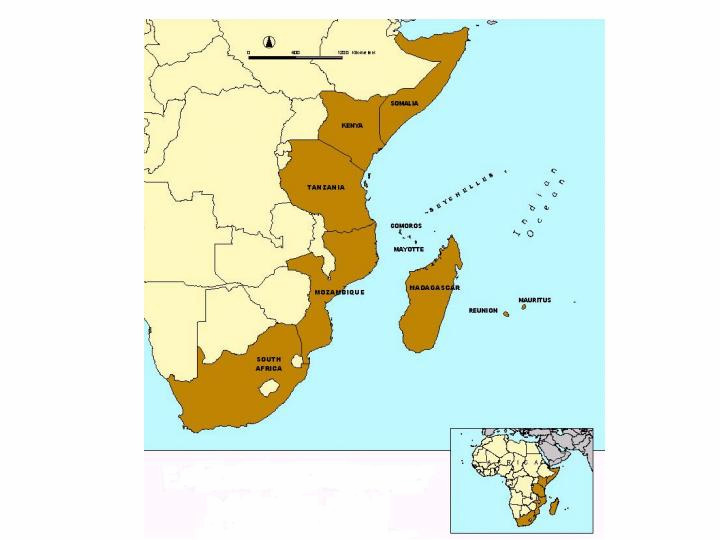
Seychelles, Madagascar, Mauritius and South Africa (Figure 1). Areas where capacity
building is required were documented as well as weaknesses of past training courses.
Based on the findings of the assessment, several appropriate training courses
(including modes of delivery) were recommended. Numerous training needs were
identified. However, the assessment exercise targeted only those that emerged as
priority needs with a special focus on training courses that are consistent with the
1
WIO-LaB Project objectives and/or activities. The overall aim of the assessment was
to establish training curricula using existing capacity and courses wherever possible.
The WIO-LaB Project is implementing a number of capacity building activities with
emphasis on the management of land based activities that may have impacts on the
coastal and marine environment. Through this needs assessment, a training
programme for stakeholders (including decision makers, senior administrators,
technical experts, researchers and communities), in the region was developed. More
specifically this assessment formed the basis of the development of specific tailor
made courses for the region for implementation by the WIO-LaB Project training
programme.
This report which is divided into six sections also provides an overview of the
previous capacity building initiatives in the WIO Region. It also provides insights into
the outcomes of past training needs assessments as well as training activities
conducted in the region in the period 2000 2005. Results of this training needs
assessment are provided for each of the participating countries, namely Comoros,
Kenya, Madagascar, Mauritius, Seychelles, South Africa and Tanzania. The training
needs from these individual countries were summarized in order to provide a regional
overview of the training needs within the WIO Region. The Report also provides a
number of recommendations on specific training courses that will assist in
strengthening the knowledge and expertise for sound management of land based
activities within the WIO region.
Figure 1: Map of the WIO region
2
2.0
PREVIOUS CAPACITY BUILDING INITIATIVES
Capacity building initiatives have taken different forms in the WIO region ranging
from short-courses (typically 1-2 weeks) to long-term training courses offered by
Universities and Colleges mainly for academic diplomas and degrees.
2.1
Past needs assessments and training courses conducted in the WIO region
There have been several capacity needs assessments that have been conducted in the
WIO Region in the past. The results of those previous assessments are partly relevant
to the WIO-LaB Project themes and sectors of concern. An assessment of capacity
related to Integrated Coastal Management (ICM) was conducted from January to
September 2000 (Kiambo, et al. 2001). Three tools to build human capacity were
recommended in this assessment, namely; learning by doing, information exchange
and development of a formal curriculum that incorporates material relevant to coastal
management. Furthermore, the assessment recommended five cross cutting areas as
priority areas for training. These were: (i) project and ecosystems evaluation and
monitoring; (ii) integration of sectors; communication; (iii) community participation
and valuation of resources.
One of the main outcomes of this assessment was the training course entitled
`Learning & Performing: Developing Skills for Coastal Management Practitioners'.
This course was one of its kind in the WIO region in the sense that it was designed to
provide participants with a hands-on experience on projects/program management as
well as enhancement of ICM practice and professional skills (Coley et al. 2002). The
main goal of this program was to strengthen participant performance and leadership
qualities. Specific objectives included building a critical mass of capable coastal
management practitioners who can catalyze ICM in their home countries and lead the
region into the future; learn and share their emerging coastal management experiences
in the WIO region; present key components of ICM (why they are important and how
they can be applied); and increase participant project management and professional
skills.
There were four Modules that were delivered in the period between March and
October 2001; each module was delivered for one week at different WIO locations.
Module 1 was delivered from 18th to 24th March 2001, in Zanzibar, Tanzania, while
Module 2 took place from 6th to 11th May 2001 in Malindi, Kenya. Module 3 took
place between 2nd and 8th August, in Antananarivo, Madagascar. Finally, Module 4
was delivered in October 2001, in Tanga, Tanzania. In total, 18 participants drawn
from Comoros, Kenya, Madagascar Mozambique and Tanzania attended the training
course. One of the key elements of the course was the development of project
proposals during the course which were evaluated during the last Module and
implemented after the completion of the training.
Capacity needs in the area of wastewater management in the WIO region was
assessed in Tanzania in 2003 by UNEP/GPA in collaboration with the UNESCO-IHE
Institute for Water Education and WIOMSA. This assessment aimed at determining
the skills, knowledge and attitudes of personnel involved in wastewater management.
Basics of wastewater management and the implications of discharge into the marine
environment, aspects of wastewater plant design, monitoring, quality control and
3
implementation of pollution penalties were some of the recommended areas for
training that emerged from this assessment. The assessment was used as one of the
basis for developing the training manual as well as designing courses on municipal
wastewater management that were held in Zanzibar (2003); Dar es Salaam (2003) and
Cape Town (2004).
WIOMSA in collaboration with its partners has also organized three regional training
courses for MPA managers. These courses were designed for the senior MPA
management staff in the region, as well as professionals from key institutions and
programmes that are involved in MPA management. The courses lasted for two weeks
and included modules covering aspects such as marine environment and protected
areas; MPA planning; MPA operations; participatory processes; communication and
public relations; sustainable utilization and alternatives; and monitoring and
evaluation (including assessment of management effectiveness).
A series of training courses on specific issues were conducted by the Secretariat for
Eastern African Coastal Area Management (SEACAM) that was based in Maputo,
Mozambique. The course was attended by a range of participants from the WIO
region. As with the MPA managers course, the SEACAM Training courses were
combined with the preparation of a publication reflecting the content of the course.
Courses that were delivered included environmental assessment of tourism (Grange
and Odendaal, 1999) and aquaculture in the coastal environment (Hambrey et al;
2000), and project design and management (SEACAM, 1999) (Appendix 1).
Various other capacity building courses have also been undertaken in the WIO region,
as listed in Table 1. In addition, there are other training courses and workshops that
were mentioned in the questionnaire survey of this training needs assessment as well
as by other sources.
Table 1: List of some of training courses and workshops conducted in the region from 2000 to
2005 that dealt with priority areas of the WIO-LaB project
MAIN TOPICS
TYPE
ORGANIZER VENUE YEAR
COVERED
COURSE/
WORKSHOP
1. Coastal
Course SEACAM
South
Africa
1999 & 2000
Management
Seychelles
Leadership (Public
Sector
Management)
2. Kenya Marine
Workshop Stakeholders
Kenya
2000
Resources
Utilization and
Surveillance
3. Mining and the
Workshop ERB,
Tanzania Tanzania 2000
environment
4. Municipal
Workshop
UNEP, GPA, NEMC,
Tanzania
2001 & 2003
Wastewater
WIOMSA
Kenya
5. Studies on the
Training AUPELF/UREF Madagascar
2001
Environmental
Impacts on Coastal
areas
6. Environmental Workshop SEACAM/CSIR South
Africa
2002
4
MAIN TOPICS
TYPE
ORGANIZER VENUE YEAR
COVERED
COURSE/
WORKSHOP
Assessment of
Coastal Mining
7. Teachers Training
Course
ProZim & Partners
Kenya
Annually
on Environmental
(1-5 days)
2003-2005
Education
8. Project Planning
Course
ADB
Seychelles
1996-2002
9. Planning
Course WIOMSA
Zanzibar,
2003
Sustainable Tourism
10. Water for African
Workshop UN-HABITAT Ethiopia 2003
Cities
11. Aquaculture Training KMFRI
Kenya 2004
12. Agriculture
Course
BOABAB TRUST
Kenya
2004
(Sustainable
(1-5 days)
farming)
13. Marine pollution,
Workshop IMO,
UNEP,
NEPAD
Kenya
2004
Prevention and
Environmental
Management in
Ports
14. Management of
Workshop PEMSEA
Kenya
2004
Ports in East Africa
15. Use of Wetlands for Seminar UNESCO-IHE Uganda 2004
water quality
16. Shoreline changes
Meeting
WIOMSA
Zanzibar
2004
17. Coastal Aquaculture Training NEMC
Tanzania
Development
18. Improving
Short course
IOI-SA, in
South Africa
2004
Municipal
(1 week)
conjunction with
Wastewater
UNEP-GPA,
Management in
UNESCO-IHE,
Coastal Cities
UN/DOALOS Train-
Sea-Coast
19. EIA of Coastal
Training NEMC
Tanzania
Tourism
Development
20. Coastal Processes & Workshop Dept
of
South Africa
2004
Legislation
Environmental
Affairs & Tourism
21. Coastal
Training
Marine and Coastal
South Africa
2004
Management
Management,
Department of
Environmental Affairs
and Tourism
22. Africa
Workshop UNEP
Kenya
2004
Environmental
Outlook
23. Sustainable Coastal
Workshop WTO,
NEPAD Kenya
2005
Tourism
24. Aquaculture Workshop
KWETU
Kenya 2005
25. Dredging in Ports
Workshop OSMAG
Kenya
2005
and Harbours
26. Oil spills
Workshop
OSMAG
Kenya
2005
27. Managing Marine
Short course (2
IOI-SA, in
South Africa
2005
Pollution
weeks)
conjunction with
UN/DOALOS
Train-Sea-Coast
5
MAIN TOPICS
TYPE
ORGANIZER VENUE YEAR
COVERED
COURSE/
WORKSHOP
28. Careers in the
African
Coelecanth
South Africa
2005
Marine
Ecosystem
Environment(school
Programme
-based)
29. Orientation to
African
Coelecanth
South Africa
2005
Marine
Ecosystem
Environment
Programme
30. Overview of
Training course
South Africa
2005
aquaculture and
Commercial
aquaculture
31. Sustainable
Training course The IDL group &
South Africa
2005
livelihoods (SL)
Department of
Approaches and
Environmental Affairs
Monitoring for
and Tourism
Coastal Resources
livelihoods in South
Africa
32. Environmental
Training course Rhodes
South Africa
2005
Impact
University
33. Assessments
34. 7th bi-annual
Workshop Aquaculture
South Africa
2005
International
Association of South
Conference on
Africa
Aquaculture:
(AASA)
Unlocking the
potential
35. Preparing Blue Flag Workshop Two
Oceans
South Africa
2005
Beaches Staff
Aquarium
36. Resolving Coastal
Training InWEnt
Mozambique
2005
Conflicts in an
intercultural
context.
37. How to implement
Training InWEnt
Namibia 2005
Community based
Coastal Zone
Management
successfully
38. Waste Management
Workshop Embassy
of
Kenya 2005
in Urban Settings in
France/URIFRANCE
East Africa
39. Mariculture
Training SUCCESS/WIOMSA
Tanzania 2005
Extension
40. Ecological
Course University
of
Dar-es-
Tanzania Annually
Modelling
Salaam
41. Biodiversity studies
Short Courses
WWF
Various
Periodic
for Ecoregions
countries
2.2
Existing University and College Training Programmes
Universities and colleges in the region offer long term training and impart background
knowledge that may then be built upon by short term training and hands-on activities
6
recommended by this training assessment. Table 2 provides a list of long term training
conducted by universities and colleges in the region.
Table 2: List of existing organizations/colleges/universities that offer regular training topics
related to priority areas of the WIO-LaB project in the participating countries
INSTITUTION
FACULTY/DEPARTMENT
TOPICS/SUBJECTS
KENYA
Catholic University of Eastern
Departments of Biology,
Marine Biology. Environmental
Africa
Geography and Education
Education & Environmental
Studies
Egerton University
Faculty of Agriculture
Agriculture, Aquatic Sciences
Faculty of Engineering &
Technology
Maseno University
Faculty of Environment and Natural Water & Environmental
Resource Management
Engineering, Natural Resource
Department of Geography
management
Moi University
School of Natural Resources
Fisheries & Forestry
Management,
Tourism Management
School of Economics and Business
Environmental Studies
Management
(Oceanography, Geology, Water
School of Environmental Studies
Resources, etc)
Nairobi University
College of Biological and Physical
Agriculture, Biological Sciences
Sciences
(Zoology, Botany), Geology,
College of Agriculture and
Hydrology, Meteorology,
Veterinary Medicine
Geography, Environmental
Department of Geography
Management and Planning.
Kenyatta University
School of Environmental Studies
Environmental Science,
and Health Sciences
Environmental Planning,
Department of Geography
Environmental Management, etc
Geography, Hydrology,
Watershed Management
Jomo Kenyatta University of
Faculty of Agriculture
Agricultural Engineering &
Agriculture and Technology
Faculty of Science
Technology, Biological Sciences
(Zoology, Botany)
Kenya Wildlife Service
Kenya Wildlife Service Training
Wetland conservation
Institute
Environmental Management
Eco-Tourism
Fisheries & Aquaculture
Middle level colleges
Departments of Environmental
Environmental Sciences
Polytechnics, Kenya Science
Studies
Teachers College
(Diploma courses)
United States International
Tourism & Hotels
Tourism Management
University,
Kenya Utalii College
Tourism & Hotels
Tourism management
Bandari College
Courses in Port Operations, (limited Management of cargo
to employees of Kenya Ports
Coxwain courses
Authority)
Bandari College
Courses offered in conjunction with Certificate & Diploma courses in
Jomo Kenyatta University of
Information technology,
Agriculture and Technology
Diploma in Freight management
(JKUAT) & Kenya International
Certificate in Maritime studies,
Freight and Warehousing
Diploma in shipping (offered to
Association (KIFWA) and KIE
members of the public)
Kwetu Training Centre
Hands on training in
Aquaculture & Mariculture
7
INSTITUTION
FACULTY/DEPARTMENT
TOPICS/SUBJECTS
TANZANIA
University of Dar-es-Salaam
Faculty of Aquatic Science and
Aquaculture
Technology
Faculty of Arts and Social Sciences
Tourism and Leisure
Department of Geography
Environmental Policy and
Planning
Faculty of Science (in collaboration
Pollution Prevention and
with the College of Engineering)
Control
Masters of Integrated
Environmental Impact
Environmental Management
Assessment
(MIEM)
Biological Wastewater
Treatment
Fundamentals of Anaerobic
Digestion Processes
College of Engineering
Solid Waste Management
Postgraduate Diploma in
Water Pollution Prevention
Environmental Engineering
and Control
Operation in Wastewater
Treatment
University College of Lands and
Wastewater Treatment
Architectural Studies (UCLAS)
Technology
Faculty of Lands and
Solid Waste Management and
Environmental Engineering
Technology
Institute of Marine Sciences
Marine Pollution
Sokoine University of
Faculty of Science
Environmental Sciences and
Agriculture
Management
National College of Tourism
Tourism & Hotel management
Dar-es-Salaam Maritime
Department of Marine Engineering, Sea Transportation, Ports and
Institute
Department of Maritime
Harbors
Transportation
SOUTH AFRICA
University of Fort Hare
Faculty of Science and
Aquaculture,
Agriculture/Zoology
Aquatic biology/Ecology/
Fisheries
University of Kwazulu-Natal
Faculty of Science and
Marine biology
Agriculture/Geography
Coastal Management
University of Cape Town
Biological Sciences
Marine sciences
Oceanography
Venda University of Science and Environmental sciences/Zoology
Rural-based environmental
Technology
Studies/Aquatic ecology
University of the North
Faculty of Science
Aquaculture/Aquatic ecology
Nelson Mandela Metropolitan
Departments of Zoology and
Marine science
University (formerly University
Botany
of Port Elizabeth)
Stellenbosch university
Aquaculture Division Genetics
Aquaculture
Department
University of Limpopo
Aquaculture Research Institute
Aquaculture
Rhodes University
Dept. Environmental Science
Environmental
management
Community based natural
Resource management
8
INSTITUTION
FACULTY/DEPARTMENT
TOPICS/SUBJECTS
Two Oceans Aquarium
Environmental Education Centre
Mariculture,
Marine invertebrates &
Vertebrates, Water conservation,
Marine alien invaders
SEYCHELLES
Seychelles Hospitality Tourism
-
Tourism related courses
Training Centre
Maritime Training Centre
-
Navigation, Marine Safety,
Marine Environment &
Pollution, Fisheries Science
MAURITIUS
University of Mauritius
Faculty of Science
Agriculture, Biology,
Oceanography, Environmental
Management, Environmental
Toxicology and monitoring
University of Technology
Social Sciences
Tourism
Ecole Hoteliere
Hotel Management
MADAGASCAR
University of Tulear
Institute of Marine Sciences.
Aquaculture, Marine resources,
Biology
COMOROS
University of Comoros
Faculty of Science and Technology Environment management
2.3
Other forms of capacity building
Capacity building initiatives in the WIO region have also involved the development
and dissemination of training materials and tools. Practitioners in the region have
often complained about the difficulties they face accessing information and guidance
on different issues related to their day-to-day operations. Various materials and tools
have been produced through different initiatives. These include: MPA manual
(Francis, et al., 2002); MPA Toolkit (IUCN, 2004); Guidelines on economic tools for
MPA management (Emerton, 1999); Improving municipal wastewater management in
coastal cities (UNESCO-IHE and UNEP/GPA, 2004) as well as SEACAM guidelines
on coastal tourism (Grange and Odendaal, 1999), aquaculture (Hambrey, et al., 2000)
and coastal mining (CSIR, 2003).
These materials and tools have been disseminated through different mechanisms
including organization of workshops specifically designed to introduce this material
to the relevant practitioners.
Some of these materials have been used as the main background publication in some
of the regional training courses. For instance, "MPA Manual" and "MPA Toolkit"
were used in the Regional Training Courses in MPA Management in Eastern Africa,
while "Improving municipal wastewater management in coastal cities" was used in
courses conducted in a number of municipalities in the region including Zanzibar, Dar
es Salaam, Cape Town and Maputo.
9
2.4
Post courses activities
Nine months after the completion of the Learning and Performing Course, WIOMSA
in collaboration with CRC conducted a post-course evaluation. The aims of the
evaluation were twofold; (i) assess how the skills and knowledge acquired during the
course have been used in the field and (ii) gather information that may help to
improve the course content and mode of delivery of the future courses
(WIOMSA/CRC 2002).
During the Second and the Third Regional Training Course in MPA management,
participants were asked to prepare Personal Action Plans (PAP). PAP is a simple tool
designed to help participants to reflect on new ideas, concepts and skills accumulated
during the course and apply the newly acquired skills in their work situation. The
objectives of the PAP are to: (i) improve the use of the information, ideas and
methods discussed in this course in work situations; (ii) serve as an aid in the planning
of future activities and (iii) assist practitioners to make a meaningful and effective
evaluation of the course and thus provide the organisers information to improve the
content, approach and delivery of the course.
Other post course activities included the setting up of a list-server for the Learning
and Performing alumni and establishment of the WIO-MPA Newsletter by the
participants of the Third Regional Training Course in MPA management.
One of the main challenges of the post course activities is their long-term
sustainability. For various reasons, most of these activities did not last beyond one
year of the course. Limited resources and capacity to maintain these on both the
organizers side and the participants were some of the reasons that contributed to early
collapse of these activities.
2.5
Summary of Previous capacity building initiatives
In summary, the previous capacity building initiatives and training courses listed in
Tables 1 and 2, drawn from the responses of the respondents, reflect the diverse
capacity building activities conducted in the region over the years and indicate the
existence of general understanding and knowledge in coastal issues. These training
courses, workshops and tertiary level courses listed indicate that there has been a
broad spectrum of both short and long term courses that cover different aspects that
are relevant to the WIO-LaB project (such as tourism, aquaculture, agriculture,
environmental education, pollution and municipal waste water management, port
management, solid waste management and shoreline changes). However, courses on
aspects of coastal mining were few. It is also clear that the courses were organized by
regional and international organizations based on their priorities and projects at the
time. In this regard, only a few of the courses have been repeated or replicated.
Additionally, post course evaluations to determine if these courses were effective in
imparting skills and knowledge have also been few. The courses also do not appear to
be linked to recognized institutions for accreditation and certification purposes.
Formal education programmes offered by universities and colleges have limitations in
that participants have to meet set qualifications. For instance, an arts student may not
qualify to undertake a course in fisheries biology. Additionally, there is an age
10
discrimination which may not be the case with short courses. Therefore, participants
of short courses benefit from the fact that they are able to learn from other participants
who have diverse backgrounds as there is an integration of varied expertise and
working experience.
3.0 METHODOLOGY
While acknowledging the existence of strong education facilities and past and
ongoing training courses, the WIO-LaB Project training needs assessment conducted
by WIOMSA aimed at assessing emerging gaps in regional training that may hinder
proper implementation and sustainability of WIO-LaB Project activities.
The needs assessment exercise was conducted by the use of questionnaires, which
were, dispatched to the National Experts identified by WIOMSA in collaboration, in
some cases, with the Focal Points of the Nairobi Convention. The National Experts
collected the information on training needs and dispatched the feedback to WIOMSA
for compilation.
Documents from previously conducted training needs assessments on municipal
wastewater management, water and sediment quality, legal aspects as well as
leadership needs of the Nairobi Convention were also reviewed and used to input into
the training programme. Additionally, comments and views of the respondents were
also integrated into the training programme.
In addition to above, the assessment received input from members of the PADH and
MWW Regional Task Forces during the joint regional meeting that was held in
Moroni, Comoros, in the period 26th - 28th October 2005. Input was also received
from the members of the WIO-LaB Project Steering Committee during its second
meeting held in Diani, Kenya on 7th March 2006. Members of the Nairobi Convention
Secretariat /WIO-LaB Project Management Unit also provided their inputs to the
assessment.
The questionnaire for the evaluation of training needs comprised four-parts that
focused on the following:
Part 1: General Information: This section was used to evaluate areas which the
respondents were involved in the course of their work. Responses to questions on the
general awareness of issues of concern within UNEP/GPA/WIO-LaB Project focal
areas of tourism, aquaculture, ports and harbours, coastal mining, municipal
wastewater and agriculture were evaluated. This section was also used to determine
capacity building needs within the national, district, community and institutional
level.
Part 2: Assessment of training needs on Land based activities: This section was
used to evaluate project management skills, professional skills and technical skills.
Respondents were requested to undertake a self evaluation indicating whether they
considered themselves to be experts, skilled apprentices or beginners in various areas.
The scores were averaged to indicate the area where respondents scored themselves
highest. The areas evaluated in project management were leadership, management of
meetings, fundraising, organizational skills, budgeting, supervising employees and
11
work planning. The areas evaluated in the section of professional skills were dispute
resolution, facilitation, strategic planning, communication, fundraising, public
education, science for management and demonstration activities. Technical skills
evaluated were mangrove rehabilitation, Geographic Information systems (GIS),
Mariculture, Social aspects, Planning, Legal aspects and sustainable coastal tourism.
The level of skill in the different categories were evaluated on the basis of the
understanding that an effective coastal manager should be proficient in project
management, professional skills and have adequate technical knowledge to be
effective in managing issues affecting the coastal environment.
Part 3: Assessment of training capacity on Land-based activities: Respondents
were requested to provide a list of training courses and workshops that they have
attended in the region as well as to provide a list of colleges and universities that
provide training in topics related to the already identified WIO-LaB target sectors.
Part 4: Assessment of the preferred mode of delivery of training courses:
Respondents were requested to provide information on strengths and weaknesses of
past courses as well as to recommend modes of delivery.
The major limitation of this study is the small sample size based on number of people
that responded to the questionnaire. A total of 88 respondents filled the questionnaire
from Kenya, Tanzania, Comoros, Madagascar, Seychelles, Mauritius and South
Africa. The time factor also served to limit the follow up period. However, from the
responses provided it was clear that similar issues and concerns were raised in most of
the WIO countries therefore making this assessment representative and reflective of
the general needs in the WIO Region.
The information from each questionnaire was tallied into excel spreadsheets.
Responses from each country were averaged to obtain an overview of perceptions
from each country to the issues raised in the questionnaires. Further to this, the
responses from each country were merged together to obtain the emerging priority
areas for training focus.
4.0
EXISTING SKILLS AND TRAINING NEEDS IN THE
PARTICIPATING COUNTRIES
4.1 Kenya
In Kenya, the respondents were professionals with experience that varied from marine
affairs, forestry, environmental management, waste management, environmental
chemistry, marine ecology and zoology, social ecology to financial administration.
Some of the respondents were in lecturing positions as environmental educators,
university lecturers and project managers. Sixty four percent (64%) of the respondents
were involved in the tourism sector, 40% were dealing with solid waste management,
36% with agriculture, 28% in aquaculture and municipal wastewater management in
their current work positions and 14% in the port and harbour sector. None of the
respondents dealt with coastal mining in their current work positions. The awareness
of issues of concern in the sectors targeted by the WIO- LaB project was evaluated
and the results of this are shown in Table 3. The scope of awareness shows that
12
although the respondents were not involved directly in coastal mining or harbour and
port activities during the course of their work they were still aware of issues of
concern in these sectors.
Table 3: Environmental and management issues of concern in the different sectors targeted by
the WIO-LaB project in Kenya
(The percentage values indicate the proportion of respondents that citied the issue as a
concern; issues cited are those that scored 40% and above)
KEY SECTORS
KEY ISSUES IDENTIFIED IN THE DIFFERENT
SECTORS OF CONCERN IN THE WIO LaB PROJECT
IN KENYA
TOURISM
Coastal erosion and accretion (57%)
Habitat destruction including mangroves (50%)
User conflicts (50%)
Pollution and related deterioration of water quality (43%)
AQUACULTURE
Habitat destruction including mangroves (50%)
PORTS & HARBOURS
Pollution and related deterioration of water quality (57%)
COASTAL MINING
Unsustainable resource extraction (50%)
MUNICIPAL WASTE
Pollution and related deterioration of water quality (57%)
WATER
Lack of institutional capacity for management of impacts (43%)
AGRICULTURE
Sediment runoff and related deterioration of water quality (57%)
Coastal erosion and accretion (50%)
Habitat destruction including mangroves (43%)
Inadequate capacity has
100
90
been identified as one of the
n
g
80
l
di
main barriers to
70
implementing measures to
i
t
y
bui
60
Decision makers
protect the marine
50
a
p
ac
Senior Administrators
environment from land
40
o
r
c
Technical experts
based activities. The
30
Researchers
e
ed f
20
presence of capacity was
N
Communities
% 10
evaluated at the national,
0
district, community and
National
District
Community
Institutional
institutional level and the
Level for capacity building
different areas identified for
Figure 2: Levels at which capacity building is required in capacity building are shown
Kenya
in Figure 2. At the national
level, decision makers were
identified as key group for capacity building at the district level senior administrative
officials were identified. At the community level, the areas of capacity building were
at the level of technical experts and the community while at the institutional level the
need for capacity building was highest among the researchers.
Respondents felt that the presence of inadequate infrastructure limits intervention
measures. It was also felt that inadequate research and technical capacity has resulted
in inadequate information and data for sensitizing policy and decision makers as well
as communities on marine environmental issues. Stakeholders were found to be
unable to lobby effectively for their rights. In areas where legal action can be taken,
ignorance allows for wrong practices to continue unabated. Legal frameworks,
13
institutional capacity and political will were cited as being important in
implementation of changes. The integrated coastal zone management framework was
considered to be important in enhancing inter-agency collaboration.
Areas of expertise and skills in project/programme management, professional and
technical skills were evaluated based on the respondent's opinions of their skills. The
highest score (76%) was obtained in the area of project management, followed by
professional skills (70%) and technical skills (57%). In the area of project
management priority areas identified for training were fundraising and leadership
(Table 4). In the area of professional skills, strategic planning and dispute resolution
were the key areas cited for training (Table 4). In the assessment of technical skills,
areas that were identified for more training are GIS, Legal aspects and Planning
(Table 4).
The greatest strengths of the training courses offered in the past as well as presently
were cited to be the fact that the courses have been based on identified needs (50% of
the respondents cited this to be true), the applicability of the knowledge imparted
(43%) and quality of the trainers (36%). The greatest weakness of the courses was
cited as the lack of post training course activities (36%). Some respondents also felt
that appropriateness of the target groups and applicability of the course knowledge
was a weakness (21% of the respondents cited this in both cases).
Table 4: Priority areas for training in each category in Kenya
(The percentage of respondents that identified the priority areas is shown in brackets)
PROJECT
PROFESSIONAL
TECHNICAL
MANAGEMENT
SKILLS
SKILLS
Fundraising (43%)
Strategic planning (50%)
Geographic Information Systems (57%)
Leadership (36%)
Dispute resolution (29%)
Legal aspects (36%)
Planning (29%)
Short courses on specialized technical subjects were the most attractive with 71% of
the respondents selecting this as the most preferred mode of course delivery. Short
courses on general management were also preferred (57%). In-service courses were
selected by 50% of the respondents and 50% selected formal certificates. The
recommendations made by the respondents targeted specialized technical subjects
(50%) with emphasis on staff exchanges and study tours to demonstration projects
(43% of the respondents cited these in both cases).
Organizations usually hire trained people with basic training and the aim of sending
them to short courses is to assist them to get grounded in their working areas and to
enhance creativity and motivation. Organizations tend to go for short-term courses,
normally tailor made to meet their current needs. Short-term courses in a location
away from the workstation were recommended as it was noted that they allow
maximum concentration of the participants. Visits to demonstration sites were highly
recommended as it was considered to give practical hands-on experience/skills to the
participants. This mode of delivery would make the training more practical and not
just another academic endeavour.
Factors that influence sending staff for training were cited to be the relevance of the
courses (86% of the respondents), the cost of travel and budgetary constraints (86% of
14
the respondents). Lack of institutional training plans based on training needs
assessments within institutions was cited as a weakness in selecting the right staff for
targeted training courses. Respondents cited that they would be allowed absence from
their workstations for a period ranging from 1 week to 8 months.
An observation made by one of the respondents was that government and parastatal
affiliated personnel are selected to attend training courses and that deliberate efforts
should be made to involve participants from other sectors. It is also clear that in as
much as training has been conducted; it remains in the hands of a select few who may
not have a chance of application, as some of these aspects do not relate to their daily
working tasks.
4.2 Tanzania
Responses from the questionnaires were from different categories of stakeholders
including government institutions, academic institutions, legislators, decision makers,
private sector and community groups in Tanzania. Most individuals were degree
holders and key areas of professional experience varied from marine biology, fisheries
management, environmental management, aquaculture, geology, oceanography,
tourism, land management, social science, engineering and waste management.
Seventy percent (70%) were involved in tourism activities, 90% in aquaculture, 50%
in port and harbour activities, 70% in municipal and wastewater management, 50% in
solid waste management and 30% in agriculture. Majority had some professional
experience in fields, which they are not currently practicing.
Based on the environmental and management issues of concern, pollution and related
deterioration of water quality seem to be leading issues across all sectors (Table 5)
followed by issues such as habitat destruction (including mangroves), lack of
institutional capacity for management of impacts, lack of control over impacts and
modification of ecosystems. Most of the respondents indicated that their current work
would definitely require an understanding of these environmental management issues.
15
Table 5: Environmental and management issues of concern in the different sectors targeted by
the WIO-LaB project in Tanzania
(The percentage values indicate the proportion of respondents that citied the issue as a
concern; only issues that scored 40% and above are cited)
KEY SECTORS
KEY ISSUES IDENTIFIED IN THE DIFFERENT
SECTOR OF CONCERN IN THE WIO LaB PROJECT
IN TANZANIA
TOURISM
Poor land use planning (80%)
User conflicts (60%)
Coastal erosion and accretion (40%)
Habitat destruction including mangroves (40%)
AQUACULTURE
Pollution and related deterioration of water quality (53%)
Introduction of alien species (47%)
User conflicts (40%)
PORTS & HARBOURS
Pollution and related deterioration of water quality (73%)
COASTAL MINING
Unsustainable resource extraction (67%)
Coastal erosion and accretion (60%)
Lack of control over impacts (47%)
Lack of institutional capacity for management of impacts (40%)
MUNICIPAL WASTE WATER
Pollution and related deterioration of water quality (73%)
Lack of control over impacts (60%)
AGRICULTURE
Sediment runoff and related deterioration of water quality (73%)
Pollution and related deterioration of water quality (47%)
Coastal erosion and accretion (40%)
Poor land use planning (40%)
Based on questionnaire
80
responses from Tanzania,
majority indicated that, there
70
is an urgent need for capacity
l
d
i
n
g
60
building to all people of
Decision makers
different positions at all
50
i
t
y
bui
Senior Administrators
levels of the society (Figure
a
p
ac 40
3).
Technical experts
r
c
30
Researchers
At the national level,
e
e
d
fo
Communities
20
decision makers were cited
N
%
as the focus group, at the
10
district level both senior
administrators and technical
0
National
District
Community
Institutional
experts were cited to be key
for capacity building.,
Level for capacity building
communities were cited as
the priority group at the
Figure 3: Levels at which capacity building is required in
Tanzania
community level while at the
institutional level both
technical experts and researchers were found to be the focus group (Figure 3).
16
Respondents felt that inadequate capacity for sustainable management; awareness
creation on the value of natural resources and the need for protection of the
environment and biodiversity greatly affect the protection of marine environment
from land based activities. This is because the protection of marine environment
requires application of sustainable techniques and a high degree of professional
specialization. Priority issues that could effectively be addressed through training
were identified as pollution and water quality deterioration, poor land use planning,
municipal wastewater management and sanitation/sewerage systems, tourism, coastal
erosion and accretion and modification of ecosystems.
Generally, most of respondents indicated competency in project/programme
management and the score was 85%. In the area of professional skills, the score was
73%. The general score in the areas of technical skills was 67%. Areas that were
identified for training are shown in table 6.
Table 6: Priority areas for training in each category in Tanzania
(Percentage of respondents that identified the priority areas is shown in brackets)
PROJECT
PROFESSIONAL
TECHNICAL
MANAGEMENT
SKILLS
SKILLS
Fundraising (47%)
Strategic management (40%)
Geographic Information Systems (73%)
Leadership (40%)
Dispute resolution (33%)
Social aspects (33%)
Majority considered the greatest strengths of the past/existing short/long-term training
courses in the region to be the fact that they were based on identified needs (60% of
the respondents) and the quality of trainers (53% of the respondents). Appropriateness
of the courses to the target groups and applicability of the knowledge imparted scored
high (47% of the respondents cited this in each case). The lack of post-course
activities was considered to be a weakness (27% of the respondents cited this). An
emphasis was placed on the need to be very strategic about topics taught and targeted
participants. It was indicated that focus should be on district/field level staff affected
by different issues and impacts in areas where these people are stationed. Since most
courses leave trainees with knowledge/skills but without ability to
practice/demonstrate these skills, it was suggested that efforts should be made to
strengthen capacity building at local level.
Generally, the preferred mode for staff training by each respondent's organization
varied from one individual to the other. However, 80% cited the preference of formal
certificates and short courses on specialized technical subjects. Seventy three percent
(73%) preferred in-service courses while 67% cited courses on general management.
In terms of recommended mode of delivery, 67% cited short courses on specialized
technical subjects, 53% cited study tours to demonstration projects and 53% cited
short courses taught at different sites and times. Formal certificates, short courses on
general management and staff exchange were also cited as being important modes of
course delivery. However, distance learning was not recommended. Key factors
influencing staff training were indicated to be the relevance of courses (73%) and the
cost of travel/budgetary constraints (67%). Staff shortages, timing of courses and
work loads were also seen as pertinent factors that influence sending staff for training.
17
Furthermore, in the Tanzanian survey, travel restrictions and inadequate notification
period were not considered to be key influencing factors.
Most individuals indicated that absenteeism affects the performance of work,
especially for project-based work which requires strict delivery; in which case short
courses (intensive but hands-on) are best and easier to accommodate. Most
institutions are discipline-based so courses are sometimes not directly relevant. It was
suggested that courses based on raising awareness in coastal environmental issues
could be targeted at a wide range of backgrounds and these should be practical/hands-
on though budget constraints always become a problem. Exchange of information
should also be improved and local experts should train fellow locals.
4.3 Comoros
The professional experience of the respondents was in fisheries, public administration,
fisheries management, wildlife management, engineering, marine affairs, tourism,
environmental management, port and harbour management. Thirty two percent (32%)
of the respondents were involved the tourism sector and 18% in municipal waste
water and solid waste management respectively.
The awareness of issues of concern in the sectors targeted by the WIO LaB project
was evaluated and the results of this are shown in Table 7.
Table 7: Environmental and management issues of concern in the different sectors targeted by
the WIO-LaB project in Comoros
(The percentage values indicate the proportion of respondents that citied the issue as a
concern; issues cited are those that scored the highest)
KEY SECTORS
KEY ISSUES IDENTIFIED IN THE DIFFERENT
SECTOR OF CONCERN IN THE WIO LaB
PROJECT IN COMOROS
TOURISM
Unsustainable resource extraction (46%)
User conflicts (39%)
Poor land use planning (39%)
AQUACULTURE
User conflicts (25%)
PORTS & HARBOURS
Pollution and related deterioration of water quality (29%)
Sediment runoff and related deterioration of water quality (25%)
Lack of institutional capacity for management of impacts (25%)
Lack of control over impacts (25%)
COASTAL MINING
Unsustainable resource extraction (36%)
Coastal erosion and accretion (25%)
Lack of control over impacts (25%)
MUNICIPAL WASTE
Pollution and related deterioration of water quality (46%)
WATER
Lack of institutional capacity for management of impacts (39%)
Lack of control over impacts (39%)
Lack of laws and regulations (32%)
Poor land use planning (32%)
AGRICULTURE
Introduction of alien species (29%)
Lack of control over impacts (25%)
18
The presence of capacity
100
was evaluated at the
90
national, district,
80
g
in
community and
70
Decision makers
institutional level and the
60
Senior Administrators
different areas identified
a
p
a
c
i
t
y
b
u
ild
50
Technical experts
Researchers
for capacity building are
40
Communities
e
e
d
f
o
r
c
shown in Figure 4. At the
30
N
%
national level, decision
20
makers, technical experts
10
and researchers were
0
National
District
Community
Institutional
identified as key group
Level for capacity building
for capacity building. At
Figure 4: Levels at which capacity building is required in
the district level senior
Comoros
administrators were
identified as the focus
group. At the community level, the area of capacity building were at the level of the
community while at the institutional level the need for capacity building was highest
among the decision makers and senior administrators.
Areas of expertise and skill in project/programme management, professional and
technical areas were evaluated. The highest score (56%) was obtained in the area of
project management, followed by professional skills (42%) and technical skills (39%).
In the area of project management, priority areas identified for training was
fundraising, work planning and budgeting (Table 8). In the area of professional skills
strategic planning and science for management were the key areas for cited for
training (Table 8). In the assessment of technical skills training GIS and sustainable
coastal tourism were considered to be the priority.
Table 8: Priority areas for training in each category in Comoros
(Percentage of respondents that identified the priority areas is shown in brackets)
PROJECT
PROFESSIONAL
TECHNICAL
MANAGEMENT
SKILLS
SKILLS
Fundraising (46%)
Strategic planning (57%)
Geographic Information Systems (54%)
Work planning (32%)
Science for management (46%) Sustainable Coastal Tourism (43%)
Budgeting (32%)
The greatest strengths of the training courses offered in the past were cited to be the
fact that they were based on identified needs (29%) and the quality of the trainers
(25%). A shortcoming of courses was cited as the applicability of the course
knowledge (29%). An evaluation of the preferred mode of training showed that 54%
of the respondents preferred short courses on specialized technical subjects. The
recommendations made by the respondents' targeted short courses on specialized
technical subjects (68%). Distance learning was recommended by 16% of the
participants. The cost of travel and budgetary constraints (46%) and the quality of
trainers were cited as key factors influencing course attendance (46%). Staff shortages
were cited as an important factor that influences course attendance (43% of the
respondents), the relevance of the courses (39%). Respondents cited that they would
be allowed to be away from their workstations for up to 7 months.
19
4.4 Madagascar
The professional experience of the respondents included oceanography, fisheries
management, marine affairs, tourism, environmental management, waste
management, public administration and environmental chemistry. Majority of the
respondents were involved in aquaculture, solid waste and municipal waste water
management (29% in each case).
The awareness of issues of concern in the sectors targeted by the WIO LaB project
was evaluated and the results are shown in Table 9.
Table 9: Environmental and management issues of concern in the different sectors targeted by
the WIO-LaB project in Madagascar
(The percentage values indicate the proportion of respondents that citied the issue as a
concern; issues cited are those that scored 40% and above)
KEY SECTORS
KEY ISSUES IDENTIFIED IN THE DIFFERENT
SECTOR OF CONCERN IN THE WIO LaB PROJECT
IN MADAGASCAR
Pollution and related deterioration of water quality (71%)
Coastal erosion and accretion (71%)
TOURISM
Modification of coastal ecosystems (71%)
Poor land use planning (71%)
Lack of control over impacts (71%)
Habitat destruction including mangroves (86%)
Introduction of alien species (57%)
Lack of control over impacts (57%)
AQUACULTURE
Pollution and related deterioration of water quality (43%)
User conflicts (43%)
Poor land use planning (43%)
Lack of laws and regulations (43%)
Pollution and related deterioration of water quality (57%)
PORTS & HARBOURS
Coastal erosion and accretion (43%)
Modification of coastal ecosystems (43%)
Lack of laws and regulations (43%)
COASTAL MINING
Lack of control over impacts (43%)
Lack of laws and regulations (71%)
MUNICIPAL WASTE
Lack of control over impacts (71%)
WATER
Pollution and related deterioration of water quality (57%)
Sediment runoff and related deterioration of water quality (57%)
Lack of institutional capacity for management of impacts (57%)
Modification of coastal ecosystems (43%)
Habitat destruction including mangroves (43%)
Sediment runoff and related deterioration of water quality (57%)
Habitat destruction including mangroves (57%)
AGRICULTURE
Lack of institutional capacity for management of impacts (57%)
Pollution and related deterioration of water quality (43%)
Sediment runoff and related deterioration of water quality (43%)
20
The presence of capacity was
80
evaluated at the national,
70
district, community and
ng 60
u
i
l
di
institutional level and the
50
Decision makers
different areas identified for
Senior Administrators
40
capacity building are shown in
Technical experts
o
r
c
a
p
a
c
i
t
y
b
f 30
Researchers
Figure 5. At the national level,
eed 20
Communities
decision makers and
N
% 10
researchers were identified as
key groups for capacity
0
National
District
Community
Institutional
building. At the district level
Level for capacity building
both decision makers and
senior administrative officials
Figure 5: Levels at which capacity building is required in were identified. At the
Madagascar
community level, the areas of
capacity building were at the
level of the community while at the institutional level the need for capacity building
was highest among the technical experts and researchers and decision makers.
In the area of expertise and skill in project/programme management, professional and
technical skills were evaluated. The highest score (60%) was obtained in the area of
project management, followed by professional skills (55%) and technical skills (53%).
In the area of project management priority areas identified for training were work
planning and budgeting (Table 10). In the area of professional skills strategic planning
and fundraising were the key areas cited for training (Table 10). In the assessment of
technical skills, areas identified for additional training were GIS. Planning aspects
emerged as key areas identified for training (Table 10).
Table 10: Priority areas for training in each category in Madagascar
(Percentage of respondents that identified the priority areas is shown in brackets)
PROJECT
PROFESSIONAL
TECHNICAL
MANAGEMENT
SKILLS
SKILLS
Work planning (57%)
Strategic planning (57%)
Geographic Information Systems (71%)
Budgeting (43%)
Fundraising (43%)
Planning (57%)
The greatest strengths of the training courses offered in the past as well as presently
were cited to be the quality of the trainers (57%), the fact that the courses have been
based on identified needs (43% of the respondents cited this to be true). The weakness
of the courses was cited as the applicability of the course knowledge and the
appropriateness of the target groups (29% of the respondents cited this in both cases).
The recommendations made by the respondents' targeted short courses on specialized
technical subjects (86%), modules at different sites and different times (71%) and
short courses on general management (57%). Distance learning was also considered to
be important and recommended by 14% of the participants. The cost of travel and
budgetary constraints was cited as the most important factor that influences course
attendance (80% of the respondents. Factors that influence staff attendance of courses
were staff shortages (71%), the relevance of the courses (57% of the respondents) and
21
the quality of the training (57%). Respondents cited that they would be allowed to be
away from their workstations for up to 1.5 months.
4.5 Seychelles
The professional experience of the respondents included land management, wildlife
management, marine affairs, tourism, environmental management, waste management
and environmental chemistry. Sixty percent (60%) of the respondents were involved
agriculture, 40% in the tourism sector while 40% were dealing with solid waste and
municipal wastewater management.
The awareness of issues of
100
concern in the sectors
90
targeted by the WIO LaB
80
l
d
i
n
g
project was evaluated and
70
i
t
y
bui 60
Decision makers
the results are shown in
50
Senior Administrators
Table 11.
Technical experts
o
r
c
apac
40
Researchers
e
e
d
f
30
Communities
Considering the presence of
N
% 20
capacity at the national,
10
district, community and
0
institutional level the
National
District
Community
Institutional
Level for capacity building
different areas identified for
capacity building are shown
Figure 6: Levels at which capacity building is required in
in Figure 6. At the national
Seychelles
level, senior administrators
were identified as a key
group for capacity building. At the district level both decision makers and senior
administrative officials were identified. At the community level, the areas of capacity
building were at the level of the decision makers while at the institutional level the
need for capacity building was highest among the technical experts and researchers.
Table 11: Environmental and management issues of concern in the different sectors targeted
by the WIO-LaB project in Seychelles
(The percentage values indicate the proportion of respondents that citied the issue as a
concern; issues cited are those that scored the highest)
KEY SECTORS
KEY ISSUES IDENTIFIED IN THE DIFFERENT
SECTOR OF CONCERN IN THE WIO LaB PROJECT
IN SEYCHELLES
Sediment runoff and related deterioration of water quality (60%)
Habitat destruction including mangroves (60%)
User conflicts (60%)
Pollution and related deterioration of water quality (40%)
TOURISM
Coastal erosion and accretion (40%)
Modification of coastal ecosystems (40%)
Introduction of alien species (40%)
Lack of institutional capacity for management of impacts (40%)
Lack of interagency cooperation (40%)
22
KEY SECTORS
KEY ISSUES IDENTIFIED IN THE DIFFERENT
SECTOR OF CONCERN IN THE WIO LaB PROJECT
IN SEYCHELLES
Pollution and related deterioration of water quality (20%)
Habitat destruction including mangroves (20%)
Introduction of alien species (20%)
AQUACULTURE
User conflicts (20%)
Lack of institutional capacity for management of impacts (20%)
Lack of laws and regulations (20%)
Pollution and related deterioration of water quality (60%)
Sediment runoff and related deterioration of water quality (40%)
PORTS & HARBOURS
Coastal erosion and accretion (40%)
Habitat destruction including mangroves (40%)
Lack of institutional capacity for management of impacts (40%)
Pollution and related deterioration of water quality (60%)
MUNICIPAL WASTE
Modification of coastal ecosystems (40%)
WATER
User conflicts (40%)
Poor land use planning (40%)
Lack of institutional capacity for management of impacts (40%)
Sediment runoff and related deterioration of water quality (60%)
Pollution and related deterioration of water quality (40%)
Sediment runoff and related deterioration of water quality (40%)
AGRICULTURE
Coastal erosion and accretion (40%)
Habitat destruction including mangroves (40%)
Modification of coastal ecosystems (60%)
User conflicts (40%)
Poor land use planning (40%)
Lack of institutional capacity for management of impacts (40%)
Areas of expertise and skill in project/programme management, professional and
technical skills were evaluated. The highest score (79%) was obtained in the area of
project management, followed by professional skills (59%) and technical skills (46%).
In the area of project management priority areas identified for training were budgeting
and work planning (Table 12). In the area of professional skills strategic planning and
dispute resolution were the key areas cited for training (Table 12). In the assessment
of technical skills GIS and legal aspects emerged as key areas identified for training
(Table 12).
The greatest strengths of the training courses offered in the past as well as presently
were cited to be the fact that the courses have been based on identified needs (60% of
the respondents cited this to be true), the appropriateness of the target groups (40%)
and quality of the trainers (40%). The greatest weakness of the courses was cited as
the lack of post course activities (60%). Some respondents also felt that applicability
of the course knowledge was a weakness (40% of the respondents cited this in both
cases).
Table 12: Priority areas for training in each category in Seychelles
(Percentage of respondents that identified the priority areas is shown in brackets)
PROJECT
PROFESSIONAL
TECHNICAL
MANAGEMENT
SKILLS
SKILLS
Budgeting (60%)
Strategic planning (40%)
Geographic Information Systems (60%)
Work planning (40%)
Dispute resolution (40%)
Legal aspects (40%)
23
The preferred mode of course delivery was in-service courses (100% of the
respondents cited this) as well as short courses on specialized technical subjects
(80%). The recommendations made by the respondents' targeted short courses on
specialized technical subjects (100%) and short courses on general management
(100%) with emphasis on staff exchanges and study tours to demonstration projects
(80% of the respondents cited this in both cases). In-service courses were also found
to be attractive (60%). The cost of travel and budgetary constraints was cited as the
most important factor that influences course attendance (80% of the respondents).
Other factors cited included the relevance of the courses (60% of the respondents) and
staff shortages (40%). Respondents cited that they would be allowed to be away from
their workstations for up to 10 months.
4.6 Mauritius
The professional experience of the respondents ranged from public administration,
fisheries management, wildlife management, engineering, marine affairs, tourism,
environmental management, port and harbour management. Fifty percent (50%) of the
respondents were involved in port and harbour management, 25% in the tourism
sector and municipal wastewater management respectively. The awareness of issues
of concern in the sectors targeted by the WIO LaB project was evaluated and the
results of this are shown in Table 13.
Table 13: Environmental and management issues of concern in the different sectors targeted
by the WIO-LaB project in Mauritius
(The percentage values indicate the proportion of respondents that cited the issue as a
concern; issues cited are those that scored the highest)
KEY SECTORS
KEY ISSUES IDENTIFIED IN THE DIFFERENT
SECTOR OF CONCERN IN THE WIO LaB PROJECT
IN MAURITIUS
TOURISM
Coastal erosion and accretion (75%)
Pollution and related deterioration of water quality (50%)
Introduction of alien species (50%)
Unsustainable resource extraction (50%)
Poor land use planning (50%)
AQUACULTURE
Modification of coastal ecosystems (50%)
PORTS & HARBOURS
Pollution and related deterioration of water quality (75%)
Sediment runoff and related deterioration of water quality (50%)
COASTAL MINING
Sediment runoff and related deterioration of water quality (25%)
Coastal erosion and accretion (25%)
Unsustainable resource extraction (25%)
User conflicts (25%)
MUNICIPAL WASTE
Pollution and related deterioration of water quality (75%)
WATER
Lack of laws and regulations (25%)
AGRICULTURE
Pollution and related deterioration of water quality (25%)
Sediment runoff and related deterioration of water quality (25%)
Habitat destruction including mangroves (25%)
Modification of coastal ecosystems (25%)
Introduction of alien species (25%)
Poor land use planning (25%)
Lack of interagency cooperation (25%)
Lack of laws and regulations (25%)
24
At the national level,
100
senior administrators
90
and decision makers
80
i
l
d
i
n
g
were identified as key
70
group for capacity
i
t
y
bu
60
Decision makers
building (Figure 7). At
50
Senior Administrators
the district level both
40
o
o
r
c
apac
Technical experts
decision makers and
30
Researchers
eed f
communities were
20
N
Communities
%
10
identified as the focus
0
group. At the
National
District
Community Institutional
community level, the
Level for capacity building
areas of capacity
building were at the
Figure 7: Levels at which capacity building is required in
level of the community
Mauritius
while at the institutional
level the need for
capacity building was perceived to be highest among the technical experts and
researchers (Figure 6).
Areas of expertise and skill in project/programme management, professional and
technical skills were evaluated. The highest score (67%) was obtained in the area of
project management, followed by professional skills (61%) and technical skills (41%).
In the area of project management priority areas identified for training were budgeting
and project management and evaluation (Table 14). In the area of professional skills
strategic planning was the key area cited for training (Table 14). In the assessment of
technical skills areas that were identified for more training GIS and legal aspects
emerged as key areas identified for training (Table 14).
Table 14: Priority areas for training in each category in Mauritius
(Percentage of respondents that identified the priority areas is shown in brackets)
PROJECT
PROFESSIONAL
TECHNICAL
MANAGEMENT
SKILLS
SKILLS
Budgeting (75%)
Strategic planning (75%)
Geographic Information
Project management & Evaluation (36%)
Systems (75%)
Legal aspects (50%)
The greatest strengths of the training courses offered in the past were cited to be the
quality of the trainers (50%) and the applicability of the course knowledge (50%). The
recommendations made by the respondents' targeted formal certificates (75%), short
courses on specialized technical subjects (50%) and short courses on general
management (50%). Study tours to demonstration projects were considered to be
important by 50% of the respondents. Staff shortages were cited as the most important
factor that influences course attendance (100% of the respondents). Work loads, the
cost of travel and budgetary constraints as well as inadequate notification period were
also considered to be important (50% of all respondents cited each factor as being
important). Respondents cited that they would be allowed to be away from their
workstations for up to 6 months.
25
4.7 South
Africa
In South Africa the survey covered respondents from the Government Department of
Education, the Marine and Coastal Educators Network (MCEN), SADC Regional
Environmental Education Programme (SADC-REEP), the National Ports Authority of
South Africa, the Provincial Coastal Working group in the Eastern Cape and tertiary
education institutions.
A total of 40% of the respondents were involved in the tourism sector, 13% in
aquaculture, municipal waste water management and solid waste management. 7%
were engaged in port and harbours, coastal mining and agriculture. The awareness of
issues of concern in the sectors targeted by the WIO LaB project was evaluated and
the results are shown in Table 15.
Table 15: Environmental and management issues of concern in the different sectors targeted
by the WIO-LaB project in South Africa
(The percentage values indicate the proportion of respondents that citied the issue as a
concern; issues cited are those that scored the highest value)
KEY SECTORS
KEY ISSUES IDENTIFIED IN THE DIFFERENT
SECTOR OF CONCERN IN THE WIO LAB PROJECT
IN SOUTH AFRICA
TOURISM
User conflicts (53%)
Habitat destruction (47%)
Lack of institutional capacity for management of impacts (40%)
AQUACULTURE
Pollution and related deterioration of water quality (47%)
Introduction of alien species (33%)
User conflicts (33%)
Lack of institutional capacity for management (33%)
PORTS & HARBOURS
Pollution and related deterioration of water quality (27%)
Modification of ecosystems (27%)
Lack of institutional capacity for management of impacts (27%)
Lack of control over impacts (27%)
Coastal erosion and accretion (33%)
COASTAL MINING
User conflicts (27%)
Lack of institutional capacity for management of impacts (27%)
Lack of control over impacts (27%)
MUNICIPAL WASTE
Pollution and related deterioration of water quality (40%)
WATER
Lack of control over impacts (33%)
Lack of institutional capacity for management of impacts (27%)
AGRICULTURE
Sediment runoff and related deterioration of water quality (33%)
Modification of ecosystems (27%)
Lack of control over impacts (27%)
Lack of institutional capacity for management of impacts (27%)
At the national level, decision makers and researchers were identified as the key
group for capacity building (Figure 8) while at the district levels both technical
experts and communities were identified. At the community level, the areas of
capacity building were at the level of decision makers and the community while at the
institutional level the need for capacity building was highest among the decision
makers, researchers and communities.
26
It was felt that inadequate
capacity at the different
100
levels of society meant that
90
there was a lack of capacity
80
l
d
i
n
g
within local and provincial
70
Decision makers
60
Senior Administrators
authorities to implement
a
p
a
c
i
t
y
bui
50
Technical experts
legislation. The lack of
o
r
c 40
Researchers
awareness of issues and
30
Communities
impacts was also cited.
e
ed f
N 20
Apathy was also cited
%
10
within South African
0
townships and the general
National
District
Community
Institutional
feeling was that government
Level for capacity building
policies should be self-help
initiatives rather than
Figure 8: Levels at which capacity building is required in
development based on
South Africa
handouts. The lack of
financial resources,
infrastructure and human skills were also cited as issues that hamper implementation
of policy.
Political involvement in the WIO-LaB project by decision makers on political and
national level was cited as being important. This could be so structured that they are
not burdened with too much information but be ensure that they support their local
and provincial administrators. Awareness in communities also needs to be increased
on good and bad practices on the coast.
Areas of expertise and skill in project/programme management, professional and
technical skills were evaluated. The highest score (67%) was obtained in the area of
project management, followed by professional skills (58%) and technical skills (50%).
In the area of project management priority the area identified for training was
supervision, (Table 16). In the area of professional skills demonstration skills, science
for management, strategic planning and demonstration activities were cited as key
areas for training (Table 16). In the assessment of technical skills the area that was
identified for more training was planning (Table 16).
Table 16: Priority areas for training in each category in South Africa
(Percentage of respondents that identified the priority areas is shown in brackets)
PROJECT
PROFESSIONAL
TECHNICAL
MANAGEMENT
SKILLS
SKILLS
Supervision (33%)
Demonstration skills (33%)
Planning (47%)
Science for management (33%)
The greatest strengths of the training courses offered in the past as well as presently
were cited to be the fact that the courses have been based on identified needs (40% of
the respondents cited this to be true), the applicability of the knowledge imparted
(47%) and the quality of the trainers (40%). The greatest weakness of the courses was
cited as the lack of post course activities (13%).
27
Courses on general management were the most preferred (67%) as well as in-service
courses (60%). Formal certificates as well as short courses in the form of modules
delivered at different times and different sites scored 53% in terms of popularity. The
issuance of formal certificates was seen as a way to boost attendance to the courses.
In terms of the recommended mode of delivery short courses on general management
scored highly (53%), while formal certificate courses were also popular (47%).
Respondents also emphasised the importance of courses on specialized technical
subjects (40%) and study tours to demonstrations sites (40%). The importance of
practical knowledge was cited as theory is often forgotten by course participants.
Additionally, education backgrounds may vary which means that hands-on and
demonstrative activities would motivate people more. Distance learning was
recommended by 20% of the participants.
Factors that influence sending staff for training were cited to be the cost of travel and
budgetary constraints (60% of the respondents). However, providing complete
funding for participants was found to be challenging as it may not result in obtaining
the most qualified personnel for the course. It was suggested that employers may be
requested to cost share or have a rigorous selection process where participants apply
for financial support which often results in employers sending appropriate
participants.
Staff shortages, relevance of the courses, timing of courses and work loads were also
considered to be priority issues (40% of the respondents for each). Respondents cited
that they would be allowed to be away from their workstations for up to 3 weeks.
Good notification times were emphasised to enable participants to schedule the
courses into their busy work schedules.
In summary, most respondents from the different participating countries cited an
awareness of the issues that impact this sector indicating that there is widespread
knowledge base of the different issues of concern that are targeted by the WIO-LaB
project. The evaluation of capacity within different levels of the society indicated that
there is a need for training at all levels of the society with different training methods
being used to impart skills to the different levels that were indicated by the survey.
Although people had expertise and skill in project management and professional skills
there was a big gap in the area of technical expertise with respondents citing the need
for various technical training courses. Study tours to demonstration projects and staff
exchanges were also recommended as key elements of course delivery in the countries
surveyed. It was recommended that efforts should be directed to private sectors as the
current training seems focused mainly on personnel from government institutions. It
was also emphasised that training needs be in line with a national qualifications
framework with proper accreditation for short courses. One respondent felt that WIO-
LaB ideas will go a long way in training historically disadvantaged peoples of Africa
especially when inland waters are involved as most of these people tend to be
discouraged from getting into marine sciences.
28
5.0
SYNTHESIS OF TRAINING NEEDS
This section provides an overview obtained from the 88 responses received from the
different countries of the WIO region. Although, the country reports highlight specific
needs within each country, the data was merged to provide an overview of key focal
areas of the WIO-LaB project for training in thematic areas that have been identified
as Physical Alteration and Destruction of Habitats (PADH), Municipal Waste Water
(MWW) and Legal aspects. Priority sectors of focus in the marine ecosystem that fall
within these thematic areas have been identified as tourism, aquaculture, ports and
harbours, coastal mining, municipal wastewater management and agriculture. These
sectors were identified as areas that have direct environmental and management
impacts on the marine ecosystem and the responses from the different countries
showed a general awareness of these issues. Although the respondents were not
involved directly in activities that target several of these areas, there was a general
understanding of detrimental activities that have negative impacts on the marine
environment.
Table 17 shows a summary of issues that were identified as priorities for training in
Kenya, Tanzania, Comoros, Madagascar, Seychelles, Mauritius and South Africa.
These issues cut across all the UNEP/GPA/WIO-LaB Project priority areas and
proposed training programmes should be able to impart knowledge and skills that
enable the trainees to tackle these issues of concern. For instance, training in pollution
management and assessment of water quality would enable a trainee apply knowledge
within the tourism sector, aquaculture, ports and harbors and all other sectors where
pollution and water quality deterioration were cited as a concern.
Table 17: Summary of priority issues identified within all thematic areas of the WIO-LaB
project. These issues represent areas for training focus.
WIO-LaB
PADH
MWW LEGAL
ASPECTS
Thematic
Areas/Sectors
TOURISM
Coastal erosion and
Pollution and
User conflicts
accretion
deterioration of water
quality
Poor land use planning
Habitat destruction
including mangroves
AQUACULTURE Habitat
destruction Pollution and
User conflicts
including mangroves
deterioration of water
quality
Introduction of alien
species
PORTS &
Sediment run-off
Pollution and
Lack of institutional
HARBOURS
deterioration of water
capacity for management
quality
of impacts
29
WIO-LaB
PADH
MWW LEGAL
ASPECTS
Thematic
Areas/Sectors
COASTAL MINING
Coastal erosion and
Lack of control over
accretion
impacts
Unsustainable
resource extraction
Sediment runoff
MUNICIPAL
Modification of
Pollution and
Lack of institutional
WASTEWATER
ecosystems
deterioration of water
capacity for management
quality
of impacts
Lack of control over
impacts
Lack of laws and
regulations
AGRICULTURE
Sediment runoff and
Pollution and
Lack of institutional
related deterioration
deterioration of water
capacity for management
of water quality
quality
of impacts
Habitat destruction
Poor land use planning
including mangroves
Modification of
ecosystems
Training should provide trainees with the ability to recognize the impacts and to
implement mitigation measures to control the impacts. The trainees should also be
imparted with knowledge of the parameters to measure or evaluate in order to
quantify an impact such as habitat destruction. Legal aspects should be integrated into
both PADH and MWW training courses as the understanding of legal issues is
important in the enforcement of control measures to mitigate impacts.
5.1
Target groups for training
The responses for capacity building varied between countries depending on the
governance structures within each country. In South Africa the level of capacity
building appeared to be similar for all levels (decision makers, senior administrators,
technical experts, researchers and communities) cited while in other countries there
were clear groups recommended for focus. The overall evaluation of capacity for all
the countries merged together revealed specific focus groups at the national, district,
community and institutional level as shown in Figure 9. At the national level decision
makers emerged as the target of the training activities, at the district level the target
was the senior administrators, at the community level, communities were identified as
the target for training while at the institutional level, researchers and technical experts
were identified as the priority groups for training (Figure 9).
30
It is clear that the training
National
programme has to tackle
80
different groups at the
60
different levels of
40
governance and a variety
Decision makers
of training and outreach
20
Senior Administrators
methods would have to be
Institutional
0
District
Technical experts
used to reach out to the
Researchers
different target groups.
Communities
Language would also have
to be considered especially
in French speaking
Community
countries where some
respondents cited a need
Figure 9: Target groups for capacity building
for courses in
professional English. The
quantity of information
delivered would also have to be monitored to avoid information overload.
Based on the priority issues identified within the thematic areas of the WIO-LaB
project (See Table 17) it is clear that each of the different target groups would deal
with different aspects of the issues identified. Decision makers and senior
administrators would deal with legislation, strengthening institutional frameworks and
would be required to provide leadership in different areas therefore these areas would
be the training focus for this group (Table 18). Communities would be required to
participate in rehabilitation and sustainable resource extraction, therefore it is
expected that training would focus on these aspects for community groups in the WIO
countries. Researchers and technical staff are expected to impart technical knowledge
on PADH issues such as coastal erosion and accretion, habitat destruction, sediment
runoff, deterioration of water quality, modification of ecosystems and unsustainable
resource extraction as well as MWW issues of pollution and deterioration of water
quality. Researchers and technical staff would also be expected to have an
understanding of legislation governing PADH and MWW priority areas; especially
legislation governing standards of water quality (See Table 17). In view of these
requirements for the different target groups, identified in the questionnaire survey,
that the courses listed in Table 18 have been recommended.
Table 18: Target groups and recommended courses identified to meet the training needs
within thematic areas of the WIO-LaB project
NATIONAL DISTRICT
INSTITUTIONAL
COMMUNITY
Decision
Senior
Researchers & Technical staff
Communities
makers
Administrators
Legal aspects
Legal aspects
Habitat Rehabilitation
Habitat Rehabilitation
Leadership
Leadership
MWW courses to monitor water
Sustainable resource
quality & treatment
harvesting
Sediment
quality
ICM course
ICM course
Legal aspects
31
Training in for each of the target groups would have to be delivered in different ways.
At the national level and district level where decision makers and senior
administrators were found to be the target group for training, leadership training
would be of benefit in enabling them to lead with influence and purpose. A general
awareness of all the issues cited in the PADH, MWW and legal aspects would have to
be imparted to this level but it has to be done within a short time frame, as this is a
group of busy people who experience time constraints and would not attend long
training courses.
Training in similar issues at the institutional level to researchers and technical experts
would have to be done for a longer period and at a greater depth to empower this
group to use the knowledge in their everyday activities and to relay the knowledge to
the community level. For this group, hands on training and tours to demonstration
projects would be critical.
At the community level, the training focus would have to be on community leaders or
community groups. The delivery of training would also have to be modified to suit
this target group and simplified to enhance understanding. Visits to demonstration
projects where communities can have hands on application of the knowledge that they
are gaining would have a high level of impact at this level.
5.2 Skill
Assessment
Different levels of proficiency were
100
90
recognized in terms of proficiency in
80
areas of programme/ project
70
management, profession skills, and
i
t
h
s
k
i
l
l
s
Expert
60
Skilled
s
w
technical skills. Experts were those
nt 50
Apprentice
de
who indicated that they possessed a
40
Beginner
e
s
p
on
No experience
high level of mastery of the cited
30
% R 20
skills, while skilled people are those
10
who indicated proficiency in practice
0
but indicated that they were not
Project/Programme
Professional skills
Technical background
Management
skilled enough to teach. An
apprentice had some knowledge but
Figure 10: Level of expertise and skill in different
indicated a need for more training
areas of management
while beginners were considered to
be inexperienced.
Generally, respondents reported high proficiency in programme/project management
(mean score of all respondents was 74%) and in this area at least 20% indicated that
they were experts and 50% considered themselves skilled (Figure 9). In the area of
professional skills, the level of proficiency was 62% (mean score for all respondents).
An equal proportion of respondents considered themselves skilled and an equal
number considered themselves to be apprentices (30%) (Figure 10). Only 13%
considered themselves to be experts. In the area of technical skills the level of
proficiency was 54% (mean score for all respondents) and there was a general lack of
experts with many considering themselves to be apprentices and beginners (approx.
30%).
32
From the data set, it is clear that the technical background has the most beginners and
people with no experience thereby making it a critical area of focus. Areas for
consideration in this area that were identified by respondents from the different
countries were GIS, planning, legal aspects and sustainable coastal tourism.
Although the level of expertise was high in the area of project management,
respondents from all the WIO countries cited budgeting, work planning, fundraising
and leadership as areas for training. Emphasis should also be given to the area of
professional skills with priority areas identified as strategic planning, dispute
resolution, science for management and fundraising by the different respondents from
the different WIO countries.
This assessment of skills shows that although training may be undertaken in the
different thematic areas of WIO-LaB Project that have been identified, there is still
need for the target groups (course participants) to be equipped with the skills cited to
enable them to implement the knowledge gained through the recommended courses.
At the national level, decision makers and senior administrators would require
leadership courses with some level of training in legal aspects and a focus on the cited
project management skills. Emphasis of technical training would be provided to
researchers and technical staff at the institutional level to enable them to undertake
tasks of habitat rehabilitation and water and sediment assessments. Professional skills
and some project management skills would be integrated in the courses recommended
to enable those trained to fundraise and run projects after their training. Communities
would be provided with technical skills to enable them to undertake rehabilitation
activities and sustainable resource extraction.
Table 19: Priority skills to be integrated into the training courses for the different target
groups
NATIONAL DISTRICT
INSTITUTIONAL
COMMUNITY
Decision
Senior
Researchers & Technical staff Communities
makers
Administrators
Project management budgeting,
Project management:
Technical skills: for use in
work planning, fundraising,
budgeting, work planning,
rehabilitation of degraded
leadership
fundraising, leadership
areas and for sustainable
resource management
Professional skills: strategic
Professional skills: strategic
planning, science for management,
planning, science for
dispute resolution,
management, dispute
resolution,
Technical skills: GIS,
planning, legal aspects,
sustainable coastal tourism
33
5.3
Mode of course delivery
Short courses on specialized technical subjects
The strength of past
Short courses on general mgmt
courses was cited to
Study tours to demonstration projects
be the fact that they
Staff exchange
were based on
Short courses, modules at different sites & times
identified needs
Formal certificates
(44%) and the
quality of trainers
In-service courses
(43%) whereas the
Distance learning
major weakness
Other
cited was the
0
10
20
30
40
50
60
70
80
90 100
absence of post
% Responses
course activities
Figure 11: Recommended mode of course delivery
(23%) as well as
the applicability of
the knowledge acquired (20%). Recommendations from the respondents indicated that
the training duration would have to be short with emphasis on specialized technical
subjects, short courses on general management and tours to demonstration projects as
shown in Figure 10. Training would have to be through the practical application of
theories and knowledge to every day issues of concern that have been highlighted in
all sectors. Formal certification would also have to be considered to give courses
credibility.
The cost of travel as well
Cost of Travel/Budgetary constraints
as the relevance of the
Relevance of courses
courses would have to be
taken into consideration
Staff shortages
so as to enhance
Work Loads
participation in the
Quality of training
courses (Figure 11). The
Timing of courses
trainers selected would
Inadequate notification period
have to be well qualified
Travel restrictions
and post course activities
Other
would have to be
0
10
20
30
40
50
60
70
80
90
100
integrated into the
% Responses
training courses
undertaken by the WIO-
Figure 12: Factors that influence course attendance
LaB project. On average,
respondents cited that they could be away from work for a period of 1 week to up to
10 months.
5.4
Summary and Recommendations
The findings of this study shows that there are a broad range of formal education
institutions (universities and colleges) that are able to impart basic knowledge and
skills to students within each country in the WIO region. Additionally, there have
been various capacity building activities in the WIO region that have focused on
training personnel to undertake different aspects of project activities. However,
34
several of these short courses focus on training government and project staff with very
few aiming to impart similar skills to communities and the different levels of
governance identified in this survey. Therefore, it is recommended that the WIO-LaB
project focuses on the different strata of society in imparting knowledge within the
different thematic areas.
Based on the training needs assessment conducted, issues that were identified as
priorities for training are:
i) PADH: coastal erosion and accretion, habitat destruction, sediment
discharge/runoff and related deterioration of water quality, modification of
ecosystems and unsustainable resource extraction;
ii) MWW: pollution and deterioration of water quality;
iii) LEGAL ASPECTS: user conflicts and legal framework for the resolution of
these conflicts, land use planning, strengthening institutional frameworks and
capacity for management of impacts, formulation of legislation to control the
impacts of detrimental activities both on land and in the marine ecosystem
In this respect, it is clear that any training to be organized should provide trainees with
the ability to recognize the impacts as well as identifying effective mitigation
measures to control the impacts. Knowing which parameters to measure or evaluate to
quantify the observed impact is also important. The proposed courses should also
include legal aspects as the understanding of legal issues is important in knowing
whether any proposed strategies aimed at addressing the impacts are within the law or
not.
Furthermore, it was evident that the overall evaluation of capacity for all the countries
revealed specific focus groups at the national, district, community and institutional
levels. While at the national level, decision makers emerged as the target for capacity
building, at the district level the target group should be the senior administrators and
at the community level, communities in general were identified as the target for
training. At the institutional level, researchers and technical experts were identified as
the priority groups for training.
In this respect, delivery mechanisms for any proposed training courses will have to be
different for each of these groups. In the case of decision-makers, awareness
workshops would be sufficient to impart them with the relevant knowledge. Short
courses on specialised technical subjects are recommended for researchers, technical
experts and senior administrators at the district level. Hands-on training and study
tours to demonstration projects are also important to technical experts. At the
community level, training focusing on community leaders or groups should mainly be
involved in study tours to areas where they could learn on site.
Technical expertise, professional skills and some project management skills were
recognized as inadequate in this assessment and therefore there is need for WIO-LaB
Project to ensure that the training programmes developed incorporate these aspects
The analyses showed that many respondents identified technical background on topics
such as GIS, legal aspects and planning, as a critical areas of focus for the proposed
35
training. Also professional skills on dispute resolution, strategic planning, science for
management and fund raising, were identified as priorities for training. Areas in
project management focusing on work planning, budgeting and leadership were also
cited as priorities in skill development. It is therefore important for the WIO-LaB
project to integrate skill development to enhance the ability of target groups to
effectively utilize the training they receive
Post course activities should also be integrated into the courses developed. An
example of a course where such activities were integrated is the course on Learning
and Performing: Developing Skills for Coastal Management Practitioners in the WIO
region. It is therefore important for training courses undertaken under the WIO-LaB
project to assess their impacts by having measurable indicators which can be assessed
through post course activities and follow-up of participants to determine how they
have used the knowledge gained.
6.0
PROPOSED TRAINING COURSES
The main objective of the training needs assessment in relation to the activities and
objectives of the WIO LaB project is to develop training programmes which should
serve to develop the capacity required in order to effectively implement the various
project activities as well as increase the capacity of stakeholders in the region to
effectively manage and control the impacts of land-based activities on the coastal and
marine environment.
From the needs assessment, a number of training courses have been proposed. These
courses could be broadly categorized into general and specific courses. Only one
general course has been proposed and it is on "Integrated Coastal Management (ICM)
with the emphasis on PADH/MWW issues". The specific courses that are proposed
are: (i) Course on Sediment and Water Quality Monitoring and Analysis; (ii)
Municipal Wastewater Management (iii) Constructed wetlands and (iv) Habitat
Rehabilitation/Restoration. Others proposed included a course on TDA/SAP
(including NPA) development/formulation and a course on the development of
leadership skills among the Focal Points of UNEP/Nairobi Convention as well as
other senior government officials involved in the management of the coastal and
marine environment.
The proposed training courses have been aligned to fit into the UNEP/GPA/WIO-LaB
Project thematic areas and can be used to enhance effective implementation of project
activities. Although there were several emerging training needs, these were prioritized
to provide a few training courses. Such courses are aimed at increasing the scope of
knowledge and expertise in the WIO-LaB Project thematic areas of PADH and
MWW. Some of the training courses already exist with well developed curriculum
and it is recommended that UNEP/WIO-LaB project uses these pre-existing training
courses.
Two additional courses were proposed namely, "Course on strategic planning with a
focus on TDA/SAP (including NPA) development" and "Course on Leadership:
Leading with Impact". Several aspects of these courses were recommended in the
needs assessment and it was felt they are important and should be conducted. The two
36
courses could be undertaken with the budgetary allocation of the WIO-LaB project.
Justification for these two courses is provided in the following paragraphs.
In addition, Objective 3 of the WIO-LaB project also anticipates the preparation of an
updated Transboundary Diagnostic Analysis (TDA) and Strategic Action Plan (SAP)
for the WIO Region focused on land-based activities. These documents will be
prepared with inputs from two other GEF-funded projects namely, the South-West
Indian Ocean Fisheries Project (SWIOFP) and Agulhas and Somali Currents Large
Marine Ecosystem (ASCLME) Project. In the preparation of TDA and SAP, the WIO-
LaB project is responsible for providing information on land-based sources of
pollution as well as provision of information on policy, legal and institutional reforms
and needed investments as they relate to land based activities. SWIOFP will provide
fisheries related inputs on industrial fisheries (on crustaceans, demersals, and non-
tuna pelagics), while ASCLME will provide information on oceanography,
productivity, artisanal and subsistence fisheries data.
For the purpose of ensuring that the countries are actively involved in the process of
developing TDA and SAP, training courses highlighted in this report will be
organized based on the Train-Sea-Coast course on TDA-SAP approach. Such courses
will not only ensure that national experts are actively engaged in the process but will
also help to build regional capacities for monitoring and evaluating process, stress
reduction and environmental status information.
The WIO-LaB Project Steering Committee is responsible for, amongst others,
providing overall strategic policy and management direction to the Project; reviewing
and assessing the progress of the project; reviewing and approving the work plan and
reviewing the quality of outputs produced. Other responsibilities include: reviewing
the extent and effectiveness of stakeholder involvement; reviewing and approving
TDA and SAP when completed and reviewing and monitoring the implementation of
the project's outreach and communication strategy. For the members of the Steering
Committee to be able to perform their duties effectively and efficiently, it is necessary
to have training activities geared toward improving their individual capacities for
leadership, participatory processes and communication.
6.1 General
courses
6.1.1 Integrated
Coastal
Management (ICM) with the emphasis on
PADH/MWWM issues
Target Trainees: Decision makers and senior administrators particularly those from
the sectors such as tourism, mining, etc, who did not attend the previous ICM courses.
Rationale for the course: This course is a general course that would target decision
makers and administrators with the aim of building their skills in ICM with special
focus on issues relevant to PADH and MWW. Most of the issues raised are related to
land use planning and legal aspects. The aim of the course is to impart knowledge to
the trainees on the tools that they can use to address these issues.
Goals: In this course, the trainees will gain a general understanding of the principles
of ICM and why such a planning tool is important in ensuring sustainable utilization
37
of coastal and marine resources. The participants to the course will gain an
understanding of the impacts of pollution and water quality deterioration, poor land
use planning, municipal wastewater management and sanitation/sewerage systems,
coastal erosion and accretion and modification of ecosystems. Interlinkages between
ecosystems (including the river-basin to coast interface) will be emphasized and the
impacts of land activities on marine health will be emphasized through case studies.
Basic legal aspects governing the PADH and MWW issues drawn from different
countries in the region will be also be elaborated. Skills imparted to enable trainees to
manage these impacts will be on project management encompassing leadership,
fundraising, and conflict resolution.
Objectives:
The objectives of the proposed course are to:
· Build the capacity in ICM in non-traditional sectors such as mining, tourism
and port and harbors;
· Share and exchange information of successful and failed case studies on
management of issues relevant to PADH and MWW.
Proposed Training Approach: The proposed one-week course will use experiential,
adult learning approach. The course could be held in one of the on-going ICM sites in
the WIO region. Such a site should be able to provide participants with hands-on
experience on the critical issues and how are they are being dealt with. Further,
information from other ICM projects in the region will be used as background
documents for the course.
Course organizers: Nairobi Convention/WIO-LaB Project in collaboration with the
Regional Programme for the Sustainable Management of Coastal Zones of the
Countries in the Indian Ocean (ReCoMaP) and WIOMSA
6.2 Specialized
courses
6.2.1 Course on Sediment and Water Quality Monitoring and Analysis
Target Trainees: Researchers and technical experts/personnel who have formal
training and experience in analytical chemistry and experience in the analysis of
metals or organic contaminants as well as experience in operation of basic analytical
equipment.
Rationale: Monitoring of water, sediment and marine biota is an integral part of any
monitoring programme that is implemented in the WIO Region under the auspices of
the WIO-LaB Project. An assessment of national capabilities for marine pollution
monitoring in the WIO region was undertaken by International Atomic Energy
Agency Marine Environment Laboratory (IAEA-MESL) based in Monaco (see De
Mora, 2005). Recommendations made were focused on the establishment of a
regional monitoring programme for heavy metals, nutrients and organic contaminants
monitoring/assessment in marine biota and in marine sediments. Capacities of
different laboratories within the different WIO countries were also evaluated during
this assessment. None of the countries visited had a comprehensive national
38
monitoring programme though all countries apart from Comoros had capacity for the
analysis of nutrients in water. Training needs in the handling and analysis of heavy
metals and organic contaminants (pesticide residues) in marine biota and sediments
were identified. There was a recommendation for the establishment of a Regional
Reference Laboratory/Regional Activity Center (RRL/RAC) for Marine Pollution
Monitoring at CSIR in Durban, South Africa.
This training needs assessment highlights the need to link training in sediment and
water quality assessment to training in strategic planning whereby the trainees will be
able to put together at least a basic institutional monitoring programme that can be
used to input into a wider national monitoring programme. Post course follow up
would be a critical component of this programme as it would allow trainees to be able
to obtain input as they develop their strategic plans and fundraise.
Goals: Under the sediment and water quality training courses, the trainees will be
equipped with knowledge of how to handle samples for organic contaminants,
nutrients and heavy metal analysis. They will also be trained on how to operate basic
analytical equipment for the analysis of the water, biota and sediment samples.
Trainees will also be provided with knowledge of how to fundraise for the purchase of
equipment for their own laboratories. They will also gain skills in good laboratory
practice and result presentation including also skills that will enable them write good
strategic plans for the implementation of an institutional water, sediment and biota
quality monitoring plan.
Objectives: By the end of the course, the trainees should be able to:
· Sample effectively and prepare samples for organic contaminants, nutrients
and heavy metal analyses;
· Conduct instrumental analysis;
· Set up laboratory equipment (also maintain and trouble shoot);
· Establish good laboratory practice procedures;
· Draft good fundraising proposals for basic laboratory equipment required for
sampling and sample processing;
· Present the results both in report form and orally for consumption by different
Stakeholders, and;
· Formulate a Strategic Action Plan for monitoring in their home institutions.
Proposed Training approach: The proposed course will use experiential, adult
learning approach. Course could be held in established laboratories within the region.
Learning will be hands on with mini projects formulated to enable participants to
follow through laboratory procedures for handling samples, processing samples and
data analysis. Post course activities may be geared towards proposal writing and
linkages to donors. The number of proposals written and funding obtained may be
used as an indicator of success of the course.
Course Organizer: Council for Scientific and Industrial Research (CSIR),
International Atomic Energy Agency Marine Environmental Studies Laboratory
(IAEA-MESL), Institute of Marine Sciences (IMS), Zanzibar and Nairobi
Convention/WIO-LaB Project
39
6.2.2 Management of Municipal Waste Water (MWW)
Target Trainees: Technical experts and managers responsible for collection and
treatment of wastewater. Trainees attending the course should have formal training
and experience in relevant aspects of waste water management.
Rationale: There is a need for general knowledge and understanding on basic
practices of wastewater management and impacts of uncontrolled discharge of waste
water (including industrial effluents). Additionally it is important that technical
aspects of wastewater management are integrated in the course in order to build the
capacity to identify and select environmentally sound municipal wastewater
management systems. Capacity needs assessment in the area of waste water
management in the WIO region was conducted in 2003 in Tanzania by UNEP/GPA in
collaboration with the UNESCO-IHE Institute for Water Education and WIOMSA.
This assessment aimed at determining the skills, knowledge and attitudes of personnel
involved in wastewater management. Basics of wastewater management and the
implications of discharge into the marine environment, aspects of design, monitoring,
quality control and implementation of pollution penalties were some of the
recommended areas of for training that emerged from this assessment. The assessment
was used as one of the source for developing the training manual as well as designing
courses on municipal wastewater that were held in different municipalities in the
region. The course consists of four modules namely: objective oriented planning (the
project identification part of the project cycle); innovative technologies and financial
approaches; stakeholders involvement (benefits of stakeholders involvement and how
to do it) and presentation techniques and feasibility reporting.
Goals: Under the MWW course, the trainees will be provided with general knowledge
on the basic practices of wastewater management. The trainees will be introduced to
different analytical tools and provided with substantive information and skills on how
to manage waste water problems. They will be imparted with knowledge of quality
control parameters. Legal aspects of penalty enforcement will also be taught during
the course as well as aspects of strategic planning/management. Trainees will also be
impacted with knowledge of how to assess waste disposal practices of communities
and how to educate communities on sanitation issues. Trainees will also learn how to
fund raise for the maintenance of municipal sewage plants. Project management will
encompass aspects of leadership, management of meetings, fundraising,
organizational skills, budgeting, supervising, monitoring, evaluation and work
planning.
Objectives: By the end of the course the trainees should be able to:
· Describe the impacts of MWW on the coastal and marine environment;
· Identify and involve stakeholders in MWW management sector;
· Recognize conventional and innovative approaches to MWW management;
· Design and implement municipal waste water management projects;
· Set up environmental quality objectives and standards (EQOs/EQSs);
· Monitor municipal waste water treatment plants for efficiency;
· Implement surveillance and inspection procedures;
· Enforce penalties and pollutant discharge fees;
· Evaluate the success of the municipal waste water management projects;
40
· Prepare presentations for exchange of knowledge;
· Communicate issues of municipal waste water and sanitation both in report
form and orally for consumption by different levels of the society;
· Understand financial approaches to MWW management;
· Identify sources of financing through public-private partnership, and;
· Manage wastewater projects successfully and efficiently.
Proposed Training approach: The proposed course will provide hands on training as
well as theoretical knowledge on issues of MWW management. The proposed course
may be held in one of the WIO-LaB-supported demonstration project sites as such a
site will provide hands-on experience on model waste water treatment systems. Visits
to other functional wastewater treatment systems in the WIO region may also be an
important component of this course.
Course organisers: UNEP/Nairobi Convention, WIO-LaB Project, UNEP/GPA,
UNESCO-IHE, GPA-GSC Waste Water Training
6.2.3 Course on Constructed Wetlands for Waste Water Treatment
Target Audience: Technical experts at the municipality level who are responsible for
treatment of wastewater.
Rationale: Constructed wetlands comprise one of the demonstration projects of the
WIO-LaB project and it is appropriate to link the development these wetlands to
training courses which pass on skills and expertise to technical experts from the
different WIO countries. Post course follow up may be built into continuous
monitoring of these wetlands. There is need to promote the use of constructed
wetlands in the WIO Region as they are cheap and cost effective and have a high
impact in terms of treatment of wastewater
Goals: The trainees will be equipped with knowledge of how to design and operate a
constructed waste water treatment plant. They gain knowledge of the type of plants to
use in such as constructed wetland, quality control parameters, and continued
maintenance of such plants.
Objectives: By the end of the course the trainees should be able to:
· Develop/design constructed wetlands for waste water treatment;
· Set up environmental quality control standards;
· Monitor the constructed wetland for efficiency;
· Implement surveillance and inspection procedures;
· Evaluate the success of the constructed wetland, and;
· Run demonstration projects in their countries using the constructed wetlands
model.
Proposed Training approach: The proposed course will provide hands on training as
well as theoretical knowledge on constructed wetlands. The proposed course may be
held in one of the WIO-LaB-supported demonstration project sites as such a site will
provide hands-on experience on model constructed wetland treatment systems. Visits
41
to other functional wetland systems in the WIO region is also an important component
of this course. Additionally, post course follow-up may be provided and continuous
technical support from the trainers.
Course organizers: WIO-LaB Project, European Union funded project "Peri-urban
mangrove forests as filters and potential phytoremediators of domestic sewage in East
Africa" (PUMPSEA) and Faculty of Mechanical and Chemical Engineering at the
University of Dar-es-Salaam.
6.2.4 Course on Habitat Rehabilitation/Restoration
Target Trainees: Technical experts, Researchers, Community Groups and NGOs.
Rationale: Many of WIO region's main coastal and marine ecosystems have either
been physical altered or damaged by human activities and natural processes, some to
the point where they no longer provide the myriad of beneficial functions and values
with which they have long been associated with. Such ecosystems include seagrass
beds, mangrove forests and coral reef. Knowledge of how to quantify different levels
of habitat destruction in different marine and land areas are important and different
modules should be structured to impart technical skills.
The objective of any habitat restoration activity is to restore and maintain the
physical, chemical, and biological conditions necessary to allow the remaining natural
habitat to function and evolve over time. Some pilot critical habitats restoration
activities have been undertaken in different parts of the WIO region. These include:
mangrove plantations (Kenya and Tanzania), dune restoration (South Africa) and
island restoration (Seychelles). Studies in habitat rehabilitation/restoration should be
based on the experience acquired from these examples and others from within and
outside the region. It is also important to integrate skills that empower technical
experts and researchers to communicate knowledge gained from this course. The
course can be run in the form of modules that are taught in different WIO countries
based on the presence of demonstration projects in these countries.
Goals: The habitats targeted in this course will be mangroves, deforested land and
areas affected by coastal mining activities. Trainees should be able to quantify
different levels of habitat destruction and gain an understanding of methods used to
rehabilitate different environments using cost effective techniques. Trainees will gain
knowledge on how to impart their knowledge to community groups and peer groups
through presentations as well as techniques for the mobilization of large community
groups for habitat rehabilitation activities.
Objectives: The main objectives of the proposed course are:
· to build the capacity needed for planning and implementing
restoration/rehabilitation of key habitats;
· Introduce legal and institutional issues to be taken into consideration when
planning and implementing restoration/rehabilitation activities, and;
· Share and exchange information of habitat rehabilitation/restoration
42
Proposed Training Approach: The proposed training course will use experiential,
adult learning approach. Course could be held in an already rehabilitated area within
the WIO region. If possible visits to intact and degraded areas may be included in
order to provide participants with a perception of the criteria used to determine the
level of degradation.
Course follow up is important as participants may require various levels of support to
implement restoration projects and also to facilitate the exchange of experiences. The
vetting process of participants for the courses would have to ensure that course
modules would target participants with specific needs. This means that those in need
of training in mangrove restoration attend that particular course while only those with
a need of knowledge on island restoration attend this particular course.
Course organizer: WIO-LaB project in collaboration with WIOMSA, KMFRI
(Mangrove restoration project in Kenya); Eduardo Mondlane University/GTA
(Mangrove restoration at Lumbo in Mozambique); Nature Seychelles (Small island
restoration in Seychelles) and the World Bank and GEF funded project Coral Reef
Targeted Research and Capacity Building for Management (CRTR) (coral reef
rehabilitation).
Duration: Three weeks with visits to demonstration sites and post course follow up
and activities.
6.2.5 Course on Leadership: Leading with impact
Target Trainees: National Focal Points of the Nairobi Convention including senior
government officials of environmental management agencies in the WIO Region.
Rationale: Nairobi Convention Focal Points and senior officials of environmental
agencies in the WIO region provide the overall strategic policy and management
direction of their respective countries in different organs of the Convention and
organizations to which they belong to. The Focal points conduct annual review and
assessment of the progress in the implementation of the Convention's Work
Programme and its projects. Furthermore, they provide a mechanism for interaction
with other partners, including but not limited to national research institutes,
universities, private sector, NGOs, and bilateral partners. Similar tasks are also
undertaken by senior officials of environmental agencies.
In relation to the WIO-LaB Project, the National Focal Points are charged with
providing strategic guidance in the implementation of project activities and
coordinating the activities of partners and stakeholders within the different countries.
To enable them undertake their responsibilities, it is essential that their leadership skill
are strengthened through participation in a specifically-designed course.
Goals: The course framework has been developed with the aim of imparting skills on
effective and influential leadership and the target audience can be broadened to
include trainees who are in different leadership positions.
Objectives:
The general objectives of the proposed course are to:
43
· strengthen leadership skills of the Nairobi Convention Focal Points and other
senior government officials so that their performance could be improved;
· share and exchange information on their experiences on their roles.
Training approach: The course will be in modules that cover different aspects with
some activities being undertaken at the trainee's own time and space, which means
that there is an aspect of distance learning involved. Post course follow up that
enhances discussions between the participants as they share leadership experiences
would be encouraged.
Course organizer The UNEP/Nairobi Convention Secretariat, WIO-LaB Project, IOC
of UNESCO and Groman Consulting SA.
6.2.6 Course on strategic planning with a focus on the process for the
formulation/development of TDA/SAP for the Western Indian Ocean region
Target Trainees: National Focal Points of the Nairobi Convention; representatives of
key academic and research institutions; as well as representatives of
intergovernmental organizations such as IUCN and COI, NGOs and regional
programmes/projects
Rationale: This training course to be implemented under the auspices of the Global
Environmental Facility (GEF) is focused on strategic planning for transboundary
water resources management. The development of a Transboundary Diagnostic
Analysis (TDA) and the formulation of Strategic Action Programmes (SAP) are
components of the GEF International waters programme that have been defined as
one of the key outputs of the WIO-LaB project. TDA, in this context, is a scientific
fact finding analysis used to determine the sources, causes and impacts of problems in
transboundary waters with the aim of producing a Strategic Action Programme (SAP)
which is a policy document that identifies policy, legal and institutional reforms and
actions that are required in order to address the identified transboundary problems. A
training programme has been developed by GEF to empower those participating in the
process. The benefits of such training course would thus be two-fold: (i) such tools
could be directly applied for the development of the TDA/SAP within the WIO-LaB
Project context, and; (ii) it would provide trainees with skills for the development of
TDA/SAP including other policy documents for the management of the coastal and
marine environment. The inclusion of legal issues in training programmes emerged as
a priority in this assessment and the TDA/SAP course would expose trainees to policy
and governance structures within the different countries.
Goals: Provide trainees with skills to undertake diagnostic analysis of the key
transboundary issues of concern within the WIO region and formulate Strategic
Action plans.
Objectives: At the end of the course the trainee should be skilled in the following:
· Identify priority transboundary problems;
· Carry out an effective root-cause analysis of key transboundary problems;
· Conduct an analysis of governance structure;
44
· Understand the legal environment and policies (Governance analysis);
· Understand how to undertake stakeholder consultations, and;
· Determine reforms required to resolve coastal management issues.
Training approach: The course may be in modules that cover different aspects with
some activities being undertaken at the trainee's own time and space which means
that there is an aspect of distance learning involved. Post course follow up that
enhances discussions between the participants as they share leadership experiences
would be encouraged. The course should also be practical, and it is therefore
recommended to link the training programme to the practical TDA/SAP development
process. In other words, the participants should use the WIO transboundary problems
as a practical case study.
Organizers: WIO-LaB Project, SWIOFP, ASCLME and the Secretariat of the Nairobi
Convention
45
REFERENCES
Coley, C. Squillante, L., Hale, L., Kiambo, R., Francis, J. and Mbarouk, F. 2002.
Coastal management in the Western Indian Ocean: Learning and performing:
Developing skills for coastal management practitioners. Final report on the first
course on building capacity for sustainable integrated coastal management in the
Western Indian Ocean Region. 46 pp.
CSIR Environmentek. 2003. Guidelines for the environmental assessment of coastal
mining. SEACAM, Maputo, Mozambique
De Mora, S. 2005. An assessment of the national capabilities for marine pollution
monitoring in the Western Indian Ocean Region and recommendations for
regional capacity building and training needs. A draft report to UNEP and WIO-
LaB. International Atomic Energy Agency. 20 pp.
Emerton, L. 1999. Economic tools for the management of marine protected areas in
Eastern Africa. IUCN Eastern Africa Programme, Nairobi, Kenya. 22 pp.
Francis, J., van Zwol, C., Sadacharan, D., and Mohammed, S. 1999. Marine Protected
Areas Management: A framework for capacity building in the Western Indian
Ocean region. Proceedings of the Regional Planning Workshop on the Training
Needs for Marine Protected Areas Management., Zanzibar, Tanzania. 31 May-3
June 1999. Coastal Zone Management Centre, The Netherlands, Institute of
Marine Sciences, University of Dar es Salaam and World Bank. 49pp.
Francis, J., Johnstone, R., van't Hof, T., van Zwol, C. and Sadacharan, D. 2001.
Training for the sustainable management of Marine Protected Areas: a training
manual for MPA managers. CZMC/Univ. Dar es Salaam, WIOMSA, The World
Bank.
Grange, N. and Odendaal, F. (Eds). 1999. Guidelines for Environmental Assessment
of Coastal Tourism. SEACAM, Maputo, Mozambique.
Hambrey, J., Phillips, M., Chowdhury, M.A.K., and Shivappa, R.B. 2000. Guidelines
for the environmental assessment of coastal aquaculture development. SEACAM,
Maputo, Mozambique. 213 pp.
IUCN. 2004. Managing Marine Protected Areas: A toolkit for the Western Indian
Ocean. IUCN Eastern AFrican Regional Programme, Nairobi, Kenya. xii + 172pp
Kiambo, R., Coley, C., Francis, J., Amaral, M. and Hale, L. 2001. Coastal
management in the Western Indian Ocean: A capacity needs assessment. A Report
of WIOMSA. 62 pp
UNEP/GPA-UNESCO-IHE Train-Sea-Coast GPA 2004. Improving municipal
wastewater management in coastal cities : A training manual for Practitioners. 118
pp.
46
ANNEX I: Terms of Reference Training and Educational Needs Assessment
1.
Context
The project "Addressing Land-based Activities in the Western Indian Ocean", also
referred to as "WIO-LaB Project", is implemented by the United Nations
Environment Programme (UNEP), and is financed by the Global Environment
Facility (GEF) and the Norwegian Government. The WIO-LaB Project focuses on
addressing major land-based activities (LBA) in the Western Indian Ocean (WIO)
Region and represents a strong partnership between the WIO Countries (Kenya,
Tanzania, Mozambique, South Africa, Madagascar, Seychelles, Comoros and
Mauritius). The project basically aims to achieve three major objectives: 1) Reduce
stress to the ecosystem by improving water and sediment quality; 2) Strengthen
regional legal basis for preventing land-based sources of pollution; and 3) Develop
regional capacity and strengthen institutions for sustainable, less polluting
development. The project has a four-year implementation plan (2005-2008),
addressing priority issues on Land Based Activities in the Western Indian Ocean
Region. The project is executed within the framework of the action plan of the
Nairobi Convention, and is furthermore meant to serve as a demonstration project for
the UNEP Global Programme of Action (GPA) for the Protection of the Marine
Environment from Land-Based Activities (LBA).
Within the context of its third objective, the WIO-LaB Project Management Unit
(PMU) wishes to execute an assessment of training and educational needs in relation
to its activities and objectives in the WIO Region. The Training and Educational
Needs Assessment should lead to the development of a Training and Educational
Programme which should serve (i) to develop the capacity required in order to
effectively implement the various project activities, (ii) ensure that the capacity of
stakeholders in the region to effectively manage and control the impacts of land-based
activities on the coastal and marine environment is increased, and (iii) the increase
awareness of the general public on the importance and means of addressing the
impacts of land-based activities to the coastal and marine environment, through the
development and implementation of, and support to existing educational programmes.
2.
Overall responsibility
The overall responsibility of the Contractor is to assist the WIO-LaB Project
Management Unit (PMU) in the execution of a Training and Educational Needs
Assessment related to the activities and objectives of the project.
The Contractor will also be responsible for the development of a Training and
Educational Programme for the project, in close cooperation with the WIO-LaB
Project PMU, UNEP/GPA, the Nairobi Convention Secretariat and other key regional
stakeholders. The specific duties and responsibilities are defined in section 3 below.
3.
Duties and responsibilities:
A.
Determine training needs on LBA in the project countries:
The Contractor shall:
· Identify training needs for different categories of stakeholders including
Legislators; Decision makers; Private sector; Community groups, etc., through
review of prior assessment work and experiences, where available, and
through Training Needs Assessment Surveys where such is not available1;
· On the basis of the results of the Training Needs Assessment survey, select
priority training requirements for the region addressing LBAs;
In doing so, the Contractor shall:
· Interact directly with National Focal Points for the WIO-LaB Project including
members of the various Task Forces established by the project namely,
Municipal Wastewater (MWW) Task Force, Physical Alteration and
Destruction of Habitats (PADH) Task Force and Legal and Technical Review
(LTR) Task Force, as well as with institutions involved in the Water, Sediment
and Biota Quality Component of the project.
· Take consideration of the results of earlier executed training needs
assessments on MWW and Water and Sediment Quality Monitoring, as well
as the experiences and feedback from earlier training sessions in this regard.
The Contractor will consult reports of these assessments, as well as their
custodians (UNEP/GPA, UNESCO-IHE, IAEA Monaco and CSIR Durban) in
order to obtain inputs for the comprehensive needs assessment under these
Terms of references.
· Organize and facilitate a training needs analysis session during the second
regional MWW and PADH Task Force meetings scheduled to be held in the
Comoros in the period 26-28 October 2005.
· Facilitate and provide inputs for the establishment of a discussion forum on
training needs for the WIO-LaB project website.
B.
Determine educational needs on LBA in the project countries:
The Contractor shall:
· Identify relevant activities on education curriculum development through
consultations with the National Educational Institutes.
1 It is noted in this aspect that earlier needs assessments where carried out on MWW (by WIOMSA and
UNESCO-IHE on behalf of UNEP/GPA) and Water and Sediment Quality Monitoring (by IAEA in
collaboration with the CSIR on behalf of the WIO-LaB PMU). Consequently, additional survey work
on these topics will not be required.
48
· In consultation with the National Focal Points, identify priorities and
opportunities for supporting educational programmes and activities, including:
o School activities such as competitions, open days, environmental clubs,
visits to MPAs and theme parks, etc.);
o Support to curriculum development;
o Development of awareness building materials for schools and learning
institutes;
o Training for school teachers on LBA themes; and
o Support to MPAs to train professional guides for school programmes.
In doing so, the Contractor shall:
· Interact directly with National Focal Points for the project, National Institutes
of Education (Including Teachers Training Colleges) as well as relevant
educational institutions and other relevant stakeholders.
· Facilitate and provide inputs for the establishment of a discussion forum on
educational needs for the WIO-LaB project website.
C.
Develop a Training and Educational Programme for the project:
The Contractor shall:
· Develop a Training and Educational Programme for the project, based upon
the findings and priorities set as part of part A and B of this Terms of
References. The Programme will include:
o Training activities related to the effective implementation of project
activities;
o Training activities related to general capacity building in the field of
LBA management;
o Support to educational programmes and school activities (e.g. school
competitions, open days)
o Recommendations for the development of awareness material to be
used for educational purposes
· Prepare detailed LBA training curricula using existing capacity and existing
courses, where possible.
· Identify and make recommendations with regard to potential educational
institutions/organizations in the WIO Region and beyond that could assist in
the development and/or implementation of the various training and educational
activities in countries participating in the implementation of the WIO-LaB
Project.
In doing so, the Contractor shall:
49
· In consultation with the WIO-LaB PMU, prepare a draft Training and
Educational Programme to be presented for consideration to the Project
Steering Committee.
· Finalize the Training and educational Programme on the basis of comments
received from the Project Steering Committee;
3. Deliverables
The assignment will result in the following deliverables and their respective timelines:
Deliverable Timeline
Plan of approach, including questionnaire for assessment, list of 15 October 2005
stakeholders and means of interaction
Facilitate a session on training and educational needs during 2nd MWW 26-28 October 2005
and PADH Task Force meetings
Draft Training and Educational Needs Assessment
15 November 2005
Final Training and Educational Needs Assessment
15 December 2005
Draft Training and Educational Programme
31 December 2005
Final Training and Educational Programme
28 February 2006
4. Job requirements:
· Experience in the execution of training needs assessments.
· Good knowledge and understanding of the technical and institutional subject
matters involved in LBA management (i.e. MWW management, PADH, Legal
aspects, monitoring and assessment);
· Access to a good network of institutions, NGOs and other organisations in the
field of LBA and coastal and marine environmental management in the WIO
region;
· Capacity to draft Training Programmes and Reports in either English or
French;
5. Type of contract:
The assignment will be executed on the basis of a memorandum of Understanding to
be established between Contractor and UNOPS. Implementation of the assignment
will be spread over the period September 2005 March 2006.
6. Supervision given to the assignment:
The work of the Contractor will be supervised by the WIO-LaB Project Manager.
50
ANNEX II: Brief Description of the SEACAM's Guidelines
Guidelines for the Environmental Assessment of Coastal Tourism
This publication is based on the review existing guidelines, best practices and lessons
learned, and assessment of their relevance to the region. These guidelines were
presented and reviewed in two training seminars attended by participants from in the
region. The first training course was held in October 1998 in South Africa and the
second was held in Madagascar in March 1999.
The main purpose of the guidelines is to provide a tool for responsible tourism
development in the region.
Identifying, managing and mitigating the impacts of tourism developments on
the environment and cultural resources in the coastal areas
Proposing measures that can be taken by government agencies, developers,
NGOs and communities for the prevention or mitigation of environmental
problems and for the enhancement of environmental assets for tourism
Providing general EA methodologies as well as technical guidelines on the
management of coastal tourism management
The core of the manual lie the technical guidelines, ie Chapters 5 and 6. Chapter 5
focuses on aspects of the environmental assessment of tourism, including project
cycles, impacts assessment, institutional involvement and specific techniques. Chapter
6 provides technical guidelines and quality standards for tourism development in
coastal areas as well as the requirements of Certification and Accreditation
Programmes. Such Programmes include: International Organization for
Standardisation (ISO); Blue Flag Campaign and Green Globe
Guidelines for the Environmental Assessment of Coastal Mining
SEACAM commissioned the CSIR to prepare guidelines for EA of coastal mining.
The consultants undertook a review of existing EA guidelines, best practices and
lessons learned in coastal mining. The guidelines were reviewed by a group of
international and regional experts, and their use tested through a training course on
EA of coastal mining. The purpose of the guidelines is to improve the environmental
assessment capacity for coastal mining development in a variety of stakeholders
groups in WIO region.
The technical Chapters are 7, 8 and 9. Chapter 7 contain a description of the EA
process, with a particular emphasis on EIA. This chapter outlines the process of public
involvement in the EIA process, and details the different forms of public involvement,
and how the public can be involved, at which stages of the EIA process. Chapter 8
provides guidelines for mitigating impacts on the biophysical, social and economic
environments. Chapter 9 provide a set of guidelines for acceptable Small-scale mining
(SSM) activities that impose minimal impacts to the environment.
51
Guidelines for the Environmental Assessment of Coastal Aquaculture Development
The overall objective of these guidelines is to improve the environmental assessment
capacity for coastal aquaculture developments in a variety of stakeholders groups in
WIO region. They provide practical and technical information to reduce and mitigate
the environmental and social impacts of coastal aquaculture development in the
region.
52
ANNEX III: Training Needs Assessment Questionnaire
The project "Addressing Land-based Activities in the Western Indian Ocean", also referred to
as "WIO-LaB Project", is implemented by the United Nations Environment Programme
(UNEP), and is financed by the Global Environment Facility (GEF) and the Norwegian
Government. The WIO-LaB Project focuses on addressing major land-based activities (LBA)
in the Western Indian Ocean (WIO) Region and represents a strong partnership between the
WIO Countries (Kenya, Tanzania, Mozambique, South Africa, Madagascar, Seychelles,
Comoros and Mauritius). The project basically aims to achieve three major objectives: 1)
Reduce stress to the ecosystem by improving water and sediment quality; 2) Strengthen
regional legal basis for preventing land-based sources of pollution; and 3) Develop regional
capacity and strengthen institutions for sustainable, less polluting development. The project
has a four year implementation plan (2005-2008), addressing priority issues on Land Based
Activities in the Western Indian Ocean Region. The project is executed within the framework
of the action plan of the Nairobi Convention, and is furthermore meant to serve as a
demonstration project for the UNEP Global Programme of Action (GPA) for the Protection of
the Marine Environment from Land-Based Activities (LBA).
Within the context of its third objective, the WIO-LaB Project Management Unit (PMU)
wishes to execute an assessment of training and educational needs in relation to its activities
and objectives in the WIO Region. The Training and Educational Needs Assessment should
lead to the development of a Training and Educational Programme which should serve (i) to
develop the capacity required in order to effectively implement the various project activities,
(ii) ensure that the capacity of stakeholders in the region to effectively manage and control the
impacts of land-based activities on the coastal and marine environment is increased, and (iii)
the increase awareness of the general public on the importance and means of addressing the
impacts of land-based activities to the coastal and marine environment, through the
development and implementation of, and support to existing educational programmes.
WIOMSA on behalf of the UNEP-GEF Project on Addressing Land-based Activities in the
Western Indian Ocean (WIO-LaB) is requesting your views, suggestions and ideas regarding
training needs in relation to the WIO-LaB project activities and objectives. Your contribution
will be of tremendous value in the process of developing a Training Programme for the
project.
You can complete the questionnaire in any or all of the following ways:
1.
The quick version, for those who have very limited time please check the boxes
(you can of course also make comments where you wish);
2.
The full version, where you tell us your views and ideas in the questions which are
open-ended, as well as checking the boxes;
3.
The group-work version, where you discuss each question with a group of associates
(one person acts as rapporteur, filling out the questionnaire with group comments).
You are kindly requested to fill out the questionnaire and return it to juku@kmfri.co.ke (cc
julius@wiomsa.org) before 20h December 2005. Kindly provide your name and contact
information. If you are filling the questionnaire as a group, provide the information of the
contact person from the group.
Your Name
Organisation
Country
1. General Information
i) Highest educational degree obtained, and in what subject? (If the questionnaire is filled
by a group indicate the educational background of members)
ii) Key areas of Professional experience ( appropriate box[es] ):
Marine Affairs
Geology
Engineering
Oceanography
Land Management
Tourism
Marine Biology
Law
Economics
Business Administration
Public Administration
Wildlife Management
Fisheries Management
Forestry
Agriculture
Social Sciences
Waste Management
Environmental Management
Other: _______________________
Other: _______________________
Other: _______________________
iii) Is your current position dealing with any of the sector below, under what capacity and
provide description of your responsibilities:
Sector
Tick
Under what capacity?
Key areas of responsibility in
current position
Tourism
Aquaculture
Ports and
harbours
Coastal mining
Municipal
Waste Water
Management
Solid Waste
Management
Agriculture
iv) Within the following sectors targeted by the WIO-LaB project, list at least three
environmental and management issues of concern per sector:
54
re
rs
re
ltu
ou
pal
ment
a
cu
a
rb
ci
Waste
d h
astal
ni
lid
nage
ricultu
Tourism
Aqu
Ports
an
Co
mining
Mu
Waste Water
So
Ma
Ag
Pollution and related
deterioration of water
quality
Sediment runoff and
related deterioration of
water quality
Coastal erosion and
accretion
Habitat destruction
(including mangroves)
Modification of
ecosystems
Introduction of alien
species
Unsustainable resource
extraction (e.g. from
sand and mineral
extraction)
User conflicts (e.g.,
tourism vs. coastal
communities, artisanal
vs. commercial fisheries,
aquaculture/mariculture
vs. tourism)
Poor land use planning
(e.g., unplanned and
unregulated tourism
development)
Lack of inter-agency
cooperation/coordination
Lack of institutional
capacity for
management of impacts
Lack of laws and
regulations
Lack of control over
impacts
Other, specify
Other, specify
55
v) Does your current work require an understanding of these environmental and
management issues and how to deal with them? If yes, please explain
vi) Inadequate capacity building has been identified as one of the main barriers to
implementing measures to protect the marine environment from land-based activities. At
what level/position do you think the capacity building is urgently needed?
National
District
Community
Institutional
Decision-
makers (MPs,
Ministers,
Directors)
Senior
administrative
officials
Technical
experts
Researchers
Community
vii) In your opinion, in what ways has inadequate capacity affected the protection of marine
environment from land-based activities?
viii) Out of the issues mentioned in (v) above, list three priority issues that could be
effectively be addressed through training:
1.
2.
3.
2. Assessment of training needs on Land-based activities
INSTRUCTIONS
Please complete the questionnaire based upon your current skill level by placing the number
(1 to 5) that best describes you skill level in the box to the left of the skills presented in the
following form. If you are filling the questionnaire as a group, indicate the area where there
is a dominance of your collective skills
56
SCALE:
5 Expert. I am knowledgeable and skilled in this area. An expert is a person having,
involving, or displaying special skill or knowledge derived from training or experience;
one with the special skill or knowledge representing mastery of a particular subject.
4 Skilled. I am proficient in the practice, but not skilled enough to teach a course. A skilled
person uses his/her knowledge effectively and readily in execution or performance of
his/her duties and assignments. A skilled person possesses a learned power of doing
something competently.
3 Apprentice. I have some knowledge and skills in this area, but could do better with more
training. An apprentice is a person who is learning by practical experience under skilled
workers a trade, art, or vocation.
2 Beginner. I have heard about this subject, and may have some modest experience. A
beginner is an inexperienced person.
1 No experience. I have no knowledge or skills in this area. An inexperienced person lacks
any practical experience.
For each skill, an example is provided to clarify what is meant. Your answer should not be
limited to the example. Your response should be based on whether you could undertake a
similar task or not.
PROJECT/PROGRAM MANAGEMENT
Leadership: You are able to set a long-term agenda and convince people to support
that agenda. You are able to redirect tension between individuals or groups and get
them to cooperate in productive ventures.
Managing and conducting meetings: You have been asked to organize and run a
meeting of various stakeholders to discuss environmental issues in your areas and
initiating a plan to address them.
Fundraising: You know how to write a grant proposal to get financial support for
funding a new community management programme.
Organization skills: If placed in charge of a project to clean up beach in your
neighbourhood, could you organize and lead a group of volunteers to execute the
exercise.
Budgeting: You have been asked to write a budget for production of a newsletter for
you organization. You know what items should be considered, i.e. items that the
budget should contain.
Supervising: You are the supervisor of a small unit of employees working on a
monitoring exercise done by the community. You are responsible for evaluating the
performance of the people that you are supervising. You know how to review and
evaluate their performance.
Work Planning: You are head of a project implementation unit that is responsible for
developing management plans; you have to submit your annual work plans to the
donor. You know how to develop and organize a work plan for a multi-facet project.
List two (2) priority areas under this category that you would like to get training in:
Total ______
57
PROFESSIONAL SKILLS
Dispute Resolution: If different stakeholders are in conflict with regards to
environmental issues in your area, you are familiar with techniques that will help to
resolve their dispute.
Facilitation: The Director of your office has decided that it is a good idea to support
the development of a technical institute to train fisheries managers. You know how to
develop and lead a group though a consensus-building exercise that uses current
facilitation techniques.
Strategic Planning: You are the leader of an environmental management NGO. The
board of directors has requested that you and your staff prepare a ten year
organizational plan. You are able to develop this plan and to position the organization
so that is will continue to be successful for the next decade.
Communication: You have been asked by your supervisor to conduct a national
awareness raising campaign about the use of destructive fishing gears and the new
regulations recently approved. You know what different tools can be used to raise
awareness, and how to successfully apply the correct tools in order to reach the target
audience.
Fundraising: A local fish landing market needs financial assistance to install a
potable (uncontaminated) water pipeline. Your organization does not have the funding
to support this activity, but you know how to contact diverse sources to solicit funds.
Public Education: A local coastal community is concerned with the decline of its fish
stock. The community realizes the value of protecting their local fishery, but does not
know what to do about it. You know how to implement a community education
program that will help reduce the loss of fishing.
Science for management: You know how to build a bridge between the scientific and
management community to ensure that reliable knowledge is used in the policy
process. Fisheries science information needs.
Demonstration Activities: You can define the value of demonstrating and testing
implementation strategies; you can define criteria for selecting demonstration
activities.
List two (2) priority areas under this category that you would like to get training in:
1)
2)
Total ________
58
TECHNICAL BACKGROUND
Mangroves: You know that mangrove are nursery and breeding grounds of fish and
how hey link with other ecosystems and can define the impacts of mangrove clearing
and can offer ways to mitigate destructive mangrove cutting practices
Geographic Information Systems (GIS): You know what GIS is and how to use it to
find answers to difficult coastal management issues.
Mariculture: You can define mariculture, select appropriate sites for mariculture
activities, select which mariculture activities are most suitable for an appropriate area
and can present good practices for mariculture operations.
Social aspects You are able to make a general assessment on households and
livelihood strategies, property rights, local knowledge and other social aspects.
Planning: You understand the basic guidelines of urban and rural planning and can
match planning situations with planning tools. Also information on variance and
uncertainty in fisheries management.
Legal: You understand how laws and policies are developed, adopted and enforced.
Sustainable coastal tourism: You are aware of the environmental impacts of coastal
tourism and different tools for assessment impacts of tourism on environmental and
coastal communities.
List two (2) priority areas under this category that you would like to get training in:
1)
2)
Total ________
FOLLOW-UP QUESTIONS
Areas where I have the most expertise (please list 2):
1)
2)
Areas where I have the most training (please list 2):
1)
2)
Areas where I would like to have more training:
1)
2)
3)
3. Assessment of training capacity on Land-based activities
i). List training courses or workshops, on issues related to the areas of focus of WIO-LaB
project (i.e. tourism, aquaculture, ports and harbours and coastal mining, Municipal Waste
Water Management, Solid Waste Management and Agriculture) that you know have been
organized in the region or you have attended. Also include the event theme/topics, who
organized or delivered the event, the venue and the dates.
59
Main theme/topics covered:
Type
Organized/
Venue
When
training course/
delivered by:
country
workshop
1.
2.
3.
4.
ii)
List existing organizations/colleges/universities in your country that currently offer
regular training or education in topics related to tourism, aquaculture, ports and harbours and
coastal mining:
Organization/Institution Faculty/Department/Section
What
topics/subjects
1.
2.
3.
4.
5.
iii)
What, in your view, were/are greatest strengths of the past/existing short/long-term
training courses in the region that you have been attending: (Tick where relevant).
Yes No
Based on the identified needs
Appropriateness of the target groups
Quality of trainers
Applicability of the knowledge imparted
Post-course activities
General comments
iv)
Please identify training topics that are not currently being taught which you consider
to be important
4. Assessment of preferred mode of delivery
i)
What is the generally preferred mode of training used by your organisation for
training of its staff (Tick where relevant).
60
Formal certifications (diplomas, degrees in academic and professional subjects)
Short courses on general management subjects
Short courses on specialised technical subjects
Short courses divided into modules and taught at different sites and times
In-service (on-the-job) staff training in the organization's facilities
Staff exchange/study tours
Distance learning
Other, specify
ii) Based on the training needs identified in the section 2 above, what is your recommended
preferred mode of training courses delivery: (Tick where relevant).
Formal certifications (diplomas, degrees in academic and professional subjects)
Short courses on general management subjects
Short courses on specialised technical subjects
Short courses divided into modules and taught at different sites and times
In-service (on-the-job) staff training in the organization's facilities
Skills (staff) exchange
Study tours to demonstration sites
Distance learning
Other, specify
iii) What factors influence sending staff for training? (Tick where relevant).
Staff shortages
Timing of courses
Work loads
Relevance of courses
Travel restrictions
Cost of travel/Budgetary constraints
Inadequate notification period
Quality of the training
Others, specify
iv) Briefly explain the rationale of your recommendations
v)
What is the maximum time period that your organization would allow you to be
absent from work to attend a training course
61
5. Do you have any comments or suggestions you would like to add?
Thank you for your contribution.
Please return this questionnaire by email to juku@kmfri.co.ke (cc
julius@wiomsa.org) by 20th December2005.
62
Document Outline