UNITED NATIONS INDUSTRIAL DEVELOPMENT ORGANIZATION
PROJECT DOCUMENT
Country:
Ghana
Number:
xx/GHA/99/xxx
Title:
Assistance
in
Assessing
and
Reducing
Mercury Pollution Emanating from Artisanal Gold Mining in
Ghana - Phase I
Planned duration:
12
months
Project site:
Artisanal gold mining and processing sites
in the vicinity of the village Dumasi (Bogoso area)/Western Region
Total UNIDO budget: US$
211,504
(excl. support cost)
Total UNIDO budget: US$
239,000
(incl. support cost)
Counterpart Agency:
Minerals Commission - Small Scale Mining Unit, Environmental
Protection Agency
Estimated starting date: October
1999
Government inputs:
(in kind):
(in cash):
Brief description
The lack of appropriate technology and proper health and safety procedures in the informal
gold mining sector in Ghana have led to severe environmental degradation and mercury
pollution of river systems and adjacent agricultural sites. In some areas, public health might
be endangered because of mercury pollution. Due to a lack of trained personnel and
equipment, the extent of the pollution has not yet been assessed. The project is planned to
monitor mercury levels in a selected small scale mining community through analyses of
surface waters, sediments, soils and human specimens, such as hair, blood and urine. Based
on the results proposals will be prepared and people be trained on introduction and promotion
of technology which is more efficient in respect to gold recovery and that reduces
substantially mercury emissions.
CONTENTS
EXECUTIVE SUMMARY page 3
PART A:
CONTEXT page 4
1.
Description of the sub-sector page 4
2.
Government strategy to regulate small-scale gold mining operations
and to abate mercury pollution
page 6
3.
Related technical assistance projects page 6
4.
Institutional framework for the sub-sector page 7
PART B:
PROJECT JUSTIFICATION page 7
1.
Problems to be addressed; the present situation
page 8
2.
Expected end-of-project situation
page 8
3.
Target beneficiaries page 8
4.
Project strategy and institutional arrangements
page 9
5.
Reasons for assistance page 9
6.
Special considerations page 11
7.
Co-ordination arrangements page 11
8.
Counterpart support capacity page 11
PART C:
DEVELOPMENT OBJECTIVE
page 12
PART D:
OBJECTIVES, OUTPUTS AND ACTIVITIES
page 12
1.
Immediate objective page 12
PART E:
INPUTS
page 14
1.
Government inputs page 14
1.1
Personnel and organizational assistance
page 14
1.2
Office facilities
page 14
1.3
Geological information
page 14
1.4
Other support commitments page 14
2.
UNIDO inputs page 15
PART F:
RISKS page 16
PART G:
PRIOR OBLIGATIONS AND PREREQUISITES page 16
PART H:
PROJECT REVIEWS, REPORTING AND EVALUATION
page 16
ANNEX 1:
JOB DESCRIPTIONS
page 17
ANNEX 2:
TERMS OF REFERENCE OF SUB-CONTRACT page 25
Assistance in Assessing and Reducing Mercury Pollution
Emanating from Small Scale Gold Mining in Ghana - Phase 1
5 July 1999
EXECUTIVE SUMMARY
Mercury is one of the most toxic substances in the world causing significant damage to
the environment and to the health of people who handle it. The adverse human and ecotoxical
consequences of mercury contamination in terrestrial and aquatic systems have been recognized
since the 1950's, when the Minamata poisoning episode in Japan (arising from human exposure
to methyl mercury in fish) triggered a tightening of legislative controls on mercury discharges
across Europe, North America and parts of South-East Asia.
Mercury amalgamation, a virtually ubiquitous method of gold recovery with particular
applicability for the beneficiation of alluvial or free gold, typically requires the use of 2 to 5 tons
of mercury per ton of gold recovered. With gold production of small-scale miners worldwide
currently of the order of hundreds of tons per year, the mobilization of mercury through such
activities now require a first-order control on global scale. Mercury is absorbed by the human
organism through drinking water, food or breathed air.
Artisanal and small scale gold mining activities (AGM) are widely practiced in the in the
western, central and northern part of Ghana. According to official figures AGM employs an
100,000 people in the country. The number of people directly or indirectly benefiting from this
activity through the extended family system and the multiplier effect can be as high as 1,000,000.
A great part of the miners are women.
As an activity requiring modest investment and little technical knowledge, AGM is
attracting people in growing number, especially in the following areas: Bibiani, Dunkwa,
Asankragwa, Assin Fosu, Bolgantanga. Akim Oda, Tarkwa. Small-scale gold mining sites are in
the vicinity of rivers draining to the Gulf of Guinea. For every gram of gold recovered, a
significant amount of mercury is released into the environment - leaving behind a permanently
ruined habitat and often resulting in sickness and even death of men, women and children. The
relevant simplicity and effectiveness of the technology, known as amalgamation, mask its
dangers. This process can be improved with procedures using inexpensive and highly efficient
devices which can be manufactured locally at low cost.
The main objectives of the UNIDO assistance in Phase I of the project are:
-
To monitor mercury levels in humans in the selected small scale mining community.
-
To conduct a study on the extent of mercury pollution of the surrounding environment,
especially of surface water, river sediments, soil, fish, vegetables and fruits.
-
To improve human safety through training in new methods for more efficient gravity
separation and mercury recycling.
-
To train 50 representatives of local offices of the Small-Scale Mining Project (Minerals
Commission) in environmental management of small-scale gold mining operations.
Based on the experience gained in UNIDO, approximately US$ 239,000 (incl. support
costs) are required for the implementation of the project in Ghana.
Gold mining - Ghana 12 July 1999
PART A:
CONTEXT
1.
Description of the sub-sector
Since antiquity, the country has been one of the most important gold producers in Africa.
Phoenicians and Carthagians may have sailed to West Africa as early as in the 5th or 6th century
B.C. By 1000 A.D gold was transported overland to North Africa and then to Europe.
Portuguese trade started in the 15th century. By early in the 18th century regular gold shipments
to Europe were made from sources in the Ashanti Region which is still the main gold producing
area in West Africa. With a today's gold production of approximately 50 tons, the country is
Africa's second largest gold producer after South Africa. Ten percent of this quantity originates
from the artisanal mining sector.
Artisanal and small scale gold mining activities (AGM) are widely practiced in the in the
western, central and northern part of the country. It is estimated that AGM employs between
100,000 and 1,000,000 people in Ghana. The number of people directly or indirectly benefiting
from this activity through the extended family system and the multiplier effect can exceeds by far
1,000,000.
As an activity requiring modest investment and little technical knowledge, AGM is
attracting people in growing number, especially in the the following areas: Bibiani, Dunkwa,
Asankragwa, Assin Fosu, Bolgantanga. Akim Oda, Tarkwa. Small-scale gold mining sites are in
the vicinity of rivers draining to the Gulf of Guinea. There are 4 types of resources in Ghana on
which small scale miners are working on:
- alluvial;
-
hard rock surface;
-
hard rock underground;
-
tailings from old workings.
During a UNIDO Mission in April/May 1999, mining and mineral processing of alluvial
deposits were visited at different places in the Western and Ashanti Region, where operations are
characterized by a very low level of mechanization. Methods employed by the small-scale
miners include panning, pitting, sluicing and washing to concentrate the ore. The overall gold
recovery is estimated to be less than 50 percent.
Excavation of alluvials is done by digging with spades into a depth of 2 m. The loosened
material is then transported by women to adjacent water-filled pits where it is pulped and
bucketed into the heads of sluice boxes covered with tissues of jute bags. The material caught on
the sacks is removed into a bowl of clean water several times a day to separate the concentrate.
The miners amalgamate this material with their bare hands by rubbing fresh mercury into the
gold bearing material. The resulting amalgam is heated on a spade in an open charcoal fire to
vaporize the mercury. The way of handling the amalgam and expelling the mercury shows that
people are not aware of the dangers involved in their exposure to the toxic vapor. Exposure of
miners occurs through both liquid elemental and gaseous mercury during the vaporizing process
and when checking on the progress of the burning-off.
Gold mining - Ghana 12 July 1999
A teaspoon of mercury (approx. 8 g) costs in the field up to 2 US$. For each gram of
gold produced, up to two grams of mercury escape into the environment. Since all the artisanal
gold is reported to be produced through amalgamation, approximately 10 tons of mercury are
likely to be released annually to the environment. The official figure for mercury sales to
artisanal miners amount to 0.8 tons only.
Artisanal gold mining activities have led to enormous social and environmental problems
emanating from poor gold mining and processing practices associated with amalgamation as the
preferred method adopted by artisanal miners to process gold ore. The impact of amalgamation
on the environment is twofold. A direct impact is caused by evaporating mercury into the air. A
second serious impact is resulting from the mercury discharged to the environment with the
residues (tailings) of mining operations. Both types of pollution define the extent of mercury
losses.
When the whole ore is amalgamated, mercury losses can be as high as 2 to 5 times the
amount of gold produced. When only concentrates are amalgamated, the main source of mercury
emission is the burning of amalgam in open pans. This leads to a gold bullion which still has 2
to 5% residual mercury. When gold bullion is melted in gold shops, about 20 g of mercury vapor
per kg of gold are released. Studies have shown that the main portion of mercury emitted by gold
smelters is deposited near the emission source (i.e. within 1 km), contaminating the urban
environment.
Artisanal miners in Ghana apply amalgamation to treat either the run of mine (ore) or
concentrates produced by gravity concentration. When gravity concentrates are amalgamated,
the mineral portion is separated from amalgam by panning, forming the amalgamation tailing
which is usually dumped into the water streams forming "hot spots". Panning takes place either
in water boxes, pools excavated in the ground or at creek margins. Excess mercury from
amalgams is removed by filtration using a piece of fabric to squeeze by hand. The amalgam
obtained, usually with 60% gold content is retorted or simply burnt in pans. Mercury entering
the atmosphere can represent as much as 50% of that introduced into the amalgamation process
when retorts are not used. However, when amalgamation is conducted properly and retorts are
used, far less mercury is lost to the environment (0.05% only).
Part of the mercury emitted by gold miners may be transformed into methyl mercury to be
bioaccumulated in the aquatic environment. The high content of organic acids in sediments and
waters favors oxidation of metallic mercury dumped by miners into the water streams or
precipitated from the atmosphere. Soluble Hg-organic complexes are transformed into methyl
mercury and quickly taken up by aquatic biota.
Riparian communities living adjacent to mercury contaminated areas and who have fish
as main diet are expected to show high levels of mercury in the blood. Women and children, are
the main victims of the lack of information and appreciation about the danger of this pollutant.
The future generations will inherit the legacy to cope with this level of pollution. Education is a
pre-requisite for a long-term solution of the mercury emission problem. Technical solutions
must be rapidly provided to avoid a future epidemic situation.
Gold mining - Ghana 12 July 1999
2.
Government strategy to regulate small-scale gold mining operations and to abate
pollution
Role of Minerals Commission
Small scale gold mining was legalized in May 1989 with the enactment of PNDC Law
218. In order to manage the problems related to the regularization policy, the Small Scale Mining
(SSM) Unit of the Minerals Commission (acting as counterpart in the UNIDO project) was
created. The Minerals Commission was charged with the responsibility to implement the
regularization policy. The immediate objective was to bring the operations of all illegal miners
into the mainstream of economy. This was to ensure that the gold produced by the artisans
remained in the country. For this purpose a liberal licencing, purchasing and tax incentive
scheme was introduced. In addition 7 centres for small scale miners were established and
adequately staffed and equipped a four-wheel drive car, motor bike, office equipment, including
computer and fax.
The SSM unit was established to emphasize that small scale mining activities shall be
conducted in a manner that it is both pro-people and pro-environment in sustaining wealth
creation and an improved quality of life.
Role of Environmental Protection Agency
The Environmental Protection Agency (EPA) was formally established on 30
December 1994 (Act 490) and given the responsibility of regulating the environment and
ensuring the implementation of Government policies on the environment.
The Environmental Protection Agency (EPA) seeks to become an Agency dedicated to
continuously improving and conserving the country's environment, in particular.
EPA is an Agency recognized for:
-
Leadership in environmental protection and the conservation of natural resources.
-
Working in effective partnership with all stakeholders and catalyzing change to make
environmental protection and sustainable development commonly held values.
-
Applying the legal processes in a fair, equitable and efficient manner to ensure
responsible environmental behavior in the country.
The objective of EPA is to co-manage, protect and enhance the country's environment, as
well as seek common solutions to global environment problems.
3.
Related technical assistance projects
Gold mining - Ghana 12 July 1999
Recent investigations on the extent of metal pollution caused by the industrial gold
mining sector have been carried out by the University of Montpellier/France in collaboration
with Ghanaian institutions. The project involves cooperation between University of Montpellier
with Ghanaian academic institutions, such as University of Science and Technology, University
of Cape Coast, as well as governmental bodies, such as Environmental Protection Agency, Water
Research Institute, Ministry of Health, Ministry of Works and Housing. Pollutants under scrutiny
are arsenic, lead, selenium, copper, zinc and mercury. Since industrial mining activities pursued
in Ghana might cause transboundary pollution in Côte d'Ivoire through river Tano forming a
lagoon between Côte d'Ivoire and Ghana, cooperation has started with Ivorian academic
institution, too.
The investigations conducted so far have been financed by the French Government with
approximately US$100,000.
4.
Institutional framework for the sub-sector
The small scale gold mining sub-sector is governed and controlled by the Small Scale
Mining Unit (SSM) of Minerals Commission having 7 offices throughout the gold belt.
Regarding mercury, SSM tries to discourage its utilization to the extent possible. One way of
doing that, is to impose a high rate of duty on mercury. However, SSM refrain from banning it
totally, since prohibition would divert the scarce resources by creating a black market. The
policy is that mercury should be freely available through licences of authorized dealers by Mines
Department. High cost but freely available mercury is thought to reduce waste and make
recycling and conservation of the toxic metal attractive for the miners. SSM wants to introduce
amalgam retorts as a mandatory tool for the artisans.
EPA as a regulatory body will take over the environmental stewardship of the UNIDO
project. The Agency has five main division including one department for mining. The main
objectives of this department are:
-
Minimization of the potential negative impacts if mining and other industrial
developments through such control measures as regulation (standards etc.) on industrial
discharges, monitoring of pollution and compliance with commitments made in
Environmental Impact Statements (EISs) and Environmental Management Plans (EMPs).
-
Development of appropriate standards for emissions and discharges from all industry
types and mining operations.
EPA will assist in creating awareness both within and outside the conventional
industrial/mining setting through dissemination of information on the nature of operation of these
establishments. Furthermore, EPA will advise on effective mechanism for monitoring the
activities of small scale gold mining sector.
The UNIDO counterpart and Project owner will be the Small Scale Mining Unit of the
Minerals Commission. (vide: Chapter 7 `Coordination arrangements').
Gold mining - Ghana 12 July 1999
PART B:
PROJECT JUSTIFICATION
The gold rush in Ghana which had started some decades ago has involved hundred
thousands of people who became artisanal miners to escape complete social marginalization.
Their activities have caused a disastrous environmental impact through pollution of their habitat
with mercury.
The Government is prepared to move beyond the establishment of legal frameworks for
protecting the environment, to assist small-scale miners in introduction of environmentally safe
technology and has recognized the constructive possibilities of working closely with local and
international organizations such as UNIDO, of expanding the scope for local participation
including special attention to educational and gender issues and opportunities and of establishing
technical support to the small-scale mining associations.
Government has greatly appreciated UNIDO's programme and efforts in combating
mercury pollution on global scale.
1.
Problems to be addressed; the present situation
Artisanal and small-scale gold mining is regarded by Government as an enormous
environmental threat because of the extensive pollution being caused in different parts of the
country. Until now only estimates can be made as regards the pollution emanating from small
scale gold mining operations. This is true for the impact of mercury on the environment, but also
on occupational and public health. The Project is intended to deliver reliable data on the extent
of pollution in a selected small scale gold mining area. Besides the identification and assessment
of the mercury problem, train-the-trainer courses will be held for introducing efficient technology
that reduces mercury emissions to the environment and eliminating direct exposure to the toxic
metal.
2.
Expected end-of-project situation
Based on information obtained during the UNIDO mission in April/May 99 and
discussions held with Government and various institutions and organizations, including
scientists of University of Montpellier (vide: 3. Related Technical Assistance Projects), UNIDO
proposes the following interventions to address the environmental problems:
-
To monitor mercury levels in humans in the selected small scale mining community.
-
To conduct a study on the extent of mercury pollution of the surrounding environment,
especially of surface water, river sediments, soil, fish, vegetables and fruits.
-
To improve human safety through training in new methods for more efficient gravity
separation and mercury recycling.
-
To train 50 representatives of local offices of the Small-Scale Mining Project (Minerals
Commission) in environmental management of small-scale gold mining operations.
Gold mining - Ghana 12 July 1999
The results obtained in Phase I of the project will enable the Government to base all
future decisions regarding the development of the small-scale gold mining sector on a scientific
assessment of the environmental situation and on high-level technical advice. Moreover, the
training in environmental management of key personnel from the local SSM Units will facilitate
the introduction of sustainable technology.
3. Target
beneficiaries
Target beneficiaries will be SSM and artisanal/small scale gold miners in the selected
area exploiting gold in different operations and on different scale from alluvial and primary
deposits.
The selected mining community will mainly benefit from training in occupational health
issues related to mercury, environmental management, efficient mineral processing methods, and
safe mercury recovery technology from amalgam.
4.
Project strategy and institutional arrangements
The assessment of the environmental pollution of the most affected areas is considered
both by Government and UNIDO as a prerequisite for any further assistance to the sub-sector.
The extent of pollution must be fully assessed in the interest of health, and economic
development of future rural generations.
Artisanal gold mining has resulted in alarming amounts of mercury lost to the
environment. So far, attempts of the Minerals Commission and the EPA have failed in bringing
solutions to stop or reduce mercury emissions and provide safe technologies to the miners due to
a complex mix of socio-economic and technological problems. The UNIDO Project alerts the
miners through educational measures and provide options for handling mercury and will train
trainers in environmental management of small-scale mining sites. These measures reach the
artisanal miners directly or through their associations. The UNIDO strategy is to convince
miners that they are being affected by mercury vapors which cause irreversible health problems
for their neighbors, friends and family members.
5.
Reasons for assistance
UNIDO has recently established an Integrated Programme for Ghana in which "Mercury
Pollution Abatement" forms only one component. When establishing this Integrated Programme
it was found that the overall critical problem to be addressed is that Ghana's industrial
development is currently not environmentally sustainable because there are few if any controls on
the waste and pollution caused by industrial establishments and their products. Within this
overall problem, the environmental component of the Integrated Programme is addressing the
following specific problems:
-
There is little awareness of cleaner production and the benefits it can bring.
Gold mining - Ghana 12 July 1999
-
There is a lack of awareness of the hazards posed by mercury emissions from artisanal
gold mining and therefore there is little national capacity to monitor and reduce such
emissions.
-
There is no properly functioning system in place for the management of hazardous
industrial waste.
Role of UNIDO to Combat Mercury Pollution
In the international UNIDO Workshop on Ecologically Sustainable Gold Mining and
Processing held in Jakarta/Indonesia in November 1995, participants recognized the necessity for
provision of advice and technical assistance in order to avoid further mercury pollution.
Participants of this Workshop fully endorsed UNIDO's High-Impact Programme entitled
"Introducing New Technologies for Global Abatement of Mercury Pollution" and supported the
following recommendations:
1.
Gold mining on the small and artisanal level should make a valuable contribution to
alleviate poverty in developing countries.
2.
Since the environmental impacts of this increased activity are considerable, particularly
from the widespread use of mercury, a long term strategy for remediation and for
regularization of the sector should be developed.
3.
The UN system, particularly UNIDO, must play an important role in assisting developing
countries in engineering ecologically sustainable development. In the gold mining sector,
UNIDO should increase its assistance to developing countries, including policy advice to
government, the promotion of low cost, efficient and safer equipment and techniques and
the encouragement of support by both miners and the public for solutions to the numerous
environmental concerns. The participants endorsed the use of bilateral agreements
between developing countries for cooperation in these areas.
4.
Legal and financial constraints limit the evolution of the small scale gold mining sector
into formal operations. Attention needs to be given to both legalizing this sector and to
creating alternative finance assistance, including linkages with the formal sector, the use
of development bank finance and appropriate taxation regimes.
5.
UNIDO and other donor community agencies, in cooperation with the governments
concerned, should continue and increase their support to developing countries, in
particular to the least developed countries, for the development of an orderly and
ecologically sustainable small scale gold mining sector. Such assistance should be
directed at and made in conjunction with the needs of the miners working in the field.
6.
Women play a major role in artisanal and small scale gold mining, and special efforts
should be made to ensure that they benefit from any assistance given to this sector.
7.
Because of the widespread use of child labor in the informal gold mining sector, the
relevant governments and agencies should be urged to provide the resources needed to
abolish this abuse.
Gold mining - Ghana 12 July 1999
Since the issue of damage caused to the environment and human health by mercury
pollution due to artisanal gold mining is multifaceted and complex, education, communication of
information and technology transfer can be considered as keys for improving the situation. For
achieving this, UNIDO is well prepared and experienced in putting together cross-discipline
programmes, covering environmental protection, introduction of new technologies and
manufacturing, mineral beneficiation as well as integration of women in industry.
In the latter context, UNIDO will make a special effort to ensure that women participate
equally in - and benefit equally from - the introduction of new equipment and processing
techniques. UNIDO is also counting on women miners to be the most ardent advocates for the
alternative technology because of their traditional care-giver roles.
6. Special
considerations
Artisanal gold mining activities occur at several places in Ghana. Because of the impact
of the sub-sector on environment and health, the project will be implemented at a place which is
said to be very polluted. Access to the selected project site at Dumasi/Western Region is
possible from an asphalt road connecting the villages Dominase and Mpoasen. The project area
is suffering from poor living, work and safety conditions, pollution, unplanned development,
social problems and poor resource utilization.
The Government through its EPA and Minerals Commission provides full support to the
Project by enacting transparent legislation and incentives to promote the development of the
small-scale gold mining sector through land and mineral rights reforms and the regulated use of
mercury (mandatory use of retorts).
7. Co-ordination
arrangements
The Minerals Commission with its Small Scale Mining Unit as the agency specifically
mandated by law for the management of small scale and artisanal gold mining and responsible
for regularizing these activities throughout the country together with the Mining Department of
EPA will ensure the overall coordination of the Project. It shall appoint a National Director and
an administrative secretary and provide national experts in environmentally related studies as
well as experts in the area of mining and supervise the necessary field work. The national
coordination and National Director shall be based at SSM Office in Accra.
Moreover, SSM will monitor, during the whole project cycle, introduction of new
equipment as well as the progress of training. It will have a lead role in all technology- and
environment-related issues. All information and expertise related to the social patters in the
country will be made available by SSM and their central and regional offices. This includes the
availability to project personnel of reports and studies, both published and unpublished.
Gold mining - Ghana 12 July 1999
UNIDO will be responsible for the overall control of the project and will put together the
cross-discipline programme involving coordination of environmentalists, small-scale mining and
mineral processing. For the purpose of project management, a Steering Committee will be
established comprising SSM, EPA and UNIDO. The Steering Committee will meet every 6
months to review progress.
8.
Counterpart support capacity
SSM and its Regional Office for the Western Region have the full administrative
supervision over the project and will provide support to the UNIDO project through the existent
infrastructure of their headquarter organization and the regional office. SSM will supervise and
control the project activities. In the selected artisanal mining fields SSM will in particular
ensure:
-
free access of UNIDO personnel to conduct project activities, provided such activities do
not unduly interfere with the operations of the small scale miners.
Furthermore, SSM will provide assistance to the Project through their head office in
Accra, if such services are requested by UNIDO.
PART C:
DEVELOPMENT OBJECTIVE
The project is focusing on the Government's developing target to phase out or at least to
reduce the use of mercury in artisanal and small scale mining operations by conducting an
environmental impact assess and introducing more efficient equipment for mineral processing
and recycling of mercury. The project will help the Government in bridging the technological
gap from which the sub-sector is suffering and introducing environmental management and
cleaner production being unknown to the rural population.
PART D:
OBJECTIVES, OUTPUTS AND ACTIVITIES
1. Immediate
objective
Assistance in reducing mercury emissions in a highly contaminated artisanal gold mining
area in the vicinity of the village Dumasi (Bogoso area)/Western Region.
Output 1:
Assessment of mercury levels in humans and environment.
Activities:
-
Develop questionnaire on general health condition of members of mining communities
and on indications for symptoms of mercury poisoning.
Gold mining - Ghana 12 July 1999
-
Evaluate/estimate the occupational health risk in people directly exposed to mercury
through amalgamation activities.
-
Evaluate/estimate the occupational health risk of people living in the vicinity of gold
extraction plants and gold melting shops.
-
Check general health condition of directly exposed people and non-directly exposed
members of mining population.
-
Take hair, urine, and blood samples according to state of the art in clinical studies.
-
Assess the health condition of people affected by mercury poisoning, for example
regarding buccal health, alterations in hand-writing, muscle pain, typical neurological and
organic dysfunction etc.
-
Draft report summarizing facts and conclusions.
Output 2:
A study on the extent of mercury and related chemical pollution along the polluted
surface waters and their neighboring areas.
Activities:
-
Evaluation of the nature and extent of mercury pollution of water, sediments, fish and
soils.
-
Introduce and set up a monitoring system for continuous water quality assessment.
-
Summarize facts and conclusions on the assessment of mercury levels in the environment
for consideration of concerned agencies/bodies.
-
Formulate measures for the remediation and possible rehabilitation of hot spots in the
river systems and vicinities.
Output 3:
Improvement of human safety through demonstration of mercury recycling by using
maintenance-free retorts and training in their proper utilization.
Activities:
-
Purchase of 100 maintenance-free and user-friendly retorts to be made available at the
mining sites/processing centers.
-
Training of miners in occupational safety aspects related to mercury.
Gold mining - Ghana 12 July 1999
-
Training of miners through the local SSM office in proper handling and recycling of
mercury at Dumasi.
Output 4:
Some 50 representatives from local SSM offices trained by UNEP in environmental
management of small-scale mining operations.
Activities:
Design of training in:
-
Environmental Management Strategies.
-
Sustainable Development Strategies.
- Regulatory
Framework.
Implementation of training in:
-
Mining and Environmental Protection Legislation.
-
Environmental Impact Assessment.
-
Environmental Risk Assessment.
-
Environmental Quality Standards and Criteria.
- Enforcement
Mechanisms.
Output 6:
A Report on mining policies regarding artisanal and small-scale gold mining including
recommendations for policy updating.
Activities:
-
Based on experience in other countries, advise the SSM on possible legal and
administrative framework to address the various environmental challenges of small-scale
gold mining.
-
Provide advisory assistance to the SSM in the formulation of policies, taking into
consideration the various political, social, and environmental dimensions of small-scale
mining activities.
PART E:
INPUTS
1. Government
inputs
1.1
Personnel and organizational assistance
Gold mining - Ghana 12 July 1999
The Minerals Commission will appoint a National Project Director and a secretary to the
project. Furthermore, it will make available all expertise gained, its archives and personnel for
research and will assist through its liaison with the local offices of SSM. SSM will monitor the
introduction of the new equipment and the progress of the work. The Environmental Protection
Agency will have the lead role in all environment-related issues and will supervise the activities
for an assessment of the environment in the affected area.
1.2 Office
facilities
SSM will provide an adequately equipped office with air-conditioning and telephone to
NPD and International Experts.
1.3 Geological
information
SSM will make available to project personnel all pertinent geological reports and maps,
both published and unpublished, from the archives in Accra and its offices in the field.
1.4
Other SSM support commitments
-
Vehicle support in the field.
-
Geologists, Chemists, Mining Engineer, Metallurgist as the project might require for
consultation.
Gold mining - Ghana 12 July 1999
2. UNIDO
inputs
TOTAL
Budget
Functional Title
m/m
US$
Line
11-01 UNEP Expert on Environmental Management
0.8 9,750
11-02 Environmental Expert on conduct of surveys on 0.8 9,750
river systems
11-03 Environmental Expert on conduct of sampling and 0.8 9,750
analyses of biological samples
11-04 Toxicologist for assessment of mercury levels in 0.8 9,750
humans
15-00 Project travel in the country
8,500
16-00 Other personnel costs including UNIDO staff
12,000
missions for coordination of project
17-01 National Expert on conduct of surveys on river 2.5 12,500
systems
17-02 National Expert on conduct of sampling and 2.5 12,500
analyses of biological samples
17-03 National Expert on Public Health for assessment of 1.0 5,000
mercury levels in humans
19-99 Total Personnel Component
9.2
89,500
21-01 Subcontract on reference analyses
8,000
21-02 Subcontract on environmental and health 67,000
assessment
49-99 Total
Equipment
35,500
59-99 Total Miscellaneous Component
11,504
(Operation & Maintenance)
99-99 Total Budget excluding 13 % Support Cost
9.2
211,504
+ 13 % Support Cost
27,496
Total Budget including 13 % Support Cost
9.2
239,000
Gold mining - Ghana 12 July 1999
PART F:
RISKS
Equipment Breakdown
This can be expected in any project operating in remote field areas or countries out of
immediate reach of spares or repair facilities. Vehicle breakdown has a particular leverage at
shutting the project down for a short while.
PART G:
PRIOR OBLIGATIONS AND PREREQUISITES
Prior obligations: none
Prerequisites: SSM Recruitment of National Project Director, assignment of one administrative
assistance for preparation of adequate premises for project staff.
SSM Assignment of one extensionist to establish industrial contacts between Accra and
the project site in Dumasi.
PART H:
PROJECT REVIEWS, REPORTING AND EVALUATION
Succinct progress will be produced every two months throughout the project.
Summary reports by experts on the results of the studies undertaken pursuant to the major
outputs will be produced as conclusions become firm.
A project performance evaluation report (PER) will be produced three months prior to the first
tripartite review meeting.
A project terminal report will be produced sufficiently in advance of the terminal tripartite review
meeting to allow review and technical clearance by the implementing agency.
The project will be subject to evaluation 1 months prior to scheduled termination. The
organization, terms of reference, and timing will be decided after consultation among the parties
to the project document.
Gold mining - Ghana 12 July 1999
ANNEX 1
JOB DESCRIPTIONS
Post 11-01
Post 11-02
Post 11-03
Post 11-04
Post 17-01
Post 17-02
Post 17-03
Gold mining - Ghana 12 July 1999
JOB DESCRIPTION
xx/GHA/99/xxx/11-01
Post Title:
UNEP Expert on environmental management
Duration:
0.8 m/m (breakdown: 0.3 m/m home based work, 0.5 m/m teaching in the
field)
Duty station:
Accra/Tarkwa/Dumasi
Purpose of project: Assistance in reducing mercury emissions in highly contaminated gold
mining areas.
Duties: Under the direction of the National Project Coordinator, and in
cooperation with national personnel, the expert will be responsible for the
following duties:
1.
Prepare and give lectures on:
*
Mining and Environmental Protection Legislation;
*
Methodologies for environmental management;
*
Environmental Impact Assessment;
*
Environmental Risk Management;
*
Environmental Quality Standards and Criteria;
*
Mitigation measures to improve environmental performance;
*
Examples of good practices;
*
Environmental management networks to improve access to information,
technologies and solutions.
Qualification: Senior Mining Engineer with experience in environmental management of mining
sites.
Background and Justification:
The lack of appropriate technology and proper health and safety procedures in the
informal gold mining sector in Ghana have led to severe environmental degradation and mercury
pollution of river systems and adjacent agricultural sites. In some areas, public health might be
endangered because of mercury pollution. Due to a lack of trained personnel and equipment, the
extent of the pollution has not yet been assessed. The project is planned to monitor mercury
levels in a selected small scale mining community through analyses of surface waters,
sediments, soils and human specimens, such as hair, blood and urine. Based on the results
proposals will be prepared on introduction and promotion of technology which is more efficient
in respect to gold recovery and that reduces substantially mercury emissions.
Gold mining - Ghana 12 July 1999
JOB
DESCRIPTION
xx/GHA/99/xxx/11-02
Post Title:
Environmental Expert on conduct of surveys on river
systems.
Duration:
0.8 m/ms (breakdown: 0.1 m/m home based work, 0.7 m/m field work)
Duty station:
Small scale gold mining area in the vicinity of Dumasi
Purpose of project: Assistance in reducing mercury emissions in highly contaminated gold
mining areas.
Duties: Under the direction of the National Project Coordinator, and in
cooperation with national personnel, the expert will be responsible for the
following duties:
1.
Meet officials of Government and mining related institutions and discuss present situation
of the environment in gold mining areas and evaluating and comparing with data of
conducted analyses in the past.
2.
Investigate the situation of the environment on the spot, take samples from waters and
soils where pollution can be assumed.
3.
Evaluate the nature and extent of the mercury pollution in a selected river system and
adjacent agricultural sites.
4.
Introduce and set-up a monitoring system for continuous water quality assessment.
5.
Formulate measures for the remediation and possible rehabilitation of hot spots in the
river systems and vicinities.
6.
Advise on necessary interactions between government departments, mining industry and
research institutions.
7.
Prepare a concise report on all findings and data including recommendations.
Qualification: Senior Chemist/Environmentalist with experience in industrial pollution
emanating from mining operation.
Background and Justification:
The lack of appropriate technology and proper health and safety procedures in the
informal gold mining sector in Ghana have led to severe environmental degradation and mercury
pollution of river systems and adjacent agricultural sites. In some areas, public health might be
endangered because of mercury pollution. Due to a lack of trained personnel and equipment, the
extent of the pollution has not yet been assessed. The project is planned to monitor mercury
levels in a selected small scale mining community through analyses of surface waters,
sediments, soils and human specimens, such as hair, blood and urine. Based on the results
proposals will be prepared on introduction and promotion of technology which is more efficient
in respect to gold recovery and that reduces substantially mercury emissions.
Gold mining - Ghana 12 July 1999
JOB DESCRIPTION
xx/GHA/99/xxx/11-03
Post Title:
Environmental Expert on conduct of sampling and analyses
of biological samples.
Duration:
0.8 m/m (field work)
Duty station:
Small scale gold mining area in the vicinity of Dumasi.
Purpose of project: Assistance in reducing mercury emissions in highly contaminated gold
mining areas.
Duties: Under the direction of the National Project Coordinator, and in
cooperation with national personnel, the expert will be responsible for the
following duties:
1.
Meet officials of Government and mining related institutions and discuss present situation
of the environment and health in gold mining and processing areas and evaluate existing
data of analyses conducted in the past.
2.
Investigate the situation of the environment on the spot, take biological samples from
agricultural sites where pollution can be assumed from irrigation.
3.
Evaluate the nature and extent of the mercury pollution in produce.
4.
Introduce and set-up a monitoring system for continuous biological sampling and
analyses.
5.
Advise on necessary interactions between Government departments, mining industry and
research institutions.
6.
Prepare a concise report on all findings and data including recommendations.
Qualification: Senior Chemist/Environmentalist with experience in biological monitoring,
sampling and analysis.
Background and Justification:
The lack of appropriate technology and proper health and safety procedures in the
informal gold mining sector in Ghana have led to severe environmental degradation and mercury
pollution of river systems and adjacent agricultural sites. In some areas, public health might be
endangered because of mercury pollution. Due to a lack of trained personnel and equipment, the
extent of the pollution has not yet been assessed. The project is planned to monitor mercury
levels in a selected small scale mining community through analyses of surface waters,
sediments, soils and human specimens, such as hair, blood and urine. Based on the results
proposals will be prepared on introduction and promotion of technology which is more efficient
in respect to gold recovery and that reduces substantially mercury emissions.
Gold mining - Ghana 12 July 1999
JOB DESCRIPTION
xx/GHA/99/xxx/11-04
Post Title:
Toxicologist for assessment of mercury levels in humans
Duration:
0.8 m/m field work
Duty station:
Small scale gold mining area in the vicinity of Dumasi.
Purpose of project: Assistance in reducing mercury emissions in highly contaminated gold
mining areas.
Duties: Under the direction of the National Project Coordinator,
and in cooperation with national personnel, the expert will be responsible
for the following duties:
1.
Develop questionnaire on general health condition of members of mining communities
and on indications for symptoms of mercury poisoning.
2.
Evaluate/estimate the occupational health risk in people directly exposed to mercury
through amalgamation activities.
3.
Evaluate/estimate the occupational health risk of people living in the vicinity of gold
extraction plants and gold melting shops.
4.
Check general health condition of directly exposed people and non-directly exposed
members of mining population.
5.
Take hair, urine, and blood samples according to state of the art in clinical studies.
6.
Assess the health condition of people affected by mercury poisoning, for example
regarding buccal health, alterations in hand-writing, muscle pain, typical neurological and
organic dysfunction etc.
7.
Propose training programs for toxicologists from Department of Health and hospitals.
8.
Draft report summarizing facts and conclusions.
Qualification: Senior Toxicologist with experience in Industrial Hygiene and Occupational
Health.
Background and Justification:
The lack of appropriate technology and proper health and safety procedures in the
informal gold mining sector in Ghana have led to severe environmental degradation and mercury
pollution of river systems and adjacent agricultural sites. In some areas, public health might be
endangered because of mercury pollution. Due to a lack of trained personnel and equipment, the
extent of the pollution has not yet been assessed. The project is planned to monitor mercury
levels in a selected small scale mining community through analyses of surface waters,
sediments, soils and human specimens, such as hair, blood and urine. Based on the results
proposals will be prepared on introduction and promotion of technology which is more efficient
in respect to gold recovery and that reduces substantially mercury emissions.
Gold mining - Ghana 12 July 1999
JOB
DESCRIPTION
xx/GHA/99/xxx/17-01
Post Title:
Environmental Expert on conduct of surveys on river
systems.
Duration:
2.5 m/m field work
Duty station:
Small scale gold mining area in the vicinity of Dumasi.
Purpose of project: Assistance in reducing mercury emissions in highly contaminated gold
mining areas.
Duties: Under the direction of the National Project Coordinator, and in
cooperation with the International Expert 11-02, the expert will be
responsible for the following duties:
1.
Assist the International Expert in investigating the situation of the environment on the
spot, take samples from waters and soils where pollution can be assumed.
2.
Assist the International Expert in evaluating the nature and extent of the mercury
pollution in a selected river system and adjacent agricultural sites.
3.
Assist the International Expert in introducing and setting-up a monitoring system for
continuous water quality assessment.
4.
Assist the International Expert in formulating measures for the remediation and possible
rehabilitation of hot spots in the river systems and vicinities.
5.
Advise on necessary interactions between Government departments, mining industry and
research institutions.
6.
Prepare data for Final Report of International Expert.
Qualification: Senior Chemist/Environmentalist with experience in industrial pollution.
Background and Justification:
The lack of appropriate technology and proper health and safety procedures in the
informal gold mining sector in Ghana have led to severe environmental degradation and mercury
pollution of river systems and adjacent agricultural sites. In some areas, public health might be
endangered because of mercury pollution. Due to a lack of trained personnel and equipment, the
extent of the pollution has not yet been assessed. The project is planned to monitor mercury
levels in a selected small scale mining community through analyses of surface waters,
sediments, soils and human specimens, such as hair, blood and urine. Based on the results
proposals will be prepared on introduction and promotion of technology which is more efficient
in respect to gold recovery and that reduces substantially mercury emissions.
Gold mining - Ghana 12 July 1999
JOB
DESCRIPTION
xx/GHA/99/xxx/17-02
Post Title:
Environmental Expert on conduct of sampling and analyses
of biological samples.
Duration:
2.5 m/m field work
Duty station:
Small scale gold mining area in the vicinity of Dumasi.
Purpose of project: Assistance in reducing mercury emissions in highly contaminated gold
mining areas.
Duties: Under the direction of the National Project Coordinator, and in
cooperation with the International Expert 11-03, the expert will be
responsible for the following duties:
1.
Assist the International Expert in investigating the situation of the environment on the
spot, take biological samples from agricultural sites where pollution can be assumed from
irrigation.
2.
Assist the International Expert in evaluating the nature and extent of the mercury
pollution in produce.
3.
Assist the International Expert in introducing and setting-up a monitoring system for
continuous biological sampling and analyses.
4.
Advise on necessary interactions between Government departments, mining industry and
research institutions.
5.
Prepare data for Final Report of the International Expert.
Qualification: Senior Chemist/Environmentalist with experience in industrial pollution.
Background and Justification:
The lack of appropriate technology and proper health and safety procedures in the
informal gold mining sector in Ghana have led to severe environmental degradation and mercury
pollution of river systems and adjacent agricultural sites. In some areas, public health might be
endangered because of mercury pollution. Due to a lack of trained personnel and equipment, the
extent of the pollution has not yet been assessed. The project is planned to monitor mercury
levels in a selected small scale mining community through analyses of surface waters,
sediments, soils and human specimens, such as hair, blood and urine. Based on the results
proposals will be prepared on introduction and promotion of technology which is more efficient
in respect to gold recovery and that reduces substantially mercury emissions.
Gold mining - Ghana 12 July 1999
JOB
DESCRIPTION
xx/GHA/99/xxx/17-03
Post Title:
Expert on Public Health for assessment of mercury levels in
humans.
Duration:
1.0 m/m field work
Duty station:
Small scale gold mining area in the vicinity of Dumasi.
Purpose of project: Assistance in reducing mercury emissions in highly contaminated gold
mining areas.
Duties: Under the direction of the National Project Coordinator, and in
cooperation with the International Expert 11-04, the expert will be
responsible for the following duties:
1.
Assist the International Expert in taking human specimens and to preserve them for
analyses.
2.
Assist the International Expert in checking general health condition of directly exposed
people and non-directly exposed members of mining population.
3.
Take hair, urine, and blood samples according to state of the art in clinical studies.
4.
Assist the International Expert in assessing the health condition of people affected by
mercury poisoning, for example regarding buccal health, alterations in hand-writing,
muscle pain, typical neurological and organic dysfunction etc.
5.
Prepare a concise report on medical data collected from the selected cohort.
Qualification: Senior Health Expert with experience in toxicology, neurology.
Background and Justification:
The lack of appropriate technology and proper health and safety procedures in the
informal gold mining sector in Ghana have led to severe environmental degradation and mercury
pollution of river systems and adjacent agricultural sites. In some areas, public health might be
endangered because of mercury pollution. Due to a lack of trained personnel and equipment, the
extent of the pollution has not yet been assessed. The project is planned to monitor mercury
levels in a selected small scale mining community through analyses of surface waters,
sediments, soils and human specimens, such as hair, blood and urine. Based on the results
proposals will be prepared on introduction and promotion of technology which is more efficient
in respect to gold recovery and that reduces substantially mercury emissions.
Gold mining - Ghana 12 July 1999
ANNEX 2
TERMS OF REFERENCE OF SUB-CONTRACT
1. Background
Information
Mercury is one of the most toxic substances in the world causing significant damage to
the environment and to the health of people who handle it. The adverse human and ecotoxical
consequences of mercury contamination in terrestrial and aquatic systems have been recognized
since the 1950's, when the Minamata poisoning episode in Japan (arising from human exposure
to methyl mercury in fish) triggered a tightening of legislative controls on mercury discharges
across Europe, North America and parts of South-East Asia.
Mercury amalgamation, a virtually ubiquitous method of gold recovery with particular
applicability for the beneficiation of alluvial or free gold, typically requires the use of 2 to 5 tons
of mercury per ton of gold recovered. With gold production of small-scale miners worldwide
currently of the order of hundreds of tons per year, the mobilization of mercury through such
activities now require a first-order control on global scale.
Mercury is absorbed by the human organism through drinking water, food or breathed air.
Artisanal and small scale gold mining activities (AGM) are widely practiced in the in the
western, central and northern part of the country. According to official figures AGM employs an
100,000 people in Ghana. The number of people directly or indirectly benefiting from this
activity through the extended family system and the multiplier effect can be as high as 1,000,000.
As an activity requiring modest investment and little technical knowledge, AGM is
attracting people in growing number, especially in the following areas: Bibiani, Dunkwa,
Asankragwa, Assin Fosu, Bolgantanga, Akim Oda, Tarkwa. Small-scale gold mining sites are in
the vicinity of rivers draining to the Gulf of Guinea. A great proportion of these miners are
women. For every gram of gold recovered, a significant amount of mercury is released into the
environment - leaving behind a permanently ruined habitat and often resulting in sickness and
even alleged death of men, women and children. The relevant simplicity and effectiveness of the
technology, known as amalgamation, mask its dangers. This process can be improved with
procedures using inexpensive and highly efficient devices which can be manufactured locally at
low cost.
The main objectives of the UNIDO assistance in Phase I of the project are:
-
To monitor mercury levels in humans in the selected small scale mining community.
-
To conduct a study on the extent of mercury pollution of the surrounding environment,
especially of surface water, river sediments, soil, fish, vegetables and fruits.
-
To improve human safety through training in new methods for more efficient gravity
separation and mercury recycling.
-
To train 50 representatives of local offices of the Small-Scale Mining Project (Minerals
Commission) in environmental management of small-scale gold mining operations.
Gold mining - Ghana 12 July 1999
2.
The Scope of Contracting Services
The project requires substantial input, mainly in form of anorganic mercury analyses of
water, sediments, soil, biochemical analyses for determining mercury concentrations in fish, food
and in human specimens such as blood, urine and hair.
The services of the subcontractor must encompass the following activities:
-
To develop together with International Expert 11-06 (Toxicologist) questionnaire on
general health condition of members of mining communities and on indications for
symptoms of mercury poisoning.
-
To advise on best preservation methods for all biological samples and human specimens
taken by the International Experts.
-
To analyze biological samples and human specimens taken by the International Experts.
-
Based on analytical results advise on the risk of general public living near mining
operations and gold shops where gold is melted.
-
To propose training programme on analyzing mercury in humans for toxicologists
working in Department of Health and hospitals.
-
To draft report summarizing facts and conclusions on the environmental assessment.
3. Reports
(a)
A Draft Final Report, to be submitted to UNIDO/Contract Section in 3 copies, not later
than 1 month after receipt of last samples.
(b)
A Final Report, in English, in seven (7) copies and a diskette, submission 3 weeks after
the Contractor's receipt of UNIDO's comments on the Draft Final Report.
Gold mining - Ghana 12 July 1999
UNITED NATIONS INDUSTRIAL DEVELOPMENT ORGANIZATION
US/GHA/99/128 - Assistance in Assessing and Reducing Mercury
Pollution Emanating from Artisanal Gold Mining in Ghana - Phase I
Part I General introduction and assessment of human health
André RAMBAUD , Claude CASELLAS (), Samuel O.SACKEY (), Nii-Ayi ANKRAH (), Martine POTIN-GAUTIER (),
Sylvaine TELLIER (), William BANNERMAN (,) & Marc BABUT ()
() Université de Montpellier I, Département Sciences de l'Environnement & Santé publique
() Disease Control Unit , Ministry of Health; Accra, GHANA
() Noguchi Memorial Institute for Medical Research ; Accra, GHANA
() Université de Pau & des pays de l'Adour, Laboratoire de Chimie analytique bioinorganique et
environnement
() Kwame Nkrumah University of Science & Technology, Chemistry Department, Kumasi, GHANA
() Cemagref, Groupement de Lyon, UR Biologie des Ecosystèmes Aquatiques
US/GHA/99/128/11-01
Contents
Abbreviations............................................................................................................................ iii
Index of Tables......................................................................................................................... iii
Index of Figures........................................................................................................................ iii
1
General introduction ............................................................................................................ 1
1.1
Specific objectives ........................................................................................................ 1
1.2
Working organisation.................................................................................................... 2
2
Background ......................................................................................................................... 3
2.1
Geographical context .................................................................................................... 3
2.2
Artisanal gold processing (galamsey activity)................................................................. 5
2.3
Mercury consumption in Dumasi ................................................................................... 6
3
Assessment of Human Health............................................................................................... 7
3.1
Data collection.............................................................................................................. 7
3.1.1 Social and occupational questionnaire........................................................................ 7
3.1.2 Biological samples collection ...................................................................................... 7
3.1.3 Sample processing and analytical methods................................................................. 7
3.2
Results & discussion ..................................................................................................... 9
3.2.1 Social and occupational data...................................................................................... 9
3.2.2 Health perception.....................................................................................................11
3.2.3 Clinical examination..................................................................................................11
3.2.4 Mercury in biological samples....................................................................................12
3.2.5 Classification of exposures ........................................................................................14
3.2.6 Comparison with neurological data obtained during the epidemiological study ...........17
3.2.7 Brief comparison with the UNIDO study in Mindanao (the Philippines) .......................17
4
Design of a monitoring system for continuous biological sampling & analyses ......................18
4.1
Objectives ...................................................................................................................18
4.2
Strategy ......................................................................................................................18
5
Intermediate conclusions ....................................................................................................19
References ..................................................................................................................................20
ii
US/GHA/99/128/11-01
Abbreviations
BHC
Bogoso Health Center
BGL
Bogoso Goldfields ltd
EPA
Environmental Protection Agency
FE-SC
French Embassy (Service of Cultural Affairs)
MoH
Ministry of Health
SMMO
Small Scale Mining Office (Mineral Commission)
PMMC
Precious Minerals Marketing Corporation
Index of Tables
Table 1 - Summary of mercury exposure in the investigated population.....................................................13
Table 2 - Correlation coefficients between exposure indicators...................................................................13
Table 3 - Comparison of galamseys and non galamseys exposure with respect to gender ..........................14
Table 4 - Class limits for exposure indicators .............................................................................................14
Table 5 - Distribution of people in class 3 according to occupation and gender...........................................16
Table 6 Statistical summary of mercury exposure for class 3 people........................................................16
Table 7 - Comparisons of Mindanao and Dumasi results ............................................................................17
Index of Figures
Figure 1- General map of Dumasi area (1/20.000)...................................................................................... 4
Figure 2 - Flow diagram of 'galamsey' process............................................................................................ 6
Figure 3 - Dumasi households included in the study ................................................................................... 7
Figure 4 - General distribution of ages........................................................................................................ 9
Figure 5 -Galamseys age distribution......................................................................................................... 9
Figure 6 -Duration of galamsey activity versus residence time in Dumasi ...................................................10
Figure 7 - Measured weight / calculated weight.........................................................................................10
Figure 8 -Consentment signature ..............................................................................................................11
Figure 9 - Percent of persons declaring health problems............................................................................11
Figure 10 Memory scores.......................................................................................................................12
Figure 11 - Percentage of gamaseys and non galamseys people in 3 classes of blood mercury contents : a)
Males ; b) Females ................................................................................................................................15
Figure 12 - Percentage of gamaseys and non galamseys people in 3 classes of mercury contents : a) in
hair; b) in nails ......................................................................................................................................15
iii
US/GHA/99/128/11-01
1 General introduction
Mercury is one of the most toxic substances in the world, and causes high damages to human
health and the environment. These adverse effects have justified regulation enforcement in various
countries across North America, Europe and Southeast Asia, along with risk management approaches.
Mercury amalgamation is a virtually ubiquitous method for recovering gold in small-scale production
units; due to a worldwide small-scale gold production currently of several hundreds tons, this type of source
of mercury to the environment requires a first order control at a global scale.
This report belongs to the first phase of a UNIDO project focusing on the Government's developing
target to phase out or at least reduce the use of mercury in artisanal and small scale mining operations.
During this phase, an environmental and human health impact assessment should be realised, prior to the
introduction of efficient equipment for mineral processing and recycling of mercury. The project will help
the Ghanaian government in bridging the technological gap from which the sub-sector is suffering, and in
introducing environmental management and cleaner production currently unknown to the rural population.
Thus human health and safety should be improved for people involved in this activity. The project should
also help to improve the current skill in analytical methodologies.
1.1 Specific objectives
According to the project description, the aim of this phase is to assess mercury levels in humans
and environment.
Regarding human mercury levels, and related impacts on human health, the specific duties are
described as follows:
1. Develop questionnaire on general health condition of members of mining communities and on
indications for symptoms of mercury poisoning.
2. Evaluate/estimate the occupational health risk in people directly exposed to mercury through
amalgamation activities.
3. Evaluate/estimate the occupational health risk of people living in the vicinity of gold extraction plants
and gold melting shops.
4. Check general health condition of directly exposed people and non-directly exposed members of mining
population.
5. Take hair, urine, and blood samples according to state of the art in clinical studies.
6. Assess the health condition of people affected by mercury poisoning, for example regarding buccal
health, alterations in hand-writing, muscle pain, typical neurological and organic dysfunction etc.
Environmental assessment includes the following detailed tasks:
1.
Investigate the situation of the environment on the spot, take samples of waters, sediments, soils,
fish, poultry, vegetables ..., where pollution can be assumed.
2.
Evaluate the nature and extent of the mercury pollution in a selected river system and adjacent
agricultural sites.
3.
Introduce and set-up a monitoring system for continuous water quality assessment.
4.
Formulate measures for the remediation and possible rehabilitation of hot spots in the river systems
and vicinities.
Furthermore, this phase is focused on the village of Dumasi, which is believed to be a highly
contaminated area, due to its long history of artisanal gold mining. The human health assessment is
presented in this part I report. The environmental assessment will be exposed in part II.
As requested in the project description, the part II report includes recommendations, some of them
being addressed to government departments, mining industries and research institutions.
1
US/GHA/99/128/11-01
1.2 Working organisation
A team including three French and three Ghanaian scientists and engineers was constituted. These
experts performed a single mission to the field together in order to ensure a good coordination of the
different tasks. Date: 16th to 28th April 2000. The sample collected during the mission were brought back to
France, and analysed in Pau ("Laboratoire de chimie bio-inorganique"). Reports were prepared in France,
with electronic exchanges and support from the Ghanaian experts.
Field mission time schedule
April, 16th
Travel from FRANCE to ACCRA
17th
9:00 UNIDO Office
MM. GARZELLI & KRYGER (UNIDO)
Meeting with UNIDO representatives, the
Mr. NIAMAKYE (SMMO, Accra) and the
National Project co-ordinator: Elaboration
six experts*
of the time schedule, organisation and
miscellaneous.
11:30 French Embassy
Mrs. ZWANG-GRAILLOT (FE-SC)
General information exchanges
MM. GARZELLI & KRUGER (UNIDO) and
French experts
14:30 Mineral
Mr. KRYGER , Mr. NIAMAKYE, Mr. SACKEY, Discussion and comments on the
Commisssion
Mr. ANKRAH, Mr. ENSAH, Mrs CASELLAS and ethnosociological report.
Mr. RAMBAUD
15:00 EPA
M. SEKYI (EPA), M. BABUT
Preparation of the field mission
16:30 EPA
MM. AQUAH, BOATENG, SEKYI
Environmental policy in mining area
18th
Road from ACCRA to TARKWA
10:30 SMMO, Tarkwa
MM. NTIBEY & SACKEY (SMMO)
Figures of mercury consumption
and the six experts*
13:45 District Office
Mr. S.K. AMOAH (District Chief Executive Presentation of the mission
Officer) and the six experts*
15:00 Bogoso
Health Mrs. NKRUMAH (chief nurse)
Preparation of sampling and health
Centre
questionnaire.
15:45 Dumasi
Village chief
Presentation of the mission and visit of
and the six experts*
`galamseys' households, information
about sampling
19th
Sampling of sediments in the river system and sumps, human health assessment (questionnaires and sampling)
20th
Collection and preparation of fish and vegetables samples; sampling of surface and well water, human health
assessment (questionnaires and sampling)
21st
Collection and preparation of chicken samples; sampling of borehole water;
Road from TARKWA to ACCRA
24th
Accra
Mr. KRYGER , Mr. BABUT, Mrs. CASELLAS, Debriefing
Mr. RAMBAUD
12:00
Mrs. CASELLAS, Mr. RAMBAUD
Road from ACCRA to TARKWA
25th
Accra
Mr. SEKYI , Mr. BABUT
Data collection, discussions.
Mr. HALGAND (SDV), Mr. BABUT
Preparation of samples transfer
Dumasi
Dr. SACKEY, Mr. C. SACKEY, Mr. ANKRAH, Human health assessment
Mrs. CASELLAS, Mr. RAMBAUD
(questionnaires and sampling). Contacts
with Bogoso mining manager for detailed
map and GPS.
2
US/GHA/99/128/11-01
Field mission time schedule (continued)
26th
Accra
Mr. SEKYI , Mr. BABUT
Data collection, discussions.
Mr. DANQUAH (WRI), Mr. BABUT & SEKYI
Fish identification
Ms. P. LARWEH, Mr. MENSAH (FRI), Mr. Reference values of metals
BABUT& SEKYI
concentrations in vegetables
Dumasi
Dr. SACKEY, Mr. C. SACKEY, Mr. ANKRAH, Human health assessment
Mrs. CASELLAS, Mr. RAMBAUD
(questionnaires and sampling). Meeting
at the Bogoso mining plant of the
executive and administrative managers
Tarkwa
Mr. AMOAH, Dr. SACKEY, Mr. C. SACKEY, Mr. Diner : President of the District invitation
20:00
ANKRAH, Mrs. CASELLAS, Mr. RAMBAUD
27th
Mr. SEKYI, Mr. BABUT
Data collection, discussions.
Mrs. CASELLAS, Mr. RAMBAUD
Road from TARKWA to ACCRA
15:00 UNIDO office
Mr. NIAMAKYE, Mr. KRYGER and the six Final meeting, debriefing
experts*
20:00 Departure to France
*The six experts: N. ANKRAH, Dr. S. SACKEY, R. SEKYI, M. BABUT, C. CASELLAS, A. RAMBAUD.
Four nurses from BHC were employed in order to collect human samples properly, and SMMO's
expert Mr. C. SACKEY helped the mission in the collection of social and occupational data.
2 Background
2.1 Geographical context
Dumasi is a village located in the Western Region, 5 kilometers from Bogoso on the road from
Bogoso to Prestea. It is located close to the Bogoso Gold mine Ltd (BGL) : 5° 32 ' 27'' N; 2° 03 ` 48'' W. Its
community has historically been known to be a small-scale gold mining community and gold mining has
been one of their main economic activity.
The village is lined by to rivers, one flowing from East to West and called Apopre river, and one
flowing North to South and called Rora river. The confluence of these two rivers is close to the NW corner of
the village.
It is estimated that about 2000 people are currently living in Dumasi (1), including more men than
women.( 1,084 male and 984 female in June 1999, as extracted from the community Register of the Sub-
Office of CARE International of Bogoso). Few of them are mine workers. Others are either farmers,
shopkeepers, or for most of them involved in clandestine gold production. The latter are called `galamseys'
in local language. This term is believes to have originated from the phrase " gather and sell" in the days
when it requiered very little effort to retrieve gold nuggets and dust from the rock to sell;
The galamsey community is estimated at 20-25% of the total population
Figure 1- General map of Dumasi area (1/20.000): see next page
3

US/GHA/99/128/11-01
towards Ankobra River
O
l
d
Tr
a
i
l
t
o
Pr
(
sc
es
a
l
e
t
e
1/
a
20
0
00)
B
G
L
p
la
Ap
nt
Rora Riv.
o
p
r
e
R
i
v.
BGL Haulage Way
Bogoso-Prestea Motor Road
Old Trail from Bogoso
4
US/GHA/99/128/11-01
2.2 Artisanal gold processing (galamsey activity)
Galamsey people usually extract gold from alluvial sites, or from abandoned pits in industrial mines,
or from river sediments. In Dumasi, the main way of production is to process mineral ores from the
neighbouring BGL mine; the steps of this process are as follows:
· crushing the ore
· washing on hemp tissues in sluice boxes (i.e. gravity concentration)
· refine the concentrate in a pan
· addition of mercury in excess
· squeezing the amalgam, which eliminate excess water and mercury to a certain extent
· burning the amalgam
Ore is brought back to the village, then crushed either by hand or by mechanical mills. The resulting
fine gravel is mixed with water, then gently washed in `sluice box', where gravity concentration occurs on
hemp tissues. The resulting concentrate is refined by washing it in a pan, and then amalgamated with
mercury. Mixing of mercury and concentrate is done by hand; because of its high cost, the mercury is added
progressively, until the amalgam appears homogenous. The amalgam is then squeezed, in order to
eliminate residual water1. Gold is recovered by burning the amalgam in open pans (Figure 2)
ore
crushing
e
s
s
r
oc
mixing with water
r
e
p
r
a
l
o
e
gravity concentration
n
Mi
concentrate refinement
c
ess
amalgamation
r
o
v
i
a
l
p
squeezing
lu
Al
distillation
gold
Figure 2- Flow diagram of 'galamsey' process
However, as it was considered that a lot of gold had been lost in the sediments of the sumps from
the beginning of this activity several decades ago, galamsey people were experimenting to retreat these
sediments at the time of the sampling campaign. In this case, the process is similar to that in alluvial sites.
Galamsey people are rather skilled chemists, as they are able to use sophisticated processes. For
example, when they use a mechanical crushing mill instead of manpower, they add some washing powder
to the water during the mixing stage, in order to eliminate the grease released by the mill. This grease
1 Rather than excess mercury, as it is said sometimes
5
US/GHA/99/128/11-01
would coat the particles and thus hinder the amalgamation. Moreover, galamsey people use magnets for
removing iron particles released during the crushing stage.
The galamsey industry about half a century ago thus did not require mercury in retrieving gold from
rocks. The use of mercury began about twenty-five years ago when it became increasingly difficult to
extract gold from the rocks.
In Dumasi, the digging and chiseling aspect of the operations is done throughout the week with the
exception of Fridays. On Fridays, the operators are only allowed to do crushing and grinding, washing,
amalgamation, and burning. Off-operational period for galamsey is during the raining season which runs
from June to September. During this period, some galamsey operators take up farming. Initially, women
were directly involved in the galamsey operation but since the introduction of crushing mills, the role which
was played by women (sieving of the crushed rocks) has ceased to exist. The business is now dominated by
males and specially by immigrants. There is a Galamsey Committee which is responsible for regulation and
representing the activities of all galamsey operators in the community and in front of the Bogoso Gold Mines
Limited which has legal title to the land they were mining on. Committee members indicate that they have
rules governing the business but the real situation suggests that most operators do their own thing.
2.3 Mercury consumption in Dumasi
According to the process description, losses of mercury may occur at several stages of this process:
During amalgamation; indeed, some water is added several times at this stage, in order to
remove the lightest particles. This water and the associated particles are recycled, e.g. at the
gravity concentration stage, thus mercury could be washed out to the sump.
During burning, because of the high volatility of mercury; then it should either fall back on the
surrounding soils, or be inhaled by people.
It can thus be assumed (a) that all the mercury consumed is released to the environment, and (b)
that the volume of mercury consumed is somewhat greater than the volume of gold produced:
(a) The main route is through atmospheric transfer, and further deposit on soil. This transfer occur either
when the amalgam is broken by roasting, or when the gold is refined by its buyer, in order to remove
the residual mercury. To a lesser extent, losses of mercury occur during the preparation of the
amalgam, because it is gently washed (several times) before squeezing. Accidental releases may also
happen from the bottles used by galamseys for keeping the mercury fine grains of mercury have been
observed at the soil surface of a sump during the sampling campaign in April, 2000 -.
(b) The optimal mercury to gold ratio (Hg:Au) is about 1 (v/v), but galamseys have to add more mercury,
in order to be sure that they have amalgamated all the available gold. According to their personal
experience, they may waste more or less mercury; however, the high cost of this substance is a
powerful incentive to adjust the ratio as close to the optimal one as possible. In some areas of Brazil,
the ratio is estimated to be about 1.32 (2) to 2.0 or more (3). Some researchers argue that the official
figure of 1.32 is an underestimation, since field conditions make it difficult to recover the mercury. They
mention ratios even up to 6:1 or 10:1 (4). There is no evidence that field conditions would be very
different in Dumasi area. According to Ghanaian sources, Hg:Au ratio could be about 4:1 (Precious
Minerals Marketing Cooperation, Tarkwa Office).
Therefore, assuming an average gold production of 0.5 1.0 g per capita and per day, it can be
estimated that the yearly mercury consumption in Dumasi is on average 270-300 kg (100 1500 kg),
depending on the ore richness and on the gold to mercury ratio in amalgamation.
6
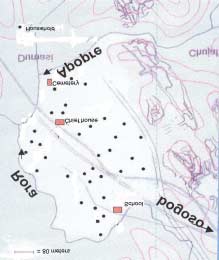
US/GHA/99/128/11-01
3 Assessment of Human Health
3.1 Data collection
3.1.1 Social and occupational questionnaire
The questionnaire, and the associated clinical examination procedure, were adapted from a similar
study, which was done in Mindanao island (Philippines) under UNIDO auspices (5). This strategy was
deliberately adopted, to allow a comparison between the two situations. A few modifications were
introduced in order to take into account the specificity of the Ghanaian context and culture.
The questioned people were recruited by elders, and have to explicitly consent to participate in the
study. Their households were also located on a simplified map of the village (Figure 3) by a number (1 to
45); thus the different parts of the village were almost equally taken into account in the study.
Figure 3- Dumasi households included in the study
3.1.2 Biological samples collection
Total numbers of samples collected were as follows:
· 181 samples of blood (1 to 3 replicates of 4ml in EDTA-coated vials).
· 120 samples of spontaneous urine (1 to 2 tubes of 50 ml).
· 167 samples of hair: the quantities were very small, according to the "cranium shaved " fashion of
the men.
· 179 samples of nails: the quantities were sometimes very small.The urine and blood specimens were
cooled after collection, and maintained so until arrival in the laboratory in France.
3.1.3 Sample processing and analytical methods
Methods described in this section concern primarily human samples; basically, analytical methods
applied to human and environmental samples are identical. Therefore, they will not be presented again in
the report section on environment assessment. Conversely, sample processing (i.e. acid digestion) may
differ on several details according to the sample type; so process methods will be described in each section.
7
US/GHA/99/128/11-01
3.1.3.1 Storage
The samples, received in their respective containers, were kept under freezing conditions until
analyses began. The blood samples were in secured 4ml sterile bottles; the urine samples in 50ml
polypropylene centrifuge bottles; the water and sediment samples were respectively in 1 litre polythene
bottles; the rest of the samples were in secured sachets.
3.1.3.2 Sample preparation and digestion
· Blood: 300 µL of blood were transferred into polypropylene sample tubes, and transported to the
laboratory. 3ml of aqua regia were added and the samples were exposed to ultra sonic waves
(BRANSON 2200) for 1 hour. They were then agitated at 420 rpm until complete dissolution. On
dilution the solutions became cloudy and this necessitated centrifuging before CV-AFS analysis.
· Urine: it was observed after defrosting that the urine samples were not homogeneous. There were
some colloidal solids collected at the base of the tubes. Attempts to dissolve the solids, in situ, by pH
variations failed.
Therefore the total volumes of the samples were accurately noted. They were then centrifuged in
pre-weighed polypropylene tubes. The solid and liquid portions were separated and treated
respectively as follows:
Solid: They were dried in an oven at 50°C overnight. 3ml aqua regia were added and agitated on
a shaker until complete dissolution. Volumes in the other of 100uL were taken and diluted with
the reagent blank for CV-AFS analysis.
Liquid: 1 ml of urine was accurately measured and transferred into 25 ml volumetric flasks and
diluted to the mark with the reagent blank described in procedure b (see below).
· Hair and nail: samples were weighed into polypropylene bottles and 3ml aqua regia added. Care
was taken to avoid weight errors introduced by electrostatic forces between the samples and the
walls of the containers. The samples were placed on a shaker to agitate overnight. The solutions
were diluted with deionised water. Where further dilutions were required to allow the readings in the
calibration range these were done with the reagent blank.
3.1.3.3 Total Mercury determination
Elemental mercury vapour was generated from the digested samples and standards by reduction
with tin(II) chloride dihydrate (BAKER) using the continuous flow approach, and was purged from solution
by an argon (AGA 4.5) carrier stream at a flow rate of 0.3l/min. The mercury vapour was detected by
atomic fluorescence spectrometry using the Merlin PSA 10.023 detector. Measurements were controlled by
the Touchstone ® control software.
For purposes of compatibility with pre-treatment reagents two procedures were adopted:
a. The reductant was 2%m/v SnCl2 in 10%v/v HCl (BAKER). For the reagent blank 150ml of 33%v/v HCl
and 20ml of 0.1N KBr/KBrO3 were transferred into a litre flask. 0.6ml of 12% m/v OHNH3Cl was added
to decolourise and then made to the mark with deionised water.
b. The reductant was 5%m/v SnCl2 in 15%HCl.The reagent blank was a solution of 10% HNO3 and
7%HCl.
Standards were prepared from TITRINORM 1000ppm mercury solution (PROLABO). Working
standards were prepared by diluting stock standards with the respective reagent blanks. Calibration ranges
were typically 0.0 1.0ug/L.
The analytical performance of the procedures employed were assessed for linearity, limit of
detection and accuracy and precision of the analytical measurements. The analyses were done in dust-free
rooms meant for trace metals.
The water samples were analysed by procedure a. For the soil and sediment samples the
microwave-extracted samples were analysed by both procedures a and b while the aqua regia extracts were
analysed by procedure b. The urine, blood, nails, hair, vegetables, chicken and fish samples were analysed
8
US/GHA/99/128/11-01
by procedure b. Anti foaming agents were added to the blood, vegetables, chicken, hair, nail and fish
samples before AFS analysis.
The reference materials used for the accuracy assessment include certified NBS SRM 2672a urine,
Seronorm trace element 404107y whole blood, IAEA 086 hair, GBW 08205 rice, BCR 464 fish and the BCR
320/678 river sediment samples.
3.2 Results & discussion
3.2.1 Social and occupational data
187 adults (2) were recruited,, including 117 male and 70 women. 74 men and 23 women declared
to be galamseys; 4 of the men galamseys, and 2 of the women claimed they had no contact with mercury,
as they only sieved the crushed ore. Most of the women were partial time galamseys, but 2 of them
declared they were involved full time. Moreover, 2 traders not involved in galamsey operation acknowledged
having contact with mercury.
Non-galamsey population was considered as a possible control, and was well balanced according to
gender, as it included 43 men and 47 women. The population is rather young (overall mean age: male 37,
female 31.5), but the galamsey group is somewhat younger (mean age: male 33.5, female 28.5) than the
non-galamsey group (mean age: male 43, female 31.5) . Figures 4 - 5
25
males
20
.
females
e
r
s
15
f
p
e
r
o
b 10
m
Nu
5
0
<20
21-25 26-30 31-35 36-40 41-45 46-50 51-55 56-60
>61
Age classes
Figure 4 - General distribution of ages
20
males
females
. 16
pers 12
of
er
b
8
m
u
N
4
0
<20
21-25
26-30
31-35
36-40
41-45
46-50
51-55
Age classes
Figure 5-Galamseys age distribution
2 Children (<15 years) were not selected for ethical reasons and difficulties in obtaining parents' consentment
9
US/GHA/99/128/11-01
Most of male galamseys (43/64) carry on their activity as full-time occupation; about 55 % of them
(35/64) have been galamseys for less than 5 years, and the remaining 45 % between 5 and 20 years.
Female galamseys generally do not carry on this occupation more than 5 years, but 30 % of them cannot
specify the exact duration. The other galamseys are farmers (n=38), traders (n=11) or other (n=5). The
non-galamsey sample is mainly farmer full time (n=35), trader full time (n=11); furthermore 6 are miners
working at the BGL mining plant.
The male galamseys population is also rather mobile, as it can be seen on Figure 6; three subsets
of this group can be distinguished:
less than 10 years of activity and less than 10 years of residence, which means they are migrants;
from 10 to 20 years of activity and less than 10 years of residence: they are therefore also
migrants;
less than 10 years of activity (sometimes even less than 5 years) but from 10 to 30 years of
residence; they are late or old galamseys originating mainly from the village.
25
20
s
ey 15
m
l
a
a 10
it
ears in G 5ti
Y
0
0
5
10
15
20
25
30
Years of Dumasi
id
Figure 6 -Duration of galamsey activity versus residence time in Dumasi
The overall population is rather poor, and consumes few tobacco and alcohol. The food is mainly
composed of tuber, completed by fish (1 time a day); meat and milk are rarely consumed.
The calculation of the ratio between the measured and ideal weight, for a given height, according
to Lorentz formula, showed that women are over-weighted, whatever their occupation. Farming activity
gives lower Lorentz index values (Figure 7)
1.2
ndex
1
Lorentz i
0.8
y
M
e
r M
y
F
e
e
ms
i
ner M
h
ms
t
her F
l
a
M
r
ader F
O
Farmer M
Ot
l
a
Farmer F
T
Ga
Ga
Figure 7 - Measured weight / calculated weight
10
US/GHA/99/128/11-01
Most of the women are illiterate; this trend is stronger among the galamseys female sub-group;
60% of the men were able to write, e.g. their names, male galamseys not being less educated than non
galamseys (Figure 8)
100%
female
male
80%
female Galams.
male Galams.
60%
pers.
of
%
40%
20%
0%
thumb
signature
Figure 8 -Consentment signature
3.2.2 Health perception
40% of male sample galamseys or not - claimed to have health problems; this ratio was slightly
higher in the female sub-group, but in this case galamseys declared more health problems (Figure 9) Most
of the declared pathologies were related to the skin area. 90% of the people, being galamsey or not, do not
declare or declare slight metallic taste and salivation problems. Nevertheless 20% of the people claimed to
have tremors and 65% have sleep disorders.
60%
40%
s
.
% of per 20%
0%
female
male
female Galams.
male Galams.
Frequency
Figure 9 - Percent of persons declaring health problems
3.2.3 Clinical examination
A special section of the collection of epidemiological data was dedicated to neurological health, as
mercury is particularly noxious to the nervous system. The clinical examinations consisted in classical tests
relating to walking, standing, sitting, lying, to the reflexes and the memory.
13 people having slight neurological disorders were identified: none of them was concerned with
lying, 1 was concerned with reflexes, 5 with standing and 9 with sitting. These 13 people are men with a
mean age of 52 years (20 - 67). Furthermore, 5 among these 13 are galamseys,
In the memory test, galamseys generally had a better score than non-galamsey: 65% of galamsey
had very good scores (Figure 10) it must be noted that these people are younger than the remaining people
examined.
11
US/GHA/99/128/11-01
G
NG
70
60
50
% 40
30
20
10
0
0 and 1
2
3 and 4
Figure 10 Memory scores
3.2.4 Mercury in biological samples
3.2.4.1 Standards & limit values (6) (7) (8) (9) (10) (11) (12) (13) (14) (15) (16)
Blood: The reference value in the non-exposed general population is < 10 µg/l. The main indices of
exposure are occupationally treshold limits:
BEI (Biological Exposure Index) = 15 µg.l-1, after working, (ACGIH: American Conference of
Governmental Industrial Hygienists) - (France);
BAT (Biologischer Arbeitsstoff-Toleranz-Wert) = 25 µg/l (DFG: Deutsche Forschungsgemeinshaft).
These BAT-values are exclusively valid for healthy adult workers, as these galamsey people
(under occupational medical control) and for metallic and inorganic Hg exposure
According to the literature, the first neurotoxic effects would occur in adults, at concentrations
higher than 200 µg.l-1. It is recommended to maintain the blood mercury < 100 µg.l-1.
Urine: The reference value in the nonexposed general population is < 5 µg.g-1 creatinin. The main indices
of exposure are :
BEI = 35 µg.g-1 of creatinin, before working
BAT= 100 µg.l-1 of urine ( for metallic and in organic Hg)
WHO = 50 µg.l-1
The threshold value, for blood and urine, were applied to the whole population, because the
objective was to assess the risk from mercury use in Dumasi either for galamseys and non galamseys.
Hair: The reference value in the nonexposed general population is < 2 µg.g-1 . The WHO recommended
limit is 10 µg.g-1.
According to the literature, the first neurotoxic effects would occur in adults at concentrations
higher than 50 µg.g-1 .
Nails: the same levels as for hair will be applied, because of the few existing data in the literature.
12
US/GHA/99/128/11-01
3.2.4.2 Exposure to Mercury in Dumasi
Detailed results are given in Annex. They can be summarised as shown in Table 1.
Hg content in ...
Blood (µg.l-1) Urine
(µg.l-1)
Urinary
Hair (µg.g-1) Nails
(µg.g-1)
Creatinine
(µg.g-1)
Mean-
24.4 23.85 15.54 3.85
3.99
Median 20 11 7 2.71
2.6
Mode
18 3.6 5.6 2.6 2.1
Minimum 1 1.1
1 0.39
0.66
Maximum 96 252.9
193 44.6
55.7
Stand.deviation
16.9 40.3 25.4 4.67 5.44
Number N
180
102 *
102 *
148
161
Table 1 - Summary of mercury exposure in the investigated population
*Excessively diluted urinary samples (creatinin < 0,50 g.l-1) as well as very concentrated ones (creatinin > 3 g.l-1)
cannot be used for biological monitoring. In such a case, new samples should normally be taken. The difficulties
encountered in taking sufficient quantities of urine, often because of the strong perspiration of the villagers, led us to first
check the creatinin contents of the collected samples : of 118 samples of urine, 16 were eliminated because of creatinin
values above the limit of 3 g.l-1. For the 102 samples selected, the results are expressed in µg Hg.l-1 of urine and µg Hg
.g-1 of creatinin in the urine.
For all the biological descriptors, mean are higher than reference values in the non-exposed
general population. For blood, the mean and the median are very close to the exposure index (BAT);
however, the range is rather large. Variability is also high for urine data, and for hair and nails as well. The
maximum values for blood and hair are however lower than the lower bound for neurotoxic effects. For the
urine, only 5 samples exceed 50 µg.g-1 of creatinin.
3.2.4.3 Correlations between the various exposure indicators
The examined biomonitors are weakly correlated one to one (Table 2); the best correlations are
obtained for urine and creatinin (S **, p<0.001), then hair and nails (S *; p<0.05). No correlation at all was
found between blood mercury concentrations and the other indicators. As mercury concentrations in whole
urine and in creatinin appear well correlated, only creatinin was kept for further statistical analysis.
Hair
Nails
Blood
Urine
Creatinin
Hair 1
Nails 0.578 1
Blood 0.086 0.079 1
Urine 0.257 0.311 0.285 1
Creatinin
0.283 0.285 0.241 0.94 1
Table 2 - Correlation coefficients between exposure indicators
3.2.4.4 Influence of gender and occupation
Means and standard deviations () calculated by sample type (blood, urine etc.) and for various
regroupments of the examined population are shown in Table 3.
13
US/GHA/99/128/11-01
Medium Parameters
TOTAL MALES
FEMALES
187
pers. G
Non-G G
Non-G G
Non-G
Number
180 93
87 71 42 22 45
Blood
Mean 24.4 27.3
21.3 27.3 22.7 27.4 19.9
16.9 17.8
15.2 17.7 19.4 18.9 9.9
p -
S NS S
Number
102 66
36 57 20 9 15
Creati-
Mean 15.54
19.4
8.5
21 11.7
9.2
4.5
nin
25.4 29.6
12.7 31.5 16.5 6.2 2.0
p -
S* S S
Number
148 76
72 58 29 18 43
Hair
Mean 3.85 4.7
3.0 5.35 3.5 2.56 2.62
4.7 6.0
2.5 6.6 2.5 1.6 2.4
p -
S S NS
Number
161 81
80 64 37 17 43
Nails
Mean 3.99 5.2
2.8 5.8 2.5 2.6 3.1
5.44 7.2
2.0 8.0 1.5 1.6 2.3
p -
S* S* NS
Table 3 - Comparison of galamseys and non galamseys exposure with respect to gender
NS = non significant ; S = significant (p<0.05); S* = very significant (p<0.01); (G), (Non-G) = galamsey & non-
galamsey
As a whole (columns "TOTAL"), mercury mean concentrations of all indicators differ significantly for
galamseys and non galamsey people. Apart for blood in males and hair and nails in females, the same
difference between galamseys and non galamseys is found in sub-groups (colums "MALES" and
"FEMALES"). Blood mean concentrations are equivalent between male and female subgroups.
3.2.5 Classification of exposures
3.2.5.1 Class limits
Three classes were defined for each biomonitor: the first one corresponds to results below the
reference value (non-exposed general population), the third one to results above the level indicating an
obviously exposed population, while the remaining data correspond to an intermediate situation. The class
limits are summarised in Table 4.
Class
Hg µg.l-1
Hg µg.g-1
Hg µg.g-1
in Blood
in Creatinin
in Hair or Nails
1
< 10
< 5
< 5
2
> 10- <25
> 5- <35
> 5- <10
3 >
25
>35
>10
Table 4 - Class limits for exposure indicators
3.2.5.2 Classification results
· The distribution of galamseys and non-galamseys among the 3 classes was studied for each
indicator, with distinction by gender as women are supposed to be less exposed to mercury from
artisanal gold mining, because the proportion of galamseys among women is lower, or because they
have often several occupations (see § 3.2.1).
14
US/GHA/99/128/11-01
Blood: people in class 1 (non-exposed) account for only 9 to 14% of the total population (Figure 11);40 to
50% of galamseys people are in class 3, versus 20 to 30 % of non galamseys. This shows that:
Dumasi population shows generally mercury concentrations in blood higher than 10 µg.l-1 , which
is the reference value for non-exposed populations;
Among the most exposed people (i.e. class 3), galamseys are much more represented.
(a)
(b)
Galamsey
non-Galamsey
Galamsey
non-Galamsey
t
80
80
60
60
a
l
e
s
s
le
40
f
m
40
e
ma
% o 20
f 20
of
0
%
0
1
2
3
1
2
3
Classes of Hg concentrations
Classes of Hg concentrations
Figure 11 - Percentage of galamseys and non galamseys people in 3 classes of blood
mercury contents : a) Males ; b) Females
Urine, hair and nails: proportion of people in classes 2 and 3 are lower than for blood, but again,
galamseys proportions in these classes are higher than non galamseys. shows 2 examples for hair (a) and
nails (b).
(b)
(a)
Galamsey non-Galamsey
Galamsey non-Galamsey
10
10
8
8
6
6
f
4
4l
of males
%
% o
2
2
0
0
1
2
3
1
2
3
Classes of Hg concentrations
classes of Hg concentrations
Figure 12 - Percentage of gamaseys and non galamseys people in 3 classes of mercury
contents : a) in hair; b) in nails
Table 5 summarises the distribution of people belonging to class 3 according to their occupation
and gender. As a whole, there are 92 people in this class: 74 of them exceed the limit for at least one
indicator. Moreover, some people of this group exceed the class 3 limit for more than one indicator:
sometimes 2 or 3, even 4. These 74 people are studied in details in the following section.
15
US/GHA/99/128/11-01
Classe 3
Galamsey operators
Non-Galamsey operators
Total
Females Males Females
Males
Blood 11
29
10
12
62
Creatinin 0
8
0
1
9
Hair 0
6
1
2
9
Nails
0 11 1 0 12
S/total 11
54
12
15
Total 65 27
92
Table 5 - Distribution of people in class 3 according to occupation and gender
3.2.5.3 Observation of most exposed people (class 3)
About 67% people (among the total of 92) are in class 3 because of their high mercury blood
content; this proportion falls to only 10% for creatinin, showing that blood is a more discriminant indicator in
this study.
Within the group of male galamseys (N=36), 12 exceed the exposure value for several descriptors
(up to 4). This feature is never observed in the non-galamsey group, nor in the female galamsey group,
where only one exposure indicator is execeeded at a time (mainly blood, 33 occurences for a total of 38).
There is only one exception, a supposed male non-galamsey who shows very high mercury concentrations
in blood and urine (93 µg.l-1 and 78 µg.g-1 creatinin respectively) and declares having tremor.
The Table 6 displays a statistical summary of exposure indicators for class 3 people, and allows the
comparison between 2 groups, i.e. galamseys (male only), and non-galamseys (male and female were
grouped, so as to obtain a group of a comparable size). Means in groups A and B are obviously different for
all indicators, excepted for blood.
a)
group
Blood Hg µg.l-1
Creatinin Hg µg.g-1
Mean Max
min N Mean Max
min
N
A 36.5(38.1) 74(93) 9
36
(37) 30.7(32.2) 193
1.7
30(31)
B 37.5(35.4) 96
7
27(26) 11.9(6.4) 78.3(16) 1.6
13(12)
b)
group
Hair Hg µg.g-1
Nails Hg µg.g-1
Mean Max
min N Mean Max
min
N
A 7.4 44.6
0.4 29 8.5 55.7
1.4
32
B 4.4 14.3
0.7 21 3.0 12.6
0.9
24
Table 6 Statistical summary of mercury exposure for class 3 people
A: male only galamseys; B: male and female non galamseys. Values in brackets are obtained after reclassing the non-
galamsey man with high blood and urine mercury in the galamsey group, following the assumption that his response to
the questionaire was erroneous.
In conclusion, among 187 investigated people 74 are in class 3 for at least one indicator, i.e. 48
galamseys (on a total of 98) and 26 non galamseys (on a total of 89) . The galamseys are always more
exposed than the non galamseys. Moreover, 13 male galamseys among 37 (50% of the overall class 3
number) are classified in this class for several indicators. These 13 men are younger (mean = 30 years)
than the class 3 men in general (33 years) or than the overall investigated men (35 years). They are also
more illiterate (83%) than the male galamseys group (49%, N=98). This could perhaps mean that educated
galamseys are more aware of mercury hazards, and use it with caution. The education of this subgroup
could be efficient for reducing their individual risk.
16
US/GHA/99/128/11-01
3.2.6 Comparison with neurological data obtained during the epidemiological study
Among the 13 people having slight neurological disorders, there were 6 men belonging to class 3
(30 to 38 µg.l-1 Hg in blood). Two of them are galamseys, of which one exceeds the limit for 2 biomonitors.
One of these 2 exceeds the limit for 2 biomonitors (blood and creatinin, 31 µg.l-1 and 39 µg.g-1
respectively). The diagnosis for him was "moderate excess salivation, the person is observed talking and
asked to open his mouth and elevate his tongue". Among the 6 class 3 individuals, there are 3 cases of
"moderate tremor", and also 2 of "vision problems", 2 "skin diseases", and 1 asthma.
The fact that so few neurological disorders could be observed is strongly coherent with the
biological data, as the symptoms are likely to be observed at concentrations higher than the maximum
concentration observed in Dumasi. This does not preclude however a chronic intoxication of the galamseys
population, and to a lesser extent of the non galamseys one
3.2.7 Brief comparison with the UNIDO study in Mindanao (the Philippines)
As mentioned previously, a recent study was carried out in Mindanao island (the Philippines) by G.
Drasch et al. (17) among clandestine gold miners. Intentionnally, our approach was similar to Table 7
summarises respective findings of this study and the current one.
BLOOD URINE
% of total cases
% of total cases
1 a
2 a
1 b
2 b
N 161 180 N 161 102
range 2.9-110 1.0-96 range 0.3-511 1.1-253
mean 17.3 24.4 mean 32.2 23.8
Class limits
Class
limits
µg.l-1
µg.l-1
< 5
13.1
2.8
< 7
41.6
36.2
5 - 15
42.2
32.3
7-25
24.2
39.2
> 15
44.7
78.9
>25
34.2
24.5
>25 21.1 33.3 >100 8.1 4.9
total 100% 100% total 100% 100%
1= Mindanao; 2= Dumasi
Table 7 - Comparisons of Mindanao and Dumasi results
Blood samples show comparable range and mean, whereas Mindanao people have higher mercury
concentrations in their urine. Several authors have concluded that blood mercury is linked to exposure
through food, while urinary mercury would mean occupational exposure to atmospheric (thus mineral)
mercury. Therefore people in both contexts display similar food exposure, but Mindanao people seem more
exposed through mercury processing.(18) (19
In Mindanao, 55 (36.7%) out of 150 hair samples exceed 5 µg.g-1 and 37 (24.7%) 7 µg.g-1 . The
range was 8 - 42.2 with a mean of 5.6 µg.g-1. In Dumasi, 24 (16%) out of 148 hair samples exceed 5 µg.g-1
and 11 (7.5%) 7 µg.g-1 and the range was 0.4-44.6 with a mean = 3.9 µg.g-1
17
US/GHA/99/128/11-01
4 Design of a monitoring system for continuous biological sampling &
analyses
4.1 Objectives
Two levels of objectives could be identified :
-
for Dumasi : continuous monitoring of the group at risk identified by this study must be done
after the introduction of retorts,
-
for an overall survey in Ghana, extend the assessment of human exposure to mercury in other
artisanal gold mining sites : different locations must be studied for their geographical and
processing gold specificities ( i.e. alluvial areas).
4.2 Strategy
The group at the risk the most exposed to mercury is male galamseys. Their survey cannot be done
extensively.
-
for Dumasi, the survey will be based on the group at risk identified. Another sampling
campaign will be done to confirm their exposure. Retorts will be distributed to the galamseys
of that group. A survey one year later on these users of retorts must be done for the
evaluation of this preventive process.
-
for other artisanal gold mining sites, we would propose to make the same type of study. The
choice of the sites will be done by the Small-Scale Mining Department. Fifty persons will be
sampled. The sampling strategy is the following : 30 male galamseys, their spouses and
children (20 persons) will be chosen as control group : biological samples preferred will be
blood and hair or nails.
-
Continuous monitoring of the overall galamseys exposure could be done through the health
infrastructure of Ghana : each male galamsey or his spouse and children could be sampled for
their hair or nails.
This pilot proposal could be tested, before its extension to all the health centres in Ghana, in
Bogoso and another Health Centre in the North of Ghana. If this proposal is feasible we could propose a
very simplified protocol for data and samples collection.
18
US/GHA/99/128/11-01
5 Intermediate conclusions
· There is a strong evidence of mercury exposure among Dumasi population;
· Galamseys are more exposed to mercury than non galamseys;
· Young illiterate galamseys show the strongest exposure (several indicators in class 3). People
inhabiting the village for a long time are also among the most exposed people.
· Results are a bit confusing, as blood is the most discriminating indicator; following the literature,
urine indicators should be more discriminant for people exposed mainly through their occupation.
However, strong perspiration could perhaps explain this situation.
· Many non galamsey people, even less exposed than galamseys, show obviously mercury blood
levels higher than reference values, meaning that there is also an exposure through the environment
(food).
· Mercury blood levels in Dumasi are comparable to those in Mindanao (the Philippines), whereas
urinary mercury is higher in the latter study; this shows that exposure through food is an important
route in Dumasi.
· However, it seems difficult to extrapolate this conclusion to the whole Ghanaian auriferous area, as
processes may greatly vary (e.g. in alluvium).
· One important goal of the project's second phase should therefore be to reduce mercury transfers to
the environment.
· Education is a dramatic issue in this context; young galamseys and women appear of particular
concern for that issue.
· A second target should be the introduction of appropriate technology for mercury distillation, as it
has been shown that galamseys were more exposed than other people.
· Other prevention measures should also be envisaged, as people are also exposed through their
environment.
19
US/GHA/99/128/11-01
References
1 ESSAH S. (March 2000) Ethno-sociological study of DUMASI (BOGOSO) Vol. 1, main report UNIDO,
Assistance in assessing & reducing pollution mercury emanating from artisanal mining in GHANA 18 p.
2 Cursino L., Oberda S.M., Cecilio R.V., Moreira R.M., Chartone-Souza E. & Nascimento A.M.A. (1999)
Mercury concentration in the sediment at different gold prospecting sites along the Carmo stream, Minas
Gerais, Brazil, and frequency of resistant bacteria in the respective aquatic communities - Hydrobiologia
394: 5-12
3 Bidone E.D., Castilhos Z.C., Cid de Souza T.M., Lacerda L.D. (1997) Fish contamination and human
exposure to mercury in the Tapajos river basin, Para state, Amazon, Brazil: a screening approach - Bull.
Environ. Contam. Toxicol. 59: 194-201
4 Malm O., Pfeiffer W.C., Souza M.M. & Reuther R. (1990) Mercury pollution due to gold mining in the
Madeira River Basin, Brazil Ambio 19, 11-15
5 Bose-O`Relly S., Maydl S., Drasch G., Roider G. Mercury as a health hazard due to gold mining and mineral
processing activities in Mindanao/Philippines UNIDO Project n° DP/PHI/98/00511
6 Fréry N., Jouan M., Maillot E., Deheeger M. & Boudou A. (1999) Exposition au mercure de la population
amérindienne Wayana de Guyane Enquête alimentaire Institut de Veille Sanitaire, 41 pp + annexes.
7 INRS (1997) Mercure et composés minéraux, Fiche toxicologique n° 55
8 WHO (1991) Environmental health criteria 118 : Inorganic Mercury. Geneva
9 Registry of toxic effects of chemical substances, edition 1985-86, volume 3A Cincinnati, NIOSH
10 Documentation of the threshold limit values and biological exposure indices, 5e edit. Cincinnati, ACGIH,
1986, pp358-359
11 Feng Q. Suzuki Y., Hisashige A. Hair mercury levels of residents in China, Indonesia, and Japan.
Arch.Environ.Health. 1998;53 (1):36-43
12 Phelps R., Clakkson T. Interrelationship of blood and hair mercury concentrations in a North American
population exposed to methylmercury. Arch.Environ.Health. 1980; 35 (3) : 161-168
13 Buzina R., Stegmar P. (1995) Dietary mercury intake and human exposure in an Adriatic population. Sci.
Total Environ. 170(3): 199-208.
14 Lebel J., Mergler D., Lucotte M. ,Amorim M., Dolbec J. (1996). Evidence of early nervous system
dysfunction in Amazonian populations exposed to low-levels of methylmercury. Neurotoxicology.16 (4).
15 Sigel A., Sigel H. Mercury and its effects on Environement and Biology. M Dekker (New York) : 1998
16 Drasch G et al (1997) Are blood, urine,hair, and muscle valid bio-monotoring parameters for the internal
burden of men with the heavy metals mercury, lead and cadmium ? Trace Elem Electrolytes 14,116-12
17 Drasch, G. Analysing of Blood and Urine Samples, Project N° DP/PHI/98/005 Assistance in reducing
mercury emissions in highly contaminated mining areas in Mindanao (Phase I). Report Feb. 2001. Institut
Für Rechtsmedizin - Universität München....
18 Weeks J.M. (2000) A study of the potential risks to human health from consumption of rice cultivated in
paddy fields irrigated by mercury-contaminated mine waste water, Naboc River, Philippines UNIDO
19 Appleton J.D., Williams T.M., Breward N., Apostol A., Miguel J. & Miranda C. (1999) Mercury
contamination associated with artisanal gold mining on the island of Mindanao, the Philipines - Sci. Tot.
Environ. 228: 95-109
20
UNITED NATIONS INDUSTRIAL DEVELOPMENT ORGANIZATION
US/GHA/99/128 - Assistance in Assessing and Reducing Mercury
Pollution Emanating from Artisanal Gold Mining in Ghana - Phase I
Part II - Conduct of surveys on river systems & overall conclusions
Marc BABUT (), Ransford SEKYI (), Martine POTIN-GAUTIER & Sylvaine TELLIER (), William BANNERMAN (,)
Claude CASELLAS & André RAMBAUD ()
() Cemagref, Groupement de Lyon, UR Biologie des Ecosystèmes Aquatiques
() Environmental Protection Agency, GHANA
() Université de Pau & des pays de l'Adour, Laboratoire de Chimie analytique bioinorganique et
environnement
() Kwame Nkrumah University of Science & Technology, Chemistry Department, Kumasi, GHANA
() Université de Montpellier I, Département Sciences de l'Environnement & Santé publique
February 2001
i
US/GHA/99/128/11-02
Contents
Abbreviations...........................................................................................................................................ii
Index of tables.........................................................................................................................................ii
Index of Figures.......................................................................................................................................ii
1 Introduction ....................................................................................................................................... 1
2 Current situation of the environment................................................................................................... 1
2.1
Global situation in Dumasi area ................................................................................................... 1
2.2
Mercury releases to the environment........................................................................................... 1
2.3
Water quality .............................................................................................................................. 2
2.3.1 Monitoring data from BGL........................................................................................................ 2
2.3.2 EPA's "GERMP" monitoring program of river water quality ........................................................ 4
2.4
Environment perception by Dumasi population ............................................................................ 4
3 Assessment of the nature & extent of mercury pollution in Dumasi...................................................... 4
3.1
Strategy...................................................................................................................................... 4
3.2
Sampling protocol ....................................................................................................................... 5
3.2.1 Sediments............................................................................................................................... 5
3.2.2 Soils........................................................................................................................................ 5
3.2.3 Groundwater and surface water............................................................................................... 5
3.2.4 Fishes ..................................................................................................................................... 6
3.2.5 Chicken................................................................................................................................... 6
3.2.6 Vegetables .............................................................................................................................. 6
3.2.7 Summary of the April 2000 sampling campaign........................................................................ 7
3.3
Analytical methods used for environmental samples..................................................................... 8
3.4
Results........................................................................................................................................ 9
3.4.1 Total Mercury in water samples ............................................................................................... 9
3.4.2 Total Mercury in soil and sediment samples ............................................................................. 9
3.4.3 Total Mercury in fish samples................................................................................................... 9
3.4.4 Total Mercury in vegetable and chicken samples .....................................................................10
3.5
Discussion..................................................................................................................................11
3.5.1 Standards and limit values......................................................................................................11
3.5.2 Assessment of environmental contamination by mercury.........................................................13
3.5.3 Summary of findings ..............................................................................................................18
4 Design of a monitoring program for water quality assessment............................................................20
4.1
Information needs (objectives)...................................................................................................20
4.2
Strategy.....................................................................................................................................20
4.3
Sample collection .......................................................................................................................22
4.3.1 Sediments..............................................................................................................................22
4.3.2 Fishes ....................................................................................................................................22
4.4
Analyses ....................................................................................................................................22
4.5
Data handling ............................................................................................................................23
4.6
Data analysis & reporting ...........................................................................................................23
5 Overall
Conclusions........................................................................................................................... 24
6 Recommendations for the implementation of the program ................................................................26
References ...............................................................................................................................................27
i
US/GHA/99/128/11-02
Abbreviations
ADI
Acceptable Daily Intake
BGL
Bogoso Goldfields Limited, Bogoso, Ghana
BHC
Bogoso Health Center
CCC
Criterion Continuous Concentration: the highest concentration of a pollutant to which
aquatic life can be exposed for an extended period of time (4 days) without deleterious
effects
CMC
Criterion Maximum Concentration: the highest concentration of a pollutant to which aquatic
life can be exposed for a short period of time (1 hour average) without deleterious effects
EPA
Environmental Protection Agency, Accra, Ghana
ISQG
Interim sediment quality guideline
PEC
Probable Effect Concentration: concentration above which toxic effects for benthic
organisms are expected (consensus)
PEL
Probable effect level: level above which toxic effects for benthic organisms are expected
RCQE
Canadian Recommendations for the Quality of the Environment
SMMO
Small Scale Mining Office (Mineral Commission)
SQG
Sediment Quality Guideline
TEC
Threshold effect concentration: concentration below which toxic effect for benthic organisms
are not expected (consensus)
TEL
Threshold Effect Level: level below which toxic effect for benthic organisms are not
expected
UP
Pau University, Inorganic analysis laboratory
US-FDA
United States Food & Drug Administration
WRI
Water Research Institute, Accra, Ghana
Index of tables
TABLE 1 - BGL'S SAMPLING LOCATIONS ............................................................................................................. 2
TABLE 2 - EPA'S LIMIT VALUES FOR MINING EFFLUENTS......................................................................................... 3
TABLE 3 - IDENTIFICATION OF ENVIRONMENTAL SAMPLES....................................................................................... 7
TABLE 4 - TOTAL MERCURY CONCENTRATIONS IN WATER SAMPLES ........................................................................... 9
TABLE 5 - TOTAL MERCURY CONCENTRATIONS IN SOIL & SEDIMENT SAMPLES ............................................................. 9
TABLE 6 TOTAL MERCURY IN FISHES ..............................................................................................................10
TABLE 7 - TOTAL MERCURY VEGETABLES............................................................................................................10
TABLE 8 - TOTAL MERCURY IN CHICKEN SAMPLES ................................................................................................10
TABLE 9 - STANDARDS FOR MERCURY IN SURFACE WATERS....................................................................................11
TABLE 10 - BACKGROUND CONCENTRATIONS OR CONTROL VALUES FOR "TOTAL HG" IN FISHES......................................12
TABLE 11 EXAMPLES OF FRESHWATER SEDIMENT QUALITY GUIDELINES FOR MERCURY ...............................................13
TABLE 12 - BACKGROUND CONCENTRATIONS OF TOTAL HG IN SEDIMENTS (µG.G-1) ....................................................13
TABLE 13 - REVIEW OF MERCURY RANGES IN CONTAMINATED SEDIMENTS .................................................................14
TABLE 14 - REVIEW OF FISH CONTAMINATION....................................................................................................17
TABLE 15 COMPARISON OF SEDIMENT AND FISH SAMPLING .................................................................................21
TABLE 16 - MONITORING PROGRAM SUMMARY....................................................................................................22
Index of Figures
FIGURE 1 SAMPLING LOCATIONS FOR BGL'S EFFLUENTS MONITORING .................................................................... 2
FIGURE 2 - SAMPLING LOCATIONS (APRIL 2000) ................................................................................................. 5
FIGURE 3 - TOTAL MERCURY IN RORA AND APOPRE RIVERS SEDIMENTS & WATERS .....................................................15
FIGURE 4- SCHEMATIC REPRESENTATION OF MERCURY LOSSES DURING GOLD EXTRACTION............................................16
FIGURE 5 - MERCURY CONCENTRATIONS IN DIFFERENT FISH SPECIES .......................................................................18
FIGURE 6 - MONITORING CYCLE ......................................................................................................................20
FIGURE 7 - SIMPLIFIED FRAMEWORK OF THE DATABASE ........................................................................................23
ii
sub2igoatt6part2
1 Introduction
This report belongs to the US/GHA/99/128 project implemented by the UNIDO and entitled
"Assistance in Assessing and Reducing Mercury Pollution Emanating from Artisanal Gold Mining in Ghana
(phase 1)". This part II report relates to the environmental assessment of mercury pollution, which includes
the following tasks:
1.
Investigate the situation of the environment on the spot, take samples from waters and soils where
pollution can be assumed.
2.
Evaluate the nature and extent of the mercury pollution in a selected river system and adjacent
agricultural sites.
3.
Introduce and set-up a monitoring system for continuous water quality assessment.
4.
Formulate measures for the remediation and possible rehabilitation of hot spots in the river systems
and vicinities.
5.
Advise on necessary interactions between government departments, mining industry and research
institutions.
6.
Prepare a concise report on all findings and data including recommendations.
Tasks 5 will be examined along with the findings and conclusions of part I report, which relates
more specifically to human health assessment.
2 Current situation of the environment
2.1 Global situation in Dumasi area
The first and obvious environmental issue in the area of concern relates to important modifications
of the topography. From 1987 (beginning of the concession) to 1998, about 52 millions of tonnes have been
excavated (1). 80% of this amount is waste and returned to land.
Hydrography and hydrology should have been modified accordingly, but no quantitative data were
made available. Industrial mining, by digging large pits, represents certainly the main impact in this field.
Localised impacts linked with artisanal mining occur at a local scale: even though not quantified, the
installation of sumps along the Apopre river strongly disturbs the discharge regime. Because of a lower
sump density, disturbances are less discernible in the Rora river.
A third issue is erosion, which is particularly visible in the Apopre river upstream Dumasi. The water
is orange coloured and completely turbid. Erosion is linked to tailings piles and to digging activities;
galamsey activity probably increases turbidity, since many sumps are grouped in a small area, like in the SE
part of Dumasi. Either upstream or close to the confluence, the Rora river appears again less affected by
turbidity.
The fourth issue is acid rock drainage, which is created by the rainwater drainage of sulfides after
they have been oxidised in sulphates, resulting in sulphuric acid formation. Consequently, various metals
from ore minerals are then dissolved in pit waters, and may be released into the adjacent rivers (2).
BGL mining company sustains a consistent rehabilitation effort with about 68 ha planted with
nitrogen fixing tree seedlings and 18 ha with various grass species in 8 months in 1998 (1). However,
reclamation success is sometimes hampered by the composition of the mineral materials used in this
process, which can induce phytotoxicity. This undesirable effect may be due to arsenic, which is widespread
in the rocks of this area.
2.2 Mercury releases to the environment
Assuming an average gold production of 0.5 1.0 g per capita (see part I), § 2.3), it can be
estimated that the yearly mercury consumption in Dumasi is on average 450 kg (100 1500 kg), depending
on the ore richness and on the gold to mercury ratio in amalgamation.
1
sub2igoatt6part2
2.3 Water quality
Existing data concerning surface water quality around Dumasi may be obtained from the mine's
monitoring program and from the general monitoring program of river quality.
2.3.1 Monitoring data from BGL
BGL's monitoring program includes 6 sampling locations (Table 1; Figure 1); measurements include
pH, suspended solids (TSS or TDS, according to the period), conductivity, and three trace elements: arsenic,
copper, and zinc. Free cyanide is measured in samples from pits (P13, Tailing dams, and P14, Lake
Marwood), and from Apopre river (P16).
Code
Location
N01
Apopre Chujah
N02
Wora Wora Creek
P13
Tailings dams
P14
Lake Marwood
P16
Apopre stream
Q04
Subri above Mansi river
Table 1 - BGL's sampling locations
The tailing dams and Chujah area are drained directly or indirectly by the Apopre river, upstream
Dumasi village (Figure 1; cf. part I report, § 1.2). Therefore, the most interesting data are those from N01,
N02, P13, P14 and P16 locations, even though the respective contributions of these effluents to Apopre's
flow are yet unknown.
N
Rora river
N02
J05
N03
N01
Apopre river
Crocodile Lake
N08
P16
(tailing dam)
Figure 1 Sampling locations for BGL's effluents monitoring
(the square corresponds to Figure 2)
2
sub2igoatt6part2
Monitoring results of BGL's mining effluents for the year 1999 may be summarised as follows:
N01: water quality is characterised by pH values close to 7 (mean = 6.79, min = 6.18, max = 7.16), low
concentrations of copper (mean = 0.014 mg.l-1) and zinc (0.01 mg.l-1). With a mean value of 0.054,
arsenic concentrations in N01 samples are lower than those from pits or tailing dams (i.e. P13 and P14),
but they seem rather variable (max 0.151 mg.l-1)a. Mean TDS concentrationb is equal to 68 mg.l-1.
N02: pH values are slightly lower than the neutrality (mean = 6.56, min = 5.80, max = 6.80, and low
copper (mean = 0.014 mg.l-1) and zinc. Arsenic concentrations are comparable to those of N01 or P16,
and mean TDS is equal to 41 mg.l-1.
P13: at this sampling point, water is rather alcaline (mean pH = 9.28, min = 8.47, max = 9.8). Mean TDS
concentration is equal to 377 mg.l-1. Arsenic and copper concentrations are higly variable, but both
parameters show rather elevated values, as compared to the other sampling points (mean As = 0.386
mg.l-1; mean Cu = 0.347 mg.l-1). In contrast, zinc concentrations are low. Free cyanide is measured at
this point, with a mean concentration of 0.036 mg.l-1 (max 0.060).
P14: at this sampling point, water is alcaline too (mean pH = 8.12, min = 6.98, max = 9.16). Mean TDS
concentration is equal to 342 mg.l-1. Arsenic (mean = 0.368 mg.l-1) and copper (mean = 0.058 mg.l-1)
show an intermediate pattern, when compared to the other sampling points. Free cyanide is also
measured at this point, with a mean concentration of 0.034 mg.l-1 (max 0.050).
P16: pH values are similar to those at N01, but slightly more variable (mean = 6.73, min = 6.38, max =
7.64). Mean TDS concentration is equal to 72 mg.l-1, which is close to N01 value; nevertheless,
maximum TDS concentration is higher at P16 (188 mg.l-1 instead of 115 mg.l-1). Copper and zinc mean
concentrations are also low (respectively 0.011 and 0.02 mg.l-1). Arsenic mean concentration is equal to
0.032 mg.l-1; free cyanide mean concentration at this point equals 0.016 mg.l-1 (max = 0.03 mg.l-1).
EPA has set standards for mine effluents (3), which are summarised in Table 2.
Parameter
EPA's criteria (mg.l-1)
TSS 50
TDS 1000
CN (free)
0.2
CN (total)
1.0
As (dissolved)
0.1
As (total)
0.5
Table 2 - EPA's limit values for mining effluents
From ref . (3)
According to these standards, BGL's monitoring results appear to violate TSS standards at each
points in January and February 1999; results are then lacking until March, where TDS measurements
replaced TSS. The TDS standard is never violated in 1999 at BGL's sampling points.
EPA's standard for free cyanide has never been passed in 1999. Conversely, dissolved arsenic
standard is often passed at P13 and P14 sampling points; however, it is seldomly passed at Apopre river
sampling points (i.e. N01 & P16).
In summary, BGL's discharges to Apopre river are mainly characterised by their loads of suspended
solids even though one of the corresponding mandatory standards is generally respected -, and to a lesser
extent their arsenic content. According to the available pH data, acid rock drainage seems less pronounced;
however, it may occur in non monitored areas, or at previous stages of the waste management process.
This could explain the higher values of As and Cu concentrations in P13 and P14 samples, the effluent
acidity being then neutralised. Moreover, these points are located in dams which receive alcaline cyanide
residues. So acid rock drainage is certainly a true environmental issue in Dumasi region, even though data
are uncomplete.
a In 1999; max concentration from June, 1998 to March, 2000 is 0.198 mg.l-1
b TDS measurement replaced TSS in Feb., 1999
3
sub2igoatt6part2
2.3.2 EPA's "GERMP" monitoring program of river water quality
This program includes measurements of temperature, colour, turbidity, suspended matter, dissolved
oxygen, ammonia, nitrates and coliforms in selected rivers and reservoirs in all Ghana. There is one
sampling location from that program in Prestea (Ankobra river), a few kms away from Dumasi.
Unfortunately, data were not retrieved.
2.4 Environment perception by Dumasi population
According to the ethno-sociological report by S. ESSAH (4), villagers have expressed some concerns
about their environment. These concerns include:
· Groundwater pollution: metallic taste, brownish coloration of white clothes when washing, black-
blue coloration of some vegetables (e.g. plantain) when in contact with the water. Several
boreholes within the village show these specific characteristics.
· Changes in aire quality.
· Changes in surface water quality.
· Health problems, linked at least in part to water quality.
· Soil degradation, crop failure. None of these allegedly degraded parcels was visited during the field
mission.
3 Assessment of the nature & extent of mercury pollution in Dumasi
3.1 Strategy
According to the reference documents (Project description & Job description), the sampling
program should help to assess the nature and extent of mercury pollution in the river system around
Dumasi, and in adjacent agricultural sites. Sampling locations were thus selected in order to determine the
specific influence of galamseys activities:
· Sediment and surface water sampling locations were selected upstream the village on the 2 rivers,
and close to the confluence, which is located downstream the village; these locations should allow
to determine the global impact on the river system.
· Sediment sampling locations were also placed in several processing areas, which are called `sumps';
these sumps are located all along the two rivers, and are more or less connected to them. The
selection of specific locations was done in order to give a view of the various steps of the process.
· As it was necessary to rely upon village people to catch fishes, the sampling locations were not
determined accurately in advance. They were considered progressively, as people brought some
fishes to the team.
· Vegetables sampling locations were selected in the vicinity of sumps either active or abandoned, in
three different parts of the village.
· As for fishes, chicken sampling locations were not determined in advance. It was only asked to
villagers to bring some few chickens from different parts of the village.
· As far as possible, different kinds of samples were grouped in close locations (e.g. SS6, W6; SS9,
W9, V2; SS7 and SB1). All sampling locations are reported in Figure 2; these are in fact
approximate locations, because no GPS device was available during the sampling campaign.
4
sub2igoatt6part2
SS5
N
Rora river
C2
BH6
BH8
V4
BH4
BH3
BH5
BH7
BH2
C4
W9
W6
SS9
A
C3
pop
V2
re riv
C1
er
BH1
V3
F2
V1
SS10
SS8
SS7
SS4
SS3
SS6
SS2
SS1
F1
Apopre river
Figure 2 - Sampling locations (April 2000)
3.2 Sampling protocol
3.2.1 Sediments
Bulk sediment 10 to 20 cm thick were collected in various places (at least 2) of each sampling
location with a shovel. Vegetal debris were removed, and sediment was taken from the content of the
shovel in various places, with a stainless steel spoon, and added to 500 ml plastic bottles rinsed 2 times with
raw water from the location beforehand. These plastic bottles were filled as much as possible, in order to
avoid further oxidation.
All the samples were collected during the same afternoon, and frozen at -20°C within a few hours.
10 samples (SS1 to SS10) were collected: 5 were from the river system, and the remaining 5 from
the sumps, either active or abandoned. Their identification is summarised in Table 3.
3.2.2 Soils
According to the terms of reference, soils samples should have been taken where pollution could
have been assumed. Such locations may include places where mercury is sold, or those where it is used,
and finally those where amalgam is burnt.
Some of those sites were identified during the campaign, but their owners were very reluctant to
accept the sampling, for at least two reasons: (1) they alleged that these soils may contain gold from
galamsey operations, and (2) they may have feared that these soils would be used for voodoo. Thus only 1
soil from an amalgam burning place could be obtained (SB1).
Because of the reluctance of the site owner, it was impossible to apply any current sampling
protocol. A 40 * 40 cm square was delineated, and a layer of 1 cm thick was removed. The whole sample
was kept, and frozen within a few hours.
3.2.3 Groundwater and surface water
All the water samples were obtained following the same protocol: 1000 ml plastic bottles rinsed 2
times with freshly pumped water were filled up to the edge. Temperature and oxygen were measured
immediately with a portable probe.
5
sub2igoatt6part2
There are 9 boreholes in Dumasi village, equipped with manpower pumps of Ghanaian fabrication;
one pump was currently out, so 8 samples were collected. The borehole pipe should be emptied by
pumping before taking the sample. In fact, these boreholes are almost continuously working throughout the
day, so the samples were collected directly. The 8 boreholes samples (BH1 to 8) were collected within 2
hours, and frozen ½ hour later.
There are also some traditional wells in many households. Some of them were dug near sumps,
when those could not receive their water directly from the river (e.g. SW sumps). In this case, the water
table is very close to the surface (< 1 m), and the distance to the sump is also very short ( 1.5 m). 2 of
these wells were sampled and quoted W6 and W9, because the corresponding sumps were included in the
sediment sampling sub-program and identified as SS6 and SS9.
Surface water samples (SW1 to 5) were collected at the same locations where river sediments (SS1
to 5) had been taken. Well and surface water samples were collected the same morning as the first fish lot,
and frozen about 2 hours later.
At the arrival in France, defrost water samples were acidified with 1 ml of strong nitric acid and
quickly transferred to the laboratory.
3.2.4 Fishes
Fishes were obtained from 2 locations: F1 in the SE sump, and F2 from Apopre river close to the
cemetery, i.e. downstream F1. The F1 capture included 5 fishes and 2 crustaceans (cf. Table , F1/1 to
F1/8), and the F2 one 10 fishes (F2/1 to F2/10). Captures were obtained during the same day, one lot in
the morning and the other in the afternoon. The fishes were kept in water until Bogoso Health Centre
(BHC), where they were processed as follows.
As quickly as possible after the fish death, its length was measured. Then some scales of a side ,
and the corresponding skin, were removed, a piece of fillet of about 5-10 g was taken with a scalpel, and
placed in a plastic bag suitable for food freezing. The pieces of fillet were then frozen.
Crustaceans were frozen without sub-sampling.
All this process occurred in a tempered room ( 25°C); a Teflon sheet had been installed on the
table, and was washed with nitric acid and alcohol between 2 successive samplings. Instruments were also
cleaned with alcohol between the samplings.
Fish species were tentatively identified with the help of Water Research Institute technicians from
pictures taken before sampling the fillets, and named according to Teugels, Lévêque & al. (5,6).
3.2.5 Chicken
1 chicken was bought from villagers in each part of the village (i.e. 4 chickens, identified as C1 to
C4, for SE, SW, NE and NW parts; cf. Figure 2). The chickens were kept alive until their processing at BHC.
Breast feathers were removed, then skin was cut, and a piece of fillet of about 5-10 g was taken
with a scalpel, and placed in a plastic bag suitable for food freezing. The pieces of fillet were frozen within 1
hour.
This process was realised under the same conditions than for fish samples (i.e. cleaning the Teflon
sheet and instruments).
3.2.6 Vegetables
Vegetables were obtained from 4 different locations (V1 to V4). V3-cassava was taken from a
remote field beyond SS3/SW3 location, and could therefore be considered as a reference sample. V1 is
located near a mechanical crushing mill, but uphill the SE sumps. V2 is located in an household and its
associated sump. V4 is located in an abandoned sump.
These vegetables were brought back to BHC and processed in a similar way as fishes and chickens;
the skin was removed, and some pieces were taken and placed in plastic bags suitable for food freezing.
The Teflon sheet and instruments were cleaned after each vegetable processing. All the samples were
frozen within 1 hour.
6
sub2igoatt6part2
3.2.7 Summary of the April 2000 sampling campaign
Table 3 - Identification of environmental samples
Type
Code
Date
Description / Comment
borehole water
BH1 21/04/2000
BH2 21/04/2000
(c)
BH3 21/04/2000
BH4 21/04/2000
(c)
BH5 21/04/2000
(c)
BH6 21/04/2000
(c)
BH7 21/04/2000
BH8 21/04/2000
surface water
SW1 20/04/2000
SW2 20/04/2000
SW3 20/04/2000
Same location as SSi
SW4 20/04/2000
SW5 20/04/2000
wel water
W6
20/04/2000
Very close to SS6 sample
W9
20/04/2000
Very close to SS9 sample
sediment
SS1
19/04/2000
Apopre river - upstream
SS2
19/04/2000
Apopre river downstream the SE sumps; corresponds to
N02 location of BGL's prog.
SS3
19/04/2000
Apopre river - downstream the SW sumps
SS4
19/04/2000
Rora river close to the confluence with Apopre
SS5
19/04/2000
Rora river upstream Dumasi, along haulage road;
corresponds to N01 location of BGL's prog.
SS6
19/04/2000
SW sump, under the front of the `sluice' box
SS7
19/04/2000
SE sumps, under the front of the `sluice' box
SS8
19/04/2000
SE sumps, output of the sump area
SS9
19/04/2000
SW sump, output of the sump area
SS10
19/04/2000
SE abandoned sump wet, partially oxygenated sediment
soil
SB1
20/04/2000
SE sump, distillation place
chicken
C1 21/04/2000
C2 21/04/2000
C3 21/04/2000
C4 21/04/2000
fish F1/1
20/04/2000
`mudfish'
Parachanna obscura
F1/2
20/04/2000 tilapia
Tilapia guineensis
F1/3
20/04/2000 tilapia
Tilapia guineensis
F1/4
20/04/2000 tilapia
Tilapia guineensis
F1/5
20/04/2000 tilapia
Hemichromis spp.
F2/1
20/04/2000 `mudfish'
Parachanna obscura
F2/2
20/04/2000 `catfish'
Heterobranchus spp.
F2/3
20/04/2000 `catfish'
Heterobranchus spp.
F2/4
20/04/2000 `catfish'
Heterobranchus spp.
F2/5
20/04/2000 tilapia
Tilapia guineensis
F2/6
20/04/2000 tilapia
Tilapia guineensis
F2/7
20/04/2000 tilapia
Tilapia guineensis
F2/8
20/04/2000 tilapia
Tilapia guineensis
F2/9
20/04/2000 tilapia
Tilapia guineensis
F2/10
20/04/2000 tilapia
Hemichromis spp.
c The water turns brownish in contact with air, and purple colored when plantain or cocoyam are dropped in
7
sub2igoatt6part2
Type Code Date
Description
lobster F1/7
20/04/2000
shrimp F1/8
20/04/2000
vegetable
V1/1 20/04/2000
cocoyam
V1/2 20/04/2000
plantain
V2/1 20/04/2000
plantain
V2/2 20/04/2000
sugar
cane
V3/1 20/04/2000
cassava
V4/1 20/04/2000
cassava
Table 3 - Identification of environmental samples (continued)
3.3 Analytical methods used for environmental samples
Environmental samples were processed and analysed in the "Laboratoire de Chimie bioinorganique
& environnement" in Pau University (UP). As the analytical procedure itself is basically the same for all kinds
of samples, it will not be described here. Only sample preparation and digestion are presented.
· Water: aliquots of 40ml were accurately transferred into 50ml volumetric flasks. 7.5 ml of 33% v/v
hydrochloric acid (BAKER Intra-analysed for trace metals) and 1ml 1N KBr/KBrO3 reagents were
added and allowed to stand for 1hour. In all cases the yellow coloration due to free bromine
persisted. 6.0uL of 12% m/v hydroxylamine hydrochloride (BAKER) was added to each sample.
Coloration disappeared. They were diluted to the mark with de-ionised water.
· Soils and sediments: Masses between 50-100g of samples were dried in a clean chamber at
ambient temperature (<30°C) for 7-14 days. They were hand ground in porcelain mortar with
pestle and preserved in clean water-tight screw-capped polypropylene containers (POLY LABO
sterilised). About 0.5 g of the dried sample was weighed into the sample holder of a microwave
digester (PROLABO 301) and digested according to the following six-step automated digestion
programme using concentrated HNO3, HCl and HF (MERCK Suprapur):
STEP 1 2 3 4 5 6
REAGENT
HNO3
HCl HF
HCl WATER
SPEED
1/10
10 10 8 10 10
VOLUME
ml
6 5 15 3 40
POWER
%
10 20 20 85 15 35
TIME
min.
5 5 5 20 10 10
The digested solutions were washed and diluted to 100ml with deionised water (Milli-Q). Further
dilutions were made with reagent blank prior to the CV-AFS analysis. As an alternative extraction
procedure 0.5g of the dried ground samples were treated with 5ml aqua regia and agitated over a
shaker overnight.
· Fishes: The freeze-dried fish samples were microwave-digested according to the following
programme
STEP 1
2
3
REAGENT AQUA
REGIA
H2O 5%
KMnO4
VOLUME ml
3
5
2
POWER %
20
0
20
TIME min
5
0
5
Reagent introductions were done manually.
· Vegetables and Chicken: vegetables include plantain (peeled), cassava (peeled), sugarcane
(without skin nor joints) and cocoyam (peeled). The chicken samples were taken in breast muscles.
The chicken and the vegetables were dry-frozen with the exception of the sugarcane. The dry
freezing were done in a BIOBLOCK SCIENTIFIC dry freezer at -50°C and 0.055mbar pressure for 24
hours. Percentage humidity content of the samples were determined by weight differences prior
and after drying to allow expression of results in both wet and dry weight bases.
8
sub2igoatt6part2
Because consumers swallow only the juice of the sugar cane the juice were mechanically extracted and
analysed separately from the fiber. 10-50mg of the dried samples were weighed into polypropylene
bottles and 1.5ml of aqua regia added. They were exposed to ultra sonic waves (BRANSON 2200) for 1
hour and diluted to 10ml with deionised water.
Processed samples were all analysed by atomic fluorescence, as explained in part I report.
3.4 Results
3.4.1 Total Mercury in water samples
Results are shown in Table 4. With an average concentration of 0.165 µg.l-1 (± 0.05), water samples
from boreholes seem rather homogenous, and far beyond the limit value for drinking water (see § 3.5.1.1).
Other types of water samples seem more variable.
Sample code
Concentration (in µg.l-1)
BH1 0.27
BH2 0.14
BH3 0.15
BH4 0.20
BH5 0.18
BH6 0.13
BH7 0.13
BH8 0.12
SW1 0.15
SW2 0.76
SW3 0.21
SW4 0.14
SW5 0.14
W6 0.18
W9 0.50
Table 4 - Total mercury concentrations in water samples
3.4.2 Total Mercury in soil and sediment samples
Results are given in Table 5. Concentrations are expressed on a dry weight basis (dw). One certified
sample was introduced in the series (0.910 0.947 µg.g-1, BCR 320/678 river sediment).
Sample code
Concentration (in µg.g-1)
SS1 0.64
SS2 2.7
SS3 8.5
SS4 5.3
SS5 6.3
SS6 5.9
SS7 93.1
SS8 4.65
SS9 1.31
SS10 6.3
Table 5 - Total mercury concentrations in soil & sediment samples
3.4.3 Total Mercury in fish samples
Results are given in Table 6; one certified sample of tuna fish (BCR CRM 464) was introduced in the
series; UP found in it 4.37 and 4.54 µg.g-1, which is slightly less than the certified value of 5.24 µg.g-1, but
acceptable. The whole series can therefore be accepted.
9
sub2igoatt6part2
Sample code
Common name
Moisture (%)
Tot Hg ( µg.g-1) dw Tot Hg (µg.g-1) ww
F1.1 mudfish
81.80
4.19
0.76
F1.2 tilapia
78.50
4.89
1.05
F1.3 tilapia
78.90
5.59
1.18
F1.4 tilapia
77.20
6.41
1.46
F1.5 tilapia
(hemichromis)
76.10
2.79
0.67
F1.7 lobster
71.30
0.90
0.26
F1.8 shrimp
71.10
0.46
0.13
F2.1 mudfish
80.30
6.06
1.19
F2.2 catfish
77.80
2.87
0.64
F2.3 catfish
75.20
6.42
1.59
F2.4 catfish
77.50
2.45
0.55
F2.5 tilapia
78.00
3.69
0.81
F2.6 tilapia
80.30
6.07
1.20
F2.7 tilapia
77.20
5.07
1.16
F2.8 tilapia
76.10
4.54
1.08
F2.9 tilapia
71.50
4.90
1.40
F2.10 tilapia
(hemichromis)
76.10
3.03
0.72
Table 6 Total mercury in fishes
3.4.4 Total Mercury in vegetable and chicken samples
Table 6 shows mercury concentrations in vegetables as measured by UP laboratory; one certified
sample of rice (GBW 08508), containing 38 ng.g-1 of mercury was introduced in the series. UP laboratory
found 33.71 and 37.08 ng.g-1, which is in good agreement with the control sample. Therefore, the whole
series can be accepted.
Sample code
Common name
Moisture (%)
Tot Hg (µg.g-1) ww
Tot Hg (µg.g-1) dw
V1/1 cocoyam
64.5 0.380 1.070
V1/2 plantain
63.8 0.052 0.144
V2/1 plantain
66.3 0.047 0.139
V2/2 sugar
cane
81.2 0.002 0.012
V3/1 cassava
57.4 0.018 0.042
V4/1 cassava
64.1 0.013 0.035
Table 7 - Total mercury in vegetables
(ww: wet weight; dw: dry weight)
Table 8 shows mercury concentrations in chicken samples. As the process before analysis was
exactly the same than for fishes, only one certified sample was used (see 3.4.3).
Sample code
Common name
Moisture (%)
Tot Hg (µg.g-1) ww
Tot Hg (µg.g-1) dw
C1 chicken
74.8
0.053
0.211
C2 chicken
76.5
0.031
0.132
C3 chicken
74.05
0.057
0.218
C4 chicken
73.3
0.038
0.143
Table 8 - Total mercury in chicken samples
(ww: wet weight; dw: dry weight)
When expressed on a dry weight basis, mercury concentrations in chicken muscles look rather
homogenous (average 176 ± 44.8). The range of concentrations encountered in vegetables is much wider.
The only cocoyam sample, which was taken close to a crushing mill near NW sumps, shows a high level of
total mercury; the two other tuber samples show much lower concentrations, but they were also sampled in
remote areas of the village, and not so close to gold processing places than sample V1/1. No mercury could
be detected in sugar cane juice.
10
sub2igoatt6part2
3.5 Discussion
3.5.1 Standards and limit values
Environmental concentrations may first be compared with standards, which are currently based on
a toxicological approach (e.g. water, fish) or on ecotoxicological or geochemical approaches (e.g. fish and
sediment). In the geochemical approach, "background" or "natural" concentrations or ranges of
concentrations are proposed. It is considered that concentrations above that natural concentration, or above
the upper bound of the background range of concentrations, are due to anthropogenic sources. For
mercury, standards are proposed for water, sediment and fish. Moreover, there are some data on
background concentrations either in sediments or fishes, in tropical and temperate countries.
3.5.1.1 Water:
! For drinking water the World Health Organisation (WHO) recommends a limit value of 1 µg.l-1
(7).
! For surface water, a summary of available water quality criteria and guidelines is shown in
Table 9; all of them were drawn on an ecotoxicological basis.
Country Criteria
Concentration
(µg.l-1)
·
Ref.
· British
Freshwater
0.02
· 30 d. average (total Hg)
(8)
Columbia
aquatic life
0.1
· any time (total Hg)
· France
1-
0.07
· No-effect threshold
(9)
2-
0.7
· Lowest `no observed effect
3-
3.0
conc.'
4-
21.0
· Lowest acute value
· Mean of acute values
· USA
CMC
2.1
· Criterion Maximum
(10)
CCC
0.012
Concentration
· Criterion Continuous
Concentration
Table 9 - Standards for mercury in surface waters
Variations among these guidelines may be explained by methodological differences, and by the
datasets used for deriving the criteria.
3.5.1.2 Fish:
· For this medium, standards are set in order to protect human health.
! According to WHO, concentrations higher than 0.5 mg.kg-1 may be dangerous, in particular
for pregnant women or childrend.
! In the USA, 2 different standards are currently used for fish advisories: the US-EPA's standard
is equal to 0.5 mg.kg-1 ; US FDA action level is 1.0 mg.kg-1 (11).
! The French standard varies between 0.5 to 1.0 mg.kg-1 (wet weight), depending on the fish
species (12,13). The 0.5 mg.kg-1 value applies to any kind of fish, while the latter 1.0 mg.kg-
1 applies to predator fishes. These values have no mandatory status and should be
considered as guidelines.
! In other European countries, standards vary between 0.3 mg.kg-1 (United Kingdom, Denmark,
Norway) to 0.7 mg.kg-1 (Italy) or 1.0 mg.kg-1 (Germany, the Netherlands, Sweden and
Finland); Greece admits a slightly higher value, as the applicable standard is 0.7 mg.kg-1 as
methyl-mercury (12).
d These guidelines are usually expressed in mg.kg-1, which is strictly equivalent to µg.g-1 ; the latter is more commonly
used in the scientific literature, so we kept it for the report
11
sub2igoatt6part2
Furthermore, Southworth & al. (14) tried to determine "background concentrations" in some
American fishes, i.e. bluegill (Lepomis macrochirus) and redbreast sunfish (Lepomis auritus), in small to
medium size lowlands streams. They define "background concentrations" as measured concentrations in
fishes caught in presumably unimpacted lakes or rivers, or distant from major anthropogenic sources. They
found mean values of respectively 0.079 ± 0.004 µg.g-1 (n=94) and 0.079 ± 0.005 µg.g-1 (n=89). Mercury
concentrations were more variable in the same species from lakes, partly because of important fluctuations
of the lake level. Mercury bioconcentration in fishes is a well-known consequence of flooding of terrestrial
environments (several ref. quoted by Southworth & al.). This range of concentrations seems more reliable
than that mentioned by Bahnick, Sauer & al. (15), who found a mean of 0.34 ± 0.40 µg.g-1 (max. 1.77) for
bottom-feeding fishes caught at 21 background sites in the USA. However, they admit that some unknown
sources of mercury may be present upstream.
Rose & al. (16) examined the assumption stating that this variability may be explained by an
ecoregional approach, and by lake trophic status as well as fish feeding behaviour. They found mean
background levels of 0.15 µg.g-1 in brown bullhead (Ameirus nebulosus; bottom feeder; range 0.01 0.79
µg.g-1), 0.31 µg.g-1 in yellow perch (Perca flavescens; omnivorous; 0.01 0.75 µg.g-1) and 0.39 µg.g-1 in
largemouth bass (Micropterus salmoides; predator; 0.05 1.1 µg.g-1). Their main conclusion is that neither
ecoregion nor species have any influence on mercury concentration in background conditions.
Several other studies on mercury contamination mention either control values (concentrations
measured in fishes away, but sometimes downstream, from the study area) or background concentrations,
but the methodology for determining the latter is seldom explained. These findings are summarised in Table
10.
Country
Species
Range (µg. g-1) n Ref.
England (East Anglia)
Roach
0.014 0.045
28
(17)
Colombia
9 species (7 carnivorous)
<DL 0.187
30
(18)
Brazil (Amazon)
Carnivorous 11 species
0.057 0.399
159
(19)
Non carnivorous 9 species
<DL 0.086
144
Brazil (Amazon)
Not mentioned
0.200e (mean)
-
(20)
Table 10 - Background concentrations or control values for "total Hg" in fishes
This brief review shows how difficult it is to define accurately an appropriate background level for
mercury in fishes. This is due principally to the vagueness of the concept, and accordingly to a lack of a
precise methodology. Nevertheless, it seems that `background' concentrations are currently not expected to
exceed 0.2 µg.g-1 of total mercury.
3.5.1.3 Other food items
Apparently, there is no published standard for food items other than fish, as fish is usually
considered as the main source of mercury through food. However, if necessary, limit values could be
calculated by combining the acceptable daily intake with assumptions on the respective proportions of each
food item (carbohydrates, vegetables, fruit, proteins etc.) in the ration.
3.5.1.4 Sediment
Some standards determined on an ecotoxicological basis are compiled in Table 11. In many cases,
one standard (or quality guideline) corresponds to the upper limit of the non toxic concentration range for a
substance, and a second one corresponds to the lower limit of the toxic concentration range. Concentrations
between these benchmarks may correspond either to toxic or to non toxic samples.
e wet weight.
12
sub2igoatt6part2
Country - Institution
Type
Value (µg. g-1) f Ref.
Canada (RCQE)
ISQG
0.17
(21)
PEL
0.486
France
Threshold level 1g
0.13
(22)
Threshold level 2
0.70
Washington, USA - WAC
No-effect level
0.41
(23)
Minor effect level
0.59
Table 11 Examples of freshwater sediment quality guidelines for mercury
Recently, consensus sediment quality guidelines were proposed by Ingersoll, MacDonald & al. (24).
These consensus guidelines are derived from other existing guidelines by calculating their geometric mean,
in each category. They obtain two criteria, called TEC (threshold effect concentration), and PEC (probable
effect concentration). Mercury's TEC and PEC values are respectively 0.18 and 1.06 µg.g-1 .
Background concentrations which are sometimes "control values" from upstream sites in specific
studies are proposed by various authors and summarised in Table 12.
River
Catchment or region Country
Range
Ref.
Yare
East Anglia
England
0.74 6.79
(25)
Chesapeake Bay
Chesapeake
Maryland, USA
0.08 0.5
(26)
-
Chestatee
Georgia, USA
0.02 0.06
(27)
La Paz lagoon
Baja California
Mexico
0.007 0.025
(28)
Degh Nala
Ravi
Pakistan
0.048h
(29)
Carmo
Doce
Minas Gerais, Brazil
0.1 0.5
(30)
Sepetiba Bay
Brazil
0.02 0.03
(31)
Table 12 - Background concentrations of total Hg in sediments (µg.g-1)
Background values in UK (Yare catchment) appear very high, as compared to other countries. This
may be due to non-point sources, which are more common in industrialised areas, or even to unknown
sources. Sediment `background' concentrations are not expected to exceed 0.1 µg.g-1.
Methyl-Hg in non contaminated sediments is less commonly assessed; in the Chesapeake Bay
context, it was measured in the range 1.0 - 8.5 ng.g-1 at reference sites (26), in relation with organic carbon
concentration. In reference sites in the Yare catchment (UK), methyl-Hg is in the range 0.1 26.6 ng.g-1
(25).
3.5.2 Assessment of environmental contamination by mercury
3.5.2.1 Comparison to standards and background levels
None of the drinking water samples (BH or W) exceed WHO recommended limit value; only one
surface water sample exceeded 0.25 µg.l-1, which is the median of the water quality criteria based on
chronic toxicity to freshwater organisms (Table 9). In both cases, the temporal variability could not be
assessed; groundwater concentrations should not vary greatly in time, at the opposite of surface waters,
which are more influenced by galamseys activities and flow discharge.
All sediment samples (SS) exceed both the selected background concentration and the consensus
threshold concentration (TEC) of 0.18 µg.g-1; most of them exceed also the probable effect concentration
(PEC), which means that toxic effects on sediment dwelling organisms may occur. These high
concentrations are certainly due to mercury losses during gold processing (see § 3.5.2.4), but also to
atmospheric transport and deposition, as upstream samples (SS1 and SS5) show higher levels than
background.
f expressed on a dry weight basis
g identical with a TEL ; threshold level 2 is equivalent to a PEL
h control site
13
sub2igoatt6part2
All fish samples exceed the background concentration of 0.2 µg.g-1 and the widely used 0.5 µg.g-1
health standard; 60% (9 samples) are also higher than US-FDA action level. The lobster and shrimp samples
are not included in this count; their total mercury concentrations remain low.
3.5.2.2 Comparison to sediment studies in other regions
Literature data on sediment mercury contamination may be grouped in two categories:
concentrations ranges in urban and/or industrialised catchments, and in gold mining areas, particularly
small-scale mining. An excerpt of this literature is shown in Table 13. All the sediments sampled in Dumasi
show concentrations in the same range as polluted areas over the world; most of them however are in the
least contaminated part of the range.
River
Region, catchment
Country
Range (µg.g-1) Ref.
Urban / industrialised areas
various
Ravi
Pakistan
3.60 - 887
(29)
various
various
USA
0.01 14.5
(32)
Ebro
Ebro
Spain
0.05 - 1.46
(33)
several tributaries
Sepetiba Bay
Rio de Janeiro, Brazil
0.036 - 0.197
(31)
Yare & tributaries
Yare
England
1.28 - 14.94
(25)
Gold mining areas (small scale)
Magdalena
Colombia
0.140 - 0.355
(18)
Madeira
Amazon
Brazil
up to 157
(34)
Agusan
Mindanao
Philipines
up to 34
(35)
various Chestatee
Georgia,
0.04 - 3.90i
USA
(27)
0.40 - 12.00
Table 13 - Review of mercury ranges in contaminated sediments
The high variability of the concentration ranges reported in Table 13 may be explained by the
sampling strategy - sampling points may have been spread along downstream gradients -, by differences in
the gold extraction process, or by ore richness. For example, Dumasi galamseys extract gold from solid
rocks which are rather poor in goldj; they spend most of their time in processing this material before
amalgamation. Thus they need relatively few mercury along the day. Conversely, people extracting gold
from alluvial materials, in Brazilian Amazon or in other parts of Ghana, are working directly with fine
particles. They probably will use mercury more often, and in larger quantities; also, when the extraction is
carried out on a boat as in the Amazon, more mercury should be released in the river.
The concentrations measured in Dumasi sediments are also in the same range than those
measured by Claon in the Aby lagoon in Ivory Coast (36); he observed concentrations between 0.54 and
16.54 µg.g-1 in 13 samples taken in this lagoon, which receives waters from the Tanoe river. The
corresponding catchment is adjacent to Ankobra's basin, in which Dumasi is located. The similarity between
these two sets of samples gives indirectly an indication of the magnitude of mercury pollution in the whole
auriferous region, as sediment transport to the coast or the lagoon is rather slow, and occurs by successive
suspension and settling events, which should mix the contaminated sediment with clean particles. Further
more, it means that there could be a risk for populations eating fish or shellfish.
3.5.2.3 Mercury fate in the river network
Mercury concentrations in Apopre rivers sediments show a coherent picture, with an enrichment
from upstream to downstream. Concentrations in Rora sediments seem higher, apparently without gradient
(Figure 3). Mercury concentrations in water, as they are highly variable, are not necessarily in complete
coherence with the sediment ones.
i historical flood plain sediments (i.e. soils)
j and therefore abandoned by the mine company
14
sub2igoatt6part2
10
0.8
9
0.7
8
0.6
7
6
0.5
5
0.4
4
0.3
3
PEC
0.2
Tot Hg - water (µg/l)
Tot Hg - sediment (µg/g)
2
1
0.1
0
0
1
2
3
5
4
Sediment
sampling points
Water
Figure 3 - Total mercury in Rora and Apopre rivers sediments & waters
(sampling points, up- to downstream: 1 - 3: Apopre; 5 - 4: Rora)
3.5.2.4 Losses of mercury from the gold extraction process
The concentrations ranges found in soil and sediments at sampling points related to the extraction
process are shown in Figure 4. As it could be expected, the highest concentrations have been found in
places where mercury is manipulated dropped into the pans, washed or refined -. Concentrations in
marshes sediments at the lower end of sluice boxes are similar to those in the river, and about 10 times
lower than that in the pit at the upper end. This probably means that sediment particles are relatively
confined in these pits, and are not easily transported downstream; if so, there are probably many
contaminated spots in the sumps area, as the sluice boxes and their associated pits and marshes are often
displaced and rebuilt. Thus, SS10 sample was taken in an abandoned pit, in the upper layer of sediment of
the residual pit; obviously, this sediment was mixed with soil and sand, which means that mercury (6.1
µg.g-1) was probably diluted. It is completely impossible to locate these spots at the scale of the village.
The unique soil sample (SB1 23.3 µg.g-1) was taken at a burning place, where amalgams are
refined; this operation is sometimes done close to the sumps (Figure 4), because placers' owners probably
want to control the whole process, but it may also occur close to the houses, or even in other places. The
exact spatial extent of the soil contamination around burning places can be assessed, but it can be assumed
that it looks like narrow spots, which are therefore distributed all over the village area. Furthermore, as
mercury is volatile or can be transported associated with dust particles, these spots are then sources of a
more diffuse soil contamination.
15
sub2igoatt6part2
23
5.9 - 93.1
1.31 - 4.68
2.7 - 8.5
sluice box
distillation
sump
river
Figure 4- Schematic representation of mercury losses during gold extraction
Moreover, there is no evidence that a transfer does occur from sediment to groundwater or not;
mercury concentrations in W6 and W9 samples, which are located very close to the upper end of sluice
boxes, are lower than the drinking water limit value, but this does not exactly means that there is no
transfer from pit sediment to groundwater.
3.5.2.5 Impacts on the food webs
With the exception of cocoyam, vegetables appear as a whole moderately contaminated;
concentrations in chicken seem also rather low. Concerning cocoyam, the higher concentration might be
due to its nature (tuber), or to a higher soil concentration in the surrounding, as the sample was taken in
the vicinity of SE sumps and close to a mechanical crushing mill. These assumptions are even not exclusive.
Literature data concerning vegetables mercury contamination are rare, so it is difficult to make a
detailed comparison; Dumasi dataset is also limited in size. In the French Guyana study, which tried to
assess very accurately the mercury daily intake from food, only fish and game meat were analysed (13).
Moreover, in the Philipines study undertaken under UNIDO auspices, it was found that paddy rice mercury
concentration range was 0.009 0.0580 µg.g-1 (dry weight) (37).
It would be interesting to complete this preliminary assessment by analyses of cocoyam and other
tubers, and their leaves, which are used by villagers for cooking various sauces. As corn constitutes also an
important proportion of the typical Ghanaian ration, it should be surveyed too.
There are many more studies on fish contamination, as it is considered as the main source of food
mercury. An excerpt of this literature is shown in Table 14. It shows that the fishes caught in our study were
in same range of concentrations as in other gold mining areas, in Brasil, Tanzania etc.
Moreover, Claon analysed mercury in Aby lagoon fishes, and observed a range of 0.03 0.4 µg.g-1
(36), which is lower than concentrations observed in the present work. This seems a bit surprising, as Aby
lagoon bottom sediments show a contamination of the same order of magnitude as those sampled around
Dumasi. However in Dumasi, only bottom sediments have been sampled; suspended sediments could be
more contaminated than bottom ones, as the sampling points were located in the vicinity of the gold
extraction process. So, it is possible that only a part of the contaminated particles have settled, thus
lowering the apparent contamination. In the meantime, fishes are usually more exposed to suspended
particles than directly to bottom sediments. Thus, they could have been exposed to higher concentrations in
Apopre river than in Aby lagoon
16
sub2igoatt6part2
River Basin
Country
Range
Species
Ref
Urban / industrialized catchments
various
Sepetiba Bay
Rio de Janeiro, Brazil
12 - 18
M. fumieri etc.
(31)
.. 0.108
P. brasiliensis
0.01 - 1.08
eel
Yare and
Yare England 0.028 - 0.47
roach
(25)
tributaries
0.08 - 0.77
pike
Yare and
tributaries
Yare
England
<DL - 0.222
roach
(17)
0.007 - 0.195
roach
67 sites in 5 regions
United Kingdom
(26)
0.020 - 0.664
eel
118 sites
USA
<DL - 1.40
bottom-feeding
(15)
fishes
Gold mining areas (small scale)
Magdalena
Colombia
0.0074 - 1.084
various
(18)
(marshes)
Magdalena, Cauca Colombia
0.022 - 1.236
10 species
(38)
1.8 - 2.4
tilapia
6.9 - 11.7
Nile perch
Lake Victoria
Tanzania
7.8 - 16.9
soga
(39)
2.2 catfish
5.4 - 8.3
furu
Maroni
Guyana France
0.01 0.880
44 species
(13)
Madeira
0.165 3.920
50 species
Madeira
0.060 3.960
22 species
Madeira
0.011 0.500
-
Tapajos
0.025 5.960
23 species
Tapajos
0.046 2.200
12 species
Amazon Brazil
(20)
Tapajos
0.132 1.354
19 species
Tapajos
0.120 3.580
9 species
Negro
0.226 4.231
18 species
Tucurui res.
0.200 5.900
8 species
Balbina res.
0.049 1.103
6 species
0.190 0.650
carnivorous species
Tapajos Amazon
Brazil
(19)
0.009 0.115
non carn. species
0.062 0.880
carnivorous species
Tapajos Amazon
Brazil
(40)
0.009 0.137
non carn. species
Cuiaba
2.33 - 12.31
Bento Gomes Pantanal floodplain Brazil
2.29 - 13.28
8 species
(41)
Paraguay
1.21 - 1.36
Table 14 - Review of fish contamination
The observed range of mercury fish contamination in Dumasi (0.26 1.59 µg.g-1; Table 6) is
comparable to the typical range in gold mining areas; the maximum value is lower than in other regions, but
the sample size (n = 15) is also limited.
17
sub2igoatt6part2
7.0
6.0
5.0
4.0
3.0
2.0
Total Hg (µg/g dw) 1.0
0.0
Min
catfish
tilapia
mudfish
Avg
hemichromis
Max
Species
Figure 5 - Mercury concentrations in different fish species
(the dotted line corresponds to US-FDA action level)
Many authors have shown consistent differences in mercury bioaccumulation in fishes according to
their feeding behaviour (13, 19, 40): carnivorous species usually show higher mercury level than other
species. In the current dataset, Hemichromis spp. and `mudfishes' (Parachanna obscura) are carnivorous;
`true' tilapia (Tilapia guineensis) eats macrophytes, while `catfishes' (Heterobranchus spp.) are omnivorous.
No obvious difference can be observed in the dataset (Figure 5 ), but the sample size is small, and there are
probably confounding variables like fish age.
The typical food ration is unknown to us neither for Dumasi population, nor in Ghana; so, instead of
assessing the risk associated to food, we only calculated the quantity of each type of food necessary to
obtain the ADI of about 43 µg (recalculated from a weekly intake of 300 µg of total mercury, according to
(42). According to our data, this amount is obtained either with about 45 g of fish or cocoyam, or 240 g of
chicken, or 300 g of plantain. Provided that a more representative assessment would confirm these data,
this clearly shows that there is a risk to human health in Dumasi population.
3.5.3 Summary of findings
· Mercury in drinking water remains at a level far lower than the WHO standard; there is no
evidence of groundwater contamination, even in shallow groundwaters close to sumps.
· Sediments are significantly contaminated, even though less than heavily polluted areas in other
parts of the world. They are certainly transported far downstream, and can reach coastal areas.
Thus, some mercury was found in Aby lagoon (Ivory Coast) at similar levels as those observed in
Dumasi.
· Fishes are also significantly contaminated; the concentrations range is comparable to those
observed in other gold mining areas. On average, the consumption of only 45 g of Dumasi fish per
day is sufficient to exceed WHO's weekly tolerance of 300 µg.
· Vegetables show generally low concentrations of mercury, except cocoyam; however, the weekly
mercury intake could exceed the acceptable level set by WHO/FAO expert committee for several
vegetables. A more complete food survey seems necessary, and should include typical food sources
like corn, cocoyam, plantain; mercury distribution in the plants should also be assessed, as leaves
are used in cooking .
· All environmental media in the village show a somewhat diffuse contamination.
· According to the kind of ore processed in the village, the exposure to mercury might probably be
higher in other parts of the country.
18
sub2igoatt6part2
· Spots probably exist, but they cannot be easily identified, as places for gold extraction are rather
evolutive. So no proposal for remediation can be done.
19
sub2igoatt6part2
4 Design of a monitoring program for water quality assessment
This study of the contamination of the environment by mercury in Dumasi should be viewed as a
preliminary study. It allowed to identify the most relevant approaches for a broader assessment of the
situation in the auriferous area, and a continuous monitoring process, as recommended by the UNIDO (see
§ 1).
Monitoring may be viewed as a cycle (Figure 6, from ref. 43); this representation underlines the
fact that all elementary steps of a monitoring process are linked to the others, in a logical way. The starting
point of the cycle is the definition of information needs, but nearly all the steps have to be reviewed at the
design stage of any monitoring process, before going to the field and collecting samples.
Management
Information needs
Information utilization
Monitoring strategy
Reporting
Network design
Data analysis
Sample collection
Data handling
Analyses
Figure 6 - Monitoring cycle
4.1 Information needs (objectives)
Comparing the results obtained in Dumasi samples (e.g. sediments) with published data, it might
be concluded that mercury environmental impacts are rather limited. Consequently, human health impacts
might also be considered as weak, as it was confirmed by the human health survey (see part 1 of this
report). However, are these conclusions valid at a broader scale, and to what extent ? Accordingly, are there
geographic and demographic characteristics which could explain the mercury contamination in the region ?
These questions appear critical, because possible responses will justify various strategic choices for
Ghanaian authorities. Therefore, relevant objectives for a monitoring process could be:
1. Extend the current evaluation to the whole auriferous area, in order to understand the
contamination pattern, and to allow to assess the risks to human health and the environment.
2. Detect
trends.
The first objective is related to a better spatial coverage of the mercury issue, while the second one
will allow either to show the effects of a preventive policy, if any, or simply show the trends.
4.2 Strategy
Galamseys' activities are strongly related to water; therefore, focus should be put on aquatic media,
i.e. sediments or fishes. This choice is consistent with the available scientific literature, as most of the papers
found and quoted in the present report rely on sediment or fish sampling. Accordingly, total mercury
20
sub2igoatt6part2
measurements seem appropriate at least for fish, as methyl-mercury represents 90-100 % of total Hg in
these organisms (11). Methyl-mercury to total mercury ratios in sediments may be more variable (26,44);
however, sediment methyl-mercury content has limited relevance by itself in the perspective of a risk
assessment. Considering that sediment analyses will first allow to identify areas with important mercury
inputs to rivers, total mercury analysis in sediments can represent a good compromise. However, as there is
apparently no consistent relationship between mercury concentrations in water, sediment and biota (19), it
will be essential to refine the assessment obtained from sediments with fish monitoring.
Sediment and fish sampling and analysis have different advantages and present different kinds of
operational difficulties, which are summarised in Table 15.
Criteria Sediment
Fish
Sample collection
Relatively easy (depends on Uneasy and uncertain
river depth and width)
(fishes are mobile, and must be
caught by electrofishing or by
fishermen)
Handling, processing
Relatively easy (conservation Difficult : ideally, samples
at 4°C)
should be processed and frozen
in the field.
Analysis
Difficult (due to mercury Very difficult (basically same
volatility)
process than for sediments, but
some steps are more tricky)
Dosage limit
Relevance
(a) according to the current knowledge
good
high
(b) sensitivity to possible policies
Uncertain, depends on the Relatively good (if fishes are
age of the deposit collected, analysed separately, and young
currently not measurable
can be discriminated from older
specimens)
Table 15 Comparison of sediment and fish sampling
According to these elements, it appears clearly that sediment sampling, handling and analysis would
be easier, more efficient, in the sense that there would be less uncertain to collect sediments, and probably
less expansive. However, the relevance of this approach appears less satisfactory, because the sensitivity to
prevention or remediation policies remains uncertain or limited. This uncertainty could be reduced by
datation of the depositsk, through measurements of specific isotopes, but this technique relies upon very
specific equipment not currently available, and is rather expansive.
Therefore, it seems reasonable to complete sediment analyses by a limited number of fish analyses,
caught in some particularly interesting areas.
Aiming to characterise the contamination pattern, network design should allow to assess the
different types of geologic and demographic conditions throughout the region, rather than simply distribute
sampling stations on a geographic or hydrogaphic basis. This means that a premiminary step in the
monitoring process should be to draw a map of galamseys activities under a GIS system, and match it with
the hydrographic network.
If they are judiciously distributed, 25 to 30 sediment sampling stations and 5 sampling stations for
fishes (including low and high contamination areas) may allow to achieve the first objective.
According to this first objective (extend the current evaluation to the whole auriferous area), a first
campaign should occur within a year, e.g. during the low flow period. There is no real need to repeat the
k the sampling of surficial sediments aims to assess recent deposits and their pollution; but after a flood, recently
deposited sediments have been eroded. Therefore, when sampling occurs within a short while after high flow, it is
difficult to ascertain that the sampled sediments are really recent ones.
21
sub2igoatt6part2
operation each year; the second objective (detect trends) may therefore be achieved by sampling
campaigns occurring each three yearsl.
These specifications are summarised in Table 16.
Media
Nb of locations
Additionnal parameters
sediment
25
Grain size, organic carbon; other metals - Arsenic
fish
10
Species identification - Length, weight, lipid content, moisture
Table 16 - Monitoring program summary
Sampling points selection will allow to monitor the different kinds of ores (rocks, alluvions)
processed in Ghana; this implies to first draw a map of artisanal gold mining.
4.3 Sample collection
4.3.1 Sediments
Sediment samples collection could be done by EPA field teams in the auriferous region, as a
supplementary task of the "GERMP" monitorig program, in order to minimize sampling costs. The needed
equipment is very simple, and consists in a shovel, a plastic bucket for mixing subsamples, and 1 L plastic
containers. Samples should be stored at 4°C, or frozen, until the laboratory.
The cost estimate of such a sediment sampling program is 2000 US$ (team size 4 people, duration
5 days for 25 sampling points, distance 2000 km).
4.3.2 Fishes
Fish samples collection could be done by WRI, with assistance of local fishermen. These people
should be paid for catching the fishes. Thus there is no need to hold and maintain an electro-fishing
equipment, which is very expensive. The needed equipment just consists in plastic bags and ice boxes. Fish
should be kept intact and stored frozen.
The cost estimate of such a sediment sampling program is 1500 US$ (team size 4 people, duration
4 days for 10 sampling points, distance 1600 km).
4.4 Analyses
The analytical protocol will follow the same steps as those applied in the current study: first, a
drying / digestion step with aqua regia, then vapor generation from the digested samples by reduction with
tin chlorhydrate, purge by a gas carrier like Argon, and finally detection of elemental mercury by atomic
fluorescence spectrometry. In order to ensure a good reliability, it is essential to include certified samples in
each series. Also, sediment samples should be dried carefully at 20 °C, while fish samples should be
freeze-dried.
According to a comparison on human samples analysis between a Ghanaian laboratory and UP, it
was concluded that the current analytical skills in Ghana cannot warrant sufficient precision and accuracy of
mercury analysis. Consequently, it should be done out of the country, by a laboratory operating under
rigorous QA/QC conditions. This laboratory should be selected under the joined auspices of SMMO and EPA.
However, it must be acknowledged that this approach also generates various drawbacks, in terms
of logistics, efficiency (loss of samples), possibly quality of the results (influence of conservation), and
transport costs. The overall balance is at the moment clearly in favour of such an organisation, but on the
long term disadvantages may exceed the current benefits. It is therefore essential to improve Ghanaian
analytical skills within the proposed monitoring program, through a sub-program including parallel analyses
of few samples and technical exchanges (and/or assistance), in order to identify the origins and reduce the
discrepancies.
Annual analytical costs are estimated to be about 5000 US$ for sediments on the basis of 25
sampling points, icluding duplicate for interlaboratory comparison purposes, or 150 US$ per sampling
point (without interlaboratory work). For fishes, the needed grant would be about 2000 US$. These
l Or sampling campaigns may be organised alternatively in 1 third of the area each year, or 1 main catchment, in order to
complete the whole network in 3 years and distribute the costs over time.
22
sub2igoatt6part2
estimations do not include technical assistance or training, which should be provided if an interlaboratory
comparison be carried out. Transport costs to the laboratory are not included.
4.5 Data handling
In order to manage properly the monitoring data, and to make them available for assessing the
achievement of assigned objectives, it would be absolutely necessary to implement a database. This could
be done on the basis of a commercially available program, as it was done for the current study. The
proposed structure of this database is included in Figure 7. The database is composed of 3 main tables
(sampling stations, samples and results). This simple structure allows to reduce information redundancy. If
necessary, the "results" table could be separated in 2 different tables, 1 for sediment data and 1 for fish,
depending on the number of expected rows. That is, if only few fish samples are expected, it would be
simpler to include the corresponding analytical results in the same tables as sediment data, provided
respective samples are well identified.
Sampling
Samples
Results
Points
·Index1
·Index2
·Index1
·Index2
·Parameter
·Geographic
·Date
·Matrix
coordinates
·Type (fish or
·Result
·Identification:
sediment)
·Unit
catchment, river,
·Field
description etc
measurements
or observations
(flow,
temperature, ...)
Parameters
Matrix
Catchments
Type
Units
Rivers
Figure 7 - Simplified framework of the database
It is not formally necessary to include a field "parameter" in the "results" table, as the monitoring
program is proposed for mercury. However, this simple precaution seems useful, as it will allow to include
data for other trace elements, or methyl-mercury, without changing the overall structure of the database.
Thus, the database might become `the' national sediment quality database.
This database should be managed by EPA.
4.6 Data analysis & reporting
Data analysis will rely upon similar criteria to those used in the current assessment: TEC and PEC
for sediment contamination, WHO and/or US-FDA standards for fish. Reporting should be done through
23
sub2igoatt6part2
annual summaries, including a short description of the program, the obtained data, simple statistics and
mapsm. A trend analysis could be released every five years.
5 Overall Conclusions
This study provided a first outline of environmental exposure to mercury in Ghana's auriferous
region; the findings can be summarised as follows:
Environment
· Mercury in drinking water remains at a level far lower than the WHO standard; there is no
evidence of groundwater contamination, even in shallow groundwaters close to sumps.
· Sediments are significantly contaminated, even though less than heavily polluted areas in other
parts of the world. They are certainly transported far downstream, and can reach coastal areas.
Thus, some mercury was found in Aby lagoon (Ivory Coast) at similar levels as those observed in
Dumasi.
· Fishes are also significantly contaminated; the concentrations range is comparable to those
observed in other gold mining areas. On average, the consumption of only 45 g of Dumasi fish per
day is sufficient to exceed WHO's weekly tolerance of 300 µg.
· Vegetables show generally low concentrations of mercury, except cocoyam; however, the weekly
mercury intake could exceed the acceptable level set by WHO/FAO expert committee for several
vegetables. A more complete food survey seems necessary, and should include typical food sources
like corn, cocoyam, plantain; mercury distribution in the plants should also be assessed, as leaves
are used in cooking .
· All environmental media in the village show a somewhat diffuse contamination.
· According to the kind of ore processed in the village, the exposure to mercury might probably be
higher in other parts of the country.
· Spots probably exist, but they cannot be easily identified, as places for gold extraction are rather
evolutive. So no proposal for remediation can be done.
Human health
The intermediate conclusions (part I, p. 19) are repeated above:
! There is a strong evidence of mercury exposure among Dumasi population;
! Galamseys are more exposed to mercury than non galamseys;
! Young illiterate galamseys show the strongest exposure (several indicators in class 3). People
inhabiting the village for a long time are also among the most exposed people.
! Results are a bit confusing, as blood is the most discriminating indicator; following the
literature, urine indicators should be more discriminant for people exposed mainly through
their occupation. However, strong perspiration could perhaps explain this situation.
! Many non galamsey people, even less exposed than galamseys, show obviously mercury
blood levels higher than reference values, meaning that there is also an exposure through the
environment (food).
! Mercury blood levels in Dumasi are comparable to those in Mindanao (the Philippines),
whereas urinary mercury is higher in the latter study; this shows that exposure through food
is an important route in Dumasi.
! However, it seems difficult to extrapolate this conclusion to the whole Ghanaian auriferous
area, as processes may greatly vary (e.g. in alluvium).
m E.g. for sediment contamination, sampling points could be represented as coloured dots; 1 colour like green would
correspond to concentrations lower than TEC, another colour like yellow would correspond to concentrations between
TEC and PEC, and a third colour, e.g. red would correspond to points above PEC
24
sub2igoatt6part2
! One important goal of the project's second phase should therefore be to reduce mercury
transfers to the environment.
! Education is a dramatic issue in this context; young galamseys and women appear of
particular concern for that issue.
! A second target should be the introduction of appropriate technology for mercury distillation,
as it has been shown that galamseys were more exposed than other people.
25
sub2igoatt6part2
6 Recommendations for the implementation of the program
It therefore appears that this work should now be completed, particularly on the following items:
! Impacts of artisanal gold mining in alluvium should be assessed too, as it could be more
severe than in solid rocks like in Dumasi; this could be achieved either through a specific
study, or through monitoring (see below). The choice of the sirtes to be studied should be
driven by the small scale mining department.
! Continuous monitoring of the overall galamseys exposure could be done through the health
infrastructure of Ghana. This program should be driven by the Ministry of Health.
! Some research should be carried out on mercury levels in vegetables, in particular cocoyam,
plantain and corn, and on the transfers from soils to plants including the leaves. Some
attention should also be paid to Arsenic, which is released to the environment in large
quantities from mining in general.
! It would also be necessary to implement a monitoring program based on sediment analysis,
and completed by fish analysis at sediment hot spots. This would allow to assess more
accurately the risk to environment and human beings due to improper mercury use in
artisanal gold mining, and later to discern trends. This program should be driven by EPA, with
a support from WRI; analyses should be done out of the country at the beginning.
! In parallel, it would be essential to help the Ghanaian institutions in developing a reference
analytical method and preparation protocols, through technical assistance. The PHD ongoing
in Pau University with a Ghanaian student is a first step in this direction.
! A first essential step for implementing the monitoring program should be to draw a map of
artisanal gold mining activities in Ghana.
!
!
· Remediation, policy & coordination
! The introduction of retorts, as intended by UNIDO, should help to reduce the overall release
of mercury; however, Dumasi is perhaps not the most appropriate place for a pilot operation
with retorts or other means for decreasing mercury releases, as exposure to mercury could be
less pronounced than in alluvium areas, and because the village could be translocated,
following BGL extension.
! SMMO will assume in Ghana the leadership of this UNIDO project; as this project is
interdisciplinary and includes many different aspects, SMMO will constitute a task force
including EPA, and MoH representatives. This task force will supervise the project, plan the
operation, and control their achievement.
26
sub2igoatt6part2
References
1 Bogoso Gold Limited (March 1998) Operations summary 14 p. + ann.
2 US Environmental Protection Agency (December 1995) Human health and environmental damages from
mining and mineral processing wastes Office of solid waste, US-EPA
(http://www.epa.gov/epaoswer/other/mining/minedock/damage.htm)
3 Environment Protection Agency (1999) National Environmental Quality Standards and Monitoring
requirements for industrial effluents, air quality and noise levels EPA, GHANA, ? p.
4 ESSAH S. (March 2000) Ethno-sociological study of DUMASI (BOGOSO) Vol. 1, main report UNIDO,
Assistance in assessing & reducing pollution mercury emanating from artisanal mining in GHANA 18 p.
5 Teugels G.G., Lévêque C., Paugy D. & Traoré K. (1988) Etat des connaissances sur la faune ichtyologique
des bassins côtiers de Côte d'Ivoire et de l'Ouest du Ghana Rev. Hydrobiol. Trop. 21, 3, 221-237
6 Lévêque C., Paugy D. & Teugels G.G. (1991) Annotated check-list of the freshwater fishes of the Nilo-
Sudan river basins, in Africa - Rev. Hydrobiol. Trop. 24, 2, 131-154
7 WHO (1996) Guidelines for drinking water quality, 2nd ed., vol.2 Health criteria and other supporting
information World Health Organisation, Geneva ;
(http://www.who.int/water_sanitation_health/GDWQ/Summary_tables/Tab2a.htm)
8 British Columbia Ministry of Environment, Lands & Parks(1999) Ambient Water Quality Criteria for Mercury
Overview Report - British Columbia Ministry of Environment, Resource Quality Section, Water
Management Branch (http://www.env.gov.bc.ca/wat/wq/Bcguidelines/mercury.html)
9 Ministère de l'Aménagement du Territoire & de l'Environnement, Agences de l'Eau (1999) Système
d'évaluation de la qualité des cours d'eau - SEQ-Eau (version 1) Annexe A - Etudes des Agences de l'Eau
n°64
10 U.S. Environmental Protection Agency (1993) - Criteria for the Protection of Aquatic Life from Priority
Toxic Pollutants EPA, Section 304 (a); US Clean Water Act; Part 131 Water Quality Standards, 131.36
proposed amendment April 1995
11 U.S. Environmental Protection Agency (1999) Mercury update: impact on fish advisories - U.S.
Environmental Protection Agency, Office of Water, EPA-823-F-99-016 Sep. 1999, 13 p.
(http://www.epa.gov/ost/fish/mercury.html)
12 Conseil Supérieur d'Hygiène Publique de France (1996) Plomb, cadmium et mercure dans l'alimentation :
évaluation et gestion du risque Ministère du Travail & des Affaires Sociales, Direction Générale de la
Santé, éd. Lavoisier, 237 p.
13 Fréry N., Jouan M., Maillot E., Deheeger M. & Boudou A. (1999) Exposition au mercure de la population
amérindienne Wayana de Guyane Enquête alimentaire Institut de Veille Sanitaire, 41 pp + annexes
(http://www.rnsp-sante.fr/publications/mercure/rapport.htm )
14 Southworth G.R., Peterson M.J. Adams S.M., Baylock B.G. (1994) Estimation of appropriate background
concentrations for assessing mercury contamination in fish - Bull. Environ. Contam. Toxicol. 53: 211-218
15 Bahnick D., Sauer C., Butterworth B. & Kuehl D.W. (1994) A national study of mercury contamination of
fish. IV analytical methods and results - Chemosphere 29, 537-546
16 Rose J., Hutcheson M.S., West C.R., Pancorbo O., Humle K., Cooperman A., DeCesare G., Isaac R. &
Screpetis A. (1999) Fish mercury distribution in Massachussetts, USA lakes Environ. Toxicol. & Chem.
18, 7, 1370-1379
17 Downs S.G., MacLeod C.L., Jarvis K., Birkett J.W. & Lester J.N. (1999) Comparison of mercury
bioaccumulation in el (Anguilla anguilla) and roach (Rutilus rutilus) from river systems in East Anglia, UK
I. concentrations in fish tissue Environmental Technology 20: 1189-1200
18 Olivero J. & Solano B. (1998) Mercury in environmental samples from a waterbody contaminated by
gold mining in Colombia, South America Sci. Tot. Environ. 217: 83-89
19 Castihos Z.C., Bidone E.D. & Lacerda L.D. (1998) Increase of the background human exposure to
mercury through fish consumption due to gold mining at the Tapajos River region, Para State, Amazon -
Bull. Environ. Contam. Toxicol. 61: 202-209
27
sub2igoatt6part2
20 Malm O. (1998) Gold mining as a source of mercury exposure in the Brazilian Amazon Environ. Res.
77: 73-78
21 CCME. (1999) Recommandations canadiennes pour la qualité des sédiments : protection de la vie
aquatique. Recommandations canadiennes pour la qualité de l'environnement, Conseil Canadien des
Ministres de l'Environnement. Winnipeg: 1-5
22 Babut M (1997) Seuils de qualité pour les micropolluants organiques et minéraux dans les eaux
superficielles. Etude interagences n° 53. Agences de l'Eau,
23 Washington State, department of Ecology (1998) Sediment Chemical Criteria
(http://www.ecy.wa.gov/programs/tcp/smu/sqs.htm)
24 Ingersoll C.G., MacDonal D.D., Wang N., Crane J., Field L.J., Haverland P.M., Kemble N.E., Lindskoog R.,
Severn C., Smorong D. (2000) Prediction of sediment toxicity using consensus-based freshwater
sediment quality guidelines Draft report to US-EPA, 905-RXX-XXX, April 2000, 34 p.
25 Environment Agency (1996) Mercury, methylmercury and copper in the river Yare, Norfolk Report to
the National Rivers Authority, Anglian Region NRA contract OI/240/10/A, Imperial College of Science,
Technology & Medicine, 152 pp
26 Mason R.P. & Lawrence A.L. (1999) Concentration, distribution, and bioavailability of mercury and
methylmercury in sediments of Baltimore harbor and Chesapeake Bay, Maryland, USA Environ. Toxicol.
& Chem. 18: 2438-2447
27 Leigh D.S. (1994) Mercury contamination and floodplain sedimentation from former gold mines in North
Georgia Wat. Res. Bull. 30, 4: 739-748
28 Kot F.S., Green-Ruiz C., Paez-Orsuna F., Shumilin E.N., Rodriguez-Meza D. (1999) Distribution of
mercury in sediments from La Paz lagoon, peninsula of Baja California, Mexico Bull. Environ. Contam.
Toxicol. 63: 45-51
29 Tehseen W.M., Hansen L.G., Wood S.G. & Hanif M. (1994) Assessment of chemical contaminants in
water and sediments samples from Degh Nala in the Province of Punjab, Pakistan - Arch. Environ.
Contam. Toxicol. 26: 79-89
30 Cursino L., Oberda S.M., Cecilio R.V., Moreira R.M., Chartone-Souza E. & Nascimento A.M.A. (1999)
Mercury concentration in the sediment at different gold prospecting sites along the Carmo stream, Minas
Gerais, Brazil, and frequency of resistant bacteria in the respective aquatic communities - Hydrobiologia
394: 5-12
31 Marins R.V., Lacerda D.L., Paraquetti H.H.M., de Paiva E.C., Villas Boas R.C. (1998) Geochemistry of
mercury in sediments of a subtropical coastal lagoon, Sepetiba Bay, Brazil - Bull. Environ. Contam.
Toxicol. 61: 57-64
32 Rice K.C. (1999) Trace-element concentrations in streambed sediment across the conterminous United
States Envir. Sci. Technol. 33, 15, 2499-2504 (http://co.water.usgs.gov/trace/pubs/est_rice_99.html)
33 Ramos L., Fernandez M.A., Gonzalez M.J., & Hernadez L.M. (1999) Heavy metal pollution in water,
sediments and earthworms from the Ebro river, Spain - Bull. Environ. Contam. Toxicol. 63: 305-311
34 Malm O., Pfeiffer W.C., Souza C.M.M. & Reuther A. (1990) Mercury pollution due to gold mining in the
Madeira river basin, Brazil Ambio 19: 11-15
35 Appleton J.D., Williams T.M., Breward N., Apostol A., Miguel J. & Miranda C. (1999) Mercury
contamination associated with artisanal gold mining on the island of Mindanao, the Philipines - Sci. Tot.
Environ. 228: 95-109
36 Claon S. (1999) Evaluation de l'exposition au mercure, à l'arsenic et au sélénium de l'écosystème et des
populations de la lagune Aby (Côte d'Ivoire) Impacts de l'extraction aurifère au Ghana - mémoire de
DEA « Méthodes de recherche sur l'environnement & la Santé » de l'Université J. Fourier, septembre
1999, 55 p.
37 Weeks J.M. (2000) A study of the potential risks to human health from consumption of rice cultivated in
paddy fields irrigated by mercury-contaminated mine waste water, Naboc River, Philippines UNIDO
Project n° DP/PHI/98/00511-03
38 Olivero J., Solano B. & Acosta I. (1998) Total Mercury in muscle of fish from two marshes in goldfields,
Colombia - Bull. Environ. Contam. Toxicol. 61: 182-187
28
sub2igoatt6part2
39 Ikingura J.R. & Akagi H. (1996) Monitoring of fish and human exposure to mercury due to gold mining
in the Lake Victoria goldfields, Tanzania - Sci. Tot. Environ. 191: 59-68
40 Bidone E.D., Castilhos Z.C., Cid de Souza T.M. & Lacerda L.D. (1997) Fish contamination and human
exposure to mercury in the Tapajos river basin, Para state, Amazon, Brasil: a screening approach - Bull.
Environ. Contam. Toxicol. 59: 194-201
41 Alho C.J.R. & Vieira L.M. (1997) Fish and wildlife resources in the Pantanal wetlands of Brazil and
potential disturbances from the release of environmental contaminants - Environ. Toxicol. & Chem. 16:
71-74
42 WHO (1989) Evaluation of certain food additives and contaminants 33rd report of the Joint FAO/WHO
Expert Committee on food additives. WHO technical report series 776 World health Organisation,
Genava, 80 p.
43 UN-ECE Task Force on monitoring & assessment (1996) Guidelines on water-quality monitoring and
assessment of transboundary rivers (ISBN 9036945402) 50 p.
44 Neumann R.M. & Ward S.M. (1999) Bioaccumulation and biomagnification of two warmwater fish
communities J. Freshwater Ecology 14: 487-497
29
Document Outline
- ganha_project(ALL).pdf
- ganha_results_01(phase1).pdf
- ganha_results_02.pdf