

Canadian Institute of Mining Annual Meeting
HUMAN RESOURCES
MEETING SOCIETY'S NEEDS
Vancouver, May 16, 2006
Social and Economic Aspects of Reducing Mercury
Pollution in Artisanal Gold Mining
Simon D. Handelsman & Dr. Marcello Veiga
sdh@pobox.com
veiga@mining.ubc.ca


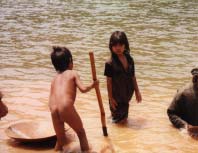
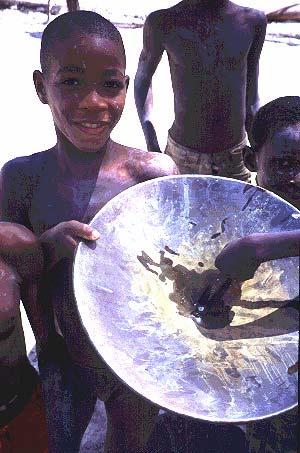
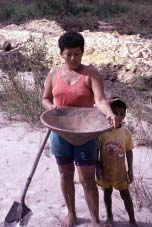
Artisanal Mining
Lao PDR, 2000
Suriname, 1996
Venezuela, 1995
Photographs courtesy Prof. Marcello Veiga


Artisanal & Small-Scale Mining
· Artisanal mining
Application of human energy (e.g. pick
& shovel) directly to produce minerals
· majority no technical skills and lack adequate
working tools
· Small-scale mining
Application of modern technology for
limited scale mineral production


Significance of Artisanal Mining
· 15 million people in artisanal and small
scale gold mining
· 55 developing countries
· Use of mercury damages health of 100
million people


Artisanal & Small Scale Mining Potential
...the equipment and methods currently
used...are for the most part neither modern
nor efficient... There is no doubt that not
only can the methods and equipment be
greatly upgraded and improved over a fairly
short period but that the benefits to be
obtained there-from are expected greatly to
outweigh the cost.
Source: Small-Scale Mining in the Developing Countries, United Nations, 1972

















Small Scale Mining
Typical Mining Conditions
Environmental Impact of
Inefficient Processing
Un-reclaimed Mine Area
Zimbabwe 2006


Image of Mining Industry
· Artisanal and small-scale mining is the
poor, highly visible image of the
mining industry that the public sees
· Need for major mining companies to
address the challenges and engage
positively to improve conditions


Artisanal and Small-Scale Mining
· Offers people a potential to get out of poverty
· High gold price lures peasant farm workers
· Health, safety and environmental costs


Artisanal Mining & National Incomes
Mining
Mining
Mining
National1
Community
Community
Community
Region or community
Monthly Income
Monthly
Annual
Annual
(Local Currency)
Income
Income
Income
(US$)
US$
US$
Brazil - São Chico
374.4 R
125
1,500
2,850
- Crepurizinho
538 R
179
2,148
Indonesia3 - Talawaan
350,000 Rp
41
492
710
- Galangan
750,000 Rp
88
1,056
Lao PDR, villages4
310,000 Kip
38
456
320
Ingessana District, Sudan
< 300,000 SP
< 80
< 960
350
Rwamagasa, Tanzania
50,000 TSh
44
532
280
Kadoma-Chakari Region, Zimbabwe
40,000 Z$
49
588
4802
Source: Summary Report: Technical and Socio-Economic Profiles of Global Mercury Project Sites, Hinton & Veiga, 2004
Notes:
1 Gross national incomes (per capita), World Development Indicators 2002 (http://econ.worldbank.org/wdr)
2 Zimbabwe Per Capita Incomes shown for 2001.
3 Indonesia rates based on miners' incomes
4 Lao PDR per household income

















Small Scale Mining
Stamp Mill
1-t ore piles
await processing
Miners collect coarse
gold after processing
Tailings reprocessed by miller
Zimbabwe 2006


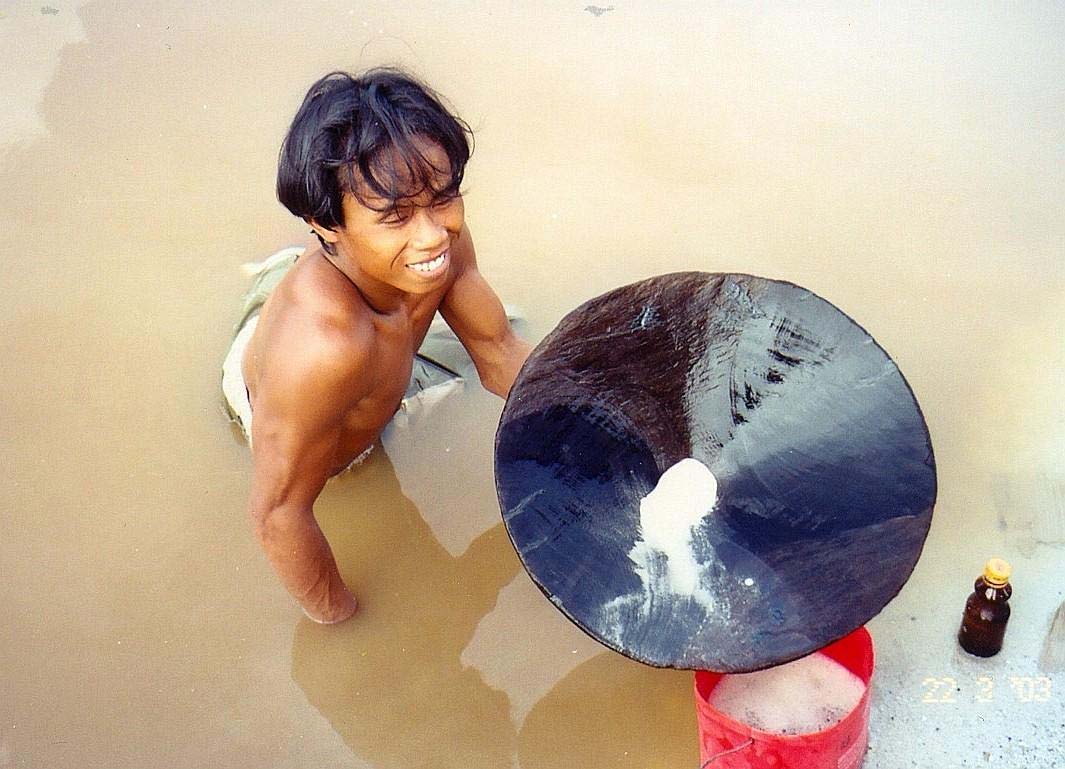
Current Conditions
Indonesian miner amalgamating gold in a pool behind his house;
the water is also used for domestic purposes.


Current Conditions
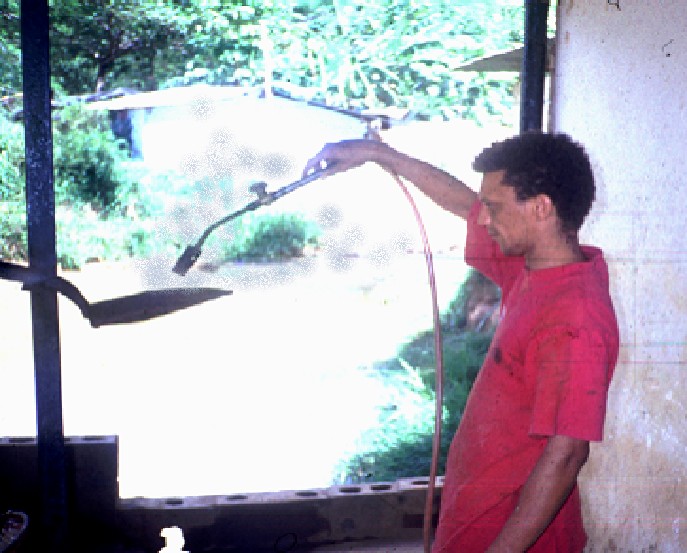
Venezuelan miner burning amalgam in a
shovel and inhaling mercury vapor






Current Conditions
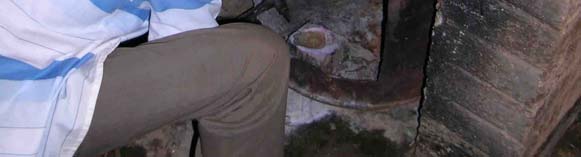
Demonstration of burning off mercury
from mercury/gold amalgam ball
Zimbabwe 2006












Current Conditions
Mining area close to town - school nearby;
rock overhanging the pit
Recent rock collapse on left & rock overhang
Zimbabwe 2006


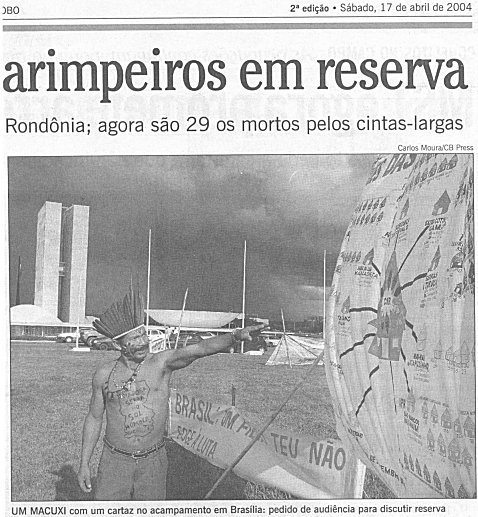
Conflict
Indigenous Peoples/Illegal mining
26 Prospectors Bodies Found in Indian Reservation Area
"The corpses were in an illegal prospecting area in
· Intrusion onto Yanomani
Rondônia; Now there are 29 people killed by the
'cintas-largas' indians."
lands:`000s killed
· Yanomani Indians killed by
garimpeiros
· Violence, intimidation &
corruption prevented effective
legal action by Macuxi Indians
in 1998
Rio de Janeiro "O Globo" April 17, 2004


Mercury Health Hazard
· Health risk
Mercury-contaminated fish
Spilled mercury
Permanent damage to brain/kidneys
· Organic compounds
Powerful neurotoxin
Neurological damage & death






Mercury Trade
Mercury for sale in containers with hazard warning labels


Trade
· Mercury trade decreased from 6,066 tonnes in 1990
to 1,849 tonnes in 2000; availability of recycled
mercury from chlor-alkali plants etc increased from
440 tonnes in 1990 to 910 tonnes in 2000.
· The free trade of mercury from developed countries
makes it readily available.
· Developing countries obtain mercury through legal
channels for legitimate uses (e.g. dental fillings), but
is diverted to ASM operations.
· Poor recoveries
· Partial value
· Formal and Informal channels


Global Mercury Project
· Mercury-Hazard Awareness
Best practices to limit contamination
Retort from inexpensive materials
Mercury emission and exposure controls
Recycle/reuse mercury
Reduce mercury in tailings
Prevent combined uses of mercury & cyanide
· Limit where mercury is used
Protect village/residential areas & water sources
Safe storage, disposal, clean-up & rehabilitation
Guidelines to manage mercury in gold shops
· Environmental and health assessments












Mercury Hazard-Awareness Drama
Zimbabwe 2006


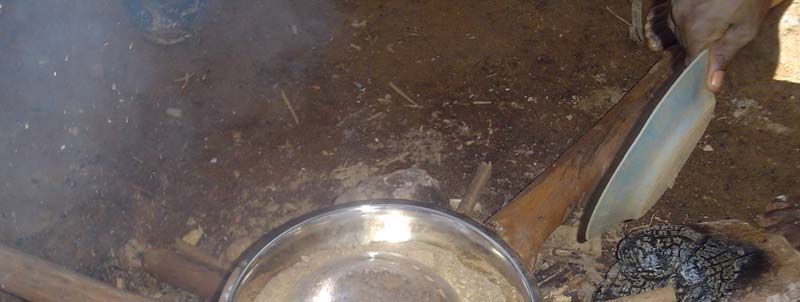
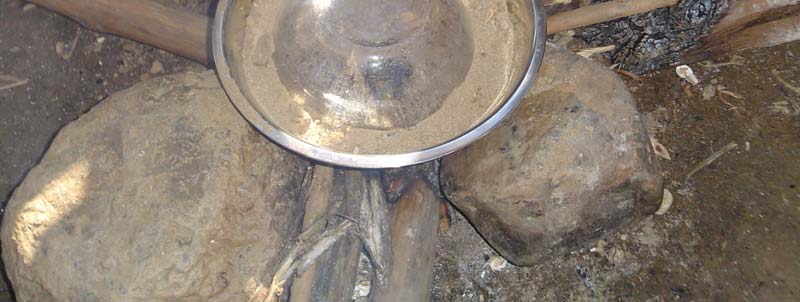
Use of Retort
Kitchen-bowl retort in operation in Zimbabwe;
mercury vapor is condensed on the glass bowl
and drops on the sand to be recycled.


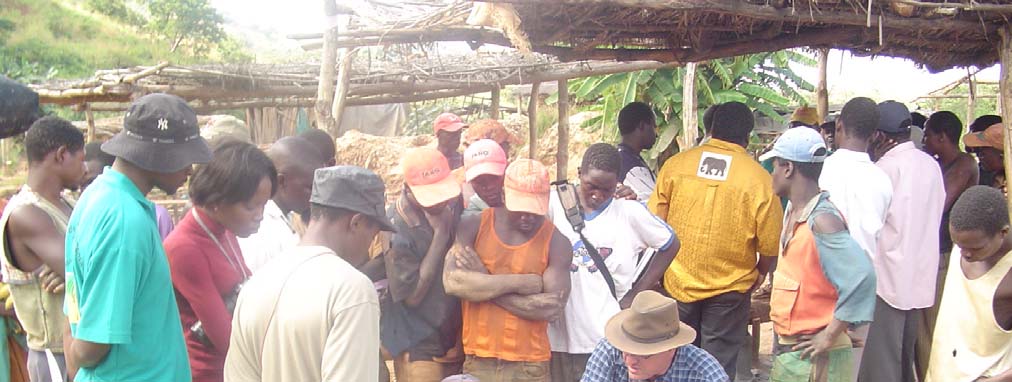
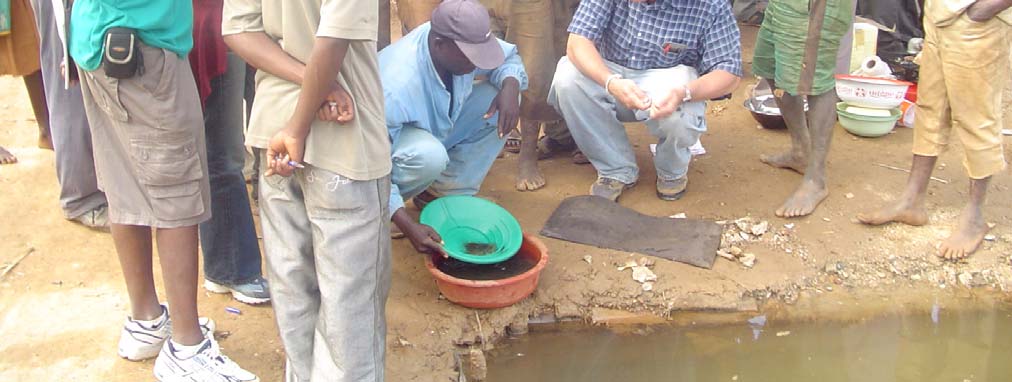
Training Program
GMP team teaching miners in Mozambique


Artisanal & Small Scale Mining
Small-Scale Mining in the Developing Countries, United Nations, 1972:
...the equipment and methods currently
used...are for the most part neither modern
nor efficient... There is no doubt that not
only can the methods and equipment be
greatly upgraded and improved over a fairly
short period but that the benefits to be
obtained therefrom are expected greatly to
outweigh the cost.
It is now time to address the challenges:
engage positively to improve conditions


Thank you
Social and Economic Aspects of Reducing
Mercury Pollution in Artisanal Gold Mining
www.globalmercuryproject.org
Simon D. Handelsman
Marcello Veiga
sdh@pobox.com
sdh@
veiga@mining.ubc.ca
veiga@mining.ubc.
Document Outline