
Luang Prabang Artisanal Gold Mining
and Sociological Survey,
Lao PDR
Final Report for UNIDO
"Removal of Barriers to the Introduction of Cleaner
Artisanal Gold Mining and Extraction Technologies"
Prepared by:
Earth Systems Lao
4/06 Phone Kheng Rd.
P.O. Box 2582,Vientiane, Lao PDR.
Tel: (856-21) 413 723
Fax: (856-21)416 563
E-mail: souphanh@laotel.com
6 October, 2003
UNIDO GLOBAL MERCURY REPORT
FINAL REPORT
Executive Summary
Earth Systems Lao was engaged by the United Nations Industrial Development
Organisation (UNIDO) to conduct a baseline sociological survey in Chomphet and
Pak-Ou districts within Luang Prabang Province, Lao PDR where artisanal (or small-
scale) gold mining is undertaken. A particular focus of the survey was the collection
of information about the use of mercury for artisanal gold mining and the identification
of 250 volunteers for participation in a subsequent health survey.
This survey is part of a larger UNIDO study funded under the Global Environment
Facility (GEF) titled `Removal of Barriers to the Introduction of Cleaner Artisanal Gold
Mining and Extraction Technologies'. The field survey was conducted in association
with the Department of Geology and Mines (DGM), Government of Lao PDR. Data
was collected from eight (8) villages on the Mekong River and the Nam Ou River in
Luang Prabang Province during August 2003. The study area is situated
approximately 300 km north of Vientiane, consisting predominantly of lowland flood
plains.
Primary data was collected by means of interview with the heads and elders of each
village, and using questionnaires from a total of 271 randomly selected volunteer
households in the villages of Ban Houay Gno, Ban Houay Koh, Ban Houay Lo, Ban
Kiad, Ban Latthahai, Ban Pakchek, Ban Pak-Ou and Ban Thinhông. Volunteers from
these households have been identified for a possible future health study.
The average size of the eight villages surveyed is 402 persons, with an average of
5.6 persons residing in each household. Six ethnic groups are represented in the
region, with the Lao Loum and Lue being the predominant ethnic groups. The region,
like much of rural Lao PDR, has low cash incomes (an average of 4.85 million kip or
US $461 per annum in the surveyed villages) and high mortality rates (15.2 deaths
per 1,000 persons, 1995 Population Census). On average, 47% of the sampled
population recorded experienced a major illness during the last 12 months, with
malaria and Acute Respiratory Illness (ARI) being the most common. Three of the
eight surveyed villages do not have access to an active medical facility; of those that
do, most villages only have access to a pharmacy. Local produce, particularly rice
and fish, dominate the diet with the latter forming an important source of protein.
Among the surveyed villages, small-scale artisanal gold mining (ASM) began in the
mid-1970s, and was a widespread activity by 1980. ASM is typically carried out at the
family level involving men, women and children who are generally lacking in technical
skills and sophisticated equipment. The extent of mining activities and the resultant
gold outputs vary among villages in the region, with between 45% and 96% of the
surveyed households having at least one household member engaged in the activity.
The peak mining season is short, primarily between January and April at the end of
the dry season when water levels are low, exposing ephemeral islands and other
areas of alluvial sediment. Typically, men will operate the equipment, such as
shovels and chisels, used for ore / alluvium extraction, while women and children
transfer the ore / alluvium to bowls and sluice boards, pan the ore and perform the
gold extraction processes (which are usually carried out in the home).
The mining process and the use of mercury vary between villages situated on the
Mekong River and villages situated on the Nam Ou River. The process of ore
extraction on the riverbank, on ephemeral islands or from the riverbed using simple
tools is similar for each of the surveyed villages. However, for villages along the
Mekong River, mercury is traditionally added at the panning stage to form an
amalgam with alluvial gold particles. The amalgam is subsequently heated to cause
the separation of the two elements as the mercury evaporates. Conversely, villages
EARTH SYSTEMS LAO
i
SEPTEMBER 2003
UNIDO GLOBAL MERCURY REPORT
FINAL REPORT
on the Nam Ou River do not typically use mercury to form an amalgam with the gold,
but rather use gravity separation by heating the sieved and panned material and
periodically blowing away the concentrate surrounding the gold particles. It is not
clear why there is a difference in techniques, although it may be influenced by the
size of gold particles within the respective rivers.
Mercury is a relatively expensive input to the mining process in Lao PDR, thus
providing an incentive for its recovery and re-use. This is typically carried out in the
home, where, being a confined space with limited air displacement, the potential for
the inhalation of vaporized mercury is high. In some villages there appears to have
been a decline in the industry with a reduction in gold output and mercury use.
Mining sites are invariably located in close proximity to the village, and a
concentration of activity during the history of mining has possibly reduced the gold
content of the alluvial sediments to marginal levels.
In many instances mining appears to be an important source of cash income,
although agricultural activities represent the principal occupation of village inhabitants
in the region. Typically, households involved in gold mining produce between 10 and
40 grams of gold per year (an average of approximately 24 grams). This corresponds
to an average village total of approximately 0.6 Kg per annum. Gold resulting from
ASM in the region is sold directly to a gold merchant who periodically visits each of
the villages engaged in mining. The gold merchant may be required to further refine
the gold prior to sale at a regional market or directly to jewelers.
No obvious signs of mercury poisoning were identified, although a detailed health
survey would be needed to confirm this. Household awareness of the potential health
implications of exposure to mercury is invariably low. Only a small number of
households recorded a general perception of a risk, and generally lacked any data or
specific information on what hazards mercury use presented or how these hazards
could be avoided. The addition of mercury to the excavated ore generally occurs on
the riverbank, thus potentially resulting in contamination of the soil substrate and the
adjacent watercourse. This in turn may lead to bioaccumulation in the aquatic food
chain upon which village nutritional intake, through fish and other aquatic fauna, is
highly dependent.
Women in the surveyed villages are arguably not provided with the opportunities
afforded men. Gold mining potentially contributes to bridging inequality due to the
sharing of the activity by men and women. However, it may be the women who are
primarily exposed to mercury and therefore they should be a focus of future health
studies and educational campaigns.
EARTH SYSTEMS LAO
ii
SEPTEMBER 2003
UNIDO GLOBAL MERCURY REPORT
FINAL REPORT
Recommendations
From the results of the current socio-economic survey in villages undertaking
artisanal gold mining activities in Luang Prabang Province, Lao PDR, a number of
recommendations can be proposed for further investigation and community
development in response to the potential environmental and health implications of
these activities.
1. Implementation of a preliminary environmental assessment (EA) to clarify the
extent of mercury contamination in the environment, including soil and water
contamination, bioaccumulation of methyl mercury in aquatic organisms and
the effect of mercury vaporization in the atmosphere.
2. Initiation of a preliminary investigation into the extent of mercury poisoning in
communities engaged in artisanal gold mining using volunteers identified in
this Report. Such a study would necessitate the testing of human samples,
atmospheric mercury concentrations (particularly in locations of amalgam
heating), and sources of food intake, with an emphasis on aquatic fauna.
3. Development of an effective Lao language education and communication
campaign, through which all members of the local community have access to
information pertaining to the potential hazards of small scale gold mining (with
an emphasis on mercury toxicity) and potential environmental impacts. In
addition Lao language communication materials should be developed that
identify alternative small-scale gold mining techniques that will reduce current
impact levels.
4. Introduction of a pilot study and demonstration to trial proposed
improvements to artisanal gold mining technology. The objective of such trials
would be to maintain or improve mining efficiency and output with affordable
new technologies that significantly reduce negative impacts (particularly those
associated with the use of mercury) to the environment and human health.
5. The implementation of capacity building programs for the affordable
manufacture of improved mining technologies as described above. Such
programs would involve training of local community members and utilize local
materials in the manufacturing process.
6. Survey of other areas of Lao PDR where artisanal gold mining is currently
being undertaken. This could be conducted during the dry season when
artisanal gold mining activities are in progress.
EARTH SYSTEMS LAO
iii
SEPTEMBER 2003
UNIDO GLOBAL MERCURY REPORT
FINAL REPORT
TABLE OF CONTENTS
EXECUTIVE SUMMARY ................................................................................................... I
RECOMMENDATIONS.................................................................................................... III
1. INTRODUCTION........................................................................................................... 3
1.1
Small-Scale Artisanal Gold Mining ..................................................................................3
1.2
Aim & Objectives ...............................................................................................................4
1.3
Study Area..........................................................................................................................4
2. METHODOLOGY.......................................................................................................... 6
2.1
Population ..........................................................................................................................7
2.2
Facilities and Amenities....................................................................................................8
2.3
Literacy ...............................................................................................................................8
2.4
Ethnicity..............................................................................................................................8
2.5
Diet, Health and Hygiene ..................................................................................................8
2.6
Socio-Economy..................................................................................................................8
2.7
Mining Practices ................................................................................................................9
2.8
The Role of Women ...........................................................................................................9
3. RESULTS AND DISCUSSION ................................................................................... 10
3.1
Population ........................................................................................................................10
3.2
Facilities and Amenities..................................................................................................11
3.3
Literacy .............................................................................................................................13
3.4
Ethnicity............................................................................................................................14
3.5
Diet ....................................................................................................................................15
3.6
Health and Hygiene .........................................................................................................16
3.7
Socio-economy................................................................................................................17
3.8
Mining Practices ..............................................................................................................19
3.8.1 The Mining Process...................................................................................................... 20
3.8.2 Environmental Contamination and Human Exposure to Mercury................................ 24
3.8.3 Risk Awareness............................................................................................................ 25
3.8.4 Gold Production............................................................................................................ 26
3.9
The Role of Women .........................................................................................................26
EARTH SYSTEMS LAO
1
SEPTEMBER 2003
UNIDO GLOBAL MERCURY REPORT
FINAL REPORT
4. CONCLUSIONS.......................................................................................................... 29
APPENDIX 1. HOUSEHOLD QUESTIONNAIRE........................................................... 31
APPENDIX 2. VILLAGE HEAD QUESTIONNAIRE ....................................................... 40
APPENDIX 3. VILLAGE PROFILES .............................................................................. 47
APPENDIX 4. VILLAGE MAPS...................................................................................... 56
APPENDIX 5. HEALTH STUDY VOLUNTEERS ........................................................... 65
APPENDIX 6. TERMS OF REFERENCE ....................................................................... 74
EARTH SYSTEMS LAO
2
SEPTEMBER 2003
UNIDO GLOBAL MERCURY REPORT
FINAL REPORT
1. Introduction
Earth Systems Lao was engaged by UNIDO to conduct a baseline sociological survey in
Chomphet and Pak-Ou districts within Luang Prabang Province, Lao PDR where
artisanal (or small-scale) gold mining is undertaken. A particular focus of the survey was
the collection of information about the use of mercury in artisanal gold mining and the
identification of a cohort of volunteers for a subsequent health study.
This survey is part of a larger UNIDO study funded under the Global Environment
Facility (GEF) titled `Removal of Barriers to the Introduction of Cleaner Artisanal Gold
Mining and Extraction Technologies'. The long-term objective of the UNIDO / GEF study
is to assist a pilot suite of developing countries, located in several key trans-boundary
river/lake basins (including Lao PDR), in assessing the extent of pollution from current
artisanal mining activities, introduce cleaner gold mining and extraction technology which
minimises or eliminates mercury releases, and develop capacity and regulatory
mechanisms that will enable the sector to minimise negative environmental impacts.
The Department of Geology and Mines (DGM), Government of Lao PDR supported the
field survey. Data was collected from eight villages in Luang Prabang Province, Lao
PDR, and was conducted in August 2003.
1.1
Small-Scale Artisanal Gold Mining
Individuals, families and / or groups of indigenous people generally lacking in technical
skills and sophisticated equipment typically carry out small-scale artisanal gold mining
(ASM). The activities vary considerably and are generally not supported by government
policy or legal frameworks.
In an increasing number of the world's poorer nations, small-scale artisanal gold mining
has been adopted as an alternative to more traditional - and typically less profitable -
occupations in agriculture, fisheries, forestry and textiles. Mercury is used in this industry
to form an amalgam with small gold particles found in alluvial sediments to facilitate the
recovery of gold and thus improving economic outputs.
Mercury is a highly toxic element that has the potential to cause serious damage to
environmental and human health. In its methylated form (MeHg), mercury becomes
more mobile and can readily bio-accumulate in the soil substrate, rivers, plants and
aquatic organisms. It thus presents a potential human health hazard by entering into the
food chain through the aquatic ecosystem.
Problems arise from the uncontrolled use of mercury, which can cause premature death
and significant environmental degradation. Mercury pollution in water-bodies can also
affect downstream populations not involved in ASM. Technical knowledge and support is
typically absent from ASM and, coupled with poor organisation results in miners being
unable to invest in cleaner and more efficient technologies. Consequently, the artisanal
miners are unable to improve their working conditions and thus continue to degrade the
environment through inefficient and unproductive techniques.
EARTH SYSTEMS LAO
3
SEPTEMBER 2003
UNIDO GLOBAL MERCURY REPORT
FINAL REPORT
1.2
Aim & Objectives
The aim of this Study is to collect baseline sociological data from Chomphet and Pak-Ou
districts in Luang Prabang Province, a region of Lao PDR where the practice of artisanal
gold mining has been identified. It is intended that this data will be used for the design
and conduct of a subsequent human health study, which will assess the source and level
of mercury exposure in the communities. The data will also be used to identify
appropriate technologies that reduce the risk of mercury exposure to the human and
natural environment.
Specific study objectives are outlined below:
1. To collect baseline socio-economic, health and environmental data from the
villages in the study area (including the identification of 250 volunteers for
participation in a subsequent health study).
2. To identify and evaluate the possible means of exposure of villagers to mercury
released by small-scale artisanal gold mining.
3. To assess community awareness of the human and environmental health risks
associated with exposure to mercury.
4. To evaluate how issues relating to gender can be integrated into mining
activities.
The Terms of Reference provided to Earth Systems Lao by UNIDO for conduct of the
study are provided in Appendix 6.
1.3 Study
Area
The study area is situated along the Mekong River and Nam Ou River in the Province of
Luang Prabang, approximately 300 km north of Vientiane (refer to Figure 1.1). The
Province covers a total area of 20,000 km2, encompassing approximately 420,000
inhabitants in 11 districts.
Following a preliminary field trip by the Department of Geology and Mines (DGM),
Government of Lao PDR, eight villages were selected for conduct of the study. These
villages are Ban Thinhông, Ban Houay Koh and Ban Houay Gno on the Mekong River
(within the district of Chomphet), and Ban Pak-Ou, Ban Houay Lo, Ban Latthahai, Ban
Pakchek and Ban Kiad on the Nam Ou River (within the district of Pak Ou). The region
consists predominantly of lowland flood plains, with altitude ranging between 200 m and
500 m above sea level, annual precipitation between 1,600 mm and 2,000 mm and an
average annual temperature of approximately 24oC (Atlas of Lao, Sisouphanthong
2000).
Socio-economic census data (National Statistics Centre 1995) suggests that local
communities are predominantly rural and agrarian. Between 92% and 98% of the
economically active population are employed in agriculture with between 64% and 89%
of cultivated areas being used for rice production. Cash crops, livestock, vegetable
cultivation and small-scale mining activities provide a secondary source of income.
EARTH SYSTEMS LAO
4
SEPTEMBER 2003
China
Burma
Nam Ou
Vietnam
(Louangphrabang
Mekong River
Gulf of Tonkin
( Vientiane
Thailand
Kiad
Nam Ou
Pakou
Pakchek
Latthahai
Houaylo
Cambodia
Houaykhok
Houaygno
Pak Ou
Figure 1.
Chomphet
Thinhong
Map of Laos depicting the location
of surveyed villages.
Mekong River
Page 5
UNIDO GLOBAL MERCURY REPORT
FINAL REPORT
2. Methodology
Conduct of the Study was undertaken with the close involvement of the Department of
Geology and Mines. An outline of the methodology adopted with respect to the Study
objectives is provided below.
Objective:
Collect baseline socio-economic, health and environmental data
from the villages in the Study Area.
Methods:
Secondary data was obtained through consultation with the following
government agencies:
o Department of Geology and Mines at the central and provincial
level.
o National Statistics Centre to obtain district profile data.
o Department of Health at the central, provincial and district level.
This will also include a visit to the provincial and district medical
facilities to review medical records.
Primary data was obtained by means of field survey in eight (8) target
villages from 1st 9th August 2003: Ban Thinhông, Ban Houay Koh and
Ban Houay Gno on the Mekong River; and Ban Houay Lo, Ban Kiad,
Ban Latthahai, Ban Pakchek and Ban Pak-Ou on the Nam Ou River.
The scope of the field survey included an assessment of food
composition; eating habits; livelihood activities; demographic
information; household socio-economic data; literacy levels; ethnic
diversity; access to community infrastructure and utilities. This involved:
o Interview with village chief to develop a village profile. (A copy of
the questionnaire is attached in Appendix 2.)
o Interview with a total of 271 randomly selected volunteers from
the eight villages. The only condition placed on the selection of
volunteers is that they are the `head of the family' and willing to
participate in a subsequent health study. Where possible both
husband and wife were interviewed. (A copy of the
questionnaire is attached in Appendix 1.)
o Visual survey of the target villages including village level
infrastructure,
A feature map was prepared in MapInfo format for each village, on
which the houses of the families that participated in the Study are
identified, including important infrastructure and topographic features.
Objective:
Identify and evaluate the possible means of exposure of villagers
to mercury released by ASM.
Methods:
The field survey included a detailed description of the mining and
processing methods used in the Study Area including:
o The source of mercury
o How the miners handle the mercury
o Estimate of the quantity of mercury being used and the quantity
lost
These observations were evaluated in light of the broader land and
resource use in the Study Area i.e. sources of drinking water and
EARTH SYSTEMS LAO
6
SEPTEMBER 2003
UNIDO GLOBAL MERCURY REPORT
FINAL REPORT
consumption of aquatic resources.
Objective:
Assess community awareness of the human and environmental
health risks arising from exposure to mercury.
Methods:
All Study participants were asked to describe their awareness of the
risks arising from exposure to mercury.
Provincial and district health representatives were interviewed to
determine whether awareness material had been prepared in the Study
Area.
Objective:
Evaluate how issues relating to gender can be integrated into the
mining activities.
Methods:
Where possible interviews were conducted with both the male and
female head of the household with the aim to:
o Assess the contextual factors that enable or constrain gender
integration and hence affect the different outcomes for men and
women.
o Identify opportunities for gender integration with the aim to
enhance the opportunities, capabilities, security and
empowerment of both men and women.
Earth Systems Lao was responsible for survey design and logistics, data collation,
analysis and report preparation. The Department of Geology and Mines was responsible
for the selection of the survey villages and assisted with field data collection. The
participants in the field survey team are listed in Table 2.1 below.
Table 2.1
Field Survey Team
Name Primary
Affiliation
Dr. Vanphanom Sychaleun
Team Leader, Health Research, Earth Systems Lao
Mr. Nanong Khotpathoum
Survey Coordination, Earth Systems Lao
Dr. Visanou Harnsana
Ministry of Health
Mr. Vongthong Thimahaxay
DGM staff, Ministry of Industry and Handicrafts
Mr. Somsanith Khammany
Division of Industry, Luang Prabang Province
Mr. Somphone Sinpraserth
Division of Industry, Chomphet District
Mr. Bounkhong Phonesavanh Division of Industry, Pak-Ou District
Other specific methods used for conduct of the sociological analysis are outlined below.
2.1 Population
Data provided by the village head included: total village population, male to female
ratios, numbers of households and the average household size. Age distribution data
was recorded during household interviews.
EARTH SYSTEMS LAO
7
SEPTEMBER 2003
UNIDO GLOBAL MERCURY REPORT
FINAL REPORT
2.2
Facilities and Amenities
Information provided by the village head included: drinking water sources, electricity
supply, health and education facilities. The availability of other forms of infrastructure
and amenities, such as restaurants, barbershops, textile and handicraft outlets etc. were
assessed through the ground survey.
2.3 Literacy
As an indication of literacy, heads of households were asked to identify the household
members above the age of six who are able to read and write. Households were also
asked to identify members who had completed primary (i.e. the 5th primary year typically
completed at the age of 12 years) and secondary level schooling (i.e. the 6th secondary
year typically completed at the age of 18 years).
2.4 Ethnicity
Households were asked to identify their ethnicity. Typically, all members of a given
household will have the same ethnic origin, although exceptions may exist due to inter-
ethnic marriages. Note the ethnic classification used for the survey is for major ethnic
groups only.
2.5
Diet, Health and Hygiene
Average food consumption was determined by asking households to identify the
approximate number of times each food group was consumed in the past week.
As an indication of the health status of the village population, the head of the household
was asked to identify the most severe sickness, if any, experienced by members of the
household over the past 12 months. Mortality rates were determined by asking the head
of each household whether any deaths had occurred in the household in the past 12
months. The total number of recorded deaths was then divided by the sample population
of the village, and converted into a figure out of 1,000 persons.
2.6 Socio-Economy
Households were asked to declare their average annual household income1. The head
of the household was asked to identify the primary activity for each household member,
which included: academic study, household duties; paid / unpaid employment; retired,
sick, too old or too young to engage in any activity.
The primary occupation of the economically active respondents (over the age of 10) was
then determined. Economic activities include the following professions: manual laborer,
office clerk, teacher, salesperson, agricultural farmer, government official, factory
worker, employment in the transport industry, handicraft and textile industry or the army.
The percentage of the population regarded as too young for official employment includes
all respondents under the age of 10 as well as those respondents over the age of 10
identifying that they were too young to work.
1 Conversion to US dollars is based on the exchange rate as of 28th August 2003 of 10,500 Lao Kip to the
dollar.
EARTH SYSTEMS LAO
8
SEPTEMBER 2003
UNIDO GLOBAL MERCURY REPORT
FINAL REPORT
2.7 Mining
Practices
Heads of the household were asked to identify whether members of the household are
either presently involved or had previously been involved in ASM.
The household was asked to identify the approximate quantity of mercury used annually
either presently or previously. Based on a preliminary assessment of the efficiencies of
the mercury recovery process, data was extrapolated to obtain a measure of the
approximate quantity of mercury used by the village and that lost to the environment.
Households were also asked to approximate the quantity of gold produced per year. This
data was extrapolated to obtain a measure of the approximate quantity of gold produced
by the village. The local units used for measuring gold are Hun, where one Hun is
equivalent to approximately 0.39 grams. Metric units shall henceforth be used through
this report.
The village head was asked to provide detail concerning the mining season, the history
of mining in the village, and the mining techniques employed by the village. Specific
details regarding the mining techniques were confirmed at the household level.
2.8
The Role of Women
The role and status of women was ascertained through conduct of the household
surveys. Where possible, the survey team requested interviews with both the male and
female head of the household. Gender disaggregated data was collected for schooling,
literacy, activity, and health.
EARTH SYSTEMS LAO
9
SEPTEMBER 2003
UNIDO GLOBAL MERCURY REPORT
FINAL REPORT
3. Results and Discussion
Both primary data from the field survey and secondary data have been collated and
analysed, and the results of the sociological baseline study in the eight (8) target villages
summarised.
Specific village profiles summarising the data presented below are attached in Appendix
3. Village maps identifying the village level infrastructure, key topographic features and
the households who participated in the survey, are presented in Appendix 4. A list of the
households who participated in the survey (family names, village of residence, and
whether they engaged in mining activities and use mercury) is presented in Appendix 5
3.1 Population
Among the eight (8) surveyed villages population varies from 187 to 645 persons, as
shown in Table 3.1. Table 3.1 also presents the male and female sex ratio for each
village. This can be compared with the provincial data for Luang Prabang, with a male to
female sex ratio favouring females (0.98:1).
Table 3.1
Demographic data
Village Population
Male : Female
Village Name
Male %
Female
% Total
Sex Ratio
Ban Houay Gno
129
51.1
123
48.9
252
1 : 0.95
Ban Houay Koh
144
50.0
144
50.0
288
1 : 1
Ban Houay Lo
101
54.0
86
45.9
187
1 : 0.85
Ban Kiad
313
53.9
268
46.1
581
1 : 0.86
Ban Latthahai
347
59.8
233
40.2
580
1 : 0.67
Ban Pakchek
291
45.1
354
54.9
645
0.82 : 1
Ban Pak Ou
190
53.7
164
46.3
354
1 : 0.86
Ban Thinhông
161
48.5
171
51.5
332
0.94 : 1
Provincial Average
- - - - - 0.98 : 1
Between 40% and 53% of the households in the target villages participated in the survey
(refer to Table 3.2). The average household size in the surveyed villages varies from 5.1
to 6.1 household members.
The age distribution displayed by the surveyed villages typically follows the conventional
`broad-based' model, with the greatest number of village inhabitants aged between 10
and 19 years (approximately 51%), and a steady decline in the population aged 20 and
above. Only 6 % of the sample population is at the age of 60 or above, reflecting the low
life expectancy in the province (approximately 50 years based on the 1995 Population
Census, refer to Figure 3.1 and Table 3.3).
EARTH SYSTEMS LAO
10
SEPTEMBER 2003
UNIDO GLOBAL MERCURY REPORT
FINAL REPORT
Table 3.2
Household Data
Total Number
Av. House-
Number of House-
% Households
Village Name
of Households
hold Size
holds Surveyed
Surveyed
Ban Houay Gno
49
5.4
20
41
Ban Houay Koh
54
5.6
25
46
Ban Houay Lo
38
5.1
20
53
Ban Kiad
121
5.1
49
40
Ban Latthahai
109
5.8
45
41
Ban Pakchek
125
5.5
50
40
Ban Pak Ou
63
5.8
32
51
Ban Thinhông
68
6.1
30
44
Provincial Average
-
6.1
- -
Figure 3.1
Population pyramid for the combined sample population of the eight
surveyed villages
Table 3.3
Age distribution by sex in three broad age categories averaged across the
eight surveyed villages
Age Group
Male (%)
Female (%)
Total (%)
0-19 47.8 52.2 50.6
20-59 48.5 51.5 43.1
60+ 51.1 48.9 6.3
Total (%)
48.3
51.7
100
3.2
Facilities and Amenities
Facilities and amenities provided in each of the surveyed villages vary with village size
and affluence, their relative proximity to a larger township (such as Luang Prabang) and
EARTH SYSTEMS LAO
11
SEPTEMBER 2003
UNIDO GLOBAL MERCURY REPORT
FINAL REPORT
whether the Lao Government has targeted specific villages for development projects
through international aid agencies. Table 3.4 summarises the supply of major facilities in
each of the surveyed villages.
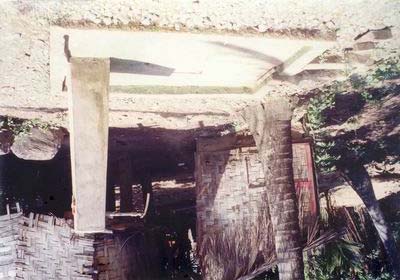
The primary source of drinking and cooking water for the surveyed villages is from
mountain springs. The water is gravity fed via a pipeline to a communal water outlet
(known locally as Namlin and shown in Plate 3.1). However, Ban Kiad sources drinking
water from the Nam Ou River, Ban Pakchek from a shallow well, and Ban Thinhông from
the Houay Hong Stream.
Major rivers such as the Mekong and Nam Ou, are typically used for washing, bathing,
recreational activities and irrigation.
The availability of medical facilities varies among the villages, with four of the surveyed
villages having a pharmacy and two villages having a dispensary. It is understood that
the dispensaries were established by aid projects. At the time of the survey, Ban
Thinhông dispensary had not been supplied with any staff.
Three of the eight villages surveyed (Ban Houay Lo, Ban Latthahai and Ban Pak-Ou)
were supplied with electricity.
Table 3.4
Village Level Facilities
Source of Drinking
Type of Medical
Supplied with
Village Name
Water
Facility
Electricity
Ban Houay Gno
Namlin
Pharmacy No
Ban Houay Koh
Namlin
Pharmacy No
Ban Houay Lo
Namlin
None Yes
Ban Kiad
Nam Ou River
None
No
Ban Latthahai
Namlin
Dispensary Yes
Ban Pakchek
Storage Well
Pharmacy
No
Ban Pak Ou
Namlin
Pharmacy Yes
Ban Thinhông
Houay Hong Stream
Dispensary
No
Plate 3.1
Communal water outlet (Namlin)
EARTH SYSTEMS LAO
12
SEPTEMBER 2003
UNIDO GLOBAL MERCURY REPORT
FINAL REPORT
Other amenities present in most villages include barber shops, food shops and temples.
Primary schools are present in each of the surveyed villages. Secondary school facilities
are only available at the district centers. Small restaurants and textile shops were
present in Ban Pak-Ou, due primarily to its promotion as a destination for national and
international tourism.
3.3 Literacy
As a measure of literacy, households were asked to identify the household members
above the age of six who are able to read and write. For the sample population in each
village this measure of literacy varied between 68 and 93%. This is significantly higher
than the provincial average of 53% for Luang Prabang (Population Census 1995)
highlighting a potential weakness in the survey methodology. Many villages have
however benefited from non-formal government education programs and this may have
resulted in an exaggeration of the level of literacy.
The literacy rate was highest in Ban Thinhông (90%) and Ban Pak-Ou (93%) and lowest
in Ban Kiad (68%). On average men had a greater rate of literacy than women as shown
in Figure 3.2.
Figure 3.2
Male and Female Literacy Rates
Approximately 44% of the sample population of all villages reported that they had
completed primary school, and approximately 5% had completed secondary school. The
proportion of the population having completed primary schooling was highest in Ban
Pak-Ou (67%) and lowest in Ban Kiad (24%). The proportion having completed
secondary schooling was also highest in Ban Pak-Ou (19%) and lowest in Ban Houay
Khok (1%). Once again the overall levels of education were significantly higher than the
provincial averages (Population Census 1995) as shown in Table 3.5, highlighting a
potential weakness in the survey methodology.
In general a lack of local secondary schools in rural areas and the consequent costs
associated with secondary school attendance (transport costs, accommodation and
schooling fees) present major difficulties to the majority of children residing in small rural
villages.
EARTH SYSTEMS LAO
13
SEPTEMBER 2003
UNIDO GLOBAL MERCURY REPORT
FINAL REPORT
Table 3.5
Literacy Rates
Literacy Rate
Completed Primary
Completed Secondary
Village Name
(%)
School (%)
School (%)
Ban Houay Gno
86
42
2
Ban Houay Koh
78
30
1
Ban Houay Lo
89
59
6
Ban Kiad
68
24
2
Ban Latthahai
80
32
2
Ban Pakchek
72
36
3
Ban Pak Ou
93
67
19
Ban Thinhông
90
61
10
Provincial Average
53
8
1
3.4 Ethnicity
Ethnicity varied between the eight villages, with three main ethnic groups and a total of
six ethnic groups represented (from a classification system that totals 47). Surveyed
households in Ban Pak-Ou and Ban Thinhông were composed entirely of the Lao Loum
ethnic group, while households in Ban Kiad were composed of the Lao Loum, Lue,
Phutai, Nhuane and Khmu ethnic groups (refer to Table 3.6).
Table 3.6
Household Ethnicity
Predominant Household Ethnicity (%)
Village Name
Total
Lao Loum
Lue
Khmu
Nhuane
Phutai
Hmong
Ban Houay Gno
95
-
-
-
5
-
100
Ban Houay Koh
52
-
48
-
-
-
100
Ban Houay Lo
80
15
-
5
-
-
100
Ban Kiad
16.3
4.1
75.5
2
2
-
100
Ban Latthahai
4.4
84.4
4.4
-
-
6.7
100
Ban
Pakchek 6 94 - - - -
100
Ban Pak Ou
100
-
-
-
-
-
100
Ban
Thinhông
100 - - - - -
100
Collectively, the Lao were the predominant ethnicity representing 45% of the households
surveyed in the eight villages. The Leu and Khmu ethnicities were represented in 33%
and 19% of households respectively; and the Hmong, Nhuane and Phutai were each
represented in approximately 1% of the surveyed households, (refer to Figure 3.3).
EARTH SYSTEMS LAO
14
SEPTEMBER 2003
UNIDO GLOBAL MERCURY REPORT
FINAL REPORT
Figure 3.3
Summary of Village Ethnicity
Nhuane
Hmong
(1%)
(1%)
Phutai (1%)
Khmu
(19%)
Lao Loum
(45%)
Lue (33%)
3.5 Diet
Local food production includes rice and vegetable cultivation and the rearing of livestock.
Food production systems are also completed by fishing and the collection of forest
products i.e. wild vegetables, mushrooms, animal, etc. Food is primarily produced and
collected for household consumption, although some cash crops and livestock are used
for trade between local villages and in regional market places located in the district
centres or the provincial capital of Luang Prabang (refer to Figure 1.1).
Rice is the staple food product throughout the region, and is typically grown in paddy
fields located above the river banks and the annual flood zone. Gardens used for
vegetable cultivation are typically located away from the river, although small gardens do
exist within villages and adjacent to watercourses. For sanitation purposes livestock,
with the exception of poultry, is typically kept away from the village area and sources of
drinking water.
Fish is the predominant form of dietary protein for the villages in the Study Area. Fishing
occurs both on the major waterways such as the Nam Ou River and Mekong River and
also on the tributaries during the wet season. Fishing is almost entirely for subsistence
purposes, with a small percentage of the sample population in Ban Houay Khok
identifying it as an economic activity.
Food consumption did not vary considerably between the surveyed villages (refer to
Table 3.7). As the staple food product throughout the region, rice is invariably consumed
at every meal. Vegetables and fish are also consumed with a high frequency, as both
are readily available to all of the surveyed villages. Red meat was consumed with
considerably less frequency except in Ban Pak-Ou, where it is consumed more than
once per day. Poultry (including chicken and/ or duck) and aquatic organisms other than
fish (such as fresh water shrimp, snails and crab) were rarely consumed. Eggs and fruit
were each consumed between two and seven times per week in the surveyed villages.
EARTH SYSTEMS LAO
15
SEPTEMBER 2003
UNIDO GLOBAL MERCURY REPORT
FINAL REPORT
Table 3.7
Weekly Food Consumption
Average Frequency of Food-Group Consumption Per Week
Village Name
Other
Rice Red
Meat Fish
Eggs Vegetables Poultry Fruit
Aquatic Food
Ban Houay Gno
21
3.0
9.7 2.0 5.5 11.9 1.4 4.9
Ban Houay Koh
21
4.3
9.2 1.1 4.1 11.6 2.2 3.6
Ban Houay Lo
21
3.0
11.9
0.1 4.3
10.3
2.4
4.8
Ban Kiad
21
3.2
8.6
0.7 2.5
12.6
2.7
4.7
Ban Latthahai
21
2.4
8.9
0.8 3.8
13.9
1.5
4.0
Ban Pakchek
21
2.1
11.3
0.7 3.6
12.3
1.3
5.2
Ban Pak Ou
21
8.8
9.0
0.7 6.1
11.5
3.0
6.6
Ban Thinhông
21
4.6
6.4
1.1 6.0 9.9 2.2 5.5
Average 21.0
3.9
9.4
0.9 4.5
11.8
2.1
4.9
3.6
Health and Hygiene
General health and hygiene standards vary throughout the region and between the
surveyed villages. The provincial life expectancy in Luang Prabang is 49 years for
males, and 51 years for females (Population Census 1995).
Between 37% and 67% of the sample population of surveyed villages recorded a
significant sickness in the previous 12 months. Ban Houay Lo and Ban Kiad recorded
the lowest incidence of sickness (34%), while Ban Houay Koh recorded the highest
incidence of sickness (67%), as shown in Table 3.8.
Of the recorded illnesses, malaria was typically the most common, followed by Acute
Respiratory Illness (ARI) and diarrhoea. Abdominal pain was the least common major
illness recorded in each of the surveyed villages. Between 5% and 21% of the sample
population in each of the surveyed villages also recorded illnesses other than malaria,
ARI, diarrhoea and abdominal pain.
Table 3.8
Incidence of Sicknesses in the Past 12 Months
Sample
Population
Abdominal
Village Name
Recording Major
Malaria Diarrhoea ARI
Other
Pain
Sickness in Past
12 mths (%)
Ban Houay Gno
51
28
4
7
3
9
Ban Houay Koh
67
17
8
17
4
21
Ban Houay Lo
37
10
3
16
3
5
Ban Kiad
37
14
6
9
1
7
Ban Latthahai
57
20
11
9
3
14
Ban Pakchek
40
11
8
9
2
10
Ban Pak Ou
47
14
2
9
7
15
Ban Thinhông
41
14
3
9
3
12
EARTH SYSTEMS LAO
16
SEPTEMBER 2003
UNIDO GLOBAL MERCURY REPORT
FINAL REPORT
Among the surveyed villages, the rate of mortality varied between 10 and 65 deaths per
1,000 persons per year as shown in Table 3.9. With the exception of Ban Houay Khok,
which recorded a mortality rate of 65, the mortality rates in the other villages are
comparable to the provincial average of 15 deaths per 1,000 persons per year
(Population Census 1995).
Table 3.9
Village Mortality Rate
Mortality Rate (deaths /
Village Name
1,000 persons / year)
Ban Houay Gno
(No Data)
Ban Houay Koh
65
Ban Houay Lo
10
Ban Kiad
12
Ban Latthahai
23
Ban Pakchek
15
Ban Pak Ou
16
Ban Thinhông
27
Provincial Average
15
During the conduct of the village level survey, including discussions with provincial and
district level health representatives, there were no recorded health impacts directly
attributable to small-scale artisanal gold mining activities. However this is set against a
background of poor health in the Study area and low awareness of the impacts arising
from human exposure to mercury. A more detailed assessment of the risk of exposure to
mercury by artisanal gold miners is discussed in Section 3.8.2.
3.7 Socio-economy
The percentage of the sample population classified as economically active varied
between 33 and 40% for each village, as shown in Table 3.10. The average household
ranged between US $260 per annum (in Ban Houay Koh) to approximately US $750 per
annum (in Ban Pak-Ou). The average household income among the eight villages is
approximately US $460.
Although the means of subsistence livelihood is similar between the villages, one
potential reason for the disparity in village wealth is the influence of tourism. Tourism
may potentially make a significant contribution to the cash income of some villages. Ban
Pak-Ou for example is frequented by both local and international tourists owing to its
proximity to the nearby world heritage-listed Luang Prabang, its elaborate temple (`Wat
Xieng Thong') and natural limestone caves (such as Tham Ting cave).
It should also be noted that villagers may have a tendency to underestimate their cash
income for taxation purposes.
EARTH SYSTEMS LAO
17
SEPTEMBER 2003
UNIDO GLOBAL MERCURY REPORT
FINAL REPORT
Table 3.10
Socio-economic Data of the Sample Population
Average Annual
Population Economically
Village Name
Household Income
Active (%)
(US$)
Ban Houay Gno
33
317
Ban Houay Koh
37
260
Ban Houay Lo
33
613
Ban Kiad
37
356
Ban Latthahai
36
343
Ban Pakchek
40
520
Ban Pak Ou
32
749
Ban Thinhông
40
532
Provincial Average
46
-
The predominant occupational activity in each of the surveyed villages is agriculture,
with a strong emphasis on rice cultivation (refer to Table 3.11). The rearing of livestock
provides an opportunity to trade within regional markets for locally unprocurable food
and produce, and is a means of providing protection against unforeseen events (such as
natural disasters and medical emergencies).
Table 3.11
Economic Activities of the Sample Population
Economic Activity of Sample Population (%)
Village Name
Factory/ Govern-
Retired/
Agriculture Sales/
Textiles/
Too
Manual ment/ Teaching
Other
/Fisheries Office
Young Sick/Too
Work
Army
Handicrafts
Old
Ban Houay Gno
50.0
0.9
- - 0.9 - 43.5
3.7 0.9
Ban Houay Koh
47.5
1.4
2.9 0.7 -
- 44.6 1.4 1.4
Ban Houay Lo
46.5
2.0
2.0 - 2.0 - 40.6
5.0 2.0
Ban Kiad
52.6
2.0
0.4
0.8 0.4
- 40.6
2.0 1.2
Ban Latthahai
48.7
-
0.4
0.4 0.8
- 43.6
3.9 2.3
Ban Pakchek
51.3
0.7
0.7
0.7 0.4
- 38.2
5.5 2.5
Ban Pak Ou
32.8
12.4
0.5
3.8 3.2 1.1 40.3 1.1 3.8
Ban Thinhông
44.0
3.8
0.5
0.5 - 6.0
37.5
1.6 5.4
The majority of the population of the surveyed villages are engaged in agriculture and
fisheries as their primary economic activity (refer to Table 3.11). Ban Pak-Ou has a
higher proportion of the population engaged in sales and clerical work, government
posts and teaching. Six (6) percent of the population of Ban Thinhông were engaged in
the production of textiles and handicrafts. The proportion of the sample population
regarded as too young to engage in economic activities varied between approximately
38% in Ban Thinhông and 45% in Ban Houay Koh.
Although the household cash income in the surveyed villages is typically low, activities
such as textile production and artisanal gold mining, contribute significantly to the
EARTH SYSTEMS LAO
18
SEPTEMBER 2003
UNIDO GLOBAL MERCURY REPORT
FINAL REPORT
average household income and provide security against the possibility of an
unsuccessful agricultural season. As agricultural activities represent the principal
occupation of each of the surveyed villages and provide the primary source of
subsistence / income, mining is of lesser importance, and carried out only when other
sources of cash income have failed, mining conditions are favourable or when time
permits. For example, the diverse alternative sources of cash income in Ban Pak-Ou and
Ban Thinhông have contributed to the cessation of mining activities in those villages.
Nevertheless, the income augmentation provided by ASM in villages situated in the
region can be significant, and provide an opportunity for villagers to increase their
standard of living and diversify their activities away from a strong reliance on agriculture.
3.8 Mining
Practices
In Lao PDR the extent of small-scale artisanal gold mining (ASM) activities is not well
documented. The Department of Geology and Mines (DGM) has identified Ban Nakadok
in Borikhamxay Province, the Sekong River in Saravanh Province, tributaries of the Nam
Ngum in Vientiane Province and the Mekong and Nam Ou Rivers in Luang Prabang
Province as locations were ASM is conducted, but the extent and use of mercury is
largely unknown.
ASM in Luang Prabang Province began in the mid-1970s, with the peak mining season
occurring between March and April (refer to Table 3.12). This is towards the end of the
dry season, when the water level is low enough to allow excavation of the alluvial
sediments on exposed riverbanks and ephemeral islands. Typically men will operate
equipment used for ore extraction (such as shovels and chisels), while women and
children transfer the alluvium to bowls and sluice boards, pan the alluvium and perform
the gold extraction processes (which are usually carried out in the home). Artisanal gold
mining activities are not considered to be illegal. However, a significant increase in the
scale of the activity or in the sophistication of the technology used would indicate that
mining was no longer at the artisanal level and would therefore be subject to tax by the
Lao Government.
Table 3.12
Mining History and Seasonal Engagement
Mining Season
Commenced
Currently
Village Name
Mining
Mining
Start Finish
Ban Houay Gno
1980
Yes
January
April
Ban Houay Koh
1987
Yes
March
April
Ban Houay Lo
1980
Yes
April
June
Ban Kiad
1981
Yes
April
May
Ban Latthahai
1982
Yes
March
April
Ban Pakchek
1978
Yes
March
April
Ban Pak Ou
1980
No
December
June
Ban Thinhông
1985
No
March
April
The scale of ASM varies somewhat between villages, with some identifying an active
participation in the activity and others a decline. Reflecting this variability, the sample
population of each village currently engaged in ASM varies between 0% (in Ban Pak-Ou
and Ban Thinhông) and 76% (in Ban Latthahai, refer to Table 3.13).
Where the activity has ceased or is in decline, respective village authorities identified a
reduction in the gold output as an important cause. Mining sites are invariably located in
EARTH SYSTEMS LAO
19
SEPTEMBER 2003
UNIDO GLOBAL MERCURY REPORT
FINAL REPORT
close proximity to the village, and a concentration of activity during the history of mining
has potentially caused a reduction in the gold content of the alluvial sediments to
uneconomic levels. Furthermore, ASM is perceived to be a difficult activity with only
marginal returns. Hence, where alternative sources of a cash income are available (for
example through textile manufacturing, rearing livestock and tourism), mining becomes
less appealing and may cease altogether.
Table 3.13
Household Mining Activity
Household Mining Activity
Total
Currently
Mined in the Have Never
Current
Village Name
Mining
Past Only
Mined
Status
No. % No. % No. % No. %
Ban
Houay
Gno 6 30 11 55 3 15 20 100 Active
Ban
Houay
Koh 6 24 12 48 7 28 25 100 Active
Ban
Houay
Lo 8 40 10 50 2 10 20 100 Active
Ban
Kiad
2 4 20 40.8 27 55.1 49 100 In
Decline
Ban Latthahai
34
75.6
4
8.9
7
15.5
45
100
Active
Ban
Pakchek
32 53.8 16 41 2 5.1 50 100 Active
Ban
Pak
Ou
0 0 24 75 8 25 32 100 Ceased
Ban Thinhông
0
0
28
93.3
2
6.7
30
100
Ceased
3.8.1 The Mining Process
The ore excavation and gold recovery processes vary between villages situated on the
Nam Ou River and those situated on the Mekong River. The processes are illustrated in
Figure 3.4 and involve the following steps:
1. Site preparation and removal of the overburden
Riverbanks are cleared of any vegetation or large debris that may interfere with ore
extraction, and are checked for structural stability. If underwater excavation of the ore is
carried out, a large float is suspended mid-stream from which men will dive to the
riverbed and upon which women and children will perform sieving and panning activities.
2. Digging of the excavation pit for mobilisation of the alluvium
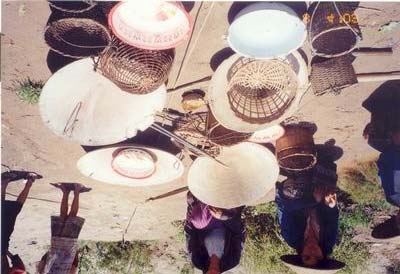
The process of alluvium extraction is typically carried out by men, and varies in method
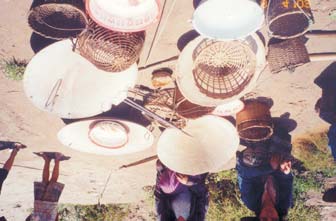
depending on the village and the location of the ore extraction site. Simple tools (such as
shovels, buckets and long chisels, refer to Plate 3.2) are used when excavation is
performed on the riverbank and on ephemeral islands, loosening the ore and transferring
it into buckets for panning and sieving. Underwater excavation employs more
specialized tools such as long-handled chisels and weighted buckets, and may involve
prolonged dives to facilitate ore collection.
3. Transfer of the alluvium to sluice boards
The alluvium is transferred onto the riverbank or float where it is mixed with water to
form slurry which is then passed over sluice boards covered in a thick sack lining, which
capture the gold and other dense particles. The sack lining is then removed and washed
in a bowl to dislodge the remaining alluvium and concentrated heavy particles.
EARTH SYSTEMS LAO
20
SEPTEMBER 2003
UNIDO GLOBAL MERCURY REPORT
FINAL REPORT
Plate 3.2
Mining tools
4. Panning and sieving of the ore
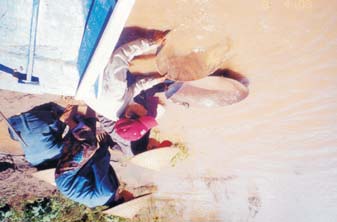
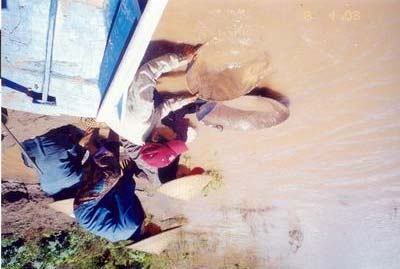
Women and children pan and sieve the remaining material on the riverbank or on floats
using head pans, shallow bowls and sieves made from fishing nets (refer to Plate 3.3). In
this way the alluvium is disaggregated further leaving a gold and heavy mineral
concentrate (e.g. magnetite).
Plate 3 .3
Women panning
5a. Forming an amalgam in villages that use mercury
If the village uses mercury in the mining process, it is added to the gold / heavy mineral
concentrate. The gold particles are trapped by the mercury forming an amalgam.
5b. Heating and blowing in villages that do not use mercury
Following the panning and sieving process, the gold / heavy mineral concentrate is
heated in villages that do not use mercury. This drys the concentrate (and may also
EARTH SYSTEMS LAO
21
SEPTEMBER 2003
UNIDO GLOBAL MERCURY REPORT
FINAL REPORT
liberate mercury impurities trapped with the gold) and with gentle blowing aids in
separating the gold from the other heavy minerals.
6a. Removing excess mercury
The mercury-gold amalgam is then squeezed through a fine cloth, and the excess
mercury is collected for re-use.
6b. Forming an amalgam and storing for later use
In a number of the villages not identifying the use of mercury on a regular basis, the fine
gold-ore concentrate remaining after the `heating and blowing' stage may nevertheless
be added to a small volume of mercury. This is then stored until a sufficient quantity of
gold has accumulated to form an amalgam, at which point the amalgam is heated to
remove the mercury.
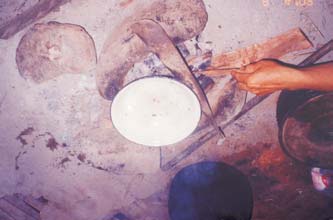
7a. Heating and mercury evaporation
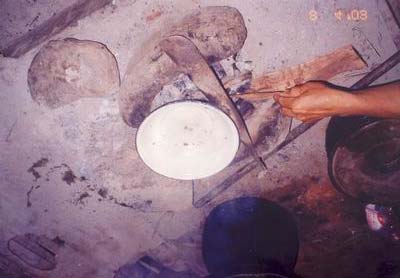
The remaining amalgam is then heated (refer to Plate 3.4), and the evaporated mercury
is collected in a short bamboo tube, erected above the stove. A feather is used to
remove the mercury captured in the tube, and citrus is added to it for purification before
re-use. The mercury-gold amalgam is not typically heated to separate the two elements
on a daily basis. Rather, it is stored until a suitable quantity has accumulated for the
purpose of sale to a gold merchant. Depending on the village and gold content of the
alluvial sediment, this might be on a weekly or monthly basis. Women and children
typically carry out this process in the home.
Plate 3.4
Mercury evaporation (without bamboo tube)
8. Sale of the gold
Gold resulting from ASM is sold directly to gold merchants who will visit the villages on a
weekly basis during the mining season. The gold merchants typically originate from
Luang Prabang and onward sell the gold to larger dealerships. Between 30,000 kip and
35,000 kip (approximately US $2.8 and $3.3) will be paid for one Hun of gold
(approximately 0.39 grams), depending on its purity (e.g. its mercury / silver content).
Where the gold contains a quantity of mercury or other impurities, the gold merchant
may be required to further refine it prior to sale at a regional market or directly to a
jeweler. The gold merchants also provide the villagers with mercury.
EARTH SYSTEMS LAO
22
SEPTEMBER 2003
UNIDO GLOBAL MERCURY REPORT
FINAL REPORT
Figure 3.4
Summary of the ore extraction and gold recovery processes
Erect Float
Clear Site
Underwater Excavation
Excavate Ore / Alluvium
Transport Ore / Alluvium to River Bank or Float
Add Water
Sluice
Remove Waste Material
Panning
Remove Waste Material
Gold + Ore Concentrate
Type: 1
Type: 2
Mercury (Purified
with Citrus)
Heated
Add Mercury
Remove Waste
Blow
Material
Excess
Amalgam Squeezed
Mercury
Through Cloth
Collected
Fine Ore Particles
Containing Gold
Gold
Remaining
Mercury
Heated
Collected
Add Mercury
Heated
Gold
Remaining Mercury Collected
EARTH SYSTEMS LAO
23
SEPTEMBER 2003
UNIDO GLOBAL MERCURY REPORT
FINAL REPORT
3.8.2 Environmental Contamination and Human Exposure to Mercury
Observations and inquiries at the village level were used to make a preliminary
assessment of potential environmental impacts resulting from ASM activities. The
following mining processes and techniques have been identified as potentially degrading
the environment:
1. Ore or alluvium extraction causing sedimentation within the water course
2. Ore or alluvium extraction on the riverbanks causing bank erosion
3. Mercury contamination of the riverbank soil substrate
4. Mercury contamination of the water course, aquatic biota and up the food chain
5. Mercury contamination of the atmosphere in the amalgam burning process
Table 3.14 illustrates that although all of the surveyed villages (with the exception of Ban
Pakchek) have previously used mercury in the mining process, it is currently only used in
four villages (Ban Houay Gno, Ban Houay Koh, Ban Houay Lo and Ban Latthahai).
Table 3.14
Extent of Household Mercury Use
Household Mercury Use
Currently Use
Not Currently
Have Never Used
Total No. of
Village Name
Mercury
Using Mercury
Mercury
Households
No. % No. % No. %
Ban Houay Gno
6
30
11
55
3
15
20
Ban Houay Koh
6
24
12
48
7
28
25
Ban
Houay
Lo 5 25 9 45 6 30
20
Ban Kiad
0
0
4
8
45
92
49
Ban
Latthahai 10 22 7 16 28 62
45
Ban Pakchek
0
0
0
0
50
100
50
Ban Pak Ou
0
0
23
72
9
28
32
Ban Thinhông
0
0
28
93
2
7
30
The principal means through which mercury loss could occur have been identified as the
panning and sieving stage (where mercury is added to form an amalgam on river floats
or on the riverbank), and during amalgam heating (where mercury is lost to the
atmosphere). The close proximity of the panning and sieving process to the watercourse
introduces the potential for water contamination, which can result in mercury
accumulation in aquatic organisms used as a food source.
Despite the incentive for its recovery and re-use resulting from its relatively high cost, it
is estimated that only half of those households burning amalgam make an attempt at
recovering the vaporized mercury, and of those households making this attempt the
recovery process is estimated to be 75% successful (i.e. one quarter of the mercury is
lost). This recovery process is typically carried out in the home, where, being a confined
space with limited air displacement, the potential for the inhalation of vaporized mercury
is high. Although a quantitative assessment of mercury loss to the environment from
each village was not possible, it has been estimated as approximately two thirds of the
mercury used per annum. Therefore, of the estimated 2,431 grams of mercury used per
EARTH SYSTEMS LAO
24
SEPTEMBER 2003
UNIDO GLOBAL MERCURY REPORT
FINAL REPORT
annum in the eight surveyed villages, approximately 1,600 grams are lost to the
environment (refer to Table 3.15).
Table 3.15
Mercury Mass Balance
Current Hg Use per
Estimated Hg Use
Estimated Hg Lost
Village Name
Mining Household
per Village
(grams / annum)
(grams/ annum)
(grams / annum)
Ban Houay Gno
40
592
397
Ban Houay Koh
44
576
386
Ban Houay Lo
36
343
230
Ban Kiad
0
0
0
Ban Latthahai
38
920
616
Ban Pakchek
0
0
0
Ban Pak Ou
0
0
0
Ban Thinhông
0
0
0
Total -
2,431
1,629
The degree of human exposure to mercury is related directly to the scale of ASM
activities and the quantity of mercury use in the region. The quantities of mercury
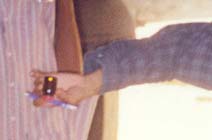
employed in gold amalgamation are invariably small, typically around 40 grams per
household per annum (refer to Plate 3.5 and Table 3.15).
Plate 3.5
1 Hong of mercury (approx. 38 grams)
3.8.3 Risk Awareness
Household awareness of the potential health implications of exposure to mercury is
invariably low, with only 4 households (13%) in Ban Thinhông, and 1 household (4%) in
Ban Houay Koh indicating a general perception of risk, but lacking any data or specific
information on what hazards mercury use presented or how these hazards could be
avoided. The lack of hazard awareness has important implications for future capacity
building and educational campaigns.
EARTH SYSTEMS LAO
25
SEPTEMBER 2003
UNIDO GLOBAL MERCURY REPORT
FINAL REPORT
3.8.4 Gold
Production
All of the surveyed villages were currently, or had previously been engaged in mining
activities. Average household gold production varied between villages, with Ban Houay
Lo recording the highest annual gold production (approximately 38 grams) and Ban Kiad
the lowest annual gold production (approximately 9 grams).
There is no clear distinction between the average household gold production in villages
on the Mekong River (Ban Houay Gno, Ban Houay Koh and Ban Thinhông) and villages
on the Nam Ou River.
Current gold production varied significantly between the surveyed villages (refer to Table
3.16). Current gold production per household is highest in Ban Latthahai (17.3 grams per
annum), Ban Houay Lo (15.3 grams per annum) and Ban Pakchek (12.2 grams per
annum). Ban Pakchek and Ban Latthahai are currently producing an annual village total
of 1.52 Kg and 1.89 Kg per annum, respectively. Conversely, Ban Pak-Ou and Ban
Thinhông are not currently engaged in mining and are therefore not producing any gold.
The total village gold production in Ban Kiad is only 44 grams per annum, a
consequence of only 4% of households currently engaged in mining activities.
With a total gold production among the eight villages of approximately 4.8 Kg per
annum, and a total mercury use of approximately 2.4 Kg per annum, the gold production
to mercury use ratio is approximately 1: 0.5. This suggests that villages in the region do
not rely heavily on the use of mercury, as the typical gold to mercury ratio for artisanal
gold mining is 1: 3.
Table 3.16
Average Gold Production
Ave. Au Production
Ave. Au Production
Extrapolated Village
for Mining
for Mining & Non-
Village Name
Au Production
Households
mining Households
(Kg / annum)
(grams / annum)
(grams / annum)
Ban Houay Gno
19
5.7
280
Ban Houay Koh
37
8.9
480
Ban Houay Lo
38
15.3
580
Ban Kiad
9
0.4
44
Ban Latthahai
23
17.3
1,890
Ban Pakchek
19
12.2
1,520
Ban Pak Ou
0
0
0
Ban Thinhông
0
0
0
Total - -
4,790
3.9
The Role of Women
Women in rural Lao society are generally considered to be provided with less
opportunities compared to those afforded to men. Women (and children) are responsible
for performing duties perceived to be easier and of less importance than duties
performed by men, such as cooking, weaving, sowing rice and collecting water (refer to
Plate 3.6). For example the commercial weaving and textile industry in Ban Thinhông, is
predominantly carried out by women and children. Nevertheless, of the surveyed
EARTH SYSTEMS LAO
26
SEPTEMBER 2003

UNIDO GLOBAL MERCURY REPORT
FINAL REPORT
population, females were the head of the household in an average of 11% of households
among the eight villages, and responded independently to 25% of the questionnaires
(refer to Table 3.17).
Table 3.17
Gender comparison of heads-of-households and questionnaire
respondents
Head of Household (%)
Questionnaire Respondents (%)
Village Name
Male and
Male Female Male Female
Female
Ban Houay Gno
100
0
45
0
55
Ban Houay Koh
92
8
60
24
16
Ban Houay Lo
85
15
30
25
45
Ban
Kiad
94 6 65 20 14
Ban
Latthahai
93 7 76 13 11
Ban Pak Ou
72
28
22
56
22
Ban
Pakchek 84 6 44 14 42
Ban
Thinhông
90 10 30 47 23
Average
89 11 47 25 29
Plate 3.6
A young girl weaving at home
The respective roles of men and women in small-scale artisanal gold mining are clearly
defined, with men having the responsibility of alluvium excavation, and women (often
assisted by one or more children from the family) performing the panning, sieving and
gold recovery processes. The respective roles of men and women in the mining process
are therefore relevant to the potential for exposure to mercury. Men are probably less
exposed to mercury directly through mining activities, whereas women and children
mining in villages using mercury would potentially be exposed on a daily basis. All work
associated with mining is considered difficult, a typical working day consisting of
traveling long distances to suitable mining locations and long hours of sun exposure.
EARTH SYSTEMS LAO
27
SEPTEMBER 2003
UNIDO GLOBAL MERCURY REPORT
FINAL REPORT
Furthermore, the tasks of both men and women are essential for the successful recovery
of gold and thus both are seen equally to contribute to the gold-derived household
income.
EARTH SYSTEMS LAO
28
SEPTEMBER 2003
UNIDO GLOBAL MERCURY REPORT
FINAL REPORT
4. Conclusions
A baseline sociological study was conducted by Earth Systems Lao in Luang Prabang
Province, Lao PDR, with a focus on small-scale artisanal gold mining (ASM) and the use
of mercury in these activities.
Between 40% and 53% of households in the eight (8) villages were surveyed, all of
which were currently, or had previously been engaged in mining activities. The average
size of the eight villages surveyed is 402 persons, with an average of 5.6 persons
residing in each household. Six ethnic groups are represented in the region, with the Lao
Loum and Lue being the predominant ethnic groups.
The region, like much of rural Lao PDR, has low cash incomes (an average of 4.85
million kip or US $461 per annum in the surveyed villages) and high mortality rates (15.2
deaths per 1,000 persons, 1995 Population Census). On average, 47% of the sampled
population recorded experienced a major illness during the last 12 months, with malaria
and Acute Respiratory Illness (ARI) being the most common. Three of the eight
surveyed villages do not have access to an active medical facility; of those that do, most
villages only have access to a pharmacy. Local produce, particularly rice and fish,
dominate the diet with the latter forming an important source of protein.
Among the surveyed villages, small-scale artisanal gold mining (ASM) began in the mid-
1970s, and was a widespread activity by 1980. ASM is typically carried out at the family
level involving men, women and children who are generally lacking in technical skills and
sophisticated equipment. The extent of mining activities and the resultant gold outputs
vary among villages in the region, with between 45% and 96% of the surveyed
households having at least one household member engaged in the activity.
The peak mining season is short, primarily between January and April at the end of the
dry season when water levels are low, exposing ephemeral islands and other areas of
alluvial sediment. Typically, men will operate the equipment, such as shovels and
chisels, used for ore / alluvium extraction, while women and children transfer the ore /
alluvium to bowls and sluice boards, pan the ore and perform the gold extraction
processes (which are usually carried out in the home).
The mining process and the use of mercury vary between villages situated on the
Mekong River and villages situated on the Nam Ou River. The process of ore extraction
on the riverbank, on ephemeral islands or from the riverbed using simple tools is similar
for each of the surveyed villages.
However, for villages along the Mekong River, mercury is traditionally added at the
panning stage to form an amalgam with alluvial gold particles. The amalgam is
subsequently heated to cause the separation of the two elements as the mercury
evaporates. Conversely, villages on the Nam Ou River do not typically use mercury to
form an amalgam with the gold, but rather use gravity separation by heating the sieved
and panned material and periodically blowing away the concentrate surrounding the gold
particles. It is not clear why there is a difference in techniques, although it may be
influenced by the size of gold particles within the respective rivers.
Mercury is a relatively expensive input to the mining process in Lao PDR, thus providing
an incentive for its recovery and re-use. This is typically carried out in the home, where,
being a confined space with limited air displacement, the potential for the inhalation of
vaporized mercury is high. In some villages there appears to have been a decline in the
industry with a reduction in gold output and mercury use. Mining sites are invariably
located in close proximity to the village, and a concentration of activity during the history
EARTH SYSTEMS LAO
29
SEPTEMBER 2003
UNIDO GLOBAL MERCURY REPORT
FINAL REPORT
of mining has possibly reduced the gold content of the alluvial sediments to marginal
levels.
In many instances mining appears to be an important source of cash income, although
agricultural activities represent the principal occupation of village inhabitants in the
region. Typically, households involved in gold mining produce between 10 and 40 grams
of gold per year (an average of approximately 24 grams). This corresponds to an
average village total of approximately 0.6 Kg per annum. Gold resulting from ASM in the
region is sold directly to a gold merchant who periodically visits each of the villages
engaged in mining. The gold merchant may be required to further refine the gold prior to
sale at a regional market or directly to jewelers.
No obvious signs of mercury poisoning were identified, although a detailed health survey
would be needed to confirm this. Household awareness of the potential health
implications of exposure to mercury is invariably low. Only a small number of households
recorded a general perception of risk, and generally lacked any data or specific
information on what hazards mercury use presented or how these hazards could be
avoided. The addition of mercury to the excavated ore generally occurs on the
riverbank, thus potentially resulting in contamination of the soil substrate and the
adjacent watercourse. This in turn may lead to bioaccumulation in the aquatic food chain
upon which village nutritional intake, through fish and other aquatic fauna, is highly
dependent.
An investigation of the mining process has revealed that, in those villages using mercury
as an amalgamation agent, the primary means of environmental contamination and
human exposure occur at the panning and amalgam burning stages. Among the eight
villages surveyed, it is estimated that approximately two thirds of the mercury used per
annum will be lost to the environment (approximately 1,600 g). Approximately 4.8 Kg of
gold are produced per annum among the eight surveyed villages.
Women in the surveyed villages are arguably not provided with the opportunities
afforded men. Gold mining potentially contributes to bridging inequality due to the
sharing of the activity by men and women. However, it may be the women who are
primarily exposed to mercury and therefore they should be a focus of future health
studies and educational campaigns.
It is expected that the information provided in the current report will assist in the
preparation of a future health study focusing on the effects of mercury exposure, and
may lead to the identification of potential means of improving the current mining
technology to ameliorate the hazards to human health and the environment. Specific
recommendations from the study have been detailed.
EARTH SYSTEMS LAO
30
SEPTEMBER 2003
UNIDO GLOBAL MERCURY REPORT
FINAL REPORT
Appendix 1. Household Questionnaire
EARTH SYSTEMS LAO
31
SEPTEMBER 2003
UNIDO GLOBAL MERCURY REPORT
FINAL REPORT
Project Name: Removal Of Barriers To The Introduction Of Cleaner
Artisanal Gold Mining And Extraction Technologies
Project funded by the United Nations Industrial Development Organisation (UNIDO) in
association with the Department of Geology and Mines
Introduction:
The purpose of this Study is to conduct a survey of mining practices along the Nam Khong and Nam Ou rivers.
This will involve a village and household level survey to gather baseline socio-economic data and to describe the
mining methods being used.
Request to speak to the person who knows best about the livelihood activities of the household. In most cases
this is likely to be the head of the household. Where possible request that the interview is conducted with both
the male and female head of the household.
Request the consent of the household to be interviewed
Questionnaire ID No.:
Household ID No.:
Village Name:
District Name:
Date of survey:
Name of Principal Surveyor:
Name of Enumerator 1:
Name of Enumerator 2:
Respondent (male): First Name:
Family Name:
Respondent (female): First Name:
Family Name:
EARTH SYSTEMS LAO
32
SEPTEMBER 2003
UNIDO GLOBAL MERCURY REPORT
FINAL REPORT
For all persons
For persons aged For persons aged 10 years and above
6 years and above
1
2
3
4
5
6
7
8
9
10
11
12
13
14
15
Who is a
What is
Is male or How old?
Number What is
What is
What is
What is
Major sickness Can read Has ever What is
What was What was main
member of this relationship to
female?
of years citizenship? ethnic
marital
religion?
in the last 2
and write attended highest
main
occupation during
household?
head of
Enter age living in
origin?
status?
years?
Lao?
school? level of
activity
the last 12
household?
1 Male
this
Enter code
Enter code
education the last months?
Insert name
2 Female
village? from code Enter code 1 Never
from code 1 No
1 Yes
1 Never completed? 12
1 Head
list
from code married
list
2 Malaria
2 No
been
months? Enter code from
2 Spouse
list
2 Married
3 ARI
2 At
Enter code
code list
3 Son/Daughter
3 Divorced/
4 Diarrhoea
school
from code Enter
4 Parent
separated
5 Abdominal
3 Left
list
code
5 Other relative
4 Widowed
pain
school
from
6 Not related
6 Other
code list
1
1 2 3
1 2
1 2
1 2
4 5 6
3
2
1 2 3
1 2
1 2
1 2
4 5 6
3
3
1 2 3
1 2
1 2
1 2
4 5 6
3
4
1 2 3
1 2
1 2
1 2
4 5 6
3
5
1 2 3
1 2
1 2
1 2
4 5 6
3
6
1 2 3
1 2
1 2
1 2
4 5 6
3
7
1 2 3
1 2
1 2
1 2
4 5 6
3
8
1 2 3
1 2
1 2
1 2
4 5 6
3
EARTH SYSTEMS LAO
33
SEPTEMBER 2003
UNIDO GLOBAL MERCURY REPORT
FINAL REPORT
A2 SOCIO-ECONOMIC INFORMATION
16 What is the approximate average annual income of your household?
0 - 2M Kip
2M Kip to 5M Kip
5M - 10M Kip
> 10M Kip
17 Who in your household manages the income?
Head
Spouse
of
head
Son/Daughter
of
head
Other
18 Who in your family manages the expenditure?
Head
Spouse
of
head
Son/Daughter
of
head
Other
A3 HOUSING CHARACTERISTICS
19 What is the tenure status of the household?
Owner / purchaser
Tenant
Lodger
Other
20 Type of dwelling unit?
Concrete
Timber
Bamboo
Other (specify):
21 Is the dwelling unit electrified?
No
Yes (own meter)
Yes (share meter)
Yes
(own
generator)
Yes
(car
battery)
22 What is the household's main source of energy for cooking?
Electricity
Paraffin
Charcoal
Gas
Wood
Coal
Sawdust
Other
23 What is the living area of the dwelling unit?
m2
<Mark the location of the dwelling on the village map - include Household ID No.>
A4 WATER FOR DRINKING AND COOKING
24 What is the household's main source of water for drinking and cooking?
Piped
water
in/outside
Well/borehole
River/stream/dam
Rainwater
from
tank/jar
Other (specify):
25 Distance from house to the main source of water for drinking and cooking?
m
<Mark the location of the water source on the village map>
26 Is drinking water treated before use?
Yes
No
EARTH SYSTEMS LAO
34
SEPTEMBER 2003
UNIDO GLOBAL MERCURY REPORT
FINAL REPORT
If so how?
Boiled
Filtered
Other (specify)
27 Are you satisfied with the quality of your drinking water?
Yes
No
If no, why not?
28 Who most commonly collects the drinking / cooking water in your household?
Head
Spouse
of
head
Son/Daughter
of
head
Other
A5 SOURCES OF FOOD
29 For each of the following food groups identify:
(i) The number of meals over the past 7 days when this food group has been eaten;
(ii) The source of the food.
Food Group
No. Times
Source (tick the appropriate boxes)
Red meat
Market
Family livestock
Forest
Chicken / duck
Market
Family livestock
Forest
Eggs
Market
Family livestock
Forest
Vegetables
Market
Garden
Swidden
Forest
Fruits
Market
Garden
Forest
Rice
Market
Paddy field
Swidden
Forest
Fish
Market
Fishpond
River
Other aquatic food
Market
Fishpond
River
Other
Market
Family livestock
Forest
A6 DEATHS IN THE HOUSEHOLD AND HYGIENE
30 Did any death occur in the household in the last 12 months? (also children at birth)
Yes
No
If Yes:
#
Was the deceased male or female?
How old was the deceased?
For woman aged 15 to 49 years:
Did she die while pregnant, while giving
1 Male 2 Female
Age in years
birth or within 42 days after giving birth?
1 Yes 2 No
1
2
3
4
31 What type of toilet facility is mainly used by the household?
Flush
toilet
Dry
toilet
Other
None
EARTH SYSTEMS LAO
35
SEPTEMBER 2003
UNIDO GLOBAL MERCURY REPORT
FINAL REPORT
Has anyone in your family been engaged in mining activities? (Either currently or previously)
If yes, continue to PART B of the questionnaire
If no, thank the respondent for their cooperation, and ask the respondent whether they would be prepared to
participate in a follow-up health survey at a later date?
Yes
No
Additional observations of the Surveyor:
EARTH SYSTEMS LAO
36
SEPTEMBER 2003
UNIDO GLOBAL MERCURY REPORT
FINAL REPORT
<Only complete this survey if someone in the household has been engaged in mining activities>
<Request to speak to the person who knows best about the mining activities of the household>
B.1
ARTISANAL MINING INFORMATION
1.
How many years ago did you start mining?
years
2.
Do you continue to engage in mining activities each year? Yes No
2.1
If not, why did you stop mining?
3.
Over what period of the year do you engage in mining activities?
3.1
On average how many hours per day do you spend mining?
hours
4.
Who inspired you to start mining ?
Yourself
Partner Parent
Other
5.
When you are mining, do you work by yourself? Yes No
5.1
If not, how many people do you work with?
Family
Friends Labour
6.
Where exactly do you conduct your mining activities?
B.2
EQUIPMENT AND INPUTS
7.
Briefly outline each step in the gold extraction process, including: the technology/equipment; quantity
of materials used; and time taken.
Collection of the ore:
Preparation of the ore:
Amalgamation:
EARTH SYSTEMS LAO
37
SEPTEMBER 2003
UNIDO GLOBAL MERCURY REPORT
FINAL REPORT
Gold recovery:
8.
Do you have any plans to change this process in the future?
Yes
No
If so, how?
9.
Have you ever used mercury for amalgamation of the gold?
Past
Present
Never
10.
Where do you buy your mercury?
10.1
From whom do you buy your mercury?
11.
What is the average cost of the mercury per unit weight?
per ml or; per kg
12.
On average, how much mercury do you use per week? ml or; kg
13.
On average, how much gold can be amalgamated with this quantity of mercury?
grams
14.
How do you store the mercury?
15.
How frequently do you burn amalgam?
Several times a day
Once a day
Once a week
Several times a week Other
16.
Do you bring your work clothes / equipment into the house at the end of the day?
Yes
No
17.
What are the major problems you encounter when producing gold?
18.
Are you aware of any health hazards associated with the use and handling of mercury? Yes No
If yes, what are the hazards?
Who informed you about these hazards?
EARTH SYSTEMS LAO
38
SEPTEMBER 2003
UNIDO GLOBAL MERCURY REPORT
FINAL REPORT
B.3
MARKET
19.
Where specifically do you sell your gold?
20.
Do you encounter any problems when selling your gold?
21.
What is the average market value of the gold you sell? per gram
B.4
TRAINING
22.
Have you received any training regarding your mining activities?
Yes No
If so, who provided the training?
Where was the training provided?
B.5
IMPROVED MINING TECHNOLOGIES
<Provide a short description of the improved mining technology>
23.
Would you be interested to apply these methods to your mining activities? Yes No
Explain why:
24.
Would the introduction of these methods adversely affect your mining activities? Yes No
Explain why:
Thank the respondent for their cooperation.
Would the respondent be prepared to participate in a follow up health survey at a later date?
Yes
No
Additional observations of the Surveyor:
EARTH SYSTEMS LAO
39
SEPTEMBER 2003
UNIDO GLOBAL MERCURY REPORT
FINAL REPORT
Appendix 2. Village Head Questionnaire
EARTH SYSTEMS LAO
40
SEPTEMBER 2003
UNIDO GLOBAL MERCURY REPORT
FINAL REPORT
Project Name: Removal Of Barriers To The Introduction Of Cleaner
Artisanal Gold Mining And Extraction Technologies
Project funded by the United Nations Industrial Development Organisation (UNIDO) in
association with the Department of Geology and Mines
Introduction:
The purpose of this Study is to conduct a survey of mining practices along the Nam Khong and Nam Ou rivers. This
will involve a village and household level survey to gather baseline socio-economic data and to describe the mining
methods being used.
Request to speak to the village chief/s and request consent to be interviewed.
Have the residents of this village ever been engaged in artisnal gold mining activities?
Yes
No
Have the residents of this village ever been engaged in other forms of mining?
Yes
No
If no to both of these questions, terminate the survey in this village. Only survey villages where there has been a
history of mining.
Questionnaire ID No.:
Village Name:
District Name:
Date of survey:
Name of Principal Surveyor:
Name of Enumerator 1:
Name of Enumerator 2:
Village Chief 1:
First Name:
Family Name:
Village Chief 2:
First Name:
Family Name:
C1 INTRODUCTION
1
Age of the Respondent:
years
2
Number of years the respondent has lived in this village:
years
EARTH SYSTEMS LAO
41
SEPTEMBER 2003
UNIDO GLOBAL MERCURY REPORT
FINAL REPORT
3
Number of years as village head:
years
C2 DEMOGRAPHIC INFORMATION
4
Population of the village:
5
Approximate number of men:
Approximate number of women:
6
Number of households in the village?
C3 SOCIAL INFRASTRUCTURE
7
Is there a doctor or nurse living in the village?
Yes
No
If not, how many times per year would a district or provinical level health practioner typically visit the village?
times per year
8
Is there a health volunteer in the village?
Yes
No
9
Are there any health facilities in the village?
Yes
No
If so, what type?
Dispensary
Pharmacy
Health centre
10 Where is the main medical centre used by the people in your village?
Specify location:
11 Has there been any major illness in the village over the last two years?
Yes
No
If so, what type of sickness?
Malaria
Respiratory Infection
Diarrhoea
Abdominal pain
Other (specify)
12 Where is the main market used by the village for
buying
and
selling
produce?
Specify location:
13 Where is the B143primary school used by the children of the village?
Specify location:
14 Approximately how many children in the village use this primary school?
number persons
15 Where is the main secondary school used by the children of the village?
EARTH SYSTEMS LAO
42
SEPTEMBER 2003
UNIDO GLOBAL MERCURY REPORT
FINAL REPORT
Specify location:
16 Approximately how many children in the village use this primary school?
number persons
C4 AMENITIES
17 What are the main sources of water for drinking and cooking in the village?
Piped
water
in/outside
Well/borehole
River/stream/dam
Rainwater
from
tank/jar
Other (specify):
<Mark the location of each water source on the village map>
18 Where are the main fishing spots for the village?
<Mark the location of each fishing spot on the village map>
What types of aquatic species are collected from the river?
Fish
Shrimp
Shell fish
River grass
Other (specify)
19 Is the village supplied with electricity?
Yes
No
C5 ARTISANAL MINING INFORMATION
20 Have the residents of this village ever been engaged in artisnal gold mining activities?
Yes
No
21 Have the residents of this village ever been engaged in other forms of mining?
Yes
No
If yes, what resources are mined? (specify):
22 Approximately how many village members are involved with artisanal gold mining?
23 Where
are
the
main
gold
mining
sites
located?
<Mark the location of the mining areas on the village map>
<Visit each site and record any observations>
24 During what months of the year is the mining performed?
25 For how many years have people been mining in this village
/
area?
years
What is the historical background to the mining in this area?
EARTH SYSTEMS LAO
43
SEPTEMBER 2003
UNIDO GLOBAL MERCURY REPORT
FINAL REPORT
26 Is
the
source
of
the
gold
known?
Yes
No
If Yes, specify
Hardrock
Alluvial
Mine waste
Other
27 Does the village authority encourage / support mining?
Yes
No
What are the benefits of mining to the village? Please describe:
What are the negative impacts of the mining for the
village?
Please
describe:
28 Has there been an influx of gold-prospectors to the area?
Yes
No
If yes, explain:
29 Does the village authority have any plans to change its mining activities?
Yes
No
If yes, how?
Technology
used
Area
of
mining
Period of mining
Other
30 Does the village authority control the mining activities I.e. the number of people mining or the identification of suitable sites?
Yes
No
If yes, how?
31 Are gold-derived incomes taxed by the village?
Yes
No
C6 EQUIPMENT AND INPUTS
32 Briefly outline each step in the gold extraction process, including: the technology/equipment; quantity
of materials used; and time taken.
Collection of the ore:
Preparation of the ore:
EARTH SYSTEMS LAO
44
SEPTEMBER 2003
UNIDO GLOBAL MERCURY REPORT
FINAL REPORT
Amalgamation:
Gold recovery:
33 Is mercury used for amalgamation of the gold?
Yes
No
If yes, where is the mercury bought? (specify)
34 What are the major problems encountered when producing gold?
35 Are you aware of any health hazards associated with the use and handling of mercury?
Yes
No
If yes, what are the hazards?
Who informed you about these hazards?
C7 MARKET
36 Approximately how much gold is produced by the village?
grams per month
37 Where is the gold typically sold? (specify)
C8 IMPROVED MINING TECHNOLOGIES
38 Have villagers received any training regarding their mining activities?
Yes
No
If so, who provided the training?
Where was the training provided?
<Provide a short description of the improved mining technology>
39 Would you be interested to apply these methods to the mining activities in the village? Yes
No
Explain why:
40 Would the introduction of these methods adversely affect the mining activities?
Yes
No
EARTH SYSTEMS LAO
45
SEPTEMBER 2003
UNIDO GLOBAL MERCURY REPORT
FINAL REPORT
Explain why:
Thank the respondent for their cooperation.
EARTH SYSTEMS LAO
46
SEPTEMBER 2003
UNIDO GLOBAL MERCURY REPORT
FINAL REPORT
Appendix 3. Village Profiles
EARTH SYSTEMS LAO
47
SEPTEMBER 2003
Appendix 3: Village Profiles
Village : Ban Houaygno
UNIDO: Global Mercury Project
District:
Chomphet
River:
Mekong
Village Population:
252
Male: 129
Female: 123
No. of Households:
49
Average Household Size: 5.4
No. of Surveyed Households: 20
Occupation of
Percent
Most Significant Sickness
Percent
Food
Average
Sample Population
in Past 12 Months
Group:
Frequency of
None
49
Consumption
Agriculture
50
per Week
Salesperson
1
Malaria
28
Chicken/duck
1
Teacher
1
Other
9
Retired / Sick/ Too Old
4
ARI
7
Eggs
5
Others
1
Diarrhoea
4
Fish
10
Too Young
44
Abdominal pain
3
Fruits
5
Other
0
Other aquatic food
2
Red meat
3
Rice
21
Vegetables
12
Average Annual Household Income: US$ 317
3,325,000 Kip
Ethnicity:
Percent
Health Facilities in the Village: Pharmacy
Lao Loum
95
Mortality Rate: No Data (death/1000 persons/year)
Phutai
5
Primary Source of Drinking Water: Mountain Spring
Is the Village Supplied with Electricity: No
Literacy:
86 %
Completed Primary School (%):
42
11
Completed Secondary School (%):
2
3
Age Distribution
Age
8 0 - 8 9
Female
6 0 - 6 9
Male
49
5 0 - 5 9
4 0 - 4 9
38
3 0 - 3 9
2 0 - 2 9
10 _ 19
Illiterate Female
Illiterate Male
1_ 9
< 1
Literate Female
Literate Male
50
40
30
20
10
0
0
10
2 0
3 0
4 0
5 0
Numbe r of P e ople
Approximate Date The Village Commenced Mining :
1980
Households
Percent
Mining Season: January
To: April
Using Mercury:
Average Mercury Use Per Mining Household Per Year: 40 g
Past:
55
Present:
30
Predicted Village Mercury Use Per Year:
592 g
Never:
15
Average Gold Production Per Mining Household Per Year: 19 g
Households
Percent
Predicted Village Gold Production Per Year:
279 g
Engaged in Mining:
Currently Mining:
30
Mined in Past Only:
55
Never Mined:
15
48
Appendix 3: Village Profiles
Village : Ban Houay Koh
UNIDO: Global Mercury Project
District:
Chomphet
River:
Mekong
Village Population:
288
Male: No Data
Female: No Data
No. of Households:
54
Average Household Size: 5.6
No. of Surveyed Households: 25
Occupation of
Percent
Most Significant Sickness
Percent
Food
Average
Sample Population
in Past 12 Months
Group:
Frequency of
None
34
Consumption
Agriculture
47
per Week
Fisheries
1
Other
21
Chicken/duck
2
Salesperson
1
Malaria
17
Factory Worker
3
ARI
17
Eggs
4
Government Official
1
Diarrhoea
8
Fish
9
Retired / Sick/ Too Old
1
Abdominal pain
4
Fruits
4
Others
1
Other
1
Too Young
45
Other aquatic food
1
Red meat
4
Rice
21
Vegetables
12
Average Annual Household Income: US$ 260
2,732,000 Kip
Ethnicity:
Percent
Health Facilities in the Village: Pharmacy
Lao Loum
52
Mortality Rate: 65
(death/1000 persons/year)
Khmu
48
Primary Source of Drinking Water: Mountain Spring
Is the Village Supplied with Electricity: No
Literacy:
78 %
Completed Primary School (%):
30
14
Completed Secondary School (%):
1
Age Distribution
Age
8
6 0 - 6 9
43
Female
5 0 - 5 9
Male
4 0 - 4 9
3 0 - 3 9
2 0 - 2 9
34
10 _ 19
1_ 9
Illiterate Female
Illiterate Male
< 1
Literate Female
Literate Male
50
40
30
20
10
0
0
10
2 0
3 0
4 0
5 0
Numbe r of P e ople
Approximate Date The Village Commenced Mining :
1987
Households
Percent
Mining Season: March
To: April
Using Mercury:
Average Mercury Use Per Mining Household Per Year: 44 g
Past:
48
Present:
24
Predicted Village Mercury Use Per Year:
576 g
Never:
28
Average Gold Production Per Mining Household Per Year: 37 g
Households
Percent
Predicted Village Gold Production Per Year:
480 g
Engaged in Mining:
Currently Mining:
24
Mined in Past Only:
48
Never Mined:
28
49
Appendix 3: Village Profiles
Village : Ban Houaylo
UNIDO: Global Mercury Project
District:
Pak Ou
River:
Nam Ou
Village Population:
187
Male: 101
Female: 86
No. of Households:
38
Average Household Size: 5.1
No. of Surveyed Households: 20
Occupation of
Percent
Most Significant Sickness
Percent
Food
Average
Sample Population
in Past 12 Months
Group:
Frequency of
None
63
Consumption
Agriculture
47
per Week
Salesperson
1
ARI
16
Chicken/duck
2
Teacher
2
Malaria
10
Office Clerk
1
Other
5
Eggs
4
Manual Labour
2
Diarrhoea
3
Fish
12
Retired / Sick/ Too Old
5
Abdominal pain
3
Fruits
5
Others
2
Other
0
Too Young
41
Other aquatic food
0
Red meat
3
Rice
21
Vegetables
10
Average Annual Household Income: US$ 613
6,440,000 Kip
Ethnicity:
Percent
Health Facilities in the Village: None
Lao Loum
80
Mortality Rate: 10
(death/1000 persons/year)
Lue
15
Primary Source of Drinking Water: Mountain Spring
Nhuane
5
Is the Village Supplied with Electricity: Yes
Literacy:
89 %
Completed Primary School (%):
59
7
Completed Secondary School (%):
6
4
Age Distribution
Age
8 0 - 8 9
Female
7 0 - 7 9
46
Male
6 0 - 6 9
5 0 - 5 9
4 0 - 4 9
43
3 0 - 3 9
2 0 - 2 9
10 _ 19
Illiterate Female
Illiterate Male
1_ 9
< 1
Literate Female
Literate Male
50
40
30
20
10
0
0
10
2 0
3 0
4 0
5 0
Numbe r of P e ople
Approximate Date The Village Commenced Mining :
1980
Households
Percent
Mining Season: April
To: June
Using Mercury:
Average Mercury Use Per Mining Household Per Year: 36 g
Past:
45
Present:
25
Predicted Village Mercury Use Per Year:
343 g
Never:
30
Average Gold Production Per Mining Household Per Year: 38 g
Households
Percent
Predicted Village Gold Production Per Year:
578 g
Engaged in Mining:
Currently Mining:
40
Mined in Past Only:
50
Never Mined:
10
50
Appendix 3: Village Profiles
Village : Ban Kiad
UNIDO: Global Mercury Project
District:
Pak Ou
River:
Nam Ou
Village Population:
581
Male: 313
Female: 268
No. of Households:
121
Average Household Size: 5.1
No. of Surveyed Households: 49
Occupation of
Percent
Most Significant Sickness
Percent
Food
Average
Sample Population
in Past 12 Months
Group:
Frequency of
None
65
Consumption
Agriculture
53
per Week
Salesperson
2
Malaria
14
Chicken/duck
3
Teacher
0
ARI
9
Factory Worker
0
Other
7
Eggs
2
Government Official
1
Diarrhoea
6
Fish
9
Retired / Sick/ Too Old
2
Abdominal pain
1
Fruits
5
Others
1
Other
0
Too Young
41
Other aquatic food
1
Red meat
3
Rice
21
Vegetables
13
Average Annual Household Income: US$ 356
3,736,735 Kip
Ethnicity:
Percent
Health Facilities in the Village: None
Lao Loum
16.33
Mortality Rate: 12
(death/1000 persons/year)
Phutai
2.04
Primary Source of Drinking Water: Nam Ou River
Khmu
75.51
Lue
4.08
Nhuane
2.04
Is the Village Supplied with Electricity: No
Literacy:
68 %
Completed Primary School (%):
24
Completed Secondary School (%):
2
22
Age Distribution
Age
35
> 10 0
9 0 - 9 9
Female
8 0 - 8 9
Male
7 0 - 7 9
11
6 0 - 6 9
5 0 - 5 9
4 0 - 4 9
3 0 - 3 9
2 0 - 2 9
33
10 _ 19
Illiterate Female
Illiterate Male
1_ 9
< 1
Literate Female
Literate Male
50
40
30
20
10
0
0
10
2 0
3 0
4 0
5 0
Numbe r of P e ople
Approximate Date The Village Commenced Mining :
1981
Households
Percent
Mining Season: April
To: May
Using Mercury:
Average Mercury Use Per Mining Household Per Year: 38 g
Past:
8
Present:
0
Predicted Village Mercury Use Per Year:
0 g
Never:
92
Average Gold Production Per Mining Household Per Year: 9 g
Households
Percent
Predicted Village Gold Production Per Year:
44 g
Engaged in Mining:
Currently Mining:
4
Mined in Past Only:
41
Never Mined:
55
51
Appendix 3: Village Profiles
Village : Ban Latthahai
UNIDO: Global Mercury Project
District:
Pak Ou
River:
Nam Ou
Village Population:
580
Male: 347
Female: 233
No. of Households:
109
Average Household Size: 5.8
No. of Surveyed Households: 45
Occupation of
Percent
Most Significant Sickness
Percent
Food
Average
Sample Population
in Past 12 Months
Group:
Frequency of
None
43
Consumption
Agriculture
49
per Week
Teacher
1
Malaria
20
Chicken/duck
2
Factory Worker
0
Other
14
Government Official
0
Diarrhoea
11
Eggs
4
Retired / Sick/ Too Old
4
ARI
9
Fish
9
Others
2
Abdominal pain
3
Fruits
4
Too Young
44
Other
0
Other aquatic food
1
Red meat
2
Rice
21
Vegetables
14
Average Annual Household Income: US$ 343
3,600,000 Kip
Ethnicity:
Percent
Health Facilities in the Village: Local Clinic/ Hospital
Lao Loum
4.44
Mortality Rate: 23
(death/1000 persons/year)
Khmu
4.44
Primary Source of Drinking Water: Mountain Spring
Hmong
6.67
Lue
84.44
Is the Village Supplied with Electricity: Yes
Literacy:
80 %
Completed Primary School (%):
32
14
Completed Secondary School (%):
2
Age Distribution
Age
7
8 0 - 8 9
43
Female
7 0 - 7 9
Male
6 0 - 6 9
5 0 - 5 9
4 0 - 4 9
3 0 - 3 9
37
2 0 - 2 9
10 _ 19
Illiterate Female
Illiterate Male
1_ 9
< 1
Literate Female
Literate Male
50
40
30
20
10
0
0
10
2 0
3 0
4 0
5 0
Numbe r of P e ople
Approximate Date The Village Commenced Mining :
1982
Households
Percent
Mining Season: March
To: April
Using Mercury:
Average Mercury Use Per Mining Household Per Year: 38 g
Past:
16
Present:
22
Predicted Village Mercury Use Per Year:
920 g
Never:
62
Average Gold Production Per Mining Household Per Year: 23 g
Households
Percent
Predicted Village Gold Production Per Year:
1894 g
Engaged in Mining:
Currently Mining:
76
Mined in Past Only:
9
Never Mined:
16
52
Appendix 3: Village Profiles
Village : Ban Pakchek
UNIDO: Global Mercury Project
District:
Pak Ou
River:
Nam Ou
Village Population:
645
Male: 291
Female: 354
No. of Households:
125
Average Household Size: 5.5
No. of Surveyed Households: 50
Occupation of
Percent
Most Significant Sickness
Percent
Food
Average
Sample Population
in Past 12 Months
Group:
Frequency of
None
61
Consumption
Agriculture
51
per Week
Livestock
1
Malaria
11
Chicken/duck
1
Salesperson
0
Other
10
Teacher
0
ARI
9
Eggs
4
Office Clerk
0
Diarrhoea
8
Fish
11
Transport
1
Abdominal pain
2
Fruits
5
Factory Worker
1
Other
0
Government Official
1
Other aquatic food
1
Retired / Sick/ Too Old
5
Red meat
2
Others
1
Rice
21
Too Young
38
Vegetables
12
Average Annual Household Income: US$ 520
5,462,000 Kip
Ethnicity:
Percent
Health Facilities in the Village: Pharmacy
Lao Loum
6
Mortality Rate: 15
(death/1000 persons/year)
Lue
94
Primary Source of Drinking Water: Shallow Well
Is the Village Supplied with Electricity: No
Literacy:
72 %
Completed Primary School (%):
36
Completed Secondary School (%):
3
20
Age Distribution
Age
38
7 0 - 7 9
Female
6 0 - 6 9
Male
8
5 0 - 5 9
4 0 - 4 9
3 0 - 3 9
2 0 - 2 9
35
10 _ 19
Illiterate Female
Illiterate Male
1_ 9
< 1
Literate Female
Literate Male
50
40
30
20
10
0
0
10
2 0
3 0
4 0
5 0
Numbe r of P e ople
Approximate Date The Village Commenced Mining :
1978
Households
Percent
Mining Season: March
To: April
Using Mercury:
Average Mercury Use Per Mining Household Per Year: No Data
Past:
0
Present:
0
Predicted Village Mercury Use Per Year:
No Data
Never:
100
Average Gold Production Per Mining Household Per Year: 19 g
Households
Percent
Predicted Village Gold Production Per Year:
1520 g
Engaged in Mining:
Currently Mining:
64
Mined in Past Only:
32
Never Mined:
4
53
Appendix 3: Village Profiles
Village : Ban Pak Ou
UNIDO: Global Mercury Project
District:
Pak Ou
River:
Nam Ou
Village Population:
354
Male: 190
Female: 164
No. of Households:
63
Average Household Size: 5.8
No. of Surveyed Households: 32
Occupation of
Percent
Most Significant Sickness
Percent
Food
Average
Sample Population
in Past 12 Months
Group:
Frequency of
None
55
Consumption
Agriculture
33
per Week
Handicraft
1
Other
15
Chicken/duck
3
Textiles
1
Malaria
14
Salesperson
12
ARI
9
Eggs
6
Teacher
3
Abdominal pain
7
Fish
9
Office Clerk
2
Diarrhoea
2
Fruits
7
Transport
1
Other
0
Factory Worker
1
Other aquatic food
1
Army
1
Red meat
9
Government Official
3
Rice
21
Retired / Sick/ Too Old
1
Vegetables
11
Others
3
Too Young
40
Average Annual Household Income: US$ 749
7,868,750 Kip
Ethnicity:
Percent
Health Facilities in the Village: Pharmacy
Lao Loum
100
Mortality Rate: 16
(death/1000 persons/year)
Primary Source of Drinking Water: Mountain Spring
Is the Village Supplied with Electricity: Yes
Literacy:
93 %
Completed Primary School (%):
67
5
2
Completed Secondary School (%):
19
Age Distribution
Age
9 0 - 9 9
45
Female
7 0 - 7 9
Male
6 0 - 6 9
5 0 - 5 9
48
4 0 - 4 9
3 0 - 3 9
2 0 - 2 9
10 _ 19
Illiterate Female
Illiterate Male
1_ 9
< 1
Literate Female
Literate Male
50
40
30
20
10
0
0
10
2 0
3 0
4 0
5 0
Numbe r of P e ople
Approximate Date The Village Commenced Mining :
1980
Households
Percent
Mining Season: December To: June
Using Mercury:
Average Mercury Use Per Mining Household Per Year: 0 g
Past:
72
Present:
0
Predicted Village Mercury Use Per Year:
0 g
Never:
28
Average Gold Production Per Mining Household Per Year: 0 g
Households
Percent
Predicted Village Gold Production Per Year:
0 g
Engaged in Mining:
Currently Mining:
0
Mined in Past Only:
75
Never Mined:
25
54
Appendix 3: Village Profiles
Village : Ban Thinhong
UNIDO: Global Mercury Project
District:
Chomphet
River:
Mekong
Village Population:
383
Male: No Data
Female: No Data
No. of Households:
68
Average Household Size: 6.1
No. of Surveyed Households: 30
Occupation of
Percent
Most Significant Sickness
Percent
Food
Average
Sample Population
in Past 12 Months
Group:
Frequency of
None
58
Consumption
Agriculture
44
per Week
Handicraft
2
Malaria
14
Chicken/duck
2
Textiles
4
Other
12
Salesperson
1
ARI
9
Eggs
6
Teacher
1
Diarrhoea
3
Fish
6
Office Clerk
3
Abdominal pain
3
Fruits
6
Manual Labour
1
Other
0
Transport
1
Other aquatic food
1
Government Official
1
Red meat
5
Retired / Sick/ Too Old
2
Rice
21
Others
4
Vegetables
10
Too Young
38
Average Annual Household Income: US$ 532
5,586,667 Kip
Ethnicity:
Percent
Health Facilities in the Village: Dispensary
Lao Loum
100
Mortality Rate: 27
(death/1000 persons/year)
Primary Source of Drinking Water: Houay Hong Stream
Is the Village Supplied with Electricity: No
Literacy:
90 %
Completed Primary School (%):
61
7
Completed Secondary School (%):
10
3
Age Distribution
Age
8 0 - 8 9
Female
7 0 - 7 9
Male
47
6 0 - 6 9
5 0 - 5 9
43
4 0 - 4 9
3 0 - 3 9
2 0 - 2 9
Illiterate Female
Illiterate Male
10 _ 19
1_ 9
Literate Female
Literate Male
50
40
30
20
10
0
0
10
2 0
3 0
4 0
5 0
Numbe r of P e ople
Approximate Date The Village Commenced Mining :
1985
Households
Percent
Mining Season: March
To: April
Using Mercury:
Average Mercury Use Per Mining Household Per Year: 0 g
Past:
93
Present:
0
Predicted Village Mercury Use Per Year:
0 g
Never:
7
Average Gold Production Per Mining Household Per Year: 0 g
Households
Percent
Predicted Village Gold Production Per Year:
0 g
Engaged in Mining:
Currently Mining:
0
Mined in Past Only:
93
Never Mined:
7
55
UNIDO GLOBAL MERCURY REPORT
FINAL REPORT
Appendix 4. Village Maps
EARTH SYSTEMS LAO
56
SEPTEMBER 2003

Alternative Village
Entrance
Mekong River
A
Legend
Temple
T
River Direction
Primary School
S
T
A
Water source
Household
Xang Canal
S
Household interviewed
Livestock
Unused Water Tank
Number of Household Surveyed: 20
Number of Household Use Mercury: 6
Houay Ang
Number of Household Engage Mining: 6
Prepared by:
UNIDO
EARTH SYSTEMS LAO
Project Name:
Global Mercury Project
Appendix 4:
Projection: UTM Zone 48
Houaygno Village Map
Datum: WGS84
Date: 28 August 2003
File: NamOu_B_Houaygno.Wor
Page 57

Hardwood Forest (Timber)
Alternative fishing site
Houay Koh
Courtyard
S
Legend
T
Temple
T
A
Primary School
S
Village Center
Mekong River
Water source
Alternative Village
Entrance
Household
Nam Ou
Household interviewed
Number of Household Surveyed: 25
River Direction
River Direction
Number of Household Use Mercury: 6
A
Number of Household Engage Mining: 6
A
Prepared by:
EARTH SYSTEMS LAO
UNIDO
Project Name:
Global Mercury Project
Appendix 4:
Projection: UTM Zone 48
Houay Koh Village Map
Datum: WGS84
Date: 28 August 2003
File: NamOu_B_HouayKoh.Wor
Page 58

S
Livestock
T
Legend
Nam Ou
Temple
T
Primary School
S
Route 13
Water source
River Direction
Household
A
Household interviewed
Number of Household Surveyed: 20
Number of Household Use Mercury: 5
Number of Household Engage Mining: 8
Prepared by:
EARTH SYSTEMS LAO
UNIDO
Project Name:
Global Mercury Project
Appendix 4:
Projection: UTM Zone 48
Houaylo Village Map
Datum: WGS84
Date: 28 August 2003
File: NamOu_B_Houaylo.Wor
Page 59

Legend
Primary School
S
Water source
Household
Household interviewed
Official building
Source of drinking water; swimming
Number of Household Surveyed: 50
Number of Household Use Mercury: 0
Route 13
Gardens
Gardens
Number of Household Engage Mining: 2
S
Gardens
Nam Ou
A River Direction
Gardens
Prepared by:
EARTH SYSTEMS LAO
UNIDO
Project Name:
Global Mercury Project
Appendix 4:
Projection: UTM Zone 48
Kiad Village Map
Datum: WGS84
Date: 28 August 2003
File: NamOu_B_Kiad.Wor
Page 60

S
Gardens
Nam Ou
Gardens
Legend
Livestock
Temple
T
T
Livestock
Primary School
S
Water source
Playing Field
Household
Household interviewed
Route 13
Health Center
Mountain spring
Rice mill
Number of Household Surveyed: 45
Number of Household Use Mercury: 10
River Direction
Number of Household Engage Mining: 34
A
Prepared by:
EARTH SYSTEMS LAO
UNIDO
Project Name:
Global Mercury Project
Appendix 4:
Projection: UTM Zone 48
Datum: WGS84
Latthahai Village Map
Date: 28 August 2003
File: NamOu_B_Latthahai.Wor
Page 61

Houay Chek
Alternative fishing site
Legend
Temple
T
Gardens
Primary School
S
Route 13
Water source
Nam Ou
Household
Aquaculture
Household interviewed
Site of ore processing
(Sieving and panning) and Swimming
Gardens
Number of Household Surveyed: 50
T
Number of Household Use Mercury: 0
Number of Household Engage Mining: 32
S
Large well for
water storage
River Direction
A
Prepared by:
EARTH SYSTEMS LAO
UNIDO
Project Name:
Global Mercury Project
Appendix 4:
Projection: UTM Zone 48
Datum: WGS84
Pak Chek Village Map
Date: 28 August 2003
File: NamOu_B_PakChek.Wor
Page 62

Nam Ou
S
A
River Direction
River Direction
A
Nam Ou
Legend
T
Temple
S Primary School
Tourist garden
Water source
Mekong River
Household
T
Harbour
Household interviewed
Site for washing rice
Livestock
Village meeting room
A
Alternative Village
Handicraft/ textile shop
Entrance
Food shop
Textile manufacturing
Gardens
River Direction
Number of Household Surveyed: 30
A
Number of Household Use Mercury: 0
Number of Household Engage Mining: 0
Prepared by:
EARTH SYSTEMS LAO
UNIDO
Project Name:
Global Mercury Project
Appendix 4:
Projection: UTM Zone 48
Datum: WGS84
Pak Ou Village Map
Date: 28 August 2003
File: NamOu_B_PakOu.Wor
Page 63

Alternative fishing site
Houay hong
Mekong River
Legend
Temple
T
A Alternative Village
Primary School
S
Entrance
Water source
Gardens
T
Household
Gardens
Household interviewed
River Direction
Number of Household Surveyed: 30
Livestock
Number of Household Use Mercury: 0
A
S
Number of Household Engage Mining: 0
Prepared by:
EARTH SYSTEMS LAO
UNIDO
Project Name:
Global Mercury Project
Appendix 4:
Projection: UTM Zone 48
Thinhong Village Map
Datum: WGS84
Date: 28 August 2003
File: NamOu_B_Thinhong.Wor
Page 64
UNIDO GLOBAL MERCURY REPORT
FINAL REPORT
Appendix 5. Health Study Volunteers
EARTH SYSTEMS LAO
65
SEPTEMBER 2003
Appendix 5
Name (Lao)
Name (English)
Village
Mining Activity
Mercury Use
1 /
-¾¤ Á¯¤
Mrs. Peng
Ban Pakchek
Continue to Mine
Never
2 /
-¾¤ ±~- ¥ñ-꽸ö¤
Mrs. Farn Chanthavong
Ban Pakchek
Continue to Mine
Never
3 /
-¾¤ ¥ñ-©¾
Mrs. Chanda
Ban Pakchek
Mined in Past Only
Never
4 /
-¾¤ ®÷-μ¸ ¦÷¸ò²º-
Mrs. Bounneo Souviphone
Ban Pakchek
Continue to Mine
Never
5 /
-¾¤ Á¡É¸¥ñ-
Mrs. Keochan
Ban Pakchek
Continue to Mine
Never
6 /
-¾¤ º÷-Á¡É¸
Mrs. Ounkeo
Ban Pakchek
Mined in Past Only
Never
-¾¤ ͸¤
Mrs. Luang
Ban Pakchek
Have Never Mined
7 /
8 /
-¾¤ ξ-ÎÒ
Mrs. Nannor
Ban Pakchek
Continue to Mine
Never
9 /
-¾¤ ξ-¯ñ-
Mrs. Nanpan
Ban Pakchek
Continue to Mine
Never
10 /
-¾¤ êó
Mrs. Thee
Ban Pakchek
Mined in Past Only
Never
11 /
-¾¤ ĴȺ÷È-
Mrs. Mayoun
Ban Pakchek
Mined in Past Only
Never
12 /
-¾¤ -TM¤
Mrs. Ning
Ban Pakchek
Mined in Past Only
Never
13 /
-¾¤ ÎÒÁ¡É¸ -ð¢ð¸ö¤Ä§
Mrs. Norkeow Khorvongxay
Ban Pakchek
Mined in Past Only
Never
14 /
-¾¤ £¿´¾
Mrs. Khamma
Ban Pakchek
Continue to Mine
Never
15 /
-¾¤ Ä´ÈÁ©¤
Mrs. Maideng
Ban Pakchek
Continue to Mine
Never
16 /
-¾¤ ¨º©
Mrs. Nhot
Ban Pakchek
Continue to Mine
Never
17 /
-¾¤ ¥ñ-©¾
Mrs. Chanda
Ban Pakchek
Continue to Mine
Never
-¾¤ ξ-¢ñ-
Mrs. Nankhan
Ban Pakchek
Have Never Mined
18 /
19 /
-¾¤ ¦¾¸¸ñ-
Mrs. Saovan
Ban Pakchek
Continue to Mine
Never
20 /
-¾¤ ©¾
Mrs. Da
Ban Pakchek
Mined in Past Only
Never
21 /
-¾¤ 𧼤®¾¤
Mrs. Xiengbang
Ban Pakchek
Continue to Mine
Never
22 /
-¾¤ §¼¤êɾ¸
Mrs. Xiengthao
Ban Pakchek
Mined in Past Only
Never
23 /
-¾¤ ¸ñ-©ó ¦ó¦½¹¸È¾¤¸ö¤
Mrs. Vandy Sisavangvong
Ban Pakchek
Continue to Mine
Never
24 /
-¾¤ ºÈº-Á¡É´
Mrs. Onkem
Ban Pakchek
Continue to Mine
Never
25 /
-¾¤ êò©´ó ´½-ó¸ñ-
Mrs. Thitmy Manyvan
Ban Pakchek
Continue to Mine
Never
26 /
-¾¤ êò©Á¹¤
Mrs. Thitheng
Ban Pakchek
Mined in Past Only
Never
27 /
-¾¤ §¼¤Ã®
Mrs. Xiengbai
Ban Pakchek
Continue to Mine
Never
28 /
-¾¤ Ä´È¡º¤
Mrs. Maikong
Ban Pakchek
Continue to Mine
Never
29 /
-¾¤ ĴȦö´®ø- ¦ò-꽸ö¤
Mrs. Maisomboun Sinthavong Ban Pakchek
Continue to Mine
Never
30 /
-¾¤ ξ-¦¼-
Mrs. Nansian
Ban Pakchek
Continue to Mine
Never
31 /
-¾¤ ´ó
Mrs. Mee
Ban Pakchek
Continue to Mine
Never
32 /
-¾¤ ®÷-Äê
Mrs. Bounthai
Ban Pakchek
Continue to Mine
Never
66
Name (Lao)
Name (English)
Village
Mining Activity
Mercury Use
33 /
-¾¤ Ä´Á©¤
Mrs. Maideng
Ban Pakchek
Continue to Mine
Never
34 /
-¾¤ ®÷-®¾¤ ¦óìò²º-
Mrs. Bounbang Siliphone
Ban Pakchek
Continue to Mine
Never
35 /
-¾¤ Ä´©¸¤
Mrs. Maiduang
Ban Pakchek
Continue to Mine
Never
36 /
-¾¤ Ä´ÈÄÍ
Mrs. Mailai
Ban Pakchek
Continue to Mine
Never
37 /
-¾¤ Ä´¥÷È´
Mrs. Maychum
Ban Pakchek
Continue to Mine
Never
38 /
-¾¤ Ä´È»¼¤
Mrs. Maihieng
Ban Pakchek
Continue to Mine
Never
39 /
-¾¤ Ä´ÈÁ¡É¸
Mrs. Maikeo
Ban Pakchek
Continue to Mine
Never
40 /
-¾¤ ÄϪ÷ɨ
Mrs. Maitui
Ban Pakchek
Continue to Mine
Never
41 /
-¾¤ Ä´À¦ö¾
Mrs. Maisao
Ban Pakchek
Continue to Mine
Never
42 /
-¾¤ Ä´©¸¤Ã¹¨È
Mrs. Maiduangyai
Ban Pakchek
Mined in Past Only
Never
43 /
-¾¤ ±~-
Mrs. Fan
Ban Pakchek
Mined in Past Only
Never
44 /
-¾¤ ξ-¦º-
Mrs. Nansone
Ban Pakchek
Continue to Mine
Never
45 /
-¾¤ ¦ö´²º- ħ¨½ì¾©
Mrs. Somephone Xayngalath
Ban Pakchek
Mined in Past Only
Never
46 /
-¾¤ ξ-°¾¨
Mrs. Nanphai
Ban Pakchek
Mined in Past Only
Never
47 /
-¾¤ Ä´êñ-
Mrs. Maithan
Ban Pakchek
Mined in Past Only
Never
48 /
-¾¤ º÷È-
Mrs. Oun
Ban Pakchek
Mined in Past Only
Never
49 /
-¾¤ Ä´¦º¨
Mrs. Maisoi
Ban Pakchek
Continue to Mine
Never
50 /
-¾¤ º÷È-
Mrs. Oun
Ban Pakchek
Mined in Past Only
Never
51 /
-¾¤ êò©Á¡È- À´¡©¾ì¾
Mrs. Thitkaen Meakdala
Ban Houaygno
Mined in Past Only
Past
52 /
-¾¤ §¼¤¢õ´
Mrs. Xiengkheum
Ban Houaygno
Mined in Past Only
Past
53 /
-¾¤ ´ó
Mrs. Mee
Ban Houaygno
Mined in Past Only
Past
-¾¤ ®÷©©¾ Á¦¤¦½¹¸È¾¤
Mrs. Boudda Sengsavang
Ban Houaygno
Have Never Mined
54 /
55 /
-¾¤ ²òì¾ Íñ¡°½¦÷¡
Mrs. Phila Lakphasouk
Ban Houaygno
Mined in Past Only
Past
56 /
-¾¤ ²ñ-À²ñ¤
Mrs. Chanpheng
Ban Houaygno
Continue to Mine
Present
57 /
-¾¤ ¥ö¤À´É¤
Mrs. Chongmenk
Ban Houaygno
Continue to Mine
Present
-¾¤ »÷Ȥ
Mrs. Hung
Ban Houaygno
Have Never Mined
58 /
59 /
-¾¤ §¼¤²ö´´¾ ´½-ó£¿
Mrs. Xiengphomma Manikham Ban Houaygno
Mined in Past Only
Past
60 /
-¾¤ £¿Íɾ Á¡É¸²òì¾
Mrs. Khamla Keophyla
Ban Houaygno
Mined in Past Only
Past
61 /
-¾¤ ¦ó²ñ-
Mrs. Seephan
Ban Houaygno
Mined in Past Only
Past
62 /
-¾¤ ÁÍÉ
Mrs. Lae
Ban Houaygno
Mined in Past Only
Past
63 /
-¾¤ §¾¨ ²ö´´½¥ñ-
Mrs. Sai Phommachan
Ban Houaygno
Mined in Past Only
Past
64 /
-¾¤ êó
Mrs. Thy
Ban Houaygno
Mined in Past Only
Past
65 /
-¾¤ §¤¼ìò¤ ²ñ©ê½¦ò-
Mrs. Xienglin Phatthasin
Ban Houaygno
Continue to Mine
Present
66 /
-¾¤ ¹÷È´Á²¤ À¡©£¿
Mrs. Humpheng Ketkham
Ban Houaygno
Continue to Mine
Present
67 /
-¾¤ À²ñ¤
Mrs. Pheng
Ban Houaygno
Continue to Mine
Present
67
Name (Lao)
Name (English)
Village
Mining Activity
Mercury Use
68 /
-¾¤ 꺤²ñ-
Mrs. Thongphan
Ban Houaygno
Continue to Mine
Present
-¾¤ 꺤²ñ-
Mrs. Thongphan
Ban Houaygno
Have Never Mined
69 /
70 /
-¾¤ À°ó¨
Mrs. Pheu
Ban Houaygno
Mined in Past Only
Past
-¾¤ £¿Äì ¸ñ--½¦ò©
Mrs. Khamlai Vannasit
Ban Houay Koh
Have Never Mined
71 /
-¾¤ ¦ó²ñ-
Mrs. Siphan
Ban Houay Koh
Have Never Mined
72 /
73 /
-¾¤ §¼-
Mrs. Xien
Ban Houay Koh
Mined in Past Only
Past
74 /
-¾¤ ª÷ɨ
Mrs. Tui
Ban Houay Koh
Mined in Past Only
Past
75 /
-¾¤ ¥ñ-©ó
Mrs. Chandy
Ban Houay Koh
Continue to Mine
Present
76 /
-¾¤ °ø÷¨
Mrs. Phui
Ban Houay Koh
Continue to Mine
Present
-¾¤ î
Mrs. Bai
Ban Houay Koh
Have Never Mined
77 /
-¾¤ ¥ñ-
Mrs. Chan
Ban Houay Koh
Have Never Mined
78 /
-¾¤ §¼¤°÷¨
Mrs. Xiengpui
Ban Houay Koh
Have Never Mined
79 /
80 /
-¾¤ °÷¨ ¸ñ--½¦ò©
Mrs. Phui Vannasith
Ban Houay Koh
Mined in Past Only
Past
81 /
-¾¤ 꺤©ó
Mrs. Thongdy
Ban Houay Koh
Mined in Past Only
Past
82 /
-¾¤ ®÷-¥ñ-
Mrs. Bounchan
Ban Houay Koh
Mined in Past Only
Past
83 /
-¾¤ Á²¤
Mrs. Pheng
Ban Houay Koh
Mined in Past Only
Past
84 /
-¾¤ ²÷©
Mrs. Phut
Ban Houay Koh
Mined in Past Only
Past
85 /
-¾¤ 꺤¸ñ- ¦ó¥¿¯¾¦ó
Mrs. Thongvan Sichampasy
Ban Houay Koh
Mined in Past Only
Past
-¾¤ À²ñ¤
Mrs. Pheng
Ban Houay Koh
Have Never Mined
86 /
87 /
-¾¤ ¦ó
Mrs. Sy
Ban Houay Koh
Continue to Mine
Present
88 /
-¾¤ ¥ñ-êó ²ñ-꽦ò©
Mrs. Chanthi Phanpasith
Ban Houay Koh
Mined in Past Only
Past
89 /
-¾¤ Ä´°÷¨
Mrs. Maipui
Ban Houay Koh
Mined in Past Only
Past
90 /
-¾¤ §¼¤¦ö´©ó ´ñ¤£½ì½
Mrs. Xiengsomedy Mangkala
Ban Houay Koh
Mined in Past Only
Past
91 /
-¾¤ ®÷-êñ-
Mrs. Bounthan
Ban Houay Koh
Mined in Past Only
Past
-¾¤ §¼¤Íɾ
Mrs. Xiengla
Ban Houay Koh
Have Never Mined
92 /
93 /
-¾¤ ®÷-´ó ¦óº¾-¾
Mrs. Bounmy Syarna
Ban Houay Koh
Continue to Mine
Present
94 /
-¾¤ §¼¤¡ñ-¨¾ À²ñ©¦½ÃÏ
Mrs. Xiengkannha Phetsamai
Ban Houay Koh
Continue to Mine
Present
95 /
-¾¤ 꺤æ
Mrs. Thongsai
Ban Houay Koh
Continue to Mine
Present
96 /
-¾¤ ®÷-ê¼´
Mrs. Bounthiem
Ban Kiad
Continue to Mine
Never
97 /
-¾¤ ´ó
Mrs. Mee
Ban Kiad
Mined in Past Only
Never
-¾¤ 꺤¥ñ-
Mrs. Thongchan
Ban Kiad
Have Never Mined
98 /
99 /
-¾¤ §¼¤¦ó²ñ-
Mrs. Xiengsiphan
Ban Kiad
Mined in Past Only
Never
100 /
-¾¤ ¦ó
Mrs. See
Ban Kiad
Mined in Past Only
Never
101 /
-¾¤ À¦ñ¤
Mrs. Seng
Ban Kiad
Mined in Past Only
Never
-¾¤ ¦º-
Mrs. Sone
Ban Kiad
Have Never Mined
102 /
68
Name (Lao)
Name (English)
Village
Mining Activity
Mercury Use
-¾¤ -ɺ¨
Mrs. Noi
Ban Kiad
Have Never Mined
103 /
104 /
-¾¤ ª÷ɨ ºò-꽦÷¡
Mrs. Tui Inthasouk
Ban Kiad
Mined in Past Only
Past
-¾¤ Ä©
Mrs. Dai
Ban Kiad
Have Never Mined
105 /
106 /
-¾¤ ¤¾ ¹÷´²ñ-
Mrs. Nga Humphan
Ban Kiad
Mined in Past Only
Never
-¾¤ ¦º-
Mrs. Sone
Ban Kiad
Have Never Mined
107 /
108 /
-¾¤ 꺤¸ñ- ¥ñ-꽸ö¤
Mrs. Thongvan Chanthavong
Ban Kiad
Mined in Past Only
Past
-¾¤ ħ ħ¨½¸ö¤
Mrs. Xay Xaynhavong
Ban Kiad
Have Never Mined
109 /
-¾¤ ¯-
Mrs. Pin
Ban Kiad
Have Never Mined
110 /
-¾¤ ºÈº-
Mrs. On
Ban Kiad
Have Never Mined
111 /
-¾¤ ¡¾
Mrs. Ka
Ban Kiad
Have Never Mined
112 /
113 /
-¾¤ ª÷ɨ
Mrs. Tui
Ban Kiad
Mined in Past Only
Never
-¾¤ ®ö¸²ñ-
Mrs. Buaphan
Ban Kiad
Have Never Mined
114 /
-¾¤ 꺤¥ñ-
Mrs. Thongchan
Ban Kiad
Have Never Mined
115 /
-¾¤ ²ø
Mrs. Phou
Ban Kiad
Have Never Mined
116 /
-¾¤ À¹ñ-
Mrs. Hen
Ban Kiad
Have Never Mined
117 /
118 /
-¾¤ §¼¤¦÷¡
Mrs. Xiengsouk
Ban Kiad
Mined in Past Only
Past
-¾¤ Ã¥
Mrs. Chai
Ban Kiad
Have Never Mined
119 /
120 /
-¾¤ Áê¤
Mrs. Theng
Ban Kiad
Mined in Past Only
Never
-¾¤ -¾-
Mrs. Nan
Ban Kiad
Have Never Mined
121 /
-¾¤ ¯Éº¤
Mrs. Pong
Ban Kiad
Have Never Mined
122 /
-¾¤ ð
Mrs. Phai
Ban Kiad
Have Never Mined
123 /
124 /
-¾¤ ²¸-
Mrs. Phuan
Ban Kiad
Mined in Past Only
Never
125 /
-¾¤ £¿
Mrs. Kham
Ban Kiad
Mined in Past Only
Never
-¾¤ Á¦¤
Mrs. Seng
Ban Kiad
Have Never Mined
126 /
-¾¤ ¢ñ¸-
Mrs. Kuan
Ban Kiad
Have Never Mined
127 /
128 /
-¾¤ Ã¥
Mrs. Chai
Ban Kiad
Mined in Past Only
Never
129 /
-¾¤ ¸¾© ²ñ-¦ò´²¾
Mrs. Varth Phansimpha
Ban Kiad
Mined in Past Only
Past
-¾¤ ¥ò¡
Mrs. Chik
Ban Kiad
Have Never Mined
130 /
-¾¤ ¤¾´
Mrs. Ngam
Ban Kiad
Have Never Mined
131 /
132 /
-¾¤ ħ
Mrs. Xai
Ban Kiad
Mined in Past Only
Never
-¾¤ ®÷-ì¼-
Mrs. Bounlien
Ban Kiad
Have Never Mined
133 /
-¾¤ ¤¿ £¿´½-ó
Mrs. Ngum Khammany
Ban Kiad
Have Never Mined
134 /
-¾¤ ¹º´
Mrs. Hom
Ban Kiad
Have Never Mined
135 /
136 /
-¾¤ À´õº¤ -ò©
Mrs. Meung Nit
Ban Kiad
Mined in Past Only
Never
137 /
-¾¤ êò©¦ò¤ ê÷´´½¯ñ-¨¾
Mrs. Thitsing Thummapanya
Ban Kiad
Mined in Past Only
Never
69
Name (Lao)
Name (English)
Village
Mining Activity
Mercury Use
138 /
-¾¤ ĴȲñ- ¦º-꽸ö¤
Mrs. Maiphan Sonethavong
Ban Kiad
Mined in Past Only
Never
139 /
-¾¤ ®ö¸ìò- Á¦¤¦÷ìò-
Mrs. Bualin Sengsoulin
Ban Kiad
Mined in Past Only
Never
140 /
-¾¤ ¦ó
Mrs. Si
Ban Kiad
Continue to Mine
Never
141 /
-¾¤ 꺤æ
Mrs. Thongsai
Ban Kiad
Mined in Past Only
Never
-¾¤ £¾-
Mrs. Karn
Ban Kiad
Have Never Mined
142 /
-¾¤ ¥ñ-
Mrs. Chan
Ban Kiad
Have Never Mined
143 /
-¾¤ À´õº¤
Mrs. Mueng
Ban Kiad
Have Never Mined
144 /
145 /
-¾¤ ê. Á¦¤
Mrs. Seng
Ban Latthahai
Continue to Mine
Present
146 /
-¾¤ ¹ö©
Mrs. Hote
Ban Latthahai
Continue to Mine
Never
147 /
-¾¤ -Ⱦ-´¾
Mrs. Nanma
Ban Latthahai
Continue to Mine
Never
148 /
-¾¤ Ä´ÈÄÍ
Mrs. Mailai
Ban Latthahai
Continue to Mine
Never
149 /
-¾¤ Ã¥
Mrs. Chai
Ban Latthahai
Continue to Mine
Never
-¾¤ ¥ñ-
Mrs. Chan
Ban Latthahai
Have Never Mined
150 /
151 /
-¾¤ ®÷-êñ-
Mrs. Bounthan
Ban Latthahai
Continue to Mine
Never
152 /
-¾¤ Ä´¦÷¡
Mrs. Maisouk
Ban Latthahai
Continue to Mine
Present
153 /
-¾¤ ξ-ª¾-
Mrs. Nantan
Ban Latthahai
Continue to Mine
Never
154 /
-¾¤ êò©¦ö´¥ò© Á¡É¸´½-ó¥ñ-
Mrs. Thitsomchit Keomanycha Ban Latthahai
Continue to Mine
Never
155 /
-¾¤ µº´
Mrs. Yom
Ban Latthahai
Continue to Mine
Present
156 /
-¾¤ ê. ĴȦò¤
Mrs. Maising
Ban Latthahai
Continue to Mine
Never
157 /
-¾¤ Ä´¥º´
Mrs. Maichom
Ban Latthahai
Continue to Mine
Never
-¾¤ Áº ¦ó©¾
Mrs. Air Sida
Ban Latthahai
Have Never Mined
158 /
-¾¤ ç¯ð
Mrs. Xaypor
Ban Latthahai
Have Never Mined
159 /
-¾¤ 쾸©¾¥¾
Mrs. Laodacha
Ban Latthahai
Have Never Mined
160 /
-¾¤ ¥ó
Mrs. Chi
Ban Latthahai
Have Never Mined
161 /
-¾¤ ìô
Mrs. Leu
Ban Latthahai
Have Never Mined
162 /
163 /
-¾¤ °¾¨Ã¹¨È
Mrs. Phainhai
Ban Latthahai
Continue to Mine
Past
-¾¤ ®÷-´ó
Mrs. Bounmy
Ban Latthahai
Have Never Mined
164 /
165 /
-¾¤ ξ-ª¾-ù¨È
Mrs. Nantannhai
Ban Latthahai
Continue to Mine
Never
166 /
-¾¤ Ä´Á¯¤
Mrs. Maipeng
Ban Latthahai
Continue to Mine
Past
167 /
-¾¤ ξ-Ã¥
Mrs. Nanchai
Ban Latthahai
Mined in Past Only
Never
168 /
-¾¤ êº-
Mrs. Thon
Ban Latthahai
Continue to Mine
Never
169 /
-¾¤ Á¦¤
Mrs. Seng
Ban Latthahai
Mined in Past Only
Past
170 /
-¾¤ ¥ñ-©ó
Mrs. Chandee
Ban Latthahai
Continue to Mine
Never
171 /
-¾¤ ¥ñ-
Mrs. Chan
Ban Latthahai
Mined in Past Only
Past
172 /
-¾¤ À«ö¾
Mrs. Thau
Ban Latthahai
Continue to Mine
Present
70
Name (Lao)
Name (English)
Village
Mining Activity
Mercury Use
173 /
-¾¤ Ä´ª¾
Mrs. Maita
Ban Latthahai
Continue to Mine
Past
174 /
-¾¤ -ð
Mrs. Nor
Ban Latthahai
Continue to Mine
Past
175 /
-¾¤ Ä´¹¸©
Mrs. Maihuot
Ban Latthahai
Continue to Mine
Present
176 /
-¾¤ ®÷-´ó ¦ó¦÷©©¾
Mrs. Bounmy Sisuda
Ban Latthahai
Continue to Mine
Present
177 /
-¾¤ Ä´º÷-Ĩ
Mrs. Mayounnhai
Ban Latthahai
Continue to Mine
Present
178 /
-¾¤ °¾¨
Mrs. Phai
Ban Latthahai
Continue to Mine
Never
179 /
-¾¤ ¦ö´²º- ²ñ-ê½¥ò©
Mrs. Somephone Phanthachit Ban Latthahai
Continue to Mine
Never
180 /
-¾¤ ¦ö´®ø-
Mrs. Someboun
Ban Latthahai
Continue to Mine
Present
181 /
-¾¤ ê¿´¾
Mrs. Thamma
Ban Latthahai
Continue to Mine
Present
182 /
-¾¤ Ä´º÷-
Mrs. Mayoun
Ban Latthahai
Continue to Mine
Never
183 /
-¾¤ Á¯¤
Mrs. Peng
Ban Latthahai
Continue to Mine
Never
184 /
-¾¤ Ĵȵ¾¨
Mrs. Maiyai
Ban Latthahai
Continue to Mine
Never
185 /
-¾¤ Ä´ÈÏ~- ¥ñ-꽦ñ¡
Mrs. Maiman Chanthasak
Ban Latthahai
Continue to Mine
Never
186 /
-¾¤ £¿
Mrs. Kham
Ban Latthahai
Continue to Mine
Never
187 /
-¾¤ ¦¾
Mrs. Sa
Ban Latthahai
Mined in Past Only
Past
188 /
-¾¤ Ä´¦ò¤
Mrs. Maising
Ban Latthahai
Continue to Mine
Present
189 /
-¾¤ Ä´À²ñ¤§¾
Mrs. Maiphengxa
Ban Latthahai
Continue to Mine
Never
190 /
-¾¤ ¦ó¸º-
Mrs. Sivone
Ban Houaylo
Continue to Mine
Present
191 /
-¾¤ ®÷-¨ñ¤ ħ£ö´
Mrs. Bounyang Saykhom
Ban Houaylo
Continue to Mine
Never
192 /
-¾¤ À¡©
Mrs. Kate
Ban Houaylo
Continue to Mine
Present
193 /
-¾¤ ª¾
Mrs. Ta
Ban Houaylo
Mined in Past Only
Past
194 /
-¾¤ §¼¤®÷-¹ñ- ¥ñ-꽸ö¤
Mrs. Siengboonhan Chantavo Ban Houaylo
Continue to Mine
Present
-¾¤ ¦ó²ñ- ²½°ö-ç
Mrs. Siphan Phaphonexay
Ban Houaylo
Have Never Mined
195 /
196 /
-¾¤ ºó-
Mrs. In
Ban Houaylo
Mined in Past Only
Past
197 /
-¾¤ Ä´ÈÁ» ¯ñ-¨¾©ò©
Mrs. Maihair Pangnadit
Ban Houaylo
Mined in Past Only
Past
-¾¤ ®ö¸Äì
Mrs. Bualay
Ban Houaylo
Mined in Past Only
198 /
199 /
-¾¤ ©¨
Mrs. Doy
Ban Houaylo
Mined in Past Only
Past
200 /
-¾¤ Ä´ÈìÒ ¯ñ-¨¾©ò©
Mrs. Mailor Panngadit
Ban Houaylo
Mined in Past Only
Past
201 /
-¾¤ ¦ó¦÷Ä´ Á¦¤£¿µð
Mrs. Sysumai Sengkhamngor
Ban Houaylo
Continue to Mine
Never
202 /
-¾¤ ¸¼¤Á¡É¸ Á¡É¸²ø´¾
Mrs. Viengkeo Keophouma
Ban Houaylo
Continue to Mine
Never
203 /
-¾¤ ¦ö´Ä§
Mrs. Somsay
Ban Houaylo
Continue to Mine
Present
204 /
-¾¤ £¿´ó ²òì¾¹¾
Mrs. Khammee Pilaha
Ban Houaylo
Mined in Past Only
Past
205 /
-¾¤ ©¸¤ª¾ ²ö´´½¸ö¤
Mrs. Duangta Phommavong
Ban Houaylo
Mined in Past Only
Past
206 /
-¾¤ ¦ö´®ø- ¦÷¢½²ö-
Mrs. Somboon Sukaponh
Ban Houaylo
Continue to Mine
Present
207 /
-¾¤ êò©°¾¨
Mrs. Thitphai
Ban Houaylo
Mined in Past Only
Past
71
Name (Lao)
Name (English)
Village
Mining Activity
Mercury Use
208 /
-¾¤ Ĺ´¦ò- ²ö¤¦½¹ñ¸©
Mrs. Maisinh Phongsavat
Ban Houaylo
Mined in Past Only
Never
209 /
-¾¤ ®÷-¦÷¡ Á¡É¸²ö´´¾
Mrs. Bounsook keophomma
Ban Houaylo
Have Never Mined
Past
210 /
-¾¤ 꺤²ñ© ¦ó¦ö´²ñ-
Mrs. Thongphet Sisomphan
Ban Pak Ou
Mined in Past Only
Past
211 /
-¾¤ ¸òÄì°ö- ºÈº-¥ñ-
Mrs. Vilaypon Aonchan
Ban Pak Ou
Mined in Past Only
Past
-¾¤ ºøÄì¸ñ- ²ñ-©¾ìñ¡
Mrs. Aulayvan Phandalak
Ban Pak Ou
Have Never Mined
212 /
213 /
-¾¤ ºñº- ¥ñ-ê½´¾Äì
Mrs. Aon Chantamalai
Ban Pak Ou
Mined in Past Only
Past
214 /
-¾¤ ¥ñ-À²ñ¤
Mrs. Chanpeng
Ban Pak Ou
Mined in Past Only
Past
215 /
-¾¤ §¼¤¥ñ-À²ñ¤ À²ñ¤¦ö´
Mrs. Siangchanpeng Pengsom Ban Pak Ou
Mined in Past Only
Past
216 /
-¾¤ ®ö¸¸ñ-
Mrs. Buavan
Ban Pak Ou
Mined in Past Only
Past
217 /
-¾¤ êò©Á¡É¸ ¥ñ-ê½²º-
Mrs. Thitkeo Chantaphone
Ban Pak Ou
Mined in Past Only
Past
-¾¤ º¾ì÷-
Mrs. Arloon
Ban Pak Ou
Have Never Mined
218 /
219 /
-¾¤ ®÷-ÁªÉ´ ¸òÄì¦÷¡
Mrs. Bountaem Vilaysouk
Ban Pak Ou
Mined in Past Only
Past
220 /
-¾¤ º÷È-À»õº-
Mrs. Aunhuean
Ban Pak Ou
Mined in Past Only
Past
221 /
-¾¤ ¥ñ-êº-
Mrs. Chanthon
Ban Pak Ou
Mined in Past Only
Never
222 /
-¾¤ ¦ö´²º- Á¡É¸¦ö´®÷-
Mrs. Somphone Keosomboun Ban Pak Ou
Mined in Past Only
Past
223 /
-¾¤ £¿²ñ- 꽸ö¤¦¾
Mrs. Khamphan Thavongsa
Ban Pak Ou
Mined in Past Only
Past
224 /
-¾¤ ®÷-êñ-
Mrs. Bounthan
Ban Pak Ou
Mined in Past Only
Past
-¾¤ -ðì½À¡© ¸ò콯ñ-¨¾
Mrs. Norakhet Vilaphanya
Ban Pak Ou
Have Never Mined
225 /
-¾¤ ¸ñ-ìó
Mrs. Vanli
Ban Pak Ou
Have Never Mined
226 /
227 /
-¾¤ §¼¤¯¾-
Mrs. Siengpanh
Ban Pak Ou
Mined in Past Only
Past
228 /
-¾¤ ®ö¸¥ñ- ²ö´´½¥ñ-
Mrs. Buachan Phommachan
Ban Pak Ou
Mined in Past Only
Past
229 /
-¾¤ §¼¤êº¤¸ñ-
Mrs. Siengthongvan
Ban Pak Ou
Mined in Past Only
Past
230 /
-¾¤ §.¨¾
Mrs. Ya
Ban Pak Ou
Mined in Past Only
Past
231 /
-¾¤ ®÷-êñ-
Mrs. Bounthan
Ban Pak Ou
Mined in Past Only
Past
232 /
-¾¤ ¦¿ì¾- IJ¨½¦ñ¡
Mrs. Samlan Phaiyasak
Ban Pak Ou
Mined in Past Only
Past
233 /
-¾¤ ¦ö´©ó ´½-󦽹ñ¸-
Mrs. Somdee Maneesavanh
Ban Pak Ou
Mined in Past Only
Past
234 /
-¾¤ §¼¤®÷-êñ- ²ö´´½ìñ¤¦ó
Mrs. Siengbounthan Phommal Ban Pak Ou
Mined in Past Only
Past
235 /
-¾¤ ®÷-êñ-
Mrs. Bounthan
Ban Pak Ou
Mined in Past Only
Past
-¾¤ £¿À¹ùñ© ²ñ-©¾ìñ¡
Mrs. Khamlet Phandaluke
Ban Pak Ou
Have Never Mined
236 /
-¾¤ ¦ó¦÷²ñ-
Mrs. Sisuphan
Ban Pak Ou
Have Never Mined
237 /
238 /
-¾¤ ¦¾¸£¿°ø
Mrs. Saokhampou
Ban Pak Ou
Mined in Past Only
Past
-¾¤ £¿
Mrs. Kham
Ban Pak Ou
Have Never Mined
239 /
-¾¤ £¿»÷Ȥ 꺤¦½¹¤¸-
Mrs. Khamhung Thongsangua Ban Pak Ou
Have Never Mined
240 /
241 /
-¾¤ ¦ö´Ïó
Mrs. Sommee
Ban Pak Ou
Mined in Past Only
Past
242 /
-¾¤ §¼¤´ó
Mrs. Siengmee
Ban Thinhong
Mined in Past Only
Past
72
Name (Lao)
Name (English)
Village
Mining Activity
Mercury Use
243 /
-¾¤ §.£¿ª¾ ²º-ìñ©¦½Ïó
Mrs. Khamta Phonesamai
Ban Thinhong
Mined in Past Only
Past
244 /
-¾¤ ¥ñ-À²ñ¤ Á¦¤¥ñ-
Mrs. Chanpeung Sengchan
Ban Thinhong
Mined in Past Only
Past
245 /
-¾¤ ¦÷¡ °ö-¯½À¦ó©
Mrs. Souk Ponhpasert
Ban Thinhong
Mined in Past Only
Past
246 /
-¾¤ ®ö¸ ºò-ê½-¾Äì
Mrs. Bua Inthanalai
Ban Thinhong
Mined in Past Only
Past
247 /
-¾¤ ²º-
Mrs. Phone
Ban Thinhong
Mined in Past Only
Past
248 /
-¾¤ §¼¤-¦ò¤-£¿ ´½-ó-¸ö¤
Mrs. Siengsingkham Maneevo Ban Thinhong
Mined in Past Only
Past
249 /
-¾¤ ®÷-
Mrs. Boun
Ban Thinhong
Mined in Past Only
Past
250 /
-¾¤ ®÷--ÀÎó ¥ò©-ª½²º-
Mrs. Bounnure Chintaphone
Ban Thinhong
Mined in Past Only
Past
251 /
-¾¤ ¥ñ-êº- ²º--ìñ©¦½Ïó
Mrs. Chanthon Phonelatsame Ban Thinhong
Mined in Past Only
Past
252 /
-¾¤ ¦ö´-¥ñ- ©¸¤-²½-¥ñ-
Mrs. Somchan Daungpachan
Ban Thinhong
Mined in Past Only
Past
253 /
-¾¤ ®ö¸ì¾
Mrs. Buala
Ban Thinhong
Mined in Past Only
Past
254 /
-¾¤ ¹÷´-Á²¤ ºò--ê½-¾-Äì
Mrs. Houmpeng Inthanalai
Ban Thinhong
Mined in Past Only
Past
255 /
-¾¤ ¥ñ--¦÷¡ ¦÷-²ñ©-êº-
Mrs. Chansouk Souphatthon
Ban Thinhong
Mined in Past Only
Past
256 /
-¾¤ º¿-²º-
Mrs. Aumphone
Ban Thinhong
Mined in Past Only
Past
-¾¤ °¾®-Á²¤
Mrs. Habepeng
Ban Thinhong
Have Never Mined
257 /
258 /
-¾¤ §¼¤-Á¡È--¥ñ-
Mrs. Siengkenchan
Ban Thinhong
Mined in Past Only
Past
259 /
-¾¤ êò©-º÷È--À»õº- ö²ö¤¦½¹ñ¸-
Mrs. Thitounheun Pongsavanh Ban Thinhong
Mined in Past Only
Past
260 /
-¾¤ §¼¤-¦÷¡ ®÷--¨º©
Mrs. Siengsouk Bounyot
Ban Thinhong
Mined in Past Only
Past
261 /
-¾¤ -À²ñ¤
Mrs. Pueng
Ban Thinhong
Mined in Past Only
Past
262 /
-¾¤ ¡ø© 꺤-ìò©
Mrs. Kout Thonglit
Ban Thinhong
Mined in Past Only
Past
263 /
-¾¤ 꺤-¢õ´ ®÷--¦½¹ñ¸©
Mrs. Thongkeum Bounsavat
Ban Thinhong
Mined in Past Only
Past
264 /
-¾¤ ®÷-ê¼´ ´ðì½À©©
Mrs. Bountiem Moradet
Ban Thinhong
Mined in Past Only
Past
-¾¤ ¯¼¤ ¸¼¤-Á¡É¸
Mrs. Pieng Viengkeo
Ban Thinhong
Have Never Mined
265 /
266 /
-¾¤ ¦ó¦÷´ñ¤ ¥ò©ª½²ö¤
Mrs. Sisumang Chintapong
Ban Thinhong
Mined in Past Only
Past
267 /
-¾¤ 꺤£ø- ¸¼¤Á¡É¸
Mrs. Thongkoun Viengkeo
Ban Thinhong
Mined in Past Only
Past
268 /
-¾¤ ®ö¸Ã¦È ¢÷-¸ö¤Á¡É¸
Mrs. Buasay Kounvongkeo
Ban Thinhong
Mined in Past Only
Past
269 /
-¾¤ ¦ö´ìò© ¸ö¤ê½-ø
Mrs. Somlit Vongtanou
Ban Thinhong
Mined in Past Only
Past
270 /
-¾¤ Á¡-¥ñ- ´½-ó¥ñ-
Mrs. Khanchan Maneechan
Ban Thinhong
Mined in Past Only
Past
271 /
-¾¤ £¿Íɾ ´½-ó¦÷¡
Mrs. Khamla Maneesouk
Ban Thinhong
Mined in Past Only
Past
73
UNIDO GLOBAL MERCURY REPORT
FINAL REPORT
Appendix 6. Terms of Reference
EARTH SYSTEMS LAO
74
SEPTEMBER 2003
Removal of Barriers to the Introduction of Cleaner Artisanal Gold
Mining and Extraction Technologies
JOB DESCRIPTION
EG/GLO/01/G34/17-15
Post Title:
National WID Expert/Sociologist
Duration:
2.0 w/ms
Date required: ASAP
Duty Station:
Vientiane and selected small-scale mining sites, Lao PDR
Counterpart:
Country Ministries/Institutions responsible for mining, environment and
health.
Duties: Under the direction of the Project Manager/Chief Technical Adviser and in
cooperation with Country Focal Points (CFP), the expert will be responsible for
the following duties.
During the field assignment the Expert on sociological studies has to collect sufficient
data and knowledge of the structure and demography of the population living at the
selected site. Information should be collected on the type of occupations of this
population. If possible, estimates should me made on the gold output. Food composition
and eating habits are of particular interest. The Expert should provide a detailed
description of the small-scale mining community living at the selected site with detailed
data on number of people, sex, age, occupational activities other than mining, location of
households, duration of time they spent at the selected site, duration of time working as
small-scale gold miners, ethnic origin. Furthermore a detailed description of the overall
process of gold production should be provided with focus on the use of mercury and the
evaporation of the toxic metal as well as the locations where the burning of the amalgam
occurs.
At the selected site, data on the following issues should be collected: number of males,
females, children, and distribution of ages. The expert should describe the type of habitat:
How many households? How many people per household (mean)? The Expert has to
describe furthermore the ethnic diversity, education system, such as local schools, school
levels, and number of pupils. The report of the Expert should also focus on infrastructure,
such as drinking water distribution, health facilities, market. Activities linked to gold
production (mercury seller, gold trader...), farming, trading should be sufficiently
described.
Regarding environment and diet issues, the following information is essential: kind of
food, proportion local products (meat, fish, vegetables). Information on water should
include borehole distribution, accessibility and quality. Regarding river water use,
information on irrigation, fishing, washing, use for drinking purposes should be provided.
Additionally, the type of agriculture and husbandry should be analyzed.
1
Main duties
m/m
Location
Expected Results
Related
Activities
Determine mortality, age and gender
0.4 Selected Critical study on none
distribution, duration of mercury
small-scale
social context of
exposure and other important
mining sites affected
features of the mining community
population
under investigation (vide above).
Identify approx. 250 volunteers for
the health study
Check habitat, proximity to extraction
0.4 Selected Empirical
none
activities and find out possible ways of
small-scale
research on
exposure. Assess community
mining sites understanding of
awareness of the mercury problem
the impact of
mercury
Check occupational hygiene and dietary
0.1 Selected Develop a
none
habits. Refine questionnaire
small-scale
critical enquiry
according to the needs.
mining sites on exposure to
mercury
Meet representatives of women's
0.2 Selected Full
none
associations to discuss the status and
small-scale
understanding of
situation of women engaged in gold
mining sites women
mining, share of women and their
and
involvement in
contribution to the incomes of the
Vientiane
small-scale gold
households, type of work they are
mining
carrying out in the mining process and
their working conditions.
Prepare recommendations to the project
0.1 Selected Proposal on
none
management on how the project can
small-scale
better integration
better address women's problems and
mining sites of women in the
can better integrate them into the mining
and
sector
activities they are involved in.
Vientiane
Prepare a 50 pages report in English
0.3
Home-based Enhanced
Draw
excluding annexes on data collection.
understanding conclusions in
of
cooperation
public
with local
environmental
Health Service
concern for
mercury and
assessing
environmental
and
social impacts
2
Qualifications:
Sociologist with a Diploma or university degree in Social Sciences,
experience in training of local women and experience in SME.
Language:
English and local language.
BACKGROUND INFORMATION:
Mercury is one of the most toxic substances in the world causing significant
damage to the environment and to the health of the people who handle it. Mercury, which
is used mostly by artisanal gold miners is absorbed by the human organism through
drinking water, food or breathed air. Artisanal mining activities provide income to the
world's poorest populations and ethnic minorities; a great majority of the miners being
women and children. For every gram of gold recovered about two grams of mercury are
released into the environment often resulting in the death of men, women and children
and in a permanently ruined habitat. The relevant simplicity and effectiveness of the
technology, known as amalgamation, mask its dangers. This process can be improved
with procedures using inexpensive and highly efficient devices that can be manufactured
locally at a low cost.
The objective of the programme is to replace mercury amalgamation with new
technology while improving the income of the miners through more efficient recovery,
increasing knowledge and awareness and providing policy advise on the regulation of
artisanal gold mining with due consideration for gender issues.
The primary target beneficiaries will be artisanal miners men and women alike.
The secondary beneficiaries will be governments, local institutions and the society at
large due to the very nature and extent of the damage caused by artisanal mining.
The activities will mainly be directed towards the introduction of safe and high-
yield extraction methods that could pre-empt the use of mercury i.e. introduction of new
technology and its dissemination; training of miners in the application of new technology,
training of local manufacturers, awareness creation on the protection of the environment
as well as policy advice to governments and local institutions.
3
Document Outline