
PROJECT EXECUTIVE SUMMARY
GEF COUNCIL Intersessional Work Program SUBMISSION
AGENCY'S PROJECT ID: To be added by UNDP
FINANCING PLAN (US$)
GEFSEC PROJECT ID: To be added by GEF
GEF PROJECT/COMPONENT
COUNTRY: Cook Islands, Federated States of
Project 10,946,220
Micronesia, Fiji, Kiribati, Marshall Islands, Nauru, PDF A
Niue, Palau, Papua New Guinea, Samoa, Solomon PDF B
$698,065
Islands, Tonga, Tokelau, Tuvalu, Vanuatu
Sub-Total GEF
$11,644,285
PROJECT TITLE: Pacific Islands Oceanic Fisheries CO-FINANCING*
Management Project
Governments $17,286,580
GEF AGENCY: UNDP
New Zealand Aid
$400,000
OTHER EXECUTING AGENCY: FFA
Regional Organisations
$14,459,777
DURATION: 5 years
IUCN $610,000
GEF FOCAL AREA: International Waters
Other NGOs
$400,000
GEF OPERATIONAL PROGRAM: OP9-Integrated
WCPF Commission
$6,485,576
Land and Water Multiple Focal Areas, SIDS
Component
Fishing States
$31,250,000
GEF STRATEGIC PRIORITY: IW1, IW2
Surveillance Partners
$7,200,000
ESTIMATED STARTING DATE: March 2005
Sub-Total Co-financing: $78,091,933
IA FEE: To be added by UNDP
Total Project Financing: $89,736,217
CONTRIBUTION TO KEY INDICATORS OF THE BUSINESS PLAN: this project addresses Strategic
Priorities IW1 and IW2:
IW SP1: Catalyse Financial Resource Mobilization - to implement stress reduction measures and
policy/legal/institutional reforms agreed through TDA-SAP or equivalent processes.
IWSP 2: Expand Global Coverage to Other Transboundary Waterbodies - to undertake
crosscutting and foundational capacity building needed to facilitate initial multi-country
collaboration and complement this with targeted learning.
A particular and relevant target under IW2 states that: "By 2006, almost one-half of the 27 Large
Marine Ecosystems (LMEs) located near developing countries will have country-driven,
ecosystem-based management programmes developed with GEF assistance that contribute to the
WSSD POI "sustainable fisheries" targets with a view to those programmes being under
implementation by 2010."
In addition, the Project addresses both of the Additional IW Internal Targets:
IW Additional Internal Target (a) - By 2006, 90% of all LDCs and 90% of all SIDs will have
received assistance from GEF in addressing at least one transboundary water concern consistent
with the GEF Operational Programs.
IW Additional Internal Target (b) - "By 2006, GEF will have contributed to and increased by
one-third the establishment/strengthened capacity of management institutions for representative
transboundary waterbodies to focus on the WSSD POI."
1
RECORD OF ENDORSEMENT ON BEHALF OF THE GOVERNMENTS
GEF Operational Points (at November 2004)
Dates of Endorsement/
Confirmation
Cook Islands
Endorsed: 13 October 2003
Mr Vaitoti Tupa, Director, Environment Service
Confirmed: 24 December 2004
Federated States of Micronesia
Endorsed: 6 November 2003
Mr John Mooteb, Deputy Assistant Secretary
Confirmed: 29 December 2004
Sustainable Development Unit
Fiji
Endorsed: 1 March 2004
Mr Cama Tuiloma, Chief Executive Officer, Ministry of Local
Government, Housing, Squatter Settlement & Environment
Kiribati
Endorsed: 28 November 2003
Mr Tererei Abete-Reema, Deputy Director, Environment and
Conservation Division
Republic of Marshall Islands
Endorsed: 16 September 2003
Ms Yumiko Crisostomo, Director, Office of Environmental Planning
and Policy Coordination
Nauru
Endorsed: 20 October 2003
Mr Joseph Cairn, The Secretary, Department of Industry &
Economic Development
Niue
Endorsed: 9 February 2004
Mr Crossley Tatui, Deputy Secretary, Ministry of External Affairs
Confirmed: 24 December 2004
Office
Palau
Endorsed: 22 October 2003
Ms Youlsau Bells, National Environment Planner, Office of
Confirmed: 17 December 2004
Environmental and Response Coordination
Papua New Guinea
Endorsed: 19 February 2004
Mr Wari Iamo, Director, Department of Environment and
Conservation
Samoa
Endorsed: 17 October 2003
Mr Aiono Mose Pouvi Sua
Confirmed: 23 December 2004
Chief Executive Officer, Ministry of Foreign Affairs and Trade
Solomon Islands
Endorsed: 11 October 2003
Mr Steve Likaveke, Permanent Secretary, Ministry of Forests,
Confirmed: 20 December 2004
Environment & Conservation
Tonga
Endorsed: 26 January 2004
Mr Uilou Samani, Director, Department of Environment
Confirmed: 3 January 2005
Tokelau
Endorsed: 27 February 2004
Mr Falani Aukuso, Director, Office of the Council of Faipule
Confirmed: 13 December 2004
Tuvalu
Endorsed: 7 November 2003
Mr Nelesone Panapasi, Secretary to Government, Office of the
Prime Minister
Vanuatu
Endorsed: 17 March 2004
Mr Ernest Bani, The Head, Environment Unit
2
Approved on behalf of UNDP. This proposal has been prepared in accordance with GEF policies
and procedures and meets the standards of the GEF Project Review Criteria for work program
inclusion
Name & Signature: Frank Pinto
Project Contact Person
IA/ExA Coordinator: UNDP
Andrew Hudson UNDP GEF New York
Date: (Month, Day, Year)
Tel. and email: 001-212-906-6228.
Andrew.Hudson@undp.org
3
PROJECT SUMMARY
Small Island Developing States (SIDS) have special conditions and needs that were identified for
international attention in the Barbados Programme of Action for the Sustainable Development of
Small Island Developing States and in the World Summit for Sustainable Development's
Johannesburg Plan of Implementation. Throughout these instruments, the importance of coastal and
marine resources and the coastal and marine environment to sustainable development of SIDS is
emphasised, with the Plan of Implementation specifically calling for support for the Western and
Central Pacific Fisheries Convention (the WCPF Convention).
The GEF identifies sustainable management of regional fish stocks as one of the major environmental
issues SIDS have in common, and as a target for activities under the SIDS component of OP 9, the
Integrated Land and Water Multiple Focal Area Operational Program. In addition, the GEF promotes
the adoption of an ecosystem-based approach to addressing environmental problems in Large Marine
Ecosystems through activities under the Large Marine Ecosystem Component of OP 8, the Waterbody-
Based Operational Program.
Consistent with this framework, GEF financing for the South Pacific International Waters SAP Project
from 2000 to support the implementation of an IW Pacific Islands SAP included a pilot phase of support
for the Oceanic Fisheries Management Component, which underpinned successful efforts to conclude
and bring into force the WCPF Convention.
Now, GEF assistance is sought for a new Pacific Islands OFM Project to support Pacific SIDS efforts as
they participate in the setting up and initial period of operation of the new Commission that is at the
centre of the WCPF Convention, and as they reform, realign, restructure and strengthen their national
fisheries laws, policies, institutions and programmes to take up the new opportunities which the WCPF
Convention creates and discharge the new responsibilities which the Convention requires.
The goals of the Project combine the interests of the global community in the conservation of a marine
ecosystem covering a huge area of the surface of the globe, with the interests of some of the world's
smallest nations in the responsible and sustainable management of resources that are crucial for their
sustainable development.
The global environmental goal of the Project is to achieve global environmental benefits by enhanced
conservation and management of transboundary oceanic fishery resources in the Pacific Islands region
and the protection of the biodiversity of the Western Tropical Pacific Warm Pool Large Marine
Ecosystem.
The broad development goal of the Project is to assist the Pacific Island States to improve the
contribution to their sustainable development from improved management of transboundary oceanic
fishery resources, and from the conservation of oceanic marine biodiversity generally.
The IW Pacific Islands SAP identified the ultimate root cause underlying the concerns about, and
threats to, International Waters in the region as deficiencies in management, and grouped the
deficiencies into two linked subsets lack of understanding, and weaknesses in governance.
PROJECT OBJECTIVES
The immediate objectives of the Project address the two root causes of the threats to the sustainability of
use of the region's oceanic fish resources identified in the SAP:
The Information and Knowledge Objective
to improve understanding of the transboundary oceanic fish resources and related features of the
Western and Central Pacific Warm Pool Large Marine Ecosystem
The Governance Objective
to create new regional institutional arrangements, and reform, realign and strengthen national
arrangements for conservation and management of transboundary oceanic fishery resources
4
The structure of the Project is designed to address these two objectives through two major technical
components. A third component will provide services necessary for effective implementation as
follows.
Component 1, the Scientific Assessment and Monitoring Enhancement Component, is aimed at
providing improved scientific information and knowledge on the oceanic transboundary fish stocks and
related ecosystem aspects of the Western Tropical Pacific Warm Pool LME, and at strengthening the
national capacities of Pacific SIDS in these areas. This work will include a particular focus on the
ecology of seamounts in relation to pelagic fisheries, and the fishing impacts upon them.
Component 2, the Law, Policy And Institutional Reform, Realignment & Strengthening
Component, is aimed at assisting Pacific Island States as they participate in the earliest stages of the
work of the new WCPF Commission, and at the same time reform, realign and strengthen their national
laws, policies, institutions and programmes relating to management of transboundary oceanic fisheries
and protection of marine biodiversity.
Component 3, the Coordination, Participation and Information Services Component, is aimed at
effective project management, complemented by mechanisms to increase participation and raise
awareness of the conservation and management of oceanic resources and the oceanic environment.
The design of the Project has involved a substantial consultative process, which has been warmly
supported throughout the region. Reflecting outcomes of this process, the Project seeks to apply a
regional approach in a way that recognises national needs; to strike a balance between technical and
capacity-building outputs by twinning technical and capacity building activities in every area; and to
open participation in all project activities to governmental and non-governmental stakeholders. The
structure for implementation and execution of the Project builds on a record of successful collaboration
between UNDP, regional organisations and Pacific SIDS in past activities in oceanic environmental
management and conservation, strengthened by planned new partnerships with IUCN, a regional
environmental NGO and a regional industry NGO.
PROJECT COMPONENT OUTCOMES
Component 1 Outcome: Scientific Assessment and Monitoring Enhancement
Improved quality, compatibility and availability of scientific information and knowledge on the oceanic
transboundary fish stocks and related ecosystem aspects of the WTP warm pool LME, with a particular
focus on the ecology of seamounts in relation to pelagic fisheries, and the fishing impacts upon them.
This information being used by the Commission and Pacific SIDS to adopt and apply measures for the
conservation and management of transboundary oceanic fishery resources and protection of the WTP
LME. National capacities in oceanic fishery monitoring and assessment strengthened, with Pacific
SIDS meeting their national and Commission-related responsibilities in these areas.
Sub-Component 1.1 Outcome: Fishery Monitoring, Coordination And Enhancement
Integrated and economically sustainable national monitoring programmes in place including
catch and effort, observer, port sampling and landing data; Pacific SIDS providing data to the
Commission in the form required; national capacities to process and analyse data for national
monitoring needs enhanced; improved information on fishing in national waters and by national
fleets being used for national policy making, and to inform national positions at the
Commission. Enhanced quality and accessibility of fisheries information and data leading to
more effective development and improvement of the Commission's policy and decision-making
process.
The intended outputs of the Fishery Monitoring, Coordination And Enhancement Sub-
Component are:
5
Output 1.1.1: A template for national integrated monitoring programmes including logsheet,
observer, port sampling and landing data collection and management; and provision of national
data to the Commission
Output 1.1.2: National monitoring systems based on the regional template for integrated
monitoring, customised to meet national needs
Output 1.1.3: A regional monitoring coordination capacity, to develop regional standards such as
data formats, and to provide a clearing house for information on fishery monitoring
Output 1.1.4: Training of national monitoring staff, particularly monitoring coordinators,
observers and port samplers
Sub-Component 1.2 Outcome: Stock Assessment
Detailed information available on the status of national tuna fisheries, including the implications
of regional stock assessments, and the impacts of local fisheries and oceanographic variability
on local stocks and fishing performance Strengthened national capacities to use and interpret
regional stock assessments, fisheries data and oceanographic information at the national level, to
participate in Commission scientific work, and to understand the implications of Commission
stock assessments.
The intended outputs of the Stock Assessment Sub-Component are:
Output 1.2.1: National oceanic fisheries status reports prepared collaboratively with national
scientific staff
Output 1.2.2: Advice to Pacific SIDS on scientific issues in the work of the Commission
Output 1.2.3: Training of national technical and scientific staff to understand regional stock
assessment methods, and interpret and apply the results; and to use oceanographic data
Sub-Component 1.3 Outcome: Ecosystem Analysis
Enhanced understanding of the dynamics of the western Pacific warm pool pelagic ecosystem,
with particular focus on trophic relationships; enhanced understanding of the ecology of
seamounts, in particular their impacts on aggregation and movement of pelagic species, and the
fisheries impacts thereon; provision of ecosystem-based scientific advice to the Commission and
to Pacific SIDS; enhanced information on the magnitude of by-catch in WCPO oceanic
fisheries.
The intended outputs of the Ecosystem Analysis Sub-Component are:
Output 1.3.1: Observer sampling and analysis of commercial fishery catches to determine
trophic relationships of pelagic species in the WTP LME
Output 1.3.2: Collection and analysis of information on seamounts in the WTP warm pool
Output 1.3.3: Model-based analysis of ecosystem-based management options
Output 1.3.4: Estimates of levels of by-catch in WCPO oceanic fisheries
Output 1.3.5: Results of ecosystem analysis and proposals for long-term ecosystem monitoring
and operationalisation of the ecosystem-based approach for use by the Commission's Scientific
Committee, especially its Ecosystems & Bycatch Working Group, and by Pacific SIDS.
Component 2 Outcome: Law, Policy And Institutional Reform, Realignment & Strengthening
The WCPF Commission established and beginning to function effectively. Pacific Island nations taking
a lead role in the functioning and management of the Commission, and in the related management of the
fisheries and the globally-important LME. National laws, policies, institutions and programmes relating
to management of transboundary oceanic fisheries reformed, realigned and strengthened to implement
the WCPF Convention and other applicable global and regional instruments. National capacities in
oceanic fisheries law, fisheries management and compliance strengthened.
6
Sub-Component 2.1 Outcome: Legal Reform:
Major Commission legal arrangements and mechanisms in place , including provisions relating
to non-Parties and sanctions for non-compliance; national laws, regulations, license conditions
reformed to implement the WCPF Convention and other relevant international legal instruments;
enhanced national legal capacity to apply the Convention and national management regimes,
including domestic legal processes for dealing with infringements:
The intended outputs of the Legal Reform Sub-Component are:
Output 2.1.1: A strategy and workplan for activities on regional and national legal issues
Output 2.1.2: New draft laws, regulations, agreements & licence conditions in line with WCPF
Convention prepared and shared with Pacific SIDS
Output 2.1.3: Proposals for the Commission from Pacific SIDS for legal arrangements to
implement the Convention
Output 2.1.4: Training of policy makers and legal personnel in oceanic fisheries management
legal issues
Sub-Component 2.2 Outcome: Policy Reform
Commission Secretariat and technical programmes established and conservation and
management measures beginning to be adopted; national oceanic fisheries management plans,
policies and strategies prepared, implemented and reviewed; adoption of a more integrated and
cross-sectoral approach and, improved coordination between government departments
(Fisheries, Environment, Development, Economy, etc); enhanced understanding by policy
makers and enhanced national capacities in regional and national policy analysis for sustainable
and responsible fisheries; enhanced stakeholder understanding of Commission and national
policy issues, especially private sector.
The intended outputs of the Policy Reform Sub-Component are:
Output 2.2.1: National oceanic fisheries management Plans, policies and strategies
Output 2.2.2: Strategies and specific proposals for the overall development of the Commission,
including its Secretariat and technical programmes, and for Commission conservation and
management measures
Output 2.2.3: Identification of possible management options for seamounts, including
compliance options
Output 2.2.4: Training of policy makers, technical personnel and other Pacific SIDS
stakeholders to increase understanding of sustainable and responsible fisheries
Sub-Component 2.3 Outcome: Institutional Reform
Public sector fisheries administrations reformed, realigned & strengthened; capacities of national
non-governmental organizations to participate in oceanic fisheries management enhanced;
consultative processes enhanced to promote a more integrated approach to fisheries management
and administration that encourages coordination and participation between diverse government,
and non-government stakeholders.
The intended outputs of the Institutional Reform Sub-Component are:
Output 2.3.1: Strategies, plans and proposals for the reform, realignment and strengthening of
national oceanic fisheries management administrations
Output 2.3.2: Processes for national consultation between stakeholders in oceanic fisheries
management
7
Sub-Component 2.4 Outcome: Compliance Strengthening
Realigned and strengthened national compliance programmes; improved regional MCS
coordination; strategies for Commission compliance programmes; enhanced national
compliance capacities (inspection, observation, patrol, VMS, investigation).
The intended outputs of the Compliance Strengthening Sub-Component are:
Output 2.4.1: Strategies, plans and proposals for realigning and strengthening national oceanic
fisheries compliance programmes
Output 2.4.2: Arrangements for regional coordination of monitoring, control and surveillance
activities
Output 2.4.3: Strategies and proposals for regional compliance measures and programmes
Output 2.4.4: Training of national compliance staff, especially in inspection and VMS
Component 3 Outcome: Coordination, Participation and Information Services
Effective project management at the national and regional level. Major governmental and non-
governmental stakeholders participating in project activities and consultative mechanisms at national
and regional levels. Information on the project and the WCPF process contributing to increased
awareness of oceanic fishery resource and ecosystem management. Project evaluations reflecting
successful and sustainable project objectives.
Sub-Component Outcome 3.1: Project Information System
Enhancement of awareness about the Project, and understanding of its objectives and progress.
Establishment of a Clearing House for lessons and best practices within the Pacific SIDS, as
well as through linkages to other global fisheries and their issues. Capture of up-to-date
information and advice on related ecosystem management and innovative fisheries management
approaches. Transfer of lessons and replication of best practices through an active mechanism
linked to the Commission.
The intended outputs of the Information Strategy Sub-Component are:
Output 3.1.1: Project Information System for capture, storage and dissemination of project data,
lessons and best practices, and provision of information products
Output 3.1.2: Knowledge management process identifying innovative, best practice and
replicable
Sub-Component 3.2 Outcome: Monitoring & Evaluation
Effective monitoring and evaluation of progress and performance, including monitoring of
process, stress reduction and environmental status indicators; monitoring and evaluation outputs
used in Project management and in assessing the effectiveness of Commission measures.
The intended outputs of the Monitoring & Evaluation Sub-Component are:
Output 3.2.1: Measures of, and reports on, overall project performance and delivery, including
independent evaluations of the Project
Output 3.2.2: Analysis of process, stress-reduction, and environmental status indicators as per
the GEF International Waters Operational Strategy
Sub-Component 3.3 Outcome: Stakeholder Participation And Awareness Raising
Non-governmental stakeholder participation in national and regional oceanic fisheries
management processes, including the Commission, enhanced. Awareness of oceanic fisheries
management issues and the WCPF Convention improved. Specific forums developed for NGO
8
participation and discussion process. Promotion of awareness of national and regional
development and economic priorities and how these relate to sustainable fisheries management.
The intended outputs of the Stakeholder Participation And Awareness Raising Sub-Component
are:
Output 3.3.1: ENGO participation and awareness raising in Convention-related processes
Output 3.3.2: Support industry participation and awareness raising in Convention-related
processes
Sub-Component 3.4 Outcome: Project Management and Coordination
Project effectively managed and coordinated between implementing and executing agencies and
other participants in the Project; effective participation in Project management and coordination
by stakeholders; reports on Project progress and performance flowing between Project
participants and being used to manage the Project.
The intended outputs of the Project Management and Coordination Sub-Component are:
Output 3.4.1: Project Coordination Unit staffing and office
Output 3.4.2: Arrangements for coordination between Implementing and Executing Agencies
Output 3.4.3: Regional Steering Committee Meetings and Reports
Output 3.4.4: National Consultative Committee Meetings and Reports
Output 3.4.5: Reports on Project implementation, workplan and finances
KEY INDICATORS, ASSUMPTIONS, AND RISKS (FROM LOGFRAME)
OBJECTIVELY
MEANS OF
CRITICAL
SUMMARY
VERIFIABLE
VERIFICATION
ASSUMPTIONS AND
INDICATORS
RISKS
Global Environmental WCPF Commission has
Legally binding Commission
Commission Members
Goal
adopted measures to
resolutions establishing make good faith efforts to
To achieve global regulate fishing in the
controls over fishing in the
implement the WCPF
environmental benefits high seas, and has
high seas including catch and
Convention and other
by enhanced
formulated and assessed
effort reporting, boarding
relevant MEAs. PacSIDS
conservation and
proposals for the and inspection, satellite-
have the capacity to
management of
conservation and
based monitoring, and effectively participate in
transboundary oceanic management of fishing
regulation of transshipment
the Commission, and to
fishery resources in the
for globally important
adopted by the end of the
support the development
Pacific Islands region
transboundary oceanic Project. Commission reports
and operation of the
and the protection of the
stocks throughout their
showing that the Commission in a way that
biodiversity of the range. These proposals
Commission has by the end
fulfils the WCPF
Western Tropical Pacific
include measures to of year 4 i) identified the
Convention. PacSIDS
Warm Pool LME.
address the impacts on
major concerns relating to
governments and civil
other species in the WTP
sustainability of
societies have the
Broad Development LME. PacSIDS have
transboundary oceanic
necessary awareness and
Goal
undertaken reforms to
fisheries; ii) considered commitment to take the
To assist the Pacific
implement the WCPF
proposals for management
hard decisions involved in
Island States to improve
Convention and related
measures to address those
limiting fishing in their
the contribution to their
multilateral
concerns, and those waters.
sustainable development
environmental
proposals address ecosystem-
from improved
agreements (MEAs) and
based aspects; iii) undertaken
management of
have strengthened the
scientific and technical
transboundary oceanic management of fishing
analyses of the effects of the
fishery resources and
for transboundary
proposals; and iv) is
from the conservation of
oceanic fish in their
considering the adoption and
oceanic marine
waters.
implementation of measures
biodiversity generally
throughout the range of the
stocks. Project
documentation showing
9
OBJECTIVELY
MEANS OF
CRITICAL
SUMMARY
VERIFIABLE
VERIFICATION
ASSUMPTIONS AND
INDICATORS
RISKS
systematic reform and
strengthening of oceanic
fisheries management by
PacSIDS including improved
consultative processes with
stakeholders.
Information and
Improved information on Reports from the scientific Commission
Members
Knowledge Objective
the biology and ecology
structure of the Commission
can establish, resource
To improve
of target fish stocks,
show improved information
and manage effective data
understanding of the
including their
and assessment methods are
and research programmes.
transboundary oceanic exploitation
providing a credible basis for
Project mechanisms
fish resources and related
characteristics and
the formulation and contribute effectively to
features of the Western
fishery impacts, the assessment of conservation
raising awareness and
and Central Pacific fishery impacts on non-
and management measures,
improving understanding
Warm Pool Large target, dependent and
including measures to within PacSIDS about
Marine Ecosystem.
associated species and
address broader ecosystem
oceanic fisheries
on the pelagic ecosystem
effects. Commission reports
management.
as a whole.
and project documentation
Substantially improved
show that the information is
understanding of
being used in the
Seamount ecosystems, Commission; is reaching a
especially their relation
broad range of stakeholders;
to migratory pelagic
and is contributing to
fisheries.
improved awareness and
understanding of issues
associated with
transboundary oceanic
fisheries conservation and
management.
Governance Objective
The WCPF Commission Commission
reports The WCPF Convention is
To create new regional
established and
document the development
ratified by sufficient
institutional
functioning. PacSIDS
of the Commission, its
states to make the
arrangements, and
amend their domestic
Secretariat and its Commission effective.
reform, realign and
laws and policies and
compliance and science PacSIDS are able to
strengthen national
strengthen their national
structures. Project secure financing and
arrangements for
fisheries institutions and
documentation, including an
sufficient political
conservation and
programmes, especially
independent review, shows
commitment to make
management of
in the areas of measurable progress in necessary legal,
transboundary oceanic
monitoring and
PacSIDS national capacities
institutional and policy
fishery resources
compliance, to
in oceanic fisheries changes.
implement the WCPF
management.
Convention and apply
the principles of
responsible and
sustainable fisheries
management more
generally.
1.
COUNTRY OWNERSHIP
a) COUNTRY ELIGIBILITY
All 15 participating Pacific SIDS are eligible for GEF assistance under paragraph 9b of the Instrument
for the Restructured GEF.
The proposed project fits exactly with the objectives, approach, scope and strategic thrust of the GEF in
the International Waters focal area. In addressing the conservation and management of shared oceanic
10
fishery resources in a SIDS region, the Project can contribute substantially to the objectives of the SIDS
component of GEF OP9, the Integrated Land and Water Multiple Focal Area Operational Program, also
providing benefits under the Large Marine Ecosystem Component of OP 8, the Waterbody-Based
Operational Program. The proposal is also consistent with the GEF Business Plan for FY 2004-2006,
falling within all 3 IW Strategic Priorities.
b) COUNTRY DRIVENNESS
The proposed Project is targeted at the implementation of the oceanic fisheries management component
of the IW Pacific Islands SAP and of the WCPF Convention, particularly the establishment of the
WCPF Commission. The Project also addresses key elements of the recently adopted Pacific Islands
Regional Oceans Policy, There is a strong national and regional commitment to these instruments.
Pacific Islands Leaders, at the 35th Meeting of the Pacific Islands Forum in May, 2004, warmly
welcomed the coming into force of the Convention and the scheduled first meeting of the Commission.
They also noted progress on the implementation of the Regional Oceans Policy, called for
implementation by Pacific SIDS of key aspects of the Johannesburg Plan of Action and requested
Fisheries Ministers to look into arrangements for increasing Ministerial oversight of regional fisheries
affairs in the light of the WCPF Convention.
The commitment of Pacific SIDS to the implementation of the WCPF Convention is paralleled by a
strong continuing interest from other states involved. This country interest and drive is reflected in the
potential for sustainability within the project. This interest and drive has also resulted in the Convention
having been negotiated in a reasonable period, and having been brought into force and the Commission
established relatively speedily. In that process, all participating States and entities have had to make the
kinds of accommodation that will be continue to be essential if agreements are to be reached on
effective conservation and management measures. There is therefore a basis for confidence in the
achievement of progress as measured by process indicators, and in the continuing support of all
stakeholders
At the national level, the Project is directly linked to national priorities on conservation, management
and sustainable development of transboundary fish stocks, and in particular to national offshore, oceanic
and tuna fishery management plans.
2.
PROGRAMME AND POLICY CONFORMITY
a) FIT TO GEF OPERATIONAL PROGRAM AND STRATEGIC PRIORITY
The global concerns addressed by the GEF in activities in the IW focal area include:
"Excessive exploitation of living and nonliving resources due to inadequate management and
control measures (for example, overfishing,....)"
And the overall strategic thrust of GEF-funded IW activities is
"to meet the agreed incremental costs of (a) assisting groups of countries to better understand the
environmental concerns of their International Waters and work collaboratively to address them; (b)
building the capacity of existing institutions (or, if appropriate, developing the capacity through new
institutional arrangements) to utilize a more comprehensive approach for addressing transboundary
water-related environmental concerns; and (c) implementing measures that address the priority
transboundary environmental concerns"
11
Within the GEF IW focal area, sustainable management of regional fish stocks is identified as one of
the major environmental issues SIDS have in common, and a target for activities under the SIDS
component of OP 9, the Integrated Land and Water Multiple Focal Area Operational Program. Also, the
adoption of an ecosystem-based approach to addressing environmental problems in Large Marine
Ecosystems is promoted through activities under the Large Marine Ecosystem Component of OP 8, the
Waterbody-Based Operational Program
.
The Project will contribute to achievement of all 3 IW Strategic Priorities for the period FY04-06
through its support for SAP-based management reforms, its SIDS focus and its LME application.
Furthermore, GEF support for the Project will be the first tangible response by the global community to
the call in Section VII of the WSSD Plan of Implementation for actions to:
"Further implement sustainable fisheries management and improve financial returns from fisheries
by supporting and strengthening relevant regional fisheries management organizations, as
appropriate, such as the recently established Caribbean Regional Fisheries Mechanism and such
agreements as the Convention on the Conservation and Management of Highly Migratory Fish
Stocks in the Western and Central Pacific Ocean"
b) SUSTAINABILITY (INCLUDING FINANCIAL SUSTAINABILITY)
The national and regional agencies involved in the execution of the Project have a good track record of
collaboration and delivery, including in the Pacific SAP Project and work well with UNDP.
Furthermore, the resources involved have a high commercial value and if appropriate management
arrangements including binding cost-sharing arrangements at national and regional level can be
established, there will be funding to ensure the sustainability of the technical programmes and activities
supported under the Project.
The aggregate level of annual contributions to be paid by Pacific SIDS is estimated at $189,000 in the
initial years of the Commission's operations. This depends on the level of the budget and which States
become Commission Members, and in particular would be higher if some major fishing states do not
join. And over time, the level of Pacific SIDS could increase substantially as their fleets take a larger
share of the catch attracting a higher share of the Commission's costs. However, for any reasonable
expectation of these increases, it seems clear that the level of Pacific SIDS contributions will be
relatively small in relation to the value of catches, and on this basis, seems sustainable.
More important to the sustainability of Pacific SIDS participation in the Commission than paying their
contributions is the cost of participating in Commission work, especially meetings. Against the
background that some other regional tropical oceanic fisheries commissions typically schedule 10-12
weeks annually of meetings, and few if any of the Pacific SIDS would have the capacity to participate at
this level, the WCPF Commission has been designed to operate with a more independent secretariat
involving far less meetings, supported by a provision in the rules of the Commission generally limiting
meetings to 2 sessions annually. Uniquely for such organisations, travel costs for Pacific SIDS and
other developing states will be met from the Commission's core budget. These arrangements remove
the risk that Pacific SIDS will not be able to afford to participate in the Commission.
In addition, current indications are that most and probably all, of the major fishing states will become
Parties. Experience with the other regional tropical oceanic fisheries commissions indicates that while
there may be problems with non-payment by Members, this has not threatened the sustainability of the
organisations the Eastern Pacific Commission has been operating since 1946 and the Atlantic
Commission since 1969.
12
Incremental costs are discussed in greater detail within the relevant Annex of the Project Document.
However, in terms of sustainability, the estimate of $3.4 million for the annual incremental costs that
Pacific SIDS will incur related to implementation of the WCPF Convention is largely the cost of the
additional monitoring and compliance programmes and legal and technical posts that Pacific SIDS will
establish to be able to meet their commitments under the Convention. Given the scope for recovering
much of this increment from vessel owners, this level of incremental costs is expected to be sustainable.
The Project will address this issue by assisting Pacific SIDS to develop cost recovery programmes for
fisheries management programmes.
Lack of human resources is a core problem in SIDS sustainable development. It is inherent in
smallness, and accentuated by weaknesses in education and training and loss of skills to migration.
More than the lack of money to finance future activities, it is the lack of skilled people in all aspects of
oceanic fisheries management to undertake those activities that is the key constraint. The Project
addresses this constraint, in that GEF funding won't provide hardware, or fund capital items or recurrent
budget items it will invest in knowledge, ideas, training and institutional change and it will assist in
developing financing processes that will enable more people to work on oceanic fisheries management
issues and programmes.
c) REPLICABILITY
The Pacific Islands OFM project represents an important demonstration of the development of regional
fisheries cooperation through the development and adoption of a Commission, along with associated
management and monitoring measures, to achieve sustainable management of vital multi-national
biological resources. As such the outcomes of the Project will be highly transferable and replicable.
The Project will provide lessons and best practices in the setting up and initial period of operation of a
new fisheries Commission in support of a detailed ratified Convention (which itself represents the first
major regional application of the UN Fish Stocks Agreement) and in assistance to Small Island
Developing States as they reform, realign, restructure and strengthen their national fisheries laws,
policies, institutions and programmes to take up the new opportunities which the new Convention
creates, and discharge the new responsibilities which the Convention requires.
The Project will be developing best practices and lessons in the application of the principles of the
ecosystem approach for transboundary oceanic fish stock management within an oceanic LME.
Through collaboration with IUCN, this ecosystem analysis will be broadened to support the first
systematic efforts within such an LME to look at seamount-related aspects of an ecosystem approach.
The Project will also provide valuable experience in implementing measures that address the priority
transboundary environmental concerns identified within a regional SAP.
d) STAKEHOLDER INVOLVEMENT
The extent of stakeholder and public participation has been a major feature of the design process for this
project, and this is reflected in the plan for systematic stakeholder involvement in the Project itself.
This investment in stakeholder consultation has already borne significant dividends and is regarded as
having set a new standard in the region for development assistance project design. In the region
generally, public sector stakeholder participation in oceanic fisheries management processes has been
strong, but non-government stakeholder participation has been weak.
Stakeholder participation within the Project Development phase was ensured through national missions
to the participating countries. These missions prepared inventories of stakeholders and existing relevant
consultative processes for the 15 participating SIDS. The national missions also held Primary
Stakeholder Consultations to discuss the design of the Pacific OFM project and Public Forums on the
WCPF Convention. A total of 217 participants attended the Primary Stakeholder Consultations, and
13
335 attended the Public Forums. A high level of participation from non-governmental stakeholders was
a prominent feature of these meetings.
A plan for stakeholder and public participation in the implementation of the Full Project was drawn up
with stakeholders in the Project design Workshop, and the outcome is set out in Annex G of the Project
Document. The principles on which the stakeholder and participation plan are based are elaborated in
detail in the section on Stakeholder Participation within the main Project Document text.
Access to information has been a major constraint to stakeholder involvement in multilateral fisheries
management. Relevant papers from the WCPF process have been available on a WCPF website, but
there is no interpretative aspect provided so that their usefulness to non-fisheries stakeholders that lack
certain technical capacity is limited. The Project will ensure plain English summaries of the issues to be
discussed at the Commission or working group meetings, outcomes of previous meetings and other
relevant documents available at national and regional levels are made available.
The cost of engagement at the Commission and associated technical meetings has contributed to the
very limited past participation by private sector and other non-government stakeholders. In both cases,
the Project will promote the use of key selected representatives to attend meetings and then disseminate
information to others in a timely and effective manner. This will be achieved through national and
regional fishing associations, and a multinational ENGO which will act as a two-way clearing house for
national ENGOs and community groups whose fisheries expertise and funding is limited.
The capacities of the private sector and most national NGOs and community groups to participate in
and contribute to technical fisheries management issues are limited. This constrains effective input and
will be addressed by the Project, primarily though national workshops and information networks.
e) MONITORING AND EVALUATION
Project monitoring and evaluation will be conducted in accordance with established UNDP and GEF
procedures and will be provided by the Project team (The PCU supported by the NFPs) and the relevant
UNDP Country Office(s) with support from UNDP/GEF. The Logical Framework Matrix which is
annexed to the Project Document provides performance and impact indicators for project
implementation along with their corresponding means of verification. A more detailed specification of
these indicators is et out in Annex L to the main document. These will form the basis on which the
Project's Monitoring and Evaluation system will be built.
3.
FINANCIAL MODALITY AND COST EFFECTIVENESS
The Requested GEF funding for the full project is US$ 10,946,220 with a further US$698,065 having
already been granted for the PDF phase. Co-funding from various sources amount to a total of US$78
million. This places the ratio of co-funding to GEF contribution at 7:1.
The participating Governments are contributing a substantial amount of the co-funding (US$17 million)
both in-kind within their national boundaries as well as through contributions to the WCPF
Commission. The regional IGOs (FFA and SPC) are contributing approximately a further US$ 7
million each through their support programmes to the countries and the commission. Other Commission
contributions amount to US$ 6.5 million. The incremental cost to fishing states of meeting the
requirements of the Convention is estimated at US$ 31 million. Finally the Pacific island Countries
have several surveillance partners (e.g. Australia, New Zealand, USA) whose contributions toward
monitoring and surveillance of fisheries in the region in line with the Convention requirements are
estimated to amount to a little over US$7 million. The following table presents these figures more
clearly along with the sub-total of co-financing. Further detail is available within the Incremental Cost
Analysis Annex.
14
Co-financing Sources
Name of Co-financier
Classification Type Amount
(US$) Status
(source)
Governments
National
In-Kind
$17,286,580
8 of 15 confirmed
to date
FFA IGO
In-Kind
$7,531,477
Confirmed
SPC IGO
In-Kind
$6,928,300
Confirmed
IUCN IGO
In-Kind
$610,000
Confirmed
Regional Stakeholders Private/Public
Cash and In-
$400,000 Confirmed
(NGOs)
Sector
Kind
New Zealand Aid
Bilateral Donor
Cash
$400,000
Confirmed
Other Commission
$6,485,576
Confirmed
Contributions
Fishing State Costs
Cash
$31,250,000
Estimated
Surveillance Partners
In-Kind
$7,200,000
Estimated
Sub-Total Co-financing
$78,091,933
4.
INSTITUTIONAL COORDINATION AND SUPPORT
a) CORE COMMITMENTS AND LINKAGES
The major relevant ongoing GEF-funded project in the region is the GEF IW South Pacific SAP Project.
Coordination with the SAP Project, and with any projects or activities that might flow from it will be
maintained by the participation of SPREP, GEF's key partner in the region and the Executing Agency
for the SAP Project on the Project Regional Steering Committee. More broadly, SPREP's participation
in the Steering Committee will provide a focus for coordination and integration of the Project with other
relevant activities in the marine environmental area. The Project will be integrated with other regional
activities through FFA and SPC/OFP, and the CROP Marine Sector Working Group.
The establishment of the WCPF Commission will create a new mechanism for coordination between
projects and programmes in which the Project will be involved. Article 30 of the WCPF Convention
addresses the Special Requirements of Developing States. In response, the Commission has established
a Special Requirements Fund, and agreed that the Special Requirements of Developing States will be a
standing item on the Commission agenda. The annual discussion in the Commission on the Special
Requirements of Developing States will both provide a new opportunity for focusing on the needs of
developing States in relation to the Convention, and provide a forum for Project activities to be reported
and coordinated with other relevant activities, plans and programmes.
Participants in the Project will be assisted to share experiences and collaborate with participants in other
relevant GEF Projects, especially IW projects, though participation in IW:LEARN and in events such as
the Biennial IW Conferences.
FAO is the major global agency active in oceanic fisheries management in the region, most recently in
promoting the FAO Code of Conduct and International Plans of Action, especially in the areas of
fisheries law and combating IUU fishing. Pacific SIDS attend the biennial meetings of the FAO
Committee on Fisheries, and various FAO specialist technical gatherings. FAO activities in the region
are regularly reported to, or coordinated with countries through FFA and SPC processes, especially the
SPC Heads of Fisheries meetings.
b) CONSULTATION, COORDINATION AND COLLABORATION
15
Each participating country will designate a National Focal Point for the Project. The Project NFP will
effect the establishment of a National Consultative Committees (NCC). The function of this
Committee will be to capture the Project concepts and objectives at the national level, to expedite
national activities related to the Project components and outputs, and to ensure complimentary activities
between national strategies and policies and project objectives.
Regional co-ordination and collaboration will be facilitated through a Regional Project Co-ordination
Unit (PCU), consisting of appropriate professional and support staff. The Project Coordination Unit will
be established and operated out of the Executing Agency's (FFA) headquarters in Honiara, Solomon
Islands. National input to regional management and coordination as well as to overall project
monitoring will be through the Regional Steering Committee. Regional stakeholder participation will
also be facilitated through attendance at this Steering Committee.
c) PROJECT IMPLEMENTATION ARRANGEMENT
The Project will be implemented by UNDP, which will provide staff for monitoring and supervision of
the Project. UNDP will also provide implementation support services from the relevant country offices.
The Project will be executed by FFA (the Pacific Island Forum Fisheries Agency) in collaboration with
SPC (Secretariat of the Pacific Community) for the pelagic fishery monitoring and stock assessment and
pelagic ecosystem analysis; and with IUCN for some of the seamount-related aspects.
16
ANNEX A
INCREMENTAL COST ANALYSIS
BROAD DEVELOPMENT GOAL
This project aims to address the concerns and issues related to the extensive oceanic transboundary fisheries for
pelagic species associated with the Pacific Islands region in relation to the economic importance of this fishery at
the global level, the open access to this fishery by distant water fishing nations in the high seas, the potential for
over-fishing and mismanagement, and the concomitant threats and impacts to the biodiversity and general
welfare of the associated large marine ecosystem (the Western Tropical Pacific Warm Pool). Most of the marine
area concerned falls within national jurisdiction of 15 Pacific SIDS.
Pacific SIDS suffer from specific weaknesses that influence their quality of life, level of development, and
potential for sustainable economic growth and resource management. These weaknesses, which are common to
many islands, include political and economic instability, weaknesses in governance and low levels of private
sector development, slow progress in economic reforms, inadequate technology and economic infrastructure, and
increasing levels of unemployment, socio-economic hardships and vulnerability to poverty. The small size,
scattered nature, remoteness from major centres of production and consumption, and ecological and economic
vulnerability are constant cause for concern to their leaders and senior policy makers.
It is noteworthy that the small land areas of many of the Pacific Islands are contrasted by their extremely large
sea areas. For example, Kiribati has a sea area which is over 5,000 times its land area. On average, the ratio of sea
area to land area of the Pacific SIDSs is 1:54. Within these vast sea areas the Islands have access to resources of
immense value. However, most Pacific Island Countries lack the capacity or skills to harvest these resources, and
face many challenges in ensuring that harvesting by others in their waters and in adjacent high seas is effectively
monitored and controlled.
The 15 Island countries participating in this project have demonstrated a significant degree of cooperation and
mutual concern regarding issues such as trade, economy, development and environment. In 2001 the Pacific
Island Countries signed the Pacific Island Trade Agreement and the Pacific Agreement on Closer Economic
Relations. Furthermore, in various high-level regional policy meetings over the past few years, Ministers of the
Pacific Islands have identified the strong inter-relationship between global and regional economic trends and the
economic performance of Pacific Island countries; noted the need to strenuously address internal economic
weaknesses in Pacific Island countries so as to better place them to both withstand international economic
downturns and to take advantage of global growth; and now recognize the importance and need for support of the
broader economic reforms being pursued in the island countries of the Pacific region.
At the 35th Pacific Islands Forum meeting, Pacific Island leaders also noted the progress in implementing the
Pacific Islands Regional Ocean Policy, the development of the Pacific Islands Regional Ocean Forum - Integrated
Strategic Action Framework, and the inclusion of the Policy and the Framework for consideration in the Pacific
Plan. Leaders also noted that the Policy and Framework will be submitted to the ten year review of the Barbados
Programme of Action for Small Island Developing States as a major regional initiative for funding and the
development of partnerships.
Most importantly, at the same policy level the Pacific Islands leaders are now accepting that sustainable
development requires integrated economic, environmental and social policies and practices. They have formally
noted that declining environmental conditions can adversely affect economic performance and living standards.
Furthermore, they have adopted the understanding that mainstreaming of environmental issues into physical and
economic planning and budgeting processes allows the economic impact of these concerns to be realised and
addressed (Text from the Forum Economic Action Plan as discussed and agreed at the Pacific Forum Economic
Minister's Meeting in Port Vila, Vanuatu, July, 2002).
The plans for sustainable development of the Pacific SIDS are heavily focused on gains from agriculture, tourism
and fisheries. Marine related recreational activities are an important component of planning for tourism growth.
Coastal fisheries have been important for food security and for income generation, but the commercialisation of
these resources has created pressure from systematic over-exploitation. Offshore commercial fisheries are also of
critical importance to these countries, both with regard to the overall quantity of fish harvested from the Pacific
SIDS national waters and adjacent high seas areas, and in respect of the potential income from the licensing and
control of these fisheries. Catches of transboundary oceanic fish in the waters of the Pacific SIDS are estimated
at around $840 million in ex-vessel prices, and much higher than this after processing. There is potential to
increase the benefits that Pacific SIDS receive from these resources through careful expansion of catches of some
species, through increased participation by Pacific Islanders in these fisheries, and through more complete
17
integration of oceanic fishing operations into the domestic economies of Pacific Island countries. But there are
also risks because as major fisheries elsewhere reach their limits, pressure will continue to increase to exploit the
oceanic fish stocks of the Pacific Islands region at unsustainable levels and in unsustainable ways, including ways
that threaten to damage other elements of regional marine ecosystems.
As a recent ADB report noted:1
"...it is inevitable that the presently under-exploited tuna resources of the region will assume an
importance much greater than at present. Quite simply, in most countries, there are few, if any,
alternatives to tuna.
Population pressure and the fully exploited nature of inshore/coastal fisheries indicate that the food
security of the region will depend heavily on its tuna resources.
The poorest Pacific island countries have considerable tuna resources which could be developed using
technology available today. This "capital for development" will undoubtedly become more important in
the future. Considering the fully-exploited nature of most of the world's fishery resources, this "tuna
capital" will become increasingly more valuable in the future, highlighting the need for effective
conservation and management of the region's tuna."
In this situation, the economic importance of the oceanic fisheries of the region has been an important factor in
the attachment of a high priority by Pacific Island Countries to the protection of International Waters, because as
the SAP put it:
"The success of national development planning for our SIDS is wholly dependent on the
continued health of our International Waters."
Therefore, the broad development goal of the Project is:
to assist the Pacific Island States to improve the contribution to their sustainable development from
improved management of transboundary oceanic fishery resources, and from the conservation of
oceanic marine biodiversity generally.
GLOBAL ENVIRONMENTAL GOALS
Concerns related to the International Waters of the Pacific Islands region are not only transboundary in
the sense that they are shared by, and common to Pacific Island Countries, but they are also, because of
the scale and importance of the waters, global concerns. The Pacific Islands region, and the WTP LME
which is its defining feature, are vast - covering around 40 million sq. km. These waters support the
most important oceanic fisheries in the world for tuna and related species, but this vast and complex marine
system also contains an enormous array of diversity. This rich biodiversity includes the most extensive and
biologically diverse reefs in the world, the deepest ocean trenches, deep-sea minerals, the world's largest tuna
fishery, as well as an array of globally threatened species such as sea turtles and dugongs. The many thousands of
islands are, with the exception of some larger Melanesian Islands, entirely coastal in nature, often with limited
freshwater resources, and surrounded by a rich variety of ecosystems including mangroves, sea grass beds,
estuarine lagoons and coral reefs.
As Pacific Island countries expressed it in the SAP:
"We see ourselves as the custodians of one-sixth of the earth's surface, of which less than 2% is land,
and which harbors unique, diverse and fragile forms of life on that land and in its waters. The Pacific
Island region covered by this SAP is arguably the largest regional water system on earth. This system is
internationally shared not only by us, the participants in this SAP, but also by fourteen other states and
territories in the Pacific region. This water system is also vital to the continued health of the planet as a
whole. It is likely to be at risk from our priority concerns; viewed in terms of their effect on International
Waters as a system, these concerns are interdependent and mutually exacerbating nationally, regionally,
and so, inexorably, globally".
On this basis, Pacific SIDS have made substantial commitments over a ten year period, working with
the GEF to prepare an IW SAP, design and implement the IW SAP Project and now prepare the Pacific
Islands OFM Project in a way described in the opening section of the SAP as an effort to::
1 Tuna Importance in the Pacific Islands, ADB, October 2000
18
"integrate our national and regional sustainable development priorities with shared global
environmental concerns for protecting International Waters."
The analysis of the SAP identified the ultimate root cause of the threats to International Waters in the Pacific
Islands region as deficiencies in management. The deficiencies were seen as fitting into two groups: - a lack of
understanding and weaknesses in governance. These deficiencies fit the situation with respect to oceanic
fisheries and the regional oceanic marine ecosystems in exactly the same way as they apply to management of
activities in coastal and nearshore areas.
Further analysis of the concerns, threats and root causes related to oceanic fisheries and the WTP LME
undertaken for the design of the Pacific OFM Project identified the following areas relating to transboundary
oceanic fisheries as national, regional and global concerns as described in the section of the Project Document on
Global Significance:
· Impacts on Target Transboundary Oceanic Fish Stocks
· Impacts on Non-Target Fish Stocks
· Impacts on Other Species of Interest (especially turtles, seabirds, marine mammals and sharks)
· Impacts of Fishing around Seamounts
· Impacts on Food-webs
· Impacts on Biodiversity
The same analysis characterised the two groups of deficiencies in management identified by the SAP as they
relate to oceanic fisheries as follows:
a) Lack of understanding can be traced to weaknesses in the quality and range of information available on
oceanic fish stocks and fishing and on the WTP LME; and to a lack of awareness of the kinds of measures that
need to be adopted at national and regional levels to ensure sustainability. The pelagic fishery itself is a complex
area to understand, and linkages between predator-prey species, water quality, other oceanographic parameters,
cyclic physico-chemical fluctuations, climate change, etc. are critical but remain poorly understood.
b) Weaknesses in governance can be seen at both national and regional levels, but include in particular the lack
of legally binding regional institutional arrangements applying to all parties involved in fishing in the region,
especially in the high seas.
Taken together, these deficiencies mean that, despite the remarkable global biological significance of this region,
the effect that any deterioration in ecosystem function and water quality would have on this biodiversity and
human welfare, and the extent to which the present and future well-being and economic development of the
region is dependent on the welfare of this LME and its marine resources, its management and conservation have
been significantly inadequate.
The primary response by the 15 participating Pacific SIDS to the pattern of concerns, threats and management
deficiencies noted above has been their substantial commitment to participation in the process of creating new
global and regional arrangements for the conservation and management of fish stocks which occur in the high
seas and for the protection of the oceanic marine environment from large scale fishing. At the global level, they
played a full role in the negotiation of the UN Fish Stocks Agreement, providing 7 of the 30 ratifications which
brought the Agreement into force in 2001. Then they led the development of the WCPF Convention which is the
first major regional application of the provisions of the UN Fish Stocks Agreement in ways described more fully
in the Project document, providing 11 of the 13 ratifications (with Australia and New Zealand) which brought the
Convention into force on 19 June 2004.
The central element of the Convention is the establishment of the WCPF Commission, empowered to adopt
conservation and management measures that apply throughout the range of the oceanic fish stocks of the region,
and are legally binding on Members of the Commission and any others involved in fishing. In this form, the
Convention and the Commission fill the gap in regional institutional arrangements that has long been identified as
the key weakness in arrangements for the management of regional fisheries and for controlling the impact of
oceanic fisheries on the marine environment and provide real hope for the long-term management and
sustainability of this important fishery area and its associated marine ecosystems.
GEF has already been actively engaged in assisting the Pacific SIDS to participate in the development process for
this important Convention through its International Waters project entitled `Implementation of the Strategic
Action Programme of the Pacific Islands'. The current project has derived directly from this process and the
19
identified need to implement the requirements of the Convention and support and assist the Pacific SIDS in
meeting these requirements, and in taking an active and effective role in the implementation of the Convention
and the establishment and early stages of operation of its Commission.
Pacific Island leaders have warmly welcomed the coming into force of the Western and Central Pacific Fisheries
Convention (statement from the 35th Pacific Islands Forum meeting) and the first seating of the WCPF
Commission in December 2004 in Pohnpei, Federated States of Micronesia.
These developments at regional level are fully consistent with the relevant aspects of global initiatives related to
sustainable development, and especially to elements related to SIDS. The recommendations coming out of
WSSD made several references to the status and special needs of SIDS. In particular, the Summit adopted the
following resolutions, which are directly pertinent to the GEF assistance and support to this current project:
· Implement further sustainable fisheries management and improve financial returns from fisheries by
supporting and strengthening relevant regional fisheries management organizations, as appropriate, such as
the recently established Caribbean Regional Fisheries Mechanism and such agreements as the Convention
on the Conservation and Management of Highly Migratory Fish Stocks in the Western and Central Pacific
Ocean;
· Assist small island developing States, including through the elaboration of specific initiatives, in delimiting
and managing in a sustainable manner their coastal areas and exclusive economic zones and the continental
shelf, including, where appropriate, the continental shelf areas beyond 200 miles from coastal baselines, as
well as relevant regional management initiatives within the context of the United Nations Convention on the
Law of the Sea and the regional seas programmes of the United Nations Environment Programme.
The latest GEF Business Plan (2003) recognises the concerns and requirements highlighted during WSSD. GEF
notes that the International Waters focal area will place greater emphasis on implementation while expanding
coverage of GEF assistance to other transboundary water bodies. In particular certain strategic priorities represent
an evolution of the international waters programme. These include (a) Catalyze Financial Resource Mobilization
- to implement stress reduction measures and policy/legal/institutional reforms agreed through TDA-SAP or
equivalent processes; (b) Expand Global Coverage to Other Transboundary Waterbodies - to undertake
crosscutting and foundational capacity building needed to facilitate initial multicountry collaboration and
complement this with targeted learning; (c) Undertake Innovative Demonstrations to reduce contaminants and
address water scarcity issues. These GEF policies are very relevant in the development of the current project
objectives and outputs.
The present Project will address all of the above strategic priorities through:
· Assisting the countries to develop and recommend stress reduction measures in relation to regional
pelagic fisheries and the LME
· Mobilising resources to undertake policy, legal and institutional reforms
· Undertaking capacity building within national foundation agencies responsible for fisheries and
ecosystems (in an integrated and cross-cutting manner)
· Facilitating multinational collaboration within the context of fisheries and the LME
· Developing targeted learning, capture of best practices and transfer of lessons
· The overall project itself will provide an innovative demonstration of GEF IW assistance and support to
sustainable global fisheries management
Therefore the global environmental goal of the Project is
to achieve global environmental benefits by enhanced conservation and management of
transboundary oceanic fishery resources in the Pacific Islands region and the protection of the
biodiversity of the Western Tropical Pacific Warm Pool Large Marine Ecosystem.
BASELINE
The baseline scenario can be summarised as follows. Without the WCPF Convention and Commission and
associated GEF support, Pacific SIDS seek to manage the oceanic fish stocks of the region and to protect the
20
biodiversity of the WTP LME from impacts from fishing essentially independently through improving national
management regimes. The national efforts are supplemented by informal cooperative arrangements among
Pacific SIDS, and with less well developed arrangements with other states involved on the region's oceanic
fisheries. However, the success of these efforts is limited by constraints in human and institutional capacities that
characterise small island states; by a lack of funding; by a lack of political and public will to take hard decisions
on limiting fishing; by inconsistencies between different national management frameworks; and most centrally by
a lack of formal institutional arrangements which leaves fishing in the high seas essentially unregulated in a way
that allows IUU fishing to continue and undermines national efforts to manage and conserve. The management
frameworks and efforts are inadequate to cope with the increasing pressure from markets to expand catches of
transboundary oceanic species and key stocks become depleted. Controls on the use of destructive fishing
methods and practises are weak, and there are increasing and serious impacts from fishing on other species,
including turtles, seabirds, marine mammals and sharks. These outcomes significantly reduce the prospects for
sustainable development in most Pacific SIDS and contribute to increased vulnerability to poverty.
In the baseline situation, Pacific SIDS rely heavily on established regional cooperative arrangements, centred on
the Pacific Islands Forum with its Secretariat in Fiji, and its Forum Fisheries Agency based in the Solomon
Islands; the Secretariat of the Pacific Community based in New Caledonia, with its Oceanic Fisheries
Programme; and the Pacific Regional Environment Programme based in Samoa. The marine activities of these
and other relevant regional organisations are coordinated through the Marine Sector Working Group of the
Council of Regional Organisations of the Pacific. The existence of these collaborative arrangements in fisheries
and marine environmental management is a response by Pacific SIDS to the relatively huge size of their marine
jurisdiction coupled with the importance and value of the associated marine resources and the broader marine
environment. They are part of a broader pattern of multisectoral cooperation which the Pacific SIDS have
developed as part of an instinctive strategy for economic survival in the face of their common and shared
problems, constraints and opportunities. The roles of the organisations noted above that are relevant to the
Pacific OFM Project include the following.
The Forum Fisheries Agency (FFA) is an intergovernmental agency with membership from the 15 Pacific SIDS
along with Australia and New Zealand. The mandate for this agency has evolved from originally assisting in the
control of foreign vessels in the region, then to placing a greater emphasis on assisting member countries to
develop fishing industries, and now to a more current emphasis on conservation and management of fish stocks.
Financing for FFA's programmes come from donor funding, fees from foreign vessels, and membership charges
as well as contributions from member countries. Its principal programmes are currently addressing fisheries
management (preparation of plans and advice on regional issues); monitoring, control and surveillance (vessel
registry, monitoring and compliance); and assistance in negotiation of foreign access agreements, marketing and
industrial development; and legal services.
At the scientific and technical level, the Oceanic Fisheries Programme of the Secretariat of the Pacific
Community (SPC/OFP) provides technical advice, training and research aimed at the sustainable management
of fisheries, particularly those that exploit tuna, bill-fish and related species. SPC's ocean fisheries programmes
currently address studies of the biology and behaviour of commercial pelagic fish species within the context of
their ecosystem; monitoring of species catch and fishing effort along with collection and analyses of associated
statistics; and stock assessment linked to modeling, especially population dynamics models. This work is largely
funded by a range of donors, with some funding from the SPC core budget financed by contributions of
Members.
The Pacific Regional Environment Programme (SPREP) aims to promote cooperation and provide assistance
in order to protect and improve the regional environment and to ensure sustainable development for present and
future generations in the Pacific Islands region. Its major technical programmes are in areas of terrestrial and
coastal and marine ecosystems: species of special interest; monitoring and reporting; climate change and
atmosphere; waste management and pollution control; and environmental planning. The SPREP Convention, and
the Action Plan that it provides for, has effectively been adopted as the programme of work for activities under
the Regional Seas Programme among Pacific SIDS. It is the GEF's key partner in the region, and is the
executing agency for the South Pacific SAP Project.
In the baseline scenario, legal, compliance and economic cooperation between Pacific SIDS is coordinated
through FFA, with the FFA MCS Working Group also serving to coordinate air and sea patrol activities with
cooperating partners including Australia, France, New Zealand and the United States. Fishery monitoring and
scientific analysis are undertaken by SPC/OFP. Broader issues related to the marine environment are coordinated
through SPREP. Pacific SIDS maintain capable national licensing authorities and continue to strengthen
21
their compliance functions through stronger sea and air patrols and the use of VMS, but national
oceanic fisheries management functions continue to remain relatively poorly resourced. There is little
analysis of scientific information nationally.
In terms of economic performance, this pattern of cooperation provides benefits to Pacific SIDS as long as
fishing pressure is not been excessive. Pacific SIDS continue to build their own harvesting capacity as their
private sectors strengthen, particularly in the accumulation of capital, skills and technology. They also continue
to earn moderate increases in the value of fees from licensing foreign vessels, as the value of catches increases
with shortening global supplies of fish from the oceans, albeit within the limits that vessels can fish for free and
without regulation in the high seas and that the capacity to enforce national laws over large maritime zones is
limited. But this baseline scenario is critically flawed by the lack of a mechanism for ensuring the conservation
of regional fish stocks throughout their entire range, in national waters and in high seas, and for protecting the
health of the ecosystem from the impacts of fishing.
In this scenario, Pacific SIDS can exercise some fisheries management functions independently within this
framework of cooperation as outlined above, but there is an absence of cooperation with other states in the
region, and with the distant water fishing nations. The effectiveness of any controls over fishing for conservation
purposes by the Pacific SIDS is restricted and curtailed by the absence of a coherent regional framework, and a
lack of control over vessels operating outside of national jurisdiction on the high seas. Some Pacific SIDS begin
to apply limits to fishing within their waters but the effectiveness of these efforts is undermined by the lack of
any coherent regional framework for those limits, and by the knowledge that vessels limited from fishing in
national waters can operate freely in the high seas without limits or other controls. There is a mixed response
regarding cooperation with fisheries management measures on the part of the large fishing states and distant
water fleet nations (including reluctance or refusal to accept voluntary measures such as data provision on high
seas fishing). Consequently, high seas fishing remains unregulated and substantially unreported. Funding for
regional science and monitoring programmes related to fisheries and ecosystem management relies on donor
programmes, which could be used to support efforts to promote sustainable development in Pacific SIDS in other
sectors, instead of this burden being transferred to those who benefit from the exploitation of the fish stocks. A
lack of reliable data on fisheries generally within the region continues to frustrate the development of effective
and justifiable management policy. There is no systematic progress in introducing ecosystem considerations into
the management of oceanic fisheries in the region. The basic processes of the WTP LME remain poorly
understood. There are no reliable estimates of the levels of mortality caused by fishing on non-target species,
including turtles, seabirds, marine mammals and sharks, as well as marlins and other large billfish and several
species of fish bycatch that are important for local food security. Without basic data on the impacts of fishing on
these species, and appropriate regional institutional arrangements, the lack of control on impacts to species and
ecosystem support functions within the LME threatens the long-term well-being of an area of globally significant
biodiversity.
In the end, in this scenario, despite a number of positive efforts and initiatives, the Pacific SIDS are not able to
meet the commitments and requirements necessary to achieve effective fisheries and marine environmental
management within their jurisdiction, and the existing pattern of cooperative arrangements among Pacific SIDS
and with others involved does not provide an adequate basis for controlling fishing in the high seas. Fishing
pressure increases to a point where key stocks are depleted, and the impacts of fishing on other elements of the
ecosystem are dangerous. Available scientific information indicates that in some respects fishing pressure is
approaching this level.
Without the proposed intervention which is detailed within this project, the baseline will continue to fail to meet
the requirements necessary to sustainably manage the fishery and to protect biodiversity in a globally important
LME.
To measure the costs of supporting the baseline, the Project Development phase undertook a detailed analysis of
the national and regional baseline figures for the Project activities through a substantial consultative and national
reporting process. The baseline figure for the entire project amounts to US$73.4 million. Table A.1 provides a
breakdown of the baseline by component relative to the various countries, agencies and regional bodies. The
major contributions to the baseline costs are the ongoing costs of national science, monitoring, fisheries
management and compliance programmes of Pacific SIDS and their regional organisations. These are
underpinned by a valuable contribution from several partner countries in the provision and support of air and sea
surveillance services the countries involved include Australia, France, New Zealand and the United States.
22
TABLE A.1. ESTIMATES OF NATIONAL AND REGIONAL BASELINE COSTS BY COMPONENT
FOR THE 5 YEARS OF THE PROJECT (US$)
COMPONENT 1
COMPONENT 2
COMPONENT 3
ALL
Scientific
Policy, Legislation
Information,
COMPONENTS
COUNTRIES
Assessment and
and Compliance
Coordination and
Monitoring
Participation
ORIGIN
BASELINE
BASELINE
BASELINE
BASELINE
Cook Islands
$225,498
$1,135,803
$96,000
$1,457,301
Fed. States of Micronesia
$550,000
$6,550,000
$96,000
$7,196,000
Fiji
$460,680
$2,544,629
$160,000
$3,165,309
Kiribati
$175,000
$2,135,000
$64,000
$2,374,000
Marshall Islands
$780,000
$3,135,000
$96,000
$4,011,000
Nauru
$158,153
$882,140
$64,000
$1,104,292
Niue
$10,988
$103,863
$64,000
$178,851
Palau
$75,000
$4,100,000
$64,000
$4,239,000
Papua New Guinea
$1,887,770
$4,701,698
$160,000
$6,749,468
Samoa
$880,307
$1,744,247
$160,000
$2,784,554
Solomon Islands
$335,544
$535,643
$160,000
$1,031,187
Tonga
$170,982
$2,600,838
$96,000
$2,867,820
Tokelau
$40,000
$145,000
$64,000
$249,000
Tuvalu
$69,206
$825,431
$64,000
$958,637
Vanuatu
$105,476
$1,010,816
$96,000
$1,212,292
FFA
$10,888,039
$1,921,419
$12,809,458
SPC
$3,052,780
$339,198
$3,391,978
Regional Stakeholders
$1,000,000
$200,000
$1,200,000
Fishing State Costs
$1,250,000
$1,250,000
Surveillance
$15,200,000
$15,200,000
TOTAL
$8,977,384
$60,488,145
$3,964,616
$73,430,146
GEF PROJECT ACTIVITIES THE GEF ALTERNATIVE
Pacific SIDS have long understood the impact of the weaknesses in their existing institutional arrangements that
characterise the baseline scenario. They set out the basis for an alternative scenario when they recognised in the
FFA Convention of 1978 that:
"...effective co-operation for the conservation and optimum utilisation of the highly migratory species of
the region will require the establishment of additional international machinery to provide for co-
operation between all coastal states in the region and all states involved in the harvesting of such
resources.
It has taken 25 years conclude arrangements for the establishment of the additional international machinery. The
reasons for the delay included differences between Pacific SIDS and fishing states over the exercise of national
jurisdiction over highly migratory species, and weaknesses in the framework of international law governing the
management and conservation of high seas fish stocks. In addition, Pacific SIDS needed time as a group
including some of the smallest states in the world, to develop their own fisheries and marine environmental
capacities before they faced the world's largest economic powers in negotiations that would critically affect their
destiny. Now the international legal framework has been strengthened by the conclusion of the UN Fish Stocks
Agreement, Pacific SIDS have found the capacity and confidence to enter into the necessary negotiations, and the
Pacific SIDS and other states involved have successfully concluded the WCPF Convention establishing the
necessary "additional international machinery."
The alternative scenario is based on the effective implementation of the this Convention, including the successful
development of the WCPF Commission and improved national management and conservation programmes with
GEF support for participating Pacific SIDS. The initial 3 years will see the establishment of technical
programmes addressing science and compliance, with a view to adopting greater control over illegal and
23
unregulated fishing on the high seas, and developing a greater understanding of fish stocks. After the first 3 years
this should lead on to the identification of key management issues, and the options for addressing these issues.
This would include advancing knowledge on the WTP LME, and identifying methodologies for better ecosystem
monitoring. Effective support to the Commission will require active facilitation of the participation by Pacific
SIDS. Sustainability will need to be met through increased resource allocation from member governments of the
Commission, and by capturing some of the benefits accrued by the fishing nations from the exploitation of the
fisheries resource.
Under the incremental GEF alternative, policy, legislation and institutional capacity will be reviewed and
improved to strengthen both the national and regional capacity to manage fisheries in national waters and in the
high seas. Policy and decision-making related to management measures such as catch limits, licensing, etc. will
be supported through a programme of information gathering and data processing including stock assessments.
Information related to the LME per se will be gathered and analysed both as a means to better understand
fisheries management requirements within the LME, and to gain a better insight into the biological
interrelationships between species and habitats within the LME, for overall ecosystem management purposes.
This support will be targeted specifically at the national level where capacities needs are most critical, but using a
regional approach through the coordination of national activities and their relationship with the Commission and
the Convention.
To achieve the incremental GEF alternative support, the Project has been designed with three Components. Each
Component further subdivides into more specific delivery of GEF objectives through a series of sub-components.
1. SCIENTIFIC ASSESSMENT AND MONITORING ENHANCEMENT
This Component will focus on fisheries monitoring, stock assessment and data monitoring/analysis. The
emphasis will be on building national capacities, as well as strengthening the quality, compatibility and
availability of data, to enable the Pacific Island States to respond to Convention requirements. The Convention
itself is scheduled, by 2005 to be funding the core stock assessment and data management/analysis functions for
the regional fisheries. One core activity will be the preparation of National Oceanic Fisheries Status reports for
the SIDS. Assistance will also be given to the SIDS to ensure a detailed understanding of the scientific issues as a
means to assisting them in the development of national policy positions within the Commission. The Component
will also aim to develop and promote implementation of the principles of an ecosystem-based approach to
management of resources within the LME, in line with GEF and WSSD policy. As part of this ecosystem-focused
effort, specific attention will be given through cooperation with IUCN to seamounts within the LME, which are
expected to harbour high levels of biodiversity, and may perform an important ecosystem function within the
regional fishery. The overall objective will be to provide reliable and credible data upon which to base the
activities of component 2, which addresses the legal and administrative measures necessary for effective
management. This Component also meets the aims of the GEF 2003 Business Plan to undertake the crosscutting
and foundational capacity building needed to facilitate multi-country collaboration, and to complement this
with targeted learning.
2. LAW, POLICY AND INSTITUTIONAL REFORM, REALIGNMENT AND STRENGTHENING
GEF inputs under this component will concentrate on providing technical assistance and training to Pacific SIDS
to reform and amend the legal, policy and institutional base in terms of oceanic fisheries management at the
national level in response to regional and global commitments, and to establish the WCPF Commission and
support its early stages of identification, consideration and adoption of conservation and management measures.
Legal reforms will capture national commitments to the UN Fish Stocks Agreement as well as to the WCPF
Convention and other fisheries and marine ecosystem related treaties and protocols. The Component will also
develop a mechanism for the provision of legal advice on the development of the Commissions' programmes and
on national legislative and policy development. Policy reform will be a key objective, and Component 2 will
provide analyses of policy implications arising from the stock assessments, data collection and ecosystem
analyses undertaken under Component 1. Furthermore, support will be provided to national governments for the
reform and realignment of their administrative procedures and institutions to create a more intersectoral and
participatory approach to fisheries and related ecosystem management. This component meets the 2003 GEF
Business Plan objectives to implement stress reduction measures and policy/legal/institutional reforms.
3. COORDINATION, PARTICIPATION AND INFORMATION SERVICES
This Component focuses primarily on effective project management and delivery to meet the aims and time-
schedules of the GEF assistance initiative. A key emphasis will be on identifying and capturing global best
24
lessons and practices in fisheries management, and the transfer of lessons and practices at the regional level
between national entities. In this context, the Component will develop effective national and regional information
processing, handling and dissemination mechanisms. Monitoring will extend beyond just GEF project delivery
(procurement, expenditure, reporting, etc) to encompass development of long-term monitoring processes for the
actual Convention objectives (including stress reduction measures and environmental status indicators related to
the fisheries and the ecosystem). This component will also ensure that there is a greater degree of non-
government stakeholder involvement in the development and implementation of such management, so as to
evolve a more participatory approach in the interests of long-term support and sustainability among all
stakeholders.
The incremental sum from GEF that is required to support the aims, objectives and outcomes of these 3
components is US$10.946 million. The breakdown of this sum by Component is presented in Table A.2.
TABLE A.2:
GEF PROJECT FUNDING BY COMPONENT (US$)
COMPONENT TITLE
GEF
1. Scientific Assessment and Monitoring
$5,147,250
2. Policy, Legislation and Compliance
$3,883,850
3. Information, Coordination and Participation
$1,915,120
TOTALS
$10,946,220
In terms of incremental co-funding, governments and other stakeholders are estimated to provide around US$78
million to co-finance activities within the GEF project components, as well as other activities associated with
support to the new Convention, meeting the requirements of that Convention, the effective and sustainable
evolution of the Commission, and the development of management and conservation measures in the Western
and Central Pacific over the life of the Project.
Of this total, $39.6 million is confirmed by the participating governments, organisations involved in execution of
the Project and New Zealand Aid. This amount includes:
· $31.7 million to be committed by Pacific SIDS and their regional organisations for the strengthening of their
national oceanic fisheries management institutions and programmes, their direct financial contributions to the
Commission, and their costs of participating in Commission activities. The national incremental co-funding
contributions were estimated by rigorous country-by-country assessments of national budgets and plans
during the national missions. The co-financing by the regional organisations represents levels of funding
committed by the participating countries through FFA and SPC for Convention-related activities financed by
contributions from member countries of the organisations and by donors;
· $610,000 for in-kind research cruise costs arranged by IUCN;
· $400,000 for a series of Convention-related workshops planned to be financed by New Zealand;
· $400,000 in conditional co-funding of activities with regional environmental and industry NGOs; and
· $6.5 million for the estimated cost of contributions to the Commission by Commission Members other than
the participating Pacific Island Countries confirmed on the basis of the scheme of financial contributions
adopted by the Commission at its first meeting and the budget for the early years of the Commission drawn
up by the WCPF Preparatory Conference
The balance of the $78 million of estimated co-funding includes:
· Contributions to the cost of implementation of the Convention by fishing states in the form of the costs of
improved science, monitoring and control programmes that they will be required to develop to meet their
obligations under the Convention. These estimates are based on an earlier World Bank study2.
2 'Working Apart or Together' The case for a Common Approach to Management of the Tuna Resources in
Exclusive Economic Zones of Pacific Island Countries: Gert van Santen & Philipp Muller, World Bank, March
2000
25
· Co-funding from those partner countries involved in supporting regional air and sea surveillance programmes
to extend the coverage of those programmes to monitor compliance with the new framework for regulation of
fishing in the high seas.
It should be noted that these co-funding estimates do not include the incremental private costs that will be
incurred by boatowners in both the Pacific SIDS' and fishing states' fleets. These costs range from the costs of
the additional effort required to provide more data, secure and carry new forms of authorisation for high seas
fishing, and accept boarding and inspection on the high seas to the direct costs of installing new satellite-based
monitoring equipment and providing food and accommodation for onboard observers. These costs can not be
estimated with sufficient reliability to include them formally in the table below, but they are considerable.
Based on information from the participating states and associated regional stakeholder institutions and agencies,
and the World Bank report referred to above, estimates of co-funding by Component are presented in Table A.3
below:
TABLE A.3: ESTIMATES OF NATIONAL AND REGIONAL INCREMENTAL COSTS BY
COMPONENT FOR THE 5 YEARS OF THE PROJECT (US$)
COMPONENT 1 COMPONENT 2 COMPONENT 3
TOTAL
COUNTRIES
Scientific
Policy,
Information,
ALL
Assessment and
Legislation and
Coordination
COMPONENTS
Monitoring
Compliance
and Participation
ORIGIN
CO-FUNDS
CO-FUNDS
CO-FUNDS
CO-FUNDS
A. Co-Funding Confirmed in Writing
Cook Islands
$343,025
$1,037,960
$48,000
$1,428,984
Fed. States of Micronesia
$300,000
$3,397,000
$48,000
$3,745,000
Fiji
$307,120
$845,976
$80,000
$1,233,096
Kiribati
$105,000
$402,500
$32,000
$539,500
Marshall Islands
$375,000
$765,000
$48,000
$1,188,000
Nauru
$70,290
$174,696
$32,000
$276,986
Niue
$85,358
$204,318
$32,000
$321,676
Palau
$150,000
$450,000
$32,000
$632,000
Papua New Guinea
$234,805
$2,147,455
$80,000
$2,462,260
Samoa
$421,560
$480,556
$80,000
$982,116
Solomon Islands
$175,956
$473,035
$80,000
$728,991
Tonga
$175,761
$282,492
$48,000
$506,253
Tokelau
$60,000
$390,000
$32,000
$482,000
Tuvalu
$320,801
$771,363
$32,000
$1,124,164
Vanuatu
$158,215
$905,339
$48,000
$1,111,554
Beneficiary In-kind
$251,000
$234,000
$39,000
$524,000
FFA
$6,401,755
$1,129,722
$7,531,477
SPC
$6,235,470
$692,830
$6,928,300
IUCN
$540,000
$35,000
$35,000
$610,000
NZAid
$400,000
$400,000
Other Com Contributions
$1,945,673
$3,242,788
$1,297,115
$6,485,576
Regional Stakeholders
$400,000
$400,000
Sub-Total
$12,255,033
$23,041,233
$4,345,667
$39,641,932
B. Other Estimated Co-Funding
Fishing State Costs
$4,000,000
$27,250,000
$31,250,000
Surveillance
$7,200,000
$7,200,000
Sub-Total
$4,000,000
$34,450,000
$38,450,000
TOTAL
$16,255,033
$57,491,233
$4,345,667
$78,091,932
26
ANNEX B
LOGICAL FRAMEWORK ANALYSIS
This Annex presents the Logical Framework Matrices for the overall project objectives and then for each Component. The outcome from the overall
objectives and then for each component heads each table. The LogFrame identifies the results which would verify the objectives of each outcome and
activity, how this will be realistically measured and ascertained as part of an effective monitoring process, and what assumptions this process makes
and the potential risks which might present barriers to the process. After each Component the assumptions and risks are reviewed and explanations
given as to how the project intends to resolve or bypass such assumptions or risks.
LOGFRAME MATRIX:
OVERALL PROJECT OBJECTIVES
OBJECTIVELY VERIFIABLE
CRITICAL ASSUMPTIONS
SUMMARY
MEANS OF VERIFICATION
INDICATORS
AND RISKS
Global Environmental Goal
WCPF Commission has adopted
Legally binding Commission Commission Members make good
To achieve global environmental
measures to regulate fishing in the
resolutions establishing controls
faith efforts to implement the WCPF
benefits by enhanced conservation
high seas, and has formulated and
over fishing in the high seas
Convention and other relevant
and management of transboundary
assessed proposals for the including catch and effort reporting,
MEAs. PacSIDS have the capacity
oceanic fishery resources in the
conservation and management of
boarding and inspection, satellite-
to effectively participate in the
Pacific Islands region and the
fishing for globally important
based monitoring, and regulation of
Commission, and to support the
protection of the biodiversity of the
transboundary oceanic stocks transhipment adopted by the end of
development and operation of the
Western Tropical Pacific Warm Pool
throughout their range. These
the Project. Commission reports
Commission in a way that fulfils the
Large Marine Ecosystem.
proposals include measures to
showing that the Commission has
WCPF Convention. PacSIDS
address the impacts on other species
by the end of year 4 i) identified the
governments and civil societies have
Broad Development Goal
in the globally important WTP
major concerns relating to the necessary awareness and
To assist the Pacific Island States to
LME. PacSIDS have undertaken
sustainability of transboundary commitment to take the hard
improve the contribution to their
reforms to implement the WCPF
oceanic fisheries; ii) considered
decisions involved in limiting
sustainable development from Convention and related multilateral
proposals for management measures
fishing in their waters.
improved management of environmental agreements (MEAs)
to address those concerns, and those
transboundary oceanic fishery and have strengthened the proposals address ecosystem-based
resources and from the conservation
management of fishing for aspects; iii) undertaken scientific
of oceanic marine biodiversity
transboundary oceanic fish in their
and technical analyses of the effects
generally
waters.
of the proposals; and iv) is
considering the adoption and
implementation of measures
throughout the range of the stocks.
Project documentation showing
systematic reform and strengthening
of oceanic fisheries management by
PacSIDS including improved
consultative processes with
stakeholders.
27
OBJECTIVELY VERIFIABLE
CRITICAL ASSUMPTIONS
SUMMARY
MEANS OF VERIFICATION
INDICATORS
AND RISKS
Information and Knowledge
Improved information on the Reports from the scientific structure Commission Members can establish,
Objective
biology and ecology of target fish
of the Commission show improved
resource and manage effective data
To improve understanding of the
stocks, including their exploitation
information and assessment and research programmes. Project
transboundary oceanic fish resources
characteristics and fishery impacts,
methods are providing a credible
mechanisms contribute effectively
and related features of the Western
the fishery impacts on non-target,
basis for the formulation and
to raising awareness and improving
and Central Pacific Warm Pool
dependent and associated species
assessment of conservation and
understanding within PacSIDS
Large Marine Ecosystem.
and on the pelagic ecosystem as a
management measures, including
about oceanic fisheries
whole. Substantially improved
measures to address broader management.
understanding of Seamount ecosystem effects. Commission
ecosystems, especially their relation
reports and project documentation
to migratory pelagic fisheries.
show that the information is being
used in the Commission; is reaching
a broad range of stakeholders; and is
contributing to improved awareness
and understanding of issues
associated with transboundary
oceanic fisheries conservation and
management.
Governance Objective
The WCPF Commission established Commission reports document the The WCPF Convention is ratified
To create new regional institutional
and functioning. PacSIDS amend
development of the Commission, its
by sufficient states to make the
arrangements, and reform, realign
their domestic laws and policies and
Secretariat and its compliance and
Commission effective. PacSIDS are
and strengthen national arrangements
strengthen their national fisheries
science structures. Project able to secure financing and
for conservation and management of
institutions and programmes, documentation, including an sufficient political commitment to
transboundary oceanic fishery
especially in the areas of monitoring
independent review, shows make necessary legal, institutional
resources
and compliance, to implement the
measurable progress in PacSIDS
and policy changes.
WCPF Convention and apply the
national capacities in oceanic
principles of responsible and fisheries management.
sustainable fisheries management
more generally.
28
LOGFRAME MATRIX:
COMPONENT ONE - SCIENTIFIC ASSESSMENT AND MONITORING ENHANCEMENT
SUMMARY
OBJECTIVELY VERIFIABLE
MEANS OF VERIFICATION
CRITICAL ASSUMPTIONS AND
INDICATORS
RISKS
COMPONENT OUTCOME:
Substantial, relevant and reliable
Commission Reports, especially
Commission membership prepared
Improved quality, compatibility and
information collected and shared
from the Scientific Committee show
to accept scientific findings and
availability of scientific information and
between stakeholders with respect to
that the Commission has access to,
statistical evidence in formulating
knowledge on the oceanic transboundary oceanic fish stocks
and is using, on-going reliable
what may be difficult policy
transboundary fish stocks and related
and related ecosystem aspects,
statistics and scientific
decisions on management of the
ecosystem aspects of the WTP warm
(particularly for seamounts). The
advice/evidence by end of project to
fisheries, and difficult management
pool LME, with a particular focus on
Commission using this information
formulate and amend policy on
proposals for the ecosystems.
the ecology of seamounts in relation to
as the basis for it discussions and
oceanic fisheries management within
Sufficient sustainability available or
pelagic fisheries, and the fishing
policy decisions on WCPF the WCPF system boundary. These
identified through project to support
impacts upon them. This information
management. National technical
reports show particular progress in
national capacity improvements in
being used by the Commission and
capacity and knowledge greatly
relevant ecosystem analysis, technical and scientific functions as
PacSIDS to assess measures for the
improved
including results of the seamount-
well as to support continued regional
conservation and management of
related work undertaken in the
data coordination and analyses.
transboundary oceanic fishery resources
Project. The reports also show that
and protection of the WTP LME.
the results of the ecosystem analysis
National capacities in oceanic fishery
are being used to begin to
monitoring and assessment
operationalise an ecosystem
strengthened, with PacSIDS meeting
approach to conservation and
their national and Commission-related
management. PacSIDS national
responsibilities in these areas.
scientific capacities improved to
level whereby each national lead
agency can supply relevant and
effective data to SPC and the
Commission, and can interpret and
apply nationally results of regional
data analyses and scientific
assessments.
1.1 Fishery Monitoring,
Coordination and Enhancement
A template for national integrated
Database and associated software
Project documentation shows
monitoring programmes and developed. Reporting modules software and training to implement
provision of data to the available for Commission data.
regional template made available to
Commission
all PacSIDS by end of 3rd year.
29
SUMMARY
OBJECTIVELY VERIFIABLE
MEANS OF VERIFICATION
CRITICAL ASSUMPTIONS AND
INDICATORS
RISKS
National monitoring systems National monitoring systems,
Commission compliance reports National commitment sufficiently
based on the regional template for
including port sampling and observer
show all PacSIDS meeting strong to ensure allocation of staff
integrated monitoring, customised
programmes in place. All PacSIDS
Commission standards for provision
to meet national needs
reporting regularly to Commission.
of monitoring data within 2 years of
the standards being adopted by the
Commission.
A regional monitoring Common data formats made Reports on data quality to Scientific
All countries can agree on data
coordination capacity, to develop
available to PacSIDS, and adopted
Committee Statistics WG, DCC and
reporting formats (some may have to
regional standards such as data
by each country to provide PCU show effective regional change existing formats). Staff
formats, and to provide a clearing
comparable data. Information on
coordination of monitoring, available to maintain website.
house for information on fishery
fishery monitoring including best
including provision and use of
Countries willing to network with
monitoring
practice examples, being shared
common data reporting formats by
Commission on a regular basis, and
between stakeholders through end of year 3;
each country agrees on a focal point
newsletters, website and regional
Newsletter distributed to all for this networking.
workshops.
stakeholders at least annually
Reports from Workshops (minimum
2) available by year 3.
Website running and accessed by
end of year 1. Newsletters,
workshop reports and website
provide evidence of networking
between stakeholders on fishery
monitoring
Training of national monitoring
In-country Courses and training
Reports of in-country observer and
Countries can afford to release staff
staff, particularly monitoring activities conducted. Two regional
port sampling training activities, and
for training and attachments.
coordinators, observers and port
workshops undertaken. National
attachments provided to PCU (2
samplers
monitoring personnel attached to
national courses and 2 national
SPC/OFP
monitoring personnel attached to
SPC/OFP per year)
1.2 Stock Assessment
National oceanic fisheries status
Collaborative work undertaken on
National Status Reports; staff Countries have scientific and
reports prepared collaboratively
National Tuna Fishery Status in 6
national mission reports and technical staff available and willing
with national scientific staff
countries annually, including Workshop reports filed with PCU
to undertake national fishery status
presentations at in-country national
show work completed in 6 countries
reports and workshops (with GEF
workshops.
per year.
funding assistance)
30
SUMMARY
OBJECTIVELY VERIFIABLE
MEANS OF VERIFICATION
CRITICAL ASSUMPTIONS AND
INDICATORS
RISKS
Advice to Pacific SIDS on Advice on scientific issues provided Reports of PacSIDS consultative PacSIDS able to find the financial
scientific issues in the work of the
in briefing papers to PacSIDS before
meetings record consideration of
human resources to participate
Commission
each meeting of the Scientific
scientific briefing papers. Reports of
effectively in the scientific processes
Committee and the Commission, and
the meetings of the Scientific
of the Commission
presented to PacSIDS preparatory
Committee and Commission record
meetings.
PacSIDS contributions reflecting the
scientific briefing papers.
Training of national technical and
Regional Workshops carried out.
Reports from Regional Workshops
PacSIDS can afford to release staff
scientific staff to understand
National technical and scientific staff
available the first one by end of
for training and attachments
regional stock assessment trained through attachments and in-
year 2. Reports of attachments of 3
(national human resource
methods, and interpret and apply
country counterpart training.
national technical staff each year.
limitations)
the results; and to use
oceanographic data
Technical and scientific counterparts
producing independent technical and
scientific analyses by the end of the
Project.
1.3 Ecosystem Analysis
Observer sampling and analysis
Observer-based data collections and
OFP technical reports, and reports to
National and regional observer
of commercial fishery catches to
lab analyses undertaken in the Ecosystem & Bycatch Working
programmes, including a
determine trophic relationships of
accordance with a workplan for the
Group of the Commission reflect the
Commission programme, are
pelagic species in the WTP LME
ecosystem analysis component contribution to ecosystem analysis
running and providing data for
established in year 1.
from data from observers and lab
ecosystem analysis. Sufficient
analyses
observers available.
31
SUMMARY
OBJECTIVELY VERIFIABLE
MEANS OF VERIFICATION
CRITICAL ASSUMPTIONS AND
INDICATORS
RISKS
Collection and analysis of Seamount planning and review Report from workshop on seamount Sufficient sea-time available to be
information on seamounts in the
workshops carried out. Seamounts
activity planning and review able to undertake surveys and
WTP warm pool
described, historical fishing patterns
available by end year 1. Descriptive
complete reports effectively and on-
around seamounts analysed, and
report on seamounts and historical
time. National scientists available to
seamounts selected as sites for field
fishing activities available by end of
take part (human resource limitation
work. Field data collected at
18 months. Cruise reports within 12
issues)
selected seamounts, including months of completion of cruises.
tagging, trophic sampling and
analysis - 2 cruises per year in years
2, 3, plus 1 cruise to research benthic
biodiversity. Participation by
national scientists in field work
supported (2 participants per cruise).
Reports on seamount-associated field
data prepared.
Model-based analysis of Data incorporated into ecosystem
Documentation for meetings of the
Agreement can be reached on
ecosystem-based management models. Models enhanced and used
Scientific Committee and its
realistic options for management to
options
to assess management options,
Ecosystem & Bycatch WG including
be assessed. Effective models
including options related to fishing
reports on ecosystem data and model
available and sufficient data
around seamounts.
refinement, and on ecosystem
collected to drive models and reach a
model-based assessment of specific
scientifically justifiable conclusion
management options.
32
LOGFRAME MATRIX:
COMPONENT TWO - LAW, POLICY AND INSTITUTIONAL REFORM, REALIGNMENT AND
STRENGTHENING
OBJECTIVELY VERIFIABLE
CRITICAL ASSUMPTIONS AND
SUMMARY
MEANS OF VERIFICATION
INDICATORS
RISKS
COMPONENT OUTCOME: The
WCPF Commission operating with a Reports of the Commission and its Commission remains effective
WCPF Commission established and
formally adopted framework of rules
Committees show that within 30
throughout project lifetime and
beginning to function effectively.
and regulations. Commission
months of the Project inception the
beyond. Countries continue to meet
Pacific Island nations playing a full role
Secretariat has been established and
Commission is functioning with a
financial commitments to
in the functioning and management of
the core science and compliance
full programme of work in Commission to ensure its
the Commission, and in the related
programmes and Committee compliance and science.
sustainability. Enormous Convention
management of the fisheries and the
structures are operational. PacSIDS
Commission reports show PacSIDS
area and project system boundary
globally-important LME. National laws,
are participating effectively in
are effectively participating in
can be effectively monitored to
policies, institutions and programmes
provision of information and in
Commission decision-making
ensure compliance. Programmes of
relating to management of
decision-making and policy adoption
processes. Independent assessments
information collection and data
transboundary oceanic fisheries
process for WCPF fisheries show that national capacities analyses can be sustained throughout
reformed, realigned and strengthened to
management. National institutions
significantly improved to meet
and beyond project lifetime.
implement the WCPF Convention and
and supportive laws and policies
commitments to Convention and to
PacSIDS able to participate in the
other applicable global and regional
have been reformed effectively to
undertake MCS responsibilities.
Commission effectively.
instruments. National capacities in
support national roles in
oceanic fisheries law, fisheries
Commission and to meet national
management and compliance
commitments both to WCPF
strengthened
Convention, and to other relevant
MEAs, and global treaties and
conventions.
2.1 Legal Reform
A strategy and workplan for
Legal and technical reviews Report of initial Legal Consultation
Appropriate legal consultants
activities on regional and national
(regional and national) undertaken
(including review of national and
available within timescale.
legal issues
and results available to regional
regional legal status and structures)
Legal Consultation. Consultation
distributed to participants by month
carried out.
20.
New draft laws, regulations,
Templates for legal provisions Reports of national legal reviews
Country commitment to legal
agreements & license conditions
necessary to implement Convention
show regional templates amended to
reviews (consultants cannot be
in line with WCPF Convention
provided to PacSIDS. Legal reviews
reflect different national situations
effective without national support
prepared and shared with
undertaken in PacSIDS which have
being applied for implementation of
and transparency)
PacSIDS
not already updated their legislation.
the WCPF Convention.
33
OBJECTIVELY VERIFIABLE
CRITICAL ASSUMPTIONS AND
SUMMARY
MEANS OF VERIFICATION
INDICATORS
RISKS
Proposals for the Commission
Legal reviews and studies on
Briefs on WCPF legal issues Countries willing to share national
from Pacific SIDS for legal
Commission and Convention issues
provided to PacSIDS by 30 months.
legal position and information with
arrangements to implement the
undertaken and legal briefs for
Reports from regional Legal Commission. PacSIDS prepared to
Convention
discussion in Commission and
Consultations available by month 20.
make submissions to Commission on
related bodies prepared and lodged
Records of PacSIDS consultations
legal policy issues following this
with countries. Briefs discussed in
document discussion of Briefs and
consultative process
PacSIDS consultations (see 2.1.1)
conclusions on PacSIDS policy for
discussion of legal issues in
Commission meetings.
Training of policy makers and
National and Regional legal training Reports of 2 regional legal workshop
Countries willing to host and
legal personnel in oceanic
workshops carried out and assessed.
reports. Reports of 3 National legal
participate in workshops.
fisheries management legal issues
Legal staff attached to relevant
training workshops carried out in
Appropriate national personnel
institutions and participating in
each year of project, and 2 national
permitted to attend. National
analyses.
legal staff attached to relevant
specialists available to take part
institution per year.
(human resource limitation issues)
2.2 Policy Reform
National oceanic fisheries
Plan/policy/strategy documents
Management plans and
Fisheries Management Adviser
management plans, policies and
prepared, implemented and reviewed
policy/strategy documents prepared
appointed to oversee the Policy
strategies
based on feedback and lessons
or revised in at least 6 PacSIDS by
Reform sub-Component. National
month 30. Project documentation
policy-makers accept and adopt
shows significant policy reforms in
strategies and prepared to make
at least 50% of PacSIDS by end of
necessary reforms to implement.
Project.
Strategies and specific proposals
Briefing papers provided to PacSIDS Reports of PacSIDS consultations
Appropriate national personnel
for the overall development of the
on establishment of the commission
show i) advice provided to PacSIDS
permitted to attend. National
Commission, including its
and on regional conservation and
on the development of Commission
specialists available to take part
Secretariat and technical
management measures. Regional
Secretariat and programmes annually
(human resource limitation issues)
programmes, and for Commission
consultations and workshops on
in the first 3 years, and ii) advice
conservation and management
Fisheries Management undertaken
provided annually to PacSIDS on
measures
annually.
regional conservation and
management measures. Reports of
Commission meetings document
PacSIDS playing a major role in
decisions relating to establishment of
Commission Secretariat and
programmes, and adoption of
regional conservation and
management measures.
34
OBJECTIVELY VERIFIABLE
CRITICAL ASSUMPTIONS AND
SUMMARY
MEANS OF VERIFICATION
INDICATORS
RISKS
Identification of possible
Technical studies on management of Reports of technical studies sent to Technical capacity available to
management options for
oceanic fisheries related to stakeholders by month 24. Reports
undertake studies within timeframe.
seamounts, including compliance
seamounts undertaken completed
of regional workshops document
Commission continues to operate
options
and circulated to stakeholders.
consideration of proposals for
effectively. Pac SIDS Stakeholders
Workshops undertaken for seamount-related management
can agree on management measures
stakeholders on seamount measures by end of year 4.
in order to make proposals.
management issues. Proposals based
on outcomes of seamount policy and
technical analyses considered by
PacSIDS, and if appropriate, the
Commission.
Training of policy makers,
Regional Policy Consultation
Regional workshops completed by
Countries willing to host and
technical personnel and other
workshops carried out. TSC/USP
end of year 2. At least 4 training
participate in workshops.
Pacific SIDS stakeholders to
training course developed and on
courses subscribed to by end of year
Appropriate national personnel
increase understanding of
offer. National Fisheries 3. 6 National workshops and/or
permitted to attend. National
sustainable and responsible
Management Seminars available and
seminars on fisheries management
specialists available to take part
fisheries
workshops carried out. Fisheries
completed by end of year 3. Project
(human resource limitation issues)
Management personnel on progress reports and technical
attachment to FFA. Study tours
reports lodged with PCU show 4
arranged to other Fisheries national fisheries management
Commissions. Support given to
personnel attachments undertaken
relevant Ministerial meetings.
with FFA by end of year 3; 6 study
tours completed to other fisheries
commissions by end of year 4; and 2
Ministerial meetings relevant to
Fisheries Management supported by
end of year 4.
2.3 Institutional Reform
Strategies, plans and proposals for
Review the lessons and best Report made available to PacSIDS
Conditions in PacSIDS are
the reform, realignment and
practices in institutional reform
and to PCU on lessons and best
sufficiently common for national
strengthening of national oceanic
carried out. Reviews of national
practices in institutional reforms
best practices to be replicable.
fisheries management
fisheries management institutions
along with reviews of national
administrations
carried out. National institutional
institutions by end of month 30.
reform workshops prepared and
Reports of 2 national reform
undertaken.
workshops completed per year.
35
OBJECTIVELY VERIFIABLE
CRITICAL ASSUMPTIONS AND
SUMMARY
MEANS OF VERIFICATION
INDICATORS
RISKS
Processes for national
National consultative process carried NCC reports show some form of PacSIDS govts prepared to continue
consultation between stakeholders
out between stakeholders. National
consultative process in place in all
to improve transparency. National
in oceanic fisheries management
ENGOs and INGOs given support to
PacSIDS by the end of the Project.
ENGOs & INGOs exist & have the
empower their participation in
Feedback from ENGOs and INGOs
capacity to participate. Consultation
oceanic fisheries management
confirm that their participation has
fatigue does not unduly constrain
been strengthened in 50% of
their participation
PacSIDS by end of year 3,
2.4 Compliance Strengthening
Strategies, plans and proposals for
Review the national compliance Report on national compliance
PacSIDS willing to provide
realigning and strengthening
implications inherent in the implications of the Convention
transparent information on
national oceanic fisheries
Convention, and identify circulated to PacSIDS and presented
compliance procedures and data.
compliance programmes
strengthening requirements for to MCS WG by month 18. National
national compliance to meet these
reports provided to MCS WG show
implications
strengthening of compliance
programmes in at least 50% of
PacSIDS by end of Project.
Arrangements for regional
Regional consultations to coordinate Reports available of annual MCS
Sufficient regional capacity and
coordination of monitoring,
patrols (air and sea). Advice given
WG meetings showing work on
willingness to undertake an effective
control and surveillance activities
on MCS coordination between
MCS coordination. Technical
level of air and sea patrols
PacSIDS and other stakeholder reports lodged with PCU document
countries. Niue Treaty subsidiary
proposals for application of the Niue
arrangements prepared
Treaty on MCS cooperation.
Strategies and proposals for
Technical studies undertaken on Technical reports on compliance
Commission Members can find basis
regional compliance measures and
compliance issues relevant to submitted annually to PacSIDS MCS
for agreement on compliance
programmes
Convention. Meetings of PacSIDS
WG. Reports of meetings of the
measures to regulate fishing in the
MCS Working Group held. Reports
PacSIDS MCS WG, the Technical
high seas
on regional compliance issues
and Compliance Committee and the
prepared and presented to PacSIDS.
Commission document PacSIDS
PacSIDS follow up those reports
participation in establishing
with proposals in the Commission &
Commission compliance
its Technical & Compliance arrangements.
Committee.
36
OBJECTIVELY VERIFIABLE
CRITICAL ASSUMPTIONS AND
SUMMARY
MEANS OF VERIFICATION
INDICATORS
RISKS
Training of national compliance
National courses and training on Reports provided to the PCU of 3 Appropriate national personnel
staff, especially in inspection and
inspection, VMS and other MCS
national courses provided each year
available for attachments and
VMS
issues undertaken. National on MCS issues, and 2 national staff
permitted to attend. National
compliance staff attached to FFA
attachments each year.
specialists available to take part
and/or other established PacSIDS
(human resource limitation issues)
compliance and monitoring agencies.
37
LOGFRAME MATRIX:
COMPONENT THREE - COORDINATION, PARTICIPATION AND INFORMATION SERVICES
OBJECTIVELY VERIFIABLE
CRITICAL ASSUMPTIONS AND
SUMMARY
MEANS OF VERIFICATION
INDICATORS
RISKS
COMPONENT OUTCOME:
Project achieving its objectives.
Project Implementation Reviews and
National commitment needs to be
Effective project management at the
Project implementation and Project Performance Evaluations
high to ensure fully participatory
national and regional level. Major
management is fully participatory
provide justification that project is
involvement in project over lifetime.
governmental and non-governmental
with appropriate involvement of
successfully achieving its objectives
Stakeholder commitment also needs
stakeholders participating in project
stakeholders at all levels. and deliverables. These are to be high to ensure continued
activities and consultative mechanisms
Information access is transparent and
supported by findings of the
contributions, sometimes at own
at national and regional levels.
simple. Information available is
Independent Evaluations (Mid and
cost. Policy-makers are receptive to
Information on the Project and the
relevant and significant. Public
Terminal). Stakeholders confirm
awareness-raising information and
WCPF process contributing to increased
awareness raising at national and
transparent participation in the
presentations.
awareness of oceanic fishery resource
regional policy level is effective.
Project, and improvements in
and ecosystem management. Project
High project evaluation ratings.
knowledge and awareness across all
evaluations reflecting successful and
levels and sectors.
sustainable project objectives.
3.1 Project information System
Project Information System for
Project branding, webpage and
Webpage operational by month 6.
Staff available to operate and update
capture, storage and dissemination
document catalogue system Document catalogue functional on
website, Sufficient interest among
of project data, lessons and best
developed. Webpage operational and
webpage by month 8. Webpage
stakeholders to make website
practices, and provision of
updated. Project information updated at least quarterly thereafter.
effective means of communication
information products
materials available.
Information downloadable from and information dissemination
webpage.
Knowledge management process
Knowledge management strategy
Steering Committee reports show
Sufficient information and examples
identifying innovative, best
prepared and adopted.
knowledge management strategy
of best practices to drive a
practice and replicable ideas
adopted by Steering Committee in
knowledge management strategy, or
within the Project and relevant to
year 2. Best practices etc, available
resources available to develop them.
the Project
on website by month 30.
3.2 Monitoring and Evaluation
Measures of, and reports on,
Regular assessment and evaluations
Annual Review reports available.
PCU adheres to reporting and
overall project performance and
of performance and delivery as per
Independent evaluation in progress
evaluation requirements
delivery, including independent
UNDP and GEF requirements
by end of year 3.
(responsibility of IA)
evaluations of the Project
38
OBJECTIVELY VERIFIABLE
CRITICAL ASSUMPTIONS AND
SUMMARY
MEANS OF VERIFICATION
INDICATORS
RISKS
Analysis of process, stress-
Process, Stress Reduction and IW indicators assessed at national IW indicators developed for project
reduction, and environmental
Environmental Status indicators and regional level on annual basis.
are effective and comprehensive.
status indicators as per the GEF
adopted. National review and Information used in relevant reports
Sufficient national and regional
International Waters Operational
assessment mechanisms in place by
to Commission to assist in capacity to collect information on
Strategy
end of year 1.
assessment of national capacity
status of IW indicators. Effective
building and response to Convention
support from project.
needs.. IW Indicator assessment
reviewed by Independent Evaluators
by end of year 3.
3.3 Stakeholder Participation and
Awareness Raising
ENGO participation and
Co-financing agreements in place
LoAs agreed and signed with ENGO
Commission members agree to
awareness raising in Convention-
with Pacific ENGO. An ENGO
by end of first year. ENGO
ENGO participation. ENGO
related processes
participating in Commission. participating in Commission by end
identified that is appropriate willing
Information packages circulated to
of year 1. Distribution lists for
to participate. Civil society has
ENGOs (including access to project information include ENGOs,
sufficient interest in oceanic fisheries
website). National and regional
and ENGOs and given access to
to participate.
ENGO workshops carried out.
website. Reports available for 2
Public Awareness materials ENGO workshops completed in year
developed and distributed. National
2 and year 3. Public awareness
fora for civil society participation
material prepared by end of year 2 in
organised.
coordination with ENGOs (and with
their 'in-kind' input). 2 National
meetings per year (after year 1) to
involve civil society in oceanic
fisheries management
Support industry participation and
Co-financing agreements in place
LoAs agreed and signed with INGO
Commission members agree to
awareness raising in Convention-
with Pacific Industry NGO. An
by end of first year. Reports of
INGO participation. INGO identified
related processes
INGO participating in Commission.
Commission meetings show INGO
that is appropriate willing to
Information packages circulated to
participating in Commission by end
participate.
INGOs (including access to website)
of year 1. Distribution list for project
and national/regional INGO information includes INGO and
workshops carried out as INGO and given access to website.
appropriate.
Reports available for 2 INGO
workshops completed in year 2 and
year 3.
3.4 Project Management and
Coordination
39
OBJECTIVELY VERIFIABLE
CRITICAL ASSUMPTIONS AND
SUMMARY
MEANS OF VERIFICATION
INDICATORS
RISKS
Project Coordination Unit staffing Project Coordinator and other PCU Project Progress reports show Effective and acceptable Project
and office
staff appointed. Necessary PCU
Project Coordinator hired by end of
Coordinator identified within
support equipment procured.
month 3 of project implementation;
timeframe Project staff hired at
all project staff on-board or hiring
appropriate time to suit workplan
plan-strategy agreed ready for
(and not too late to be of use).
appropriate time by end of month 6;
Realistic equipment procurement
and equipment procurements agreed
plan developed and adopted by PCU
and processed (as appropriate and in
at earliest opportunity. IA and EA
accordance with budget) by end of
efficient in authorising expenditure
month 6.
of funds for procurement.
Arrangements for coordination
Initial EA/IA consultations carried
LoAs signed by end of month 3.
Appropriate EAs and IAs in project.
between Implementing and
out. Necessary LoA finalised Records show regular
Clear understanding of importance
Executing Agencies
between EAs and IA. On-going
communication between EAs and
of on-going consultative process
consultations between EAs and IA
IAs as necessary on a day-to-day
throughout project lifetime
basis, including regular meetings of
EAs and IAs in association with
Steering Committee meetings
Regional Steering Committee
Inception workshop carried out to
Report of Inception workshop held
All attendees committed to attending
Meetings and Reports
begin project. Regular Steering
within 4 months of project signature.
Inception Workshop. Appropriate
Committees thereafter
Reports of annual Project Steering
presentations to ensure good
Committee meetings
understanding or project process.
National Consultative Committee
National Focal Points nominated and
PCU records confirm nomination of
Appropriate NFPs adopted by
Meetings and Reports
approved. National Consultative
NFPs and advice of membership of
countries. Country commitment to
Committees active
NCCs NCC records also show NCCs
NCCs. Appropriate level of
meeting annually or more as
membership on NCCs.
required by each country.
Reports on Project
Regular reporting as required by
UNDP and PCU records confirm
PCU fully aware of reporting
implementation, workplan and
GEF, IAs and Steering Committee
timely preparation of Project Reports
requirements (assisted and advised
finances
in accordance with project effectively by IA)
requirements
40
ANNEX C
STAP REVIEW AND RESPONSE
Technical Review of GEF Project Proposal
Pacific Oceanic Fisheries Management Project
By Martin Esseen, 9th December 2004.
(with responses included in bold blue CAPITAL font)
Introduction and general issues
On first reading, this project appears to be huge, complex and difficult fifteen separate countries
are involved across a vast area of ocean, along with the implicit involvement of many other
countries and organisations, as participants in the Western and Central Pacific Fisheries
Commission (WCPFC), as partners or co-financers of the Project and as high-seas fishing
countries. However, on subsequent reading, it is obvious that it is only because of its size and
boldness that it is a worthwhile and achievable project, and one that addresses difficult and wide
ranging issues that are far easier to ignore.
The project documents are comprehensive, clearly organised and elegantly written. Where there
is doubt about quality of information or certainty of outcome this is clearly addressed and project
activities are designed to remedy these situations. The project sensibly builds on existing co-
operation and understanding between the target countries and their heavy dependence on oceanic
fisheries resources as a major part of national income. It is a logical extension of existing
projects, policies and activities in the region, takes on board the relevant conventions that apply
to fisheries, both regionally and internationally and, if successful, would provide a model for the
rationalisation of a number of wide-ranging international fisheries issues, particularly those
involving fishing in international waters and the increasing problem of Illegal, Unregulated and
Unreported (IUU) Fishing.
This project is driven by the concern of Pacific SIDS about unsustainable use of the
transboundary oceanic fish stocks of the Pacific Islands region, and unsustainable levels and
patterns of exploitation in the fisheries that target those stocks. The origins of the Project, its
preparation, its objectives and its structure all address those concerns. These are transboundary
concerns that apply especially to the impacts of unregulated fishing in the areas of high seas in
the region, but also apply more generally across all waters of the region.
At the centre of these concerns is the transboundary nature of the stocks. The stocks are mostly
highly migratory, with their range extending through waters under the jurisdiction of around 20
countries and into large areas of high seas. Each of the countries within whose waters the stocks
occur has responsibilities under international law to adopt measures for the conservation and
management of these stocks. But without a coherent and legally binding framework to establish
and apply measures throughout the range of the stocks, including the high seas, the efforts made
by individual countries in their own waters can be undermined by unregulated fishing on the
high seas and by inconsistencies in measures in different national zones.
Project Executive Summary Template: Version 2
41
December 2003
The GEF South Pacific Strategic Action Plan (SAP) identified the ultimate root cause underlying
the concerns about, and threats to, International Waters in the region as deficiencies in
management, and identified two major areas of deficiency the governance of and the
understanding of the fisheries resources. These are the main issues which the project addresses.
Scope of the review
The review is structured (where appropriate) according to the STAP Terms of Reference for
Technical Review of GEF Project Proposals, and the Annotations to these ToR that are
applicable to International Waters Projects. The time allocated (2 days) for reviewing this large
project is inadequate for a comprehensive review; consequently some details of the text may
have been overlooked, and if unwarranted criticism is made of any aspects of the project
proposal or if anything relevant has been omitted then the reviewer's apologies are due.
The acronyms used in this review are expounded in the relevant annex of the main project
document.
Key issues:
1. Scientific and technical soundness of the project
Scientific Basis and Proposed technologies
1.1
The scientific basis of the project is fundamentally sound, in that it aims to improve the
quality, compatibility and availability of scientific data necessary for transboundary stock
assessment and fisheries management from across the whole Western Central Pacific
region and from vessels of all states who fish in the region. The project aims to assist the
management of fish stocks according to established conventions (UNCLOS, UN Fish
Stocks Agreement, World Summit on Sustainable Development Plan of Implementation,
and the WCPF Convention among others). Current information and data will be assessed
and built on by the WCPF Commission which will be extensively assisted by the project,
by means of assisting the Pacific SIDS in enhancing national capacity for data collection
and legal reform. Few details of the actual data to be collected are given, but it is
assumed that the competent authority (WCPF Commission) will request the relevant data
from the Pacific SIDS; the project will assist the SIDS in providing this data. In addition
the Monitoring, Control and Surveillance (MCS) capacity of the SIDS will be
standardised and enhanced and legal provision will be made for MCS interventions on
the high seas.
1.2
The approach to data collection is comprehensive and will include port monitoring,
observer activity on fishing vessels, satellite Vessel Monitoring Systems (VMS),
logbooks and other data collection activities. Intensive training will be given at national
level and national databases will be established to a standard format.
Project Executive Summary Template: Version 2
42
December 2003
1.3
The project is built around the two primary concerns identified by the original Strategic
Action Plan. The SAP identified the ultimate root cause underlying the concerns about,
and threats to, International Waters in the region as deficiencies in management, and
grouped the deficiencies into two linked subsets: A. Weaknesses in governance of
oceanic fisheries management at both the regional and national and national levels, B.
Lack of understanding and knowledge in relation to awareness (at many levels) and gaps
in information. The main thrust of the project is to resolve these issues through training,
capacity building and sectoral reform.
1.4
The issue of inter-compatibility of data has been thoroughly addressed. A standard
WCPF Commission template for data collection will be developed and all Commission
members will deliver data to the Commission in the required format. Where necessary,
training will be given to Pacific SIDS to use and develop this standardised data collection
system.
1.5
The interlinkages between water related environmental issues and root causes behind the
environmental problems are straightforward and essentially related to poorly controlled
(and in some cases excessive) fishing activities throughout much of the region.
1.6
The reviewer understands that the TDA and SAP process was undertaken at an earlier
stage in project development. The primary findings of the SAP have been incorporated
directly into the design and objectives of this Project.
1.7
A major component of the project is to ensure that ecological carrying capacity is not
exceeded.
1.8
The scope of the project is vast and wide reaching and attempts to address some of the
most serious problems that affect International Waters globally.
1.9
Very little in the way of technology is proposed in the project, and that which is (VMS,
stock assessment modeling and database use) is adequate for the socio-economic profile
of the region. Where necessary training in the use of appropriate technology will be
provided under the project.
1.10 The proposed technologies pose virtually no environmental threats.
Institutional arrangements
1.11 There exists a high level of inter-country co-operation at all levels across the Pacific
SIDS, primarily through the auspices of the Secretariat of the Pacific Community (SPC)
and the Forum Fisheries Agency (FFA), with the latter having a long term scientific
presence in the region. The scientific capacities of national institutions was thoroughly
assessed during project preparations and extensive training is proposed in the project to
bring all relevant institutions in the recipient countries up to an equivalent standard
necessary for the collection of data required by the Commission. The sustainability of
these institutions is enhanced by the setting up of the Commission as this releases more
Project Executive Summary Template: Version 2
43
December 2003
funds for national capacity enhancement by the removal of much the financial burden of
management of national waters by the Pacific SIDS.
1.12 A large component of the project is to be achieved through assistance to the legal
institutions of the Pacific SIDS to update and standardise national law and policy to aid
the effective working of the WCPF Commission. Although the reviewer is not qualified
to comment on arrangements for this component, it would appear to be thoroughly
covered in the project documentation, of which the relevant sections were researched and
written by a competent legal specialist.
2.
Identification of the global environmental benefits and/or drawbacks of the project
2.1
The global environmental goal of the Project is to achieve global environmental benefits
by enhanced conservation and management of transboundary oceanic fishery resources in
the Pacific Islands region and the protection of the biodiversity of the Western Tropical
Pacific Warm Pool Large Marine Ecosystem. This will include not only stocks of
commercially important fish (mostly tuna) but also by-catch and non-target species
(including marine mammals, birds and reptiles) and species associated with seamounts in
the region.
2.2
No significant negative environmental effects are anticipated.
3.
How the project fits within the context of the goals of GEF, as well as its operational
strategies, programme priorities, GEF Council guidance and the provisions of the
relevant conventions
The following extracts from the project document would seem to answer the above question:
The proposed project fits exactly with the objectives, approach, scope and strategic thrust of the
GEF in the International Waters focal area. In addressing the conservation and management of
shared oceanic fishery resources in a SIDS region, the Project can contribute substantially to the
objectives of the SIDS component of GEF OP9, the Integrated Land and Water Multiple Focal
Area Operational Program, also providing benefits under the Large Marine Ecosystem
Component of OP 8, the Waterbody-Based Operational Program.
The proposal is also consistent with the GEF Business Plan for FY 2004-2006, falling within all
3 IW Strategic Priorities.
In terms of compliance with relevant conventions and agreements, the project aims to assist the
Pacific SIDS in:
· implementation of the oceanic fisheries management aspects of the SAP of the Pacific
Islands Region;
· implementation of the WCPF Convention, including the establishment of the WCPF
Commission which is the core element of the Convention;
Project Executive Summary Template: Version 2
44
December 2003
· application in the Pacific Islands Region of the principles of the relevant provisions of
the UN Convention on the Law of the Sea, the UN Fish Stocks Agreement and the WSSD
fisheries targets;
· acceleration of the implementation in Pacific SIDS of the actions to promote sustainable
development for SIDS set out in the Barbados Programme of Action and the WSSD Plan
of Implementation
· the achievement of legal, policy and institutional reforms in Pacific SIDS for the
implementation of the UN Fish Stocks Agreement and the WCPF Convention;
Further details of the degree and means of compliance with the various conventions is to be
found in the project document.
4
Regional context
It is difficult to envisage a project with a wider regional context than this one. Fifteen separate
countries across a huge area of the Western and Central Pacific Ocean are the direct recipients of
project activities and funds. Through the auspices of the WCPF Commission, all countries with a
stake in the region's fisheries are involved directly in the in the co-financing and the successful
outcome of the project. The fishing industry and some environmental groups are involved in the
work of the Commission and thus will be indirectly influenced by project activities.
5
Replicability of the project (added value for the global environment beyond the
project itself)
If the project is successful in its proposed outcomes, many of the mechanisms developed though
project intervention and through the work of the WCPF Commission could be applied to
International Waters situations globally. The resolution of fisheries problems and conflicts (such
as IUU fishing, high seas fishing and fishing on seamounts) in International Waters is of global
concern and this project aims to tackle many of the associated problems. Project outcomes may
be particularly replicable in other SIDS (e.g. Indian Ocean, Caribbean).
The component relating to dissemination of information generated through the project
(Component 3) will assist in the replicability process.
6
Sustainability of the project
Due to the high value of the fish resources to each of the Pacific SIDS, it is in their long term
interests for these resources to be managed sustainably. Hence it is in their interest for project
outcomes to be continued long after project completion.
The project aims to assist in the sustainable management of the fish resources of the region
through assistance with data collection and legal reform. The critical points for sustainability are
the enhancement of national capacity and sustainable financing after project support has ceased.
Project Executive Summary Template: Version 2
45
December 2003
The former is addressed through enhancement of national capacity across the Pacific SIDS and
through support to the WCPF Commission. The potential weakness of human resources in the
Pacific SIDS is recognised in the project documents some of these are very small countries and
have few resources to contribute towards project activities. The Project addresses this constraint,
in that GEF funding will not provide hardware, or fund capital items or recurrent budget items
but will invest in knowledge, ideas, training and institutional change and will assist in developing
financing processes that will enable more people to work on oceanic fisheries management
issues.
The sustainable financing of the SIDS participation in the Commission has been addressed
adequately in the project design:
· The initial levels of annual contributions paid in aggregate by all the SIDS is estimated at
approximately $190,000; this is a very low and affordable level of contribution. It may
rise over time as the SIDS domestic fleets take a larger share of the catch, thereby
attracting a higher share of the Commission's costs, but any increase in catch proportion
should be seen as a positive benefit by the SIDS.
· Costs of participating in the work of the Commission have been kept deliberately low
(especially in comparison to the Atlantic and Eastern Pacific Tuna Commissions). The
WCPF Commission has been designed to operate with 2 annual sessions, thereby cutting
both time and costs involved in the SIDS participation. Uniquely for such organisations,
travel costs for Pacific SIDS and other developing states will be met from the
Commission's core budget.
· Experience with the other regional tropical oceanic fisheries commissions indicates that
while there are problems with non-payment of financial contributions by some Members,
this has not threatened the sustainability of the organisations the Eastern Pacific
Commission has been operating since 1946 and the Atlantic Commission since 1969.
· Given the scope for recovering much of the incremental costs from vessel owners, the
level of incremental costs seems reasonably sustainable, though there may be some
countries for which the sustainability of their funding for these activities is less certain.
The Project will address this issue by assisting Pacific SIDS to develop cost recovery
programmes for fisheries management programmes.
The level of private sector involvement in the project is small but significant, and although many
of the costs associated with project outcomes may inevitably fall on the private sector, the long-
term sustainability of the fisheries resources should be sufficient to encourage their continued
participation. A slight concern is that private sector entities from non-regional countries who
have a significant fishing presence in the region may not feel as involved in the issues, but their
national government's presence on the WCPF Commission should help to ensure compliance.
In general, the issues of sustainability are extensively and adequately addressed in the project
documents.
7 Secondary
issues
7.1
Linkages to other focal areas
Project Executive Summary Template: Version 2
46
December 2003
This project is inevitably linked to Biodiversity.
7.2
Linkages to other programmes and action plans at regional or sub-regional levels
The project aims to assist the Pacific SIDS in
· implementation of the oceanic fisheries management aspects of the SAP of the Pacific
Islands Region;
· implementation of the WCPF Convention, including the establishment of the WCPF
Commission which is the core element of the Convention.
However, little detail was given in the documents available for review and the reviewer is not in
a position to adequately judge the full extent of linkages to other programmes and action plans.
There should be some discussion in the text on how this proposed project will coordinate
between and dialogue with other related initiatives in the area (both the thematic and geographic
area) and indeed with other fisheries initiatives throughout the world so as to share lessons and
best practices as well as to avoid overlap and duplication.
RESPONSE: A NEW SECTION ENTITLED "RELATIONSHIP TO OTHER
PROGRAMMES, PROJECTS & ACTION PLANS" HAS BEEN INCLUDED IN
SECTION I WITHIN THE MAIN PROJECT DOCUMENT
7.3
Other beneficial or damaging environmental effects
Increased food security for Pacific SIDS may have the effect of reducing land
degradation and pressure on inshore marine resources (especially reef systems) in the
region. No damaging environmental effects are anticipated from this project, though if
project outcomes were to indirectly increase the level of tourism in the region then this
would have its associated problems.
7.4
Degree of involvement of stakeholders in the project
In the region generally, public sector stakeholder participation in oceanic fisheries
management processes has been strong, but non-government stakeholder participation, up
until now, has been weak.
The issue of stakeholder participation is adequately addressed in the project design
(Section G) and it is anticipated that levels of participation by the fishing industry and
NGOs will be relatively high in the WCPF Commission.
The high level of co-funding that has been offered for the project also suggests a high
commitment from the stakeholder body.
The widespread dissemination of the project outcomes should encourage stakeholders in
continuing participation.
7.5
Capacity-building aspects
As a major part of the project is about capacity building, this is obviously addressed
extensively in the project document.
Project Executive Summary Template: Version 2
47
December 2003
7.6
Innovativeness of the project.
While there is little about this project that is innovative in a scientific or technical sense,
it is highly innovative that the Pacific Island Countries have developed a formal
agreement with the Distant Water Fishing Nations and are taking control not only of their
territorial waters and EEZs vis-à-vis international fishing efforts, but are also taking fairly
unprecedented steps in protecting the high seas in between against over-exploitation.
Additionally, the concern about seamounts and how they relate to these migratory
fisheries is an important and politically sensitive issue. Nothing else has been done on
this within the Pacific, and it is probably a wise move that these oases of high diversity
(particularly in relation to endemic species) are being given some attention in relation to
their role in high seas fisheries, as well as the potential need to manage their exploitation
more effectively.
Potential issues or problems
The following issues might constructively be addressed:
1.
Historical data for Stock assessment
Although the standardisation and improvement of fisheries data collection is a major thrust of the
project, the quality of existing fisheries data is unclear; if it is of dubious or variable quality, then
this will have an effect on preliminary stock assessment outputs. This issue should be addressed
at an early stage of the project.
RESPONSE: THE PROJECT IS FORTUNATE TO HAVE AVAILABLE TO IT AN
EXTENSIVE DATABASE, MAINTAINED BY SPC/OFP OF HISTORICAL FISHERIES
STATISTICS. AS NOTED ON P. 14 OF THE PRODOC, THIS DATABASE
"CURRENTLY INCLUDES HISTORICAL RECORDS OF APPROXIMATELY 2.7
MILLION FISHING OPERATIONS BY MORE THAN 9,000 DIFFERENT FISHING
VESSELS, AND COVERS MOST OF THE FISHING CONDUCTED IN THE REGION
OVER THE PAST 25 YEARS". IN ADDITION TO THESE OPERATIONAL DATA,
THE OFP HAS COMPILED HISTORICAL CATCH AND EFFORT DATA AT 5
DEGREE (LONGLINE) OR 1 DEGREE (PURSE SEINE AND POLE-AND-LINE)
SQUARE AND MONTH RESOLUTION FOR ALL MAJOR FISHING NATIONS.
THESE DATA COVER BOTH AREAS OF HIGH SEAS AND AREAS UNDER
NATIONAL JURISDICTION. OTHER DATA ESSENTIAL FOR STOCK
ASSESSMENT, SUCH AS SIZE FREQUENCY AND TAGGING DATA, HAVE ALSO
BEEN COMPILED BY THE OFP. A COMPREHENSIVE CATALOGUE OF ALL
HISTORICAL DATA HELD BY THE OFP IS AVAILABLE AT:
http://www.spc.int/oceanfish/html/statistics/datacat/datacat.htm.
THESE DATA ALLOW TUNA STOCK ASSESSMENTS ROUTINELY CONDUCTED
BY THE OFP TO EXTEND BACK TO 1950, THUS COVERING THE ENTIRE PERIOD
OF INDUSTRIAL-SCALE TUNA FISHING IN THE REGION.
2 Quality of data collection in non-recipient countries
Project Executive Summary Template: Version 2
48
December 2003
The data collection systems of some of the poorer non-recipient countries should be assessed at
an early stage in the project to see if they have the capacity to collect data to the standard
required by the Commission. Any shortfall in overall data standards will have a negative effect
on the use of the data collected by the Pacific SIDS as an outcome of this project. However, it
will be the responsibility of the Commission and not the Project to address any shortcomings
found.
RESPONSE: THE MAJOR FISHING COUNTRIES THAT ARE NOT RECIPIENTS OF
THIS PROJECT ARE JAPAN, KOREA, CHINA, TAIWAN, UNITED STATES,
PHILIPPINES AND INDONESIA. DETAILED HISTORICAL DATA FOR THE FLEETS
OF THESE COUNTRIES FISHING IN THE EEZS OF PACIFIC ISLAND COUNTRIES
AND TERRITORIES ARE CURRENTLY HELD BY THE OFP. THESE DATA HAVE
BEEN COLLECTED BY THE COASTAL STATES UNDER THE CONDITIONS OF
ACCESS. AS NOTED IN THE PREVIOUS SECTION, COMPLETE DATA ARE ALSO
PROVIDED IN SUMMARY FORM BY MOST OF THESE FISHING COUNTRIES
COVERING BOTH EEZS AND HIGH SEAS. THE OFP ALSO RECEIVES DATA
FROM THE FRENCH AND US TERRITORIES IN RESPECT OF FISHING IN THESE
WATERS. THE MAIN PROBLEM AREA CONCERNS THE DOMESTIC FISHERIES
IN PHILIPPINES AND INDONESIA. THE ONLY DATA AVAILABLE FROM THESE
COUNTRIES ARE HIGHLY AGGREGATED ESTIMATES OF TOTAL CATCH BY
SPECIES. EFFORT AND SIZE FREQUENCY DATA ARE NOT CONSISTENTLY
AVAILABLE. TO REMEDY THIS, A COMMISSION-SPONSORED PROJECT
(ENTITLED "PHILIPPINES AND INDONESIA DATA COLLECTION PROJECT") TO
REVIEW DATA COLLECTION METHODS AND INSTITUTE NEW SAMPLING
PROGRAMS HAS RECENTLY BEEN INITIATED. THIS PROJECT WILL SEE THE
ESTABLISHMENT OF CATCH MONITORING AND SAMPLING PROGRAMS IN
THESE COUNTRIES THAT WILL PROVIDE DATA TO THE COMMISSION'S
STANDARDS.
3
Relations between fishing industry and ENGOs
While the bringing together of the fishing industry and the environmental groups is a necessary
step, historically the relationships between some sectors of the fishing industry and some
environmental groups have been very poor. Care should be taken by all parties to improve these
relationships and avoid polarisation, and a sound and professional project management team
should be able to assist in this process.
RESPONSE: THE REVIEWER'S POINT IS WELL MADE AND WELL TAKEN. THE
THRUST OF THE PROJECT IN THIS AREA IS NOT SO MUCH TO BRING THE
FISHING INDUSTRY AND ENGOS TOGETHER AS TO SUPPORT THEM TO
DEVELOP THEIR CAPACITIES TO ENHANCE THE DISCOURSE ABOUT OCEANIC
FISHERIES MANAGEMENT AT NATIONAL AND REGIONAL LEVELS WITHIN
THEIR OWN CONSTITUENCIES. THIS REFLECTS BROAD EXPERIENCE THAT
DECISIONS TAKEN BY GOVERNMENTS, IN THIS CASE ON OCEANIC FISHERIES
MANAGEMENT, WILL BE SOUNDER AND MORE EFFECTIVELY IMPLEMENTED
WHEN THEY ARE INFORMED BY A RICH DIALOGUE INVOLVING KEY
Project Executive Summary Template: Version 2
49
December 2003
STAKEHOLDERS, EVEN WHEN THOSE STAKEHOLDERS HAVE CONFLICTING
INTERESTS. DIFFERENCES IN POINT OF VIEW BETWEEN INDUSTRY AND
ENGOS ARE TO BE EXPECTED, BUT IN GENERAL, LOCALLY-BASED FISHING
BUSINESSES HAVE A GREATER INTEREST IN MAINTAINING RESOURCE
ABUNDANCE THAN DISTANT WATER FISHERS BECAUSE THEY DO NOT
USUALLY HAVE THE SAME ABILITY TO ROAM OVER LARGE AREAS SEEKING
BETTER FISHING CONDITIONS AS ABUNDANCE DECLINES.
4 Definitions
of
principles
Unless accepted definitions exist elsewhere that are applicable to this project, the project
documentation should include firm definitions of such concepts as the "Precautionary Approach"
and the "Ecosystem Approach", in order to avoid differing interpretations of these concepts by
the various parties involved in the project.
RESPONSE: REFERENCES TO RELEVANT DEFINITIONS OF THESE PRINCIPLES
HAVE BEEN INCLUDED AS FOOTNOTES TO THE FIRST USE OF THESE TERMS
IN SECTION A.
5 Scientific
names
The reviewer considers that the scientific names of fish and other marine species mentioned in
the text should be included along with their common names, either in the text body or as an
annex. This will eliminate any possible confusion over regional variations in the use of common
names.
RESPONSE: A HELPFUL SUGGESTION. A LIST OF SCIENTIFIC NAMES OF FISH
AND OTHER MARINE SPECIES MENTIONED IN THE TEXT HAS BEEN
ATTACHED TO THE DOCUMENT.
General conclusions
The Pacific Oceanic Fisheries Management Project is a bold and far reaching undertaking.
Project preparation has been extensive and effective and the resulting document is, although
large, well organised and well written. Although specific details of project activities are not
always included, this is inevitable at this stage of project planning, and the reviewer is confident
that with a good project management team and with the high level of co-operation and co-
ordination expected between the project and the WCPF Commission, the details will be
adequately addressed.
As with any project there are risks to the success of the project and to its future sustainability;
these have been comprehensively addressed. The project builds on the current atmosphere of
cooperation among the Pacific SIDS, particularly pertaining to fisheries issues, and on the
establishment of the Commission, whose inaugural meeting is taking place as this review is
being written. The project's support for the activities of the Commission will be a great help in
its initial years.
Project Executive Summary Template: Version 2
50
December 2003
Although the reviewer has little experience in the legal system and cannot comment in depth on
the proposals for legal and policy changes it would seem, from reading the project documents
that a lot of thought and expertise has been put into developing this section of the proposal.
A high degree of co-financing has been promised, both in cash and kind, and this is a sign of the
widespread acceptance of the need for such a project. The public sector, private sector and NGOs
all have a role to play in the creation of a forward looking management system for one of the
larger LMEs on earth and one of the most productive in terms of the value of its fisheries.
The reviewer has no hesitation in recommending this project for funding.
b) Response to comments from Secretariat and other Agencies (after Submission to GEFSec)
Project Executive Summary Template: Version 2
51
December 2003
ANNEX D
ENDORSEMENTS FROM GEF OPERATIONAL FOCAL POINTS AND
OTHER CONTRIBUTORS
Project Executive Summary Template: Version 2
52
December 2003
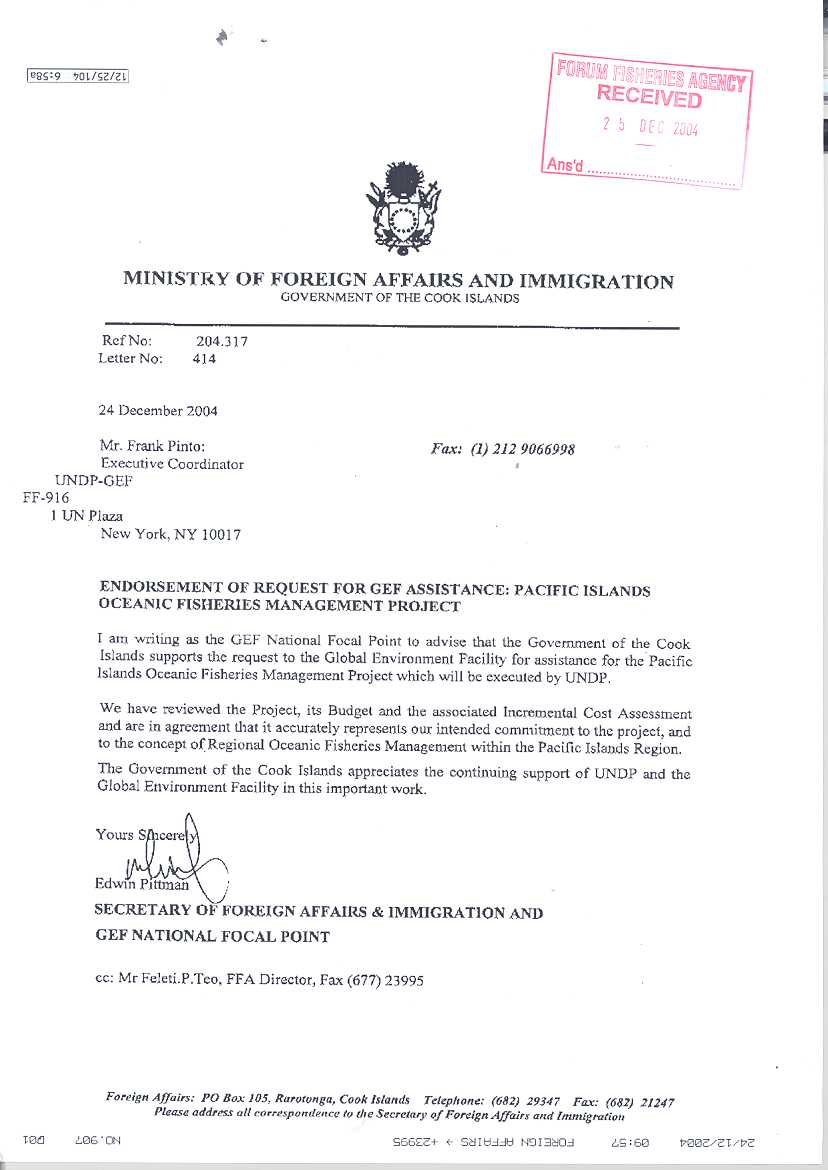
Project Executive Summary Template: Version 2
53
December 2003
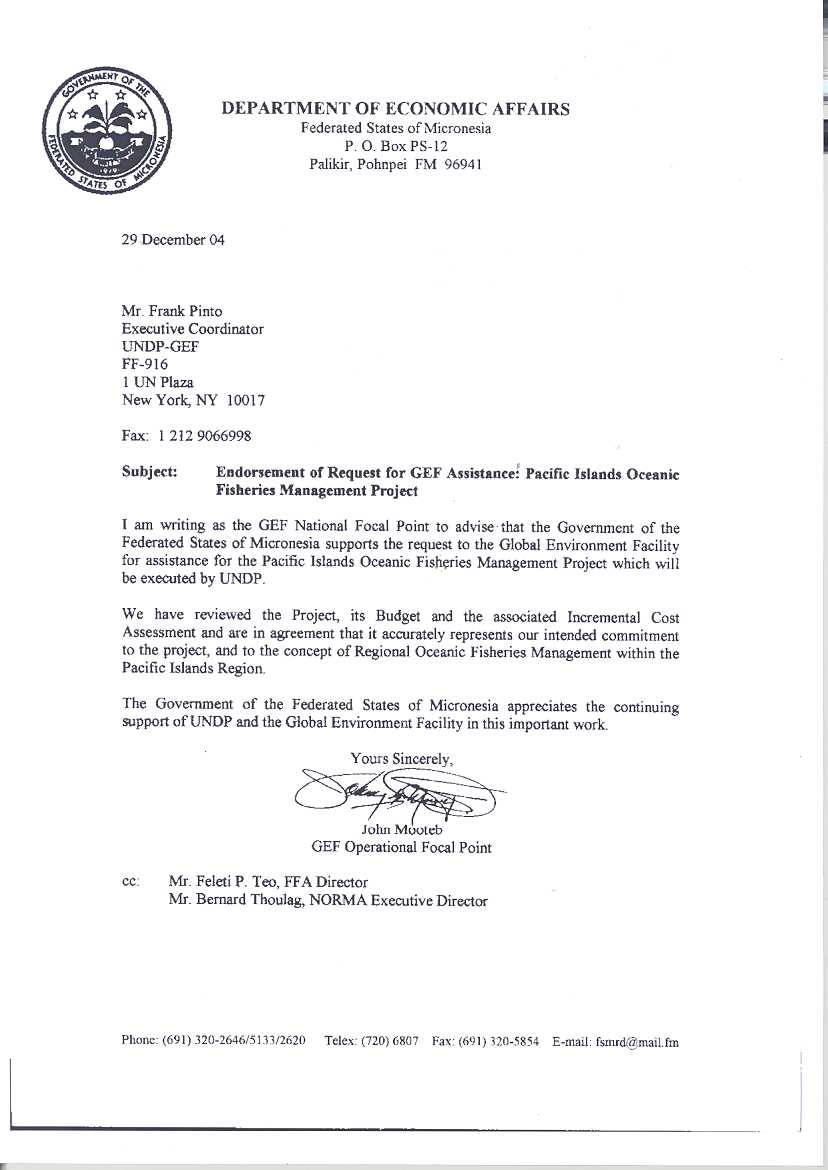
Project Executive Summary Template: Version 2
54
December 2003
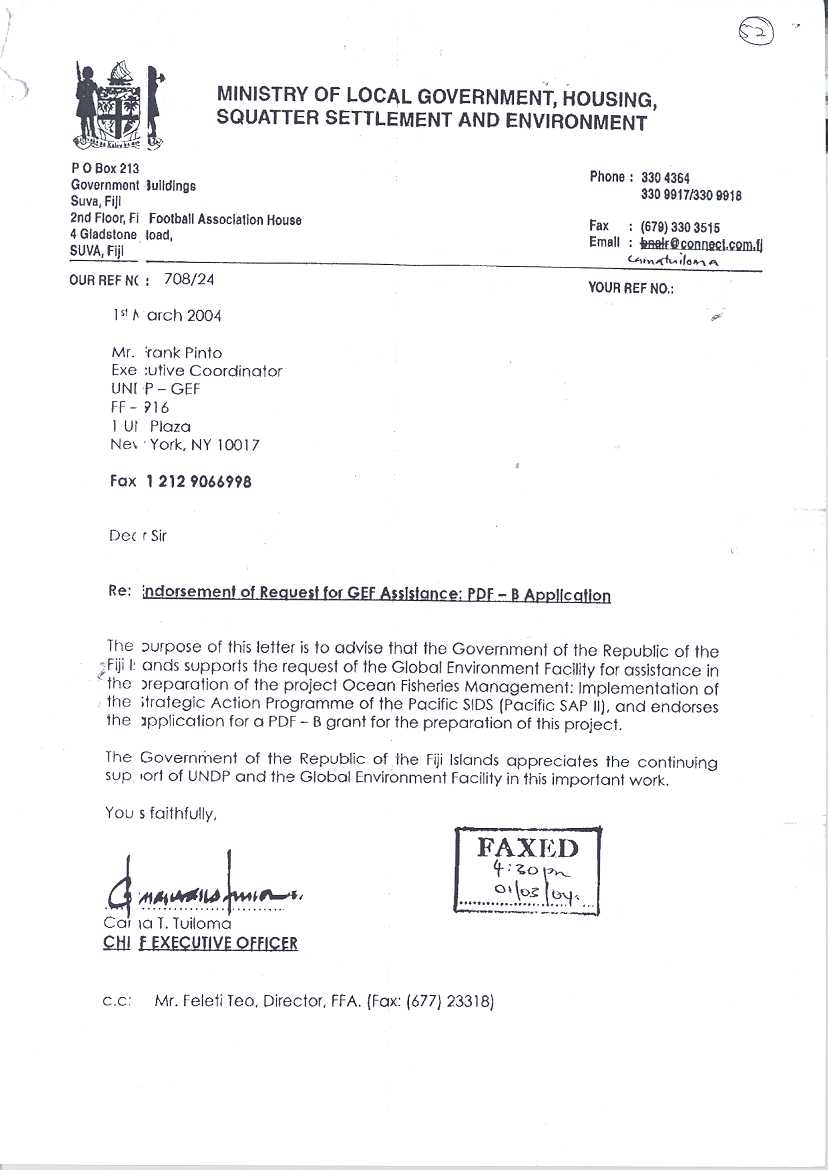
Project Executive Summary Template: Version 2
55
December 2003
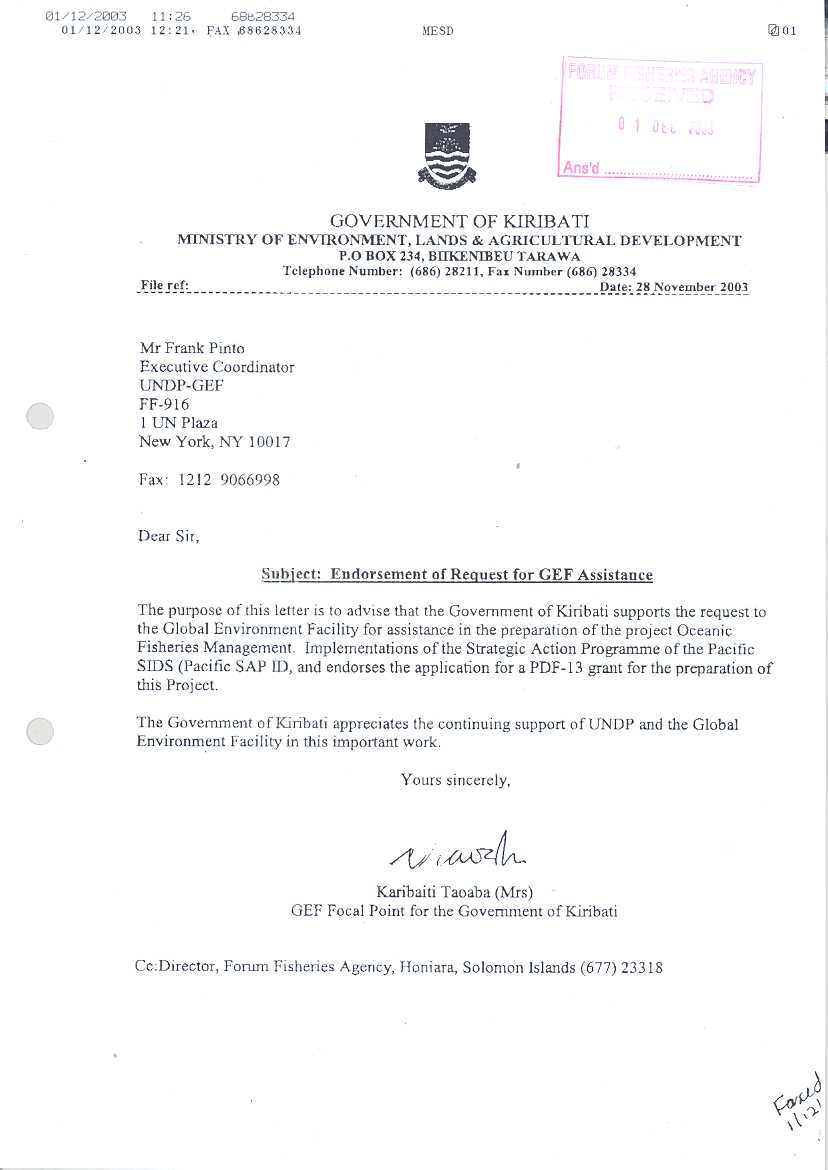
Project Executive Summary Template: Version 2
56
December 2003
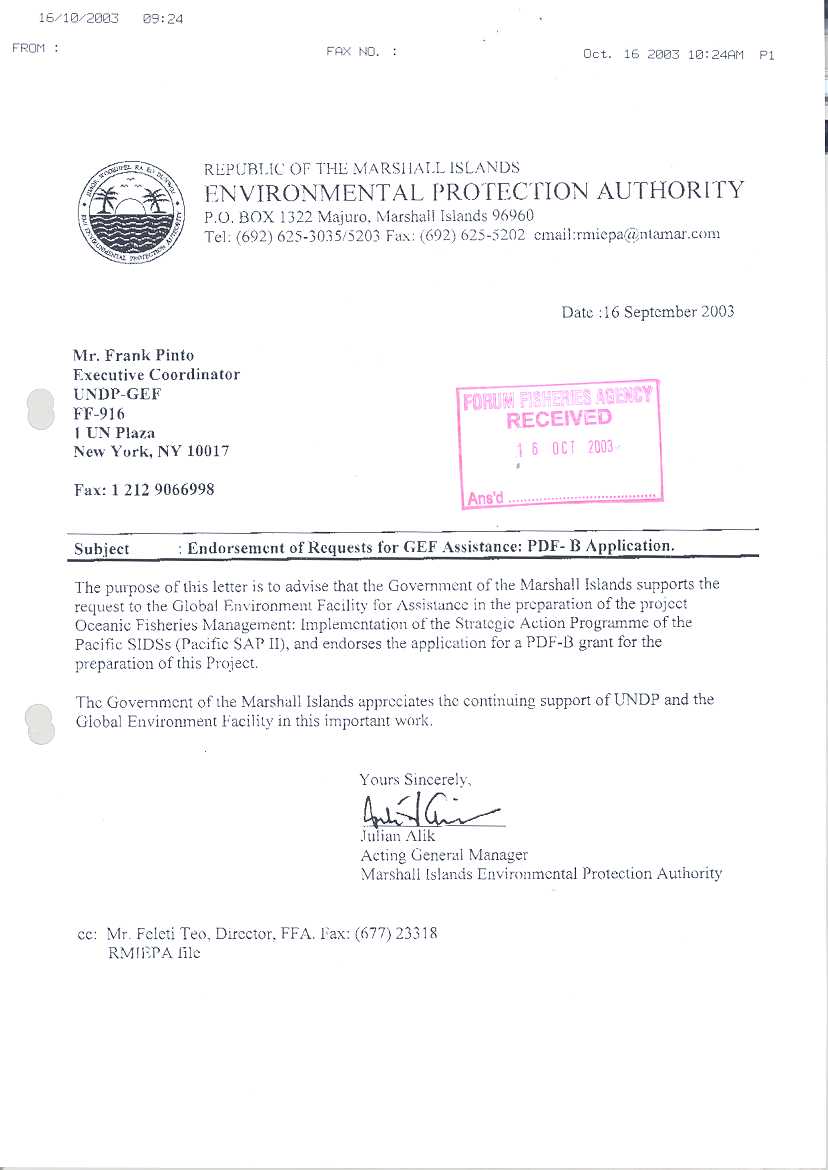
Project Executive Summary Template: Version 2
57
December 2003
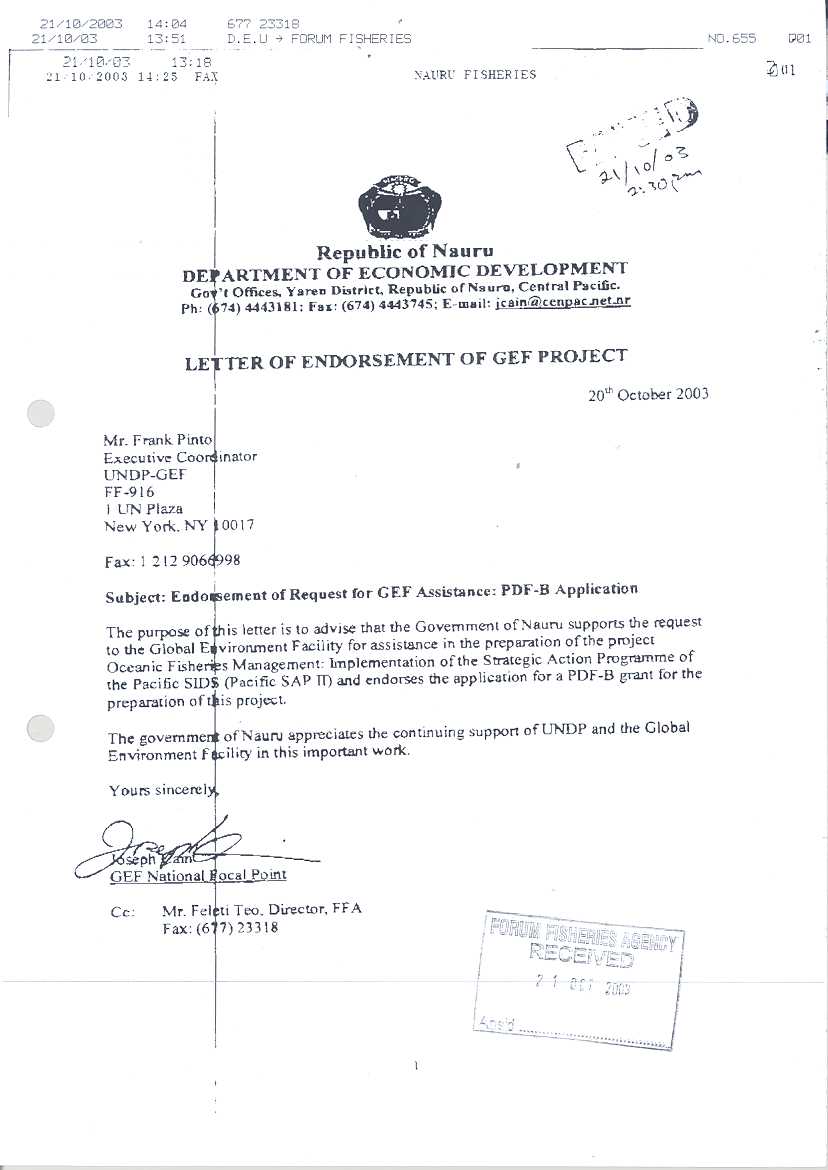
Project Executive Summary Template: Version 2
58
December 2003
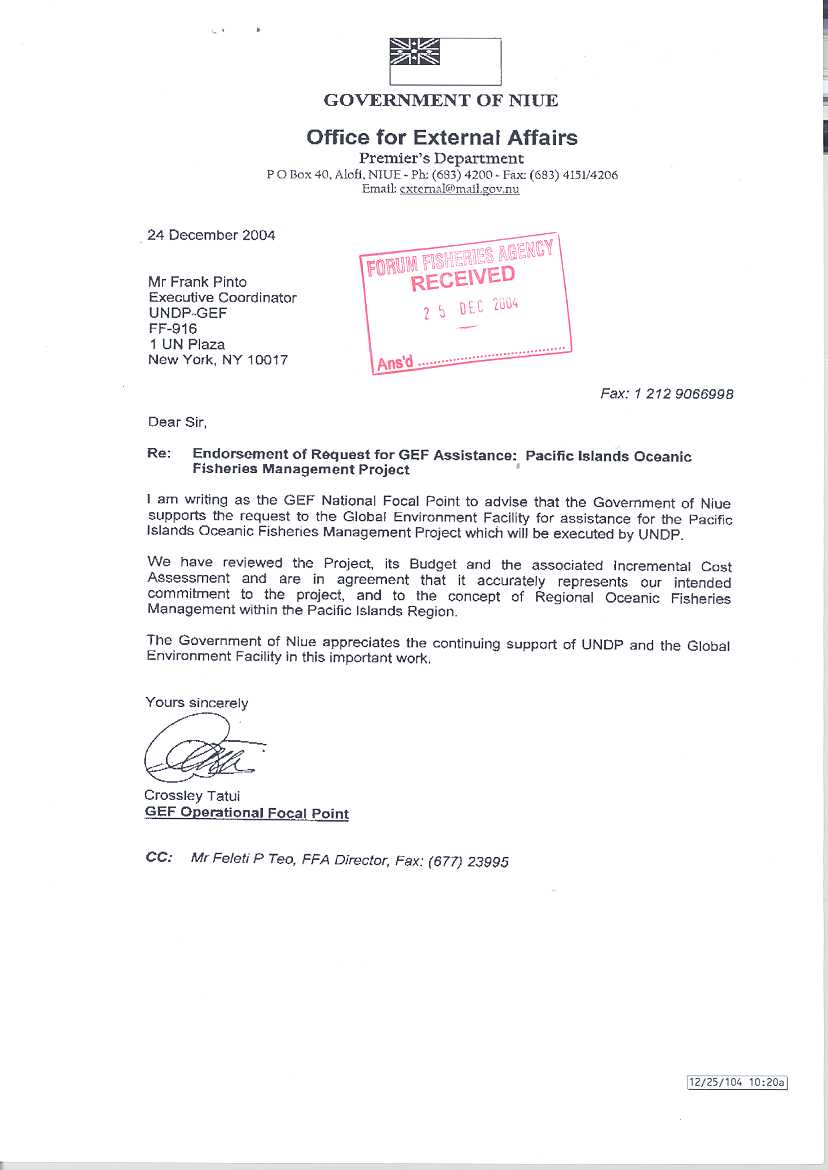
Project Executive Summary Template: Version 2
59
December 2003
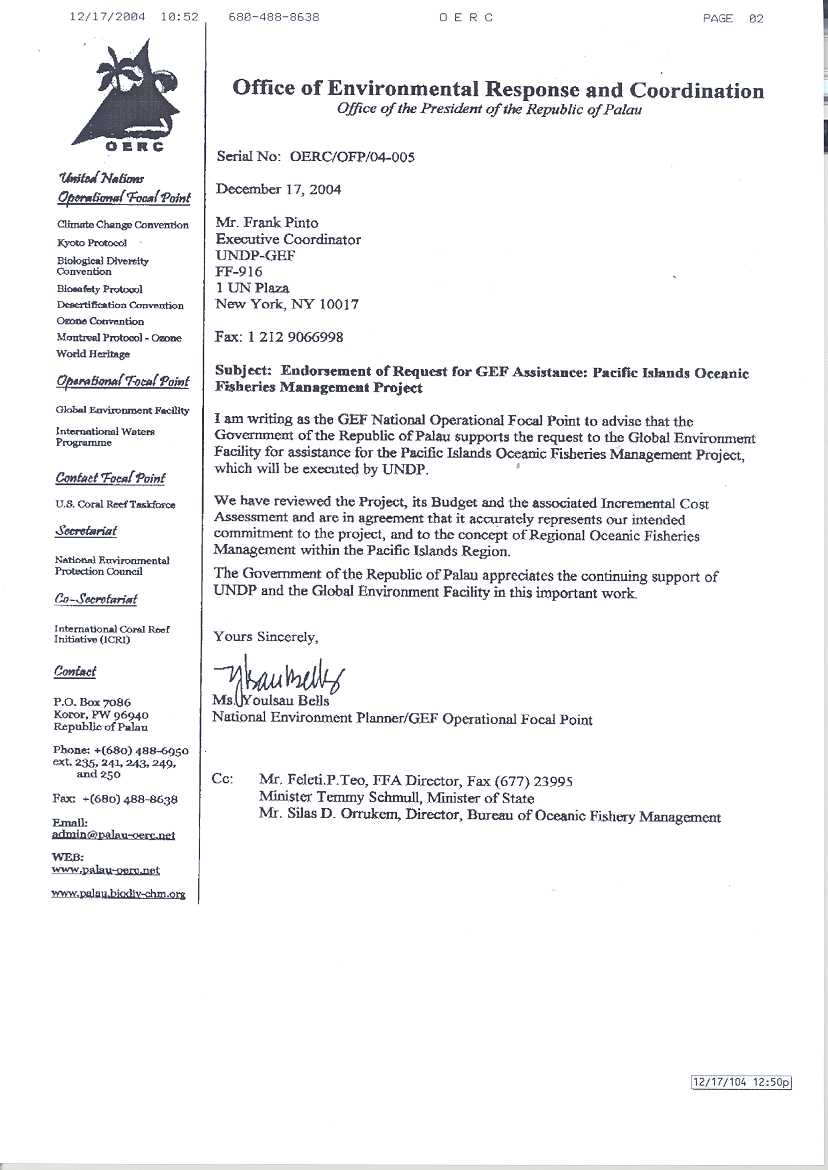
Project Executive Summary Template: Version 2
60
December 2003
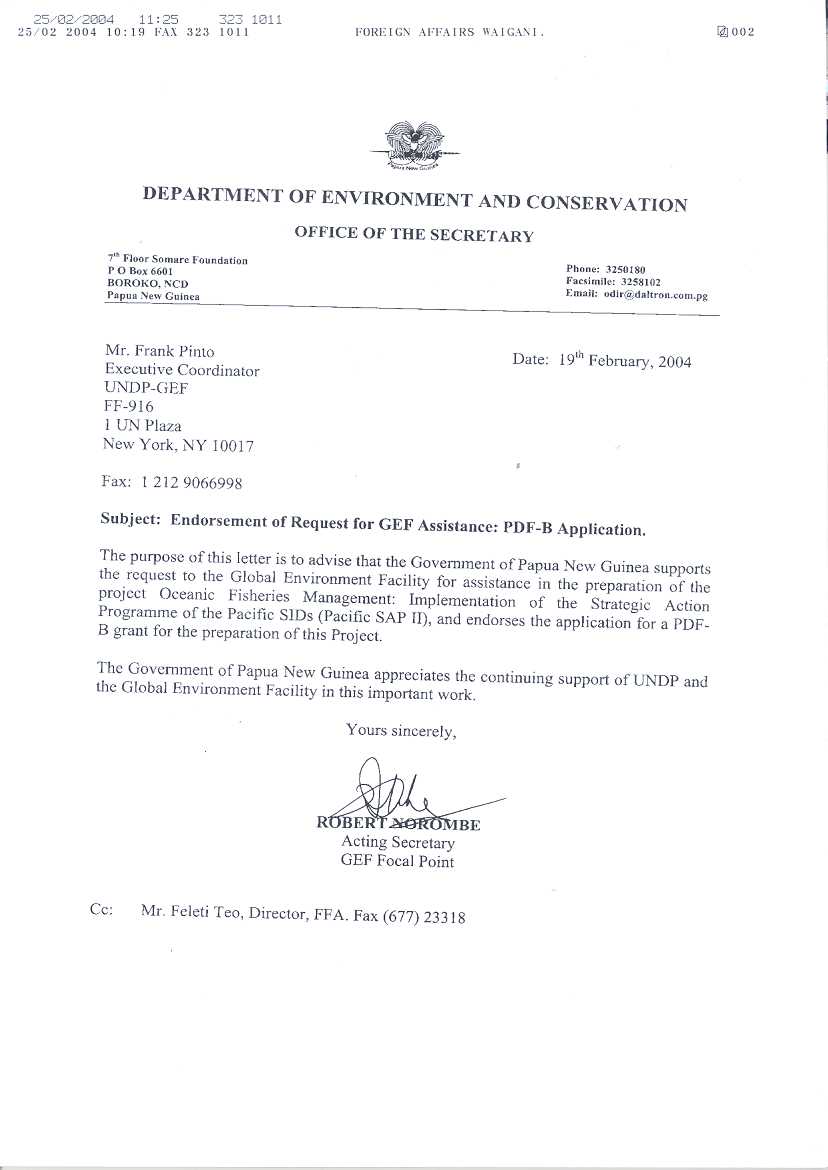
Project Executive Summary Template: Version 2
61
December 2003
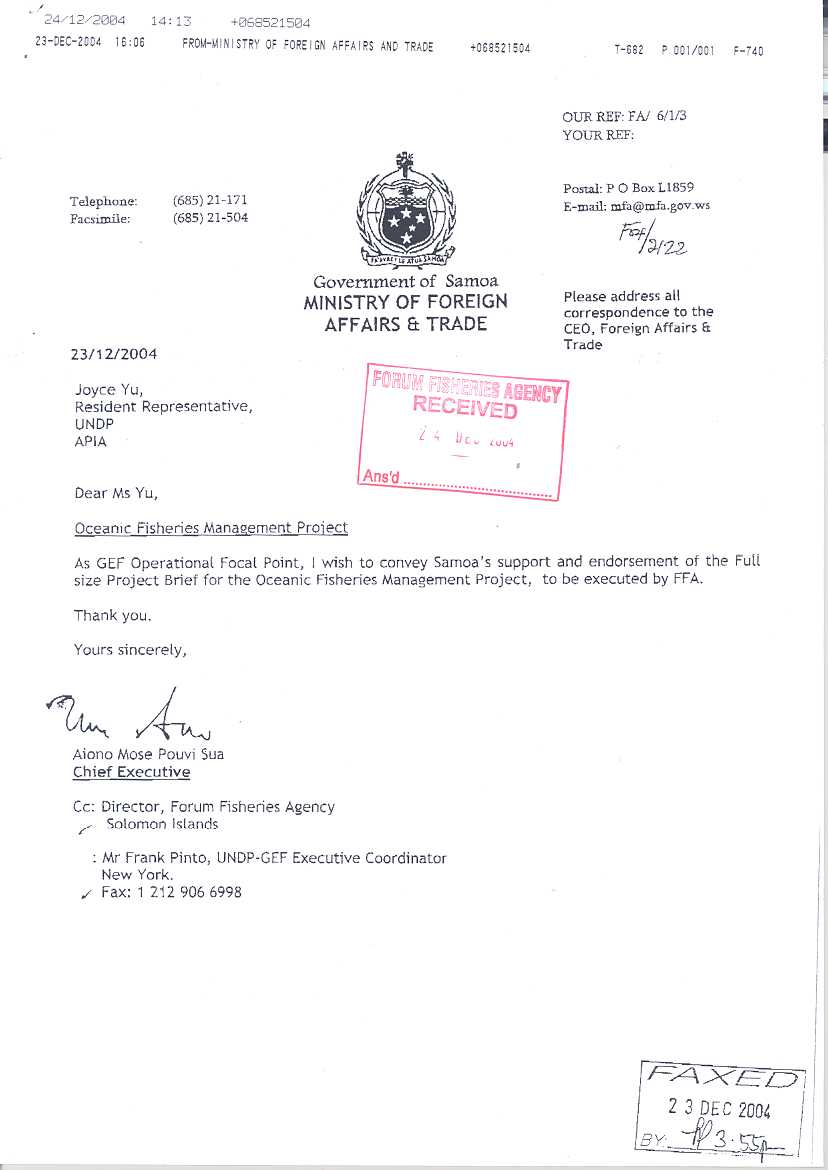
Project Executive Summary Template: Version 2
62
December 2003
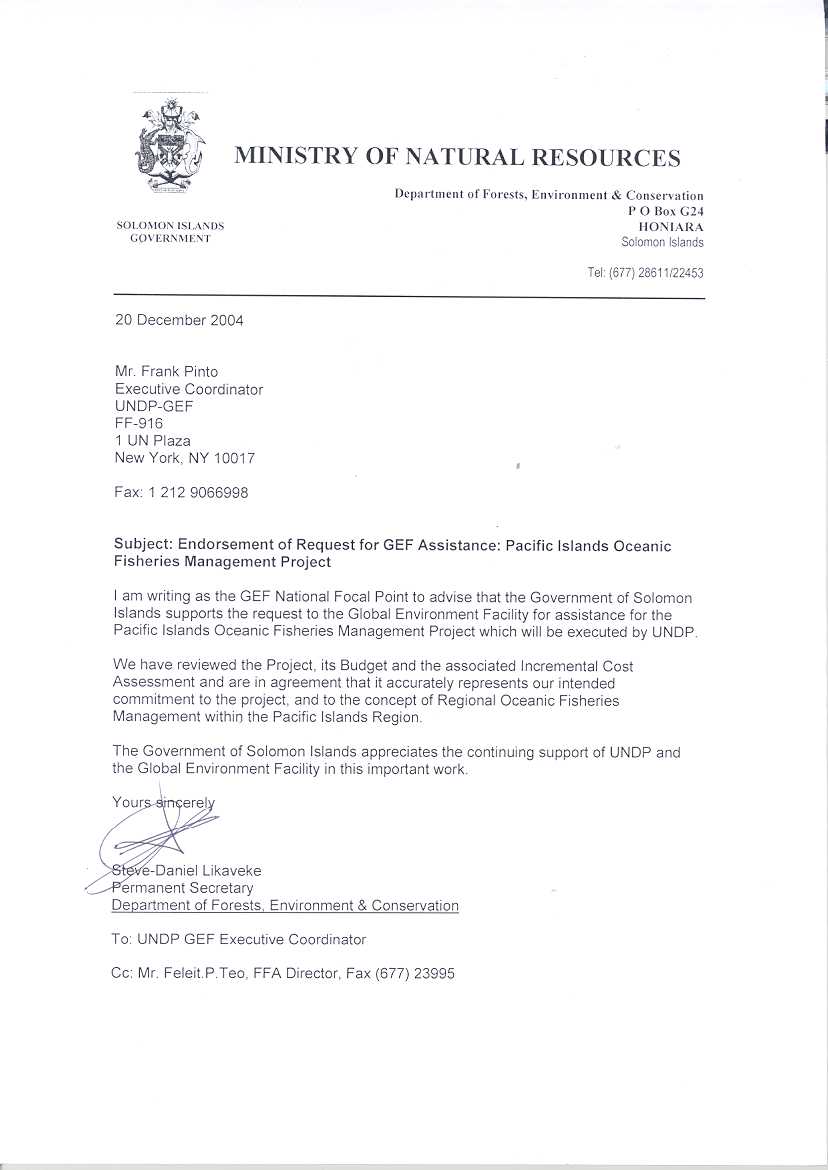
Project Executive Summary Template: Version 2
63
December 2003
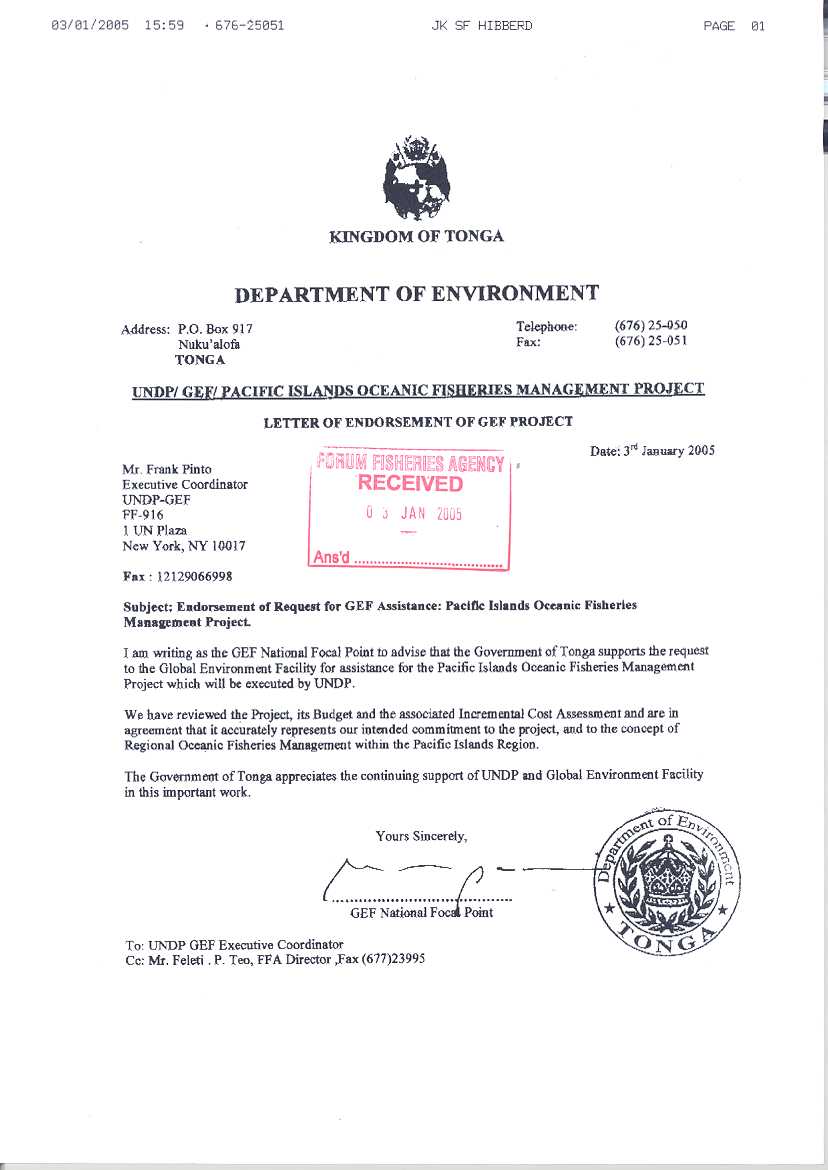
Project Executive Summary Template: Version 2
64
December 2003
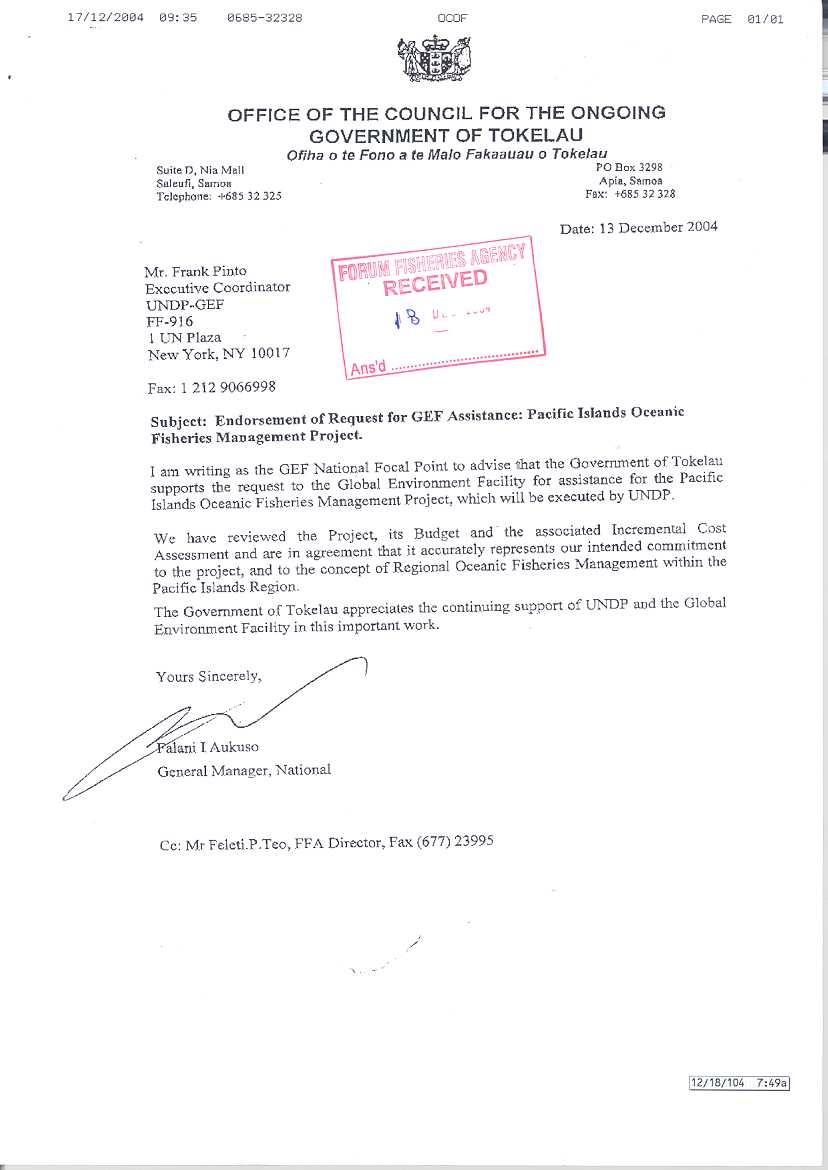
Project Executive Summary Template: Version 2
65
December 2003
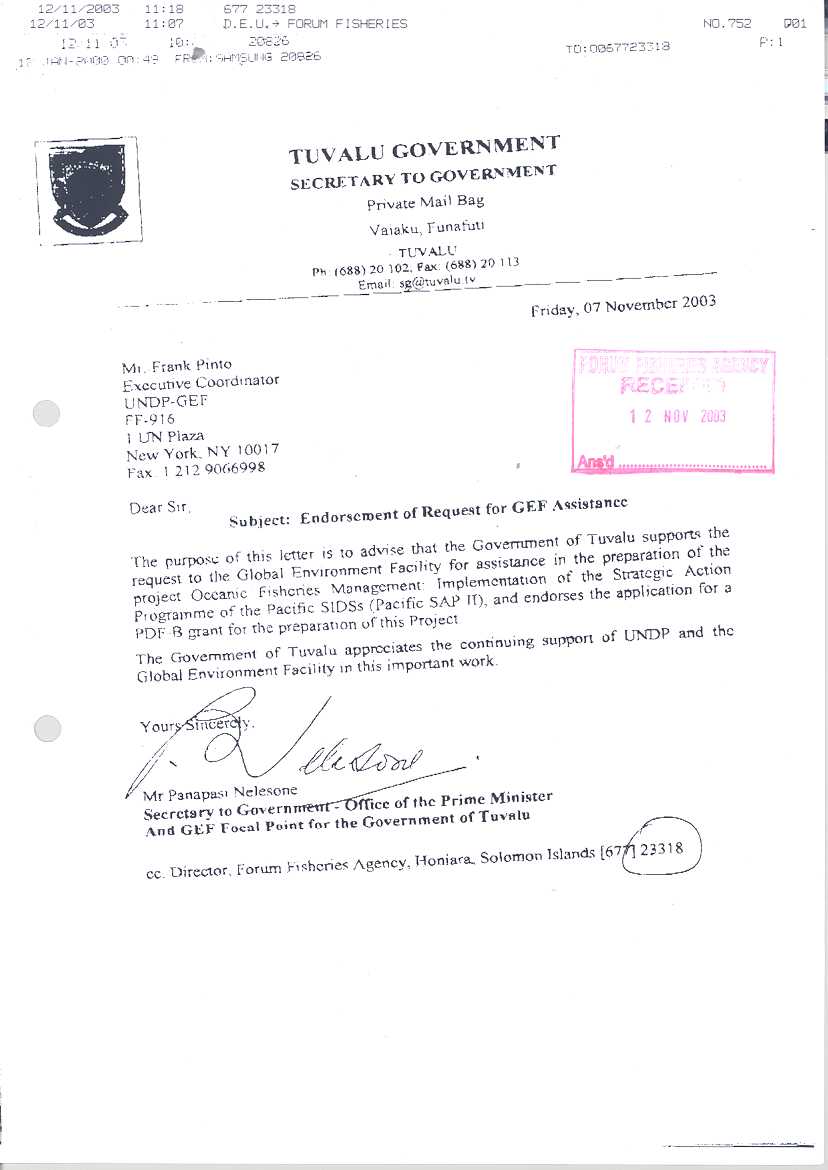
Project Executive Summary Template: Version 2
66
December 2003
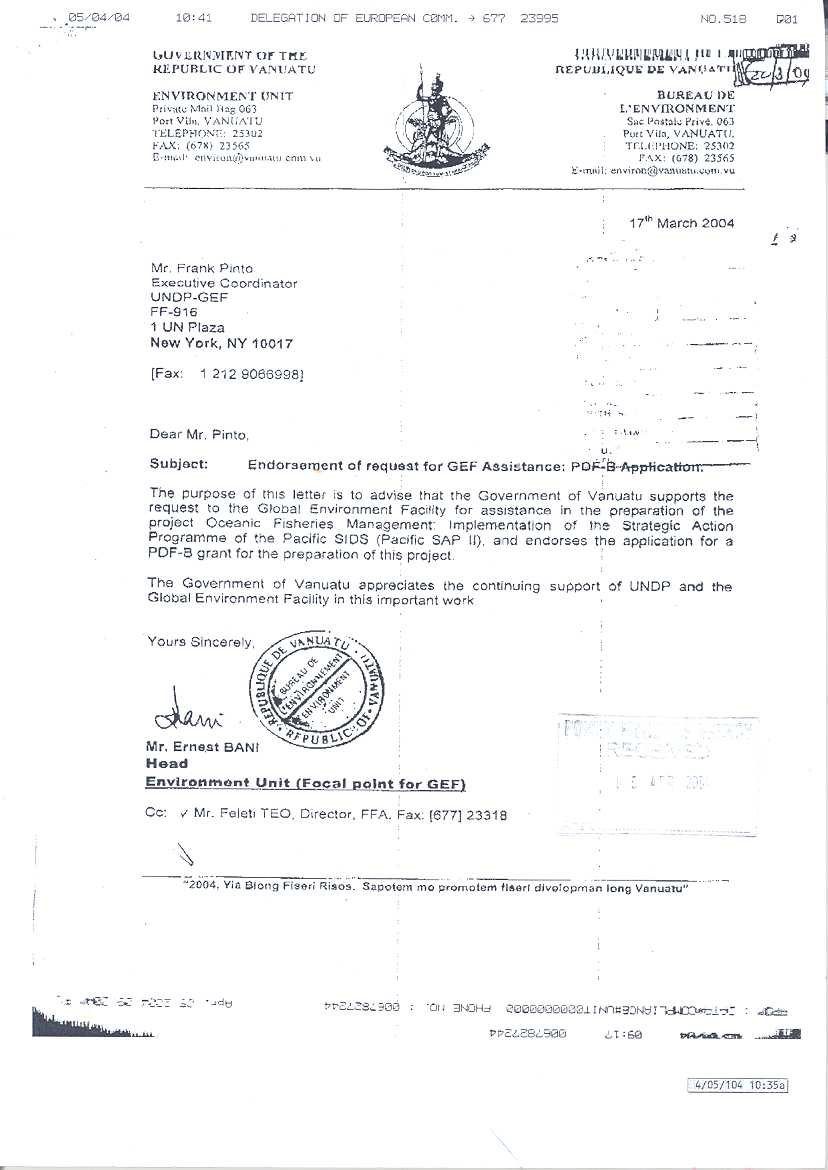
Project Executive Summary Template: Version 2
67
December 2003
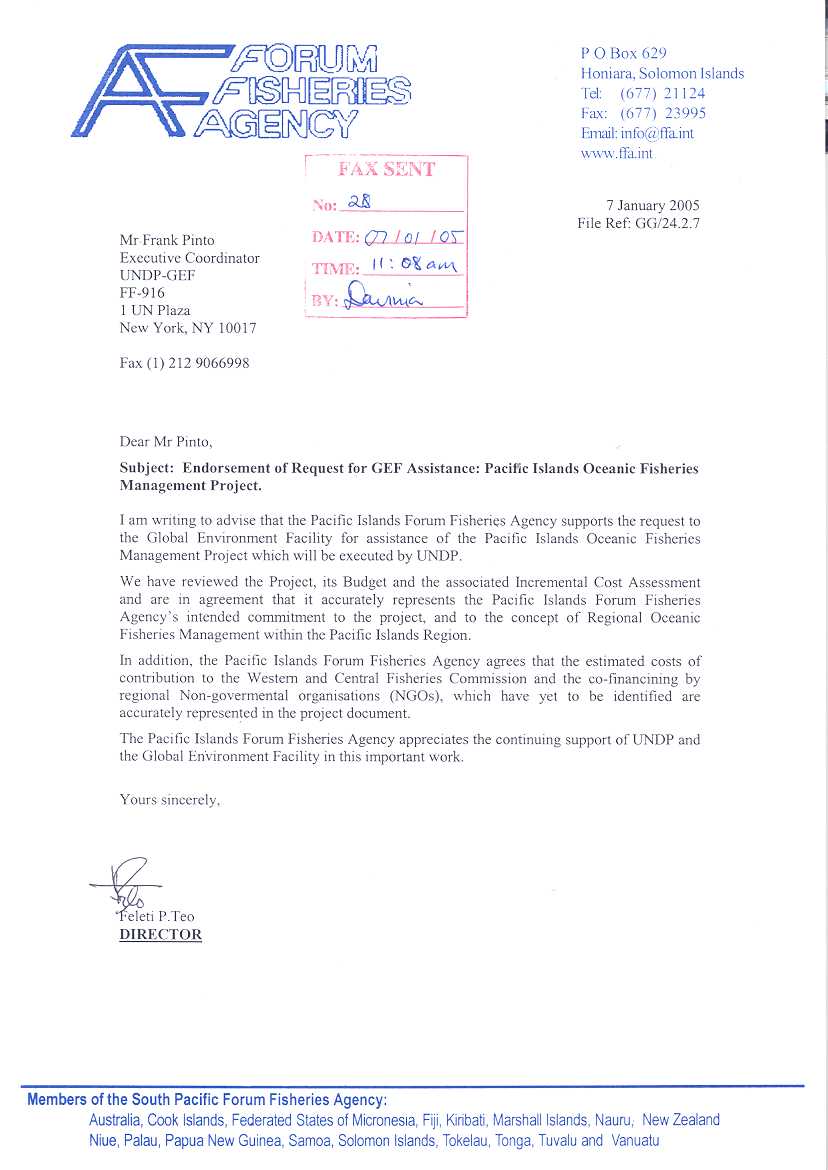
Project Executive Summary Template: Version 2
68
December 2003
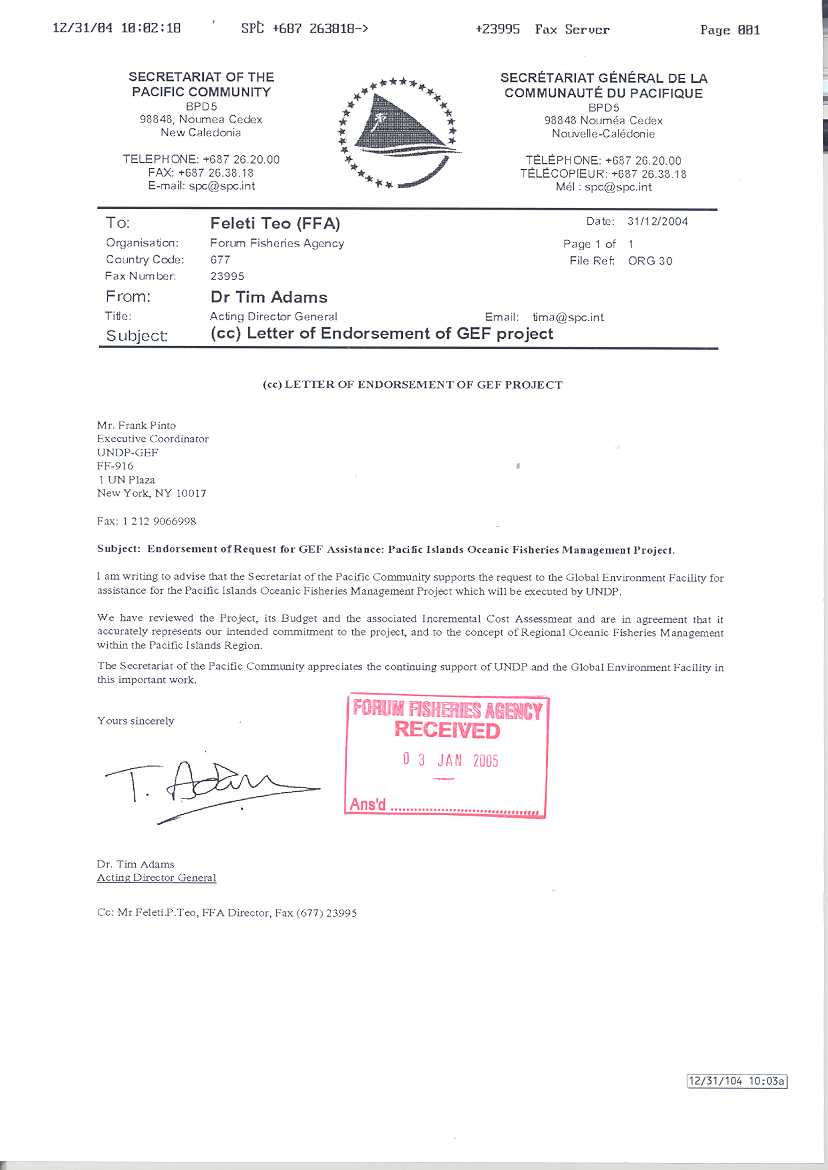
Project Executive Summary Template: Version 2
69
December 2003
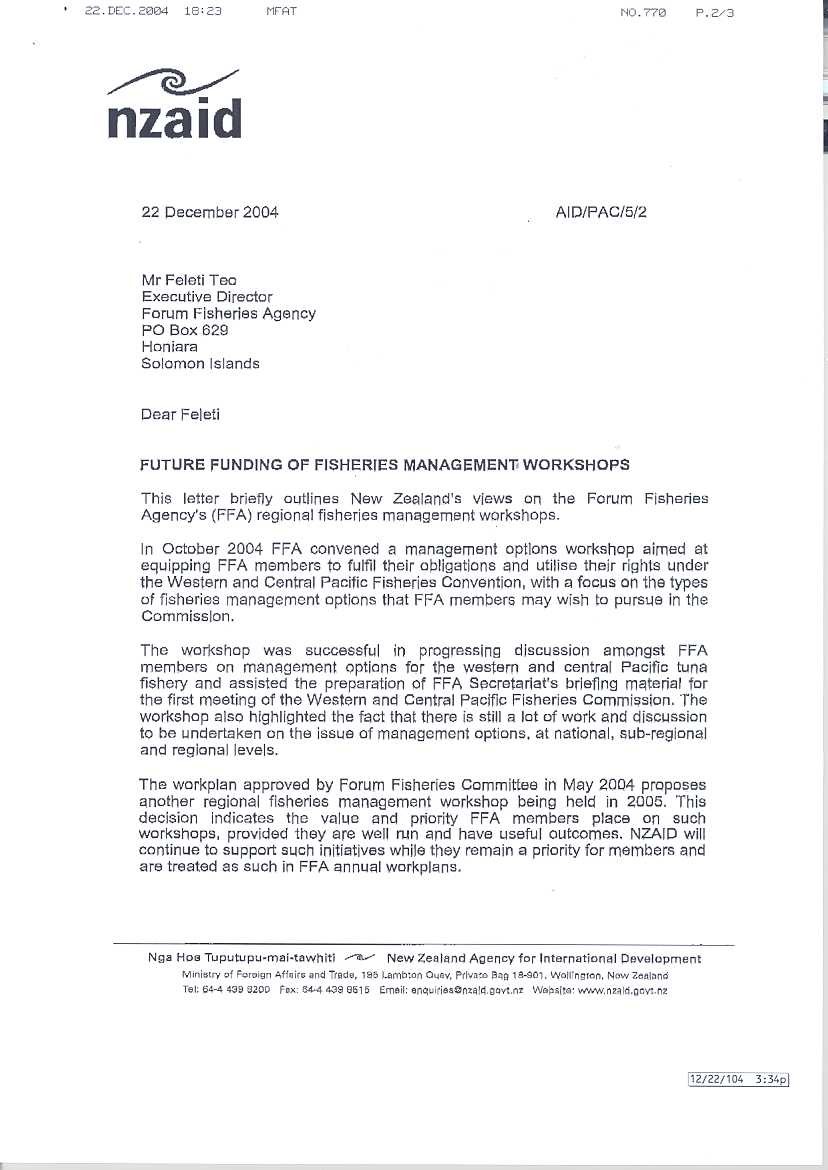
Project Executive Summary Template: Version 2
70
December 2003
Project Executive Summary Template: Version 2
71
December 2003
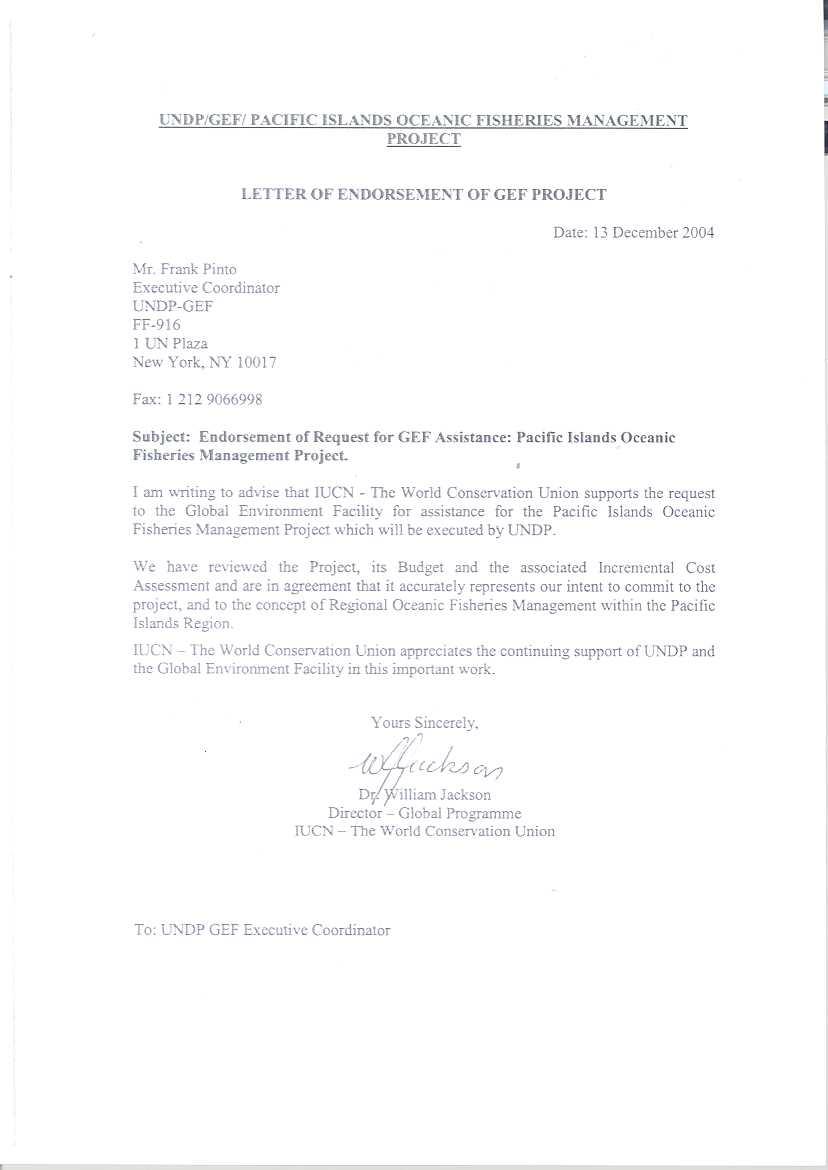
Project Executive Summary Template: Version 2
72
December 2003
Document Outline