
Consolidated Agricultural Projects
Management Unit, financed by the World
Report on the
Bank
CAPMU
implementation progress of
projects managed by
CAPMU as of December 31,
2007
Developed by CAPMU management
Chisinau, January 2008
ACRONYMS AND ABBREVIATIONS
ACSA
National Agency for Rural Development
ALRC
Agency for Land Relations and Cadastre
BCO
Branch Cadastral Office
CAPMU
Consolidated Agricultural Projects management Unit
CIS
Commonwealth of Independent States
DA
Development Agency
EIA
Environmental Impact Assessment
FAO
Food and Agriculture Organization of the United
Nations
FS
Frankfurt School of Finance & Management
GIS
Geographical Information System
GOM
Government of Moldova
LFA
Logical Framework Approach
LPSP
Land Privatization Support Project (funded by
USAID)
MAFI
Ministry of Agriculture and Food Industry
NGO
Non Governmental Organization
NGO
Non Government Organisation
PFI
Participating Financial Institution
PM
Project Manager
RDC
Rural Development Centre
RFC
Rural Finance Corporation
RISPII
Rural Investment and Services Project II
SCA
Savings and credit association of citizens
SDC
Swiss Agency for Development and Cooperation
SIDA
Swedish Development Agency
TCO
Territorial Cadastral Office
TL
Team Leader
USAID
US Agency for International Development
WB
World Bank
- 2 -
TABLE OF CONTENTS
RURAL INVESTMENT AND SERVICES PROJECT ............................................................. 5
PROJECT IMPLEMENTATIONPROGRESS AS OF DECEMBER 31, 2007 ...................... 6
RURAL EXTENSION COMPONENT ................................................................................ 6
ACSA NETWORK OF SERVICE PROVIDERS ...................................................................... 6
TARINING PROGRAM........................................................................................................... 6
SERVICES PROVIDED AND BENEFICIARIES .................................................................. 16
SPECIAL CONTRACTS ........................................................................................................ 18
ELABORATING AND PUBLISHING INFORMATION MATERIALS ................................. 20
PROMOTION ACTIVITIES .................................................................................................. 23
AGRICULTURAL MARKETING ......................................................................................... 25
IMPACT AND PERFORMANCE OF THE SERVICES PROVIDED ..................................... 29
MONITORING AND EVALUATION ................................................................................... 45
RURAL BUISNESS DEVELOPMENT COMPONENT ..................................................... 49
PROMOTION CAPMAIGN ................................................................................................... 50
BUSIENSS CREATION......................................................................................................... 51
FINANCING OF RURAL BUSINESSES ............................................................................... 54
MANAGEMENT INFORMATION SYSTEM AND M&E ..................................................... 56
POST-CRATION SUPPORT TO RBS.................................................................................... 57
ENVIRONMETAL TRAINING ............................................................................................. 58
RURAL FINANCE COMPONENT ................................................................................... 59
CREDIT LINE IMPLEMENTATION PROGRESS ................................................................ 59
STRENGTHNING THE SAVINGS AND CREDIT ASSOCIATIONS INDUSTRY ............... 68
SAVINGS AND CREDIT ASSOCIATIONS' INVOLVEMENT IN MEDIUM AND LONG-
TERM INVESTMENT LENDING ......................................................................................... 71
PILOT LAND RE-PARCELING COMPONENT ............................................................... 81
GENERAL DATA ................................................................................................................. 81
PROJECT ACTIVITIES IMPLEMENTED DURING THE INCEPTION PERIOD ................. 82
PROJECT ACTIVITIES ......................................................................................................... 83
AVIAN INFLUENZA CONTROL AND HUMAN PANDEMIC PREPAREDNESS AND
RESPONSE (AIHP) .......................................................................................................... 104
ANIMAL HEALTH COMPONENT ................................................................................. 104
GENERAL DESCRPTION.................................................................................................... 104
ANIMAL DISEASE SURVEILLANCE & DIAGNOSIS ....................................................... 105
ANIMAL HPAI CONTROL AND OUTBREAK CONTAINMENT ...................................... 110
COMPENSATION FUND ..................................................................................................... 114
OTHER ACTIVITIES ........................................................................................................... 115
HUMAN HEALTH COMPONENT ................................................................................. 117
GENERAL CONTEXT ......................................................................................................... 117
HUMAN HEALTH CAPACITY BUILDING SUB-COMPONENT ....................................... 118
HUMAN HPAI TESTING SUB-COMPONENT.................................................................... 124
HUMAN HEALTH SYSTEM RESPONSE SUB-COMPONENT .......................................... 127
PUBLIC INFORMATION AND AWARNESS ................................................................. 130
RENEWABLE ENERGY FROM AGRICULTURAL WASTES ........................................... 140
INTRODUCTION .......................................................................................................... 140
PROGRESS BY PROJECT COMPONENTS ................................................................ 144
ACTIVITIES UNDER COMPONENT A......................................................................... 144
ACTIVITIES UNDER COMPONENT B......................................................................... 149
ACTIVITIES UNDER COMPONENT C ......................................................................... 155
AGRICULTURAL POLLUTION CONTROL PROJECT ..................................................... 161
SUMMARY OF PROJECT DEVELOPMENT OBJECTIVES ......................................... 161
OVERAL PROJECT DESCRIPTION ............................................................................ 163
PROJECT COMPONENTS ........................................................................................... 164
PROGRESS BY COMPONENTS.................................................................................. 165
SOCIO-ECONOMIC EMPOWERMENT PROJECT ........................................................... 178
ANNEXES ........................................................................................................................ 191
- 4 -
RURAL INVESTMENT AND SERVICES PROJECT
PROJECT OBJECTIVES
The Program objective, which remains unchanged, is to provide long-term support to
accelerate agricultural recovery and growth so that Moldova's agricultural and rural
sectors can play their full role in providing the underpinnings for future income growth
and poverty reduction.
Within this program objective, the project's second phase objective is to continue to
foster post-privatization growth in the agricultural sector by improving access of new
private farmers and rural businesses to what they need to succeed legal ownership
status, knowledge, know-how and finance, while building capacity of public and
private institutions to ensure sustainability of activities. The Phase II will build on
success achieved under the Phase I, by: (i) strengthening and expanding the rural
advisory services; (ii) improving business skills of the to-be entrepreneurs and
assisting with the legal registration of the new businesses; (iii) upgrading the financial
sector environment through a range of risk management measures, such as
supervision capacity building, and introduction of new lending instruments such as
leasing; (iv) increase the commercial banking sector outreach into rural areas; and
(v) developing a practical approach to reducing transaction costs in land markets.
PROJECT COMPONENTS
The project consists of four components and the necessary financing for project
management:
(a) Rural Consulting Services;
(b)
Rural Business Development Services;
(c) Rural
Finance
Credit Line
Strengthening the SCA industry
(d)
Agricultural Land Re-parceling Pilot Projects;
(e) Project
Management.
The first two components provide predominantly technical assistance, while the third
component provides investment support along with the necessary technical
assistance to participating financial institutions, and technical assistance for
strengthening SCAs system and their supervision. The first three components are
closely linked, operating basing on synergy principles, with each dependent on the
others for successful outcomes.
PROJECT IMPLEMENTATIONPROGRESS AS OF DECEMBER 31, 2007
RURAL EXTENSION COMPONENT
ACSA NETWORK OF SERVICE PROVIDERS
The nominal composition of the ACSA rural extension Network has been constituted
based on the public contest for selecting consultancy Service Providers organized
and held by a Selection Committee in the period of 07 27 of November 2006. The
minutes of the Selection Committee final session (nr. 21 from 18th of January 2007)
has been approved at the Observatory Council meeting from 26th of January 2007.
ACSA is the executive unit for implementing the "Rural Extension Service"
component of the Rural Investment and Services Project (RISP II). In order to
implement this component for year 2007, ACSA has signed a Rural Consultancy
Services Contract with the Ministry of Agriculture and Food Industry on 19 th of
February 2007. Eventually, on 2nd of March, ACSA signed consultancy service
providing contracts for 2007 with 12 Service Providers and has extended the existent
contracts with 23 Service Providers.
In 2007, the ACSA Network was of 35 Service Providers, with nominal composition of
423 consultants, out of which: 348 local consultants and 70 regional consultants. In
addition, 5 regional consultants on agricultural marketing activate within the ACSA
network (SP Soldanesti, SP Edinet, SP Causeni, SP Hincesti si SP Calarasi).
During the report period, about 60 ACSA consultants, out of which 46 local
consultants and 14 regional consultants have cancelled their consultancy service
providing contracts because of different motives, as: uncompetitive salaries, leaving
for another job, leaving abroad, leaving from personal motives. The big majority of
Service Providers, when the public contest of filling in the vacant places was
announced, have selected and employed people, thus filling in the nominal
composition of the SP.
TARINING PROGRAM
The professional preparing of the local and regional consultants is a primordial
importance activity in the process of confirmation, extension and insurance of
agricultural consultancy informational services' quality. The training, advanced
training and development of consultant abilities within the Service Providers team is a
continuous activity and represents the basic priority of the ACSA executive direction.
The professional training process includes trainings organized by ACSA at national
level with the participation of instructors from scientific research institutes, superior
education and specialized consultants within the consultancy network, as well as at
- 6 -

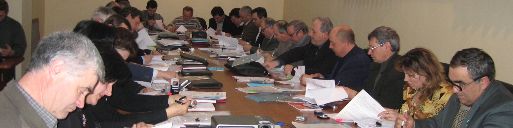
regional and rural community level with the participation of ACSA consultants and
specialists from departments subordinated to the local public administration.
The trainings organized and implemented by ACSA are established in significant
correlation the requirements of the Manual for implementation of the "Rural Extension
Service" Component of the RISP II Project and in concordance with the requirements
started form the field. Through the trainings organized, ACSA insures the technologic
and informational transfer of the local and foreign scientific agricultural
accomplishments
According to the training plan and schedule at national level for 2007, approved at
the Observatory Committee meeting from 26th of January 2007, during the report
period the following training programs have been organized and carried on:
The Module ,,ACSA Concept and the Contractual arrangements or 2007"
There has been organized a
one day seminar for all ACSA
project coordinators (35
coordinators). Within this
seminar, the project
coordinators have been
explained the ACSA concept,
the consultancy network
structure, the objectives to be
accomplished in the reference
year, activities to be
implemented, the modality of reporting and planning activities, monitoring local
consultants and other details necessary according to the contract for an adequate
activity of a SP for 2007. Service providing contracts for 2007 have been signed at
this seminar between 35 Service Providers and the Executive Direction of ACSA in
both Rumanian and English. Representatives of UCIMPA and the Ministry of
Agriculture and Food Industry have been present at the seminar.
The Viticulture Module
The training program in viticulture had a 3 days duration period anda volume of 24
hours. It was composed of 3 sections and the totalizing conference. 19 regional and
local consultants specialized in vineyards have participated at the training.
Planning an agricultural business. The duration of this section was of 8 hours and it
included the following subsections:
- 7 -
The structure and containing of a course thesis which included detailed discussions
about the mentioned work, its sections and their size, etc.;
The business plan and project implementation. This subsection included the following
type of questions:: ,,The necessity of planning an agricultural business. The planning
stages. The business project structure.", ,,The type of business project, scope and
objectives. The description of the agricultural operation involved in the business
project. Management and personnel.", ,,Production. The market and marketing
strategy.", ,,Financial resources necessary an those available. Risks and
opportunities.". The training had a practical-applicative nature. The audients have
convoked into 3-4 person groups. All teams had elaborated a business plan each
and then presented and discussed it. All training participants had received a set of
course materials in "Planning an agricultural business", elaborated with this aim.
Presenting a business plan. A local consultant has elaborated a course thesis
according to the previously specified requirements. The consultant has presented his
thesis in written and printed form. The theses presentation had been effectuated in
PowerPoint. After the presentation, the author has answered to his colleagues'
questions. The first part of the presentation has ended with the presentation and in
the same time the participants had the chance to get acquainted with the course
thesis identical in structure and volume with the one that they were to present in
future.
2.
The harmlessness of food products and EUREPGAP certification. This
section included the following question: "Introduction in the EurepGAP System", "The
EurepGAP System 14 sections", "Sections: Using fertilizers, Crop protection,
Harvesting, Product manipulation, Environmental problems, Course evaluation". The
section had a 8 hour duration. The participants received a set of informational and
training materials to be used during the daily work.
The peculiarities of grape productions in the conditions of 2007. This section has
been focused on the following subjects: starting new vineyard plantations, the crop
assortment, supplying different zones with good quality planting material, producing
planting material and requirements towards agricultural operations practicing this.
There have been discussed technological issues which have to be applied in the
existing plantations, operating yield giving plantations, systems of support for these
plantations. At the end of the course a totalizing conference was organized, where
participants at the meeting were invited, Valeriu Cebotari Chief of Department,
State Agency ,,Moldova Vin", Tudor Cazac Vice Director of the Institute of
Vineyards and Wine. There were discussed issues related to the development of the
branch and the role of specialized consultants in this direction. Special interest was
- 8 -

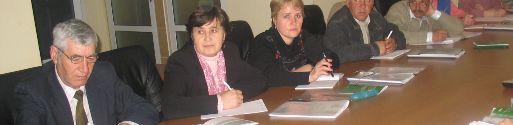
expressed at discussing the subsidizing of this branch, persons eligible for
subsidizing, minimal and maximal surfaces to be subsidized, subsidizing conditions,
the mechanism of preparing and resenting the documents necessary to benefit of a
state subsidy.
The Module ,,Agricultural Economy"
The training program for the module "Agricultural Economy" had a duration of 2 days
or 16 hours. It had 2 sections and a totalizing conference. 35 regional ACSA
consultants specialized in economy attended the training.
Planning an agricultural
business. Taxes in agriculture.
The duration of it was of 6
hours. This section had 3
subsections:
Direct taxes, presented by
Galina Spac, Chief of Direct
Taxes Department of the State
Principal Fiscal Inspectorate;
Local taxes, presented by Igor
Fondos, Vice Chief of the Local Taxes Department of the State Principal Fiscal
Inspectorate;
Indirect taxes, presented by Igor Lazari, Superior State Fiscal Inspector, Indirect
Taxes Department of the State Principal Fiscal Inspectorate.
2)
The mechanism of financing the agricultural sector. The duration of the
subsection was of 5 hours. It included two subsections.
The mechanism of subsidy distribution in the agricultural sector, presented by Tudor
Popa, Chief of Department, Ministry of Agriculture and Food Industry.
Investment project that activate in the rural area IFAD, RISP II, IREX, FISM, ecologic
Fund, etc., - discussions on opportunities access to financial sources offered by
these funds.
The training participants were prepared and offered an electronic version and on
paper of the regulation, initiation mechanism and model applications for preparing
and forwarding the materials necessary in accessing state granted subsidies.
At the totalizing conference was discussed about the growing importance of
economic issues within the range of services provided by the ACSA network and the
role of the consultant specialized in agricultural economy. It was also discussed
- 9 -
about the necessity of consultants' involvement in holding seminars related to
subsidizing the agricultural sector and offering consultative support to the
beneficiaries when filling in and forwarding the set of documents justifying the access
to a state subsidy.
The Seminar ,,Types of support and facilitations offered to agricultural
producers in 2007"
At the request of the Ministry of Agriculture and Food Industry on 20th of March 2007,
ACSA organized an additional national seminar on the topic of ,,Types of support and
facilitations offered to agricultural producers in 2007". All ACSA project coordinators
and 36 chiefs of regional and municipal agricultural Departments (mun. Chisinau)
have participated at the seminar. It took place and included the following topics:
The Policies of the Ministry of Agriculture and Food Industry in insuring agricultural
land consolidation. Types of support and facilitations offered to agricultural producers
in 2007. This topic was presented by Stefan Calancea, Vice Minister of Agriculture
and Food Industry;
The mechanism of subsidy distribution in the agricultural sector. Insuring risks in
agriculture, presented by Tudor Popa, Chief of Department of the Ministry of
Agriculture and Food Industry and Valeriu Cebotari, Chief of Department of the State
Agency ,,Moldova Vin".
The mentioned seminar has started the Informational Campaign for agricultural
producers with the program and mechanism of accessing subsidy funds for the
agricultural sector in 2007. As a consequence, after the national seminar, there have
been organized 35 regional seminars and 350 local seminars. With this aim,
informational and training materials in electronic version and on paper have been
elaborated and distributed. Within this program there have been distributed about 4
thousands brochures elaborated and published at the request of the Ministry of
Agriculture and Food Industry.
Module of ,,Bases of using a computer"
The training program plan ,, Bases of using a computer" had 40 hours which included
theoretical and practical lessons in a computer room of the Academy of economic
Studies. 24 consultants have attended this course.
Module of ,,Extension methodologies I"
This training module was organized and held for people who have been recently
contracted. The duration of the course was of 3 days, within which 105 ACSA
consultants have been trained using participatory methods.
- 10 -

Module of ,,Extension methodologies II"
The program was organized for ACSA consultants who have attended special
training courses. The duration of the program was of, and 20 ACSA consultants have
been trained using participatory methods.
Module of ,,Labor protection within SP"
The program was designed for ACSA project coordinators and had a duration of 3
days (16 hours) and was finalized by a test of knowledge accumulated in the domain
of labor protection and technical security. The participants have received certificates
of participation at the end of the training.
Module of ,,Basic training"
For local and regional consultants who have been contracted during 2007, in the
period of 22nd of October 3rd of November 2007, there has been organized a basic
training session. 28 consultants
have attended the training. The
training plan included a total of 94
hours, including lectures and
practical lessons 80 hours,
meetings and round tables 8
hours, testing the consultants 4
hours and totalizing conference
2 hours.
As trainers in the process of
training 44 persons have been
trained professors and
specialists in different branches of economy and educational and scientific research
institutes, including 2 academicians of the Science Academy of RM, 4 PhD's, 4
university professors, 15 doctors in science, university lectors, leaders of scientific
research institutes, agricultural operations, representatives of commercial banks and
NGO-s, etc.
Significant id the fact that along with instructors from agricultural institutions, as
trainers there have also been involved consultants from the ACSA network. As
trainers there have been trained the ACSA Coordinator on Research and Information
Anatolie Fala, ACSA project coordinators: Trofim Gavrilov (training in the domain of
vegetable production) SP Anenii Noi, Lilia Banuh (training in business planning) SP
Balti, Nadejda Svet (access to financial sources) SP Causeni, Larisa Vilcu (book
- 11 -



keeping and financial reports) SP Cantemir, Anelia Caraman and Gheorghe Golub
(training in legislation) respectively SP Soroca si SP Causeni.
The involvement of ACSA network consultants in the process of training shws the
level of preparing and professional capacities of ACSA specialists and allows to
answer more efficiently to questions asked by audients. Another positive side is the
increase in theoretical knowledge and practical abilities of trainers and encouraging
them to practice trainer
activities in the ACSA Network
as well.
The theoretical trainings have
been followed by multiple
practical lessons and field
visits at the Institute of
Scientific research for Corn,
Institute of Scientific Research
for Soil Science and
Agricultural Chemistry, the
agricultural enterprise for production, storage and selling apples, table grapes and
tree and vine planting material ,,Codru St" from Straseni region. The involved trainers
have prepared informational materials of practical and applicative type which have
been multiplied and distributed to all participants at the training (juridical issues,
economic issues, accounting, technological issues). The training schedule has been
elaborated according to the training plan modules. At the end of each module, there
were organized round tables with the participation of professors, persons of
responsibility from MAFI and other state institutions, commercial enterprises,
scientific research and educational institutes, NGO's, etc.
Within basic trainings there were organized 5 round tables at the modules of:: (1)
Marketing agri-food production and insuring with circulating means, (2) The
production technology of horticultural and wine products, (3) The technology of
producing animal products, (4) The technology of producing corn, vegetables and
potatoes and (5) The technology of producing field crops and forages. Totally there
were about 52 persons invited at the round tables, who were representatives and
persons with responsibility functions from the departments and subdivisions of the
Ministry of Agriculture and Food Industry, Scientific research Institutes (Pyrotechnic
Institute, the Institute of Research in Field Crops, the Institute of Vineyards and
Wines, Institute of Research in Fruit Production), leaders and representatives of
commercial companies and technical assistance projects from Moldova, etc. The
- 12 -



participatory study methods followed by meetings, discussions and totalizing round
tables of the module work have offered the possibility for exchange of opinions and
experience in the domains and initiate future collaboration relations.
At the end of the basic training, all consultants have taken a written test of assessing
professional preparing. The evaluation test included 139 questions of practical and
applicative type. The questions for the test have been prepared by professors
involved in the didactic process, and the subjects included topics that have been
discussed during these trainings. The test results of the regional and local
consultants have revealed a sufficient level of knowledge of the audients and their
capacity to face the requirements forwarded by potential clients, beneficiaries of the
extension service. The final evaluations are available at the ACSA Executive
Direction and are used in methodic scopes for improving training programs.
In order to evaluate the trainings organized by ACSA, all consultants participating
have filled in questionnaires. In their answers to the questionnaire questions, the
consultants have mentioned the fact that the training had been organized well, the
training topics and professors have been selected successfully and the training took
place in a participative and didactical-informative atmosphere.
Presenting course theses specialized in viticulture
The trainings specialized in viticulture for ACSA consultants have finalized with public
presentation of course theses within a Committee. In the composition of the
Committee there were co-opted representatives of the Institute of Vineyards and
Wine profile institution, MAFI, the Rural Extension Service Unit UCIMPA-MAFI,
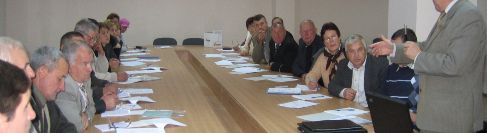
Executive Direction of ACSA and ACSA Network (Annex 4).During 2 days of activity,
there have been presented 18 specialized theses (Annex 5).
The results accomplished by
consultants have been presented in
electronic version and printed on
paper, as well as PowerPoint
presentations with materials based on
facts, calculus of economic efficiency
and gross margin efficiency of the
business, figures with technological
elements and other auxiliary materials.
Specialized consultants, via
businesses and activities implemented, have familiarized the beneficiary consultants
and communitarian members with the possibility of obtaining quality production and
respectively improving incomes in the viticulture sector by: introducing new and
- 13 -

improved varieties of technical and table grapes; new types of managing a vineyard;
applying macro and micro fertilizers in basic and phased fertilizations, applying
integrated pest management; the possibility of starting new plantations by grafting
and re-grafting on place; reestablishing the plantations' production capacity via
diverse cutting systems; efficient modalities to value and sell the obtained product.
Presenting course theses specialized in fruit production
At the end of specialized trainings, consultants specialized in fruit production have
publicly presented their theses in front of a Committee in which there were co-opted
representatives of the Institute of Researches in Fruit Production profile institute,
MAFI, Rural Extension Service Unit UCIMPA-MAFI, ACSA and ACSA Network
Executive Directorate (Annex RAS 4). During 4 days of activity 34 specialized theses
have been presented (Annex RAS 6).
When presenting, there were
shown PowerPoint presentations
of the results registered by
consultants, as well as electronic
and printed versions of the course
theses, which include materials
based on facts, arguments and
economic calculus, figures
describing technological elements.
All technological elements
proposed to the beneficiaries by
the specialized consultants have been exposed through the prism of increase in
production efficiency and performing fruit production activities as a business within an
agricultural operation. The following innovative elements have been proposed in
order to obtain higher yields and make fruit production efficient within farmer
operations: new improved varieties of seeded species, walnuts, strawberries and fruit
shrubs; cutting and types of managing the crown; applying macro and micro basic
and phased fertilizations; applying integrated pest management; the possibility of
starting new plantations by grafting on place; reestablishing old plantations using
diverse cutting systems; argument the feasibility of the economic activity of virus free
fruit tree planting material; efficient modalities of valuing and selling the obtained
product.
The members of the Committee and particularly the representative of the Institute of
Research in Fruit Tree Production has proposed an idea related to including ACSA
consultants in the elaboration of projects and starting new horticultural plantations as
- 14 -

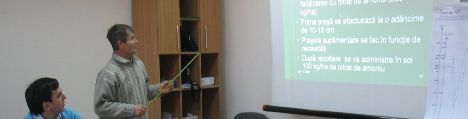

independent consultants. Another proposal implies that the implemented and
cultivated varieties of black currant based on the demonstration plot organized by CL
Victor Gandrabura from Cotujeni Mici, Soldanesti region to be forwarded to
homologation within the State Committee for Plant Varieties trials based on results
registered in the consultants experience years.
Presenting course specialized theses in vegetable production
The results of implementation activities performed by consultants specialized in
vegetable production, exposed in the course theses, have been presented by in
public within a Committee where there have been co-opted representatives of the
Institute of Field Crops profile institution, MAFI, Rural Extension Service Unit
UCIMPA-MAFI, Executive Direction of ACSA and ACSA Network (Annex RAS 4).
During 4 days of activity, 30 specialized theses were presented (Annex RAS 7).
The theses of the presented topics
have revealed business
implementation activities and new
technological elements in the
domain of vegetable production in
the basis of economic agents
supported and guided by ACSA
consultants. The public
presentations and activities
implemented in the service area
have confirmed the usefulness and
performances achieved by consultants specialized in applying new technologies as:
improved varieties and hybrids of diverse vegetable species, producing early and
extra-season vegetables; practicing intercalated and successive crops; using
irrigation and fertilizing; pest and diseases plant protection; valuing vegetable
production. All these technological elements have been conceived by estimating
economic efficiency of taken measures and the performing of the vegetable
production by beneficiaries as a economic activity and a sustainable source of
income in the rural area.
The members of the Committee highlighted the practical applicability of the theses as
businesses and have mentioned the possibility of extending these positive
experiences in the activities of all consultants in the coverage areas. Some new
technological elements and the modality of business management in the presented
areas, highlighted and proposed by ACSA consultants, have interested the
- 15 -
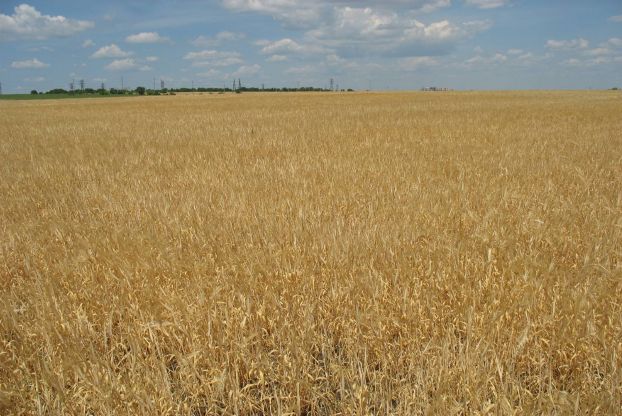
representatives from profile Scientific Research Institutes and, at their proposal, it
was agreed to undertake them in both production and science.
The representative of the Institute of Field Crops has proposed the tests vegetable
species and hybrids based on long term demonstration plots organized and managed
by ACSA consultants in order to see the behavior and final results of implementing
these species.
SERVICES PROVIDED AND BENEFICIARIES
The consultative services offered by local and regional ACSA consultants are
provided according the minimal set of services stipulated in the standard contract and
include technologic, economic, juridical and agricultural marketing domains. The
topics of the offered
Structura serviciilor de consultan ACSA.
consulting services
Ianuarie - Decembrie 2007
result from
Consultaii
verbale
problems and
80%
issues undertaken
Seminare
and solicited from
2%
agricultural
Consultaii
producers and rural
īn scris
1%
entrepreneurs or
Īntruniri
Mese
Vizite
identified by
2%
rotunde
13%
2%
consultants. The
measures
undertaken by consultants have an aim to satisfy producers' necessities and
expectations in terms of solving these problems and as a result improve incomes in
agricultural and entrepreneurial activities practiced by the beneficiaries. Detailed
information related to the number of services provided by the ACSA network and the
number of consulting service beneficiaries is presented in Annex RAS 1 and 2 as a
result of the conditions in 2007.
During the report period, ACSA network consultants have provided app. 187795
consulting services of which 3167 seminars, 1888 written consultations, 3946 round
tables, 3473 meetings, 24622 field visits and 150699 verbal consultations. A Service
Provider has offered in average app. 5366 consultation services, the maximal
number being registered by the Balti Service Provider (SP of 12 consultants) 9637
services, and the minimal, by the Basarabeasca Service Provider (SP of 7
consultants) 2469 services (Annex RAS 1).
During the report period, 352705 beneficiaries, including repeated clients constituting
25432 persons (7,2%), have benefited of ACSA network services. The maximum
- 16 -

client number was registered by the Cantemir Service Provider (SP of 14
consultants) 19030 persons, and the minimal number was registered by the
Basarabeasca Service Provider (SP of 7 consultants) 4878 persons. A Service
Provider has in average 10077 clients who have benefited of consultancy services
during the report period. (Annex RAS 2).
Within the provided
Structura dup domenii de servicii consultative
consultancy
acordate de Reeaua ACSA.
Ianuarie - Decembrie 2007
service, the first
place is held by
technologic type of
Marketing
Economice
17%
services (59%),
12%
followed by
agricultural
marketing (17%),
Tehnologice
Juridice
59%
economic (12%)
12%
and juridical (12%).
The number of
beneficiaries and
services provided differs from a provider to another depending on the number of
consultants within a team, experience and level of training, service providing
modality.
The beneficiary
number analysis
Structura solicitrilor de servicii consultative de
according to the
ctre beneficiarii Reelii ACSA.
Ianuarie - Decembrie 2007
modality of service
providing reveals
Seminare
Consultaii
the fact that the
16%
verbale
majority of
39%
Īntruniri
extension service
5%
clients,
approximately 60%
Mese
Consultaii
rotunde
Vizite
īn scris
have benefited of
10%
29%
1%
group consulting
which represents
19% f the total services provided and the other 40% are individual services (81%).
- 17 -
SPECIAL CONTRACTS
When Service Providers identified the necessities and interest of agricultural
producers, collaborating with experts in the domain from agricultural research and
education institutes, MAFI departments and inspections, means and services supply
companies, they have elaborated and presented a 168 proposals of mini-projects for
a competition.
The majority of Service providers have forwarded 3-4 project proposals, except SP
Sangerei, SP Anenii Noi, SP Orhei who had 6-7 project proposals.
In comparison with previous years, the number of mini projects related to field crops
has considerably gone down. As a consequence, the number of those related to
production of vegetables under protected areas and open field, growing mushrooms
in adapted conditions, growing rabbits in home conditions and fish in pond, the
animal breeding sector development, handicraft and rural tourism have increased.
Based on the proposals mentioned in 2007, the selection Committee has approved to
finance 72 mini projects, later signed as special provided services contracts.
Based on field visits, the ACSA executive direction together with Service Providers,
exterior consultants and beneficiaries, have set activity plans for all involved parties
and based on them, to insure a convincing demonstrative level at the respective
convocation steps of seminars or other training-informational activities according to
contractual conditions. The necessities have been established and seeding and
planting material, equipment and tools procured to insure the execution of respective
technologies on the demonstration plots.
The special service providing contracts have been implemented by 33 out of 35 SP.
Because of the fact that project proposals have not been innovative and their optimal
implementation term has been passed, these types of contracts have not been
approved for SP Cimislia and Leova. The majority of Service Providers have
implemented 2-3 contracts each, SP Orhei si Ocnita - 4 contracts each and 8 SP
(Calarasi, Donduseni, Briceni, Straseni, Basarabeasca, Balti, Taraclia, Comrat) have
implemented only a special
contract each.
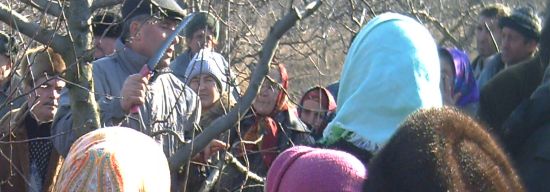
Out of 72 special contracts
approved, 42 have been designed
for plant production, 24 for the
animal breeding sector and 6 for
the non-agricultural sector of the
rural area. Those 33 for field crops
- 18 -

have been oriented to the promotion of advanced elements or technologies for
producing vegetables, fruits, berries and respectively 2 and 7 for growing flowers and
mushrooms. The special contracts in the animal breeding sector included keeping
and reproducing bulls (4 contracts), sheep (4 contracts), swines (2 contracts), quails
(2 contracts), rabbits (7 contracts), fish (3 contracts) and bees (2 contracts).
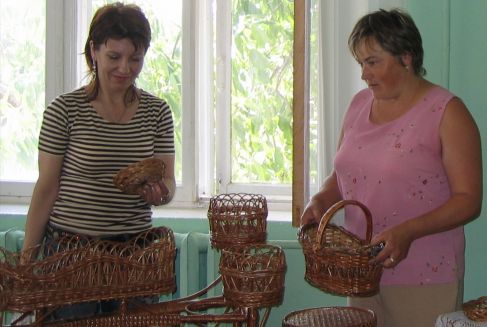
The non-agricultural projects included the domains of handicraft (5 contracts) and
rural tourism (1 contract), thus demonstrating the possibilities of creating new work
places and advancing the sustainability of incomes in the rural area.
As in previous years, the beneficiaries of demonstration plots within special contracts
have offered ACSA service providers 3 ponds with a total surface of 16,2 ha, 7 mini
farms with 946 rabbits, 4 farms with 530 sheep for effectuating the training-
informative process of the report year. For the same aims, there were funded with
mutual agreement 4 handicraft workshops, 1930 m2 of rooms for producing
mushrooms in adapted conditions, as well as 2,1 thousands m2 of greenhouses in
which vegetables, flowers and ornamental plants were produced.
The consultants from the territory, during the informative-training process have as
well used, 1153 demonstration plots as a result of special contracts signed in
previous years and identified from the experience of the villagers-beneficiaries of
their services. These included over 1314 ha of vineyards, orchards, berries and
ornamental plants, 2,4 thousands ha of field crops, 11 lakes of 70 ha in total, 40
apiaries with app. 2,1 thousands bee hives, 176 farms with 7,6 thousands cattle,
sheep, swine, 162 poultry farms with 56 thousands heads, 71 mini farms with 3
thousands home rabbits.
As experts at setting the demonstrative plots and instructors for seminars and other
training-informative activities, there have been involved app. 80 employees of
agricultural research and education institutions, departments of MAFI and state
inspectorates, international projects and NGO's, ACSA network consultants
specialized in diverse
domains.
Because of the fact that
during the autumn of
previous year and winter
of the report year,
precipitations were absent
for a quite long time and
temperature has been
rather high, at the
- 19 -



recommendation of MAFI, based on four contracts of the period January-February
2007 and with the involvement of republic level experts and profile institutions
researchers, ACSA organized seminars with on the topic of "Peculiarities of fruit and
berries production in conditions of year 2007". At their turn, local and regional ACSA
consultants have also organized this type of seminars in their service areas. The
scope of performed activities and trainings was training fruit producers from Moldova
and getting them acquainted with the principles of starting, forming and cutting fruit
trees, the drought climate specifics and forecasting quality fruit yield for fresh
consumption and for storage.
Totally, within implementing all
72 special contracts in the
report year, there have been
organized 715 seminars, field
visits and other activities at
which 9,3 thousands
agricultural producers and
habitants from the ACSA
Service Providers areas have
participated.
The information regarding
works performed on demonstration plots and other informative-training activities have
been elucidated in 93 articles in republic, regional and local level newspapers, 28
national and regional TV programs, 11 TV reports within the Mesager and Curierul
Agricol Programs, 47 radio programs at national and local level radio stations.
General information on special contracts implementation during the report year can
be found inAnnex RAS 3, and examined in details at the ACSA Central Office and
those 35 SP Centers.
ELABORATING AND PUBLISHING INFORMATION MATERIALS
The work effectuated by ACSA in elaborating and publishing informative materials
implies insuring consultants with quality informational sources oriented to improving
the consultants' professional level, insuring access to information and advanced
experience for agricultural producers and rural entrepreneurs.
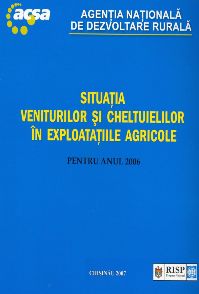
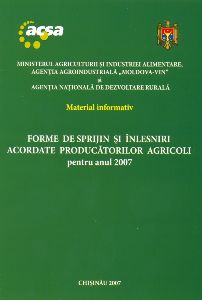
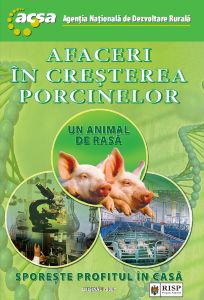
In 2007, ACSA has elaborated and published 3 practical guides "Situation of Incomes
and Expenses in agricultural operation in 2006" (200 copies), ,,Poultry Business"
(2000 copies), "Swine Growing Business" (2000 copies) and the brochure ,,Forms of
Support and Facilitations offered to agricultural producers for 2007" (4000 copies).
- 20 -
The informative materials have been published in a total number of 8200 copies
(table 1). The publishing of these informative materials has been financed from RISP
Project financed by the World Bank and the ACSA renewable fund.
The practical guide "Situation of Incomes and Expenses in agricultural operation in
2006" and the brochure "Forms of Support and Facilitations offered to agricultural
producers for 2007" have been focused on familiarizing extension consultants and
agricultural producers with the opportunities of facilitating efficient use of circulating
means for obtaining a high profits from products of 20 sectors from republic of
Moldova and the possibilities of obtaining financial means offered by the State
Budget for 2007 for priority agricultural sectors subsidized, as are facilitations and
fiscal support for this year. Both informative materials having a promotion scope have
been offered and distributed to ACSA consultants, Ministry of Agriculture and Food
Industry, its subdivisions as well as Regional Agricultural Departments, agricultural
producers and rural entrepreneurs for free.
Table 1
List of Informative Materials published by ACSA in 2007
Number
Nr. Name
Author
of copies
Situation of Incomes and Expenses
1
in agricultural operation in 2006
ACSA Agrex NGO
200
Forms of Support and Facilitations
offered to agricultural producers for
2
2007
ACSA - MAFI
4000
I. Petcu, N. Starciuc, I.
3 Poultry
Business
Scutaru
2000
V. Harea, V.
4 Swine Growing Business
Radionov, I. Rotaru
2000
TOTAL
8200
Practical guides "Poultry Business" and "Swine Growing Business" are meant for
producers and rural entrepreneurs who wish to start a business in these domains.
The publications tell about implementing the business through the following aspects:
economic (with arguments on investments necessary to start model farms and
estimating modalities of obtaining profits), technologic (advanced technologies of
growing-maintaining), marketing (supplying with production means, selling the
- 21 -
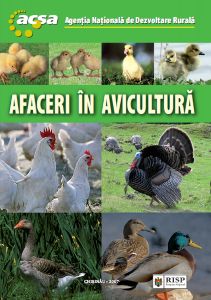
produce) and ecologic (avoiding environment pollution from the sectors of
production).
According to the regulations of distributing informative materials, 25% of these 2
practical guides (1000 copies in sum of 30335 lei) shall be used for equipping Sp
offices, ACSA promotion activities (round tables, republic and international level
meetings,
exhibitions, agricultural libraries), MAFI departments, agricultural research and
education institutions, international projects, etc. The most part of the published
guides shall be sold (75%) through service providers (3000 copies in sum of 123
thousands lei, at the price of 41 lei/copy). Their eventual sale covers all costs for
elaborating and publishing the guides.
During 2007, for equipping 35 SP, 2987 copies of informational material edited by
ACSA in 2006 have been offered for free at the beginning of 2007 (5 titles, "Milk
Production Business", "Vegetable Production Business, Part II", "Valuing Fruits and
Vegetables", "Situation of Incomes and Expenses in Agricultural Operations for 2006"
and the brochure "Types of Support and Facilitations Offered to Agricultural
Producers in 2007"), as well as 1960 copies of guides edited by ACSA in
collaboration with PCPA Project (2 titles, "Environment Friendly Agricultural
Practices" and "The Management of nutrients, organic wastes and soil protection").
In promotion and equipping scopes, the Ministry of Agriculture and Food Industry, its
subdivisions, as well as Regional Agricultural Departments, were offered 2065 copies
of the informational materials.
3615 copies of informative materials published at the end of 2006, were offered to SP
or sale. Incomes from informative materials sales form the ACSA renewable fund and
is exclusively used for the elaboration and editing new informative materials and
ACSA promotion activities.
At the beginning of the year, within the national Campaign of bird flue prevention
organized by UNICEF, ACSA has insured the distribution of informational materials
- 22 -
to institutes and public places from service areas. The SP Centers have distributed
free of charge app. 13500 posters (the posters' topic in Rumanian and Russian was
"Wash your hands with soap more often", "Protect the birds, protect your family",
"Cook the bird meat with care") and app. 254000 folders (the topic of the folders in
Rumanian and Russian was "Protecting the family from the risks of contamination
with bird flue").
Access of ACSA consultants to new achievements in science, agriculture and
investments
In scopes of informative-consulting support and familiarizing agricultural producers
and rural entrepreneurs and extension consultants with news in technology, economy
and agricultural marketing, Service Providers have been sent (by e-mail) informative
notes related to: assortment of new species and hybrids of recently homologated
plants for reproduction in Moldova; advanced technologies of growing agricultural
crops: cereals, autumn rapeseed, berries and horticultural crops; technologies of
growing-maintaining domestic livestock; using mineral fertilizers at growing autumn
cereals; types of conditioning phytosanitary products and preparing work solutions;
protection measures in the process of working with agricultural equipment and when
applying and preparing fertilizers and phytosanitary products; access to the
guarantee and investment funds; obtaining financial sources from banking institutions
and national and international projects which activate in the country (The 3rd Step of
the Program for support and development of the small and medium enterprise sector
Government of Japan and MEC, TeleFood Project - FAO-MAFI, FISM, ProCredit,
IMC Leasing, FNAIC, MicroInvest); control of drought consequences and necessary
technological measures to diminish the negative impact; species and hybrids of
agricultural crops that have shown resistance to arid environment conditions; sources
of supply with seeding and planting material (all groups of crops grown); economic
efficiency calculus in cereal crops and other operative information demanded by
ACSA consultants and beneficiaries.
PROMOTION ACTIVITIES
Mediating consultancy activities and performances registered by beneficiaries
represents the most efficient modality to promote the image of the rural extension
service. At national, regional and rural level, any cause is used to familiarize the
beneficiaries, public administration and civil society with the activity of the ACSA
office and its Service Providers. The measures taken by the rural extension service
consultants contribute to the advancing of transparency and efficiency of the
accomplished activities, increases credibility and accessibility to the offered services.
- 23 -
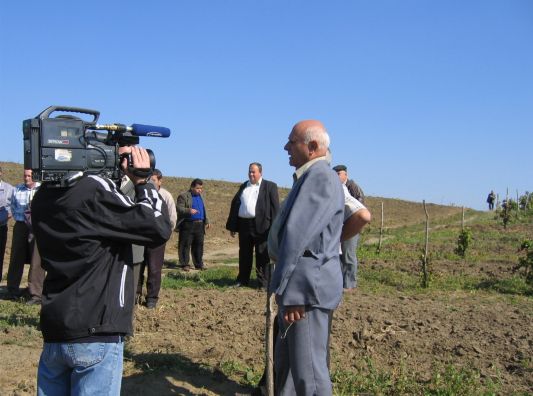
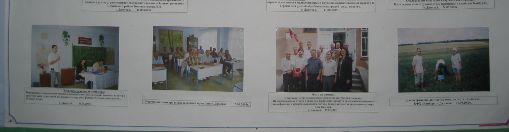
Al national and local level, have been published app. 283 newspaper articles
(Moldova Suverana and Curierul Agricol Chisinau, ,,Curierul de Nord" Edinet,
,,Cuvantul" and ,,Farul
Structura activitilor de promovare desfurate de ACSA.
Ianuarie - Decembrie 2007
Nistrean" Rezina and
Articole īn pre sa
Articole īn pre sa
Soldanesti, ,,Calarasi" and
Naional
local
23 art.
260 art.
,,Opinia" Calarasi, ,,Est Curier"
Criuleni, ,,Accent provincial"
Balti, Falesti and Glodeni,
Alte activiti de
"Patria mea" Falesti, ,,Campia
promovare
Reportaje la
72 activ.
Radioul Regional
Glodenilor" Glodeni,
51 rep.
,,Drapelul Muncii" Anenii Noi,
Emisiuni TV
Reportaje la
Emisiuni TV
Naional
Radioul Naional
Regional
,,Curierul de Hincesti"
45 secv . TV
115 rep.
52 secv . TV
Hincesti, ,,Plaiul Orheian"
Orhei, ,,Real Sud" and ,,Transparenta" Cahul, ,,Agenda Locala 21 Verejeni" Telenesti,
,,Gazeta de Vest" Nisporeni, ,,Staseneanca" Straseni, ,,Cuvantul Liber" Cantemir si
Leova, ,,Plai Singerean", ,,Ecoul Nostru" "Vocea Fermierului", Singerei, ,,Bussines
Info" Leova and Cimislia, ,,Prier" Stefan Voda, ,,Lumina" Taraclia, ,,Vesti Gagauzii",
,,Znamea" and ,,Novoe Vremea" UTAG, ,,Evenimentul Actual" Riscani, ,,Observatorul
de Nord" Soroca, ,,Pasul Nou" Donduseni).
Also, 166 reports have been emitted at national and local level radio stations
(National Radio Station, Municipal Radio Stations from Straseni, Edinet, Ocnita,
Cahul, Calarasi, Balti, Glodeni, Cimislia, and radio programs on National Radio -
Radio Matinal, Panorama Zilei, Unda diminetii, Actualitati, Buna dimineata fermieri,
Ora pranzului, ), 97 television sequences (TV Gagauzia;
Floresti TV; TV-6 Balti; ART TV Straseni, TV Causeni, TV Ungheni, TV Elita Orhei,
Soroca TV, Cimislia TV, TV
programs at national TV
channels - ,,Curierul agricol",
,,Mesager", ,,Bastina" TV Moldova
1, NIT) which have shown the
consultancy activities
implemented by the ACSA
Network.
ACSA Service Providers widely
use possibilities of promotion of
their activities via self-elaborated
informational sources. SP Ocnita, Orhei, Causeni, Cantemir, Glodeni, Rezina and
Sangerei have elaborated short movies and advertisements which reflect the
- 24 -

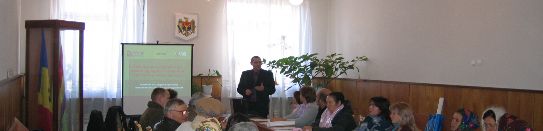

performed activities and services, team formation. Service providers have elaborated
and published 18 informative bulletins, 29 prospects and folders; 18 informative
billboards have been elaborated and placed.
In the reference year, ACSA has launched the Agricultural Marketing Information
System which has the aim to supply operative information in the domain for all
agricultural market operators from Moldova. In order to promote the Agricultural
Marketing Information System, ACSA has organized and held a launching seminar
within the specialized international exhibition ,,Farmer 2007" and 4 promotion
seminars in Drochia, Sangerei, Causeni and Cantemir regions. Within these
seminars participated app. 260 persons, including representatives of MAFI, Regional
Agricultural Departments, agricultural producers and rural entrepreneurs, national,
regional and local mass-
media. SIMA launching was
mediated through the Press
Agencies ,,Ifotag",
,,InfoMarket. MD", Moldpres
MD", TV programs of
Moldova (Mesager), NIT
and TV Singerei, National
Radio, ,,Moldova Suverana"
and ,,Curierul agricol",
,,Cuvantul Liber" Cantemir
and ,,Plai Singerean"
Singerei newspapers.
The majority of ACSA Service Providers, in collaboration with the Local Public
Administration and Regional Agricultural Departments have actively participated in
organizing regional exhibitions and competitions within ,,The Yield Day", ,,Wine
Festival", ,,Vegetable Producer's Day", ,,The Farmer's Day", local religious
celebrations in rural areas and towns. These activities have allowed them to present
their accomplishments and to encourage their beneficiaries to follow the example of
the most advanced agricultural operations tutored by them.
AGRICULTURAL MARKETING
The support of the ACSA network for the implementation of agricultural marketing
activities has been provided by 5 regional consultants from the following Service
Providers: Causeni, Hincesti, Calarasi, Soldanesti and Edinet.
Agricultural Marketing consultants have provided, in the reported period, advisory
service to 6670 beneficiaries. The on-line, live data has bee provided to both,
- 25 -

marketing consultants and rural entrepreneurs. With joint efforts of local and regional
consultants, the following advisory activities have been organized: 35 thematic
seminars, 75 round tables (hosting at ones both, agricultural producers and
agricultural input suppliers), 93 meetings with formal and informal marketing groups,
109 field visits (for identifying the agricultural input needs as well as the potential
markets for fresh fruits). During the upper mentioned activities, marketing consultants
have provided m1873 verbal and 219 written consultations.
The topics of the advisory services have referred to: agricultural inputs supply and
demand (suppliers, distributors, agricultural producers and rural entrepreneurs) and
marketing of agricultural production (retail markets, wholesale markets, etc); quality
requirements on seeds and seedling material; prices on national markets (including
those of processing industries) and promotion methods of the agricultural products
within the marketing chain. The following are some topics of the group activities
implemented by Regional Marketing Consultants (RMC): "Quality requirements and
supply of sunflower and maize seeds". "supply of drip irrigation systems for vegetable
plots", "marketing of early vegetables grown in greenhouses and solariums", "use of
different packaging for selling fresh fruits within the marketing chains", "Quality
requirements for fresh fruits and vegetables". In addition, RMC are helping
agricultural producers on conclusion of long-term contracts with processing industries
or wholesalers.
The activities of the RMC organized together with the national marketing coordinator
have led to the following results:
- The creation of 71 informal marketing groups and managing the activities of one
marketing cooperative (Causeni) and one service provision cooperative
(Soldanesti), created previously;
- A professional
Structura vānzrilor produciei agricole mediate de
compartimentul de marketing agricol ACSA.
association has
Ianuarie - Decembrie 2007
Produse horti-
been created
Produse
viticole
legumicole
6 039 367 lei
the Association of
2 287 084 lei
animal breeders
from Causeni,
Animale i
that has the aim
produse
animaliere
to supply its
2 761 738 lei
members with
Alte vīnzri de
Produse
produse
fitotehnice
pure breeds and
agricole
8 841 440 lei
150 000 lei
support the
business in this
- 26 -
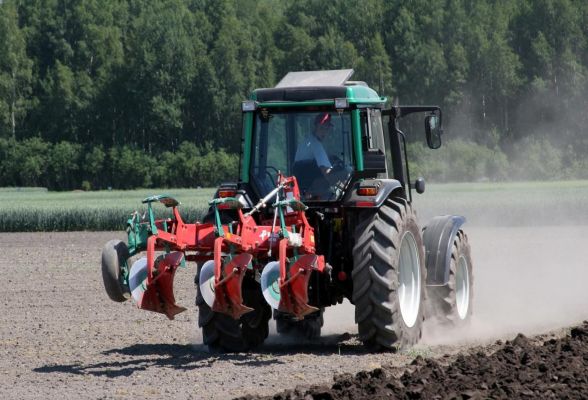
field in Causeni region;
- The support in concluding contract for selling the agricultural production with a
total value of about 20 mil lei, including: 1215 t of cereals, 550 t of sunflower and
rape seeds, 508,7 t of vegetable seeds, 528 t of vegetables, 138 000 seedlings;
872 t of fruits, 386,5 t of grapes and 28,2 fruits trees; 1003 breed animals, 21500
poultries, 127500 t of meat and 7,6 t of fish; others 150 000 lei;
- The support in concluding input supply contracts with a total value of around
9,497 mil lei, including: 233,3t of vegetable seeds, 373,5 t of mineral fertilizers,
12,9 t of sanitary production, 14,7 thousands of pruned vines, 174,5 thousands
seedling of vegetable crops, 26,8 thousands of fruits trees, 37 pure breed
animals, 2970 poultries; 25 agricultural equipments; 157,8 t of fuel and other
inputs valuing 147 000 lei.
With the help of the
RMC formal and
Structura procurrilor de imputuri agricole mediate de
compartimentul de marketing agricol ACSA.
informal marketing
Ianuarie - Dece mbrie 2007
groups have been
Echipament
Alte procurari
Semine de
created, as well as
agricol divers;
229 795 lei
culturi agricole
1 733 280 lei
2 357 420 lei
rural collection point of
Carburani i
Material sditor
fruits and vegetables
lubrifiani
i rsad
1 539 687 lei
507 995 lei
for further processing
Animale de
prsil, psri i
or selling on wholesale
fam. albini
163 450 lei
Produse
Īngraminte
markets in Soldanesti,
fitosanitare
1 467 271 lei
1 497 635 lei
Rezina, Orhei, calarasi,
Causeni, Edinet and
Hincesti. Agricultural producers have been provided support to identify input
suppliers for the seeding of winter cereals.
ACSA has created an on-line Agricultural Market Information System (AMIS), which
was officially launched in October 2007 on the web page http://market-acsa.md
"Agricultural production". AMIS is an on-line information system, integrated with a
Data Base (more than 4500 agro food economic entities) that allows beneficiaries to
obtain live marketing data.
- 27 -
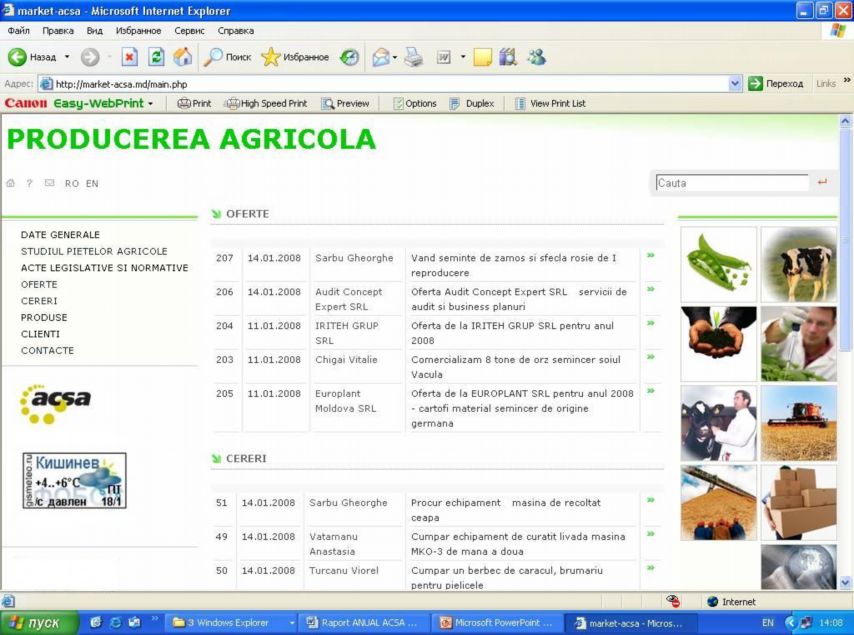
Thus, by the means of AMIS 293 supply offers and 71 demands have been placed
into the system.
In more details, AMIS has hosted in the reported period supply and demand on:
a. 1460 t of cereals, out of which 804 t of wheat, 221 t of barley, 435 t of maize;
b. 109 t of oil-bearing/producing plants, out of which 78 t of sunflower and 31 t of
rape;
c. 2043 t of vegetables: cabbage group 345 t, tomatoes 1010 t, potato 630 t,
onion 43 t, carrot 15 t;
d. Fruits and berries 718 t, out of which 456 t of apples, cherries 100 t,
strawberries and other berries 160 t, prunes 2 t;
e. 125 t of table grapes and 230 t of technical ones;
f. Vegetable seedling material 280 000 seedlings, 10350 kg of onion seeds,
1280 kg diverse vegetable seeds;
g. 770 animals for meat, including 505 sheep, 213 pigs and 52 cows;
h. 166 beehives with colonies of bees and 8320 kg of honey;
i. 77 agricultural transport means and equipment, including 26 tractors, 18 cars,
12 sowing machines, 4 irrigation equipment, 7 ploughs, 3 cultivators, 2
equipments for fertilizers, 2 combines and one mower;
j. 1345 t of mineral fertilizers and other different sanitary production;
k. Supply of different mechanized services, accounting and audit services, as well
as services offered by diverse scientific research institutes from Moldova.
- 28 -
ACSA has developed 26 agricultural markets studies in the reported period which
have been placed on the AMIS and also distributed to all consultants of the ACSA
network. Market information available at the agricultural marketing department of
ACSA is being collected on the basis of interviews with agricultural producers and
sellers from the 6 main agricultural markets in Moldova: the central wholesale market
from Chisinau, agricultural and wholesale markets from Edinet and Soldanesti (North
region), Calarasi and Hincesti (Central region) and Causeni (South region). The
market studies are being developed fro 128 agricultural products, out of which 30 are
vegetables, 23 fruits, 25 cereals and 50 animal.
The update of the information in the AMIS is done daily. The statistics from the AMIS
show that around 20-25% of the demand and supply placed on-line is meeting the
partners and the transaction are being concluded. The information placed on the
Web:"" Agricultural production" is used directly by the 4500 clients if the AMIS, but
additionally, ACSA network is distributing the information to those approximately 350
thousands beneficiary of the extension system.
IMPACT AND PERFORMANCE OF THE SERVICES PROVIDED
The main objectives of the services rendered by the rural extension network aim at
an advanced technological level, high level of knowledge and increased revenues
from the activities undertaken by the beneficiaries in the context of sustainable
development of rural communities. Advisory services and activities implemented by
Service Providers in the reported period have been directed to and contributed to the
process of solving the problems agricultural producers and rural entrepreneurs face.
Rural advisory centers' activities ensure the innovative technological transfer to the
rural population, and is contributing to diversification of the activities and generation
of new opportunities of investments for rural development. The technological
advisory support provided by to the agricultural producers has helped them, despite
the severe drought from 2007, to strengthen the qualitative and quantitative
production indicators and to have access to credits and state subventions in
agriculture. The advisor have also supported them to buy necessary agricultural
inputs and sell the final product by initiating new business activities in both,
agricultural an non-agricultural sectors.
The impact if the activities of advisory services can be also related to the results
agricultural producers obtained after being provided with respective consultative
support. The following are some performance indicators and success stories of the
activities of Service Providers.
- 29 -

THE IMPACT OF THE SERVICES PROVIDED
Technological impact
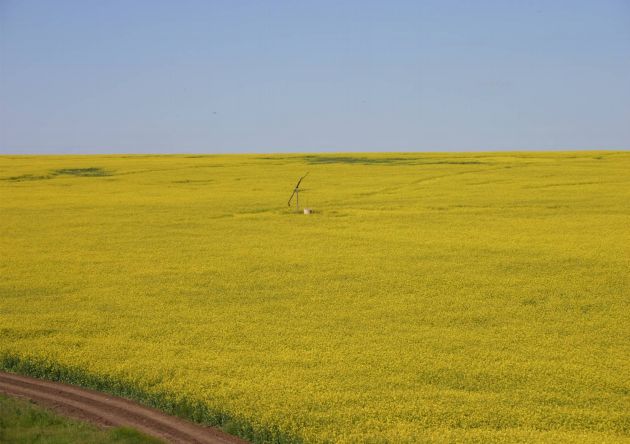
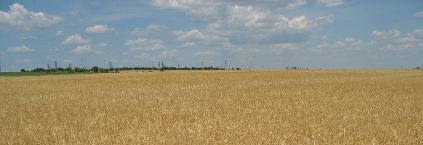
During the reported period, the beneficiaries of the extension service have grown
cereals and vegetables on 242 thousands ha, including: 69287 ha of wheat, 25293
ha of barley, 66096 ha of maize, 11730 ha of Soya been, 2801 of green peas, 45066
ha of sunflower, 7191 ha of sugar beet,
285 ha of tobacco, 6872 of alpha-alpha,
7025 of rape and 600 ha of beans. The
effects of the drought in 2007 have
influenced negatively the yields of the
main field crops, with an average of
(t/ha): : 1,2 - 1,6 for cereals ; 1,2 1,3
for maize; 0,5 1 vegetables; 0,8 0,95
for sun-flower; 1,4 2,2 for rape; 23 26
for sugar beet. Still, those beneficiaries who have followed rigorously the
technological advice of the consultants and implemented all procedures timely,
including irrigation, have obtained high yields, and namely: up to 4,5 t/ha of wheat,
4,2 t/ha of maize, 2,5 t/ha of sun-flower, and 33-35 t/ha of sugar beet. Below are
some good examples of the results of the advisory services rendered by ACSA
network of consultants:
· Local consultant Gheorghe Morogai has
demonstrated to the people from the
community that if following the technological
process and choosing the right variety, one can
obtain good yield of cereals even on conditions
of severe draught of 2007. He has applied
organic fertilizers in autumn and the phased
fertilization in spring, thus harvesting at end 4,5
t per ha of the "Driada" variety and 2,8 t per ha
of the "Odeskaia 267" variety;
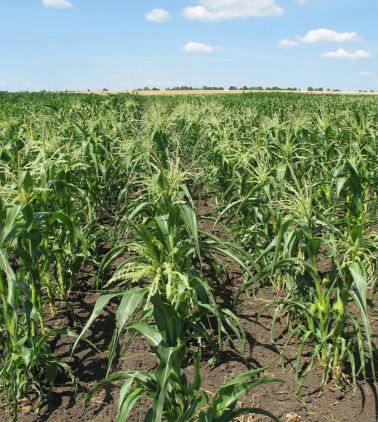
· The farmer T. Schirliu from the Negresti
village, r. Straseni, has planted according to the
technological requirements the M-450 hybrid on a surface of 1,2 ha. The plot is located
in the neighborhood of a water pool and the local consultant Schirliu Ion has advised the
farmer to irrigate the land at least ones and to lessen the number of plants to at least 40-
45 thousands per ha, as the draught conditions require. At the end, the yield from that
- 30 -

plot was 4,2 t per ha compared with the 1,2 t per ha the average in the village, or with 0,5
t per ha the average in the rayon.
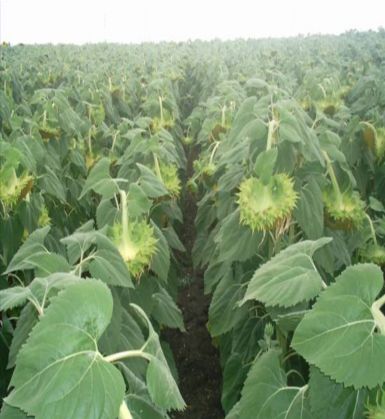
· with the support and involvement of the
local consultant from the Racaria village,
Rascani rayon Vasile Nadulisneac, the
demonstration plot "Perspective hybrids of
sun-flower" of "Gutuleac Galina" has been
planted accordingly on a surface of 2,2 ha
with three hybrids Sirena, Arena and
Alexandra. The use of fertilizers and proper
technological process has generated, even in
conditions of 2007, yield of 25,2 t per ha for
the Sirena hybrid, 19,8 t per ha for the Arne
hybrid and 18,6 t per ha for the Alexandra.
The average yield of sun-flower in the region
was 0,9 1 t per ha. After demonstrating these results, another 8 farmers from the
community have shown their interest in overtaking the experience of Galina Gutuleac.
The beneficiaries of the ACSA network of
consultants have managed 32526 ha of
multi-annual plantations, including 14759
ha of orchards, 260 ha of strawberries and
other berries, and 17507 ha of vineyards.
The total vegetable surface has constituted
in 2007 about 11896 ha of open field and
135,8 ha of protected land (including
respectively: tomatoes 1011 ha and 94,2
ha, sweet pepper 467 and 3,9 ha, egg plant 293 and 1,2 ha, cabbage 1189 and 7,7 ha,
cucumber 443,4 and 28 ha, water melon 144,5 ha and 125 m2, vegetable marrow 112
ha, potato 6075 ha, and other vegetable crops 1080 ha and 1700 m2). The
mushrooms have been grown on a total surface of 1731 m2.
- 31 -

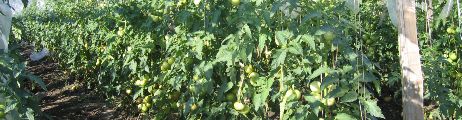

· The farmer Mihail Bulboaca is a repeated client of the extension system, and is
continuously provided with advises and
support by the local consultant Maria
Perebailov from Tudora village, Stefan
Voda rayon. As a result, he is obtaining
permanently the highest yield of peach.
In 2007 he has harvested 600 kg from
one ha and sold the peaches directly
from the filed with the price of 10 to 15
lei per kg. The 2,5 ha of orchard has
given the farmer, ultimately, more than
100 000 lei revenue.
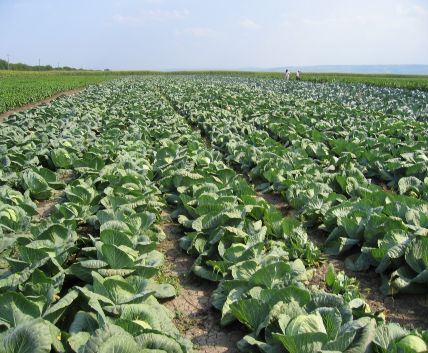
· In Carbuna village from Ialoveni rayon two groups of farmers, one led by
Pruteanu L. and another by the Paraschiv V. have produced, as result of the service
rendered by the Service Provider from Cainari, early cabbage seedlings of "Vestri"
variety on a surface of 5,5 ha. After following the technological process as advised by
the local consultants they have obtained 275 t of cabbage, with an average of 50 t
per ha;
· Pilrea Anatolii from Hadarauti village, Ocnita rayon, is specialized in growing
tomatoes in protected field. Being supported by the local consultant Ion Rusnac, he
has built a greenhouse with the capacity of 600 square meters with an investment of
682772 lei. The hybrids with a high biological potential Cronus F1 and Shanon F1, as
well as irrigation and proper technology have altogether contributed to a yield of 37
kg per m2 or a total production of 22200 kg of tomatoes. The average price of the
sold tomatoes was 7,85 lei per kg. The total revenue of the farmer was 174270
thousands lei in 2007, with a net
profit of 105998 lei;
· The farmer Popa Vasile from
Pirita village, Dubasari rayon,
assisted by the local consultant
Nicolae Bologan, has decided to
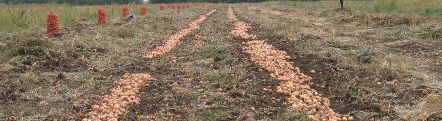
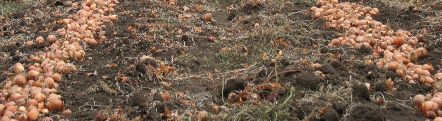
grow on 2 ha onion from seeds of
Haltegon variety, using irrigation, and
applying fertilizers. The result was
35t per ha, with a direct production
cost of 60 thousands lei and total revenue of around 100 thousands lei.
- 32 -
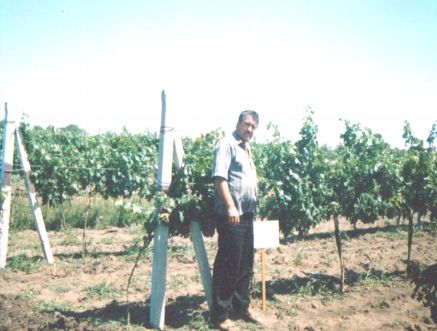

· Vasile Somon, a farmer from Straseni rayon, village Sireti, supported by Mereanu
Mihai local consultant, has exactly followed the technological requirements for the
process of growing vineyards, "Moldova" variety, on 3 ha of land, and has harvested
at end 35 t of grapes , or 11,7 t per ha, while the region's average was 4 t per ha in
2007. The harvested grapes have been
placed in a cooling facility until January,
and ultimately sold for a total of cca.
300 thousands lei.
The advise and support of the ACSA
consultants has had a considerable
weight for the beneficiaries that initiated
multi-annual plantations. In 2007,
beneficiaries of the rural extension
service have planted about 2500 ha of
multi-annual plantations, out of which 850 ha are apple orchards, 234 ha of plums,
327 of walnut trees, peaches 240 ha, vineyards 647 and other 212 ha.
·
Anatol Leahu, local consultant from the Jora de Mijloc village, Orhei rayon, has
initiated the creation of the Association of tree nursery in the region. The association has
consequently increased its number of members, as well as the quality of the pruned
trees and surface of nurseries (38 ha in present). More than 400 thousands pruned trees
have been produced in 2007;
·
At the advise of the local
consultant Ion Tarlev from Bascalia
village, Basarabeasca rayon, the
beneficiary Vornic S. from the same
village has planted in 2003 5 ha of
vineyard, Cabernet and Merlot clones,
and after following technological
recommendations of the consultant, as
well as the use of irrigation, the yield
obtained was 14 t per ha;
·
Tacu Valeriu from Braniste, Riscani, with the support of the local consultant
Spijavca Dumitru (support on soil analysis, etc.), has planted in 2006 an apple and
cherry orchard on 14 ha of land. In the reported period the farmer has requested
additional support for planting some 4, 5 ha of new pear orchard;
Another domain where ACSA consultants have helped beneficiaries obtain increased
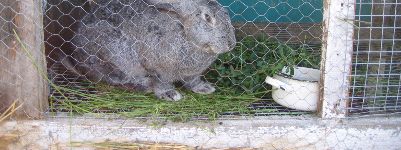
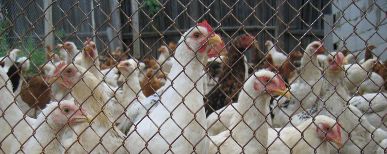
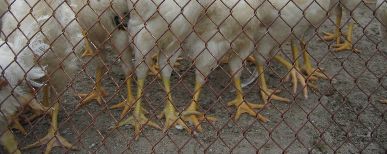
productivity is the animal sector. The 196 poultry mini-farms established with the support
- 33 -

of the Service Providers in 2006 and 2007, have registered an average productivity of
250 eggs per annum per poultry, figure comparable with the 110 eggs per annum per
poultry in the region. In addition, 71 rabbit farms, 76 pig farms and 64 sheep farms have
been established.
·
In 2006 the consultant from Bascalia
village, Basarabeasca rayon Tarlev Ion,
has established a poultry mini-farm with a
total of 250 poultries of "Roso" hybrid. In
2007 the productivity of one poultry was
250 280 eggs per year, bringing the
beneficiary a revenue of 65 000 lei, while
the total production cost was 41 000 lei.
The example of this farm has been
overtaken by another 5 farmers from the community;
·
Ghoerghe Trofim from Tintareni village, Telenesti rayon, has established, with
the support of the local consultant Petru
Stanila, a model farm for breeding rabbits,
with an initial breeding material of 38
females and 7 males. The farm has proved
to have a production over the average and
21 females have been sold for 250 lei
each. The experience from the farm has
been overtaken by another 10 families from
the village;
·
Three centers of artificial insemination have been established by joint support
provided by ACSA consultants from Donduseni and the local public authorities. The
centers are located in the following villages: Sudarca, Tirnova and Scaieni. In
Baraboi and Tirnova two milk collection points have been opened. People from
Mindic village and Scaieni village are happy to have the veterinary services in their
communities, while Rediu Mare village is hosting 2 renovated milk farms, which have
created 40 new job for the villagers.
Agricultural marketing impact
By the use of the 357 formal and informal marketing groups, business activities for
selling agricultural production have been supported, and namely: 115 456 t of field crops,
46 429 t of fruits and berries, 26 248 t of grapes, 88 569 t of vegetables, 17,5 t of
mushrooms, 2518 t de cattle meat, 168,7 t of sheep meat, 2559 t pig meat, 22,9 t rabbit
meat, 156,3 thousands of poultries, 112,2 t of honey, around. 4,5 millions of eggs.
- 34 -
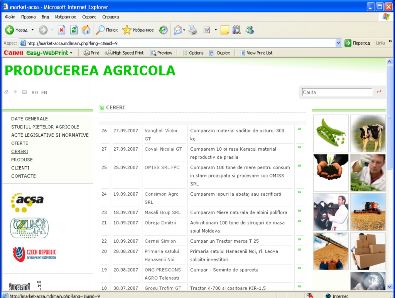
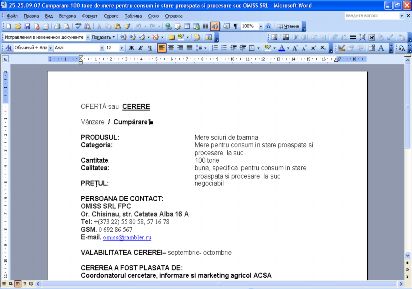
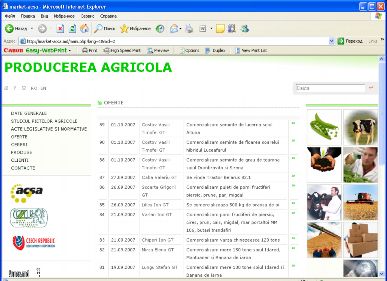
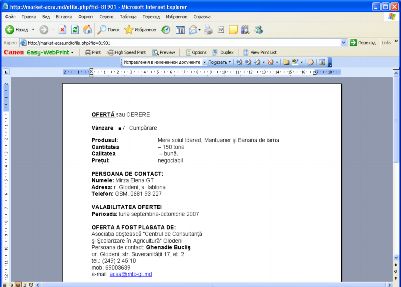
Altogether, agricultural business transactions that have been mediated by ACSA
consultants are valuing more than 647 million lei.
Local and regional consultants have mediated transactions with agricultural inputs for
over 237,6 million lei. These money have been used by the farmers for almost 10852 t of
mineral fertilizers, 11994 t of seeds, 717817 pruned vines, 711042 fruit trees, 98175
fruits shrubs, 995 pure breed cattle, 1187,6 thousands poultries, and 29953 t of fuel.
Almost 55 million lei was used to buy tractors, agricultural and irrigation equipment,
including 245 tractors, 137 sowing machines, 122 cultivators, 224 ploughs, and 7
irrigation equipments. A total of about 292,9 million have been used by the beneficiaries
Offer No. 82. from 21.09.2007,
At 21.09.2007 - 150 tones, GT
apples
"Mirza Elena", r. Glodeni
Demand No. 25. from 25.09.2007,
At 25.09.2007 - 100 tones,
apples
SRL OMIS, or. Chisinau
within the input supply transactions mediated by local and regional consultants.
The impact of these activities can be expressed in the following examples:
·
In 2007, by the means of the AMIS, which represents a virtual market where
buyers and seller meet for their products or services, a number of business transaction
have been operated, to be mentioned the following: the offer No. 82 from 21.09.07
placed by Mirza Elena from Iabloana village, Glodeni rayon for 150 t of apples has
found its buyers "Omis" Ltd. that has placed a demand for the same product under
- 35 -
the number 25 from 25.09.07 and "Vicam" Ltd demand No. 28 from 26.09.07. As
result, two business transactions have taken place with a 680 thousands lei revenue
for Mirza Elena.
·
Clipa Mihai has placed the offer No. 176 on 26.11.07 and subsequently sold
210 tones of maize to the brokers of the commodity exchange, registering a revenue of
819 000 lei.
·
with the assistance of the Regional Marketing Consultant from Soldanesti, 18
persons have been trained in 2007 in marketing fresh fruits and vegetables. As a
result, in collaboration with "Alfa Nistru" stock company, 14 fruits, vegetables and
berries collection points have nee established in the region. "Alfa Nistru" has
provided the centers with the necessary boxes for collecting the products as well as
with an advance payment for the future products to be sold to the company. A total of
80 t of fruits have been collected from the population of Soroca with a total value of
400 thousands lei;
·
At the beginning of 2007, a group of 15 farmers has approached the local
consultant from Colibasi village, Cahul rayon, with the agricultural inputs supply
problem. Within the discussions held at the round table organized by the
consultant, the optimal solution that came up to the farmers was the creation of a
agricultural shop in the village. Later on, one of the beneficiaries Eremia
Nicolae, has decided to establish such a business. Thus, with the support of the
local consultant, the agro-shop "Colibasi Farm" has started its activity in the
summer of 2007. The suppliers of the agro-shop are "Agrostoc" business
cooperative, "Agrofitbonus" Ltd., "Bioprotect" td., "Strimetid" Ltd., ant others. The
potential clients of the "Colibasi Famr" are the 2461 farmers from Colibasi village
and those from the neighboring villages, where there is no agricultural shop.
·
With the joint support of the local consultants from the Antonesti, Carahasani,
Caplani, Olanesti and Crocmaz villages from Sefan Voda rayon, meetings between
the fruit and vegetable producers and the can factories from Olanesti and Causeni
have been organized. The result of these meetings was the creation of fruit collection
points and conclusion of 22 commercial contracts with total value of 2660 thousands
lei;
·
The activities of the Regional Marketing Consultant from Causeni have led to
the foundation of the animal breeding associations in October 2007. Thus, the
association has provide its members with pure breed animals valuing in total 469,8
thousands lei and support to the marketing of meat of 1564 thousands lei;
- 36 -
·
The information and support provided by the local consultant V. Popusoi from
Dubasarii vechi village, Criuleni rayon, has helped Rosca Elena from the same village
to open an outlet for selling films for greenhouses. Thus, in 2007 Elena has sold 10 t of
film for more than 360 000 lei.
Economic impact
Local and regional consultants have contributed to the creation of 85 diverse
professional associations, both local and regional, 36 veterinary rural centers, and
110 animal and poultry farms. Over 30500 agricultural producers and rural
entrepreneurs have had access to credits, including through SCAs about 29360
beneficiaries with 164,2 million lei credits, through commercial banks - 1080
beneficiaries with about 30 million lei credits, 58 RISP clients with over 3,9 million lei
credits. Local and regional consultants have provided support to the creation of
11580 business plans and credit requests, including 1286 for agricultural activities
and 294 for non-agricultural. Thus, 326 agricultural and 125 non-agricultural rural
businesses have been established and some 1703 new jobs created,
The following examples and success stories can demonstrate the impact and performance
of the rendered service:
·
Regional consultant from Cantemir has helped in the elaboration of 20
business plans submitted subsequently to Agroindbank for financing. 15 out of 20
have been accepted and credits provided with a total value of 3047000 lei;
·
Local and regional consultants from the Edinet Service Provider have
provided support to the population from the rayon to obtain financing from the
SCA. As a result, 1600 persons have been credited with 9.9 million lei in total by
SCA, 164 people have been credited by the commercial banks with a total of 1,65
million lei and 27 RISP credit line clients have got a total of 557 000 lei. In
addition, 4 agricultural businesses have finalized their business plans with the
support of the consultants, out of them 2 have stared their operational activity.
·
The local consultant from Mereni village, Anenii Noi rayon has provided support
to 165 people to obtain a total of 8 500 000 lei long and short term credits;
·
With the support of the local advisory centers from Ocnita and the regional
agricultural department, farmers and agricultural producers from that rayon have had
access to the state subventions for 2007. So, beneficiaries have been granted 8,8
million lei for VAT reimbursement for fertilizers, 391 000 lei for agricultural equipment
and 190 000 lei for the procurement of 50 pure breed animals;
- 37 -
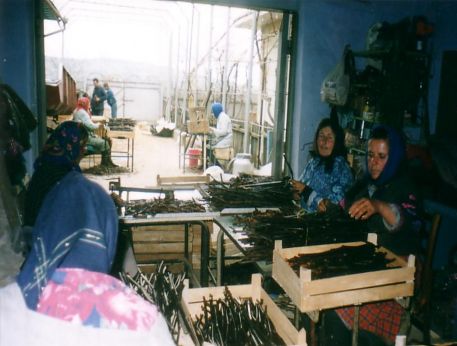
·
Pantiru Valeriu, being helped by the local consultant from Hiliuti, Rascani in
such activities as feasibility study, training and choosing the adequate equipment,
has started the operation of a bakery that is supplying the school and the
kindergarten with bread. The business has created 4 new jobs and and some 40 000
lei revenue for the beneficiary;
·
the farmers from Crihana Veche
village, Cahul rayon have been
provided, with the support of the local
consultant, with training on vine pruning.
A total of 25 000 vines have been
pruned in the village after the training
and the price of the pruned vines was
4,5 per unit. Thus, the total revenue of
the farmers was 137 500 lei;
·
The support provided by the local consultant Natalia Carablut to Turcu Mihail
and Turcanu Mihail has offered the last access to 175 000 lei from the state
subvention line for planting 5 ha of vineyards. In addition, 126 600 lei have been
provided to the farmers from the village from state subvention fund for field crops.
Another 200 farmers, after being consulted by the local consultant and provided
support on the submission of necessary documents to the Fiscal Inspection, have
benefited by the amnesties of 52 000 lei, and 61 farmers have had access to 280 000
lei credits from SCA.
Impact from legal advises
ACSA network of consultants has been actively involved and contributed to the
development of the land market and identification of solutions related to land legislation.
With the support of the network 6291 land transaction have been concluded for over 6000
ha pf land, 1340 ha of land has been the subject of 1250 donation contracts, 2293 heritage
contracts have covered more than 4200 ha, 147 mortgage contract have been concluded
for 93 ha of land and over 3080 ha of land has been re-parceled. The local consultants
have mediated 47448 land lease contracts for 792909 ha of land. Another 23040 ha of
land has been consolidated based on market principles through 16626 transactions. Some
1161 land litigations have been solved by the help of local consultants covering over 1530
ha of land.
The following are some examples and success stories with reference to the legal advises
provided by the network::
·
ACSA consultants from Hincesti have provided technical assistance for solving 73
land and property litigations, for concluding 2649 land transactions (981 buy-sell
- 38 -
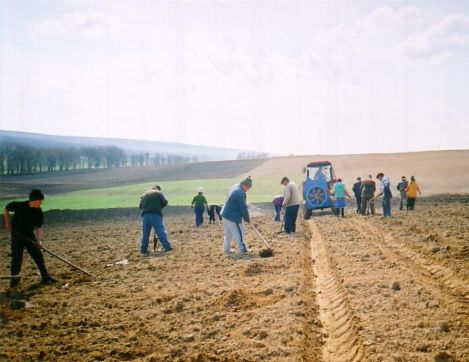
contracts,36 donations, 109 heritage contracts, 19 land re-parceling and 1504 lease
contracts). The total area of the land under the upper mentioned transactions is 2436 ha
and the number of beneficiaries is 2700;
·
After local and regional consultants from Stefan Voda have rendered 614 individual
advises and 112 group consultations to 1402 land owners, 2846 lease contracts have
been concluded for 3613 ha of land and another 235 ha of land has been sold under 236
contracts, 90 heritage contracts have changed the owner of 107 ha of land, 92
transactions have re-parceled 58 ha of land and another 58 ha have been donated. Also,
38 land litigations for 23 ha have been solved and 46 ha of land has been consolidated
for 102 owners;
·
The farmers from Pinzareni village, Falesti rayon have been provided during the
privatization period with plot of degraded land, being useless for the agricultural activities.
With the advise and support provided by local consultant from the village, 48 ha of such
land has been consolidated and forested by the regional forest authority;
·
Local consultant Florea
Constantin from Colibasi village, Cahul
rayon has provided support for the
commitment of 45 land transactions
covering 32 ha of new vineyards. In
addition, 75 ha of land has been leased
through 60 contracts;
·
The consolidation of the land in
Varatic village, Rascan rayon, has
been done with the support of the
local consultant. Some 20 ha of
consolidated land has created, out of which 15,5 ha has been projected for a new
plantation of apple (beneficiaries Medvedschi V, Parii P, and Capra V), and 4,5 h for
walnut trees (Furtuna i. and Salari N.). The consultant has also advised all these
beneficiaries on accessing respective state subvention funds for their plantations;
·
1200 land lease contracts have been concluded in Cobilea, Soldanesti with the
support of the local consultant S. Bernevec between the owners and the german
company "Mister Shmidt". In this way, some 1450 ha of land has been consolidated for a
period of 15 years;
·
By the use of the assistance of the local consultant from Solcani village, Soroca
rayon, 69 land transactions have covered 90 ha of land in 2007. Another 122 contracts
have been concluded with the ,,AMG Kernel Grup" stock company for 168 ha of land for
further planting walnuts.
- 39 -
Social impact
Service Providers as well as local advisory centers are playing an important role for the
socio-economic development of the rural communities. High professional level and
capacities to develop rural projects with international financing is used by the consultants
in accessing funds such as SIFM, Ecological Fund, IREX Citizenship project, GTZ,
APCP, etc. Thus, 49 rural social projects have been developed by the consultants and
granted financing from different donors, including inter alia:
· 2 projects financed by the Agricultural Pollution and Control Project: one for irrigation of
vegetables in greenhouse 328 000 lei and another for the construction of a manure
storage platform 652 000 lei. Both projects have been implemented during 2007;
· The consultant from Ilenuta village has provided support to the elaboration of the
project, which subsequently has received financing from the Community Development
Program financed by USAID and administered by IREX. The project budget was 475
000 lei, including 26 000 lei grant, 80 000 lei contribution of regional public authorities, 89
000 lei contribution of local public authorities and 46 000 lei the contribution of villagers;
· A water pipe construction project was granted financing from the Ecological Fund in
Pirjota, Rascani. The project was developed by the local consultant who has also
mobilized all villagers towards the implementation of the activities under project. The
value of the project was 260 000 lei and 2 km of pipes have been built
· Service Provider from Cainari has developed and implemented in 2007 a project that
aimed at renovating the building of the ""Alexei Mateevici" lyceum from the community.
The project has been financially supported by SIF 2 under the "Small town develpoment"
program. The total value of the granted finance was 75 000 USD and the community
came up with a 144 000 lei contribution;
The work done by the consultants towards the development of the rural communities and
increasing the level of wealth of the beneficiaries is being appreciated by the local public
authorities and local inhabitants and expressed in their diverse letters. The impacts of
such activities is strengthening the relations between the extension consultants, LPA and
beneficiaries,
Obtaining the answer or being provided with the solution to the problem, creation of new
rural businesses or extending the existing ones with the support of the consultants, all
these are contributing towards the creation of a positive image of the ACSA Service
Provider. LPA are supporting the activities implemented by extension consultants and
appreciate the consultants work as being a useful one for the rural development sector.
- 40 -
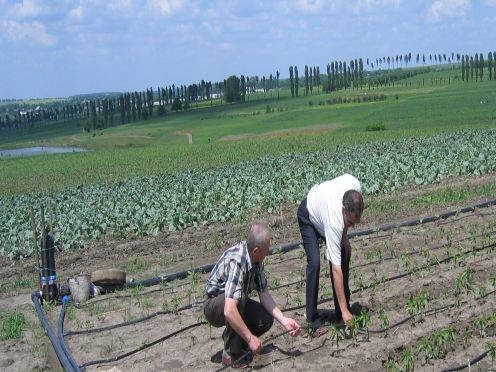
THE IMPACT OF THE DEMONSTARTION ACTIVITIES
The demonstration activities implemented within the special contracts program have
contributed to the improvement of the technological level and increase in productivity
of crop production or animal breeding. The beneficiaries of the demonstration sectors
have understood the efficiency of the new varieties and hybrids, of applying plant
protections schemes, of new modern techniques and equipment, of the progress
breeds of animals and fish, and the importance of the recommendations provided.
The implementation of the 72 special contracts has resulted in the creation of 13
mini-farms (pig, cattle, and sheep), 3 rabbit mini-farms, 4 handicraft and furniture
production workshops, 2 ha of pruned walnuts, 2 ha of strawberry plantation, 7
businesses on production of mushrooms, 3 fisheries, 2 quail farms and one rural
tourism activity.
Based on the information provided by Service Providers in their reports, we can state
that the total revenue of the fish breeding activities under the special contracts
program was over 4,4 million lei, while the production costs have been reduced by 68
000 lei, and some 34 new jobs created. From the total number of participants at the
demonstration sectors, 160 have already started similar activities. Eight regional
associations of fish and animal breeders have been created in the reported period,
as well as 16 formal and informal marketing groups and handicraft centers. 74 sale
and purchase contracts have brought to their beneficiaries more the 1,4 million lei
revenue.
Some of the results the ACSA consultants within the implementation of the special
contracts are provided below:
· 19 demonstration activities on growing vegetables in open field as well as in
greenhouses have generated
for their direct beneficiaries a
total of 1,9 million lei. 48
persons from the total
number of participants at the
demo-lot open days have
stated their intention to start
similar activities based on the
experience gained;
· For the open filed vegetable
growing sectors the average yield was 33,8 t per ha compared with 22 and 17,8 t
- 41 -
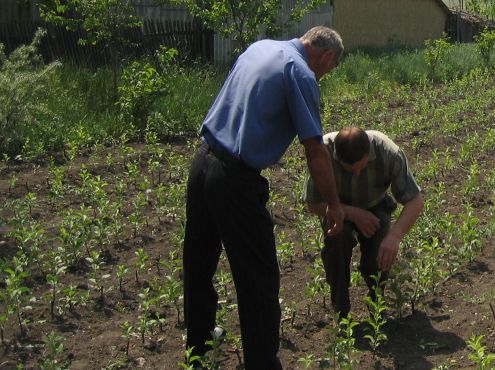
per ha average in the villages of the demonstration plots. "Lilian Borodachi"
from Hlina (Briceni) has managed to obtain 38 t of eggplant per ha with the use
of drip irrigation, while Anatolie Soltan from Cuizauca (Rezina) has registered 46
t per ha of the sweet pepper grown according to the same technology;
· the average yield of the vegetables grown in protected field 8,7 kg/m2 in the
demo plots compared. 6 greenhouses with a surface of 2100 m2 have generated a
total revenue of 583 000 lei. Anatolie Rabei from Saratenii Vechi, Telenesti has
registered a yield of 16 kg per square meter. Dmitrii Vohodet from Musair village,
Taraclia has registered 12 kg/m2 of tomatoes (new variety), compared with 5 kg/m2
at the basic plot;
· The implementation of the proper technology for growing onion has provided Ion
Roaba from Mascauti (Criuleni) a revenue of 135 000 lei from only one ha of
land;
· 5 demo plots (1,7 ha) with the use of irrigation for strawberry growing has generated
a total of 204 000 lei sales. Some 15 visitors have stated their intention to start
similar activities based on the recommendations provided;
· Victor Munetanu from Hristoforova, Ungheni, being advised to and using the the
technology of growing strawberries, has obtained 3 tones of early strawberries
on a 0,45 ha ofland;
· Nichifor Ixari from Sevirova village, Floresti rayon has obtained an output of
more than 50% for the pruned fruit trees. Out of 50 000 pruned trees 42 000
have been sold. It is to be
mentioned, also, that
Nihofor has concluded
contrats for the production
of 12 000 pruned tress for
neighboring orchards.
·
Valentin Paladi, the
beneficiary of the demo
plot from Cruglic village,
Criuleni, has produced 28
000 flowers that generated
a revenue of 54 000 lei. Ruslan Dombrov has registered 26 000 lei revenue from
the marketing of the flowers in the first year of operation.
· The production of mushrooms on 1930 m2 has provided the beneficiaries of 7
demonstration plots a total of 23900 kg of mushrooms, with an average of 12,4
kg/m2. The value of the products sold was over 250 000 lei. Valeriu Postolachi
- 42 -
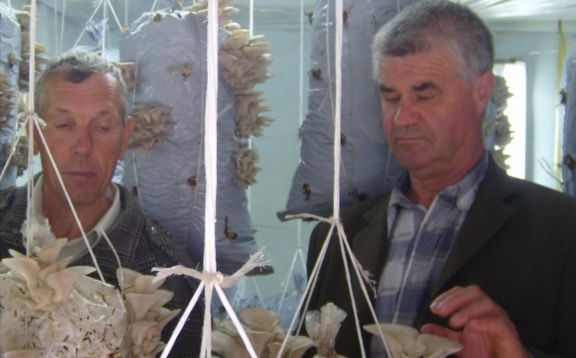
from Varvarauca village, Floresti and Barabas raisa from Bulboaca, Anenii Noi
have registered good
results as well, with
3,5 and 1,4 t of total
production
respectively;
·
Following
the
recommendations of
the external
consultant, and
using the artificial
insemination,
automatic milking and other procedures, the beneficiaries of the 4 special
contracts have obtain from their milk farms a 15,5 liters of milk per cow per day,
or 5 400 liters per year.
· Platon Leonid from Volodeni, Edinet, has obtained a production of 20 liters of
milk per day per cow. His farm of 20 milk cows has generated in 2007 a revenue
of 337 000 lei. Nicolai Galemba from Birnova, Ocnita, has registered at his 8 milk
cows farm an average production of 17,5 liters of milk, this obtaining an yearly
revenue of 64 600 lei;
· Sheep breeding is a common activity in Moldova, but because the technological
requirements are not followed strictly, this may result in a bad performance of the
farms. The 5 special contract on sheep breeding had the aim to inform people about
the requirements of the farm itself as well as on milk and other farm products storage
during diverse period of the year, and on the reproduction pf animals. Mechanized
milking was also presented during the open days and the equipment to be used for
this operation.
· The farm of Ion Bogdan from Radulenii Vechi, Floresti has a capacity of 250 sheep.
After implementing all recommendations of the consultant, the production of milk was
112 liters per sheep per season. Ion has also traded 325 kg of lamb and others with a
total value of 250 000 lei. At the same time, Eugen Dascal from Drochia has
registered a production of 9 liters of milk per sheep per day. His revenue in 2007 was
approximately 85 000 lei;
· 106 males and females have been procured to create 7 rabbit farms in different regions of
Moldova, and after reproduction this number was 1256. The seminar organized within the
demonstration sectors have identified 13 persons expressing their intention to start similar
activities;
· The beneficiary of the demonstration plot from Mitoc, Orhei Turcanu Vasile, has
- 43 -
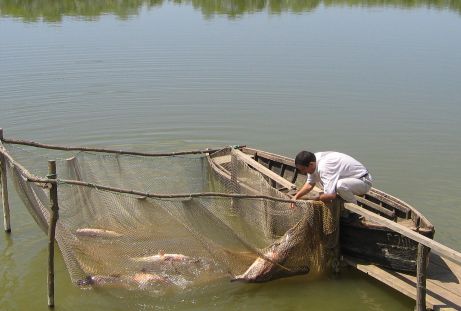
invested both, project money and his personal contribution generated from the work
abroad, for the creation of a model rabbit farm. He is now selling monthly 50 60 kg
of diet meat to METRO Chisinau, on the basis of a long-term contract concluded with
them;
· The special contracts on rabbit breeding has interested beneficiaries of other special
demonstration sectors: Eugen Burghila (s. Parcova, PS Edinet, Mihail Dragan (s.
Bobeica, PS Hincesti) si Gheorghe Petic (s. Milesti, PS Nisporeni);
· The average production of fish within the 3 special contracts on a total of 16 ha of lake
has reached 810 kg per ha,
while the beneficiaries
Constantin Gaidarji from Baurci
(SP Ciadir-Lunga) and Teodor
Bajura from Bilicenii Vechi (SP
Singerei) have bred 980 and 890
kg of fish per ha respectively.
· The two special contracts with the
beekeeping activities have
managed to increase the number of beehives by two, and 8 people from the village started
similar activities. Another 15 young people have shown vivid interest towards this type of
activity. The Association of beekeepers has been created in Hincesti rayon. Vasile Sirbu
has collected 28 kg of honey from each beehive;
· Due to the special contract implemented by Galina Marinescu from Carahasani,
Stefan Voda, the team of the artisans has increased with two from 8 and the
number of national costumes has increases from 25 (last year) to 65 in 2007,
valuing 44 000 lei. Contract of sale and purchase of these costumes have been
concluded with the mayoralty of Palanca 6 units, Cultural department from
Cainari 10 units, Cultural department from Stefan Voda 20 units. In the
framework of the handicraft workshop, the Labor Office from Stefan Voda has
trained 10 unemployed and provided respective certificates;
· The implementation of the mini-project on basket work has made Ciumac Ana
from Eforeni to enlarge her range of wattle and increase the revenue from 15
000 lei in previous year to 27 000 lei in 2007. Today, her workshop is hosting 10
masters, versus 3 in 2006. Some 15 pupils from the community have attended
the courses on basket work;
· The master Ion Pohoroana from Soldanesti has provided his workshop for the
demonstration of and training on manufacture of wood handicraft. 8 adults and 11
pupils have been trained in 2007. Out of them, 3 persons have started this activity
- 44 -

on their own. The workshop is mainly working by the order of churches. They have
also produced, at the request of the ex-ambassador of the Russian Federation, a
phaeton.
· The training organized at the workshop of the master Leonid Muntean from
Hadarauti, Ocnita, as well as the equipment provided have contributed directly to
the manufacture of 3 sets of doors and windows, 5 wardrobes, 12 chairs etc.
This can be compared with manufacture of only 4 doors and 10 windows in
2006. Besides doors and windows, Leoind started to produce wardrobes and
tables as well. During the implementation of the project, 4 persons from
Corescauti and Clocusna have started similar activities after visiting the
demonstration sector, and some 16 pupils have been trained accordingly and
received certificates;
· 2 special contracts have contributed to the increase of the quail farms by 25%.
Over 13 000 diet eggs have been produce by the two farms, that have been sold
with the price of 1-1,5 lei per egg.
· "Ion Lazar" (SP Soldanesti) has tried the method of incubation in three times and
the result was 131 quails. 80 out of 131 Ion has sold to other quail farms fro the
creation of their capacities. His plans for the future are to expand the quail farm
to meet the market demand. Another 8 persons from the village are initiating
similar farms.
The upper mentioned case studies are underpinning the importance of the special
contracts and demonstration sectors when promoting advanced technologies and
diversification of activities in the rural area.
MONITORING AND EVALUATION
Monitoring and evaluation is a
continuous process involving
the staff of ACSA executive
directorate and the
representatives of the Rural
Extension Service Unit (RAS
Unit) under the Ministry of
Agriculture and Food Industry,
and represents an important
and efficient tool for ensuring
the achievement of the project
- 45 -
goal.
The goal of monitoring and evaluation is to verify the activity of regional and local ACSA
consultants and assess project implementation progress.
The monitoring and evaluation of ACSA network activity in the first quarter was mainly
influenced by two factors: lack of financial resources until beginning of March (contracts
with Service Providers were signed on March 2, 2007) and lack of transportation ACSA
vehicle was damaged in a car accident on November 17, 2006. However, in the second,
third and forth quarters, monitoring and evaluation activities were carried out according to
the working plan due to the purchase of a car for the Executive Directorate of ACSA and
a car for the Rural Extension Services Unit. Thus, during 2007 the staff of ACSA
Executive Directorate and the Rural Extension Services Unit made joint field trips and
monitored and evaluated all 35 Service Providers covering more than 55% of the local
consultants. The centers that had difficulties in complying with contractual obligations
and were not capable of settling some acute problems were visited several times (SP
Leova, SP Criuleni, SP Cimislia, SP Stefan Voda, SP Taraclia, SP Soroca, SP Rezina,
SP Floresti, SP Falesti, SP Briceni, SP Basarabeasca, SP Cahul, SP Causeni, and
SP Comrat).
For a more objective evaluation of the activity of rural extension consultants,
discussions with regional and local consultants, representatives of local public
administration mayors, deputy mayors, secretaries and other employees of the
village halls and beneficiaries were held during monitoring visits. In addition to that
the physical comfort of offices, transparency, activity planning and execution as well
as documentation were examined on site. Immediately after signing contracts for
provision of services in 2007, the monitoring team focused on evaluating the activity
of the Service Provider ,,Local Development Agency" from Leova, which, following the
decision of the Selection Committee, was supposed to improve its management. As
a result, the founders of the organization recommended a new coordinator, who was
subsequently approved. This service provider was visited several times in the second
and third quarter as well.
ACSA Executive Directorate carried out a monitoring visit to SP Criuleni to offer
assistance in transferring local consultants from SP Dubasari that had their
consulting services contracts terminated, according to the decision of the Selection
Committee. As a result, 4 consultants continue to work as part of SP ,,Criul-Fermier"
and they seem to have been integrated into the team. ACSA Executive Directorate
- 46 -
visited the consulting center from Criuleni several times to provide advisory support
in consultant team management.
Several monitoring visits have been organized to the Service Provider from Cainari,
as the management of that team has registered changes. The goal of the visits was
to provide adequate support to the new project coordinator. As a result, the
management of the team has improved significantly.
Similar situation has been registered for the Donduseni Service Provider, where the
management of the team has been changed as well. After several monitoring visits of
ACSA executive directorate, the activity of the center has been improved.
Monitoring of other centers revealed that all consultants comply with the contractual
provisions on consulting activity, recording of services provided, ensuring information
materials and transparency of the activity its-self. However, the monitoring team
identified the following gaps:
(i) Inadequate registration of services provided in the record register,
(ii) Incorrect formulation of subjects of major importance to beneficiaries when
planning seminars and round tables,
(iii) Insufficient transparency of consulting activity,
(iv) Insufficient promotion and sale of information materials developed by ACSA.
Consultants are facing difficulties in marketing brochures published three-four years
ago by ACSA. This is explained by the fact that the brochures are obsolete, by
changes in trends for agricultural crops and animal breeding, by the possibility to
borrow the brochure for a short period of time. Nevertheless, the beneficiaries have
an increased demand for the recently published materials, i.e. commercial ones,
which shows that farmers have a continuous interest for market-oriented agriculture.
It is good that most consultants understood the efficiency of providing consulting
services to groups and tend to increase their number. At the same time, some
consultants are still facing problems in identifying issues beneficiaries face. The
evidence of that is represented by some activity plans and tendency to avoid the
evaluation of the seminars and round tables organized by consultants.
Some consultants shall improve the transparency of their activities. They are to
become more active in promoting the Service Provider and ACSA in the local mass
media, posting information on visible places in village halls, etc.
- 47 -


The gaps that have been identified in the activity of the local consultant have been
registered in the consultant's register of
services rendered to population, and
further discussed with the SP team.
Deadlines for improving the situation
were established depending on the
seriousness and difficulty of making
necessary changes. The monitoring
teams have also encouraged project
coordinators to work permanently with
the consultants from their team and help
them solve problems.
In general, the quality of the services provided by ACSA network of consultants has
been improved, as well as recording and planning of the activities. In addition, the
services rendered have been diversified and the access to these services increased.
Most offices are properly endowed for service provision and their location is mainly
adequate and accessible. There is progress in ensuring transparency of activity and
identifying target beneficiary groups by area.
At this moment, the World Bank contracted expert, Nico van Wageningen, in close
cooperation with ACSA Executive Directorate and RESU staff are developing the
concept of the integrated monitoring and evaluation system for the activity of ACSA
consultants. The goal of the system is to have instantaneous and quick access to
information on the activities of regional and local consultants and to decrease the
time necessary for paper work and increase focus on working with beneficiaries of
rural extension services. The concept of the integrated monitoring systems is an on-
line database on activities implemented by regional and local consultants, their
beneficiaries, general information on localities where regional and local ACSA
centers are located, etc. and ensuring the possibility of enhancing and increasing the
information flow between local, regional and national consulting centers. With respect
to these, the Bank's support on computerization of the network is just in time. Local
and regional consultants will be provided with office equipment for improving the flow
of information in the framework of the rural extension system as well as for improve
the process and results of the monitoring and evaluation of the network.
*** Any other additional information and source financial documents are available at
ACSA Executive Directorate and Service Providers offices.
- 48 -
RURAL BUISNESS DEVELOPMENT COMPONENT
The activities of the Rural Business Development Component (RBDC) are
implemented by the four DAs that implemented RISP I: Alliance for Cooperation in
Agriculture (ACA), Business Consulting Center (CCA), Rural Development Center
(RDC) and Mobile Expert Group in Agriculture (MEGA) which signed contracts with
the Ministry of Agriculture and Food Industry (MAFI). Their contracts contain detailed
terms of reference for activities planned under this component, including budget and
financing offered for the period September 2006 June 30, 2010. According to the
Project Document, MAFI is responsible for the implementation of this component
while CAPMU is fully responsible for the coordination of the component. The DAs are
funded for the current phase of RISP according to the new financing mechanism,
based on results delivered, and is different from the first phase based on monthly
fixed payments. Thus DAs are stimulated to a greater extent to establish viable
businesses since a part of their financing is provided for post-creation support.
CAPMU developed a package of forms required by development officers (DOs) in
their work, including updates of forms used during RISP I. At the moment 10
development teams are involved in the implementation of RBD Component: 3 teams
within ACA and MEGA and 2 teams within RDC and CCA respectively. Most DOs
have worked under RISP 1.
General information on outcomes of DAs activities for the reporting period is
presented in the table below, while more detailed information is presented in
Annexes RBD 1-23.
Table RBD 1. General Information
Indicator
Value
Development Agencies
4
Mobile teams
10
Number of villages where promotion took place
468
Number of participants to promotional meetings
9637
Number of project participation applications
377
Service provision contracts, active
312
Number of business plans developed
283
Businesses starting implementation of investment plan
217
From them:
Agricultural
(30%) 64
Non-agricultural
(70%) 153
Businesses in progress
46
Businesses registered with the support of DAs Loan
23
Loan applications submitted
254
- 49 -
Loans disbursed for rural businesses disbursed for rural
212
Loans approved, but not disbursed
2
Loan applications in processing by PFIs applications
6
Number of businesses benefiting from post-creation support
165
New jobs at start-up
736
PROMOTION CAPMAIGN
In the forth quarter of 2007 promotion activities were organized in 103 villages and
attended by 1996 people. (Chart 1) Thus, the cumulative figures are showing that a
total of 9637 persons from 468 villages have been informed about the RISP second
phase activities and opportunities until now.
While other DAs have greater results in business creation, CDR organized most
promotions in 187 villages having more than 4200 participants. CDR is followed by
CCA with a total of 105 villages covered by the promotion campaign with 1870
persons attained the promotion meetings.
Development Agency
No of villages involved in
promotion campaign
ACA
85
CCA
105
CDR
187
MEGA
91
Total
468
As project foresees that the promotion campaign will be held in a total of 900 villages
of Moldova, we can state that at December 31st, 2007 50% of the villages have
already been involved in this campaign.
Most promotions were carried out in partnership with local public authorities, ACSA
national extension network consultants and savings and credit associations. These
promotions introduce the goal and objectives of the project, conditions of
participation, DAs' role in creating and supporting new businesses, funding
opportunities of investment projects, etc. All promotion meetings are accompanied by
distribution of information materials, including RISP II leaflets containing general
information on the project, the list of DAs and their contact information, the list of
project participating financial institutions (PFIs).
The number of promotion activities had a positive trend in the forth quarter of 2007,
starting with 28 villages in October, and reaching a number of 42 villages in
December 2007.
- 50 -
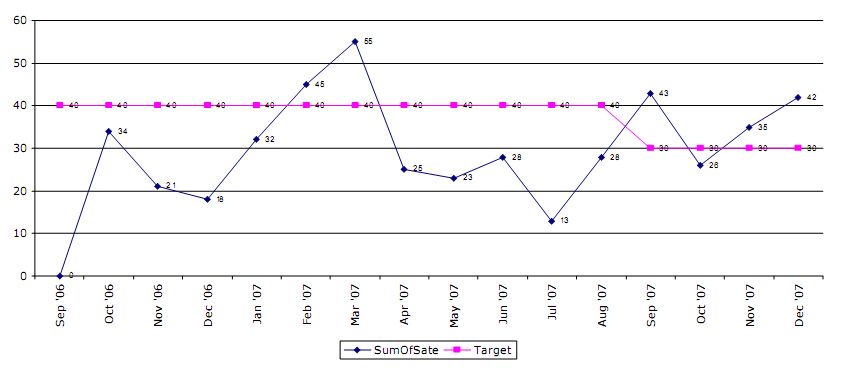




An important source of information on project conditions are RISP I beneficiaries.
They can be considered an example for potential beneficiaries of RISP II.
Chart RBD 1. Number of promotion activities
BUSIENSS CREATION
During the period October - December 2007 the four DAs have managed to assist 48
RBs in developing their business plans, this totaling to 283 RBs with their final
business plans with DA assistance.
217 businesses established
with the support of DAs have
started their operational
activity/implementation of
investment plan as of
December 31, 2007. Out of
them, 212 have received loans
from PFIs and 5 started
operating only with their own
resources. Overall, 220 RB
have received
Manufactureof wearing apparel, Glodeni
financing/credits from the PFI
and 8 of tem are still implementing the investment plan, with operational activity to be
started subsequently.
- 51 -
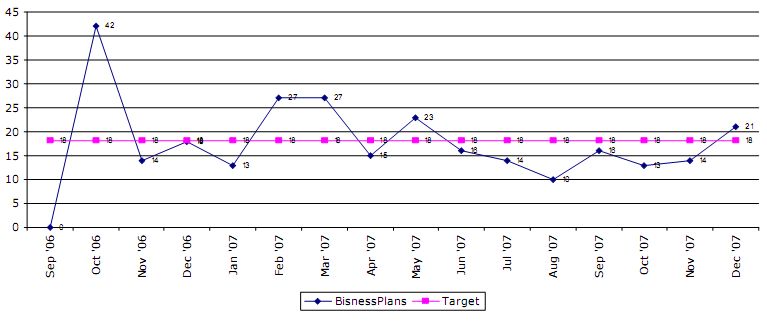




Chart RBD 2. Number of businesses with final business plans with DA assistance
The total business investments of these 217 businesses amounted to 5.7 mil. $.
Thus, the average investment made by operational businesses by December 31,
2007 is 26 000 $.
If referring to the amounts of
credits disbursed to 220 RB,
they are totaling a 3.6 mil. $, that
have been supplemented by the
beneficiaries contribution in
amount of apr. 3 mil. $. Thus,
the average loan disbursed to
RB is 16 000 $. This is
confirming somehow the status
of small business of the RB
created with the support of the
RISP, the target group of the
Milk collection and selling, v. Ciuciulea, Glodeni
project being reached.
MEGA has assisted in the creation of most of the RBS so far (83), followed by CDR
(56). For ACA and CCA this figure is 43 and 34 respectively.
Out of 217 businesses created, 204 are individual businesses, which represents
approximately 94% and only 13 RB are group businesses. To this end, group
businesses were considered businesses with 3 and more founders. This indicator,
compared with the one from the 2006, is showing an increase of the individual owned
businesses versus group ones.
- 52 -
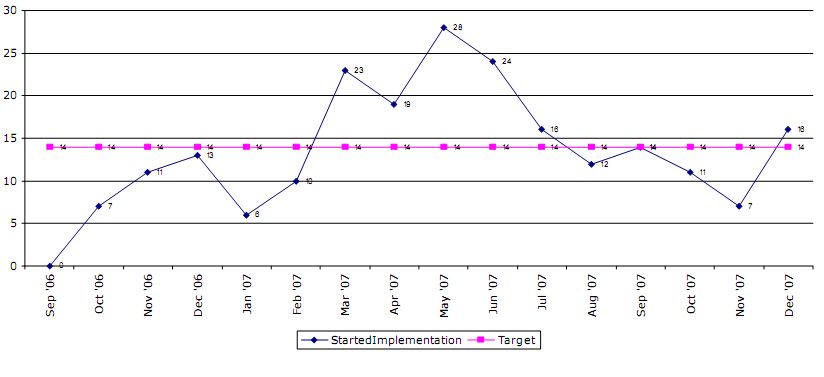
Chart RBD 3. Number of businesses started implementing business plan
The legal form of the businesses that commenced implementation of their business
plan is mostly Limited Liability Company (82 RB) or Sole Proprietorship (78 RB).
These two types of businesses represent a 73% from the total/ operational RB. They
are followed by peasant farms (45) or about 20% from the total. There is one single
cooperative and 10 patent holders. As mentioned in previous reports, the number of
Patent holders is lessening as the State policy that is to limit this type of business
organization, and replacing it with other types.
The structure by the type of business, which started their operational activity, is
presented in Table RBD 2. The table below shows a big share of businesses being
non-agricultural (70%), which is matching with one of the project trigger to have at
least 1/3 of all new businesses created engaged in off-farm activities.
From the agricultural businesses (a total of 64), those with livestock production and
crop production have the greatest weight, with a total of 56 RB. The chart in the
Annex RBD 22 is showing a more simplified breakdown of Rural Businesses by type
of activity. As we can see, the categories of non-agriculture businesses are food
processing (6.5%), transport (12%), other services (6%). Almost half of the
manufacturing companies are food processing companies (43%), followed by
manufacture of other non-metal products (18%) and wood processing (12%), etc. It is
to be mentioned that the share of the RB involved in retail trade has decreases
considerably, from 39% in the first quarter of 2007, down to 16% in the forth quarter.
This is representing a positive trend, as during the last two Missions of the World
Bank team as well as at the CAPMU Supervisory Board meeting the agreement has
reached towards the making efforts as to minimize the share of retail businesses,
and setting a maximum limit for them at 20% from the total. As of December 31st,
- 53 -
2007, RISP is registering a 4% of the RB involved in wholesale trade and 16% - retail
trade.
A quarter of rural businesses being involved in retail trade can be explained by rather
small investments needed for this specific activity compared with production or
agricultural and non-agricultural services. And on the other hand, Moldovan rural
population is still facing the problem of lacking collateral when starting businesses
that require attracting capital from the financial institutions. This problem is main one
mentioned by the DAs in their quarterly reports.
Table RBD 2. Structure of RB by type of activity
Type of business
No.
%
Agriculture
Agricultural service activities
8
3.7
Crops production
31
14.3
Livestock production
25
11.5
Sub-total Agriculture
64
29.5
Non-Agriculture
Fishing
2
0.9
Manufacture of food products and beverages
14
6.5
Manufacture of wearing apparel
2
0.9
Manufacture of wood and wood products
4
1.8
Manufacture of rubber and plastic products
1
0.5
Manufacture of other non-metallic mineral
6
2.8
Manufacture of fabricated metal products
1
0.5
Manufacture of electrical machinery and apparatus
1
0.5
Manufacture of furniture
4
1.8
Construction
1
0.5
Retail trade
36
16.6
Sale, maintenance and repair of motor vehicles
13
6.0
Wholesale trade and commission trade
9
4.1
Hotels and restaurants
9
4.1
Land transport
26
12.0
Post and telecommunications
3
1.4
Supporting and auxiliary transport activities
1
0.5
Other service activities
13
6.0
Health and social work
1
0.5
Recreational, cultural and sporting activities
6
2.8
Sub-total Non-agriculture
153
70.5
TOTAL
217
100.0
FINANCING OF RURAL BUSINESSES
In the forth quarter of 2007 the DAs have signed 58 Service Agreements with the
beneficiaries. So far 254 credit applications were submitted to Financial Institutions
- 54 -

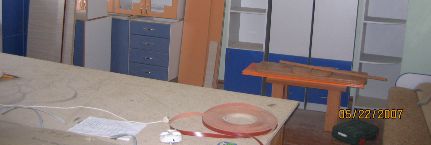
and 220 credits were already disbursed. 146 out of the credits disbursed are
provided from the RISP funds, 74 projects are financed from other sources.
As was mentioned above, 217 beneficiaries from the total number of contracts have
started the implementation of their Business Plans, elaborated in a joint effort with
the DOs. In 5 cases out of 217, the beneficiaries are starting the implementation of
their projects from their own sources, eventually considering accessing a loan at a
later stage.
The 217 businesses are located in all rayons but Anenii Noi. The maximum number
of businesses is in UTAG (28 RBs),
followed by Cahul, Edinet, Drochia and
Orhei with 19, 16, 12 and 11 RB
respectively. These rayons host more than
40% of businesses created so far. If
comparing regions by value of disbursed
credits, then UTAG is the first on the list
with over 4.3 million lei disbursed is
followed by Drochia with over 3.6 million lei
Production of furniture, Sarata Noua, Falesti,
and then Orhei with 2,65 million lei.
It should be mentioned that 178 out of 217 operational businesses have already
started to generate revenues. Also, 146 businesses were financed from RISP funds,
74 from other sources and 5 started implementation of the business plans from their
own resources. These 217 businesses created 736 jobs, which results in an average
of 3-4 jobs per RB.
The following table is showing the breakdown of the service agreements by the level
of access to the financial resources:
Service agreements signed
312
Credit applications submitted
254
Loans disbursed
220
RISP loans
146
Loans provided from other sources
74
Credit applications still being assessed by PFI
6
Credit applications rejected or withdrawn
26
Loans approved but not disbursed
2
If comparing the efforts of DAs in financial brokerage, we can mention MEGA with 83
credits disbursed each so far, CDR 58, ACA 45 and CCA - 34.
- 55 -
MANAGEMENT INFORMATION SYSTEM AND M&E
The analysis of the progress in the implementation of the RBD Component is
managed by means of the database application. The DAs were provided with the
application files from the beginning of their assignment. The functionality of the
database includes data integrity check and the generation of the progress reports.
On a monthly basis CAPMU is receiving the updated database files from the DAs
and the information regarding the credits disbursed within the Rural Finance
Component from the Credit Line Directorate (CLD). The information is crosschecked
with the DAs and the CLD.
CAPMU is regularly maintaining and updating the database, providing a more
enhanced functionality, both for the DAs and the generation of reports.
An application for the Credit Line Directorate was developed in July. The application
was submitted the CLD in the second half of July. The person responsible for this
application at CLD was trained to use it. The application is functional for data
introduction, verification of accuracy of introduced data, generating reports and
diagrams and managing information on monitoring carried out by CLD staff. The
application will smooth the process of introducing data, the transfer of data between
CLD and CAPMU as well as reporting, including quarterly reporting, to the World
Bank. But, in order for this application to operate efficiently, CLD should make sure
that the person responsible for this application will become an expert in Access data
bases, and CAPMU will provide necessary assistance as requested.
Rural businesses established with the assistance of the project are monitored both
by DAs and CAPMU. Development Agencies are in charge of carrying out monitoring
visits to verify the performance of businesses created as compared to a set of
indicators, which proved to be very useful during the first phase of the project. Thus,
the frequency of monitoring visits depends on the risk category assigned by DAs to
each business as a result of the last monitoring visit. Therefore, businesses in the
low risk category are monitored after 6 months from the last visit, those in the high
risk category in two weeks from the last visit, etc. In the annex RBD 4a one may
see the structure of businesses by risk categories. A set of indicators are collected in
order to record data on employees, average salary by gender or age, average salary
before project participation, etc. (Annex RBD 4a)
When visiting revenue generating rural business, DA consultants also collect
financial data on the business such as sales, profit margin, taxes and fees, VAT, etc.
- 56 -
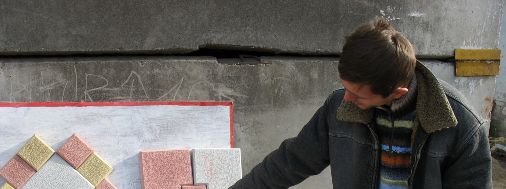

In annex RBD 4a cumulative data on employment and taxes and fees paid are
presented.
CAPMU is monitoring DAs by regularly and randomly organizing monitoring visits to
RBs created with the support of all DA consultants. The goal of these visits, in
addition to assessing created businesses, is to estimate the quality of
assistanceprovided by DA consultants, especially, post-creation assistance, but also
the accuracy of eligibility criteria for project participation.
POST-CRATION SUPPORT TO RBS
All four DAs have already started
the post-creation support for the
Rural Businesses created. In the
forth quarter of 2007 35 RBs
have received post-creation
assistance from the DAs. The
total number of businesses
involved in DAs post creation
support is 178 out of 217
operational, each receiving 1 to 4
days of support depending on the
Producerea articolelor din palcaj, Causeni
necessity. So, 82% of the Rural
Businesses that commenced their
operational activity have already asked for the assistance. Most of the support has
been provided by MEGA with 283 days of post-creation so far. CDR and CCA have
provided 109 and 82 days respectively, and ACA - 28.
The breakdown of the post-creation support delivered to RBs by category is as
follows:
The category of the services
Nr. of days
ACA
CCA CDR MEGA
TOTAL
Legal issues
6
38
25
67
136
Finance/accounting
12
11
36
65
124
Management
4
16
23
57
100
Marketing/sales
6
15
13
82
116
Technologic issues
0
2
12
12
26
Total
28
82
109
283
502
As shown in table above, out of 502 consulting days, 283 have been provided by
MEGA, representing more than 50% of the total. Four categories are most requested,
- 57 -
with an approximate equal distribution: legal issues, finance and accounting,
management and sales and marketing with 136, 124, 100 and 116 days respectively.
The technological area was required for only 26 post-creation assistance day. It
could be assumed that such a small number of days of technological support is not
the result of low demand from beneficiaries, but more due to the specialization of
development officers in 4 broad areas, but less in the technological one. In fact,
technological assistance and support is excellently provided by ACSA network.
ENVIRONMETAL TRAINING
In May June 2007 CAPMU has initiated a series of environmetal trening for the
development officers as well as for PFI credit officers. The training had the aim to
inform the stakeholders of the credit system in Moldova, and especially those
involved with RISP procedures, about the possible impacts of the rural business
diverse range of activities on the environment. Moreover, the training was to help
participants identify the mitigation measures for those impacts, based on specific
examples of RB created with the support of the project in the first phase.
The training has been organized by BIOTICA ecological society. A total of 10 gropus
of particiants have been trained over a period of 3 days each group. The topics
covered by the training included, interalia, the following:
§ Main impacts on water and land
§ Use of pastures and their pollution
§ Specific ienvironemtal impacts
§ National ecological legislation: Agriculture and busienss sector
§ World Bank environemtal policy: environental guidelines
§ Obtaining permissions for ceratin business activities
A total of 108 participants attained the trening sessions, including representatives of
CAPMU, DA, PFI and DLC. All participants have received handouts containing
legislation packages with laws and resolutions on environment, a guide for evaluating
a anking the level of risk of the busness activity (A, B or C), as well as a Reference
Manual on Environmental Assesment of the sub-projects within RISP.
Thus, the development officers have now a increased capacity to describe the
possible environmentyal impacts o in the business plan, and actually provide help
and advice also for the PFI staff.
- 58 -
RURAL FINANCE COMPONENT
CREDIT LINE IMPLEMENTATION PROGRESS
Loan IDA nr. 4157 MD, Credit Line 7 904 000 SDR (cumulative dates)
General information. With a view to implement the Credit Line (CL) of the Project
for financing and development of eligible small and medium rural enterprises, on
31.12.2007 Credit Line Directorate (CLD) disbursed to the PFIs subsidiary loans
amounting to 63.79 million lei and 433.6 thousands US Dollars. These funds were
allocated to finance 160 eligible sub-loans approved in the total amount of 81.02
millions lei and 542 thousands US Dollars.
According to the PFI's information the contribution of the beneficiaries for the
implementation of the sub-loans constitutes about 65.13 million lei or 40.25% to the
total amount of the sub-loans minimum requirement being up to 20%. The total
estimative cost of the approved sub-loans that includes the beneficiary's contribution,
co-financing of the PFI and the loan from DLC from the LC resources constitutes
161.82 millions lei.
Disbursement of funds from the CL and its assimilation by PFIs constitutes 46.06%
from the total equivalent in MDL; the share of the amount approved to be financed
constitutes 58.45%. The ratio of the disbursed amount to the approved amount of
the sub-loans constitutes 78.81%.
The total amount reimbursed by the PFIs constitutes 1098.75 thousands lei and
35.36 thousands US Dollars that constitutes 1.72% and 8.15% of the disbursed
amount respectively.
Interest rates for financing. The CLD interest rates for the Credit Line's resources
for PFIs for the respective interest period are the following:
Interest period
MDL
USD
01.02.06 30.07.06
12,45 %
01.08.06 31.01.07
11,00 %
6,55 %
01.02.07 31.07.07
14,05 %
6,37 %
01.08.07 31.01.08
11,77 %
6,38 %
The average commercial interest for financing the final beneficiaries applied by PFIs
to the sub-loans in lei (including the banks margin) constitutes 17.80% having a
- 59 -
range from 15% to 20.5%, and for the USD - 11.11% having a range between 10.5%
and 11.5% respectively.
Participating Financial Institutions. The following 7 local intermediary banks
activate within the Project:
1. MoldovaAgroindbank,
2. Fincombank,
3. Moldindconbank,
4. Victoriabank,
5. Mobiasbanca,
6. Banca Sociala,
7. Banca de Economii.
Information regarding the sub-loans approved, disbursements and the share of
the amount disbursed:
PFI
Number of the
Disbursed in
The share of
approved
million lei
the amount
loans
disbursed, %
MoldovaAgroindbank
49
14,06
20,35%
Fincombank
51
26,08
37,74%
Moldindconbank
21
10,45
15,12%
Victoriabank
19
8,09
11,71%
Mobiasbanca
16
8,42
12,19%
Banca Sociala
4
2,00
2,89%
Banca de Economii
0
0
0
Total
160
69,10
100%
Fincombank (FCB) is the most active bank that approved 51 sub-loans and provided
48 sub-loans, being followed by MoldovaAgroindbank (MAIB) with 49 sub-loans
approved and disbursed. Victoriabank (VB) approved and disbursed 19 sub-loans,
Moldindconbank (MICB) 21 sub-loans approved and 19 disbursed, Mobiasbanca -
16 sub-loans approved and disbursed, Banca Sociala - 4 sub-loans approved and
disbursed. Banca de Economii didn't begin the financing yet from the CL.
Fincombank has the largest share of the disbursed resourses in the total amount of
26.08 million lei (equivalent of the 2.12 1 million US Dollars), followed by
MoldovaAgroindbank in the total amount of 14.06 million lei (1.15 million US Dollars).
1 Exchange rate US$ / MDL 12.3
- 60 -
In turn, Moldindconbank disbursed 10.45 million lei (0.85 million US Dollars),
Mobiasbanca - 8.42 million lei (0.68 million US Dollars), Victoriabank 8.09 million lei
(0.66 million US Dollars) and Banca Sociala 2.0 million lei (0.16 million US Dollars).
The exchange rate US$/ MDL is 12.3.
Out of the total number of 160 sub-loans approved 152 sub-loans were approved in
MDL and just 8 sub-loans in USD; this fact denotes a prudent approach of the foreign
exchange rate risk by the beneficiaries, who, as a rule, does not have incomes in
foreign currency from the export of production.
The structure of PFIs disbursed sub-loans by size:
Amount
Value
Nr. of loans
(mil. lei)
< 50,000 lei
6
0.22
50,000 250,000 lei
55
8.05
250,000 500,000 lei
47
16.90
500,000 1,000,000 lei
40
30.52
> 1,000,000 lei
12
13.41
The average sub-loan size approved constitutes about 548 thousands lei (or
equivalent of 44.6 thousands USD), but the average sub-loan size disbursed
constitutes about 432.0 thousands lei (equivalent of 35.12 thousands USD).
The structure of sub-loans disbursed by size
0,22 mil. Lei
13,41 mil. lei
8,05 mil. lei
0,32%
19,40%
11,64%
50,000 lei
16,90 mil. lei
50,001-250,000 lei
24,49%
250,001 - 500,000 lei
500,001-1,000,000 lei
30,52 mil. lei
1,000,001 lei
44,15%
The average loan size provided by MoldovaAgroindbank constitutes 271 thousands
lei (22 thousands US $), which is the lowest one as compared to the average loans
size of other participating banks, demonstrating the bank's efforts in reaching the
Project's target to finance small beneficiaries. Fincombank shows an average of 511
thousands MDL that constitutes 41,5 thousands US$, Victoriabank 426 thousands
lei (35 thousands US$), Mobiasbanca - 526 thousands lei (43 thousands US$),
- 61 -
Moldindconbank - 497 thousands lei (40 thousands US$), Banca Sociala 500
thousands lei (41 thousands US$).
The distribution by the branches of national economy:
Branches of the national
Number of
Amount (mil.
economy
sub-loans
lei)
%
Trade
56
23.71
34.31
Agriculture
33
11.20
16.21
Services
26
11.79
17.06
Food processing
16
7.33
10.61
Trade and services
9
5.12
7.41
Production of construction
materials
6
3.18
4.60
Production and processing of
wood
6
1.55
2.24
Other
8
5.22
7.55
Total
160
69.10
100.00
Breakdown of sub-loans by branches of the national
economy ( mil lei)
Production of
Production and
construction
processing of
materials
wood 1.55
Other
3.18
3.26
Trade and
Trade
services
23.74
4.70
Food
Processing
Agriculture
7.23
Services
11.20
9.60
- 62 -
The maturity of sub-loans.
Maturity of
Number of sub-loans
Amount
%
sub-loans
approved
(mil. lei)
1year
0
0
0
1 3 years
23
3,35
4,85
3 5 years
89
35,95
52,03
5 7 years
30
21,08
30,51
7 years
18
8,72
12,61
The biggest share of sub-loans 52.03% are provided by PFIs for medium term (MT)
of 3 - 5 years, 30.49% of sub-loans - for long term (LT) having maturity between 5 - 7
years, 12.61% of sub-loans - for long term (LT) with maturity higher than 7 years (i.e.,
from 7 to 15 years). Just 4.85% of sub-loans granted for short term (ST) from 1 to 3
years, the fact that shows the availability of PFIs own credit resources for short term.
The distribution of sub-loans by the country region2. The financed sub-loans
cover all the country regions, with a relatively uniform distribution by number of sub-
loans financed. The most active are the central regions of the country having a share
of 36.89% (25.49 million lei) out of the total number of sub-loans. The northern part of
the country covers 32.07% out of the total number of sub-loans (22.16 million lei),
and 31.03% of sub-loans are financed in the southern region of the country (21.44
million lei).
The structure of sub-loans disbursed by the
country regions in mil. lei and %
South
North
21.44 mil lei
22.16 mil lei
31.03%
32.07%
Center
25.49 mil lei
36.89%
2 Distribution of rayons by region is as follows: North: Riscani, Rezina, Drochia, Donduseni, Edinet,
Soroca, Glodeni, Telenesti, Briceni, Balti, Singerei, Soldanesti, Floresti; Center: Orhei, Ungheni,
Nisporeni, Anenii-Noi, Dubasari, Criuleni: South: Cahul, Vulcanesti, Taraclia, Comrat, Ceadir-Lunga,
Hincesti, Leova, Causeni, Stefan-Voda, Cantemir, Cimislia.
- 63 -
Distribution of sub-loans by rayons:
Nr.
Name of rayon
Number of sub-
Amount of sub-
loans
loans
(thousand lei)
1
Anenii-Noi
2
1187.20
2
Basarabeasca
-
-
3
Briceni
2
704.00
4
Cahul
6
3540.00
5
Cantemir
-
-
6
Calaras
4
2292.00
7
Causeni
3
2112.80
8
Cimislia
2
1120.00
9
Criuleni
1
528.00
10
Donduseni
3
1704.00
11
Drochia
11
5655.20
12
Dubasari
1
40.00
13
Edinet
7
2978.70
14
Falesti
5
1837.20
15
Floresti
1
96.00
16
Glodeni
3
809.70
17
Hancesti
2
1072.00
18
Ialoveni
8
4630.40
19
Leova
1
968.00
20
Nisporeni
3
832.00
21
Ocnita
-
-
22
Orhei
6
2064.00
23
Rezina
8
3194.70
24
Riscani
17
3746.40
25
Sangerei
2
380.80
26
Soroca
-
-
27
Straseni
4
1798.40
28
Soldanesti
4
1056.00
29
Stefan Voda
-
-
30
Taraclia
11
2382.70
31
Telenesti
1
152.00
32
Ungheni
17
9021.00
33
Mun. Chisinau
3
1880.00
34
UTA Gagauzia
22
11318.30
Financing of first-time borrowers. One of the project objectives is to increase
access to finance rural areas, thus it is required that minimum 30% of the Credit Line
resources are provided to the first-time borrowers that didn't benefit from the formal
financial sector. According to the information of the PFIs presented so far, 47.5% of
- 64 -
the credit line recourses are provided to the first-time borrowers, which have no
previous experience of borrowing from the formal finance sector.
The other objectives. Another Project objective is creation of the new working
places in the rural area; so, with the Project financing contribution for the sub-loans
financed until now will be created about 988 new working places. It is important to
mention the participation of the women in the establishment of the business in the
rural area. Therefore, 37.5% of the managers of sub-loans financed are women.
Monitoring of sub-loans. With the view to PFIs fulfillment of Subsidiary Loan
Agreements conditions within the RISP Project and use of resources according to the
designated destination by beneficiaries, CLD monitored 90 (55%) of sub-loans out of
which 63 (or 43%) sub-loans were visited on site. Within monitoring of
MoldovaAgroindbank 17 sub-loans were selectively chosen, monitored and visited on
site. At Fincombank were verified 32 files out of which 19 were visited on site. At
Victoriabank 14 files were monitored and 9 were visited on site, at Mobiasbanca 13
sub-loans were monitored and visited on site. At Moldindconbank were examined 11
files and 9 sub-loans were visited on site. At Banca Sociala 3 sub-loans were
monitored and visited on site.
As a result of PFIs monitoring it was ascertained that not all the beneficiaries carry
out the procurement procedures correctly. The disbursements of the credit
resources by PFIs to the beneficiaries in some cases were delayed. Moreover, in
some cases the environmental review forms weren't completed properly, and in
some cases the environmental risk category wasn't attributed correctly. In most
cases the risk category C was attributed, which doesn't require taking mitigation
measures, while the risk category was B. Some PFIs didn't have the roll-over
accounts, in this way not respecting the art.13 of the Rural Investments Guidelines
(RIG) regarding the continuous evidence of the funds accumulated and not utilized
by PFIs for a continuous period of 3 months. The PFIs were informed regarding the
monitoring results.
Loan Evidence. With a view of ensuring the fulfillment of the requirements
stipulated by the Law of the Republic of Moldova nr. 419-XVI dated 22.12.2006 ,,On
the public debt, guarantees and public refinancing", for maintenance of the Public
register on the public refinancing ensuring monitoring and control of the participating
parties in refinancing from the public loan funds, likewise the organization of the
evidence of reflow loans granted to the financial intermediaries, CLD makes
accounting in separate analytical accounts opened in accordance with our
- 65 -
Accounting Policies for the year 2007. In order to avoid the risks, CLD accounts are
maintained in the National Bank of Moldova.
Daily accounting is made for all the entrances and withdrawals in and out of the
analytical accounts (with the distribution by loan currency); also the availability of
MDL and foreign currencies amounts is verified in CLD's accounts. At the end of
each quarter the generalization of all the economical-financial operations is made by
CLD for all the operations that were made during the quarter in the synthetic
accounts by creating all the reports related to the CLD's activity (including the
balance sheet) in accordance with the National Accounting Standards.
The reports on the refinancing resources of the CL and the balance of the PFIs debt
are presented quarterly to the Ministry of Finance.
Information regarding the disbursements and balance of PFIs within the RISP II
as of 31.12.07
Amount
Amount
Amount
%
Balance
Name of PFI
Currency
approved
disbursed
reimbursed reimb.
(debt)
MoldovaAgroindbank
MDL
17610200.00 14062560.00
0.00
0.00 14062560.00
Fincombank
MDL
30466844.00 23976511.00
8755.00
0.04 23967756.00
$
214000.00
171200.00
0.00
0.00
171200.00
Victoriabank
MDL
8985000.00 7108000.00
0.00
0.00 7108000.00
$
100000.00
80000.00
0.00
0.00
80000.00
Banca Sociala
MDL
2500000.00 2000000.00
18000.00
0.90 1982000.00
Moldindconbank
MDL
11916500.00 8991000.00
0.00
0.00 8991000.00
$
148000.00
118400.00
0.00
0.00
118400.00
Mobiasbanca
MDL
9537520.00 7630016.00 1072000.00 14.05 6558016.00
$
80000.00
64000.00
35360.00 55.25
28640.00
Banca de Economii
MDL
0.00
0.00
0.00
0.00
0.00
31.12.2007
81016064.00 63768087.00
1098755.00
62669332.00
542000.00
433600.00
35360.00
398240.00
Report Elaboration. In accordance with the conditions of the Rural Investments
Guidelines, PFIs present to the CLD quartery progress reports: (i) Report regarding
the Quality of the sub-loans Portfolio, (ii) Report regarding the Entrance and Use of
the funds from the roll-over account, (iii) Report regarding the financing of new
eligible sub-loans from the roll-over account in accordance with the reporting form
established by CLD and approved by World Bank.
Furthermore, CLD elaborated a number of analytical reports regarding the use of the
funds within the Project (Report on the disbursement and the balance of PFIs debt,
Report on the revolving funds disbursement and balance of PFIs debt, Report of
- 66 -
evidence of the approved sub-loans, Report of evidence of the disbursements made,
The list of the sub-loans monitored, Consolidated reimbursement schedule of the
principal amount, Interest rates graphics).
Financing of revolving funds accumulated from the principal amount and
interest reimbursement. With a view to ensure the continuity of the durable
realizations of the Project, following the accumulation of the interest and the
reimbursement of the principal amount by PFIs, the revolving funds were formed and
accumulated at the CLD accounts in NBM. Refinancing of the accumulated funds
will be done at similar conditions of Project's CL. Beginning October 26, 2007 3 sub-
loans amounting to 4 575 thousands lei (equivalent of 372 thousands USD) were
financed from the revolving funds. The average maturity of the granted loans is 8.3
years. The average interest rate applied by the PFI to the final beneficiaries
constitutes 16.44% including bank's margin. All the sub-loans financed from the
revolving funds are situated in the southern part of the country. Out of 3 sub-loans, 2
were allocated to the services branch and 1 - to trade sector.
Institutional capacities development for rural finance system.
Within the part C2 of the Project ,,Institutional capacities development for rural
finance system" CLD in collaboration with CAPMU organized training for the PFIs
employees for strengthening the institutional capacities for improvement of the credit
procedures of the investments projects, projects in agriculture and financial leasing.
Following the first round of training, 14 persons were trained from PFIs (i.e., from
Fincombank and Victoriabank) and CLD. The next round of training is planned to
take place on February 18, 2008.
Conclusions and Proposals. PFIs mentioned several times that the 100 thousand
USD limit for a sub-loan is insufficient and doesn't correspond to the beneficiaries
demand.
Regarding the procurement procedures of the goods and services in accordance with
the local practice to permit the selection of offers without the necessity of three
official proposals' evaluation for contracts having the equivalent less than 10
thousands USD (i.e., goods with well known prices, small local acquisitions,
procurement of spare parts for equipment, and prolongation of existing contracts,
etc).
- 67 -
With a view to facilitate the development of other branches of the rural sector (i.e.,
other than trade) and according to the World Bank recommendation, as of August 1,
2007 the financing of the trade sector is not encouraged until the percentage of this
sector will diminish to 20% (at the moment it constitutes 40.63 % from the total
disbursements out of the CL). In this way the financing of other industrial sectors will
increase, and creation of work places in other sectors including agriculture and rural
services will be promoted.
STRENGTHNING THE SAVINGS AND CREDIT ASSOCIATIONS INDUSTRY
The objective of this sub-component is to improve the legal, regulatory and
supervisory framework of the Savings and Credit Associations (SCA) industry, and
provide capacity building to the related institutions, primary the supervisory authority,
to ensure their long-term sustainability.
During the reporting period, continued the activities related to improvement of the
legal, regulatory and supervisory framework of SCA industry and some new activities
on building operational capacity of the new supervisory body were initiated.
IMPROVEMENT OF THE LEGAL, REGULATORY AND SUPERVISORY FRAMEWORK
For the proper execution of the new Law on SCAs, a set of supportive legal
documents were required to be developed. The project financed the activity of two
local consultants that assisted the specialists of the National Commission of Financial
Market (NCFM) to develop these regulations.
A. Regulation on the requirements towards the administrators of savings and
credit associations
The Regulation sets the minimum requirements regarding SCA's
administrators in order to insure a stable financial administration of
associations and, more specifically, minimize the risks of loosing members'
savings.
The requirements towards SCA's administrators include special requirements
regarding the level of qualifications, experience, studies, business reputation,
sibling connections, affinity and marriage and are grouped based on the
license category held by the association.
The provisions of the Regulation define the manner of confirmation in the
position, grounds for rejection of the application for confirmation as well as the
- 68 -
withdrawal of confirmations by the NCFM for persons previously approved in
the position of administrators for associations holding B or C licenses and
central association(s).
B. Regulation on assessment and approval of SCAs' business plan
Taking into the consideration the fact that the new Law on SCAs stipulates
that while applying for the issuance or re-issuance of license, the association
has to present to the NCFM for approval its business-plan for the next 3 years
of activity, specific common assessment criteria for business-plans were
development and integrated into a regulation.
In this way, the regulation establishes the drafting mode, assessment criteria
and business plan's approval procedure by the NCFM, being specified the
minimal requirements regarding the content, structure and form of the
business-plan, as well as regarding technical capacities and some
performance indicators for associations which intend to obtain a B license.
The identification of the minimal requirements for assessment and approval of
business-plans will allow the NCFM to take univocal decisions and
development of some realistic prognosis by the associations.
This Regulation has a temporary character and it is intended to be applied
until the licensing authority, according to the legislation, will become the
NCFM (October 01, 2008). After this date, will be applied the Regulation on
licensing of SCAs, that will take over the provisions stipulated in this
Regulation.
C. Regulation on issuance of notification for state registration of SCAs, including
the model Statutes
The goal of this Regulation is to establish a clear procedure for requiring and
issuance of notification for state registration of SCAs, the documents
necessary to be attached to the application for issuance of notification, the
reasons of rejection of application and the ways of informing of the
associations.
D. Regulation on licensing of SCAs
The Regulation includes norms that regulate the procedure of application for
and issuance of the license, licensing criteria, including the licensing
procedure for central association(s).
- 69 -
The Regulation was drafted for the situation in which the licensing authority is
NCFM, and respectfully it could be applied to associations after October 01,
2008.
E. Financial Prudential Norms
This document defines prudential and non-prudential standards for SCAs that
will hold A, B or C license and for the central association(s), as follows:
requirements on liquidity, assets and liabilities management and the
respective policy, loan policy, loan limits and provisions for loan losses,
writing-off of compromised loans and interests, transactions with affiliated
persons, investments and assets acquired in exchange of loan repayment
etc. Also, the Regulation sets out the institutional reserve composition as a
capital adequacy standard for A B C SCAs and central association(s),
referring to the minimum amounts set up in art. 33 of the Law on SCAs.
F. Draft of amendments to the National Accounting Standard 63 and Comments
to the NAS 63 and Chart of Accounts for the economic activity of enterprises
The necessity of amendment of the NAS 63 and of the Comments on its
application is due to their contradiction to the old Law on SCA nr.1505, the
new SCA Law nr. 139, the new Law on Accounting, as well to the actual
Financial Prudential Norms, approved in the late 2004 and recently abrogated
by the Government.
The Chart of accounts needs to be adjusted to SCAs necessities in recording
their operations and preparing financial reports, as well to comply with the
Ministry's of Finance general tendency of using a single chart of account by
different enterprises and organizations, no matter of their legal form or
proprietorship. The proposed amendments provide for change of the name of
certain accounts, introduction of new accounts of different classes
accompanied by methodology on their use.
G. Draft Decision of the MoF amending the Decision on approval and use of
Report of SCA on complying with the Financial Prudential Norms, no. 25 of
24.02.2006
The necessity of amendment of this document comes out of the new Law and
approval by the NCFM in the near future of the new Financial Prudential
Norms (mentioned above) that will replace the old Financial Prudential
Norms, approved by Government on June 28, 2004.
- 70 -
This draft sets out clear rules on filling in the above mentioned report, and
describes the way of calculation of indicators defined by the Financial
Prudential Norms.
H. Regulation on opening of branches and representative offices of SCAs
This Regulation is in compliance with the new SCA Law and is intended to
develop the legal framework of SCAs activity by setting out procedures for
opening of branches and representative offices of SCAs, and will be applied
both to new branches and representative offices and to new SCAs
established after reorganization.
I. Instruction on approval of SCA investment in securities of commercial entities
The draft stipulates the procedures for application, examination and approval
of the decision authorizing investments in commercial entities and the method
of informing the SCA about the taken decision.
SUPPORT TO THE NATIONAL COMMISSION OF FINANCIAL MARKET
During their assignment the consultants assisted the specialists of the NCFM on
other aspects related to legal, regulatory and supervisory framework of SCAs,
including examination and development of proposals, comments and objectives to
other laws and regulations and also advised the specialists on various aspects
related to their day-to-day work.
SAVINGS AND CREDIT ASSOCIATIONS' INVOLVEMENT IN MEDIUM AND LONG-TERM
INVESTMENT LENDING (A POJECT FINANCED BY THE SWISS AGENCY FOR DEVELOPMENT
AND COOPERATION SDC)
INTRODUCTION
The training project to support SCAs was implemented according to the Terms of
Reference under the Contract signed on June 29, 2005 between Swiss Agency for
Development and Cooperation (SDC) represented by the Cooperation office in
Chisinau, Consolidated Agricultural Projects Management Unit (CAPMU) and Rural
Development Centre NGO (RDC) concerning the granting of a contribution to the
Project "Savings and Credit Associations' involvement in medium and long-term
lending". These activities were implemented by RDC during the period of time
between July 01, 2005 and July 01, 2007 with an extension till August 31, 2007.
- 71 -
SCOPE OF WORK
The primary objective of the project is to improve significantly the access of the poor
rural population to medium and long-term investment funds and permanent working
capital. The project is also to contribute directly to the improvement of the institutional
capacity of Savings and Credit Associations (SCAs) and to strengthen, thus, the rural
microfinance system, build up capital assets in rural areas; contribute to poverty
alleviation and overall development of the rural sector.
The specific objectives of the project are to improve the overall financial sustainability
of SCAs and increase the efficiency of SCA loan portfolios by their diversification. It
was foreseen to provide training to mangers and employees of 200 strongest SCAs
in the network. The training is focused on analyzing the financial situation and
performance of SCAs, developing savings and loan products which would improve
the seasonality of the SCA loan portfolio, as well as contribute to increasing
operational flows in SCAs. The training should also cater for more diverse member
needs then what SCAs currently serve.
A training program was therefore developed and included the following topics:
- understanding of the SCA financial position
- business planning in SCAs
- new product development, including portfolio diversification
- marketing of SCA services
- liquidity and savings management (additionally agreed)
For assistance in the development of training materials, performance of training of
trainers to the local trainers, pilot training seminars and monitoring of training
delivery, Frankfurt School of Finance & Management (FS) was involved as consultant
to the project.
The content of each training module has been developed by FS together with RDC
and the local consultants, ensuring that the current issues for the SCAs are
addressed. While some of the issues addressed are possible for the SCAs to fully
practically apply first in 2008 when the new SCA law is in force (for example
development of products currently not allowed for SCAs, or larger scale of marketing
campaigns covering larger regions than one village), the main parts of the trainings
can be applied directly by the SCAs. A major focus has been laid on practical
application already in the seminars.
- 72 -
DEVELOPMENT OF TRAINING MATERIALS
The training materials were developed by Frankfurt School with support from the
RDC local experts. In a standardised way, the training materials contained:
- Detailed session guide, functioning as support for the local trainer providing the
training to the SCAs. The session guide contains the time plan, a list of media
and materials needed to be used for each part of the training. It also outlines
delivery methods as well as the main messages for each part of the training.
- Power point presentation/OH slides. The presentation is developed so that it
can be used either with Power Point or with OH slides
- Session summary, summarising the training in a reading document. The
summary is on the one hand developed as further reading for the participants to
refresh their knowledge. On the other hand, it also functions as a support for
the local trainers.
- Handouts, such as case studies, check lists etc. The handouts assist the trainer
to make the training interactive, participatory and practical.
After the development of the materials from the FS experts, the materials were
reviewed and amended by the RDC experts, ensuring a full adjustment to the
Moldovan context. All training materials were thereafter translated into Romanian. All
training materials are set up according to adult learning best practices, focusing on
active participation and practical examples
DIRECT SUPPORT IN FINALISING OF SCAS' BUSINESS PLANS
As mentioned above, besides the training on different topics, the project has provided
200 SCAs with training in development of a business plan. While the training
provided a first insight in the need of a proper business plan with short and long term
planning, the two day seminar could not be seen as sufficient for the SCAs to
independently develop their own business plans, as the absolute majority of the
SCAs had no written planning in place.
The 50 strongest SCAs were selected and offered support in writing a simple
business plan. Focused lied on developing a plan that on the one hand provided the
SCAs with enough information and plans to actually serve as a useful tool, and on
the other hand be simple enough to ensure that the SCAs later could independently
update the plan.
- 73 -
Each of the selected SCAs were visited at least twice, once for gathering of
information and discussions around the plans for the future, and next follow up times
to finalise the business plan and explain it for the SCAs.
Of the 50 SCAs, the FS expert was working with 15 SCAs together with the local
trainers. A frame for the business plans were set up and the local trainers were
coached in how to work with there SCAs. Thereafter, the local trainers finalised the
work with the remaining 35 SCAs.
Already during the first steps, it became clear that this support to the SCAs were
much needed while the training had provided them with knowledge on the different
steps of setting up a business plan, there was a clear lack of capacities for the actual
development of the business plan within the SCAs. The support of the experts, both
from FS and RDC, was therefore needed to a larger extent than previously assumed.
Also the lack of computer skills among the SCA staff, which also are not used to
writing texts, made the work time-consuming. Most of the SCAs needed support both
in the analysis and strategic planning as well as the actual writing of the plan, by
hand and with computers.
Nevertheless, the business plans were finalised for the SCAs, who much appreciated
the possibility to think strategically about their future. These plans will ease the
procedure of obtaining the operational license under the new law each SCA will
have to develop its own business plan in order to get the operational license.
Supported SCAs have over the project gained more insight into the need of a
business plan. Many of them have expressed that they only now realised the
importance of having their plans gathered in a document. While many of them have
ideas on what they want to achieve in the future, no one had anything in written
before starting the project.
The coaching of the local trainers took place mainly through on-the-job training the
local trainers were visiting the SCA together with the FS expert and were thereafter
working on the business plans together with the FS expert. In parallel, they worked
with the additional 35 SCAs independently and finalised successfully the work.
COACHING AND MONITORING OF LOCAL TRAINERS
At the start of the project in 2005, the local trainer pool had little exposure to
interactive training, functioning as facilitators and using the experience of the
participants. Instead, most of them were used to a more lecturing style of trainings.
FS has therefore ongoing worked with coaching of the local trainers during their
trainings.
- 74 -
For the next phase, the 12 strongest trainers among the original 24 were selected to
perform the trainings. These trainers were also further coached during the project life
time to further develop their training skills. They have participated in the second
training methodology seminar.
The coaching and monitoring rather rapidly set a focus on those trainers that needed
additional support. By early 2007, all the 12 trainers had reached a high level of
training skills the trainers had during one year made a remarkable improvement in
their role as trainers. This can also be seen in the level of independence of the
trainers, their own adjustments and ideas for the training materials, and the feedback
and active participation of the participants in the training. Due to the high skill level
reached by the trainers, the FS expert concluded the coaching already in March
2007. All trainers were provided with a certificate on the course. With these 12
trainers, RDC have an excellent trainer pool that should be used for training and
updates of training materials also in the future.
As a part of the set up of this local trainer pool, a set up of standardised training
materials were developed. The idea behind the work was to create a set of training
material standards for RDC with instructions attached to it. For trainings to be
developed by RDC in the future, the materials will be developed according to these
standard forms. The package of materials is done in line with the already developed
materials and includes session guide, session summary as well as formats for Power
Point presentations, handouts and case studies. Additionally, a short instruction gives
guidance to the most important issues to consider in the development of training
materials. The drafted formats were discussed shortly with the local trainers and
were adjusted thereafter to the current needs.
IMPACT AND NEED ASSESSMENT
To see the outcome of the provided trainings, it was agreed with SDC to perform a
small impact assessment. To perform an impact assessment only after training has
been performed is normally risky in terms of being provided with proper and honest
answers from the answering organisations. It is usually difficult for SCA to remember
what was done before the training and thereafter. Many might also have a need to
show their capacities, overestimating their capacities before the training. This was,
for example, seen in the section about business planning, where a majority of the
SCAs answered that some sort of business planning was in place already before the
training. During the work with the business plans, however, it became clear that none
of the participating SCAs had worked with business planning earlier. Any results
- 75 -
therefore have to be taken more as an indicator to how useful the training was for the
SCAs than a clear indicator on the impact.
Additionally, the impact assessment was combined with a need assessment to set up
a frame for the continuation of the project. The assessment took place in April and
May 2007. A separate report on the outcome was presented to SDC.
Methodology:
The assessment was being implemented in three steps:
1) Questionnaire to SCAs
Questionnaire to 30 SCAs (distributed over the regional centres). Focus group was
larger SCAs that are expected to expand once the new law is in place.
2) Interviews with SCAs
Direct meetings and interviews with 5 larger SCAs.
Additional direct input from FS Business Planning expert during visits to the SCAs.
3) Meeting with stakeholders
Meeting with stakeholders in the sector - RFC, RDC, SDC and CAPMU. The aim of
these meetings was mainly to discuss new steps of the programme.
Outcome:
As mentioned, an impact assessment taking place after the training programme can
of course not provide such an accurate result as an impact assessment that takes
place already from the beginning of the programme. However, it can show the trends
in the SCAs when it comes to the impact of the training programme. Both the
questionnaire and the discussions with the SCAs confirmed the importance of the
selected topics in the training programme. It also clearly shows that the trainings
have had an impact on the SCAs work in the respective topics. It can therefore be
concluded that the training programme has provided important input to further
strengthen and upgrade the work of the SCAs.
The discussions with the stakeholders confirmed that there is a need for further
support to the SCAs in Moldova if they are to remain as organisations also in the
future. The new law will force the SCAs that aim to be in the B-type or higher to
gradually increase the professionalism of their operations. At the same time, there
are at this point no direct plans for support to the SCAs to manage these changes.
The World Bank RISP programme will support the set up of the central SCA, and has
- 76 -
also declared that they need to assist SCAs who want to upgrade their operations.
However, no concrete plans for such a support seem to exist and the World Bank
welcomed the support from SDC in this matter.
From the SCAs themselves, the outspoken needs are much more concrete, focusing
on the problems today. One of the main issues that need to be addressed also to
ensure a development perspective for the SCAs, is to make them computer literate. It
is our experience that this is the most outspoken training demand from SCAs in all
informal discussions that has taken place during the last two years in the project. The
discussions with the SCAs have also pointed out a need for further support in legal
aspects, including proper registration of collateral as well as support during the
foreseen organisational changes needed under the new law.
Additionally, the impact assessment shows that while the trainings provided have had
an impact on the participating SCAs, they are not enough to ensure that the SCAs
are independently managing the issues addressed in the trainings. A follow up with
practical support is therefore needed to ensure a more extensive impact of the
training programme.
CONCLUSIONS AND LESSONS LEARNED
At the end of this phase, the targets of the period have all been reached. The number
of SCAs involved in the project was 200, total number of persons trained 600. 50
strongest SCAs have been trained in business planning, liquidity and savings
management. As for previous training, the feedback from the participants has been
very positive and the training has been seen as useful and necessary. Also the work
with the business plans have been very well received as mentioned earlier. It can
therefore be concluded that the project has been successfully completed.
RDC now have a well-trained pool of trainers to draw on with strong skills in
successful training of adults. Additionally, the developed training material standards
can be used by RDC to ensure a standardised library of training materials in the
future.
All training materials and trainings conducted have been done with a gender
mainstreaming perspective, trying to ensure equal participation between men and
women and materials focusing equally on men and women. During the training of
trainers, all participants equal participation has been discussed. The coaching of
local trainers has partly focused on how to get passive persons active in a group and
how to ensure that not one or a few people take over among the participants.
- 77 -
Computer illiteracy: the lack of computer skills among the SCAs creates a severe
bottleneck in their future development. When discussing with the SCAs, this has also
been the top priority for them for further training. It would be needed to start with
computer training in an early stage of the next project phase.
The staff in the SCAs is usually very committed to their work. However, most of them
have other work, own farms etc. Therefore their time is limited, which has an impact
on their availability. For a more extensive technical assistance programme, we would
therefore recommend to let the SCAs interested in support to apply for inclusion in
the programme. This would ensure an active participation from all parts.
RECOMMENDATIONS FOR NEXT PHASE
The current actions under the project were strained by the delays in the acceptance
of the new SCA law and the law on the mega-regulator. With the new law finally
being in place, this will also hopefully lead to changes in the SCA sector, which are
vital for the future growth and sustainability of the sector. The changes will, however,
require those SCAs who are interested in further expansion to also upgrade their
operations and need support in a foreseen set up of branches or mergers with
smaller SCAs.
The class-room training programme set up so far has addressed issues of urgency
for the SCAs today and has provided a first insight into issue that has so far not been
addressed at all by the SCAs. During the now ending phase, the project has also
supported the SCAs through direct support/technical assistance to ensure
implementation of the knowledge gained in the training. While class room training in
shorter seminars can be a good eye-opener for larger numbers of the SCAs, it needs
to be complemented with direct on-the-job support in a second step. This will to an
even larger extent be needed after the new law is in place.
FS and RDC would therefore, in line with the outcome of the need assessment,
suggest a further support to the SCAs through three main activities. The timing of
support need to be differentiated between measures that can be started straight
away, and those that need to await the new law in place.
1) Computer training
§ General computer literacy (Word, Excel, Internet).
Stage 1: class-room training of 200 SCAs
Stage 2: coaching and further training of the 50 strongest SCAs
- 78 -
§ Training in more advanced use of computers, including accounting of the 50
strongest SCAs.
The lack of computer literacy is one of the major bottlenecks for continued
development of the SCAs. For set up of future branch networks or more advanced
analysis tools, it is needed that the SCAs can work with computers.
It is foreseen that this support will be provided by RDC without additional expertise
from Frankfurt School.
2) Support in promotion of savings and savings and liquidity management
The provided support at this phase for the development of business plans has shown
that the SCAs often need additional support to also fully use the content of the
training. We therefore suggest providing the 50 strongest SCAs with direct support in
form of experts visiting them to locate problems and find tailor-made solutions for the
SCA.
All SCAs should be visited by an expert for review of current procedures,
identification of weaknesses and bottlenecks and development of suggestions for
improvements/action plan. The division of work should be set up in the same way as
the current support in business planning, i.e. the FS expert will work with a smaller
part of the SCAs together with the RDC experts. The RDC experts will thereafter
provide the remaining SCAs with support independently.
3) Institutional consolidation programme.
The new SCA law will bring new opportunities for SCAs to expand. At the same time,
a majority of the SCAs today currently lack the skills to fully address these upcoming
issues. It is planned that each SCA under the new law will have to apply to one of the
following categories of licenses:
§ The A-licensed SCA can only accept physical persons into membership, and
can only provide loans to members. The license is limited to one village.
§ The B-licensed SCA can accept only physical persons as members, but can
provide both loans and savings. The license will be regionally limited.
§ The C-licensed SCA can also have legal persons as members and provide all
types of financial services. The SCA with a C-license can operate all over the
country.
It is clear that when the new law is in place, the stronger SCAs will need support in
the merging/take over process. A possible branch network will among others require
- 79 -
the SCAs to look over their operational set up, their loan assessment processes and
their reporting. The new law will also give them new opportunities for development of
new products and further expansion.
We would therefore opt for the set up of an institutional consolidation programme for
the strongest SCAs under the conditions of the new law. The programme should
focus on those SCAs that are taking the lead in the consolidation process and
therefore can be expected to be the future remaining larger SCAs. We would suggest
a project set up where the SCAs actively apply for participation in the programme.
Additionally, we would suggest focusing on a smaller number of SCAs and providing
more in-depth support. SCAs with the intention to be registered as a "B" under the
new law can apply to be included.
A capacity programme of this kind would be more extensive than previous support
provided from SDC. It would require more staff, both from FS and RDC: While RDC
has a very strong track-record in training, this type of support would be more new for
them. Therefore, it would be important to ensure an intensive presence of the FS
experts in the beginning of the project, phasing out over the project lifetime.
The support is suggested to include:
Support in organisation and management for merging SCAs, including design of a
new organisational structure, set up of branch network, reporting, job descriptions,
credit policies and procedures etc.
Support in legal issues, such as changes of the statues and internal regulations,
registration of collateral and loan file documentation.
Training/ On-the-job coaching of SCA staff in analysis of clients, including
development of a loan analysis tool.
Direct support/coaching in product development, including marketing measures for
the new products.
- 80 -
PILOT LAND RE-PARCELING COMPONENT
GENERAL DATA
The technical assistance / project implementation has been awarded to a consortium
of which selection has been finished in June 2007.
The 18 month project period started 1. August, 2007, and the project will finish by
31.January, 2009.
The principal implementing agency of the project is the Ministry of Agriculture and
Food Industry (MAFI).
The technical assistance has been awarded to the consortium consisting of:
Niras AB, Sweden, (leading partner),
Terra Institute Ltd., USA with sub-contractors:
ACSA, National Agency for Rural Development, Moldova,
Orbicon A/S, Denmark
The project was launched during a short pre-project mission of the project manager
(PM) and team leader (TL) in the period 1. 4. July, 2007. The first project mission
took place in the period 27. August 5. September, 2007, with the participation of the
PM, TL and international land management expert. The second project mission of the
international experts was in the period 7. 12. October, 2007, where the main project
activities were the organization of a project launch workshop in Chisinau, the first
project training seminar and the first village workshop. The third project mission was
in the period 21.-26. November, 2007, where the main project activities were
monitoring of the project implementation and organization of the second training
village seminar on screening for environmental impact of the pilots.
According to the Terms of Reference (ToR) the project implementation consists of 17
project activities / tasks (ToR, section F). These are:
1. Finalize the selection of six pilot communities and ensure that they meet the
selection criteria in the ToR (section D).
2. In cooperation with MAFI, establish the framework for a project steering
committee.
3. Assist GOM in identifying international best practice for developing
cooperation procedures for the project implementation (between MAFI, other
government agencies and local government.
4. Develop an overall concept for how data from the land register of the ALRC
can be made available for the field work in the pilot locations.
- 81 -
5. Establish framework principles to ensure that there are no adverse
environmental impact from project activities.
6. Develop and carry out a training program.
7. Develop a public awareness campaign.
8. Assist the pilot communities to establish a local stakeholder committee in
each of the project sites, and ensure that they are integrated in the process.
9. Review and if necessary revise ownership maps for the baseline situation in
each village (prepare Plan 1).
10. Conduct preliminary investigations and prepare and disseminate area
development plans for each site.
11. Develop and put in place an approach for valuation of land in the project
areas.
12. Prepare and publish draft re-parceling design in each pilot village.
13. Prepare final re-parceling plans (Plan 2).
14. Develop and apply simplified procedures for registration and implementation
of agreements.
15. Assist local stakeholders and landowners in registration process and
obtaining of new land titles.
16. Organize two study tours in one western and one eastern European country
with successful experiences in land re-parceling / land consolidation.
17.
Describe implementation experiences and recommend national level
approach.
A project implementation plan has been elaborated during the inception period
(Annex Rep 1). This work plan gives the timeline of project activities, staff
assignment and reporting.
PROJECT ACTIVITIES IMPLEMENTED DURING THE INCEPTION PERIOD
During the inception period (August October 2007) the project implementation has
been prepared. Main project activity has been activity 1) Finalize the selection of six
pilot communities and ensure that they meet the selection criteria in the ToR. In
addition project activities 2, 3 and 4, 8 have been implemented together with the
prepatory part of activity 6 (training program). Activity 7 (public awareness campaign)
has been launched during the inception period and will continue through-out the
project period (see the respective sections below). Activity 8 (assist in establishing
local stakeholder committee) has been implemented in the six pilot communities
during the first village project workshops in October 2007. Finally activity 9
(preparation of ownership map Plan 1) and activity 10 (Preliminary investigations
and preparation of area development plans) were launched at the end of the
inception period (during the mission of the international experts in the period 7-12
October, 2007).
- 82 -
The main result of the work during the inception period has been the final selection of
six pilot communities and the establishment of the project organization. Further has
the inception period provided the necessary knowledge and understanding of context
and key issues and resulting adjustments and fine tuning of the project
implementation plan.
PROJECT ACTIVITIES
In the following sections of this chapter 3, each of the planned and implemented
project activities will be described and explained in details. The main purpose is to
turn the proposed approach into operation and provide a practical guide for the
implementation with specified roles and contributions for the involved institutions and
individuals.
PROJECT ACTIVITY 1: FINALIZATION OF THE SELECTION OF PILOT COMMUNITIES
The selection of 6 very suitable pilot communities was crucial for a successful
implementation of the project. This first project activity was started by MAFI before
the beginning of the project, 1. August, 2007.
Criteria and process for selection of pilot communities
The Terms of Reference for the project (section D) specifies 15 criteria of importance
for the selection of the six pilot communities. These are, not in order of priority:
1. Existence of family farms with potential for commercial farming and a desire
to form contiguous parcels and eventually enlarge the farms..
2. Fragmentation of parcels.
3. An existing land market (presence of both potential sellers and buyers).
4. Current and reliable land price information or a robust alternative for valuing
land.
5. Public land available (through sales and exchange) to catalyze the process.
6. A relatively small number of absentee owners.
7. A high level of completion of land reform / privatization and registration of land
ownership (on a national level, 85 % of rural properties registration is
expected to be completed by summer 2007).
8. A relatively high level of satisfaction among local landowners and
stakeholders with the privatization process and outcome.
9. Few land disputes and no problematic ones.
- 83 -
10. Soil with good potential for agricultural production.
11. Location within a designated economic growth area of the country (land re-
parceling can be linked to other development activities, including locations
participating in other RISP-II components).
12. Existence of digital cadastral maps and other thematic maps.
13. Plans / measures for sustainable local rural development and infrastructure
improvement.
14. Initiative and commitment from local government, including the willingness
and capacity of the Mayoralty Secretary to provide notary services for a
reduced fee.
15. Potential availability of local expertise in land re-parceling design and land
use planning (e.g. former staff of the USAID LPSP project or government
Planning Institute for Land Management).
Prior to the first mission of the project manager and the team leader during 1. 4.
July, 2007, the selection process was started by MAFI. The Council in each raion
was during the spring 2007 by MAFI invited to propose each three candidate
locations for the pilot communities of the project. According to MAFI, the raions were
asked to appoint the candidate communities based on the above mentioned criteria
in the ToR. Based on this, a list of 100 candidate communities was elaborated.
Subsequently and still prior to the project start, MAFI prepared a so-called "short-list"
of 17 villages based on the list of 100 villages / communities. A document was
prepared to try to show how these 17 communities meet the selection criteria.
During the July mission of the PM and TL the procedure for the finalization of the
selection process was agreed with MAFI (note dated 9. July, 2007, included as
Annex Rep 2). The main steps agreed to do before the first official project mission
27. August 5. September, 2007, were to:
· Ensure an open and transparent selection process.
· Add additional criteria for the selection.
· Amend the so-called "short-list" with additional villages from the initial list of
the 100 villages in order to be sure to have enough good villages on the
shortlist before the final selection.
· Collect more detailed information about the short listed villages.
· Develop an evaluation method to rate the villages against the criteria.
- 84 -
· Visit each of them to validate the collected information and (if necessary) add
additional information / description of the situation in the village.
Additional criteria
The PM and TL together with Mr. O.Horjan and Mr. D.Sevcenco and staff from ACSA
(sub-contractor) visited during 3. July, 2007, two of the 17 candidate villages on the
first shortlist; Opaci village and Tocuz village, both in Causeni raion, to get first hand
information and to validate the collected information on how these villages meet the
selection criteria. The team met with the mayor and staff at the Mayor's office in both
villages together with the Head of Agricultural and Food Industry Department from
raion I. Gluh and local farmers.
During this visit, it became clear to the contractor that it will be necessary to add
additional criteria for the selection and also to collect more detailed information on
how the short listed villages meet the criteria.
In Tocuz village it turned out that there is an unclear situation in relation to land
ownership / use of parcels. During the privatization, the villagers each were allocated
one parcel of arable land, one parcel of orchard and one parcel of vineyard.
However, the villagers decided to further sub-divide the parcels after species of trees
and type of grapes. This has resulted in the present situation where each landowner
use 3-4 parcels of orchard (e.g. apple, plum and pear) and 3-4 parcels of vineyard.
This was never registered on the cadastral maps and in the land register. Before a
land re-parceling project can begin in the village, it would be necessary to register the
actual situation with the high degree of fragmentation or alternatively to agree with
the villagers that they should go back to using the land parcels which they have the
title to. In Tocuz village around 800 hectares are affected by this problem. In relation
to the selection of pilot communities, such an unclear situation should be avoided.
The collected information to assess to which degree the 17 already "short-listed"
villages meet the selection criteria did not indicate this serious situation. Therefore
more detailed information is necessary in form of a short description of the actual
situation in relation to unclear ownership to the land parcels .During discussions in
Opaci and Tocuz villages, it was confirmed to the contractor that many villages in
Moldova are dominated by big corporate farms that use (mainly through lease
agreements) from 300 2000 hectares or more, often in more than one village.
Development of private family farms, which are the main target group of the land re-
parceling project, is very difficult in villages dominated by such corporate farms.
Therefore an additional selection criteria has been added:
- 85 -
16. Absence of big corporate farms in the village.
Method to rate the proposed villages against the criteria
The contractor has together with MAFI developed an evaluation sheet in order to be
able to evaluate to what extent the villages match the now 16 different selection
criteria. The candidate villages can score up to 100 points on 11 different issues. For
some issues in the interval 0-15 (the most important issues) for other issues in the
interval 0-10 and 0-5. The evaluation process has been carried out by the
established technical Working group. It has been the intention to make the evaluation
as thorough and objective as possible but also taking into consideration that limited
time has been available. It was important for both the contractor and MAFI to finalize
the selection process during the first official mission of the international experts
(August-September 2007) in order to launch the project activities in the field. A note
on the evaluation method is included as Annex Rep 2.
Finalization of the selection process
During July and August, the activities agreed on the July mission of the PM and TL
were carried out by MAFI together with ACSA. At the beginning of the first official
project mission of the international experts on 27. August, 2007, a second shortlist of
20 candidate villages had been prepared by MAFI and ACSA, who also had visited
the short listed villages to validate the collected information and to collect further
information when necessary. The Technical Working Group of the project met on 29.
August 2007 and evaluated the 20 villages short listed with the use of the above
mentioned evaluation sheet. During the evaluation process, five villages were
excluded from the shortlist, either because of:
a) a large number of land disputes / geodetic errors;
b) very large number of absentee owners;
c) lack of interest and commitment from local government.
The 11 best villages were selected and visited again by the Technical Working
Group during four days of the mission. Finally the Technical Working Group made
the final evaluation and selected the six best villages on the 4. September 2007 and
they were confirmed by Minister A.Gorodenco at a meeting on 5. September, 2007.
The selected villages are:
-
Busauca village, Rezina Raion (North)
- 86 -
-
Sadova village, Calarasi Raion (Central)
-
Bolduresti village, Nisporeni Raion (Central)
-
Calmatui village, Hincesti Raion (Central)
-
Opaci village, Causeni Raion (South)
-
Baimaclia village, Cantemir Raion (South)
PROJECT ACTIVITY 2: IN COOPERATION WITH MAFI, ESTABLISH THE FRAMEWORK FOR A
PROJECT STEERING COMMITTEE
A high level Project Steering Committee has been established according to
Governmental order no. 416 of 17. April, 2007 to ensure a smooth implementation of
the project, and to coordinate the interest of the different line ministries. The
committee is chaired by Mr. Anatolie Gorodenco, Minister of Agriculture and Food
Industry. This high level steering committee has (as of December 2007) not yet met,
but the Minister has informed the members about the project and start up of project
activities.
To supervise and coordinate the practical project implementation, a Technical
Working group has been established by decree of Minister A.Gorodenco (Annex Rep
3). Members of the Technical Working Group are key experts from MAFI, ALRC,
CAPMU, ACSA and the contractor. The Working Group is chaired by Mr. Stefan
Calancea, former Deputy Minister of Agriculture and Food Industry. The Technical
Working Group has met twice during both missions of the international experts in the
inception period (August / September and October 2007) and in the period between
the missions when it was necessary monthly. The Working group is coordinating the
on-going project activities between the contractor and MAFI. The Technical Working
Group played a key role during the finalization of the selection of the pilot
communities. It is the assessment of the contractor that the establishment of the
Technical Working Group will be a very important tool for the ongoing implementation
of project activities. Good working relations have been established between MAFI
and the contractor during the inception period. The work in the Technical Working
Group has contributed considerable to this.
- 87 -
PROJECT ACTIVITY 3: ASSIST GOM IN IDENTIFYING INTERNATIONAL BEST PRACTICE FOR
DEVELOPING COOPERATION PROCEDURES FOR THE PROJECT IMPLEMENTATION
(BETWEEN MAFI, OTHER GOVERNMENT AGENCIES AND LOCAL GOVERNMENT
The procedures for cooperation between the major project stakeholders (MAFI,
Cadastre Agency and local government) have been identified during the inception
period based on experiences from other similar international projects. A number of
initiatives have been put forward to ensure a smooth project implementation and
cooperation between the main stakeholders.
A high level Project Steering Committee has, as mentioned, been established with
representatives from the different relevant government institutions to ensure the
overall coordination of the project implementation. The daily work is coordinated
through the established Technical Working Group.
A memorandum of understanding for the cooperation between CAPMU, MAFI and
the Cadastre Agency has been concluded and the contractor has subsequently
signed a contract with the Cadastre Agency for purchase of cadastre data and
register information from the SI "Cadastre". At the regional level, the Raion
Agricultural Departments have been involved in the selection of the pilot villages. The
deputies of these departments are normally responsible for land re-parceling
activities in the raion and will act as liaison between the raion administration and the
project implementation. Staff from the involved raions is participating in the training
seminars.
Support and initiative from the Primaria's office in the six selected villages is crucial
for a successful project implementation of the pilot activities in the villages. This has
been one of the most important criteria for selection of the villages. To ensure the
good cooperation with the Primaria's office in the six villages, the contractor has
signed an agreement of cooperation with each of the Primaria's. This took place at
the project launch workshop in Chisinau on 10. October, 2007. An example of the six
identical agreements is included as Annex Rep 4. The agreement specifies the task
and responsibilities of both the Primaria's office and the contractor in relation to the
project implementation in the village.
A national project office has been established in the MAFI building in Chisinau (room
303) to ensure the daily coordination of activities between MAFI and the contractor.
The deputy team
- 88 -
leader, working full time on the project, is based here during the project period
together with the project assistant.
In each of the pilot villages, a local project office is established during October
November 2007. These local offices will be the base for the three local team
members throughout the project period and serve as a focal point for the project in
the village where the villagers, landowners and farmers can get in contact with the
project team. The local offices are being equipped with telephone, fax, PC and printer
by the contractor.
Also office of the Land Re-parceling Component Coordinator Mr.O.Horjan has been
established in the MAFI building in Chisinau (room 311) which was equipped with
telephone, PC, INTERNET and printer.
PROJECT ACTIVITY 4: DEVELOP AN OVERALL CONCEPT FOR HOW DATA FROM THE LAND
REGISTER OF THE ALRC can be made available for the field work in the pilot
locations
The overall concept for making data from the land register available for the project
has been developed during the inception period. The Land re-parceling process shall
be based on reliable and up to date cadastral information provided by ALRC. A
memorandum of cooperation was already concluded between CAPMU, MAFI and
ALRC before the start of the project in August 2007 according to which ALRC is
obliged to provide the contractor with the required information.
The cadastre agency owns digital cadastral maps in MapInfo format, while
registration data are provided in Arc View format. These two formats are not directly
compatible to each other. This means that updated information cannot be reflected in
both databases automatically. Therefore, identification of the ownership of land
parcels will have to be done manually. The contractor (Niras) has in October 2007
signed a contract with ALRC for purchase of cadastral maps (printed and in
electronical form) and register information from the land register. These data will be
used to prepare ownership maps (Plan 1) for each pilot village.
Cadastral data on pilot locations are available digitally and as a hard copy. Digital
maps in MapInfo format and registration records in Excel format is being provided on
CDs. Hard copy maps has been printed out for each village separately. The Cadastre
Agency has provided the plots of cadastral maps in scale 1:2.000 and plotted in A0
and A1 format. The six pilot villages are covered by 149 cadastral sectors. In total 60-
70 maps in A0 and A1 format have been plotted. The land parcels on the maps are
- 89 -
marked by the last 3 digits of the (10 digit) cadastral code as the first 7 digits (raion,
zone, massif and sector) are the same for all parcels on one sheet.
PROJECT ACTIVITY 5: ESTABLISH FRAMEWORK PRINCIPLES TO ENSURE THAT THERE ARE
NO ADVERSE ENVIRONMENTAL IMPACT FROM PROJECT ACTIVITIES
The main objective of the project is to contribute to the development of the
agricultural structures in the pilot sites through reduction of fragmentation of parcels,
enlargement of farm sizes and development of the family farms. All countries in
Western Europe have been through the same process since the end of World War II.
The result in most countries has been agricultural structures that are competitive in a
globalizing economy. However, a side-effect in many countries has been a decline in
valuable types of nature and loss of biodiversity.
It is very important to avoid that the re-parceling pilots can lead to a similar
development in the pilot villages. Framework principles will be established to ensure
that there is no adverse environmental impact from project activities. The project
activity shall have as an output that the field teams in each village can prepare a brief
environmental impact assessment (EIA) as an integrated part of the project activities
in the pilot villages. This activity will be implemented together with the elaboration of
a community area development plan for each pilot (see project activity 10).
According to the ToR for the project and also the Technical proposal presented by
Niras (January 2007) it was foreseen that activity 5 was to be implemented during the
inception period. The EIA is closely related to the up-start of the field activities in the
six pilot sites, which has not started before at the end of the inception period.
Therefore, the activity will be implemented immediately after the inception period
between November 2007 and February 2008. An international EIA expert will
together with the TL be responsible for the activity that will be carried out by each
field team together with project activity 10.
The international EIA expert at the second training seminar in November 2007
provided training and guidelines / checklist for assessment of the environmental
impact of project activities. The expert will evaluate and supervise the activities at a
second mission scheduled for January 2008.
PROJECT ACTIVITY 6: DEVELOP AND CARRY OUT A TRAINING PROGRAM
A well prepared training program is an essential precondition for successful
implementation of land re-parceling projects in six villages in Moldova. According to
Terms of Reference (section F) task 6 of the project is to Develop and carry out a
- 90 -
program of training for Moldovan counterparts and team members. Again according
to Terms of Reference (section G), the training program is supposed to be developed
as part of Group 1 activities immediately after the Inception Period. The contractor
has however developed the training program already during the Inception Period of
the project. This has made it possible to carry out the first training seminar
immediately after the recruitment / appointment of the six field teams in October
2007. The first training seminar was held on 10. October, 2007, in connection with
the project launch workshop with a total of 70 participants. The second training
village seminar on screening for environmental impact of the pilots was held on
Chisinau on 23.November, 2007.
The training program is based on international best practice for implementation of
land re-parceling / land consolidation pilot projects. The Food and Agriculture
Organization of the United Nations (FAO) has prepared training materials for land
consolidation pilot project. The training materials (text part and PowerPoint
presentations) are based on experiences from land consolidation pilot projects in
Lithuania and Armenia prepared by Mr. David Palmer, FAO Land Tenure Service,
with assistance from the team leader Mr. Morten Hartvigsen
Concept and target group for training program
It is not the intention of the contractor to carry out a regular training needs
assessment (TNA) as part of the project. The reason for this is, that the contractor
(Orbicon) has experience in implementation of similar land re-parceling / land
consolidation projects and the connected training and capacity building from similar
projects in Lithuania, Armenia and Croatia.
The Ministry of Agriculture and Food Industry (MAFI) has expressed an interest in
extending the training program to involve not only the directly involved stakeholders
and institutions. The background for this is a wish from MAFI to train as many as
possible for the planned future scaling up of the pilot activities to a national land re-
parceling / land consolidation program.
Two different target groups have thus been identified for the training:
· Staff at institutions and counterparts directly involved in the implementation of
the six land re-parceling pilot projects.
· Staff from local and central Government not directly involved in
implementation in the six pilot locations (e.g. staff from Raion Agricultural
Departments in raions not selected for the pilots, etc).
- 91 -
Training and supervision of directly involved stakeholders and counterparts
The training is carried out through a combination of class room training and on-going
supervision of the field teams. The class room training is given by the international
experts during 5 training seminars spread over the project period, each time
introducing the next activities of the field work.
The main target group for the training program is the six field teams, relevant staff of
MAFI, central and local staff of the Agency for Land Relations and Cadastre (ALRC)
and local Government (both at raion and village level). It is expected that 40 50
people directly involved in project implementation will be trained during the project.
Objectives of training program for directly involved stakeholders and counterparts
The training shall give the field teams and MAFI the necessary skills to implement the
pilots. The training will give important contribution to capacity building in the field of
land re-parceling / land consolidation and can thus build the basis for a subsequent
national program for land re-parceling / consolidation (scaling up based on pilot
experiences).
The training seminars will also serve as an important part of teambuilding and
dissemination of experiences between the six field teams and the national level
experts (both from the contractor and MAFI).
Content of training program for directly involved stakeholders and counterparts
The main basis for the training program will be the FAO training materials mentioned
above. The FAO materials consist of 12 units (text part and PowerPoint for each
unit):
1. The general concept of land consolidation pilot projects.
2. Selection of a community for the pilot project.
3. Public awareness campaigns.
4. Inventory of cadastral and registration records at the start of the project ("plan 1").
5. Situational analysis and needs assessment.
6. Community area development planning.
7. Starting negotiations with landowners and other stakeholders.
8. Valuation of land parcels.
9. Draft re-allotment plan ("plan 2").
10. Finalization of re-allotment plan ("plan 2").
11. Registration and implementation of the signed agreements of transfer.
- 92 -
12. Results of the project.
In addition to the FAO materials the following issues will be covered in the class room
training:
1. The concept of voluntary and market based land re-parcelling
2. Experiences with land re-parcelling / land consolidation in Central and
Eastern European countries during the last 15 years.
3. Practical experiences from land consolidation pilot projects in Lithuania,
Armenia and Croatia.
4. Western European land consolidation practise.
5. Environmental impact assessment.
The training materials have been translated into state language.
The class room training will be conducted through 5 training seminars spread over
the 18 month project period and each time introducing the up-coming activities of the
next period. According to the Project Implementation Plan (Annex Rep 1), the training
seminars are tentatively scheduled for:
1. Training seminar: October 2007
2. Training seminar:
November 2007
3. Training seminar: March 2008
4. Training seminar:
August 2008
5. Training seminar:
October 2008
Each seminar (except the first) will include classroom training, practical
demonstration (e.g. demonstration of landowner interviews and / or negotiations),
and a presentation of the status for the work and experiences from each of the six
teams.
PROJECT ACTIVITY 7: DEVELOP A PUBLIC AWARENESS CAMPAIGN
An important component in the initial stages of a land consolidation / re-parceling
project is to provide information to a wide range of institutions, stakeholders and
individuals about the project concept.
Public awareness campaign during the selection of pilot sites
Information about the project has been an important part of the selection of six good
pilot sites. Information about objective of the project, expected outcome, main
- 93 -
principles and selection criteria and process has been given as part of the selection
process during meetings with local government (at raion and village level).
Project launch workshop
A project launch workshop was organized on 10. October, 2007, in the MAFI
conference hall in Chisinau with around 70 participants from MAFI, Cadastral
agency, other Government institutions, the agricultural departments in raions with
pilot villages, from the pilot villages and staff of the contractor (including international
experts). The purpose of the workshop was officially to launch the project and create
awareness about the project concept and expected outcome. The workshop program
is included as to this report.
Project brochure
A project brochure has been prepared after the inception period of the project. The
main target group for the brochure is the local stakeholders (landowners, farmers,
villagers and other stakeholders). The brochure also serves as a short
comprehensive introduction to the project for all other interested groups. The
brochure provides information about project objective and concept, expected
outcome and timetable. It is available in both the state and English language.
Public awareness campaigns during implementation of the six land re-parceling pilots
Information to the six selected pilot communities is a crucial part of the project
implementation in order to ensure the local participation and interest in the pilots from
the beginning. The information will decides the above mentioned brochure mainly be
given through a series of four workshops in each of the pilot communities (Annex
Rep 1).
The first workshop in each pilot community was organized immediately after the
recruitment of the six field teams in October 2007. The international experts
participated in the first village (Sadova village) on 11. October, 2007. Around 50
landowners and villagers from Sadova participated together with representatives
from the five other pilot villages. The Sadova workshop thus served as preparation of
the subsequent five workshops that was organized by the local staff of the contractor
together with MAFI.
All villagers, landowners, stakeholders and local authorities were invited in each of
the villages. This first village workshop explained project objectives, expected project
outcome, implementation principles, and the sequences of the activities. The first
village workshop launched the first activities in the area, the preliminary investigation
- 94 -
with elaboration of an area development plan and interviews with landowners and
other stakeholders.
Project website
A project website has not been established yet. But it will be done soon in order to
disseminate information about the project to a broader audience in-side and out-side
Moldova with an interest in land re-parceling, land consolidation and other related
issues. The website will be available at www.re-parceling-moldova.md.
PROJECT ACTIVITY 8: ASSIST THE PILOT COMMUNITIES TO ESTABLISH A LOCAL
STAKEHOLDER COMMITTEE IN EACH OF THE PROJECT SITES, AND ENSURE THAT THEY ARE
INTEGRATED IN THE PROCESS
The project implementation will be based on a voluntary participatory and bottom up
approach. Establishment of a local stakeholder committee in each pilot site is an
important part of this approach. In Sadova village a local stakeholder committee with
seven members was elected at the first village launch workshop on 11. October,
2007. In the other five villages, similar committees were elected at the similar first
village workshops during the second half of October-beginning of November:
§ Sadova: First village workshop organized on 11. October, 2007.
§ Baimaclia: First village workshop organized on 19. October, 2007.
§ Busauca: First village workshop organized on 23. October, 2007.
§ Bolduresti: First village workshop organized on 25. October, 2007.
§ Opaci: First village workshop organized on 26. October, 2007
§ Calmatui: First village workshop organized on 2.November, 2007.
The overall task of the committee is to represent the general interest of the different
types of landowners and villagers in the re-parceling design process. The committee
is, as mentioned, an important part of the participatory and democratic approach and
of the voluntary concept. The committee will thus serve as a safeguard, monitoring
the negotiation and design process in each pilot site, to ensure that no-one is forced
or put under pressure to participate against their interest or wish.
The committee of landowners will take an active part in project implementation
mainly concerning more overall issues such as definition of sub-areas and design
goals for these and the valuation process. The main principles and "rules of the
game" for the re-parceling design will also be discussed and agreed upon with the
committee.
- 95 -
PROJECT ACTIVITY 9: REVIEW AND IF NECESSARY REVISE OWNERSHIP MAPS FOR THE
BASELINE SITUATION IN EACH VILLAGE (PREPARE PLAN 1)
When dealing with an ownership situation, where several hundreds of landowners
(each with 3, 4 or more parcels) in each village will have the possibility of
participating in land re-parceling, it becomes essential to have the necessary tools to
collect, structure, analyze and display the needed data. The basic data on "who owns
what" can be provided by either the Territorial Cadastral Office (TCO) or by the
ALRC. It has been the experience during the inception phase that the available
cadastre and register information in the villages (at the Primaria's office) is not
updated in five of six villages since 1999. Therefore, it was necessary to receive up-
dated cadastral data (maps and register data) from the Cadastral Agency. A contract
for purchase of cadastral maps (printed and in electronical form) and register
information from the land register has been signed by the contractor (Niras) and
ALRC in October 2007. The Cadastre Agency has delivered the maps and register
information for all six pilot villages during the second half of October 2007.
In order to have a tool that provides the needed overview for the planning process,
and for the need of visualizing the situation for the landowners, it is necessary to
prepare owner maps Plan 1 - that are especially designed for the re-parceling
project. These maps are based on the cadastral map, but have been refined by the
use of different colors and / or patterns and serial numbers to identify the different
landowners. It will most likely be necessary to sub-divide the cadastral map for the
whole village into smaller geographical units in order to be able to identify the very
small plots and their owners.
It is expected to use local short-term mapping and GIS experts from the ALRC to
prepare the maps (Plan 1) before starting the preliminary investigation (project
activity 10). It is the intention of the contractor to contract ALRC to prepare the owner
maps (Plan 1) for each of the six pilot villages. During the landowner interviews as
part of the preliminary investigation, each field team will verify the information on the
map through the interviews with the landowners. Final versions of Plan 1 will be
prepared based on this verification.
The activity has been launched during the inception period. The draft Plan 1 maps
were finished December 2007. Each field team will then verify the information on the
map through the interviews with the landowners. Final versions of Plan 1 will be
prepared based on this verification by a local private company.
- 96 -
PROJECT ACTIVITY 10: CONDUCT PRELIMINARY INVESTIGATIONS AND PREPARE AND
DISSEMINATE AREA DEVELOPMENT PLANS FOR EACH SITE
Project activity 10 is one of the most complex activities of the project with several
activities going on in the pilot villages at the same time. The two main elements are:
· Interviews with individual landowners and stakeholders
· Elaboration of community area development plan
Interviews with landowners and other stakeholders
Based on the elaborated owner structure (register information and map Plan 1), the
local project team in each of the six pilot sites will interview the landowners and other
stakeholders (including leaseholders). The purpose of the interviews is to collect data
about the local agricultural structure (production data and user data) and to identify
the individual landowners initial interest in the land re-parceling project (willing to
participate or not, sell land, buy land, exchange land, lease land in or out). Since the
project concept is completely voluntary, it is most important to discuss and explain
the project concept with the individual landowners and observe their interest in
participation.
It will be a special challenge for the six local project teams in a relatively short time
period (November 2007 March 2008) to conduct interviews with more than 7000
persons. In practice, the landowners are invited to the Primaria's office (local project
office) in order to reduce the time consume. Output of the interviews will be a file on
each landowner with register information about the land parcels owned and initial
wishes for the landowner's participation in the project (filled in interview form). An
interview form was developed by the contractor immediately after the project
inception period. Thematic maps will be prepared such as:
· User maps (the user of each land parcel)
· Land mobility map (map indicating parcels that the owner is willing to sell or
exchange)
The preparation of the draft re-parceling design will be based on the information
collected during the landowner interviews also.
Focus group discussions
As part of the participatory approach, a number (3-5) of focus groups will be
established in each of the six pilot sites comprising members of different categories
- 97 -
(e.g. women farmers, part-time farmers, subsistence farmers, commercial farmers,
etc.).
Group discussions are important supplements to interviews with individuals as
different (and sometimes dissenting) views on the same issue can be expressed by
different people and can be discussed subsequently by the entire group. The local
design teams should facilitate the discussions. Group discussions are also an
instrument to ensure influence from the weaker groups (e.g. women and subsistence
farmers) on the project design.
Community Area Development Plan
Elaboration of a community area development plan is an integrated part of the six
land re-parceling pilot projects. Land re-parceling in the Moldovan context is seen as
part of a broader rural development "package". The main target group of the project,
the smaller family farmers, is facing a large variety of problems. Re-parceling alone
(e.g. reduction of fragmentation and enlarged farm sizes) can not stand alone.
Elaboration of an area development plan for the pilot communities defines a local
rural development context in each of the pilot sites in which the land re-parceling
project will be implemented. The area development plans will be prepared over a
period of 5 months (October 2007 March 2008) in parallel with the landowner
interviews.
The community area development plan will be prepared in each of the pilot areas
during and after a series of three public workshops for the villagers and local leaders.
The main focus will be on change of land use (immediate changes and medium-long
term changes). Elaboration of the plan is an interactive process with the following
steps:
· Preparation of a plan that shows the current land use (baseline)
· Draft land use plan
· Final land use plan
It is the objective of the exercise through a participatory approach to seek and reach
consensus in the community about the proposed changes in the land use / area
development plan. The main tool for this is the above mentioned series of three
workshops, consultations with the Primaria's office and other local leaders and also
the input from the individual landowners and stakeholders from the conducted
interviews. Existing village development plans will be taken into account. The
process will identify local obstacles for development and try to address solutions to
- 98 -
the problems, which will vary from community to community. A few examples
illustrate the range of possible local planning issues:
· Fragmentation of land parcels
· Too small farm sizes for cost-effective production
· Lack of infrastructure (rural roads and access to parcels from roads)
· Dysfunction of irrigation system
· Erosion problems
· Issues of nature and environmental protection
· Weak marketing of local agricultural problems
· Lack of cold storage facilities
· Need for enlargement of resident areas of the community
· Need for enlargement of the cemetery
· Others
The output of the project activity is the community area development plan with
immediate, medium- and long term measures for local development. The subsequent
land re-parceling projects will not fully implement the area development plan but they
will support the immediate changes of land use and try to re-structure the owner- and
user structure to the identified measures for local rural development.
PROJECT MANAGEMENT, STAFF ASSIGNMENTS AND REPORTING
To ensure the overall coordination of the project implementation, the high level
Project Steering Committee has been established by GOM. At the operational level,
the Technical Working Group has been established to ensure close cooperation
between MAFI and the contractor.
The contractor has established a team of international and local experts as well as
members of the six local planning teams to work on the project. MAFI has appointed
a number of project counterparts at the national level and a planner for each of the
six local teams. The following chapter will describe the staff assignments of the
contractor and MAFI allocated for the project implementation as well as the reporting
in relation to the project.
Staff assignments
The contractor has from the members of the project consortium allocated a number
of experts for the project implementation. The project staff of the contractor and the
time made available for them on the project is indicated in the Project Implementation
- 99 -
Plan (Annex Rep 1). The staff members and their function will in the following be
briefly presented:
International experts:
Project Manager, Mr. Bo Rosenqvist, Niras:
The PM has the overall responsibility for the project implementation on behalf of
Niras AB, Sweden, the leading partner in the project consortium. The PM is
responsible for all contractual matters. Besides the management activities, the PM
will technically be involved in the Implementation of Land Re-Parceling Pilots in Six
Villages Inception Report agricultural aspect of the community development planning
in the pilot villages. It is tentatively foreseen that the PM will be on a total of 7
missions to Moldova during the project period.
Team Leader, Mr. Morten Hartvigsen, Orbicon:
The TL is responsible for the technical implementation of all project activities. It is
tentatively foreseen that the TL will be on a total of 13 missions to Moldova during the
project period and will have a total input of around 7 months (including work from his
home station).
Land Management Expert, Mr. David Eghiashvili, Terra Institute:
The expert will participate throughout the project period. His main areas of
responsibility are in relation to the cooperation with the Cadastre Agency and (maps
and register data) and the subsequent registration and implementation of land re-
parceling agreements. It is tentatively foreseen that the expert will be on a total of 10
missions to Moldova during the project period and will have a total input of around 4,
25 months.
Land Valuation / Land Re-parceling Expert, Mr. Jan Thaysen, Orbicon:
The expert will be responsible for the land valuation process and contribute to the
land reparceling planning / negotiations (project activities 11 and 12). It is tentatively
foreseen that the expert will be on a total of 3 missions to Moldova during the project
period and will have a total input of around 0, 75 months.
Expert in Environmental Impact Assessment, Ms. Karina Kitnaes, Orbicon:
The expert will be responsible for the establishment of the framework for assessment
of project impact on environment and nature. It is tentatively foreseen that the expert
will be on a total of 2 missions to Moldova during the project period and will have a
total input of around 0, 50 months.
- 100 -
Community Development and Land Registration Expert, Mr. Vahagn Grigorian, Niras:
The expert will participate in the preparation of community area development plans
and in the registration and implementation of land re-parceling agreements. ). It is
tentatively foreseen that the expert will be on a total of 3 missions to Moldova during
the project period and will have a total input of around 1, 00 months.
Local experts:
ACSA, the local member of the project consortium, is providing the local experts of
the contractor.
Deputy Team Leader, Mr. Dumitru Sevcenco, ACSA:
The deputy TL is responsible for the daily work at the project office in Chisinau and in
the six pilot villages under the overall supervision of the PM and TL. He is working
full-time throughout the project period.
Project Assistant / Office Manager, Mr. Maxim Gorgan, ACSA:
The project assistant is coordinating all project activities under the supervision of the
deputy team leader. He is also the office manager and translator of the project.
Community Development Expert, Mr. Valentin Ciobotaru, ACSA:
The Community Development Expert is recruit from the beginning of November
2007 as local community development expert during the period of the preparation of
community area development plans in the villages (November 2007 March 2008). It
will be a half time position for five months. The person will be based at the project
office in Chisinau but spending most of the time in the villages supporting the field
activities.
Driver, Mr. Victor Cujba, ACSA:
The driver is employed full time during the project period.
Six field teams:
Following the terms of reference for the project, it has been agreed with MAFI, to
establish a local planning team in each of the six pilot villages. Each team is
consisting of:
One land re-parceling planner employed by ACSA and funded through the project
budget.
One land re-parceling planner appointed and funded by MAFI.
- 101 -
Local Cadastral Engineer from the staff of the Primaria in the village (funded by the
village budget).
The six local teams will be strongly coordinated and supervised by the deputy team
leader, the project assistant and MAFI. The international experts will spend as much
time as possible in the villages during the missions.
The members of the six local teams are:
Sadova:
ACSA planner: Valeriu Agapie
MAFI planner: Evghenii Tihonov
Cadastral engineer: Petru Gavrilita
Busauca:
ACSA planner: Ion Ciobanu
MAFI planner: Aurel Scurtu
Cadastral engineer: Alexandru Donica
Calmatui:
ACSA planner: Angela Andreev
MAFI planner: Vasile Breahna
Cadastral engineer: Gheorghe Rusu
Bolduresti:
ACSA planner: Petru Andronache
MAFI planner: Grigore Florea
Cadastral engineer: Serghei Vitoroi
Opaci:
ACSA planner: Nicolai Blaj
MAFI planner: Ilie Gluh
Cadastral engineer: Petru Rau
Baimaclia:
ACSA planner: Vasile Goroshenco
MAFI planner: Constantin Gafenco
- 102 -
Cadastral engineer: Ghenadie Vovcenco
MAFI staff:
Former Deputy Minister of Agriculture and Food Industry, Mr. Stefan Calancea:
The Deputy Minister is Chairman of the Technical Working Group, member of the
Project
Steering Committee and in charge of the land re-parceling activities in MAFI.
Head of Land Consolidation Department, Mr. Ion Botnarenco:
Technical responsible for land re-parceling activities in MAFI and member of the
Technical Working Group.
MAFI Consultant, Project Coordinator, Mr. Oleg Horjan:
Employed by the World Bank / CAPMU to coordinate project activities in MAFI,
member of the Technical Working Group.
- 103 -
AVIAN INFLUENZA CONTROL AND HUMAN
PANDEMIC PREPAREDNESS AND RESPONSE (AIHP)
ANIMAL HEALTH COMPONENT
GENERAL DESCRPTION
The epidemiologic situation regarding the Avian Influenza (AI), caused by the Avian
Influenza virus (H5N1) worldwide, is much tensioned now. For the first time the virus
H5N1 of the AI was registered in Hong Kong in 1997, where 18 persons got sick and
6 of them died.
The AI virus H5N1 reappeared in 2003 at birds in few Asian countries Cambodia,
China, Indonesia, Japan, Laos, and Thailand.
Between 2005-2006 there were registered new cases of AI among poultry and wild
birds in few countries: Russia, Hungary, Mongolia, Turkey, and Kazakhstan and in
the neighbour countries with the Republic of Moldova Romania and Ukraine, zones
where previously the virus was not diagnosed.
The Avian Influenza brought out huge economic damages in the poultry sector in all
affected countries (only in Asia over than 15 billions), and there is the peril of its
turning into a possible pandemic between humans.
In November 2005, concerned governments, technical agencies, and donors met in
Geneva to plan an international response to the risks that Avian Influenza will harm
human health and cause large-scale economic losses. In January 12, 2006, the
World Bank's Board of Directors approved up to $US 500 million in financing for the
Global Program for Avian Influenza (GPAI) that will assist eligible countries. The
GPAI is an Adapted Program Loan (APL) that operates horizontally, across
countries. Also in January, governments and donors met in Beijing, China and
pledged $US 1.9 billion to the fight against Avian Influenza.
From this sum, Republic of Moldova benefits of $US 10.6 mln ($US 3.6 mln for
Animal Health Component).
All activities during this working year, 2007, are divided in accordance with the
Operational Book as follows:
- 104 -
ANIMAL DISEASE SURVEILLANCE & DIAGNOSIS
MIGRATORY BIRD MONITORING
MIGRATORY BIRD STUDY IN THE REPUBLIC OF MOLDOVA
Migratory birds, and particularly waterfowl, pose a major risk of spreading the H5N1
virus, the causative agent of Highly Pathogenic Avian Influenza (HPAI), from one
geographic area to others.
Given the potential risk of H5N1 introduction in Moldova by migratory birds, it is
essential to obtain and maintain reliable and up-to-date information on the incidence
and characteristics of migratory birds' presence and their permanent routes in our
country and to continue regular monitoring. After these studies, it will be easier to
determine the areas of risk in the country. In May, there were elaborated
Terms of Reference for MIGRATORY BIRDS IN THE REPUBLIC OF MOLDOVA.
The TORs are divided into 2 phases:
Phase 1: Inventory of Existing Information on Migratory Birds
Scope of Work: to provide an initial baseline of essential information. This should
include statistical data (geographically referenced as necessary), graphic
presentations and appropriate maps, and should cover all species that have been
observed in significant numbers. Particular emphasis should be placed on species
and especially waterfowl that have been observed to stop and rest, or even to winter,
on Moldovan territory. This study will be realised by the Institute of Zoology of the
Academy of Science of the Republic of Moldova. The contract will be signed between
MAFI and Institute of Zoology, contract amount being of 30 000 MDL.
Phase 2: Migratory Bird Study 2007-2008.
Scope of Work: to obtain an up-to-date assessment of present migratory bird
incidence, presence and behavioural patterns in Moldova. These observations shall
be undertaken at appropriate locations in the northern, central and southern parts of
the country, with particular focus on waterfowl. Information shall be collected on
species, numbers, flight routes and habits, start, peaks and end of migrations,
location and duration of rest stops (and of wintering, if applicable), behaviour while in
Moldova (e.g., feeding habits and locations), likely origins and destinations, and other
pertinent aspects.
In the middle of July, it was signed the contract (Contract nr. 2/C/2007/056630)
between the Ministry of Agriculture and Food Safety and the Institute of Zoology of
- 105 -
the Academy of Sciences of Moldova regarding the study of migratory birds in the
Republic of Moldova.
At the end of September, there were received the Initial Report on the inventory of
existing information on migratory birds (in Romanian and English), and the Draft
Report from the Institute of Zoology of the Academy of Sciences of Moldova.
· Initial Report contains general and introductive information about the
migration of birds in Republic of Moldova, the most important species that
have been observed on our territory.
· Draft Report contains information about:
- The aquatic birds and waders, their migrations and wintering on the Republic of
Moldova territory,
- Study methods of birds' migrations,
- Short abstract of birds' migration studies in Moldova,
- Importance of the birds' migration study results for the prophylaxis of Avian
Influenza.
On the November, 15, 2007, there were received the Final Report on the inventory
of the existing information on migratory birds (in Romanian and English).
· Final Report contains information about:
- Study methods of bird
migrations,
- Short abstract of bird migration
studies in Moldova,
- Importance of the bird migration
study results for the prophylaxis of
the avian influenza.
Thus, the avifauna of Moldova is
represented by 119 species of
aquatic birds and waders from
nine orders Podicipediformes -
5, Gaviiformes - 2, Pelecaniformes
- 4,
Ciconiiformes - 12,
Anseriformes -28, Gruiformes - 6,
- 106 -
Charadriiformes - 47, Coraciiformes 1 (105 species) and Passeriformes (the rest of
14 species). The fauna of the republic is represented by many species that don't
breed on our territory, but can be met only on migration. From 42 species the
majority belong to the Siberian (15) and Arctic (13) fauna types. These are various
species of curlew, gooses, ducks, and gulls. As result of visual and radiolocation
studies on the territory of former South-West USSR the main bird migration ways
through the territory of Moldova were established:
MODERNIZATION OF VETERINARY LABORATORIES
In accordance with the Procurement Plan, it was established to rehabilitate and to
modernize three veterinary laboratories from the country: Republican Central
Veterinary Laboratory (necropsy room) from Chisinau and two satellite laboratories
from Cahul and Drochia.
VETERINARY LABORATORIES RECONSTRUCTION
in March, 2007 a civil engineer was selected for laboratories reconstruction
supervision.
In the first half of May, together with the IDA mission (from 9 through 17 May 2007)
and civil engineer, Ion Raileanu, there were visited central laboratory from
Republican Centre for Veterinary Diagnosis and regional laboratories from Drochia
and Cahul. In accordance with the proposed modification plan of Drochia laboratory,
received from John Bashiruddin, the World Bank specialist for project improvement
and laboratory modification, civil engineer elaborated Terms of Reference for the
company which will modernize and refurbish laboratories, elaborated the plan of the
new module for Avian Influenza virus diagnosis and rehabilitation of the veterinary
laboratory from Drochia, elaborated the plan for rehabilitation of the veterinary
laboratory for AI virus diagnosis from Cahul. The consultant elaborated the estimative
calculation of the projection and reconstruction of these laboratories:
- Planning of the new module for Avian Influenza virus diagnosis and
rehabilitation of the veterinary laboratory from Drochia 146 000 USD, after
the World Bank mission from December 2007, this work was appreciated in
309 000 USD.
- Planning and rehabilitation of the veterinary laboratory for AI virus diagnosis
from Cahul 196 000 USD.
- 107 -
In November, the tender was launched and the proposals were being received until
December, 24, 2007, but after the World Bank mission from December 2007, it was
decided to gas this object and the budget was enlarged - 239 000 USD and the
deadline for proposal receiving was enlarged to January 2008.
During this period the engineer visited frontier points from Leuseni (Republic of
Moldova) and Albita (Romania) and elaborated Terms of References for disinfection
systems from the frontier.
After these visits, together with Anatolie Lungu, Head of the State Veterinary Frontier
and Transport Service, there were revised technical specifications for disinfection
equipment for the frontier. It was established to settle down 7 disinfection systems at
the following points:
· Lipcani,
· Otaci,
· Criva,
· Giurgiuleti
· Tudora,
· Briceni,
· Sculeni,
· Ungheni. (disinfection system for trains )
In October 2007, the tender took place and there were received 6 proposals, in
December 2007 it was selected the company "Caliconix" SLR, with total amount of
1,033,192 MDL.
LABORATORY EQUIPMENT
The shopping for laboratory equipment was divided in two lots:
1. FLUORESCENE MICROSCOPE and automatic ELISA line;
2. Other equipment (for RVDC and regional laboratories).
In order to accelerate the procurement process, it will be hired an international
consultant who will help project component in the following:
· Review, verify and confirm proposed specifications of items of laboratory
equipment, supplies and incinerators,
· Organise trainings for the selected laboratory staff.
- 108 -
There were elaborated Terms of References for the International Consultant (Animal
Health Component) for Laboratory Specifications and Training and it was selected
the consultant Ieva Rodze, deputy director on diagnostic of animal diseases
matters, National Diagnostic Centre from Latvia. The first visit is established for
January, 21 2008.
In June 2007, it was organized the shopping for laboratory equipment (ELISA
IMMUNO-ANALYSER and Microscope).There were received 4 tenders for ELISA
and 8 tenders for Microscope. The first three tenders for the Microscope do not
correspond to technical specifications, their procurement is postponed. ELISA
IMMUNO-ANALYSER was procured (36 060 euro), and in August, selected
company delivered laboratory equipment at the Republican Center for Veterinary
Diagnosis (Elisa Reader DTX 880, Elisa Incubator Stat-fax 220, Automatic Dozatron
10-100 mcl, Automatic Dozatron 100-1000mcl, Automatic Dozatron 1-10 mcl).
In order to do the best for laboratory refurbishment, it was made a visit to Bucharest
between April 23-25, 2007. There were visited "Cantacuzino" National Institute of
Research-Development for Microbiology and Immunology; UNICEF representation in
Romania; UN House; National Sanitary Veterinary and Food Safety Authority,
General Sanitary Veterinary Directorate.
For these three selected laboratories there were organized a tender and in the
nearest time they will be supplied with office equipment (18 000 USD):
· 6 computers
· 6 printers
· 2 laptops
· 1 projector
Laptops and projector were delivered at the Veterinary Medicine Directorate and they
will be used for staff trainings, and computers will be distributed among those three
laboratories, two computers for each laboratory (RVDC, Drochia, Cahul).
In December 2007, there were organised an official trip for ,,Molecular Diagnostic of
the Avian Influenza virus" training, organised by the NAMRU-3 laboratory (Naval
Research Unit nr.3), which took place in Cairo, Egypt, between December, 09-13
2007. There was established two persons' departure:
Vitalie Chilaru chief of the Republican Veterinary Diagnostic Centre (RVDC);
Violeta Dicusar virusolog doctor at the RVDC.
- 109 -
A day before departure, Vitalie Chilaru, was not allowed to go.
ANIMAL HPAI CONTROL AND OUTBREAK CONTAINMENT
PROTECTION AND DESINFECTION EQUIPMENT
In January, in cooperation with Human Health Component Coordinator, there were
improved technical specifications for protection and disinfection equipment.
At the end of February, it was organised the shopping for disinfectants acquirement.
Technical committee insisted that disinfectants proposed by first four ranked
companies did not correspond to their needs and should be rejected. The shopping
was cancelled, technical specifications were revised and the shopping was re-
advertised with the revised technical specifications. Revised technical specifications
comprise specifications for two lots of disinfectant: the first lot disinfectant for
poultry farms disinfection, disinfection of equipment, devices and vehicles (quantity-
25 tons); the second lot disinfectant for laboratory use, air and drinking water
disinfection, glutaraldehyde free (quantity-5 tons).
In April, it was organized the second shopping for disinfectants acquirement on the
revised technical specifications. In accordance with the presented tenders, there
were selected two companies for disinfectants delivery:
LOT 1 - disinfectant for poultry farms disinfection, disinfection of equipment, devices
and vehicles (25 tons, 5$ per kg) S.C. AGROTERRA IMPEX S.R.L., Moldova.
LOT 2 - disinfectant for laboratory use, air and drinking water disinfection,
glutaraldehyde free (5 tons, 10,5$ per kg) I.C.S. AGRIMATCO-SERVICE S.R.L.,
Moldova.
At the beginning of June 2007, I.C.S. AGRIMATCO-SERVICE S.L.R. and S.C.
"AGROTERRA IMPEX" S.L.R, in accordance with the contract, delivered the
disinfectant at the RVDC.
At the beginning of March, in accordance with presented tenders, it was selected the
company for personal protective equipment delivery "Belnis"SLR, from Moldova
and after the contract subscription, the equipment (5000 pairs of boots, masks,
gloves etc.), of a total amount of 82.640 $ USD, were delivered at the RVDC.
In June 2007, it was organized the shopping for disinfection equipment. Selected
company for sprayers' delivery is "Belnis" SLR, Moldova (total price of the contract
USD 24,539.02). Selected company for electric hot water high-pressure cleaning
devices is "Olsom" SLR, Moldova (total price of contract USD 6,820.20). Date of the
contract award is June, 14, 2007. In accordance with the contract, "Belnis" SLR
- 110 -
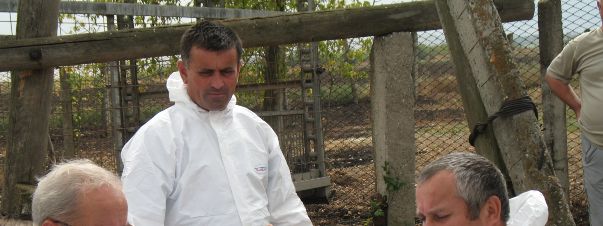
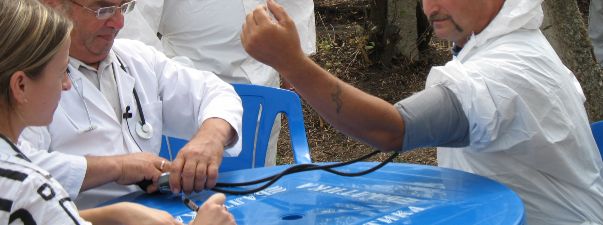
delivered 135 manual sprayers and 45 engine sprayers at the RCVD and
"Olsom"SLR delivered three washing machines at the State Veterinary Service for
Transport and Frontier.
SIMULATION EXERCISES
A real-time simulation exercise was prepared and took place in the period of August
6-10, 2007, in Anenii-Noi rayon, village Chetrosu and tried to involve all the state's
institutions that have responsibilities in the eradication of possible avian influenza
outbreaks in the country. The official opening of the seminar took place in Chisinau
and was chaired by the Ministry of Agriculture and Food Industry.
The Seminar and Simulation Exercise that took place in the Republic of Moldova was
necessary taking into consideration the geographical location that represents the
border between EU and Eastern European countries, mentioned in the European
legislation as third countries. In the international epidemiologic context, taking in
consideration the Avian
Influenza Report, the
central veterinary
services from the
Republic of Moldova
must demonstrate their
abilities of rapidly
intervene and control
an outbreak disease,
contributing to the
prevention of spread of
Avian Influenza. More
than that, taking into consideration that it never faced this kind of epidemiological
situations there is the risk of not applying the legal provisions in force and not
involving all the decision making factors from the Republic of Moldova, because most
of the times it is considered that Avian influenza is in the strict responsibility of the
veterinarian, which constitutes a major error.
The simulation exercise of avian influenza was the only method to confirm that the
prophylaxis and fighting against Avian Influenza can be performed only by
accomplishing the whole complex of economic/organizational, sanitary and veterinary
special measures. This can be accomplished only by a common effort of all the
component ministries and institutions of the Republican Antiepidemic Extraordinary
Commission.
- 111 -
By the Avian Influenza Simulation Exercise in the Republic of Moldova the following
major objectives were followed:
· Establishing and knowledge of the participants about the central and district
Command Chain in the Republic of Moldova;
· Knowledge by the participants of the legislative provisions in force on
diagnosis, surveillance and fighting of avian influenza;
· Inter-ministerial and inter-institutional collaboration on central, district and
local level;
· Training of the district and municipal chiefs epidemiologists so as to be able
to send forward the information and train all the territorial veterinary
structures;
· Rapid intervention with active participation of the institutions and departments
that are part of the Republican Antiepidemic Extraordinary Commission and
District Antiepidemic Extraordinary Commission for preventing the disease
spread and preventing its transmission to the population;
· The ability in setting up the most efficient measures of avian influenza
eradication according to the actual European legislation;
· The transparency of actions and collaboration with the international forums in
order to gain trust and develop trade with member states of EU and with other
countries.
More than that, the participants of the simulation exercise had to prove their capacity
of:
· Analyzing the situation of a rapid change of the disease;
· Taking decisions on practical aspects on disease eradication measures as
depopulation of infected livestock, destruction of infected carcasses, cleaning
and disinfection procedures as well as strengthening the restrictions on
movement;
· Taking action and coordinate the eradication measures, control and
prevention of the disease together with other official institutions and private
organizations;
· Evaluating the control measures from the national legislation in force;
- 112 -


· Using the contingency plans as well as the operational manuals; this means
being familiar with the working procedures during outbreaks and using the
formulas created for disease notification, evaluation and compensations for
poultry livestock, sending the specimens for laboratory examinations,
restricting the measures etc.
For the first time, in Avian Influenza Simulation Exercise, on the territory of the
Republic, were implicated all ministries and institutions, excepting Ministry of Finance
and Ministry of Transport. Also took part European Union representatives. In Avian
Influenza simulation exercise took part chief-epidemiologists from all rayons and
cities from the country which is very important for: the instructive and demonstrative
character of the exercise, communication between districts, the application of the
same surveillance and
control measures for
avian influenza. The
action was real! Every
step of the simulation
exercise was carried out
properly: the protection
equipment was used
during the action
(although the
environment temperature
exceeded 39 degrease Celsius) birds were euthanized and incinerated, disinfections
were carried out, compensations were given to the owners, etc. Through this inter-
ministerial and inter-institutional collaboration were proved that Avian Influenza is not
only the responsibility of veterinaries, but it is a responsibility of all state institutions.
The participants, no matter their specialization, demonstrated a great interest to
acquire all the necessary knowledge for managing an Avian Influenza outbreak. The
participants were offered housing and food, which is an important aspect that should
not be neglected even if the evolution of such a disease is a "crises situation".
Between September, 26-27 took place an Avian Influenza Simulation Exercise
Workshop, organized by World Health Organization, Health Protection Agency and
World Bank.
General purpose of this simulation exercise workshop was:
- 113 -
· To fortify the level of preparedness in case of Avian Influenza outbreaks on
the territory of the Republic of Moldova.
The objectives of this Avian Influenza Simulation Exercise Workshop were:
· To examine the way of interaction and communication among veterinary
sector, public health sector and other associated authorities;
· To examine Public and Animal Health components from the Contingent
Plans;
· To analyze the role and responsibilities of veterinary and public health sectors
in case of Avian Influenza outbreak;
· To examine the way of communication with mass-media and with the public
during Avian Influenza outbreak;
· To examine the methods of gathering information and supervision;
· To examine the HPAI control methods.
At this simulation exercise workshop took part 47 participants from the country and 4
international experts:
John Simpson (Health protection Agency Centre for Emergency Preparedness and
Response),
Liz Turner (Health protection Agency Centre for Emergency Preparedness and
Response),
Hilary Moulsdale (Health protection Agency Centre for Emergency Preparedness and
Response),
Ana Paula Coutinho (Regional Office for Europe World Health Organization).
COMPENSATION FUND
In case of the Avian Influenza occurrence on the territory of the Republic of Moldova,
it would be necessary to cull poultry. In order to encourage farmers to report
outbreaks of Avian Influenza, it was decided to offer compensation for culled poultry.
In January-February, 2007 the blanks for Compensation Fund were studied and
necessary changes were made, in accordance with Operational Book.
At the end of March, the blanks (2216 units) were elaborated and printed:
1. FARMER'S CERTIFICATE CONCERNING CULLED BIRDS EVIDENCE;
2. SKETCHY REGISTER CONCERNING CULLED BIRDS EVIDENCE;
3. MONTHLY REPORT CONCERNING CULLED BIRDS EVIDENCE;
There were also printed models for simulation exercise.
- 114 -
OTHER ACTIVITIES
INSTRUCTIVE SESSIONS, SEMINARS, WORKING VISITS, OFFICIAL TRIPS
In March, 2007 it was signed a contract between UNICEF and World Bank in order to
organize trainings on "The role of communication in Avian Influenza warning".
In April 2007, there were organized several trainings: "The role of communication in
Avian Influenza warning" by UNICEF for ecologists, a group of foresters, hunters,
custom workers,
exceptional situations workers. The lecturer of this training was the consultant of
Animal Health Component of the Project.
There was organised an Instructive Seminar regarding the Ecologic Management
Plan Implementation for the ecologists from the republic. The seminar was organised
by the NGO "Ecospectr". There were printed 1000 copies of the ,,Ecologic
Management Plan" in Romanian and 500 copies in Russian, which were distributed
among ecologists and veterinarians.
It was conducted training sessions on the prevention of HPAI and on outbreak
communication for government officials, professionals and other specific groups, with
the participation of about 430 persons (outbreak communication training for public
officials, media training for spokespersons on public health crisis response, training
for hotline operators, staff of the Customs Department, hunters and foresters, staff of
the National Department of Emergency Situations, etc.).
On March 27-28, there was organized a seminar: "Avian Influenza a new and
curious subject for journalists". It took place in Molovata Noua. It was produced and
broadcast four audio spots and five video & animation spots in two languages, it was
prepared and broadcast radio and TV thematic programs and spots on four radio
stations ("Moldova", "Noroc", "Sanatatea", "BBC") and two TV channels ( TVM,
ProTV ), it was published thematic articles and interviews on HPAI prevention
targeted at different groups of the population in the national and local newspapers
("Flux", "Saptamina", "Comsomoliscaia Pravda").
In order to propagate information about Avian Influenza, in cooperation with Ministry
and Veterinary Medicine Faculty specialists, there were elaborated user manuals and
guidebooks for specialists, including normative acts on AI, contingent plan,
operational book. These guidebooks were printed by UNICEF (1000 units) and were
distributed among veterinaries.
- 115 -
On behalf of the United States Department of Commerce, Commercial Law
Development Program (CLDP), it was organised a Workshop on the Coordination of
Sanitary and Phytosanitary (SPS) Procedures and Working Group Meetings IV. The
SPS Workshop and Working Group Meetings took place in Bucharest, Romania, on
May 2-4, 2007. It had the following objectives:
1. To report on the progress towards the achievement of the previously determined
goals of the Food Safety, Animal Health, and Plant Health Working Groups.
2. To discuss problems and determine solutions to achieving in each working group:
Animal Health
· Identifying the impediments to, and determining solutions for, timely shipping
of samples to the OIE reference laboratories;
· Harmonizing the measures to be taken on a regional level regarding the
presence or suspicion of HPAI in neighbouring countries.
During the three days program, there were discussed such problems as:
· National Animal Health Protection Programs;
· HPAI and New Castle Disease Monitoring Programs: Surveillance and
Measures Against the Spreading of Poultry Disease;
· Veterinary Import Requirements Regarding HPAI and New Castle Disease.
Through this workshop, it was possible to find out about:
· Other countries experience of table-top and field simulation exercises
addressing HPAI and New Castle Disease (delegations which had conduced
such exercises presented a brief Power Point presentation describing how the
exercises were organized, funded and carried out).
· Necessary steps to design and implement effective simulation exercises.
· Necessary points in simulation exercise script;
· Other countries experience in the implementation of the project;
· Other countries experience in Compensation Fund administration.
In the middle of September, between September, 17-21 2007, took place a working
visit in Ukraine. The aim of the visit was the Theoretical-Practical International
Conference on Poultry, which was unfolded in Sudac, Ukraine. The official trip took
place at the invitation of Poultry Association of Ukraine.
The most important tackling problems were:
· The level of Ukrainian poultry development;
· The major problems in poultry development;
· Avian Influenza monitorization programm in Ukraine;
· New methods of fighting against infectious diseases;
- 116 -
· New kinds of disinfectants and their usage (Ecocide-C);
· New kinds of vaccines in New Castle and Avian Influenza supervision, etc.
HUMAN HEALTH COMPONENT
GENERAL CONTEXT
For successful implementation of the project, taking into consideration its complexity,
the World Bank missions took place on 7-17 Mai 2007 and 17-27 October 2007. The
objectives of these missions were the following: to carry out project supervision and
to assist the project management and implementing institutions in moving the
implementation agenda forward. The team met with the Pr. Ion Ababii, Minister of
Health, representatives of WHO, UNICEF and all national counterparts.
Detailed technical notes were prepared by the missions and provided to the project
managing and implementing institutions. The Aide Memoires summarized the current
status of Project implementation and the essential next steps.
For successful implementation of the project objectives taking into considerations the
World Bank (WB) mission recommendations the following tasks were performed by
the national counterparts:
1. The composition of the rapid response team in compliance with WHO
recommendations was revised. In accordance with the NCPM order nr. 58
from 15.06.2007 two rapid response teams were established in the Chisinau
Municipality with the following composition: 1 epidemiologist, 1 epidemiologist
assistant, 1 disinfectionist, 1 disinfectionist assistant;
2. The list of the necessary equipment for rapid response team was established
and approved by the General Director of the NCPM;
3. The Terms of Reference (TORs) and Operating Guidelines for Rapid
Response Teams, based on WHO recommendations were prepared and
approved by the General Director of the NCPM;
4. The technical specifications for disinfectant product were revised and
approved;
5. The agreement for laboratory testing of suspected HPAI specimens with
WHO Reference laboratory in the UK was formalized.
- 117 -
HUMAN HEALTH CAPACITY BUILDING SUB-COMPONENT
REVIEW OF REGULATORY SYSTEM
The team of experts from NCPM led by Dr. Bahnarel Ion, MD, General Director and
Prof. Spinu Constantin, Doctor, Vice-director, Department of virology; Dr. Scoferta
Petru, Head of the influenza laboratory, Romancenco Elena, Scientific Researcher
and Ursu Angelina, Human Health Component Coordinator met together on 24
February 2007 to discuss the next steps which should to be undertaken in order to
review the existing regulatory framework (guidelines and plans) for Human cases of
AI and Pandemic Preparedness in the following areas: background information on
Avian Influenza and Influenza Pandemic; surveillance; outbreak containment;
collecting, preserving and shipping specimens for the diagnosis of avian influenza
A(H5N1) virus infection; clinical management; infection Control; National
Preparedness Plan for Human Pandemic Influenza. Two groups of national experts
were established. The first group of experts had to be responsible for reviewing,
updating and development of the regulatory framework for Human cases of AI and
Pandemic Preparedness in accordance with available international standards and
guidelines. The second one for reviewing, updating and development of the
regulatory framework for Seasonal influenza.
A number of standard operating procedures (SOPs), as a key task and the
foundation for an adequate response of the public health care system to the threat of
HPAI were updated and elaborated by the team from the National Center for
Preventive Medicine (NCPM) and Component Coordinator (CC). The following
guidelines have been prepared: (i) case definition; (ii) protocols for collecting,
preserving and shipping specimens for the diagnosis of avian influenza virus
infection, including guidelines for air shipment of specimens; (iii) intra-hospital and
health facility infection control guidelines; (iv) reporting protocols; (v) patient
management and clinical guidelines with therapeutic protocols for HPAI patients; (vi)
recommendations for protection of persons involved in activities to control and
eradicate outbreaks of avian influenza with instructions for the utilization of personal
protective equipment with hand hygiene technique and respiratory protection; (vii)
guidelines for seasonal vaccination and definition of risk groups for HPAI infection;
and (viii) guidelines for travelers.
The WB expert emphasized that this represented good progress, although several
other guidelines were missing (such as Terms of Reference for Rapid Response
Teams (RRT); waste management guidelines with action plans both for laboratories
and hospitals; detailed reporting procedures; etc.) or needed upgrading (such as the
- 118 -
"Plan of Interventions in Case of Outbreak of Avian Influenza in Poultry or Humans").
In accordance with the WB mission recommendations all national documents and
guidelines for Human cases of AI and Pandemic Preparedness before being
presented to the Minister of Health for formal approval were translated in English in
order to be reviewed by an international consultant in accordance with available
international standards and guidelines. The TORs for translator were prepared and
approved by the national counterparts in June. The translator Ms. N. Culava was
engaged. The engaged translator is responsible for the translation
(English/Romanian and Romanian/English) of all materials related to the regulatory
system and Standard Operating Procedures under Human health component and of
other project's documents as required by the project management. During the
mission it was agreed that the SOPs would be posted in both Romanian and English
on the NCPM web page for easy reference. The WB mission emphasized the
necessity to conduct the simulation exercise of the eventual outbreak of avian
influenza.
The Component Coordinator in collaboration with national counterparts prepared
TORs for International Consultant who will review the national documents and
guidelines for Human cases of AI and Pandemic Preparedness in accordance with
available international standards and guidelines and assist the national central and
local authorities to perform the simulation exercise in case of humans infected by
influenza A (H5N1). The CC asked the WB and WHO local office to provide the long
list of international consultants who would be able to perform the following tasks:
1. Reviewing the draft form of standard operating procedures (SOPs) for
adequate response of the health care system to the threat of HPAI developed
by the counterparts in accordance with available international standards and
guidelines before final approval by the Minister of Health and Steering
Committee;
2. Preparation of the scenario for simulation exercise in case of humans infected
by influenza A (H5N1);
3. Participation as an external observer in this simulation exercise
and preparation of a "lessons learned" document based on assessments of
the earlier proposed indicators as well as:
a. appropriateness of human health legislation;
b. appropriateness and applicability of the Plan of Interventions in Case
of Outbreak of Avian Influenza in Poultry or Human and SOPs;
- 119 -

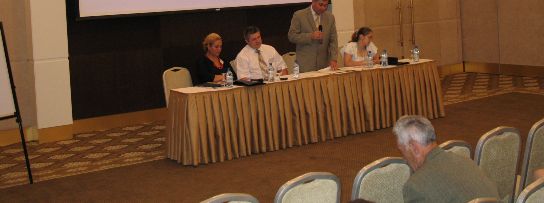
c. decision making on all practical issues, and degree of flexibility and
improvisation in response to unexpected eventualities;
d. involvement of, and coordination and communication among, public
and private sector participating institutions, stakeholders and the
general public.
WHO confirmed that they could support technically and financially the simulation
exercise involving both vet and human health sides by contracting Health Protection
Agency (UK), which is collaborating with WHO on this issue. Health Protection
Agency has already conducted couple of these table top exercises in our region.
The MoH approached WHO with an official request to participate in the simulation
exercise and particularly provide technical assistance in the finalization of the design
of the simulation exercise,
assess the national
guidelines approved by the
MoH, participate as observer
at the table top simulation
exer cise and provide a
formal feedback about the
results of the simulation
exercise to the MoH and our
local partners. In August the
Ministry of Agriculture under
the leadership of the National Antiepidemic Commission headed by Deputy Prime
Minister conducted practical simulation exercise to test the guidelines recently
developed by the Ministries and to assess the coordination responsibilities and
communication lines.
WHO supported technically and financially the simulation exercise involving both vet
and human health sides by contracting Health Protection Agency (UK), which is
collaborating with WHO on this issue. The desk-top simulation exercise was held on
26-27 September, in Chisinau. The aim of the desk-top simulation exercise was to
enhance preparedness and capacity of Moldova to face outbreaks of Highly
Pathogenic Avian Influenza in animal and human populations.
The objectives were the following:
1. Explore the interaction, co-ordination and communication between the
veterinary and health sectors and other associated authorities;
- 120 -
2. Explore animal and human health components of contingency plans;
3. Explore the roles and responsibilities of veterinary and health sectors during
an outbreak;
4. Explore media and public communications during an outbreak;
5. Explore the lines of communication between local and central authorities;
6. Explore data gathering and surveillance;
7. Explore the operational measures in containing an HPAI.
In accordance with the order nr. 369 d from 14.09.2007 43 participants attended
this event. There were the representatives from the following ministries and
institutions:
1. Ministry of Agriculture;
2. Ministry of Health;
3. National Centre of Preventive Medicine;
4. National Veterinary Centre;
5. Department of Emergency Situations from the Ministry of Internal Affairs;
6. Ministry of Environmental Protection;
7. Infectious Disease Hospital;
8. Primary Health Care;
9. Rayon Hospital;
10. Rayon Centre for Preventative Medicine;
11. Rayon State Veterinary Department;
12. Communicable Disease Consultants;
13. Republican Central Veterinary Laboratory;
14. National Viral Laboratory;
15. Head of Rayon.
The Component Coordinator (CC) has elaborated the TORs for a qualified logistic
company in event management. The ToRs were approved by the national
counterparts. The selection committee selected the company Age Quod Agis SRL
that provided logistical and administrative support in the organization of the
integrated desktop simulation exercise.
- 121 -
The representatives from the WHO, UNICEF, Health Protection Agency participated
as external observers in this simulation exercise. The WHO experts are preparing a
"lessons learned" document, which will be distributed to all ministries whose
representatives attended the exercise and to all participants in order to insure the
continuity of the initiated process of enhancing the preparedness and capacity of
Moldova to face outbreaks of Highly Pathogenic Avian Influenza in animal and
human populations.
The WHO experts submitted the report on the integrated desktop simulation exercise
for avian influenza in animal and human populations in the Republic of Moldova.
They emphasized that the exercise had brought together and enhanced cooperation
between senior government officials from the Ministry of Health and Agriculture,
regional authorities, scientific experts, responding agencies and operational staff at
the local level, identified strengths and weaknesses in the response arrangements for
both animal and human cases of avian influenza, identified specific gaps and needs
for additional training and capacity building, and raised awareness of the coordination
arrangements needed during the response to an avian outbreak and it has laid the
basis for further simulation exercises at the Raion (regional) and local level.
The experts recommended that all recommendations should be considered within the
National Emergency Preparedness structure in Moldova so that lessons identified
here could be applied to other emergencies and diseases
The CC in close collaborations with national counterparts elaborated the TORs for an
International Consultant in Infection Control Practices and Clinical Management who
will be responsible for enhancing HPAI Prevention and Preparedness Capability
trough review and upgrade of the national documents and guidelines for Human
cases of AI and Pandemic Preparedness in accordance with available international
standards and guidelines, with focus on clinical management of possible human
cases of H5N1, field investigation readiness and practices, surveillance and alert
system, isolation practices in healthcare facilities, prevention of nosocomial infections
and waste management, correct use of personal protective equipment and other
infection control related actions including social distancing measures in the context of
outbreak preparedness. The TORs were approved by the national counterparts.
The CAPMU initiated the selection process and the announcement was publicized.
Four candidates applied for this position. The selection committee evaluated the files
and after a detailed review the consideration has been given to Mr Simon Mardel
- 122 -
who according to the documentation presented was the most experiences applicant.
The CAPMU initiated all procedures for engaging the consultant.
INFORMATION TECHNOLOGY SYSTEM FOR SURVEILLANCE
The team of experts from NCPM led by Dr. Bahnarel Ion, MD, Director general and
Prof. Spinu Constantin, Doctor, Vice-director, Department of virology; Dr. Sohotchi
Vasile, Vice-director, department of epidemiology; Dr. Pantea Valeriu, MD, head of
the Department for socio-hygienic monitoring; Dr. Benes Oleg, Head of the Center of
epidemiology of highly pathogenic infectious diseases and control of bioterrorism; Dr.
Cojocaru Radu, MD, Head of the laboratory of highly pathogenic infectious diseases
and control of bioterrorism; Dr. Melnic Anatolie, Head of the Department of general
epidemiology; Dr. Scoferta Petru, Head of the influenza laboratory and Mr. Evtodiev
Ion, head of the Department of information technologies met together on 5 January
2007 in order to discuss, review the technical specifications (TSs) for improving IT
system for surveillance and make recommendations. The team acknowledged the
amount of work conducted by the consultant and appreciated its overall satisfaction
with the provided technical details. They emphasized that the minimal requirements
for the System architecture at the rayon/municipality level must include providing
computers and ADSL Internet connection to Epidemiology unit at RCPM, Laboratory
unit at RCPM, Infectious diseases department of the rayon/municipality hospital and
RSVL and dropping any of these four components that deal with the main flow of
Infectious diseases patients, may jeopardize the successful implementation of the
system. Written recommendations were sent to the WB IT specialist. The WB IT
specialist updated the last version of the TSs. The last version was approved by the
national counterparts and sent to the CAPMU for the preparation of the bidding
documentation. During the WB mission (7-17 Mai 2007) the WB IT expert
emphasized that it would be very important to reach consensus among the
stakeholders regarding the technical specifications, and prepare the bidding
documents for the development of system design, software and hardware for the
infectious diseases surveillance system; to make a final decision about the
institutional ownership of the system and to start bidding procedure for human and
animal health surveillance system procurement by 1 August 2007.
The team of experts from NCPM led by Dr. Bahnarel Ion, MD, Director general and
Prof. Spinu Constantin, Doctor, Vice-director, Department of virology; Dr. Sohotchi
Vasile, Vice-director, department of epidemiology; Dr. Pantea Valeriu, MD, head of
the Department for socio-hygienic monitoring; Dr. Benes Oleg, Head of the Center of
epidemiology of highly pathogenic infectious diseases and control of bioterrorism; Dr.
- 123 -
Scoferta Petru, Head of the influenza laboratory and Mr. Evtodiev Ion, head of the
Department of information technologies met together on 25 June 2007 in order to
discuss the next steps which should be taken for improving IT system for
surveillance. They decided to reach consensus and take a decision about the
institutional ownership of the system, appoint an inter-institutional task force that
would be responsible for providing all necessary coordination and institutional
support to information system development and implementation, to review the new
version of the Emergence Note 058, make recommendations and to establish a
working group which would be responsible for elaboration of all the classificatory for
diseases, symptoms etc.
The new version of the Emergence Note 058 was translated in English and sent to
the WB Information technology (IT) expert for the preparation of bidding
documentation. The bidding documentations were revised by the WB IT experts. In
December 2007 CAPMU initiated the bidding process.
The TORs for the IT specialist were prepared and approved by the national
counterparts. Three candidates applied for this position. The selection committee
evaluated the files and after a detailed review the consideration has been given to Mr
M. Bortnic, who according to the documentation presented was the most experienced
applicant. In compliance with Project Operational Manual the contract will be signed
by the Minister of Health. The engaged IT specialist will be responsible for "Improved
Surveillance System" system design, including organizational reengineering
processes and system relevance to project stakeholders' needs and assuring that
development team(s) work in full capacity and in good cooperation with
institutional/government team(s) and project stakeholders.
HUMAN HPAI TESTING SUB-COMPONENT
Taking into consideration the existing infrastructure and available resources and after
the multiple discussions with counterparts the Ministry of Health (MoH) took a
decision about the location of the viral laboratory and the module for H5N1 diagnosis.
The MoH decided to renovate the existing laboratory for seasonal influenza diagnosis
in order to bring it up to the agreed standards and build the new module for avian
influenza virus diagnosis near the existing Viral Laboratory. This module will be used
for molecular detection of the viruses of other infectious diseases, but in case of
human avian influenza cases or pandemic alert will be redirected for H5N1 diagnosis.
During the meeting which took place on 20 February 2007 the team of experts from
NCPM decided to initiate the preparations of the technical specifications for all
- 124 -
necessary laboratory equipments in accordance with WHO mission
recommendations.
The layout of a new module for the diagnosis of avian influenza virus provided by
Romanian specialist from Cantacuzino was reviewed by the Mr Radu Cojocaru, Head
of Microbiology Laboratory of Extremely Dangerous Diseases, Ms Valeria
Dmitrienco, Head of HIV Diagnoses Laboratory and Mr Constantin Spinu who know
the standard biosafety laboratory practices and the special considerations when
using PCR diagnosis. The proposed version of the layout of module was also
reviewed by the best Romanian Expert in PCR diagnosis who was in Moldova in that
time. They also revised the list of equipment which needs to be procured. The
national counterparts are preparing the official letter to the City Hall to ask for an
additional territory. When the real size of the available territory are known, the
counterparts will be able to prepare the technical specifications for laboratory
equipment in accordance with available space and be sure that this equipment will fit
in the special rooms. The national laboratory specialists together with the CC began
to prepare the technical specifications for all necessary laboratory equipment in
accordance with WHO mission recommendations.
The CAPMU prepared the TOR for the civil engineer and the announcement was
publicized. Three candidates applied for this position. The selection committee
evaluated the files and after a detailed review the consideration has been given to Mr
Raileanu who according to the documentation presented was the most experiences
applicant. In compliance with Project Operational Manual the contract was signed by
the Minister of Health.
The hired engineer prepared the TORs for the design company which will prepare
the designs for the proposed new annex for HPAI diagnosis and Intensive Care Unit.
These TORs were reviewed and approved by the national counterparts and sent to
CAMPU. The CAMPU initiated the selection process of a design company of
Intensive Care Unit and of the proposed new annex for HPAI diagnosis. Three
companies have presented the files in accordance with the TORs presented for the
bidding process. The selection committee selected the EuroprojectDesign company.
The contract was signed by the Minister of Health in December 2007.
The team of specialists from NCPM led by Dr. Bahnarel Ion, MD, Director general
and Prof. Spinu Constantin, Doctor, Vice-director, Department of virology; Dr.
Cojocaru Radu, MD, Head of the laboratory of highly pathogenic infectious diseases
and control of bioterrorism; Dr. Scoferta Petru, Head of the influenza laboratory met
- 125 -
with Mr. Volosatii, General Director of the selected design company, Mr. Raileanu,
civil Engineer and Ursu Angelina, Component coordinator on 24 December 2007 in
order to discuss the proposed three versions of layout for the new module. The
laboratory specialists updated them on the necessity of respecting the technological
flow. Mr. Volosatii and Mr Raileanu have suggested exploring the possibility to
organize a field visit to Viral Laboratory, Cantacuzino Institute from Romania in order
to get acquired with specifics of laboratory construction and flows.
Also the National Viral Laboratory has approached the WHO Local country Office to
update them on the status of global shipment project supported earlier by WHO
through World Courier. The National Viral Respiratory Reference Laboratory was
requested by the Government Extraordinary Commission to develop a protocol of
necessary actions from the national authorities with responsibilities and
communication lines for sending samples to H5 WHO international Reference
Laboratory. Due the fact that the National Viral Respiratory Laboratory has no
technical capacity to perform the testing of human samples for H5N1 virus an interim
arrangement with an international reference laboratory also has to be available for
primary testing of suspect samples.
In response to the National Viral Laboratory request to update them on the status of
global shipment project supported by WHO through World Courier WHO Local
country Office provided the following information in order to benefit from WHO
Influenza Global Shipment Project:
1. Contact the world Courier Headquarter and send the filled booking form.
Meanwhile a copy of the form should be sent to WHO Geneva and WHO Country
Office;
2. Collect and package the samples as indicated in the respective guidelines.
Important packing should be performed by a IATA certified person;
3. The National Centre of Preventive Medicine (through WHO Country Office)
has received the limited amount of PPE and necessary packing equipment to
pack the samples as per guidelines;
4. World Courier Romania through its local agent in Moldova (Quehenberger,
Moldova: +37322 52 44 27,
http://www.quehenberger-
hellmann.md/9426_EN.62E9D6912152821 will provide the remaining necessary
components of the package (dry ice and liquid nitrogen if needed), will be responsible
for filling the necessary forms per IATA guidelines and also they are responsible for
the shipment process to the WHO international reference laboratory.
- 126 -
Two participants from the Republic of Moldova attended the training on "shipment of
biohazard samples in accordance with IATA regulations" in Russia, passed
successfully the exam and were IATA certificated.
In the near future the National Viral Laboratory is going to conduct the shipment of
seasonal influenza\samples to WHO Reference Laboratory in order to pilot the
possible Avian Influenza Shipment.
HUMAN HEALTH SYSTEM RESPONSE SUB-COMPONENT
Personal Protective Equipment
The technical specifications for the personal protective equipment (PPE) for use in
the Viral Laboratory, in the Republican Hospital for Infectious Diseases and for the
rapid response teams were elaborated in compliance with WHO recommendations
by the Component Coordinator in collaboration with Dr. E. Busuioc, Dr. E.
Romancenco and Dr. P. Scoferta. The national counterparts decided to procure the
following equipment: complete overall for single use 7000 units, protective goggles
reusable 670 pairs, face mask Nr 95 for single use 7000 units, latex gloves cu
talc for single use - 3000 pairs, powder free latex gloves for single use - 3500 pairs,
powder free nitrile gloves for single use - 7500 pairs, natural rubber gloves for
environmental cleaning - 200 pairs, polyethylene apron for single use - 5500 units,
polyvinyl chloride boots reusable - 360 pairs, boot cover for single use - 4000 pairs,
bag for bio-hazardous waste for single use - 3500 units. The CAPMU initiated the
procurement process. Four companies, official dealers of respective brands have
presented the offering documentations in accordance with the technical
specifications presented for the bidding process.
The selection committee selected SRL "Belnis". The contract between CAMPU and
SRL "Belnis" was signed. All the Personal Protective Equipment was supplied to the
NCPM. The national counterparts prepared the distribution list. In accordance with
this list the PPE was distributed to rapid response teams, ICU and Virological
Laboratory.
Vehicles for Rapid Response teams
The technical specifications for the vehicles for rapid response teams were prepared
by the procurement assistant from the CAPMU in close collaboration with national
counterparts and Component Coordinator.
The technical specifications were approved by the national counterparts. The
CAMPU initiated the procurement process. Five companies have presented the
- 127 -
offering documentations in accordance with the technical specifications presented for
the bidding process.
The Selection Committee revised these proposals. The SA "Antares" was selected as
a winner. The contract between the SA "Antares" and CAMPU was signed. In
accordance with this contract three vehicles "Nissan Pathfinder" were supplied to the
NCPM.
Disinfection Equipments for the rapid response teams
The TS for the Disinfection Equipments were elaborated in compliance with WHO
recommendations by Component Coordinator in collaboration with Dr. E. Busuioc.
The national counterparts decided to procure 80 Manually Powered Backpack
Pressure Sprayers with capacity 10-15 L and 80 One Hand Pressure Sprayers with
capacity 2 L. The procurement process of the disinfection equipment was initiated.
The Selection Committee revised five proposals. The SRL "Belnis" was selected. The
contract between the SRL "Belnis" and CAMPU was signed. In 20 June SRL "Belnis"
provided all the disinfection equipment to the NCPM. Two Manually Powered
Backpack Pressure Sprayers and two One Hand Pressure Sprayers were distributed
to the rapid response teams in each rayon in accordance with the Ministry of Health
distribution list.
The national counterparts decided to procure 200 KG of disinfectants. The
procurement process has been initiated. Five offers have been received.
Unfortunately the products presented by the companied did not comply with the
technical specification approved. That is why the announcement was going to be re-
advertised. The TSs for the disinfectant product were revised and updated. It was
decided to procure 250 Kg or L of a disinfectant product for use by the rapid
response teams, 100 Kg or L for use in the National Viral Laboratory and 150 Kg or
L for use in the Infectious Diseases Hospital "T. Ciorba". The approved version of the
TSs was sent to CAMPU to initiate the procurement process. CAMPU initiated it.
Only one company presented the proposal that is why the announcement will be re-
advertised for the selection of new offers.
Sterilizing Car
The TSs for sterilizing car were elaborated and approved by the national counterpart.
CAPMU initated the procurement process.
- 128 -
MEDICAL SERVICES
Pharmaceuticals for prophylaxis and therapy
1700 boxes of the antiviral drugs Tamiflu (Oseltamivir) were procured. The drugs
were received by the director of the Infectious Diseases Hospital "T. Ciorba" - Dr. V.
Deatisin and stored in the hospital store. Other essential drugs, according to WHO
recommendations, have already been purchased, including Amoxicillin (500 mg) +
Clavulanic (125 mg) 500 boxes, Ciprofloxacin (500 mg) 500 boxes, and
Azithromycin (500 mg) 500 boxes.
Seasonal influenza vaccines for risk groups
The Component Coordinator in collaboration with Mr. Anatol Melnic (Chief of the
General Epidemiology Department, NCPM) prepared the technical specifications for
the seasonal influenza vaccine in compliance with WHO recommendation (strain to be
used in the 2007-2008 season (northern hemisphere winter)). The national
counterparts decided to procure 18000 doses of the seasonal vaccine.
The technical specifications were approved by the national counterparts. The
CAMPU initiated the procurement process. Three companies have presented the
offering documentations in accordance with technical specifications presented for the
bidding process. The SRL "Dita Estfarm" was selected as a winner. The contract
between the SRL "Dita Estfarm" and CAMPU was signed. In accordance with this
contract these vaccines were supplied to the NCPM in the end of October.
REPUBLICAN HOSPITAL FOR INFECTIOUS DISEASES
The two options presented to the missions (November 2006ø May 2007) for the
location of the Intensive Care Unit (ICU) have now been dismissed, mainly because
both these buildings are regarded as having historic value and are therefore
protected and difficult to be adapted for ICU purposes. The third option now being
considered is to rehabilitate an abandoned building located within the hospital
compound. A detailed assessment was made of the feasibility of rehabilitating this
building by the competent authorities during the June. The mission emphasized the
importance of adhering to the WHO recommendations for the control of nosocomial
infections in the design and indicated its preference for higher-quality premises over
larger space of poor quality. The civil engineer has prepared the terms of references
for a design company.
- 129 -
Vehicle, equipment and consumables for 3 mobile Intense Care (IC) ambulances
The technical specifications for the IC ambulances were reviewed by the national
counterparts during the meeting which took place on 30 January at the NCPM.
The following experts attended this meeting:
1. Dr. I. Bahnarel - General Director, NCPM;
2. Prof. C. Spinu - Vice-director, NCPM;
3. Dr. V. Deatisin - Director of the Infectious Diseases Hospital "T. Ciorba";
4. Dr. P. Scoferta, Head of the National viral laboratory;
5. Dr. I. Ciuma - Vice-Director, National Center of the Emergency Medicine.
The experts reviewed and discussed the last version of the technical specifications.
In compliance with Ministry of Health recommendations the national counterparts
decided to add a Portable Emergency Ventilator for adult and pediatric use. It was
approved the last version of the TS and was initiated the procurement process.
Initially only one company has presented its offer. That is why the bidding was re-
advertised. Three companies presented the offering documentations in accordance
with the technical specifications presented for the bidding process. The Selection
Committee revised these proposals. The SRL "Rumeon" was selected as a winner.
The contract between the "Rumeon" and CAMPU was signed. In accordance with
this contract these ambulances were delivered in October. In accordance with the
order of the Ministry of Health these ambulances were distributed as follow: one to
Beltsy, one to Cahul, one to Chisinau.
Laptop and Multimedia Projector
The TSs for Laptop and Multimedia Projector were prepared and approved by the
national counterparts. The equipment was procured and delivered to the NCPM.
Sterilizing Car
The TSs for sterilizing car were elaborated and approved by the national counterpart.
CAPMU initated the procurement process.
PUBLIC INFORMATION AND AWARNESS
STATEMENT OF PROBLEM
The rapidly spreading outbreaks of Avian Influenza among wild and domestic birds
and the increasing cases of bird flu among people at global level are alarming. A total
cumulative number of 353 confirmed human cases of Avian Influenza were reported
- 130 -
to WHO by 24 January 2008, out of which 221 death cases. If the H5N1 virus
changes into a human strain, it would make it possible for person-to-person
transmission and trigger a human flu pandemic. The world must prepare for such a
pandemic, as it would affect all populations regardless of national boundaries or
socio-economic status.
Geographically situated in the path of migratory birds, the Republic of Moldova is at
high risk for an outbreak of avian influenza (AI). This situation is aggravated by the
importance of domestic fowl in the country, a lack of knowledge of safe breeding
techniques, widespread consuming and selling of poultry and poor general hygiene.
To date, Moldova has not suffered an outbreak of Avian Influenza, though it is at
significant risk, since two nations on its borders, Ukraine and Romania, suffered
outbreaks.
In November 2005, concerned governments, technical agencies, and donors met in
Geneva to plan an international response to the risks that Avian Influenza will harm
human health and cause large-scale economic losses. In January 12, 2006, the
World Bank's Board of Directors approved up to $US 500 million in financing for the
Global Program for Avian Influenza (GPAI) that will assist eligible countries.
In 2007, in its effort to support Moldova, WB started together with the Government of
Moldova a project on Avian Influenza Control and Human Pandemic Preparedness
and Response. The overall objective of the Project is to minimize the threat posed to
humans by HPAI. The project has three main components:
- Component 1. Animal Health
- Component 2. Human Health
- Component 3. Public Information and Awareness.
Public awareness and information component of the Project is implemented by the
Ministry of Health and UNICEF, based on the National Strategy and Communication
Plan on Prevention of Avian and Human Influenza in the Republic of Moldova,
approved by the Ministry of Health on July 4, 2006, focusing on communication and
other supportive measures that inform, educate and enable families and communities
to protect themselves from illness and death caused by avian influenza or its
consequences.
- 131 -
UNICEF's actions are part of a coherent UN system response and are guided by the
technical agencies for animal and human health -- the Food and Agriculture
Organization (FAO), the World Health Organization (WHO), and the WB experts and
UN System Influenza Coordinator (UNSIC).
STATEMENT OF OBJECTIVES
The objective of this Project is to implement the Component 3: Public Information
and Awareness, of the Avian Influenza Control and Human Pandemic Preparedness
and Response (AIHP) Project.
The overall objective of this component is to minimize the risk of avian influenza
spreading throughout the Republic of Moldova by ensuring that citizens are aware of
the symptoms, understand the threat and are willing and able to engage in
behaviours that will protect themselves and their community, and addressing key
aspects of prevention, preparedness and response in Moldova.
The communication response has three planned stages:
I. A pre-outbreak campaign to promote safe and responsible behaviour to reduce
risks to children, families, households and communities; and to promote
responsible media reporting to avoid panic and misinformation.
II. An intensive communication campaign during a pandemic, to begin immediately if
and when human infection is confirmed.
III. Post pandemic communication support to promote recovery and help those who
need it.
The present Project addresses the first stage, while a contingency communication
plan for the next two stages is being developed and will be implemented should the
need occur.
The Communication component supports the implementation of the National
Communication Strategy and Plan for the Prevention of Avian and Human Influenza
for the years 2006-2008, approved officially on July 4, by the Ministry of Health.
Project builds on the experience of the communication activities implemented by the
National Inter-Sectorial working group on communication for AI, with UNICEF
technical assistance, starting from November 2005. The activities were supported
financially by UN Agencies and USAID.
- 132 -
STATEMENT OF ACTIVITIES
The communication component includes:
· An extensive media campaign to raise public awareness about the danger
and promote safe behaviours regarding poultry breading, personal
hygiene and safety.
· A component on building national health promotion capacities structured
by 3 levels: national, rayon, and community.
· A component on building communication capacities in epidemic crises
and promptly managing response reactions.
The main activities undertaken during the reporting period are as follows:
MEDIA CAMPAIGN
Planned results: Families increasingly practice key behaviours related to AI
prevention: separating, washing, reporting and cooking safely
·
Development and Production of Video, Audio, and Animation Spots, as
well as other communication materials
New sets of messages were developed addressing seasonal influenza prevention
and rules of personal hygiene, in particular for children, as well as on rules and
behaviours for safe breeding of backyard poultry (bio security).
A long-term agreement of cooperation has been signed with "Atelierul Sergiu Prodan
PR si Publicitate" Agency, contracted for the development of the communication
materials (video, animation and audio spots, posters, banners, family brochures,
guides for doctors and veterinaries).
Two scenarios for an animation and a video spot were developed and approved, and
the production work is underway. The animation addresses personal hygiene for
children, in relation to seasonal influenza, while the video spot focuses on safe
breeding of backyard poultry. Topics to be addressed further are to be discussed
and approved by the Inter-Sectorial Working Group in communication for avian
influenza prevention.
·
Development of Messages for Population and Contents of Media Materials
UNICEF recruited a communication consultant for media campaign within the
Communication Component, who assists UNICEF, the Ministry of Health, the Ministry
of Agriculture and Food Industry, and the Inter-Sectorial Working Group in
- 133 -
communication for avian influenza prevention in developing communication
messages for the target groups as well as contents of communication materials for
children, families, farmers, medical staff, and veterinaries. Among the tasks of the
consultant is to develop media plans for broadcasting, coordinate interaction between
various agencies and institutions involved in the project, as well as monitor the
process of distribution and use of communication materials.
·
Broadcasting of video and audio messages
An analysis of the coverage and audiences of TV and Radio channels was done,
based on the latest research by TV MR MLD, the local branch of the AGB Nielsen
Media Research, that provides independent, reliable and transparent audience
measurement systems for TV, and Transaction Network Services radio marketing
research for radio. Based on the analysis, the most appropriate and optimal media
plan was developed, in order to target both rural and urban population, all ethnic
groups, and ages from 12 and up and primarily all groups targeted by the campaign:
families with backyard birds/animals; school-aged children; young adults in rural
areas; small farmers & poultry producers, decision makers and media professionals.
The plan includes, as follows:
TV channels: Prime TV (ORT), Moldova 1, NIT TV and Pro TV.
Radio channels: Russkoie Radio, Moldova 1, Radio Noroc and Radio
Sanatatea.
Negotiations with each channel were conducted and resulted in preferential costs,
which are significantly lower than commercial costs. Contracts were signed with
public Company TeleRadio Moldova (Moldova 1), Pro TV and Radio Sanatatea,
while the negotiations for the rest of the contracts are being finalized.
BUILDING NATIONAL CAPACITIES IN AI PREVENTION
Planned results: 200 health managers at national and rayon levels have increased
capacities in AI prevention and health promotion; 2,800 PHC staff at community
level, 1,015 rayon and community level veterinarian have increased capacities in
inter-personal communication for AI prevention and health promotion; 600 peer
educators and 1,560 school children have increased knowledge and skills in healthy
lifestyles related to AI prevention.
·
Strategy and plan of action for capacity building in AI prevention and health
promotion drafted.
- 134 -
·
Training activities for medical staff launched in cooperation with National
Preventive Medicine Centre. Trainings were planned to take place at 3 levels
national, regional, and local and to address communication and health
promotion priorities of MoH, strategic communication in these fields, as well as
at the level of primary health care inter-personal communication techniques. It
is designed tp increased capacities in AI prevention and health promotion for a
total of 200 health managers at national and rayon levels and 2,800 primary
health care staff at community level. Annual work plan, including training
activities has been signed with the MoH, and a the implementation of the project
by the National Centre of Preventive Medicine started with the development of
training modules.
·
Training activities for veterinaries, mayors, and poultry farms staff
launched in cooperation with MAFI and the Agency for Rural Development
(ACSA). The capacity building activities are planned for a total of 35 rayon
epizootologists /virologists, 980 rural community vets, 160 vets of major poultry
breeding enterprises and 980 community leaders, within a total of 70 regional
seminars. For this, two training modules are being developed, each focusing on
a specific target group. In addition, a specialized training for trainers in the field
of communication techniques will be conducted and a communication training
module will be developed. Training modules are currently being developed and
training activities are at the stage of logistical arrangements.
·
Training activities for young peer educators for communication on AI
prevention launched. 1,300 young people from schools and 600 young peer
educators aged between 14 to 18 years old will receive correct knowledge and
skills on how to communicate to their peers regarding prevention of AI and other
diseases and correct hygiene practices. A Project proposal was developed by
the University of Medicine and Farmacy / Association of students and residents,
Training modules are currently being developed.
·
Training for Specialists of the Ministry of Health "Communication for
Behavioural-Impact (COMBI) in Health". Virginia Fauras, Senior Specialist of
the Department of Quality Management and Standards of Treatment in the
Ministry of Health, and Alexandru Otel, Communication Program Assistant,
attended the training on "Integrated Marketing Communication for Behavioural
Impact (COMBI) in Health" supported by the World Health Organization in
Prague, Czech Republic. As the result of the training, specialists of the Ministry
of Health and AI communication project have increased knowledge and skills
- 135 -
necessary to contribute to the development of the strategy on building health
promotion capacities in Moldova.
·
Participation in the Influenza Global pandemic preparedness session of the
WHO Executive Council meeting in Geneva. Rodica Gramma, head of the
apparatus of the MoH attended the meeting. Ms. Rodica Grama si going to be
the contact person in the Ministry of Health for this project and it was crucial for
her to get acquainted with current strategies at global level.
BUILDING CAPACITIES FOR OUTBREAK COMMUNICATION
·
Development and Publication of Materials for Professionals, November
2007
The National Centre of Preventive Medicine and the Ministry of Agriculture and Food
Industry have developed contents for the following publications:
- Practical Guide for Doctors: Infection with influenza viruses
epidemiological, clinical, laboratory, treatment, and prevention aspects.
- Practical Guide for Doctors: Avian influenza etiological, clinical and
epidemiological, evolution, diagnosis, treatment, and prevention peculiarities.
Methodological instructions were developed for epidemiologists, virologists, family
doctors, resident physicians, internists, laboratory assistants and can be used in
trainings for doctors.
- Guide for veterinaries: Collection of normative acts on preventing,
diagnosing, and combating avian influenza and other infectious diseases.
The collection of normative acts targets veterinary specialists, students of veterinary
departments of universities, staff of the poultry and animal farms, public
administrations, and other institutions in charge of animal and human health, as well
as representatives of non-governmental organisations and the general public.
The Guide for veterinaries is currently in the printing house, while two Guides for
health staff are being revised by international experts.
·
Technical Assistance of MoH Media Unit
Within the project, subscription to most important newspapers and magazines for
2008 was supported as part of capacity building for the Media Unit, which is going to
regularly analyse the content of the periodicals, paying particular attention to the
reflection of AI and other public health issues in the media and to make
recommendations for enhancing the relations of the ministry with the media.
- 136 -
COORDINATION AND PLANNING
·
Joint UNICEF and MoH Planning Meeting.
UNICEF and the pertinent staff in the Ministry of Health held a working meeting in
order to develop a detailed action plan of project activities and institutions
responsible for their implementation. Specific strategies to be applied for better
results, as well as activities within the three main communication components were
planned in the working meeting. A special attention was paid to building capacities of
the MoH and its institutions in the field of strategic communication and health
promotion. Actions on building capacities at national (MoH, NSPCPM, and the
School of Public Health), regional, and rayon/community levels were planned.
It was recommended to renew the composition of the Inter-Sectorial Working Group
in avian influenza communication.
It was decided to draw up an official letter to the Coordinating Council of Audiovisual
on broadcasting social health promotion advertising by national and local TV stations
free of charge or at a minimal price.
·
Recruitment of National Consultants to Support MoH and National Centre
of Preventive Medicine
The Ministry of Health and UNICEF recruited a national consultant in capacity
building to work within the National Centre of Preventive Medicine. The recruitment
for the second position national communication consultant in support of the MoH,
was conducted repeatedly, and the identified person is currently being contracted.
·
National Survey of Knowledge, Attitudes, and Practices "Avian Influenza:
Population's awareness and attitude"
UNICEF has contracted the Centre of Sociological, Political and Psychological
Investigation and Analysis "CIVIS" to carry out the second national survey of
knowledge, attitude, and practices regarding avian influenza. The study measured
the behavioural outcomes of the previous phase of the communication campaign,
and identified cultural, economic, behavioural and other factors that act as barriers
and enablers among key target audiences, for the adoption of healthy behaviours.
Based on survey data and conclusions, messages for target groups are being
developed.
- The quantitative survey was done in December 2007 on a sample of 1008
respondents aged 15 and over representative of the entire population and on
30 respondents from poultry farms.
- 137 -
- The results proved that the levels of awareness of avian influenza had
increased in comparison with the previous year and are quite high (96%).
Young people and urbanites showed a higher level of awareness than the
rural adult population, especially the elderly.
- TV and radio were the main sources of information on avian influenza at
89.6% and 59.7% respectively. It is important to mention that more elderly
respondents got their information from the radio while younger people got
theirs primarily from TV.
- The most often-applied protective behaviours were safe cooking, i.e., using
high temperatures to cook poultry meat (93%) and washing eggs before
cooking and chopping boards or knives after use (75%).
- More then 70% of the population frequently washed their hands before
cooking or eating. The rate of those who washed their hands after eating was
slightly lower.
- In comparison with the previous year, there was a considerable increase
(25%) in the number of people who washed their hands after feeding poultry,
collecting eggs and cleaning poultry pens.
- In half of the households breeding poultry in their backyards, the birds were
not permanently kept in enclosed areas: 10% let their chickens roam freely
though this indicator had decreased 2.5 times during the year.
- During the one-year period after the first KAP study, there was a three-fold
increase in the number of households using special clothes for cleaning
poultry pens (up to 39.1%) and a two-fold increase in the number of those
using special shoes (up to 39.6%).
- The most difficult behaviours to change or influence proved to be reporting
sick or dead birds. Thus, Only 22% of people would report finding a dead bird
on the street to authorities and only 16.3% would report finding one in their
own yards.
- While only 4.2% of households reported finding a dead bird to local
authorities, this was a significantly higher rate than one year ago (1.5%).
- A little over 60% considered avian influenza as a major risk which was a 20%
decrease compared with August 2006.
CONSTRAINTS
- 138 -
1. Substantial increase in the price of advertising on all TV and Radio channels,
in response to the increase in demand for broadcasting time on the ads
market. Direct negotiations were held with the management of the selected
companies, aiming at decreasing to the maximum the costs for broadcasting
of socially important advertising.
2. Working in the Transnistrian region requires many additional efforts and time.
Covering the Transnistrian region with communication activities was
perceived as a priority issue both by UNICEF and major partners. However, it
poses a real challenge, since it was not enough to produce materials in
Russian for the region they had to be specifically adapted, taking into
consideration the administrative-territorial structure, the organization of the
health care system, the non-acceptance of certain logos and colours, etc. It is
a challenge to monitor the communication activities and distribution of
materials in the separatist region.
The initial phase of the project was slowed down by the negotiations held between
UNICEF Moldova and WB on the possibility to reorient the funds towards
communicating on donor's assistance to the victims of drought in Moldova
- 139 -
RENEWABLE ENERGY FROM AGRICULTURAL
WASTES
INTRODUCTION
The GEF/WB Renewable Energy from Agricultural Wastes (REAW) was declared
effective on 7 July, 2005, Grant Agreement being signed between the Consolidated
Agricultural Projects Management Unit, acting as an executing agency on behalf of
Republic of Moldova, and International Bank for Reconstruction and Development,
acting as an Implementing Agency of the Global Environment Facility, set fourth the
amount totaling $972,920 to be allocated from GEF Fund within a three years period.
The overall total of the REAW is as follows:
FINANCING PLAN (US$)
GEF PROJECT/COMPONENT
Project
972,920
PDF A*
25,000
SUB-TOTAL GEF
997,920
CO-FINANCING**
IBRD/IDA/IFC
Government
1,434,950
Bilateral
NGOs
Others
219,388
Sub-Total Co-financing:
1,654,338
Total Project Financing:
2,652,258
The ultimate goal of the REAW Project is to provide a foundation for a broad and
efficient use of biomass in substitution for imported fossil fuels (coal), acting as a
catalyst for the introduction and promotion of the use of primary agricultural wastes
(biomass) to fuel energy generation using efficient technologies. Therefore, the
project will assist the Government of Moldova to:
I. Overcoming existing barriers to the update of biomass technologies by
providing examples of best practice (demonstration units) in the use of
biomass fuelled energy systems as a viable alternative to gas, oil and coal
and as a sustainable means of addressing the energy supply problems
facing rural communities and agro-enterprises. Demonstration systems
- 140 -



would be of a size, scale and cost appropriate for wide replication in rural
areas. This would be supported by access to information, technical
support and a fund to cover the incremental capital cost in installation of
biomass-fuelled systems;
II. Encouraging development of straw bale market and further replication
among the agro-enterprises of the biomass production and selling, after
the project ends;
III. Additional public buildings, but those implemented by the project,
switching to biomass heating system, in base of the learned lessons and
gathered results within the project progress;
IV. Reducing additional implementation costs persistent existence of which
are caused by the fact of brand new, untested and totally untrustworthy
technology in Moldova: renewable energy from agricultural wastes;
V. Promote a broad public awareness campaign and replication strategy.
Based on that, the following Project components are:
A. Biomass Energy Demonstration Units
This component of the project will consist
of installation and operation of biomass
fuelled heating systems in public buildings
in rural communities with a total capacity
of 2,720 kW in 11 installations:
· Dismantling of existing systems;
· Construction work: preparation of
boiler rooms, including preparation
for connection of building with
heating system;
· Upgrade of the heating systems for
compatibility with biomass based
system;
· Supply and installation of new boiler plants on a turn-key basis.
- 141 -
This component will state the `Moldova's Reference Design' for biomass based
heating systems based upon an `average rural community' of about 1000 households
and 1200Ha of surrounding arable land. It will clearly demonstrate the reference
capacity of the sites; the modularity of the site components; the investment
requirements; the raw material treatment and logistics; the energy distribution
system; the cost and maintenance characteristics; the cost benefit analyses as well
as social-economic and environmental impact.
B. Biomass production and fuel cycle support
This component of the project is designated to construct and create a full biomass
chain supply, aiming to transfigure biomass agriculture wastes, often lost and into a
sustainable market product and a suitable thermal energy raw material.
The main scope of the component consists in continuation of biomass production,
even when the project will be finished. This will be achieved by a range of financial
measures provided by the project including:
· 6 grants accorded to selected best score agro-enterprises for biomass
equipment purchase;
· Financial lease arrangements which will allow to mitigate the high price
investment related to the biomass equipment procurement;
· Constant contract arrangements aiming to get together the buyer and the
seller of this specific product biomass material.
Shortly this component includes:
· Supply of baling and bale handling systems to agro-enterprises, according to
the bale module required, through grants and leasing arrangements. The
project will provide in most of the cases the module size of 15 20 kg or
above;
· Develop the commercial infrastructure to produce, promote, market and sell
biomass as an alternative heating source;
· To create a transaction based market for biomass fuel (straw) on the basis of
supply contracts for heating systems in rural communities;
· Leasing contract finalization between agro-enterprises and leasing company;
· Credit contracts development between financial institution and final
beneficiary;
- 142 -
· Contract finalization between agro-enterprises and local authorities for the
storage and supply of baled straw according to the required specification and
delivery schedules;
· Preparation of straw fuel storage facility near bye to the boiler house.
C. Public awareness, outreach and dissemination, information barriers removal
The overall outcome of this project component is to promote the project objective of
removing the existing barriers to extend the usage of renewable energy from
agricultural wastes in Moldova.
The program of measures to overcome the existing informational barriers together
with the demonstration sites implementation will include:
· Presentations at conferences, seminars, and training events including those
targeting and engaging the local governments and general public, and the
international community; This task will include also a considerable number of
local seminars targeting rural communities, involving training at boiler
demonstration sites.
· Promotion of baling systems and technology into other regions of Moldova
and an information campaign for rural communities applying for MSIF project
grants;
· Case studies to showcase the project will be published in targeted
publications for farmers;
· Participation in fairs at the `Mold-Expo' in Chisinau;
· Promotion through information and extension to agro-enterprises, mayors,
students (all levels), heating engineers, government officials and policy on
renewable energy (biomass);
· Regional debates & panel discussions;
· Advertising campaign - TV, radio;
· Info campaign for households, regional media campaign;
· Miss-perception & gaps identification surveys;
· Teaching Contract (professional lessons at sites); A specialist will be
appointed in a training of trainers program, provided to local school
teachers/professors in order to instruct them how to disseminate the
- 143 -
information among the students of the local schools, colleges, universities
and others educational institutions;
· Etc.
D. Project Management, audit, monitoring and evaluation activities
CAPMU as a Project Implementation Unit (PIU) will oversee the implementation of
the Project, disseminate project related information to stakeholders and be
responsible for contracting for the delivery of goods, works, and consultant services.
The project would raise environmental awareness in the project region and support
NGOs and local communities in promoting environmentally sustainable development
policies at the local and national level.
PROGRESS BY PROJECT COMPONENTS
ACTIVITIES UNDER COMPONENT A
Selection of sites
Based on the project's concept and objectives, the selection of villages to pilot and
replicate alternative technologies of heating energy production from agricultural
waste, was done in a few stages:
Stage I. Identification of districts to be included in the project;
Stage II. Selection of 30 communities potential beneficiaries;
Stage III. Selection of 10 communities for an in-depth study on the field;
Stage IY. Identification of the 5 villages to become pilot demonstrative sites.
Selection of districts
Based on the selection methodology, initially, at the first selection stage, the districts
where the pilot projects could be implemented were selected.
The districts selection was done using the following indicators:
a) Limited access of the districts' villages to the main gas networks in the next 3-5
years
b) Geographic distribution of districts (North, South and Center)
Resulting from an analysis of the National Gasification Program till 2010 and the
evaluation of the extent of access to the main gas networks, 13 districts appropriate
for the pilot stage were identified. Therefore, for the North were selected the
districts: Faleshti, Glodeni, Edinets, Floreshti, Ryshcani, Syngerei, Soroca, for the
- 144 -
Center the districts Ungheni, Hynceshti, Teleneshti, for the South the districts
Causheni, Shtefan Voda, Cantemir, Leova.
Identification of communities visited in the field
At the third selection stage, from the list of 30 potential beneficiary communities, 10
communities were selected by a random method from all regions, for an in-depth
study on the field. Thus, the following villages were chosen for field study:
North: Cishcareni, district Singerei; Vasilcau, district Soroca; Navirnets, district
Faleshti; Recea, district Rishcani; Parcova, district Edinets; Viisoara District Edinet;
Limbenii Noi and Viishoara, district Glodeni.
Center: Boghenii Noi, district Ungheni; Boghiceni, district Hinceshti.
South: Antonesti, district Stefan Voda; Taraclia and Ursoaia, district Causeni.
It should be noted, that fewer villages were selected from the Center and the South
compared to the North, since at present the communities in those regions have a
greater access to gas main pipelines.
After in depth evaluation of above stated districts the following localities were drafted
as first in line:
· Lyceum from the village Taraclia, district Cueni 290 points;
· Secondary school from the village Antoneti, district Stefan Vod 275
points;
· Lyceum from the village Cazaclia, UTA Gagauzia 220 points;
· Gimnazium from the village Parcova, district Edicne - 220 points;
· Gimnazium from the village Viioara, district Edine - 230 points;
· Gimnazium from the village Viioara, district Glodeni 230 points;
· Gimnazium from the village Boghenii Noi, district Ungheni 275 points;
The communities Cazaclia, district Ceadir Lunga, Parcova district Edinet, could be
included in the list of pilot villages in 2007 with a condition that they will make
additional investments in the objects proposed as pilot demonstration sites. Thus, in
the community Cazaclia, there is a need for the whole renovation of external heat
distribution networks, which have a length of about 100 meters.
- 145 -

Installation of Straw Batch Fired Boilers
Finally the following villages were selected for project replication:
1. Chiscareni, Singerei district done (selected and replicated in January, 2006);
2. Antonesti, Stefan Voda district done (selected and replicated in January, 2007);
3. Taraclia, Causeni district done (selected and replicated in March, 2007);
4. Viisoara, Glodeni district done (selected and replicated in March, 2007);
5. Viisoara, Edinet district done (selected and replicated in April, 2007);
6. Boghenii Noi, Ungheni district done (selected and replicated in April, 2007).
For all above mentioned villages the Technical Design documents have been already
prepared and approved by all necessary authorities in accordance with Moldovan
construction and heating laws requirements in force.
A licensed company was selected to perform procurement and installation of all
equipment necessary for boilers to be installed. All the related works were performed.
The ICB for biomass boilers was also successfully conducted. The first two boilers
have been installed in
November - December
2006, the next 2 boilers
have been installed during
January March, 2007,
while the remaining in
April, 2007. Thus all
proposed boilers have
been installed according
the stipulated
implementation plan.
In order to ensure a wider
replication of Biomass technologies for different types of users (small, medium and
large ones), it was been decided to install 4 different energy capacity sites: up to 100
kW.
Thus, for heating season 2007 2008 the following demonstration units were
selected:
- 146 -

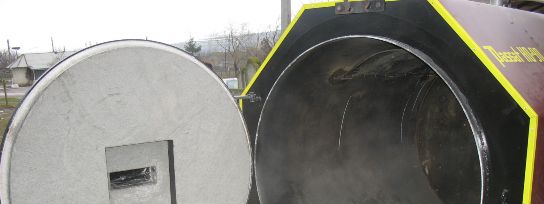
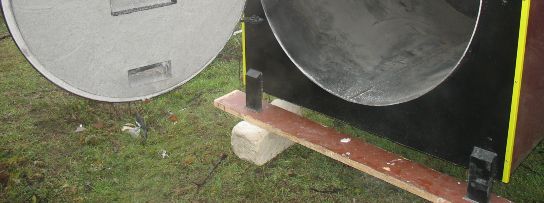
1. Village Antonesti, Stefan Voda district: (i) art school 80 kW capacity
biomass boiler, (ii) kindergarten 80 kW, (iii) post office and library in the
same building 80 kW;
2. Village Volintiri, Stefan Voda district: educational center 80 kW;
3. Villane Burlanesti, Edinet district: school and kindergarten with the same
heating system 300 kW.
All of the above mentioned biomass boilers have been manufactured, transported
and installed and will be connected to the building heating systems by the end of
February 2008.
In the course of boilers operation, cleaning of the large boilers has been identified as
necessity, mostly due to the losses of time and heat during the cleaning of the fire
chambers from ashes. Thus, an experienced local consultant has designed the
mechanism for boiler cleaning, which would allow reducing the time such cleaning
takes, resulting in lesser losses of heat. By the end of February 2008, 3 of such
mechanisms will be manufactured.
- 147 -
The installation process was broken down in 3 activities
I.
Project technical design
1.
Stage I. Collection of inception data:<
1.Urbanizme certificate
2.Technical specification of thermal energy connection of schools
3.Technical condition for electric grid
4.Coordination of land for boiler placement; network pipes with sanitary body
5. Coordination of land for boiler placement; network pipes with ecology body
6.Certificate of State Agency for Metrology regarding the situation on environment pollution
7.Topograph placement of site
2.
Stage II. Preparation of technical design document
1.Design of concrete base for boiler installation
2.Design of pipe network scheme
3.Electric grid
4.Automatization scheme
5.Fire security system
6.General Plan
7.Environmental protection
8.Budjet expenditures for installation
9.General memorandum
3.
Stage III. Coordination and state expertise of project:
1.Coordonation with Sanitary Agency
2.Coordonation with Ecology Agency
3.Coordonation with Fireguard Direction
4.Coordonation with local communal services
5.Coordonation with local architectural direction
6.State Expertise of the project
7.Construction authorization
Technical assistance
The project provided training and capacity building through training seminars and
exchange of regional expertise. For that purpose well qualified experts from Biomass
Centre Kiev were invited to perform necessary training for designing experts,
Installation Company and local boiler operators.
This activity also included the management of each activity included in project,
particularly the reconstruction of boiler rooms and installations of the biomass boilers.
Training and technical instruction to equipment operators, in order to ensure
sustainable use and maintains of the respective biomass system (boilers and boiler
rooms).
- 148 -
ACTIVITIES UNDER COMPONENT B
Selection of agricultural enterprises
Stage 1
The first stage of the process of selection potential sites for implementation of the
"Biomass Project" started with identification enterprises by size. The selection
process and questioning has been performed through the 15 UAP business centers
supported by the regional Associations of Agricultural Producers. The first stage of
the selection process was based on the production area of the enterprises. Based on
this criterion, a number of 192 agricultural companies placed in "focus regions" that
have a production area over 700 hectares have been identified.
Stage 2
The second stage in the process of selection was pre-selection of a number of 30
agricultural companies placed in different zones that would be suitable for project
implementation.
A questionnaire based on a simple ranking, containing the following indicators has
been used for the process of pre-selection of the 30 agricultural companies:
- stable production and an area of over 300 Ha of cereals planted;
- equipment availability (combine harvesters, ag. Tractors);
- interest to produce and supply biomass;
- readiness to implement a project in cooperation with local authorities;
Based on this questionnaire, a number of 134 companies out of 192 have been
contacted by phone and questioned (some companies could not be contacted).
Based on the information collected, a number of 30 agricultural enterprises have
been selected for an in-depth study for identification of best potential pilot sites for
the "biomass" project (see Table).
- 149 -
Pre-selected companies for in-depth study
Area
Interest to
Readiness
Name of the enterprise
District
Locality
planted
produce /
to
with
supply
implement
cereals
biomass
a project
1
LTD "Logafat Prim"
Falesti
Navirnet
709
Yes
Yes
2
LTD " Danulischii"
Glodeni
Danul
1200
Yes
Yes
3
LTD"Ustianul"
Glodeni
Ustia
350
Yes
Yes
4
LTD "Hotin"
Glodeni
Limbenii Noi
320
Yes
Yes
5
LTD "Agrobanic"
Glodeni
Iabloana
400
Yes
Yes
LTD CuhAgro Est
Glodeni
Viishoara
6
GAS "Fintina Rece"
Riscani
Recea
750
Yes
Yes
7
LTD "Rosiorii Lux"
Singerei
Chiscareni
700
Yes
Yes
8
II "Tofan si Co"
Singerei
Bilicenii Vechi
385
Yes
Yes
9
LTD "Radoianca"
Singerei
Radoaia
420
Yes
Yes
10
LTD"Audient Agro"
Singerei
Iazarenii vechi
420
Yes
Yes
11
CA "Glia"
Cantemir
Pleseni
600
Yes
Yes
12
LTD "Bogatmos"
Causeni
Taraclia
1200
Yes
Yes
13
LTD "Guvest Agro"
Causeni
Ukrainca
300
Yes
Yes
14
LTD "Post Podagro"
Causeni
Ursoaia
500
Yes
Yes
15
LTD "CIP Agro"
Floresti
Prodanesti
600
Yes
Yes
16
LTD "Sergana"
Floresti
Ciutulesti
650
Yes
Yes
17
LTD "Gramvil Agro"
Hincesti
Boghiceni
420
Yes
Yes
18
LTD "Mingir Agro"
Hincesti
Mingir
400
Yes
Yes
19
LTD "Jeamtal"
Hincesti
Crasnoarmeisc
500
Yes
Yes
20
LTD "Valea Plopilor"
Leova
Tochile Raducani
400
Yes
Yes
21
LTD "Prietenia Agro"
Soroca
Slobozia Cremene
600
Yes
Yes
22
LTD "Scripta Prim"
Soroca
Stoicani
320
Yes
Yes
23
LTD "Diojen"
Soroca
Badiceni
600
Yes
Yes
24
LTD "Crocmaz Agro"
Stefan Voda
Crocmaz
500
Yes
Yes
25
LTD "Focaro Agro"
Stefan Voda
Copceac
1300
Yes
Yes
26
LTD "Miturix Agro
Stefan Voda
Ermoclia
550
Yes
Yes
27
LTD "Bebei Prim"
Stefan Voda
Volentiri
1200
Yes
Yes
28
LTD "Zavoiul Mare
Stefan Voda
Antonesti
500
Yes
Yes
29
SA "Nistru Olanesti"
Stefan Voda
Olanesti
1458
Yes
Yes
30
LTD "Cosasul Verde"
Ungheni
Boghenii Noi
350
Yes
Yes
18602
Stage 3
The third stage of the selection process was based on a more detailed study of the
pre-selected enterprises in order to identify and rank 10 enterprises the most suitable
for project implementation.
Indicator
Sub-indicator
Score
1
Combine harvesters
New/Western type
10
Old/Soviet type
5
Agricultural tractors over New/western type
10
100 HP
Old/soviet type
5
Agricultural
Agricultural tractors 80HP or New/western type
10
equipment
less
Old/soviet type
5
Baling equipment
Available
5
Intention to procure
2
2
Area under cereals
300 hectares
2
Over 600 hectares
4
- 150 -
3
Use of biomass
Used for internal purposes / sold
5
Given away / burned
0
4
Good crop rotation practice
2
5
Leasing experience
Procurement of new equipment +
2
Experience with 2KR Project ++
5
6
Payment capacity
Experience in working with commercial banks +
3
Procured equipment during the last two years ++
5
Proved experience with 2KR Project during the last two 7
years (financial documents provided)+++
Based on the information obtained and using the criteria described in the Operational
manual the following ranking was obtained:
The best ranked enterprises
No
Name of the Enterprise
Cumulative score
Ranking
obtained
1
LTD "Logafat Prim"
60
I
2
CA "Glia"
55
II
3
LTD " Cuhagro Est"
53
III=
4
LTD "Bogatmos"
53
III=
5
LTD "Zavoiul Mare"
53
III=
6
LTD "Juden Agro"
53
III=
7
SA "Nistru Olanesti"
49
IV
8
LTD "Prietenia Agro"
45
V
9
LTD "Rosiorii Lux"
43
VI=
10
GAS "Fintina Rece"
43
VI=
Taking into consideration the parallel selection of sites: Chiscareni, Singerei district;
Antonesi, Stefan Voda district; Taraclia, Causeni district; Viisoara, Glodeni district;
Viisoara, Edinet district, Boghenii Noi, Ungheni district; Burlanesti, Edinet district and
Volintiri, Stefan Voda district the following agricultural enterprises were approved for
project participation:
LTD "Rosiorii Lux" Chiscareni, district of Singerei;
LTD "Zavoiul Mare" Antonesti, district of Stefan Voda;
LTD "Bogatmos" Taraclia, district of Causeni;
LTD "Cuhagro Est" Viisoara, district of Glodeni;
LTD "Juden Agro" Viisoara, district of Edinet;
PF "Rusu Mariana" Burlanesti, district of Edinet;
LTD "Focaro Agro" Copceac, Stefan Voda district.
Production of biomass (baled straw)
The project has contributed to production of approximate 1500 t of baled straw per
year as a distinctive market product.
The biomass was produced and stocked at the selected sites warehouses. The
project almost finalized the supply contracts between agro-enterprises and local
- 151 -
authorities for the storage and supply of baled straw, according to the required
specification and delivery schedules except one supplier from Boghenii Noi village.
The contract period was set for 7 years, including mutual guarantees for both parties.
Thus in all selected areas straw is not considered as an agricultural waste anymore.
Financial intermediation. Creation of biomass chain supply (importation of baling
machines)
Due to the project support, 6 baling machines were procured, five of them using
project financial intermediation mechanism:
1. LTD ,,Roiori-Lux", v. Chicreni John Deer a second hand one, with the
guarantee of the German producer (2005).
2. LTD ,,Bogatmos", v. Taraclia PVP 35 produced in Serbia under the Claas
license. Beneficiary used the financial intermediation mechanism, created by
the project. The grant provided by the project covered 25% from the total cost
of the baler, rest of 75% are paid according to the leasing mechanism (3
years).
3. LTD "Zavoiul Mare", v. Antonesti. The beneficiary used the financial
intermediation mechanism, created by the project. The grant provided by the
project covered 25% from the total cost of the baler, rest of 75% are paid
according to the leasing mechanism (3 years).
4. LTD "Cuhagro Est", v. Viisoara, Glodeni. The beneficiary used the financial
intermediation mechanism, created by the project. The grant provided by the
project covered 25% from the total cost of the baler, rest of 75% are paid
according to the leasing mechanism (3 years).
5. LTD "Juden Agro", v. Viisoara, Edinet. Decided to refurbish their own existing
soviet type machine.
6. Peasant Farm "Rusu Mariana", village Burlanesti, Edinet. SIMPA Z 224/1
produced in Russia. The beneficiary used the financial intermediation
mechanism, created by the project. The grant provided by the project covered
25% from the total cost of the baler, rest of 75% are paid according to the
leasing mechanism (3 years).
7. LTD "Focaro Agro", village Copceac, Stefan Voda. PRF 145 produced īn
Belarus, ,,Agromash", Bobruisk. The beneficiary used the financial
intermediation mechanism, created by the project. The grant provided by the
project covered 25% from the total cost of the baler, rest of 75% are paid
according to the leasing mechanism (3 years).
- 152 -
In accordance with the Operational Manual a special Approval Committee was
created, which validated selection of beneficiaries:
Ministry of Ecology and
Head of Pollution Mitigation
1. Mihai Iftodi
Natural Resources
Department
2. Iurie Senic
Ministry of Agriculture and
Consultant Ecology and Plant
Food Industry
Protection
3. Natalia Agapi
Deputy Department of
Ministry of Finance
External Finance and Public
Dept
4. Liviu Gumovschi
Capmu
Executive Director CAPMU
5. Catanoi Andrei
Capmu
Project Manager
Grant funding by 31/12/2007:
Beneficiary
25 % for baling
Biomass Supply to
equipment
village
1. LTD ,,Rosiori-Lux", v. Chiscreni,
65 000 MDL
N/A*
350 t, baled straw
2. LTD ,,Bogatmos", v. Taraclia
45 000 MDL
26 000 MDL
150 t, baled straw
3. LTD "Zavoiul Mare", v. Antonesti.
82 500 MDL,
30 000 MDL
250 t baled straw
4. LTD "Cuhagro Est", v. Viisoara,
36 000 MDL,
30 000 MDL
Glodeni.
120 t baled straw
5. LTD "Juden Agro", v. Viisoara,
36 000 MDL,
N/A**
Edinet.
120 t baled straw
6. PF "Rusu Mariana" v. Burlanesti,
87 780 MDL,
30 000 MDL
Edinet
190 t baled straw
7. LTD "Focaro Agro" v. Copceac,
31 500 MDL
35 000 MDL
Stefan Voda
70 t baled straw
* LTD ,,Rosiori-Lux" procured second-hand equipment, which is not eligible for World
Bank/GEF grant finance.
** LTD "Juden Agro", v. Viisoara, Edinet. Decided to refurbish their own existing
soviet type machine.
Technical assistance
The project offered a full integrated training program, regarding the technical side of
the problem, provided to the farmers that have beneficiated from project grant
program. This specific training program was build around of agricultural technology
issue: harvesting with minimal loss, storage and preservation, baling up and
preparation for sale, livestock usage, etc.
- 153 -
The project carried out a full integrated assessment in order to identify existing gaps
within the biomass chain supply. The assignment took under analyses:
1. BALING TECHNOLOGY
Correct approach
System integration
Straw recovery
Straw Baling System
Baling equipment: current situation
Perspective
2. BIG BALES HANDLING
Crop preparation and baling
Bale handling and transport
Rectangular bales
3. TRANSPORT AND STORAGE
Current situation
Correct approach
Baling of straw
Relevant recommendation for Moldova: used techniques
Relevant recommendation for Moldova: manpower required
Delivery to final user (Plant)
Conclusions
Complimentary to the above mentioned assessment the project developed the soft
for calculation the price of straw, which was proposed to be used for internal
management accounting of the selected enterprises. The soft includes:
1.STRAW AS A FUEL
Factors influencing the price of straw
Quality of straw
2. CALCULATION OF THE STRAW PRICE
The first part: Cost of production of straw
The second part: correlation between cost and price
Methods: per unit sold
Methods: residual claimant
- 154 -
ACTIVITIES UNDER COMPONENT C
Implementation of this component started after the installation of the first biomass
boiler in Chiscareni.
Thus the very implementation began on 27 of February, 2006 when the official
opening took place:
1. The opening was attended by the stakeholders involved in the project,
representatives of the Government, international experts, civil society/climate
change NGO's and mass media representatives.
2. Reportage was prepared. Interview took place with the key players of the
project and disseminated within all known national TV channels:
- National television M1
- Rdio National
- NIT channel
- ProTV
- EURO TV
- Newspaper "Moldova Suveran"
- Newspaper "Fermierul"
- Newspaper "Timpul".
During the period of January 2006 December 31, 2007 the following public
awareness campaign and promotion activities was performed:
Design
- Producing and broadcasting of 4 audio spots (2 social, on environment
efficiency and 2 on economic efficiency in Romanian and Russian).
- Producing and broadcasting 4 video spots (2 social, on environment efficiency
and 2 on economic efficiency in Romanian and Russian)
- Producing and distribution documentary short (15-20 min.)
Printing
- Develop and publish information leaflets to present the project, 20000 copies,
format A4 (962 localities, 20 leaflets for each). The distribution will take place in
2007.
- Develop and produce promotion materials (calendar, handouts and brochures)
- 155 -
Fair presentation
- Exhibition: Farmer 2006;
- Exhibition: MoldEco 2006.
Project replication under MSIF (By March, 2007)
I stage, theoretical: Organization of thematic seminars in Chisinau for 100
representatives of local administration;
II stage, practical: Field trip where boilers are installed for above mentioned 100
representatives of local administration.
Seminars will include both descriptions of biomass straw technology and Carbon
Finance benefits, with participation of experts from Carbon Fund Unit.
During the period of January December 2007 were performed the following
promotion activities:
1. A short film about the "Renewable Energy from the Agricultural Waste
Project" has been made - as sample was the boiler from Chiscareni, Singerei
district, which has been broadcasted through 8 local TV stations totally 16
broadcasts;
2. Have been elaborated and distributed promotion materials (leaflets, CDs etc.)
to the all 900 mayoralties;
3. A television programme concerning the official opening of the site from
Antoneshti, Stefan Voda district has been made and were broadcasted
through National Television TVM (Bashtina), NIT (news) and EuroTV (news);
4. Also was distributed information concerning the opening of the site from
Antonesti and the project in general through the following local and national
press: ,,Moldova Suveran", ,,Nezavisimaia Moldova", ,,Fermierul" as well as
supplement in local press members of Independent Association Press;
5. REAW Project has been presented within a seminar at the SIFM and at the
international seminar organised by Academy of Sciences from Moldova.
6. Promotion materials have been made in order to perform a massive
promotion campaign at the district counsels within mayors meetings. 9
seminars have been carried out and about 250 mayors, school directors and
other community representatives have been attended.
- 156 -
7. During September 2007 in Chisinau and Balti municipalities have been
organized and carried out 3 seminars in cooperation with ,,Carbon Finance
Unit" on ,,Biomass usage in the rural area and development of the CDM
projects". At least 50 mayors from different raions have been invited and
attended the seminars. In the first part of the seminars presentations
concerning the benefits and the opportunities of the implementation of CDM
projects have been carried out as well as the objectives and results obtained
under the REAW project. In the second part of the seminars, the mayors have
been invited to visit the operating biomass boilers, especially from Chicreni
village, raion Singerei and Antoneti village, Stefan Voda raion.
8. The project has successfully launched web site: www.biomass.md.
Project outcomes by 31.12.2007
a)
Demonstration of social and economic benefits of renewable energy,
including decreased operating costs
As it was projected, project beneficiaries (Chiscareni and Antonesti, so far) indicated
the lower operational cost of heating with a straw fuelled system in comparison with
coal.
Benefits have arisen from: supply side efficiency through the replacement of old and
inefficient coal boilers (less than 50% efficiency) with batch fired straw boilers (80%
efficiency); fuel switch cost savings and security of fuel supply.
Figures are clear relevant to this matter. Taking as a reference first two sites already
replicated under the Project (Chiscareni and Antonesti) the following savings were
registered:
Chiscareni.
This is the case if local budget would have provided 100% financing for coal
procurement equal to actual demand of coal for heating:
unit annual consumption unit price $US total $US
Coal tons
260
105
27 300
Straw tons
350
30
10 500
Savings: 16 800 $US.
- 157 -
The real price for good quality coal in 2006 was 180 $US but taking into
consideration local budget constrains, the Government procured low quality coal in
order to secure some budget savings.
In absence of project, in other words before the project was replicated (installation of
straw boiler), local budget had provided only 46% of actual need of coal for heating.
Hence, before the project, there were very "cold winters" for pupil, school being
heated below all acceptable temperature standards. Thus the following figures shows
real savings which were attained, plus the heat was provided at 100% demand,
according to all national standards, as soon as straw is used as a fuel:
unit annual consumption unit price $US total $US
Coal tons
120
105
12 600
Straw tons
350
30
10 500
Savings: 2 100 $US
In conclusion, estimates of the prime energy costs are US$17/Gcal for straw (US$ 30
per ton with energy content of 11.74 GJ/t) and US$38/Gcal for black coal (US$ 105/t
with energy content of 22.56 GJ/t). The significantly lower biomass fuel costs offset
the higher capital costs of a biomass system, in simple year-payback terms, over 3
seasons.
b)
Identification of least expensive ,,local solutions" for production of
biomass systems
New economic activities have been created dealing with design, specification,
procurement, supply and maintenance of agricultural equipment and biomass fuel
and heating systems.
Implementation of the project has emerged local production of straw boilers.
The first boiler was procured from a Danish company (Passat Energi) produced in
Ukraine. This boiler was installed in Chiscareni.
Rest of the boilers through the international tender (WB ICB rules) was awarder to an
international consortium with Moldavian fiscal residence. This venture was
established by three parties: Local Moldavian industrial producer, French company
providing modern production facilities and Passat Energi, the Danish company which
contributed with the exclusive license for straw batch fired boiler. Hence local
production decreased project implementation cost with 25% per installation.
- 158 -
c)
Encouraging development of straw bale market
Implementation of REAW project is the very first step in a biomass market
development in Moldova.
By 31.12.2007 the project has contributed to production of approx. 1500 t of baled
straw annually.
In absence of REAW project all above stated agricultural enterprises considered
straw as agricultural residue and flared it on their fields.
Transfiguring straw from waste into a market base product brought two types of
additional profits for agricultural enterprises which participated in the project:
1. Actual income from selling of baled straw;
2. Increase the production of straw, production cost of grains decrease
proportionally because a part of production cost of grains are included in
costs of straw production, thus these enterprises decreased wheat grains
production costs by 7-10%.
REAW project has demonstrated that within all these enterprises which were
selected within the project, straw became a valuable product with its own profit
margin for the business.
First contracts for straw marketing signed within the project, raised incomes by $USD
30 35 per ton of sold baled straw, have clearly demonstrated profitability of such
business.
d)
Improvement in global and local air quality for a total capacity of 2,720
kWh
The project resulted environmental benefits through fuel switching from coal to straw,
a carbon neutral fuel; through the supply side technical efficiency of new technology
and from fuel in transport represented by the import by road of coal from the Ukraine
to Moldova. In addition there are marginal emissions abatements if straw is used in
biomass boilers, as N2O emissions can be avoided, which results from straw being
burnt on fields.
Combined fuel switch and efficiency savings produced by the project within
demonstration sites, already replicated conducted to the following global and local air
improvement:
- 159 -
Reduction of atmospheric pollutants emission
t/year
%
N2O
0,83
100,0
SO2
38,18
94,0
NOx
1,44
46,0
PM
40,29
98,2
Totally
375,33
13,0
Reduction of GHG emission
t/year
tCO2e/year
N2O
0,83
257
CO2
2794,94
2795
Total CO2 equivalence
3052
e)
Decrease in dependence on fuel imports
Currently 96% of all fuel requirements are imported. The project impact on imports is
not significant, the significance is the movement to utilize a renewable resource for
public/private buildings with the same profiles as the implemented demonstrations
sites, on base of gained experience and success/lessons learned of the project.
2006-2007 is the most significant year from this point of view. Chiscareni and
Antonesti sites were the first schools in their regions which started the heating
season on time, rest of the schools being on delay of about a month due to the
problem of railway transportation of coal on the Ukrainian board.
f)
Reduction in the field flaring of agricultural wastes
The average level of field burning amounts to about 70% of the annual straw yield of
one million tons. The project stimulated and demonstrated the use of new baling
technologies in Moldova and certainly had effect on the average perception of level
of use of agricultural wastes, in those villages were project was implemented.
Currently project contributed in avoiding of 1500 tons of straw to be flared on the
fields.
- 160 -
Agricultural Pollution Control Project
SUMMARY OF PROJECT DEVELOPMENT OBJECTIVES
The overall project development objective is to increase significantly the use of
mitigation measures by agro-industry and farmers and thereby reduce nutrient (N&P)
discharge from agricultural sources in Moldova to the Danube River and Black Sea.
In support of this objective, the project assists the Government of Moldova to: (i)
promote the adoption of mitigating measures by farmers and agro-industry for
reducing the nutrient loads entering the water bodies these measures would
include better management of household and livestock wastes in the villages, crop
nutrient management, planting of buffer strips and conservation tillage, as well as
dealing with wastewaters from agro-processing units; (ii) strengthen national policy,
regulatory enforcement and institutional capacity for agricultural nutrient pollution
control and organic farming; and (iii) promote a broad public awareness campaign
and replication strategy.
The APCP provides a mix of investments and policy related activities to mainstream
environmental concerns in the agriculture sector. The APCP has been implemented
in close association with the US$40 million IDA-funded Rural Investment and
Services Project (RISP)3 and harnesses the synergies between the two projects,
assisting farmer and agro-industry beneficiaries of RISP to put in place the mitigating
measures necessary to reduce nutrient discharge. The proposed project has also
assisted the Government of Moldova in harmonizing its legislative framework with
relevant European Union (EU) directives and in honoring its international
commitments to reduce nutrient loads to the Danube River and Black Sea. The
proposed APCP follows-on several other pilot projects addressing non-point source
pollution in agriculture that have been successfully launched in Bulgaria, Georgia and
Romania.
Project Global Environmental Objectives: The ultimate goal is to reduce the
discharge of nutrients into the Danube River and Black Sea through integrated land
and water management. Project activities are directly linked to the "Strategic Action
Plan for the Protection and Rehabilitation of the Black Sea" (BSSAP), formulated with
the assistance of the Global Environment Facility (GEF). BSSAP has identified
nutrient discharge from agricultural sources as the most serious problem facing the
3 Negotiations between the Government of Moldova and the World Bank for an IDA credit of US25 million were
completed May 3, 2002.
- 161 -
Black Sea. The Project's objective of reducing non-point source pollution is
consistent with OP No. 8, Water-body based Operational Program, which focuses
mainly on threatened water bodies and the most important trans-boundary threats to
their ecosystems.
The project has assisted Moldova to meet its international commitments to reduce
nutrient loads to the Danube River and the Black Sea from its territory. It is a
signatory to the Convention on Co-operation for the Protection and Sustainable Use
of the Danube River (Sofia, 1994) and a member of the International Commission for
the Protection of the Danube River (Danube Commission). Moldova has also signed
a number of international conventions on environmental protection and biodiversity
conservation, including the Convention on Protection and Use of Trans-boundary
Water Courses and International Lakes (Helsinki, 1992), the Convention on Wetlands
of International Importance especially as a habitat of aquatic birds (Ramsar, 1971),
the Convention on Biological Diversity (Rio de Janeiro, 1992), the Convention on the
Conservation of Migratory Species of Wild Animals (CMS) (Bonn, 1979) and the
Convention on Environmental Impact Assessment in Trans-boundary Context
(Espoo, 1991), the Convention on Conservation of European Wildlife and Natural
Habitats (Bern, 1997) and the Convention on International Trade in Endangered
Species of wild Fauna and Flora (CITES), Washington, March 3, 1973. In terms of
regional agreements, Moldova is party to (i) Statement on Lower Danube Green
Corridor signed by Bulgaria, Romania, Ukraine and Moldova, on 5 June, 2000, in
Bucharest, Romania; (ii) Protocol on the Establishing of the Trans-boundary
Biosphere Reserve of Danube Delta and Scientific Reserve "Prutul de Jos", signed
on 27 July, 2000 between Romania and Moldova.
The Project is to implement priority actions identified in the Black Sea/Danube
Strategic Partnership - Nutrient Reduction Investment Fund, Black Sea Strategic
Action Plan, Danube River Strategic Action Plan and Danube River Basin Pollution
Reduction Program supported by GEF. The Project's objective of reducing non-point
source nutrient pollution from agriculture is consistent with GEF Operational Program
Number 8, Waterbody Based Operational Program, which focuses "mainly on
seriously threatened water-bodies and the most important trans-boundary threats to
their ecosystems." Under the Program, priority is accorded to projects that are aimed
at "changing sector policies and activities responsible for the most serious root
causes or needed to solve the top priority trans-boundary environmental concerns."
- 162 -
The Project should provide an opportunity for the GEF to be a catalyst for actions to
bring about the successful integration of improved land and rational use of water
resources. GEF support will reduce costs and barriers to farmers and agro-
processors adopting improved and sustainable agricultural practices. It will help
develop mechanisms to move from demonstration level activities to operational
projects that reduce non-point nutrient pollution to the Danube River and Black Sea.
The project is an extension of the Rural Environmental Protection Project in Poland,
the Agricultural Research, Extension and Training (ARET) Project in Georgia and the
Agricultural Pollution Control Project (APCP) in Romania, that seek to reduce nutrient
flow from the agricultural sector to water bodies.
OVERAL PROJECT DESCRIPTION
The Agricultural Pollution Control Project (APCP) has been implemented at two
levels:
At country level APCP in close association with the IDA credit-financed Rural
Investment and Services Project (RISP), which provides post privatization support to
increase rural incomes and living standards by promoting rural entrepreneurship,
agricultural production, economic diversification, and trade in the rural area.
The APCP provides the entrepreneurs/enterprises (individual farmers, farmer
associations, co-operatives and agricultural processors) who borrow under RISP with
a GEF-funded environmental addition to offset the incremental cost of mitigation
measures for nutrient reduction.
APCP also supports the promotion of environment-friendly agricultural practices
through developing of a countrywide public awareness and replication strategy that
primarily includes organization of national and regional workshops, field trips, visits,
training, publication in international agriculture and environmental journals and other
such activities as well as assists the Government of the Republic of Moldova in
harmonizing its legislative framework with relevant European Union (EU) directives,
in particular Nitrate Directive, and in honoring its international commitments to reduce
nutrient loads to the Danube River and Black Sea.
At a selected pilot watershed area in the Hincesti Raion (County) where activities
include: (a) provision of grants on a cost-sharing basis for the installation of improved
manure storage facilities and equipment for manure collection and application; (b)
testing/demonstration of environment-friendly agricultural practices; (c) shrub and
tree planting program, including protective belts along the Lapusna River as well as
shelterbelts, windbreaks, buffer strips, etc; (d) a wetlands management program; (e)
- 163 -
the strengthening of capacity in Hincesti Judet for monitoring water and soil quality
and environmental requirements.
PROJECT COMPONENTS
The project comprises four components:
(i) Promotion of mitigation measures for reducing nutrient load in the water body. This
component has been implemented at two levels: first, in close association with
the Rural Investment Services Project's components for business development,
rural support services and rural finance; second, in a pilot watershed area
comprising part of the Lapusna tributary of the Prut River, where an integrated
watershed management plan will be implemented
(ii) National Level Strengthening of Policy and Regulatory Capacity. The project
supports strengthening of the national legislative, regulatory and institutional
capacity of the government of Moldova in agricultural pollution control. It would
include assistance for harmonizing local and national legislation with EU's
directives on environmental pollution control, including the Nitrates Directive
(91/676/EEC).
(iii) Public Awareness and Replication Strategy. A broad local and nationwide public
information campaign is undertaken to disseminate the benefits of proposed
project activities and achieve replicability of the same. At the local level, the
main audience is the direct stakeholders of the project (local and county officials,
farmers, community groups and NGOs).
(iv) Project Management Unit. A Project Management Unit has been established
under the umbrella of CAPMU. The GEF component provides support for hiring
relevant staff to implement APCP in close association with the RISP.
The GEF/WB Agricultural Pollution Control Project was declared effective on March
23, 2004 and the Grant Agreement signed between the Government of the Republic
of Moldova and International Bank for Reconstruction and Development, acting as an
Implementing Agency of the Global Environment Facility, set fourth the amount
totaling $4,950,000 to be allocated from GEF Trust Fund within a five-year period
(March 22, 2004- June 30, 2009).
- 164 -
PROGRESS BY COMPONENTS
ACTIVITIES UNDER RISP
Grants to support RISP Credit Line:
The program started in March 2004 and was completed in June 2007. During this
period 93 RISP clients have benefited from APCP grant funds, including: 59 livestock
farms (pig, cattle and poultry farms); 18 farms for irrigation and soil protection
facilities; 9 crop production farms for soil protection facilities (shelterbelts;
windbreaks; grassed waterways; etc.); and 7 agro-processing enterprises for waste
waters treatment plants and appropriate storage facilities for secondary products and
residue. The committed amount totals 30,538,911 MDL (appox. 2.4 mln USD
equivalent). As of December 31, 2007 around 94 % of the committed funds had been
disbursed.
Table 1
Moldova APCP
RISP-assisted projects by eligible category
(22.3.2004-30.6.2007)
Investment Amount (MDL)
Facilities
Category
(Units)
Committed
Disbursed
Recipient's
Total Cost
(Grant)
(Grant)
Contribution
Livestock Farms
59
2 106 2439
20 274 953
2 488 567
23 551 006
Agro-industry
7
3 466428
2 794 628
3 082 678
6 549 106
Irrigation & planting
18
5 693 006
5 326 883
3 023 477
8 716 483
Crop production
9
299 038
299 038
56 600
355 638
Total:
93
30 520 911
28 695 502
8 651 322
39 172 233
Almost 63 % of the total sub-projects are for livestock production for which manure
storage facilities were built. Their capacity varies in the range of 84 to 1,750 m3 (See
Attachment 1).
- 165 -
RISP-assisted projects by eligible categories
10%
19%
63%
8%
Livestock Farms
Agro-industry
Irrigation & planting
Crop production
Most of investments are for construction of manure storage facilities (almost 21 mln
MDL) and installation of drip irrigation along with soil protection measures such as
shelterbelts, grassed waterways etc. The largest investments for these two
categories were made within 2005-2006 period.
RISP-assisted projects (by source of funds)
45 000 000
40 000 000
35 000 000
30 000 000
25 000 000
20 000 000
15 000 000
10 000 000
5 000 000
0
Livestock
Irrigation &
Crop
Agro-industry
Farms
planting
production
Recipient's Contribution
2 488 567
3 023 477
3 082 678
56 600
Disbursed (Grant)
20 274 953
5 326 883
2 794 628
299 038
Committed (Grant)
21 062 439
5 693 006
3 466 428
299 038
It is worth mentioning that contribution of beneficiaries constituted almost 22% of the
total cost of works. This mainly relates to providing access to electricity and water,
communication and travel expenses and for covering the difference in cost caused by
price increase.
- 166 -
Table 3
Use of manure storage facilities
Manure Stored (tn.)
Manure Used (tn.)
Total
Livestock
Animals
2006
2007
Total
2006
2007
Total
Cows, including:
1568
12075
12295
24370
10515
11915
22430
Dairy
424
Beef
938
Calf
202
Pigs, including:
5897
3145
6777
9922
2505
6346
8851
Sows
588
Fattening
3769
Piglet
1540
Poultry
1001483
4870
4530
9390
4210
4936
9145
Sheep
4129
1661
2325
3986
1396
2125
3421
Horses
26
Other
2220
60
690
750
20
700
720
Total:
1015323
21811
26617
48418
18646
26022
44567
In 2006-2007 almost 48,418 tons of manure were stored at these platforms. Ninety
percent had been used as organic fertilizer for winter and spring crops (see
Attachment 2).
The beneficiaries' reports clearly state that this volume is hardly enough to cover the
need for fertilizers as during the last 10 years none of organic fertilizers have been
applied on farmers' land. A low quantity of mineral fertilizers was applied due to high
cots.
Table 4
Livestock dynamics in the pilot area
Year
No.
Livestock
Total
2003
2004
2005
2006
2007
1 Cattle
4062
4407
3618
2832
2395
17314
2 Pigs
7423
6961
6776
7410
7570
36140
3 Sheep
13032
13610
11594
14552
16792
69580
4 Horses
1098
1112
1156
1070
916
5352
5 Poultry
121474 144105 124646 143621 157295 691141
6 Rabbits
2800
3000
2600
2850
3150
14400
- 167 -
Since project launch and up to date, the number of the most common livestock
species has remained at the same level except for cattle. Since 2003 to 2007, the
number of cattle had decreased almost by half due to the severe drought that
occurred in 2007. The climatic conditions of the current year are favorable for field
crops therefore it is expected that there will be high yields resulting in increased
livestock.
Dynamics of livestock number in project pilot area
17 000
16 000
15 000
14 000
13 000
12 000
11 000
10 000
9 000
8 000
7 000
6 000
5 000
4 000
3 000
2 000
1 000
0
2003
2004
2005
2006
2007
Cattle
Pigs
Sheep
Horses
Rabbits
During the reporting period (1 January-31 December), 19 RISP clients have been
selected and approved, including: 12 farms for irrigation and soil protection facilities
and 7 livestock farms for manure storage facilities. The total committed funds
accounts for 7,111,123 MDL or 0.5 mln USD equivalent. The disbursed fund totals
6219972 (or 87 %).
- 168 -
Table 5
Moldova APCP
RISP-assisted Livestock Farms
(1.01.2007-31.12.2007)
Investment Amount
Grant Recipient
Mitigation
(MDL)
Total
Status
Measure
Committed Disbursed
Recipie
Project
(%)
APCP
APCP
nt's
Cost
Contrib
(MDL)
ution
1.
Ltd.
Manure storage
695 090
556072
695090
80
"Miradera"
platform 530
m3
2.
Farm "Tiltu
Manure storage
551 442
165 432
551442
30
Ludmila
platform 400
Nistor"
m3
3.
Farm "Spinu
Manure storage
478 570
478570
28500
507070
100
Arsenie
platform - 515
Alexei"
m3
4.
Farm "Deviza
Manure storage
368 889
368889
22000
390889
100
Ion Tudor"
platform 380
m3
5.
Farm "Harea
Manure storage
368 889
368 889
26 200
395 089
100
Vadim Pavel"
platform 380
m3
6.
Farm
Manure storage
331 688
331688
18500
350188
100
"Camilciu Nina platform 900
Alexandrovna
m3
Comrat"
7.
Farm "Vesca
Manure storage
272 167
217 733
29000
301167
100
Sergiu Ion"
platform 240
m3
Total:
3345
3 066 735
2541707
124200
3190935
87
Investments in the irrigation systems outrun those in manure storage facilities by
25%. With the last year's drought, the demand for such investments has increased
significantly due to low water consumption and high yields that such installations can
guarantee.
- 169 -
Table 6
Moldova APCP
RISP-assisted projects in crop production and irrigation systems
(1.01.2007-31.12.2007)
Investment Amount
Grant Recipient
Mitigation
(MDL)
Total
Status
Measure
Committed
Disbursed
Recipient's
Project
(%)
APCP
APCP
Contribution
Cost
(MDL)
1.
Ltd. "Terra
Irrigation; soil
603 765
483013
871 132
1 474 897
45
Tiana"
protection
2.
Ltd.
Irrigation; soil
434 959
347 968
180 716
615 675
65
"Caliconix"
protection
3.
Farm
Irrigation; soil
276 380
276 380
7 485
283 865
100
"Zlatovcena
protection
Nina Ion"
4.
Farm "Cebotari Irrigation; soil
195 290
195 290
89 574
284 864
100
Feodor Mihail"
protection
5.
Farm "Burlescu Irrigation; soil
195 111
195 111
57 975
253 086
100
Svetlana
protection
Vladimir"
6.
Ltd "Promar
Irrigation; soil
328 813
328 813
118 108
446 921
100
Tur"
protection
7.
Ltd.
Irrigation; soil
186 902
149522
435 292
622 194
30
"MerenCon"
protection
8.
Farm "Flocosu
Irrigation; soil
358 813
358813
60 703
419516
100
Petru"
protection
9.
Ltd.
Irrigation; soil
605 000
484000
443 932
1 048 932
80
"Rodin&Com"
protection
10. Farm
Irrigation; soil
329 494
329494
13 462
342 956
100
"Ghilinschii
protection
Dumitru F."
11.
Ltd. "Lavmar-
Irrigation; soil
324 286
324286
95 718
420 004
100
Agro"
protection
12. Farm
Irrigation; soil
205 575
205575
19800
225375
100
"P.Amoasii"
protection
Total:
4 044 388
3678265
2393897
6438285
85
The contribution of beneficiaries in this category exceeds 35% of the total project
cost due to the fact that most of the beneficiaries own large farms which require large
irrigation systems but according to the operational manual the APCP cannot grant
more that 50,000 USD for this activity.
Training: In 2007 establishing of the demonstration plots with environment-friendly
agricultural practices continued (under CSA) in the three regions of Moldova.
In this context, at "Vasile Buzimuga" Farm, situated in the central part of the country
- 170 -
(Meleseni village, Calarasi district) the following works were conducted: every second
row of the orchard on 2.5 ha of land was sown with grass; perennial grass was
planted on 4.5 ha of arable land; soil conservation works were conducted; the
earthen embankment and the land adjacent to the catchments pond were leveled
which further shall be covered with cernosem and nurse crops; the soil around the
trees and bushes of the shelterbelt was loosened manually; in addition, the owner of
the farm received more planting material to lengthen the shelterbelt by 700 meters.
This should also help reduce soil loss from the steep slop neighboring the sheepfold
and to strengthen the earthen embankment. This farm is trying to demonstrate the
role of the following environment-friendly agricultural practices in reducing soil and
nutrient losses: cover crops, minimum tillage, riverbank management, buffer strips
and sheltebelts.
With the northern demonstration plot, provided by "Lelic Nicolaie" Farm, it is
intended to show to the farmers the high-yield benefit of using crop rotation systems
and the importance of grassed waterways in reducing run-offs. These two were
installed successfully in 2007. Additionally, the following environment-friendly
agricultural practices were installed at this farm: vegetative forest belts and crop
rotation. The species of trees of forest belts have high nutrient uptake level.
At the southern plot, situated in Stefan Voda district, 43 walnut trees and 23
chestnuts were planted in 2007 to fill the gaps in plantings left from the previous year.
The purpose of this row of trees is anti-erosional. With installation of drip irrigation the
farmers become aware of the water management. In addition to these, the owner of
the farm supported with his own resources promotion of contour ploughing, riverbank
management, buffer strips, crop rotation and minimum tillage.
The purpose pf these demo plots is to shown to the farmers the benefits of using
environment-friendly agricultural practices in terms of high yields, increased income
and improved health. Around 85 regional seminars have been organized during 2007
with participation of 2 177 people. Among these were farmers, local authorities,
environmental specialists etc. Another 110 people visited the demo plots apart from
the organized seminars. Through ACSA a set of posters on environment-friendly
agricultural practices was printed and disseminated among participants. The Code of
Good Agricultural Practiced has also been disseminated through ACSA service
providers.
According to the questioning conducted during each seminar ninety percent of
participants replied that the seminars were well organized, very informative and the
- 171 -
training materials contained useful information. The survey also revealed that the
farmers were more interested in manure management, conservation tillage, crop
rotation and pastures' rejuvenation. Most of them underlined that such practices as
crop rotation and pasture rejuvenation could not be implemented in their localities
due to excessive parceling of the land and lack of money needed for the mayoralties
to restore the pastures. As a follow up to this initiative about 6 300 ha of land is now
under minimum tillage, crop rotation is applied on 6 700 ha, pasture rejuvenation and
intercropping is on 253 ha and forest belts on 900 ha.
ACTIVITIES IN THE PILOT WATERSHED AREA
Manure Management Practices:
To date three communal manure storage and handling facilities and 450 household
platforms have been established in the pilot area: Negrea in December 2004 and
Lapusna & Carpineni in November 2005. Another 22 household pits have been
constructed by farmers with their own resources in the Negrea comuna.
In Negrea, the local Farmers' Association contracted by the Mayor to handle
collection and field application has continued to deliver well-segregated livestock and
other waste to the platform. Subsequently, another 2 685 tons of manure were
hauled in 2007 and the mayor managed to sell 20 tons of composted material at 150
lei/ton. Of the total amount accumulated in 2007 the Farmers' Association received
2 400 tons of compost. Around 7 235 tons have been brought to the communal
platform of Negrea since project launch. The mayor managed to draft a schedule
according to which transportation of manure from household platforms to the
communal one is being ensured by the Farmers' Association.
In Carpineni, in 2007 the Mayor managed to collect at the communal platform 1 900
tons of manure. Of this amount 15 tons were hauled by householders with their own
transportation means and the other amount by Vasile Rosca, a farmer from this
comuna. In return for his services, Vasile Rosca received composted material which
was spread onto his land. Furthermore, at the last meeting of the local councilmen
that took place in December 2007 it was agreed to concession the manure
management system to this farmer. The Concession Agreement is available in the
APCP's office.
In the meantime, four unauthorized dumping pits were removed in the Carpineni
comuna and the area adjacent to the communal platform totaling 18 ha was put back
- 172 -
into agricultural use. The mayor also requested help in conducting more public
awareness events in his community.
In Lapusna the manure management system was concessioned to the Farm "Rotaru
Lucia Chiril" which is also a beneficiary of the APCP/RISP Program. A contract has
been drafted and signed between the owner of the Farm and the ex-mayor of
Lapusna mayoralty, Mr. Ion Bubuioc (another mayor is now ruling here). In 2007, the
owner of the farm, Rotary Vasile, managed to haul to the communal platform around
1000 tons of well-segregated manure. However, several farmers brought manure to
the platform by their own transportation means.
To sum, all three manure managements systems are functional. In addition, the civil
engineer and the RISP BDA have been elaborating the business plans which should
be negociated and approved shortly.
Promotion of environment-friendly agricultural practices and soil monitoring:
According to the contract signed in May 2007, the Soil Institute was continuing to
implement the Program for testing/demonstration of environment friendly agricultural
practices. To date it managed to purchase 10 items of laboratory equipment totaling
29 600 USD which have been delivered, installed and ready for chemical analyses of
the soil.
Last year eight testing/demonstration plots with environment friendly agricultural
practices were established in the Negrea comuna and four in Pascani. In Negrea
these were: manure management (2 plots), grassed-waterways, stripcropping, nurse
crops in vineyars, buffer strip, crop rotation and minimum tillage. In Pascani the
following testing/demo plots were established during 2007: stripcropping, soil
conservation, grassed-waterways and nurse crops in vineyards. The observations
showed that conservation tillage reduces soil loss by 32%, crop rotation practice by
64% and stripcropping by 35%. However, the last two practices, that is stripcropping
and crop rotation did not reduce soil loss to the allowed limit of 5-6 t/ha, therefore, it
is suggested that additional anti-erosional measures be applied such as soil fissuring
and use of mole-ditching machine. Additionally, nutrient losses by run-offs are 1.6 -
2.8 times lower when sowing catch crops between vine rows.
Based on the analyses of manure samples (23 in total) taken from the communal
platforms from Negrea, Lapusna and Carpineni, the following recommendations
could be made: in the case of field crops it is recommended to apply 20 to 60 tons of
compost per hectare and in the case of trees and vineyards the Soil Institute
recommends to apply 60 to 80 tons of compost per hectare.
- 173 -
As to the nutrient management, the total area used in 2007 for promoting this good
agricultural practice constituted 6,845 ha of land with participation of farmers from the
Negrea, Floresti, Drochia, Anenii Noi, Hincesti and Donduseni districts.
The Soil Institute also conducted several seminars intended to raise the
understanding of the farmers on the benefits of using environment-friendly
agricultural practices. These took place in 11 districts of Moldova in were organized
upon request of the Ministry of Agriculture and Food Industry and Academy of
Science. As a follow up a total of 7727 farmers have uptaken at least one nutrient
reduction technology on a total area of 10,230 ha.
Agro-forestry and wetland restoration: During 2007 ICAS planted another 24.5 ha
of forest which makes 93.5 ha in total since project launch. These were distributed as
follows: Crpineni & Sofia 19.5 ha and Negrea 5 ha. In addition, forest
rehabilitation works were conducted on 100 ha of land. The Institute of Forestry
made the estimates of the failed saplings due to the drought that occurred last year
and it reaches the value of 38.5 ha. The cost for rehabilitating this vegetation is
almost 25,000 USD. This money needs to be provided in the 2008 budged.
As to the wetland area, repairing of the bridges have taken place; and, planting and
replacement of wetland vegetation have been completed on 15 ha of land.
Negotiations for prohibiting drainage of the agricultural areas adjacent to the wetland
zone have come to a consensus: no works shall be launched until an environmental
impact assessment is conducted and a win-win proposal is made. The
"ACVAPROECT"(Acvaproject) Institute said that their would need US$4,500 to drill in
the area in order to find out what is the geological structure here. This is part of the
study and it should help them make the appropriate recommendations. It is proposed
that the APCP cover these expenses. Another recommendation made by ICAS is to
conduct a faunistic and floristic study in the wetland area in order to evaluate the
improvements in the biodiversity of the area. This study requires another 4,500 USD.
This money also needs to be provided in the 2008 budget.
ICAS jointly with the ACVAPROIECT Institute took 8 water samples in the wetland
area during 2007. Sampling was made during various climatic events. The results
show that at the point where the Lapusnita river spills into the Prut river the
concentration of nitrogen and phosphorus decreases which bespeaks of the high
filtration capacity of the area.
- 174 -
Water Quality Monitoring: After an extensive consultation process the 2007
contract was signed between the CAPMU and Hidrometeo in October 2007.
According to the contract the Hidrometeo was continuing to sample surface water at
8 monitoring sites according to the upstream-downstream and paired-watershed
approach. Nine hidro-chemical and 2 hidro-biological parameters were used for
evaluating water quality of the Lapusnita based on the norms for maximum allowable
limits set forth by the Law on sanitary-epidemiological provision of the population.
As to the underground water monitoring, in 2006 in the pilot area seventeen wells
were selected for this purpose. In 2007 Hidrometeo was continuing underground
water sampling at those wells. Sixty eight samples had been taken for that purpose.
However, it is too early to detect the trend in the underground water quality since
very little data is available.
As to the surface water quality, two and a half years monitoring period is not enough
to measure trends in water quality as a response to BMPs promoted by the project.
For instance, at some monitoring sites the concentration of nitrites shows an upward
trend and at others a downward trend within 2004-2007. On the other hand, the
dynamics of ammonium in water indicates a decrease at most of the monitoring sites.
This may be associated with the project interventions and raised public awareness in
the entire pilot area. It is known that ammonium is an indicator of fresh contamination
originated from manure and waste water. By removing this, pollution by ammonium
decreases. Unlike nitrogen compounds the phosphorous variables indicate a more
straightforward pattern. Particularly, during 2005-2006 all monitoring sites show a
reduction trend in ortho-phosphates (P_PO4) and total phosphorus concentrations
(P_total) in surface water, both for the main stream and for the tributaries. These
facts can be linked with project's interventions as well and in addition with the
precipitation pattern as rainfalls and after-rain land run-off are the main source of
river contamination by phosphorous compounds. (for more information on the water
quality trends see Water Quality Evaluation Report 2004-2006).
With regards to delays in purchasing the water flow equipment and the mobile
phones for local operators it has been agreed for this to be done 2008. Accordingly,
the mobile phone shall be purchased until January 30 and the water flow
measurement equipment is to be delivered until March 20th.
- 175 -
STRENGTHENING NATIONAL POLICY, REGULATORY ENFORCEMENT AND NATIONAL CAPACITY
Code of Good Agricultural Practices (GAP):
After an extensive revision process and following the approval by the main
stakeholders of the latest version of the Code of Good Agricultural Practices it was
finally published in July 2007. Around 500 copies of the CGAP were published and
the only language used was Romanian. It contains 108 pages of 60x84/16 size.
The Code was launched on November 14, 2007 with participation of 48 people.
Among them were the Minister of Ecology and Natural Resources, Mr. Mihailescu,
Deputy Minister of Agriculture and Food Industry, Mr. Calancea, representatives of
the Academy of Sciences, local authorities, specialists working for the regional
agricultural departments, extension people, farmers and mass-media
representatives. Both the Minister of Ecology and the Deputy Minister of Agriculture
had underlined the importance of the Code in the context of the country's strategy for
sustainable development of agriculture and on behalf of the GoM were very pleased
with its publication. Specials thanks were conveyed to all those who had contributed
to its editing from both the WB and local team. The Launching Conference
highlighted the need for a dissemination campaign and publishing of more copies of
the CGAP. Another recommendation would be to prepare a Guide of Good
Agricultural Practices.
Organic farming:
Following the study carried out on behalf of the World Bank/GEF and as part of the
EC Tacis-funded Joint Environmental Programme (JEP) to Strengthen the Policy and
Regulatory Capacity for Organic Agriculture in Moldova, the country has managed to
fulfill many of the proposed recommendations related to approval of the food safety
law and the law on organic farming; establishing of the competent authority and
inspection and certification bodies; identification of key products for export etc and
others.
Furthermore, the Ministry of Agriculture has requested financial support amounting to
25,000 USD for conducting: an informative seminar for organic producers, scientific
institutions and district public authorities; one demonstrational seminar for
representatives from the MAFI, scientific institutions, district agricultural sections,
organic producers etc; a study tour in Romania (12-14 people) in order to learn from
- 176 -
the Romanian experience in the field; a feasibility study for development of the local
market of organic products; and, for publishing a Guide for organic farmers in
conversion.
PUBLIC AWARENESS AND REPLICATION STRATEGY
Selection of the Public Awareness Team has finally occurred. Two companies have
reached the final stage of selection. Of the two, the Ecological Movement of Moldova
has won the bid based on the highest total score reached after combined quality and
cost evaluation. The Contract with the EMM has been signed and work started.
- 177 -
SOCIO-ECONOMIC EMPOWERMENT PROJECT
Overall project objective: The project objective is to enable disadvantaged rural
and peri-urban young women and men (ages 14-30) in selected regions to create /
participate in activities leading to their increased socio-economic empowerment,
through inclusive support for business creation and innovative, community-based
service delivery.
YSEEP specific objectives (i) increase the number of isolated and vulnerable youth
(14-30) who adopt positive social practices as a result of innovative social service
delivery
(ii) strengthen the capacity of local public and private (NGOS/CBOs) youth-serving
providers and decision makers to reach out to the most vulnerable young
women/girls and men/boys and to address their needs and interests in a participatory
and integrated manner; (iii) increase the number of viable micro-enterprises own by
youth (18-30) who initially faced both a lack of business development skills and
exclusion from credit due to lack of material assets for collateral
During October December 2007 various activities were performed towards the
accomplishment of the objectives related to the ,,Youth Social-Economic
Empowerment" Project (YSEEP).
Component A. Support to Civil Society Initiatives and Village Outreach
§
The project Technical Council Meeting
The major objective of the meeting was the quality analysis of the presented
intermediate reports for the 1st and 2nd Grant Lines. To reach this goal, the
intermediate reports' assessment matrix was used. The reports quality has been
analyzed based on the project proposals. The information in the matrix showed that
the activities were performed according to the Action Plan from the Project
Proposals. No major deviations were detected. The members of the Technical
Council analyzed all the information from the matrix and decided to allow the transfer
of disbursements to the beneficiaries that have reached the second disbursement. As
for the beneficiaries that requested the last disbursement, especially the Youth
Resource Centers, it was decided that monitoring field trips need to be carried out
prior to the disbursement transfer.
Another subject discussed at the Technical Council Meeting was the templates for
the Action Plan and the Final Report. The Action Plan contains activities and actions
and timeframe for their accomplishment, the expected results, the total estimated
- 178 -
number of beneficiaries, gender aggregation, threats that could impede the
accomplishment of planned activities and the responsible person from the project.
The template for the final report had as a basis the project proposals and the
structure of the intermediate reports. The final report will contain some information
presented in the project proposal: data regarding the project, description of the
project, the results and the impact of the activities on the community, collaboration
with the LPAs, projects sustainability, lessons learned, and recommendations etc.
The Technical Council members accepted the templates for the Action Plan and the
Final Report.
§
Working session with the 1st and 2nd grant line beneficiaries
November started with a working session with the 1st and 2nd grant line beneficiaries
that gathered 38 project managers. During the working session the project
coordinator presented comments and recommendations to the narrative and financial
reports and a template for the final report on projects implementation. The meeting
was very interactive, as the grant line beneficiaries had put a lot of questions
regarding various issues related to their activity.
To ensure an efficient communication, the beneficiaries were requested to submit an
article with their project major accomplishments. The project beneficiaries were also
requested to develop the Project Card with the projects description to ensure visibility
and communication with project stakeholders. The templates for the Action Plan,
Revised Budget, and the Project Card were developed by YSEEP with the purpose
to facilitate the upcoming activities and ensure projects synergy.
§
Collection of Narrative Intermediate Reports
For the 1st grant line beneficiaries, the statistical situation is the following: 18
intermediate reports were received, out of which all 18 were submitted to CAPMU for
disbursement: 5 reports for the 2nd payment and 13 for the 3rd payment. The project
has to receive 9 more reports: 2 reports for the 2nd payment and 7 for the 3rd
payment. The project coordinator discussed with the project managers about this
situation and agreed to extend the contracts with them.
For the 2nd grant line beneficiaries, the statistical situation is the following: 17
intermediate reports were received, out of which 16 were submitted to CAPMU for
disbursement and 1 need to be completed. The project has to receive 1 more report.
- 179 -
§
Ongoing help desk support to all NGOs and Youth Resource Centres
During the reporting period, the project Coordinator provided ongoing help desk
support to 1st and 2nd Grant Line beneficiaries in issues related to intermediate
reporting, changes in activity plans, budget revisions, final reporting, events
organized, challenges faced, project cards development, etc.
§
Organizational activities
The World Bank offered to procure original software for the Youth Resource Centres
created with the YSEEP support. Therefore, all the 25 YRC managers were
announced to provide the specifications, year of production and the amount of
Computers procured for the YRC. 14 offers were provided, as several Youth
Resource Centres had already procured the original software. The offers with
specifications were forwarded to the World Bank.
§
Field visits
Several monitoring and evaluation field trips were organized to the project
beneficiaries.
YRC "Galantus" Falesti, Navirnet
The project coordinator met the YRC manager, Mr. Adrian Gaina. The manager
presented the centre and its activities. At that moment there were several youngsters
working on the PC and searching in the Internet. The manager mentioned the good
cooperation with the village school and the mayoralty. The future activities were also
discussed as well as the YRC sustainability after the project completion. The
manager suggested some changes in the upcoming activities and asked the project
permission to procure sport equipment instead of furniture, given the beneficiaries'
needs. The request for procurement of sport equipment has been approved by the
project coordinator and was submitted to CAPMU for the final approval.
YRC "Pro Nova", Nisporeni
The YRC is well organized, equipped and has several rooms. The activities are in
line with the reported ones. The centre is providing trainings in PC, Internet, English
language courses for beginners. The YRC has good support from the rayon
Education and Sport Directorate. During the monitoring visit, the project coordinator
met the Head of Education and Sport Directorate and the Specialist on Youth and
Sport Issues. They both highlighted the importance of the YRC for the community
and their support in its further implementation of activities.
- 180 -
NGO "Junii" and "Clinica Salve", Edinet
The monitoring meeting was held in both NGOs and the project coordinator managed
to talk to Mr. Nicolae Samcov, the project coordinator, which is also the Specialist on
Youth and Sport Issues and Mrs. Ecaterina Sorocan, manager from "Clinica Salve".
Currently the most required activities are the "School of young mother". The NGO
has run an information campaign on HIV-AIDS and STI among youth and carried out
health evaluation of pupils in a series of schools in Edinet. The activities continue and
more beneficiaries approach the Salve Clinic for advice and information.
NGO "Adolescentul" Singerei, Chiscareni
The trip to Chiscareni was held during the Youth Week. The project coordinator
participated at the annual meeting of the National Youth Resource Centre.
Representatives from the YRCs all over the country met in Chiscareni to discuss
common issues and share their experience. During the meeting the best practices of
Chiscareni civic initiatives were presented. The former Youth Creation Centre, now
reorganized into an YRC, offers an impressive amount of leisure activities for all the
children from the community. Activities vary from access to Internet, tourism,
dancing, canto, cloths design, and sport activities. The youth local council is very
active in Chiscareni, given the fact that is was the first one to be created in the
country.
The participants at the annual meeting also had the chance to see other NGOs
activities and one of them was the YSEEP 2nd grand line beneficiary - "Adolescentul".
This NGO presented its good practices for offering information services in the
community. The NGO has its own facility; it is well organized and equipped. Its
activities complement the YRC activities in offering information and organizing
different events with local youngsters. All NGOs in the community have managed to
establish excellent working relations with Local Authorities.
NGO "Mihaela", Criuleni;
The project coordinator met the NGO manager, Mrs. Natalia Dragoman. The
manager presented the NGO and its activities. The NGO changed its location to the
Youth Creation Centre. It has 54 beneficiaries. Its activities are entirely focused on
Gipsy community from Criuneli region. The NGOs offers a whole range of activities
tailored to the youngsters' needs and preferences. The range of activities vary from:
handicraft, sewing and needle work, IT courses, support in preparing homework (for
Gipsy children), courses of English Languages, music therapy, psychological support
and social assistance. The NGO has very good cooperation with the Local Public
- 181 -
Administration. The future activities were also discussed as well as the NGO
sustainability after the project completion.
NGO "Luceafarul" Balti;
The project coordinator met the NGO Manager, Mrs. Cornelia Cinciuc. The NGO
activities are held at the Youth Creation Centre. The NGOs is running its activities
according to the Action Plan, having 6 major areas of activity: beading, folk dances,
social theatre, fine needle-work, natural souvenirs, and artistic make-up. More than
90 youngsters are attending these activities, with an average of 15 young people per
activity. These young people were involved in different Christmas events and offered
their handcrafts to children from Balti Municipality Hospital. The NGO activities would
continue during the next year.
NGO "Onoarea si dreptul femeii contemporane" Balti
The project coordinator met the team: Mrs. Olga Patlati (NGO manager); Diana
Sanduleac (trainer); and Olesea Cazacu (trainer). The NGO facilities were presented;
the training room is very well equipped and offers space for more than 30
youngsters. The project team is preparing for the Job Fair to be held in a few days
together wit the Local Employment Agency and 10 local economic entities. The target
group represents the graduate students from the Universities, Collegiums and
Vocational Schools.
The project focuses on the provision of trainings on career planning, offers
information on employment possibilities and facilitates the employment among youth
through the Job Fair "Career Days". More than 400 youngsters were trained on topics
related to career opportunities. A Guide "First Steps in Career" was developed and
disseminated among all participants and NGO visitors. The NGO is very active,
having a lot of support from the LPAs, Local Employment Agency, Vocational
schools, High-schools, Colleges and Universities. The NGOs is daily visited by
interested youth in learning new things about employment and get informational
support.
"Cutezatorii" Drochia, Hasnasenii Mari
Given the burglary that took place at the NGO "Cutezatorul", Drochia, Hasnasenii
Mari, on November 9, 2007, a field trip was organized to assess the situation of the
YRC. The centre lost all the technical equipment (5 PCs and 1 copy machine)
procured from YSEEP grant in the value of 39773 MDL. The police started its
investigations; a penal case was open on 14 of November 2007. The project
- 182 -
coordinator and the CAPMU Executive Director were announced about the produced
incident.
The project manager met Mr. Valeriu Varmari (NGO manager) and Mrs. Tatiana
Balan (Mayor) and discussed the situation. Currently the YRC is not functioning due
to the loss of equipment, but the local representatives assured that security
measures will be taken to avoid such situations in the future. The mayor assured to
contract a watch man during the night. The NGO manager wants to restart the NGO
activity as soon as possible and given that the project has to receive the last
disbursement, Mr. Varmari requested a change in the budget to be able to procure
one computer for the NGO activities. Based on the assessment made and
stakeholders' commitment, the project manager approved the change in the budget.
YRC "Gura Ichelului" Criuleni, Cosernita
The situation of this YRC is complex, as all activities were suspended in November
2007 when the Centre was offered another location to provide its activities and later
on, the YRC's Project Coordinator left to work abroad.
Initially the YRC location was at the Cosernita village municipality. The centre had
one spacious room where the technical equipment (6 computers, 1 printer, 1 fax), the
furniture and the sport equipment were displayed and offered access to information
and sport activities for youngsters. Due to the produced noise and unorganized
activities, the YRC coordinator was suggested to change the location of the centre
and another place was offered. Unfortunately, the coordinator was not willing to
change the location and took all the equipment from the Municipality and up till now it
is not known where it is stored.
The project coordinator went to see the situation and discussed with the Mayor of
Cosernita Village. The mayor showed the former location where the YRC used to
carry out its activities. The project coordinator was also shown the offered location,
which is situated several hundred meters from the Municipality. The mayor and the
School Director suggested that the technical equipment and sport equipment to be
offered to school, therefore ensuring that village youngsters could benefit at least to
some extend from this equipment. Written requests were submitted to the Project
office.
The project coordinator tried to get in touch with Stanislav Sajin, the YRC project
coordinator but unfortunately all attempts ended up with failures. This unfortunate
situation was reported to project stakeholders. CAPMU offered to write an info note
to Stanislav Sajin announcing him about the termination of the contract and that all
- 183 -
JSDF equipment should be returned back. Also CAPMU will make a formal request
to the Ministry and Education and Youth to ask its opinion regarding the available
equipment and its further use.
Component B: Inclusive Business Development for Youth Economic
Empowerment
§
Meeting with the Development Agencies (DAs)
Under the Component B ,,Inclusive business development for the youth economic
empowerment" the YSEEP activities are focused on monitoring and the post-creation
assistance to the enterprises launched by youth, during two years (2005 - 2007).
During October 2007 the Activity Reports for the 2nd and 3rd Quarter were collected
and assessed.
A meeting with the managers from the Development Agencies: ACA, CCA, CDR,
MEGA was called for a better documentation on the activities carried out by the micro
enterprises. During the meeting the following topics were discussed: the situation of
the young entrepreneurs, the difficulties they encounter, the successful businesses,
failures and the reason of failure, the types of consultancies provided, the monitoring
& evaluation system applied, the businesses sustainability, and future perspectives,
etc.
DAs representatives mentioned that the cooperation with the young entrepreneurs is
continuous and productive. The consultancy relates to management, marketing,
accounting, production technology. The young entrepreneurs come to agencies to
ask for different information and of course, consultancy. Several successful
businesses were mentioned. There is a Ltd. in Singerei rayon that produces window
profiles. The turnover for August 2007 constituted 40,000.00 USD. The young
entrepreneur has managed to create 12 working places and provides a salary
payment for his workers of about 200-500 USD per month. The experience of
another successful young business lady, who works on decorative stone, was also
brought into discussion. She has managed to be very successful. Another example
constitutes a successful business in the field of car service provision; the business is
developing, as a new shop for selling parts was recently opened.
Some young entrepreneurs do encounter difficulties in their activities. An example on
Internet services providers was given. Licensed software is extremely expensive;
therefore the young entrepreneurs try to find out ways to settle this issue.
- 184 -
Unfortunately there are 2 cases of business failure: one business in the field of car
service provision the reason of its fall down served the unjustified verifications from
the local authorities, and the other business, active in the field of agriculture, failed
due to this summer drought.
The DAs mentioned that launching of partnership financial-banking programs that
would offer preferential credits for the small enterprise development would be very
appropriate. It was also mentioned how important is to involve the youth in business,
as this serves as an incentive for them to become more active in the community,
establish relations with other partners, LPAs, benefit from specialized trainings.
As regards the monitoring & evaluation system, the DAs mentioned that a continuous
financial monitoring and credit disbursement is being performed. At the moment, the
credit disbursements are done according to the timeframe, without deviations. New
created work places, contributions to the social fund, the level of salary payment, the
relations with the commercial banks serve as enterprises performance indicators.
§
Presentation of economic component at GUAM Youth Forum
During 16-17 November the Republic of Moldova hosted the GUAM Youth Forum
that gathered representatives from Georgia, Ukraine, Azerbaijan, and the Republic of
Moldova (14 people). The Republic of Lithuania and Estonia (3 representatives)
jointed the GUAM Youth Forum, as observers. The delegations discussed a series of
social and economic issues, such as education, employment, and science. The
young representatives shared opinions, experience and suggested recommendations
on discussed topics and a forum resolution was developed.
The GUAM representatives were also introduced the YSEEP experience on youth
economic empowerment. The project coordinator presented the economic
component, having described the process of potential candidates' selection, trainings
received, the role of the Development Agencies, the types of businesses created,
employment, and post-creation assistance. The presentation raised a lot of questions
from the audience and interest in this model of youth entrepreneurship. Handouts
with Power Point Presentation were disseminated among participants.
§
Development of the Final Report Template for the post creation
assistance provided by the Development Agencies and collection of the
final reports.
A Final Template Report has been developed with the purpose of summarizing the
most important achievements during the post-creation assistance. The Report
- 185 -
focuses on the following issues: categories of provided consultancy, Monitoring and
Evaluation, beneficiaries' situation at the end of 4Q 2007 (sales volume and
summary of current situation). The situation with the working places created (initially
and currently) and the average salaries at the beginning and at the moment would
also be reflected. Another issue to be revealed in the Final Report would be the
current situation of the investment credits reimbursement. The reports will also
contain the businesses sustainability and the challenges faced by the young
entrepreneurs, as well as the final conclusions and recommendations. The
Development Agencies were provided with the report templates and as agreed will
submit the Final Report in January 2008.
§
Outline of the Final Reports
The most frequent consultancies provided were on topics related to Marketing/Sales,
Management and Finance / Accounting. Beyond consultancy, the Development
Officers conducted systematic monitoring of the businesses.
The beneficiaries' situation evaluated every year, therefore from the 143 businesses
initially created, 139 are active at the moment, which represents 97,2% from the total
number of enterprises. Almost all entrepreneurs developed their businesses,
increased sales, created new jobs and raised salaries as well as enhanced their
technical capacities. 49 entrepreneurs already reimbursed their bank loans and many
of them already applied for new credits to procure assets. The number of new
working places created increased with 77 jobs compared to 277 working places
initially created and 354 at the moment. The majority of employed staff is youngsters,
namely 254 boys and 100 girls. The average salary per month constitutes 1340 MDL
compared to 898 MDL in 2005. The majority of created businesses are successfully
running their activities and this represents a sign of their sustainability.
Component C: Gender Capacity Building and Mainstreaming
During the reporting period the project coordinator drafted the TOR for an
international expert to provide the Training of Trainers on Gender issues. The main
objectives of the TOT would be to strengthen the local / national trainers' capacities
in Gender issues and ensure equal employment opportunities for girls/women and
boys/men. Therefore, a Training of approximately 20 local / national trainers is
envisaged to be conducted. The TOR will be fine-tuned and the procurement
services of international consultancy services will be launched during the first months
of 2008, according to the project Action Plan.
- 186 -
Component D: Youth Driven Participatory Monitoring and Evaluation
Activities to be carried out within this component will be held during 2008.
Component E: Youth Regional Focus Points for Grant management and Audit
The TOR for 5 regional experts in Monitoring & Evaluation of JSDF social projects
was developed. The regional consultants to be contracted will ensure an efficient
monitoring and evaluation of the projects financed within the social component of the
Youth Socio-Economic Empowerment Project.
The regional consultants will be responsible for:
§ Fine-tuning the monitoring and evaluation system of the YRCs' activities and
services provision based on the Implementation Guide of the Minimum Quality
Standards for Youth Resource Centres;
§ Collecting all base line data and current indicators for the Monitoring & Evaluation
System;
§ Ensuring ongoing communication with projects' management, staff and
beneficiaries as well as participation in their activities and trainings to be held;
§ Conducting evaluation meetings with YRCs management based on the
achievements of the trainings held and minimum quality standards applied;
According to planned activities, several TORs for contracting a Logistical Company, a
Communication Officer, and an Advertising Agency were drafted and submitted to
project stakeholders for revision and approval.
§
Synergy Meeting with IOM
With the purpose of ensuring synergy among projects, the YSEEP met OIM
representatives. Mr. Ghenadie Cretu, the Project Coordinator presented the IOM
project on Remittances. The project funded by the European Commission is
implemented in partnership with the Ministry of Economy and Trade of the Republic
of Moldova. The project will contribute to improving the normative and regulatory
framework for the implementation of policies aiming to maximize economic gains
from migrant remittances to develop small and medium business and ensure
economic growth. Therefore, the synergy of these two projects in the context of youth
entrepreneurship, involvement of former migrants in economic activities, and
investment of remittances in business development constitutes common objectives.
- 187 -
Given the fact that the YSEEP envisages to carry out a Feasibility Study on Socio-
Economic Youth Empowerment, the OIM offered its openness to provide some input
on migration and remittances issues in the draft questionnaire to be applied in this
assessment. The questionnaire is in the process of development and IOM
experience will be much appreciated. Moreover, the IOM suggested their support in
mentioning the YSEEP in the upcoming information campaigns.
§
Meeting with Anatol Gobjila, World Bank
The Project Coordinator met the World Bank coordinator of the YSEEP, Mr. Anatol
Gobjila. The project activities, results and issues faced were presented. All
supporting documents were also provided. Organizational and reporting issues were
also discussed and it was agreed that monthly narrative reports will be submitted to
the WB. There is no strict template for the reports and action plans, therefore it was
agreed to develop templates based on projects peculiarities that would ensure
efficient planning and reporting.
Due to the changes produced at the level of Ministry management, Mr. Gobjila
recommended to update the nominal lists of the Technical and Coordination Councils
and spread the information to the project stakeholders.
§
Meeting with Minister of Education and Youth
The Project Coordinator had a meeting with the Minister of Education and Youth,
Mrs. Victor Tvircun. Mr. Ion Ceban was also present. The project activities,
accomplishments and issues were presented during the meeting. Questions
regarding the level of disbursement for the 1st and 2nd Grant line beneficiaries and the
situation on the economic component were asked.
§
Study Visit to Lithuania
Based on the signed agreement between the Ministry of Education and Youth of the
Republic of Moldova and the Secretary of the State Council of Youth Affairs of the
Republic of Lithuania on March 23, 2006, a Study Visit on ,,Exchange of good
practice examples in youth issues: Organization Structures and the Legal Framework
in the field of youth" was held. The Moldovan delegation met representatives of youth
structures and youth organizations, such as: the parliamentary commission for Youth
and Sport, The Department of Youth Affairs under the Ministry of Social Security and
Labor, the Agency for International Youth Cooperation (implementing the Youth in
Action), Association of Local Youth Coordinators, Lithuanian Youth Council,
Kaisiadorys Municipality and the Youth Organizations. All the meetings were
- 188 -
extremely useful, interesting, and dynamic and served as a good background for
experience exchange between youth policies in Moldova and Lithuania.
The project coordinator introduced the YSEEP activities during all the meetings with
the purpose to present the Moldovan experience of the Youth Resource Centres and
the businesses created and managed by youth. The Lithuanian experience in these
fields was also shared. The Lithuanian Government Programme for 2006-2008 seeks
to encourage youth entrepreneurship and reduce unemployment as well as support
cultural and educational activities among youth. At the moment the Youth
Entrepreneurship in Lithuania is focused more on social issues rather than on
economic aspect. There are also Business Information Centres in the country and
they offer consultancy and advice to young people, training courses and
consultations on business development.
There are also Youth Centres that provide a broad range of services, such as: leisure
activities, psychological and information support to youngsters, access to Internet.
The Lithuanian Youth centres are not offering such a big package of services as
Moldovan centres do. They are focused on limited services that cover a specific
target group. The Lithuanian representatives expressed their strong willingness to
see the Moldovan YRCs experience and apply it in their country.
The output of the study visit resulted in drafting an Action Plan for 2008 that
stipulated a range of activities to be implemented by both Moldovan and Lithuanian
Youth Departments and also included experience exchange on youth socio-
economic empowerment.
· Action plan updated and the project budget revised for 2008. Approval
of the Action Plan and the Budget by the Project Technical Council
The project Action Plan for 2008 was updated based on the project Operational
Manual and Ministry of Education and Youth priorities. The Action Plan will focus on
provision of assistance in strengthening project beneficiaries' capacities. The project
envisages continuing to provide grant assistance to the 1st grant line beneficiaries,
and provide small grants under the 3rd grant line to strengthen Local Youth Councils
capacities to organize different youth related activities, such as social
entrepreneurship and partnership activities with LPAs for the implementation of the
Local Youth Strategies and the Local Youth Action Plans.
The project also intends to strengthen the capacities of Youth Resource Centres
through specific modules of trainings in order to be able to apply the Minimum Quality
Standards for the Youth Resource Centres. The Youth Resource Centres
- 189 -
representatives will benefit from trainings in organizational development and
partnership, community participation and outreach activities, communication,
sustainability, Monitoring and Evaluation, gender and career planning. Moreover, the
JSDF financed projects will be monitored and evaluated on continuous basis and the
monitoring and evaluation indicators will be collected for the Monitoring Information
System.
Having as purpose to create 30 LYCs, the project intends to organize training
sessions for the initiative groups and a summer school for the newly created LYCs.
The capacities of the LPAs, MEY, and National Resource Centre of Youth Workers'
will be strengthened through trainings on participatory monitoring and evaluation of
Local Youth Strategies and Youth Activities. Around 20 local and national trainers will
be trained on gender issues that further on will transfer their knowledge and train the
YRCs representatives on gender issues and equal employment opportunities for
boys and girls.
The project communication will be focused on three major aspects: project social
component, information campaign on entrepreneurship and national campaign on
professional orientation. A project strategy and an Action Plan will have as major
outputs to be developed: TV and Radio spots, programs, production of visibility
materials, and elaboration of documentary movies on social and economic
component, and success stories, etc. The project will also provide 2 hot lines
targeted to advice and information on social services and entrepreneurship and
professional orientation.
The draft Action Plan and Budget for 2008 was discussed in detail with the Technical
Council. The TC members provided comments and suggestions regarding the
proposed plan. The plan was assessed as good, however the Deputy Minister
suggested reviewing the Draft Action Plan in January 2008, after the Youth
Department Action Plan for 2008 is fine-tuned and approved by the Minister. Another
Technical Working Session will be arranged.
- 190 -
ANNEXES
- 191 -
NUM RUL DE SERVICII ł I FORMA LOR DE PRESTARE, RE EAUA ACSA, Anual 2007
Anexa RAS 1
Consulta ii verbale
Consulta ii īn scris
Vizite
<
Prestatorul de
Mese rotunde
Īntruniri
Seminare
TOTAL
servicii
tehn
juridic market econ
tehn
juridic market econ
tehn
juridic market econ
tehn
juridic market econ
tehn
juridic market econ
tehn
juridic market econ
1 Anenii Noi
3860
1027
1396
1366
17
0
0
2
526
121
110
124
0
0
0
0
11
10
4
7
56
6
1
7
8651
2 Basarabeasca
1029
352
180
114
169
15
18
9
347
17
12
12
49
17
6
8
50
13
8
9
22
4
3
6
2469
3 % O
i
5705
1133
1109
869
16
2
0
33
429
50
47
38
10
1
0
9
89
22
18
15
29
0
0
13
9637
4 Cahul
3064
251
698
326
98
4
4
2
865
9
37
23
118
5
8
5
33
4
11
1
86
2
1
8
5663
5 &
inari
1992
509
650
362
21
2
3
5
431
36
52
38
11
4
5
15
42
24
25
9
69
5
2
16
4328
6 & O ra śi
2581
584
1402
499
0
0
0
2
528
31
78
94
0
6
18
7
49
14
17
11
58
5
4
24
6012
7 Cantemir
2493
545
648
458
0
0
0
0
775
25
32
47
3
7
76
24
33
12
12
23
176
17
1
36
5443
8 & X ś eni
2658
548
1206
875
29
2
4
2
544
28
30
36
4
3
4
11
28
13
19
15
105
5
9
26
6204
9 Cimi ślia
1570
610
758
616
0
0
0
0
343
58
44
32
35
17
8
10
38
22
18
16
90
16
0
3
4304
10 Comrat
1625
523
702
175
106
22
30
21
280
44
57
23
105
22
12
20
5
1
6
4
31
4
3
3
3824
11 Criuleni
3281
569
626
434
62
0
5
3
417
7
10
11
131
21
6
12
6
2
6
0
152
3
1
19
5784
12 Dondu śeni
2298
137
1335
407
2
2
1
6
634
11
40
22
4
2
1
3
65
9
15
12
86
2
2
22
5118
13 Drochia
1786
480
592
561
3
0
1
0
273
3
3
5
64
64
61
51
49
13
18
13
73
1
1
15
4130
14 Edine
2328
419
1264
558
0
0
0
2
552
22
23
17
46
43
28
45
68
29
17
25
72
4
2
18
5582
15 ) le śti
1243
221
215
219
0
0
0
0
583
54
82
88
40
9
9
18
25
12
14
15
89
1
1
17
2955
16 Glodeni
3169
1095
1163
1233
31
1
8
14
352
79
124
88
2
21
2
5
41
28
26
27
108
5
0
47
7669
17 Hince śti
2451
754
1051
855
31
7
7
12
256
64
70
63
48
35
29
44
26
21
12
21
57
2
3
18
5937
18 Ialoveni
4427
711
563
896
10
1
0
0
808
67
27
43
26
12
5
11
24
4
4
5
48
0
0
2
7694
19 Leova
1957
356
807
291
76
14
14
14
412
15
12
14
29
18
10
21
8
2
2
2
39
3
0
10
4126
20 Nisporeni
1242
943
976
995
1
0
0
0
356
218
231
200
2
3
2
6
50
54
56
56
41
7
1
22
5462
21 Orhei
2695
576
828
494
26
1
0
1
729
18
29
29
6
66
51
64
29
19
19
26
79
4
3
17
5809
22 Ocni
a
2224
621
1121
874
53
2
6
4
663
28
87
63
9
15
12
7
66
19
14
22
107
0
2
26
6045
23 Rezina
1044
354
504
272
36
12
2
2
621
87
117
110
24
13
3
12
89
33
32
36
73
12
0
9
3497
24 Sīngerei
2504
502
711
304
75
10
6
3
914
76
86
72
30
12
32
20
40
8
7
11
55
8
4
17
5507
25 ł old ne śti
1259
328
901
427
27
9
24
62
542
16
99
13
16
52
7
61
51
24
23
26
84
7
4
12
4074
26 Soroca
3609
620
1038
445
1
0
0
0
410
6
1
10
213
95
83
105
108
18
24
21
27
7
1
13
6855
27 ł tefan Vod
2910
624
1332
818
71
1
4
4
486
69
80
79
7
13
11
22
34
20
20
21
103
10
7
24
6770
28 Str śeni
1126
550
396
384
7
7
7
6
519
6
5
7
71
65
49
42
78
34
32
30
64
4
3
14
3506
29 Taraclia
1287
406
499
361
36
16
0
3
679
20
48
28
99
34
28
33
73
10
23
11
18
3
0
5
3720
30 Ungheni
2368
419
514
385
22
6
0
2
992
82
108
75
26
4
6
5
87
25
16
18
35
0
1
14
5210
31 Ceadīr Lunga
1765
763
893
430
49
28
11
18
338
131
194
144
99
48
39
42
9
5
3
8
26
9
2
16
5070
32 Briceni
1461
261
333
215
0
2
0
16
574
80
95
40
62
3
3
11
35
22
29
15
63
2
1
13
3336
33 Rī ścani
4458
456
753
539
61
0
5
14
634
1
1
1
5
2
1
0
69
14
11
14
47
7
1
11
7105
34 Telene śti
1719
330
573
247
71
10
12
57
620
73
37
19
180
74
43
54
87
33
17
18
18
1
0
7
4300
35 Flore śti
3431
486
514
462
14
0
0
0
669
19
20
14
16
25
17
47
70
20
25
29
81
5
1
34
5999
TOTAL
84619
19063
28251 18766 1221
176
172
319
19101
1671 2128 1722 1590
831
675
850
1665
613
603
592
2367
171
65
564
187795
FORMA DE PRESTARE ł I NUM RUL BENEFICIARILOR, RE EAUA ACSA, Anual 2007
Anexa RAS 2
ii
ii
strului
iciari
ite
<
ii verbale
otunde
Unit
Ore
dat
ori
statorul de
servicii
lta
īn scris
Viz
Discu
listelor
Beneficiari
Consulta
Beneficiari
Beneficiari
Beneficiari
Beneficiari
Seminare
Beneficiari
al benef
Pre
Mese r
Total persoane
Tot
Consu
conform regi
Au venit o singur
Au venit mai multe
1 Anenii Noi
7649
6653
19
19
881
4419
0
0
32
159
70
1652
8651
8635
14100
12092
829
12902
2 Basarabeasca
1675
1693
211
222
388
1274
80
721
80
353
35
615
2469
4663
4887
4059
814
4878
3 % O
i
8816
7659
51
51
564
2029
20
199
144
537
42
758
9637
8446
12642
9931
1304
11233
4 Cahul
4339
3471
108
141
934
2617
136
1220
49
187
97
1510
5663
8570
11004
7856
1271
9146
5 &
inari
3513
3230
31
85
557
2507
35
332
100
467
92
1418
4328
6164
8550
7737
497
8039
6 & O ra śi
5066
4736
2
2
731
2341
31
202
91
399
91
1628
6012
7675.5
9698
8974
331
9308
7 Cantemir
4144
5272
0
0
879
5525
110
1707
80
536
230
5990
5443
10980
19149
19020
130
19030
8 & X ś eni
5287
4749
37
36
638
3731
22
210
75
538
145
2034
6204
8060
13087
10205
1252
11298
9 Cimi ślia
3554
3063
0
0
477
2238
70
767
94
503
109
2497
4304
6621
9185
7892
682
9068
10 Comrat
3025
2986
179
200
404
1107
159
862
16
67
41
509
3824
5605
5995
5293
571
5731
11 Criuleni
4910
4606
70
68
445
1924
170
1283
14
82
175
2032
5784
8981
10396
9716
406
9995
12 Dondu śeni
4177
4135
11
11
707
2478
10
132
101
555
112
1869
5118
7614
9251
9109
72
9180
13 Drochia
3419
2825
4
4
284
303
240
1639
93
402
90
1705
4130
6378
7698
6032
914
6878
14 Edine
4569
4225
2
2
614
3306
162
1938
139
812
96
1602
5582
8022
11711
10811
1100
11885
15 ) le śti
1898
1851
0
0
807
2244
78
538
66
275
108
1516
2957
6738
6574
6371
254
6424
16 Glodeni
6660
5828
54
53
643
2124
30
236
122
461
160
1367
7669
7984
10942
9415
655
10069
17 Hince śti
5111
4565
57
57
453
2523
156
1850
80
494
80
1699
5937
7522
11847
10567
614
11188
18 Ialoveni
6597
5917
11
11
945
3329
54
502
37
260
50
1113
7694
8428
12035
10474
808
11132
19 Leova
3411
3225
118
163
453
2554
78
878
14
69
52
930
4126
5371
8244
7454
415
7819
20 Nisporeni
4156
3837
1
1
1005
3986
13
97
216
835
71
1494
5462
7507
10928
9579
671
10250
21 Orhei
4593
4335
28
113
805
4478
187
2090
93
635
103
2159
5809
8611
14342
13292
542
13810
22 Ocni a
4840
4569
65
67
841
2209
43
583
121
657
135
2425
6045
8240
10762
9834
466
10510
23 Rezina
2174
2126
52
61
935
2986
52
619
190
962
94
2048
3497
7811
8957
8662
143
8802
24 Sīngerei
4021
3766
94
438
1148
4789
94
512
66
350
84
1452
5507
8716
12011
10833
695
11307
25 ł old ne śti
2915
2826
122
146
670
3322
136
1569
124
681
107
2130
4074
7981
11082
10227
415
10674
26 Soroca
5712
4611
1
1
427
2210
496
3442
171
736
48
1066
6855
8408
14136
9075
3015
12066
27 ł tefan Vod
5684
5092
80
116
714
3039
53
495
95
479
144
2194
6770
8306
12203
9284
1231
11415
28 Str śeni
2456
2261
27
27
537
2455
227
2276
174
710
85
1675
3506
7422
10180
8509
850
9404
29 Taraclia
2553
2504
55
67
775
3006
194
1128
117
424
26
456
3720
7076
8049
7121
464
7585
30 Ungheni
3686
3439
30
31
1257
5080
41
243
146
624
50
829
5210
8262
11087
9780
553
10246
31 Ceadīr Lunga
3851
3393
106
106
807
3916
228
2724
25
127
53
1227
5070
8617
12085
10982
525
11493
32 Briceni
2270
2163
18
18
789
3994
79
622
101
552
79
1334
3336
6494
9073
8328
374
8683
33 Rī ścani
6206
4915
80
86
637
885
8
50
108
363
66
968
7105
7719
8640
5958
1346
7267
34 Telene śti
2869
2847
150
193
749
3306
351
2865
155
1174
26
700
4300
9021
10843
10610
164
11085
35 Flore śti
4893
4511
14
14
722
4429
105
1070
144
904
121
1977
5999
8321.5
14070
11890
1059
12905
TOTAL
150699 137884 1888 2610 24622
102663 3948
35601
3473
17369
3167
56578 187797 270970
375443 326972
25432
352705
Anexa RAS 3
Informa ie despre implement rea contractelor de prestare a serviciilor speciale īn anul 2007
u
Numele śi
Prest torul
Despre
Nr.
tract
Obiectul contractului
prenumele
Localitatea
Raionul
Telefon
n
lui
de servicii
executare
beneficiarului
Co
Nisporeni, C Ora śi, Rezina, Taraclia, Particularit ile producerii fructelor śi pomu śoarelor īn
1
Produc torii de fructe śi pomu śoare din raioanele numite conform listelor participan ilor
Executat
Cidār-Lunga
condi iile anului 2007
Anenii Noi, Criuleni, Orhei, Stra śeni, Particularit ile producerii fructelor śi pomu śoarelor īn
2
Produc torii de fructe śi pomu śoare din raioanele numite conform listelor participan ilor
Executat
Cahul
condi iile anului 2007
& X ś eni, Ialoveni, Rā ścani, Edine ,
Particularit ile producerii fructelor śi pomu śoarelor īn
3
Produc torii de fructe śi pomu śoare din raioanele numite conform listelor participan ilor
Executat
Ocni a, Glodeni, F le śti, Ungheni
condi iile anului 2007
Sāngerei, Drochia, Soroca, Flore śti,
Particularit ile producerii fructelor śi pomu śoarelor īn
4
Produc torii de fructe śi pomu śoare din raioanele numite conform listelor participan ilor
Executat
ł old ne śti, Telene śti
condi iile anului 2007
Tehnologia de cultivare a ardeiului dulce la irigarea
5
AO"Centru-Prim-Agro" Anenii Noi
Gheorghe Sīrbu
s. Ro ścana
Anenii Noi
69212627
Executat
prin picurare
59
AO"Centru-Prim-Agro" Anenii Noi
Cre śterea ciupercilor īn condi ii adaptate
Baraba ś Raisa
s. Bulboaca
Anenii Noi
(265) 48 0 14
Executat
Īntre inerea śi reproducerea iepurilor īn condi ii de
6
AO"Inform Agro-BS" Basarabeasca
Tudor Bordan
s. Ba ścalia
Basarabeasca
69213293
Executat
cas
Implementarea tehnologiei moderne la cultivarea
7
Centrul Ini iativelor Private din B Oi
Iurii Toac
s.Glingeni
% iO
mob.79188702
Executat
caisului
Tehnologia de cultivare a legumelor ecologice īn
8
OO"Agroconsultant" Briceni
Lilian Borodachi
s.Hlina
Briceni
(247) 67 2 45
Executat
gospod ria Uneasc
Cre śterea r sadului de legume īn solarii
śi
9
AO"ASIA" Cahul
Dimov Iacob
com Cucoara
Cahul
(299) 51 5 04
Executat
producerea legumelor timpurii
Fondarea unei mini ferme de reproducere a
s.Taraclia de
69
AO"ASIA" Cahul
Mihail Vrabie
Cahul
(299) 78 4 55
Executat
porcinelor de ras
Salcie
10
AO"Fermer Agroinform" Cantemir
Cultivarea c S śunului la irigarea prin picurare
Griciniuc Alexandra
s.Sadīc
Cantemir
mob.79286871
Executat
Implementarea
tehnologiei
de
īntre inere
śi
11
AO"Fermer Agroinform" Cantemir
Cazacov Georgeta
s.Haraghi ś
Cantemir
(273) 63 2 34
Executat
reproducere a albinelor
65
AO"Consult InfoAgro" C inari
Īntre inerea śi reproducerea taurinelor pentru lapte
Braga Andrei
s. Cīrn eni
& inari
(277) 74 2 23
Executat
12
AO"Consult InfoAgro" C inari
Cultivarea legumelor la irigarea prin picurare
Iurii Cojocaru
s.Baimaclia
& inari
(277) 92 5 30
Executat
Cre śterea r sadului de legume īn
palete
śi
13
AO"Agroconsultant" C Ora śi
Iurie Iurcu
s.Buda
& O ra śi
(244) 61 3 61
Executat
producerea legumelor timpurii
Implementarea tehnologiei de cre śtere a ciupercilor
14
AO"Service Agroinform" C X ś eni
Dumitru Margarint
s.Hajimus
& X ś eni
(243) 58 2 56
Executat
īn condi ii adaptate
15
AO"Service Agroinform" C X ś eni
Cultivarea c S śunului īn gospod ria Uneasc
Iacob Mungiu
s. Plop- łtiubei
& X ś eni
(243) 59 2 18
Executat
Centrul de Informare śi Consultan
16
Īntre inerea śi reproducerea pe śtelui īn ele śteu
Constantin Gaidarjī
s.Baurci
Ciadīr Lunga
(291) 32 2 70
Executat
,,Dialog" Ciadīr-Lunga
Centrul de Informare śi Consultan
17
Cre śterea ciupercilor īn condi ii adaptate
Vladimir Anastasov
or.Ciadīr-Lunga
Ciadīr Lunga
(291) 21 2 17
Executat
,,Dialog" Ciadīr-Lunga
18
OO"Bugeack-Consult"
Cultivarea tomatelor īn ser la irigarea prin picurare
Andrei Bolgar
or.Comrat
Comrat
(298) 26 5 63
Executat
Cre śterea garoafelor, crizantemelor śi trandafirilor īn
19
AO"Criul-Fermier" Criuleni
Valentina Paladi
s.Cruclic
Criuleni
(248) 66 5 25
Executat
sere
Tehnologia de producere, prelucrare śi p strare a
20
AO"Criul-Fermier" Criuleni
Ion R bd u
s.M ś F X i
Criuleni
(248) 64 3 78
Executat
cepei comune
Fondarea śi īntre inerea unei planta ii de nuc cu
72
AO"Criul-Fermier" Criuleni
Mihail Sclifos
or. Criuleni
Criuleni
(248) 22 0 60
Executat
soiuri productive
Cultivarea legumelor īn sol protejat folosind irigarea
21
OO"Agroconsultant" Dondu śeni
Vladimir Costa śco s.Plop
Dondu śeni
(251) 71 3 42
Executat
prin picurare
Īnfiin area unui atelier de confec ionare a mobilei īn
22
AO"Consult-Service" Drochia
Josanu Sergiu
s.Chetrosu
Drochia
(252) 54 8 74
Executat
gospod ria Uneasc
Cultivarea legumelor īn cīmp deschis la irigarea prin
23
AO"Consult-Service" Drochia
łestovschi Ion
s.Nicoreni
Drochia
(252) 37 3 50
Executat
microaspersiune
24
AO"Consult-Service" Drochia
Cre śtertea śi īntre inerea ovinelor de ras Karacul
Dasc l Eugen
s. Drochia
Drochia
(252) 44 4 76
Executat
63
AO"Agroext" Edine
Īntre inerea śi reproducerea taurinelor pentru lapte
Leonid Platon
s.Volodeni
Edine
(246) 61 2 63
Executat
Fondarea unei mini ferme pentru reproducerea
25
AO"Agroext" Edine
Eugen Buruian
com.Parcova
Edine
(246) 77 2 00
Executat
iepurilor de cas
AO"Centrul de Consulta ie agricol din
62
Īntre inerea śi reproducerea ovinelor de ras Karacul
Grigore Boub trīn
s.C line śti
) le śti
(259) 61 3 27
Executat
) le śti"
AO"Centrul de Consulta ie agricol din Cultivarea legumelor īn sol deschis la irigarea prin
26
Eugen Ciobanu
s.Ilenu a
) le śti
(259) 68 1 77
Executat
) le śti"
picurare
OO Centrul local de extensiune
27
Cre śterea ciupercilor īn condi ii adaptate
Valeriu Postolachi
s. V rv reuca
Flore śti
(250) 20 3 32
Executat
"Tamir" Flore śti
OO Centrul local de extensiune
Producerea materialului s ditor pomicol cu calit i
28
Nistor Ixari
s.Sevirova
Flore śti
(250) 42 2 18
Executat
"Tamir" Flore śti
biologice avansate
OO Centrul local de extensiune
58
Īntre inerea śi reproducerea ovinelor de ras Karacul
Ion Bogdan
s.R dulenii Vechi
Flore śti
(250) 46 3 78
Executat
"Tamir" Flore śti
AO"Centrul de Consultan iś
29
Cultivarea c S śunului īn gospod ria Uneasc
Ira Condrea
s.Du śmani
Glodeni
(249) 74 5 86
Executat
łcolarizare īn Agricultur " Glodeni
AO"Centrul de Consultan iś
Cre śterea
r sadei
de
legume
śi
producerea
30
Vasilii Pogor
s.Hījdieni
Glodeni
(249) 56 5 18
Executat
łcolarizare īn Agricultur " Glodeni
legumelor timpurii īn sol protejat
Īntre inerea śi reproducerea iepurilor īn condi ii de
31
AO"Hīnce śti-Inform"
Mihail Dragomir
s.Bobeica
Hīnce śti
(269) 56 6 17
Executat
cas
Implementarea
tehnologiei
de
īntre inere
śi
32
AO"Hīnce śti-Inform"
Vasile Sīrbu
s.Minjir
Hīnce śti
(269) 76 6 97
Executat
reproducere a albinelor
Centrul de Extensiune"Agroinform"
Fondarea unei mini
ferme de īntre inere
śi
33
Adrian Luca
or.Ialoveni
Ialoveni
mob. 69195611
Executat
Ialoveni
reproducere a iepurilor de cas
Centrul de Extensiune"Agroinform"
Implementarea tehnologiei de cultivare a legumelor la
34
Mihail Cioar
s.Mile śtii Mici
Ialoveni
Executat
Ialoveni
irigarea prin picurare
(268) 68 4 07
Centrul de Extensiune"Agroinform"
66
Īntre inerea śi reproducerea taurinelor pentru lapte
s.Zīmbreni
Ialoveni
Executat
Ialoveni
Ion Afanasie
(268) 57 2 30
Cultivarea c S śunului
śi arbu śtilor frictiferi īn
35
AO"Colina" Nisporeni
Sergiu Izba ś
s.Marinici
Nisporeni
Executat
gospod ria Uneasc
(264) 44 4 63
Cre śterea śi reproducerea iepurilor īn condi ii de
36
AO"Colina" Nisporeni
Gheorghe Petic
s.Mile śti
Nisporeni
(264) 40 2 93
Executat
cas
OO"Centrul Teritorial de extensiune
Cultivarea cartofului la consum cu aplicarea iriga iei
37
Alexandru Grinco
com. Corestau i
Ocni a
Executat
NGO" Ocni a
prin picurare
(271) 94 1 67
OO"Centrul Teritorial de extensiune
Cultivarea legumelor īn cīmp deschis la irigarea prin
38
Anatolii Gumeniuc s.Rujni a
Ocni a
Executat
NGO" Ocni a
aspersiune
(271) 75 3 07
OO"Centrul Teritorial de extensiune
Prelucarea lemnului śi confec ionarea obiectelor din
39
Leonid Munteanu
s.H G U i X
Ocni a
Executat
NGO" Ocni a
lemn
(271) 93 7 20
OO"Centrul Teritorial de extensiune
70
Īntre inerea śi reproducerea bovinelor
Nicolai Galemba
s.Bīrnova
Ocni a
Executat
NGO" Ocni a
(271) 54 4 20
Crearea unei mini ferme de īntre inere śi reproducere
40
AO"Agroinfo Service Orhei"
Nicolai łova
s.Zahoreni
Orhei
Executat
a prepeli elor
(235) 50 6 77
Fondarea śi īntre inerea unei planta ii de nuc cu
41
AO"Agroinfo Service Orhei"
Dorin Zghibar
s.Morozeni
Orhei
Executat
soiuri productive
(235) 57 3 01
Īntre inerea śi reproducerea iepurilor īn condi ii de
42
AO"Agroinfo Service Orhei"
urcan Valeriu
s.Mitoc
Orhei
Executat
cas
(235) 41 3 34
61
AO"Agroinfo Service Orhei"
Īntre inerea śi reproducerea ovinelor de ras Karacul
Valentin Creciun
s.Morozeni
Orhei
Executat
(235) 57 2 00
43
AO" Nistru AgriConsult" Rezina
Cultivarea ardeiului la irigarea prin picurare
Anatolii Soltan
s.Cuizovca
Rezina
(254) 46 3 64
Executat
64
AO" Nistru AgriConsult" Rezina
Īntre inerea śi reproducerea pe śtelui īn ele śteu
Valeriu Burjacovschi s.Horodi śte
Rezina
(254) 92 4 80
Executat
44
AO"Agroinform Rī ścani"
Tehnologia de cultivare a legumelor īn sol protejat
Ion Ila ściuc
s.Aluni ś
Rī ścani
(256) 61 2 01
Executat
45
AO"Agroinform Rī ścani"
Cre śterea ciupercilor īn condi ii adaptate
Tībuleac Ion
or.Rī ścani
Rī ścani
(256) 28 8 45
Executat
AO" Uniunea Fermierilor Priva i din
Gheorghe
46
Cre śterea ciupercilor īn condi ii adaptate
s.Chi ś Freni
Sīngerei
(262) 41 2 90
Executat
Sīngerei"
Turtureanu
AO" Uniunea Fermierilor Priva i din
47
Cre śterea śi reproducerea pe śtelui īn ele śteu
Teodor
Bajura s.Bilicenii Vechi
Sīngerei
Executat
Sīngerei"
(262) 33 4 58
48
Asocia ia ob śteasc "Astagro" Str śeni Producerea ciupercilor īn condi ii adaptate
Maria Codreanu
s.Recea
Str śeni
Executat
(237) 41 3 85
49
AO" SORAGROINFORM" Soroca
Confec ionarea obiectelor din nuiele de salcie
Ala Ciumac
s.Egoreni
Soroca
(230) 93 8 83
Executat
71
AO" SORAGROINFORM" Soroca
Dezvoltarea turuzmului rural
Mihail Zubatīi
s.Parcani
Soroca
mob. 069239231
Executat
Prelucrarea lemnului śi confec ionarea produselor
50
AO"Agro Farmer Consult" ł old ne śti
Ion Colin
s.Pohoarna
ł old ne śti
Executat
din lemn īn condi ii rurale
(272) 47 2 13
51
AO"Agro Farmer Consult" ł old ne śti Crearea unei mini ferme de cre śtere a prepeli elor
Ion Laz r
s.Cotiujenii Mari
ł old ne śti
Executat
(272) 74 1 69
Tehnologia de cultivare a legumelor timpurii cu
67
AO"Agro Farmer Consult" ł old ne śti
Ion Burez
s.Zahorna
ł old ne śti
Executat
aplicarea agriluli
(272) 48 2 34
Īntre inerea śi reproducerea ovinelor īn condi iile
60
AO"Agroasisten a" ł tefan Vod
Mihail Curmei
s.Fe śteli a
ł tefan Vod
Executat
gospod riei Une śti
(242) 44 4 54
Confec ionarea costumelor na ionale śi obiectelor de
52
AO"Agroasisten a" ł tefan Vod
Galina M rinescu
s.Carahasani
ł tefan Vod
Executat
artizanat
(242) 42 3 76
Producerea
materialului
s ditor
decorativ
īn
53
AO"Agroasisten a" ł tefan Vod
s.Tudora
ł tefan Vod
Executat
containere
Ruslan Dombrov
(242) 53 1 80
54
AO"Agroconsultant" Taraclia
Cultivarea legumelor timpurii īn ser
Dmitrii Vinode
s.Musait
Taraclia
(294) 52 2 47
Executat
Cre śterea r sadului śi cultivarea legumelor timpurii īn
55
ONG "PRESCONS AGRO Telene śti"
Anatolie Rabei
s.S Utenii Vechi
Telene śti
Executat
ser
(258) 73 2 17
56
ONG "PRESCONS AGRO Telene śti" Īntre inerea śi reproducerea a iepurilor de cas
Gheorghe Trofimov s. īn reni
Telene śti
Executat
nu are
Centrul de Consultan
ś
i łcolarizare Fondarea unei mini ferme de reproducere a
68
Dumitru Cepoi
s.Bumb ta
Ungheni
Executat
īn Agricultur Ungheni
porcinelor de ras
(236) 44 5 07
Centrul de Consultan
ś
i łcolarizare Implementarea tehnologiei de cultivare a c S śunului
57
Victor Munteanu
s.Hristoforovca
Ungheni
Executat
īn Agricultur Ungheni
īn tunele
(236) 69 2 36
Anexa RAS 4
Componena nominal a Comisiilor de susinere a tezelor la specializarea
Viticultur:
1. Tudor Cazac, Vice director, Institutul Viei i Vinului, doctor īn agricultur
2. Mihai Suvac, ef al Direciei fitotehnie, semenologie, horticultur i pepinierit MAIA
3. Andrei Botezatu, Coordonator Unitatea Servicii de Extensiune Rural UCIMPA-MAIA
4. Ina Butucel, Jurist, Unitatea Servicii de Extensiune Rural UCIMPA-MAIA
5. Lilia Banuh, Economist, Coordonator ACSA Bli
6. Gheorghe Cainarean, Coordonator consultan i instruiri, Direcia Executiv ACSA.
Pomicultur:
1. Victor Bucarciuc, eful laboratorului ameliorarea speciilor smānoase, Institutul de
Cercetri īn Pomicultur, doctor habilitat īn agricultur
2. Mihai Suvac, ef al Direciei fitotehnie, semenologie, horticultur i pepinierit MAIA
3. Andrei Botezatu, Coordonator Unitatea Servicii de Extensiune Rural UCIMPA-MAIA
4. Ina Butucel, Jurist, Unitatea Servicii de Extensiune Rural UCIMPA-MAIA
5. Lilia Banuh, Economist, Coordonator ACSA Bli
6. Gheorghe Cainarean, Coordonator consultan i instruiri, Direcia Executiv ACSA.
Legumicultura:
1. Vasile Botnari, eful laboratorului de legumicultur, Institutul de Fitotehnie, doctor
habilitat īn agricultur
2. Mihai Suvac, ef al Direciei fitotehnie, semenologie, horticultur i pepinierit MAIA
3. Andrei Botezatu, Coordonator Unitatea Servicii de Extensiune Rural UCIMPA-MAIA
4. Ina Butucel, Jurist, Unitatea Servicii de Extensiune Rural UCIMPA-MAIA
5. Lilia Banuh, Economist, Coordonator ACSA Bli
6. Gheorghe Cainarean, Coordonator consultan i instruiri, Direcia Executiv ACSA.
Anexa RAS 5
Temele tezelor de curs specializat pentru specializarea ,,Viticultur", anul 2007
Nr.
Nume/prenume
Presatorul de
Tema tezei de curs,
Exploataia agricol
ord.
Servicii
susinut
īn baza creia
sa īntocmit teza
1 Dragan
Mihail
AO ,,Preconsagro",
Reīnnoirea plantaiilor de
G "Dragan Victor",
Consultant
r. Teleneti
vii existente cu soiuri
s. Budi,
Local
viticole noi cale de
r. Teleneti
sporire a veniturilor īn
gospodriile rneti
2
Spataru
AO"Hānceti-
Producerea strugurilor
G "I. Golban",
Alexandru ,
Inform",
tehnici ca afacere īn
s. Crpineni,
Consultant
r. Hīnceti
gospodria rneasc
r. Hīnceti
Local
3
Cucereavīi
AO,,Consult-
Protecia integrat a vitei
GT,,Bostan Ion ,,
Vladimir,
infoagro,,,
de vie ca element
s. Taraclia, r.
Consultant
Cinari
tehnologic hotrātor la
Cueni
Local
producerea strugurilor
tehnici
4
Golovei
AO ,,Service
Producerea strugurilor de
G ,,Covalschii C."
Constantin,
Agroinform",
mas ca afacere īn
G ,,Vrancean N."
Consultant
r. Cueni
gospodriile rneti.
G ,,Spravnic Gh.",
Local
s. Tocuz,
r. Cueni
5
Gavrilua Ion,
APA ,,Centru-Prim-
Īnfiinarea plantaiilor
Īn baza plantailor
Consultant
Agro",
viticole noi i reīnnoirea
particulare din satul
Local
r. Anenii Noi
celor existente metod
Bulboaca,
de sporire a veniturilor īn
r. Anenii Noi
gospodriile rneti din
Bulboaca
6
Ciocan Ion,
Centrul de
Producerea strugurilor de
G ,,Ciocanu Ion",
Consultant
Consultan,
mas ca afacere īn
s. Costuleni,
Local
r. Ungheni
gospodriile rneti
r. Ungheni
7
Harua Anatol,
AO
Īnfiinarea plantaiilor
G,,Balmu
Consultant
,,InfoAgroConsult",
viticole īnalt productive
Semion",
Local
r. Cimilia
cale spre sporirea
s. Cicur Mingir,
veniturilor īn gospodriile
r. Cimilia
rneti
8
Adam Tudor,
OO ,,Colina",
Producerea strugurilor de
G.. ,,Mihil
Consultant
r. Nisporeni
mas surs de venit īn
Tudor",
Local
gospodriile rneti
s. Selite,
r. Nisporeni
9
Cebotari
CE "Agroform",
Producerea soiurilor
G ,,Plmdeal Gh"
Ilarion,
r. Ialoveni
tehnice ca afacere īn
s. Hansca,
Coordonator de
gospodriile rneti
r. Ialoveni
proiect
10
Bacalov Ivan
Centrul DIALOG,
Integrirovannaia zacita
«»,
Consultant
r. Ceadīr-Lunga
vinogradnikov kak vajnīi
s. Corteni,
Local
lement pribīlinogo
r. Ceadīr-Lunga
vedenia hoziaistva
11
Perebailov
AO ,,Agroasistena"
Producerea strugurilor
SRL"Amfipur".
Maria,
r. tefan Vod
tehnici īn zona Purcari
s. Tudora,
Consultant
surs durabil de venit
r. tefan Vod
Local
12
Ttaru
«»
Proizvodstvo stolovogo
GT « .»,
Gheorghe,
r. Taraclia
vinograda kak vajnīi
s. Albota de Jos,
Consultant
istocinic dohodov dlea
r. Taraclia
Local
crestianschih hozeaistv
13
Lozovanu
APA ,,Astagro",
Argumentarea
G ,,Lozovanu ",
Constantin,
r. Streni
organizatorico-economic
s. Micleueni,
Consultant
a īnfiinrii plantaiilor
r. Streni
Local
viticole cu vie vegetante
14
Condurachi
AO ,,ASIA",
Restabilirea plantaiilor
G ,,Ernu Vasile",
Gheorghe,
r. Cahul
viticole ca element
s. Taraclia de
Consultant
tehnologic de sporire a
Salcie, r. Cahul
Local
veniturilor īn gospodriile
rneti
15
Roca Tudor,
AO
Īnfiinarea plantaiilor
G,,Maria
Consultant
,,Agroconsultant",
viticole ca afacere pentru
Proscurov",
Local
r. Clrai
gospodriile rneti
s. ibirica,
r. Clrai
16
Raevschi
AO "ADL Leova",
Producerea strugurilor
G "Braicov
Mihail,
r. Leova
soiul ,,Merlot" ca surs de
Serghei",
Consultant
venit pentru gospodriile
s. Srica Nou,
Local
rneti
r. Leova
17 Boiteanu
Ion,
AO
Modernizarea plantaiilor
G ,,Ion Boiteanu",
Consultant
,,Fermieragroinform",
viticole ca surs de venit
s. Cārpeti,
Local
r. Cantemir
īn gospodriile rneti
r. Cantemir
18
Canīr Iurie,
AO ,,Criulfermier",
Tehnologia de producere
G"Nicu Ilie",
Consultant
r. Criuleni
i valorificarea a
s. Zicani,
Local
strugurilor de mas soiul
r. Criuleni
Moldova īn G"Nicu Ilie"
Anexa RAS 6
Temele tezelor de curs specializat pentru specializarea ,,Pomicultur", anul 2007
Nr.
Nume/prenume Presatorul
de
Tema tezei de curs, susinut
Exploataia
ord
Servicii
agricol īn baza
creia
sa īntocmit teza
1
Condru Ion,
OO ,,Centrul de
Īnfiinarea unei livezi de cire
G ,,Margin V"
Consultant Local
Consultaie
ca afacere pentru Gospodria
s. Nvīrne
Agricol din
rneasc ,,Margin Victor"
r. Fleti
Fleti"
2
Lungu tefan,
AO
Producerea merelor ca surs
G.."ru
Consultant Local
,,Agroinform",
de venit īn G cu suprafaa de
Gheorghe"
r. Riscani
pān la 5 ha
s.Varatic, r. Rīcani
3
Buga Tatiana,
OO "CTE
Cultivarea pomusoarelor
G"Nicolai Slivca"
Consultant Local
NGO"Ocnia
sursa alternativa de venit in G
s. Bīrnova,
Consultant local
,,N. Slivca"
r.Ocnia
4
Bragari Vasile,
,,Service
Iniierea i dezvoltarea afacerii
G ,,aranu
Consultant Local
Agroinform",
īn cultura piersicului īn G
Gheorghe",
r. Cueni
,,aranu Gheorghe"
s. Zaim, r. Cueni
5
Ceban Anatol,
APA ,,Centru-
Tehnologia īnfiinrii livezilor de
Īn baza livezilor din
Consultant Local
Prim-Agro",
prun surs sigur de venit īn
mr i prun din
r. Anenii Noi
gospodriile rneti din Speia
satul Speia,
r. Anenii Noi
6
Mistreanu Nicolai,
Centrul de
Eficiena economic la producerea G Mistreanu N."
Consultant Local
Consultan,
i valorificarea merelor īn
s. Bumbta,
r. Ungheni
gospodria rneasc
r. Ungheni
7
Petic Gheorghe,
OO ,,Colina",
Īnfiinarea plantaiei pomicole
G.. ,,Rscoal N",
Consultant Local
r. Nisporeni
noi surs de venit īn G..
s. Mileti,
,,Rscoal Nicolai"
r. Nisporeni
8 Gandrabura
Victor,
OO,,Agro-
Iniierea i organizarea afacerii
G"Gandrabura
Consultant Local
Farmer-
īn producerea pomuoarelor de
Victor",
Consult",
coacz negru īn
s. Cotiujenii Mari,
r. oldneti
G"Gandrabura Victor"
r. oldneti
9
Dubenco
Centrul local
Creterea cpunului i
G "Ion Cobāla"
Alexandru,
de extensiune
arbutilor fructiferi ca afacere
s. Prajila,
Consultant Local
ONG "TAMIR",
prosper īn G"Ion Cobāla"
r. Floreti
Floreti
10
Baltaga Nicolae,
CE"Agroform",
Argumentarea economic a
SRL ,,AGRI-COM"
Consultant Local
r. Ialoveni
restabilirii livezilor de mr
s.Puhoi, r.Ialoveni
11 Gheorghe
Ureche,
AO,,Criul-
Argumentarea economic a
SRL ,,Ghertcomagro"
Consultant Local
Fermier",
īnfiinrii unei livezi de mr,
G "Orescu D.",
r. Criuleni
prun, cais i piersic īn G
s. Hīrtopul Mare,
"Orescu Dumitru"
r. Criuleni
12
Latu Nicolae
AO
Producerea fructelor de mr ca
SRL"Trofion Agro"
Consultant Local
,,Preconsagro",
afacere
s. Chtelnia,
r. Teleneti
r. Teleneti
13
Lupuor Silvia,
Centrul de
Argumentarea economic la
G "Gheorghi L."
Consultant Local
Consultan
īnfiinarea unei livezi de cire īn
s. Cobani,
r. Glodeni
G "Gheorghi Lucia"
r.Glodeni
14
Cultivarea prunului ca surs de
Gospodria
Pojoga Valentina
AO"Hānceti-
sporire a veniturilor īn
rneasc
Consultant Local
Inform"
gospodria rneasc
,,t. Pojoga
15
Babin Boris
AO ,,Consult
Producerea merelor surs de
G ,,Gladiuc Victor"
Consultant Local
Service",
venit īn G ,,Gladiuc Victor"
s. Ochiul Alb,
r. Drochia
r. Drochia
16
Solomichi
,,Agroasistena"
Producerea materialului sditor
SRL"Zvoiul Mare",
Margareta,
r. tefan Vod
pomicol de specii sāmburoase.
s. Antoneti,
Consultant Local
r. tefan Vod
17
Bobeica Daniel,
AO,"Consult-
Argumentarea economic la
G ,,Bordian Ion"
Consultant Local
infoagro",
producerea merelor īn
s. Cocalia,
Cinari
gospodria rneasc
r. Cueni
18
Mīrza Maria,
AO
Producerea merelor ca afacere
SRL,,Valea Viilor"
Consultant Local
,,Infagroconsult"
īn SRL ,,Valea Viilor"
s. Gura Galben
r. Cimilia
r. Cimilia
19 Mitrofan
Nicolaie,
AO"Agroconsul
Argumentarea economic la
Ī G ,,Cuco
Consultant Local
tant",
plantarea culturilor intercalate
Tudor",
r. Dondueni
de nuc cu specii smānoase
s. Plop;
(mr) īn G ,,Cuco Tudor"
r. Dondueni
20
Mogorean Ion,
AO ,,Agroext",
Īnfiinarea livezii de mr ca
G ,,V.Prisacari",
Consultant Local
r. Edine
afacere īn gospodriile
s. Ruseni,
rneti
r. Edine
21 Mametiuc
Grigore,
OO,,Nistru
Argumentarea economic a
G,,Negur Ion''
Consultant Local
Agriconsult'',
restabilirii livezilor de mar īn
s. Echimui,
r. Rezina
G,,Negur Ion''
r. Rezina
22
Leahu Anatolii,
AO ,,Agroinfo
Producerea pomilor altoii de
G ,,Gh. Cucu",
Consultant Local
Service"
nuc ca afacere īn G
s. Jora de Mijloc,
r. Orhei"
,,Gheorghe Cucu"
r. Orhei
23
Gaidarji Stepan,
«
Proizvodstvo persika kak
«-
Consultant Local
»
business v OOO«-
», s. Carbalia,
r.
»
r. Taraclia
24 Mereneanu
Mihai,
APA ,,Astagro",
Īnfiinarea unei livezi de piersic
G ,,N. Heghea",
Consultant Local
r. Streni
īn gospodria rneasc ca
s. Sirei,
afacere
r. Strni
25
Reni Mihai,
,,Inforagro BS"
Producerea cpunului surs
GT ,,Reni Mihai",
Consultant Local
Basarabeasca
alternativ de venit īn
s. Abaclia,
gospodria rneasc
r. Basarabeasca
26
Vasile Valache,
AO ,,ASIA",
Producerea piersicului ca surs
G ,,Donea Gh."
Consultant Local
r. Cahul
de venit īn gospodria
s. Cīlia Prut,
rneasc
r. Cahul
27
Iazinschi Iurie,
AO
Argumentarea economic a
G ,,Dolghii Valeriu"
Consultant Local
,,Soragroinform"
restabilirii plantaiilor de mr
s. Redi-Cerineve,
r. Soroca
r. Soroca
28
Pozdirc Ion,
,,Agroconsultant" Producerea caisului ca afacere
SRL ,,Pomul",
Consultant Local
r. Clrai
īn SRL ,,Pomul"
s. ibirica,
r. Clrai
29
Savin Mihail,
AO"ADL Leova
Īnfiinarea unei livezi de cais ca
,,Gheanlen-SRL",
Consultant Local
afacere la Gheanlen-SRL
s. Tomai, r. Leova
30
Curti Alexandr,
OO
Eficacitatea producerii nucului
G ,,Mihai Sīrbu",
Consultant Local
Agroconsultant
īn gospodriile rneti
s. Coteala,
Briceni
r. Briceni
31 Prisacaru
Valeriu,
UFP din
Producerea merelor īn
GT "Vieru G"
Consultant Local
Sīngerei
gospodriile rneti ca
s. Chicreni,
afacere
r. Sīngerei
32
Lupuor Ion,
CIP din Bli
Creterea materialului sditor
SRL SELMAX,
Consultant Local
pomicol cu caliti biologice
s. Sadovoe,
īnalte ca afacere
mun. Bli
33
Ducov Nicolae,
AO "Bugeak-
Zacladca persicovo sada
/ « »,
Consultant Local
Consult",
metodom mestnoi oculirovchi
s. Congaz,
r. Comrat
r. Comrat
34 Jorovlea Gheorghe, ,,Fermieragroin
Producerea i valorificarea
CAP ,,Capaclia"
Consultant Local
form",
merelor ca afacere īn
s. Haraga,
r. Cantemir
CAP ,,Capaclia"
r. Cantemir
Anexa RAS 7
Temele tezelor de curs specializat pentru specializarea ,,Legumicultura", anul 2007
Nr.
Nume/prenume
Presatorul de
Tema tezei de curs,
Exploataia
ord
Servicii
susinut
agricol īn baza
creia
sa īntocmit teza
1
Baltag Valentina,
OO ,,Centrul de
Producerea legumelor īn
G ,,Ceban Eug."
Consultant Local
Consultaie
gospodriile rneti ca
s. Ilenua
Agricol din
afacere
r. Fleti
Fleti"
2
Prisacari Victoria,
AO
Producerea tomatelor īn
G.. ,,Babin Ser."
Consultant Local
,,Agroinform",
gospodriile rneti ca surs
s. Racaria,
r. Riscani
suplimentar de venit
r. Rīcani
3
Rusnac Ion
OO "CTE
Producerea tomatelor īn teren
G ,,Pārlea
Consultant
NGO", r. Ocnia
protejat surs alternativ de
Anatol",
Regional
venit īn G ,,Pārlea Anatol"
s. Lipnic, r. Ocnia
4
Sīrbu Dumitru,
,,Service
Producerea i comercializarea
CP ,,Copanca",
Consultant Local
Agroinform"
cepei ca afacere īn gospodria
s. Copanca,
r. Cueni
rneasc
r. Cueni
5
Pdure Serafim,
APA ,,Centru-
Cultivarea pepenelui verde i
Īn baza plantailor
Consultant Local
Prim-Agro",
galben prin rsad metod
din pepenii verzi
r. Anenii Noi
de sporire a veniturilor īn
i galbeni a
gospodriile rneti
producatorilor din
satul ānreni
6
Ptracu Mihail,
Centrul de
Cultivarea tomatelor īn ser ca G ,,Ptracu M.",
Consultant Local
Consultan
surs de venit īn gospodriile
s. Chirileni,
r. Ungheni
rneti
r. Ungheni
7
Merlan Ioana,
OO,,Colina",
Producerea tomatelor īn cīmp
SRL ,,Grozīnca",
Consultant Local
r. Nisporeni
deschis surs alternativ de
s. Grozeti,
venit
r. Nisporeni
8
Moscalu Nicolai,
,,Agro Fermer
Producerea verzei timpurii
G ,,Vas. Martin"
Consultant Local
Consult"
surs alternativ de venit īn
s. Cumirca,
r. oldneti
gospodriile rneti
r. oldneti
9
Incule Ion,
Centrul local de
Producerea legumelor timpurii
G "Mandraburc
Consultant Local
extensiune
i succesive ca surs de venit
Vasile"
ONG "TAMIR",
īn gospodriile rneti
s. Caunca,
r. Floreti
r. Floreti
10
Mihail Odobescu
AO,,Criul-
Cultivarea, pstrarea i
G ,,Rbdu Ion",
Coordonator de
Fermier",
comercializarea cepei ca
s.Macui,
proiect
r. Criuleni
afacere īn gospodrea
r. Criuleni
rneasc ,,Rbdu Ion"
11
Stnil Petru,
,,Preconsagro",
Cultivarea ardeiului dulce ca
G"Ambrosii
Consultant Local
r. Teleneti
surs de venit īn gospodria
Gheorghe",
rneasc
s. īnreni,
r. Teleneti
12
Cemīrtan Eugen,
Centrul de
Producerea verzei timpurii īn
G "Stati Const."
Consultant Local
Consultan
teren protejat surs de venit
s. Dumani,
r. Glodeni
īn gospodria rneasc
r. Glodeni
13
Sporirea veniturilor la
G ,,N. Vrabie",
Vrabie Nicolae,
AO"Hānceti-
producerea ardeiului dulce prin
s. Bobeica,
Consultant Local
Inform"
implementarea elementelor
r. Hīnceti
tehnologice noi
14
Cernev Victor,
Centrul
Vozdelīvanie ovocei na uzkih
«»,
Consultant Local
DIALOG
greadah kak alternativnīi
s. Joltai,
Ceadīr-Lunga
istocinic dohodov
r. Ceadīr Lunga
15
Curchi Mihail,
AO ,,Agroinfo
Cultura succesiv a
G ,,Ion Ciloci",
Coordonator de
Service Orhei"
morcovului i sfeclei roii ca
s. Mitoc,
proiect
surs alternativ de venit īn
r. Orhei
gospodria rneasc
16 Muntean
Eudochia,
,,Agroasistena"
Producerea tomatelor īn cīmp
G"Spicuor
Consultant Local
r. tefan Vod
deschis ca surs alternativ de
Apcel"
venit īn gospodriile rneti
s. Crocmaz,
r. tefan Vod
17
Gore Tudor,
OO,,Nistru
Sporirea veniturilor la
G,,Gore Teodor
Coordonator de
Agriconsult'',
cultivarea ardeiului gras prin
Andrei'' s. Trifeti,
proiect
r. Rezina
implementarea elementelor
r. Rezina
tehnologice noi
18
Vrabie Semion,
AO ,,Consult-
Producerea cartofului ca
G ,, Arma AL ,,
Consultant Local
infoagro"
afacere
s. Baimaclia,
r. Cimilia
r. Cueni
19
Chistol Mihail,
AO ,,Info Agro
Cultivarea legumelor timpurii
G,,Mihai
Consultant Local
Consult",
īn sol protejat ca surs
Chistol",
r. Cimislia
durabil de venit īn
s. Satul Nou,
gospodriile rneti
r. Cimilia
20
Serjantu Silvia,
AO ,,Consult
Cultivarea tomatelor pe cīmp
G ,,Botnari
Consultant Local
Service",
protejat surs alternativ de
Maria"
r. Drochia
venit īn gospodriile rneti
s. Chetrosu,
r. Drochia
21
Josu Leon,
CE "Agroform",
Obinerea dublei recolte de
G"Leon Josu",
Consultant Local
r. Ialoveni
varz de pe aceiai suprafa
s. Cigīrleni,
r. Ialoveni
22
Bozbei Ivan,
«
Progresivnāie tehnologhii i
GT ,,Vihodet D",
Coordonator de
»
busines v teplicnom
r. Taraclia
proiect
r.
ovoevodstve na baze
priusadebnogo hozeaistva GT
,,Vihodet Dim."
24
Calmī Petru,
APA ,,Astagro",
Cultivarea castraveilor īn sere
G ,,Calmī
Consultant Local
r. Streni
surs alternativ de venit īn
Vitalie"
gospodriile rneti
s. Pneti,
r. Streni
25 Constantin
Florea,
AO ,,ASIA",
Cultivarea pepenelui verde
G ,,Iaconi Vasile"
Consultant Local
r. Cahul
surs de sporire a veniturilor īn
s. Coliba,
gospodriile rneti
r. Cahul
26
Chitic Ludmila
AO
Cultivarea tomatelor ca surs
G ,,Mānscurt
Consultant
,,Soragroinform"
alternativ de venit īn
Octavian",
Regional
r. Soroca
gospodriile rneti
s. olcani,
r. Soroca
27
Agapie Valeriu,
,,Agroconsultant" Sporirea eficienei economice
G ,,Radu Agapi",
Consultant Local
r. Clrai
la cultura cepei timpurii prin
com. Buda,
utilizarea elementelor
r. Clrai
tehnologice noi
28
Toma Nicolai
AO"ADL Leova
Cultura bostnoaselor ca
G"Toma
Coordonator de
surs alternativ de venit īn
Nicolai",
proiect
gospodriile rneti
s. Sarata Rezeti,
r. Leova
29
Popa Petru,
UFP din
Cultivarea tomatelor īn cāmp
GT "Popa Petru",
Consultant Local
Sīngerei
deschis
s. Bleti,
r. Sīngerei
30
Marin Ilie,
,,Fermieragroinf
Utilizarea elementelor
G ,,Ilie Marin",
Consultant Local
orm",
tehnologice noi element de
s. Sadīc,
r. Cantemir
mrire a eficienei economice
r. Cantemir
īn G
Annex RBD 1
PROIECTUL SERVICII SI INVESTITII RURALE
Componenta Dezoltarea Afacerilor Rurale
Rezultatele cumulative obtinute in cadrul proiectului RISP catre 31/12/07
Numarul de afaceri rurale care au inceput implementarea
217
planului de afaceri
Numarul de afaceri rurale care au inceput sa genereze venituri
178
Numarul de afaceri inregistrate cu suportul AD
23
Numarul de beneficiari cu planul de afaceri finisat
283
Numarul de cereri de creditare
254
Numarul de credite eliberate
220
Numarul de locuri de munca create la lansarea activitatii
736
Friday, January 25, 2008
Page 1 of 1
PROIECTUL SERVICII SI INVESTITII RURALE
Annex RBD 2
Componenta Dezoltarea Afacerilor Rurale
Rezultate cumulative RISP catre 31/12/07
(rata de schimb utilizata (1 dolar SUA) este 13 Lei)
Nr
Indicator
Total catre
Total catre
Variatie
30/09/07
31/12/07
30/09/07 - 31/12/07
1. Numar de localitati in care a avut loc campania de
365
468
103
2. Numarul de persoane care au participat la promovare
7641
9637
1996
3. Numarul de cereri de participare la proiect
315
377
62
4. cele rejectate de DA si client
55
60
5
5. Sub-total (3-4)
260
317
57
6. inclusiv cereri in lucru (5-7)
6
5
7. Contracte de colaborare semnate
254
312
58
8. Contracte refuzate de AD/Beneficiar
34
49
15
9. Contracte semnate considerate active (7-8)
220
263
43
In contractele active (in 9 mai sus):
10. AR care au inceput implementarea PA
183
217
34
11. In curs de executie (9-10)
37
46
9
Inclusiv in cele care au inceput implementarea PA (10 mai sus):
12. Afaceri noi
97 ( 53.00%)
112 ( 51.61 %)
15
13. Afaceri individuale
171 ( 93.44%)
204 ( 94.00 %)
33
14. Afaceri de grup
12 ( 6.557%)
13 ( 5.990 %)
1
15. AR care ben. de suport post-creare oferit AD (in 10 mai sus)
130
165
35
15a. #Zile suport post-creare oferit AD (in 10 mai sus)
280
502
222
16. AR care genereaza venituri (in 10 mai sus)
143
178
35
17. AR cu planul de afaceri finisat cu suportul AD
235
283
48
18. AR inregistrate ca forma juridica cu suportul AD
21
23
2
19. Cereri de creditare catre institutiile financiare (IF)
218
254
36
20. minus cele rejectate sau retrase
18
26
8
21. Cererile de creditare ramase active (19-20)
200
228
28
Din cererile de creditare active:
22. Credite eliberate AR
184
220
36
23. Credite eliberate AR operationale
178
212
34
24. Credite aprobate dar ne eliberate
2
2
25. Cereri de creditare in examinarea IF (21-22-24)
14
6
Din creditele eliberate (in 22 mai sus):
26. Credite eliberate din surse RISP
131
146
15
27. Credite eliberate din alte surse
53
74
21
28. AR fara credite (in 10 mai sus)
5
5
Din cele ce au inceput implementarea PA (in 10 mai sus)
29. Agricole
55 ( 30.21%)
64 ( 29.49 %)
9
30. Non agricole
127 ( 69.78%)
153 ( 70.50 %)
26
31. Locuri de munca (la lansare)
633
736
103
32. Media locuri de munca pe afacere (la lansare)
3
3
33. Costul total al tuturor AR (in 10 mai sus)
$5,157,372
$5,774,240
$616,868
34. Cost mediu al unei afaceri (in 10 mai sus)
$28,182
$26,609
35. Costul total al AR creditate
$5,675,952
$6,534,815
$858,863
36. inclusiv: - credit
$2,997,835
$3,575,585
$577,750
37. - contributia beneficiarului
$2,678,118
$2,959,230
$281,113
38. medie credit pe AR (in 22 mai sus)
$16,293
$16,253
Friday, January 25, 2008
Page 1 of 1
PROIECTUL SERVICII SI INVESTITII RURALE
Annex RBD 2a
Componenta Dezoltarea Afacerilor Rurale
Rezultate cumulative RISP catre 31/12/07
(rata de schimb utilizata (1 dolar SUA) este 13 Lei)
Nr
Indicator
Total catre
Total catre
Variatie
30/11/07
31/12/07
30/11/07 - 31/12/07
1. Numar de localitati in care a avut loc campania de
426
468
42
2. Numarul de persoane care au participat la promovare
8853
9637
784
3. Numarul de cereri de participare la proiect
354
377
23
4. cele rejectate de DA si client
58
60
2
5. Sub-total (3-4)
296
317
21
6. inclusiv cereri in lucru (5-7)
6
5
7. Contracte de colaborare semnate
290
312
22
8. Contracte refuzate de AD/Beneficiar
45
49
4
9. Contracte semnate considerate active (7-8)
245
263
18
In contractele active (in 9 mai sus):
10. AR care au inceput implementarea PA
201
217
16
11. In curs de executie (9-10)
44
46
2
Inclusiv in cele care au inceput implementarea PA (10 mai sus):
12. Afaceri noi
107 ( 53.23%)
112 ( 51.61 %)
5
13. Afaceri individuale
189 ( 94.02%)
204 ( 94.00 %)
15
14. Afaceri de grup
12 ( 5.970%)
13 ( 5.990 %)
1
15. AR care ben. de suport post-creare oferit AD (in 10 mai sus)
157
165
8
15a. #Zile suport post-creare oferit AD (in 10 mai sus)
438
502
64
16. AR care genereaza venituri (in 10 mai sus)
161
178
17
17. AR cu planul de afaceri finisat cu suportul AD
262
283
21
18. AR inregistrate ca forma juridica cu suportul AD
21
23
2
19. Cereri de creditare catre institutiile financiare (IF)
239
254
15
20. minus cele rejectate sau retrase
24
26
2
21. Cererile de creditare ramase active (19-20)
215
228
13
Din cererile de creditare active:
22. Credite eliberate AR
203
220
17
23. Credite eliberate AR operationale
196
212
16
24. Credite aprobate dar ne eliberate
5
2
25. Cereri de creditare in examinarea IF (21-22-24)
7
6
Din creditele eliberate (in 22 mai sus):
26. Credite eliberate din surse RISP
138
146
8
27. Credite eliberate din alte surse
65
74
9
28. AR fara credite (in 10 mai sus)
5
5
Din cele ce au inceput implementarea PA (in 10 mai sus)
29. Agricole
57 ( 28.35%)
64 ( 29.49 %)
7
30. Non agricole
144 ( 71.64%)
153 ( 70.50 %)
9
31. Locuri de munca (la lansare)
675
736
61
32. Media locuri de munca pe afacere (la lansare)
3
3
33. Costul total al tuturor AR (in 10 mai sus)
$5,561,072
$5,774,240
$213,168
34. Cost mediu al unei afaceri (in 10 mai sus)
$27,667
$26,609
35. Costul total al AR creditate
$6,109,688
$6,534,815
$425,127
36. inclusiv: - credit
$3,325,619
$3,575,585
$249,965
37. - contributia beneficiarului
$2,784,068
$2,959,230
$175,162
38. medie credit pe AR (in 22 mai sus)
$16,382
$16,253
Friday, January 25, 2008
Page 1 of 1
PROIECTUL SERVICII SI INVESTITII RURALE
Annex RBD 3
Componenta Dezoltarea Afacerilor Rurale
Rezultatele cumulative obtinute in cadrul proiectului RISP catre 31/12/07
(rata de schimb utilizata (1 dolar SUA) este 13 Lei)
Nr
Indicator
Total la
Total la
31/12/07
30/09/07
ACA
CCA
CDR
MEGA
Total
1. Numar localitati in care a avut loc campania promovare
365
85
105
187
91
468
2. Numarul de persoane care au participat la promovare
7641
1766
1870
4210
1791
9637
3. Numarul de cereri de participare la proiect
315
69
99
74
135
377
4. cele rejectate de DA si client
55
6
34
4
16
60
5. Sub-total (3-4)
260
63
65
70
119
317
6. inclusiv cereri in lucru (5-7)
6
2
1
0
2
5
7. Contracte de colaborare semnate
254
61
64
70
117
312
8. Contracte refuzate de AD/Beneficiar
34
6
11
11
21
49
9. Contracte semnate considerate active (7-8)
220
55
53
59
96
263
In contractele active (in 9 mai sus):
10. AR care au inceput implementarea planului de afaceri
183
43
35
56
83
217
11. In curs de executie (9-10)
37
12
18
3
13
46
Inclusiv in cele care au inceput implementarea PA (in 10 mai
sus):
12. Afaceri noi
97 (
53.0 %)
23
17
18
54
112
13. Afaceri individuale
171 (
93.4 %)
38
34
54
78
204
14. Afaceri de grup
12 (
6.6 %)
5
1
2
5
13
15. AR care ben. de suport post-creare oferit AD (in 10 mai
130
23
31
38
73
165
sus)
15a. #Zile suport post-creare oferit AD (in 10 mai sus)
280
28
82
109
283
502
16. AR care genereaza venituri (in 10 mai sus)
143
35
34
51
58
178
17. AR cu planul de afaceri finisat cu suportul AD
235
58
61
64
100
283
18. AR inregistrate ca forma juridica cu suportul AD
21
4
6
4
9
23
19. Cereri de creditare catre institutiile financiare (IF)
218
46
47
63
98
254
20. minus cele rejectate sau retrase
18
1
8
5
12
26
21. Cererile de creditare ramase active (19-20)
200
45
39
58
86
228
Din cererile de creditare active:
22. Credite eliberate AR
184
45
34
58
83
220
23. Credite eliberate AR operationale
178
43
30
56
83
212
24. Credite aprobate dar ne eliberate
2
0
1
0
1
2
25. Cereri de creditare in examinarea IF (21-22-24)
14
0
4
0
2
6
Din creditele eliberate (in 22 mai sus):
26. Credite eliberate din surse RISP
131
38
20
45
43
146
27. Credite eliberate din alte surse
53
7
14
13
40
74
28. AR fara credite (in 10 mai sus)
5
0
5
0
0
5
Din cele ce au inceput implementarea planului de afaceri (in 10 mai sus)
29. Agricole
55 (
30
17 %)
13
15
19
64 ( 29. %)
5
30. Non agricole
127 (
70 %)
26
22
41
64
153 ( 70. %)
5
31. Locuri de munca (la lansare)
633
164
96
268
208
736
32. Media locuri de munca pe afacere (la lansare)
3
4
3
5
3
3
33. Costul total al tuturor AR (in 10 mai sus)
$5,157,372
$1,443,184
$909,607
$1,641,082
$1,780,368
$5,774,240
34. Cost mediu al unei afaceri (in 10 mai sus)
$28,182
$33,562
$25,989
$29,305
$21,450
$26,609
35. Costul total al AR creditate
$5,675,952
$1,594,881
$1,496,176
$1,663,390
$1,780,368
$6,534,815
36. inclusiv: - credit
$2,997,835
$901,101
$737,439
$897,538
$1,039,507
$3,575,585
37. - contributia beneficiarului
$2,678,118
$693,781
$758,738
$765,851
$740,861
$2,959,230
38. medie credit pe AR (in 22 mai sus)
$16,293
$20,024
$21,689
$15,475
$12,524
$16,253
Friday, January 25, 2008
Page 1 of 1
PROIECTUL SERVICII SI INVESTITII RURALE
Annex RBD 3a
Componenta Dezoltarea Afacerilor Rurale
Rezultatele cumulative obtinute in cadrul proiectului RISP catre 31/12/07
(rata de schimb utilizata (1 dolar SUA) este 13 Lei)
Nr
Indicator
Total la
Total la
31/12/07
30/11/07
ACA
CCA
CDR
MEGA
Total
1. Numar localitati in care a avut loc campania promovare
426
85
105
187
91
468
2. Numarul de persoane care au participat la promovare
8853
1766
1870
4210
1791
9637
3. Numarul de cereri de participare la proiect
354
69
99
74
135
377
4. cele rejectate de DA si client
58
6
34
4
16
60
5. Sub-total (3-4)
296
63
65
70
119
317
6. inclusiv cereri in lucru (5-7)
6
2
1
0
2
5
7. Contracte de colaborare semnate
290
61
64
70
117
312
8. Contracte refuzate de AD/Beneficiar
45
6
11
11
21
49
9. Contracte semnate considerate active (7-8)
245
55
53
59
96
263
In contractele active (in 9 mai sus):
10. AR care au inceput implementarea planului de afaceri
201
43
35
56
83
217
11. In curs de executie (9-10)
44
12
18
3
13
46
Inclusiv in cele care au inceput implementarea PA (in 10 mai
sus):
12. Afaceri noi
107 (
53.2 %)
23
17
18
54
112
13. Afaceri individuale
189 (
94.0 %)
38
34
54
78
204
14. Afaceri de grup
12 (
6.0 %)
5
1
2
5
13
15. AR care ben. de suport post-creare oferit AD (in 10 mai
157
23
31
38
73
165
sus)
15a. #Zile suport post-creare oferit AD (in 10 mai sus)
438
28
82
109
283
502
16. AR care genereaza venituri (in 10 mai sus)
161
35
34
51
58
178
17. AR cu planul de afaceri finisat cu suportul AD
262
58
61
64
100
283
18. AR inregistrate ca forma juridica cu suportul AD
21
4
6
4
9
23
19. Cereri de creditare catre institutiile financiare (IF)
239
46
47
63
98
254
20. minus cele rejectate sau retrase
24
1
8
5
12
26
21. Cererile de creditare ramase active (19-20)
215
45
39
58
86
228
Din cererile de creditare active:
22. Credite eliberate AR
203
45
34
58
83
220
23. Credite eliberate AR operationale
196
43
30
56
83
212
24. Credite aprobate dar ne eliberate
5
0
1
0
1
2
25. Cereri de creditare in examinarea IF (21-22-24)
7
0
4
0
2
6
Din creditele eliberate (in 22 mai sus):
26. Credite eliberate din surse RISP
138
38
20
45
43
146
27. Credite eliberate din alte surse
65
7
14
13
40
74
28. AR fara credite (in 10 mai sus)
5
0
5
0
0
5
Din cele ce au inceput implementarea planului de afaceri (in 10 mai sus)
29. Agricole
57 (
28
17 %)
13
15
19
64 ( 29. %)
5
30. Non agricole
144 (
72 %)
26
22
41
64
153 ( 70. %)
5
31. Locuri de munca (la lansare)
675
164
96
268
208
736
32. Media locuri de munca pe afacere (la lansare)
3
4
3
5
3
3
33. Costul total al tuturor AR (in 10 mai sus)
$5,561,072
$1,443,184
$909,607
$1,641,082
$1,780,368
$5,774,240
34. Cost mediu al unei afaceri (in 10 mai sus)
$27,667
$33,562
$25,989
$29,305
$21,450
$26,609
35. Costul total al AR creditate
$6,109,688
$1,594,881
$1,496,176
$1,663,390
$1,780,368
$6,534,815
36. inclusiv: - credit
$3,325,619
$901,101
$737,439
$897,538
$1,039,507
$3,575,585
37. - contributia beneficiarului
$2,784,068
$693,781
$758,738
$765,851
$740,861
$2,959,230
38. medie credit pe AR (in 22 mai sus)
$16,382
$20,024
$21,689
$15,475
$12,524
$16,253
Friday, January 25, 2008
Page 1 of 1
Annex RBD 4
PROIECTUL SERVICII SI INVESTITII RURALE
Componenta Dezoltarea Afacerilor Rurale
Analiza progresului cantitativ in cadrul RBDC 31/12/07
I. Rezultate atinse in cadrul componentei RBDC vizavi de obiectivul general
Obiectiv general RBDC
600 AR
Numar total de luni
46
Numar de luni pina la
30/06/10
30
Obiectiv la
31/12/07
224 AR
II. Rezultate RBDC vizavi de obiectivele AD
Obiectiv la
31/12/07
56 AR/AD (in corespundere cu acordurile semnate intre MAIA si AD)
RISP la
Obiectiv la Nivel de
Obiectivul
Obiective
31/12/07
31/12/07 impleme
global al
ntare
proiectului
AR care au inceput implementarea PA
217
224
96.88%
600
individuali
204
grupuri
13
afaceri noi
112
300 cel putin
extensiuni
105
agricole
64
non agricole
153
200 cel putin
Alti indicatori
Activitati de promovare
468
600
78.00%
900
Planuri de afaceri
283
290
97.67%
833
Credite debursate
220
290
75.93%
833
Suport post creare
165
224
73.66%
600
Nr. zile suport post creare
502
3,000
III. Rezultate RBDC vizavi de obiectivele per AD
Versus obiectivele la data de
31/12/07
Obiectiv pe
Obiective
ACA
CCA
CDR
MEGA
Agentie la
31/12/07
AR care au inceput implementarea PA
43
35
56
83
56
individuali
38
34
54
78
grupuri
5
1
2
5
afaceri noi
23
17
18
54
extensiuni
20
18
38
29
agricole
17
13
15
19
non agricole
26
22
41
64
Alti indicatori
Activitati de promovare
85
105
187
91
150
Planuri de afaceri
58
61
64
100
72
Credite debursate
45
34
58
83
72
Suport post creare
23
31
38
73
56
Nr. zile suport post creare
28
82
109
283
Friday, January 25, 2008
Page 1 of 1
Annex RBD 4a
PROIECTUL SERVICII SI INVESTITII RURALE
Componenta Dezoltarea Afacerilor Rurale
Indicatori calitativi
31/12/07
Nr
Indicator
ACA
CCA
CDR
MEGA
Total
1. Angajati
Nr. de locuri de munca create (la lansarea afacerii)
164
96
268
208
736
Nr. de locuri de munca create ajustate in cor. cu ult.
190
253
272
244
959
monitorizare
Nr. locuri de munca create la afacerile monitorizate in ultimele 12 luni
173
239
135
187
734
Barbati
107
92
78
134
411 56%
Femei
66
147
57
53
323 44%
Numarul fondatorilor angajati
43
31
23
39
136
Barbati
29
22
16
24
91 67%
Femei
14
9
7
15
45 33%
Numar angajati, anterior someri
42
18
16
55
131
Salariul mediu al angajatilor
1,712
1,365
1,256
1,265
1,365
Barbati
1,689
1,406
1,409
1,226
1,371
Femei
1,746
1,300
1,094
1,355
1,354
Salariul mediu al fondatorilor angajati
2,444
1,868
2,035
1,423
1,828
Barbati
2,858
1,886
2,133
1,405
1,931
Femei
1,617
1,814
1,800
1,452
1,612
Salariul mediu ianinte de proiect
1,250
638
1,400
657
752
Barbati
2500
717
1,600
604
733
Femei
1,250
400
1,000
709
772
2. Durabilitatea afacerilor
Nr. afaceri monitorizate in ultimele 12 luni
42
32
43
59
176
din acestea nivelul riscului la ultima vizita de monitorizare
Numar de afaceri cu risc 'atentie sporita'
0
0
0
0
0
Numar de afaceri cu risc inalt
0
0
0
1
1
Numar de afaceri cu risc mediu
4
0
0
2
6
Numar de afaceri cu risc jos
38
32
43
56
169
Numar de afaceri cu risc nedefinit
0
0
0
0
0
3. Taxe
colectate la afacerile monitorizate in ultimele 12 luni
TVA platit
567,090
177,000
368,800
1,005,890
2,118,780
Taxa pe venit si taxe locale platite
385,311
65,843
371,420
121,221
943,795
Fondul social, taxa pe venit, fondul de pendii, etc (din salarii)
248,789
32,076
108,166
0
389,031
4. Informatie despre credit
Numar de afaceri cu credit
45
34
58
83
220
din acestea
Numar de AR durabile, care reziliaza contractul
0
3
0
0
3
Numar de AR cu credit cu contract valabil cu AD
45
31
58
83
217
Numar de AR cu credite neperformante
0
0
0
0
0
Numar de AR care acceseaza/negociaza al doilea credit
0
0
0
0
0
Numar de AR care solicita asistenta repetata a DA (contra plata)
0
0
0
0
0
Friday, January 25, 2008
Page 1 of 1
Annex RBD 5
PROIECTUL SERVICII SI INVESTITII RURALE
Componenta Dezoltarea Afacerilor Rurale
Rezultate Cumulative RISP catre 31/12/07
Credite debursate pe raioane
Nr
Raion
RISP
Alte surse
Total
1
Balti
1
1
2
Basarabeasca
4
3
7
3
Briceni
5
1
6
4
Cahul
6
13
19
5
Calarasi
2
1
3
6
Cantemir
3
2
5
7
Causeni
4
1
5
8
Chisinau
2
1
3
9
Cimislia
3
2
5
10 Criuleni
1
1
11 Donduseni
4
1
5
12 Drochia
11
1
12
13 Dubasari
1
1
14 Edinet
13
3
16
15 Falesti
2
1
3
16 Floresti
5
3
8
17 Glodeni
5
4
9
18 Hincesti
8
2
10
19 Ialoveni
5
1
6
20 Leova
1
1
21 Nisporeni
2
2
22 Ocnita
1
1
23 Orhei
9
2
11
24 Rezina
3
1
4
25 Riscani
6
3
9
26 Singerei
4
4
27 Soldanesti
4
2
6
28 Soroca
2
1
3
29 Stefan Voda
4
3
7
30 Straseni
6
6
31 Taraclia
3
3
32 Telenesti
7
7
33 Ungheni
3
3
34 UTAG
12
16
28
Grand Total
146
74
220
NOTA: 'Chisinau' se refera la satele care tin de municipiul Chisinau
Friday, January 25, 2008
Page 1 of 1
Annex RBD 6
PROIECTUL SERVICII SI INVESTITII RURALE
Componenta Dezoltarea Afacerilor Rurale
Rezultate Cumulative RISP catre 31/12/07
Volumul Creditelor debursate pe Raioane si Surse de Finantare, Lei
RISP
Alte surse
Total
1 Balti
463,386
463,386
2 Basarabeasca
376,000
260,000
636,000
3 Briceni
1,702,000
562,500
2,264,500
4 Cahul
949,595
1,856,000
2,805,595
5 Calarasi
640,000
156,000
796,000
6 Cantemir
310,000
300,000
610,000
7 Causeni
1,180,000
50,000
1,230,000
8 Chisinau
1,333,600
30,000
1,363,600
9 Cimislia
1,405,000
344,000
1,749,000
10 Criuleni
200,000
200,000
11 Donduseni
879,500
100,000
979,500
12 Drochia
3,343,200
300,000
3,643,200
13 Dubasari
50,000
50,000
14 Edinet
1,720,800
350,000
2,070,800
15 Falesti
536,416
551,551
1,087,967
16 Floresti
470,000
1,080,000
1,550,000
17 Glodeni
1,432,128
835,000
2,267,128
18 Hincesti
1,055,000
49,000
1,104,000
19 Ialoveni
1,658,000
72,000
1,730,000
20 Leova
150,000
150,000
21 Nisporeni
854,000
854,000
22 Ocnita
260,000
260,000
23 Orhei
2,250,000
400,000
2,650,000
24 Rezina
625,000
300,000
925,000
25 Riscani
1,240,000
1,153,690
2,393,690
26 Singerei
319,530
319,530
27 Soldanesti
1,320,000
415,707
1,735,707
28 Soroca
120,000
200,000
320,000
29 Stefan Voda
430,000
150,000
580,000
30 Straseni
1,102,000
1,102,000
31 Taraclia
830,000
830,000
32 Telenesti
1,958,000
1,958,000
33 Ungheni
1,405,000
1,405,000
34 UTAG
2,845,000
1,554,000
4,399,000
Grand Total
34,480,239
12,002,364
46,482,603
NOTA: 'Chisinau' se refera la satele care tin de municipiul Chisinau
Friday, January 25, 2008
Page 1 of 1
Annex RBD 7
PROIECTUL SERVICII SI INVESTITII RURALE
Componenta Dezoltarea Afacerilor Rurale
Rezultate Cumulative RISP catre 31/12/07
Afaceri Rurale Lansate pe Raioane si Surse de Finantare
RISP
Alte surse
Fara credite Total
1 Balti
1
1
2 Basarabeasca
4
3
7
3 Briceni
5
1
6
4 Cahul
6
13
19
5 Calarasi
2
2
6 Cantemir
3
2
5
7 Causeni
4
1
5
8 Chisinau
1
1
2
9 Cimislia
3
2
5
10 Criuleni
1
1
11 Donduseni
3
1
4
12 Drochia
11
1
12
13 Dubasari
1
1
14 Edinet
13
3
16
15 Falesti
2
2
16 Floresti
5
3
8
17 Glodeni
5
4
1
10
18 Hincesti
8
2
10
19 Ialoveni
5
1
6
20 Leova
1
1
21 Nisporeni
1
1
2
22 Ocnita
1
1
23 Orhei
9
2
11
24 Rezina
3
1
4
25 Riscani
6
3
1
10
26 Singerei
4
1
5
27 Soldanesti
3
2
5
28 Soroca
2
1
3
29 Stefan Voda
4
2
6
30 Straseni
6
6
31 Taraclia
3
3
32 Telenesti
7
7
33 Ungheni
2
1
3
34 UTAG
12
16
28
Grand Total
141
71
5
217
NOTA: 'Chisinau' se refera la satele care tin de municipiul Chisinau
Friday, January 25, 2008
Page 1 of 1
Annex RBD 8
PROIECTUL SERVICII SI INVESTITII RURALE
Componenta Dezoltarea Afacerilor Rurale
Rezultate Cumulative RISP catre 31/12/07
Afaceri Rurale Lansate: Genuri de Activitate si Surse de Finantare
RISP
Alte
Fara
Total
Pondere
surse
credite
Agricultura
1 Servicii pentru agricultura si servicii in cresterea
3
3
2
8
3.7%
animalelor (cu exceptia celor sanitar-veterinare)
2 Cultura vegetala
19
11
1
31
14.3%
3 Cresterea animalelor
16
9
25
11.5%
Total
Agricultura
38
23
3
64
29.5%
non-Agricultura
4 PESCUITUL, PISCICULTURA
1
1
2
0.9%
5 INDUSTRIA ALIMENTARA SI A BAUTURILOR
7
6
1
14
6.5%
6 FABRICAREA DE ARTICOLE DE IMBRACAMINTE;
2
2
0.9%
PREPARAREA SI VOPSIREA BLANURILOR
7 PRELUCRAREA LEMNULUI SI FABRICAREA
3
1
4
1.8%
ARTICOLELOR DIN LEMN
8 PRODUCTIA DE ARTICOLE DIN CAUCIUC SI DIN
1
1
0.5%
MATERIAL PLASTIC
9 PRODUCTIA ALTOR PRODUSE DIN MINERALE
3
3
6
2.8%
NEMETALIFERE
10 FABRICAREA PRODUSELOR FINITE DIN METAL,
1
1
0.5%
EXCLUSIV PRODUCTIA DE MASINI SI UTILAJE
11 PRODUCTIA DE MASINI SI APARATE ELECTRICE
1
1
0.5%
12 PRODUCTIA DE MOBILIER SI ALTE ACTIVITATI
2
2
4
1.8%
INDUSTRIALE
13 CONSTRUCTII
1
1
0.5%
14 COMERT CU AMANUNTUL;
31
5
36
16.6%
15 VINZAREA, INTRETINEREA SI REPARAREA
9
3
1
13
6.0%
AUTOVEHICULELOR SI MOTOCICLETELOR;
COMERTUL CU AMANUNTUL AL CARBURANTILOR
PENTRU MIJLOACELE DE TRANSPORT CU
MOTOARE CU ARDERE INTERNA
16 COMERTUL CU RIDICATA SI INTERMEDIERI,
4
5
9
4.1%
EXCLUSIV COMERTUL CU AUTOVEHICULE SI
MOTOCICLETE
17 HOTELURI SI RESTAURANTE
4
5
9
4.1%
18 TRANSPORTURI TERESTRE
19
7
26
12.0%
19 POSTA SI TELECOMUNICATII
2
1
3
1.4%
20 ACTIVITATI ANEXE SI AUXILIARE DE TRANSPORT; 1
1
0.5%
ACTIVITATI ALE AGENTIILOR DE TURISM
21 ALTE ACTIVITATI SERVICII PRESTATE IN
2
2
0.9%
PRINCIPAL INTREPRINDERILOR
22 SANATATE SI ASISTENTA SOCIALA
1
1
0.5%
23 ACTIVITATI DE SERVICII PARTICULARE
7
4
11
5.1%
24 ACTIVITATI RECREATIVE, CULTURALE SI SPORTIVE 4
2
6
2.8%
Total
non-Agricultura
103
48
2
153
70.5%
Grand Total
141
71
5 217
100.0%
Note: This classification is accomplished according to CAEM Clasification (Classification of Activities of the Moldovan Economy) elaborated
by the Statistical Department
Friday, January 25, 2008
Page 1 of 1
PROIECTUL SERVICII SI INVESTITII RURALE
Annex RBD 8a
Componenta Dezoltarea Afacerilor Rurale
Rezultate Cumulative RISP catre 31/12/07
Afaceri Rurale Lansate dupa genuri de Activitate (pe AD)
ACA
CCA
CDR
MEGA
Total
Pondere
Agricultura
1 Servicii pentru agricultura si servicii in
1
2.3%
4
11.4%
3
3.6%
8
3.7%
cresterea animalelor (cu exceptia celor
2 Cultura vegetala
8
18.6%
6
17.1%
10
17.9%
7
8.4%
31
14.3%
3 Cresterea animalelor
8
18.6%
3
8.6%
5
8.9%
9
10.8%
25
11.5%
Total
Agricultura
17
39.5%
13
37.1%
15
26.8%
19
22.9%
64
29.5%
non-Agricultura
4 PESCUITUL, PISCICULTURA
2
2.4%
2
0.9%
5 INDUSTRIA ALIMENTARA SI A BAUTURILOR
3
7.0%
4
11.4%
4
7.1%
3
3.6%
14
6.5%
6 FABRICAREA DE ARTICOLE DE
1
2.9%
1
1.8%
2
0.9%
IMBRACAMINTE; PREPARAREA SI VOPSIREA
7 PRELUCRAREA LEMNULUI SI FABRICAREA
2
4.7%
1
2.9%
1
1.2%
4
1.8%
ARTICOLELOR DIN LEMN
8 PRODUCTIA DE ARTICOLE DIN CAUCIUC SI
1
1.2%
1
0.5%
DIN MATERIAL PLASTIC
9 PRODUCTIA ALTOR PRODUSE DIN MINERALE
1
2.3%
1
1.8%
4
4.8%
6
2.8%
NEMETALIFERE
10 FABRICAREA PRODUSELOR FINITE DIN
1
1.8%
1
0.5%
METAL, EXCLUSIV PRODUCTIA DE MASINI SI
11 PRODUCTIA DE MASINI SI APARATE
1
2.9%
1
0.5%
12 PRODUCTIA DE MOBILIER SI ALTE
2
5.7%
2
2.4%
4
1.8%
ACTIVITATI INDUSTRIALE
13 CONSTRUCTII
1
2.3%
1
0.5%
14 COMERT CU AMANUNTUL;
10
23.3%
4
11.4%
12
21.4%
10
12.0%
36
16.6%
15 VINZAREA, INTRETINEREA SI REPARAREA
4
9.3%
1
2.9%
3
5.4%
5
6.0%
13
6.0%
AUTOVEHICULELOR SI MOTOCICLETELOR;
COMERTUL CU AMANUNTUL AL
CARBURANTILOR PENTRU MIJLOACELE DE
TRANSPORT CU MOTOARE CU ARDERE INTERNA
16 COMERTUL CU RIDICATA SI INTERMEDIERI,
1
2.3%
1
2.9%
4
7.1%
3
3.6%
9
4.1%
EXCLUSIV COMERTUL CU AUTOVEHICULE SI
MOTOCICLETE
17 HOTELURI SI RESTAURANTE
1
2.9%
3
5.4%
5
6.0%
9
4.1%
18 TRANSPORTURI TERESTRE
2
4.7%
4
11.4%
6
10.7%
14
16.9%
26
12.0%
19 POSTA SI TELECOMUNICATII
3
3.6%
3
1.4%
20 ACTIVITATI ANEXE SI AUXILIARE DE
1
2.9%
1
0.5%
TRANSPORT; ACTIVITATI ALE AGENTIILOR DE
TURISM
21 ALTE ACTIVITATI SERVICII PRESTATE IN
2
2.4%
2
0.9%
PRINCIPAL INTREPRINDERILOR
22 SANATATE SI ASISTENTA SOCIALA
1
1.2%
1
0.5%
23 ACTIVITATI DE SERVICII PARTICULARE
1
2.3%
4
7.1%
6
7.2%
11
5.1%
24 ACTIVITATI RECREATIVE, CULTURALE SI
1
2.3%
1
2.9%
2
3.6%
2
2.4%
6
2.8%
SPORTIVE
Total
non-Agricultura
26
60.5%
22
62.9%
41
73.2%
64
77.1%
153
70.5%
Grand Total
43 100%
35 100%
56 100%
83 100%
217
100%
PROIECTUL SERVICII SI INVESTITII RURALE
Annex RBD 8b
Componenta Dezoltarea Afacerilor Rurale
Rezultate Cumulative RISP catre 31/12/07
Afaceri Rurale (Lansate si Contracte Semnate Active) dupa Genuri de Activitate (pe AD)
ACA
CCA
CDR
MEGA
Total
Pondere
Agricultura
1 Servicii pentru agricultura si servicii in
1
1.8%
6
11.3%
2
3.4%
3
3.1%
12
4.6%
cresterea animalelor (cu exceptia celor
2 Cultura vegetala
8
14.5%
12
22.6%
10
16.9%
12
12.5%
42
16.0%
3 Cresterea animalelor
15
27.3%
4
7.5%
5
8.5%
10
10.4%
34
12.9%
Total
Agricultura
24
43.6%
22
41.5%
17
28.8%
25
26.0%
88
33.5%
non-Agricultura
4 PESCUITUL, PISCICULTURA
2
2.1%
2
0.8%
5 INDUSTRIA ALIMENTARA SI A BAUTURILOR
4
7.3%
5
9.4%
4
6.8%
4
4.2%
17
6.5%
6 FABRICAREA DE ARTICOLE DE
1
1.9%
1
1.7%
2
0.8%
IMBRACAMINTE; PREPARAREA SI VOPSIREA
7 PRELUCRAREA LEMNULUI SI FABRICAREA
2
3.6%
1
1.9%
1
1.0%
4
1.5%
ARTICOLELOR DIN LEMN
8 PRODUCTIA DE ARTICOLE DIN CAUCIUC SI
1
1.0%
1
0.4%
DIN MATERIAL PLASTIC
9 PRODUCTIA ALTOR PRODUSE DIN MINERALE
1
1.8%
1
1.9%
1
1.7%
5
5.2%
8
3.0%
NEMETALIFERE
10 FABRICAREA PRODUSELOR FINITE DIN
1
1.7%
1
0.4%
METAL, EXCLUSIV PRODUCTIA DE MASINI SI
11 PRODUCTIA DE MASINI SI APARATE
1
1.9%
1
0.4%
12 PRODUCTIA DE MOBILIER SI ALTE
2
3.8%
2
2.1%
4
1.5%
ACTIVITATI INDUSTRIALE
13 CONSTRUCTII
1
1.8%
1
1.0%
2
0.8%
14 COMERT CU AMANUNTUL;
11
20.0%
8
15.1%
13
22.0%
11
11.5%
43
16.3%
15 VINZAREA, INTRETINEREA SI REPARAREA
4
7.3%
2
3.8%
3
5.1%
5
5.2%
14
5.3%
AUTOVEHICULELOR SI MOTOCICLETELOR;
COMERTUL CU AMANUNTUL AL
CARBURANTILOR PENTRU MIJLOACELE DE
TRANSPORT CU MOTOARE CU ARDERE INTERNA
16 COMERTUL CU RIDICATA SI INTERMEDIERI,
1
1.8%
1
1.9%
4
6.8%
3
3.1%
9
3.4%
EXCLUSIV COMERTUL CU AUTOVEHICULE SI
MOTOCICLETE
17 HOTELURI SI RESTAURANTE
1
1.9%
3
5.1%
5
5.2%
9
3.4%
18 TRANSPORTURI TERESTRE
4
7.3%
5
9.4%
6
10.2%
16
16.7%
31
11.8%
19 POSTA SI TELECOMUNICATII
4
4.2%
4
1.5%
20 ACTIVITATI ANEXE SI AUXILIARE DE
1
1.9%
1
0.4%
TRANSPORT; ACTIVITATI ALE AGENTIILOR DE
TURISM
21 ALTE ACTIVITATI SERVICII PRESTATE IN
2
2.1%
2
0.8%
PRINCIPAL INTREPRINDERILOR
22 SANATATE SI ASISTENTA SOCIALA
1
1.0%
1
0.4%
23 ACTIVITATI DE SERVICII PARTICULARE
1
1.8%
4
6.8%
6
6.3%
11
4.2%
24 ACTIVITATI RECREATIVE, CULTURALE SI
2
3.6%
2
3.8%
2
3.4%
2
2.1%
8
3.0%
SPORTIVE
Total
non-Agricultura
31
56.4%
31
58.5%
42
71.2%
71
74.0%
175
66.5%
Grand Total
55 100%
53 100%
59 100%
96 100%
263
100%
Annex RBD 9
PROIECTUL SERVICII SI INVESTITII RURALE
Componenta Dezoltarea Afacerilor Rurale
Rezultate Cumulative RISP catre 31/12/07
Afaceri Rurale Lansate: Genuri de Activitate si Surse de Finantare,
Volumul Creditelor Debursate
RISP
Alte
Total
surse
Agricultura
1 Servicii pentru agricultura si servicii in
230,000
313,000
543,000
cresterea animalelor (cu exceptia celor
2 Cultura vegetala
3,707,400
2,710,220
6,417,620
3 Cresterea animalelor
4,055,000
1,230,000
5,285,000
Total
Agricultura
7,992,400
4,253,220
12,245,620
non-Agricultura
4 PESCUITUL, PISCICULTURA
35,000
20,000
55,000
5 INDUSTRIA ALIMENTARA SI A BAUTURILOR
1,861,595
1,333,386
3,194,981
6 FABRICAREA DE ARTICOLE DE
717,128
717,128
IMBRACAMINTE; PREPARAREA SI VOPSIREA
7 PRELUCRAREA LEMNULUI SI FABRICAREA
340,000
150,000
490,000
ARTICOLELOR DIN LEMN
8 PRODUCTIA DE ARTICOLE DIN CAUCIUC SI
300,000
300,000
DIN MATERIAL PLASTIC
9 PRODUCTIA ALTOR PRODUSE DIN MINERALE
246,000
312,000
558,000
NEMETALIFERE
10 FABRICAREA PRODUSELOR FINITE DIN
120,000
120,000
METAL, EXCLUSIV PRODUCTIA DE MASINI SI
11 PRODUCTIA DE MASINI SI APARATE
275,000
275,000
12 PRODUCTIA DE MOBILIER SI ALTE
505,216
163,000
668,216
ACTIVITATI INDUSTRIALE
13 CONSTRUCTII
330,000
330,000
14 COMERT CU AMANUNTUL;
6,993,200
623,000
7,616,200
15 VINZAREA, INTRETINEREA SI REPARAREA
2,250,000
525,707
2,775,707
AUTOVEHICULELOR SI MOTOCICLETELOR;
COMERTUL CU AMANUNTUL AL
CARBURANTILOR PENTRU MIJLOACELE DE
TRANSPORT CU MOTOARE CU ARDERE
16 COMERTUL CU RIDICATA SI INTERMEDIERI,
1,431,500
1,482,500
2,914,000
EXCLUSIV COMERTUL CU AUTOVEHICULE SI
MOTOCICLETE
17 HOTELURI SI RESTAURANTE
1,543,600
913,000
2,456,600
18 TRANSPORTURI TERESTRE
4,315,000
759,000
5,074,000
19 POSTA SI TELECOMUNICATII
298,000
30,000
328,000
20 ACTIVITATI ANEXE SI AUXILIARE DE
230,000
230,000
TRANSPORT; ACTIVITATI ALE AGENTIILOR DE
TURISM
21 ALTE ACTIVITATI SERVICII PRESTATE IN
60,000
60,000
PRINCIPAL INTREPRINDERILOR
22 SANATATE SI ASISTENTA SOCIALA
30,000
30,000
23 ACTIVITATI DE SERVICII PARTICULARE
954,600
276,000
1,230,600
24 ACTIVITATI RECREATIVE, CULTURALE SI
628,000
314,000
942,000
SPORTIVE
Total
non-Agricultura
23,373,839
6,991,593
30,365,432
Grand Total
31,366,239
11,244,813
42,611,052
Note: This classification is accomplished according to CAEM Clasification (Classification of Activities of the Moldovan Economy) elaborated
by the Statistical Department
Friday, January 25, 2008
Page 1 of 1
PROIECTUL SERVICII SI INVESTITII RURALE
Annex RBD 10
Componenta Dezoltarea Afacerilor Rurale
Credite Debursate in Dinamica
35
31
30
25
25
22
20
17
17
15
14
14
12
12
12
12
10
10
10
9
5
3
0
0
6
7
06
-
06
-0
07
07
07
07
-07
07
-
07
-0
p-
t
-
06
t
-
07
c
v
n-
r
-07
r
-
07
p-
v
o
p
ay-07
ug-
c
o
Se
O
J
ul-
N
Dec
J
a
Feb
Ma
A
M
J
un-
A
Se
O
N
Dec
PROIECTUL SERVICII SI INVESTITII RURALE
Annex RBD 11
Componenta Dezoltarea Afacerilor Rurale
Cereri de creditare depuse IF: dinamica
40
36
35
30
25
25
23
21
20
20
16
15
15
15
15
14
12
11
11
10
10
10
5
0
0
07
-06
-06
-07
-07
-
07
-
07
-07
-07
p
v
c
-06
n-07
b
r
-07
r
-07
y
n-
p
v
c
-07
e
c
t
-06
o
e
a
p
a
ug
e
c
t
-07
o
S
O
N
De
J
a
F
M
A
Jul
M
J
u
A
S
O
N
De
PROIECTUL SERVICII SI INVESTITII RURALE
Annex RBD 12
Componenta Dezoltarea Afacerilor Rurale
Dinamica Acordurilor de Participare Semnate
60
55
50
40
30
30
27
22
23
22
20
19
17
18
15
14
15
12
13
10
10
0
0
06
06
'
06
'
06
07
07
'
07
'
07
'
07
07
07
07
07
07
'
07
'
07
p '
ct '
v
c
n '
r
y
p '
v
c
o
e
b '
e
a
pr
a
ug '
ct '
o
e
Se
O
Jul '
N
D
J
a
F
M
A
M
J
un '
A
Se
O
N
D
Annex RBD 13
PROIECTUL SERVICII SI INVESTITII RURALE
Componenta Dezoltarea Afacerilor Rurale
Activitati de promovare versus obiective conform contractelor cu AD (2006-2010)
60
55
50
45
43
42
40
40
40
40
40
40
40
40
40
40
40
40
40
34
35
32
30
30
30
30
30
28
28
25
26
23
21
20
18
13
10
0
0
6
7
'06
'06
0
'07
'07
07
'07
'07
'07
0
p '06
v
n '07
b '07
r
y '07
p '07
v
e
c
t
o
a
pr
a
ug
e
c
t
o
S
O
N
Dec '
Ja
F
e
M
A
M
Jun '07
J
ul '
A
S
O
N
Dec '
SumOfSate
Target
PROIECTUL SERVICII SI INVESTITII RURALE
Annex RBD 14
Componenta Dezoltarea Afacerilor Rurale
Numar de planuri de afaceri create versus obiective, conform contractelor cu AD (2006-2010)
45
42
40
35
30
27
27
25
23
21
20
18
18
18
18
1
18
18
18
18
18
18
18
18
18
18
18
18
16
16
15
15
14
14
14
13
13
10
10
5
0
0
6
7
'06
'06
0
'07
'07
07
'07
'07
'07
0
p '06
v
n '07
b '07
r
y '07
p '07
v
e
c
t
o
a
pr
a
ug
e
c
t
o
S
O
N
Dec '
Ja
F
e
M
A
M
Jun '07
J
ul '
A
S
O
N
Dec '
BisnessPlans
Target
PROIECTUL SERVICII SI INVESTITII RURALE
Annex RBD 15
Componenta Dezoltarea Afacerilor Rurale
Nr. credite debursate versus obiective, conform contractelor AD (2006-2010)
35
31
30
25
25
22
20
18
18
18
18
18
18
18
18
18
18
18
18
18
18
18
18
17
17
15
14
14
12
12
12
12
10
10
10
9
5
3
0
0
6
7
'06
'06
0
'07
'07
07
'07
'07
'07
0
p '06
v
n '07
b '07
r
y '07
p '07
v
e
c
t
o
a
pr
a
ug
e
c
t
o
S
O
N
Dec '
Ja
F
e
M
A
M
Jun '07
J
ul '
A
S
O
N
Dec '
CreditsDisbursed
Target
PROIECTUL SERVICII SI INVESTITII RURALE
Annex RBD 16
Componenta Dezoltarea Afacerilor Rurale
AR care au lansat activitatea operationala, conform contractelor cu AD (2006-2010)
30
28
25
24
23
20
19
16
16
15
14
14
14
14
14
14
14
14
14
14
14
14
14
1
14
14
14
13
12
11
11
10
10
7
7
6
5
0
0
6
7
'06
'06
0
'07
'07
07
'07
'07
'07
0
p '06
v
n '07
b '07
r
y '07
p '07
v
e
c
t
o
a
pr
a
ug
e
c
t
o
S
O
N
Dec '
Ja
F
e
M
A
M
Jun '07
J
ul '
A
S
O
N
Dec '
StartedImplementation
Target
PROIECTUL SERVICII SI INVESTITII RURALE
Annex RBD 17
Componenta Dezoltarea Afacerilor Rurale
Numar de credite debursate pe raioane
Cifre cumulative RISP conform 31/12/07
3 0
2 5
2 0
15
10
5
0
R ISP
Ot her
PROIECTUL SERVICII SI INVESTITII RURALE
Annex RBD 18
Componenta Dezoltarea Afacerilor Rurale
Volumul Creditelor Debursate pe Regiuni si Surse de Finantare
Cifre cumulative RISP conform 31/12/07
5 00 0 0 00
4 50 0 0 00
4 00 0 0 00
3 50 0 0 00
3 00 0 0 00
2 50 0 0 00
2 00 0 0 00
150 0 0 00
100 0 0 00
50 0 0 00
0
R ISP
Ot her
PROIECTUL SERVICII SI INVESTITII RURALE
Annex RBD 19
Componenta Dezoltarea Afacerilor Rurale
Structura creditelor RISP dupa perioada de creditare
Cifre cumulative RISP conform 31/12/07
c . 3 4 yea rs
7 .5 %
b. 2 3 ye a rs
2 4 .7 %
d. 4 5 ye a rs
56 .2 %
a . < 2 ye a rs
0 .0 %
e . 5 6 ye a rs
f . > 6 ye ars
2 .7 %
8.9%
PROIECTUL SERVICII SI INVESTITII RURALE
Annex RBD 20
Componenta Dezoltarea Afacerilor Rurale
Structura creditelor RISP dupa volumul creditului, Lei
Cifre cumulative RISP conform 31/12/07
b. 50 000 - 100 000 M DL
30.1%
c. 100 000 - 250 000 M DL
29.5%
a. < 50 000 M DL
6.8%
e. > 500 000 M DL
d. 250 000 - 500 000 M DL
13.0%
20.5%
PROIECTUL SERVICII SI INVESTITII RURALE
Annex RBD 21
Componenta Dezoltarea Afacerilor Rurale
Afaceri Rurale Lansate: Distributie dupa genuri de activitati si Surse de
Finantare
Cifre cumulative RISP conform 31/12/07
Piscicultura
Agricultura: servicii
Comert cu ridicata
Alte activitati
Industria alimentara
si a bauturilor
Repararea/Comert cu
autovehicolele
Servicii personale,
incl. medicale
Industria ne-
alimentara
Agricultura. Cultura
animala
Agricultura. Cultura
vegetala
Transport
Comert cu amanuntul
R ISP
Ot her
W i t ho ut
0
5
10
15
2 0
2 5
3 0
3 5
PROIECTUL SERVICII SI INVESTITII RURALE
Annex RBD 22
Componenta Dezoltarea Afacerilor Rurale
Cifre cumulative RISP conform 31/12/07
Distributia Afacerilor Rurale dupa Activitate (Numar de afaceri)
Repararea/Comert
cu autovehicolele
Agricultura: servicii
4%
6%
Piscicultura
Industria
Comert cu ridicata
1%
Comert cu
alimentara si a
amanuntul
bauturilor
4%
Agricultura. Cultura
17%
6%
vegetala
14%
Alte activitati
7%
Servicii personale,
incl. medicale
8%
Industria ne-
Transport
alimentara
12%
9%
Agricultura. Cultura
animala
12%
Annex RBD 22a
Distributia Afacerilor Rurale dupa Activitate (Volumul Investitiilor)
Servicii personale,
incl. medicale
Repararea/Comert
5%
cu autovehicolele
7%
Agricultura: servicii
1%
Comert cu
Piscicultura
amanuntul
0%
19%
Comert cu ridicata
7%
Industria ne-
alimentara
7%
Industria
alimentara si a
bauturilor
7%
Agricultura. Cultura
vegetala
Alte activitati
15%
8%
Agricultura. Cultura
animala
Transport
12%
12%
Annex RBD 23
Subcategorie: Distributia Afacerilor Rurale din Ind. Prelucratoare (Numar de credite)
DL P RO DUC T I A DE
DH P RO DU C T I A DE
DB FA BRI C A RE A DE
M A SIN I SI A P A RA T E
A RT I C O LE DI N C A U C IU C
A RT I C O LE DE
E LE C T RIC E
DJ FA BRI C A REA
SI DI N M A T E RIA L
I M BRA C A M IN T E ;
3 %
P RO DU SE LO R FIN I T E
P LA ST I C
P RE P A RA RE A SI
DI N M E T A L, E XC LU SIV
3 %
V O P SIRE A BLA N U RILO R
P RO DU C T I A DE M A SI N I
6 %
DA I N DU ST RIA
SI U T ILA JE
A LI M E N T A RA SI A
3%
BA U T U RILO R
DD P RELU C RA RE A
4 3 %
LEM N U LU I SI
FA BRI C A RE A
A RT IC O LE LO R DIN LE M N
1 2%
DN P RO DU C T IA DE
M O BILI E R SI A LT E
A C TI V I T A T I
I N DU STRI A LE
1 2 %
DI P RO DU C TI A A LT O R
P RO DU SE DI N M IN E RA LE
N E M E T A LI FERE
18 %
Annex RBD 23a
Subcategorie: Distributia Afacerilor Rurale din Ind. Prelucratoare (Volumul creditelor)
DH P RO DU C T IA DE
A RT I C O LE DIN C A U C IU C
SI DIN M A T E RI A L
DL P RO DU C T I A DE
DJ FA BRIC A RE A
P LA ST I C
M A SI N I SI A P A RA T E
P RO DU SE LO R FI N I T E
5 %
E LE C T RI C E
DIN M E T A L, E XC LU SI V
DD P RE LU C RA RE A
4 %
P RO DU C T I A DE M A SI N I
LE M N U LU I SI
SI U T I LA JE
FA BRI C A RE A
2 %
A RT I C O LE LO R DIN LE M N
8 %
DA IN DU ST RI A
A LIM E N T A RA SI A
DI P RO DU C T IA A LT O R
BA U T U RI LO R
P RO DU SE DIN M IN E RA LE
50 %
N E M E T A LIFE RE
9 %
DN P RO DUC T I A DE
M O BI LIE R SI A LT E
A C T I V IT A T I
IN DU ST RIA LE
DB FA BRIC A RE A DE
1 1 %
A RT IC O LE DE
IM BRA C A M I N T E ;
P RE P A RA RE A SI
V O P SI REA BLA N U RI LO R
1 1 %
Anexa Rep 1 : Planul de implementare a proiectului (Programul preliminar a activit ilor, personalul śi prezentarea rapoartelor)
1 Noiembrie 2007
Activit i
Aug 07 Sep 07 Oct 07 Nov 07 Dec 07 Jan 08 feb 08 Mar 08 Apr 08 May 08 Jun 08 Jul 08 Aug 08 Sep 08 Oct 08 Nov 08 Dec 08 Jan 09
Luni
1
2
3
4
5
6
7
8
9
10
11
12
13
14
15
16
17
18
Activit i simultane īntreprinse in 6 localit i pilot
1. Selectarea celor 6 localit i pilot
2. Stabilirea planului de ac iuni pentru comitetul de conducere
3. Identificarea activit ilor necesare pentru cooperarea productiv īntre par ile cointeresate de proiect
4. Īntocmirea conceptului general de accesare la registru proprietarilor śi datele cadastrale, designul sistemei...
5. Stabilirea principiilor de evaluare a consecin elor asupra mediului īnconjur tor
6. Elaborarea śi organizarea seminarelor de instruire a p Uil or cointeresate śi a membrilor echipelor locale.
7. Elaborarea campaniilor de informare public
8. Asisten a īn stabilirea grupurilor locale de p U
i cointeresate
9. Revizuirea h Uil or cadastrale (elaborarea Planului 1)
10. Efectuarea cercet rilor preliminare, preg tirea śi r spīndirea planurilor de dezvoltare a regiunilor
11. Crearea śi utilizarea metodei de evaluare a p mīnturilor
12. Preg tirea śi publicarea schi ei planului de re-alocare a parcelelor
13. Preg tirea planului final de consolidare (Planul 2)
a
14. Crearea śi aplicarea procedurelor simplificate de īnregistrare śi executare īn elegerilor īntre p Ui
15. Acordarea ajutorului proprietarilor de p mīnturi śi p Uil or cointeresate īn procesul de īnregistrare śi ob inere a titlurilor noi
16. Organizarea tururilor educa ionale
17. Descrierea rezultatelor īmplement rii śi experien ei ob inute din proect śi elaborarea recomand rilor pentru elaborarea
Aug 07 Sep 07 Oct 07 Nov 07 Dec 07 Jan 08 feb 08 Mar 08 Apr 08 May 08 Jun 08 Jul 08 Aug 08 Sep 08 Oct 08 Nov 08 Dec 08 Jan 09
Luni
1
2
3
4
5
6
7
8
9
10
11
12
13
14
15
16
17
18
Raportarea/Simpozioane / Seminare de instruire / D ri de seam preliminare
Simpozioane la nivelul na ional
1
6
Simpozioane īn localit ile de pilot
2
3
4
5
Srminare de īnstruire īn domeniul
Raportul ini ial (0) - Raportul grupului 1 (1) - Raportul grupului 2 (2) - Raportul grupului 3 (3)
0
1
2
3
Raporturi bilunare
Aug 07 Sep 07 Oct 07 Nov 07 Dec 07 Jan 08 feb 08 Mar 08 Apr 08 May 08 Jun 08 Jul 08 Aug 08 Sep 08 Oct 08 Nov 08 Dec 08 Jan 09
Luni
1
2
3
4
5
6
7
8
9
10
11
12
13
14
15
16
17
18
Personalul śi func iile
Specialist
Nume
Luni
Misiuni
Liderul Echipei (Expertul interna ional īn domeniul consolid rii a p mīnturilor)
M. Hartvigsen
7.00
13
Expertul interna ional īn domeniul managementului a p mīnturilor
D. Egiashvili
4.25
10
Liderul echipei na ionale (Expert Local)
D. Sevcencu
18.00
Asistentul proectului/Manager de oficiu/Īnterpretor/ traduc tor
M. Gorgan
17.50
Expertul īn dezvoltarea comunit ilor
V. Cibotaru
2.00
Expertul interna ional īn domeniul evalu rii a p mīnturilor
J. Thaysen
0.75
3
Expertul interna ional de evaluare a consecin elor asupra mediului
K. Kitneas
0.50
2
Expertul interna ional īn domeniu īnregistr rii śi dezvolt rii a comunit ii.
V. Grigoryan
1.00
3
Managerul proectului śi sus inerea
B. Rosenqvist
7
Localitatea Pilot Bu ś uca - Consultant ACSA / Planific tor
16.00
Localitatea Pilot Bu ś uca - expertul MAIA
16.00
Localitatea Pilot Bu ś uca - Inginerul Cadastral Local
8.00
Localitatea Pilot Sadova - Consultant ACSA / Planific tor
16.00
Localitatea Pilot Sadova - expertul MAIA
16.00
Localitatea Pilot Sadova - Inginerul Cadastral Local
10.00
Localitatea Pilot Boldure śti - Consultant ACSA / Planific tor
16.00
Localitatea Pilot Boldure śti - expertul MAIA
16.00
Localitatea Pilot Boldure śti - Inginerul Cadastral Local
10.00
Localitatea Pilot C lm ui - Consultant ACSA / Planific tor
16.00
Localitatea Pilot C lm ui - expertul MAIA
16.00
Localitatea Pilot C lm ui - Inginerul Cadastral Local
16.00
Localitatea Pilot Opaci - Consultant ACSA / Planific tor
16.00
Localitatea Pilot Opaci - expertul MAIA
16.00
Localitatea Pilot Opaci - Inginerul Cadastral Local
8.00
Localitatea Pilot Baimaclia - Consultant ACSA / Planific tor
16.00
Localitatea Pilot Baimaclia - expertul MAIA
16.00
Localitatea Pilot Baimaclia - Inginerul Cadastral Local
8.00
Simpozioane (1) Lansarea oficial a proiectului;
(2) Localit ile participante sunt selectate - introducerea proiectului la communit i;
(3) Rezultatele etapei de analiz
śi selectarea scenariului potrivit
(4) Stadiu intermediar: Planul de Dezvoltare Final, īnceputul procesului de
negocieri detaliate asupra procesului de re-parcelare;
(5) Planul final de re-alocare a parcelelor prezentat śi discutat cu comunit i.
(6) Simpozionul de īncheiere
Seminarul de instruire pentru p Uil e cointeresate śi omologii direct implica i īn proiectului.
Seminarul de instruire pentru speciali śtii autorit ilor publice locale śi centrale care nu sunt
direct implica iīn lucr rile de proiect.

Anexa Rep 2
TERRA INSTITUTE LTD.
Proiectul Pilot de Reparcelare a Terenurilor Agricole
Liderul Echipei, Morten Hartvigsen, Orbicon A/S
Managerul de Proiect, Bo Rosenqvist, Niras AB
9 Iulie, 2007
Not asupra selectrii celor 6 localiti pentru participare īn proiectul pilot de consolidare a
terenurilor agricole.
PROCESUL I CRITERIILE PENTRU SELECTAREA COMUNITILOR PILOT
Selectarea a celor 6 comuniti care se potrivesc proiectului pilot este crucial pentru
implementarea succesiv a proiectului īn general. Seciunea D din termenii de referin enumer 15
criterii īn baza crora va fi efectuat selectarea participanilor. Acestea sunt:
1. Existena fermelor de familie cu potenialul de a trece la activitate
comercial i dorina de a forma parcele adiacente i, īn cele din urm,
de a mri suprafeele fermelor.
2. Structura fragmentar a loturilor de pmīnt.
3. Existena pieei de pmīnt (existena vanztorilor i a cumprtorilor
poteniali).
4. Accesul la o informaie actual i sigur vizīnd preurile la terenurile de
pmīnt sau o alternativ adecvat de evaluare a acestora.
5. Disponibilitatea terenurilor publice (prin procesul de vīnzare i cumprare)
pentru a da un impuls īntregului proces.
6. Numrul relativ mic de proprietari abseni.
7. O completare esenial a reformei agricole/privatizarea i īnregistrarea
drepturilor de proprietate la pmīnturi (la nivel naional, 85 % din numrul
total de īnregistrri a drepturilor proprietaii rurale sunt ateptate s fie
completate pīn īn vara anului 2007).
8. Nivelul īnalt de satisfacie īntre proprietarii locali, īn urma procesului de
privatizare i rezultatele acestuia.
9. Puine litigii i cazuri problematice ce in de drepturile de proprietate la
pmīnturi.
10. Potenialul īnalt al terenurilor agricole.
1

Anexa Rep 2
TERRA INSTITUTE LTD.
Proiectul Pilot de Reparcelare a Terenurilor Agricole
11. Amplasarea īn zone special desemnate pentru creterea economic
(consolidarea poate fi legat de alte activiti cu scopuri asemntoare
de dezvoltare economic, inclusiv i īn zonele participante īn activitile
programului RISP II).
12. Existena hrilor cadastrale electronice i a altor hri tematice.
13. Planuri/msuri pentru dezvoltarea economic ferm a zonelor rurale i
īmbuntirea infrastructurii.
14. Iniiativa i obligaiunile administraiei publice locale, dorina i posibilitile
secretarei Primriei de a acorda participanilor servicii notariale la un pre
redus.
15. Disponibilitatea potenial a expertizei locale referitor la proiectarea
procesului de consolidare a terenurilor agricole i planificarea utilizrii
pmīntului (spre exemplu, implicarea fostului personal al proiectului LPSP
sau al Institutului Managementului Solurilor).
Īntre 1-4 iulie 2007 Ministerul Agriculturii si Industriei Alimentare (MAIA) īmpreun cu
coordanatorul componenei RISP, dl Oleg Horjan a īnceput procesul de selectare a comunitailor
participante. Conform propunerilor MAIA, īn fiecare raion au fost īnaintate demersuri cu
propunerea comunitilor respective, bazīndu-se pe criteriile numite mai sus. Īn rezultat, lista cu
100 de localiti candidate a fost completat. Dup aceasta, MAIA a selectat 17 din ele (,,lista
scurt"). Fiele de evaluare au fost īndeplinite pentru a demonstra īn ce msur 17 sate corespund
criteriilor de selectare.
Obligaiunile Contractorului includ asigurarea unui proces de selectare deschis, transparent i
detaliat.
Sa ajuns la urmtoarele principii i activiti ce urmeaz s fie respectate i efectuate:
· Adugarea criteriilor suplimentare īn procesul de selectare.
· Īmbuntirea "listei scurte" cu cel puin 15 sate suplimentare parial
din lista iniial de 100 de sate i parial cu satele propuse de reeaua
ACSA. Localitile trebuie alese respectīnd criteriile de selectare
(inclusiv criteriile noi prezentate mai jos).
· Colectarea informaiei suplimentare despre aceste, cel puin, 32 sate.
· Reexaminarea formei i coninutului documentului care descrie cum
aceste 32 sate alese corespund criteriilor de selectare.
2

Anexa Rep 2
TERRA INSTITUTE LTD.
Proiectul Pilot de Reparcelare a Terenurilor Agricole
· Īntocmirea metodei de evaluare pentru a stabili numrul de sate care
cel mai aproape corespunde criteriilor de selectare.
· Īn baza reitingului a īntocmi lista de 15-20 sate i a vizita fiecare din
aceste pentru examinarea valabilitii informaiei colectate i pentru
a face schimbri/descrieri referitor la situaia actual.
Acestea trebuie s ofere contractorului īmpreun cu MAIA posibilitatea de a selecta 6 comuniti
pilot la sfīritul lunei august īnceputul lunei septembrie i dac este necesar de a obine confirmarea
Comitetului de Organizare. Pentru īndeplinirea effectiv a procesului de selectare, contractorul īn
cooperare cu MAFI va forma Comitetul de Evaluare constituit de Ion Botnarenco (MAFI), Oleg
Horjan, Dumitru evcenco, Morten Hartvigsen, David Egiavili i Constantin Ojog (ACSA).
Activiti prevzute pe lunile iulie-august referitor la procesul de selectare a satelor pilot vor fi
efectuate de contractor (dl Shevcenco sub supravegherea managerului proectului) īmpreun cu dl
Horjan (coordonatorul componentei RISP) īn cooperare cu MAFI.
CRITERII SUPLIMENTARE
Pe 3 iulie experii internaionali īmpreun cu dl Oleg Horjan, coordonatorul proiectelor MAIA,
liderul echipei locale, Dumitru evcenco i personalul de la ACSA (sub contractor) au vizitat dou
din cele 17 localiti propuse. Satele Opaci i Tocuz din raionul Cueni au fost vizitate pentru a
examina valabilitatea informaiei obinute referitor la faptul īn ce msur aceste sate corespund
proiectului conform principiilor stabilite. Echipa proiectului s-a īntrunit cu primarii i personalul
primriilor din ambele sate, fiind prezeni directori agricoli i fermieri din celelalte localiti ale
raionului Cueni.
Īn cadrul acestor vizite, Contractorului i-a devenit clar c la criteriile deja stabilite se impune
necesitatea de a include unele criterii suplimentare, de a colecta mai mult informaie despre faptul
īn ce msur satele din "lista scurt" corespund criteriilor de selectare.
S-a constatat c īn satul Tocuz exist neclariti privind drepturile de proprietate asupra terenurilor
i utilizarea lor. La privatizarea pmīnturilor, fiecrui stean i-a fost alocat o cot de teren arabil, o
cot de vi-de-vie i o cot de livad. Totui, stenii au decis s īmpart parcelele dup speciile
pomilor fructiferi i soiurile viei-de-vie. Īn rezultat, fiecare fermier a obinut 3-4 cote de livad
(mr, prsad, prun) i 3-4 cote de vi-de-vie. Toate aceste nu au fost īnregistrate īn Cadastru i pe
hrile cadastrale. Īnainte de implementarea proiectului de consolidare a terenurilor agricole īn
satele Tocuz i Opaci, este nevoie de a īnregistra situaia actual cu starea fragmentar a parcelelor
obinute de fermieri sau de a discuta cu fermierii s revin la lucrarea cotelor care le aparin
conform titlurilor de proprietate. Īn satul Tocuz aceasta e o problem cu care se confrunt
3

Anexa Rep 2
TERRA INSTITUTE LTD.
Proiectul Pilot de Reparcelare a Terenurilor Agricole
proprietarii a cca 800 de hectare de pmīnt. Iat de ce, īn procesul de selectare a comunitilor pilot
astfel de situaii trebuiesc evitate.
Spre regret, datele colectate, īn baza crora a fost efectuat alegerea localitilor potrivite, nu
conineau informaii īn acest sens. Prin urmare, este necesar o informaie suplimentar cu
descrierea scurt a situaiei curente.
Īn timpul discuiilor cu administraia public i fermierii din localitile Opaci i Tocuz s-a
constatat c īn multe localiti din Republica Moldova domin gospodrii agricole mari care
lucreaz cca 300 - 2000 hectare de pmīnt, majoritatea īn baza contractelor de arend, suprafee
aflīndu-se pe moia diferitor localiti.
Dezvoltarea fermelor mici (care constituie grupul int al proiectului de reparcelare) i acordarea
ajutorului acestora sunt extrem de dificile īn cazul gospodriilor mari. De aceea, la lista din 15
criterii de selectare a fost inclus īnc un criteriu:
16. Absena gospodriilor agricole mari in satele candidate.
METODA DE EVALUARE A SATELOR CANDIDATE DUP CRITERIILE
PROPUSE.
Este intenia a MAIA c localitile pilot s fie alese din diferite pri georgrafice a rii. Aceasta
este necesar pentru a garanta ca diferite condiii rurale s fie prezente īn proect i pentru a extinde
experiena proectului pe diferite zone a Moldovei. Aadar, se propune imprirea arii īn 3 zone
geografice, nord, centru i sud. Contractorul este priveligiat de a selecta 2 comuniti pilot din
fiecare zon a rii.
Criteriile de selecionare nu se evalueaz asemntor i au diferite valori īn procesul de selectare a
localitii pilot (spre exemplu, existena fermelor de familie cu potenialul de a trece la activitatea
comercial este mai important decīt disponibilitatea rezervei pmīnturilor publice deoarece
proprietarii cotelor de pmīnt, posibil, vor avea intenii s vīnd parcelele lor, de oarece ei nu sunt
implicai īn activiti de fermieriat i pmīntul are o valoare mic pentru ei).
Liderul echipei de implementare a proiectului, īn urmatoarele dou sptmīni, va strdui s
dezvolte o metod de evaluare bazīndu-se pe 16 criterii de selectare i s transfere aceast
informaie reprezentantului conductorului general de proiect dlui evcenco i dlui Horjan ca
temelie pentru a continua procesul de selectare īn cursul lunelor Julie i August.
4

Anexa Rep 2
TERRA INSTITUTE LTD.
Proiectul Pilot de Reparcelare a Terenurilor Agricole
STRUCTURA ORGANIZATORIC A PROECTULUI
Personalul proectului va fi constituit din Liderul Echipei Centrale, Dumitru evcenco i asistentul
de proect contractai de contractor; coordonatorul componentei RISP, dl Oleg Horjan i contribuia
din partea Guvernului cu 6 echipe care fac parte din MAIA (pentru monitorizare i coordonare).
Contractorul va finana, amenaja locuri de munc i va oferi transportul pentru 6 planifictori de
reparcelare locali, cīte unul pentru o localitate participant. Suplimentar, Guvernul va retribui
munca celor 6 planifictori de reparcelare. Se presupune c planifictori vor fi atrai din
departamente agriculturii din consilii raionali unde vor fi amplasate satele participante. Termenii de
referin pentru 2 grupuri de planifictorii ai reparcelrii vor fi elaborate ctre Contractor i
discutate cu MAIA i alte pri cointeresate īn perioada lunilor august - septembrie.
5

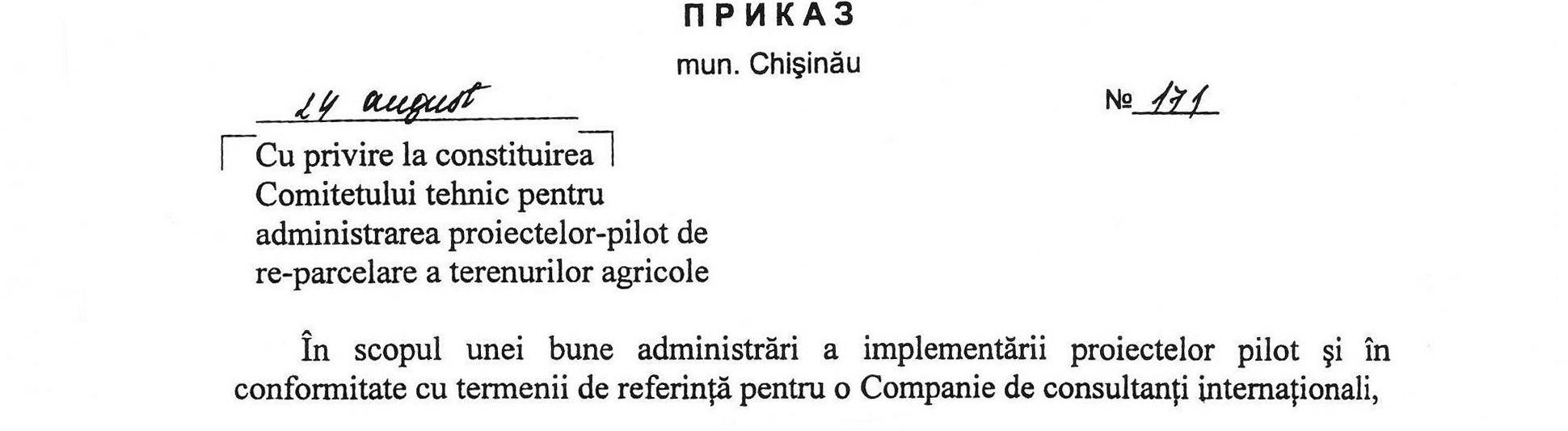
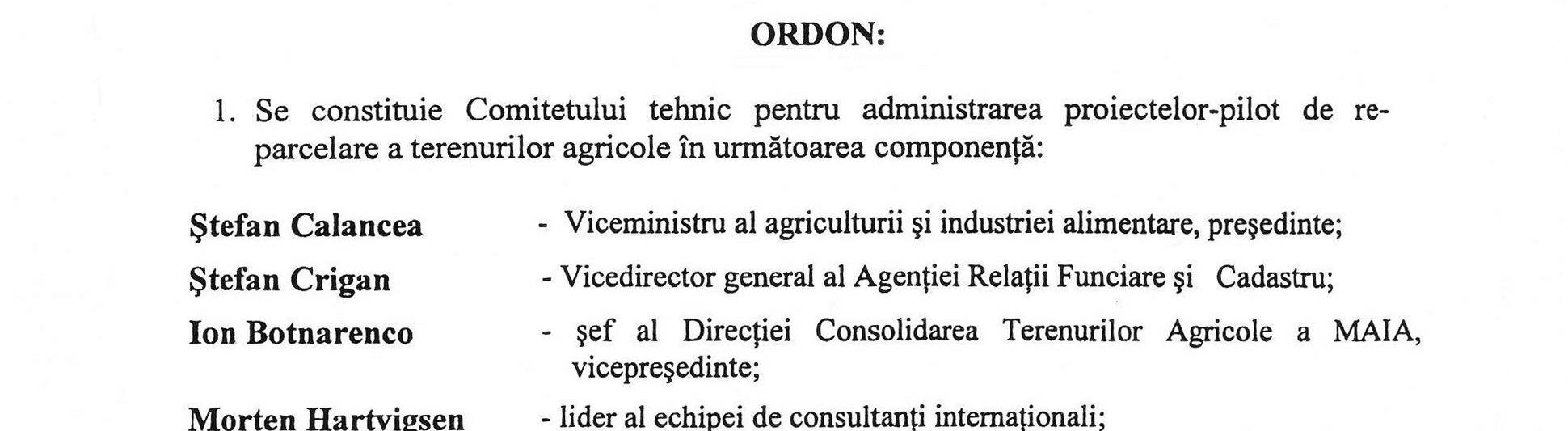

Anexa Rep 3
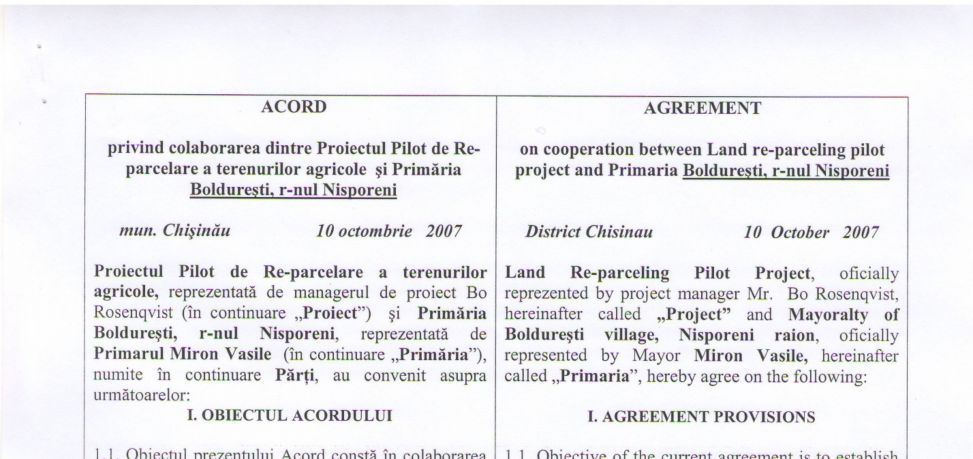
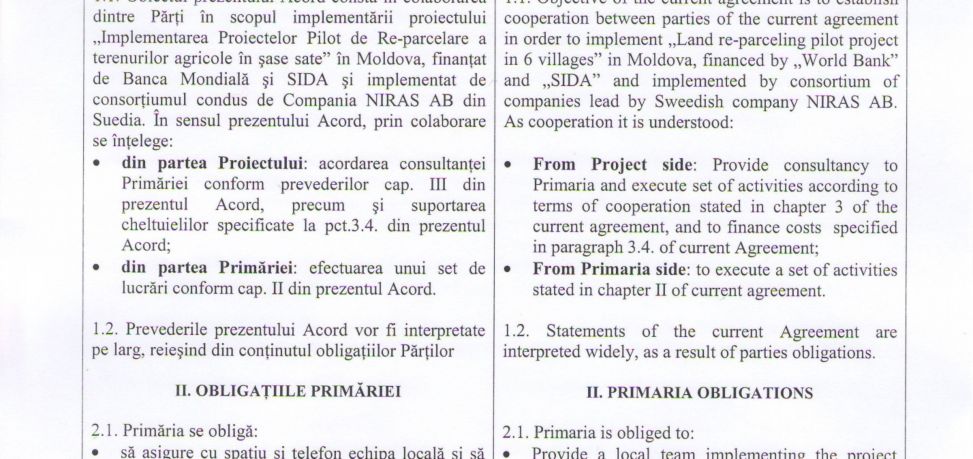
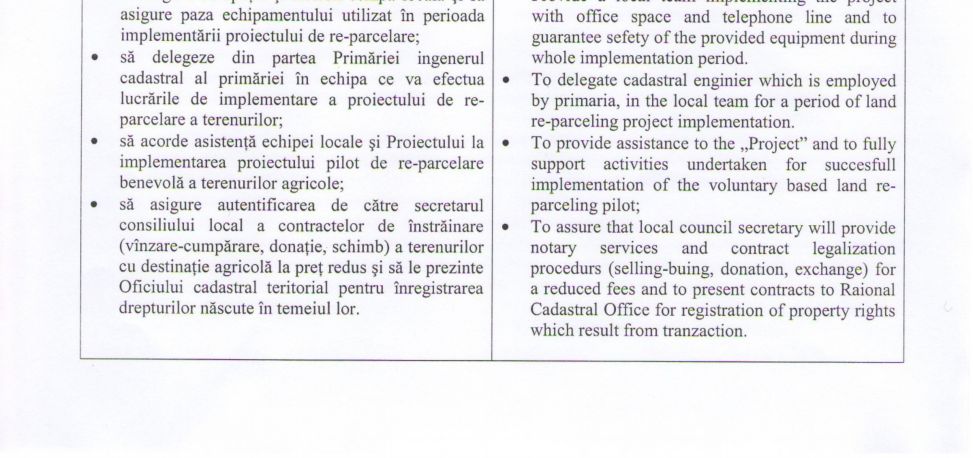
Anexa Rep 4
Anexa Rep 4

Anexa Rep 4
Document Outline