2009 Quarter II
CAPMU
Consolidated Agricultural Projcts Management Unit
financed by the World Bank
July 2009
REPORT ON THE
IMPLEMENTATION
PROGRESS OF PROJECTS
MANAGED BY CAPMU
Developed by CAPMU management
ACRONYMS AND ABBREVIATIONS
ACA
Alliance for Cooperation in Agriculture
ACSA
National Agency for Rural Development
CAPMU
Consolidated Agricultural Projects management Unit
CCA
Center for Business Consultancy
CIS
Commonwealth of Independent States
DA
Development Agency
DO
Development Officer
EIA
Environmental Impact Assessment
FAO
Food and Agriculture Organization of the United
Nations
GOM
Government of Moldova
LFA
Logical Framework Approach
MAFI
Ministry of Agriculture and Food Industry
MEGA
Mobile Expert Group
NGO
Non Governmental Organization
PFI
Participating Financial Institution
PM
Project Manager
RDC
Rural Development Centre
RFC
Rural Finance Corporation
RISPII
Rural Investment and Services Project II
SCA
Savings and credit association of citizens
SDC
Swiss Agency for Development and Cooperation
SIDA
Swedish Development Agency
TL
Team Leader
USAID
US Agency for International Development
WB
World Bank
2
TABLE OF CONTENTS
RURAL INVESTMENT AND SERVICES PROJECT ............................................................. 5
RURAL EXTENSION COMPONENT ................................................................................ 6
ACSA NETWORK OF SERVICE PROVIDERS ............................................................. 6
TRAINING PROGRAM ................................................................................................. 6
SERVICES PROVIDED AND BENEFICIARIES ............................................................ 8
MONITORING AND EVALUATION ............................................................................... 9
SPECIAL CONTRACTS ............................................................................................. 10
ELABORATING AND PUBLISHING INFORMATION MATERIALS .............................. 13
PROMOTION ACTIVITIES ......................................................................................... 14
AGRICULTURAL MARKETING .................................................................................. 15
DROUGHT ADAPTATION ADVISORY SERVICES ..................................................... 18
RURAL BUISNESS DEVELOPMENT COMPONENT ..................................................... 35
PROMOTION CAPMAIGN .......................................................................................... 36
BUSIENSS CREATION .............................................................................................. 38
FINANCING OF RURAL BUSINESSES ...................................................................... 42
INFORMATION SYSTEM MANAGEMENT AND M&E................................................. 43
RB POST - CREATION SUPPORT ............................................................................. 44
ENVIRONMENTAL RELATED ACTIVITIES ................................................................ 45
RURAL FINANCE COMPONENT ................................................................................... 49
CREDIT LINE IMPLEMENTATION PROGRESS ......................................................... 49
STRENGTHNING THE SAVINGS AND CREDIT ASSOCIATIONS INDUSTRY ........... 61
LAND RE-PARCELING PILOT PROJECT IN 40 VILLAGES .......................................... 63
AVIAN INFLUENZA CONTROL AND HUMAN PANDEMIC PREPAREDNESS AND
RESPONSE (AIHP) ............................................................................................................ 66
ANIMAL HEALTH COMPONENT ................................................................................... 66
HUMAN HEALTH COMPONENT ................................................................................... 69
GENERAL CONTEXT................................................................................................. 69
HUMAN HEALTH CAPACITY BUILDING SUB-COMPONENT .................................... 69
HUMAN HPAI TESTING SUB-COMPONENT ............................................................. 71
HUMAN HEALTH SYSTEM RESPONSE SUB-COMPONENT .................................... 73
PUBLIC INFORMATION AND AWARENESS COMPONENT ......................................... 74
AGRICULTURAL POLLUTION CONTROL PROJECT ....................................................... 84
STRATEGIC PROJECT DEVELOPMENT CONTEXT..................................................... 84
SECTOR-RELATED COUNTRY ASSISTANCE STRATEGY (CAS) GOAL
SUPPORTED BY THE PROJECT .............................................................................. 84
GLOBAL OPERATIONAL STRATEGY/PROGRAM OBJECTIVE ADDRESSED BY THE
PROJECT................................................................................................................... 85
GOVERNMENT STRATEGY ...................................................................................... 86
PROJECT DESCRIPTION SUMMARY ........................................................................... 87
PROJECT OBJECTIVES ............................................................................................ 87
PROJECT COMPONENTS ......................................................................................... 89
KEY PERFORMANCE INDICATORS ......................................................................... 90
PROJECT ACHIEVEMENTS AND OUTPUTS ............................................................ 91
YOUTH SOCIO-ECONOMIC EMPOWERMENT PROJECT .............................................. 102
ANNEXES ........................................................................................................................ 125
Annex RAS_1_Services and form of provision
Annex RAS_2_Form of provision and beneficiaires
Annexes RBD_1-23_Cumulative data on rural businesses
Annex AIHP_1_Human interest story
Annex AIHP_2_Media coverage on prevention and response
Annex AIHP_3_Communication strategy and plan
4
RURAL INVESTMENT AND SERVICES PROJECT
PROJECT OBJECTIVES
The Program objective, which remains unchanged, is to provide long-term support to
accelerate agricultural recovery and growth so that Moldova's agricultural and rural sectors
can play their full role in providing the underpinnings for future income growth and poverty
reduction.
Within this program objective, the project's second phase objective is to continue to foster
post-privatization growth in the agricultural sector by improving access of new private farmers
and rural businesses to what they need to succeed legal ownership status, knowledge,
know-how and finance, while building capacity of public and private institutions to ensure
sustainability of activities. The Phase II will build on success achieved under the Phase I, by:
(i) strengthening and expanding the rural advisory services; (ii) improving business skills of
the to-be entrepreneurs and assisting with the legal registration of the new businesses; (iii)
upgrading the financial sector environment through a range of risk management measures,
such as supervision capacity building, and introduction of new lending instruments such as
leasing; (iv) increase the commercial banking sector outreach into rural areas; and (v)
developing a practical approach to reducing transaction costs in land markets.
PROJECT COMPONENTS
The project consists of four components and the necessary financing for project
management:
(a) Rural Consulting Services;
Draught adaptation services
(b)
Rural Business Development Services;
(c) Rural
Finance
Credit Line
Strengthening the SCA industry
(d)
Agricultural Land Re-parceling Pilot Projects;
(e) Project
Management.
The first two components provide predominantly technical assistance, while the third
component provides investment support along with the necessary technical assistance to
participating financial institutions, and technical assistance for strengthening SCAs system
and their supervision. The first three components are closely linked, operating basing on
synergy principles, with each dependent on the others for successful outcomes.
PROJECT IMPLEMENTATIONPROGRESS AS OF JUNE 30, 2009
RURAL EXTENSION COMPONENT
ACSA NETWORK OF SERVICE PROVIDERS
The ACSA advisory network was created based on the public contest for the selection of
consultancy Service Providers organized and held by a Selection Committee in the period of
21 November 11 December 2008. The minutes of the Selection Committee final session
(nr. 24 of January 23, 2009) have been approved by the Observers Council meeting held on
30th of January 2009.
With the purpose of implementing the "Rural Consultancy Services" component of the RISP II
Project, ACSA signed the Rural Advisory Service Agreement with the Ministry of Agriculture
and Food Industry. Eventually, ACSA signed consultancy service contracts for 2009 with 23
Service Providers and extended the existent contracts with 12 Service Providers.
Starting with February 7, 2009, the ACSA network consists of 35 Service Providers. The total
number of ACSA network consultants is 425 people, of which 350 local consultants and 70
regional consultants. Additionally, 5 regional ACSA consultants operate in the agricultural
marketing (PS Soldanesti, PS Edinet, PS Criuleni, PS Hincesti AND PS Calarasi).
During the first half of 2009 a moderate staff flow was recorded outside the network. About 24
local and 4 regional ACSA consultants have quitted due to different reasons, such as moving to a
different job, leaving abroad, personal reasons etc. The Service providers organized consultant's
selection competitions and completed the vacant positions in a quite short period of time.
TRAINING PROGRAM
The professional training of the regional and local consultants in 2009 remains a priority of
ACSA executive department. The beneficiaries of the rural extension services in agricultural
activities development and implementation of new businesses require more complex services
and facilitation of continuous assistance from ACSA network for the increase of incomes from
the practiced activities and sustainability of their business. To respond more promptly to these
challenges, ACSA executive department implements different training programs aiming at
improving the quality of advisory services and of the professionalism of regional and local
advisors.
During the first half of the year the following training programs were organized:
The Module ,,ACSA Concept and Contract Arrangements for 2009"
After the signing of contracts with ACSA service providers' network, the Executive
Department organized a one day seminar for all regional project coordinators. Within this
6
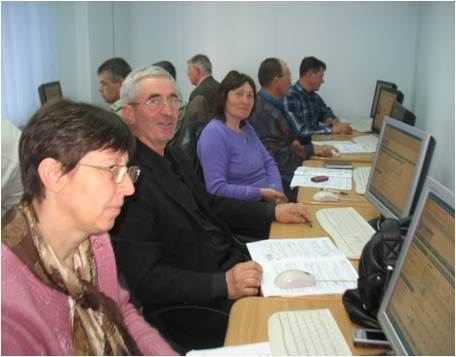
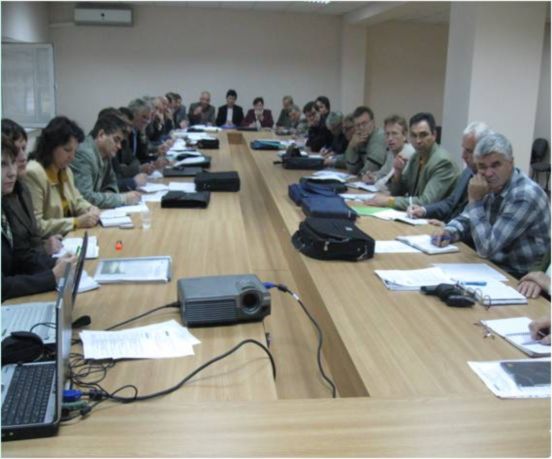
seminar, the project coordinators have been explained the ACSA concept, the consultancy
network structure, the activities to be
implemented, the modality of
reporting and planning activities,
monitoring local consultants and
other details necessary according to
the contract for an adequate activity
of a SP in 2009. The seminar was
preceded by the signing of service
provision contracts between 35
Service Providers and the Executive
Department of ACSA in both
Romanian and English.
Representatives of CAPMU and USER/MAFI participated in the seminar.
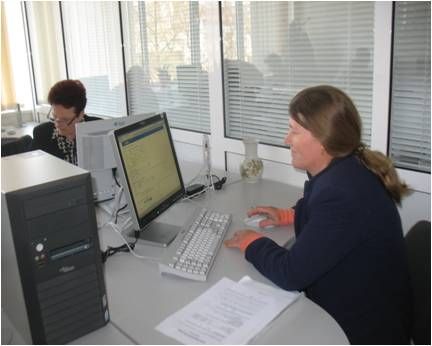
Training module ,,Computer use"
This module was designed for local consultants who had not participated in trainings and do
not have adequate knowledge for work with computers. The training started on 20.01.09 and
ended on 13.042009. About 249 local consultants, divided into 23 groups, have been trained in
the field of computer use through the
use of different software. The training
sessions were organized at DAAC
System Integrator training center and
at the Jewish culture center KEDAM.
The duration of the training module is
4 days. The training plan comprises
six parts.
Part 1. Computer structure. Parts of
the computer. The roles and the parts
of the system block. The role of the basic devices. Notions of physical and logical modules.
Duration of this training part 1 hour.
Part 2. Operational System Windows Vista. Operational systems and software. Windows
operational systems. Graphical interface. Standard software. Storage of information. Creation
of and work with files and folders. Copying, moving, deleting of files. Work with CDs. Icons.
Duration of training session 8 hours.
Part 3. Text editor Word 2007. Word particularities. Graphical interface. Opening, creation,
saving of documents. Text introduction, editing and formatting. Formatting of paragraphs. Text
7
fragments copying and moving. Work with tables. Spell check. Page parameters. Printing
documents. Duration of training session 10 hours.
Part 4. Tables' editor Excel 2007. Excel
particularities. Graphical interface.
Opening, creation, saving electronic table.
Work with cells, rows, columns, sheets.
Formulas and use of most simple
functions. Sorting. Duration of training
session 5 hours.
Part 5 Internet use. Notions of local and
global network. Web-browser. Internet
surfing and search of information. Saving
addresses ,,Favorites". Creation of personal mailbox. Composing and sending mail. Duration of
training session 5 hours.
Part 6. Antivirus
Duration of this part of training is 1 hour, during which the advisors are informed about the
methods of computer and information protection, scanning of documents etc.
At the end of each training programme, the participants filled in a questionnaire for the purpose
of improving the teaching process in the future. An express analysis of the results of evaluation
shows that the great majority of participants mentioned that the duration of the training
programme of 30 hours is insufficient for the beginners to assimilate such a big amount of
information.
ACSA plans to organize specialized trainings for ACSA consultants in the field of plants
protection (July) and rural tourism (September). For this purpose, ACSA started in the first half
of 2009 activities related to elaboration of 2 training modules in the fields mentioned above.
SERVICES PROVIDED AND BENEFICIARIES
The consultancy services are provided by the regional and local consultants according to the
minimal set of services stipulated in the standard agreement signed between ACSA and service
providers. The purpose of consulting services provided by ACSA consultants is to meet the
needs of agricultural producers and rural entrepreneurs in ensuring them with quality advisory
services allowing them to solve the existing needs and problems, as well as to facilitate the
sustainable development of agricultural activities and to increase the incomes generated by the
practiced activity. The detailed information on the provided services and on the number of
beneficiaries is presented in Annexes RAS 1 and RAS 2.
8
During the first half of the year the ACSA network consultants provided over 100 000 consultancy
services, of which: about 1730 seminars, over 1000 written consultancies, over 1600 round
tables, 3800 meetings and discussions, about 12000 field trips and over 80 000 oral
consultancies. A Service Provider offered 2900 advisory services in average. During the reporting
period about 192 000 people benefited from ACSA services. A Service Provider assisted in
average over 5400 beneficiaries of consultancy services in the report period.
During the report period, the range of services provided by ACSA network was dominated by
verbal consultancies with a share of 80 per cent. In most cases these consultancies are provided
individually. Oral consultancies are followed by field trips, with 12%, preceded by discussions and
meetings, with 4%, round tables and seminars with 2% each and written consultancies 1%.
According to the field, the structure of consultancy services is dominated by technological
services - 56% (56770 services), followed by agricultural marketing 17% (17600 services),
economic services 14% (13800 services) and legal services 13% (13000 services).The
number of beneficiaries and provided services varies from one service provider to another
depending on the number of consultants in the team, their experience and training level and
methods used in provision of services.
MONITORING AND EVALUATION
The monitoring and evaluation of the Service Providers is performed continuously and randomly
with the participation of the staff of ACSA executive unit, the staff of the Rural Extension Service
Unit of the Ministry of Agriculture and Food Industry and the Selection Committee of ACSA
Service Providers. The purpose of monitoring and assessment is to verify the activity of the
regional and local ACSA consultants,
to assess the progress of project
implementation and to provide
necessary assistance in order to
improve the consultancy process
provided by project beneficiaries.
In January-June 2009 the ACSA
Executive Unit, the Rural Extension
Service Unit of MAFI and the
members of the Selection Committee
of ACSA monitored 28 SP from the
following regions: Cimilia, Comrat,
Ciadīr Lunga, Basarabeasca, Ialoveni, Sīngerei, Criuleni, Anenii Noi, Bli, Clrai, Cueni,
Fleti, Floreti, Orhei, tefan Vod, Streni, Teleneti, Ungheni, Leova, Cahul, Glodeni,
Hīnceti, Cantemir, Cinari, Nisporeni, Rīcani, Soldanesti and Taraclia. Besides, the monitoring
groups visited over 100 consultancy services at the level of village. As result of the monitoring
9
visits certain objections regarding the activity of the local and regional advisory centers, as well as
recommendations and terms for their improvement have been defined.
During these monitoring visits discussions regarding the implemented activities and the
provided services have been held with regional and local consultants, representatives of the
local public administration and other town halls employees, as well as directly with the
beneficiaries. At the same time, the condition of the offices, the transparency, the planning and
the methods of activities performance, as well as the state of documentation in general,
implementation of special contracts and demonstration plots have been examined.
At the beginning of 2009 based on the decision of PS Selection commission and of the
Observers Council, a contest for the selection of a new consultant in Micleueni village (PS
Streni) and to solve the problem of LC Cruglic (PS Criuleni) office within 15 days by SP was
organized, with the monitoring of the execution of decision of Selection Commission by ACSA
Executive Unit. In both villages two new consultants, who already work for ACSA network have
been selected, and after discussions with local authorities the settlement of problems regarding
the placement of local consultants was possible.
The monitoring of 28 centers during the report period showed that all the consultants meet the
contract requirements regarding the consultancy activity, the registration of provided services,
provision of information materials and transparency of the activity itself. The monitoring has
also shown that some agricultural producers' beneficiaries of rural extension services cannot
access the credit line within RISP II project.
SPECIAL CONTRACTS
To apply the demonstration method in training and information activities of the beneficiaries of
ACSA extension services network, the consultant, in cooperation with researchers and
representatives of agricultural education institutions, MAFI departments, subdivisions and
inspections, companies providing goods and services for the agro-industrial complex developed
and submitted 147 mini-project proposals regarding different agricultural and non-agricultural
activities specific for rural regions.
The majority of Service Providers (SP) submitted 3-5 project proposals in average, while SP
Basarabeasca, SP Clrai, SP Leova, SP Orhei, SP tefan Vod, SP Teleneti submitted 6 7
project proposals. Three service providers submitted 1 2 proposals only.
Of the total of project proposals, 51 were approved by the evaluation commission with the
beneficiaries of which special services contracts have been signed. Of them, 26 units are related
to growing of vegetables, 20 to growing of animals, 4 non-agricultural business in rural areas,
while one was for the evaluation of data on the costs and incomes in agricultural activities. In the
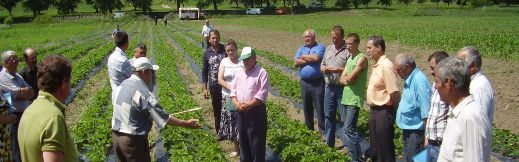
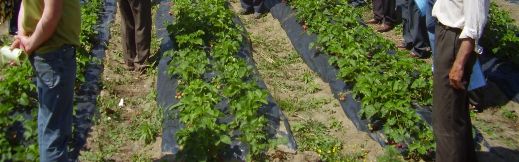
vegetables growing sector, 18 demonstration plots are for the promotion of advanced elements
and technologies in growing of vegetables, berries, grapes and 3 and 5 units respectively
10


demonstrate the growing of flowers and mushrooms. The demonstration plots in the growing of
animals sector are used for the demonstration of breeding, keeping and reproduction technologies
of cattle (4 contracts), swine (3 contracts), doves and peacocks (2 contracts), rabbits (2 contracts),
fish (4 contracts) and bees (5 contracts). The projects focused on non-agricultural activities (3
contracts) are related to rural tourism development and one contract to handicraft development.
During the IInd trimester modifications to the list of contracts under implementation have been
made from different reasons. The beneficiary of Contract No. 6, Mircea Svetlana from Medveja
village Briceni rayon gave up the implementation of this project because she was not satisfied with
the prices to corn and wheat stored in the places planned for mushrooms growing activities.
According to the proposal of SP Briceni this beneficiary was replaced by the beneficiary Proiuc
Regina from irui village, the same rayon, the object of the contract remaining unchanged.
Because of the lack of responsibility from the beneficiary of Contract No. 7 from Crihana Veche
village in his relations with the SP Cahul, Olteanu Alexei withdrew from the project and was
replaced by Iovcev Sergiu from Taraclia de Salcie in the same rayon, maintaining the object of the
contract. The beneficiary Caminschii Serghei from Chircetii Noi village, Cueni rayon,
renounced to the contract because of the lack of financial sources for personal contribution and as
result of non-observance of contract provisions related to tomatoes cultivation technology with drip
irrigation. He was replaced by Cosovchi Mihail, resident of the same village, who implements the
same object of the contract.
ACSA executive unit in collaboration with the project coordinators from the rayon extension
centers and local consultants undertook these measures in
order to ensure the successful implementation of the approved
contracts. On the basis of field trips with participation of external
consultants the plan of activity for each sector separately was
approved. The workload, the needs in materials, goods,
services and responsibilities for the corresponding activities
have been defined. Relations with potential suppliers of genetic
material, equipment and other means to be procured from
contract sources and the contribution of project beneficiaries
have been established. For a significant part of contracts the
corresponding goods have already been procured (only genetic
material for swine, cattle and goats breeding sectors still have to
be procured).
The performed activities allowed the objects planned for demonstration to be applied within
training and information activities which, according to the special contracts are planned to be
organized on their basis.
11



As of the report day, the SC No. 51 has been implemented completely. Agrex NGO and the
National Agency for Rural Development (ACSA) verified and analyzed 2900 questionnaires
collected on the basis of the study performed by ACSA Service Providers. The final materials were
published in the guide ,,Situation of incomes and expenses in agricultural activities in 2008".
This publication describes the gross margin for 12 production sectors practiced in the Republic of
Moldova and was designed for agricultural activities owners for the purpose of:
· Analyzing the results achieved during the agricultural year 2007-2008;
· Planning the activities both in production sectors and in all agricultural undertakings.
This edition is different from the previous ones as the gross margin for the 12 production sectors is
not presented by geographical regions, it is presented by two agricultural activities categories: a)
households the total area of which does not exceed 10 ha; b) households with a total area of over
10 ha.
The guide was distributed to ACSA
network consultants who advised the
farmers in the improvement of decision-
making process regarding production
sectors planning. The use of data on
costs and incomes and of the gross
margin allowed planning and managing
correctly the activities within an
agricultural undertaking. The information
included in the publication is very useful
for the rural entrepreneurs and serves as
a guide for the re-launching of traditional
or new profitable businesses in
agriculture.
The information contained in this edition
is also interesting for the employees of
the rural consultancy centers, micro-
financing institutions, farmers
associations, agricultural education and scientific research institutions, public and governmental
institutions, international assistance projects etc.
It must also be mentioned that, on the date of the report, of 51 of the special contracts approved
for financing, 3 have been finalized, 39 have been executed at 50%, while 9 SC are at the stage of
12
preparation of information and training activities. The current state and the expected terms for the
execution of SC give us confidence that the planned activities will be carried out in the nearest
future. 1300 farmers, rural entrepreneurs, consultants and other interested people participated in
44 seminars. The implementation of SC was reflected in 6 TV programmes, 11 radio programmes
and 16 newspaper articles.
ELABORATING AND PUBLISHING INFORMATION MATERIALS
The information materials prepared by ACSA provide informational and advisory support to
agricultural producers and entrepreneurs and aim at facilitating the access of information,
advanced experience and new knowledge for the rural areas. These materials are very demanded
by the beneficiaries of the extension service, the published information materials allow them to
know better the specifics and the methods of implementation and management of production
sector or personal business.
During the report period, ACSA published the information booklet ,,Forms of support and facilities
granted to agricultural producers in 2009" (4000 copies in Romanian and 1000 copies in Russian
languages) and a practical guide "Breeding of rabbits and fur animals (IInd edition)" (2000
copies).
These booklets were published in cooperation with MAFI departments, the state Agencies
,,Moldova Vin" and ,,Apele Moldovei" for the purpose of informing the agricultural producers and
the rural entrepreneurs from the Republic of Moldova with the regulations of subsidizing priority
agricultural sectors, including granting of state compensations for the creation of vineyards
plantations and energy costs in irrigation, as well as possible ways of obtaining financial means
planned in the State budget for 2009, the tax facilities for this year, the tendencies in agriculture
support.
Both information materials have been distributed to ACSA consultants, to the Ministry of
Agriculture and Food Industry and its subordinated institutions, as well as to Rayonal Agricultural
Directorates, agricultural producers and rural entrepreneurs for free.
"Rabbits and fur animals growing business (IInd edition)" is a revised and completed edition
describing new concepts of rabbits and fur animals reproduction and growing systems, as well
as the updating of capital investments and of production costs in these sectors. This guide was
published after multiple requests from agricultural producers and rural entrepreneurs.
According to the publishing and distribution regulation 1500 copies will be distributed through
ACSA network for the equipment of the regional and local consultancy centers as well as for
the promotion activities.
In the IIrd trimester, ACSA will finalize the preparation and publishing of a new guide ,,Viticulture
business (IInd edition)" which is prepared also due to requests from agricultural producers and
ACSA consultants.
13
In the IIrd trimester, ACSA will finalize the preparation and publishing of a new guide ,,Viticulture
business (IInd edition)" which is prepared also due to requests from agricultural producers and
ACSA consultants.
Distribution of information materials printed in 2008 and at the beginning of 2009
During the Ist semester 1500 information materials (500 copies of ,,Businesses in vegetable
growing on protected land" and "Forms of support and facilities granted to agricultural
producers in 2009", 800 in the state language and 200 in Russian) have been distributed for
free to 35 Service Providers for promotion activities. .
Due to donations provided by the Consolidated Agricultural Projects Monitoring Unit (CAPMU)
and Tacis project ,,Complex Use of Eurasian Steppes", the service providers received for free
500 copies of information materials ,,RISP success stories (IInd book) (CAMU) and 500
booklets ,,Ecological Agriculture fashion or necessity" (TACIS).
SP have also received for sale 1250 copies of ,,Businesses in vegetable growing on protected
land", published at the end of 2008. Incomes from the sale of information materials will be
used for the formation of the renewable ACSA fund the financial source used exclusively for
the preparation and publishing of new information materials and execution of ACSA
promotion activities.
The access of ACSA consultants to new achievements in science and agriculture
For information about new achievements in science and agriculture information notes on new
species and recently developed hybrids for production in the Republic of Moldova; multiplication of
mushrooms biological material, access to guarantees and investments funds, obtaining of financial
resources from potential financers, national and international projects active in the country etc.
have been prepared and transmitted to Regional Centers (by e-mail).
For information and promotion purposes ACSA SP and beneficiaries have received the
information material ,,Successful stories (Book II), in 500 copies.
For the purpose of information and facilitation of access to new achievements in the improvement
and genetics of agricultural crops, new species and hybrids, ACSA consultants received for free
450 copies of ,,Plants species Registry of the Republic of Moldova", information material provided
by the State Commission for Plants Species Testing. To equip the regional ACSA centers and the
consultants specialized in agricultural marketing, 70 copies of ,,Agricultural products marketing"
have been purchased and distributed.
PROMOTION ACTIVITIES
A special attention in the daily activities of ACSA Regional and Local Centers is paid to
promotion of the image of rural extension service among beneficiaries and other rural
dwellers. The measures undertaken by rural extension consultants contribute to the
14
improvement of transparency and efficiency of the performed activities, increase the
credibility and the accessibility to the provided services.
During the report period, the popularization and dissemination of ACSA services and
activities was performed through the following promotion activities:
At the local level 42 articles were published in local newspapers, 14 feature reports were
broadcasted on local radio and 10 programs on local TV. SP (Cahul, oldneti, Rīcani,
Cueni, Cantemir, Sīngerei, Glodeni, Criuleni) prepared booklets and flyers about the services
and activities, about the structure of the teams etc.
At the national level ACSA organized 68 promotion activities, among which: 6 articles in
daily national newspapers (Curierul Agricol, Timpul, Moldova Suveran), 14 TV spots within the
programs ,,Curierul agricol", ,,Mesager", ,,Bastina", 28 reports on the National Radio.
Information and news are placed regularly on the web page of ACSA, offers, requests and
market studies are transmitted daily to the web page "Agricultural production" for the
beneficiaries of this online information source.
The ACSA Service Providers (Clrai, Cueni, Orhei and Bali) and their beneficiaries
participated with specialized stands in the specialized national and international exhibitions
,,Small business Moldova" (May 05-07) and ,,Food and Drinks" (May 13-17).
AGRICULTURAL MARKETING
ACSA support in the implementation of activities in agricultural marketing, as well as the updating
of the web page ,,Agricultural production" in the report period was ensured by 5 regional
consultants from SP Causeni, Hīnceti Clrai, oldneti, Edine and the coordinator within
ACSA office.
During the first half of the year, the consultancy services in agricultural marketing had about
3750 beneficiaries, while operative information has been provided to 420 ACSA network
consultants, as well as about 18200 rural producers and entrepreneurs, companies, state and
private companies connected to the Agricultural Marketing Information System. In
cooperation with regional and local consultants 68 seminars, 35 meeting and discussions
with informal and formal marketing group, 76 field trips have been organized, 1087 oral and
111 written consultancies and agricultural market studies have been provided.
The subject of consultancy services was related to: offers (suppliers and distributors) and
requests (agricultural producers and rural entrepreneurs) for procurement of production
means and sale of agricultural products (retail and wholesale markets, as well as processing
markets), requirements towards the seeding materials, markets, prices on the agricultural
markets in the country (including for processing) and ways of promoting agricultural products
in distribution and consumption networks.
15
The impact of agricultural marketing on ACSA clients
On the basis of the activity performed by Agricultural Market Compartment during the period
January June the following activities have been performed:
The structure of agricultural inputs procurement mediation
performed by ACSA agriculutral marketing department January
June 2009
ü 47 informal agricultural marketing groups and one agricultural marketing cooperative have
been created (seasonal groups related to joint acquisition of inputs and joint sale of fruits and
vegetables for processing and wholesale markets);
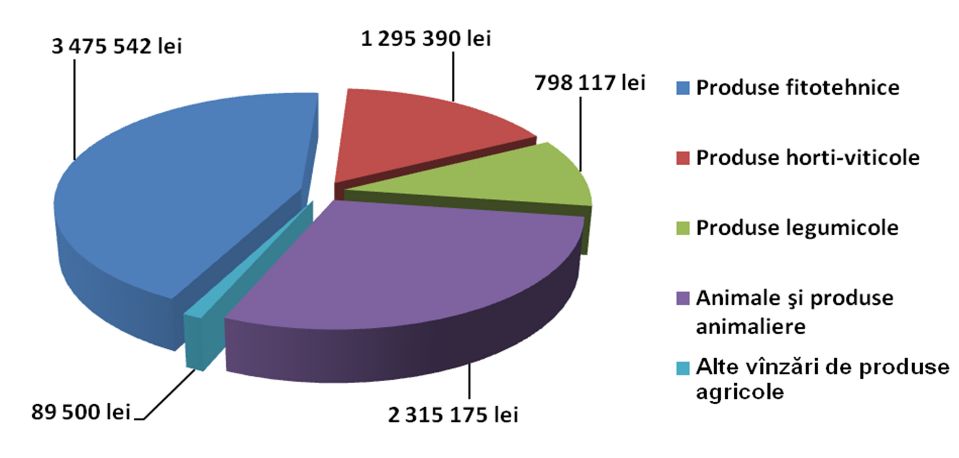
The Structure of mediated agricultural products sale by ACSA
agricultural marketing compartment
Januray June 2009
16
ü Agricultural production sale contracts with the value of 7974 thousand lei (including primary
production of plants 3475,5 thousand lei, horticulture 1295,4 thousand lei, vegetables
798,1 thousand lei, animals and products of animal origin 2315,2 thousand lei, other sales
89,5 thousand lei) have been mediated;
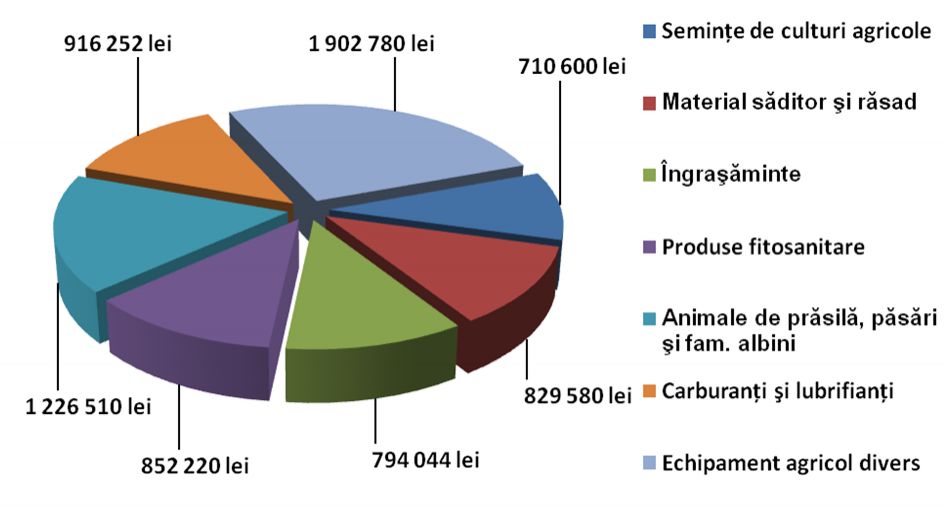
ü Contracts for procurement of production means in the total value of about 7232 thousand lei
(including seeds 710,6 thousand. lei, seeding material and seedlings 829,6 thousand lei,
fertilizers 794 thousand lei, phyto-sanitary products 852, 2 thousand lei, animals and birds
1226,5 thousand lei, agricultural equipment 1902,8 thousand lei, fuel and lubricants
916,3 thousand lei) have been mediated;
ü 315 proposals and 51 requests for the sale or purchase of agricultural equipment and
agricultural products have been placed, viewed and sent to ACSA network by the rural
area beneficiaries and Agricultural Marketing Information System users;
ü 13 market studies for about 128 agricultural products (6 reference agricultural markets from
the Republic of Moldova - Chiinu, Cueni, Hīnceti, Calarai, oldneti and Edine) have
been performed, the information was placed and viewed online in the Agricultural Marketing
Informational system and sent by e-mail to approx. 850 subscribers.
The subject of consultancy services and operational information in agricultural marketing was
related to: offers and requests for procurement of production means and sale of agricultural
goods, requirements towards the seeding materials, markets, access to investment funds, the
dynamics and the fluctuation of retail and wholesale prices.
At the beginning and during the harvesting campaign the consultants specialized in
agricultural marketing develop different activities (seminars, round tables, meetings and
discussions etc.) aiming at guiding agricultural producers in the signing of long term contracts
with processors and wholesalers for the purpose of meeting their requirements in the sale of
production, as well as diversification of markets.
17
DROUGHT ADAPTATION ADVISORY SERVICES
,,Drought Adaptation Consultancy Services" Project is an integral part of the Drought Adaptation
Component, which is an additional financing within Rural Investments and Services Project (RISP
II).
The purpose of the ,,Drought Adaptation Consultancy Services" Project is to promote different
drought risks mitigation measures in the activity of local agricultural producers. The general
objectives of the sub-component are:
1. To increase the understanding and the practical skills of the farmers as well as their
confidence in adopting drought risks mitigation measures;
2. To promote the concept of community implication in drought risks mitigation;
3. To promote the crediting mechanism designed for investments in small scale irrigation
rehabilitation and/or development;
4. To improve the knowledge and the skills of rural extension consultants in the field of
drought risks mitigation measures.
The activities of the project are performed by the National Rural Development Agency (ACSA) and
by the rural extension network with extensive implication of national experts from specialized
education and research institutions.
During the report period, ACSA and the rural extension network implemented activities according
to the plan.
The Drought Adaptation Services sub-component implies carrying out several activities such
as: training of rural extension consultants; development of training modules and training of
beneficiaries; preparation of handbooks, posters, leaflets and other information materials;
agricultural producers information campaign; identification of potential project beneficiaries;
development of mini-project proposals and their assessment; creation of demonstration plots;
provision of specialized services; promotion campaign in media and organization of field
days; monitoring and evaluation of implemented activities etc.
1. Development of Training Programmes
According to the plan of activities, ACSA developed 7 training modules for demonstration
plots beneficiaries and rural extension services consultants. These modules have been
developed by a group of national experts selected on competition basis. The modules are
focused on the description of drought risks mitigation measures, these modules have
elements of comparison between traditional production measures and those involving
drought mitigation, as well as costs planning and forecasting techniques, legal aspects of
18
drought mitigation measures, types of agricultural tools and equipments, types of low
pressure and energy consumption irrigation equipments etc.
Module 1. Agro-technical measures
Figure 1
The ,,Agro-technical measures" module for drought
impact mitigation comprises information on the
use of crop rotation, soil processing system,
fertilization system and vegetation protection
system, as well as weed control as drought impact
mitigation measure. All these measures aim at
facilitating soil supplying with rain/snowfalls waters
and reducing the direct surface vaporization of
these waters. The module includes scientific and
practical explanations of the so-called agro-
technical measures as surface ploughing and
conservation tillage, seeding at bigger depths and
smaller crops density, water catching using special
measures, reduction of vaporization surface
through plough-land flattening, soil protection
covering, crop rotation, use of organic fertilizers for
retention of water in the soil, weed control using
Figure 2
water provided for crops, use of green fertilizers
etc.
Module 2. Protection belts.
Protection belts are belts of trees and shrubs of
different lengths and quite narrow widths,
placed at a certain distance from an object for
the purpose of protecting it against different
harmful agents.
The module ,,Protection belts" explains the role
and the importance of protection belts in
drought risks mitigation, through the reduction
of the speed of dominant winds, reduction of
vaporization and plants sweating, increase of
relative soil humidity, which result in yields
increase compared to non-protected crops.
19


Also, the module explains the techniques of protection belts creation and maintenance,
species of trees that can be used for protection belts, costs for their creation and
maintenance, direct and indirect costs
forecast etc.
Figure 3
Module 3. Introduction of drought
A g en ia Na ion a l de D e zvo ltar e R u ral
resistant varieties, species and hybrids.
Pro ie ct ul: ,, SE R V IC II DE CO NS U LT A N
CU P R IV I RE L A A D A PT A R E A L A S E CE T "
The module contains information and
M od u lu l d e in s tru ire:
IN T R O DU C ERE A SP E CIIL O R , SO IU R ILO R I
explanations on the role and importance of
H IB RIZ IL OR RE ZIST EN I LA S EC ET
M IH AIL V RO NSC H IH,
drought resistant soils and hybrids,
d o ct or h abil itat īn tii n e b iolo gice ,
m e m br u cor e spo nd en t a l A M
cultivation techniques, production potential
:
, ,
of varieties, species and hybrids in drought
,
conditions, incomes and expenses
, M
compared to soils and hybrids with
increased requirements towards soil and
air humidity, characteristics of soils and
hybrids of technical crops and drought
resistant vegetables etc.
A special attention is paid to methods and
hiinu -2009
ways of compensation of negative
consequences of the drought, influence of
deviation from optimal soil and climate
Figura 4
regimes on the yields, use of production
of potential of agricultural drought
resistant species and hybrids with low
requirements towards soil fertility in
combination with other agro-technical
measures in conditions of drought.
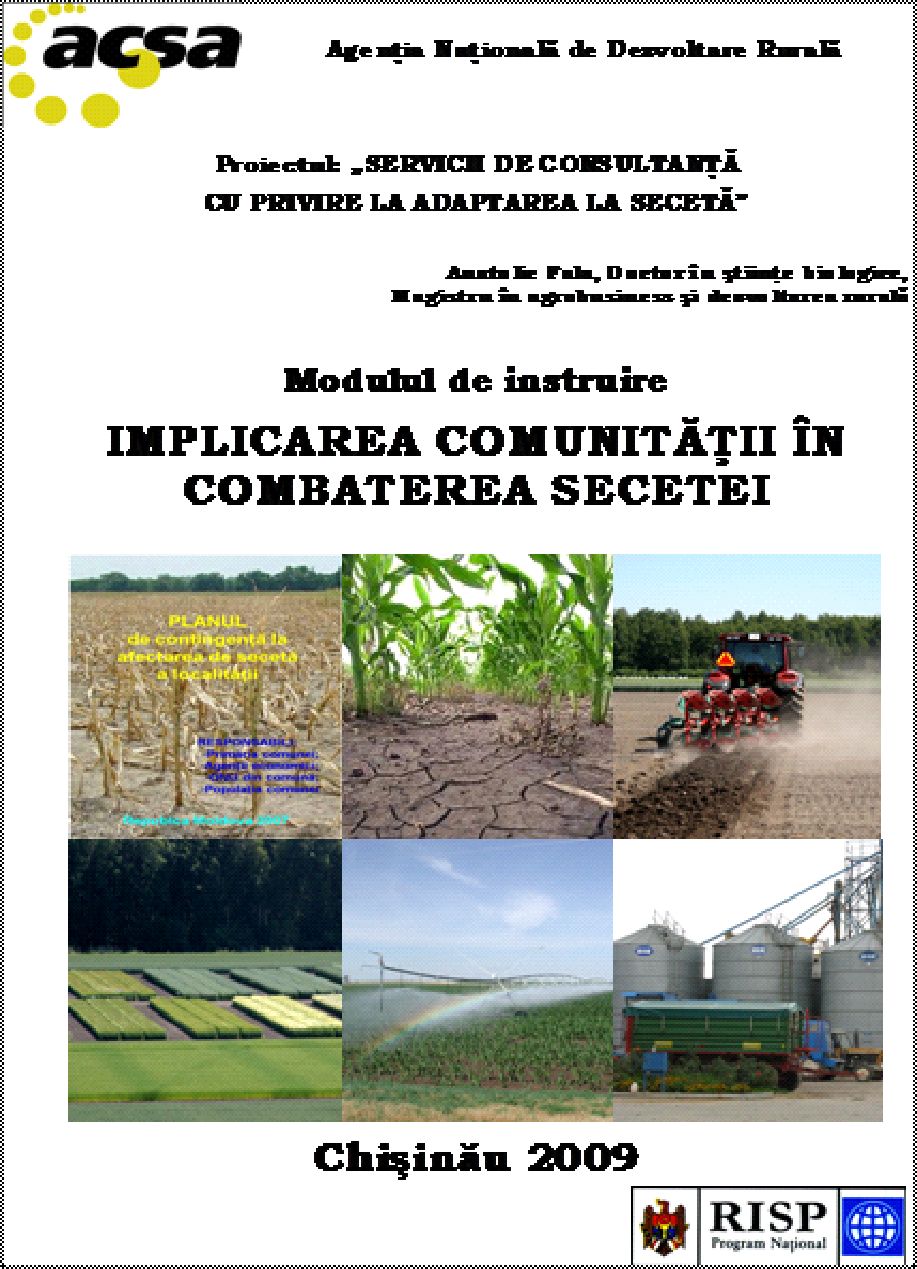
Module 4. Community involvement in
drought combating.
This module describes possible
measures of preparation for, prevention
and mitigation of drought in rural areas,
methods and ways of drought prevention
through the implementation of early
prevention and community mobilization
20
measures, as well as identification of
Figure 5
needs and risks faced by the community
regarding the drought. This module
explains the role and the importance of
rural communities and of each particular
citizen in drought combating, as part of
disasters risks management at community
level. The module underlines the
importance of identification, evaluation,
development and strengthening of
communities' capacities to face the
drought. In line with agricultural and socio-
economic measures, a special attention is
paid to structural measures, such as
creation of fodder and seeding material
stocks, access to risk funds and micro-
credits etc. The module also contains
information on the development of
cooperation relations and mutual help
between all community actors.
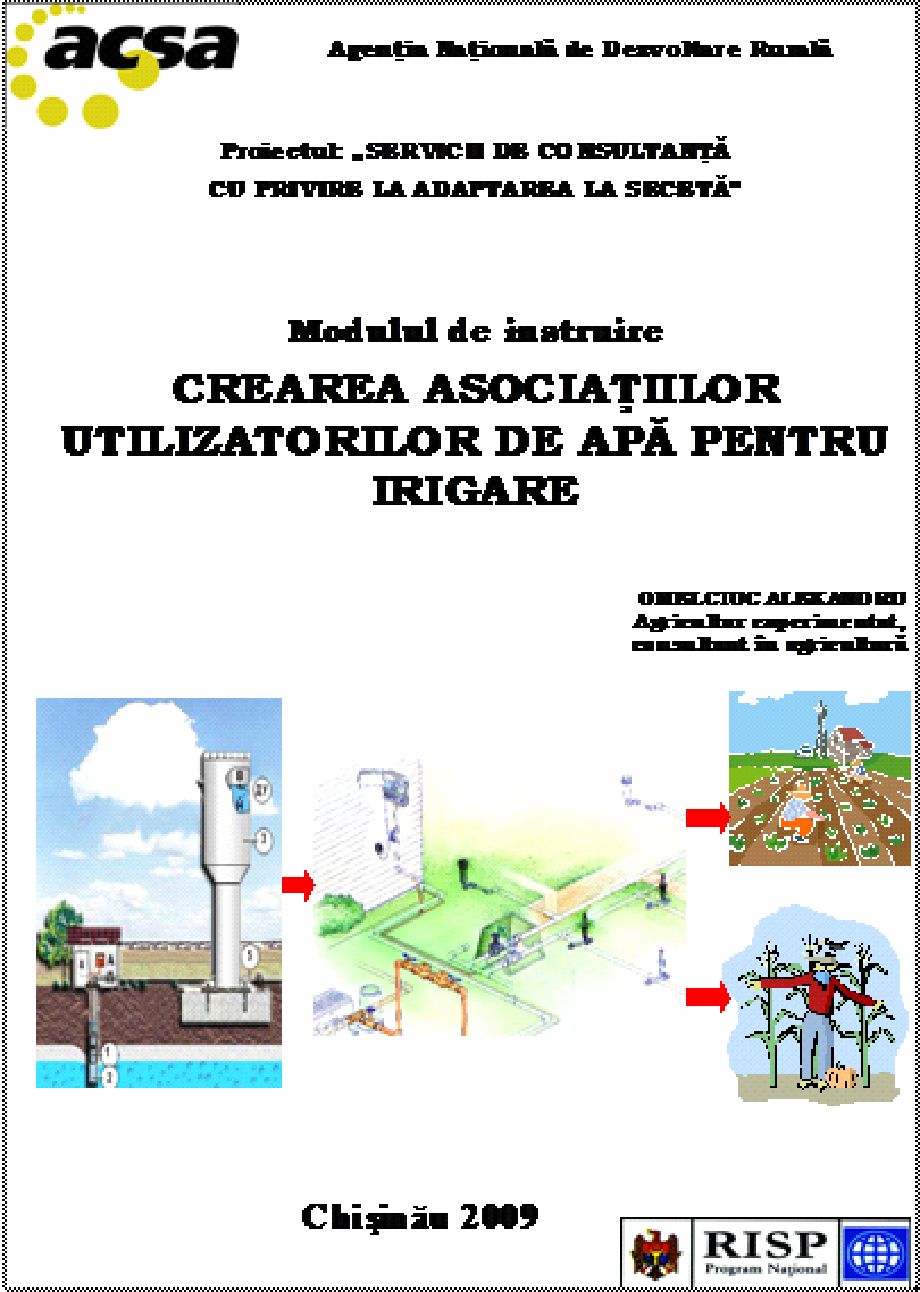
Module 5. Creation of Water Users
Figure 6
Associations
The Module ,,Creation of Water Users
Associations" defines the notion, the goals,
the advantages and the need of creating
water users associations. The Water Users
Association is an institutional measure
facilitating the protection, the rational use
of water and access to water of more
agricultural producers and, as a
consequence, leads to reduction of
negative impact of the drought. The
module contains information and
explanations on the ways of WUA creation,
its registration form and necessary
documents for registration, the business
21
plan of WUA, bookkeeping, financial reporting, tax payment, as well as information on
penalties applied in case of violation of legislation.
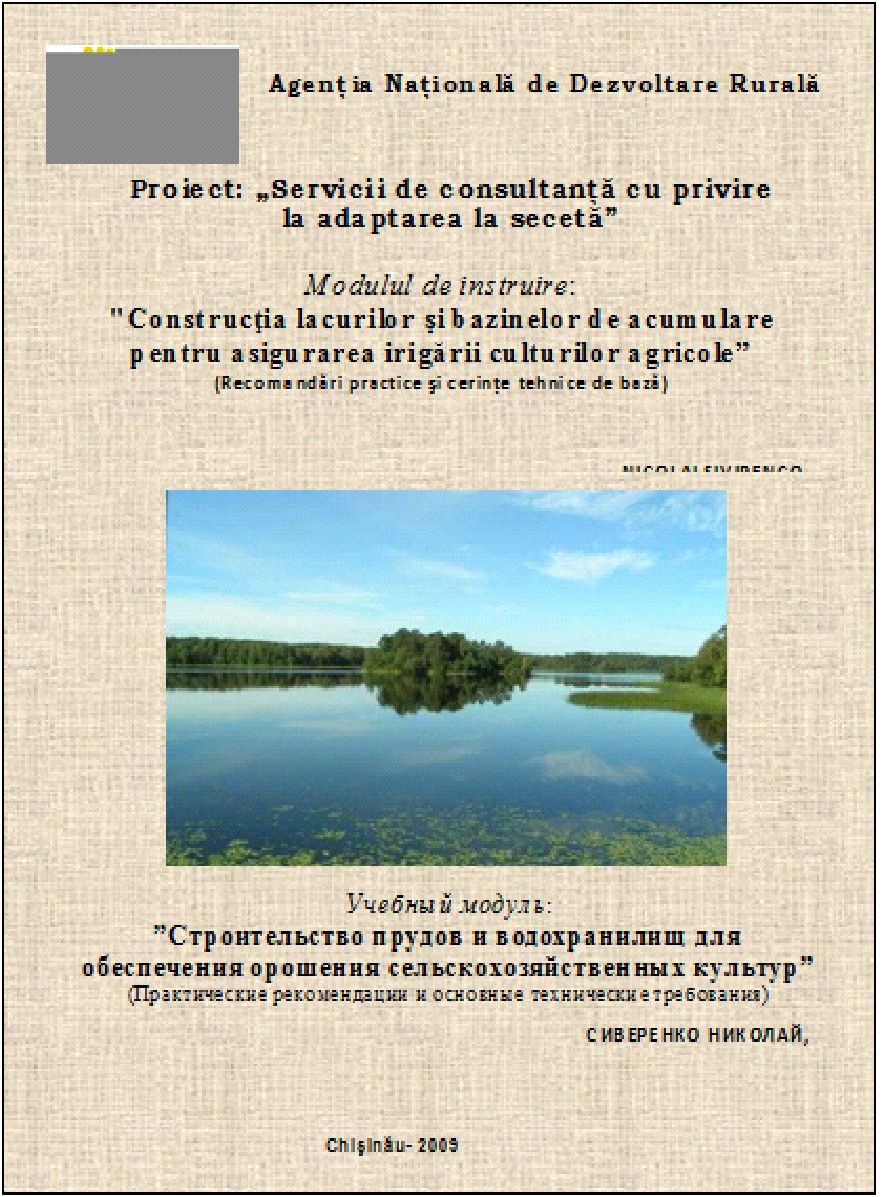
Module 6. Construction of rainfall waters accumulation lakes.
This module refers to the importance of rainfall waters accumulation lakes for agricultural
crops irrigation, animals watering and soil protection. In addition to that, the module includes
general issues related to lakes and water accumulation lakes, their design, as well as more
detailed information about necessary activities in the process of design, planning and
construction of water accumulation lakes for agricultural fields' irrigation. It also contains
technical aspects of accumulation lakes planning and construction, the ways the accumulated
irrigation water can be used, the ways the lakes can be used, principles of cooperation
between farmers whose plots are afferent to rainfall waters accumulation lakes etc.
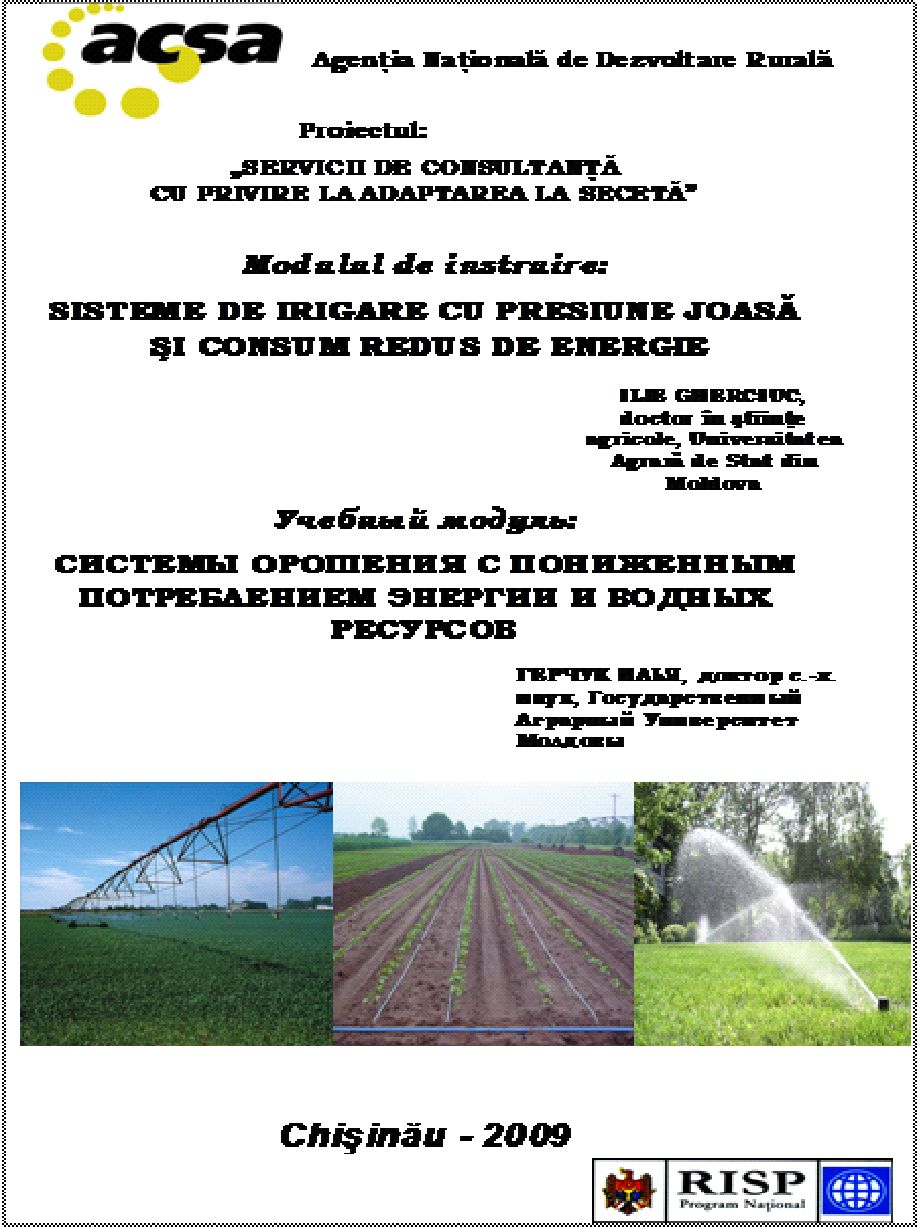
Module 7. Low pressure and energy irrigation systems
The module describes the factors affecting the
Figure 7
needs related to irrigation, the importance of
soil irrigation and environment protection,
irrigation methods and equipments. The
module includes practical information and
explanations about the characteristics of low
pressure irrigations systems with reduced
energy and water consumption, their
construction and principle of work, instructions
on their installation and use, planning of
investments, variable costs and incomes
related to irrigation systems use. It also
explains the specifics of plants growing
technologies with application of irrigation of this
type. A special attention is paid to alternative
energy sources used for irrigation systems,
such as sun, wind etc.
a. Training of extension service consultants
As continuation of rural extension consultants training, which is an important element of sub-
component sustainability, ACSA organized a three days training session at national level for
regional ACSA consultants in ,,Drought risks mitigation measures". Following the training of
trainers' principle, the purpose of the training system was to strengthen the capacities and the
knowledge of the regional project coordinators to ensure a successful implementation of
22


,,Drought mitigation consultancy services" subcomponent. For the purpose of making the
training process more efficient, the regional project consultants were divided into two groups
of 17 and 18 people. The training was organized in the period 23-25 and 26 28 March
2009.
The training programme was offered by the same national experts who developed the
training modules mentioned above. The selected experts have both theoretical knowledge
and practical abilities in the field, as well as practical work experience and specialized
studies. ACSA together with these experts developed the training agenda, which comprises
seven modules and a totalizing conference for the purpose of offering the participants the
possibility to express their opinion about the training and about their individual experience in
the field.
Module 1. Introduction of drought resistant species, types and hybrids
This module was presented by Mikhail Vronschih, PhD, correspondent member of the
Academy of Science of the RM. This module was divided in two modules.
a) Drought, its particularities and influence of the drought on agricultural crops
- General features of the drought;
- Determination of the frequency of annual and seasonal droughts based on the hydro-
thermal coefficient;
- Influence of the deviation of soil-climate conditions on plants productivity;
- Seasonal aspects of the hydro and thermal regime;
b) Implementation of different
species, types and hybrids
Figure 8
depending on the thermal
and hydrological regime of
the vegetation environment
- Methods and ways of
compensation of the negative
effects of the drought;
- Use of drought resistant
species, hybrids and types;
- Results of species, types and
hybrids resistance to the
drought under the conditions existing in the Republic of Moldova.
23
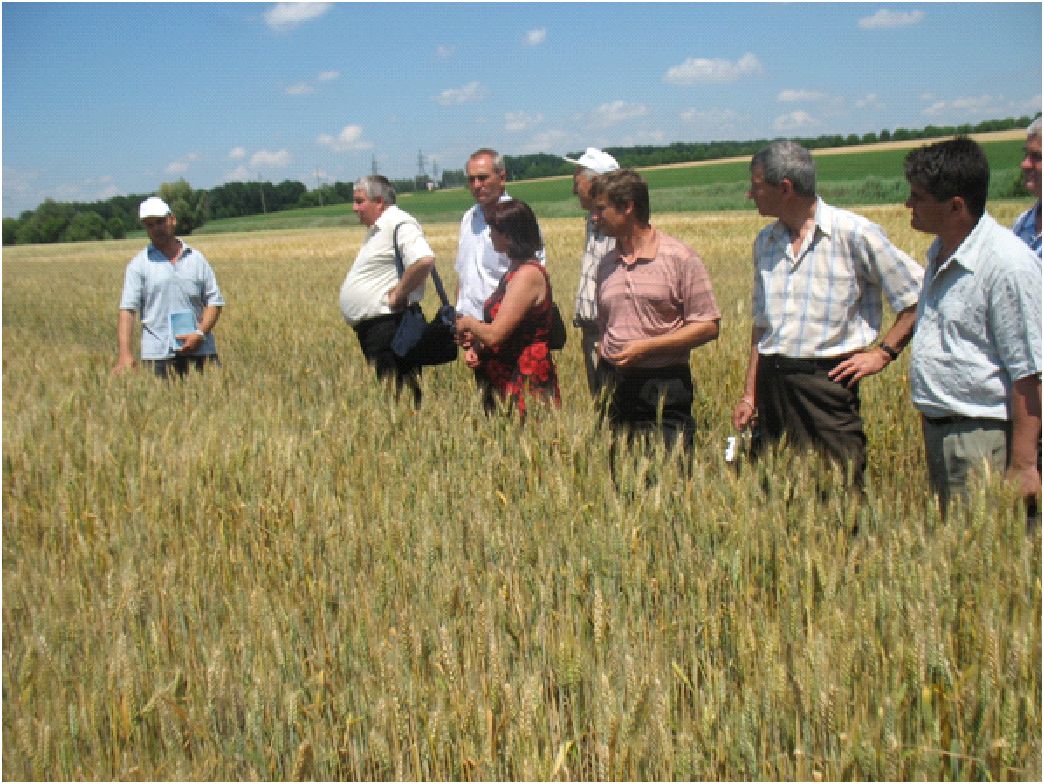
Module 2. Agro technical measures for drought impact mitigation
The module was presented by Gheorghe Cainarean, lecturer, ACSA coordinator. The module
was divided into three sub-modules.
a) The soil as the space for plants growing and development
- Notions about the soil, solification and soil fertility;
- Physical particularities of the soil and their use in hydrological regime regulation;
- Soil resources and their rational use depending on soil fertility.
b) Water resources and hydrological regime of the soil
- Water resources of the soil;
- Soil humidity dynamics during the year;
- Hydro-physical indicators and their use in the agricultural practice. Basic water
reserves in the soil;
- Critical phases in plants development depending on soil humidity.
c) Drought mitigation agro-technical measures
- Crops rotation as hydrological
Figure 9
regime regulation measure;
- Soil processing systems as
hydrological regime regulation
method. Conventional and
conservative soil processing
systems. Advantages and
disadvantages;
- Soil fertilization system as a
method of efficient use of water
from the soil;
- Weed control as a method of
efficient use of water from the soil.
24

Module 3. Protection belts as a measure and object of drought mitigation
The module was presented by Dumitru Galupa, PhD Economy. This module included the
following questions:
- General characteristics and classification of protection belts;
- Influence of protection belts on air and soil temperature and humidity and other
components of the environment;
- Soil preparation, planting and maintenance of protection belts.
Module 4. Low pressure irrigation systems with low energy consumption
The module was presented by Ilie Gherciuc, doctor, lecturer, Chief of Department at the
Academy of Science. The module was divided into two sub-modules.
a) Irrigation as a factor of losses reduction in plant growing: methods and principles
- Agro-ecologic aspects of agricultural crops irrigation;
- Technical methods and means for irrigation;
- Pumping equipment.
b) Low pressure irrigation systems using reduced amount of energy
- Construction and principles of functioning of low energy irrigation systems;
- Metrological informational systems used in irrigation;
- Use of drip irrigation
Figure 10
systems.
Module 5. Construction of
rainfall waters accumulation
lakes
The module was presented by
Nicolai Sivirenco, hydro-technician
- engineer. This module contained
the following questions:
- Notions about water ponds,
25
lakes and other water bodies;
- Investigation of land and water sources for the evaluation of possibilities of water
bodies construction;
- Water bodies design and construction; technological principles and requirements;
- Ensuring efficient use of lakes, ponds and other water bodies;
- Legitimating of water bodies use and of the right of their ownership.
Module 6. Creation of Water Users Associations
This module was presented by Alexandru Omelciuc, agronom, agriculture consultant. This
module included the following questions:
- Advantages, goals and objectives of Water Users Associations for Irrigation (WUA);
- WUA impact on a more efficient use of irrigation sources;
- Legal aspects of water protection, authorization of the rational use of water sources,
as well as creation of water users associations for irrigation purposes.
Module 7. Community involvement in drought mitigation
This module was presented by Anatolie Fala, doctor in biology, MA in Agro-business and
rural development. The module included the following questions:
- Identification of community risks and needs regarding drought mitigation;
- Timely information and preparation of population and agricultural plantations on the
possible impact of the drought;
- Possible mechanisms and measures of drought preparation, prevention and
mitigation at community level;
- Drought prevention through the implementation of Early Prevention Systems and
community mobilization.
Within the training programme, complementary to the training session organized in March,
ACSA organized a seminar with the subject ,,Agro-technical drought mitigation measures",
which included a visit to the Field Crops Research Institute ,,Selecia" (,,Selection") in Balti,
with the participation of two groups of 20 people, formed of ACSA coordinators and regional
consultants. The seminar was organized in two training sessions on June 24 and 27 and
aimed at informing the project beneficiaries about the agro-technical measures of drought
mitigation and agricultural tools used in the implementation of these methods.
26
2. Information materials preparation and multiplication
During the implementation period, ACSA developed a specialized guide as informational
support with a detailed description of all drought mitigation techniques and measures. This
guide is the result of compilation and editing of seven training modules developed by ACSA
with the support of the group of national experts, for the purpose of promoting drought
mitigation measures and techniques. This guide will be disseminated through regional and
local offices in order to be used as a guide in consulting demonstration plots beneficiaries,
participants in field days, potential credit
Figura 11
applicants for the procurement of irrigation
systems and other agricultural equipment for
the purpose of reducing the effects of the
drought. At this moment the specialized guide
is finalized and ready for printing.
ACSA is also finalizing the preparation of eight
posters and a leaflet describing in texts and
images in an accessible manner the measures
and techniques of mitigation of the negative
effects caused by the drought. At the same
time these information materials aim at
promoting and informing the agricultural
producers about the need of using and
implementing drought mitigation measures
both at the level of agricultural usage and at
the community level.
3. Agricultural producers information campaign
In addition to the information campaign on the promotion of drought mitigation measures,
activities within which will be performed to a great extent during the implementation of
demonstration plots, a special attention is paid to the information campaign on the
opportunities of crediting investments in the rehabilitation and/or procurement of irrigation or
other agricultural equipments provided within the Financial Services sub-component. For this
purpose the regional and local consultants organized community level meetings with local
producers. As result over ten thousand agricultural producers have been informed about the
opportunities offered by the Financing Services sub-component.
27
4. Selection of beneficiaries
The process of selection of demonstration plots beneficiaries comprised the following steps:
a. Identification of potential beneficiaries of demonstration plots
As soon as the information campaign for identification of potential beneficiaries ended, the
rural extension service consultants on the basis of about 435 participation requests from local
agricultural producers selected 120 participation requests for the further development of
project proposals. These requests have been selected based on conditions of eligibility and
technical, ecologic and economic feasibility, so that the regional ACSA consultants can later
assist the potential beneficiaries in the process of mini-project proposals development.
b. Mini-project proposals development and presentation
During the reporting period ACSA consulting network provided consulting and logistical
support in the development of mini-project proposals for 120 eligible potential beneficiaries,
assessed on the basis of participation requests, which were later proposed for final selection.
In average each regional centre submitted more than three mini-project proposals, the
highest number in Balti with six proposals, while the lowest number of proposals one
was submitted by Telenesti center.
The project proposals
Diagram 1
were not focused on a
single drought
Masuri
agrotehnic
mitigation measure; the
e
big majority had a
Constructia
22%
lacurilor
complex approach to
29%
implementation of
6%
Irigare
mixed measures
8%
promoted within this
Fāsii de
project. Thus, the
2%
protectie
41%
classification of project
Crearea
proposals after drought
AUA
mitigation measures
proposed for
implementation has a conventional nature.
The analysis of project proposals submitted for selection shows the structure of these
proposals regarding the field and drought mitigation measures planned for implementation.
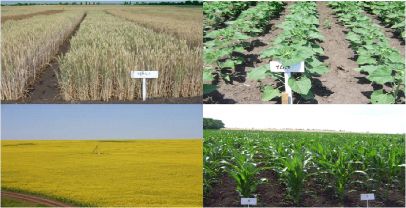
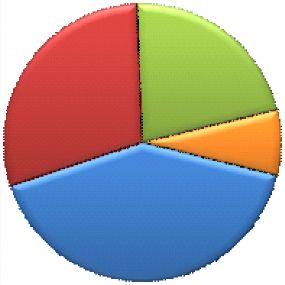
Thus, of 120 project proposals, about 41 per cent (49 producers) intend to apply agro-
28
technical measures in growing of drought resistant species and hybrids, while other 35
potential beneficiaries, or 29 per cent of the total number of applicants, plan to use the
financial support provided by the project in the construction and reconstruction of lakes and
rainfall accumulation ponds. Also, 22 per cent of the project proposals included as basic
drought mitigation measures the procurement and use of low pressure irrigation systems of
low energy consumption, two of which will use wind energy as the main source of energy and
a project proposal provides for use of hydraulic energy at the pumping of water in the
irrigation system. At the same time only 6% and 2% planned to use financial sources
provided by the project for creation of protection belts and strengthening of Water Users
Associations correspondingly.
All project proposals have been developed according to ACSA special contract requirements
designed within RISP project.
The project proposals contain the project title, argumentation, place and duration, purpose
and objectives, direct and indirect beneficiaries, expected results, activities, terms of
implementation and responsible people, expected costs, management and responsibilities
regarding the use of resources, declaration of the beneficiary and of project participants.
The project proposals have been submitted by the regional centres to the executive
department of ACSA in writing (in Romanian or Russian language) immediately after having
been finalized.
Evaluation of mini-project proposals
A selection and evaluation commission has been created for the evaluation of mini-project
proposals. Thus, the mini-project proposals received by ACSA executive department have
been assessed by this commission consisting of ACSA executive director as Chairman, four
ACSA representatives, one CAPMU representative, one representative from the Ministry of
Agriculture and Food Industry (MAFI) and one from the Ministry of Finance (MoF). The
structure of the evaluation commission was approved by the Observers Council, the meeting
of which took place on March 10, 2009. The representatives of CAPMU, MAFI and MoF are
appointed by the CAPMU director, MAFI vice-minister and MoF minister correspondingly.
Each member of the selection commission analyzed and assessed each of 120 mini-project
proposals separately, according to the procedure described below, regardless the requested
region, subject or value, on the basis of the following selection and evaluation criteria:
1. Conformity of the proposal with the objectives of drought adaptation sub-component
(project argumentation, purpose and objectives, expected benefits);
2. Applicant's contribution to the implementation of the mini-project;
3. Rural community benefits from the implementation of the mini-project;
29
4. Degree of mini-project proposal feasibility;
5. Mini-project budget realistic planning;
6. Plan quality and terms of performance;
7. The potential of the mini-project to generate increased income;
8. Degree of information and education about the mini-project;
9. Mini-project sustainability after financing etc.
Each member of the selection commission filled in an assessment form, in which it graded
each project for each of the mentioned criteria from 1 to 10. Afterwards the total cumulated
grade was calculated for each mini-project proposal. The results obtained in mini-project
assessment forms were then introduced in a totalizing table for the purpose of calculating the
average grade of each project
proposal granted by the members of
Diagrama 2
the evaluation and selection
Nord Centru
Sud
commission.
After the evaluation, its results were
28%
34%
introduced into an excel sheet, where
the information regarding the
evaluation of mini-project proposals
was arranged systematically in tables
38%
according to the principle of
accumulation of maximum number of
grades and according to the origin of
the project proposals. According to
the budget planned for the
implementation of demonstration plots, the evaluation commission selected 50 mini-project
proposals that cumulated the maximal number of points in order to be accepted for co-
financing. Other 20 mini-project proposals following the first 50 formed the waiting list for
completion of the list of accepted mini-project proposals, in case some of the beneficiaries
selected for implementation refuse for any reason or do not have the possibility to participate.
Other mini-project proposals that accumulated the minimal number of grades have been
rejected. (See Annex RAS 4).
30

In order to have a uniform geographical position of projects accepted for implementation, a
maximum of three mini-project proposals from the region of service providers activity have
been granted and attempts were made to have at least one project per rayon. With regard to
observance of the maximal number of projects, this index did not exceed the provided 3,
regarding the minimal
Diagram 3
number of mini-
projects by each
Masuri
agrotehnice
rayon, for such
centres like
Constructia
lacurilor
Basarabeasca,
40,00%
2,00%
Floreti, Cinari and
6,00%
Irigare
24,00%
Dondueni none of
4,00%
30,00%
the submitted mini-
Fāsii de
project proposals has
protectie
been accepted.
Crearea AUA
Thus, of the total of
accepted mini-project
proposals, 34% are
placed in Northern rayons, 38% will be implemented in the centre region and 28% in the
South of the republic (see Diagram 2).
Analyzing the structure of mini-project proposals with regard to drought mitigation measures
that we suggest for application within the project, the low pressure and energy consumption
irrigation holds the largest share about 40 per cent of the total number of accepted
proposals. The agro-technical measures in growing of drought resistant types and hybrids
hold 30 per cent, followed by construction of lakes and rainfall accumulation lakes with 24 per
cent, while the protection belts account for 4 per cent, followed by the Water Users
Association as a drought mitigation measure. (See diagram 3)
5. Creation of demonstration plots
As soon as the list of beneficiaries has been created and approved by the Evaluation
Commission, ACSA developed and signed contracts with regional service providers, who at
their turn will sign contracts with project beneficiaries. These contracts stipulate the relations,
the obligations and the rights of the parties involved in the project. The contracts also
describe the procedure of procurement of goods financed by the project, according to
CAPMU procurement procedures applied within RISP project. Thus, according to the
provisions of the implementation contract concluded between the regional service provider,
31
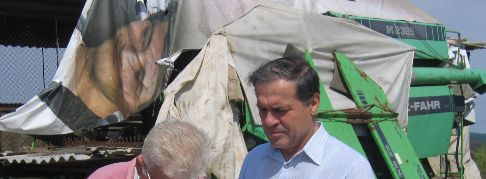
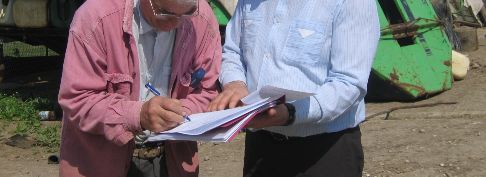
the beneficiary assisted by the regional
service provider submits to the selection
Figure 12
commission 3 offers from goods
suppliers suggested for selection.
During the collection and selection of
offers 3 beneficiaries of the total of 50
informed ACSA executive department
that from different reasons they would not
be available for project implementation.
Thus, the first beneficiaries on the waiting
list have been asked to inform ACSA
about their availability to be selected for
implementation.
As of today 40 beneficiaries, that account for 85% of the accepted beneficiaries, according to
the procedure of selection and approval of goods procurement have presented offers to
suppliers. Thus the selection and goods procurement commission approved the procurement
on the basis of submitted offers for 14 beneficiaries. Currently the selection and approval
commission works on the approval of procurement for other 26 beneficiaries, who later
submitted offers for goods to be procured within the project.
According to the conditions of goods procurement financing, in order to obtain financial
resources offered within the project, the beneficiaries must present documents certifying
personal contribution. Thus, 23 beneficiaries have submitted documents certifying their
personal contribution and are eligible to receive financing within the project.
6. Specialized consultancy
Figure 13
The beneficiaries of the project have the
possibility in case of need to benefit of
specialized consultancy during the
creation of demonstration plots. Thus,
the beneficiary FH ,,Ion Lungu", Hinceti
rayon, Mereeni village, which is a part
of the project ,,Drought mitigation
consulting services", through the
regional ACSA/Hīncesti center, used the
services of the Field Crops Research
institute ,,Selecia" (selection) in Bali. The activity of FH ,,Ion Lungu" is the production of milk
32
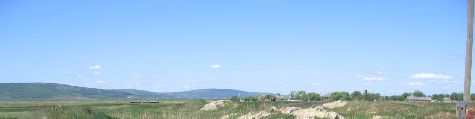


at his own farm, for which an adequate fodder basis is necessary. The purpose of requesting
specialized consultancy is elaboration and implementation of fodder rotation, which would
allow the maintenance of the livestock of 30 cattle on an area of 18 ha he currently holds.
7. Promotion of drought risk mitigation measures
The activities of drought risks mitigation measures promotion will intensify to a great extent in
the period of organization of seminars and practical sessions on the basis of demonstration
plots. But even at the initial stage of the organization of demonstration plots, which includes
training and practical seminars on the basis of training modules in drought effects mitigation
have a major importance in the promotion campaign. Thus, the practical training of the
regional project coordinators organized at the Field Crops Research Institute ,,Selecia"
(Selection) in Balti and namely on the demonstration plots, raised an increased interest even
for many ACSA consultants who are much better trained compared to the beneficiaries within
the ,,Drought mitigation consulting services".
8. Activities monitoring and evaluation
ACSA maintains an efficient system of monitoring and evaluation of implemented activities
aiming at detecting and correcting the existing gaps and improving the work of the
beneficiaries. In this context, the monitoring team at ACSA central office, during the report
period, performed random and intended trip visits in order to verify and evaluate the progress
of project beneficiaries. At the same time the monitoring team aimed at controlling the
accuracy and conformity of the
Figura 14
beneficiaries with the information and
contents of mini-project proposals
submitted by the beneficiaries. Thus,
during the period March June 2009,
ACSA monitoring team visited 20
beneficiaries from different regions of the
country, of the total of 50 in the list of
those accepted for project
implementation. All these visits are
documented in the regional centres by
regional project coordinators. Moreover,
after each field trip, the monitoring trip issues a report containing the results of the additional
visit with photos made in the field.
33
Regarding the monitoring at the regional level, the regional project coordinators supervise
through local consultants or directly the process of implementation of mini-project proposals,
about which they inform the executive ACSA department, both in writing and verbally,
outlining the registered progresses and the identified problems.
The regional consultants also monitor through visits the use of goods received from
beneficiaries within the projects, the observance of obligations provided in the contract, the
correctitude of the implementation of activities as well as the level of involvement of local
consultants in the successful implementation of mini-projects.
In addition to that, CAPMU monitored and evaluated, during the report period, the activities
implemented at all levels through field trips and through questioning of beneficiaries and
regional and local consultants.
Detailed information and justifying documents (narrative and financial reports of
the regional ACSA centers) on the consulting services provided by the National Rural
Development Agency (ACSA) are available at the central ACSA office and its regional
centers.
34
RURAL BUISNESS DEVELOPMENT COMPONENT
The activities of the Rural Business Development Component (RBDC) are implemented by
the four DAs that implemented RISP I: Alliance for Cooperation in Agriculture (ACA),
Business Consulting Center (CCA), Rural Development Center (RDC) and Mobile Expert
Group in Agriculture (MEGA) which signed contracts with the Ministry of Agriculture and Food
Industry (MAFI). The contracts contain detailed terms of reference for activities planned
under this component, including budget and financing offered for the period September 2006
June 2010. According to the Project Document, MAFI is responsible for the implementation
of this component while CAPMU is fully responsible for the coordination of the activities. The
DAs are funded within RISP 2 according to a financial mechanism based on the results
delivered. This mechanism is different from the first phase of RISP based on fixed payments.
Thus DAs are stimulated to a greater extent to establish viable businesses since a part of
their financing is provided for post-creation support.
General information on outcomes of DAs activities for the reporting period is presented in the
table below, while more detailed information on DA activities is presented in Annexes RBD 1-
23.
Table RBD 1. General Information
Indicator
Value
Development Agencies
4
Number of villages where promotion took place
754
Number of participants to promotional meetings
14 743
Number of project participation applications
878
Service provision contracts, active
798
Number of business plans developed
739
Businesses starting implementation of investment plan
549
From them:
Agricultural
(43%) 237
Non-agricultural
(57%) 312
Businesses registered with the support of DAs Loan
45
Loan applications submitted
688
Loans disbursed for rural businesses disbursed for rural
546
Loans approved, but not disbursed
23
Loan applications in processing by PFIs applications
57
Number of businesses benefiting from post-creation support
492
New jobs at start-up
1 551
PROMOTION CAPMAIGN
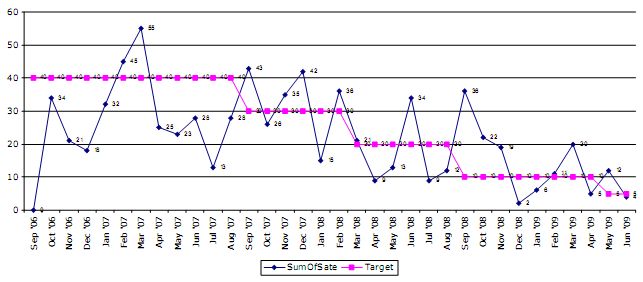
In the second quarter of 2009 promotion activities were organized in only 21 villages and
attended by 257 persons (Chart RBD 2). Compared with the previous reporting periods, the
number of promotions is smaller. This is primarily because the targest for the information
campaign have been set so as to have an more intensive campaign at the beginning of the
project. Hence, two out of four DAs have already finished their resources for promotion
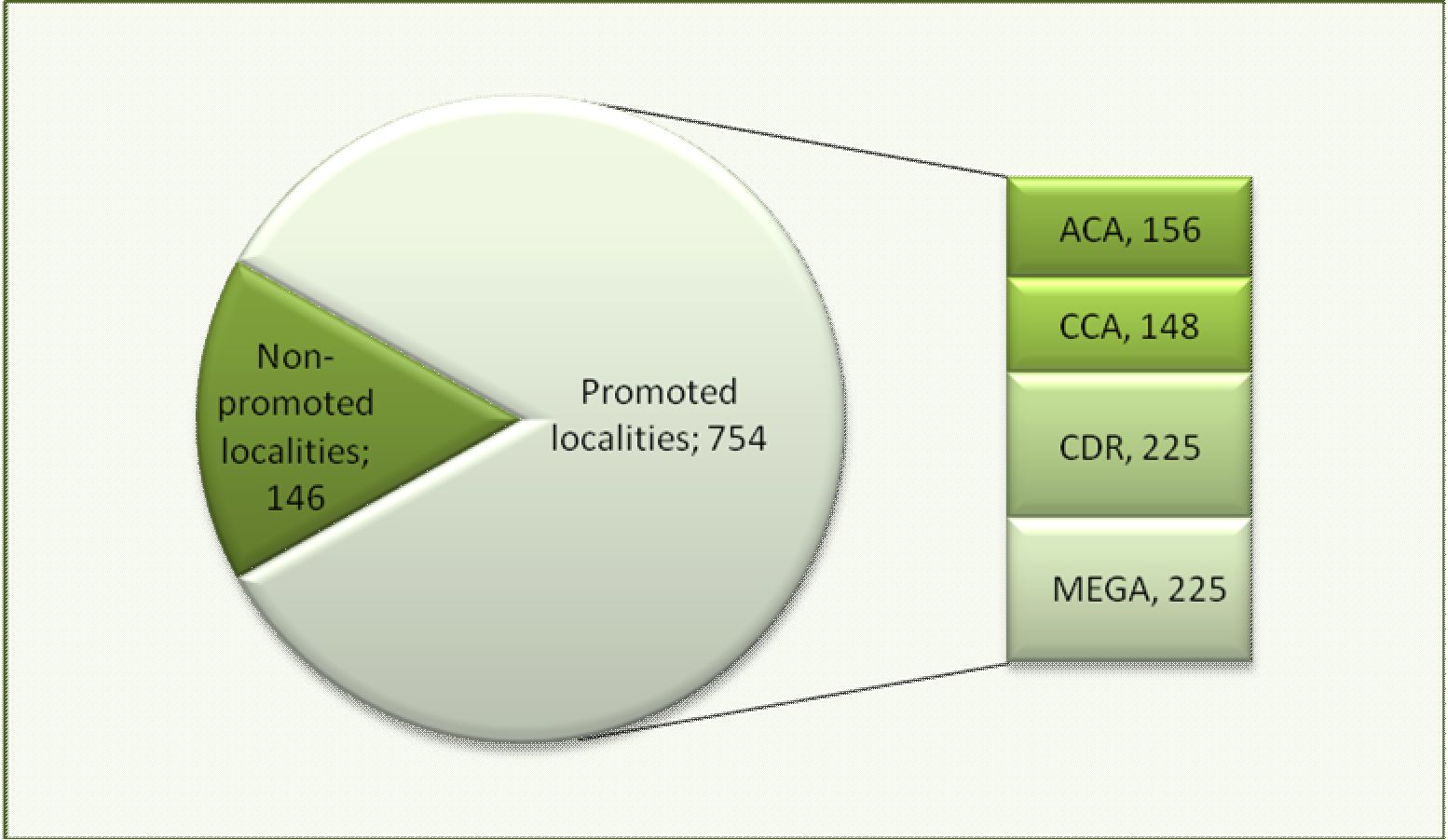
campaign, having organized 225 information meetings each.
Thus, the cumulative figures are showing that over 14700 persons from ore than 750 villages
participated in the promotion meetings organized within RISP 2 and have been informed
about the RISP second phase opportunities so far.
ACA and CCA organised 156 and 148 informational meetings respectively (Chart RBD 1).
Chart RBD 1. Number of promotion activities by DAs
As project foresees that the promotion campaign will be held in a total of 900 villages of
Moldova, 84% of the villages have already been involved in this campaign by 30th of June
2009.
Most promotions were carried out in partnership with local public authorities, ACSA national
extension network consultants and savings and credit associations. These promotions
introduce the goal and objectives of the project, conditions of participation, DAs' role in
creating and supporting new businesses, funding opportunities of investment projects, etc. All
36

promotion meetings are accompanied by distribution of information materials, including RISP
II leaflets containing general information on the project, the list of DAs and their contact
information, the list of project participating financial institutions (PFIs).
RBD Chart 2. Number of promotion activities in dynamics
In the first quarter of 2009 CAPMU has developed an issued a brochure about successful
stories within RISP. This brochure is intended to serve
as additional informative support during the information
meetings for the promotion of project activities. The
practice of the first phase demonstrates that the
presentation of successful stories to information
campaign participants offers a better understanding
both of the support offered by the DAs and the
development opportunities in the rural sector of the
Republic of Moldova .
The total edition of the "Success stories. Book II" is
1000. These have been distributed free of charge for
the promotion campign to the development agencies,
ACSA network of consultants, as well as MAFI.
37
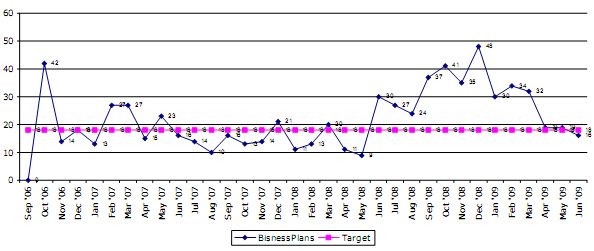
BUSIENSS CREATION
During the second quarter of 2009, the four DAs have managed to assist 54 RBs in
developing their business plans, this totaling to 739 with their final business plans with DA
assistance.
549 businesses established with the support of DAs have started their operational
activity/implementation of investment plan as of 30 June 2009.
Out of them, 537 have received loans from PFIs and 12 started operating only with their own
resources. Overall, 546 RB have received credits from the PFIs of the Republic of Moldova
and 9 of them are still implementing the investment plan, with operational activity to be
started subsequently.
Chart RBD 3. Number of businesses with final business plans with DA assistance
The total business investments of these 549 operational businesses amount about 15,6 mil.
US dollars. Thus, the average investment made by operational businesses by June 30, 2009
is approximately 28 thousand US dollars.
At the same time, if we refer to the total nuber of credits, which is 546, then they represent
9,6 million US dollars, which have been supplemented by the beneficiaries contribution in
amount of approximately 5,9 million US dollars. Thus, the average loan disbursed to RB is 17
600 dollars. This is confirming somehow the status of small business of the RB created with
the support of the RISP, the target group of the project being identified and selected for
participation.
38
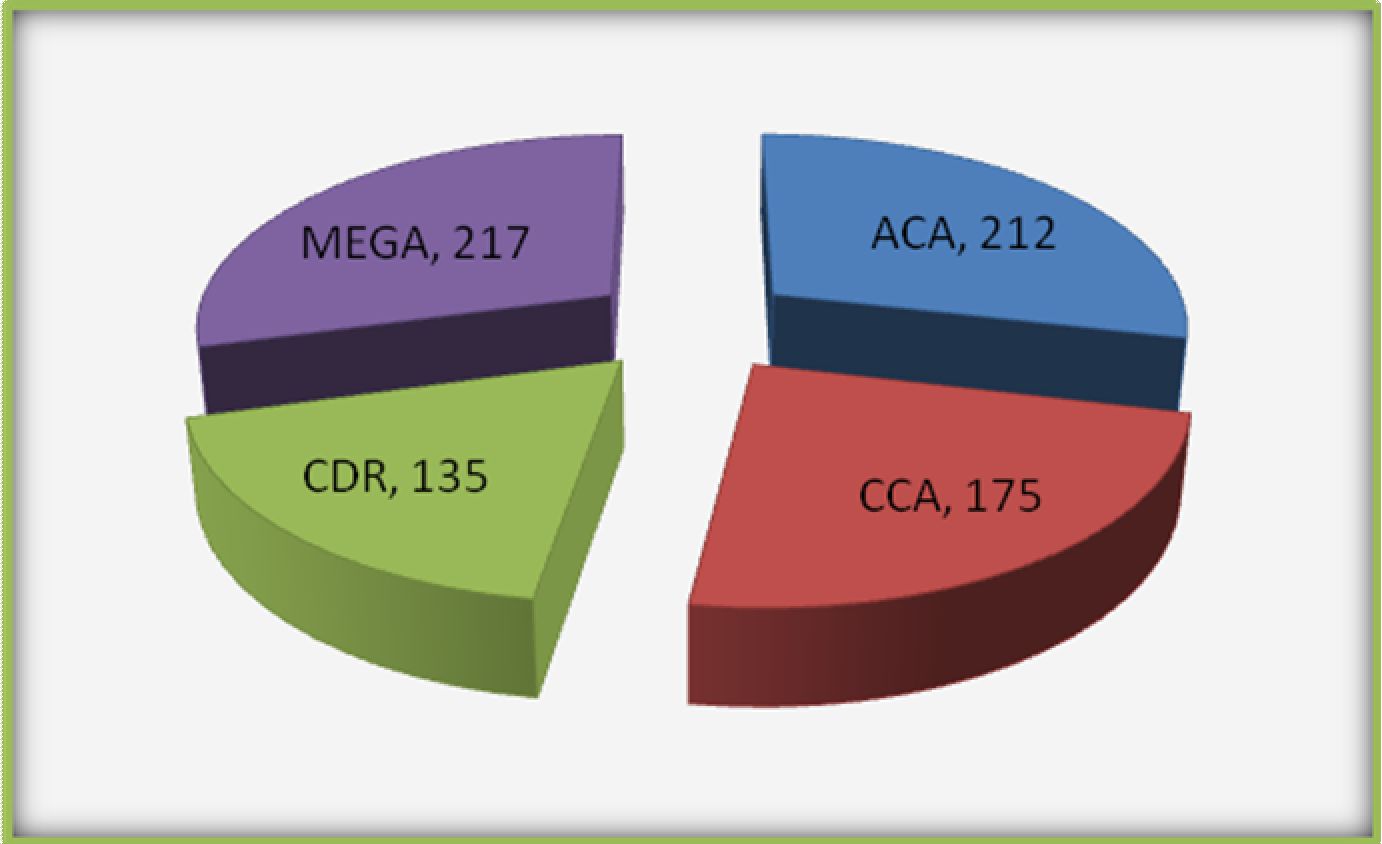
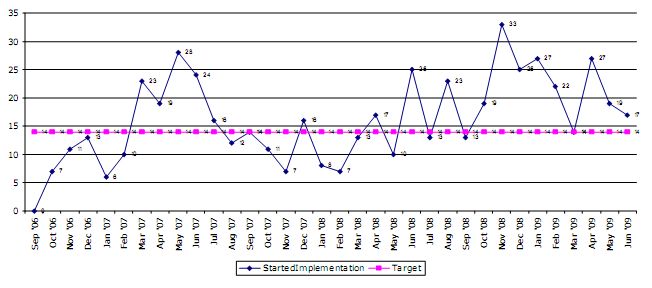
Chart RBD 4. Number of RB with final business plans by DA assistance
MEGA has assisted in the creation of most of the business plans so far (217), followed by
ACA (212), CCA (175) and CDR (135).
Out of 549 businesses created, 530 are individual businesses, which represents
approximately 97% and only 19 RB are group businesses. To this end, group businesses
were considered businesses with 3 and more founders.
Charter RBD 5. The number of operational businesses
39
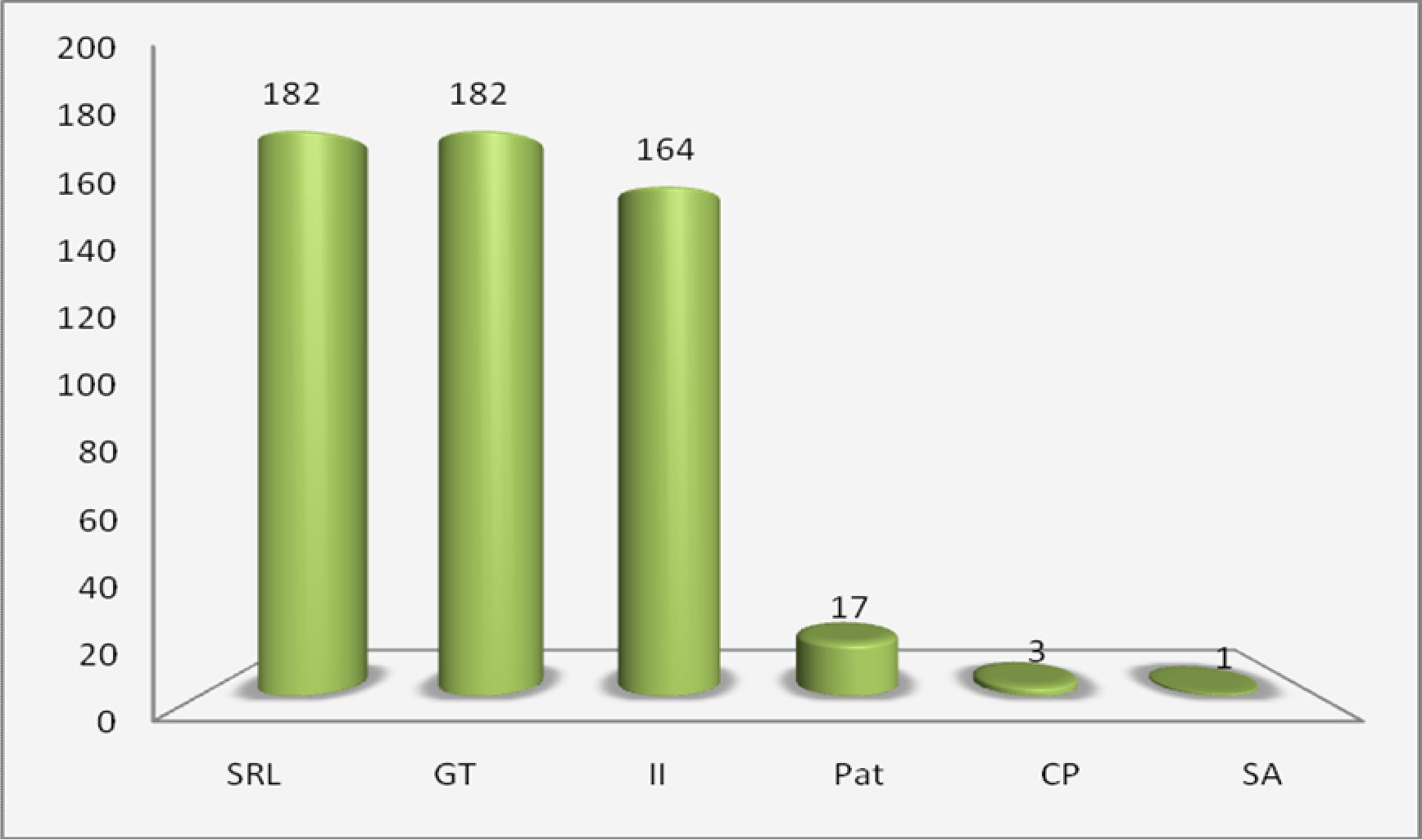
The legal form of the businesses that commenced implementation of their business plan is
mostly Limited Liability Company or Peasant Farms (182 RBs each), and Sole Proprietorship
(164 RBs) which cumulatively account for 96 per cent from the total number of operational
RBs. They are followed by Patnet holders (17 RBs) or about 3% from the total. There is one
single stock company, and three production cooperatives.
Chart RBD 6. Number of operational businesses by organizational structure
The structure by the type of business is shown in table RBD 2, which reflects a high share of
non-agricultural businesses (57 per cent), meeting thus one of the project objectives - at least
one third of the businesses created have non-agricultural activities. Thus, from the total
number of 237 agricultural businesses, the biggest share is with the crop production,
representing 177 RBs.
Thus, the businesses created during the second quarter of 2009 are mostly related to fodd
industry (+6 RB), wood processing (+ 3 RB), transportation (+2 RB), processing of metal
products (+ 2 RB), etc.
40
Table RBD 2. RB Structure by the field of activity
Number of
Type of business
operational
bu
No. sinesses%
Agriculture
Agricultural service activities
24
4.4
Crops production
177
32.2
Livestock production
36
6.6
Sub-total Agriculture
237
43.2
Non-Agriculture
Fishing
3
0.5
Manufacture of food products and beverages
36
6.6
Manufacture of textiles
1
0.2
Manufacture of wearing apparel
4
0.7
Manufacture of wood and wood products
22
4.0
Publishing, printing and reproduction of recorded media
1
0.2
Manufacture of coke, etc.
1
0.2
Manufacture of rubber and plastic products
5
0.9
Manufacture of other non-metallic mineral
15
2.7
Manufacture of fabricated metal products
7
1.3
Manufacture of electrical machinery and apparatus
1
0.2
Waste recilcing
1
0.2
Manufacture of furniture
11
2.0
Construction
2
0.4
Repair of home appliances
1
0.2
Retail trade
54
9.8
Sale, maintenance and repair of motor vehicles
24
4.4
Wholesale trade and commission trade
11
2.0
Hotels and restaurants
22
4.0
Land transport
53
9.7
Post and telecommunications
5
0.9
Supporting and auxiliary transport activities
1
0.2
Other service activities
3
0.5
Real estate
1
0.2
Health and social work
2
0.4
Other services
17
3.3
Recreational, cultural and sporting activities
7
1.3
Sub-total Non-agriculture
312
56.8
Total
549
100.0
41
FINANCING OF RURAL BUSINESSES
In the second quarter of 2009, the DAs have signed 61 Service Agreements with the
beneficiaries. So far 688 credit applications were submitted to Financial Institutions and 546
credits have already been disbursed. 239 out of the credits disbursed are provided from the
RISP funds, while 307 projects have been financed from other sources.
As it was mentioned above, 549 beneficiaries from the total number of contracts signed with
DAs have started the implementation of their Business Plans, elaborated in a joint effort with
the DOs. In 12 cases out of 549 the beneficiaries are starting the implementation of their
projects from their own sources.
An important aspect of the activities of the component under the second phase of RISP are
the remittances invested in the activities initiated with DAs support. Thus, according to the
information collected by development officers during the monitoring visits performed to the
RB created with their support, 139 RB or 25% of those created so far, besides the credits
obtained from the financial institutions invested the money they received from abroad. The
value of these remittances is today of over 7 million Moldovan lei, or it accounts for 7% per
cent of the total value of investments in the activities initiated by project beneficiaries.
All the 549 businesses are located in all rayons of the Republic. The biggest number of
businesses are located in UTAG (63 AR), followed by Riscani (49), Soldanesti (46), Cahul
(39), Hinceti (26), etc. If comparing regions by value of disbursed credits, then, as of 30
June 2009, the highest cumulative investment made by RISP was in Soldanesti with over
13.5 million lei, followed by Riscani with over 12.8 million lei. UTAG, which leads the list by
the number of businesses created, is on the third palce by the volume of credits (11.4 million
lei).
It should be mentioned that 495 out of 549 operational businesses have already started to
generate revenues, creating thus over 1550 new jobs, which results in an average of 3 jobs
per RB.
The following table is showing the breakdown of the service agreements signed by the
beneficiaries and RB by the level of access to the financial resources:
42
Signed cooperation agreements
798
Submitted credit applications
688
Disbursed loans
546
RISP loans
237
Loans from other sources
312
Credit applications still being assessed by PRI
57
Rejected or withdrawn applications
62
Loans approved, but not disbursed
23
It is also to be mentioned that the RISP credit line, that accounted for approximately 12 mln
US dollars has been fully disbursed at the time of reporting. Thus, at the end of 2008,
CAPMU, that is playing a fiduary role in implementing the Rural Investment and Services
Project has informed its Steering Committee and the World Bank Team about the need to
additionally finance the credit line. As a result, on March 30, 2009, negotiations have been
held at the World Bank Office from Chisinau between the Republic of Modlva and World
Bank/IDA concerning a n additional financing for RISP 2 in an amount of 10 mln US dollars.
Untill a new financing agreement will be signed, the Das will continue to work on developing
and supporting the start up of small and medium enterprises either from beneficiaries own
resiursec, or from other microfinance funds. Also, the irrigation credit line is available for the
beneficiaries.
INFORMATION SYSTEM MANAGEMENT AND M&E
The analysis of the progress in the implementation of the RBD Component is managed by
means of the database application. The DAs were provided with the application files from the
beginning of their assignment.
On a monthly basis CAPMU is receiving the updated database files from the DAs and the
information regarding the credits disbursed within the Rural Finance Component from the
Credit Line Directorate (CLD). The functionality of the data basis comprises a system of
validation of information accuracy and generation of progress reports.
Rural businesses established with the assistance of the project are monitored both by DAs
and CAPMU. Development Agencies are in charge of carrying out monitoring visits to verify
the performance of businesses created as compared to a set of indicators, which proved to
be very useful during the first phase of the RISP project and which proved pro be efficient.
Thus, the frequency of monitoring visits depends on the risk category assigned by DAs to
43
each business as a result of the last monitoring visit. Therefore, businesses in the low risk
category are monitored after 6 months from the last visit, those in the high risk category in
two weeks from the last visit, etc. In the annex RBD 4a./2. Business sustainability shows the
structure of businesses by the risk assessed by the DA. As a rule, during the monitoring visits
paid to the development officers, the necessary post-creation assistance is estimated to be
rendered based on specific issues of the beneficiaries.
The set of indicators collected by the DAs comprises data on the number of employees, the
average salary per gender, age group, employer or founder, average salary before the
project etc. (Annex RBD 4a/1.Employees). In case of rural businesses which started profit
generation, DA consultants collect the following financial indicators: Sales, Gross profit, Sales
value, Own capital and Total Assets, as well as indicators of paid taxes: VAT, income taxes,
social fund etc (Annex RBD 4a/3.Taxes).
To provide a more complete image of business development, CAPMU started collecting
some additional indicators: beneficiaries income growth after the project launch (beneficiaries
estimation) and foreign remittances invested in business (Annex RBD 4b).
CAPMU is monitoring DAs by regularly and randomly organizing monitoring visits to RBs
created with the support of all DA consultants, so that all businesses created with DAs
support could be covered. In addition to assessing created businesses, the goal of these
visits is to estimate the quality of assistance provided by DA consultants, especially, post-
creation assistance, but also the accuracy of eligibility criteria for project participation. The
beneficiaries expressed their satisfaction with the services rendered by the development
officers both during the process of business launch and at the post-creation stage.
RB POST - CREATION SUPPORT
All the 4 DA provide post-creation support to the created businesses. The total number of RB
involved in post-creation support since the beginning of RISP second phase is 492 of the
total of 549 RB created, each receiving 1 to 5 days of support depending on the needs. Thus,
about 90% of the Rural Businesses that commenced their operational activity have already
asked for the DA assistance. Most of the support has been provided by MEGA with 724 days
of post-creation so far, followed by CDR with 421 days. CCA have provided 326 days and
ACA 137 days pf post-creation assistance.
The breakdown of the post-creation support delivered to RBs by category as of 30 June 2009
is as follows:
44
Category of provided
No. days
support
ACA
CCA
CDR
MEGA TOTAL
Legal aspects
27
147
90
158
422
Finance/accounting
55
76
128
193
452
Management
16
48
102
148
314
Marketing/sales
30
47
44
193
314
Technologies
9
8
57
32
106
Total
137
326
421
724
1608
ENVIRONMENTAL RELATED ACTIVITIES
To ensure compliance of RISP II financed sub-projects with existing environmental
regulations, CAPMU has hired in september 2008 an environmental specialist to provide
guidance on initial project screening and review, review environmental management and
monitoring plans submitted as part of the sub-project appraisal process, and periodically
determine that monitoring is being carried out to appropriate standards.
The objective of the environmental specialist's assignment is to increase the awareness of
environmental issues and strengthen the capacity of project stakeholders to ensure that
potential environmental impacts could be recognized, avoided or at least minimized through
mitigation.
Main activities performed and results achieved:
- Review of applications for sub-project financing: 71 business plans elaborated by the
Development Agencies in the second quarter of 2009 were reviewed to determine if
the proposed sub-projects fall within one of the Bank categories: A, B or C. Starting
with September 2008, all subprojects prepared with the assistance of development
officers are subject to environmental screening and are assigned a category. For
Category B projects a mandatory environmental chapter is currently included in the
business plans containing a simple environmental assessment with proposed
mitigation measures and a succinct monitoring plan.
- Regular and timely feedback was provided to DAs concerning environmental
assessment issues, in the form of detailed written comments on business plans. An
agreement between DAs and the ES was reached concerning the involvement of the
latter in environmental screening and assessment of sub-projects at earlier stage
(early draft of business plans). Since autumn 2008, a positive trend is to be noted as
regards the quality and consistency of the environmental chapters of the business
45
plans.
- Field trips to monitor financed projects: a number of monitoring visits of RISP financed
projects were undertaken during the reporting period, to check compliance with the
environmental requirements and mitigation plans. A few monitoring missions were
undertaken to the central and southern regions of Moldova and several B category
sub-projects were checked, mostly in the livestock and poultry sector, which is one of
the potentially most damaging activities in the RISP-II project portfolio. The sector
also has a significant nuisance potential that is important in terms of acceptance of
RISP-financed projects by the population. Memos on those monitoring visits are
provided in the Annex to this report. In short, the main conclusion that can be drawn
from the monitoring visits is that the environmental impact (if any) of most livestock
businesses is minor. The small scale of most farms prevents significant environmental
damage since their organic waste is mineralized within the natural material cycle,
without provoking much harm. However, one must recognize that, in many cases, the
impact is small not necessarily due to good on-farm environmental management
practices. If those practices do not change the raising number and/or scale of
businesses in the future could make the (cumulative) negative effects of animal
production much more visible. For the time being, one of the factors alleviating
environmental damage is the use by many private entrepreneurs of premises of the
former big state farms that inherited part of the old infrastructure including animal
waste storage capacities and even some primary treatment facilities. Another point is
that the State Ecological Inspectorate is aware of most monitored economic activities;
however, this does not necessarily lead to environmental improvements (e.g. the
Cola case)
- Support to CLD on environmental assessment of projects: The environmental
specialist established working contacts with CLD and provided them expert backing
on environmental assessment of projects (including irrigation and animal husbandry
projects) that did not seek support from the Development Agencies at the preparation
stage.
- Cooperation with the State Environmental Inspectorate (SEI): establishing an efficient
cooperation between RISP II and SEI is crucial for ensuring implementation of
environmental requirements and mitigation measures. Contacts were established with
environmental inspectors in the Orhei, Hincesti, Stefan Voda, Leova and Cahul
rayons as regards RISP financed subprojects implementation. As a rule, the
inspectors were aware of ongoing businesses and related environmental problems. It
is worth mentioning that the PFI cannot provide financing to credit seekers without an
46
environmental permit being issued to them by SEI. This is part of the PFI internal
procedures and is based on the requirements from the RIG. Thus, all information on
RISP financed subprojects is normally available to the national environmental
enforcement authority.
Outline of further activities and proposals for improving the work
The following activities are to be further implemented during the next months in order to best
serve the project purposes:
· Reviewing environmental documentation required from the specific sub-projects, i.e.
environmental assessments, environmental management plans and monitoring plans.
· Provide guidance to sub-project proponents (beneficiaries) on environmental
mitigation measures that can be incorporated into project implementation.
· Undertake the environmental supervision of all subprojects assigned with the
Category B.
· Create a platform for regular contacts and coordination of activities with PFIs and
CLD and agree with them on preparing environmental monitoring progress reports.
· Strengthen cooperation with local environmental inspectors and provide them with
information of category B projects, organizing during the operation phase joint
subprojects supervision.
· Provide guidance and backstopping to PFI loan officers on the application of project
environmental screening procedures to sub-project proposals.
· Provide contribution to the preparation and delivery of trainings for project
stakeholders on irrigation techniques and pest management; coordinate the training
process, including participation, training materials, and follow-up activities.
· Selectively undertake field visits to sub-projects for which environmental clearance
permits were required, to monitor compliance.
· Develop indicators of environmental impacts generated by sub-projects.
In ES' view, besides bolstering the monitoring of B category projects and enhancing
cooperation with SEI, there is one more factor that could improve the environmental
sustainability of the projects in post-financing period. It consists in extending the current role
47
of Development Agencies during the project implementation phase (i.e. consulting the credit
beneficiaries on business issues) by adding a `green' element, namely environmental
compliance promotion based on Environmental Management Plans. Lately the DAs improved
their environmental performance in the preparation phase; their role in environmental
management of projects could be further extended in the post-financing period by providing
general advice on implementation of measures foreseen in EMP. In the same time, DAs are
not supposed to substitute ACSA (still providing technical advice on good practices etc) or
IES (who will remain the enforcing entity).
Second, currently there are no (financial) levers to sanction the RISP beneficiaries for non-
compliance (e.g. credits are provided in one tranche thus making difficult, if not impossible,
any non-compliance response from the PFI). For the additional irrigation financing line the
provision of the 20% grant portion could become such an incentive: thus, only the
beneficiaries fully compliant with environmental requirements assumed in the project
documentation could be granted (however, the DCL showed a great deal of reticence
towards this proposal made by the ES). The alternative is to count on cooperation with the
SEI and to leave non-compliance response to the enforcement agency, exclusively.
48
RURAL FINANCE COMPONENT
CREDIT LINE IMPLEMENTATION PROGRESS
Cumulative beginning August 2006 from the Credit Line were refinanced and disbursed
subsidiary loans amounting to 114.99 millions lei and 2.00 thousands US Dollars. These
funds were allocated to finance 286 eligible sub-loans approved in the total amount of 143.74
millions lei and 2.54 thousands US Dollars.
According to the PFI's information, the contribution of the beneficiaries for the implementation
of the sub-loans constitutes about 186.36 millions lei or 46.73% to the total amount of the
sub-loans minimum requirement being up to 20%. The total estimative cost of the approved
sub-loans that includes the beneficiary's contribution, co-financing of the PFI and the loan
from CLD from the LC resources constitutes 399.21 millions lei.
The total principal amount reimbursed as advanced payment by PFIs constitutes 4244.13
thousands lei and 120.72 thousands US Dollars that constitutes 3.69% and 6.03% of the
disbursed amount respectively, which are directed for creation of the working capital of the
revolving funds.
One of the project objectives is to increase access to finance rural areas, thus, it is required
that minimum 30% of the Credit Line resources are provided to the first-time borrowers that
didn't benefit from the formal financial sector. According to the information of the PFIs
presented so far, 42.56% of the credit line recourses are provided to the first-time borrowers,
which have no previous experience of borrowing from the formal financial sector.
Thanks to financing offered within the Project, at the moment about 1875 new working places
will be created with the help of the disbursed funds. It is important to mention that the
participation of women in the establishment of the business in the rural area remains to be
essential; therefore, 28.03% of the managers of sub-loans financed are women.
Interest rates for financing. The CLD interest rates for the Credit Line's resources for PFIs
for the interest rate periods described below include MF margins for administrative and
operating costs and cover the exchange rate risks. These interest rates for Subsidiary Loan
denominated in lei will be a variable (i.e., floating) interest rate based on the reference rate
which shall be equal to (i) for the revision at the beginning of each calendar year, the average
between the annual inflation rate projected by NBM for the current year and the actual
inflation rate of the preceding year; (ii) for the revision at the second half of the year, the
actual inflation during the first six months of the calendar year, plus the revised projection for
the remaining six months of the calendar year; for the loans denominated in US Dollars the
49
interest will be floating, equal to the reference rate of 6-month LIBOR US Dollar rate and
MF's margins. Thus, the interest rates are the following:
Interest period
MDL
USD
01.02.06 30.07.06
12,45 %
01.08.06 31.01.07
11,00 %
6,55 %
01.02.07 31.07.07
14,05 %
6,37 %
01.08.07 31.01.08
11,77 %
6,38 %
01.02.08 31.07.08
13,55 %
4,15 %
01.08.08 31.01.09
11,80 %
4,12 %
01.02.09 31.07.09
10,65 %
2,69 %
The average commercial interest rate for financing the final beneficiaries applied by PFIs to
the sub-loans in lei including the banks commercial margin for credit risks constitutes 17.70%
having a range from 15% to 22%, and for the USD - 10.95% having a range between 10.5%
and 13.0% respectively.
Participating Financial Institutions. The following 7 local intermediary banks activate
within the Project, which are assuming all the credit risk regarding the on-lending of the funds
to the private beneficiaries:
1. MoldovaAgroindbank,
2. Fincombank,
3. Moldindconbank,
4. Victoriabank,
5. Mobiasbanc,
6. Banca Social,
7. Banca de Economii.
The banks mentioned above are Participating Financial Institutions for the revolving
resources; as well, Energbank was selected and added to the list.
50
Information regarding the sub-loans approved, disbursements and the share of the
amount disbursed from the Credit Line in the schedule:
PFI
Number of the
Disbursed in
The share of the
approved loans
million lei
amount disbursed,
%
MoldovaAgroindbank
116
40.29
29.30
Fincombank
81
46.64
33.92
Moldindconbank
40
23.69
17.23
Victoriabank
26
13.12
9.54
Mobiasbanc
18
9.89
7.19
Banca Social
8
3.88
2.82
Banca de Economii
0
0.00
0
Total
289
137.51*
100
*the amount includes the equivalent of the sub-loans disbursed in US Dollars
MoldovaAgroindbank (MAIB) is the most active bank that approved 116 sub-loans and
disbursed, being followed by Fincombank (FCB) with 81 sub-loans approved and disbursed.
Victoriabank (VB) approved and disbursed 26 sub-loans, Moldindconbank (MICB) 40 sub-
loans approved and disbursed, Mobiasbanc - 18 sub-loans approved and disbursed, Banca
Social - 8 sub-loans approved and disbursed.
Fincombank has the largest share of the disbursed resources in the total amount of 46.64
millions lei (equivalent of the 4.151 millions US Dollars), followed by MoldovaAgroindbank in
the total amount of 40.29 millions lei (3.58 millions US Dollars). In turn, Moldindconbank
disbursed 23.69 millions lei (2.11 millions US Dollars), Mobiasbanc - 9.89 millions lei (0.88
million US Dollars), Victoriabank 13.12 millions lei (1.17 million US Dollars) and Banca
Social 3.88 millions lei (0.35 million US Dollars). The exchange rate US$/ MDL is
11,2435.
Out of the total number of 289 sub-loans approved, 263 sub-loans were approved in lei and
just 26 sub-loans in US Dollars; this fact denotes a prudent approach of the foreign exchange
rate risk by the beneficiaries, who, as a rule, does not have incomes in foreign currency from
the export of products.
1 Exchange rate US$ / MDL 11,2435
51
The structure of PFIs disbursed sub-loans by size:
Amount disbursed
Value
Nr. of loans
(mil. lei)
< 50,000 lei
7
0.27
50,001 250,000 lei
93
13.63
250,001 500,000 lei
77
28.71
500,001 1,000,000 lei
87
67.26
> 1,000,000 lei
23
27.65
The average sub-loan size approved constitutes about 594,5 thousands lei (or equivalent of
52.9 thousands US Dollars), but the average sub-loan size disbursed constitutes about 471.9
thousands lei (equivalent of 42 thousands US Dollars).
The structure of subloans disbursed by size
50,000 lei
0.27 mil.lei
50,001-250,000 lei;
0, 20%
13.63 mil.lei
1,000,001 lei
9.91%
27.65 mil.lei
20.11%
250,001 - 500,000 lei
28.71 mil.lei
20.88%
500,001-1,000,000 lei;
67.26 mil.lei
48.91%
The average loan size provided by MoldovaAgroindbank constitutes 335,8 thousands lei
(29.87 thousands US Dollars), which is the lowest one as compared to the average loans
size of other participating banks, demonstrating the bank's efforts in reaching the Project's
target to finance small beneficiaries. Fincombank shows an average of 570,25 thousands
MDL that constitutes (50,72 thousands US Dollars), Victoriabank 453 thousands lei (40,29
thousands US Dollars), Mobiasbanc 549,6 thousands lei (48,88 thousands US Dollars),
Moldindconbank 634 thousands lei (56.4 thousands US Dollars), Banca Social 535,6
thousands lei (47,6 thousands US Dollars).
52
The distribution by the branches of national economy:
Amount disbursed
The share of the
Branches of the national economy
Number of sub-loans
(mil. lei)
amount disbursed %
Trade
61
25.11
18.26
Services
89
47.86
34.81
Agriculture
62
27.83
20.24
Food processing
25
10.82
7.87
Trade and services
9
4.89
3.56
Production of construction materials
13
6.29
4.57
Production and processing of wood
15
6.31
4.59
Other
15
8.40
6.11
Total
289
137.51
100
The maturity of sub-loans granted to beneficiaries:
Maturity of sub-loans
Number of sub-loans
Amount disbursed (mil.
The share of the amount
approved
lei)
disbursed %
1year
0
0.00
0
1 3 years
39
7.95
5.78
3 5 years
179
80.92
58.84
5 7 years
49
36.20
26.33
7 years
22
12.44
9.05
The biggest share of sub-loans 58.84% are provided by PFIs for medium term (MT) of 3 - 5
years, 26.33% of sub-loans - for long term (LT) having maturity between 5 - 7 years, 9.05%
of sub-loans - for long term (LT) with maturity higher than 7 years (i.e., from 7 to 15 years).
Just 5.78% of sub-loans granted for short term (ST) from 1 to 3 years, the fact that shows the
availability of PFIs own credit resources for short term.
The distribution of sub-loans by the country region2. Owing to the large network of
branches of PFIs the sub-loans financed cover all the country regions, with a relatively
uniform distribution by number of sub-loans financed. The most active is the northern region
of the country having a share of 41% (56.7 millions lei) out of the total number of sub-loans.
The central part of the country covers 33% out of the total number of sub-loans (44.9 millions
lei), and 26% of sub-loans are financed in the southern region of the country (35.9 millions
lei).
2 Distribution of rayons by region is as follows: North: Riscani, Rezina, Drochia, Donduseni, Edinet, Soroca,
Glodeni, Telenesti, Briceni, Balti, Singerei, Soldanesti, Floresti; Center: Orhei, Ungheni, Nisporeni, Anenii-Noi,
Dubasari, Criuleni: South: Cahul, Vulcanesti, Taraclia, Comrat, Ceadir-Lunga, Hincesti, Leova, Causeni, Stefan-
Voda, Cantemir, Cimislia.
53
The structure of sub-loans disbursed by the country regions
in mil lei and %
South
35.9 mil. lei
26%
North
56.7 mil. lei
41%
Center
44.9 mil. lei
33%
Distribution of sub-loans by rayons:
Nr.
Name of rayon
Number of sub-
Amount of sub-loans
loans
disbursed (thousand lei)
1
Anenii-Noi
7
2,326.46
2
Basarabeasca
-
-
3
Briceni
5
4,301.92
4
Cahul
8
4,215.48
5
Cantemir
2
828.80
6
Clra
5
2,852.00
7
Caueni
3
2,112.80
8
Cimilia
4
1,516.00
9
Criuleni
2
1,728.00
10
Dondueni
5
3,667.48
11
Drochia
14
7,245.55
12
Dubsari
2
345
13
Edine
11
5,609.79
14
Fleti
8
3,860.41
15
Floreti
5
1,996.27
16
Glodeni
4
1,123.30
17
Hānceti
3
1,512.00
18
Ialoveni
15
9,135.20
19
Leova
5
2,420.00
20
Nisporeni
4
954
54
21
Ocnia
9
6,502.25
22
Orhei
7
2,508.64
23
Rezina
10
3,338.10
24
Rīcani
25
8,569.40
25
Sāngerei
11
4,636.82
26
Soroca
2
1,669.22
27
Streni
10
4,613.36
28
oldneti
12
3,797.43
29
tefan Vod
1
132
30
Taraclia
18
4,450.15
31
Teleneti
3
760
32
Ungheni
26
15,979.70
33
Mun. Chiinu
4
2,509.64
34
UTA Gagauzia
39
20,297.10
Total
289
137,514.65*
* the amount includes the equivalent of the sub-loans disbursed in US Dollars
Loan records and reports elaboration. With a view of ensuring the fulfillment of the
requirements stipulated by the Law of the Republic of Moldova nr. 419-XVI dated 22.12.2006
,,On the public debt, guarantees and public on-lending", for maintenance of the State Register
on the public on-lending ensuring monitoring and control of the participating parties in on-
lending from the public loan funds, likewise the organization of the evidence of reflow loans
granted to the financial intermediaries, CLD makes accounting in separate analytical
accounts opened in accordance with our Accounting Policies for the year 2008. In order to
avoid the risks and servicing costs, CLD accounts are maintained in the National Bank of
Moldova.
Daily records are made for all the entrances and withdrawals in and out of the analytical
accounts (with the distribution by loan currency); also monitoring of the availability of MDL
and foreign currencies amounts in CLD's accounts. At the end of each quarter the
generalization of all the economical-financial operations is made by CLD for all the operations
that were made during the quarter in the synthetic accounts by creating all the reports related
to the CLD's activity (including the balance sheet) in accordance with the National Accounting
Standards.
The reports on the on-lending resources of the CL and the balance of the PFIs debt are
presented quarterly to the Ministry of Finance, as well as other necessary information to infill
the "State Register on the state on-lending".
55
Information regarding the disbursements and balance of PFIs within the RISP II
cumulative balance as of 31.03.09
Amount
Amount
Amount
%
Name of PFI
Currency
approved
disbursed
reimbursed
reimb. Balance
(debt)
MoldovaAgroindbank
MDL
50,368,529.00
40,294,823.00
0.00
0.00 40,294,823.00
Fincombank
MDL
45,361,389.00
36,289,111.00 555,997.83
1.53 35,733,113.17
$
1,151,075.00
920,860.00
56,719.67
6.16
864,140.33
Victoriabank
MDL
11,335,000.00
9,068,000.00 1,863,176.00
20.55
7,204,824.00
$
450,000.00
360,000.00
0.00
0.00
360,000.00
Banca Sociala
MDL
3,220,800.00
2,576,640.00 222,800.00
8.65
2,353,840.00
$
145,000.00
116,000.00
0.00
0.00
116,000.00
Moldindconbank
MDL
21,986,500.00
17,589,000.00
0.00
0.00 17,589,000.00
$
678,000.00
542,400.00
0.00
0.00
542,400.00
Mobiasbanca
MDL
11,466,773.00
9,173,418.00 1,602,160.00
17.47
7,571,258.00
$
80,000.00
64,000.00
64,000.00 100.00
0.00
Banca de Economii
MDL
0.00
0.00
0.00
0.00
0.00
143,738,991.00
114,990,992.00 4,244,133.83
3.69 110,746,858.17
30.06.2009
2,504,075.00
2,003,260.00
120,719.67
6.03
1,882,540.33
In accordance with the conditions of the Rural Investments Guidelines, PFIs present to the
CLD quarterly progress reports: (i) Report regarding the Quality of the sub-loans Portfolio, (ii)
Report regarding the Entrance and Use of the funds from the roll-over account, (iii) Report
regarding the financing of new eligible sub-loans from the roll-over account in accordance
with the reporting forms established by CLD and approved by the World Bank.
Furthermore, CLD elaborated a number of analytical reports regarding the use of funds within
the Project.
Drought Adaptation Component
According to the Credit No. 4416 MD dated June 2, 2008, the Drought Adaptation
Component within the Rural Investment and Services Project II entered into force.
Corresponding to the Additional Financing Credit Line, the International Development
Association (IDA) allocated an additional financing in the amount of 3.2 millions SDR
equivalent of 52.26 millions lei financing about 48 sub-loans as targeted investments for
small-scale on-farm irrigation rehabilitation and modernization and the provision of technical
assistance to farmers on drought adaptation, having its closing date on 30.06.2010. On
31.07.2008 the Addendums to the Subsidiary Loan Agreements were signed by PFIs within
the RISP II with regard to the Draught Adaptation Component.
Beginning February 27, 2009 under the Draught Adaptation Component by
MoldovaAgroindbank was approved 1 loan in the total amount of 450 thousands lei and
disbursed 288 thousands lei sub-loan and 72 thousands lei grant. The maturity of the loan is
59 month; the interest rate applied by the PFIs to the final beneficiaries constitutes 16.80%.
56
including MF exchange and operating costs and the bank's commercial margin. The loan is
financed in the northern region of the country Falesti region.
Financing of revolving funds accumulated from the principal amount and interest
reimbursement.
In the condition of the lack of internal funds for co-financing loans for long term at the
intermediary banks, and with a view to ensure the continuity of the durable realizations of the
Project, following the accumulation of the interest and the reimbursement of the principal
amount by PFIs, after deduction of the necessary amounts for the Ministry of Finance, the
revolving funds were formed and accumulated at the CLD accounts in the NBM. Refinancing
of the accumulated funds is done at similar conditions of the Project's CL. Exception being
the financing share of a sub-loan is 100% of the eligible expenses (direct resources 80%),
the maximum amount to one beneficiary shall not exceed 250 000 US Dollars (direct
resources up to 100 000 US Dollars), and the Ministry of Finance margin was reduced from
1.5% to 1.4% (the margin for direct Loan resources constitutes 2%) due to decrease of the
CLD margin from 0.5% to 0.4%. Beginning October 26, 2007 from the revolving funds were
financed 24 sub-loans amounting to 19 525.9 thousands lei and 85.1 thousands US Dollars
out of which Moldindconbank financed 7 sub-loans amounting to 10375 thousands lei and
46.3 thousands US Dollars, Fincombank - 5 sub-loans in the total amount of 1903 thousands
lei and 38.8 thousands US Dollars, Mobiasbanca financed 3 sub-loans amounting to 871.1
thousands lei, MoldovaAgroindbank - 7 sub-loans amounting to 3897.2 thousands lei, and
Banca de Economii 2 sub-loans amounting to 2569.6 thousands lei.
The average maturity of the granted loans is 71 month. The average interest rate applied by
the PFIs to the final beneficiaries constitutes 16.24% including MF exchange and operating
costs and the bank's commercial margin.
The distribution by the branches of national economy:
Amount disbursed
The share of the
Branches of the national economy
Number of sub-loans
(mil. lei)
amount disbursed, %
Trade
3
1,494.13
7.29
Services
12
9,400.22
45.89
Agriculture
4
3,387.98
16.54
Food processing
2
1,600.00
7.81
Trade and services
0.00
Production of construction materials
1
1,000.00
4.88
Production and processing of wood
0.00
Other
2
3,600.00
17.58
Total
24
20,482.33*
100
57
Out of 24 sub-loans, 10 sub-loans financed from the revolving funds are situated in the
southern part of the country amounting to 10.02 millions lei (48.93%), 6 sub-loans are
financed in the northern part of the country amounting to 7.01 million lei (34.22%) and 6 sub-
loans in the central part of the country amounting to 3.45 million lei (16.85%). Out of 24 sub-
loans, 7 are disbursed to first time borrowers. Due to the implementation of the refinancing of
revolving funds 182 new working places will be created. The participation of women-
managers in the establishment of the business in the rural area from the revolving resources
constitutes 20.84%.
Youth Socio-Economic Empowerment Project II (YSEEP II)
With the view to support the implementation of the second phase of the YSEEP II financed by
USAID, UNICEF and World Bank (Grant No. 121-G-00-08-00701-00 dated May 7, 2008),
CLD will organize allocation of the funds through the intermediary banks that activate within
RISP II by using the RISP II direct resources to finance the loan portion. YSEEP II will be
provided to young adults being 18-30 years old. The grant portion financed by UNICEF
constitutes 50% from the total loan amount. The loan portion in the value of 40% of the loan
will be financed by CLD from the RISP 2 revolving resources and 10 % will represent the
beneficiary's contribution. There is forecasted the creation of at least 61 new micro-
enterprises within the project in rural areas. The economic activities that will be financed are
the following: increase in agricultural production, processing, storage, packing, trading and
other activities related to agriculture, as well as other non-agricultural activities in the rural
area, including trade, tourism, handicraft, etc. The potential beneficiaries are helped by the
Development Agencies (DA) in preparing the loan files. According to the UNICEF Grant
loan, the grant portion constitutes 340 thousands US Dollars. The closing date on
31.12.2009.
Within the project , beginning February 18, 2009, 1 856.9 thousands lei were allocated out of
which the loan amount disbursed constitutes 826.16 thousands lei and 1 030.7 thousands lei
constitutes the amount of the UNICEF grant. These resources were allocated for 20
subloans, out of which 15 were disbursed by MoldovaAgroindbank in the total amount of 1
404.9 thousands lei out of which 625.3 thousands lei constitutes the amount of the disbursed
loan and 779.6 thousands lei the grant amount, Fincombank disbursed 4 sub-loans in the
total amount of 362 thousands lei out of which 160.9 thousands constitutes the amount of the
disbursed loan and 201.1 thousands lei the amount of the grant, Moldindconbank disbursed 1
loan in the total amount of 90 thousands lei out of which the loan portion constitutes 40
thousands lei and the grant portion 50 thousands lei. The average maturity of the financed
loans is 40.25 months. The average interest rate applied by the PFIs to the final
58
beneficiaries constitutes 14.55% including MF exchange and operating costs and the bank's
commercial margin.
The distribution by the branches of national economy:
Amount disbursed
The share of the
Branches of the national economy
Number of sub-loans
(mil. lei)
amount disbursed, %
Trade
1
94.67
5.10
Services
7
648.42
34.92
Agriculture and food processing
6
551.59
29.71
Industry
6
562.22
30.28
Other
0
0.00
0
Total
20
1,856.89
100.00
Out of 20 sub-loans, 12 sub-loans financed situated in the central part of the country
amounting to 1 133 thousands lei (61%), 6 sub-loans are financed in the northern part of the
country amounting to 546.5 thousands lei (29.4%) and 2 sub-loans in the southern part of
the country amounting to 117.5 thousands lei (9.6%).
Information regarding the refinancing of the funds within RISP1 project.
With a view to ensure the continuity and further management of the Project RISP 1, CLD took
over from the CAPMU the balances of the sub-loans in the total amount of 179.87 millions lei
and 50 thousands US Dollars, granted at the initial phase of the Project implementation.
From the direct resources of the project 1388 beneficiaries were financed. The sub-loans
financed initially through CAPMU were partially disbursed with 20 % grant portion. The
information regarding the allocated and accepted grants is in the table below.
Nr.
PFI
Allocated Grant by Accepted Grant to Reimbursed
Grant
PFI
beneficiaries
grant
balance
1 CFR
11,624,385
10,374,603
1,249,782
2 Victoriabank
743,600
743,600
0
3 Banca Sociala
638,652
499,460
87,192
52,000
4 Fincombank
465,074
381,074
84,000
5 Moldindconbank
770,236
710,236
60,000
6 MoldovaAgroindbank
1,770,414
1,519,861
250,553
Total
16,012,361
14,316,026
87,192
1,696,335
In total, from credit resources within the RISP 1 project (direct and revolving resources) were
allocated through the PFIs 337.94 millions lei and 50 thousands US Dollars, including the
revolving funds amounting to 158.07 millions lei (319 sub-loans were financed by CLD from
59
the revolving funds available after deductions and transfers of the debt service payments
needed for the Loan in favor of MF).
On 30.06.09 the principal amount reimbursed by the PFIs constitutes 59.90 millions lei and
50.00 thousands US Dollars that constitutes 17.73% and 100.00% of the disbursed amounts
respectively. The balance of the PFIs principal amount on 30.06.09 constitutes 278.06
millions lei, the repayment period being extended respectively to the repayment schedule and
payment dates until the year 2022 (that includes the sub-loans disbursed from direct and
revolving resources of CLD).
Information regarding the amounts disbursed and reimbursed within the RISP 1 and RISP 2
projects
The total
amount of
The
The total
The total
sub-loans
number
Currency
amount of
amount of
reimbursed
The PFIs
of sub-
of the
sub-loans
sub-loans
Allocated
by PFIs,
balance,
Grant
loans
Project
sub-loans
approved
disbursed
grant
principal
principal
Balance
financed
RISP 1
lei
179,874,954.0 179,874,954.0
16,012,361.0 49,050,733.6 130,824,221.1
1,696,335.0 1387
direct
resources
$
50,000.0
50,000.0
50,000.00
0.00
1
RISP 1
revolving
lei
158,323,187.0 158,066,962.0
10,831,554.09 147,235,407.9
319
RISP 2
lei
143,738,991.0 114,990,992.0
4,244,133.83 110,746,858.2
263
direct
resources
$
2,504,075.0
2,003,260.0
120,719.67
1,882,540.33
26
lei
20,132,889.0
19,525,889.0
160,915.52 19,364,973.48
22
RISP 2
revolving
$
85,066.0
85,066.0
807.63
84,258.37
2
RISP 2
irrigation
lei
288,000.0
288,000.0
72,000.0
0.00
288,000.0
72,000.0
1
YSEEP 2
lei
826,162.0
826,162.0
1,030,727.0
0.00
826,162.0
1,030,727.0
20
In spite of the fact that the project's closing date is June 30, 2010 the resources were fully
disbursed in April, 2009. Following the discussions with the PFIs, DLC ascertained the
beneficiaries' high necessity in additional funds within the RISP II, which could ameliorate the
banks competitiveness regarding the long term investments in national economy.
60
STRENGTHNING THE SAVINGS AND CREDIT ASSOCIATIONS INDUSTRY
The National Commission on Financial Market (NCFM) has continuously benefited from the
technical assistance provided by international (Mss Diane Martel, Development International
Desjardins and Mr Alan Curd, Canada) and local consultants (Mr Sergiu Luchia) on
regulation legislation, on-site and off-site supervision, management information system (MIS),
accounting and reporting, Central Association's (CA) activity and other fields.
Legislation. Draft regulations and specific procedures on SCA Stabilization Fund and
Liquidity Fund have bee improved and finalized (within the actual wording of the SCA Law),
draft amendments to the SCA Law relating to a unique CA's activity (draft by-laws,
recommendations to establishment of the CA), draft agreement between NCFM and CA.
Also, draft National Accounting Standard 63 and draft Instruction on SCA reporting (including
development of the new Income statement report) are in progress, an intention related to
which is to make them in-line with International Financial Reporting Standards. The draft
Regulation on reorganization of SCAs was finalized and approved by the NCFM. The draft is
following a legal expertise of the Ministry of Justice, with whom it's been working together
towards finalization and state registration. A large pool of issues has been discussed,
amongst which are institutional capital, branches and representative offices, establishment
and licensing of the CA.
Management Information System (MIS). Recommendations, financial ratios and
procedures have been developed towards for the MIS (which will be developed under the
EBRD financed project), which is vitally necessary for an efficient off-site supervision of
SCAs.
Off-site (monitoring) and on-site (inspections) supervision. Recommendations towards
off-site supervision based on financial ratios, calculated from the quarterly / monthly reports
submitted by SCAs were developed. Monthly reporting was initiated for the B licensed SCAs,
starting with April 2009. Monitoring of financial position of the whole system is being carried
out quarterly and monthly of the B licensed SCAs. Special attention is given to monitoring of
B SCAs' loan portfolio, which similarly to A SCAs were affected at some extent by the global
and local economic crisis (lower remittances and agricultural income (fallen prices and lower
sales) and other causes). NCFM and World Bank (WB) representatives were informed about
the monitoring findings. Investigations of non-performing loan portfolios of B SCAs with the
largest delinquency in April have been initiated, as well as complex on-site inspections of
SCA, according to the NCFM approved Inspection Plan.
SCA Licensing. Recommendations on improvement of business-plan evaluation procedures
and licensing were developed. 67 B type and 266 A type licenses were issued by June 30.
61
The licensing procedure is under continuous monitoring. Weekly monitoring results were
submitted to the WB representatives.
Training of NCFM staff. Consultants offered training and consultations to NCFM's MCPD
(Microfinance and Collective Placements Department) related to provisions of Regulation on
requirements towards SCA administrators, Financial Prudential Norms (classification of loans
and creation of loan loss provisions, member shares, loan prolongation documentation etc.),
as well monitoring of financial ratios, reported by SCAs as tools for off-site supervision. Also,
advices were given to inspection teams on procedures and documentation of inspections and
practical implementation of the SCA Law and regulations.
Improvement of SCA regulation and supervision mechanism. NCFM was informed about
all activities mentioned above. Proposals on evaluation of situations and/or improvement of
continuous supervision were made when relevant. Special attention was given to proposals
resulted from analysis of the actual situation of domestic economy in order to control financial
risks of SCAs.
Miscellaneous. Information visits were performed on 2 merger processes of 2 and
respectively 3 SCAs, which are waiting for the Regulation on SCA reorganization to come in
force. Also, consultants met with representatives of SCA creditors (RFC, Microinvest and
Moldova Agroindbank) for information purposes on the current situation within the sector and
especially, on the loan portfolio quality.
While performing contractual terms of references, both international consultants benefited of
continuous assistance from the local consultant.
62
LAND RE-PARCELING PILOT PROJECT IN 40 VILLAGES
On 7 May 2009 the Ministry of Agriculture and Food Industry and the National Agency for
Rural Development (ACSA) signed a contract on implementation of Land re-parceling project
in 40 villages. The project has duration of 14 months and will finalize by 1 July 2010.
Concept and methodology of the project are similar to Land re-parceling pilot project
implemented in 6 villages during August 2007 - February 2010.
Unlike the pilot project, where the selection of participating communities was conducted
within the project, the 40 communities have been selected through a separate exercise.
Selection of villages was conducted by MAIA with support from International consultant Mr.
Morten Hartvigsen from Danish company Orbicon A/S.
Land re-parceling project in 40 villages was officially launched on 30 June 2009 during the
Inception seminar which took place in Chisinau. The purpose of the inception seminar was to
present the concept of the project, to familiarize audience with expected results as well as to
officially launch the project. Amongst the participants at the seminar were representatives of
the Ministry of Agriculture and Food Industry, Ministry of Justice, Agency for Land Relations
and Cadastre, representatives of other government institutions, heads of 21 Raional
Agricultural Directorates participating in the project, regional ACSA consultants, regional
specialists in land planning (regional project coordinators) and members of central project
team. The seminar had about 130 participants including representatives of mass- media.
During the Inception seminar have been signed Agreements on cooperation between the
Project and participating mayoralties. By signing Agreements on cooperation local public
authorities have assumed the following obligations: to provide local team of the project with
separate office and telephone number, to delegate cadastral engineer in the local re-
parceling team, to participate in the awareness campaign in accordance with project
requirements, to ensure that Local council's secretary will authenticate alienation contracts
(buying - selling, exchange and donation) with reduced price, to present authenticated
contracts to Territorial Cadastral Office's for registration of new property rights.
ACSA in its turn assumed obligation to provide comprehensive assistance within
implementation of the Land re-parceling project, to assist local public authorities in preparing
and conducting awareness campaign, to participate in developing and conducting training
seminars for local teams and other stakeholders; to elaborate model contracts and make
them available to Secretary of the local council, to provide local offices with equipment and
63
necessary consumables, to assist land owners and project team to sign land re-parceling
agreements, to bear the costs of land transactions including contract authentication, state
tax, cost of land registry extract and costs of registration of new property rights in the land
registry.
Order of Minister of Agriculture and Food Industry approved structure of Technical
Committee, which main objective is to facilitate project implementation in fair and transparent
way and resolve problems that might occur within the Land re-parceling project
implementation. Among the members of Technical Committee are 3 representatives of the
Ministry of Agriculture, 2 representatives of the Contractor, 2 CAPMU representatives, 1
representative of the SI "Cadastre", 1 representative of the Ministry of Justice and
International expert.
In the reporting period members of Technical Committee had several meetings in order to
coordinate and supervise the project implementation. The following topics were discussed:
selection of specialists for the project, organizational structure of the project, procedure of
substitution of the participating communities, changes in the initial list of participating
communities, training program and first training seminar, etc.
Considering the terms of reference of the project, list of participating communities and their
geographical location, as well as costs of project implementation there have been created 5
regional offices in Balti, Cantemir, Nisporeni, Orhei and Chisinau. Central project office was
open in Chisinau. Each regional center will manage and monitor project implementation in
about 8 communities. Proposal concerning organizational structure of the project was
approved by the Technical Committee and documented in the minute's no. 1 from 11 June
2009.
To ensure project team with most qualified personnel, the Contractor announced a public
tender for employment of Land re-parceling planners at national and regional levels. On 20
May 2009 in the newspaper "Moldova Suverana" advertisement concerning employment
possibility was posted. Deadline for the applications was set on 27 May 2009. After the
deadline, Selection Committee constituted by the Contractor examined all submitted CV's
and selected those persons who best satisfy the selection criteria.
At village level selection of land planers began in second half of June 2009. Regional project
coordinators visited all participating villages in order to inform Mayors about selection
procedure and criteria, and place advertisement concerning employment opportunity. Land
planners have been selected by the Selection Committees, created for this purpose within
64
regional project offices. The committees were composed of three members and headed by
the Regional project coordinator. Decisions on the selection of specialists have been
documented in minutes which were sent to Central project office in order to confirm
correctness of selection made.
The Contractor has provided all the methodological support and consultation to create 40
local and 5 regional project offices. Most regional offices have been created on the basis of
existing ACSA offices. Regional centers have been outfitted with computer, printer,
telephone, fax, etc. and a car which was foreseen in the contract.
In the reference period in all 40 communities have begun activities related to creation of local
project teams. All 40 local offices will be created by the mid-July, 2009.
Members of local project teams are:
· Land planner engaged by ACSA;
· Land specialist from Raional Agricultural Directorates;
· Cadastral engineer of Mayoralty as a contribution to the project.
Agricultural Directorates from raions participating in the project have to appoint Land
specialists into the local teams and decision to be approved by an order of Minister of
Agriculture and Food Industry.
ACSA will provide local offices with necessary equipment (computer, printer, phone / fax) and
will provide local teams' with specialized software and cadastral information (the graphics
and legal part) so that each villager, farmer or owner can obtain necessary information from
the local project team.
Local teams in their work will be supported and coordinated by regional coordinators, central
team, as well as specialists from the Ministry of Agriculture and Food Industry.
Since July 13 a training of local re-parceling teams will begin. Because of big number of
participants, it was decided to conduct training seminar for each regional center apart. Thus,
the first training seminar will last five days - one day for local teams under the responsibility of
each regional center. Within the project there are envisaged 5 training seminars.
Also on 20 July 2009 a course on computer basis is planned, having an expected duration of
5 days. The course will be hold at ASEM.
65
AVIAN INFLUENZA CONTROL AND HUMAN PANDEMIC
PREPAREDNESS AND RESPONSE (AIHP)
ANIMAL HEALTH COMPONENT
Outbreaks of Highly Pathogenic Avian Influenza (HPAI) began in several Southeast Asian
countries in 2003 and spread to Europe in 2005. Significantly for Moldova, outbreaks in the
neighboring Danube delta region of Romania and in the Crimea peninsula of the Ukraine in
2005 obliged governments to cull poultry.
In November 2005, concerned governments, technical agencies, and donors met in Geneva
to plan an international response to the risks that Avian Influenza will harm human health and
cause large-scale economic losses. In January 12, 2006, the World Bank's Board of
Directors approved up to $US 500 million in financing for the Global Program for Avian
Influenza (GPAI) that will assist eligible countries. The GPAI is an Adapted Program Loan
(APL) that operates horizontally, across countries. Also in January, governments and donors
met in Beijing, China and pledged $US 1.9 billion to the fight against Avian Influenza.
From this sum, Republic of Moldova benefits of $US 10.6 mln ($US 3.6 mln for Animal Health
Component).
All activities during April-June 2009 are divided in accordance with the Operational Book and
Procurement Plan as follows:
b1i: In-house computer training for DVM
The tender for IT consultant selection took place and there were received three offers.
Selected IT specialist is Tutunaru Sergiu, director of Microsoft IT Academy of Moldova and
associate professor of the Academy of Economic Studies of the Republic of Moldova.
On June 11 July 02, it was organized the computer training for central veterinary staff. It
took place at the State Agrarian University of Moldova, Veterinary Faculty.
It was selected the logistical company ("TATRA bis") for the organization of Excel training
course and Applied Epidemiology course.
66
3d1: Equipment for Central and Regional Laboratories (separate lots)
The offers received at the tender organized on March, 31st were not complete and it was
necessary to repeat the tender. The second activity was planned for May, 4th. The winning
company is "Balnis Grup" (contract amount: 14 055 EUR). There were purchased:
·
3 microwave ovens,
·
3 electric hermetic containers,
·
50 hermetic containers ,
·
5 gas stoves,
·
3 electric stoves,
·
10 refrigerators / freezers
3b: North regional lab rehabilitation
North regional laboratory is in the process of construction.
1o: Consumables
There were elaborated Technical Specifications for Consumables and the tender was
launched, but because there were not received any offers it was canceled. Technical
Specifications will be revised and a new tender will be re-launched.
1d: Disinfection installations at border crossings
It was finished the work on the disinfection installations at the border crossing points. All the
disinfection installations were installed and officially opened.
A2a: Capacity building, veterinary epidemiology, law & decision making support tools
It was established the period for the second visit of the international veterinary specialist in
applied epidemiology, Carsten J. Potzsch (July 6-17, 2009).
1f: IT and office equipment for Central and Regional laboratories
There were purchased and delivered 12 computers at Veterinary Medicine Faculty of the
State Agrarian University (8 computers) and Central Laboratory (4 computers); these
computers were also used for IT training of the public veterinary specialists;
67
B1k: International seminars
On April 21-24, Vsevolod Stamati, Head of the Veterinary Medicine Department and Eugen
Voinitchi, Animal Health Component Coordinator of AIHP Project had a working visit to
Moscow, at the 5th International Poultry Congress, one of the largest forums in the field of
veterinary medicine.
On May 25-26, Sergiu Cebotari, Head of the Virusological Diagnostic Disease Department,
Republican Center of Veterinary Diagnosis and Eugen Voinitchi, Animal Health Component
Coordinator of AIH Project participated at the International Training Courses on "Shipping
Guidelines for Infectious Substances", in Ankara, TURKEY. The participants were trained
in labeling, documentation, handling and emergency procedures for Infectious Substances.
Additional activities
On June 15-19, in collaboration with the United States Agency for International Development
(USAID), Avian Influenza Control and human pandemic Preparedness and Response
Project, the USAID Stamping Out Pandemic and Avian Influenza (STOP AI) Project
organised a training course on Biosecurity and Outbreak Response for Avian Influenza
for veterinary personnel from Transnistria. The event was held at the Odiseu Conference
Center in Vadul lui Voda.
68
HUMAN HEALTH COMPONENT
GENERAL CONTEXT
For successful implementation of the project, taking into consideration its complexity, the
World Bank mission took place on 17-20 March 2009. The objectives of this mission were the
following: to carry out project supervision and to assist the project management and
implementing institutions in moving the implementation agenda forward. Nedim Jaganjac,
Public Health Specialist met with Oleg Lozan, Deputy-minister, representatives of UNICEF
and all national counterparts.
Detailed technical notes was prepared by the mission and provided to the Ministy of Health,
the project managing and implementing institutions.
HUMAN HEALTH CAPACITY BUILDING SUB-COMPONENT
REVIEW OF REGULATORY SYSTEM
All documents for adequate response of the health care system to the threat of HPAI
elaborated by the national counterparts and revised, and updated by the international
consultant Simon Mardel were approved by the Ministry of Health. They are going to be
printed with the support of UNICEF and distributed in all rayons. Before that, the national
counterparts are updating the documents with the latest data provided by WHO regarding the
incidence and prevalence of human cases of avian influenza etc.
During the reporting period 2 training courses for clinicians were conducted in Chisinau: one
for central region and the second for Transnistria region. The main objective of this training
course was to strengthen the health care workers capacity in clinical management of avian
influenza and infection control in medical facilities.
In general, about 280 persons were trained within 4 training courses for rayon's rapid
response teams in case of avian influenza in human population and 4 training courses for
medical staff in clinical management of possible human cases of H5N1 and infection control
practices.
Simon Mardel, the international consultant for reviewing the draft form of standard operating
procedures for adequate response of the health care system to the threat of HPAI with focus
on clinical management and infection control practices in healthcare facilities didn't submit
the third visit report.
69
INFORMATION TECHNOLOGY SYSTEM FOR SURVEILLANCE
For the successful achievement of interaction between the Information System for Improved
Surveillance of Avian Influenza and other Infectious Diseases and the information system
SITA, the representatives of Ministry of Agriculture and Food Industry and MoH had a
meeting on 28 January. During the meeting they identified the issues which must to be
solved in order to move the implementation agenda forward. The meeting regarding the
progress made in the "Information technology system for surveillance" component (training
sub-component) took place in February 5.
The list of health care workers and IT operators who should be trained in using of new
Software was elaborated and approved by the Ministry of Health. After detailed reviewing of
conditions specified in the contract signed between CAPMU and "DAAC SYSTEM Integrator
SRL" regarding the conducting of these trainings (number of participants and the amount of
money budgeted), Dr.O.Benes, General Director of NCPM suggested to explore the
possibility to increase: 1) the number of participants who would attend them: a) the Basic OS
and office tools training - from 50 to 126; b) the System Usage Training - from 101 to 161. He
explained, that initially it was agreed to train only the rayon epidemiologist and infectious
diseases specialist, but later in accordance with the order issued by the MoH, it was
emphasized the necessity to train the IT operators from each rayon as well; 2) the budget for
these activities (transportation cost, lodging, per diem, coffee-breaks). The expenses for
participant's accommodation, transport and per diem were not budgeted in the contract with
"DAAC SYSTEM Integrator SRL". The approximate amount needed to cover these expanses
- 16000 $ USA. The National counterparts approached Mr. L. Gumovschi, Executiv Director
of CAPMU with an official request to explore the possibility to increase this amount. Following
this request to the contractor, "DAAC System Integrator" has prepared change proposal for
additional services under training component of Improved Surveillance System (meal,
housing, per diem, transportation costs) as well as for increase the number of people to be
trained. According to the change proposal obtained, the contractor accepted to provide all
additional services requested.
The "Basic OS and office tools series of training courses" took place during the February-
March 2009 period. In general, 120 persons were trained within these series of training
courses. The second series of training courses started in June 2009.
The national counterparts together with the "DAAC System Integrator" started to test the new
Software in March 2009.
In accordance with the order of the MoH nr.308-d from 18.05.2009 the following medical
institutions: the hospitals and centers of preventive medicine from Hincesty, Straseny,
70
Ungheni, and Republican Hospital for Infectious diseases "T. Ciorba" and Children Hospital
for Infectious Diseases from Chisinau were selected as pilot institutions to test the new
Software.
Because the "Information technology system for surveillance" sub-component is financed
from the European Grant which expires 31 July, the Ministry of Health (MoH) approached the
Ministry of Finance to explore the possibility to prolong this grant till 31 December 2009.
HUMAN HPAI TESTING SUB-COMPONENT
For upgrading the institutional and staff capacity of the National Viral Laboratory the
component coordinator together with the national counterparts updated the ToRs for an
international laboratory consultant. The ToRs were sent to Nedim Jaganjac, Public Health
Specialist, WB, for reviewing. The CAPMU organized the selection process. The dead line for
submitting the expressions of interest was March 5, 2009. Four candidates applied for this
position. The selection committee evaluated the files and after a detailed review the
consideration has been given to Travis Taylor who according to the documentation presented
was the most experienced applicant. The CAPMU initiated the negotiations for engaging.
The construction company Oztor S.R.L. deviated the high voltage lines which were specified
in the map. Besides these lines one heating system line, one canalization line and one high
voltage line were discovered during the digging. The construction company finished to build
the base, walls and roof. The company is building the interior walls. In parallel the company is
renovating the National Viral Laboratory for seasonal influenza. During the refurbishment
works of the National Viral Laboratory some electric lines were damaged. The national
counterparts met with Mr. I. Raileanu and construction company representatives and
discussed the created situation. They agreed that the best solution would be to change this
old electric system in order to be in compliance with the technological and antifire safety
requirements. In addition, the possibility of installing a new ventilation system and an anti-fire
system was discussed with Nedim Jaganjac, Public Health Specialist during the WB mission.
The national counterparts approached the WB and CAPMU with an official request to explore
the possibility to find some financial resources to cover these expenses.
The CAPMU re-announced the bidding process for procurement of laboratory consumables
and reagents in January. The dead line for submitting proposals was 19 February 2009.
Unfortunately, only two companies presented the files in accordance with the TSs for
consumables and reagents. The next step and options to solve this situation were discussed
during the WB mission in March 2009. The national counterparts is revising the list and
elaborating new TSs for consumables and reagents.
71
Taking into consideration MB mission recommendation to strengthen the laboratory capacity
Dr. Radu Cojocaru, Head of the laboratory of highly pathogenic infectious diseases and
control of bioterrorism made a study visit at the National Research Institute for Epidemiology
from Russian Federation, Moscow. The dates of the visit have been coordinated and agreed
upon by the General Director of the National Centre of Preventive Medicine, Dr. Oleg Benes
and the Vice-director of the National Research Institute for Epidemiology from Russian
Federation Dr.Gherman Chipulin. Dr. Cojocaru participated in a comprehensive briefing
organized by the National Research Institute for Epidemiology on the following topics: 1)
Staged approach for the external quality assessment project (EQAP) for the detection of
influenza virus subtype A by RT-PCR; 2) Laboratory Quality Assurance Plan; 3)
Implementation of national EQAP and inter-laboratories comparing of the results; performed
the diagnostic of influenza virus subtype A by RT-PCR; got acquainted with the Standard
Operation Procedures of the Laboratory and techniques in use for molecular typing of H5N1
virus. The National Research Institute for Epidemiology from Russian Federation provided
the diagnostic RT-PCR kit for Influenza A virus produced by institute. This allowed Moldova
to participate in the WHO external quality assessment project (EQAP) for the detection of
influenza virus subtype A by testing the simulated samples of RNA including H1, H3 and H5
in parallel with Russian ones using the diagnostic RT-PCR kit for Influenza A virus. The
National Laboratory tested the simulated samples. WHO confirmed the accuracy of the
obtained results.
Taking into considerations the WB mission recommendations to strengthen the national
laboratory capacity, the NCPM issued an order with regard to laboratory testing using
classical and molecular techniques. In accordance with this order, a working group was
established, that is responsible for virus isolation and virus identification and typing by mean
of classical and molecular techniques. It comprises:
1. Dr. Petru Scoferta, MD, Head of the National Viral Laboratory for seasonal influenza;
2. Dr. Elena Romancenco, Scientific Researcher, National Viral Laboratory for seasonal
influenza
3. Dr. Radu Cojocaru, MD, Head of the laboratory of highly pathogenic infectious
diseases and control of bioterrorism;
4. Dr. Igor Spinu, Scientific Researcher, National Viral Laboratory;
5. Dr. Ala Halacu, Head of the Reference Laboratory for HIV/AIDS and viral hepatitis;
6. Dr. Mariana Apostol, virologist, National Reference Laboratory for Poliomyelitis and
Entero-viruses.
72
Until the module for avian influenza diagnosis is ready, the testing is performed in the
National Reference Laboratory for Poliomyelitis and Entero-viruses and Reference
Laboratory for HIV/AIDS and viral hepatitis.
The working group managed to isolate a virus and to identify its type using PCR technique.
The virus isolated was H3N2. The National Viral Laboratory conducted the shipment of the
samples to the WHO Reference Laboratory in order to pilot again the possible Avian
Influenza Shipment, confirmation and for quality control assurance of laboratory testing. The
WHO Reference Laboratory confirmed the accuracy of the results obtained by the national
counterparts.
As a result of WB mission recommendations aimed at enhancing the national capacity in
international shipment of Infectious Substances in accordance with IATA Dangerous Good
Regulation, the following 3 participants: Dr. Cojocaru Radu, Director of the laboratory,
Division for Surveillance of special dangerous infections and bioterrorism riposte, NCPM; Dr.
Romancenco Elena, Scientific Researcher, National Viral Laboratory, NCPM; Dr. Vranceanu-
Benes Angela, Scientific Researcher, National Reference Laboratory for Viral Hepatitis
Diseases, NCPM attended the International Training Courses on "Shipping Guidelines for
Infectious Substances", which took place in May, 25-26 2009, Ankara, TURKEY. The training
course has been developed by departments of "International Air Transport Association (IATA)
Training and Development Institute". The course was delivered by the collaboration of
"Turkish Institute of Health" as a host institution and "International Air Transport Association
(IATA) Training and Development Institute". The participants were trained in labeling,
documentation, handling and emergency procedures for Infectious Substances. They are
able to complete the "Shipper's Declaration for Infectious Substances to ensure shipment
compliance with Dangerous Goods Legislation" and "Application of the current edition of the
Infectious Substances Shipping Guidelines manual".
The national counterparts begin to elaborate the TSs for laboratory furniture.
HUMAN HEALTH SYSTEM RESPONSE SUB-COMPONENT
REPUBLICAN HOSPITAL FOR INFECTIOUS DISEASES
The construction company Oztor S.R.L. consolidated the base and walls of the building,
which was one of the most complicated tasks and built the roof and interior walls.
The national counterparts together with the component coordinator elaborated the TSs of
equipment for ICU. The CAPMU initiated the procurement process. Four companies
presented their offers. The selection committee is evaluating the offers.
73
PUBLIC INFORMATION AND AWARENESS COMPONENT
STATEMENT OF PROBLEM
The rapidly spreading outbreaks of Avian Influenza among wild and domestic birds and the
increasing cases of bird flu among people at global level are alarming. Since 2003 there are
globally 436 confirmed human cases of avian influenza with 262 deaths.
Geographically situated in the path of migratory birds, the Republic of Moldova is at high risk
for an outbreak of avian influenza (AI). This situation is aggravated by the importance of
domestic fowl in the country, a lack of knowledge of safe breeding techniques, widespread
consuming and selling of poultry and poor general hygiene. To date, Moldova has not
suffered an outbreak of Avian Influenza, though it is at significant risk, since two nations on
its borders, Ukraine and Romania, suffered outbreaks.
In 2007 the World Bank started together with the Government of Moldova a project on Avian
Influenza Control and Human Pandemic Preparedness and Response. The overall objective
of the Project is to minimize the threat posed to humans by Human Pandemic Avian
Influenza (HPAI). The project has three main components:
- Component 1. Animal Health
- Component 2. Human Health
- Component 3. Public Information and Awareness.
The Public awareness and information component of the Project is implemented by the
Ministry of Health and UNICEF, based on the National Strategy and Communication Plan on
Prevention of Avian and Human Influenza in the Republic of Moldova. The plan was
approved by the Ministry of Health on July 4, 2006, and focuses on communication and other
supportive measures that inform, educate and enable families and communities to protect
themselves from illness and death caused by avian and pandemic influenza or its
consequences.
Since the start of this project, a new type of influenza has emerged. Influenza A (H1N1) is
spreading rapidly, with over 130,000 cases and 816 deaths to date. Moldova's first case was
confirmed in late July 2009.
PROJECT OBJECTIVES
The objective of this Project is to implement the Component 3: Public Information and
Awareness, of the Avian Influenza Control and Human Pandemic Preparedness and
Response (AIHP) Project.
74
The overall objective of this component is to minimize the risk of avian influenza spreading
throughout the Republic of Moldova by ensuring that citizens are aware of the symptoms,
understand the threat and are willing and able to engage in behaviours that will protect
themselves and their communities.
COMMUNICATION STRATEGY
The communication response has three planned stages:
I. A pre-outbreak campaign to promote safe and responsible behaviour to reduce risks to
children, families, households and communities; and to promote responsible media
reporting to avoid panic and misinformation.
II. An intensive communication campaign during a pandemic, to begin immediately if and
when human infection is confirmed.
III. Post pandemic communication support to promote recovery and help those who need
it.
The present Project addresses the first and second stage at the time of reporting.
The pre-outbreak campaign in 2009 was focused on activities to counteract social denial in
case of an outbreak and increasing trust in the capacity of the health authorities to respond to
an eventual pandemic.
The second stage was initiated in June with the H1N1 pandemic becoming a threat
worldwide. Even though the first case of H1N1 was confirmed on the 29th of July, UNICEF
has provided already in April full support to the Ministry of Health to develop a communication
strategy and plan to enable specialists and general public correctly respond to the pandemic
situation. The communication strategy and plan was presented and approved by the Prime-
minister on April 30, 2009.
The strategy and plan foresees two intervention phases:
1. communication / information activities when there are no confirmed cases in the country
2. communication / information activities starting with the first confirmed case
As a result of this effort UNICEF together with the experts from the Ministry of Health and
National Centre for Preventive Medicine has developed and approved within the working
group the communication materials addressed to general population distributed to every
household followed by communication interventions through mass media.
75
PLANNED ACTIVITIES AND ACHIEVED RESULTS
The project activities undertaken were developed to ensure:
· capacity building in communications in the priority ministries (MOH and MAFI);
· mobilization of community resources, with particular reference to grassroots
support for control and containment actions;
· a communication mechanism to assist the Government in building trust and
credibility around HPAI issues, as well as facilitate reporting and feedback
mechanisms using information and communication technologies exists;
· the media is trained in professional reporting on HPAI and ensuring that HPAI
issues remain on the public's agenda.
The current activities of the project reflect the recommendations listed in the Aide Memoir of
the September 2008 World Bank Mission which undertook a mid-term review of the project.
This included further emphasis on using communication activities to (a) facilitate behavioural
change in target audiences, (b) create demand for products and services needed to prevent
or control transmission and (c) ensure rapid reporting of suspected cases of HPAI, and
community support for containment and control activities.
The main achievements during the reporting period are described below.
Target 1.1: MOH and MAFI have the capacity to communicate effectively in times of
emergencies related to Avian Influenza and Human Pandemic
Building communication skills of Governmental decision makers: To prevent social
denial in case of an outbreak, it is important to select and train spokespersons from the
health sector in behaviour change communication (BCC) and risk communications (RC). It is
also important that all the actors involved in a potential risk communication will speak with
one voice and in a timely and professional manner about standard operational procedures to
be implemented by clearly identified actors. All the communication activities undertaken in
case of outbreaks should be backed by firm political support.
Implementing partner: State University of Medicine and Pharmacy
Capacity building of family doctors at community level: Family doctors are one of the
most important and most credible sources of information on health matters. KAP studies
reveal that over 40 % of the population trust the health workers in matters related to avian
76
and pandemic flu. Given the low coverage of the mainstream printed media in the rural areas,
the health workers remain an extremely valuable and credible information channel.
Implementing partner: National Centre for Preventive Medicine
Achievements:
· BCC and RC module integrated in the Medical University curricula to ensure
sustainability and government ownership
· 1,919 family doctors (100 %) have increased their knowledge and skills in inter-
personal communication techniques for behavioural change and communication
in health emergencies related to influenza
· 105 training sessions provided in all medical settings of the country
Target 1.2: Population has trust in the authorities preparedness and response
capacity related to AI and HP epidemics
Community events with children and youth: Children and youth are the most open minded
and mobile population groups; they do usually report to adults various incidents, including the
ones related to dead and sick birds, and they are important for ensuring the rapid reporting of
suspected cases of HPAI. Through peer-to-peer networks trained children can empower
others and mobilize the communities.
Implementing partner: The Association of Medical Students and Residents
Improvement of communication capacities of local veterinarians from 70 communities
in Moldova: Creating a demand for products and animal health services is essential for
enforcing control and containment activities. Veterinarians in 70 communities will provide free
of charge consultations to birds and animal breeders; monitoring at the same time the
epizootological situation in the selected communities through keeping a bird registry.
Implementing partner: National Agency for Rural Development (ACSA)
Achievements:
· 600 young people from 20 communities learned about prevention, protection
and threat regarding the influenza (seasonal, new type, avian, swine flu)
77
· 90 most active youth identified and selected to organise peer-to-peer activities in
their own communities
· 20 training sessions for youth organised in the selected communities
· 110 veterinarians and 24 ACSA consultants trained in interpersonal
communication techniques
· A birds' registry developed and approved by MAFI.
See a human interest story about community events with children and youth in AnnexAIHP 1.
Target 1.4: Media trained in professional reporting on AI and HP and ensuring
that HPAI issues remain on public agenda
Building media skills in emergency reporting, especially related to avian
influenza (AI) epidemics: Since crisis situations became top subjects, the need has
emerged to train the journalists from printed and electronic press about how to report in
emergencies, including pandemic. UNICEF worked with the faculty of journalism at the
State University of Moldova to introduce a module on pandemic emergencies
communication in the university curriculum.
Implementing partner: Moldova State University
Young journalists promoting healthy lifestyle: Youth is learning about the
importance of reporting of suspect sickness or death cases of birds and adopting a
responsible behaviour in pandemic situations by producing a "Live healthy" program at
the national TV and radio. The TV programme is broadcasted on a monthly basis and
the Radio programme -on a weekly basis. Both programs have national coverage and
are produced entirely by youth, aged 16-18.
Implementing partner: National public company "Teleradio Moldova"
Development and update of www.gripa.md website: Inconsistent messages have led to a
widespread sense among the general public that there is no HPAI threat. The website on
pandemic and avian flu is a focal point of credible and consistent information to the general
public, but also journalists, doctors and veterinarians. The website www.gripa.md will also
serve as a knowledge management tool and a point of reference for the most up to date
information in all matters related to pandemic and avian flu. The website is regularly updated
78
with news and relevant press releases, interviews, Q&A, guidelines for population and
specialists.
Work with the media: Society at large needs to know that the Government is implementing
preparedness plans and modernizing its human and animal health management capabilities.
Media coverage has been given information about the upgrading of medical and veterinary
facilities, including service capabilities, the availability of medicines, ambulances and trained
staff to deal with possible outbreaks.
Video, animation, and audio spots to encourage reporting in case of outbreaks: Video
and audio spots are an important behaviour change communication tool, as the TV is the
main source of information for over 2/3 of the population, followed by radio. The broadcasting
of video and audio spots in prime time is an important communication channel for the rural
population, having no access to alternative sources of information.
Achievements:
· Communicating/reporting in pandemic emergencies integrated in the curriculum
of the Journalism and Communication Sciences Department of the State
University of Moldova:
· 160 young journalists trained at the TV and Radio in May and June on
producing videos on emergency preparedness in pandemic situation.
· Since its launch in April, the web-page had over 44 thousand clicks, with over 13
thousand unique visitors: http://www.gripa.md/statistika/
· 4 (four) TV programs and 13 radio programs broadcasted from April to June
· 25 articles, programs, interviews etc were produced based as a result of the
events organised by the project.
· 2 new spots "Avian Influenza symptoms in birds" and "Reporting sick or dead
birds to local authorities and veterinarians" to encourage reporting produced.
See the complete list of media coverage in Annex AIHP 2. The press cuttings and
records of the programs are available at UNICEF office.
79
Target 1.5: The stakeholders are able to draw lessons and make adjustments to their
future emergency preparedness and response plans
Evaluate the project by measuring knowledge, attitudes and practices regarding AI
prevention and response: Evaluating the impact of the communication interventions and
understanding the trends is essential for the project. UNICEF is in process of conducting a
KAP study to assess changes in public awareness including the level of trust the population
has in the public spokespersons.
Monitor the activities of the project: UNICEF team is continuously monitoring the activities
of the project. Regular visits are organised to check the progress and provide guidance and
advise on as needed basis.
Communication emergency response in A(H1N1) pandemic: On June 11, 2009 the WHO
has decided to raise the level of influenza pandemic alert to phase 6. As of July 28, 2009
there are over 150 thousand of confirmed cases and over 1,000 deaths. At the time of writing
the present report, the first case of H1N1 was confirmed in Moldova. UNICEF used the
opportunity to support the Ministry of Health to make adjustments to its emergency
communication plans and produce some related communication materials.
Achievements:
· A communication strategy developed to support the H1N1 response activities of
the Ministry of Health approved by the National Antiepidemic Commission
chaired by the Prime-minister;
· A series of printed communication materials developed and distributed nation
wide, other country offices have asked the permission to use them for their own
H1N1 awareness raising campaigns.:
o Info flyer for travellers (210,000 copies)
o Info flyers for general population (1,500,000 copies)
o Posters for general population (15,000 copies)
· Video and audio spots:
o Four audio spots with specific messages of Symptoms of A (H1N1),
o Video spot on personal hygiene and protection
· 10 monitoring visits organised
80
· Independent research company selected through a competitive process to
conduct the KAP studies
Video spots produced in the previous years were adjusted to reflect the new pandemic
situation.
See the Communication strategy and plan developed in Annex AIHP 3.
ACTIVITIES PLANNED FOR NEXT SEMESTER
Building communication skills of Governmental decision makers and family
doctors will continue in the second semester of 2009. As the BCC and RC modules
were integrated in the Medical University curricula, 160 residents in family medicine and
family doctors will be trained in BCC and RC in 2009-2010. Also, 23 civil servants and
health specialists to be trained in risk communication techniques, and 8 high level
officials will be trained individually in risk communication.
Support the quarterly meetings of the Intersectorial Working Group: The effective
coordination between the various actors in the area of health is crucial for the success of the
project. An Intersectorial Working Group in Communication was established through an
internal decision of the Minister of Health and Social Protection in 2006 and stopped
functioning after a number of resignations and new appointments of key decision makers in
the Ministry of Health. The group members met on an ad hoc basis in 2009. After the new
round of elections in July 2009 the political situation will allow the Regular meetings of the
Intersectorial Working Group in Communication, which will be supported in the second half of
2009.
Mobilization of community groups to ensure grassroots support for control and
containment surveillance activities could be achieved by equipping various groups with
knowledge and skills. Following the trainings for children and youth in 70 selected
communities, the identified most active 90 young people from 20 communities will organise
peer-to-peer activities in their own communities. Additionally, 200 scouts from two summer
camps will learn about prevention, protection and threat regarding the influenza
Creating a demand for products and animal health services is essential for enforcing
control and containment activities. Public meetings with human and animal health specialists
organised will take place in selected 70 communities. The church leaders are powerful
opinion leaders in the rural areas: according to BOP, the church enjoys the trust of nearly 80
81
per cent of the population. 300 church leaders will be trained to disseminate to the general
population information about avian and pandemic flu
The development of information and response system of the Ministry of Health is
essential to secure the social response to manage, control and contain an epidemic, through
a feedback-hot-line mechanism that promotes and encourages rapid reporting, facilitates
community-based surveillance. The Ministry acknowledges the need of having an early
warning early action system (hot line) that will serve as a communication and response
channel between the various public authorities, at different levels. Hot line for general public
and early warning system and response to prevent and control hazards to public health
according to the international standards will be established and functional in the second half
of 2009. The National Strategy in health promotion and diseases prevention for 2010-2015
will be developed and the National Program on promotion of healthy lifestyle will be revised
and submitted to Government for approval.
Building media skills in pandemic emergency will gain importance as the outbreak
of the H1N1 became top subjects. 100 future journalists and 35 future communicators
will benefit from training at the University in 2009-2010. At least 10 students have their
BA and MA course projects in emergency communication each year. Four TV and 23
Radio shows will be produced and broadcasted during July to December, and at least
20 more articles, programs, interviews will highlight the health sector response
preparedness and capability.
The H1N1 influenza outbreak is a constraint for the regular project activities but also
an opportunity to keep the pandemic preparedness and response high on the public
agenda. The broadcasting of the new spots will begin in the autumn of 2009. There is
much interest and commitment from the government to have a communication strategy,
related materials and support to address the issue. For the first time UNICEF managed
to get the free of charge distribution of printed materials and broadcasting of video and
audio spots. It saved up to 100 thousand USD, which will be used for other activities.
Measuring the continuously changing public perception and awareness, including
the perception of "institutional readiness" to respond to an emergency is important for a
successful communication campaign. An independent evaluation company will carry out
a KAP study, to assess any changes, but also give a baseline about public awareness
related to H1N1. The monitoring activities and field visits will take place on a regular
basis, and contact with partners to ensure progress and delivery of quality results will
be maintained. Meetings with project managers of the human and animal health
coordinate activities requiring visibility will be organised.
82
CONSTRAINTS
1. Elections and following political crisis
The activities related directly to the Ministry of Health and National Centre for Preventive
Medicine suffered long implementation delays, related to the change of the key people in the
ministries, followed by electoral campaign and the political crisis that occurred after the April
2009 parliamentary elections.
Frequent changes in the Ministry of Health and the Centre for Preventive Medicine in the
period preceding the elections have also caused delays in implementation. The institutional
memory of the Ministry of Health is low, and the resignation of the key decision makers of the
Ministry of Health and the Centre for Preventive Medicine, including the ones directly
involved in the project, slowed down most of the project activities.
2. Low reach of the media
TV is the main source of information for over 2/3 of the population, according to the
Barometer of Public Opinion. Printed media, both regional and national, has very limited
circulation and rarely reaches the rural area. There are up to 10 mainstream newspapers in
Moldova and 3 TV station with national coverage. Rural population especially has little or no
access to information channels, alternative to Moldova 1 public TV.
Media has very little understanding about the need to communicate about pandemic
preparedness and response, as well as about health issues in general. It has as well very
little capacity to respond to the needs of the emerging pandemic threats.
3. Emergency situation caused by new pandemic flu
Another delay of some initially planned activities was caused by the emergency situation
related to H1N1 pandemic. A lot of time and effort was invested, at the request of the Ministry
of Health, in emergency communication. At the same time, the H1N1 pandemic is an
opportunity to work with our counterparts on their further systematic efforts to communicate
about health issues, including threats related to avian and pandemic flu.
83
AGRICULTURAL POLLUTION CONTROL PROJECT
STRATEGIC PROJECT DEVELOPMENT CONTEXT
SECTOR-RELATED COUNTRY ASSISTANCE STRATEGY (CAS) GOAL SUPPORTED BY THE
PROJECT
Document number: 18896-MD Date of latest CAS discussion: 04/07/99
The proposed project is consistent with the Bank's Country Assistance Strategy (CAS), as
set forth in the IBRD, IDA and IFC joint memorandum dated April 17, 1999. The CAS
identifies three priorities for assistance in order to improve economic growth and thereby
improve prospects for reducing poverty and social hardship in Moldova: macroeconomic
stability and growth; private sector development; and public sector reform. Towards this, the
CAS envisages "support for reforms in agriculture and enterprise to stimulate a supply
response and promote private sector-led growth" (CAS Progress Report, May 3, 2002). The
proposed GEF-funded APCP supports the agriculture and private sector development
objective of the CAS by directly addressing the major development challenge of protecting
and enhancing the environment as privatization of the agricultural sector proceeds in the
country. The project will seek to promote low-cost, high-yielding agricultural technologies,
enforcement of existing legislation covering agro-industry and environment, development of
the legal framework to address the EU Nitrates Directive as well as assistance to prepare a
Code of Good Agricultural Practices. The mitigating measures to reduce nutrient loads in
water bodies will also include investment and policy/institutional support for organic farming,
thereby promoting the production of ecologically sound agricultural products which will help
boost the country's volume of agricultural exports, regain traditional export markets and tap
lucrative new markets in western Europe.
Moreover, as articulated in Government's Interim Poverty Reduction Strategy Paper (I-PRSP)
of April 2002, one of the three pillars of the government's poverty reduction strategy is
"sustainable and inclusive economic growth that will provide the population with productive
employment". In Moldova, poverty is especially prevalent in rural areas where agriculture is
the dominant means of livelihood. The political and economic upheavals of the transitional
years impacted the agricultural sector resulting in decreased productivity and loss of
traditional markets. Since agriculture is the most important revenue source for the rural poor
population, the I-PRSP accords high priority to agricultural and rural development. The
proposed project will promote sustainable growth in agriculture by encouraging the adoption
of environmentally friendly practices (in both agricultural production and agro-processing)
84
which will help increase rural incomes and living standards by promoting rural
entrepreneurship, agricultural production, economic diversification, and trade, especially in
rural areas.
GLOBAL OPERATIONAL STRATEGY/PROGRAM OBJECTIVE ADDRESSED BY THE PROJECT
The Project will implement priority actions identified in the Black Sea/Danube Strategic
Partnership - Nutrient Reduction Investment Fund, Black Sea Strategic Action Plan, Danube
River Strategic Action Plan and Danube River Basin Pollution Reduction Program supported
by GEF. The Project's objective of reducing non-point source nutrient pollution from
agriculture is consistent with GEF Operational Program Number 8, Waterbody Based
Operational Program, which focuses "mainly on seriously threatened
water-bodies and the most important trans-boundary threats to their ecosystems." Under the
Program, priority is accorded to projects that are aimed at "changing sectoral policies and
activities responsible for the most serious root causes or needed to solve the top priority
trans-boundary environmental concerns."
The project's approach of combining good agricultural practices with ecologically sustainable
use of natural resources identified under the Danube River Pollution Reduction Program, also
makes it consistent with several additional GEF Operational Programs, including program
number 3 "Forest Ecosystems", program number 12 "Integrated Ecosystem Management"
and program number 9 "Integrated Land and
Water Multiple Focal Areas Operational Program" which supports "more comprehensive
approaches for restoring and protecting the international waters environment". Rehabilitation
and improved management of degraded watersheds, in combination with improved nutrient
and manure management will also reduce
threats to biodiversity and promote increased carbon sequestration.
The project will provide an opportunity for the GEF to be a catalyst for actions to bring about
the successful integration of improved land and water resource management practices. GEF
support will help reduce costs and barriers to farmers adopting improved and sustainable
agricultural practices. It will help develop mechanisms to move from demonstration level
activities to operational projects that reduce non-point nutrient pollution to the Danube River
and Black Sea.
85
GOVERNMENT STRATEGY
Agricultural pollution control and wetland ecosystem protection are considered priorities by
the Government of Moldova as documented in the following: (i) National Program of Strategic
Actions for the Environmental Protection for 1995-2020 (1995); (ii) National Environmental
Action Plan for 1996-1998 (1996), which included a program of activities to reduce or prevent
pollution through better environmental management and sustainable use of natural
resources; (iii) Governmental Strategy of Sustainable Development of the Republic of
Moldova (2000) which emphasized sound agricultural practices, restoration and rational use
of natural resources, elimination of pollution sources, water quality
control, and waste management as national priorities, and (iv) Biodiversity Conservation
Strategy and Action Plan (2001).
In line with its strategy of reducing nutrient loads to the Danube River and Black Sea, the
government of Moldova has signed the Convention on Co-operation for the Protection and
Sustainable Use of the Danube River (Sofia, 1994) and is a member of the International
Commission for the Protection of the Danube River (Danube Commission). Moldova is also
party to the: (i) Statement on Lower Danube Green Corridor signed by Bulgaria, Romania,
Ukraine and Moldova, on 5 June, 2000, in Bucharest, Romania; and (ii) Protocol on the
Establishing of the Trans-boundary Biosphere Reserve of Danube Delta and Scientific
Reserve "Prutul de Jos," signed on 27 July, 2000 between Romania and Moldova. The
government has also signed a number of international conventions on environmental
protection and biodiversity conservation, including the Convention on Protection and Use of
Trans-boundary Water Courses and International Lakes (Helsinki, 1992), the Convention on
Wetlands of International Importance
especially as a habitat of aquatic birds (Ramsar, 1971), the Convention on Biological
Diversity (Rio de Janeiro, 1992), the Convention on the Conservation of Migratory Species of
Wild Animals (CMS) (Bonn, 1979) and the Convention on Environmental Impact Assessment
in Trans-boundary Context (Espoo, 1991), the Convention on Conservation of European
Wildlife and Natural Habitats (Bern, 1997) and the Convention on International Trade in
Endangered Species of wild Fauna and Flora (CITES), Washington, March 3, 1973.
A key element of the government's overall strategy for agriculture is the revitalization of the
agricultural sector through accelerated recovery and growth which in turn will reduce rural
poverty. It aims to promote post-privatization agricultural support services as well as on-farm
environmental management to create an enabling environment to fully realize the sector's
potential. The main objective of the Government's program is to implement a model of
development based on private sector growth and the development of export industries in
86
areas in which Moldova has a comparative advantage. In the near term, the Government's
main priorities are to: (a) overcome the general crisis in the agriculture and processing
industry; (b) improve national food security; (c) increase the production of competitive high,
value-added agricultural and food exports; and (d) promote rural area development as a
natural, social and cultural
framework for the revitalization of the economy. In order to achieve this, the Government is
committed, with support under SAC III and the RISP, to implementing reform oriented
agricultural policies while correcting problems of the past decade. The Ministry of Ecology,
Construction and Territorial Development (MECTD) and the Ministry of Agriculture and Food
Industries (MAFI) support the APCP as strongly complementing the Rural Investment
Services Project (RISP). The combined program of grants (APCP) & credits (RISP credit
lines) will allow the Government of Moldova to mainstream environmental and public health
considerations into its agricultural sector which has significant economic and social
implications for the recovery of the economy.
PROJECT DESCRIPTION SUMMARY
PROJECT OBJECTIVES
The overall project development objective is to increase significantly the use of mitigation
measures by agro-industry and farmers and thereby reduce nutrient (N&P) discharge from
agricultural sources in Moldova to the Danube River and Black Sea. In support of this
objective, the project has assisted the Government of Moldova to: (i) promote the adoption of
mitigating measures by farmers and agro-industry for reducing the nutrient loads entering the
water bodies these measures would include better management of household and livestock
wastes in the villages, crop nutrient management, planting of buffer strips and conservation
tillage, as well as dealing with wastewaters from agro-processing units; (ii) strengthen
national policy, regulatory enforcement and institutional capacity for agricultural nutrient
pollution control and organic farming; and (iii) promote a broad public awareness campaign
and replication strategy.
The APCP has provided a mix of investments and policy related activities to mainstream
environmental concerns in the agriculture sector. The Project has been implemented in close
association with the US$40 million IDA-funded Rural Investment and Services Project
87
(RISP) 3 , assisting farmer and agro-industry beneficiaries of RISP to put in place the
mitigating measures necessary to reduce nutrient discharge.
Project Global Environmental Objectives: The ultimate goal is to reduce the discharge of
nutrients into the Danube River and Black Sea through integrated land and water
management. Project activities have been directly linked to the "Strategic Action Plan for the
Protection and Rehabilitation of the Black Sea" (BSSAP), formulated with the assistance of
the Global Environment Facility (GEF). BSSAP has identified nutrient discharge from
agricultural sources as the most serious problem facing the Black Sea. The Project's
objective of reducing non-point source pollution is consistent with OP No. 8, Water-body
based Operational Program, which focuses mainly on threatened water bodies and the most
important trans-boundary threats to their ecosystems.
The project has assisted Moldova in meeting its international commitments to reduce nutrient
loads to the Danube River and the Black Sea from its territory. It is a signatory to the
Convention on Co-operation for the Protection and Sustainable Use of the Danube River
(Sofia, 1994) and a member of the International Commission for the Protection of the Danube
River (Danube Commission). Moldova has also signed a number of international
conventions on environmental protection and biodiversity conservation, including the
Convention on Protection and Use of Trans-boundary Water Courses and International Lakes
(Helsinki, 1992), the Convention on Wetlands of International Importance especially as a
habitat of aquatic birds (Ramsar, 1971), the Convention on Biological Diversity (Rio de
Janeiro, 1992), the Convention on the Conservation of Migratory Species of Wild Animals
(CMS) (Bonn, 1979) and the Convention on Environmental Impact Assessment in Trans-
boundary Context (Espoo, 1991), the Convention on Conservation of European Wildlife and
Natural Habitats (Bern, 1997) and the Convention on International Trade in Endangered
Species of wild Fauna and Flora (CITES), Washington, March 3, 1973. In terms of regional
agreements, Moldova is party to (i) Statement on Lower Danube Green Corridor signed by
Bulgaria, Romania, Ukraine and Moldova, on 5 June, 2000, in Bucharest, Romania; (ii)
Protocol on the Establishing of the Trans-boundary Biosphere Reserve of Danube Delta and
Scientific Reserve "Prutul de Jos", signed on 27 July, 2000 between Romania and Moldova.
The Project has developed priority actions identified in the Black Sea/Danube Strategic
Partnership - Nutrient Reduction Investment Fund, Black Sea Strategic Action Plan, Danube
River Strategic Action Plan and Danube River Basin Pollution Reduction Program supported
by GEF. The Project's objective of reducing non-point source nutrient pollution from
agriculture is consistent with GEF Operational Program Number 8, Waterbody Based
3 Negotiations between the Government of Moldova and the World Bank for an IDA credit of US25 million were completed
May 3, 2002.
88
Operational Program, which focuses "mainly on seriously threatened water-bodies and the
most important trans-boundary threats to their ecosystems." Under the Program, priority is
accorded to projects that are aimed at "changing sector policies and activities responsible for
the most serious root causes or needed to solve the top priority trans-boundary
environmental concerns."
The Project has provided an opportunity for the GEF to be a catalyst for actions to bring
about the successful integration of improved land and rational use of water resources. GEF
support has contributed to the reduction of costs and barriers to farmers and agro-processors
through promotion of improved and sustainable agricultural practices.
PROJECT COMPONENTS
The project comprised four components:
(i)
Promotion of mitigation measures for reducing nutrient loads in water bodies;
(ii)
Strengthening National Policy and Regulatory Enforcement and National
Capacity;
(iii)
Public Awareness and Replication Strategy; and
(iv) Project Management Unit.
The first component has supported activities at two levels:
(i). At country level, the program "Activities under RISP" was developed in close association
with the IDA credit-financed Rural Investment and Services Project (RISP), which provides
post privatization support to increase rural incomes and living standards by promoting rural
entrepreneurship, agricultural production, economic diversification, and trade in the rural
area. These objectives have been achieved by providing two credit lines: (a) General
Commercial Credit Line opened to a broad range of rural entrepreneurs at commercial terms
and conditions through commercial banks; and (b) a Special Credit Line with a matching
grant targeted for newly formed farmer organizations and co-operatives, to support "new
clients" without past credit history to access commercial credits and to be implemented
through commercial banks.
The APCP has provided the entrepreneurs/enterprises (individual farmers, farmer
associations, co-operatives and agricultural processors) who borrowed under RISP with a
GEF-funded environmental addition to offset the incremental cost of mitigation measures for
nutrient reduction. The eligibility criteria for the beneficiaries from GEF funds are specified in
an Operational Manual for APCP/RISP synergy.
89
APCP has also supported the promotion of environment-friendly agricultural practices
through developing of a countrywide public awareness and replication strategy that primarily
included organization of national and regional workshops, field trips, visits, training,
publication in international agriculture and environmental journals and other such activities as
well as will assisted the Government of the Republic of Moldova in harmonizing its legislative
framework with relevant European Union (EU) directives, in particular Nitrate Directive, and in
honouring its international commitments to reduce nutrient loads to the Danube River and
Black Sea
(ii) At a selected pilot watershed area in the Hincesti Raion and Leova Raion (County level)
APCP interventions included:
(a) provision of grants on a cost-sharing basis for the installation of improved manure
storage facilities and equipment for manure collection and application in communes
Negrea, Carpineni and Lapusna from the Raion Hincesti;
(b) testing/demonstration of environment-friendly agricultural practicesi;
(c) shrub and tree planting program, including protective belts along the Lapusna River
as well as shelterbelts, windbreaks, buffer strips, etc;
(d) integrated management program for the Tochile Raducami wetland area from the
Raion Leova;
(e) the strengthening of capacity in Hincesti and Leova Rions for monitoring water and
soil quality and environmental requirements.
KEY PERFORMANCE INDICATORS
Key indicators to measure project impact will include the following:
1. Increased awareness of environmental issues in agro-industry and among farmers.
2. Increased number of agro-processors adopting mitigation measures and increased
area of agricultural land with resources conservative technologies and increased
production of organically-certified products.
3. Demand for project interventions by farmers outside pilot watershed area and from
other riparian countries.
4. Eight commune/village stores constructed together with 1 200 household stores.
5. Equipment provided for manure handling and field application.
90
6. Two embankments reinforced in wetland area; 3 concrete and 10 wooden bridges
installed to provide access.
7. A monitoring system to determine the impact of project interventions on soil quality
installed. Relevant laboratory staff trained.
8. Policy framework for non-source pollution meeting EU criteria in place.
9. Adoption of Code of Good Agricultural Practices.
10. Public and farmers aware of the potential to improve income while protecting the
environment.
PROJECT ACHIEVEMENTS AND OUTPUTS
Agricultural Pollution Control Project includes four main components:
1. Promotion of mitigation measures for reducing nutrient loads in water bodies, including
activities under RISP, including (a) Activities under RISP; (b) Promotion of improved
watershed management practices; (c) Manure management practices; (d) Promotion of
environmentally-friendly agricultural practices; (e) shrub and tree planting; (f) Wetland
restoration and promotion of sustainable management practices; (g) monitoring of soil and
water quality and environmental impacts.
2. Strengthening of the National Policy and Regulatory Capacity which has supported the
Government in two main areas: (a) strengthening the institutional and regulatory capacity
for agricultural nutrient pollution control promotion in the line with EU Nitrates Directive;
and (b) development of the Code of Good Agricultural Practices
3. Public Awareness and Replication Strategy, including activities developed at the
national and project pilot area level.
4. Project Management.
Component 1 Promotion of mitigation measures for reducing nutrient loads in water
bodies
Component 1(a): Activities under RISP.
This sub-component has been implemented accordingly with the Program Guidelines
"Environmental Mitigation Grant" approved in 2003, within the project preparation stage. The
Program was prepared by a mix team comprised by Mr. Ion Raileanu, local civil engineer and
91
Ph. Dr. Adel Shirmohammadi and Ph. Dr. Robert L. Hill, University of Maryland, USA. This
document lays down a set of criteria and indicators which served as main guidance for grant
approval and its subsequent implementation. The major changes of the program are
documented and registered, amendments
Accordingly with the Program Guidelines, five categories of agro-business developed in rural
area were eligible for APCP Grant: (i) livestock farming; (ii) crop production, including
individual farms as well as farm associations; (iii) agro-processing industry; (iv) irrigation
systems; and (v) green house farming.
Since the project started, 100 RISP borrowers have benefited from APCP Grants, including:
(a) 59 livestock farms for installing manure storage facilities; (b) 7 agro-processing
enterprises for water waste treatment facilities; (c) 25 crop farms for irrigation and soil
protection; and (d) 9 crop farms for mitigation measures to reduce soil erosion and water
pollution. The total invested APCP fund under this sub-component is of 31,025,112 MDL
($US 2,540,490 equivalent).
Table 1
Investment by Category
Committed
Disbursed
Beneficiary's
Total Project
Category
Grant
Grant
Contribution
Cost
(MDL)
(MDL
(MDL)
(MDL)
Livestock farms
20,676,429
20,676,429
2,667,067
23,343,496
Crop production (tree/grass
planting)
299,038
299,038
56,6
355,638
Irrigation
6,583,217
6,583,217
3,023,477
9,606,694
Agro-industry
3,466,428
3,466,428
3,082,678
6,549,106
Total:
31,025,112
31,025,112
8,829,822
39,854,934
Up to 67 % of APCP fund was granted for the mitigation facilities developed at the livestock
farms which consist in construction of 57 surface concrete storage platforms for the solid
manure (the capacity ranges from 84 m3 to 1,750 m3) and two in ground concrete basins for
the farms with manure washing system in place. The APCP/RISP beneficiaries contributed
with 9 mlln MDL (or 22%) to the total investment cost of the facilities installed. That mostly
included power and water supply, labor, road access to the platform as well as price increase
with construction materials and cervices since the date of grant commitment and works
completion. The cost per m3 of the platforms constructed increased wit 70 % (from 540 Lei in
2004 to 801 Lei in 2008) while the cost of construction materials like cement, steel, isolation
as well as services provided by the construction companies increased in overage with 100 %
in overage. According to the Grant Agreement there was no change of bill of quantities,
92
consequently the grant initially committed therefore the beneficiary was to cover both the
price fluctuation and other kind of additional cost.
The largest share of beneficiary's contribution 47 % belongs to the waste water treatment
stations and 31 % to the irrigation systems respectively. This is explained by the high cost of
certain facilities and fixed threshold of the grant provided (not exceeding $US 50,000). As an
example, the total investment cost of the drip irrigation system for 100 ha of orchards
procured by the Ltd. "Terra Tiana" in 2007 was 1,474,897 MDL. The APCP grant was
6032,765 MDL (41%) and the beneficiary's contribution 871,132 MDL (59%) respectively.
Table 2
Committed Fund by Year
APCP Grant (MDL)
Category
2004
2005
2006
2007
2008
Total
Livestock farms
2,474,517 4,704,688 10,818,499 2,680,725
-
20,678,429
Crop production
-
299,038
-
-
-
299,038
(tree/grass planting)
Irrigation
-
-
1,648,618 4,044,388 890,211
6,583,217
Agro-industry
-
-
3,466,428
-
-
3,466,428
Total:
2,474,517 5,003,726 15,933,545 6,725,113 890,211 31,027,112
The activities under RISP were launched in 2004 starting with first nine livestock farms (See
Attachment 4). The capacity of platform ranges from 84 m3 installed at a sheep individual
farm, "Dumitru Axenti" in Rion Falesti and 1,750 m3 at the dairy cattle farm "Vitagroteh" in
Rion Telenesti. The number of grants approved increased to 15 farms in 2005 and to 28 in
2007, mainly due to the large transparency of grant approval and its management as well as
replication activities carried out by the PMU and public awareness campaign at the whole.
The deadline use of the APCP funds for the activities under RISP was envisaged for the year
of 2006. Nevertheless, the a last set of the grantee was approved in the year of 2007 due to
funds reallocated from the manure management system at commune level.
93
Table 3
Manure Stored
Manure Stored (tn.)
Livestock
Total Animals
2006
2007
2008
Total
Cows, including:
1,654
11,715 12,145 19,579
43,439
Dairy
454
Beef
994
Calf
202
Pigs, including:
6,197
3,145
6,777
6,595
16,517
Sows
624
Fattening
4033
Piglet
1540
Poultry
1,001,483
4,870
4,530
6,340
15,740
Sheep
4,129
1,661
2,325
1,204
5,190
Horses
26
Other
6,220
60
690
894
1,644
Total:
1,019,709
21,451 26,467 34,612
82,530
The total quantity of manure stored at the platforms is of 82,530 tn which represent 794 tn of
nutriets reduced. The highest share (53 %) belongs to the cattle farms mostly because they
produce the largest quantity of the solid manure. However, the sheep and poultry manure
have a higher nutrient content therefore it share of ____% from the total nutrient reduction.
Table 4
Use of Manure
Manure Used (tn)
Livestock
Total Animals
2006
2007
2008
Total
Cows, including:
1,654
10,515 11,915 16,626
30,056
Dairy
454
Beef
994
Calf
202
Pigs, including:
6,197
2,505
6,346
4,703
13,554
Sows
624
Fattening
4033
Piglet
1540
Poultry
1,001,483
4,210
4,935
5,700
14,845
Sheep
4,129
1,396
2,125
768
4,289
Horses
26
Other
6,220
20
700
670
1,390
Total:
1,019,709
18,646 26,021 28,467
73,134
94
Up to 91% of the manure stored at the platforms was composted and applied as organic
fertilizer on a total surface area of 2,718 ha cultivated land. The ratio between the quantity
stored and used differs dependently by the type of manure: poultry 89%; cattle-84%; and
pigs-71%. This is explained by the storage (or composting) period as well as applying
practices (consequently the applying equipment) for solids and liquids.
Table 5
Use of Manure by Crop
Crops
2006-2007
2008
Total
Area
Quantity
Area
Quantity
Area
Quantity
(ha)
(tn.)
(ha)
(tn.)
(ha)
(tn.)
Technical/Industrial, including:
409
12893
298
12088
884
24981
Corn
409
12893
298
12088
884
24981
Sunflower
Sugar beet
Cereals, including:
963
30259
353
13929
1727
44188
Wheat
753
23254
322
12539
1426
35793
Barley
210
7005
31
1390
301
8395
Pie
10
300
20
300
Alfalfa
15
295
30
1825
45
2120
Vegetables
19
695
22
695
Orchard
8
225
12
625
20
850
Vineyard
Other
Total:
1419
44667
693
28467
2718
73134
Most of the compost was applied under the cereals - 44,188 tn and corn - 24,981 tn.
According to the Independent Project Impact Assessment, the Benefit/Cost Ration (B/C
Ratio) for the manure (nutrient) management practices without irrigation was 1.14-5.34 while
internal rate of return (IRR) was 16-335%. The cost/benefit ration for the manure
management practices under irrigation was 1.57-4.08 while the internal rate of return was 52-
124 %. The 25 irrigation systems procured with the APCP support allowed the irrigation of
718 ha. As example, the "Cibotari Feodor Farm: the B/C Ratio was 2.49 and IRR 73.39%
respectively. These assumptions show a high efficiency of the interventions developed under
the APCP/RISP synergy.
Component 1(b): Promotion of improved watershed management practices
This component was developed in the watershed project pilot area (Rion Hincesti and Leova),
which comprises about 46,603 hectares of agricultural land and a population of about 43,238
95
inhabitants and 14,413 households. The APCP has provided investments in: (i) manure
management practices; (ii) promotion of environmentally-friendly agricultural practices; (iii)
shrub and tree planting; (iv) wetlands restoration and promotion of sustainable management
practices; (v) monitoring of soil and water quality and environmental impacts.
(i) Manure Management Practices. This program provided funds for the installation of
improved manure storage facilities and equipment for manure collection and handling in three
communes of the Lapusnita project pilot area. The investment program for the commune
/village level manure management consisted in construction of 3 platforms in the communes
Negrea, Carpineni and Lapusna with a total coapacity of 7,600 m3, including: 2,800 t - in
Negrea; 2,400 t - in Carpineni; and 2,400 t in Lapusna. Each village-level platform was
equipped with a shredder, vacuum tank, tractor with a trailer and a spreader. The APCP has
additionally supported the construction of 450 individual household platforms in the three
villages. The investments provided under this program totals $US 686,300.
Table 6
Investment by Commune Platform
Commune
Capacity,
Civil Works,
Equipment,
Plastic Basket,
m3
MDL
$USA
MDL
Negrea
2,800
2,098,835
41,000
14,760
Carpineni
2,400
2,658,450
45,390
Lapusna
2,400
1,878,534
45,390
Total:`
7,600
6,635,819
131,780
14,760
Civil works was carried out by the local construction farms tendered in compliance with the
WB rule as well as national legislation in the area. Grants were provided on a cost-sharing
basis, including the contribution of local authorities (commune Mayoralty) which consist in:
electricity and water supply; operating costs (transport and fuel necessary for the collection,
storage and handling of the manure; small house for the personal engaged and its
remuneration; improved access to the platform; etc.).
The total quantity collected and stored on the village platforms is 18,000 t, 67% of which was
partially sold (in commune Negrea) and applied as organic fertilizer on individual as well as
farmer associations in the area. Around 50% from 6,700 t of manure e stored on household
platforms was transported to the village platforms the rest half being applied as organic
fertilizer on the farmers own land.
(ii) Promotion of Environment-Friendly Agricultural Practices
The Soil Institute was contracted to implement the testing/demonstration of environment-friendly
agricultural practices program which established and maintained during the project lifetime twelve
96
testing/demo sites on 146 ha of land in 2 communes of the Lapusnita watershed (8 in commune
Negrea and 4 in commune Pascani). The demonstrated practices included nutrient management,
conservation tillage, strip cropping, crop rotation, grassed waterways, anti-erosion measures in
vineyards and orchards and buffer strips. To support the demonstrations, the project provided to the
necessary planting materials and the specialized equipment for soil loss measurements.
In addition, under this program twelve training sessions and field visits were carried out
nation-wide with the participation of about 291 local farmers and specialists. As a result up to
3,000 farmers have applied at least one environmentally-friendly agricultural practice on a
total area of 6,600 ha. The Study, performed by "OPINIA" in December 2008 showed that the
level of application of some environmentally friendly agricultural practices by farmers is high.
The level of applied environmentally friendly agricultural practices in the pilot area is higher
than in other communities of the country and has increased as compared to 2003. Farmers
apply more organic fertilizers (by 13%), forest belts (10%), strip cropping (9%) and less
mineral fertilizers (17%). The environmentally friendly agricultural practices are used on
larger surfaces in LPA in comparison with other localities of the country. This clearly reflects
project's impact.
Training and replication: In addition to the activities for promotion of environment friendly
agricultural practices implemented by the Soil Institute the Agency for Rural Development (ACSA)
established three demonstration sites in three regions of Moldova (south, center and north). The
objective of the training program was to organize seminars for farmers and leaders of farmers'
associations who consequently would adopt and use good agricultural practices on their land.
Around 2,700 people had participated in the training sessions with field visits included which
resulted in 12,000 farmers adopting at least one environment-friendly agricultural practice. The total
area on which these were applied amounts to 21,600 ha. According to the signed contracts, the two
agencies will ensure continuity of project interventions using the training basis established with the
APCP support during the 5 years of the project implementation.
(iii) Shrub and Tree Planting
Under the agro-forestry program a total of 680 hectares was planted, including: 156 ha of
commune land; 26 ha in the wetland area; and 498 ha of degraded land in collaboration with
the State Forestry Service "Moldsilva". The degraded lands were planted with acacia.
Species of poplar and willows was used for planting forest belts along the Lapusnita river as
well as for the ecological restoration of the wetland area. Walnut was planted in shelterbelts
on arable land. The total area of reconstructed forest is 424 ha as opposed to 255 ha
envisaged. The communes are extremely happy with these plantations, the farmers plant the
wind breaks themselves, and the seedling nurseries provide the saplings.
97
(iv) Wetland restoration and promotion of sustainable management practices
The envisaged integrated management program for the wetland area was successfully
implemented, including: (a) delineation of the zone by marks and landmarks; (b) ecological
reconstruction of the forest on a total area of 26 ha, using high saplings; (b) two concrete
bridges with outflow system; (b) ten wood bridges to improve public access to the area.
The wetland is administrated by the Leova Forestry Enterprise under terms established in the
Forestry Code and Law on Natural Resources. However, the PIU has supported the forestry
agency and local authorities in developing an integrated action plan in order to ensure
biodiversity conservation and sustainable use of natural resources by the local population. In
this context, the APCP played a decisive role in solving the conflict between land owners and
the forestry agency emerged with the reconstruction of a drainage system on 200 ha of
arable land close to the wetland. PIU has conducted frequent consultations with the Ministry
of Ecology and Natural Resources (MENR), forestry agency, Mayoralty of Sarata Razesi, and
villagers seeking a common solution to prevent the adverse impact of drainage works on the
wetland area. The last two WB Missions were also actively involved in that process.
Consequently the recommendation to reallocate $US 40,000 from the APCP fund for hydro-
technical works were commonly approved. These include: (a) partial redirection of water flow
from Lapusna River through the wetland through an underground pipe system; and (b)
consolidation of the dam which would control water regime inside the area. The certain works
have prevented misbalancing of hydrological regime in the area, nevertheless, additional
interventions to ensure proper wetland functioning, particularly in dry season are to be further
developed.
(v) Monitoring of soil and water quality and environmental impacts.
The project strengthened the capacity of the State Hydrometeorological Center (SHC) and of
the Soil Institute to monitor water and soil quality, as well as the impact on nutrient reduction
of specific project actions (manure management, tree planting, application of the Code of
Good Agricultural Practices, etc). Towards this, it supported the incremental costs for
selecting and maintaining the monitoring sites and equipment upgrading.
The Hydrometeo selected the integrated water quality monitoring program which served as a
tool for training of students, scientific people and local population. In this regard, the "paired
watersheds" and "upstream-downstream" monitoring strategy was applied. As to the surface
water, as many as 8 monitoring stations were installed, 6 along the river and 2 on the main
tributaries. If referring to the underground water, 17 shallow wells were selected for the
monitoring purpose. All samples were analyzed against 9 chemical parameters and 2
microbiological.
98
The analyses have proven that following project interventions ammonium concentrations
have decreased at most of the monitoring sections in the last 2 years as well as nitrates
concentrations. It is well known that ammonium pollution is due to random manure dumping
which have been removed in the pilot area. Therefore ammonium pollution is decreasing.
High ammonium and nitrates concentrations continue to be recorded at the Balceana and
Negrea tributaries. As to underground waters, nitrates pollution have been registered in 4
shallow wells of the Lapusnita watershed and ammonium pollution in three. This is due to the
fact that livestock have access to shallow wells for watering purpose and faeces and urine
percolate into the soil and reach underground water.
The soil monitoring program was carried out by the Soil Institute which found out that for
example under strip cropping soil loss is 7 time less and crop rotation with alfalfa in the
rotation reduces soil loss by 90%. Nevertheless, the given environment-friendly agricultural
practices didn't diminish soil loss to the allowed level, therefore it is recommended to use
earthing, fissuring, and continuous furrowing.
As to nutrient loss, these two measures reduce nitrogen loss 6.7-8.6 times and phosphorus
loss 7.8-10.1 times. Cover cropping has a special role in erosion fighting. Nurse crops reduce
nitrogen and phosphorus losses in vineyards by 24% and 23% respectively. As to the
economic benefit, the yield increase is 83-121% for field crops under conservation farming
compared to convention one (for more on this please see the Soil Institute' report for 2008).
APCP contribution to nutrients discharge reduction constituted 1024 tons during the period
2004-2008, which contributed substantially to reducing water pollution.
Component II - Strengthening of the National Policy and Regulatory Capacity
The project supported the MAFI and the MENR in two main areas: (i) promotion of the Law
on Ecological Farming and the Law on Soil Conservation, particularly as regards their
harmonizing with the EU Nitrates Directive; and (ii) the development of the Code of Good
Agricultural Practices published and disseminated in 500 copies. The PIU has contracted
ACSA for an assignment on promotion of organic farming which mainly includes: training
seminars for farmers and leaders of farm associations; support to the MAFI in capacity
building for certification; publication and dissemination of brochures, leaflets and other
specific works.
Component III - Public Awareness and Replication Strategy
The main goal of the Component was to inform, transfer the knowledge and know-how,
teach, increase awareness and sensitivity of the local communities in the Lapusnita pilot
area, as well as of the Moldovan farmers and population in terms of environmental and
99
economic benefits of using environment-friendly agricultural practices that reduce nutrient
pollution.
The complex activities of the public awareness team were focused on meetings with project
beneficiaries (authorities, farmers, priests, schools, local NGOs etc), involvement of the
population in environmental, tree planting and sanitation activities, preparation and
distribution of materials written in a simple and accessible language, lessons and practices
on nutrients reduction, environment-friendly agricultural practices and the impact of the water
quality and environment on health. The issues of the supplement "Lapusnita" distributed
throughout the entire territory of the country (31 issues with a circulation of over 200,000
copies ) and the TV and radio broadcasts at both local and national level helped establish a
favorable public opinion toward APCP, which generated an increased interest in APCP
activities and leading to the pilot area being visited by several delegations of mayors from
various regions (Orhei, Criuleni, Calarasi, Comrat, Cimisila etc), in order to see the works and
replicate the pattern in their localities. As a result of this favorable public opinion, the central
stakeholder paid more attention to the project and called 2007 the year of sanitation.
The following were carried out to increase the public awareness in the pilot area: meetings
with the population, mayors, owners of household platforms, landowners 69; instructions,
lessons and courses with participation of farmers and mayors 31; study visits 36; working
meetings with the local public administration 20; ecological expeditions, with the
involvement of the young people from the localities of Lapusnita River Basin 2; Green
Caravans, organization of ecological activities and contests in the schools of project area
24; Photo exhibitions at the events carried out in the pilot area 10; surveys on project
activities and identification of environmental issues 3; environmental lessons conducted in
the education institutions 15; local events, participation in the Village Holidays, general
meetings of the population from these villages 25; ,,round tables" for presenting the results,
successes and advantages of the project 16; Contests for farmers and pupils with the
theme ,,The cleanest locality", ,,The best taken care of well", ,,The greenest street", etc 6;
Lapusnita River Basin Forum 1; installation of the road signs to the communal platforms.
As to the replication activities the following were made: participation in the national and
international forums 6; national and regional meetings with participation of the mayors and
farmers from other regions of Moldova outside the pilot area 50; teaching farmers interested
in APCP 18; working visits to the localities of Moldova 36; photo exhibits with
presentation of project results, the joint meeting for implementation of the trans-boundary
project Romania-Moldova in the village of Branza, Cahul district, the Environment NGOs'
Forum, the National Conference of EMM and other national forums 18; regional seminars
that took place in Stefan-Voda, Balti, Edinet, Falesti, Comrat, Soroca, Chisinau 10;
100
environmental lessons at the national level with the topic ,,Nutrient management" and ,,Waste
management" 2; small Green Caravans of APCP in the schools of the country 20; travels
for project promotion organization of mayors' visit to Negrea and demo sites from Orhei,
Glodeni, Stefan-Voda, Calarasi, Nisporeni, Cahul, etc 4; holding regional forums 3;
national forum 1; and Web-page updating;
In addition, the documentary "Lapusnita- a clean river" and the following video&radio spots
were prepared and broadcast: Water the source of life (Lapusnita model)", "Waste
management", "Environment-friendly agricultural practices", "Love and care for the land of
your village". As many as 67 radio programs and 65 articles in the printed press were
developed at the national level and 107 radio programs and 80 articles at the project pilot
area.
While the change is not easily measurable, its effects may be pursued in many ways,
including: observation of improved ecological culture of rural people in the pilot area, greater
awareness regarding major ecological problems of the country and of own community,
decreased tolerance towards pollution and polluting activity noticeable by project partners
and by inhabitants of the pilot zones themselves.
The project provided considerable support to the Government of Moldova in developing a
new project based on the experience gained - the Project on Biogas Catchments from the
animal waste. The APCP provided local information, and significant technical assistance in
developing this new project to replicate its experience throughout the country and to assist
the Republic of Moldova in meeting its obligations regarding the Kyoto Protocol on reduction
of greenhouse gas emission.
Component IV - Project Management
Project Administration: Project Implementation Unit (PIU) has been fully staffed before
project effectiveness and the structure of personnel and the specialists initially hired
remained unchanged during the Project implementation. The PIU provided effective technical
leadership and efficient project administration, with the result that project development
objectives have been achieved, expected project outputs in many cases exceeded, and
funds fully disbursed.
101
YOUTH SOCIO-ECONOMIC EMPOWERMENT PROJECT
The YSEEP aims at promoting and supporting participation of the most vulnerable young
people (14-30 year-old), in the socio-economic life of the community and in activities that will
contribute to their empowerment, through an integrated package of services and
opportunities for the young people in selected regions.
YSEEP specific objectives
(i)
increase the number of isolated and vulnerable youth (14-30) who adopt positive
social practices as a result of innovative social service delivery;
(ii)
strengthen the capacity of local public and private (NGOs/CBOs) youth-serving
providers and decision makers to reach out to the most vulnerable young women/girls
and men/boys and to address their needs and interests in a participatory and
integrated manner;
(iii)
increase the number of viable micro-enterprises own by youth (18-30) who initially
faced both a lack of business development skills and exclusion from credit due to lack
of material assets for collateral.
Direct beneficiaries
Teenagers and young adults (14-30) from project selected regions, with a particular focus on
the most disadvantaged: youth from rural and small towns; youth from poor and vulnerable
households (including young parents); unemployed youth; youth who did not complete
secondary education (grade 9).
Indirect beneficiaries
- Families of youth (e.g. teenagers' parents);
- Communities (through less incentives for youth to engage in violent and risky
behaviours);
- Central and local government (through potentials for economic returns - e.g. more self
employment opportunities for young people; potentials for reducing expenditures -
102
e.g. linked to juvenile delinquency, public health issues including the prevention of
youth alcoholism);
- Civil society at local and community level working for and with youth
Note: The World Bank has extended the deadline for implementation of the JSDF Grant
,,Youth Socio-Economic Empowerment through Business Development and Provision of
Innovative Social Services" (TF054222) and the reallocation of funds under this Grant.
Further to the letter of 30 July 2008, whereby the International Development Association was
requested to extend the deadline of the above-mentioned grant, the Bank set 31 December
2009 as a final date for purposes mentioned in Section 4.03 of the Grant Agreement between
the Republic of Moldova and the World Bank of 6 December 2004, countersigned on 16
December 2004.
The project extension was possible due to the launch of the UNICEF project ,,Businesses
Development for Youth Economic Empowerment in the Republic of Moldova" (phase IE,
YSEEP). This project aims at supporting young people aged between 18 and 30 years from
all rural areas and small towns of the country (except for Chisinau and Balti) in activities that
would empower them socially and economically by setting up a business and providing
services in the communities.
This project has the following objectives:
(i)
61 businesses, managed by young people, to be operational by the end of 2008;
(ii)
The institutional and human capacities on gender equality will be strengthened,
providing thus equal opportunities for setting up businesses both for girls/women
and boys/men;
(iii)
A concept on the establishment of a revolving fund for the development of
businesses for young people will be developed by 2008 on the basis of the
experiences accumulated during the implementation of other projects in this area.
Component A. Support to Civil Society Initiatives and Outreach Activities
The following activities are carried out within this component:
(i)
a competitive grants program which for the Local Youth Councils;
During the 2Q 2009, 47 LYCs, small grant beneficiaries, have been consulted in the process
of organizing their planned activities, conducted procurement, development of financial and
103
progress reports, final reports, as well as filling in all relevant annexes. From the total number
of beneficiaries, 40 LYCs completed all activities according to contractual provisions, out of
which 30 have already submitted their final reports. Adult coordinators and young councilors
have been guided throughout the implementation process and were helped to address
encountered difficulties. In this way, it should be mentioned that major difficulties related to:
procurement of seedling material (identification of licensed economic entities); delivery of
radio equipment (imported equipment, purchased by order); unfavorable weather conditions
(environmental projects).
Based on submitted final reports and implemented projects, LYCs capitalized 316 221 MDL
(JSDF grant) and 153 707,44 MDL (local contribution). The local contribution provided by
LPA represented 102 779 MDL (66,86 %) whereas civil society and economic entities'
contribution constituted 50 928,48 MDL which is (33,14 %). Beyond financial contribution,
members of beneficiary communities and local actors supported projects with in kind
contribution (facilities for conducting activities, construction materials, technical equipment,
food products), qualified human resources, communication services (telephone, Internet,
Xerox, Scanner, Fax), transportation services, joint responsibility (volunteer work, fundraising
campaigns, charity events).
The majority of LYCs have proven their capacity for projects' financial administration, have
set up sustainable collaboration relations with local actors, have acquired reporting skills, as
well as learned to conduct local media events to make known the community about their
achieved results. Young people learned to show solidarity with their peers. By the means of
conducted activities and achieved results young people gained self confidence, therefore
they have become more communicative with adults.
The most eloquent results are obvious in projects related to environment protection, sport
and communication. These were the priority fields of intervention within the Small Grants
Competitive Program for LYCs.
The results of 23 LYCs that implemented and are currently implementing environmental
projects or projects that aim environmental protection as an essential prerequisite for a
healthy life style, reflects considerable growth of awareness and responsibility towards
environment protection. The initiative groups succeeded in renovating and fitting out parks,
public gardens and get rid of waste as well as contribute to purifying territorial and drinking
water sources.
Consequitevely from 47 LYCs, 16 conduct activities oriented towards promotion of a healthy
life style throughout sport activities. LYCs' members suplimented sport halls from academic
institutions with new sport equipment, conducted minor refurbishments in sport halls,
104
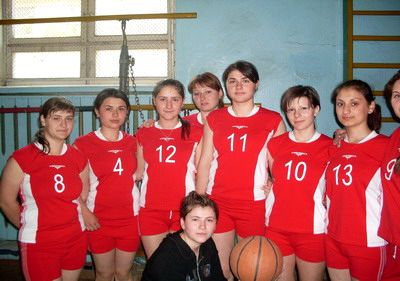
chaging-rooms, successfully organised trainings in footbal, voleyball, basketball, boxing,
draughts, chess and sport competitions, as well as stressed the sport impact in the context of
promoting a healthy life style.
Projects related to media events and application of information technologies represents
36% from the total number of implemented projects. Thus, from the 17 projects focused on
communication and media activities, 9 have installed school radios. All radio stations
launched their activities and are continuing to broadcast radio programs during summer time:
teachers' working sessions, state and bachelor exams. Beneficiaries have mentioned that
radio is the most efficient and the most attractive communication tool where pupils, teachers
and parents interact and communicate. Project beneficiaries purchased high performance
radio equipment with grant support. Academic institutions hosting radio stations have created
all necessary conditions to ensure technical security and adequate maintenance.
Negative aspects:
During the internal monitoring process of the LYCs' activity, the project identified the faulty
activity of a LYC from Orhei town. In this case it was obvious that the failure of project
implementation was caused by the inefficiency of the adult coordinator, incorrect application
of procurement procedures. Therefore, activities planned within the project ,,Expression of
personality by destroying communication barriers" have been discontinued due considerable
delays in project implementation.
(ii)
outreach, promotion and communication:
LYCs activities were promoted on the project link activated on the Ministry of Education and
Youth site www.edu.md. During the reporting period 4 success stories on LYC Vsieni,
Ialoveni, LYC Sīngerei, LYC. Floreti and LYC
Petrunea, Glodeni were placed. The success
stories describe the youth active involvement
in environment activities (LYC Sīngerei: ,,Youth
Avenue avenue of fulfilled dream"), sport
activities (LYC Vsieni: ,,In a healhy boby a
healhy mind") and communication (LYC
Floreti: ,,Who wants searches possibilities,
those who don't look for excuses", LYC
LYC Vsieni sport uniforms for girls' team
Petrunea:
,,School radio access to
playing basketball purchased from grant funds
information and communication for all").
LYC Vsieni: Project title ,,In a healhy boby a healhy mind", has been implemented by
young councellors from Vasieni in the period February - April 2009, in partnership with a local
105
NGO ,,Youth aspires towards supreme" and with financial support of YSEEP. During the
conducted sport activities, project beneficiaries, who are school pupils, as well as young
people from locality that attend sport sections enjoyed the newly purchased equipment with
JSDF support and the local contribution. Basket and volleyball amateurs, girls and boys,
received uniforms to represent them as teams at local and regional sport competitions.
Total project cost, constituted 10 938 MDL, out of which 7 178 MDL represented JSDF
contribution and 3 760 MDL local contribution (LPA and Rayon Concil).
LYC Singerei: The most visible results within the project ,,Youth Avenue avenue of
fulfilled dream" have been attained during the
event ,,Green day", organized at the beginning
of April. Therefore, 50 volunteers (pupils,
teachers, and young councilors) were divided
into small working groups and put their effort in
reviving the central park of the town. Youngsters
collected waste, dried leaves, having given back
the esthetic and clean aspect of the park. Being
asked by the passers by who forced them to
renovate the park, youth answered: ,,We are
doing this on volunteer basis, as we care about
LYC Sīngerei young councilors are dying
the banks in the recently renovated park
the environment we live in". People that
witnessed this interactive process could not say
anything else but encourage all community members to take active part in ecological
activities.
LYC Floreti: During the 2Q of 2009 the LYC from the Theoretical Lyceum "Ion Creang"
installed a radio station in the high school having as purpose to fill in school life with useful
news for pupils and teachers. This initiative has been fulfilled within the project "Who wants
searches possibilities, those who don't look for excuses" implemented in partnership
with Parents and Teachers' Association ,,Lyceum". The launch of the radio station has been
promoted at the local television Flor-TV; therefore it raised big interest and enthusiasm from
other LYCs and youth initiative groups from Floresti rayon to follow the same idea. The only
disadvantage of this project lies on the unconstructive partnership of the LYC and the LPA
and the Rayon Council, as local actors could not identify mechanisms to financially support
the LYC in their activity.
106


LYC Petrunea: Recently, in the middle of May 2009 young councilors from Petrunea
Theoretical Lyceum broadcasted the first radio program, dedicated to the launch of the
school radio entitled ,,Youth". During the
program, reporters described the context of
opening the radio station, having expressed
their gratitude to local partners. The
broadcast program has been presented.
The preparation of the first radio program
has been facilitated by a representative form
the local radio of Glodeni town. On daily
basis, during the academic year 363 pupils,
27 teachers, and 8 school personnel will be
CLT Petrunea radio equipment purchased from
JSDF grant
informed on the events that take place in
lyceum and community, as a result of the implemented project ,,School radio access to
information and communication for all!" All young people from the lyceum were offered
an open space to express and find out new things. In this way young people have become
more open to communicate, and the radio represents an efficient channel to dialogue with
teachers and parents. At the end of the project 15 young councilors learned to use the radio
equipment as well as acquired skills to collect, systematize and present the information.
The results of these projects have been appreciated as ,,lessons worth to be followed"
based on assessment of the following performance criteria: youth involvement in decision
making process; insurance of projects transparency at community level; adult coordinator's
involvement; insurance of local contribution; presentation of visible results.
107
COMPONENT B: BUSINESS DEVELOPMENT FOR YOUTH ECONOMIC
EMPOWERMENT
I. Activities conducted during the reporting period
During April - June 2009 a series of activities have been implemented in the view of youth
economic empowerment in Moldova. Beneficiaries filled in 37 new project application forms
and signed 37 contracts for provision of technical assistance: feasibility studies, business
plans development as well as credit intermediation with Participating Financial Institutions. 38
new business plans have been developed, out of which 34 have been submitted to PFIs.
Beneficiaries were assisted in the process of filling in loan application forms and collaboration
with banks in the view of receiving loans.
During the reporting period 17 bank loans have been disbursed with grant portion for 17
young entrepreneurs, project beneficiaries. They have received assistance and counseling in
the process of organizing businesses, procurement of equipment, implementation of
business plans, and cooperation with local actors. 11 businesses have already started their
operational activity, out of which 5 started their sales. Two enterprises benefited of post
creation assistance in the field of management, finance, and accounting.
Table no. 1.General situation on project results
June
IV Q
I Q
IE Q
IV Q
INDICATORS
September
IEI Q 2009
TOTAL
2008
2009
2009
2009
2008
Young people
267
202
46
-
515
subscribed to hot line
Number of
awareness
203
88
-
291
campaigns
conducted
Number of delivered
18
11
-
29
trainings
Application forms for
79
59
37
175
project participation
Collaboration
12
48
37
97
agreements
108
Business Plans
5
49
38
92
developed
Businesses
registered with
8
42
14
64
project support
Loan application
3
40
36
79
forms
Disbursed loans
0
3
17
20
14
Operational
0
3
11
Businesses
Businesses that
0
5
5
started their sales
II. Business planning, registration, administrative support and consultancy
During the reporting period project beneficiaries received assistance in developing business
plans, being prepared in total 38 business plans. These young entrepreneurs represent 19
rayons of the Republic of Moldova. Central zone remains to be the most active according to
the number of received project application forms with 15 business plans developed. The most
active young people were from Anenii Noi and Ialoveni rayons. Twelve business plans have
been developed for young people from the Southern Development Zone. The most active
young people were from Cahul rayon, followed by those Stefan Voda, Leova and Hincesti.
Eleven business plans were developed for young people from the Northern Development
Zone.
From 38 young entrepreneurs that benefited of project technical assistance, 36 filled in and
submitted bank loan application forms with business plans to PFIs. Two entrepreneurs will be
submitting the package of documents to PFIs during July.
109
Table 2. Technical assistance provided for business plans development 2Q, 2009
BUSINESS PLANS
DA
RAYON
Business plans
Loan application
developed
forms
Teleneti
2
2
Ialoveni
4
4
Anenii Noi
3
3
Orhei
2
2
ACA
Rezina
1
1
Streni
1
1
oldneti
2
2
Sub-total, IE Q 2009
15
15
Fleti
2
2
Sīngerei
1
1
CCA
Ungheni
1
1
Nisporeni
1
1
Sub-total, IE Q 2009
5
5
Hīnceti,
2
2
Leova
2
2
GA
ME
Cahul
4
4
Comrat
1
1
Sub-total, IE Q 2009
9
9
110
Soroca
4
3
Stefan Voda
3
2
CDR
Ocnia
1
1
Briceni
1
1
Sub-total, IE Q 2009
9
7
TOTAL, IE Q 2009
38
36
III. General information on business plans developed during the reporting period
During the 2nd Quarter 2009, 38 young entrepreneurs benefited of project assistance in
conducting feasibility studies and developing business plans with the purpose of getting
financed and launch their businesses. Having preliminarily analyzed the field of activity of
developed business plans, it could be stated that production and services are mainly
preferred by young entrepreneurs (19 BP developed in the field of service provision) and (18
BP in the field of production).
Looking at the services provision, the following economic activities could be specified:
entertainment centers for youth and families (4); mechanized services (5); auto repairs
services (2); beauty salons (2); auto laundry (1); tailoring and cloths repair (2); public
alimentation (2); mill (1); photo services (1).
As regards the production field, this could be characterized by the following economic
activities: vegetable production in greenhouses (2), vegetable production in open field (4);
production of sunflower seeds (2); drip irrigation systems (2); planting of peach orchard (1);
production of salty fish (1); dumplings production (1); beekeeping (1); production of pellets (1)
swine and cattle production (2). Two beneficiaries plan to practice trade activities (one
grocery store and a furniture salon).
Taking into account the range of economic activities described above, 21 entrepreneurs plan
to carry out agribusiness activities and 17 belong to non-agricultural field. Having assessed
the gender segment, it could be stated that from 38 potential entrepreneurs subscribed
during the 2nd Quarter, 12 are girls, representing 31,6% from the total number of project
beneficiaries. As regards boys involvement, they actively continue to participate at the
project, representing 68,4%.
111
Table 3. Business Plans developed during 2Q 2009
Village /
Gen-
Name of
No of
#
DA
Rayon
Beneficiary
Type of activity
community
der
enterprise
founders
Vegetable
Popov
FH ,,Popov
1
ACA
Orhei
Minzeti
F
1
production in
Cristina
Cristina Isidor"
greenhouses
oldne
Entertainment
2
ACA
Olicani
Until Andrei
M
IE ,,Until Andrei"
1
ti
center
Stegrescu
FH ,, Stegrescu
Planting of peach
3
ACA
Telenesti
Suhuluceni
M
1
Igor
Igor IacoM"
orchard
Iliescu
IE ,, Iliescu
Production of salty
4
ACA
Teleneti
Mihlaa
F
1
Cristina
Cristina"
fish
Plmdeal
LTD. ,,Bioterm -
5
ACA
Ialoveni
Suruceni
M
1
Pellets production
Vladimir
Sistem"
Burlescu
FH ,,Burlescu
Mechanized
6
ACA
Orhei
Isacova
F
1
Doina
Doina"
services
Vegetable
Palade
7
ACA
Ialoveni
Puhoi
F
LTD. ,,VIDANCO"
1
production in
Daniela
greenhouses
Parfene
FH ,,Parfene
Mechanized
8
ACA
Ialoveni
Puhoi
M
1
Victor
Victor"
services
Anenii
LTD. ,,ARCAIM
9
ACA
Anenii Noi
Mlai Galina
F
1
Disco
Noi
PLUS"
Anenii
Simonov
Entertainment
10
ACA
Anenii Noi
F
LTD. ,, Pro Elis"
1
Noi
Tatiana
center
Graur
FH ,,Graur
Mechanized
11
ACA
Ialoveni
Miletii Mici
M
1
Vladimir
Vladimir"
services
Anenii
Baranov
IE ,,Baranov
Entertainment
12
ACA
Anenii Noi
M
1
Noi
Mihail
Mihail"
center
LTD. ,,Copturi
Pastry and cake
13
ACA
Rezina
Rezina
Palii Iurie
M
1
Delicioase"
shop
14
ACA
Streni
Streni
Priguza
M
LTD.
1
Auto laundry
112
Constantin
,,PRICOSTIN"
oldne
Volciuc
ĪE ,,Volciuc
15
ACA
oldneti
M
1
Auto service
ti
Andrei
Andrei"
16
CCA
Fleti
Ruel
Burlacu Irina
F
ĪE ,,Burlacu Irina"
1
Beauty salon
Rīhlov
ĪE ,,Rīhlov
17
CCA
Sīngerei
Sīngerei
F
1
Massage salon
Ludmila
Ludmila"
Vasian
LTD. ,,Trimobil
18
CCA
Fleti
Fleti
M
1
Furniture salon
Nicolae
Grup"
Vegetable
Croitoru
FH "Croitoru
19
CCA
Nisporeni
Marinici
1
production / mini
Gheorghe
M
Gheorghe"
van
20
CCA
Ungheni
Ungheni
Palu Victor
M
LTD."Vicpal-Art"
1
Photo services
Matcas
IE ,,Matcas
Production of
21
MEGA
Cahul
Pelinei
M
1
Constantin
Constantin"
sunflower seeds
Cubreacov
IE ,,Cubreacov
22
MEGA
Cahul
Pacani
F
1
Tailoring services
Olesea
Olesea
23
MEGA
or. Leova
Vlah Oleg
M
IE ,,Vlah Oleg"
1
Public alimentation
Dumplings
24
MEGA
Cahul
Giurgiulesti
Ghidu Vasile
M
IE ,,Ghidu Vasile"
1
production
or.
Gusanu
IE ,,Gusanu
Auto repairs
25
MEGA
M
1
Hincesti
Alexandru
Alexandru"
services
FH ,,Gavril Vasile
26
MEGA
or. Leova
Gavril Vasile
M
1
Mill
Vasile"
Lorchin
IE ,,Lorchin
Mechanized
27
MEGA
or. Cahul
M
1
Denis
Denis"
services / crane
Buzadji
LTD.
Production of
28
MEGA
Comrat
Congaz
M
1
Denis
,,Electroden"
sunflower seeds
Bumbu
IE ,,Bumbu
29
MEGA
Cimilia
Satul Nou
F
1
Beekeeping
Violeta
Violeta"
Ciumac
FH ,,Ciumac
Drip irrigation
30
CDR
Soroca
Badiceni
M
1
Victor
Victor Victor"
system
113
tefan
Molozan
IE ,,Molozan
Tailoring and cloths
31
CDR
Caplani
M
1
Vod
Sergiu
Sergiu"
repair
Gabibulaev
IE ,,Gabibulaev
32
CDR
or. Ocnia
M
1
Swine production
Eldiniz
Eldiniz"
Vegetable
Ttruca-
Domentiuc
FH ,,Domentiuc
33
CDR
Soroca
M
1
production in
nou
Ruslan
Ruslan Vasile''
greenhouses
Butmalai
FH ,,Butmalai
34
CDR
Soroca
olcani
M
1
Cattle Breeding
Ivan
Ivan''
tefan
FH ,,Colina-
Vegetable
35
CDR
Cplani
Grosu Elena
F
2
Vod
Grosu"
production
Flocea
FH ,,Flocea
Vegetable
36
CDR
Briceni
Mrcui
F
1
Marina
Marina"
production
tefan
Topor
LTD. ,,Topor &
37
CDR
Volintiri
M
1
Grocery store
Vod
Dumitru
Co"
Cainarii
Erimenco
FH ,,Erimenco
Mechanized
38
CDR
Soroca
M
1
Vechi
Serghei
Serghei"
services
From the total number of developed business plans, 36 young people managed to register
their businesses. The legal form has been selected based on planned economic activity.
Thus, 14 young entrepreneurs have chosen as legal form ,,Individual enterprise". Ten young
people plan to provide various services in the non-agricultural field and 4 business plans are
in the field of agribusiness production. 13 entrepreneurs have registered their businesses as
Farmers Households given their planed agricultural activities both in production and services
field. Nine entrepreneurs have chosen Limited Liability Companies, as this legal form will
offer them possibility to extend the range of economic activity. Companies registered under
this legal form belong to trade activities, production in the filed of agriculture and services.
114
Table nr. 4. Assessment of preferences of the legal form (based on total number of signed
collaboration agreements)
Legal registration
Group
Individual
DA
Rayons
Total
businesses businesses
contracts
LTD
ĪE
FH
PAT
Teleneti
2
1
1
2
Ialoveni
4
2
2
4
Anenii Noi
3
2
1
3
Orhei
2
2
2
ACA
oldneti
2
2
2
Rezina
1
1
1
Streni
1
1
1
Sub-total 2Q
15
6
4
5
0
15
2009
Fleti
1
1
1
Nisporeni
1
1
1
CCA
Ungheni
1
1
1
Sub-total 2Q
3
1
1
1
0
0
3
2009
Hinceti
1
1
1
Cimilia
1
1
1
GA
Leova
2
1
1
2
ME
Comtrat
1
1
1
Cahul
4
4
4
Sub-total 2Q
9
1
7
1
0
0
9
2009
115
Briceni
1
1
1
tefan Vod
3
1
1
1
3
CDR
Soroca
4
4
4
Ocnia
1
1
1
Sub-total 2Q
9
1
2
6
0
0
9
2009
TOTAL 2Q 2009
36
9
14
13
0
0
36
IV. Financed businesses during 2Quarter 2009
During the reporting period 17 businesses have been financed. The total investment amount
constitutes: 2 000 840 MDL (bank loan -706 162 MDL; grant 880 727 MDL; personal
contribution 413 951 MDL).
15 businesses have been credited by Moldova Agroindbank; 1 business plan was financed
by FinComBank; and 1 business received loan from Moldincombank. Interest rates vary
from 14,55% up to 18,55%. The following legal forms have been selected by the
entrepreneurs: 4 IE, 4 FH and 9 LTD. These newly launched enterprises are being managed
by 3 girls and 14 boys.
From the total number of financed businesses 6 are agribusiness enterprises and 11 are
non -agricultural. 9 businesses are active in the field of production; 7 businesses provide
various services, and 1 enterprise is active in the field of trade. According to geographical
zone, businesses are located in the following regions: Anenii Noi -3; Riscani -1; Hincesti 3;
Orhei 2; Chisinau mun 2; Ialoveni - 1; Singerei - 1; Causeni -1, Rezina -1; Telenesti -1;
Stefan Voda -1.
116
Table 5. Financed businesses during 2Q, 2009
Own
Name of
Village /
Total
Bank
#
Rayon
Gender
contributio
Grant
Type of business
enterprise
Commune
MDL
Loan
n
LTD. "Ade
Fortran
1
Ialoveni
Varatic
M
100 000
10 000
40 000
50 000
Compact Grup"
production
Procurement of
IE "Bondari
2
Anenii Noi
M
101 636
10 164
40 654
50 818
sport equipment
Andrei"
for fitness
Procurement of
LTD. "Bramac
3
Anenii Noi
Chetrosu
M
160 166
65 500
42 074
52 592
refrigerator
Com"
equipment
FH "Spinu
4
Singerei
Chiscareni
M
100 000
10 000
40 000
50 000
Beekeeping
Andrei Nicolae"
LTD.
mun.
Production of
5
Antoneuca
M
100 000
10 000
40 000
50 000
"Mardiprod"
Chisinau
metal lath
FH "Pislaru
Gura
Mechanized
6
Anenii Noi
M
104 000
10 400
41 600
52 000
Denis"
Bicului
services
FH "Ropot
Drip irrigation
7
Riscani
Varatic
F
102 190
10 200
40 884
51 106
Natalia Boris"
system
IE "Pascaru
8
Orhei
M
108 250
13 750
42 000
52 500
Interne Café
Octavian"
LTD.
Commercial
9
"Romeocom
Causeni
Tanatari
M
94 945
12 000
37 076
45 869
adverting
Design"
services
LTD. "Ariana
10
Hincesti
F
202 040
106 040
43 000
53 000
Taxi services
Trans"
Production of
LTD. "Prosolid
mun.
11
Ciorescu
M
119 000
20 450
43 800
54 750
construction
Grup"
Chisinau
materials
IE "Gusanu
Auto repairs
12
Hincesti
M
120 990
21 990
44 000
55 000
Alexandru"
services
13
IE "Belibov
Rezina
M
115 689
21 189
42 000
52 500
PVC production
117
Anatolie"
IE "Bozianu
14
Hincesti
Mingir
M
149 000
53 000
43 000
53 000
Beekeeping
Mihail"
15
LTD. "Lozidin"
Orhei
Seliste
M
112 750
18 250
42 000
52 500
Interne Café
LTD.
16
Telenesti
Banesti
M
105 184
10 518
42 074
52 592
PVC production
"Serpavis"
Production of
LTD. "Terra
Stefan
17
Tudora
F
105 000
10 500
42 000
52 500
ornamental
Arb Grup"
Voda
trees
IV. Post creation assistance provided during the reporting period
During the reporting period 2 enterprises benefited of post-creation:
1. LTD "Ariana-Trans" taxi services and Ltd. "Romeocom-Design" Commercial
adverting services. Beneficiaries have been consulted in the field of management and
staff recruitment. It was paid attention to the need to prepare the package of
documents for employment (employment contract, medical insurance, employment
record book, etc.). Beneficiaries received models of employment contracts.
2. LTD "Ariana-Trans" taxi services and Ltd. "Romeocom-Design" Commercial
adverting services. The beneficiaries have been consulted on accounting issues,
modality of calculating wages, social indemnities and local taxes.
Table. 6. Type of post creation assistance
TYPE OF INTERVENTION
No.
NAME OF ENTERPRISE
nt
/
ting
s
ing
Total
Sales
Legal
Other
Finance/
Aspect
Manageme
Accoun
Market
Technologies
1 Ltd. "Ariana-Trans"
1
1
2
2 Ltd. "Romeocom-Design"
1
1
2
Total per category men/days
2
2
4
Total per category %
50%
50%
100%
118
V. Assessment of immediate impact
From 17 financed enterprises, 11 entrepreneurs launched economic activities. During the
reporting period these entrepreneurs signed contracts with local providers, some of them
received equipment and started production, services and trade activities. 16 new working
places have been created for 6 girls / women and 10 boys/men.
Table 7. Working places created
Number of working
places created
N/o
Name of operational businesses
F
M
1
LTD. ,,ADE CAMPACT GROUP"
0
1
2
LTD. ,,Bondari Andrei"
1
2
3
LTD. ,,Bramac Com "
2
0
4
FH ,,Pīslaru Denis "
0
1
5
LTD. ,,Ariana-Trans"
1
6
LTD. ,,Romeocom-Design"
1
7
IE ,,Bozianu Mihail"
1
8
IE ,,Guanu Alexandru"
1
9
FH ,,Ropot Natalia"
1
1
10
FH ,,Spinu Andrei"
2
11
LTD. ,,Terra Arb Group"
1
Total
6
10
Benefits to be offered to community
§ The newly launched businesses will contribute to the increase of local budgets
incomes.
§ Project implementation will contribute to young people setting up in rural areas of the
country.
§ Social security of young families will increase as a result of new working places
created.
§ The project will encourage young people from rural areas to fulfill their own business
ideas.
119
§ Project implementation will contribute to the development of sustainable economic
potential in rural areas.
VI. Conclusions
Constrains encountered during the reporting period:
§ PFI branches do not know in detail the project financial requirements, including the
decision making procedure, collateral of goods. At the same time PFIs, due to severe
loan policy and financial crisis, are not very willing to finance such businesses. They
provide such reasons as lack of operational activity and working experience, which
infringes project participation requirements. Very often the Youth Socio Economic
Empowerment Project is confused with the National Youth Economic Empowerment
Program (PNAET);
§ Commercial Bank ,,Moldova Agroindbank" went through a long process of approval of
loan products, process which took more than 2 months. This situation caused
significant delays in project implementation, as a great part of project business plans
have been submitted to MAIB branches. Now the loan products have been approved
and business plans evaluation will be re-launched.
§ Processing of business plans takes a long period of time and such documents as: (i)
evaluation report on proposed collateral, (ii) property statements from cadastre loose
validity, therefore beneficiaries suffer additional costs to re-confirm the legitimacy of
these mandatory documents.
§ It has been noticed that many young people are afraid of financial crisis effects, which
also affected Moldova. There are cases when young people have the collateral
evaluated, invested considerable resources to prepare the package of documents and
are still undecided to access the bank loan.
§ Many young people do not have sufficient collateral to secure the bank loan. Under
the crisis conditions, commercial banks accept sound liquidity collateral with a smaller
depreciation rate, such as real estate in urban areas. Given the project target group,
young people from rural areas, this requirement force them to ask for support from
third parties (relatives, friends).
120
Recommendations and suggestions
§ An additional training of loan officers from PFI branches on project scope, objectives
and conditions would be appropriate;
§ Set up meetings with PFI branches and inform them about the financial mechanism to
be applied within the project. Many loan officers do not know in detail YSEEP
conditions, despite the information that was provided by the project and the signed
financial agreements between PFIs and the Ministry of Finance;
§ Set up deadlines for processing documents both at PFI branch and headquarters
level.
COMPONENT D: PARTICIPATORY MONITORING AND EVALUATION OF YOUTH
ACTIVITIES
During the reporting period the MIS data basis was re-completed for Component A (Grant
Lines) and Component B (Economic Development).
Under Component A, the MIS system was supplemented with new blocks of indicators
related to the activities progress of the 47 local youth councils, beneficiaries of Small Grants
Programme. Thus, the set of aggregate indicators is a compilation of data reflected in specific
evaluation questionnaires for each LYC separately, filled in by regional M&E consultants.
The generalized version of Annex_A2_beneficiaries data basis comprises data on LYC
and their adult coordinators. In this block of indicators the nominal lists of LYC have been
aggregated, as well as the common list of adult coordinators with specification of the most
important reference data has been prepared.
The indicators were changing considerably during the completion of the data basis due to the
continuous progress of LYC activities. Therefore the data basis was updated several times.
The block of integrated indicators in Annex_A3_data on LYC members and advisors
(Sub-Annex 3C), beneficiaries of Small Grants Programme (CLT 2008 and CLT 2009) was
also re-filled in continuously with new data. The variables were modified for the indicators
LPA Contribution and AE Contribution, the SC performed based on the financial reports
submitted by beneficiaries. The block of indicators with general data on the Competitive
Small Grants for LYC programme, integrated in Annex_A3_data on LYC members and
advisors (Sub-annex 3F) was also completed integrally.
The quantitative results obtained and reflected in Annex_A4_Training, show the training
level of LYC members and beneficiaries for different specific training programmes. The
121
Annex also presents details on topic activities, characteristic to the objectives of implemented
projects or projects under implementation with PASET support.
For Component B of the project, the progress indicators in MIS system have been reviewed
by superposition of data collected in semester II with those for Semester I,
Annex_B8_business development being thus re-completed. The data collected from
partner Development Agencies (ACA, CCA, CDR, MEGA) were aggregated within the block
of indicators reflected in Annex_B6_training programmes. Finally, the block of indicators
was extended with data specific for each DA.
The compiled statistics show the level of participation of young entrepreneurs or potential
entrepreneurs in the training activities as well as the progress of business plans
implementation, taking into consideration the specific indicators describing the women/men
rural/urban; agricultural/non-agricultural business sector and other ratios.
It must be mentioned that the quality of data collected in the MIS system depends directly on
the accuracy of data reflected by the LYC in the progress reports on implemented projects, in
the individual reports and cumulative LYC activity reports submitted by the regional advisors
(Component A), as well as in the periodic information notes and the specific blocks of
indicators presented by the partner Development Agencies (Component A).
COMPONENT E: INVOLVEMENT OF REGIONAL YOUTH REPRESENTATIVES (FOCAL
POINTS) IN YSEEP IMPLEMENTATION, GRANT AUDIT
During the reporting period the regional monitoring & evaluation consultants have assessed
LYCs activity and progress made during the small grant program implementation on social
entrepreneurship. The M&E aimed at assessing the projects implemented by LYCs and their
impact.
The interview guide was applied as a tool for data collection. Taking into account the factors
that influence LYCs activity 3 interview guides were developed and separately applied for the
following local actors: LYC mayor, Adult coordinator, LPA representative.
During the M&E process the following aspects were taken into account:
§ Geographic area and LYCs date of establishment;
§ Idea of setting up and procedure of establishing LYCs;
§ Perception of adult coordinator's role;
§ Previously implemented projects;
122
§ Collaboration with other local actors and LYCs;
§ Information and youth involvement in LYCs' activities;
§ The process of decision making within the LYCs;
§ Beneficiaries and volunteers involved in activities organized by LYCs;
§ The process of project implementation and insurance of sustainability;
§ LYCs future visions / plans
According to geographical position LYCs are located on the territory of the Republic of
Moldova, as follows: Northern Development Region 23 LYC, Central Development
Region 15 LYCs, Southern Development Region 8 LYCs, Security zone 1 LYC. The
activity of monitored 47 LYCs is supported by 48 adult coordinators, out of which 37 are
professors.
The number of councilors in LYC varies from one locality to another, from 5 LYC members (in
LYC Gimnaziu Frumoasa i LYC Gimnaziu Hogineti, both from r. Clrai) to 27 members
(LYC LT ,,Liviu Damian", t. Rīcani). The average number of councilors constitutes 13
pupils and their total number accounts 612 young people. According to gender criteria,
out of 612 councilors 412 are girls and only 200 are boys. The average age of LYCs'
members in the 47 monitored LYCs is 16 years. The activity of 612 councilors is supported
by 907 volunteers.
Form the total number of 47 assessed LYCs, 40 already completed their projects. The other
7 LYCs continue implementing their activities according to project proposals, without major
deviations from initial planning. LYCs, project beneficiaries, conducted around 1365 ,,thematic
activities" during 2008 2009.
The following conclusions on small grants program for LYCs have been traced as a result of
collected data and conducted M&E:
§ LYC is performing its activity according to the provisions stipulated in Regulation
on LYC;
§ Adult coordinator is responsible for monitoring and supervision of LYC activities.
His/her role within LYC is the development of organization's capacities and
professional orientation of youth;
§ The majority of monitored LYC have the main goal to familiarize the leadership of
communities about youth interest and need for free time activities, sport,
education, improvement of living condition, territorial arrangements, etc.
123
§ Elections of LYC members were held in democratic manner, through direct vote
among active groups of school or lyceum pupils. The Administration Council
usually consists of LYC mayor, deputy mayor, councilors, and secretary, etc.
§ The way the projects were identified depends on the situation of the community
and on the youth interests (environment, informational technologies, promotion of
a healthy lifestyle, sport activities, promoting of free communication);
§ All evaluated LYCs implement activities according to Activity Plan, with slight
deviations from the program;
§ Main LYC projects beneficiaries are: school pupils, youth, community school
administration and teachers.
§ Average age of LYC members is 16 years;
§ From 612 LYC members 67% - are girls ;
§ LYCs cooperation with partners NGOs is appreciated as very good and
constructive;
§ LPA consider that LYC activities are useful both for youth and community and
contribute to implementation of projects through financial and in kind donations,
having the commitment to continue LYCs support in the future;
§ YSEEP financial support allowed the involvement of youth in useful activities both
for them and community.
Even through many important actions were performed, still more newspapers, radio
programmes and TV channels for youth are needed all over the country. In majority of cases
local libraries have old books and inadequate service provision systems. In many villages
there is limited access to Internet or if it exists the speed is very low. The Monitoring &
Evaluation mission of the project social component finished with the development of a
Summary Report on M&E of Youth Resource Centres, NGOs, and LYCs.
124
ANNEXES
125
Annex RAS 1
NUMBER AND FORM OF PROVIDED SERVICES, JANUARY- JUNE 2009
Verbal consultancies
Written consultancies
Visits
Round tables
Meetings
Seminars
Service
providers
tech
tech
tech
tech
tech
mar
eco
TOTAL
techn leg
market
econ
n
leg
market
econ
n
leg
market
econ
n
leg
market
econ
n
leg
market econ
n
leg
ket
n
1
Anenii Noi
1718
436
663
618
0
0
0
0
311
80
73
79
0
0
0
0
20
10
13
21
68
0
0
5
4115
2
Basarabeasca
398
157
114
68
41
9
14
5
106
15
17
16
21
18
14
16
17
7
8
9
9
3
1
2
1085
3
Bli
3491
577
723
421
7
0
0
11
140
15
28
2
5
4
0
1
97
13
12
31
27
0
0
4
5609
4
Cahul
1687
177
334
187
39
1
0
3
433
27
0
2
40
3
4
7
28
0
8
0
45
6
3
3
3037
5
Cinari
1357
360
516
308
2
0
0
0
182
21
31
30
4
12
4
12
24
32
48
35
42
2
0
11
3033
6
Clrai
1215
341
679
398
0
0
0
0
213
13
29
25
0
0
7
2
43
33
31
41
30
5
1
7
3113
7
Cantemir
992
185
269
287
0
0
0
0
346
2
2
5
0
3
14
4
35
22
20
31
88
3
0
31
2339
8 Cueni
1277
335
639
590
32
4
0
2
274
17
24
25
2
2
3
1
26
8
17
24
51
8
5
3
3369
9
Cimilia
737
368
432
399
0
0
0
0
148
26
26
21
13
9
4
7
31
36
30
17
41
5
0
1
2351
10
Comrat
724
366
332
69
90
23
6
4
174
9
15
3
67
49
24
22
1
1
0
1
14
3
0
0
1997
11
Criuleni
1747
313
429
328
22
1
1
1
265
5
8
14
3
11
3
5
7
5
4
3
81
7
1
9
3273
12
Dondueni
1310
103
874
189
6
0
1
21
336
7
17
11
0
0
0
1
3
3
11
8
54
0
0
11
2966
13
Drochia
1031
297
287
290
2
0
0
0
132
0
1
2
50
28
27
36
31
9
7
6
32
0
1
10
2279
14
Edine
1332
298
656
421
27
3
1
2
301
8
4
11
13
16
5
16
100
28
29
26
24
4
0
11
3336
15
Fleti
661
191
199
205
0
1
0
0
294
36
33
34
3
1
0
1
34
18
18
28
43
0
0
4
1804
16
Glodeni
1855
516
647
588
10
0
0
19
150
28
57
24
2
3
0
2
69
61
32
52
38
1
2
19
4175
17
Hinceti
1564
328
532
449
34
7
2
8
134
18
16
27
14
11
11
19
40
31
23
11
34
2
0
3
3318
18
Ialoveni
1979
354
253
415
1
0
0
0
532
47
28
42
1
3
0
1
14
8
6
4
32
1
0
2
3723
19
Leova
1029
269
492
304
33
3
15
8
220
14
11
28
4
5
7
12
24
17
25
29
37
1
3
8
2598
20
Nisporeni
760
671
597
663
16
1
4
8
162
105
104
73
1
2
0
3
41
46
29
55
21
2
0
3
3367
21
Orhei
1264
510
740
576
3
0
0
2
353
3
7
9
1
48
36
41
44
24
36
37
40
0
3
10
3787
22 Ocnia
980
216
426
362
30
1
0
2
200
19
27
29
0
1
3
5
60
20
14
26
50
0
2
9
2482
23
Rezina
542
158
253
169
31
11
0
7
262
56
46
74
5
3
0
4
81
39
34
50
32
4
0
12
1873
24
Sīngerei
962
415
419
152
0
0
0
0
557
100
62
30
7
13
33
7
3
1
3
6
33
8
6
16
2833
25
oldneti
675
194
422
343
18
5
0
13
316
11
65
5
11
24
6
27
67
16
8
9
52
5
1
8
2301
26
Soroca
1939
463
576
424
0
0
0
0
222
0
0
0
1
0
0
1
58
28
14
45
57
17
4
33
3882
27
tefan Vod
1507
350
680
444
55
2
11
7
237
24
29
24
7
5
9
9
26
25
26
32
54
4
4
7
3578
28 Streni
675
268
160
187
15
10
8
8
236
1
3
0
30
31
25
29
70
19
22
23
44
2
0
5
1871
29
Taraclia
820
195
300
269
16
2
0
1
330
15
28
11
70
28
26
35
182
20
34
18
6
0
1
1
2408
30
Ungheni
1375
226
284
221
24
1
0
0
503
40
28
50
3
3
1
0
71
23
16
20
21
3
0
1
2914
31
Ceadīr Lunga
886
362
390
169
63
10
8
6
158
59
79
56
44
17
8
15
20
18
15
16
21
1
4
4
2429
32
Briceni
657
121
174
108
0
2
0
0
298
42
49
29
5
0
2
0
32
27
25
30
35
0
1
7
1644
33
Rīcani
1772
330
541
493
8
0
0
3
258
2
0
1
2
1
0
1
104
10
6
7
30
2
0
2
3573
34
Teleneti
720
157
258
98
78
5
3
12
228
9
7
1
88
44
29
33
60
24
35
22
25
0
0
7
1943
35
Floreti
1575
201
263
180
17
0
0
0
314
12
17
15
18
11
8
15
54
37
29
16
51
2
2
8
2845
TOTAL
43213 10808 15553 11392 720
102
74
153 9325
886
971
808
535
409
313
390
390
719
688
789
1362
101
45
277 101250
Annex RAS 2
FORM OF PROVIDED SERVICES AND BENEFICIARIES, JANUARY - JUNE 2009
der
of
ng
of
es
e
s
s
s
vi
es
es
es
es
es
ns
es
s
es
stry
ie
ie
ie
o
es
ci
s
bl
ar
s
ber
ordi
im
ed
ber
ci
iari
iari
iari
iari
sio
iari
iari
gi
at
tan
in
cc
e t
ciar
ciar
ciar
e Pr
fic
fic
fic
d ta
fic
us
fic
fic
Unit
um
a
um
ic
tan
e
Written
sul
e
Visit
e
e
e
e
Hour
l
n
efi
epe
efi
l
n
efi
v
al
Sem
ple
R
b
sul
Ben
Singl
con
Ben
Ben
Roun
Ben
Disc
Ben
Ben
to the re
ben
ben
ben
Ser
Tota
Tota
Ver
con
peo
1
Anenii Noi
3435
3080
0
0
543
2748
0
0
64
353
73
1010
4115
4900
7751
6789
402
7191
2
Basarabeasca
737
731
69
70
154
516
69
357
41
174
15
247
1085
2269
2118
1701
417
2095
3
Bli
5212
4581
18
18
185
621
10
85
153
559
31
631
5609
4744
7237
5847
646
6495
4
Cahul
2385
2108
43
46
462
1272
54
527
36
129
57
894
3283
4603
5381
4619
329
4976
5
Cinari
2541
2342
2
2
264
1297
32
303
139
730
54
860
3032
4050
5823
5251
286
5534
6
Clrai
2633
2499
0
0
280
1048
9
59
148
653
43
890
3113
3849
5358
4932
222
5149
7
Cantemir
1733
2185
0
0
355
2118
21
329
108
597
122
2985
2339
5021
8257
8214
43
8214
8
Cueni
2841
2588
38
56
340
2003
8
91
75
543
67
981
3369
4380
6875
5892
520
6262
9
Cimilia
1936
1709
0
0
215
1186
33
403
114
678
47
958
2345
3438
5209
4625
312
4934
10
Comrat
1491
1335
123
193
201
534
162
925
3
24
17
483
1997
3669
3750
3249
291
3494
11
Criuleni
2817
2664
25
25
292
1155
22
159
19
90
98
1125
3273
4600
5367
5066
156
5218
12
Dondueni
2476
2443
28
28
371
1309
1
18
25
134
65
1340
2966
3908
5308
5228
32
5272
13
Drochia
1905
1571
2
4
135
166
141
895
53
288
43
604
2279
3476
3900
3156
365
3528
14
Edine
2707
2578
33
33
324
2008
50
677
183
1135
39
670
3336
4588
7432
5980
1134
7101
15
Fleti
1256
1273
1
1
397
1024
5
24
98
295
47
817
1804
3404
3434
3250
184
3434
16
Glodeni
3606
3142
29
29
259
952
7
66
214
796
60
641
4175
4234
6080
5285
345
5626
17
Hinceti
2873
2575
51
51
195
612
55
593
105
568
39
712
3318
3950
5415
4884
227
5111
18
Ialoveni
3001
2774
1
1
649
2086
5
51
32
403
35
656
3723
4723
6155
5493
406
5971
19
Leova
2094
2005
59
79
273
1513
28
355
95
650
49
888
2598
3654
5759
5091
341
5490
20
Nisporeni
2691
2461
29
29
444
2103
6
58
171
797
26
584
3367
4023
6451
5618
414
6032
21
Orhei
3090
2965
5
5
372
2404
126
1522
141
925
53
1122
3787
5242
9171
8715
228
8943
22
Ocnia
1984
1927
33
34
275
638
9
111
120
706
61
949
2482
3480
4464
4086
301
4365
23
Rezina
1122
1080
49
49
438
1530
12
103
204
878
48
786
1873
4313
4521
4338
92
4426
24
Sīngerei
1948
1966
0
0
749
3564
60
493
13
127
63
997
2833
5326
7329
6863
236
7147
25
oldneti
1634
1583
36
36
397
1822
68
651
100
448
66
952
2301
4738
5650
5427
165
5492
26
Soroca
3402
3169
0
0
222
1248
2
13
145
909
111
1572
3882
4308
7318
6233
671
6911
27
tefan Vod
2981
2641
75
108
314
1474
30
289
109
496
69
1025
3578
4381
6610
5489
544
6033
28
Streni
1290
1201
41
40
240
1113
115
1302
134
606
51
960
1871
4418
5507
4923
297
5222
29
Taraclia
1584
1552
19
19
384
1475
159
937
254
947
8
190
2408
4845
5365
4875
245
5120
30
Ungheni
2106
1958
25
61
621
2375
7
61
130
569
25
512
2914
4283
5780
5232
232
5536
31
Ceadīr Lunga
1807
1578
87
89
352
1609
84
834
69
286
30
553
2429
3821
5220
4751
211
4949
32
Briceni
1060
1027
2
2
418
2248
7
71
114
614
43
777
1644
3410
4959
4574
185
4739
33
Rīcani
3136
2585
11
11
261
343
4
17
127
486
34
496
3573
3883
4582
3260
678
3938
34
Teleneti
1233
1232
98
102
245
1245
194
1378
141
776
32
701
1943
4633
5443
5435
6
5434
35
Floreti
2219
2255
17
46
358
2150
52
450
136
963
63
1115
2845
4493
7413
6575
489
6979
TOTAL
80966 75363 1049 1267 11984 51509 1647 14207 3813 19332 1784 30683 101243 147057 202392 180946 11652
192361
Annex RBD 1
RURAL INVESTMENT AND SERVICES PROJECT
Rural Business Development Component
Cumulative figures of RISP as for 30/06/09
Number of RBs and individuals having started to implement
549
business/action/investment plan
Number of RBs generating revenue
495
Number of RBs registered as legal entities with DA support
45
Number of applicants with final business plan
739
Number of credit applications submitted
688
Total number of credit disbursed
546
Number of created working places (at startup)
1551
Friday, July 10, 2009
Page 1 of 1
RURAL INVESTMENT AND SERVICES PROJECT
Annex RBD 2
Rural Business Development Component
Cumulative figures as for 30/06/09
(exchange rate for report (1 USD) is 13 MDL)
Nr
Indicator
Total to
Total to
Variation
31/03/09
30/06/09
31/03/09 - 30/06/09
1. Number of villages where information campaign was held
733
754
21
2. Number of people attending the public meetings
14486
14743
257
3. Number of applications for DA support
816
878
62
4. Less those rejected by DA and client
76
77
1
5. Sub-total (3-4)
740
801
61
6. of which applications in progress (5-7)
3
3
7. Service agreements signed
737
798
61
8. Agreements terminated by DA/client
115
129
14
9. remaining Service Agreements active (7-8)
622
669
47
Of the active Service agreements (in 9 above):
10. RBs started implementing their business/investment plans
486
549
63
11. In-progress (9-10)
136
120
Of those started implementing their business plans (in 10 above):
12. New businesses
262 ( 53.91 %)
287 ( 52.28 %)
25
13. Individual owned businesses
467 ( 96.09 %)
530 ( 96.54 %)
63
14. Group owned businesses
19 ( 3.909 %)
19 ( 3.461 %)
15. RBs involved in DA' post creation support (in 10 above)
403
492
89
15a. #Days of DA' post creation support (in 10 above)
1331
1608
277
16. RBs generating revenue (of those in 10 above)
411
495
84
17. RBs with final business plans with DA assistance
685
739
54
18. RBs registered as legal entity with DA assistance
44
45
1
19. Credit applications to Financial Institutions (FIs)
638
688
50
20. less those rejected or withdrawn
52
62
10
21. Remaining credit applications active (19-20)
586
626
40
Of the active credit applications:
22. Loans disbursed to RBs
499
546
47
23. Loans disbursed to operational RBs
474
537
63
24. Loans approved but not disbursed
23
23
25. Loan applications still being assessed by FIs (21-22-24)
64
57
Of the loans provided (in 22 above):
26. Loans provided from RISP funds
226
239
13
27. Loans provided from other sources
273
307
34
28. RBs without credit (of those in 10 above)
12
12
Of those started to implement their business plan (in 10 above) the activities are:
29. Agricultural
194 ( 39.92 %)
237 ( 43.17 %)
43
30. Non-agricultural
292 ( 60.08 %)
312 ( 56.83 %)
20
31. Jobs created (at start-up)
1408
1551
143
32. Average jobs created per RB (at start-up)
3
3
33. Total RBs costs of all RB (in 10 above)
$13 719 209
$15 270 550
$1 551 341
34. Average RB cost (in 10 above)
$28 229
$27 815
35. Total RBs costs (of those RBs receiving credit)
$14 343 274
$15 603 850
$1 260 576
36. of which: - credits
$8 707 083
$9 624 246
$917 163
37. - contribution of beneficiaries
$5 636 191
$5 979 604
$343 413
38. average loan per RB (in 22 above)
$17 449
$17 627
$178
Friday, July 10, 2009
Page 1 of 1
RURAL INVESTMENT AND SERVICES PROJECT
Annex RBD 3
Rural Business Development Component
Cumulative figures as for 30/06/09
(exchange rate for report (1 USD) is 13 MDL)
Nr
Indicator
Total to
Total to
30/06/09
31/03/09
ACA
CCA
CDR
MEGA
Total
1. Number of villages where information campaign was held
733
156
148
225
225
754
2. Number of people attending the public meetings
14486
3320
2402
5101
3920
14743
3. Number of applications for DA support
816
234
217
146
281
878
4. Less those rejected by DA and client
76
7
38
5
27
77
5. Sub-total (3-4)
740
227
179
141
254
801
6. of which applications in progress (5-7)
3
2
0
0
1
3
7. Service agreements signed
737
225
179
141
253
798
8. Agreements terminated by DA/client
115
34
39
14
42
129
9. remaining Service Agreements active (7-8)
622
191
140
127
211
669
Of the active Service agreements (in 9 above):
10. RBs started implementing their business/investment plan 486
s
132
118
101
198
549
11. In-progress (9-10)
136
59
22
26
13
120
Of those started implementing their business plans (in 10 above):
12. New businesses
262 (
53.9 %)
62
62
34
129
287
13. Individual owned businesses
467 (
96.1 %)
126
115
98
191
530
14. Group owned businesses
19 (
3.9 %)
6
3
3
7
19
15. RBs involved in DA' post creation support (in 10 above)
403
95
110
98
189
492
15a. #Days of DA' post creation support (in 10 above)
1331
137
326
421
724
1608
16. RBs generating revenue (of those in 10 above)
411
126
106
90
173
495
17. RBs with final business plans with DA assistance
685
212
175
135
217
739
18. RBs registered as legal entity with DA assistance
44
9
14
3
19
45
19. Credit applications to Financial Institutions (FIs)
638
197
142
132
217
688
20. less those rejected or withdrawn
52
17
21
7
17
62
21. Remaining credit applications active (19-20)
586
180
121
125
200
626
Of the active credit applications:
22. Loans disbursed to RBs
499
134
113
101
198
546
23. Loans disbursed to operational RBs
474
128
110
101
198
537
24. Loans approved but not disbursed
23
11
2
10
0
23
25. Loan applications still being assessed by FIs (21-22-24)
64
35
6
14
2
57
Of the loans provided (in 22 above):
26. Loans provided from RISP funds
226
63
28
71
77
239
27. Loans provided from other sources
273
71
85
30
121
307
28. RBs without credit (of those in 10 above)
12
4
8
0
0
12
Of those started to implement their business plan (in 10 above) the activities are:
29. Agricultural
194 (
40 %)
71
66
47
53
237( 43.2 %)
30. Non-agricultural
292 (
60 %)
61
52
54
145
312 ( 56.8 %)
31. Jobs created (at start-up)
1408
462
253
386
450
1551
32. Average jobs created per RB (at start-up)
3
4
2
4
2
3
33. Total RBs costs of all RB (in 10 above)
$13 719 209
$4 409 800
$3 750 566
$2 616 680
$4 493 503
$15 270 550
34. Average RB cost (in 10 above)
$28 229
$33 408
$31 784
$25 908
$22 694
$27 815
35. Total RBs costs (of those RBs receiving credit)
$14 343 274
$4 430 953
$4 062 714
$2 616 680
$4 493 503
$15 603 850
36. of which: - credits
$8 707 083
$2 950 603
$2 400 972
$1 572 527
$2 700 144
$9 624 246
37. - contribution of beneficiaries
$5 636 191
$1 480 350
$1 661 742
$1 044 154
$1 793 359
$5 979 604
38. average loan per RB (in 22 above)
$17 449
$22 019
$21 248
$15 570
$13 637
$17 627
Friday, July 10, 2009
Page 1 of 1
Annex RBD 4
RURAL INVESTMENT AND SERVICES PROJECT
Rural Business Development Component
Analysis of the quantitative progress of the RBDC 30/06/09
I. RBDC Achievements according to the global target
Total target of RBDC
600 RBs
Total amount of months
46
Number of months till
30/06/10
12
Target at
30/06/09
476 RBs
II. RBDC Achievements acording to DAs targets
Target at
30/06/09
119 RBs/DA (according to the agreements signed between MAFI and DA)
RISP at
Target la Level of
Project global
Targets
30/06/09
30/06/09 fulfilment
target
RBs started to implement business plans
549
476
115.34%
600
individuals
530
group
19
new businesses
287
300 at least
extensions
262
agricultural
237
non-agricultural
312
200 at least
Other indicators
Promotion activities
754
870
86.67%
900
Business plans
739
616
120.03%
833
Credit disbursed
546
616
88.68%
833
Post creation support
492
476
103.36%
600
Nr of days of post creation support
1 608
3 000
III. RBDC Achievements according to DAs targets per agency
Comparing with target at
30/06/09
Target per
Targets
ACA
CCA
CDR
MEGA
Agency at
30/06/09
RBs started to implement business plans
132
118
101
198
119
individuals
126
115
98
191
group
6
3
3
7
new businesses
62
62
34
129
extensions
70
56
67
69
agricultural
71
66
47
53
non-agricultural
61
52
54
145
Other indicators
Promotion activities
156
148
225
225
218
Business plans
212
175
135
217
154
Credit disbursed
134
113
101
198
154
Post creation support
95
110
98
189
119
Nr of days of post creation support
137
326
421
724
Friday, July 10, 2009
Page 1 of 1
Annex RBD 4a
RURAL INVESTMENT AND SERVICES PROJECT
Rural Business Development Component
Qualitative indicators
30/06/09
Nr
Indicator
ACA
CCA
CDR
MEGA
Total
1.Employment
Nr. of working places created at businesses monitored within the
347
338
201
405
1 291
last 12 months
208
159
146
266
779 60%
Men
Women
139
179
55
139
512 40%
Number of shareholders employed
103
76
43
104
326
Men
70
55
33
73
231 71%
Women
33
21
10
31
95 29%
Number of employees unemployed before
109
0
1 522
113
1 744
Average salary of employees per one RB
1 317
1 930
1 555
1 401
1 491
Men
1 465
1 994
1 608
1 427
1 567
Women
1 141
1 823
1 459
1 354
1 374
Average salary for one employed shareholder
2 157
2 260
4 370
1 637
2 268
2 227
2 238
4 052
1 692
2 272
Men
Women
2 017
2 315
5 100
1 520
2 260
Average salary before project
922
1 650
1 520
761
944
850
1 800
1 500
726
926
Men
Women
980
1 500
1 538
787
958
2. Business sustainability
3. Taxes
collected at businesses monitored within the last 12 months
VAT paid
2 019 750 1 977 551 1 588 500
1 195 551
6 781 352
Income taxes and local taxes paid
178 393
92 720
800 350
415 309
1 486 772
Social fund, income tax, pension fund, etc (from salaries) paid
741 840
65 100
124 300
0
931 240
4. Credit Information
Number of businesses with credit
134
113
101
198
546
of those
Number of RBs leaving project support as self-sustainable
27
37
25
48
137
Number of RBs with credit under service agreement with DA
107
76
76
150
409
Number of RBs failing their obligation to repay credit
0
0
0
0
0
Number of RBs seeking/obtaining second loan
0
0
0
0
0
Number of RBs requesting second time DA assistance (payed)
0
0
0
0
0
Friday, July 10, 2009
Page 1 of 1
Annex RBD 4b
RURAL INVESTMENT AND SERVICES PROJECT
Rural Business Development Component
Monitoring data
30/06/09
Nr
Indicator
ACA
CCA
CDR
MEGA
Total
1.Remitances invested
Number of RB with remitances invested
42
14
36
47
139
Economies invested in RB, MDL
1 880 000
136 000
1 568 835
189 100
3 773 935
Economies invested in RB, USD
144 615
10 462
120 680
14 546
290 303
Economies as % of the investment
9%
2%
9%
2%
7%
2. Increase in beneficiaries' incomes
Number of RB having the iindicator monitored
94
19
39
109
261
Breakdown of income
less than15 %
45
9
17
27
98
between 15% and 25%
15
5
6
44
70
between 25% and 50%
25
3
12
38
78
between 50% and 100%
8
2
2
0
12
more than 100%
1
0
2
0
3
Friday, July 10, 2009
Page 1 of 1
Annex RBD 5
RURAL INVESTMENT AND SERVICES PROJECT
Rural Business Development Component
Cumulative figures as for 30/06/09
Loans disbursed by Regions and Sources of Funding
Nr
Rayon
RISP
Other
Total
Sources
1
Anenii Noi
4
2
6
2
Balti
1
1
3
Basarabeasca
6
7
13
4
Briceni
11
6
17
5
Cahul
17
22
39
6
Calarasi
2
1
3
7
Cantemir
4
6
10
8
Causeni
4
4
8
9
Chisinau
2
1
3
10 Cimislia
4
13
17
11 Criuleni
1
1
2
12 Donduseni
6
1
7
13 Drochia
14
1
15
14 Dubasari
1
2
3
15 Edinet
14
8
22
16 Falesti
2
8
10
17 Floresti
6
7
13
18 Glodeni
5
10
15
19 Hincesti
13
13
26
20 Ialoveni
8
5
13
21 Leova
4
14
18
22 Nisporeni
3
5
8
23 Ocnita
6
1
7
24 Orhei
12
4
16
25 Rezina
4
21
25
26 Riscani
7
42
49
27 Singerei
4
10
14
28 Soldanesti
13
32
45
29 Soroca
8
3
11
30 Stefan Voda
6
3
9
31 Straseni
5
5
32 Taraclia
3
1
4
33 Telenesti
13
3
16
34 Ungheni
5
8
13
35 UTAG
22
41
63
Grand Total
239
307
546
NOTE: 'Chisinau' refers to the villages which are part of the Chisinau municipality
Friday, July 10, 2009
Page 1 of 1
Annex RBD 6
RURAL INVESTMENT AND SERVICES PROJECT
Rural Business Development Component
Cumulative figures as for 30/06/09
Amount of Loans disbursed by Regions and Sources of Funding, MDL
RISP
Other
Total
Sources
1 Anenii Noi
1 256 594
796 760
2 053 354
2 Balti
463 386
463 386
3 Basarabeasca
1 556 000
810 000
2 366 000
4 Briceni
3 092 000
1 702 008
4 794 008
5 Cahul
1 930 595
3 675 000
5 605 595
6 Calarasi
640 000
156 000
796 000
7 Cantemir
598 000
880 000
1 478 000
8 Causeni
1 180 000
861 380
2 041 380
9 Chisinau
1 333 600
30 000
1 363 600
10 Cimislia
1 449 000
2 642 100
4 091 100
11 Criuleni
200 000
120 000
320 000
12 Donduseni
1 169 500
100 000
1 269 500
13 Drochia
3 673 200
300 000
3 973 200
14 Dubasari
50 000
1 100 000
1 150 000
15 Edinet
1 790 800
1 725 000
3 515 800
16 Falesti
536 416
2 312 851
2 849 267
17 Floresti
955 340
2 080 000
3 035 340
18 Glodeni
1 432 128
2 309 400
3 741 528
19 Hincesti
1 785 000
1 574 000
3 359 000
20 Ialoveni
3 498 000
692 000
4 190 000
21 Leova
705 000
2 852 300
3 557 300
22 Nisporeni
1 284 000
1 600 000
2 884 000
23 Ocnita
780 000
300 000
1 080 000
24 Orhei
2 830 000
1 000 000
3 830 000
25 Rezina
728 000
5 813 068
6 541 068
26 Riscani
1 500 000
11 387 460
12 887 460
27 Singerei
888 200
2 173 331
3 061 531
28 Soldanesti
4 517 796
9 047 298
13 565 094
29 Soroca
1 105 000
740 000
1 845 000
30 Stefan Voda
780 000
150 000
930 000
31 Straseni
752 000
752 000
32 Taraclia
830 000
300 000
1 130 000
33 Telenesti
3 708 728
884 000
4 592 728
34 Ungheni
2 605 000
1 924 460
4 529 460
35 UTAG
6 381 500
5 091 999
11 473 499
Grand Total
57 521 397
67 593 801
125 115 198
NOTE: 'Chisinau' refers to the villages which are part of the Chisinau municipality
Friday, July 10, 2009
Page 1 of 1
Annex RBD 7
RURAL INVESTMENT AND SERVICES PROJECT
Rural Business Development Component
Cumulative figures as for 30/06/09
Rural Businesses Started Activity by Regions and Sources of Funding
RISP
Other
Without
Total
Sources
credits
1 Anenii Noi
3
2
5
2 Balti
1
1
3 Basarabeasca
6
7
13
4 Briceni
11
6
17
5 Cahul
17
22
39
6 Calarasi
2
2
7 Cantemir
4
6
10
8 Causeni
4
4
8
9 Chisinau
2
1
3
10 Cimislia
4
13
17
11 Criuleni
1
1
1
3
12 Donduseni
6
1
7
13 Drochia
14
1
15
14 Dubasari
1
1
2
15 Edinet
14
8
22
16 Falesti
2
8
10
17 Floresti
6
7
13
18 Glodeni
5
10
1
16
19 Hincesti
13
13
26
20 Ialoveni
8
5
13
21 Leova
4
14
18
22 Nisporeni
3
4
2
9
23 Ocnita
6
1
7
24 Orhei
12
4
2
18
25 Rezina
4
21
25
26 Riscani
7
42
1
50
27 Singerei
4
10
2
16
28 Soldanesti
13
32
45
29 Soroca
8
3
11
30 Stefan Voda
6
3
9
31 Straseni
5
5
32 Taraclia
3
1
4
33 Telenesti
9
3
1
13
34 Ungheni
4
8
2
14
35 UTAG
22
41
63
Grand Total
233
304
12
549
NOTE: 'Chisinau' refers to the villages which are part of the Chisinau municipality
Friday, July 10, 2009
Page 1 of 1
Annex RBD 8
RURAL INVESTMENT AND SERVICES PROJECT
Rural Business Development Component
Cumulative figures as for 30/06/09
Rural Businesses Started Activity by Types of Activity and Sources of Funding
RISP
Other
Without Total
Weight
Sources credits
Agriculture
1 Agricultural service activities
8
14
2
24
4.4%
2 Crops production
48
124
5
177
32.2%
3 Livestock production
18
16
1
35
6.4%
4 Livestock production combined with crops productio 1
n
1
0.2%
Total
Agriculture
75
154
8
237
43.2%
non-Agriculture
5 Fishing
1
2
3
0.5%
6 Manufacture of food products and beverages
9
26
1
36
6.6%
7 Manufacture of textiles
1
1
0.2%
8 Manufacture of wearing apparel; dressing and
2
2
4
0.7%
dyeing of fur
9 Manufacture of wood and wood products
7
15
22
4.0%
10 Publishing, printing and reproduction of recorded
1
1
0.2%
media
11 Manufacture of coke, refined petroleum products
1
1
0.2%
and nuclear fuel
12 Manufacture of rubber and plastic products
3
2
5
0.9%
13 Manufacture of other non-metallic mineral products 5
10
15
2.7%
14 Manufacture of fabricated metal products, except 2
5
7
1.3%
machinery and equipment
15 Manufacture of electrical machinery and apparatus 1
1
0.2%
n.e.c.
16
1
1
0.2%
17 Manufacture of furniture; manufacturing n.e.c.
4
7
11
2.0%
18 Construction
2
2
0.4%
19 repair of personal and household goods
1
1
0.2%
20 Retail trade
34
19
1
54
9.8%
21 Sale, maintenance and repair of motor vehicles and 13
9
2
24
4.4%
motorcycles; retail sale of automotive fuel
22 Wholesale trade and commission trade, except of
4
7
11
2.0%
motor vehicles and motorcycles
23 Hotels and restaurants
11
11
22
4.0%
24 Land transport
39
14
53
9.7%
25 Post and telecommunications
2
3
5
0.9%
26 Supporting and auxiliary transport activities;
1
1
0.2%
activities of travel agencies
27 Other business activities (mainly focus on the
3
3
0.5%
business sector)
28 Real estate
1
1
0.2%
29 Health and social work
1
1
2
0.4%
30 Other service activities (mainly provided to private 11
7
18
3.3%
households)
31 Recreational, cultural and sporting activities
5
2
7
1.3%
Total
non-Agriculture
158
150
4
312
56.8%
Grand Total
233
304
12 549
100.0%
Note: This classification is accomplished according to CAEM Clasification (Classification of Activities of the Moldovan Economy) elaborated by
the Statistical Department
Friday, July 10, 2009
Page 1 of 1
RURAL INVESTMENT AND SERVICES PROJECT
Annex RBD 8a
Rural Business Development Component
Cumulative figures as for 30/06/09
Rural Businesses Started Activity by Types of Activity (per DA)
ACA
CCA
CDR
MEGA
Total
Weight
Agriculture
1 Agricultural service activities
3
2.3%
7
5.9%
3
3.0%
11
5.6%
24
4.4%
2 Crops production
55
41.7%
54
45.8%
39
38.6%
29
14.6%
177
32.2%
3 Livestock production
12
9.1%
5
4.2%
5
5.0%
13
6.6%
35
6.4%
4 Livestock production combined with crops
1
0.8%
1
0.2%
production
Total
Agriculture
71
53.8%
66
55.9%
47
46.5%
53
26.8%
237
43.2%
non-Agriculture
5 Fishing
1
0.8%
1
1.0%
1
0.5%
3
0.5%
6 Manufacture of food products and beverages
11
8.3%
11
9.3%
5
5.0%
9
4.5%
36
6.6%
7 Manufacture of textiles
1
0.5%
1
0.2%
8 Manufacture of wearing apparel; dressing and
1
0.8%
1
1.0%
2
1.0%
4
0.7%
dyeing of fur
9 Manufacture of wood and wood products
9
6.8%
6
5.1%
1
1.0%
6
3.0%
22
4.0%
10 Publishing, printing and reproduction of
1
0.5%
1
0.2%
recorded media
11 Manufacture of coke, refined petroleum
1
0.5%
1
0.2%
products and nuclear fuel
12 Manufacture of rubber and plastic products
1
0.8%
4
2.0%
5
0.9%
13 Manufacture of other non-metallic mineral
3
2.3%
4
3.4%
1
1.0%
7
3.5%
15
2.7%
products
14 Manufacture of fabricated metal products,
2
1.5%
1
0.8%
1
1.0%
3
1.5%
7
1.3%
except machinery and equipment
15 Manufacture of electrical machinery and
1
0.8%
1
0.2%
apparatus n.e.c.
16
1
0.8%
1
0.2%
17 Manufacture of furniture; manufacturing n.e.c.
1
0.8%
3
2.5%
2
2.0%
5
2.5%
11
2.0%
18 Construction
1
0.8%
1
1.0%
2
0.4%
19 repair of personal and household goods
1
0.5%
1
0.2%
20 Retail trade
11
8.3%
8
6.8%
12
11.9%
23
11.6%
54
9.8%
21 Sale, maintenance and repair of motor vehicles
4
3.0%
2
1.7%
5
5.0%
13
6.6%
24
4.4%
and motorcycles; retail sale of automotive fuel
22 Wholesale trade and commission trade, except
1
0.8%
1
0.8%
4
4.0%
5
2.5%
11
2.0%
of motor vehicles and motorcycles
23 Hotels and restaurants
4
3.0%
2
1.7%
5
5.0%
11
5.6%
22
4.0%
24 Land transport
8
6.1%
7
5.9%
8
7.9%
30
15.2%
53
9.7%
Note: This classification is accomplished according to CAEM Clasification (Classification of Activities of the Moldovan Economy) elaborated by
the Statistical Department
Friday, July 10, 2009
Page 1 of 2
ACA
CCA
CDR
MEGA
Total
Weight
25 Post and telecommunications
5
2.5%
5
0.9%
26 Supporting and auxiliary transport activities;
1
0.8%
1
0.2%
activities of travel agencies
27 Other business activities (mainly focus on the
3
1.5%
3
0.5%
business sector)
28 Real estate
1
1.0%
1
0.2%
29 Health and social work
1
0.8%
1
0.5%
2
0.4%
30 Other service activities (mainly provided to
2
1.5%
1
0.8%
4
4.0%
11
5.6%
18
3.3%
private households)
31 Recreational, cultural and sporting activities
3
2.3%
2
2.0%
2
1.0%
7
1.3%
Total
non-Agriculture
61
46.2%
52
44.1%
54
53.5%
145 73.2%
312
56.8%
Grand Total
1E 100%
1E 100%
101 100%
2E 100%
549
100%
Note: This classification is accomplished according to CAEM Clasification (Classification of Activities of the Moldovan Economy) elaborated by
the Statistical Department
Friday, July 10, 2009
Page 2 of 2
RURAL INVESTMENT AND SERVICES PROJECT
Annex RBD 8b
Rural Business Development Component
Cumulative figures as for 30/06/09
Rural Businesses (Started and the Pipeline) by Types of Activity (per DA)
ACA
CCA
CDR
MEGA
Total
Weight
Agriculture
1 Agricultural service activities
3
1.6%
7
5.0%
4
3.2%
14
6.7%
28
4.2%
2 Crops production
82
43.2%
64
46.0%
54
43.2%
33
15.7%
233
35.1%
3 Livestock production
17
8.9%
5
3.6%
6
4.8%
14
6.7%
42
6.3%
4 Livestock production combined with crops
1
0.5%
1
0.2%
production
Total
Agriculture
103 54.2%
76
54.7%
64
51.2%
61
29.0%
304
45.8%
non-Agriculture
5 Fishing
1
0.7%
1
0.8%
1
0.5%
3
0.5%
6 Manufacture of food products and beverages
18
9.5%
17
12.2%
10
8.0%
11
5.2%
56
8.4%
7 Manufacture of textiles
1
0.5%
1
0.2%
8 Manufacture of wearing apparel; dressing and
1
0.5%
1
0.7%
1
0.8%
2
1.0%
5
0.8%
dyeing of fur
9 Manufacture of wood and wood products
10
5.3%
9
6.5%
1
0.8%
6
2.9%
26
3.9%
10 Publishing, printing and reproduction of
1
0.5%
1
0.2%
recorded media
11 Manufacture of coke, refined petroleum
1
0.5%
1
0.2%
products and nuclear fuel
12 Manufacture of chemicals and chemical products
1
0.5%
1
0.2%
13 Manufacture of rubber and plastic products
1
0.5%
1
0.7%
4
1.9%
6
0.9%
14 Manufacture of other non-metallic mineral
6
3.2%
4
2.9%
1
0.8%
7
3.3%
18
2.7%
products
15 Manufacture of fabricated metal products,
5
2.6%
2
1.4%
1
0.8%
3
1.4%
11
1.7%
except machinery and equipment
16 Manufacture of electrical machinery and
1
0.7%
1
0.2%
apparatus n.e.c.
17
1
0.7%
1
0.2%
18 Manufacture of furniture; manufacturing n.e.c.
3
1.6%
3
2.2%
3
2.4%
5
2.4%
14
2.1%
19 Construction
1
0.5%
2
1.6%
1
0.5%
4
0.6%
20 repair of personal and household goods
1
0.5%
1
0.2%
21 Retail trade
11
5.8%
9
6.5%
12
9.6%
23
11.0%
55
8.3%
22 Sale, maintenance and repair of motor vehicles
5
2.6%
1
0.7%
4
3.2%
14
6.7%
24
3.6%
and motorcycles; retail sale of automotive fuel
23 Wholesale trade and commission trade, except
1
0.5%
1
0.7%
5
4.0%
5
2.4%
12
1.8%
of motor vehicles and motorcycles
24 Hotels and restaurants
7
3.7%
3
2.2%
5
4.0%
11
5.2%
26
3.9%
25 Land transport
9
4.7%
7
5.0%
8
6.4%
30
14.3%
54
8.1%
26 Post and telecommunications
5
2.4%
5
0.8%
Note: This classification is accomplished according to CAEM Clasification (Classification of Activities of the Moldovan Economy) elaborated by the Statistical Department
Friday, July 10, 2009
Page 1 of 2
ACA
CCA
CDR
MEGA
Total
Weight
27 Supporting and auxiliary transport activities;
1
0.7%
1
0.2%
activities of travel agencies
28 Other business activities (mainly focus on the
3
1.4%
3
0.5%
business sector)
29 Real estate
1
0.8%
1
0.2%
30 Health and social work
1
0.5%
1
0.5%
2
0.3%
31 Other service activities (mainly provided to
3
1.6%
1
0.7%
4
3.2%
11
5.2%
19
2.9%
private households)
32 Recreational, cultural and sporting activities
4
2.1%
2
1.6%
2
1.0%
8
1.2%
Total
non-Agriculture
87
45.8%
63
45.3%
61
48.8%
149 71.0%
360
54.2%
Grand Total
2E 100%
1E 100%
125 100%
2E 100%
664
100%
Note: This classification is accomplished according to CAEM Clasification (Classification of Activities of the Moldovan Economy) elaborated by the Statistical Department
Friday, July 10, 2009
Page 2 of 2
Annex RBD 9
RURAL INVESTMENT AND SERVICES PROJECT
Rural Business Development Component
Cumulative figures as for 30/06/09
Amount of credits Disbursed for Rural Businesses Started Activity by
Types of Activity and Sources of Funding
RISP
Other
Total
Sources
Agriculture
1 Agricultural service activities
705 000
2 639 414
3 344 414
2 Crops production
8 201 600
32 671 908
40 873 508
3 Livestock production
4 955 000
2 514 800
7 469 800
4 Livestock production combined with crops
200 000
200 000
production
Total
Agriculture
14 061 600
37 826 122
51 887 722
non-Agriculture
5 Fishing
50 000
280 000
330 000
6 Manufacture of food products and
2 469 595
6 646 082
9 115 677
7 Manufacture of textiles
30 000
30 000
8 Manufacture of wearing apparel; dressing
717 128
511 380
1 228 508
and dyeing of fur
9 Manufacture of wood and wood products
2 164 550
3 656 690
5 821 240
10 Publishing, printing and reproduction of
140 000
140 000
recorded media
11 Manufacture of coke, refined petroleum
300 000
300 000
products and nuclear fuel
12 Manufacture of rubber and plastic products
700 000
600 000
1 300 000
13 Manufacture of other non-metallic mineral
846 000
1 904 800
2 750 800
products
14 Manufacture of fabricated metal products,
235 000
1 314 520
1 549 520
except machinery and equipment
15 Manufacture of electrical machinery and
275 000
275 000
apparatus n.e.c.
16
300 000
300 000
17 Manufacture of furniture; manufacturing
1 400 716
1 283 000
2 683 716
18 Construction
405 000
405 000
19 repair of personal and household goods
30 000
30 000
20 Retail trade
8 292 065
3 053 000
11 345 065
21 Sale, maintenance and repair of motor
3 449 340
1 475 707
4 925 047
vehicles and motorcycles; retail sale of
22 Wholesale trade and commission trade,
1 431 500
2 132 500
3 564 000
except of motor vehicles and motorcycles
23 Hotels and restaurants
3 863 600
1 818 000
5 681 600
24 Land transport
10 251 000
1 956 000
12 207 000
25 Post and telecommunications
298 000
130 000
428 000
26 Supporting and auxiliary transport activities;
230 000
230 000
activities of travel agencies
27 Other business activities (mainly focus on
90 000
90 000
the business sector)
28 Real estate
200 000
200 000
29 Health and social work
119 381
30 000
149 381
30 Other service activities (mainly provided to
1 507 600
516 000
2 023 600
private households)
31 Recreational, cultural and sporting activities
2 228 000
314 000
2 542 000
Total
non-Agriculture
41 133 475
28 511 679
69 645 154
Note: This classification is accomplished according to CAEM Clasification (Classification of Activities of the Moldovan Economy) elaborated
by the Statistical Department
Friday, July 10, 2009
Page 1 of 2
RISP
Other
Total
Sources
Grand Total
55 195 075
66 337 801
121 532 876
Note: This classification is accomplished according to CAEM Clasification (Classification of Activities of the Moldovan Economy) elaborated
by the Statistical Department
Friday, July 10, 2009
Page 2 of 2
RURAL INVESTMENT AND SERVICES PROJECT
Annex RBD 10
Rural Business Development Component
Dynamic of Loans Disbursed
35
32
31
31
30
26
25
25
23
22
22
21
20
20
20
18
17
17
17
17
17
15
14
14
13
13
12 12
12 12
12
10
10
10
10
9
9
5
5
3
0
0 6 6 6 7 7 7 7 7
7
7
7
7
7
8
8
8
8
8
8
8
8
8
8
9
9
9
9
9
-
06
-
0
-
0
-
0
07
08
09
-
0
-
0
-
0
-
07
-
0
-
0
-
0
-
0
-
0
-
0
-
08
-
0
-
0
-
0
-
0
-
0
p
t
-
0
v
c
n
b
r
-
0
r
-
0
y
l
-
0
g
p
t
-
0
v
c
n
b
r
-
0
r
-
0
y
l
-
0
g
p
t
-
0
v
c
n
b
r
-
0
r
-
0
y
Se
Oc
Ju
Ju
No
De
Ja
Fe
Ma
Ap
Ma
J
un-
Au
Se
Oc
No
De
Ja
Fe
Ma
Ap
Ma
J
un-
Au
Se
Oc
No
De
Ja
Fe
Ma
Ap
Ma
J
un-
RURAL INVESTMENT AND SERVICES PROJECT
Annex RBD 11
Rural Business Development Component
Dynamic of Loan Applications Submitted
50
45
43
40
39
37
36
35
33
34
34
30
27
25
25
26
24
23
20
20
21
20
21
20
16
16
15
15
14 15
15
15 15
12
13
11
10
10
11 10
8
9
5
0
0
6
6
6
7
7
7
7
7
7
7
7
7
8
8
8
8
8
8
8
8
8
9
9
9
9
9
-
06
-
0
0
-
0
-
0
-
0
-
07
0
-
07
-
0
0
-
0
-
0
-
0
-
08
0
-
08
-
0
0
-
0
-
0
-
0
p
t
-
0
c-
n-07
b
r
-
0
r
-
0
y
g-
p
t
-
0
c-
n-08
b
r
-
0
r
-
0
y
g-
p
t
-
0
c-
n-09
b
r
-
0
r
-
0
y
Se
Oc
Nov
De
Ja
Fe
Ma
Ap
Jul
Jul
Ma
Jun
Au
Se
Oc
Nov
De
Ja
Fe
Ma
Ap
Ma
Jun
Au
Se
Oc
Nov
De
Ja
Fe
Ma
Ap
Ma
Jun
RURAL INVESTMENT AND SERVICES PROJECT
Annex RBD 12
Rural Business Development Component
Dynamic of Service Agreements Signed
60
55
52
50
41
40
39 37
36 36
32
30
30
30 30
27
25
22
23 22
23
20
19
20
17
18
18 19
18
15
14
15
12
13
10
10
11
9
10
0
0
6
6
6
6
7
7
7
7
7
7
7
7
7
7
7
7
8
8
8
8
8
8
8
8
8
8
8
8
9
9
9
9
9
9
0
0
0
0
0
0
0
0
0
0
0
0
0
0
0
0
0
0
0
0
0
0
0
0
0
0
0
0
0
0
0
0
0
0
'
'
'
'
'
'
'
'
'
'
'
'
'
'
'
'
'
'
'
'
p
t
'
v
c
n
b
r
'
l
'
g
p
t
'
v
c
n
b
r
'
l
'
g
p
t
'
v
c
n
b
r
'
Se
Oc
Ju
Ju
No
De
Ja
Fe
Mar '
Ap
May
J
un '
Au
Se
Oc
No
De
Ja
Fe
Mar '
Ap
May
J
un '
Au
Se
Oc
No
De
Ja
Fe
Mar '
Ap
May
J
un '
Annex RBD 13
RURAL INVESTMENT AND SERVICES PROJECT
Rural Business Development Component
Nr of promotion activities versus target according to DAs contracts (2006-2010)
60
55
50
45
43
42
40
40
40
40
40
40
40
40
40
40
40
40
40
36
36
34
35
34
32
30
30
30
30
30
30
30
28
28
25
26
23
21
21
22
20
20
20
20
20
20
20
20
18
19
15
13
13
12
11
12
10
10
10
10
10
10
10
10
10
9
9
6
5
5
4
5
2
0
0
6
6
6
6
7
7
7
7
7
7
7
7
7
7
7
7
8
8
8
8
8
8
8
8
8
8
8
8
9
9
9
9
9
9
0
0
0
0
0
0
0
0
0
0
0
0
0
0
0
0
0
0
0
0
0
0
0
0
0
0
0
0
0
0
0
0
0
0
'
'
'
'
'
'
'
'
'
'
'
'
'
'
'
'
'
v
c
'
n '
b
r
'
r
'
y
n '
l '
g
v
c
'
n '
b
r
'
r
'
y
n '
l '
g
v
c
'
n '
b
r
'
r
'
y
n '
Ju
Ju
Sep
Oct
No
De
Ja
Fe
Ma
Ap
Ma
Ju
Au
Sep
Oct
No
De
Ja
Fe
Ma
Ap
Ma
Ju
Au
Sep
Oct
No
De
Ja
Fe
Ma
Ap
Ma
Ju
SumOfSate
Target
RURAL INVESTMENT AND SERVICES PROJECT
Annex RBD 14
Rural Business Development Component
Nr of business plans created versus target, according to DAs contracts (2006-2010)
60
50
48
42
41
40
37
35
34
32
30
30
30
27
27
27
23
24
21
20
20
18
18
18
18
19
19
18
18
18
18
18
18
18
18
18
18
18
18
18
18
18
18
18
18
18
18
18
18
18
18
18
18
18
18
18
18
18
16
16
16
14
15
13
14
13
14
13
10
10
11
11
9
0
0
6
6
6
6
7
7
7
7
7
7
7
7
7
7
7
7
8
8
8
8
8
8
8
8
8
8
8
8
9
9
9
9
9
9
0
0
0
0
0
0
0
0
0
0
0
0
0
0
0
0
0
0
0
0
0
0
0
0
0
0
0
0
0
0
0
0
0
0
'
'
'
'
'
'
'
'
'
'
'
'
'
'
'
'
'
v
c
'
n '
b
r
'
r
'
y
n '
l '
g
v
c
'
n '
b
r
'
r
'
y
n '
l '
g
v
c
'
n '
b
r
'
r
'
y
n '
Ju
Ju
Sep
Oct
No
De
Ja
Fe
Ma
Ap
Ma
Ju
Au
Sep
Oct
No
De
Ja
Fe
Ma
Ap
Ma
Ju
Au
Sep
Oct
No
De
Ja
Fe
Ma
Ap
Ma
Ju
BisnessPlans
Target
RURAL INVESTMENT AND SERVICES PROJECT
Annex RBD 15
Rural Business Development Component
Nr of loans disbursed versus target according to DAs contracts (2006-2010)
35
32
31
31
30
26
25
25
23
22
22
21
20
20
20
18
18
18
18
18
18
18
18
18
18
18
18
18
18
18
18
18
18
18
18
18
18
18
18
1
18
18
18
18
18
18
18
18
18
18
17
17
17
17
17
15
14
14
13
13
12
12
12
12
12
10
10
10
10
9
9
5
5
3
0
0
6
6
6
6
7
7
7
7
7
7
7
7
7
7
7
7
8
8
8
8
8
8
8
8
8
8
8
8
9
9
9
9
9
9
0
0
0
0
0
0
0
0
0
0
0
0
0
0
0
0
0
0
0
0
0
0
0
0
0
0
0
0
0
0
0
0
0
0
'
'
'
'
'
'
'
'
'
'
'
'
'
'
'
'
'
v
c
'
n '
b
r
'
r
'
y
n '
l '
g
v
c
'
n '
b
r
'
r
'
y
n '
l '
g
v
c
'
n '
b
r
'
r
'
y
n '
Ju
Ju
Sep
Oct
No
De
Ja
Fe
Ma
Ap
Ma
Ju
Au
Sep
Oct
No
De
Ja
Fe
Ma
Ap
Ma
Ju
Au
Sep
Oct
No
De
Ja
Fe
Ma
Ap
Ma
Ju
C reditsDisbursed
Target
RURAL INVESTMENT AND SERVICES PROJECT
Annex RBD 16
Rural Business Development Component
RBs started operational activity versus target according to DAs contracts (2006-2010)
35
33
30
28
27
27
25
25
25
24
23
23
22
20
19
19
19
17
17
16
16
15
14
14
14
14
14
14
14
14
14
14
14
14
14
1
14
14
14
14
14
14
14
14
14
14
14
14
14
14
14
14
14
14
1
14
14
14
13
13
13
13
12
11
11
10
10
10
8
7
7
7
6
5
0
0
6
6
6
6
7
7
7
7
7
7
7
7
7
7
7
7
8
8
8
8
8
8
8
8
8
8
8
8
9
9
9
9
9
9
0
0
0
0
0
0
0
0
0
0
0
0
0
0
0
0
0
0
0
0
0
0
0
0
0
0
0
0
0
'
'
'
'
'0
'
'
'
'
'
'
'
'0
'
'
'
'
'
'
'
'0
'
'
v
n
b
r
'
r '
y
l
'0
g
v
n
b
r
'
r '
y
l
'0
g
v
n
b
r
'
r '
y
Ju
Ju
Sep
Oct
No
Dec
Ja
Fe
Ma
Ap
Ma
J
un '
Au
Sep
Oct
No
Dec
Ja
Fe
Ma
Ap
Ma
J
un '
Au
Sep
Oct
No
Dec
Ja
Fe
Ma
Ap
Ma
J
un '
StartedImplementation
Target
RURAL INVESTMENT AND SERVICES PROJECT
Annex RBD 17
Rural Business Development Component
Nr of loans disbursed by raions
Cumulative figures of RISP as for 30/06/09
7 0
6 0
5 0
4 0
3 0
2 0
10
0
R I SP
Ot her
RURAL INVESTMENT AND SERVICES PROJECT
Annex RBD 18
Rural Business Development Component
Amount of Loans Disbursed by Regions and Sources of Funding, MDL
Cumulative figures of RISP as for 30/06/09
16 00 00 00
14 00 00 00
12 00 00 00
10 00 00 00
8 00 00 00
6 00 00 00
4 00 00 00
2 00 00 00
0
R ISP
Ot her
RURAL INVESTMENT AND SERVICES PROJECT
Annex RBD 19
Rural Business Development Component
Structure of RISP loans by credit period
Cumulative figures of RISP as for 30/06/09
c . 3 4 yea rs
9 .2 %
b. 2 3 yea rs
24 .7 %
d. 4 5 ye ars
a . < 2 yea rs
5 7.3 %
0 .0%
f. > 6 ye a rs
e. 5 6 ye ars
7 .1%
1.7 %
RURAL INVESTMENT AND SERVICES PROJECT
Annex RBD 20
Rural Business Development Component
Structure of RISP loans by amount, MDL
Cumulative figures of RISP as for 30/06/09
b. 50 000 - 100 000 M DL
27.6%
c. 100 000 - 250 000 M DL
31.0%
a. < 50 000 M DL
7.5%
e. > 500 000 M DL
d. 250 000 - 500 000 M DL
12.6%
21.3%
RURAL INVESTMENT AND SERVICES PROJECT
Annex RBD 21
Rural Business Development Component
Breakdown of Rural Businesses Started by Activity and Sources of Funding
Cumulative figures of RISP as for 30/06/09
Fishing
Wholesale trade
Agriculture: services
Manufacture of food
products and
beverages
Repair and Sale of
motor vehicles
Personal services,
incl. medical
Agriculture. Livestock
production
Other activities
Manufacturing of
nonfood products
Retail trade
Transports
Agriculture. Crops
production
R ISP
Ot her
W it ho ut
0
2 0
4 0
6 0
8 0
10 0
12 0
14 0
RURAL INVESTMENT AND SERVICES PROJECT
Annex RBD 22
Rural Business Development Component
Cumulative figures of RISP as for 30/06/09
Breakdown of Rural Businesses Started by Activity (Number of RBs)
Wholesale trade
Fishing
Repair and Sale of
2%
1%
motor vehicles
Agriculture:
4%
services
Personal services,
4%
incl. medical
Agriculture. Crops
5%
production
32%
Other activities
6%
Agriculture.
Livestock
producti Re
on tail trade
Transports
6%
10%
10%
Manufacture of food
Manufacturing of
products and
nonfood products
beverages
13%
7%
Annex RBD 22a
Breakdown of Rural Businesses Started by Activity (Investments' Ammounts)
Agriculture:
services
Personal services,
Fishing
Wholesale trade
3% incl. medical
0%
Repair and Sale of
3%
3%
motor vehicles
4%
Agriculture. Crops
production
Agriculture.
34%
Livestock
production
6%
Other activities
7%
Manufacture of food
products and
Transports
Manufacturing of
beverages
Retail trade
10%
nonfood products
8%
9%
13%
Annex RBD 23
Subcategory:Breakdown of Manufacturing RBs (Number of Credits)
DL M anufac ture of
elec tric al mac hinery and
apparatus n.e.c .
DF M anufac ture of c oke,
1 %
refined petroleum produc ts
DB M anufac ture of
and nuc lear fuel
wearing apparel; dres s ing
1 %
and dyeing of fur
4 %
DN
M anufac ture of rubber
1 %
DE P ublis hing, printing
and plas tic produc ts
and reproduc tion of
5 %
rec orded media
J M anufac ture of
DB M anufac ture of 1 %
c ated metal produc ts ,
textiles
c ept mac hinery and
1 %
DA M anufac ture of food
equipment
produc ts and beverages
7 %
3 4 %
DN M anufac ture of
furniture; manufac turing
n.e.c .
1 0 %
DI M anufac ture of other
DD M anufac ture of wood
non-metallic mineral
and wood produc ts
produc ts
2 1 %
1 4 %
Annex RBD 23a
Subcategory:Breakdown of Manufacturing RBs (Credit amounts)
DL M anufac ture of
elec tric al mac hinery and
DN DF M anufac ture of c oke,
DB M anufac ture of
apparatus n.e.c .
1 %
refined petroleum produc ts
wearing apparel; dres s ing
1 %
and nuc lear fuel
and dyeing of fur
1 %
5 %
DE P ublis hing, printing
and reproduc tion of
rec orded media
DH M anufac ture of rubber
1 %
and plas tic produc ts
DB M anufac ture of
5 %
textiles
DJ M anufac ture of
0 %
fabric ated metal produc ts ,
DA M anufac ture of food
exc ept mac hinery and
produc ts and beverages
equipment
3 5 %
6 %
DN M anufac ture of
furniture; manufac turing
n.e.c .
DD M anufac ture of wood
1 1 %
DI M anufac ture of other
and wood produc ts
non-metallic mineral
2 3 %
produc ts
1 1 %
Annex AIHP 1: Human interest story
YOUNG PEOPLE IN UNGHENI LEARN ABOUT THE DANGERS OF THE FLU
"Flu seems to me a very dangerous disease, because it affects humans, birds and animals. Today I
found out a lot of useful information about the avian, pandemic flu. The most important thing is that
we can prevent the spread of the flu virus, especially that this is so very easy", says Olga Cinita, a
student in the 12th grade of "Gaudeamus" High-school in Petresti village, Ungheni district, one of
the participants at the seminar organized by future doctors.
The Petresti village with a population of over 5,000 inhabitants is located not far from the Ungheni
and Sculeni border crossing points. Migratory birds rest at the lakes in the areas, and many
inhabitants of the village still let their ducks and geese free.
Dorin Damascan, a student in the 5th year at the Medicine
Over 600 children from 20
high-schools in rural
Department, is the one who tells the young people how many
settlements in the area of Prut
types of flu exist, what is the difference between the simple
and Nistru rivers discuss
and the avian flu, why the pandemic flu cannot be forecasted,
important health issues
and, the most important thing, how to react in case of
assisted by 20 future doctors.
epidemics or pandemics.
This is a brief description of the
"Children and young people are the most vulnerable to flu,
project of the Medicine Students
including avian and pandemic flu, and also they are those
and Residents Association that
who can be of great help to the adults in stopping the spread
teaches young people and
of the virus", says Dorin Damascan. "We help the children
children to pay attention to the
dangers of avian and pandemic
understand how important vigilance is. Our actions are
flu.
successful only due to the fact that we are closer by age to
the young people and we speak a simple language".
"So far we knew very little about the avian flu, pandemic flu and rules of protection", confessed
Mariana Smerea, 16 years old, who just joined the voluntary youth group that will participate in
community information activities about the danger of avian and pandemic flu.
"It is very important to make children and young people in the villages near Prut and Nistru river
responsible. Children and young people have to understand the benefits of reporting to local
auhtorities or veterinarian the suspect cases of sick birds. Today, when we already have a new type
flu A (H1N1), it is not enough to know only the personal hygiene rules", mentioned Marcel Abras,
manager of the Project "Community Actions for Children and Youth". Similar meeting with pupils
have been organized in Macaresti, Costuleni and Sculeni villages.
"Community Actions for Children and Youth" Project is funded by the Avian Influenza Control and
Human Pandemics Preparedness and Response Project, implemented by the World Bank, Ministry
of Health and UNICEF.
Upon completion of each informative session, volunteer teams are created to disseminate
messages about avian and pandemic flu. Young people decide themselves what kind of information
activities they would carry out in their communities, by means of posters, radio or TV shows, and
meetings with community members. In November 2009, the most interesting mini-campaign will be
awarded.
Annex 2: Media coverage on prevention and response
· January 29 2009. Finishing the construction of the Laboratory of Veterinarian
Diagnosis in Cahul
1. News. MOLDRES News Agency. Social. January 30, 2009. Social. A well
equipped laboratory of avian flu diagnosis in the South of the country.
2. 7 news in brief. TV 7. January 29, 2009. A well equipped laboratory of avian flu
diagnosis in Cahul.
· March 20, 2009. Press Briefing. A presentation of avian flu disinfection systems.
Media channels attending the event:
1. PRO TV Chiinu. Reportage. PRO TV News at 20.00. Reporter Sorina Obreja.
2. TV 7. Reportage. Cotidian. Romanian and Russian news service at 18.00 and 20.30.
Reporter Diana Pung.
3. Moldova 1. Reportage. News Program ,,Mesager" at 19.00 and 21.00. Reporter
Vasile Munteanu.
4. News. MOLDPRES News Agency. Social Politic. Veterinarian Diagnostic Center
received disinfection systems for avian flu prophylaxis. Reporter Daniela Morari.
5. News. Info Prim-Neo News Agency. Advanced systems for Sisteme performante
pentru avian flu prophylaxis. Reporter Larisa Durbal.
6. Reportage. Radio Moldova. Interview with Eugen Voinichi, coordinator of the
animal health component of the World Bank project: ,,In case of an outbreak of
avian flu we are ready to act". Reporter Natalia Codrean.
7. Radio Reportage. Radio Health programme ,,Sntatea". March 21, 2009.
Veterinarian Diagnosis Centre received avian flu disinfection equipment.
8. News. TIMPUL de diminea news paper. March 26, 2009. Four special vehicles to
combat avian flu.
9. Update of the web site of the Sanitary Veterinarian Food Security of animal origin
Agency www.asv.gov.md.
· April 29, 2009. Support to the Ministry of Health in organization of the press
conference about new type of flu A (H1N1).
1. TV 7. Reportaj. Cotidian. Romanian and Russian news service at 18.00 and 20.30.
Reporter Marina Pīnzaru.
2. PRO TV Chiinu. Reportaj. PRO TV news from 20.00. Doctors advise population
to respect personal hygiene and be vigilant. Reporter Moldovanu.
3. NIT. New programme from 20.30. Reporter Svetlana Ceban.
4. Moldova suveran news paper. Aprilie 30, 2009. Article. How top prevent Swine
flu. Autor Aneta Voitun.
5. TIMPUL de diminea news paper. May 5, 2009. News. Moldova is not affected yet
by swine flu.
6. Jurnal de Chiinu news paper. May 1, 2009. Article. Moldova is not affected yet by
swine flu.
· April 30, 2009. Launch of the first web page in Moldova dedicated to influenza.
1. News. IMPORTANT. Jurnal de Chiinu news paper - www.jurnal.md Launch of
the first page about influenza.
2. News. Ziarul de Gard news paper, www-garda.com.md. Information about the
launch of the web page.
3. Placement of the digital banner www.gripa.md on the web site of the TIMPUL de
diminea newspaper www.timpul.md, on the sites of the Ministry of Health and
the National Centre for Preventive Medicine -
www.ms.gov.md and
www.sanepid.md.
· June 5, 2009 Efforts of the Ministry of Health, the World Bank and UNICEF to
inform population about the new type flu A (H1N1).
1. Radio Free Europe. Reportaj. Four persons suspected to have contracted new type
flu, tests negative. Reporter Valeria Viu. Interview with Oleg Lozan, deputy
Minister of Health and Angela Munteanu, Chief Communication, UNICEF.
2. Jurnal de Chiinu newspaper. In Moldova no confirmed case of infection with the
new type of flu. Reporter Marina Lia.
3. Moldova-1 TV station. Batina programme for farmers. Reportage about the
activities of ACSA project related to increase the level of trust of people in local
veterinarians. Interview with Anatol Fal, ACSA programme coordinator.
-
July 30, 2009 Press conference related to the first case of H1N1 in Moldova.
List of press releases
1. Press release. New construction of an advanced Laboratory for AI Diagnosis in
Cahul. February, 2009.
2. Press release. New disinfection equipment bought to fight bird flu outbreaks.
March, 2009.
3. One media event, organized at the National Veterinary Diagnosis Center
Presentation of the disinfection equipment to be used in case of infectious
diseases, including bird flu. March, 2009.
4. Media release on launching of the Web page www.gripa.md. April, 2009.
Promoting the site in national mass media.
5. Press release. MoH, WB and UNICEF emergency activities related to A (H1N1).
June, 2009.
Annex 3: Communication strategy and plan
COMMUNICATION PLAN
PREVENTION AND REDUCED SPREADING OF NEW A(H1N1) INFLUENZA VIRUS
IN THE REPUBLIC OF MOLDOVA
May 2009
1. OVERALL GOAL
Support in prevention and reduction of social impact of an eventual epidemic caused by the
new A(H1N1) influenza virus in the Republic of Moldova .
2. objectives
Objective 1: Inform and train target groups to reduce the risk of occurrence of cases of new
A(H1N1) influenza in the Republic of Moldova:
· Travelers at entry and exit points of the country
· Tourist and travel agencies
· Employees of the airport, customs service and border guards
· Public health specialists
Objective 2: Inform the general public about the current situation:
· Children and youth
· Adults
Objective 3: Encourage responsible and correct reporting of mass-media about the new
A(H1N1) influenza virus:
· TV
· Radio
· Printed press
· Online (internet) media
Objective 4: Enhance trust of the general public in the ability of the national health system
to manage and respond during an eventual crisis:
· Health workers
· Public authorities
· Customs
· Border guards
· Employees of airports, tourist and travel agencies
3. TARGET GROUPS
· General population
· Specialists and representatives of state and private institutions
· Mass-media
4. KEY MESSAGES
· Wash your hands frequently with water and soap, in particular after you cough or
sneeze. Use alcohol tissues (min. 60% alcohol) when you have no possibility to
wash your hands with soap.
· Cover your mouth and nose with a tissue, when you cough or sneeze. Use
disposable tissues (after use, discard it in a bag)
· Avoid touching your eyes, nose or mouth with your hands. The flu virus is spread
on these ways.
· Avoid crowded public places, to reduce risk of becoming ill.
· Avoid close contact with sick persons. Observe distance of at least 1 meter. The
flu is transmitted from human to human through secretions of infected persons,
spread by coughing or sneezing.
· If you are sick and you show any symptom or sign of flu:
1. Stay at home and restrict contacts with others,
2. Seek medical attention,
3. Wear a facemask,
4. Avoid public places and public transportation.
· In case of epidemics, stay calm and follow the guidelines of the Ministry of
Health.
PANDEMIC PHASE AND RECOVERY
STOP THE NEW A(H1N1)
SURVIVAL IN CASE OF
RETURN TO
INFLUENZA VIRUS
PANDEMICS
NORMALITY
Proposed behavioral actions
· Strengthen previous
· Enhance the hygiene
· Continue to practice
hygiene-related
measures (cough
good hygiene and
messages.
etiquette and washing
breathing habits.
· Restrict your
hands).
· Remain vigilant.
movement.
· Seek medical
· Protect the persons
· Avoid crowded places.
assistance, if symptoms
weakened by the virus.
· Keep distance of at least
occur.
1m from other people.
· If you are ill, stay at
· Wear a facemask.
home.
· Immediately report
· Reduce to minimum
occurrence of suspect
contact with other
symptoms.
persons.
· Avoid direct contact
· Do not use the same
with sick patients.
cups and dishes with
· Follow the instructions
other people.
of local authorities.
· Wear a facemask or
cover your mouth with
a scarf.
· Isolate sick family
members to the extent
possible.
· Delegate a single
person, who will take
care of the sick person.
· The person, who takes
care of the sick, should
wash his/her hands after
each contact.
· Follow the instructions
of the authorities on
home care.
1. media campaign
A) Placement 2 video spots on TV channels with national coverage: Moldova 1, NIT,
PRO TV, Prime, 2Plus.
Promoted messages: personal hygiene washing hands, covering mouth and nose with
a tissue
B) Placement of 4 audio spots on radio channels with national coverage: Radio
Moldova, Russkoe Radio, Radio Noroc, and Radio Sanatatea.
Promoted messages: personal hygiene, messages for travelers, seeking medical attention
in case of occurrence of illness signs
C) Promote messages through electronic and printed mass-media and inform the
population about current situation
D) Update the website dedicated to flu www.gripa.md and develop a digital banner to
be placed on other website
E) Develop messages to be sent via SMS
2. informative materials for target groups
A) Info sheet for travelers
B) Info sheet for customs employees and border guards
C) Info sheet for teachers and students send by email to all schools in the country
tbc by the inistry of Education
D) Info sheet for health workers
E) Posters with messages concerning personal hygiene and how to act in case illness
signs occur
3. post-pandemic communication
Post-pandemic communication will be of crucial importance to facilitate returning to
normal and to help psycho-social recovery. The main messages shall include:
·
Remain vigilant.
·
Protect those who have been weakened by the virus.
4. action plan
Nr. Title of actions
Responsible
Deadline
Supervisor Note
1. Organize and lead the
Ministry of
Pandemic
Deputy
implementation of
Health
alert period
Minister
communication
NCPM
Oleg Lozan
measures to prevent
Varfolomei
and combat the spread
Calmic
of pandemic flu
2. Provide
methodic,
Ministry of
Pandemic
Deputy
organizational and
Health
alert period
Minister
consultative assistance NCPM
Oleg Lozan
to ministries, agencies
Varfolomei
and institutions
Calmic
involved in
implementation of
measures to prevent
and combat the spread
of pandemic flu
3. Develop and print
NCPM
By 5 May
Deputy
informative materials
Varfolomei
2009
Minister
for travelers,
Calmic
Oleg Lozan
employees of civil
UNICEF
aviation, railways,
auto transportations,
customs and border
guard service in 2
languages - ROM,
RUS (10,000 copies)
4. Distribute
informative
NCPM
By 6 May
Deputy
materials at exit and
Varfolomei
2009
Minister
entry points of the
Calmic
Oleg Lozan
country about
prevention and
combating of the
spread of pandemic flu
5. Develop
informative
NCPM
By 5 May
Deputy
materials for the
Varfolomei
2009
Minister
population in 2
Calmic
Oleg Lozan
languages - ROM,
UNICEF
RUS
6. Print
informative
NCPM
By 11 May 2009 Deputy
materials for the
SS of MoH in
Minister
general public about
EPS and PS
Oleg Lozan
prevention and
Varfolomei
combating of the
Calmic
spread of pandemic flu UNICEF
(500,000 copies)
7. Distribute informative
NCPM
By 16 May 2009 Deputy
materials for the
Varfolomei
Minister
general public about
Calmic
Oleg Lozan
prevention and
Territorial CMP
combating of the
UNICEF
spread of pandemic flu
8.
Develop and adjust
Ministry of
By 9 May
Deputy
informative materials
Health
2009
Minister
for a special hour in
Ministry of
Oleg Lozan
schools (students and
Education and
teachers) about
Youth
prevention and
NCPM
combating of the
Varfolomei
spread of pandemic flu Calmic
9. Distribute
materials
Ministry of
By 15 May 2009 Deputy
and organize a special
Education and
Minister
hour in schools about
Youth
Oleg Lozan
prevention and
NCPM
combating of the
Varfolomei
spread of pandemic flu Calmic
10. Develop materials for
NCPM
By 7 May 2009 Deputy
posters to inform the
Varfolomei
Minister
general public in 2
Calmic
Oleg Lozan
languages - ROM,
UNICEF
RUS
11. Print posters to inform NCPM
Upon detecting
Deputy
the population in
Varfolomei
first cases of
Minister
public places about the Calmic
pandemic flu
Oleg Lozan
prevention and
UNICEF
combating of the
spread of pandemic flu
(15,000 copies)
12. Adjust video spots on
Ministry of
By 5 May
Deputy
prevention and
Health NCPM
2009
Minister
combating of the
Varfolomei
Oleg Lozan
spread of pandemic flu Calmic UNICEF
13. Develop and produce
Ministry of
By 1 June 2009 Deputy
2 video spots with
Health NCPM
Minister
messages regarding
Varfolomei
Oleg Lozan
prevention and
Calmic
combating of the
UNICEF
spread of pandemic flu
14. Develop messages for
Ministry of
By 6 May
Deputy
4 audio spots on
Health
2009
Minister
prevention and
NCPM
Oleg Lozan
combating of the
Varfolomei
spread of pandemic flu Calmic
UNICEF
15. Develop of 4 audio
Ministry of
By 11 May 2009 Deputy
spots with messages
Health
Minister
on prevention and
AVS
Oleg Lozan
combating of the
NCPM
spread of pandemic flu Varfolomei
Calmic
UNICEF
16. Place video spots on
Ministry of
Pandemic
Deputy
Broadcastin
public and private TV
Health
alert period
Minister
g 6 times in
channels (including
IPNA "TRM
Oleg Lozan
prime time
cable TV) on
Company"
(2 times in
prevention and
Audiovisual
the morning
combating of the
Coordinating
and 4 in the
spread of pandemic flu Council
evening)
Public TV
daily
companies
Private TV
studios
NCPM
Varfolomei
Calmic
CMP
17. Place audio spots on
Ministry of
Pandemic
Deputy
Broadcastin
national and local
Health
alert period
Minister
g 4 times in
radio stations
Audiovisual
Oleg Lozan
prime time
concerning the
Coordinating
daily
prevention and
Council
combating of the
IPNA "TRM
spread of pandemic flu Company"
Public radio
stations
Private radio
stations
NCPM
Varfolomei
Calmic
CMP
18. Systematically inform
Ministry of
Pandemic
Deputy
the populations via
Health
alert period
Minister
mass-media: TV,
Audiovisual
Oleg Lozan
radio, written press,
Coordinating
about the current
Council
situations, undertaken
IPNA "TRM
measures and
Company"
measures to prevent
Public and
and combat the spread
private radio
of pandemic flu
stations
Written press
NCPM
Varfolomei
Calmic
CMP, IMSP
19. Organize press-
Ministry of
Weekly
Deputy
conferences, briefings, Health NCPM
during the
Minister
interviews for mass-
Varfolomei
pandemic
Oleg Lozan
media, in order to
Calmic
alert period
inform the population
about the
epidemiological
situation and about the
measures to prevent
and combat the spread
of pandemic flu
20. Organize and
Ministry of
Pandemic
Deputy
participate in
Health
alert period
Minister
specialized programs
NCPM
Oleg Lozan
on radio, TV, written
Oleg Benes
and online press on
Victor Diatisen
combating and
Senior Specialists
spreading of pandemic of MoH
flu, in order to inform
Viorel Prisacari
the population about
Constantin Spinu
the epidemiological
Tiberiu Holban
situation and about the Varfolomei
measures to prevent
Calmic
and combat the spread
of pandemic flu
21. Develop a digital
NCPM
May 2009
Deputy
banner for websites to
SS of MoH in
Minister
place information
EPS and PS
Oleg Lozan
about the
Varfolomei
epidemiological
Calmic UNICEF
situation and about the
measures to prevent
and combat the spread
of pandemic flu
22. Update the websites
Ministry of
Pandemic
Deputy
www.ms.md,
Health NCPM
alert period,
Minister
www.gripa.md,
Varfolomei
on permanent
Oleg Lozan
www.sanepid.md by
Calmic
basis
placing informative
UNICEF
materials and latest
information, in order
to inform the
population about the
epidemiological
situation and about the
measures to prevent
and combat the spread
of pandemic flu
23. Send information by
Ministry of
Pandemic
Deputy
SMS via mobile
Health
alert period
Minister
telephony about the
Ministry of
when a first
Oleg Lozan
epidemiological
Information
infection
situation and about the Development
cases is
measures to prevent
Mobile
confirmed
and combat the spread
Telephony
of pandemic flu
Service
Providers
NCPM
Varfolomei
Calmic
Document Outline