Belene and Kalimok/Brushlen Wetland Restoration - Project Workshop
THE FIRST PROJECT WORKSHOP
BROUGHT A FIRST LEVEL OF
UNDERSTANDING BETWEEN THE
PROJECT TEAM, THE FUNDERS,
THE LOCAL COMMUNITIES AND
REPORT AND
INTEREST GROUPS
ACTIONS
1 WORKSHOP FOCUS
Bulgaria is not the major polluter
of the Danube River
This whole day Workshop held on 25th November
Bulgaria is said to contribute only 4% of the
2003, brought together the following key groups of
nutrient load and other pollution in the River
people to understand and discuss the project:
Danube. This project will not therefore make a
significant impact in itself but can be used as
Funding Agency World Bank Consultant
political tool and demonstration of the ability and
Project Co-ordination Unit Management
need to utilise the natural properties of wetlands
team and Expert consultants
for environmental protection.
Bulgarian Government Ministry
Representatives various Ministries
Demonstrate nutrient trapping
Mayors and Deputy Mayors from 6
benefits
Municipalities in the project area
Nutrient trapping is and must remain a key
Non-government organisations and interest
component of the project and the assembly of
groups
proper baseline information and a monitoring and
MWH Project Team and Facilitator
management plan are essential components
The morning was devoted to presentations on the
Local communities looking for
technical issues and understandings of the project.
environmental, social and
The afternoon was the opportunity to form three
discussion groups and to raise awareness in three
economic improvement through
focus areas:
the project
The interest from the local communities was very
strong and there is a clear social and economic
Land-use and
potential to develop from the project. The
Floodplains
communities want to see some definite
improvements and protection to their livelihoods
and local interests. Particularly strong interest was
Feedback
shown in the related developments of constructed
wetlands to provide sustainable and affordable
wastewater treatment for the communities.
Ecology
Pollution
There is a need to clarify and
collectively agree the objectives
The afternoon discussions in particular
demonstrated the importance of this project to
MWH emphasised the interactions between
both the Government of Bulgaria and to the local
different components of the project. There are
communities. There is a very strong community
many opinions relating to appropriate water levels
interest in the project and a strong wish that the
of the wetlands wetlands are constantly
next Workshop is held in the vicinity of the project
changing in nature and man can influence and
to ensure that the communities are more directly
impose regimes which will have an impact on the
involved and the project team is all exposed to the
local ecology and habitats. Some industries may
project issues.
not be possible others may develop. It is
therefore a sensitive and critical issue to look at
The main themes which were identified during the
the broad picture and to engineer an optimum
day are listed in the next column.
acceptable wetland regime.
Belene and Kalimok/Brushlen Wetland Restoration - Project Workshop
2 CLIENTS/WB-GEF
EXPECTATIONS
The workshop gave the opportunity to the Project
Co-ordination Unit and Bulgarian Government
officers together with other stakeholders to present
their expectations and discuss them with MWH
and between themselves. The PCU team, the WB
and the PCU consultants confirmed their strong
interest in addressing the following issues
throughout the project:
Nutrient Trapping
The representatives of the Bulgarian Institutions
There is a strong expectation that the project can
(Ministry of Environment and waters, Ministry of
demonstrate that the restored wetlands will reduce
Forestry and Agriculture, Regional Inspectorates
the nutrient load and other agricultural pollution
(of Environment and waters)) expressed their
flowing into the River Danube and the Black Sea
concern that despite the international initiatives,
basin. The project is considered as a pilot that will
Romania and Serbia significantly contribute to the
encourage restoration of around 16 similar sites
trans boundary pollution flowing into the Danube
along the River Danube, which would act as
River. In Romania the Turnu Magurele nitrate
nutrient traps and reduce the pollution in the River
fertilizer plant and the industrial plants in Giurgiu,
Danube.
discharging industrial wastewaters, and the mining
sites along the Danube tributaries in Serbia are
Although we recognise that the restoration of the
major sources of trans boundary pollution in the
two sites in this project will only offer reduction in
Lower Danube.
the nutrient load entering the River Danube from
Bulgaria, we believe that the repetition of the
As in Bulgaria, there are only a handful of existing
project and the implementation of appropriate
WwTW's and sewerage systems in Romania along
management plans, on a local, regional and
the river, and industrial and domestic wastewaters
European level could noticeably influence the
are discharged with no or very little treatment into
reduction in pollution levels reaching the Black
the Danube. Representatives of the Bulgarian
Sea.
MOEW suggested they could use the results of the
current project for cross border cooperation with
It is important to realise that the impact of this
their Romanian counterparts. MWH has recently
project on the Danube nutrient levels will be minor.
provided support to the Romanian Ministry of
However, it is the combination of this project, the
Development in a pilot project for protection of the
management plans, on a local, regional and
Danube wetlands in the Cama Dinu Inlets Area
European level, could noticeably influence the
and are happy to share the Romanian experience
reduction in pollution levels reaching the Black
with this project.
Sea.
Restore Biodiversity
It is important to realize that the impact of this
project on the Danube nutrient levels will be minor.
However, it is the combination of this project, the
management plan, and the repetition of this
process that cumulatively will provide meaningful
reduction in pollution in the Danube River.
Transboundary Pollution
Although about half of the country drains into the
Danube RIVER, Bulgarian\ is not the largest
contributor of nutrient loads to the river. Bulgaria,
though, has to meet its international commitments
according to the EU Water Framework Directive,
The project was historically started as a
the Nitrates Directive, the habitats and Protection
biodiversity restoration and conservation project.
of wild Birds Directives, and other international
The donors consider the project to have significant
agreements to reduce trans boundary pollution in
biodiversity conservation benefits.
the Danube and the Black Sea basins. Bulgaria is
Bulgaria is among the European countries with the
an active member of several international and
highest level of biodiversity and rich natural
regional organizations responsible for the clean up
ecosystems. Thus the restoration of the wetlands
of the Danube River and the Black Sea.
Belene and Kalimok/Brushlen Wetland Restoration - Project Workshop
at the two project sites will help restore and
high level of commitment and keen interest in the
conserve natural habitats in globally significant
future development of this site for ecotourism.
ecosystems. Fish, birds, and plant species,
protected by Bulgarian and international legislation
are expected to return to the wetlands sites.
Social Effects
The local communities are among the poorest in
Bulgaria. The funding and the Bulgarian
institutions hope to demonstrate how ecologically
sustainable agricultural activities can improve
livelihoods.
Promoting and supporting agricultural and
entrepreneurial activities within the project region
will ensure the sustainability of natural resources,
which are compatible with biodiversity
conservation issues. The PCU expects also that
the local communities will benefit directly from
improved fishery production in the Danube River.
The project is expected also to lead to increased
capacity of the central, regional, and municipal
institutions to manage the Danube catchment
basin in environmental and economically
sustainable manner.
Fishing
The income of the local communities along the
Danube traditionally relied on fishing. The
destruction of the fish spawning sites within the
artificially drained wetlands at the project site as
well as the deteriorating river water quality has
resulted in significant reduction of fish population.
This has deprived the local population from an
important source of income during the last few
decades. The expectations of the funding
institutions, the Bulgarian authorities, and the local
communities are that the project will lead to
increased fish populations and directly benefit the
local population.
MWH findings, concerns, and recommendation
concerning fish populations are described in
Section 6 Ecology of this report and the Ecology
sections of our workshop presentation included as
Appendix 1 of this report.
Ecotourism
The restoration of the biodiversity at the two sites
could lead to development of ecotourism
especially in the Kalimok/Brushlen area. The
donors expect this to result in employment
increase and potentially regional development.
The local representatives of the PCU and the
protected territories authorities (Persina Nature
Park Directorate and Kalimok/Brushlen Protected
Site Administration) as well as NGOs demonstrate
Belene and Kalimok/Brushlen Wetland Restoration - Project Workshop
Because of the keen interest demonstrated at the
3 LOCAL
COMMUNITIES
workshop by the mayors in the constructed
EXPECTATIONS
wetlands design, operation and management, the
Director of the MWH team, Peter Lawrence was
asked to explain with an additional presentation
The local communities have shown a significant
about his own experience in constructed wetlands
interest in the project since its conception.
around the world. The presentation is included in
Annex 2 of this report.
The MWH team particularly appreciates the keen
interest, participation and positive reaction of the 6
Although this is not part of this project scope, there
mayors in our discussions. All mayors'
was discussion with the local communities about
emphasised the need to focus on action and the
how to work together to find and environmental
positive change expected for the local population.
and economically viable solution to the wastewater
collection and treatment problems in the two
Protect Water Supply
areas.
As a result of the discussion the PCU and local
Many communities in the region of these wetlands
communities agreed to explore funding to organize
rely on deep wells for potable water supply. The
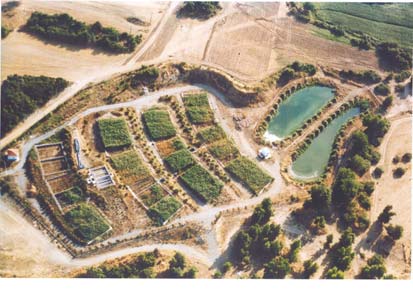
a study tour of the interested local officials to the
mayors expressed their concern that the deep
constructed wetlands site, designed by MWH in
ground waters used for potable water supply could
Greece (the picture below).
be negatively influenced by the polluted Danube
waters entering the restored wetlands. Since the
wetlands are expected to act as nutrient/pollutant
sinks the pollutants concentrated in the wetlands
might negatively affect the potable water quality in
the two areas. MWH hydrologists and
hydrogeologists will consider this concern in detail
during the hydrological and hydrogeological
modelling in the Feasibility Study.
Protect Private Agricultural Land
The protection of the private agricultural land in the
Kalimok/Brushlen area from flooding is a major
The intention would be to tour this successfully
issue for the local population. This issue will be
operating site and to share Bulgarian and Greek
discussed in further details in the Feasibility Study
local community experiences. The project
report.
demonstrates an effective and affordable
wastewater treatment and management strategy
Wastewater Treatment
for smaller EU communities. A further visit to the
Alternatives
Scottish Enhanced Facultative Lagoon project was
also discussed.
There are no WwTWs along the Bulgarian section
MWH commented that from their research into the
of the Danube River. The settlements in the two
performance of constructed wetlands and lagoon
areas have no sewage collection systems as well.
systems by other around the world there were
many variations and as many poorly operating
MWH made presentations about the latest
systems, as there were good ones. Whilst the
technological developments in low energy natural
concepts are relatively simple it is vital to have the
wastewater treatment systems for rural
best overall management advice to ensure that
populations, which the company has actively
basic principles are established for the best
developed and promoted. In particular the
technological developments for long term
constructed wetkand project in northern Greece
sustainability.
funded by the EC as a demonstration of
appropriate technology and the Errol project in
Access
Scotland the first AeroFac system to be installed
outside of the USA.
The access to the restored wetlands sites in the
Both the PCU and the local mayors were very
Kalimok/Brushlen area is another concern for the
interested in these and other waste to energy
local community. Currently the area is used for
options.
hunting and bird watching, and provides access to
the river for recreation and fishing. The access to
Belene and Kalimok/Brushlen Wetland Restoration - Project Workshop
The sites may be affected once flooding behind
the dykes takes place to restore the wetlands.
Fertilizers Use
Currently there is an active agricultural farm in the
Kalimok/Brushlen area, which uses leased land for
production of wheat and maze. The production is
located on land within and outside the protected
territories. The stakeholders expressed their
concern that the farm uses substantial amounts of
fertilizers.
On the Belene island the prison also uses a
significant part of the inland for africultural
purposes. The stakeholders suggested that MWH
should contact the prison authorities and obtain
information regarding the fertilizers and pesticides
application during the last few years.
The stakeholders and MWH team who participated
in the Pollution Discussion Group agreed that
more sustainable agricultural practices such as
organic farming and management of organic waste
should be promoted locally which will lead to
increased income and be environmentally
effective.
Land Use
The duration and timing of the land flooding in a
"typical" year was described in hydrology part of
the workshop presentation included in Appendix 1
of this report. The presentation suggested that the
springtime would likely be the most common
period in the year when flooding will take place. In
reality there could be many occasions in the year
where water levels in the Danube River are high
enough to allow inundation of the proposed
wetlands. The critical matter to explore in the
feasibility report is to provide better definition to
the periodic flooding and understand if this can be
tolerated to enable some farming activity. It is
important to appreciate that the wetlands in this
project are likely to be only a component part of
flood plain therefore grazing of animals in the
higher dryer parts of the flood plain and out with
any special conservation or protected areas may
be possible.
Belene and Kalimok/Brushlen Wetland Restoration - Project Workshop
4 BELENE ISLAND ISSUES
Sluices Levels
Inlet Issues
The levels of sluices are determined by existing
elevations at suggested inlets and outlets
locations. Elevation 18.00 was selected for inlets
The MWH experts and some members of the
that allows stepwise filling of the wetland and
Steering Committee raised the matter of the
avoids the necessity of earth moving for approach
optimal manner in which to flood the wetland
channels.
according the ecological requirements and the
The proposed outlets are located at the lowest
prevailing hydrological conditions. An option was
points of the wetlands that lend to drain the area
introduced to construct one more inlet structure on
naturally. The appropriate engineering structures
the north side to ensure enhanced flooding of all
comprising the sluices will be designed in
areas. The location of this third inlet follows a
accordance with the relevant site investigation
natural watercourse and avoids any deep cuts or
reports using specialist MWH in-house developed
earth movement. The presence of more inlets will
analysis and design software.
improve the environmental conditions in the
wetland and will ensure stepwise filling of naturally
formed locations of old marshes.
Nuclear Power Plant
Although the location of the outlet on the southern
The future NPS Belene construction site located on
channel has the possibility of accepting organic
the mainland to the south of Belene Island, was
and thermal pollution, as well as requiring a fair
also a topic of discussion. The NPS will have a
amount of earth movement, it does provide some
cooling system utilising water taken from the
management flexibility, and the means to increase
Belene River branch and released back in the river
the water levels within the island.
several hundred metres downstream. Main
concerns raised are related to:
Design Flood Levels
Potential thermal pollution due to warm water,
and possible interference of NPS cooling
MWH estimated the design flood levels on the
structures and wetland's south inlet.
basis of detailed hydrological and hydraulic
modelling. Discussions during the workshop
Suitability of wetland water for the cooling
confirmed the applied approach that allows using
system the possibility of growths causing
elevation 20.5 m as a suitable design flood level. In
blockages was agreed to be an issue the NPS
this manner we will have better flooding of all site
Authorities would have to address
as shown in the annex. The flooding process will
Potential increased radiation levels in the
start at elevations above 18.00 (inlet sluice
region.
threshold elevation) and will fill gradually the
wetland area. The idea is to keep water depth 0.3-
It was agreed that there would need to be full
0.5 m deep long enough to ensure sustainable
environmental impact studies for the project to
habitat for spawning. If the hydrological conditions
proceed, which would address all these (and more)
are favourable we can expect through-flow in the
issues.
wetland with water residence time sufficient for
nutrients trapping.
A flood map is attached detailing the area of
innundation of water on Belene Island under a
water level of 20.50 m in the River Danube
Belene and Kalimok/Brushlen Wetland Restoration - Project Workshop
the PCU are to compensate the owner with
5 KALIMOK
ISSUES
another piece of land outside of the wetland or
to relocate the inlet structure and reduce the
wetland area. The former option is preferred.
Inlets
Potable Water Issues
MWH concerns that preliminary proposed inlets as
numbers and locations are not the optimal
Local Mayors and local communities
configuration for healthy wetland that we intend to
representatives raised concerns about the possible
introduce. The long distance between inlets and
change of water quality in their water supply
the lowest spots of the wetland can not ensure
sources and wells used by local people for drinking
sufficient flow and timely exchange of water with
as a result of wetland restoration. In the small
proper dissolved oxygen content. To reduce these
villages in the area there are insufficient sewerage
effects the MWH team will revise the conceptual
facilities leading to the potential for contamination
design of the flooding scheme to make available
of the groundwater, which may compromise local
more flowing water in the wetland and to avoid the
domestic water supplies. There is also a
possibility of periods of stagnating water. Special
perception that the ground water level will rise in
attention will be paid to attempt to maintain flow
some areas west (village of Brushlen) with the
through the old fish ponds through spawning
implementation of the wetland project upsetting
season (May-June). In such manner we can keep
current farm practices. MWH will conduct detailed
water depth at 03 - 0.5 m for spawning and will
ground water modelling and analysis to give an
improve water exchange in the wetland. Similarly
answer to this problem.
the design of the through flow of water will ensure
at first high water level no invasive species will
exist and ideally the draw down period will provide
Communities Benefits
sufficient retention time to ensure nutrients
trapping is effective (4-6 days).
Together with the general aim of this project
wetland restoration and nutrients trapping, one of
A flood map is attached detailing the area of
objectives is to support economic growth and
innundation of water on Kalimok under a water
improve social life in local communities. We expect
level of 14.00 m in the River Danube.
the communities' benefits to have wide spectrum
of patterns.
Wet meadows forming in southwest part of
wetland can be used for organic pastures.
The increased spawning opportunities in
restored wetland will benefit the fishing in the
Danube River.
The restored wetlands and enhancing bio-
diversity will offer a good environment for
waterfowls and other birds usually nest in this
territory, which will attract bird watchers, and
variety of nature loving enthusiasts. The
environmental tourism can be a good source
of an additional income for local people and
can promote many services related to this
activity.
Private Land Ownership Issue
Introducing an organic agriculture will allow the
local farmers to increase their income by
producing high priced goods.
The mayors of the settlements next to the wetlands
raised questions about the future of private lands
in and adjacent to the area. MWH takes in its
Stakeholder Association
design outlines all necessary measures to protect
The federation of Nature Conservation NGO's
existing land uses. Concerns raised by the
"Green Balkans" has a special interest to see a
representatives of local communities included
healthy wetland in the Kalimok area and in
particular in the former fish farm territory. MWH
1. the poor performance of the existing drainage
suggests outlining appropriate water path map that
system
will establish slow flowing water in former fishponds
2. the presence of a private land plots at the west
during flooding period to avoid stagnant water and
end (3.5 ha) and east end (50 ha) of the
to ensure spawning grounds for fish entering in
wetland. The lots situated in the east will be
wetland.
protected by new dykes. The small lot to the
west is located at the proposed main inlet
structure. The two options to be considered by
Belene and Kalimok/Brushlen Wetland Restoration - Project Workshop
6 ECOLOGY
turnover rate, the aquatic plants do not create
large Biochemical Oxygen Demand levels.
Wetlands Restoration Issues
Dissolved Oxygen: Dissolved oxygen is critical
for the health of the wetland ecosystem.
Some hydrologists approach wetland restoration
Dissolved oxygen is inversely related to the
with three concerns: 1) hydrology, 2) hydrology
amount of BOD. Biomass such as decaying
and 3) hydrology. This old joke highlights the
algae, plant litter, organic loads from grazing etc
ecologists' concern that it takes more than water to
contribute to high BOD, and thus lower dissolved
make a wetland. Although water levels are very
oxygen. Higher temperatures also contribute to a
important to wetlands, MWH ecologists are
loss of dissolved oxygen. MWH recommends that
reviewing this project to make sure the wetland
DO levels be modeled based on the various
design considers the ecological and restoration
hydrological inputs. This is a critical matter of
goals of this project.
concern. We may find that the River Danube
groundwater replenishes the dissolved oxygen,
The restoration of wetlands is a complex process,
and there is no concern, but MWH feels it is a
as it involves taking into account both abiotic and
critical parameter as low dissolved oxygen levels
biotic factors. The hydrological, hydrologeological
will cause a loss of aquatic habitat, and increase
and engineering results obtained so far by the
the mosquito population.
MWH team were discussed in details with regard
to the wetlands restoration at the two sites. The
Spawning Grounds
workshop participants agreed that restoration can
not result in pre-disturbance conditions, but the
Traditionally, fishing has been a major source of
sites will emulate ecological characteristics similar
income for the communities along the Danube
to the time of predisturbance.
River. In past few decades the fish population in
the Danube has dramatically decreased. This
Water Levels
decrease is due, in part, to the destruction of the
fish sprawling habitats and the deteriorated river
Wetland characteristics and selective pressures
water quality.
can commence with a minimum of two weeks of
soil saturation during the growing season. To a
By improving the spawning grounds, the
point, the more water during the growing season,
restoration of the two wetland sites is expected to
the more rapid the recovery of wetlands. There
result in an indirect increase in the fish population
are several concerns related to water levels:
and species diversity of the Danube River. Our
concerns and recommendations associated with
fish are presented in the respective sections on
Rate of flooding
ecology of each site in the workshop presentation
Duration of water levels
(Appendix 1).
Dissolved Oxygen
Water clarity
Rate of Flooding: MWH recommends that the
flooding should occur slowly at the start of the
growing season (March), which will stimulate the
germination of the native seed bank in the soil.
Rapid and prolonged submergence of the native
seed bank will not lead to germination.
Duration of Water Levels: MWH recommends
that careful design considerations are given to the
duration of water levels. The potential for fish
entrapment is considerable, if the water levels are
not maintained. In other words, if we allow the fish
to enter the site and spawn, we must also make
sure the adult fish have enough water remaining to
find their way back to the Danube, and that the fish
Bioaccumulation
fry have enough time to develop and find their way
back to the Danube River.
A very important issue raised in discussion was
that of bioaccumulation risks to the ecology and to
Water Clarity: Sunlight must be able to penetrate
human health. If the wetlands are used
the water to allow for the aquatic plant community
successfully to remove pollutants, the potential
to blossom. Long term aquatic plants can
downside is that elements such as heavy metals
increase dissolved oxygen levels through
will accumulate in the tissues and become a
photosynthesis. Unlike algae, which have a high
potential hazard to bird and animal food-chains
Belene and Kalimok/Brushlen Wetland Restoration - Project Workshop
potentially reaching human beings. At this point
the heavy metal concentrations, and levels of
Watershed Management Plan
common organic pollutants such as PCB's is not
well known.
The Management Plan should address both
This issue will need to be assessed at design
regional and local considerations. Within the
stage and may not be fully understood but will
region, the management of agricultural runoff,
certainly have to be monitored into the future.
sewage and animal waste must be emphasized.
Control of these nutrient inputs would improve
Mosquitoes
overall water quality, and thus the local wetland
habitats.
Mosquitoes are a major concern as a nuisance
The local management plan must tackle the
and also as a potential vector to transmit disease.
operation of the sleuths and the habitats.
Mosquitoes tend to breed in stagnant water with
low dissolved oxygen levels. The mosquito larvae
The operational management plan should identify
hangs under the water surface with a tube at the
key individuals and assign responsibility for
surface which draws oxygen into its body.
opening and closing the gates, minor repairs, and
A healthy wetland does not support large mosquito
how to identify potential concerns.
populations, as it has high levels of oxygen, which
supports mosquito predators such as the
The ecosystem management must address issues
damselfly, dragonfly, waterstrider, backswimmers,
such as public access, invasive species, nutrient
predacious diving beetles, birds, frogs, and many
monitoring, and species population monitoring,
fish species.
and habitat monitoring. A great deal of effort and
thought should be given to this plan, as it is critcal
MWH can provide a number of examples for
to the sustainability of this project.
reduction of mosquitoes in restored wetlands-
recently a 1,500 acre wetland restoration in the
Data Needs
USA reduced the mosquito population by almost
90%.
Ideally we would be able to utilize digital (GIS)
maps such as: a current map of habitat types, soil
types, and hydrology maps (model outputs) and
contour maps to help us design and predict the
outcome of this project.
Data on sedimentation is desperately needed to
predict the level and rate of filling, and the
potential pollutant load from the sediments.
Water quality data of the Danube at each site,
including common toxins such as PCB or others
as determined by upstream industry.
Sedimenation
It is true that sedimentation is a natural process.
However, in this case, nature would be able to
flush the system of sediments more easily if the
dykes did not exist, and the flows were more
frequent (prior to channelization). The result is
that the wetland areas will be prone to
sedimentation, but the rate of filling is unknown.
MWH recommends the careful analysis of
sedimentation prior to project commencement, as
several design features could be utilized to reduce
the sedimentation of the wetland areas.
If sedimentation is not addressed, the threat of a
short-lived wetland most be accepted.
Belene and Kalimok/Brushlen Wetland Restoration - Project Workshop
improving the quality of life among local
7 DESIGN ISSUES
people.
Dykes
Wetlands can attract more visitors for bird
watching, recreation and other activities that will
The Danube River main dykes at Belene and
increase economical strength in local towns and
Kalimok/Brushlen built half century ago to protect
villages.
people from flooding are now the subject of a
detailed survey. The intention is to improve their
Management Plan
status and to be used by locals in proper manner
as roadway to the Danube floodplain.
It was agreed that the restored wetlands will need
a well-formulated Management Plan that
The raising of inland dykes to the designed
addresses issues regarding implementation of
elevations will protect and improve the
identified priority objectives. On the management
agricultural land next to wetlands. The mayors
plan side it is critical if the benefits to environment
attended the VM Workshop stressed on need to
and to social and economic interests of people
have reliable system to protect all lands used for
living in neighbouring settlements is to be realized.
intensive agriculture. MWH outlined such a
The plan should assist farmers with transition to
system of dykes and drainage channels in order
economic activities related to wetlands.
to improve the present day situation. These
dykes will protect in some respect also the
Lifetime
restored wetlands. Stability of new designed and
upgraded dykes is our prime task. The dykes
A fundamental question for design purposes as
linking the main Danube dyke and inland areas at
well as for monitoring the project success is How
Kalimok will be constructed to serve as access
long can we expect the restored wetland to live?
roads. An appropriate cover will be designed to
Or what we will do after 10 or 15 years with the
ensure crest stability.
wetland if the conditions and character of the
wetlands were to change? It was important to
appreciate that the performance of the wetlands
Avoid stagnation of water
will forever be at the mercy of the dynamic
changes from the forces in nature. Climate change
and sediment transport in the Danube River are
Stagnant water can compromise the aim of
two such examples of how nature will affect the
wetland restoration. The healthy wetland requires
wetland regime through time.
enough dissolved oxygen in water that means
flowing water and in this manner it will reduce or
The design life therefore needs to attempt to
eliminate mosquitoes and provide a hospitable
accommodate such variable with careful
environment for spawning.
assessment of:
Water and sediment balance these are two
Special design pattern are outlined to maintain a
mayor elements controlling wetland life.
slow but permanent flow in wetland during flooding
Annual flooding
periods and to prevent spots that contain stagnant
water.
Nutrients trapping process: it is natural the
wetland to trap a significant amount of
Nature and man
nutrients carried by water.
A project aim is to demonstrate that it is possible
River hydrology determines the process of
to rectify the deterioration to nature caused by
flooding and empting the area of wetlands.
man's interference in the past by re-creating
Reliable forecast of river flow on the base of
natural marshes along the river. Care and
existed data allow us to outline the engineering
attention will be given to ensuring the productivity
structures.
of the area to the community by selecting areas for
well-drained agricultural plots as well as
Physical processes: the healthy wetland
developing other revenue attractions.
requires physical processes supporting
sustainable biological life. The vegetation
The benefits of such action can be in two ways
growth will produce biomass which is
increasing biodiversity in nature
discussed in Section 6.
Document Outline