MAIN ROOT CAUSES
|
|
|
|
|
|
|
|
|
|


 able
1.1. Perceived Major Problems and their Root Causes
able
1.1. Perceived Major Problems and their Root Causes
Annex IV
Annex IV 1
INTRODUCTION i
analysis of the problems and their root causes 3
RELEVANT INFORMATION AND DETAILED ANALYSIS OF THE PROBLEMS 15
3.1 Sources of degradation in the San Juan River Basin and its Coastal Zone 15
3.1.1 Problems related to soil degradation and sedimentation 16
3.1.2 Problems related to ecosystem degradation 19
3.1.3 Problems related to water quality 21
3.1.4 Problems related to water resource use 26
3.1.5 Problems related to the over-exploitation of natural resources 28
3.1.6 Problems related to the political, legal, and institutional framework for the integrated management of the SJRB 32
3.1.7 Problems related to economic development 33
3.1.8 Problems related to the social area 35
3.2 Centers of pollution and sensitive areas 38
3.2.1 Urban centers 38
3.2.2 Lake Nicaragua 38
3.2.3 Caño Negro 38
3.2.4 San Juan River and its Coastal Zone 38
3.2.5 Indio Maíz River Biological Reserve 39
3.2.6 Tortuguero Canals 39
TABLE 1 45
CONSEQUENCES 45
TABLE 6 51
ESTIMATE OF THE POLLUTING POTENTIAL OF HUMAN SETTLEMENTS 51
PROTECTED AREAS IN THE BASIN AND THEIR MAIN PERMITTED USES 55
SUPPLY OF CUT WOOD IN THE PROJECT AREA 59
TABLE 13 60
TABLE 14 60
TABLE 16 61
INSTALLED CAPACITY AND REAL PRODUCTION 61
TABLE 17 61
TABLE 18 61
CHARACTERISTICS OF THE AQUIFERS 64
LOCATED IN THE STUDY AREA 64
ANNEX 1. LOCATION MAP 39
ANNEX 2. FIGURES 40
ANNEX 3. TABLES 43
The San Juan River basin and its coastal zone1 is located in the area that drains into the Caribbean Sea and covers a large part of the territory of Costa Rica and Nicaragua and constitutes an important part of the natural capital of both countries. It contains a variety of ecosystems and highly valuable water resources. This transboundary diagnostic analysis (TDA) is the result of studies conducted within the SJRB using funds provided in part through a Project Preparation and Development Facility (PDF) Block B grant of the Global Environment Facility (GEF). The TDA is designed to identify and evaluate the major environmental problems that face, or may face, the SJRB and to determine their root causes. In addition, the TDA seeks to identify the cause-effect chain underlying the identified problems, and to determine their relationship with the deterioration of the basin’s water resources. The TDA emphasizes the transboundary aspect of the SJRB, and represents a potential contribution to the development of the GEF’s operational strategy in international waters.
Information from major sources, such as the Diagnostic Study of the San Juan River Basin and Guidelines for an Action Plan2, as well as the validation of its main findings and the acquisition of new information through the conduct of various national and binational workshops held before and during the execution of the PDF-B planning program, have been a starting point for detecting the most salient transboundary elements of the environmental problems in the SJRB. Particular attention was given to the coastal-marine zone, as the previous study did not include that area. The PDF-B document for the Integrated Management of Water Resources and the Sustainable Development of the SJRB indicates that the major environmental problems were initially perceived to be as follows:
Soil erosion originating in the lack of effective soil management practices, in the development of agriculture in areas not suited to cultivation, and in accelerated and intensive deforestation at a national rate of over 150,000 hectares per year in Nicaragua and 18,500 hectares per year in Costa Rica.
Pollution of water bodies as a result of the inappropriate use of agro-chemicals and the uncontrolled disposal of municipal and industrial waste water and solid waste.
In the process of executing the PDF-B planning program, a number of other problems, in addition to those mentioned above, were identified. The three major problems identified are:
Accelerating degradation of transboundary ecosystems.
Overexploitation of valuable natural resources.
High vulnerability to natural hazards.
This document takes a closer look at the particular areas of the SJRB where the environmental problems indicated are identified as most severe, applying the methodology used by the GEF projects for the identification of “hot spots”, or critical points, or for manifestations that are even more specific and concentrated than the so-called “hot spots” that have been identified at the basin scale.
The TDA is formulated on the premise that when the goods and services provided by ecosystems are not appropriately used, they become stressed, often to a critical point, by demands from socioeconomic sectors, which causes the loss of potential water and biodiversity resources. This situation worsens to the extent that the institutions in charge of the regulation and control of the use of natural resources have technical, legal, and/or economic limitations that prevent them from exercising the necessary control to avoid reaching extreme situations. This situation is schematically illustrated in Figures 1 and 2 of Annex 2. In this regard, the technical group, responsible for the preparation of the TDA, reached the decision to combine the analysis of aspects related to water resources and their biotic interactions with an analysis in which the social and economic aspects, together with the biological ones, are integrated to form a more comprehensive environmental approach that would reflect the things that affect a number of the components of sustainable development. This methodology better reflects both the nature and the manifestations of the major environmental problems, in view of the fact that there are poverty-stricken human settlements in the basin area and its coastal zone.
The TDA presented here was produced through a participatory process, directed by an environmental consultant, with contributions by all the members of the national technical teams working on the project in both countries and participation by various international consultants. In this way, it was possible to combine the knowledge of the territory possessed by the national consultants in each country with the honed experience of international consultants. Participating in the project and in the TDA formulation were specialists in the following disciplines: coastal management, hydrology, environmental economics, ecology, sociology, natural resource management, forestry, agronomy, administration of transboundary projects, and institutional development and strengthening. The work of the TDA also benefited from the wealth of views expressed through public participation in four workshops: two held in each of the countries, and two held at the binational or transboundary level. At these events, members of central government bodies, local governments, producer associations, the academic community, the private sector, and non-governmental organizations participated and shared their experiences.
The content of this TDA is an attempt to address environmental problems, their causes and effects, and to identify possible solutions in the SJRB or at more specific locations. Notwithstanding, it is a work in progress that will constitute an integral part of the proposed Strategic Action Program (SAP), in which the transboundary dimension will be more clearly represented, once further participation by the public and citizenry, and basin-wide data and information for analysis provide a better appreciation of that dimension.
The TDA is presented in three sections:
Section 1: Perceived major problems and their root causes. This section summarizes the main environmental problems perceived, the transboundary elements they encompass, their root causes, and the proposed action areas.
Section 2: Analysis of the problems and their root causes. This section presents in table format the perceived problems, actors involved, their effects, short- and long-term causes, possible solutions, and potential transboundary benefits.
Section 3: Relevant information and detailed analysis of the problems. This section presents information relevant to the problems analyzed in greater detail, for those interested in obtaining the available quantitative information.
In addition, in order to identify areas of work for the formulation of the SAP, and using an integrated design for the development and use of natural resources, action areas for the implementation of environmental investment projects were determined. Nevertheless, a constant limiting factor in the preparation of this TDA has been the lack of basin-wide information on natural resources, socio-economics, and environment from within the SJRB, which has made it impossible to better quantify most of the problems identified here.
PERCEIVED MAJOR PROBLEMS AND THEIR ROOT CAUSES
T
MAIN
ROOT CAUSES
Inadequate
Planning and Management
Conservation
areas delimitations do not follow water basins delimitations
Lack
of integrated watershed/ coastal zone management plans
Lack
of reliable comprehensive and up-to-date information
Weak
Institutions
Laws
are not being complied
Lack
of financial resources for implementation of laws and programs
Abundance
of laws and regulations, but lack of adequate national and
regional policies and institutional frameworks
Weak
institutional arrangements
Lack
of access to information for decision-making
Insufficient
Human and Institutional Capacity
Lack
of watershed oriented environmental education programs
Lack
of financial resources at the local level (municipalities)
Lack
of research on sustainable technologies
Lack
of economic alternatives
Weak
or nonexistent management capacity
Politics
within local and central government institutions
Limited
Stakeholder Participation
Historic
centralization of decision-making processes
Uncontrolled
human migration patterns
Weak
coordination between state and society
Lack
of adequate information for decision-making
Extreme
Poverty
Low
incomes, subsistence econonies and poor sanitation
Relative
imbalance in employment and income-generating opportunities
across the border
Uncontrolled
migration patterns
High
population growth
able
1.1. Perceived Major Problems and their Root Causes
|
PERCEIVED MAJOR PROBLEMS |
TRAUNSBOUNDERY ELEMENTS |
MAIN ROOT CAUSES |
ACTION AREAS |
||||||
|
The accelerating degradation of transboundary ecosystems |
|
1 3 |
A |
||||||
|
Overexploitation of valuable natural resources |
|
5
2 |
A |
||||||
|
Soil degradation and increasing sedimentation |
|
5 4 |
A |
||||||
|
Pollution of water bodies |
|
5 2
3 |
A C |
||||||
|
H
AREAS
WHERE ACTION IS PROPOSED
A. Institutional
Strengthening
Institutional
arrangements
Capacity
Building and Institutional strengthening
Infrastructure
and revenew increasing mechanisms
B. Integrated
Planning and Management
Development
of comprehensive river basin/ coastal zone management
programmes
Stakeholders
involvement
Strengthening
of a basin-wide information system
C. Environmental
Education
Training
of different sectors, students, housewives, farmers, etc.
|
|
5 2 4 3 |
A B C |

SECTION 2
This section presents the major problems identified during the formulation of the TDA for the SJRB, summarized in eight tables.
These problems were identified on the basis of the Diagnostic Study of the San Juan River Basin and Guidelines for an Action Plan, through the validation of its main findings, and based upon complementary studies carried out during the PDF-B planning program. These complementary studies were aimed towards the identification and collection of data on the coastal-marine zone, and the identification and analysis of the transboundary elements of the SJRB environmental issues. In addition, various national and binational workshops were held before and during the execution of the PDF-B planning program, through which additional information was obtained and the analysis was validated. The problems identified were grouped in the following categories:
Accelerating degradation of transboundary ecosystems.
Overexploitation of valuable natural resources.
Soil degradation and increasing sedimentation.
Pollution of water bodies.
High vulnerability to natural hazards.
Disintegration of social groups and uprooting from territory.
Inadequate political, legal, and institutional framework for integrated management of the SJRB.
Loss of economic potential in the SJRB.
Due to its comprehensive nature, the root cause analysis integrates the various factors and elements related to the use and management of water and natural resources within the basin. In that way, physical and biotic elements, institutional and policy issues, and social and economic factors, they all interact with each other in a very complex chain of causes and effects. The categorization presented above attempts to simplify and, therefore, ease the understanding of the cause-effect analysis, retrieving those problems which due to their regional impact and relevance must be addressed, if the integrated management of water and natural resources and the sustainable development of the SJRB wants to be achieved. As a result of the analysis of current and emerging environmental problems, it is observed that the first five categories can explain the main perceived problems and their root causes. The remaining three categories are identified within the causal chain of the first five. However, due to the complexity and relevance of those three categories, they are discussed individually in this document.
Table 2.1 presents the cause-effect chain, indicating the immediate, secondary, and ultimate causes, and the root causes of these problems. The Arabic numerals that appear in parentheses under each of the immediate causes indicate the relationship that exists between each of those causes and the major problems. The Roman numerals appearing in parentheses under the ultimate causes indicate, in order of priority, the existing relationship between these and the root causes of the problems. In this table, it should be noted that the three additional problems, grouped in the following categories, are part of the five major problems previously identified: Disintegration of social groups and uprooting from territory; Inadequate political, legal, and institutional framework for integrated management of the SJRB; and Loss of economic potential in the SJRB.
Further, the presence of the same causes-effects and/or root causes in two or more major problem areas shows the complexity of the cause-effect-root chain, which is in turn a result of the dependence of water resources on the condition of the ecosystems forming the SJRB, for which reason the integrated management of water resources involves proper management of all the natural resources and ecosystems present in the basin.
Table 2.1 Analysis of the cause-effect-root chain of the major problems.
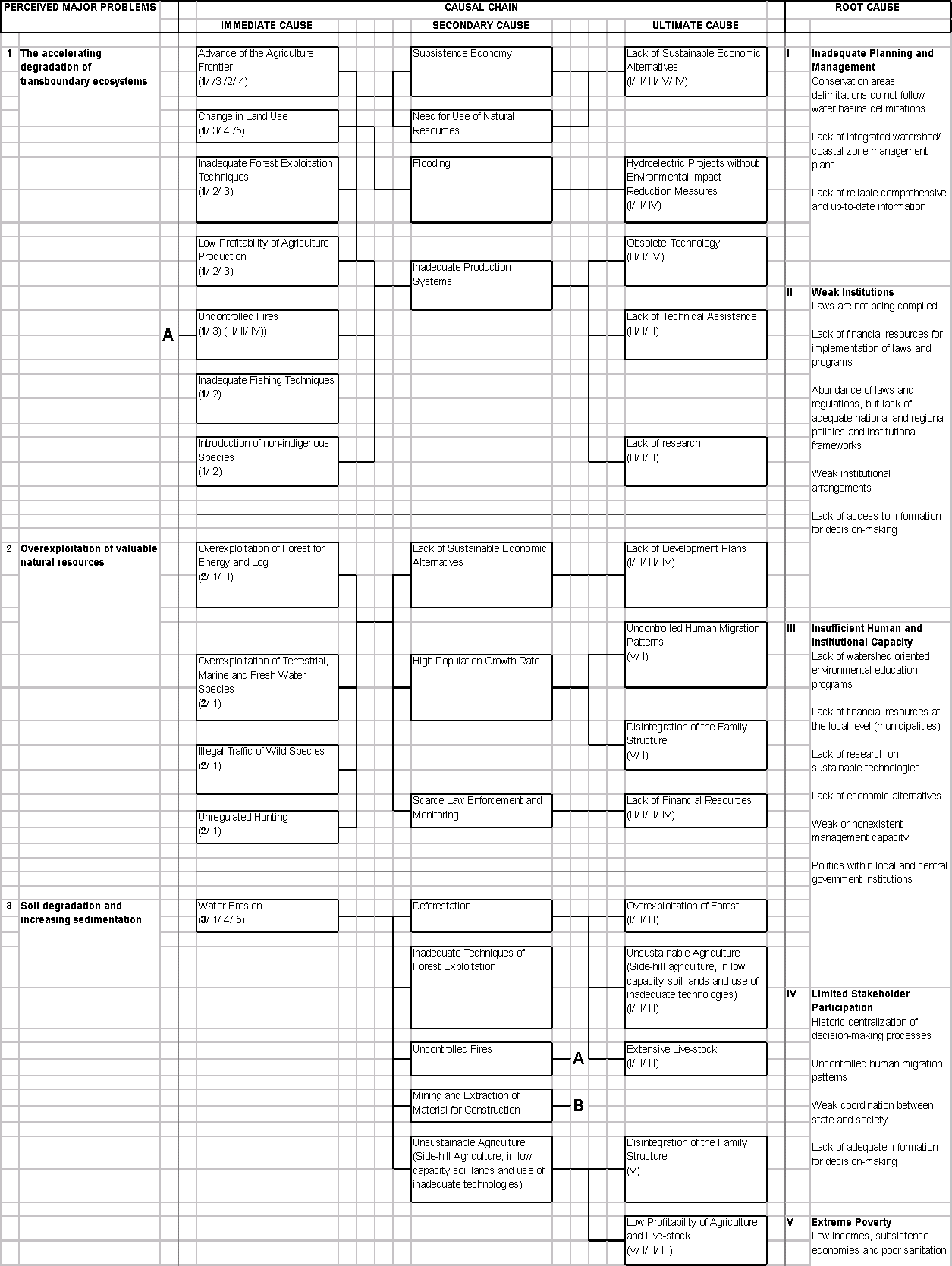

Table 2.2. Accelerating degradation of transboundary ecosystems.
|
Problems |
Impact/ Stakeholders |
Effect |
Immediate Cause |
Root Cause |
Possible Solutions |
Potential Transboundary Benefits |
|
Encroachment of farmland Changes in land use Inappropriate forestry techniques Low profitability of agricultural and livestock production Uncontrolled fires Inappropriate fishery techniques Introduction of exotic species Open-pit mining and extraction of construction materials |
Civil society Development associations Private enterprise Governmental entities Costa Rican Rural Guard and National Army of Nicaragua Municipalities |
Fragmentation of habitats Elimination of the organic part of the soil due to soil erosion Damage to species and ecosystems Disappearance of species Invasion of ecosystems and protected areas Opening of access roads Competition with local species Greenhouse effect |
Subsistence economy. Few sources of income Extensive livestock rearing Nomadic agriculture Delimitation of plots Lack of control and nonenforcement of laws Need to use natural resources Lack of financing Flooding of land Inappropriate production systems Lack of environmental education/lack of interest on the part of the population |
Lack of economic alternatives Failure to apply legislation in force Inadequate planning No research Lack of reliable, comprehensive, and updated information for proper decision-making Historical centralization of decision-making processes Construction of hydroelectric dams without an environmental dimension Obsolete technology Lack of technical assistance |
Tax incentives for proper natural resource management Establish limits on soil use Territorial planning Efficient legislation Community empowerment Environmental education Participation by citizens Animal farming programs Training in institutional strengthening Strengthening of the information system for the SJRB |
Better use of the soil in the SJRB Better natural resource protection by means of the incentives received Rationalization of natural resource use Environment conducive to the protection of endangered species |
Table 2.3. Overexploitation of valuable natural resources.
|
Problem |
Impact/ |
Effect |
Immediate Cause |
Root Cause |
Possible Solutions |
Potential Transboundary Benefits |
|
Overexploitation of forests for wood and energy Overexploitation of land, marine, & fresh water species Illegal trafficking of wildlife species Unregulated hunting |
Civil society: –fishermen –farmers –hunters –loggers Private enterprise Ranchers Industry in general Exploitations/ Plantations Conservationist Associations Government agencies |
Loss of natural habitats, ecosystems, and their biodiversity Destruction of wetlands Disappearance of species Decline in fisheries and food chain problems Reduction in ichthyic fauna in rivers Reduction in the flow rates of rivers Erosion Pollution of water bodies |
Lack of sustainable economic alternatives Institutional weakness. Lack of technical capacity and economic resources Little police presence or patroll-ing of the zone Little attention to coastal and marine zones Unscientific artisanal fishing Difficulty controlling land use Undue tilling and use of the soil Lack of marine-coastal area management programs High population growth |
Little interest in the exploitation of marine-coastal zones Lack of economic resources in the municipalities Private sector land holdings in zones adjacent to or inside protected areas |
Land planning and basin management plans Institutional arrangements for resource management Integrated Marine-Coastal Zone Management jointly with both countries Studies on population dyna-mics of species to ensure their sustainable use Controls for efficient natural resource use by the state, through continuous patrols Strengthening of an information system for the SJRB Involvement of civil society |
Sustainable use of resources Preservation of endangered species Better use of natural resources |
Table 2.4. Soil degradation and increasing sedimentation.
|
Problem |
Impact/ |
Effect |
Immediate Cause |
Root Cause |
Possible Solutions |
Potential Transboundary Benefits |
|
Erosion by water Changes in land use Overexploitation of forests Low profitability of agricultural production Uncontrolled fires |
Civil society –farmers –loggers Private enterprise Ranchers Exploitations/ plantations Conservationist Associations Government agencies |
Loss of soil fertility Reduction in water recharge Reduction in river flow rates Change in the dynamics of the hydro-logical cycle Degradation of aquatic and marine-coastal habitats |
Deforestation Inappropriate forestry techniques Uncontrolled fires Unsustainable agriculture (hillside farming, on unsuitable land using inappropriate technologies) High population growth Flooding of land Open-pit mining and extraction of construction materials |
Extensive livestock rearing Unsustainable agriculture (hillside farming, on unsuitable land using inappropriate technologies) Low profitability of agricultural activities Uncontrolled human migration Breakdown of the family structure Hydroelectric projects with no environmental dimension |
Better knowledge of the dynamics of erosion, sediment-ation, and pollution Integrated natural and water resource management plans Tax incentives for the proper manage-ment of natural resources Sustainable econo-mic alternatives Land planning Environmental education for farmers, ranchers, and the general population Community participation More research and strengthening of the information system of the SJRB Water monitoring |
Better use of the soil in the SJRB Better protection of natural resources based on the incentives received Improved water quality and availability Improved quality of life of the inhabitants and the ecosystems of the SJRB |
Table 2.5. Pollution of water bodies.
|
Problem |
Impact/ Stakeholders |
Effect |
Immediate Cause |
Root Cause |
Possible Solutions |
Potential Transboundary Benefits |
|
Excessive use of pesticides Excessive use of fertilizers Erosion by water Municipal waste (sewage) Municipal solid waste (garbage) Industrial waste (solid and liquid) Deterioration in hygiene and sanitary conditions Open-pit mining and extraction of construction materials |
Government agencies Private enterprise Trade unions and associations Municipalities General populations |
Pollution of surface water and groundwater and soil by agro-chemicals Reduction in productivity and loss of soil resources Decline in water quality Reduction in the production of phyto- and zoo-plankton Sedimentation of water bodies and marine-coastal zone Degradation of habitats and impact on biodiversity |
Lack of awareness (environmental education) Nonsustainable productive culture Unplanned human settlements Failure to treat household sewage and industrial effluents Nonsustainable agriculture Livestock rearing Deforestation |
Lack of research Lack of dissemination of technology Lack of public interest and no budget Lack of basin-oriented environmental education Lack of agricultural extension Lack of planning or controls Little control of effluents from enterprises operating in the zone Lack of financial resources in the municipalities |
Better understand-ing of the dynamics of erosion, sedimentation, and pollution to orient control Plans for integrated management of water and natural resources Development of sanitary fills, aqueducts, and sewage treatment systems Use of clean technologies Environmental education invol-ving farmers, ranchers, and the general population More research and strengthening of the SJRB information system Water monitoring |
Reduction of pollutants in the waters of the SJRB Better water quality and availability Improvement in the quality of life of the inhabitants and ecosystems of the SJRB |
Table 2.6. High vulnerability to natural hazards.
|
Problem |
Impact/ |
Effect |
Immediate Cause |
Root Cause |
Possible Solutions |
Potential Transboundary Benefits |
|
Lack of plans for the management of water and natural resources Lack of disaster mitigation programs Highly vulnerable economic and social infrastructure |
Civil society in general Local govern-ments Civil defense Government agencies Regional bodies: CCAD, CRRH, CEPREDENAC, etc. |
Increased vulnerability of social and economic infrastructure to natural hazards Increase in disasters with the resulting loss of human lives and economic losses Damage to ecosystems Shorter floods recurrence periods Increase of flooding areas |
High risk of natural phenomena, such as volcanic eruptions, seismic activity, hurricanes, drought, flooding, and landslides Deforestation Unplanned human settlements Inadequate road infrastructure Lack of technical and financial resources |
Overexploitation of forests Nonsustainable agriculture (hillside agriculture, on unsuitable land using inappropriate technologies) Extensive livestock rearing Uncontrolled human migration High population growth Breakdown of the family structure Hydroelectric projects without an environmental dimension Institutional weaknesses |
Plans for integrated watershed management Plans for natural disaster mitigation Early-warning and monitoring system Tax incentives for proper management of natural resources Establishment of regulations on soil use Education and citizen participation |
Natural disasters mitigation Reduced vulnerability of the SJRB to natural hazards Less loss of human lives and damage to economic and social infrastructure Conservation of ecosystems and biodiversity |
Table 2.7. Disintegration of social groups and uprooting from the territory.
|
Problem |
Impact/ Stakeholders |
Effect |
Immediate Cause |
Root Cause |
Possible Solutions |
Potential Transboundary Benefits |
|
Breakdown of the family structure High population growth Local/foreign settlements Deterioration in conditions of hygiene and sanitation Poor development of environmental education processes |
Civil society Government agencies |
Production is carried out with a short-term vision. Natural resources are neither protected nor conserved Abandonment of the land in search of other options, with the resulting pressure on resources and habitats Decline in the quality of life Pressure on natural resources |
Lack of sustainable economic resources Transborder seasonal migration Changes in productive culture Loss of cultural identity Delinquency and insecurity among citizens Land holding instability |
Relative imbalan-ces in job opportu-nities and generat-ion of income between border communities Policy of encou-raging settlement Reduced econo-mic options and credit to the inte-rior of the country Natural phenomena Weak environ-mental content in education programs Low level of participation of institutions linked to the education sector Low level of training of teachers in environmental issues |
Profitable economic options for households in the SJRB Strengthening of environmental education and moral values in the SJRB. Courses, workshops, schools and colleges Improvement in conditions of hygiene and sanitation Pooling of individual efforts |
Improvement in the quality of life of the inhabitants of the SJRB Improvement in health and education indexes More sustainable economic alternatives Recovery of the local economy in Nicaragua and Costa Rica |
Table 2.8. Inadequate political, legal, and institutional framework for integrated management of the SJRB.
|
Problem |
Impact/ Stakeholders |
Effect |
Immediate Cause |
Root Cause |
Possible Solutions |
Potential Transboundary Benefits |
|
Inadequate policies for integrated watershed management Institutional weaknesses Weak citizen participation mechanisms Absence of precise agreements, programming, and coordination of actions and policies at the transborder level between Nicaragua and Costa Rica |
Government agencies Cooperation agencies Local governments: Municipalities and environmental committees Civil society Development associations |
Degradation of ecosystems Threat to protected areas Pollution of water resources and inappropriate exploitation of natural resources Conflicts of use of the water and natural resources of the SJRB |
There are no institutional or binational arrangements for the management of the SJRB Limitations on the enforcement of legislation Lack of financial resources Weak links between the society and the government Weak interinstitutional links Changing and unintegrated environmental legislation |
Weak technical and economic institutions Lack of a clear understanding on the part of the governments of the importance of the SJRB |
Binational technical cooperation for integrated management of water and natural resources of the SJRB Strengthening of local government associations in the SJRB and federation of border municipalities Active and effective participation of civil society Legislation Harmonization of laws on water and environmental resources |
Integrated management of water and natural resources and sustainable development of the SJRB |
Table 2.9. Loss of economic potential in the SJRB.
|
Problem |
Impact/ Stakeholders |
Effect |
Immediate Cause |
Root Cause |
Possible Solutions |
Potential Transboundary Benefits |
|
Low profitability of production Separation from the local economy Lack of financing, credit and investment Little value added at the local, central, and regional levels Lack of economic alternatives Lack of a comprehensive vision (economic–ecological–social-cultural) Little managerial capacity |
Government institutions Ranchers Farmers General population Industry Trade unions Banks |
Reduction in productivity Reduction in aquatic flora and fauna Reduction in the quality of life Fishing. Reduction in commercial species Changes in ecosystems Pressure on and reduction of forest resources |
Lack of development plans Difficulties with gathering and marketing production Erosion of agricultural land Depletion of forestry products Lack of technical assistance to farmers/Inappropriate agricultural practices Insecurity of land holding Lack of environmental education |
Lack of agricultural planning Adverse weather conditions Lack of economic resources Lack of controls and technology No budget |
Formulation of development plans and strategies Feasible economic alternatives in the SJRB Improvement of the systems for marketing products from the SJRB Seeking alternatives that include value added in the products of the SJRB |
Improvement in the socioeconomic conditions of the population Credit for SJRB producers, under technical assistance Less pressure on natural resources |
SECTION 3
The SJRB comprises four subsystems: Lake Nicaragua, the San Juan River, the Indio-Maíz River Biological Reserve, and the Tortuguero Plains Conservation Area. These last two subsystems comprise four small but very important basins integrated naturally in the San Juan River hydrological system. These are the basins of the Indio and Maíz rivers in Nicaragua and Colorado and Tortuguero rivers in Costa Rica, shown on Map 1 of Annex 1.
The Lake Nicaragua subsystem--with a surface area of 23,848 km² from its headwaters to its outlet in the vicinity of San Carlos, source of the San Juan River--has three sectors with very different features:
The sub-basins of the rivers on the eastern side, where the rivers go progressively from an intermittent flow to a permanent one as they approach the southern side, owing to increased rainfall.
The sub-basins of the rivers on the western side, which are characterized by short distance courses and gradual slopes.
The sub-basins of the rivers on the southern side, which originate in Costa Rican territory and only a part of their courses crosses Nicaraguan territory. This sector also includes several wetlands, habitat of migratory and local species of great ecological value. Caño Negro wetlands, a RAMSAR site, is among them.
In addition, although not included in the project area, Lake Managua, located on the northwest, has been connected at times with Lake Nicaragua.
The San Juan River subsystem is the only surface outlet from Lake Nicaragua. With a surface area of approximately 10,937 km², the San Juan River Basin has a climate characteristic of the area that drains in the Caribbean Sea, with annual average rainfall gradually increasing from 2,000 mm close to San Carlos to some 6,000 mm in North San Juan. This subsystem is divided into two sectors:
North Sector, with an approximate surface area of 2,347 km², whose tributaries flow down from elevations of some 400 to 600 masl. All the rivers that flow into the San Juan River from this sector cross Nicaraguan territory only.
South Sector, with a surface area of approximately 8,590 km², is the source of the main tributaries of the San Juan River. Some of these originate in the Costa Rican territory at elevations of some 3,000 masl, in the Central Volcanic Cordillera, and have more extensive drainage areas than the North Sector tributaries. This subsystem is characterized by steep slopes and high rainfall, which give the rivers a heavy flow.
The Indio-Maíz River Biological Reserve subsystem has a surface area of approximately 2,463 km² and is one of the areas in Nicaragua with the most biodiversity. However, is also one of the most fragile areas in the basin due to its ecological characteristics, which include very high rainfall, soils with limited capacity, and deficient drainage; an abundance of wetlands and water bodies; a predominance of extraordinarily diverse forests for which the conditions of exploitation are fragile, posing regeneration problems because of the close interconnectedness of its ecological systems through hydrological flows and environmental humidity; and its extraordinary biological diversity. Seven hundred forty-five plant species, 110 species of birds, 32 species of mammals, and over 32 species of crustaceans and fish have been identified within this subsystem. It is one of the national areas where virgin forest is preserved.
The Tortuguero Plains Conservation Area subsystem has a surface area of approximately 1,321 km². Like the Indio-Maíz River Biological Reserve, this area that falls within Costa Rican territory is one of the zones marked by the greatest biodiversity and ecological fragility in the South Sector of the Basin, owing to its ecological features. These features include: very high rainfall, soils with limited capacity, and deficient drainage; an abundance of wetlands and water bodies; a predominance of extraordinarily diverse forests for which the conditions of exploitation are fragile, posing regeneration problems because of the close interconnectedness of its ecological systems through hydrological flows and environmental humidity; and its extraordinary biological diversity.
This section of the TDA explains in detail the current and emerging environmental problems of the basin, as well as their causes. It should be noted, however, that the order in which these are presented in each case does not indicate either priority or the importance of the problems.
During the process of identification of the main current and emerging environmental problems, which limit, reduce, and/or pose a threat to the possibility of integrated management of water resources and the sustainable development of the SJRB, a number of issues were identified. As previously noted, these were grouped into eight categories. The first five represent the perceived major environmental problems, as shown in Table 1.1. The last three categories further explain the interactions (causes and effects) of institutional, social and economic aspects with the five major perceived problems. The problems grouped in these categories relate to:
Soil degradation and sedimentation
Ecosystem degradation
Water quality
Water resource use
Overexploitation of natural resources
Political, legal and Institutional framework for the integrated management of the SJRB.
Economic development.
Social areas.
Soil degradation directly affects the economy of producers due to the fact that it dramatically reduces their productivity as a direct consequence of the loss of the fertile layer of topsoil. Further, sedimentation, or processes related to the movement and deposition of eroded soils within the hydrologic system, affects processes like increased turbidity, color, and other processes that are strictly mechanical in nature, such as erosion, and silting up of the river beds and other water bodies and coastal zones. The sedimentation processes make the river waters turbid, preventing sunlight from penetrating and limiting the production of primary producers (plants) for aquatic life to consume. This affects the reproduction and survival of some economic species, including fish. In the coastal zone, sedimentation affects the populations of reefs, ecosystems that involve and are crucially important to the reproduction of marine species with a high commercial value.
The soil of the basin is fertile and can be farmed using mechanized agricultural techniques. Generally speaking, the soil in the North of Costa Rica and the area bordering Lake Nicaragua and the eastern part of the Basin is poorly drained in the lower areas, with drainage improving at higher altitudes. The volcanic characteristics of the region have provided soils with a high content of ash, hence richer. However, the natural processes of erosion and soil loss, compounded by inappropriate (unsustainable) agricultural practices, inappropriate forestry techniques, and the lack of soil and water conservation practices have resulted in major losses of fertile topsoil in different parts of the basin. Similarly, erosion is accompanied by a decline in the replenishment of aquifers which, in addition to reducing the availability of underground water, alters the hydrological regime of water bodies, producing greater and increasingly frequent floods during the rainy season and low flow rates during the dry season. Changes in land use, without taking into account its potential, such as the extension of commercial agriculture and overexploitation of forests for wood exacerbate the erosion problems facing the SJRB. In much less degree, traditional land clearing practices in preparation for agricultural work, such as slash and burn practices, are also contributors to the increase of erosion processes in the SJRB.
The sedimentation process affects the basin’s water resources to a large extent, both in terms of the quality and in terms of its aquatic flora and fauna. However, it is not possible to quantify this problem because there is very little information available on the environment of the entire SJRB. Historically, the San Juan River has undergone a natural process of sedimentation, which has led to discharges through two sites: the North San Juan Bay or Lagoon in Nicaragua, which is high in sediment, and the mouth of the Colorado River in Costa Rica, which produces the highest flow rate discharge. Nevertheless, the upper and mid-level parts of the San Carlos River sub-basin are the most critical in terms of sedimentation, mainly because they have volcanic soil associated with a mountainous terrain, very rugged residual soil, hilly residual terrain, in addition to torrential rainfall and inappropriate soil use.
The particular production of sediment in suspension in this portion of the Basin has been determined at the Terrón Colorado station, where the figures reached 817 ton/km2/year; at the Peñas Blancas station, the figures were 700 ton/km2/year; and at the Puerto Viejo and Veracruz stations on the Sarapiquí River where the figures are close to 216 ton/km²/year. While these latter figures are significantly lower than those assessed for the San Carlos River basin, they are significant in terms of turbidity. According to comments from farmers in the Los Chiles canton, about 15,000 hectares of soil are farmed using mechanized agricultural techniques each year for crop development. Erosion is reported to be visible in these agricultural areas, and production is reported to be decreasing.
The upper part of the Frío River sub-basin has residual soils with hilly relief and a high risk of erosion, compounded by the implementation of unsustainable agricultural practices in the area, which excludes soil and water conservation practices. The specific production of sediment calculated at the Guatuso station was 298 ton/km²/year and 181 ton/km²/year at the Venado station. These amounts are less than the input from the San Carlos River sub-basin but have the same implications for turbidity.
The upper part of the Zapote River sub-basin is made up of very rugged residual soil and very shallow soil on mountainous terrain. The sediment transported in this sub-basin is deposited at the outlet of Lake Nicaragua, where the San Juan River is formed. Although the turbidity of the waters indicates a high level of solids in suspension, the specific production of sediment in this sub-basin has not been estimated because no information is available.
In the north of the San Juan River subsystem, overuse of the soil by the extension of commercial agriculture, overexploitation of forests for wood, weather, land, and topographic conditions combine to cause severe erosion by water in certain areas, which affects the sustainability of the resources in the zone and increases the transport of sediment toward the San Juan River basin. The zones considered to be critical areas in this sector of the sub-basin are the Negra, Sábalos and Santa Cruz rivers. There are no measurements of the sediment deposited in these rivers, hence the inability to quantify the specific sediment deposits.
Lake Nicaragua acts as a reservoir for sediment and a sink for most of the pollutants that reach its waters; because of the large size of the lake, much of the sediment that reaches it is deposited there and does not reach the San Juan River. Also, because of the lake’s great dilution capacity, the concentration of pollutants is considerably reduced. The problems of erosion and of sediment carried to the lake are significant, mainly due to deforestation and the practice of unsustainable agriculture, even though it does not reach the levels indicated for the former sub-basins. This is fundamentally due to the fact that the terrain is less rugged and rainfall levels are lower.
Nevertheless, as a result of this situation, many tons of soil are lost annually, thereby diminishing the productivity of agricultural land through the loss of fertile topsoil as a result of the rains.
The same situation occurs in livestock rearing, in which case the erosion caused by water is accentuated by the movement of herds through pastures, since most of these farms rear stock on a large scale and do not practice livestock rotation. This is exacerbated by the general practice of turning forestry land into pastures.
Erosion by water also seriously affects rural roads, resulting in bad roads for marketing agricultural products, thereby increasing the price of transporting products to markets. Quite often, it is not possible to get production to retail outlets, causing severe economic losses for producers. In the Lake Nicaragua subsystem, these problems of erosion by water occur on the slopes of the Mombacho volcano, and extend to the vicinity of Nandaime, in the sub-basins of the Ochomogo, Malacatoya, Tecolostote, Mayales, and Acoyapa rivers. However, the specific production of sediment in this subsystem has not been estimated, as the necessary information is not available. Additional, inappropriate road design and construction also contributes to the acceleration of the erosion processes.
The sediment from the upper and middle sectors of the basin rises mainly through the San Carlos and Sarapiquí rivers. Human activities exacerbate this natural process. Comparing aerial photographs taken in different years, one observes islets formed during the past five years as a result of the sedimentation process. It is well known that during the dry season, places in the San Juan River are not navigable by the small craft or rowboats used to transport people in the region, owing to the heavy sedimentation taking place. The soil degradation process becomes more acute as a result of population pressure. As population growth is high, wider areas are claimed for unsustainable agricultural activities. The construction of waterworks like dams or microdams, and mining, without incorporating the environmental variable, places additional stress on the fragile land and accelerates erosion processes.
At the transboundary level, sedimentation is a major problem given that the accelerated erosion process that is occurring in the basin affects the San Juan river and the coastal area of the basin, due to the fact that these areas receive the sediment. To halt, reduce, and control this erosion process, and consequently reduce the problems caused by sedimentation, it is necessary to develop soil and water conservation programs that would allow for the integration of these practices into the agricultural activities being developed in the basin. The creation of tax incentives for those producers who appropriately manage natural resources could be a motivation to halt and control the erosion and sedimentation process occurring in the SJRB.
Land use planning and the preparation of plans for basin management are also necessary. These plans should seek to develop socioeconomic activities based on land use capacity, and encourage the acquisition of more precise information on the dynamics of erosion, sedimentation, and pollution of water bodies, as guidelines for control. These actions can hardly be successful without the involvement of producers and civil society as a whole, through environmental education programs, the creation of economic alternatives, and the development of monitoring and information systems that provide a better awareness of the actions being advocated.
The degradation of ecosystems is an environmental problem that diminishes the capacity of species to survive. This degradation occurs in different ways and is manifested in a reduction in the richness of the ecosystems as well as their biological diversity, and in the goods and services they can offer, thereby affecting indigenous and/or migratory species. The degradation of ecosystems due to overexploitation of their resources, though serving a short-term economic goal, has had direct negative effects on social welfare in the medium and long terms. As long as the ecosystem is not degraded, it represents a source of wealth for society, hence the importance of keeping it in good condition.
One of the main causes that contributes to the degradation of ecosystems is the deforestation due to the advance of the agriculture frontier and inappropriate forest exploitation. More lands are deforested for commercial agriculture and live-stock rearing, and due to overexploitation of forest for wood and energy. In Nicaragua deforestation rates reach over 150,000 hectares per year and in Costa Rica over 18,500 hectares per year.
At a lower scale, another problem is the uncontrolled fires used to prepare land for agricultural activities or to remove forest for the development of stock rearing areas. This practice eliminates the organic covering of the land, making it more susceptible to erosion by both wind and water. In addition, the fires cause health problems and detract from the aesthetic value of the landscape.
Accidental or natural fires are another case in point. They affect areas of natural forest. In the Upala and Los Chiles cantons, in Costa Rica, some 10,000 hectares were burned between 1998 and 1999. This problem is even more serious in the Nicaraguan territory of the basin. Equipment is lacking and communities need to be organized to control these fires as one of the main barriers to the burning of large areas.
The construction of roads without proper drainage measures or in territories subject to penetration and settlement are high-stress factors for ecosystems, especially those which are highly fragile as a result of their weather conditions and the nature of their soil and water.
Mining and the extraction of construction materials without taking measures to cushion the impact cause drastic changes in the natural landscape while degrading its valuable ecosystems.
Wetlands are very fragile ecosystems that are being severely affected, causing a reduction in the number and diversity of the species of terrestrial flora, birds, reptiles, mammals, fish, and crustaceans. This problem results from excessive exploitation of wildlife species either to feed the population, to trade their furs, or to trade live species, and from sedimentation, which causes changes in water quality, thereby significantly affecting the reproduction of aquatic species that live and/or reproduce in the wetlands.
The SJRB wetlands are very valuable ecosystems, which regulate the hydrological cycle and provide food and shelter for hundreds of species, including large quantities of migratory birds. One major cause of the deterioration of this ecosystem is the draining of wide areas of wetlands to give access to agricultural zones or human settlements. Aerial photographs of the Caño Negro sector show how the pools of water have diminished over time, due in part to the drainage of wetlands for agricultural purposes and to the sedimentation occurring in recent years in the basin. Owing to the deterioration of these areas and the pressure of the neighboring communities on the use of the natural resources of the wetlands, it is necessary to draw up management plans to outline the socioeconomic characteristics of users and guidelines for usage, since people are highly dependent on these resources for their survival. A large portion of the ecological problems of the wetlands is due to ignorance of their benefits.
The use of inappropriate fishing techniques endangers the existence of certain species, altering the food chain of aquatic fauna and consequently deteriorating the aquatic ecosystems. This is the case of the bull shark that is now hard to find in Lake Nicaragua or in the San Juan River. In some cases, the introduction of exotic species endangers the existence of indigenous species with a high cultural value. Such is the case of the guapote, whose numbers are being reduced by the introduction of tilapias. The deterioration of ecosystems is exacerbated by the lack of an institutional presence in the territory, be it for technical or economic reasons, or a combination of both. As a result, laws on the regulation and control of natural resource use are not enforced. The participation of civil society in controlling the use and exploitation of natural resources is limited and, in many cases, very timid or markedly apathetic.
One aspect that has not been evaluated in the degradation of the ecosystems is the incidence of different phenomena on these systems. The geographic location of the SJRB and the various geographic accidents encountered there render it susceptible to the impact of various events of this kind. In the SJRB there are a number of active volcanoes, which spew gas and ash causing damage to the plant life, the soil, polluting water bodies, and causing severe damage to entire populations. These volcanoes include the Masaya, the Maderas, and the Irazú. Another natural phenomenon in the SJRB is landslides which, though located in specific areas, cause damage to the ecosystems, the soil, pollute water bodies, damage infrastructure and entire settlements. The Maderas volcano on the island Ometepe is a case in point.
Similarly, during the last century, the SJRB has suffered the destructive effects of at least three hurricanes which, with their heavy rainfall, cause flooding damaging ecosystems, eroding soil, diverting river courses, causing severe damage to infrastructure and entire populations, resulting in the loss of human lives. Other natural phenomena that have caused damage to the ecosystems of the SJRB are the droughts that have occurred as a result of the El Niño and seismic activity, which have changed river courses, particularly in the case of the Tipitapa River that provided a permanent connection between the Managua and Nicaragua lakes. As a result of an earthquake during the last century, the riverbed rose in a certain sector cutting off the existing connection between the two lakes.
The degradation of the ecosystems makes the economic and social infrastructure of the SJRB more vulnerable and increases the potential impact on the population. This vulnerability is reflected in shorter periods between the occurrence of floods or droughts and the soil becomes more unstable. Possible solutions to the problem of deterioration of the ecosystems include developing formal and informal environmental education programs to make farmers more aware of their actions; increasing enforcement of the existing legislation; promoting proper natural resource management; and promoting the organization of grassroots groups to control burning from the outset. To prevent or mitigate the damage caused by extreme conditions, such as flooding and droughts and other effects of natural phenomena, it is necessary to set up and early warning system about possible swelling of water bodies and to monitor hydrometeorological behavior. It is also necessary to set up a seismographic network to monitor the behavior of volcanoes and tectonic faults. Similarly, social organization is necessary to design and test emergency plans for natural phenomena, to reduce the damage they cause.
Institutions responsible for the control and regulation of natural resource use must be strengthened, both technically and economically, and be given the means for their mobilization. This would enable them to have a real presence in the territory. It is also necessary to create mechanisms for enforcing the current legislation.
The lack of a historical series of basic data on the physical, chemical, and biological properties of the basin’s waters makes it impossible to interpret results on the quality of the waters with any reasonable degree of accuracy and coverage. From studies conducted by the CIRA/UNAN in Lake Nicaragua in 1993 and 1994, the lake was found to have oligomesotrophic characteristics. It was found that the supply of oxygen dissolved into the lake through photosynthetic processes was very low, and that the oxygenation of a great portion of the water mass was mechanical, mainly due to the supply of atmospheric oxygen by the wind and rainfall, and by simple diffusion through the interface of water and air. Nevertheless, this study indicated that the possibility of eutrophication in areas receiving chemical and biological pollutants from discharges of municipal and industrial waste water should not be disregarded, as shown by the concentrations of phosphorous which were present at high levels of between 50 and 62 mg/l (62 and 50 g/l in March and April 1993, respectively). Agricultural activities carried out in the drainage area of the lake were also reported to contribute to erosion, increasing turbidity and the concentration of insecticides and agrochemicals in the waters of the lake and its runoff.
From the information in Tables 2 and 3 of Annex 3, the waters of the lake were found to have the following characteristics:
total alkalinity varied little, indicating that the waters of the lake have a good acid regulatory capacity;
there were high levels of boron in the form of sodium and/or calcium borate;
high levels of total coliforms and low concentrations of fecal coliforms were present, which allow the water to be used for irrigation, bathing, and recreation;
there was a low level of chloride;
DQO and fluoride levels were low,
phosphorous levels were higher than those permitted for surface waters used for human consumption;
total dissolved solids, due to discharges of urban and industrial effluents and soil erosion, were below the permissible limits for first class surface waters.
Analysis of sediment taken from Lake Nicaragua showed levels of pesticides in excess of the amounts permitted for the protection of fresh water organisms. This situation must be studied in greater depth given the impact that pesticides can have on the quality of the water in the lake and its ecosystem.
One source of pollution of Lake Nicaragua that has not been evaluated is the possible runoff from Lake Managua into Lake Nicaragua, through the Tipitapa River when the water from Lake Managua rises to 41.30 masl. During this century, this transfer has occurred on four occasions: in 1933 when it reached its highest historical level (43.44 masl), in 1955 when it reached the second highest level (42.36 masl), in 1982, and in October 1998 when, as a result of Hurricane Mitch, it rose to 42.10 masl. During the last episode, the volume of water transferred increased with the rainy season in 1999, when the waters of Lake Managua reached a height of 42.17 masl in mid-October. This extreme elevation is expected to exceed the 1955 level before the current rainy season is over, increasing the flow of water to Lake Nicaragua even further. According to the figures published by the Nicaraguan Institute of Territorial Studies, the current flow rate of the runoff is some 80 m³/sec. These flows are polluted by municipal and industrial wastewater and solid waste from Managua; by a natural salination process, which increases with the accelerated erosion in the drainage basin; and by the runoff of agricultural chemicals used in farming. In 1990, the concentration of dissolved salt was some 1,400 mg/l; in 1972 the concentration was less than 1,000 mg/l. Studies also indicate the presence of heavy metals in samples of water and in fish taken from the lake. It should be noted that a very important action in the Lake Managua sanitation program promoted by the government is the construction of a spillway to regulate the outflow of water from this lake to Lake Nicaragua and maintain the volume of Lake Managua at a prescribed level. With the building of this spillway, there would be a constant outflow of the polluted waters of Lake Managua into Lake Nicaragua through the Tipitapa River. The environmental impact of this work has not yet been evaluated.
In respect of the San Juan River, the studies carried out by CIRA/UNAN show that the turbidity of the water, which prevents the sunlight from penetrating, has inhibited the production of phytoplankton. The low levels of primary productivity and limited biomass as expressed by chlorophyll-a concentrations were observed at their lowest levels in the Sarapiquí River and at their highest levels in the San Juan River delta. The latter site had the highest total concentration of phosphorous and above-average levels of nitrate. From the information in Table 4 of Annex 3 it can be deduced that the waters of the San Juan River have the following characteristics:
although total concentration of solids is lower than the prescribed international standard (i.e. those adopted by Brazil and Canada), the turbidity levels exceed the maximum admissible limits, mainly in the Melchora, Bartola, Zapote, Medio Queso, San Carlos, Poco Sol, and Sarapiquí rivers and in the San Juan River delta, possibly as a result of soil erosion, and the absence of protective forests in the corridors along those rivers;
the concentrations of iron exceed the maximums recommended for human intake, the rivers on the right bank of the San Juan River being in the most critical condition;
the high bicarbonate alkalinity, reflected by high pH and hardness values in the water, indicate a high tendency to incrustation or aggressive waters;
the high concentration in phosphorous detected in the Sarapiquí, San Carlos and San Juan River deltas can be associated with the use of phosphates to fertilize the soil;
no pollutants were detected in the samples of sediment from the San Juan River and its tributaries.
Erosion by water is a problem in most areas of the basin. Owing to the heavy rainfall, parts of the soil act like liquids and are lost as a resource, being transported to, and deposited in the receiving rivers, thereby diminishing the quality of the water both for consumption and for aquatic flora and fauna. Soil erosion also transports the fertilizers and pesticides used in agricultural activities and the contaminants leached from municipal and industrial solid wastes, which are usually deposited in open dumps within settlements and in the industrial zones located in the SJRB. The final disposal and proper management of wastes is a problem in most of the urban centers in the SJRB. Few centers have adequate disposal facilities for solid wastes, although Ciudad Quesada, the largest urban center on the Costa Rican side of the SJRB, does have a sanitary fill. Technical studies on pollution, particularly on leachates which could have a negative effect on the environment and on surface and ground waters, are lacking. In Nicaragua, the towns located in the basin that produce the largest volumes of solid waste are Granada, Masaya, Rivas, Boaco, Juigalpa and San Carlos. In the small towns, the garbage collection system is deficient and trash is usually dumped in open areas. It is rarely removed or covered, resulting in putrid odors and a proliferation of flies and other problems. Only 32% of the population in the basin has a solid waste collection system. The majority of the scattered, rural population mostly digs pits for its solid waste. In most cases, when the pits fill up, they are set alight or sometimes covered and new ones dug to dump more trash. In some cases, the solid waste is dumped directly on the ground or in riverbeds and gullies. There is generally little awareness or education about solid waste disposal; everywhere trash can be found on the ground, on the roads, and in rivers. In the larger centers in the Nicaraguan sector of the basin, garbage collection systems cover about 45% of the population. In all cases, the solid waste collected is dumped in open areas. There are very few towns in which solid waste is used to produce organic fertilizer.
The excessive use of pesticides is a general problem in most agricultural activities. With the exception of subsistence agriculture, agricultural chemicals are widely used. In the project area, 92% of the farmers are small farmers. Subsistence agriculture represents only 6.5% of the surface area and does not use significant quantities of agricultural chemicals for economic reasons. Likewise, the excessive use of fertilizers can have negative effects on both surface and ground water sources. As a result of the deposition of nitrogenous fertilizers in water bodies, the aquatic flora multiplies causing ecological imbalances with negative consequences (including high consumption of oxygen as the organisms die and decompose) within the aquatic ecosystem. This problem is caused in part by the exhaustion of the natural fertility of the soil and its continued use, requiring the artificial supply of the nutrients necessary for normal crop development. Due to the fact that the regulations related to the use of pesticides and fertilizers are very weak or nonexistent, these agrochemicals are used irrationally, far in excess of the real demands of cultivation, with inefficient application and poor handling. This affects the biota in general, polluting the surface and ground waters, and creating occupational health problems. On the other hand, there are crops in the basin area that require high agrochemical use, such as bananas, vegetables, root crops, and sugar cane. Table 5 of Annex 3 shows the main crops produced in the SJRB and the most widely used chemicals. The geographic areas where this situation occurs are mostly the wetlands, Malacatoya, Medio Queso, Guacalillo, Ochomogo, Palo Ralos, Río Zapote, where banana plants (Pococí), citrus (San Carlos CR) and sugar cane, common to a number of localities in the basin, are grown.
Industrial wastewater has traditionally been a problem both in Nicaragua and in Costa Rica. The lack of norms to regulate effluents from industries and institutional weaknesses (technical and financial) have severely limited the ability to oblige industries to treat their wastewater. In many cases, because there are no controls on these waters, companies do not use treatment techniques that would raise production and operating costs. Businessmen view this measure as an expense and not as a requirement for sustainable development. Given the range of industrial operations in the basin, the composition of wastewaters may vary considerably depending on the type of industry. In most industries, these waters have been diverted to the rivers and streams to save economic resources. The critical points where the problem of pollution with industrial waste water arises are in the capitals of cantons and major municipalities, where industries are established, the banana-growing areas, fishing zones, sugar plantations, coffee plantations, and citrus and dairy processing plants.
In Costa Rica, attempts have been made to control this situation. Coffee plantations, for example, have made strides in the treatment of their wastewater with oxidation lagoons. Cane plantations, slaughterhouses, pig farms, and other businesses are doing the same. The discharge from these companies is analyzed by the Ministry of Health, which establishes ranges for different substances and compounds, though it faces serious restrictions in terms of controlling effluents. The Ministry of Environment and Energy, MINAE, is responsible for the administration of water resources within the entire national territory of Costa Rica, through. the Department of Waters located at the National Meteorological Institute.
In Nicaragua, MARENA is responsible for controlling pollution through the General Directorate of Environmental Quality. The Ministry of Health and the INAA focus on the quality of the water supply for human consumption. The CIRA is a specialized center of the Universidad Nacional Autónoma de Nicaragua (UNAN), which has laboratories for various analyses of water quality. There is a National Water Resource Commission to coordinate these activities.
The most densely populated towns in the SJRB are Masaya, Granada, Boaco, Juigalpa and San Carlos. Ciudad Quesada is the largest urban area on the Costa Rican side. The Nicaraguan urban population in the basin makes up 45% of the total (354,834 inhabitants), while on the Costa Rican side, the urban population amounts to 32% (91,530 inhabitants) of the total. As a result, both rural and urban wastewater volumes are significant, resulting in a high pollution potential; the same can be said for human excrement. The major urban centers have sewage treatment systems. Most of the rural population lacks the minimal basic sanitation services and conditions. The problem of wastewater is accentuated due to the unplanned spread of human settlements, which have no basic services whatsoever and so increase the stress on the existing ones. An analysis conducted by the WHO (World Health Organization) concludes that the Nicaraguan sector of the basin, because of its denser population, can potentially generate some 3.5 to 7.7 times more municipal wastewater pollution than the Costa Rican sector of the basin. Table 6 of Annex 3 estimates the pollution potential of the human settlements based in the basin.
Actions to help improve the quality of surface and ground waters include the promotion of programs on soil conservation, integrated pest management, construction of proper sanitary fills, and treatment of municipal and industrial wastewater. It will also be necessary to develop technical assistance programs for the management and use of agricultural chemicals and their dangers to health and the environment. Other actions include technical assistance, refraining from the use of fertilizers in zones near rivers, reforestation or regeneration of the natural vegetation on river banks, reduction in the dosage of fertilizers or their application in smaller doses, covering the fertilizer to prevent it from being washed away by rain, and establishing environmental education programs indicating the negative effects of fertilizers on the environment and aquatic ecosystems, both fresh water and marine. It is necessary to develop systematic programs to monitor the quality of water in order to verify the progress made in controlling the pollution of water bodies. In addition, research programs are required to better ascertain the dynamics of erosion, sedimentation, and pollution and so provide guidelines for their control. Other actions that will help mitigate and control this problem are the development of plans and strategies for integrated management of water resources and other natural resources.
Lake Nicaragua is one of the largest reservoirs of fresh water in the Americas. Its outflow through the San Juan River (averaging 475 m³/sec), as well as its capacity for storage, high water quality, its geographic location, and its connection with the Caribbean Sea through the San Juan River are features that render it attractive for a number of purposes, such as navigation, energy production, irrigation, potable water supply, tourism, recreation, and fishing, to name the principal ones. For many years, transportation on the San Juan River and Lake Nicaragua has been an important factor in the socioeconomic and political development of Nicaragua. Interest in the construction of an inter-oceanic route tapping the potential of the San Juan River and Lake Nicaragua dates back to Spanish colonial times. The first historical data records that the San Juan River and Lake Nicaragua were used to transport the riches discovered on the western coasts of South America and shipped to Spain during the conquest of the continent. History shows that since 1504, Nicaragua has made over 10 attempts to construct an inter-oceanic canal. To date, however, none of the projects has come to fruition.
With the discovery of gold in California (1848), transiting North Americans sought a faster route to the gold mines through the San Juan River and Lake Nicaragua. Reports from that time indicate that in 1853 some 20,800 traveled from the East Coast to the West Coast of the United States using that route. Other data show that at that time some 2,000 passengers were transported via that route on a monthly basis. However, an earthquake that occurred in July 1863 increased sedimentation in the San Juan River mouth, greatly increasing the difficulties of navigating that part of the river. Later, the construction of the transcontinental railway across the US in 1869 put an end to the great demand for passenger transport through Nicaragua.
Nevertheless, at the beginning of this century, interest in commercial navigation through Lake Nicaragua resumed. Of the studies conducted since the 1900s on the construction of an inter-oceanic canal, the following are noteworthy:
Isthmian Canal Commission, 1899-1901
U.S. Army Corps of Engineers, 1929-1931
Canal Study Commission, 1970
Japanese Commission, 1989
Further projects related to the construction of an inter-oceanic canal have been presented more recently, using either the waters of the San Juan River and Lake Nicaragua or building a railway connecting the Caribbean Sea to the Pacific Ocean, or a combination of the two.
A number of boats operated on Lake Nicaragua and in the San Juan River and its tributaries, facilitate the trading of goods with the Pacific region of the country and the transport of passengers to towns located in the western sector of the lake and in the Pacific zone. In some communities like North San Juan, existing water-based transportation routes between communities in Costa Rica is well known. Practically all the trade in between these communities takes place through Puerto Viejo in the Sarapiquí canton. Also, emergency medical attention and sometimes other basic services, such as telephone communications with Nicaragua and education, are obtained through Costa Rica, along the waterways.
The main port facilities located in the SJRB are the following: San Juan del Norte, El Castillo, and Sábalos, located on the San Juan River; Granada, San Jorge, San Carlos, and San Miguelito, located on the banks of Lake Nicaragua; and Moyogalpa, Altagracia, and Solentiname, located on Ometepe Island and in the Solentiname Archipelago, respectively. Los Chiles, Puerto Viejo, and Barra Colorado are ports situated on the tributaries flowing from the southern sector of the basin. A feasibility study of the local transportation system in Lake Nicaragua and in the San Juan River conducted in 1970 found that the economic and financial benefit of the project was positive. Since then, however, there have been no new estimates on local navigation in these water bodies.
Navigation on the San Juan River and in Lake Nicaragua are affected by the progressive sedimentation of both water bodies. Navigation is also an important source of pollution of the water resources, due to the fact that boats are washed and serviced in both water bodies. The waterbodies, therefore, become depositaries of hydrocarbon residue, agricultural chemicals, basic grains, pigs, domesticated animals, and other products that are transported across these bodies of water.
The basin’s water resources have great potential for hydroelectric generation. The considerable flow rates, combined with significant altitude changes within the basin, have led to the development of this type of project in the SJRB. To date, there are four known hydroelectric development proposals to use the average flow rate at which Lake Nicaragua empties into the San Juan River as the source of the power supply. None of these options have been discarded as yet. The projects are: Tipitapa-Tamarindo, Brito, Brito Residual, and Interlagos.
The construction of any of these projects will mean substantive changes in the average flow rate of the San Juan River, reducing it by some 36%. This will undoubtedly have a strong impact on navigation in the river. Aspects to be considered if these projects are implemented should be their effects on the aquatic life in the San Juan River and Lake Nicaragua, the flora and fauna existing in the area to be inundated by the proposed dams, and the environmental impact that will result from all the associated construction works.
In addition to the large projects discussed above, there are currently several public and private hydroelectric projects in the southern sector of the SJRB, which are at different stages of development. The private projects are approved by the ICE and carried out by private firms.
The possible conflicts in water use are one of the aspects evoked whenever an option for hydroelectric power or inter-oceanic canal construction is presented, especially since between 300 and 400 m³/sec of the existing river flows abstracted to meet the requirements for potable water and irrigation water supplying suitable farmland in the Pacific Region of Nicaragua.
On the banks of lakes Managua and Nicaragua and in the León-Chinandega plain, there are 742,000 hectares of land suitable for irrigation (152,000 ha in the Lake Managua zone, 432,000 ha in the area of Lake Nicaragua, and 158,000 distributed in the León-Chinandega area). The potential, available water in the León-Chinandega plain and along the banks of the lakes is approximately 745 MMC. This volume could provide the water supply to irrigate approximately 138,000 ha, resulting in a shortfall in the amount needed to irrigate some 600,000 ha. To make up for this shortfall, a number of different alternative projects have been proposed, all of them drawing on Lake Nicaragua as the source. The most recent study, “Irrigation Strategy for Pacific Nicaragua”, envisaged damming the waters of the San Juan River at San Isidro, maintaining the water level of Lake Managua at 32 masl, draining water from Lake Nicaragua into Lake Managua by constructing a canal on the Tipitapa River, and pumping the water available up to the 100 masl mark. This scheme would then irrigate, using gravity, the 600,000 ha needing irrigation that are below this elevation. This project envisages generating power through the Tamarindo River, the replenishing of Lake Managua and the provision of drinking water supplies to towns requiring this service, including Managua.
Like the hydroelectric projects, this project will change the average flow rate of the San Juan River, which, in turn, will impact heavily on navigation of the river. Aspects to be considered with this project should be the effects on aquatic life related to the San Juan River, lakes Nicaragua and Managua, the existing flora and fauna in the area to be flooded by the proposed dam, and the environmental impact of the construction and all related works. There is conflict in the use of water for this irrigation project because, the wider the area irrigated, the less water available for power generation and the drinking water supply.
Though the drinking water supply is a problem in the basin, it does not place any particular pressure on the resource because of the size of the demand. However, municipal and industrial wastewater does indeed pose a threat to water quality. Due to the fact that most of the population deposits its used water in riverbeds, streams, or directly in the lake or river with no prior treatment, the quality of the water of those bodies of water has noticeably deteriorated. Critical points are San Miguelito, San Jorge, Granada, Juigalpa, San Carlos, El Castillo, Sábalos and San Juan del Norte.
The overexploitation of natural resources is one of the major environmental problems in the SJRB. It results from the combination of economic, social, and institutional factors. These problems arise from the overexploitation of species with a high commercial value, without taking into account the breeding periods, size and population of the species, and/or their appropriate use, as in the case of the land. Table 7 of Annex 3 shows the main threats to biodiversity and presents specific recommendations for addressing them. These threats result in reductions in the populations of flora and fauna below viable levels sometimes and below commercial levels at times. This has considerable transboundary effect, because the species know no borders and are exploited in both Costa Rica and Nicaragua. Although the SJRB has been fished for long time, and mostly in ecological equilibrium with the existing populations, signs that the balance is being undermined are surfacing and reducing both the number and biological diversity of the species.
Subsistence fishing predominated for a long time, but now is being combined with commercial fishing. There are now markets for different fresh water and salt water species in both Nicaragua and Costa Rica. Although poorly regulated, there are certain regulations governing fishing in the San Juan River, such as prohibitions on the use of trammel nets. Few data have been collected on the techniques used in the marine environment. Fishing in this basin has been artisanal and indiscriminate, with no knowledge of the renewal capacity of species. Both in the rivers and in the coastal marine areas, fishing is carried out with no awareness of population dynamics, there is little institutional presence in the zone, and specialized techniques are hardly used. This is due to the lack of institutional resources to supervise the proper use of fishing resources, in terms of the cultural, geographic, and historical aspects. In both countries, Nicaragua and Costa Rica, there is little supervision of the coastal marine zone, resulting in anarchic situations in fisheries in both countries. This situation is exacerbated by the fact that there are few studies on the population dynamics of the various species with economic value to the people living in the zone.
In the case of turtles, the regulations include, for example, limiting the number of individuals that can fish them per year. But these figures are not respected and there are always fishermen who evade the authorities to obtain their catch. Despite the existence of specific prohibitions to prevent the marketing of turtles and their parts, these are sold quite freely on local markets, creating a culture of consumption of this type of food.
Owing to the lack of control and police presence, situations arise that threaten the safety of fishermen, who in some cases are victims of robberies of equipment, such as trammel nets, electronic floats, etc. Foreign craft take advantage of this situation to fish without the necessary permits. Inappropriate fishing techniques are used specifically in Barra del Colorado, Tortuguero, the upper basin of the San Juan River, Solentiname, Guatusos, the Frío River and the entire coastal zone of the basin. The main species subject to overexploitation are lobsters, fresh water shrimp, guapote, shad, sea bass, gaspar, alligators, manatees, green and carey turtles—though some regulations have been established for the hunting and exploitation of the latter. Sharks and swordfish are endangered species in the waters of Lake Nicaragua and the San Juan River, as a result of trammel net fishing in the Colorado River, which prevents them from reaching Lake Nicaragua from the Caribbean Sea via the San Juan River. The areas where this problem is particularly acute vary depending on the species, since each species is observed in its own habitat. For example, the swordfish is fished in Barra del Colorado, at the mouth of the San Juan and the Ometepe; crocodiles are found in Barra del Colorado; sharks in Barra del Colorado, the mouth of the San Juan River, Ometepe and Zapatera. Green turtles are found on the Continental Shelf and in Tortuguero. Shads are fished in Caño Negro, Ometepe, the Frío and Sábalos rivers; sea bass is fished in Barra del Colorado, Tortuguero, and the Pocosol River.
The coasts of both countries in the sector covered by the project are for the most part under some kind of protective regime, though these areas do not include the marine zone per se. As a tentative solution, one might consider breeding in captivity species like the turtle and alligator, for subsequent release into the wild. Agouti (Dasyprocta punctata) and paca (Agouti paca) are being bred in captivity commercially in some areas of the SJRB, thereby relieving the pressure on their natural environment. Some habitats have been reconstructed, such as that of the red lapa, which is being reared with a view to releasing specimens. It is also necessary to conduct research on the population dynamics of species with economic value and to regulate their exploitation. However, nothing will come of this unless the communities become actively involved in solving the problem.
Like aquatic fauna, land-dwelling wildlife is under threat in most of the basin, with the exception of some protected areas that are properly supervised. Part of the problem can be attributed to the destruction and degradation of habitats. Table 8 of Annex 3 shows a list of some of the species largely present in the SJRB. Table 9 of Annex 3 shows the protected areas of the basin together and their main permitted uses. Tables 10 and 11 of Annex 3 show the protected areas of the SJRB, indicating which ones are in Costa Rican or Nicaraguan territory.
Hunting is a problem everywhere in the basin, mainly in the rural areas, in the mountains, and even in some protected areas. It is practiced without any knowledge of the population dynamics of wildlife. There are hunting bans or periods of protection for some species, which are often not respected by hunters. Some birds like the lapas are protected, as are the almond trees in which they nest. Even so, they are still the prey of hunters, who traffic in wild species, particularly in Pococí and San Carlos (Costa Rica). In Nicaragua, different types of birds are also hunted to be kept in captivity and marketed. Trafficking in wildlife species is common in the basin. The respective authorities try to curtail such trafficking, but the persons responsible for such acts evade the law and sell the wildlife for pets, consumption, or for their feathers and skins.
The transboundary effect becomes one in which the basin’s wildlife in general is being depleted for a number of reasons, with the resulting impoverishment of the species making up the ecosystem and the quality of life of the inhabitants. This is the case of the lapas, turtles, manatees, etc. Some of the possible solutions are environmental education to encourage consumption of species reared on farms; studies of population dynamics and hunting using scientific knowledge; imposition of sanctions on persons trading or trafficking in wild animals; proper supervision of protected areas and the economic resources to ensure effective supervision.
Regarding forestry resources, throughout the SJRB this resource has been overexploited for various reasons, from plowing mountains for agriculture and livestock farming, to the felling of timber and firewood as a useful resource. The extraction of timber is the start of a series of problems, such as the opening of roads through virgin forest, noise, pressure on plant and animal resources, and the subsequent establishment of agricultural and human settlements. When these situations arise, habitats are fragmented and some species do not survive.
In the institutional environment, the problem is that, despite the proliferation of legislation on natural, forestry, and environmental resources existing in both countries, few laws are implemented or have effective enforcement mechanisms due to the lack of economic and financial resources. In Nicaragua, forest mass is reduced by 150,000 hectares every year. According to recent data, deforestation in Costa Rica is running at 18,500 hectares per year. This pressure is mainly a result of the increased demand for timber for industry and energy production, the expansion of agriculture and livestock, and the establishment of human settlements. The supply of cut wood in the project area is shown in Table 12 of Annex 3. Similarly, Tables 13 and 14 of Annex 3 show the demand for cut wood for industrial purposes in the Nicaraguan and Costa Rican sectors of the basin, respectively.
In terms of dendroenergy, in Nicaragua, 2.5 times more wood is used for firewood than for industry. In 1991, 35% of the national territory suffered a deficit in the supply of firewood, facing situations qualified as extremely critical. In Costa Rica, the situation is not as critical because there are other sources of power, such as hydroenergy, which cover 90% of the demand. Notwithstanding, in rural areas, 37% of households use firewood as a source of energy.
The main areas where precious woods are exploited are in the settlements in IDA, Boca de Sábalos, the border zones, and Camastro. The energy-producing woods are consumed in the upper part of the basin and the banks of the San Juan River. The demand for wood poses a transboundary problem in that some Costa Rican businessmen go to Nicaragua to buy cheap wood and bring it into Costa Rica illegally. Owing to the lack of research on forest species and their exploitation techniques, forest use has been chaotic for nature. Only a few years ago was some attempt made to establish order in the forestry sector, but the task has been arduous for a number of reasons.
In accordance with the current legislation, forestry exploitation requires a forest management plan. Most forestry ventures do have this, despite the numerous requirements. However, the irregularities practiced are difficult to control. Tables 15 and 16 of Annex 3 show the installed capacity actually used in the timber industry in Nicaragua and Costa Rica, respectively, while 17 and 18 set out the annual supply of wood under conditions of sustainable exploitation, by type of forest. Both in Costa Rica and in Nicaragua, there are standards, constitutional mandates, and laws that regulate the exploitation of forestry resources. That notwithstanding, incorrect practices continue to be employed throughout the SJRB, including deforestation and changes in land use. In Costa Rica, deforestation in the basin has diminished due to the scarcity of forests outside the protected areas. By contrast, in the Nicaraguan part of the basin, there are still extensive wooded areas subject to exploitation and degradation. The San Juan River is an excellent medium of transport for logs, hence the latent danger of increased deforestation of the woods on the Nicaraguan side of the basin. Table 19 of Annex 3 shows the types of woods existing in the SJRB.
Inappropriate techniques include the elimination of natural forests (changes in use), inefficient forest use, and ignorance of the potential of the forest. The institutional reality is such that loggers have very little incentives to exploit the forest rationally. At the same time, the lack of economic resources to regulate this activity makes the task a complicated one to solve, with the resulting reduction and degradation of forestry resources. The areas most sensitive to or affected by this problem are Sábalo-Santa Cruz, the upper part of the Tule River and the Camastro River, the inaccessible mountainous areas of the basin. The impact on the water system is considerable, including sedimentation, erosion, and the loss of hydrological potential of the forest. The effects are also clearly transboundary because they occur and are evident in both countries.
The lack of planning and budget for the efficient construction of highways and roads—which are sometimes built on an empirical basis—has negative consequences for the environment and for the population in general. Many of the roads are built on paths, tracks, or animal trails, which are usually unsuitable for vehicular traffic. This makes the environmental impact even worse. A significant amount of the sediment going into the rivers comes from these roads, which are regularly washed by the rain, thereby polluting the rivers. Such informal roadways also lead to disorderly settlement of the basin. This problem is widespread throughout the SJRB, especially in the wetland zones and in the Tortuguero National Park.
Lake Nicaragua is the main body of fresh water in the SJRB and the largest in the Central America Isthmus. It has a surface area of approximately 8,000 Km2, i.e., 21% of the project area. Its mouth at the source of the San Juan River has an average annual flow rate of 475 m³/sec. The second largest body of water in the SJRB is the San Juan River, which has an average flow rate of de 1,308 m³/sec at the mouth of the Sarapiquí River.
Four aquifers have been identified in the Nicaraguan sector of the SJRB, with an overall potential of about 994 MMC a year. The underground water potential in Costa Rican territory is estimated at 994 cubic hectometers. However, sufficient information is not available to determine the extent of the exploitation of this resource. This problem is reflected more in its quality than its quantity, because the resource is being used as a recipient of municipal and industrial wastewater and solid waste, pesticide- and fertilizer-laden sediment, and mainly organic material.
Regarding underground water, the aquifers in the Nicaraguan sector of the basin are probably being overexploited, mainly for irrigation purposes. The most critical aquifers are those of Tipitapa-Malacatoya and Nandaime-Rivas. Care of the aquifers in the area under study is of major importance in maintaining an optimum quality of life and sustainable development in the area under study. Table 22 of Annex 3 shows the main characteristics of the aquifers on the Nicaraguan side of the study area.
Mining and extraction of construction materials is another factor that degrades the habitats in the basin. Although there are currently no major mining projects under way (the few identified sites are still in the exploration stages), there is the possibility that this type of activity could start up in the medium term on a scale that would involve serious damage to the landscape and ecosystems of the SJRB. The necessary precautions should therefore be taken from the project design stage, to prevent environmental damage.
Unfortunately, due to the lack of institutional resources (institutional weakness), there is little or no community participation in decision-making relating to the use of environmental resources. Often this is not forthcoming because of the apathy of communities to these things, frequently associated with the lack of education or motivation to solve the most pressing problems, precisely because economic resources are scarce. Perhaps one of the greatest difficulties for integrated basin management is precisely the institutional weakness of the state entities in charge of natural resource management. Underfunded budgets, staff shortages, excessive workloads, etc. are some of the challenges to more effective management these institutions face. One must also mention the lack of coordination between state entities, which do not pool resources with other agencies operating in the same region. This has limited the effectiveness of state action in the region. In some cases, the projects promoted by different agencies overlap, due to false notions of independence and institutional jealousies. In practice, activities in the region are not coordinated. This situation is exacerbated by dissonances in the environmental legal frameworks in both countries, and by the lack of binational institutional arrangements, which pose greater problems for integrated action. Costa Rica has laws like the Forestry Law, Organic Law on the Environment, and the Biodiversity Law, which reveal various intersecting powers and guidelines, with no clear description of the functions of each institution responsible for their application. The same is true of water resources, which actually fall under the purview of the MINAE, though the Water and Sewerage authority as well as the ICE (Costa Rican Electricity Institute) carry out a number of activities without any meaningful consultation on these matters.
The SJRB lacks the strategic institutional vision that would enable a long-term environmental management policy to be implemented to valorize the basin’s water resources. Without this vision, the political decisions within the framework of the basin are inconsistent. As there is no vision for the basin, the services derived from the natural resources existing in the basin, particularly the water resources, are not placed in strategic perspective. This view therefore ultimately includes the services currently provided and not the potential services that it could provide.
There is no active participation of forces operating in the basin, with respect to central decisions related to the basin’s resources, with the result that policies are easily changed as there are no community control mechanisms. In addition to this, the local authorities are often not consulted by the national authorities when major decisions are made. The direct and indirect effects of the weak political, legal, and institutional framework prevailing in SJRB is reflected in the accelerated degradation of ecosystems, actions that endanger protected areas, use natural resources inappropriately and pollute water bodies, causing usage conflicts. The possible solutions to this problem will be geared toward the establishment of official mechanisms for binational technical cooperation; the strengthening of local government associations and municipal border federations; incentives to active and effective participation by civil society; harmonization of the existing environmental laws in both countries, particularly in those that directly impact on the integrated management of water resources.
The relationship between income and environmental damage has been repeatedly highlighted but it is not always clear. For example, higher income levels can result from both situations in which environmental damage is great and ones in which the environment is protected. The results are case-specific. In the case of the SJRB, the issue of poverty is very important because it spreads across both countries and has an effect on the manner in which natural resources are used. Two situations therefore arise. On the one hand, there are populations with very low incomes and a predatory approach to resources, resulting in the overexploitation and degradation of the habitat. On the other, there is the need to develop the zone to reduce the incidence of poverty, which can cause more pollution, increased energy consumption, and damage to the environment if measures are not taken to prevent, control, and reduce the environmental impact of such activities. The fundamental problem in economic terms is the existing low income in the basin for various reasons. A number of these causes are presented below.
A large part of the territory of the SJRB is rural and much of the population lives on agriculture. The small producers generally obtain little profitability due to such factors as low production, obsolete technology or lack of it, difficulties in obtaining credit, problems with harvesting and marketing, and low prices for their products. Subsistence agricultural products, such as rice, beans, corn, etc. have the lowest profit margins for output. To improve income levels, some farmers plant these crops on a larger scale or area despite the low profitability levels. Some products, such as coffee, sugar cane, citrus, and pineapple have a higher profit margin, but depend on international prices and high investment for maintenance and farming. Livestock has low area unit profitability, especially in fattening farms. Prospects worsen when technology is outdated and rearing is carried out on a large scale. Deficiencies in the marketing and planning of production result in low profitability due to overproduction and the lack of markets. At the same time, a lack of organization between producers results in unequal prices.
Although there are economic resources available for financing, these are generally not available in suitable forms, which is one of the main concerns of the inhabitants of the SJRB. In light of this lack of resources, options for capital generation are limited. Subsistence farmers receive no kind of credit for their activities. Small farmers exceptionally receive some type of credit for production, but at relatively high interest rates for the sector, with the result that very few are willing to take the risk. Commercial producers who can be classified as medium-sized producers operate with the financing offered to this sector, while agroindustrial producers frequently operate with foreign capital. In Nicaragua, the financial system makes funding available for particular products, but the requirements for granting credit are very strict for small producers and the interest rate, together with the depreciation of the córdoba in relation to the dollar, makes production costs higher than market costs, thereby restricting development of agricultural activity. In Costa Rica, there are a number of entities that provide financing for the agricultural sector. These include cooperatives, the National Bank of Costa Rica, Banco de Costa Rica, Banco Crédito Agrícola de Cartago, Caja Agraria del Instituto de Desarrollo Agrario, Cooperativa de Ahorro y Crédito de Venecia y de San Carlos, etc. The situation in the Costa Rican sector of the basin is such that most farms are engaged in livestock rearing as a traditional and easy alternative in rural areas, given the lack of economic options. This situation occurs on an even larger scale in remote areas, where diversification of production is difficult, sometimes because of the distance and difficulty in accessing markets. Nicaragua faces a similar situation, worsened by the fact that the economy is damaged by a number of political and environmental factors.
In the case of agricultural products, most of the ones produced in the SJRB have little value added, since most of them are subsistence products like rice, corn, beans, root crops, etc. Some export products like bananas, sugar cane, and coffee have some value added due to the industrial processing involved. The lack of initiative on the part of the civilian population and the government and the lack of a market vision are some of the reasons for such situations, compounded by the lack of capital and financing for the development of new economic options.
In the case of forestry, another downstream industry has come out of the primary timber industry, thereby providing some value added for wood. For example, doors, frames, electricity posts, handicraft, and other items are produced. This occurs in both countries, but is more developed in Costa Rica. This sector employs about 5,000 in Nicaragua as opposed to 15,000 in Costa Rica. The SJRB has a number of sizeable population centers located in the municipal or cantonal capitals. But the rest of the basin is made up of small and scattered settlements, with little access to academic training. In this way, a large portion of the rural population barely obtains primary education far less secondary. As a result of the remoteness of education centers, the poor condition of roads, the transportation system, and the economic hardships faced by the population, studies are not viewed as a primary necessity.
The population in general manages business and economic activities empirically, with little or no accounting or business management skills. This prevents their integration into an increasingly competitive economy. There is a very common tendency to analyze problems in isolation and not in a holistic manner. It is in this way that natural resource degradation can be seen as having repercussions on the quality of life of the population and other species. To be effective or accurate about the policies to be followed, it is necessary to be well versed in a number of disciplines in order to have a comprehensive view of the problems and to seek more appropriate solutions for the different sectors. The formation of interdisciplinary commissions is a step toward a comprehensive solution to the problems of a particular area, which would cover most of the components of human development and environmental conservation.
Some population centers are located far away from the rest of the economy in both sectors of the basin. In cantons like Upala and Los Chiles in the Costa Rican sector of the basin, the inhabitants find themselves in a situation where they do not know which consumer goods to produce, because they have little or no comprehensive or business outlook. In these cantons, farmers produce mainly basic grains and root crops, for which profitability is low because their mass production and market prices do not generate wide profit margins. Many farmers have no means of marketing their produce. Middlemen take advantage of this situation, buying the produce at low prices, often causing the farmer to incur a loss or to barely break even. These problems are accentuated due to the lack of regional development programs and strategies, severe weather conditions, accelerated degradation of the soils and ecosystems, exhaustion of forestry products, lack of technical assistance to farmers resulting in the use of inappropriate agricultural practices, and lack of environmental education programs.
Possible solutions include the formation of farmer and producer organizations, seeking outlets for products, establishing regulated quantities of production so as not to cause a glut, seeking other production and financing options for groups of farmers. It would also be necessary to formulate development plans and strategies consonant with the goods and services provided by the ecosystems, leading to the creation of feasible economic alternatives for the population of the SJRB.
The various consultants’ reports on the social and economic aspects of the SJRB all portray the region as an area in which most of the population lives in extreme poverty. Poverty is demonstrated and corroborated by the different indices of population growth, health, education, etc., and by the poor condition, lack, or nonexistence of basic services. Furthermore, these populations survive by exerting heavy pressure on natural resources through a predominantly subsistence economy, which is a counterpoint to the extensive agribusiness economy and agroindustrial and industrial processes using polluting technologies in one sector of the basin. This is a region that has been subject to ecological intervention through anthropomorphic action, and is clearly trending toward a worsening of the social and environmental situation, if the efforts and actions currently being undertaken to mitigate the problem are not given sufficient technical and financial backing, and if institutional and organizational capacities are not jointly developed with civil society and local governments, thereby helping to solve the environmental problems in a comprehensive manner. Natural resources are clearly of great value from the social point of view, but few settlers view these resources as a production input having any economic value. In terms of the ecological value of natural resources, it could be pointed out that this valorization is demonstrated by the persons involved in natural resource management at the technical level and by the communities organized around conservation and resource protection projects.
The basin receives a flow of migrants from mainly the western and central zones of Nicaragua. This occurs chiefly as a result of the following developments: the current economic crisis in Nicaragua, the natural phenomena that have occurred in that country, and the development of human settlements in natural reserve areas as a result of the planning processes begun in the early 1990s. Most of this migrant population, in search of subsistence, settles on the fringes of the agricultural areas, developing their own productive patterns brought from their place of origin. Others cross the border into Costa Rica in search of employment opportunities on the big plantations (coffee, banana, sugar cane) and in the services sector. Migration is a constant problem in the SJRB. Labor is a mobile factor, which tends to shift in the event of relative scarcity or uneven distribution of work. In this case the movement is from Nicaragua to Costa Rica. The migratory flow is significant during the sugar cane harvest, the coffee and banana crop seasons, the citrus harvest, and has tended to become permanent and therefore a source of concern to both countries, which are making efforts to control it. In studies on rural poverty in the Costa Rican sector of the basin, cantonal comparisons between 1973 and 1984 show no significant change in the indices for meeting basic needs. The agricultural sector is the hardest hit by poverty.
Twenty five percent of the population gets its water from wells that represents 99% of the scattered, rural population. It is estimated that the condition of the wells of 10% of the population is poor and that 4% of the population uses rain or river water to meet its needs. surface waters have a high degree of pollution from municipal and household used water, the infiltration of sewage water, and contamination from solid and agroindustrial waste. Sixty four percent of the population in the Nicaraguan sector of the basin has a supply of water for human consumption. Ninety three percent de of them figure lives in urban areas and 39% belongs to the rural sector. Sixty one percent of the households have septic tanks, 38% with latrines, and 0.5% lack any type of system for the disposal of excrement. Latrines may pollute the groundwater through fluctuations in the freatic level. The national sewerage network covers only 34% of the territory and only 8 of the 19 existing systems have treatment plants functioning below par.
In the Nicaraguan sector, it was determined that 70% of the population lives in conditions of extreme poverty. Twenty six percent of the infant population between 6 and 9 years old is suffering from stunted growth and child malnutrition in the area is close to 6%. The causes of this phenomenon are different in Costa Rica and Nicaragua, but the common denominator is the lack of education of the population, which makes people used to these sanitary conditions. The lack of resources on the part of the government and the municipalities makes it impossible to address this social problem. Tables 21 and 22 of Annex 3 show the main social indicators in the Costa Rican and Nicaraguan sectors of the basin, respectively.
The population’s lack of environmental education is one of the major causes of the environmental problems of the SJRB, due to the fact that civil society is unaware of many of the goods and services that the ecosystems can offer and of the restrictions on their use. The lack of interest on the part of civil society and the technical and economic limitations of government institutions is aggravating environmental problems, which are becoming increasingly difficult to solve. Unawareness of the negative environmental effects of certain human practices is part of this lack of environmental education. Environmental education in the primary and secondary education programs is needed so that youth will grow up with a concept of rational use of the environment surrounding them. Environmental courses should be introduced for primary and secondary school teachers to enable them to speak and teach about environmental issues. In this regard, the process of construction-structuring of a sustainable culture should promote the valorization of natural resources, particularly water resources, not only as a free, infinite, and renewable resource but also as a social value. This should be affirmed through formal, nonformal, and informal education.
Environmental education for the population contributes to the improvement of the environment itself, based on the observation and analysis of which practices can be beneficial or harmful to the environment. Without education, it is very difficult for individuals to realize that certain activities they carry out are prejudicial to the environment. Both the encroachment of farming and transborder migrations (caused by natural, political, and economic factors) influence population growth in a catalytic and tangible way. By farming new areas, organized or nonorganized groups fight for concessions of land for agricultural or livestock production. In some cases, these persons are marginalized because of the lack of integral development of these new areas.
Nicaraguan migration to Costa Rica has been occurring since the 1970s when the political problems in Nicaragua deepened, causing economic recession, unemployment, and a lack of social guarantees conducive to migration. Other major sources have fed the migratory process from the Nicaraguan sector of the basin, namely the natural disasters occurring in recent years, which have strongly impacted on the region’s economy. This accelerating population growth in the southern sector of the basin has prevented public services from adapting to the situation and places sudden pressure on natural resources. This obviously leads to environmental degradation.
To mitigate these problems, it is necessary to create profitable economic alternatives for producers in the SJRB; to improve the conditions of hygiene and sanitation by building systems to supply drinking water and treat waste water, at both the municipal and industrial levels; to develop programs for the proper management and disposal of solid waste; and to strengthen technical assistance and environmental education programs.
All the environmental problems occur in different spaces in the basin and to different degrees. So far the problems have been analyzed pointing out the key areas in each case from the various environmental angles. This section presents those centers of pollution or sensitive areas identified as priority areas.
The urban centers in the SJRB are the location of many of the environmental problems and their sources. It can be asserted that most of these population centers have problems with industrial and household solid waste and wastewater. The towns of Granada, Masaya, Rivas, Nandaime, Juigalpa, San Jorge, El Castillo, and San Carlos in Nicaragua and Ciudad Quesada, Guápiles, and Sarapiquí in Costa Rica are sources of pollution. Even though the levels are not yet seriously high, they are beginning to be problematic. Regular features are solid waste that is not properly treated, inadequate sewerage systems, and industries dumping their effluents in streams, rivers, lakes, and lagoons. The basin’s water resources are seriously affected and their quality could drastically decline in the future if no action is taken to reduce the pollution from these urban centers.
Clearly, Lake Nicaragua is a sensitive and very important area of the basin. It is the largest fresh water reservoir in Central America and has a high potential for navigation, fishing, and tourism. Though pollution has not yet reached critical levels, this is a latent danger considering the population growth and agricultural and industrial activities occurring in the basin. It is very important to know the status of the different ecological systems in this lake, particularly since currently there are more unknown than known variables. The outflow of polluted water from Lake Managua to Lake Nicaragua is an element that has not yet been evaluated but which definitely represents a risk factor for the water quality in the latter region.
The Caño Negro wetlands are internationally recognized for their ability to shelter both migratory and local species of great ecological value and constitute a RAMSAR site. However, they are facing serious threats from sedimentation, the invasion of exotic species, and farming in adjacent areas. The protection of these ecosystems is very important in terms of the waters, and the transborder impact is high. One additional benefit of their conservation in this case is the protection of the habitat for migratory species.
The San Juan River, together with Lake Nicaragua, is the central axis of the basin and generates huge economic benefits for both countries. It is not only a source of fishing resources, but is also an excellent communication route. It is currently suffering from overexploitation of many of its commercial species, including sharks, from sedimentation of the riverbed—which has reduced navigation in some areas—and from pollution by fertilizers and pesticides. The increase in tourism-related activities will place some stress on certain areas of this subsystem because of the pollution potential (solid waste, sewage, and spills of fuel and lubricants, in particular), in addition to visitor saturation at sites of marked interest in terms of the scenery, history, or biodiversity.
This reserve constitutes the remnants of a tropical rain forest and is almost untouched. Despite its ecological and environmental importance and its hydrological function in the basin, the area is threatened by the poor infrastructure and lack of technical and economic resources to ensure control and protection of its ecosystems. Its location makes it particularly vulnerable to encroaching farmland and effective protection is difficult because of its large size.
These canals are very important for tourism and communications in the northern sector of the Costa Rican Atlantic coast and suffer from sedimentation of the riverbeds and exploitation and pollution of the water.
ANNEX 1
LOCATION MAP
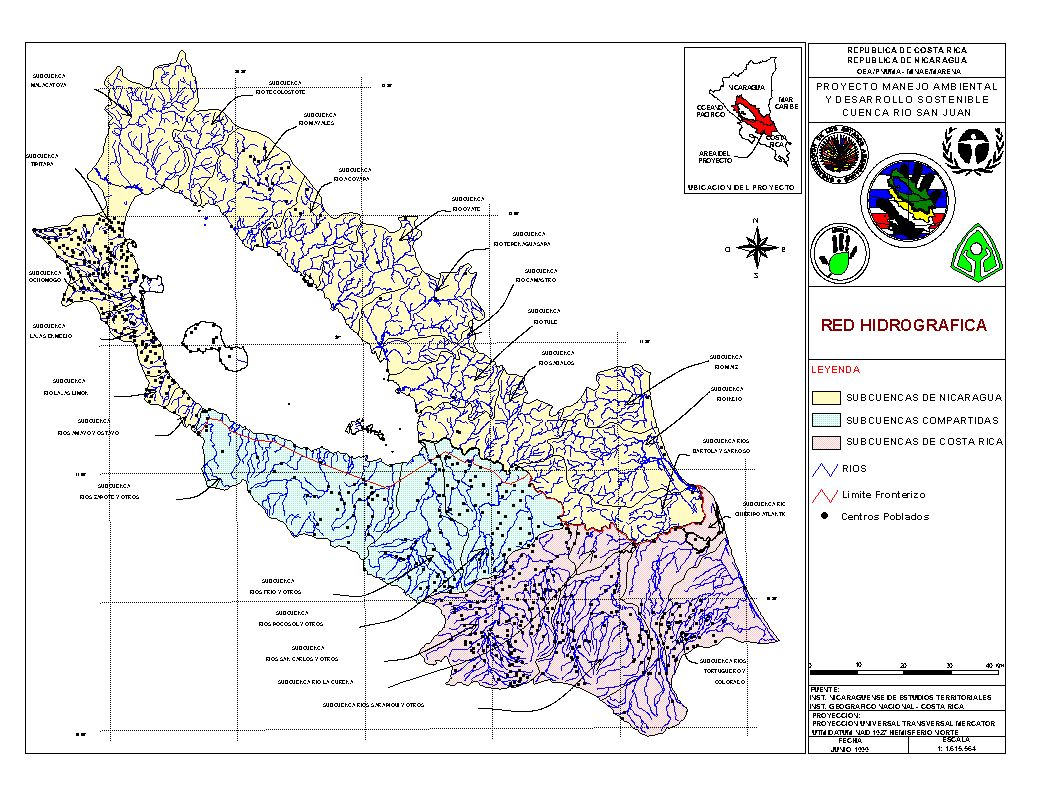
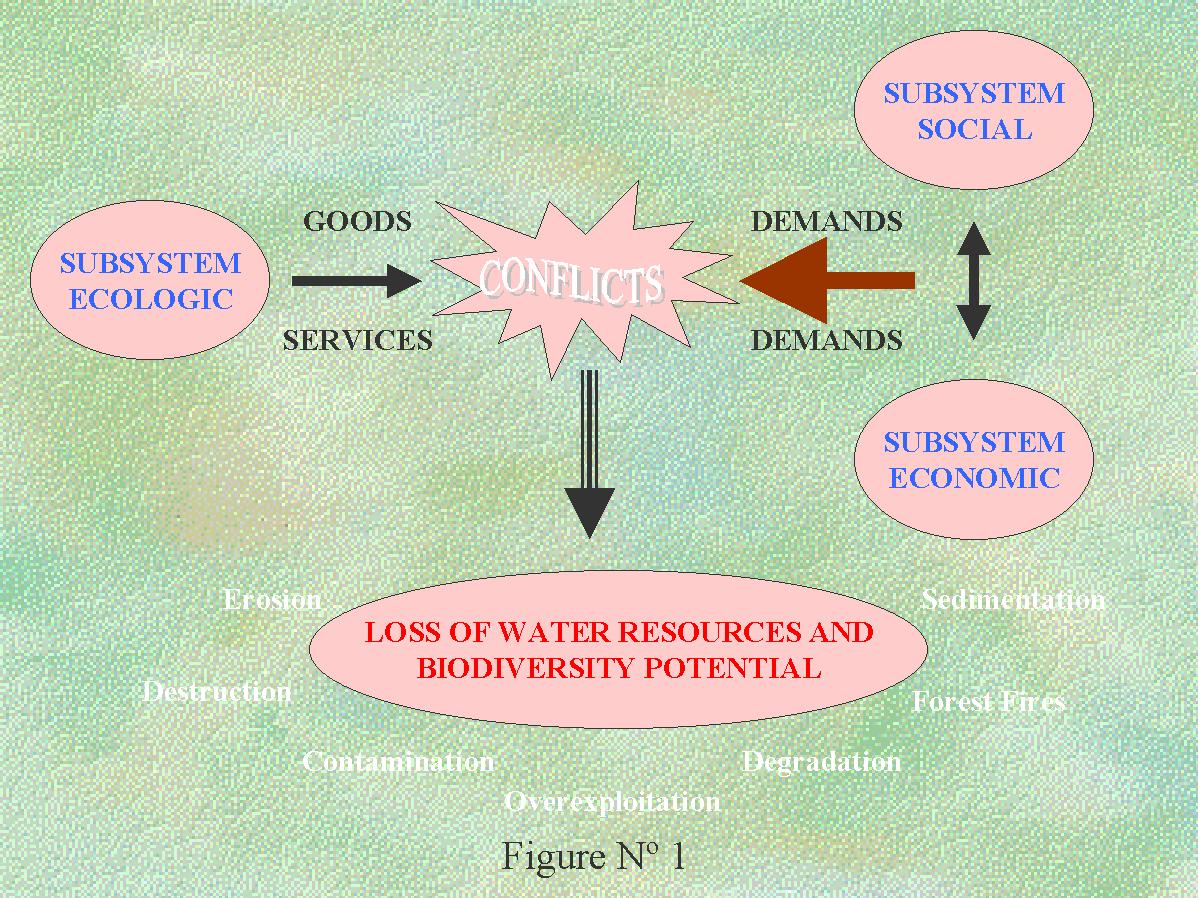
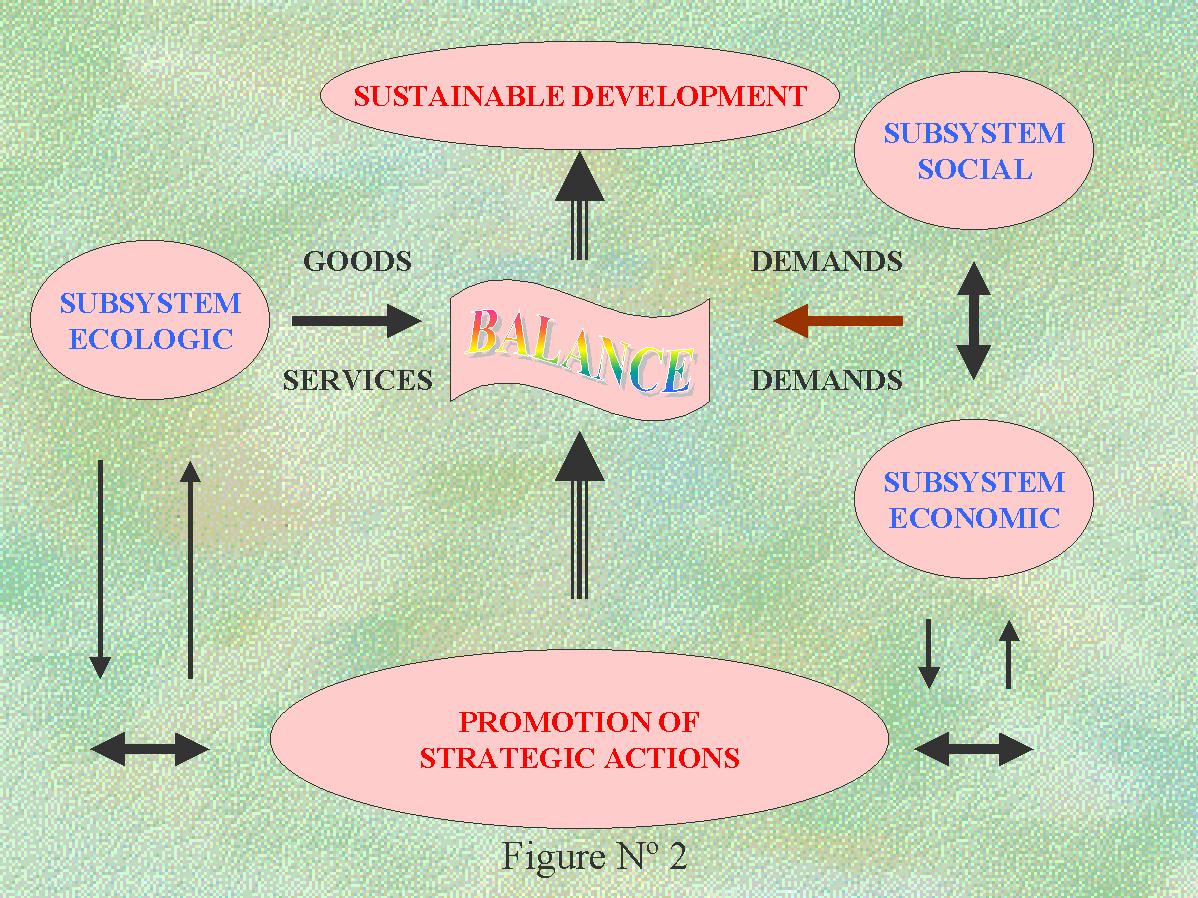
ANNEX 3
TABLES
TABLE 1
THREATS TO BIODIVERSITY
|
THREAT TO BIODIVERSITY |
CONSEQUENCES |
|
Hunting and Fishing |
Loss of wildlife: white tailed deer (Odoicoleus virginianus), tapir (Tapirus bairdii), armadillo (Dasypus novemcinctus) and (Cabassous centralis), white-lipped peccary (Tayassu pecari), collared peccary (Tayassu tajacu), various species of monkeys like the mantled howler monkey and spider monkey (Alouatta palliata) and (Ateles geoffroyi), the agouti (Dasyprocta punctata) and the paca (Agouti paca); considered to be important cynegetic species. Other species have been hunted for their skins, particular spotted felines like the jaguar (Panthera onca), the margay (Leopardus weidii), the ocelot (Leopardus pardalis), and the oncilla (Leopardus tigrinus), the alligator or caiman and the crocodile (Caiman crocodilus y Crocodilus acutus). Birds like the great tinamou (Tinamus major), several species of duck like the great currasow (Crax rubra) and others are used for food. Fish include the cichlid Cichlasoma dovil and other species, tarpon (Tarpon atlanticus), sea bass (Centropamus spp) and gar (Atractosteus tropicus). Most of these species are in danger of extinction or seriously threatened. Hunting: Illegal hunting is widespread in the basin, even in the protected areas. Hunting for sport is regulated by the MARENA and MINAE, but without a thorough understanding of population dynamics there can be no sustainable exploitation of the resource. This results in problems for the management of wildlife species and causes the destruction of natural habitats of noncynegetic wildlife species in favor of more usable habitats (burning of pastureland and forests). Subsistence hunting with no prohibitions or periods of protection also occurs. Fishing: Indiscriminate fishing has caused the shark to disappear from Lake Cocibolca. The worst problem afflicting the maritime zone is also the fishing of shark and other species, and the destruction of reefs. |
|
Logging and deforestation |
Destruction and disruption of the natural environment with the felling of mature trees (even if this takes place under management plans). Many species are affected by both the felling of trees and shrubs and by the noise of machinery, the cutting of roads, and by pollution from fuel, waste, and garbage. Erosion and pollution: Caused by logging which, along with the cutting of roads, provides access for further extraction, with a high risk of water and soil pollution. Fragmentation of habitats: A high and intensive occurrence in some zones of the basin (Pacific region of Nicaragua and San Carlos plains in Costa Rica). The ability to maintain complete and complex ecosystems is substantially reduced with the reduction in the size of the reserve. |
|
Recurrent burning of pastureland |
Generally performed with a view to introducing exotic species of grass (Hyparrhemia rufa, Panicum maximun, and Panicum purpurescens), which, together with various trees, shrubs, and palms resistant to grazing and burning form the typical vegetation of the savannas. Changes in land use: for the purpose of large scale livestock rearing, thereby causing the disappearance of large expanses of dry and rain forest in the basin. Soil erosion: causes the exhaustion of nutrients, silting, migration of rural populations to the urban areas, displacement of farmers, and changes in land holding as a result of changes in land use. Destruction of secondary forests, wooded corridors, or primary forests when blazes flare out of control or escape during the burning of pastureland. This also causes air pollution. |
|
Mining activity |
Opencast mining, common in Latin America, involves methods that cause serious pollution, have widespread adverse effects, especially on the aquatic environment, destroying aquatic and land habitats. Mining settlements cause environmental damage and side effects for the health of the population. The extraction of construction materials (stone and sand) has caused the disappearance of aquatic and riparian habitats in the northern zone of CR. As a result of the heavy environmental stress caused by these works, despite the environmental impact assessments, this activity causes problems of sedimentation, pollution, loss of habitats, and the disappearance of numerous species of fish, mammals, birds, and invertebrates. No plan has been implemented to restore these sites. |
|
Damming or rerouting of groundwater |
Modification or rerouting and damming of watercourses for power generation, irrigation, or water supply is an activity that has a strong effect on the ecology of the area. Fish migrations are affected by the damming of rivers, even in areas far away from the dams. This also leads to shifts in human settlements, the construction of roads and highways, and the loss of wide expanses of forest by flooding. Intensive agricultural production requires irrigation projects which, in many cases, cause erosion problems, with the resulting sedimentation in the dam and loss of useful life. Hydraulic projects for energy production and irrigation have a heavy environmental impact in ecological terms. |
|
Unplanned and makeshift settlements |
The growth of urban centers and settlements and the encroachment of farmlands are some of the causes of the isolation and insularity of protected areas. This exerts pressure on the ecosystems and the species they support. Large settlements of more than 30 families exert intense pressure on the protected areas (unlawful hunting, etc.) and cause water pollution, if there is no control of solid and liquid effluents, with the resulting deterioration or disappearance of aquatic or land ecosystems. |
|
Opening of roads and highways |
Road and highway infrastructure in the northern zone of Costa Rica and in the western zone of the Indio-Maíz Biological Reserve in Nicaragua, is laid before areas are opened up for agricultural development. The resulting problems are as follows: the roads are used by logging companies to gain access to new areas for forestry resource use; population growth is caused by the influx of non-farming settlers with the resulting division of the land into plots; and there is a heavy environmental impact caused the mechanical process of road construction, especially on aquatic ecosystems and more specifically on rivers. |
|
Introduction of exotic species |
These have a strong impact on the integrity of ecosystems, especially inside and on the periphery of protected areas. The introduction of the water lily (Eichhornia crrassipes) originally from Brazil, is causing clogging problems in the Tortuguero canals, Barra del Colorado, and the canals of the Indio-Maíz reserve. The introduction of the tilapia (Tilapia mossambica) originally from Africa, competes with the native communities of fish in lakes and lagoons. |
|
Pollution from agricultural chemicals, fuels and other products |
Crops are cultivated up to the very banks of rivers, causing problems of erosion and pollution. Aerial spraying of agricultural chemicals in Costa Rica causes pesticides and fertilizers to directly impact on water bodies. Aquatic transport can be a huge pollutant due to spills of fuels and air pollution. Numerous hot spots and more diffuse pollution by fuels and oils in the rivers can be observed. |
|
Erosion and soil loss |
Deforestation and inappropriate management of agriculture and livestock—often extended up to the very shores of the rivers—with no planning and control are the main causes of the high level of soil erosion in the basin. This mainly affects the rivers, with the resulting deterioration in the quality of water resources. |
|
Inappropriate agricultural practices |
Slash and burn agriculture is a traditional method of preparing the land for cultivation. Rotation is not practiced and there is poor management of the land on slopes, which causes degradation and loss of its agricultural capacity. |
|
Heavy river traffic |
Navigation is one of the principal methods of invasion of protected areas. Aquatic routes are used for trafficking in species, for illegal fishing and hunting, for collecting forest species, for transient farming, and unregulated tourism. |
|
Land holding problems |
The lack of land ownership results in relocation, mobility of human groups, and transient farming. Such situations are difficult to resolve in both social and economic terms. This is more important in the areas adjacent to protected areas, which become a ready source of meat and firewood consumption, in particular. |
|
Lack of a unified conceptual framework for categories of protected area management |
The problems of financing for the conservation of biodiversity have resulted in a system of protected areas that cannot meet the long-term objectives. The reality of conservation in Costa Rica and Nicaragua, regarding the San Juan River Basin, can be summarized as insufficient to ensure that representative ecosystems in the basin survive intact. In relation to the management of protected areas, there are many conceptual shortcomings in terms of design, the failure to delimit buffer zones, and low budgets for the development of infrastructure and training, incompatible economic development policies and conservation goals, and inconsistencies in the application of conservation and management concepts and strategies. |
|
Development of adjacent or surrounding areas |
There are no plans for regional management and development, hence no guarantee that havens for flora and fauna, ecosystems, or complete regions will be conserved in the absence of an overarching plan. |
TABLE 2
PHYSICAL CHARACTERISTICS OF LAKE NICARAGUA
|
PARAMETERS |
UNIT |
AVERAGE VALUE (MARCH 1993) |
AVERAGE VALUE (APRIL 1993) |
RANGE (MAY 1994) |
|
TEMPERATURE |
°C |
N/A |
29.5 |
28.3 – 30.2 |
|
TOTAL COLI |
NMP/100 ml |
- |
- |
Min 5.49*106 Max 13.43*106 |
|
FECAL COLI |
Fc/100 ml |
- |
- |
Min: ab. max:: 80 |
|
CLOROPHYLL-a |
µ g/l |
- |
- |
Average:17.25 |
|
TOTAL ALKALINITY |
M g/l |
84.50 |
84.50 |
72.95 – 78.80 |
|
BICARBONATES |
M g/l |
98.28 |
96.88 |
81.07 – 91.91 |
|
TOTAL HARDNESS |
M g/l |
73.98 |
74.24 |
68.65 – 72.70 |
|
BORON |
M g/l |
0.09 |
0.10 |
0.04 – 0.37 |
|
CALCIUM |
M g/l |
17.39 |
17.36 |
16.21 – 17.55 |
|
CARBONATES |
M g/l |
2.35 |
3.72 |
0.00 – 5.66 |
|
CHLORINE |
M g/l |
17.67 |
14.67 |
220 – 227 |
|
CONDUCTIVITY |
µs/cm |
236.00 |
251.78 |
15.38 – 49.99 |
|
DQO |
Mg/l |
54.12 |
24.80 |
15.38 – 49.9 |
|
FLUORIDE |
Mg/l |
0.24 |
0.37 |
0.22 – 0.37 |
|
REAC. PHOS. DIS. |
µg/l |
< 10.0 |
<=10.0 |
<5.0 |
|
TOT. PHOS. DIS |
µg/l |
29.0 |
<=10.0 to 19.0 |
<5.0 - 7.0 |
|
TOTAL PHOSPHOROUS |
µg/l |
62.0 |
50.0 |
<5.0 - 42.0 |
|
TOTAL IRON |
Mg/l |
0.78 |
0.78 |
0.08 - 0.54 |
|
MAGNESIUM |
Mg/l |
7.42 |
7.52 |
6.77 - 7.36 |
|
AMMONIUM |
Mg/l |
<0.013 |
0.024 |
0.05 - 0.24 |
|
NITRITES |
Mg/l |
<0.10 |
<=0.05- 0.15 |
<0.05 - 0.05 |
|
NITRATES |
Mg/l |
<0.05 |
<=0.05 - 0.15 |
<0.05 - 0.27 |
|
DISSOLVED OXYGEN |
Mg/l |
6.65 |
6.87 |
5.20 - 8.80 |
|
pH |
|
7.73 |
7.85 |
8.10 - 8.47 |
|
POTASSIUM |
Mg/l |
4.23 |
4.25 |
3.80 - 4.00 |
|
SILICA |
Mg/l |
17.12 |
17.55 |
18.66 - 22.94 |
|
SODIUM |
Mg/l |
21.00 |
20.22 |
19.10 - 21.20 |
|
TURBIDITY |
UNT |
196 |
231.11 |
4.30 - 11 |
|
TOT. SOL. DISSOLVED |
Mg/l |
182 |
175.29 |
161.29 - 189.30 |
|
SULFATES |
Mg/l |
10.39 |
10.89 |
8.96 - 10.22 |
TABLE 3
LEVELS OF PESTICIDES IN THE SEDIMENT ON THE FLOOR OF LAKE NICARAGUA
|
Pesticide |
Maximum admissible conc. in ground-level waters (picogram/l) |
Range observed in sediment Min Max (picogram/g) |
|
|
Aldrin |
10 |
- |
67.76 |
|
Dieldrin |
5 |
66.92 |
- |
|
Endrin |
4 |
- |
66.80 |
|
Heptachloride |
10 |
- |
84.34 |
|
Lindane |
20 |
55.57 |
181.30 |
|
p.p. DDT |
2* |
- |
199.58 |
|
p.p DDE |
2* |
78.92 |
790.27 |
*Sum of isomers
Source: Report of the Chromatography section on the sample of pesticides in sediment in the San Juan River. CIRA/UNAN-1994.
TABLE 4
RESULTS OF ANALYSIS OF THE WATER IN THE SAN JUAN RIVER SUBSYSTEM
|
RIVER |
pH |
COND (µS/CM) |
TURB (UNT) |
STD |
IRON |
P-TOTAL |
HARDNESS |
LEFT BANK OF THE RIVER
|
MELCHORA (9) (10) |
8.25 7.99 |
392.00 284.00 |
A 160.00 |
284.47 197.64 |
0.36 0.73 |
0.046 0.033 |
151.45 90.10 |
|
BARTOLA (20) (21) |
7.68 8.04 |
104.00 233.00 |
A 260.00 |
78.41 157.46 |
0.27 1.02 |
0.027 0.023 |
37.00 70.05 |
|
SABALOS (22) (23) |
7.76 7.86 |
226.00 228.00 |
110.00 160.00 |
183.55 164.65 |
0.49 0.55 |
0.026 0.031 |
84.05 71.05 |
RIGHT BANK OF THE RIVER
|
EL ZAPOTE* (05) |
7.74 |
103 |
230 |
73.59 |
2.61 |
0.058 |
31.65 |
|
PAPATURO* (06) |
7.45 |
183 |
150 |
110.72 |
2.45 |
0.052 |
59.40 |
|
FRIO* (08) |
7.81 |
154 |
100 |
97.11 |
0.30 |
0.019 |
49.50
|
|
MEDIO QUESO (11) (12) |
7.71 8.07 |
83 230 |
76 230 |
56.57 159.85 |
1.16 0.20 |
0.029 0.034 |
14.40 67.30 |
|
POCOSOL (13) (14) |
7.65 8.09 |
128 231 |
8.7 180 |
89.06 163.02 |
0.29 0.81 |
0.021 0.029 |
38.65 68.05 |
|
SAN CARLOS(15) (25) (16) |
7.69 7.69 7.92 |
192 187 227 |
160 150 220 |
124.89 119.88 161.63 |
1.44 2.08 0.81 |
0.035 0.055 0.032 |
54.05 54.05 67.05 |
|
SARAPIQUI (17) (26) (18) |
7.45 7.32 8.01 |
159 153 209 |
200 300 180 |
95.54 90.24 141.45 |
2.96 3.54 1.14 |
0.060 0.059 0.35 |
62.65 48.65 62.65 |
|
DELTA (19) |
7.63 |
166 |
400 |
117.09 |
4.46 |
0.076 |
52.05
|
TABLE 5
MAIN CROPS AND AGRICULTURAL CHEMICALS USED IN THE PROJECT AREA
|
Crops |
Insecticides |
Nematicide |
Fungicide |
Anti- bacterial/ viral |
Herbicide |
Molluskicide |
|
Rice |
x |
x |
X |
|
x |
|
|
Beans |
x |
x |
X |
X |
x |
x |
|
Corn |
x |
x |
X |
|
|
|
|
Roots and Tubers |
x |
x |
X |
X |
x |
|
|
Orange |
x |
x |
X |
X |
|
|
|
Banana |
x |
x |
X |
|
x |
|
|
Coffee |
|
x |
X |
|
|
|
|
Pineapple |
x |
x |
X |
|
x |
|
|
Sugar Cane |
x |
|
X |
X |
|
|
|
Cotton |
x |
|
|
X |
|
|
|
Peanut |
x |
x |
X |
X |
x |
|
|
Vegetables |
x |
x |
X |
X |
|
|
Source: Prepared by the Project
|
Parameters |
Unit |
Nicaragua |
Costa Rica |
|
Vol of wastewater |
103m3/yr |
26.241 |
4.874 |
|
D.B.O. |
Ton/yr |
8.929 |
2.526 |
|
D.Q.O. |
ton/yr |
20.164 |
5.787 |
|
Sedimentable solids |
ton/yr |
12.437 |
4.788 |
|
Fully dissolved solids |
ton/yr |
11.753 |
1.520 |
|
Nitrogen |
ton/yr |
1.063 |
138 |
|
Phosphorous |
ton/yr |
129 |
17 |
Source: Prepared by the Project
TABLE 7
THREATS TO BIODIVERSITY AND SPECIFIC RECOMMENDATIONS
|
Threat to Biodiversity |
Specific Recommendations |
|
Hunting and Fishing |
Support the conduct of the minimum level of field studies necessary to evaluate the status of populations of the most important cynegetic species, to adjust prohibitions and regulate their exploitation. |
|
Deforestation |
Identify, inventory, and try to safeguard all the primary forest remnants in the basin because they represent highly important genetic banks for the future of timber. In zones where little or no primary forest remains, begin protection by acquiring, through the public or private sector, significant positions in the existing secondary forest, as determined by technical rating. Incorporate ecological elements and criteria in the logging permit evaluation system, which would prevent logging in fragile areas, such as actual or potential biological corridors. Promote natural or assisted reforestation using native species, proposing special arrangements and species that reproduce the natural structure of the area before intervention. Promote alternative uses of private forests to minimize their exclusive use for logging, which is known to have a high environmental cost. Some possible activities identified are the sustainable collection of seeds, scientific research, ecotourism under certain conditions, environmental and other education. |
|
Recurrent Burning of Pastureland |
Limit agricultural practices that are destructive or have a heavy negative impact on biodiversity. Develop the process of environmental education to restrict the use of agricultural practices that are destructive or that seriously affect biodiversity (e.g. burning). Support the management of public and private institutions that try to stop the persistent conversion of forests. |
|
Mining of metal-bearing substances (gold and sulfur) and construction materials |
Support and emphasize the resolution of conflicts of interest (technical and conceptual) in the governmental organizations that regulate these activities. |
|
Damming or rerouting of groundwater |
Emphasize in all projects and proposals of this type the inclusion of environmental impact studies by working groups of qualified professionals. Explore options with fewer adverse effects on biodiversity and alternatives to massive irrigation, when major hydraulic projects are planned. Also examine alternatives to irrigation as a solution to the economic and social development problems of the countries and the San Juan River Basin. Emphasize efficient use of local resources, implementation of appropriate and environmentally sound technologies, and minimize the environmental impact of economic activity, in particular farming. Discourage the use of water resources from the Indio, Maíz and Tortuguero rivers, whose waters have the quality to maintain the biodiversity of the Grand Biological Reserve of the Indio-Maíz, in Nicaragua and to protect Tortuguero in Costa Rica. |
|
Unplanned and makeshift settlements |
Support and strengthen the process of stabilization of agricultural land delimitation in the zone, establishing specific areas for the development of new farming settlements, areas for large-scale farming, industrial zones, and effective buffer areas. Expedite the solution of problems of transient farming (particularly inside and around the protected areas) by relocating these people to areas with suitable farming potential. |
|
Opening up roads and highways |
Minimize or suspend the construction of new highways and roads, particularly those built to gain access to areas for logging. Efforts should also be made to allow the natural or assisted closure by overgrowth of roads and highways that give access to areas that could be recovered. Establish a solid methodological and environmentally appropriate framework for extracting materials from the beds of rivers and streams. Draw up a list of rivers and streams where the extraction of construction materials is allowed (requiring permits and imposing regulations to organize the resource base so that it does not impact on all the watercourses and bodies in the basin). |
|
Trafficking in wildlife species |
Support and expedite the pertinent research to ascertain the status of populations of the most commercial used species. Support strengthening and institutional capacity building (technical, human, and financial) of those organizations responsible for the control and management of wildlife. |
|
Introduction of exotic species |
Completely prohibit the introduction of exotic species into the natural systems in the basin, including the withdrawal of permits for projects that use exotic species that pose a high risk of invading the natural systems (tilapia farms in zones susceptible to flooding, biological control of pests, etc.). Support the publication of a directory of exotic species present in the basin, which defines and explains the environmental problems and risks that these species pose or represent for the basin and support the process of educating the population. It is particularly important to inform policy makers and governments of this problem. |
|
Pollution with agricultural chemicals, fuels and other products |
Support capacity building (technical, human, and financial) in both private sector and public sector institutions responsible for the control, transportation, and marketing of these products. |
|
Soil erosion and loss |
Develop as soon as possible a map of erosion risks in the basin, which identifies the most affected spots. Develop a plan to control erosion problems and address their causes in the areas identified as critical or highly susceptible. |
|
Commercial navigation |
Take inventory of the main river navigation routes in the basin, including fuelling sites. Ensure proper handling of fuels and other toxic substances, and of traffic in fragile spots in the protected areas. Support the elaboration of a “map of aquatic routes” in the basin, with an accompanying operating manual specifying areas where motorboats should not circulate, fuelling points, prohibited activities (dumping of oil and fuel into the river and other useful information for boat operators, like markers and navigation safety information). |
|
Landholding problems |
Identify the main zones in the basin where there are problems with land ownership, such as transient farming, squatting, irregular settlements, etc. |
|
Lack of a unified conceptual framework for categories of management |
Support the establishment of a single conceptual framework on categories of management, the main goals and objectives, with a view to solving some of the internal and external conflicts observed in protected areas. |
|
Land development in fragile environments |
Effectively protect fragile areas, such as the banks of rivers and streams, wetlands, etc. by means of buffer areas, even on private land. Promote the development of production activities with a low environmental impact, particularly in zones adjacent to protected areas (inside and outside buffer zones). Promote and support environmental restoration as a socially desirable activity for the sustainable development of the region. |
TABLE 8
SCIENTIFIC NAME, COMMON NAME AND FAMILY OF SOME AMPHIBIANS, REPTILES, MAMMALS, AND BIRDS PRESENT IN THE CRSJ
|
COMMON NAME |
SCIENTIFIC NAME |
FAMILY |
|
AMPHIBIANS AND REPTILES |
||
|
Golden toad |
Bufo periglenes |
Bufonidae |
|
Green iguana |
Iguana iguana |
Iguanidae |
|
American crocodile |
Crocodylus acutus |
Crocodylidae |
|
Leatherback sea turtle |
Dermochelys coriacea |
Chelonidae |
|
Olive Ridely sea turtle |
Lepidochelys olivacea |
Cheloniidae |
|
Green sea turtle |
Chelonia mydas |
Cheloniidae |
|
Hawksbill sea turtle |
Eretmochelys imbricata |
Cheloniidae |
|
Loggerhead sea turtle |
Caretta caretta |
Cheloniidae |
|
Central American turtle |
Kinosternon angustipons |
Kinosternidae |
|
MAMMALS |
||
|
Squirrel monkey |
Saimiri oersteedii |
Cebidae |
|
Golden spider monkey |
Ateles geoffroyi |
Cebidae |
|
Jaguar |
Panthera onca |
Felidae |
|
Ocelot |
Leopardus pardalis |
Felidae |
|
Margay |
Leopardus wiedii |
Felidae |
|
Oncilla, Tiger cat |
Leopardus tigrinus |
Felidae |
|
Puma |
Felis concolor |
Felidae |
|
Jaguarundi |
Herpailurus yaguaroundi |
Felidae |
|
Olingo |
Bassarincyon gabii y B. Lasius |
Procyonidae |
|
Tapir |
Tapirus bairdii |
Tapiridae |
|
Manatee |
Trichechus manatus |
Trichechidae |
|
Giant anteater |
Mymecophaga tridactyla |
Mymecophagidae |
|
Mountain squirrel |
Syntheosciurus brochus |
Sciuridae |
|
BIRDS |
||
|
Great green macaw |
Ara ambigua |
Psittacidae |
|
Scarlet macaw |
Ara macao |
Psittacidae |
|
Mangrove hummingbird |
Amazilia boucardi |
Trochiilidae |
|
Motmot |
Electron carinatum |
Momotidae |
|
Yellow cheek chipe |
Dendroica chrysoparia |
Parulidae |
|
Yellow-breasted cotinga |
Carpodectes antoniae |
Cotingidae |
|
Umbrella bird |
Cephalopterus glabricollis |
Cotingidae |
|
Abbott’s booby |
Papasula abbotti |
Sulidae |
|
Black petrel |
Procellaria parkinsoni |
Procellariidae |
|
Galapagos petrel |
Pterodroma phaeopygia |
Procellariidae |
|
Shearwater |
Puffinus xreatopus |
Procellriidae |
|
Jabiru |
Jabiru mycteria |
Ciconidae |
TABLE 9
|
Level of protection |
Category |
Costa Rica |
Nicaragua |
|
Protection and Research |
Biological Reserve |
Alberto Brenes (ACG) |
Indio-Maíz |
|
Protection, Research, and Recreation |
National Park |
Guanacaste (ACG) Rincón de la Vieja (ACG) Tenorio (ACA) Miravalles (ACA) Arenal (ACA) Juan Castro Blanco (ACCVC) Volcán Poás (ACCVC) Braulio Carrillo (ACCVC) Volcán Irazú (ACCVC) Tortuguero (ACT) |
Zapatera Archipelago Masaya Volcano |
|
Protection, Research, Recreation, and Exploitation of Species |
Refuge for Wildlife
Refuge for Fauna |
Border Las Camelias Caño Negro Bosque Alegre Border Corridor Barra del Colorado
Cerro El Jardín Cordillera Volcánica Central Curelña, Cureñita |
Los Guatusos San Juan River Delta Escalante-Chococonte River |
|
Protection, Research, and some extractive activities |
Nature reserves |
|
Manares River Mecatepe Lagoon Tisma Lagoon Apoyo Lagoon Volcán Mombacho Sierra de Amerrisque Mombachito- La Vieja Fila Masuigüe Cerro Cumaica Cerro Alegre Cordillera Yolaina Bosque La Esperanza Bartola |
|
|
Forest Reserves |
Arenal Volcano (ACA) Cerro El Jardín (ACA) Cordillera Volcánica Central (ACCVC) Rubén Torres (ACCVC) Grecia (ACCVC) Cureña (ACT) Cureñita |
Cerro Silva* |
|
|
Protective Zone |
Arenal-Monteverde Toro River (AACVC) La Selva (AACVC) Tortuguero (ACT)
|
|
|
Mainly Cultural |
Historical Site |
|
La Imaculada Fort |
|
|
Historical Site |
|
Solentiname Archipelago |
|
Unregulated |
No Classification |
Archie Carr Biological Corridor ( ACT) Maquenque Lagoon Marshy Wetlands (ACT) Tamborcito Lacustrine Wetlands (ACT) |
Nancital Island Wetlands El Junquillo Pond Las Marías Pond Ñocarime |
* Outside the Basin (These areas are used to observe the relationships between the protected areas of the Basin with their surroundings, in addition to demonstrating the need to reinforce the concept of continuity not fragmentation of biological corridors).
TABLE 10
PROTECTED AREAS OF COSTA RICA IN THE SAN JUAN RIVER BASIN
|
Name |
Area in Ha |
Decree |
Date |
|
Guanacaste National Park |
34,764 |
19124 |
16 Aug 1989 |
|
Rincón de la Vieja National Park |
14,083 |
5398 |
3 Nov 1973 |
|
GUANACASTE CONSERVATION AREA Guanacaste Protective Zone National Wildlife Refuge. Border Corridor CR-Nic. |
640 13,826 |
5836-A |
25 Feb 1976 1994? |
|
ARENAL CONSERVATION AREA Las Camelias National Wildlife Reserve Tenorio National Park Miravalles National Park Caño Negro National Wildlife Reserve Arenal-Monteverde Protective Zone Arenal Fauna Reserve Arenal Dam Protective Zone Arenal National Park Cerro Jardín Fauna Refuge RNVS Border Corridor CR-Nic. Los Guatusos Indigenous Reserve |
68 1,712 12,226 10,258 19,487 5,216 9,248 1,904 1,215 25,932 2,743 |
15120-MAG
|
1993 1994 1994 20 Jan 1984
1991
1994?
|
|
CORDILLERA VOLCANICA CENTRAL CONVERVATION AREA Juan Castro Blanco National Park Bosque Alegre Wildlife Reserve Toro River Protective Zone Poás Volcano National Park Cordillera Volcánica Central Fauna Reserve Braulio Carrillo National Park La Selva Protective Zone Turrialba Volcano National Park Guácimo-Pococí Aquifers Protective Zone San Ramón Protective Zone TORTUGUERO PLAINS PROTECTIVE AREA RNVS Border Corridor CR-Nic. RNVS Barra del Colorado Tortuguero Protective Zone (Biological Corridor) Tortuguero National Park Archie Carr Biological Corridor Cureña-Cureñita Fauna Refuge Maquenque Lagoon Marshy Wetlands Tamborcito Lacustrine Wetlands |
14,258 846 3,702 5,243 51,748 47,646 4,300 872 4525
8,851 92,000 10,407 18,946 82 6,712 538 1,684 |
18763-MIR
4717 4961-A 8357-A 13459-A
17390-MAG 4960-A
16348-MAG 5680-A
|
6 Feb 1989
23 Dec 1970 26 Jun 1975 5 Mar 1978 31 Mar 1982
15 Dec 1986
1994? 9 Jun 1985 3 Nov 1975
|
Source: MIRENEM. National System of Conservation Areas. Wildlife and United Nations General Directorate “List of National Parks” and Protected Areas of the World, Bermúdez and Mena, 1992; Zeledón, 1994. Note: The decrees are surface areas reported are preliminary data.
TABLE 11
PROTECTED AREAS OF NICARAGUA IN THE SAN JUAN RIVER BASIN
|
Name |
Area in Ha |
Decree |
Date |
|
Indio-Maíz Biological Reserve |
295,000 |
527 |
17 Apr 1990 |
|
Zapatera Archipelago National Park |
5,227 |
1194 |
5 Feb 1983 |
|
Solentiname Archipelago Historical Site |
18,930 |
527 |
17 Apr 1990 |
|
La Inmaculada Fort Historical Site |
375 |
527 |
17 Apr 1990 |
|
Escalante-Chococente River Wildlife Reserve |
4,800 |
1294 |
11 Aug 1983 |
|
Los Guatuzos Wildlife Refuge |
43,750 |
527 |
17 Apr 1990 |
|
Tisma Lagoon Nature Reserve |
10,295 |
1320 |
8 Sep 1983 |
|
Apoyo Lagoon Nature Reserve |
3,500 |
42-91 |
4 Nov 1991 |
|
Mombacho Volcano Nature Reserve |
2,487 |
1320 |
8 Sep 1983 |
|
Mecatepe Lagoon Nature Reserve |
1,200 |
1320 |
8 Sep1983 |
|
Manares River Nature Reserve |
1,100 |
1320 |
8 Sep 1983 |
|
Concepción Volcano Nature Reserve |
2,200 |
1320 |
8 Sep1983 |
|
Maderas Volcano Nature Reserve |
4,100 |
1320 |
8 Sep 1983 |
|
Cerro Cumaica-Cerro Alegre Nature Reserve |
5,000 |
42-91 |
4 Nov 1991 |
|
Cerro Mombachito- La Vieja Nature Reserve |
940 |
42-91 |
4 Nov 1991 |
|
Fila Masigüe Nature Reserve |
4,580 |
42-91 |
4 Nov 1991 |
|
Sierra Amerrisique Nature Reserve |
12,073 |
42-91 |
4 Nov 1991 |
|
Cordillera de Yolaina Nature Reserve |
40,000 |
42-91 |
4 Nov 1991 |
|
San Juan River Delta Wildlife Refuge |
|
|
|
|
Bartola Private Refuge |
|
|
|
Source: MARENA (Uncultivated Area Unit)
TABLE 12
|
Type of Forest |
Available Surface Area (ha) |
Available Volume m3* |
|
Primary forest |
45,000 |
45,000 |
|
Secondary forest |
71,000 |
35,500 |
|
TOTAL |
116,000 |
80,000 |
*Subject to sustainable use, estimated on the basis of a 20-year cycle and 20m3/ha cc. for primary forests and 10m3/ha cc. for secondary or sparse forests.
Source: MINAE(CR) and PAF(Nic)
DEMAND FOR ROUND WOOD FOR INDUSTRIAL USE
IN THE NICARAGUAN SEGMENT OF THE BASIN (m3) (Year 1995)
|
Industry/Product |
Production (m3) |
Demand for cut wood m3 cc |
(%) |
|
|
Sawnwood |
90,000 |
200,000 |
80.5 |
|
|
Plywood |
20,000 |
48,300 |
19.5 |
|
|
TOTAL |
110,000 |
248,300 |
100.0 |
|
DEMAND FOR ROUND WOOD FOR INDUSTRIAL USE
IN THE COSTA RICAN SEGMENT OF THE BASIN
m3 AVERAGE FOR THE PERIOD 1990-1993
|
Industry/Product |
Production (m3) |
Demand for cut wood m3 cc |
(%) |
||
|
Sawnwood |
428,100 |
890,000 |
86.4 |
||
|
Plywood |
48,350 |
116,800 |
11.5 |
||
|
Sheets |
9,900 |
18,000 |
1.8 |
||
|
Matchsticks |
1,950 |
4,500 |
0.2 |
||
|
Splints |
875 |
2,810 |
0.1 |
||
|
TOTAL |
489,175 |
1,032,110 |
100.0 |
||
Note: The chipboard factory uses the waste from the sawmill.
Source: Project data from MIRENEM/MINAE.
TABLE 15
INSTALLED CAPACITY ACTUALLY USED
IN THE TIMBER INDUSTRY IN NICARAGUA IN 1994
|
Type of Industry |
Installed Capacity m3 |
Installed Capacity m3 |
Idle Capacity (%) |
|
Sawnwood |
200,000 |
121,000 |
39.5 |
|
Plywood |
20,000 |
--- |
100.0 |
Source: MARENA/SFN
OF THE TIMBER INDUSTRY IN COSTA RICA
|
Type of Industry |
Installed Capacity m3 |
Installed Capacity m3 |
Idle Capacity (%) |
|
Sawnwood |
890,000 |
730,000 |
18.0 |
|
Plywood |
116,800 |
67,160 |
42.5 |
|
Sheets |
18,000 |
10,890 |
39.0 |
|
Matchsticks |
4,500 |
3,825 |
15.0 |
|
Splints |
2,810 |
1,531 |
45.5 |
ANNUAL SUPPLY OF TIMBER FROM THE NATURAL FOREST
IN NICARAGUA SUBJECT TO SUSTAINABLE USE
|
Type of Forest |
Available Surface Area (ha) |
Available Volume m3* |
|
Primary forest |
950,000 |
950,000 |
|
Secondary forest |
1,605,000** |
802,500 |
|
TOTAL |
2,555,000 |
1,752,500 |
*Subject to sustainable use, estimated on the basis of a 20-year cycle and 20m3/ha cc. for primary forest and 10m3/ha cc. for secondary or sparse forest.
** Includes sparse forests with low yield.
Source: MARENA/SFN
ANNUAL SUPPLY OF TIMBER FROM NATURAL FORESTS IN
COSTA RICA SUBJECT TO SUSTAINABLE USE
|
Type of Forest |
Available Surface Area (ha) |
Available Volume m3* |
|
Primary forest |
433,000 |
433,000 |
|
Secondary forest |
370,000 |
185,000 |
|
TOTAL |
803,000 |
618,000 |
*Subject to sustainable use, estimated on the basis of a 20-year cycle and 20m3/ha cc. for primary forest and 10m3/ha cc. for secondary or sparse forest.
Source: MINAE
TABLE 19
TYPES OF FOREST IN THE PROJECT AREA
|
Type of Forest |
Main Characteristics |
Species Represented |
Location in the Basin |
|
Dry Tropical Forest |
Rains are very seasonal Rich and fertile soil Wide diversity of species of trees Few species of epiphytes and moss Many deciduous species with synchronized periods of flowering and fruit production
|
The Rubiaceae family is predominant in the underbrush. Species of woody lianas and land bromeliads. |
Northeast border between CR and Nic. Eastern and western region of Lake Nicaragua. |
|
Topical Rain Forest |
Most extensive type of forest in the basin. Semi-deciduous, evergreen, tall and multi-layered.
|
Palms like Scheelea rostratra are common to this type of forest. |
On Lake Nicaragua and in the northern zone of CR, near Upala and the Caño Negro lagoons (CR) |
|
Very Humid Tropical Forest |
Highest rainfall, up to 6000 mm annually. Multi-layered evergreens with some deciduous species. Trees with tall and smooth trunks are common. |
Ferns are common, particularly those of the Selaginella species. Few epiphytic shrubs or strangling trees. Type of forest in the basin that is richest in species.
|
Tortuguero plains, Sarapiquí, Indio-Maíz Reserve. |
|
Misty Forest |
High rainfall, much of which is passive (from clouds coming into contact with the vegetation). |
Short and medium height shrubs Abundance of ferns, moss, and epiphytes, such as orchids. |
Found at the peaks of volcanoes in the volcanic mountain range of Guanacaste, particularly the Orosi, Cacao, Rincón de la Vieja, Miravalles, Tenorio, and Cacho Negro volcanoes.
|
|
Secondary Forest |
Variable size and floral composition. Occurs by natural or assisted reforestation in areas where the forest has suffered heavy intervention or elimination. |
Generally much less diversity than the original forest. Pioneering species, such as the fruited shoemaker’s tree (Byrsonima crassifolia), trumpet wood (Cecropia spp) and many shrubs. |
In a number of spots, like patches of forest. In the northern zone of CR in areas where most of the trees used for timber have been harvested. Covers little area in the basin because landowners have little incentive to let the forest grow again.
|
|
Corridor Forest |
Species tolerant of high humidity. |
Ficus spp., balsa wood and other species seeking humid to very humid conditions, which can withstand periodic flooding.
|
Found along the rivers throughout the basin. Sometimes contain very few trees. |
|
Wetlands |
Areas subject to flooding with characteristic vegetation, located on the banks of water bodies. |
Many species of aquatic birds, both resident and migratory Nesting spots for species of fish, birds, reptiles, and amphibians. Generally highly fragile ecological areas.
|
Mainly to the south and east of Lake Nicaragua, along the San Juan River and at the mouths of its main tributaries, and in the coastal zone of the Indio-Maíz Reserve, the Barra del Colorado Wildlife Refuge, and Tortuguero National Park, Los Guatuzos Wildlife Refuge and Caño Negro.
|
|
Mangrove Swamps |
Flooded forests bordering the sea. Contain a high diversity of estuary and marine species. Form very complex ecosystems rich in species. |
Various mangrove species, such as red mangrove (Rhyzophora mangle), black mangrove (Avicennia germinans), and white mangrove and Conocarpus erecta. Ferns, orchids, epiphytes, and bromeliads are common to mangroves. The mangrove crab (Aratus pisonii) is a characteristic species, especially in places where red mangrove grows. |
Restricted to the Atlantic and Pacific coasts of the basin, mainly the Atlantic (Indio-Maíz Reserve, Barra del Colorado, and Tortuguero). |
TABLE 20
|
SUBSYSTEM |
SECTOR |
SUB-BASIN |
AQUIFER |
LOCATION |
Area Km³ |
PARAMETERS |
POTENTIAL MM/year |
USES MMc/year |
AVAILABILITY |
|
Lake Cocibolca |
North |
Malacatoya and Tecolostote |
Tipitapa-Malacatoya |
Northern Part of Lake Cocibolca
|
565 |
Density: 200 m. Transmissibility: 1,200 to 1,500 m2/day. Phreatic levels: Between 1 and 20 m deep. Specific capacity range registered: 3 m3/h/m. Storage capacity: 4 * 102 y 26 * 102 |
144 |
61 |
83 |
|
|
|
Granada, Masaya and Tipitapa |
Managua-Granada |
Northeastern Part of Lake Cocibolca |
1265 |
Depth: bet. 0 and 250m. Density: 200 m, Transmissibility: bet. 100 m³/day and 3900 m³/day Specific capacity: 2.9 to 338.9 m3/hm. Storage capacity ranges from 6 * 10 to 0.17 |
495 |
103 |
392 |
|
|
WEST |
Rivas and Cocibolca |
Nandaime-Rivas |
Eastern Part of Lake Cocibolca |
456 km2 |
Density: 132m Depth: bet. 1 and 50m. Transmissibility: In NE – 2000- 3000 m2/day. In W. -1500-1700 m2/day. In SW - 500m2/day Specific capacity: 25 - 40 m3/h/m. |
205 |
35 |
170 |
|
|
EAST |
a)Mayales or yate. b)Tepenagua-sapa-tule. c) Indio-Maiz d) San Juan River |
East Coast of Lake Cocibolca |
Entire coast of the Lake |
|
|
150
|
|
|
TABLE 21
SOCIAL INDICATORS FOR THE COSTA RICAN SEGMENT OF THE BASIN
|
Indicators (%) |
San Carlos |
Guatuso |
Upala |
Los Chiles |
Sarapiqui |
La Cruz |
Pococí |
Average |
|
Illiteracy |
10.20 |
16.00 |
18.30 |
19.40 |
12.80 |
20.00 |
10.90 |
15.37 |
|
Birth rate |
32.85 |
43.32 |
27.20 |
27.10 |
18.91 |
32.09 |
35.32 |
31.26 |
|
Mortality (general) |
3.62 |
2.86 |
2.74 |
2.18 |
1.45 |
3.41 |
3.49 |
3.33 |
|
Infant mortality |
12.75 |
8.61 |
17.8 |
22.18 |
11.00 |
18.52 |
10.51 |
14.48 |
|
Neonatal mortality |
8.93 |
11.56 |
4.01 |
n.a. |
9.32 |
8.77 |
9.02 |
8.60 |
|
Unemployment |
4.70 |
5.00 |
5.70 |
4.10 |
4.50 |
7.70 |
8.70 |
5.77 |
|
Population density |
30.91 |
12.56 |
25.00 |
17.00 |
12.89 |
9.92 |
29.73 |
19.71 |
|
Relative growth |
55.50 |
52.10 |
43.40 |
27.20 |
48.30 |
63.40 |
43.00 |
47.55 |
|
Primary sector |
56.80 |
79.90 |
81.60 |
81.50 |
76.60 |
68.20 |
64.30 |
72.70 |
|
Rural population |
81.27 |
89.27 |
93.60 |
85.05 |
96.82 |
79.17 |
83.94 |
85.60 |
|
Water supply – pipe-borne,* river, rain |
83.00 14.10 3.00 |
63.00 34.00 3.00 |
56.00 41.10 3.00 |
44.00 53.40 2.00 |
48.00 51.00 1.00 |
70.00 10.10 20.00 |
77.00 16.30 6.00 |
71.00 25.00 4.00 |
|
Sewerage, septic tanks, latrines,** bush |
72.00 28.00 0.30 |
38.40 61.00 0.40 |
27.20 73.00 0.20 |
28.70 68.00 3.00 |
59.00 41.00 0.00 |
31.00 67.00 2.00 |
78.00 22.00 0.10 |
61.00 38.5 0.5 |
|
Housing per capita |
4.9 |
5.3 |
6.4 |
8.13. |
4.8 |
5.5 |
5.4 |
5.80 |
Source: Ministry of Health, Ministry of Education, Costa Rican Water and Sewerage Institute
* 15% are in poor condition
** 19% are in poor condition
TABLE 22
SOCIAL INDICATORS FOR THE NICARAGUAN SEGMENT OF THE BASIN
|
Indicators |
Rivas |
Granada |
Masaya |
Boaco |
Chontales |
San Juan |
% |
|
School enrollment % Preschool Primary Secondary Technical |
20.1 86.7 21.1 n.a. |
25.1 87.3 18.9 1.3 |
28.1 99.6 38.8 0.05 |
10.85 73.7 16.6 0.2 |
10.9 61.6 16.4 0.5 |
16.8 76.0 7.0 0.4 |
18.2 80.4 25.0 0.7 |
|
Health % Malnutrition Child health Hospital beds per capita |
27.8 603 n.a. |
26.6 470 n.a. |
31.8 887 n.a. |
31.4 908 n.a. |
23.2 687 n.a. |
18.1 1.362 n.a. |
26.0 710 |
|
Sewerage Urban * Rural * |
41 86 |
20 64 |
41 85 |
53 69 |
-- 77 |
1 17 |
31.2 66.3 |
|
Pipe-borne water % Urban Rural |
92 31 |
(1)103 44 |
92 59 |
92 25 |
75 35 |
64 15 |
86.3 34.8 |
|
Housing Housing per capita |
5.7 |
5.8 |
5.7 |
5.9 |
6.3 |
5.9 |
5.9 |
Source: Prepared on the basis of data from SILAIS, MINSA, INIFOM, and INEC
* By system
** Latrines, etc.
(1) Amounts in excess of 100% indicate that the system serves nearby rural populations.
n.a. – no data available.
1 Hereinafter, the SJRB.
2 UNEP-OAS, 1997.