
Working paper
S
TRATEGIES FOR PUBLIC
PARTICIPATION IN THE
M
ANAGEMENT OF
TRANSBOUNDARY WATERS IN
C
OUNTRIES IN TRANSITION
Cases of Lake Peipsi/Chudskoe (Estonia/Russia) and
Lake Ohrid (Macedonia/Albania)
The working paper is based on a seminar "Strategies for Public Participation in the
Management of Transboundary Waters in Countries in Transition: Cases of Lake
Peipsi/Chudskoe (Estonia/Russia) and Lake Ohrid (Macedonia/Albania)"
Tartu, 15-16 October 2001.
The seminar was organised by Peipsi Center for Transboundary Cooperation (Peipsi CTC)
and the Alliance for Lake Cooperation in Ohrid and Prespa (ALLCOOP)
Edited by:
Margit Säre, Peipsi CTC
Gulnara Roll, Peipsi CTC
Piret Uus, Peipsi CTC
Jovanco Sekuloski, ALLCOOP
ISBN 9985-78-400-6
DECEMBER 2001
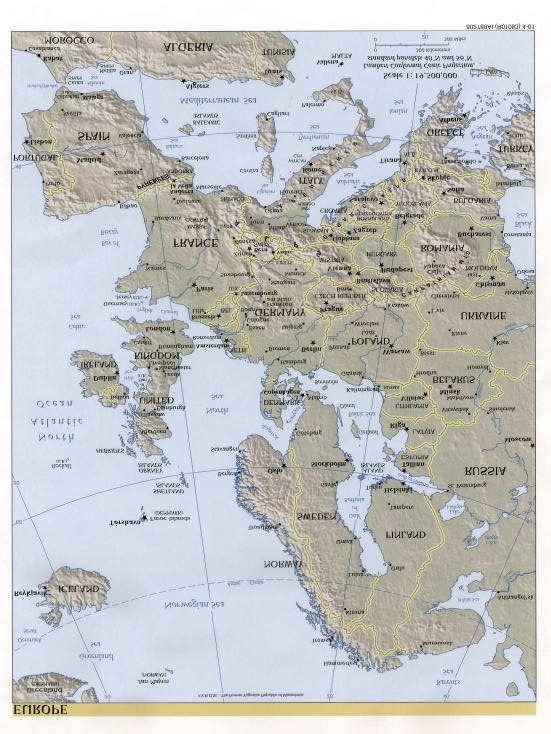
LAKE PEIPSI
LAKE OHRID
Map from http://www.lib.utexas.edu/maps/europe/europe_ref01.jpg
2
C O N T E N T :
1. FOREWORD ..................................................................................................................4
2. INTRODUCTION........................................................................................................5
3. INTERNATIONAL LEGAL FRAMEWORK FOR PUBLIC PARTICIPATION
IN WATER MANAGEMENT.........................................................................................6
THE DRAFT GUIDELINES ON PUBLIC PARTICIPATION IN WATER MANAGEMENT:
BRIDGING THE GAP BETWEEN THE WATER CONVENTION AND THE AARHUS CONVENTION
..........................................................................................................................................7
OVERVIEW OF IMPLEMENTATION IN ESTONIA AND POSSIBLE BARRIERS FOR COMPLIANCE
OF THE AARHUS CONVENTION ON ACCESS TO INFORMATION, PUBLIC PARTICIPATION
AND ACCESS TO JUSTICE IN ENVIRONMENTAL MATTERS..................................................9
PUBLIC PARTICIPATION IN THE IMPLEMENTATION OF THE EU WATER FRAMEWORK
DIRECTIVE ......................................................................................................................12
4. LESSONS LEARNED: PROPOSALS FOR INVOLVEMENT OF
STAKEHOLDERS INTO THE ELABORATION OF THE RIVER BASIN
MANAGEMENT PLAN.................................................................................................15
5. CONCLUSIONS..........................................................................................................32
ANNEX I..........................................................................................................................36
WORKSHOP PROGRAMME...............................................................................................36
ANNEX II ........................................................................................................................42
WORKSHOP CONTRIBUTORS ...........................................................................................42
ANNEX III........................................................................................................................44
ACKNOWLEDGEMENTS....................................................................................................44
ANNEX IV........................................................................................................................45
FOLLOW-UP PLANS.........................................................................................................45
ANNEX V..........................................................................................................................48
ALLCOOP - ALLIANCE FOR LAKE COOPERATION IN OHRID AND PRESPA.....................48
PEIPSI CENTER FOR TRANSBOUNDARY COOPERATION PEIPSI CTC ..............................49
3
1 . F O R E W O R D
The seminar on "Strategies for Public Participation in the Management of Transboundary
Waters in Countries in Transition: Cases of Lake Peipsi/Chudskoe (Estonia/Russia) and
Lake Ohrid (Macedonia/Albania)" was organized by two NGOs: Peipsi Center for
Transboundary Cooperation (Peipsi CTC) and the Alliance for Lake Cooperation in Ohrid
and Prespa (ALLCOOP). Peipsi CTC is working in the Estonian-Russian border area, Lake
Peipsi basin and ALLCOOP in the Macedonian-Albanian border area, Lake Prespa and Lake
Ohrid basins.
The seminar took place on 15-16 October 2001 in Tartu, Estonia and was attended by 60
participants from Estonian, Russian, Latvian, Macedonian, Albanian and Austrian NGOs,
ministries, local governments, research institutes, water companies etc.
The workshop was supported by Charity Know How Foundation, Open Society Institute
"East-East Program" and Regional Environmental Center for Central and Eastern Europe.
The Tartu seminar was a follow-up to the first joint workshop which took place in Ohrid,
Macedonia on 12-14 March 2001, focusing on introducing UN ECE Guidelines on Public
Participation and collecting comments and recommendations from the practitioners and
community leaders on these guidelines.
The main objective of the Tartu seminar was: to introduce experiences of public
participation in water management in different transboundary areas of Europe (Lake Peipsi,
Lake Ohrid, Lake Prespa, the Daugava River, Cherava river basins, other regions) and to
give an overview of the international legal framework of public participation in water
management, including the UN/ECE Water Convention and the UN/ECE Guideline on
Public Participation, the Aarhus Convention on Access to Information, Public Participation
and Access to Justice and the EU Water Framework Directive (WFD).
The second seminar day was devoted to work in smaller groups on the development of
guidelines for involving the public into the elaboration of water management plans in
transboundary basins of Lake Peipsi/Chudskoe and Lake Ohrid, based on the EU Water
Framework Directive. WFD recognizes that water respects physical and hydrological
boundaries, but not political and administrative units. The implementation of the WFD
should lead to a more rational water protection and use, to reduced water treatment costs, to
increased amenity value of surface waters and to a much more coordinated administration of
waters.
The seminar proceedings is prepared by Peipsi CTC, ALLCOOP and WWF Danube-
Carpathian Programme project experts and is available in English, Russian, Estonian,
Macedonian and Albanian languages (www.ctc.ee). The proceedings draw together the texts
of all the presentations made during the seminar; comments and discussions after the
presentations; working groups results and annexes containing; seminar programme and list
of participants; follow-up plans and the description of Peipsi CTC and ALLCOOP.
4
2 . I N T R O D U C T I O N
The main objectives of water management, ultimately, can be narrowed down to providing
safe water for drinking, appropriate sanitation, and enough food and energy at reasonable
cost in an equitable manner that works in harmony with nature. However, we are not
achieving these goals today, and we are on a path leading to crisis and to future problems for
a large part of humanity and many parts of the planet's ecosystems1. In fact this conclusion
can be easily extended to the environmental issues in general at global scale. A recent report
of the European Environmental Agency2 came up with a similar conclusion: "that the
general environmental quality in the European Union is not recovering significantly, and in
some areas, it is worsening, despite more than 25 years of Community Environmental
Policy".
This is why the 1990s for decision makers have been a period for exploring new directions
and novel policy approaches and instruments. In this respect, at global, international scale,
the most important event was the United Nations Conference on Environment and
Development, held in June 1992 in Rio de Janeiro. It focused the world's attention on the
need to promote environmentally sustainable development. The conference was attended by
representatives of 178 nations, including a number of European Heads of State and/or
Government and the President of the European Commission. Potentially the most
significant of the Conference achievements was the 800-page Agenda 21. Agenda 21
represents only the beginning rather than the end of a process, and a number of firm targets
were omitted during pre-conference negotiations.
Numerous international documents have expressed the importance of public participation
and the need to institutionalise it to move towards sustainable development. It is important
to mention Principle 10 of the Rio Declaration on Environment and Development signed by
more than 100 heads of State worldwide, in Rio de Janeiro in 1992, establishing that:
"Environmental issues are best handled with the participation of all concerned citizens, at the
relevant level. At the national level, each individual shall have appropriate access to information
concerning the environment that is held by public authorities, including information on hazardous
materials and activities in their communities, and the opportunity to participate in decision-making
processes. States shall facilitate and encourage public awareness and participation by making
information widely available. Effective access to judicial and administrative proceedings, including
redress and remedy, shall be provided".
1 World Water Vision,
http://www.worldwatercouncil.org/Vision/cce1f838f03d073dc125688c0063870f.htm
2 Environment in the European Union at the turn of the century. European Environment Agency, 1999
5
3 . I N T E R N A T I O N A L L E G A L F R A M E W O R K F O R
P U B L I C P A R T I C I P A T I O N I N W A T E R
M A N A G E M E N T
This publication is based on principles of three international documents which present the
framework for transboundary water management and public participation in Europe UN
ECE Water Convention, UN ECE Aarhus Convention and EU Water Framework Directive.
Legal framework
Geographical Content
Levels of
document
coverage
implementation
UN ECE
Countries
§ Prevention, control and
- International
Convention on the
ratified the
reduction of
transboundary
Protection and Use convention3
transboundary impacts;
river basins
of Transboundary
and riparian § Cooperation in research
Watercourses and
parties
into and development of
International Lakes
techniques for the
Entered into force
prevention, control and
6 Oct 1996
reduction;
§ Exchange and protection
of environmental
information
UN ECE Aarhus
Countries
§ Access to environmental - International
Convention
ratified the
information
river basin level
Entered into force
convention4
§ Public participation in
- National level
30 Oct 2001
environmental decision-
- Local level
making
§ Access to justice
EU Water
EU territory, § Tools for integrated river - International
Framework
bordering to
basin planning and
river basin level
Directive
EU basins
management;
- National level
Entered into force
§ Setting up River Basin
- Local level
22 Dec 2000
Districts;
§ Designing Programmes
of Measures and
developing River Basin
Management Plans
3 Ratified, accepted, approved or accessed by Albania, Austria, Azerbaijan, Belgium, Croatia, Czech Republic,
Denmark, Estonia, Finland, France, Germany, Greece, Hungary, Italy, Kazakhstan, Latvia, Liechtenstein, Lithuania,
Luxembourg, Netherlands, Norway, Poland, Portugal, Republic of Moldova, Romania, Russian Federation, Slovakia,
Slovenia, Spain, Sweden, Switzerland, Ukraine (Source: http://www.unece.org/unece/env/water/topfra1.htm)
4 Ratified, accepted, approved or accessed by Albania, Armenia, Azerbaijan, Belarus, Denmark, Estonia, Georgia,
Hungary, Italy, Kazakhstan, Kyrgystan, Republic of Moldova, Romania, Ukraine, Tajikistan, The Former Yugoslav
Republic of Macedonia, Turkmenistan (Source: http://www.unece.org/env/pp/ctreaty.htm)
6
THE DRAFT GUIDELINES ON PUBLIC PARTICIPATION IN WATER
MANAGEMENT: BRIDGING THE GAP BETWEEN THE WATER CONVENTION AND
THE AARHUS CONVENTION
Oliver Avramoski
Alliance for Lake Cooperation in Ohrid and Prespa
The Legal Framework in the field of Water Management for the Pan-European
Region
Traditionally, the only means available for regulating the behaviour of nation states has been
through a system of international law, codified in treaties and conventions. Since the
beginning of the century more than 170 multilateral environmental treaties and instruments
have been established. The vast majority of these agreements are regional in their scope, and
many of them apply only to Europe. However, during the 1980s it became increasingly
apparent that placing reliance on environmental conventions, agreements and even
legislation to secure environmental protection could be only partially effective. A key
problem with all international environmental agreements is their implementation and
enforcement. Parties to international agreements generally find external monitoring and
enforcement systems unacceptable, and wish to control monitoring themselves. Information
gathered in this manner may be incomplete or inaccurate due to differing monitoring
methods and standards. As a result, treaties incorporating detailed targets and structures have
often taken years to draft, and even longer to ratify. The growing sense of urgency in
addressing increasingly complex problems has led to a shift in favour of 'softer' conventions
which can be drafted and signed within a relatively short time frame. These may include
codes of practice, guidelines or frameworks, which allow wide discretion in interpreting their
precise requirements. They may be easier to agree, but their very flexibility can reduce their
effectiveness.
For the pan-European region, cooperation with respect to transboundary waters was initially
based on various underlying principles. However, during the last decade, UN/ECE, UNEP
and other organizations have advocated a coordinated regional approach to resolving the
water problems. The new paradigm of cooperation at the European level was based upon
several principles: prevention of conflicts over water in accordance with the principles of
reasonable and equitable use of transboundary waters, the polluter-pays principle, the
precautionary principle and the ecosystem approach in water management. These principles
are built into the basis of the Convention on the Protection and Use of Transboundary
Watercourses and International Lakes (hereinafter referred to as the UN/ECE Water
Convention) which was adopted in Helsinki on 17 Marc h 1992 and entered into force on 6
October 1996.
Bridging the Gap
Following the growing acceptance that environmental regimes must be inclusive, that all
relevant stakeholders are involved in the decision-making process, soon after the adoption of
the Rio Declaration, the UN/ECE has quickly moved to the development of the UN/ECE
Convention on Access to Information, Public Participation in Decision-Making and Access
7
to Justice in Environmental Matters, adopted in Aarhus in 1998 (hereinafter referred to as
the Aarhus Convention).
A number of provisions in the UN/ECE Water Convention anticipated the principles of the
Aarhus Convention. For example Article 16 requires that The Riparian Parties shall ensure
that information on the conditions of transboundary waters, measures taken or planned to
be taken to prevent, control and reduce transboundary impact, and the effectiveness of those
measures, is made available to the public. However, on 17 June 1999, a supplementary
protocol to the Convention - the Protocol on Water and Health - was adopted in London on
the occasion of the Third Ministerial Conference on Environment and Health. Compared to
the Water Convention, The Protocol on Water and Health goes further in ensuring public
participation in decision-making (article 6, paragraph 2). Under Article 16, paragraph 3 (g),
the Parties shall:
...At their meetings consider the need for further provisions on access to information, public
participation in decision-making and public access to judicial and administrative review of decisions
within the scope of this Protocol, in the light of experience gained on these matters in other
international forums.
Another unique feature of the Protocol is the necessary provision for the involvement of
NGOs, whereby Article 16, paragraph 3 (f) requires that the Parties shall:
... Establish the modalities for the participation of other competent international governmental and
non-governmental bodies in all meetings and other activities pertinent to the achievement of the
purposes of this Protocol.
The Aarhus Convention, in addition to the requirement for Access to Environmental
Information (Article 4), also requires Parties to make appropriate practical and/or other
provisions for the public to participate during the preparation of plans and programmes
relating to the environment, within a transparent and fair framework (Article 7). In this
respect, the UN/ECE Water Convention alone, through the development of
bilateral/multilateral agreements drawn up under article 9, paragraph 1, provides
arrangements for public involvement in decision-making. Thereof, the second meeting of the
Parties to the Convention on the Protection and Use of Transboundary Watercourses and
International Lakes, held at Hague from 23 to 25 March 2000 recognized the need to
develop guidelines to ensure that such bilateral or multilateral agreements are effective.
Consecutively, the Meeting of The Parties decided to include in the work plan 2000-2003
under the Convention a programme element aimed at finalizing the guidelines for public
participation in water management based on the outcome of the UN/ECE-UNEP project
on a "Strategy and framework for compliance and on draft guidelines on public participation in water
management", with the Netherlands as lead country.
The draft guidelines are intended to assist Governments and joint bodies in the UN/ECE
region and in other regions in the world in developing and implementing procedures to
enhance public participation in water management. They are particularly intended to assist
Governments and joint bodies in the UN/ECE region. The draft guidelines draw on the
experience of experts from Governments, joint bodies and NGOs from the pan-European
region.
8
è
OVERVIEW OF IMPLEMENTATION IN ESTONIA AND POSSIBLE BARRIERS FOR
COMPLIANCE OF THE AARHUS CONVENTION ON ACCESS TO INFORMATION,
PUBLIC PARTICIPATION AND ACCESS TO JUSTICE IN ENVIRONMENTAL
MATTERS
Kaidi Tingas
Danish-Estonian Co-operation Project to Implement the Aarhus Convention in Estonia
The Estonian efforts to implement the Aarhus Convention (AC) were supported by
Denmark by conducting the Project to Assist Estonia in the Implementation of the EU Access to
Information Directive and the Aarhus Convention. The main purpose of the Danish support was to
assist Estonian Ministry of the Environment in building the framework of regulations and
administrative systems necessary to implement the first two pillars of the AC access to
information (AI) and public participation (PP) in decision-making.
The statements and recommendations presented below were worked out during the project.
Estonia ratified the AC on 6th June 2001 and so the number of parties had passed the magic
16 and the Convention entered into force internationally 90 days later - on 30th October
2001.
General principles of the Convention
Firstly, the Aarhus Convention is not only an environmental policy instrument it is also an
instrument to emphasise certain participatory democratic values. It underlines the values of a
strong and stable participatory democracy. This implies:
§ An open and transparent public administration;
§ A positive attitude in the public administration towards servicing the citizens;
§ That politicians and the public administration see it as an advantage to have PP in
the decision-making process;
§ That the citizens believe and experience that PP in the decision-making process
does matter;
§ That the citizens have a fundamental trust and confidence in the politicians and the
public authorities.
An effective implementation of the Convention not only requires that it should be in
accordance with environmental objectives but also that it shows compliance between the
democratic spirit it embodies and the prevailing political culture in Estonia. It must be said
that achieving full compliance in Es tonia is possible but poses challenges to the political and
administrative system as well as the public.
9
Estonian laws
Estonia has incorporated most of the elements of the Aarhus Convention into its national
legislation. The 1st pillar access to information - is covered by the Public Information Act,
the Environmental Monitoring Act, the Act on Release of GMO-s, the Draft Act of
Environmental Registers and General Part of the Environmental Code (drafting process is
going on). The 2nd pillar public participation in the decision-making process is covered by
the Planning and Building Act, the Environmental Impact Assessment and Auditing Act, the
Water Act, the Ambient Air Act, the Waste Act and the Act on Integrated Pollution and
Prevention Control.
A solid legal foundation has thereby been established, guaranteeing public access to
environmental information and the right to participate in the environmental decision-
making. However, many challenges regarding the practical implementation of the newly
adopted legal framework and work on public possibility of gaining access to environmental
information and participating in the environmental decision making lie ahead.
Practical implementation historical, societal and economic barriers
The next step is to secure and develop an administration of the legislation. During the
project we have trained public officials; in addition, the guideline and the case handbook
have been developed in order to support public officials in their daily work within this field.
Nevertheless, the truth is also that Estonians in general are not familiar with the spirit of the
Convention. In the light of this, it becomes obvious that we have two complicated tasks
ahead. The authorities are faced with the task of not only implementing the Convention, but
also of informing the public of their rights to participate and how to do it in the most
effective way.
§ Direct participation is new to many people because of our past and they need to be
acquainted with their rights herewith. Because of our history we have a perception
that the authorities cannot be trusted and it is pointless to participate.
§ The authorities, therefore, have to be very outspoken on the rights of citizens to
instigate people to participate.
The implementation of the AC partly needs a new kind of relationship between the public
and public administration/government, more dialogue and interaction.
Example of good practice
By the governmental initiative the Internet portal Today I Decide was established in spring
2001. All draft regulations and laws are available there for comments and amendments.
Everyone can make suggestions for new regulations, etc., collect the signatures (according to
the Digital Signature Act) and send his/her idea or even a draft document to the relevant
ministry for further proceedings.
10
What has been done in the Ministry of the Environment
During the Project several Round Table meetings were organised among representatives of
different organisations/authorities/universities to get recommendations for adjustments to
the existing Estonian law or practice in order to fully comply with the requirements under
the Aarhus Convention.
The following discussion papers have been produced by the project (also available on the
project web site www.envir.ee/arhus):
§ Internal working documents
§ Confidential information
§ System of charges for information to the Public
§ Attitudes and barriers to PP in environmental decision-making in Estonia
§ PP in specific activities, plans, programmes, policies and legally binding
instruments
§ Collection and dissemination of information
Followed by the recommendations, discussions, existing laws and best possible practice a
guideline for public officials was developed. The guideline covers the aspects regarding
public access to environmental information and public participation in the decision making
process. This includes the environmental impact assessment procedures on public
participation, but also the public participation procedures related to the environmental
permitting procedure and planning process. The guideline contains a large section on public
participation tools and good advice.
A case handbook has also been developed. The case handbook contains a description of the
existing PP cases in Estonia and Denmark. By giving a description of how public
participation has been conducted in practice it is the aim of the case handbook to show how
the public and public officials interact. A learning experience can be drawn from these cases.
Some suggestions for better implementation
The Project made some suggestions to the Ministry of the Environment. Examples:
§ Develop best practices at service levels regarding access to information and public
participation in the regional departments;
§ Work out a procedure (to involve more stakeholders and interest groups) on how to
process the act before it reaches the Parliament;
§ The authorities shall develop information to the public about the data and
information in their possession (meta info). Better overview of what kind of
environmental info the individual authority or organisation holds needs to be
established;
§ The public officials shall be trained more extensively on how they can fulfil the new
publication to assist the public in obtaining access to information and public
participation;
11
§ The public needs to be trained in using their rights;
§ A lot of information is made available on the Internet. This is good, but it is however
recommended that other dissemination channels should also be utilised not
forgetting that many people do not have access to the Internet.
è
PUBLIC PARTICIPATION IN THE IMPLEMENTATION OF THE EU WATER
FRAMEWORK DIRECTIVE
Piret Uus
Peipsi Center for Transboundary Cooperation
Charlie Avis
WWF Danube-Carpathian Programme
The Water Framework Directive
The Water Framework Directive (WFD) reforms the EU water legislation by introducing a
new model for water management. It entered into force on 22nd December 2000.
From an environmental point of view, the WFD's ultimate aim is preventing further
deterioration and achieving "good status" in all waters. The WFD' s managerial approach -
integrated water management at the river basin level - aims at ensuring overall coordination
of water policy in the EU. Being a "framework", the Directive focuses on establishing the
right conditions to encourage efficient and effective water protection at the local level, by
providing for a common approach and common objectives, principles, definitions and basic
measures. However, the mechanisms and specific measures required to achieve "good
status" will take place at the local level and are the responsibility of competent (national,
regional, local, or river basin) authorities.
The implementation of the WFD should lead to a more rational water protection and use, to
reduced water treatment costs, to increased amenity value of surface waters and to a much
more coordinated administration of waters. The ultimate benefit is that the sustainability of
water use should be ensured.
Public Participation and the WFD
Article 14 of the Directive demands public participation, but the mechanisms to achieve this
are not spelled out or otherwise specified. This is problematic, but it is nonetheless envisaged
that public participation is required. Effective participation means engagement and
involvement of target groups (e.g. specific stakeholders or the wider public) in implementing
12
the WFD. It is far more than the provision of information and the gathering of opinions,
though these are important preparatory elements.
An open, transparent and participatory approach can bring multiple advantages when it is:
§ Included in river basin planning and management from the beginning;
§ Adapted to the appropriate scale (i.e. the approach at river basin level will need to be
different from that used to engage communities at the local level) and target groups;
§ Managed carefully, so that the capacity to meet commitments to stakeholders is not
exceeded;
§ Adequately resourced.
The strategic implementation process should be based on the principles of openness and
transparency encouraging creative participation of interested parties. This is beginning to
happen. These parties may be involved both in the work of the strategic co-ordination group
(as observers) and in the specific working groups and other activities under the joint
implementation strategy (as participants).
Involvement should start at different levels of operation i.e. at general policy levels on the
European, river basin, and national scales (for ensuring integration of sectoral interests e.g.
nature conservation), at programmatic levels on a local, sub-basin, or national level (for
implementing measures such as wetland restoration, agri-environment activities with a
positive environmental effect), and for information and public awareness activities. The
involvement level should be decided on a case-by-case basis depending on scope and topic
of the relevant process or working group. By identifying the kind of involvement needed for
each situation of the implementation process, the EC and Member States intend to ensure
both the effective participation of and contribution from the interested parties and to
enhance their understanding of the different elements related to the process. The basic idea
is to promote an open and clear exchange of views and concerns between all the parties
directly responsible for the implementation of the framework directive and those who are
interested or affected by it.
Why Public Participation?
Recent years have seen a rapid growth of interest in public participation in a wide range of
sectors and contexts, including public health, environmental management, urban
regeneration, agriculture, conservation, national parks, and local economic development.
In all these sectors new forms of engagement are beginning to emerge, resulting in people
increasingly getting involved in their own communities and governments and influencing
decisions that affect their lives. The complexities of real-world problems need solutions
developed by all stakeholders, if they are to trust in and abide by the outcomes.
Traditional, non-participatory processes such as top-down direction and instruction have
been shown to not work. History shows that coercion does not work. The results are clear
in the decline in the state of the environment, the increase in social exclusion and the lack of
trust of the public in their governments and industry. On the one hand public participation
benefits both planning and management institutions and at the same time it benefits the
public in general.
13
Specifically, the following benefits could be summed up:
§ Public participation strengthens democracy by showing stakeholders that they do
have an influence over what decisions are made;
§ NGOs and the public provide locally held information and increased pools of ideas
and knowledge. Solutions to problems are found in new and productive
partnerships between the local and the external and are therefore better adapted to
being implemented locally;
§ Public participation creates awareness and ownership of decisions and plans which is
in turn essential for their successful implementation;
§ NGOs and stakeholder participation allows them to play a more constructive and
better informed "watchdog" role and ensure government accountability;
§ A continuous investment in the practice of public involvement will help build a
culture of co-operation to handle conflicts and tensions. Participation is an
investment in the social structures, institutions and relationships that will allow
stakeholders to go on to achieve much more in other areas;
§ Participation is being increasingly demanded from institutions, donors and the public
themselves as their right.
What has become clear in recent years and in a range of sectors is that public participation
can lead to improvements in performance and outcomes. There are significant opportunities
- if it is properly implemented - to set European water and other environmental management
onto a more sustainable path and environmental NGOs clearly have a significant role (and
responsibility) to assist in this process.
14
4 . L E S S O N S L E A R N E D : P R O P O S A L S F O R
I N V O L V E M E N T O F S T A K E H O L D E R S I N T O T H E
E L A B O R A T I O N O F T H E R I V E R B A S I N
M A N A G E M E N T P L A N
4.1 Identification of Stakeholders and the Public
Given the social, political and legislative5 trends at the EU, Member State and regional levels,
it is highly unlikely that any river basin management plan (RBMP) can be implemented
successfully if it does not meet with broad public acceptance and, in particular, if it is not
supported by key stakeholder groups within a river basin, including local residents and
sectoral land/water users.6
In this publication a distinction is made between `public' and `stakeholder' participation, to
stress the differing mechanisms and approaches that are likely to be needed for (a) the
general population living within an river basin district, and (b) those individuals and
organisations with a specific interest in water resources management. "The public" means
one or more natural or legal persons, and, in accordance with national legislation or practice,
their associations, organizations or groups (Aarhus Convention). "The stakeholder" means
natural or legal person, who has specific interest or active roll in water management.
The most important players in WFD implementation at the strategic level of dialogue will be:
§ Those that can really contribute to delivering solutions: water companies, wastewater
treatment companies, various vocational associations and unions (farmers, forestry,
irrigation, fishery), state bodies of control and supervision, local governments;
§ Those that have technical expertise and are `representative' of a particular
constituency: NGOs, National Parks, scientist and scientific institutions;
§ And those that pay for action: land-users (e.g. mining and tourism companies, health
sector), individual owners of land, potential investor, community and village leaders,
schools.7
Many solutions to water resource problems will be strategic in nature, requiring a `whole
river basin' rather than local, or sub-basin approach. But the success of the Directive relies
on "close cooperation and coherent action at Community, Member State and local level as
well as on information, consultation and involvement of the public, including users" (WFD,
consideration 14). Each of the levels has its own importance and the participation tools and
strategies are differing to a large extent. Following the several mechanisms for public
involvement are specified on international river basin, nation state and local level.
4 Notably the 1998 `Århus' Convention on Access to Information, Public Participation in Decision-making and Access
to Justice in Environmental Matters
6 Elements for Good Practice in Integrated River Basin Management a Practical Resource for
implementing the EU Water Framework Directive, WWF/EC
7 Based on working group results from the seminar on 16 Oct. 2001, contributed by all seminar participants
15
4.2 Cases of Public Involvement at International River Basin Level
One of the important overall concepts of the WFD is the organization and regulation of
water management at the level of river basins. To this effect, river basin districts are created
in such a way as to comprise not only the surface run-off through streams and rivers to the
sea, but the total area of land and sea together with the associated ground waters and coastal
waters.
In the case of international river basins whether they fall entirely within the EU or attend
beyond the boundaries of Community Member States are asked to ensure co-ordination
and co-operation with the aim of producing one single international RBMP. If such an
international RBMP cannot be produced for some reason or other, Member States are still
responsible for producing RBMP for the parts for the international river basin district falling
within their territory.8
Our seminar was based on investigation of two transboundary river basins in Europe Lake
Peipsi on the Estonian-Russian border and Lake Ohrid on the Macedonian-Albanian border.
Lake Peipsi Basin
The total length of the Estonian-Russian border is about 277 km where approximately two-
thirds of the border goes through Lake Peipsi (in Russian the lake is named Chudskoe) a nd
the Narva River. Lake Peipsi is the fourth largest lake in Europe after Ladoga, Onega, and
Vänern with respect to surface area, and is located in the Baltic Sea water basin. Both sides
of the Estonian-Russian border zone are mostly agricultural regions of their countries.
Arable lands, milk and cattle farms, small-scale fishery, timber enterprises and food
processing factories are located in this area; however, rural areas, especially on the Russian
side, are rather sparsely populated. Most of the population is urban and living in the two
largest towns - Tartu in Estonia with about 100,000 inhabitants and Pskov on the Russian
side with 300,000 inhabitants. The border on Lake Peipsi between Estonia and Russia was
re-established in 1991, a development which has caused severe social, economic and
environmental problems in areas that were formerly closely co-operating. Steps to improve
cross border cooperation and to ensure safe and secure borders have been made at different
levels of Estonian and Russian governments during the 1990s.
Lake Ohrid Basin
Lake Ohrid is situated in southeastern Europe with Albania and Macedonia as its riparian
states, excelling as a unique ecosystem including many endemic species of flora and fauna.
The lake has a shoreline of 87,5 km, a maximum depth of 289 m. Approximately 43,000
people live in the Albanian and 126,000 in the Macedonian part of the Lake Ohrid basin. At
present, agriculture, especially on the Albanian side is the most important economic sector
for the region, but in the future, tourism and industry may reduce the economic significance
of agriculture. During the last few years, industry in Macedonia has suffered from
8 Elements for Good Practice in Integrated River Basin Management a Practical Resource for
implementing the EU Water Framework Directive, WWF/EC, manuscript
16
considerable structural and economic problems. The unemployment rate of the region is
nearly 30%. Fishery is important for local groups but its importance is expected to decrease
with a growth in tourism and industry. High economic pressure and the absence of
regulations presently endanger an economic use of resources. The institutionalised bilateral
cooperation between Albania and Macedonia dates back to 1956 when an agreement
between Yugoslavia and Albania on "Questions of Water Management" was ratified.
However, the cooperation and even the communication, among the local authorities,
economic sector and the citizens, were very poor until 1991. Important progress was made
in 1996 with the signing of a memorandum of understanding aiming at transboundary
natural resources management and pollution problems in order to provide a basis for
sustainable economic development of the basin.
Assets
Lake Peipsi
Lake Ohrid
Surface Area (km2)
3558
358,2
Estonia: 44%
Albania: 30%
Russia: 56%
Macedonia: 70%
Basin Area (km2)
44,240
1,129
Volume (km3)
25.2
50.8
Average Depth (m)
7.1
163
Maximum Depth (m)
15.3
289
Maximum Length (km)
143
30.8
Maximum Width (km)
48
14.8
Shore Line (km)
520
87.5
Trophic State
Eutrophic
Oligotrophic
Population in the Basin
1,000,000
Macedonia: 108,000
Albania: 38,000
The river basin analyses and the establishment of river basin plans are the crucial processes
for the public to be part of the decision-making at the river basin level. To enable the public
to express its views, the authorities responsible for the river basin management plans need to
maximize transparency of the issues and intentions addressed by the plans. To explain the
pending environmental and water use problems in the river basin as well as the intended
measures to combat them via RBMP, a thorough documentation in written form is only a
first step. River basin conferences bringing all stakeholders and the public together are
another tool to improve communication between the people and officials. Exhibitions about
the river basin, existing challenges and intended future solutions appear to be the most
efficient strate gy to get the public involved. The attraction of water could be linked to the
interest in protecting the source.9
9 Lanz, K., Scheuer, S. 2001. EEB Handbook on EU Water Policy under the Water Framework Directive.
EEB.
17
Box 1.
The Role of the Lake Ohrid Conservation Project in the Capacity Building and
Involvement of the NGOs in the Protection and Management Activities of
Lake Ohrid Basin10
Although historically environmental NGOs in Macedonia and Albania have not actively
participated in environmental policy-making or management decisions, in recent years
NGOs have become increasingly influential in the environmental field. The program for
public awareness and participation initiated by Lake Ohrid Conservation Project (LOCP)
proposes a range of short- and long-term actions which are addressing some of the major
problems and threats affecting Lake Ohrid. The strategy is to strengthen and utilize local
environmental NGOs to develop and carry out programs and activities designed to reach the
above objectives. The strategy comprises three major sub-components:
- Capacity building of NGOs;
- Public awareness;
- Public action.
Under the Public Awareness sub-component two Green Centres were created in Struga and
Ohrid. The Green Centres are serving as a central clearinghouse for the public, providing
information about the Lake Ohrid Conservation Project, the lake ecology and environmental
problems affecting the lake. They operate as a sort of "watch dog", investigating and
reporting environmental violations around the lake to the municipal governments and
exchanging information across the border. The Green Centres are offering recreation
opportunities for tourists, thereby increasing public interaction with the lake environment
while simultaneously creating a mechanism for self-financing.
In the offices of the Green Centres both in Ohrid and in Struga, so far the Green
Telephone line has been working successfully. In this period, documentation has been
established for more than 400 cases, of local citizens calling to give information about the
environmental situation in the region. From this the Green Centres have made more than
100 reports to the Communal inspections about environmental problems, more than 25
reports to the Public Communal enterprises, more than 100 reports about disposed
crushed vehicles. Under Public Action sub-component Public meetings are organized as a
central tool to ensuring that information about the project is open to all members of the
Lake Ohrid community. The public meetings include:
- Roundtables focused on a specific topic, at which scientific and other expert participants
present data and results from their work in the project;
- Public Hearings in which journalists, NGOs, project participants and others discuss the
project;
- Direct personal contacts between project manager and participants with local government,
village community leaders, NGOs, academic institutions, and other public representatives;
- Joint declarations, agreements for cooperative work within and between Macedonia and
Albania.
10 Box 1 is based on the presentation by Dejan Panovski, Lake Ohrid Conservation Project, Macedonia
18
Box 2.
Proposals for Public Participation in Elaboration of Cherava River Basin
Management Plan at International Level
The most important facts concerning Cherava River Basin Management approach are that
the Cherava River is the only transboundary river in the Lake Ohrid Basin; it is the second
biggest source of pollution of Lake Ohrid; most of its flow is a part of Albania and a small
fragment, important for tourist business, is crossing Macedonia.
The key water management issues in the Cherava River Basin are the necessity of
establishing joint bodies for the management of the river basin; regular monitoring of water
quality agreed by the two states of Macedonia and Albania; regular reports of the state of
water quality; providing public information in three languages (Albanian, English,
Macedonian).
The main interests of stakeholders in the key water management issues are economic
interests (tourism, mining); water quality (with special concern for water supply systems and
quality of drinking water); biodiversity (important for National Parks and forestry);
production of electricity; development of the region (in the fields of agriculture, industry and
urban development) and potential effects (decrease the costs for using land and water).
The relevant sources of information for stakeholders are scientific and research institutions
at state level (Hydro-Biological Institute in Ohrid, Hydro-Meteorological Institute in Tirana
etc.), existing national and transboundary bodies (ISTF, MTF, WMC), state and local
governments, legislative and inspectorate system.
The methods and formats of communication that can be used in work with different groups
of stakeholders are regular correspondence; seminars, workshops and round tables; public
hearings; press conferences; public campaigns; study tours; contests.
The possible ways to involve the public within the RBMP development process could be: to
offer information about the existing situation in the Cherava River Basin; to develop a
summary of the action plan; to conduct a questionnaire among all inhabitants and evaluate
the questionnaire; to organise seminars with all stakeholders; to publish the action plan and
organise a second round of seminars with the stakeholders.
19
Box 3.
Latvian Experience - Daugava River Basin project11
On March 2000 the LatvianSwedish "Daugava River basin project" (Daugava project) has
started. The Daugava Project is carried through by: Public Organization "Daugavas fonds"
with a project group of 10 specialists (from the Latvian side) and Vattenresurs Sverige AB
(from the Swedish side).
The Daugava project is based on the EU Water Framework Directive. Implementation of
the new policy will give a cause for changes both in the legislative and institutional water
management systems. Latvia as a pre-accession country to the EU has to be ready for such
policy and the Daugava project is one of the first steps towards it.
The long range objective of the project is to contribute to the development of a modern
Latvian water management system by the elaboration of the Daugava River Basin
Management Plan according to EU legislation and by gaining the knowledge and experience
to be used later in the management of other river basins of Latvia.
So far groups of stakeholders are identified, a basic strategy developed and a database of
stakeholders and target groups is established and regularly updated. Stakeholders are divided
into three groups according to their role and interest in the elaboration of the Daugava River
Basin Management Plan.
1. Environmental and educational NGO's, General public (Mass media), Funds. This group
is informed by post, home page, mass media and network of NGO centre with
encouragement for further cooperation. Drafted documents were also sent directly to
representatives of this group.
2. Inter-ministerial coordination group (including representatives from different ministries
as well as NGO centre and Union of Local governments of Latvia), Project board. The
inter-ministerial coordination group has an essential role in the distribution of
information and promotion of the "Daugava project". There are two main forms of
cooperation with this group: case-by-case consultations and periodical group meetings.
The Project Board with representatives both from the Latvian and Swedish side has a
key role in decision-making concerning activities within the project.
3. Local governments within the Daugava River Basin, specialists of central governmental
institutions, Regional Environmental Boards within the Daugava River Basin, Scientific
and research institutions, Professional associations (farmers, industries, water users etc.).
One of the most important stakeholders of this group is local government. The "Daugava
project" has organized interactive seminars with all local governments in the basin. The
results of a questionnaire show that local governments are interested in water
management within their territory and recognize the link between development and
sustainable management of water resources.
11 Box 3 is based on the presentation by Vija Silina, "Daugavas fonds", Latvia
20
Specialists from central governmental institutions, Regional Environmental Boards, scientific
and research institutions, reference groups, professional associations as well as consultants
and experts is a core group for discussing specific issues, for example, the establishment of
reference conditions for different types of waters, setting criteria for good water quality,
assessment of most effective measures to improve water quality etc. A fruitful collaboration
has already started and will be continued further on.
Box 4.
The First Steps on the Cooperative Management of Transboundary Waters on the
Eastern European Fringe the Pilot Study of Lake Peipsi/Chudskoe
Cooperation in the Lake Peipsi/Chudskoe basin illustrates the management of an
international lake by countries in transition, which need outside technical, material and
intellectual support, reorganize its administrative and legal systems, start the promotion of
public participation.
Cooperation in the Lake Peipsi/Chudskoe basin embraces a wide variety of stakeholders
from both countries, which encourage public participation among a wider audience and
promotes confidence building between riparian countries. Promotion of public participation
in the decision-making process and cooperation between regions and local authorities are the
main policy areas in the water management of Lake Peipsi at the moment. The
implementation of the European Union Water Framework Directive in the basin will be the
challenge of the coming years.
The Lake Peipsi/Chudskoe case demonstrates lessons learned from the first steps of
developing integrated water management for the protection a nd sustainable use of a large
transboundary lake shared by countries in transition in the Baltic Sea Basin. The lessons
learned could be summed up as:
1. A successful start of cooperative environmental management of transboundary waters
after years of economic crisis and political problems is possible, if parties commit
themselves politically and create formal mechanisms and means (institutions) for
cooperation.
2. Common interests in transboundary water body combined with an adequate legal and
political framework and mutual trust result in effective joint environmental management
at the intergovernmental level.
3. Members of the joint commission should be elected from very different institutions so
that different interests and perspectives are represented in the process of decision-
making; therefore a joint commission is a good body for communication, contention and
compromises.
4. Activities of the commission must follow a logical rhythm: first the collection of
background information and then on the basis of the collected and analysed information
decision making for joint actions.
21
5. It is very important to involve from the very beginning NGOs, local authorities, the
public as well as third parties experts from other countries than those sharing a lake, -
into the lake transboundary water management. The governments have to express their
will to include into the cooperation structures local stakeholders and NGOs through
creating institutional arrangements: in the case of the Estonian Russian commission a
working group under the intergovernmental commission was created for cooperation
with local authorities and NGOs.
6. On international water bodies intercalibration of water monitoring sampling and analysis
techniques is critical; it requires on the one hand trust and commitment to cooperation
between the riparian states, on the other hand, considerable resources time, human and
financial resources to ensure that the same equipment and methods are applied in
monitoring.
7. The exchange of data and knowledge is a prerequisite for an effective cooperation and
water management in international water basins but it is often difficult to achieve
because of a lack of trust between partners.
8. Public participation at local, national and international levels should be promoted. It
requires considerable human and financial resources from the decision-makers to
promote public participation but involving the public will facilitate a more effective
implementation of water management measures.
22
4.3 Cases of Public Involvement at National Level
The crucial steps for the public to be part of the decision-making at national level are the
transposition of administrative provisions into national law as well as the establishment of a
national ecological assessment system. Transposition usually requires the consent of national
parliaments, so public pressure at that step would have to be at the level of competent
government ministries and members of parliament. It may be difficult for NGOs to
influence this rather technical process, but given the key importance of the ecological
assessment system, every attempt should be made to safeguard the highest possible
standards. The WFD requires the Member States to establish the necessary measures to
achieve at least a good status in all waters. So nothing keeps a Member State from adopting
programmes of measures which are more ambitious than that. Hence, stakeholders should
watch closely the legal requirements for programmes of measures put into national law.12
Box 5.
The Role of Estonian Water Association and Water Clubs in Elaboration of
River Basin Management Plan13
In Estonia, persons dealing with water management problems are united under the Estonian
Water Association this is a voluntary organisation, founded on October 26, 1993, aimed at
`the development of Estonian water management, especially the usage and protection of
water bodies and ground water, water supply, sewage, water hygiene and connected natural
sciences and legislation, and at dissemination of information regarding water management'.
Every year, numerous meetings, reporting and informative events and conferences have
been organised; training on water management issues has been developed and publishing
activities in the field of water have been promoted.
On August 17, 2001 a new working group was established in the framework of the Water
Association it is called the Water Club and its aim is to promote water management in a
wider range of public and inform the public of water problems. During the forthcoming
years, the Estonian Water Club sees the inclusion of the public in the discussion of river
basin management plans, as a main direction of its activity. As we know, nine river basin
districts have been established in Estonia, in the light of the European Union's Water
Framework Directive, all of them exceeding the administrative boundaries of the counties.
One head office shall be formed in each district, which, as a rule, shall be located in the
public relations office of the environmental authority of the county, which is closest to the
river mouth. As a first priority, it has been planned to create three Water Clubs on the basis
of the Water Association: in Tallinn, Tartu and Pärnu. Within the framework of the above-
mentioned project, the EU water policy and other necessary literature has been translated
into the Estonian language, currently available in the Tallinn Water Club, however, they will
be accessible also in all other Water Clubs. In the Water Clubs, all interested citizens and
groups can obtain information on drafted development plans, and they can also submit their
proposals and comments there.
12 Lanz, K., Scheuer, S. 2001. EEB Handbook on EU Water Policy under the Water Framework Directive.
EEB.
13 Box 5 is based on a presentation by Maret Merisaar, Estonian Green Movement, Estonia
23
Box 6.
Educating and Involving Stakeholders by Agency for Development and Promotion of
Agriculture of the Republic of Macedonia 14
Eutrophication is the main transboundary problem at Lake Ohrid. The annual phosphorus
load to Lake Ohrid is estimated at 240 t/y, 154 of which are in dissolved form, readily
available to the algae. More than 30% of the dissolved phosphorus originates from the
rivers and the springs, that is, from the non-point sources of pollution. The non-point
sources of pollution have proven to be more difficult to tackle and require different control
strategies than those applied for the point sources. Essentially, the problem stems from the
fact that diffuse sources do not lend themselves to command and control style oversight.
Because a limited amount of funding is available, efforts to reduce phosphorus should focus
on the sub-basins most affected by phosphorus.
Numerous agricultural activities today heavily relay on the use of different agrochemicals. In
their efforts to produce quality agricultural products, competitive on the open market, the
farmers have to use different pesticides to control the multiplicity of diseases, weeds and
harmful insects. Recognizing these facts, the Agency is focusing on educating the farmers on
the proper use of all those chemical substances (pesticides and fertilizers), that is, to be used
in a proper way, on time, no more, no less. Moreover, the Agency is promoting the
integrated pest management practices that have multiple benefits, both to the farmers and
the environment. However, this needs proper technical knowledge and monitoring
equipment that at the moment is not affordable for most of the farmers. Therefore, one of
the important activities of the Agency is to monitor different parameters pertinent to the
control of the growth of the plants as well of the different pests and distribute to the farmers
free-of-charge.
Education programs of the Agency focus on several areas:
1. Adequate use of agrochemicals, handling of surplus pesticides and agrochemicals,
controlling wash water from agrochemical application machines; dumping of the packing etc,
in order to protect the surface and ground waters;
2. New methods for maximum plant protection and minimum pollution, including:
- Solar radiation of the soil, by using sunbeams and PVC foil, soil can be protected from
diseases, weeds and harmful insects, and in this way it remains clean from chemicals.
- To pour boiling water through the soil for the same aim which is presented above.
- Using biological substances.
- Using bacteria to disintegrate surplus pesticides that have remained in the soil.
- Analysis of the soil to find out which chemical elements it consists; which fertilizers
and their quantity are important for the plant's growth.
14 Box 6 is based on a presentation by Slagjana Kaladzievska, Agency for the Development and Promotion
of Agriculture of the Republic of Macedonia
24
The basin approach as a whole and the control of the non-point sources of pollution in
particular, rely very much on the involvement of and contribution from the stakeholders and
the public in general. The ongoing educational and demonstration programs of the Agency
coincide with several important actions in the field of agriculture proposed by the Lake
Ohrid Watershed Committee for Macedonia. The regional river basin associations of citizens
can play a crucial role since they are familiar with the non-point pollution sources within the
sub-basins. Therefore, it rests heavily on public education and on creating an active public
participation and public support.
Box 7.
Public Participation in Water Management in Russia15
Environmental protection in general and, especially, protection of such an important,
irreplaceable and integral component, as water resources, is a problem not only nation-wide,
but also social, as far as it touches vital interests of all layers of the population.
Unfortunately, in the present situation in Russia the interaction of the bodies, which to some
extent engage in water management and the protection of water bodies, with the public is
extremely insignificant. That is caused by the reasons of an objective and subjective
character. To the list of objective reasons it is possible to include the following:
1. The problems of the economy and the social sphere are coming to the foreground
(unemployment, manufacturing crisis, wages non-payment etc.);
2. The general crisis of management, weakness of administrative structures and state control;
3. The backwardness of civil society institutes;
4. The inefficiency of the system aimed at providing the citizens with environmental
information, including data on the state of water bodies.
Among the subjective reasons we can list the following: disbelief of citizens in the
importance of public opinion for state structures on environmental questions and
unwillingness in this connection to be engaged in environmental public activity; the absence
of leaders - organizers of environmental movement capable to attract public attention to
environmental problems and to involve the citizens; environmental ignorance and
environmental nihilism of the population.
At the same time the existing Russian legislation gives the real rights to the citizens in the
sphere of environmental protection and various natural resources (in particular, water
bodies). The legal basis of public participation in the protection of water bodies is stated in
clauses 30, 42,58 of the Constitution of the Russian Federation, clause 3 of the law «About
environmental protection» etc. in the Water Code of the Russian Federation, Statute on the
Ministry of Natural Resources of the Russian Federation, the Civil Code of the Russian
Federation, the federal law «About public associations» and the federal law «About
environmental expertise».
15 Box 7 is based on an article by Vladimir Budarin, Head of the Neva-Ladoga Basin Water Administration,
Russia
25
The form of public participation in the management of the use and protection of the water
fund is the realization of referendums of various levels, which raise the questions of
environmental protection, construction of economic and other objects and realization of
other economic activities connected with the influence on the environment and natural
objects and conditions of population health of the territory in question. Thus the high degree
of legitimacy of administrative decisions is achieved through the economic and other
activities, which are based on these decisions and which influence the environment.
4.4 Cases of Public Involvement at Local Level
The most important factor contributing towards our earth's positive development is the sum
of all the local initiatives, decisions and actions put together. Local populations and
interested parties' influence on the development processes varies a lot, but limited
possibilities of taking local decisions can be compensated by voluntary actions, creative ideas
and co-operation. It is hardly an exaggeration to claim that most of the environmental
threats we are facing today can be solved through local initiatives if we only put our minds to
it.16
Inherent in our recognition that the most serious problems of water security are those at the
local level, is the attendant recognition that civil society is among the best suited to address
local issues.17 Each person has a stake in protecting and enhancing the environment and
citizens know the needs of their communities through work, play and travel.18
Box 8.
Pogradec Water Management Project19
The Pogradec Water Management Project was launched in the beginning of 1996. Two
feasibility studies which aimed at determining the most appropriate means of rehabilitating,
upgrading, and extending the water supply and waste water collection and treatment system
in the region of Pogradec for the long and for the short-term were prepared. One of the
studies covers the drinking water supply system, the other the wastewater collection and
treatment system.
The Pogradec Water Management Project is a part of an overall Albania Municipal Water
Supply and Wastewater Project. The overall purpose of this project is to improve the
provision of water supply and wastewater services to the cities of Elbasan, Fier, Vlore, Lezhe
and Pogradec and through that the environmental protection of Lake Ohrid by the
introduction of water pollution prevention and control for the Albanian side of the Lake.
16 Bovin, K., Magnusson, S. 49 Local Initiatives for Sustainable Development. 1997.
17 Wolf, A. T. 2001. Trahsboundary Waters: Sharing Benefits, Lessons Learned. Thematic Background
Paper for International Conference on Freshwater, Bonn 2001. Manuscript.
18 Public Participation in Making Local Environmental Decisions. The Aarhus Convention Newcastle
Workshop, 2000.
19 Box 8 is based on a presentation by Naum Gegprifti, Lake Ohrid Watershed Management Committee,
Albania
26
The first implementation phase would include the construction of a wastewater treatment
plant near Pogradec, a primary collector connecting the city of Pogradec with the treatment
plant and a secondary collecting system in the city of Pogradec. A workshop on the two
investigated wastewater concepts was held in Ohrid on February 9 and 10, 1999 with
representatives of Albania, Macedonia and different donors participating. The main result of
the workshop was a common agreement, based on its considerably lower unit costs, its
suitability for project phasing and its lower regulatory requirements.
In addition, the Albanian and Macedonian delegations signed a joint statement to fully
involve the Lake Ohrid Management Board and to join efforts in finding additional funding
from various donors for future project phases II and III. The Lake Ohrid Monitoring
Program should identify the need for evacuating their intent to include such evacuation in
the future project phases.
Public Participation has been present during all phases of implementation of the Lake Ohrid
Conservation Project. Since the early years of 1995 and 1996 a number of experts and
specialists from Albania and Macedonia participated in this process giving their opinions and
their scientific data. Later a lot of specialists of different fields related to this Project
participated and gave their special contribution and many of them gave interesting data.
Last year some meetings and seminars were organized with specialists, representatives of
Local Government and NGOs and they discussed a lot of topics to identify the real situation
and determine the priorities in this field.
Box 9.
Proposals for Public Participation in Elaboration of Gdovka River Basin
Management Plan in Russia
The key water management problems for the Gdovka River Basin are:
- Lack of management body in the regional local authorities
- Lack of reliable information
- Lack of essential means of subsistence
- Lack of state licences for land-users
The key water management issue of the Gdovka River is the absence of effective biological
treatment of sewage (for improvement for BOD and reduction of ammonia by 90%, and
pathogenic substances). There were several projects and plans prepared for construction of
the Gdov wastewater treatment plant but nevertheless neither of them was realised due to
lack of funds in Russia. At the same time, the major international funder of environmental
infrastructure projects, the Danish EPA, adopted a decision not to fund wastewater
treatment plants for municipalities with the population less than 10 000 (The Gdov
municipality population is 6 000 inhabitants). The re is a need to develop project proposals
to the government as well as to possible international funders, such as the EU TACIS
program, for construction of the Gdov municipal wastewater treatment plant and
preparation of the Gdovka River sub-basin management plan. The Gdov municipality can
prepare such a proposal in cooperation with the Pskov Regional Committee for Natural
Resources as well as with Pskov regional NGOs.
27
The Gdov municipality discussed with the local NGOs and stakeholders the possible
involvement of local stakeholders in developing of the Gdovka River Management Plan. It
was discussed that environmental information relevant to the river basin management plan
can obtain it from the following sources: the Pskov Centre of Hydrometeorology and
Environment Monitoring and Sanitary Epidemiological Service. Besides, information for
internal use can be found at The Federal State Water Management Institution of
"Pskovvodhoz" and from the Administration on the issues of Civil Defence and Extreme
Incidents. Based on that information, it would be useful to elaborate an ecological database
for the Gdovka River Basin, showing the main points of pollution and its statistics.
The means of communication and format of communication to be used working with
different target groups for preparation of the Management Plan are:
- Public hearings and referendums
- Mass media, films
- Newsletters and pamphlets
- NGOs' means of communication
It is crucial to inform the local population on significant pressures and impacts from human
activities in the river basin district and to invite the specialists; to provide such information
local newspapers, state newsletters and public meetings should be used. On the other hand it
is important to enhance feedback from the public by performing questionnaire studies and
collecting suggestions. It is important to provide information demanded by the population.
It is important not only to inform but also involve NGOs, educational institutions,
inhabitants, village headmen, and mass media into the process of the RBMP elaboration.
The crucial point is to organize a Public Council at the level of local authorities (village
headmen) on environmental development, announce in the local newspaper the possibility
of organising such a body and ask for interested parties to participate. The Public Council
will gather from time to time to discuss the questions of ecological development of the area
and provide local population with relevant information.
The elaborated RBMP should be transferred to the area administration and included into the
local Agenda 21. Federal structures elaborate such plans and present it to the local
authorities and interested parties calling for comments. The "pusher" in that process should
be a person with an environmental background, understanding of the fundamental issues or
some other initiator raising the problems in this field (representative of the local
administration or NGO). Besides, the problems can be stated and solved by the same
interested parties.
There is a necessity to create a database, as a basis for information providing a starting point
of the process. There could be an option to elaborate an environmental atlas showing the
river basin status. It is also important to make an agreement between the local authorities
and the bodies that provide information on the issues of data supply and also on the
interrelation of the local authorities and information providers. After the adoption of the
RBMP its implementation should be supported by the public.
28
Box 10.
Proposals for Public Participation in Elaboration of Lake Peipsi Management Plan in
Tartu and Jõgeva County in Estonia
The following could be mentioned as key problems of water management in the Lake Peipsi
water basin in Jõgeva and Tartu counties: water quality, availability and the level of
information; monitoring and accessibility of monitoring data; sustainable use of water
resources (especially that of the ground water); preservation of habitats and rare species; the
economy (agriculture, forestry, fishery, water transport, etc.); formation of water price (raw
water treatment, water supply and sewage systems, wastage) and the evaluation of
investment necessities.
In order to inform different interested groups, various formats should be used. The
following forms are the most efficient for the dissemination of information among local
inhabitants: articles in a local newspaper, various forms of data, reaching homes by way of
children, such as leaflets, stickers, information booklets, etc.; materials presented on the
notice boards of local governments, know-how disseminated by professional associations;
more definitely directed information of various forms distributed by way of non-
governmental organisations. The best information channels for enterprises, the second large
target group, are the following: technical and marketing information, disseminated via the
Internet; market and advertising news spread through media channels; more circumscribed
special data delivered at seminars and training events. The great importance of disseminating
more definite professional information among the second target group was underlined, the
aspects connected with responsibility and profit being in the foreground. Professional
associations can also substantially contribute to the better inclusion of this group.
As we are dealing with the inhabitants of border areas, it is an especially relevant necessity to
disseminate information both in the Estonian and Russian languages.
In the compilation of the water management plan's chapters, which are more important for
interested groups, it is needful to pay attention to the following aspects:
1. The inclusion of the public is extremely essential in the compilation of the general
description regarding the Water Basin, as it is name ly the regular population who is
aware of even the subtlest nuances, which may not be generally known but might have a
relevant impact on the subsequent management. The role of local authorities as a
connecting link between various interest groups is of special significance. Unfortunately,
the division of the territory of Estonia into water basins was carried out in a relatively
narrow circle of geographers and hydrologists and the public can have a voice only in the
determination of sub-basins and sectional catchment areas.
29
2. With regard to economic analysis, the relevant issues are the formation of water price
and whether the population would accept or not the totally cost-based price calculations.
Careful economic analysis is also very important in such restricted areas aimed at
environmental protection, where, as a result of the limitations, the profit of the land user
may decrease (e.g. nitrate-sensitive regions, protected habitats in forests or river
meadows, etc.). Business analysis is also necessary in protected areas, wetlands and in
regions suitable for the development of eco-tourism. The so-called soft values should
also be assessed: natural and cultural heritage; natural objects' function of education,
promotion of health, and recovering strengths for work and life; and discussions should
be carried out, regarding the possibilities of how to take into account these values, as, in
the majority of cases, they cannot be expressed in financial terms.
3. The compilation of the plan of measures is prevailingly the task of the teams comprising
professional specialists and experts, however, during the preparatory phase, especially
when evaluating human impacts, the participation of the public is also essential.
Likewise, it is important to determine all significant painful issues, to possibly precisely
determine environmental objectives, and to ascertain the main interested groups. Careful
economic analysis has a decisive impact on the entire plan of measures.
Box 11.
Sociological Study on the Interests of Rural Municipalities in the Lake Peipsi Area in
Estonia20
In the spring-summer of 2001 four Peipsi CTC project managers visited all 19
municipalities21, which have a shoreline with Lake Peipsi. The aim of the survey rose from
the need to map the real problems, needs, ideas and perspectives of the Lake Peipsi area and
get a more precise overview of the region. In the municipalities focus group interviews were
conducted with local authority leaders, representatives from NGOs, entrepreneurs, teachers
and development specialists.
The municipalities in the Lake Peipsi area are rather small altogether about 27,000
inhabitants are living in the region, the average municipality has 1,000 inhabitants. These 19
municipalities are located in 4 counties (Ida-Viru, Jõgeva, Tartu and Põlva county) forming a
peripheral area and, with small exceptions, are economically less important and unsuccessful
communities.
The question how much depends on individuals and how large is the contribution of people
in the progression or entrepreneurship of a rural municipality becomes especially obvious in
such small places. We can say that in more than half of the rural municipalities in the Lake
Peipsi area, there are active and eager people in important positions, constantly labouri ng in
the name of improvements. It goes without saying that these rural municipalities thrive a lot
better and they look towards the future more optimistically.
20 Box 11 is based on a presentation by Peeter Unt, Peipsi Center for Transboundary Cooperation, Estonia
21 Alajõe, Iisaku, Lohusuu, Tudulinna, Kasepää, Pala, Torma, Alatskivi, Meeksi, Peipsiääre, Piirissaare,
Vara, Võnnu, Mikitamäe, Räpina, Värska parishes and Mustvee, Kallaste, and Räpina town.
30
The lake provides a number of local people with work, but times are not as good for
fishermen as only ten years ago. Very many Latvian fishermen come to Lake Peipsi - mainly
just for a holiday. The majority of rural municipalities also underlined, besides economic
importance, the emotional charge offered by the lake. Clean and picturesque natural
environment is also seen as a potential tourism magnet. At the same time, smaller water
bodies (Lake Kunikvere, artificial lake in Alatskivi, River Võhandu), Emajõe Suursoo Mire
and forests have also been mentioned, in addition to Lake Peipsi.
Municipal governments cooperate quite closely with local NGOs. At the same time the
activities of the NGOs are mostly confined to interest clubs and sports societies and the
organisation of minor events. In very few municipalities the NGOs also deal with social
work and care. Cooperation with Russia is generally very scarce. The main impediment
seems to be cross-border communication, but also change of people in power in the local
governments. Communication with Russia mainly takes place in the field of tourism. In
general, communication with Russia and other foreign countries is rather passive.
31
5 . C O N C L U S I O N S
Participants of the CEE NGOs meeting, held in Budapest on 9-10 March 2001, organised by
the WWF and Global Water Partnership, emphasized that public involvement in water
management is needed now, immediately, as soon as possible ("yesterday"), in order to
facilitate the process. Public involvement is appropriate and required at all geographical
scales and at all decision-making levels.
The seminar held on 15-16 October 2001 in Tartu confirmed a wide-ranging interest in
water issues by all sectors of society and a need for further development of public
participation discussions in the field of water management. Especially in international basins
interests of different groups should be considered. Often these interests are very different or
even contrary. In this publication a distinction was made between `public' and `stakeholder'
participation, to stress the differing mechanisms and approaches that are likely to be needed
for these target groups. By definition `the public' means one or more natural or legal
persons, and, in accordance with national legislation or practice, their associations,
organizations or groups (the Aarhus Convention). `The stakeholder' means natural or legal
person, who has a specific interest or active roll in water management. Stakeholders have
mostly the same level of knowledge on the issue and expertise on different aspects.
Consultation and discussion with this group may be more theoretical and detailed. To reach
all of the stakeholder groups the first task for water management planners will be to define
the stakeholders.
It was drawn out by the seminar participants in the working groups that the most important
stakeholders in the implementation of the EU Water Framework Directive and the UN ECE
Water and Aarhus conventions at the strategic level of dialogue will be:
§ Those that can contribute to delivering solutions in practice: water companies,
wastewater treatment companies, various vocational associations and unions
(farmers, forestry, irrigation, fishery), state bodies of control and supervision, local
governments;
§ Those that have technical expertise and/or are `representative' of a particular
constituency: NGOs, National Parks, scientist and scientific institutions;
§ And those that pay for action: land-users (e.g. mining and tourism companies,
health sector), individual owners of land, potential investor, community and village
leaders, schools.
It was expressed also throughout the seminar that public and stakeholder participation is
required at different levels of management at international river basin, national and
local level - especially in the cases of transboundary waters.
At international basin level active stakeholder groups that include major businesses and
agricultural associations, larger interest groups and NGOs - are actively involved in decision-
making. As a rule stakeholders participating at international level are experienced and
cooperating with each other and lobbing effectively in decision-making. At the international
basin level, stakeholders often play an important role of promoting trust building between
the riparian states that share waters and enhancing information exchange and
communication, which are important components in the transboundary water management;
stakeholder involvement at international level helps to attain a more effective
32
implementation of international environmental agreements. Good examples of this kind of
initiatives were presented in the case of the Lake Ohrid Basin where the Lake Ohrid
Conservation Project plays a role of an information mediator between the two states and
stakeholders (see Box 1).
The Lake Peipsi cooperation experience (Box 4) showed that it was very important to
involve from the very beginning NGOs, local authorities as well as third parties experts
from other countries than those sharing a lake, - into transboundary water management.
Estonian and Russian governments included into the cooperation structures local
stakeholders and NGOs through creating institutional arrangements a working group under
the Estonian Russian commission for cooperation with local authorities and NGOs.
Institutionalisation of involvement of the local stakeholders promoted effective
implementation of the Estonian Russian transboundary water agreement and brought into
the cooperation additional know-how and financial resources from the local level and
international funds.
Despite all efforts, in all larger international basins, at the international level involvement of
the wider public will most likely remain limited to a few large (international) NGOs and well-
organized interest groups. However, public participation at the basin level can be a valuable
supplement to participation at the national level, but it can never replace it.22
Public participation at national level is important to promote the effective development and
implementation of national legislation. National stakeholder groups, including businesses,
farmer associations, local authorities and NGOs communicate needs to the governments for
preparation of possible new legislative acts; involvement of these stakeholders in the
implementation of the national legislation is critical for the effective implementation of the
national legislation. The crucial steps for the public to be part of the decision-making at
national level are the transposition of administrative provisions into national law as well as
the establishment of a national ecological assessment system.
In Estonia, the establishment of the Water Clubs (Box 5) aimed to promote public and
stakeholder involvement in water management and to inform the public of water problems is
a successful example: local water clubs increasingly include a growing number of on the one
hand water specialists, local and regional NGOs, local authorities, schools, etc.; and on the
other hand, the water club movement enjoys political support and attention from the
government. Moreover, the water clubs through an Estonian representative at the Ministry
of the Environment is connected to the global network on water management the Global
Water Partnership. Thus, the water clubs help to promote two-way communication and
coordination of efforts between the community local level and the national level and are
plugged into the international network of water specialists and stakeholders.
The Agency for the Development and Promotion of Agriculture of the Republic of
Macedonia involved stakeholders into control of non-point source pollution (Box 6). As a
result of these actions, in the Republic the basin approach on the whole and the control of
the non-point sources of pollution in particular, rely very much on the involvement of and
contribution from the stakeholders and the public in general. The ongoing educational and
22 Mostert, E. The Management of International River Basins. How can the public participate?
Participatory processes in water management. Proceedings of the Satellite Conference to the World
Conference on Science (Budapest, Hungary 28-30 June 1999). Ed. Jozsef Gayer. UNESCO. Paris, 2000
33
demonstration programs of the Agency coincide with several important actions in the field
of agriculture proposed by the Lake Ohrid Watershed Committee for Macedonia. The
regional river basin associations of citizens play an increasingly crucial role since they are
familiar with non-point pollution sources within the sub-basins. Therefore, it rests heavily on
public education and on creating an active public participation and public support.
Public participation at local level is important and most effective as local environmental
problems such as water pollution are to be managed locally; people meet these problems in
their everyday life and are therefore most active to take action, which guarantees most
effective public participation. In the cases of Lake Peipsi and Lake Ohrid at local level the
regions include the most diverse set of groups, which have their own specific cultural and
economic background. It is the biggest challenge to water management to work with these
diverse groups.
One of the most important stakeholder groups at local level is local government. They
have the role of a mediator between the decision-makers and interested stakeholders; they
have the responsibility to conduct public participation and to find the ways for the public to
affect the decision-making. It requires regular informing and encouraging of active
participation by all the local governments in the river basin. Local governments are
responsible in water management within their territory and recognize the link between
development and sustainable management of water resources. Active participation at that
level is still missing and this should be the stakeholder group under special concern. It is
recognized internationally, based on studies of involvement of local authorities in developing
and transition countries, that at local authorities' level often insufficient planning and
implementation capacity of local governments takes place due to inadequate resources,
limited awareness and protracted central level planning.23
A good illustration of the importance of capacity building and more active involvement of
local authorities in the water management provided the case of construction of the Pogradec
Water Management Project in the municipality of Pogradec, Albania (Box 8). The municipal
authorities played a critical role in the preparation of the feasibility study and construction of
the water supply and wastewater treatment plant that allowed constructing the plant with
considerably lower unit costs than initially estimated for this type of a water plant and
coordinate this water protection measure with other activities under the Lake Ohrid Basin
Management Plan.
Box 9 that describes proposals for public participation in the elaboration of
the Gdovka River Basin Management Plan in Russia also demonstrates the importance of an
active role of the local authorities and developing cooperation among the local authorities
with regional environmental authorities and NGOs for finding resources to prepare and
construct a wastewater treatment plant for the Gdovka River where the municipality of
Gdov is situated and for developing the River Gdovka sub-basin management plan.
Many participants of the seminar stressed the importance of capacity building of stakeholder
groups at the local level so that the stakeholders would be able to implement local
environmental protection measures.
23 Coltier G. W. 1999. Sustaining both Biodiversity and Fisheries in Ancient Lakes. Ancient lakes: their
Cultural and Biological Diversity. Pp. 177-187.
34
What has been learnt from the presentations, discussions and group work sessions can be
summed up as follows:
§ There is a very large range of stakeholders with a large extent of interest differing
from each other ready to participate in the water management issues;
§ Each of those stakeholder groups at every water management level needs a special
approach to reach their needs and interests - different channels and tools of
communication, different information packages, different level of detailed
description; but all of them need clarity and transparency in the information;
§ The package of programs and activities to enhance public participation should be as
diverse as possible and reach the audience wherever possible;
§ One of the most important pre-condition for stakeholder involvement is to
formulate very clearly the problems and questions in which stakeholders can
contribute the most;
§ The involvement of the wider public into water management issues is rather
challenging and it is not an easy task even for the environmental experts to find ways
for the public to take part in complicate water management discussions and decision-
making;
§ The strategy for stakeholder and general public participation in water management
should be developed and contributed by the decision-makers themselves with the
help of administrators, politicians, NGOs and scientists.
The more developed is the society the more it is concerned about the state of the
environment and the more important is environmental protection. In a more developed
society the need and will for information is raising as well. The most important element for
contributing to water management at all levels is trust building in stakeholders through
information exchange and regular communication. This seminar was a good example of this
kind of cooperation between different cultures and contexts.
35
A N N E X I
WORKSHOP PROGRAMME
International seminar
Strategies for Public Participation in the Management of Transboundary
Waters in Countries in Transition: Cases of Lake Peipsi/Chudskoe
(Estonia/Russia) and Lake Ohrid (Macedonia/Albania)
Dates:
15-16 October 2001
Place:
Toomemäe Conference Center, Tartu
Lossi 19. Tel: 07 300 473
Organizers: Peipsi Center for Transboundary Cooperation (Estonia/Russia)
ALLCOOP - Alliance for Lake Cooperation of Ohrid and Prespa
(Macedonia/Albania)
Languages: Estonian, Russian, English
(Simultaneous translation)
Supported by: Open Society Institute "East-East Program"
Charity Know How Foundation
REC Estonia
15 October, Monday
9.00 - 9.15
Registration
9.15 - 9.30 Introduction into the seminar
Plenary Session I: International Legal Framework for Public Participation in
Management of Transboundary Waters in Europe
Moderator: Gulnara Roll, Peipsi Center for Transboundary Cooperation
9.30 9.45 The draft Guidelines on Public Participation in Water Management: Bridging
the Gap Between the Water Convention and the Aarhus Convention - Oliver
Avramovski, ALLCOOP, Macedonia
9.45 10.00 Overview of the Estonian implementation and possible barriers for
compliance of the Aarhus Convention on Access to Information, Public
Participation and Access to Justice in Environmental Matters Kaidi Tingas,
Estonian Ministry of Environment
10.00 10.15 Public Participation in Implementation of the EU Water Framework
Directive - Charlie Avis, WWF International and Piret Uus, Peipsi CTC
36
Plenary Session II: National Policies for Involving Public in Water Management in
Transboundary Water Basins of Lakes Ohrid and Peipsi/Chudskoe
Lake Peipsi Estonia/Russia
10.15 10.30 National Policies in Estonia Jalmar Mandel, Head of Tartu County
Environmental Service
10.30 10.50 National Policies in Russia - Vladimir Budarin, Head of Neva -Ladoga Basin Water
Administration
10.50 11.10 Questions and discussion on the policies in the Lake Peipsi Basin
11.10 11.40 Coffee break
Lake Ohrid Macedonia/Albania
11.40 12.00 Ministry of Environment and Physical planning: Information center -wide
connection with stakeholders - Svetlana Gjorgeva, Macedonian Ministry of
Environment and Physical Planning
12.00 12.20 The control of the non-point sources of pollution in Lake Ohrid watershed:
The role of the Agency for Development and Promotion of the Agriculture
of Republic of Macedonia - Slagjana Kaladzieska, Agency for Development and
Promotion of the Agriculture of Republic of Macedonia
12.20 12.40 Developments in Lake Ohrid Watershed, the role of Public involvement and
participation (Albanian side) - Gusho Arjan, Dept. of Cooperation and Coordination
of Development in Pogradec
12.40 13.00 Questions and discussion on the policies in the Lake Ohrid Basin
13.00 14.20 Lunch
Plenary Session III: Local Experiences in Public Participation in the Transboundary
Water Basins in Countries in Transition Lakes Ohrid and Peipsi/Chudskoe
Moderator: Maret Merisaar, Estonian Green Movement
14.30 - 14.50 The role of LOCP in the capacity building and involvement of the NGOs
in the protection and management activities of lake Ohrid Watershed -
Dejan Panovski, Project Implementation Unit Director
14.50 15.10 Wastewater collection and treatment as a top priority for the Albanian side
of the Lake Ohrid basin Naum Gegprifty, President of the Lake Ohrid
Watershed Management Committee for Albania
15.10 15.30
Involvement of public in the Lake Peipsi/Chudskoe Basin in Russia - Olga
Jouravkova, NGO "Lake Chudskoe Project"
15.30 15.45
Work of Pskov Oblast NGO Support Center Lev Schlosberg, Director of the
NGO "Vozrozhdenie"
15.45 16.00
Questions and discussion
16.00 16.30
Coffee break
37
Plenary Session IV: Local Experiences in Public Participation in the Transboundary
Water Basins in Countries in Transition
16.30 16.45 Estonian water clubs: An example of involving public into water
management - Maret Merisaar, Estonian Green Movement
16.45 17.00 Latvian Experience: River Daugava Basin - Vija Silina, Daugava project
17.00 17.15 Sociological study on the needs and interests of rural municipalities in the
Lake Peipsi area - Peeter Unt, Peipsi Center for Transboundary Cooperation
17.30 17.45 Questions and discussion
Conclusion of the first seminar day. Technical announcements.
19.00
Conference dinner
16 October, Tuesday
9.00 9.15 Background presentation about Water Framework Directive and River Basin
Management Plan in Europe - Eda Andresmaa, Estonian Ministry of Environment
First Group work session
BACKGROUND FOR GROUP LEADERS
"Elements for Good Practice in Integrated River Basin Management a Practical Resource
for implementing the EU Water Framework Directive" and EEB Handbook on WU Water
Policies are the methodological basis for the group work sessions.24
Group 1. Task: To identify public stakeholders, key water management issues and
sources of information for participating in the process of development of RBMP in Cherava
River Basin.
Chairperson: Jovanco Sekuloski, ALLCOOP; note-keeper: Slagjana Kalajdzieska
Group 2. Task: To identify public stakeholders, key water management issues and
sources of information for participating in the process of development of RBMP in Lake
Peipsi basin in Pskov oblast.
Chairperson: Alexander Balakhonov; note-keeper: Olga Jouravkova
Group 3. Task: To identify public stakeholders, key water management issues and
sources of information for participating in the process of development of RBMP in Lake
Peipsi basin in Tartu and Jõgeva County.
Chairperson: Tuuli Rasso, REC Estonia
24 Elements for Good Practice in Integrated River basin Management a Practical Resource for
implementing the EU Water Framework Directive. Key issues, lessons learned and "good practice"
examples from the WWF/EC `Water Seminar Series´ 2000/2001
38
ORGANIZATION OF WORK IN THE GROUPS
Group will identify public stakeholders, key water management issues and sources of
information in the region. Using Nominal Group Work Technique the following questions
will be answered:
1. Who are the stakeholders?
2. Which are the key water management issues for the RBD?
3. What are the interests of stakeholders in key water management issues?
4. What are the existing sources of relevant information at different scales (e.g.
RBD, sub-basin, town, village, farm) for different groups of stakeholders?
5. What kind of means of communication and format of communication should be
used working with different groups of stakeholders?
10.40 11.00 Coffee break
Second Group work session
The task of the second group work session is to develop an action plan for involving public
into elaboration of River Basin Management Plan using the principles of WFD. What are the
key issues where stakeholders can be most effective in improving the RBMP? How the
stakeholders can contribute into the RBMP using the tools supported by Aarhus
Convention?
Group 1. Task: To develop an action plan for involving public into elaboration of
RBMP in Cherava River basin
Chairperson: Jovanco Sekuloski, ALLCOOP; note-keeper: Slagjana Kalajdzieska
Group 2. Task: To develop an action plan for involving public into elaboration of
RBMP in Lake Peipsi basin in Pskov oblast.
Chairperson: Alexander Balakhonov; note-keeper: Olga Jouravkova
Group 3. Task: To develop an action plan for involving public into elaboration of
RBMP in Lake Peipsi basin in Jõgeva county.
Chairperson: Ülo Sults; note-keeper: Piret Uus
The action plan should cover public involvement into development of all elements of RBMP
step-by-step:
1. Group leader will introduce Mandatory elements for River Basin Management Plans
2. Group will choose 3 elements among those and develop recommendations for
involving public into elaboration of River Basin Management Plan
39
Mandatory elements for River Basin Management Plans:
1. A general description of RBD characteristics (such as the location and boundaries)
2. A summary of significant pressures and impacts from human activities in RBD.
3. Identification and mapping of protected areas (such as:
§ Areas designated for the abstraction of water intended for human
consumption;
§ Areas designated for the protection of economically significant aquatic
species;
§ Bodies of water designated as recreational waters, including areas designated
as bathing waters;
§ Nutrient-sensitive areas, including areas designated as vulnerable zones;
§ Areas designated for the protection of habitats or species where the
maintenance or improvement of the status of water is an important factor in
their protection.)
4. A map of the monitoring networks (monitoring maps of surface water status and
groundwater status)
5. A list of the environmental objectives established for surface waters, groundwaters
and protected areas (environmental objectives such as:
§ Member States shall implement the necessary measures to prevent
deterioration of the status of all bodies of surface water;
§ Member States shall protect, enhance and restore all bodies of groundwater.)
6. A summary of the economic analysis of water use. (The economic analysis shall
contain information to make calculations of recovery of the costs of water services
and make judgments about the most cost-effective combination of measures in
respect of water uses)
7. A summary of the Programme of Measures. (The measures must cover issues such
as water services; controls on point source discharges; identification of authorised
direct discharges to groundwater; measures taken for priority substances; measures
taken to prevent or reduce accidental pollution.)
8. A register of any more detailed programmes and management plans within the RBD,
e.g. those for an individual sub-basin or a specific sector.
13.00 14.00 Lunch
14.10 14.50 Presentations by the working groups.
Moderator: Gulnara Roll, Peipsi Center for Transboundary Cooperation
14.50 15.45 Concluding plenary session
Discussion on all three public participation action plans.
40
Comments by:
Dejan Panovski, Director of the Macedonian Project Implementation Unit in Ohrid of the
Lake Ohrid Conservation Project, Macedonia
Gusho Arjan, Head of Department of Cooperation and Coordination of Development in
Municipality of Pogradec
Alexander Balakhonov, Deputy Head of Committee of Natural Resources of Pskov
Region
Jalmar Mandel, Director of Tartu county Environmental Protection Service
General discussion
15.45 End of the workshop
41
A N N E X I I
WORKSHOP CONTRIBUTORS
Macedonia
Oliver Avramovski
ALLCOOP - Alliance for Lake Cooperation of Ohrid and Prespa
Svetlana Gjorgeva
Head of Information Centre of the Ministry of Environment and
Physical Planning
Slagjana Kalajdzievska
Head of the Regional Office of the Agency for Development and
Promotion of the Agriculture of Republic of Macedonia;
Dejan Panovski
Director of the Macedonian Project Implementation Unit in Ohrid of
the Lake Ohrid Conservation Project, Macedonia;
Jovanæo Sekuloski
ALLCOOP Macedonia
Albania
Gusho Arjan
Head of Department of Cooperation and Coordination of
Development in Municipality of Pogradec
Buzo Fillareta
Gegprifti Naum
President of Lake Ohrid Watershed Committee in Albania.
Russia
Alexander Balakhonov
Deputy Head of Committee of Natural Resources of Pskov Region
Marina Kazmina
Head of The Federal State Water Management Institution of
"Pskovvodhoz"
Anna Petrova
Gdov District administration, Leading specialist
Tatiana Savina
Gdov District administration, Deputy head
Lev Scholsberg
Director of NGO "Vozrozhdenie", Pskov
Olga Jouravkova
Environmental Expert of NGO "Chudskoje Project", Pskov
Vassilenko Olga
Managing Director of NGO "Chudskoje Project", Pskov
Austria
Rolan Pechlaner
Innsbruck University of Limnology
Latvia
Vija Silina
Daugava River Basin Project
Estonia
Kaidi Tingas
Estonian Ministry of Environment
Eda Andresmaa
Estonian Ministry of Environment
Maret Merisaar
Estonian Green Movement
Jalmar Mandel
Director of Tartu county Environmental Protection Service
Ivo Ojamäe
Tartu county Environmental Protection Agency
Tiina Peil
SEI Tallinn
Elve Arukask
Tartu Town Government
Tuuli Rasso
REC Estonia
Tiiu Sizova
Ida-Viru county Environmental Protection Agency
Mart Joosep
Jõgeva county Environmental Protection Agency
Jaanus Kala
Põlva county Environmental Protection Agency
Indrek Tamberg
Võru county Environmental Protection Agency
Aivar Lainjärv
Lääne-Viru county Environmental Protection Agency
Kristi Olt
Narva tow n environmental specialist
Gea Järvela
Nõo municipality, environmental expert
Uno Parm
Head of Rõngu Municipality
Jaanika Kaljuvee
Võrtsjärve Lake Foundation
Jüri Morozov
Head of Saare Municipality
42
Märt Jallakas
Head of Palamuse Municipality
Pavel Kostromin
Mustvee town mayor
Margus Kütt
Mustvee town government, environmental specialist
Toivo Ilves
Head of Jõgeva Municipality
Georgi Korjunov
Kallaste town mayor
Väino Kivioja
Deputy head of Räpina Municipality
Gulnara Roll
Peipsi CTC Chairperson
Margit Säre
Peipsi CTC, managing director
Ülo Sults
Peipsi CTC environmental expert
Piret Uus
Peipsi CTC, public participation expert
Peeter Unt
Peipsi CTC, project manager
43
A N N E X I I I
ACKNOWLEDGEMENTS
The following projects and organisations a re acknowledged for the financial contribution:
v Project "Integrated Strategies for the Management of Transboundary Waters on the
European fringe - the pilot study of Lake Peipsi and its drainage basin (MANTRA-
East)" supported by the European Commission under the Fifth Framework Program
(contract No. EVK1-CT-2000-00076)
v Charity Know How Foundation
v Open Society Institute "East-East Program"
v Regional Environmental Center for Central and Eastern Europe
44
A N N E X I V
FOLLOW-UP PLANS
Cherava River Project
With status of only transboundary river in Lake Ohrid Basin, Cherava River is prearranged
to become symbol of promising successful cooperation in management of joint natural
resources between two neighbour countries Albania and Macedonia.
The project is carefully established in the time-consuming process, through intensive
meetings, e-mail communication, telephone discussions and presentations, with clear
aspiration from ALLCOOP to ensure full support for the project's aims and activities, not
only from the domestic and foreign NGOs and experts willingly to participate in project, but
also from high officials in local governments and ministries, and most important, from
ordinary citizens who live within Cherava River Basin. The general scheduling on the
concept and activities was agreed at the international workshops "Strategies For Public
Participation In The Management Of Transboundary Waters In Countries In Transition: Lake Ohrid
And Lake Peipsi Case Studies ", held from 12-14 March in Ohrid, Macedonia and 15-16
October 2001 in Tartu, Estonia with participation of all involved project partners.
For easier understanding of this project short description of some essentials for Lake Ohrid
will follow. Lake Ohrid, due to its very high age of approximately two to three million years,
excels as a unique ecosystem sheltering many endemic and relict species of flora and fauna.
This is why Lake Ohrid was declared a UNESCO natural heritage site in 1979. In addition,
the oligotrophic character of the lake and the total volume of 48.5 km3 render Lake Ohrid as
one of the most important freshwater resources in South-East Europe. However, at present,
the different human activities around endanger the lake, with eutrophication as the main
transboundary problem.
Within the Lake Ohrid Basin, the Cherava River sub-basin distinguishes with several
particularities: Cherava is the only transboundary river in the Lake Ohrid Basin; among the
43 river in the Lake Ohrid Basin, Cherava is second the most important source of pollution
for phosphorus which considerable part comes from the non-point sources. The erosion
from extensive deforestation and the agricultural activities is the main cause for an intensive
run-off of nutrients to the river; the long-term research, as well as the recent monitoring data
confirm that Cherava River is a serious source of bacterial contamination of the lake. There
is no sewerage and wastewater treatment. Most of the households do not have septic tanks at
all or they are not operated properly; about one third of the basin is declared as nature and
landscape protected area or belongs to the Galicica National Park; using the water for
irrigation has greatly altered the natural hydrological cycle. There are thirteen reservoirs
within the Cherava River sub-basin; the intensive mining activities in the past and the
resumed interest for mineral exploitation at the present pose serious environmental threats
to Cherava River and Lake Ohrid; Macedonian part of the river at Lake Ohrid is very
important nature conservation and tourist area; communities within Cherava river sub-basin
have poor communication and road infrastructure and slow pace of development.
With activities planned in the project joint river basin authority will be established, consisted
of representatives of the NGOs, different stakeholder groups, municipal authorities and
local experts officials - Cherava River Basin Council (CRBC); CRBC will search for agreement
on the priority issues; CRBC will publish detailed inventory of the basin's resources and their
45
present and historical use with general evaluation of the basin as part of the Draft Cherava
River Sub-basin Action Plan. CRBC will adopt Cherava River Sub-basin Action Plan; CRBC
hopefully will increase interest of citizens and NGOs on pollution control measures and
protection of Cherava River and Lake Ohrid and their participation in the activities
organized by CRBC.
The preparation of the management plan for the transboundary Cherava River will directly
involve a number of activists and experts from NGOs from Albania, Macedonia, Estonia,
Russia and other countries and will essentially strengthen their communication and
cooperation. Many other local NGOs and informal groups of citizens and stakeholders will
be actively involved in every phase of the project. These groups include municipal
authorities, farmers and economic enterprises in a wide range of commercial and industrial
sector. Local and regional associations of citizens can play a crucial role in control of
pollution sources within the sub-basins, especially non-point sources. Public awareness on
environmental issues concerned Cherava River and Lake Ohrid will increase through
activities of the project. Ultimately, the project will support and enhance cooperative basin
planning efforts to protect and improve water quality of Lake Ohrid and will serve as model
that can be applied for the lake at whole.
Until recently the citizens of Albania and Macedonia were used to relay on the decisions of
the highly centralized governments. The local watershed planning process, proposed in the
project, puts the emphasis on the role of the individual citizens, community groups and user
associations in tackling the pollution. The long-standing ambition of ALLCOOP is to
promote and strengthen the civil society in the region through the project activities.
Mantra-East project
MANTRA East - "Integrated Strategies for the Management of Transboundary Waters on the Eastern
European fringe - the pilot study of Lake Peipsi and its drainage basin" is a three-year international
environmental research project started in February 2001, launched to analyse and develop
strategic planning methodologies and scientific tools for the integrated management of
transboundary water basins located on the existing and future borders of the European
Union. The project is carried through by a group of researchers and water management
specialists from Estonia, the Netherlands, Norway, Sweden and Russia. The project is
funded by European Union Fifth Framework Program.
There are generally defined the following three scientific objectives to the project:
§ To evaluate the applicability of the EU WFD to the new future border regions, with
regard to (i) assessment the state of eutrophication (e.g. ecological status) in lakes and
river basins, and (ii) development of strategic lake and river basin tools for source
apportionment, retention, and time -trends in nutrient loads
§ To develop methods to improve communication and utilization of scientific
information in a transboundary context
§ To develop institutional mechanisms and policy instruments for decision making
under conditions of transition and uncertainty.
The second module of the MANTRA East project will focus on aspects related to the
development, use and role of environmental information for policy- and decision-making in
46
a transboundary management context. A guidelines with recommendations for increasing
Public Participation will be prepared aiming on:
§ To identify the specific problems and barriers associated with public participation in
environmental issues, and to construct strategies to encourage and develop public
participation.
§ To identify how to develop participation in areas with little experience of democratic
institutions.
§ To formulate ways of improving environmental information.
The Guidelines will consist recommendations of the EU Water Framework Directive,
UNECE Guidelines on Public Participation, UNECE Water Convention and Aarhus
Convention and will contain regional specifics.
Additional information about the project, successes a nd results could be observed on the
Internet page www.mantraeast.org.
47
A N N E X V
ALLCOOP - ALLIANCE FOR LAKE COOPERATION IN OHRID AND PRESPA
ALLCOOP is created by group of individuals involved in various activities of Lake Ohrid
Conservation Project, precisely to be what other NGOs in the region are not.
As an alternative of other NGOs in the region predominantly ill from localism ALLCOOP is
prearranged to be international with registrations in two states, offices in Macedonia
(Ohrid) and Albania (Dolna Gorica) and ambition to establish third office in Greece.
ALLCOOP considers Lake Ohrid watershed as an organic formation, which should be carry
on as a whole, and perceives existing fragmentation of one watershed between three states as
possibility for extensive cooperation, which should connect people right through political
borders, as necessity to have joint management of the trans-boundary water resources.
ALLCOOP creates the first NGO network, within Lake Ohrid watershed, consists of 7
NGOs from Albania and Macedonia, nevertheless open for other aspirants. ALLCOOP
establishes partner relationships with local governments, vital for implementation of large-
scale projects inside watershed. Experts from organization were invited by Mayor of city of
Resen to help in development of complete long-term environmental policy for Prespa
region, sponsored by German KFW Bank. ALLCOOP helps Mayor and Council of
Municipality of Kosel in development and implementation of LEAP. ALLCOOP has good
relations with Ministry of Environment and Physical Planning, especially with Information Agency
established in the frame of this institution. ALLCOOP makes an effort to involve experts
and scientist from regional scientific institutes and organizations in preparation and
implementation of its projects, but also makes an effort to involve international experts to
utilize experience and expertise from abroad in sustainable development of the region.
ALLCOOP, first in the region establishes affluent web-site, not only for promotion of its
goals and projects, but also to promote various institutions from Lake Ohrid Conservation
Project, Hydro-biological Institute to National Parks and partner NGOs from Albania and
Macedonia, never before presented on Internet.
ALLCOOP has team policy different from the majority of NGOs inside the region. Without
ambition to be grassroots organization ALLCOOP carefully puts up small competent team
of passionate professionals and determined volunteers with ambition to increase the
organization status on domestic and international level and to create and implement projects
important for regional growth, rising of civil society and development of closeness among
the people from three states hard-pressed by prejudic es, historical conflicts and
misunderstandings.
ALLCOOP has official partnership with NGOs from several countries and very special
relationship with NGO Peipsi CTC from Tartu, Estonia, partner in two international projects
and hopefully, important ally for the future. ALLCOOP watchfully shapes its long-term
strategy with full awareness for the crucial starting points which remains core for the future
activities trans boundary cooperation, sustainable development, consciousness for
environment, partnership with diverse domestic and international institutions and
organizations and growing of democracy within Lake Ohrid and Lake Prespa region.
48
PEIPSI CENTER FOR TRANSBOUNDARY COOPERATION PEIPSI CTC
Peipsi Center for Transboundary Cooperation (Peipsi CTC) is an international NGO, aiming
at sustainable development and cross border cooperation in the Estonian-Russian border
area, lake Peipsi Basin.
Peipsi CTC started its work in 1993. There are Peipsi CTC offices in Tartu, Estonia and
Pskov, Russia. Local coordinators work in the communities around Lake Peipsi.
The main fields of Peipsi CTC activities are:
v Environmental protection and water management in Lake Peipsi basin
In accord with the working plan of the Estonian-Russian Transboundary Water
Commission, Peipsi CTC works to implement the transboundary water agreement in the
Lake Peipsi Basin through involving public and local stakeholders into implementation of
the international environmental agreement.
The aim of our environmental program is to promote integrated water management in the
Lake Peipsi basin and involvement of local stakeholders, including local authorities, NGOs,
businesses, in management and protection of the transboundary waters.
To achieve these objectives, Peipsi CTC implements projects in following fields:
§ Environmental management;
§ Environmental research, with a special focus on environmental policy and
management;
§ Environmental information and outreach.
v Socio-economic development of the border area
The aim of the program is to promote social and economic development in Lake Peipsi
region, through:
§ Improved cooperation of local, regional and state governments and NGOs;
§ Increased cross-border communication and trust between local authorities and NGO-s;
§ Promotion of public participation in the decision making on the issues of local
development;
§ Organizing trainings and re-training programs for adults in different community groups:
local governments, NGO-s, women groups, entrepreneurs;
§ Promotion of economic development of the region with special focus on eco-tourism.
v Civil society and NGO development
The aim of the program is to raise awareness of the importance of civil society through
legislative initiatives, further education and training of citizens, research and information
dissemination activities and promoting activities of non-governmental organisations
operating for the public interest on the local level.
49