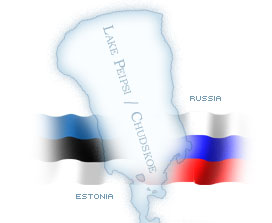
REPORT 4956-2005
Transboundary
diagnostic analysis of
lake Peipsi/Chudskoe
Transboundary diagnostic analysis of
lake Peipsi/Chudskoe
Final report on subcontract "Transboundary diagnositic
analysis and a strategy for the Transboundary lake
Peipsi/Chudskoe basin management programme" within
the framework of the UNDP/GEF project "Development
and Implementation of the Lake Peipsi/Chudskoe Basin
Management Programme"
NIVA 4956-2005
Preface
This work was a subcontract within the framework of the UNDP/GEF project "Development and Implementation of
the Lake Peipsi/Chudskoe Basin Management Programme"
The TDA were performed by 5 experts and was primarily based on a scientific and technical assessment, through
which the water-related environmental issues and problems of Lake Peipsi were identified and quantified.
Besides the experts own vast knowledge and experiences in the area, data and information was collected from
various projects; in particular the following 3 projects:
o EU FP5-project `MANTRA-East' (website www.mantraeast.org).
o VIRU-PEIPSI CAMP EU LIFE project (website www.envir.ee/viru.peipsi) project
o EU TACIS CBC Baltic Line 2000 project "Environmental Management of Lake Chudskoe".
It should be noted that the 2 last projects were still ongoing during this project, thus placing limitations on the full
utilization of these projects final data, finding and recommendations.
During the last three years, GEF has funded a number of regional TDA assessments at an average cost of
around US $ 350,000 (http://www.gefweb.org/wprogram/nov97/giwa.pdf). This TDA study had substantially less
financial support and which is reflected in its level on ambition. Still the project relied on data, information and
results from three relevant projects for this study which in an optimal situation should have provided the additional
indirect financial support. However, there were delays in project progress in especially the Tacis project which
cover an essential part of the drainage area to Lake Peipsi namely the Russian part. This delay certainly
hampered this TDA analysis and the data used and reported in this study should be used with highest precaution.
Nonetheless the establishment of good contacts with the Tacis project enabled access to pre-published data and
results.
The project team overcame initial barriers in its preparation, not least of which was the lack of transparency or
culture of information sharing within the region. Constructuve criticism and comments of earlier drafts were made
by the Steering Committee of the entire project including its biased geographical extent; weak, outdated, and
often incorrect data on the Russian side of the lake. This final redraft of the TDA has addressed all of these
criticisms, and the revised final report is available on the website http://www.peipsi.org/gef in Russian and
English.
We would warmly thank and acknowledge the UNDP/GEF Project Manager Ms Natalia Alexeeva and Estonian
Project Coordinator Ms Aija Kosk for valuable and constructive support during the entire duration of the project.
The Steering Committee of the UNDP/GEF project is also acknowledged for the feed-back on the draft results
and the report.
David Barton at NIVA is also acknowledged for the final remarks and quality assurance of the report.
The views expressed in the report are those of the authors and can therefore in no way be taken to reflect the
official opinion of the UNDP/GEF.
Oslo, February 2005
Per Stålnacke
NIVA 4956-2005
Contents
1. Executive Summary
5
2. Methodology
14
2.1 TDA definition and methodology
14
2.2 Geographic scope
16
2.3 Management scope
18
3. TDA Results
20
3.1 STEP I. Major perceived water-related environmental
transboundary issues and problems
20
3.2 STEP II. An overview of the specific actions proposed for each
identified issue
24
3.3 STEP III. Priority areas of future interventions: analysis of areas
where actions is proposed: problems stakeholders, actions, outputs
26
3.3.1 Eutrophication of Lake Peipsi (MMPI: B2)
26
3.3.2 Fishery management (MMPI: D4)
35
3.3.3 A2.Groundwater pollution and water distribution in the Narva
River region, and B5. Mining pollution from oil-shale activities
(MMPI: A2 & B5)
47
3.4 STEP IV. Environmental Quality Objectives
51
4. Recommendations for strategy approach to the Transboundary
Lake Peipsi/Chudskoe basin management plan
55
5. References
59
NIVA 4956-2005
1. Executive Summary
Objective and method
The overall objective with this Lake Peipsi (Chudskoe in Russian language) transboundary diagnostic analysis
(TDA) was to identify and assess the relative importance of environmental disturbances and threats to the waters
and their causes and to identify potential preventive and remedial actions including definition of environmental
quality objectives (EQOs).
With the basis in the TDA, the objective was also to present priority, practical and implementable proposals for
inclusion in the Lake Peipsi/Chudskoe Basin Management Plan.
Methodology and approach
This TDA followed the general GEF TDA framework guidelines for International Waters projects. The current TDA
was divided into the following four steps/levels with basis and inspiration in the methodologies given in other
TDA-reports (e.g. the Black Sea TDA; see reference list):
o STEP 1: MAJOR PERCEIVED WATER-RELATED ENVIRONMENTAL TRANSBOUNDARY ISSUES
AND PROBLEMS
O STEP II. ACTION AREAS - AN OVERVIEW OF THE SPECIFIC ACTIONS PROPOSED FOR EACH
IDENTIFIED ISSUE
o STEP III. PRIORITY AREAS OF FUTURE INTERVENTIONS: ANALYSIS OF AREAS WHERE
ACTIONS IS PROPOSED: PROBLEMS, STAKEHOLDERS, ACTIONS, OUTPUTS
o STEP IV. Environmental Quality Objectives (EQO)
The latter is an additional step but here included to facilitate consensus on the desired state of the Lake Peipsi
and basis for preparation of the joint measures based on the proposed Transboundary environmental objectives.
Data and information gathered
The TDA were performed by 5 experts and was primarily based on a scientific and technical assessment, through
which the water-related environmental issues and problems of Lake Peipsi were identified and quantified.
Besides the experts own vast knowledge and experiences in the area, data and information was collected from
various projects; in particular the following 3 projects:
o EU FP5-project `MANTRA-East' (website: www.mantraeast.org).
o VIRU-PEIPSI CAMP EU LIFE program supported Viru Peipsi CAMP project (website:
www.envir.ee/viru.peipsi).
o EU TACIS CBC Baltic Line 2000 program supported a project "Environmental Management of Lake
Chudskoe".
It should be noted that the 2 last projects were still ongoing during this project, thus putting limitations for full
utilization of these projects final data, findings and recommendations.
As shown below and in the main body of the report, there exist a huge uncertainty in the pollution sources and
loads from the Russian part of the lake Peipsi drainage basin.
Major geographical feature of study area
Lake Peipsi/Chudskoe is one of the largest European lakes with a surface area of approximately 3550 km2. The
lake and its basin is located in the Baltic Sea drainage basin since the lake discharges into the Narva River,
which in turn has its outflow in the Gulf of Finland. The lake is shallow with a depth of maximum 15 m. At present
Lake Peipsi serves as an indirect source of the public water-supply for Narva (ca 75,000 inhabitants).
In continuing outlining geographical features, we will hereafter focus upon the Lake Peipsi drainage basin and
disregard the Narva River basin.
The Lake Peipsi drainage basin has a size of almost 45,000 km2 and thus approximately 12 times larger than the
lake surface itself. The basin is shared by Russia (59 %), Estonia (33 %), Latvia (8 %) and Belarus (0.3%). The
largest sub-catchment is the Velikaya River basin, draining approximately 58 % (25,765 km2 mean discharge: 195
5
NIVA 4956-2005
m3/s) of the whole Lake Peipsi drainage basin. The Emajõgi River basin is the second largest sub-catchment,
covering approximately 20 % (8745 km2 mean discharge: 68 m3/s) of the total basin. The Emajõgi sub-catchment
holds the largest lake in the basin, Lake Vörtsjärv, with a surface area of around 270 km2.
The dominating land cover class is forests and semi-natural areas, covering approximately 63% of the basin. For
clarification, semi-natural areas comprise: (i) patchy areas with a mixture of agricultural and forest, (ii) scrublands
and (iii) non-agricultural open areas. This is followed by the land cover class agricultural areas, covering around
30% of the basin. The agricultural land is found mainly in Latvia and Estonia, while forests and semi-natural areas
constitute most of the Russian part of the basin. Wetlands are scattered throughout the basin, although a
relatively large portion is found near the shores of Lake Peipsi.
The population in the basin is approximately 1 100 000. The two largest cities, Pskov (Russia) and Tartu
(Estonia), with 206 000 and 100 000 inhabitants, respectively, are the two largest point sources in the drainage
area.
The drainage basin is flat, with a highest point of 317m above sea level and an average elevation of 163 m. This
basin is a typical North-European lowland area of glacial origin, characterized by Palaeozoic bedrock, covered by
unconsolidated glacial materials of variable thickness.
Major management features of study area
In Estonia, the Ministry of the Environment is responsible for environmental policy making and planning,
development of environmental legislation covering the areas of air, marine-, surface- and groundwater, nature
conservation, and use of natural resources.
In Russia, the fundamental legislative framework on the use of water resources is laid out in numerous
documents (e.g., RF Water Code No.167-FZ, of 16.11.1995). On the national level, the main body currently
working in the sphere of use and protection of water resources is the Ministry of Natural Resources of the
Russian Federation.
The Estonian-Russian Transboundary Water Commission was established in 1997 after signing of an
intergovernmental agreement on the protection and sustainable use of transboundary water bodies between the
Republic of Estonia and the Russian Federation. The Commission organises exchange of monitoring data
between the Parties in accordance with the agreed monitoring program, defines priority directions and
programmes of scientific studies on protection and sustainable use of transboundary waters, and agrees on
common indicators of quality for transboundary waters, methods of water testing and conducting analyses. At
occasions when an extraordinary situation occurs on transboundary waters, the Parties will immediately inform
each other through the competent agencies and the commission.
Besides the agreement signed in 1997, Estonia and Russia have also set an agreement on fisheries of Lakes
Peipsi, Lämmijärv and Pskov (1994), an agreement on mutual fishing relationships (1994) and an agreement on
environmental protection (1996).
Several international treaties and agreements regulate the use and protection of the water body of Lake Peipsi.
The Convention on the Protection and Use of Transboundary Watercourses and International Lakes of 1992 is a
framework convention that promotes cooperation between the parties. Also the Helsinki Convention on the
Protection of the Marine of the Baltic Sea Area from the years 1974 and 1992 affects the management of the
lake. The same holds true for the Convention on Environmental Impact Assessment in a Transboundary context
from Espoo in 1992 and the Convention on Biological Diversity from Rio de Janeiro in 1992.
The pol uter pays principle for water abstraction and wastewater discharges is reflected in both Estonian and
Russian legislation. Until 1994, the water permits and charges system was quite similar in both countries. In
1994, Estonia established effluent concentration standards according to Helcom recommendations.
The implementation of the European Commission Water Framework Directive (2000/60/EC) wil in the coming
decade most likely be the key determinator for the water management of Lake Peipsi. At least, it will affect the
present Estonian law, i.e., Water Act from 1994. Unfortunately, the present definition of the river basin district
comprises only the Estonian territory of the Lake Peipsi drainage basin.
6
NIVA 4956-2005
The major perceived problem issues (MPPI)
The following 4 major perceived transboundary problems were identified:
o
Eutrophication of Lake Peipsi (including riverine loads)
o
Fishery management
o
Groundwater pollution and water distribution in the Narva River region
o
Mining pol ution from oil-shale activities
Our results show that the main water related environmental issue of concern in the transboundary Lake
Peipsi/Chudskoe region is eutrophication. Eutrophication has influenced the biogeochemical cycles leading to
undesirable states of nutrient concentrations in the Lake Peipsi/Chudskoe and secondary impacts upon fish
stocks.
Eutrophication of Lake Peipsi
Nitrogen loads to Lake Peipsi have decreased - phosphorus levels remain surprisingly stable
The fall of the Iron Curtain resulted in dramatic changes in Eastern Europe, including substantial reductions in the
use of fertilisers and livestock production, as well as a marked decrease in water consumption by both the
general population and industries. Paradoxal y, this situation has created a unique opportunity to study the way
that rivers have responded to these changes. Recent scientific studies, based on comprehensive analysis of
existing time series of water quality data in Eastern European Rivers, have clearly illustrated that large cuts in
nutrient inputs do not necessarily cause an immediate response, particularly in medium-sized and large
catchment areas.
In lake Peipsi drainage area, the impact of the mentioned reductions on concentrations of nutrients at 22
sampling sites on 17 Estonian rivers during the period 19862001 (for most of the sites) has been examined in a
scientific analysis. Results showed that were statistically significant downward trends in total nitrogen (TN)
concentrations at 20 of the 22 sites. These decreases in TN can be explained by: (i) radical reductions in the use
of fertilisers; (ii) reduction of cultivated and ploughed areas and increased proportions of grassland and
abandoned land; (iii) improvements in farm management practices. For total phosphorus (TP), significant
downward trends were detected at only two sites, and there were also two sites with upward trends. The TP
trends can be explained by changes in phosphorus emissions, mainly from municipal sewage treatment plants.
Considering the TN:TP ratio, 15 sites with downward trends and one with a statistically significant upward trend
was detected. With the basis of the existing, though scattered, data from River Velikaya the phosphorus and
nitrogen loading from Russian catchment seems not to have been diminished. Instead there are indications of
somewhat increased nutrient concentrations the last 5-7 years. Further evidence on this can be seen in the lake
data near the outlet of Velikaya river where TP concentration has been quite stable over time.
Lake Peipsi classified as being in `good' to `moderate' ecological status
The major factor affecting the water quality is high phosphorus concentration in the lake as well as in rivers in the
basin. The southern and shallower part of the lake, Lake Pihkva/Pskov is under higher anthropogenic pressure
than the Lake Peipsi s.s. (the northern part). The first assessment of the ecological status of L. Peipsi according
to the WFD principles shows, that according to present hydrochemical and phytoplankton data the ecological
quality of L. Peipsi is mainly moderate. According to the macrophyte and fish indices the status is intermediate
between good and moderate while zooplankton and benthic macro invertebrates indicate good ecological status.
Phosphorus reduction from municipal wastewater most urgent action
As the main proportion of phosphorus is coming through the two major rivers Velikaya and Emajõgi, the main
attention should be paid to these two rivers. Connection to wastewater treatment plants (WWTP) and/or improved
P-removal at existing WWTPs will give an immediate decrease especially for point sources in close proximity to
the lake (e.g. Pskov city) and solve hygienic problems locally.
7
NIVA 4956-2005
Diffuse sources crucial for the long-term control of the ecological situation
Model results from a scenario study indicate that changes in the amount of cultivated arable land will be the
major factor controlling the future nutrient loads into Lake Peipsi. The long-term future strategies for nutrient load
reduction should thus mainly focus on lowering the agricultural nutrient runoff. Today, agriculture is responsible
for the largest portion of the total loading to the lake even though the losses from agriculture per unit area (e.g.
kg/km2) are at a very low international level. The future loadings will heavily depend on how the agricultural land
will be used in the future, e.g. how much of the present set-aside and abandoned land will be used in future, and
the intensity of the agricultural sector. A land-use scenario study estimated that a decrease in the share of
agricultural lands by some 20-25% is likely to occur in the near future. At the same time, the share of forests will
remain the same, as clear-cuts compensate the increase in the area. The future of natural grasslands stays
unclear at present, as the former grasslands become overgrown due to abandonment of management, while new
(pseudo-) natural grasslands appear to replace the abandoned fields.
Low N:P ratio
The results also show that the riverine loads with nutrients will change surprisingly little even when extreme
future change scenarios are being applied. At present there is a clear decrease in the N:P ratios, at least in the
Estonian rivers, which most likely is the reason for increased observations of blue-green algal (cyanobacterial)
blooms in the lake in recent years. Results from an ecosystem model revealed that reduced riverine loading of
nitrogen enhances blue-green's growth; increased riverine loading of phosphorus enhances the growth of both
blue-green's and diatoms; and phytoplankton growth is strongly influenced by weather conditions: in warmer
water and at lower water levels much higher concentrations of phytoplankton is expected to occur. Admitting the
important role of the climatic factor as force majeur, the most important measures that could be done to achieve
the further improvement of water quality in Lake Peipsi would be a strong reduction of phosphorus loading from
both the Estonian and Russian parts of the catchment.
Transboundary cooperation prevents overfishing in Lake Peipsi
The total catch of fish in Lake Peipsi-Pihkva has declined. During the period 1935-40 the fish resources were
sufficient to guarantee full-time employment for approximately the same number of people as today. In spite of
somewhat different approaches to fishery and management goals in Estonia and Russia, the joint management
of commercial fish resources has in broad term and in comparison to other cross-border organizations (e.g.,
International Baltic Sea Fisheries Commission) been successful in avoiding overfishing, even though some
overfishing of pike-perch has been noted.
However, the biggest problem of the fishery is the fact that the number of professional fishermen is too big. In
2003 the approximate number of fishermen in Estonia and Russia was ca 400 and 900, respectively. During the
Soviet period (end of the 1980s) the numbers were approximately 200 and 300 respectively. Based on the fishing
capacity and first buyer prices it can be generalised that the number of fishermen was in rather good balance with
the fish resource during the Soviet period. However, during the last decade the fish price on the domestic and
western market has increased much more slowly than averages salaries in Estonia and Russia, the relative
income of fishermen has steadily decreased. This has already resulted in increasing social problems. So, even if
it is clear that the L. Peipsi-Pihkva fishery remain important for employment also in future, the number of the
fishermen is bound to decrease step by step, given the trend in the rest of Western Europe. As a comparison, in
Europe's third largest freshwater lake, the Lake Vänern in Sweden there are today less than 100 commercial
fishermen which only earn about 1/3 of their income from fishery compared to approximately 1300 currently in
Lake Peipsi.
On the other hand, the fish production of Lake Peipsi is very high in a European context. The prevalence of the
'grazing food chain' and modest 'microbial loop' are mostly responsible for that, and for high production of
piscivorous fish. The higher the ratio of piscivorous to non-piscivorous fish is, the less phytoplankton and better
water quality could be assumed. Thus, from a pure water management point of view, effective protection
measures of piscivores fish, like pikeperch, perch and pike, should be worked out and implemented for improved
water quality that in a second stage will result in higher fisheries revenue.
8
NIVA 4956-2005
Groundwater pollution and water distribution in the Narva River region
Groundwater is the principal source for centralised water supply to towns and settlements throughout the Peipsi-
Narva River Basin, except in the town of Narva, where the public water supply is based on surface water from
Narva River. The surveyed and approved abstraction of groundwater is in the order of 125 000 m³/day, but it is
estimated that only half of this al ocation is utilised. For urban areas, the main source of groundwater is the
Cambrian-Vendian aquifers, whereas the water supply in rural areas is mainly based on the near-surface karst
aquifers in the Ordovician limestone. However, the main abstraction of groundwater is the dewatering of the oil-
shale mines where daily pumping is in the range of 400 000-700 000 m³/day, depending on the weather
conditions, with the annual average for 1997 at 608 000 m³/day.The groundwater in the Peipsi-Narva Basin
generally meets the requirements of the Drinking Water Standard of Estonia (EVS 663, 1995. Joogivesi) and of
Russia (Drinking Water Requirements, 1996). However, with depth the groundwater becoming increasingly
saline, the content of chloride may exceed the suitability standard value of 350 mg/l (both in Estonia and Russia).
Locally in Estonia, the deep groundwater has a raised content of barium. In mining areas, shal ow groundwater
may be heavily polluted. Near the industrial waste dumps of ashes, cinders and other by-products from oil shale
processing, the shallow groundwater is also pol uted. The solution of the problems is hampered by a lack of
cross-border coordination and cooperation, further exacerbated following the collapse of the former Soviet Union
and the reintroduction of the border regime between Estonia and Russia. Furthermore, financial constraints,
differences in monitoring methodologies, as well as problems of communication and language represent major
obstacles to an efficient transboundary environmental management of the lake. Currently, there are multiple
environmental and economic development project ideas under development by the local and regional authorities.
However, these efforts are not coordinated. Finally, differences in terms of environmental planning and
management capacities are being felt between Russia and Estonia, the latter being more advanced in terms of
harmonisation with European legislation due to EU membership in 2004. Such discrepancies also contribute to
impeding the definition and implementation of joint policy actions in the Estonian-Russian cross-border region.
Mining pollution from oil-shale activities
The mining of oil shale in North-East Estonia contribute to pollution loads in the rivers as well as to Lake Peipsi
itself. There is widespread understanding among laymen that the mining waters are a significant pol ution source.
There has also been concern mainly raised by Russian authorities that this may affect the quality of waters in the
reservoir in the Narva Region. Mines use rivers as recipients for discharges waters pumped out from the mines;
one ton of oil shale mining pumps out about 15 to 20 m3 of groundwater. Mining waters normally with high
alkalinity contain high concentrations of suspended solids, oil shale phenols, hydrocarbons, sulphates. The
mining water is exposed for treatment in sedimentation ponds and by dilution before discharging to the Lake
Peipsi or to the river Narva. In Estonia, there is no special legal act for mine water. Since 2002, the Ministry of
Environment in Estonia has established permanent monitoring stations to assess the impact of mining waters to
the environment, including sulphate discharges. Results from these measurements show that the concentration of
sulphates, phenols, oil and copper in most cases are relatively low and do not exceed the permitted levels. It may
then be concluded that the mining pollution has a very marginal effect on the ecological status of Lake Peipsi and
Narva Reservoir. Nonetheless it is proposed that joint Estonian and Russian emission standards are established
according to water user (drinking, fish cultivation etc.). It is also proposed that sulphate emissions from mining
activities are related to corresponding emissions from municipal waste waters and thus included in the joint
monitoring strategy. At present sulphate treatment is technical y not easy to solve because of lack of appropriate
method for extracting of sulphates from mining waters. In addition, the effects to ecosystems are not ful y known.
Root causes
It was quite evident that the common denominator for the root-causes in all the four identified MPPI is connected
to lack of knowledge in general. This includes issues like information spreading and interpretation, training and
education for stakeholders, inadequate scientific understanding and inadequate or unreliable information, and
9
NIVA 4956-2005
inadequate access to technical and scientific information. In addition, economic root-causes are also pointed out
as causes of the eutrophication and fishery problems.
Uncertainty
In Lake Peipsi and its drainage basin, assessment on water quality, pollution loads and sources is more difficult
than in other situations, because the required administrative statistics and GIS (spatial) data are often not
harmonized between the countries. The Lake Peipsi and its basin can be regarded as data-rich for the Estonian
part, and data-poor with respect to the Russian part. Lack of reliable data of nutrient loading and source
emissions from Russian part of catchment of Lake Peipsi was regarded as the main uncertainty. Other
uncertainties were mainly connected to differences in monitoring methodologies and different perceptions of the
problem in Estonia and Russia.
Priority environmental objectives
Borrowing from methodology commonly used in the European Union and other regions, the present TDA
identifies four Environmental Quality Objectives (EQOs), which represent the regional perspective of major goals
for the regional environment. The use of EQOs helps to refine the TDA process by achieving consensus on the
desired status of Lake Peipsi/Chudskoe and its basin. Within each EQO (which is a broad policy-oriented
statement), several specific targets were identified. Each target generally had a timeline associated with it, as wel
as a specific quantitative level of improvement/ status. Thus, the targets il ustrate the logic chain for eventual
achievement of the EQO. Finally, specific activities and related interventions or actions were identified to permit
realization of each of the targets, within the time frame designated.
The EQO results are presented in main report. The suggested measures and interventions are discussed in the
next section of this Executive Summary.
Recommendations for strategy approach for the transboundary Lake Peipsi/Chudskoe Basin
Management Plan.
The TDA analysis clearly showed that there is an urgent need to develop a priority list of common environmental
objectives for the whole transboundary lake water basin that should coordinate national environmental objectives
and develop a common denominator acceptable by the two governments that is to be addressed by cooperative
efforts of the governments of Estonia and Russia with coordination provided by the Estonian Russian joint
transboundary water commission.
On the transboundary basin level, preparation of the joint measures based on the common environmental
objectives for the whole transboundary water basin is coordinated across the border through developing an
umbrella Lake Peipsi/Chudskoe Basin Management Program for the whole transboundary water basin. The
program will address environmental issues of importance to the whole transboundary water basin and will include
practical recommendations for the Lake Peipsi/Chudskoe nutrient load reduction and prevention, and the
sustainable conservation of habitats and ecosystems in the cross-border regional context.
Below is a bul et point list of the TDA recommendations for a strategy approach for the transboundary Lake
Peipsi/Chudskoe Basin Management Plan.
o In the short term perspective, the priority actions in the Lake Peipsi Basin should focus on the phosphorus
reduction from municipal wastewater, specifically by the Pskov municipality of Russia which beyond any
doubt is the largest single phosphorus source. The uncertainty regarding the emissions from Pskov City must
be urgently settled e.g. by the Estonian-Russian Transboundary Water Commission. Pollution emissions from
small settlements and single cottages and village houses should also be addressed. Treatment plants in
small settlements are often out of order. Usually these small treatment plants only have sedimentation ponds
or biological ponds after the treatment and often full of sediments. Local authorities have very limited
resources to maintain their treatment plants. Incentives should be developed for inhabitants to connect to the
centralised sewage system. This problem should be addressed by developing appropriate management
10
NIVA 4956-2005
systems for small settlements. It should also be mentioned that the amount of wastewater most likely will
increase in both countries due to increased economic activities in many sectors. Specific wastewater
treatment requirements are given in the EU directive on wastewater treatment (directive 271 from 1991).
According to this directive a secondary (biological) treatment must be undertaken according to the following
time schedule:
· towns >15,000 PE before 2001
· towns >10,000 PE before 2006
· towns > 2,000 PE before 2006 for wastewater discharged into fresh waters.
According to the directive nutrient removal must be undertaken in towns with more than 10,000 PE, if
wastewater flows into a vulnerable waterbody. Without doubt Lake Peipsi should be classified as a waterbody
vulnerable to pollution with phosphorus, According to the directive the minimum outlet criteria for phosphorus
removal are:
· towns>100,000 PE: 1 mg P/l or 80 % P removal
· towns> 10,000 PE: 2 mg P/l or 80 % P removal.
The more detailed proposals for measures to be carried out regarding wastewater are found in Andersen et al
(2001)
o In the long term perspective, the strategy should focus on prevention of nutrient pollution from diffuse
sources, including agriculture and forest.
o According to the most recent information the Estonian territory is divided into 3 main river basin districts. It is
suggested that the entire drainage basin of Lake Peipsi (including Russia and and Latvian parts) is
considered in the definition of the riverbasin (as stated in the WFD-text: Articles 3 and 13).
o Development of a joint transboundary program for water monitoring in the two countries by e.g., using the
EU-Directive Guidelines (WFD1, Urban Wastewater Directive2, Bathing Water Quality Directive3, Nitrates
Directive4, Freshwater Fish Directive5) and the United Nations European Economic Commission (UN ECE)
guidelines for monitoring and assessment of transboundary rivers and lakes6. A report by Sults (2004)
entitled `Proposals for coordinated monitoring strategy and monitoring programme on the Lake
Peipsi/Chudskoe ozero' has been already prepared within the framework of this overall UNDP/GEF project
which could be used as basis for joint actions by the competent authorities and the joint Estonian-Russian
Water Commission.
o Development of joint assessment procedures (e.g., via the Joint Estonian-Russian Commission and its
working group on Monitoring and Research), including compilation and share of pressure data like riverine
loads and other pollution source data. More precisely to (i) prepare a biennial background on the nutrient
load and its sources, which shall include (1) more accurate data on land use in riverine catchments,
especially, on agricultural lands subdivided into cultivated arable lands, pastures, grasslands, fallow lands
and unused lands, and (2) more accurate and reliable data on nutrient load source apportionment; (ii)
prepare a background report on long-term trends in the riverine load dynamics and nutrients' concentration;
1 http://europa.eu.int/comm/environment/water/water-framework/guidance_documents.html
2 http://europa.eu.int/comm/environment/water/water-urbanwaste/directiv.html.
Guidance document: http://europa.eu.int/comm/environment/water/water-urbanwaste/waterguide_en.pdf
3 http://europa.eu.int/water/water-bathing/index_en.html
4 http://europa.eu.int/comm/environment/water/water-nitrates/index_en.html
5 The EC Freshwater Fish Directive (78/659/EEC) was adopted in 1978. It requires that certain designated stretches of water
(rivers, lakes or reservoirs) meet quality standards that should enable fish to live or breed in the designated water, although
this will also depend on physical conditions. The Directive identifies two categories of water; those suitable for: salmonid fish
(salmon and trout) - these are generally fast flowing stretches of river that have a high oxygen content and a low level of
nutrients and cyprinid fish (coarse fish - carp, tench, barbel, rudd, roach) - these are slower flowing waters, that often flow
through lowlands. The Directive sets different standards for salmonid and cyprinid waters.
6 http://www.unece.org/env/water/publications/pub74.htm
11
NIVA 4956-2005
(iii) develop a joint coordinated database on water quality and quantity, land use, and point pollution sources.
Further details on this can be found in a report prepared by Stålnacke et al (2001). The WFD CIS Guidance
Documents on Pressures and Impacts7 could also provide more detailed guidance. Additionally, methods of
assessing, quantification and reporting sources of nitrogen, phosphorus and hazardous substances are
agreed in OSPAR in the HARP-Process (Harmonised Quantification and Reporting Procedures)8.
o Encouraging better agricultural practices and management of fertiliser targets to decrease nutrient losses
and improvement of water quality. The apparent huge nutrient retention capacity in the drainage basin,
especially in the agricultural system, should be maintained. Strategies and careful assessment of the effects
of designing new drainage systems or restoring the old drainage systems (drainage flow regulation, polder,
artificial wetlands, controlled drainage etc.) should be worked out. In order to limit the losses linked to
agricultural activities, the main types of actions that the Nitrates directive promotes (in annexes II-codes of
good practice, and III-actions programmes) simultaneously concern:
- Crop rotations, soil winter cover, catch crops, in order to limit leaching during the wet seasons.
- Use of fertilisers and manure, with a balance between crop needs, N inputs and soil supply, frequent
manure and soil analysis, mandatory fertilisation plans and general limitations per crop for both mineral and
organic N fertilisation.
- Appropriate N spreading calendars and sufficient manure storage, for availability only when the crop needs
nutrients, and good spreading practices.
- "Buffer" effect of non-fertilised grass strips and hedges along watercourses and ditches.
- Good management and restriction of cultivation on steeply sloping soils, and of irrigation.
- Economic instruments to be used to motivate a more sustainable use of natural resources should be
worked out, such as emission charges, user charges, and product charges. A sound analysis of the effect of
implementing subsidies should be conducted since granting subsidies may cause significant distortions in tax
system and enables the transfer of pollution damage costs as indirect costs to the entire society.
o The respective state legislations and the cross-border initiatives in the Intergovernmental Russian-Estonian
Commission for Fishing seems to work properly and effective. However, there is a necessity to further tuning
and harmonisation of the fish resources regulation in an overal lake water management perspective. More
precisely, effective protection measures of piscivorous fish - like pikeperch, perch and pike - should be
further elaborated and implemented for improved water quality and subsequent increased fisheries revenue.
o As the most important source for drinking water is groundwater, a documentation of the systems and
standards in use is important as a basis for the development of a common groundwater management
strategy. Based on the report by Johansson & Anderberg. (eds). 2001), proposals on policies and tools for
the management of groundwater resources may be put forward. In the short term, the objectives related to
groundwater are:
o To adjust water abstraction licenses in order to
- allocate better quality water sources to public water supply,
- achieve greater sustainability of groundwater abstraction from the deep aquifers, and
- improve protection of water environments in the Kurtna Lake district Nature Reserve (Estonia).
o To adjust the abstraction of the water supply companies and supply consumers with domestic water of
better quality.
In the long term:
o Consumers will receive water that meets the Estonian/Russian Drinking Water Quality Standard.
7 WFD CIS Guidance Document No. 3 (Dec 2002). Analysis of Pressures and Impacts. Published by the Directorate General
Environment of the European Commission, Brussels, ISBN No. 92-894-5123-8, ISSN No. 1725-1087.
http://europa.eu.int/comm/environment/water/water-framework/guidance_documents.html
8 OSPAR Convention for the Protection of the Marine Environment of the North-East Atlantic, Harmonised Quantification and
Reporting Guidelines. For Nutrients: Norwegian Pollution Control Authority (sft) 1759/2000 (ISBN 82-7655-401-6)
http://www.ospar.org/eng/html/welcome.html (Measures -> Agreements -> List of Agreements (2000);
For Hazardous Substances: sft 1789/2001 (ISBN 82-7655-416-4) http://www.sft.no/english/harphaz/
12
NIVA 4956-2005
o The pollution load on receiving water will be reduced for their water quality to meet objectives to
be defined.
The legislative framework should incorporate the following international legislation and standards:
o The EU Water Framework Directive.
o The EU Groundwater Protection Directive.
o The EU Drinking Water Directive
o The EU Freshwater Fish Directive
According to Johannsson and Anderberg (2001), the two major groundwater management problems are the
over-abstraction of water from the Cambrian-Vendian aquifer system for urban water supply and the mine
dewatering. The abstraction from the Cambrian-Vendian system should be decreased to avoid future
problems with seawater intrusion. Water savings and change of source of supply is to be considered.
Alternative sources are groundwater from the Ordovician limestone aquifers or surface water from Lake
Peipsi or the Narva River. For the mine dewatering alternative dewatering strategies have to be studied,
including the use of modern hydrological and hydrogeological model ing tools. Guidelines for monitoring and
assessment of groundwater (e.g. on inventories, indicators, application of models and state-of-art in
monitoring and assessment) can be found in UN-ECE (2000)9. The European Commission adopted a
proposal for a new Directive to protect groundwater from pollution on 19th September 2003
(COM(2003)550)10. Based on an EU-wide approach, the proposed Directive introduces, for the first time,
quality objectives, obliging Member States to monitor and assess groundwater quality on the basis of
common criteria and to identify and reverse trends in groundwater pollution. The proposed Directive will
ensure that ground water quality is monitored and evaluated across Europe in a harmonised way. More
specific guidance on methods for the calculation of representative mean concentrations, for data aggregation
and trend (reversal) assessment at the groundwater body level respectively for groups of groundwater bodies
can be found in Grath et al (2001).
o It is proposed that joint Estonian and Russian emission standards are established, depending on the carrying
capacity of the joint water bodies, and according to water user (drinking, fish cultivation etc.). It is also
proposed that sulphate emissions from mining activities are related to corresponding emissions from
municipal waste waters and thus included in the joint monitoring strategy. In general, for high sulphate
content in water the owners of mines should pay pollution charges.
The more detailed proposal for actions and interventions are given in the main report under the section `Step IV.
EQO'.
.
9 UN-ECE. 2000. Guidelines on Monitoring and Assessment of Transboundary Groundwaters.
http://www.unece.org/env/water/publications/documents/guidelinesgroundwater.pdf
10 http://europa.eu.int/comm/environment/water/water-framework/groundwater.html
13
NIVA 4956-2005
2. Methodology
2.1 TDA definition and methodology
According to Annex 8 of the International Waters Program Study, the purpose of a Transboundary Diagnostic
Analysis (TDA) is to assess the relative importance of environmental disturbances and threats to international
waters and their causes and to identify potential preventive and remedial actions. More precisely, a TDA is
primarily based on a scientific and technical assessment, through which the water-related environmental issues
and problems of a region are identified and quantified. In addition their causes are analyzed and their impacts
assessed, mainly from an environmental and management perspective. The analysis normal y involves an
identification of causes and impacts at national, regional, and global levels and the socio-economic, political and
institutional context within which they occur. The identification of the causes specifies sources, locations, and
sectors from an institutional and societal perspective. In this study on lake Peipsi/Chudskoe (in the following
referred to as Lake Peipsi), we restrict the analyses to solely transboundary regional issues of interest for both
countries, i.e., Estonia and Russian Federation.
The purpose of conducting a Transboundary Diagnostic Analysis (TDA) is to scale the relative importance of
sources and causes, both immediate and root, of transboundary `waters' problems, and to identify potential
preventive and remedial actions.
The TDA should provide a technical basis for the development of a Strategic Action Programme (SAP). The
Operational GEF Strategy for international water projects states that, "the overall strategic thrust of GEF-funded
international waters activities is to meet the agreed incremental costs of:
1. assisting groups of countries to better understand the environmental concerns of their international waters and
work collaboratively to address them;
2. building the capacity of existing institutions (or, if appropriate, developing the capacity through new institutional
arrangements) to utilize a more comprehensive approach for addressing transboundary water-related
environmental concerns; and
3. implementing measures that address the priority transboundary environmental concerns".
TDA has been applied to many regions of the world, e.g., Bermejo, Lake Tanganyika, Danube, the Red Sea,
Benguela, the Black Sea, Pacific, Mediterranean, South China Sea, and the Nile (see reference list). The TDA
methodology practical y applied in different studies varies to a certain degree. This is due to variation in local
circumstances under which this methodology has been applied earlier. In this TDA study, we have to the greatest
possible extent tried to follow the general UNEP TDA framework guidelines that in a broad context is very similar
to the GIWA Methodology for international water assessments (GIWA, 2002). Components include (i) scaling (i )
scoping (iii) detailed assessment (iv) causal chain analysis and (v) policy option analysis.
In summary, this TDA follows the GEF TDA framework guidelines for International Waters projects.
However, an additional step was also introduced, that is, the use of environmental quality objectives (EQOs) to
facilitate consensus on the desired state of the Lake Peipsi during the coming decade. The EQOs naturally led to
the identification of specific targets to be met within the desired time frame, which then led to the identification of
specific interventions and actions that can be considered in the framework of the SAP, i.e., Lake Peipsi/Chudskoe
Basin Management Program.
We decided to design the current TDA into four steps/levels with basis in the methodologies given in other TDA-
reports (e.g. the Black Sea TDA). The 4 levels or steps are as follows:
14
NIVA 4956-2005
STEP 1: MAJOR PERCEIVED WATER-RELATED ENVIRONMENTAL TRANSBOUNDARY ISSUES AND
PROBLEMS
The identification of the major perceived problem issues (MPPI) was the first step in the TDA process and
provided the justification for the causal-chain and in-depth analyses (Step 2 and 3, respectively). "Perceived" is
here used to include issues which may not have been identified or proved to be major problems as yet due to
data gaps or lack of analysis, but which are expected to lead to major problems in the future under prevailing
conditions. Issues of pure national concern were not considered. The MPPIs were then ranked according to their
relative significance from the transboundary or regional perspectives. This step, consisting of individual tables,
serves as a logistical "map" for the TDA.
In this study, four major perceived problems of environmental degradation in the Lake Peipsi were identified.
Each MPPI also examines the transboundary elements of these problems (elements shared by the involved
countries) and then relates them to their major underlying institutional or societal root causes. In almost all cases,
the root causes are common to a large number of environmental problems and require changes in the role given
to environmental issues within the priorities of governments and the public in general.
The MPPIs represent the perceptions of the scientific and expert community (i.e. authors of the report) on the
priority environmental issues of the region. The experts view was discussed and agreed at one meeting with the
Steering Committee of the project that consist of major stakeholders in the region (e.g., Ministry representatives,
NGOs, environmental authorities, representatives from the Joint Estonian-Russian Transboundary Water
Commission, national water experts) and at the project meeting with stakeholders.
STEP II. Action areas - an overview of the specific actions proposed for each identified issue
Based on the issues identified in Step one, this level by means of tables for each MPPI - examine the
underlying nature of specific problems identified as contributors to the decline of the Lake Peipsi/Chudskoe
environment. For each specific problem, the tables identify stakeholders (or major actors, where appropriate).
They also examine the management and scientific uncertainties and knowledge gaps which need to be filled.
Finally, a series of practical proposals (for inclusion in the Lake Peipsi Strategic Action Plan or Water
Management Program) are given.
STEP II is sometimes also entitled 'a causal chain analysis'. This normally includes an analysis to determine the
primary, secondary and root causes for these problems/issues and their linkages. This is normally visualised in
rather complex diagrams. In our opinion, these diagrams often become far too complicated and best suited for
studies where a priori knowledge is total y absent.
STEP III. PRIORITY AREAS OF FUTURE INTERVENTIONS: ANALYSIS OF PROBLEMS, STAKEHOLDERS,
ACTIONS, OUTPUTS IN AREAS WHERE ACTIONS ARE PROPOSED
Many of the identified "action areas" could only be treated rather superficially in Step two. More information was
needed if the recommended actions were to be properly justified. The function of Step three is to present the
detailed justification or proposals. The reader will find information on the relative importance of certain sources of
pollution, on identified "hot spots" requiring urgent action, on specific actions needed to protect biodiversity,
promote better management of living resources, to protect habitats or to manage the lake in an integral manner.
Priorities of interest to the national level only were not considered. The cost estimates of proposed investments
were in most cases not possible to assess due to practical reasons (lack of sufficient data and information or lack
of definition of the level of ambition). Data and research needs will be identified as a basis for future activities in
the design and targeting of research as well as data collection & interpretation, monitoring and evaluation. The
main objective will be to assist in overcoming the scientific uncertainties and/or barriers in the application of
management and policy tools for the sustainable use of water resources.
Background information regarding management tools that are prescribed as part of the proposed solutions or that
are implied in the proposed solutions is provided. A description of all the stakeholders, including institutions,
15
NIVA 4956-2005
organizations, ministries, agencies and industry related to the perceived issues is also incorporated. The
information pertaining to this list will NOT include the effect of the issue on stakeholders, the nature and
effectiveness of the interactions between the stakeholders nor their strengths or weaknesses in view of their
actual and/or potential role in managing water and water dependent resources.
STEP IV. Environmental Quality Objectives (EQOs)
Borrowing from methodology commonly used in the European Union and other regions, the present TDA also
identifies a series of draft Environmental Quality Objectives (EQOs), which represent the regional perspective of
major goals for the regional environment. An EQO analysis is normally not conducted in a TDA. However, it has
lately been introduced in some projects, e.g., GEF/UNEP (2002). In addition, GEF IW: Learn (2002) also stressed
the need to introduce EQOs in a TDA.
The use of EQOs helps to refine the TDA process by achieving consensus on the desired status of the Lake
Peipsi. Within each EQO (which is a broad policy-oriented statement), several draft specific targets were
identified. Each target generally had a timeline associated with it, as wel as a specific level of improvement or
target status. Thus, the targets illustrate the logical chain of events required for eventual achievement of the
EQO. Specific interventions or actions were identified to permit realization of each of the targets. It should be
pointed out that the prime purpose of the TDA is to determine priority transboundary problems. In general, for
each MPPI there is a corresponding EQO and the targets and interventions have been prepared with close
reference to the Causal Chain Analysis, noting the importance of addressing the root causes. The EQOs naturally
led to identification of specific targets to be met within the desired time frame, and from there identification of
specific interventions and actions that can be considered in the framework of the SAP, i.e., Basin Management
Program; the next phase in the Peipsi GEF-UNDP project.
2.2 Geographic scope
Conducting a comprehensive transboundary diagnostic analysis is only possible if an entire water basin and its
associated drainage basin are covered under the study. This is required in order for the interactions between the
aquatic, terrestrial and human sub-systems to be identified, in so far as they are linked through mechanisms of
the hydrological cycle. More particularly the impacts of the land-based activities on water resources and their
contribution to water-related environmental stresses can be demonstrated only if all sources, sinks and shared
lake resources are included in the assessment. This requires the commitment of all the countries that are located
in the catchment basin or surround the shared lake area to participate in the process.
An understanding of the geomorphology of the area and the biophysical processes related to water occurring
within the system is fundamental to the conduct of a TDA, since it is necessary to understand the fate and flow of
contaminant materials in the system, including temporary storage in transitory sinks, remobilization processes,
and ultimate sinks. It serves the purpose of identifying the likely effects of anthropogenic interference in the
hydrological and ecological regime and the likely effects of changes in natural processes and human activities. An
identification of critical areas and processes that need to be maintained in their natural state for the sustainability
of the water dependent living resources wil be included as a major consideration in the TDA. In the Lake Peipsi
case, the geographic boundaries are self-evident since the watershed delineation is well-established.
Major geographical feature of study area
Lake Peipsi/Chudskoe is one of the largest European lakes with a surface area of approximately 3550 km2. The
lake and its basin are located in the Baltic Sea drainage basin since the lake discharges into the Narva River,
which in turn has its outflow in the Gulf of Finland. The lake is shal ow with a depth of maximum 15 m.
Lake Peipsi is and unique water body in European context. Other large lakes in the region, lakes Ladoga and
Onega, are incomparably deeper. Large lakes in Sweden have a totally different catchment geology and ionic
composition. The amount of water in L. Peipsi is 25 km3 and the residence time of the water is about 2 years. The
16
NIVA 4956-2005
lake consists of three unequal parts: the biggest northern L. Peipsi s.s. (2,6103 km2), maximum depth 12,9 at
water level 30 meters above sea level, and volume of 22 km3); the southern Lake Pskov (710 km2, 5,3 m, 2,7
km3), and the narrow strait-like L. Lämmijärv/ Teploe connecting them (240 km2, 15 m, 0,6 km3).
The lake has also great importance in the aspect of fishery and recreation. At present Lake Peipsi serves as an
indirect source of the public water-supply for Narva (ca 75,200 inhabitants). The water quality at the intake
structure depends to a great deal on the state of Lake Peipsi, as there are no larger tributaries and pol ution
sources before the intake structure. In the future 175,000 inhabitants may live in the water resources
management zone of Lake Peipsi. The use of the water of L. Peipsi by the entire north Estonia and Tallinn has
been discussed, but this approach is not topical at present.
In the following outline of geographical features, we will hereafter focus upon the Lake Peipsi drainage basin and
disregard the Narva River basin. Lake Peipsi's drainage basin has a size of almost 45,000 km2 and thus
approximately 12 times larger than the lake surface itself. The basin is shared by Russia (59 %), Estonia (33 %),
Latvia (8 %) and Belarus (0.3%). The largest sub-catchment is the Velikaya River basin, draining approximately
58 % (25,765 km2 mean discharge: 195 m3/s) of the whole Lake Peipsi drainage basin. The Emajõgi River basin
is the second largest sub-catchment, covering approximately 20 % (8745 km2 mean discharge: 68 m3/s) of the
total basin. The Emajõgi sub-catchment holds the largest lake in the basin, Lake Vörtsjärv, with a surface area of
around 270 km2.
The dominating land cover class is forests and semi-natural areas, covering approximately 63% of the basin. For
clarification, semi-natural areas comprise: (i) patchy areas with a mixture of agricultural and forest, (ii) shrub lands
and (iii) non-agricultural open areas. This is followed by the land cover class agricultural areas, covering around
30% of the basin. The agricultural land is found mainly in Latvia and Estonia, while forests and semi-natural areas
constitute most of the Russian part of the basin. Wetlands are scattered in the basin, although a relatively large
portion is found near the shore of Lake Peipsi. The population in the basin is approximately 1 100 000. The two
largest cities, Pskov (Russia) and Tartu (Estonia), with 206 000 and 100 000 inhabitants, respectively, are the two
largest point sources in the drainage area. The drainage basin is flat, with a highest point of 317m above sea
level and an average elevation of 163 m. This basin a typical North-European lowland area of glacial origin,
characterized by Palaeozoic bedrock, covered by unconsolidated glacial materials of variable thickness.
Figure 1. The Lake Peipsi/Chudskoe and its drainage basin including the two major cities and rivers.
17
NIVA 4956-2005
2.3 Management scope
The assessment of economic, legal, administrative and political context of the water-related environmental
matters provided the second basic component of the major perceived issues and problems in the Peipsi basin.
In the legal sphere the regional context will be presented encompassing an overview of existing instruments and
the capacity of the various actors to enforce their provisions. This analysis encompasses the nature of regional
legal instruments (e.g., regional water quality standards) and mechanisms for further enforcement.
Criteria for assessing the coverage of water and related environmental laws at the national level were not
considered, apart from taking into account the implementation of the EU Directives (especially WFD) in the
assessment.
In dealing with the administrative context, the TDA focused on those water and environment management
institutions that are in place for the management of transboundary water resources. The assessment does not
cover the issues of institutional and human resource capacity, nor the specific mandates of the organizations.
Assessment of the institutional capacities will require a consideration of issues related to technical proficiency,
equipment/lab facilities and personnel/management, which was regarded as an issue far beyond the tender
objectives and tasks.
Major management feature of study area
In Estonia, the Ministry of the Environment is responsible for environmental policy making and planning,
development of environmental legislation covering the areas of air, marine-, surface- and groundwater, nature
conservation, and use of natural resources. On regional level, the regional environmental departments of the
ministry are responsible for the implementation and enforcement of environmental policy. The Environmental
Inspectorate is the supervising organization, controlling the implementation of environmental legislation.
In Russia, the fundamental legislative framework on the use of water resources is laid in numerous of documents
(e.g., RF Water Code No.167-FZ, of 16.11.1995).
At the national level in the Russian Federation the main body currently working in the sphere of use and
protection of water resources is the Ministry of Natural Resources of the Russian Federation (hereinafter the MPR
of Russia). The MPR of Russia is a federal executive authority pursuing state policy in the sphere of studies,
restoration, use and protection of natural resources and coordinating the activity of other federal executive
authorities in this sphere in cases determined by the federal laws, decrees of President of the Russian Federation
and resolutions of the Government of the Russian Federation. This Ministry has special subordinate body the
Federal Agency of Water Resources, which is a federal executive authority performing the functions on rendering
public services, on public property management and law enforcement functions (except for the control and
supervision functions) in the specified sphere of activity. Its statute is given at
http://www.mnr.gov.ru/part/?pid=1216. Six regional authorities (Pskov and Leningrad oblasts in Russia and
Tartu, Polva, Jogeva and Ida-Viru Counties in Estonia) are responsible for issues like licences, permits, controls
and environmental impact assessments.
The Estonian-Russian Transboundary Water Commission was established in 1997 after the signing of an
intergovernmental agreement on the protection and sustainable use of transboundary water bodies between the
Republic of Estonia and the Russian Federation. The Commission organizes exchange of monitoring data
between the Parties in accordance with the agreed monitoring program, defines priority directions and
programmes of scientific studies on protection and sustainable use of transboundary waters, and agrees on
common indicators of quality for transboundary waters, methods of water testing and conducting analyses. At
occasions when an extraordinary situation occurs on transboundary waters, the Parties will immediately inform
each other through the competent agencies and the commission. Moreover, the Commission facilitates
cooperation between agencies of the executive power, local governments, scientific and public interest
organizations, as well as other institutions in the field of and protection of transboundary waters, and ensures
publicity of discussions of questions related to the use and protection of the transboundary waters. The
18
NIVA 4956-2005
Commission is chaired by one representative from the Estonian Ministry of the Environment and one from the
Federal Agency of Water Resources, under the Ministry of Natural Resources of the Russian Federation.
Besides the agreement signed in 1997, Estonia and Russia have also set an agreement on fisheries of Lakes
Peipsi, Lämmijärv and Pskov (1994), an agreement on mutual fishing relationships (1994) and an agreement on
environmental protection (1996).
On the Estonian side of the lake basin, the Estonian Ministry of the Environment with an additional financial
support from the EU LIFE Programme develops plans for water protection measures in line with the EU and
Estonian national legislation and priorities. In the Russian Federation, waters are managed according to the
Russian Federation Water Code. The main state agency responsible for these activities is the Ministry of Natural
Resources (MNR) of the Russian Federation. EU TACIS project supports work of the MNR Neva-Ladoga Water
Basin Administration work in preparation of the water basin management plan for the Russian side of the lake
basin in accordance to the Russian legislation. The economic development and environmental protection
priorities are also different on the Estonian and Russian sides of the lake water basin. These differences stem
from the existing diversity in the local natural, social and economic conditions; as well as national development
priorities in these two countries as well as different legislative and institutional frameworks.
Several international treaties and agreements regulate the use and protection of the water body of Lake Peipsi.
The Convention on the Protection and Use of Transboundary Watercourses and International Lakes of 1992 is a
framework convention that promotes cooperation between the parties. Also the Helsinki Convention on the
Protection of the Marine of the Baltic Sea Area from the years 1974 and 1992 is relevant for the management of
the lake. The same holds true for the Convention on Environmental Impact Assessment in a Transboundary
context from Espoo in 1992 and the Convention on Biological Diversity from Rio de Janeiro in 1992.
The polluter pays principle for water abstraction in connection to e.g. emissions from the oil-shale mining and
wastewater discharges is reflected in both Estonian and Russian legislation. Until 1994, the water permits and
charges system was quite similar in both countries. In 1994, Estonia established effluent concentration standards
according to Helcom recommendations
The implementation of the European Commission Water Framework Directive (2000/60/EC) wil in the coming
decade most likely be the key determinator for the water management of Lake Peipsi. At least, it will affect the
present law, i.e., Water Act from 1994. Unfortunately, the present definition of the river basin district comprises
only the Estonian territory of the Lake Peipsi drainage basin.
19
NIVA 4956-2005
3. TDA Results
3.1 STEP I. Major perceived water-related environmental transboundary
issues and problems
The 22 listed scaling and scoping issues in the GIWA methodology for International Water Assessments (GIWA,
2002) were in this study used to select the major perceived water-related environmental transboundary issues
and problems (MPPIs) for the Lake Peipsi (Table 1).
Among the listed MPPIs in Table 1, the TDA identified the following list of major perceived problems and issues. It
includes four existing problems/issues:
B2. Eutrophication of Lake Peipsi
D4. Fishery management
A2. Groundwater pollution and water distribution in the Narva River region
B5. Mining pollution from oil-shell activities
Given the close linkage between B2 and other MPPIs, e.g., B3 chemical pollution such as nutrient loads via rivers
to the Lake Peipsi, we decided not to include B3 as a separate MPPI. The MPPIs E1 and E2 are also closely
linked to the possible reasons to B2. All these linkages are further elaborated in more detail in Step 3
The diagram below illustrates how the eutrophication issue is linked to other transboundary issues.
Chemical pollution
Eutrophication
Microbiological
pollution
Overexploitation of fish
Changes in hydrological cycle
Lake level change
and lake circulation
Figure 2 Relationships between eutrophication and some other MPPIs in Lake Peipsi
20
NIVA 4956-2005
Table 1. List of candidate MPPIs. Modified from GIWA (2002)
A. Freshwater
Shortage:
1. Modification of stream flow.
2. Pollution of existing supplies.
3. Changes in the water table.
B Pollution:
1. Microbiological
pollution.
2. Eutrophication.
3. Chemical
pollution.
4. Suspended
solids.
5. Solid
wastes.
6. Thermal.
7. Radionuclide.
8. Spills.
C.
Habitat and Community Modification:
1. Loss of ecosystems or ecotones.
2. Modification of ecosystems or ecotones.
D. Unsustainable
Exploitation of Living Resources:
1. Over-exploitation.
2. Excessive by-catch and discards.
3. Destructive
fishing
practices.
4. Decreased viability of stocks through contamination and disease.
5. Impact on biological and genetic diversity.
E Global
Change:
1. Changes in hydrological cycle and lake circulation.
2. Lake level change.
3. Increased UV-B radiation as a result of ozone depletion.
4. Changes in lake CO2 sink function.
21
NIVA 4956-2005
Root-causes
It seems that the common denominator for the root-causes in all the four identified MPPI are connected to the
lack of knowledge in general (Table 2). This includes issues like information dissemination and interpretation,
training and education for stakeholders, inadequate scientific understanding and inadequate or unreliable
information, and inadequate access to technical and scientific information. In addition, economic root-causes are
also pointed out for the eutrophication and fishery problems.
Table 2. Root-causes and Major Perceived Problems and Issues in Lake Peipsi. The list of root-causes originates
from GIWA (2002)
Root causes
Eutrophi Fishery Ground
Mining
cation
water
Demographic:
1. Population.
2.
Population
growth.
3.
Urbanization
trends.
4.
Migration.
Technological:
1. Access to technology.
2.
Technological
trends.
3. Inadequate knowledge of technological and technical response functions.
4. Inappropriate expert advice on technology.
Economic:
1. Prices (inputs, outputs, consumption goods).
7
2. Incomes.
8
3. Income distribution.
4. Poverty.
9
5. Economic growth.
10
6.
Economic
structure.
7.
Market
structure.
8. Taxes and subsidies.
9. Inadequate valuation of environmental goods and services.
Socio-Cultural:
1.
Traditions.
2.
Religion.
3.
Non-formal
rules.
4. Lifestyles.
5.
Beliefs.
Legal:
1. Laws (especially property rights).
2. Regulations.
Knowledge:
1. Information.
2.
Training.
3. Education.
4. Inadequate scientific understanding.
1
5. Inadequate or unreliable information.
2
6. Ineffective information interpretation.
3
7. Inadequate access to technical and scientific information
Governance (includes Policy Failures):
1. Ability to reach social agreements (legitimacy, stakeholder participation,
credibility).
2. Capacity to promote compliance and enforce agreements and policies
4
(adequate budgets, competent, sufficient and motivated staff, adequate legal and
judicial framework, credible punishment, credible rewards).
22
NIVA 4956-2005
Root causes (continued)
Eutrophi Fishery
Ground
Mining
cation
water
3. Bureaucratic competence (including adequate budgets).
4. Deficiencies in stakeholder participation.
5. Lack of coordination among the different levels of government (local, state and
national)
6. Corruption.
5
7. Inadequate integration of environmental considerations into public policy.
8. Inadequate coordination of national policies.
6
Political:
1. Power structure (relative capacity of affected groups to oppose/promote policy
changes).
2. Conflicts.
Environmental:
1. Natural phenomena (e.g. El Niño).
1) General understanding how the natural and anthropogenic factors impact fish resources should be improved
2) Fisheries data (total catches) should be improved
3) General understanding how the natural and anthropogenic factors impact fish resources should be improved more fundamental
research projects needed
4) Poaching is still widespread in spite that there are many regulations and decisions which are made to stop it. Probably the salaries of
inspectors are low to motivate them and technical possibilities are not yet at the level they should be
5) Unfortunately there might be still some corruption while paying to e.g. some inspectors fishermen may skip control
6) Coordination and harmonization of fisheries management issues between the two states can be further developed
7) Fishing revenues grow more slowly than fishing costs
8) Since the average income grows, fishermen have to fish more in aim to keep decent living standard however, stocks can not provide
more fish
9) Due to the lack of alternative employment sources in the L. Peipsi region press to fish resources is too high
10) Economic growth always hits small-scale fishermen. In all developed countries the number of fishermen falls, because raw price of fish
is comparatively low
23
NIVA 4956-2005
3.2 STEP II. An overview of the specific actions proposed for each
identified issue
Eutrophication
Specific
Stakeholders Uncertainties
Proposed
Actions
problems
Excessive algal
Estonian and
Lack of reliable data of
Development and implementation of
blooming and
Russian
nutrient loading from
joint monitoring programme and
deterioration of
governments
Russian part of catchment
harmonisation of methods for
water quality in the
Estonian and
of Lake Peipsi
assessment of environmental
Lake Peipsi
Russian ministries
Irreversible ecosystem change
status
of environment
Insufficient water quality for
and finances
uses
Joint assessment of water quality and
Regional authorities
Cumulative impact of toxic
implementation of appropriate long
Local communities
substances in the water
term management plan
Fishermen
Fish kill
Function-oriented
Establishing joint water quality
water users
standards
Tourism- and water
sport enterprises
Develop and enforce legislation,
control, monitoring
Insufficient treatment
Wastewater
Uncontrolled pollution
of domestic and
treatment plants
emissions
Reduction of nutrient load from land-
food processing
Regional authorities
Impact pollutants to water
based sources, by mainly improved
industry
Municipalities and
quality
wastewater treatment (P-removal)
wastewaters from
local communities
phosphorus
Enterprise owners
Implementation of environmentally
Cottage owners
friendly agricultural practises,
including regulations on use of
Pollution from non-
Regional authorities
Economical uncertainty
pesticides.
point sources in the
Private farmers and
Low capacity
catchment of Lake
agricultural
Unequal development and
Advise, education, training, field days
Peipsi
companies
interest
Local population
Fishermen
Water users
Fishing
Specific
Stakeholders Uncertainties
Proposed
Actions
problems
Excessive fishing
Fishermen and
Figures for maximal
Fisheries data (total catches) should
pressure
associations of
exploitable production and
be improved
fishermen
total catches
General understanding how the
General understanding how
natural and anthropogenic factors
the natural and
impact fish resources should be
anthropogenic factors
improved more fundamental
impact fish resources
research projects needed
Ascertain potential, fishing standards
and acceptable licensing quotas
Support other income generating
activities
Strengthen capacities for fisheries
Dep. to control and supervise
Raise awareness and train
(fishermen, boat owners,
administration)
24
NIVA 4956-2005
Update and issue draft law and by
laws, as well as ordinances
Groundwater
and mining
Specific
Stakeholders Uncertainties
Proposed
Actions
problems
Groundwater level
Mining companies
Differences in monitoring
Develop joint agreement including
changes
Narva power plant
methodologies in the two
guidelines and monitoring
Excessive iron
owner
countries
procedures for groundwater issues.
content in
Local water supply
Ecological impact from mining
Work for common understanding
groundwater bodies
authorities
activities
about water quality status and
Pollution emissions
Households
criteria on mining waters,including
form oil-shale
joint standards,
mining
25
NIVA 4956-2005
3.3 STEP III. Priority areas of future interventions: analysis of areas where
actions is proposed: problems stakeholders, actions, outputs
In the following section each of the four MPPI are presented in more detail.
3.3.1 Eutrophication of Lake Peipsi (MMPI: B2)
a. Statement of the problem/issue
Lake Peipsi s.s. is an unstratified eutrophic lake while Lake Pskov has been determined as a hypertrophic water
body. Eutrophication has also prior to this TDA among experts and authorities been considered to be the most
serious environmental problem of Lake Peipsi. According to long-term limnological data and paleolimnological
evidence (A. Heinsalu et al., unpublished), intensive eutrophication of L. Peipsi started in the 1970s. After the
collapse of the soviet-type agriculture in the early 1990s, the loading of nitrogen has sharply decreased while the
loading of phosphorus remained generally on the previous level. A certain improvement of the lake status was
noticed in the beginning of the 1990s while in recent years the ecosystem of L. Peipsi s.s. has destabilised.
Summer algal blooms caused by blue-green algae accompanied by fish-kills have become the most serious
problem for L. Peipsi.
b. Transboundary elements
The majority of phosphorous and nitrogen compounds are carried into the lake by the rivers Velikaya and Emajõgi,
the former carrying biologically treated sewage from the Russian town Pskov, with 210,000 inhabitants, the latter
transporting waste water from the Estonian town Tartu, with 120,000 inhabitants. The sewage water of Tartu
remained untreated for a long time; the treatment plant has been in operation since 1998 but still 20% of the sewage
water is not subjected to purification. According to best available information, in 1998 the rivers Velikaya and
Emajõgi contributed, respectively, 48 and 27% of the total riverine loading of nitrogen and 17 and 63% of that of
phosphorus (Fig. 2).
TN, t/year, 1998
10%
TP, t/year, 1998
11%
0%
3%
Velikaya
17%
Piusa
Võhandu
0%
Zhelcha
48%
0%
Avijõgi
27%
Alajõgi
4%
63%
Emajõgi
4% 2%
Rannapungerja
Other
1% 3%
1%
3% 3%
Figure 2. Share of the main rivers in the total N and P loading into L. Peipsi in 1998 (according to Nõges et al.,
2003).
26
NIVA 4956-2005
c. Environmental impacts
The following environmental trends and impacts could be distinguished in the drainage basin and in the
ecosystem of Lake Peipsi. The discharge of nutrients by the R. Emajõgi, as well as by other Estonian rivers
increased rapidly during the 1980s while in early 1990s a sharp decrease occurred, first of all in TN loadings (Fig.
3). This change was caused mainly by the collapse of extensive agriculture. Application of large amounts of
fertilisers in the 1980s was often accompanied by substantial nutrient leakage into water bodies. As in the 1990s
the TN loading decreased more than TP loading, the TN:TP ratio in Estonian rivers decreased. A decrease in the
ratio of inorganic N and P compounds was also observed in the River Velikaya.
Since the end of the 1980s, nitrogen loading from Estonian catchment has decreased about 2-fold, a reduction
from Russian catchment could also be noticed. Phosphorus loading from the Estonian side decreased until 1996
and after that started to increase again. On the basis of the data from L. Lämmijärv, phosphorus loading from the
Russian catchment seems have not been diminished and could even have been increased. P concentration has
been quite stable in L. Peipsi s.s. but increasing in lakes Pihkva and Lämmijärv in the last few years. In-lake
nitrogen concentration has diminished until the end of the 1990s; some increase can be noticed in last years. The
N:P ratio in loadings and in the lake has decreased. At high P level and low N/P ratio bloom forming blue-greens
are favoured due to their ability to fix atmospheric N2 in the conditions of N-limitation. After disappearance in
1980s in the conditions of high nitrogen loading, blue-green blooms have reappeared in recent years and caused
summer fish-kills (Fig. 4). Algal blooms are most serious in extensive warm and windless periods (Nõges et al.,
2004).
During the Soviet period, scientists were able to take samples of water, sediment and biota over whole the
territory of the lake system. After the lake was divided between Estonia and Russia and a border regime was
established this practice was not possible any more. However, in last few years the Estonian and Russian
researchers' once again started joint expeditions to Lake Peipsi A recent joint Estonian and Russian expedition in
August 2003 revealed extremely low N:P ratios (less than 8:1) in the mouth area of river Velikaya and generally in
the Lake Pihkva (Figure 5; sites No. 52, 22,16,17). These results with any doubt confirm the high P-load and
impact from River Velikaya on L. Pihkva.
TN load from Estonian riv e rs, t/y
TP lo ad fro m Esto n ian riv e rs, t/y
TN/TP mass ratio in Estonian rivers
18000
400
Other Estonian catchment
Other E s tonian c atc hm ent
70
16000
350
E m ajõgi
Emajõgi
60
14000
300
50
12000
250
10000
200
40
8000
150
30
6000
100
20
4000
50
2000
10
0
0
0
984
985
986
987
988
989
990
991
992
993
994
995
996
997
998
999
000
001
1
1
1
1
1
1
1
1
1
1
1
1
1
1
1
1
2
2
1984
1985
1986
1987
1988
1989
1990
1991
1992
1993
1994
1995
1996
1997
1998
1999
2000
2001
1984
1985
1986
1987
1988
1989
1990
1991
1992
1993
1994
1995
1996
1997
1998
1999
2000
2001
R. Velikaya
R. Velikaya
R. V elikaya
0.12
Min-Max
200
Min-Max
Min-Max
0.10
25%-75%
2
25%-75%
25%-75%
Median value
160
Median value
Median value
0.08
0.06
120
1
0.04
80
Mineral N, mg/l
0.02
i
neral N/P, g/g 40
Phosphates, mg/l
M
0
0
1980
1984
1988
1993
1997
2001
0.00 1980 1984 1988 1993 1997 2001
1980
1984
1988
1993
1997
2001
1982
1986
1990
1995
1999
1982
1986
1990
1995
1999
1982
1986
1990
1995
1999
Figure 3. Long-term changes of total nitrogen (TN) and total phosphorus (TP) and their ratio in the Estonian
rivers of the Lake Peipsi watershed, and concentration and ratio of mineral N and P in the River Velikaya
Source: Nõges et al., 2004
27
NIVA 4956-2005
Warm and
High
Low
windless
P
N
summer/autumn
Low N/P
Blue-green bloom
Intensive decay
in summer-autumn
High
High
High O
Low O
2
2
pH
NH +
in daytime
4
at night
Blue-green
Toxic
toxins
NH3
Fish-kill in
summer/autumn
Figure 4. Mechanism of fish-kills in Lake Peipsi
200
Ptot
150
-3
100
mg m
50
0
2
4
5
7 10 11 91 12 38 56 16 17 27 51 52 22
Proovipunktid
2003 august
2004 märts
I
II
III
IV
Figure 5. Phosphorus concentrations at various sampling sites in the Lake Peipsi from a joint Estonian-Russian
sampling campaign in August 2003 and March 2004. I, II, III and IV are the quality classes (very good, good,
moderate, bad). Source: Külli Kangur, unpublished data.
d. Socio-economic impacts
Blue-green blooms spoil water quality for the fishery and recreation. Fish-kills cause direct economic harm to the
fishing community. Bad water quality, nasty smell and dead fish carcasses on shores deter people from coming to
28
NIVA 4956-2005
the lake and cause economic recession to the local stakeholders earning from the tourism. The local
municipalities became less attractive for permanent living and earn less taxes.
Bad water quality, water-blooms and fish-kills do not allow to determine the ecological quality of Lake Peipsi
ecosystem as 'good'. According to the requests of EU Water Framework Directive, the measures need to be
taken to bring the water bodies to 'good' status by the year 2015. A huge economic effort is required to improve
the situation in such a large lake.
Bad water quality in a transboundary lake may cause bad relations and bilateral accusations between
neighbouring countries.
e. Sectors and Stakeholders
Local stakeholders: fishermen, tourist enterprises, municipalities
Estonian and Russian ministries of environment and finances.
Estonian and Russian governments.
f. Uncertainties
The biggest uncertainty is the lack of reliable data of nutrient loading from the Russian part of the drainage basin.
This knowledge is, however, rather critical as almost 60% of the catchment area belongs to Russia. Nevertheless,
even if the Russian loading was known, one has to consider that its impact to L. Peipsi is far from straightforward.
As the R. Velikaya which gives the majority of Russian loading enters L. Pihkva from the south, this lake acts as a
purification pond for L. Peipsi s.s. To get an insight into the dynamics of the nutrient loading from Russia, al
available data on loading from both sides of the catchment were gathered (Fig. 6). From these data one can
follow that present loadings are almost equal to those at the beginning of the 1980s. Data reveal that phosphorus
loading from the Russian catchment was quite high in mid 1990s even exceeding that of the 1980s. On the basis
of the data presented it is, however, quite hard to make any firm conclusions because of uncertainties of the
quality of Russian data. In addition to the data in Fig. 6 (Loigu & Leisk, 1996) reported that in 1985-1989 average
annual TN and TP load into whole L. Peipsi was 55 350 and 1 163 tonnes, respectively. These values are
substantially higher then the values reported by Russian researchers. Nevertheless, in 1998 phosphorus loading
was higher than even this value.
29
NIVA 4956-2005
35000
NtotR1
NtotE1
Ntotsum1
NtotR2
NtotE2
Ntotsum2
30000
25000
20000
N/ year
s 15000
n
to 10000
5000
0
1981
1982
1983
1984
1985
1986
1987
1988
1989
1990
1991
1992
1993
1994
1995
1996
1997
1998
1999
2000
2001
1400
PtotR1
PtotE1
Ptotsum1
PtotR2
PtotE2
Ptotsum2
1200
1000
800
P/ year
s 600
n
t
o
400
200
0
1981
1982
1983
1984
1985
1986
1987
1988
1989
1990
1991
1992
1993
1994
1995
1996
1997
1998
1999
2000
2001
Figure 6. Results of all available loading calculations of Lake Peipsi. PtotR1, E1 and sum1 calculated by I.
Nedogarko; sum1 for 1997 - average for 1995-1997 from Stålnacke et al. (2002); E2 calculated by I. Blinova, Ü.
Leisk and I. Tõnno; R2 and sum2 for 1998 from Nõges et al. (2003); R2 and sum2 for 2001 calculated by T.
Nõges on the basis of measured TN and TP concentrations and discharges of the R. Velikaya obtained from B.
Skakalski, and assuming the same proportion of the R. Velikaya in total Russian loading as estimated by Nõges
et al. (2003)
Another still major unsolved issue is the contribution of nutrients from Pskov City. According to recent official data
obtained from the joint Estonian-Russian Transboundary Water Commission the emissions from point source
load to the river Velikaya were 63 tons and 445 for phosphorus and nitrogen, respectively. If we assume that
there are 200,000 inhabitants in Pskov City, they produce according to standard and well-established standard
coefficients 200 tonnes P per year (3 g P/day capita). This mean that the Pskov wastewater treatment plant
(WWTP) has a treatment capacity of nearly 60% which is really high given that only mechanical and biological
treatment is in operation. According to normal standards a WWTP with mechanical and biological treatment
normal y has a treatment efficiency of maximum 30-35% for phosphorus.
In the Russian part of the basin, the major single point sources are: ME Pskov GORVODOKANAL, Slantsy town
slate-extracting enterprises - OJSC LENINGRADSLANETS, OJSC Slantsy Factory, OJSC TSESLA Slantsy
Cement Plant, ME Ostrov VODOKANAL, ME Ivangorod HCS, LLC Pechory VODOKANAL and MUE Slantsy
HCS. Their total share comprises over 88% of the total waste water discharge. Two other large water-users in the
region Narva HPP-13 of Ivangorod and Narva Fish Farm discharge normatively pure waters causing no
considerable damage to the environment. Their share of untreated waste water discharge in the Russian part is
still high. In the Peipsi Lake basin this value equals 17%, and in the Narva River basin it is 32% (Source: data of
the Neva-Ladoga Basin Water Management Administration).
30
NIVA 4956-2005
g. Proposal for action
The algal blooms resulting in fish-kills are the result of decreased nitrogen loading under the conditions of
increased phosphorus loading. The most important measure to achieve improvement of water quality would be
the reduction of phosphorus loading from both Estonian and Russian catchments. The ecosystem model
SHALMO (Noges et al. 2003) revealed that reduced riverine loading of nitrogen enhances the growth of
cyanobacteria; increased riverine loading of phosphorus enhances the growth of both cyanobacteria and diatoms.
As the main proportion of phosphorus is coming into L. Peipsi through the two major rivers Velikaya and Emajõgi,
the main attention should be paid to these two rivers and wastewater treatment in their catchment basins.
However, a strict control should be also established on the waste processing of small settlements and summer
cottages situated close to L. Peipsi
On the basis of present calculations of a 1.7-fold decrease in phosphorus loading actions are required in order for
the whole lake to reach mesotrophic (good) status (Nõges et al., 2003)
Most urgently needed actions to determine the measures for achieving good ecological status of L. Peipsi are:
· Correct and agreed estimation of present nutrient loading of the whole lake.
· On the basis of comprehensive loading estimations recalculate of the needed extent of the reduction of
phosphorus loading.
· Estimate the purification efficiency and amount of phosphorus loading from Pskov and Tartu WWTPs.
· Estimate the possibilities and means to achieve the needed amount of the reduction of P loading by means
of reconstruction of Pskov WWTP and by increasing of the efficiency of P reduction in Tartu WWTP.
· If it appears that not enough P reduction could be achieved by the above mentioned means, an investigation
of further P-reduction possibilities on the basis of the loading distribution according to the comprehensive
load estimation is needed.
A recent project report from this UNDP/GEF project (Peipsi-CTC, 2004) provides an overview regarding forest
management in the Estonian part of the Peipsi basin and the concurrent impact on the water bodies. The report
contain analyses of the possibilities for the reduction of environmental impacts and introduces a recommended
list of measures to be taken in order to decrease the load proceeding from clear-cutting and burnt areas. In
addition, an economic assessment concerning the efficiency of the measures was presented (the latter only in
Estonian). The report lists the following main nutrient load reduction measures: sedimentation ponds,
sedimentation pits, digging breaks and overland-flow fields. In logging and soil cultivation, the most important
water protection method is to leave buffer zones along watercourses. Unfortunately the costs and impact in terms
on kg decreased losses for each measure are not given. Given that the proposed measures primarily will
decrease nitrogen loading and to a lesser degree phosphorus, we cannot rule out the risk of even further decline
in N:P ratios in rivers which as pointed out above already are critically low. A recent study by Vassiljev&Stålnacke
(2005) reported that forest contribute with less than 30% and approximately 15% of the total Estonian riverine
load to L.Peipsi for nitrogen and phosphorus, respectively. This may indicate that measures in the forestry sector
will have a rather marginal role for ecological improvements in Lake Peipsi. Locally and especially in single river
basins where forest have a relatively large role, abatement strategies are expected to have a better effect.
h. Supporting Data
In L. Peipsi dominating phytoplankton groups by biomass are diatoms and blue-greens (cyanobacteria); the third
place is occupied by green algae. As the response to the changed nutrient balance, share of the biomass of N2
fixing cyanobacteria in total phytoplankton biomass in summer has substantial y increased - from 13% in 1983-
1991 to 29% in 1992-2001 (Fig. 7).
31
NIVA 4956-2005
100
100
80
80
60
60
CY)
%
40
40
fix (%BM)
fix (
2
2
N
N
20
20
0
0
1983 1985 1987 1989 1991 1993 1995 1997 1999 2001
1983 1985 1987 1989 1991 1993 1995 1997 1999 2001
1984 1986 1988 1990 1992 1994 1996 1998 2000
1984 1986 1988 1990 1992 1994 1996 1998 2000
Figure 7. The share of N2 fixing cyanobacteria (Aphanizomenon +Anabaena + Gloeotrichia) in the total
phytoplankton biomass (N2fix%BM ) and in the biomass of cyanobacteria (N2fix%CY) in July-August of 1983-2001
in 5 stations in Estonian waters of L. Peipsi (Nõges et al., 2004).
The increasing dominance of cyanobacteria and the occurrence of algal blooms are caused by reduced nitrogen
loading and decreased N/P ratio. N/P ratio in loadings and in the lake has decreased lower than 30 (Fig. 3). In
Lake Peipsi a TN/TP mass ratio less than 30 seems to be critical for the development of predominant
cyanobacterial species, both N2-fixing (Gloeotrichia echinulata, Anabaena, Aphanizomenon) and non N2-fixing
(Microcystis) as seen in Figure 8. Besides low N/P ratio, high concentration of phosphorus and warm and still
summer climate enhance blue-green blooms in Lake Peipsi (Nõges et al., 2004).
8
6.5
7
5.5
6
4.5
5
4
3.5
3
2.5
2
1.5
1
Ah
0.5
Gl
0
-1
-5
5
15
25
35
45
55
65 i
-0.5-5
5
15
25
35
45
55
65
t
i
TN/TP, g g-1
TN/TP, g g-1
18
16
14
14
12
10
10
8
6
6
Ab
4
Mi
2
2
0
-2
-2
-5
5
15
25
35
45
55
65 ti
-5
5
15
25
35
45
55
65
TN/TP, g g-1
TN/TP, g g-1
Figure 8. Biomass of bloom-causing cyanobacteria gWW m-3 at different TN/TP ratios in Lake Peipsi in June-
September (data of Reet Laugaste).
Present ecological status of L. Peipsi was analysed considering the requests of EC Water Framework Directive
(Nõges, P. et al., 2003a). Taking into account the persistence of the phytoplankton community structure in
32
NIVA 4956-2005
general, but also the observed slight changes, the ecological status of the lake can be considered as `good'.
Although the intensity of algal blooms seems to have increased during recent years, there have been no
significant differences observed in the frequency, or bloom causing species compared to the earlier documented
periods. Slight changes in zooplankton species composition and mean weight do not result in any undesirable
disturbance to the balance of organisms present in L. Peipsi and the ecological status of the lake can be
evaluated as `good' for this parameter. Considering macrovegetation the most significant change is the expansion
of the reed belt surrounding L. Peipsi s.s. during the last 20 years. Flora of L. Peipsi s.s. has supplemented by
species earlier spread only in L. Pihkva. The biomass of reed has considerably increased during the last 30 years
while that of Potamogeton perfoliatus has decreased. The abundance of filamentous green algae has significantly
increased. Basing on aquatic macrophytes, the ecological quality of L. Peipsi can be estimated as
`good'/`moderate'. According to the fact that the benthic fauna of L. Peipsi has been strongly modified, the overall
ecological quality with respect of the reference conditions can be evaluated not higher than `moderate'. On the
other hand, high species diversity, stability of the abundance and survival of sensitive clean water species
demonstrates high quality features of L. Peipsi. The fish stock of L. Peipsi is heavily exploited. Already Baer (Ber,
1852) showed that overfishing was the main reason of decreasing of bream catches in this lake. In recent years
sharp decrease of intolerant species like vendance and whitefish; episodic fish kills; older age classes of top
predators, particularly that of pikeperch, becoming rare; sharp decrease of stocks of top predators and the
abundance of omnivores and habitat generalists like ruffe lead to an evaluatation of the ecological quality of L.
Peipsi with the respect of fish community of no higher than `moderate' status. However, of 38 species, only two
species are extinct in L. Peipsi (zope and "natural" eel) indicating only minor changes. High abundance of
piscivores also indicates good ecological quality. Nevertheless, all signals of extinction (or the state near to the
extinction) of additional species taking place in future should be considered as very alarming.
In L. Peipsi the prevalence of `grazing food chain' and modest `microbial loop' are responsible for high fish
production. The higher the ratio of piscivorous to planktivorous fish, the lower phytoplankton and higher water
quality is assumed (Nõges et al. 2003).
The analysis of the consequences of the basic qualitative scenarios for the socio-economic development in along
the Estonian-Russian border region (Gooch, 2003) showed that N/P mass ratio in loadings will remain below the
critical value 30 in case of the `Crisis' scenario due to the most drastic increase of phosphorus loading (Figure 9).
In this case the enhancement of blue-green blooms would be expected. The highest N/P ratio and the less
favourable conditions for cyanobacteria would be expected in case of the `Fast development' scenario. The
`Crisis' scenario leads the lake closer to some kind of ecological crisis bringing about 1.5 times higher
cyanobacterial biomasses than other scenarios, especially in cold summers. In very warm summers, however,
cyanobacterial biomass is higher due to climatic conditions. (Figure 10).
33
NIVA 4956-2005
45000
900
P loading in 2015-2019
40000
800
N loading in 2015-
35000
700
-1
2019
-1
30000
600
25000
500
20000
400
tons N year
tons P year
15000
300
10000
200
5000
100
0
0
Usual
Fast
Crisis
Isol
Uneven
Usual
Fast
Crisis
Isol
Uneven
70
60
N/P mass ratio in
loading in 2015-2019
-1 50
40
30
tons P year
20
10
0
Usual
Fast
Crisis
Isol
Uneven
Figure 9. Changes of N and P loading and N/P mass ratio in loadings according to the development scenarios
(Gooch, 2003) in years 2015-2019
Maximum biomass of cyanobacteria
Net production of cyanobacteria
14000
1400
12000
Warm summer
1200
10000
Cold summer
-3
1000
8000
800
6000
600
mgWW m 4000
400
2000
200
0
0
Usual
Fast
Crisis
Isol
Uneven
Usual
Fast
Crisis
Isol
Uneven
Maximum biomass of diatoms
Net production of diatoms
25000
8000
7000
20000
-3
6000
15000
5000
4000
10000
3000
mgWW m
5000
2000
1000
0
0
Usual
Fast
Crisis
Isol
Uneven
Usual
Fast
Crisis
Isol
Uneven
Figure 10. Reaction of phytoplankton to different loading scenarios in 2015-2019 Source: Noges et al. (2003)
Admitting the important role of climatic factor as force majour, the most important measures that could be
undertaken to achieve further improvement of water quality in L. Peipsi would be reduction of phosphorus loading
from both Estonian and Russian catchment.
34
NIVA 4956-2005
3.3.2 Fishery management (MMPI: D4)
a. Statement of the problem/issue
Lake Peipsi is one of the best fishery water bodies in Europe. High fishery productiveness (at about 30-40 kg/ha a
year) and qualitative composition of ichthyofauna, e.g., over 50% of total annual catch is represented by species
like ruffe, smelt, roach, bream, pikeperch, perch, pike, burbot, whitefish.
It should immediately be pointed that the question regarding fishery issues are heavily connected to the previous
MPPI, namely the eutrophication and nutrient load issue as described in detail in the previous section.
Nonetheless, we take the opportunity to show and discuss the particular fishery management issues in this
section.
Poaching
According to the expert evaluation provided by the Natural Resources Management Committee of Pskov Region
Administration the illegal catches of some most important species are probably rather substantial, reaching ca
30% of the registered catches for pikeperch and pike in Russia (
- 2003 ). Estonian scientists have not made analogous
calculations. However, poaching is not a less serious problem in Estonia. According to the Environmental
Inspection only in Tartu County the number of registered violations in the first ten months of 2004 was more than
600. As much as 60% of these violations were fishing without the fishing permit. However, occasions there were
commercial fishermen violated rules, e.g. fishing with higher effort than allowed (using bigger/more fishing gear)
is also very typical. Poaching has always existed in water bodies like L. Peipsi. It is tightly connected to the
unemployment in coastal areas. In many villages alternative income sources are almost totally lacking. When
fishery still provides a decent income and there are no legal ways to start fishing there is in fact very strong
incentive to start illegal practices. Due to overcapacity all fishing quota are distributed between already existing
fishermen. So, besides direct counteractions like strengthening of Environmental Inspectorate there is a need to
promote economy of the coastal areas (provide more employment possibilities). During the last few years
poaching has been "supported" by very cheap gill nets which have appeared on the market. Such nets, with a
length of 60-70 m can be bought for only 6-7 Euros. A decade ago fishing nets were relatively expensive. Now,
however, almost only the fishing time restricts the effort. The usage of such fishing nets has one more very
serious negative effect ghost fishing. Ghost fishing is the term used for lost or abandoned fishing gear that
continues to catch fish. It is environmentally deleterious and the fish caught is wasted. Since the nets are cheap,
poachers often decide not to take them out while there is a risk of being caught by inspectors. In such cases nets
are eventually lost, especially in seasons when access to fishing grounds can be restricted due stormy conditions
for a number of days. There are several scientific works which demonstrate that lost gear can keep on fishing for
months, causing death and final decay of many fish. In addition, the lost nets also contribute to a huge amount of
waste on the bottom and on the shores of the lake.
By catch, discarding and high-grading
Fishing gears are not always selective: most of them catch also non-target species or specimens. This type of
catch is called by-catch. Unwanted or undersized animals are often discarded thrown back into the water body,
dead or dying. As an example, one of most important target species in L. Peipsi is perch. Gil nets with mesh
sizes optimal for perch target also undersized pikeperches. Legislation allows landing some undersized
specimens, in case if total amount of such fish is under certain set percent. However, if most of the catch is
undersized the catch must be discarded. Fisheries management elements, such as technical measures, seek
continuously to minimize bycatch. In general, bycatch of unwanted species and undersized specimens in L.
Peipsi is not as serious threat to biodiversity and economic viability of the fisheries sector as it is in many other
areas of the world. High-grading is one type of bycatch, which is serious problem in quota fisheries. When
fishermen are allowed to land only a certain amount of fish (quota) then they might replace already caught fish
with another fish that is more valuable (e.g. bigger specimens provide sometimes higher prices per kilo). Since in
L. Peipsi fisheries individual quotas are not used, high-grading is not a relevant threat.
35
NIVA 4956-2005
Overfishing
Overfishing can be divided into two basic categories: recruitment overfishing and growth overfishing. Stock
depletion and stock collapse are caused by recruitment overfishing. This means that the adult population is fished
so heavily that it does not have the reproductive capacity to replenish itself. In L. Peipsi fisheries this is not a
serious threat. Until today there are no signs that some stocks might collapse due to the too intensive fishing.
Even if some species are now in a bad state (firstly, vendace Coregonus albula), then this is mainly due to the
unfavourable natural conditions.
Another type of overfishing growth overfishing occurs when fish are harvested at an average size that is
smaller than the size that would produce the maximum yield per recruit. The total yield from the fishery is
therefore less than it would be if the fishing mortality rate, or percent of the stock removed each year, was lower.
In such cases, less fishing would produce higher landings. This is exactly the case in e.g. L. Peipsi pikeperch
fishery. Most of pikeperch is harvested while still too young.
While recruitment overfishing has both economic and environmental costs, the growth overfishing causes mainly
economic losses. In other words, theoretically the total revenues of L. Peipsi fisheries could be higher, and
therefore also the circle of the users of the fish resource could be larger if more properly managed.
Overcapacity
Overfishing can occur only if there is a certain overcapacity in the fisheries in question. Slight overcapacity is
typical even to well-managed fisheries. Moreover, it might be useful in cases where stocks allow quick and
substantial increase in the fishing effort. However, most of the world's fisheries suffer from heavy overcapacity,
which is economically wasteful. Basically, it means that too many fishermen (or fishing vessels) are chasing too
few fish. While analysing whether there is an overcapacity in L. Peipsi fisheries, it is first important to evaluate
what could be the optimal fishing capacity. Fishing capacity in terms of maximum number of allowable fishing
gears is set according to the scientific advice. Due to the several problems connected to stock assessment the
scientific advice might be sometimes slightly inaccurate. However, there is not much room for the improvement.
So, in L. Peipsi there is not overcapacity in terms of allowable number of fishing gears, and therefore also not in
terms of valuable fishing equipment (like expensive fishing vessels).
From the policy and planning aspect it is much more important to try to define the optimal number of fish resource
users in L. Peipsi region, i.e. the number of people who wil carry out the fishing effort established by ministerial
decree. Theoretically, the total number of users is not important, because stocks are affected only by the total
fishing effort. If fishing effort of every single fisherman is small, then the total number of fishermen could be rather
high. In practice, however, this solution is dangerous. If every single fisherman earns less than is suitable for
decent living, then the incentive for il egal actions is created.
There are two solutions in finding optimal number of fishermen. The first one is connected to maximum economic
efficiency. From the economic point of view the number of fishermen should be as low as possible, provided that
they are still able to harvest the TAC (Total Allowable Catch) set by the scientific advice; i.e fishing effort should
be located at a point where marginal cost of extra fishing effort equals marginal yield. Keeping in mind that fishing
techniques are much more effective today than they were a few decades ago, and that this development will
continue, it seems clear (even if there are no detailed calculations available) that according to this approach the
number of fishermen in L. Peipsi could be at least two times lower than today. Obviously, in that case the average
incomes of individual fishermen would be much higher than now. So, in this sense L. Peipsi fisheries are not
economically optimal, although lower than maximum sustainable yield.
This approach is, however, not the only one. Another theoretical possibility is to divide the fishing rights based on
assumption that the average share of each fisherman in the total catch is still sufficient to guarantee a decent
income. From the point of view of harmonious development of coastal settlements the employment is often as
important as the total income to the region. Also, if the number of fishermen is set as low as possible, then the
coastal villages are automatically split into two groups: few people are rich, while others are unemployed.
36
NIVA 4956-2005
Needless to say, this is not a desired scenario. So, administrators are rather looking for an optimal capacity which
is based on the second logic: how many fishermen can the fish resource (or total revenue) allow? From that
perspective the number of fishermen today is not much higher than it should be. However, since the fishing costs
grow more rapidly than revenues the gap between existing fishermen and needed total revenue is slightly but
inevitably growing. If costs and earnings in Estonia would be like they are today in e.g. Finland then the resource
of L. Peipsi could employ only around 25% of full-time fishermen employed now (Vetemaa et al., 2003). So, it is
clear that from the economic point of view fish resources cannot in future provide the livelihood for all fishermen
employed in the sector today. Therefore there is a need to diversify economic activities in the L. Peipsi region.
The approach that the number should be close to maximum, even if socially sensible, creates one serious
problem. Fish stocks are not stable and raw prices of fish fluctuate even more. While the number of fishermen is
high, economic profitability is low. Under such conditions sudden problems (market problems, unfavourable
natural conditions resulting in decreasing stocks etc.) will often mean that the profitability of fishing drops under
the threshold needed to provide sufficient income for an average fisherman. In worst case total fishing costs
might be even higher than total revenues.
Due to the economic difficulties in the L. Peipsi area and rather high unemployment in coastal villages, fishing is
and will remain in the foreseeable future to be the main source of income in many coastal communities. So, there
are no signs that fishermen are interested in leaving the fishery or a decline of total fishing capacity.
b. Transboundary elements
L. Peipsi fish species differ in their migration pattern and size of the home range. Some fish are relatively
sedentary and do not perform longer migrations. This is the case for example for ruffe, some cyprinids and a few
small species which are not commercially important (e.g. eight-spined stickleback). Most of the fish species, in
contrary, perform migrations which are mainly connected to their reproductive habits. Some species can cover
long distances (e.g. asp, bream). Some species perform migrations also due to feeding or wintering
characteristics.
Commercially most important species and their total catches (Estonia + Russia) in 2003 were as follows:
pikeperch Stizostedion lucioperca (3278 t), bream Abramis brama (1161 t), roach Rutilus rutilus (ca 1000 t), perch
Perca fluviatilis (999 t), smelt Osmerus eperlanus eperlanus (464 t) and pike Esox lucius (289 t). It is notable that
the value of pikeperch catch corresponds to more than 50% of total revenue in L. Peipsi-Pihkva. All listed
species perform regular or non-regular migrations on a scale which makes it fully impossible to manage Estonian
and Russian stocks separately within respective territories. Therefore the use and protection of these fish can be
regulated only by international treaties and goodwill.
Changes in legislation and cross-border collaboration
Between the World War I and II, Estonia was an independent state and collaboration between Estonia and
Russia in the field of fishery was practical y lacking. In 1940 Estonia was incorporated into the Soviet Union and
subordinated to the Soviet legislation. During the Soviet period the fishery resources of L. Peipsi-Pihkva were
divided between Estonia and Russia by the Fishery Council situated in Pskov. However, during the first decades
after the World War II, fishing was practically unlimited. The first important regulatory measure was the banning of
trawl fishery in 1957. First input controls were put in operation in 1974 when the number of Danish seines were
reduced to 40 (20 for both sides). This number has remained unchanged until today. The number of gill nets and
fyke nets was not limited during the Soviet period. Since there was no state border at that time the fishermen
were able to carry on their activities on the whole territory of the lake system. Since the end of the 1970s the
system of total allowable catches (TAC) was introduced. A quota was set only for whitefish, and for 7 other
commercially most important species TAC values were recommendations. Also, in order to guarantee successful
spawning, catches of pike, pikeperch and bream were limited by quota in spring (April-June). This system existed
until 1999. According to the decision of the Intergovernmental Estonian-Russian Fishery Commission, TACs for
all species are regarded as limiting since year 2000.
37
NIVA 4956-2005
Since L. Peipsi-Pihkva is public property in Estonia, implementation and enforcement of management measures
is the responsibility of the Department of Fisheries, Estonian Ministry of the Environment. The distribution of gear
licenses between counties bordering L. Peipsi-Pihkva is set yearly by the Minister of Environment. In Russia the
main body regulating the economic activity on the lake system is The Fishing Council under the administration of
the Pskov region. The Scientific Fishery Council is an advisory body dealing with management issues such as
fishing rules. All main recommendations made by them are approved by the Federal Fishing Agency.
Since year 1994 onwards the co-operative management program is agreed annually by the Intergovernmental
Estonian-Russian Fishery Commission, which has two sessions every year. Al general decisions on
management strategies and technical measures including the number of different gear licenses and total
allowable catches are the responsibility of this bilateral Commission. It must be mentioned that the Commission
started its work five years before the Border Treaty between Estonia and Russia was agreed at the level of
working groups (1999), i.e. under conditions were there was no officially agreed borderline on the lake. The
Boarder Treaty has still not been signed and ratified, but fishery management issues are regularly agreed upon
and nationally implemented since 1994.
It seems according to our sources, that both Estonia and Russia are formally satisfied with the work of the
Commission. Partners have never expressed any doubt that the sessions should continue. Naturally, there have
been serious debates on many issues. But the existence of problems is very self-evident, especially considering
the rather different economic situation in the states which results also in different interests. The use of fish
resources is always a trade-off: when some resource users or fishing gears are favoured due to the political or
economic reasons, then others suffer. There have normally been minor disagreements, e.g. Estonia wants to
stock eels and Russia do not to want to make this investment. There have been debates about fishing techniques
Estonia favours more passive gears (fyke and gill-nets) and Russia more active gears (Danish seines and even
re-opening of trawling). Also, there have been debates about the duration of the fishing seasons. Stil , general
management measures like TACs, quotas, maximum al owed number of gears etc. have always been agreed.
The states have never started uncoordinated fishing.
The last issue is not self-evident. It could be pointed out that the work of the another fishing commission where
Estonia is a member - IBSFC (International Baltic Sea Fisheries Commission) - has not been so successful. In
years 2000-2001 the compromise was not found and Estonia and Latvia started unocoordinated herring fishing.
So, while Estonia was not able to agree with EU, agreements have always reached with Russia. This is rather
remarkable considering that the general political atmosphere between Estonia and Russia has been tense and
cold.
The status of fish resources has declined during the last decade. However, this has been a result of unstable
political and economic situation due to the transition from planned economy to a market economy, and not by any
means a fault of the Intergovernmental Estonian-Russian Fishery Commission. It should be kept in mind that in
fact the resources of L. Peipsi were hit much less by the political instability after the re-establishment of
independence than e.g. the resources of the Estonian coastal sea. When the status of the most important
common fish stocks of L. Peipsi and the Estonian sea areas (perch, pikeperch, pike, cyprinids) is compared it can
be concluded that the negative trend in stocks has been more profound in the sea. In some sea areas at the end
of 1990's, some perch stocks collapsed completely (resulting in catches ca 1% from average) which has not
happened to such dramatic extent in L. Peipsi. In a short-term perspective, the Commission could perhaps have
done more to stop the deterioration of stocks in L. Peipsi, e.g., on measures for illegal fishing, but it cannot be
accused for the general trend. However, there is a risk that the effectiveness of the Commission work may
degrade due to the differences in the legislation of Russia and Estonia. This complicates timely taking of
necessary measures for fishery regulation in accordance with the fishery resources status.
Finally, fish resources are always hard to manage. Different states always have different interests. Fishermen
almost never agree with scientists and lobby in aim to fish more. And only very few water bodies in the world are
managed optimally (EU Common Fisheries Policy has been a great failure this has been pointed out by many
EU fisheries working papers). Taking all this into consideration it can be argued that Intergovernmental Estonian-
Russian Fishery Commission has worked rather successfully.
38
NIVA 4956-2005
c. Environmental impacts
Eutrophication and changes in water quality has affected fish species abundance and catches
In a longer time scale, eutrophication is the most serious threat to fish resources of L. Peipsi. It is a very complex
environmental problem with a multiple set of actors and stakeholders influencing the biogeochemical cycles
leading to undesirable states of nutrient concentrations in the Lake Peipsi, which has also its inevitable secondary
impacts upon fish stocks. Today one of most relevant effects of eutrophication is algal blooms. In L. Peipsi
occasional strong algal blooms have been observed for decades. However, in recent years they have been more
usual, despite a decline in the nutrient content of water. Cyanobacterial blooms cause fish deaths; sometimes
thousands of fish can be found in relatively short lengths of coast. It is difficult to predict when a bloom will occur.
However, all blooms require light, nutrients, and oxygen. The mechanism of fish kills is rather complex. Still, a
general relationship between the fish-kills and cyanobacterial bloom is very evident. Usually fish-kills are induced
by the synergistic effect of several unfavourable conditions. In the conditions of high water temperature and small
water amount (caused by low water level) strong blooms of cyanobacteria result in great diurnal changes of
oxygen and ammonium ion content as well as in pH. When blooms of algae or cyanobacteria die and decay, the
dead cells release cyanotoxins into water and high level of these pushes the conditions in the water body over
toleration level for the fish already stressed by other factors like lack of oxygen.
In L. Peipsi the most common species which suffers from fish-kills is the ruffe. Still, all most typical commercial
fishes like pikeperch, pike, perch, burbot etc can be affected too. Even if the lethal effect of cyanobacterial booms
to these species is not so evident, there are probably many sublethal effects not observable directly. However,
these effects can impact the status of fish stocks: decline growth rate, cause diseases etc.
Due to the increased inflow of nutrients the trophic status of the L. Peipsi has changed considerably during the
last century (see MPPI 1 `Eutrophication'). As a result, essential changes have taken place in the relative
abundance of species and the total annual catches in the 1990s have decreased more than twofold if compared
to the catches taken a century ago. Whereas the role of the species favoured by oligo- and mesotrophic
conditions (smelt Osmerus eperlanus eperlanus morpha spirinchus Pallas, vendace Coregonus albula (L.)) has
decreased, the catch of predators favoured by eutrophic conditions such as perch Perca fluviatilis L. and
pikeperch Sander lucioperca (L.) has remained the same or even grown.
Eutrophic lakes are generally more productive than mesotrophic or oligotrophic lakes. At the present stage,
ecological state of the lake favours several species which are economically very important (e.g. pikeperch) and
produce high income to the fishing community. Also, yearly fish catch is high, surpassing all other big lakes in
Europe. However, the ecosystem of the lake is already at a sensitive stage. Further increase in the trophic state
may result in increased algal blooms and winter anoxia. This, in turn may hit fish stocks very seriously. So, in aim
to maintain the fish stocks and economic activities based on these stocks it is of critical importance to hinder
further increase in the trophic state.
Strong eutrophication of Lake Peipsi that can be traced to the 1970s has considerably changed the conditions of
the habitat in the lake. Seasonal fluctuations have become more severe with oxygen deficiency being particularly
strong in mid-summer and in winter when the lake is covered with ice, which has resulted in several fish kills. In
past decade the role of blue-green algae has augmented, bloom frequency and strength has increased. Changes
associated with the growth of the trophic level were traced in zooplankton and benthos communities. As a
consequence changes of the ichthyocenosis occur.
In 1930-1950's smelt predominated in the ichthyocenosis, in 1960-1980's these were smelt and vendace. Since
1990 rapid reduction of vendace stocks occurred in Lake Peipsi as a combined result of intensive fishery and mild
winters that hampered spawning and embryo development. Reduction of whitefish stocks were also recorded
those years (Kontsevaya et al., 2003).
39
NIVA 4956-2005
Against a background of repeated unfavourable hydro-meteorological conditions (late and unstable freezing-up,
abnormally early breaking-up of the lake ice, high summer water temperatures) strong negative impact was
caused by the factors associated with eutrophication i.e. reduction of areas of appropriate spawning places due to
silting, extremely increased pressure by pike-perch population.
Pike-perch stocks, for which the system of changes taking place in the lake during eutrophication is considered to
be rather favourable, grew in this period and in early 1990's. Therefore, very large stocks and catches of pike-
perch were noted in the last ten-year period as exemplified by data from Russia (Fig.11; Kontsevaya et al., 2003).
Figure 2. Cath vendace and pike-perch in the Lake Pskovsko-
Chudskoje in 1980-2000
3000
Vendace
2500
Pike-perch
2000
t
c
h
,
t
1500
Ca 1000
500
0
1980-
1983-
1986-
1989-
1992-
1995-
1998-
1982
1985
1988
1991
1994
1997
2000
Years
Figure 11.Catches of vendace and pike-perch in lake Peipsi 1980-2000. Source: Kontsevaya et al. (2003)
In conclusion, both short-term fluctuations and long-term changes in fish fauna impact other biota as well as
chemical components of lake ecosystems. These impacts are, however, so complex that it is not possible to
elaborate detailed scenarios how changes in fish stocks will be reflected in the whole ecosystem of L. Peipsi.
Toxic contamination is a serious problem restricting fish consumption in many waters of the world. Fat fish from
the Baltic Sea may have too high concentrations of organic substances like PCB and DDT, and the lean fresh-
water species fished in coastal waters can be contaminated by heavy metals e.g. mercury. Therefore it has been
recommended that especially women of fertile age should restrict their consumption of the most likely
contaminated fish species caught from the Baltic Sea. In this sense, L. Peipsi is in a better situation. According to
the study from year 1999 (Länsstyrelsen Västra Götaland, 1999) the average contamination of heavy metals in
the water and biota was low in the rivers of L. Peipsi catchment's area, compared to e.g. Swedish classification
norms. PCB levels were quite low too and close to what is regarded as background levels in Swedish lakes.
Conclusive evidence that pol utants impact on fish stocks or populations of L. Peipsi is currently lacking. So,
deterioration of the fish as a raw material for food industry is not a relevant problem at present.
d. Socioeconomic impact
40
NIVA 4956-2005
Without any doubt the state of eutrophication (as presented in MPP1 on `eutrophication') has affected the fish
stocks and subsequently had great socioeconomic impact (as discussed in the previous section).
The next section further discusses the socio-economic impact on fishermen.
e. Sectors and Stakeholders
The following stakeholders have been identified:
o Russian and Estonian Ministries of Agriculture
o Fish Industry,
o Ministry of Environment,
o Russian and Estonian Administrations (municipalities) in the region of Lake Peipsi,
o Association of fishing industrialists,
o Fishermen;
The fishermen can divided into the main categories:
o commercial fishermen;
o Own-consumption and subsistence fishermen;
o recreational fishermen.
These different user groups have different access to the fish resource.
In the early half of 1990s, there existed quite favourable conditions for commercial fishing in Lake Peipsi with e.g.,
rather extremely big stocks of pike-perch, bream, and smelt. Due to the overall drastic political and
socioeconomic changes and transition to market economy that faced Russia and Estonia, large changes in
commercial fishing occurred. As an example, in 1991 there existed 7 fishing kolkhozes which in 1996/1997 were
expanded to 35-65 fishing organisations only in Russia. Another example was the change in the total number of
fishermen. More precisely, during the Soviet period the number of fishermen on the lake was in the range of 500-
550. Today the total number of fishermen has at least doubled. One additional complicating factor for fishery
managers and authorities was the lack of figures on the fishing gears (mainly nets) and particularly the period of
their seasonal use. Additionally, the scale of poaching and consequently illegal purchase and sale of fish was not
registered by the official statistics, which in turn lead to problems to estimate accurate and precise fish stocks and
their utilization rate.
At first the situation was satisfactory for the fishermen, given their possibility to compete on the international world
market on low prices and good quality fish. However, given the world market demand for large quantities, Lake
Peipsi catches were of little interest to the market Thus, external factors, as well as recession in the home market
caused a decrease in catch and processing of especially smelt (and small fish of group IV) but increased the
interest towards pike-perch and other fish species. Favourable status of stocks of bream, pike, and particularly
pike-perch gave strong profit especially for those who utilized fixed gill nets. This promoted an extremely wide use
of these nets both legal and illegal ones (poaching). So far the attempts to regulate net fishing (both by nets
number and periods of their use) have not been a success. Thus, the current fishery rate has reached the limit
when stocks of not only valuable fish species but other fish species are being utilized quite good or even over-
intensively.
In 2003 the number of fishermen in Estonia was ca 400 and in Russia ca 900. In the direct sense, the number of
users in L. Peipsi fisheries is not proportional to the total effort. The total effort in commercial fishing is set by the
total number of allowed gears, TACs and technical measures (see Vetemaa et al., 2001 for review). First, the
available fishing resources are defined each year by the Intergovernmental Estonian-Russian Fishery
Commission based on the scientific advice, and divided between the two states through setting the number of
fishing gears allowed for the both states. In L. Peipsi s.s. the number of fishing gears allowed for the both states
is usually equal. Then, for in-state use in Estonia, this is announced through the decree of Minister of
Environment and divided between the counties. Both in Estonia and Russia the main principle of allocation of
41
NIVA 4956-2005
individual fishing rights is the historical usage (historical record) principle. However, in 2001-2003 special fishing
rights auctions system was also in force in Estonia.
Besides commercial fishermen in Estonia the household fishing rights were in force during1995 2003. The aim
was to enable coastal inhabitants to fish for their own use. According to the Fishing Act all inhabitants of the
municipalities bordering L. Peipsi-Pihkva had the right to apply up to three gill nets (<70 m in length) to be used in
the 1 km wide coastal zone. At first applications of owners of coastal properties had to be satisfied. However, due
to the high number of applications only one gill net was allocated to majority of applicants during the last years. In
2004 this type of fishing right was terminated. The owners of the licenses had to choose whether they wished to
proceed as commercial fishermen, or fish in the future only as recreational fishermen. From 2004 onwards gill
nets can be used also in the recreational fishery. However, while the gill net fee for commercial fishermen is
relatively low, in the recreational fishery the fees are supposed to be high. In Dec 2004 it is still not clear how high
they will be in 2005. So, this type of fishing will not be economically profitable. Rather, it is meant to be just a
hobby.
Recreational fishing is allowed for everybody, including foreigners. Whereas use of an angling rod is free, the use
of spinning rod or under-ice fishing equipment needs a special license. The fee is low and the number of licenses
is not limited. So, this system can not be regarded as a measure limiting the total fishing effort, but just as a
mechanism to gather resource rent covering a part of fisheries transactions costs. The total number of
recreational fishermen is not clear. However, according to the study carried out in Russia (
- 2003 ) the calculated
total catch in winter months in 2003 was 471 tons, which is around 8% from the total Russian fish quota. Since
recreational fishermen target mostly expensive fish (perch, pikeperch) the share of the value of recreational catch
in the total catch is higher. According to the same source during weekends around 6000 fishermen were counted
on ice. One winter earlier (2002) the number of recreational fishermen was counted by the boarder guard in
Estonia. During one-week long period there was around 5500 fishermen recorded (Vetemaa et al., 2003).
Keeping in mind that the pressure has grown from year to year it can be concluded that the number of
recreational fishermen in Estonia and Russia does not differ much.
Most used fishing practices and gears
There are around 10 different types of legal fishing gear employed in L. Peipsi. However, these can be divided
into four main types: trawling, Danish seining, gill net fishing and fyke net fishing.
Trawling was important commercial fishing method after the World War II. Now it is prohibited in Estonia. In
Russia it is al owed only in smelt fishery of L. Pihkva (Pskov).
Danish seining is allowed in spring and autumn, but there are some differences in the regulations between the
states. As seining depends on weather conditions the average number of seining days per year is around 70. In
Estonia most of the seining boats are wooden but several steel boats are also in use. In Russia mostly steel
boats are in use. The size of vessels and average engine power (12-14 m; 40-80 hp) are homogenous. The crew
of seining boat consists on an average of 4-6 persons. Since seining is not possible year-round, most fishermen
also use other gear. Calculations based on costs and earnings show that Danish seining is the most profitable
fishery nowadays in L. Peipsi-Pihkva. As the fee for licence is low, and the profits are high, the licenses are
economically very important for all owners.
The biggest number of fishermen is engaged in gill net fishery. This fishery is very important also because it is by
far the most important fishing method during the time the lake is ice-covered, normally from December to April.
Fyke and trap nets are used during the whole ice-free period, but their importance is highest in spring. The whole
catches of smelt and vendace in Estonia are taken by fyke and trap nets, respectively.
42
NIVA 4956-2005
f. Uncertainties
Uncertainties connected to the fisheries of L. Peipsi can be divided into two broad categories.
The first uncertainty is not directly connected to the fishery problem itself but indirectly given the uncertainty
governed by the eutrophication issue and especially the sources and loads from the river basin. This is further
discussed in the previous chapter on the MPPI 1 on eutrophication
The other type of uncertainty is connected to the unpredictable character of the fishery itself. In fact, fishery is just
one type of economic activity, which is tightly connected to the general trends in the economies of the bordering
states. Even if it is based on the natural resources fluctuations which can be prognosticated in some extent, it is
heavily depending also on the performance of the national economies of Estonia and Russia. Several factors may
act as incentives to increase the total fishing effort and the pressure to the fish resources, while some possible
future scenarios can decrease the interest of fishermen in fishing. Most important of these is price of raw fish,
which can fluctuate strongly. As an example, the price of perch in Estonia was very low, just 0.4 Euro/kg in spring
2003. In December 2004 it was ten times higher, around 4 Euro/kg. Such fluctuations of fish price are impossible
to predict in long run. However, they are major forces which influence fishermen's behaviour. Natural y, high price
of fish generates higher pressure to the stocks while during the low price periods the fishermen's interest may
decrease substantial y. High price is also big incentive for poaching, because during one successful fishing night
it is possible to earn a sum comparable to low average monthly wage in remote coastal areas.
Finally, we would like to point out the uncertainty in data and information. More precisely, despite the routine
monitoring of fish resources status undertaken in Lake Peipsi both in Russian and Estonian sides, insufficient
information is available on physiological and biological parameters of fish and their direct link with environmental
factors of the habitat. Detailed knowledge is absolutely necessary for appropriate interpretation of the reasons for
reduction of stocks of certain fish species and mass fish kills. First attempts of ichthyopatological and
ichthyoparasitological investigations are insufficient for assessment of impact of pol utants and diseases on the
status of fish populations. Thus, it's necessary to broaden studies and make them regular.
g. Proposals for action.
The actions and measures to improve fishery management can be divided into two major groups:
o actions to improve the ecosystem of L. Peipsi and hinder negative developments in the future.
These actions are directly connected to eutrophication and listed in the corresponding list in the
MPPI 1 `Eutrophication').
o actions to improve the functioning of fishery itself.
The following actions to improve the functioning of fisheries sector are proposed:
o Develop a more harmonised legal base for fishing practices on both sides of the lake Peipsi
o Develop regional economic programmes for fishing industry aimed at solution of socioeconomic
problems causing increases in poaching. Fishing is now the most important employer in the coastal
villages. It can not be so in the long run - economic development and rising living standards will result in
a situation where less and less fishermen can obtain their livelihood from the use of fish resources.
o The improvement of fisheries and related data quality.
The catch data from the commercial sector (legal fishing) is satisfactory. However, the data reflecting the catches
taken by recreational fishermen should be improved. Secondly, the evaluation of the scope and impact of
poaching should be improved. Develop a comprehensive programme of investigations of the Lake Peipsi
ecosystem in order to identify the roles of concrete (certain) factors in the processes causing fish death, in order
to identify mitigation options.
o Decrease of poaching
There is now rather substantial catches taken by poachers (persons without any fishing rights or by fishermen
violating the rules). The extent of poaching should be decreased.
43
NIVA 4956-2005
o Better management of existing stocks
In general, the management system of fish resources is at least satisfactory. However, through the decrease in
growth overfishing of pikeperch stock the total value of catches could be raised markedly in the long run. Today,
minimum landing sizes are set too low. The reason for that is the lobby of fishermen who argue that due to the
several technical details connected to gear selectivity's (especially in the Danish seining) higher minimum landing
sizes are not optimal.
o New ways to increase the total value of the catch should be found
One of most realistic ways is stocking of eels. L. Peipsi is rather comparable to L. Võrtsjärv by its characteristics.
In L. Võrtsjärv eel is today the most important species. The idea of stocking eels to L. Peipsi has been discussed,
but due to many problems this has not started. However, through eel stocking (and fishery) the value of L. Peipsi
total catch could be raised substantially. The most important problems which need solution are discussed below.
o Stability of fishing rights
Since the fishermen will benefit from eel stocking, it is logical that the biggest part of the funds for stocking wil be
taken from fishery itself. However, the pay-back-time is rather long in eel fisheries, because fish can be caught
only after 5-7 years after stocking. If fishing rights are not stable, fishermen will refuse to pay, because it is not
guaranteed that they still have fishing rights by the time harvest is permitted.
o Poaching
Poaching is rather substantial in L. Peipsi fisheries both in Estonian and Russian side. If the situation will not
change, then the poachers will harvest substantial part of the catch without paying for stocking.
o Pass of adults to the sea
Today Narva hydroelectric plant hinders the migration of eels back to the spawning areas in the Atlantic Ocean.
The EU Common Fisheries Policy is calling to diminish the sale of glass eels from such waterbodies where (at
least some) fish cannot migrate back to the spawning grounds. Today L. Peipsi is one such waterbody, because
most likely all migrating adults die in the turbines of the power plant.
h. Supporting Data
Mean annual fish catch by Russian fishermen at Lake Peipsi in the Soviet period fluctuated within 9.8 thousand
tonnes in 1931-1940 and 5.5 thousand tones in 1980-1989 (Kontsevaya et al., 2004).
High productivity of the fishery and good qualitative composition of catches created an il usion that fish resources
were inexhaustible, which several times led to the reduction of stocks of valuable fish species due to the absence
of reasonable control over fishery. In the middle of the 19th century they discussed a question of the reasons of
rapid decrease of catches of good fish in Lake Peipsi. Then according to the results of the expedition of Baer
K.M. a conclusion was made on the prohibition of utilization of fine-mesh seines ("fine-mesh") by means of which
young fish are withdrawn and it was proposed to put a ban on any fishing in summer (except for fishing by rod).
Utilization of these fine-mesh seines provided the all-time annual catches i.e. at about 100 kg/ha but such
extremely intensive use of the lake and active withdrawal of young fish led to rapid reduction of stocks of valuable
fish. The exception was for smelt which increased its numbers due to active consumption of food resources
released as a result of withdrawal of young fish of other fish species.
In the end of 19th early 20th century and till World War II commercial fishing was mainly smelt-oriented (47% in
the annual catch) and was undertaken again mainly by fine-mesh fishing gears in which the portion of "smal fish
of category III" (individuals of various fish species with the length under 12 cm) was large. Relative portion of
catch of big fish (bream, pike-perch, pike, tench, and etc.) comprised only 7% with considerable predomination of
bream.
44
NIVA 4956-2005
For the time of stoppage of fishing during World War II fish stocks somewhat increased but almost uncontrolled
utilization of mechanized and sails trawls in 1950's led to the detriment of stocks of fish species with long life
cycles i.e. bream catches were reduced to a minimum and pike-perch populations was under threat of dying out.
Understanding of the necessity of permanent control over the status of fish resources and development of
recommendations for their reasonable use (introduction of the Rules of fishing and a system of measures for fish
protection) led to the advent of signs of improvement of bream and particularly pike-perch stocks status in 1980's
after more than a twenty-year depression.
Till recently fish with short life cycle i.e. smelt and vendace predominated in the ichthyocenosis of Lake Peipsi. In
certain years specific weight of the above fish species in the catches amounted to 62 and 33% consequently.
However, in late 1980's and first half of 1990's considerable changes occurred in the ichthyocenosis of Lake
Peipsi expressed in reduction of stocks of vendace, whitefish, pike, perch, tench, and smelt (in Lake Pskov) and
considerable growth of stocks and catches of bream, roach, and particularly pike-perch.(Tables 3-4) (Kontsevaya
et al., 2004).
Table 3. Fish catches in Lake Peipsi in 1931-2003, %. Source: Kontsevaya et al. (2004)
Fish species
1931-1940
1950-1959
1960-1969
1970-1979
1980-1989
1990-1999
2000-2003
whitefish
0.7 0.9 0.8 0.6 0.7 1.0 0.3
vendace
2.2 6.0 9.5 12.0 19.2 1.5 -
smelt
42.8 32.3 36.1 14.0 26.7 30.6 22.0
pike-perch
2.2 1.6 0.2 0.1 1.8 17.7 24.6
bream
6.7 9.2 2.7 2.6 4.4 8.8 13.3
pike
3.4 4.0 3.7 2.6 3.6 3.3 3.9
burbot
0.6 1.7 1.9 1.3 1.7 0.8 0.5
perch
8.1 6.7 9.8 17.6 12.3 15.5 9.7
roach
16.0 6.4 6.2 8.1 6.3 10.6 13.1
others
0.4 0.3 0.3 0.1 0.1 0.5 1.2
young fish of
16.9 30.9 28.8 41.0 23.2 9.7 11.4
group III
Total,
11.78 8.94 9.86 11.08 9.71 5.92 7.45
thousand
tonnes
Notes:
1. young fish of group III is presented mainly by ruffe (85-90 %)
2. in the group "others" the following fish is included: ide,
asp, wimba bream, silver bream
45
NIVA 4956-2005
Table 4. Fish catches in Lake Peipsi in 1931-2003 (in Russia), %. Source: Kontsevaya et al. (2004)
Fish species
1931-1940 1950-1959 1960-1969 1970-1979 1980-1989 1990-1999 2000-2003
whitefish
0.2
0.6
0.7 0.6 0.7 0.6 0.2
vendace
2.5 6.7 11.0 12.9 20.3 0.6 -
smelt 47.1 37.0 37.9 14.7 25.9 31.6 13.7
pike-perch
0.6 1.1 0.2 0.2 1.7 16.5 20.1
bream 5.1 7.5 2.1 2.4 4.4 10.0 17.1
pike 1.0 2.7 3.3 2.9 4.2 3.7 3.8
burbot 0.3 1.0 1.7 1.5 1.6 0.5 0.2
perch 7.0 4.1 6.6 10.0 8.7 8.3 7.0
roach 16.4 6.5 7.8 11.3 7.4 14.5 17.1
others - - - - 0.2
0.3
1.6
young fish of
group III
19.8 32.8 28.7 43.5 24.9 13.4 19.2
Total,
thousand
tonnes
9.76 6.29 5.75 6.13 5.71 3.51 4.44
Source: Comments
1.
young fish of group III is presented mainly by ruffe (85-90 %) in the group "others" the following fish is
included: ide, asp, wimba bream, silver bream
46
NIVA 4956-2005
3.3.3 A2.Groundwater pollution and water distribution in the Narva River region, and
B5. Mining pollution from oil-shale activities (MMPI: A2 & B5)
Given the strong linkage between groundwater issues and mining activities the 2 MPPI (A2 and B5) are treated
together in this section.
a. Statement of the problem/issue
Groundwater is the principal source for centralised water supply to towns and settlements throughout the Peipsi-
Narva River Basin, except in the town of Narva, where the public water supply is based on surface water from
Narva River.
One of the main users of surface waters is energy sector. In 2002, 1095 million m3 of water from the Narva River
and Narva Reservoir was channel ed through the cooling ponds of the Estonian and Baltic Power Plants.
Essentially, the water of Narva Reservoir is being reused while the reservoir functions as a big cooling pond.
According to the VIRU-CAMP Project, the quality of the cooling water remains practically unchanged in the
process and the cooling water does not exert a significant impact on the status of the Narva River and Narva
Reservoir.
The mining of oil shale in North-East Estonia contributes to pollution loads in the rivers as well as to Lake Peipsi
itself. Mines use rivers as recipients for discharges in waters pumped out of the mines; one tonne of mined oil
shale leads to pumping out of about 15 to 20 m3 of groundwater. Decades of pumping of groundwater out of oil
shale mines and pits and the high water demand of industries have generated an extensive groundwater
drawdown cone in Northeast Estonia. As a consequence, many shallower dug wells have dried up. The
groundwater table has started to rise again in some areas thanks to decreased industrial and domestic
consumption of water and due to closure of some mines, but polluted water still endangers other aquifers. Mining
waters normally with high alkalinity contain high concentrations of suspended solids, oil shale phenols,
hydrocarbons, sulphates. The mining water is exposed for treatment in sedimentation ponds and by dilution
before discharging to the Lake Peipsi or to the river Narva. In Estonia, there is no special legal act for mine
water. Since 2002, the Ministry of Environment in Estonia has established permanent monitoring stations to
assess the impact of mining waters to the environment, including sulphate discharges. Results from these
measurements show that the concentration of sulphates, phenols, oil and copper in most cases are relatively low
and do not exceed the permitted levels. It may then be concluded that the mining pol ution has a very marginal
effect on the ecological status of Lake Peipsi and Narva Reservoir. Nonetheless it is proposed that joint Estonian
and Russian emission standards are established relative to each type of water user (drinking, fish cultivation etc.).
It is also proposed that sulphate emissions from mining activities are related to corresponding emissions from
municipal waste waters and thus included in the joint monitoring strategy. At present sulphate treatment is
technical y not easy to solve because of lack of appropriate method for extracting of sulphates from mining
waters. In addition, the effects on ecosystems are not fully known.
All groundwater bodies falling within the Estonian territory of the Viru-Peipsi district are according to the results
from AS MAVES (2004) within VIRU-CAMP project in a good qualitative and quantitative status, except the
Ordovician groundwater body of Ida-Viru oil shale basin. Achievement of a good status of the latter groundwater
body is according to AS MAVES (2004) not possible in the next few decades. However, all groundwater bodies
belong to the "risk group" (except the Ordovician-Cambrian groundwater body and the Silurian-Ordovician
groundwater body beneath Devonian layers),. This means that regardless of their good status there exist factors
influencing the groundwater bodies and possibly affecting their good status in future.
The main problem of the groundwater bodies is their excessive iron content (AS MAVES, 2004), with the water
often not meeting the quality standards. The iron is mostly of natural origin, but in some cases the impact of worn-
out pipe networks may be added. Although iron content generally does not pose a threat to human health, it
worsens the organoleptic properties of water and causes problems in households.
47
NIVA 4956-2005
In Russia, the main problems are the groundwater abstraction and deposits in connection to the mining of oil
shale and phosphates in Slantsi and Kingisepp, respectively. High concentrations of phenols have been reported
and a number of heavy metals, and other parameters exceed maximum permissible concentrations (data of
Neva-Ladoga Basin Water Management Administration).
b. Transboundary elements
The solution of the problems is hampered by a lack of cross-border coordination and cooperation, further
exacerbated following the collapse of the former Soviet Union and the reintroduction of the border regime
between Estonia and Russia. Furthermore, financial constraints, differences in monitoring methodologies as wel
as problems of communication and low institutional capacity represent major obstacles to an efficient
transboundary environmental management of the lake. This also includes (i) a lack of common understanding
and assessment of status, and (ii) inadequate information which is often not comparable and can not be
integrated across the whole river basin. Currently, there are multiple environmental and economic development
project ideas under development by the local and regional authorities; however, these efforts are not coordinated
between each other. Final y, differences in terms of environmental planning and management capacities are
being felt between Russia and Estonia, the latter being more advanced in terms of harmonisation with European
legislation due to EU membership in 2004. Such discrepancies also contribute to impeding the definition and
implementation of joint policy actions in the Estonian-Russian cross-border region.
c. Environmental impacts
The surveyed and approved abstraction of groundwater is in the order of 125 000 m³/day, but it is estimated that
only half of this allocation is utilised. For urban areas, the main source of groundwater is the Cambrian-Vendian
aquifers, whereas the water supply in rural areas is mainly based on the near-surface karst aquifers in the
Ordovician limestone. However, the main abstraction of groundwater is the dewatering of the oil-shale mines
where daily pumping is in the range of 400 000-700 000 m³, depending on the weather conditions, with the
annual average for 1997 at 608 000 m³/day.The groundwater in the Peipsi-Narva Basin generally meets the
requirements of the Drinking Water Standard of Estonia (EVS 663, 1995. Joogivesi) and of Russia (Drinking
Water. Requirements, 1996). However, with depth the groundwater becomes increasingly saline, and the content
of chloride may exceed the standard value of 350 mg/l (both in Estonia and Russia). Locally in Estonia, the deep
groundwater has a raised content of barium. In mining areas, shallow groundwater may be heavily pol uted. Near
the industrial waste dumps of ashes, cinders and other by-products from oil shale processing, the shallow
groundwater is also polluted.
There is widely spread understanding among ley-men that the mining waters are a significant pollution source.
There has also been concern mainly raised by Russian authorities that this may affect the quality of waters in the
reservoir in the Narva Region.
d. Socio-economic impacts
Groundwater is the principal source for centralised water supply to towns and settlements throughout the Peipsi-
Narva River Basin, except in the town of Narva, where the public water supply is based on surface water from
Narva River. Assurance of high drinking and tap water quality is essential for the public and thus of high socio-
economic value.
e. Sectors and Stakeholders
o Local water supply authorities
o Households
o Companies (mainly mining enterprises)
f. Uncertainties
The main uncertainty is connected to differences in monitoring methodologies in the two countries, and to some
extent to the perception of the threat from oil-shale mining effects in the two countries. The ecological affects from
mining activities in both countries forms an additional overall uncertainty.
48
NIVA 4956-2005
g. Proposal for action
As the most important source for drinking water is groundwater, a documentation of the systems and standards in
use is important as a basis for the development of a common groundwater management strategy. Based on the
report by Johansson and Anderberg (Eds; 2001), the following proposals on policies and tools for the
management of groundwater resources may be put forward.
In the short term the objectives related to groundwater are:
o ·To adjust water abstraction licenses in order to
- allocate better quality water sources to public water supply;
- achieve greater sustainability of groundwater abstraction from the deep aquifers; and
- improve the protection of water environments in the Kurtna Lake district Nature Reserve
(Estonia).
o ·To adjust the abstraction of the water supply companies and supply consumers with domestic water of
better quality.
In the long term:
o Consumers will receive water that meets the Estonian/Russian Drinking Water Quality Standard.
o The pollution load on receiving water will be reduced for their water quality to meet objectives to
be defined.
The legislative framework incorporates the fol owing international legislation and standards:
o The EU Water Framework Directive.
o The EU Groundwater Protection Directive.
o The EU Drinking Water Directive
o The EU Freshwater Fish Directive( River Emajõgi and Lake Peipsi are by Estonia designated as carp-
like fish freshwater type while Narva is designated as salmon river)
h. Supporting Data
Supporting data can be found in the report by Johansson, P.O. and Anderberg, J. (Eds). 2001).
Several excellent reports on groundwater issues on the Estonian part of the drainage basin are found on the Viru-
Peipsi home-page (http://www.envir.ee/viru.peipsi).
In Russia, the following can be noted11:
o The relative share of ground water use in the total balance of domestic-potable water-supply comprises
46% in Pskov oblast (at about 20% in the Velikaya River basin).
o Low water quality of the central water-supply in the towns of Pskov and Velikie Luki (the lack of the
complete system of works for water treatment at the sites of water withdrawal from open waters) makes
it necessary to provide ground water-supply in these biggest towns in Pskov oblast.
o Over 21% of samples taken from 1912 centralized ground water-supply sources did not comply with
sanitary norms12.
o The status of soils and soil waters in the Northern part of the basin and in the swamped areas have
shown that content of iron exceed maximum permissible concentrations.
o Hot-spot areas in the Pskov Rayon (i.e. landfills, farms) and in Leningrad oblast within the industrial area
of the Town of Slantsi and absence of protection of ground waters from pollution have resulted in poor
11 Information bulletin on the status of the Earth's interior in the North-West region of RF for Pskov oblast. 2002. Issue 8. St.
Pt. 2003. 90 pages).
12 Data of FGI State Sanitary and Epidemiology Supervision Center in Pskov oblast. 2003
49
NIVA 4956-2005
quality of drinking water withdrawn from ground water sources and as a consequence the growth of the
sickness in the population.
o A lack of regular and detailed hydrological explorations and assessment of the ground water reserve,
including its quality and time trends
These issues are not further discussed in this report since it is of local or national concern to a large extent and
not primarily of transboundary concern.
50
NIVA 4956-2005
3.4 STEP IV. Environmental Quality Objectives
Table 6. Environmental Quality Objectives for Lake Peipsi/Chudskoye and its basin
EQO
Target
Activities
Interventions/Actions
Type of
intervention
Good
Reduce landbased
Establish common methods for
Develop (legislative and regulatory)
Legislative/Regulatory
ecological
pollution of
assessing water and sediment
guidelines for methods of water,
status in Lake
phosphorus by
quality, including bioassays of
sediment, and biota monitoring and
Peipsi by 2015 40% (500 tonnes)
lake biota
assessment (including sampling,
if compared to the
analysis, risk assessment etc)
loading in 1998 by
the year 2010
Systematize and regularly analyze the
Data Management
data and information management
system as a tool for pol ution emission
and load assessment and
management (the data currently exist)
Fill gaps in knowledge of
Conduct transboundary assessment of
Scientific Investigations
priority pollutants (contaminant
priority land-based activities, sources
levels) and major sources of
and emissions of contaminants, and
pollutants (contaminant inputs)
pollutants levels in water and
sediments
Routine joint targeted monitoring of
Baseline Investment
riverine, lake waters, sediments, and
biota for purposes of identifying major
hot spots of pollution and land-based
activities
Estimate the carrying capacity
Using available information from
Scientific Investigation
of the lake waters, using an
existing sources, identify the major
ecosystem-based approach
ecotones of the region, and their
biological and physical components
Develop common regional guidelines
Scientific Investigation,
for assessment of surface waters
Legislative/
Regulatory
Strengthen regional legal basis
National review on policy, legal, and
Legislative/
for preventing degradation from
regulatory frameworks, and institutional
Regulatory
land-based activities
structure for addressing land-based
activities
Draft Regional EIA process review in a
Legislative/
regional workshop; adopt regional EIA
Regulatory
and submit to Joint Transboundary
Water Commission for endorsement in
2005
Develop regional, national, and
Capacity building
transboundary programmes for
degradation from land-based activity
(present activity in TACIS and LIFE)
Determine and satisfy training
Conduct survey on training needs and
Capacity building
needs in region for LB activities
conduct training in Land-Based
and sources
activities and sources (for high officials,
mid-level government, community,
experts, industry, and etc.). Presently
conducted in the UNDP/GEF project
Develop
educational
Conduct survey on educational needs
Capacity building
programmes at all levels on LB
to support reduction of land-based
activities and sources
activities and sources and implement
the activities to address three top
priority regional educational needs, in
51
NIVA 4956-2005
EQO
Target
Activities
Interventions/Actions
Type of
intervention
appropriate languages. Presently
conducted in the UNDP/GEF project
Develop
Integrate private sector into activities of
Policy
Regional/Governmental/Private
this project, as appropriate as
Sector/Public Sector
subcontractor, consultant, or co-
partnerships on LB activities
sponsor of specific activities.
and sources
Working with private sector, identify
Policy
and secure financing to replicate the
demonstration projects in other areas
of the region
Identify, strengthen and involve
Develop a public participation and
Capacity building
Stakeholders in LB issues in
awareness (PPA) work plan for the
the Region
project. Task already completed in
Lake Peipsi region
Strengthen regional networks
Establish/link with international
Institutional Strengthening
network(s) of expert community
/ Capacity building
professionals (scientists, managers,
private sector) with knowledge of
ecological rehabilitation of lake and
land-based source reduction. Already
done to some extent.
Strengthen regional legal basis
Advocate for the
Legislative/Regulatory
establishment/harmonization of local,
national, regional, and international
water users economy legislation (e.g.
fisheries, tourism)
Promote the adoption of measures to
Capacity building /
address global warming and climate
Scientific Investigation
change (e.g., a study on the effects of
changed climate on river and ecology)
To strengthen the
Fill gaps in knowledge
Identify management problems and
Scientific investigations
control over water
tasks linked with water blooming
blooming and
(regular monitoring of phytoplankton
minimize its
status has been undertaken since
ecological and
1960-ies and all the data are quite
environmental
systematized)
consequences
Undertake assessment via modelling
Scientific investigations
tools or experiments to determine the
relative role of hydrometeorological
conditions and human impact
+ identify the degree and mechanisms
of water blooming affect on water
resources (fish resources, recreational
potential, etc.) and identify (calculate)
possible damage
Improve the
To prepare and
Develop and harmonization of
Develop and implement monitoring
Basic monitoring
water quality of
implement river
monitoring procedures.
programme on the major rivers to
rivers in Lake
water quality and
Monitor sewage effluents
measure trends and the inflow of
Peipsi
effluents
pollutants
catchment
monitoring
area
programme for
transboundary
priority substances
Development of
Assessment of environmental
Monitor quantity and quality of waters
Basic monitoring
52
NIVA 4956-2005
EQO
Target
Activities
Interventions/Actions
Type of
intervention
joint activities for
status and prioritization of
pollution control
pollution sources
and reduction
Harmonization of assessment
procedures
Introduce
waste
Enforcement of regulations
Improving institutional framework.
Investment
water treatment
Develop appropriate waste
Develop standards for enforcement of
with P removal
water treatment practices
legislation relating of waste water
from settlements
treatment
with population
more than 100
000p.e.
Develop
and
Assessment based on common
Develop action plans for reduction of
Legislative/regulatory
implementation of
water quality criteria
nutrient load
water management
Policy harmonization and development
plans to achieve
Assessment
EQO-s of rivers by
2015
Sustainable
Optimize fish
Joint assessment
Routine monitoring of fishery (fish
Scientific investigations
productivity
resources
resources) status in Lake Peipsi and
from lake and
utilization by 2010
water courses of its basin
river fishery
Identify fish species requiring
Scientific investigations
protection of their stocks and develop
measures for their protection
Identify the level of optimal commercial
Scientific investigations
fishing load on waterbodies at the
existing level of commercial utilization
of the main foods fish species; stocks
of main foods fish species
Develop commercial fishing control
Scientific
measures (including correction of the
Investigation/
existing Fishing Regulations)
Legislative
concerning the utilization mode and
Regulatory
fishing gear
Develop and adopt new Fishing
Scientific
Regulations for lake Peipsi
Investigation/
Legislative
Regulatory
Reduce
poaching
Strengthen legal basis
Develop effective state legal basis for
Legislative/Regulatory
by 2010
fishing
Develop a system (mechanisms) for
Policy
effective commercial fishing
management at the regional level
Harmonize state fishery (fish
Policy
resources) legislation both in Russia
and Estonia
Improve support mechanisms and
Legislative/Regulatory
implementation of necessary regional
(transboundary) agreements for fishing
Develop regional economic programme
Legislative/Regulatory
for fishery aimed at solution of
socioeconomic problems and poaching
prevention
Strengthen the role of
Raise public awareness of fish
Community, NGOs
community in solving problems
resources status and necessity of their
of fishery and fish resources
protection
protection
53
NIVA 4956-2005
EQO
Target
Activities
Interventions/Actions
Type of
intervention
To carry out explanatory work with the
Community, NGOs
groups of concerned users
(professional fishermen, amateur
fishermen) to bring home to them that
it's necessary to observe legislation in
order to preserve sustainable fish
productivity and biodiversity of the lake
Stabilized high
By 2015, areas of
Develop guidelines, monitoring
Develop common guidelines for
Scientific
ground water
groundwater
procedures and International
periodic assessment of ground-water
Investigations
quality and
contamination
agreements on shared
quality/quantity trends
supplies in
declining to meet
water basins.
Narva River
EU-standards and
area
directives
Develop and implement a groundwater
Baseline
Quality/quantity trend monitoring
Investment
programme
Conduct the first periodic assessment
Baseline
of groundwater quality and its trends
Investment
(after 5-6 years)
Assessment of mining waters
Develop and establish common
Regulatory/Scientific
impact and policy
understanding of EQO-s and realistic
investigation
harmonization
goals for treatment of mining waters
54
NIVA 4956-2005
4. Recommendations for strategy approach to the
Transboundary Lake Peipsi/Chudskoe basin
management plan
The TDA analysis clearly showed that there is an urgent need to develop a priority list of common environmental
objectives for the whole transboundary basin that should coordinate national environmental objectives and
develop a common denominator to be addressed by cooperative efforts of the governments of Estonia and
Russia with coordination provided by the Estonian Russian joint transboundary water commission.
On the transboundary basin level, preparation of the joint measures based on the common environmental
objectives for the whole transboundary basin is coordinated across the border through developing an umbrella
Lake Peipsi/Chudskoe Basin Management Program for the whole transboundary basin. The program will address
environmental issues of importance to the whole basin and will include practical recommendations for the Lake
Peipsi/Chudskoe nutrient load reduction and prevention, and the sustainable conservation of habitats and
ecosystems in the cross-border regional context.
Below is a bullet point list of our TDA recommendations for a strategy approach for the transboundary Lake
Peipsi/Chudskoe Basin Management Plan.
o In the short term perspective, in the Lake Peipsi Basin the priority actions should focus on the phosphorus
reduction from municipal wastewater, specifically by the Pskov municipality of Russia which beyond any
doubt is the largest single phosphorus source. The uncertainty regarding the emissions from Pskov City must
be urgently settled e.g. by the Estonian-Russian Transboundary Water Commission. Pollution emissions from
small settlements and single cottages and village houses should also be addressed. Treatment plants in
small settlements are often out of order. Usually these small treatment plants only have sedimentation ponds
or biological ponds after the treatment and often full of sediments. Local authorities have very limited
resources to maintain their treatment plants. Incentives should be developed for inhabitants to connect to the
centralised sewage system. This problem should be addressed by developing appropriate management
systems for small settlements. It should also be mentioned that the amount of wastewater most likely will
increase in both countries due to increased economic activities in many sectors. Specific wastewater
treatment requirements are given in the EU directive on wastewater treatment (directive 271 from 1991).
According to this directive a secondary (biological) treatment must be undertaken according to the following
time schedule:
· towns >15,000 PE before 2001
· towns >10,000 PE before 2006
· towns > 2,000 PE before 2006 for wastewater discharged into fresh waters.
According to the directive nutrient removal must be undertaken in towns with more than 10,000 PE, if
wastewater flows into a vulnerable waterbody. Without doubt Lake Peipsi should be classified as a waterbody
vulnerable to phosphorus pollution. According to the directive the minimum effluent criteria for phosphorus
removal are:
· towns>100,000 PE: 1 mg P/l or 80 % P removal
· towns> 10,000 PE: 2 mg P/l or 80 % P removal.
The more detailed proposals for measures to be carried out regarding wastewater are found in Andersen et al
(2001).
o In the long term perspective, the strategy should focus on prevention of nutrient pollution from diffuse
sources, including agriculture and forest.
55
NIVA 4956-2005
o The Estonian territory according to the most recent information is divided into 3 main river basin districts. It is
suggested that the entire drainage basin of Lake Peipsi (including Russia and and Latvian parts) is
considered in the definition of the riverbasin (as stated in the WFD-text: Articles 3 and 13).
o Development of a joint transboundary program for water monitoring in the two countries by e.g., using the
EU-Directive Guidelines (WFD13, Urban Wastewater Directive14, Bathing Water Quality Directive15, Nitrates
Directive16, Freshwater Fish Directive17) and the United Nations European Economic Commission (UN ECE)
guidelines for monitoring and assessment of transboundary rivers and lakes18. A report by Sults (2004)
entitled `Proposals for coordinated monitoring strategy and monitoring programme on the Lake
Peipsi/Chudskoe ozero' has been already prepared within the frame of this overall UNDP/GEF project which
could be used as basis for joint actions by the competent authorities and the joint Estonian-Russian Water
Commission. In this connection we would like to especially point out the need to further develop and
strengthen capacity of institutions who are responsible for monitoring.
o Development (e.g., via the Joint Estonian-Russian Commission and its working group on Monitoring and
Research) of joint assessment procedures including compilation and share of pressure data like riverine
loads and other pollution source data. More precisely to
(i) prepare a biennial background report on the nutrient load and its sources, which shall include (1)
more accurate data on land use in riverine catchments, especially, on agricultural lands subdivided
into arable lands, pastures, grasslands, fal ow lands and unused lands, and (2) more accurate and
reliable data on nutrient load source apportionment;
(ii) prepare a background report on long-term trends in the riverine load dynamics and nutrients'
concentration;
(iii) develop a joint coordinated database on water quality and quantity, land use, and point pollution
sources. Further details on this can be found in a report prepared by Stålnacke et al (2001). The
WFD CIS Guidance Documents on Pressures and Impacts19 could also provide more detailed
guidance. Additionally, methods of assessing, quantification and reporting sources of nitrogen,
phosphorus and hazardous substances are agreed in OSPAR in the HARP-Process (Harmonised
Quantification and Reporting Procedures)20.
o Encouraging better agricultural practices and management of fertiliser targets to decrease nutrient losses
and improvement of water quality. The apparent huge nutrient retention capacity in the drainage basin,
13 http://europa.eu.int/comm/environment/water/water-framework/guidance_documents.html
14 http://europa.eu.int/comm/environment/water/water-urbanwaste/directiv.html.
Guidance document: http://europa.eu.int/comm/environment/water/water-urbanwaste/waterguide_en.pdf
15 http://europa.eu.int/water/water-bathing/index_en.html
16 http://europa.eu.int/comm/environment/water/water-nitrates/index_en.html
17 The EC Freshwater Fish Directive (78/659/EEC) was adopted in 1978. It requires that certain designated stretches of
water (rivers, lakes or reservoirs) meet quality standards that should enable fish to live or breed in the designated water,
although this will also depend on physical conditions. The Directive identifies two categories of water; those suitable for:
salmonid fish (salmon and trout) - these are generally fast flowing stretches of river that have a high oxygen content and a
low level of nutrients and cyprinid fish (coarse fish - carp, tench, barbel, rudd, roach) - these are slower flowing waters, that
often flow through lowlands. The Directive sets different standards for salmonid and cyprinid waters.
18 http://www.unece.org/env/water/publications/pub74.htm
19 WFD CIS Guidance Document No. 3 (Dec 2002). Analysis of Pressures and Impacts. Published by the Directorate
General Environment of the European Commission, Brussels, ISBN No. 92-894-5123-8, ISSN No. 1725-1087.
http://europa.eu.int/comm/environment/water/water-framework/guidance_documents.html
20 OSPAR Convention for the Protection of the Marine Environment of the North-East Atlantic, Harmonised Quantification
and Reporting Guidelines. For Nutrients: Norwegian Pollution Control Authority (sft) 1759/2000 (ISBN 82-7655-401-6)
http://www.ospar.org/eng/html/welcome.html (Measures -> Agreements -> List of Agreements (2000);
For Hazardous Substances: sft 1789/2001 (ISBN 82-7655-416-4) http://www.sft.no/english/harphaz/
56
NIVA 4956-2005
especially in the agricultural system, should be maintained. Strategies and careful assessment of the effects
of designing new drainage systems or restoring the old drainage systems (drainage flow regulation, polder,
artificial wetlands, controlled drainage etc.) should be worked out. In order to limit the losses linked to
agricultural activities, the main types of actions that the Nitrates directive promotes (in annexes II-codes of
good practice, and III-actions programmes) simultaneously concern:
- Crop rotations, soil winter cover, catch crops, in order to limit leaching during the wet seasons.
- Use of fertilisers and manure, with a balance between crop needs, N inputs and soil supply, frequent
manure and soil analysis, mandatory fertilisation plans and general limitations per crop for both mineral and
organic N fertilisation.
- Appropriate N spreading calendars and sufficient manure storage, for availability only when the crop needs
nutrients, and good spreading practices.
- "Buffer" effect of non-fertilised grass strips and hedges along watercourses and ditches.
- Good management and restriction of cultivation on steeply sloping soils, and of irrigation.
- Economic instruments to be used to motivate a more sustainable use of natural resources should be
worked out, such as emission charges, user charges, and product charges. A sound analysis of the effect of
implementing subsidies should be conducted since granting subsidies may cause significant distortions in tax
system and enables the transfer of pollution damage costs as indirect costs to the entire society.
o The respective state legislations and the cross-border initiatives in the Intergovernmental Russian-Estonian
Commission for Fishing seems to work properly and effectively. However, there is a necessity to further
tuning and harmonisation of the fish resources regulation in an overall lake water management perspective.
More precisely, effective protection measures of piscivorous fish - like pikeperch, perch and pike - should be
further elaborated and implemented for improved water quality and subsequent increased fisheries revenue.
o As the most important source for drinking water is groundwater, a documentation of the systems and
standards in use is important as a basis for the development of a common groundwater management
strategy. Based on the report by Johansson & Anderberg. (Eds)(2001), proposals on policies and tools for the
management of groundwater resources may be put forward. In the short term, the objectives related to
groundwater are:
o To adjust water abstraction licenses in order to
- allocate better quality water sources to public water supply,
- achieve greater sustainability of groundwater abstraction from the deep aquifers, and
- improve protection of water environments in the Kurtna Lake district Nature Reserve (Estonia).
o To adjust the abstraction of the water supply companies and supply consumers with domestic water of
better quality.
In the long term:
o Consumers will receive water that meets the Estonian/Russian Drinking Water Quality Standard.
o The pol ution load on receiving water will be reduced for their water quality to meet objectives to be
defined.
The legislative framework should incorporate the following international legislation and standards:
o The EU Water Framework Directive.
o The EU Groundwater Protection Directive.
o The EU Drinking Water Directive
o The EU Freshwater Fish Directive
According to Johannsson and Anderberg (2001), the two major groundwater management problems are the
over-abstraction of water from the Cambrian-Vendian aquifer system for urban water supply and the mine
dewatering. The abstraction from the Cambrian-Vendian system should be decreased to avoid future
problems with seawater intrusion. Water savings and change of source of supply is to be considered.
Alternative sources are groundwater from the Ordovician limestone aquifers or surface water from Lake
Peipsi or the Narva River. For the mine dewatering, alternative dewatering strategies has to be studied,
including the use of modern hydrological and hydrogeological model ing tools. Guidelines for monitoring and
57
NIVA 4956-2005
assessment of groundwater (e.g. on inventories, indicators, application of models and state-of-art in
monitoring and assessment) can be found in UN-ECE (2000)21. The European Commission adopted a
proposal for a new Directive to protect groundwater from pollution on 19th September 2003
(COM(2003)550)22. Based on an EU-wide approach, the proposed Directive introduces, for the first time,
quality objectives, obliging Member States to monitor and assess groundwater quality on the basis of
common criteria and to identify and reverse trends in groundwater pollution. The proposed Directive will
ensure that ground water quality is monitored and evaluated across Europe in a harmonised way. More
specific guidance on methods for the calculation of representative mean concentrations, for data aggregation
and trend (reversal) assessment at the groundwater body level respectively for groups of groundwater bodies
can be found in Grath et al (2001).
It is proposed that joint Estonian and Russian emission standards are established, depending on the carrying
capacity of the joint water bodies, and according to water user (drinking, fish cultivation etc.). It is also proposed
that sulphate emissions from mining activities are related to corresponding emissions from municipal waste
waters and thus included in the joint monitoring strategy.
21 UN-ECE. 2000. Guidelines on Monitoring and Assessment of Transboundary Groundwaters.
http://www.unece.org/env/water/publications/documents/guidelinesgroundwater.pdf
22 http://europa.eu.int/comm/environment/water/water-framework/groundwater.html
58
NIVA 4956-2005
5. References
Andersen, J.M., Sults, Y., Jaani, A., Alekand, P., Roll, G., Sedova, A., Nefedova, J., Gorelov, P..and Kazmina,
M.2001. Strategy for wastewater treatment in the Lake Peipsi basin.
http://www.ctc.ee/pub/danish_report_eng.PDF)
Andresmaa, E. and Marksoo, P. (Eds) . 2004. Viru-Peipsi Catchment Area Management Plan.· Assessment of
the State of Surface Water Bodies and Groundwater. Estonian Environment Information Centre. Tallinn. 106pp.
AS MAVES.2004. Assessment of groundwater bodies' status. LIFE-Environment project "Viru-Peipsi Catchment
Area Management Plan". Final Report.
Ber, K.M. 1852. Issledovaniya dlya razresheniya voprosa: umen'shaetsya li kolichestvo ryby v Chudskom ozere. -
Zhurnal Ministerstva gosudarstvennykh imushchestv 43: 248-302 (in Russian).
GEF IW:Learn. 2002.Report from Second Biennial Global Environment Facility (GEF) International Waters
Conference September 25 - September 29, 2002, Dalian, China. DRAFT SUMMARY REPORT.
http://www.iwlearn.net/ftp/IWC2002_Final_Draft_Report.doc
GIWA. 2002.GIWA Methodolgy. Global International Water Assessment. 58 pages.
Gooch, G. D. (2003). Scenarios for Environmental Policy-Making on the Estonian-Russian Border. Linköping,
Department of Management and Economics, Linköpings University: 17.
Grath, J., Scheidleder, A., Uhlig, S., Weber, K, Kralik, M., Keimel, T. & Gruber, D. 2001. The EU Water
Framework Directive: Statistical aspects of the identification of groundwater pollution trends, and aggregation
of monitoring results". Final Report. Austrian Federal Ministry of Agriculture and Forestry, Environment and
Water Management (Ref.: 41.046/01-IV1/00 and GZ
Johansson, P.O. and Anderberg, J. (Eds). 2001). GROUNDWATER MANAGEMENT IN THE NORTHERN
PEIPSI-NARVA RIVER BASIN' Background report prepared for a seminar in Tartu, April 18-19, 2001 within
the project "Support to Estonian-Russian Joint Peipsi-Narva Transboundary Water Commission through
Capacity Building and Development of Recommendations"documentation
(http://www.ctc.ee/pub/sepa_final_report.PDF)
Kontsevaya N.Y., Afanasiev E.A., Vaine Vaino. 2003. Long-term changes in the structure of the fish community of
the Lake Peipus. Proceedings of the 4th International Lake Ladoga Symposium 2002. Joensuu, p. 545-548
Kontsevaya N.Y., Afanasiev E.A., Severin S.O., Tarakanov V.V., Alexeeva E.A. 2004. Lake Pskovsko-Chudskoye
(Peipsi) Ichthyocenosis and its Long-term Changes. 11th European Congress of Ichthyology. September 6-
10, 2004. Tallinn. Estonia. Extract Volume. P. 151-152
- 2003 . The
data prepared by the Natural Resources Management Committee of Pskov Region
Administration.http://www.nri.pskov.ru/resources.php?action=fish&cookie=1&lang=ru
LVG.1990. PCB metals and benthic fauna in some rivers draining oil-shale mining areas in the Lake Peipsi
catchment. Länsstyrelsen Västra Götaland 1999:40.
Loigu, E. & Leisk, Ü. 1996. Water quality of rivers in the drainage basin of Lake Peipsi. Hydrobiologia, 338, 25-
35.
59
NIVA 4956-2005
Länsstyrelsen Västra Götaland.1990. PCB metals and benthic fauna in some rivers draining oil-shale mining
areas in the Lake Peipsi catchment. Länsstyrelsen Västra Götaland Report No. 1999:40.
Nõges, P., Leisk, Ü., Loigu, E., Reihan, A., Skakalski, B., Nõges, T. 2003. Nutrient budget of Lake Peipsi in 1998.
Proc. Acad. Sci. Estonia. Ser. Ecology. 4: 407-422.
Nõges P., Nõges T., Haberman J., Kangur K., Kangur A., Kangur P., Laugaste R., Mäemets H., Ott I., Timm H.,
Yastremskij V.V. and Virro T. 2003a. Water quality criteria according to the EU Water Framework Directive:
how they work in Lake Peipsi? In: Bernardini F., Landsberg-Ucziwek M, Haunia S., Adriaanse M & Enderlein
R. (eds.) Proc. of 2nd Int. Conf. Sustainable Management of Transboundary Waters in Europe. Poland,
Miedzydroje, 21-24 Apr. 2002, pp. 393-401.
Nõges, T. (Ed), Pihlak, M, Nõges, P., Vetemaa, M., Loigu, E., Laugaste, R., Skakalski, B., Stålnacke, P., Gooch,
G., Mourad, D. 2003. Final report on the results of the potential influence of different development scenarios
of Lake Peipsi region on water quality, trophic status and the situation of fish stocks. MANTRA-East
Deliverable. D6b 53 pp.
Nõges, T., Tõnno, I., Laugaste, R., Loigu, E., Skakalski, B. 2004. The impact of changes in nutrient loading on
cyanobacterial dominance in Lake Peipsi (Estonia/Russia). Arch Hydrobiol. 160, 2: 261 279.
Peipsi CTC.2004. Preventing the load from forestry. http://www.peipsi.org/gef/page.php?page=press_22
Pihu 2003. Lake (dwarf) smelt, Osmerus eperlanus morpha spirinchus Pallas. In: (ed) Ojaveer, Pihu, Saat. Fishes
of Estonia. Estonian Academy Publishers. Tallinn 2003
Saava, A. 2002. Sanitary conditions in Lake Peipsi. In: Nõges, T. (eds.), Lake Peipsi. Meteorology, Hydrology,
Hyrdochemistry. Sulemeees, Tartu, ??
Stålnacke, P., Pachel, K. and Basova S. 2001. Identification of uncertainties in assessments of nutrient loads and
sources to lake Peipsi and recommendations to the Estonian-Russian Transboundary Water Commission.
Workshop report, Pskov, Russia, June 19-20, 2001. http://www.ctc.ee/pub/sepa_nutrient_eng.PDF
Stålnacke, P., Sults, Ü., Vasiljev, A., Skakalsky, B., Botina, A., Roll, G., Pachel, K. & Maltsman, T. 2002. An
assessment of riverine loads of nutrients to the Lake Peipsi, 1995-1998. Large Rivers, 13. Arch. Hydrobiol.
Suppl. 141: 437-457.
Saat, Vaino, Afanasjev and Koncevaja 2002. Fisheries and fisheries management of Lake Peipsi-Pihkva. In: I.G.
Cowx (ed.) Management and Ecology of Lake and Reservoir Fisheries. Oxford: Fishing News Books,
Blackwell Science, pp. 322-331.
The city of Pskov is polluting Lake Peipsi. http://www.peipsi.org/peipsi.org-
v2/wiki.phtml?title=Special:NewsitemPeipsi&ID=news,8,en&frame=body
Vassiljev, A. and Stålnacke,P. 2005. Statistical model ing of riverine nutrient sources and retention in the lake
Peipsi drainage basin. Water Sciene and Technology (in press).
Vetemaa, M., Vaino, V., Saat, T. & Kuldin, S. 2001. Co-operative fisheries management of the cross border Lake
Peipsi-Pihkva. Fisheries Management and Ecology 8 (4-5): 443-451.
Vetemaa, M., Kosk, A., Eero, M. & Saat, T. 2003. The present structure and development scenarios of Lake
Peipsi fish resource use an Estonian perspective. In: F. Bernardini (ed.). Proceedings of the second
international conference: Sustainable Management of Transboundary Waters in Europe, Poland,
Miedzyzdroje, 21-24 April 2002, pp 331-340.
60
NIVA 4956-2005
TDA reports
Lake Tanganyika. The Transboundary Diagnostic Analysis.
http://www.gefonline.org/projectDetails.cfm?projID=1017
GEF, 1997. Black Sea Transboundary Diagnostic Analysis. UNEP, New York, 142 pages.
http://www.lefo.ro/iwlearn/bsein/tda/files/guide.htm
GEF/UNEP. 2000. Yellow Sea Large Marine Ecosystem Preliminary Transboundary Diagnostic Analysis.
http://www.iwlearn.net/docs/yslme/yslme05e.pdf
GEF/UNEP. 2002. Western Indian Ocean Preliminary Transboundary Diagnostic Analysis For Land-Based
Activities. GEF/UNEP PDF-B. http://www.iwlearn.net/docs/wio/wio05e.pdf
GEF. 2003. Gulf of Honduras. Preliminary Transboundary Diagnostic Analysis. Final Draft August, 2003. Global
Environment Facility--Inter-American Development Bank Project Development Facility (PDF-B)
OAS. 2004. Formulation of a Strategic Action Program for the Integrated Management of Water Resources and
the Sustainable Development of the San Juan River Basin and its Coastal Zone. http://www.oas.org/sanjuan/
Tacis. 2001. State and Chal enges of the Marine and Coastal Environment of the Caspian Sea
(Transboundary Diagnostic Analysis). Caspian Environment Programme : Phase 2.
http://www.caspianenvironment.org/tdareport.htm
Weblinks Guidance documents:
Water FrameworkDirective:
http://europa.eu.int/comm/environment/water/water-framework/guidance_documents.html
Urban Wasterwater Directive:
http://europa.eu.int/comm/environment/water/water-urbanwaste/directiv.html.
Guidance document: http://europa.eu.int/comm/environment/water/water-urbanwaste/waterguide_en.pdf
Bathing Directive:
http://europa.eu.int/water/water-bathing/index_en.html
Nitrates Directive:
http://europa.eu.int/comm/environment/water/water-nitrates/index_en.html
WFD CIS Guidance Document No. 3 (Dec 2002). Analysis of Pressures and Impacts. Published by the
Directorate General Environment of the European Commission, Brussels, ISBN No. 92-894-5123-8, ISSN No.
1725-1087.
http://europa.eu.int/comm/environment/water/water-framework/guidance_documents.html
Groundwater:
http://europa.eu.int/comm/environment/water/water-framework/groundwater.html
OSPAR Convention for the Protection of the Marine Environment of the North-East Atlantic, Harmonised
Quantification and Reporting Guidelines. For Nutrients: Norwegian Pol ution Control Authority (sft) 1759/2000
(ISBN 82-7655-401-6)
http://www.ospar.org/eng/html/welcome.html
(Measures -> Agreements -> List of Agreements (2000);
For Hazardous Substances: sft 1789/2001 (ISBN 82-7655-416-4) http://www.sft.no/english/harphaz/
61
NIVA 4956-2005
UNE-ECE on monitoring:
http://www.unece.org/env/water/publications/pub74.htm
UN-ECE. 2000. Guidelines on Monitoring and Assessment of Transboundary Groundwaters:
http://www.unece.org/env/water/publications/documents/guidelinesgroundwater.pdf
62