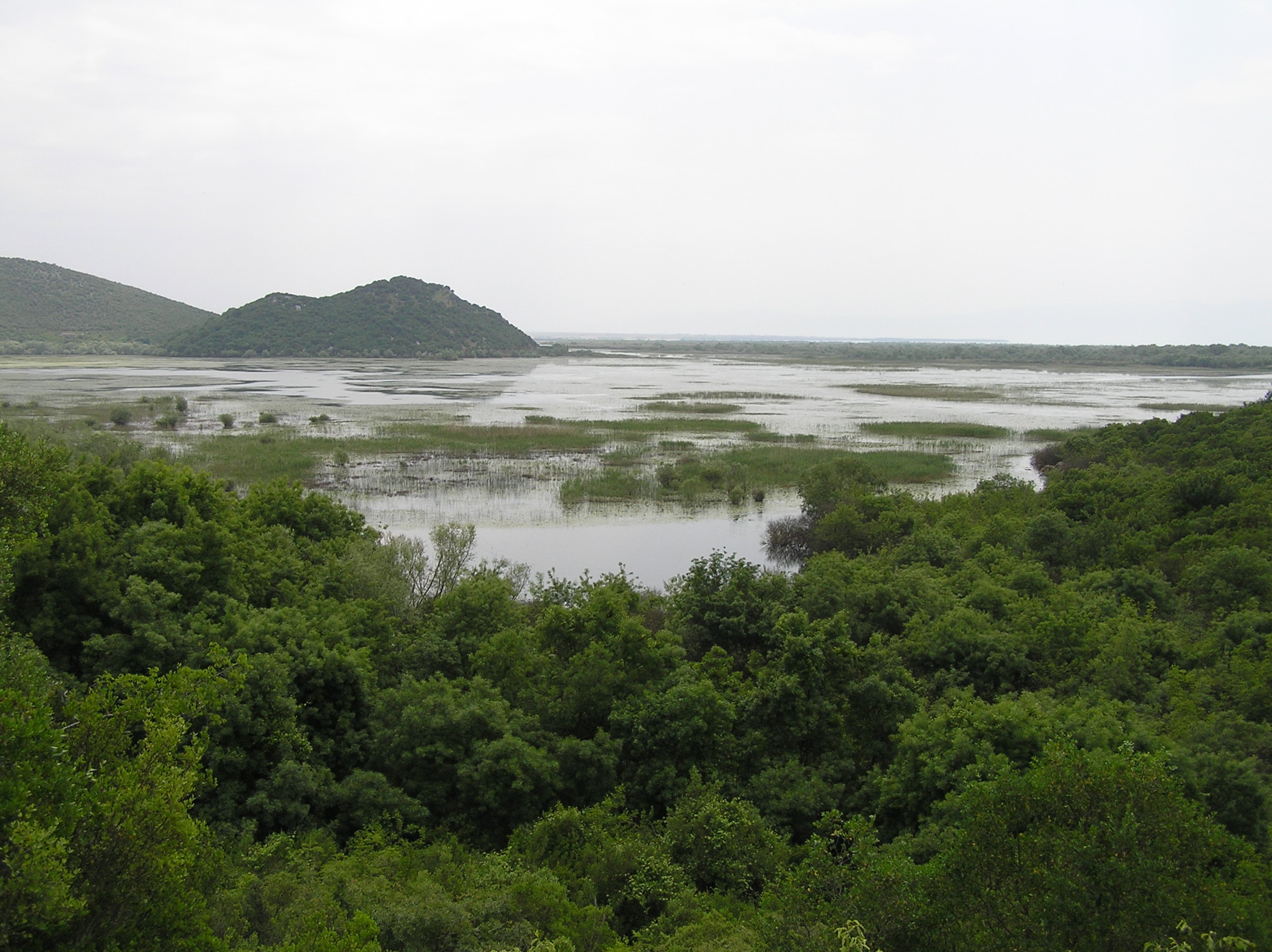
Lake Shkoder Transboundary Diagnostics Analysis
Albania & Montenegro
World Bank (IBRD)
20 April 2006
Final Report: Summary
9P6515
Barbarossastraat 35
P.O. Box 151
Nijmegen 6500 AD
The Netherlands
+31 (0)24 328 42 84 Telephone
0031-24-323 1603 Fax
info@nijmegen.royalhaskoning.com E-mail
www.royalhaskoning.com Internet
Arnhem 09122561 CoC
Document title Lake Shkoder Transboundary Diagnostics
Analysis
Albania & Montenegro
Document short title Lake Shkoder TDA
Status Final Report: Summary
Date 20 April 2006
Project name Lake Shkoder Transboundary Diagnostics
Analysis
Project number 9P6515
Author(s) Frank Keukelaar (NL), Ad de Goffau (NL),
Trilokya Pradhan (NL), Guus Sutmul er (NL),
Ana Misurovic (MN), Stanisa Ivanovic (MN),
Borislav Uskokovic (MN), Agron Hetoja (Al),
Enio Haxhimihali (Al), Arqile Prifti (Al),
Eqerem Kapidani (Al), Lefter Kashta (Al), Al-
exandra Gulan (S)
Client World Bank (IBRD)
Reference 9P6515/R/FKE/Nijm
ABBREVIATIONS AND ACRONYMS
ACER
= Albanian Center for Economic Research
Alb.
= Albania
a.s.l.
= above sea level (Adriatic Sea)
BOD
= Biological Oxigen Demand
CARDS
= Community Assistance for Reconstruction, Development and Sta-
bilisation
CETI
= Ju Centar za Ekotoksikoloska Ispitivanja Crne Gore (Center for
Ecotoxicological Research of Montenegro)
COD
= Chemical Oxygen Demand
COOPI
= Cooperazione Internazionale (Italia)
EAR
= European Agency for Reconstruction
EC
= European Commission
EEA
= European Environment Agency
EIA
= Environmental Impact Assessment
EU
= European Union
FMO
= Fishery Management Organisation
Geozavod
= Institute for Hydrogeology and Engineering Geology, Serbia and
Montenegro
GIS
= Geographic Information System
HMI
= Hydrometeorological Institute (Albania, Montenegro))
IBRD
= International Bank for Reconstruction and Development (World
Bank)
IEE
= Initial Environmental Examination
IPPC
= Integrated Pol ution Prevention and Control
IUCN
= International Union for the Conservation of Nature
KAP
= Kombinat Aluminijuma Podgorica (aluminium factory)
KNMI
= Koninklijk Nederlands Meteorologisch Institute
MAFWR
= Ministry of Agriculture, Forestry and Water Resources
MEPPP
= Ministry of Environmental Protection and Physical Planning (M.N.)
M.N.
= Montenegro
MoE
= Ministry of Environment (MoE)
MoU
= Memorandum of Understanding
MPAS
= Methylene Blue Active Surfactants (detergents)
NGO
= Non-Governmental Organisation
NPMN
= National Parks of Montenegro
PIU
= Project Implementation Unit
POP
= Persistent Organic Pol utants (e.g. DDT, PCB)
PPU
= Project Preparation Unit
RBMP
= River Basin Management Plan
REA
= Regional Environmental Agency (Albania)
REC
= Regional Environmental Center
REReP
= Regional Environmental Reconstruction Programme
RH
= Royal Haskoning, Dutch consultancy firm
RS
= Remote Sensing
SAP
= Strategic Action Plan (Lake Shkoder/ Skadar)
SNP
= Skadar Lake National Park
TDA
= Transboundary Diagnostics Analysis
ToR
= Terms of Reference
UMN
= University of Montenegro
UNEP
= United Nations Environment Programme
UNDP
= United Nations Development Programme
USAID
= United States Agency for International Development
WB
= World Bank
WFD
= Water Framework Directive (European Union)
WHO
= World Health Organisation
WWF
= World Wide Fund for Nature
CONTENTS
Page
1
PROJECT BACKGROUND AND OBJECTIVES ...................................................... 1
2
DATA AVAILABILITY AND KNOWLEDGE GAPS.................................................... 1
3
ENVIRONMENTAL DESCRIPTION OF THE LAKE AND ITS BASIN ........................ 2
3.1 Geology and geomorphology
2
3.2 Climate
2
3.3 Hydrology
2
3.4 Quality of groundwater, surface water, soil, rain and air
3
3.5 Flora and fauna
5
3.6 Fisheries
7
3.7 Institutional context and stakeholders in Montenegro
7
3.8 Institutional context and stakeholders in Albania
9
3.9 Socio-economy and population
10
3.10 Projects and programmes
11
3.11 Environmental policies and legislation in Montenegro
11
3.12 Environmental policies and legislation in Albania
12
3.13 Transboundary col aboration
12
4
ANALYSES OF PRESSURES AND THREATS ..................................................... 13
4.1 Status of flora and fauna
13
4.2 Pressures and threats
14
4.3 Institutional and legislative issues
15
5
IMPROVEMENT OPTIONS.................................................................................. 15
5.1 In general
15
5.2 Pathway to a bilateral management organisation
16
5.3 Approaches for improvement and recommended strategic actions
17
Lake Shkoder TDA
9P6515/R/FKE/Nijm
Final Report: Summary
- i -
20 April 2006
9P6515/R/FKE/Nijm
Lake Shkoder TDA
20 April 2006
- i -
Final Report: Summary
1
PROJECT BACKGROUND AND OBJECTIVES
A Transboundary Diagnostic Analysis (TDA) is defined by GEF as "a scientific-technical
assessment by which environmental issues affecting international waters in a region are
identified and quantified, their causes analyzed and their impacts assessed, and the
main actions needed to improve the problem are identified". The TDA is a preparatory
study for a larger project, the Lake Shkoder Integrated Ecosystem Management Project.
The overal objective of the Lake Shkoder Integrated Ecosystem Management Project is
to assist the Governments of Albania and Montenegro in achieving more sustainable
use of the natural resources of Lake Shkoder and its watershed. In this TDA an inven-
tory of the available environmental data is made. The state of the environment, its use,
and their developments were assessed in Lake Shkoder and its watershed, based on
the data col ected. The environmental pressures and threats to the lake and its basin
have been identified and partly quantified. Final y, a set-up for a bilateral management
strategy, including goals and approaches to address the identified problems, and some
proposals for investment options are presented.
2
DATA AVAILABILITY AND KNOWLEDGE GAPS
There is in al fields of environment, treated in this report, quite some data available, but
data col ection has often been uncoordinated, irregular in time and space, and using dif-
ferent methods and standards. The dramatic political changes and bad economic situa-
tion in both Albania and Montenegro in the past 15 years contributed to this. The result
is that parameters and variables are difficult to compare and trends hard to assess.
Since a few years, with institutional strength increasing, monitoring programmes are be-
ing developed (both by governmental and non-governmental organisations) in most en-
vironmental fields. One problem is that the objectives of the programmes are often not
clear and the resulting strategy and design possibly inadequate.
The main problem today, however, is financing of often expensive programmes. A
sometimes related issue is that, because of both the cost of data col ection and the
value and `power' that data represent, access to the data may be restricted. Institutes
and people are often not wil ing to share their data, unless high prices are paid.
Information on geology, geomorphology and soils is sufficient for management purposes
of the basin. There exists ample literature on these subjects, and the Academies of Sci-
ence, the Geological Institutes, and the Universities in both countries are the main
sources.
Climatic and hydrological data are col ected by the Hydro-Meteorological Institutes
(HMI's) in Albania and Montenegro. The geographical coverage and measuring fre-
quencies seem sufficient, but there are data gaps at many stations. The main problem
however is access to the data; the HMI in Albania asks a high fee for their data, while in
Montenegro the wil ingness of the HMI to share information is also limited.
Data on quality of groundwater, surface water, soil, rain and air can be obtained from
various sources. Again, the HMI's do the structural col ection (monitoring), but additional
studies are done by the CETI, the universities, and the Academies of Science. There is
much information available, but methods, spatial coverage and sampling times vary,
Lake Shkoder TDA
9P6515/R/FKE/Nijm
Final Report: Summary
- 1 -
20 April 2006
which makes it difficult to compare the figures. Often the metadata (description of meth-
odology, location, accuracy, date/ time, person who took the sample etc.) is missing.
Monitoring programmes for flora and fauna do not exist in the two countries; only for
birds on and around the lake annual counts are realised (with some years missing).
Plans for monitoring exist, but funding is lacking. Many studies on flora and fauna are
done, but not basin-wide (e.g. raster-based inventories). Information sources are: the In-
stitute for Nature Protection in Montenegro, the universities, the Academies of Science
and NGO's (e.g. Euronatur).
An important data source for the socio-economy and population are the population cen-
sus reports (about every 10 years). Further, reports and books from various institutes
and websites have been used for this report. The social assessment component of the
TDA gives more details on data availability, reliability and sources for socio-economy
and population.
Information on institutional and legal context, policies, projects and programmes is
available at the ministries and with the various other organisations and stakeholders ac-
tive in the Lake Shkoder basin.
3
ENVIRONMENTAL DESCRIPTION OF THE LAKE AND ITS BASIN
3.1
Geology and geomorphology
The Balkan peninsula experienced a strong orogenic period resulting in the Dinaric Alps.
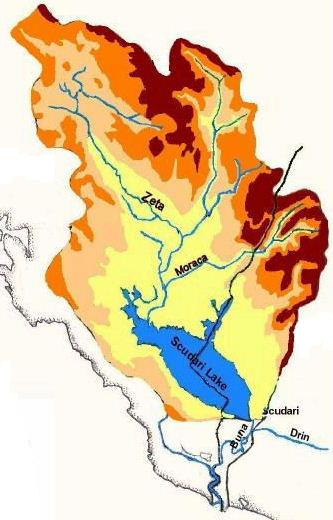
The basin of Lake Shkoder is a depression located south of the Dinaric Alps and orien-
tated northwest-southeast, paral el to the current shore of the Adriatic coast. Limestone
and associated karstic processes determine the geomorphology. On the northern and
north-eastern side of the lake, the flat Zeta Plain and the main inflowing rivers are lo-
cated. Their deposits (deltas) and the lower edge of the Plain have created a wide
marsh belt that is regularly flooded. Lake Shkoder is separated in the southwest by
steep hil s from the Adriatic Sea: the Tarabosa and Rumia mountains. This zone is only
10 to 15 km wide but with peaks up to 1600 m. Along the lake's coastline there are
elongated islands. Many karstic springs can be found in the south-western part of the
lake. The lake area drains through the Buna-Bojana River to the Adriatic Sea.
3.2
Climate
Climate in the Shkoder basin is Mediterranean, but with higher rainfal amounts due to
the mountains. Annual rainfal on the lake is between 2,000 and 2,800 mm, but within
the basin some areas receive over 3,000 mm. Humidity levels are low, sunshine hours
and temperature in summer are high, giving a high evaporation. Temperature in winter is
low, due to the high elevations and predominant easterly and northerly winds, but at lake
level above freezing point.
3.3
Hydrology
Lake Shkoder is the largest lake on the Balkan Peninsula in terms of water surface. The
drainage area of the lake is about 5,500 km2 (4,470 km2 in Montenegro and 1,030 km2 in
Albania). The lake area varies between 353 km2 at a minimum lake level of 4.6 m
(above sea level) and 500 km2 at a maximum lake level of 9.8 m (with 335 km2 in Mon-
tenegro and 165 km2 in Albania). The lake volume varies between 1.7 km3 in dry periods
9P6515/R/FKE/Nijm
Lake Shkoder TDA
20 April 2006
- 2 -
Final Report: Summary
and 4.0 km3 during wet periods. The most important tributaries of Lake Shkoder enter
the lake from the north: Moraca, Crnojevica, Orahovstica, Karatuna, Baragurska River in
Montenegro, and Rjolska and Vraka River in Albania. On the west side many smal
streams flow into Lake Shkoder. Precipitation on the lake, groundwater and springs con-
tribute also to the inflow. Two main groundwater sources can be distinguished: aquifers
in the Zeta Plain and karstic springs, mainly on the south-western side of the lake. The
lake's outflow through the Buna-Bojana River is sometimes impeded due to high water
levels in the Drin River, which flows into the Buna-Bojana less than a kilometre from the
lake outlet. The lake outflow by River Buna-Bojana is on average 300 m3/s.
3.4
Quality of groundwater, surface water, soil, rain and air
Most pol utants for surface water, groundwater, soil and air in the basin originate from
Podgorica, situated on the Moraca River terraces in the Zeta Plain. On the Albanian side
the main pol uter is the City of Shkodra with its solid waste and wastewater. The main
sources of pol ution are:
1) The Aluminium Plant Podgorica (KAP = Kombinat Aluminijuma Podgorica);
2) Steelworks in Niksic;
3) Wastewater from the cities and towns in the basin;
4) Municipal wastes from the cities and towns in the basin;
5) Mineral waste oils in the Zeta Plain;
6) Agriculture in the Zeta Plain;
As early as 1981, analysis presented by Petrovic and Beeton indicated that the physical-
chemical characteristics of the lake water are the result of inflow from its main tributaries
(the Moraca and Crnojevica Rivers), inflow from the karstic springs, exchange between
the sediments and overlying waters, and the chemical exchange between the waters
and the extensive beds of aquatic macrophytes. Recent data on the quality of water in
the lake and the tributary rivers supports their arguments. The 1981 study, the first over-
view of environmental data on Lake Shkoder, serves as the basis for evaluation.
Data presented in this report show that during the past three decades the lake and its
basin have experienced varying states of pol ution. A wel defined pol ution trend for the
basin as a whole is difficult to establish on the basis of the fragmented and inconsistent
data sets. Also, water quality in the lake varies in space and time. Most pol utants are
brought by the Moraca and Crnojevica Rivers that are common places of disposal for
poorly treated solid waste and wastewater. The concentration of pol utants like ammonia
is high in the northern and north-western part of the lake and near the entry points of the
Moraca. Further, the concentrations of pol utants show seasonal variation, depending
upon the weather and the flow in the tributary rivers. For example, the dissolved oxygen
is lower in the summer period. During peak flows, the Moraca River water influences
most the water quality of the lake.
In general, the quality of the lake water appears to be reasonably good, thanks to the
high refreshment rate of 2-3 times per year. However, lake sediment and dry soil quality
in some locations is a concern. The fol owing discussion by parameter group gives more
details:
- Trend in basic parameters:
Most basic parameters of the lake water quality have remained more or less the same
since the 1980s, but e.g. nitrates and oxygen have deteriorated. The increase in nitrates
Lake Shkoder TDA
9P6515/R/FKE/Nijm
Final Report: Summary
- 3 -
20 April 2006
and reduction in oxygen, in particular near the Moraca Delta and the Zeta Plain, may in-
dicate an increase in organic pol ution (e.g. by urban wastewater). Eutrophication is not
(yet) an issue as a result of the high `turn-over rate' of the lake water, but stagnant cor-
ners near the Moraca Delta and Zeta Plain are at risk.
- Trend in PCB-s and PAH-s:
Concentrations of PCB in surface water were above the detection limit in the Moraca
River between 1990 and 1995. Recent measurements of PCB and PAH concentrations
are below the detection limit and are currently no reason for concern for surface water
quality (as long as the measures taken by KAP remain effective). In the groundwater
and sediments these parameters were reason for concern. The values measured in
2005 decreased to acceptable levels, probably due to the measures taken at the KAP.
In the dry soils of the Zeta Plain PCB and PAH show concentrations harmful for biota.
- Trend in heavy metals:
The analysis of metals in the water of the Moraca River, Crenojevica River and in the
Shkoder Lake in 1981 (and the years before) showed minimum concentrations of Na, K,
Cu, Zn, Cr, Pb, Mn, Co, As, Hg, Cn and Fe. The comparison between their concentra-
tions upstream of the rivers and at the lake showed little difference, except for some in-
significant increased concentrations of Na and Fe at a specific site in the Moraca River.
This implies that the lake water at that time was hardly pol uted by the existing industries
within the lake basin. Note that the KAP began its first production at its ful capacity in
1973. Further, al analyzed metals were below the Montenegrin MDK standards for
drinking water.
Recent analyses of lake water and sediments show an increase in concentrations of
heavy metals. The concentrations are higher at the mouth of the Moraca River, mainly
due to the industrial wastes originating from the KAP. The highest Hg content in July
2005 was 1.77 mg/kg in sediments (0.40 mg/kg in fish), while it was undetectable in
1974-1977 (Filipovic, 1981, p.99). Heavy metals accumulate in the sediments, while the
water is refreshed over twice a year. The Hg in the sediment exceeds the EU standards
on four of eight locations and of Ni on two out of eight locations in 2005. On the Albanian
side of Lake Shkoder in 2003, at 7 out of 10 locations the concentration of Ni exceeded
the EU standards.
- Springs:
The current analysis of Albanian spring waters (Shegani and Viri) near the lake show
that their quality is good and within the permissible limits of the EU standards. Although
data are missing on spring water quality in Montenegro, one can expect that these are
also of good quality, by lack of pol ution sources in their areas of origin.
- Pol utants in biota:
Toxic and carcinogenic substances as PCB-s, PCT-s, PCDD-s, PCDF-s, PAH-s, Phe-
nols, F and CN that enter the ecosystem accumulate in fat tissue of species (PCB-s
from 0.008 µg/kg in man to as much as 14,000 mg/kg in fat tissue of fishes and birds).
These substances are extremely stable and their decomposition by chemical means or
by micro-organisms is very difficult.
9P6515/R/FKE/Nijm
Lake Shkoder TDA
20 April 2006
- 4 -
Final Report: Summary
Concentrations of PCB-s and other pol utants in lake water, river water, groundwater,
lake sediments and in tissue samples from various fish species living in Lake Shkoder
have been analyzed during the last 15 years. The concentrations of PCB's exceeded in
some cases in the period 1990-1996 the permitted US EPA values for food consumption
(2 ppm or mg/kg).
A recent study from 2005, by the Universities of Heidelberg (Germany) and Shkodra
(Albania), showed that the highest concentration of total PCB-s was found in rudd
(Scardinius erythrophtalmus scardapha) being 200 µg/kg and that the lowest concentra-
tion was found in perch (Perca fluviatilis) being 35 µg/kg.
Recent data from Montenegro on PCB-s in water and in fishes (analyzed in 2004 and
2005) show that concentrations of PCB-s decreased strongly since the 1990s. This is
the result of a combination of the fol owing:
- the removal of the source of pol ution: al barrels and soil contaminated with Piralen
from the KAP are put in a special bunker;
- pol utants are transported quickly by groundwaters due to the high permeability of the
soil in the Zeta Plain;
- the high precipitation in the region during the last 15 years;
- the high `refresh' rate of the water in the lake.
PCB-s end up partly in the lake sediments, where they can remain for a long time. This
was confirmed during a project carried out by Heidelberg University with the Universities
of Montenegro and Shkodrar in 2001-2002, applying passive sampling using Semi-
permeable Membrane Devices (SPMD), simulating long-time exposure of an organism
to pol utants. Bentic fauna (e.g. worms, eels) are in particular exposed to pol utants in
the sediments.
3.5
Flora and fauna
The Shkoder Lake region is located in a zone where two major zoogeographic areas
meet: the Palaearctic region (Europe, Asia, the Mediterranean and North Africa) and the
Palaetropic region (Africa). Their linkage and influences can be seen among bird fauna,
with incidences of African species (e.g. African cuckoo, African black heron, flamingo)
and winter migratory species of West Siberia (ducks, geese). During the last glacial pe-
riod Lake Shkoder represented a refuge for several species. As a result, today some rel-
ict and endemic animal and plant species are met in the area. After the ice age, species
such as the turtledove, the Dauric swal ow, Syrian woodpecker and Spanish sparrow
have come to the region as they expanded their distribution area.
The majority of Shkoder Lake invertebrate groups have not been wel researched. As in-
vertebrates play an important ecological role, among others as principal food source for
many higher level species, the lack of knowledge prevents a good understanding of the
lake's ecological functioning. About 257 species are known in the area.
Shkoder Lake is very rich in amphibians and reptiles. These include endemic and en-
dangered species. The lake, with its wide zone of water vegetation, floodplains, humid
forests as wel as many streams, is an ideal habitat for amphibians like the Ranidae
(frogs, e.g. the Shkoder green frog, Rana shqiperica). Currently 51 species have been
met, including a large number of protected species and many endemics.
Lake Shkoder TDA
9P6515/R/FKE/Nijm
Final Report: Summary
- 5 -
20 April 2006
Shkoder Lake attracts birds, flying long migratory routes, but also provides good nesting
and colonisation conditions. The avifauna shows a large number of species: some 271
belonging to 18 taxonomic orders. Ninety percent of the bird species are regional y and
intercontinental y mobile, linking the region to neighbouring countries, Asia and Africa.
Around 73 species of migratory nesting birds inhabit the lake in spring and summer,
leaving in autumn, about 18 species fly over the area during autumn and spring, 45 spe-
cies are regular winter guests and 12 species spend summers on the lake, while their
populations nest in the north. In addition, there are some 90 species that visit the lake
irregularly, including those that fly over or visit the lake during the winter or summer sea-
son. The number of waterfowl on the Montenegrin side is determined by winter counts
since 1990. Between 1990 and 1999 numbers varied between 150,000 and 250,000, but
since 1999 numbers have dropped strongly to 35,000 in January 2005. Fulica atra, Anas
platyrhynchos and Aythya ferina are found in large numbers. Shkoder Lake is listed as
an international y important wetland and waterfowl habitat (Ramsar site).
The mammals related to Lake Shkoder are not wel researched. The total number of
species found is 50 (belonging to 6 orders). Only a few mammals are strongly linked to
the water habitat, like the otter (Lutra lutra). Bats are especial y abundant around the
lake. The other mammals live mainly in the forested areas, predominantly located on the
south-western shore of the lake and in the mountainous areas.
Lake Shkoder has a high variety of fish fauna, the result of a good communication with
the sea, and of an extensive network of rivers and streams. Its ichtyofauna includes
highland coldwater fish species, warm freshwater fish species and several marine spe-
cies; in total about 60 species belonging to 17 families. The relatively high number of
endemic species makes the lake significant on regional level. About 10 species are
commercial y exploited (e.g. carp, bleak and eel). Two fish families are especial y impor-
tant: cyprinids (most abundant in species) and salmonids (which are much rarer).
In Shkoder Lake about 64 genera with 310 species and taxa of phytoplankton are met.
The phytoplankton population is mainly composed of Diatomeae. The majority of the
species found are cosmopolitan and alkalophilic. Among the diatoms of the lake, the
most common species are Cyclotel a ocel ata and Aulacoseira ambigua. The observed
phytoplankton composition is a good indicator of the lake's oligotrophic conditions and is
one of the parameters that should be included in a monitoring programme.
The total number of aquatic macrophytes for the whole area of Lake Shkoder is 164
species belonging to 66 genera and 43 families. At the lake's northern shore dominant
plant communities include the Scirpus Phragmites community (Phragmites communis,
Scirpus lacuster, Typha angustipholica) and the Myriphil um verticil ati Nuphar com-
munity, where especial y Nuphar, Ceratophyl um, Trapa and Potamogeton species are
represented. The western lake shore consists of steep rocks and hil s with hardly any
submerged vegetation. Along the eastern and southern lake shore extended reed beds
(Phragmites) have developed.
Reed beds and other macrophytes have purification capacities through nutrient retention
and transformation (nitrogen, phosphor), and binding of pol utants. The water quality of
part of the Moraca River improves by passing through the macrophyte vegetation of the
wetland before it enters the lake.
9P6515/R/FKE/Nijm
Lake Shkoder TDA
20 April 2006
- 6 -
Final Report: Summary
Stands of wil ow (Salicetum albae) are the most abundant forests around the lake,
mainly on the northern shore and in the flooding area. They are used by the local popu-
lation for the production of fuel wood, for construction and for woven handicraft products.
Forests of Shkoder's oak (Quercus robur ssp. Scutariensis), which were widespread in
the past, have substantial y degraded. The most significant forest communities are do-
mestic chestnut and oak (Querceto castanetum montenegrinum), oak and European
Turkey oak (Quercetum confertae ceris), as wel as hornbeam (Carpinetum orientalis)
with several sub-communities. Only degraded stands remain from the once wel devel-
oped forests.
3.6
Fisheries
Fishery constitutes a vital activity in the Lake Shkoder area and fish productivity has al-
ways been high. From the col ected data the fol owing trends are deducted:
1. Significant decline of migratory fish in the overal production;
2. Decline of autochthonous fish in the 1980s, but a recovery since then;
3. Increase in exotic species, especial y after 1980.
However, data to support conclusions on recent developments are hardly available: little
information was col ected since 1987 in Montenegro and between 1992 and 2002 in Al-
bania.
Regarding the catches of migratory fish, the catches of Twaide shad (Alosa alosa) show
a sharp decline from 1980 onwards. Among the migratory species also the Mugilidae
are of economic importance. They also suffered a decrease in the catches, although not
as drastic as Twaide shad. Eel catches seem to be related to hydro-meteorological con-
ditions, but in general the production is stable. Among the autochthonous fish, catches
of carp intensified, but bleak catches were less. Low value species like Rutilus and
Pachychilon are not exploited any more since about 1990. Among the exotic fish, the
catches of Carassius show a significant increase and lately also the catches of Perca
and Stisostedion increased. During the last years, also large fishes, herbivores and
planktivores like grass carp and big head carp, showed an increase.
In general, both primary and secondary productivity in Lake Shkoder is good as it is a
shal ow lake with sufficient food supply. Probably the main reason for the above-
mentioned decline in the catches of some species (especial y Twaide shad) is caused
by uncontrol ed fishing during 1992-2002. Since then the two governments have in-
creased their influence on fishery through organisation of the fishermen and improved
licensing. However, law enforcement is minimal due to a lack of funding for fishery in-
spectors and equipment. To relate catch quantities (number of fishermen/ licenses) to
sustainable levels for the various fish species, strict fish catch monitoring is required (in-
cluding estimates of il egal catches). Only then a realistic policy can be established.
3.7
Institutional context and stakeholders in Montenegro
The Ministry of Environmental Protection and Physical Planning (MEPPP) is responsible
for the formulation and execution of the national environmental policy. Its responsibilities
include nature protection, biodiversity and protected area management and its legisla-
tion. In addition to these, it has a regulatory and coordinating role in communal and
housing issues, including waste and wastewater management. Further, the ministry co-
ordinates activities of nature protection institutions such as Public Enterprise National
Parks of Montenegro and Republic Nature Protection Institute (see below).
Lake Shkoder TDA
9P6515/R/FKE/Nijm
Final Report: Summary
- 7 -
20 April 2006
The Ministry of Agriculture, Forestry and Water Resources (MAFWR) is responsible for,
among others, the management of water resources (including their protection against
pol ution), agricultural land, forests, hunting and fishing. Some of its responsibilities over-
lap with those of the MEPPP, particularly in the control of col ection and trading of wild-
life species, fishing and hunting in protected areas. The MAFWR is also responsible for
the development of projects that regulate water levels of the lake.
The Ministry of Internal Affairs has the authority to control fishing through their National
Park wardens. The Tourism Ministry is inter alia responsible for the promotion of Na-
tional Parks. Several other ministries play a role in the environment of the lake and its
basin, depending on the issue.
Local governments play an important role because of their direct involvement in physical
planning and implementation of urban development, and in acts that regulate the use of
areas adjacent to the National Parks. They can have considerable impact in the Park
management by control ing (and montoring) il egal construction of buildings. Further,
their responsibilities and authorities extend to the management and operation of public
utilitiy services such as municipal (solid) waste, water supply and sanitation. The inspec-
torates for these public utilities are organised within local administration.
The Public Enterprise National Parks is responsible for protecting, promoting and man-
aging the four Montenegrin national parks: Biogradska Gora, Lovcen, Durmitor and Lake
Shkoder. Its revenue is partly generated by the col ection of fees and charges levied on
hunting, fishing, wood cutting and other economic activities.
The Skadar Lake National Park management authority is directly involved in the
protection and management of the lake and its shores. They try to surpress il egal
hunting and fishing. The SNP has a 5 year programme (2005-2010) and annual plans
for the conservation and development of the park.
Three municipalities Podgorica, Bar and Cetinje boundaring the lake, have a twofold
role in the management of the SNP. They act as protection institutions as wel as re-
source users. These local bodies are directly related to the park management and pres-
ervation because of their responsibility for managing municipal solid waste and waste-
water (through public enterprises). They are also the sources of funding for the public
enterprises. However, they have limited budget and, as a consequence, shifts their in-
terests towards the use of the lake's resources through different economic activities.
Both the Institute for Nature Protection and the Natural History Museum have the
responsibilities to record, protect and conserve protected objects, animals and plant
species such as historical monuments, nature reserves, and endangered species. They
are also involved in the implementation of nature protection policies.
The Center for Ecotoxicological Research (CETI) and the Hydrometeorological Institute
(HMI) monitor the quality of the water, air, rain and soil, as part of their regular activities
or upon the request of the MEPPP. Educational and scientific institutions include the
University of Montenegro and the Academy of Science.
There are many (inter)national environmental non-governmental organizations (NGOs)
active in promoting Lake Shkoder and its environment. The REC field office has
9P6515/R/FKE/Nijm
Lake Shkoder TDA
20 April 2006
- 8 -
Final Report: Summary
established a national and transboundary Lake Forum. Several NGO's work directly with
local communities.
Several international organizations have been involved in the preservation of Lake
Shkoder and its ecosystem. Their activities range from supporting local NGOs to provid-
ing technical assistance to nature protection institutions and funding the government in
capacity building.
Private enterprises and local businesses such as hotels, handicrafts shops, tourist
agencies, fish markets, hunting clubs, restaurants, catering services etc. are another
group of stakeholders.
In addition to the institutions mentioned above, there exists a Council of Ministers of the
State Union of Serbia and Montenegro. This Council oversees the implementation of in-
ternational agreements and conventions that have been ratified by the former Federal
Republic of Yugoslavia and for ratifying further ones. Lit le progress has been made in
implementing these agreements due to the political transformation of former Federal
Republic of Yugoslavia, poor cooperation between republican and federal authorities,
the (transition) period of developing new institutions and lack of funds.
3.8
Institutional context and stakeholders in Albania
The Ministry of Environment, Forests and Water Administration (the former Ministry of
Environment, MoE) is responsible for environmental protection in the country. After a
recent restructuring of the government, the MoE also encompasses forestry and water
management sector. Under its guidance, other ministries are responsible for ensuring
the implementation of the national program on environmental protection.
The Ministry of Territorial Regulation and Tourism is responsible for the policy and
planning of activities related to the development of tourism areas along the lake, water
related activities in the lake basin and territorial regulation. The Ministry of Agriculture
and Food has, among others, the authority to ensure sustainable use of Lake Shkoder's
resource potentials such as fishing and preservation of aquaculture. The Ministry of
Local Government and Decentralization is responsible for efficient functioning of local
governments and their development policies.
The Council of Ministers is the highest body entrusted with approval of urban planning
studies, master plans and regional plans, needed to account for environmental planning,
procedures for the proclamation of protected and buffer zones.
Other government institutions and inter-ministry committees involved in the lake devel-
opment and management are the National Council of Waters, Council of Aquiferous
(River) Basins, Council of Territorial Regulation, Albanian Geological Service, Academy
Sciences and Hydrometeorological Institute.
The National Water Council is the central decision making body for the development and
management of water resources in the country. The NCW is headed by the Prime
Minister and its members include Ministries of Environment, Tourism, Foreign Affairs,
Energy, Agriculture, Health, and Academy of Sciences and the Technical Secretariat for
Water. It formulates water strategies, decides national water policies and has the power
to endorse international agreements on cross-border water bodies. For each river basin
or a group of river basins a Council of Aquiferous (River) Basin is formed.
Lake Shkoder TDA
9P6515/R/FKE/Nijm
Final Report: Summary
- 9 -
20 April 2006
The Council of Territorial Regulation of the Republic of Albania is repsonsible for the
approval of urban studies concerning devlopment of National Parks, development of
tourism, ports and physical infrastructures, mostly at the national level.
In January 1993, the Albanian parliament endorsed the basic law for environmental pro-
tection and some other laws related in particular to environmental items. As a result of
this, the National Environmental Agency, an independent body, was established in 1998.
The government institutions that are responsible for the implementation of plans and
programmes related to the conservation and management of the environment at local
level are a.o. the Prefectures of the Shkodra Region, Directorate of the Drin-Buna Basin,
Directorate of Agriculture and Food (Shkodra/ Malėsia e Madhe), Regional Environ-
mental Agency and the Directorate of Forest Service (Shkodėr/ Malėsia e Madhe).
There are local government bodies, the municipalities and communes representing ad-
ministrative and territorial units covering the urban and rural areas. Most relevant of
these are the Council of the Region of Shkoder, Municipality of Shkoder and the Council
of Territorial Regulation of Shkoder. These institutions are responsible for the design of
local environmental action plans in accordance with national environmental strategies.
The educational and scientific bodies involved in the protection and preservation of the
lake's environment are the University of Shkodra, Museum of Natural Sciences, Faculty
of Natural Sciences ( University of Tirana), Fishing Inspectorate (Shkodėr/ Malėsia e
Madhe), and the High Forestry School (Shkodra).
International organizations that have been supporting the lake's preservation and man-
agement include the World Bank, German Technical Cooperation (GTZ), Global Envi-
ronment Facility (GEF) and various embassies.
Community organizations, non-profit organization and NGOs play a role by supporting
local communities (e.g. REC field office Shkodra).
3.9
Socio-economy and population
About 500,000 people live in the Lake Shkoder watershed; most of them in the Monte-
negrin cities Podgorica, Niksic, Cetinje and Danilovgrad, and Shkodra in Albania. The
current population growth in Serbia and Montenegro is 0.03% and the life expectancy is
73 years. In Albania it is resp. 0.6% and 74 years. The population living below the
poverty line in both countries is about 30%.
There are 17 vil ages within the National Park area (Montenegro), with their population
varying from 6 to 550 people. The population showed a decline in size in the park area
in the 1990s, but this trend has reversed in the past years. This is partly due to devel-
opment activities and the increasing political stability in the region. The migration of
people to the lake side has increased the pressure on the coastal zones of the lake.
Albania has made significant economic progress since its transition from a communist
regime towards a democratic market-based economy. The country's economy has been
increasing since 1993 at an annual rate of about 8%. Although agriculture has
traditional y played an important role in the economy, recent growth has been driven by
the services and construction sectors. Agriculture in Albania counts for about 25% of its
GDP. About 20% of the land is cultivated and approximately 50% of the labour force is
9P6515/R/FKE/Nijm
Lake Shkoder TDA
20 April 2006
- 10 -
Final Report: Summary
engaged in agriculture; the majority of the balance is involved in industries. Besides,
Albania is rich in mineral resources, notably oil, lignite, copper, chromium, limestone,
salt, bauxite and natural gas. Nevertheless, Albania remains one of the poorest
countries in Europe.
Montenegro has experienced a severe decline in the standard of living in the last
decade. The GDP has dropped by 50% since 1989. The (real) GDP growth rate for 2004
is estimated at 6.5%. The inflation rate established for the year 2004 is 8.8%. However,
Serbia and Montenegro show signs of improvement in agriculture and industry. Agricul-
ture remains an important economic activity in Montenegro, though it presently em-ploys
less than 5% of the labour force. and contributes to 15% of the country's GDP. The
scale of farming is smal and farmers use old and poorly maintained farming equip-
ments. Irrigated agriculture is limited.
Fishing is another main activity in the coastal area of Lake Shkoder. Shkodra city
(Albania) is an important fishing center. For many people living on the lake side, both in
Montenegro and Albania, this is the only source of livelihood.
Both countries have a high tourism potential, but the necessary infrastructure is currently
lacking. Hydropower has also in both countries development perspectives, making them
less depend from foreign energy suppliers, in particular in Montenegro.
3.10
Projects and programmes
The concern shown by the national governments and international organizations to-
wards the environment of the Shkoder Lake basin has resulted in many plans, pro-
grammes and projects, mostly international y funded. Priority is given to the water and
wastewater sector, with emphasis on the treatment of municipal and industrial waste
and wastewater. Various road plans and developments are foreseen for the lake basin,
one of which may run near the lake shore. In addition, smal -scale projects and pro-
grammes are implemented by the government, local NGO's and private entrepreneurs.
Three major water projects, which were taken up by Montenegro and Albania, have
been stopped or deferred, due to conflicts of interest, financing issues and potential ad-
verse social or environmental impacts. These projects are the Moraca Hydropower Sys-
tem in the Moraca River basin, the Water Supply Project that includes transfer of water
from Lake Shkoder to the coastal area (of Montenegro), and the Bushati Hydropower
Plant on the Drin River in Albania. The hydro-power projects are essential y of bilateral
interests because of the increasing energy demand of the two countries. Although on
halt, the projects are stil under discussion. Related to the Bushati Hydropower Project,
the option to use the Buna-Bojana River as a waterway is being investigated and to
convert lake wetlands, fal ing dry after a lake level reduction, into agricultural land.
The Skadar Lake National Park in Montenegro has a 5-year program (2005-2010) for
the conservation and development of Shkoder Lake National Park, detailed by annual
plans. In November 2005 the Albanian government proclaimed its part of Lake Shkoder
a `Managed Natural Reserve'; no programmes are developed yet.
3.11
Environmental policies and legislation in Montenegro
The basic legislation for environmental protection and biodiverisity in Montenegro can be
said to be in place and is gradual y strengthened by acts, regulations and decisions. The
Environmental Law published in 1996 states al provisions related to the assessment
Lake Shkoder TDA
9P6515/R/FKE/Nijm
Final Report: Summary
- 11 -
20 April 2006
and conservation of the environment. The legal provision to identify Montenegro as an
`ecological state' and to institute an environmental logo under Article 2, "Basic provisions
of the law", il ustrates the importance given by the State to the environment.
As mentioned earlier, the Ministry of Environmental Protection and Physical Planning
(MEPPP) is responsible for the formulation and implementation of policies and
legislation related to the environment. In 2001, the Montenegrin Government adopted
the `Directions for Development of the Ecological State of Montenegro', which
represents their long-term development strategy.
While the MEPPP is entrusted with the overal formulation and implementation of the
country's environmental policies and legislations, natural resources management is the
task of two other ministries: the Ministry of Agriculture, Forests and Water Resources
Management (MAFWR) and the Ministry of Economy and Energy (in charge of mineral
resources).
3.12
Environmental policies and legislation in Albania
The Constitution of Albania gives a special place to the environment. In Chapter IV it is
clearly defined that every citizen has the right to be informed about the environmental
protection. In Albania, the legislation for environmental protection and management is in
the process of being harmonised with the EU environmental legislation. The law (No.
8934 of 5 September 2002) entitled "On Environmental Protection" is the legal act which
regulates the protection and conservation of the environment. Article 7 of Chapter II of
this law lays down the policy guidelines on environment to be fol owed by the State.
The Ministry of Environment, Forests and Water Administration is the main policy-
making public institution in Albanian. The environmental policy identifies the fol owing
priority objectives: strengthening environmental management capacities at national and
local level, developing the necessary legal framework, ensuring the integration of
environmental considerations into sector policies and programmes, improving the
environmental situation in identified `hot' areas, promoting environmental awareness,
and integrating the sustainable development principle in the use of natural resources.
In 1999 the first Biodiversity Strategy and Action Plan (BSAP) was made. One of the
goals of the BSAP was the enlargement and enforcement of the network of protected
areas. The updated National Environment Action Plan (NEAP) of 2002 (the original one
was from 1992-93) elaborates the environmental policies of the country. This updated
plan envisages measures to be taken for the protection of different environmental
mediums, and normative acts to be approved. In 2003 an intersectorial committee has
been established for the implementation of the NEAP.
Recently, the Albanian government has proclaimed its part of Lake Shkoder a "Managed
Natural Reserve" through the Council of Ministers' decision No. 684 dated 02.11.2005.
The enforcement of the laws and regulations and implementation of the government
decisions in both countries are stil weak.
3.13
Transboundary col aboration
Lake Shkoder area is a common resource to Albania and Montenegro. The dialogue
between the two governments on issues related to the lake environment began in 1995.
9P6515/R/FKE/Nijm
Lake Shkoder TDA
20 April 2006
- 12 -
Final Report: Summary
However, it was only in May 2003 that the Memorandum of Understanding (MoU) for the
Protection and Sustainable Development of Lake Shkoder was formal y signed by the
Ministers of Environment. By doing so, the two countries commit to conserve the natural
resources of Lake Shkoder in a coordinated and integrated manner, to establish a
bilateral Lake Management Commission and to improve the relevant national level
regulatory and institutional capacitites.
In the last few years the governments of the two countries have acknowledged the
possible impact of further degradation of the lake's natural resource base in their
development goals. Both governments show their wil ingness to cooperate in improving
the protection and management of the lake and its resources. A Lake Shkoder Strategic
Action Plan wil be prepared under the framework of the 2003 MoU.
A recent development in bilateral co-operation is the joint inauguration by the Prime-
ministers of the two countries of the international workshop on "Lake Skadar
international designations for territorial development" on 18-19 October 2005 in Vranjina
and Shkodra. This workshop was organised by the "Dinaric Arc Initiative", a framework
of col aboration between offices of UNESCO, WWF, IUCN, UNDP and the Council of
Europe and was attended by the Environment Ministers of both countries and other
important stakeholders.
Both countries have signed, with most of them ratified, a number of international
agreements and conventions related to transboundary waters and protection of the
environment. The international agreements made previously under the Former
Yugoslavic Republic at federal level (now Union of State) are de jury valid for
Montenegro as wel .
Further, legislatively the Government of Albania, by the Decision of its Council of
Ministers no. 337 of 15.07.1999, has provided a special state-level commission to deal
with water-related issues with the neighbouring countries. However, this Commission
has been inactive to date.
4
ANALYSES OF PRESSURES AND THREATS
4.1
Status of flora and fauna
The current status of the ecology in the Shkoder basin is a mixed picture for the various
flora and fauna groups. The good status of some flora and fauna species and habitats is
partly the result of the turmoil in the previous decade that halted the economic develop-
ment in the area, and the slow recovery in recent years. The limited number of pol ution
sources in combination with the high refresh rate (2-3 times a year) of the lake water
and the inflow of clean karstic groundwater are the main reasons that the water quality
remains good. The low population pressure and the inaccessibility of the higher parts of
the catchment contribute too. In contrast, hunting has continuously affected wildlife, in
particular birds, fish and mammals. The Skadar Lake National Park organised until 2003
hunting trips. The recent decline in bird numbers is a serious concern. Autochthonous
fish is recovering after a decline in a period of uncontrol ed fishing (1980's), but migra-
tory species seem stil to be affected by fishing, although not necessarily within the ba-
sin. Exotic species are expanding rapidly. Data on the status of other faunal species is
limited due to a lack of monitoring. The flora remains relatively undisturbed to date; il e-
gal logging in forests occurs.
Lake Shkoder TDA
9P6515/R/FKE/Nijm
Final Report: Summary
- 13 -
20 April 2006
4.2
Pressures and threats
Now that the economies of Albania and Montenegro are recovering, the grip of the gov-
ernment is stil weak and the government programmes and projects are in their initial
stages. Uncontrol ed building activities, development plans on the lake shores, industrial
growth and increasing municipal waste production threaten the ecology. Lack of finan-
cial means and institutional `infancy' hampers the governments to effectively execute
environmental programmes. However, with the political situation stabilised, international
support gives opportunities to face the threats.
The fol owing threats for the deterioration of the soil, water and sediment quality, and
biodiversity of Lake Shkoder and its basin have been identified:
1) Pol ution (industries, municipalities, solid waste, liquid waste);
2) Hunting and fishing;
3) Lakeshore development;
4) Water management measures.
The impacts of these causes cannot be quantified in the absence of a comprehensive
set of data concerning the quality of soil, water and sediment and biodiversity, and perti-
nent data related to the causes. However, for the development of a strategy aimed at
the conservation of the lake and its biodiversity it is important that the relative impor-
tance of the causes are assessed so that adequate policies can be formulated for the
reduction of the impacts of different causes.
Table 4.1
Main pressures and threats and their expected short- and long-term impact
on flora, fauna and habitats; government policies are expected to become
more effective on long-term
!
#
#
"
#
$
%
&
9P6515/R/FKE/Nijm
Lake Shkoder TDA
20 April 2006
- 14 -
Final Report: Summary
!
"
'
(
)
'
'
'
%
&
*
)
( +
!
'
*
)
(
!
!
'
*
)
( +
!
!
'
4.3
Institutional and legislative issues
After the drastic political and economic changes in Albania and Montenegro in the
1990s, a new institutional structure was created in both countries, similar to those in
other democracies with open market economies. The structures are new, not yet ful y
settled and the inter-institutional relations and responsibilities are stil developing.
There has been some col aboration between the two countries concerning Lake Shko-
der, but this was and is mainly realised at scientific level (e.g. between the Universities
of Shkodra and Montenegro, the two Academies of Science, biological institutes) and
through the REC offices. Frequent consultation between the two Ministries of Environ-
ment is stil lacking. This is probably due to the situation described above, asking ful at-
tention at national level (e.g. the ministries in Albania have been restructured after the
recent elections in summer 2005), but probably also the historical-cultural background of
the two countries plays a role.
Montenegro has little experience in transboundary institutional col aboration regarding
shared water resources and environment. Albania has some experience with the set-up
of a bilateral management set-up for Lake Ohrid with Macedonia, which can serve as a
base for Lake Shkoder.
The environmental legislation of Albania is in transition from the pre-1990s situation to
ful compatibility with the EU legislation. Also in Montenegro EU legislation is being inte-
grated into the national laws and the promotion of Montenegro as an `ecological state'
reflects its efforts to enhance its legislation. Thus, both countries give ample attention to
the legal aspects of the environment, but enforcement is a major problem.
5
IMPROVEMENT OPTIONS
5.1
In general
To reach an acceptable and sustainable environmental situation in the Lake Shkoder
basin is a long-term matter. The World Bank intends to assist the Albanian and Monte-
negrin Governments in preparing a strategic action plan for the lake and its basin and to
support smal projects and activities that wil have a direct impact or trigger develop-
ments towards improving the environment. Other donors, as the EU and USAID, are
also assisting in the implemention of projects with environmental components. The risk
is that uncoordinated projects at this stage may upset a long-term integral approach. On
the other hand, smal -scale activities showing immediate results wil motivate the local
people.
Lake Shkoder TDA
9P6515/R/FKE/Nijm
Final Report: Summary
- 15 -
20 April 2006
To support the overal strategy for more sustainable use of the natural resources of Lake
Shkoder and its watershed, a number of support mechanisms or policies should be for-
mulated. The most relevant policies for the sustainable use of the natural resources of
Lake Shkoder and its watershed are to be established and agreed between the key
stakeholders involved in the development and implementation of the strategy. In this
TDA relevant policies for achieving the sustainable use of the natural resources of Lake
Shkoder and its watershed are suggested. The Strategic Action Plan should define the
institutional structures and include a roadmap and actions to give effect to these sup-
porting policies.
Regarding the institutional structures a distinction is to be made between the structures
at national level and the bilateral management structure. The latter structure can only be
effective when at the national level the institutions are wel equipped for the planning
and management of the use of the natural resources in the lake and catchment area.
A preliminary assessment of the institutional capabilities in both countries indicate that
stil much is to be done to achieve an institutional structure that could form the basis for
an effective bilateral management structure. It is, therefore, recommended to focus on
the strengthening of the relevant Albanian and Montenegrin institutions before a ful
fledged Lake Shkoder Water Management Committee is established. In the meantime,
however, it is very important that lines of communication between the two countries with
respect to the Lake Shkoder environmental issues are formalised. The first step would
be the creation of a bi-lateral working group for Lake Shkoder as stipulated in the Memo-
randum of Understanding in the field of environment between Albania and Montenegro
(2003). This working group should, at least, prepare a draft agreement on environmental
protection and sustainable development, including the preferred institutional set-up for a
Lake Shkoder Water Management Committee.
5.2
Pathway to a bilateral management organisation
With the MoU related to environment between Albania and Montenegro the basis exists
for cooperation and establishment of a body for water management the Lake Shkoder
basin. Working groups, as stipulated by the MoU, wil be created and an action plan
prepared for its implementation. Although signed in May 2003, no working group has
been created yet, let alone an action plan prepared.
A primary goal of The Lake Shkoder Integrated Ecosystem Management Project
(LSIEMP) is "to put in place a sound [..] institutional framework for joint management of
the lake and its watershed [..]". The Lake Shkoder Strategic Action Plan (SAP) is in-
tended to be the vehicle to achieve this goal. On the other hand, this SAP is assumed to
be prepared jointly by the both countries. Such joint preparation requires a minimum bi-
lateral management structure.
It is proposed that this initial bilateral management structure wil consist of a Steering
Committee (SC), supported by a joined secretariat. This joined secretariat could function
as the bilateral working group (BWG) as mentioned in the MoU. The SC should be com-
posed under the jurisdiction of the respective governments and should include represen-
tatives of:
9P6515/R/FKE/Nijm
Lake Shkoder TDA
20 April 2006
- 16 -
Final Report: Summary
- Ministries of Environment (Albania & Montenegro);
- National Parks of Montenegro and Skadar Lake National Park (Montenegro);
- Main municipalities (at least Shkodra and Podgorica).
It is recommended that the GEF participates in the SC as an observer and that the di-
rectors of the national PPU's1 wil participate as advising members of the SC.
The BWG is in charge of the daily activities related to:
1. the preparation of a draft agreement between Albania and Montenegro for the sus-
tainable use of the natural resources of the lake Shkoder and its watershed,
2. the design of a bilateral water management committee,
3. the coordination of the preparation of the Lake Shkoder SAP.
The actual implementation of the Lake Shkoder SAP would then be supervised and
monitored by the bilateral water management committee, once the bilateral agreement
and corresponding management structure has been ratified by the two countries. The
BWG could eventual y merge into the bilateral management committee serving as its
secretariat.
For the design of the bilateral water management committee the BWG should make a
comprehensive stakeholder analysis in the whole basin and establish an inventory of
opinions and ideas of al parties. For the design of the bilateral water management
committee, subjects to consider are the legal basis, objectives, responsibilities and `de-
cision power', structure of the basin organisation, location, permanent and non-
permanent members, voting and non-voting members, financing mechanisms, coher-
ence of the organisation's activities with other policies and conventions, etc.
It is recommended that in the framework of the preparation of the Lake Shkoder SAP,
the BWG wil initiate:
1. the creation of a data base for the biodiversity and the economic activities in the
Lake Shkoder basin;
2. the preparation of a monitoring programme of surface and groundwater.
Consultation with existing watershed management committees in other countries is ad-
visable: committees in EU countries, having experience with the Water Framework Di-
rective (like the ICPR and CIPEL), would be a logical choice, considering the prospect of
EU accession.
The European Union member states are currently working on the creation of River Basin
Management Plans (RBMP) for each river basin `district', which is an obligation set by
the Water Framework Directive. With the likely future accession of Albania and Monte-
negro to the EU, the WFD approach is an important guide.
5.3
Approaches for improvement and recommended strategic actions
The policies to support a RBMP for the Lake Shkoder basin are essential y the same
policies that are needed to support the Lake Shkoder management strategy and that wil
form the skeleton of the Strategic Action Plan. This skeleton consists of the goals of the
strategy, with for each goal and its components the current situation, pressures and
1 The implementation arrangements for the LSIEMP cal for the national Project Preparation
Units (PPU's) to be operational for the preparation of the SAP.
Lake Shkoder TDA
9P6515/R/FKE/Nijm
Final Report: Summary
- 17 -
20 April 2006
threats (= future/ expected pressures) defined. From these it becomes clear whether ac-
tion is required. A supporting policy indicates the way the action should be channel ed.
The fol owing approaches or policies can be distinguished:
· Institutional development and coordination:
Assist the institutions involved in policy making, planning and managing devel-
opment of the lake basin to develop their capacity and capability and systems for
integrated and participatory management.
· Nature development:
Promote a coherent set of protected areas, wel managed.
· Pol ution reduction:
Promote Integrated Pol ution Prevention and Control (IPPC).
· Legal framework:
Establish an appropriate legislative framework for integrated and participatory
management, which promotes self-reliance, co-management and enforcement to
the greatest feasible extent.
· Education and awareness raising:
Raise awareness of institutions and communities for sustainable use of natural
resources.
· Information and knowledge development:
Support applied research and appropriate technology application. Improve in-
formation col ection, storage, dissemination and accessibility.
· Environmental impact evaluation:
Improve environmental assessment, management and procedures.
· Livelihood support:
Assist in poverty al eviation in the lakeshore zone through supporting sustainable
livelihoods development.
· Investment support:
Promote local and external investment in lakeshore areas for a sustainable eco-
nomic and ecological development. Recognize the role and encourage involve-
ment of private sector in al aspects of lake zone and basin management.
To put the policy into action for the above-mentioned policies, 17 smal projects or in-
vestment opportunities have been identified.
9P6515/R/FKE/Nijm
Lake Shkoder TDA
20 April 2006
- 18 -
Final Report: Summary