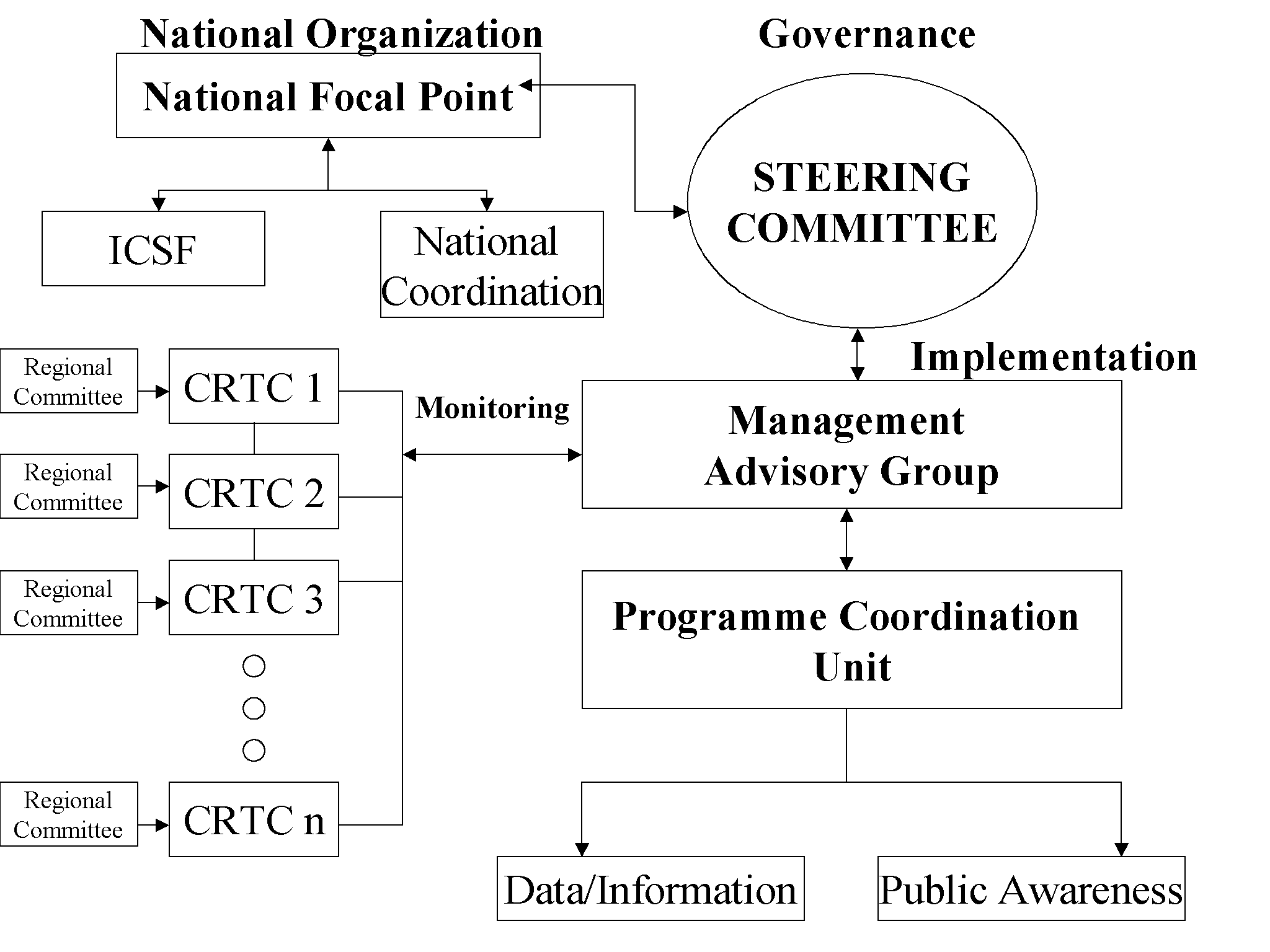
 Figure
1 Structure of the Caspian Environment Programme
Figure
1 Structure of the Caspian Environment ProgrammeCASPIAN SEA
BIODIVERSITY STRATEGY AND ACTION PLAN
FINAL DRAFT
Prepared by Fauna and Flora International for the Caspian Environment Programme
July 2002
Table of Contents
Executive Summary 4
ACKNOWLEDGEMENTS 5
1. Introduction 7
1.1 The importance of biodiversity 7
1.2 The Caspian Sea 8
1.2.1 Geographical location and borders 8
1.2.2 Physical and chemical regime 8
1.2.3 Climate 9
1.2.4 Biodiversity 9
1.3 Introduction to the Regional Biodiversity Strategy and Action Plan and Institutional Arrangements 10
1.3.1 The Mediterranean 10
1.3.2 The Black Sea 11
1.3.2 The Caspian Environment Programme 11
1.4 National BSAPs 12
1.5 Social and economic circumstances 13
2. Current situation in the Caspian 15
2.1 Status of international agreements 15
2.1.1 Convention on Biological Diversity 15
2.1.2 Pan-European Biological and Landscape Diversity Strategy 15
2.1.3 Convention on Wetlands 16
2.1.4 Convention on International Trade in Endangered Species 17
2.1.5 Aarhus Convention 17
2.2 Institutional and administrative base 18
2.2.1 Convention on Conservation and Utilisation of Bioresources of the Caspian Sea 18
2.2.2 Declaration on Environmental Cooperation in the Caspian Sea 18
2.2.3 Protocol on programs for the Protection of the Environment in the Caspian Sea Region 18
2.3 Stakeholder Analysis 19
2.4 Legislative Base 20
2.5 Business Environment 22
2.6 Information provision and awareness 23
3. Problem analysis 24
3.1 Introduction 24
3.2 Key pressures on the environment 24
3.3 Factors affecting biodiversity 26
3.3.1 Threats, constraints and consequences 26
3.3.2 Decline in commercial fish stocks, including sturgeon 26
3.3.3 Degradation of coastal landscapes and damage to coastal habitats 27
3.3.4 Overall decline in environmental quality 27
3.3.5 Introduced species 28
3.3.6 Contamination from offshore oil and gas activities 28
3.3.7 Survey and monitoring 28
3.4 Key sectors affecting biodiversity 29
3.4.1 Fisheries 29
3.4.2 Industrial / urban construction and development 29
3.4.3 Oil and Gas 30
3.4.4 Agriculture/General Industry 31
3.5 Underlying causes of biodiversity loss 31
3.6 Opportunities for biodiversity conservation 32
3.7 Conclusion 32
4. Biodiversity Strategy and Action Plan 33
4.1 Strategic Approach 33
4.2 Aim 34
4.3 Action Plan 35
5. Implementation of the BSAP 70
5.1 Management and administration of the implementation process 70
5.1.1 Coordination at the CEP 70
5.2 Coordinating organisations 71
5.2.1 Communication between the coordinating organisations and the implementing recipients 72
5.3 Financial mechanisms 73
5.3.1 The Context 73
5.3.2 Phases of Funding 74
6. Assurance mechanisms 77
6.1 Introduction 77
6.2 Monitoring and Evaluation of the BSAP 77
6.2.1 Process of monitoring and evaluating the BSAP 78
6.3 Reporting 79
6.4 Integration of Caspian BSAP with other processes 80
ABBREVIATIONS 83
References 84
Appendix 1 – Consultee List 85
Executive Summary
To be added
ACKNOWLEDGEMENTS
To be added
It
is reckless to suppose that biodiversity can be diminished
indefinitely without threatening humanity itself (E.O. Wilson,
1992).
1. Introduction
The development of a Biodiversity Strategy and Action Plan for the Caspian Sea is part of the process to develop a Strategic Action Programme for the Caspian to address all of the regional issues affecting the Caspian.
The primary beneficiaries of this Biodiversity Strategy and Action Plan (BSAP) will be the population of the 5 Caspian littoral states, in particular the populations that live in the coastal zone. The benefits that could be expected on successful implementation of the BSAP are more sustainable fisheries, the sustainable use of natural resources, stable populations of species and functioning ecosystems as well as improved water quality, improved coastal zone management and integrated development through the NCAPs. Successful implementation of the BSAP may also have indirect but important benefits in terms of improving public health, decreasing rural poverty levels and securing higher employment. A regional consensus emerging from the BSAP implementation will also play its part in resolving current regional security issues and in conflict resolution. In the shorter-term, governments and institutions will benefit from institutional strengthening as a result of networking, training programmes and the provision of key items of equipment.
This document draws upon a number of reports that have been produced in the Caspian region under the umbrella of the Caspian Environment Programme. These include the Caspian Regional Thematic Centre (CRTC) Regional Reports, the Caspian Transboundary Diagnostic Analysis, the National Caspian Action Plans (NCAPs) for the 5 littoral states and various other reports detailing aspects of the Caspian biological, economic and legal status. Chapters 1, 2 and 3 of this report include broad summaries of these previous documents and do not attempt to restate the detail other than to draw out the points relevant to development of a Caspian BSAP. Chapter 1 includes general information on the value of conserving biodiversity and places the work to develop a Caspian BSAP in the broader context of the international as well as the national obligations of the 5 littoral states. Chapter 3 outlines some of the main regional impacts on the biodiversity of the Caspian that have been identified through previous work and through the consultation process that was central to the development of this BSAP. Chapter 4 details the aims that were agreed for the BSAP and includes the action plan that has been developed with the regional stakeholders. Finally, Chapters 5 and 6 examine some of the options for implementation of the BSAP in the context of existing structures and mechanisms that have been proven to work elsewhere.
1.1 The importance of biodiversity
There are 3 kinds of biodiversity: ecosystem diversity, species diversity, and genetic diversity.
"Biological
diversity" means the variability among living organisms
from all sources ………and includes diversity
within species, between species and of ecosystems (Convention on
Biological Diversity, 1992).
Each species of plant and animal has a place on the earth and plays a vital role in the circle of life. Plant, animal, and insect species interact and depend upon one another for food, shelter, oxygen, and soil enrichment.
We have scarcely begun to explore the biodiversity on which our existence is ultimately dependent. Fewer than 2 million of the estimated 10 to 100 million species in the world have been documented yet at the same time as we're trying to expand our knowledge biodiversity is disappearing. One fifth of all the bird species in the world have gone extinct in the last 2,000 years, almost certainly all at the hands of man, and 11 percent of the remaining 9,040 known species of birds are endangered (Wilson, 1993).
There are numerous reasons why we should conserve biodiversity. We owe it to our children to pass on an environment at least as rich as the one we inherited; we know relatively little about the biodiversity of the planet yet we are losing species that have taken millions of years to evolve; evidence from the previous five great extinctions on earth shows that it will take millions of years to restore the losses; we depend on biodiversity to maintain variety in our crops and for many of our industries such as pharmaceuticals, construction and waste treatment.
The goal of biodiversity conservation is to address the full range of causes of its current loss and ensure that the protection and use of biological resources supports the general aim of sustainable use.
1.2 The Caspian Sea
For the purposes of this Biodiversity Strategy and Action Plan, the Caspian Sea is defined as encompassing the sea and the surrounding coastal zone.
1.2.1 Geographical location and borders
The Caspian Sea is the largest inland water body on Earth. It is situated on the boundary between Europe and Asia between the latitudes of 47.07oN and 36.33oN and 45.43oE and 54.20oE longitude. It is approximately 1,200 km long with a width ranging from 196 to 435 km, has a surface area of 386,400 km2 and a coastline of about 7,000 km in length. The Caspian has no connection to the world’s oceans and its surface level is around 27 m below the level of the world’s oceans. The water of the Caspian is brackish and thus the ecosystem incorporates remnants of the fauna from the Pleistocene period when it became separated from the rest of the world’s oceans.
The sea is bounded by five states: Azerbaijan to the west, the Russian Federation and Kazakhstan to the north, Turkmenistan to the east and the Islamic Republic of Iran to the south.
1.2.2 Physical and chemical regime
The sea divides into 3 distinct basins:
a shallow northern shelf with average depths of les than 5 m which comprises 27% of the sea area and 0.5% of its volume and which has a variable salinity due to the high river run off in the area;
a central basin with depths of more than 500 m that comprises 38% of the sea area and 36% of its volume with a salinity of 11-12 o/oo;
a very deep basin (more than 1 km deep) that comprises 39% of the sea area and 63% of its volume and with a stable salinity of 12-13 o/oo.
The shallow gulf of Kara-Bogaz-Gol is often considered to be a separate water body. It is separated from the rest of the Caspian by sand bars and its surface lies a few metres below the level of the Caspian. It is subject to significant evaporation that renders it hypersaline so that the fauna of this area differs significantly from that of the rest of the Caspian.
Approximately 130 large and small rivers flow into the Caspian but the main freshwater input is from the Volga River that drains an area of 1.4 million km2 and runs into the northern part of the sea. Most of the river input is to the north and west coasts with flows from the east restricted due to the dry climate and from the south by mountains close to the coast. There are no river outflows from the Caspian and evaporation is the only mechanism by which water escapes from the sea.
1.2.3 Climate
The Caspian region lies in the centre of the Palaearctic zoogeographical region, which results in major climactic differences over the sea, and its catchment. The area is comprised of two major biomes of cold, continental deserts and semi-deserts in the north and east and, subtropical mixed mountain and highland systems in the southwest and south. There is also a small area around the Volga Delta in the west, where temperate grasslands can be found. The range of climatic conditions has led to a significant degree of biological diversity. This is further enhanced by the existence of extensive wetland systems such as the deltas of the Volga, the Ural and the Kura rivers and the hypersaline Kara-Bogaz-Gol.
1.2.4 Biodiversity
The Caspian has high levels of biological diversity as a result of its long period of isolation and because of the large variations in temperature and salinity throughout the sea. Both of these factors have enabled speciation to occur. In addition, the geography of the Caspian has resulted in a wide variety of habitats that support many rare fauna and flora. For example, the Sarykum barkhan is a unique refuge for flora, adapted to the loose sands of the ancient Central Asian Deserts. There are over 400 endemic species and 115 species of fish including 6 species of sturgeon (90% of the world population), which migrate from the Caspian up the rivers to spawn. The Caspian seal is one of only two freshwater seal species that occur worldwide.
There is a large variety of coastal wetland, including temporary and permanent shallow pools, many of which are saline. These wetlands are important wintering grounds and attract large birds populations particularly since the Caspian lies on the path of several major migration routes. The Caspian area also provides important resting, feeding and breeding grounds for species including grebes, cormorants, herons and ibises.
Large parts of the coastal zone are a haven for rare large mammals such as the saiga antelope and the goitered gazelle and to the north west, the zone between the sea and the desert areas is important for smaller mammals such as boar, muskrat, otter and rodents such as the red-tailed gerbil.
In common with other countries, the degradation and loss of biodiversity has become a critical issue for the Caspian states and thus the conservation of biodiversity has come to the fore in recent years. Increasing pressures from sea level fluctuations, inputs of pollutants, the effects of exploitative industries such as fishing and oil extraction and the introduction of invasive species have all combined to offer serious threats to the environment of the Caspian region and has resulted in an increasing loss of species (Table 1) and damage to habitats.
A full account of the biodiversity of the Caspian Sea can be found in Caspian Environment Programme (2001).
Table 1 The number of rare and vanishing species in the Caspian Sea and its coastal zones, as listed in national Red Books.
|
|
Azerbaijan |
Iran |
Kazakhstan |
Russia |
Turkmenistan |
|
Flora |
50 |
|
12 |
40 |
8 |
|
Insects |
|
|
20 |
|
|
|
Amphibian |
2 |
17 |
0 |
0 |
|
|
Reptiles |
3 |
|
2 |
8 |
|
|
Birds |
41 |
30 |
31 |
45 |
24 |
|
Mammals |
14 |
8 |
5 |
18 |
2 |
|
Fish |
6 |
3 |
5 |
5 |
4 |
Note: The Table has been taken from the Caspian Environment Programme website and is based on the national reports on the state of biodiversity. Empty cells indicate no information available.
1.3 Introduction to the Regional Biodiversity Strategy and Action Plan and Institutional Arrangements
Regional approaches to biodiversity management have been used in a number of areas where important biodiversity areas are bounded by several countries.
1.3.1 The Mediterranean
The Mediterranean comprises one of the largest groups of islands in the world. The region is of high value to global biodiversity due to its wealth of species, relatively high rate of endemism and long history. However, it is also one of the world’s most popular holiday destinations, with some 200 million tourists each year. As a result it faces a number of challenges including dealing with the waste and litter produced by this number of visitors and the indigenous populations and high development pressure. To try and manage these impacts, the 21 Mediterranean countries have been working since 195 through a Mediterranean Action Plan, to protect the marine environment and to promote the sustainable development and integrated management of coastal areas.
1.3.2 The Black Sea
As with the Caspian, the Black Sea, suffers threats from pollutants, eutrophication, the introduction of exotic species and inadequate resource management etc., all of which pose a serious risk of losing valuable habitats, landscapes and ultimately, the biological diversity and productivity of the Black Sea ecosystem. Although action by individual states resulted in some improvements over the years, individual action was not fully addressing the problems. In 1996, the Black Sea States of Bulgaria, Georgia, Romania, the Russian Federation, Turkey, and Ukraine published the Strategic Action Plan for the Rehabilitation and Protection of the Black Sea with the following aim:
to enable the population of the Black Sea region to enjoy a healthy living environment in both urban and rural areas, and to attain a biologically diverse Black Sea ecosystem with viable natural populations of higher organisms, including marine mammals and sturgeons, and which will support livelihoods based on sustainable activities such as fishing, aquaculture and tourism in all Black Sea countries.
The Strategy provides the framework for international co-operation in the rehabilitation of the Black Sea.
1.3.2 The Caspian Environment Programme
The Caspian Environmental Program (CEP) is a regional programme that has been developed by and for the Governments of the five littoral Caspian states to solve common ecological problems and promote sustainable development. The Caspian Environment Programme is supported by a number of international organizations (GEF, UNDP, UNEP, World Bank and ТАСIS).
The purpose of CEP is to maintain sustainable development and ensure the rational management of the Caspian region environment by:
ensuring that economic activity subscribes to the principles of sustainable development;
promoting the improvement of environment quality and biodiversity conservation;
improving and restoring Caspian sea ecosystems and biodiversity conservation;
Figure
1 Structure of the Caspian Environment Programme
One of the key areas of focus of CEP is to address transboundary biodiversity issues and to promote public awareness and involvement in its work. This includes the preparation of National Caspian Action Plans (NCAP) and a regional Strategic Action Plan (SAP), which will define the actions to be taken at a regional level to address the core transboundary issues over the next ten years. The regional Biodiversity Strategy and Action Plan (BSAP) is one element of the Strategic Action Plan.
The regional BSAP is based upon the individual country BSAPs but seeks to address only those issues that have been identified as transboundary in nature. This regional BSAP will outline the principles and approaches for biodiversity conservation in the Caspian Sea and will develop these within the provisions of the Convention on Biological Diversity, but with reference to the national framework that will implement the plan. Links will be made to the existing structures listed in chapter 2 (PEBLDS, Ramsar & CITES).
1.4 National BSAPs
The Caspian States have responded to these international agreements and particularly the Convention on Biological Diversity by, as a first step, preparing national reports on the state of their biodiversity. All five states have produced, or are in the process of preparing, national Biodiversity Strategies and Action plans (BSAPs). These national BSAPs use existing information to carry out a stocktake of present conditions and trends and to provide an overview of the country’s biodiversity, the threats to that biodiversity, existing conservation effort, and conservation priorities. Each plan identifies the goals and objectives for biodiversity conservation in that state and identifies a strategy and action plan for achieving those goals and objectives.
However, the Caspian Sea is a complex ecosystem from which it is impossible to separate the physical and ecological interdependencies on an administrative basis. Responsibility for the biodiversity conservation of the Caspian Sea is shared between the 5 Caspian states and it has become apparent that a regional approach is required to tackle the transboundary issues.
1.5 Social and economic circumstances
International trade has always brought wealth to the Caspian region that has a long history as a trade route, lying on the old silk route between the east and the west. During later periods of its history the region has been subject to major influences from its position at the interface between the Russian and Turkish empires and from influences from the west.
Much of the social and economic development around the Caspian is related to the biodiversity resource:
natural resources provide raw materials for industry;
plants and their derivatives are used in pharmaceuticals and in natural remedies;
biodiversity is essential to agriculture in providing food, fodder and grazing for livestock and genetic variation;
forest resources are used in industry and for construction;
enjoyment of landscapes provides the basis for tourism as does the ability to take part in recreational activities such as hunting and fishing.
Social and political changes in the latter part of the 20th Century have had a profound impact on the region.
Azerbaijan is the largest of the South Caucasian countries with a population of about 8 million, 30 per cent of whom live in the capital city of Baku. In Azerbaijan following independence, the conflict with Armenia as well as low oil prices, led to high inflation and a decline in output. The oil and gas sectors were particularly affected with production falling by a third from 1987 to 1994. Fighting in Chechnya, which led to the severing of transport links to Azerbaijan’s traditional markets, exacerbated these problems and the combination of these factors led to a decline in GDP during this period with almost all sectors of the economy hit hard. The output of agriculture fell by about 43 per cent and of industry by about 60 per cent. From 1995, with the gradual stabilization of the political situation and the cease-fire in the Armenian conflict, the government began implementing an economic programme supported by the IMF and the World Bank. This has had dramatic results, helped by high oil prices and renewed trade links with the Russian Federation.
Iran’s geostrategic position and possession of extensive hydrocarbon resources have made it a significant player on both the regional and international scene. Furthermore the availability of natural gas, mineral and human resources (68 million people) further enhance this position. However, the Islamic Revolution in 1979 profoundly changed Iran’s position internationally following the severance of diplomatic and economic relations by many countries, most notably the United States.
In the period immediately following the Islamic Revolution, many Iranians saw a drastic decline in their standard of living due to both the imposition of economic sanctions and eight-year war with Iraq (1980-8). However, following the death of Ayatollah Khomeini in 1989 and election of Seyyid Mohammad Khatami in 1997 Iran has increasingly been able to return into the international arena.
Kazakhstan is the largest of the Central Asian republics, covering some 2.7 million square kilometres. The population of Kazakhstan totals over 16.8 million people, more than half of whom are Kazakh, with a sizeable Russian community, and smaller concentrations of Ukrainians, Germans, Uzbeks and Tartars. The economy of Kazakhstan has suffered since independence due to the breakdown of relations with the former Soviet Union, which exacerbated a rapid decline in production and led to high inflation. Current issues include development of a cohesive national identity, development of the country's vast energy resources and their export to world markets and strengthening relations with neighbouring states and other foreign powers.
Russia covers an area of 17 million square kilometres and has a population of over 145 million. A decade after the break-up of the Soviet Union in 1991, Russia is still struggling to establish a modern market economy and achieve strong economic growth. The economy contracted during the first 5 years although it achieved some recovery by 1997. In 1998, the global financial crisis led to a depreciation of the rouble which led to a sharp deterioration in living standards for most of the population although the economy rebounded in 1999 and 2000 due primarily to high oil prices. Russia currently suffers from low birth rates and a deteriorating health situation leading to falling life expectancies both of which have resulted in a 2% drop in the population size since 1992.
Turkmenistan covers an area of 488,000 square kilometres and has a population of about 4.6 million people of which more than three-quarters are Turkmen nationality, with sizeable communities of Uzbeks, Russians and Kazakhs. Turkmenistan is largely covered by desert and intensive agriculture is concentrated around irrigated oases. The oil and gas industry has insulated Turkmenistan from regional economic shocks experienced by neighbouring countries in the mid 1990s.
Exploitation of oil reserves in the Caspian has resulted in a number of political and diplomatic controversies. Disputes have raged over whether the Caspian is defined as a sea and therefore covered by the UN Law of the Sea Convention or as a border lake, which would determine how Caspian resources should be distributed between the littoral states. Unresolved issues of the legal status of the Caspian Sea, problems of transportation of oil and gas to world markets, as well as territorial and border problems between regional states are potential serious threats to both national and regional security in the Caspian Sea region.
The greatest threats to the biodiversity of the Caspian region come directly or indirectly from human activity which have resulted in the loss of species, declines in populations of plants and animals and damage to ecosystems. The threats include habitat loss and degradation, over-use of biological resources, pollution and the impact of non-native species.
2. Current situation in the Caspian
2.1 Status of international agreements
There are a number of international agreements to which the 5 Caspian States are party that need to be integrated into any approach to the maintenance of the biodiversity of the Caspian Sea.
2.1.1 Convention on Biological Diversity
Convention on
Biological Diversity
The 3 main goals of the
Convention are the conservation of biological diversity, the
sustainable use of its components and the fair and equitable sharing
of the benefits arising out of the utilization of genetic resources.
The Convention on Biological Diversity was a key element of the Earth Summit held in Rio de Janeiro in 1992 and is the global response to the need to conserve biological diversity. In ratifying the Convention, the Parties undertook to implement the Convention at a national level as a contribution to achieving its goals and objectives at a global level. To date the Convention has been ratified by 183 countries including the five Caspian states of Azerbaijan, the Islamic Republic of Iran, Kazakhstan, the Russian Federation and Turkmenistan.
Article 6 of the Convention requires the Contracting Parties to develop plans or programmes for the conservation and sustainable use of biological diversity or adapt for this purpose existing strategies, plans or programmes and to integrate, as far as possible the conservation and sustainable use of biological diversity into relevant sectoral or cross-sectoral plans, programmes and policies.
2.1.2 Pan-European Biological and Landscape Diversity Strategy
The 4 CIS states have endorsed the Pan-European Biological and Landscape Diversity Strategy (PEBLDS).
Pan-European
Biological and Landscape Diversity Strategy
Aims to the achieve
conservation and sustainable use of biological and landscape
diversity for the whole continent of Europe and all its regions
within 20 years, by ensuring that:
the threats to Europe's
biological and landscape diversity are reduced substantially, or
where possible removed;
the resilience of
European biological and landscape diversity is increased;
the ecological
coherence of Europe as a whole is strengthened;
public involvement and
awareness concerning biological and landscape diversity issues is
increased considerably.
PEBLDS will be implemented through a series of 5-year action plans that should ensure that:
full use is made of existing legal, administrative and socio-economic mechanisms at the international, national, regional and local level;
action is taken at the appropriate level, whether Pan-European, regional, national or local;
management practices enhance and strengthen the resilience of biological and landscape diversity;
adequate scientific, technical and financial resources are made available;
appropriate arrangements are made for monitoring the implementation of the Strategy;
the emphasis is on measures and activities with broad applications or results.
2.1.3 Convention on Wetlands
Each of the five Caspian States is a Contracting Party to the Convention on Wetlands (the Ramsar Convention).
The
Convention on Wetlands
The Convention on
Wetlands, signed in Ramsar, Iran, in 1971, is an intergovernmental
treaty that provides the framework for national action and
international cooperation for the conservation and wise use of
wetlands and their resources.
The Convention recognizes wetlands as important ecosystems for the conservation of biodiversity and covers all aspects of wetland conservation. Parties to the Convention have made four main commitments:
to designate at least on site for inclusion in the list of Wetlands of International Importance and to promote its conservation. Between them, the 5 Caspian states have identified 61 sites for inclusion on the list covering an area of more than 12.5 million hectares;
to promote the principle of wise use by including wetland considerations into their national land-use planning;
to establish nature reserves on wetlands and promote training in the fields of wetland research and management;
to consult other Contracting Parties to the Convention with respect to transfrontier wetlands, shared water systems and shared species.
2.1.4 Convention on International Trade in Endangered Species
Azerbaijan, the Islamic Republic of Iran, Kazakhstan and the Russian Federation are signatories to the Convention on International Trade in Endangered Species (CITES).
Convention
on International Trade in Endangered Species
CITES is an
international agreement between governments that aims to ensure that
international trade in specimens of wild animals does not threaten
their survival.
Since trade in wild animals and plants crosses borders, international cooperation is required to safeguard certain species from over-exploitation. CITES confers 3 levels of protection to species according to the degree of protection they need:
Appendix I includes species threatened with extinction;
Appendix II includes species not necessarily threatened with extinction but in which trade must be controlled to ensure their survival;
Appendix III contains species that are protected in at least one country, which has asked CITES Parties for assistance in controlling the trade.
2.1.5 Aarhus Convention
Azerbaijan, Kazakhstan and Turkmenistan are parties to the United Nations Economic Commission for Europe (UNECE) Convention on Access to Information, Public Participation in Decision-Making and Access to Justice in Environmental Matters (the Aarhus Convention).
Convention
on Access to Information, Public Participation in Decision-Making
and Access to Justice in Environmental Matters
The Aarhus
convention sets out a series of rules to govern citizens’
involvement in environmental matters and the enforcement of
environmental law. It has three main strands set out in Article 1
which requires that “in order to contribute
to the protection of the right of every person of present and future
generations to live in an environment adequate to his or her health
and well-being, each Party shall guarantee the rights of access to
information, public participation in decision-making, and access to
justice in environmental matters in accordance with the provisions
of this Convention.
The Aarhus Convention links environmental rights and human rights and acknowledges that stakeholder involvement is crucial to the achievement of sustainable development. It is being implemented through a number of task forces and working groups covering topics such as pollutant release and transfer registers, genetically modified organisms and through drafting a new protocol on strategic environmental assessment.
2.2 Institutional and administrative base
There are also a number of environmental management agreements between the Caspian states. The Caspian CIS countries inherited the environmental agreements between the Soviet Union and the Islamic Republic of Iran. The states have committed themselves to cooperation in the environmental management of the Caspian and declared the urgency to determine the Caspian’s legal status and to agree on the joint use of its bioresources.
2.2.1 Convention on Conservation and Utilisation of Bioresources of the Caspian Sea
The 5 Caspian States are party to the Convention on Conservation and Utilisation of Bioresources of the Caspian Sea. The Convention is intended to preserve the migratory fish species and Caspian seal resources of the Caspian. It establishes a Commission on Conservation and Utilisation for Caspian bioresources for the implementation of the Convention and establishes the freedom to fish in Caspian open waters within the limitations of a management agreement that includes national quotas and fisheries rules, including the national management of coastal fisheries.
2.2.2 Declaration on Environmental Cooperation in the Caspian Sea
In Almaty in 1994 the five Caspian states signed the Declaration on Environmental Cooperation in the Caspian Sea in which they recognised the unique and varied biological resources of the Caspian Sea that make it a global treasure, determined to take coordinated actions to prevent the degradation of this unique water body and acknowledged the severity of environmental problems caused by a number of factors. The states agreed to cooperate fully in the preparation and implementation of programs of joint activities on protection of the environment that should establish the basis for rational utilisation of natural resources and identify priority activities.
2.2.3 Protocol on programs for the Protection of the Environment in the Caspian Sea Region
The Caspian States have also signed the Protocol on programs for the Protection of the Environment in the Caspian Sea Region in which they:
note the need for international cooperation in research, management, economic incentives and legislation in order to conserve the biological diversity of the Caspian Sea and its coastal zone;
agree on the need to take joint measures to implement the Convention on Biological Diversity;
express a common interest in implementing a project for protecting the biodiversity of the Caspian and its coastal zone;
express a willingness to cooperate in environmental protection of the sea and sustainable management of its resources.
In addition to the agreements or statements of intent to cooperate in environmental management, there have been several bilateral agreements on exploitation of the Caspian’s natural resources, including:
between Kazakhstan and the Russian Federation on the use of the sea bed in the northern part of the sea;
between Azerbaijan and the Russian Federation on the use of the sea bed on their mutual border;
between Azerbaijan and Russia on oil transit;
between Azerbaijan and Russian oil companies on prospecting activities;
between Turkmenistan and Azerbaijan on transit of gas by pipeline.
2.3 Stakeholder Analysis
The management of biodiversity is about more than dealing with the habitats and species that provide the wildlife interest. Landscapes and their wildlife are shaped by the people who live in them and who depend on them for their livelihoods. Any proposal to alter the way an area is managed must involve the people who will be affected, as it is these people who will be asked to make changes to the way they carry out their activities. Apart from any impact on individuals, those who live in and manage local environments are well placed to contribute to the identification of problems and ways to solve them. Finally, implementation of a Biodiversity Strategy is not entirely within the control of regulatory authorities as many changes involve a change in the perception of individuals of the importance of conserving biodiversity and changes in the way they carry out their day-to-day activities. Therefore no plan of this type would be complete without involving a wide range of key stakeholders.
Stakeholders are those individuals or organisations that are directly involved in the development and implementation of the Biodiversity Strategy and Action Plan, those who will be affected by the implementation of the BSAP, those who are interested in the BSAP and those who can assist in its successful implementation. In reality, it is never practicable to consult whole populations during the development of a BSAP and the involvement of the full range of stakeholders has to take place in a phased way. This means that some involvement will not occur until after production of the BSAP and will be carried out through public awareness exercises and information provision to key groups or individuals and through participation in implementation projects that will provide real benefits to local populations. Therefore, the stakeholders involved in the development of this BSAP are a subset of the total stakeholders in the process.
Three categories of stakeholders were identified to be involved in the preparation of the Caspian BSAP:
Primary stakeholders - those whose permission, approval or (financial) support is essential, whose cooperation is essential and who are directly affected;
Secondary stakeholders - those who will be indirectly affected;
Tertiary stakeholders - who will not be directly affected but who can influence others to ensure implementation of the BSAP.
Identification of these stakeholders led to the following categories of organisation being consulted during preparation of the BSAP;
Ministries of Environment, Nature and Biodiversity Management, Industry, Fishing, Transport, Water Management
Regional authorities
Oil industry
Other major industries along the Caspian coastline
Potential funders (for biodiversity and for industry)
NGOs (including international)
The consultation process is detailed in Chapter 4 and a list of the organisations and individuals consulted during the production of this document is included at Appendix 1.
2.4 Legislative Base
Prior to the dissolution of the Soviet Union, a number of international agreements relating to the Caspian Sea were concluded. These agreements include:
the Treaty of Friendship between the Soviet Union and Iran of February 1921, which accorded both states freedom of navigation;
the agreement between Persia and the Union of Soviet Socialist Republics of 1 October 1927 relating to the exploitation of fisheries on the southern coast of the Caspian Sea;
the Exchange of Notes between Persia and the Union of Soviet Socialist Republics of 1 October 1927 prohibits fishing by chemical means, explosives and similar means. The exchange of notes also sets some limitations as to the fishing seasons;
the Convention between Iran and the Soviet Union on Establishment, Commerce and Navigation of October 1931 which reserves the parties an exclusive fishing right in coastal waters up to 10 nautical miles;
the treaty between Iran and the Soviet Union on Establishment, Commerce and Navigation of August 1935. This Treaty confirms the above provisions of the 1931 Treaty;
the Treaty of Commerce and Navigation signed by Iran and the Soviet Union at Teheran in March 1940 that also, confirms the above provisions of the 1931 Treaty;
the agreement between Iran and the Union of Soviet Socialist Republics concerning the Settlement of Frontier and Financial Questions, signed in December 1954 and which provides for the demarcation of the frontier between Iran and the Soviet Union, and establishes a demarcation commission;
the treaty between the Government of the Union of Soviet Socialist Republics and the Imperial Government of Iran Concerning the Regime of the Soviet-Iranian Frontier and the Procedure for the Settlement of Frontier Disputes and Incidents, signed in May 1957. This Treaty accords to the residents of the contracting States the right to fish in frontier waters up to the frontier line;
the agreement between Iran and the Soviet Union for the Joint Utilization of the Frontier Parts of the Rivers Aras and Atrak for Irrigation and Power Generation, signed in August 1957;
the agreement between Iran and the Soviet Union, on Economic and Technical Cooperation, 1963 under which the Parties undertake to cooperate in the rearing of sturgeon.
After the dissolution of the Soviet Union, in December 1991, the heads of state of the Republic of Azerbaijan, Republic of Kazakhstan, Russian Federation and Turkmenistan signed a joint Declaration in Almaty guaranteeing that the new states would continue to fulfil the international obligations of the previous Soviet regime. By this Declaration, the CIS countries confirmed that they would continue to uphold previous agreements between the USSR and the Islamic Republic of Iran, and that future agreements on the Caspian and use of its resources would be made between the 5 littoral states.
There are also a number of environmental management agreements between the Caspian states. The Caspian NIS countries inherited the environmental agreements between the Soviet Union and the Islamic Republic of Iran. The states have committed themselves to cooperation in the environmental management of the Caspian and declared the urgency to determine the Caspian’s legal status and to agree on the joint use of its bioresources. In Almaty in 1994 the countries:
agreed on the need to jointly implement the Convention on Biological Diversity;
expressed a common interest in implementing a project for protecting the biodiversity of the Caspian and its coastal zone in relation to mineral resource exploitation;
expressed a willingness to cooperate in environmental protection of the sea and sustainable management of its resources;
called on the international community to support the countries in implementation of an environmental programme.
In 1992, the Russian Federation proposed a plan to preserve the bioresources of the Caspian, giving priority to all sturgeon species and for the conclusion of the necessary international agreements. The proposal included the freedom to fish in Caspian open waters within the limitations of a management agreement that included national quotas and fisheries rules, including the national management of coastal fisheries.
In addition to the agreements or statements of intent to cooperate in environmental management, there have been several bilateral agreements on exploitation of the Caspian’s natural resources, including:
between Kazakhstan and the Russian Federation on the use of the sea bed in the northern part of the sea;
between Azerbaijan and the Russian Federation on the use of the sea bed on their mutual border;
between Azerbaijan and Russia on oil transit;
between Azerbaijan and Russian oil companies on prospecting activities;
between Turkmenistan and Azerbaijan on transit of gas by pipeline.
2.5 Business Environment
Historically there have been many types of commerce practiced throughout the region, such as heavy industry, fishing, agriculture and the trading route network. At present, these are primarily limited to oil and gas exploration and production, commercial fishing and agriculture.
Oil and gas exploration and production have taken place in the Caspian Sea for over 150yrs and today the oil and gas industry is the largest sector in the Caspian region in terms of economic importance, with all five countries having operations of one form or another within their national boundaries although production rates have fluctuated over this time.
Commercial fisheries are important in the Caspian region with bioresources, primarily fisheries, estimated to be worth up to US $5-6 billion a year. Ninety percent of world sturgeon populations are found in the Caspian region although sturgeon catches have fallen from a high of 29,000 tonnes in 1977 to 1,700 tonnes in 2000. These figures do not include poaching which is a considerable industry in the region because of the high market value of caviar.
In Azerbaijan, whilst the oil and gas sector forms the foundation of the economy, 35 percent of the work force is employed in agriculture, which contributes around 28 percent to GDP. Sea transportation is important to Azerbaijan with the port of Baku soon able to handle up to 30 million tonnes of freight a year.
Iran is OPEC's second largest oil producer and holds 9% of the world's oil reserves and 15% of its natural gas reserves. Oil revenues contribute about 80% of total export earnings and around 14 percent of GDP and the economy suffered badly due to the plunge in world oil prices during 1998 and early 1999 although it has recovered since with GDP growing by around 4.3 percent in 2001. Other contributors to GDP are services (35%), agriculture (21%), manufacturing and mining (19%).
Kazakhstan is the second largest oil producer after Russia among the CIS countries, with an annual oil production of over 35 million tonnes in 2000, and is set to become one of the top five oil-producing countries within 30 years if the latest oil finds in the Caspian Sea prove to be as substantial as indicated. Agricultural production accounted for 20 percent of GDP in 1999 although this has declined from more than a third of GDP since the early 1990s when 18 percent of the work force were employed in the agriculture sector. Kazakhstan has a strong manufacturing base centred on petrochemicals, agricultural processing and ore refining with important contributions from other branches of industry such as heavy engineering, wood processing and light manufacturing such as textiles, footwear, and paper.
Russia is the world's largest exporter of natural gas, one of the largest oil exporters, and the third largest consumer of energy. The country’s economy is in the best shape now since the break-up of the Soviet Union with food products, light industry, metallurgy, machine building, metal processing, the chemical and petrochemical industries all showing growth. However, the country’s industrial base needs to be modernized if Russia is to achieve sustainable economic growth.
The Turkmen economy relies largely on oil and gas, and agriculture. Turkmenistan has proven natural gas reserves of three trillion cubic metres, making it the fourth largest producer in the world. It has access to substantial oil and gas reserves in the Caspian Sea, but needs to develop pipeline routes to export this to external markets. Turkmenistan is the world’s tenth largest cotton producer and the government is developing a domestic textiles industry that will offer opportunities for foreign investment.
2.6 Information provision and awareness
Under the institutional arrangements for the operation of the Caspian Environment Programme, it has been recognized that the basis for rational decision and multi-sectoral participation requires full access to be made available to high quality, up-to-date data. CEP has undertaken to manage information and maintain a comprehensive database of interpreted data and much of this data is available over the Internet. Most of the raw data will remain with individual scientists, institutes or the Caspian Regional Thematic Centres.
The data and information component of CEP aims to:
develop a strong regional mechanism for data and information sharing;
develop a comprehensive information system describing institutional capacities and human resources in the Caspian region;
help the CRTCs to develop a standard database approach in their area of competency;
develop the Caspian Data Base Management System to hold data and information provided by the CRTCs;
develop a Caspian Geographic Information System using historical and current data and information gathered by the CRTCs during the implementation of CEP.
3. Problem analysis
3.1 Introduction
The wealth of biological resources in the Caspian region has offered the peoples of the area a rich reservoir from which to source their food, shelter, clothes and land space. As will be developed further in this chapter anthropogenic impact, through use of these resources, has played a crucial role in the decline of biodiversity. In addition, natural impacts have caused an immense change in how both social and biological populations have been able to live and utilise the region.
Concern over loss of biodiversity in the Caspian Sea (at species, genetic and habitat levels) is widespread and a source of serious concern within the region and internationally. Biodiversity of the Caspian is low compared to other more open seas, across nearly all phyla. With clear threats to some of the economically important fish species (including sturgeon), concern over loss of biodiversity in general is enhanced. A high rate of endemism of organisms in the Caspian Sea suggests that loss of biodiversity may be of concern in light of industrial, fisheries and other activities in the region.
A full stakeholder consultation programme has been undertaken to understand peoples concerns over the issues affecting biodiversity in the region. This dialogue has provided important insight into both perceptions and scientific fact, and their thoughts have fed into the development of the BSAP.
Through assessment of regional and national issues, it is apparent that certain region-wide priorities require immediate action within the Caspian area. Many of these problems will only be sustainably solved if they are addressed at a regional level with the co-operation of the various nation states surrounding the Sea.
The process of identifying the key pressures affecting both biodiversity and the implementation of biodiversity conservation programmes will provide a valuable context. Within this context we can more easily prioritise and assess potential actions that should be taken to improve the current situation for biodiversity.
3.2 Key pressures on the environment
A scientific analysis of main pressures on the environment needs to take account of biological, oceanographic, physical, industrial and social perspectives to properly identify the main impacts. Perhaps just as important is to understand the perceptions of stakeholders to identify their main concerns regarding primary impacts and consequences.
Historically, lower human population densities have to some extent protected the balance of ecosystems in the region.
|
Country |
Estimated population 1999 (millions) |
Population density (people/km2) |
Population growth rate |
Estimated population 2015 (millions) |
|
Russia |
146.2 |
8.7 |
- 0.4% |
133.3 |
|
Iran |
69.2 |
38.8 |
+ 1.7% |
87.1 |
|
Kazakhstan |
16.3 |
5.6 |
- 1.0% |
16.0 |
|
Azerbaijan |
8 |
92.2 |
+ 0.9% |
8.7 |
|
Turkmenistan |
4.6 |
10.2 |
+ 1.3% |
6.1 |
(TDA, 2001)
A rising and geographically shifting population has now changed the balance of demography and ecosystems are suffering as a consequence. This information implies that within the next 15-20 yrs the centre of gravity of the regional population will move towards the south and east Caspian. Thus the north faces a population decline whilst the south will experience an increased population.
Prevalent in the area is a legacy of environmental pollution from past industrial practices. Since the break-up of the Soviet Union, adverse economic conditions have occurred in the former Soviet States and routine monitoring has been sparse during this period. This large data gap came at a time when industrial use has declined rapidly as market forces have been introduced into the economies of the Caspian States.
Through an analysis of scientific facts and stakeholder views the following problems and issues have been identified as important for the Caspian region.
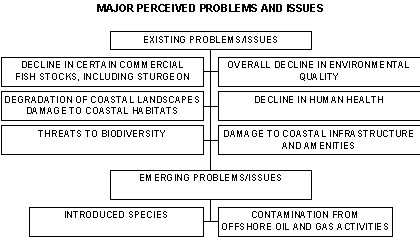
(TDA, 2001)
These problems and issues can be found in many of the nation states surrounding the Caspian Sea and national Governments are planning and implementing actions to address these. It is apparent that all of these pressures are of critical importance for the region as a whole, and can really only be sustainably solved by targeting action at that regional level.
3.3 Factors affecting biodiversity
3.3.1 Threats, constraints and consequences
The table below summarises some of the threats to biodiversity and constraints to the effective management of biodiversity. Also listed are some of the consequences that occur as a result.
|
Threats |
|
Constraints |
|
Consequences |
|
Pollution |
|
Lack of knowledge and awareness |
|
Decline in commercial fish stocks |
|
Over harvesting |
|
Lack of regulation |
|
Decline in environmental quality |
|
Illegal fishing/poaching |
|
Lack of enforcement of regulation |
|
Species loss |
|
Species introduction |
|
Sparse coordinated surveying and monitoring |
|
Ecosystem imbalance |
|
Inappropriate use of resources |
|
Lack of centralised data/ information store |
|
Degradation of coastal landscapes |
|
Industrial development |
|
Lack of coordination and regional agreements |
|
Damage to coastal habitats |
|
Rising and shifting population |
|
Indecision on legal status of the Caspian Sea |
|
Low standards of living |
|
Contamination from offshore oil/gas industry |
|
Lack of institutional development |
|
|
|
|
|
Lack of environmental impact assessments |
|
|
|
|
|
Lack of NGO involvement |
|
|
|
|
|
Lack of Govt funding |
|
|
Some of these issues that directly impact biodiversity in the Caspian Region are presented in discussed further below:
3.3.2 Decline in commercial fish stocks, including sturgeon
The biological resources of the Caspian, principally the fish resources, are worth an estimated $US 5-6 billion a year. Fish catches have been falling, from 283,000 tonnes in 1951-55 to 81,000 tonnes in 1990-95. However, this has been mainly a result of economic recession in the fishing industry. Most commercially important species are not threatened, but some have been extirpated and sturgeons are currently threatened by illegal fishing.
The Caspian Sea is of global importance for sturgeons. At present, poaching is a serious threat to these fishes. Following the collapse of the Soviet Union, fishing regulations have not been implemented and the current authorities are not equipped to control poaching. Poaching is particularly severe along the Azerbaijan, Dagestan and Kalmykiya coasts. International collaboration is needed to control this problem.
Over-fishing has affected other species such as trout, bream and zander in the Iranian area of the Caspian and zander in the Azeri and Turkmen areas.
3.3.3 Degradation of coastal landscapes and damage to coastal habitats
Natural events, such as climate and river discharges, can result in changes in the level of the Caspian. In the northern Caspian, changes in level can reach 0.5 m and surges can cause an increase in level of 1.5 to 2.0 m resulting in coastal inundations. In the 20th Century up to 1970, the level of the Caspian has fallen by almost 3 m. This has led to the reduction of river deltas and the drying up of shallow bays such as Kaidak and Mertviy Kultuk. Areas that were formally islands have become part of the mainland.
The fall in sea level has caused problems for ships navigating the Sea and rivers. As a consequence destructive dredging has been undertaken, though sometimes the results have been the creation of islands that have become important for waterfowl. It is often not the changes in sea levels themselves that cause a major problem, but rather the responses of humans to these changes.
Between 1978 and 1996, the level of the Caspian has risen by about 2.5 m. This has damaged facilities located along the coast of the Sea and pollutants have been released into the water causing localised problems. The most seriously affected areas were on the west coast of the North Caspian. In the Atirau area of Kazakhstan, the coastline moved 70 km inland flooding about 1 million ha of land. Oil and gas fields have been affected resulting in pollution that has affected fish spawning grounds, nesting areas for birds and seal rookeries. Increasing sea levels have also affected plant communities in the deltas of Caspian rivers.
Rising sea levels do also have positive impacts such as the increased areas of spawning grounds and increased productivity in the North Caspian.
3.3.4 Overall decline in environmental quality
Pollution is a major threat. The chief sources of pollution are from industrial and agricultural activities, accidental discharges and sewage. Most of the pollution is from the Volga. In Turkmenistan, the main pollution is from the Turkmenbashi oil refinery. There is no significant pollution from Kazakhstan. Oil pollution is the most serious problem. The sources of oil pollution are primarily offshore wells. Oil can have a negative impact on marine life at relatively low concentrations, affecting feeding, reproduction and other activities. Heavy metals such as cadmium, zinc and copper may also accumulate in the tissues of fishes depressing the immune systems of the animals.
The Volga is described as “medium-polluted” and is principally affected by pollution from human activities. The water of the Middle and South Caspian is “medium-polluted” or “polluted”. In Baku Bay, the seabed is covered with pollutants and no benthic fauna is present. The waters of the Azerbaijan sector are identified as polluted or heavily polluted. In the Turkmenistan sector, the most polluted waters are the Krasnovodsky Bay and Cheleken peninsula.
Pollution in the Caspian has primarily impacted sturgeon causing a disease not previously seen. Seals have also suffered through the effects of pollution.
3.3.5 Introduced species
In the 20th Century humans introduced species from the Black and Mediterranean Seas into the Caspian. These included algae, bivalves, crabs and fishes. Some species have been introduced into the Caspian via the ballast water of ships or on the bottom of vessels. Species from the Atlantic have reached the Caspian via the Volga-Don channel. Of particular concern has been the introduction of a Ctenophore species that feeds on zooplankton causing problems for plankton-feeding fish. This in turn may impact seal populations. It is necessary to develop a set of measures to protect the Caspian from the recently introduced Ctenophore species. It is necessary to have continuous monitoring of the species’ distribution and to have strict controls on ballast water to prevent further accidental introductions.
3.3.6 Contamination from offshore oil and gas activities
The oil and gas industry is of major economic importance within the Caspian Sea region. Concerns have been expressed over potential damage or contamination from the activities of this industry both on land and out at sea. It is imperative that the industry is involved in the formulation of systems that tackle the issues of pollution and other environmental damage.
3.3.7 Survey and monitoring
There is an absence of integrated systems for surveying and monitoring of the health of ecosystems and the population status of species. While some national systems may exist there is no one system whose methodology can be used in every country in the region. There is also no single resource centre that can act as a repository for biodiversity information and a point of contact for outside individuals and organisations. Therefore it is very difficult to assess the status of cross-boundary species.
3.4 Key sectors affecting biodiversity
The Caspian Sea and its surrounding areas are internationally renowned for their wealth of natural resources. This has meant that certain areas within the region have attracted the attention of sectors of society wishing to maximise the use of these resources. There are several sectors whose impacts have contributed to the decline of biodiversity
3.4.1 Fisheries
Catches of various fishes have declined in recent years, for a variety of reasons. Included in this decline have been sturgeon, Caspian roach, herring, salmon, mullet, and others. Official sturgeon catch, for instance, has dropped to 1.8 thousand tons from 11 thousand tons in the period from 1910-1930 to 1996-1998 (excluding Iran). Fish catch decline information has been sourced directly from catch data (not quantitative assessment of fish stock. The majority of fish are caught by the fleets of the Russian Federation and I.R. Iran.
The ecological effects from fishing include:
a possible imbalance in the shallow deltaic and benthic ecosystems of the rivers and North Caspian Sea, and the pelagic ecosystems of the Middle and South Caspian Seas;
possibly a decline in the seal population i.e. if their staple diet of kilka were overfished.
The socio-economic effects from declining fisheries include:
local fishermen are being adversely affected as CITIES closures and scarcity of resources affect the availability of fish;
coastal zone residents are affected by increased poverty;
fishing vessel construction and repair industries are affected by lack of fishing activity;
artificial pricing of certain products e.g. caviar, can create conditions where fishermen may turn to illegal poaching activities.
3.4.2 Industrial / urban construction and development
Degradation of the coastal areas has been due to a variety of natural and man-made factors. These include natural factors such as water level fluctuations and climate change. Man-made factors include poor coastal zone planning and management, poor use of water resources, poor agricultural practices, urbanisation, industrial activities, land pollution to name a few
The ecological effects of degradation along the coastal zones include:
Impact on the coastal ecosystems through desertification and damage to habitats, affecting both land- and water-based organisms;
Vegetation systems are destroyed, or replaced by low-value vegetation. This can then impact migratory species that would rely on those habitats e.g. migratory birds lose valuable habitat and are forced to find alternative areas.
The socio-economic effects of coastal degradation include:
Forced migration of communities due to loss of key lands e.g. approx. 10 million people in the Caspian have been forced to move from desert lands as a result of desertification. Land is lost to industrial and productive development;
Increasing wind blown soil and salts leads to declining health;
Salinisation of groundwater increases human health risk due to lack of alternative drinking water sources.
3.4.3 Oil and Gas
Oil and gas exploration and production has taken place in the Caspian Sea for over 150yrs. Production rates have fluctuated over this time, but there is still large economic drivers for those countries with resources to continue operations for the foreseeable future.
As the Caspian Sea is a closed basin, with no direct connections to other world oceans, only limited natural oil degradation processes can occur. Historically extraction, refining, transportation and other activities have been characterised by environmentally unsound practices and procedures – therefore high levels of pollution have occurred. International recognition of pollution levels have highlighted where best practice should be utilised within the Caspian, and more responsible activity is now becoming the norm.
The ecological effects of oil and gas activity are broad in geographic and biological scope, but include:
The chance of introduction of non-native species through ballast water exchange;
Far-reaching impacts from even a localised pollution incident due to the large-scale current characteristics;
Large-scale mortalities of seals, fish and birds, including many commercially important species, may result from a single large spill;
Habitats may be damaged by exploration, construction and extractive processes;
The increased shipping traffic associated with oil and gas activities may disrupt migration routes of birds, fish or seals;
Reduced air quality may possibly affect ecosystem health.
The social effects are also far-reaching:
New jobs can arise from further oil and gas investment, or conversely, an influx of foreign labour could mean the economic benefit stays outside of the local community;
The need for further infrastructure may forcibly displace communities, and thus traditional cultural uses of land and resources;
Increased, or redirected, investment could assist communities through health, ecological protection and/or educational programmes.
3.4.4 Agriculture/General Industry
Information on the impacts of the agriculture and industrial sector is scarce due to the nature of historical record collection and dissemination. Much industrial pollution has been left as a legacy from previously higher rates of production and output, many production facilities having since declined and maybe stopped completely. Recent assessment of sediment and water data in general has shown there to be relatively high quality levels with regard to heavy metal, petroleum hydrocarbons and chemical pollutants, although localised hot spot problems do still exist.
Various organisms (including seals, bony fish, sturgeon, etc) show high levels of some contaminants. In particular, both sediment and ecotoxicological samples show high levels of organochlorines in the region, in particular (but not exclusively) DDT and its breakdown products. Very little data exists on air quality in the region, other than that provided in the EIAs for recent developments such as oil and gas activities. Data on radionuclides in the Caspian are also sparse, although some sections of society have deep concerns regarding these contaminants. Proximity of nuclear generating stations of an older design along the Caspian or its rivers increases this concern. Radioactivity is contained in scale pigged from oil and gas pipelines, in wastes from the iodine and related salts from the Kara Bogaz Gol, from the radium mines near Aktau, KZ, and possibly from underground nuclear explosions in the north Caspian region.
The ecological effects of the industrial and agricultural sectors are very varied, but include:
Threat to biodiversity: fish, seals and other organisms that may have high levels of some contaminants (particularly organochlorines). Rare and endangered species may be adversely affected;
Habitat changes due to both small- and large-scale pollution incidents;
Ecosystem imbalance may result from contamination, allowing new ecosystems to develop at the expense of existing ones.
Social effects from these sectors include:
Human health may be adversely affected by industrial pollution or agricultural runoff, both through direct contact with water or eating/drinking e.g. microbiological contamination in swimming/bathing/fishing waters;
Reductions in air quality can also affect human health.
3.5 Underlying causes of biodiversity loss
Identification of regional proximate issues is important - but many of them are due to much more wide-ranging underlying causes. These underlying causes are common to many countries in the area and impact more aspects than just biodiversity. Identification of root causes if important, because these tend to be more systemic and fundamental contributors to environmental degradation. They contribute to the pressures already weighing on biodiversity, whilst also reducing the ability to effectively react to biodiversity loss.
Because the linkages between root causes and solutions are often unclear, interventions are commonly addressed at the proximate causes. By targeting actions at the correct level of intervention will ensure that limited time and resources are focussed on building more successful solutions
Some of the key underlying causes of biodiversity loss in the Caspian Region include:
Industrial development and priority of some industries over others;
Poor economic conditions and low standards of living;
Population changes and density;
Conflicting demands on natural resources and lands;
Climate change.
3.6 Opportunities for biodiversity conservation
A key opportunity for Caspian biodiversity is the realisation that only a regional approach will work to solve the regions problems. Added to this is the willingness and enthusiasm for countries in the Caspian area to work together to create regional solutions.
A distinctly positive feature is the fact that funding opportunities have already been identified through the support of the Global Environment Fund (GEF) of the Strategic Action Plan.
3.7 Conclusion
Therefore, it is clear that there are many issues affecting the biodiversity of the Caspian Region. Many of these problems and issues are due to a smaller set of underlying causes. By targeting action at the relevant level of intervention will ensure that limited time and resources are best spent solving the problem sustainably.
Many of the sectors currently utilising the Caspian Sea and surrounding area are having a direct impact on the health of ecosystems and their ability to survive without conservation intervention. There are many specific threats to biodiversity and constraints acting against the effective management of biodiversity. These can only be tackled by finding trans-boundary solutions, and by acting on those priorities issues in a timely fashion. If left unchecked, these issues will further undermine current conservation measures and threaten biodiversity to an even greater extent.
4. Biodiversity Strategy and Action Plan
The Caspian Biodiversity Strategy and Action Plan (BSAP) provide a framework for addressing the key issues affecting the biodiversity of the marine and coastal habitats and species of the Caspian. Key stakeholders from the Caspian region have agreed the aims of the BSAP and the document is the result of an inclusive process that has included reviews of existing information as well as the identification and analysis of the main issues surrounding the management of Caspian biodiversity at a regional scale. A shared understanding of the underlying causes of the problems at the regional level has allowed the development of a series of targets and the accompanying interventions required to realise these targets. The interventions have been prioritised into an action plan and a protocol for monitoring and evaluation of the action plan is proposed.
The Caspian BSAP contains the aims, targets and an action plan with suggestions for its implementation and on going monitoring, evaluation and reporting. The document provides an integrated framework for the regional approach to the conservation of the biodiversity of the Caspian.
The Caspian BSAP comprises three key sections:
the aim which is the overall aspiration of the strategy;
the targets that identify specific aspects of change needed to achieve the aim.
the action plan that identifies the specific interventions and activities that have to happen in order for the changes to take place.
The Strategy is supported by a series of recommendations on managing and administering the implementation of the action plan, identifies those responsible for implementing each element of the action plan and then sets out a series of guidelines for monitoring to evaluate whether the desired changes are taking place. Supporting mechanisms are also identified that might be required such as new funding mechanisms, improved co-ordination and legislative changes.
4.1 Strategic Approach
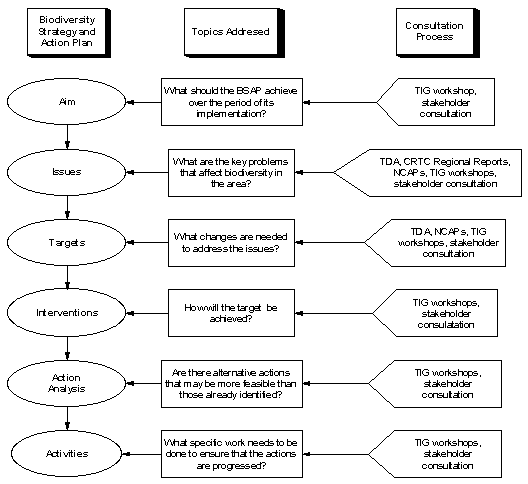
The approach used to develop the BSAP started with the regional-level issues identified in the national reports and in the Caspian Transboundary Diagnostic Analysis as the entry point for participatory workshops that allowed stakeholders to identify and agree key issues. These Technical Issues Groups (TIGs), with representatives from all five littoral states, identified the biodiversity issues that they considered most important within the Caspian region. The TIGs then carried out a problem analysis by examining each of the key issues and identifying the underlying causes to be addressed. This problem analysis also allowed the prioritisation of the issues and the identification of those that were felt to be realistically amenable to change. For each of the key issues, the TIGs defined a series of targets and the interventions required to meet those targets.
The process used to develop the BSAP is detailed below
4.2 Aim
The overall aim of the Caspian Biodiversity Strategy and Action Plan is:
Involving all
stakeholders, the Caspian Biodiversity Strategy and Action Plan aims
to protect and restore biodiversity in the Caspian Sea, to introduce
sustainable management and use of natural resources and contribute
to the sustainable and economic development of the five Caspian Sea
littoral countries.
4.3 Action Plan
|
TARGET 1: Increase the collaboration of states of the Caspian to work in a coordinated manner on integrated activities, to achieve a maximum regional benefit for biodiversity, by end 2005. |
|
INTERVENTION 1: Create (strengthen) the institutional basis for the BSAP
|
|
Impact: integrated regional approach to biodiversity management
Indicator: greater funding for regional biodiversity projects Indicator: greater number funded Indicator: greater support at government level for biodiversity Indicator: public more aware of biodiversity issues of the region |
|
ACTIVITY (include how it will be done…) |
Priority |
Expected Cost |
Activity duration |
Required start date |
Measurable output |
Related activities |
Responsible authority |
|
|
1 |
Set up regional BSAP steering committee - contact representatives, organize first meeting, set work plan, etc |
А |
С-3 |
А |
2003 |
Committee |
|
CEP PCU |
|
2 |
Set up regional BSAP coordination unit (RBCU) - staffing, specific roles, terms of reference, location, equipment, training, equipment, funding, communications, etc |
А |
С-2 |
А |
2003 |
Unit |
|
CEP PCU |
|
3 |
Set up national BSAP coordination units and/or national Caspian offices for management of biodiversity. - staffing, specific roles, terms of reference, location, equipment, training, equipment, funding, communications, etc |
А |
С-3 |
А |
2003 |
Units/offices |
|
Governments |
|
4 |
Provide capacity building to national units covering institutional strengthening, accountancy and strategic planning - design and set up training courses, hire training consultants, conduct training etc |
B |
B-3 |
B |
2003 |
Training courses |
|
CEP PCU |
|
5 |
Prepare Caspian Work Plan to implement the activities of the BSAP |
A |
C-1 |
A |
2003 |
Work plan |
|
RBCU |
|
6 |
Coordinate funding sources for implementation of BSAP work plan |
A |
C-1 |
A |
2003 |
List of funding sources |
|
RBCU |
|
7 |
Prepare an annual report on implementation of the BSAP - collate, evaluate, write, prepare for publication, distribute, etc |
В |
С-3 |
В |
2003 |
Report |
|
RBCU |
|
INTERVENTION 2: Create and implement the Biodiversity Protocol of the Caspian Sea Convention.
|
|
Impact: effectively incorporate biodiversity within decision-making
Indicator: ratification of the Protocol by national governments Indicator: increase in the sector abiding by the Protocol |
|
ACTIVITY (include how it will be done…) |
Priority |
Expected Cost |
Activity duration |
Required start date |
Measurable output |
Related activities |
Responsible authority |
|
|
1 |
Form a working group for the creation of the Protocol - contact representatives, organize first meeting, set work plan, etc |
A |
C-2 |
A |
2003 |
Working group |
|
RBCU |
|
2. |
Develop draft Protocol specifying national responsibilities for management of biodiversity |
A |
C-2 |
A |
2003 |
Draft protocol |
|
Working group (WG) |
|
3 |
Perform consultation on the draft Protocol - carry out national consultations |
A |
C-1 |
A |
2003 |
consultation |
|
WG |
|
4 |
Build capacity of legal understanding, knowledge and experience. - design and set up training courses, hire training consultants, conduct training etc |
B |
C-2 |
B |
2003 |
Training courses |
|
RBCU |
|
5 |
Once Protocol is approved, develop enabling Guidelines for the implementation of the Protocol |
A |
C-2 |
A |
2003 |
guidelines |
|
RBCU |
|
6 |
Implement the Protocol - creation of task groups, working with sectors, monitoring results, etc |
A |
C-4 |
C |
2003 |
Protocol activities performed |
|
Govts |
|
INTERVENTION 3: Create a regional ‘clearing house mechanism’ (CHM) on biodiversity.
|
|
Impact: effective sharing of regionally important information between nation states
Indicator: development of a web-based system available to the public Indicator: increase in the number of information sources Indicator: increase in information requests from the CHM |
|
ACTIVITY (include how it will be done…) |
Priority |
Expected Cost |
Activity duration |
Required start date |
Measurable output |
Related activities |
Responsible authority |
|
|
1 |
Create a CНМ unit within the BSAP Coordination Unit - staffing, specific roles, terms of reference, location, equipment, training, equipment, funding, communications, etc |
А |
В-2 |
A |
2004 |
CHM unit |
|
RBCU |
|
2 |
Nominate in each country a СНМ Focal Point - dedicate a staff member |
А |
С-2 |
A |
2004 |
Focal point |
|
Governments |
|
3 |
Review of available biodiversity data to create an inventory of information, as a reference source. |
A |
B-2 |
A |
2004 |
inventory |
|
CHM unit |
|
4 |
Design the software to allow the CHM to integrate national and international databases |
A |
C-3 |
B |
2004 |
software |
|
CHM unit |
|
5 |
Provide training and technical input to support the CHM at a national level - data management, equipment use, etc |
B |
B-2 |
A |
2004 |
Training courses |
|
RBCU |
|
6 |
Establish a protocol for information exchange on potentially damaging activities e.g. an early warning system |
А |
С-2 |
С |
2004 |
protocol |
|
CHM unit |
|
7 |
Develop an information management system (IMS) for periodicals and journals - collating, storing, scanning, photocopying, web-based, etc |
А |
В-2 |
С |
2004 |
IMS |
|
CHM unit |
|
8 |
Launch a campaign to increase awareness and use of CHM facility and it’s material |
C |
C-2 |
B |
2005 |
campaign |
1.8 |
CHM unit |
|
INTERVENTION 4: Establish a regional biodiversity monitoring system.
|
|
Impact: development of a standardised approach to monitoring across the region
Indicator: greater knowledge-based policy decision making process Indicator: larger number of project benefiting from the system |
|
ACTIVITY (include how it will be done…) |
Priority |
Expected Cost |
Activity duration |
Required start date |
Measurable output |
Related activities |
Responsible authority |
|
|
1 |
Creation of regional centre for biodiversity monitoring (RCBM) (based on CEP biodiversity data sources). - staffing, specific roles, terms of reference, location, equipment, training, equipment, funding, communications, etc |
В |
С-4 |
А |
2003 |
Regional centre |
|
RBCU |
|
2 |
Establish national biodiversity monitoring centres - staffing, specific roles, terms of reference, location, equipment, training, equipment, funding, communications, etc |
B |
B-3 |
B |
2004 |
National centres |
|
Governments |
|
3 |
Identify and develop a series of regional indicators to monitor biodiversity and anthropogenic impacts |
B |
B-1 |
A |
2003 |
indicators |
|
RCBM |
|
4 |
Identify and develop regional protocols to establish agreed parameters, criteria and methods for monitoring biodiversity |
B |
B-2 |
A |
2003 |
protocols |
|
RCMB |
|
5 |
To provide a regional monitoring training programme - design and set up training courses, hire training consultants, conduct training etc |
В |
С-3 |
В |
2003 |
training |
|
RBCM |
|
6 |
Develop (design) a regional monitoring database including developing a unified format for the region - to cover data on species, ecosystems, threats, invasive and commercial species, etc - design database parameters, hire consultants, test system, populate database, establish national data-linkages |
В |
С-3 |
А |
2003 |
Development plan for database |
1.3 |
RBCM |
|
7 |
Set up the regional database - source funding, staffing, equipment, etc |
B |
C-4 |
A |
2003 |
database |
|
RBCM |
|
8 |
Establish a distribution system for data from database - data output formats, etc |
B |
C-2 |
A |
2003 |
Distribution system |
|
RBCM |
|
9 |
Make monitoring data publicly available - set up web pages, publishing formats, distribution lists, etc |
В |
С-3 |
С |
2004 |
Publicly available data |
|
RBCM |
|
INTERVENTION 5: Organise a system of international scientific research.
|
|
Impact: coordinated approach to the use of best science in targeted areas
Indicator: increase in predictive research on future impacts |
|
ACTIVITY (include how it will be done…) |
Priority |
Expected Cost |
Activity duration |
Required start date |
Measurable output |
Related activities |
Responsible authority |
|
|
1 |
Identify priority areas of research required through trend analysis and forecasting (e.g. alternative livelihoods, migratory corridors, etc) |
А |
С-4 |
B |
2003 |
List of priority areas |
|
RBCU |
|
2 |
Develop a regionally coordinated programme for international research on factors influencing conservation biodiversity. |
А |
С-4 |
А |
2003 |
Programme of research |
|
RBCU |
|
3 |
Create national and international research teams to undertake priority research. - nomination of experts, specific roles, terms of reference, location, equipment, training, equipment, funding, communications, etc |
А |
С-2 |
А |
2003 |
Research team |
|
RCBU & Governments |
|
4 |
Establish a forum for dialogue between researchers and conservation managers to ensure research is focused on conservation needs - identify forum members, methodology for communicating, etc |
C |
C-2 |
B |
2004 |
forum |
|
RCBU |
|
5 |
Develop a network for multi-discipline dialogue, for researchers to share best-practices - email network, host a working conference, etc |
B |
C-2 |
C |
2004 |
dialogue |
|
RCBU |
|
INTERVENTION 6: Develop a system of emergency response to disasters.
|
|
Impact: effective and timely response
Indicator: greater preparedness to protect sensitive areas |
|
ACTIVITY (include how it will be done…) |
Priority |
Expected Cost |
Activity duration |
Required start date |
Measurable output |
Related activities |
Responsible authority |
|
|
1 |
Set up training on the use of impact information (EIA) for those responsible for emergency response - design and set up training courses, hire training consultants, conduct training etc |
А |
С-3 |
В |
2003 |
Training courses |
|
RBCU |
|
2 |
Create national emergency response centres, to focus on water level fluctuation, flooding and earthquakes. - staffing, specific roles, terms of reference, location, equipment, training, equipment, funding, etc |
А |
С-3 |
С |
2004 |
Emergency response centre |
|
Governments |
|
3 |
Establish a network of national centres -for sharing information, response planning tools, joint workshops, etc |
В |
С-2 |
А |
2004 |
network |
|
RBCU |
|
4 |
Create and make available a Disaster Relief Fund for use in disasters that impact biodiversity. - source funding, establish rules and criteria for release of funds, establish evaluation mechanism, audit protocols, nominate focal points, etc |
А |
С-2 |
А |
2004 |
fund |
|
RBCU |
|
5 |
Launch a public information campaign on dealing with emergencies. - advertise availability of disaster fund, procedures on coping with disaster impacts, contact details for national focal points, etc |
В |
С-2 |
В |
2004 |
campaign |
|
RBCU & Governments |
|
INTERVENTION 7: Develop an ICZM plan for sustainable development of coastal zones
|
|
Impact: coastal zones protected from unsustainable development
Indicator: greater integration of spatial planning Indicator: needs of coastal areas and communities taken into account in policy decision making |
|
ACTIVITY (include how it will be done…) |
Priority |
Expected Cost |
Activity duration |
Required start date |
Measurable output |
Related activities |
Responsible authority |
|
|
1 |
Development of legal basis for ICZM at national level. - review existing legal situation, carry out consultations, compare national legislation to identify gaps, drafting laws, obtain legal approval, etc |
А |
С-2 |
А |
2003 |
New or updated legislation |
|
Governments |
|
2 |
Create permanent regional ICZM committee (RICZMC) within the RBCU - staffing, specific roles, terms of reference, location, equipment, training, equipment, funding, communications, etc |
А |
С-2 |
А |
2003 |
committee |
1.1 |
RBCU |
|
3 |
Prepare planning documents on development and investment in coastal areas. E.g. spatial planning, land use planning, strategic investment, etc |
A |
B-3 |
B |
2004 |
Planning documents |
|
RICZMC |
|
4 |
Implement ICZM plan recommendations e.g. eco-tourism through establishment of pilot eco-village in each country - requires sufficient funding, trained staff, participatory sectoral consultations, etc |
B |
C-4 |
C |
2004 |
Recommendations implemented |
|
RICZMC & Governments |
|
5 |
Launch an information campaign to encourage use of best practice in coastal zones.
|
С |
С-2 |
С |
2004 |
campaign |
1.8 |
RICZMC & Governments |
|
INTERVENTION 8: Develop and implement an awareness campaign to highlight the uniqueness of the Caspian Region
|
|
Impact: Informed public, specialists and decision makers
Indicator: increase in featured articles/airtime/etc in media specifically regarding biodiversity of the Caspian Indicator: increase in number of formal and informal groups becoming active on biodiversity issues |
|
ACTIVITY (include how it will be done…) |
Priority |
Expected Cost |
Activity duration |
Required start date |
Measurable output |
Related activities |
Responsible authority |
|
|
1 |
Design the campaign structure: - organisational aspects, project stages, audiences, source funding routes, etc |
B |
C-1 |
A |
2004 |
Campaign structure |
|
RBCU |
|
2 |
Plan the campaign - identify mechanisms for reaching the different audiences, identify the specific requirements of the different sectors, etc |
B |
C-2 |
A |
2004 |
Campaign plan |
|
RBCU |
|
3 |
Perform the campaign - arrange meetings/ workshops, prepare materials and distribute, etc |
B |
C-3 |
B |
2004 |
campaign |
|
RBCU |
|
4 |
Monitor effectiveness of campaign - conduct focus groups, etc |
B |
C-1 |
A |
2005 |
assurance |
|
RBCU |
|
TARGET 2: Ensure all key species are maintained or restored to viable levels |
|
INTERVENTION: 1. Identify and assess key species, and publish information. |
|
Impact: Publicly available information on all key species (in national languages)
Indicator: More complete information on biology, distribution and population of key species Indicator: |
|
ACTIVITY (include how it will be done…) |
Priority |
Expected Cost |
Activity duration |
Required start date |
Measurable output |
Related activities |
Responsible authority |
|
1. Assess status of regionally threatened species at national, regional and international levels. - work with national/international experts to collect existing national data, do comparative analysis, agree on regionally threatened species |
В |
С-2 |
А |
2003 |
Status assessment |
|
RBCU |
|
2. Preparation of regional Red Data Book of Caspian-region species - appoint coordinator, collate information, draft provisional version, review with national experts, edit and finalise |
B |
B-2 |
B |
2004 |
Red data book information prepared |
|
RBCU |
|
3. Publish Red Data Book for use by public and authorities |
В |
С-2 |
А |
2006 |
Red data book |
|
RBCU |
|
INTERVENTION: 2. Provide laws or legal measures for the protection of key species. |
|
Impact: Regulations in place in all countries to protect key species
Indicator: Increase in enforcement of laws on protected species |
|
ACTIVITY (include how it will be done…) |
Priority |
Expected Cost |
Activity duration |
Required start date |
Measurable output |
Related activities |
Responsible authority |
|
1. Review national legislation to ensure all species listed in the Red Book have adequate protection. - carry out consultations, compare national legislation to identify gaps, etc |
В |
С-1 |
А |
2005 |
Comparative analysis |
|
RBCU |
|
2. Review national legislation to ensure all species listed in International Conventions have adequate protection. e.g. CITIES, Bonn, etc - carry out consultations, compare international legislation to identify gaps, etc |
В |
С-2 |
А |
2005 |
Comparative analysis |
|
RBCU |
|
3. Propose legal instruments for use where relevant to ensure adequate protection for those species not covered. - drafting laws to fill identified gaps, obtain legal approval, etc |
B |
C-2 |
B |
2006 |
Updated and new legislation |
|
RBCU & Governments |
|
4. Provide training and capacity on law enforcement to ensure personnel have adequate skills. - design and set up training courses, hire training consultants, conduct training etc |
В |
С-3 |
В |
2003 |
Training courses |
|
RBCU |
|
INTERVENTION: 3. Provide in-situ and ex-situ protection for key threatened species |
|
Impact: Populations of key threatened species will be protected
Indicator: Increasing (or slow-down in rate of decrease) in populations of key threatened species Indicator: Expansion of the range of key threatened species Indicator: Increased level of effective re-introduction of species / restoration of habitats |
|
ACTIVITY (include how it will be done…) |
Priority |
Expected Cost |
Activity duration |
Required start date |
Measurable output |
Related activities |
Responsible authority |
|
1. Develop action plans for key threatened species - create specialist teams, gather relevant information, draft action plan, consultations on plan, finalise plan - develop flagship species projects e.g. sturgeon, Caspian seal, Siberian crane, etc |
A |
C-2 |
A |
2003 |
plans |
|
RBCU |
|
2. Implement action plans for key threatened species and flagship species projects - set up site-based teams with relevant expertise, create a work plan for implementation, staffing, equipment, funding, etc |
A |
C-4 |
C |
2003 |
Species protected |
|
RBCU & Governments |
|
3. Establish seed banks and nurseries for the propagation and research on key threatened species. - establish new or renovate existing facilities, provide staffing, equipment, source seeds and plants, cultivate/propagate, distribute plants for use etc |
B |
C-4 |
C |
2004 |
Plants for restoration |
|
RBCU |
|
3. Develop pilot projects for captive breeding of selected species, for reintroduction to the wild. - establish new or renovate existing facilities, provide staffing, equipment, source animals, breed, reintroduce, etc |
B |
С-3 |
В |
2005 |
Animals for reintroduction |
|
RBCU |
|
4. Develop guidelines for captive breeding, which are inline with international efforts. - research international guidelines, link up with IUCN species specialist groups, hire consultants, develop guidelines, etc |
B |
C-2 |
A |
2005 |
guidelines |
|
RBCU |
|
5. Launch a public awareness campaign focusing on flagship species and their protection |
A |
C-2 |
A |
2003 |
campaign |
1.8 |
RBCU |
|
6. Build capacity for protected area management, institutional strengthening and species management - design and set up training courses, hire training consultants, conduct training etc |
B |
B-3 |
B |
2003 |
Training courses |
|
RBCU |
|
INTERVENTION: 4. Ensure use of species is sustainable |
|
Impact: Defined levels of resource use, and sustainable levels maintained
Indicator: Decrease in use of vulnerable species Indicator: Increase in use of sustainable management plans within different sectors |
|
ACTIVITY (include how it will be done…) |
Priority |
Expected Cost |
Activity duration |
Required start date |
Measurable output |
Related activities |
Responsible authority |
|
1. Identify sustainable levels of use for selected key species for specific sectors e.g. agriculture, forestry, hunting, etc - select key species as candidates for sustainable use, for each candidate species estimate population numbers, assess sectoral impacts on each candidate species, propose sustainable levels of use, etc |
A |
B-2 |
B |
2003 |
Sustainable-use levels |
2.1 |
RBCU |
|
2. Adopt (through regulatory and management processes) sustainable-use levels of use of key species. - draw on specialist knowledge to formulate regulations and draft management plans, implement, etc |
B |
C-2 |
C |
2004 |
Levels adopted |
|
RBCU |
|
3. Review population levels, then reassess sustainable-use levels as required. - set up monitoring programme with criteria, develop indicators, perform monitoring, assess data, reset levels if required, etc |
B |
C-3 |
C |
2009 |
Revised levels if required |
|
RBCU |
|
4. Provide capacity building to apply sustainability principles - design and set up training courses, hire training consultants, conduct training, course attendees implement principles, etc |
B |
C-2 |
A |
2003 |
Training course |
|
RBCU |
|
5. Launch a public awareness campaign to highlight the threat of unsustainable use and benefits of sustainable use.
|
B |
C-2 |
A |
2004 |
campaign |
1.8 |
RBCU |
|
TARGET 3: Control the introduction of non-native (alien) species to the Caspian Sea and manage existing exotic introduced species |
|
INTERVENTION: 1. Manage the introduction and spread of alien species |
|
Impact: Contained or stopped the further uncontrolled introduction of alien species
Indicator: Greater understanding of the management processes required to control the introduction of alien species Indicator: Increase cooperation between national centres to reach common regional solutions |
|
ACTIVITY (include how it will be done…) |
Priority |
Expected Cost |
Activity duration |
Required start date |
Measurable output |
Related activities |
Responsible authority |
|
1. Establish a regional centre to oversee the control of alien species - staffing, specific roles, terms of reference, location, funding, communications, etc |
A |
С-3 |
B |
2003 |
centre |
|
RBCU |
|
2. Formulate a work programme for the regional centre, to include accidental and planned introductions - assess current situation, carry out consultation, draft document, assess funding needs, agree programme
|
А |
C-2 |
А |
2003 |
programme |
|
RCAS |
|
3. Provide adequate equipment and training to staff of the regional centre - assess training and equipment needs, funding sources, installation and maintenance, design training course, hire consultants, conduct training, etc
|
A |
B-3 |
B |
2004 |
Equipment and training courses |
|
RCAS |
|
4. Establish a network of national alien species control centres -for sharing information, sharing of control- management approaches, workshops, etc
|
C |
B-1 |
A |
2004 |
network |
|
RCAS |
|
5. Develop a Protocol on the Control of Invasive Species - develop draft Protocol specifying national responsibilities for control of invasive species, perform consultation on the draft Protocol , etc |
A |
C-2 |
A |
2003 |
Draft protocol |
|
RCAS |
|
6. Put in place national legislation for the enactment of the Protocol on Invasive Species to address alien introductions - build capacity of legal understanding, knowledge and experience (design and set up training courses, hire training consultants, conduct training etc) - put draft Protocol through national legislation processes |
A |
A-2 |
C |
2003 |
legislation |
|
RCAS |
|
7. Once Protocol is approved, develop enabling Guidelines for the implementation of the Protocol |
A |
C-2 |
A |
2003 |
guidelines |
|
RCAS |
|
8. Implementation of the Protocol - creation of task groups, working with sectors, monitoring results, etc |
A |
C-4 |
C |
2003 |
Protocol activities performed |
|
Governments |
|
9. Apply controls on the disposal of ballast water from ships by the construction of a reception facility at Astrakhan - research best practice in ballast water separation, design and construct a facility, training of staff, specialist equipment, etc |
В |
В-4 |
А |
2003 |
Ballast water facility |
|
PCU & Governments |
|
INTERVENTION: 2. To decrease population of Mnemiopsis and its influence on ecosystem of Caspian Sea. |
|
Impact: Manageable population level on Mnemiopsis
Indicator: Increased understanding of the impact of Mnemiopsis on the resource of the Caspian Sea Indicator: Decrease in population of Mnemiopsis |
|
ACTIVITY (include how it will be done…) |
Priority |
Expected Cost |
Activity duration |
Required start date |
Measurable output |
Related activities |
Responsible authority |
|
1. Develop a regional strategy for addressing the invasion of Mnemiopsis - consultation of relevant specialists, share best practices from other seas, draft and agree a regional strategy, etc |
A |
B-2 |
A |
2003 |
Regional strategy |
3.1 |
RCAS |
|
2. Establish a regional monitoring programme to assess status and population trends in Mnemiopsis - develop regional indicators, develop regional protocols, undertake training in monitoring techniques, evaluate results and report publicly, etc |
A |
C-3 |
B |
2003 |
programme |
|
RCAS |
|
3. Conduct research into the biology of Mnemiopsis (applying results from other Regional Seas programmes) - put together research team, collate existing information, carry out new research where required, publish, etc |
A |
A-1 |
A |
2003 |
Mnemiopsis research |
|
RCAS |
|
4. Examine, assess and select options for the biological control of Mnemiopsis |
А |
В-2 |
В |
2003 |
Chosen options |
|
RCAS |
|
5. Testing of the effect and impact of the controlled introduction of Beroе ovata through pilot projects (ie EIA) - set up pilot projects, monitor and report on pilot studies, etc |
А |
С-2 |
А |
2003 |
Pilot projects |
|
RCAS |
|
6. Monitor Beroе and Mnemiopsis populations to assess effectiveness of measures - set indicators, develop estimation techniques, train staff, obtain equipment, gather data, evaluate, report on success of introduction, etc |
А |
С-3 |
В |
2004 |
Report on effectiveness of introduction |
|
RCAS |
|
4. Launch an awareness campaign for the fisheries sector |
C |
C-1 |
A |
2003 |
campaign |
1.8 |
RCAS |
|
TARGET: 4 Ensure all key coastal and marine habitats are represented in a regional system of protected areas |
|
INTERVENTION 1: Enhance effectiveness of protection measures for the existing protected areas |
|
Impact: Effective protection measures in place and utilized across all countries of the region
Indicator: Increased level of fully trained staff available to perform protection activities Indicator: Greater use of a wider range of PA management tools (zonation, accessibility, etc) Indicator: Increased local community involvement in PA management decision-making |
|
ACTIVITY (include how it will be done…) |
Priority |
Expected Cost |
Activity duration |
Required start date |
Measurable output |
Related activities |
Responsible authority |
|
|
1 |
Provide logistical assistance to the most sensitive protected areas - provide staff, equipment, facilities, etc |
A |
A-3 |
B |
2003 |
Assistance provided |
|
RBCU & Governments |
|
2 |
Increase protected area staff capacity through specific training programmes and exchange of experience (ie in protected area management, institutional strengthening, monitoring techniques, risk assessment and planning). - design training courses, hire consultants, conduct training course, etc |
A |
A-2 |
B |
2003 |
Trained staff |
|
RBCU |
|
3 |
Apply fully the biosphere reserve concept to existing BR structures (e.g. at Astrakhan BR) by implementing the Seville strategy. - assess existing BR zonations for potential application of Seville recommendations, hire UNESCO consultants, hold workshops to explain BR concept, introduce spatial zonation to existing BR’s where applicable, etc |
C |
A-2 |
C |
2004 |
Fully functioning BR reserves |
|
RBCU |
|
4 |
Provide incentives (grants) to stimulate cooperation between local communities and the protected area managements in BR - source funding, establish rules and criteria for release of funds, establish evaluation mechanism, audit protocols, nominate focal points, etc |
C |
C-2 |
B |
2005 |
grants |
|
RBCU |
|
5 |
Evaluate the effectiveness of protection measures on a regular basis - set indicators, train staff, gather data, evaluate, report on success, etc |
B |
C-3 |
C |
2005 |
Series of reports |
|
RBCU |
|
INTERVENTION 2: Create new protected areas including transboundary (where necessary). |
|
Impact: More protected areas, both national and transboundary
Indicator: Increased percentage of area under protection Indicator: Greater collaboration between countries (e.g. meetings, bi-lateral taskforce, etc) |
|
ACTIVITY (include how it will be done…) |
Priority |
Expected Cost |
Activity duration |
Required start date |
Measurable output |
Related activities |
Responsible authority |
|
|
1. |
Perform a gap analysis of existing protected areas and unprotected adversely impacted areas to identify needs at the regional level - conduct analysis and report, etc |
B |
C-2 |
A |
2003 |
Gap analysis |
|
RBCU |
|
2. |
Organize an international conference for the identification and recommendation of new transboundary protected areas - choose location, invite experts, commission background research, hold conference, report recommendations |
B |
C-1 |
A |
2003 |
Recommendations from conference |
|
RBCU |
|
3. |
Establish new protected areas to address the needs identified in the gap analysis - negotiate with land owners, compensate, buy land, demarcate, obtain trained staff, establish a management plan, pass any necessary legislation, etc |
B |
C-4 |
C |
2004 |
New PAs |
|
RBCU & Governments |
|
4. |
Establish new transboundary protected areas - set up bi-lateral committees, negotiate with land owners, compensate, buy land, demarcate, obtain trained staff, establish a management plan, pass any necessary legislation, etc |
A |
C-4 |
C |
2004 |
New transboundary PAs |
|
RBCA & Governments |
|
5. |
Provide protective status to spawning grounds of commercially valuable species. - identify, assess status, protect, hire trained wardens, liaison with local communities, etc |
A |
B-3 |
B |
2003 |
Protected spawning grounds |
2.3 |
RBCU & Governments |
|
6. |
Provide training in planning and protected areas management and financing - design training courses, hire consultants, conduct training course, etc |
B |
B-1 |
A |
2003 |
Trained staff |
|
RBCU |
.
|
INTERVENTION 3: Create a regional network of Caspian protected areas |
|
Impact: Integrated approach to the protection of sensitive areas
Indicator: Increase in sharing of best practice and experience between staff of the different countries |
|
ACTIVITY (include how it will be done…) |
Priority |
Expected Cost |
Activity duration |
Required start date |
Measurable output |
Related activities |
Responsible authority |
|
|
1. |
Formulate a regional programme to combine existing and new protected areas into a coherent network - appoint a coordinator, set up a regional group, carry out consultation of relevant specialists, draft and agree a regional programme, etc |
A |
C-2 |
B |
2003 |
programme |
|
RBCU |
|
2. |
Develop a regional sensitive areas map of the coastal zone indicating levels of human impact and legislative protection - hire consultants to provide map |
A |
C-2 |
A |
2003 |
map |
|
RBCU |
|
3. |
Develop policies that respect and promote traditional cultures and their relationship with biodiversity within buffer zones - research traditional cultures, consult and draft policies, etc |
C |
B-1 |
A |
2004 |
policies |
|
RBCU |
|
4. |
Launch a public awareness campaign to highlight the regional importance of protected areas |
C |
C-1 |
A |
2004 |
campaign |
1.8 |
RBCU |
|
5. |
Establish a Caspian Eco-Net website within CHM specifically for protected area management - hire consultants, design and construct website, launch and promote, etc |
B |
C-2 |
B |
2004 |
website |
1.3 |
RBCU |
|
6. |
Provide internet access, and training on it’s use, for protected area managers and staff - obtain computing equipment, design and conduct training courses |
C |
C-2 |
C |
2005 |
Managers/staff with internet access |
|
RBCU |
|
INTERVENTION 4: Promote the positive aspects of eco-tourism and identify opportunities in the present protected areas in the Caspian Sea. |
|
Impact: Eco-tourism activities developed
Indicator: Increasing proportion of tourists visiting PA undertaking eco-tourism activities Indicator: Increase in funding of PAs sourced through eco-tourism activities |
|
ACTIVITY (include how it will be done…) |
Priority |
Expected Cost |
Activity duration |
Required start date |
Measurable output |
Related activities |
Responsible authority |
|
|
1. |
Provide training in development of eco-tourism. - design course, hire consultants, provide training, etc |
B |
C-2 |
A |
2003 |
Trained staff |
|
RBCU |
|
2. |
Develop infrastructure for eco-tourism in selected protected areas in the Caspian Green Belt. - choose locations, design infrastructure, construct, manage, train staff, etc |
B |
C-4 |
C |
2004 |
Infrastructure developed |
|
RBCU & Governments |
|
3. |
Conduct a regional seminar on the benefits and risks of ecotourism in the area - develop marketing strategy, invite key audiences, etc |
C |
C-1 |
A |
2004 |
seminar |
|
RBCU |
|
4. |
Create regional fund for promotion of ecotourism activities. - source funding, establish rules and criteria for release of funds, establish evaluation mechanism, audit protocol, nominate focal points, etc |
C |
C-3 |
C |
2006 |
fund |
|
RCBU |
|
5. |
Conduct a marketing campaign to attract domestic and international tourism - use marketing strategy already developed, target key holiday companies, etc |
A |
C-3 |
C |
2007 |
campaign |
|
RCBU |
|
TARGET: 5. Identify and restore coastal and terrestrial priority sensitive habitats. |
|
INTERVENTION 1: Develop and use standardised methods for assessing the environmental health of habitats. |
|
Impact: Standardised methods are developed and used for the assessment of habitat health
Indicator: Wider application of regional guidelines Indicator: Increased understanding of habitat health within the region |
|
ACTIVITY (include how it will be done…) |
Priority |
Expected Cost |
Activity duration |
Required start date |
Measurable output |
Related activities |
Responsible authority |
|
|
1 |
Identify regional criteria for the assessment of the habitat health. - set up task force, carry out research on existing national criteria, draft regional criteria, etc |
A |
B-1 |
A |
2003 |
criteria |
|
RCBU |
|
2 |
Develop regional guidelines on measurement of criteria - use taskforce, conduct research, develop guidelines, etc |
A |
B-1 |
A |
2003 |
guidelines |
|
RCBU |
|
3 |
Apply guidelines to assess the health of habitats - train in use of guidelines, conduct site visits, gather data, evaluate, etc |
A |
B-2 |
B |
2004 |
Health of habitats assessed |
|
RCBU |
|
4 |
Generate a regional report on the health of habitats, including a regional map. - using data, draft and publish a report and map |
A |
C-1 |
A |
2006 |
Report and map |
|
RCBU |
|
5 |
Conduct training on assessment and monitoring of sensitive areas - design course, hire consultants, conduct training, etc |
B |
B-2 |
C |
2004 |
Trained staff |
|
RCBU |
|
INTERVENTION 2: Identification and elimination of causes of coastal and terrestrial habitat degradation . |
|
Impact: Improved health of coastal and terrestrial habitats
Indicator: Fuller understanding of sources and causes of degradation Indicator: Increased ability to protect those habitats |
|
ACTIVITY (include how it will be done…) |
Priority |
Expected Cost |
Activity duration |
Required start date |
Measurable output |
Related activities |
Responsible authority |
|
|
1 |
Identify sources and causes of coastal degradation - appoint coordinator, set up task force, conduct research, evaluate data, consultation and report, etc |
A |
C-2 |
B |
2006 |
Report on sources and causes |
|
RBCU |
|
2 |
Identify sources and causes of terrestrial degradation. - appoint coordinator, set up task force, conduct research, evaluate data, consultation and report, etc |
A |
C-2 |
B |
2006 |
Report on sources and causes |
|
RBCU |
|
3 |
Assess the feasibility of controlling and reducing of the causes of degradation. - bring together specialists to review reports, make recommendations for habitat protection, etc |
A |
C-2 |
B |
2008 |
recommendations |
|
RCBU |
|
4 |
Identify options for implementing tax incentives for good practice -hire consultant, produce report, etc |
C |
C-1 |
A |
2006 |
report |
|
RBCU |
|
5 |
Launch public awareness programme to highlight community impacts on habitat degradation |
C |
C-1 |
A |
2003 |
campaign |
|
RBCU |
|
INTERVENTION 3: Develop a range of habitat restoration projects and monitor the results. |
|
Impact: A series of successful habitat restoration projects completed
Indicator: Increase in number of projects initiated Indicator: Increased sharing of restoration techniques between countries Indicator: Increased sharing of results of monitoring programmes |
|
ACTIVITY (include how it will be done…) |
Priority |
Expected Cost |
Activity duration |
Required start date |
Measurable output |
Related activities |
Responsible authority |
|
|
1 |
Conduct an inventory of prioritised sites. |
A |
B-2 |
A |
2006 |
inventory |
|
RCBU |
|
2 |
Identify pilot habitat restoration projects to be conducted. |
A |
C-1 |
A |
2006 |
Prioritised list |
|
RCBU |
|
3 |
Develop site-specific restoration actions. - set up specialists teams, conduct site visits, develop action plan, etc |
A |
C-2 |
B |
2007 |
Action plan |
|
RBCU |
|
4 |
Exchange and disseminate information/experiences by conducting workshops and seminars on habitat restoration e.g. know-how from Volga Revival Programme - choose location, invite specialists, publish manuals on habitat restoration techniques, etc |
B |
B-2 |
A |
2006 |
manuals |
|
RBC |
|
5 |
Implement restoration projects - hire staff and consultants, equipment, funding, restore damaged areas, etc |
A |
C-4 |
C |
2009 |
Restored areas |
|
RBCU & Governments |
|
6 |
Launch public awareness programme to highlight sustainable use of natural resources and application of alternative methodologies (e.g. agricultural waste) |
C |
C-1 |
A |
2006 |
campaign |
|
RBCU |
|
7 |
Establish a restoration project monitoring scheme - create indicators, gather data, evaluate, train staff in techniques, report, etc |
B |
C-2 |
C |
2012 |
Data on success of projects |
1.3 |
RBCU |
|
8 |
Provide incentives and dis-incentive measures to encourage sustainable use of priority sensitive habitats e.g. tree planting - source funding, establish rules and criteria for incentives, nominate focal points for application, etc |
B |
C-2 |
C |
2009 |
activities |
|
RBCU |
|
TARGET 6: Identify and restore severely damaged marine habitats. |
|
INTERVENTION 1: Develop and apply an integral quality index for assessing the health of the marine habitat (the CIBI) |
|
Impact: General application of index across the region
Indicator: Increased number of people trained in the use of a standardized index Indicator: Increased number of marine zones classified by use of index |
|
ACTIVITY (include how it will be done…) |
Priority |
Expected Cost |
Activity duration |
Required start date |
Measurable output |
Related activities |
Responsible authority |
|
|
1 |
Establish regional scientific group to design the quality index. - appoint a coordinator, hold meetings and draft index, etc |
A |
С-1 |
A |
2003 |
Draft index |
|
RBCU |
|
2 |
Set criteria for uniform sampling and measurement. - scientific group to develop unified criteria, etc |
B |
B-4 |
A |
2003 |
criteria |
|
RBCU |
|
3 |
Test the index against existing water quality data, and calibrate. - obtain data, conduct tests, etc |
A |
С-2 |
A |
2004 |
Calibrated index |
|
RBCU |
|
4 |
Conduct a training programme to instruct personnel on standardized use of index. - design course, hire consultants, conduct course, etc |
A |
C-1 |
A |
2004 |
Trained staff |
|
RBCU |
|
4 |
Use index to assess water quality - publish guidelines on index use, train staff, provide equipment, collate data, etc |
A |
C-2 |
A |
2005 |
Water quality assessment |
|
RBCU |
|
5 |
Classify national marine zones on the basis of the index by means of the GIS. - national representative from scientific group use index, determine marine zones, etc |
A |
С-2 |
A |
2005 |
Classification of marine zones |
|
RCBU |
|
6 |
Generate a regional report on the quality of marine zones, including a regional map - collate national information, edit and publish, etc |
A |
C-1 |
A |
2005 |
report |
|
RBCU |
|
INTERVENTION 2: Identification and elimination of causes of marine degradation. |
|
Impact: Improved health of marine habitats
Indicator: Fuller understanding of sources and causes of degradation Indicator: Increased ability to protect those habitats |
|
ACTIVITY (include how it will be done…) |
Priority |
Expected Cost |
Activity duration |
Required start date |
Measurable output |
Related activities |
Responsible authority |
|
|
1 |
Identify sources and causes of marine degradation - appoint coordinator, set up task force, conduct research, evaluate data, consultation and report, etc |
A |
C-2 |
B |
2005 |
Report on sources/causes identified |
|
RBCU |
|
3 |
Assess the feasibility of controlling and reducing of the causes of degradation. - bring together specialists to review reports, make recommendations for marine protection, etc |
A |
C-2 |
B |
2007 |
recommendations |
|
RBCU |
|
4 |
Identify options for implementing tax incentives for good practice - hire consultant, produce report, etc |
C |
C-1 |
A |
2005 |
report |
|
RBCU |
|
INTERVENTION 3: Apply engineering and biological restoration techniques to restore severely damaged marine habitats. |
|
Impact: A series of successful habitat restoration projects completed
Indicator: Increase in number of projects initiated Indicator: Increased sharing of restoration techniques between countries Indicator: Increased sharing of results of monitoring programmes |
|
ACTIVITY (include how it will be done…) |
Priority |
Expected Cost |
Activity duration |
Required start date |
Measurable output |
Related activities |
Responsible authority |
|
|
1 |
Prioritise severely damaged marine habitats using the index. - use report and map, consultation, agree list, etc |
A |
C-1 |
A |
2005 |
Prioritised list |
|
RBCU |
|
2 |
Conduct an inventory of prioritised zones. - make site visits, hire consultants, gather data, report, etc |
A |
B-4 |
B |
2006 |
Prioritised inventory |
|
RBCU |
|
3 |
Develop zone-specific restoration actions. - set up specialists teams, conduct site visits, develop action plan, etc |
A |
C-2 |
B |
2007 |
Action plan |
|
RBCU |
|
4 |
Exchanging information and experiences by conducting workshops and seminars on marine habitat restoration. - choose location, invite specialists, publish manuals on marine restoration techniques, etc |
B |
B-2 |
A |
2005 |
manuals |
|
RBCU |
|
5 |
Implement restoration projects - hire staff and consultants, equipment, funding, restore damaged areas, etc |
A |
C-4 |
C |
2007 |
Projects completed |
|
RBCU |
|
6 |
Launch a restoration awareness campaign to inform the fishing, agricultural and extractive sectors |
C |
C-1 |
A |
2005 |
campaign |
|
RBCU |
|
7 |
Establish a restoration project monitoring scheme - create indicators, gather data, evaluate, train staff in techniques, report, etc |
B |
C-2 |
C |
2010 |
Data on success of projects |
1.3 |
RBCU |
|
TARGET: 7 Arrest declines in aquatic bio-resources, including commercial fish stock (especially sturgeon). |
|
INTERVENTION 1: For commercial fish stocks ensure that populations are used in a sustainable way. |
|
Impact: Populations increase or maintained at sustainable levels
Indicator: Decrease in use of vulnerable species Indicator: Increase in use of sustainable management plans within fishery sectors |
|
ACTIVITY (include how it will be done…) |
Priority |
Expected Cost |
Activity duration |
Required start date |
Measurable output |
Related activities |
Responsible authority |
|
|
1 |
Estimate fish stock populations (alternative method to fish catch quota) so as to be able understand sustainable population level. |
A |
C-2 |
A |
2003 |
Estimated stock populations |
|
|
|
1 |
Develop a regional agreement to manage and use commercial fish stocks in sustainable way |
A |
B2 |
A |
2003 |
Agreement |
|
|
|
2 |
Implement the regional agreement |
A |
B3 |
C |
2003 |
Implementation of agreement |
|
|
|
3 |
Provide targeted capacity building, institutional support and training to the authorities implementing the regional agreement as it relates to sustainable use of sturgeon |
A |
B2 |
B |
2003 |
Trained staff |
|
|
|
4 |
Review current arrangements for natural and artificial reproduction with a view to increasing the effectiveness and efficiency of the hatchery system |
B |
B4 |
C |
2004 |
Effective hatcheries |
|
|
|
5 |
Provide incentives and dis-incentive measures to national authorities to encourage the licensed fisheries sector to comply with the agreed quotas |
C |
A3 |
C |
2004 |
Quotas adhered to |
|
|
|
INTERVENTION 2: For sturgeon stocks ensure that populations are used in a sustainable way. |
|
Impact: Population increased or maintained at sustainable levels
Indicator: Decrease in level of poaching Indicator: Increase volume of natural spawning Indicator: Increased survival rates of fry released from hatcheries Indicator: Increase application of CITES recommendations |
|
ACTIVITY (include how it will be done…) |
Priority |
Expected Cost |
Activity duration |
Required start date |
Measurable output |
Related activities |
Responsible authority |
|
|
1 |
Strength regional cooperation via targeted exchange of information, experience and cross-border coordination to combat poaching (in rivers, estuaries and the seas) |
A |
A4 |
C |
2003 |
Regional approach |
|
|
|
2 |
Launch awareness campaigns for local communities designed to combat poaching and promote sustainable exploitation. |
A |
A2 |
A |
2003 |
campaign |
|
|
|
3 |
Provide incentives to targeted local communities to encourage alternative sources of income i.e. ecotourism, agriculture etc. |
A |
C4 |
C |
2003 |
Alternative sources of income maximised |
|
|
|
4 |
Improve migratory routes (i.e. dredging, cleaning of rivers and deltas etc.) and rehabilitate and protect spawning grounds to allow natural populations to be maintained. |
A |
B4 |
C |
2003 |
Populations maintained |
|
|
|
5 |
Improve sturgeon propagation at hatcheries, to raise the quality of the brood stock and increase fry release into the sea using advances technology. |
A |
B4 |
C |
2004 |
Increase fry number and survival |
|
|
|
6 |
Channel international assistance in fishery management to the national programmes |
B |
C2 |
B |
2004 |
Funded programmes |
|
|
|
7 |
Organise a regional workshop and training course on best practice in fisheries management and institutional strengthening. |
C |
C1 |
A |
2005 |
Workshop/ course |
|
|
|
8 |
Assist in the adoption CITES recommendations, taking regard of national commitment to fisheries management and trade agreements. |
A |
A1 |
B |
2003 |
CITES recommendations adopted |
|
|
|
TARGET 8 : Decrease the threat to biodiversity from the exploitation of non-renewable natural resources. |
|
INTERVENTION: 1: To ensure that biodiversity issues are taken into account in all EIA applications concerning non-renewable natural resource exploitation |
|
Impact: All EIAs to incorporate impacts on biodiversity
Indicator: Increasing number of EIAs including biodiversity impacts |
|
ACTIVITY (include how it will be done…) |
Priority |
Expected Cost |
Activity duration |
Required start date |
Measurable output |
Related activities |
Responsible authority |
|
1. Elaborate guidance on the inclusion of biodiversity issues in all EIAs |
А |
С-1 |
А |
2003 |
guidance |
|
|
|
2. Organise regional training courses for Ministry personnel and industry experts on the operation of biodiversity issues in the EIA procedures |
В |
С-2 |
A |
2004 |
Trained staff |
|
|
|
TARGET 9: To decrease agricultural waste run-off. |
|
INTERVENTION: 1: Combating eutrophication by controlling soil and water contamination from agriculture. |
|
Impact: Elimination of soil and water contamination contributing to eutrophication
Indicator: Increased proportion of farmers adopting improved practices Indicator: Greater number of projects demonstrating best practice in elimination of contamination |
|
ACTIVITY (include how it will be done…) |
Priority |
Expected Cost |
Activity duration |
Required start date |
Measurable output |
Related activities |
Responsible authority |
|
1. Review of legislation provisions on the application of agricultural chemicals. |
A |
C-1 |
А |
2003 |
New and updated legislation |
|
|
|
2. Improve the level of inspection and controls on the application of agricultural chemicals |
A |
B-3 |
C |
2004 |
Less chemicals released |
|
|
|
2. Organise regional training courses for farmers on best practices in animal waste management and use of chemical pesticides/fertilisers. |
В |
С-2 |
A |
2005 |
Trained farmers |
|
|
|
3. Prepare and publish a manual on guidance in best practices in animal waste management and use of chemical pesticides/fertilisers. |
В |
С-2 |
А |
2006 |
Manual |
|
|
|
4. Carry out a series of projects in areas of high animal and pesticide/fertiliser contamination to demonstrate the application of control and cleaning operations. |
С |
В-4 |
В |
2007 |
Pilot projects |
|
|
|
TARGET 10: Reduce and reverse the trends towards desertification and deforestation |
|
INTERVENTION : 1: introduce sustainable practices and restoration schemes, focusing on the causes of desertification |
|
Impact: Halt to desertification
Indicator: Increase in number of projects initiated Indicator: Increased sharing of restoration techniques between countries Indicator: Increase uptake of alternative land use practices by communities |
|
ACTIVITY (include how it will be done…) |
Priority |
Expected Cost |
Activity duration |
Required start date |
Measurable output |
Related activities |
Responsible authority |
|
1. Identify sources and causes of desertification at a site specific level |
A |
C-2 |
A |
2003 |
Sources and causes identified for relevant sites |
|
|
|
2. Assess the feasibility of controlling and reducing causes of desertification at a site-level. |
A |
C-2 |
B |
2004 |
Recommendations |
|
|
|
3. Identify pilot restoration projects to be conducted. |
A |
C-1 |
A |
2006 |
List of pilot projects |
|
|
|
4. Develop site-specific restoration actions. |
A |
C-2 |
B |
2007 |
Actions |
|
|
|
5. Exchanging information and experiences by conducting workshops and seminars on introduction of sustainable practices and habitat restoration (alternative grazing regimes, tree planting) |
B |
B-2 |
A |
2006 |
Workshop / seminars |
|
|
|
6. Implement restoration projects |
A |
C-4 |
C |
2009 |
Projects completed |
|
|
|
7. Conduct public awareness programmes to highlight sustainable use of natural resources and application of alternative methodologies of land use. |
C |
C-1 |
A |
2006 |
Campaign |
|
|
|
INTERVENTION : 2: introduce sustainable practices and restoration schemes, focusing on the causes of deforestation |
|
Impact: Halt to deforestation
Indicator: Increase in number of projects initiated Indicator: Increased sharing of restoration techniques between countries Indicator: Increase uptake of alternative energy sourcing by communities |
|
ACTIVITY (include how it will be done…) |
Priority |
Expected Cost |
Activity duration |
Required start date |
Measurable output |
Related activities |
Responsible authority |
|
1. Identify sources and causes of deforestation at site-specific levels |
A |
C-2 |
A |
2003 |
Sources and causes identified for relevant sites |
|
|
|
2. Assess the feasibility of controlling and reducing of the causes of deforestation at a site-level. |
A |
C-2 |
A |
2004 |
Recommendations |
|
|
|
3. Identify pilot restoration projects (focussing on existing protected areas) to be conducted. |
A |
C-1 |
A |
2004 |
List of pilot projects |
|
|
|
4. Review, and if necessary revise, forestry regulations and levels of use as applied to local communities |
B |
C-2 |
B |
2004 |
New and updated legislation |
|
|
|
5. Develop site-specific restoration actions. |
A |
C-2 |
B |
2005 |
Actions |
|
|
|
6. Exchanging information and experiences by conducting workshops and seminars on introduction of sustainable practices and re-forestation (ie alternative sources of fuel-wood, alternative grazing regimes, native tree planting etc) |
B |
B-2 |
A |
2006 |
Workshop / seminars |
|
|
|
7. Implement restoration projects |
A |
C-4 |
C |
2007 |
Projects completed |
|
|
|
8. Investigate the introduction of alternative energy generating schemes such as wind and solar power via local generation equipment to reduce the use of forests as fuel wood |
C |
C-1 |
A |
2003 |
recommendations |
|
|
|
9. Conduct public awareness programme to highlight sustainable use of natural resources and introduction of alternative sources of energy/fuel and animal husbandry |
C |
C-1 |
A |
2006 |
Campaign |
|
|
5. Implementation of the BSAP
The management and administration of the BSAP will be carried out at the regional level whereas the implementation of the BSAP will primarily be the responsibility of countries around the Caspian.
5.1 Management and administration of the implementation process
The explicit commitment by each of the five Caspian states and actions they have already undertaken, are the best indication of the sound foundation for the CEP. It is equally expected that the activities and systems established by the CEP (including the BSAP) will endure beyond the period of international funding provided to support them.
Further to the above all countries around the Caspian have accepted the CEP as the management and administration framework for the region. The Framework Convention, which is the primary legal instrument of the CEP, has had its text agreed allowing for the implementation of the CEP activities irrespective of when the Convention itself will be signed although for the guarantee of long term sustainable development of the region the coming into law of the Convention is essential.
5.1.1 Coordination at the CEP
The final BSAP document will be formally launched in the summer of 2002. It will be a living blueprint for the conservation of biodiversity in the Caspian. The CEP phase 2 will be the driver for the implementation of the priority activities in the BSAP and via the CEP PCU (or Convention Secretariat) its work will be part of the on-going implementation and consultation process with all relevant stakeholders.
The existing structures of the CEP will be adapted to the needs of the phase 2 of the CEP and will further evolve with the signing of the Caspian Convention and the coming into force of the Biodiversity Protocol.
5.1.2 Co-ordination at the Regional level
Unlike in the implementation of national BSAPs, the Caspian BSAP activities will be implemented at the regional level through the close coordination of the five countries. Hence, the structures for the coordination and implementation of regional activities cannot be based entirely on existing arrangements. A single BSAP Coordination and Implementation structure will need to be created. Until such time as the Caspian Sea Convention is signed and a Convention Secretariat is established, such a coordination function will best be located in the Caspian Environmental Programme’s Project Coordination Unit (PCU), currently located in Baku, but due to be re-located to Tehran at the beginning of 2003.
Thus the process of implementing the BSAP will require the equal participation of all five countries and from within them, of national, regional and local organisations, both governmental and citizens' groups and NGOs. In addition, the participation of international bodies and commercial companies will be essential, and there needs to be a rigorous prioritisation of the issues to be tackled.
5.2 Coordinating organisations
In order to have political management of the implementation process it is suggested that a Caspian Regional BSAP Steering Committee be created:
to oversee the implementation of the BSAP at the regional level;
to ensure that the sequence of implementation of the BSAP fits into the implementation of the National Caspian Action Plans and the Strategic Action Programme;
to coordinate the future evolution and development of the BSAP in line with sectoral plans and interests;
to receive, review, amend and approve the monitoring, evaluation and progress reports of the implementation of the BSAP activities;
to engage in the promotion of the implementation of the BSAP activities at a regional and national level;
to report on progress and future BSAP operations directly to the CEP Steering Committee.
The BSAP Steering Committee will be composed of the National Focal Points, National Biodiversity Convention representatives and relevant high-level planning and development officials. Other stakeholders from the commercial and NGO communities should be involved at a level where their input would be most suitable.
It is suggested that the following coordination structures be activated within the CEP:
The CEP PCU will have administrative responsibility for:
overall regional coordination of the implementation of the BSAP activities;
overall management of funding support available for the implementation of the BSAP activities;
overall monitoring, evaluation and reporting on the progress of the implementation of the BSAP activities;
overall dissemination of the results of the implementation of the BSAP activities.
In addition, the CEP PCU will need to put in place a cycle of review and revision of the BSAP.
The actual day-to-day coordination and implementation of the BSAP activities would be the responsibility of the CEP PCU through a dedicated Regional BSAP Coordination Unit which would work:
to assist countries to plan the activities and to stimulate and/or encourage implementation through regular liaison with all involved;
to assist in organising the staffing of the activities (national and international expertise);
to assist in locating non-national funding streams for the activities;
to assist throughout the life-cycle of the activities and where required draw down on specialist and technical support (national and international expertise);
to monitor the progress of the activities;
to prepare reports (operational and financial) on the activities;
to prepare the meetings of the Caspian BSAP Steering Committee;
to prepare the annual reports of the Caspian BSAP for submission to the national authorities;
to prepare progress reports to the funding agencies and commercial donors;
to execute the revisions of the BSAP.
At the national level the relevant Ministry would be charged with creating a National BSAP Coordination Unit and/or a National Caspian Office for Management of Biodiversity that would take responsibility for the implementation of the BSAP activities. On the ground work would thus be the responsibility of local representatives of the key Ministry working in an integrated fashion with other sectoral authorities. Local authorities and scientific institutions would also be involved and clear consultation would take place with the communities and NGO groups.
5.2.1 Communication between the coordinating organisations and the implementing recipients
The co-ordination of the BSAP management and administration will need to be done at four levels:
political;
to deal with regional issues by policy development;
regional;
to ensure implementation activities are linked and incremental;
national;
to ensure implementation of activities;
local;
to ensure the implementation of activities at the site level.
To ensure effective implementation of the BSAP there will need to be effective communication between the above four levels of administration and management and between the main implementing organisations and groups – including government agencies, local administrations, NGOs, academic institutes; the private sector and local communities.
In order to guard against replication and to ensure complementariness between activities there needs to be good dissemination of information, through the mechanism provided by the CEP PCU. Such information dissemination is likely to rely on locally appropriate, low cost techniques. This will be simplest where there is a single implementation organisation responsible for an activity. With regional level activities greater effort will need to be made to ensure effective coordination and communication with all implementing organisations. Where a particular activity (project) requires direct regional supervision for its implementation then a fixed-term integrated steering group could be established. Here partnerships will need to be created and the question of capacity building will need to be addressed. This will require investment in the infrastructure and information systems, which is foreseen in the creation of a regional Clearing House Mechanism for the Caspian.
5.3 Financial mechanisms
Resource mobilization for the implementation of the BSAP will be primarily the responsibility of the countries around the Caspian. The re-allocation of existing budgets and the earmarking of new budgets will need to be focused, in the first instance, on the national components of the regional priorities. Similarly, the use and allocation of forecasted income from non-renewable natural resource exploitation could be a major source of support to the long-term sustainable use of natural resources, as specified in the BSAP and the SAP.
5.3.1 The Context
The existing governmental budgets for biodiversity and those new monies that will be allocated to the implementation of the SAP will play a key role, at the national level, in contributing to the implementation of the BSAP. National budgets will focus on the implementation of the National Caspian Action Plans. In so doing they will deal with the base level on needed investment but likewise they will directly contribute to the overall regional needed investment as expressed in the Strategic Action Programme. Investments above and beyond the national base level will be required to ensure the regional nature of the implementation of the BSAP.
The BSAP and the SAP can in this way be seen as investment plans of national ownership generated through the participatory planning process.
The continued attention to and interest in the regional agreements (such as Fisheries Management Agreement, Framework Convention, Oil Spill Response Cooperation Plan and the BSAP) will be required from the international community. This is especially so until such time as the legal status of the Sea is agreed. Thus the encouragement of the international community is essential to maintain the impetus at the regional level – otherwise the countries will be inclined to focus on their national issues and thus miss the incremental benefits of investing in transboundary ones such as primary toxins, globally significant biodiversity and invasive species.
In addition to the international and multilateral support, the Caspian Environmental Programme is notable for the level of direct support from the private sector. The oil and gas industry backs the regional approach and has provide US$ 0.5 Million in cash and other support in kind to activities such as oil spill response, contaminant assessment and biodiversity.
The requirement for the second phase of the CEP is a continuation of both the international community support and that of the private sector at the regional level.
However, certain principles for financial mechanisms need to be observed:
the full use of existing sources especially in activities that make a direct contribution to regional priorities;
the procurement of new sources to move the BSAP from a regional plan to a sustainable process of implementation;
the creation of a focal group for developing approaches to funding sources and to co-ordinate between donors and implementing organisations – as referred to in the Resource Mobilisation section of the SAP;
the use of a full range of potential financial mechanisms:
state budgets;
ear-marked environmental funds;
sectoral budgets (fisheries, transport, energy etc);
local authority budgets;
multilateral grants and credits;
commercial grants;
small grants programmes;
GEF;
soft loans.
5.3.2 Phases of Funding
In the short-term (during the next three years of the CEP Phase 2) continued financial and technical support from international sources (international funding agencies/ the European Commission) and commercial companies must be in place along with national commitments, including co-financing agreements
In the medium term (after the CEP 2 but before the signing of the Caspian Convention) a combination of national and international sources of funding must be activated with the national focussing on the implementation of national aspects of the regional activities and international sources assisting with the regional co-ordination
In the long-term (after the Caspian Convention and the Biodiversity Protocol is signed and ratified) national resources will need to provide support a) to the country-based thematic activities and b) proportional subventions to the Caspian Convention Secretariat. In addition, national contributions will need to be pooled into a regional fund that will be allocated under a regional Strategic Action Programme to implement BSAP prioritised activities at the regional level. At this stage bilateral contributions from countries and commercial need to be attracted for specific implementation activities.
Some of the broad categories have been listed above. Details of these are sketchy and will depend to a significant extent on the final political and operational circumstances in the Caspian. For example, the EC TACIS is looking into a 4 million Euro grant for biodiversity dependent of the political agreements reached in resource allocations in particularly in the fishery sector.
Details are provided below of the possible contribution of the GEF to the implementation of the BSAP.
The proposal (Consolidation and preliminary implementation of a Strategic Action Programme for the Caspian Sea) for GEF support (UNDP in cooperation with UNEP) for the implementation of the SAP of the Caspian Environmental Programme is for US$ 11.9 million, for the next three years, starting in 2003.
The sectors covered by the proposal include Biodiversity; Invasive Species; Toxic Chemicals; Regional Institutional and Capacity Building initiatives and Investments.
Biodiversity sector includes:
Implementation of BSAP elements – Protected Areas network in the coastal zone (Econet); implementation of species and ecosystem action plans; and preparation of the biodiversity protocol to the Convention;
proven knowledge of biodiversity (invertebrates and lower orders) – biodiversity Centre establishment; monitoring programme created; reference collection;
Increase public awareness – ecotourism and summer camps; training for journalists
The total for these activities is given as US$ 4 Million
Invasive Species component includes:
Establishment of a system to control/prevent the introduction of exotic species – ballast water control; intergovernmental body on introductions; protocol development; and regional strategy on invasives.
The total for these activities is given as US$ 2 Million
There is much scope in the implementation of the BSAP to seek a range of additional funding support other than the GEF and TACIS on the proviso that the activities are within the agreed plan of action. It will the responsibility of the countries to ensure that additional investment, co-financing and grant-giving is raised for regional issues within the agreed BSAP and is focussed as well as possible to the priorities identified.
The additional sources could primarily be seen as coming from the commercial oil and gas companies but also a range of bilateral funds may be forthcoming for small national and site-based activities.
To summarise, the financial investments in the second phase are primarily aimed at creating the conditions that will facilitate the implementation of the SAP at a regional and national level with both national and donor financing.
After the completion of the CEP phase 2, the countries might decide to seek funding for the further implementation of the SAP and for the investments to continue the improvement of water quality, control land-based sources of pollution, and to conserve most important areas and habitats. The phase 2 will help to identify the baseline funding needs for projects yielding primarily domestic benefits, as well as the incremental costs of interventions needed to address primarily transboundary issues and therefore eligible for subsequent GEF financing.
It is anticipated therefore that international financial support will be provided by multilateral, bilateral and private donors and non-governmental organizations and be additional to national government commitments from their existing and new budgets targeted at the implementation of the NCAPs.
6. Assurance mechanisms
6.1 Introduction
It is not easy to find solid facts on the biodiversity of the Caspian - there is no single list of species, for example. It is, therefore, perhaps premature to look for status and trends in the Caspian’s biodiversity. For some species and ecosystems there is simply no comprehensive overview of their occurrence and state. For others, the available information is qualitative or restricted to certain regions or countries.
However, there is irrefutable evidence that the biodiversity of the Caspian is in decline (for some species- at an alarming rate) and that a concerted and regionally coordinated effort is needed to reverse the situation.
One prerequisite for a regional solution to the region’s problems is that much more structured and organised information is necessary to allow for a comprehensive monitoring and review of the state of the Caspian biodiversity.
6.2 Monitoring and Evaluation of the BSAP
Monitoring and evaluation relates strictly to the monitoring of the implementation of the BSAP and the evaluation of the results from it.
Monitoring and evaluation:
forms the vital link between the implementation of biodiversity plan activities, assessment of their success and the subsequent evolution of the biodiversity plan;
is an integral part of the implementation process;
aims to provide information on the status of biodiversity in the Caspian and the trends effecting species and ecosystems and the wise use of natural resources in terms of the impacts or changes as a result of the plan.
Clearly, monitoring and evaluation of the progress in implementing the BSAP activities is a crucial element in the overall coordination of the work. It is a vital part of the recording and reporting back and as the input into the review and revision of the BSAP document.
Monitoring and evaluation needs to be applied at the regional level and at the level of individual BSAP activities.
In order to establish the monitoring and evaluation procedure which will best suit the process for the further and continued implementation of the BSAP activities a series of questions will need to be posed and answered focussing on the outputs and effects of the BSAP activities:
The extent to which the BSAP activities have been implemented;
The extent to which the BSAP activities had achieved their impacts;
The factors which have contributed to the success or failure of the BSAP activities;
The identification of any gaps in the BSAP activities
In order to quantify these answers it will be necessary to select a number of data attributes against which the above points can be assessed.
In the Action Plan presented in Chapter 4, each of the Targets has a number of Interventions. For each of these a single Impact has been identified. Against the impact a number of Indicators has then been put forward. It is these, as applied to each of the Interventions in the BSAP that could be the means for evaluation progress in the monitoring and implementation of the BSAP. An example of one such Intervention- Impact- Indicators sequence is shown below:
|
INTERVENTION 1: Create (strengthen) the institutional basis for the BSAP |
|
|
|
Impact: integrated regional approach to biodiversity management |
|
Indicator: greater funding for regional biodiversity projects |
|
Indicator: greater number funded |
|
Indicator: greater support at government level |
|
Indicator: public more aware of biodiversity issues of the region |
6.2.1 Process of monitoring and evaluating the BSAP
The process of monitoring and evaluating the BSAP will use existing structures and readily available information as far as possible, rather than creating new structures or collecting new types of information. Monitoring and evaluation needs to be continual and on-going. The process will involve a number of different steps:
the implementing organisation for a particular activity will be responsible for the monitoring and evaluating the progress of the activity. This will take place within the existing structures of the implementing organisation, but be measured against the BSAP objectives;
The co-ordinating unit as part of the CEP PCU will be responsible for obtaining information about the implementation of the BSAP activities from the various implementing organisations. Information will be collected through regular communications with implementing organisations (including reports and interviews);
The CEP PCU will be responsible for compiling this information and providing an overall review of the progress of the BSAP. An independent source of monitoring and evaluation will also be needed which could be provide by international consultants;
The results of the monitoring and evaluation will be widely disseminated, especially amongst the implementing organisations. Dissemination will be through the various reporting systems of the BSAP.
6.3 Reporting
Reports on the implementation of the BSAP will need to be produced for a number of reasons and for a number of different audiences.
It is crucial that national authorities as well as national civic/NGO and the public are kept informed on a regular basis on the progress in the implementation of the BSAP activities. Likewise important will be the need to ensure that the other stakeholders at the regional level such as the commercial companies and international donors are kept abreast of the situation.
Such reports need to be produced at regular intervals in an understandable format, in national languages and be seen to be accurate. They will of course need to be an efficient distribution network in order to reach all of the stakeholders.
The reports will, in addition to reporting progress and success, need to alert the stakeholders to failures and obstacles and to put forward suggestions for solutions to the barriers to implementation of the BSAP.
The implementation of the BSAP will be against a set time scale and thus the reporting will need to show progressive changes in the implementation of BSAP activities, as individual projects but also as a regional action.
Key reporting requirements could be:
Annual Caspian BSAP Coordination and Implementation Report
This would detail all the BSAP activities engaged in during the period of reporting against a standard reporting structure. This would include the plan of action for the activity, a statement of implementation against set targets, assessment of successes and failures and recommendations for changes to the plan of action to achieve the output and effects desired.
The report would be prepared by the individual BSAP activity team/s based at the site/s and then complied by the Caspian BSAP Project Coordination and Implementation Unit in the CEP. The report would be submitted to the Caspian BSAP Steering Committee and once approved be available for distribution to national authorities, NGOs, commercial companies and international organisations and donors.
Annual Review of the BSAP
This would report on what has been achieved and what needs to be reconsidered in the light of implementation successes and failings.
Such an Annual Review would incorporate reporting to the Convention on Biological Diversity via the existing reporting processes and on particular add to the Second Report to the Conference of the Parties
Progress Reports to International Donor agencies
The international donors will require reports of the progress in implementation of the BSAP activities against the expenditure of funds allocated to the work. The formats will differ from donor to donor however the format will be less detailed that the Annual Report and will cover the financial aspects.
The reports will be an adaptation of the site/s-based reporting of BSAP activities with financial and project evaluation reporting from the BSAP CIU.
Steering Committee Briefing Documents
Prior to Steering Committee meetings a set of reports will be prepared either on individual BSAP activities or by requested sector/theme. A separate report on the assessment of progress with the implementation of the BSAP at a whole, gaps identified, lessons learnt and recommendations for changes will be required.
The reports will be collated and prepared by the BSAP CIU. Minutes of the Steering Committee meetings will also be made by the BSAP CIU and a report of the discussions and decisions written.
Technical Progress and Financial Reports on BSAP activities
Each BSAP activity team/s will be required to prepare a standard Technical Progress and Financial Report for each quarter. This will be submitted to the BSAP CIU and will be the basic data for monitoring progress and evaluating the implementation of the BSAP activities.
BSAP Website
In order to reach the greatest range of stakeholders and multi-language web site for the BSAP activities will be constructed and regularly up-dated. It will be housed and managed by the BSPA CIU in the CEP.
Final Report
At the end of the time period for the implementation of the BSAP a final comprehensive report will be prepared for the national authorities and international donors. It will for a record of the progress, the successes and deficiencies and will lead to the preparation of a revised version of the BSAP.
The CEP PCU will be responsible for it preparation and accredition.
6.4 Integration of Caspian BSAP with other processes
The gradual move to increased regional cooperation and partnership between the Caspian region and Europe is clearly voiced in strategy documents of the European Union. It will be further highlighted at the 2003 European Environment Ministers’ Conference due to be held in Kyiv, Ukraine where the ‘Newly Independent State Environment Strategy’, prepared by the European Environment Agency, will be unveiled.
Thus, a short description of the approach to monitoring and evaluation as it has evolved in Europe seems appropriate.
In Europe the monitoring of trends and of policy effect on status of biodiversity resources has become a highly topical issue since the 4th Ministerial ‘Environment for Europe’ Conference decided to move towards the development of a European Biodiversity Monitoring Initiative. The linking of indicator setting and measurement of policy effects is a major step forward to the sustainable management of resources at the European and regional level. Much of this work is being done by the European Environment Agency for the member states of the EU but developments here could also have a direct application to the Caspian region.
The objectives can be summarised as follows:
development of a framework for describing the state and trends in biodiversity at the regional level, involving:
Identification of methodology and protocols;
Identification of indicators;
Development of an adequate biodiversity monitoring system, while drawing on existing sources.
development of a reporting system that meets the requirements of the governments in the region;
development of an assessment procedure that can measure the success of policy measures
Without hard data on the state of biodiversity and its relevance for the regions’ economy and society it will remain difficult to convince policy makers and the economic and financial sectors of the pressing need to conserve biological resources.
Partly in recognition of this, in the Caspian a range of reports and assessments have been commissioned by the CEP on a series of aspects in the Caspian region are an essential first starting point and provide a basis for further refining and expanding the knowledge base. One clear target would be to provide regular ‘biodiversity assessments’ on the status and trends of a range of selected biodiversity indicators. These indicators would have to be selected such that trends in the qualitative and quantitative measurements are correlated, as closely as possible, with policy initiatives.
To ensure a comprehensive and efficient implementation of region policy initiatives (contained in the Strategic Action Programme and to be operationalised in the National Caspian Action Plans) it is vital to give priority to the development of a Caspian Biodiversity Monitoring and Assessment Initiative.
Elements of such an initiative would be:
a clear lead organisation;
a comprehensive framework for monitoring and reporting;
agreed indicators and protocols for national and regional Caspian monitoring and reporting;
a policy platform that picks up the monitoring results and reporting and acts on them in the framework of the Caspian Convention and the Biodiversity Protocol.
ABBREVIATIONS
BR Biosphere Reserve
BSAP Biodiversity Strategy and Action Plan
CEP Caspian Environment Programme
CEP-PCU Caspian Environment Programme - Programme Coordination Unit
CHM Clearing House Mechanism
CIS Commonwealth of Independent States
CITES Convention on International Trade in Endangered Species
CIU Coordination and Implementation Unit
CRTC Caspian Regional Thematic Centre
DDT Dichlorodiphenyltrichloroethane
EIA Environmental Impact Assessment
EU European Union
GEF Global Environment Facility
ICSF Intersectoral Coordination Function
IMS Information Management System
NCAP National Caspian Action Plans
NGO Non-Governmental Organisation
OPEC Organisation of the Petroleum Exporting Countries
PA Protected Area
PEBLDS Pan-European Biological and Landscape Diversity Strategy
RBCU Regional Biodiversity Coordination Unit
RCAs Regional Centre for Alien Species
RBCM Regional Centre for Biodiversity Monitoring
RICZMC Regional Integrated Coastal Zone Management Committee
SAP Strategic Action Programme
TACIS Technical Assistance for the Commonwealth of Independent States
TDA Transboundary Diagnostic Analysis
UNDP United Nations Development Programme
UNEP United Nations Environment Programme
WG Working Group
References
Business Forum & European Bank for reconstruction and Development, 2001. Azerbaijan Investment Profile.
Business Forum & European Bank for reconstruction and Development, 2001. Kazakhstan Investment Profile.
Business Forum & European Bank for reconstruction and Development, 2001. Russian Federation Investment Profile.
Business Forum & European Bank for reconstruction and Development, 2001. Turkmenistan Investment Profile.
Caspian Environment Programme, 2001. Institutional Arrangements (interim). Update of document approved June 1999.
Caspian Environment Programme, 2001. Biology of the Caspian Sea.
Caspian Environment Programme & EU/TACIS, 2001. State and Challenges of the Marine and coastal environment of the Caspian Sea: Transboundary Diagnostic Analysis.
Caspian Environment Programme, 1998. Azerbaijan Country Study
Caspian Environment Programme, 1998. Caspian Sea Environment Report – Islamic Republic of Iran.
The Convention on Biological Diversity, 1992.
Global Environment Facility, United Nations Development Programme & Caspian Environment Programme, 1998. Caspian Transboundary Diagnostic Analysis: Framework.
Minister of Ecology and Natural Resources of the Republic of Kazakhstan, 1998. Caspian Environment Programme, 1998 Transboundary Diagnostical Analysis: National Report of the Republic of Kazakhstan.
Ministry of Natural Resources and Protection of Environment of the Republic of Kazakhstan, 1999. National Strategy and Action Plan on Conservation and Sustainable Use of Biological Diversity in The Republic of Kazakhstan.
Ministry of Natural Resources Use and the Natural Environment Protection of Turkmenistan, 1998. Caspian Ecological Programme National Report.
Turkmenistan Biodiversity Strategy and Action Plan: Country study on the Status of Biodiversity, 2001.
United Nations Development Programme, Global Environment Facility & State Committee of the Russian Federation for Environmental Protection and Hydrometeorology, 1998. Environmental Problems of the Caspian Sea Region: National report of the Russian Federation
Wilson, E.O., 1993. The Threatened Biosphere. Defenders Magazine.
Wilson, E.O., 1992. The Diversity of Life. Allen Lane, London.
Appendix 1 – Consultee List
|
Organisation |
Country |
|
Ministries of “Biodiversity” |
|
|
The Permanent Representative of Azerbaijan to the UN |
Azerbaijan |
|
State Committee on Ecology Nature Reserve and Fauna Protection Department |
Azerbaijan |
|
State Committee on Ecology and Resource Use Control |
Azerbaijan |
|
Department of Environment |
Iran |
|
Ministry of Foreign Affairs |
Iran |
|
Marine Environment Research Bureau |
Iran |
|
National Environmental Centre for Sustainable Development Ministry of Natural Resources and Environment Protection |
Kazakhstan |
|
Ministry of Environment Protection and Natural Resources |
Kazakhstan |
|
Ministry of Natural Resources and Environment Natural Environmental Centre for Sustainable Development |
Kazakhstan |
|
Department for International Relations Ministry of Protection of the Environment and Natural Resources |
Russian Federation |
|
Ministry of Natural Resources |
Russian Federation |
|
State Committee of the Russian Federation Federation for Environmental Protection |
Russian Federation |
|
All Russian Federation Research Institute for Nature Protection |
Russian Federation |
|
National Environment Program |
Turkmenistan |
|
CBD Focal Point |
Turkmenistan |
|
Ministry of Nature Protection |
Turkmenistan |
|
Ministry of Nature Protection |
Turkmenistan |
|
Ministry of Environment Protection |
Turkmenistan |
|
Ministry of Environment Protection |
Turkmenistan |
|
Ministry of Environment Protection |
Turkmenistan |
|
Center for Ecological and Monitoring and Environment Pollution |
Turkmenistan |
|
Ministry of Environment Protection, National Plan of Actions for Environmental Protection – “Water Resources and its Quality”, Subsection ”Problems of Caspian Sea” |
Turkmenistan |
|
Department of Environmental Protection, Ministry of Nature Protection |
Turkmenistan |
|
State Enterprise on the Caspian Issues at the Presidency of Turkmenistan |
Turkmenistan |
|
Ministries of Industry |
|
|
Ministry of Material Resources |
Azerbaijan |
|
Ministry of Industries of Iran |
Iran |
|
Ministry of Mines and Metals |
Iran |
|
Zoological Agency «ALTAI-FUND» |
Kazakhstan |
|
Ministry of Oil, Gas and Mineral Resources |
Turkmenistan |
|
Institute of Oil and Gas, State Concern “Turkmengas” (Turkmenistan) |
Turkmenistan |
|
Main Department Turkmen Oil Products |
Turkmenistan |
|
Ministry of Energy and Industry |
Turkmenistan |
|
Ministries of Fisheries |
|
|
Ministry of Jihad-E-Sazandegi (Fisheries, Livestock and Poultry, Forestry Pastures, Rural Industries) |
Iran |
|
Iranian Fisheries (Shilat) Public relations & Int'l Affairs Dept. |
Iran |
|
Forestry, Fishery and Hunting Committee, MNREP KZ |
Kazakhstan |
|
State Committee of Fishery of Turkmenistan |
Turkmenistan |
|
Ministries of Transport |
|
|
Ministry of Utilization of Water Resources - Committee on Melioration and Water Industry of Azerbaijan Republic |
Azerbaijan |
|
Ministry of Transport and Communication, Republic of Kazakhstan |
Kazakhstan |
|
Ministries of Water Management |
|
|
Water Resources Committee, MNREP |
Kazakhstan |
|
Ministry of Water Economy of Turkmenistan |
Turkmenistan |
|
International Authorities |
|
|
CBD Secretariat - Secretariat of the Convention on Biological Diversity |
Regional Authorities - “Biodiversity” |
|
Ramsar Bureau - Bureau of the Convention on Wetlands |
Regional Authorities - “Biodiversity” |
|
Bern Convention Secretariat (Secretariat of the Convention on the Conservation of European Wildlife and Natural habitats |
Regional Authorities - “Biodiversity” |
|
Global Invasive Species Programme (GISP) |
Regional Authorities - “Biodiversity” |
|
UNEP/ROE - Regional Office for Europe |
Regional Authorities - “Biodiversity” |
|
CRTC for Pollution Control |
Regional Authorities - “Biodiversity” |
|
CRTC for Protection of Biodiversity |
Regional Authorities - “Biodiversity” |
|
Caspian Sea and Oil & Gas Pollution Problems Committee, NEC SD |
Regional Authorities - “Biodiversity” |
|
FAO - Fisheries Policy and Planning Division |
Regional Authorities - Fisheries |
|
CRTC for Fisheries and Commercially Exploited Bioresources - KaspNIRH
|
Regional Authorities - Fisheries |
|
Committee for Water Bioresources of Caspian Sea |
|
|
Republic State Enterprise “Atyrauvodkhoz” |
Regional Authorities - Water Management |
|
CRTC for Water Level Fluctuations KazNIIMOSK |
Regional Authorities - Water Management |
|
CRTC for Integrated Transboundary Coastal Area Management and Planning |
Regional Authorities - Water Management |
|
Non-Governmental Organisations |
|
|
Birdlife European Division Office |
International/regional NGOs - “Biodiversity” |
|
IUCN/CIS - Office for the Commonwealth of Independent States |
International/regional NGOs - “Biodiversity” |
|
Birdlife International |
International/regional NGOs - “Biodiversity” |
|
SSC - Seal Conservation Society |
International/regional NGOs - “Biodiversity” |
|
SSCS - Sea Shepherd Conservation Society |
International/regional NGOs - “Biodiversity” |
|
Wetlands International - Africa, Europe, Middle East |
International/regional NGOs - “Biodiversity” |
|
WWF-International - World Wide Fund for Nature |
International/regional NGOs - “Biodiversity” |
|
EUCC - European Union for Coastal Conservation |
International/regional NGOs - “Biodiversity” |
|
"Ecoforest" International Public Charitable Organization (Turkmenistan) |
International/regional NGOs - “Biodiversity” |
|
ISAR-DC |
International/regional NGOs - “Biodiversity” |
|
ISAR-Central Asia |
International/regional NGOs - “Biodiversity” |
|
ISAR-Moscow |
International/regional NGOs - “Biodiversity” |
|
ISAR-Azerbaijan |
International/regional NGOs - “Biodiversity” |
|
Ecological Union of Azerbaijan |
Azerbaijan |
|
NGO Hydrological Program |
Azerbaijan |
|
Centre for Sustainable Development CENESTA |
Iran |
|
Green Front of Iran |
Iran |
|
Caspian Sea and Oil & Gas Pollution Problems Committee, NEC SD |
Kazakhstan |
|
Kazakhstan Central Asian Zoological Society KCAZS |
Kazakhstan |
|
NGO «Envirs» |
Kazakhstan |
|
NGO "Tethys" |
Kazakhstan |
|
Zelyonoye Spaseniye |
Kazakhstan |
|
Caspyi-Tabigaty” (Caspian nature, Kazakhstan)) |
Kazakhstan |
|
“Caspyi XXI” (Kazakhstan) |
Kazakhstan |
|
“Globus” (Kazakhstan) |
Kazakhstan |
|
NGO «Envirs» |
Kazakhstan |
|
Zoological Agency «ALTAI-FUND» |
Kazakhstan |
|
“Ecos” (Kazakhstan) |
Kazakhstan |
|
Biodiversity Conservation Centre |
Russian Federation |
|
All Russian Federation Society for Conservation of Nature |
Russian Federation |
|
WWF - RPO |
Russian Federation |
|
CATENA Ashgabat Ecological Club |
Turkmenistan |
|
Turkmenian Society for Conservation of Nature St. 50 Years of TSSR |
Turkmenistan |
|
Ecological Fund of Turkmenistan |
Turkmenistan |
|
Dashoguz Ecological Club |
Turkmenistan |
|
Jan |
Turkmenistan |
|
Public Geo-ecological Laboratory (PGL) |
Turkmenistan |
|
Public Geo-environmental Laboratory “Formation” |
Turkmenistan |
|
NCO REEF |
Turkmenistan |
|
Ecoclub “Cheshme” |
Turkmenistan |
|
"UMYT" Turkmenbashi City Centre for Social Adaptation |
Turkmenistan |
|
Young geologist of Turkmenistan named B. Yuzbashev |
Turkmenistan |
|
Turkmen Geographic Society |
Turkmenistan |
|
Yashil” – Group of Environmental Education |
Turkmenistan |
|
NGO “South-Caspian Permanent Establishment” |
Turkmenistan |
|
Turkmen Hydrobiology Society (THBS) |
Turkmenistan |
|
Oil Industry |
|
|
AGIP KCO |
International/ Multinational |
|
Shell Exploration and Production International Middle East Business Relations |
International/ Multinational |
|
BP Azerbaijan BP Caspian, Azerbaijan |
Azerbaijan |
|
Joint-venture “Tengizshevroil” (Kazakhstan) |
Kazakhstan |
|
Agip KCO (Kazakhstan) |
Kazakhstan |
|
Kazakhoil (Kazakhstan) |
Kazakhstan |
|
State Concern Turkmenoil Gas Construction |
Turkmenistan |
|
State Concern Turkmenoil |
Turkmenistan |
|
Main Department Turkmenoil Products |
Turkmenistan |
|
State Trading Corporation Turkmenoil Gas |
Turkmenistan |
|
Balkanoil Gas Construction Trust |
Turkmenistan |
|
Turkmenbashy Oil Refinery |
Turkmenistan |
|
Trust Khasarnebitgurlushyk |
Turkmenistan |
|
Ufra Oil Transfer Terminal
|
Turkmenistan |
|
Ufra Oil Terminal |
Turkmenistan |
|
Oil Production Department “Chelekenoil” |
Turkmenistan |
|
Pado Oil & Chemical S.A. |
Turkmenistan |
|
Emerol Company (Irland) |
Turkmenistan |
|
Petronas Charigali |
Turkmenistan |
|
Dragon Oil |
Turkmenistan |
|
Other major Caspian Coastal Industries |
|
|
Caviar House |
International/ Multinational |
|
Union of Fish Co-operative (Kazakhstan) |
Kazakhstan |
|
State Co-operative Enterprise “Balkanbalyk” |
Turkmenistan |
|
Heat-Electric Power Station |
Turkmenistan |
|
Public Consumption Goods Plant |
Turkmenistan |
|
Funders for Biodiversity Projects |
|
|
GEF Secretariat - Global Environment Facility |
International |
|
Fund of Protection Environment (Kazakhstan) |
International |
|
UNDP |
International |
|
World Bank Environment Department |
International |
|
World Bank |
Azerbaijan |
|
European Bank for Reconstruction and Development |
Azerbaijan |
|
Fund of Protection Environment (Kazakhstan) |
Kazakhstan |
|
The project :Protection of Biodiversity (UNDP) |
Turkmenistan |
|
The project “CEP” (EU/Tacis, UNDP, GEF & World Bank) |
Turkmenistan |
|
Funders for Industry, Infrastructure Development etc. |
|
|
EBRD - European Bank for Reconstruction and Development |
International |
|
EIB – European Investment Bank |
International |
|
Other Consultees |
|
|
Atyrau Oblast Directorate on Protection Environment |
Kazakhstan |
|
North-Caspian Regional Management on Conservation Bioresources |
Kazakhstan |
|
Forest, Fishing and Hunting Management of Atyrau Oblast |
Kazakhstan |
|
Atyrau branch of KazNIIRH |
Kazakhstan |
|
Atyrau Sturgeon Hatchery |
Kazakhstan |
|
Ural-Atyrau Sturgeon Hatchery |
Kazakhstan |
|
Forest Fishing and Hunting Management of Mangistau Oblast |
Kazakhstan |
|
Atyrau Ozen porty (Kazakhstan) |
|
|
Joint-Stock Venture 'Atyraubalyk' (Kazakhstan) |
Kazakhstan |