


G l o b a l E n v i r o n m e n t F a c i l i t y
GEF/ME/C.24/Inf.3
November 4, 2004
GEF Council
November 17-19, 2004
PROGRAM STUDY ON INTERNATIONAL WATERS
(Prepared by the GEF Office of Monitoring and Evaluation)
GEF INTERNATIONAL WATERS PROGRAM STUDY
OCTOBER 2004
STUDY TEAM
PROF. LAURENCE MEE, TEAM LEADER, ALSO RESPONSIBLE FOR
PLATA BASIN AND EAST ASIAN CASE STUDIES
PROF. JOHN OKEDI, ALSO RESPONSIBLE FOR THE AFRICAN LAKES
CASE STUDY
MR. TIM TURNER, ALSO RESPONSIBLE FOR THE BLACK SEA
CASE STUDY
MS. PAULA CABALLERO, ALSO RESPONSIBLE FOR THE STUDY
OF GLOBAL DEMONSTRATION PROJECTS
DR. MARTIN BLOXHAM, REVIEW OF TDA/SAP INFORMATION
MR. AARON ZAZUETA MANAGED THE STUDY FOR THE GEF
OFFICE OF MONITORING AND EVALUATION
The study team presents this final main report. It addresses the points raised by the
International Waters Task Force following the frank and informative discussions on
the earlier versions and includes technical clarifications submitted by project
managers. Our appreciation is expressed to the many people who have given valuable
assistance to this work and without whom it would not have been possible.
ii
Foreword
One of the key tasks of the GEF Office of Monitoring and Evaluation is to review the progress
and results of the focal areas of the Global Environment Facility. Independent studies of the
Biodiversity, Climate Change and International Waters focal areas were conducted during 2003-
2004. These studies provide the GEF stakeholders with an assessment of how the focal areas are
performing and recommendations on how to continue their development. Together, these three
areas represent more than 1,100 projects with funding of just over 4 billion US$. Obviously, it is
difficult to do full justice to the wealth and depth of such a vast portfolio.
The studies report notable contributions from interventions for global environmental benefits. The
present study on international waters concludes that GEF support has extended to almost
every GEF-eligible large catchments and large marine ecosystems. Impressive achievements can
be observed on new legal regimes,; basin and sea agreements, treaties and conventions. The IW
Focal Area is also contributing to the enhancement of regional security, another role that can only
increase in importance with time.
The studies report weaknesses that are common to the three focal areas. The impact of GEF
efforts could be enhanced by refining strategic frameworks and concepts, tools and processes, as
well as communicating these better to stakeholders. Furthermore, there is a call for improvements
in monitoring, evaluation, indicators and knowledge sharing.
The three studies were undertaken by staff from Office of M & E and independent and external
consultants. Mr. Aaron Zazueta managed the study and ably coordinated the many contributions.
The support of Professor Laurence Mee, was indispensable both in his function as Team Leader
and for specific case studies. Professor John Okedi, Mr. Tim Turner, Ms. Paula Caballero and
Dr. Martin Bloxham contributed useful case studies. The study addresses the points raised by the
International Waters Task Force following the frank and informative discussions on earlier
versions and includes technical cla rifications submitted by project managers. Our appreciation is
expressed to the many people who have given valuable assistance to this work and without whom
it would not have been possible.
The three program studies will serve as inputs the Third Overall Performance Study of the GEF
during 2004-05, the GEF Trust Fund replenishment process and the GEF Assembly. The GEF
Council will find, in each of the program studies, findings and numerous recommendations
ranging from improvements in the definition of GEF policy and mechanisms to maximize impacts
and outcomes to recommendations on how to enhance project design, preparation and
implementation. The GEF focal area Task Forces have a particularly important role to play in the
implementation of the management response to the studies. We also believe that the lessons will
be relevant to other international programs in sustainable development, in a collective effort to
understand which strategies work best, under which circumstances, in protecting our global
environment.
Robert D. van den Berg
Director
GEF Office of Monitoring and Evaluation
iii
Table of Contents
EXECUTIVE SUMMARY..............................................................................................1
1.
INTRODUCTION TO THE STUDY..................................................................................5
1.1 Purpose of the Study.......................................................................................5
1.2 Background .....................................................................................................5
1.3 Context and Objectives of This Study ............................................................6
1.4 Methodology ...................................................................................................7
1.5 Structure of the Present Report .......................................................................8
2.
COVERAGE
2.1 Development and Current Status of the IW Focal Area .................................9
2.2 Coimplementation of Projects by IAs ...........................................................11
2.3 Comparison of IAs' Project Start-Up Times ................................................14
2.4 Questionnaire Survey....................................................................................15
2.5 Coherence and Information Availability for the GEF Operational
Programs ......................................................................................................16
2.6 Concluding Remarks.....................................................................................17
3.
ANALYSIS OF CASE STUDIES ...................................................................................18
3.1 Introduction and Criteria Used......................................................................18
3.2 Criterion 1: Coherent, Transparent, and Practicable Design .......................19
3.3 Criterion 2: Achievement of Global Benefits ..............................................24
3.4 Criterion 3: Country Ownership and Stakeholder Involvement ..................30
3.5 Criterion 4: Replication and Catalysis .........................................................33
3.6 Criterion 5: Cost-Effectiveness and Leverage .............................................39
3.7 Criterion 6: Institutional Sustainability........................................................45
3.8 Criterion 7: Incorporation of Monitoring and Evaluation Procedures .........51
3.9 Conclusions ...................................................................................................55
4.
THE EFFECTIVENESS OF THE TDA/SAP AS A KEY TOOL FOR GEF
INTERNATIONAL WATERS ENABLING ACTIVITIES ..................................................56
4.1 Introduction...................................................................................................56
4.2 Methodology .................................................................................................56
4.3 Information from the Questionnaire .............................................................59
4.4 Information from the TDA/SAP Reviews ....................................................59
4.5 Inconsistencies in Reporting .........................................................................63
4.6 Conclusions ...................................................................................................64
5.
LESSONS LEARNED .................................................................................................64
The Project Cycle..........................................................................................64
The Transboundary Diagnostic Analysis ......................................................65
The Value of Demonstration Projects ...........................................................66
Selection of Appropriate Scales for Assessment and Management ..............67
iv
The Value of Strategic Planning ...................................................................67
The Interministry Process .............................................................................69
Project Operational Arrangements and Support ...........................................70
6.
IMPLEMENTATION OF THE RECOMMENDATIONS OF THE PREVIOUS STUDY ............71
6.1 Introduction...................................................................................................71
6.2 Conclusions ...................................................................................................75
7.
CONCLUSIONS AND RECOMMENDATIONS................................................................76
7.1 Preamble........................................................................................................76
7.2 Overarching Conclusions ..............................................................................76
7.3 Recommendations .........................................................................................79
BOXES
Box 3.1 Altered Sediment Fluxes as a Global Issue in the Plata Basin? A
Question of Setting Appropriate Scales ........................................................21
3.2 An Innovative Management Framework for the Project "Reversing
Environmental Degradation Trends in the South China Sea and Gulf
of Thailand ....................................................................................................23
3.3 Complex Realities for Achieving Global Benefits: The Mekong Water
Utilization Project .........................................................................................27
3.4 The Project Implementation Phase: Achieving Global Benefits
Through Strategic Partnerships .....................................................................29
3.5 GloBallast: Cornerstone of a New Global Regime ......................................34
3.6 Managing the Human Footprint of Xiamen: A Question of Scales .............37
3.7 An Unexpected Output ..................................................................................38
3.8 Impact of Project Execution Modalities on Project Performance.................43
3.9 Public-Private Partnerships in South East Asia ............................................45
3.10 The Incremental Cost of Achieving Sustainable Institutions .......................47
3.11 Developing a Knowledge-Based GEF IW Community................................54
4.1 Main Questionnaire Findings Regarding the TDA/SAP Process .................60
FIGURES
Figure 2.1 Approval of Finance for IW Projects Since 1991 .........................................10
2.2 Comparison of GEF Funding and Cofunding, by Year ................................10
2.3 GEF Funding per Region..............................................................................12
2.4 GEF Cofunding per Subregion .....................................................................12
2.5 Distribution of All Approved Projects According to the OPs ......................13
2.6 Distribution of Projects by IAs .....................................................................13
2.7 Development of Coimplemented Projects by GEF Replenishment Cycle ...14
2.8 Full-Scale Project Document Development Times.......................................15
4.1 TDA Development Status in Projects Selected for Appraisal
by Questionnaire ...........................................................................................57
4.2 SAP Development Status in Projects Selected for Appraisal
by Questionnaire ...........................................................................................58
v
TABLES
Table 2.1 Distribution of Projects Approved by Council .............................................10
2.2 Response Rates to the Questionnaire ............................................................16
3.1 Leverage by PEMSEA Pilot Projects ...........................................................44
4.1 TDAs and SAPs Examined in the Current Chapter ......................................58
6.1 Degree of Achievement from Previous Recommendations ..........................72
vi
Executive Summary
The present study of the Global Environment Facility's (GEF's) International Waters
Focal Area is a contribution toward the Third Study of GEF's Overall Performance
(OPS3). A team of experienced international specialists conducted this study between
February and July 2004 based on a review of previous evaluations (at the project and
program level), questionnaires to all current projects, and field visits to four geographical
regions and to a number of global demonstration projects. The study regions selected, the
Black Sea (and Danube) Basin, the Plata Basin, the African Great Lakes, and part of the
East Asian seas, jointly make up more than half of the US$691.59 million GEF funding
invested in the Focal Area to date. An evaluation of the transboundary diagnostic analysis
and strategic action program (TDA/SAP) tools used by the foundational projects of the
portfolio was also conducted.
The study had three major objectives:
· An assessment of the impacts and results of the International Waters (IW) focal
area to the protection of transboundary water ecosystems
· An assessment of the approaches, strategies, and tools by which results were
achieved
· Identification of lessons learned and formulation of recommendations to improve
GEF IW operations.
Case studies were examined according to seven criteria: coherent, transparent, and
practicable design; achievement of global benefits; country ownership and stakeholder
involvement; replication and catalysis; cost-effectiveness and leverage; institutional
sustainability; and incorporation of monitoring and evaluation procedures. A number of
generic lessons were derived from the detailed analysis of the various studies. Four
overarching operational recommendations were also made.
The IW portfolio now extends to almost every GEF-eligible large catchment and large
marine ecosystem. The study revealed an impressive portfolio of well-managed GEF-IW
interventions, and there is increasing success at leveraging collateral funding, including
investments. The leveraging ratio is currently 1:2, and the total portfolio exceeds US$2
billion, evincing the largest effort in history to support sustainable use and protection of
transboundary waters. This task has not diminished in its global relevance; on the
contrary, water issues have grown in significance in policy statements such as the
Millennium Goals, the Johannesburg Declaration, and the targets set by the Commission
for Sustainable Development. We present clear evidence that the IW Focal Area is
contributing to the enhancement of regional security, another role that can only increase
in importance with time.
The GEF IW Focal Area has already generated some impressive achievements, including
new policy tools such as the legal regime for avoiding the transfer of opportunistic
species in ships' ballast water, the Caspian Sea Convention, the Dnipro Basin Agreement,
the Protocol for Sustainable Development of Lake Victoria Basin, the Lake Ohrid Treaty,
1
and the Pacific Tuna Treaty (the first under the 1995 Fish Stocks Agreement). It provided
the practical support necessary for actions such as successfully combating water hyacinth
overgrowth of Lake Victoria, the creation of protected areas as part of several integrated
management projects, capacity building for hundreds of public officials worldwide, and
opportunities for nongovernmental organizations (NGOs) to assume a greater role in
resource management. Most of its work is not spectacular, however; it is the vital
groundwork behind sustainable development: providing evidence, developing strategies
and innovative solutions, improving awareness, promoting stakeholder dialogue, helping
to build new institutions, testing new approaches through demonstration projects, and
creating opportunities for investment. This is a gradual process of stepwise change
toward shared goals, and progress is often difficult to assess. The central paradigm is best
summarized with this quotation (Monitoring and Evaluation [M&E] Working Paper 10):
"The GEF international waters operational strategy aims at assisting countries to jointly
undertake a series of processes with progressive commitments to action and instilling a
philosophy of adaptive management. Further, it seeks to simplify complex situations into
manageable components for action. "
We paid special regard to examining the overall performance (measured by outputs and
outcomes) of projects classified as foundational, demonstration, or SAP implementation.
Progress on foundational projects was encouraging, and there have been clear
improvements between each iteration of the TDA/SAP (transboundary diagnostic
analysis/strategic action program) process. Difficulties sometimes occur when projects
make a poor distinction between global and local benefits, do not identify social and
economic root causes of transboundary problems, or fail to identify and incorporate
stakeholders. A particularly difficult challenge has been the development of sustainable
transboundary institutional mechanisms and Interministry Committees at a national level
with the high-level participation of all relevant sectors.
Demonstration activities have been very successful in generating local participation and
home-grown solutions to problems. The GEF-IW Focal Area has more than 10 years of
experience in their development and growing success in replication (indeed, there are
now examples of self-financed demonstration projects). The early success of one of the
global demonstration projects (GloBallast) to catalyze an international agreement is a
particularly noteworthy achievement. There are some limitations with the approach:
attempts to upscale demonstration projects have met with difficulties, because each scale
requires a different solution and policy framework. We conclude that projects combining
demonstration and strategic planning (TDA/SAP) activities are most likely to succeed;
they maintain stakeholder confidence while endeavoring to ensure longer-term
sustainability of local and global benefits.
Of the SAP implementation projects, we paid special attention to the Black Sea Strategic
Partnership, a concerted attempt to integrate the comparative advantages of all
Implementing Agencies (IAs) and counterpart donors to prevent the return of devastating
eutrophication to the Black Sea during the economic recovery of countries in its basin.
The partnership has generated more than US$110 million in grant funds and leveraged at
least three times as much in investment. Its first phase has resulted in a number of very
2
successful large demonstration projects that are incremental to national development
initiatives (for example, agricultural reform). One difficulty that should be corrected at
the forthcoming regional stocktaking meeting is that the initial partnership concept
underestimated the interagency coordination needs and the measures required to enhance
government buy-in to joint institutional arrangements in the Black Sea. This has led to
some fragmentation of the overall effort and diminished momentum.
Interagency coordination was examined closely in the current study. There is evidence of
steady improvement of Implementing Agency (IA) cooperation within projects (some 20
percent of all new full-sized projects are co-implemented). We noted continued
shortcomings in regional cooperation between projects in all case study regions,
particularly between IAs and between focal areas. The apparently large differences
between IAs in the time taken to develop and negotiate full-sized projects from Project
Development Facility - Block B (PDF-B) signature to GEF Chief Executive Officer
(CEO) endorsement also merits further study.
A significant number of project staff and stakeholders demonstrated insufficient
knowledge of the concepts, processes, and tools that give the GEF IW Focal Area its
unique role. Ambiguities remain in the descriptions of Operational Programs (OPs), and
the language and terminology used is not readily accessible. We noted criticism that
mechanisms for project analysis and approval are insufficiently transparent. Many
midterm and final evaluations also commented on overambitious and excessively
complex project documents. We consider that most of the above points can be improved
with stronger supervision combined with clearer documentation and its use for
management training.
Articulation of adaptive management requires robust indicators of environmental and
socioeconomic status, stress reduction, and process. Process indicators are particularly
important for monitoring and evaluation, but more work is needed to strengthen the
current indicators to make them more coherent and objective.
We have examined the implementation of recommendations from the previous study. We
estimate that about half of the 15 recommendations have been implemented (most have
been at least partially implemented). The pending recommendations (these focus on
clarification of procedures, M&E, and supervision) have been rolled into our own
recommendations outlined below.
We register our concern that the supervisory capacity of the IAs, Executing Agencies,
GEF Secretariat, and International Waters Task Force (IWTF) has not increased in
proportion to the magnitude and complexity of the IW Focal Area. We strongly
recommend an independent review of this situation, with a view to proposing a revision
of the current 9 percent cap on management costs.
To address the issues identified in the study, we have made four overarching
recommendations, indicated below and fully detailed in the report. In addition, we
identified key lessons learned, and we recommend their analysis by the IWTF.
3
· The production and use of an accessible GEF International Waters Focal Area
manual to clarify the concepts, tools, and processes that are giving rise to recurrent
difficulties for project design and implementation.
· Development of a comprehensive M&E system for IW projects that ensures an
integrated system for information gathering and assessment throughout the lifespan of
a project.
· The incorporation of a regional-level coordination mechanism for IW projects to
increase the synergies between IW projects within defined natural boundaries and
their focus on global benefits, to enable communication and coordination with
relevant projects in other focal areas, to enhance feedback between projects and the
IW Task Force, and to facilitate implementation of the M&E strategy at the regional
level.
· The redefinition of the GEF International Waters Task Force to enhance its role
in the definition of technical guidelines and policies, to ensure the optimum use of
comparative advantages of the Implementing Agencies within each intervention, and
also to examine the selection of Executing Agency in accordance with agreed on
criteria.
Note regarding the methodology:
This report was prepared by an experienced team of consultants drawn from Europe, Africa, and Latin
America, appointed following consultation with the GEF International Waters Task Force (IWTF). The IWTF
also commented upon the Terms of Reference (TOR) for the study. The team's work comprised the
following steps:
(1) Initial briefing from the M&E Unit and agreement on methodology
(2) Desk studies of the overall IW portfolio and the case study regions
(3) Field studies in the Black Sea Basin (Danube, Black Sea, Dnipro, Black Sea Strategic Partnership); the
African Great Lakes (L. Victoria, L. Tanganyika, L. Malawi); the Plata Basin and associated maritime
areas (Upper Paraguay, Bermejo, Guarani Aquifer, Plata and its Maritime Front, Patagonia Shelf, Plata
Basin Project); the East Asian seas (South China Sea, Mekong River, "Building Partnerships for the
Environmental Protection and Management of the East Asian Seas PEMSEA"); and selected global
demonstration projects (GloBallast, Global Mercury) (full project titles may be found in Annex 1
(4) Team meeting to discuss overall results
(5) Drafting of preliminary version of the main report
(6) Meeting of extended IWTF to discuss preliminary report and provide feedback based on their
experience and internal consultations (it was previously agreed that all feedback should be channeled
through IWTF members)
(7) Further consultations on conclusions with GEFSec representative
(8) Preparation of second draft (incorporating all factual clarifications from the IWTF members, plus
information on additional projects requested by them but not included in the original TOR)
(9) Receipt of additional factual clarifications from any projects not involved in step (6), plus final comments
of IWTF members
(10) Production of final report.
The study team has taken great care to ensure accuracy in factual content of this report and objectivity in the
analysis through the use of defined assessment criteria. As with all studies of this kind, however, some
elements of the study required the considered judgment of the team. The team recognizes that there may be
other viewpoints and sensitivities on some of these issues and that the opinions presented in this document
are not necessarily the products of a full consensus with all of the parties involved.
4
1. INTRODUCTION TO THE STUDY
1.1. PURPOSE OF THE STUDY
The present independent study of the Global Environment Facility's (GEF's) International
Waters Focal Area (referred to here as the IW Study) is a contribution toward the Third Study
of GEF's Overall Performance (OPS3). The purpose of OPS3 is to assess the extent to which
the GEF has achieved, or is on its way to achieving, its main objectives. It will contribute to
the fourth replenishment and the third Assembly of the GEF. Because the portfolio is fast
maturing, OPS3 will focus more than its predecessors on program and project outcomes, the
sustainability of those outcomes, and the move toward impact. Specifically, OPS3 will
provide an overall assessment of the results achieved through GEF support, from the
restructuring in 1994 to June 2004; assess the effectiveness of GEF policies, strategies, and
programs in achieving those results; and draw key lessons and provide clear and forward-
looking recommendations to the GEF and its partners on how to render GEF support more
effective in contributing to global environmental benefits.
The IW Study team comprises a number of expert independent consultants drawn from the
European, Asian, Latin American, and African regions, working closely with a GEF
Monitoring and Evaluation (M&E) specialist and staff from the GEF Secretariat and
consulting with Implementing Agencies (IAs), the Scientific and Technical Advisory Panel
(STAP), and other consultants. The IW Study integrates findings and lessons from other GEF
M&E studies and reports, such as specially managed project reviews (SMPRs), the program
performance report (PPR), review of midterm and terminal evaluations, and the local benefits
study currently in progress. The study includes site visits to projects in regions where there
has been a high or long-standing investment of GEF funds in IW projects.
1.2. BACKGROUND
The GEF operational strategy defines GEF's objective in the International Waters Focal Area
as "to contribute primarily as a catalyst in the implementation of a more comprehensive,
ecosystem-based approach to managing international waters and their drainage basins as a
means to achieve global environmental benefits." According to the operational strategy, the
overall strategic thrust of GEF-funded international waters activities is to meet the agreed on
incremental costs of:
· "Assisting groups of countries to better understand the environmental concerns of their
international waters and work collaboratively to address them
· Building the capacity of existing institutions (or, if appropriate, developing the capacity
through new institutional arrangements) to utilize a more comprehensive approach for
addressing transboundary water-related environmental concerns
· Implementing measures that address the priority transboundary environmental concern."
The goal of GEF international waters projects is to "assist countries to use the full range of
technical, economic, financial, regulatory, and institutional measures needed to operationalize
5
sustainable development strategies for international waters."1 The GEF also seeks to act as a
catalytic agent that lays the foundations for investment.
There are three Operational Programs in the IW Focal Area:2
· OP8, Water Body-Based Operational Program:
"Projects in this Operational Program focus mainly on seriously threatened water bodies
and the most imminent transboundary threats to their ecosystems as described in the
Operational Strategy 1. Consequently, priority is placed on changing sectoral policies and
activities responsible for the most serious root causes or needed to solve the top priority
transboundary environmental concerns."
· OP9, Integrated Land and Water Multiple Focal Area OP:
"Projects . . . are aimed at achieving changes in sectoral policies and activities as well as
in leveraging donor and regular Implementing Agency (IA) program participation. These
projects focus on integrated approaches to the use of better land and water resource
management practices on an area-wide basis."
· OP10, Contaminant-Based Operational Program
"This includes projects that help demonstrate ways of overcoming barriers to the adoption
of best practices that limit contamination of the International Waters environment."
We have reviewed the descriptions and guidance information for the OPs in Chapter 2 of this
report and in more detail in Annex 2.
1.3. CONTEXT AND OBJECTIVES OF THIS STUDY
The study has three objectives.
· An assessment of the impacts and results3 of the IW Focal Area to the protection of
transboundary water ecosystems.
· An assessment of the approaches, strategies, and tools by which results were achieved.4
1 Duda, A. "Monitoring and Evaluation Indicators for GEF International Waters Projects." M&E Working Paper
10. GEF, Nov. 2002, p. 2.
2 Quoted texts are from the GEF OP guidance documents, available on www.thegef.org.
3 This study focuses on the analysis of the impact and results of GEF activities on selected water bodies by
conducting in-depth case studies that address GEF-supported activities performance, results, and impacts. By
adopting a geographical approach, the study assesses the cumulative impacts and results of multiple GEF IW
activities in assisting governments in improving the environmental management of transboundary waters.
Demonstration activities are assessed independently in as far as they do not target specific water bodies.
Relevant projects in other GEF focal areas are taken into account during each water body assessment.
4 The study also examines the extent to which current approaches, strategies, and tools respond to the GEF's IW
goals. Special attention is given to the assessment of the quality of project design, the tools and approaches used
and promoted by the GEF to identify and address environmental transboundary water issues, and the
incorporation of lessons into program operations (that is, the transboundary diagnostic analysis /strategic action
program approach). The geographical approach adopted by this review also permits an assessment of the
interactions between IW and selected activities from other focal areas, especially biodiversity.
6
· Identification of lessons learned and formulation of recommendations to improve IW GEF
operations.
This study also assesses the global distribution of GEF IW activities among eligible water
bodies. This is to determine the water bodies in which the GEF has been involved, issues
addressed and types of activities supported by the GEF, patterns of IA participation in GEF
projects, and patterns in the allocation of GEF resources across water bodies.
1.4. METHODOLOGY
A. Case Studies
The study carried out four in-depth case studies that address the results and impacts of GEF
activities in four geographical regions, as well as the particular case of the IW global
demonstration projects. The four water bodies were:
· The Black Sea Basin (including the Danube and Dnipro River Basins)
· The La Plata River Basin (including the adjacent Patagonia Shelf)
· African lakes and their catchments (Tanganyika, Malawi, and Victoria)
· The East Asian seas (including the Gulf of Thailand and the South China Sea).
Following a review of available documentation,5 site visits to these areas were conducted in
the period from March to May 2004. This enabled the following questions to be addressed:
· How effectively have the GEF foundational activities assisted countries or groups of
countries to identify root causes of key transboundary environmental issues and to
develop agreed on programs and effective approaches to address root causes and other
key environmental transboundary water issues? What are the impacts and results?
· How effectively has the GEF assisted countries or groups of countries to develop the
policy, legal, and institutional frameworks to address transboundary environmental
stresses jointly identified? In selected cases, what are the impacts and results in stress
reduction and in environmental status?
· To what extent have GEF IW catalytic actions resulted in the additional non-GEF
investments that address the identified environmental stresses in the selected water
bodies?
B. Assessment of the Approaches, Strategies, and Tools by Which Results Are Achieved
Based on the regional studies and responses to a questionnaire prepared with the participation
of the GEF International Waters Task Force in accordance with the IW Focal Area
Performance Indicators for the GEF International Water Programs,6 the following questions
were examined:
5 The study also draws on previous program studies and reviews of midterm and final evaluations and other
relevant materials to the GEF.
6 Program Performance Indicators for International Water Programs, GEF/C.22/Inf.8.
7
· To what extent have the TDA and SAP approach been adopted by projects since the
endorsement of this methodology in OPS2? How effective has the use of GEF-
financed transboundary diagnostic analysis (TDA) been to assist countries to
discriminate between transboundary and domestic problems and identify root causes
of transboundary water problems? Is there clear evidence that the TDAs have been
developed with broad stakeholder participation?
· To what extent have SAPs identified a manageable number of interventions that
address root causes and identify solutions that are compatible with country capacities?
How effective have GEF approaches been to assist riparian countries to develop
programs to address transboundary issues? Have the proposed interventions been
agreed on by a broad range of stakeholders? What approaches have worked well under
different circumstances?
· In the case of projects involving demonstration projects, what evidence exists of their
successful replication within or between projects?
· What lessons have GEF activities derived from experience? Have these lessons been
systematically used to improve project design and implementation?
1.5. STRUCTURE OF THE PRESENT REPORT
The present report comprises six substantive chapters, including the present one. In Chapter 2,
we present an overview of the development of the IW project portfolio, its coverage, finance,
and comparative rates of delivery of the three IAs, and we conclude with an analysis of the
coherence of the Operational Programs. Chapter 3 presents an in-depth analysis of the case
studies and the implications of the findings for the development of the IW Focal Area.
Chapter 4 includes a study of the implementation of the transboundary diagnostic
analysis/strategic action program (TDA/SAP) approach, based on the questionnaires received
and a review of relevant completed TDA/SAPs. In Chapter 5, we list a number of key lessons
learned from the proceeding chapters. Chapter 6 contains overall conclusions to the study and
key recommendations.
The main text of the study is kept as concise as possible, and footnotes are provided to give
clarifications and to present substantiating evidence or additional information. Boxes are used
to provide in-depth case study information to support the main text or to provide conceptual
guidance. A number of annexes are included that detail the current status of the IW Portfolio.
Some recommendations are provided throughout the text; Chapter 6 is reserved for the key
overarching recommendations.
8
2. COVERAGE
2.1. DEVELOPMENT AND CURRENT STATUS OF THE IW FOCAL AREA
The GEF IW Focal Area portfolio currently includes 95 projects at various stages of
completion (see Annex 1). This represents a total investment (from the beginning of the GEF)
of US$691.59 million, with declared7 cofunding of US$1,466.84 million. The total investment
could therefore be as much as US$2.16 billion, by far the largest sum ever invested in the
transboundary aquatic environment, but still miniscule compared with investments in other
sectors. In the present section, we shall examine the development of the portfolio since 1991
and the current distribution of GEF IW projects.
Before presenting our analysis however, we will explain the geographical divisions employed
for presentation. Data on GEF projects are gathered by the GEF Secretariat according to the
political divisions employed by the World Bank (that is, Latin America and the Caribbean
LAC, Africa AFR, South and East Asia ASIA, and Europe and Central Asia ECA),
together with global projects (GLO) and interregional projects (REGIONAL). Though this
system is convenient from the terrestrial perspective, it has a very coarse scale and can
complicate the practical analysis of international waters projects that follow the ecosystem
approach (for example, large marine ecosystems) because these employ natural rather than
national boundaries. For our current, more detailed analysis, therefore, we have presented
information according to the 66 large catchments and associated marine areas (marine areas
are identical to LMEs) defined for the Global International Water Assessment (GIWA)
project. Some 42 of these cover GEF-eligible countries. We recognize the limitations of this
division, but pending further consideration by the Scientific and Technical Advisory Panel
(STAP), find it to be the only alternative system currently available that covers both
freshwater and marine areas.
The development of the GEF IW Focal Area is illustrated in Figure 2.1. Funding for both OP8
and OP9 projects has more than doubled since the approval of the Operational Programs. The
average GEF finance for individual OP8 projects is US$9.07 (range 0.75 36.8) million, and
for OP8, US$8.55 (range 0.7521.45) million. The average cofunding is US$23.09 million for
OP8 and US$19.28 million for OP9. The funding of both OPs is therefore remarkably similar.
Figure 2.2 shows the evolution of cofunding during the development of the portfolio. The
increase in cofunding in recent years appears to attest to increasing leveraging. This is partly
due to World Bank SAP implementation projects that are closely related to loans or other
investments.
The overall distribution of the portfolio of approved projects is shown in Table 2.1. To date
there have been 35 OP8 projects, 26 in OP9, 25 in OP10, and 7 of stated joint OPs. The
distribution of these projects among the IAs is World Bank, 34; United Nations Development
Programme (UNDP), 38; and United Nations Environment Programme (UNEP), 21.
Interestingly, only three projects are declared as being joint with other focal areas, and only
one of these is with OP2 (which has a clear focus on the coastal zone).
7 The cofunding amounts are those recorded in project documents. We are aware that these figures have not
always been achieved, but lack detailed information on the entire portfolio to explore this issue fully.
9
Table 2.1. Distribution of Projects Approved by Council
Implementing
OP8
OP9
OP10
Joint OPs
Agency
Number
Type
WB
15
8
10
1
8,6
UNDP
17
11
7
3
8,10; 8,9; 9,2
UNEP
3
7
8
3
10,14; 10,2,9;
9,1
Total
35
26
25
7
Funding for IW projects by year and OP
120
100
80
OP 10
Million US$ 60
OP9
OP8
40
20
0
1991 1992 1993 1994 1995 1996 1997 1998 1999 2000 2001 2002 2003
Figure 2.1. Approval of Finance for IW Projects since 1991
Total GEF and co-financed funding
600
500
400
Cofinance
Million US$ 300
GEF
200
100
0
1991
1992
1993 1994
1995
1996
1997 1998
1999
2000 2001
2002
2003
Year
Figure 2.2. Comparison of GEF Funding and Cofunding, by Year
10
The distribution of project funding by subregion (as defined in paragraph 3) is provided as a
map in Figure 2.3 (GEF funding) and Figure 2.4 (declared cofunding--see footnote 7). Note
that the gray scales used in the two figures are different because of large differences in the
investment levels. Global projects are indicated in a circle in the South Atlantic. The
information has been pooled for each of the subregions. Although this should not be taken to
imply that all of the subregion is covered by GEF interventions, it shows the approximate
distribution of GEF effort in the IW Focal Area on a global scale. Also, the position of the
markers in each section does not describe the exact position of each project; it merely
signifies a single intervention within the region.
The results of this analysis are self-evident. GEF IW investments have been made in virtually
every eligible region, and there are new investments in the pipeline for most of the subregions
not presently covered. By far the highest GEF investment has been in the Black Sea Basin
(US$149.12 million, 20 projects). Other regions of high investment include those of Southeast
(SE) Asia (including China's river basins and the South China Sea), the Plata Basin, and
several African river and lake basins and large marine ecosystems (LMEs), including the Gulf
of Guinea and the Mediterranean Sea. The regions of highest cofunding (Figure 2.4) have
been the Black Sea and the SE Asian basins and seas.
We have also examined the distribution of projects according to the Operational Program
(Figure 2.5) and Implementing Agency (Figure 2.6). The figure clearly shows the high density
of OP8 projects in the Black Sea Basin. In most other regions, there is a mixture of OP8 and
OP9 projects, though OP9 tends to dominate in Africa (except for the African lakes water
body projects and the LME projects). Most of the global projects are in OP10, as are the
earlier ship waste projects. Figure 2.6 also illustrates the division of lead agency
responsibilities among IAs. The United Nations Development Programme (UNDP) and the
World Bank dominate projects in Europe and in Central and East Asia, whereas the United
Nations Environment Programme (UNEP) has a greater role in Latin America (largely
through the Organization of American States). To some degree, however, all three IAs are
responsible for interventions in all geopolitical regions of the world.
Figures 2.42.6 also explain our choice of regions for site visits. The study areas were
selected in close cooperation with the IW Task Force according to regional representation, the
highest density of mature projects, the magnitude of GEF investment, and the use of a wide
range of approaches (TDA/SAPs, demonstration projects, and so forth). In this manner, we
were able to collect firsthand information from projects that account for more than 50 percent
of the total GEF investment to date. In doing so, however, we recognize that we have missed
important and innovative interventions, particularly those related to large marine ecosystems
(LMEs). At the request of the IW Task Force, we have included information from additional
key projects in our detailed analysis in Chapter 3.
2.2. COIMPLEMENTATION OF PROJECTS BY IAS
There are clear operatio nal advantages with close cooperation between IAs at the project
level. UNDP (working with a number of Executing Agenc ies and their own network of
Country Offices) are particularly adept at managing complex multicountry projects that
require many small contracts and procurements. The World Bank's more centralized approach
and strict procurement procedures have been a source of considerable frustration to project
11
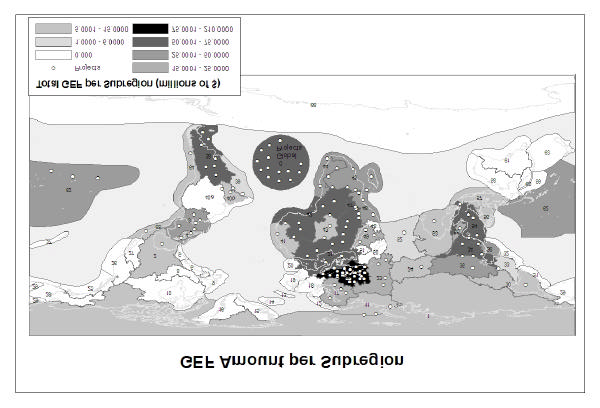
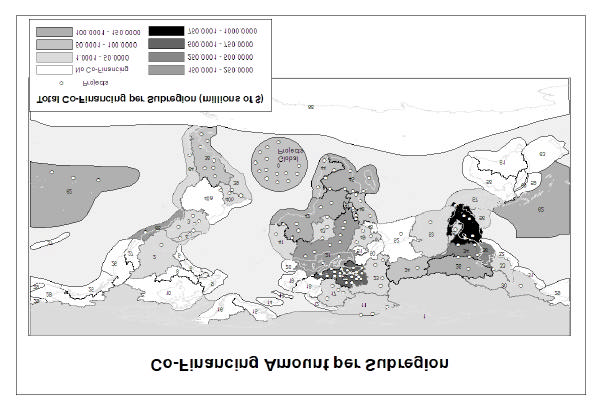
Figure 2.3. GEF Funding per Region (Note: Many of the projects cover only a small part of each region.)
Figure 2.4. GEF Cofunding per Subregion (see footnote 7)
12
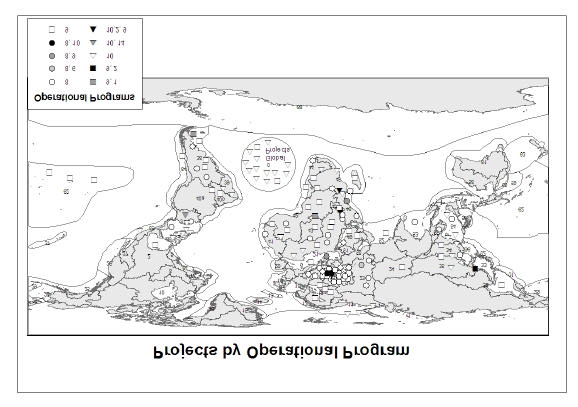
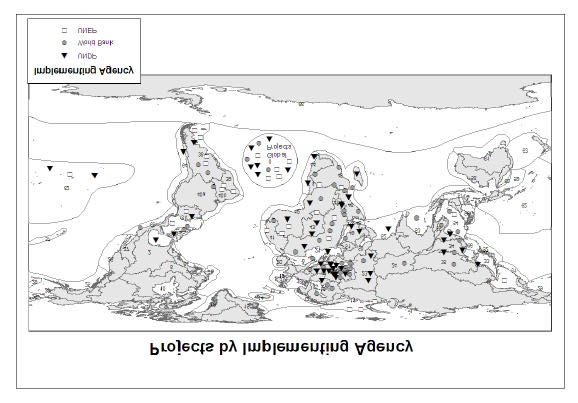
Figure 2.5. Distribution of All Approved Projects (1991 to the Present) according to the OPs (see Table 2.1)
Figure 2.6. Distribution of Projects (1991 to the Present) by Implementing Agency (see text for details)
13
managers, but the Bank has excelled at leveraging cofunding and investments. UNEP's
approach to information gathering and its relationship with regional conve ntions and the
STAP have given it a comparative advantage in many technical areas. Earlier reviews of
the IW Focal Area commented on the deficiencies in operational coordination between
IAs. In this context, we examined the development of co-implemented projects within the
overall portfolio (Figure 2.7).
Co-implemented Projects in the IW portfolio (total: 15)
25.0
20.8
20.0
17.4
15.0
Percentage
IW Portfolio 10.0
7.7
5.0
5.0
0.0
0.0
Pilot
GEF1
GEF2
GEF3
PDFA/B
Phase
Replenishment Cycle
Figure 2.7. Development of Co-implemented Projects by GEF Replenishment Cycle
The results of the analysis demonstrate a steady increase in coimplementation. Numbers
are still relatively low (one in five of projects approved in the current cycle) and the
degree of coimplementation highly variable, but the trend is positive. There is clearly an
increasing willingness to cooperate, fuelled by successful experiences such as the
Caspian Sea project. Currently however, only one Project Development Facility B (PDF-
B) is coimplemented, and this may herald a retreat from the positive trend. Our
investigations suggest that this may be a consequence of the 9 percent cap on
management costs imposed on IAs by the GEF Council. Successful co-implementation
requires the mobilization of appropriate in-house specialists from the IAs to project
meetings, and this is difficult to achieve if the limited fees must be shared between
agencies, especially where projects are relatively small. A full cost-benefit analysis and
review of the management fee system are urgently needed.
2.3. COMPARISON OF IAS' PROJECT START-UP TIMES
We conducted a survey of the time taken to complete PDF-B phases and generate CEO-
endorsed project documents. IAs were requested to supply the dates of PDF-B signature,
project brief approval by Council, and CEO endorsement. It was evident that a
consolidated database is urgently required; these simple data were not always readily
available and often incomplete, and the format varies markedly between agencies.
14
Figure 2.8 illustrates the results of this survey for projects that have been endorsed by the
CEO since early 2002.
Full Scale project document development times (for FSPs
endorsed from 2002 onwards)
UNEP
Completion of
PDF-B
World Bank
Completion/
negotiation of FS
Pro Doc
UNDP
0
1
2
3
4
5
years from PDF-B signature
Figure 2.8. Full-Scale Project (FSP) Development Times . (Notes: "Completion of PDF-B" refers to the
average time between signature of the PDF-B and the approval of the project brief for the FSP by Council.
"Completion/negotiation of FS Pro Doc" refers to the average time from Council approval of the project brief
to the endorsement of the project document by the CEO.)
The figure appears to show striking differences between the IAs, and we tested these
statistically (F-test) to determine which of them were highly significant. The times taken
for the PDF-B phase in the World Bank and UNDP were indistinguishable and averaged
22 months, whereas that of UNEP averaged 40 months. Completion and negotiation of
the full-scale project document took an average of 15 months for the World Bank and
UNEP, and significantly shorter (7 months) for UNDP. The average overall start-up
process varied from 28 months (UNDP) to 54 months (UNEP), a difference of more than
two years. Actual time to FSP start-up was longer because operation does not begin
immediately after CEO endorsement. It is easy to explain the difference between project
document completion/negotiation between UNDP and the World Bank: UNDP has
streamlined its procedures, whereas the World Bank follows strict standard policies and
generates comparatively far more detailed project documents. The reason for UNEP's
tardy process is less clear, however, and merits further investigation. The process should
not be seen as a race aga inst the clock, however; it may take a considerable time to
achieve full buy-in of all stakeholders. (We will discuss the consequences of gaps
between PDF-B implementation and FSP start-up in Chapter 3.)
2.4. QUESTIONNAIRE SURVEY
To gather additional information on the IW portfolio, a questionnaire was prepared by the
GEF M&E Unit in close consultation with the IW Task Team before the beginning of the
current study. The questionnaire was "trialled" in autumn 2003, and a modified version
15
was distributed through the IAs to 44 ongoing full-sized projects in spring 2004. Much of
the questionnaire was designed to examine the experience of projects with the
transboundary diagnostic analysis (TDA) and strategic action program (SAP) processes,
and this will be discussed in Chapter 4. Some general points are worth reporting at this
juncture, however. First, the response to the questionnaires was very poor (see Table 2.2).
Of the 44 projects, only 23 responded. There was only one response from Latin America
and the Caribbean (WB Guarani project), and none from the UNEP projects in the region.
This severely constrained the usefulness of the exercise and suggests that M&E is not
taken very seriously in the region. The 23 responses did, however, represent a reasonable
sample of the three OPs (7 from OP8, 11 from OP9, and 4 from OP10) and provided
valuable information that will be used in later chapters of this report.
Table 2.2. Response Rates to the Questionnaire
Submitted
IW Projects
Questionnaires IW
Geopolitical Region
Selected for Study
Projects
E. Europe & Central Asia
13
8
Africa
7
5
Latin America and Caribbean
8
1
Global
5
3
Middle East and North Africa
4
3
East Asia and the Pacific
4
3
Total
44
23
Second, the design of the questionnaire proved inadequate. It was based on the agreed on
performance indicators8 for the IW Focal Area, but in some cases these proved to be
ambiguous and insufficiently quantitative to permit their effective use as a monitoring
tool. (We shall examine this point in Section 3.8 of the current report.)
Third, the survey, together with examination of annual project implementation reports
(PIRs), leads us to question the heavy reliance on self-assessment as a tool for project and
program monitoring. There are some surprising inaccuracies in responses, as we shall
demonstrate in Chapter 4. An example however, is that 40 percent of the respondents
were not sure under which OP their project was financed. This leads us to question
general knowledge of the GEF and its IW Focal Area at the project level. Is the
information available understandable, up-to-date, and communicated to projects? (We
shall explore this further in the next section.)
2.5. COHERENCE AND INFORMATION AVAILABILITY FOR THE GEF OPERATIONAL
STRATEGY AND OPERATIONAL PROGRAMS IN THE INTERNATIONAL WATERS FOCAL AREA
We examined9 the guidance documents for the International Waters Operational
Programs (OPs) from the perspective of their clarity and to determine whether they
clearly differentiate between OPs 8 and 9, and we also examined the operational strategy
(OS) to determine whether it provides understandable guidance on the concept of
8 Program Performance Indicators for International Water Programs, GEF/C.22/Inf.8
9 A full comparative review was conducted and is available as a separate report.
16
incremental costs and eligibility for GEF funding. This clarity is important to determine
which priorities identified in the TDA/SAP qualify for GEF funding under a SAP
implementation project. (The analysis of OP descriptors is presented in tabular form in
Annex 2.) Our conclusion is that the OP guidance documents contain much ambiguous
wording (resulting from inevitable compromises during their initial negotiations) and
their review and updating would be timely, especially given the incorporation of OP15
(land degradation) in the suite of GEF OPs and the wealth of new case studies that could
be used to illustrate the IW OPs.
In this context, we noted the publication of M&E Working Paper 10 (see footnote 1),
"Monitoring and Evaluation Indicators for GEF International Waters Projects." This
document, written in plain English, provides valuable insights into the objectives and modus
operandi of the IW Focal Area and builds upon a decade of lessons learned. Unfortunately,
its distribution has been very limited--perhaps the narrow title discourages wider readership.
It sets a precedent, however, for providing guides that explain some of the more impenetrable
GEF technical documents. We feel that better and more cons olidated guidance would
improve the transparency and effectiveness of GEF mechanisms.
In addition to examining the descriptors of OPs, we also considered the guidance
provided on incremental costs for the IW Focal Area. (The details of our analysis are
provided in Annex 2.) We concluded that the operational strategy does provide sufficient
guidance regarding the concept of incremental costs. The problem is that much of this is
couched in "GEF-speak" (the GEF's own technical jargon) and there is a need to provide
a bridge between this and the practitioners who need to understand and implement the
guidance. Such a document could be illustrated by practical examples from the IW
portfolio.
2.6. CONCLUDING REMARKS
In this chapter, we have demonstrated the impressive growth in scope and scale of the
GEF International Waters Focal Area. This has resulted from the gradual geographical
extension of enabling actions (such as TDA/SAPs), the development of new global
initiatives under OP10, and the emergence of the first SAP implementation activities,
particularly those in the Black Sea Basin. The SAP implementation and demonstration
site projects are also responsible for much of the increased cofunding of GEF activities
shown in Figure 2.2 (see detailed analysis in Chapter 3).
The maps of coverage in Figures 2.32.6 must be interpreted carefully; the patchwork
quilt of projects is far from complete. In the next chapter, we shall also examine problems
of fragmentary and inconsistent coverage at a basin scale, as well as project overlaps.
Questionnaires distributed to key projects through the IAs resulted in a relatively poor
level of response. This may reflect fatigue from excessive gathering of information that
appears trivial or repetitive, rather than a low level of importance given to M&E activities
at the project level. However, there is also a worrying lack of knowledge regarding the
GEF-IW Focal Area itself at the project level (this was also corroborated during site
visits). We feel that this is partly due to the style and content of documentation available
17
describing the Operational Programs. Operational Programs also provide insufficient
guidance to distinguish between activities that contribute to global benefits (and thus
qualify for GEF support) and activities that would be considered as generating national
benefits and would not qualify for GEF funding.
We noted major differences between IAs in the time required to complete project
preparatory processes. IW projects are fairly evenly distributed between the
Implementing Agencies, and there are gradually increasing numbers of multiple IA
initiatives such as the Red Sea (completed) and the Caspian (entering the second phase).
The costs and benefits of multiple agency implementation merit further study. Explicit
multiple focal area interventions remain rare.
In the next chapter, we shall investigate many of these issues in depth, based on field
visits and case studies.
3. ANALYSIS OF CASE STUDIES
3.1. INTRODUCTION AND CRITERIA USED
The study sites visited represent a broadly representative array of ongoing and completed
GEF interventions within OPs 8, 9, and 10. The five areas covered (Black Sea Basin,
Plata Basin, African lakes, East Asian seas, and the Global Demonstration Projects)
represent about half of the GEF IW Focal Area expenditure to date and an even higher
proportion of cofinancing. The study team visited almost every ongoing project in the
study areas to gather firsthand information from project staff, government officials, and
stakeholder representatives. (Summary reports of each of the five studies are included as
Annexes 37.)
The current section analyzes the results of these studies in relationship to a set of
common criteria. The objective is not to conduct a critical evaluation of each project (this
is the purpose of the mid- and final-term evaluation process and the independent SMPR),
but to illustrate the development of the IW Focal Area, based on strengths and
weaknesses of the projects (or elements of the projects) visited. Text boxes and footnotes
are used to illustrate particular points or to give greater insight into individual projects. At
the request of the International Waters Task Force, some projects are referenced from
outside the study regions, including LME projects and IW:Learn (see Box 3.11).
The criteria employed for the evaluation are the following (see footnotes for further
explanations):
· Coherent,10 transparent, and practicable design
· Achievement of global benefits11
· Country ownership and stakeholder involvement12
10 By "coherent," we refer to coherence with the operational program, with findings of the TDA, and with
the institutional capacity in the region.
11 In the case of IW projects, "global" also refers to transboundary environmental benefits related to the
aquatic system.
18
· Replication and catalysis13
· Cost-effectiveness and leverage14
· Institutional sustainability15
· Incorporation of monitoring and evaluation16 procedures.
The above criteria are fully compatible with the evaluation criteria employed by the GEF
Secretariat and by most of the Implementing Agencies.
3.2. CRITERION 1: COHERENT, TRANSPARENT, AND PRACTICABLE DESIGN
Context
The M&E Working Paper 10 (see footnote 1) gives an elegant statement of what the
operational strategy seeks to achieve: "The GEF international waters operational strategy
aims at assisting countries to jointly undertake a series of processes with progressive
commitments to action and instilling a philosophy of adaptive management. Further, it
seeks to simplify complex situations into manageable components for action. "
In most cases, there was a high level of coherence between PDF-B and subsequent phases
of the project cycle. With some exceptions, transboundary diagnostic analyses (TDAs)
led to strategic action programs (SAPs) that provided a firm basis for subsequent actions.
(We will review the TDA/SAP process in Chapter 4.)
As the IW portfolio develops, project design has improved, and innovations have
gradually been incorporated. As we shall demonstrate in Section 3.5, there is a move
toward projects that combine strategic planning with demonstration projects to maintain
stakeholder interest and articulate the adaptive management process. Our comments are
provided within this context of a focal area that is moving forward, but requires continual
critical review to assist its progress.
Analysis
Gaps between PDF-B completion and the start-up of the full-sized project (see Section
2.4) often cause difficulties for the overall efficiency of project implementation. In the
case of the South China Sea project, for example, the TDA was already four years old
when project implementation began. The implementation phase of the Black Sea
12 We recognize that country ownership and stakeholder involvement are not the same; however, we
consider that these two elements of "ownership" should coexist in any effective IW project.
13 "Replication" refers to a project or project element that can be repeated at another place and time;
"catalysis " refers to the ability of a project to galvanize effective actions at a larger scale than the GEF
intervention itself.
14 We recognize that cost-effectiveness is not the same as leverage--an intervention does not necessarily
have to leverage cofunding to be cost-effective.
15 This aspect of GEF interventions is considered to be critically important. (Our interpretation of a strategy
for institutional sustainability is explained in Box 3.10.)
16 "Monitoring and evaluation" is used in the broad sense, not only from the perspective of the formal GEF
M&E criteria. Monitoring is a key element in an adaptive management strategy.
19
project--the Black Sea Ecosystem Recovery Project (BSERP)--began six years after
TDA completion. Though there were no gaps in interventions in the case of the Black
Sea, the small bridging project and patchwork of funding used to keep the Project
Implementation Unit alive during the five years between SAP completion and BSERP
resulted in a considerable loss of momentum and credibility.17 In the case of the Lake
Malawi/Nyasa and Lake Tanganyika projects, the five-year discontinuity in funding
continues, and many technical outcomes of the projects have remained underutilized. In
both cases, however, other donors have continued some level of support and, in the case
of Tanganyika, a Convention and Lake Authority have now emerged. Long gaps
generally lead to difficulties in applying an adaptive management approach because of
lost momentum and the limited shelf life of technical documents produced in earlier
interventions.
From these examples, it would also appear that some interventions were conceived
without an adequate exit strategy or a big picture of the scale and scope of the overall
GEF contribution. This does not imply a failure of the SAP approach, however, because
many of the projects cited were originally developed in the pilot phase of the GEF itself.
There was a problem of regional coherence, however, between projects in the Plata
Basin. For pragmatic political reasons, the early projects in the region--Bermejo, Upper
Paraguay, Plata, and its Maritime Front (FREPLATA)--were established with little or no
interrelation and without a full understanding of the Plata as an integral transboundary
system. This made it difficult to maximize the global benefits of interventions (see Box
3.1), a problem that has been recognized and will be addressed through a new regionwide
Plata Basin project. There is also a chronic problem of poor coordination between the
GEF Focal Areas in most of the regions studied.
Inadequate project design has been a problem cited in a number of project midterm and
final evaluations. Part of the problem is in the way some project documents are written
and negotiated following Council approval of the project brief. The logical framework
matrix should provide an overall vision of the project design, though we found little
evidence of its regular use in project implementation. The most detailed and carefully
prepared project documents are undoubtedly those of the World Bank, which take an
almost turnkey approach. Some project coordinators18 claimed that this left them with
limited flexibility to adapt to small unforeseen changes,19 but others20 have suggested that
their task managers21 have helped them overcome procedural issues. At the other
17 The problem was compounded by the need to keep the coordination unit alive as a first priority, leaving
very limited funding for in-country activities. This irony is common in international projects; the struggle
to maintain institutions and institutional memory leads to a loss of credibility, given that the stakeholders
see few on-the-ground benefits.
18 We refer to "project coordinator" as the person in the field with immediate responsibility for
implementation ("CTA" in UNDP terminology).
19 The Patagonia Shelf project was an example of this.
20 Such as the Guarani Aquifer and Mekong Water Utilization Project.
21 It has been suggested that task managers often have large portfolios to manage, including projects that
are considerably larger than those of the GEF, and it may be difficult to allocate sufficient time to respond
quickly to all requests from the field.
20
Box 3.1. Altered Sediment Fluxes as a Global Issue in the Plata Basin? A Question of
Setting Appropriate Scales
In virtually every sub-basin of the Plata system, the
It can be argued that the navigation issue is
alteration of sediment fluxes by human activity has
exclusively a domestic one within the region
been singled out as a problem of particular concern.
because the dredging costs reflect the costs of
There is plenty of evidence to illustrate the problem
adapting the river for a singular local and regional
and its impacts. In the upper Paraguay Basin in
economic benefit as a waterway and that the high
Brazil, for example, huge changes in land use due
maintenance costs are externalities from
to the rapid development of agriculture (mostly soy
inappropriate land use practices inland (channeling
beans) and cattle grazing since the early 1970s
the river also creates new externalities). The same
have accelerated land erosion. There are some 23
argument does not apply to the loss of habitat,
million cattle in the State of Mato Grosso do Sul
however. The region contains unique habitats such
alone (10 for every human resident). The sediments
as the Pantanal wetlands or those of the Parana
washed into rivers are deposited downstream. In the
River, and the maintenance of these systems and
case of the Taquari River that flows through the
the ecological corridors of the rivers are of immense
Pantanal wetlands, the buildup of sediments has
global value.
caused it to break its banks and permanently flood
vast areas of wetland. The ecology of the Pantanal
One note of caution is needed. As a result of
relies on seasonal drying of the system , and the
damming, sediment fluxes are not always
flooding is lowering its productivity, threatening
increasing. Decreased loads can cause the
biodiversity and causing a loss of employment.
downstream river to cut more deeply into its bed,
drying out adjoining wetlands. It can also result in
Further south, in the basin of the Bermejo River that
insufficient sediment supply to coasts and beaches
flows from Bolivia through Argentina to join the main
downstream, resulting in serious erosion. Sediments
Parana, there is also evidence of huge natural
are currently trapped by large dams such as the
erosion exacerbated by land use changes that
Itaipu on the Parana or the Salto Grande on the
began during the earliest period of colonization of
Uruguay River. The Itaipu reservoir, one of the
the region, four centuries ago. The Bermejo is now
largest in the world, traps almost all of the
the main source of sediments to the Parana.
sediments passing from the upper Parana.
According to a report submitted to the World
To what degree are these problems transboundary?
Commission on Dams, sediment supply to the lower
There is evidence of large natural sediment loads in
Parana is currently balanced by recent increases in
the system (though an order of magnitude less than
loads from the Bermejo River that join downstream
the Amazon). The Pantanal, for example, is a
from the dam. These increases are thought to be
natural sediment trap that is full of relict riverbeds
related to recent increases in rainfall in the Bermejo
and oxbow lakes , and there are plenty of historical
Basin.
accounts of the turbid waters of the Plata estuary
itself. There are two main issues at stake, however:
Understanding sediment balances requires complex
·
Impediment of the use of the system for
studies and models and must be tackled on a
navigation. It has long been an essential trade
system wide basis. A piecemeal approach cannot
route into the heart of the continent, but
work, and strategic assessment of the
increasing vessel size requires deeper waters
transboundary and global implications of changing
and expensive constant dredging in the Parana. sediment loads will require measurements and
·
The concern that the current rate of change of
models as part of a coordinated basinwide
sedimentation is leading to alterations in habitat
approach.
that are occurring too quickly for adaptation by
the natural ecosystem.
21
extreme, the midterm evaluators of the UNDP FREPLATA project commented that the
descriptions of implementation mechanisms in the project document were insufficient to
guide the project coordinator in his duties. The Dnipro River Basin project document
appears to have achieved a balance between the two extremes, giving just enough
flexibility for the project coordinator to deal with the problems of political change that
arose in the region but also clear descriptions of the roles of each of the collateral
partners.
From a practical perspective, project documents are often too bulky for careful analysis
(for example, by Council members) and have executive summaries that are
uninformative. In some cases of non-U.N.-language countries, neither the project briefs
nor project documents have been translated into national languages, hampering
transparency from the outset.
Another problem with project design, frequently cited in midterm and final evaluations, is
excessive ambition and complexity.22 This seems to accrue during project negotiations as
each partner (including the Executing and Implementing Agencies and the GEF
Secretariat themselves) demands changes23 to meet its various needs and constraints.
Activities are added, but rarely dropped. The reason for this is that it is difficult to
remove some of the original activities (given that they were proposed by governments)
and easier to add the new ones that help the proposal to meet the demands of the OPs.
Perhaps it would be useful to prioritize activities from the outset, enabling some to be
removed if the IA detects excessive complexity.
In some cases, project start-up was considerably delayed by the need to negotiate
memoranda of understanding or similar arrangements with the various entities involved
in project delivery. One GEF Focal Point suggested that this could be avoided or
minimized by making the completion of such agreements (at least at a framework level) a
prerequisite to project approval. He suggested that adequate institutional arrangements
were sometimes not properly negotiated at the time of approval of project briefs to gain
time. Examples of problems that develop at this stage are assignment of roles that are
outside the jurisdiction or competence of the coordinating institution,24 over-
concentration of effort on one ministry or sector,25 misjudgment of existing capacity,26
22 This also applies to projects beyond the study area (for example, Red Sea, IW:Learn, Pacific SIDS)
23 This often happens during a period of frenzied activity following the bilateral review of projects between
the IA and the GEFSec and before its submission in time for the next GEF Council meeting.
24 The MTE for FREPLATA, for example, demonstrated that the host Commissions (for the Plata and for
its Maritime Front) had no jurisdiction over the coastal zones from where much of the pollution entering
the system was arriving.
25 The Black Sea interventions, for example, have focused mainly on the environment sector, despite
evidence of very poor interministry coordination.
26 Assignment of responsibility to some institutions as activity centers in the Black Sea did not match their
capacity nor national plans for capacity development. Many of these centers are still struggling, despite
more than a decade of support.
22


Box. 3.2. An Innovative Management Framework for the Project "Reversing Environmental
Degradation Trends in the South China Sea and Gulf of Thailand" (SCS)
The SCS project has successfully gathered objective
number of needs , such as to engage the best available
information that has enabled the participant countries to
regional expertise while recognizing the special role of
select demonstration sites for the sustainable use of
government agencies, to enable efficient information
mangroves, sea grass beds, non-oceanic coral reefs , and
transfer, to enable specialists to work together on
wetlands. It is also working on the fisheries of the Gulf of
transboundary issues (including those that are common to
Thailand and the control of land-based pollution in the
two or more countries), and to balance sectoral interests
study area and will complete a revised SAP. In developing
at a national level and national interests at a regional level.
its management framework, the project had to consider a
Project Steering Committee
COBSEA: Coordinating
Body for the Seas of
East Asia
PCU
EAS/RCU
IMC
IMC
IMC
IMC
IMC
IMC
IMC
NTWG
NTWG
NTWG
NTWG
NTWG
NTWG
NTWG
RSTC
SEAs
SEAs
SEAs
SEAs
SEAs
SEAs
SEAs
mangroves
mangroves mangroves
mangroves
mangroves mangroves
mangroves
RWGs
coral reefs
[coral reefs] coral reefs
coral reefs
coral reefs coral reefs
coral reefs
sea grass
sea grass
sea grass
sea grass
sea grass
sea grass
sea grass
wetland
wetland
wetland
wetland
wetland
wetland
wetland
pollution
pollution
pollution
pollution
pollution
pollution
pollution
fishery
[fishery]*
fishery
fishery
fishery
fishery
fishery
IMC: Interministry Committee
NTWG: National Technical Working Group
SEAs: Specialized Executing Agencies
Regional
Reporting/guideline
National
PCU: Project Coordinating Unit
RSTC: Regional Scientific and Technical Committee
Communication
RWGs: Regional Working Groups
Subnational
EAS/RCU: East Asian Seas Regional Coordinating Unit
of UNEP
*China will not participate initially in those components in brackets.
The framework devised comprises compatible national
sit on the RSTC, together with two specialist Regional
structures, regional working groups , and a management
Task Force chairs, NTWG chairs (the National Technical
body (the Steering Committee), advised by a Regional
Focal Points), four experts from the region, and the Project
Scientific and Technical Committee. Each of the national
Director. The 20-person RSTC thus reconciles the sectoral
structures (Cambodia, China, Indonesia, Malaysia,
(scientific) component interests , as well as the national
Thailand, and the Philippines) features an Interministry
scientific and technical interests.
Committee interacting with a National Technical Working
Group, the forum through which the components' interests
The advantage of this structure is that it provides a
are reconciled nationally. It includes representatives of
balance of political and technical inputs to the Steering
Specialized Executing Agencies (SEAs), one for each of
Group, hopefully avoiding the sectoral capture that affects
the thematic areas of the project. These SEAs are
many other projects. The study (and the midterm
contracted on merit (in some cases , they are NGOs) and
evaluation) found that most of the IMCs are working well
the focal points from each SEA constitute the majority (or
and succeeding in engaging high-level representatives. It
core) of the members of the regional working groups.
was possible to meet with a specially convened four-
There is also provision for three additional recognized
person executive committee of the RSTC and confirm their
regional specialists in these RWGs, reducing the risk of
effectiveness and strong commitment to the project.
creating tight exclusive networks. The RWG chairpersons
23
and equivocal expectations of institutional reform.27 An additional problem that has
arisen is the creation of multiple demands on existing capacity through overlap of
projects funded by different donors.28
With regard to transparency, this can be greatly enhanced by clarity in description of the
role of the GEF in achievement of global benefits (see next section) ; frank discussion of
the aspirational gap that often exists between local and regional needs and the funding
limitations of the GEF; the provision of guidelines and descriptions that are less riddled
with jargonistic GEF-speak and confusing cross-references to documents that may not be
familiar to the reader; and revision of the roles of the different GEF entities with a view
to clarifying responsibilities to improve efficiency, quality control, and accountability in
the system. Minimization of the use of international cons ultants also helps foster
transparency; there is a clear difference between the negotiated use of such consultants to
bridge the current capacity gap (and to create new capacity) and the imposition of
consultants as a donor requisite (this certainly occurs with some bilateral donors). The
innovative management structure for the South China Sea project is an interesting
experiment in how to achieve a transparent mechanism that balances the skills and
interests of technical experts and political representatives (see Box 3.2). It demands
considerable project staff time for the management of some 40 separate contracts with
specialized Executing Agenc ies and requires considerable dedication from the staff of the
PCU.
3.3. CRITERION 2: ACHIEVEMENT OF GLOBAL BENEFITS
Context
The ability to address transboundary water-related environmental concerns is generally
regarded as a proxy for global benefits in the IW Focal Area. Because the aquatic
environment is usually a continuum from land to sea and there are intrinsic difficulties to
separate local and global issues, this remains a convenient operational definition, but one
that may be difficult to interpret in some contexts. Most of the projects examined are
clearly focused on transboundary concerns. The problem of huge overgrowth of water
hyacinths in Lake Victoria, for example, could not have been resolved unilaterally
because it was truly transboundary in nature and had serious implications for biological
diversity and sustainable use of the aquatic resources. It also had important local
dimensions for poverty alleviation and a reduction in health risk.
The selection of appropriate project boundaries followed by careful problem
identification is the key to ensuring a clear focus on global benefits. In this context, OP8
projects addressing large marine ecosystems are easier to design than those under OP9,
particularly single-country initiatives. Even in the case of LME projects such as the
27 Though outside the case studies of the current evaluation, it is clear that this issue was a major factor
contributing to the limited success of the Aral Sea project.
28 A typical case was the choice of identical demonstration project sites in the East Asian seas region by
more than one donor. They are all country-driven, however, and were independently negotiated; it is
difficult for donors and agencies to be continually coordinated regarding each other's plans for ODA
funding.
24
Benguela Current (FSP under OP8) or the Humboldt (PDF-B in OP8), representing the
two most productive marine ecosystems in the world, there was a difficult initial debate
with stakeholders regarding the balance between local benefits (largely fisheries interests)
and global ones (such as conserving biological diversity or maintaining system resilience
in the face of global change).
There are important additional benefits for regional and global security from some IW
interventions. Interventions suc h as those in the Dnipro, Caspian Sea, Lake Victoria,
Lake Tanganyika, Lake Peipsi, and the Mekong, to name just a few, have promoted a
productive dialogue between countries that has avoided conflicts over resource use. This
additional benefit has generated greater ownership by the countries involved and has
attracted additional donors that are particularly concerned with resource-use security
issues. To our knowledge, the IW Focal Area is unique in its capability to achieve such
benefits and leverage. It is therefore making an important contribution to the U.N.'s
Millennium Development Goals and the Johannesburg Declaration of the World Summit
on Sustainable Development (WSSD).
Analysis
Largely as a result of choice of geographical scales, there are some projects where the
water-related global benefits are small compared with the benefits to terrestrial
biodiversity or those that accrue at a local scale. The well-managed Upper Paraguay
project, for example, is focused on the protection of a major part of the Pantanal, the
world's largest wetland, a habitat of immense global importance. Transboundary water-
related benefits are unclear, however; the project is situated entirely within Brazil and has
demonstrated that the system does not significantly contribute to downstream
contaminant (including sediment) flux or alterations in hydraulic cycles. Nevertheless,
the project clearly revealed the precarious state of the Pantanal itself, particularly as a
consequence of huge sediment loadings from erosion caused by land conversion for
upland agriculture. The sediment has deposited in the rivers within the wetland, causing
them to overflow their banks and permanently flood areas that depend upon seasonal
drying to maintain productivity and biological diversity. This demonstrates a paradox: the
Pantanal is a huge natural reserve that possesses uniqueness as a system, despite having
no endemic species. Strictly speaking, however, it would be ineligible for further actions
within the IW Focal Area unless the project boundaries were redefined to include the
neighboring countries (Bolivia and Paraguay) that share the basin.29 The valuable and
important work conducted by the project showed that any remedial actions to preserve
the Pantanal must address land degradation, the primary cause of its destruction. This
may pave the way to an intervention under OP15 (land degradation), rather than further
actions under the IW Focal Area.
In the case of the SAP implementation project for the Bermejo River (also very well
managed), the project brief is rather weak in its definition of global benefits, presenting a
mixture of local and global benefits with no distinction between the two. This has
29 This comment was also raised during the SMPR study on the project; there is only one small element of
the project dealing with a transboundary subsystem.
25
subsequently led to considerable questioning and analysis of the balance between the two
kinds of benefits (the recent GEF Local Benefits study of the project has provoked an
ongoing debate on this issue). The argument that decreased sediment flux in the river
represents a global benefit is certainly questionable, given that the increased load carried
by the Bermejo may well only just compensate the decreased load of the upper Parana
following damming (see Box. 3.1) and that the project can only lead to a very marginal
decrease in sediment load in the system.30 Without a comprehensive study of the Plata
system as a whole, there are too many uncertainties to justify the project as generating a
net global benefit by sediment control. Indeed, the lack of monitoring systems in place
makes it particularly difficult to assess any impact (this issue will be taken up in more
detail in Section 3.8). The arguments regarding the restoration of a biological corridor are
much stronger, however, as are the considerable local and conceivably global benefits
from preventing the loss of productive land through soil degradation. On balance, it could
be concluded that the short- and medium-term transboundary benefits for the project are
likely to accrue through terrestrial conservation of biological diversity, rather than
through improvements in international waters. In the longer term, the development of a
sustainable institutional structure for the system could represent a valuable piece in the
jigsaw puzzle of managing the overall Plata Basin, especially if the conservation of its
ecological role were fully recognized as a priority in the region. However, this was not
the stated purpose of the Bermejo intervention. The entire debate may merely reflect the
difficulty of accommodating land degradation projects in the GEF's portfolio before the
adoption of OP15.
The Bermejo and Upper Paraguay projects illustrate the problem of a jigsaw approach to
river basin management without an overall system analysis and coherent strategy. The
three initial projects in the Plata Basin were selected primarily for pragmatic reasons:
· They included key attributes of the overall system (the Plata and its Maritime
Front, South America's largest estuarine system; the Bermejo, the major source of
riverine sediment; and the Upper Paraguay for the Pantanal).
· Some of the countries in the basin did not wish for a wider intervention, owing to
a number of international issues that were unresolved at that time.
Fortunately, the basin countries have recognized the limitations of a fragmentary
approach and a PDF-B project31 has been approved that will enable a mega-TDA to be
completed for the overall basin. This may well reveal priorities and global benefits that
are distinct from those of the previously cited initiatives. Setting appropriate scales is
vital for achieving global benefits.
30 Part of the problem is that much of the degraded areas that contribute to the sediment load were
deforested in the early colonial period, making restoration a colossal task.
31 A Framework for Sustainable Water Resources Management in the la Plata Basin, with Respect to the
Hydrological Effects of Climatic Variability and Change, OP9, UNEP
26

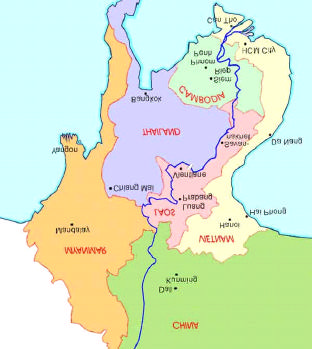
Box 3.3. Complex Realities for Achieving Global Benefits: The Mekong Water Utilization Project (WUP)
Though the 4,200-kilometer Mekong is the
12th longest river in the world, it is only
navigable until a short distance above
Phnom Penh. Its 800,000-square-kilometer
(population 70 million) basin covers a vast
area of Cambodia, China, Laos, Thailand,
and Vietnam , as well as part of Myanmar. Its
ecosystem includes a very large number of
endemic species and supports a fishery of
more than 2 million tons annually
(representing 80 percent of the protein
supply in Cambodia, for example). It also
has enormous importance as a source of
water for irrigation and power generation.
One of its unusual features is the Tonle Sap
subsystem , which has a reverse flow during
the rainy season (see inset below) and has
great significance for more than 1 million
(mostly poor) people that depend directly on
its resources.
Unfortunately, some of the uses of the
Mekong are incompatible with one another
for reasons that are not immediately
obvious. There are evident potential
conflicts that would arise from excessive
withdrawal of water for irrigation by
ups tream countries. The 16 million people in the Mekong
Delta, for example, might suffer from saline intrusion,
damaging rice crops (though this also facilitates a
lucrative pond culture of shrimps). The use of water for
is expected to deliver 1,000 megawatts of power, but
power generation, on the one hand, could actually help
has yet to win the backing of the World Bank, which is
to reduce the seasonality of river flow by releasing water
completing environmental and social assessments.
for power production during the dry season. On the other
hand, many fish migrate and spawn in harmony with the
The Bank also implements the GEF Mekong Water
seasonal changes; dams would cut migratory routes and
Utilization Project (WUP), executed by the Mekong
change basic seasonal spawning patterns. Seasonal
Commission. The project is providing the technical
change in river flow enables sediments to be mobilized
support to help the commission to set rules for minimum
and floodplain habitats to be preserved and promotes
water flow in the river. The GEF project has focused on
diversity of resilient species. The use of the river for a
the hydrological modeling of the system and has made
clean energy supply could have serious transboundary
major advances in modeling. Parallel funding by donors
ecological, social, and economic impacts.
has enabled other aspects of the system to be studied
(for example, ecological health, habitats, water quality,
The Mekong Commission includes Cambodia, Laos,
and fisheries). Ultimately, the rules will depend on the
Thailand, and Vietnam, but China currently remains
vision of use of the river that should be agreed on by the
outside by its own decision. China, however, has caused
countries and all of the stakeholders in the region.
consternation among its neighbors by damming the
Mekong in two places and is soon to open the massive
This vision however, requires all countries to participate
Xiaowan Dam, with a 300-meter-high wall and a
(including China) and a clear understanding of the
reservoir 105 miles long. This comes at a time of record
implications of alternative regimes of river use. Currently,
low flow in the river and plummeting fish harvests. China
the information is fragmentary. The migratory patterns of
claims benefits , however, by releasing water during the
fish are poorly understood, as is the sediment dynamics.
dry season, permitting greater navigation.
A holistic approach is urgently needed, perhaps based
on an adaptive management TDA/SAP process. Until
China is not alone in building dams. The $1.1 billion
this happens, ecosystem health and regional food
Nam Theun 2 dam in Laos on a tributary to the Mekong
security could be in jeopardy.
27
Providing that the geographical scales are carefully assigned and all stakeholders are
included, the TDA/SAP process helps to keep an overall focus on global benefits without
losing the local ones. Box 3.3 illustrates what happens when only partial solutio ns are
considered. Though successful and well managed, the Mekong Water Utilization Project
focuses on part of the problem of sustainable water management in the system. The
development of a global vision for the system in the face of huge developmental pressure
will require difficult tradeoffs in the very near future. The absence of a TDA/SAP for the
entire system may limit the global benefits of the GEF intervention. Even where there is a
clear vision of global benefits, fragmentation of an overall strategy into manageable
pieces carries the risk of loss of the transboundary vision, especially where the individual
interventions are nationally based and there are no clearly defined National Action
Programs (NAPs).
To direct the concerted attention of all IAs on global benefits at a transboundary basin or
sea level, an innovative Strategic Partnership approach has been devised and is currently
being tested in the Black Sea Basin (see Box 3.4). The Black Sea Strategic Partnership
sets out to control transboundary nutrient discharges to the Danube River and Black Sea.
This approach may provide a framework for the major investments and reforms needed to
tackle large-scale transboundary problems in other regions. It has already demonstrated a
major catalytic impact in the World Bank through its leverage of investments. Our
regional study suggests that an increased effort will be required to maintain coherence
between the various components of the Black Sea Strategic Partnership; matching the
approaches of IAs at an operational level requires enhanced coordination mechanisms. In
addition, the component dealing with overall coordination in the Black Sea (the Black
Sea Environmental Program/Black Sea Ecosystem Recovery Project) has not yet
succeeded in engaging with local concerns and maintaining public attention on shared
environmental issues. Projects must maintain a balance between local and global benefits
if the engagement of stakeholders is to be sustained.
The Plata Basin case study serves to highlight the very fuzzy conceptual boundary
between many IW and biodiversity projects, especially--but not exclusively--those in
OP2. This is particularly evident in the case of the three projects covering the marine
environment of Patagonia.32 Though the project executants have developed ad hoc means
to communicate with each other, we found little evidence of regular communication
between the two IAs involved to seek synergies between the projects. This creates an
artificial obstacle to the development of an ecosystem approach. A similar situation exists
of virtually nonexistent communication between both the Danube or Black Sea projects
and the Danube Delta OP2 projects. In every region visited, we encountered this issue;
almost all IW projects claim benefits to biodiversity, and many OP2 projects appear to
create benefits to international waters (either directly or through replicability), but the
dialogue between projects in the two focal areas remains limited.
32 Patagonia Coastal Zone Management Plan (OP2, US$2.8 million, UNDP), Consolidation and
Implementation of the Patagonia Coastal Zone Management Programme for Biodiversity Conservation
(OP2, US$5.2 million, UNDP), and Coastal Contamination Prevention and Sustainable Fisheries
Management (OP8, US$8.7million, World Bank).
28
Box 3.4. The Project Implementation Phase: Achieving Global Benefits through Strategic
Partnerships
The innovative approach of a strategic partnership
The Strategic Partnership comprises three separate
was initiated by a paper to the GEF Council
main project elements:
"Streamlining the Project Cycle" in 1998, which
·
Control of eutrophication, hazardous
alerted the Council to the opportunity to create a
substances , and related measures for
strategic partnership between the GEF
rehabilitating the Black Sea ecosystem --
Implementing Agencies within a region to expedite
implemented by UNDP (GEF US$10 million)
programmatic objectives. In other words, to be able
·
Strengthening the implementation capacities for
to forge a new mechanism of im plementation of
nutrient reduction and transboundary
GEF programs, which could overcome many of the
cooperation in the Danube River Basin--
operational constraints encountered between
implemented by UNDP (GEF US$18 million)
agencies and operate at appropriate regional
·
World Bank/GEF Partnership Investment
scales. The idea was to deploy all the comparative
Facility for Nutrient Reduction--implemented by
advantages of the Implementing Agencies, together
WB (GEF US$$70 million).
with bilateral funders and development agencies, to
tackle the issues identified through the TDA/SAP
There are a number of challenges and opportunities
process. This should enable investments to be
for the Partnership. The first is that 9 of the 13
leveraged above and below the baseline (through
countries in the Danube Basin are now members or
the World Bank and bilateral donors), improve
prospective members of the European Union.
environmental monitoring and assessment and
Future Danube policy will be dominated by the EU's
coordination with multilateral environmental
Water Framework Directive, which may impose
agreements (for example, by UNEP and its
stronger regulations achieving good water quality.
partners), and improve capacity building and
On the other hand, they will also be subject to the
technical coordination (for example, through UNDP
EU's Common Agricultural Policy, which may result
and its partners).
in increased fertilizer use in the region, and
fertilizers are a primary source of nutrients. The
The first test of this approach was the Black Sea
European Commission is aware of this conundrum;
Basin, which included the two most mature GEF
the results of well-managed demonstration projects,
interventions --for the Black Sea and the Danube--
such as those undertaken through the partnership,
plus a more recent intervention for the Dnipro River
can have a major influence on its future policy in the
and a number of biodiversity projects. Together,
region.
these included a land area of 2 million square
kilometers and 160 million people living in 17
The second challenge comes from within the
countries, most of which were in transition from
Partnership itself. The constituent projects have
centrally planned to free market economies. The
proceeded in their initial phases, some very
main purpose of this combined effort was to ensure
successfully, but with little cohesion. Insufficient
that the Black Sea recovers from the catastrophic
attention had been paid to this matter in the initial
eutrophication33 that occurred in the latter part of the
design, and there is an urgent need to reintegrate
Soviet era and does not return to the same state as
the various components and promote the
a consequence of economic recovery in the region.
Partnership as a whole. IA cooperation at the
operational level remains inadequate in the region,
Before developing the Partnership, the commissions
and the Black Sea component in particular has
responsible for the Danube River and Black Sea
faced major problems of poor management and
had jointly agreed on goals and targets for limiting
country support. The upcoming second stocktaking
nutrient discharge to the Black Sea (particularly
meeting (November 2004) will provide an
from the Danube, historically the major source of
opportunity to revitalize the process through a
nutrients). Following two years in development, the
revision of the implementation mechanisms, more
Strategic Partnership was launched at a stocktaking
clearly articulated goals, and a simplified mutually
meeting in June 2000 and was mainstreamed into
agreeable means of interproject coordination. The
the workplans of the two commissions and
outcomes will be observed closely, because there
programs of the GEF Implementing Agencies.
are many issues at stake for the region and for the
IW Focal Area.
33 Eutrophication is a phenomenon that results from
excessive loads of nitrogen and phosphorus compounds
(nutrients) to a water body, eventually causing massive
algal blooms, the depletion of vital dissolved oxygen, and
the death of marine animals, including fish.
29
3.4. CRITERION 3: COUNTRY OWNERSHIP AND STAKEHOLDER INVOLVEMENT
Context
We contend that a successful intervention should achieve ownership at the country and
stakeholder levels. In this section, we will explore ownership from both perspectives.
Two main factors potentially militate against ownership: donor drivenness and sectoral
capture (the disproportionate control of a project or its benefits by a particular sector,
interest group, or level of hierarchy). The TDA/SAP process is designed to achieve high
levels of ownership, though there are alternative tools with similar objectives (for
example, replication of local-level demonstration projects).
We have seen convincing evidence of good ownership by governments and stakeholders,
as well as areas where more attention is required. The Lake Tanganyika project, for
example, owes its success to a high level of ownership at all levels, enabling it to
overcome very difficult challenges due to armed conflict, burgeoning HIV-AIDS levels,
and severe poverty. We noted high levels of country ownership of all three projects
visited in SE Asia and excellent examples of stakeholder engagement in the PEMSEA
demonstration sites. Similarly, in the Plata Basin, there was clear evidence of stakeholder
engagement in the Upper Paraguay and Bermejo projects. Our analysis is made in the
context of lessons learned from these success stories.
Analysis
In principle, the existing mechanism for approval of GEF projects, involving the GEF
Council at the project brief and project document approval stages, should ensure that
projects are not donor-driven. It provides checks and balances such that a GEF Focal
Point always has a voice to question any perceived irregularities. Though we found no
evidence of manipulation of the process by agencies or donors, we noted that on some
occasions the enthusiasm of the GEF Secretariat and IAs for particular projects or
programs helped with their progression at times when their continuity might have been
more seriously challenged. The Black Sea Strategic Partnership and related projects, for
example, were approved despite the lack of financial contribution of several of the
countries to the joint implementation arrangements for the 1992 Bucharest Convention
(the Convention that remains the only legal agreement between the six Black Sea coastal
countries). This situation endangers the sustainability of the joint institutional
arrangements (JIAs) (see 3.5), but also weakens ownership of the project. The reverse
situation is also true : a negative response by IAs can lead to dejection by countries,
despite a high level of ownership. There is much regional confusion, for example,
regarding the decision not to proceed with the Lake Malawi/Nyasa full-sized project,
despite a very successful preparatory project.34
During project implementation, the project Steering Committee has a key role in
asserting overall country ownership. In the projects we examined, great care has been
34 Apparently, the decision was taken because of the unwillingness of the Government of Malawi to assign
high priority to the IDA loan that would have enabled counterpart funding.
30
taken in the design of these committees to ensure that they are fully controlled by the
participant countries. The project coordinator is generally present as an observer, and in
some cases (but not all), donor and NGO representatives are also given observer status.35
The chosen formula depends on political and cultural realities; in the extreme case of
projects such as the South China Sea and FREPLATA, the Steering Committees exclude
all observers, except for the project coordinator.36 The role of the project coordinator is
often a difficult one--he or she may be the only person empowered to engage in a
dialogue with the national representatives regarding the purpose and nature of GEF
support, the limitations of project flexibility, and the operational mechanisms of the IA.
Our discussion with the project coordinators suggests that, though most have performed
commendably, many were poorly trained for this function before taking up their posts
and faced a steep initial learning curve.
In our view, the most difficult aspect of country ownership has been to ensure adequate
stakeholder involvement. Strong country ownership through the Steering Committee does
not by itself avoid capture of the project by a single sector. This is why stakeholder
analysis and the development of national Interministry Committees (IMCs), public
participation programs, and National Programs of Action are a critical component of the
TDA/SAP process. Unfortunately, we found a general lack of objective stakeholder
analysis in many of the projects reviewed. Indeed, the lack of formal stakeholder analysis
in the Black Sea region was one of the factors that led to weak or absent cross-sectoral
participation,37 further compounded by the lack of Interministry Committees and
National Programs of Action. The process of drafting a NAP helps to consolidate a
successful Interministry Committee38--a process followed in the neighboring Dnipro
Basin. It would seem sensible for the Black Sea, Danube, and Dnipro projects to share
single IM Committees in countries where their programs clearly overlap and many goals
are similar.
In the Plata Basin, projects such as Bermejo and Upper Paraguay have conducted careful
stakeholder analyses and have subsequently achieved high levels of participation from
35 Opinions on the role of the donors as observers or full members of Steering Committees differ widely.
Ultimately, the IA has the right to withhold financial support if the project is clearly off track (compared
with the project document) or if there is evidence of serious management anomalies. The IA is also
accountable to the GEF Council.
36 The observer status in these projects is one of voice, but no vote. In practice, the coordinators in both
projects play a crucially important active role in the Steering Committee (Executive Committee in the case
of the Plata Basin). The exclusion of other observers in both cases is a consequence of the participant
governments' response to political sensitivities in the region.
37 For most of its 11-year history, the Black Sea Environmental Programme (a loose term grouping
interventions by the GEF and its partners) has been dominated by representatives of the "environment
sector" (ministries of environment or equivalent). These are among the weakest ministries in these
countries; in the case of Russia, the ministry has been downgraded, first to a state committee and once
again to a department. Interministry Committees for the Black Sea in these countries are also mostly weak
or absent.
38 There are some good examples of IMCs in other regions: Several countries in the Caspian Sea project
have strong IMCs; the South China Sea project has helped to create IMCs that meet at least twice annually
in most of the participant countries. Brazil has created a strong IMC to examine all GEF proposals and
ensure full involvement of all relevant sectors.
31
most economic sectors and the public in general. Downstream however, FREPLATA39
has neither stakeholder analysis nor national Interministry Committees and has little
demonstrable impact in public awareness or participation. The Upper Paraguay project
has used a number of community-level projects to build confidence among some of the
least-privileged sections of society and achieve their buy-in to the goals of the project
itself. Confidence-building actions (following a careful analysis of stakeholders) have
been the mainstay of demonstration projects managed by PEMSEA (see Box 3.4) and the
Lake Victoria Project. The Lake Victoria Project has the difficulty that two of the
national capital cities are remote from the lake, but compensated for this through strong
representation by decentralized administrations coupled with the appointment of local-
level public participation officers working within beach management units. Despite this,
and the establishment of a formal Basin Commission, it still lacks national-level IMCs,
however.
From the projects reviewed and visited, we are convinced that the strongest country
ownership results from broad stakeholder participation and a structure that includes
formal IMCs. This provides resilience during periods of political change. The
participatory process (at all levels) also requires a good communication strategy,
however. A number of the projects visited have excellent technical outputs, but have not
translated them into a style and format that make them accessible to a wider audience,
including policymakers and the general public. With notable exceptions,40 there was a
gap in many projects between promotional pamphlets and heavy technical volumes.
Techniques such as giving positive media exposure to national focal points (when they
attend key events, for example) have positively increased political buy-in.
The interests of transparency are best served by appropriate use of the Internet to make
all information available to stakeholders. The approach taken to this differs considerably
between projects. The South China Sea project is a good example of openness; meeting
reports are posted within a few days of the meetings themselves, and budgetary
information is freely available. FREPLATA is a good example of technical excellence in
presenting scientific analyses underpinning the TDA.
Projects have had very divergent approaches to working with nongovernmental
organizations (NGOs). Early attempts to organize NGO forums in the Black Sea and
Danube projects met with failure because there was no compelling reason for these
locally oriented and heterogeneous organizations to work together. They also had little
chance of raising the necessary funds to attend future regional meetings, and the structure
was therefore donor-dependent. Recently, the two projects have taken different
approaches. The Danube developed a public participation strategy through the
independent Regional Environment Centre in Budapest (with more than 10 years of
developing such projects). In the Black Sea, a competitive small grants initiative was
established to foster NGO activities, but its effectiveness is currently difficult to
39 The consortium implementing FREPLATA comprises two commissions belonging to the foreign
ministries of Argentina and Uruguay.
40 The newsletters produced by PEMSEA and Globallast are good examples of how to target and engage a
particular audience.
32
evaluate.41 Curiously, in the case of the neighboring Dnipro Basin project, NGO
representatives (one per country) were invited to participate in negotiations of the
regionwide ecosystem quality objectives. Their participation was enthusiastic, and they
agreed to form an NGO forum on their own initiative. In the South China Sea project,
NGOs have been contracted to implement national subcomponents of the project in cases
where they are the most appropriate partners.
In conclusion, we feel that there is continued need for improvement of stakeholder
participation in IW projects and there is a need for mandatory stakeholder analyses in all
OP8 and 9 projects. There are sufficient positive experiences for the best practices to be
recognized and shared with new projects at the pipeline or early implementation stages.
3.5. CRITERION 4: REPLICATION AND CATALYSIS
Context
The IW Focal Area has accumulated a wealth of experience in demonstration projects
and other activities that may be replicable. These range from local-level initiatives such
as the projects funded through PEMSEA, through larger initiatives in the context of
global demonstration projects, to projects of several million dollars such as the Marine
Electronic Highway initiative in the Straits of Molucca or the demonstration projects
within the Black Sea Strategic Partnership. In this section, we will analyze some of the
issues observed related to the development of demonstration projects in the regions
studied, together with the global demonstration projects under OP10.
Another aspect of GEF IW projects has been their ability to catalyze larger-scale changes.
The IW Focal Area is unique in not acting as a financial mechanism to support
implementation of a global convention. We will demonstrate that some projects have
helped to create innovative new regimes or mechanisms that remain active as agents of
change when the project has been finalized.
Analysis
Several GEF IW projects, or components of projects, are designed on the basis of
achieving global benefits through replication of nationally based demonstration projects.
In three cases, these are global demonstration projects addressing the issue of the global
spread of opportunistic invader species by ships' ballast water discharges;42 the problem
of mercury contamination arising from huge, but globally dispersed, artisanal gold
mining;43 and the global problem of excessive by-catch of non-target species
41 Our study of the project revealed that most of the projects had never been visited by Project
Implementation Unit (PIU) staff and the resulting regional report is weak and currently represents a lost
opportunity to evaluate the impact of this important experiment.
42 Removal of Barriers to the Effective Implementation of Ballast Water Control and Management
Measures in Developing Countries GloBallast (UNDP-IMO, $7.61 million GEF funds, 19992004).
43 Removal of Barriers to the Introduction of Cleaner Artisanal Gold Mining and Extraction Technologies
Global Mercury (UNDP-UNIDO, $7.12 million GEF funds, from 2001).
33
Box 3.5. GloBallast: Cornerstone of a New Global Regime
The global transport of invasive alien species (IAS)
standards and guidelines needed to manage ballast
by ships' ballast water constitutes one of the
water.
greatest threats to marine biodiversity. Economic
costs of IAS can be significant, and they can lead to
One of GloBallast's greatest achievements has
the permanent collapse of traditional sectors and
been its success in taking a highly technical
livelihoods. The Global Ballast Water Management
problem and making it a priority issue among a
Programme (GloBallast) is a highly successful GEF
broad and diverse range of stakeholders, both
project that has catalyzed the issue of transport of
within the maritime sector as well as at top
IAS into a global priority, decisively contributing to
policymaking echelons. The fact that both the Prime
an emerging international legal regime. As
Minister and the Deputy Prime Minister of India, one
expressed by the Chairman of the IMO Working
of six pilot countries, presided over an awareness-
Group that drafted the International Convention for
raising event is illustrative. Lack of information about
the Control and Management of Ships' Ballast
the transfer of organisms in ships' ballast water
Water and Sediments (BWC), "GloBallast made us
constitutes the single greatest barrier to addressing
believe that it was possible."
the growing threat of bio-invasions.
GloBallast developed versatile state-of-the-art
GloBallast appears to have engineered one of the
methodologies and tools in the process of enabling
few instances of South-North knowledge and
six pilot countries to establish ballast water
technology transfer. Through its execution and
management frameworks and expertise. These
linkages to the convention process, it has become a
have proven to be of interest to both developing and
vehicle for changing national, and potentially
developed countries, created a worldwide network
regional and global, practices that should translate
of engaged stakeholders. It also provided a platform
into far-reaching global benefits. These are
for advancing technological responses to the
significant accomplishments for a 4-10-year,
problem and contributed to the development of the
US$7.61 million GEF-funded project led by a two-
person PCU.
during shrimp trawling.44 In addition, there is a long-standing, regio nally based project
for demonstration projects in SE Asia, currently termed PEMSEA.45 Several recently
approved projects have also included substantial demonstration components during the
SAP development phase (for example, South China Sea project, Guarani Aquifer) or the
SAP implementation phase (for example, Bermejo River Basin; or most notably, the
Black Sea Strategic Partnership--see Box 3.4). As far as we are aware,46 about half of all
projects have significant demonstration activities. These wide-ranging initiatives provide
ample scope for testing the replication approach. In the current review, we can only
highlight some general points and remark that a thorough analysis of demonstration
projects would be useful for future strategic planning.
44 Reduction of Environmental Impact from Tropical Shrimp Trawling through Introduction of By-Catch
Technologies and Change of Management (UNEP-FAO, US$4.78 million GEF funds, from 2000).
45 PEMSEA is employed here to refer to two projects. The first is the completed GEF Pilot Phase project,
Prevention and Management of Marine Pollution in the East Asian Seas (UNDP, US$8.03M GEF funds,
199398), and the second is denominated Building Partnerships for the Environmental Protection and
Management of the East Asian Seas (UNDP, US$16.22 million, 1998 to the present).
46 Of the 20 respondents to the IW questionnaire, 11 confirmed that they are or were implementing
demonstration projects.
34
Of the three global demonstration projects, only GloBallast is at a stage that allows an
objective evaluation of results (Global Mercury is already generating first outputs). Our
review and extensive interviews (see Box 3.5) confirm the extraordinary success of this
project in catalyzing international action (by strengthening the negotiation process of a
global convention) and laying the ground for the establishment of a new and effective
global regime. It must be noted, however, that not all of the demonstration sites were
equally successful (the team visited the least successful site in Odessa, Ukraine), but the
overall result was impressive. By not limiting the project to easy wins, valuable
experience (positive and mediocre) was obtained to achieve replicability on a global
scale.
PEMSEA is another success story in terms of replication. The project initially selected
coastal sites with severe human pressure impacting environment attributes of regional or
global importance (species, habitats, cultural heritage). It achieved stress reduction by
applying the principles of integrated coastal zone management. This is not a story of
instant success, however; the process of developing each coastal site took about three
years from identification to implementation and an additional five years to refine the
process and gather information for replication. The Xiamen (China) and Batangas Bay
(Philippines) sites developed in the early stages of the project spawned 11 additional
successful sites with multiple pressures such as those of Danang (Vietnam),
Sihanoukville (Cambodia), or Nampo (PR of North Korea47). A measure of the success in
replication is that a system of parallel sites has now been developed in which countries
are nominating sites with 100 percent national funding (PEMSEA provides the know-
how through formal training, networking, and study tours to successful sites). Some 20
sites are in consideration, of which four (South Korea, Philippines [two], and Indonesia)
are in early stages of implementation. Interestingly, in the case of GloBallast too, four of
the six participating pilot countries are applying the GloBallast approach to other national
ports, using their own resources
There are potential problems, however, with the approach of achieving global benefits by
replicating Integrated Coastal Zone Management (ICZM) projects on a local scale.
(These are illustrated in Box 3.6 for the case of the Xiamen demonstration project.) The
difficulty is that environmental problems exist at various scales in space and time.
Problems such as eutrophication, management of migratory fisheries, or the conservation
of mobile species cannot be resolved by adding together a series of local projects because
regional-scale priorities may be entirely different from local-scale ones. Furthermore, a
strategy based on strict zoning of the entire coastal and shelf seas would reduce its
resilience to long-term change, particularly climate change. The spawning areas of fish,
for example, may well shift with changing water temperatures. Clearly, there must be a
balance between a strategy based upon replicating local projects and a strategy based
upon river basins (and associated sea areas) and large marine ecosystems. All of these
approaches are valid, provided that the problem and causative stresses are within the
same management boundaries.
47 Encouraging North Korea to participate fully in PEM SEA is a noteworthy diplomatic achievement.
35
Fortunately, this difficulty has been recognized by PEMSEA, and the project is
undertaking two demonstration projects within wider boundaries (Manila Bay and the
Bohai Sea48) and has successfully promoted a sustainable development strategy for the
region. Though an important step forward, the strategy remains declaratory in nature and
lacks the strength and purpose of a formal SAP, endorsed by all governments.
Unlike PEMSEA, which is focused on stress reduction, the demonstration project
element of the South China Sea (SCS) project focuses on the sustainable use of key
habitats, selected through an innovative and rigorous process of objective analysis.
Inevitably, to reach the desired goal of sustainable use, stress reduction measures (or at
least, stress management) will also be required. Replicability is sought by choosing sites
that typify conditions in the region and then demonstrating the economic and social value
of sustainable use. The demonstration projects are in the process of being launched at
present, and it is too early to assess the results of the SCS approach. However, there are
some encouraging signs (see Box 3.7). It will be important to monitor any overlaps
between the SCS and PEMSEA projects very carefully; though both approaches have
strong merits, dialogue between the two projects is limited, and an opportunity for
synergy may be lost.
48 Improvements to the Bohai Sea are also constrained by issues of scale because the catchment of the sea
includes the vast population in the Yellow River Basin (which is outside the project boundaries). However,
this has been recognized in the project design, which is clearly focused on reducing stress in the coastal
zone itself.
36
Box 3.6. Managing the Human Footprint of Xiamen: A Question of Scales
Since 1994, the GEF PEMSEA project (and its
to a shift from a production- to a service-based
precursor) has been working with the local authorities in
economy. During the marine zoning process, it was
the island city of Xiamen, China. Xiamen was a willing
decided to move the inherently polluting aquaculture
partner for the project; the authorities had already
farms out of the western estuary, replacing them with a
perceived the importance of environmental protection
mix of leisure areas and port development. This
when they began a US$47 million project to clean up
resulted in a considerable improvement in water quality
the Yuan Dang Lake in the center of the city in 1986.
and economic return. The port now handles 2.3 million
Completion of the cleanup and extension of the concept
containers annually, ranking it among the 30 largest
to the coastal area, however, was a formidable
container ports in the world. The overall net present
challenge, largely because of the number of sectors
value of the benefits of improvement of the Western
involved. The Integrated Coastal Management (ICM)
Sea Area is estimated as $655 million (cumulative since
methodology offered by the GEF project enabled the
2001), and the overall value of Xiamen's ocean industry
development of the processes and structures necessary
(all uses) is calculated as about US$1.4 billion (20
to bring the parties together and resolve their conflicts
percent of GDP). The growing affluence and increased
of interest. Over the 10-year period since Xiamen's
tourism are inevitably creating a greater demand for
selection as a demonstration site, there has been a
seafood (a major component of the local diet), largely
dramatic change in the relationship between this city of
satisfied by the same aquaculture industry that has
2 million people and its marine environment. The
been moved away from the city. The human footprint of
Deputy Major leads a marine management coordination
the city has, in effect, been extended to other parts of
group of 23 key sectors; strong local by-laws have been
China. There is a real danger that the human footprints
developed; a zoning scheme adopted; a marine
of major cities will rapidly occupy the entire coastal area
management office with a supervisory force has been
of China, constraining further growth and presenting a
created; and national investments of more than US$60
major threat to biological diversity. Harmful algal blooms
million made in wastewater treatment and the remedial
of unprecedented scale reported in May 2004 along the
measures. The cleaner and landscaped waterfronts
northeast coast of China may be evidence of this
attract larger numbers of tourists, and waterfront
problem. To its credit, the Government of China has
housing prices have risen. Careful use of zoning has
used the experience of Xiamen and other pilot areas to
enabled schemes to protect or restore the habitats of
introduce national legislation for marine zoning, but the
endangered egrets, lancelets , and white dolphins in the
pressures on the marine environment are growing
bay (the population has dwindled to around 100
rapidly, and the resilience of natural marine ecosystems
individuals). Considerable local and global benefits are
is endangered. This problem requires yet another scale
emerging.
of action if it is to be addressed effectively, together with
recognition of the high level of uncertainty inherent to
Although the Xiamen story is remarkable, there are
managing marine systems. The maintenance of marine
even more daunting challenges ahead. Further major
biological diversity must figure alongside other
improvements in the marine environment cannot be
legitimate uses of marine systems if surprises , such as
made without the participation of the five neighboring
HABs, are to be avoided.
cities that share its catchment. Estuarine nutrient
concentrations , for example, have seen little
The success of the Xiamen demonstration project
improvement since 1996, and there were four red
resulted from a stepwise process of confidence building
tides --harmful algal blooms (HABs)--in 2003. Solid
that began even before the GEF was created by the
waste continues to affect the harbor, despite more than
decision to convert a murky lagoon into the center point
95 percent treatment in the municipality, and bathers
for the development of a garden city. With GEF support,
are advised to swim on flood tides, partly because of
this confidence was extended to a larger scale with the
untreated effluents from other cities. Xiamen has begun
generation of initial global benefits. The total
complex negotiations with its neighbors and has even
incremental costs of ICM were estimated as $10.6
financed preliminary work in partnership with at least
million over a four-year period (of which the GEF
one of them. Upscaling the ICM project to a catchment
contributed some 5 percent). However, this generated
management project will be a difficult task, however,
net benefits of US$441.4 million over the same period.
and will require a different approach, with many more
The confidence created in Xiamen has helped other
stakeholders involved.
cities follow the model; success breeds success. Now
the challenge is to extend the process further at other
The economic success of Xiamen itself may create
scales that are less tangible for the human population--
unexpected problems. It has contributed to a recent
and less able to generate immediate economic benefits.
annual per capita GDP growth of 18 percent, partly due
37
Box 3.7. An Unexpected Output
The Chinese government provided additional in-
importance of sea grass beds as nursery grounds
cash cofinancing of US$1.8 million to the South
for commercially important fish. Using the
China Sea project (see Box 3.2) to strengthen
government cofinancing, the national focal point
national inputs during the first two years of project
from the South China Sea Institute of Oceanology
execution. This new cofinancing, additional to that
was able to develop a GIS database using satellite
available at the time of work plan approval, was
imagery and ground truthing of all sea grass beds
made available to the national Executing Agencies
along the entire coast of China bordering the South
to improve the information base on which decisions
China Sea. These data were contributed to the
regarding national and regional priorities were
regional GIS database and represent the first
based.
internationally available information on sea grass in
Chinese territorial waters.
In Chinese, there is no word to distinguish sea
grass from seaweed. The Chinese government had
One of the largest sea grass beds, 540 hectares, at
recognized sea grass beds as important to the
Hepu in Guangxi province, has now been selected
endangered dugong, but had not recognized the
as a demonstration site.
We observed projects where demonstration sites made important local contributions, but
were unlikely to be replicable within the region. In the Upper Paraguay Basin, for
example, there is a demonstration project to manage mercury contamination from the
town of Pocone in Brazil. Gold mining49 began in 1977 directly under the town, reaching
a production of 2 tons of gold per year by the early 1990s and 7,700 hectares of degraded
land. Regulation was so poor that mineshafts were even constructed inside people's
homes. The demonstration project helped the process of regulation, but also facilitated
rehabilitation of degraded sites and is restoring community pride in the local
environment. This is enormously important work, of course, but does it help to achieve
transboundary benefits? Fortunately, within the region there is no evidence of mercury
pollution (the project conducted detailed studies). The demonstration project therefore
has only local benefits, albeit important ones. Potentially, it could have global benefits as
a demonstration site in the context of the Global Mercury project, but there are no
connections between the two projects (the local team had no knowledge of this project).
We see this as a missed opportunity and a worrying symptom50 of loss of a global vision
of some GEF-IW projects as a consequence of inefficient liaison51 between IAs,
particularly at the regional level.
There is an interesting example from Lake Victoria where a GEF-funded demonstration
activity has been so effective that it resulted in the catalysis of similar actions in other
49 Gold mining itself does not cause mercury contamination. The problem is caused by on-site extraction of
gold using mercury to produce an amalgam and subsequently removing the mercury by heating, often in
uncontrolled circumstances.
50 This example is not unique. There is little evidence, for example, of any replication of demonstration
projects conducted through the Regional Activity Center for Coastal Zone Management in the Black Sea,
despite 10 years of operation and funding by GEF and Tacis; benefits seem to be limited to the coast of the
Russian Federation.
51 To follow the previous footnote, it is worth noting that the WB, too, has a coastal zone management
project in the Black Sea (Georgia), but there is no evidence of any liaison between the regional center for
CZM in Russia and the WB project.
38
countries around the lake. For some years, the lake had become progressively choked
with water hyacinths, impacting its biological diversity and the income of local people.
After many attempts at dealing with the problem mechanically, pilot-scale trials were
conducted in Uganda of biological control, using a species of weevil. News of the success
of the trial spread quickly and spawned a massive and successful locally driven and
implemented follow-up around the lake.
Catalysis normally occurs at a different scale, however. In the Lake Tanganyika project,
the initial GEF support has catalyzed the development of a convention, as well as
investments and actions by other donors. The GloBallast project contributed very
significantly to the acceleration of an otherwise slow process toward a global convention.
This was achieved by a combination of demonstration sites, a concerted targeted
awareness-raising program, and technological inputs that helped to lay the bases for the
convention's uniform interpretation and for decisions on its standards. GloBallast's work
convinced a diverse range of stakeholders that the convention was achievable. Effective
targeted outreach helps to build the confidence that may lead to a catalytic effect. The
timing of such events as donor conferences are critical; donors are convinced by results,
rather than mere processes.
There are many other agreements, conventions, and treaties that have been catalyzed by
actions in the GEF-IW Focal Area. These include the Caspian Sea Convention, the
Dnipro Basin Agreement, the Protocol for Sustainable Development of Lake Victoria
Basin, the Lake Ohrid Treaty, and the Pacific Tuna Treaty (the first under the 1995 Fish
Stocks Agreement).
3.6. CRITERION 5: COST-EFFECTIVENESS AND LEVERAGE
Context
In this section, we will explore the two related concepts of cost-effectiveness and
leverage. Our discussions of cost-effective ness will focus on project execution issues.
Reference is also made to the comments in Section 3.2 regarding interrupted project
cycles, however. Projects are unlikely to be cost-effective if they are interrupted for
months or even years between the PDF and full-scale project phases. The investments to
create information resources, human capacity, and political momentum are easily lost in
the gaps from one phase to another. Similarly, poorly designed projects are unlikely to be
cost-effective ones.
We shall present some examples of projects that have achieved high levels of leverage.
Emergent mechanisms for creating investment opportunities will also be discussed.
Analysis
Currently there are no direct means for measuring the cost-effectiveness of projects. This
is partly due to the divergent visions of cost-effectiveness itself (for example, operational
cost-effectiveness of project implementation, cost-effectiveness for achieving the
39
transboundary environmental objectives52). The most promising approach is to compare
the project with alternatives for achieving the same transboundary benefits. Most
projects, however, present only a single means to this end (the GEF alternative) and
compare it with the environmental cost of not intervening at all (the baseline). We feel
that the study of alternatives is central to effective decision making and note that the
analysis of various options is an important part of the SAP process.
As an example, it is unclear how the cost of nutrient removal by tertiary sewage treatment
for small towns in the Danube Basin compares with the alternative approach of
permitting secondary treatment and compensating for the increased nutrient loads by
rehabilitating wetland. The equation is not a simple one because operation and
maintenance costs must be included in the case of the treatment plant (these are low for
the wetland). On the other hand, the rehabilitation of the wetland has inevitable costs for
displaced resource users, again partly compensated by the multiple benefits of nutrient
removal and natural habitat regene ration. This example is very pertinent to the Black
Sea/Danube Strategic Partnership. The initial investment projects were selected on an
opportunistic basis, but provide a unique opportunity53 to conduct a thorough evaluation
of cost-effectiveness of alternative approaches.
It is felt that the current wide range of GEF initiatives and approaches should enable
improvements in future cost-effectiveness. Such studies are being taken very seriously in
the case of PEMSEA (see Box 3.6 for example) and the South China Sea54 projects,
though the emphasis is one comparison of costs and benefits, rather than comparing the
cost of viable alternatives to attain agreed on socially acceptable environmental goals.
Regional and interregional guidance on these techniques would be very useful;
environmental economics offers powerful tools, but these must be employed with a full
understanding that non-tangible benefits (for example, biological diversity, cultural
values) are also an important component in any decision-making process affecting the
natural environment.
At a project management scale, the comparative study of alternatives would also provide
useful insights. The management approaches of different Executing Agencies could
usefully be compared from a cost-effectiveness perspective (see Box 3.8). To our
knowledge, this has not occurred, though it could promote greater management
52 This key question can be expressed another way: Do we measure against the outputs (the project) or the
outcomes (the program) and over what time period? If a truly strategic approach is envisaged, cost-
effectiveness can be measured only against outcomes.
53 It was unclear from our study whether this opportunity will be used. The study of alternatives was
considered during the Black Sea/Danube stocktaking meeting in 2000. At that time, it was appreciated that
insufficient data were available to set cost-effectiveness as a criterion for project approval. However,
implementation of the projects should change this situation.
54 The SCS is one of the few projects to have a task team of environmental economists and to present
studies of costs and benefits. One limitation of this approach is the choice of discount rate when making
economic assessments (the balance between costs and benefits is rather sensitive to the discount rate
chosen). This becomes less important when comparing costs of alternative means to achieve a given
benefit, however.
40
efficiency. We observed several different approaches to project management in the case
study areas:
· Very small coordinating units with less than 10 staff relying on contracted national
(beneficiary country) organizations or consultants to conduct most of the studies and
demonstration projects; minimum use of outside consultants (for example, South
China Sea, FREPLATA, Patagonia Shelf, Guarani, Bermejo, Upper Paraguay, Lake
Victoria, Dnipro, GloBallast, Global Mercury)
· Coordinating units that make use of the infrastructure of permanent commissions,
adding small numbers of project staff as a dedicated unit (Black Sea, Danube,
Mekong); all rely on both beneficiary consultants and substantial numbers of external
consultants to conduct much of the substantive work
· Large central team (more than 30 staff) funded by various donors with very limited
use of consultants (PEMSEA).
In all of the above cases, coordination costs are generally below 20 percent of the GEF
contribution. Execution of projects by national or regional agencies potentially generates
additional benefits (greater buy-in and more sustainable institutional capacity), though it
also carries the risk that the host organization becomes reliant on donor funds (see
Section 3.6).
In the projects we examined, the degree of involvement of the IA differed considerably.
Much of the attention of project coordinators was on financial management,
procurement,55 and personnel policy issues, and there were wide differences regarding
procedures and practices. We noted that the supervisory visits to projects by IW
specialists were very limited. This is a result of the very limited staff time available in
IAs for this purpose and the lack of funding that can be allocated for site visits. As a
result, some of the project coordinators feel disenfranchised from the GEF family. The
International Waters Learn project (OP10) is encouraging a better corporate atmosphere
through its excellent website and the biennial IW Conferences (see Box 3.11), but
nevertheless we feel that overall cost-effectiveness could be improved with greater
specialist supervisory contact.
The issue of project leverage is much more tractable than cost-effectiveness, though it is
sometimes difficult to ascertain whether the leverage was entirely due to the GEF
intervention itself. Indeed, there are cases where GEF funding itself was a result of
leverage from another process. An example was the Danube project, which was initially
triggered by European Union support to the region (indeed, the first location of the
Project Coordination Unit was Brussels). The EU-Tacis support was largely (though not
entirely) related to what might be described as baseline issues. Now that many of the
original beneficiary countries have acceded to the EU or are in the process of accession,
the role of the GEF has changed considerably--the baseline for incremental costs itself
55 The coordinator of the Patagonia Shelf project, for example, commented that the cost of following the
World Bank's tendering procedures (in terms of advertising in national newspapers) was sometimes
disproportionate to the scale of the procurement and, coupled with lengthy communications delays with
Washington, was resulting in late project delivery.
41
has changed because strict adherence of the countries to the EU's environmental
directives would reduce much of the transboundary stress to the Black Sea.56 The
Mekong River is another clear case of the GEF adding value to an existing process; the
South China Sea Project also builds upon foundations laid by UNEP's COBSEA and a
number of national initiatives. Outside the five case study areas, there are many examples
of this kind; the Benguela Current,57 Baltic,58 Mediterranean,59 and Aral Sea60 projects
are examples of leverage of GEF support. The Upper Paraguay is an interesting case in
which the original leverage failed to materialize. The project was originally intended to
accompany a large Inter-American Development Bank (IDB) loan for the Pantanal, but
the negotiations were delayed indefinitely. From being an accompanying project, the
Upper Paraguay became the only project, and adjustments were made to enable it to
operate alone. Interestingly, the GEF project has now provided technical information and
confidence that may well enable the IDB loan to proceed, perhaps in a different form
from its original conception.
GEF interventions also have a good record of leveraging additional donor funding, below
and above the baseline of incremental costs. Leveraging through the demonstration
projects of PEMSEA is particularly high (see Table 3.1). The South China Sea project,
covering many of the same countries, has also demonstrated early promise in leveraging
support for its demonstration projects (see Box 3.7, for example). The Lake Tanganyika
project has been highly successful in leveraging US$80 million funding for practical
follow-up actions (see Sectio n 3.7). The Black Sea/Danube strategic partnership has
leveraged investments with an overall 1:3.2 ratio61 (this is the average; the leverage varies
considerably between projects). The Danube project created a huge portfolio62 of
potential loans, both below and above the baseline. Some of these are now being taken up
through a process, DABLAS, managed by the European Commission. The relationship
between DABLAS and the Black Sea/Danube Strategic Partnership is unclear. The Black
Sea/Danube Strategic Partnership does not appear to have a formal role within the
DABLAS process.
56 This is a double-edged sword, however. The EU Common Agricultural Policy could stimulate growth of
this sector in the Danube Basin, potentially providing a renewed source of stress through increased nutrient
loading to the Black Sea.
57 Building upon the BENEFIT scientific program started by a number of bilateral donors.
58 Closely related to both the Helsinki Commission and the International Council for the Exploration of the
Sea (ICES).
59 Hosted by UNEP's Mediterranean Action Plan.
60 Initiated in dialogue with the International Fund for the Aral Sea.
61 The GEF target was 1:3, and it is currently 1:3.2, including pipeline projects. This is partly a result of
blending with WB agricultural pollution reduction projects in Turkey (1:8.8) and Bulgaria (1:8.0).
62 Indeed, it has been widely criticized as providing an excessively large "shopping list" without clear
priorities based upon the comparative transboundary benefits.
42
Box 3.8. Impact of Project Execution Modalities on Project Performance
The execution modality of a GEF project can seriously
irrespective of product quality. There are surpluses in this
impact its performance and ultimate cost-effectiveness.
very simple delivery system to allow for revising or
If the financial conditions imposed on an Executing
redoing activities that are judged as substandard. This is
Agency are too stringent, the success of the project can
one of the reasons why GEF project documents are
be undermined from the outset, no matter how good the
typically written in a loose, flexible form to give the
design or the country ownership. The GEF Executing
project manager maneuverability. Alternately, highly
Agencies typically are operating under very low returns,
prescriptive, output-focused project documents under
giving them little or no facility for project adjustment or
these execution constraints can get into trouble quickly. If
revision.
a project goes seriously wrong because of the initial
project design or poor management, there is no real
The risk for poor project performance borne by the
means of correcting it, because redesign or recasting of
Implementing Agency (IA) is greater if the project is
the project is rarely considered. Poor performing projects
executed by a U.N. agency/office (UNOPS, UNON, IMO,
are often written off, and no attempts are made to
or UNIDO) than if through a commercial organization,
resuscitate them. There is also a temptation to spend out
and this is reflected in the execution or management
the projects as quickly as possible to claim the execution
fees levied. Management fees for U.N. Executing
fee. Project evaluations are often tardy and lack any real
Agencies are typically between 6 and 8 percent for large
teeth or impact; also, it is not in the interests of either the
International Waters projects. This is applied to the total
Implementing or Executing Agencies to publicize a bad
project value, rather than to the project staff inputs, as
project, which they do not have the resources to remedy.
usually occurs in commercial organizations. The
A lack of contingency funds means that technical
management fee covers the usual head office costs.
resources are either overstretched or cannot afford to be
Typically, the cost of project staff inputs and
deployed, if they exist in an Agency (Implementing and
subcontractors represents 3040 percent of the total
Executing). Training for project staff is almost
cost, excluding the management fee, and therefore an 8
nonexistent, and staff turnover often high.
percent fee would be equivalent to a staff cost multiplier,
which is how commercial organizations measure the
The World Bank sometimes employs commercial
viability of a project, of 1.26, while commercial
organizations to execute projects in other contexts.
organizations would be seeking a minimum multiplier of
These are bound by their contract to deliver the full
2.0.
terms of reference to the satisfaction of the IA, meaning
that a good level of quality assurance can be provided.
The U.N. agencies are therefore executing the GEF
The commercial organization, rather than the IA, bears
projects well below what would be seen in the
the risk of poor project management and, to an extent,
commercial arena as viable, and GEF is getting a very
poor project design. However, for this very reason, a
low-cost service. There are a number of differences that
poorly written project document will attract higher bids
might explain how the U.N. agencies are able to deliver
because of the hidden risks. The onus is therefore on
on such a low management fee:
the IA to prepare clear, comprehensive, unambiguous
output-orientated documents against which the
·
No requirement for U.N. agencies to make a profit
competitive tenders can be bid. The IA has to invest
·
Little or no business development/tendering costs
considerable time and effort in preparing these
·
No indemnity insurance
documents, something to which the WB and other IFIs
· Subsidy of fixed costs through central agency
are accustomed. However, compared with the U.N.
budget
agencies, commercial organizations are expensive, and,
·
Transfer of risk to independent consultants
by necessity, the project documents required are quite
·
Loose contractual arrangements , enabling project
prescriptive and lack operational flexibility.
risk to be off-loaded to the IA.
In the future, the GEF needs to undertake a realistic
The last difference is probably the most important. The
assessment of the execution fees, rather than, as at the
U.N. Executing Agencies work to a specification, but
moment, accepting the lowest offer. Putting pressure on
they also work to a budget; once the budget is
agencies to reduce execution fees without any clear
exhausted, the work stops, irrespective of the status
rationale can be just as likely to be detrimental as
project deliverables. Good project managers are
beneficial to project cost-effectiveness. It is wrong to
encouraged to manage their budgets to maximize the
assume that the agencies, particularly the U.N.
priority project outputs and outcomes while still holding a
agencies, know the real cost of project execution
contingency, because the agreement does allow the
without hidden subsidies. In addition, some form of
Executing Agency to go over budget. Contingencies
project-specified contingency built into the project
have to be set aside to pay for the project staff costs to
budget should be considered; at present, contingencies
cover the delays in execution that are common and often
are often hidden in budget lines with purposely vague
due to factors outside the control of the Executing
titles.
Agency.
The project document is therefore rarely fully realized,
and 8090 percent delivery is seen as a good target,
43
Table 3.1. Leverage by PEMSEA Pilot Projects (Information from PEMSEA Secretariat)
Country/Location
Project
Funds
Source
leveraged
Rep. of Korea/Shiwa
Upgrading of wastewater
US$625 million
National and local
Lake
treatment facilities
governments
Philippines/San
Integrated solid waste
US$5 million
City government/ private
Fernando City
management system
sector
Philippines/Bataan
Integrated solid waste
US$7 million
Province/city/municipalities/
Province
management system
private sector
Vietnam/Danang
Integrated industrial
US$10 million
City government/private
wastewater and hazardous
sector
waste treatment system
China/Bohai Sea
Bohai Sea Management
US$100 million
State Oceanic
Plan (capacity building)
Administration
The PEMSEA project offers some interesting lessons in the application of new
instruments for financing, particularly public-private partnerships (PPPs) (see Box 3.9).
This mechanism is still at a development stage, and it is important to point out that it may
not be immediately applicable to other regions. The negotiation process is complex and
requires entrepreneurship and a profound knowledge of negotiation skills. Nevertheless,
it has enormous potential and should be given a place alongside the projects that rely on
traditional public funding mechanisms.
The Black Sea/Danube process raises important conceptual issues regarding the role of
the GEF during the post-SAP implementation phase of a project. To what degree should
it be regarded as a mechanism to leverage loans? In some circles, the GEF contribution
has been regarded as a "sweetener" (sic) to soften loans and make them more attractive to
individual countries. Certainly, this offers the potential for achieving action below and
above the baseline as a single packaged investment. Actions such as the Romania
Agricultural Pollution Control Project63 also have the advantage of replicability.
However, care must be taken not to regard the creation of investments as the only modus
operandi of the implementation phase.64 Implementation requires a suite of actions,
including those related to achieving institutional and regulatory reforms (including
economic instruments), enhanced stakeholder participation, and improved coordination
and compliance at the national and regional scale. It is the combination of all of these
factors, guided by the SAP, that will ultimately determine success, measured by the
degree to which the operational objectives of the SAP are met and the sustainability of
the adaptive management process. Unfortunately, in the case of the Black Sea process,
the essential glue between the various components appears to have dissolved; each part is
going its own way, and the huge potential synergy among all of the components is being
lost. Unless this is corrected, the true value of the GEF as an effective mechanism for
leverage will also be lost.
63 Implemented by the World Bank with US$5.45 GEF funding and US$5.65 total cofunding.
64 For example, though not privy to details, we feel compelled to express concern regarding the apparent
relationship between the leverage of a loan and the provision of GEF support for the proposed
Malawi/Nyasa project. Further clarification is sought on this matter.
44
Box 3.9. Public-Private Partnerships (PPPs) in South East Asia
PPPs (or Public-Private Partnership Initiatives, as
(includes research on companies), (3) investors'
they are sometimes known) are an interesting
roundtable (selection of partners), (4) partnership
emergent mechanism that can be utilized for
building (memorandum of understanding), and (5)
financing actions below and above the GEF
institutionalizing the partner arrangements.
incremental costs baseline. Pilot initiatives under the
PEMSEA project are one of the few early practical
Practical examples of this approach are the cases of
examples of this approach in the GEF IW Focal
solid waste management for San Fernando City
Area.
(Manila Bay) and for Bataan. Some 30 companies
attended the investors' roundtable. The Governor of
PEMSEA has spawned a number of partnerships.
Bataan presented his case, providing the site for the
The Bataan Coastal Care Foundation, for example,
landfill and offering 30 percent of capital costs. For
is financed by 18 companies in the region (shipping,
San Fernando, the land was offered, but no public
oil, agroindustry, and so forth) and finances 50
capital. The financial model in the Bataan case
percent of the local coastal zone management
splits the equity 30:70 (the 30 percent is the land
project (the provincial government provides the
cost and technical inputs from the public sector, the
balance). Similarly, the oil pollution emergency
70 percent is private sector debt). Profits are divided
response training for the Gulf of Thailand, Manila
according to equity, though social projects will be
Bay, and the Bohai Sea is supported by the
funded as part of the profit.
shipping and insurance indus tries. The GEF Marine
Electronic Highway project for the Malacca Straits
Seven companies presented bids for Bataan and
also has a major private sector funding component.
eight for San Fernando. Each company presented
an expression of interest that, apart from the
Perhaps the most interesting experiments in PPPs
technical proposal, included the social vision of the
in PEMSEA are the solid waste management
partnership. Following screening, four companies
projects developed for coastal municipalities, initially
emerged for San Fernando (Bataan is still in
in Philippines. Solid waste is a major problem
process), and following an oral presentation to
affecting the quality of rivers, coastal waters , and
stakeholders, one was selected on 6 May 2004. The
associated habitats. The projects operate at the
winning proposal, from a Philippines -German
following levels:
corporation, is proceeding with the US$5 million
project.
·
Village level primary collectors and
segregators
Of course, this is a project that generates benefits
·
Municipal level regulations, tariffs, and so
that are mainly domestic (that is, below the GEF
forth
baseline), but the approach is highly replicable and
·
Civil society/NGOs public education and
involves minimal GEF funding. The highly
awareness, waste reduction
transparent and consultative selection process
·
Financial institutions affordable options,
avoids potential abuses of influence and by itself is
financing and guarantees
a valuable exercise in clean business. Though we
·
Private sector devising acceptable and
are cautious regarding the universality of the
affordable waste management strategy.
approach, it certainly helps to address the thorny
issue of ensuring baseline investments, without
The stages in the PPP process are (1) scoping and
which transboundary and global environmental
consensus building, (2) packaging and promoting
benefits cannot occur.
3.7. CRITERION 6: INSTITUTIONAL SUSTAINABILITY
Context
One of the underlying reasons for limited cooperation between countries on
transboundary waters is the lack of effective and sustainable institutional mechanisms.
This has been the bane of many international processes; the joint institutional
arrangements (for example, commission secretariats, program coordinating units) tend to
get off to an enthusiastic start and then gradually run down as successive governments
45
redirect their attention (and funding) to new emergent issues. We prefer to discuss
institutional sustainability in terms of joint institutional arrangements (JIAs) because
rather than a mere coordination office, sustainability requires an institutional network that
is rooted deeply into central and decentralized administrations and sectors and includes
active stakeholder participation. (We present our vision of how institutional sustainability
develops in the GEF context in Box 3.10.)
At the current stage in development of most GEF IW projects, it is difficult to ascertain
the degree of achievement of institutional sustainability; we can only examine the
evidence of creation of new mechanisms that are no longer sustained by the GEF 65 or
other donors and the degree to which these are related to statutory obligations and
incorporated into an active network and surmise regarding the achievement of a critical
mass of trained professionals.
Analysis
The longest-standing GEF interventions are in the Danube and Black Sea. Currently there
are fully ratified formal environmental conventions in both regions, as well as SAPs, but
the institutional frameworks servicing them are at very different states of development. In
the case of the Danube, the International Convention for the Protection of the Danube
River (ICPDR) and its Secretariat are fully funded by the 13 Danube member countries.
Despite some tardy payments, the annual contribution amounted to 799,511
(US$994,416) in 2002, enabling a healthy program of actions and active implementation
of the convention. In the case of the Black Sea, the projected budget of the Secretariat
was US$261,360, but nonpayments66 have left an annual net budget of only US$174,240.
The Black Sea Secretariat can afford to employ only two professional staff (plus support
staff) and organize a limited schedule of meetings and missions. Despite considerable
goodwill, it has no real means to ensure compliance with the 1992 Bucharest Convention
or its annexes. Furthermore, the tasks of the Secretariat have gradually increased as a
result of taking on responsibility for implementing the SAP, a new Protocol on Biological
and Landscape Diversity, and a catalytic role for fisheries negotiations. Even if all of the
contracting parties were to pay their contributions, the level of financing would be
insufficient to enable more than basic information gathering and reporting. As we
commented in the introductory paragraphs, however, the problem is a much deeper one.
We could see little tangible evidence that the JIAs for the Black Sea extended beyond the
immediateness of its Advisory Groups, most of which are partly sustained with support
from other donors (the GEF, Tacis, and so forth). The lack of clear NAPs and
interministry processes and transparent information available to stakeholders leads us to
conclude that institutional process cannot be regarded as a sustainable one at the current
juncture.
65 The present section does not examine the institutional sustainability of PEMSEA. This is an interesting,
but unique, case of a project that operates as a regional facilitator of initiatives at various scales. Its role in
facilitation should not be understated; without it, many of the regional demonstration projects would not
have existed. The project is now engaged in an exercise of examining its own future, perhaps in the context
of the sustainable development strategy for the East Asian seas cited in previous sections.
66 Georgia has never paid its annual US$43,560 contribution, and Ukraine paid on only one occasion.
46
Box 3.10. The Incremental Cost of Achieving Sustainable Institutions
stakeholders, often represented by governments,
The management of transboundary waters,
are willing and able to finance them. One of the
whether national or international, is often
most difficult tasks of the GEF has been to assist
hampered by absent or inadequate institutions.
governments in the establishment of these long-
Whatever form these may take, they will only
term joint institutional arrangements through
continue to operate in the long term if the
projects that are, by definition, short term. The
challenge is illustrated by the diagram below:
INCREMENTAL
ALTERNATIVE (adequate
COST
regional institutions)
Sustainable
GEF
institutions
cost
investment
BASELINE
Investment
(Government
investment in
Benefits
regional solutions)
Time To Achieve
Time
Institutional
Start-
Sustainability
Exit
up
The figure illustrates the funding streams
relevant agreements. This enables GEF support
necessary to establish and maintain regional
to cease or to be refocused on SAP
institutions. The total cost is illustrated with a
implementation.
sloping line: the cost gradually increases because
of inflation (a fact frequently forgotten during
It is easy to imagine what would happen if the
intergovernmental negotiations). At the time of
project cycle were interrupted or the exit point ill
project start-up, government investment (the
defined. Without the financing necessary to reach
green baseline) is low or absent, and the GEF
the critical institutional strength, the green line
provides the incremental costs through a project
would continue at the same level or more likely
that are necessary to enable temporary
decline back to the start-up point.
institutional support--usually through the
management of a TDA/SAP process. This support
Though this scheme is conceptually relatively
builds capacity and infrastructure and enables the
simple, it masks a series of complex discussions
governments to work with stakeholders to find
and decisions necessary from the outset of an
new financial mechanisms. Properly managed,
intervention. To some degree, the necessary
the GEF investment will lead to benefits that
institutional strength will be found by trial and
accrue below the baseline, gradually ramping it
error (learning through doing), and this will require
up. Note that the ramp is not a linear one; project
strong monitoring and feedback mechanisms. The
activities and expenditure normally take some
ability to mainta in viable institutions also depends
time to get under way, reach a midterm maximum ,
upon inspired leadership, injection of new ideas,
and then taper off as the exit point is reached. At
and close relationships with the stakeholders.
some agreed on point, the government funding
Unfortunately, we have seen few cases where all
must be sufficient to maintain the institutions at
the necessary ingredients are present and the
the level necessary to implement actions agreed
institutions are operating in an efficient and
on in the SAP and other
objective manner.
47
The Danube ICPDR has two inherent advantages in comparison with the Black Sea: it
includes affluent contracting parties, and its work provides a direct input into the
implementation of the EU's environmental directives. Because six of the basin countries
are now EU Member States with another three expected to join shortly, the overall policy
in the region will be largely dictated by the EU Water Framework Directive.67 The
institutional sustainability of the ICPDR seems assured, but the political situation of the
region is highly unusual, and the Danube process is unrepresentative of most GEF project
cycles.
The only other long-standing GEF projects within the study areas to create completely
new institutional mechanisms have been the Lake Victoria and Lake Tanganyika projects.
All other projects have taken advantage of existing institutional mechanisms or are at a
very early stage in their development.68 In the case of Lake Victoria, the development of
new institutional mechanisms was not a prime objective of the US$35 million GEF
project. However, it developed the scientific information and infrastructure, as well as
confidence-building initiatives, that made the ground more fertile for new mechanisms to
develop. The pathway between these activities and the development of new institutions is
not entirely clear, however; there were other actors involved, and some stakeholders
considered the GEF approach to be too science-based and disconnected from other
initiatives.69 Nevertheless, the creation of new capacity is undeniable,70 and the huge
success in controlling water hyacinths gave an enormous boost to stakeholder confidence.
As a result of increased attention to the lake and its catchment, the Partner Stares of the
East African Community, namely Kenya, Uganda, and Tanzania, have established the
Lake Victoria Basin Commission in 2003 as a separate autonomous body under the East
Africa Community (EAC) to oversee all aspects of the ma nagement of the basin. This
body will have its headquarters on the shores of the lake. The GEF project has made a
significant contribution to the following achievements:
· The East African Community denoted Lake Victoria Basin as a special economic
development zone.
· A protocol on the development of Lake Victoria Basin was signed by the Partner
States.
· An MOU on cooperation on environment was signed by the Partner States.
· A treaty on cooperation by the three East African States was signed and ratified.
· The Lake Victoria Basin Commission was established by the three Partner States.
67 The WFD does not include marine waters beyond one mile from the coast and will have little influence
on Black Sea management, except in its important ability to control Danube inputs to the system.
68 We have not included the Guarani Aquifer project in this analysis because it is at a very early stage in
development. The JIAs that it is establishing, however, are impressive; the project is managed from an
office located in the Mercosur (the common market for South America) and already has strong intersectoral
committees in most of the participating countries (Argentina, Brazil, Uruguay).
69 There were also difficult management issues. For example , the location of the Regional Project
Headquarters and the Tanzanian National Project Headquarters in Dar es Salaam, thousands of miles away
from Lake Victoria, was cited as a hindrance by several stakeholders.
70 For example, the project has successfully completed training of 23 specialists to Ph.D., 56 to M.Sc.,
5 Diplomas, and held 140 other skill development courses in the three East African countries.
48
· The Lake Victoria Fisheries Organization was established and fully funded by the
three East African Partner States and donors.
· Regional Guidelines for Environmental Impact Assessment for shared ecosystems
were formulated.
· An Environmental Management Agency was created in Kenya.
· Lakewide restoration strategies were formulated involving fish species
conservation, aquatic weed management, and pollution control.
These achieve ments reflect a process that had a longer gestation period than the GEF
project itself. The project, in parallel with other donor initiatives,71 helped to build
momentum that the countries in the region carried through to develop new institutions.
Now the GEF Council has recently approved a Medium-Sized Project that will enable a
TDA/SAP process to help the countries orient their future activities within basin
boundaries and applying adaptive management strategies.
In the case of Lake Tanganyika, a TDA/SAP process was followed from 1995 to 2000
with the clear intention of generating momentum toward a sustainable institutional
structure. The GEF project was completed in 2000, but the process of negotiating a
formal convention continued until its signature in 2003. This establishes a Lake
Tanganyika Authority. The project was also successful in attracting key development
partners to participate in funding project programs. Cofinanciers have agreed to
contribute $80 million. A PDF-B project72 is now preparing the way for an
implementation phase for the SAP. The successful outcome of the initial Lake
Tanganyika project was a remarkable achievement in the face of huge political
uncertainties resulting from regional armed conflict, economic hardships, and the serious
public health consequences of HIV/AIDS. The success was partly due to maintaining a
very close link between the project and community-level beneficiaries on one hand and
the best regional technical experts on the other. The main lesson from this is that if
project activities are to be implemented smoothly and experiences are to last and be
sustainable, use of local people, local administrative settings, and local communities is
essential. This makes it possible for project objectives to be achieved and for the
activities to continue even after the project has ended. In the context of this project, GEF
acted only as a facilitator; not doing, but only guiding; leaving the doing and execution to
the local counterparts at all levels.
As mentioned earlier, many projects have operated in a working relationship with
ongoing institutions or processes. These range from complete integration (for example,
the Mekong Water Utilization Project, WUP, is fully integrated into the Mekong River
Commission Secretariat) to a very loose relationship (for example, the South China Sea
project informs UNEP's Regional Seas COBSEA Program). On one hand, the use of an
existing host has the advantage of building into a process that has already surpassed many
of the problems outlined in the previous paragraphs. On the other hand, however, the
institution or process may have already been captured by particular sectoral or
71 For example , a US$30 million EU-funded fisheries project.
72 Developing Detailed Regional and National Project Proposals and Financial Mechanisms to Implement
the Lake Tanganyika Strategic Action Programme and the Convention (UNDP).
49
stakeholder interests that compromise its objectivity or effectiveness. The availability of
GEF support, tied to an obligation for an objective analytical process such as the
TDA/SAP, may trigger new thinking and reforms within the institution.
Two cases in point are the FREPLATA project and the Plata Basin PDF-B process. Both
are linked to institutions that have existed for more than 20 years, but had lost their
relevance in the context of contemporary approaches to integrated management. In the
case of FREPLATA, there are two binational institutions covering the estuary and marine
areas: the Administrative Commission for the Plata River (CARP) and the Joint
Technical Commission for the Maritime Front (COFREMAR). Both belong to the
respective ministries of foreign relations. The GEF project enabled the two commissions
to work as a single consortium for the first time in their histories. The effectiveness of
this new joint body will be determined by its ability to formulate a participatory
intersectoral SAP and the appropriate institutional structures to manage it.73 In the case of
the new Plata Basin PDF-B project, the host organization is the Intergovernmental
Coordinating Committee for the Plata Basin (CIC), established in 1967 and given legal
standing through the five-country74 Plata Treaty in 1969. This body had lost most of its
power to other commissions (many of its own creation) by 2000 and had become a forum
of foreign relations diplomats that exercised little real influence on environmental
governance in the Basin. However, the member governments decided to reform its
functions in 2002, and with the technical backing of the Organization of American
States,75 successfully applied for GEF funding to conduct a mega-TDA of the basin. The
success of this process will depend on the ability of the CIC to relate to the stakeholders
by establishing a less hierarchical, rigid, and bureaucratic structure that will give
sufficient flexibility to implement adaptive management and the ecosystem approach.
In summary, this section has demonstrated the importance of achieving institutional
sustainability and some of the formidable practical difficulties faced by GEF projects.
There is no one size fits all model. However, the creation of rigid structures that are
distanced from stakeholders by excessive bureaucracy or sectoral capture will inevitably
lead to failure. As yet, there are few success stories to relate. Those that appear to be
successful however, have consciously or unconsciously followed an adaptive
management pathway, periodically injecting new ideas and enthusiasm into the
institutional process. Without this continuous renovation based upon tangible benefits,
processes soon become stagnant and momentum lost.
73 This is not an easy task. The commissions have limited influence over other government sectors, as
demonstrated by their inability to persuade the institution managing fisheries in Uruguay to participate in
TDA formulation. Their geographical mandate is also limited to the offshore part of the system, whereas
most of the threats to its integrity are from land-based activities.
74 Argentina, Bolivia, Brazil, Paraguay, and Uruguay.
75 The OAS itself is an example of an organization that has undergone a transition from a development-
based body, heavily influenced by the North, to a more flexible self-funded mechanism. Its role as a GEF
Executing Agency for UNEP and the World Bank (Upper Paraguay, Bermejo, Guarani Aquifer, Plata
Basin, Rio San Juan, Sao Francisco, Cuareim) now represents a major part of its overall portfolio. We noted
the efficient management of these projects and feel that OAS regional offices should be more thoroughly
briefed on the GEF-IW strategy for achieving global environmental benefits to further enhance its
effectiveness.
50
3.8. CRITERION 7: INCORPORATION OF MONITORING AND EVALUATION PROCEDURES
Context
There are three basic types of monitoring undertaken in GEF IW projects:
(1) environmental and socioeconomic status monitoring, (2) stress reduction monitoring
and (3) process monitoring (including capacity building, legal and policy reforms and
project implementation itself). Our present study is mainly focused on (3) though we
shall begin with some general comments regarding (1) and (2). In making our comments,
we reiterate the importance of monitoring and evaluation in adaptive management (see
also Box 3.11).
Analysis
(1) Environmental and Socioeconomic Status Monitoring
Ultimately, most GEF IW projects will be judged on their ability to generate tangible
environmental benefits. These downstream benefits may be felt some time after the
conclusion of the intervention itself and it is thus important that a monitoring system is
put into place that can be sustained by the beneficiary countries. The foundations of the
system can be laid in the process of data gathering for the TDA/SAP process or within
the demonstration project development process and it is important that the measurements
are performed by beneficiary institutions (perhaps in collaboration with external
organizations where this is part of a capacity building program) and not by outside
consultants. In most cases such a system requires measurable and relevant indicators of
both environmental and socioeconomic status. Headline indicators (for example, those
related to Ecosystem Quality Objectives) that are understandable to all stakeholders
including the general public are more likely to be sustained in the future.
It is not easy to convince some governments to sustain a monitoring system, and this can
be the Achilles heel of the adaptive management process. The Black Sea is an example of
this problem: Despite 10 years of discussions, capacity building, and donor support, a
coherent monitoring system is still not in place, except in Romania and partially in
Ukraine. Even in the neighboring Danube, where the EU requires monitoring for
implementation of its Water Framework Directive, the adequacy of data quality from
downstream countries (Romania, Bulgaria, Moldova, and Ukraine) is still hotly debated.
The situation is somewhat better in the case of the Dnipro River (Ukraine, Russia, and
Byelorussia), where the participatory process followed in the TDA/SAP appears to have
engaged a wider range of stakeholders.76
In the case of Lake Victoria, more attention has been given to environmental status
monitoring following the sustained efforts in capacity building through the GEF project
76 It should be noted, however, that the project is at a much earlier stage in development than that of its
neighbors. Some of the monitoring work conducted for the TDA was through joint (split-sample)
monitoring with outside laboratories. Again, much attention was given to chemical indicators, less to
habitat and species indicators, and even less to social and economic indicators.
51
and the clear understanding of the need to apply an ecosystem approach to managing the
lake's resources. Projects studied in South America also appear to give more credence to
establishing monitoring systems, though these, too, tend to focus on chemical
monitoring,77 rather than on monitoring changes to habitats and species and the social and
economic consequences of human-induced changes in the systems. Because only the
Bermejo and Upper Paraguay projects have completed TDAs, it is difficult to objectively
analyze the effectiveness of their monitoring systems. Certainly, we saw no evidence of
harmonization of indicators or monitoring systems to generate a basinwide information
base, however, and this is not a stated priority in the Plata Basin PDF-B (hopefully, it will
emerge in the analysis). The OP10 project, Development and Implementation of
Mechanisms to Disseminate Lessons Learned and Best Practices in Integrated
Transboundary Water Resources Management in Latin America and the Caribbean78
(UNEP-OAS), may also provide another opportunity to improve harmonization of
monitoring between these projects, though this is not a stated objective.
The innovative approach taken by the South China Sea project (see Box 3.2) has helped
to kick-start monitoring programs because the availability of agreed on key information is
a prerequisite for any proposed location to be considered as a demonstration site. We saw
convincing evidence that this had resulted in an entirely new sea grass monitoring
program in China. Interestingly, the experience from PEMSEA's Xiamen demonstration
site in China also indicates great local willingness to invest municipal funds in
monitoring the environment using a wide suite of indicators.
(2) Stress Reduction Monitoring
Though change in environmental status may take longer than a GEF project cycle (except
at a pilot scale), it is reasonable to expect measurable reductions in stress. This can be
monitored in many ways, determined by the operational objectives of the project
document or the SAP itself, and we are reasonably satisfied that such monitoring is
occurring in most projects. The reporting formats are very diverse, however, the
information is often buried in heavy documents, and it is difficult to determine whether
systematic monitoring programs have been established.
In some cases, stress reduction can be monitored by the complete removal of immediate
threats, such as hotspots or excessive fishing capacity, or the creation of protected areas.
In other cases, however, it relies on chemical monitoring of potential pollutants, sediment
loads, water discharges, and so forth. This is a longer-term monitoring need, similar to
that discussed earlier for status monitoring, and compliance will depend upon the
sustainability of monitoring systems and their use in the regulatory process. Though
progress is being made in this area, we saw no cases of exemplary programs that could be
described as best-practice. We noted the role of IAEA's Hydrology and Marine
Environmental Laboratories in successfully providing capacity-building and data-quality
services to some GEF projects (Black Sea, Dnieper, Guarani, Caspian)--a service that
77 Chemical measurements are usually an indicator of system stress rather than status, and there is much
confusion on this in the design of monitoring programs and the interpretation of resultant data.
78 This project was highly commended by the GEF Focal Points in Argentina and Brazil and appears to be
effective as a mechanism for communication between Latin American projects.
52
might be extended further, provided that it closely corresponds with the real needs of
governments. We also noted the patchy involvement of UNEP's Global Programme of
Action for Land-Based Activities.79
(3) Process Monitoring
There are two basic types of process monitoring: monitoring of project achievements (in
terms of regulatory and institutional reforms, stakeholder participation, leveraging, and so
forth) and monitoring project progress (meeting internal targets, spending and efficient
use of resources, reporting, and so forth). Current monitoring and evaluation systems
appear to lack objective indicators for monitoring achievements and place different
emphases on the various means of measuring progress. As part of the current study, in
addition to a review of outputs, we examined the results of questionnaires distributed by
the GEF M&E Unit (for the purposes of the current study80) and accessed the project
implementation reviews (PIRs), midterm evaluations, and final evaluations of projects
where possible (we also reviewed SMPRs, where available). These documents provide
information on achievements and progress (in some PIRs, as a tangled mixture). We
found the PIRs particularly unhelpful because they are based upon self-assessment (often
very generous), have few comparators, and give few early warnings of impending
problems. Midterm evaluations, however, are more far-reaching, can genuinely assist the
executants and beneficiaries with their work, and lead to corrections of faults in project
design. This sometimes happens only after three years, though, and there are examples
where it did not appear to happen at all.81 Also, the degree of external reviewing at
midterm is clearly different among the various IAs.82
Part of the problem with process indicators is during project design.83 The main
indicators should appear in the logical framework matrix, alongside a description of the
means to verify them. These descriptions are often too generic for practical use and are
difficult to relate to the body of the project document.84 Logical frameworks do not
identify the stages between project outputs and outcomes, making it difficult to conduct a
post-project assessment. The remarkable similarity between the Monitoring and
Evaluation sections of project briefs suggests that this is often a cut-and-paste exercise,
rather than a thoughtful joint exercise in monitoring design with the IA. The M&E Unit's
current guidelines for IW projects are also too generic and ambiguous. The questionnaires
from the study areas (based on the agreed on M&E indicators) suffered from the same
79 The GPA's role is rather unclear, even in UNEP's own projects, such as the South China Sea or its South
American projects.
80 The questionnaire was developed in consultation with the GEF IW Task Force (we comment on its
outcome in Section 4).
81 The second phase of the current Danube project and the Black Sea Ecosystem Recovery Project, for
example, were approved without an external review of the first phase. Though this follows the regulations
(if the two phases are considered part of the same project), it is an unhelpful action that decreases
transparency and efficiency.
82 The process appears to be more of an internal review in the case of the World Bank.
83 We have already noted that the level of detail in design varies among IAs, with the World Bank paying
closest attention to project progress indicators.
84 For example, we noted the severe criticism of the Project Document LogFrame analysis in the terminal
evaluation of the Pacific SIDS (OPR component).
53
problem as the PIRs, a highly variable level of objectivity resulting from unspecific and
ill-defined indicators (more on this in Section 4).
Box 3.11. Developing a Knowledge-Based GEF IW Community
To date, the GEF's IW Focal Area is the largest
the Plata Basin with the level of engagement in
global effort ever made to tackle transboundary
this network, and it received positive comments
waters problems. By following the paradigm of
from GEF Focal Points in Argentina and Brazil.
adaptive management, it has committed itself to a
process of learning by doing. This involves the
The reason for the limited success of the IW
adoption of a variety of pragmatic approaches
manager's forum was the limited time available
that must be monitored closely and the lessons
for project task managers and coordinators to
learned distributed widely. Transparent
attend to matters outside their immediate scope.
knowledge exchange is vital to moving the
For those on the outside of projects, it is difficult
process forward and incorporating successful
to comprehend the enormity of the workload of a
strategies while learning from those that do not
successful project manager. Effort spent on
meet their objectives. The dissemination of
liaison with other projects, external M&E, or
knowledge among such a diverse group of
global forums is at the expense of other project
specialists (including managers) and
activities. The same applies to the IA task
stakeholders is a challenging endeavor, however.
managers : "How could I convince my line
A number of projects and activities have been
manager that the time is well spent?" was one
developed to facilitate this process, the mos t
comment. Beyond consideration of the IW:Learn
ambitious of which is the International Waters
forums, this also explains part of the reason why
Distance Learning Project (IW:Learn) project,
interproject communication tends to be rather
now entering its second phase.
poor, even on a regional level. Managers will only
communicate if they have a good reason to do so
IW:Learn was launched in 1999 with the purpose
and feel that it adds value to their own work.
of improving "global management of
transboundary water systems by increasing
The project that financed the first phase of
capacity to replicate best practices and lessons
IW:Learn also funded the first two biennial GEF
learned in each of the GEF International Waters
IW Conferences in Budapest in October 2000
Operational Programs." A number of approaches
and in Dalian in September 2002. These highly
were employed to achieve this goal, including
interactive meetings brought together most of the
formal distance learning courses (leaded to a
IW project coordinators, together with task
master's degree), the development of a web-
managers, key specialists, GEF Focal Point
based information system encompassing all
representatives, and relevant staff from IAs and
GEF-IW projects and the provision of new
Executing Agencies. Most of the participants
knowledge products and tools , a number of e-
interviewed at these conferences found them to
forums (for example, of IW managers), and
be very valuable experiences of great importance
training to spawn new networks and help projects
for the development of their work; it is not easy to
achieve higher standards in information
replace face-to-face contact, and a verbal
exchange.
dialogue is often franker than one involving
written exchanges.
The independent project assessment considered
the project to be highly successful, despite an
It is often difficult to convince funding agencies of
overambitious design (see also 3.2). The
the need to invest in interproject communication.
assessment included interviews with a large
This has not been a major feature of previous
number of IW project managers to examine the
projects. Recently, funds have been set aside
success of these components and concluded that
within all new projects in the Sahel region for
the IW:Learn website (www.IWLearn.net) has
annual interproject meetings. This is an important
become an important portal for finding
step forward in the promotion of knowledge
information on IW projects and that the training of
exchange and should produce important
specialists had indeed spawned new networks ,
dividends through the adaptive management
but that the e-forums and distance learning
process. Regional exchanges should extend
programs had limited success.
across focal areas, where possible, to encourage
synergies and improve the effectiveness of
Among the regional networks is Delta-America, a
projects for delivering global benefits. This
network for Latin America (UNEP, executed by
approach should be developed in other regions,
OAS). We were impressed during our mission to
even if it means retrofitting existing projects.
54
In conclusion, we regard monitoring and evaluation as a process requiring much greater attention
in the future. This should not be taken to imply more of the same, however. Some project
coordinators were exasperated by having to report the same information on different formats for
several different processes; we fully sympathize with them. A new, more interactive process is
required (see Section 7 for specific recommendations), with more objective criteria and indicators
incorporated during the process of project design.
3.9. CONCLUSIONS
Section 3 of this report has examined the feedback from our four case study regions (plus the
review of global demonstration projects) to probe specific aspects of the GEF IW Focal Area.
Throughout our missions to the study areas, we were frequently reminded of the unique role that
the GEF plays in the sustainable use and protection of transboundary waters, and it is vital to use
this role in the most efficient and effective manner possible. We do not wish to understate the
achievements of the focal area and trust that our comments will be regarded as constructive. We
also appreciate that it may not be possible to generalize all of our observations to all projects
covered by the IW portfolio. Nevertheless, it has provided insight into the strengths and
weaknesses of execution of the IW OPs. Projects have been particularly successful in terms of
replication, catalysis, and leverage, but, as yet, there is limited evidence of institutional
sustainability and tangible environmental benefits (partly because of the long time frame for these
to become visible). Many of the weaknesses observed result from inadequacies in project design
(including M&E criteria), failure to identify and incorporate stakeholders,85 poor or absent
coordination among IAs, and limited visibility of the projects and the GEF itself. The latter issue
also has consequences for the achievement of global benefits. Transboundary issues also need
local and regional champions to keep them on national and international political agendas.
One final point concerns the difficulty we faced in gathering objective information. The current
monitoring-and-evaluation system seems somewhat like a patchwork quilt with indeterminate
linkages between the pieces. Each of the pieces has value to someone at a given time, but the
overall combination does not add up to a coherent M&E system. The PIR information in
particular proved of very limited use in making an overall assessment. We feel that a fresh look at
the entire system could achieve greater efficiency, better quantitative information, less pressure
on projects to supply duplicate sets of information, and greater overall cost-effectiveness. We are
fully aware that the GEF M&E Unit has made considerable efforts to strengthen information
gathering and has only recently acquired an independent status, but we consider that this situation
should now be employed to carry out a more fundamental reform.
85 In making our comments on the issue of stakeholder involvement, we are intensely aware of the differences among
cultures and worldviews from region to region (and sometimes within regions). The adaptive management approach
that is implicit in the GEF IW OPs makes no assumptions regarding political models or worldviews. It can be applied
to both community-based management and to command-control situations, but only provided that proper feedback
mechanisms are available. This explains why the approach appears to be working in the case of the Dnipro (without
overhauling the political system) , but not in the Black Sea, despite both projects sharing two governments (Russia
and Ukraine). The Dnipro has ensured the awareness and participation of decisionmakers from all relevant sectors
and decentralized bodies, whereas that Black Sea has not.
55
4. THE EFFECTIVENESS OF THE TDA/SAP AS A KEY TOOL FOR
GEF IW ENABLING ACTIVITIES
4.1. INTRODUCTION
The previous IW Study86 highlighted the role of transboundary diagnostic analyses
(TDAs) and strategic action programs (SAPs) as useful tools in OPs 8 and 9 for
identifying actions to deliver transboundary global benefits in international waters. The
present chapter will examine the development of this approach, based on the responses
received from questionnaires, an initial review of existing TDAs and SAPs, and the
results of the site visits. It will explore the degree to which the TDA/SAP process is being
incorporated into GEF project design and implementation and the degree of coherence of
the outputs with the Operational Programs.
The TDA/SAP process is a major element of an adaptive management strategy that sets
long-term goals based upon environmental status targets and indicators that are achieved
through a stepwise process of interventions guided by shorter-term stress reduction and
process targets and indicators. Feedback mechanisms, based upon objective information,
stakeholder participation, and interministry (national) and intergovernmental
(international) action, enables the various targets to be periodically assessed and adjusted.
The main technical role of a TDA is to identify, quantify, and set priorities for
environmental concerns that are transboundary in nature; identify their immediate,
intermediate, and root causes; and identify specific practices, sources, locations, and
human activity sectors from which environmental degradation arises or threatens to arise.
Consequently, a TDA provides the factual basis for the formulation of an SAP. In
addition to this, however, the TDA is part of a process of engagement of the stakeholders
through initial joint fact finding and subsequent (during the SAP) development of
alternative solutions. Stakeholder identification and consultation and studies of
institutional capacity, governance, and investment are all essential components of the
TDA process.
The SAP is a negotiated policy document, endorsed at the highest level of all relevant
sectors, that establishes clear priorities for action (for example, policy, legal, institutional
reforms, or investments) to resolve the priority problems identified in the TDA. A key
element of the SAP is a well-defined baseline. This enables a clear distinction between
actions with purely national benefits and those addressing transboundary concerns with
global benefits. Another key element involves the development of institutional
mechanisms at the regional and national levels for implementing the SAP and monitoring
and evaluation procedures to measure effectiveness of the outcomes of the process.
4.2. METHODOLOGY
Our initial strategy was to gather most of the information based on responses to the IW
questionnaire described earlier. Of the 23 projects that responded, 15 included the
86 Evaluation report No. 1-01, GEF M&E Unit, Washington, D.C., 2001.
56
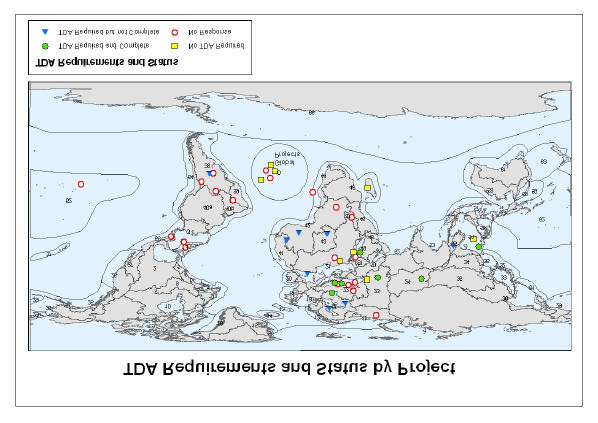
development of a TDA, but only 7 had completed it. This was a rather limited sample,
albeit a useful one. In view of this situation and the need to ground truth in the
information, we decided to conduct a general evaluation of 16 completed TDAs and 13
SAPs (see Table 4.1), using the following criteria:
TDA Evaluation
·
Discrimination between transboundary and national issues
·
Identification and prioritization of issues
·
Identification of system boundaries
·
Identification of the causes (immediate, underlying, and root)
·
Stakeholder participation
SAP Evaluation
·
Characterization of interventions and actions, and linkages with issues and causes
·
Formulation of National Action Programs (NAPS)
·
Monitoring and evaluation indicators
·
Stakeholder involvement
The full report of this analysis will be available from the GEF M&E Unit. It is important
to note, however, that this does not constitute a rigorous analysis of all aspects of each
TDA and SAP, but focuses solely upon the selected criteria.
Figure 4.1. TDA Development Status in Projects Selected for Appraisal by Questionnaire
57
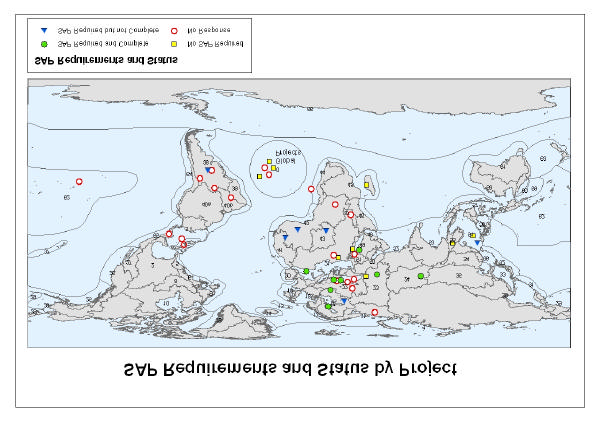
Figure 4.2. SAP Development Status in Projects Selected for Appraisal by Questionnaire
Table 4.1. TDAs and SAPs Examined in the Current Chapter
No.
Project
TDA
SAP
Completed
Completed
1
Caspian Sea Environment Program
2002
2003
2
Dnipro Basin Environment Program
2003
2004
3
Reversing Environmental Degradation in the South China Sea and
2000
2000
Gulf of Thailand
4
Pollution Control to Protect the Biodiversity of Lake Tanganyika
2000
2000
5
Benguela Current Large Marine Ecosystem Program
1999
1999
6
Strategic Action Plan for the Binational Basin of the Bermejo River
2000
2000
7
Volta River Basin Project
2002
2002
8
Danube Pollution Reduction Program
n.a.*
1995
9
Mediterranean Action Plan
1997
1998
10
Black Sea Environment Program
1996
1996
11
Addressing Land-Based Activities in the Western Indian Ocean
2002
2002
12
Integrated Management of Water Resources and the Sustainable
1997
-
Development of the San Juan River Basin and Its Coastal Zone
13
SAP for International Waters of the Pacific Islands Region
n.a.*
1997
14
Strategic Action Program for the Red Sea and Gulf of Aden
n.a.*
1998
15
Integrated Management of the Okavango River Basin
1998
16
Yellow Sea Large Marine Ecosystem Project (YSLME)
2000
* combined TDA/SAP
58
4.3. INFORMATION FROM THE QUESTIONNAIRE
The main findings of the questionnaire are reported below (Box 4.1) in bullet form. Note
that "respondents" refers only to those of the 15 projects engaged in the TDA/SAP
process that answered the particular question.
The responses are quite difficult to interpret given the small sample size. They indicate a
high level of engagement in the TDA/SAP process, but very diverse interpretations of its
contents. This reflects that until recently there has been very limited advice on how to
conduct a TDA/SAP. Areas of concern with some of the responses are (a) the limited
development of national-level Interministry Committees, (b) the limited general
stakeholder and public access to the TDA or to information gathered for it, (c) confusion
regarding the practical interpretation of terms used in describing causality (for example,
"root causes," "issues," "stress," "status"), and (d) the divergence between questionnaire
responses and the actual project outputs (see next section). Point (d) is a very important
one for the M&E process, and we shall discuss this in detail in Section 4.5.
4.4. INFORMATION FROM THE TDA/SAP REVIEWS
The reviews of TDAs and SAPs provided much useful information on the development of
the process. Though we have applied the criteria given in Section 4.2 to all of the
available documents, this does not take into account the evolving nature of the products
(hopefully, each has benefited87 from the experience gained by previous ones). The main
conclusions of our review of TDAs are as follows:
1. Discrimination between Transboundary and National Issues
· Most TDAs do not discriminate clearly between transboundary and national
issues. However, nearly all of them regard the issues described as
"transboundary."
· Notable exceptions were the Dnipro Basin and the Caspian Sea TDAs, where
discrimination between transboundary and national issues was presented.
2. Identification and Prioritization of Issues
· All TDAs (with the exception of the Okavango River Basin TDA) identified the
major transboundary issues.
· The issues were generally well defined, although in many cases there was
confusion between what constituted an issue, the impact or consequence of an
issue, or the cause of an issue.
· Most TDAs did not prioritize the major transboundary issues. Notable exceptions
include the South China Sea, Lake Tanganyika, the Volta River Basin, and the
Dnipro Basin TDAs.
87 Our analysis shows that TDA design has improved in incremental steps. The earliest TDA, for the Black
Sea, was simply used as a template for many others, despite its inadequacies. Improvements were
introduced in the Benguela (better layout), Bermejo (first causal chains), South China Sea (better
assignment of priorities), Dnipro (more participatory, detailed causality), and so forth. There is no "faultless
TDA."
59
Box 4.1. Main Questionnaire Findings regarding the TDA/SAP Process
Process Outcome Indicators for TDA
· Less than half of the respondents considered that all of the governments involved have provided
proof of agreement with TDA findings, although the majority considered that most governments
involved have provided the necessary staff and funding for the country's TDA-related activities.
· The majority of respondents agreed or strongly agreed that for ongoing and concluded TDAs, the
TDA was conducted by and under the leadership of local scientists, benefited from the assistance of
international experts, and had adequate methodological guidance.
· Regrettably, the questionnaire did not ask the projects about the use of other stakeholders (for
example, industry, NGOs, government) in the TDA process.
· The majority of respondents indicated that the root causes of transboundary environmental
degradation were addressed well or very well in the TDA. This was not totally supported by the
TDA/SAP Review, where a number of TDAs failed to establish causality.
· A number of the respondents listed the root causes identified in their TDAs , but it is apparent that
some did not understand the concept. For example, pollution, eutrophication, and overexploitation of
living resources were cited as root causes. As with the identification of threats, this criticism is in
general agreement with the OPS3 TDA/SAP Review.
Process Outcome Indicators for SAP
· Less than a third of respondents considered that all the participating governments had endorsed the
SAP.
· The majority of respondents agreed or strongly agreed that a stakeholder analysis was conducted
that had successfully identified all significant stakeholders involved in the priority problems and their
solutions. This was not supported by the TDA/SAP Review.
· Less than half of the respondents agreed that a detailed public plan for stakeholder participation had
been implemented.
· The vast majority of respondents felt that the SAP reflected or fully reflected the information and
analysis presented in the TDA. However, less than half of respondents considered that access to
information was fully established.
· The majority also agreed or strongly agreed that the SAP specifies commitment by the governments;
has quantitative targets and a clear timetable; identifies capacity-building requirements; addresses
policy and regulatory reform; and identifies critical investments. Again, this is not completely
supported by the TDA/SAP Review.
Process Outcome Indicators for Joint Implementing Arrangements (JIAs)
· Just over half of the respondents considered that all the participating governments have provided
adequate staff support to JIA country-related issues and have budgeted financial support. Further,
the majority considered that high-level staff officials represent all participating governments.
· The majority of respondents agreed or strongly agreed that JIAs have established a consultation
group or other mechanism to systematically and regularly consult with relevant key stakeholders.
· The majority of respondents also agreed or strongly agreed that the JIA consistently influences
policies or actions of members of government.
Process Outcome Indicators for Interministry Committees
· Less than half of the respondents considered that all the participating countries had four or more
relevant ministries in the IMC.
· Almost half of the respondents considered that less than 50 percent of the participating countries
have the Minister of Economics (or similar) involved in the IMC.
· Half of the respondents considered that less than 50 percent of participating countries have IMCs that
have met at least 3 times in the past 12 months.
· Just over a third of respondents considered that the majority of IMCs include the representation of all
stakeholders identified in the TDA.
· A third of respondents considered that less than 50 percent of their outcome commitments under the
SAP are on target. A minority considered that all of IMCs are on target.
· The majority of respondents considered that financing has been found for 2550 percent of the
investment needs identified in the SAP. Under a half considered that financing had been found for 75
percent of investment needs.
60
· The methodological approaches for identifying issues were clear and objective in
some TDAs (for example, the Volta River Basin, Benguela Current, Western
Indian Ocean, and Dnipro Basin TDAs), but relatively poor in others (for
example, the Black Sea, Mediterranean Sea, and Red Sea/Gulf of Aden TDAs).
3. Identification of System Boundaries
· In all cases (with the exception of the Bermejo River TDA88), the system
boundaries for each transboundary issue were not implicitly detailed in the TDA,
although supporting text often described the geographical extent of the issues.
Unfortunately, the text was usually difficult to locate.
4. Identification of the Causes (Immediate, Underlying, and Root)
· The identification of causes should be a primary aim of the TDA. However, some
projects presented little or no information on this subject (for example, the South
China Sea and Okavango River TDAs).
· Many identified the root causes, but failed to distinguish the immediate and
underlying sectoral causes. Furthermore, most failed to determine the linkages
between the issues' immediate, underlying, and root causes.
· In some cases, the causal chain approach was good and the material presented was
logical and easy to understand (for example, the Benguela Current, Volta,
Bermejo River, and Dnipro Basin TDAs). However, in others the approach lacked
logic and was confusing and the material was poorly presented (for example, the
Lake Tanganyika, Mediterranean Sea, Red Sea/Gulf of Aden, and the Caspian Sea
TDAs).
5. Stakeholder Involvement (also refers to SAPs)
· For the majority of TDAs and SAPs reviewed, there is little evidence of
stakeholder analysis or stakeholder participation. It should be noted that this does
not mean that stakeholders were not consulted on the process, just that their
contribution is not recognized.
· However, there are a small number of good examples of stakeholder involvement
or participation. These include the Caspian Sea, Lake Tanganyika, and the
Bermejo River TDAs and SAPs.
In most cases, the TDAs were well presented and well written. In only one case was the
TDA poorly translated (Bermejo River TDA). However, the documents often lacked a
logical structure and were difficult to navigate. Many suffered from confusion of terms
(for example, Issue, Threat, Problem, Major Problem, Transboundary Problem, and
Subissue, and there is a need for consistency in terminology. Many also suffered from a
lack of "glue" holding the document together, making it feel like a series of tables and
figures loosely linked with text. Of concern was the number of TDAs that placed
considerable emphasis on solutions and interventions. This should be considered a
function of the SAP, not the TDA, and detracts from the concept of providing objective
information without political influence.
88 We are not judging whether the designations were correct (see Box 3.1), but simply that they were
specified.
61
The analysis demonstrates the evolution of TDAs, but raises concerns regarding a poor
level of stakeholder analysis and involvement and the unclear discrimination between
national and transboundary problems. The latter issue may also be a reflection of the
deficient guidance given in the OPs themselves (see Chapter 2).
The conclusions of our analysis of SAPs are the following (again applying the criteria
described in Section 4.2):
Characterization of Interventions and Actions, and Linkages with Transboundary
Issues and Causes
· Generally, there is good linkage between the interventions and actions listed in the
SAPs and the transboundary issues and causes identified in the TDAs, although
the linkages can be confusing and difficult to follow at times.
· Two different approaches for developing interventions and actions have been
used. Historically, most have used a target- or action-based methodology (for
example, Lake Tanganyika, Bermejo River, Benguela Current, Sout h China Sea,
and the Mediterranean Sea SAPs). More recently, the use of Ecosystem Quality
Objectives89 (EcoQOs) has become popular (for example, Caspian Sea and the
Dnipro River Basin SAPs).
· A general concern regarding many of the targets, EcoQOs, or proposed actions is
that they are vague and cannot easily be associated with quantitative indicators
that encourage accountability.
· Furthermore, a number of SAPs do not prioritize the proposed actions, provide
alternatives or costings, or list anticipated outcomes (and benefits), although in
some cases these have been detailed in the TDA. Again, solutions and
interventions should be considered a function of the SAP, not the TDA.
· Because of the failure to clearly identify outcomes, it can sometimes be difficult to
determine those proposed actions that are national (baseline) in scope and those
that are global (potentially incremental).
· Another major concern is that many of the proposed actions are detailed at the
national level and not at the regional. These should be detailed in the NAP, not the
SAP.
Formulation of National Action Programs (NAPS)
· The majority of projects have not formulated NAPs, although in a number of cases
a general objective of the SAP was to prepare guidelines for their formulation (for
example, the Bermejo River, Benguela Current, South China Sea, Mediterranean
Sea, Volta River, and Western Indian Ocean SAPs).
89 The term "Ecosystem Quality Objective" is currently in vogue as an expression of defining an objective
in accordance with the "Ecosystem Approach" (as originally defined by the CBD). Many projects have
used the term "Environmental Quality Objective," which has a narrower meaning: it refers to a particular
aspect of the natural or human environment. We fully appreciate the lack of consensus on these terms at
present.
62
· Notable exceptions include the Caspian Sea and the Dnipro Basin, both of which
formulated NAPs.
Monitoring and Evaluation Indicators
· Monitoring and evaluation indicators were not presented in most SAPs, although
some have stated that they would be developed in accordance with the GEF M&E
approach (for example, the Bermejo River, Caspian Sea, Dnipro Basin, Volta
River, and Western Indian Ocean SAPs).
· However, a number of these simply list generic indicators according to the
proposed action and do not specify the type (for example, process, stress
reduction, or environmental status).
In conclusion, though the development of SAPs is showing encouraging progress, we are
concerned that many of these outputs lack key elements that enable them to be useful
operational documents. At a regional level, it appears that many governme nts have
limited themselves to formulation and agreement of documents that establish a loose
agenda of actions to resolve identified problems. This does not imply a lack of good faith
in the process on their part. However, it has long been recognized that international
processes often generate noble declaratory statements that fail because they are not linked
to hard commitments toward pragmatic national actions (including institutional and legal
reforms and investments), resilient and sustainably financed coordination mechanisms (at
national and international levels), and accountability to stakeholders through inclusivity
and transparent monitoring. Unfortunately, we have not seen substantial evidence of these
elements in many of the SAPs produced to date, and we are particularly concerned at the
lack of National Action Programs or similar supporting documents.
4.5. INCONSISTENCIES IN REPORTING
We identified a number of inconsistencies between the results of the questionnaire and
our analysis of TDAs and SAPs. There is a clear difference, for example, on one hand,
with the view of the majority of projects that stakeholders were involved and consulted
and, on the other, with the lack of explicit stakeholder analysis underpinning the TDAs or
embodied in the SAPs. The poor identification of causality in many TDAs is inconsistent
with the view of most projects that this was conducted in a satisfactory manner.
Furthermore, most respondents to questionnaires uncritically regarded their SAPs to have
generated quantitative targets and a clear timetable, identified capacity-building
requirements, addressed policy and regulatory reform, and identified critical
investments--whereas our analysis of the SAPs and our site visits question the validity of
this statement.
We do not wish to undervalue the enormous progress made by projects in implementing
the TDA/SAP approach. We have seen ample evidence of progress. However, we are
concerned that an over-reliance on self-assessment would not enable early feedback to
projects and governments on the real progress of projects toward their stated goals. Self-
assessment can be effective only with robust indicators, and these are clearly lacking.
63
4.6. CONCLUSIONS
Eight years have passed since the first TDA and SAP were published.90 Since then, at
least 13 of these processes have been completed and much experience has been gained.
We are not overly concerned with the lesser technical imperfections 91 of some of these
documents, provided they make a significant contribution to the overall adaptive
management process and generate tangible outcomes of decreased stress to transboundary
aquatic systems and their improved status. The adaptive management process requires
that assessments and strategies should be revisited periodically, however, to examine new
information, set new targets, and adjust the strategies for achieving them. This will soon
be put to the test in the Black Sea, where a new TDA and revised SAP are urgently
required to underpin the work of the Black Sea and Danube Commissions and major
interventions such as those of the Black Sea Strategic Partnership (see Box 3.4). The
revised TDA and SAP will be an opportunity to complete a full learning cycle and should
be carefully evaluated for lessons learned for other GEF IW projects. It should be noted,
however, that the success and failure of the adaptive management approach, including the
TDA and SAP as key tools, relies heavily upon quality monitoring92 and robust
institutions. Without these, the process will be deemed to have failed.
In the next chapter, we will bring together the overall lessons learned from Chapters 24
of this study.
5. LESSONS LEARNED
In this chapter, we shall draw upon the findings of the study to examine generic lessons
learned. These are presented as numbered paragraphs for ease of reference. Footnotes are
employed to provide additional information and cross-references. We invite the IW Task
Force to consider these carefully to agree on the most appropriate way forward. (Our
main recommendations are provided in Chapter 7.)
THE PROJECT CYCLE
1. Donor expectations regarding project time frames are often unrealistic93 and force
compromises94 that limit buy-in and eventual sustainability (for example, through
90 The Black Sea TDA, adopted in June 1996; SAP signed on 1 October 1996.
91 We do not consider as "lesser" the failure to identify transboundary issues, to set boundaries, define and
incorporate stakeholders, and identify social and economic root causes.
92 We are fully aware of the development of a "negotiated" set of M&E project indicators for international
waters by the IW Task Force. Regrettably, this does not seem to have brought about the necessary
improvement in objective reporting, but should be revisited and strengthened. (This point will be examined
further in Chapters 5, 6, and 7.
93 Huge delays (up to five years) in project start-up caused by lengthy negotiations among parties represent
an immediate handicap, even before implementation begins (see examples in Chapter 3).
94 Some collateral donors work within project cycles as short as two years and exhort clear tangible outputs.
This has been described as "funding the low-hanging fruit" and may consume a disproportionate amount of
the available staff time, funding, and effort of national counterparts. It also leaves the more difficult (and
sometimes less attractive) tasks to the longer-term GEF-funded components. It is important to frame such
projects within a clear long-term strategy (or programmatic approach) agreed on by all parties. It is also
64
excessive use of external consultants95). Irrespective of whether a topdown
(strategic planning followed by regional, national, or local actions) or bottom-up
(replication of demonstration projects are proposed), sustainable mechanisms are
rarely created in less than a 10-year total time frame.96 We could not find any
examples of new sustainable institutional mechanisms created and fully
operational in less than a 10-year period.
2. Some of the GEF interventions do not appear to have established, from the outset,
clearly stated outputs and outcomes together with an exit strategy.97 This exit
strategy should constitute an agreement among all parties regarding the actions
that will be taken at the end of the intervention, or earlier if basic assumptions are
not met or if required outputs are not achieved.
THE TRANSBOUNDARY DIAGNOSTIC ANALYSIS
3. The TDA is sometimes regarded as a bureaucratic prerequisite for donor
funding,98 rather than an element of an adaptive management strategy enabling
the identification of transboundary issues and their causes. As part of a continuous
process, a TDA should be periodically updated to reflect the changing regional
situation. As yet, this has not happened in any of the IW projects (though it is
planned for the Black Sea).
4. The TDA, where applied, is an effective tool, providing that it sets appropriate
boundaries, identifies all relevant stakeholders, conducts studies by joint fact
finding (without excluding any relevant regional expertise), includes an
appropriate balance of disciplines, identifies the socioeconomic causes of the
transboundary problems identified, evaluates the institutional capacity, and makes
all the information available to the stakeholders in a concise and nonjargonistic
manner. Unfortunately, some of the TDAs examined99 have not considered all of
these elements, and the scope of the study has been constrained by inappropriate
boundaries,100 limited input of social scientists,101 weak analysis, and poor
important to negotiate a common participatory process for the various projects, to avoid stakeholder
confusion. Poor collaboration between the EU-Tacis and GEF Black Sea program (despite sharing common
facilities) is an example of this problem.
95 This has direct adverse effects on country buy-in where consultants are employed to reduce project
implementation time through bypassing the need to build local capacity or consensus.
96 It is important to establish clear benchmarks (milestones) within the process of strategic planning.
97 See Section 3.2.
98 Projects such as the Argentina Coastal Contamination Prevention and Sustainable Fisheries Management
(Patagonia Shelf) project have not given the TDA any importance in their implementation strategy, whereas
it is a central tool in other project in the same region.
99 See Section 4.4.
100 We have addressed this issue earlier in the current document. Boundaries may often be constrained by
political factors: For example, China is not involved in the Mekong Water Utilization Project, despite
occupying some 30 percent of the catchment (Box 3.3); Rwanda and Burundi were not involved in the Lake
Victoria project (because of political strife), despite having a major influence on its catchment.
101 This is a pervasive problem in most of the projects examined. In some cases, resource economists were
included, but sociologists rarely figured in projects. Social science is often seen as an "add-on" element
(after natural science), rather than an integral part of studies at all levels. Much of the effort of interventions
65
diffusion to stakeholders.102
5. We are particularly concerned that many IW projects have failed to conduct
careful analyses of stakeholders,103 institutional capacities, and responsibilities.
This has led to difficulties in strategic planning and effective operationalization of
projects at a later stage. It also risks capture of projects by particular sectors.
Stakeholder analysis and institutional mapping should be an integral component
of all TDAs and proposals for demonstration sites.
THE VALUE OF DEMONSTRATION PROJECTS
6. Early use of demonstration projects has helped to build confidence among
stakeholders and ensure greater buy-in and tangible local benefits, as well as
global ones.104 Replicability requires careful site selection and efficient overall
mechanisms to promote stakeholder exchanges and technological transfer,
including capacity building. Demonstration projects alone do not resolve
problems that exist at greater scales, such as eutrophication, changing river
hydrology, or the decreased recruitment of fish to straddled stocks.105
7. The two Global Demonstration Projects106 reviewed (GloBallast and the Global
Mercury Project) illustrate the usefulness of this approach to deliver clearly
identified global benefits. Both projects, although focused on single sectors,
address issues that cover environmental, health, capacity-building, and legal
issues. Such multidisciplinary expertise is not widely available, particularly in
developing countries where socioeconomic and environmental impacts are
particularly severe. The projects are having an important catalyzing and
multiplying role by developing state-of-the-art tools (such as training packages
and integrated methodologies), as well as providing a framework for replication.
In addition, this approach can effectively contribute to awareness raising at global
levels and to the emergence or consolidation of new regimes, required for
effective and sustained response.
is in changing people's behavior, but few of the studies objectively examine the social issues of achieving
this aim.
102 There were many different opinions regarding who should be responsible for this work. Though regional
diffusion is necessary, it also relies on national focal points to distribute the information generated, with the
disadvantage that this may be of a very general nature. More targeted and carefully monitored national or
subnational programs for diffusion of popular versions of TDAs are likely to be more effective. Even in
mature programs such as for the Black Sea, it was noted that key documents such as the TDA and SAP had
not been translated and widely distributed in each country, despite government commitments.
103 See Sections 3.4 and 4.4.
104 This has been a major factor in the success of PEMSEA , which clearly demonstrated the value of
confidence building at a demonstration-site scale. Scaling the process up, from local to regional, is not an
additive process, however, because different priorities emerge when larger scales are chosen. Recent
projects (for example, the Guarani Aquifer under OP9) are using a combined approach of demonstration
projects embedded in a regional strategy. It will be important to monitor the success of this hybrid approach
carefully.
105 See Box 3.6 on the Xiamen demonstration site.
106 See Section 3.5. Implementation of the Fisheries By-Catch project is still in an early stage, and our
review of this was restricted to a desk evaluation of the project document.
66
SELECTION OF APPROPRIATE SCALES FOR ASSESSMENT AND MANAGEMENT
8. The ecosystem approach107 may be applied at a variety of different scales, in some
cases involving catchment area management or resource use management at the
LME level. In some projects, political considerations have overridden the
selection of appropriate natural boundaries,108 and the ecosystemwide objectives
are unlikely to be met.
9. Not all transboundary problems, however, require a common regional approach
(for example, harmonized laws and regulations ) for effective management to meet
agreed on regional and global objectives. While the regional protection of
mangroves, for example, is best served by common regionwide objectives, the
strategy employed at each site must be tailored to the geographical scale of
pressures on the system, the local governance structure, and the available human
capacity.109
THE VALUE OF STRATEGIC PLANNING
10. Strategic planning, whether explicit (that is, approval of an SAP) or implicit
(during preparation of a GEF project brief), has been a key requirement for most
of the IW projects. The approach taken to this process by different projects has
been highly variable. Those focusing upon declaratory statements110 have
encountered greater difficulties to implement than those with more-detailed
targeted and costed111 operational strategies. Well-designed country-driven SAPs,
together with National Action Programs (NAPs),112 provide a benchmark to
encourage and assess progress toward commonly defined goals and milestones.
11. The first step in SAP or similar processes should be an agreement on regional
objectives, defined in space and time. In some cases, these may constitute
107 As defined in CBD (1998) Report of the Workshop on the Ecosystem Approach, Lilongwe, Malawi, 26
28 January 1998. UNEP/CBD/COP/4/Inf.9, 15 pp.
108 The case of the Mekong Water Utilization project is described in Box. 3.3. Box 3.1 discussed the
difficulties encountered in the Plata Basin.
109 The demonstration scale approach taken to ensure sustainable utilization of mangroves, wetlands, sea
grasses, and "nonoceanic" coral reefs in the South China Sea is an excellent example of an effort to set
appropriate scales at a regional and local level. Care was taken to select sites according to transparent,
regional-scale priority criteria , but actions at the sites themselves are being developed within carefully
studied and pragmatic boundaries that incorporate as many elements of the causal chain as practicably
possible.
110 The Black Sea and Benguela Current SAPs are examples of declaratory statements. Both include
objectives, milestones , and institutional mechanisms and are endorsed at a very high level. They do not
include operational details and financial plans, however. In the case of the Black Sea, it was assumed that
this would occur in detailed national programs, but these were not subsequently developed in most cases.
111 See Sections 3.2 and 3.6.
112 The development of NAPs in parallel with SAPs is one approach that may lead to more pragmatic
results in terms of actions at the country level. The Caspian and Dnipro projects are good examples of this
approach.
67
Ecosystem Quality Objectives.113 In all cases, however, they should be congruent
with the TDA and clearly understandable to all stakeholders involved. The
establishment of such objectives, together with a statement of vision, has not
occurred in many projects, and their effective public diffusion is often ignored.114
12. In recommending actions within the SAP/NAP process, greater care should be
taken to integrate social issues. Projects that have linked reforms to the provision
of alternative livelihoods,115 poverty alleviation,116and gender issues117 have been
particularly successful at engaging community support. This may result in
tradeoffs among measures that would maximize economic yield, environmental
benefits, and social benefits. Such tradeoffs are highly political and require well-
informed participatory processes and careful impartial facilitation. The ability to
demonstrate the linkages between sustainable economic and social development
and the maintenance of natural capital is a crucial input to this process.118
13. Projects developed to date have shown that a great deal of pragmatism is required
to develop a SAP. The SAP should enable the achievement of the agreed on
regionwide objectives through specific national actions and, at a regional level,
identify, reinforce, or create the sustainable institutions necessary for effective
regional coordination.119 National Action Programs are an essential part of this
planning mechanism, but we have seen little evidence of their widespread
development to date. They need to give detailed information on how the regional
objectives will be operationalized. This should include deployment of human
capacity (or capacity-building needs), infrastructure, legal and policy reforms,
finance, and investments. Care must be taken not to lose sight of the global
benefits in the national-scale planning process;120 costs, benefits, and alternatives
113 EcoQOs have been developed for the Dnipro and for the Humboldt Current (as part of the PDF-B
project). The draft SAP for the South China Sea was, in effect, a statement of visions and targets that was
very similar to this approach. (See also Section 4.6.)
114 Part of the challenge for maintaining momentum in SAP implementation is to set clearly understandable
goals. Unfortunately, many existing goals are couched in a technical language that some stakeholders find
difficulty in relating to.
115 This has been a major issue in projects where poverty alleviation depends upon resource use. A major
challenge of the Mekong Water Utilization Project, for example, is balancing the use of the river for
irrigation or energy production against the huge social benefit derived from downstream artisanal fish
production.
116 One of the most successful facets of the Lake Victoria project was its ability to engage local people in
combating the proliferation of water hyacinths. This is largely because they were able to relate the problem
to their own loss of livelihoods and health.
117 Recognition of the important social role of women and close cooperation with women's organizations
has been an important factor in the success of the PEMSEA Da Nang demonstration project in Vietnam.
118 The Upper Paraguay project for example, is facing the challenge of maintaining the enormous natural
capital of the Pantanal wetlands in the face of strong economic pressures that are rapidly developing its
catchment for agriculture. The Brazilian government already had to make a difficult choice between
developing the Upper Paraguay river as a waterway or maintaining its natural state as a key functional
component in the Pantanal. It took the bold decision not to develop the waterway.
119 See Section 4.4
120 The "local benefits study" conducted on the Bermejo project for example, suggested that the
implementation phase of the project had lost much of its focus on global benefits (though the project itself
is very well implemented and generates considerable local benefits).
68
should be fully explored. The transboundary issues identified in the TDA should
be addressed, according to their agreed on priorities.121
14. Both the SAPs and the NAPs should identify baseline and incremental processes
and costs. They should identify regional and national arrangements for monitoring
the environmental status and trends, pressure relief, and the implementation of the
action programs themselves. They must incorporate a process for periodically
revising the short-term goals and the overall regionwide objectives, and each
revision should be endorsed at a high level.122 To date, very few IW projects have
developed such detailed operational strategies and effective monitoring programs
at a national level. The consequence of this situation is limited accountability,
transparency, and sustainability.
THE INTERMINISTRY PROCESS
15. In designing an SAP, care must be taken to maintain political momentum.
Interministry Committees (IMCs) have not been developed in many projects,123
but they are crucial at a national level to avoid capture of the project by a
particular sector or to avoid difficult discussions that will be needed in order for
the project to succeed. The experience in GEF IW projects suggests that the
representatives should be senior enough to have genuine authority in their
respective sectors, but not so senior as to be subject to the volatilities of frequent
political change. The IMC should be chaired by a Minister or Deputy Minister
from the appropriate sector. Special arrangements will be required in highly
decentralized countries to ensure inclusion of relevant government entities.124
16. The IMCs by themselves may not be sufficient to maintain the necessary political
momentum. Local-level actions should be included with full stakeholder
involvement and clear public participation plans, but these are currently absent
from almost all SAPs. This may require additional intersectoral groupings at the
regional, national, or local levels.
17. Involvement of the private sector in IW projects has, until recently, been rather
limited. The emergence of the first Public/Private Sector Partnership Investments
121 Our study suggests that in most cases there is a reasonable coherence between the TDA and the SAP.
122 The key to successful adaptive management is the ability to take a first step towards the agreed overall
objectives (often expressed as EcoQOs) and then to monitor the results very carefully. These results are
then used to determine the next step and the validity of the original objectives. Monitoring is a key
component of the strategy; without a reliable monitoring program it will inevitably fail.
123 See Section 4.4.
124 In projects in South America, it has been quite difficult to match the political systems of large federal
countries (for example, Brazil and Argentina) with smaller unitary neighbors. Argentina, for example, has a
three-tier system of federal, provincial, and municipal government, whereas Uruguay has a two-tier
(national and municipal) structure. This presents the risk of asymmetry both within and between countries.
An IMC at the federal level, for example, could have difficulty in implementing actions in provinces and
municipalities. The Bermejo project has convinced the Government of Argentina to work at the provincial
(decentralized) level.
69
(PPPIs) is encouraging,125 though this model should not be regarded as one-size-
fits-all.
PROJECT OPERATIONAL ARRANGEMENTS AND SUPPORT
18. There is a perceived need to improve transparency and accountability in the
feedback to proposers of projects. It was felt that the current text of OPs 8, 9, and
10 give insufficient guidance126 to project developers regarding such matters as
the scope of each OP,127 the expectations regarding global benefits,128 and the
relationships among other OPs (including those in other focal areas, such as
biodiversity). It was also felt that the language employed in communications (the
word "GEF-speak" was used on several occasions) is unhelpful, particularly to
non-English speakers.
19. Where close coordination between Implementing Agenc ies at the planning and
operational level has occurred, it has generated benefits that far outweigh the
transaction costs.129 The current low level of management fees that can be charged
by the IAs makes such task sharing increasingly unattractive, however. For co-
implemented projects to be successful, active technical coordination needs to
occur between IAs at the regional level; otherwise, there is a tendency for the
projects to be split into self-standing components, with a consequent danger of
fragmentation.130
20. Current interproject coordination remains ad hoc and often deficient,131
particularly between projects in different program areas132 (for example, OP2 and
OP8 or 9). Valuable opportunities for synergy are being lost at the regional level.
125 See Box 3.9 on the approach used in PEMSEA.
126 See Section 2.3 for a full discussion of this problem.
127 This was evident from the response received to the questionnaires. A high proportion of the projects
were unable to correctly locate the OP to which their project had been assigned. Several of the GEF Focal
Points consulted also expressed their concern with the written guidance available.
128 There are particular difficulties in this context with OP9. Short-term global benefits from projects such
as the Upper Paraguay or Bermejo may accrue through the protection of system resilience or biological
diversity, rather than at the level of transboundary waters. The interpretation of OP9 could benefit from
greater clarity on the nature of benefits that could be considered as global.
129 The Caspian Sea and Red Sea projects are cited as examples in which all three IAs have contributed to
the overall success by sharing their comparative advantages.
130 Box 3.4 explores this in detail for the case of the Black Sea. Similar difficulties occurred in the Red Sea
project. The Caspian Sea project, on the other hand, is an example of good interagency cooperation at the
regional level.
131 For example, there seems to be virtually no communication between the South China Sea project
(UNEP) and PEMSEA (UNDP), despite sharing overlapping geographical areas and interests.
132 We observed many inconsistencies between projects developed in the IW Focal Area and OP2. These
could have been resolved by better interproject coordination during their development phase. A case in
question is in the coastal regions of Uruguay and Argentina, where OP2 projects are proposed for both
coasts of the Plata estuary, but to date these have benefited only slightly from interaction with the OP9 Rio
de la Plata and its Maritime Front project. Clearly, a regional strategy across the two focal areas would have
generated enhanced benefits.
70
21. A large number of the projects visited voiced concerns regarding the technical
support available to them for building staff capacity for project management and
implementation of processes such as TDA/SAP development. Ongoing work
developed by projects such as IW:Learn and Train Sea Coast are helping to fill
this gap, though care must be taken not to create overly prescriptive mechanisms
that stifle the innovation that has driven the IW Focal Area forward. Furthermore,
these technical projects do not replace the need for management support to enable
project coordinators to fulfill their mandates133 in an efficient manner. Recurrent
problems with procurement procedures, for example, are slowing the
implementation of a number of projects.
22. Another recurrent problem is the limited time available to support projects by
national counterparts in some countries. There are suggestions of chronic over-
commitment of some public officials acting as technical focal points or providing
expertise as a national contribution for project implementation. Some projects
have adopted systems for formally accounting for counterpart contributions, and
this approach should be further evaluated in the interest of transparency and future
institutional sustainability. Another approach adopted in some cases has been the
gradually tapering down of GEF support to the joint implementing mechanisms,
enabling a smooth transfer of institutional responsibility to the region.134
23. A frequent difficulty facing Executing Agenc ies is the long lag time between the
initiation of PDF-B interventions and the effective commencement of a resulting
full-scale project. Part of the delay occurs during the detailed negotiations on the
formulation and implementation of the project document itself. This is a complex
process, but in some cases, the delays are for as much as two to three years, by
which time any momentum generated in the PDF-B phase has been lost. The
situation can be improved in many cases if the project document is prepared in
tandem with the project brief and all relevant MOUs are completed within a
strictly defined time frame before approval of project documents. Some IFIs are
now introducing disincentives for laggard parties to avoid the financial losses
implicit in delayed negotiations.
6. IMPLEMENTATION OF THE RECOMMENDATIONS OF THE
PREVIOUS STUDY
6.1. INTRODUCTION
The 2000 IW Program Study contains 15 recommendations for improvement in design
and delivery of the IW OPs. At the request of the IW Task Force, we have reviewed their
implementation in the light of the results of the present study. The results of our analysis
are presented in Table 6.1. This provides the text of the original recommendation and the
133 See Section 3.2.
134 See Box 3.10.
71
degree of achievement, both textually and through a rating of 5 (full implementation) to 0
(no significant implementation). (Overall comments are made in Section 6.2 below.)
Table 6.1.
Previous Recommendations
Degree of Achievement
Description
Rating (5 = fully
implemented)
The review found that much more could be
Our analysis (Annex 3) is in complete
1
done to clarify the role of the various
agreement with the previous
Operational Programs. . . . For instance, OP8
recommendation, and we have seen
and OP9 should be clarified to make them
little evidence of progress to remove
mutually coherent and consistent with the
any ambiguities , apart from some useful
new OP12.
text in the poorly distributed M&E
Working Paper 10 (also the need
remains to ensure consistency with
OP2 and OP15).
Along these same lines, the definitions in
Though we have seen no evidence of
1
OP10 should be revised to reduce the
any change to the definitions, we note
emphasis on ship-derived impacts on
that the range of projects implemented
international waters and increase the
under OP10 is expanding. There are
emphasis on land-based activities and their
still no comprehensive studies of the so-
effects, including those mediated by
called new contaminants (such as
atmospheric transport pathways.
estrogenic substances), however, and
Concurrently, the classes of priority
the approach employed continues to be
contaminants should be reconsidered and
more reactive than anticipatory.
revised to reduce the emphasis on metals,
hydrocarbons, and those persistent organic
pollutants of primary relevance to the new
POPs Convention.
The use of science-based transboundary
We are fully satisfied that this
5
diagnostic analyses as a basis for the
recommendation has been
formulation of strategic action programs
implemented.
should continue. This will increase confidence
that priority threats are being effectively
addressed in SAPs. It will also ensure that in
cases where land degradation is a priority
issue, appropriate resources are provided to
meet that threat in subsequent GEF
interventions.
A procedure and timetable for the preparation The M&E Working Paper 10 (see
3
of guidelines on major concepts used within
footnote 1) goes some way toward
GEF's operational strategy and the
addressing this point, but has not been
Operational Programs should be devised.
widely distributed. Training materials in
Specifically, these guidelines should provide
preparation by the Train Sea Coast
clear definitions and examples of the
project and web-based materials from
following topics: incremental cost estimation,
International Waters Learn also
the application of the ecosystem
represent an advance. On balance,
management concept, transboundary
however, we still feel that there is a gap
diagnostic analysis , and the large marine
to be filled in the provision of a
ecosystem concept, assuming that these
consolidated manual for project
concepts will continue to be of relevance to
proposers and managers.
the International Waters Focal Area.
Consider increasing assessment of the
We agree with the need to ensure the
3
suitability of proposed Executing Agencies to
suitability of Executing Agencies and
ensure competent project management and
remain concerned about institutional
the sustainability of any activities
sustainability. No formal mechanisms
(administrative arrangements or
appear to have been established, but
organizations) engendered through GEF
we feel that this should be part of the
international waters projects. Such
normal project appraisal process.
72
Previous Recommendations
Degree of Achievement
Description
Rating (5 = fully
implemented)
evaluations would reduce the prospects of
implementation delays and other problems
attributable to Executing Agencies. There is a
need to ensure, at the project proposal stage,
that appropriate measures are incorporated
into projects to maintain the viability of any
basin or regional organizations used or
established for the purposes of executing
GEF international waters projects beyond the
life of the project.
All high-risk projects, or those with high-risk
We are fully satisfied that this
5
components, should be subjected to a
recommendation has been
midterm review. Most projects, in fact, would
implemented; indeed, all projects are
benefit from midterm reviews. The clear
now submitted to midterm reviews or
benefits exemplified by the influence of the
evaluations.
midterm review of the Lake Tanganyika
project suggest that such reviews can
significantly improve project performance.
However, the costs associated with midterm
review of all projects would consume too
large a proportion of project implementation
costs. Therefore, midterm reviews could be
confined to those projects exhibiting high
risks of failure to deliver on the major
objectives , as judged during the Project
Implementation Review process.
In addition to increased use of midterm
We are not aware of any recent projects
3
reviews, final or terminal evaluations of
that have conducted terminal evaluations
projects should only be conducted after
before completion. We consider that the
project implementation has been
difficulties facing the M&E process are
completed. Moreover, GEF should insist on deeper than report format and that a
uniformity for these final evaluation reports.
complete overhaul of project monitoring is
This will require GEF to define and adopt a
required to develop a system that enables
common format for these reports and insist
objective data gathering and reporting
on adherence to it. Such a step would
without duplication of effort.
enable easier comparison of performance
among projects and streamline feedback
processes, leading to im provements in the
quality of project proposals.
Given the complex nature of international
The need for improved coordination
1
waters projects, which can involve the
continues to be evident, particularly at the
cooperation of a large number of countries
regional level. At the global level, the
and Implementing Agencies, there is a
International Waters Task Force could be
need for an interagency advisory function
strengthened to take on this role.
within the GEF to help ensure the
coordination and effective development of
the International Waters Focal Area. In
addition to providing advice on overall
portfolio development, this also could
ensure that demonstration projects are
replicable in a global context and focus on
priority problems for which solutions are
needed beyond the project area.
Procedures for feeding back lessons
The IW:Learn project has entered a
4
learned to the formulation of projects in the
second phase, a second IW Conference
International Waters Focal Area have been
was held in 2002, and a new one is
initiated through the IW:LEARN project and scheduled in 2004 (see Box 3.11). We do
73
Previous Recommendations
Degree of Achievement
Description
Rating (5 = fully
implemented)
the GEF Biennial International Waters
not feel the need to formalize the process
Conference, held for the first time in
further, because it is subjected to a
October 2000. Accordingly, there is a need
regular critical review that maintains its
to formalize this process in a transparent
usefulness.
and effective mechanism within the GEF.
While it is too early to expect much
An attempt was made to address this
3
information regarding measured
concern, but we feel that more robust
improvements in international waters
indicators are still required as part of a
environments from GEF interventions, as
reformed M&E system. We do, however,
GEF's experience increases, preparations
recognize that not all indicators can be
should be made for including more
universal in nature.
comparable information on process, stress
reduction, and environmental status
indicators in future project evaluations.
Process indicators, for instance, are
already available in most cases, but it is
also extremely difficult to make coherent
and objective comparisons among the
process indicators for individual projects.
In South America, an evaluation of
The Plata Basin project (currently at the
4
progress in project development should be
PDF-B stage) effectively addresses the
conducted with a view to identifying
first part of this recommendation. The
opportunities for accelerating attention and
second part would rely upon evidence that
national commitments to resolving
transboundary problems are being
environmental problems in large
addressed, rather than national ones , and
catchments, particularly those on the
a uniform approach is probably
eastern side of the Andes. Consideration
impracticable.
should also be given to opportunities for
developing country-driven projects that
address dominant problems in the smaller
catchments draining regions to the west of
the Andes. Such projects could be the
basis for projects in all western South
American countries.
A streamlined oversight and tracking
This recommendation has not been
0
methodology should be prepared and
implemented and remains valid. A new
implemented by the GEF defining the
integrated M&E system is required.
procedures to be used from project
inception through final review and
feedback. This methodology should include
appropriate and uniform documentation to
ensure transparency and accountability.
The methodology should be reviewed by an
independent group of management and
technical experts before its adoption within
the GEF. By eliminating the redundant and
ineffective procedures currently in use, the
costs of such an exercise should be more
than recovered.
The reviews of GEF projects should
Much of this recommendation was
4
concentrate increasingly on those offering
adopted. Many deficiencies in the review
the greatest potential benefit to
mechanism remain, however (though
international waters activities. Reviews at
midterm reviews and SMPRs are now
the concept/PDF and project submission
common). The PIR process gathers some
and completion phases, plus the PIR, are
useful information, but we have observed
the most valuable to the program. Other
inconsistencies with self-assessment
forms of GEF review, including midterm
methods.
74
Previous Recommendations
Degree of Achievement
Description
Rating (5 = fully
implemented)
reviews of high-risk projects and reviews
periodically carried out by the M&E Unit for
specific purposes of overall focal area
alignment and performance, should be
carried out as need arises.
The GEF Secretariat should take
This has been largely implemented. We
5
immediate steps to ensure that all
consider that large stocks of paper
documents pertaining to GEF projects
documents should be avoided; it is both
produced by the Secretariat are amenable
inefficient and environmentally unfriendly.
to proper citation and accessible through a
The Internet has become widely
single website. Furthermore, in view of the
accessible at this time.
lack of universal access to the Internet,
hard copy and electronic (diskette or CD-
ROM) copies of all documents should be
maintained in a central facility within the
Secretariat for distribution on request.
A unique alphanumeric identifier for each
This has been largely implemented. More
4
project should be assigned by the GEF
attention is required to an accurate central
Secretariat to avoid confusion among
database of project management metrics ,
projects and to obviate the current
however. We had great difficulty finding
widespread practice of using diverse short-
basic information on project timings and
form or truncated titles for the same project, expenditure.
a problem not limited to international waters
projects. This should be complemented by
guidelines defining the length, structure,
and formats of all project documents, both
to enhance transparency and to facilitate
comparative evaluations of projects and
project reviews. It is understood that the
Implementing Agencies have their own
procedures, requirements, and
documentation regarding project
formulation, administration, and
management. This recommendation
applies only to the documents collated and
assembled by the GEF Secretariat, for
which greater uniformity, simplicity, and
transparency is warranted.
6.2. CONCLUSIONS
The overall rating for implementation is 3, suggesting that about half the
recommendations have been implemented. There have been significant improvements in
some areas, particularly in the implementation of the TDA/SAP approach and in the use
of midterm reviews (the implementation in this case has exceeded initial expectations).
Some of the areas identified as concerns in the previous study require further action.
These can be summarized as follows:
(1) Clarification of OPs, Working Terminology, Processes, and Practices
Though some progress has been made in this area (or is well under way), it is evident that
there is a need for a consolidated source of information in plain English that clarifies
75
many of the ambiguities identified in the previous and current studies. A eventual review
of the OPs themselves may be appropriate.
(2) The Provision of an Integrated System for Monitoring and Evaluation
There has been progress on several of the components of M&E (better MTRs, attempts at
a set of indicators, improved project identification). As with its predecessor, the present
study has also identified shortcomings in M&E, however, largely because these
components do not integrate well into a system. This results in duplication of requests for
information from projects and considerable reliance on self-assessment, rather than
complementary requirements that lead to a deeper and more responsive understanding of
project development.
(3) Supervisory Issues at the Program and Project Levels
The previous study alluded to weaknesses in supervision and the provision of advisory
support and recommended its strengthening "to help ensure the coordination and effective
development of the International Waters Focal Area." The present study has also
identified this as a general area of weakness, both at the global and regional levels. We
shall present further recommendations on this issue.
7. CONCLUSIONS AND RECOMMENDATIONS
7.1. PREAMBLE
The GEF IW Focal Area provides a unique mechanism for supporting actions that
address transboundary environmental problems in continental and coastal waters and the
global marine commons. The global justification for the program has not diminished;
demands on the aquatic environment for water, transport routes, food, energy generation,
waste disposal, and recreation are cont inuing to grow, threatening the future capacity of
the system for sustaining biological diversity. Recent commitments, in forums such as the
WSSD and the CSD, for sustainable use and protection of aquatic systems have
highlighted the continuing relevance and urgency of GEF interventions in this area.
The GEF is a truly unique financing mechanism for helping to resolve these problems;
the GEF Secretariat and Implementing Agencies shoulder a huge joint responsibility for
the efficient and effective manageme nt of the resources allocated by governments
through the Council. In turn, the team conducting the present study is conscious of its
important role in providing an objective and constructive assessment, with the firm desire
to ensure that the global objectives of the GEF are met despite the scarce resources
available. In the current chapter, we shall limit ourselves to considering the overarching
conclusions and making recommendations to address them.
7.2. OVERARCHING CONCLUSIONS
We have been impressed with the development of the IW Focal Area and its expanding
portfolio of interventions. There is a huge diversity of projects in OPs 8, 9, and 10 that
are having a positive impact in almost every GEF-eligible marine area and associated
76
large catchment on the planet. The GEF has proven itself as a mechanism for catalyzing
actions at a national and regional level, for gathering information and conducting
assessments, for strategic planning, and for leveraging funding to assist with the
realization of the plans.
It will still take some time before many of the tangible outcomes--measured in terms of
stress reduction or improved status--become apparent.135 In part, this is a consequence of
the length of time required to bring about improvements in status. Even in the most
developed countries (for example, in the Great Lakes between the USA and Canada),
effective improvements were only achieved on decadal time scales, and many problems
remain. As yet there are only a few projects, such as the Black SeaDanube Strategic
Partnership, that have entered a strategic action program implementation phase, and these
are still at too early stages to generate outcomes measurable in terms of environmental
improvements. However, they are making important contributions to stress reduction that
will help to prevent further degradation of vital systems and will lay the foundations for
improved resource use and sustainable development. The GEF IW Focal Area has proven
itself as an effective instrument for foundational and demonstration activities and,
through catalytic effects, may also become an agent of global136 or regional change.
The OP 8, 9, and 10 projects we reviewed consisted of interventions based on
foundational (TDA/SAP) activities, the replication of demonstration activities, or
mixtures of both. The following were the key factors determining the level of success of
these interventions:
· Choice of geographic or temporal scales
· Analysis of social and economic root causes
· Understanding of the concept of global benefits
· Proper stakeholder identification, consultation, and eventual participation
· Ability to create interministry bodies or national-level strategies
· Governmental support to sustain the joint institutional arrangements
· Identification and costing of alternatives for resolving identified transboundary
issues
· Pragmatism in the identification of follow-up investments.
Failure to give due consideration to any one of these factors was seen to severely
compromise project outcomes and the search for sustainable solutions. Some cases were
identified in which this had occurred.
The impressive range of demonstration activities merits a more detailed study because
there are valuable experiences in methodology, participation, catalysis, leverage, and
replication that could improve future project design. Challenges to be overcome in
strategies reliant on demonstration projects include difficulties in identification and
focusing on global bene fits, upscaling the projects, and sustaining them in the longer
135 A notable exception was the case of control of water hyacinths from Lake Victoria.
136 There are already some hopeful signs, such as the successful negotiation of a regime for preventing the
transfer of opportunistic species in ballast waters.
77
term. To overcome these challenges, mature demonstration projects (such as PEMSEA)
had found the need to work within or develop a formal regional policy context to foster
longer-term sustainable global benefits. We conclude that interventions combining
demonstration and foundational activities are the best strategy for maintaining
stakeholder attention while developing longer-term strategies based upon the TDA/SAP
approach, and we note that several recently approved projects have taken this approach.
With few exceptions, the projects visited were characterized by a high level of staff
commitment and excellent technical management. Where difficulties arose in project
implementation and the achievement of optimal global benefits, these usually resulted
from one or more of the following underlying reasons:
· Poor design of some interventions, leading to projects that are excessively
complex and overambitious and la ck a clearly defined exit strategy (there are
large differences in the approach taken to design of project documents by the
three Implementing Agencies)
· Approval processes that appear complicated and un-transparent to project
proposes
· Poorly negotiated institutional and cost-sharing arrangements, without due
attention to future sustainability
· Difficult-to-understand basic documentation regarding the Operational Programs,
their differences, and their conceptual basis
· Inadequate training of project coordinators and other key staff
· Limited coordination with parallel initiatives of other donors, between GEF IW
interventions in the same region, and between interventions in the IW and
Biodiversity OPs
· Lengthy start-up phases of projects leading to lost momentum, outputs, and
credibility
· Inadequately objective monitoring and evaluation criteria incorporated in each
project document and at a more generic program level
· Over-reliance on self-assessment by Implementing Agencies and the GEF
Secretariat, particularly at critical early stages of implementation
· Insufficient direct supervision by specialist staff from the Implementing Agency.
In each of the case study missions to four key regions, we observed deficiencies in
coordination between Implementing Agencies. Further analysis of the wider project
portfolio suggest that joint implementation of individual projects in other regions has
significantly increased since the previous program study. This is a welcome trend that
should be continued, but needs better financial incentives for the agencies concerned
(management costs must be spread even more thinly with joint implementation). The
difficulties observed in the study regions arose from coordination between projects,
however, and it is clear that current coordination arrangements are not leading to
synergies, particularly across focal areas (including OP2, OP8, and OP15). Furthermore,
fragmentation of key regional efforts such as the Black Sea Strategic Partnership, as a
result of deficient communication between agencies at the operational level, is leading to
suboptimal outputs. This can only be resolved by clustering projects and assigning clear
responsibilities for interproject coordination and by allocating funds from the projects for
78
articulating these new mechanisms. The recent clustering of Sahel projects provides an
antecedent for doing this.
From a management perspective, we consider that the portfolio of IW projects has
outgrown the capacity of the existing interagency arrangement s for coordination and for
monitoring and evaluation, particularly at the operational level. How can a group of five
or six hard-pressed individuals, dealing with multiple portfolios and meeting together two
or three times per year, jointly review the progress of a US$0.5 billion portfolio of
projects, as well as ensuring regional coherence and overall strategic planning? In part,
this situation results from severe budgetary constraints imposed by the GEF Council.
While some limits must be imposed, the current level of support for management is self-
defeating because it forces a low-cost approach with inevitable externalities. We feel that
this situation has led to over-reliance on self-assessment and a partial transfer of
responsibility to the Executing Agency or project level, leaving an interagency
coordination gap at the regional level. Management systems cannot simply be scaled up
by adding patches when crises occur (this has led to the demise of many commercial
companies); they need to be redesigned according to the new circumstances. The
recommendation of the previous study for "procedures to be used from project inception
through final review and feedback" remains virtually unimplemented and highly
pertinent.
An encouraging emergent feature of the underlying philosophy of the IW Focal Area is
the increased emphasis on adaptive management. The TDA/SAP process is evolving
rapidly, for example, and despite the difficulties to be resolved, it is achieving the goal of
improved transboundary strategic planning. This process of learning by doing (while
moving toward agreed on objectives) adjusts well to the economic and cultural diversities
of the GEF-eligible countries. It allows locally viable solutions to be developed for
globally significant issues. Properly managed and monitored, it enables the successes and
inevitable mistakes made in project design and implementation to feed back into the
process as lessons learned. We see the current review as part of the essential overall
feedback loop and hope that those reading this document will also be encouraged to
remain open and innovative in seeking to resolve the problems identified.
7.3. RECOMMENDATIONS
The present section of this study presents four major recommendations designed to
address the causes of some of the difficulties observed in the study, as well as outstanding
issues from the previous one. In addition to these, in Chapter 5 we have highlighted a
number of lessons learned for consideration and possible action by the International
Waters Task Force (the formulation of a long list of resultant recommendations is beyond
the scope of our terms of reference).
Recommendation 1: The production and use of an accessible GEF International
Waters Focal Area manual to clarify the concepts, tools, and
processes that are giving rise to recurrent difficulties for project
design and implementation
79
This should include clearer descriptions of the Operational
Programs; concepts such as global and local benefits, incremental
costs, and leverage; tools, including adaptive management,
transboundary diagnostic analysis, and strategic action program
and demonstration projects; and processes, including the project
submission and approval process and monitoring and evaluation
mechanisms. The document should explain the relationship of IW
programs with programs in other focal areas, particularly
biodiversity and land degradation. It should be written in plain
English (with translation into all U.N. languages), illustrated by
current project examples, and include a full glossary of terms and a
guide to the Implementing Agencies.
We consider that this document, approved by the GEF Secretariat
and all IAs and available from the GEF website, would do much to
resolve the conceptual confusion we observed and would
considerably improve transparency and accountability. During the
process of preparing this manual, it would be necessary to revisit
many of the concepts, tools, and processes themselves. The text of
the Operational Programs guidance documents should also be
examined and amended, where necessary.
The main immediate use of the manual would be during the
induction training of all GEF project staff. Our study has
demonstrated that the current ad hoc or absent training is a major
problem that contributes to slow project start-up, early
misconceptions regarding the purposes of GEF funding, and a lack
of identity as part of the GEF family. The manual would also
underpin presentations of the IW Focal Area to actual or potential
national-level beneficiaries. The cost of preparing the manual
would be insignificant compared with its immediate benefits.
Recommendation 2: To develop a comprehensive M&E system for IW projects that
ensures an integrated system for information gathering and
assessment throughout the lifespan of a project. The system should
encompass monitoring of project achievements (in terms of
regulatory and institutional reforms, stakeholder participation,
leveraging, and so forth) and monitoring project progress (meeting
internal targets, spending and efficient use of resources, reporting,
and so forth). For this to occur, it will be necessary to review and
revise current indicators and databases. The questionnaire
developed for the current study, in cooperation with the IWTF,
highlighted the shortcomings of current indicators as a basis of
assessment.
The new M&E system should not be regarded as an additional
layer of evaluation, above and beyond that which is already in
80
place; it would entirely replace it and hopefully incorporate those
elements of evaluation that are common to all IAs. The objective
would be to provide information to project coordinators, Executing
Agencies, Implementing Agencies, and the GEF Secretariat that
will assist them to monitor progress and recommend corrective
measures, where appropriate.
Recommendation 3: The incorporation of a regional-level coordination mechanism
for IW projects. The objective of the new mechanism would be to
increase the synergies between IW projects within defined natural
boundaries and their focus on global benefits, to enable
communication and coordination with relevant projects in other
focal areas, to enhance feedback between projects and the IW Task
Force, and to facilitate implementation of the M&E strategy at the
regional level.
The proposal could be operationalized in the following manner: (1)
the IWTF develops recommendations for clustering projects within
natural boundaries or groups of natural boundaries, (2)
coordination functions are assigned to a lead project in each
cluster, and (3) the lead project maintains electronic
communications and organizes annual workshops of all projects in
the cluster. The annual workshops would be attended by key
project staff, enabling forums on cross-cutting issues. They would
also include representatives of all IAs and the GEF Secretariat,
enabling bilateral meetings and a regional panel of project
coordinators with IA and GEF Secretariat (GEFSec)
representatives. It would also provide an opportunity for
discussions of PIRs as part of a more interactive M&E system.
Costs for most participant projects would be minimal. Funding for
this mechanism would be through an additional item on the
workplan and budget of all new projects in the cluster. Existing
projects would be retrofitted by providing funds to cover this
activity through additional funding granted to the lead project (this
would also cover lead project costs). The proposal could also be
adapted to existing mechanisms in place in some regions (for
example, the Sahel). The project should increase efficiency by
providing an opportunity for IA and GEFSec staff to interact with a
number of projects on single occasion. The GEF Secretariat may
need to increase its regional presence to service this arrangement.
Though we are reluctant to recommend the creation of new
mechanisms, the regional-level coordination gap has been plainly
apparent in our study (and was already alluded to in the previous
study). We feel that this proposal would generate major benefits
resulting from reduced overlaps, maintenance of institutional
81
memory, avoidance of missed synergies and other opportunities,
greater transparency, and improved accountability, as well as
providing early warnings of operational difficulties. It would be
part of a strategy to ensure greater overall coherence of the focal
area at the regional level. The proposal is completely compatible
with--indeed, supports--the GEF Instrument, particularly its
Annex D137 (Principles of Cooperation among the Implementing
Agencies). The new mechanism would facilitate the existing
obligations of the Secretariat in this respect, and the added
oversight would enable the M&E system to be strengthened at a
regional level. By improving coordination, it should also facilitate
the work of the IAs and make better use of their comparative
advantages. Involvement of National GEF Focal Points should also
be considered to ensure enhanced national support.
Recommendation 4: The redefinition of the GEF International Waters Task Force.
The current GEF IWTF is already reviewing its terms of reference.
It is important that these should enhance its role in the definition of
technical guidelines and policies. It should ensure the optimum use
of comparative advantages of the Implementing Agencies within
each intervention and also examine the selection of Executing
Agency in accordance with agreed on criteria. The IWTF would
also receive regular reports from each of the regional facilitators
defined in recommendation 3 and provide them with feedback to
maintain a globally coherent focal area.
In redefining the role of the GEF IWTF, an independent study
should also be conducted of the management costs of GEF IW
projects (including multiple IA projects), together with a needs
assessment for their efficient technical backstopping and
supervision. This information is particularly significant if changes
in the present cap are to be proposed. It is clear from the present
study that current provisions for supervision are deficient.
137 Under General Principles of the Instrument
in point 5: . . . the "implementing Agencies will focus on joint programming and implementation with
eligible countries, either directly or where appropriate, at a sub regional or regional level, of program
priorities and criteria adopted by the Conference of the Parties to each Convention."
in point 9: " . . . Collaboration among the Implementing Agencies will be sufficiently flexible to promote
introduction of modifications as the need arises."
Under Process of Collaboration
in point 13: "Responsibility for facilitating and coordinating the GEF -financed activities will be vested in
the Secretariat in accordance with paragraph 21."
It later indicates that " . . . the Secretariat will provide a focal point for coordinating the GEF-financed
activities of the Implementing Agencies, including interaction of the Implementing Agencies with the
council, coordination of the preparation of the GEF joint work program, oversight of the implementation of
program activities pursuant to the joint work program . . . . "
82