Lake Champlain
Experience and Lessons Learned Brief
William G. Howland*, Lake Champlain Basin Program, Grand Isle, VT, USA, whowland@lcbp.org
Barry Gruessner, Lake Champlain Basin Program, Grand Isle, VT, USA
Miranda Lescaze, Lake Champlain Basin Program, Grand Isle, VT, USA
Michaela Stickney, Lake Champlain Basin Program, Grand Isle, VT, USA
* Corresponding author
1. Overview
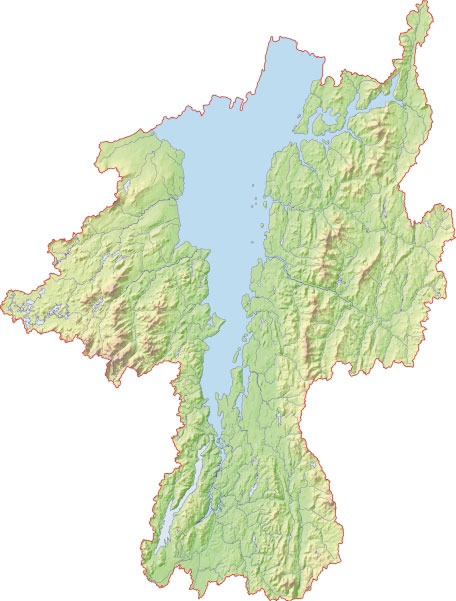
The Lake Champlain basin
(Figure 1) is home to a diverse
and signifi cant array of natural,
cultural, and recreational re-
sources. Extending west into New
York's Adirondack region, east
into Vermont's Green Mountains,
and north onto Québec's fertile
fl atlands, the basin's rich history
of human inhabitance is inter-
woven with its natural features.
Not long after glaciers retreated
from the area over 10,000 years
ago, Native Americans hunted,
fi shed, and later farmed along the
lake's shoreline. In 1609, explorer
Samuel de Champlain sailed into
the lake that would later bear his
name, initiating European settle-
ment in the basin. The basin was
the site of numerous important
military battles during the French
and Indian War, the American
Revolution, and the War of 1812
(LCBP 1999, 2003).
The economy of the basin has al-
ways relied on its natural resourc-
es to support the agricultural,
forestry, fi shing, ice, maple syrup,
iron ore and marble industries.
The natural beauty of the region
made it a popular destination for
vacationers beginning soon after
the Civil War. Boat building and
railroads satisfi ed the demand to
move people and goods through
a major transportation corridor
for both commerce and recre-
ation (LCBP 1999). Today more Figure 1. The Lake Champlain Basin.
than 600,000 people make their
home in the basin, and millions of
visitors are drawn to its waters and other natural and historic
1.1 Quantitative
Description
features each year. Nearly everyone in the basin depends on
the lake for a wide variety of uses, from drinking water and
The following quantitative facts about the Lake Champlain
recreation to agriculture, industry and waste disposal (LCBP
basin were adapted from the Lake Champlain Basin Atlas,
2003).
online version (LCBP 2002).
The basin's living natural resources are part of a complex ·
The Lake Champlain basin covers 21,325 km2 (8,234
ecosystem of interconnected aquatic and terrestrial habitats,
mi2). About 56% of the basin lies in the State of Vermont,
including broad open water, rivers and streams, wetlands,
37% in the State of New York, and 7% in the Province of
forests, agricultural lands, and other areas. Much of the Lake
Québec.
Champlain basin lies in the 650 km (400 mile) long Northern
Forest, extending from the Canadian Maritime Provinces ·
Lake Champlain is 193 km (120 mi) long, fl owing north
to eastern New York. Within the basin are extensive forest
from Whitehall, NY to the Richelieu River in Québec, with
lands under various levels of protection and management,
945 km (587 mi) of shoreline.
including a large section of the six million acre Adirondack
Park region, parts of the Green Mountain National Forest, ·
The Lake consists of fi ve distinct segments (depicted
and the Missisquoi National Wildlife Refuge. Diverse natural
in Figure 2), each with its own physical and chemical
communities are preserved at these and numerous other
characteristics:
State, Provincial, and private-owned lands. Besides humans,
·
The South Lake: The South Lake is narrow and
the basin supports about 81 species of fi sh, 318 species of
shallow, much like a river.
birds, 56 species of mammals, 21 species of amphibians and
·
The Main Lake: The Main (or Broad) Lake holds
20 reptile species, a number of which are at the northern edge
most of the lake's water and its deepest and
of their range (LCBP 1999). In 1989, the basin and adjoining
widest points.
Adirondack Park were designated a Biosphere Reserve by the
·
Mallets Bay: Mallets Bay is largely restricted
United Nations Man and the Biosphere Programme.
hydrologically due to railroad causeways.
·
The Inland Sea: The Inland Sea (or Northeast Arm)
The health of the economy of the Lake Champlain Basin is
is a lake segment lying east of the Champlain
tightly linked to its natural, cultural and recreational resources.
Islands.
One-third of the total employment in the Lake Champlain
·
Missisquoi Bay: Missisquoi Bay is a shallow bay
region was in the service industries in 1990, with recreation
at the northernmost part of the lake whose waters
and tourism as major components (Holmes & Associates
fl ow south to the Inland Sea.
1993). Tourism in the basin creates an estimated US$3.8 billion
in economic activity annually (LCBP 2003). In Vermont, tourism
·
The lake is 19 km (12 miles) at widest point, covering a
makes up 15% of the state's economy, 23% of the jobs and
surface area of 1,127 km2 (435 mi2). There are over 70
23% of total statewide personal income, and over two thirds
islands in the lake.
of this sector of the Vermont economy occurs in the Lake
Champlain basin (Holmes & Associates 1993). Towns along ·
At its deepest point, the lake is over 120 m (400 ft) deep,
Lake Champlain's shore benefi t from US$1.5 billion in tourism
but its average depth is 19.5 m (64 ft). The maximum
expenditures from visitors, with US$228 million of that spent
depth of some of the lake's bays is less than 4.5 m
on Lake Champlain related activities (e.g., boating, camping,
(15 ft).
fi shing, motels, etc.) (LCBP 2003). Agriculture in the basin,
which depends on clean water and productive soil, generated
·
The volume of the lake averages 25.8 million m3 (6.8
about US$526 million in sales of agricultural products--such
trillion gallons).
as milk, cheese, maple syrup, and apples--in 1997 (LCBP
2003). Recreation-related industries also depend on a clean
·
Precipitation averages 76 cm (30 in) annually in the Lake
lake. Residents within thirty-fi ve miles of Lake Champlain
Champlain valley, and 127 cm (50 in) in the mountains.
spent US$118 million in 1997 on water-based recreational
Rivers and streams contribute more than 90% of the
activities on Lake Champlain, while visitors from outside the
water which enters Lake Champlain.
area spent an additional US$228 million (Gilbert 2000).
·
The surface of the lake has an average elevation of 29 m
Clearly, life in the Lake Champlain basin is inextricably
(95.5 ft) above mean sea level.
connected to the natural resources found there. Every resident
and visitor to the towns and villages of the basin in some way
·
The basin includes the highest elevations in both New
enjoys the natural beauty of the region, its economic and
York (Mt. Marcy at 1629 m (5344 ft)) and Vermont (Mt.
recreational opportunities, and a sense of connection with the
Mansfi eld at 1339 m (4393 ft)). The growing season
basin's cultural and natural heritage.
averages from 150 days on the shoreline to 105 days in
the higher altitudes.
94 Lake
Champlain
·
Due to Lake Champlain's low water temperatures, the
best collection of underwater shipwrecks in North
America has been well preserved through more than
two centuries. Several shipwrecks in Vermont and
New York are included in an Underwater Preserve
network, supported by the LCBP, where SCUBA divers
can visit them and learn about the rich history of Lake
Champlain.
1.2 Landscape
The landscape of the basin was shaped by geologic events
over millions of years. The basin consists of fi ve physiographic
regions: the Champlain Valley, the Green Mountains, the
Adirondack Mountains, the Taconic Mountains and the Valley
of Vermont (Figure 3). The Adirondack Mountains, formed over
one billion years ago, were bordered to the east by the Iapetus
Ocean, an ocean over 500 million years older than the present
day Atlantic Ocean. Marine fossils can be found throughout
the basin, including the Chazy Reef in Isle La Motte, Vermont,
well known as the world's oldest reef. When the Iapetus Ocean
closed over 400 million years ago, the sedimentary rocks
of the shoreline and eastern continental shelf were folded
and faulted to form the Green Mountains. During this time,
portions of the earth's crust began to break and move as
large fault blocks, where younger rocks have been pushed
up and over metamorphosed continental shelf rocks beneath.
Geologists and students come to Lake Champlain from around
the world to view the exposed thrust faults at cliffs and road
cuts (LCBP 1996, 2002).
The Great Ice Age brought several glacial advances to the
Lake Champlain basin beginning about 1 million years ago,
covering the entire basin with a sheet of ice more than one
mile thick. About 12,500 years ago, the glaciers retreated and
Lake Vermont formed from the melted ice. When the glaciers
retreated further about 10,000 years ago, marine waters
from the St. Lawrence estuary fl ooded the basin, forming
the Champlain Sea, an arm of the Atlantic Ocean (Figure 4).
Evidence from this period includes a Beluga whale skeleton
found in Charlotte, Vermont. As the glacial ice disappeared
from the region, the earth's surface rebounded and the sea
was again cut off from the Atlantic Ocean, isolating the present
day freshwater Lake Champlain (LCBP 1996, 2002).
The land use and land cover in the Lake Champlain basin varies
from alpine meadow to lakeside fl oodplain forest. Much of the
vegetative land cover in the basin has been altered by human
activities ranging from logging to agriculture. Today, forested
areas dominate the landscape, covering over 70% of the
basin overall and continuing to increase from 100 years ago,
when approximately 30% was forested. Agricultural land is
the second largest cover category in the basin covering about
15%. The amount of land in agricultural use is decreasing as
abandoned crop and grazing lands revert back to forest or they
are converted to urban and suburban uses, which, as of 1999,
Figure 2. Lake Champlain Bathymetry and Lake Segments
represent about 5% of the total area of the basin (Hegman et
(Source: Adapted from fi gure available at
al. 1999).
http://www.lcbp.org).
Experience and Lessons Learned Brief
95

Agricultural lands in the basin are primarily concentrated in
by the President of the United States and the Prime Minister
the Lake Champlain valley and along the fertile fl oodplains
of Canada. The IJC convened a Champlain-Richelieu Board to
of the major river tributaries to the lake. The basin's human
examine a controversial proposal to regulate water levels in
population is largely dispersed in many towns, villages, and
Lake Champlain during the 1970s, with a new control structure
hamlets. Major population centers with urban and suburban
in the upper Richelieu River. After careful research and
land use include Clinton County, New York (including the City
deliberation, the IJC recommended that no control structure be
of Plattsburgh, total population of nearly 80,000 in 2000), permitted to regulate lake level, and both the US and Canada
Chittenden County, Vermont (including the Cities of Burlington,
have accepted this resolution of the issue.
South Burlington, and Essex and other towns, total population
of over 146,000 in 2000) and the City of Rutland, Vermont 2.1.2 Interstate Commission on Lake Champlain
(population 17,292 in 2000) (LCBP 2002).
(INCOCHAMP)
Formed in 1949, INCOCHAMP was intended to coordinate and
2.
Lake Management Issues and Activities
foster cooperation for environmentally sound development in
the basin. The INCOCHAMP became a pro forma organization
2.1
Cooperative Management Efforts
in 1968. Vermont ended its participation in the commission in
1990, while New York has never formally done so.
Because the Lake Champlain basin spans state and
international borders, the need for interjurisdictional 2.1.3 New England River Basins Commission (NERBC)
cooperation has been recognized for decades. The following
The NERBC existed from 1969-1981 as a federal-state
organizations have at various times played an important role
partnership composed of the six New England States and New
in the cooperative management of the basin's resources (LCBP
York, 10 federal and six interstate agencies. Its mission was to
1996, 2003).
encourage the conservation, development, and utilization of
water and related land resources on a coordinated basis by
2.1.1 International Joint Commission (IJC)
federal, state, and local governments and private enterprise.
Formed by the Boundary Waters Treaty in 1909 between Its activities included developing a Level B Study and
Canada and the United States, the IJC coordinates activities
Management Plan for Lake Champlain in 1979. The program
related to United States-Canada boundary waters. The IJC terminated shortly after completion of the Management Plan,
membership is comprised of six commissioners appointed due to cuts in US federal funding.
Figure 3. Physiographic Regions of Lake Champlain Basin
Figure 4. The Champlain Sea (Source: Adapted from fi gure
(Source: Adapted from fi gure available at
available at http://www.lcbp.org).
http://www.lcbp.org).
96 Lake
Champlain
2.1.4 Lake Champlain Fish and Wildlife Management
facilitating and coordinating resource conservation activities;
Cooperative (LCFWMC)
and exchanging information.
The LCFWMC was created in 1973 and continues as a federal-
state cooperative between the United States Fish and Wildlife
2.1.8 Lake Champlain Research Consortium (LCRC)
Service, the New York State Department of Environmental The Consortium is a multidisciplinary research and education
Conservation, and the Vermont Fish and Wildlife Department,
program for Lake Champlain established in 1991. Membership
that manages the fi sh and wildlife resources of Lake in the Consortium currently consists of selected academic
Champlain. The Cooperative Agreement, which was updated
institutions conducting research within the basin boundaries.
in 1995, created a Policy Committee consisting of program The LCRC periodically prepares a list of research needs and
directors from the three agencies, and Management and priorities related to the management issues identifi ed by the
Technical Committees of agency staff. Organizations in Québec
Lake Champlain Basin Program.
are not formal partners within the LCFWMC, but coordinate and
communicate with it regularly. The LCFWMC leads the program
2.2
Major Issues and Management Activities
to control the sea lamprey, an invasive, parasitic fi sh species.
Although Lake Champlain remains a vital and attractive lake
2.1.5 Memorandum of Understanding on
with many assets, there are several serious environmental
Environmental Cooperation on Lake Champlain
problems that demand action.
(MOU)
This MOU between New York, Vermont, and Québec was fi rst
2.2.1 Phosphorus
signed in 1988 and has been renewed at regular intervals Phosphorus is necessary for life, but concentrations of this
since, most recently in 2003. The MOU established the Lake
nutrient in parts of Lake Champlain are high enough to cause
Champlain Steering Committee with representatives from the
excessive growth of algae and other aquatic plants. This
three jurisdictions, as well as Citizen Advisory Committees growth results in reduced water transparency and oxygen
from Vermont and New York. The Steering Committee currently
levels, odors, and poor aesthetics, thereby posing the single
guides the activities of the Lake Champlain Basin Program.
greatest threat to water quality, living organisms, and human
Through this MOU, several cross-boundary protocols have use and enjoyment of Lake Champlain.
been established, including a Joint Toxic Spill Response
Agreement that mandates prompt communication between Wastewater treatment and industrial discharges are the
governments in the event of a spill, and a Québec-Vermont
main point sources of phosphorus, contributing about 20%
phosphorus reduction agreement for Missisquoi Bay. The MOU
of the total phosphorus entering Lake Champlain. Nonpoint
and subsequent agreements provide an opportunity to test
sources, which account for about 80% of the phosphorus
regulatory cooperation. In practice, the three jurisdictions treat
load, include lawn and garden fertilizers, dairy manure and
these agreements as binding covenants, though they are not
other agricultural wastes, pet wastes, and areas of exposed
strictly enforceable.
or disturbed soil, such as construction areas and eroding
streambanks (LCBP 2003). Agricultural activities contribute
2.1.6 Lake Champlain Basin Program (LCBP)
approximately 55% of the annual nonpoint phosphorus load
The LCBP is a partnership between the States of New York and
to the lake. Forests cover a majority of the basin's surface area
Vermont, the Province of Québec, the USEPA, other federal
but contribute only an estimated 8% of the average annual
and local government agencies, and local groups. Created by
nonpoint source phosphorus load. Urban land covers only a
Congress through the Lake Champlain Special Designation Act
small portion of the basin, yet it produces approximately 37%
of 1990 (Public Law 101-596) and updated with a continuing
of the average annual nonpoint source phosphorus load to
authorization in 2002 (Public Law 107-303), the LCBP works
the lake--much more phosphorus per unit area than either
cooperatively with many partners to protect and enhance agricultural or forested land (Hegman et al. 1999). The average
the environmental integrity and the social and economic phosphorus concentrations for each segment of the lake are
benefi ts of the Lake Champlain basin. The LCBP serves as the
presented in Figure 5. It is essential to note that many decades
coordinating body for the development and implementation
of high phosphorus inputs to the lake have also resulted in the
of the comprehensive management plan for Lake Champlain
accumulation of a large amount of phosphorus in lake-bottom
known as Opportunities for Action.
sediments which contribute to water quality problems through
internal loading.
2.1.7 Lake
Champlain
Ecosystem
Team
Established by the United States Fish and Wildlife Service, the
Since the 1970s, phosphorus loads have been dramatically
Ecosystem Team is an association of organizations throughout
reduced through actions such as banning phosphate
the Lake Champlain basin involved in the conservation of detergents, regulating wastewater treatment plants and
plants, animals, and their habitats. The Team's mission is industrial discharges, and voluntary pollution control efforts
to maintain and enhance ecological integrity throughout on farms. In 1993, after completion of an extensive diagnostic
the basin. Its work includes enhancing interdisciplinary feasibility study of the lake and its tributaries, New York,
cooperative partnerships among federal and state agencies,
Vermont, and Québec signed a Water Quality Agreement
conservation organizations, and academic institutions; establishing in-lake phosphorus concentration criteria (goals)
Experience and Lessons Learned Brief
97
Figure 5. Phosphorus Levels in Segments of Lake Champlain, 1990-2003 (Source: Adapted from fi gure available at
http://www.lcbp.org).
98 Lake
Champlain
for thirteen lake segments (Figure 5), and committing to urban uses is offsetting some of the gains achieved to date by
measure point and nonpoint source phosphorus loads to the
point and nonpoint source reduction efforts. Potential options
lake and develop a load reduction strategy to attain the in-lake
for achieving the additional phosphorus reductions necessary
criteria (VTDEC and NYSDEC 1997).
to account for these increases include both additional point
and nonpoint source treatment.
Using an optimization procedure to determine the cost-
effectiveness of various strategies for attaining the in-lake 2.2.2 Toxic Substances
phosphorus criteria (Holmes and Artuso 1995), load reduction
Toxic substances are elements, chemicals, or chemical
targets considered both fair and cost-effective were then compounds that can poison plants and animals, including
developed (Figure 5). Vermont and New York have committed
humans. Recent efforts to improve the understanding of toxic
to reducing the difference between the 1995 loads and the
pollution in Lake Champlain suggest that, while levels are
target loads in each lake segment watershed by at least 25%
low compared to more industrialized areas such as the North
for each fi ve-year period over 20 years, pending available American Great Lakes, there is already cause for concern.
federal and/or state funds to support implementation. Vermont
The presence of toxic substances, such as polychlorinated
and Québec have also developed an agreement dividing biphenyls (PCBs) and mercury, has caused New York and
responsibility for phosphorus reductions in the Missisquoi Vermont to issue health advisories suggesting limiting
Bay lake segment (QMENV and VTANR 2002; MBTF 2000). consumption of certain fi sh species. A survey of lake-bottom
The loading and in-lake concentration targets agreed to by
sediments funded by the Lake Champlain Basin Program has
the two states have become the basis of a federally mandated
identifi ed three areas in Lake Champlain (Cumberland Bay,
phosphorus Total Maximum Daily Load (TMDL) plan for Lake
Inner Burlington Harbor, and Outer Mallets Bay) where lake-
Champlain, prepared jointly by Vermont and New York (VTANR
bottom sediments are contaminated with toxic substances at
and NYSDEC 2002). The development and implementation of
levels that may be harmful to aquatic biota or human health
the TMDL are consistent with the priority actions detailed in
(Figure 6). A list of Toxic Substances of Concern has also been
Opportunities for Action.
prepared to help direct management actions (Table 1) (LCBP
2003).
In 2000, the LCBP released a Preliminary Evaluation of
Progress Toward Lake Champlain Phosphorus Reduction In recent years, hazardous waste cleanup and containment
Goals (LCBP 2000). The report estimated that Vermont, New
projects have been undertaken at the Pine Street Barge
York, and Québec reduced the phosphorus inputs to Lake Canal in Burlington, Vermont and in Cumberland Bay near
Champlain by about 38.8 metric ton/yr by 2001, far exceeding
Plattsburgh, New York. Cleanup of other less-contaminated
the fi rst fi ve-year interim reduction goal of 15.8 metric ton/yr.
sites called brownfi elds is also underway to protect water
The report also concluded, however, that not all lake segments
quality and encourage economic development. Additional
can be brought to the loading targets needed to meet the in-
research and monitoring efforts are needed to better
lake phosphorus criteria by relying solely on existing reduction
understand the sources and effects of toxic pollutants in the
programs. The report indicated that, because developed land
basin. Efforts to promote pollution prevention, from household
generates signifi cantly more phosphorus per unit area than
hazardous waste collections to reducing pesticide use, must
other land uses, conversion of land use from agricultural to
be continued and increased.
Table 1. Toxic Substances of Concern Found in the Lake's Biota, Sediment, and Water.
Priority
Toxic Substances
Criteria for Selection
Persistent contaminants found lake-wide (in either sediment,
water, or fi sh) at levels above standards, indicating potential risk
Group 1
PCBs, mercurya
to human health, wildlife, or aquatic biota. These are highest
priority for management action.
Arsenic, cadmium, chromium, dioxins/
Persistent contaminants found in localized areas (in either
furans, lead, nickel, PAHs, silver,
sediment, water, or fi sh) at levels above standards or guidelines,
Group 2
zinc, copper, persistent chlorinated
indicating potential risk to human health, wildlife, or aquatic
pesticidesb
biota. These are next highest priority for management action.
Ammonia, phthalates, chlorinated
Contaminants found above background levels in localized areas
Group 3
phenols, chlorine, atrazine, alachlor,
of the lake, but below appropriate standards or guidelines.
and pharmaceuticals
VOCs, such as benzene, acetone,
pesticides, strong acids and bases,
Contaminants known to be used or known to occur in the Lake
Group 4
and other potential pollutants, such as
Champlain Basin environment.
fl uoride
Source: LCBP
(2003).
Notes:
a) Based on US FDA standards.
b) Based on a variety of guidelines (NOAA, Ontario, USEPA) regarding toxics in sediments.
Experience and Lessons Learned Brief
99
2.2.3 Nonnative Aquatic Nuisance Species
Sea lamprey are primitive parasitic fi sh that feed on the body
The fi sh, wildlife, and other living resources of the Lake fl uids of other fi sh, resulting in reduced growth and sometimes
Champlain basin have been negatively impacted by the causing the death of the host fi sh. Evidence collected on
introduction of nonnative aquatic nuisance species, such as
Lake Champlain indicates that sea lamprey have a profound
sea lamprey, water chestnut, Eurasian watermilfoil, zebra negative impact upon native and sport fi sh populations. Their
mussels, and recently alewives. At least 23 nonnative aquatic
presence has thwarted efforts to establish and restore new
nuisance species are known to live in the waters of the Lake
and historical sport fi sheries. The Lake Champlain Fish and
Champlain basin (Eliopoulos and Stangel 2002). These Wildlife Management Cooperative (LCFWMC) completed an
species can interfere with the recreational use and ecological
eight-year experimental sea lamprey control program in 1998.
processes of the Lake. Zebra mussels, for example, can clog
The LCFWMC is now implementing a long-term sea lamprey
residential, municipal, and industrial water intake pipes, foul
management program, including chemical and non-chemical
boat hulls and engines, and obscure priceless underwater approaches.
archeological artifacts. Because nonnative species are often
transported across borders to reach the basin, coordination
Zebra mussel densities have increased dramatically since their
among the different management agencies is required to discovery in Lake Champlain in 1993. A monitoring program
prevent their introduction and spread. The Lake Champlain is in place to document the spread of zebra mussels and to
Aquatic Nuisance Species Management Plan was approved by
characterize the conditions that may limit their growth (see
New York and Vermont in 1999 and accepted by the National
Figure 9 below). Additional effort is needed in educating
Aquatic Nuisance Species Task Force in 2000. The plan is a
people about zebra mussel issues and to determine the long-
comprehensive action strategy to protect ecologically valuable
term effect of zebra mussels on the aquatic food web.
habitats, to control the spread of nuisance species, and
prevent additional introductions of nonnative species.
Eurasian watermilfoil, fi rst discovered in the basin in 1962,
now occupies an extensive range throughout the lake and at
least 40 other waterbodies in the basin. Because Eurasian
watermilfoil is spread by plant fragments transported by
waves, wind, currents, people, and to some extent, animals,
its spread is not easily controlled. Control techniques using
chemical and biological agents such as aquatic moths and
weevils are being investigated in the basin.
Like Eurasian watermilfoil, water chestnut displaces other
aquatic plant species, is of little food value to wildlife, and
forms dense vegetative mats that change habitat and interfere
with recreational activities. The most extensive infestations
are limited to southern Lake Champlain. Water chestnut has
also been found in Québec near Missisquoi Bay. In recent
years, a consistent, well-funded lakewide spread prevention
and control program of surveying, mechanical harvesting, and
handpulling of water chestnut has successfully pushed the
northern extent of the South Lake infestation back nearly 40
miles (Figure 7).
2.2.4 Human Health
There are potential health threats associated with poor water
quality in the Lake Champlain basin, including drinking water,
eating fi sh and wildlife, and swimming in the lake. Pathogens
are disease-causing agents such as bacteria, viruses, and
parasites. Water-related pathogens cause gastrointestinal
illnesses when ingested. Exposure to pathogens is primarily
through ingestion, either accidentally while swimming, or when
drinking water from the lake. Drinking water suppliers depend
on high quality source water to produce the highest quality
drinking water as economically as possible. The presence of
pathogens causes occasional beach closings in some areas
of the lake. Sources of pathogens include agricultural wastes,
Figure 6. Sites of Concern for Toxic Substances in Sediments
(Source: Adapted from fi gure available at
failed septic tanks, combined sewer overfl ows and sanitary
http://www.lcbp.org).
sewer overfl ows, and urban stormwater runoff.
100 Lake
Champlain
Blue-green algae, also known as cyanobacteria, are normally
limitations on fi sh consumption due to mercury contamination,
harmless and widely scattered through the surface waters are not consistent among the three jurisdictions, and therefore
of Lake Champlain. Under favorable conditions for growth, may be confusing to the public. It is important to develop
however, thick blue-green algae blooms develop, especially in
effective means to alert the public about these health risks
calm and shallow waters. Some strains of common blue-green
(LCBP 2003).
algae species can produce toxins that can damage the nervous
system or liver. These toxins have been detected sporadically
2.2.5 Fish and Wildlife
in Lake Champlain, although the conditions that result in the
Fish and wildlife provide tremendous social, economic, and
production of toxins have yet to be fully characterized. In recent
environmental benefi ts to the Lake Champlain basin. The
years, the deaths of several pets that ingested large amounts
structure and function of the food web affect water quality,
of blue-green algae laden water indicate that the health risk
bioaccumulation of toxins, and habitat suitability for fi sh
associated with blue-green algae blooms has increased. and wildlife. Abundant fi sh and wildlife attract recreational
Late in the summers of 2002 and 2003, signifi cant areas in
hunters, bird watchers, and anglers, resulting in signifi cant
Missisquoi Bay were contaminated by toxins associated with
economic benefi t to local communities. The complex array
large blooms of blue-green algae, resulting in public health
of plants and animals also provides other important benefi ts
advisories. Current research is focused on developing a to humans, such as pollution fi ltration through wetlands
coordinated health advisory program among Vermont, New and other vegetated areas, scenic beauty, and recreational
York, and Québec, and an examination of the factors that opportunities. Natural species diversity is a highly valued part
trigger these extreme conditions.
of the region's natural heritage and a critical component of the
ecosystem that supports all life on earth.
Mercury and PCBs (polychlorinated biphenyls) are a human
health concern because they accumulate to high levels in some
Populations of some rare, threatened, and endangered plant
fi sh species. State Health Departments have issued health and animal species and rare natural communities in the
advisories for several species of fi sh and waterfowl caught in
Lake Champlain basin are declining as a result of habitat
Lake Champlain. The fi sh sampling programs for Vermont, New
degradation, invasions of non-native species, collection, and
York, and Québec are currently not well coordinated, and do
other factors. Of the approximately 487 vertebrate species of
not yet provide a comprehensive database, making it diffi cult
fi sh and wildlife thought to be in the basin, 30 species are
to discover trends or provide statistically valid conclusions.
offi cially listed by federal and state agencies as endangered
and threatened. More information on the status of and threats
Communicating risks is an important part of any effort to to these species and natural communities, in addition to
protect human health. New York and Vermont have worked
more public education, is necessary for their protection and
together to inform each other of any press releases or health
restoration. A comprehensive inventory of these species and
advisories before they are released, and both states use their habitats for the entire Lake Champlain basin is essential,
similar methods of educating the public and communicating
as is close coordination by various agencies on all aspects of
risks. However, some of the general advisories, for example
protection and restoration (LCBP 2003).
Figure 7. Lake Champlain Water Chestnut Management: Annual Funding and Northernmost Mechanical Harvesting Site
(Source: Adapted from fi gure in LCBP (2003)).
Experience and Lessons Learned Brief
101
2.2.6 Wetlands, Streams and Riparian Habitats
tourism-related expenditures in the basin were estimated at
The Lake Champlain basin includes some of the highest US$3.8 billion in 1998-99.
quality wetlands in the northeastern United States, including
extensive lakeside wetland complexes and many rare or Efforts are being made to support initiatives that promote
declining natural wetland communities. In addition to ecologically sustainable economic activity utilizing natural,
providing critical habitat and nourishment for fi sh and wildlife,
cultural, and historical resources in the basin, while minimizing
the more than 300,000 acres of wetlands improve water quality
congestion and confl icts between users. Protection and
by fi ltering sediments, pollutants, and nutrients. Wetlands also
enhancement of the environment and cultural and recreation
help control fl ooding, protect groundwater and drinking water
resources is clearly important to visitors to the basin, as
supplies, stabilize shorelines, prevent erosion, and provide these resources are often the main focus of their experience.
recreational opportunities. Despite federal, state, and local Fostering more opportunities for diverse groups to access
wetlands protection regulations, threats to wetlands in the and enjoy the lake will encourage more people to value it
Lake Champlain basin persist. Wetlands are often drained or
and support water quality protection, ultimately increasing
fi lled for agricultural, residential, or commercial purposes.
the number of people engaged in lake stewardship. Issues
of congestion and confl icts of use can be addressed through
Human impacts on stream and riparian habitats have also user cooperation and/or education on a site-by-site basis.
been severe and wide ranging. For the last three centuries,
For example, the Lake Champlain Basin Program funded a
people have altered the landscape and the fl ow of streams and
demonstration project that identifi ed solutions to the boating
rivers for fl ood control, bridges and roads, power generation,
congestion and other problems in Malletts Bay, the Malletts
agriculture, development, and even erosion control or Bay Recreation Resources Management Plan.
bank stabilization. Adverse impacts include loss of historic
fl oodplains, increased river channel instability, degradation Plans are underway to commemorate the 400th anniversary
of water quality, decreased water storage and conveyance of Samuel de Champlain's arrival in the basin (2009). Both
capacity, loss of habitat for fi sh and wildlife, and decreased
New York and Vermont have established State Commissions
recreational and aesthetic value. Unfortunately, in the past,
to coordinate and promote the preparations for this
most stream manipulation did not take into consideration quadricentennial event. The focus in quadricentennial
the natural dynamic processes at work in the stream channel,
preparations will be on developing the regional infrastructure
riparian habitat, and fl oodplain, or the need for streams and
so that this celebration of regional heritage will be successful
rivers to transport both fl ow and sediment. Adequate riparian
and will shape the economy in a sustainable way. Associated
buffers are one of the most effective tools for limiting nonpoint
with this anniversary is a comprehensive initiative to
sources of pollution and promoting the long-term stability signifi cantly improve lake water quality by 2009 through a
of stream banks and channels, as well as providing wildlife
rapid and effective implementation of the TMDL program. The
habitat corridors and thermal protection to the stream.
National Park Service (1999) recently completed a study of the
Champlain Valley that assesses the potential for establishing
The Lake Champlain Basin Program sponsored a wetland a national heritage corridor in the region. A follow-up project
acquisition strategy that laid the groundwork for a four-phase,
to develop a framework for heritage tourism in the region that
multiyear program to permanently protect almost 9,000 acres
is compatible with local interests has been completed by the
of wetlands in the Champlain Valley. By 2001, US$1.4 million
LCBP. Other initiatives--the Lake Champlain Birding Trail, the
in federal funds had been provided to the project, which had
Lake Champlain Paddlers' Trail, Lake Champlain Walkways, the
conserved 4,000 acres of wetlands and surrounding areas Lake Champlain Underwater Preserve System, the Waterfront
in the basin. Other projects in the basin being conducted Revitalization Program in New York, Lake Champlain Byways
by citizens groups and public agencies include numerous and Lake Champlain Bikeways--have also made notable
streambank restorations using natural channel design progress in promoting low impact, non-motorized tourism
techniques, designating an ecological preserve in Québec, and
in the basin. Continuing and expanding these and similar
creating miles of buffer areas along streams and rivers (LCBP
initiatives in a more coordinated manner fosters stewardship
2003).
for the lake and its surrounding natural, cultural, recreational,
and historic resources within the basin, while also contributing
2.2.7 Recreation and Cultural Heritage Resources
to the economic vitality of the region (LCBP 2003).
The history of humans in the Lake Champlain basin spans more
than 10,000 years. It includes Native American and early Euro-
3.
Socioeconomic Threats to Sustainable Use
American settlements, French and British explorations and
occupations, pivotal military confl icts, and a dynamic period
3.1
Pressures from Within the Basin
of 19th century commerce. Many archaeological and historic
sites provide a context and sense of place to people today.
Socioeconomic factors in the Lake Champlain basin are tightly
Lake Champlain is also a popular recreation resource for basin
linked to the natural, cultural, and recreational resources
residents and visitors alike. Swimming, fi shing, scuba diving,
there. Protecting these resources and enhancing access to
and boating are just a few of the activities enjoyed on the
them generates substantial economic revenues (LCBP 2003).
lake. Recreation also contributes to the local economy. Total
In turn, increased awareness and use of resources can result
102 Lake
Champlain
in a greater concern and need for their protection. However,
in the basin provide milk, cheese, meat, and other products,
economic activity can also threaten the very resources on while preserving open space and maintaining the character
which it depends if it is not carried out in a sustainable way.
of the rural landscape that is so attractive to basin residents
Sustainable development is an economic development concept
and visitors alike. At the same time, farm activities are a
that gives full consideration to the social, economic, quality of
major source of pollutants to the basin's surface and ground
life, and environmental aspects of development decisions and
waters. Small farms need considerable assistance to manage
seeks to avoid depleting or degrading the economic resource
manure in an environmentally responsible manner. With milk
base. To promote sustainable development, it is essential to
prices low, small farms are being forced to increase milk
work closely with economic development agencies, chambers
production (i.e., the number of cows they keep) or go out
of commerce, business and industry groups, real estate of business. Although economies of scale can be realized,
development interests, local government, and environmental
larger farms also face proportionately larger challenges
organizations to identify actions and programs that can in effectively managing the manure from their facilities. In
lead to sustained economic activity, good wages, long-term
addition to manure management issues, low milk prices also
employment, affordable housing, and a cleaner environment
tend to discourage farmers from taking land out of production
(LCBP 2003).
to install streamside buffers that provide habitat and fi lter
pollutants from the stormwater runoff that fl ows from fi elds.
3.1.1 Local
Economies
It is then diffi cult for government assistance programs to offer
Local economies in the basin must remain vital to support
payments to create such buffers that are high enough to make
sustainable development and implementation of effective them attractive to farmers.
pollution controls, such as phosphorus removal in wastewater
treatment and upgrading failing septic systems. In addition
3.1.3 Forest
Products
to tourism, major sectors of the basin economy include Forest products include a wide diversity of commodities
manufacturing, agriculture, retail and wholesale trade, and manufactured items such as building materials, paper,
healthcare, universities, prisons, and state government. In the
maple syrup, and furniture. The importance of specifi c forest
1990s, employment in the service sector comprised 35% of
products-related industries to local economies varies from one
basin employment, followed by trade (22%), and manufacturing
part of the basin to another. In Vermont, Caledonia, Orleans,
(15%). The trend in the last 20 years has been towards an
and Windsor counties each account for 14% of the volume of
increase in the service and trade sectors and a decrease in
sawlogs produced in the state. Of those, Orleans is considered
the manufacturing sector. Income from wages, especially a basin county, and about half of the county lies within the
in the rural portions of the basin, lags behind the national
basin. In the New York portion of the basin, a signifi cant
average. In the Adirondack Park region, average annual wages
amount of the land area is classifi ed as commercial forestland:
in 1992 were US$20,621, in contrast to US$32,411 for all of the
Clinton County (69%), Franklin County (61%), Essex County
State of New York and US$25,903 nationwide. In Vermont, (48%), Warren County (59%), and Washington County (48%).
non-metropolitan earnings per job were US$24,774 in 1999,
while metropolitan earnings were US$28,039. Nationally, the
Maple syrup contributes signifi cantly to local rural economies
averages for non-metropolitan earnings were US$24,408 and
in the basin. In 1999, Vermont was the largest maple syrup
metropolitan earnings were US$36,526. In several locations
producing state in the nation, accounting for 31% of the total
around the basin, businesses related to agriculture, mining,
US maple production. Vermont's maple syrup production was
and forestry are the major employers (Holmes & Associates
valued at US$10.5 million in 1999, while production in the New
and Artuso 1996; LCBP 2003; US Department of Commerce's
York portion of the Lake Champlain basin was valued at US$1
1990 Census).
million.
3.1.2 Agriculture
Manufacturing of paper and paper products makes a
In the ten counties of New York and Vermont that lie signifi cant economic impact on rural economies as well. For
predominately within the basin, there were approximately example, in 2000, International Paper's Ticonderoga Mill
4,840 farms in 1987, roughly one-third in New York and two-
employed 690 people and had a payroll of US$36 million. In
thirds in Vermont. According to the 1997 Census of Agriculture,
2000, the mill purchased more than US$30 million in goods
the number of acres of farmland in Vermont decreased by and services in the Ticonderoga area of New York State. The
one percent from 1992 to 1997, to 1.3 million acres, while mill also purchased US$20 million of fi ber, wood chips, and
the number of full-time farms decreased six percent to bark from the Adirondack region, and 285 private truckers
3,300. By 1997, sales from Vermont farms totaled US$476 were involved in bringing wood to the mill. In 1997, the mill
million, indicating that the total value of Lake Champlain received the New York State Governor's Award for Pollution
basin agricultural products of US$526 million. Dairy products
Prevention for eliminating chlorine and hypochlorite in its pulp
account for the majority of farm sales in both New York and
bleaching process, resulting in reduced dioxin and chloroform
Vermont basin areas (LCBP 2003).
emissions.
Farming in the basin, the dairy industry in particular, is subject
According to recent research on the forest-based economy
to potentially confl icting resource management goals. Farms
of the northern forest region of New York, Vermont, New
Experience and Lessons Learned Brief
103
Hampshire, and Maine, jobs in lumber, wood, and paper the Lake Champlain Basin Program has characterized the land
products have declined from 1987 to 1997. There is local cover and land use of the basin, using data from 1993. Updated
evidence of that decline in the closing of several sawmills and
land use information and new "smart growth" initiatives will be
plywood mills during 2000-2001 in the New York portion of the
increasingly important for local municipalities (LCBP 2003).
basin, and related reductions in the workforce in paper mills
in the region. However, wood manufacturing of value-added
Population change can be an indicator of economic activity--
products, such as furniture, is a growing and strong economic
or lack of economic opportunity--and can indicate high
sector (LCBP 2003).
growth areas where land use planning is needed to protect
water quality. Preliminary 2000 Census data indicates that
The forest products industry is clearly a large economic driver
approximately 45% of Lake Champlain basin residents live in
in the basin. It is important to encourage sustainable forestry
lake shoreline towns. As shown in Table 2, the Vermont portion
practices that also balance consumptive use, recreational of the Main Lake area, which includes the Winooski River basin
access, and wildlife habitat values in the basin's forests. and contains the cities of Burlington and Montpelier, comprises
Expanding the production of value-added products from forests
almost one-half of the population in the basin (47%). The other
that are managed in a sustainable manner will add revenue to
main population center is the Plattsburgh area of New York
the local economy while reducing pressure to use practices
which includes the Saranac and Chazy River basins where
that produce short-term profi ts at the expense of long-term
15% of the population resides. Between 1990 and 2000, high
economic stability and balanced use of forest resources.
growth areas included Mallets Bay, Lake George, Missisquoi
Bay, and the Inland Sea watershed areas (LCBP 2003).
3.1.4 Population, Development and Land Use Change
A major landscape issue facing the basin is known as sprawl,
Seasonal residents and visitors are also very important to the
a cumulative development process that results from the basin economy. According to the 1990 Census data, there were
incremental growth of low density, single-use development,
38,530 seasonal homes in the basin, or approximately 14.6%
typically scattered along a highway. Sprawl generally begins at
of all basin housing units. Approximately 9,118 of the seasonal
the edge of traditional community centers and moves outward
homes are located in the Lake Champlain shoreland areas,
into previously rural areas, requiring new or larger roads, water
representing 24% of all seasonal homes in the basin. These
and sewer capacity, and utility lines. Although sprawl is not a
seasonal homes bring a large population increases to parts of
new phenomenon in the basin, the amount and rate of this
the basin each summer.
form of development has made it a topic of concern and study.
3.2
Pressures from Outside of the Basin
The effects of sprawl often include water quality degradation
from increased urban runoff and wetland losses. As the 3.2.1 Air Deposition of Pollutants
landscape becomes increasingly fragmented, wildlife habitat,
In addition to pollutants generated by activities within the Lake
farmlands, and forests also become less productive. The Champlain basin, mercury, PCBs (polychlorinated biphenyls)
discussion of both the positive and negative impacts of sprawl
and other pollutants from sources hundreds of miles away
on the landscape, culture, and economy of the basin has taken
travel through the air and are deposited to the land and water
on a new sense of importance in view of recent development
of the basin. According to the United States Environmental
trends. Information about land use change is an important
Protection Agency (USEPA 2000), atmospheric deposition is
resource for communities to guide their own economic destiny
a signifi cant source of certain pollutants to Lake Champlain
and to ensure the future quality of life in the basin. To this end,
and other surface waters in the United States. These pollutants
Table 2. Population Change in Lake Champlain Watershed Areas, 1950 to 2000.
Lake Champlain
Percent Change
Lake Segment/Watershed
1950-60
1960-70
1970-80
1980-90
1990-2000
1950-2000
Missisquoi
Bay
-6.4
3.2
13.6
10.7
11.4
35.4
Inland
Sea
5.0
7.3
5.2
14.7
10.6
50.3
Mallets
Bay
1.3
43.2
37.2
20.1
16.1
177.4
Broad
Lake,
VT
8.3
18.4
11.4
9.5
7.4
67.9
South
Lake,
VT
13.0
-0.2
11.7
10.6
6.5
48.6
South
Lake,
NY
-2.5
8.5
2.0
10.2
3.8
23.5
Lake
George
29.5
14.9
12.2
-3.2
13.6
83.7
Broad
Lake
South,
NY
7.7
-2.1
9.8
5.5
5.2
28.5
Broad Lake North, NY
30.3
-2.3
10.8
6.2
-6.1
40.6
Total
Change 10.2
11.4
12.7
9.8
6.1
61.1
Source: LCBP
(2003).
104 Lake
Champlain
may occur at levels that can be harmful to both human and
4.1
The Lake Champlain Basin Program
ecological health. For humans, the risk is greatest for those
who consume large amounts of fi sh. Although it appears that
To address the need for cooperative, basin-wide management,
the amount of deposition of mercury and other pollutants the Lake Champlain Basin Program (LCBP) was created by the
is decreasing or holding steady, it is likely that atmospheric
United States Congress through the Lake Champlain Special
deposition will continue to be a source of several pollutants for
Designation Act of 1990 (Public Law 101-596). The LCBP is
some time to come and that they will continue to be found in
a partnership among the States of New York and Vermont,
water, sediments, and biota.
the Province of Québec, the USEPA, other federal and local
government agencies, and many local groups, both public
The USEPA (1997) has concluded that coal-fi red power plants
and private, working cooperatively to protect and enhance the
and municipal trash incinerators are the two largest sources of
environmental integrity and the social and economic benefi ts
mercury emissions in the United States, and that the Federal
of the Lake Champlain basin (LCBP 2003).
Drug Administration "action level" for mercury consumption
must be lowered to adequately protect human health. The Steppacher and Perkins (1999) have summarized the
states in the northeastern United States and the eastern formation and workings of the LCBP through the management
Canadian Provinces have joined forces to develop a Mercury
plan development phase. Following previous management
Action Plan which sets a goal of virtual elimination of man-
efforts, the Special Designation Act called for a comprehensive
made mercury releases in the region (USEPA 2000).
planning process that would involve stakeholders with diverse
interests throughout the basin. It also encouraged the process
The release of sulfur (SO2) and nitrogen (NOX) compounds from
to consider the interconnected nature of the Lake Champlain
fossil fuel combustion can create acid deposition (also known
basin ecosystem, from plants to animals and humans. The
as acid rain). The source of nearly two-thirds of the SO2 and
31-member Lake Champlain Management Conference (LCMC)
one-fourth of all NOX is from electric power generation using was initiated in 1991 to lead the planning effort, including
fossils fuels such as coal. While in the air, these pollutants
development of a comprehensive plan, conducting research
can reduce visibility and be harmful to human health. When
and monitoring studies, and implementing an education and
they fall to earth, either in rain, fog or snow, or as particles
outreach program.
and gases, they cause acidifi cation of surface waters, and can
damage trees, soils, and building materials. The United States
In 1996, the LCMC completed the management plan,
Federal Clean Air Act Amendments of 1990 set a goal to reduce
Opportunities for Action: An Evolving Plan for the Future
annual SO
of the Lake Champlain Basin
2 emissions by 50%, and annual NOX emissions by
. The LCMC dissolved and the
two million tons, compared to 1980 levels, primarily through
leadership of the LCBP was passed on to an expanded Lake
restrictions on fossil fuel-fi red power plant emissions in Champlain Steering Committee established in the 1988 MOU.
eastern and midwestern states (USEPA 2002).
Howland (2001) has described the structure and operation
of the LCBP in the current plan's implementation phase. Like
3.2.2 Non-native Aquatic Nuisance Species
the LCMC, the Steering Committee is comprised of a broad
As discussed above, controlling the introduction of non-native
spectrum of representatives of government agencies, the
aquatic nuisance species from outside the basin is a key part
chairs of advisory groups representing citizen lake users,
of protecting the Lake Champlain basin ecosystem. Additional
scientists, and educators. These advisory groups include:
safeguards, educational efforts, and intergovernmental a Technical Advisory Committee, composed of resource
coordination are needed to restrict further introduction of managers, physical and social scientists, and economic
these species as many of them are inadvertently transported
experts; Citizens Advisory Committees from New York,
here by people from regions outside of the basin.
Vermont, and Québec; an Education and Outreach Advisory
Committee; and a Cultural Heritage and Recreation Advisory
4.
Policy, Legislative and Institutional Reforms
Committee. The LCBP continues to be jointly administered by
the USEPA, the States of Vermont and New York, and the New
Managing the natural and cultural resources of the Lake England Interstate Water Pollution Control Commission. Other
Champlain basin is a complex undertaking. Various cooperating agencies include the US Fish and Wildlife Service,
management agencies and programs have made signifi cant
the US Department of Agriculture, the US Geological Survey,
progress in areas such as controlling point source discharges
the National Oceanographic and Atmospheric Administration,
of pollution from industry and wastewater treatment plants
and the National Park Service. The Province of Québec is
and strengthening the lake's sports fi shery (LCBP 2003). The
also represented on the Steering Committee and each of the
Clean Water Act (i.e., Federal Water Pollution Control Act of
advisory committees.
1972 and subsequent amendments) has been the driving
force behind many of the water quality improvements for the
4.2
Strengths and Successes
past three decades. However, effective management of these
resources requires action from all levels of private and public
4.2.1 Partnerships
organization, from homeowners and businesses, from local The success of the LCBP is rooted in the maintenance of
governments, and state and federal agencies.
partnerships and collaborations, a multiple stakeholder
Experience and Lessons Learned Brief
105
approach, sharing of information with the public, and basing
through other means. While the consensus process employed
management decisions on good science (LCBP 2003; Stickney
by the LCBP tends to minimize the polarization of hard
et al. 2001). Successful implementation of the management
ideological positions, it does require that common goals (such
plan is achieved by developing many partnerships among as drinkable, swimmable waters) be shared by all participants.
natural resource agencies, citizens, and other lake and The motivating infl uence of the policy accord expressed by
watershed stakeholders throughout the basin (LCBP 2003). The
the Governors and the Premier in the 1988 MOU (reaffi rmed
fi rst revision of the management plan was a two-year process
in 2003) and in the management plan Opportunities for Action
that began in 2001 and relied extensively on partnerships with
(2003), together with the universal appeal of a clean lake and a
stakeholder groups, public meetings and citizen involvement.
thriving economy, can hardly be overstated.
Stakeholder involvement in the revision of the management
plan is described by Howland and Hoerr (2002).
5.
Constraints to Environmentally Sound
Management
Since its inception, the LCBP has evolved into an internationally
recognized natural resource management initiative 5.1 Investments
characterized by inter-jurisdictional management, and the
enhancement of the stewardship role of local leaders (Stickney
Since the establishment of the LCBP, efforts to protect and
et al. 2001). Transboundary relations are guided by a sequence
preserve the resources in the Lake Champlain basin have been
of nonbinding, nonregulatory consensus-based agreements.
well-supported by the States of New York and Vermont, the
Since the 1988 Memorandum of Understanding, 14 additional
Province of Québec, and the US federal government, as well as
agreements have been signed, ranging from joint declarations
local governments, businesses, and citizens. Because funding
and watershed plans to in-lake phosphorus criteria and toxic
support for activities related to Lake Champlain basin resource
spill responses. These agreements are typically renewable and
protection comes from such varied sources, it is diffi cult to
this incremental approach has enhanced cooperation and trust
quantify exactly the level of funding committed each year.
among the jurisdictions (Stickney 2003; Harris et al. 2001).
Highlights of typical funding are presented below. Note that
the funds below are in addition to those spent through the
4.2.2 Consensus
base operations of local, state, provincial, and federal agency
Principles of consensus and trust-building helped overcome
programs.
initial policy differences among the three jurisdictions
during the plan development phase, and they are still being
·
From 1991-2001, Vermont has spent over US$20 million
utilized today. This approach to decision-making creates a
dollars on reducing phosphorus discharges from
"win-win" atmosphere where minority opinions are normally
municipal wastewater treatment plants in the Lake
incorporated into Steering Committee decisions, and motions
Champlain basin. During the same period, New York
pass by unanimous vote, refl ecting the full consensus of
spent over US$10 million dollars building and enhancing
the group. However, on rare occasions when consensus is
wastewater treatment plants. From 1991-1998, Québec
not possible, votes are held and the majority prevails. The
invested over US$13 million in wastewater treatment
latter prospect provides an incentive for all parties to work
plant construction for areas discharging to the Lake
assiduously to achieve consensus, while ensuring that timely
Champlain basin and Richelieu River (LCBP 2000).
decisions may be made. The LCBP process encourages open
and public discussion, with subsequent meeting summaries
·
Approximately US$9.6 million was applied to controlling
(but without recorded transcript), so that committee members
nonpoint sources of phosphorus in the Vermont
can freely explore decisions before making commitments.
portion of the basin between 1996 and 2001. The funds
supported cost-share projects with farmers. About 58%
Many management policy debates arise from different
of the funds came from the US federal government
perspectives on issues about which there is inadequate
(United States Department of Agriculture--Natural
information. Flexibility in the decision-making process has
Resource Conservation Service), 22% from Vermont,
enabled the LCBP to take an adaptive management approach
and 20% from farmers. New York has committed over
to diffi cult issues. When scientifi c information is not adequate
US$15 million to environmental projects in the basin
to guide a management decision, the LCBP allocates funds to
through the Clean Water/Clean Air Bond Act of 1996
support focused and timely research or monitoring to address
and the Environmental Protection Fund. Québec spent
the knowledge gap. When the needed information thus is
nearly US$1.8 million to help farmers manage manure in
made available, an appropriate management decision may
the Lake Champlain basin, representing 70% of the total
be more easily reached by the group. In this way, research
project costs that were shared by farmers (LCBP 2000).
and monitoring has an essential role in informing policy
development.
·
The USEPA generally provides US$1-2 million annually
toward operation of the Lake Champlain Basin Program
The consensus building process gives all participants a
offi ce and its technical and local grant projects.
meaningful role in developing viable solutions and results in
Additional EPA funding has been directed toward
a sense of group ownership of decisions that is unattainable
wastewater treatment plant upgrades in the basin,
106 Lake
Champlain
stormwater management demonstration projects, and
·
An estimated US$139 million will be needed to fully
development of a lakefront laboratory and science
implement the TMDL phosphorus reduction plan for the
museum.
Vermont sector of the Lake Champlain basin (VTANR and
NYSDEC 2002). The timeline for achieving phosphorus
·
The US Army Corps of Engineers (USACE) generally
load reduction goals has been accelerated (from 2016 to
provides about US$400,000 annually toward invasive
2009) by Vermont and Québec largely in response to the
species management, primarily for the harvesting of
increasing blue-green algae problems in the Missisqoui
nuisance aquatic plants. In recent years, the Corps
Bay, a part of the lake shared by these two jurisdictions.
also has provided additional funds for restoring the
Annual recommendations by the Technical Advisory
Burlington Harbor breakwater. The USACE is presently
Committee and its workgroups for vital technical
working with the LCBP to develop a Corps General
projects needed to implement Opportunities for Action
Management Plan for Lake Champlain that will bring
are typically many times the amount available for such
signifi cant new funds (US$500,000 in 2004) to the
projects.
support of Opportunities for Action and an enhanced
partnership with the Corps.
·
The total annual amount of technical and local grant
project proposals to the Lake Champlain Basin Program
·
The US Geological Survey spends US$400,000-500,000
is typically four times the amount available for such
annually on Lake Champlain tributary fl ow gauging and
projects.
research projects.
5.2
Human Resources and Institutional Capacity
·
The USDA NRCS has spent about US$300,000 annually
since 2001 on research and demonstration of alternative
The Lake Champlain basin is fortunate to have a broad
manure management techniques. Many of these assemblage of committed and knowledgeable people who
programs have been managed by the LCBP on behalf of
are interested in protecting the basin's resources, from local
the NRCS.
citizens joining in wildlife monitoring programs and cleanup
days, to watershed and lake groups planting vegetation
·
The National Oceanic and Atmospheric Administration
along streambanks and shorelines, to professional scientists
(NOAA) has provided US$150,000 annually toward and managers studying water quality and restoring cultural
research in hydrodynamics and atmospheric processes,
treasures. Over the past decade, these individuals have
awarded on a competitive basis through the Lake become increasingly skilled and effective in their work.
Champlain Research Consortium. The NOAA also
contributes approximately US$150,000 annually for Many of the actions included in Opportunities for Action
the Lake Champlain Sea Grant program in New York and
call for greater coordination among the groups working on
Vermont.
particular issues. Dedicated human resources are generally
needed to provide the level of coordination needed to address
Despite these commitments, signifi cantly expanded funding is
issues through a cooperative process that brings together the
needed to meet the goals that have been set for protecting and
strengths and resources of participating partners.
restoring the Lake Champlain basin's resources.
·
The Lake Champlain Basin Program supports several
·
Preliminary cost estimates from Opportunities for
staff positions involved in coordination work. The
Action (LCBP 2003) suggest that implementing actions
LCBP also helps to support a number of state agency
in the plan will require at least US$12 to US$15 million
staff positions involved with particular aspects of
annually, and at least US$170 million for the period
implementing Opportunities for Action. Lastly, the
through 2016. Estimates were not developed for all
LCBP supports the staff of local watershed, cultural
actions.
and recreation groups, primarily through project grants,
but also through small professional development and
·
In 1999, it was estimated that over US$62 million would
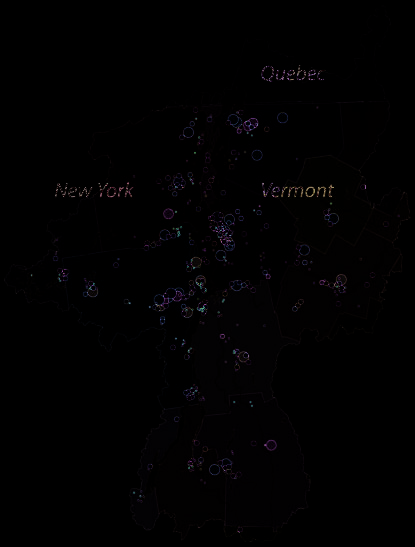
organizational support grants (Figure 8).
be needed to implement phosphorus management
on all remaining farms in the Vermont portion of the
·
Vermont has hired several basin planners to oversee
basin. However, additional nonpoint or point source
watershed planning in river basins throughout the state,
phosphorus controls will be needed to achieve the
including those in the Lake Champlain basin. These
phosphorus goals in sub-basins where farm treatments
efforts are being coordinated with the LCBP and are
are not expected to result in the needed load reductions
consistent with Opportunities for Action.
(LCBP 2000).
·
Federal funds have been made available for controlling
·
Québec has estimated that implementing needed
pollution from agricultural sources, but these funds
erosion control projects for nonpoint phosphorus
are often restricted to costs related to design and
control would cost nearly US$14 million (LCBP 2000).
construction of waste storage structures. Additional
Experience and Lessons Learned Brief
107
funding or expanded access to existing funding is 6. Lessons
Learned
needed to provide the technical staff who plan and
implement projects and provide services such as 6.1
Involve Stakeholders in the Design and
developing Comprehensive Nutrient Plans that will also
Implementation of Programs
signifi cantly reduce agricultural pollution in addition to
structural approaches.
A diverse array of stakeholders participate in the management
of Lake Champlain basin's resources, from citizen watershed
·
The state environmental conservation agencies in groups concerned about the health of their local streams
the basin have minimal staff resources to administer
to government agencies mandated to implement the laws
and enforce the environmental regulations under designed to protect these resources. These stakeholders
their purview. Additional staff are needed to facilitate
understand the close connection between the condition of the
sub-watershed level planning and assessment work. basin's resources and their quality of life, including economic
Additional staff are also needed to address stormwater
opportunity, health, heritage, and aesthetics. Because
pollution. Stormwater management and permitting stakeholders have been involved from the beginning of the
issues have recently become litigious in the basin.
planning process, they have shown a greater acceptance of the
policies and actions developed, and a greater willingness to
·
Small watershed and lake associations engage numerous
form partnerships to work toward implementation.
restoration and education activities, often with funding
from small grants and member contributions. It is often
The Lake Champlain Basin Program sponsored 28 formal public
diffi cult for these groups to consistently maintain even
meetings around the basin while developing the fi rst version of
part-time staff to oversee their operations, implement
Opportunities for Action, and countless informal meetings. A
projects, and provide a point of contact for ongoing similar process was used when Opportunities for Action was
business. Organizational Support Grants from the LCBP
revised in 2003. Hundreds of local citizens and representatives
in recent years have done much to build capacity that will
of various organizations attended these meetings and provided
make these small organizations become fully functional
comments on draft plan materials throughout the planning
and sustainable. Additional funding is needed to sustain
process. The Lake Champlain Management Conference also
these local groups.
established a series of advisory committees, subcommittees,
and workgroups whose members represented the various
interests associated with specifi c areas of the plan. LCBP staff
and committee members made presentations and conducted
outreach activities for hundreds of groups during the fi ve-year
planning phase.
The LCBP continues to invite stakeholders to participate
in its annual budget planning process, soliciting advice on
management priorities and ideas for projects related to
implementing the management plan. The LCBP's Technical
Advisory Committee (TAC) plays a key role in informing
the development of policy by the Lake Champlain Steering
Committee, especially through recommendations of
scientifi cally sound approaches to management issues in the
basin. Steering Committee policies characteristically refl ect
the technical advice provided by the TAC.
Local river and lake associations play a key role in organizing
watershed protection efforts (LCBP 2003). These associations
accomplish a great deal through education and outreach
programs, participation in local planning, development
reviews, and citizen monitoring and restoration activities.
Watershed associations also act as catalysts for developing
nonregulatory protection programs. River and lake associations
can encompass several local jurisdictions, sometimes even
spanning state boundaries. Watershed associations work
closely with local government, where most land use planning
occurs, respecting a wide variety of interests, including
Figure 8. Lake Champlain Basin Program Local Grants
Projects, 1992-2002 (Source: Adapted from fi gure
property rights, environmental protection, and economic
available at http://www.lcbp.org).
development.
108 Lake
Champlain
Local capabilities for watershed planning vary greatly from what can be a signifi cant investment of their time and
throughout the basin in both New York and Vermont. In some
resources.
areas (often near urban centers), municipalities have already
developed watershed plans and instituted aggressive water
6.2
Strengthen the Knowledge of Basin Residents
quality protection measures--Lake George, New York provides
and Visitors
a good example of aggressive lake protection. Municipalities
in these areas typically benefi t from ongoing technical support
Since watershed-level management is a voluntary process,
from local staff, watershed associations, regional planning education and outreach efforts are essential to building
commissions, county planning offi ces, or conservation stakeholder awareness and interest in participating in the Lake
districts. In other parts of the basin, municipalities have very
Champlain Basin Program. The LCBP has had a strong education
limited local capacity for any type of planning or land use program from the beginning, complementing the planning and
regulation. Working in partnership with willing landowners technical work in the basin. Three examples include the Lake
is especially productive as most land in the basin is privately
Champlain Basin Program's Resource Room within ECHO at the
owned.
Leahy Center for Lake Champlain; Champlain 2000, a media
partnership between a local television station, a business
The LCBP has been supporting increased communication sponsor; and the LCBP newsletter, Casin' the Basin. These
between local groups in the basin. It has sponsored several
three resources provide citizens and educators access to Lake
meetings each year where representatives from these groups
Champlain information in person, on weekly television news
can gather to share ideas and receive training on a topic of
segments and quarterly programs, on the internet, or mailed to
common concern, from water quality monitoring to increasing
their homes and businesses. Over 125 local projects have been
membership. The LCBP also publishes an annual newsletter
featured (LCBP 2003). The LCBP employs an Education and
which includes information about watershed group activities.
Outreach Coordinator and a Communications and Publications
Coordinator, who make nearly 200 presentations a year to
The sustainability of lake management institutions in the school groups. LCBP staff at the Resource Room assist nearly
Lake Champlain basin, from small groups working on sub-
2,000 visitors per month, a signifi cant (14%) fraction of the
watersheds to the Lake Champlain Basin Program, relies on
total visitor volume at ECHO at the Leahy Center. Additionally,
continual participation of stakeholders in both planning and
the LCBP distributes several important fact sheets on specifi c
implementing management projects. Although the activities
issues challenging the health of the basin.
of local watershed associations and other groups are primarily
conducted by volunteers, to maintain these efforts over the
6.3
Policy Must be Based on Sound Science and a
long-term it is often critical for these organizations to retain
Strong Monitoring Program
paid staff to coordinate planning, recruit volunteers, and seek
funding for projects. Without such staff, it can be diffi cult for
The Lake Champlain Basin Program has always sought to base
these groups to build and sustain the momentum that comes
planning and policy decisions for the basin on sound scientifi c
from implementing successful projects and gaining technical
information. Without this strong foundation in sound science,
and logistical expertise. LCBP supports these organizations a watershed management program will not succeed. Nearly
through several grants programs, including a general two dozen representatives from the technical community
operating support grant program, available only to watershed
throughout the basin have been brought together in a
associations, designed to assist with the daily operating Technical Advisory Committee (TAC) to examine the scientifi c
expenses so critically important to their success.
issues of every major policy question, and to provide guidance
to the Steering Committee in policy and budget development
The LCBP has continued to ensure strong participation of each year. The TAC also reviews research and implementation
its stakeholders through strengthening representation on projects to ensure both scientifi c merit and successful
its steering and advisory committees. Effective governance conclusion. Moreover, the Technical Advisory Committee is
of the LCBP and the optimal management of the natural chaired by a non-governmental scientist who maintains a seat
resources of the basin are achieved through consensus-based
on the Lake Champlain Steering Committee.
decision-making that accords a vital role to non-governmental
stakeholders, primarily citizen leaders in the basin (Stickney
On scientifi c questions, the Technical Advisory Committee,
et al. 2001; Drost and Brooks 1998). The key to sustaining
speaking through its chair, is the sole advisor to the
stakeholder interest in cooperative management is to Steering Committee concerning the technical and scientifi c
ensure that stakeholder concerns are heard, taken seriously,
merits of policy alternatives and also concerning detailed
and included in the process leading toward management task specifi cations in the budgeting process each year for
decisions. For implementation to occur, the key stakeholders
funded programs. This strength, that scientifi c expertise is
representing the logistical, technical, and political aspects systematically brought to the policy-generating body, gives
of any decision must be involved in the decision process, relevance and credibility to the entire program and ensures
increasing the likelihood of them being informed supporters
that management policy is continually informed by sound
during implementation. Stakeholders will continue to engage
science. Budgeting and funding decisions are, however, made
in these efforts only if they see some value-added result exclusively by the Lake Champlain Steering Committee.
Experience and Lessons Learned Brief
109
6.3.1 Monitoring
In 1992 the LCBP and Lake Champlain Research Consortium co-
sponsored a workshop to review existing technical information
Monitoring environmental conditions in the lake and basin is
and to set a research and monitoring agenda (LCRC 1992).
an essential component of measuring the success of lake and
From that time to the present, consistent funding has been
watershed management efforts and typically requires up to
directed to technical projects that provide key information US$300,000/year, or 15% of the annual EPA funds available
to inform management decisions. During the development to the LCBP. Additional funds from the USEPA, the Department
of Opportunities for Action, several critical information gaps
of Agriculture and the Department of Interior also are directed
were recognized, and research and monitoring projects were
to monitoring the effectiveness of agricultural and urban best
designed, funded and completed, to extend the knowledge
management practices. The US Geological Survey regularly
base of environmental conditions in these areas. After the funds stream gauging stations in the basin that provide
plan was completed in 1996, research and monitoring were
critically important tributary discharge data. Monitoring data
continued, both in the form of targeted projects investigating
provide information on natural processes occurring in the lake,
particular issues, and ongoing monitoring designed to basic characteristics of the ecosystem, long-term water quality
document the long-term trends in the quality of the basin's
trends, and the effectiveness of selected management actions.
resources.
This information is essential for understanding how human
activities, including management actions, affect the lake (LCBP
Continued funding and support for research and monitoring is
2003).
an essential part of watershed management. A strong research
and monitoring program serves to build on what is known Monitoring projects in the basin have been designed for a
about the ecological processes of the basin, track progress
variety of purposes and cover a wide range of topics from
toward management goals, facilitate adaptive management,
forest health and biodiversity to atmospheric and surface
and address emerging issues.
water quality. Ongoing monitoring projects include the Lake
Figure 9. Monitoring Sites (Source: Adapted from fi gures available at http://www.lcbp.org).
110 Lake
Champlain
Champlain Long-Term Water Quality and Biological Monitoring
·
Development of Land Cover/Land Use Geographic
Program, the Lake Champlain Zebra Mussel Monitoring
Information System Data Layer for the Lake Champlain
Program, and the Vermont Lay Monitoring Program. The
Basin (Millette 1997).
distribution of these sampling locations is presented in Figure
9. The Lay Monitoring Program has conducted lakewide ·
Lake Champlain Underwater Cultural Resources Survey
monitoring of eutrophication parameters during the summer
(McLaughlin et al. 1998).
season using citizen volunteers every year since 1979. It is the
second oldest citizen monitoring program in the United States,
6.4
Integrate Economic Goals with Environmental
and information collected by these citizen monitors has been
Goals
used to develop state water quality standards.
During the early 1990s, the LCBP developed an economic
6.3.2 Indicators
database for the Lake Champlain region based on the
Indicators use monitoring data for key aspects of the basin's
results of the 1990 census. The database provides important
ecosystem, such as phosphorus concentrations or the type and
information on employment by industry and occupation, as
abundance of zooplankton species, to help detect ecosystem
well as economic activity generated by agriculture, forestry,
change and enable adaptive resource management that is mining, and other natural resource-based industries. The
responsive to such changes. For example, data demonstrating
study also analyzed the regional tourism economy and the
declines or increases in an indicator species could provide economic benefi ts generated by various recreational activities,
information about similar declines of associated species, thus
such as fi shing, hunting, hiking, and camping. Data on tourism
providing early notice of the need for management action. from Québec and use of Lake Champlain by Québec boaters
The Lake Champlain Basin Program is sponsoring a project
were also gathered (LCBP 2003). Although more recent data
that will more clearly link management goals and objectives
was collected in 2001, the early 1990s database must be
to ecological indicators and will better inform and guide maintained with current information so that the economic
management actions. The indicators will be presented in an
aspects of resource management can be tracked and
understandable manner, allowing them to be used to track
understood as management actions are implemented.
and report progress toward management goals to both the
management community and the public (LCBP 2003).
6.5
Foster the Long-Term Capacity of Lake
Organizations
A list of selected projects recently supported by the Lake
Champlain Basin Program is presented below. A complete list
The capacity of the organizations in the Lake Champlain basin
of technical reports from completed projects is available at the
to engage in effective resource stewardship has increased
Lake Champlain Basin Program's website, www.lcbp.org. Note
along with the skills of their staff and volunteers. The Lake
that additional research and monitoring is being conducted by
Champlain Basin Program has continued to strengthen its
state and provincial agencies in the basin, as well as private
coordinating role by expanding its Steering Committee to
organizations.
include more representation from local municipalities and
the Province of Québec. It has reconfi rmed and expanded its
·
Lake Champlain Basin Phosphorus Studies (Hughes Technical Advisory Committee, continued its Education and
et al.; 1999; VTDEC and NYSDEC 1998; Hoffmann et al.
Outreach, and three Citizens Advisory Committees, and added
1996; VTDEC and NYSDEC 1994).
a new Cultural Heritage and Recreation Advisory Committee in
recent years.
·
Lake Champlain Basin Economics Studies (Holmes &
Associates 1993; Holmes & Associates and Artuso 1995;
The LCBP has also increased its support for local organizations
Holmes & Associates and Artuso 1996).
through small professional development grants for staff
and board members. In 2001, the LCBP initiated a new
·
Lake Champlain Sediment Toxics Assessment Program
category of competitive grants designed to help increase
(Callihan et al. 1998; McIntosh et al. 1994 and 1997).
organizational capacity. These grants cover costs related
to planning and developing new projects or follow-up
·
Lake Champlain Nonpoint Source Pollution Assessments.
monitoring and maintenance of completed projects, as well as
These assessments estimated the relative contributions
staffi ng, supplies and printing for an organization's recurring
of phosphorus to the lake and tributaries from major
educational activities. Vermont and New York also offer grants
land uses in the basin (Hegman et al. 1999; Pease 1997;
to local groups for a variety of projects. Unfortunately, the
Budd and Meals 1994).
number of good projects requesting funds from these grant
programs far exceeds the available funding.
·
Lake Champlain Wetlands Acquisition Study (Binhammer
1994).
·
Lake Champlain Food Web Studies (Levine et al. 1997;
LaBar and Parrish 1996).
Experience and Lessons Learned Brief
111
6.6
Diversify Funding Sources through Innovative
The Memorandum of Understanding on Lake Champlain of
Partnerships
1988 and the Water Quality Agreement of 1993 signed by
Vermont, New York, and Québec are examples of non-binding
The Lake Champlain Basin Program has continued to diversify
transboundary covenants. The MOU created a mechanism
its federal funding base in recent years. In addition to base
for the exchange of scientifi c information and encourages
funding from the USEPA, several other federal agencies also
cooperative planning for watershed protection. It established
are involved in the cooperative partnership to implement the Lake Champlain Steering Committee with diverse
Opportunities for Action, with several providing contributing
representation among the three jurisdictions and established
funding annually. Annual Congressional earmarks and clear a role for three citizens advisory committees. The MOU is
legislative intent that cooperation be effective has been a a fi ve-year renewable agreement and was most recently
consistent enabling factor that has fostered interagency reaffi rmed by all parties in 2003. The MOU facilitated the
partnerships, mutual trust among key staff, and strong creation of the 1991 Emergency Spill Response Joint Procedure
cooperative traditions among federal agencies. The which mandates rapid notifi cation and a coordinated response
development of cost estimates and clear prioritizations for to toxic spills among Vermont, New York, and Québec.
resource management actions, such as those highlighted Similarly, the voluntary 1992 Permit Exchange Agreement
above, allow the Congressional delegations from New York between Vermont and New York has facilitated the exchange
and Vermont to be effective in funding initiatives through the
of regulatory information when permitting issues have caused
various federal agencies.
transboundary concerns (Stickney 2003).
Federal funding supports portions of the coordination, The LCBP is a member of LakeNet, a global network of
technical, and outreach activities of the LCBP partners. organizations in over 100 countries created in 1996 that is
A signifi cant portion of this funding is passed on to dedicated to the conservation and sustainable development
nongovernmental groups working on local issues throughout
of lake ecosystems. Bonds between these programs are
the basin through various LCBP grants. With grant support,
quite strong, as the LCBP's Manager is a member of the
local groups are able to conduct projects and outreach LakeNet's International Steering Committee and the Chair of
activities of their own, often resulting in increased interest,
the Vermont Citizens Advisory Committee serves as a Trustee.
participation, and fi nancial support from local citizens and Saint Michael's College of Vermont is a partner with LakeNet
businesses.
implementing a grant from USAID to support the Lake Basin
Management Initiative.
Examples of how public and private investments have been
combined to develop a Lake Champlain focused project include
Lake Champlain also enjoys sister lake exchange programs
the Patrick and Marcelle Leahy Center for Lake Champlain. with Lake Ohrid in FYR Macedonia and Albania, and Indonesia's
The Leahy Center partnership consists of the University of Lake Toba. The Lake Champlain Basin Program was selected by
Vermont's Rubenstein Ecosystem Science Laboratory, ECHO the Macedonians and Albanians as a model for transboundary
lake aquarium and science center, Lake Champlain Basin relations, since Lake Ohrid is also shared by two countries.
Program Resource Room, LakeNet's global network, Lake The Sister Lake Declarations of Intent signed between Lake
Champlain Sea Grant Watershed Alliance, and the Lake Champlain and Lake Ohrid (1996) and Lake Toba (1996) were
Champlain Navy Memorial. Funding for the components of modeled after the Memorandum of Understanding for Lake
the Leahy Center has come from private donors, the federal
Champlain among Vermont, New York, and Québec. Exchanges
government, and other supporting organizations.
of policy leaders and technical experts among the countries
have focused largely on how business is conducted and how to
The LCBP has also formed an outreach partnership with WPTZ,
overcome confl ict and cultural differences (Stickney 2001).
a network television affi liate in the basin, and a sponsor,
KeyBank, called Champlain 2000. Champlain 2000 features
7. Summary
weekly news segments and occasional 30-minute specials on
lake-related topics. The features, specials and promotional The LCBP has evolved as an effective international natural
material aired for the project regularly reach millions of viewers
resource management partnership. This partnership is
in the basin, with the costs shared between the three partners.
characterized by a regime of mutually agreeable principles,
rules and decision-making procedures that govern the
6.7
Link to International Watershed Management
interactions of the stakeholders from the three jurisdictions.
Activities
The key driving force that sustains the LCBP has been the
continuous Congressional leadership with requisite legislative
Like similar watershed programs for the North American Great
authorizations and annual appropriations to federal agencies
Lakes and the Chesapeake Bay, the Lake Champlain Basin that provide the essential funding to clean up Lake Champlain.
Program has been studied as an international model for lake
State and Provincial involvement through staffi ng, matching
basin and watershed management. Participants in the program
funds and direct fi nancial support for management activities
represent citizens, scientists, businesses, universities, and has refl ected the sustained leadership of the Governors of
governments from the local to regional to federal level.
New York and Vermont and the Premier of Québec. Heightened
112 Lake
Champlain
public concern for the future of the lake and the regional Holmes & Associates and A. Artuso. 1995. Preliminary
lake-based economy, and informed involvement on the part
economic analysis of the draft plan for the Lake Champlain
of citizens, businesses and local leaders, has evolved within a
Basin Program. LCBP Technical Report No. 12. LCBP: Grand
context of civic responsibility that bodes well for the future.
Isle, VT.
The LCBP, as a management partnership, is designed to address
Holmes & Associates and A. Artuso. 1996. Economic analysis
transboundary problems and to promote cross-boundary of the fi nal draft plan for the Lake Champlain Basin Program.
cooperation at the watershed level. This watershed approach
LCBP Technical Document No. 17B. LCBP: Grand Isle, VT.
to policy development and plan implementation avoids a
top-down management style by enhancing voluntary and Howland, W.G. 2001. "Lake Champlain Basin Program: The
collaborative problem solving to achieve the regional, national
Structure of a Model Watershed Partnership." In Proceedings
and international environmental objective of sustained clean
of the 9th International Conference on the Conservation
water in the Lake Champlain basin.
and Management of Lakes. p. 618-621. Shiga Prefectural
Government: Shiga, Japan.
8. References
Howland, W. G. and R. Hoerr. 2002. "Lake Champlain
Binhammer, J. 1994. Lake Champlain wetlands acquisition Basin Program: Stakeholder Partnerships for Updating a
study. LCBP Technical Report No. 8. LCBP: Grand Isle, VT.
Comprehensive Management Plan." In Proceedings of the
International Symposium on Building Partnerships between
Budd, L. and D. Meals. 1994. Lake Champlain nonpoint source
Citizens and Local Governments for Sustainable Lake
pollution assessment. LCBP Technical Report No. 6A. LCBP: Management. IETC Freshwater Management Series No. 3. p. 83-
Grand Isle, VT.
88. United Nations Environment Program: Osaka/Shiga, Japan.
Callinan, C., L. McIlroy and R. Fuller. 1998. Cumberland Bay PCB
Hughes, J.W., W.E. Jokela, D. Wang and C. Borer. 1999.
study. LCBP Technical Report No. 27. LCBP: Grand Isle, VT.
Determination and quantifi cation of factors controlling pollutant
delivery from agricultural land to streams in the Lake Champlain
Drost A. and R. Brooks. 1998. "Civil society regimes and basin. LCBP Technical Report No. 35. LCBP: Grand Isle, VT.
ecosystem management: selected problems in Lake Champlain."
Arizona Journal of International and Comparative Law 15(1).
LaBar, G.W. and D.L. Parrish. 1996. Bioenergetics modeling for
lake trout and other top predators in Lake Champlain. LCBP
Eliopoulos, C. and P. Stangel. 2002. Lake Champlain 2000 Technical Report No. 21. LCBP: Grand Isle, VT.
Status of Aquatic Nuisance Species. A report prepared
for the Lake Champlain Basin Program: Final Report May LCBP (Lake Champlain Basin Program). 1996. Background
2001 (updated February 2002). Vermont Department of technical information for opportunities for action: An evolving
Environmental Conservation: Waterbury, VT.
plan for the future of the Lake Champlain basin. LCBP: Grand
Isle, VT.
Gilbert, A.H. 2000. Lake Champlain angler survey 1997. Federal
aid job performance report: Final report. Vermont Department
LCBP. 1999. The Basin: LCBP fact sheet series number three.
of Fish and Wildlife: Waterbury, VT.
LCBP: Grand Isle, VT.
Harris, E., C. Huntley, W. Mangle and N. Rana. 2001. LCBP. 2000. Preliminary evaluation of progress toward Lake
Transboundary collaboration in ecosystem management: Champlain Basin Program phosphorus reduction goals: a Lake
Integrating lessons from experience. University of Michigan,
Champlain Basin Program internal report. LCBP: Grand Isle, VT.
School of Natural Resources and Environment: Ann Arbor, MI.
LCBP. 2002. The Lake Champlain Basin Atlas: Online version.
Hegman, W., D. Wang and C. Borer. 1999. Estimation of Lake
LCBP: Grand Isle, VT. (Available at http://www.lcbp.org/atlas/
Champlain basinwide nonpoint source phosphorus export.
index.htm).
LCBP Technical Report No. 31. LCBP: Grand Isle, VT.
LCBP. 2003. Opportunities for Action: An evolving plan for the
Hoffmann, J.P., E.A. Cassell, J.C. Drake, S. Levine, D.W. Meals,
future of the Lake Champlain Basin. LCBP: Grand Isle, VT.
Jr. and D. Wang. 1996. Understanding phosphorus cycling,
transport and storage in stream ecosystem as a basis for LCRC (Lake Champlain Research Consortium). 1992. "A
phosphorus management. LCBP Technical Report No. 20. research and monitoring agenda for Lake Champlain." In
LCBP: Grand Isle, VT.
Proceedings of a workshop, 17-19 December 1991, Burlington,
VT. LCBP Technical Report No. 1. LCBP: Grand Isle, VT.
Holmes & Associates. 1993. Lake Champlain economic
database project: Executive summary. LCBP Technical Levine, S.N., M. Borchardt, M. Braner, A. Shambaugh and S.
Document No. 4A. LCBP: Grand Isle, VT.
Spencer. 1997. Lower trophic level interactions in the pelagic
Experience and Lessons Learned Brief
113
foodweb of Lake Champlain. LCBP Technical Report No. 30. Stickney, M.S. 2003. "Steps in rhythm: Strengthening
LCBP: Grand Isle, VT.
transboundary relations in the Lake Champlain basin through
voluntary incremental environmental agreements." Paper
MBTF (Missisquoi Bay Task Force). 2000. A division of presented at 10th International Conference on the Conservation
responsibility between Québec and Vermont for the reduction
and Management of World Lakes. IAGLR/ILEC Global Threats to
of phosphorus loads to Missisquoi Bay. QMENV and VTANR:
Large Lakes, DePaul University, Chicago, Illinois.
Montreal, Québec and Waterbury, VT.
USEPA (United States Environmental Protection Agency).
McLaughlin, S.A., A.W. Lessman and A.B. Cohn. 1998. Lake
1997. Mercury Study Report to Congress Volume I: Executive
Champlain underwater cultural resources survey, Volume 1: Summary. EPA-452/R-97-003. USEPA: Washington, DC.
Lake survey background and 1996 results. LCBP Technical
Report No. 28. LCBP: Grand Isle, VT.
USEPA. 2000. Deposition of air pollutants to the great
waters: Third report to Congress. EPA-453/R-00-005. USEPA:
McIntosh, A. (ed.). 1994. Lake Champlain sediment toxics Washington, DC.
assessment program. An assessment of sediment-associated
contaminants in Lake Champlain: Phase 1. LCBP Technical USEPA. 2002. http://www.epa.gov/airmarkets/arp/
Report No. 5. LCBP: Grand Isle, VT.
overview.html. USEPA: Washington, DC.
McIntosh, A., M. Watzin and E. Brown. 1997. Lake Champlain
VTANR (Vermont Agency of Natural Resources) and NYSDEC
sediment toxics assessment program: An assessment of (New York State Department of Environmental Conservation).
sediment-associated contaminants in Lake Champlain: Phase
2002. Lake Champlain Phosphorus TMDL. VT ANR and
2. LCBP Technical Report No.23. LCBP: Grand Isle, VT.
NYSDEC: Waterbury, VT and Albany, NY.
Millette, T. 1997. Development of land cover/land use VTDEC (Vermont Department of Environmental Conservation)
geographic information system data layer for the Lake and NYSDEC (New York State Department of Environmental
Champlain basin and Vermont Northern Forest Lands project
Conservation). 1994. Lake Champlain Diagnostic-Feasibility
areas. LCBP Technical Report No.24. LCBP: Grand Isle, VT.
Study. Final Report Draft 7/1/94. A phosphorus budget, model,
and load reduction strategy for Lake Champlain. VTDEC and
National Park Service. 1999. Champlain Valley Heritage NYDEC: Waterbury, VT and Albany, NY.
Corridor Project: Report of a Special Resource Study. National
Park Service: Boston.
VTDEC and NYSDEC. 1997. A phosphorus budget, model, and
load reduction strategy for Lake Champlain. Lake Champlain
Pease, J. 1997. Urban nonpoint pollution source assessment of
diagnostic-feasibility study fi nal report. VTDEC and NYDEC:
the Greater Burlington area: Urban stormwater characterization
Waterbury, VT and Albany, NY.
project. LCBP Technical Report No.25. LCBP: Grand Isle, VT.
VTDEC and NYSDEC. 1998. Long-term water quality and
QMENV (Québec Ministry of the Environment) and VTANR biological monitoring project for Lake Champlain. Cumulative
(Vermont Agency of Natural Resources). 2002. Agreement
report for project years 1992-1996. LCBP Technical Report
between the government of Québec and the Government of the
No.26. LCBP: Grand Isle, VT.
State of Vermont concerning phosphorus reduction in Missisquoi
Bay. QMENV and VTANR: Montreal, Québec and Waterbury, VT.
Disclaimer
Steppacher, L. and E. Perkins. .1999. "Watershed Management
The fi ndings, interpretations and conclusions expressed
at a Crossroads: Lessons Learned and New Challenges Following
in this report are the views of the authors and do not
Seven Years of Cooperation through the Lake Champlain Basin
necessarily represent the views of The World Bank and its
Program." In T.O. Manley and P.L. Manley (eds). Lake Champlain
Board of Directors, or the countries they represent, nor do
in Transition: From Research Toward Restoration. pp. 419-433.
they necessarily represent the view of the organizations,
American Geophysical Union: Washington, DC.
agencies or governments to which any of the authors are
associated. Also, the colors, boundaries, denominations, and
Stickney, M., C. Hickey, and R. Hoerr. 2001. "Lake Champlain
classifi cations in this report do not imply, on the part of The
Basin Program: Working together today for tomorrow." Lakes
World Bank and its Board of Directors, or the countries they
and Reservoirs: Research and Management 6: 217-223.
represent, and the organizations, agencies or governments to
which any of the authors are associated, any judgment on the
Stickney, M.S. 2001. "Distant waters, sister lakes: Lake legal or other status of any territory, or any endorsement or
Champlain and Lake Ohrid's sister lakes partnership acceptance of any boundary.
bridges transboundary relations." In Proceedings of the 9th
International Conference on the Conservation and Management
of World Lakes. Shiga Prefectural Government: Shiga, Japan.
114 Lake
Champlain