INITIAL REVIEW OF EXISTING TRANSBOUNDARY DIAGNOSTIC ANALYSIS GUIDELINES FOR THE IDENTIFICATION OF COMPONENTS WARRANTING SPECIFIC EVALUATION FROM USER PERSPECTIVES
1. PURPOSE OF REVIEW
This section of the Report deals with the nature, objectives and application of Transboundary Diagnostic Analyses as components of GEF projects. It then outlines the essential components of Transboundary Diagnostic Analysis and how they lead to the formulation of Strategic Action Programmes that comprise interventions to address current compromises and perceived threats to international waters areas. Finally, it identifies the constituents of a Transboundary Diagnostic Analysis for which increased user guidance would be most valuable. The objective of the last part of this document is to identify the elements of TDAs that lend themselves to analysis from ‘best practice’ perspectives. The ultimate objective of such analyses would be to identify cases of best practice that could be used as examples of how particular aspects of a TDA can be most effectively and expediently completed in future TDAs. This latter guidance is intended to take the form of “Practitioner Guidelines”.
2. PURPOSE AND UTILITY OF TRANSBOUNDARY DIAGNOSTIC ANALYSIS TO INTERNATIONAL WATERS PROJECTS
The GEF advocates a process of formal assessment of problems and priorities referred to as a Transboundary Diagnostic Analysis (TDA). It was referred to in the First Study of GEF’s Overall Performance (GEF, 1998) in the following way:
“The centerpiece of the GEF strategy .... is the concept of ‘strategic joint fact finding’ as a means of arriving at a consensus on what actions are needed to establish threats ... collaborating states establish technical teams that work to establish a common baseline of facts and analysis of the problem in the form of a transboundary diagnostic analysis (TDA), which is then used to set (national) priorities for actions to address threats to international waters in the form of the SAP.”
The Second Overall Performance Study (OPS2) (GEF 2002) gave particular recognition to the utility of TDA to projects in the International Waters Focal Area as follows:
“GEF-supported activities under the international waters focal area have contributed significantly to the implementation of existing global and regional agreements that address protection and restoration of freshwater and marine ecosystems.” (Paragraph 473)
“Examining the results of the international waters portfolio, one particular operational approach demonstrates considerable merits: A science-based Transboundary Diagnostic Analysis (TDA) is conducted at the preparatory stage, before a strategic action program (SAP) is elaborated. It has similarities to the process embedded in enabling activities in support of UNFCCC or CBD. Furthermore, the GEF is one of very few financial mechanisms available to support comprehensive analysis and integrated planning in multinational water bodies. The TDA-SAP process has provided a mechanism for the GEF to contribute substantially to the in-country strengthening of institutions and to promote strategic alliances among institutions in different countries, thus promoting the development of effective monitoring systems and improved management capacities.” (Paragraph 132)
“The TDA-SAP process is a valuable part of project preparation to build capacity, receive scientific and technical inputs, and encourage participation by the political authorities involved and other important institutional actors and stakeholders. In addition, it is recognized as an essential process for securing multicountry political agreement to focus on transboundary environmental priorities. As stated by the OPS1 team, “The centerpiece of the GEF strategy on International Waters is the concept o f ‘strategic joint fact finding’ in the form of a transboundary diagnostic analysis (TDA), which is then used to set national priorities for actions to address threats to international waters in the form of a strategic action program (SAP).”15 The OPS2 team underscores this statement and recommends that the science-based TDA continue to be the basis for facilitating country agreements on SAPs which can mobilize multidonor support for remedying or preventing environmental threats to international waters.” (Paragraph 138)
OPS2 not only recommended that TDA continue to be used for the preparation of SAPs in International Waters projects but also recommended that a similar mechanism be used in the new focal area of land degradation. The relevant recommendation is as follows:
“The GEF should review and rationalize the number and objectives of operational programs in light of the lessons learned in order to ensure consistency and a unified focus on delivering global environmental benefits. Furthermore, to ensure quality outcomes that focus on global environmental benefits, OPS2 recommends that GEF make a special effort to use scientific analysis as a constant foundation for the planning and implementation of new projects in all focal areas. The science-based Transboundary Diagnostic Analysis (TDA) should continue to be the basis for facilitating regional agreements on actions to address threats to international waters and for developing strategic action programs (SAPs). OPS2 further recommends the extension of a similar approach to land degradation, as it is now becoming a new focal area.” (Paragraph 526)
TDA is therefore considered as an effective and appropriate approach to the formulation of SAPs for international waters areas. Accordingly, the preparation of guidance, in the form of practitioner guidelines, to aid in the conduct of TDAs would constitute a valuable contribution to future GEF activities.
3. NATURE AND OBJECTIVES OF TRANSBOUNDARY DIAGNOSTIC ANALYSIS
A Transboundary Diagnostic Analysis (TDA) is a scientific and technical assessment of an international waters area that identifies and quantifies the environmental issues and problems in the subject area and establishes their immediate, intermediate and fundamental causes. The analysis involves an identification of the causes and impacts of environmental disturbances and/or threats and assesses the scale and distribution of impacts at national, regional and global levels, predominantly in socio-economic terms. The identification of causes specifies practices, sources, locations and human activity sectors from which environmental degradation arises or is threatened.
Thus, the purpose of a TDA is to assess the relative importance of environmental disturbances and threats to international waters and their causes and to identify potential remedial and/or preventative actions. A TDA thus provides the basis for the formulation of a Strategic Action Programme (SAP) embodying specific actions, or interventions, that can be adopted multilaterally to restore or preserve from further degradation a specific international waters area.
A TDA should yield a list of priority issues affecting an international waters area, their causes and the origins of those causes. Although TDAs can be conducted by, and within, single countries, the need to identify transboundary effects and causes makes it desirable that the TDA process be conducted multilaterally with the participation of all riparian states to an international waterbody. Ideally, the sequence of causes should be identified in a hierarchical manner from technical perspectives, through management and socio-economic perspectives to the political (i.e., policy) level. Accordingly, the term ‘root causes’ should be reserved for the most fundamental in this hierarchy of causes. In GEF parlance, this sequential identification of the hierarchy of causes is conceptually known as a causal chain, or root cause, analysis. It is intended to facilitate the specification of potential interventions to either remedy current environmental problems or to obviate environmental threats. The most effective of these options for intervention then constitute the basis of a Strategic Action Programme (SAP) that can be formulated and applied by all riparian countries.
As noted by Mee (Mee, 2002) there is little available from GEF documents regarding the nature of Transboundary Diagnostic Analysis (TDA). There is, however, much available from GEF documents regarding the purpose and objectives of TDAs as an aid to the formulation of Strategic Action Programmes (SAPs).
4. COMPONENTS OF TRANSBOUNDARY DIAGNOSTIC ANALYSES
Both Mee (Mee 2002) and Pernetta (Pernetta 2003) have outlined the nature and components of TDAs in a more detailed manner than that available from contemporary GEF documents. Both of these authors’ outlines are consistent with the more elementary specifications contained in the International Waters Program Study report of 2001 (Bewers and Uitto 2001). Pernetta has specified the principal components of a TDA while Mee has provided an abundance of ancillary detail that aids considerably in identifying those involved in the process at the project level.
The following explanation of TDA components is based on material from these sources as well as other GEF documents. It represents an attempt to specify the essential elements of TDAs as an introduction to the subsequent examination of processes used for the preparation of TDAs. These elements are generic and apply to any TDA relating to a water body whether provincial, national or international.
Component 1: Assessment of Problems
The first component in the conduct of a TDA is the identification of existing problems. These problems relate to compromises in the quality or abundance of resources and amenities of a specific international waters area such as a freshwater course, a lake or a coastal marine or regional sea area. Such compromises can involve unsuitability of water for irrigation or animal or human drinking purposes, poor quality of fish for human consumption, undue algal growth resulting in oxygen deficiency having adverse effects on organisms (e.g., fish kills), and/or unpleasant odours, aesthetic effects or high turbidity reducing recreational and tourism use of an area. There are many such potential problems and the foregoing is not intended to constitute an exhaustive list. Frequently, the ‘problems’ are merely observations of peculiarities or effects, for example frequent fish kills, without the immediate cause being known. Thus, the specification of problems must be that of those familiar with the subject area (see the next section on ‘the TDA-SAP process’).
Component 2: Identification of Priorities
This constitutes an evaluation of the relative severity of the problems identified in the previous component. This again must be based on local knowledge and perception. The wider the body of local knowledge and experience involved in the conduct of the TDA, the more objective the specification of priorities is likely to be (see the next section). The evaluation of priorities is based on the severity of the problem in the context of its effects on those drawing their livelihood from the water area concerned, the reduction in economic gains from the area in relation to its potential (fisheries yield or tourism for example) and effects on other aspects of life within the communities affected. The end result of Component 2 should be a consensus list of prioritized ‘problems’.
Component 3: Identification of Causes
Components 3 and 4 constitute the Causal Chain Analysis. Component 3 involves the identification of causes for each of the problems identified and prioritized in Components 1 and 2. These causes should stem from the immediate to the proximal causes to as high a level of hierarchy as possible, extending up to the policy level wherever feasible. It is best explained by example. Let us say that one of the identified problems is abundant algal growth that is impeding navigation, causing odours and interfering with the use of water for irrigation (clogging of pumps), animal watering and human consumption. The most immediate cause is likely to be excessive nutrient supply to the water body. The cause of the excessive nutrient supply is attributed to animal wastes or fertilizer washoff from agricultural activities on adjacent land and excessive discharge of poorly treated human sewage. Each of these secondary causes will then have causes at higher levels in the hierarchy. The excessive discharge of animal wastes may be due to farm management practices that have not provided sufficient land to neutralize nutrients in animal wastes. Excessive fertilizer washoff can be due either to the application of fertilizers beyond the amounts needed for adequate fertilization of crop growth or the use of fertilizers on land immediately adjacent to the water body concerned without regard for washoff. Excessive inputs of inadequately treated human wastes may be due to the type of practices in the immediate area such as inadequate sewage collection and treatment infrastructure for a large urban area or the mode of sewage collection and discharge that are incompatible with the other uses of the water body concerned.
In turn, each of these causes will have a further level of more remote, but more fundamental, causes. These might include unjustifiably low prices for fertilizers (e.g., as a result of farm subsidies), encouragement of intensive agriculture for animal husbandry and crops, inadequate imposition and regulation of boundary zones between agricultural areas and water bodies or insufficient emphasis on sound human sewage management in the vicinity of the water body.
The next level of causes might include unreasonable and incautious incentives for agricultural production at the policy level, inadequate policies regarding protection of water bodies from adjacent activities such as agriculture, inadequate policy attention to sewage management and a predominance of sector-by-sector regulation at the policy level.
The examination of the sequence of causes should continue until the highest possible level is reached. Usually, within a national context, this is at the federal policy level although some problems will arise from causes in other, generally riparian, jurisdictions. These should be specified. Indeed, there may be root causes of a global nature, especially in relation to the symptoms of climate change. The causal chain analysis should include such root causes if they contribute to problems identified and prioritized at the beginning of the TDA. Most usually, the highest policy levels that can be addressed in regional TDAs are the national policies of the riparian states concerned. However, in cases where some of the countries are party to larger multilateral community agreements similar to those within the European Union, the policy level will immediately extend to the community level.
Component 4: Quantification of Causes
This component is one of greater complexity and difficulty. The previous component should have produced a hierarchy of causes of problems of a dendritic nature. Causes at each level can have multiple causes at higher levels as explained in the description of Component 3. Consequently, there is branching of causes as one proceeds from the lower to the higher levels. However, at the highest levels, there frequently occurs some commonality among the root causes, especially those of a policy nature, of several problems.
Component 4 involves the quantification of causes. It requires that the relative significance of causes at each level be quantified. Thus, in the example given above, if excessive algal growth is due to the over application of fertilizers in local agriculture, this is the dominant cause. A secondary cause might then be excessive washoff of animal wastes. The quantification required at Component 4 is to designate relative weightings to the causes at each level of hierarchy for each of the problems at the base of the causal chain analysis. The dendritic diagram of root causes therefore has the added feature of relative weightings of causes relating to a given problem at each level of branching in the hierarchy. As stated, this is a difficult thing to do. Frequently, it may only be possible to provide a semi-quantitive rating of causes based on local knowledge as represented by those involved in the TDA. Nevertheless, such semi-quantitative ratings are still likely to constitute an effective approach as long as they have been derived through a transparent and internally consistent process.
Component 5: Discrimination Between National and Transboundary/Incremental Causes
The next component of the TDA process is the discrimination among causes of national origin and those of transboundary or incremental origin. In many cases, the sources of the fundamental (root) causes will be immediately evident and it will be a simple matter to assign them to national, regional or broader origins. Inevitably, in some other cases, there will be several origins of the root causes. Partitioning among these origins will have to be made to determine the national and transboundary contributions. Such discrimination is obviously of direct relevance to the development of GEF projects for which quantification of transboundary or incremental causes, and therefore costs, is essential. However, there are concomitant benefits to the countries concerned in addressing environmental problems adversely affecting their development. Clearly, causes that have purely national origins are tractable to national actions alone. Transboundary causes have to be dealt with in a regional context and sometimes in a global context and in the absence of cooperative arrangements, such as those promoted by the GEF, cannot be addressed by individual national actions alone.
Component 6: Analysis of Options for Intervention
The penultimate component of the TDA process is an analysis of the options for intervention to rectify the identified priority problems. The causal chain provides the basis for this analysis. At each level in the causal chain for a particular problem, there will exist options for intervention by removing or correcting the cause. The higher in the causal chain that an intervention is made, the greater the probability of effectiveness and the more likely that fundamental and positive change is engendered. Nevertheless, options for intervention will exist at each level in the causal chain and interventions at all levels should be assessed for each problem.
This analysis will include a specification of the nature of the potential intervention, its likely effectiveness in eradicating the problem and all the other consequences of the intervention, both positive and negative. The negative aspects of interventions will include their cost as well as any other adverse effects on society of a socio-economic or heritage nature. As the potential interventions are analysed for a variety of problems, it is likely that crosstalk (i.e., interactions among potential interventions) will be identified in which an intervention to deal with one problem has either positive or negative effects on others. Interventions higher in the causal chains are less likely to have such interactions in terms of effects on other problems but increased chances of substantial socio-economic effects on society. The analysis of options can also be a lengthy and controversial stage in a TDA but it is well worth the investment of effort in preparing the groundwork for the subsequent regional or multilateral TDA process.
Summary of TDA Components
Components 1 to 6 inclusive constitute the essential features of a Transboundary Diagnostic Analysis. They provide a basis for the subsequent formulation of a Strategic Action Programme (SAP) by specifying the priority problems and the pros and cons of the options for intervention directed at the predominant causes of environmental compromise. The hierachy of causes identified in the TDA is essential for maximizing the effectiveness of potential interventions. These are generally best directed at the more fundamental of the causes. This is especially true if there are common higher-level causes of more than one problem. The analysis of options for intervention prepares the ground both for addressing problems that are dominantly of national origin and preparing the ground for dealing multilaterally with transboundary causes within a regional context. One final point is worth making. Throughout, there has been reference to problems as being those involving contemporary compromises to the benefits obtained from a water body. It should be stressed, as implied at the outset, that a TDA can also include the evaluation of ‘problems’ that are threats of future environmental damage or compromise.
5. THE TDA-SAP PROCESS
The issues associated with the conduct of a Transboundary Diagnostic Analysis cannot be fully appreciated without a discussion of the ‘process’ by which a TDA is conducted and how it leads to SAP formulation. It is the process that is the subject of this section of this document. There are some basic considerations critical to the successful execution of a TDA that need to be emphasized at the outset. They are partially based on the work of Mee (Mee 2002) that lists a number of ‘underlying principles’ incorporated into the TDA/SAP approach. These are largely factors that are critical to the success of TDAs and are referred to here as such.
5.1. Critical Success Factors
The following subsections specify some basic considerations that are critical to the successful completion of a TDA.
Full stakeholder participation
All parties involved in an environmental problem and/or its solution are termed ‘stakeholders’. In order to be objective in analysis and effective in solutions, the TDA/SAP process must reflect a shared vision that enables stakeholders to be independently identified, fully involved in the TDA and fully consulted throughout the SAP formulation process. Whilst understanding that some solutions may not be acceptable to all parties, it is imperative that those that are eventually adopted should be subjected to open stakeholder consultation.
Joint fact-finding
The TDA should be conducted with the best available independent expertise, sourced locally whenever possible. Specialists should be jointly selected by stakeholder representatives who should maintain consultation with them during the conduct of the TDA. This is important to ensure regional ownership of the process and its products.
Transparency
The TDA is a document that will be placed in the public domain. During the fact-finding process, stakeholders should agree to freely share information and information products on the basis of full acknowledgement of information sources.
Adaptive management
Adaptive management is a process by which agreed long-term environmental goals are achieved in a series of pragmatic action-based steps. Within each step, agreed achievement indicators are monitored and there is a joint planning exercise to review progress and to plan the next step.
Action that takes into account social and economic root causes of the problem
The analysis of causal chains connecting key environmental problems and their social and economic causes is a critically important element of the TDA process. It is important to appreciate that the geographical scales may differ among the environmental and social impacts of a given problem, the problem itself and the causes of the problem. Actions taken nearer to the root causes are more likely to have a lasting impact on the problem. The causal chain analysis is an important reference point when designing the practical actions to be included in an SAP.
Accountability
Parties committing themselves to the implementation of a SAP must be fully accountable for their actions. The stakeholder group/ sector/ government agency responsible for implementing the actions developed from the TDA must be clearly and unambiguously identified.
Inter-sectoral policy building
Current systems of government are sectoral in nature. The development of a pragmatic programme of action must involve the direct participation of each of the key sectors having relevant interests.
Stepwise consensus building
Effective management requires a consensus to be built at every step. It is important not to advance to the subsequent step until a clear consensus has been achieved. Inclusion of stakeholder representation at all stages of the TDA-SAP process promotes consensus-building thereby enhancing the chances of the long-term sustainability of the process and its outcomes.
Alignment
Practical solutions to transboundary issues require concerted action at regional, national and sub-national (or local) levels. The more closely aligned are local, national and regional actions, the greater the likelihood of effective resolution of problems and threats. Subsequent SAP formulation should clearly address the alignment and compatibility of regional and national actions.
Incremental costs
The TDA must permit the identification of coherent national, regional and, if appropriate, global actions that will provide the greatest benefit for the solution of environmental problems. This permits the subsequent SAP to encompass coherent national (baseline) and regional (incremental) actions and provide a basis for assigning costs among them (i.e., to discriminate between national (baseline) and incremental costs).
Partnerships
The TDA-SAP process is designed to build partnerships to address the identified problems and, where necessary, to assist governments in covering the costs of baseline actions. The involvement of potential donors in the TDA-SAP process can be beneficial in obtaining donor buy-in and generating confidence in the effectiveness of actions to be included in the SAP for which co-financing may be sought.
Governmental commitment
Signature of the SAP as a binding agreement between governments should be an important management objective of the process. If the process has been conducted in a fully consultative and stepwise manner, this final step should not be difficult to achieve (though it may well require administrative time). An SAP that does not involve a high level of formal commitment is unlikely to be taken seriously as a roadmap for policy development and implementation.
Risk Management
As in the case of all GEF projects, there is a need for a prior risk assessment at the inception of the TDA and effective risk management throughout the TDA process. The largely stepwise sequence of TDA components as outlined above improves the ability to manage risk by ensuring that one component is completed before embarking on the next.
5.2. Process Selection
As is evident from the discussion of the components that are essential to a TDA and the foregoing explanation of critical success factors, the process of preparing a TDA is inherently one of consultation and collaboration among stakeholders. It is best based on a team approach at all stages (Pernetta 2003). The process comprises coupled national and multinational activities. The first stage usually involves the preparation of individual national assessments that are essentially national TDAs. These serve to provide consensus regarding national information and perspectives to be used in the subsequent preparation of a regional (multinational) TDA. The following represents a step-by-step outline of a process for the conduct of a TDA based partially on the guidelines prepared by Mee (2002) and Pernetta (2003). Much of the GEF-specific and prescriptive nature of Mee’s guidelines has been omitted because this would involve undue presumption about the utility of alternative processes that could result in an effective TDA that was entirely suitable for formulating a SAP.
Step 1: Appointment of Regional Coordinator
This step involves identifying and appointing a regional coordinator for the conduct of the TDA. The coordinator takes responsibility for the overall direction of the TDA process at the regional level. The individual selected should have organizational skills and some technical experience in the field of environmental science, engineering or management. Above all, he/she must be given the authority to marshal resources and expertise for the conduct of a multilateral TDA. He/she must maintain contact with national coordinators and endeavour to have the national TDAs conducted in a coherent and timely manner.
Step 2: Appointment of National Coordinators
This step involves identifying and appointing national coordinators for the conduct of the TDA. The national coordinator takes responsibility for the overall direction of the TDA process at national level and also serves as the primary national representative at subsequent multinational steps in the regional TDA process. The individual selected should similarly have organizational skills and some technical experience in the field of environmental science, engineering or management. Most importantly, he/she must be given the authority to marshal resources and expertise for the conduct of a national TDA.
Step 3: Initial Preparative Work by the Regional Coordinator
The regional coordinator’s first duty is to prepare a plan of action specifying the objectives of the TDA and Terms of Reference of the Regional TDA Task Group comprising the national coordinators and others. The regional coordinator’s second responsibility is to contact all the national coordinators and inform them of the nature of the task at the regional level and call a first meeting of the Regional Task Group.
Step 4: Inception Meeting of the Regional Task Group
This meeting is convened to discuss the task and the procedures for achieving it. The primary products of this meeting are a plan and a timetable for the overall conduct of the Regional TDA. The plan should spell out the sequence of events leading to the preparation of a Regional TDA and should represent consensus among the members of the Task Group regarding a systematic approach to the task and include national TDAs as contributory components of the TDA.
This first meeting of the Regional Task Group should enable the national TDAs to be undertaken as the first stage of the regional TDA.
Step 5. National Coordinators Preparative Work
Each national coordinator’s immediate responsibility is to identify the federal, provincial and local organizations, private sector agencies and individuals that, by virtue of their interests in the subject area, constitute stakeholders. The coordinator should identify all scientific and technical institutions that, while not stakeholders in the sense of having vested interests in the area, justify being intimately involved in the TDA on account of their knowledge of the subject area and scientific and technical expertise. These organizations, such as universities and technical colleges, are then included among the stakeholders. The coordinator should also prepare an explanatory plan for the conduct of the national TDA for discussion with the stakeholders.
The coordinator should then contact all the stakeholders and provide each of them with a copy of the proposed plan for the conduct of the TDA. In addition, the coordinator should solicit a statement of their interests in the subject area, a commitment to participate in the TDA, any comments and observations they might wish to make on the basic TDA plan, and the designation of a representative to be involved in the TDA process. In the case of stakeholders selected for their scientific and technical expertise, the coordinator should request that the organization assemble any relevant information bearing on environmental problems and conditions in the subject area so that it can be presented and discussed among the stakeholders at an early TDA meeting. To the extent possible, the coordinator should visit each of the prospective stakeholders and discuss the TDA with them and deal with any questions and concerns raised by the stakeholders. There is no substitute for face-to-face discussions as early in the process as possible as this helps to engender a team spirit and commitment to the task.
At the end of this step, the Coordinator should have a revised basic plan for the TDA, based on any comments received from prospective stakeholders along with a list of interested and committed stakeholders. It is the national coordinators responsibility to consult with the regional coordinator about any aspects of the plan that might be at variance with the plan agreed at the first Regional Task Group meeting. In addition, the scientific and technical institutions should be made aware of the need for their input and participation in the process and should have started the assembly of relevant information for TDA meetings.
Step 6: Creation of National TDA Task Group
The next step involves creating a National Task Group to undertake the bulk of the national TDA work. This should be created from designated representatives of the stakeholder organizations contacted during the previous step. The coordinator is responsible for drafting the terms of reference for the Task Team. Its goal should be the completion of a national TDA that includes all the stages referred to in Sub-Section 1 above although there can be considerable flexibility in how this goal is achieved. It is essential that all major stakeholders be included in the Task Group and that, throughout the process, the coordinator remains in consultation with any interested parties and minor stakeholders that are not represented on the Task Group.
Step 7: Meetings and Tasks of the National TDA Task Team
The meetings of the Task Team should incorporate the following sequence of activities:
Identification of all sources of information regarding adverse conditions (i.e., problems) in the subject area. Such sources will especially include people or groups with direct experience with the area (e.g., fishermen, anglers, those involved in local recreational and tourism activities, beachcombers and fish processors and marketers) although the macroscopic views of those in local, provincial and federal governments are similarly important.
(The coordinator should then contact these individuals and groups and acquire all relevant information and views.)
The sifting and analysis of the acquired information to identify commonly recognized problems and discussion of any unexpected issues that might require further investigation (not research) through further consultations between the coordinator and the originators of the information concerned. At this meeting, it would be expected that some general consensus might be reached about the nature of the significant problems associated with the subject area.
A further meeting to discuss any additional information acquired and to consider the priority ranking of the identified problems. The Task Group should develop a procedure for assigning priorities both as a guide to reaching consensus conclusions regarding priorities and also for the purposes of documenting the process for the benefit of external observers, including the Regional Task Group. Consensus at this stage will be more difficult to reach than in the previous discussions; however, previous meetings of the Task Group should contribute to a better understanding of the positions of individual members and a certain amount of corporate spirit should have been engendered.
The next meeting should deal with the causal chain analysis. At this stage it may only encompass an agreement to solicit expert views from academic sources or other agencies knowledgeable about the subject area and limnological and/or oceanographic processes. In this instance, the Task Group should prepare and approve a document spelling out the nature of the perceived problems and their symptoms that have come to its attention. The coordinator would subsequently refer this document to relevant institutions and individuals for their views on causes, immediate and secondary according to the expertise available. The Task Group may nevertheless have views regarding the causes of the problems and they may well wish to document their views at this stage in the overall process.
Subsequent meetings should deal in greater detail with the causal chain analysis. Using expert opinion solicited during the intersessional period and scientists invited to the meeting, the Task Group should address the causes of each of the identified problems in order of their designated priority. This will probably be the most time consuming of all the tasks to be completed by the Task Group and it may be necessary to hold a number of meetings on the topic. It is at this stage in the process that distinction between internal (i.e., national) and external (i.e., transboundary) causes is first attempted. For transboundary causes, the National Task Group may not be able to proceed too far but this does not constitute a handicap because these causes can be addressed at the subsequent regional level.
As the meetings on causal chain analysis continue, there should be steady progression from the identification of proximal, secondary, tertiary (etc.) and root causes to the assignment of the relative importance among identified causes in giving rise to the original environmental problem(s). The product from the causal chain analysis is a hierarchical sequence of causes for each priority problem, assignments of relative importance among them and a description/specification of interactions among such causes.
The penultimate stage in the process is the analysis of options for intervention. If this is done correctly, it will allow distinction among problems of national origin that will be amenable to correction through national action and problems of predominantly transboundary origin that can only realistically be addressed at the regional level. The consideration by the Task Group of options for intervention at all levels in the causal chains of individual problems will give rise to lengthy debate but will be immensely beneficial in preparing for the conduct of a multilateral TDA.
Step 8: Preparation of National Report
It is the responsibility of the coordinator to prepare a report summarizing the conclusions of the National Task Group prior to a final meeting at which the report is discussed, revised and adopted as the National Transboundary Diagnostic Analysis. This completes the initial stage of the TDA process. The next stage is the continuation of the regional or multilateral TDA process.
Step 9: Public Consultative Meeting
In the concluding stages of the preparation of the national TDA, after the draft report of the TDA has been initially discussed in detail by the National Task Group, it is desirable to convene an open consultative meeting attended by as wide an audience as possible, including the public, to present, and obtain feedback on, the national TDA report. The results of this meeting may be substantive enough to warrant reconsideration of the report by the National Task Group. At the least, the report will require revision, either to improve the clarity of presentation or to introduce additional observations regarding problems, causes, or options for intervention.
Step 10: Conduct of Regional TDA
The regional TDA process is analogous to the national one that has been outlined above. The Regional Task Group proceeds through essentially the same process at the regional level. The first stage of the national process, that of identifying the sources of information regarding problems, will be largely redundant because of the availability of national TDAs that are brought to the first meeting of the Regional Task Group. The regional TDA process, might, in the case of a large regional marine subject area, require additional information from regions of international waters beyond territorial seas, or at least in national Exclusive Economic Zones (EEZs) that may not have received as much attention in the preparation of national TDAs. This information will require to be identified by the Regional Task Group at the first stage of the regional TDA process.
The product of the regional TDA is similarly the specification of problems and threats, the identification of their direct, proximal and root causes, distinction between problems of predominantly individual national origin that should be dealt with by national interventions and those of transboundary origin that will require coordinated multilateral action to resolve, and an analysis of the options for intervention, especially those requiring a coherent regional programme of action.
Step 11: Intergovernmental Meeting to Consider the Regional TDA
The final stage of the regional TDA process is the presentation of the Regional TDA report to government representatives from all of the countries having interests in the subject area. It should be made clear, during the presentation that the purpose of the TDA is to enable the preparation of a Strategic Action Programme (SAP) of interventions to be adopted collectively and individually by the countries concerned. The regional TDA report represents the midway stage in the TDA-SAP development process. Feedback from this meeting will probably result in the need to revise the TDA report and there may need to be a further meeting of the Regional Task Group to decide on necessary amendments.
5.3. Alternative Approaches
The above is a description of merely one sequence of events in a process that could be used for the preparation of a TDA. Alternative approaches have been used in GEF projects previously (Bewers and Uitto 2001) and may well be suitable for particular regional situations. It is the diversity of processes that have been used for the completion of TDAs that forms the heart of this project. Its purpose is to examine the strengths and weaknesses of alternative approaches to TDA preparation in an effort to provide guidance for those charged with the conduct of future TDAs.
6. TDA COMPONENTS JUSTIFYING ANALYSIS FROM THE PERSPECTIVE OF ‘BEST PRACTICE’
Because the processes of preparing TDAs can be diverse, focussing on ‘process’ for identifying elements that would make good subjects for analysis from the perspective of ‘best practice’ is not likely to be a particularly useful approach. Indeed, the only basis for selecting options for such analysis is using the list of TDA components in Section 3 of this document irrespective of the process used to execute these components. To recap, the TDA components are:
1: Assessment of Problems;
2: Identification of Priorities;
3: Identification of Causes;
4: Quantification of Causes;
5: Discrimination Among National and Transboundary/Incremental Causes; and
6: Analysis of Options for Intervention.
All of these components are amenable to analysis from the perspective of the various procedures that have been used to complete them. Each component can be assigned a measure of success based on the examination of previous and ongoing TDAs in GEF projects. Those projects in which the component has been completed successfully could then be evaluated using the views of those involved in each project as a guide to the procedures that would be worth emulating, thereby leading to examples of best practice that could be used as a basis of “practitioner guidelines” for the conduct of TDAs. The degree of success can be defined fairly objectively in the context of the apparent utility of the results of a given component in the overall TDA process and results. Nevertheless, local views on the degree of success should, however, also be obtained as these might provide insight as to how the procedures adopted might have been improved and/or what might have detracted from achieving even greater success.
It is proposed that the six basic components of TDAs constitute the best opportunities for examining the relative merits of alternative procedures and processes for the conduct of TDAs. Analyses of these components offer the benefit of making all GEF TDAs amenable to analysis, irrespective of the actual processes used.
7. REFERENCES
Bewers, J.M. and J.I. Uitto, 2001. “International Waters Program Study.” Evaluation Report #1-01, Global Environment Facility, Washington, D.C.
GEF, 1998. “Overall Performance Study.” Global Environment Facility, Washington, D.C.
GEF, 2002. “Focusing on the Global Environment: The First Decade of the GEF Second Overall Performance Study (OPS2)”, Global Environment Facility, Washington, D.C., January 25, 2002.
Mee, L., 2002. “The GEF IW TDA/SAP process: Notes on a proposed scheme of best practice.” Second Draft, Plymouth, U.K., October 2002.
Pernetta, J., 2003. “Transboundary Diagnostic Analysis.” Lecture delivered at Second International Waters Conference, Dalian, China, October 2002, as amended for presentation to Mekong River Commission.
PROCESS OF ANALYSIS OF TRANSBOUNDARY DIAGNOSTIC ANALYSES AS A BASIS FOR PREPARING PRACTITIONER GUIDELINES
INTRODUCTION
This document is intended to fulfil requirements to: “Prepare a detailed case study that documents how the analysis and review will be carried out.” It is designed to specify a procedure for the preparation of “practitioner guidelines” for Transboundary Diagnostic Analysis (TDA) reflecting best practice among the various examples of TDAs conducted under GEF auspices to date.
The approach adopted stems from the accompanying discussion of the purpose, content and components of TDAs that was prepared pursuant to Term of Reference 2 (a) under Contract No: 1846. This concludes that the six basic components of TDAs are:
1: Assessment of Problems;
2: Identification of Priorities;
3: Identification of Causes;
4: Quantification of Causes;
5: Discrimination Among National and Transboundary/Incremental Causes; and
6: Analysis of Options for Intervention.
These components constitute the basis for examining the relative merits of alternative procedures and processes for the conduct of TDAs. Analyses focussed on the execution of these components, which are essential features of TDAs, offer the benefit of making all GEF TDAs amenable to analysis, irrespective of the actual procedures used.
INITIAL EVALUATIONS OF TDAs
The very nature of the analysis of TDA components from the perspective of best practice should be as objective as possible. It is for this reason that the foregoing discussion of the nature and components of Transboundary Diagnostic Analysis has purposely avoided being overly prescriptive. The previous discussion has been used to identify the principal components of TDAs that are amenable to examination to determine instances of good (i.e., effective) practice.
Initial Screening
The actual selection of elements for detailed analysis should be based on the reports of previous TDAs conducted within GEF-funded projects. The reports of all previous TDAs should be obtained and examined to identify the projects offering the best opportunity for examining the manner in which specific TDA components have been conducted. Wherever possible, the examination of previous GEF TDAs should include the corresponding SAPs as a means of evaluating the utility of the TDA in the SAP preparation process. Frequently, TDAs are presented as components of the TDA-SAP process and the demarcation line between TDAs and SAP development varies among GEF projects. Thus, it is essential that, where available, all the documentation relating to both TDA and SAP development be acquired for the subsequent analytical stages of this process. The dividing line between the TDA and SAP processes has essentially been defined here as that between the analysis of the options for intervention conducted within the TDA and the selection of actual interventions for inclusion in a SAP.
In practice, the inclusion of all GEF TDAs in this initial assessment of TDA components amenable to detailed analysis is probably unrealistic. However, all such TDAs should at least be screened. There are several previous TDAs that can be excluded as not offering any opportunity for more detailed analysis. An example is the TDA for the Red Sea and Gulf of Aden that was one of the few TDAs examined in some detail in the International Waters Program Study (Bewers and Uitto 2001). The TDA for this region was neither detailed enough nor included a level of technical information sufficient for meaningful analysis.
This initial screening will result in a preliminary matrix of projects versus TDA components that constitutes a basis for subsequent detailed analysis.
Initial Analysis of GEF TDAs
The next step is an initial analysis of those TDAs that appear in the matrix of components versus TDAs derived from initial screening. First, each TDA will require overall analysis as to its content and how well it corresponds to the subsequent SAP in instances where the SAP is available. A summary of the content and procedures used in each TDA will be prepared, probably in tabular form.
The second stage is an analysis, across TDAs, of the manner in which individual TDA components have been accomplished. The conclusions of this second analysis will also be summarized, probably also in tabular form. In this instance the focus will be on the procedures used in the TDAs. There may well be much commonality among some projects but the intent is to scope the alternative procedures used for completion of the various components of a TDA.
The results of the initial analysis will provide information on the various approaches used for TDA preparation, their consistency and utility for SAP preparation, and the diversity of approaches used for the completion of specific TDA components. This provides the basic material for the development of questionnaires to gather information from TDA participants regarding how well they believed the TDA was executed and also for obtaining insights as to impediments to efficiency and effectiveness in the process used. It might also provide some initial, if tentative, views regarding which of the approaches used appear to constitute best practice that could be tested through the responses to the questionnaires.
3. INFORMATION GATHERING PROCESS
The next stage is the soliciting of information from those involved in previous GEF Transboundary Diagnostic Analyses. The previous stages will have provided some insights to the nature of the processes used for undertaking the TDA-SAP process in each project that can be used as a guide to process of seeking additional information and insight.
The first step is for UNEP/GEF to identify individuals involved in the selected GEF TDA exercises from whom information may be sought. An initial information circular should be prepared explaining the intent and purpose of preparing practitioner guidelines and that the TDA-SAP process has been chosen as the initial stage of this work. The circular should also seek to obtain expressions of interest in being involved in the provision of information and, perhaps, request nominations of particular TDA-SAPs that respondents believe are examples worthy of emulation. The circular should spell out the kinds of information being sought through the distribution of subsequent questionnaires and ask the recipient to specify their preferred UN language for any subsequent communications. Finally, it should also stress that all responses will remain confidential to the respondents and UNEP/GEF. [It might also offer some kind of reward for the most detailed and complete response.]
Once potential respondents have been identified, information gathering from those involved in GEF TDAs can commence. The overall procedure for this information gathering will comprise:
the preparation and distribution of questionnaires to those directly involved the GEF TDAs selected for analysis;
receipt and collation of returned questionnaires in the context of the available material on the TDAs in which respondents were involved;
collation of questionnaire responses by TDA project; and
collation of questionnaires in relation to individual TDA components.
The questionnaires will comprise two sections; one section containing generic questions and a second containing questions tailored to the specific project in which the recipient has been involved. The generic questions will include:
Name, e-mail address and position of the recipient;
Confirmation of the title of project(s) in which the respondent has been involved;
Specific nature of recipient’s involvement in the project(s) – role, duties and period; and
Any other involvement/experience the respondent has had in similar projects, perhaps outside of GEF projects, such as regional assessments prepared under other auspices.
Specific questions will include:
Specification of the TDA components in which recipient was most closely involved;
Observations on the process adopted for TDA execution;
Extent of stakeholder involvement;
Techniques used for consensus building;
Any difficulties encountered and ways in which they might be resolved;
Extent of scientific, technical, social-science, economic and policy-level involvement in the TDA;
Balance between local (regional/national) expertise and that from external (international) sources;
Method of dealing with causal chain analysis;
The process of distinguishing among national, regional and incremental causes;
Extent of government commitment(s); and
The nature and effectiveness of risk management.
Once prepared, the questionnaires will be addressed individually, wherever possible by e-mail, to selected recipients by UNEP/GEF. It is inevitable that some follow up will be needed to ensure a reasonable number of returns from recipients. It may, for example, be necessary to pose supplementary questions through further e-mail correspondence in cases where answers are either unclear or incomplete. All responses should be addressed to UNEP/GEF consistent with the commitment of confidentiality. A period of 3-4 weeks should be expected between the anticipated date of receipt of the questionnaires and the receipt of responses. Follow up should then be undertaken in cases where no response has been received. This should be in the form of a personal communication to the questionnaire recipient explaining how valuable their input is to the process of evaluation.
Considerations relating to reasonable sample size will dictate a minimum number of responses be obtained for objective analysis. The minimum sample size cannot be pre-determined at this juncture but will need to be borne in mind in selecting and analyzing information relating to specific TDA components.
4. INFORMATION ANALYSIS
The information will be analysed in four stages.
First, to confirm the nature of the TDAs that were evaluated originally in the screening and subsequent steps.
Second, to gain additional insights into the procedures used for the execution of these TDAs.
Third, to revise the original matrix of TDAs versus components with weighting given to how well the components were addressed and completed in the corresponding TDAs.
Finally, to determine which TDAs represent best practice for specific TDA components. ‘Best practice’ in this context can only be represented by the best TDA(s). It may not constitute the ideal but it is the best that has been achieved to date.
The end product of this analysis, which will require considerable effort because of the likely amount of information to be considered, will be a table with one column being TDA components and the second column specifying the TDA(s) that most closely represent(s) best practice for the corresponding component. This is a crucial point in this exercise and, while the analyst must seek to maintain his/her objectivity through this process, there may be a need for some review of the work to this point to ensure that the review has been carried out objectively and that the procedures most suitable for the conduct of TDA components have been selected justifiably and objectively.
5. PREPARATION OF “PRACTITIONER GUIDELINES”
The final stage in the entire process is to draft the “practitioner guidelines” that represent the state-of-the-art in the conduct of TDAs leading to SAPs. These will be prepared using the tabulation of TDA components against the GEF TDAs representing the best practice for each component. It remains a possibility, but an unlikely one, that a single TDA will constitute best practice for all TDA components. Thus, it is probable that the practitioner guidelines will have to be drafted using examples for separate components drawn from different TDAs. Accordingly, some patching will be required to allow a smooth transition from one component to another within the guidelines.
After preparation, the draft guidelines should be reviewed both by international experts and selected individuals involved in previous TDAs that demonstrated a commitment to the provision of information through their responses to the questionnaires. Feedback from the reviewers should be used to revise the draft guidelines before they are employed for exemplar purposes.
6. SUMMARY OF PROCEDURE FOR ANALYSIS
Table 1 depicts the stages in the process of analysis of GEF TDAs for the purposes of preparing ‘practitioner guidelines’. The sequence of activities is consonant with the stages outlined in this document. It includes the initial stages the initial review of existing TDA guidelines and the development of a process of analysis of TDAs. No attempt has been made to assign timelines to this table because these will depend on the manner in which the process is subdivided for the purposes of further contractual work by UNEP.
7. GENERIC ASPECTS OF THE APPROACH
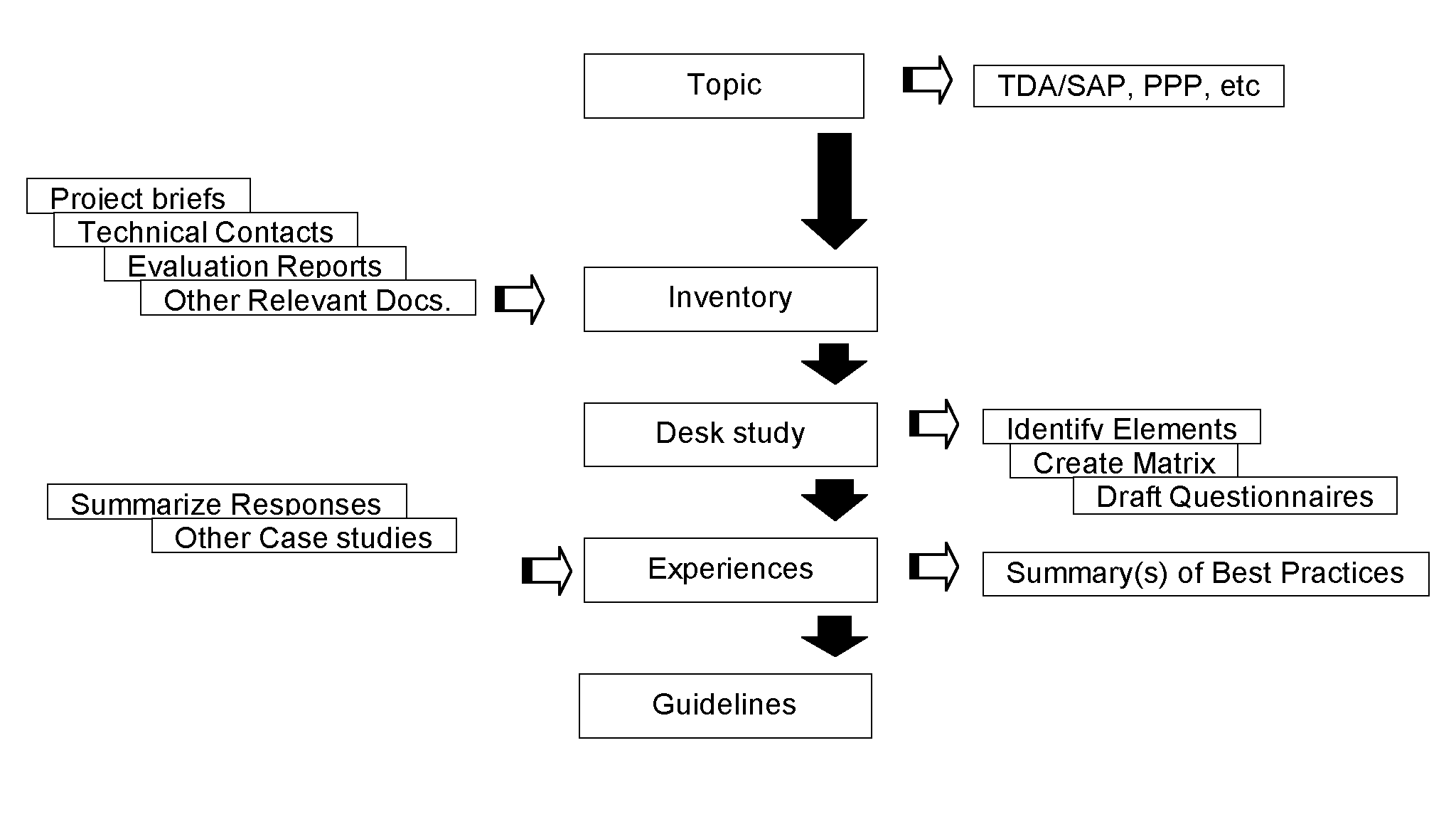
The approach embodied in this methodological approach can be generically represented in the form of the diagram in Figure 1 below. If the procedure outlined in this document can be demonstrated to be an effective approach to the identification of best practice leading to the preparation of “practitioner guidelines” for the conduct of Transboundary Diagnostic Analyses, the procedure should be applicable to the preparation of similar guidelines on other topics of relevance to the implementation of GEF projects.
8. REFERENCE
Bewers, J.M. and J.I. Uitto, 2001. “International Waters Program Study.” Evaluation Report #1-01, Global Environment Facility, Washington, D.C.
Table 1
Sequence of Activities
|
Phase |
Activity |
Outputs |
|
1. |
Analysis of TDA Guidelines |
|
|
1.1. |
Review of TDA guidelines for the identification of components and procedures |
Identification of TDA components amenable to analysis within GEF TDA-SAP projects |
|
1.2. |
Description of procedure for the preparation of “practitioner guidelines” |
Specification of process for practitioner guideline preparation |
|
2. |
Initial evaluation of TDAs to determine components amenable to analysis |
|
|
2.1. |
Initial screening of TDA-SAPs |
Preliminary matrix of TDAs vs components |
|
2.2. |
Initial analysis of GEF TDAs |
Initial assessment of procedures used to complete components. Initial matrix of TDAs versus components |
|
3. |
Information gathering process |
|
|
3.1. |
Preparation of information circular |
Information circular |
|
3.2. |
Distribution of circular |
|
|
3.3. |
Receipt of expressions of interest and other suggestions |
Collated responses from recipients of circular |
|
3.4. |
Preparation of questionnaires |
Completed set of targeted questionnaires |
|
3.5. |
Distribution of questionnaires |
|
|
3.6. |
Receipt of returns |
Responses from recipients of the questionnaire |
|
3.7. |
Follow up to encourage submission of outstanding responses to questionnaire |
Additional responses |
|
3.8. |
Initial collation of responses by TDA |
Overall collation of initial responses to the questionnaire |
|
3.9. |
Supplementary requests for information |
Record of supplementary questions and responses |
|
3.10. |
Final collation of responses by TDA component |
Final collation of all responses and associated matrix of TDAs versus components and processes |
|
4. |
Information analysis |
|
|
4.1. |
Confirmation of TDA elements amenable to analysis |
List of elements amenable to analysis |
|
4.2. |
Evaluation of processes used and degree of effectiveness |
Collation of procedures used and judgements of their effectiveness |
|
4.3. |
Assignment of weightings based on suitability and effectiveness of process |
Matrix of TDAs versus components containing assigned weightings |
|
4.4. |
Identification of best practice for TDA components |
Specification of examples of best practice for specific TDA components |
|
5. |
Preparation of “practitioner guidelines” |
|
|
5.1. |
Drafting of practitioner guidelines |
Draft guidelines |
|
5.2. |
Review by selected international and local experts |
Collation of reviews |
|
5.3. |
Revision of draft guidelines |
|
|
5.4. |
Completion of practitioner guidelines for use by IW Learn |
Final guidelines |
Figure 1
Generic Form of the Analytical Approach for the Identification of ‘best practice’ and the Preparation of ‘Practitioner Guidelines’
-