|
1
|
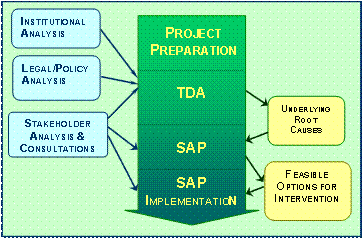
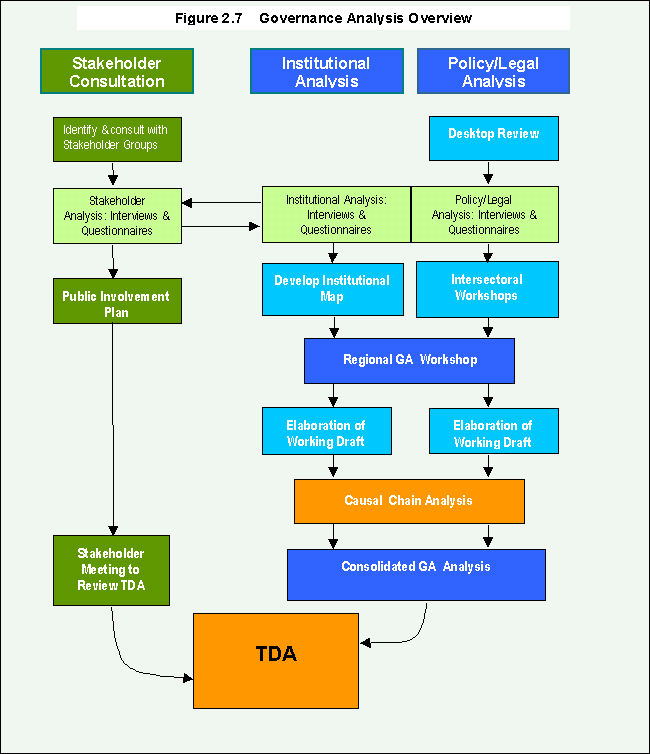
- Stakeholder Consultation
- Institutional Analysis
- Legal / Policy analysis
|
|
2
|
|
|
3
|
- Explain the role and importance of governance analysis in the TDA/SAP
process
- Explain the importance of regional comparative assessments
- Design a process for carrying out institutional and policy/legal
analyses
- Identify the strengths and weaknesses of the governance/stakeholder
aspects of several case-studies
|
|
4
|
- Explain how ethical, cultural and political issues are handled when
setting up stakeholder consultation
- Describe how to determine the relevant stakeholder groups
- Describe potential problems in ensuring participation
- Design a stakeholder interview
- Critically assess stakeholder questionnaire design
- Describe how to set up and conduct a meeting with a group of
stakeholders
|
|
5
|
- Describe the aims of an institutional analysis and its basic components
- List the macro-institutional aspects that should be taken into account
|
|
6
|
- Explain the need for, and scope of, legal/policy analysis in the TDA
- Describe a basic approach for analysing policy/legal content,
implementation, compliance and enforcement
- Appreciate the need for the policy/legal analysis to be integrated into
the Causal Chain exercise
|
|
7
|
- GENERAL PRINCIPLES OF GOVERNANCE
|
|
8
|
- NOT ALL PUBLIC POLICY OR SUSTAINABLE DEVELOPMENT ISSUES CAN BE SOLVED BY
GOVERNMENTS
- POWER AND DECISIONS ARE ALSO EXERCISED BY SOCIAL ORGANIZATIONS AND
ACTORS
- GOVERNANCE ANALYSIS CAN THUS BE CONSIDERED A CORNERSTONE OF
SUSTAINABILITY AND EFFECTIVENESS IN THE TDA-SAP PROCESS
|
|
9
|
|
|
10
|
|
|
11
|
- Consultation with all stakeholders dominates the whole TDA/SAP process
- Understanding of policy and institutional frameworks (including
budgetary) provides crucial information for SAP formulation and
implementation
- Enables the SAP elaboration process to keep its ‘feet on the ground’
|
|
12
|
- Should be carried out by a group of independent experts (the GA team)
- A good option is an independent research centre or NGO with expertise in
at least some of the relevant areas.
- mechanisms are necessary for ensuring a thorough analysis of the
regional dimension
- The Technical Task Team (TTT) must supervise work in this area
carefully, to ensure coordination of the time-frames and development
themes among the various countries.
|
|
13
|
- Refer to Pages 23 and 24 of the Participant’s Manual
|
|
14
|
- STAKEHOLDER ANALYSIS & CONSULTATION
|
|
15
|
- Stakeholders are any party that is involved in or affected by an
environmental problem or its solution.
- Consequently, a wide range of stakeholders are involved in a typical
TDA/SAP process.
|
|
16
|
|
|
17
|
|
|
18
|
|
|
19
|
- Stakeholders should be frequently consulted from the initial
identification of the problem, through the fact-finding phase, to the
discussion of possible options and the agreement on quality objectives
- Should be formed into committees who choose the expert analysts, and
take part in brainstorming of possible and practicable solutions
|
|
20
|
|
|
21
|
- DURING THE PREPARATORY PHASE:
- Identify and consult with stakeholder groups
- Conduct Stakeholder Analysis and Power analysis
- Prepare Public Involvement Plan (PIP)
- WHEN THE TDA REPORT IS IN DRAFT:
- Hold Stakeholders meeting to review TDA
- WHEN THE SAP REPORT IS IN DRAFT:
- Hold broad–based consultations to endorse SAP.
|
|
22
|
|
|
23
|
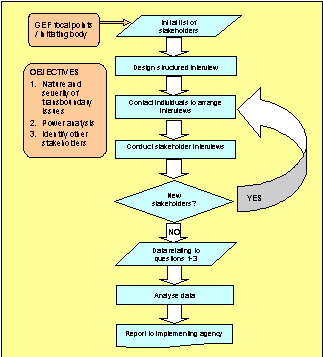
- KEY OBJECTIVES:
- To identify perceptions regarding the nature and severity of the
problems (which feeds into the preliminary analysis of transboundary
problems)
- To identify the main persons with power to resolve the issues and
problems (a ‘power analysis’)
- To identify stakeholders not appearing on the initial list.
|
|
24
|
|
|
25
|
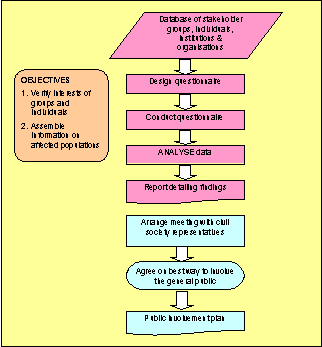
- Remember: The stakeholder analysis is a prerequisite for formal project
approval
- It is different from the initial identification and consultation
process, as it tries to verify the interest of groups and individuals in
the project concept.
|
|
26
|
- SALIENT CHARACTERISTICS:
- The analysis is made on the basis of structured questionnaires
- The analysis should include information on the affected populations,
and on the relevant organisations
- Power Analysis: This is an informal opinion survey, which seeks to
identify who are the real leading actors and decision-makers.
|
|
27
|
|
|
28
|
- Objective:
- The PIP describes the strategy chosen to build a system for
participation of a large number of stakeholders in the process of
assessment, management, protection and rehabilitation of the
environment.
|
|
29
|
- Procedure: the representatives
meet with key members of the TTT and the facilitator to:
- learn about the TDA/SAP process
- examine the project concept and stakeholder analysis
- agree on the best means of involving the general public
- This dialogue represents another foundation stone in the stepwise
consensus building process.
|
|
30
|
|
|
31
|
- Salient characteristics:
- Should involve at least one meeting of the key stakeholders
- Documentation needed:
- Draft executive summary in relevant languages
- Graphical representation of the impacts and immediate causes
- A public version of the TDA
|
|
32
|
- The regional draft SAP and appropriate NAPS should be endorsed in each
participant country
- Should be conducted under the auspices of the National Interministry
Committee (NIC)
- Should include broad–based consultations with affected populations and
stakeholders
|
|
33
|
- Refer to Page 30 of the Participant’s Manual
|
|
34
|
|
|
35
|
- Centres on key institutions or organizations that either have direct
mandates for environmental management or whose activities have
environmental impacts (especially sectoral line agencies)
- It is not limited to government agencies, but includes private sector
organisations, community-based organisations, academic and research
institutions
- Both formal and informal actors must be included
|
|
36
|
|
|
37
|
- It is an overview of the political structure of the countries involved.
- It looks at the form of government, the balance between the different
branches, and characteristics of each, taking into account the relative
importance of environmental matters
- It should review issues such as:
|
|
38
|
- Objective: to develop an institutional map that describes as many key linkages
and relationships as possible among the various actors
- Focus: the main or “obvious” institutions and organisations that are
relevant to environmental management & key sectoral agencies.
- Analysis: will zoom-in on particularly pivotal points or relations
identified by the GA team or through the causal chain exercise.
|
|
39
|
|
|
40
|
|
|
41
|
|
|
42
|
- What Is it? is a thorough overview of relevant instruments, with special
emphasis on their actual implementation, compliance and enforcement.
- Aims? to provide bases for recommending policy and legal reforms
- Purpose? Identify and build up linkages between the TDA-SAP process and
existing development and environment plans
|
|
43
|
- Involves formal aspects of policies and legislation specifically
directed at the environment as well as sectoral policies that have
significant environmental impacts
- Key elements to be included in this analysis are priorities for action
and for policy development contained in:
- existing national development plans/strategies
- national environmental strategies/plans
- relevant investments
|
|
44
|
- Examples of basic issues that need to be looked at:
- Are policy-making processes largely sectoral, or is there room for
inter-sectoral discussion and decision-taking?
- Is there conflict between any sectoral policies and laws?
- What are the environmental impacts of sectoral policies?
- Has priority been given to controlling/remediating environmental impacts
over strategies for preventing environmental impacts, or vice versa?
|
|
45
|
- Issues under consideration:
|
|
46
|
|
|
47
|
- To enable sectoral experts to gain insight into the inter-sectoral
linkages, and the environmental impacts that they may generate
- To help identify conflicting policies and also synergies
- To sensitise experts (e.g. energy, mining, transport) to the
environmental dimension of their sector and the challenges of sound
environmental governance
|
|
48
|
- A second draft of the policy/legal analysis is distributed to
corresponding GA Teams in other countries
- The event enables them to compare the respective national policy/legal
frameworks, and to provide inputs for the regional analysis
|
|
49
|
|
|
50
|
- There are close parallels in the development of the three components of
governance
- Synergies between them and the causal chain analysis should be exploited
- Stakeholder identification and analysis are used to gather information
on all three components of GA as well as for the scientific TDA
fact-finding
- The information is gathered at the same time, using the same
instruments, but the information is used in different ways
- Though the three elements of Governance Analysis are carried out in
parallel, then they are integrated into the TDA
|

 Notes
Notes