|
1
|
- Causal Chain analysis
- Governance analysis
- Integration and Submission of the TDA
|
|
2
|
|
|
3
|
- Causal Chain Analysis
- Describe the purpose and principles
- Describe different approaches used to develop causal chains
- Explain the benefits and difficulties in using a sectoral-based approach
- Define the immediate sources/causes, the underlying socio-economic
causes and the root causes of a particular transboundary problem
- Explain the incorporation of governance analysis into the TDA
- Critically review causal chains
|
|
4
|
- Integration and submission of the TDA
- Construct an integrated framework for a draft TDA (based on case study
material)
- Describe the process involved in the production of a draft TDA
- Explain the most appropriate methods available for presenting data and
information
- Explain the linkages between the content of the TDA document and the SAP
- Describe the process of submitting the draft TDA for approval
|
|
5
|
|
|
6
|
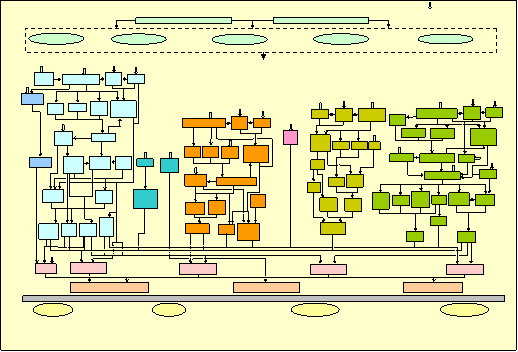
- A causal chain is a series of statements linking the causes of a problem
with its effects
- Each link in the chain is forged by answering the question “why? - what
is the cause?”
|
|
7
|
|
|
8
|
- IN PRINCIPLE……
- in each of the sectors involved there will be a sectoral causal chain,
which may be connected at some points to the chain of another sector
|
|
9
|
- HOWEVER……
- Immediate causes, and root
causes, tend to span several sectors.
It is often only at the underlying causes level that there is a
clear sectoral distinction
|
|
10
|
- Agriculture
- Fisheries and aquaculture
- Urbanisation
- Industry/mining
- Energy Production
- Transport/infrastructure
- Tourism, leisure and recreation
- Defence
|
|
11
|
- BECAUSE……
- that is the way modern society is organised and governed
- HOWEVER……
- sectors interact
- sectors may share root causes
- one sector may cause effects in other sectors
|
|
12
|
- ‘Environmental problems should be dealt with at their roots, irrespective
of sectoral or geographical boundaries’
- 1992 UN
Conference on Environment and Development
|
|
13
|
- …… is how to analyse problems both sectorally and holistically; then
develop strategies holistically
|
|
14
|
|
|
15
|
- USUALLY, IMMEDIATE CAUSES ARE:
- The direct technical causes of the problem.
- They are predominantly tangible
- Have distinct areas of impact (with the exception of causes such as atmospheric
deposition)
|
|
16
|
- Should be quantified, prioritised and geographically located using maps
- Pressure Indicators used for quantifying the immediate causes can be
used again later as stress reduction indicators in the SAP
|
|
17
|
- Examples of immediate causes are shown on Page 8 of your Manual
- Discussion
|
|
18
|
- Underlying causes are those that contribute to the immediate causes
- They can broadly be defined as:
|
|
19
|
|
|
20
|
|
|
21
|
|
|
22
|
- Root causes are often related to fundamental aspects of macro-economy,
demography, consumption patterns, environmental values, and access to
information and democratic processes
- In terms of importance to the degradation of aquatic environment, root
causes are often the most difficult to assess
|
|
23
|
- ROOT CAUSES CAN BE DIVIDED INTO THE FOLLOWING CATEGORIES:
- Governance
- Population pressure and demographic change
- Poverty, wealth and inequality
- Development models and national macro-economic policies
- Social change and development biases
- Education and formulation of values
|
|
24
|
- Most of these are beyond the scope of GEF intervention, but it is useful
to document them for two reasons:
|
|
25
|
|
|
26
|
|
|
27
|
- WHAT STEPS ARE INVOLVED?:
- Initial TTT brainstorming meeting to determine the key elements of each
STEP
- Key members of the TTT should work intersessionally, to finalise the
causes and construct the causal chains
- The complete draft causal chains should be presented to the TTT for
their approval
|
|
28
|
- Do not underestimate the time needed to carry out this process
- Ensure that the TTT members working on this process cover all the areas
of expertise needed
- Work in a stepwise manner. Start with the immediate causes and work
towards the underlying causes
- Different aspects can be carried out in parallel
|
|
29
|
- Prior to the workshop (s), have your methodology well developed and
understood by key members of the TTT
- Do not be over ambitious and …….remember:
|
|
30
|
|
|
31
|
|
|
32
|
|
|
33
|
|
|
34
|
|
|
35
|
|
|
36
|
|
|
37
|
- TABULAR APPROACH IN 3 SYNTHESIS MATRIX TABLES:
- Table 1: 7 Major Problems and 3 Main Root Causes
- Table 2: Areas Where Action is Proposed
- Table 3: Analysis Table of Causes, Impacts and Solutions of Identified
Problems
|
|
38
|
|
|
39
|
|
|
40
|
|
|
41
|
- BECAUSE……
- Governance frameworks provide the context within which human actions
(whether as drivers or as responses) take place
- Without a basic understanding of the institutional relationships and
responsibilities at all levels, and existing policy/legal frameworks,
decisive issues may be overlooked or wrongly perceived, and impractical
recommendations may emerge
|
|
42
|
- Governance analysis should describe the dynamic relations within
political and social structures that underpin such aspects as
legislative and regulatory frameworks, decision-making processes and
budgetary allocations.
|
|
43
|
- Example: Underlying causes of eutrophication:
- Ineffective national/regional policies/management plans
- Deficiencies in institutional capacity
- Deficiencies in legislation
- Deficiencies in enforcement
|
|
44
|
- PRODUCTION & SUBMISSION OF
- COMPLETE DRAFT TDA
|
|
45
|
- WHO IS RESPONSIBLE?
- OPTIONS TO CARRY OUT THE INTEGRATION:
- Appointment of a
consultant/specialist/academic to act as a single author
reporting to the Project Manager
- Appointment of TTT experts to draft individual Chapters of the TDA ,
with an appointed TTT Manager as a focal point reporting to the Project
Manager
- TTT experts all contribute to the drafting process, and report
individually to the Project Manager
|
|
46
|
|
|
47
|
- Review Steps
- Main stakeholder meeting (may
include review by a wider audience)
- Review meetings for the Interministry committees.
|
|
48
|
- A good TDA will make it easier to develop logical, sustainable and
politically acceptable solutions
- The findings from the TDA, particularly those relating to the priority
problems, sectors and causes will be used in the first stages of the SAP
development
- The long-term Eco/WR QOs should flow from the priority problems, sectors
and causes identified in the TDA
- SAP development should involve developing a matrix of options and
identifying which part of the TDA causal chain they address
|

 Notes
Notes