5 INSTITUTIONAL, LEGAL AND POLICY FACTORS TO BE OVERCOME
5.1 Political Map of the Dnipro Basin
There are certain differences between the countries in terms of political structure and this has implications regarding the legal framework, systems and practice of environment protection and nature and water use management in the Dnipro Basin.
Republic of Belarus
The Republic of Belarus is a unitary social democratic state governed by the rule of the law (the RB Constitution, Article 1). Belarus is bound by the principles of international law (the RB Constitution, Article 8). The powers are shared between legislative, executive and judicial branches of government.
Belarus is a presidential republic where the President is the chief of state, the guarantor of the Constitution and human and civil rights and freedoms. According to the Constitution, the supreme legislative power is exercised by the bicameral Parliament, consisting of the Chamber of Representatives and the Council of the Republic. The members of the Chamber of Representatives are elected by universal suffrage and secret voting. The Council of the Republic includes regional representatives elected by regional (Oblast) councils and the Minsk City Council. The President of the Republic of Belarus appoints eight members of the Council.
The right of legislative initiative rests with the President, members of the Chamber of Representatives, the Council of the Republic, the Government, and citizens entitled to suffrage forming a group of at least 50,000 people. Draft laws, whose adoption is likely to effect the state budget, may be introduced into the Chamber of Representatives only subject to presidential approval (or that of the Government, based on presidential assignment). A draft law should first be passed by the Chamber of Representatives and by the Council of the Republic thereafter. The Council of the Republic can approve or reject a draft law passed by the Chamber of Representatives.
Executive powers rest with the Council of Ministers, accountable to the President and the Parliament of the Republic of Belarus. The Government (Council of Ministers) consists of the Prime Minister, Deputy Prime Ministers and Ministers. Local governance and self-governance functions are carried out by the local executive and administrative bodies on the basis of referenda, etc.
Judicial powers in Belarus rest with the Courts. The Constitutional Court controls compliance of regulations within the Constitution. The Republic of Belarus is bound by the principle of the supremacy of law. Actions of the Government, its bodies and officials are governed by the Constitution and laws adopted according to the Constitution.
There are two categories of property, i.e. state property and private property. The state enjoys the exclusive right to own mineral reserves, waters, and forests. Ownership of farmland is also held by the state.
According to the Constitution, every individual is entitled to a safe and favourable environment, and compensation of damage can be incurred as a result of the violation of this right. The state government holds control over the uses of nature resources, to ensure safe living conditions, and the conservation and rehabilitation of the environment. The Constitution of the republic of Belarus guarantees the right of citizens to access, store and disseminate complete, reliable and timely information on the activities of governmental bodies and public organisations; political, economic, cultural and international events, and on the state of the environment.
Russian Federation
The Russian Federation (Russia) is a democratic federal republican state governed by the rule of law. Russia’s administrative territorial divisions include Republics, Krais (territories), Oblasts, Federal Cities, Autonomous Oblasts, and Autonomous Okrugs, being the equal constituent members of the Russian Federation. The state (the federal republic) has its own Constitution and legislation. Each Krai, Oblast, Federal City, Autonomous Oblast, and Autonomous Okrug has its own Charter and legislation. The federal form of government of the Russian Federation (RF) is based on its integrity as a state, the unity of the state power, and the differentiation of functions and responsibilities held by the state government bodies of the Russian Federation and those RF constituent members.
In the Russian Federation, the state powers are shared between the RF President, the bicameral Federal Assembly (the Federation Council and the State Duma), the RF Government, and the RF Courts. Within the jurisdiction of the RF constituent members, state powers are exercised by their respective government bodies. Functions and responsibilities of the RF state government and the governments of the RF constituent members are differentiated on the basis of the RF Constitution, the Federal Treaty and other agreements relating to powers and responsibilities of the RF members.
Common principles and provisions of international law, and international agreements to which the RF is a party are integral parts of its legal system. The provisions of international agreements signed and ratified by the Russian Federation are legally binding on it. A ratified international agreement forms part of the national law and prevails over it in the event of any inconsistency between the two.
The Federal Government is responsible for policy and strategic planning in all areas of national economic, environmental, social and cultural development. All issues of nature use, environmental protection and safety, protected area management, emergency planning, written law on nature resources (land, water, forest, and mineral reserves) and environment protection, are managed jointly by the Federal Government and the RF constituent member governments. The RF constituent members enjoy state powers in all their entirety on all other issues which are not part of the exclusive RF Government authority and/or joint responsibility of the federal and regional (constituent member) government.
On issues falling within its exclusive jurisdiction, the RF Government adopts federal constitutional laws and federal laws that are directly effective in the territory of the Russian Federation. On issues managed jointly by the federal and constituent member governments, federal laws are made and need to be enacted by the RF constituent members by adopting/amending their regional legislation.
The RF President is the chief of state, holding the power to define key directions of domestic and external policy of the state, and is governed by the RF Constitution and federal laws. The Federal Assembly, or the RF Parliament, is the bicameral representative and legislative body of the Russian Federation, consisting of the Federation Council and the State Duma. The right of legislative initiative rests with the RF President, the Federation Council and its members, the State Duma members, the RF Government, and legislative (representative) bodies of the RF constituent members. Federal laws are passed by the State Duma and introduced into the Federation Council for review/approval. Executive powers are held by the RF Government. The Chairman of the RF Government is appointed by the RF President subject to approval by the State Duma.
The Court holds the exclusive power to administer justice. Judicial powers are exercised by means of Constitutional, Civil, Administrative and Criminal Court proceedings.
On the basis of self-governance arrangements, local communities have powers to manage local issues relating to the possession and the use and disposal of property owned by municipalities. Local self-governance authorities independently manage municipal property. They also plan, approve and implement the local budget, set local taxes and charges, maintain adequate and efficient police forces for the protection of public order; and manage other local issues.
Land and other natural resources can be owned by an individual, the state, a municipality, etc.
According to the RF Constitution, ‘each and every individual is entitled to enjoy a safe and favourable environment; access to reliable information on its condition; and compensation of damage incurred to health and/or property as a result of a breach of the environmental law’ (Article 42).
Ukraine
According to the Ukrainian Constitution, Ukraine is a sovereign independent democratic social state governed by the rule of the law. Ukraine is a unitary state, based on the principle of territorial integrity, and the consolidation/centralisation/decentralisation of state powers.
State powers are shared between legislative, executive and judicial branches of government. The sole legislature of Ukraine is its Parliament, or Verkhovna Rada of Ukraine, elected by universal adult suffrage and secret voting. The right of the legislative initiative is shared between the President of Ukraine, the Verkhovna Rada members, the Cabinet of Ministers of Ukraine, and the National Bank of Ukraine. The President of Ukraine is the chief of state, thereby being a guarantor of the sovereignty and territorial integrity of Ukraine, its Constitution and the rights and freedoms of its citizens. The Cabinet of Ministers is a supreme executive body, accountable to the President and Verkhovna Rada.
Local state government administrations perform executive government functions at the level of Oblast, Rayon (District), and Republican City. Chiefs of local state government administrations are appointed and dismissed by the President of Ukraine upon submission of the Cabinet of Ministers.
The Court is a supreme and sole body of justice. Court jurisdiction covers the whole and complete range of legal relationships emerging/created in the country.
Local self-governance is recognised and respected in Ukraine, where the domestic statute defines the right of a local territorial community living in a rural or urban settlement to manage local issues independently, although in accordance with the Constitution and Laws of Ukraine. Within the scope of their competence defined by Ukrainian Law, local self-governance authorities pass decisions that are legally binding in their respective jurisdictions. They manage the property owned by local territorial communities, approve local development programmes and supervise in their implementation.
Land, mineral reserves, air, water and other nature resources within the territory of Ukraine and its continental shelf constitute the property of the people of Ukraine, and this property is managed on their behalf by the state government and local self-governance bodies. Land enjoys the title as a main national treasure. Enjoyment of ownership rights over land is guaranteed by the Constitution to citizens, legal entities, and the state.
The Constitution of Ukraine declares that maintaining ecological safety and balance within the territory of Ukraine, and overcoming the aftermath of the Chornobyl accident is the state government responsibility.
According to the Constitution, each and every person is entitled to safe environmental conditions and compensation of damage arising from/associated with infringement of this right. Every citizen is entitled to free access to environmental information. Under no circumstances can this information be treated as classified and/or confidential.
Commonwealth of the Independent States (CIS)
Belarus, Russia and Ukraine are both founders and members of the Commonwealth of the Independent States. The CIS is based on the principle of the sovereign equality of all its members, where the member countries act as independent and equal entities under international law. The CIS neither qualifies as a state nor enjoys any supernational powers.
The objectives of the Commonwealth are set out below:
· Promotion of cooperation in political, economic, environmental, humanitarian, cultural and other areas;
· Integrated and balanced economic and social development of the member countries; interstate co-operation and integration;
· Enforcement of human rights and freedoms in line with commonly recognised principles and provisions of international law, and OSCE directives;
· Co-operation between the member countries on maintaining peace and security world-wide;
· Support of free communication, contacts and travels of the citizens of the member countries within the Commonwealth;
· Mutual legal support and co-operation in all areas of legal relationships;
· Amicable settlement of disputes and conflicts between the member countries.
Key joint activity areas dealt with on an equitable basis and via the common co-ordinating bodies:
· Protection and enforcement of human rights and freedoms;
· External policy/activity co-ordination;
· Co-operation in developing a common market and customs policy;
· Co-operation in developing transportation and communication networks;
· Protection of human health and the environment;
· Social and migration policies;
· Combating organised crime;
· Cooperative defence policies and protection of external frontiers.
The legal basis of interstate relations within the Commonwealth is set out in a suite of multilateral and bilateral treaties and agreements signed by the member countries on various issues.
The Council of the State Chiefs is a supreme body of the Commonwealth, where the chiefs of member countries discuss and make decisions on all key issues relating to the CIS activities in the mutual interest of the member nations. The Council meets biannually in order to coordinate the cooperation of the national executive authorities in economic, social and other areas of common interest. Council decisions are made/passed on the basis of consensus.
The Union of Belarus and Russia
The Union’s Treaty was signed by the Presidents of Belarus and Russia on 05 April 1997, and its functions and powers are defined in the Union’s Charter. Either member of the Union retains its sovereignty, independence and territorial integrity, Constitution, national flag, national emblem, and other statehood essentials.
The Union’s objectives are:
· Strengthening brotherhood, friendship and close cooperation between the Russian Federation and the Republic of Belarus in political, economic, social, military, research, cultural and other areas;
· Improved living standards and a conducive climate for the harmonious development of the people;
· Sustainable socio-economic development of the member countries on the basis of the consolidation of their physical and intellectual potential and the introduction of market-based economic instruments;
· Approximation of national laws, development of the Union’s legal framework; maintaining security and defence capacity of the member countries; acting jointly in combating the crime;
· Support in maintaining Europe’s security and furthering mutual co-operation in Europe and worldwide.
The main legal aims of the Union are:
· Development of a legal framework to facilitate further integration of the member countries and unification and consistent development of national legislation;
· Co-operation in the codification and systematisation of laws and regulations, mutual legal support and the establishment/development of a common database on various legal issues.
The scope of issues/functions jointly managed by the Union and its member countries includes the implementation of a coordinated policy in the field of environment protection, hydrometeorology, ecological safety, emergency response, and mitigation of the impacts of the Chornobyl accident.
5.2 National Environmental Strategies Adopted by the Riparian Countries
The riparian countries have already developed and adopted their national environmental strategies where they declared that maintaining ecological safety, protecting the environment, and addressing crucial environmental issues at a global scale through active involvement of the Basin countries in international action are of top priority for the three nations. These documents set out the legal and conceptual framework for further improvement of national environmental legislation, and environmental action planning/implementation processes. The aim is to ensure the protection and restoration of nature resources, and enforcement of a citizen’s right to enjoy a safe environment, as guaranteed by the national constitutions of the riparian countries of the Basin.
Republic of Belarus
The key principles, approaches and goals of the national environmental policy are set out in the National Sustainable Development Strategy of the Republic of Belarus (1997). The main objectives of the national environmental policy of Belarus are:
· Ensuring safe environmental conditions for people;
· Sustainable use and conservation of natural resources;
· Strengthening the legal and economic framework for environment protection and management in the interest of current and future generations.
The National Sustainable Development Strategy of Belarus emphasises that economic development can only be sustainable if it takes full account of environmental considerations, including protection of the environment and the sustainable use of natural resources, conservation of biodiversity and the environmentally safe application of high technologies. The Strategy sets out new principles that governs interactions between nature, society, and man, where the ultimate objective of technical and socio-economic development is defined as ‘a man’s spiritual and physical health in a favourable and safe environment’. The involvement of Belarus in managing and tackling global environmental issues, and in particular ensuring the rational use and protection of water resources, is seen as one of the key principles of the National Environmental Policy Concept adopted by the Republic of Belarus. The National Environmental Policy Concept (1995) provides a clear indication of policy priorities, namely:
· Enforcement of the Constitutional right of citizens to enjoy a safe and favourable environment;
· Securing the right of future generations to the use of nature resources;
· Compensation of damage incurred to human health and/or property as a result of the violation of this right.
The main principles of the National Environmental Policy Concept are presented below:
1) State ownership of all natural resources, with a possibility to grant some ownership rights to legal entities and natural persons. The only exception is land as a resource that may be subject to privatisation;
2) Protection of the environment, its living and non-living parts, in combination with the establishment of a system of nature reserves and protected areas;
3) A legally-defined and state-financed system of monitoring and control of the state of the environment, status of protection and use of nature resources, safety of industrial and agricultural products for the environment and human health;
4) A legally defined national system for the implementation of a multistage ecological expertise procedure;
5) Involvement of the public, local communities and non-governmental organisations in environment protection and control actions; government support of the activities of non-governmental environmental organisations;
6) An economic framework of environment protection, featuring: (a) the introduction of a ‘polluter pays’ principle; (b) the encouragement of environmental improvements through the introduction of soft loan and tax concession/credit arrangements; (c) state support to industries and organisations, irrespective of their ownership, committed to implement resource- and energy-saving improvements, and/or waste recycling/minimisation actions;
7) Increased use of the judicial system for enforcement of environmental legislation and the prosecution of offenders;
8) Enhancement of the legislative framework to fully and effectively introduce the ‘polluter pays’ principle at the national and interstate level;
9) Participation in tackling the global environmental issues, in particular: (a) conservation of biodiversity; (b) ozone layer protection; (c) prevention of global climate change due to anthropogenic factors; (d) conservation and restoration of forests; (e) development and improvement of nature reserve capacity; (f) control and regulation of trade operations of rare and endangered species, both plant and animal.
Russian Federation
The RF Environmental Doctrine was approved by the RF Government Resolution of 31 August 2002. It sets out the objectives, priority action areas, approaches and principles of the long-term national environmental policy. The preamble of the document specifies the key factors contributing to environmental degradation in the Russian Federation, namely:
· Reliance of the country’s economy on resource-extracting and resource-intensive sectors, leading to the progressive depletion of natural resources and environmental degradation;
· An inefficient economic framework of environment protection and nature use management and in particular, a lack of a system of rent charges and royalties for the use of natural resources;
· An extremely weak institutional capacity for the management and control of the uses of natural resources;
· A high proportion of economic activities based on the use of natural resources is accounted for by shadow businesses;
· Poor technical and organisational framework of economic activities and the progressive depreciation of fixed assets;
· The consequences of economic decline and relatively low living standards;
· The low level of public awareness and education on environmental issues.
Nature conservation and the improvement of the environment are defined as top priorities of government and society. The natural environment should become an integral part of the system of socio-economic relationships, being an invaluable component of the national wealth.
The Environmental Doctrine is based on the RF Constitution, federal laws and regulations and international treaties of relevance signed/ratified by the Russian Federation. It is supported by fundamental scientific knowledge in a broad range of disciplines, and the results of the assessment of the existing state of the environment and its implications to human health. It also recognises the value of Russia’s ecosystems and natural resources from the perspective of global ecological processes. It takes full account of global and regional features and the interactions between humans and nature.
The ultimate strategic objectives of the national environmental policy are: conservation of natural ecosystems; maintaining their integrity and function in the interests of sustainable development; ensuring a better quality of life; improved human health and an enhanced demographic situation; and an improvement in the country’s security from the environmental perspective.
The following are considered prerequisite to the successful achievement of these objectives:
· The conservation and restoration of natural ecosystems, their biological diversity and self-regulation capacity, as a prerequisite to sustainable development of human society;
· Ensuring the sustainable use of natural resources and an equitable access to them for existing and future generations;
· Ensuring a favourable state of the environment as a prerequisite to improved quality of life and human health.
The main principles of the national environmental policy are as follows:
· Sustainable development which implies that economic, social and environmental aspects of development are taken into account on an equitable basis;
· Life-support functions of ecosystems rank higher than direct exploitation of their resources;
· Fair and equitable distribution of benefits and gains raised from the use of natural resources;
· Avoidance of adverse environmental impacts of economic activities and proper consideration given to longer-term environmental impacts;
· Rejection of those economic development projects whose environmental impacts are unpredictable;
· Introduction of the ‘user/polluter pays’ principle and compensation of damage incurred to human health and the environment by practices and activities that do not comply with environmental legislation requirements;
· Transparency of environmental information;
· Participation of civil society, local self-governance bodies and businesses in the preparation, review, approval and implementation of environment protection actions.
Together with the Environmental Doctrine, the Federal Law “On the Protection of the Environment” provides a basic framework of environment protection and management, setting out the legal basis of the national environmental policy.
Ukraine
The Law of Ukraine “On the Protection of the Natural Environment” was adopted in 1991, before the Constitution of Ukraine was written and ratified. As the Preamble of the Law reads, Ukraine’s environmental policy seeks to ensure conservation of the environment, protection of human life and health against negative effects of environmental pollution, the balanced interaction between society and nature and the sustainable use and reproduction of natural resources.
Although the Law defined and allocated responsibilities with regard to the formulation and implementation of the national environmental policy, it was only in 1998 that this policy took shape and was adopted as a specific piece of legislation. Such a delay severely impaired the overall strategic planning process, as there was no clearly defined set of environmental policy objectives and tasks that would provide a basis for social and economic development planning. It finally emerged in the form of a document approved by the Verkhovna Rada titled “Main Directions of the National Policy of Ukraine in the Field of Environment Protection, Nature Resource Use and Environmental Safety”.
The document emphasised that the implementation of environmental actions would require significant amounts of funding. It also states that the country’s financial capacity is likely to remain quite limited in the short- to medium-term (i.e. the next 5-10 years) and therefore clearly defined key priorities for action are required in order to maximise the benefits associated with their implementation. Given the actual environmental situation within Ukraine, the following key factors and criteria need to be taken into account:
· Human health in the Basin is adversely affected by environmental factors;
· Losses resulting from damage to and/or degradation of physical assets and natural resources leads to a decrease in production output;
· The deteriorated state and/or the threat of irreversible damage to biological and landscape diversity (e.g. meadows, pastures, lakes, rivers, forests, coastal and marine ecosystems, and mountain areas);
· The efficiency of environmental actions in terms of environmental and economic benefits.
The main priorities of the National Environmental Policy are:
· Ensuring the environmentally safe operation of nuclear facilities, protection of the environment and human health against radioactive contamination, mitigation of the effects and consequences of the Chornobyl accident;
· Environmental rehabilitation and drinking water quality improvement in Ukrainian river basins;
· Stabilisation and improvement of the environmental situation in urban and industrial centres concentrated in the Donetsk Region and the Dnipro Basin;
· Construction of new and the upgrade of existing municipal wastewater treatment facilities;
· Prevention of pollution of the Black Sea and Azov Sea and their environmental rehabilitation;
· Establishment of a balanced environment/natural resource management system, and economic restructuring through the introduction of environmentally friendly technologies in industry, energy, agriculture, construction and transport;
· Conservation of biological and landscape diversity and the improved management of nature reserves.
Harmonisation of Ukrainian legislation with EU laws is defined as one of the priority areas of the national environmental policy.
In the existing economic situation, the main focus of Ukrainian environmental policy is on low-cost and no-cost actions that are likely to achieve significant environmental benefits, in particular:
· Improved housekeeping in industry;
· Strict enforcement of technical standards regulating water consumption;
· Proper maintenance and operation of existing wastewater treatment facilities;
· Emergency avoidance;
· Maintaining the proper sanitary state of urban areas;
· Strengthening the control role of environmental authorities;
· Enforcement of legislation relating to the management regime of water protection zones and coastal protection strips;
· Control over storage and application of pesticides, mineral fertilisers and oil products.
5.3 National Environmental Programmes
National environmental policies provide a framework for the development and implementation of interstate, national, sectoral, regional and local actions aiming to achieve the policy’s priority objectives.
Republic of Belarus
A programme-based approach is widely used in the Republic of Belarus to address specific environmental issues. A range of existing environmental programmes includes the Nature Reserve Network Development Programme, the Programme for Mitigation of Adverse Effects of the Chornobyl Accident, the “People’s Health” Programme, the Resource-saving Programme, and “Drinking Water” Programme”.
All on-site environmental management improvements (including investments into the construction of wastewater treatment facilities, purchase of control equipment, etc.) are financed by natural resource users. Local budgets and budgetary environmental funds usually finance municipal utility development projects. National environmental actions and associated research activities are mainly financed by the state budget and the national environmental fund.
Russian Federation
In the Russian Federation, environmental management activities are mainly organised in the form of targeted national and regional programmes, for example:
· Federal Targeted Programme for 2002-2010 “Ecology and Natural Resources”, which includes the following components:
- Sub-Programme “Forests”;
- Sub-Programme “Water Resources and Water Bodies”;
- Sub-Programme “Environmental Quality Regulation”;
- Sub-Programme “Waste”;
- Sub-Programme “Support to the Protected Territories”;
- Sub-Programme “Conservation of the Baikal Lake and the Baikal Nature Reserve”;
- Sub-Programme “The Volga River Rehabilitation”.
· Federal Targeted Programme for 2000-2006 “Nuclear and Radiation Safety of Russia”, which includes the following components:
- Sub-Programme “Establishing a Common State Automatic Radiation Control System within the Russian Federation”;
- Sub-Programme “Reducing Human Exposure to Radiation and Pollution of the Environment by Radionuclides due to Technogenic Effects”.
· Federal Programme of Governmental Support to the State Nature Reserves and National Parks;
· Federal Targeted Programme “Land Monitoring in the Russian Federation“;
· Federal Fishery Sector Development Programme “Fish”;
· Federal Programme “Forest Restocking in Russia”;
· Federal Targeted Programme “Environmental Rehabilitation of the Volga River Basin and Prevention of the Degradation of the Volga Ecosystem” (“Revival of the Volga”).
Although a considerable amount of expertise in the development and implementation of targeted environmental programmes is in place, an environmental action programme for the Dnipro Basin has yet to be attempted.
Ukraine
The “Main Directions of the National Policy of Ukraine in the Field of Environment Protection, Nature Resource Use and Environmental Safety” have incorporated the key provisions of previously developed environmental programmes, and paved the way to the preparation of a number of more recent programmes, for instance:
· National Programme for Environmental Rehabilitation and Drinking Water Quality Improvement in the Dnipro Basin (approved by the Verkhovna Rada Resolution on 27 February 1997);
· Long-Term Programme for Nature Reserve Capacity Development in Ukraine (the “Nature Reserves” Programme);
· National Programme for Toxic Waste Management;
· The 2000-2005 National Programme for the Eco-Corridor Network Development;
· National Programme for Environmental Rehabilitation of the Black Sea and the Azov Sea (has the status of the Law of Ukraine approved by the Verkhovna Rada Resolution on 22 March 2001).
The main objective of the National Programme for Environmental Rehabilitation and Drinking Water Quality Improvement in the Dnipro Basin is to ensure: (a) the sustainable functioning of the Dnipro ecosystem; (b) good quality water supply; (b) a safe environment for human life and economic activities; and (d) the protection of water resources against pollution and depletion. In essence, this long-term programme seeks to achieve several interlinked strategic objectives, spanning the period up to 2010. These objectives are as follows:
· Reducing the anthropogenic load on water bodies;
· Ensuring the safe use of water resources to meet society’s needs;
· Maintaining the sustainable functioning of water bodies and their self-purification capacity;
· Establishing an efficient environment management structure and mechanisms to ensure conservation and sustainable use of water resources.
Currently, the programme is facing serious cuts in central government funding, a problem complicated by the inadequate institutional capacity for managing its implementation. Nonetheless, the progress of environmental action implementation has shown an increase since 2000, suggesting a positive effect of the overall economic revival in Ukraine. Figure 5.1 reflects the Programme budget in 1999-2000, broken down by main activity areas.
5.4 Key Areas of National Environmental Policy Development in the Riparian Countries
The current national environmental policies of the riparian countries are dynamically evolving to accommodate the sustainable development needs of the 3 countries. They are also developing to accommodate the commitment expressed by the countries to adopt globally accepted models describing the relationship between humanity and nature. The recent adoption by the riparian countries of key documents outlining the framework for implementing sustainable development strategies clearly illustrates the relatively early stage of his process.
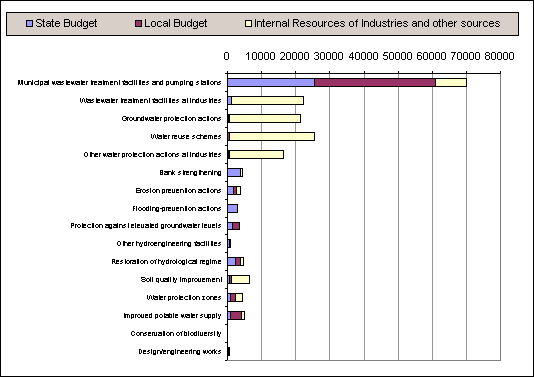
Figure 5.1 The Dnipro Programme budget in 1999-2000, broken down by main activity areas
(‘000 Ukrainian Hryvnyas)
Republic of Belarus
· Key tasks of the national environmental policy logically arise from the National Sustainable Development Strategy and include:
· The continuous improvement of environmental performance and eco-efficiency in all sectors of the national economy;
· Enhancement of the economic framework of environmental management by eliminating the ‘cost-plus’ practice; transition towards the principle of sustainable nature resource management; application of the ‘user/polluter pays’ principle to recover environmental costs;
· Incorporation of environmental considerations into restructuring and investment policy; transition towards an environmentally-oriented strategy of economic development;
· Establishing a mechanism for financing priority environmental actions;
· Incorporation of environmental considerations into site selection procedures for industrial development projects, taking full account of the natural resource distribution pattern and the assimilative capacity of the environment;
· The improved environmental safety of industries, equipment, technologies and materials;
· Creating a conducive environment and markets for eco-technologies, eco-products, and eco-services;
· Establishing reliable environmental monitoring systems;
· Increasing the credibility of enforcement; effective economic sanctions for non-compliance of environmental legislation requirements; and stronger administrative sanctions for officials engaged in concealment and/or misrepresentation of environmental information;
· Ensuring actions involving the rehabilitation and mitigation of the adverse effects of the Chornobyl disaster on the environment and human health are implemented;
· Raising public awareness on environmental issues;
· Ensuring the transparency of and access to information on the state of the environment, and prompt and objective notification about environmental accidents and emergency situations.
Russian Federation
In 2002, the RF Ministry of Natural Resources published a draft policy document titled “The Concept for Strengthening Governmental Capacity for Water Resource Use, Protection and Management”. This document sets out the framework for implementing national policy in the water management sector. Its underlying principles are as follows:
· Basinwide environment management planning and regulation of water uses;
· Avoidance/mitigation of potential adverse effects of management decisions taken on various water use issues;
· Emphasis on at-source mitigation of the adverse effects of water uses;
· Introduction of the ‘user pays’ principle and ensuring revenues raised from water fee collection finance the cost of water protection actions;
· Resource-saving;
· An ecosystem-oriented approach;
· Transparency and publicity of water management planning, balancing the interests of various stakeholder groups on the basis of legally defined priorities and procedures;
· Clearly defined and allocated functions and responsibilities of the federal/regional state government, local self-governance bodies, legal entities and individuals with respect to the state of water bodies, water management systems and facilities in order to the minimize the risk of water-related accidents and recover the costs incurred to human health and property as a result of unsustainable water resource management and/or water-related accidents;
· Interstate cooperation.
A number of key tasks have been identified to achieve the above-mentioned policy objectives, namely:
· Establishing a fully operational and effective institutional framework of water resource use, management and protection;
· Establishing and strengthening a water management infrastructure that would integrate companies and entities involved in various aspects of water management (e.g. maintenance of water sources, operation of hydroengineering facilities, etc.);
· Establishing a financial framework with clear and stable arrangements for financing the implementation of water management and protection actions/projects;
· The design and introduction of techniques and procedures for recording and evaluating water resources as a component of national wealth;
· Governmental support for strengthening the scientific framework of water management as a fundamental component of water resource use, protection and replenishment;
· Strengthening the legal framework and creating a conducive environment for investment and innovation in the water sector;
· Governmental support for socially important aspects of water management and protection activities;
· Enhancing the economic framework for the regulation and protection of water resources, thus creating a balanced mix of economic and administrative instruments;
· Establishing an insurance system in the water sector to cover all aspects of water resource management (e.g. use and protection of water bodies, operation of hydroengineering facilities, compensation of damage incurred to human health and the economy as a result of flooding events and other water-related accidents, etc.);
· Strengthening the monitoring capability in water the sector, establishing an integrated water management information system and the introduction of management decision support systems.
Ukraine
The document titled “Main Directions of the National Policy of Ukraine in the Field of Environment Protection, Nature Resource Use and Environmental Safety” outlines key priorities for the development and improvement of economic and environmental policies of Ukraine, which include:
· Incorporating environmental and ecological safety considerations into the country’s economic restructuring policy;
· Pricing policy reform, the incentive-based pricing of energy and fuel and a transition towards management systems based on the “user pays” principle;
· Establishing a new legal and economic framework for the regulation of relationships between relevant governmental bodies and natural resource users;
· Developing an effective environmental education and awareness raising system;
· Implementation of priority national environmental programmes;
· Enhancing economic instruments for the regulation of natural resource use;
· Transition towards a new concept of natural resource management based on the principles of sustainability and waste minimization.
The document emphasises that strategic planning and policing processes should be driven by the following priority objectives:
· Abatement of pollution to minimize adverse impacts on human health;
· A reduction of economic losses resulting from contamination and the depletion of natural resources;
· Ensuring the safe and sustainable functioning of ecosystems;
· Ensuring the effectiveness and efficiency of environmental actions.
The “Main Directions…” document emphasises that harmonisation of Ukrainian legislation with EU laws is among the key priorities of national policy. This reiterates the commitment expressed by the President, the Verkhovna Rada and the Government of Ukraine and stems from the Partnership and Co-operation Agreement signed between the EU and Ukraine on 14 June 1994. To this end, the Integration Strategy and Programme were developed and approved by the Presidential Decree of 14 September 2000. Priority objectives of the national environmental policy were reiterated and confirmed in the President’s message to the Verkhovna Rada of Ukraine, titled “The European Choice. The Outline Concept of Ukraine’s Social and Economic Development Strategy for 2002-2011”.
The “Main Directions” document also emphasises that priority environmental issues should be addressed in a continuous and consistent manner at the national, regional and industry level. The national environmental legislation framework should be developed in line with EU standards, providing a wider application of effective economic instruments (i.e. the phased introduction of the ‘polluter pays’ principle) to ensure the rehabilitation and sustainable use of natural resources.
Priority areas of environmental policy development include:
· Ensuring the environmentally safe operation of nuclear facilities, the protection of human health and environment and mitigation of the effects of the Chornobyl disaster;
· Improving drinking water quality;
· Improving the ecological state of rivers in Ukraine, in particular the Dnipro River;
· Stabilizing and improving the environmental situation in the urban and industrial centers of the Donetsk-Dnipro region;
· Construction/upgrade of new and existing municipal wastewater treatment facilities;
· Prevention of pollution of the Black Sea and Azov Sea and an improvement in their ecological state;
· Establishing a balanced natural resource use system and improving environmental performance in industry, energy, construction, agriculture and transport;
· Improving safety conditions in the areas of increased seismic activity;
· Conservation of biological and landscape diversity and expansion of nature reserves and protected areas.
5.5 Institutional Framework of Environment Protection and Management in the Riparian Countries
Republic of Belarus
The Ministry of Natural Resources and Environment Protection of the Republic of Belarus (Ministry of Environment) is a key governmental body with environmental management functions and responsibilities, dealing with:
· The development and implementation of uniform governmental policy in the fields of environment protection and the sustainable use of natural resources;
· Integrated management of environment protection activities in the country; coordination of related functions of other governmental bodies and legal entities;
· Control of environmental performance and natural resource uses on behalf of the government;
· Informing the public on the state of the environment and planned/implemented environmental rehabilitation actions, active involvement in developing/strengthening the environmental education and awareness-raising system, maintaining contact and cooperation with non-governmental environmental organizations;
· Maintaining and strengthening international cooperation within the scope of the Ministry’s mandate.
Environment and natural resource management is based upon a system of permits and bans, where the Ministry of Environment and its bodies (or other relevant authorities) set limits for each specific natural resource use category. Limits are also set for waste disposal and the discharge/emission of a range of parameters from point sources.
Ministry of Environment officials are empowered to take enforcement actions in cases of non-compliance (e.g., to restrict/suspend operations of non-compliant industries, draw up documented evidence of non-compliance cases and take punitive actions against offenders).
The state ecological expertise procedure (i.e., the equivalent of an EIA procedure), which is mandatory for all proposed development projects, is based on the same permitting system, where any development can only be permitted and financed if a positive statement of compliance has been produced as a result of this procedure.
The structure of the Ministry of Natural Resources and Environment Protection comprises the following elements:
· 6 Regional and the Minsk City Committees of Natural Resources and Environment Protection;
· 123 Municipality/District Inspectorates of Natural Resources and Environment Protection;
· the Belorussian Geological Research Company “BelGeology”;
· the Fishery Management Committee, responsible for protection, use and reproduction of fish/aquatic invertebrate stocks;
· a number of research institutes, namely:
- Belorussian Scientific Research Centre “Ecology” (BelNIC “Ecology”);
- Central Scientific Research Institute of Integrated Water Resource Management (CNIIKIVR Institute);
- Belorussian Scientific Research Institute of Geology (BelNIGRI Institute);
- Republican Remote Sensing and Environmental Research Centre “EcoMir”.
Other institutions and organisations with environmental management functions and responsibilities include:
· The State Committee of Land Resource Management, Surveying and Mapping;
· The Ministry of Health;
· The Ministry of Emergencies;
· The Ministry of Forestry;
· The State Committee of Hydrometeorology;
· The State Customs Committee (responsible for combating illegal exports of plants and animals, and illegal imports of hazardous goods and products);
· The Ministry of Internal Affairs (its ‘ecological police’ component is responsible for control of air pollution by mobile sources);
· The President Administration (responsible for management of national parks and nature reserves).
One of the key areas of national environmental policy, defined by the National Sustainable Development Strategy of the Republic of Belarus, is strengthening institutional capacity for environment protection and management and introducing effective legal and market-based economic instruments for environment management.
It is notable that the existing institutional framework for environment management in Belarus appears to have no arrangement for integrated river basin planning and management, which is considered as a major institutional weakness in the context of an overall Dnipro Basin rehabilitation and management strategy.
Russian Federation
Russia’s institutional framework of environment protection and management revolves around the Ministry of Natural Resources whose structure includes a number of organisations and institutions with various functions and responsibilities, namely:
1. The State Water Service (three departments: the water management department, the river basin planning department and the water resource department);
2. The State Geological Service (main departments: the mineral reserve management department, the geo-ecology and geological monitoring department and the inland sea-based mineral reserve management department);
3. The State Forestry Service (main departments: the forest resource use department, the forest reserve department and the forest reserve conservation and reproduction department);
4. The State Environment Protection Service (main departments: the environment action planning and co-ordination department, the bioresource management department, the biodiversity conservation department, the ecological safety department and the environmental audit department);
5. The State Service of Natural Resource Use and Ecological Safety Control;
6. The Minister of Natural Resource Administration (main departments: the state ecological expertise and environment quality regulation department, the legislation and regulation development department, the protected areas management department, the environment/emergency monitoring and forecasting department, the strategic planning and natural resource management department, the information and statistics department, the budget planning and implementation department, the economic instrument development department, the pricing, tariff-setting and fee collection department, the environmental research department, the metrology, certification and standardisation department, the environmental programme development department, the interministerial and interregional co-ordination department, the international co-operation department and the public relations department);
7. Territorial bodies of the Ministry of Natural Resources, including regional committees of natural resources and river basin management departments (although there is no basin management authority in the Upper Dnipro Basin);
8. A number of associated/affiliated institutions (scientific research institutes, the State Water Resource Monitoring Centre, the Central Analytical Laboratory of the Russian Federation Water Monitoring Authority and Central Water Chemistry Laboratory).
The Draft Concept for Strengthening Water Resource Protection and Management Capacity in the Russian Federation outlines the main principles of building governmental capacity for water resource regulation and management, and sets a number of priority tasks, including:
· Establishing effective lines of coordination between federal governmental agencies holding various regulatory functions in the field of water resource management;
· Strengthening the capacity of basin management agencies;
· Clear allocation of powers and responsibilities on water resource protection and management between the Government and the RF constituent member governments.
At the federal level, overall responsibility for water resource protection and management rests with the State Water Service, interacting with other relevant ministries and the RF constituent member agencies. The State Water Service should be adequately staffed and resourced in order to carry out its functions related to the implementation of state water policy.
Strengthening the capacity of basin management agencies is a key to improving the institutional framework of water resource management. This involves delegating a considerable amount of federal government powers in the field of water resource protection and management, and provision of adequate resources to the basin management agencies.
Major functions and responsibilities of basin management agencies include:
· Integrated planning and management of river basins, development of integrated basinwide water resource management systems;
· Facilitating development and implementation of basinwide water resource management and protection programmes;
· Establishing and strengthening basinwide water monitoring systems, setting up specialized information resource facilities;
· Facilitating control and supervision of hydroengineering facility operation and other enforcement functions delegated by the federal government.
Ukraine
The Ministry of Ecology and Natural Resources of Ukraine holds overall responsibility for the management and protection of the environment and, in particular, water resources. The Ministry’s structure is shown in Figure 5.2.
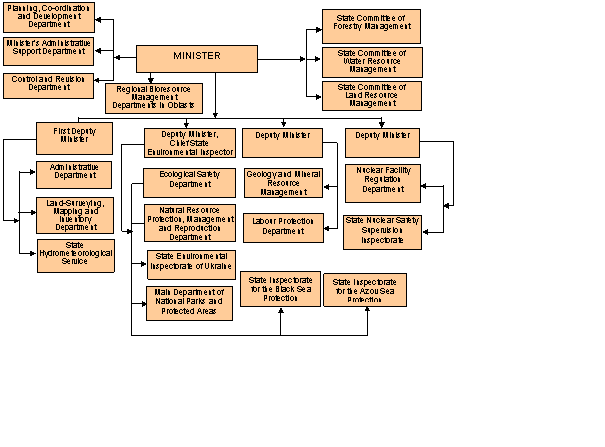 |
Figure 5.2 Organisational structure of the Ministry of Ecology and Natural Resources of Ukraine
Regional offices of the Ministry of Ecology and Natural Resources of Ukraine are present in the Oblasts, Republican Cities, and the Autonomous Republic of Crimea. The Ministry has an extensive network of research centres and institutes, nature reserves and protected areas, national parks, hydrometeorological centres, regional geological and geophysical survey companies, land surveying/mapping/inventory companies and institutions.
Introduction of a basinwide approach to planning and management of environmental actions is considered as a cornerstone of the national environmental strategy. The following key tasks need to be solved:
· Establishing institutional and financing arrangements to support management decision-making at the basin level;
· Strengthening the methodological and regulatory framework of environmental investment planning and management infrastructure functioning at the basin level;
· Establishing and maintaining basinwide geoinformation systems supported by environmental/water management databases.
5.6 Environmental Legislation of the Riparian Countries of the Dnipro Basin
There appear to be many similarities between the national legislation systems existing in the riparian countries, attributable to the fact that they are largely based upon the system used in the former USSR. However, significant differences have emerged during the past decade of independence. Each country has expanded the system of permits by introducing administrative charges for permit/license handling, and fines for non-compliance with license requirements.
Environment regulation in the riparian countries deals with management of various types of natural resources (land, water, forest, and mineral resources), and environment protection is considered as a separate activity area. Given that natural resources have not been privatised, the existing environment management framework has largely retained the features inherent to the centralised planning/regulation system. All countries continue to use the system of fees for the use of natural resources, and fines for non-compliance with permit requirements and/or effluent discharge limits. Many limits for point source discharges and MACs (maximum admissible concentrations) for receiving waters are too stringent to be complied with, therefore many industries operate under the continuous threat of non-compliance fines which provide a major source of revenue for environmental funds, intended to finance clean-up and mitigation actions. Clearly, the introduction of effective incentives to encourage environmental investments and improvements at the industry level remains a critical issue in all countries of the Dnipro Basin.
Republic of Belarus
Environmental legislation of the Republic of Belarus includes the following laws:
· The RB Constitution (Articles 34, 46, and 55) of 15.03.1994, amended on 24 November 1996;
· The RB State Environmental Policy Concept, approved by the RB Parliament on 06.09.1995;
· The RB Law “On Protection of the Environment, adopted on 26.11.1992;
· The RB Law “On the State Ecological Expertise, adopted on 18.06.1993;
· The RB Law “On Protected Areas and Nature Reserves”, adopted on 20.10.1994;
· The RB Law “On the Environmental Tax”, adopted 23.12.1991;
· The RB Law “On Waste”, adopted on 25.11.1993;
· The RB Law “On Wildlife Conservation and Use”, adopted on 19.09.1996;
· The RB Law “On Air Protection”, adopted on 15.04.1997;
· The RB Land Code, adopted on 04.01.1999;
· The RB Water Code, adopted on 15.07.1998;
· The RB Code on Mineral Reserves, adopted on 15.12.1997;
· The RB Forest Code, adopted on 21.06.1979.
Other relevant legislation includes: (1) the RB Laws “On Sanitary and Epidemiological Safety”, “On Radiation Safety”, and “On Prevention of Emergency Situations”; (2) the RB Criminal Code containing definitions of environmental crimes; and (3) the RB Administrative Code containing a special chapter on administrative offences which interfere with the protection of the environment and areas of outstanding natural beauty.
Various governmental authorities, for example, the RB Council of Ministers, issue regulations intended to support the implementation of laws. These regulations are legally binding for all citizens, industries, and organisations within Belarus.
Ministries and state committees have responsibilities regarding resolutions, rules, orders and guidelines on specific environmental protection and management issues. These resolutions can have either inter-ministerial or sectoral status, both being legally binding on all natural resource users.
According to the RB Law “On Local Self-Governance in the Republic of Belarus” (9 February 1995), local authorities have powers to legislate and control various issues relating to the management of land, mineral reserves, waters, and hunting and fishing grounds within their jurisdictions.
Russian Federation
Russia’s environmental legislation is characterised by a very general framework for the majority of laws. Implementation requires adoption of supporting or subordinated legislation or regulations by relevant governmental bodies (the RF President and/or the RF Government, regional executive authorities and municipalities).
Russia’s legislative and regulatory framework of environment management is graphically illustrated in Figure 5.3 and consists of:
· Legislation and regulations of the federal executive authorities (the RF President and Government), the regional executive authorities of RF constituent members, and local legislation/regulations issued by local self-governance bodies;
· Regulations (guidelines, instructions, etc.) of the federal/regional state executive authorities and local self-governance bodies.
The Federal Law “On Environment Protection” is a cornerstone of Russia’s legal framework of natural resource management and environment protection, setting out the legal basis of national environmental policy. Other key federal laws of relevance include the Land Code, the Water Code, the Forest Code, and the RF Law “On Mineral Reserves”.
According to the RF Constitution (Article 76), the constituent members of the Russian Federation have powers to legislate various issues that are jointly managed with the federal government, and/or are within their exclusive jurisdiction. In the first case, regional legislation should be consistent with relevant federal legislation; in the second case, regional legislation should not contradict relevant federal legislation.  These powers are equally exercised by the Bryansk, Kaluga, Orel, Smolensk, Belgorod, and Kursk Oblasts within the Dnipro Basin. The picture emerging from the analysis of regional legislative processes suggests that decrees and resolutions issued by the regional governments dominate the regional legal framework of environment management, with very few laws passed in the recent years.
Basic environmental legislation of the Russian Federation is summarised below:
· The RF Federal Law “On Environment Protection”(10 January 2002, #7-FZ);
· The RF Federal Law “On Amending the RF Law “On Mineral Reserves” (adopted on 03 March 1995, and amended on 10 February 1999, 2 January 2000, 14 May and 8 August 2001, and 29 May 2002);
· The RF Federal Law “On the Animal World” (24 April 1995, #52-FZ);
· The RF Federal Law “On the Ecological Expertise” (23 November 1995 #174-FZ, amended on 15 April 1998);
· The RF Federal Law “On Radiation Safety of Population” (09 January 1996, #3-FZ);
· The RF Federal Law “On Land Drainage/Irrigation” (10 January 1996 #4-FZ, amended on 10 January 2003);
· The RF Federal Law “On Energy Conservation” (03 April 1996 #28-FZ);
· The RF Federal Law “On Waste Generated in the Process of Production and Consumption” (24 June 1998 #89-FZ, amended on 29 December 2000 and 10 January 2003);
· The RF Federal Law “On Air Protection” (04 May 1999);
· The RF Federal Law “On Protection and Management of Historical and Cultural Heritage” (25 June 2002);
· The RF Forest Code (29 January 1997 #22-FZ, amended on 30 December 2001, 25 July and 24 December 2002);
· The RF Water Code (16 November 1995 #167-FZ, amended on 30 December 2001 and 24 December 2002);
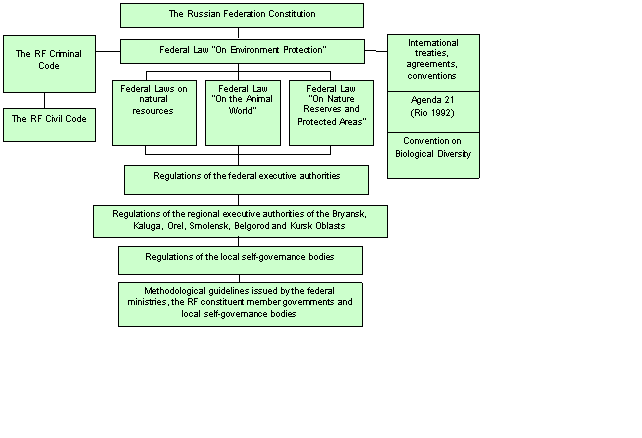
Figure 5.3 Legislative and regulatory framework of environment management
in the Russian Federation
Ukraine
The Law of Ukraine “On Protection of the Natural Environment” (1991) provides a legal framework of environment protection and management in Ukraine, supported by a number of other laws regulating various aspects of environment protection and natural resource use, for example:
· The Law of Ukraine “On Nature Reserves and Protected Areas” (1992);
· The Law of Ukraine “On Atmospheric Air Protection” (1992, amended in 2001);
· The Forest Code of Ukraine (1994);
· The Code of Ukraine on Mineral Reserves (1994);
· The Law of Ukraine “On Ecological Expertise” (1995);
· The Water Code of Ukraine (1995);
· The Law of Ukraine “On Use of Nuclear Energy and Radiation Safety” (1995);
· The Law of Ukraine “On Management of Radioactive Waste” (1995);
· The Law of Ukraine “On Waste” (1998);
· The Law of Ukraine “On the Plant World” (1999);
· The Law of Ukraine “On Hunting Grounds and Hunting Activities” (2000);
· The Law of Ukraine “On the Regulatory Regime in Emergency Situations” (2000);
· The Law of Ukraine “On the Emergency Environmental Situation Zone” (2000);
· The Law of Ukraine “On Protection of Population and Territories against Emergency Situations of Technogenic and Natural Origin” (2000);
· The Land Code of Ukraine (amended in 2001);
· The Law of Ukraine “On Dangerous Sites/Facilities” (2001);
· The Law of Ukraine “On the Animal World” (2001);
· The Law of Ukraine “On Oil and Gas” (2001);
· The Law of Ukraine “On Banning Imports and Sales of Ethylic Petrol and Leaded Additives in Ukraine” (2001);
· The Law of Ukraine “On Drinking Water and Its Supply” (2002);
· The Law of Ukraine “On the Red Data Book of Ukraine” (2002).
Harmonisation of Ukrainian environmental legislation with EU laws is seen as one of the priority objectives of national environmental policy. To ensure implementation of the Presidential Decree “On the Programme of Ukraine’s Integration in the European Union”, the Cabinet of Ministers of Ukraine have taken a series of steps towards gradual harmonisation of national environmental legislation with relevant EU directives. All current and planned legislative initiatives seek to serve the purpose of harmonisation by providing an effective legal and regulatory framework for management of all environmental aspects that are crucial for human life and the state of the environment. In particular, air protection, water protection and use, and environmental safety (including the Laws “On Banning Imports and Sales of Ethylic Petrol and Leaded Additives in Ukraine” (2001); “On Drinking Water and Its Supply” (2002); “On Environmental Safety”; “On Environmental Rehabilitation of Territories”; “On Environmental Audit”). The recent adoption of the amended Law of Ukraine “On Atmospheric Air Protection” (2001) was another step forward in terms of providing an EU-harmonised legal framework for air quality management and emission regulation.
Implementation and enforcement of adopted legislation remains a crucial issue. There is a clear need for the enhancement of mechanisms that do not meet the objectives they were designed for.
The Cabinet of Ministers of Ukraine can pass resolutions on various aspects of environmental management and protection, representing another important component of national environmental legislation, which seeks to strengthen governmental capacity for natural resource management. Regulations issued by the Ministry of Ecology and Natural Resources of Ukraine, and registered with the Ministry of Justice of Ukraine, provides the regulatory and methodological framework of environment protection and management.
5.7 Water Quality Regulations
Water quality regulation in the riparian countries of the Dnipro Basin comprises of ambient water quality standards and sectoral discharge limits, or norms, set for a range of parameters. This system, if complied with, is capable of ensuring the sustainable and safe functioning of water bodies. Water quality regulations are legally binding, and cover various aspects of water resource protection, replenishment and use, including:
· Ecologically safe water use regulations;
· Ecologically safe ambient water quality standards;
· Limits for point source discharges;
· Sectoral pollution generation limits, for a range of parameters;
· Sectoral technological norms regulating water consumption.
Ultimately, ambient water quality standards comprise of:
· Water composition and properties, for various water uses (in terms of suspended solids, floating fractions, odour, taste, temperature, рН, mineralisation, dissolved oxygen, BOD, COD, pathogenic bacteria, water toxicity, and a range of chemical substances);
· Maximum admissible concentrations (MACs) for a range of parameters, defined for drinking water use;
· Maximum admissible concentrations (MACs) for a range of parameters, defined for fishery water use;
· Legally binding MAC limits are set for over a thousand parameters, for each of the above water use categories.
In general, water quality regulation systems in the riparian countries are very similar, largely due to the fact that they are based upon the system used in the former USSR, although some differences have emerged in recent years. Table 5.1 summarises the national water quality standards existing in the riparian countries of the Dnipro Basin. The EU, WHO and USA guideline levels are provided for comparison. Clearly, harmonisation of the national water quality regulations is key to ensuring the success of the Dnipro Basin SAP.
One of the serious weaknesses of the existing water quality regulations in the Basin is a lack of legally defined environmental quality criteria relating to discharges (as opposed to the receiving waters). A further point of note relates to a lack of clearly defined water quality objectives and water quality standards.
The anthropogenic load on water bodies is regulated in the riparian countries by means of limits for point source discharges. These are defined as a function of the applicable MACs for a receiving water body, the dilution available for the discharge, local mixing characteristics, and an empirical equation that approximates the amount of oxygen depletion as a result of the discharge. There is a clear and commonly recognised need for the introduction of new BAT-based approaches to the regulation of point source discharges.
5.8 Legal Framework for International Cooperation in the Dnipro Basin
Legal framework of environmental cooperation between the riparian countries of the Dnipro Basin includes signed and/or ratified international conventions, and bilateral and multilateral treaties (agreements). Table 5.2 summarises the commitments of the 3 riparian countries to key international conventions on various environmental issues. Multilateral and bilateral agreements between the riparian countries provide the important tool for strengthening the cooperative framework in the Basin. The “Agreement on Cooperation in the Field of Ecology and Environment Protection” has been signed between the riparian countries as part of their cooperation within the CIS. In 1998, the Republic of Belarus, Kazakhstan, Russia and Tadjikistan signed the “Treaty on the Main Principles of Cooperation for Sustainable Use and Protection of Transboundary Water Bodies”. The signatories committed themselves to:
· Cease those water-sector activities that may produce adverse impacts on the environment and water bodies;
· Set up cooperative principles for regular exchange of information and forecasts on radioecological, chemical and hydrometerological aspects of water resource management;
· Take actions on pollution prevention/mitigation, and/or depletion of surface water and groundwater resources;
· Take actions on the reduction/mitigation of the consequences of emergency situations of technogenic and natural origin;
· Define common principles for the shared use of water bodies;
· Introduce a unified methodology for the evaluation of damage incurred to water bodies lying within the jurisdiction of an adjacent country.
According to this Agreement (Article 3), the parties shall take steps towards the joint development and introduction of integrated systems for the protection of water bodies against pollution and depletion. They shall also implement and coordinate research studies to provide a basis for long-term environmental forecasts, and develop water protection measures on the basis of joint consultation and support for their implementation. The parties to the Agreement will also seek to agree and harmonise their legal, administrative, technical and regulatory framework in the field of management and protection of water bodies.