COVER PAGE INFORMATION
1. Country: Azerbaijan, Islamic Republic of Iran, Kazakhstan, Russian Federation, Turkmenistan
2. Focal Area: International Waters
3. Operational Programme: OP 8 (Water-body based Operational Program), with links to OP 2 (Biodiversity -- Coastal, Marine, and Freshwater Ecosystems) and OP 10 (Contaminant-based Operational Program).
4. Project Title: Towards a Convention and Action Programme for the Protection of the Caspian Sea
5. Total Cost: $525,440
6. PDF Request: $397,440 Block: PDF Block B
In-kind contributions:
$128,000, including local transport, meeting rooms, logistics, translation, interpretation, administrative services.
8. Requesting Agency: UNDP in cooperation with UNEP
9. Executing Agency: UNOPS
10. Duration: September 2002 – June 2003
PROJECT STRUCTURE
Project objective:
The primary objective of this bridging GEF project is moving towards a sustainable management mechanism for the Caspian Environment (including the Framework Convention) and preliminary implementation of the Strategic Action Programme for the Caspian Sea. The primary outputs of this project will be filling of remaining gaps in understanding of principal transboundary environmental problems of the Caspian Sea, implementation of selected incremental interventions in the Caspian SAP (in the areas of biodiversity conservation, persistent toxic substances or PTS, and invasive species), and development of capacity for project execution at both national and regional levels. The initial phase of the CEP focused on formulating a Transboundary Diagnostic Analysis (TDA) and development of National Caspian Action Plans and a Strategic Action Programme. This first phase identified a number of policy/legislative-related and other incremental interventions that can be undertaken immediately as early SAP implementation, particularly in the areas listed above. The proposed project will address these identified action areas. The PDF-B funding will facilitate regional consensus in the early steps for implementing the SAP finalizing outstanding strategic gap-filling studies, mobilizing co-financing, in particular from the private sector, continued support to the countries in finalizing and signing of the Convention and other regional agreements initiated under the first project, and establishing mechanisms to ensure smooth transfer of the PCU from Baku, Azerbaijan to Tehran, Iran.
The TDA provided an improved understanding of the major transboundary environmental issues, which can be prioritized as:
Loss of globally significant biodiversity
Pollution by PTS (particularly chlororganic pesticides, oil products and some heavy metals)
Introduced species
Decline in fisheries
The TDA produced a Provisional SAP, which identified a series of actions for a specific number of targets supporting five regionally agreed Environmental Quality Objectives. This Provisional SAP is taken as the technical expert basis for preparation of NCAPs, and ultimately the SAP.
12. Global significance:
The Caspian is the largest inland waterbody in the world, containing some 44% of all inland waters on the globe. Physically the Caspian Sea is one of extremes. Its salinity varies from a few parts per thousand in the North Caspian during times of high Volga inflow, to more than 50 ppt in the Kara Bogaz Gol, a small evaporite basin that nestles in the Turkmen coastline. Temperatures of the Caspian Sea likewise are extreme, ranging from summer highs in the mid 30 degree C range, to freezing in the North Caspian as it ices up each winter. The Sea is divided morphologically into three parts, the northern part shallow (mean depth of some 6 m), the middle section with an average depth of 190 m (maximum exceeds 700 m), and the southern Caspian with a mean depth of 184m (maximum depth of 1025 m).
This is the physio-chemical setting for the globally important resource of the Caspian Sea. Environmentally, the Caspian is host to a unique biodiversity and serves as habitat for globally important species. The unique biodiversity is represented by a large degree of endemism that makes this otherwise somewhat depauperate flora and fauna (except, for instance, for fishes) unique. The biological history of Caspian flora and fauna is one of introduction and endemism. During prior links with the Mediterranean Sea through the Black Sea, and through the Arctic linkage in past geological time, the two widely varying sources of biodiversity came to the Caspian. Endemism has worked on these two sources of biodiversity, expanding further the system’s diversity. As an example, bottom-dwelling gobies perhaps represent the most endemic of Caspian fauna. In the past 50 or more years, additional introductions have taken place, some purposeful, and some accidental. Beneficial species have been introduced as keystones of the food web, and harmful species have been introduced accidentally through water transport, and through purposeful introduction One major example of accidental introduction is the ctenophore, Mnemiopsis leydyi, documented for the past few years in the Caspian Sea.
The Caspian Sea is served by the largest river in Europe – the Volga River – as well as several other significant transboundary rivers (Ural River, Kura River, etc.). These rivers contribute special habitat to flora and fauna, including inter alia sturgeon and other fishes, as well as vast migrating bird populations. The shallow north Caspian is fringed by a wide reed belt (Potamageton, Ruppia and other types), that serves as important habitat for migrating and year-around bird populations. Flamingos, for example, populate the northern and southern waters of the Caspian Sea at different times. At least 15 globally threatened species use the region (geese, ducks, pelican, crane, eagles, etc.) as well as IUCN-listed sturgeon species. Many flora and fauna species contained in red books of the five littoral countries are found in the Sea and coastal zone. From a flyway perspective, the wetlands in the region lie astride the East African flyway, the Mediterranean flyway, and the Central Asian-Indian flyway, involving millions of birds each year (estimates are up to 10 million birds feed and rest here each year in spring and autumn). As an example, the Volga Delta, due to its uniqueness, has some 800,000 ha designated as a Ramsar site.
The fishes of the Caspian are highly migratory, as is the sole marine mammal: the Caspian seal. They migrate nearly 1100 km from north to south with the season, and some migrate vast distances up the rivers (now constricted by dams). In this sense, the habitats and water and sediment quality of any part of the Caspian is of global significance, due to transboundary influences on biota.
Since the Caspian is an enclosed Sea, it lacks the cleansing action that other marginal seas have. Pollution entering the Caspian either is biogeochemically altered, or remains in the Sea for years. None escapes through dilution from external buffering waters. The circulation of the Caspian Sea is typical of semi-enclosed Seas: it consists of a number of quasi-permanent cyclonic (counterclockwise) gyres that transport water and materials transboundary, as well as smaller anti-cyclonic and cyclonic gyres that wax and wane depending on the winds, water inflows, buoyancy fluxes, and other driving forces. Thus, pollution entering the Caspian Sea from the Volga, for instance, is ultimately distributed through the Sea and its sediments. Oil spills likewise respect no boundaries, and poor oil extraction practices in offshore Azerbaijan are reported to have soiled Iranian and Turkmen coasts, and perhaps Kazakh and Russian shores as well. Radioactivity entering through the Kura River or from other coastal areas has the opportunity to disperse through the entire Caspian Sea. This is the transboundary character of the Caspian Sea.
This global environmental significance is matched by the economic significance of this body of water. Sturgeon resources and oil and gas reserves are economically significant here. The oil and gas reserves are thought to be on the order of 100 billion barrels, making it possibly the Caspian third most significant oil reservoir in the world. Early action by the countries, by GEF, and by other partners now will establish the sustainable mechanisms so future exploitation will have the maximum protection from harming the environment.
13. Background:
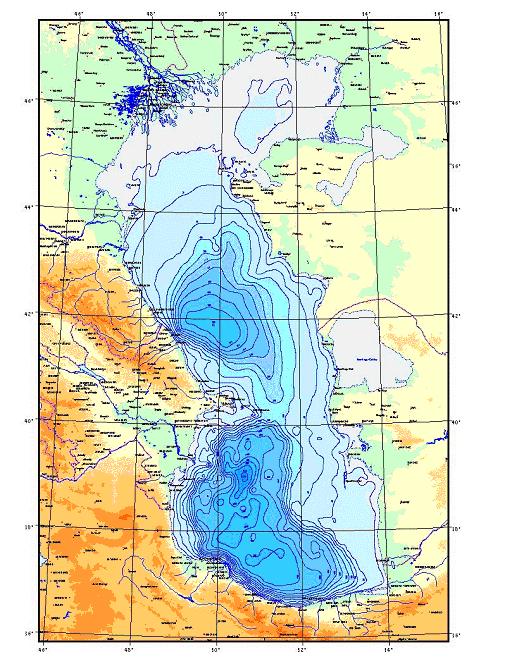
The regional economic, social, and political importance of the Caspian Sea has continued to attract and focus strong national and international attention (see figure 1). All five littoral states have participated in the first phase of the Caspian Environment Programme (CEP: 1998 to present), and have expressed continued support for a single, regional structure that would coordinate initiatives to address regional environmental issues associated with the Caspian Sea. The countries are ready to initiate implementation of the Strategic Action Programme (SAP), a primary outcome of the first four years of the CEP. The next steps in the CEP have been agreed by the CEP Steering Committee, which will culminate in transition of responsibility for governance and execution from a partnership between the littoral states and the international community, to the littoral states themselves, with the international partners playing a more supportive role.
In addition to strong national support, the project is encouraged by the private sector, which has been a supporter of the CEP Phase I activities, and will continue to do so in second phase activities. The oil and gas industry has stated its support for the CEP as the regional body; the industry has backed up their commitment by providing co-financing (both in cash at approximately the $500,000 level, and in kind) for many of the CEP activities, including oil spill response, contaminant assessment, and biodiversity. This private sector participation is critical for both sustainability and effectiveness of many of the proposed Strategic Action Programme (SAP) interventions.
There has been sub-regional cooperation between the littoral states dating from early in the 20th century. Early agreements first between I.R. Iran and the RF, and later by the Soviet Union and I.R. Iran, set the legal basis for cooperation in the areas of fisheries, navigation, and other related topics addressing the Caspian Sea. Since the formation of independent republics from the former Soviet Union, no regional convention addressing the Caspian Sea environment has been agreed. However, there is ample evidence of environmental cooperation in a series of regional declarations and other agreements in the Region; for instance, the Almaty Declaration of May 1994 between the Caspian littoral countries established a basis for cooperation in the environment. This declaration was followed shortly by a delegation from the World Bank, the United Nations Environment Programme, and the United Nations Development Programme (UNDP) to the region, documenting commitment from the littoral countries to participate in the Caspian Environment Programme. In May 1998, at meetings in Ramsar, I.R. Iran, the Caspian Environment Programme was formally begun. Since then the CEP has moved forward with a Transboundary Diagnostic Analysis, National Caspian Action Plans, and a regional Strategic Action Programme (SAP) to address the transboundary problems of the Caspian Sea. This first phase of activity is nearly complete.
As part of the Phase I CEP activities, under GEF support and with UNEP facilitation, the Region has prepared a -final draft of a Framework Convention for the Protection of the Environment of the Caspian Sea. Through a series of high-level meetings, the Framework Convention text has been finalized and the document will be open for signature at the end of 2002. A signed text will represent a agreement of intent by the signatories and an undertaking, if not to implement, not to violate the articles of the Convention. However, final ratification by all five countries of the Convention and its coming into force is likely to be delayed by the lack of regional agreement on the legal status of the Caspian Sea (sea or lake).
Under the CEP, a draft Regional Cooperation Plan for Emergency Response in case of major Oil Spills has been discussed and will be advanced during the next meeting in Spring 2003; a regional plan has been drafted and agreed to combat the alien species Mnemiopsis leydyi; a Fisheries Management Plan (required by CITES) has been discussed at a recent Bioresources Meetings held in Baku, AZ, from 29-30 March 2002 and 17-19 July 2002; and a Regional Biodiversity Strategy available in its draft form on the CEP web-site. In addition to the CEP, the former Soviet republics all cooperate in fisheries management through the Caspian Bioresources Commission that meets annually to decide on allocation of total catch quotas for Caspian fisheries and apportionment amongst the four northern countries. I.R. Iran joined this Commission in March 2002. Recently, since the listing of caviar on Appendix II of CITES, all five countries have met to establish regional quota for caviar, a notable regional cooperation mirroring their economic interest in this resource. The Caspian states cooperate through the Caspian Committee of Hydrometeorological Services (CASPCOM), which has recently developed (but not signed) a Memorandum of Understanding to cooperate and coordinate activities with CEP.
Project description: including implementation arrangements
The project will result in the following alternative scenario:
Improvement of the protection status of globally significant biodiversity in the Caspian, including an agreed biodiversity protocol for the Convention and protection measures implemented (regionally agreed biodiversity targets, network of protected areas focused on priority targets),
Primary toxics of concern (chlororganics, oil-related products, and some heavy metals) agreed, sources of priority toxics identified, regional and national plans of action for land-based activities developed.
Invasive species control mechanisms identified in a Protocol to the Convention, action plan for addressing the problem of Mnemiopsis implemented, a regional body established to provide expert advice regarding introductions, and public awareness/education projects conducted in the Iranian sector of the Caspian as a national invasive species control mechanism.
Signing of regional environmental agreements
Establishment of the PCU as custodian of legal documents governing the CEP, and as operational programme management and coordination body
Capacity in the PCU and the National Coordination Units for implementing GEF and other projects
Capacity in the National Coordination Units to execute regional and national projects
Capacity to effectively involve all Stakeholders, in particular coastal communities, in developing planning processes for Caspian environmental protection.
Built-in regional capacity for monitoring and evaluation of SAP implementation through continued development and application of GEF process, stress reduction and environmental status indicators.
Incorporation of SAP and NCAP priorities into ongoing activities and programmes of the IAs in the Region
The full bridging project’s objectives, to a large extent drawing on the provisional SAP, will be:
To continue specific capacity building and institutional strengthening measures begun during earlier GEF funding, including:
To assist in the strengthening of a regionally owned coordination mechanism and to assist the interim secretariat if formed following signing of the Framework Convention
To develop capacity within the PCU and National Coordination Units to execute projects
To undertake stewardship of the regional negotiations of ancillary agreements to the Convention (headquarters agreement, financial arrangements, etc.) and draft protocols to the Conventions.
To provide technical assistance to the Caspian states to improve and strengthen their legal and policy frameworks as they relate to the Caspian, and where necessary provide advice on implementation and compliance of framework.
To promote country endorsement of key environmental Conventions relating to the Caspian.
To achieve national signature followed by endorsement of the NCAPs, and ratification of the Framework Convention
To improve the status of the globally significant biodiversity in the Caspian, by completing quantitative assessment of the state of the Caspian in a limited number of priority transboundary areas identified in the TDA: Biodiversity (including sturgeon and seals), Invasive species, Persistent Toxic Substances (including Persistent Organic Pollutants, and some heavy metals)
To commence implementation of the SAP in three key areas: Biodiversity, Invasive species, and Persistent Toxic Substances, in part by strengthening Civil Society
To continue the Matched Small Grant Programme of small-scale investments currently being executed by the World Bank under the first GEF CEP project, addressing priorities of the NCAPs/ SAP. These grants are intended to result in tangible environmental improvements.
Implementation modalities must be worked out in complete form during the PDF-B activities. The two overarching elements in the implementation mechanism for coordination of the Caspian Environment Programme are the Framework Convention and the PCU. The Framework Convention may be signed at the time of submittal of the Project Brief, but certainly not ratified. The PCU now resides in Baku, AZ, but by regional agreement (Ramsar, 1998) will move to Tehran, Iran in /2003, coincident with the next phase of GEF funding. During this phase, GEF will provide capacity building to broaden the execution and management capabilities of the PCU as the interim institutional arrangements for the CEP, to the point where it will have capacity to execute projects on behalf of the CEP. Each country will continue to have an Intersectoral Coordination function, to assure national sectoral coordination and encourage sectoral participation. Existing distributed regional thematic centers may or may not be in place during the GEF project, depending on a decision of the countries to support them. The GEF project as well as other international interventions, will sit at the PCU as quasi-independent projects reporting to the appropriate Executing/Implementing body, but supporting the PCU and the Programme Coordinator. The Programme Coordinator will be from the region, and will be paid by the region. Figure 2 shows a possible scheme for implementation structure (not yet agreed with the region). During the PDF activities, in addition to finalizing implementation modalities, the mechanisms for transfer of the PCU, including the Caspian database, from Baku to Tehran will need to be determined. The location of the new PCU, its communications, privileges and immunities of the PCU and project staff (to be agreed with the Ministry of Foreign Affairs of the Islamic Republic of Iran) and in country financial support, inter alia, will need to be discussed. Strenuous efforts will be made to mobilize co-financing from the private sector and meetings with IPIECA (International Petroleum Industry Environmental Conservation Association) in London and with the leading oil and gas companies in the region are planned. Coordination with the major international donors in the region, including EU/Tacis, USAID, and NATO, will continue, as well as with key UN agencies and major regional environmental projects, such as the Volga Revival programme, GEF biodiversity projects on the Lower Volga and Ural, GloBallast and GIWA. Finally, support will be given to the countries to finalise the regional agreement initiated during the first phase of CEP.
Description of proposed PDF Block B activities:
The PDF Block B activities are designed to be fully consultative and participatory, leading to the GEF Project Brief submittal to the GEF Council.
Objective one: Brief the countries and other stakeholders and obtain their input on the full Project
Activity 1: Hold Inception Workshop in Baku, AZ, attended by the countries, national and international experts,
international partners, private sector, and other stakeholders
Activity 2: Conduct mission to each country to hold intersectoral coordination meetings, and to work with governments and national experts on Project content. Brief UNDP Country Offices on the status of the new project, and solicit their input.
Objective two: Gather appropriate information for preparing project brief
Activity 1: Engage local consultants to prepare materials for the Project Brief; for example, on technical capacities, legal status, etc.
Activity 2: Develop full descriptions of baseline activities and co-financing for the project from the countries, and from other stakeholders (e.g., oil and gas sector)
Objective three: Finalise implementation arrangements
Activity 1: Hold inter-governmental meeting to determine institutional arrangements for CEP
Activity 2: Enter discussion with the relevant authorities of Iran regarding re-location of the PCU to Tehran
Objective four: Prepare and review first draft project brief
Activity 1: Prepare project brief, including Public Participation Plan and Monitoring and Evaluation Plan
Activity 2: Send to countries and national consultants for review
Activity 3: Revise project brief
Objective five: Regional endorsement of project brief
Activity 1: Expert consultation on project brief
Activity 2: Steering Committee endorsement of Project Brief, including national, donor and other co-financing
commitments.
Objective six: Submittal of Project Brief to UNDP/UNEP and GEFSEC
Activity 1: Preparation of final Project Brief, including documentation of all co-financing
Activity 2: Submittal to UNDP/UNEP and GEFSEC, review by GEFSEC, and final Project Brief
Objective seven: Prepare Project Document
Activity 1: Prepare draft Project Document
Activity 2: Review and endorsement of ProDoc by countries
Activity 3: Submittal of ProDoc for UNDP approval and to GEF for CEO clearance.
16. PDF Block B Outputs:
Agreement among countries, IAs, EA, other donors, etc. on project coordination and implementation arrangements
Complete Project Brief including objectives, outputs, activities, budget, full incremental cost analysis, log frame, STAP review, documentation of co-financing, and endorsements from recipient governments’ GEF Operational Focal Points
UNDP Project Document including input-based budget and all TORs; all co-financing fully documented.
Capacity building to increase the region’s ability to participate in future PDF activities, through use of national consultants in the process. Broad stakeholder involvement in the development and planned implementation of the project.
Eligibility:
All riparian countries are eligible for GEF support for International Waters. UNDP has a programme in each country. This project fits the mandate of OP 8: Waterbody-Based Operational Program. It is designed to provide an overarching regional framework for protection of this globally-important resource, while focusing on a few priority transboundary issues This project will focus on the major threats to this affected ecosystem: biodiversity, PTS, and introduced species. The GEF will play a catalytic role in protecting the waterbody, particularly in the face of expected increased pressures from the continued socio-economic conditions and vast explosion in offshore oil and gas activities. The results will include a reduction in stress to the water body, based on strong country commitments towards a sustainable regional Convention for the Protection of the Environment of the Caspian Sea.
As the largest inland body of water in the world, its biodiversity value, it habitat value (especially for migrating birds), and its economic value (both living and non-living resources) contribute to make this water body important globally. Especially with the anticipated rapid increase in oil and gas extraction from the sea (especially in Kazakhstan and Azerbaijan, perhaps in the other three countries also), a regional mechanism is essential to assure the environmental protection of the Caspian Sea. Phase I provided facilitation of negotiations on the Framework Convention for the Protection of the Caspian Sea , as an example of the regional mechanism. Phase I also contributed to developing the PCU as the regionally recognized body for addressing transboundary environmental problems of the Caspian Sea. Recognition of this leadership position by the countries, by the private sector, by the international community, and by the media is quite broad and growing, in significant part due to the past interventions by the international community (GEF, UNDP, UNEP, World Bank, Tacis, etc.). The first GEF intervention was truly incremental, in the sense that it helped galvanize and regionalize the significant national interests and activities in the Caspian Sea. This regionalization, or globalizing, of the national interests represents pure incremental activity, in the spirit of the GEF Operational Strategy.
This project also has linkages with Biodiversity (OP2: Coastal, Marine, and Freshwater Ecosystems) as well as POPs (Draft OP) and OP10: Contaminant-based Operational Program, Ship-Based Contaminants Component/Non-indigenous species in ship ballast water. The linkage with OP2 comes from the present projects focus on the area identified by the Biodiversity Convention’s Conference of Parties: (a) Projects that promote the conservation and sustainable use of biological diversity of coastal and marine resources under threat. The biological diversity of Caspian waters is certainly under threat by human activities, including filling/altering of wetlands, contaminant input, illegal and legal fisheries, damming of rivers, and other activities. The linkage with OP10 comes from the OP10 short-term objective: to harness involvement of U.N. agencies and institutions specializing in the development of modern technology as executing agencies for International Waters projects addressing non-indigenous species in ship ballast water, use of new technology to assess and reduce contaminant loading of International Waters, and prevention of releases of globally significant toxic substances such as persistent organic pollutants (POPs).
National level support:
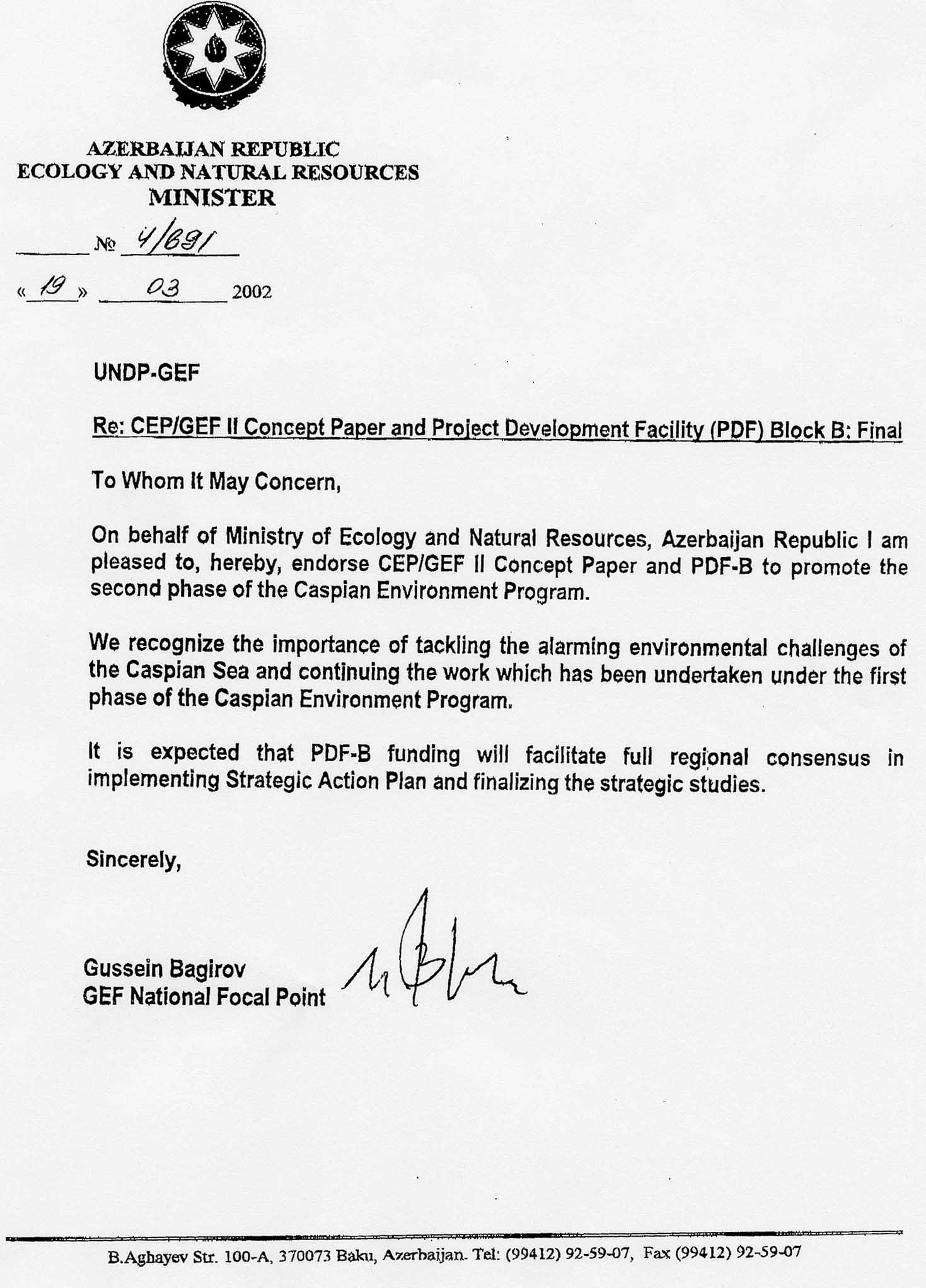
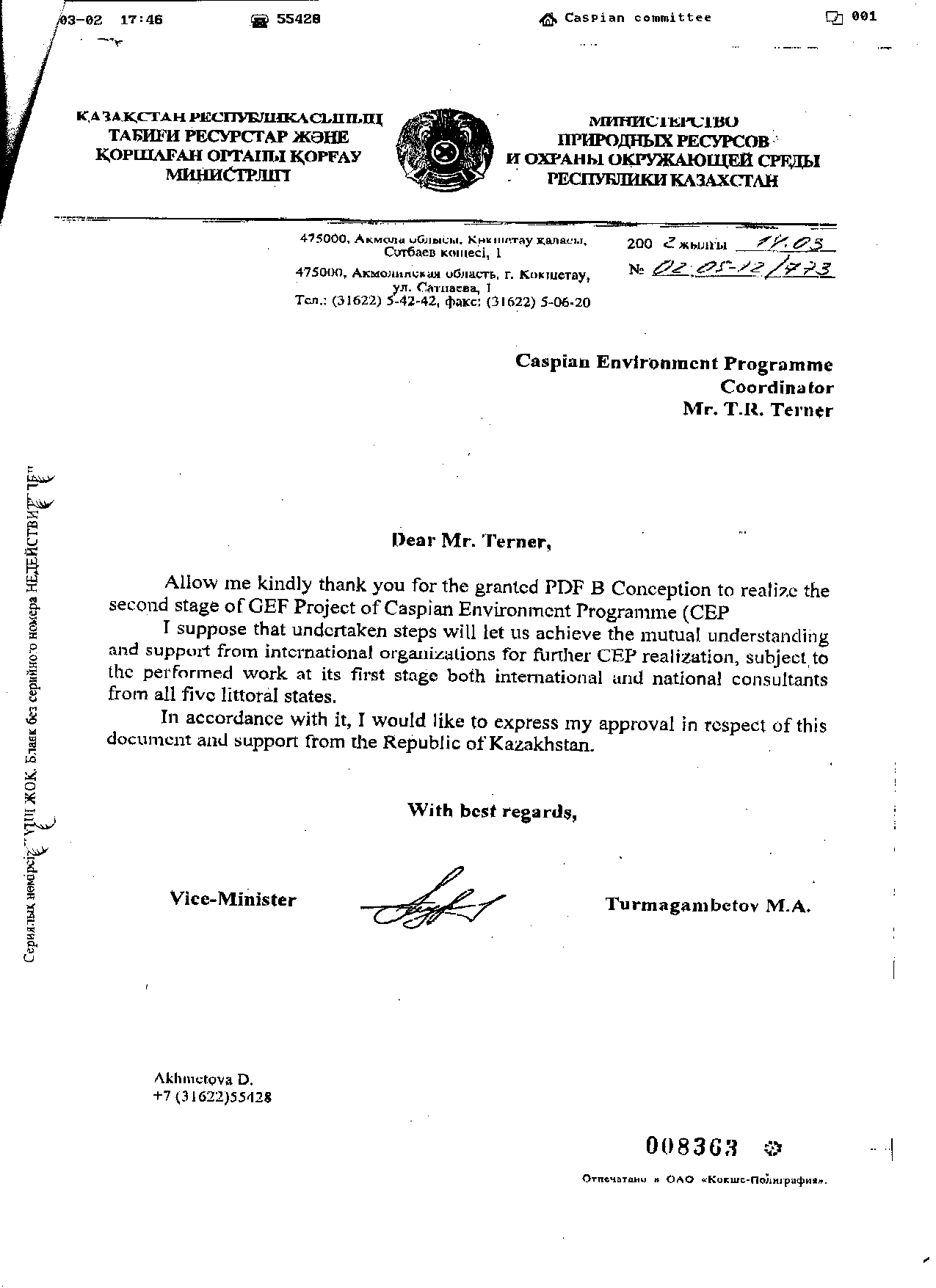
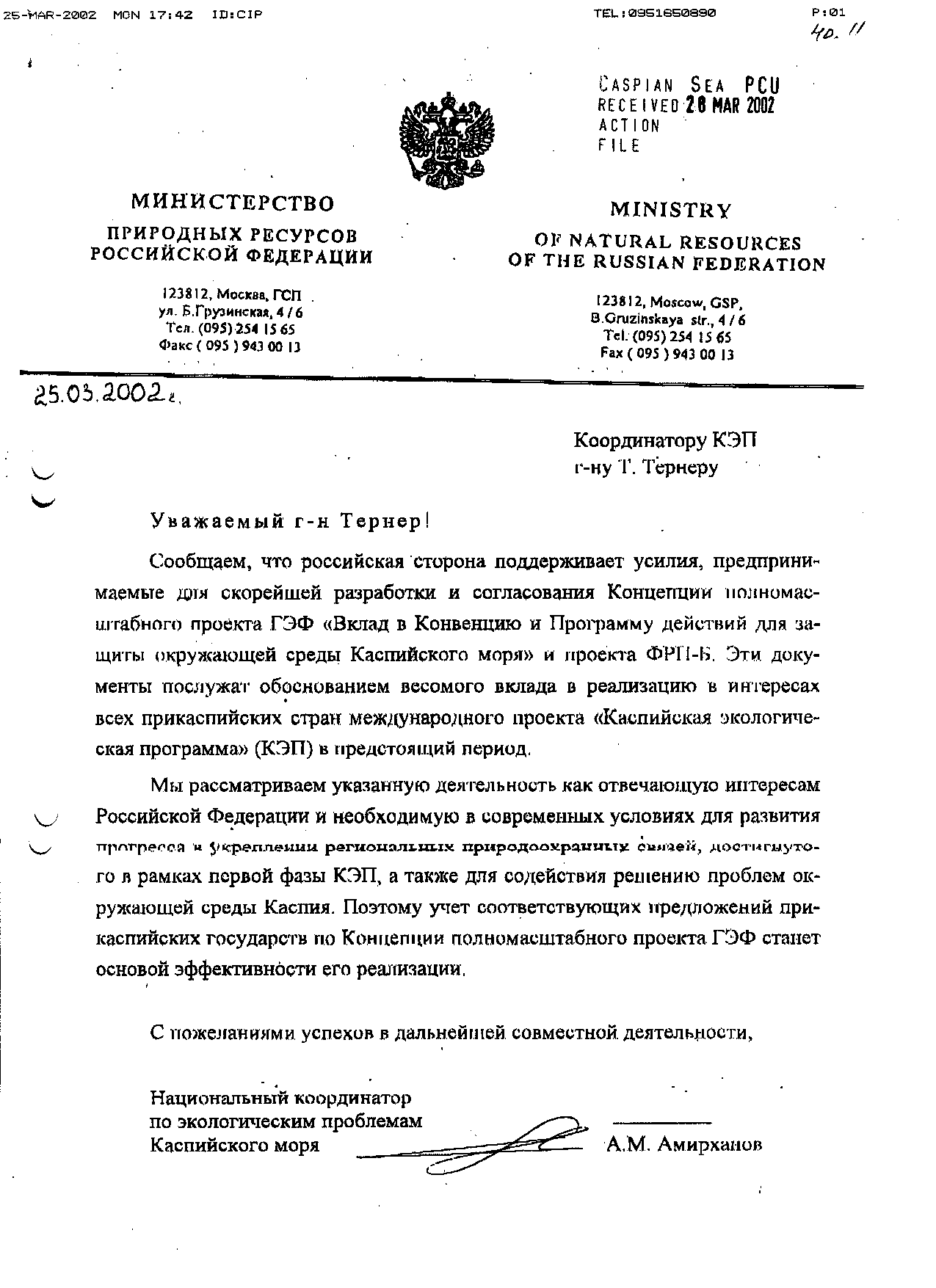
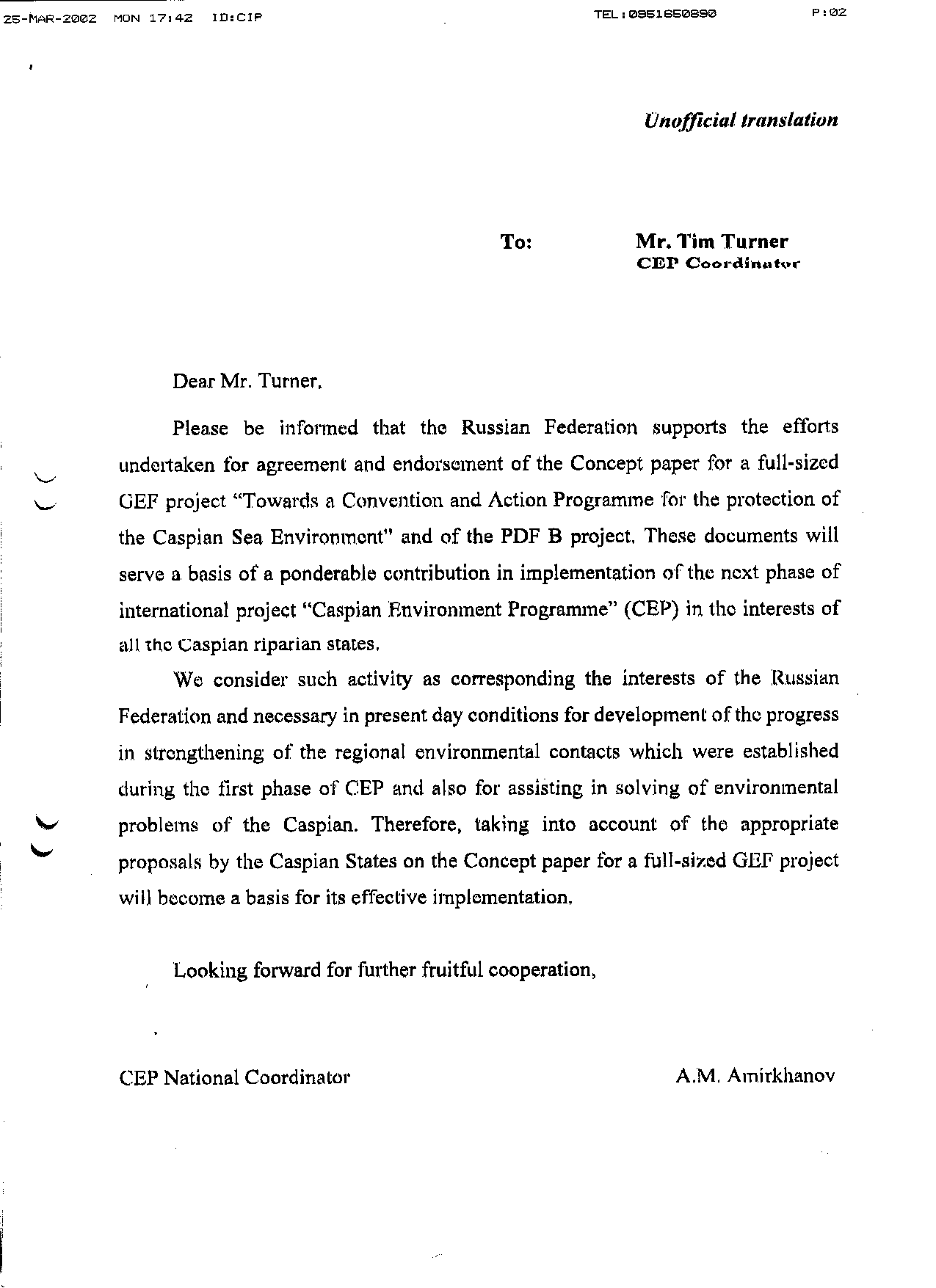
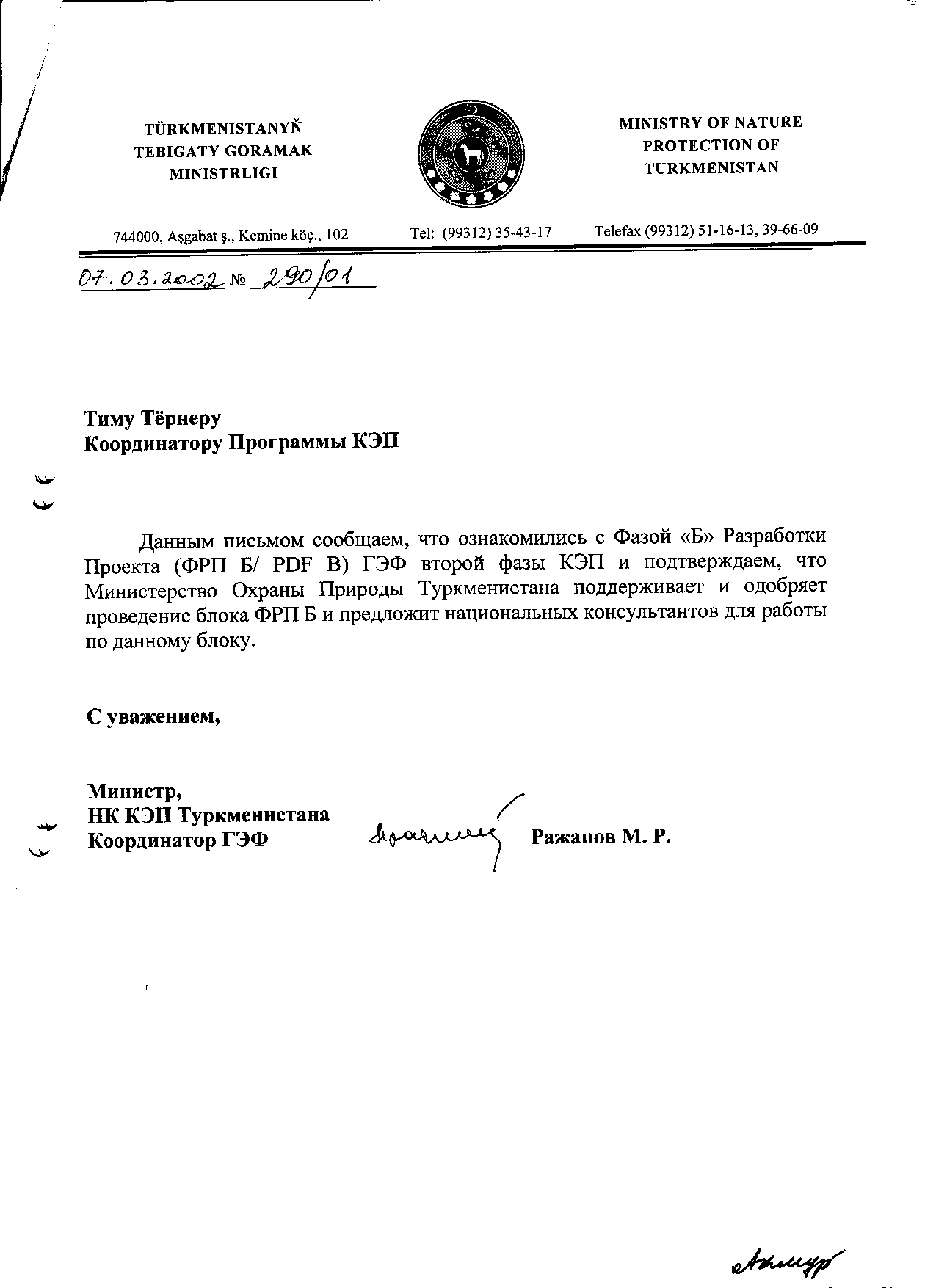
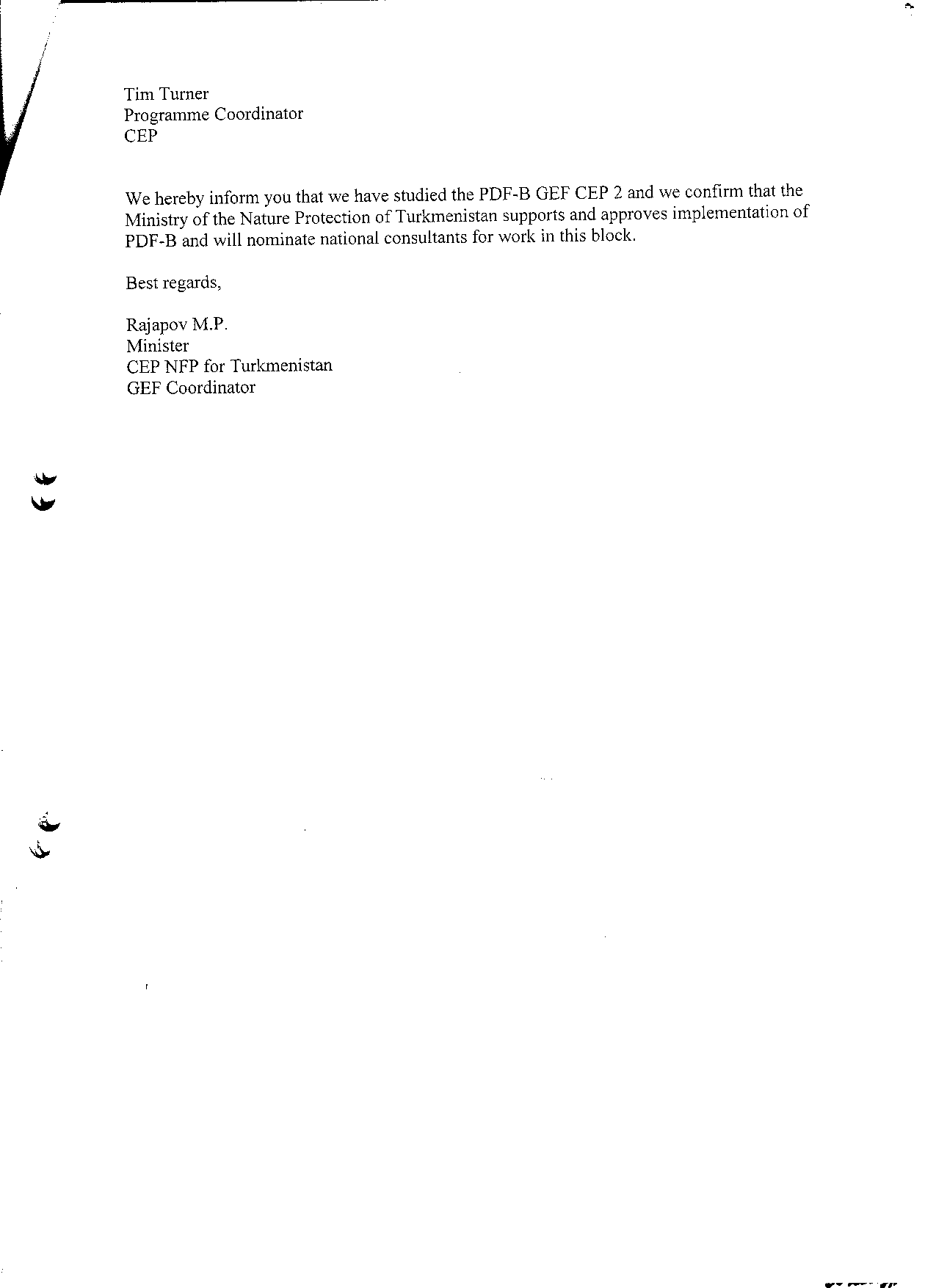
All countries participated actively in the first Phase GEF projects supporting the CEP. The countries continue to have strong interests in the Caspian Sea. The Bridging Project Concept Paper outlines the national policies regarding the Caspian, and how these dovetail with the GEF interests. The countries continue to provide not only baseline activities in the area of the environment, but also contribute co-financing. Anticipated co-financing for the full GEF bridging project includes provision of local facilities, including the PCU in Iran, support for various Steering Committee activities and meetings, support for remaining CRTCs, national support for SAP implementation (to be finally detailed in the NCAPs and SAP), support for National Coordination Units, etc. Country co-financing for the PDF-B includes in-kind costs such as local transport, intersectoral coordination, meeting facilities, translation/interpretation, communications, and administrative services. Endorsements from the GEF Operational Focal Points from each of the requesting countries are attached.
Justification:
The Block B activity will allow the countries to develop consensus on the most urgent strategic studies to concentrate on during the GEF project (to fill gaps in the TDA), and also to prioritise and mobilize resources for early SAP implementation (including biodiversity actions). The Block B will provide the opportunity for the region to develop more detailed objectives, and actions, for the full project. The raw material is available: the TDA, draft NCAPs, and the Provisional SAP. What is needed now are the resources to develop regional priorities and agreement, which the Block B can provide. The Project is in harmony with the guidance for OP8: Waterbody-based Operational Program. This project seeks to provide broad interventions leading to more comprehensive approaches for restoring and protecting international waters and its associated globally significant biodiversity. With the expected expansion in exploitation of the vast oil and gas resources of the Caspian Sea, the GEF intervention can assure preventive and protective mechanisms are in place prior to the expansion of these activities. The facilitation of the Framework Convention for the Protection of the Environment of the Caspian Sea is one example of the overarching interventions to assure environmental protection. The GEF project will provide the meat to the bones: protocols and annexes for the Framework Convention on items such as biodiversity, persistent organic pollutants, invasive species, land-based sources, marine and seabed pollution, environmental impact assessment, and data exchange.
Institutional mechanisms are presently in place from the first four years of the CEP. A Programme Coordination Unit has been functioning for four years, and is widely recognized as the regional coordination mechanism for Caspian environmental issues. The PCU will move from Baku, AZ, to Tehran, IRI, in Spring, 2003, according to decisions of the Steering Committee of May 1998. Possible institutional arrangements for the next two years are shown in Figure 2. National Intersectoral Coordination offices are functioning in each country, helping to assure broad sectoral participation, as well as broad stakeholder inclusion (private sector included). A series of 9 regional thematic centers has been established in the Region; the future of these is up to the countries, as support has transitioned from donor-oriented to national responsibility. When the Framework Convention is signed, an interim Secretariat to prepare for the first conference of the parties will need to be established and when ratified a permanent Secretariat, replacing the PCU. The GEF bridging project will provide management, institutional, and financial capacity building for the PCU and the National Coordination Units so they may be able to execute projects in the future.
Global benefits: Improved habitat quality, conservation of biodiversity, enhanced water and sediment quality, regional coordination mechanism, regional Framework Convention with protocols/annexes.
20. Timetable
PDF Block A activities began in January 2002, and will be completed by early April, 2002. The PDF-B is expected to begin in July, 2002, and to be completed by July October 2003. The GEF project would be presented to GEF Council in Spring 2003.
PDF-A Budget
Consultants: $18,000
Travel $ 3,000
Other $ 4,000
Total $25,000
PDF-B Budget (total GEF: $397,440)
|
Activity |
GEF |
National |
Total |
|
Int’l Consultants |
$160,000 |
|
$160,000 |
|
Nat’l consultants |
$35,000 |
$40,000 |
$75,000 |
|
Admin. Support |
$33,000 |
$9,000 |
$42,000 |
|
Travel/meetings |
$100,000 |
$64,000 |
$164,000 |
|
Miscellaneous: |
$40,000 |
$15,000 |
$55,000 |
|
UNOPS Supp.Costs: |
$29,440 |
|
$29,440 |
|
TOTAL |
$397,440 |
$128,000 |
$525,440 |