Integrated Safeguards Data Sheet (ISDS)
Section I Basic Information
Date ISDS Prepared/Updated: October 6, 2004
Report No.:AC621
A. Basic Project Data
A.1. Project Statistics
Public Disclosure Authorized
Country: Africa
Project ID: P070547
Project: Groundwater & Drought
TTL: Leonard John Abrams
Management in SADC
Total project cost (by component):
Component One: Development and Testing of Groundwater Drought Management Plan
for Limpopo River Basin Pilot Areas $2,33M
Component Two: Regional Groundwater Drought Management Support: $2,40M
Component Three: Groundwater Management Institute of Southern Africa
Establishment: $0,92M
Component Four: Project Management and Administration: $1,845M
Appraisal Date: October 18, 2004
Loan/Credit amount($m): $0.0
Board Date: December 2, 2004
Public Disclosure Authorized
Other financing amounts by source:
($m.)
GLOBAL ENVIRONMENT FACILITY
7.0
EC: EUROPEAN COMMISSION
1.0
FRANCE, GOV. OF (EXCEPT FOR MIN. 0.08
OF FOREIGN AFFAIRS-MOFA)
GERMANY, GOV. OF (EXCEPT FOR
1.22
BMZ)
SWEDEN: SWEDISH INTL. DEV.
0.5
COOPERATION AGENCY (SIDA)
Managing Unit: AFTU1
Sector: General agriculture, fishing and
forestry sector (50%);General water,
Public Disclosure Authorized
sanitation and flood protection sector
(50%)
Lending Instruments: Technical Assistance
Loan
Is this project processed under OP 8.50 (Emergency
Yes?
[ ]
No?
[x ]
recovery?
Environmental Category: C
Safeguard Classification: S3
A.2. Project Objectives
The project objective is defined as: "The development of a SADC regional strategic
approach to support and enhance the capacity of its member States in the definition of
drought management policies, specifically in relation to the role, availability (magnitude
and recharge) and supply potential of groundwater resources." This outcome contributes
both to key GEF programs and strategies as noted above, and to the overall objectives of
Public Disclosure Authorized
SADC Regional Groundwater Management Program.
The primary target groups for the project are the users of groundwater and groundwater
dependent ecosystems (GDEs) in drought prone areas in southern Africa. The target
groups are addressed at three scales through the project at a local level in the two pilot
areas (Figure 1), at the river basin level in the Limpopo river basin, and at the regional
level through SADC.
At the pilot level the principal outcome of the project will be that communities and users
of GDEs will be better able to mitigate against the negative effects of groundwater
drought in the long term. While communities in the pilot areas may not experience a
groundwater drought during the implementation of the project, they will be better
equipped to deal with these phenomena as a result of the activities. The outputs at the
pilot level will consist of physical infrastructure (monitoring boreholes, extraction
boreholes, pans, alluvial sand storage curtains1, etc), and non-structural measures such as
improved government capacity, strengthening of groundwater user groups, heightened
community awareness of the need to manage groundwater and dependent ecosystems on
a long-term basis and possibly water pricing. In addition, water conservation techniques
such as conjunctive use of surface and groundwaters and improvements in recharge will
be tested in the pilot studies if circumstances are suitable.
At the national and regional level, Environment Ministries (and equivalent institutions)
represent the national stakeholders and the SADC Environment and Land Management
Sector represents the regional constituency with an interest in better management of the
GDEs. As a result of the project, these institutions will be better able to manage GDEs
through the knowledge gained, the provision of tools such as maps and guidelines, and
the establishment of a regional institution.
Progress towards achieving reduced groundwater drought vulnerability will be measured
through
· the development and implementation of agreed management plans at pilot level;
· an improved ability of local groundwater users and GDEs to survive groundwater
drought conditions ;
· the ability of government officials to support the continuation and replication of
these interventions; and
· the application of lessons learnt and the use of management tools at regional level.
At the regional scale, the principal outcome will be regional management tools and a
regional Groundwater Management Institute of Southern Africa (GMISA) for
government decision makers in the SADC member countries. The GMISA will contain
knowledge about managing groundwater droughts, including water conservation
techniques such as conjunctive use and improved recharge, and thereby contribute to a
long term solution to the problem across the SADC region. Progress will be measured by
endorsement by the SADC Water Resources Technical Committee of the regional tools
(maps, database, knowledge management system) and guidelines; dissemination of the
guidelines to member countries; and the establishment of the GMISA will contribute to a
long-term solution to the problem across the SADC region. including completion of its
initial staffing and workplan.
1 Alluvial sand storage curtains are small subsurface barriers constructed across sand rivers to impound
subsurface floodwaters and thereby recharge alluvial aquifers.
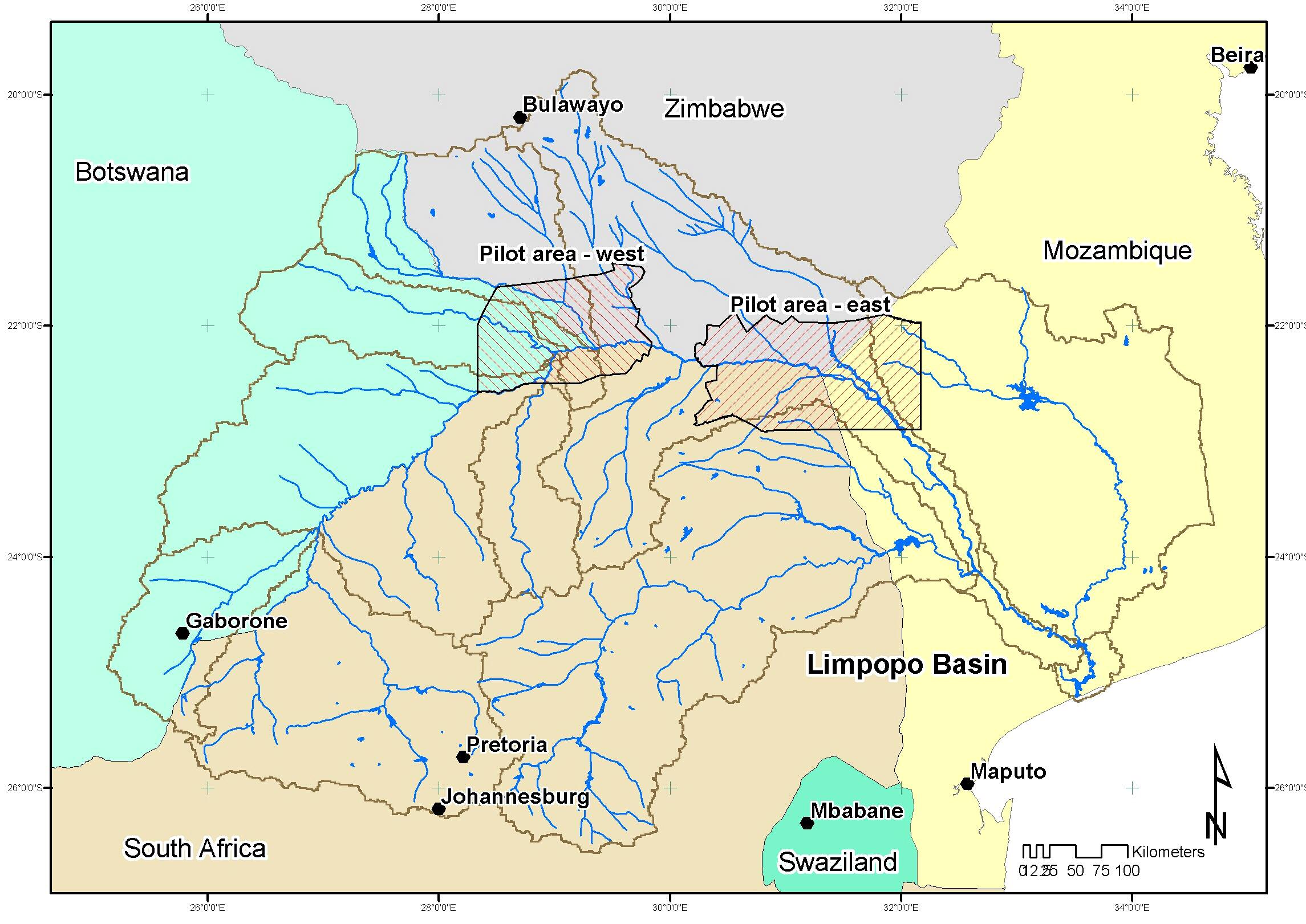
Figure 1 - Limpopo River Basin and East and West Pilot areas
The proposed project will be part of the GEF Operational Program 9 (Integrated
Land/Water) which has the goal of "helping countries utilize the full range of technical,
economic, financial, regulatory, and institutional measures needed to operationalize
sustainable development strategies for international waters and their basins". This
incorporates a special focus on projects in the African region. The proposed project
promotes this goal with its objective of improving regional technical capabilities and
intervention strategies to promote better management of transboundary groundwater
resources.
The project contributes directly to the first two objectives of the SADC Policy for
Environment and Sustainable Development (above) by improving access to water and
protecting groundwater dependent ecosystems in the Limpopo pilot areas during times of
drought, and by providing regional tools and an institution for the improved management
of groundwater in drought prone areas, including groundwater dependent ecosystems
(GDEs).
A.3. Project Description
Component 1 Development and testing of a groundwater drought management
plan for the Limpopo river basin pilot areas
Rationale: The primary objective of this component is to test the application and
replicability of methods of decreasing the vulnerability of local communities and
GDEs to the effects of groundwater droughts. The rationale is also to ensure that
practical on-the-ground benefits accrue to local people from the project. The
Limpopo basin has been selected partly because of the pressures its groundwater
resources are facing, partly because of the extent of GDEs in the basin and partly
because the groundwater assessment in the Limpopo River Basin has been
specifically identified as a priority in the SADC Regional Groundwater
Management Program. Two pilot areas have been selected within the Limpopo
Basin (Figure 1) because they were trans-boundary, representative of GDEs, bio-
diverse, drought-prone, had good data availability, and had good local support.
Target Group and Outcome: Local communities, including local government, in
the pilot areas are the main target groups of this Component. Target groups also
include the river basin organisations, particularly LIMCOM, and regional offices
of national Water Departments and Environment Departments. The main
outcome at local level in the pilot areas will be improved long-term ability to
withstand the negative impacts groundwater droughts on water security and
groundwater dependent ecosystems.
Inputs: Inputs will include expertise in communications, facilitation and capacity
building to assist in the establishment and strengthening of stakeholder
arrangements to develop an agreed management plan. Further inputs will be
funds and technical expertise for physical interventions and data gathering,
monitoring and interpretation to capture the `learnings' from the pilot exercises.
Where possible, a local tertiary institution will be involved in data gathering.
Outputs: The outputs of this component will be improved ability of stakeholders
in the pilot areas to manage groundwater and GDEs, the small infrastructure
assets constructed in the pilot areas to reduce the shocks of groundwater droughts
and the `learnings' derived from the pilot process which will be the input to
Component 2 of the project the development of regional groundwater drought
management support.
Sector Issues: This component will provide a greater understanding at the local
level of the role of groundwater in drought prone areas and measures which can
be taken to balance human demand with the needs of GDEs.
Component 2 Regional groundwater drought management support
Rationale: In spite of the importance of groundwater resources for regional
growth, fundamental tools for transboundary groundwater management, such as
hydrogeological maps and maps of groundwater vulnerability and water scarcity,
are not available in the SADC region. The tools developed in this component,
together with the improved knowledge generated through the research sub-
component, meet some of the specific needs identified by the SADC Regional
Groundwater Management Program.
Target group and Outcome: Groundwater and environment managers from
national agencies throughout region and SADC Environment staff will have
access to an agreed mapping of transboundary and national aquifers as a basis for
future joint management, improved knowledge of GDEs and the value of
groundwater, and a set of guidelines for local groundwater drought management
planning.
Inputs: Hydrogeological map and data (from associated French government
funded projects); landuse, economic and ecosystem data-sets. Climate data will
be accessed from national institutions and regional Drought Monitoring Centre.
Outputs: Improved knowledge of groundwater-dependent ecosystems, economic
valuation of groundwater; maps of groundwater vulnerability and water scarcity;
greater awareness amongst decision-makers of groundwater role; guidelines on
better management of groundwater-dependent ecosystems throughout region. The
translation of information gained through the pilot programs, regional data and
information, and the GDE research into practical management tools and
guidelines will make the output of the project both accessible and useful at
regional and national levels.
Sector Issues: Greater understanding of GDEs and their vulnerability will
contribute to their protection and the sustainability of fragile resources upon
which rural communities depend. The impact upon and use of transboundary
aquifers, particularly in the Limpopo River Basin will be better understood
through the project together with the development of local management and
physical modalities to `drought-proof' local areas or at least increase their ability
to cope with groundwater drought.
Component 3 Establishment of the Groundwater Management Institute of
Southern Africa (GMISA)
Rationale: There is a need to maintain a long-term regional awareness and
capacity to address groundwater drought because of the climatic variability and
unpredictability in the region. This is both to provide follow-through to the
project (the implementation period of which may not coincide with a drought
event) and to maintain readiness and capacity for future inevitable drought events
which may occur anywhere in the SADC region. The SADC Regional
Groundwater Management Program has identified the need for an institution (sub-
project 6) to raise understanding of groundwater management through research,
knowledge management, coordination and capacity building.
The provision of a Groundwater Drought Monitoring Fund (GDMF) to the
Institute will enable continuity of the project research program (included in
Component 2) and assist the Institute to establish itself, to continue monitoring
the pilot areas and set up an initial research program. This will greatly extend the
value of the project, particularly given that the project period may not coincide
with a regional drought event. The GMDF, administered and guided by the
GMISA will be a key element in the management and protection of shared
international aquifers in the SADC region and their dependent ecosystems.
Target group and Outcome: National environment and water resource managers,
SADC Water and Environment Directorates, and developing River Basin
Organizations will have a regional institution that provides data, knowledge,
training and other capacity building, coordination with other regional activities
and awareness raising of groundwater management.
Inputs: The Institution will be established with initial support from the project
together with in-kind support from the host institution. The data and knowledge
derived from Components 1 and 2 will also comprise significant inputs to the
establishment of the Institution. The Groundwater Drought Monitoring Fund will
also assist in ensuring the sustainability of the Institute.
Outputs: Institution capable of taking lead role in regional groundwater drought
management.
Sector Issues: Provides node for promoting improved management to the benefit
of all sectors described in A.1.
Component 4 Project management and administration
Rationale: The project management is designed to provide maximum external
support to SADC Water Division (WD) through a Project Steering Committee, a
Project Services Agency and a Project Management Unit in response to lessons
from earlier projects.
A.4. Project Location and salient physical characteristics relevant to the safeguard
analysis:
The pilot component of the project is located in the Limpopo River Basin as indicated in
Figure 1. This is a semi-arid area, which is highly dependent on groundwater. The
broader project is designed to provide the SADC Member States with resources and
management tools to better manage and protect groundwater resources in drought-
affected areas of the region.
B. Check Environmental Category A [ ], B [ ], C [X], FI [ ]
Comments: The project is classified as category C. The project is expected to produce
net benefits in terms of water resources management specific to groundwater. Impact of
the pilot activities on the environment or natural habitats, expected to be minimal, will
only be known after management polices have been drawn up during implementation
phase.
C. Safeguard Policies Triggered
Yes No
Environmental Assessment (OP/BP/GP 4.01) [
]
[x]
Natural Habitats (OP/BP 4.04) [
]
[x]
Pest Management (OP 4.09)
[ ]
[x]
Cultural Property (draft OP 4.11 - OPN
[ ]
[x]
11.03-)
Involuntary Resettlement (OP/BP 4.12) [
] [x]
Indigenous Peoples (OD 4.20)
[ ]
[x]
Forests (OP/BP 4.36) [
]
[x]
Safety of Dams (OP/BP 4.37) [
]
[x]
Projects in Disputed Areas (OP/BP/GP 7.60)*
[ ]
[x]
Projects on International Waterways
[x] [
]
(OP/BP/GP 7.50)
* By supporting the proposed project, the Bank does not intend to prejudice the final determination of the parties'
claims on the disputed areas
Section II Key Safeguard Issues and Their Management
D. Summary of Key Safeguard Issues.
D.1. Describe any safeguard issues and impacts associated with the proposed project.
The project has pilot scale interventions in two pilot areas in the Limpopo River Basin,
which are designed to test the application and replicability of methods of decreasing the
vulnerability of local communities and GDEs to the effects of groundwater droughts.
Project activities will not result in any appreciable negative environmental or social
impacts. The small scale of the project activities and the nature of those activities
(groundwater monitoring and pilot interventions for improving groundwater
management) make it unlikely that resettlement or environmental damage will occur
during implementation. Through improved understanding and management of
groundwater dependent ecosystems (GDEs), the project is expected to improve
environmental conditions in pilot areas, and contribute knowledge to management of
GDEs throughout the region.
The following safeguard policies are triggered:
International Waterways. The pilot areas are in an international water course the
Limpopo River Basin. Requirements of notification have been met through two ways:
(i) the four countries involved in the Limpopo pilot areas (Botswana, Mozambique,
South Africa, and Zimbabwe) have been represented in the Project Preparation Steering
Committee, which has been the body responsible for over-seeing the preparation of the
project and final approval of the selection of the pilot areas; and (ii) each of the four
riparian countries noted above have sent project Letters of Endorsement, which fulfills
GEF requirements. These are on file and attached to the Project Documents.
The following safeguard policies are not triggered:
Environmental Assessment. The primary objective of the project is to improve the
sustainability of natural resources through the use of a groundwater-dependent ecosystem
approach. Project design focuses on the implementation of specific components, which
as a whole, are designed to improve long-term water resource sustainability specific to
groundwater. The array of potential project activities, such as physical infrastructure
(monitoring boreholes, extraction boreholes, pans, alluvial sand storage curtains, etc);
non-structural measures such as improved government capacity, strengthening of
groundwater user groups, heightened community awareness; and water conservation
techniques, such as conjunctive use of surface and groundwater, and improvements, will
be confirmed during initial phases of the project. Although some of the activities cited
above may require further assessment, it is expected that few activities will have an
environmental impact. A Strategic Environmental Assessment to be prepared and
disclosed during initial phases of implementation will confirm the impact once specific
pilot activities and sites are known.
Natural Habitats. The Limpopo River Basin Situation Analysis identified a number of
groundwater-dependent ecosystems in the region, including the riparian areas of the
proposed Limpopo-Shaste Transfrontier Conservation Area and the Greater Limpopo
Conversation Area in the western and eastern pilot areas, respectively. Pilot activities
will not be implemented within protected areas, although interventions are intended to
assistant local communities during times of drought and thus reduce pressure on these
ecosystems.
Forestry. Although the Limpopo River Basin includes a number of protected forest
areas, they are not within or adjacent to specified pilot areas. It is unlikely that any
project activities will have any significant effect on forest ecosystems.
Pest Management. The project will not finance or support the procurement or use of
pesticides directly or indirectly.
Cultural Property. The project will not include areas of significant cultural value.
Indigenous Peoples. The project will be implemented with local communities but will
not impact any indigenous peoples.
Involuntary Resettlement. The involuntary resettlement policy is not triggered because
project activities are unlikely to result in significant alteration of land or changes in
access for both communal and private land. Alteration or change in access is expected to
be voluntary and any such changes will be small, with accordingly some potential for
impacts. It is expected that project activities would result in minimal loss of income or
livelihood for community members. Any interventions involving alteration of land or
water resource practices will be taken by individuals to improve both environmental and
economic sustainability. Likewise, community interventions are not anticipated to create
circumstances leading to involuntary resettlement.
Safety of Dams. The project does not involve any dams or construction of dams.
Projects in Disputed Areas. The project area does not include any disputed areas.
D.2. Identify and describe any potential large-scale, significant, or irreversible impacts.
Describe any potential cumulative impacts due to application of more than one
safeguard policy or due to multiple project components. Describe any potential
cumulative impacts due to anticipated future activities in the project area. There are no
potential large scale, significant and/or irreversible impacts apart from potential
improved management of groundwater resources. There are no potential long-term
impacts due to anticipated future activities in the project area, apart from improved
management of resources.
D.3.. In light of 1 and 2, Describe the proposed treatment of alternatives. One of the
primary objectives of the project is to investigate groundwater management alternatives
in drought prone areas to both reduce the impact on groundwater dependent ecosystems
and improve the water security of communities reliant on groundwater. N/A
D.4. Describe arrangements for the borrower to address safeguard issues. The SADC
Water Division will make extensive use of an international multi-disciplinary advisory
panel, which is built into the project. The panel will advise on all elements of the
project. The issue of the project effecting international waters is accommodated by the
Project Steering Committee, which is made up of representatives of all the member states
of the SADC regions, which includes the Limpopo River riparian countries. A Strategic
Environmental Assessment will be prepared during the initial phase of implementation in
parallel with the specification of pilot activities and the designation of pilot sites within
the two pilot areas.
D.5. Identify the key stakeholders and describe the mechanisms for consultation and
disclosure on safeguard policies, with an emphasis on potentially affected people. The
key stakeholders differ at the different scales of the project : the pilot scale and the
regional scale.
At the pilot scale the key stakeholders are the users of groundwater within the pilot areas.
These constitute a variety of different parties including rural communities, small towns,
farmers (subsistence and commercial), conservation areas, commercial tourism interests
and light industry. The stakeholders were identified in the project preparation process
and were consulted in a workshop. A stakeholder consultation process has been
designed into the project, which will contribute to all key stages of the pilot programs.
At the regional scale the primary stakeholders are the representatives of the member
states of SADC, represented through the Project Steering Committee. Other stakeholders
to be represented through the Project Steering Committee include those concerned with
groundwater management, community groups, a representative of SADC Environment
and Land Management Sector to provide input on GDEs, LIMCOM (Limpopo River
Basin Commission - when formed), local government, NGOs, technical specialists and a
representative of the hydrogeological mapping project.
F. Disclosure Requirements Date
Environmental Assessment/Audit/Management Plan/Other: Not Applicable
Resettlement Action Plan/Framework/Policy Process: Not Applicable
Indigenous Peoples Development Plan/Framework: Not Applicable
Pest Management Plan: Not Applicable
Dam Safety Management Plan: Not Applicable
If in-country disclosure of any of the above documents is not expected, please explain
why. Not Applicable
Section III Compliance Monitoring Indicators at the Corporate Level
(To be filled in when the ISDS is finalized by the project decision meeting)
OP/BP 4.01 - Environment Assessment:
Yes
No
Does the project require a stand-alone EA (including EMP) report?
x
If yes, then did the Regional Environment Unit review and approve the
N/A N/A
EA report?
Are the cost and the accountabilities for the EMP incorporated in the
N/A N/A
credit/loan?
OP/BP 4.04 - Natural Habitats:
Yes
No
Would the project result in any significant conversion or degradation of
x
critical natural habitats?
If the project would result in significant conversion or degradation of
other (non-critical) natural habitats, does the project include mitigation
N/A N/A
measures acceptable to the Bank?
OP 4.09 - Pest Management:
Yes
No
Does the EA adequately address the pest management issues?
N/A
N/A
Is a separate PMP required?
N/A
N/A
If yes, are PMP requirements included in project design?
N/A
N/A
Draft OP 4.11 (OPN 11.03) - Cultural Property:
Yes
No
Does the EA include adequate measures?
N/A
N/A
Does the credit/loan incorporate mechanisms to mitigate the potential
N/A N/A
adverse impacts on physical cultural resources?
OD 4.20 - Indigenous Peoples:
Yes
No
Has a separate indigenous people development plan been prepared in
N/A N/A
consultation with the Indigenous People?
If yes, then did the Regional Social Development Unit review and
N/A N/A
approve the plan?
If the whole project is designed to benefit IP, has the design been
N/A N/A
reviewed and approved by the Regional Social Development Unit?
OP/BP 4.12 - Involuntary Resettlement:
Yes
No
Has a resettlement action plan, policy framework or policy process been
N/A N/A
prepared?
If yes, then did the Regional Social Development Unit review and
N/A N/A
approve the plan / policy framework / policy process?
OP/BP 4.36 Forests:
Yes
No
Has the sector-wide analysis of policy and institutional issues and
N/A N/A
constraints been carried out?
Does the project design include satisfactory measures to overcome
N/A N/A
these constraints?
Does the project finance commercial harvesting, and if so, does it
N/A N/A
include provisions for certification system?
OP/BP 4.37 - Safety of Dams:
Yes
No
Have dam safety plans been prepared?
N/A
N/A
Have the TORs as well as composition for the independent Panel of
N/A N/A
Experts (POE) been reviewed and approved by the Bank?
Has an Emergency Preparedness Plan (EPP) been prepared and
N/A N/A
arrangements been made for public awareness and training?
OP 7.50 - Projects on International Waterways:
Yes
No
Have the other riparians been notified of the project? Notification via
SADC membership, Project Preparation Steering Committee, and
X
Letters of Endorsement
If the project falls under one of the exceptions to the notification
requirement, then has this been cleared with the Legal Department, and
N/A N/A
the memo to the RVP prepared and sent?
What are the reasons for the exception?
Please explain:
Has the RVP approved such an exception?
N/A
N/A
OP 7.60 - Projects in Disputed Areas:
Yes
No
Has the memo conveying all pertinent information on the international
aspects of the project, including the procedures to be followed, and the
N/A N/A
recommendations for dealing with the issue, been prepared, cleared
with the Legal Department and sent to the RVP?
Does the PAD/MOP include the standard disclaimer referred to in the
N/A N/A
OP?
BP 17.50 - Public Disclosure:
Yes
No
Have relevant safeguard policies documents been sent to the World
N/A N/A
Bank's Infoshop?
Have relevant documents been disclosed in-country in a public place in
a form and language that are understandable and accessible to project-
N/A N/A
affected groups and local NGOs?
All Safeguard Policies:
Yes
No
Have satisfactory calendar, budget and clear institutional
responsibilities been prepared for the implementation of the safeguard
x
measures?
Have safeguard measures costs been included in project cost?
x
Will the safeguard measures costs be funded as part of project
x
implementation?
Does the Monitoring and Evaluation system of the project include the
N/A N/A
monitoring of safeguard impacts and measures?
Have satisfactory implementation arrangements been agreed with the
borrower and the same been adequately reflected in the project legal
N/A N/A
documents?
Signed and submitted by: Name
Date
Task Team Leader:
Leonard John Abrams
10/06/2004
Project Safeguards Specialist Kristine Ivarsdottar
1:
Project Safeguards Specialist Robert Robelus
10/06/2004
2:
Project Safeguards Specialist
3:
Approved by: Name
Date
Regional Safeguards
Thomas E. Walton
10/06/2004
Coordinator:
Comments:
Sector Manager:
Jaime Biderman
10/06/2004
Comments: