|
1
|
|
|
2
|
- Presentations
- Project Concept
- Chronology
- Meeting Objectives
- Agenda
- Prensentations and Reports from Workgroups
|
|
3
|
- Regional strategic action program for the control and prevention of
maritime transport related pollution in the major ports, navigational
transport routes and adjacent coastal areas in the Gulf of Honduras
- The General Directorate for Environment within the Central American
Integration System (DGA/SICA) has recognized the importance of this
topic through Central American Commission for Environment and
Development (CCAD), and the Central
American Commission for Maritime Transport (COCATRAM).
- Regional Workshop on the Conservation and Management of Wetlands and
Coastal Areas in Central America, organized by the Central American
Commission for Environment and Development (CCAD), PROARCA/Costas and
the Mesoamerican Office of the International Union for the Conservation
of Nature (IUCN/ORMA)
- Ports authorities, Institutions, Civil Society and NGOs in the gulf
region
|
|
4
|
- 1st Meeting
- San Pedro Sula, Nov. 20-21, 2002
- 2nd Meeting
- Guatemala City, Mar 20-21, 2003
- 3rd Meeting
- Belize City, Jun 12-13, 2003
- 4th Meeting
- Tegucigalpa, September, 2003
|
|
5
|
- TDA Technical Endorsement
- Agreement and regional details on the project components
- Receive input into project execution arrangements and organization
- Agree on method and timeline for determining baseline costs and country
cofinancing
- Exploring enabling agreements for regional cooperation in the execution
of the project
|
|
6
|
- 7:00-8 :00AM Registration
- 8:00-8 :05AM Initial
Presentation
- 8:05-8 :15AM Welcoming
- 8:15-8 :30AM Meeting
Objectives
- 8:30-10:00AM Complete GEF Program
Components
- 10:00-10:30AM Break
- 10:30-12:00PM Group Discussion- Program Components
- 12:00–1:30PM Lunch
- 1:30-2 :30PM Project
Execution Arrangements and Organization
- 2:30-4 :00PM Group
Discussion – Proj. Exec. Arrang. and Organization
- 4:00-4 :30PM Break
- 4:30-6 :00PM Report- Group
Discussion
- 7:00-8 :30PM Dinner
|
|
7
|
- 8:00-8:15AM Progress of the
meeting
- 8:15-10:00AM Baseline & Incremental
Costs and Long term Financing
- 10:00-10:30AM Belize - Discussion-
Baseline & Incremental Costs
- 10:30-11:00AM Guatemala -
Discussion- Baseline & Incremental Costs
- 11:00-11:30PM Honduras -
Discussion- Baseline & Incremental Costs
- 11:30-12:00PM Plenary
- 12:00-1:30PM Lunch
- 1:30-2:30PM Summary of
Program Components-Group Consensus
- 2:30-3:00PM Project Execution Arrangements-Report from Group
- 3:30-4:00PM Break
- 4:00-5:00PM Summary of the
Meeting-Agreements
- 5:00 PM Official Closure
- 6:00-7:30PM Cocktails
|
|
8
|
|
|
9
|
- Process to define activities
- Priorities from 2nd Meeting
(Guatemala City, March 2003)
- Components and Objectives
- Activities
- Outputs
- Working Group Instructions
|
|
10
|
- PREVIOUS DOCUMENTS
- CONCEPT PAPER
- WRITTEN COMMENTS
- DEVELOPMENT OF TDA
- COMMENTS FROM PREVIOUS MEETINGS
|
|
11
|
- ACTIVITIES SHOULD FORM LOGICAL, TIGHT PROJECT (NOT SCATTERED IDEAS)
- SOME ACTIVITIES MAY BE FUNDED BY GEF (GEF-ABILITY): THESE ARE INCREMENTAL ACTIVITIES
- SOME ACTIVITIES MAY BE FUNDED BY OTHER DONORS OR BY COUNTRIES (EITHER
AS BASELINE OR CO-FINANCING)
- KEY TO GEF-ABILITY (ABILITY TO BE FUNDED BY GEF) IS THAT THESE
ACTIVITIES ADDRESS TRANSBOUNDARY THREATS, ARE INCREMENTAL AND NOT
BASELINE IN NATURE, AND LEAD TO SUSTAINABILITY.
|
|
12
|
|
|
13
|
- HIGHEST PRIORITIES
- Port Maintenance
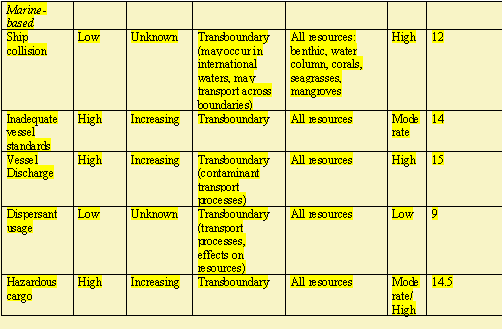
- Ballast Water
- Ship Collision
- Vessel Standards
- Vessel Discharges
- Hazardous cargo transport and handling
- Agriculture
- Deforestation
|
|
14
|
- Component 1:
- Building regional capacity for maritime and land-based pollution control
in Central America;
- Component 2:
- Creating, analyzing and distributing marine environmental information
and developing a strategic action plan for the Gulf of Honduras;
- Component 3:
- Enhancing navigational safety in shipping lanes;
- Component 4:
- Improving environmental management in the regional network of five ports
within the Gulf of Honduras.
|
|
15
|
- Component 1:
- Building regional capacity for maritime and land-based pollution control
in Central America.
- Objective:
- Create and consolidate a regional network for land-based and maritime
pollution control within the Gulf of Honduras, including the formulation
of institutional and economic arrangements that will assure the
sustainability of the action program.
|
|
16
|
- Component 2:
- Creating, analyzing and distributing marine environmental information
and developing a strategic action plan for the Gulf of Honduras.
- Objective:
- Develop the long-term capacity for gathering, organizing, analyzing and
disseminating marine environmental information, as a complement to the
MBRS Regional Environmental Information System (EIS), fill gaps in
existing knowledge of the marine environmental issues, and undertake
strategic planning for concrete actions to reduce marine pollution in
the Gulf of Honduras.
|
|
17
|
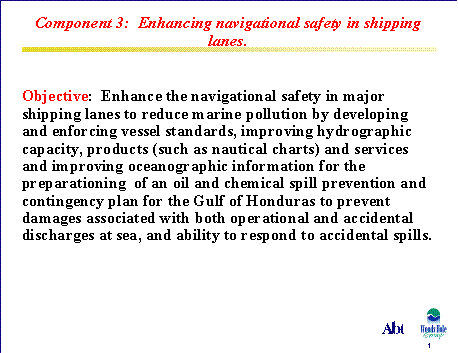
- Component 3:
- Enhancing navigational safety in shipping lanes.
- Objective:
- Enhance the navigational safety in major shipping lanes to reduce marine
pollution by developing and enforcing vessel standards and other related
activities, and prepare an oil and chemical spill prevention and
contingency plan for the Gulf of Honduras to prevent damages associated
with both operational and accidental discharges at sea, and respond to
accidental spills.
|
|
18
|
- Component 4:
- Improving environmental management in the regional network of five ports
within the Gulf of Honduras.
- Objective:
- Improve environmental management in the regional network of five ports
within the Gulf of Honduras through preparation and implementation of
environmental management investment and action programs, including
demonstration pilot activities and involvement of the private sector.
|
|
19
|
- ACTIVITIES:
- 1.1 Put in place institutional arrangements for carrying out the project
activities that will ensure the sustainability of the action program.
- 1.2 Identify, strengthen, and involve stakeholders.
- 1.3 Develop and conduct training workshops for stakeholders on such
topics as Integrated Coastal Area Management (ICAM), Coastal and Marine
Environmental Management and Civil Society.
- 1.4 Formulate arrangements for financing regional maritime pollution
monitoring, control and prevention, including the establishment of a
financing scheme in cooperation with the private sector and port
authorities to contribute to the financial sustainability of the
program.
- 1.5 Develop and recommend economic instruments and incentives to promote
preventive measures to decrease both land and sea-based sources of
pollution as well as adequate environmental management in the sector.
- 1.6 Agree on performance indicators for the Gulf of Honduras maritime
transport pollution control project through a broad stakeholder process
and develop a process to monitor those indicators.
|
|
20
|
- ACTIVITIES:
- 2.1 Update and complete TDA, including an updated assessment of the
relative importance and transboundary impact of land-based and
marine-based sources of pollution and filling the gaps identified in
the Preliminary TDA.
- 2.2 Prepare, negotiate, and endorse at the national level a regional
Strategic Action Programme (SAP) for port and navigational pollution
reduction measures as well as reduction of other adverse land-based
activities. .
- 2.3 Building on existing institutional arrangements where feasible,
establish a regional focus for hydrography and oceanography related to
navigational safety and spill planning and response, for hydrographic
and oceanographic data processing and digitizing for navigation safety,
as well as management and modeling (Marine) GID-based data applications
- 2.4 Develop and implement training program for national and regional
entities in hydrography and oceanography related to navigational safety
and spills, focusing on gaps identified including the assessment of
oceanographic current dynamics, sediment transport and bathymetry.
|
|
21
|
- ACTIVITIES
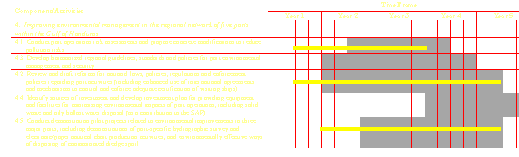
- 3.1 Conduct navigational risk assessments and propose modifications in
maritime shipping routes and other risk reduction measures.
- 3.2 Review and draft reforms for the institutional, legal, policy,
regulatory and enforcement framework for navigational safety,
including the prevention of oil and chemical spills, vessel standards,
certification etc.
- 3.3 Prepare a regional/transboundary oil and chemical spill prevention
and contingency plan.
- 3.4 Identify and conduct two demonstration pilot activities related to
navigational risk reduction.
|
|
22
|
- ACTIVITIES:
- 4.1 Conduct port operations risk assessments and propose concrete
modifications to reduce pollution risks.
- 4.2 Develop harmonized regional guidelines, standards and policies for
port environmental management and security.
- 4.3 Review and draft reforms for national laws, policies, regulations
and enforcement policies regarding port activities
- 4.4 Identify sources of investment and develop investment plan for
providing equipment and facilities for minimizing environmental
impacts of port operations, including solid waste and oily ballast
water disposal
- 4.5 Conduct demonstration pilot projects related to environmental
improvements in three major ports
|
|
23
|
- COMPONENT 1:
- Improved national and regional
capacities for effective environmental management of maritime transport
- Stakeholders fully involved in
project
- Increased knowledge and
awareness by local stakeholders of maritime and land-based transport
pollution issues
- Sustainable regional financial
mechanism for financing SAP activities developed
- Means and methods for assessing
success of project developed
|
|
24
|
- COMPONENT 2:
- TDA completed, agreed upon and
widely disseminated
- Regional SAP completed and
endorsed at the national level which supports improved safety of
navigation and protection of the marine environment
- Partnerships for carrying out
the SAP developed
- Regional capacity for
hydrography and oceanography enhanced
- National and regional capacity
for addressing oil and chemical spills improved
- Incremental improvement in
capacity to control LBS
|
|
25
|
- COMPONENT 3:
- Steps for reducing pollution
from navigational risks
identified
- Legal/policy/regulatory
framework for improved navigational safety, including addressing oil
and chemical spills
- Regional capacity for addressing
transboundary spills enhanced
- Two technologies for reducing
navigational risks successfully demonstrated
|
|
26
|
- COMPONENT 4:
- Steps for reducing environmental
threats from port operations identified
- Guidelines for reducing
environmental threats from port operations agreed upon at the regional
level
- Legal/policy/regulatory
framework for environmental management of ports developed
- Sustainable economic mechanism
for improving port operations identified, including strong private
sector participation
- Environmental improvements in
port activities successfully demonstrated at three sites
|
|
27
|
- BREAK INTO FOUR COMPONENT
WORKING GROUPS (next slide):
RECOMMENDED GROUPS ON WALL
- SELECT RAPPORTEUR TO
COLLATE AND PRESENT RESULTS
- REVIEW PROJECT OBJECTIVE FOR
THAT COMPONENT
- REVIEW PROJECT ACTIVITIES
- REVIEW PROJECT DETAILED
ACTIVITIES
- REVIEW PROJECT TIMELINE
- REPORT TO PLENARY WITH UPDATED
ACTIVITIES AND SUB-ACTIVITIES
(FRIDAY 1330)
|
|
28
|
- Component 1:
- Building regional capacity for maritime and land-based pollution control
in Central America: RACHEL
- Component 2:
- Creating, analyzing and distributing marine environmental information
and developing a strategic action plan for the Gulf of Honduras: DON
- Component 3:
- Enhancing navigational safety in shipping lanes: ELVIN
- Component 4:
- Improving environmental management in the regional network of five ports
within the Gulf of Honduras:
RODOLFO
|
|
29
|
|
|
30
|
- PROJECT EXECUTION ARRANGEMENTS
- ENABLING AGREEMENTS
|
|
31
|
- Stakeholder input into IDB-GEF TDA development – Small group discussions
- Regional executing structure
- Enabling agreements
- National environmental
frameworks
- Effective coordination with
existing programs
|
|
32
|
- GLOBAL OBSERVATIONS-
- · Need for stakeholder participation and
Project ‘ownership’
- · Develop financial sustainability
during the Project’s initial phase.
- · Review existing regional programs and
create linkages where indicated to avoid gaps or duplication of efforts.
- · Streamline project organization to
reduce resource and personnel demands on the Project and stakeholder
participants.
- · Information-sharing and management
are challenges at the national level with an additional layer of
complexity at the transboundary level.
|
|
33
|
- 1 Need to promulgate regulations
for MARPOL and other key international conventions
- 2. Inadequate coordination and
communication among national agencies and between national and local
government agencies.
- 3. Fragmentation of agency
responsibilities include unclear or ignored agency mandates and
overlapping jurisdictions
- 4. Need for training assessments
and follow up
- 5. Government generally has
inadequate resources, equipment, and staffing to execute functions
- 6 Difficulty with staff
retention
|
|
34
|
- Need to incorporate civil society participation in all public
decision-making components of the Project.
- Include civil society as one of the target groups for technical training
- 3. Review legal and institutional
recommendations of the Project for adequate public consultation
|
|
35
|
- 1 Need for uniform enforcement
of shipping regulations.
- 2 Strengthen local capacity to
conduct inspections and enforce regulations
- 3 Strengthen government capacity
to conduct oil spill contingency planning and respond to emergencies
- 4 Extend training and awareness
building to the shipping industry as well as port operators
|
|
36
|
- Trinational management and
multi- stakeholder decision-making framework
- Transboundary watershed approach
to ecosystem management
- Transboundary diagnostic of
environmental, institutional, and legal aspects of the Gulf of
Honduras
- Developing pilot projects that
can be replicated for use in other regions
|
|
37
|
|
|
38
|
|
|
39
|
|
|
40
|
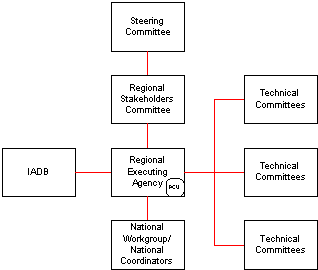
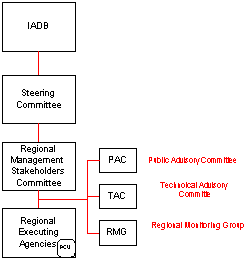
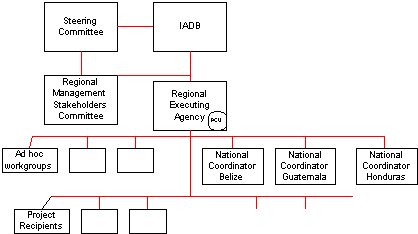
- Inter-American Development Bank
- Responsible for overseeing the development and implementation of the GEF
project and activities are executed in accordance with GEF requirements..
- Regional Steering Committee
- Committee comprised of senior officials from each country, donor
agencies and partner institutions.
|
|
41
|
- Regional Executing Institution
- Functions as the regional administrator of the GEF funding and executing
framework.
- Project Coordination Unit
- Responsible for the direct implementation of the five-year project
during the Project’s initial phase.
|
|
42
|
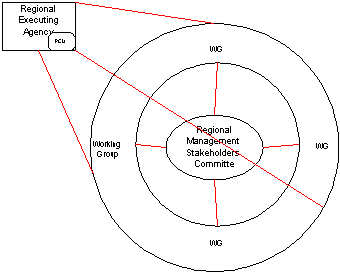
- Management Committee
- Builds consensus among its stakeholder membership for GEF project.
Members serve as direct links to their organizations
- Communicate their institutions’ and constituents’ concerns
- Project Committees and Workgroups
- Citizens Advisory Committee
- Technical Advisory Committee
- Regional Monitoring Workgroup
|
|
43
|
- Two national government
representatives from environment, merchant marines, naval forces,
coastal zone management, natural resources, or other relevant
ministries.
- One local government
representative
- Two nongovernmental organization
representatives working on marine pollution or navigational safety
issues
- One Port Authority
representative
- Two private sector/industry
representatives
- International organization
representative acting as a regional expert such the OMI or COCATRAM
|
|
44
|
- Demonstrated financial stability
- 2. Administrative structure to administer the GEF program and respond to
program audits
- Recognized regional presence by stakeholders working on maritime
pollution and navigational safety issues.
- Expertise in marine pollution,
navigational safety, and coastal planning.
|
|
45
|
- 5. Established contacts with
government, industry, port authorities, and civil society organizations
- 6. Established public education
and outreach programs and experience working with stakeholder groups.
- 7. Demonstrated interest and
commitment to marine pollution and navigational safety issues in the
Gulf of Honduras.
- 8. Demonstrated ability to
coordinate ongoing regional programs to address the control of marine
pollution and navigation safety issues
|
|
46
|
- Examples of Agreement elements that facilitate the execution
- of the GEF Project:
-
Definition of geographic boundaries of the Project
-
Harmonization within the Project region
- Environmental standards- air,
coastal waters, pollution clean up, etc
- Laws pertaining to marine
pollution and navigational safety
- Comparable institutional
framework and level of responsibilities
- Signatories to key
international conventions -
environment, marine pollution, navigational safety
- Project execution agreements
- MOUs between regional executing
entity and participating governments, or their representatives to
formalize decisions and provide for implementation mechanisms.
|
|
47
|
- Project Execution Arrangements-Rachel
- Enabling agreements-Elvin
- National Environmental Frameworks-Rodolfo
- Effective Coordination with existing programs-Megan
|
|
48
|
- Project Execution Arrangements
- Enabling agreements
- National Environmental Frameworks
- Effective Coordination with existing programs
|
|
49
|
|
|
50
|
|
|
51
|
|
|
52
|
|
|
53
|
|
|
54
|
|
|
55
|
- Regional Project Agreement
- Foreign Relations Ministers of Belize, Guatemala and Honduras sign the
project regional agreement before SICA’s Executive Secretary.
- Enabling Agreement must include:
- General Objectives of the Project
- Each country’s contribution and responsibilities
- Benefits that the project will provide to the region
|
|
56
|
- Once the General Agreement has been signed, there is the need for the
establishment of a National Committee in each of the three countries
under the guidance of the Ministers involved in the project.
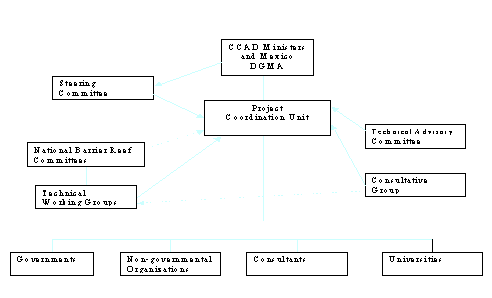
- The National Committee, such as MBRS’ National Barrier Reef Committee
which was established through a decree, requires all government agencies
involved in the project to cooperate in the achievement of the project
goals.
|
|
57
|
- Proposed Schedule of Events prior to September Meeting:
- Presentation of the Project to
Ministers of Natural Resources & Environment, Foreign Relations,
Transport, Finance - No later than July 20.
- Presentation of the Project to
SICA’s Executive Secretary – No later than August 15.
- Invitations to September Meeting
sent – No later than August 20
- Final Meeting – September 20,
2003, Tegucigalpa.
|
|
58
|
- Belize
- Minister of Natural Resources & Environment (or designated
representative)
- Minister of Foreign Affairs (“)
- Minister of Finance (“)
|
|
59
|
- Guatemala
- Minister of Transport (or designated representative)
- Minister of Environment (“)
- Minister of Foreign Affairs (“)
- Minister of Finance (“)
- Minister of Defense (“)
|
|
60
|
- Honduras
- Minister of Transport (or designated representative)
- Minister of Foreign Affairs (“)
- Minister of Finance (“)
- Minister of Environment (“)
|
|
61
|
- Proposal
- Regional Agreement
- Ballast Water Discharge Zone Limit
- Limit would be defined in a Joint Agreement
- Regional Enforcement – Monitoring & Tracking System
|
|
62
|
- Second Proposal
- Special Zone
- MARPOL
- Ship Discharge Limits
- Compromise:
- Establishment of a Regional Information Center
- Establishment of Reception Facilities
|
|
63
|
|
|
64
|
|
|
65
|
|
|
66
|
|
|
67
|
|
|
68
|
- SUSTAINABLE LONG-TERM FINANCING
- INITIAL PROJECT FINANCING: GEF
ELIGIBILITY
- INCREMENTAL COST DEFINITIONS
- CALCULATING THE BASELINE
- CALCULATING THE INCREMENTAL COST
- EXAMPLES
- DISCUSSION GROUP TASKS
|
|
69
|
- ESTABLISHMENT OF A FINANCING SCHEME IS ESSENTIAL TO COMPLEMENT LIMITED
NATIONAL FUNDING SOURCES
- FULL PROJECT WILL ESTABLISH A SUSTAINABLE FINANCING PLAN, IN CONJUNCTION
WITH THE STRATEGIC ACTION PROGRAMME.
- NUMEROUS FUNDING MECHANISMS WILL BE CONSIDERED (NEXT SLIDE)
|
|
70
|
- STABLE FUNDING SOURCE
- PROJECT-SPECIFIC FUNDING ALLOCATIONS TO AVOID COMPETITION WITH OTHER
NEEDS
- POLLUTER-PAYS PRINCIPLE
- ASSURE THAT PROJECT RESULTS ARE TANGIBLE TO SOURCES OF FUNDING
- TRANSPARENT USE OF FUNDS
|
|
71
|
- POSSIBLE FINANCING MECHANISMS INCLUDE:
- Fines or reimbursements for accidents
- Fees for certain activities (bilge water, oily water, etc.)
- Fees on imports and exports from each port (possibly based on toxicity
or other environmental threat)
- Money from general fund of each country
- Fees from cruise ships/tourism
- Partnerships with in-kind and monetary contributions from various
sources
|
|
72
|
- EXAMPLE:
- FEE ON IMPORTS/EXPORTS:
- USING LATEST IMPORT/EXPORT STATISTICS FOR REGION (SEE TDA), AND
ASSUMING A 2% GROWTH IN CARGO,
- USING A FEE OF U.S. $0.025 FOR NON-HAZARDOUS CARGO AND $0.05 FOR
HAZARDOUS CARGO,
- WOULD GENERATE APPROXIMATELY $500,000 PER YEAR FROM THE THREE COUNTRIES
IN SUPPORT ON ONGOING OPERATIONAL COSTS.
|
|
73
|
- Global Benefits
- GEF Operational Strategy and Operational Programmes
- Country Driven & Compatible with National Sustainable Development
Objectives & Programmes
- Stakeholder Participation
- Sustainability
- Cost Effectiveness
- Leveraging of Funding from non-GEF Sources (co-financing)
- Scientific Viability
- Replicability
- Incremental Costs
|
|
74
|
- The GEF finances the incremental costs of actions that are necessary to
secure global environmental benefits. Programs in the following focal
areas are eligible for financing:
- Conserving biodiversity;
- Mitigating greenhouse gas
emissions;
- Preventing degradation of
international waters; and
- Arresting atmospheric ozone
depletion.
|
|
75
|
- Incremental Costs are the difference between the costs of programs to
achieve global environmental objectives and those aimed at achieving
national sustainable development goals.
|
|
76
|
- The incremental cost restriction
means that the GEF is limited to funding activities necessary to
secure global environmental benefits which impose greater costs than
benefits at the national level.
- These activities would not
ordinarily be undertaken in a “business as usual” situation because
the NATIONAL benefits MAY not justify the costs.
|
|
77
|
- Baseline:
- The course of events leading to the global environmental problem.
- Baseline Programs:
- Initiatives undertaken by the recipient country as part of its own
sustainable development agenda that have a bearing on the baseline.
These efforts would be financed irrespective of GEF inputs.
- Baseline Costs:
- The cost of baseline programs estimated over the life of the proposed
GEF project.
|
|
78
|
- Alternative Strategy: The set of
interventions required to mitigate the global environmental problem.
- The difference between baseline
costs and the costs of implementing the alternative strategy = the
Incremental Costs.
- INCREMENTAL COSTS
- =
- ALTERNATIVE COSTS – BASELINE COSTS
- The GEF provides funding only
for those activities that would not ordinarily be undertaken at the
national level because the benefits do not justify the costs.
|
|
79
|
- Cost of Alternative strategy:
- Alternative
- =
- Baseline + Incremental activities
|
|
80
|
- Identify the broad categories of activities for which we need to measure
the baseline and alternative.
- Determine the project life (time period over which we measure costs).
- List all programs (government, donor, or private sector funded) that
will be undertaken over the project life.
|
|
81
|
- Identify the time period over which these programs will be implemented.
- Donor programs:
- Examine the budgets of these
programs to get cost estimates.
- If programs are completed
before the proposed project comes on line do not include these costs in the analysis.
|
|
82
|
- Government funded programs: Examine past budget trends and project these
forward over the life of the proposed project.
|
|
83
|
- INCREMENTAL COSTS MAY INCLUDE:
- COUNTRY CO-FINANCING (E.G., NATIONAL BUDGET, SPECIFIC BI-LATERAL AND
MULTI-LATERAL PROJECTS)
- BI-LATERAL AND MULTI-LATERAL COFINANCING (E.G., PARTNER DONORS)
- IMPLEMENTING AGENCY CO-FINANCING (E.G., IDB)
- OTHER INTERESTED PARTIES (E.G., MACHC, PRIVATE SECTOR)
- GEF FINANCING
|
|
84
|
- New programs proposed under the alternative:
- Start with the GEF budget (inputs oriented).
- Link with the broad categories identified as outputs.
- Some of the budget items will have to be prorated and shared with other
co-financing, for example administrative costs or non-GEFable
activities.
|
|
85
|
- Cash or in-kind contributions from countries to the Project
- Examples:
- Office space
- National experts/specialists
- Light, electricity, etc.
- Additional funding to the
National experts to enhance this project
- Vehicles, transport
|
|
86
|
- GEF TYPICALLY REQUIRES CO-FINANCING AT A RATE OF 2 OR 3 TIMES THE GEF
CONTRIBUTION
- IF THE PROJECT HAS A $4 MILLION CONTRIBUTION FROM GEF, THEN CO-FINANCING
SHOULD BE $8 TO $12 MILLION.
- AS AN EXAMPLE, CO-FINANCING COULD COME FROM
- MULTI-LATERAL DONATIONS: $4
MILLION
- MACHC: $75,000
- NGOs (VARIOUS): $100,000
- COUNTRIES: $4,000,000
- OTHER: ???
|
|
87
|
- NATIONAL BUDGET:
- FOR PERIOD OF 2000 THROUGH 2008 (USE TREND PROJECTION, IF DATA ARE NOT
AVAILABLE), CALCULATE:
- MINISTERIAL BUDGETS APPLICABLE
TO ENVIRONMENT OF GULF OF HONDURAS:
- MIN. OF ENVIRONMENT
- MIN. OF TRANSPORT
- OTHER MINISTRIES
- BILATERAL AND MULTILATERAL
PROJECTS APPLICABLE TO GULF OF HONDURAS
- DONOR PROGRAMS
- IDB AND OTHER LOANS APPLICABLE
TO ENVIRONMENT
|
|
88
|
- MIN. ENV BUDGET: US $ 500,000 PER
YEAR FOR 10 YEARS:
- US $ 5,000,000
- MIN. OF TRANSPORT BUDGET:
$250,000 FOR 10 YEARS:
- US $ 2,500,000
- IDB LOAN FOR RATIONALIZING ENVIRONMENTAL PROCESS (1999-2002):
- US $ 1,750,000
- PRIVATE SECTOR ACTIVITIES IN PORT AND HARBOR ENVIRONMENTAL
PROTECTION: $100,000 PER YEAR FOR
10 YEARS:
- US $ 1,000,000
- E.U. PROJECT TO HARMONIZE LEGISLATION (2003-2006):
- US $ 3,000,000
- TOTAL BASELINE: $13,250,000.
|
|
89
|
- CASH FROM NEW BUDGET FOR PROJECT
- IN-KIND CONTRIBUTION (ANNUAL)
- HOW MANY PERSON-MONTHS
- TRANSPORT COSTS
- MEETING COSTS
- SPACE COSTS
- UTILITIES COSTS (PHONE, AIR CONDITIONING, ETC.)
- OFFICE SPACE
|
|
90
|
- CASH CONTRIBUTION FROM NATIONAL BUDGET (INCREASE OVER BASELINE): $100,000 FOR FIVE YEARS OF PROJECT:
US $ 500,000
- ANNUAL IN-KIND COSTS:
- PERSONNEL: 10 PEOPLE
- TRANSPORT: 4 VEHICLES AND 20
DAYS OF BOAT USE
- OFFICE SPACE: 500 SQUARE
METERS
- UTILITIES: US $ 5000
- MISC. US $ 10,000
- TOTAL: US $ 2,227,055
|
|
91
|
- COUNTRIES WILL MEET ONE-BY-ONE WITH PROJECT TEAM TO ADDRESS BASELINE AND
INCREMENTAL COSTS FOR THEIR COUNTRY:
- 10:30 BELIZE
- 11:00 GUATEMALA
- 11:30 HONDURAS
- OBJECTIVES:
- ANSWER QUESTIONS ABOUT HOW TO PUT TOGETHER BASELINE AND INCREMENTAL
COSTS
- TO DETERMINE A NATIONAL TEAM TO LEAD THE EFFORT
- TO DETERMINE HOW THE PROJECT TEAM CAN ASSIST THE COUNTRIES IN DEFINING
THESE COSTS
|
|
92
|
- BASELINE COSTS SUBMITTED TO ABT
ASSOCIATES BY:
- 30 JULY 2003
- INCREMENTAL COSTS SUBMITTED TO
ABT BY:
- 30 JULY 2003
- REVISED INCREMENTAL COST
ANALYSIS PERFORMED, AND COUNTRIES NOTIFIED IF CO- FINANCING IS
DEFICIENT:
- 15 AUGUST 2003
- FINAL INCREMENTAL COST ANALYSIS:
- 1 SEPTEMBER 2003
|
|
93
|
|
|
94
|
- Building Regional Capacity for Maritime and Land Based-Pollution Control
in Central America
|
|
95
|
- Create and consolidate a regional network to control maritime and
land-based sources of pollution in the Gulf, including institutional and
economic arrangements to ensure project sustainability.
|
|
96
|
- Substitute the word Gulf of Honduras for Central America in the
component title.
- Explanation: by using the word Central America, the project may create
expectations that activities will take place outside the Gulf of
Honduras in other countries.
|
|
97
|
- Sustainability:
- Local participation
- Public and private institutions
- Financial sustainability
- Identification of key institutions in the Gulf to ensure financial
sustainability and successful project implementation (public and
private sector, this will be addressed in more detail by the design
team)
|
|
98
|
- Public education should be included in this activity
- Where feasible, existing web-sites and communication/dissemination
mechanisms should be used
- This activity needs to ensure that all GEF project activities have
adequate public consultation in the decisionmaking process
- This activity should include interactive mechanism on key topics such as
the harmonization of laws and regulations to involve the public and
promote participation
|
|
99
|
- Do stakeholder consultations to identify training needs, ensuring
involvement of the private sector and coordination with other projects
in the region
- Suggested areas for training:
- Crime investigation and legal prosecution
- Economic valuation of disasters
- Citizen monitoring/surveillance to support enforcement of regulations
- Strategic planning for port personnel
|
|
100
|
- The feasibility of the creation of an endowment with the money coming
from sanctions should be explored
- This activity should include identifying opportunities to strengthen
legal mechanisms for prosecuting transboundary violations and
distribution of funds
- The range of actors included in this activity should be expanded to
include the private sector and other actors
|
|
101
|
- This activity should include the development of an action plan for
addressing legislative and government barriers to establishing economic
incentives to prevent contamination in the Gulf
- The activity should include identifying incentives for the private
sector to support regional maritime contamination monitoring, control
and prevention
- This activity should include facilitating obtainment of available
financing by private enterprise to adopt less polluting technologies to
achieve project objectives (collaboration with private banks or BCIE, CABEI)
|
|
102
|
- The development of performance indicators and a monitoring plan to track
project performance is a very powerful tool that could be used to
attract additional funding and public and private sector support
- This activity should include coordination/ collaboration with other
programs to track common indicators in areas like institutional
strengthening, biophysical parameters
- The range of actors included in this activity should be expanded
|
|
103
|
- Updating the Transboundary Diagnostic Analysis, developing a Strategic
Action Plan and creating, analyzing and distributing marine
environmental information for the Gulf of Honduras.
|
|
104
|
- Develop the long-term capacity for gathering, organizing, analyzing and
disseminating marine environmental information, as a complement to the
MBRS Regional Environmental Information System (EIS), fill gaps in
existing knowledge of the marine environmental issues, and undertake
strategic planning for concrete actions to reduce marine pollution in
the Gulf of Honduras.
|
|
105
|
- Develop a Data and Information Management System for maritime related
impacts from port and navigation activities and land-based sources of
pollution on the Gulf of Honduras.
- Update and complete TDA, including an updated assessment of the relative
importance and transboundary impact of land-based and marine-based
sources of pollution and filling the gaps identified in the Preliminary
TDA.
- Prepare, negotiate, and endorse at the national level a regional
Strategic Action Plan (SAP) for port and navigational pollution
reduction measures as well as reduction of other adverse land-based
activities.
|
|
106
|
- Building on existing institutional arrangements where feasible,
establish a Data and Information Management System for the Gulf of
Honduras to facilitate the updating of the TDA and data sharing with
other projects, including the MBRS.
- Develop mechanisms for the sharing of data and information for input
into the Data and Information Management System for the Gulf of
Honduras.
- Create standards and protocols for the collection, processing, analysis
and compilation of data and GIS information.
- Develop a centralized system for access and distribution of the data to
the organizations involved in the control of maritime pollution and
transport in the Gulf of Honduras.
- Develop technical capacity for the transfer and incorporation of
hydrographical and oceanographical data into GIS based information
systems.
|
|
107
|
- Fill the gaps in oil, chemical spill, and dredging related ecological
and social sensitivity/vulnerability mapping and diagnosis (incorporated
into a GIS), including the sensitivity to the use of dispersing
chemicals for oil spill clean-up in the entrances of ports, along major
navigational routes and in adjacent vulnerable coastal areas (including
scientific studies to assess the temporal and spatial patterns in the
reproduction and recruitment of sensitive marine organisms), building on
existing data.
- Conduct a review of the national and regional legal and institutional
frameworks addressing environmental management of the maritime transport
industry.
- Complete an analysis of the socio-economic conditions of the Gulf of
Honduras region that would affect efforts to improve environmental
management of the maritime transport industry.
- Conduct a detailed analysis of the project stakeholders.
|
|
108
|
- Identify the team responsible for the preparation of the SAP
- Establish regional expert group to facilitate the preparation of SAP
- Establish national SAP committees to prepare national inputs
- Conduct workshops (national and regional) to develop SAP: workshops will
include consideration of land-based activities, ports, and marine
activities.
- Continue quarterly interministerial meetings in each country to discuss
and refine SAP components
|
|
109
|
- Conduct regional workshop to review SAP
- Obtain signatures on SAP by appropriate ministries followed by national
endorsement
- Conduct a regional donor conference to develop partnerships for carrying
out the SAP
|
|
110
|
- Data and Information Management System for the Gulf of Honduras
- TDA completed, agreed upon and widely disseminated
- Regional SAP completed and endorsed at the national level which supports
improved safety of navigation and protection of the marine environment
- Partnerships for carrying out the SAP developed
- Incremental improvement in capacity to control Land-Based Sources of
pollution
|
|
111
|
|
|
112
|
- · Identify needs in
improvement and expansion of signaling equipment (buoys, beacons,
lighthouses, etc.) and identify investment opportunities for SAP.
- To regionalize navigational safety communications capability by helping
to establish common regional communications protocols, and assisting in
starting national communications centers, to improve the overall
security of maritime transport in order to avoid ship collisions in busy
corridors, as well as to enable monitoring, surveillance and control of
fishing and other commercial vessels, navigational routes and sea lanes,
and incidences of coastal pollution.
Assistance in the areas of VHF/HF radio, radar, and Automated
Identification System (AIS), and
electronic navigational charts,
will help establish this regional communications capability and
assist compliance with the new IMO/ISPS standards to be implemented by
July 2004.
|
|
113
|
- Promote and introduce new regulations and technologies to avoid
groundings and collisions and adopt methods to prevent unauthorized
discharge of toxic substances, including ballast water. A specific activity is to establish a
regional ballast water exchange zone (limit), shoreward of which ballast
water cannot be exchanged in the Gulf of Honduras.
|
|
114
|
3.2 Review and draft
reforms for the institutional, legal, policy, regulatory and enforcement
framework for navigational safety, including the prevention of oil and
chemical spills, vessel standards, provision of hydrographic services,
certification, the framework for the definition of liabilities; and
facilitating the process of ratification, as well as promoting the
compliance, with international and regional conventions and agreements (such
as international collision regulations and other international IMO
conventions like the Safety of Life at Sea).
- · Complete national
reports on institutional, policy, legal, regulatory and enforcement
frameworks for navigational safety, including at the international and
national levels.
- · Hold workshops to
review regional and national frameworks and recommend more unified
policy/legal/regulatory/institutional frameworks for navigational
safety.
- · Draft policies, laws,
and other instruments to address gaps in institutional/ legal/
regulatory structure
|
|
115
|
- · Review and assess
national capacities for oceanography (including oil spill modeling).
- · Through a high-level
workshop, develop and agree on a policy for regional cooperation in
oceanography, in support of oil spill and chemical spill response, with
linkages to national and regional spill response efforts.
- Obtain ongoing national budget and other financing, including private
sector, to support regional focus for oceanography related to spill
planning and response.
|
|
116
|
- · Develop technical capacity and obtain equipment for oil and chemical
spill trajectory analysis and response, including training and
education, working closely with other regional modeling projects such as
the MBRS.
- · Develop training for processing of oceanographic data, and data
exchange compatible with the project’s data and information management
system.
- Develop methodologies and build capacity for oil and chemical spill
damage assessments and the determination of environmental restoration
costs.
|
|
117
|
- · Assess needs for and develop training for specific operational
areas such as pilotage, Port Wardens, Port State Control, oil spill
response, use of dispersants in response to oil spills, etc.
- Establish a mechanism to ensure that relevant oceanographic information
(such as tides and water levels, currents, etc.) is made available to
support regional hydrographic activities, including the production of
nautical charts.
|
|
118
|
- · Establish oil pollution reporting
procedure for ships and offshore units (linked to activity 3.1).
- · Plan and perform emergency spill
response exercises, with national and regional authorities, to
demonstrate and evaluate capabilities of the regional response.
- · Improve regional capacity for oil and chemical spill containment
and clean-up by identifying existing equipment and facilities (including
using the oil spill brigade in Guatemala as a regional model) and gaps
in available facilities.
- Develop national emergency response plans for ship fires and groundings
(national obligation).
|
|
119
|
- Each country establishes an interministerial mechanism (Commission,
Committee, Steering Group, etc. with representiaves from relevant
government ministries (including the National Geographic Institutes) and
private sector entities to assess, organize and coordinate national
efforts related to hydrographic data collection, processing, production
and dissemination.
|
|
120
|
- · Each country’s interministerial coordination mechanism
establish consensus on what capabilities, products and services it could
potentially provide to regional hydrographic activities. Each country be prepared to present
this consensus view at the workshop.
|
|
121
|
- Obtain and install multi-beam equipment for hydrographic data
collection, and related hardware and software for processing, analysis,
paper and electronic chart production (cooperating, for instance, with
ENP of Honduras which has ECP capabilities) and distribution, and
demonstrate in each country the use of this equipment for purposes of
hydrographic charting and other requirements of the project, in priority
areas such as navigation channels, high-value environmental resource
areas, etc.
|
|
122
|
- · Provide training on
hydrographic data processing, archiving and production of electronic
navigational charts.
- Provide training on how to format hydrographic data so that it can be
integrated into the project data and information management system
(including GIS) and used for non-navigation purposes (such as coral reef
mapping, coastal zone management, etc.)
|
|
123
|
- · Host regional
workshop/symposium on best available technologies and best environmental
practices addressing navigational risks; broadly disseminate results
from the symposium.
- · Select
technologies/practices and implement demonstration projects.
- · Monitor and report on
progress of demonstration projects.
- Disseminate lessons learned from demonstration projects: encourage their application elsewhere
in the region.
|
|
124
|
- Steps for reducing pollution from navigational risks identified
- Legal/policy/regulatory framework for improved navigational safety,
including addressing oil and chemical spills and improved hydrographic
products and services
- Regional capacity for addressing transboundary spills enhanced
- Two technologies for reducing navigational risks successfully
demonstrated
- Regional capacity for hydrography and oceanography enhanced
- National and regional capacity for addressing oil and chemical spills
improved
|
|
125
|
- Component 4: Improving
environmental management in the regional network of five ports within
the Gulf of Honduras.
- Objective: Improve environmental
management and hazard reduction measures in the regional network of five
ports within the Gulf of Honduras through preparation and implementation
of environmental management investment and action programs, including
demonstration pilot activities and involvement of the private sector.
|
|
126
|
- 4.1 Conduct port operations risk assessments and propose concrete
modifications to reduce pollution risks.
- Identify dredging needs and evaluate environmental impacts of dredging
and dredge disposal methods.
- Assess impacts of illegal discharge of ballast and oily ballast water
and identify infrastructure needs for treating ballast water.
- Assess impacts of oil and chemical spills occurring during loading and
off-loading of ships and introduce new technologies to avoid spills.
- Assess de adequacy and functionality of navigational aids at ports
- Take into account the technical information from component 2.1 in
relation to ecological and
social sensitive areas when conducting risk assessments at ports.
- Assess ratio communication facilities in the risk assessment evaluation
|
|
127
|
- 4.2. Review the adequacy of existing conventions and suggest reforms
for national laws, policies, regulations and enforcement policies
regarding port activities (including enhanced use of international
agreements and mechanisms to control and enforce adequate certification
of visiting ships).
- Conduct an evaluation of the enforcement within each country for the
ratified conventions
- Complete national reports on policy, legal, regulatory and enforcement
frameworks regarding port activities.
- Hold a workshop to review national frameworks and recommend more
unified policy/legal/regulatory frameworks.
- Develop and/or harmonize EIA process for direct and indirect impacts
and for the mitigation and prevention of environmental impacts
associated with port expansion and operation.
|
|
128
|
- 4.3 Develop harmonized regional guidelines, standards and policies for
port environmental management and security.
- Conduct environmental evaluations in the 5 ports to for developing
guidelines, standards and policies
- Hold a workshop to discuss and agree on regional guidelines, standards
and policies for port environmental management.
- Broadly disseminate results of workshop.
- Build capacity and conduct learning exchange programs between ports
(including training extension activities in other Central American
countries).
|
|
129
|
- 4.4 Identify sources of investment and develop investment plan for
providing equipment and facilities for minimizing environmental impacts
of port operations, including solid waste and oily ballast water
disposal (as a contribution to the SAP).
- Identify projects for environmental management at the ports and
mechanisms for execution and funding
- Establish a port users forum, to meet quarterly, to discuss
environmental investment needs
- Forum attends SAP workshops and planning process, to provide input into
the SAP process
|
|
130
|
- 4.5 Conduct demonstration pilot projects related to environmental
improvements in three major ports, including demonstrations of
port-specific hydrographic survey and electronic/paper nautical chart
production activities, and environmentally effective ways of disposing
of contaminated dredge spoil.
- Identify and execute pilot projects for environmental services at the
ports
- Identify and execute pilot projects on sensitive areas around ports
- Host regional workshop/symposium on best available technologies and
best environmental practices addressing sources of pollution from port
operations; broadly disseminate results from the symposium.
- Select technologies/practices and implement demonstration projects.
- Monitor and report on progress of demonstration projects.
- Disseminate lessons learned from demonstration projects; encourage
their application elsewhere in the region.
|
|
131
|
|
|
132
|
|
|
133
|
- TDA Technical Endorsement
- Agreement and regional details on the project components
- Receive input into project execution arrangements and organization
- Agree on method and timeline for determining baseline costs and country
cofinancing
- Exploring enabling agreements for regional cooperation in the execution
of the project
- Other (National Environmental Frameworks, Effective Coordination
amongst regional projects)
|
|
134
|
|
|
135
|
|
|
136
|
|
|
137
|
- Abt will work closely with countries to develop baseline and country
cofinancing
- Abt will provide each country with an updated incremental cost matrix by
Wednesday, June 18. (Elvin Torres
is the contact point.)
- Countries will have draft of Baseline and Country Co-Financing available
by 9 July, at which time Abt will assist to answer questions, identify
gaps, etc.
- Countries working with the Abt team will have Baseline and Country
Co-Financing to Abt by 31 July 2003.
|
|
138
|
- Belize Country Coordinators are:
- Sharon Lindo, Ministry of Natural Resources, Environment, &
Industry
- Carlos Montero, Ministry of Economic Development
- Guatemala Country Coordinators are:
- Rodolfo Tejeda, Ministerio de Ambiente y Recursos Naturales
- Jorge Mario Rodriguez, Comité de Respuesta y Protección del Medio
Marino Costero
- Eduardo Garidda, Ministry of Communications
- Honduras Country Coordinators are:
- Danelia Sabillón, Secretaría de Recursos Naturales y Ambiente
- Roque Espinoza, Empresa Nacional Portuaria
|
|
139
|
|
|
140
|
- Once the General Agreement has been signed, there is the need for the
establishment of a National Committee in each of the three countries
under the guidance of the Ministers involved in the project.
- The National Committee, such as MBRS’ National Barrier Reef Committee
which was established through a decree, requires all government agencies
involved in the project to cooperate in the achievement of the project
goals.
|
|
141
|
- Presentation of the Project to Ministers of Natural Resources &
Environment, Foreign Relations, Transport, Finance - by July 19.
- Presentation of the Project to SICA Executive Secretary – by August 15.
|
|
142
|
- Each country has proposed specific attendees for the final Project
Meeting in September 2003:
- Belize
- Minister of Natural Resources & Environment (or designated representative)
- Minister of Foreign Affairs (“)
- Minister of Finance (“)
- Guatemala
- Minister of Transport (or designated
representative)
- Minister of Environment (“)
- Minister of Foreign Affairs (“)
- Minister of Finance (“)
- Minister of Defense (“)
- Honduras
- Minister of Transport (or designated representative)
- Minister of Foreign Affairs (“)
- Minister of Finance (“)
- Minister of Environment (“)
|
|
143
|
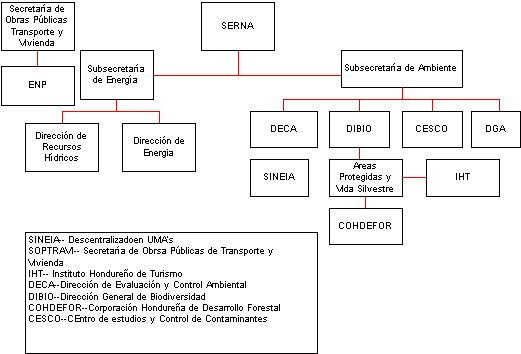
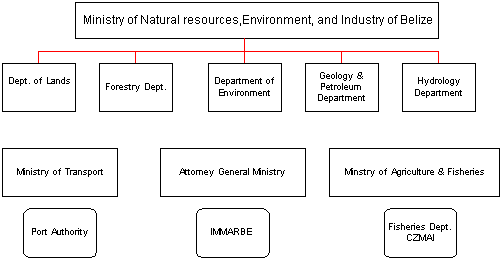
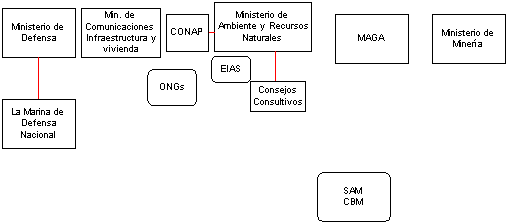
- The Meeting developed organigrams of the Environmental Frameworks
pertaining to the Gulf of Honduras in each country (as a contribution to
the Preliminary TDA)
- The Meeting discussed concrete ideas for coordinating activities within
the GEF/IDB Gulf of Honduras project and other regional projects.
|
|
144
|
- Revised Incremental Cost matrix distributed to countries by 18 June.
- Draft baseline and co-financing costs available for each country by 9
July.
- Final country baseline and co-financing costs completed by 31 July.
- Invitations to September Meeting sent – by August 20.
- Final Meeting – September 19,
2003, Tegucigalpa.
|

 Notes
Notes