|
GEF BALTIC SEA REGIONAL PROJECT, BSRP
MARCH 2003 – May 2005 |
report by BSRP COMPONENT 1: “BALTIC SEA LARGE MARINE ECOSYSTEM ACTIVITIEs”
TO THE BALTIC SEA STEERING GROUP
May 2005
BY
j. tHULIN, a. aNDRUSHAITIS AND c.c.e. hOPKINS
 International Council for the Exploration of the Sea
REPORT BY BSRP COMPONENT 1 ‘LARGE MARINE ECOSYSTEM ACTIVITIES’
TO THE BALTIC SEA STEERING GROUP
May 2005
by
Jan Thulin1, Andris Andrushaitis2 & Christopher C.E. Hopkins3
1Baltic Sea Regional Project Component 1, International Council for the Exploration of the Sea,
H.C. Andersens Boulevard 44-46, DK-1553 Copenhagen V, Denmark:
jan@ices.dk
2Baltic Sea Regional Project Component 1, Institute of Aquatic Ecology, University of Latvia,
8 Daugavgrivas Street, LV-1048 Riga, Latvia:
andris@hydro.edu.lv
3AquaMarine Advisers, Granvägen 20, SE-265 32 Åstorp, Sweden: aquamarine@telia.com
SUMMARY:
|
This report provides an overview (17 March 2003 to 1 May 2005) of the development and implementation of the Baltic Sea Regional Project’s (BSRP) Component 1 ‘Large Marine Ecosystem Activities’. Emphasis is placed on registering numerous outputs and deliverables (e.g. holding meetings and workshops, and production of associated progress reports) connected with management of the project at the administrative and scientific levels, including the development of necessary structures and bodies (e.g. five Coordination Centres supported by 10 Lead Laboratories), and engagement of key personnel (e.g. Local Project Managers) in the beneficiary countries (Estonia, Latvia, Lithuania, Poland and Russia) to conduct the actions and measures identified in the Project Implementation Plan. In addition, four expert study groups have been established under the auspices of the International Council for the Exploration of the Sea (ICES), drawing on membership from beneficiary and donor countries, to address Baltic Sea issues of central importance to the BSRP mission. Emphasis is also placed on a range of capacity and confidence building activities, of paramount significance to the BSRP, involving ‘hands on’ training and the procurement of prioritized technical and logistical assets to ensure relevance, quality and robustness of the research, monitoring and assessments, in order to establish and sustain ecosystem-based management in the coastal and offshore areas of the Baltic Sea region. |
TABLE OF CONTENTS
Section Page
1 INTRODUCTION.. 1
1.1 General objectives of the Baltic Sea Regional Project 1
1.2 History and stages in the development of the BSRP. 1
1.3 The aims of Component 1 ‘Large Marine Ecosystem Activities’ 2
2 STATUS OF IMPLEMENTATION.. 3
2.1 Project management 3
2.1.1 Establishment of structures and bodies: Coordination Centres, Lead Laboratories and specialized Study Groups 3
2.1.2 Financial status and prospects. 5
2.1.3 Factors affecting progress and possible risks. 5
2.1.4 Status of specific activities in the Project Implementation Plan including changes. 5
2.1.5 Evolving partnership and endorsements of support and cooperation. 6
2.2 Productivity Coordination Centre. 7
2.3 Pollution and Ecosystem Health Coordination Centre. 8
2.4 Fish and Fisheries Coordination Centre. 9
2.5 GIS/Data Coordination Centre. 10
2.6 Socioeconomy Coordination Centre. 11
2.7 ICES/BSRP Study Groups and related forums. 12
2.8 Training and capacity building. 13
2.8.1 Human capacity building: training by participation. 13
2.8.2 Technical and logistical capacity building. 14
2.9 Integration between Component 1 & Component 2: Addressing land – sea eutrophication issues. 15
2.10 Information dissemination, project promotion and outreach activities. 16
3 ACKNOWLEDGEMENTS. 17
4 BIBLIOGRAPHY.. 17
5 ANNEXES. 21
5.1 Annex 1. Explanation of abbreviations and acronyms used in the document. 21
5.2 Annex 2. Component 1 ‘Large Marine Ecosystem Activities’ objectives/aims, activities and task list (November 2002 Project Implementation and Procurement Plan). Performance indicators of progress are given. 23
5.3 Annex 3. Support provided by BSRP Component 1, as of 1 March 2005, to the partner institutes in the five beneficiary countries. 27
1 INTRODUCTION
1.1 General objectives of the Baltic Sea Regional Project
Objective: The Baltic Sea Regional Project (BSRP, see Annex 1 for abbreviations and acronyms) aims to introduce ecosystem-based monitoring and assessments to strengthen the management of Baltic Sea coastal and open sea marine environments through regional cooperation and targeted, transboundary marine and watershed activities, with a view to reduce impacts from non-point sources of pollution and achieve sustainable production of living marine resources through restoring ecosystem health and integrity. The BSRP supports the Joint Comprehensive Environmental Action Plan (JCP) and provides linkages with country activities. It is consistent with GEF global environmental policy to significantly contribute to ‘reducing stress to [the] international waters environment’ by integrating sound land and water resource management strategies through a more favorable political and regulatory climate and activities that promote sustainable development. The Project’s long-term goal is for the three international bodies— HELCOM (Helsinki Commission for the Protection of the Baltic Marine Environment), the International Baltic Sea Fisheries Commission (IBSFC), and the International Council for Exploration of the Sea (ICES) - to utilize project-developed management tools for sustainable ecosystem management[1], and to contribute to the improvements in the social and economic benefits of the ecosystem to the coastal fishing and farming communities in the beneficiary countries comprising Estonia, Latvia, Lithuania, Poland and Russia.
The overarching goal of the BSRP is to strengthen the technical and intellectual capacity of local and regional institutions to manage valuable marine resources (‘ecological goods and services’) and ensure that Baltic ecosystems are sustainable. It is particularly important to reduce nutrient pollution and to increase the sustainability of fisheries in sustainable ecosystems. The BSRP activities are designed to enhance and further continue the mutual collaboration of the Baltic Sea countries inland, along the coast, and in the open sea. Strengthened regional management, and technical and intellectual capacity, will provide a series of beneficial outcomes, not only at the regional level, but also at the national and local levels, and will contribute to sustainable management of the Baltic Sea ecosystem.
Project Components: The BSRP has four inter-linked components: Component 1 ‘Large Marine Ecosystem Activities’; Component 2: ‘Land and Coastal Management Activities’; Component 3: ‘Institutional Strengthening and Regional Capacity Building’; Component 4: ‘Project Management’. HELCOM is the principal executing agency, responsible for managing the project as a whole in close cooperation with ICES and IBSFC.
The aims of Component 1 ‘Large Marine Ecosystem Activities’ are described under section 1.3, and more specific details regarding Component 1’s implementation status are provided under section 2.
1.2 History and stages in the development of the BSRP
Between 1995 and 1997, five eastern Baltic Sea countries (Estonia, Latvia, Lithuania, Poland and Russia) developed their approach to the GEF for support, as beneficiary countries, regarding the proposed establishment of the BSRP.
The GEF Block B Grant awarded for project preparation commenced February 2000. Preparation of the Block B Grant proposal included a thorough series of consultations with the identified beneficiary countries, anticipated donor countries as well as HELCOM, IBSFC and ICES. This process successfully developed into elaboration of the draft Project Implementation Plan (PIP) from 2001 – 2002. Approval for launching the funded BSRP occurred in 2003 in the form of Phase 1 of the project.
It is anticipated that the BSRP will cover three phases:
Phase 1 project implementation spans from 2003 – 2006 focusing on Introduction of the Ecosystem Approach. This involves establishment of the regional framework for introduction of the ecosystem approach in managing the Baltic Sea Large Marine Ecosystem; mobilization of partners in management of coastal and open sea marine resources; initial activities for land and coastal management; and initial investment to mitigate agricultural run-off.
Phase 2 is projected to focus on Demonstration of the Ecosystem Approach (2006 – 2007). Undertaking of cooperative activities for assessment and management of coastal and open sea marine resources, expansion of activities for land and coastal management; joint activities for linkage of land, coastal and open sea management programs; and continuation of investment of the investment program in the agricultural sector.
Phase 3 is projected to focus on Expanding Application of the Ecosystem Approach (2007 – 2008). Involving identification of next-steps by the cooperating parties for expanded application of the ecosystem approach for land, coastal and open sea management; completion of field based management and demonstration activities; and preparation of assessment studies.
The following sections/sub-sections report on progress regarding the implementation status of the BSRP Component 1 Large Marine Ecosystem Activities as of 1 May 2005, since Phase 1 of the BSRP was officially started following the 17 March 2003 signing of the Grant Agreement between the GEF and HELCOM.
1.3 The aims of Component 1 ‘Large Marine Ecosystem Activities’
Component 1, managed by ICES, aims to:
- introduce ecosystem based assessments and management for the Baltic Sea;
- enhance, coordinate and integrate the capacity for monitoring and assessment of the status of living marine resources and their associated environment in coastal and offshore marine areas;
- improve management practices to achieve sustainable fisheries and restore the health and integrity of the Baltic Sea Large Marine Ecosystem (BSLME);
- strengthen regional decision-making capabilities;
- in the long term, improve the marine ecosystem and the economic benefits and standard of living of the fishing and coastal communities.
Although specific policy and institutional reforms are not included as itemized activities in the BSRP, such reforms are explicit in the objective of elaborating and implementing ecosystem based management. The beneficiary countries will be provided with prospects for developing measures for modifying, adapting or further reinforcing existing local, national and regional policies. In the case of Component 1, opportunities will be provided for improving fisheries management practices and policy reforms in counsel with IBSFC and HELCOM regarding fisheries operations, and application of the Common Fisheries Policy (CFP) and EC Directives in the Baltic Sea following accession to the EC of four of the beneficiary countries (i.e. Estonia, Latvia, Lithuania and Poland) in May 2004.
Annex 2 provides a summary of the key objectives, activities and tasks to be implemented by BSRP Component 1 as outlined in the BSRP Project Implementation and Procurement Plan (PIP/PP). Performance indicators of relative progress so far achieved by Component 1 in meeting these targets are also shown in Annex 2. Thus cross-reference should be made to Annex 2 when reading the text of the section and sub-sections of this report regarding the Status of Implementation. The status of specific activities in the PIP and proposed changes to these are further examined under section 2.1.4.
2 STATUS OF IMPLEMENTATION
2.1 Project management
2.1.1 Establishment of structures and bodies: Coordination Centres, Lead Laboratories and specialized Study Groups
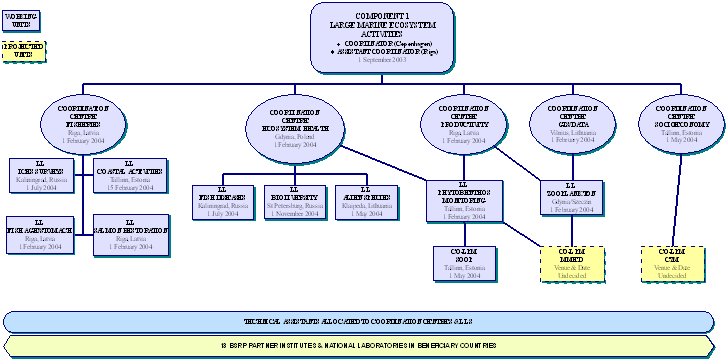
The structures and bodies of Component 1 (Fig. 1) have been designed to support and facilitate the promotion of desired progress and outputs in accord with the PIP/PP aims.
Besides the appointment of the Coordinator (C1, Jan Thulin) and the Assistant Coordinator (C1AC, Andris Andrushaitis), four Coordination Centres (CC Fish and Fisheries, CC Ecosystem Health, CC Productivity and CC Socioeconomy) have been established as manifestations of four of the five traditional LME assessment modules. The fifth traditional LME module, Governance, is not planned for establishment in the BSRP. Instead, the creation of the CC for Geographical Information Systems (GIS) and Data is intended to facilitate the integrated assessment process, and the CC Socioeconomy will inter alia promote the development of integrated ‘cost-benefit’ decision-making analyses involving human socioeconomics and ecological economics.
A Local Project Manager (LPM) is contracted to lead and be responsible for the activities of each CC. The role of the CCs is to facilitate the overall coordination of the activities within their designated special area of focus. They help organize relevant meetings and workshops as well as participation in international forums, especially ICES-related Study/Working Groups, and cooperate with Lead Laboratories (LL) in enhancing the institutional networks and implementing BSRP activities, particularly regarding technical upgrading and assessments using oceanographic, environmental and living resources data.
Each CC is supported by an array of regional Lead Laboratories (LL) whose activities are task-based with regard to key issues, for both coastal and open sea activities, and are responsible for disseminating best practices for monitoring and assessment, as well as the primary collection and analysis of appropriate information and data for their operational areas. The aim is to facilitate practical collaboration and integration of institutions, to harmonize sampling techniques, to rationalize assessment and reporting, and to achieve a general upgrading and use of equipment and laboratories in a cost effective and quality-assured manner. The role of the LLs is to assist in the coordination of activities within their respective field of specialty and the collection and transfer of data to the GIS/Data Centre and the respective CC. The LLs serve as links to the CCs, including assisting in the organization of workshops and quality assurance (QA) procedures, take the responsibility of harmonizing monitoring programs, and serve as support for participating institutes during sampling and laboratory work and the handling and storing of data in databases.[AA1] A LPM is contracted to lead and be responsible for the activities of each LL.
All CCs and LLs described in the PIP/PP have been established. The first General Meeting of Component 1 personnel, including LPMs, was held in September 2004 at the ICES Annual Science Conference (Vigo, Spain). A similar meeting is scheduled for September 2005 (ICES Annual Science Conference, Aberdeen, United Kingdom).
Adaptive management and evolution based on lessons learnt, has resulted in either establishment or proposed establishment of several new supplementary LLs in order to facilitate execution of the overall tasks of BSRP Component 1 (c.f. Fig. 1). A LL on Biodiversity and co-Local Project Manager (LPM) position on Ships of Opportunity (SOOP) have been established so far. In addition, a co-LPM position to implement Multiple Marine Ecological Disturbances (MMED) methodology in the Baltic (associated with CC GIS/Data), and co-LPM position to focus specifically on Integrated Coastal Zone Management (ICZM) issues (under CC Socioeconomy), are projected for the second half of 2005. Besides LPMs, the units established so far are staffed with a number of Technical Assistants (TA). Currently, a total of 22 persons from the beneficiary countries have been contracted to serve in five CCs and 10 LLs.
The geographical allocation of the above-mentioned BSRP Component 1 entities provides an equitable coverage across the BSRP beneficiary countries. More specific information concerning the activities and outputs of the CCs and LLs are provided under sections 2.2 – 2.6.
Figure 1. Structure of BSRP Component 1.
LL = Lead Laboratory; LPM = Local Project Manager; SOOP = Ships of Opportunity; CZM = Coastal Zone Management; MMED = Multiple Marine Ecological Disturbances.
Additionally, four joint ICES specialized Study Groups have been established since 2003/2004 and work actively in support of the BSRP: Study Group on Baltic Ecosystem Health Issues (SGEH); Study Group on Baltic Productivity Issues (SGPROD); Study Group on Baltic Fish and Fisheries Issues (SGBFFI); and Study Group on Baltic Ecosystem Modeling (SGBEM). These groups have meet once or even twice a year to address specific terms of reference related to promoting better and more focused research, monitoring, assessment and modelling activities in support of the BSRP. These meetings have been well attended by scientists from all the five BSRP beneficiary countries, several donor countries (e.g. Denmark, Finland, Germany, Norway, Sweden and USA) as well as by representatives from the European Environment Agency (EEA), HELCOM and the UNEP Global International Waters Assessment (GIWA) The specific activities of these groups are further described under sections 2.2 – 2.7.
2.1.2 Financial status and prospects
The current Project Procurement Plan (PPP) has been carefully prepared to revise the allocation of funds originally envisioned. It takes into account the identified capacity building needs for the operative units as well as the USD devaluation. There has been a cutback in the allocation for incremental operating costs as well as for unallocated funds, which have been kept at a minimum.
The GEF Grant budget has been used as follows:
a) Personnel costs of C1AC, LPMs and TAs.
b) Operational costs of C1AC, LPMs and their units, including communication and travels.
c) Travel support to beneficiary country experts.
d) Technical support to improve assessment capacity.
e) Training.
Annex 3 provides an overview of financial support provided by BSRP Component 1, as of 1 March 2005, to the partner institutes in the five beneficiary countries. This support is shown as LPM & TA personnel costs; CC & LL Operational costs; equipment to deliver; and Support for participation in meetings.
Information on use of budget for procurements connected with technical and logistical capacity building is provided under section 2.8.2.
2.1.3 Factors affecting progress and possible risks
The request for a GEF supported project in the Baltic originated from the official environmental sectors (e.g. Ministries of Environment, Fisheries and Agriculture, and Science and Education) in the countries that are currently beneficiaries. However, as the majority of the cooperating institutions are subsidiary entities to the national Ministries, it is imperative that the BSRP Delegates of the beneficiary countries are strongly engaged to promote and ensure national cross-sectoral coordination and harmonization regarding environmental protection strategies in accord with the principle of ecosystem based management that is promoted in the PIP. Unless this is achieved, the sustainability of procedures, methodological approaches and associated technical tools, introduced during Phase 1 of the Project will be compromised.
Furthermore, to be able to support and improve the marine environmental data collection and management system in Russia, the BSRP Component 1 needs better knowledge of operative practices and the division of responsibilities at the national level.
2.1.4 Status of specific activities in the Project Implementation Plan including changes
Annex 2 provides an overview of the current levels (percentage) of progress towards achieving the aims of the specified PIP tasks concerning Component 1.
The PIP does not provide a chronological frame regarding the order in which the various tasks should be tackled during the course of the different project phases. However, Annex 2 clearly indicates that very good advancement has been made so far in a logical progression, and that a substantial proportion of the tasks will be completed during the course of Phase 1. A number of activities are proposed to be postponed until Phase 2 (see Annex 2) on the grounds that these are best tackled after the Phase 1 tasks have been completed. A single task/sub-task (4d(1)) (see Annex 2) is proposed to be deleted from the PIP on the grounds that the current EC Common Fisheries Policy in this area forms the policy driver for four of the five beneficiary countries.
2.1.5 Evolving partnership and endorsements of support and cooperation
Partner Institute Agreements in beneficiary countries
To enhance cooperation between BSRP Component 1 and the national institutes of the beneficiary countries, and to secure their support of the wider aims of BSRP Component 1, Partner Institute Agreements (PIAs) have been signed (see Annex 3). PIAs provide the formal basis for the most important aspects of the project work: e.g. principles of data exchange, local support to Component 1 units established at the national institutes and laboratories, setting out the conditions of technical support provided by BSRP to the institutes, and describing BSRP grant assets to cover the operational expenses of units.
The first group of potential partners involves eight national institutes hosting Component 1 CCs and LLs in accordance with the PIP. Practical discussions with the potential Partner Institutes revealed several procurement issues that resulted in the proposal for Grant Agreement amendment that has been adopted by the Bank. Several key institutes that provide or have potential to provide data input to enhance the Baltic Sea LME assessment expressed the desire to join the BSRP after its launch. The decision to extend Component 1’s partner network in the beneficiary countries with five additional institutes was based on an evaluation of added value and cost effectiveness. Partner agreements with these additional institutes have been developed and submitted to HELCOM PIT for adoption.
Other collaborating institutions and organizations
Letters of Agreement (LoAs) and Cooperation with the BSRP have been signed with a series of institutes and organizations around the Baltic including: Danish Institute of Fisheries Research, Charlottenlund (Ministry of Food, Agriculture and Fisheries); Swedish Institute of Marine Research, Lysekil (National Board of Fisheries); German Baltic Sea Research Institute/Institut für Ostseeforschung, Warnemünde; Finnish Research Council for Biosciences and Environment’s BIREME Project, Helsinki (Academy of Finland),; Baltic Marine Biologists (BMB) in Uppsala, Sweden; and the Baltic Operational Oceanographic System, (BOOS) of the Global Ocean Observing System (GOOS).
The added value to the BSRP of the cooperation with these partners is very important. The ‘in kind’ contributions offered by these institutions to the BSRP are specified in the LoAs and amount to over USD 3 million per year.
Several planned and on-going EU-projects view the BSRP Component 1 as a platform in the Baltic Sea area and have requested partnership status. After careful evaluations, the BSRP has accepted active partnership with the following EC-projects:
- the ERA-NET project BONUS in which ICES/BSRP will have the responsibility for proposing and prioritizing potential research topics for the future Joint International Baltic Sea Research Programme.
- SAFMAMS (Scientific Advice for Fisheries Management at Multiple Scales) which aims at drawing insights from existing research projects and management processes on the most useful forms of scientific advice for marine environmental management and communicate those insights to scientists and decision-makers.
The Component 1 Coordinator, besides representing BSRP in the two above-mentioned EC projects, also represents the BSRP in a) the Advisory Board of the EC-project PAPA/BOOS which is a programme for a Baltic network to assess and upgrade an operational observing and forecasting system in the region, and b) the ELME project (European Lifestyle, Marine Ecosystems) that aims at the understanding of causality, to forecast the impacts of divergent development scenarios and to inform evolving European Community policies about status and trends in the European Seas, including the Baltic Sea.
A partnership has been firmly established between the BSRP and the EEA (Copenhagen, Denmark). The EEA is an active partner in the development of the European Marine Strategy, and several common meetings have been held during the past year.
The Component 1 Coordinator also represents the Baltic Sea region in the Religion, Science and Environment (RSE) Committee, which organizes sea-going symposia in selected regional seas. The RSE Committee focuses on cross-border dialogue on key marine issues with the aim of problem solving using participatory inputs from senior religious, scientific and political decision-makers. In June 2003, the RSE organized a sea-going symposium on the Baltic Sea that engaged several of the senior personnel from BSRP Component 1 as keynote speakers and as participants in working groups. The RSE Baltic Sea Symposium delivered a Statement on the Protection of the Baltic Sea that is in accord with the BSRP mission.
The BSRP Component 1 also has closely collaborated with several environmental NGOs that are active in the Baltic Sea region, including the World Wide Fund for Nature (WWF) and Coalition Clean Baltic (CCB).
2.2 Productivity Coordination Centre
The CC Productivity (Riga, Latvia), as well as its subsidiary Lead Laboratories (i.e. LL on Phytobenthos Monitoring/SOOP in Tallinn, Estonia; LL on Ichthyoplankton and Zooplankton in Gdynia/Szechin, Poland) were established in February 2004. The Co-LPM on the Ships of Opportunity (SOOP, in Tallinn, Estonia) issues started in May 2004. [AA2]
Key work tasks and progress connected with CC Productivity and its associated bodies have resulted in:
- Establishment of Regional Networks of Experts, and all units have had their kick-off meetings, and workplans have been developed, reviewed and approved in September 2004 by ICES Baltic Committee.
- Jointly with CC Fish/Fisheries, CC Productivity has developed a network of Coastal Monitoring Stations involving phytobenthos, coastal fish and productivity monitoring. Integrated coastal monitoring and assessment surveys are scheduled for the 2005 sampling season. The preparation for these surveys was initiated by a workshop on Strategic Design of Phytobenthos, Water Quality and Productivity Monitoring in the Coastal Zone (September 2004) organized jointly by CC Productivity and LL Coastal Activities. This workshop identified a common fieldwork strategy for Component 1’s coastal work and initiated a revision of the HELCOM phytobenthos monitoring guidelines.
- Two practical workshops (18-22 October 2004, Riga, Latvia; 15-16 April 2005, Jurmala, Latvia) have been held on application of ECOPATH/ECOSYM modelling tools for comparative assessment of the Baltic coastal ecosystems. The results of this exercise will be reported at a special session of the 2005 ICES Annual Science Conference (Aberdeen, Scotland).
- The CC Productivity, in cooperation with the CC Fish/Fisheries, has planned a joint hydro-acoustic/productivity survey scheduled for May 2005. The survey will be conducted jointly by Sea Fisheries Institute (Gdynia, Poland), Latvian Fisheries Resource Agency (Riga, Latvia), Atlantic Research Institute of Marine Fisheries and Oceanography (Kaliningrad, Russia) and Institute of Aquatic Ecology – University of Latvia (Riga, Latvia) in the Eastern Gotland Basin (ICES Sub-Divisions 26 and 28).
- As a necessary part of aims to establish phytobenthos monitoring as a routine in each of the beneficiary countries, a BSRP LL Phytobenthos Monitoring Training Workshop is planned to be held in May 2005 (Köiguste, Estonia).
- The open sea related activities under CC Productivity have included planning and holding the joint SOOP workshop, held in October 2004 (Helsinki, Finland). At this workshop, preparations for opening of the new SOOP survey line included a) the selection of a transect to cover the line from Gdansk (Poland) to Karlskrona (Sweden); b) selection of the institute (IMWM, Gdynia) with responsibility for running the sampling programme; and c) the preparation of technical specifications for the necessary equipment. This work was coordinated with alga@line (Helsinki, Finland) and SMHI (Norrköping, Sweden). The new SOOP survey line will be equipped with a Continuous Plankton Recorder (CPR) and a real-time data transmission system.
- To enhance monitoring and assessment capacity, a questionnaire to appraise training and equipment needs for use of the remotely sensed data connected with primary production has been distributed to HELCOM MONAS contact partners. The analysis of the results of this exercise was reported to the October 2004 meeting of SGPROD.
- SGPROD has met twice (29-31 October 2004 in Riga, Latvia; 2-4 December 2004 in Klaipeda, Lithuania) since its establishment and has inter alia: a) refined the definition of productivity indicators, including the effects of measurable impacts on the next trophic level; b) reviewed the list of parameters currently monitored in the Baltic Sea, and included several additional variables, with respect to their suitability as productivity indicators; c) considered cost efficient monitoring methods to obtain Baltic Sea productivity data; d) proposed an efficient monitoring strategy following a multi-platform approach, including fixed station measurements, data from towed undulating oceanographic recorders, and satellite information; e) recommended forming a study group within BSRP to apply statistical methods for defining a cost-effective sampling strategy for BSRP Phase 2; f) reviewed the work of the BSRP productivity module in 2004, especially the planned open sea and coastal survey work programs; g) continued comparative analysis of Baltic Sea foodwebs, started during an ECOPATH modelling workshop in November 2004.
- SGBEM has met twice (January 2004 in Wärnemunde, Germany; February 2005 in Gdynia, Poland), partly providing support for the BSLME Productivity module and for this purpose has inter alia reviewed the state of the art regarding physical, chemical and primary production modelling, as well as zooplankton modelling in the Baltic Sea.
2.3 Pollution and Ecosystem Health Coordination Centre
The CC Ecosystem Health (Gdynia, Poland) was established in February 2004. The following subsidiary Lead Laboratories were established to support its work: LL Histopathology and Fish Diseases in Kaliningrad, Russia (July 2004); LL Alien Species in Klaipeda, Lithuania (May 2004); LL Biodiversity in St Petersburg, Russia (November 2004). LPMs have been appointed for all these entities.
Key work tasks and progress connected with CC Ecosystem Health and its associated bodies have resulted in:
- CC Ecosystem Health produced two working papers in 2004: a) titled Strategy for Developing Ecological Quality Objectives (EcoQOs) for the Baltic Sea; and b) titled Driving forces - Pressures-State- Impacts – Responses (DPSIR) Framework of Ecosystem Health Indicators.
- Establishment of Regional Networks of Experts for developing an integrated system of monitoring and assessment for the purpose of ecosystem-based management of the Baltic Sea. All units have had their kick-off meetings, and workplans have been developed, reviewed and approved in September 2004 by ICES Baltic Committee.
- Developing closer collaboration between BSRP Component 1 and key international organizations (e.g. MONAS of HELCOM; European Environment Agency, EEA; UNEP’s Global International Waters Assessment, GIWA) that are actively concerned with ecosystem health related monitoring and assessments of the Baltic Sea area. For this purpose, through the planning conducted via the auspices of SGEH, the ICES BSRP/HELCOM/UNEP Regional Sea Workshop on Baltic Sea Ecosystem Health Indicators was held from 29 March to 1 April 2005 in Sopot, Poland. The EEA Executive Director attended this workshop and has written a letter of support concerning the aims of BSRP. The Scientific Director of GIWA presented GIWA’s Regional Assessment No. 17 on the Baltic Sea at the workshop and proposed further closer collaboration between GIWA and BSRP Component 1.
- SGEH has met twice (November 2003 in Gdynia, Poland; 2-5 November 2004 in Vilnius, Lithuania) in support of the BSLME Ecosystem Health module. A further SGEH meeting is planned for November 2005 (Kaliningrad, Russia). To focus the work of SGEH in developing the ecosystem health concept applicable to the Baltic Sea and ecosystem based management tools, four specialist Sub-Groups (Effects of Eutrophication; Effects of Hazardous Substances; Effects of Fishing Activities; Loss of Biodiversity) have been established within SGEH to provide continuity in carrying out intersessional work tasks. The work of SGEH has inter alia focused on reviewing, prioritizing, and eventually selecting a suite of ecosystem health indicators related to human induced pressures, primarily connected with the four above-mentioned Sub-Groups, involving ecological quality reference points, e.g. targets, limits, and precautionary levels that should not be transgressed. SGEH is also evaluating methodology and techniques for identifying declining and vulnerable species, including use of habitat classification and mapping, for conserving and protecting species and habitats and including possible advocacy of Marine Protected Areas (MPAs). In this work, substantial focus is also given to xenodiversity (e.g. invasive alien species, IAS). Other SGEH tasks include reviewing the application of internationally-based ecosystem health related instruments requiring appropriate monitoring and assessment activities (e.g. HELCOM Convention, European Marine Strategy, EC Water Framework Directive, EC Habitat and Wild Birds Directives) to be conducted in the Baltic Sea.
- For the November 2005 SGEH meeting, the Sub-Group on Eutrophication plans to design a small scale project to evaluate the eutrophication status, using appropriate assessment tools, of a demonstration area (Gulf of Riga) as one component of ecosystem health, based on indicators and assessment principles consistent with the EC Water Framework Directive and the upcoming guidance on pan-European assessment of eutrophication.
- Application of an integrated fish diseases monitoring programme, facilitated through SGEH meetings and the above-mentioned 2005 Sopot workshop, as an indicator of ecosystem health. Collaboration has been established for this purpose with the Institute for Fishery Ecology, Federal Research Centre for Fisheries, Germany. As part of this cooperation, Germany has invited participation by scientists from beneficiary countries to take part in a training-related research cruise onboard RV Walther Herwig III during autumn 2005. The training and onboard costs will be covered at German national expense.
- Cooperation has been developed with the US EPA, assisted by SGEH channels, to evaluate the application to the Baltic Sea of the Coastal Condition Indicators and Reference Points of US Coastal Water developed by the US EPA. The above-mentioned 2005 Workshop on Baltic Sea Ecosystem Health Indicators concluded that there is sufficient similarity among the specific indicators used in the US and those being proposed by BSRP that the index approaches developed in the US may be useful for BSRP adoption, modification and use. The US EPA is willing to work with BSRP to transfer the technologies (skills, knowledge, software, etc.) necessary to permit BSRP to run a pilot ‘demonstration project’ in selected localities in the Baltic Sea. This initiative has been strongly supported by HELCOM, who will make benthos-related databases available for this purpose.
- Evaluating, together with representatives from the USA and assisted by SGEH, the applicability for the Baltic Sea of the US Multiple Marine Ecological Disturbances (MMED) concept for analyzing information and data available on the internet and other media regarding ecological disturbance events. As a result a BSRP MMED Network is being formed for national representation and actual implementation of MMED Data Mining activities in the BSRP countries.
- Appraising, in collaboration with the Finnish Institute of Marine Research and assisted by SGEH, tools and approaches for monitoring and assessing the biological effects of contaminants for the Baltic Sea. The importance of applying these techniques is well-recognized, but ways to meet the associated costs that should be met by donor countries must be found. It is anticipated that BSRP involvement in biological effects monitoring will start with a small-scale demonstration/trial project convened by two regional BSRP-supported expertise centres in Poland and Lithuania.
2.4 Fish and Fisheries Coordination Centre
The CC Fish and Fisheries (Riga, Latvia), as well as its subsidiary LL on Coastal Activities (Tallinn, Estonia), LL on Age Determination and Stomach Analysis (Riga, Latvia) and LL on Salmon River Restoration (Riga, Latvia), were established in February 2004. The LL on Joint ICES Surveys (Kaliningrad, Russia) started in July 2004.
Key work tasks and progress connected with CC Fish and Fisheries and its associated bodies have resulted in:
- Regional Networks of Experts have been established and all units have had their kick-off meetings. Work plans have been developed and reviewed by ICES Baltic Committee (September 2004).
- The CC Fish and Fisheries has developed cruise programs and coordinated the ICES joint Russian-Latvian Acoustic survey in the Eastern Baltic connected with the Baltic International Acoustic Surveys (BIAS) and the Baltic International Trawling Survey (BITS) (October – November 2004), including the cod stomach sampling scheme. The BIAS and BITS data were processed and analyzed. A proposal has been made for an extension of fishery surveys to the non-surveyed coastal and northern parts of the Baltic Sea area. The LL Coastal Activities has put together a meta-database on coastal fish.
- Two HELCOM/BSRP Coastal Fish Monitoring Workshops (March 2004 in Tallinn, Estonia; February 2005 in Helsinki, Finland) have been held. The main outcome of these two workshops is the development of a strategy for coastal fish assessment in the Baltic Sea area. Information on the current status of engagement of local fishermen into the coastal fish monitoring activities has been collected and analyzed.
- The first Training Workshop on Coastal Fish Age Determination (February 2005 in Riga, Latvia), focusing on perch, was arranged jointly by the LL Coastal Activities and LL Fish Age/Stomach. The next workshop will focus on age determination of pike-perch and flounder and will be held in either late 2005 or early 2006.
- To improve the reliability of herring and sprat age determination and growth analysis, the LL Fish Age/Stomach has completed a herring otolith exchange exercise for intercalibration and training purposes. Results of this exercise are currently being analyzed. The sprat otolith exchange exercise continues. A workshop on herring age determination (June 2005, Finland) is under preparation. National data necessary for herring growth analysis have been collected from several areas of the Baltic Sea, and practical training on treatment of these data has been provided by an expert from the Institute of Marine Research (Lysekil, Sweden). Intensive cod stomach sampling and analysis will be carried out during 2005 in collaboration with the ICES Study Group on Multispecies Assessments in the Baltic (SGMAB).
- SGBFFI was formed to guide the BSLME Fish and Fisheries module. The general objectives of SGBFFI are inter alia to: help improve fish stock assessments in the Baltic Sea region; assist to refine input data: e.g. catch at age, weight at age, total landings of cod; elaborate ecosystem indicators related to condition of fish populations; extend area coverage of BITS and BAD to northern as well as coastal parts of the Baltic Sea; and facilitate national data submission to DATRAS (DATabase TRAwl Survey), FishFrame (Fisheries and Stock Assessment Data Framework), BAD2 (Baltic Acoustic Survey Database) and COBRA databases. The first SGBFFI meeting was held in February 2004 (Riga, Latvia). The second meeting will be held from 9 – 13 June 2005 (Riga, Latvia), one day of which will be a joint meeting with ICES SGMAB to address multispecies assessment issues in the Baltic Sea. Other SGBFFI tasks have included a) reviewing existing knowledge on environmental processes affecting fish stock dynamics in both the open sea and coastal areas of the Baltic; b) determining those oceanographic processes and their temporal and spatial variability in the Baltic that influence the distribution and productivity of the fish, including consideration of open sea-coastal interactions; c) suggesting ways to integrate the above-mentioned processes into enhanced assessment models for commercial fish stocks and new models of coastal fish community structure (in collaboration with SGMAB); d) preparing a workplan, incorporating a schedule for deliverables, in cooperation with the other BSRP Groups, including considerations of potential contributions to the Theme Session on Regional Integrated Assessment to be held at the 2006 ICES Science Conference.
- SGBEM has met twice (January 2004 in Wärnemunde, Germany, February 2005 in Gdynia, Poland), partly in support of the BSLME Fish and Fisheries module. Regarding fish-related issues, SGBEM has inter alia reviewed the state of the art of fish modelling with respect to a) fish stock assessment models taking into account (multi)species interactions in the Baltic Sea, and b) spatial distribution data from acoustic and demersal trawl surveys in the Baltic Sea. Future fish-related tasks of SGBEM over the next two years are planned to include: reviewing the knowledge of the effects of fish acting down the food-web to nutrients, and to which extent variations in nutrients may act up the food-web to fish; and discussing and initiating attempts to bridge the gap between fish stock models and ecosystem models for the Baltic Sea.
2.5 GIS/Data Coordination Centre
The CC GIS/Data (Vilnius, Lithuania) started in February 2004. Currently, there are no subsidiary LLs, but it is inherent in the aims of the Centre that it will actively work with other CCs and facilitate data integration between these. It is envisaged that a Co-LPM for Multiple Marine Ecological Disturbances (MMED) will be appointed in due course to help focus and progress the work of CC GIS/Data in this area. The Co-LPM MMED will also work closely with CC Ecosystem Health and CC Productivity. MMED occurrences of major marine ecological disturbances―infectious disease outbreaks, mass mortality events, harmful algal blooms, and anomalous changes in species abundance and composition―may signal a decline in ecosystem health. Tracking the status and trends of such events will facilitate a better understanding of the local and region-wide causes and impacts of such environmental change. This information can be used in assessing the resulting costs in terms of human and ecological health (e.g. socioeconomics and ecological economics). It can provide the background for development of policies for preserving ecosystem integrity, and reducing vulnerability to disturbance. The data for MMED is derived from peer-reviewed scientific articles, a network of government and academic researchers, existing data-sets and, for recent and current events, mass-media sources.
Key work tasks and progress connected with CC GIS/Data have resulted in:
- The establishment of a high resolution, seamless spatial-database concerning thematic information covering the entire area of the Baltic Sea drainage basin.
- Efforts to coordinate the development of relevant local, national and regional GIS datasets in order to harmonize and coordinate reference systems of spatial databases and development of the Baltic Sea regional GIS/RS (mailing list intended for the discussion of GIS, Global Positioning Systems and Remote Sensing) databases with the already existing and newly established pan-European information systems. Further, CC GIS/Data facilitates the establishment of parallel databases and on-line information systems in the Baltic Sea region. The CC GIS/Data also assists the other components of the BSRP in integration and processing of existing and newly collected field data.
- After careful analysis of the recent technical documentation provided by the EEA, the GIS/Data CC of the BSRP recommended that all regional spatial data sets currently produced by the BSRP, or by other environmental institutions, follow the standard European Reference Grid System that is based on Lambert Azimuthal Equal Area projection and ETRS89 datum; ETRS_LAEA.
- The High Resolution Information System (HIRIS) currently being under development at the GIS/Data CC, will follow the technical recommendations and technological standards adopted by the EEA for the development of a pan-European Statistical Grid System, so that grid-based statistical datasets produced by the BSRP and EEA should have 100% compatibility and be inter-operational. On behalf of the BSRP, the GIS/Data CC accepted a proposal to provide expert knowledge and direct technological assistance to the EEA in its development and testing of spatial information management and analysis technologies, and, if necessary, provide assistance in routine spatial data processing and, with other units of the BSRP, assist the EEA in application of relevant outcomes connected with the European Marine Strategy. This will inter alia facilitate the spatial application of ecosystem based management, and promotion of the LME concept, in the European Regional Seas.
- In accord with recommendations from SGEH, the CC GIS/Data will provide support―by advising on spatial data collection and handling―the SGEH Sub-Group on the Effects of Eutrophication in planning and implementing the proposed demonstration project concerning evaluation of eutrophication assessment tools in the Gulf of Riga. The CC GIS/Data will test application of the statistical grid database technology to accumulate the actual multi-factor data to be used by a team of modellers, so that the currently used statistical modelling approach is extended to a 3-dimensional (spatial) model.
- In cooperation with CC Ecosystem Health CC and LL Biodiversity, CC GIS/Data will model and delineate the spatial distribution of combinations of environmental parameters optimal for the major types of “habitat building” species in the Baltic Sea. This activity will ensure cost-effective spatial description of various habitat types, and enable comparative assessment of the actual distribution of marine habitats against that estimated by a theoretical optimum-based model.
2.6 Socioeconomy Coordination Centre
The CC Socioeconomy (Tallinn, Estonia) started in May 2004, was the last of the CCs to be established. It is envisaged that a Co-LPM for Coastal Zone Management (CZM) will be will be appointed in due course to support the CC provide greater focus and ensure progress on developing approaches to integrated coastal zone management. This will not only contribute towards greater integration between the various modules of Component 1 but also better bridge scientific and policy issues, particularly regarding the application of future sub-regional and local demonstration projects.
The justification for the late establishment of CC Socioeconomy is that the overall work of BSRP, in other CCs and their subsidiary bodies, has now progressed sufficiently for greater emphasis to be placed as a whole within Component 1 on socioeconomics. This will provide an integrative instrument for applying ‘cost-benefit’ analyses regarding environmental decision-making scenarios and their implications for both the environment and human socioeconomy, e.g. ‘what if’ analyses connected with the fields of ecological economics and socioeconomics. This thrust is required for BSRP to fulfill several of the tasks outlined in the PIP.
In recognizing and emphasizing the need for improved focus in Component 1 on socioeconomic issues, the following key work tasks and progress have focused actively on:
- Establishing a BSRP-related network of experts in socioeconomics who are conversant with environmental and fisheries issues. In this connection a mapping exercise is being conducted of existing socioeconomically-related Study/Working Groups in ICES with a view to co-opting established experts and also in order to train developing experts from the beneficiary countries. The European Association of Fisheries Economists (EAFE) has also been highlighted as a valuable network of excellence, and CC Socioeconomy has made contact and met with EAFE representatives to consider collaborative measures of mutual benefit. However, it should be noted that BSRP beneficiary countries currently have no single scientist or institution that is a member of EAFE.
- A working paper was produced in early 2005 by CC Socioeconomy titled Introduction to CC Socioeconomy: Tasks and General Approach. This outlines inter alia a) the position of the Coordinating Centre and its starting point in BSRP, b) the main themes for consideration by the Coordinating Centre, c) management options for sustainable use of marine resources including goods and services produced by the Baltic Sea and conflicts of interest among user groups, d) development of socioeconomic indicators for sustainable use of marine resources, e) participation in the EU fisheries data collection program (sub-program: economic data), and f) ongoing research, existing institutes, networks and research groups.
- A further working paper was produced in early 2005 by CC Socioeconomy titled Data Needs for the Joint Reporting of BSRP CC SE: Development of the Fishing Sector of the New EU Member States During the Post-Soviet Period. This considers inter alia the structure of the fishing sector in the national legislation, employment in the fishing sector during the post-Soviet period, catch statistics, property rights in fishing, and the structure of national databases.
- At the spring 2005 ICES BSRP/HELCOM/UNEP Regional Sea Workshop on Baltic Sea Ecosystem Health (Sopot, Poland), obligatory terms of reference were given to the four Sub-Groups (Effects of Eutrophication, Effects of Hazardous Substances, Impact of Fisheries, Biodiversity Loss) working under SGEH to develop socioeconomic indicators for their Sub-Group themes in the area of ‘direct’ and ‘indirect’ effects related to ecological ‘goods and services’. At the above-mentioned workshop, the Sub-Groups have started to develop more specific terms of reference (ToRs), applicable to their own remit areas, with a view to conducting intersessional work to be reported on at the planned SGEH meeting to be held in August 2005 (Kaliningrad, Russia). A number of these Sub-Groups (e.g. related to fisheries and eutrophication issues) already have a surprisingly high level of socioeconomic awareness and are developing proposals and outputs that will closely interlink with the CC Socioeconomy operational areas. Actions have been initiated, in conjunction with the Co-Chairs of the above-mentioned Sub-Groups, to identify appropriate socioeconomists from within the beneficiary as well as donor countries of BSRP in order to support the work of SGEH at its November 2005 meeting (Kaliningrad, Russia).
- As an example of the increasing socioeconomic emphasis emerging from SGEH, the planned demonstration project (dependent on necessary resources) by the Sub-Group on the Effects of Eutrophication in the Gulf of Riga will estimate the possible socioeconomic effects of restoring good ecological quality in the demonstration area, based on a) inputs from experience gained by BSRP CCs and LLs as well as b) testing the efficacy of existing tools available from other projects and activities.
- The benefits of closer collaboration with UNEP’s Global International Waters Assessment (GIWA), which has produced recently GIWA Regional Assessment No. 17 on the Baltic Sea that places substantial focus on socioeconomic casual chain analyses concerning human drivers of environmental impact, are clearly recognized by the BSRP. To this end, the Scientific Director of UNEP-GIWA participated in the above-mentioned spring 2005 workshop held in Sopot (Poland) and actively supports the ongoing BSRP work in CC Socioeconomy and SGEH.
2.7 ICES/BSRP Study Groups and related forums
A substantial amount of the scientific information and advice necessary to support BSRP local management units (CCs and LLs) in beneficiary countries is provided by the four above-mentioned ICES/BSRP Study Groups (SGBEM; SGBFFI; SGEH; SGPROD) under the parentage of the ICES Baltic Committee. The reports of these groups are listed under section 4 (Bibliography), and are found in electronic form on the websites of ICES (www.ices.dk) and HELCOM (www.helcom.fi).
Apart from the direct scientific advantages of working in these forums, an added value of these activities lies in the wider ranging benefits of building capacity and confidence, together with other ‘lessons learnt’ among the beneficiary experts, many of whom have previously had limited experience in the valuable international working culture and community spirit arising from organizations such as ICES and HELCOM. In so doing they participate in making presentations at the meetings and writing contributions to the report, learning to make and take constructive critique, and managing necessary intersessional follow-up tasks in preparing for the next meeting. Further information concerning capacity building is presented under the immediately following section (2.8).
2.8 Training and capacity building
The need for training and capacity building is paramount to the overall aims of BSRP Component 1 as outlined in section 1.3. Furthermore, these activities must in due course contribute to the robustness, cost-effectiveness and sustainability of the living resources and environmental management systems being put in place for the long-term. In short, the justification lies in the optimal and sustainable utilization and conservation of the living marine resources of the Baltic Sea area in the associated healthy ecosystems, and provides two main goals to achieve this, i.e. improved knowledge and increased capacity. Cross-cutting issues are inherent in the basic aspects of relevance, quality and sociopolitical balance (i.e. fair and equitable country driven) balance that is an important underlying goal of the BSRP.
Some of the capacity and training issues are already being evaluated by appropriate mechanisms. This pertains especially to the quality in relation to production of knowledge and science, which constitutes the domain of normal peer review process. Two mechanisms are presently in place ensuring an ongoing evaluation of scientific quality: the normal peer review process when diverse project related reports and publications are presented and critiqued in a wider international forum that is formed by BSRP Component 1. The invitation of international experts (‘peers’) from outside the beneficiary countries (e.g. donor countries) to participate in technical study groups/workshops (e.g. SBBEM, SGBFFI, SGEH and SGPROD under the auspices of ICES) is another mechanism for receiving advice and peer review used in BSRP Component 1. These mechanisms have been elaborated, are in place and are currently functioning well.
The second part of the goal (i.e. capacity building component) of BSRP’s Component 1 is being addressed through a number of task-orientated framework activities relevant to the science and technology component. These activities, which include training, the development of databases and communication networks, the optimization and sharing of facilities, the development of system and population models, and technology transfer per se, is being tackled as collective objectives: 1) building human capacity in the region, particularly in areas of greatest need and disadvantage; 2) developing, enhancing and maintaining the national and regional infrastructure and cooperation that is needed to support marine science and technology in the region for the purpose of conducting timely and effective monitoring and assessment obligations connected with ecosystem based management; and 3) making the beneficiary countries in the region, and the region as a whole, more self-sufficient in marine science and technology, so that the ecosystems of the Baltic Sea, including the living marine resources and associated environment, can be managed nationally and internationally on a sustainable basis for the benefit of local inhabitants.
2.8.1 Human capacity building: training by participation
The most important means of capacity building in BSRP Component 1 are the opportunities for 'hands on' training which takes place through participation in key activities including projects, study groups, workshops and participation in other relevant forums. These activities are providing young scientists and junior staff a direct insight into all the basic skills of science including project planning and logistics, sampling design, sample processing, data analysis, writing reports and publications and presenting results at conferences. It is also the participation in the discussions concerning task planning and interactions with the stakeholders of scientific outputs that form the best means to get an understanding of the relationship between science and the management of human activities connected with living resources exploitation and the conservation and maintenance of ecosystem health. It is clear that the Component 1 activities include young staff, and students, that form a core human resource. As noted above, participation in study groups and workshops have provided an excellent opportunity for junior staff to experience the work with associated design and analysis, and discuss and learn from senior colleagues, from the region as well as from experts from elsewhere in Europe and the USA. A substantial group of young scientists are currently involved in this process. In addition to formal training for researchers, general technical training (e.g. for laboratory and sea-going technicians) represents one of the top priority training areas. Training and intercalibration activities in the fields of oceanography, fisheries biology, gear technology and electronic instrumentation represent potentially important areas of focus.
In accord with the PIP, Component 1 has strengthened the participation of experts from beneficiary countries in the work of ICES Study/Working Groups, and other relevant international forums. Participation by scientists from beneficiary countries has taken place in a total of 27 ICES and HELCOM meetings. Until March 2005, 112 beneficiary country experts have received travel support amounting to about USD 95,000. Valuable networking and follow-up interactions have taken place with the Chairs of the groups and other participants.
2.8.2 Technical and logistical capacity building
Several PIP tasks [s/a1(c)4, s/a2(a)1, s/a2(b)1, s/a2(c)1] envisage technical support to improve the capacity of beneficiary countries to collect, analyze and report information and data necessary for the Baltic Sea LME assessment. In this respect, the strategy of Component 1 is to use Project Grant funds to level the monitoring and assessment capacity in the beneficiary countries and simultaneously to support the establishment of the regional thematic centres of excellence (CCs) as units identified in the PIP. The procedures that have been developed and applied within BSRP Component 1 have allowed maximization of added value as well as ensuring transparency in the selection and procurement of necessary project assets. The procedure has involved conducting a survey of the country-driven needs, and development of prioritizations, using repeated consultation rounds within the thematic networks of experts that have been established by each of the Component 1 working units. The final equipment procurement list was adopted at a Component 1 General Meeting held in September 2004, and endorsed by the managements of the recipient institutions. The conditions for participation in the Component 1 technical capacity building activity are formulated in the Partner Institute Agreements. Specific funds have also been reserved for work units, project entities or networks whose establishment has been delayed (e.g. Biodiversity and Invasive Species, GIS/Data treatment, Histopathology and Fish Diseases, Socioeconomy).
Table 1 provides an overview of the budget allocations for Component 1 equipment purchases that have been modified in the final Project Procurement Plan (PPP), as approved by the World Bank on 15 February 2005. The need to raise the allocation from USD 793 thousand to USD 1.053 million, and adjust the balance arose after careful examination of equipment needs. This was justified in order to purchase previously overlooked equipment classified as essential for the assessment of the Baltic Sea. The procurement phase for the first part of the equipment package will be launched shortly, as the preparation of International Competitive Bidding (ICB) documentation is almost finalized.
In conclusion, the personal and scientific ties between all Component 1 partners are clearly visible and being further enhanced. Mutual planning of future work tasks, and participating together in group-based activities, is contributing to increased levels of knowledge-based capability, personal and institutional confidence, mutual understanding and to increased awareness of other partner needs in the widest sense. In parallel with this, improvement of logistics and infrastructure is providing an essential technical basis supporting the development of intellectual capacity.
In view of the hitherto rather short operational period of BSRP Component 1, evolution of capacity is making clear progress in several quarters but requires further focus and sustenance. In particular, it is proposed that greater focus is given to training connected with developing technical skills for operating equipment including conducting analytical procedures according to high levels of accuracy and precision involving inter-calibration exercises. Fort this purpose, it is proposed that a dedicated BSRP Component 1 Capacity and Training Plan be developed, that accurately reflects the human, technical and financial resources available in the national research and management institutions. This must be an adaptive process as the external situation changes over time and as experience is accumulated.
Table 1. Component 1 budget allocations modified in the PPP, with revisions approved by the World Bank 15 February 2005.
|
Category Original PPP Allocation |
Revised PPP (USD) |
|
Laboratory equipment (414 000) |
―
|
|
Various laboratory devices |
85,000
|
|
Computing equipment |
41,000
|
|
Microscopes and video/photographic registration devices |
134,000
|
|
Monitoring equipment for near-shore activities (254 000) |
―
|
|
Navigation and echo-sounding devices |
177,000
|
|
Boats and field equipment |
108,000
|
|
Diving equipment |
33,000
|
Fishing gear
|
27,000
|
|
Continuous Plankton Recorder (CPR) and related laboratory equipment (125,000) |
―
|
|
Oceanographic sampling devices |
165,000
|
|
Reserve earmarked for disbursement in second half of 2005 (incl. CPR) |
283,000
|
|
TOTAL: (793,000) |
1,053,000 |
2.9 Integration between Component 1 & Component 2: Addressing land – sea eutrophication issues
Close collaboration between Components 1 and 2 will lead to more effective handling of management-related solutions concerning reducing levels of discharge and loss of nutrients from non-point source agricultural activities and accordingly reduce the eutrophication effects in coastal and offshore areas of the Baltic Sea.
In order to explore means for possible collaboration, C1 representatives participated at a Component 2 Networking meetings (May 2004 in Nida, Lithuania; October 2004 in Lepanina, Estonia), where Integrated Coastal Zone Management (ICZM) issues were discussed. ICZM seminars have been included in the workplans of appropriate Component 1 units.
Relevant ongoing activities in Component 1 contributing towards better integration between Components 1 and 2 include:
- Elaboration of a Strategic Design for Phytobenthos, Water Quality and Productivity Monitoring in the Coastal Zone and measures for Coastal Fish Monitoring (see sections 2.2-2.4 for further details). In these activities, eutrophication related indicators concerning phytobenthos and coastal fish communities are being elaborated for monitoring purposes.
- Evaluating the eutrophication status in a demonstration project in the Gulf of Riga for testing the developed eutrophication assessment tools (e.g. indicators and EcoQOs), to examine the consequences of restoring good ecological status on biodiversity, fisheries and other human socioeconomic aspects (e.g. recreation and tourism). Furthermore, Component 1 is increasingly being focused, as a whole, on the ecosystem and socioeconomic impacts of eutrophication and possible ways to mitigation measures (see sections 2.2, 2.3 and 2.6, for further details).
- CC GIS/Data has been charged with compiling baseline information and knowledge from national programmes and assisting in supplementing databases needed for integrated assessments conducted by both Component 1 and Component 2. CC GIS/Data is currently compiling a harmonized seamless GIS data information system to be used as a baseline by both components (see section 2.5 for further details).
- CC Productivity is working to further develop integrated watershed nutrient transport and coastal eutrophication models (e.g. ECOPATH/ECOSYM workshops), particularly in coastal areas for selected sites. Discussions are taking place with SGBEM with a view to identifying spatially developed transport models linking eutrophication and phytoplankton (including harmful bloom) distribution patterns (see section 2.2 for further details).
- Preparation of Salmon River Restoration Plans, in which habitat restoration resulting from reduction in eutrophication play an important role (see section 2.4 for further details).
- Closely following and participating in the application of the EC Water Framework Directive (WFD) in the Baltic. The WFD promotes the integrated management of all water-related operations in fresh and marine waters, including coastal waters extending to one nautical mile outside the baseline. The WFD aims to enhance protection and improvement, by establishing measures to terminate or phase out discharges, emissions and losses of pollutants including nutrients, with the ultimate aim of achieving concentrations in the marine environment near background values for naturally occurring substances and close to zero for man-made synthetic substances. The WFD inter alia requires classification of the quality status of coastal waters. Collaboration with the EEA and HELCOM forms a fundamental part of these activities.
Although general discussions have been held during Component 1 and Component 2 Networking Meetings, no clear implementation mechanisms have been developed regarding land - sea issues. Unfortunately, Local Implementation Units (LIUs) have not yet been very active with ICZM work. In order to make substantial progress, it is proposed that a workshop is planned and held, involving Components 1 and 2, to develop a dedicated Action Plan in this area.
2.10 Information dissemination, project promotion and outreach activities
Providing information about the project to a wide range of stakeholders and interested parties (outreach & public awareness) is an essential aspect of BSRP Component 1.
All general information about Component 1 and its progress is available, for those working on the project as well as those on the periphery of the project, on the internet. The following provides information on the identity of these websites:
ICES website:
http://www.ices.dk/projects/balticsea.asp
HELCOM Website:
Concerning reports of relevance to MONAS, including various reports from Component 1 scientific meetings:
http://sea.helcom.fi/dps/docs/folders/Monitoring%20and%20Assessment%20Group%20(MONAS).html
Concerning reports submitted to the BSSG (First BSSG Meeting: May 2004; Second BSSG Meeting: October 2004):
http://sea.helcom.fi/dps/docs/folders/Baltic%20Sea%20Steering%20Group%20(BSSG).html
Baltic 21 Newsletter:
http://www.baltic21.org/
Baltic Sea Portal:
http://www.fimr.fi/en/itamerikanta.html
BONUS website:
http://www.bonusportal.org/asp/system/empty.asp?P=195&VID=default&SID=990716771271790&S=0&C=18831
GEF:
http://www.iwlearn.net/projects/profile.php?dcid=4
These websites also ensure that a wider audience is reached indirectly by being picked up by interested media.
BSRP Component 1 produces a broad range of administrative reports (including related financial and budgetary matters) during the project cycle. These include:
a) Quarterly Report to the Global Environment Facility (Q1: January to March; Q2: April to June; Q3: July to September; Q4: October to December).
b) Mid-Term Report (May 2005).
c) Reports to the Baltic Sea Steering Group (BSSG, May and October.
d) Reports to the ICES Council of Delegates (September).
BSRP Component 1 produces a broad assortment of scientific reports covering the full range of project activities during each annual cycle. These include:
a) Reports from CCs and LPMs, including special workshops arranged in conjunction with the mission of the particular CCs.
b) Reports of the four special study groups established by ICES in support of the BSRP (SGBEM; SGFFI; SGEH; SGPROD).
c) Reports of major workshops arranged by the BSRP in collaboration with other international organizations (e.g. EEA, HELCOM, UNEP/GIWA).
Further information regarding these documents is provided in section 4 (Bibliography) of this report.
The current BSRP Component 1 Report to the BSSG―which can also gain from further development―has a more informative form and content, compared with previous reports. It has the aim of serving the purpose of a more substantive report that includes a systematic overview/inventory of activities and achievements (i.e. deliverables orientated), participation of personnel and use of resources. It is anticipated that future reports will move further in this direction. Communication of achievements to institutions responsible for management is provided on a bilateral national basis between the involved national research institutions and their line Ministries. It is proposed that the efficacy of this way of communication is carefully evaluated, and that better communication should occur with, and information transmitted to, the GEF National Focal Points and the National Ministries.
In conclusion, the dissemination of information and results is a vital aspect of BSRP Component 1, which has a wide stakeholder base. The BSRP Component 1 recognizes that effective information dissemination requires a concerted action plan in this field as part of an ‘outreach’ strategy aimed at achieving maximum contact and understanding amongst the various groups of stakeholders. This aspect will receive greater attention and during the rest of this year.
3 ACKNOWLEDGEMENTS
The Coordinator and Assistant Coordinator of BSRP Component 1 express their gratitude to all those from the beneficiary countries who have taken part in Component 1 activities since Phase 1 was launched, and thereby have contributed substantially in making progress towards achieving the aims set out in the BSRP Project Implementation and Procurement Plan. The contributions and support provided by individuals and institutions in donor countries is gratefully acknowledged, as well by the collaborating array of international organizations and projects that generously support the BSRP.
4 BIBLIOGRAPHY
The following list, sorted in chronological & alphabetical order, provides an overview of selected administrative reports, scientific reports and other documents concerning BSRP Component 1.
ICES 1999. Progress with GEF Baltic Sea Regional Project. Report to ICES Delegates Meeting. ICES C.M. Del:23.
Hopkins C.C.E. 2000. Overview of monitoring in the Baltic Sea. Report to the Global Environment Facility/Baltic Sea Regional Project. AquaMarine Advisers. 39 pp.
ICES 2000. Progress report on GEF Baltic Sea Regional Project. Report to ICES Delegates Meeting. ICES C.M. Del:20.
Thulin J. 2000. Institutional integration in the Baltic. In Integrating Biodiversity and EU Fisheries Policy: Rebuilding a Healthy and Productive Ecosystem Workshop: Institutional Structure. World Wildlife Fund, U.K. 50-51.
Thulin J. &C.C.E. Hopkins 2000. GEF Baltic Sea Regional Project. Report on consultations held in Lithuania and Latvia, March 2000. ICES, Copenhagen, Denmark. 9 pp.
Hopkins C.C.E., J. Thulin & E. Hoell. 2001. A paradigm involving transformation of the Baltic Sea ecosystem and fisheries regimes related to eutrophication, and options for mitigation to redress the root causes. Mini-Symposium on Ecosystem Change in the Baltic. ICES CM 2001/U:04. 13pp.
ICES 2001. Activity report on GEF Baltic Sea Regional Project. Report to ICES Delegates Meeting. ICES C.M. Del:15.
Thulin J. 2001. Status Report on the GEF Baltic Sea Regional Project, BSRP. June 2001. ICES Bureau Doc. No.1260. 4 pp.
Thulin J. 2001. Ambitious new project to manage the Baltic Sea ecosystem. ICES/CIEM Newsletter June 2001. Pp 12-13.
Thulin J. 2001. Global Environmental Facility. Baltic Sea Regional Project. HELCOM SOG 15/12/1 Info. 2. 6 pp.
Thulin J. 2001. The Baltic Sea Regional Project. Abstract. Invited presentation to Swedish Society for Marine Science Conference. 2-4 October 2001, Gothenburg, Sweden. 1 pp.
Lassen H., D. Griffith & J. Thulin 2002. Open Sea LME Activities. In: Thulin, J. (Ed.) 2002. Global Environment Facility. Baltic Sea Regional Project. Project Implementation and Procurement Plan. HELCOM, IBSFC, ICES, WB. Volume 2, Part A. Details on specific issues and justifications for project design, and technical information supporting the activities in Component 1: Large Marine Ecosystem Activities. June 2002.
Sandström O. & J. Thulin 2002. Near-shore LME activities. In: Thulin, J. (Ed.) 2002. Global Environment Facility. Baltic Sea Regional Project. Project Implementation and Procurement Plan. HELCOM, IBSFC, ICES, WB. Volume 2, Part A. Details on specific issues and justifications for project design, and technical information supporting the activities in Component 1: Large Marine Ecosystem Activities. June 2002.
Thulin J. 2002. Status Report on the GEF Baltic Sea Regional Project, BSRP. June 2002. ICES Bureau Doc.No.1310. 3pp.
Thulin, J. 2002. Latest news from the GEF/Baltic Sea Regional Project. ICES/CIEM Newsletter 39: 26.
Thulin J. (Ed.) 2002. Global Environment Facility. Baltic Sea Regional Project. Project Implementation and Procurement Plan. HELCOM, IBSFC, ICES, WB. Volume 2, Part A. Details on specific issues and justifications for project design, and technical information supporting the activities in Component 1: Large Marine Ecosystem Activities. GEF June 2002.
ICES 2002. Report of the GEF Baltic Regional Project. Report to ICES Delegates Meeting. ICES C.M. Del:14.
Leppänen J.-M. & J. Thulin 2002. New monitoring and assessment activities of HELCOM and the possible role of BOOS in the operational processes. BOOS Annual meeting. 14-15 May 2002, St. Petersburg, Russia. 11 pp.
Hopkins C.C.E, S. Hansson & J. Thulin 2003. The Ecosystem Approach to Management: Setting the Vision for the Mission or Fiddling with the Details while Rome Burns? Abstract. Swedish Society for Marine Sciences/Svenska Havsforskningsföreningen, 5-7 October, Kalmar, Sweden. 1 pp.
ICES 2003. Status report on the Baltic Sea Regional Project, BSRP. Report to ICES Delegates Meeting. ICES C.M. Del:15.
Thulin J. 2003. Baltic Sea Regional Project is launched. Baltic 21 Newsletter 1/2003. Pp 9-10.
Thulin J. 2003. The Baltic Sea Regional Project, BSRP. The Baltic Sea Large Marine Ecosystem. Abstract. Fifths Large Marine Ecosystem Consultative Meeting. 3-4 March 2003. IOC/UNESCO Headquarters, Paris, France. 3pp.
Thulin J. 2003. Status Report on the GEF Baltic Sea Regional Project, BSRP. Component 1: Large Marine Ecosystem Activities. June 2003. Bureau Doc. 1349.
Thulin J. 2003. Baltic Sea Regional Project starts. ICES/CIEM Newsletter 40: 24-25.
Thulin J. 2003. Science and religion in the Baltic Sea. ICES/CIEM Newsletter 40: 25.
Thulin J. (Ed.) 2003.Global Environment Facility. Baltic Sea Regional Project. Project Implementation and Procurement Plan. HELCOM, IBSFC, ICES, WB. February 2003. 149pp.
Thulin J. & A. Andrushaitis 2003. The Baltic Sea Regional Project – BSRP and activities of Component 1. Helsinki Commission. Monitoring and Assessment Group Sixth Meeting. Gdynia, Poland, 20-24 October 2003. HELCOM MONAS 6/2002. 5pp.
Thulin J. & Andrushaitis A. 2003. The Baltic Sea Regional Project, BSRP. Abstract. BIREMI Workshop: The Ecosystem Approach in Research and Management. Helsinki, Finland 25-26 October 2003. Abstract: 2pp.
Andrulewicz E. 2004. Strategy for Developing Ecological Quality Objectives (EcoQOs) for the Baltic Sea. Working Paper from BSRP Coordinating Centre Ecosystem Health.
Andrulewicz E. 2004. Driving forces - Pressures-State- Impacts – Responses (DPSIR) Framework of Ecosystem Health Indicators. Working Paper from BSRP Coordinating Centre Ecosystem Health.
Andrushaitis A. & J. Thulin 2004. The Baltic Sea Large Marine Ecosystem, Component 1 of the Baltic Sea Regional Project. BONUS Newsletter 1/2004. 4-6.
Aps R., J. Thulin & K Andrejeva 2004. Baltic Sea Regional Project: The Key demand is for cross-border cooperation. In: Abstract Booklet Cross-Border Cooperation in the Baltic Sea Region: Euro Regions and Regional Building. Baltseanet Workshop. 5-8 February 2004. Tallinn, Estonia. 3 pp.
BSRP 2004. Workshop on Strategic Design of Phytobenthos, Water Quality and Productivity Monitoring in the Coastal Zone. 6-8 September 2004. Tallinn, Estonia. BSRP Productivity Coordination Centre and Lead Laboratory Coastal Activities.
BSRP 2004. Joint Workshop on SOOPs. 14-15 October 2004. Helsinki, Finland. BSRP Productivity Coordination Centre.
HELCOM 2004. Minutes of the HELCOM MONAS Coastal Fish Monitoring Workshop, First Meeting. 22-24 March 2004, Tallinn, Estonia.
BSRP/HELCOM 2005. Minutes of the BSRP/HELCOM Coastal Fish Monitoring Workshop, Second Meeting. 31 January – 3 February 2005, Helsinki, Finland.
BSRP 2004. Workshop on ECOPATH Modelling of Baltic Sea Carbon and Nutrient Networks. 18-22 October 2004. Jurmala, Latvia. BSRP Productivity Coordination Centre.
ICES 2004. Status report on the Baltic Sea Regional Project, BSRP. Report to the ICES Delegates Meeting. ICES C.M. Del:??
ICES 2004. Report of the Study Group on Baltic Ecosystem Health Issues in Support of BSRP (SGEH). 9-12 November 2003. Gdynia, Poland. ICES C.M. 2004/H:02.
Sherman B. 2004. MMED indicator methodology; Multi-indicator coastal and marine health characterization; Brief history of the ecosystem health concept, some cautions, and recommendations in evaluating the extension of the concept. Three Invited Working Papers for 2004 SGEH meeting, Vilnius, Lithuania. HEED MD Program, USA.
Skov H. 2004. Possible synergies between the BSRP and the HELCOM Waterbird Monitoring Programme. DHI Water and Environment, Denmark. Invited Working Paper for 2004 SGEH meeting, Vilnius, Lithuania.
Thulin J. 2004. The Baltic Sea Regional Project: Possibilities for the future. 5th International Environmental Forum. Baltic Sea Day - 30th Anniversary of the Helsinki Convention. St. Petersburg, 22-23 March 2004. Pp. 17-19.
Thulin J. 2004. International Council for the Exploration of the Sea (ICES). In: BONUS-ERA-NET 2004-2007. BONUS Publ. No. 1: 16-17.
Thulin J. 2004. Status Report on the GEF Baltic Sea Regional Project, BSRP. Component 1: The Baltic Sea Large Marine Ecosystem Activities. June 2004. ICES Bureau Bureau Doc. 1387.
HELCOM 2005. Baltic Sea Regional Project (TF 051286) Annual Aggregated Activity Report compiling the Quarterly Component Status Reports for Year 2004.
ICES 2005. Report of the Study Group on Baltic Ecosystem Health Issues in Support of BSRP (SGEH). 2-5 November 2004. Vilnius, Lithuania. ICES C.M. 2005/H:01.
ICES 2005. Report of the Study Group on Baltic Productivity Issues in Support of BSRP (SGPROD). 29-31 October 2004. Riga, Latvia. ICES C.M. 2005/H:02.
ICES 2005. Report of the Study Group on Baltic Ecosystem Model Issues in Support of BSRP (SGBEM).12-14 January 2004. Wärnemunde, Germany. ICES C.M. 2005/H:03.
ICES 2005. Report of the Study Group on Baltic Ecosystem Model Issues in Support of BSRP (SGBEM). 14-16 February 2005. Gdynia, Poland. ICES C.M. 2005/H:04.
ICES 2005. Report of the Study Group on Baltic Fish and Fisheries Issues in Support of BSRP (SGBFFI). 3-5 February 2004. Riga, Latvia. ICES C.M. 2005/H:05.
Hopkins C.C.E. 2005. The Concept of Ecosystem Health and Association with the Ecosystem Approach to Management and Other Initiatives. AquaMarine Advisers, Sweden. Invited Keynote Paper for ICES BSRP/HELCOM UNEP Regional Seas Workshop on Baltic Sea Ecosystem Health Indicators. 29 March – 2 April 2005, Sopot, Poland.
Lang T. 2005. Fish diseases as indicators of ecosystem health in the Baltic Sea. Federal Research Centre for Fisheries, Cuxhaven, Germany. Invited Working Paper for ICES BSRP/HELCOM UNEP Regional Seas Workshop on Baltic Sea Ecosystem Health Indicators. 29 March – 2 April 2005, Sopot, Poland.
Lehtonen K. 2005. Monitoring and assessment of biological effects of contaminants: developing tools for the Baltic Sea. Institute of Marine Research, Finland. Invited Keynote Paper for ICES BSRP/HELCOM UNEP Regional Seas Workshop on Baltic Sea Ecosystem Health Indicators. 29 March – 2 April 2005, Sopot, Poland.
Olenin S. 2005. The importance of biotopes, their mapping and classification for development of the ecosystem health concept. Coastal Research and Planning Institute, Klaipeda University, Lithuania. Invited Working Paper for ICES BSRP/HELCOM UNEP Regional Seas Workshop on Baltic Sea Ecosystem Health Indicators. 29 March – 2 April 2005, Sopot, Poland.
Sherman, K. 2005. Background Paper – Large Marine Ecosystems approach to Assessment and Management. US National Marine Fisheries Service/National Oceanic and Atmospheric Administration. Invited Keynote Paper for ICES BSRP/HELCOM UNEP Regional Seas Workshop on Baltic Sea Ecosystem Health Indicators. 29 March – 2 April 2005, Sopot, Poland.
US EPA 2005. Extract from National Coastal Report II. US Environmental Protection Agency, Office of Research & Development/Office of Water. Washington, D.C. Invited Keynote Paper for ICES BSRP/HELCOM UNEP Regional Seas Workshop on Baltic Sea Ecosystem Health Indicators. 29 March – 2 April 2005, Sopot, Poland.
Weslawski J.M., S. Olenin, L. Kotwecki & M. Kedra 2005. What part of biodiversity matters for the ecosystem health? Case study of the Puch Bay, Baltic Sea. Invited Working Paper for ICES BSRP/HELCOM UNEP Regional Seas Workshop on Baltic Sea Ecosystem Health Indicators. 29 March – 2 April 2005, Sopot, Poland.
Vetemaa M. 2005. Introduction to Coordinating Centre Socioeconomy: Tasks and General Approach. Working Paper from BSRP Coordinating Centre Socioeconomy.
Vetemaa M. 2005. Data Needs for the Joint Reporting of BSRP Coordinating Centre Socioeconomy: Development of the Fishing Sector of the New EU Member States During the Post-Soviet Period. Working
Hopkins C.C.E. & E. Andrulewicz (Eds) in prep. Report of the ICES BSRP/HELCOM UNEP Regional Seas Workshop on Baltic Sea Ecosystem Health Indicators. 29 March – 1 April 2005. Sopot, Poland.
5 ANNEXES
5.1 Annex 1. Explanation of abbreviations and acronyms used in the document.
AC1
|
Assistant Coordinator for Component 1 |
BIAS
|
Baltic International Acoustic Surveys |
BITS
|
Baltic International Trawl Surveys & Database |
BMB
|
Baltic Marine Biologists |
BSLME
|
Baltic Sea Large Marine Ecosystem |
BSRP
|
Baltic Sea Regional Project |
C1
|
Coordinator for Component 1 |
C1AC
|
Assistant Coordinator for Component 1 |
BSSG
|
Baltic Sea Steering Group |
CCB
|
Coalition Clean Baltic |
COBRA
|
Coordination Organ for Baltic Reference Areas |
COMBINE
|
HELCOM – Cooperative Monitoring in the Baltic Marine Environment |
EC
|
European Commission/European Community |
EEA
|
European Environment Agency |
EU
|
European Union
|
EUR
|
Monetary Unit of the European Union |
FAO
|
Food & Agriculture Organization (UN) |
GEF
|
Global Environment Facility |
GIS
|
Geographic Information System |
GIWA
|
Global International Waters Assessment of UNEP |
HELCOM
|
Helsinki Commission — Baltic Marine Environment Protection Commission |
IAS
|
Invasive Alien Species |
IBSFC
|
International Baltic Sea Fishery Commission |
ICB
|
International Competitive Bidding |
ICES
|
International Council for the Exploration of the Sea |
ICZM
|
Integrated Coastal Zone Management |
JCP
|
Joint Comprehensive Environmental Action Plan of HELCOM |
LIU
|
Local Implementation Unit |
LL
|
Lead Laboratory |
LoA
|
Letters of Agreement |
LME
|
Large Marine Ecosystem |
LPM
|
Local Project Manager |
MONAS
|
HELCOM Monitoring & Assessment Group |
MoU
|
Memorandum of Understanding |
NCM
|
Nordic Council of Ministers |
NGO
|
Non-Governmental Organization |
NOAA/NMFS
|
United States National Oceanographic & Atmospheric Administration/National Marine Fisheries Service |
PDF
|
Project Development Facility (GEF grant) |
PIA
|
Partner Institute Agreements |
PIP/PPP
|
Project Implementation Plan/Project Procurement Plan |
PIT
|
HELCOM Project Implementation Team |
QA
|
Quality assurance |
SGBEM
|
ICES Study Group on Baltic Ecosystem Model Issues in Support of BSRP |
SGBFFI
|
ICES Study Group on Baltic Fish & Fisheries Issues in Support of BSRP |
SGEH
|
ICES Study Group on Baltic Ecosystem Health Issues in Support of BSRP |
SGPROD
|
ICES Study Group on Baltic Sea Productivity Issues in Support of BSRP |
SGBAD
|
ICES Study Group on Baltic Acoustic Data |
SOOPs
|
Ships of Opportunity |
TA
|
Technical Assistant |
ToR
|
Terms of Reference |
UNDP
|
United Nations Development Programme |
UNEP
|
United Nations Environment Programme |
USD
|
United States dollar |
|
US EPA |
United States Environmental protection Agency |
WGBFAS
|
ICES Baltic Sea Fisheries Assessment Working Group |
WGBAST
|
ICES Baltic Salmon & Trout Assessment Working Group |
WGBIFS
|
Baltic International Fish Survey Working Group |
WWF
|
World Wide Fund for Nature |
5.2 Annex 2. Component 1 ‘Large Marine Ecosystem Activities’ objectives/aims, activities and task list (November 2002 Project Implementation and Procurement Plan). Performance indicators of progress are given.
The percentage progress towards achieving all the aims of the specified task is given in brackets, e.g. [80%]. It is emphasized that the percentages are indicative rather than definitive, and they apply to the estimated situation on 1 May 2005. Proposals: (ETP2) = Extended into Phase 2; (PTP2) = Postponed to Phase 2; (DPIP) = Deletion from PIP.
Component 1 objectives/aims:
a) Strengthen institutional and technical capacity thereby improving national and standardized regional cooperation and coordination.
b) Expand the geographic coverage and improve the integration of open sea and near shore activities in the eastern Baltic Sea to fill the gaps in the current ICES monitoring network for both fisheries and environmental conditions, as mandated by ICES and HELCOM.
c) Provide a tested set of indicators for assessing ecosystem recoveries related to improved agricultural practices.
d) Improve the quality of temporal and spatial coverage of hydrography and productivity monitoring and assessment of plankton, especially in relation to fish.
e) In a cost effective way monitor and assess changes in the plankton communities and of environmental parameters by using the Ships of Opportunity.
f) Support and coordinate simultaneous acoustic surveys in the near shore (cutters) and open sea (research vessels) areas.
g) Prepare to start implementing selected recommendations of the IBSFC Salmon Action Plan.
h) Enhance the local assessment capacity through improved technical resources and capacity building.
i) Introduce application of methodologies allowing to assess multiple marine ecological disturbances in the Baltic Sea
j) Contribute to the development of integrated models for environmental and fisheries management to support the decision making capacity for integrated coastal resource management.
k) Develop innovative methodologies to be used for land-coastal-and open sea assessments to promote sustainable ecosystem based management actions to improve the economic benefits from the living marine resources of the Baltic Sea LME.
l) Conduct a workshop on promoting the use of Baltic herring and sprat for human consumption.
PIP activity list continued on next pages
Activity 1. Strengthen Institutional and Technical Capacity
Sub-activity 1(a): Strengthen Institutional Capacity of Coordination Centers
Task #:
1) Fisheries Coordination Center, Latvian Fisheries Research Institute, Riga, Latvia [90%]
2) Productivity Coordination Center, Institute of Aquatic Ecology, Riga Latvia [90%]
3) Pollution and Ecosystem Health Coordination Center, Sea Fisheries Research Institute, Gdynia, Poland [90%]
4) GIS Data Coordination Center, Lithuanian Integrated Coastal Zone Management Information Center, Vilnius, Lithuania [90%]
5) Socioeconomic Coordination Center, Estonian Marine Institute, Tallinn, and Tartu University, Tartu, Estonia [90%]
Sub-activity 1(b): Conduct Training and Workshops for Strengthening Capacity to Implement Component 1 Activities
Task #:
1) Training and Transfer of Know-How for BSRP Key-Persons and Team-Leaders [80%]
2) Seminar Series: Integrated Coastal Zone Management - Regional Efforts in the Baltic Sea (in cooperation with Component 2) [0%] In cooperation with Component 2 (PTP2)
3) Participate in ICES Study/Working Group activities [75%]
Sub-activity 1(c): Coordinate Near Shore Activities
Task #:
1) Conduct Introductory Workshops [90%]
2) Prepare for Coastal Activities to Establish Proper Monitoring Stations [70%]
3) Organize and Conduct Technical Training and Workshops [50%]
4) Provide International Technical Assistance for Near Shore Activities [20%] (ETP2)
5) Coordinate Local and Regional Information and Institutions [50%]
Sub-activity 1(d): Coordinate Open Sea Activities
Task #:
1) Coordinate Joint Abundance Surveys [70%]
2) Upgrade Landing Statistics Knowledge [20%] (ETP2)
3) Promote Awareness among Commercial Fishermen on Logbook Data Reporting [0%] (ETP2)
4) Coordinate and Integrate Fish and Productivity Monitoring and Assessment [25%] (ETP2)
5) Coordinate Observer Program for Sampling Discards and Non-Target By-Catches[0%] (PTP2)
Activity 2. Operationalize Monitoring and Assessment Surveys in the Eastern Baltic Sea
Sub-activity 2(a): Conduct Near Shore Monitoring and Assessment Surveys
Task #:
1) Procure Monitoring Equipment [45%] 90% preparatory work done 0% money disbursed
2) Contract Cutter and Trawl Fleet that will Assist in the Monitoring [10%] (ETP2) Regions to cover, costs estimated, potential service providers identified,
3) Engage the Coastal Fishermen [5%] (ETP2)
4) Conduct Integrated Monitoring and Assessment Surveys [40%] (ETP2)
Sub-activity 2(b): Conduct Joint, Integrated Open Sea Surveys
Task #:
1) Procure Necessary Monitoring Equipment [45%] Documentation ready for ICB (ETP2) same situation as 2(a)1
2) Joint Baltic International Bottom Trawl Survey (BITS) [30%] (ETP2)
3) Joint Baltic International Acoustics Surveys (BIAS) [30%] (ETP2)
4) Progress from Single to Multispecies Stock Assessments [20%] (ETP2)
Sub-activity 2(c): Improve the use of Ships of Opportunity (SOOP)
Task #:
1) Extend the Present Spatial and Temporal Sampling of SOOP Vessels [70%]
2) Prepare for Establishment of a Rapid Information Exchange Network to Provide Comprehensive Information of the Plankton and Environment Status of the Areas Monitored [50%]
3) Develop, Update, and Implement Operational Activities to Ensure Appropriate Ecosystem Sampling and Timely Output of Assessment Results [60%]
4) Report SOOP Results [0%] (ETP2) less, 0%
Sub-activity 2(d): Collect Data from Commercial Fishing Vessels
Task #:
1) Collect Landing Information [30%] Executed according to requirements in EC countries (ETP2)
2) Improve Collection and Accessibility of Logbook Data [10%] (ETP2)
3) Monitoring Ecosystem Effects on Non-Target Species [10%] (ETP2)
4) Fish Landings Stomach Data [20%] (ETP2)
Activity 3. Cooperative Local and Regional Evaluations and Assessments
Sub-activity 3(a): Evaluate and Assess Component 1 Information
Task #:
1) Compile and Process Data [70%]
2) Conduct Integrated Assessments [0%] In selected Baltic Sea areas (PTP2)
3) Review and Apply Fish Stock Assessment Models [70%]
4) Build International Fisheries Databases (landings, abundance surveys) [50%] (ETP2)
5) Provide Ecosystem-based Management Recommendations and Tools [50%] (ETP2)
Sub-activity 3(c):Economic Evaluation of Component 4 Activities [10%] (ETP2)
Activity 4. Demonstration Activities
Sub-activity 4(a) Salmon River Restoration
Task #:
1) Preparation of Local Salmon River Restoration Inventory [60%]
2) Conduct Hydrological and Ecological Evaluation of the Selected Rivers [50%]
3) Prepare Local Salmon River Restoration Action Plan (SRRAP) [30%] (ETP2)
Sub-activity 4(b) Multiple Marine Ecological Disturbances (MMED)
Task #:
1) Organize the Principal Components of a Baltic MMED System [20%] (ETP2)
2) Arrange a First Regional Workshop with the following objectives [0%] (ETP2)
3) Arrange a Second Regional Workshop with the following objectives [0%] (ETP2)
Sub-activity 4(c) Joint Coastal Zone Management
Task #:
1) Coordinate and Evaluate Results of the Joint C1/C2 Coastal Zone Management Activities [0%] (PTP2)
Sub-activity 4(d) Promote the Use of Baltic Herring and Sprat for Human Consumption
Task #:
1) Fish Technology Workshop [0%] (DPIP)
5.3 Annex 3. Support provided by BSRP Component 1, as of 1 March 2005, to the partner institutes in the five beneficiary countries.
Monetary values are given as EUR.
|
Partner Institute |
Address |
Management units |
Director |
e-mail |
Partnership status |
|
RUSSIA |
|
Atlantic Research Institute of Marine Fisheries and Oceanography (AtlantNIRO) |
RU
|
CC ICES surveys
LL Histopathology/ parasitology |
Konstantin Kucharenko Vyacheslav Sushin (dept) |
sushin@atlant.baltnet.ru |
PIA signed February, 2005 |
|
LPM & TA personnel costs: EUR 60,666
CC & LL Operational costs: EUR 14,300[2]
Equipment to deliver: EUR 122,765
Support for participation in meetings as to 15.03.2005: EUR 5,451 |
|
Institute of Zoology, Russian Academy of Science (ZIN) |
RU
|
LL Biodiversity |
Alex. Alimov
Oleg Pugachev
|
admin@zin.ru |
PIA signed February, 2005 |
|
LPM & TA personnel costs: EUR 27,112
CC & LL Operational costs: EUR 7,150
Equipment to deliver: EUR 22,300
Support for participation in meetings as to 15.03.2005: EUR 1,050 |
|
Kaliningrad Centre for Hydrometeorology and Monitoring of the Environment (KCHME) |
16 Pugachova street, 236000, Kaliningrad, RU |
Responsible for environmental monitoring in the Southern Kuronian Lagoon, cooperates with CC PROD |
Yuri Velikas
Natalia Shchagina (dept.) |
meteo@baltnet.ru
Shchagina@rambler.ru |
PIA prepared
|
|
LPM & TA personnel costs: EUR 0
CC & LL Operational costs:EUR 0
Equipment to deliver: EUR 7,000[3]
Support for participation in meetings as to 15.03.2005: EUR 777 |
|
POLAND |
|
Sea Fisheries Institute (SFI) |
1 Kollataja Street, 81-332 Gdyniua, PL |
CC Ecosystem Health
LL Ichyoplankton/ zooplankton
|
Tomasz Linkowski |
linkowski@mir.gdynia.pl |
PIA signed February, 2005 |
|
LPM & TA personnel costs: EUR 109,461
CC & LL Operational costs: EUR 14,300
Equipment to deliver: EUR 53,061
Support for participation in meetings as to 15.03.2005: EUR 16,164 |
|
Institute of Meteorology and Water Management (IMWM) |
42 Washingtona street, 81-342, Gdynia, PL |
Responsible for marine environmental monitoring in PL, host of the new SOOP line, cooperates with CC PROD, CC EH, LL SOOP |
J.Zielinski
Barbara Cygan (dept.) |
webmaster@imgw.pl
Barbara.cygan@imgw.pl |
PIA prepared
|
|
LPM & TA personnel costs: EUR 14,000
CC & LL Operational costs: EUR 0
Equipment to deliver: EUR 90,491
Support for participation in meetings as to 15.03.2005: EUR 5,408 |
|
Maritime Institute in Gdynia (MIG) |
41/42 Dlugi Targ, Gdynia, RU |
Cooperates with LL Phytobenthos |
Krzysztof Ossowski |
koss@im.gda.pl |
PIA prepared
|
|
LPM & TA personnel costs: EUR 0
CC & LL Operational costs: EUR 0
Equipment to deliver: EUR 18,941
Support for participation in meetings as to 15.03.2005: EUR 463 |
|
LITHUANIA |
|
Coastal Research and Planning Institute, Klaipeda University (CORPI) |
84 H. Manto, LT-5808, Klaipeda, LT |
LL Alien species |
Arturas Razinkovas |
arturas@ik.ku.lt |
PIA signed February, 2005 |
|
LPM & TA personnel costs: EUR 40,859
CC & LL Operational costs: EUR 7,150
Equipment to deliver: EUR 37,472
Support for participation in meetings as to 15.03.2005: EUR 1,766 |
|
Institute of Ecology, University of Vilnius (IE UV) |
2 Academijos Street, 2600 Vilnius, LT |
CC GIS Data
|
Mindaugas Dagys (dept.) |
m.dagys@post.skynet.lt |
PIA signed February, 2005 |
|
LPM & TA personnel costs: EUR 49,000
CC & LL Operational costs: EUR 7,150
Equipment to deliver: EUR 71,915
Support for participation in meetings as to 15.03.2005: EUR 4,953 |
|
Centre of Marine Research, Klaipeda (CMR) |
|
Responsible for Marine Environmental monitoring in LT, provides data to HELCOM, cooperates with CC PROD & CC EH |
Algirdas Stankevicius |
cmr@klaipeda.omnitel.net |
PIA prepared
|
|
LPM & TA personnel costs: EUR 0
CC & LL Operational costs: EUR 0
Equipment to deliver: EUR 32,200
Support for participation in meetings as to 15.03.2005: EUR 5,906 |
|
Fisheries Research Laboratory, Klaipeda (FRL) |
LT
|
Responsible for LT national fish surveys in the Baltic and partly for the coastal fish monitoring, cooperates with CC FFI and LL COAST |
Šarunas Tolišius |
ztl@is.lt |
PIA prepared
|
|
LPM & TA personnel costs: EUR 0
CC & LL Operational costs: EUR 0
Equipment to deliver: EUR 14,207
Support for participation in meetings as to 15.03.2005: EUR 2,020 |
|
LATVIA |
|
Institute of Aquatic Ecology, University of Latvia, (IAE UL) |
8 Daugavgrivas Street, Riga LV-1048, LV |
C1 AC office
CC Productivity |
Juris Aigars
|
Juris@monit.lu.lv |
PIA signed February, 2005 |
|
LPM & TA personnel costs: EUR 168,477[4]
CC & LL Operational costs: EUR 22,150[5]
Equipment to deliver: EUR 64,966
Support for participation in meetings as to 15.03.2005: EUR 7,201 |
|
Latvian Fisheries Resource Agency (LatFRA) |
8 Daugavgrivas Street, Riga LV-1048, LV |
CC Fish/Fisheries
LL Age determination/ stomach anal.
LL Salmon River restoration |
Maris Vitins
|
Maris.vitins@latzra.lv |
PIA signed February, 2005 |
|
LPM & TA personnel costs: EUR 137,000
CC & LL Operational costs: EUR 21,450
Equipment to deliver: EUR 105,300
Support for participation in meetings as to 15.03.2005: EUR 4,000 |
|
ESTONIA |
|
Estonian Marine Institute, University of Tartu (EMI) |
18b Viljandi road, 11216, Tartu, EST |
CC Socio-economy
LL Coastal Activities
LL SOOP/Phytobenthos |
Toomas Saat
|
tsaat@sea.ee |
PIA signed February, 2005 |
|
LPM & TA personnel costs: EUR 124,161
CC & LL Operational costs: EUR 21,450
Equipment to deliver: EUR 117,194
Support for participation in meetings as to 15.03.2005: EUR 10,846 |
[1] Defined by the 2003 Joint Ministerial Meeting of HELCOM and OSPAR (Bremen, Germany) as ‘the comprehensive integrated management of human activities based on the best available scientific knowledge about the ecosystem and its dynamics, in order to identify and take action on influences which are critical to the health of marine ecosystems, thereby achieving sustainable use of ecosystem goods and services and maintenance of ecosystem integrity’.
[2] Exact equipment assets for all participating institutes will be known after ICB.
[3] Equipment delivery to KCMR postponed due to unclear situation with VAT co-funding.
[5] Including C1AC Office costs
[AA1]Consider re-phrasing this paragraph to avoid some duplication.
[AA2]Co-LPM on MMED will work under supervision of CC GIS/Data