HELCOM news
2 / 2 0 0 5 N e w s l e t t e r
Helcom Conference on Maritime Safety and Response Issues
Managing Global shipping risks
Overview of navigational risks and HELCOM actions
to improve safety of navigation
Safety of navigation in the straits of Malacca and Singapore - Marine
Electronic Highway
Vessel Traffi c Management and Information System in the Gulf of Finland
Danish approach towards designating Places of Refuge
HELCOM actions to ensure preparedness to respond to
shipping accidents in the Baltic
EMSA's contribution to environmental protection in the Baltic Sea
HELCOM
2/2005
Newsletter
Introduction
Contents
The risks
The International HELCOM Conference on
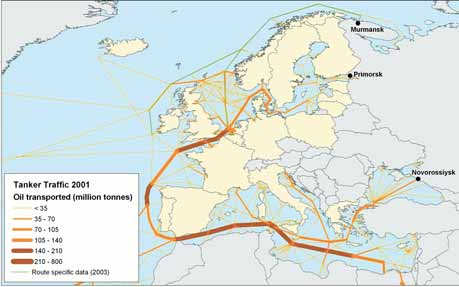
The Baltic Sea is among the most crowded shipping regions in the world.
Maritime Safety and Response Issues was held
The intensity of shipping activities in the Baltic has been growing very
in Helsinki, Finland, on 1 March 2005, prior to
rapidly during the last decade, and there is no sign of this process slowing
the 26th Meeting of the Helsinki Commission.
down. All kinds of cargo are being shipped in and out of the Baltic Sea
The following presentations were made
countries, including oil and hazardous substances. Not only has the number
during the Conference:
of ships increased, but also their size: today we have ships in the Baltic car-
rying as much as 100,000 tons of oil. As the sizes of the ships increase, this
Managing Global shipping risks
adds to the risk of a major oil spill. It should also be kept in mind that large
(POWER POINT) - Mr. Wolf-Rüdiger Grohm-
ann and Mr. Martin Shaw, British Petro-
bulk or container ships today carry as much bunker oil as a small coastal
leum Shipping
tanker.
Overview of navigational risks and
HELCOM actions to improve safety of
navigation (POWER POINT) - Ms. Ingelore
Hering, Chair of HELCOM MARITIME
Safety of navigation in the straits
of Malacca and Singapore - Marine
Electronic Highway (POWER POINT) -
Mr. James N. Paw, International Maritime
Organization
Vessel Traffi c Management and Infor-
mation System in the Gulf of Finland
(POWER POINT) - Mr. Matti Aaltonen, Finnish
Maritime Administration
Danish approach towards designating
Places of Refuge (
Ilkka Lastumäki / FIMR
POWER POINT)
- Mr. Jørgen Magner, Danish Environmen-
tal Protection Agency
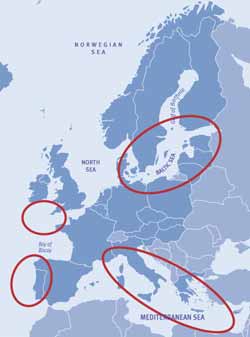
Navigation in the Baltic is complicated by the many narrow straights,
shallow waters and, in some areas, ice cover. Every year about 70 ship-
HELCOM actions to ensure prepared-
ping accidents happen in the Baltic. Fortunately most of them do not
ness to respond to shipping accidents
cause notable pollution, but even one large-scale accident would seriously
in the Baltic (POWER POINT) - Mr. Thomas
threaten the Baltic marine environment.
Fagö, Chairman of HELCOM RESPONSE
EMSA's contribution to environmental
Forecasts predict a further 40% increase in oil transportation by 2015 from
protection in the Baltic Sea
today's level of more than 160 million tonnes a year. Economic factors
(POWER POINT ONLY) - Mr. Leendert Bal,
favour the use of maximum size tankers (able to carry 100,000-150,000
European Maritime Safety Agency
tonnes of oil), as the cost per tonne of transported oil can be reduced
considerably by using large tankers. Oil drilling is so far only carried out to
HELCOM2/2005 Newsletter
Published by: Helsinki Commission
a minor degree in the Baltic Sea, but will increase, especially if oil prices
Katajanokanlaituri 6 B, FI-00160 Helsinki
remain high.
E-mail: info@helcom.fi
Internet: http://www.helcom.fi
Editor: Nikolay Vlasov
Helsinki Commission
Language revision: Fran Weaver
Design and layout: Leena Närhi
Cover photos: FIMR Riku Lumiaro,
Seija Hällfors, Mika Raateoja
2
Measures adopted in the Baltic
The Helsinki Commission has, from
the very beginning of its activities in
1974, paid attention to the safety of
navigation, although the focus was
primarily on prevention of pollution,
and preparedness to respond to ship
accidents. HELCOM strengthened
its activities on maritime safety sig-
nifi cantly with the adoption of the
HELCOM Copenhagen Declaration in
2001. This work is currently carried
out by the HELCOM Response and
HELCOM Maritime Groups.
Liudmila Romaniyk
Due to the international character
of shipping, many of the numerous
Electronic Charts Display and Infor-
response operations, where the high
safety of navigation measures
mation Systems (ECDIS),
standards of preparedness around the
introduced in the Baltic Sea have been
hydrographical surveys of major
Baltic have been proven.
introduced through the coordinated
routes and ports,
efforts of HELCOM countries in the
monitoring of ship traffi c in the
HELCOM prioritises the need to
International Maritime Organization
entire Baltic based on Automatic
strengthen emergency capacity
(IMO). These measures include:
Identifi cation System (AIS) data,
in the Baltic Sea area, in order to be
routeing measures for certain parts
port state control,
able to address any accident at a very
of the Baltic Sea,
unifi ed investigations of marine
early stage, and thus avoid pollution.
enhanced use of pilots,
casualties,
An important component of this early
a vessel traffi c and management
information for mariners.
response is the provision of places of
system in the Gulf of Finland.
refuge, where ships in distress can
Comprehensive operational coopera-
shelter, and where equipment and
Additional work is carried out on
tion between the Baltic Sea States
resources are located accordingly to
regional (HELCOM and EU), sub-
with regard to improvements in the
ensure an early and effi cient response
regional (Gulf of Finland) and national
joint capacity to respond to pollution
operation.
level to minimize the risk of shipping
incidents has been a trademark of
accidents, through measures including:
HELCOM for many years. Prepared-
coverage of major shipping routes
ness is annually tested during BALEX
and ports by electronic navigational
Delta and other exercises, and from
charts (ENC),
time to time during actual emergency
3
Riku Lumiaro / FIMR
Further measures to deal with
identifi ed risks in the future
General
Information services and public
involvement to ensure that all cargo
is transported fi rst class in the Baltic
Sea,
Involvement of all stakeholders,
including industry and local commu-
nities, to promote the development
and exchange of best practices for
ship management and cargo han-
dling,
Information for seafarers about the
fragile Baltic marine environment
and existing measures adopted to
protect the Baltic Sea,
Enhanced cooperation between
HELCOM and EMSA; and between
HELCOM States within IMO and EU.
Juha Flinkman / FIMR
Maritime
Response
Establishment of a HELCOM focal
Oil spills in icy conditions,
point for all information and data
Pollution combating in bad weather
related to shipping in the Baltic,
and reduced visibility,
such as Automatic Identifi cation
Emergency capacity,
System (AIS) information, port state
Tailor-made location of response
control records, data on detected
and emergency resources based
illegal oil discharges, accidents etc.,
on risk assessments and new data
to be used in an operational inte-
obtained from AIS,
grated traffi c management system
Places of refuge and coordination
for the whole of the Baltic Sea,
between neighbouring countries on
Liudmila Romaniyk
Use of AIS data for risk analysis,
the possible use of places of refuge
Investigation of the need for emer-
for ships in distress.
gency towing,
Investigation of the need for further
specifi c routeing measures,
Investigation of the need for further
specifi c pilot measures,
Investigation of the powers vested
in port states for controlling and
enforcing existing rules.
Mika Raateoja / FIMR
4
Presentations
MANAGING GLOBAL SHIPPING RISKS
Mr. Wolf-Rüdiger Grohmann and Mr. Martin Shaw, British Petroleum Shipping
The BP Group is a major owner and
No accidents, No harm to people,
user of tanker, chemical and gas
No damage to the environment.
tonnage. In common with other
We can only be satisfi ed when these
majors, BP set up its own vetting
zero levels are achieved. Two areas
service in the 1980s to provide assur-
need to be stressed:
ance on the quality of tonnage used.
· Level Playing Field While the
The knowledge acquired from this,
ships owned and chartered by the
and from its own operations, has
oil majors exhibit high operating
given BP a unique insight into Global
standards and a low level of risk,
Shipping Risks.
there is still essentially a two tier
market out there. There are also
Global shipping has developed from
ships trading with structural prob-
its earliest days, when the major risk
lems, minimal or non-existent pro-
the identifi cation of non-
was vessels' ability to survive the seas,
cedures, and poorly trained crews,
compliance. We strongly
to a situation where the hardware is
operating within a poorly regulated
suggest, however, that:
much more robust. It is safe to say
environment. As these ships do
· Regulations should be
that today some 80% of incidents
not come into contact with the oil
international, and not
result from human factors. In any
majors' systems, they need to be
limited to Europe, the
industry the drive to improve safety
controlled by fl ag states and indeed
Baltic or single coun-
goes through three phases:
port states. These low quality ships
tries.
1. Developing hardware
drag down the standards of the
· Much more important
2. Developing procedures
industry as a whole.
than new rules are the
3. Developing behaviours
· Behaviours To reduce further
ratifi cation and imple-
the level of risk on a well-designed,
mentation by all states
The shipping industry was and is
well-built tanker with a robust pro-
of existing rules and
focussed on improving hardware, by
cedural system, behaviours need to
their strict enforcement vis-à-vis all
increasingly insisting on the use of
be considered. Improvements in
ship owners and vessels.
double hulls, for instance. Following
hardware and procedures can only
· The regulatory and public focus
serious incidents in the 1980s the ISM
go so far in preventing accidents.
on the age and structural criteria
code introduced a regulatory focus on
Developing a safety culture will
of vessels obscures more relevant
procedures.
avoid accidents. This requires train-
causes of maritime incidents, namely
ing and leadership. It also requires
behaviours, which need to be
The improvements in hardware have
an environment where people are
addressed to combat human negli-
been substantial and, particularly in
encouraged to take the time to do
gence, error and ignorance.
the second half of the 20th century,
things safely, rather than quickly and
have substantially reduced the
cheaply.
A signifi cant number of ship owners
amounts of oil released operationally
already fully adhere to and comply
and accidentally.
All this is relevant to the Baltic as
with existing rules; with many of them
well, particularly in view of the risks
striving to go beyond this by develop-
Improvements in procedures have also
stemming from a signifi cant and
ing a safety culture. Additional rules
had a major impact, and while major
steady increase in exports of oil and
would increase their economic dis-
incidents do still occur, there has been
oil products. Further and Baltic-specifi c
advantage in comparison with those
a noticeable reduction in incidents and
regulation of the resulting traffi c is
"black sheep" whose disregard of
oil spills in recent years.
regarded as the remedy of choice by
safety and consequent competitive
some, and certain bottlenecks may
advantage are made possible by a lack
This is not to say there is any reason to
indeed benefi t from their own traffi c
of control and enforcement by some
be complacent. BP's HSE goals are
guidance systems, with AIS enabling
fl ag states and port states.
5
NAVIGATIONAL RISKS AND HELCOM ACTIONS
TO IMPROVE SAFETY OF NAVIGATION
Ms. Ingelore Hering, Chair of HELCOM MARITIME
The Baltic region is a prospering eco-
Several measures to achieve this goal
room for such developments. Consid-
nomic region, with prospering trade
have already been taken in recent
erable emphasis should be put on spe-
and traffi c between the region's
years on a regional basis, and through
cifi c routeing measures combined with
countries and with other states and
the IMO as the competent interna-
the enhancement of pilotage and the
regions around the world. Due to
tional body.
use of AIS as well as ECDIS as a basis
economic growth, maritime traffi c is
for sophisticated on-board navigational
also growing steadily. But during these
In the 2001 HELCOM Copenhagen
equipment. This can create a basis for
developments it must be remembered
Declaration, the HELCOM States agreed
overcoming existing navigational defi -
that the Baltic Sea region is a sensitive
on needs and ways to improve the
ciencies as well as coping with future
ecological system which needs protec-
navigational situation in the Baltic. In
trends arising from growing transpor-
tion against detrimental infl uences
this context, last year's declaration of
tation, while taking into account the
arising from commercial activities such
the Baltic Sea as a Particularly Sensitive
needs of the environment.
as maritime transport.
Sea Area (PSSA) is particularly worthy
of mention. This declaration will be fol-
The navigational situation in the Baltic
Although the potential risks from ship-
lowed by specifi c measures to enhance
is not really so unique. Increases in
ping are spread almost throughout
safety of navigation to minimise envi-
shipping, the density of traffi c fl ows
the Baltic Sea, there are several areas
ronmental risks from shipping.
and individual traffi c in waters with
where the risk is particularly high.
diffi cult navigational conditions can
The overall traffi c situation in the
Taking into account the steadily
be found in several maritime regions
Baltic Sea is characterised by potential
growing world-wide transport, there
around the world. An international
west-east-bound traffi c fl ows, as well
is a need to further improve safety of
approach to tackle the navigational
as north-south-bound traffi c, involv-
navigation in the Baltic. When consid-
problems of the Baltic would seem
ing the transportation of goods and
ering these measures the ongoing eco-
to be helpful, not only in gaining
passenger ferries, as well as pleasure
nomic growth of the Baltic region and
international acceptance for specifi c
craft and fi shing boats. Concerning
the increase in transportation should
measures, but also in promoting the
the transportation of goods, special
be taken into account. Measures
exchange of experiences concerning
attention has to be paid to hazardous
should be fl exible, in order to leave
suitable navigational solutions.
goods, and particularly the increasing
amounts of oil being shipped across
the Baltic. The navigational situation
creating high risks in specifi c areas
is characterised especially by narrow
straits and passages, as well as limited
depth and diffi cult winter conditions.
In these areas traffi c is funnelled
through high-density bottlenecks, and
the navigation of ships with draught
exceeding certain limits is obstructed.
These critical navigational conditions
mean on the one hand that ships
must be technically well-equipped
ships, and have well-trained crews
and optimised management. On the
other hand, navigational measures are
also needed to route traffi c and offer
support to ships in order to reduce the
potential risks.
6
Forecast for the ship movements to 2015. Note the passenger traffi c is excluded.
SAFETY OF NAVIGATION IN THE STRAITS OF MALACCA AND
SINGAPORE MARINE ELECTRONIC HIGHWAY
Mr. James N. Paw, Programme Co-ordination Offi cer, International Maritime Organization
The Straits of Malacca and Singapore
to handle multiple users and uses could
conditions, including ice. Efforts by
are a major maritime trade route vital
be enhanced through the establish-
the coastal States and the European
to economic globalization, particularly
ment of a Marine Electronic Highway
Union to mitigate the maritime and
for the shipment of oil and related
System (MEH). In addition, the MEH
environmental problems of the Baltic
products from Europe/Middle East to
integrates environmental protection
Sea have resulted in various measures
the Asia-Pacifi c region. This is one of
systems for improved environmental
ranging from institutional mechanisms,
the busiest sea lanes in the world, with
monitoring and response, in case
the enactment of legal instruments
about 600 ships passing through the
of oil and chemical incidents along
and infrastructure development, to
Straits on a daily basis. The placement
the Straits. As a regional informa-
response capacity building and fi eld
of navigational aids such as the TSS,
tion system, the MEH will generate
response. From a broader perspec-
VTS, AIS Stations as well as the man-
revenue from its products and services,
tive, the MEH concept can be applied
datory STRAITREP have signifi cantly
which will be utilized for its operation,
to the Baltic Sea to achieve a balance
reduced the number of incidents of
maintenance and upgrade, including
between marine environment protec-
ship groundings and collisions, result-
emergency response in the event of an
tion and economic development. In
ing in a concomitant decrease in ship-
accident or oil spillage, for example.
this context, the development of the
based pollution impacts, including oil
"Motorways of the Sea", the network
spills. Yet even with these measures,
The Baltic Sea has dense maritime
of AIS for a common Sea Monitoring
some accidents resulting in oil spills
traffi c, including ships carrying oil
System, and other maritime safety
have occurred in recent years. Moreo-
and other hazardous or pollut-
measures like the VTS and marine
ver, the increasing demand for energy
ing substances. Navigational aids
environment protection activities, all
and the transhipment of goods will
and maritime safety measures are
need to be integrated within a multi-
exacerbate the congested maritime
already in place to manage, regulate
sectoral framework for enhanced mar-
traffi c situation in the Straits, with
and monitor this shipping traffi c.
itime safety and response, particularly
negative environmental consequences.
However, ship accidents in the Baltic
where information fl ows and access
Sea are not uncommon, due to dense
are concerned. Such efforts will also
The performance and utility of the
ship traffi c, narrow sea lanes, shallow
improve the environmental security of
maritime safety facilities in the Straits
waters and diffi cult environmental
the Baltic Sea area.
7
VESSEL TRAFFIC MANAGEMENT AND
INFORMATION SYSTEM IN THE GULF OF FINLAND
Mr. Matti Aaltonen, Director, Finnish Maritime Administration
Since the decision of the Russian
well. The Russian Federation will get its
Federation to build an oil terminal in
infrastructure ready in July 2005.
Primorsk it has been obvious that the
traffi c image in the Gulf of Finland will
The centres do not give any orders
change considerably. Oil was previ-
to ships, but monitor traffi c through
ously imported to the Gulf of Finland,
the reporting system, radars and AIS,
but now it is being exported in tens
and inform the ships of circumstances
of millions of tons. Large tankers car-
and hazards to shipping. Shipmasters
rying 100,000 tons of oil or more are
carry the responsibility for navigation,
now everyday visitors in the area. This
and must comply with the interna-
development along with the increased
tional collision regulations (ColReg).
short sea shipping and passenger
The IMO regulations do not give the
Scope of BaSIM Architecture.
traffi c across and along the Gulf of
centres any rights to give orders to
Finland has created a traffi c pattern
ships. The benefi ts of the system are
such as harmonised safety procedures
that has to be well known, monitored
the increased safety of traffi c through
in winter navigation, new routeing
and organised as a whole. The traffi c
mandatory reporting and information.
measures in the Baltic with new surveys,
junctions off Helsinki, Tallinn and other
Traffi c effi ciency is enhanced through
pilotage recommendations, an AIS
ports are very diffi cult navigational
traffi c monitoring, separation schemes
base station net for authorities in every
areas. This puts navigational safety and
and communication in English. Quick
country connected by HELCOM, escort
lives at risk, and is also a threat to the
response when it comes to assistance
towing and oil combating measures
environment.
and information in emergency situa-
(MARIS), and the implementation of
tions helps to protect the environment.
the EU traffi c monitoring directive
The transport ministers of Estonia,
The allied services are also aware of the
(SafeSeaNet and AIS). The EU project
Finland and the Russian Federation
situation all the time.
for Baltic Sea Information Motorways,
have signed a Memorandum of Under-
BaSIM, will include a work package to
standing with the aim of creating a
The Gulf of Finland VTMIS has to be
prepare interoperability architecture for
Vessel Traffi c Management and Infor-
seen as a regional part of the whole
the Baltic Sea. This will create a frame-
mation System (VTMIS) in the Gulf. The
Baltic Sea traffi c information service.
work where local systems and service
present status is that there are three
All traffi c separation schemes are part
users can connect to provide public to
amended traffi c separation schemes
of the Baltic Sea deepwater route
public or public to private information
(TSSs), and a mandatory ship report-
for tankers and deep draught ships
to each other and the authorities.
ing system (GOFREP), all adopted by
from the Skaw to Primorsk. A VTMIS
the IMO. These systems were prepared
is a set of efforts (measures, provi-
Ever since GOFREP was launched, the
by a trilateral working group, and the
sions, services and related functions),
numbers of violations against ColReg
system is currently managed by all
which within a given area and under
have been falling in the TSSs. When
three countries each using their own
specifi ed circumstances, are intended
shipmasters know they are being moni-
national operational and technical
to minimise risks for safety and the
tored, they tend to act appropriately.
solutions. The reporting is, however,
environment, whilst maximising the
Even if a TSS only has the status of
managed trilaterally. Once a ship has
effi ciency of waterborne and connect-
a recommended scheme, ships must
reported, the data is readable in all
ing modes of transport. The services
comply with it according to ColReg.
three centres and the ship needs to
aim to respond to public and private
There have been two dangerous naviga-
report again only when its status
demand for facilitating Vessel Traffi c
tional situations each month on average.
changes. The system works in the inter-
Management. Allied services are serv-
But over the whole period there have
national waters of the Gulf of Finland
ices actively involved in the safe and
been only two reports of alleged oil pol-
and traffi c inside national boundaries is
effi cient passage of vessels through the
lution. The number of tanker calls per
managed by the national Vessel Traffi c
VTS area. There are several HELCOM
month (19 January to 17 February 2005)
Services (VTS). GOFREP was launched
and EU requirements to be fulfi lled
was 652. About 15% of these vessels
on 1 July 2004 and has been working
before a VTMIS can be established,
were single hull-tankers.
8
DANISH APPROACH TOWARDS DESIGNATING
PLACES OF REFUGE
Mr. Jørgen Magner, Head of Water Division, the Danish EPA
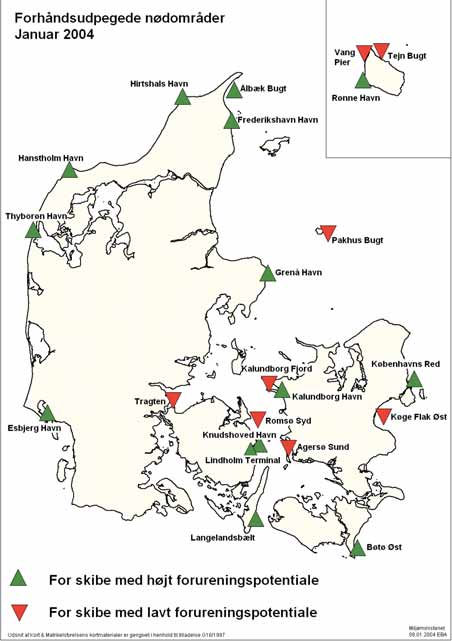
Denmark has designated 23 places of
places outside the designated places
refuge as part of the implementation
of refuge will be assigned as refuges
of Article 20 of the Directive 2002/59/
owing to the nature of the event,
EC on a Community vessel traffi c
special weather conditions, etc.
monitoring and information system.
The Admiral Danish Fleet, which is
The aim of a place of refuge is to
responsible for the combating and
provide locations where ships in dis-
surveillance of oil pollution at sea as
tress can seek refuge and have better
well as search and rescue operations,
access to assistance. A place of refuge
has been appointed as the Maritime
can be an anchoring place, a sheltered
Assistance Service (MAS) in Denmark.
marine area, or a harbour. Within a
Decisions to assign a place of refuge
place of refuge, ships in distress can
for a ship in distress will thus be
reload their cargo of fuel oil or have
taken by the MAS. Since the places
remedial repair work done to prevent
of refuge were designated in Febru-
the situation from worsening and
ary 2004, 3 incidents have occurred
perhaps resulting in oil pollution. The
where ships in distress have been
Danish places of refuge consist of 10
taken to a place of refuge in Danish
harbours and 13 sheltered areas at sea.
waters.
Denmark has designated these places
In preparing for the designation for
of refuge so that they are spaced
places of refuge, all proposals for
evenly, and located in the immediate
places of refuge were sent to all the
vicinity of the main shipping lanes
relevant national and local authorities,
leading through Danish waters. The
harbours, businesses and environmen-
places of refuge have been designated
tal NGOs for comments, and consulta-
according to a wide range of criteria,
tive meetings were held. The propos-
including navigational and hydro-
als and the fi nal list of places of refuge
graphical conditions, environmental
have also been sent to the press.
and nature protection interests,
tourism and fi sheries activities, and the
During the next phase of the establish-
availability of equipment for combat-
ment of places of refuge, specifi c plans
ing oil pollution, etc.
will be prepared for each designated
area in accordance with the IMO
Their designation has also taken into
Guidelines. These plans will contain
account the factor that the nature
all the relevant information regarding
of Danish waters makes it diffi cult to
possibilities for tug boats and towing
designate places of refuge that can
assistance, the availability of fi re-extin-
be used without reservation under all
guishing equipment and pumping
conditions. In practice this means that
equipment, and reaction times for oil
factors such as the draught of the
combating facilities, as well as other
ship and the nature of the cargo must
relevant information on state and
be considered in order to account for
private equipment. The fi nancial and
the potential risk of pollution, explo-
liability issues for ship owners, har-
sion, etc.
bours and the local authorities nearby
the marine areas designated as places
Furthermore, it cannot be excluded
of refuge are also included in the
that acute situations may arise where
plans.
9
HELCOM ACTIONS TO ENSURE PREPAREDNESS TO RESPOND
TO SHIPPING ACCIDENTS IN THE BALTIC
Mr. Thomas Fagö, Chairman of HELCOM RESPONSE
Developments
in the 1990s
Oil exports are a major source of
income for Russia. Russia accounts for
about 10% of world oil production.
In comparison, the OPEC countries
produce around 40%. In the year
2000, a total of more than 160 million
tons of oil was handled in the Baltic
Sea. This annual fi gure had doubled
during the nineties, and the sizes of oil
tankers have also increased immensely.
The average tonnages handled by
some harbours doubled in just a few
years. Tankers carrying more than
greater the likelihood that substandard
ing sea traffi c in general increases
100,000 tons are an everyday sight,
ships will be used for transportation.
the risks of collisions and groundings,
and the newest terminals are being
especially with so many substandard
constructed to receive tankers of up to
Winter conditions in the Baltic Sea can
ships at sea. If the sizes of ships also
150,000 tons.
be quite hard, especially due to the
increase, the risks of a major oil spill
extensive ice in the Gulf of Finland and
get still higher. A large bulk or con-
Future developments
the Gulf of Bothnia. Most oil tankers
tainer ship carries as much bunker oil
Forecasts up to 2015 predict a further
lack suffi cient ice classifi cation, but
as a small coastal tanker.
strong increase in oil handling, of
they have still sailed in these waters.
some 40%. Economic factors promote
Two years ago, there were some
The Fu Shan Hai, a bulk carrier which
the use of tankers of the maximum
narrow escapes with tankers that got
sank after a collision in the southern
permissible size for the Baltic Sea
stuck in the ice, and some collisions
Baltic in May 2003, had around 1,800
(100,000-150,000 tons), as the cost
also occurred. Hopefully subsequent
tons of fuel and lubrication oils in her
per ton of transported oil is reduced
agreements have now more or less
tanks. The POLO M, which went adrift
considerably by using large tankers. Oil
solved these problems, but the last
and was grounded before Christmas
drilling is so far only a minor issue in
two winters have been so mild that the 2004 had around 1,000 tons. It is,
the Baltic Sea, but will increase, espe-
willingness to live up to these commit-
however, still possible to recover such
cially if oil prices remain high.
ments has not yet been really tested.
volumes of oil. But the rapidly growing
size of oil tankers brings other types of
Risks
I also believe that some tanker or cargo risks that cannot be dealt with simply
Increases in oil handling during the
owners got "cold feet", and were not
by increasing oil recovery capacity. A
1990s have brought serious problems
too happy about the "ill will" they had
collision or grounding of an average
to the Baltic. One of these problems
created by having ships or cargoes
coastal tanker might involve up to
was the number of "substandard
involved in such situations. The increas-
5,000 tons of oil, but a total loss could
ships", old ships and insuffi ciently
mean around 10,000 tons. Large
maintained ships. In some cases the
quantities of oil can still be recovered
ownership of these ships was unclear,
at sea, if the weather is good and
due to their having changed hands
international co-operation is effective.
several times, and they often lacked
professional crews and sometimes
A collision or severe grounding involv-
even sea-charts and modern naviga-
ing a 100,000-ton tanker could result
tional aids. Sometimes the ownership
in a discharge of 20,000-30,000
of the oil cargo was also unclear. The
tons, and a total loss could mean a
more unclear such factors are, the
discharge of maybe 50,000 70,000
10
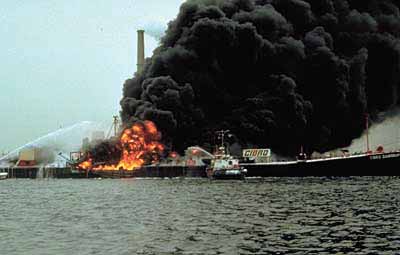
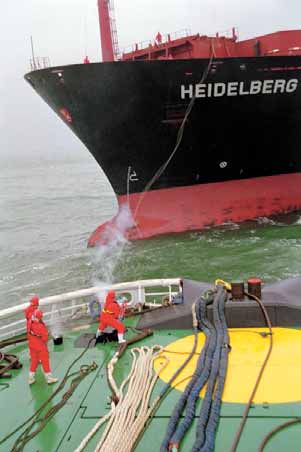
tons, with the rest remaining in leaking Besides the Response Manuals,
- Ensuring ENC coverage of major
tanks on the sea bed. The ERIKA and
HELCOM works through Recommenda-
shipping routes and ports,
the PRESTIGE incidents were of that
tions. A Recommendation is a "soft
- Enhancing the use of ECDIS,
magnitude, and we are all familiar with law" which the Contracting Parties to
- Intensifying Port State Control (PSC)
the consequences of these spills. Both
the Helsinki Convention have agreed
of paper charts onboard tankers and
of these tankers had picked up their
to implement in their national regula-
other ships,
cargoes of oil from Baltic Sea terminals.
tions. The Recommendations deal
- Enhancing the use of AIS - Ascer-
with various issues related to incident
taining the availability of emergency
Intensive sea traffi c also brings a high
response, including the use of dis-
capacity, response capacity and
number of illegal deliberate oil spills.
persants, national ability to respond,
places of refuge.
Most of these spills involve volumes less the use of oil drift forecasting, aerial
than 1 m3, but they nevertheless harm
surveillance, and also with administra-
sensitive marine life and food chains.
tive matters like the reimbursement of
The number of species in these brack-
costs.
ish waters is only a tenth of that in the
oceans, and it takes around 30 years to
There is also a common system for oil
change the water of the Baltic Sea.
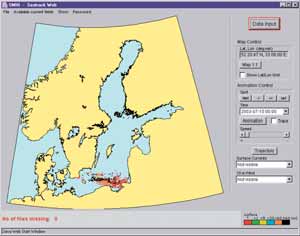
drift forecasting, the Sea Track Web,
which covers the whole of the Baltic
What have we done
Sea. This system has been of great value
so far?
during incidents, and also has been ben-
For many years there has been a 24-
efi cially used for the backtracking of oil
hour network for response co-opera-
spills, allowing the authorities to fi nger
tion. The related Response Manual
possible illegal polluters.
provides all the information needed in
advance to facilitate effi cient co-opera-
In some issues HELCOM's work has
tion, including:
been a trigger for action by the EU, in
- alarm routines
that actions initiated within the Baltic
- contact points
Sea have later been considered for
- command structures
implementation throughout the EU. On
- radio schemes within the response
the other hand, the EU has also contrib-
fl eet
uted to processes within HELCOM with
- customs matters
regard to matters of great importance
- reimbursement regulations.
for safer sea traffi c in the Baltic Sea.
This enables the "HELCOM Fleet",
What is HELCOM doing for
which consists of more than thirty
the time being?
response ships from the different Baltic
The phasing out of single-hull tankers
HELCOM Copenhagen Declaration
Sea States, to be used promptly and
should additionally be prioritised,
effi ciently. In order to keep the fl eet
A lot of HELCOM's ongoing work has
and steps must be taken to ensure
fi ghting fi t, regular alarm and equip-
its basis in the "HELCOM Copenhagen
all the region's countries become full
ment exercises are organised. These
Declaration, 2001" which adopted a
members of the Paris Memorandum of
exercises are conducted in different
comprehensive programme for safer
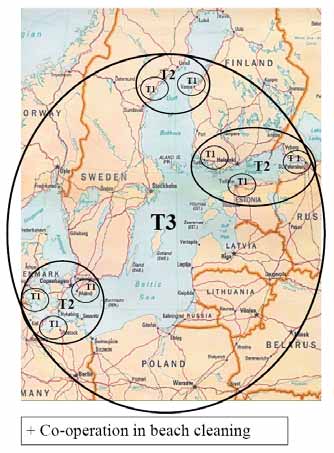
Understanding on PSC. Co-operation
parts of the Baltic Sea, partly in order
navigation and response.
on shoreline clean-up and the applica-
to ascertain that crews are familiar
tion for the Baltic Sea to be designated
with varying navigational and other
The Declaration includes the following
as a PSSA were on the agenda, but
conditions, but it is also very important aims and measures:
these issues could not be elaborated,
to ascertain that each party is able to
- Routeing measures for certain parts
because of the belated dissention of
command and control an operation
of the Baltic Sea,
one party. The PSSA issue is however
with a lot of ships involved, and that
- Enhancing the use of pilots,
well under way within the IMO, and
they can do their work by communi-
- Re-surveying of major shipping
proposals for Associated Protective
cating in English.
routes and ports,
Measures are also in the pipeline.
11
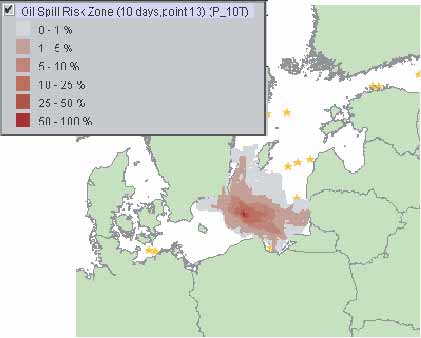
MARIS
Further development of drift
tions over specifi c sea areas, with
modelling
The draft Maritime Accident Response
planes and ships from a number of
Information System (MARIS) has now
By using the available comprehensive
parties taking part. The aim is to
been introduced, consisting mainly of
meteorological and oceanographic
catch the polluters red-handed, and
a number of datasets, describing
information about the Baltic Sea,
this has happened from time to time.
- the areas most sensitive and vulner-
regarding winds, temperature and
The prospect of being taken to court
able to oil spills,
currents, it is possible to make thou-
and accused in the mass-media for
- the traffi c and risk distribution,
sands of oil drift simulations, and thus
an illegal discharge is a consider-
- available response resources.
predict where an oil spill will probably
able deterrent for a shipowner or a
end up, or where the likelihood of oil
captain; and this threat has at least
The purpose of MARIS is to visualize
contamination is low. Changes in the
helped to halt the rising trend in oil
the risks of maritime transportation
mass balance of the oil can also be
spills, and in some areas led to a con-
in the Baltic Sea, and the capacity to
calculated. This information gives us a
siderable decrease. In recent years a
handle these risks. Some datasets, e.g.
useful basis for decisions on alertness,
network of prosecutors from the dif-
sea charts, data on shore types, traffi c
and the need for aerial surveillance,
ferent parties has also been built up
and risk data, are still missing, but
exercises and co-operation.
in order to improve international co-
these will be included at a later stage.
operation on law enforcement.
Illegal discharges
As mentioned above, illegal oil dis-
charges are a matter of great concern
for the Baltic Sea. Sweden has already
aimed to eliminate illegal oil spills by
2010. In other countries the situation
is more unclear. Organisational and
particularly economic constraints make
the situation unsatisfactory, and some-
times even preclude comprehensive
surveys.
The lack of aerial surveillance and
unsatisfactory remote sensing equip-
ment makes our statistics for the Baltic
Sea as a whole uncertain. Some coun-
tries have very reliable statistics, while
others hardly conduct any aerial sur-
veillance. This means that the consid-
erable reductions noted in some parts
of the Baltic Sea may not be taken to
indicate overall reductions. It could
merely mean that the polluters have
been choosing areas of less risk for
making their illegal discharges. Hope-
fully further co-operation on aerial
Denmark, "the door keeper" to
surveillance and the use of satellites
the Baltic Sea, has for a few years
can help us on this.
applied a hailing procedure, in which
ships are called on channel 16 and
In other respects the situation is not
asked about their call sign, port of
so gloomy. For many years the parties
call and other questions, but are also
of HELCOM have been making co-
reminded about the Baltic Sea's status
ordinated aerial surveillance opera-
as a MARPOL Special area, where
12
no oil discharges are permitted. This
What more can be done?
boycotts of oil or other products
hailing procedure is for the time being
Shipping is an international activity,
transported in substandard ships. The
also considered for other areas of the
so the related work has to be planned
designation of the Baltic Sea as a PSSA
Baltic Sea. It must be remembered, of
in the long term. The conditions for
will also enhance the awareness of
course, that most seafarers are honest
shipping have to be global, and only in
the ecological sensitivity of this unique
people, entitled to freedom of naviga-
certain circumstances should there be
brackish sea.
tion without having to deal with any
regional restrictions. In the fi rst place,
unnecessary communications from
we must work to ensure that existing
I would like fi nally to present a simple
coastal states.
regulations are fully respected, for
but useful guiding principle for our
example the MARPOL Annexes 1and
future work:
2. If this can be achieved, there would
Oil should always travel fi rst class,
Other activities
be less need for more new regulations.
meaning:
HELCOM Maritime and HELCOM
I am also quite sure that the STCW
- fi rst class fl ag states
Response Groups also deal with a lot
and ISM safety codes will contribute
- fi rst class ship owners and cargo
of other questions concerning the
to a cleaner Baltic Sea, as will the
owners
Baltic Sea. One example is the muni-
Baltic Strategy. Some questions, like
- fi rst class ships
tions gas containers dumped on the
whether to ban or phase out single-
- fi rst class crews
seabed in some areas after the Second
hull tankers, take time, although
- fi rst class terminals
World War, which still represent a
progress in speeding up these proc-
- fi rst class routes, and
threat to fi shermen. Other matters
esses has been made lately within the
- fi rst class response to incidents.
include bunkering at sea, oil platforms
EU and IMO. In this fi eld, pressure can
and wind plants at sea.
also be applied by the public, through
13