HELCOM news
1 / 2 0 0 2 N e w s l e t t e r
The blooming Baltic - a bumper year for blue-green algae, page 2
Moving from concepts to action - HELCOM at the World Summit on
Sustainable Development, page 3
Hazardous substances in the Baltic - a dangerous cocktail, page 4
HELCOM successfully tests readiness to respond to oil accidents at sea, page 5
Publish your Baltic news in the new HELCOM News Portal, page 8
HELCOM
1/2002
Newsletter
The blooming Baltic - a bumper year
Published by:
for blue-green algae
Helsinki Commission
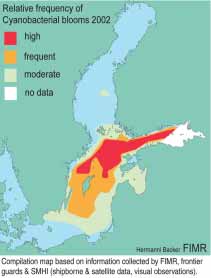
This year's exceptionally sunny and calm
In terms of blue-green algal blooms
Katajanokanlaituri 6 B
summer was good for marine cyanobac-
the Gulf of Finland has special prob-
FIN-00160 Helsinki, Finland
teria - blue-green algae - as well as sun-
lems. Nutrient loads per square kilo-
worshippers. Floating microscopic algae
metre are probably the highest in the
E-mail: helcom@helcom.fi
bloomed extensively, once more pro-
Baltic. About half of the phosphorus
Internet: http://www.helcom.fi
viding visible evidence of one of the
load stems from coastal towns.
region's major problems - the eutroph-
Editor:
ication caused by excessive nutrient
But the story behind the high phos-
loads from agriculture, traffi c and
phorus concentrations in surface waters
Ulrike Hassink
municipal wastewater.
is more complex. In most years, the
Helsinki Commission
gradually accumulating phosphorus is
Intense blue-green algal growth is directly
tightly bound up in sea-fl oor sediments
linked to high phosphorus concentrations
- by oxygen. In anoxic conditions,
in the surface waters. In warm and calm
however, high amounts of phosphorus
weather the algae can form extensive
are released from the sediment into the
mats, as happened throughout the Baltic
sea water - as happened in 2001. Later
region this summer.
in 2001 the phosphorus-rich bottom
water welled up to the surface during
High phosphorus concentrations in the
autumn storms.
water are ultimately due to continuous
high phosphorus inputs from the sur-
Contact:
rounding land. Despite various water pro-
Ms Lotta Ruokanen, Finnish Institute
tection measures, phosphorus discharges
of Marine Research, Email:
have only been slightly reduced in coun-
lotta.ruokanen@fi mr.fi ;
tries like Denmark, Finland, Germany and
Sweden. The intensive use of fertilisers
Mr Juha-Markku Leppänen, HELCOM
New challenges are lying ahead
over a long period has widely saturated
Secretariat, Tel: +358-9-6220 2227,
soils with phosphorus, and progress in
Email: juha-markku.leppanen@helcom.fi
of us. For an organisation like
reducing phosphorus loads will only be
HELCOM to be successful it
visible after a long time lag.
has to be quick to react to
political and economic changes,
like they are happening in
the Baltic region in the wake
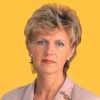
Ms Vaidere has great experience in
of the extension of the
Chair's
local and central governmental admin-
European Union in 2004.
istration within the fi elds of econom-
Corner
ics, environmental protection, politics
I am confi dent that the political
and education, and has been playing a
decisions taken by the HELCOM
Former Latvian
major role in preparing her country for
ministers in June 2003 will
Environment Minister
EU accession.
pave the way forward for
takes the Chair of the
She stresses HELCOM's crucial role
HELCOM to meet the new
Helsinki Commission
in ensuring the involvement in Baltic
challenges, and ensure the
Ms Inese Vaidere, who is currently a
environmental co-operation of Russia
successful protection of our
Riga City Councillor and an associate
- the only country in the region not
unique sea for future
professor of economics at the University
currently in or acceding to the EU.
generations.
of Latvia, and served as Latvia's Minister
of the Environment from 1998 to 1999,
Contact:
Mieczyslaw S. Ostojski
has taken the chair of HELCOM until 30
Ms Inese Vaidere, HELCOM Chair,
2
Executive Secretary
June 2004.
Email: inese@ahk-let.lv
Attempts to halve nutrient
discharges only partly successful
The Baltic is still burdened by excessive
· While most countries curbed phos-
loads of nutrients, according to a report
phorus discharges from point sources
published by the Finnish Environment
such as municipal and industrial waste-
Institute (SYKE) in February 2002.
water outlets by 50%, they could
not suffi ciently control nitrogen dis-
The report summarises the results of a
charges.
HELCOM project that investigated dis-
charges and losses of the key nutrients
· There is still a great need and plenty
nitrogen and phosphorus from 1987
of scope for reductions in nutrient
to 1995, showing that measures to
losses in the agricultural sector.
reduce nitrogen and phosphorus dis-
charges have fallen short of their aims
The report also outlines predicted
in most cases:
trends until 2005. Municipalities and
industries in the nine coastal countries
· None of the nine coastal countries
should be technically capable of reach-
were able to halve total nutrient dis-
ing the 50% reduction target for
charges from all sources.
phosphorus and nitrogen emissions
from point sources. The agricultural
· The transitional countries around the
sector will face more diffi culties in
Baltic Sea have come closer to the
retaining nutrients.
50% reduction target for nutrient dis-
Compilation map based on infor-
charges than the EU countries, due to
Contact:
mation collected by FIMR, frontier
profound changes in their economies
Mr Kaj Forsius, HELCOM Secretariat,
guards & SMHI (shipborne & satel-
and political systems.
Tel: +358-9-6220 2221,
lite data, visual observations).
Email: kaj.forsius@helcom.fi
Moving from concepts to action - HELCOM at
the World Summit on Sustainable Development
By Inese Vaidere
In this way it is imperative to have inte-
the protection of coastal areas and
It was a great opportunity to represent
grated coastal and marine manage-
the development of integrated coastal
the Helsinki Commission at the United
ment approaches that link "hilltops to
zone management guidelines for the
Nations World Summit and to present
oceans" - a concept well-known to
Baltic Sea Area, the scientifi c coop-
HELCOM in a plenary session and in
HELCOM, since the Helsinki Conven-
eration under MONAS, and the Baltic
the special seminar as a model for
tion spells out the need to take pro-
cooperation in enhancing safety of
successful international cooperation on
tective measures in the whole Baltic
shipping.
the protection of the marine environ-
catchment area.
ment - including its long-term experi-
It is my hope that all the players in the
ences and lessons learned in sustain-
The progressive role of HELCOM also
HELCOM framework will keep up the
able development. I am confi dent that
becomes evident looking at the main
good work and continue in setting an
this can be a source of inspiration also
outcome of the World Summit - a ten-
example of international cooperation
for other regions in the world.
chapter "Plan of Implementation". It
on marine protection - also in the light
is evident that many of the proposed
of political changes in the wake of the
The health of the oceans and coasts
actions, if not all, are already under
EU enlargement process.
is directly linked to their watersheds.
way or being planned in the HELCOM
Eighty percent of all the marine pollu-
framework, for example by the Joint
tion comes from land-based sources.
Comprehensive Action Programme,
3
Getting rid of hazardous
substances by 2020
One of HELCOM's main priorities
charges and losses of hazardous sub-
is to phase out any emissions, dis-
stances. The documents also contain
charges and losses of hazardous sub-
proposals for relevant actions at
stances within a generation. This
HELCOM level.
should reduce the concentrations
of man-made hazardous substances
The project has also kicked off
to zero by 2020, while the concentra-
numerous activities, including stake-
tions of naturally occurring substances
holder meetings with representatives
should be lowered to their natural
of administrations and industry to raise
background concentrations.
awareness of the problems associated
The task of curbing emissions of
with hazardous substances. These
mercury, for instance, can involve con-
From 1999 to 2002, the HELCOM
activities need to be continued in the
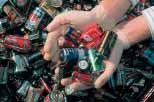
sumers, who can choose products like
Hazardous Substances Project com-
future to ensure targets are reached by
mercury-free batteries and thermom-
piled the available data on sources,
2020.
eters, as well as the chloralkali indus-
pathways, market and the legal situ-
try. On an industrial scale, fi lters can
ation relating to selected hazardous
The fi nal report will be available by
be installed and Best Available Tech-
substances, in order to assess the
the end of 2002. The project has been
nologies can be applied, but every-
exposure situation and identify suit-
funded by the EU, Sweden and the
body can contribute, for example by
able cost-effective measures. The
Helsinki Commission.
stopping the uncontrolled burning of
project team prepared special doc-
waste in order to prevent the forma-
uments covering mercury, cadmium,
Hazardous substances -
tion of dioxins.
short-chained chlorinated paraffi ns,
everybody's business
nonylphenol and nonylphenolethoxy-
Hazardous substances are emitted at
The HELCOM brochure "Invest in less
lates, dioxins and PCBs. These guid-
all stages of the production chain,
hazardous products" gives guidance
ance documents have been designed
from the raw materials, through pro-
on how to substitute hazardous sub-
to help policy makers to choose the
duction processes and the use of prod-
stances or change related processes,
most effi cient instruments and meas-
ucts to the handling of the products
and is intended to be used as a tool for
ures to eliminate the emissions, dis-
as waste.
a hazard reduction approach within
small and medium-sized companies.
Twenty-six hazardous
pesticides are no longer
in use
A HELCOM pesticide report reveals
that 26 hazardous pesticides selected
for immediate priority action are no
longer in use in the countries bor-
dering the Baltic Sea, and in many
cases they are banned. The cessation
goal can therefore be taken as largely
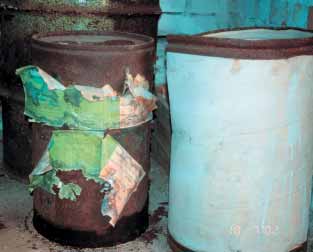
Obsolete pesticides in a deteriorat-
4
ing container. Photo: Timo Seppälä.
reached with regard to these pesti-
HELCOM successfully tests readiness
cides, assuming that further steps will
be undertaken to combat problems
to respond to oil accidents at sea
with the obsolete pesticides still stored
unsafely in some countries, which may
Seventeen ships, one aircraft and more
pose a serious threat to human health
than 30 observers from the Baltic
and the environment.
coastal countries participated in BALEX
2002 - this year's international oil
Hazardous substances in
spill response exercise held in Liepaja,
the Baltic - a dangerous
Latvia, on 21-22 August 2002. Ten
cocktail
cubic meters of popcorn were dumped
Hazardous substances are substances
in the open sea to simulate a large oil
which are toxic, persistent, and which
spill of 800 tonnes of crude oil.
may accumulate in organisms, or
which otherwise give reason for
Six hours after the spill, more than
concern for example by infl uencing
one third of the contaminated water -
organisms' hormone or immune
which consisted of two popcorn-slicks
systems.
measuring approximately 500 metres
by 200 metres - had been recovered.
In the Baltic Sea region the harmful
According to oil-drift modelling no oil
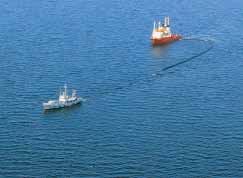
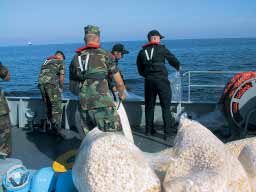
Latvian Coastguard making
infl uence of hazardous substances is
would have been washed ashore.
ready for the exercise - pouring
further aggravated by the unique
popcorn into the sea.
natural conditions in this almost land-
The exercise also allowed the Latvian
locked sea, with its slow exchange of
authorities to test their newly-acquired
water, low salinity and low winter tem-
oil combating equipment.
peratures.
The degree of international co-opera-
In a report focusing on these specifi c
tion in the Baltic on marine environ-
conditions, HELCOM's project group
mental protection is unrivalled around
identifi ed the physical, chemical and
the world. This exercise was also
biological features, which can make
closely observed by 60 delegates from
the Baltic ecosystems more vulnerable
15 nations within the NATO Partner-
to man-made chemicals, and which
ship for Peace Programme.
need to be taken into account when
selecting hazardous substances for
BALEX oil spill response exercises
priority action. The report also iden-
have been held annually since 1991.
tifi es socio-economic factors in the
Throughout this time HELCOM has
Baltic region which might contribute
steadily improved the readiness of the
to occurrences and uses of hazardous
countries around the Baltic to jointly
Danish "Gunnar Seidenfaden"
substances that signifi cantly differ
respond to an oil spill at sea. The
and Estonian "Triin, PVL 200"
from those within EU markets.
coastal countries have a total of 30
towing a boom.
response vessels on stand-by.
Contact:
Ms Christine Füll,
HELCOM Secretariat,
Tel: +358-9-6220 2220;
Email: christine.fuell@helcom.fi
Mr Kaj Forsius,
HELCOM Secretariat,
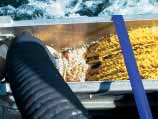
Popcorn recovered by the
Tel: +358-9-6220 2221;
Swedish "KBV 202" by a brush
Email: kaj.forsius@helcom.fi
and skimmer system.
5
Aerial surveillance of
More ships and
the Gulf of Finland - HELCOM detects
oil on the troubled
nine illegal oil spills
waters of
During 24 hours of continuous aerial
The HELCOM Co-ordinated Extended
the Baltic
surveillance on 29-30 August, nine
Pollution Control Flight (CEPCO North
patches of deliberately and illegally
fl ight 2002) was carried out jointly by
Too much oil continues to be ille-
spilled oil were observed in the Gulf
aircraft from Finland, Estonia, Latvia
gally discharged into the Baltic,
of Finland area - one of them 50 kilo-
and Sweden, and nine patrol vessels.
even though the total number of
meters in length.
CEPCO fl ights are organised annually
observed oil discharges fell slightly
within the framework of the Helsinki
in 2001, according to fi gures pre-
But since almost 70 ships were currently
Commission, with one fl ight covering
sented at a meeting of HELCOM
in the surveyed area, none of the pollut-
the southern waters of the Baltic, and
SEA in Turku, Finland (13 - 17 May
ing ships could be caught red-handed.
a second survey further north.
2002).
The seriousness of these illegal dis-
Go surfi ng and pick up tools for better
charges is highlighted by the fact
that the total volume of oil released
navigation in Danish waters
into the Baltic during deliberate
illegal discharges in 2001 was about
The Danish HELCOM site
Denmark is the fi rst state to carry out
100 times more than the amount
http://www.helcom.dk has detailed
a HELCOM resolution that all coastal
that entered the sea accidentally
information on navigation in Danish
countries should provide detailed infor-
during 2000 and 2001.
waters, major Danish ports, meteorol-
mation on the Internet within a year.
ogy, oceanography, ice-breaking serv-
ices, places of refuge and vital links
for mariners.
HELCOM SEA splits into HELCOM MARITIME and
HELCOM RESPONSE
HELCOM SEA (the Helsinki Com-
in the Baltic - as decided by the min-
that shipping in the Baltic is environ-
mission's former Sea-based Pollution
isters responsible for the environment
mentally safe and sound, by identify-
Group) has split into two groups
and transport in September 2001.
ing sea-based sources of pollution and
- HELCOM MARITIME and HELCOM
proposing actions to limit emissions
RESPONSE. This will enhance HEL-
The Maritime Group (HELCOM MARI-
and discharges.
COM's work in ensuring safer shipping
TIME) will develop measures to ensure
The Response Group (HELCOM
HELSINKI COMMISSION
RESPONSE) will work to ensure a
Denmark, Estonia, European Community, Finland, Germany, Latvia,
swift national and trans-national
Lithuania, Poland, Russia, Sweden
response to marine pollution incidents.
This involves preparing and testing
Heads of Delegation
response equipment and emergency
routines where co-operation between
neighbouring states is needed.
HELCOM
HELCOM
HELCOM
HELCOM
HELCOM
HELCOM
HELCOM
Contact:
MONAS
LAND
MARITIME
RESPONSE
HABITAT
PITF
STRATEGY
Ms Anne Christine Brusendorff,
HELCOM Secretariat,
Tel: +358-9-6220 2228,
Secretariat
Email: anne.christine@helcom.fi
6
Sustainable fi shery management
Taking stock at Finnish
in the Baltic - HELCOM and IBSFC combine and Swedish pollution
Hot Spots - agriculture
efforts to boost dwindling fi sh stocks
still a major problem
At a joint seminar held in Gdynia,
have been having a major impact on
Poland, 20-21 February 2002, HELCOM the Baltic food web. The abundance
and the International Baltic Sea Fishery
and distribution of non-commercial
Commission (IBSFC) agreed on a sus-
fi sh stocks have changed, as well as
tainable fi shery management strategy
those of the main target fi sh species.
designed to meet the needs of the
By-catches also continue to threaten
whole Baltic ecosystem.
non-target species including many
marine mammals and birds.
HELCOM and IBSFC agreed that
current levels of commercial fi shing
Production of wild Baltic salmon increased
to more than 1.3 million during 2001
The efforts of HELCOM and the IBSFC
potential production capacity of the
Conditions at 22 Finnish and Swedish
to protect and restore weak wild Baltic
27 Baltic salmon rivers unaffected by
pollution hot spots were re-assessed
salmon populations have now started
hydroelectric power production.
during the Eighth HELCOM PITF
to show promising results.
Regional Workshop in Stockholm on
The status of most of the larger salmon
27-28 May 2002.
Over one million more wild Baltic
populations in the Gulf of Bothnia can
salmon have been produced in 2001
now be described as promising, but
HELCOM's PITF preparatory group
than in 1995 - raising the annual yield of further scientifi c reviews are needed to
concluded that four pollution hot
juvenile wild salmon from 0.3 million fi sh eliminate uncertainties about the poten- spots might be deleted from the
to over 1.3 million fi sh, according to the
tial production capacities for each river.
list later this year, including metal
latest data of the International Council
smelters at Outokumpu in Finland and
for the Exploration of the Sea (ICES).
Contact:
Boliden/Rönnskär in Sweden, Stock-
Mr Juha-Markku Leppänen,
holm's wastewater treatment plants,
Last year's wild salmon production
Tel: +358-9-6220 2227, Email: juha-
and Finnish fi sh farms in the Archi-
equals about 70% of the estimated
markku.leppanen@helcom.fi
pelago and the Åland Sea.
Helsinki's wastewater treatment plant
is also likely to disappear from the hot
Taking stock at HELCOM Hot Spots in
spots list within the next few years,
Ukraine and Belarus - focusing on
since further investments are in place
wastewater treatment, water pricing and
to improve the effi ciency of nitrogen-
obsolete pesticides
removal.
For the fi rst time HELCOM was invited
and industrial wastewater at Brest,
to a Regional Workshop in Ukraine to
Grodno and Vitebsk (Belarus), and
Contact:
assess conditions at four Hot Spots in
Lvov (Ukraine).
Mr Claus Hagebro,
Ukraine and Belarus. While it will be
HELCOM Secretariat,
some time before these pollution sites
The Ninth HELCOM PITF Regional
Tel: +358-9-6220 2223,
are cleaned up, the workshop pro-
Workshop took place in Lvov, Ukraine,
Email: claus.hagebro@helcom.fi
duced useful information and discus-
on 18-19 June, and was attended by
sions, which form a good basis for
representatives from the environmen-
intensifi ed co-operation in the future.
tal authorities in the Lvov Oblast, the
Water Company in Lvov, Belarus and
Improvements are needed most
the Nordic Environment Finance Cor-
urgently in the treatment of municipal
poration (NEFCO).
7
Forthcoming
meetings
HELCOM proudly presents
its new promotional fi lm
11-14 November 2002
For the camera team given the job
in the UNESCO "Baltic Sea Project", the
Sixth Meeting of the Land-based Pollution
of portraying the work of the Helsinki
"WWF Naturewatch Baltic" network,
Group (HELCOM LAND 6/2002); Vilnius,
Commission, highlighting environmen-
aquaria and coastal national parks in
Lithuania.
tal trends and pollution hot spots
the Baltic Sea region and to interested
meant getting wet and dirty, and
organisations as far away as India, South
18-19 November 2002
spending several days in planes, heli-
Korea, Japan, Tanzania, and USA.
19th Meeting of the HELCOM Programme
copters and research vessels.
Implementation Task Force (HELCOM PITF
The English-language narration will
19/2002); Stockholm, Sweden.
The 9-minute HELCOM promotional fi lm also be translated into the national lan-
25-28 November 2002
can be obtained from the HELCOM Sec-
guages of the HELCOM countries, and
Joint Meeting of the HELCOM/OSPAR Heads
retariat. It has also already been sent out the fi lm will then be distributed at
of Delegation; Bremen, Germany.
to observers, institutes, schools involved
national level.
Press excursion on
2003
a Finnish Frontier
January 2003
Guard vessel
Meeting of the HELCOM Project Group
On 1 July 2002, 20 foreign correspond-
"Validation of algorithms for chlorophyll
ents from 12 countries took part in
retrieval from satellite data for the Baltic Sea
a trip on the Finnish Frontier Guard
area"; Ispra, Italy.
vessel "Merikarhu" to learn about the
work of HELCOM and the state of the
25-28 March 2003
Baltic Sea.
Joint Meeting of the HELCOM/OSPAR Heads
of Delegation; Berlin, Germany.
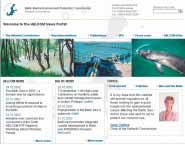
Publish your Baltic news in the new HELCOM
13-16 May 2003
News Portal
Joint Meeting of the HELCOM/OSPAR Heads
In line with HELCOM's Information
ment. Up to 1,300 visits a day have
of Delegation, Germany.
and Communications Strategy, all
been recorded at www.helcom.fi .
12-16 May 2003
governments, agencies, institutes and
non-commercial institutions in the
Contact:
Fourth Meeting of the Nature Conservation
Baltic Sea region are invited to submit
Ms Ulrike Hassink, HELCOM Secre-
and Coastal Zone Management Group
their news related to the Baltic
tariat, Tel: +358-9-6220 2235, Email:
(HELCOM HABITAT 4/2003), Helsinki, Finland.
marine environment to HELCOM's
ulrike.hassink@helcom.fi
23-27 June 2003
news portal (http://www.helcom.fi ).
24th Meeting of the Helsinki Commission
(HELCOM 24/2003), at ministerial level
To submit news items, please fi ll
together with OSPAR; Bremen, Germany.
in the form at
2003
http://www.helcom.fi /helcom/
IMO/HELCOM/EU Workshop "Environmental
pressroom/submit.html. Only English-
impacts due to the increased density of
language news can be submitted.
shipping in the Baltic Sea Area"; Rostock,
Germany.
HELCOM's website has become a
lively and popular international plat-
form for news on the marine environ-
www.helcom.fi