HELCOM news
1 2 / 2 0 0 6 N e w s l e t t e r
In this issue:
HELCOM approves core elements of the Baltic Sea Action Plan
Poland assumes the chairmanship of the Helsinki Commission
HELCOM halves the number of Baltic pollution hot spots
Latest statistics on shipping and accidents in the Baltic
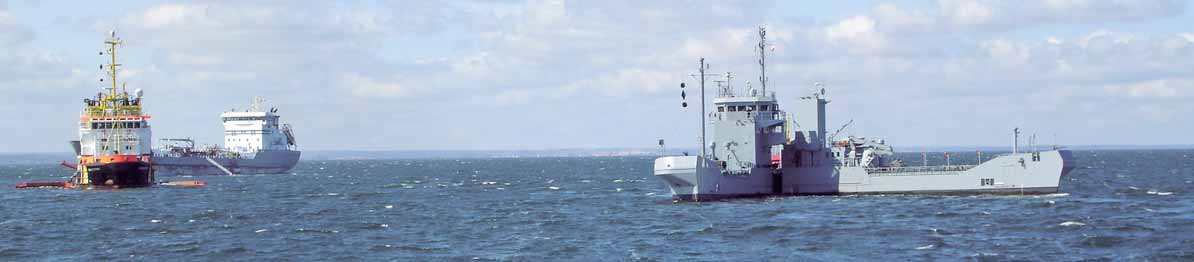
HELCOM fl eet drills response to massive oil spill off Gdynia
HELCOM news
12/2006
Contents
Earlier this year, HELCOM com-
Foreword
pleted the fi rst step in the devel-
by the Executive Secretary, page 2
opment of an ambitious action
Chair's Corner
plan to restore the health of the
Poland assumes the chairmanship of the Helsinki Commission, page 4
Baltic Sea. At the 27th annual
HELCOM's key priorities for today, page 5
Meeting of the Helsinki Commis-
sion, held on 8-9 March 2006,
Countdown to an environmental strategy to restore
we approved the key elements
the Baltic Sea
of the HELCOM Baltic Sea Action
HELCOM's Baltic Sea Action Plan receives strong support from
stake holders, page 6
Plan defi ning a common vision
of a healthy sea, and a set of Eco-
HELCOM approves core elements of the Baltic Sea Action Plan, page 7
logical Objectives to help us work
HELCOM Task Force begins drafting a proposal for the Baltic Sea Action
towards this vision.
Plan, page 10
HELCOM is now working to iden-
EU Environment Commissioner backs HELCOM's action plan, page 10
tify the actions needed to achieve
HELCOM presents the Baltic Sea Action Plan in the Parliament of Finland
these agreed environmental objec-
on the eve of Finland's EU presidency, page 11
tives. This work will continue until
November 2007, when the fi nal-
HELCOM's action plan highlighted at the Baltic Sea Day in St. Petersburg,
page 12
ised action plan is scheduled to be
approved by the Ministers of the
coastal countries.
HELCOM news 12/2006
Published by: Helsinki Commission
This is not going to be an easy
Katajanokanlaituri 6 B, FI-00160 Helsinki, Finland
task, as many environmental, eco-
E-mail: info@helcom.fi
nomic, and political challenges lie
Web: http://www.helcom.fi
ahead. But we are confi dent that
Editor: Nikolay Vlasov, Helsinki Commission
in the end HELCOM will succeed in
Language revision: Fran Weaver
designing a realistic and effective
Design and layout: Leena Närhi
environmental strategy that will
Cover photos: HELCOM
ultimately lead to the recovery of
the Baltic marine environment.
HELCOM news is the offi cial newsletter of the Helsinki Commission,
or HELCOM, which is an intergovernmental organisation of the Baltic
Anne Christine Brusendorff
Sea coastal countries and the European Union for the protection of
the marine environment of the Baltic Sea from all sources of pollution.
2
Executive Secretary
Modelling nutrient reduction scenarios to solve the problem of eutrophi-
cation, page 13
Study indicates that current nitrogen emission targets are insuffi cient,
page 16
Biodiversity objectives for the Baltic Sea Action Plan, page 18
HELCOM halves the number of Baltic pollution hot spots, page 20
Serious oxygen depletion discovered in the Baltic Proper and the Gulf of
Finland, page 22
Water transparency no longer declining in some parts of the Baltic, page 24
Climate change scenarios for the Baltic Sea region, page 25
Signifi cant increase in shipping accidents in the Baltic, page 26
Latest statistics on shipping traffi c in the Baltic Sea, page 28
HELCOM fl eet drills response to massive oil spill off Gdynia, page 30
Finnish Navy rowing team wins HELCOM Trophy, page 31
HELCOM's new mariners' routeing guide for the Baltic Sea, page 32
A new HELCOM system to help identify suspects of illegal discharges,
page 32
Catches of chemical munitions in the Baltic remain low, page 33
Third HELCOM Youth Forum: inspiring the next generation of environ-
mental leaders, page 34
New HELCOM book explores the variety of marine life in the Baltic Sea,
page 36
HELCOM provides teaching materials on Ecological Objectives, page 37
Latest HELCOM publications, page 38
Upcoming HELCOM Meetings, page 40
New staff at the HELCOM Secretariat, page 40
3
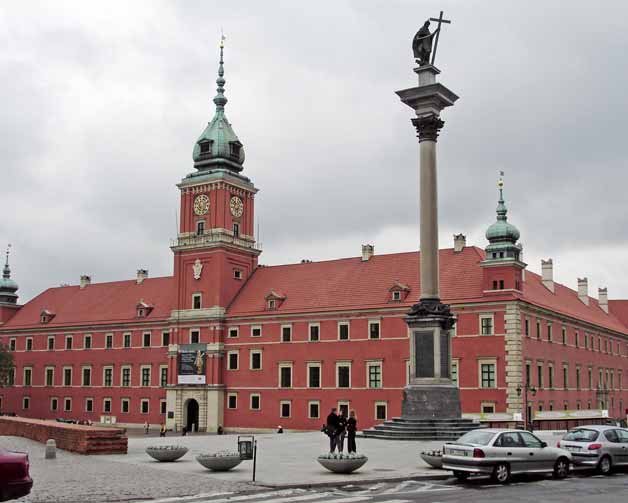
Chair's Corner
Poland assumes the chairmanship of
the Helsinki Commission
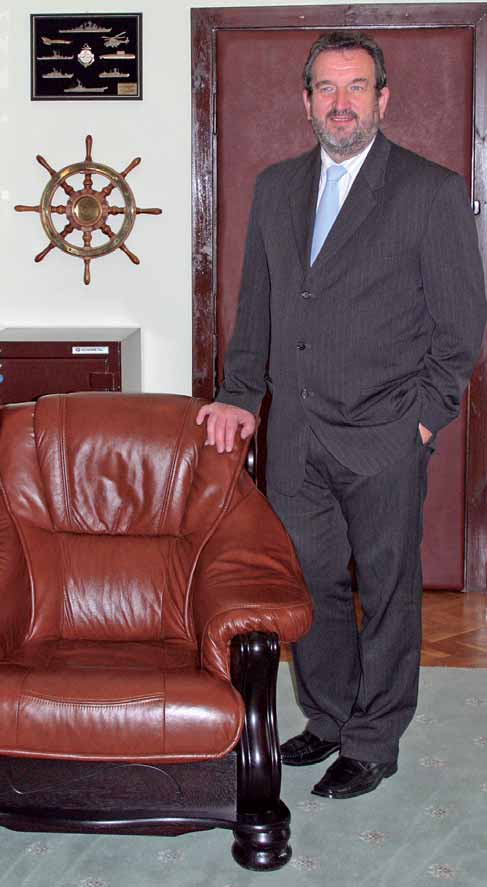
Prof. Ostojski, Director General of the
Prof. Ostojski has succeeded Arturas
Polish Institute of Meteorology and
Daubaras of Lithuania, who chaired
Water Management, is well known in
the Helsinki Commission in 2004-
the Baltic Sea countries. He has great
2006. The chairmanship rotates
experience in the fi elds of ecology,
among the Baltic Sea coastal coun-
environmental protection and water
tries and the EU according to alpha-
resources management. In 1996-1999 betical order, with changes every
and 2003-2006 he was Head of the
two years. As the new Chairman
Polish delegation to HELCOM, and
Prof. Ostojski will lead the work of
in 1999-2003 he served as Executive
HELCOM until 30 June 2008.
Secretary of the Helsinki Commission.
According to Prof. Ostojski, HELCOM's
priorities for the next two years include
On 1 July 2006, Poland assumed the
the further enhancement of the Com-
Warsaw, Poland
rotating chairmanship of the Helsinki
mission's role as the key environmental
Commission.
policy-maker in the region, the crea-
tion of a strategic HELCOM Baltic Sea
The Government of the Repub-
Action Plan designed to solve major
lic of Poland has nominated Prof.
environmental problems, and the
Mieczyslaw Ostojski as Chairman
strengthening of co-operation among
of HELCOM and Ms. Adriana
all the nine Baltic Sea coastal countries
Dembowska as Vice-Chairman of
and the European Union to protect the
4
HELCOM.
Baltic marine environment.
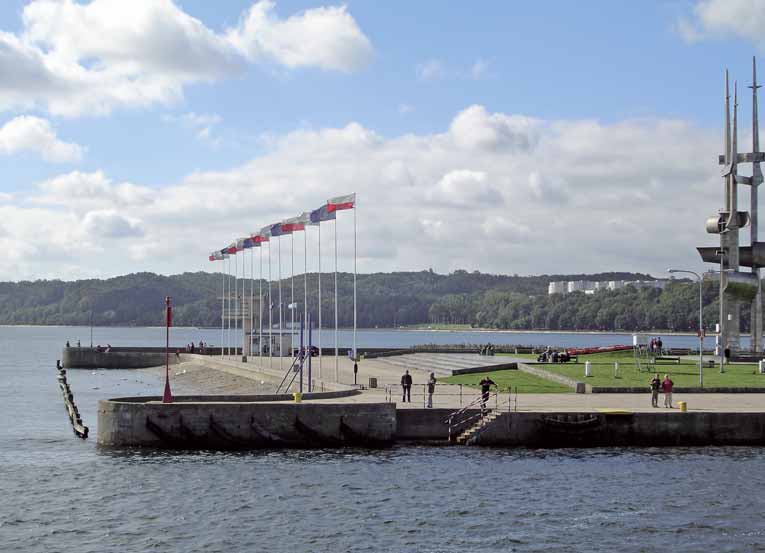
HELCOM's key priorities for today
by Prof. Mieczyslaw Ostojski,
Chairman of HELCOM
Under the Polish Chairmanship, the
Helsinki Commission will continue
to serve as the key environmental
policy-maker for the Baltic Sea area,
developing common environmental
objectives and actions, and providing
information about the state of and
trends in the marine environment, the
effi ciency of measures to protect the
sea, and common initiatives and posi-
tions which can form the basis for
decision-making.
The principle objective of HELCOM's
present and future strategies will be
to obtain a good ecological status
for the Baltic Sea a sea with diverse
biological components functioning in
balance and supporting a wide range
of sustainable human economic and
Ecological Objectives, has already
Obviously, the future success of the
Gdynia, Poland
social activities.
been backed by the European Union,
Baltic Sea Action Plan will largely
and highlighted as a model to be fol-
depend on how all the coastal coun-
One of the topmost priorities during
lowed by other regional marine con-
tries and other stakeholders can
the Polish Chairmanship will be to
ventions. But there is still a lot of hard
co-operate to achieve the goal of a
fi nalise the HELCOM Baltic Sea Action
word ahead. We have just entered
healthy Baltic marine environment.
Plan. This ambitious but realistic plan
one of the most crucial phases a
The overall state of the Baltic Sea can
will include wide-ranging actions to
period where actions will be defi ned
only be further improved through
reduce pollution and reverse the deg-
to help achieve the agreed goal of a
our combined efforts and inte-
radation of the marine environment.
Baltic Sea unaffected by eutrophica-
grated actions, and as Chairman of
The basis for the decision made in
tion, undisturbed by hazardous sub-
HELCOM, I will do everything in my
2005 to draw up this plan was the
stance, with favourable biodiversity
power to ensure good co-operation
present state of the Baltic Sea, and
and environmentally friendly maritime
among all the coastal countries in
the fact that in spite of environmental
activities.
developing and carrying out environ-
protection successes over the last
mental actions.
three decades, the measures currently
The adoption of the action plan, sched-
in place will not be enough to cope
uled to take place at a HELCOM Minis-
with mounting pollution and other
terial Meeting on 15 November 2007
environmental problems.
in Warsaw, Poland, will be a major
milestone in our joint efforts to make
HELCOM's innovative work to draw
the Baltic Sea a more environmentally
up an environmental action plan,
sound and healthier place.
based on a specially defi ned set of
5
Countdown to an environmental strategy
HELCOM's Baltic Sea Action Plan receives
strong support from stakeholders
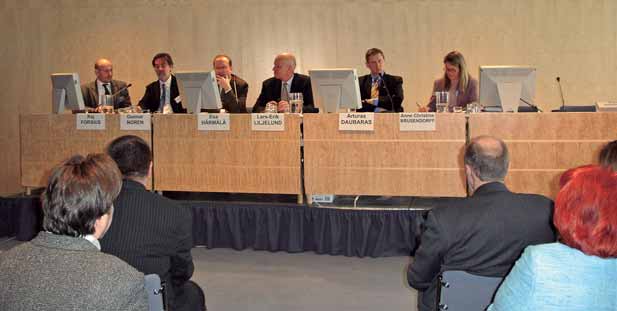
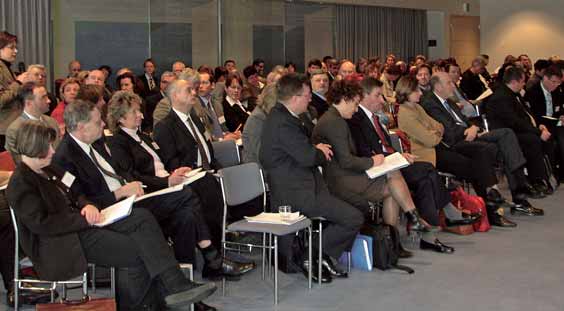
The concept of the Baltic Sea Action
the four key environmental issues
to rescue the marine environment, the
Plan received overwhelming support
(eutrophication, hazardous sub-
State Secretary from the Finnish Min-
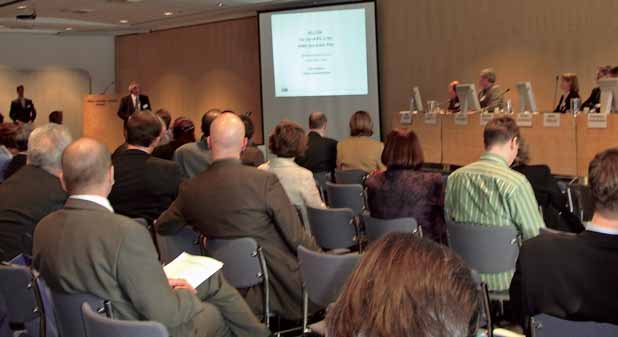
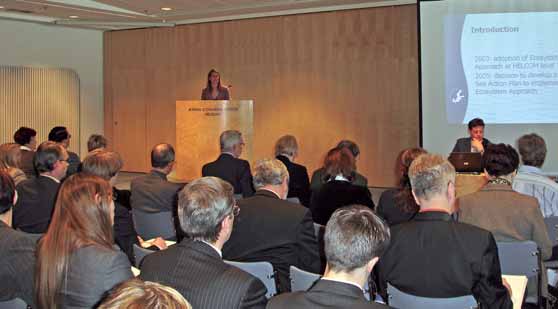
at a Stakeholder Conference held
stances, biodiversity and shipping),
istry of the Environment Stefan Wallin
on 7 March in Helsinki, where more
and offi cial statements made by high-
underlined that "HELCOM is the
than 200 participants, representing
level politicians.
only intergovernmental organisation
scientifi c and business communities,
within the Baltic Sea region with the
governments of the coastal countries,
Keynote speakers included Stefan
mandate to deal comprehensively with
the EU, and major regional organisa-
Wallin, State Secretary of the Finnish
the problems of the Baltic Sea, and
tions, met to discuss the objectives of
Ministry of the Environment; Peter
to jointly agree on implementation of
the strategy and to provide input for
Gammeltoft, Head of the Water and
measures to preserve and protect the
its further development.
Marine Unit of the Directorate General
Baltic marine environment, to con-
for Environment at the European
serve natural habitats and biodiversity,
One important feature of HELCOM's
Commission; Bob Dekker, OSPAR
and to ensure the sustainable use of
Baltic Sea Action Plan is that it is
Chairman; Kornelius Sigmundsson,
natural resources within the Baltic Sea
being devised with active participa-
Chairman of the Committee of Senior
region." Wallin also noted that the
tion from all major stakeholder groups
Offi cials of the Council of the Baltic
preparation of the HELCOM action
from governments, through industry
Sea States; Harro Pitkänen, Senior Vice
plan must be open-ended and trans-
and NGOs, right down to the individu-
President of the Nordic Investment
parent. "We must use this opportunity
als living on the shores of the Baltic
Bank; Marjukka Porvari of the John
when preparing this new Baltic Sea
Sea, to ensure that the HELCOM
Nurminen Foundation; Esa Härmälä,
Action Plan to make it as comprehen-
action plan is relevant and can be
President of the Baltic Farmers Forum
sive and, at the same time, as realistic
effectively implemented in practice.
on Environment; Gunnar Norén,
and action-oriented as possible."
The kick-off Stakeholder Conference
General Secretary of Coalition Clean
represented the starting point for this
Baltic; Sergej Olenin, Klaipeda Uni-
The European Commission described
whole process.
versity; Lasse Gustavsson, director of
the plan as "the cornerstone for
the WWF Baltic Ecoregion Program;
further action" in the Baltic Sea
The Conference programme included
Carsten Melchiors, Secretary General
region, and confi rmed its intention
a general presentation of the aims
of BIMCO; and Tim Wilkins, Environ-
to take an active part in its develop-
and timing of HELCOM's Baltic Sea
mental Manager of INTERTANKO.
ment over the coming months. The
Action Plan, a description of the state
Commission thinks that in setting a
of marine environment, thematic ses-
Commenting on the Helsinki Commis-
defi nition of `good ecological status'
6
sions on the proposed objectives for
sion's work to create a strategic plan
for the Baltic Sea as well as specifi c
to restore the Baltic Sea
environmental targets and necessary
The Council of the Baltic Sea States
Baltic Sea environment." Sigmundsson
measures, the Baltic Sea Action Plan
(CBSS) also backed the HELCOM
also added that as an overall political
will be instrumental to the successful
action plan. The Chairman of the
forum for regional intergovernmental
implementation of the new EU Marine
CBSS Committee of Senior Offi cials,
co-operation, the Council of the Baltic
Strategy in the region. In this context,
Kornelius Sigmundsson, said that "the
Sea States will continue to encourage
the new plan makes HELCOM a fore-
CBSS Presidency recognises the value
and support HELCOM activities.
runner, and a model to be followed
of HELCOM's Baltic Sea Action Plan
by other regional marine conventions
as a very important aspect of our re-
around Europe.
gion's joint efforts to achieve a healthy
HELCOM approves core elements of the Baltic Sea
Action Plan
At its annual Meeting held on 8-9
"The general vision and objectives
restore the environment," said Anne
March 2006 HELCOM offi cially ap-
which we have approved will serve as
Christine Brusendorff, Executive Sec-
proved the core elements of the new
a foundation for the further develop-
retary of HELCOM. "In this way the
environmental strategy to restore
ment of this innovative environmental
protection of the marine environment
the Baltic Sea - a common vision of
strategy, and then during the imple-
is no longer seen as an event-driven
a healthy sea, and a set of Ecological
mentation of the plan dictate the need
pollution reduction approach to be
Objectives to work towards so as to
for specifi c actions to be taken jointly
undertaken sector-by-sector. Instead,
fulfi l this vision.
by the Baltic Sea countries in order to
Continues on the following page
Continues on the following page
7
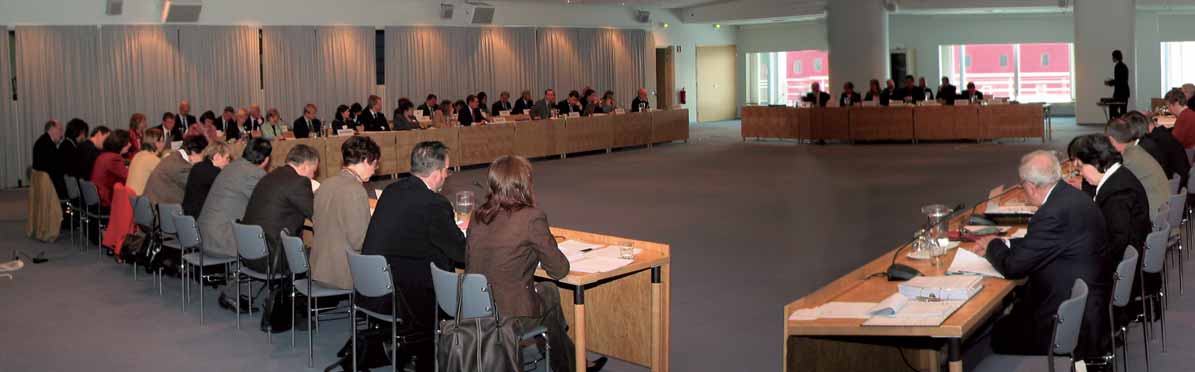
26th annual Meeting of
17th Meeting of the Heads
HELCOM offi cially
Extraordinary Meeting
18th Meeting of the
the Helsinki Commission
of Delegation of the
unveils the concept of
of the Heads of Dele-
Heads of Delegation of
decides that the ongoing
Member States, 13-15
the Baltic Sea Action
gation of the Member
the Member States, 12-13
work of defi ning Ecologi-
June 2005, Helsinki, re-
Plan, and publishes a
States, 4 November
December 2005, Helsinki,
cal Objectives for a healthy
cognises the need for an
popular brochure on
2005, Bonn, decides
discusses further steps in
Baltic Sea will provide the
environmental Baltic Sea
the plan in November
to organise a kick-off
the development of the
foundation for a strategic
Action Plan, and agrees a
2005
Stakeholder Conferen-
Baltic Sea Action Plan, and
environmental Baltic Sea
tentative timetable for its
ce on the Baltic Sea
preparations for the kick-
Action Plan
preparation
Action Plan in 2006
off Stakeholder Conference
HELCOM Maritime Group
HELCOM Monitoring and
HELCOM Response Group
meeting discusses input to
Assessment Group (HELCOM
meeting discusses input to the
the Baltic Sea Action Plan,
MONAS) meeting discusses
plan, 30 November 2 Decem-
11-14 October 2005, Klai-
input to the Baltic Sea Action
ber 2005, Klaipeda, Lithuania
peda, Lithuania
Plan and outcome of a Project
on the development of the
Ecological Objectives for the
Plan, 21-25 November 2005,
Riga, Latvia
Baltic Sea Action Plan development timeline
the starting point is a common under-
The next crucial step in the develop-
The annual Meeting of HELCOM also
standing and defi nition of a sea with
ment of the Baltic Sea Action Plan,
approved the establishment of an ad
a good ecological balance, which will
which is expected to be fi nalised and
hoc Task Force for the development of
defi ne the needs for further reductions
adopted by HELCOM in November
the Baltic Sea Action Plan. This team
in pollution loads, as well as the extent
2007, will be to identify and detail
consists of representatives nominated
of human activities. This approach is
the kind of actions needed to achieve
by the HELCOM Member States and
the best way to ensure a holistic and
the agreed environmental objectives
other interested stakeholders, includ-
integrated policy approach," underlined
within a given timeframe for each of
ing representatives of NGOs and
Brusendorff. "This also means that we
the four main environmental priority
the private sector. One of the main
will see changes in HELCOM's approach
issues: curbing eutrophication, pre-
objectives of the ad hoc Task Force
concerning how to achieve a healthy
venting pollution involving hazardous
is to ensure political commitment to
Baltic Sea. HELCOM will no longer aim
substances, improving safety of navi-
the HELCOM Baltic Sea Action Plan,
at "one-size-fi ts-all" solutions, but will
gation and accident response capacity,
thereby maintaining a link between
seek tailor-made solutions with the
and halting habitat destruction and
scientifi c work and relevant political
responsiveness of the marine environ-
the decline in biodiversity.
processes.
ment as the starting point."
8
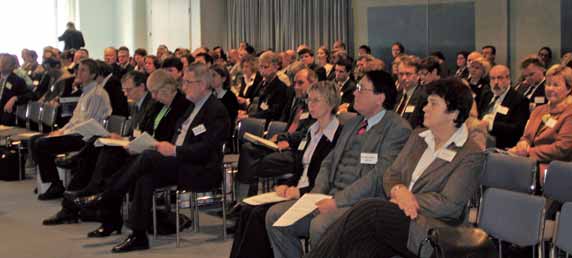
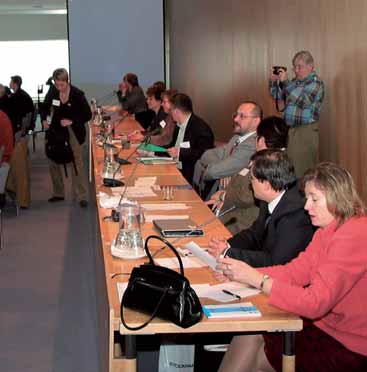
Stakeholder Confe-
27th annual Meeting
HELCOM Task Force
2006 -2007 Consul-
rence on the HELCOM
of HELCOM adopts a
begins to prepare pro-
tations and meetings
Baltic Sea Action Plan,
set of Ecological Ob-
posals for the plan in
related to the deve-
7 March 2006, dis-
jectives to serve as the
April 2006
lopment of the action
cusses the concept of
core of the action plan
plan
the plan
Final Stakeholder Con-
HELCOM to adopt
ference to review the
the Baltic Sea Action
draft Baltic Sea Action
Plan at a Ministerial
Plan, March 2007
Meeting, 15 Novem-
ber 2007, Warsaw,
Poland
HELCOM's Meeting also discussed
Vision
working programmes, intersessional
A healthy Baltic Sea environment, with diverse biological components function-
work and ongoing projects, includ-
ing in balance, resulting in a good ecological status and supporting a wide range of
ing the GEF/World Bank-funded Baltic
sustainable human economic and sustainable activities
Sea Regional Project, as well as the
Goals
activities of HELCOM Working Groups.
A Baltic Sea
Marine life
Favourable
Maritime activities
The Meeting additionally adopted an
unaffected by
undisturbed
status of the
in the Baltic Sea
updated HELCOM Recommendation
eutrophication
by hazardous
Baltic Sea
carried out in an
16/8 on "Limitation of Emissions into
substances
biodiversity
environmentally
Atmosphere and Discharges into Water
friendly way
from Incineration of Waste", which
now contains new levels for emissions
Objectives
and discharges, including new limit
Concentrations of
Concentrations
Natural
No illegal
values for dioxins in wastewater.
nutrients close to
of hazardous
landscapes and
pollution
natural levels
substances close
seascapes
Safe maritime
to natural levels
traffi c without
Clear water
Thriving and
accidental
All fi sh safe
balanced
pollution
Natural level of
to eat
communities
algal blooms
of plants and
Effi cient response
Healthy wildlife
animals
capability
Natural
Minimum air
distribution
Radiactivity at pre
Viable
pollution from
and occurrence
Chernobyl levels
populations of
ships
of plants and
species
No introductions
animals
of alien species
Natural oxygen
from ships
levels
Zero discharges
from offshore
platforms
Vision, strategic goals and objectives of HELCOM's Baltic Sea
Action Plan
9
HELCOM Task Force begins drafting a proposal for
the Baltic Sea Action Plan
Following the decisions of the annual
The Task Force, chaired by Heike
focused on possible programmes of
Helsinki Commission Meeting in
Imhoff, Head of the German Delega-
action for each of the four main envi-
March 2006, the international ad
tion to HELCOM, and consisting of
ronmental priority areas: eutrophica-
hoc Task Force for the development
representatives nominated by the
tion, hazardous substances, maritime
of the Baltic Sea Action Plan con-
HELCOM Member States, the EU,
activities and biodiversity.
vened its fi rst meeting on 24 April at
and major regional stakeholder or-
HELCOM's headquarters in Helsinki,
ganisations, discussed the outline and
The next meeting of the Task Force
Finland.
structure of the plan, and the activities
is scheduled to take place on 25-26
needed to develop it. Discussions also
October 2006 in Stockholm, Sweden.
v
s
o
l
a
V
y
e
r
g
e
:
S
Photo
Helsinki, Finland
EU Environment Commissioner backs
HELCOM's action plan
HELCOM's Executive Secretary Anne
ing that the plan will be instrumental
progress in the development of the
Christine Brusendorff met the EU Envi-
to the implementation of the new EU
action plan, including the outcomes of
ronment Commissioner Stavros Dimas
marine strategy in the Baltic marine
the March 2006 Stakeholder Confer-
on 4 May in Helsinki to discuss present
region. The Commissioner also stated
ence, and this year's annual HELCOM
and future HELCOM actions to protect
that it is very important that HELCOM
Meeting.
the Baltic marine environment from all
shares its vast and advanced experi-
sources of pollution.
ence in marine environmental protec-
tion with other European regional sea
Dimas praised HELCOM's work, and
commissions, especially the Black Sea
particularly welcomed recent efforts
Commission, two of whose Member
to create an innovative strategic action
States will soon join the EU.
plan to restore the Baltic marine en-
vironment. He reiterated the EU's full
Brusendorff briefed the EU Environ-
10
backing for the action plan, emphasis-
ment Commissioner on the latest
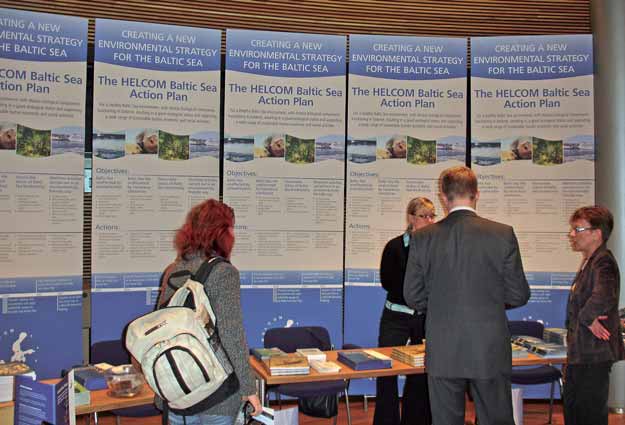
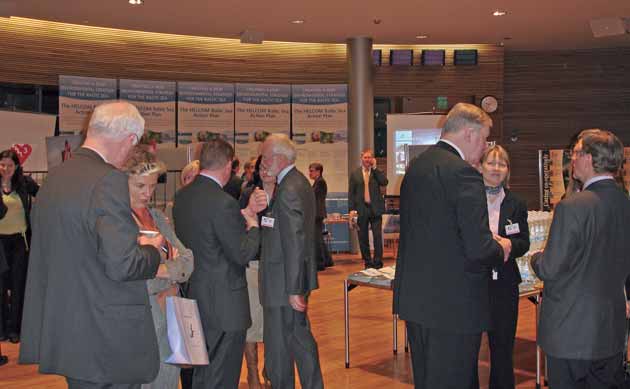
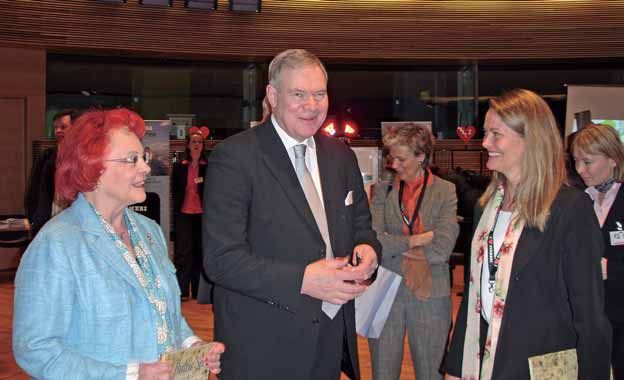
HELCOM presents the Baltic Sea Action Plan in
the Parliament of Finland on the eve of Finland's
EU presidency
HELCOM presented its Baltic Sea
(From left
Action Plan at the Baltic Sea Day held
to right)
in the Parliament of Finland on 29
Member of the
March. The event, which featured an
Parliament of
exhibition and various presentations,
Finland Sirpa
was organised by the Boating and
Asko-Seljavaara,
Sailing Group of the Finnish Parlia-
Speaker of the
ment, with participants including
Parliament of
several leading environmental institu-
Finland Paavo
tions, as well as private enterprises.
Lipponen,
and HELCOM
Keynote speakers included the
Executive
Speaker of the Parliament of Finland
Secretary
Paavo Lipponen, the Executive Sec-
Anne Christine
retary of HELCOM Anne Christine
Brusendorff
Brusendorff, and the Member of the
Finnish Parliament and Chairman of
the Boating and Sailing Group, Sirpa
Asko-Seljavaara.
HELCOM's stand was visited by
the Prime Minister of Finland Matti
Vanhanen and many other members
of the Finnish Parliament.
11
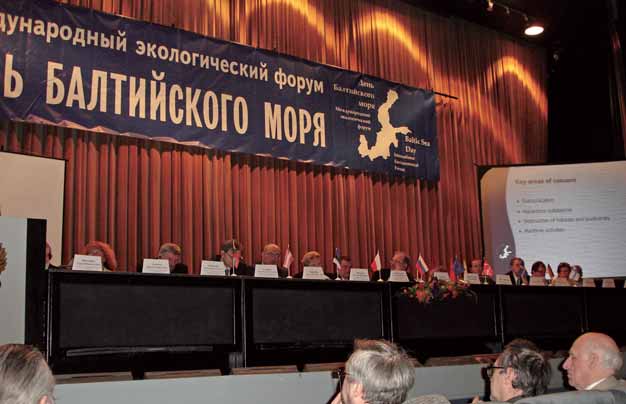
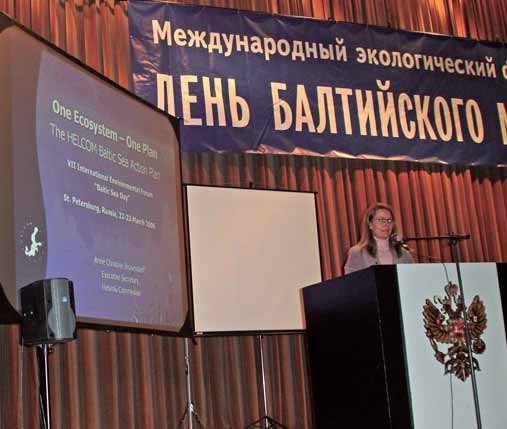
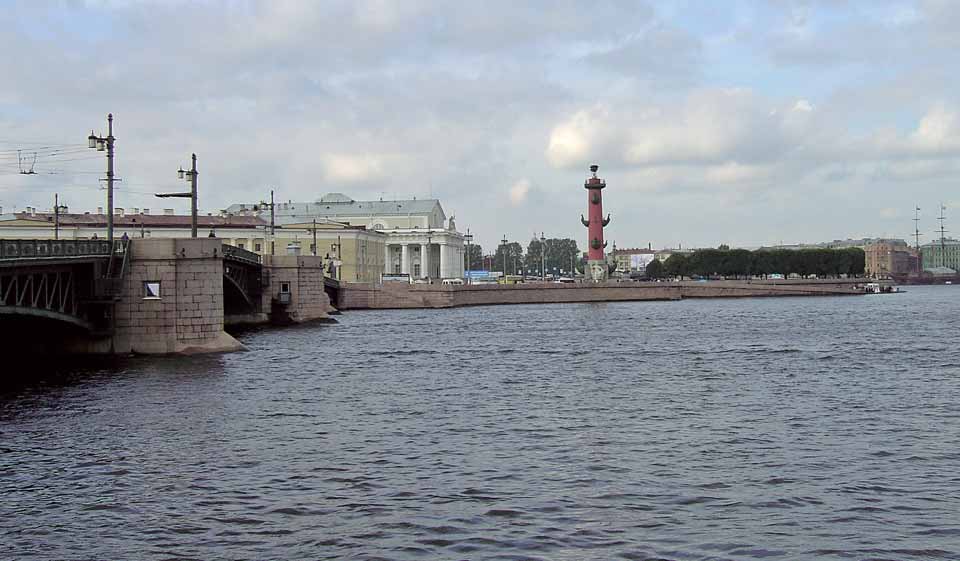
HELCOM's action plan highlighted at the
Baltic Sea Day in St. Petersburg
The concept of HELCOM's Baltic Sea
process on the development of the
Federation's Ministry of Natural
Action Plan was welcomed by partici-
new environmental strategy.
Resources, the regional governments
pants in the VII International Environ-
of St. Petersburg and the Leningrad
mental Forum "Baltic Sea Day", held
The international Baltic Sea Day tra-
Region, and the other Baltic Sea coun-
on 22-23 March in St. Petersburg,
ditionally focuses on the ecological
tries. This year's forum attracted more
Russia, as a major strategic step
status and protection of the Baltic
than 400 of guests, including repre-
towards achieving a healthy marine
marine environment, and aims to
sentatives of governments, scientifi c
environment. The presentation of the
increase awareness of the activities of
and business communities from the
action plan at this forum formed an
the Helsinki Commission. The event
Baltic Sea countries, as well as major
integral part of the public consultation
is actively supported by the Russian
regional organisations.
St. Petersburg,
Russia
12
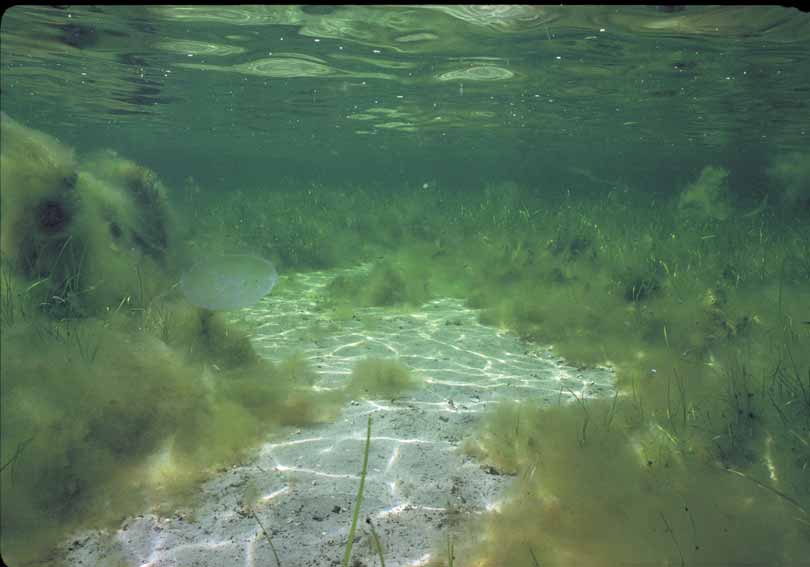
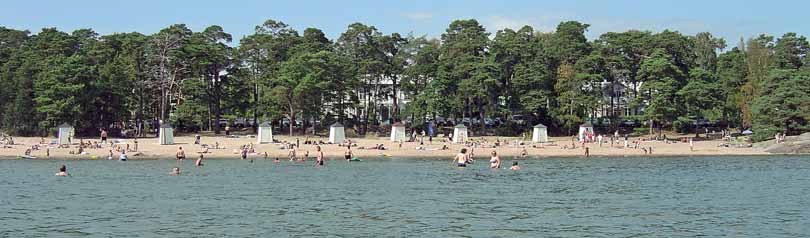
Modelling nutrient reduction scenarios to solve the
problem of eutrophication
by Kaj Forsius, HELCOM Profes-
sional Secretary
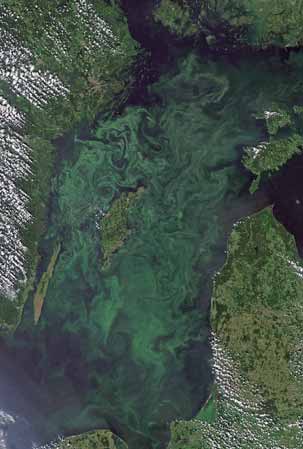
Excessive nitrogen and phosphorus
loads originating from land-based
sources are the main cause of the
eutrophication of the Baltic Sea.
Eutrophication is an issue of major
concern almost everywhere around
the Baltic. Average biomass produc-
tion has increased by a factor of 2.5,
exceptionally intense algal blooms
have become more common, and
oxygen depletion has considerably
worsened, leading to increased inter-
nal nutrient loading. Biodiversity and
fi sh stocks have also been seriously
affected.
The total annual input of nitrogen
entering the Baltic Sea, which is
affected by variations in hydrographical
and meteorological conditions, varies
t
y
n
from about 700 000 to 1 100 000
u
o
tonnes (based on data between 1994
n C
y
, F
and 2003), of which about 25% con-
s
k
a
sists of atmospheric deposition, and
a R
n
n
about 75% of waterborne inputs. The
a
: N
total annual input of phosphorus enter-
t
o
o
h
ing the Baltic Sea varies from about
P
20 000 tonnes to about 36 000 tonnes.
These targets are now gradually
t
Phosphorus enters the Baltic Sea mainly
being taken over by a general objec-
a
m
a
e
as waterborne inputs, and the contribu-
tive for the sea to reach a good eco-
T
s
e
tion of atmospheric deposition is only
logical status. The recent decreases in
n
o
s
p
1-5% of the total. These fi gures include
discharges have not been refl ected in
e
i
d R
inputs from natural background sources
any improvements in the ecological
p
a
R
as well as anthropogenic sources.
status of the Baltic Sea as a whole.
d
n
a
Therefore there still is a need for
I
S L
D
Since the 1970's HELCOM has
further actions.
O
, M
adopted several recommendations
l
t
z
a
to reduce pollution by nutrients in all
HELCOM assessments clearly show
m
c
h
sectors, including industry, municipal
that agriculture is the main source of
f
f
S
e
wastewater treatment and agricul-
the nutrient pollution entering the
J
s
y
ture. Since the late 1980s HELCOM
Baltic Sea. HELCOM's current efforts
r
t
e
u
o
has also been working to achieve the
are therefore mainly focussing on
e c
g
a
FC
50% reduction targets for nutrient
the identifi cation of possible further
m
S
i
G
A
A
emissions and discharges set in the
measures to reduce loads from agri-
S
S
A
N
NA
1988/1998 Ministerial Declarations.
Continues on the following page
13
12.0
Contemporary
Target
Pristine
10.0
) 8.0
m
(
h
e
pt 6.0
i
d
Secch 4.0
Figure 1. Contemporary levels of
water clarity, target values and
pre-industrial (pristine) conditions
2.0
in the Baltic Sea sub-basins in
the open sea measured as Secchi
0.0
depths (in metres).
Bothnian Bothnian
Baltic
Gulf of
Gulf of
Danish Kattegat
Bay
Sea
Proper
Finland
Riga
Straits
1 200 000
Contemporary
Target
1 000 000
Pristine
800 000
600 000
e
s
/
y
e
a
r
n
n
To
400 000
Figure 2. Total inputs of nitro-
gen contemporary input levels,
200 000
target input values needed to
reach water clarity targets, pre-
0
industrial (pristine) input levels.
Bothnian Bothnian Baltic
Gulf of
Gulf of
Danish Kattegat
Baltic
Bay
Sea
Proper
Finland
Riga
Straits
Sea
culture in the different parts of the
be considered in scenarios assessing
planned measures will suffi ce, or
Baltic Sea catchment area.
the impacts of measures in different
whether further stricter measures will
fi elds.
be needed.
At the moment HELCOM is working
extensively to assess the environmen-
HELCOM also uses models to esti-
HELCOM will also suggest cost-effec-
tal impacts of various agricultural pol-
mate the reductions from current
tive solutions designed to reduce
icies in the Baltic Coastal States. This
nutrient input levels that will be
nutrient emissions inside and outside
is done by combining pollution load
required in order to reach target
the Baltic Sea catchment area.
models with environmental effect
levels for eutrophication.
models to predict the environmental
In the forthcoming HELCOM Baltic
effects of various agricultural poli-
By comparing these fi gures for the
Sea Action Plan clear water has been
cies. However, other nutrient sources,
necessary reductions with the sce-
selected as one of the proposed
such as municipalities and airborne
narios for the consequences of dif-
ecological objectives to describe the
nitrogen still contribute signifi cantly
ferent policies in the Contracting
good ecological status with regard to
14
to the total inputs, and must also
Parties, HELCOM will assess whether
eutrophication.
40 000
Contemporary
Target
35 000
Pristine
30 000
25 000
20 000
e
s
/
y
e
a
r
n
n
To 15 000
10 000
Figure 3. Total inputs of phospho-
5 000
rus, target input values defi ned
to reach water clarity targets, and
0
pre-industrial (pristine) inputs.
Bothnian Bothnian Baltic
Gulf of
Gulf of Danish Kattegat Baltic
Bay
Sea
Proper Finland
Riga
Straits
Sea
Scenario changes of TN & TP in the Baltic Proper
19.5
0.90
19.4
0.85
19.3
TN
TP
0.80
19.2
0.75 TP
M) 19.1
Figure 4. Trends in nitrogen
(
( 19.0
0.70 M) concentration (TN, µmol/l) and
TN 18.9
0.65
phosphorus concentration (TP,
18.8
µmol/l) in the Baltic Proper if the
0.60
18.7
reductions in total inputs defi ned
18.6
0.55
in the water clarity scenario are
18.5
0.50
achieved.
2000
2025
2050
2075
2100
2125
2150
Year
Clear water in the open sea was also
In order to quantify the reductions in
ment tools for eutrophication. They are
chosen as a primary ecological objec-
nutrient inputs that will be needed to
approximately based on a 25% devia-
tive for the model-based assessment of
achieve the objective, the fi rst scenario
tion from background reference levels
the effects of policy scenarios. Other
with initial targets for water clarity in
for the June-September `Secchi depth'
aspects of eutrophication, such as
the open sea in different Baltic Sea
(a parameter used to determine the
coastal eutrophication, were not con-
sub-basins was examined using the
clarity of water). The model calculations
sidered at this point. The coastal zones
MARE NEST model (Figures 1, 2 and 3).
at this stage are however based on
around the Baltic are much more diffi -
The system demonstrates what could
annual averages for water clarity and
cult to assess because impacts will vary
be a cost-effective distribution of the
this should be taken into account when
greatly according to to the proximity of
measures needed in order to achieve
interpreting the results.
local point sources or river outlets, and
the desired environmental quality in
water residence times. Most coastal
the Baltic Sea. The target values in
The rates of water exchange between
regions are affected by offshore condi-
the model scenario for water clarity
the sub-basins of the Baltic Sea are
tions to a great extent, except in very
are based on tentative results from
considerable, so changes in the inputs
enclosed bays and lagoons.
the development of HELCOM assess-
Continues on the following page
15
Study indicates that current nitrogen
of nutrients into one sub-basin will
A study recently released by HELCOM
nutrient concentrations that stimulate
also affect adjacent basins. The sce-
shows that achieving the nitrogen
massive algae blooms in the Baltic. One
nario shows that reductions in the
emission targets set for 2010 by the
of the deposition scenarios modelled
Baltic Proper highly infl uence the water
Gothenburg Protocol to the UN/ECE
for HELCOM by EMEP (the Cooperative
clarity in other basins. The overall nutri-
Convention on Long-range Trans-
Programme for Monitoring and Evalu-
ent input reductions needed to reach
boundary Air Pollution (CLRTAP) and
ation of the Long-range Transmission
the targets are 10% and 35% for
the EU Directive on National Emission
of Air Pollutants in Europe) clearly indi-
total nitrogen and phosphorus loads,
Ceilings for Certain Atmospheric Pol-
cates that atmospheric nitrogen deposi-
respectively. The current levels in the
lutants (NEC) may not be enough to
tion into the Baltic Sea will be higher in
MARE model are however based on
reduce airborne nitrogen deposition to
2010 than in 2003, even if the emission
annual averages for Secchi depth. This
the Baltic Sea.
targets in the Protocol and the Directive
means that even more drastic reduc-
are achieved. Total nitrogen deposition
tions will be needed to reach target
The Gothenburg Protocol and EU NEC
will amount to 223.1 kilotonnes in 2010
levels defi ned by summertime Secchi
Directive are currently the two most
compared to 217.4 kilotonnes in 2003.
depth.
important instruments for limiting
emissions in Europe.
According to this scenario, the total
In this scenario no input reductions
estimated nitrogen emission levels
are needed for the Gulf of Bothnia,
Atmospheric nitrogen deposition is one
from the Baltic Sea countries in 2010
the Danish Straits or the Kattegat. A
of the main contributors to the high
will increase by approximately 4%
reduction in nutrient concentrations in
the Baltic Proper will reduce the infl ow
silina
of phosphorus into the Bothnian Bay,
a
G
which is phosphorus limited, and into
r
ina
:
I
the Kattegat, which is nitrogen limited.
oto
h
P
The model indicates that water clarity
target for the Gulf of Finland will not
be reached in spite of load reductions
of around 2 000 tonnes of phosphorus
and 30 000 tonnes of nitrogen from
sources around the Gulf of Finland.
This shows the importance of the
water exchange between the basins.
It must be remembered that there is
a considerable time-lag before the
effects of any reduction of inputs can
be seen in the sea. Figure 4 (on page
15) shows how nutrient concentra-
tions will fall according to the scenario
after the input reductions required
to reach the water clarity target have
occurred. This scenario assumes that
current climatic conditions (salinities,
temperatures, water stagnations, etc.)
will prevail in the future.
16
emission targets are insuffi cient
compared to 2003. Emissions from
deposition of nitrogen, and this should
ships are meanwhile expected to
be considered when evaluating pos-
increase by 20%, although the impor-
sible further developments and the
tance of the ship emissions for the
adequacy of measures taken to reduce
development of the total deposition
airborne nitrogen pollution.
will not be as signifi cant compared to
the foreseen development in some of
Nitrogen compounds are emitted into
the coastal countries.
the atmosphere as nitrogen oxides and
ammonia. Shipping, road transporta-
Approximately one quarter of the
tion, and energy combustion are the
total nitrogen input into the Baltic Sea
main sources of nitrogen oxide emis-
comes from airborne nitrogen depos-
sions around the Baltic. In the case of
ited directly into the sea. In addition
ammonia, roughly 90% of emissions
to this direct deposition, some of the
originate from agriculture. Agriculture
nitrogen deposited into the Baltic Sea
is the most signifi cant contributor of
catchment area reaches the sea via
total airborne nitrogen, accounting
runoff from land. Sources outside the
for more than 40% of total air emis-
Baltic Sea catchment area account
sions of nitrogen from the HELCOM
for almost 40% of the total airborne
countries.
silina
a
G
r
ina
:
I
oto
h
P
Although reductions in nitrogen oxide
emissions were achieved by 2003, the
emission ceilings of the Gothenburg
Protocol to the UN/ECE CLRTAP and
the EU NEC Directive for 2010 may
be diffi cult to achieve for some of the
HELCOM countries.
The results of this study will contribute
to the updating of programmes under
the NEC Directive in EU Member
States in 2006, and proposals for
the possible modifi cation of the NEC
Directive in 2008, as well as the revi-
sion of the Gothenburg Protocol.
17
Biodiversity objectives for the Baltic Sea Action Plan
by Juha-Markku Leppänen,
The marine and coastal ecosystems in
traffi c from other parts of the world
HELCOM Professional Secretary
the Baltic Sea are threatened by many
has resulted in the introduction of
human activities. Anthropogenic
many non-native species. Together
Levels of biodiversity determine the
eutrophication has not only changed
with potential global warming, these
resilience of an ecosystem to chang-
water quality, but also the composi-
invaders might play an increasingly
ing conditions. It is more diffi cult for
tion of littoral, planktic and benthic
important role in the future of the
ecosystems with low species diversity
life. Mass algal blooms, enhanced
Baltic Sea's delicate ecosystems, and
and species with low genetic diver-
by eutrophication and often formed
interfere signifi cantly with their func-
sity to adapt to changing conditions.
by a single species, are extreme
tioning.
Functional diversity is also important
expressions of a loss of biodiversity.
for maintaining healthy ecosystems,
Hazardous substances have widely
The strategic goal relating to the
and ecosystem functions are reduced
accumulated in the biota, especially
protection of nature and biodiversity
by habitat degradation and species
threatening top predators. Some
under the Baltic Sea Action Plan is
loss.
species are directly threatened by
the "favourable conservation status
biomass extraction e.g. due to over-
of Baltic Sea biodiversity". The related
Poorly functioning ecosystems are
fi shing. The overexploitation of one
Ecological Objectives are divided into
more vulnerable to the effects of
species can have a cascading effect
diversity at the landscape/seascape
natural variability and random events.
on the whole ecosystem.
level, the community level and the
This can make them less able to
species level, refl ecting the distinc-
react to cope with such processes
Many species suffer from the destruc-
tions drawn in the UN Convention on
as climate change. Biodiversity thus
tion of habitats due to coastal devel-
Biological Diversity, which focuses on
refl ects a crucial aspect of the health
opments, gravel extraction, dredging
biodiversity at different levels "within
of an ecosystem. A diverse and well
and bottom-trawling. The likelihood
species", "between species" and "of
functioning marine ecosystem is also
of a serious oil spill with all its associ-
ecosystems".
necessary to maintain ecosystem
ated environmental hazards is con-
goods and services that are important
tinuously rising as shipping intensi-
One of the biodiversity objectives is
to man.
fi es. Meanwhile, increased maritime
to maintain natural landscapes and
seascapes. This means safeguard-
ing a diversity of coastal and marine
landscapes and their associated
ecosystems and cultural values. The
Baltic Sea Protected Areas (BSPA)
network has been set up to preserve
different ecosystems and landscapes,
as well as the breeding and feeding
grounds of endangered species. The
implementation status and ecologi-
cal coherence of this network can
be used as indicators of the level of
protection afforded to coastal and
marine landscapes.
Thriving and balanced commu-
nities of plants and animals are
essential for the balanced ecosystem
functions needed to enable the bio-
diversity of the Baltic Sea to reach
a favourable conservation status.
18
Changes in any elements of com-
munities can have knock on effects
population consists of a successfully
Further work on tools to evaluate
on associated species and the overall
breeding, healthy population that is
changes in biodiversity is essential,
ecological functioning of the whole
able to maintain itself and perform its
especially in relation to the structure
ecosystem. For example, changes
functional role in its community and
of ecological communities. Further
in plankton communities can have
ecosystem. The population trends
indicators must also be devised to
effects on entire food chains, and
of certain species, such as seals,
assess and monitor progress towards
eutrophication-fuelled algal blooms
white-tailed eagles, salmon and cod
HELCOM's biodiversity objectives.
also affect other pelagic and benthic
are well known due to long-term
communities. Many communities
studies, and can be used as indicators
include key species or habitat building
of the health of wildlife as a whole.
species, such as bladder wrack (Fucus
HELCOM has also produced a red list
vesiculosus) or eelgrass (Zostera
of fi sh and lamprey species, as well
marina) that can be used as indicators
as a list of species in need of immedi-
of their associated communities.
ate protection, and these lists can be
used to defi ne the need for urgent
Both natural ecosystems and bal-
actions.
anced communities rely on viable
populations of species. A viable
19
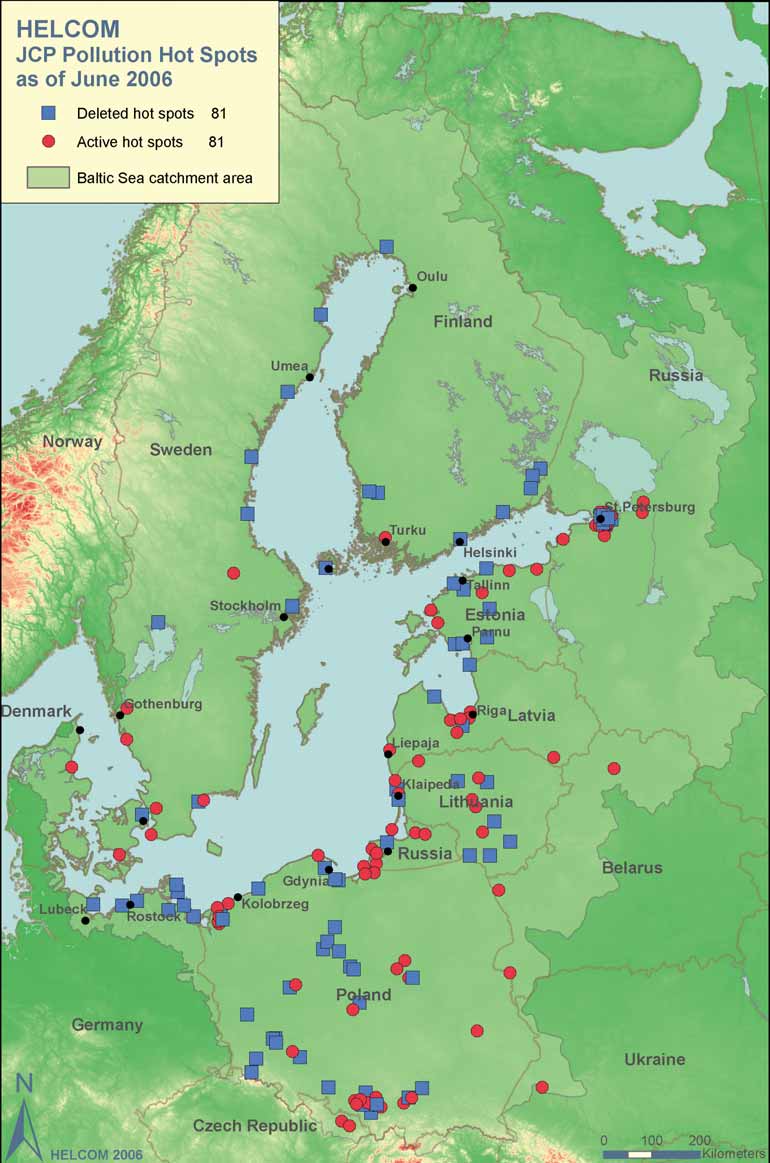
HELCOM halves the number of Baltic pollution hot spots
The Heads of Delegation to the
Helsinki Commission, meeting in
Lithuania's capital, Vilnius, on 21-22
June, approved the removal of several
designated hot spots from the list of
the Baltic Sea's most signifi cant pol-
lution sources, following an extensive
review of clean up efforts.
Among the deleted hot spots are
several industrial plants and munici-
palities in Estonia, Lithuania, Poland
and Russia, which have made vast
improvements in updating of their
processes and/or pollution abatement
technologies.
"This is a very welcome development,
confi rming the strong commitment
of the HELCOM Member States to
eliminate all hot spots in the Baltic
Sea catchment area," said Arturas
Daubaras, who served as Chairman of
the Helsinki Commission until the end
of June 2006. "The remedial actions
at the hot spots should be seen collec-
tively as a major step towards achieving
a cleaner marine environment. These
ongoing activities are also going to be
part of the HELCOM Baltic Sea Action
Plan."
The deleted hot spots include:
- 8 municipal wastewater treatment
plant sub-hot spots in St. Petersburg
- 3 municipalities in Estonia the
capital Tallinn, Pärnu and Paide
- 1 coking plant at "Pryjazn" in
Katowice, Poland
- the Duo-Stal metallurgical plant in
Bytom, Poland, which has now been
closed
- 2 municipalities in Lithuania,
Klaipeda and Siauliai
- 3 industrial hot spots along the
Lituanian coast: the "Amalg Azotaz"
fertiliser plant, the Panezys foodstuffs
plant, and the Klaipeda cardboard
20
factory.
"We are witnessing very good
progress in the reduction of pollution
from point sources such as municipal
wastewater treatment facilities, as well
as industrial plants," said Kaj Forsius,
Professional Secretary of HELCOM.
"Wastewater treatment effi ciency at
the former hot spots now meets the
requirements of the relevant HELCOM
Recommendations."
The Hot Spots list of the most sig-
nifi cant point sources of pollution
around the Baltic Sea was fi rst drawn
up under the HELCOM Baltic Sea
Joint Comprehensive Environmental
Action Programme (JCP) in 1992. The
objective of the JCP is to facilitate the
implementation of pollution reduction
spots around the Baltic Sea have con-
tributed substantially towards overall
pollution load reductions in the Baltic
Sea catchment area.
Water quality in many coastal waters
of the Baltic Sea has improved consid-
erably since 1992, refl ecting progress
in the treatment of municipal and
industrial wastewater. But although
signifi cant progress has been made
at municipal and industrial hot spots,
continued and substantial additional
measures at the most polluted sites
to facilitate their management and
support will be required to reach the
in the Baltic Sea catchment area. The
actions to reduce pollution.
targets of the programme.
programme, which should be com-
pleted by 2012 at the latest, specifi es
The Hot Spots were designated in 1992
a series of actions to be undertaken at
by an international group of scientists,
pollution hot spots. The most notori-
engineers, environmental managers,
ous hot spots are point sources such
bankers and national representatives,
as municipal facilities and industrial
according to practical economic con-
plants, but the programme also covers
siderations as well as the seriousness of
pollution from agricultural areas and
their impact on the environment and
rural settlements, and sensitive areas
human health. A total of 81 hot spots
such as coastal lagoons and wetlands
and sub-hot spots remain on the list
where special environmental measures
today, following the deletion of 81 of
are needed. Certain hot spots have
the identifi ed 162 hot spots/sub-hot
been split into sub-hot spots in order
spots. Investment and remediation
projects carried out at pollution hot
21
Serious oxygen depletion discovered in the Baltic Proper
and the Gulf of Finland
by Juha Flinkman, Harri Kankaan-
The situation on the bottom of the Gulf of oxygen has forced them to rise ever
pää, Riku Lumiaro and Maria Häll-
of Bothnia is as good as usual. Blue-
closer to the surface, where other condi-
fors (FIMR)
green algal blooms have already faded
tions are less favourable. This in turn has
in the northern Baltic Sea, although
consequences for fi sh species feeding on
The oxygen situation has worsened in
upwellings have led to increased
zooplankton, such as Baltic herring and
waters near the bottom of the Baltic
blooming in some parts of the Gulf of
sprat. The living conditions of bottom-
Proper, and concentrations in near-
Finland in August.
dwelling fauna have also deteriorated
bottom waters in the Gulf of Finland
signifi cantly.
are the worst ever recorded during 44
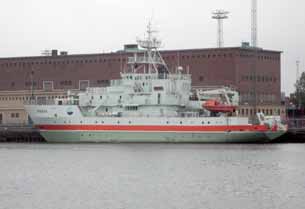
The research vessel Aranda returned to
years of surveys by the Finnish Institute
Helsinki on 28 August from a month-
There were few widespread or intense
of Marine Research. In the Archipelago
long expedition surveying the Gulf of
blue-green algal blooms in the Baltic
Sea, the oxygen situation remains good Finland, the Archipelago Sea, the Gulf
Proper this summer, as had been pre-
even on the deep sea beds, although in of Riga Bay, The Åland Sea, the Gulf of
dicted in the spring algal forecast.
the open sea oxygen immediately runs
Bothnia and the Baltic Proper. Aranda's More to the north, local intense blooms
out at a depth of approx. 60 metres.
tasks also included research related to
containing high concentrations of liver
historical sediments and zooplankton.
toxins were found, e.g. in the southern
kman
Archipelago Sea. In other respects the
l
i
n
F
During the last few months the state
phytoplankton species composition of
a
of the Baltic Proper has deteriorated.
samples was as expected for this time
:
Juh
Water layers are oxygen-free or seriously of year. Water turbidity was better than
Photo
oxygen-depleted starting at a depth
expected for the season.
of about 60 to 70 metres, and deeper
waters and sea bottoms are completely
Oxygen runs out at a depth of about
lifeless. In some places, hydrogen sul-
50 to 60 metres in the Gulf of Finland.
phide a substance toxic to all life can At greater depths, water layers and
be found at depths of 60 metres. The
sea bottoms are either oxygen-free or
upper boundary of this oxygen-free
suffer from severe depletion. In some
water layer has risen ever higher in the
places, hydrogen sulphide was found at
main basin of the Baltic Sea, reducing
a depth of just 50 metres. The situation
the living space of zooplankton. Many
on the bed of the Gulf of Finland has
species prefer the saltier waters near
never been as poor as this since such
the bottom of the sea, but the lack
surveys were started in 1962.
t
y
n
u
o
n C
y
, F
s
k
a
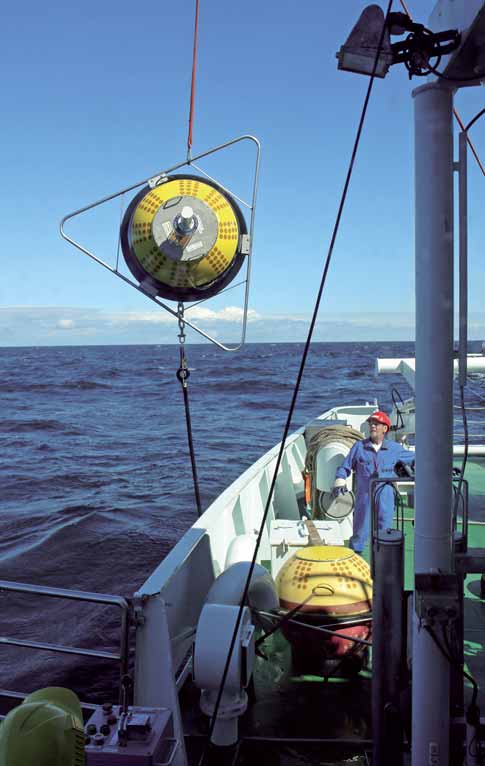
Lifting a wave buoy
a R
n
n
a
:
N
t
o
o
h
22
P
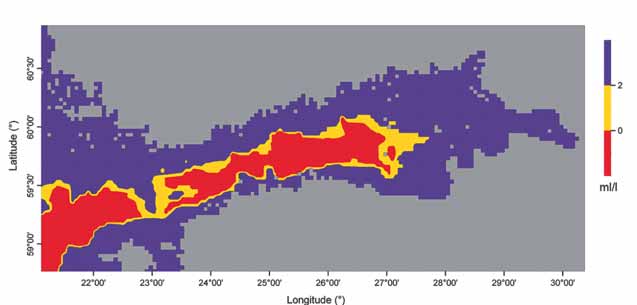
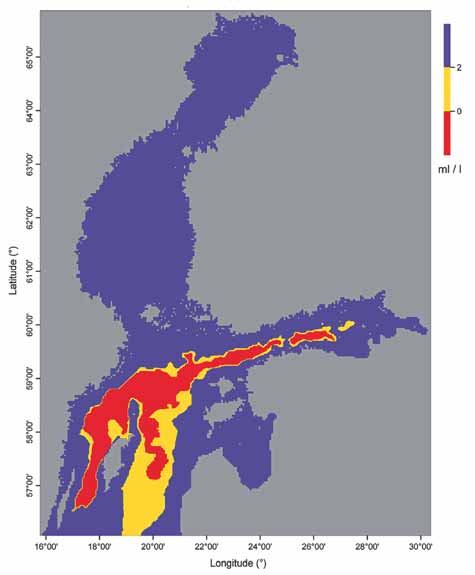
Gulf of Finland oxygen map August
2006. The red areas show where
hydrogen sulphide was present,
and the yellow areas show other
oxygen-free parts of the sea
bottom.
v
s
o
l
a
V
y
e
r
g
e
Research
:
S
vessel
Photo
Aranda
sea, however, the oxygen-free layer
started at a depth of 60 metres. There
was plenty of phytoplankton in the
Archipelago Sea, signifi cantly more
than in more open waters, and the
fi shhook waterfl ea was abundant.
The process of eutrophication is
continuing in the Baltic Sea, and the
oxygen-free layer in the Baltic Proper
and the Gulf of Finland is expanding
and rising towards the surface. The
sea bottom in the Gulf of Finland may
Baltic Sea oxygen
still become oxygenated before the
map August 2006
ice season begins but this depends
on the wind and storm conditions
this autumn and early winter. Early
In oxygen free conditions bottom
Sea, although the algae were already
in 2005, for instance, two intense
sediments release phosphorus, further
dying. Signs of waning blue-green
storms in close succession mixed the
accelerating the eutrophication of the
algal blooms were also noted in the
entire Gulf of Finland water column
Baltic Sea. Upwellings transport the
southern Bothnian Sea. Elsewhere in
from the surface to sea bottom. This
released phosphorus, where it can be
the Gulf of Bothnia the concentrations
oxygenated near-bottom water layers,
absorbed as a nutrient by algae. Near
of phytoplankton were low, and the
the phosphorus dissolved in the near-
the mouth of the Gulf of Finland, cold,
water was very clear. The oxygen situ-
bottom water was transported to the
nutrient-rich water that had welled up
ation near the bed of the Bothnian Bay
surface, to be consumed by algae.
to the surface from the sea bottom
was as good as usual.
was observed, but later blue-green
For more information, contact:
algal blooms increased again due to
No oxygen-free sea bottom areas were
Expedition leader Juha Flinkman
warm and calm weather.
found in the Archipelago Sea. Even
juha.fl inkman@fi mr.fi
the deeper observation stations at the
Relatively abundant blue-green algal
southern end of Kihti had oxygen right
Expedition leader Harri Kankaanpää
blooms were observed in the Åland
down to the sea bottom. In the open
Harri.Kankaanpaa@fi mr.fi
23
Water transparency no longer declining
in some parts of the Baltic Sea
Water transparency levels have
to 4m). The most dramatic decline
and the Gulf of Finland the increasing
stopped decreasing and appear to
in underwater visibility has been
intensity of cyanobacterial blooms.
have stabilized in some sub-basins of
recorded during the last 25 years
Intensifi ed cyanobacteria blooms are
the Baltic marine area, according to a
in western and northern parts of
an indicator of increased nutrient
new assessment by the Helsinki Com-
the Baltic Proper and in the Gulf of
concentrations and low phosphorus
mission.
Finland.
to nitrogen ratios. This makes them
an obvious symptom of the ongoing
In the Kattegat, the Southern and
The primary cause of reduced water
eutrophication of the Baltic Sea.
Eastern Baltic Proper, the Bothnian
transparency during the summer
Sea and the Bothnian Bay the declin-
(June-September) is most likely the
Reductions in water transparency
ing trend in water transparency has
increase in phytoplankton biomass,
over the past century have been less
ceased over the recent 10 to 15 years,
and especially in the Baltic Proper
dramatic in the Bothian Bay, where
visibility has declined from 8m to 6m.
In the Southern Baltic Proper and the
Kattegat changes in water transpar-
ency have not been as dramatic as in
more northerly waters. The Kattegat
is a transitional region between the
highly saline North Sea and the brack-
ish water Baltic Sea, which may explain
this discrepancy.
with transparency levels subsequently
remaining at about the same level or
in some cases even slightly improv-
ing. Underwater visibility is today only
declining still in the Gulf of Finland
and the Northern Baltic Proper.
Assessments indicate that overall
water transparency has decreased
considerably in all sub-basins of the
Baltic Sea over the last century. The
trend shows a steady linear decline
ever since measurements were
started in 1903.
The decrease has been most pro-
nounced in the Northern Baltic
Proper (from almost 9 metres to 4m)
24
and in the Gulf of Finland (from 8m
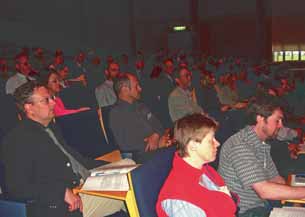
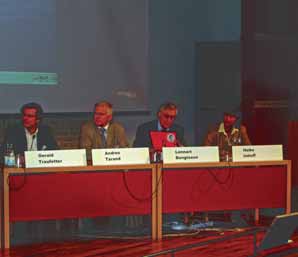
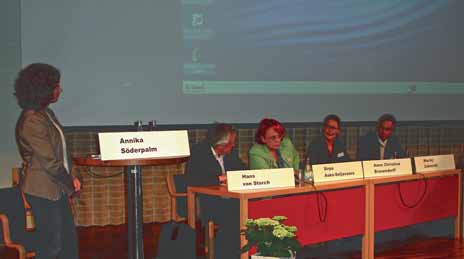
Climate change scenarios for
the Baltic Sea region
Leading scientists, politicians, journal-
Temperature changes observed in
future climate change. One unique
ists and interested stakeholders from
the past have been associated with
feature of BACC is the way it com-
the Baltic Sea countries took part in
consistent changes in terrestrial eco-
bines different kinds of evidence of
the First International Conference on
systems, such as earlier spring phe-
climate change in terms of impacts
the Assessment of Climate Change
nological phases, northward species
on marine, freshwater and terrestrial
for the Baltic Sea Basin on 22-23 May
shifts and increased growth of veg-
ecosystems throughout the Baltic
2006 in Gothenburg, Sweden. The
etation. These trends are expected to
Sea drainage basin. The project rep-
conference, organised by the Uni-
continue into the future, although the
resents the fi rst systematic scientifi c
versity of Gothenburg, BALTEX and
induced shifts in species' distributions
attempts to assess climate change
HELCOM, presented an assessment of
may be slower than the warming
in a European region. More than
ongoing and possible future climate
which causes them.
80 scientists from 12 countries have
variations in the Baltic Sea basin.
contributed on a voluntary basis.
Scenarios for the climate in the late
Consequently the results have not
21st century describe an ongoing
been infl uenced by either political or
general warming, increased winter
special interests.
precipitation almost everywhere, and
dryer summers in southern areas.
The BACC Project is a joint venture
For the water body of the Baltic Sea,
set up by the BALTEX (Baltic Sea
a tendency towards lower salinity
Experiment) Programme and
could be expected, which would have
HELCOM as an example of a dialogue
The climate in the Baltic Sea basin
has changed during the past century,
and current research shows that the
area will most likely continue to get
warmer. In the past century there has
been a marked increase in average
temperatures of more than 0.7°C,
with consequences such as shorter
ice seasons. This rise is larger than
the corresponding global mean tem-
perature increase of 0.5°C. No clear
major impacts on marine fauna in the
between the scientifi c community
direct link to anthropogenic warming
Baltic. The expected changes in pre-
and environmental policy makers.
and the increased levels of green-
cipitation (and the consequent river
BALTEX is a continental-scale experi-
house gases on regional scales has
runoff) may exacerbate eutrophica-
ment within the Global Energy and
been established, although it is plau-
tion. The general warming can be
Water Cycle Experiment (GEWEX)
sible that at least part of the recent
expected to lead to even earlier
and the World Climate Research
warming in the Baltic Sea basin is
spring phenological phases, north-
Program (WCRP).
related to the steadily increasing
ward species shifts and more prolifi c
atmospheric concentrations of green-
vegetation growth.
For more details of the BACC Project,
house gases.
visit http://www.gkss.de/bacc.
The assessment has been produced
"Continuing analysis is needed to
as part of the recently established
clarify the causes behind the increas-
Assessment of Climate Change for
ing temperature," said Anders
the Baltic Sea Basin Project (BACC
Omstedt, professor in Geosphere
Project). It incorporates knowledge
Dynamics at Gothenburg University.
of historical, current and expected
25
Signifi cant increase in shipping accidents in the Baltic
The number of shipping accidents
The study shows that collisions (38%),
Fortunately, most of the accidents
annually in the Baltic Sea marine area
groundings (36%), technical failures
in the Baltic do not cause notable
has more than doubled since the be-
(8%), and fi res/explosions (5%) were
pollution, but even one large-scale
ginning of the 21st century, according
the most common types of accidents
accident would seriously threaten
to the latest HELCOM study. Analysis
recorded in 2005. The share of ground-
the marine environment. Over the
of the data contained in the latest
ings has decreased (from 41% in
period 2000-2005, an average of
annual reports provided by the Baltic
2004), while the share of collisions has
8-9% of all reported accidents re-
Sea countries to HELCOM reveals that
increased (from 27% in 2004). Colli-
sulted in some kind of pollution. Two
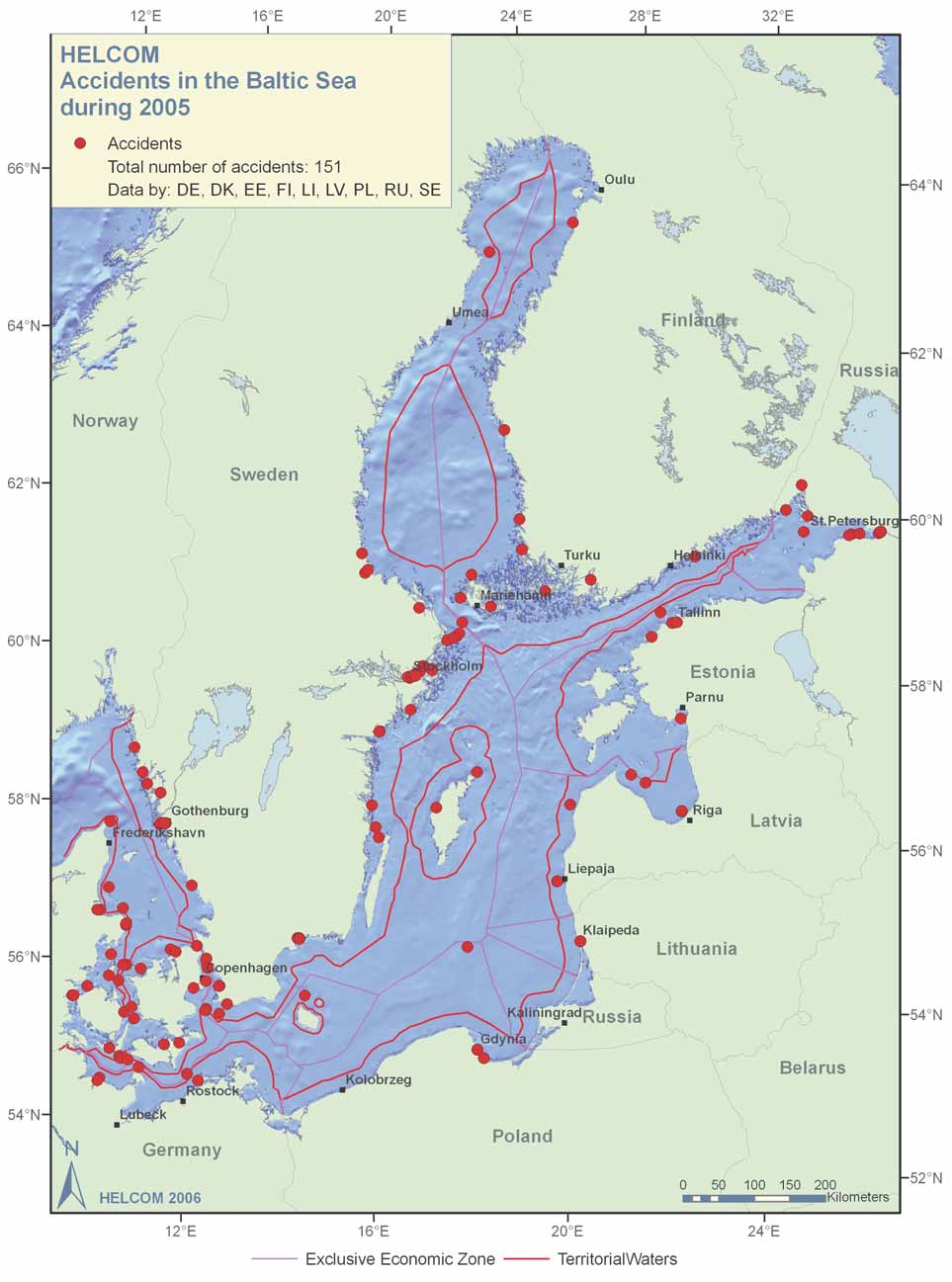
there were 151 accidents in 2005,
sions involving two ships accounted
of the fi ve most serious accidents in
145 in 2004, compared to about 60-
for 60% of all collision cases in 2005
the Baltic marine area have occurred
70 per year during the period 2000-
and the rest of cases were collisions
since 2001 involving "Baltic Carrier"
2003. In 2005, 13 accidents resulted
with fi xed or fl oating structures such as
in 2001 (2 700 tonnes of oil spilt),
in small-scale pollution, compared to
piers, navigation signs etc.
and "Fu Shan Hai" in 2003 (1 200
9 similar cases in the previous year.
tonnes of oil spilt).
"We are experiencing a signifi cant
Cargo vessels (60%), tankers (15%)
increase in the number of shipping
and passenger ferries (12%) were the
accidents in the Baltic area. It's a wor-
main types of vessels involved in acci-
risome trend," said Anne Christine
dents. The main reason for accidents
Brusendorff, Executive Secretary of
was human error (42%), followed by
HELCOM. "One possible explana-
technical factors (23%).
tion is that the apparent increase is a
result of the new reporting require-
According to the HELCOM Auto-
ments for shipping accidents recently
matic Identifi cation System (AIS) for
established by HELCOM. Previously
monitoring maritime traffi c, each year
not all accidents were reported, but
around 50 000 ships ply the waters
the new system ensures that we now
of the Baltic Sea. Although growing
get more complete data. But it's clear
traffi c is a positive sign of intensifi ed
that the rapidly growing maritime
co-operation in the Baltic Sea region
traffi c in the region could also have
and a prospering economy, it also
contributed to this increase in the
makes potentially polluting shipping
number of accidents."
accidents more likely.
26
27
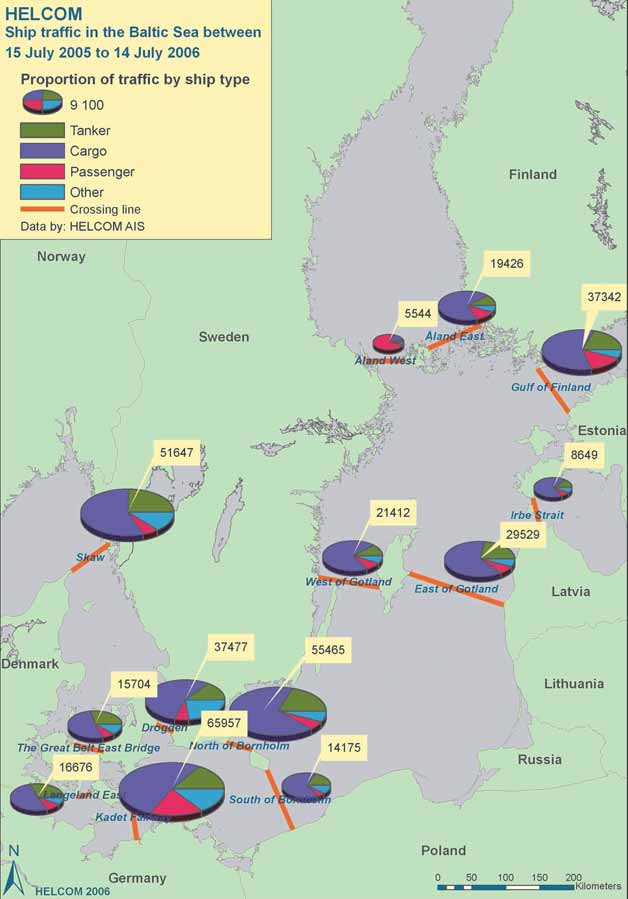
Latest statistics on shipping traffi c in the Baltic Sea
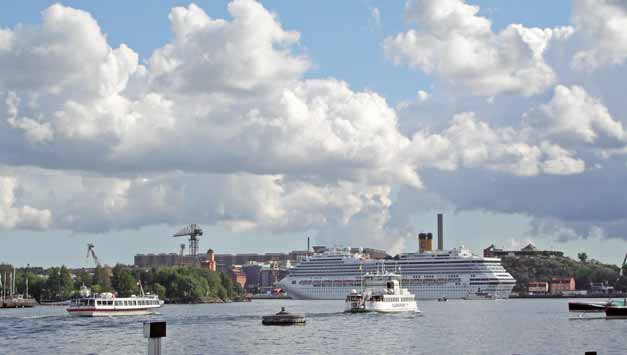
More than 51 000 vessels annually
pass the Skaw at the northernmost
tip of Denmark on their way into or
out of the Baltic, according to the
latest statistics provided by the new
HELCOM Automatic Identifi cation
System (AIS) for monitoring maritime
traffi c in the Baltic Sea area.
"The HELCOM AIS system, which
was offi cially launched on 1 July
2005, is now providing for the fi rst
time ever an up-to-date and com-
prehensive overview of the shipping
traffi c situation in the Baltic," said
Anne Christine Brusendorff, HELCOM
Executive Secretary.
During the twelve months up to July
2006, around 51 600 ships entered
or left the Baltic via the Skaw; about
51 000 passed the Swedish island
of Gotland; and more than 37 000
entered or left the Gulf of Finland.
Approximately 60-70% of these ships
were cargo vessels, and 17-25%
were tankers. There are about 1 800
- 2 000 ships in the Baltic marine area
at any given moment. Vessels with a
draught of less than 7 meters account
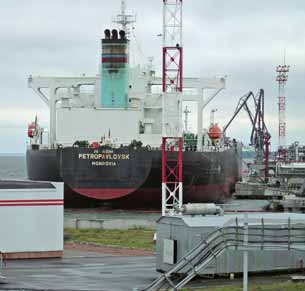
tonnes sailing in the Baltic Sea. The
for most of the ships entering or
system displays all the available data
leaving the Baltic via the Skaw.
over a common background map of
the region.
The reporting lines of the HELCOM
AIS used to show the spatial distribu-
The AIS data indicates that both the
tion of shipping activities can be seen
numbers and sizes of ships (especially
on the map above.
oil tankers) have been growing, and
that ships carrying up to 150 thou-
The HELCOM AIS system enables the
sand tonnes of oil are now sailing the
identifi cation of the name, position,
waters of the Baltic. The amounts of
course, speed, draught and cargo of
oil transported on the Baltic have also
28
every ship of more than 300 gross
increased signifi cantly since 2000.
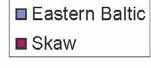
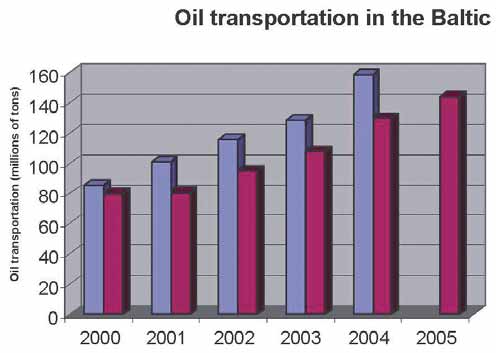
Amounts of oil transported via
the 11 largest oil terminals in
the East Baltic (Gdansk, Klaipe-
da, Ventspils, Muuga, Primorsk,
Porvoo, Naantali, Riga, Butinge,
St. Petersburg and Kaliningrad)
and past the Skaw (in millions of
tonnes)
The system covers Norwegian waters
as well as the whole of the Baltic Sea.
This greatly improves risk assessments
and management, and also facili-
tates decisions on new measures to
prevent collisions and improve navi-
gational safety in the Baltic.
The system includes land-based sta-
tions established in all the coastal
countries to receive information
from all vessels passing through their
national waters. All stations are linked
to a special "HELCOM server", which
combines all the data and provides
a comprehensive real-time picture of
in the Baltic in recent years. On 29
the overall maritime traffi c situation
March 2001, close to the sea border
in the Baltic Sea to the competent
between Germany and Denmark,
authorities in each HELCOM member
the double-hulled oil tanker "Baltic
state. The server updates ships' posi-
Carrier" collided with the bulk carrier
tions every six minutes.
"Tern", resulting in the spillage of 2
700 tonnes of heavy fuel oil, much
In addition to providing shore sta-
of which eventually washed up along
tions with information, the AIS also
the Danish coast.
enables ships to detect and identify
each other at sea. AIS messages
The new system builds upon the
contain information on the identity,
International Maritime Organisation's
position and course of the vessel, as
navigation in the crowded waters of
(IMO) requirements for all larger ships
well as various additional data.
the Baltic Sea.
to be equipped with AIS. HELCOM's
work will also contribute at European
The primary task of the shore-based
The decision to establish a land-
level to the implementation of the
AIS network is to provide the com-
based monitoring system for ships,
EU directive on traffi c monitoring
petent authorities with a monitoring
based on AIS signals, was agreed
and information, under which AIS
tool for supervision, risk analyses,
during the HELCOM Extraordinary
exchange systems should be opera-
search and rescue (SAR) operations,
Ministerial Meeting in Copenhagen
tional by the end of 2008.
port state control, security and other
in 2001, which closely followed
safety-related tasks to ensure safe
one of the most serious oil spills
29
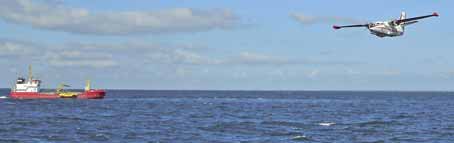
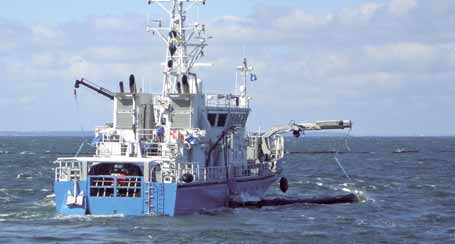
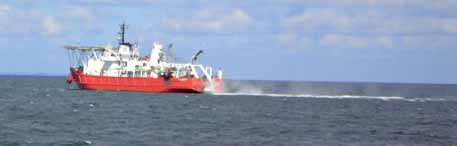
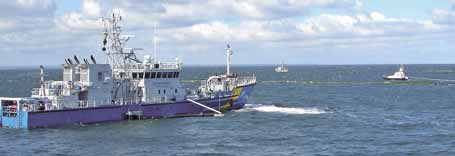
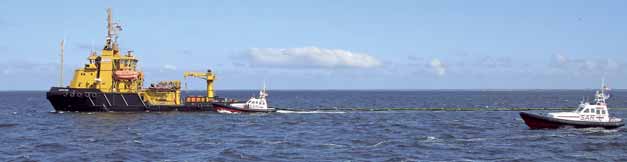
HELCOM fl eet drills response to massive oil spill
off Gdynia
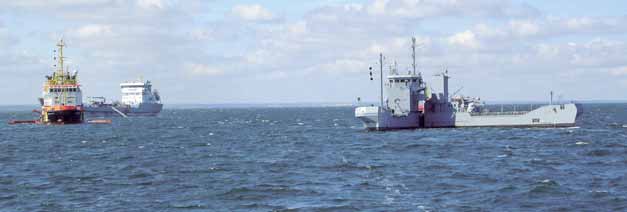
A fl eet of oil-combating ships from
the Baltic Sea countries working to-
gether under HELCOM's fl ag tested its
capabilities to deal with a massive oil
spill during the Helsinki Commission's
annual international pollution respon-
se exercise BALEX DELTA, held off
Gdynia, Poland, on 6 September.
This year up to 23 ships and smaller
vessels, and three airplanes, from
Denmark, Finland, Germany, Lithuania,
Poland, Russia and Sweden took part
in HELCOM's operational exercise to
check the Baltic Sea countries' rea-
diness to jointly respond to major oil
represented by two vessels chartered
This year the discharged oil was no
accidents at sea.
by the European Maritime Safety
longer simulated using popcorn, but
Agency.
with expanded perlite, a mineral sub-
The Gdynia exercise was the fi rst time
stance several times lighter than water,
the European Union (which is also a
"The exercise was successful," said
which is white in colour and easily
HELCOM Contracting Party) has parti-
Thomas Fagö, Chairman of the
visible on the water surface. Expan-
cipated in BALEX DELTA. The EU was
HELCOM Response Group. "All the
ded perlite is absolutely harmless to
task forces displayed exceptional
the environment. Perlite is a naturally
performance working under a single
occurring glassy volcanic rock found
command. The results of the exercise
in many parts of the world. It can
show our growing capability to jointly
be heated to a high temperature to
and effectively deal with major oil spill
produce a lightweight, micro-porous
accidents in the Baltic Sea region."
material with a high surface area. The
idea of using this material to simulate
BALEX DELTA 2006 was organized by
oil spills has been developed by the
the Polish Maritime Search and Rescue
Chemical Faculty of the Gdansk Uni-
Service.
versity of Technology and the Polish
Maritime Search and Rescue Service.
The exercise involved a scenario where
a general cargo vessel collided with an
BALEX DELTA operational response
oil tanker carrying a cargo of around
exercises have been held annually
30 000 tonnes of light crude oil in this
since 1989. Throughout this time
part of the Gulf of Gdansk. Besides
HELCOM has steadily improved the
its cargo, the oil tanker also had some
readiness of the countries around the
1 200 tonnes of heavy fuel oil and 120
Baltic to jointly respond to oil spills at
tonnes of marine diesel oil as bunker.
sea. The Baltic coastal countries now
After the collision the oil tanker had
have a total of more than 30 response
supposedly leaked around 6 000
vessels located around the region.
8 000 tonnes of oil cargo, which was
These vessels are able to reach any
assumed to be drifting towards the
place in the Baltic Sea within 6 to 48
Polish and Russian coastlines. Units
hours of notifi cation of an accident.
from HELCOM countries were tasked
to jointly prevent the oil slick from
30
coming ashore.
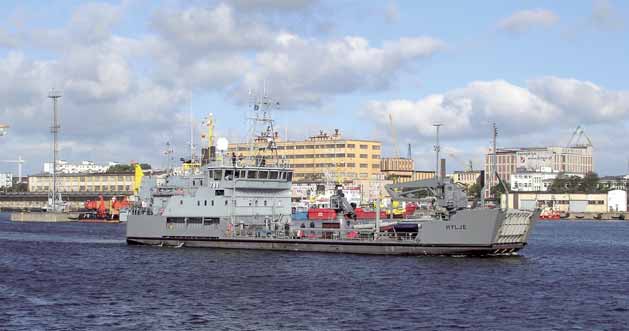
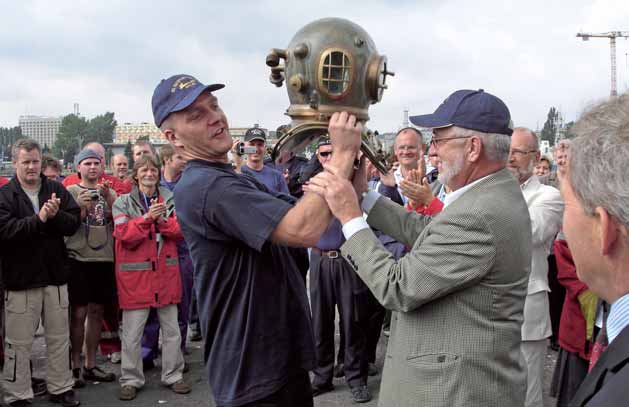
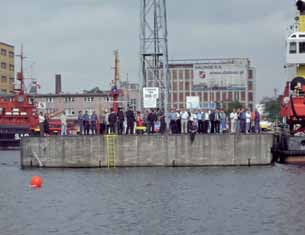
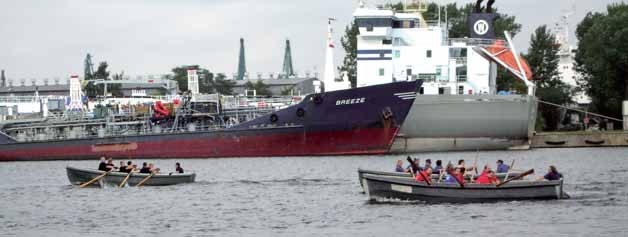
Finnish Navy rowing team wins HELCOM Trophy
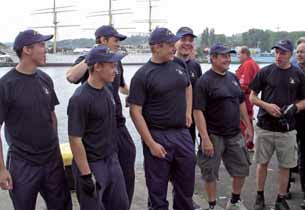
The Finnish Navy team from the oil re-
sponse vessel Hylje won the HELCOM
Trophy at the Helsinki Commission's 11th
annual rowing competition, held on 7
September in Gdynia, Poland, follow-
ing the BALEX DELTA 2006 pollution
response exercise.
Eight teams representing oil spill response
vessels from Denmark, Finland, Germany,
Lithuania, Poland, Russia, Sweden, and
the European Maritime Safety Agency,
Finnish vessel
took part in this year's race.
Hylje
Winners of the HELCOM
Trophy rowing competition:
2006 (Gdynia) Finland
2000 (St. Petersburg) Sweden
2005 (Karlskrona) Sweden
1998 (Gdynia) Finland
2004 (Warnemünde) Sweden
1996 (Karlskrona) Poland
2003 (Helsinki) Sweden
1991 (Rönne) Sweden
2002 (Liepaja) Lithuania
1990 (Gdynia) Sweden
2001 (Rönne) Lithuania
The teams were divided into three
groups. The Danish, Finnish and Polish
teams fi nished fi rst in their heats, and
qualifi ed for the fi nal. The fi nal race
opened with an amazing spurt from
the Finnish crew, whose boat took
a winning lead right from the start,
leaving all their competitors far behind.
The Danish crew was the second to
cross the line, followed by the Polish
team only a second later.
Eleven HELCOM rowing competitions
have been held since 1990. The race has
been won six times by Swedish teams,
twice each by Finnish and Lithuanian
teams, and once by a Polish team.
31
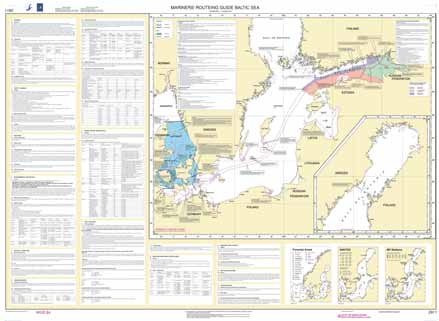
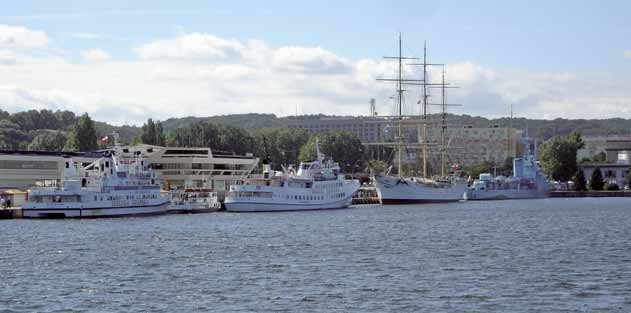
HELCOM's new mariners' routeing guide for
the Baltic Sea
The HELCOM Transit Guide for the
The Guide was developed within the
man of the HELCOM Transit Route
Baltic Sea is the fi rst publication of its
last year by the HELCOM Transit Route
Expert Working Group. "Maintaining
kind in the region. It is a single source
Expert Working Group, using a chart
the printed version and developing and
of essential navigational information
designed and printed by the German
continually improving the web version of
for ship masters planning safe routes
Federal Maritime and Hydrographic
the Guide will be our next challenge."
through the Baltic.
Agency (BSH). Germany has also
offered to keep the guide up to date.
Denmark will lead the development
The Guide is designed to supplement
of an advanced online version of the
the existing nautical chart portfolio
"The initial idea of this project was to
Guide.
for the Baltic Sea. It includes informa-
provide mariners with an easy-to-use
tion on reporting systems, ice condi-
guide which allows users to instantly
To order your copy of the Guide,
tions, maritime assistance services,
access the necessary information, and
visit the BSH web site at: http://
special regulations, water levels and
we can be proud of the result," said
www.bsh.de/en/Products/Charts/
locally signifi cant land uplift.
Hans-Heinrich Callsen Bracker, Chair-
Routeing%20Guides/index.jsp.
A new HELCOM system to help identify suspects of
illegal discharges
At the HELCOM Response Group
illegally discharge oil into the sea could
of oil slicks based on the Seatrack Web
Meeting, held on 13 - 15 September
be identifi ed. But by combining data
system, identifi cation procedures can
in Gdynia, Poland, representatives of
on ships' routes from the AIS with
now be signifi cantly improved, provid-
the Baltic Sea countries shared their
reversed calculations of the pathways
ing better evidence for the courts.
fi rst experiences in using the HELCOM
STW/AIS system, which integrates data
from the Seatrack Web (STW) oil drift
forecasting system and the Automatic
Identifi cation System (AIS) for monitor-
ing maritime traffi c. The aim of this
new system is to provide additional
tools for identifying ships that illegally
discharge oil into the Baltic Sea. Up
until now, only a few of the ships that
32
Gdynia, Poland
Catches of chemical munitions in the Baltic remain low
For the second year in a row, Baltic
were released by fi shermen at sea,
fi shermen have reported a record
although one catch was brought
low number of incidents of dumped
ashore for safe disposal.
WWII chemical munitions being
caught in their nets. According to
The year 2003, when a total of 1 110
the latest annual statistics, recently
kg of gas-derived lumps was netted
submitted by Denmark to HELCOM,
in 25 incidents represented one of
there were only four small-scale
the biggest increases in both the
catches in 2005, the same number
numbers of incidents and the total
as in 2004, compared to 25 incidents
weight of the chemical munitions
reported in 2003.
caught in the Baltic Sea since the
mid-1990s. Over the period 1995-
This is the lowest fi gure for annual
2002, about 3 -11 incidents were re-
catches since 1999. However, experts
ported annually, with the total weight
are not yet attributing the decrease
of munitions involved not exceeding
Waters where World War II chemi-
to any specifi c factors. The reason for
512 kg a year. The highest number
cal munitions were dumped
the dramatic decrease is unknown,
of incidents during the last 20 years
as was the case for the dramatic
was in 1991 when a total of 5 378
increase in 2003. The variations are
kg of munitions was netted in 103
probably due to a combination of
incidents.
touching these chemical agents or
different factors, such as the intensity
inhaling their vapours is very dange-
of fi shing activities in the areas close
About 40 000 tonnes of chemical
rous.
to the dumped chemical munitions,
munitions were dumped into the
and the recommendations issued by
Baltic Sea after the Second World
Chemical warfare agents break
HELCOM and local authorities.
War mostly in the area to the east
down at varying rates into less toxic,
of Bornholm, southeast of Gotland
water-soluble substances. Some com-
As Lead Country for monitoring
and south of the Little Belt. It is esti-
pounds, however, show an extremely
dumped chemical munitions,
mated that these chemical munitions
low solubility and slow degradability
Denmark prepared the latest annual
contained some 13 000 tonnes of
(e.g. viscous mustard gas, Clark I and
report based on information received
chemical warfare agents. Dumping
II, and Adamsite). These compounds
as of 31 August 2006. All the catches
areas are marked as foul, with "an-
cannot occur at higher concentrations
occurred east of Bornholm, near an
choring and fi shing not recommen-
in water, so any wide-scale threat to
area where large amounts of che-
ded" on nautical charts. However,
the marine environment from these
mical munitions were dumped after
fi shing in these waters is not prohibi-
dissolved chemical warfare agents
World War II. Most of the netted che-
ted, and commercial fi shing is conti-
can be ruled out. HELCOM has
mical munitions caught in 2005 were
nuing.
carried out extensive assessments and
completely corroded, and all four
concluded that any threat to coastal
consisted of lumps of mustard gas,
Warfare agents are also discovered
areas from such residues of warfare
with a total weight of approximately
outside the dumping areas from time
agents or chemical munitions is also
105 kg. All catches were released at
to time, especially near Bornholm.
unlikely.
sea. The total weight of the chemical
Fishermen in these waters regularly
munitions caught in 2005 was slightly
fi nd bombs, shells or fragments of
lower than in 2004 when three
munitions and even lumps of mustard
separate incidents involved mustard
gas in their bottom trawl nets. The
gas, with a total weight of appro-
crews of fi shing vessels risk contami-
ximately 140 kg netted in clay-like
nation from chemical warfare agents
lumps, and another episode involved
if lumps of viscous mustard gas or
a 20 kg lump of sneeze gas caught by
chemical munitions caught in bottom
a fi shing vessel. Most of the catches
trawls are hauled on board. Simply
33
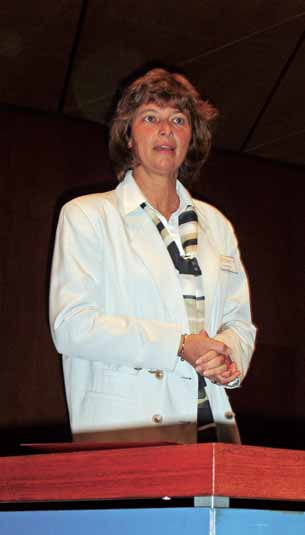
Third HELCOM Youth Forum: inspiring the next generation
"Nine states one identity" was
the theme of the Third HELCOM
Youth Forum, held on 15-17 August
in Flensburg, Germany. Nearly 30
student delegates, representing
several Baltic Sea coastal countries
met to exchange views on how to
enhance international co-operation
on environmental protection and
sustainable development around the
Baltic Sea region, and to convey crea-
tive new ideas and policy recommen-
dations to decision-makers.
The Third HELCOM Youth Forum was
organised by the German Federal
Ministry for the Environment, Nature
Conservation and Nuclear Safety,
in co-operation with other part-
ners including the German Federal
Maritime and Hydrographic Agency,
Landtag Mecklenburg-Vorpommern,
the Baltic Sea Forum, and Flensburg
Tourismus und Stadtmarketing.
The HELCOM Youth Forum pro-
students in the work of the Helsinki
vides an excellent opportunity for
Commission."
tomorrow's leaders to interact with
HELCOM representatives and current
"The main aim of the Youth Forum
decision-makers from the Baltic Sea
is to encourage young people to
countries. The forum also aims to
become interested and participate
increase awareness of environmental
in decision-making process associ-
issues and sustainable development.
ated with environmentally sustain-
able development in the Baltic
"HELCOM is convinced that increas-
Sea region," said Anne Christine
ing public awareness among young
Brusendorff, Executive Secretary of
people is of utmost importance for
HELCOM. "Inspiring the next genera-
securing future generations' interest
tion of leaders to become actively
in the Baltic," said Heike Imhoff of
involved in environmental issues will
the German Federal Ministry for the
ensure an economically and environ-
Environment, Nature Conservation
mentally sound future for the sea we
and Nuclear Safety, who heads the
all share."
German Delegation to HELCOM.
"By regularly performing youth
Several Workshops during the forum
forums HELCOM has initiated a
offered participants the opportunity
long-term strategy of drawing young
to actively investigate various views
Heike Imhoff, Head of the German
people's attention to regional envi-
and defend personal evaluations on
Delegation to HELCOM
ronmental and sustainable develop-
such issues as the role of the Helsinki
34
ment issues and proactively involving
Commission in protecting the Baltic
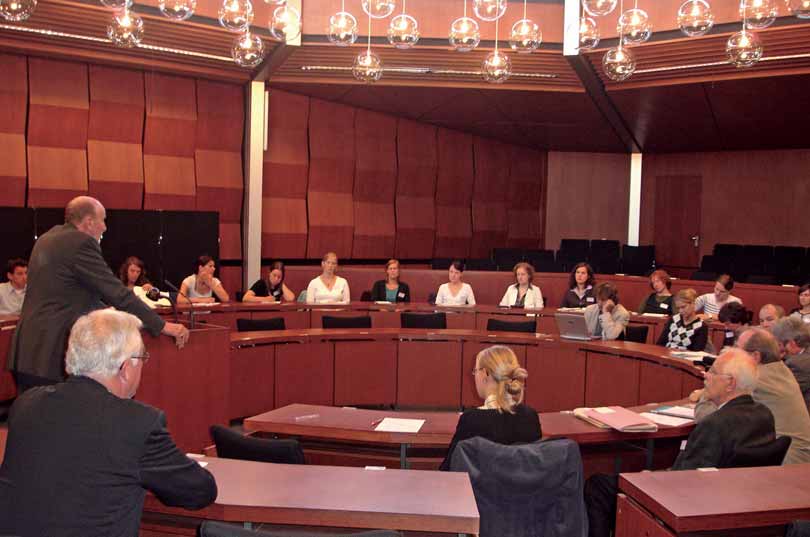
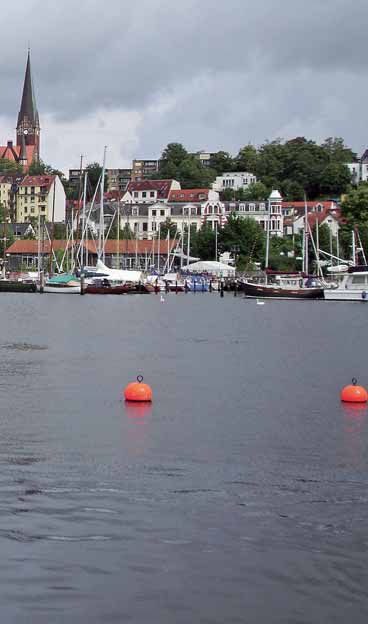
of environmental leaders
in March 2007. The students' ideas
and resulted in a resolution "Our
will then also be incorporated into
Baltic Sea of tomorrow", which is
the Baltic Sea Action Plan, which is
compromised of the students' visions
due to be adopted at the HELCOM
and concrete demands directed at
Ministerial Meeting scheduled for 15
politicians and key players around the
November 2007 in Warsaw, Poland.
Baltic Sea region.
The HELCOM Youth Forums, which
are designed to echo the concerns
of young people and feed their
personal visions into future policies
affecting the Baltic Sea, have been
already hailed a success. The First
Youth Forum was held on 1 March
2004 in Helsinki, Finland, in connec-
tion with the 30th Anniversary Jubilee
Session of the Helsinki Commission.
The Forum adopted a Youth Declara-
tion, which was handed over to the
President of the Republic of Finland
Tarja Halonen. The Second Youth
Forum was held on 9-11 August 2005
in Rostock-Warnemünde, Germany,
marine environment, joint interna-
tional actions on key environmental
issues affecting the Baltic Sea, and
ways to balance the economic use
and ecological needs of the Baltic
Sea.
One of the top subjects on the
agenda was the objectives of the
strategic HELCOM Baltic Sea Action
Plan. "We had a lot of input and
heard a lot of creative ideas from
young people, who displayed sincere
interest to contribute towards making
the new HELCOM strategy even
more relevant and robust," said Prof.
Peter Ehlers, President of the German
Federal Maritime and Hydrographic
Agency and Chair of the HELCOM
Youth Forum.
The Final Conclusions of the Youth
Forum will be presented at the annual
meeting of the Helsinki Commission
35
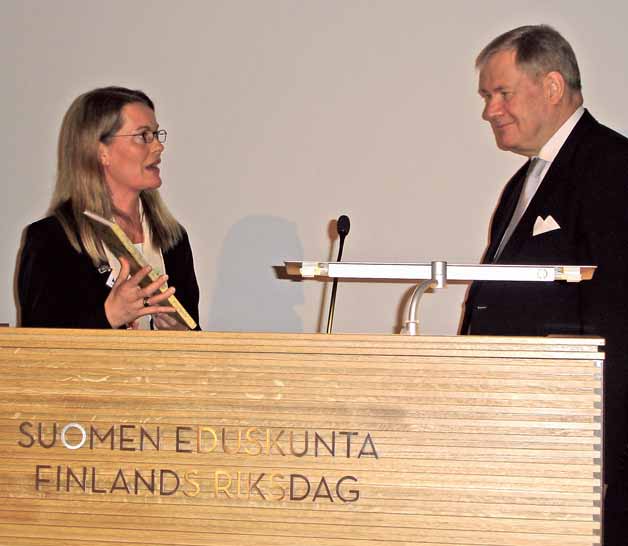



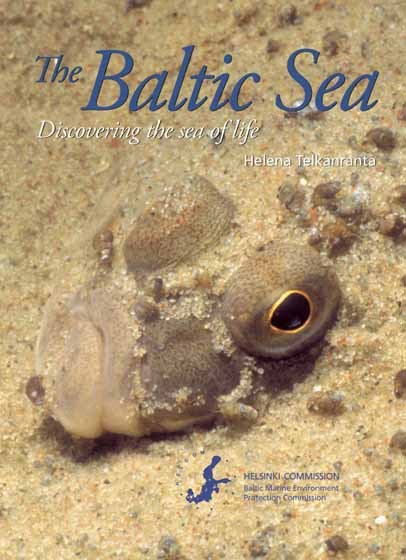
New HELCOM book explores the variety of marine life in
the Baltic Sea
In conjunction with the kick-off
than meets the eye, and is home to
Stakeholder Conference on the devel-
a wealth of wildlife, including many
opment of the HELCOM Baltic Sea
underwater creatures that few of us
Action Plan, the Helsinki Commission
ever have the chance to see, as well
in March 2006 launched its new book
as more familiar seals, porpoises, and
on biodiversity, entitled `The Baltic Sea
seabirds.
Discovering the sea of life'. The new
book provides the fi rst ever popular
The storyline of the book follows the
overview of the variety of marine
journey of a pair of swans around the
life around the Baltic Sea. The main
Baltic Sea from Denmark, through
idea of this HELCOM publication is
Germany, Sweden, and Finland in the
to convey to the general public the
north and back south through Estonia,
message that this unique and beau-
Latvia, Lithuania, Russia and Poland.
tiful sea, full of life, must be care-
This journey takes the reader soaring
fully cherished and protected.
over the shores of the Baltic Sea with
seabirds, and plunging deep into its
This 105-page hardcover book
waters to discover exotic fi sh and
with its many stunning high-
beautiful marine gardens.
quality photos, including rare
underwater images, takes
To reach a wider audience the book
readers on an exciting journey
incorporates a two-tier approach.
into the Baltic marine world,
The accessible but also scientifi cally
to discover fascinating life
accurate story of the swans' journey
forms that live so close to us, yet
is accompanied by enlightening infor-
are still unknown to many. The book
mation boxes which provide general
proves that the Baltic Sea is truly more
facts and fi gures about the Baltic Sea
HELCOM Executive Secretary Anne
Christine Brusendorff presents a
copy of the new HELCOM book `The
Baltic Sea Discovering the sea of
life' to the Speaker of the Parlia-
ment of Finland Paavo Lipponen, at
the Baltic Sea Day event held in the
Parliament of Finland in March
36

















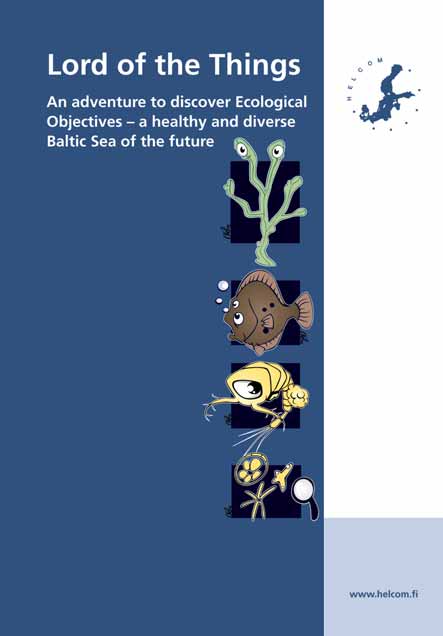
and different species, as well as about
The book can be considered as a
who specialises in nature and conser-
HELCOM's efforts to conserve the Bal-
`must read' for anyone interested in
vation, with the help of an editorial
tic's biodiversity. This enables the book
the marine life of the Baltic, and the
board of HELCOM experts. The book's
to serve as a reference guide to marine
present state of our sea. It emphasizes
layout is designed by Leena Närhi
life in the Baltic, to the environmental
the beauty and fragility of the Baltic's
of Bitdesign, Finland, and includes
problems that face this sensitive sea,
diverse ecosystems, while also high-
more than 100 superb photos taken
and to solutions that could restore its
lighting environmental challenges and
by dozens of photographers from all
healthy natural balance. The book also
the need for protective measures.
around the Baltic Sea region.
includes good news about successes
already accomplished in terms of the
'The Baltic Sea Discovering the sea
protection of the Baltic marine envi-
of life' has been written by Helena
ronment.
Telkänranta, a Finnish science writer
HELCOM provides teaching materials on
Ecological Objectives
"Lord of the Things. An adventure
The eight-
to discover Ecological Objectives
minute ani-
a healthy and diverse Baltic Sea of
mation and
www.helcom.
the future" consists of an animated
related teach-
fi lm and related teaching materials
ing materials
designed to help teachers deal with
are part of the
questions related to the protection
HELCOM Eco-
of the Baltic Sea. This innovative and
logical Objectives
fun material can be used in English,
Project, which
Biology and Geography lessons.
aims to make all
sectors of society
Viewers join Frodovich and Glunkton
consider their
the Plankton on their exciting journey
impacts on the
to deliver the "Thing of Ignorance"
marine ecosystems
back to it origins in the heart of the
of the Baltic.
Baltic Sea the only place where
this evil can be destroyed! Wrapped
in a humorous plot and borrow-
ing a few ideas from certain well-
known literary sources "Lord of
the Things" encourages students
and other viewers to set themselves
objectives to help make the Baltic Sea
clean and healthy.
37





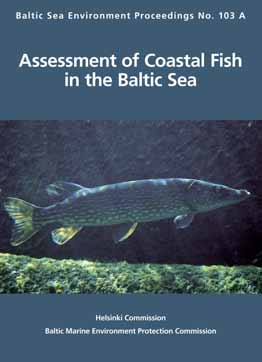






Latest HELCOM publications
HELCOM Activities 2005
Assessment of Coastal Fish
Biovolumes and Size-Classes
Overview
in the Baltic Sea
of Phytoplankton in
the Baltic Sea
This report presents the results of
coastal fi sh monitoring using multi-
The use of a standardised species list
mesh gillnet and gillnet catch series,
with fi xed size-classes and biovolumes
which have been carried out in fi fteen
contained in this report will greatly
areas of the Baltic Sea. This monitoring
help to improve the quality of phyto-
aims to reveal long-term trends in fi sh
plankton counting methods and the
populations and fi sh community devel-
comparability of results. Phytoplank-
opment, and to try to discover the
ton is a basic component of aquatic
causes of these trends in terms of both
ecosystems. It is impossible to under-
natural factors and anthropogenic
stand and model aquatic ecosystems
pressures. The report covers current
without a good knowledge of the
time series of varying length up to 22
species composition, productivity and
years of annual monitoring. This report
biomass of phytoplankton communi-
also proposes some potential Eco-
ties.
logical Objectives for the forthcoming
Baltic Sea Action Plan, as well as a set
of indicators for assessing status and
trends in the coastal fi sh populations
This report summarises
of the Baltic Sea.
the activities of the Helsinki Commis-
sion related to the protection of the
An executive summary of this assess-
Baltic Sea marine environment over
ment is also available separately,
the period from March 2005 to March
entitled Changing Communities of
2006, also reviewing these activities
Baltic Coastal Fish.
together with current trends related to
the main environmental issues.
38



The Baltic Sea Action Plan
HELCOM background
Baltic Sea Action Plan
This brochure explains the aims of the
information to the Baltic
Stakeholder Conference
Sea Informal Meeting
materials
HELCOM Baltic Sea Action Plan, the
for Ministers of the
bases on which it will be developed,
This comprehensive set of materials
Environment
and the role of HELCOM. The booklet
related to the Stakeholder Confer-
also describes the key environmental
The Helsinki Commission's input to the
ence on the development of the
issues that need to be addressed, and
Stockholm Ministerial Meeting con-
HELCOM Baltic Sea Action Plan, held
describes some of the various types
tains up-to-date background informa-
on 7 March 2006 in Helsinki, Finland,
of concrete actions that will have to
tion on the status of the Baltic marine
includes: a general presentation of
be undertaken. The aim of this bro-
environment and current trends in the
the aims and timing of the Baltic Sea
chure is to raise public awareness and
key areas of concern: eutrophication,
Action Plan; an introduction to the
promote wide stakeholder participa-
hazardous substances, maritime activi-
state of the marine environment; draft
tion in the process of drawing up and
ties and biodiversity. It also describes
HELCOM thematic assessment reports;
adopting the plan.
HELCOM's multinational activities in
various presentations and comments
the protection of the Baltic marine
from the four thematic sessions on the
environment over the last 30 years,
proposed objectives for the main envi-
and reports on progress towards the
ronmental issues; and presentations
development of an innovative strategic
by high-level politicians. The materials
Baltic Sea Action Plan.
are available via the HELCOM website
at http://www.helcom.fi /BSAP/kickoff/
en_GB/kick_off/. For additional infor-
mation on the whole concept of the
HELCOM Baltic Sea Action Plan, please
visit http://www.helcom.fi /BSAP/en_
GB/intro/.
These reports and publications can all
be viewed on the HELCOM website
at www.helcom.fi . A complete list of
HELCOM publications is available at:
http://www.helcom.fi /publications,
where these publications can also
be viewed. To order your print copy,
please call the HELCOM Secretariat:
+358 (0)207 412 649 or send an
e-mail to info@helcom.fi .
39
Upcoming HELCOM Meetings
13 15 September 2006
6 March 2007
Seventh Meeting of the Response
HELCOM Stakeholder Conference, Hel-
Group (HELCOM RESPONSE 7/2006),
sinki, Finland
Gdynia, Poland
7 8 March 2007
2 6 October 2006
28th Meeting of the Helsinki Commis-
Ninth Meeting of the Monitoring and
sion (HELCOM 28/2007), Helsinki,
Assessment Group (HELCOM MONAS
Finland
9/2006), Silkeborg, Denmark
7 11 May 2007
18 20 October 2006
Ninth Meeting of the Nature Con-
First Meeting of the HELCOM Seal
servation and Biodiversity Group
Expert Group, Sigtuna, Sweden
(HELCOM HABITAT 9/2007), Vilnius,
25 26 October 2006
Lithuania
Second Meeting of the ad hoc Task
22 24 May 2007
Force for the Development of the
Twelfth Meeting of the Land-based
HELCOM Baltic Sea Action Plan, Stock-
Pollution Group (HELCOM LAND
holm, Sweden
12/2007), [Finland]
25 27 October 2006
29 May 1 June 2007
BALANCE/HELCOM Workshop on
Twelfth Meeting of the Project Group
practical criteria for assessing the eco-
for Monitoring of Radioactive Sub-
logical coherence of networks of MPAs
stances in the Baltic Sea (HELCOM
in the Baltic Sea, Helsinki, Finland
MORS-PRO 12/2007), Hamburg,
31 October 2 November 2006
Germany
Fifth Meeting of the Maritime Group
4 8 June 2007
(HELCOM MARITIME 5/2006), Tallinn,
5th Study Conference on BALTEX
Estonia
organised with HELCOM's contribu-
14 -15 December 2006
tion, Kuressaare, Estonia
20th Meeting of the Heads of Delega-
14 15 November 2007
tion (HELCOM HOD 20/2006), Helsinki,
HELCOM Extraordinary Ministerial
Finland
Meeting, Warsaw, Poland
New staff at the HELCOM Secretariat
Mr. Jukka Mehtonen took up the
Ms. Monika Stankiewicz will be
position of the Hazardous Substances
HELCOM's new Professional Secretary
Project Researcher on 1 March 2006,
for maritime and response issues from
and Mr. Hermanni Backer, Ecological
1 October 2006, replacing Mr. Tadas
Objectives Project Researcher, has pro-
Navickas, who is leaving the Secre-
longed his contract.
tariat.
www.helcom.fi