



"Reversing Environmental Degradation Trends
in the South China Sea and Gulf of Thailand"
MANGROVE DEMONSTRATION SITES
IN THE SOUTH CHINA SEA
UNEP/GEF
Regional Working Group on Mangroves

First published in Bangkok, Thailand in 2007 by the United Nations Environment Programme.
Copyright © 2007, United Nations Environment Programme
This publication may be reproduced in whole or in part and in any form for educational or non-profit purposes
without special permission from the copyright holder provided acknowledgement of the source is made. UNEP
would appreciate receiving a copy of any publication that uses this publication as a source.
No use of this publication may be made for resale or for any other commercial purpose without prior permission
in writing from the United Nations Environment Programme.
UNEP/GEF Project Co-ordinating Unit, United Nations Environment Programme,
UN Building, 2nd Floor Block B, Rajdamnern Avenue, Bangkok 10200, Thailand.
Tel. +66 2 288 1886
Fax. +66 2 288 1094
http://www.unepscs.org
DISCLAIMER:
The contents of this report do not necessarily reflect the views and policies of UNEP or the GEF. The
designations employed and the presentations do not imply the expression of any opinion whatsoever on the part
of UNEP, of the GEF, or of any cooperating organisation concerning the legal status of any country, territory, city
or area, of its authorities, or of the delineation of its territories or boundaries.
Cover Photo:
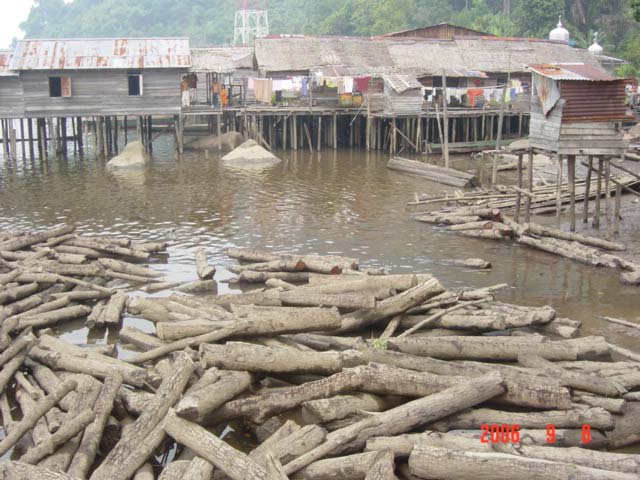
Mangrove logs cut for charcoal production, Batu Ampar Ms. Unchalee Pernetta
Photo credits:
Page 1
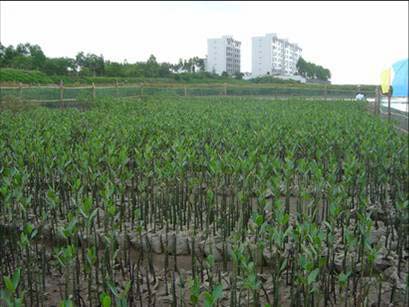
Mangrove Seedling Nursery in Fanchenggang, China Dr. Hangqing Fan
Page 2
Interior of the Mangrove Visitor Centre, China Dr. Hangqing Fan
Meeting Organised by Xindi Company to Develop the Plan for the Urban Mangrove Park, China
Dr. Hangqing Fan
Page 3
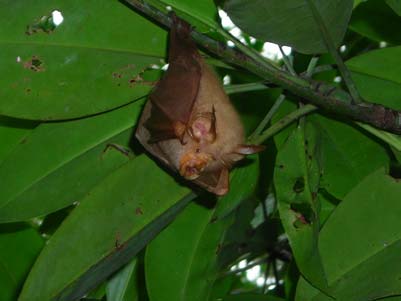
Horseshoe Bat Roosting in Rhizophora, Indonesia Mr. Nyoto Santoso
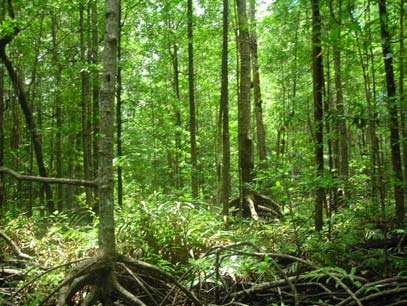
Secondary Mangrove in the Production Forest Area, Indonesia Mr. Nyoto Santoso
Page
4
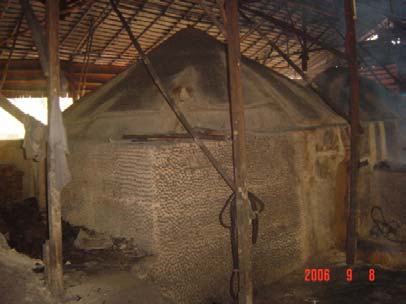
Charcoal Kilns in Batu Ampar Operated by the Kooperasi Panter, Indonesia
Dr. John Pernetta
Page 5
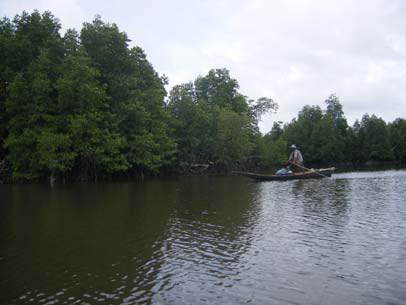
Small-scale Fisherman in the Peam Krasop Wildlife Sanctuary, Cambodia Dr. John Pernetta
Page 6
Fish Fence Trap in the Estuarine Reaches of the Peam Krasop Wildlife Sanctuary, Indonesia
Dr. John Pernetta
Page 7
Fish Cage Culture in Mangroves in Trat Province, Thailand Dr. Sonjai Havanond
Page
8
Visitors Taking a Boat Tour Through Mangroves in Trat Province, Thailand
Dr. Sonjai Havanond
Editor:
Dr. John. C. Pernetta
Contributors:
Fangchenggang, Mr. Jingfa Liu; Batu Ampar, Mr. Ahmad Faisal Siregar; Trat Province,
Ms. Cheewarat Printrakoon; Peam Krasop, Mr. Chey Pichrathna; Shantou, Mr. Lin Jinzao;
UNEP/GEF South China Sea Project Co-ordinating Unit, Dr. John C. Pernetta
This publication has been compiled as a collaborative document of the Regional Working Group on Mangroves of
the UNEP/GEF Project entitled "Reversing Environmental Degradation Trends in the South China Sea and Gulf
of Thailand."
For citation purposes this document may be cited as:
UNEP. 2007. Mangrove Demonstration Sites in the South China Sea. UNEP/GEF/SCS Technical Publication No. 7.
MANGROVE DEMONSTRATION SITES IN THE SOUTH CHINA SEA 1
Fangchenggang Mangrove Demonstration Site
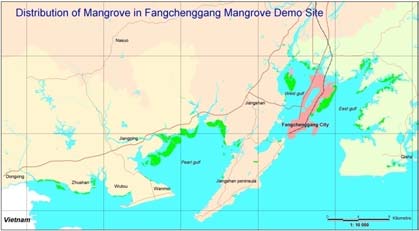
The Fangchenggang mangrove demonstration site
· Develop as appropriate, and harmonise
is located between 108º4'12'' and 108º25'48'' East,
existing legislation regarding the protection and
and 23º26'24'' and 21º42'36'' North, in Guangxi
use of mangrove areas and ensure that
Province, People's Republic of China (Figure 1).
adequate capacity exists at all levels to enforce
existing regulations;
·
Develop the Fangchenggang mangrove system
as a centre for enhancing the capacity of all
stakeholders to sustainably use mangrove
habitats and resources through public
awareness campaigns, training, programmes of
visits and exchange of personnel with other
centres of mangrove expertise in the countries
bordering the South China Sea;
· Restore biodiversity in the area by reforesting
60 ha with the mangrove species Heritiera
littoralis in Fangchenggang, to demonstrate the
technical and practical implementation of
Figure 1 Mangrove Distribution in the Fangchenggang
Demonstration Site, Guangxi Province, China.
biodiversity conservation.
The total area of mangrove in Fangchenggang is
Key achievements to date:
1,414.5 hectares within which are found 10 true
mangrove and 5 associate mangrove species. The
One of the key achievements has been the
dominant tree species are: Bruguiera gymnorrhiza,
establishment of a cross-sectorial management
Kandelia candel, Aegiceras corniculatum, and
framework for executing and supervising the
Avicennia marina. Nine different formations and 17
implementation of activities for the Fangchenggang
communities of mangrove are found in the area,
demonstration site. Firstly, the Management Board
which also supports 37 species of polychaete; 104
(MB), whose members are from a wide cross
species of mollusc; and 13 species of other marine
section of government institutions, was established
creatures. The average density of the
in June 2004, and this committee monitors and
macrobenthos is 346 individuals m-2, and the mean
guides the implementation of the activities through
biomass is 225.68gm-2. One hundred and forty five
its' regular meetings.
species of benthic algae, 94 species of
phytoplankton, 68 species of zooplankton, and 71
Data on the biological resources and economic
species of fish have also been recorded. In addition,
values of mangroves have been collected as
187 species of birds including numerous migrants
background to the development of the management
are known to utilise the area, suggesting that this
plan for the mangroves. The economic values and
site is an important habitat for birds. Non-mangrove
potential revenue streams from mangrove related
vascular plants found in the coastal area total 634
resources have been analysed and reviewed in
species whilst the seagrass Zostera japonica,
several published reports. In July 2006, these data
occupies an area of 3km2 in the vicinity of the
were integrated into a GIS database in support of
mangroves.
the development of the management plan for the
mangroves of Fangchenggang.
The Fangchenggang mangrove site encompasses
19 villages that are under the jurisdiction of the four
towns of Dongxing, Jiangping, Jiangsan, and
Gangkou. All villages can be categorized as
mangrove dominated coastal villages and the total
population is around 41,290. The labour force
numbers 22,713 and the area of tillable land in all
19 villages is 2,947.8ha, of which 66.69% is farmed
for rice, 13.44% for sweet potato, 11.17% for
peanut, 6.97% for corn, and 1.24% for cassava.
The specific objectives of the project are to:
· Develop, test and adopt an appropriate cross-
sectorial management framework with
participation of all stakeholders and decision
making systems based on appropriate
databases;
Figure 2 Mangrove Seedling Nursery in Fanchenggang.
· Develop and implement a business plan that
Development of the Mangrove Management Plan
includes a complete stakeholder analysis,
for conservation and sustainable use of mangrove
identification of potential revenue streams, and
resources and ecosystems in Fangchenggang
full economic valuation of all mangrove goods
commenced in December 2006. Maps produced
and services;
Reversing Environmental Degradation Trends in the South China Sea and Gulf of Thailand
2 MANGROVE DEMONSTRATION SITES IN THE SOUTH CHINA SEA
from the GIS database have been used for
Fangchenggang. In 2006 a photograph from the
identifying different use zones. The management
Fanchenggang mangrove demonstration site was
plan contains sections on planning for: general
used on a national postage stamp in a series of
management; stakeholder participation; the
threatened and endangered species and habitats.
mangrove park; the bird habitats; the protection of
wild populations of Heritiera littoralis; and planning
In order to restore degraded mangrove areas and to
for environmental restoration and management of
enhance biodiversity, replanting has been
urban mangroves in Fangchenggang City. The
undertaken at the Fangchenggang demonstration
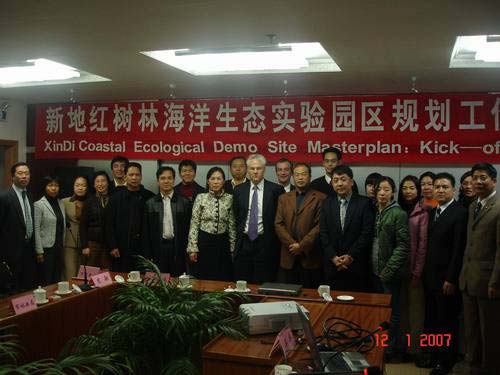
active involvement of Xindi Company in the
site, About 20 hectares of degraded mangrove have
planning and development of the Urban Mangrove
been replanted with seedlings of Rhizophora sp.
Park serves as a model of successful private sector
and Bruguiera sp. Two mangrove nurseries have
involvement in habitat conservation.
been built and 10,000 seedlings of Heritiera
littoralis, which is an endangered mangrove species
In terms of capacity building and public awareness
in this area, have been raised. In addition a third
the Fangchenggang demonstration site has
nursery has been constructed in the Beilun Estuary
undertaken a number of activities. The most
portion of the site in order to propagate other native
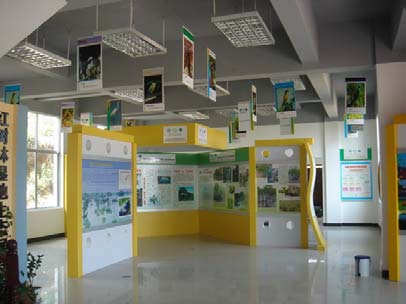
important output is the development of the visitor
coastal plants.
centre, which was constructed through co-financing
support from the government and is used for
With respect to the development and introduction of
research, education and awareness raising.
alternative livelihoods an eco-farming activity is
Education and training programmes for students,
being trialled in the urban mangrove area. A plan for
residents, and government officers have been
a national urban mangrove park has been
conducted at this centre. In addition a number of
developed, which if established would be the first
post-graduate students have undertaken research
Urban Mangrove Park globally.
work at the demonstration site and one student has
completed a Master's thesis on the ecology and
propagation of Heritiera litoralis.
Figure
4 Meeting Organised by Xindi Company to
Develop the Plan for the Urban Mangrove Park.
Politically and financially, the Fangchenggang
Figure 3 Interior of the Mangrove Visitor Centre.
demonstration site has received very strong support
The Fangchenggang demonstration site has
from various institutions and departments of the
produced various public awareness materials
national, provincial and local governments.
including: 2000 copies of a document on
Considerable cash co-financing (US$381,966) has
environmental restoration and management in
been contributed from various sectors including the
Fangchenggang City; 3 posters; 12 notice boards; 1
Fangchenggang Land and Resource Department,
DVD; and 1 CD.ROM; which have been distributed
Guangxi Land and Resource Department (Guangxi
to pertinent local authorities and communities.
Oceanic Bureau), State Environmental Protection
Seven (7) issues of a newsletter on the activities of
Administration (SEPA), National Financial Ministry,
the Fangchenggang demonstration site have been
Donation from STORA ENSO Co., and the National
published and distributed. More than one thousand
and Guangxi 908 Ocean Special Project.
people have been involved in mangrove planting at
the site or in training courses operated as part of
The active participation and strong support from al
the programme of activities.
relevant national and local government institutions
in implementing activities at the Fangchenggang
Using modern content management software the
demonstration site is considered to be a desirable
Fangchenggang demonstration site officially
model for replication elsewhere in the region.
launched its local mangrove website
Management of this site is characterised by a high-
(www.mangrove.org.cn) for the first time in
degree of cooperation among internal institutions
September 2004. This aims to raise awareness
and with regional partners and the wider
amongst local people and the global community of
international community.
coastal and marine scientists and managers with
regard to mangrove management activities at
Reversing Environmental Degradation Trends in the South China Sea and Gulf of Thailand
MANGROVE DEMONSTRATION SITES IN THE SOUTH CHINA SEA 3
Batu Ampar Mangrove Demonstration Site
The Batu Ampar mangrove demonstration site is
Fauna identified in the Batu Ampar mangroves
located just South of the equator at 0o50'24" and
includes 11 species of mammals two of which are
0o52'12" and from 109o65" to 109o68" East in the
considered vulnerable (Nasalis larvatus and
Batu Ampar, Kubu and Teluk Pakedai districts of
Helarctos malayanus). There are six species of
West Kalimantan Province in Indonesia. The total
reptiles and 46 bird species known from the area.
area of mangrove forest is 65,585 hectares of which
The birds include 35 resident, 11 migrant species
around half (33,401ha) is classed as protected
and one, Ptilocichla leucogrammica, which is
forest and the remainder (32,183ha) is classed as
endemic to Kalimantan. One hundred and eight fish
production forest from which timber is harvested
are recorded from the coastal waters of which 51
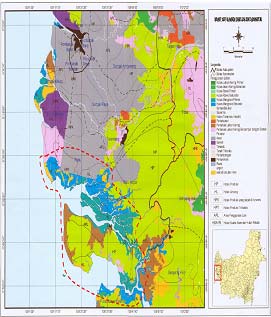
sustainably (Figure 5).
are resident and 57 seasonal migrants. Other fauna
include 11 crustacean species, 15 bivalves, 17
species of gastropods, 18 phytoplankton species
with average density of 316,547 individuals m-3 and
3 zooplankton species with a density of 68,000
individuals m-3.
The total population of Batu Ampar, Kubu and Teluk
Pakedai Districts was 35,068, 32,955, and 20,474
giving population densities of 18 people km-2, 27
people km-2, and 70 people km-2, respectively in
2001 The community is composed of farmers and
fishermen and they are dependent on mangrove
forest. Communities in Kubu and Teluk Pakedai
districts are also charcoal producers, operating 135
kilns and producing 422.7 metric tons of charcoal
annually.
Figure 5
Map of Batu Ampar Mangrove Demonstration
Site. Blue is Conservation and Green
Production Forest Areas of Mangrove.
There are 20 true mangrove species and 30
associate species within the Batu Ampar site, of
which Rhizophora spp., Bruguiera spp. and Nypa
fruticans are the most dominant. Rhyzophora
apiculata maintains the highest density compared
with other species at both the seedling, pole and
Figure 7 Secondary Mangrove in the Production Forest
tree level. Timber volumes range from around 170
Area.
to 180 cubic metres, per hectare in the production
Objectives of the Batu Ampar Demonstration
forest and between 340 and 350 cubic metres per
Site are to:
hectare in the protection forest.
· establish an institutional framework for
sustainable mangrove management in Batu
Ampar;
· develop baseline environmental and socio-
economic databases and a decision support
system;
· develop a business plan in support of the
implementation of the overall management
plan;
· conduct training, education and public
awareness activities; and
· to facilitate the development and approval of
local regulations regarding mangrove
management.
.
Figure 6 Horseshoe Bat Roosting in Rhizophora.
Reversing Environmental Degradation Trends in the South China Sea and Gulf of Thailand
4 MANGROVE DEMONSTRATION SITES IN THE SOUTH CHINA SEA
Key achievements to date:
Activities of the Batu Ampar mangrove
demonstration site, commenced in September 2006
with the appointment of operational project
personnel including a site manager, assistant and
administrative support staff. At the same time a
multi-sectorial Management Board was established
to guide and supervise the implantation of activities.
The Management Board has 20 members and has
met four times to discuss the main activities
including training needs, compilation and analysis of
relevant biological and economic data and
information, policy and legislation, to resolve
conflicts, and to work on the development of the
management plan for the area.
Figure 8 Charcoal Kilns in Batu Ampar Operated by the
Inventories of baseline data and information on
Kooperasi
Panter.
biodiversity, including biomass estimations, and
socio-economic parameter, including economic
Public awareness materials including posters and
value, have been conducted, and the results input
brochures have been designed and published under
to a GIS database system using a satellite derived
the framework of the demonstration site. These
base map. These data and information together
have been distributed to local fisher folk,
with information on policy and legislation have been
communities and local government authorities. The
analysed in order to identify potential conflicts and
Batu Ampar demonstration site has established a
solutions, which wil be incorporated into the
"sustainable mangrove utilisation information
management plan at site level. Reports on
centre", which is located in the Faculty of Forestry
mangrove flora and fauna, habitat distribution, land-
of Tanjungpura University in Pontianak
use patterns, and economic values at Batu Ampar
have been produced for use in consultations with
In order to facilitate the development and approval
relevant stakeholders.
of local regulations regarding mangrove
management, a review and evaluation of the
The key achievement to date has been the
existing rules and regulations pertaining to
development of the management plan for Batu
community-based resource management has taken
Ampar. The draft management plan and
place. This review has examined and analysed
assessment reports have been put together and
constraints to successful management at the
presented to a series of consultative discussion
community level. Identified constraints include a
meetings with key stakeholders in the various sub-
need for training, the need for quantitative
districts and villages. Participants have included
assessment of current uses and ownership, and the
both civil society and private sector stakeholders
low capacity of the local community to enforce
whose comments and suggestions have been taken
regulations. The outcome of this review and
into consideration in revising and finalising the draft.
analysis wil be used in the development of local
regulations for mangrove management.
Another major activity has been the development
and implementation of the business plan for
In terms of co-financing the Department of Forestry
sustainable livelihood and business opportunities.
has provided US$100,000 between 2003 and 2006
Alternative livelihoods and business opportunities
in support of a trial programme of mangrove forest
based on the use of non-timber mangrove products
management by local people. The Department of
have been identified and analysed. Business
Marine and Fisheries has provided US $ 90,000 for
opportunities that have been introduced and
the biennium 2005 to 2006 and the Provincial
encouraged include the introduction of coconut shell
Government has provided US$10,000 in 2007 to
charcoal production and the production of soft-
support of project activities.
shelled crab. Training and study visits have been
provided to individuals from local communities who
It is concluded that the lessons learned, which can
were interested in these activities. A training course
be drawn from the execution of Batu Ampar
on the improvement of charcoal quality has been
Demonstration Site activities include the
conducted for small scale charcoal producers.
assessment techniques used to evaluate the
current uses and economic values of mangrove
Numerous training, education and public awareness
resources in the area and their application to the
activities have been implemented including:
development of a business plan for alternative
improvement of charcoal quality; management of
livelihood initiatives.
mangrove ecosystems; and silvofishery techniques.
These have been delivered to students, government
institutions and for local communities as
appropriate.
Reversing Environmental Degradation Trends in the South China Sea and Gulf of Thailand
MANGROVE DEMONSTRATION SITES IN THE SOUTH CHINA SEA 5
Peam Krasop Wildlife Sanctuary Mangrove Demonstration Site
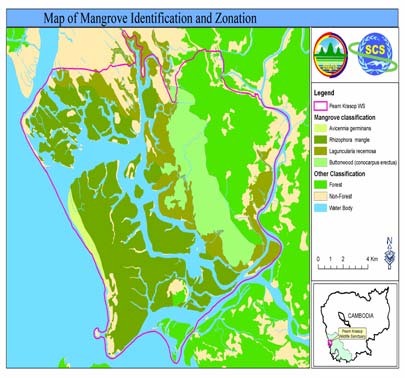
Peam Krasop Wildlife Sanctuary (Figure 9) is
located in Koh Kong Province, Cambodia (11o25'-
35' North and from 102o57' to 103o09' East). Koh
Kong Province shares a marine and terrestrial
border with Thailand's, Trat Province, and activities
are co-ordinated between the two demonstration
sites. The total area is around 25,897 hectares of
which: 10,511ha (41%) consists of mangrove forest;
5,385ha (21%) is evergreen disturbed forest; 800
ha (3%) is grassland; and the open water surfaces
total 6,913ha (27%). The remaining area includes
abandoned shrimp farms and agricultural land,
bamboo thickets and secondary regrowth, 2,288ha
(8%).
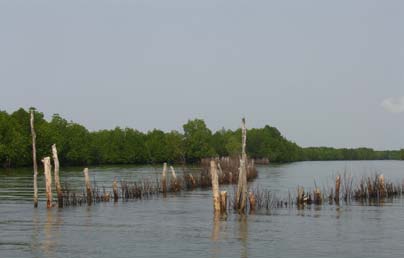
Figure 10 Small-scale Fisherman in the Peam Krasop
Wildlife Sanctuary.
Peam Krasop Wildlife Sanctuary is the only
nationally protected area in Cambodia that contains
primary mangrove forest. Importantly, this Wildlife
Sanctuary includes the Koh Kapik Ramsar Site,
which has been designated as an internationally
important wetland for migratory waterfowl.
At the present time, there is little information and
few facilities to support tourism, but the area is
easily accessible by boat and given the rich
avifauna it could possibly be developed as a
potential eco-tourism destination. Overnight stays
are possible, as are day trips as the sanctuary is
very near Koh Kong Town.
Figure 9 Map of the Peam Krasop Wildlife Sanctuary
The most critical threats to the site are: habitat loss
Demonstration Site.
and reduction of aquatic resources, resulting from
There are 43 mangrove species (both true and
direct use of mangrove for charcoal; over
associate species) in this sanctuary. Thirty four
exploitation of marine resources; land clearance
species of water birds, including 21 species of
and land encroachment;, and in some areas soil
waders (Chararidae and Scolopacidae) and six
erosion and sedimentation.
species of Terns and Gulls (Laridae), have been
recorded at the site. Of the 3,787 water birds
The impacts from these threats are likely to
counted on the western shore of Peam Krasop, two
increase as a consequence of population growth
species occur in internationally significant numbers.
resulting from both in-migration from other parts of
the country, and locally high population growth
The population of Peam Krasop is around 9,000
rates. The majority of people living in the area are
people of whom 90 percent are migrants from other
dependent on marine resources for direct use.
provinces. In total, there are 10 villages in 6
Poverty is seen by the Provincial Government as a
communes located within or adjacent to the
key issue that is an underlying cause of
demonstration site. The occupations of the
environmental degradation in the area.
population include fishing, charcoal production and
mangrove logging. Farming and livestock
Objectives of the Peam Krasop Wildlife
production are widespread but general y conducted
Sanctuary Demonstration Site:
on a small scale.
The overall goal is to promote wise and sustainable
The whole area of the sanctuary is currently under
use of natural resources in the Peam Krasop
the jurisdiction of the Department of Nature
Wildlife Sanctuary. Specific objectives are to:
Conservation and Protection, of the Ministry of
· Develop in ful consultation with al
Environment. The Cambodia Coastal Zone
stakeholders, government, private sector and
Committee, an inter-ministerial body, acts as the
civil society, a management plan (including
decision-making body for all coastal zone
strategy, regulation and monitoring guideline)
management in the country including policy and
for the sustainable use of the natural resources
economic development.
in PKWS;
Reversing Environmental Degradation Trends in the South China Sea and Gulf of Thailand
6 MANGROVE DEMONSTRATION SITES IN THE SOUTH CHINA SEA
· Restore degraded mangrove and wetland
distribution, density, composition, areas, and key
areas;
associated benthic species. Socio-economic data
·
and information regarding the use of mangrove
Support local communities in improving their
resources, including income and harvesting costs
livelihoods through mechanisms including
for the local population and the economic values of
partnership with private sector and NGOs;
·
the mangrove resources. At the same time,
Promote understanding of wetlands and
secondary data and information concerning
mangroves among local communities and
mangrove related policy and legislation has been
authorities; and,
reviewed and analysed. All field and secondary data
· To improve the knowledge and skills of
and information have been synergised as a basis
government officials, local authorities and
for the development of a management plan for the
communities with respect to wetland and
area.
mangrove management.
Capacity building for stakeholders commenced with
Key achievements to date:
training activities on project management and
administration for project staff including the site
Two cross-sectorial committees, with a combined
manger and some technical members the
membership of 25 people, have been established to
Management Board and Management Advisory
supervise and guide the implementation of activities
Group. In order to improve communication with the
at the site, both within the framework and timeframe
regional network, English and report writing were
of the South China Sea Project and beyond. The
also elements included in this training.
Management Board, whose members are from
national and provincial related institutions, are
Three training courses on community-based natural
responsible for supervising the project
resource management have been conducted for
implementation at the political level. This
target groups of 25 participants in each of three
Management Board is chaired by the Governor of
different communities surrounding the wildlife
Koh Kong Province. The Management Advisory
sanctuary. Similarly, 5 workshops have been
Group members are mostly from provincial
conducted for mangrove and wetland resource
technical institutions, and are responsible for
management and conservation for the local
dealing with scientific and technical issues relating
authorities and community leaders. A seminar on
to the management of the Peam Krasop
mangrove and wetland biodiversity has been
Demonstration Site. These two bodies convene
convened for provincial and district officials. A study
regular meetings in order to monitor and guide
tour to the Trat demonstration site was arranged for
activities including the development of the
members of the local community and authorities in
management plan for the sustainable use of
Peam Krasop to see first hand community-based
mangrove and wetland resources in the Province.
mangrove management.
Two joint meetings between the management
Public awareness initiatives are considered an
teams for Peam Krasop and for the neighbouring
indispensable element in strengthening the local
Trat demonstration site in Thailand have been
communities understanding of mangrove and
convened to discuss joint policy and activities
wetland resource management and conservation.
relating to the management and conservation of
Five hundred copies of posters and 5,000 copies of
mangrove resources. Major achievements include
leaflets il ustrating: mangrove and wetland
the development of a co-operative framework for
biodiversity; ecosystem functioning; and the
joint management; joint guidelines for resource
concept of management and sustainable use of
assessment and monitoring; and the required base
these resources have been designed, published
line for establishing a joint GIS database.
and distributed to local authorities and communities.
In order to restore degraded areas of mangroves,
an experimental multi-species mangrove plot on an
area of two hectares was replanted in order to test
the efficiency of multi-species mangrove replanting.
The results from this experiment will be used to
modify methods of mangrove replanting, for use in
other degraded mangrove areas along the coastline
of Cambodia.
Even though the activities at the Peam Krasop
demonstration site have resulted in numerous
outputs, some planned activities have been delayed
including the development of the GIS database and
Figure 11 Fish Fence Trap in the Estuarine Reaches of
maps; replanting of a wider area of mangrove; and
the Peam Krasop Wildlife Sanctuary.
the finalisation of the management plan for the
Since Cambodia has limited data and information
demonstration site, all of which will be completed by
regarding mangrove related resources, field surveys
the middle of 2008.
of these resources have been conducted to col ect
biological data and information regarding species
Reversing Environmental Degradation Trends in the South China Sea and Gulf of Thailand
MANGROVE DEMONSTRATION SITES IN THE SOUTH CHINA SEA 7
Trat Mangrove Demonstration Site
Trat mangrove demonstration site is located in Trat
nearby Koh Chang National Park, collection of
Province, Thailand between 12o11' and 12o5' North
edible swallow nests is an extremely lucrative
and 102o31' and 102o39' East. There are 9,245
activity. Fire-flies are found in the mangrove forest
hectares of mangrove area in the entire Trat
and could serve as an ecotourism attraction in the
Province (Figure 12). Much of the mangrove is
future.
young regeneration and plantation forest, in
contrast with Peam Krasop in neighbouring Koh
Kong Province of Cambodia, where considerably
more mature mangrove forest is found.
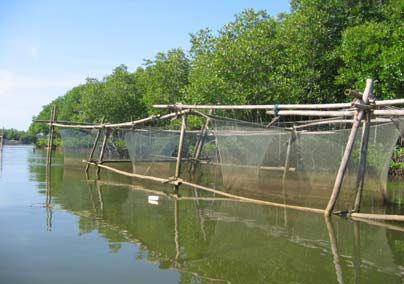
Figure 13 Fish Cage Culture in Mangroves in Trat Province.
The Government maintains a number of mangrove
stations in the Province. Mangrove Development
Station No. 4 has 9 government staff to operate
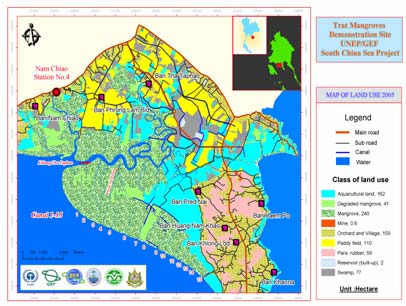
Figure 12 Map of Trat Mangrove Demonstration Site,
activities for protection, and maintenance of 10,000
Showing Different Classes of Land-use.
ha of mangroves, including 2000ha under the
demonstration site. The station cooperates with
There are 5 major zones in the mangrove forest: a
scientific institutions in collecting data on
seaward Avicennia-Sonneratia zone, fol owed by
biodiversity and environmental monitoring. The
Rhizophora, Bruguiera, and Ceriops zones, and a
budget of the station is around 10 million baht per
landward association comprised of Lumnitzera,
year. Mangrove Research Station No. 1 provides
Excoecaria, and Xylocarpus The forest supports 20
seedlings for replanting. This 14 year old station
genera and 33 true mangrove species and 36
originated from the Seed Production Centre. Ten
associate mangrove species. Dominant mangrove
staff working at this station provide some 600,000
trees include the large-leaved mangrove
800,000 seedlings per year. Seedlings of ten
(Rhizophora mucronata), small-leaved mangroves
mangrove species can be produced and supplied
(R. apiculata), Ceriops decandra, C. tagal,
by the station. A 500 metre long walkway around
Bruguiera sexangula, B. parviflora, Xylocarpus spp.
the office provides visitors with access to the
and Lumnitzera spp. Thirty two species of
mangrove.
crustacean together with 55 species of fish are also
recorded in close association with the mangroves.
The main aims of the Trat Demonstration Site
are to:
One hundred and twenty two species of birds have
· Develop and implement a mangrove replanting
been recorded in the general area, of which 95 are
programme in Trat Province centred on the
resident species; 25 are non-breeding migratory
demonstration site and Tatapao/Namchieo
species; and two are breeding migratory species.
conservation forest, including re-planting
The only critically endangered species, which are
around 300 hectares of mangrove annually,
observed here are the brown moody (Anomus
using a mix of species to increase the
stolidus) and the great crested tern (Sterna bergii).
biodiversity of the forest estate.
At least 12 amphibian species and 30 species of
·
reptiles, of which 19 are snakes have been found in
Strengthen and expand as appropriate, the
this area.
community-based management system for the
Trat Province Mangroves through:
Seven vil ages are located in the
Establishment of a management
Tatapao/Namcheio conservation forest area while a
framework and networks of community-
total of 21 coastal villages in the Province depend
based stakeholder groups;
upon mangrove resources for at least part of their
Preparation of a comprehensive
livelihood and income. The mangrove forest in Trat
management plan for the habitats and
has been used for many years as a source of
resources of the site including maps of
charcoal and tannin, extracted under government
forest areas and designated land uses
concessions, which were terminated in 2001. At
including conservation areas;
present local villagers earn their living through
Appropriate forest management actions
coastal fishing, while the collection and sale of mud
including provision of data and information
crabs and grapsid crabs also makes an important
regarding zonation and socio-economic
contribution to the income of local people. At the
importance for decision making; and,
Reversing Environmental Degradation Trends in the South China Sea and Gulf of Thailand
8 MANGROVE DEMONSTRATION SITES IN THE SOUTH CHINA SEA
Establishing and implementing an active
Regarding mangrove re-planting and restoration, a
programme of mangrove reforestation.
consultation meeting with local communities was
· Develop a business plan for sustainable
convened in July 2007 at Hung Num Chow
financing of the management of the Trat
Community with 20 participants, in order to discuss
Province mangroves including:
and share opinions about the scheme and plan for
Diversification of income sources and
mangrove restoration. Community leaders and
improving financial security of local people
others from the Peam Krasop Wildlife Sanctuary
with low incomes, including identification of
participated in a large scale mangrove re-planting in
new revenue streams and new
Trat in the first half of 2007.
opportunities;
Specific actions to investigate the
Within the context of the training, education and
feasibility of ecotourism locally, to generate
public awareness programmes, the Trat
income and promote the role of the
demonstration site has introduced the so-called
demonstration centre; and,
"Youth Camp Activity". This youth camp activity
Increased capacity of local conservation
involved 140 school children from 15 schools in Trat
groups and NGOs to devise and manage
Province actively participating in conservation and
projects, network internationally, and pass
management actions including mangrove planting,
on the experience they have accumulated
field studies of ecology and preparation of art and
to other conservation groups regional y.
essay work on mangroves. To date, three issues of
· Enhance awareness and understanding of
a newsletter have been published and distributed in
mangroves at all levels of government and civil
order to raise the awareness and to inform the
society.
public about the activities of the demonstration site.
12000
25000
The project has supported the Pred Nai Village
10894
22266.6
Learning Centre and recently, 60 householders
9365
10000
9350 8505
20000
have started to provide home-stay for around 2,000
8000
7048
8030
15583.3
3,000 visitors per year. Visitors are mainly Thai
6715
6670
15608.3
15000 $
students and provision of mangrove tour services
14175
6000
kg
4915
13383.3
11191.6
11221.6
13245.8
US
adds to villagers' incomes. It is planned to evaluate
5320 10000
4000
8191.6
these eco-tourism practices with a view to their
8150
Total (kgs)
5000
promotion elsewhere.
2000
value (US$)
0
0
March April May June July Aug Sep Oct
Nov Dec
Month
Figure 14 Production (kg) and Value (US$) of Sesarmid
Crab at Trat Mangrove Demonstration Site
Recorded from Local Middle-men in 2006.
Key Achievements to date:
Trat Demonstration Site activities began in June
2005, and have resulted in the achievement of a
number of outputs and outcomes. As in the case of
the other demonstration sites, two oversight
committees were established at the beginning of the
project namely: a "Senior Advisory Board" and a
"Management Board". Members of these bodies are
drawn from various government bodies and NGOs
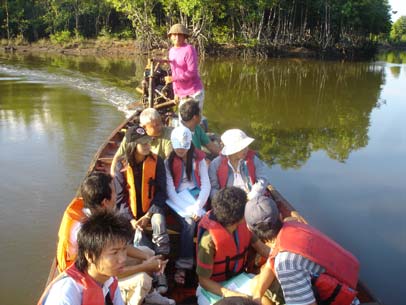
Figure
15 Visitors Taking a Boat Tour Through
and they have responsibility for monitoring and
Mangroves in Trat Province.
directing the implementation of the demonstration
The organisation of the educational tours with initial
site activities.
involvement of school children as a means of
raising awareness could be considered as a
A rapid assessment has been conducted in order to
successful lesson learned from this demonstration
collect data on mangrove biological resources and
site. Strong financial and political support from
socio-economic parameters. A biological survey
national
and
local
government
institutions
was conducted in Pred Nai mangrove forest along
(10 million Baht per year provided to Mangrove
16 permanent transects, and the data collected
Development Station No. 4), and the strong support
include numbers of species, mean density,
from the Royal Family in protecting and re-planting
percentage of dominant species, and basal areas. A
mangrove in Trat province, is considered an
survey of the economic value has also been
important influence in successful community-based
conducted using interviews with key informants to
mangrove management at this site.
ascertain levels of income, uses of mangroves,
volumes of production, and value. These data
col ected from rapid baseline surveys have been
entered into a GIS database for the purpose of
development of a comprehensive management plan
for the site.
Reversing Environmental Degradation Trends in the South China Sea and Gulf of Thailand
DEMONSTRATION SITE MANAGERS
Mr. Jingfa Liu; Fangchenggang Site Manager, The Administration Department of Guangxi National Land and
Resource, Mingzhu Road No. 74, Nanning, Guangxi 530022, China, Tel: (86 771) 266167, Mobile: (86)
13507716903, Fax: (86) 770 282 0105, E-mail: 5848031ljf@163.com
Mr. Ahmad Faisal Siregar; Batu Ampar Site Manager, Lembaga Pengkajian dan Pengembangan Mangrove
Indonesia, (Indonesian of Institute Mangrove Research & Development), Multi Piranti Graha It 3 JL. Radin
Inten II No. 2, Jakarta 13440, Indonesia, Tel: (62 251) 621672; (62 21) 861 1710, Mobile: (62)
08128151790; 0811110764, Fax: (62 251) 621672; (62 21) 861 1710, E-mail: marucok@yahoo.com
Ms. Cheewarat Printrakoon; Trat Site Manager, Field Officer, Department of Marine and Coastal Resource, 92
Paholyothin Soi 7 (Ari) Payathai Bangkok 10400, Thailand, Fax: (662) 298 2166, Mobile: (66) 85172 5427,
Email: cheewarat_p@hotmail.com, cheewarat040@yahoo.com
Mr. Chey Pichrathna; Peam Krasop Wildlife Sanctuary Site Manager, Director, Koh Kong Provincial Department
of Environment, Village 3, Smach Meanchey Commune, Smach Meanchey District, Koh Kong Province,
Cambodia, Mobile: (855) 16 702 541, Fax: 855 35 936565, E-mail: rathnapkws@yahoo.com
Mr. Lin Jinzao; Shantou Site Manager, Chief, Shantou Wildlife Conservation and Management Office and
Shantou Wetland Natural Reserve Station, 9th Floor, Dongsheng Building, 98 Waima Road, Shantou
515031, China, Tel: (86 0754) 8446584, Mobile: (86) 13902720748, Fax: (86 0754) 8426713
MEMBERS OF THE REGIONAL WORKING GROUP ON MANGROVES
Dr. Sanit Aksornkoae, President, Thailand Environment Institute, 16/151-154 Muangtongthanee, Bond Street
Rd., Bangput, Pakred, Nonthaburi 11120, Thailand, Tel: (66 2) 503 3333 ext. 401; Fax: (66 2) 504 4826-8,
E-mail: sanit@tei.or.th
Dr. Gong Wooi Khoon, Professor, 11 Lintang Delima 13, Island Glades, 11700 Penang, Malaysia, Tel: (604)
658 6319, Mobile: (60) 16 271 9418, E-mail: gongwk@yahoo.com
Ass. Prof. Dr. Nguyen Hoang Tri, Director, Center for Environmental Research and Education, (CERE), Hanoi
University of Education, 136 Xuan Thuy, Hanoi, Viet Nam, Tel/Fax: (844) 7547502, Mobile: (84) 09
13527629, E-mail: hoangtri51@fpt.vn
Mr. Ke Vongwattana, Assistant to Minister in charge of Mangrove, Department of Nature Conservation and
Protection, Ministry of Environment, 48 Samdech Preah Sihanouk, Tonle Bassac, Chamkarmon,
Cambodia, Tel: (855 23) 213908, Mobile: (855) 12 654 350, Fax: (855 23) 212540, 215925, E-mail:
vongwattana@camintel.com; kewattana@yahoo.com
Dr. Hangqing Fan, Professor, Guangxi Mangrove Research Centre, 92 East Changqing Road, Beihai City
536000, Guangxi Zhuang Autonomous Region, China, Tel: (86 779) 205 5294; 206 5609, Mobile: (86) 13
367798181, Fax: (86 779) 205 8417; 206 5609, E-mail: fanhq@ppp.nn.gx.cn
Mr. Nyoto Santoso, Lembaga Pengkajian dan Pengembangan Mangrove, (Institute of Mangrove Research and
Development), Multi Piranti Graha It 3 JL. Radin Inten II No. 2, Jakarta 13440, Indonesia, Tel: (62 21) 861
1710; (62 251) 621 672, Mobile: (62) 81 1110 764, Fax: (62 21) 861 1710; (62 251) 621 672,
E-mail: imred@indo.net.id; puryanti@indo.net.id
Mr. Koh Hock Lye, Director, Sylviculture and Forest Protection Unit, Forestry Department Headquarters
Peninsular Malaysia, Jalan Sultan Salahuddin, Kuala Lumpur, 50660, Malaysia, Tel: (603) 2616 4570,
Mobile: (60) 19 916 6222, Fax: (603) 2692 5657, E-mail: koh@forestry.gov.my
Mr. Florendo Barangan, Executive Director, Coastal & Marine Management Office, Department of Environment
and Natural Resources (CMMO/DENR), DENR Compound Visayas Avenue, Diliman, Quezon City,
Philippines, Tel: (632) 926 1004, 926 0550, Mobile: (63) 917 8405616, Fax: (632) 926 1004; 426 3851,
E-mail: cmmo26@yahoo.com
Dr. Sonjai Havanond, Expert, Marine and Coastal Resources Division, 92 Pollution Control Building,
Phaholyothin 7 (Soi Aree), Phayathai 10400, Thailand, Tel: (66 2) 298 2591, Mobile: (66) 81 8114917;
Fax: (66 2) 298 2591; 298 2166, Email: sonjai_h@hotmail.com; sonjai_h@yahoo.com
Mr. Vu Tan Phuong, MSc. Forestry, Acting Director, Research Centre for Forest Ecology and Environment
(RCFEE), Add.: Dong Ngac, Tu Liem, Hanoi, Viet Nam, Tel: (844) 755 0801, Mobile: (84) 0913541480,
Fax: (844) 838 7434, Email: phuong.vt@rcfee.org.vn; fuongvt@hn.vnn.vn
Dr. Do Dinh Sam, B.9. Room 403, Cuc Lam Nghiep, (Department of Forestry), 2.Ngoc Ha Street, Ba Dinh
District, Hanoi, Viet Nam, Tel: (844) 7344810, Mobile: (84) 0913494468 Fax: (844) 7344811,
E-mail: dodinhsam@gmail.com
Dr. John C. Pernetta, Project Director, UNEP/GEF Project Co-ordinating Unit, United Nations Environment
Programme, 2nd Floor, Block B, United Nations Building, Rajdamnern Avenue, Bangkok 10200, Thailand,
Tel: (66 2) 288 1886, Fax: (66 2) 288 1094; E-mail: pernetta@un.org




UNEP/GEF South China Sea
Project Co-ordinating Unit
United Nations Building
Rajadamnern Nok
Bangkok 10200
Thailand
Department of Nature Conservation and Protection
Ministry of Environment
48 Samdech Preah Sihanouk
Tonle Bassac, Chamkarmon
Cambodia
Guangxi Mangrove Research Centre
92 East Changqing Road
Beihai City 536000
Guangxi Zhuang Autonomous Region
People's Republic of China
Lembaga Pengkajian dan Pengembangan
Mangrove
(Institute of Mangrove Research &
Development)
Multi Piranti Graha It 3 JL. Radin Inten II No. 2
Jakarta 13440
Indonesia
Coastal & Marine Management Office
Department of Environment and Natural
Resources, (CMMO-DENR)
DENR Compound Visayas Avenue
Diliman, Quezon City
Philippines
Marine and Coastal Resources Division
Ministry of Natural Resources & Environment
92 Pollution Control Building
Phaholyothin 7 (Soi Aree)
Phayathai 10400
Thailand
Forest Science Institute of Viet Nam
Dong Ngac, Tu Liem
Hanoi
Viet Nam