



"Reversing Environmental Degradation Trends
in the South China Sea and Gulf of Thailand"
REVIEW OF THE LEGAL ASPECTS OF ENVIRONMENTAL
MANAGEMENT IN THE SOUTH CHINA SEA AND
GULF OF THAILAND
UNEP/GEF
Regional Task Force on Legal Matters

First published in Thailand in 2007 by the United Nations Environment Programme.
Copyright © 2007, United Nations Environment Programme
This publication may be reproduced in whole or in part and in any form for educational or non-profit purposes
without special permission from the copyright holder provided acknowledgement of the source is made. UNEP
would appreciate receiving a copy of any publication that uses this publication as a source.
No use of this publication may be made for resale or for any other commercial purpose without prior permission
in writing from the United Nations Environment Programme.
UNEP/GEF
Project Co-ordinating Unit,
United Nations Environment Programme,
UN Building, 2nd Floor Block B, Rajdamnern Avenue,
Bangkok 10200, Thailand.
Tel.
+66 2 288 1886
Fax.
+66 2 288 1094
http://www.unepscs.org
DISCLAIMER:
The contents of this report do not necessarily reflect the views and policies of UNEP or the GEF. The
designations employed and the presentations do not imply the expression of any opinion whatsoever on the part
of UNEP, of the GEF, or of any cooperating organisation concerning the legal status of any country, territory, city
or area, of its authorities, or of the delineation of its territories or boundaries.
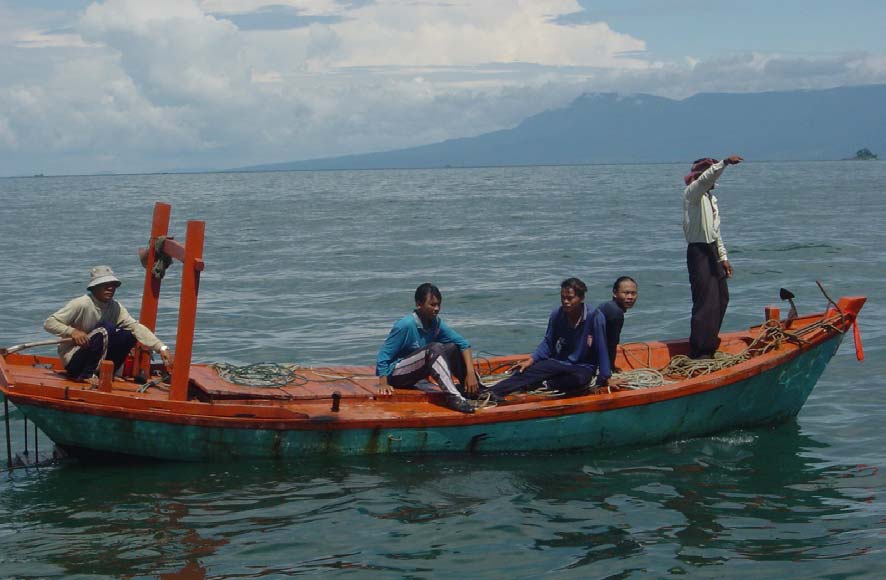
Cover Illustration:
Artisanal fishermen apprehended by Cambodian authorities for using cyanide in the
transboundary area between Cambodia and Viet Nam. Mr. Kim Sour.
Editor: Dr. John. C. Pernetta
This publication has been prepared as a col aborative document of the Regional Task Force on Legal Matters of
the UNEP/GEF Project entitled "Reversing Environmental Degradation Trends in the South China Sea and Gulf
of Thailand."
For citation purposes this document may be cited as:
UNEP. 2007. Review of the Legal Aspects of Environmental Management in the South China Sea and Gulf of
Thailand. UNEP/GEF/SCS Technical Publication No. 9.
LEGAL ASPECTS OF ENVIRONMENTAL MANAGEMENT
Table of Contents
PREFACE ........................................................................................................................................... III
PART I REVIEW OF OBLIGATIONS CONCERNING REGIONAL CO-OPERATION UNDER
GLOBAL ENVIRONMENTAL CONVENTIONS ................................................................................... 1
STATUS OF INTERNATIONAL ENVIRONMENTAL CONVENTIONS IN THE SOUTH CHINA
SEA AREA........................................................................................................................................... 1
CONVENTIONS RELATED TO BIOLOGICAL DIVERSITY .............................................................................. 1
INTERNATIONAL CONVENTIONS AND AGREEMENTS RELATED TO FISHERIES ............................................. 3
CONVENTIONS RELATED TO MARINE POLLUTION ................................................................................... 4
OBLIGATIONS REGARDING REGIONAL CO-OPERATION UNDER GLOBAL CONVENTIONS..... 6
REGIONAL CO-OPERATION ON CONSERVATION AND SUSTAINABLE MANAGEMENT OF BIOLOGICAL
DIVERSITY .......................................................................................................................................... 6
CO-OPERATION THROUGH INTERNATIONAL AND REGIONAL ORGANISATIONS ............................................. 6
REGIONAL ARRANGEMENTS AND NEGOTIATIONS.................................................................................... 8
REGIONAL CHANNELS ......................................................................................................................... 8
REGIONAL CENTRES ........................................................................................................................... 8
REGIONAL CO-OPERATION ON CONSERVATION AND SUSTAINABLE MANAGEMENT OF FISHERIES................ 9
THROUGH SUB-REGIONAL, REGIONAL AND INTERNATIONAL ORGANISATIONS ........................................... 9
ESTABLISHMENT OF REGIONAL AND SUB-REGIONAL FISHERIES ORGANISATIONS.................................... 10
REGIONAL PROGRAMMES .................................................................................................................. 10
REGIONAL CO-OPERATION ON PREVENTION, REDUCTION AND CONTROL OF POLLUTION ......................... 10
DIRECTLY OR THROUGH INTERNATIONAL/REGIONAL ORGANISATIONS OR DIPLOMATIC CONFERENCE ......... 10
REGIONAL PROGRAMMES OF ACTION OR JOINT ACTION PLANS............................................................... 12
REGIONAL CENTRES .......................................................................................................................... 13
FUTURE COURSE OF ACTION ........................................................................................................ 13
PART II REVIEW OF REGIONAL AND SUB-REGIONAL AGREEMENTS AND SOFT LAWS
ON MARINE ENVIRONMENT IN THE SOUTH CHINA SEA ............................................................. 14
INTRODUCTION................................................................................................................................ 14
REGIONAL AND SUB-REGIONAL AGREEMENTS AND SOFT LAWS........................................... 14
ENVIRONMENTAL CO-OPERATION AMONG SOUTHEAST ASIAN COUNTRIES ........................ 16
REGIONAL AND SUB-REGIONAL PROGRAMMES AND PROJECTS ........................................... 18
UNEP/GEF SOUTH CHINA SEA PROJECT........................................................................................... 18
PEMSEA......................................................................................................................................... 19
SOUTH CHINA SEA INFORMAL WORKING GROUP ................................................................................. 19
ASIAN DEVELOPMENT BANK - ENVIRONMENT PROGRAMME .................................................................. 19
SOUTHEAST ASIAN PROGRAMME IN OCEAN LAW, POLICY AND MANAGEMENT (SEAPOL)....................... 19
UNEP EAST ASIAN SEAS ACTION PLAN.............................................................................................. 21
IOC SUB-COMMISSION FOR THE WEST PACIFIC REGION ...................................................................... 21
ASEAN ENVIRONMENT PROGRAMME ................................................................................................. 21
FOOD AND AGRICULTURE ORGANISATION (FAO) PROGRAMMES........................................................... 22
CONCLUSIONS................................................................................................................................. 22
PART III COMPARATIVE ANALYSIS OF NATIONAL LEGISLATION ON THE COASTAL AND
MARINE ENVIRONMENT.................................................................................................................. 23
GENERAL STATUS OF ENVIRONMENTAL LEGISLATION............................................................ 23
HIERARCHICAL STRUCTURE OF LEGISLATION .......................................................................... 29
i
LEGAL ASPECTS OF ENVIRONMENTAL MANAGEMENT
REVIEW OF INSTRUMENTS AND MECHANISMS UTILISED TO PROTECT THE MARINE
ENVIRONMENT................................................................................................................................. 30
LEGALLY-MANDATED INSTRUMENTS AND MECHANISMS ......................................................................... 33
Economic incentives.................................................................................................................... 33
Economic disincentives ............................................................................................................... 33
Systems of licences and permits ................................................................................................. 33
Environmental Certification Programmes .................................................................................... 36
Designation of protected areas and land-use planning................................................................ 36
NON-LEGALLY BINDING AND POLICY INSTRUMENTS ............................................................................. 37
LOCAL PRACTICES AND KNOWLEDGE.................................................................................................. 37
INSTITUTIONAL ARRANGEMENTS................................................................................................. 37
ENFORCEMENT MECHANISMS AND COMPLIANCE..................................................................... 41
ANALYSIS ......................................................................................................................................... 45
LACK OF STRONG ENFORCEMENT AND EFFECTIVE IMPLEMENTATION .................................................... 45
SECTORIAL FRAGMENTATION AND LACK OF INTER-AGENCY CO-ORDINATION.......................................... 51
LACK OF POLITICAL WILL ................................................................................................................... 54
CONCLUSIONS AND RECOMMENDATIONS .................................................................................. 54
ii
LEGAL ASPECTS OF ENVIRONMENTAL MANAGEMENT
REVIEW OF LEGAL ASPECTS OF ENVIRONMENTAL MANAGEMENT IN THE SOUTH
CHINA SEA AND GULF OF THAILAND
PREFACE
The margins of the South China marine basin have experienced high rates of economic growth and
rapid urbanisation over the past five decades. Each country has actively and in certain respects very
successfully pursued a goal of economic development sometimes at the expense of environmental
quality.
Industrialisation, urbanisation, and population growth along the coastlines are the main driving forces
of marine environmental degradation in the South China Sea. According to the UNEP/GEF South
China Sea, Transboundary Diagnostic Analysis (TDA), approximately 69% of the original mangrove
forest area was destroyed during the past century1. Serious land-based pollution is generated by
coastal industrial activities and has resulted in the increasing occurrence of red tides in some parts of
the marine basin. The three most important environmental concerns identified in the TDA are: loss
and degradation of coastal habitats; over-exploitation of living marine resources; and land-based
pollution2. The environmental degradation of the South China Sea has significant transboundary
implications due to the ecological interdependence of sub-basins and the sea's globally significant
biological diversity; and poses a serious challenge to the sustainable development of the littoral
countries.
Legal instruments play a key role in ensuring the sustainable management of coastal habitats,
preventing marine pollution, and prohibiting certain fishing activities, which threaten the marine
environment of the South China Sea. Recognising the importance of the legal issues in marine
environmental management, the Project Steering Committee of the UNEP/GEF South China Sea
Project created a Regional Task Force on Legal Matters in 2003 to strengthen the legal aspects of the
project.
The Task Force took a gradual approach to exploring possible ways to strengthen the legal aspects of
the project, by first reviewing signatory states' obligations for regional co-operation under major global
environmental conventions. In considering the countries' existing obligations for regional co-operation,
the Task Force collectively reviewed the status of existing regional cooperative mechanisms and
instruments, including regional agreements and soft laws, and suggested that great potential exists
for countries bordering the South China Sea to strengthen regional co-operation on marine
environmental management. The Task Force further reviewed national legislation, and conducted a
comparative analysis of national environmental legislation regarding major issues/themes of interest,
and to identify strengths and weaknesses of national legislation so that countries with a less well
developed legislative base could derive lessons from countries with more comprehensive legislation.
This report is a compilation of the regional outputs of the Task Force since 2003 and is presented in
three parts: a review of the obligations of signatory states regarding regional co-operation on
environmental protection; a review of regional and sub-regional agreements and soft laws regarding
environmental protection with relevance to the South China Sea; and a comparative analysis of the
national legislation of the seven countries bordering the South China Sea that are participating in the
UNEP/GEF Project.
Sulan Chen,
Bangkok, September 2006
1 Talaue-McManus, L. 2000. Transboundary Diagnostic Analysis for the South China Sea. East Asian Seas/Regional
Coordinating Unit Technical Report Series No. 14. UNEP, Bangkok, Thailand.
2 Ibid.
Reversing Environmental Degradation Trends in the South China Sea and Gulf of Thailand
iii
LEGAL ASPECTS OF ENVIRONMENTAL MANAGEMENT 1
PART I
REVIEW OF OBLIGATIONS CONCERNING REGIONAL CO-OPERATION UNDER
GLOBAL ENVIRONMENTAL CONVENTIONS
STATUS OF INTERNATIONAL ENVIRONMENTAL CONVENTIONS IN THE SOUTH CHINA SEA
AREA
Regional co-operative mechanisms and activities for environment protection need to be strengthened
in order to reverse current degradation trends in the South China Sea. Until recently, mechanisms for
regional co-operation in the area were neither extensive nor, well developed. Existing environmental
co-operation has developed mainly through the work of international and regional organisations such
as ASEAN, FAO, UNEP and IOC-WESTPAC. The South China Sea littoral countries have however,
demonstrated their willingness to co-operate in environmental protection by signing and ratifying
many international environmental conventions, protocols, and agreements. Table 1 summarises the
status in terms of signature and/or ratification/accession of countries bordering the South China Sea
Project to various multilateral environmental agreements that are relevant to the objectives of the
UNEP/GEF South China Sea Project. The international environmental conventions provide a basis for
the establishment of regional co-operative mechanisms that might enhance marine environment
protection, and assist countries to address regional marine environmental problems.
The 1972 United Nations Conference on the Human Environment held in Stockholm and its
Stockholm Declaration were catalysts in the development of a range of global initiatives to protect and
preserve the environment. Although sovereignty and development were still considered priorities in
relation to environmental protection by national governments, this event largely contributed to raising
environmental awareness among top national leaders. It was only following this conference, during
the 1970s that the South China Sea countries increased their level of participation in international
conventions related to biological diversity, pollution and fisheries.
Conventions Related to Biological Diversity
The concept of "biological diversity" originated in the early 1920s in the field of ecology, and its'
originators defined it in terms of numbers of species3. The term biological diversity is now used to
encompass diversity at three levels: genetic; species; and ecosystem diversity. These three levels are
interconnected and should be considered as indivisible parts of what we consider to be biological
diversity in the modern sense. The approach of international conventions to the protection of
biological diversity can be also categorised as responses to protection of diversity at these three
levels with approaches involving conservation or protection of species and/or habitats and
ecosystems4. There are a number of international conventions relevant to the protection of biological
diversity in the South China Sea. The three most important of, which are:
· The
1992
Convention on Biological Diversity (CBD),
· The
1973
Convention on International Trade in Endangered Species of Wild Fauna and Flora
(CITES), and
· The
1971
Convention on Wetlands of International Importance Especially as Waterfowl
Habitat (Ramsar Convention).
The 1972 Convention Concerning the Protection of the World Cultural and Natural Heritage is also
relevant to the protection of biological diversity.
The 1982 UN Convention on the Law of the Sea (UNCLOS) is the most comprehensive convention
relating to all aspects of the marine environment. Regulations on the protection of marine biological
diversity focus on living marine resources, mainly related to fisheries. Provisions concerning the
conservation and utilisation of living marine resources and fishery are found mainly in Parts V and VII
of the Convention, within the provisions on the Exclusive Economic Zone (EEZ) and High Seas, and
in Part XII on Protection and Preservation of the Marine Environment. As of November 2007, there
were 155 Contracting Parties to the Convention and with the exception of Cambodia and Thailand, al
other countries bordering the South China Sea have either ratified or acceded to the Convention.
3 Elliott A. Norse, ed. 1993. Global Marine Biological Diversity: A Strategy for Building Conservation into Decision Making.
Washington DC: Island Press.
4 Ben Boer, Ross Ramsay and Donald R. Rothwell. 1998. International Environmental Law in the Asia Pacific. London: Kluwer
Law International.
Reversing Environmental Degradation Trends in the South China Sea and Gulf of Thailand
2 LEGAL ASPECTS OF ENVIRONMENTAL MANAGEMENT
Table 1
Status of Multilateral Environmental Agreements in the South China Sea area, as of November 2007. (in reverse chronological order)
Multilateral Environmental Agreement
Open for Entry into
Status of Ratification by the Countries bordering the South China Sea
Signature
Force Cambodia China Indonesia Malaysia Philippines Thailand Viet Nam Brunei Singapore
1 Stockholm Convention on Persistent Organic
May 2001-
17/05/04 25/08/06
13/08/04
23/05/01
16/05/02
27/02/04
31/01/05
22/07/02
21/05/02
24/05/05
Pollutants (2001)
May 2002
ratified
ratified
signed
signed
ratified
ratified
ratified
signed
ratified
2 United Nations Convention to Combat Desertification in Oct. 1994 - 26-Dec-96 08/08/97 18/02/97 31/08/98
25/06/97
10/02/00
07/03/01 25/08/98 04/12/02
26/04/99
Those Countries Experiencing Serious Drought and/or
Oct. 1995
ratified
ratified
ratified
ratified
ratified
acceded
acceded
acceded
acceded
Desertification, Particularly in Africa (1992)
3 United Nations Framework Convention on Climate
June 1992 - 21-Mar-94 18/12/95 05/01/93 23/08/94
13/07/94
02/08/94
28/12/94 16/11/94 07/08/07
29/05/97
Change (UNFCCC) (1992)
June 1993
acceded
ratified
ratified
ratified
ratified
ratified
ratified
acceded
ratified
4 Kyoto Protocol to the UNFCCC (1997)
Mar. 1998-
15/02/05
22/08/02
30/08/02
03/12/04
04/09/02
20/11/03
28/08/02 25/09/02
N.A.
12/04/06
Mar. 1999
acceded approval
ratified
ratified
ratified
ratified
ratified
signed
acceded
5 Convention on Biological Diversity (CBD) (1992)
June 1992 - 29-Dec-93 09/02/95 05/01/93 23/08/94
24/06/94
08/10/93
29/01/04 16/11/94
N.A.
21/12/95
June 1993
acceded
ratified
ratified
ratified
ratified
ratified
ratified
signed
ratified
6 Basel Convention on the Control of Transboundary
Mar. 1989-
05-May-92
02/03/01 17/12/91 20/09/93
08/10/93
21/10/93
24/11/97 13/03/95 16/12/02
02/01/96
Movements of Hazardous Wastes and Their Disposal
Mar. 1990
acceded
ratified
acceded
acceded
ratified
ratified
acceded
acceded
acceded
(1989)
7 The Convention for the Protection of the Ozone Layer
Mar. 1985-
10/11/99 27/06/01
11/09/89
26/06/92
29/8/89
17/07/91
07/07/89
26/01/94
26/07/90
05/01/89
(Vienna Convention) (1985)
Mar. 1986
acceded acceded
acceded
acceded
acceded
acceded
acceded
acceded
acceded
8 Montreal Protocol on Substances that Deplete the
Sept. 1987-
01-Jan-89 27/06/01
14/06/91
26/06/92
29/8/89
17/07/91
07/07/89
26/01/94
27/05/93
05/01/89
Ozone Layer (1987)
Sept. 1988
acceded acceded
ratified
acceded
ratified
ratified
acceded
acceded
acceded
9 UN Convention on the Law of the Sea (1982)
July 1983-
16-Nov-94 N.A. 07/06/96 03/02/86
14/10/96
08/05/84
N.A.
25/07/94 5/11/1996
17/11/94
Dec. 1984
signed
ratified
ratified
ratified
ratified
signed
ratified
ratified
ratified
10 Agreement Relating to the Implementation of Part XI of
28-Jul-96
N.A.
07/06/96
02/06/00
14/10/96
23/07/97
N.A.
27/04/06 05/11/96
17/11//94
the Convention
signed
ratified
ratified
ratified
ratified
signed
consent
ratified
ratified
11 International Convention for the Prevention of Annex I June 1978-
02-Oct-83 28/11/94
01/07/83
21/10/86
31/01/97
15/06/01
No
29/05/91
23/10/86
1/11/90
Pollution from Ships, 1973, As Modified by th &II
e
May 1979
acceded acceded
acceded
acceded
acceded
accession acceded
acceded
acceded
Protocol of 1978 Relating Thereto (MARPOL Annex III
04-Jun-87
28/11/94
13/09/94
No
No
15/06/01
No
No
No
02/03/94
1973/1978)
acceded acceded accession accession
acceded
accession accession accession
acceded
Annex
31-Dec-88
28/11/94
No
No
No
15/06/01
No
No
No
No
IV
acceded accession accession accession
acceded
accession accession accession
accession
Annex
01-Jul-92
28/11/94
21/11/88
No
31/01/97
15/06/01
No
No
No
27/05/99
V
acceded acceded accession acceded
acceded
accession accession accession
acceded
12 Convention on International Trade in Endangered
Mar. 1973 - 01-Jul-75 04/07/97
08/01/81
28/12/78
20/10/77
18/08/81
21/01/83 20/01/94 04/5/1990
30/11/86
Species of Wild Fauna and Flora (CITES Convention)
Dec. 1974
ratified
acceded
acceded
acceded
ratified
ratified
acceded
acceded
acceded
(1973)
13 Convention on the Prevention of Marine Pollution by
Dec. 1972-
30-Aug-75 No 14/11/85
No
No
10/08/1973
No
No
No
No
Dumping of Wastes and Other Matter (London
Dec. 1973
accession acceded accession accession
ratified
accession accession accession
accession
Convention) (1972)
14 Convention on Wetlands of International Importance
Feb. 1971-
21-Dec-75 23/10/99 31/07/92
08/08/92 10/03/95 08/11/94 13/09/98 20/01/89
No
No
Especially as Waterfowl Habitat (RAMSAR) (1971)
Present
accession
accession
15 Convention Concerning the Protection of the World
17/10/72
17-Dec-75
28/11/91
12/12/85
06/07/89
07/12/88
19/09/85
17/09/87
19/10/87
No
No
Cultural and Natural Heritage (1972)
acceded
ratified
acceded
ratified
ratified
acceded
acceded accession
accession
Reversing Environmental Degradation Trends in the South China Sea and Gulf of Thailand
LEGAL ASPECTS OF ENVIRONMENTAL MANAGEMENT 3
Convention on Biological Diversity (1992). This is the most comprehensive convention on biological
diversity. It includes measures to conserve and protect species, genetic, habitat and ecosystem
diversity. It was open for signature at the UN Conference on Environment and Development (UNCED)
at Rio de Janeiro in June 1992 until June 1993 and came into force on December 29, 1993. As of
November 2007, there were 1,910 parties to the Convention. All countries bordering the South China
Sea have become parties to the CBD with the exception of Brunei.
Convention on International Trade in Endangered Species of Wild Fauna and Flora (1973). The
CITES convention was an international effort to protect endangered or threatened species by
regulating trade in the species and/or products derived from them. It was open for signature from
March 1973 to December 1974 and entered into force on July 1, 1975. CITES' principal feature is the
creation of a permit system that bans, restricts or controls international trade in endangered or
threatened species, which are listed in its three Appendices. Currently, it has 160 Contracting Parties
and all of the South China Sea littoral countries have either ratified or acceded to this Convention.
Convention on Wetlands of International Importance especially as Waterfowl Habitat (1971). The
Ramsar Convention was designed to protect a specific type of habitat, i.e. wetlands, which it
considers have "fundamental ecological functions of wetland as regulators of water regime and as
habitats supporting a characteristic flora and fauna, especially as waterfowl". Wetlands, as defined in
the Convention, include "areas of marsh, fen, peatland or water, whether natural or artificial,
permanent or temporary, with water that is static or flowing, fresh, brackish or salt, including areas of
marine water the depth of which at low tide does not exceed six metres" (Article 1). The Ramsar
Convention was open for signature in February 1971 and has remained open for signature indefinitely
since then. It entered into force on December 21, 1975 and currently has 157 states parties. Except
for Brunei and Singapore, all the riparian countries of the South China Sea have either ratified or
acceded to the Convention.
The Ramsar Convention seeks to conserve and protect wetlands by establishing and maintaining a
List of Wetlands of International Importance, namely the Ramsar List. Each Contracting Party is
obliged to designate suitable wetlands within its territory for inclusion in the Ramsar List (Article 2).
Wetlands are selected for inclusion in the Ramsar List based on their international significance in
terms of ecology, botany, zoology, limnology or hydrology. Most importantly, wetlands of international
importance to waterfowl at any season should be included. As of November 2007, there were a total
of 1,678 Ramsar sites worldwide. Forty-two Ramsar sites are located in the South China Sea
countries with a total area of 3,334,513ha. Among them, 10 sites with a total area of around 315,992
hectares5 are situated along the South China Sea coast and include a marine component.
Convention Concerning the Protection of the World Cultural and Natural Heritage (1972). This
Convention is designed to protect the world's cultural and natural heritage through protection of sites
with outstanding universal value6. "Cultural heritage" refers to monuments, groups of buildings and
sites with historical, aesthetic, ethnological or anthropological value (Article 1). "Natural heritage"
includes outstanding physical, biological, and geological features; habitats of threatened plants or
animal species and areas of value on scientific or aesthetic grounds or from the point of view of
conservation (Article 2). The General Conference of UNESCO adopted the Convention in 1972. It
entered into force on December 17, 1975. As of November 2007, there were 184 Contracting Parties.
All the countries in the South China Sea region except Brunei and Singapore have either ratified or
acceded to the Convention. Like the CITES and Ramsar Conventions, the World Heritage Convention
maintains a World Heritage List and assists in the protection of sites on the list by allocating the
financial resources of the World Heritage Fund. The countries around the South China Sea have a
total of 50 world heritage sites in the List, with China alone supporting 28 sites.
International Conventions and Agreements Related to Fisheries
The 1982 United Nations Convention on the Law of the Sea (UNCLOS) provides for the regulation of
coastal and high seas fishing (Part V and VII). No article in the UNCLOS addresses mariculture since
such activities are mainly conducted within the territory or territorial seas of nation states. However,
the existing international legal regime takes no account of the fact that aquaculture has been
identified as the main reason for the loss of globally significant mangrove habitat around the South
China Sea7 and is a major source of transboundary pollution.
5 Data are compiled from www.wetlands.org and www.ramsar.org.
6 www.whc.unesco.org.
7 Talaue-McManus, L. 2000. Transboundary Diagnostic Analysis for the South China Sea.
Reversing Environmental Degradation Trends in the South China Sea and Gulf of Thailand
4 LEGAL ASPECTS OF ENVIRONMENTAL MANAGEMENT
The Agreement for the Implementation of the Provisions of the United Nations Convention on the Law
of the Sea of 10 December 1982 Relating to the Conservation and Management of Straddling Fish
Stocks and Highly Migratory Fish Stocks, hereafter, the UN Fish Stocks Agreement, was adopted in
1995 by the United Nations General Assembly. The agreement entered into force on December 11,
2001. None of the South China Sea countries have signed or acceded to the agreement.
The 1995 FAO Code of Conduct for Responsible Fisheries further defines those measures to be
taken to sustain fishery for the provision of nutritional and economic benefits for human beings. The
code is voluntary. However, certain parts of it are based on relevant rules of international law,
including those reflected in the UNCLOS. This Code sets out 19 principles, including effective
conservation and management of living aquatic resources; maintenance of the quality, diversity and
availability of fishery resources; prevention of over fishing and excess fishing capacity; scientific
conservation and management decisions for fisheries etc. The Code establishes international
standards of behaviours for responsible practices with a view to ensuring the effective conservation,
management and development of living aquatic resources, with due respect for the ecosystem and
biological diversity. The ASEAN SEAFDEC Guidelines for Responsible Fisheries in Southeast Asia
provide guidance regarding the implementation of the provisions of the Code of Conduct.
Conventions Related to Marine Pollution
Marine pollution is derived from three main sources: from ships; from dumping at sea; and from land-
based sources. Land-based pollution is currently the major source of marine pollution accounting for
in excess of 80% of the total load of contaminants and pollutants entering the ocean. In the early
1970s, the sources of marine pollution and their share in percentage were quite different: ship-based
(35%); land-sourced (54%); and other marine sources (11%).8 The share of land-based pol ution has
been rising since then. By 1992, according to Agenda 21, land-based activities contributed 70 percent
of the pollution, entering the oceans through the atmosphere and rivers. By the mid-1990's; ships and
dumping at sea each contributed around 10 percent of total ocean pollution.
The development of international conventions on marine pollution was originally a response to the
inadequacy of international laws to deal with large accidental oil spills. In 1967, the tanker Torrey
Canyon ran aground while entering the English Channel and spilled her entire cargo of 120,000
tonnes of crude oil into the sea. This resulted in the biggest oil pollution incident recorded up to that
time (www.imo.org). The accident raised international concerns about oil pollution leading to the
development of various international conventions on marine pollution.
Nearly all of the parts of the UNCLOS Convention contain provisions making reference to the
protection of the marine environment while Part XII specifically deals with the protection and
preservation of the marine environment. It states as the first article in Part XII that "States have the
obligation to protect and conserve marine environment." (Article 192). Accordingly, States shall take
all necessary measures to prevent, reduce and control pollution of the marine environment from any
source. UNCLOS provided general rules to prevent, reduce and control pollution from land-based
sources (Article 207), seabed activities subject to national jurisdiction (Article 208), activities in the
high sea area (Article 209), dumping (Article 210), vessels (Article 211), and atmosphere (Article 212).
International Convention for the Prevention of Pollution from Ships, 1973, As Modified by the Protocol
of 1978 Relating Thereto (MARPOL 1973/1978). The 1973 MARPOL Convention is designed to
prevent pollution of the marine environment by prohibiting and limiting the discharge of harmful
substances or effluents. Since the 1973 MARPOL had not entered into force after five years' of its
adoption, the 1978 Protocol was adopted to allow more time and flexibility for the countries to
implement the Convention. The Protocol al owed States to become Party to the Convention by first
implementing Annex I (oil), as it was decided that Annex II (chemicals) would not become binding until
three years after the Protocol entered into force and that Annexes III, IV and V are voluntary for the
states. The combination of the 1973 MARPOL and the 1978 Protocol results in the commonly known
MARPOL 1973/1978.
8 R. Michael M'Gonigle and Mark W. Zacher. 1979. Pollution, Politics and International Law. Berkeley: University of California
Press.
Reversing Environmental Degradation Trends in the South China Sea and Gulf of Thailand
LEGAL ASPECTS OF ENVIRONMENTAL MANAGEMENT 5
The Annexes to the Convention specifically address pollution by oil (Annex I), noxious liquid
substances in bulk (Annex II), harmful substances carried by sea in packaged forms, or in freight
containers, portable tanks or road and rail tank wagons (Annex III), sewage from ships (Annex IV),
and garbage from ships (Annex V).
The combined instrument, known as MARPOL 73/78, was open for signature from June 1978 to May
1979. The five Annexes of MARPOL entered into force as follows: Annexes I, & II (October 2, 1983),
Annex III (June 4, 1987), Annex IV (December 31, 1988) and Annex V (July 1, 1992). Except for
Thailand, all the South China Sea littoral countries have acceded to MARPOL 73/78 Annex I and II.
Additionally, Cambodia and Philippines have also acceded to the three voluntary annexes; Malaysia
has acceded to Annex V; and China and Singapore have acceded to Annexes III and V.
The International Convention on the Prevention of Marine Pollution by Dumping of Wastes and other
Matter (1972). The 1972, London Convention is an international instrument directly designed to
prohibit and limit marine pollution through dumping at sea. The main purpose of the London
Convention is to ensure that all practicable steps are taken to prevent pollution of the sea by the
dumping of waste, or the dumping of matter that is liable to create hazards to human health, or to
harm living resources and marine life (Article I).
The London Convention was open for signature from December 1972 to December 1973, and
entered into force on August 30, 1975. As of November 2007, 86 countries had either ratified or
acceded to the Convention but only China and Philippines have acceded to, and ratified the
convention respectively.
Basel Convention on the Control of Transboundary Movement of Hazardous Wastes and Their
Disposal (1989). The Basel Convention regulates the transboundary movement of hazardous wastes
and materials. A central goal of the Basel Convention is "environmentally sound management" (ESM),
the aim of which is to protect human health and the environment by minimising hazardous waste
production whenever possible. The Convention also regulates the export and import of these wastes,
and ensures that the exporter should notify and obtain permission from the states of import, and those
states through which the hazardous wastes are to transit.
The Basel Convention was open for signature from March 1989 to March 1990 and entered into force
on May 5, 1992. As of November 2007, there were 170 Contracting Parties to the Convention and
with the exception of Brunei, all other countries in the region have either ratified or acceded to the
Convention.
Stockholm Convention on Persistent Organic Pollutants (2001). This recently adopted convention is
designed to protect human health and the environment from persistent organic pollutants (POPs). It
includes measures to reduce and eliminate release from production and use. Specific measures are
provided in the Convention to control POPs listed in Annexes A, B and C. Annex A is a list of
chemicals whose production and use should be eliminated, and import and export of the Annex A
chemicals should be also prohibited. Annex B lists the chemicals whose production and use should
be restricted in accordance with the provisions in the Convention. For Annex C chemicals, each party
shall take measures to reduce the total releases of such chemicals, with the goal of minimising and
ultimately eliminating their use.
The Convention was open for signature from May 2001 to May 2002 and entered into force on 17th
May 2004. As of November 2007, there were 149 Contracting Parties for the Convention. All the
South China Sea countries have signed the Convention and instruments of ratification have been
lodged by all countries except Brunei, Indonesia and Malaysia. The Global Environment Facility (GEF)
serves as the financial mechanism for this Convention.
The 1995 Global Program of Action for the Protection of the Marine Environment from Land-based
Pollution (GPA/LBA) is not an international convention but a global programme adopted
internationally through the Washington Declaration, during the inter-governmental conference in
Washington DC October 23-November 3, 1995. Indonesia, Malaysia, Philippines and Thailand
participated in the conference and adopted the GPA/LPB, which was designed "to provide sources of
conceptual and practical guidance to be drawn upon by national and/or regional authorities for
devising and implementing sustained action to prevent, reduce, control and/or eliminate marine
degradation from land-based activities" (Paragraph 14).
Reversing Environmental Degradation Trends in the South China Sea and Gulf of Thailand
6 LEGAL ASPECTS OF ENVIRONMENTAL MANAGEMENT
OBLIGATIONS REGARDING REGIONAL CO-OPERATION UNDER GLOBAL CONVENTIONS
International environmental conventions provide a global framework for countries to conserve and
sustainably manage biological diversity and fisheries, and to prevent, reduce and control pollution.
They establish a comprehensive system of goals and objectives for signatory states, and encompass
a variety of obligations on countries to co-operate regionally and globally in meeting the primary goals
of the conventions.
Efforts to establish global environmental standards are unlikely to meet with great success because of
the great variation in the issues, problems and needs of individual countries and regions. However, in
a semi-enclosed marine area, such as South China Sea, environmental problems can easily spill over
national boundaries, or the impacts of one country's actions may directly and adversely affect the
resource base of their neighbours, and standards are more easily defined and adopted. A regional,
co-operative approach to harmonise national actions and policies affecting shared, common
resources is therefore mutual y advantageous. The relatively small number of countries bordering the
South China Sea and its semi-enclosed nature enhance the possibility of co-operation in harmonising
national policies, activities and standards in the region.
Existing international environmental conventions imply three main categories of obligation on the part
of states parties, in addition to which some specific obligations and measures are particular to
individual conventions. The three main categories of obligations are:
1) To conserve environment and natural resources under their jurisdiction;
2) To assess potential, and monitor actual, environmental impacts;
3) To co-operate with states and other actors on protecting the environment both within and
beyond areas of national jurisdiction.
Regional Co-operation on Conservation and Sustainable Management of Biological Diversity
The conservation of biological diversity necessitates co-operation at all levels and the CBD, for
example in its preamble, stresses the importance of co-operation at international, global and regional
levels among states, intergovernmental organisations and non-governmental sectors for the
conservation of biological diversity and the sustainable use of its components. At the regional level, a
variety of co-operative mechanisms and activities concerning the conservation and sustainable use of
biological diversity have been promoted by the global conventions. Regional co-operative
mechanisms specifically referred to in multilateral environmental agreements include:
· Existing international and regional organisations;
· Regional arrangements and negotiations;
· Regional channels; and,
· Regional centres.
Table 2 summarises the specific articles referring to co-operative mechanisms and activities on
biological diversity and fisheries under each convention.9
Co-operation through international and regional organisations
"States shall co-operate on a global basis and, as appropriate, on a regional basis,
directly or through competent international organisations, in formulating and elaborating
international rules, standards and recommended practices and procedures consistent
with this Convention, for the protection and preservation of the marine environment,
taking into account characteristic regional features." (UNCLOS Article 197)
9 Biological diversity and fisheries are combined into one table because many provisions in UNCLOS have implications to
both biological diversity (marine living resources) and fisheries. Fishery is considered as part of marine living resources in
the UNCLOS.
Reversing Environmental Degradation Trends in the South China Sea and Gulf of Thailand
LEGAL ASPECTS OF ENVIRONMENTAL MANAGEMENT 7
Table 2
Regional Co-operative Mechanisms and Activities under Global Conventions.
(Biological Diversity and Fisheries)
UNCLOS CBD RAMSAR
CITES WHC
1. Through international and regional organisations
1.1 Formulate and elaborate international rules, standards and
recommended practices and procedures
Article 197
1.2 Co-ordinate the management, conservation, exploration of
the living resources of the sea
Article 123 (a)
1.3 Co-ordinate the implementation of their rights and duties
with respect to the protection and preservation of the
Article 123 (b)
marine environment
1.4 Co-ordinate scientific research policies and undertake joint
programmes of scientific research in the area
Article 123 (c)
1.5 Exchange information and data
Article 119, 200
1.6 Agree upon measures to co-ordinate and ensure the
conservation and development of stocks
Article 63
1.7 Conserve highly migratory species, anadromous stocks and
Article 64
catadromous species
Article 66
Article 67
2. Regional Agreements or Negotiations
2.1 Promote notification, exchange of information and
Article 14.1
consultation
(c)
2.2 Take measures necessary for the conservation of living
resources
Article 118
3. Regional Channels
3.1 Transfer financial assistance
Article
20.3
4. Regional Centres
4.1 Stimulate and advance the conduct of marine scientific
research and foster the transfer of marine technology
Article 276.1
Article 5(e)
4.2 Establish training and education programmes
Article 277(a)
4.3 Promote management studies and study programmes
Article 277 (b)
related to marine environment
(c)
4.4 Organize regional conferences, seminars and symposia
Article 277 (d)
4.5 Acquire and process marine scientific and technological
data and information
Article 277(e)
4.6 Prompt dissemination of results of research
Article 277 (f)
4.7 Publicise national policies and conduct systematic
comparative study of those policies
Article 277 (g)
4.8 Compile and Systemize information
Article 277 (h)
4.9 Promote technical co-operation
Article 277 (i)
5. Regional Programmes/Action Plans
5.1 Facilitate marine scientific research
Article 270
Article 272
5.2 Transfer marine technology and international funding
Article 270
Article 272
6. Establishment of Regional and Sub-regional Fisheries
Organisations
Article 118
6.1 Co-ordinate activities of states
Article 118
UNCLOS Article123 requires,
"states bordering an enclosed or semi-enclosed sea should co-operate with each other in
the exercise of their rights and in the performance of their duties under the UNCLOS. To
this end they shall endeavour, directly or through an appropriate regional organisation:
(a) To co-ordinate the management, conservation, exploration and exploitation of the
living resources of the sea;
(b) To co-ordinate the implementation of their rights and duties with respect to the
protection and preservation of the marine environment;
(c) To co-ordinate their scientific research policies and undertake where appropriate
joint programmes of scientific research in the area;
(d) To invite, as appropriate, other interested States or international organisations to
co-operate with them in furtherance of the provisions of this article."
Reversing Environmental Degradation Trends in the South China Sea and Gulf of Thailand
8 LEGAL ASPECTS OF ENVIRONMENTAL MANAGEMENT
UNCLOS Article 200 further provides that states:
"shall co-operate, directly or through competent international organisations, for the
purpose of promoting studies, undertaking programmes of scientific research and
encouraging the exchange of information and data acquired about pollution of the marine
environment. They shal endeavour to participate actively in regional and global
programmes to acquire knowledge for the assessment of the nature and extent of
pollution, exposure to it, and its pathways, risks and remedies."
Regional Arrangements and Negotiations
CBD outlines the necessity for regional arrangements to address biological diversity with
transboundary significance, stating that:
"states shall promote, on the basis of reciprocity, notification, exchange of information
and consultation on activities under their jurisdiction or control which are likely to
significantly affect adversely the biological diversity of other States or areas beyond the
limits of national jurisdiction, by encouraging bilateral, regional or multilateral
arrangements, as appropriate." (Article 14(c))
CBD does not specify what regional arrangements shall be built. Regions with shared ecosystems
shall, therefore, set up appropriate arrangements based on specific regional needs.
UNCLOS (Article 118) provides that:
"states shall co-operate with each other in the conservation and management of living
resources in the areas of the high seas. States, whose nationals exploit identical living
resources, or different living resources in the same area, shall enter into negotiations with
a view to taking the measures necessary for the conservation of the living resources
concerned. They shall, as appropriate, co-operate to establish sub-regional or regional
fisheries organisations to this end."
Regional Channels
Financial resources are essential to the conservation of biological diversity. Therefore, it is essential to
ensure the financial assistance is provided by developed countries to developing countries. CBD
stipulates that the financial assistance be transferred through "bilateral, regional or other multilateral
channels" (Article 20). Again, CBD does not clarify what kinds of regional channels shall be utilized
but at the global level the Global Environment Facility exists as the financial mechanism of the
Convention.
Regional Centres
UNCLOS advocates the establishment of regional centres, as follows:
"States shall promote the establishment of regional marine scientific and technological
research centres, particularly in developing States, in order to stimulate and advance the
conduct of marine scientific research by developing States and foster the transfer of
marine technology. All States of a region shall co-operate with the regional centres
therein to ensure the more effective achievement of their objectives." (Article 276)
UNCLOS Article 277 further specifies the functions of such regional centres, which include, inter alia:
"(a) Training and educational programmes at all levels on various aspects of marine
scientific and technological research, particularly marine biology, including
conservation and management of living resources, oceanography, hydrography,
engineering, geological exploration of the seabed, mining and desalination
technologies;
(b) Management studies;
(c) Study programmes related to the protection and preservation of the marine
environment and the prevention, reduction and control of pollution;
(d) Organisation of regional conferences, seminars and symposia;
Reversing Environmental Degradation Trends in the South China Sea and Gulf of Thailand
LEGAL ASPECTS OF ENVIRONMENTAL MANAGEMENT 9
(e) Acquisition and processing of marine scientific and technological data and
information;
(f) Prompt dissemination of results of marine scientific and technological research in
readily available publications;
(g) Publicizing national policies with regard to the transfer of marine technology and
systematic comparative study of those policies;
(h) Compilation and systematization of information on the marketing of technology and
on contracts and other arrangements concerning patents;
(i)
Technical co-operation with other States of the region."
To ensure that effective measures are taken for the conservation and protection of world cultural and
natural heritages, the WHC states that "each country shall endeavour to foster the establishment and
development of national and regional centres for training in the protection, conservation and
presentation of world cultural and natural heritages and to encourage scientific research studies
(Article 5)." The World Heritage Committee should play an important role assisting countries in this
endeavour. According to the WHC,
"the World Heritage Committee may also provide international assistance to national and
regional centres for the training of staff and specialists at all levels in the field of
identification, protection, conservation, presentation and rehabilitation of the cultural and
natural heritage." (Article 23)
Regional Co-operation on Conservation and Sustainable Management of Fisheries
Due to the interdependence of stocks, co-operation among countries is essential to the management
of fish stocks in order to ensure sustainable fishing. UNCLOS requires that:
"States shall co-operate with each other in the conservation and management of living
resources in their shared waters and the areas of the high seas. States, directly or
through competent international organisations, shall promote international co-operation
at all levels, particularly at the regional, sub-regional and bilateral levels." (Article 268 (e))
Regional co-operative mechanisms suggested by UNCLOS include through existing sub-regional,
regional and international organisations, establishing regional and sub-regional fisheries
organisations, and developing joint programmes. Many provisions reviewed under part 2.1 also have
significant implications for the conservation and sustainable use of fishery resources.10
Through Sub-regional, Regional and International Organisations
International organisations, whether sub-regional, regional or global, are important channels for
fishery co-operation. UNCLOS provides that:
"available scientific information, catch and fishing effort statistics, and other data relevant
to the conservation of fish stocks shall be contributed and exchanged on a regular basis
through competent international organisations, whether sub-regional, regional or global,
where appropriate and with participation by all States concerned." (Article 119)
UNCLOS also obliges countries to co-operate on the management of the same stock or stocks of
associated species occurring within the EEZs of two or more coastal States, or both within the EEZ
and in an area beyond and adjacent to it.
"These concerned States shall seek, either directly or through appropriate sub-regional
or regional organisations, to agree upon the measures necessary to co-ordinate and
ensure the conservation and development of the stocks." (Article 63)
Concerned states shall co-operate on the conservation of highly migratory species (Article 64),
anadromous stocks (Article 66) and catadromous species (Article 67) through international
organisations, where appropriate. "When no international organisation exists in the region, the
concerned States shall co-operate to establish such an organisation." (Article 67)
10 UNCLOS Article 118, 123, 276, 277 etc.
Reversing Environmental Degradation Trends in the South China Sea and Gulf of Thailand
10 LEGAL ASPECTS OF ENVIRONMENTAL MANAGEMENT
Establishment of Regional and Sub-regional Fisheries Organisations
UNCLOS stipulates that "regional and sub-regional fisheries organisations shall be established to co-
ordinate the activities of States whose nationals exploit identical living resources, or different living
resources in the same area of the high sea" (Article 118).
Regional Programmes
"International co-operation for the development and transfer of marine technology shall
be carried out, where feasible and appropriate, through existing bilateral, regional or
multilateral programmes, and also through expanded and new programmes in order to
facilitate marine scientific research, the transfer of marine technology, particularly in new
fields, and appropriate international funding for ocean research and development."
(Article 270)
In the field of transfer of marine technology,
"states shall endeavour to ensure that competent international organisations co-ordinate
their activities, including any regional or global programmes, taking into account the
interests and needs of developing States, particularly land-locked and geographically
disadvantaged States." (Article 272)
Regional Co-operation on Prevention, Reduction and Control of Pollution
International conventions have suggested a variety of regional co-operative mechanisms and regional
co-operative activities to prevent, reduce and control pollution. Regional co-operative mechanisms
provided by international environmental conventions related to marine pollution include:
· Directly or through international/regional organisations or diplomatic conference;
· Joint regional programmes/action plans;
· Regional centres and other arrangements;
· Regional
agreements
Table 3 identifies the specific articles, from each of the conventions, on the obligations for regional co-
operation on prevention, reduction and control of pollution.
Directly or through international/regional organisations or diplomatic conference
International conventions have obliged the Contracting Parties to undertake the following regional
activities through international or regional organisations:
·
Formulation and elaboration of international rules, standards, and recommended
practices and procedures;
UNCLOS states that:
"states shall co-operate on a global basis and, as appropriate, on a regional basis,
directly or through competent international organisations, in formulating and elaborating
international rules, standards and recommended practices and procedures for the
protection and preservation of the marine environment, taking into account characteristic
regional features." (Article 197)
Specifically, States,
"acting through competent international organisations or diplomatic conference, shall
endeavour to establish global and regional rules, standards and recommended practices
and procedures to prevent, reduce and control pollution of the marine environment" from
land-based sources (Article 207), from sea-bed activities subject to national jurisdiction
(Article 208), from pollution by dumping (Article 210), and pollution from or through the
atmosphere (Article 212).
Reversing Environmental Degradation Trends in the South China Sea and Gulf of Thailand
LEGAL ASPECTS OF ENVIRONMENTAL MANAGEMENT 11
Table 3
Regional Co-operative Mechanisms and Activities under Global Conventions.
(Marine Pollution)
Stockholm
Basel
London
UNCLOS
MARPOL
GPA/LBP
Convention Convention
Convention
1. Through international or regional organisations
1.1. Formulation and elaboration of international rules,
Article 197, 207,
standards and recommended practices and
208, 210, 212
procedures
1.2. Development, implementation and updating of
Article
7.2
implementation plans
2. Regional conventions/agreements/
Article 11
Para. 31
arrangements
2.1. Develop harmonised procedures
Article 8
2.2. Co-operate in monitoring and scientific research
Article 8
2.3. Identify and assess problems
Para. 30.a
2.4. Establish targets and priorities for action
Para. 30.b
2.5. Develop and establish management approaches
Para.
30.c
and processes
2.6. Develop and implement strategies to mitigate and
Para. 30.d
remedy land-bases sources of harm
2.7. Establish and strengthen regional information
Para.
32.c
networks and linkages for communications
3. Regional programme of action or joint action
plans
3.1. Studies, research programmes and exchange of
Article
200
information and data
3.2. Identification, characterisation and assessment of
Article
5(a)
Para.
30.a
pollutants or other problems
3.3. Harmonise environment standards and agree on
requirements for reliable monitoring and assessment
Para. 33.a
of marine environment
3.4. Consider steps to protect critical habitats and
Para. 33.b
endangered species
3.5. Explore innovative financing mechanisms
Para.
33.c
3.6. Build regional capacity and identify regional centres
Para. 33.d
3.7. Ensure decision-making at the regional level be
based on an integrated planning and management
Para. 33.e
approach
3.8. Establish linkages with other regional and sub-
Para. 33.f
regional arrangements and mechanisms
4.
Regional
centres
4.1. Provide capacity building, technical assistance and
Article
12.4
promote the transfer of technology
4.2. Provide training
Article 14
· Development, implementation and updating of implementation plans;
The Stockholm Convention provides that:
"states shall co-operate directly or through global, regional and sub-regional
organisations, and consult their national stakeholders, including women's groups and
groups involved in the health of children, in order to facilitate the development,
implementation and updating of their implementation plans." (Article 7)
· Regional conventions, agreements or other arrangements
Since international conventions are designed to set objectives and procedures to address
environmental problems in a global setting, the provisions are sometimes inadequate to address
specific regional problems. The Basel and London Conventions, therefore, suggest that Contracting
Parties reach regional agreements, providing that the regional agreements shall be consistent with,
and not less environmentally sound than, related international conventions. GPA/LBP points out that
regional and sub-regional co-operation and arrangements are crucial for successful actions to protect
the marine environment from land-based activities, which is particularly so where a number of
countries share coasts in the same marine and costal area (Paragraph 29).
Reversing Environmental Degradation Trends in the South China Sea and Gulf of Thailand
12 LEGAL ASPECTS OF ENVIRONMENTAL MANAGEMENT
Basel Convention.
"...Parties may enter into bilateral, multilateral, or regional agreements or arrangements
regarding transboundary movement of hazardous wastes or other wastes with Parties or
non-Parties. These agreements or arrangements shall stipulate provisions, which are not
less environmentally sound than those provided for by this Convention in particular taking
into account the interests of developing countries." (Article 11)
London Convention.
"The Contracting Parties with common interests to protect the marine environment in a
given geographical area shall endeavour, taking into account characteristic regional
features, to enter into regional agreements consistent with the Convention for the
prevention of pollution, especially by dumping." (Article 8)
Contracting Parties to the London Convention are obliged to comply with the above-mentioned
regional agreements, under the framework of which, the Contracting Parties "shall seek to co-operate
with the Parties to regional agreements in order to develop harmonised procedures to be followed by
Contracting Parties to the different conventions concerned." (Article 8) Accordingly, special attention
shall be given to co-operation in the field of monitoring and scientific research.
Recognising the importance of regional co-operation in protecting the marine environment from land-
based pollution, the GPA/LBP outlines the necessity to strengthen or "create new regional co-
operative arrangements and joint actions to support effective action, strategies and programmes for:
a) Identification and assessment of problems;
b) Establishment of targets and priorities for action;
c) Development and implementation of pragmatic and comprehensive management
approaches and processes;
d) Development and implementation of strategies to mitigate and remediate (sic) land-
based sources of harm to the coastal and marine environment." (Paragraph 30).
The GPA/LBP advocates countries' active participation in regional and sub-regional arrangements
(Article 31). Specifically, these arrangements take the form of regional agreements, conventions,
programmes and other related arrangements.
The GPA/LBP also outlines the institutional aspects of these regional and sub-regional arrangements,
including co-operation with multilateral financing agencies and other regional organisations,
development of national action strategies and programmes in a regional and sub-regional context,
and establishment or strengthening of regional information networks and linkages (Paragraph 32).
Regional programmes of action or joint action plans
Joint regional programmes and action plans could be formed to conduct the following activities:
· Studies, research programmes and exchange of information and data
UNCLOS.
"States shall co-operate, directly or through competent international organisations, for the
purpose of promoting studies, undertaking programs of scientific research and
encouraging the exchange of information and data acquired about pollution of the marine
environment. They shal endeavour to participate actively in regional and global
programs to acquire knowledge for the assessment of the nature and extent of pollution,
exposure to it, and its pathways, risks and remedies." (Article 200)
· Identification and characterisation of pol utants
Stockholm Convention.
"States shall develop, where appropriate, a regional or sub-regional action plan, which is
designed to identify, characterize and address the release of the chemicals listed in
Annex C and to facilitate the implementation of the Convention." (Article 5)
Reversing Environmental Degradation Trends in the South China Sea and Gulf of Thailand
LEGAL ASPECTS OF ENVIRONMENTAL MANAGEMENT 13
The GPA/LBP specifies in Paragraph 33 the functions of joint regional programmes in
preventing land-based pollution. It states that joint regional programmes should be developed
to undertake the following activities:
· Harmonise environmental standards for emissions and discharges of pollutants, and
agree on "data-quality assurance standards, data validation, comparative analysis,
reference methods and training that are required for reliable monitoring and assessment
carried out for the protection of the marine environment from land-based activities";
· Consider steps to protect critical habitats and endangered species;
· Explore the use of innovative financing mechanisms to assist the implementation of
national and regional programmes of action;
· Undertake activities to assist countries in capacity-building, and identify regional centres
"for research, management tools and concepts, training and capacity-building as well as
contingency-planning, monitoring and assessment, including environmentally sound
technology assessment";
· Ensure decision-making at the regional level is based on an integrated national planning
and management approach;
· Establish linkages with other regional organisations or mechanisms facilitate exchange of
data and information and mutual y reinforce their respective objectives.
Regional centres
Both the Stockholm Convention and the Basel Convention have suggested establishing regional or
sub-regional centres for the purposes of the conventions. The centres should be designed to promote
capacity development, including training and transfer of technology and technical assistance.
Stockholm Convention.
"The Parties shall establish arrangements for the purpose of providing technical
assistance and promoting the transfer of technology to developing country Parties and
Parties with economies in transition relating to the implementation of the Convention.
These arrangements shall include regional and sub-regional centres for capacity building
and transfer of technology to assist developing country Parties and Parties with
economies in transition to fulfil their obligations under the Convention." (Article 12.4)
Basel Convention. Regional or sub-regional centres can play an important role in training, technology
transfer and funding for the implementation of the convention. Article 14.1 states:
"The Parties agree that, according to the specific needs of different regions and
sub-regions, regional or sub-regional centres for training and technology transfers
regarding the management of hazardous wastes and other wastes and the minimization
of their generation should be established. The Parties shall decide on the establishment
of appropriate funding mechanisms of a voluntary nature."
FUTURE COURSE OF ACTION
This review shows clearly that, the global environmental conventions provide general principles and
frameworks for the establishment and operation of regional mechanisms and activities to
co-operatively protect and sustainably use the marine environment. The countries bordering the
South China Sea have therefore committed to regional co-operation by approving or acceding to
many of these conventions. However, approving or acceding to international environmental
conventions only demonstrates a country's intention to co-operate regionally on environmental
protection. This is merely the first step and no concrete results can be achieved if countries do not
implement regional co-operation.
It is the responsibility of the countries in the region to apply these principles and frameworks under the
specific regional conditions. Considerable scope and potential remain for countries bordering the
South China Sea to develop regional responses to marine environmental issues based on the South
China Sea's specific marine problems and needs.
Reversing Environmental Degradation Trends in the South China Sea and Gulf of Thailand
LEGAL ASPECTS OF ENVIRONMENTAL MANAGEMENT 14
PART II
REVIEW OF REGIONAL AND SUB-REGIONAL AGREEMENTS AND SOFT LAWS ON MARINE
ENVIRONMENT IN THE SOUTH CHINA SEA
INTRODUCTION
Global environmental conventions emphasize the importance of international and regional co-
operation in addressing interdependent ecological issues by, setting principles, procedures and
financial mechanisms for environmental co-operation. The implementation of these conventions,
however, largely depends on the goodwill of individual countries. Two reasons, among others,
contribute to the weak implementation of global environmental conventions. Firstly, many conventions
do not have strong monitoring and enforcement systems, and their Secretariats do not play a
proactive role in fostering the development of such mechanisms. Secondly, the texts of conventions
are general and in some cases weak or ambiguous since the obligations are often prefaced with the
words "as far as possible and as appropriate"; "in accordance with national legislation and policies";
"subject to mutual agreement"; or similar phrases which weaken the force of the obligations imposed
upon parties by the provisions of international conventions.
A further inadequacy of global environmental conventions in dealing with regional environmental
problems lies in the fact that they do not directly address specific, regional issues. Different regional
seas have different priority issues; for example the countries bordering the Mediterranean Sea are
particularly concerned with land-based pollution, whilst the loss and degradation of marine habitats is
of more serious concern to the countries bordering the South China Sea. Additionally, because of the
tremendous differences between regions and the number of parties to the global conventions, it is
very difficult to monitor the national level implementation of, and compliance with the global
conventions. Therefore, a response to the inadequacy of international environment law has been the
development in some regions, of regional responses to environment problems that allows the global
regime to be complemented by specific regional initiatives.11
Until recently, the South China Sea region was not well known for its regional co-operative responses
to environmental problems. Sporadic sub-regional environmental co-operation in the South China Sea
region started after the UN Stockholm Conference on Human Environment in 1972. In the past three
decades, environmental co-operation in South China Sea has grown steadily, especially after the
early 1990s when the United Nations Environment Programme (UNEP), East Asian Seas Action Plan
extended its' membership to China. Regional and sub-regional responses to environmental
degradation in the region include the following two types of actions:
1) Bi- and Multilateral regional and sub-regional "Agreements, Declarations and Resolutions";
2) Regional and sub-regional "Projects and Programmes".
Although the South China Sea littoral countries have not reached an agreement regarding a
convention to protect the environment, recent events have shown their increasing awareness of
environmental problems and greater interest in cooperating in environment protection. The evolution
of the political climate in the region has also provided a positive condition for enhanced environmental
co-operation in the South China Sea.
REGIONAL AND SUB-REGIONAL AGREEMENTS AND SOFT LAWS
Table 4 lists the major regional and sub-regional agreements and soft laws concluded in the region
which deal with a range of issues including sustainable development, heritage parks, marine
ecoregions, and marine turtles amongst others. Most take the form of declarations, resolutions,
accords or Memoranda of Understanding (MoU). These regional and Sub-regional agreements and
soft laws have fostered a regional cooperative environment.
11 Ben Boer, Ross Ramsay and Donald R. Rothwell. 1998. International Environmental Law in the Asia Pacific. London:
Kluwer Law International.
Reversing Environmental Degradation Trends in the South China Sea and Gulf of Thailand
LEGAL ASPECTS OF ENVIRONMENTAL MANAGEMENT 15
Table 4
Status of Major Regional and Sub-regional Agreements and Soft Laws Involving Countries Participating in the UNEP/GEF South China Sea
Project. (in reverse chronological order)
Year
Agreements or Declarations
Cambodia
China
Indonesia
Malaysia
Philippines
Thailand
Viet Nam
Other Members
MoU Between Indonesia, Malaysia and
2004
Philippines on the Adoption of the Conservation
X X X
Plan for the Sulu-Sulawesi Marine Eco-region
Brunei, Laos, Myanmar,
2003
ASEAN Declaration on Heritage Parks
X
X
X
X
X
X
Singapore
Brunei, Laos, Myanmar,
2003
Yangon Resolution on Sustainable Development
X
X
X
X
X
X
Singapore
Declaration on the Conduct of Parties in the
Brunei, Laos, Myanmar,
2002
X
X X X X X X
South China Sea
Singapore
ASEAN Agreement on Transboundary Haze
Brunei, Laos, Myanmar,
2002
X X X X X X
Pollution
Singapore
Indian Ocean-Southeast Asian Marine Turtle
2000
X
X X
Memorandum of Understanding
Jakarta Declaration on Environment and
1997
X X X X X
Brunei,
Laos,
Singapore
Development
Agreement on the Co-operation for the
1995
Sustainable Development of the Mekong River
X X X
Laos
Basin
Bandar Seri Begwan Resolution on Environment
1994
X X X X
Brunei,
Singapore
and Development
Singapore Resolution on Environment and
1992
X X X X
Brunei,
Singapore
Development
The Kuala Lumpur Accord on Environment and
1990
X X X X
Brunei,
Singapore
Development
1987
Jakarta Resolution on Sustainable Development
X
X
X
X
Brunei, Singapore
Agreement on the Conservation of Nature and
1985
X X X X
Brunei,
Singapore
Natural Resources
1984
Bangkok Declaration on the ASEAN Environment
X
X
X
X
Brunei, Singapore
ASEAN Declaration on Heritage Parks and
1984
X X X X
Brunei,
Singapore
Reserves (Terminated)
1981
Manila Declaration on the ASEAN Environment
X
X
X
X
Singapore
Reversing Environmental Degradation Trends in the South China Sea and Gulf of Thailand
16 LEGAL ASPECTS OF ENVIRONMENTAL MANAGEMENT
ENVIRONMENTAL CO-OPERATION AMONG SOUTHEAST ASIAN COUNTRIES
The earliest moves towards environmental co-operation in the region occurred among the founder
members of the Association of Southeast Asian Nations (ASEAN)12 which was established in 1967 by
Indonesia, Malaysia, Philippines, Thailand and Singapore, to promote regional co-operation in
Southeast Asia, in the spirit of equality and partnership. Its primary purpose was to promote regional
security and peace and to provide the opportunity for dialogue and consultation among the member
countries. Environmental issues were not included on the agenda of ASEAN until the late 1970s.
Environmental co-operation among ASEAN countries was developed under the sponsorship of or,
with support from, various international organisations, including UNEP. UNEP developed a draft First
ASEAN Environmental Programme (ASEP I) after visiting and consulting with the ASEAN countries in
1977. The draft was then submitted to the first meeting of the ASEAN Experts Group on the
Environment (AEGE). The AEGE was subsequently changed to meetings of ASEAN Senior Officials
on the Environment (ASOEN) in 1989.
Following the creation of ASOEN, the basic framework for co-operation on environmental matters
under ASEAN has remained unchanged. Institutional arrangements include: ASEAN Ministerial
Meetings on the Environment (AMME); meetings of ASEAN Senior Officials on the Environment
(ASOEN); and, four subsidiary bodies or working groups reporting to the ASOEN. These working
groups are: the Working Group on Coastal and Marine Environment; the Working Group on
Multilateral Environmental Agreements; the Working Group on Nature Conservation and Biodiversity;
and, the Haze Technical Task Force. The Environment Ministers have met once every three years on
a formal basis since 1981, and have met on an informal basis annually since 1994 between these
formal meetings. The ASOEN meets annually and is responsible for formulation, implementation and
monitoring of regional programmes and activities on the environment. ASOEN members serve as the
national ASOEN Chairman and focal points for promoting ASEAN activities in their respective
countries.
Since 1981, ASEAN member countries have jointly signed twelve environmental declarations,
agreements, resolutions or accords, commencing with the "Manila Declaration on the ASEAN
Environment" in 1981 through to the most recent, "ASEAN Declaration on Heritage Park (2003), which
replaces the 1984 "ASEAN Declaration on Heritage Parks and Reserves". These agreements and
declarations cover issues such as the relationship between environment and development;
sustainable development; transboundary haze pollution; and the conservation of nature and natural
resources.
The well-known and most comprehensive agreement, the 1985 ASEAN Agreement on the
Conservation of Nature and Natural Resources, was signed by all the then member countries, i.e.
Brunei, Indonesia, Malaysia, Philippines, Singapore, and Thailand. Only Indonesia, Malaysia and
Philippines ratified the agreement in 1986; the other three signatory states have not ratified the
agreement almost two decades after the agreement was signed. The agreement requires deposit of
six instruments of ratification to enter into force. After signature of the agreement, four other countries
joined the ASEAN, but no systematic follow-up has been undertaken by the ASEAN Secretariat to
encourage the new members to accede to the agreement. The agreement remains forgotten, hence
even when a legally binding agreement is signed, implementation is weak.
Declaration on the Conduct of Parties in the South China Sea, Nov. 4, 2002
Unlike other ASEAN declarations and resolutions, the Declaration on the Conduct of Parties in the
South China Sea, issued during the eighth ASEAN Summit in November 2002, encompassed both
China and ASEAN member countries, and is the first Declaration that includes all littoral countries of
the South China Sea. It marked a milestone in co-operation in the South China Sea between China
and the ASEAN countries.
12 The ASEAN was established on 8 August 1967 in Bangkok by the five original member countries. Brunei Darussalam
joined on 8 January 1984, Viet Nam on 28 July 1995, Laos and Myanmar on 23 July 1997, and Cambodia on 30 April
1999. ASEAN + 3 refers to summit meetings between ASEAN and China, Japan and South Korea. India is also a regular
dialogue partner.
Reversing Environmental Degradation Trends in the South China Sea and Gulf of Thailand
LEGAL ASPECTS OF ENVIRONMENTAL MANAGEMENT 17
In this Declaration, the eleven signatory countries (Table 4) jointly reaffirm their determination to
consolidate and develop the existing friendship and co-operation between the governments and
peoples of the region, with a view to promoting good neighbourliness and mutual trust. The signatory
states reaffirm their commitment to the principles of international law and freedom of navigation and
over flight, in the South China Sea. The Parties commit to peaceful means of resolving territorial
disputes. Despite these territorial disputes, the parties agree to explore and undertake cooperative
activities, including marine environmental protection and marine scientific research.
The Declaration further emphasises the importance of exploring and undertaking regional cooperative
activities in building trust and confidence among all the countries bordering the South China Sea.
Specifically, these cooperative activities may include marine environmental protection; marine
scientific research; safety of navigation and communication at sea; search and rescue operations; and
combating transnational crime, including but not limited to, trafficking in illicit drugs, illegal traffic in
arms, piracy and armed robbery at sea. Concerned parties are required to agree upon the modalities,
scope and locations, in respect of bilateral and multilateral co-operation prior to their actual
implementation.
The Declaration has a positive significance in enhancing mutual trust among the littoral countries, and
further fosters co-operation between China and ASEAN in various matters. Adoption of the principle
of using peaceful means to resolve territorial and jurisdictional disputes, without resorting to threat or
the use of force provides a benign political environment in furthering environmental co-operation in
the South China Sea.
Memorandum of Understanding Between Indonesia, Malaysia and Philippines on the Adoption
of the Conservation Plan for the Sulu-Sulawesi Marine Ecoregion
On 23 February 2004, in a side event of the seventh Conference of Parties (COP7) of the Convention
on Biological Diversity (CBD), Indonesia, Malaysia and Philippines signed an MoU to adopt the
conservation plan for the Sulu-Sulawesi Marine Ecoregion. The Sulu-Sulawesi Sea, shared by
Indonesia, Malaysia and the Philippines, forms part of the global centre of shal ow water, marine
biological diversity. The Sulu-Sulawesi Marine Ecoregion Programme was initiated by the World
Wildlife Fund (WWF) and the Conservation Plan for the Sulu-Sulawesi Marine Ecoregion, was
developed through a series of workshops, demonstrating the countries' willingness to meet their
national and international commitments under the CBD and other international legal instruments.
Indian Ocean-Southeast Asian Marine Turtle Memorandum of Understanding13
The Convention on the Conservation of Migratory Species of Wild Animals (CMS), entered into force
on 1 November 1983 and aims to conserve terrestrial, marine and avian migratory species. Under the
framework of the CMS, a Memorandum of Understanding (MoU) was put in place to conserve and
replenish depleted marine turtle populations in Southeast Asian countries. Only the Philippines from
the region is a party to the CMS, but Viet Nam and Cambodia have also signed this MoU, which was
adopted on 14 July 2000, and became effective on 1 September 2001.
Marine turtles migrate over long distances, making their survival dependent on vast areas and a wide
range of marine and coastal habitats. This necessitates extensive co-operation among countries in
protecting marine turtles and their habitats. The objective of the MoU is to protect, conserve, replenish
and restore marine turtles and their habitats, based on the best scientific information. The agreed
actions to achieve this objective include: co-operation; implementation of the Conservation and
Management Plan under the MoU; review and harmonisation of national legislation; and ratification
and accession to international instruments to conserve marine turtles.
The first meeting of the signatory states to the MoU was held on 22-24 January 2003 in Bangkok,
Thailand. The meeting reviewed complementary activities and existing relevant sub-regional bodies;
established an advisory committee for the MoU; and refined and reviewed the conservation and
management plan for marine turtles. Financial and administrative matters to implement the
management plan, along with timetable and future activities, were also considered and discussed
during this meeting.
13 Information related to this issue is found at http://www.ioseaturtles.org/
Reversing Environmental Degradation Trends in the South China Sea and Gulf of Thailand
18 LEGAL ASPECTS OF ENVIRONMENTAL MANAGEMENT
Agreement on the Co-operation for the Sustainable Development of the Mekong River Basin14
On 5 April 1995, Cambodia, the Lao Peoples Democratic Republic, Thailand and Viet Nam resolved
to conclude an "Agreement on the Co-operation for the Sustainable Development of the Mekong
River Basin." The agreement aimed to foster co-operation in the fields of sustainable development,
utilisation, management and conservation of the water and related resources of the Mekong River
Basin in order to optimise the multiple-use and mutual benefits of all riparian countries and to
minimize the harmful effects of human activities. The Agreement outlines principles relating to:
protection of the environment and ecological balance; sovereign equality and territorial integrity;
reasonable and equitable utilisation; maintenance of flows on the mainstream; prevention and
cessation of harmful effects; state responsibility for damage; freedom of navigation and emergency
situations.
Through the agreement, the four member countries established the Mekong River Commission
(MRC), which includes three institutional bodies, namely the Council, a Joint Committee and the
Secretariat. The Council is composed of one member from each participating country at the Ministerial
and Cabinet level, who is responsible for policy decisions on behalf of his or her government. The
functions of the Council include inter alia, policy and decision-making, guidance on project
implementation, and decisions regarding the implementation of the Agreement. The Joint Committee
is composed of a member from each participating state at no lower than Head of Department level.
The functions of the Joint Committee include implementation of the Council's policies and decisions;
formulation of a basin development plan; update and exchange of data and information; and
undertaking environmental studies and assessments. The MRC Secretariat located in Phnom Penh,
Cambodia, provides technical and administrative services to the Council and Joint Committee.
The protection and sustainable development of the Mekong River Basin cannot be fully achieved
without involvement of the two upstream countries, Myanmar and China. These two upstream
countries are dialogue partners with the commission and became regular partners of the MRC in
1996. On 1 April 2002, the Chinese government signed an historic agreement with the MRC on data
sharing regarding Mekong River levels. This agreement indicates the success of the dialogue process
to date. Under this agreement, the Chinese Ministry of Water Resources in Beijing agrees to provide
data on river levels to the MRC Secretariat in Phnom Penh, by computer link-up every twenty-four
hours. Data and information are collected at water measuring stations located in Yunnan province.
The MRC will also provide assistance to the Chinese government in upgrading these two water-
measuring stations. Under the framework of this agreement, a Joint Working Group has been
established comprising delegates from the MRC and China to oversee the practical issues of data
sharing for the flood seasons.
REGIONAL AND SUB-REGIONAL PROGRAMMES AND PROJECTS
The earliest signs of environmental co-operation in the South China Sea originated from the
collaborative work between international organisations and ASEAN. In the late 1970s, UNEP and the
ASEAN Environment Programme developed in collaboration the East Asian Seas Action Plan, with
the former providing financial and technical assistance, and the latter supplying the regional
institutional framework. The following paragraphs outline the major regional co-operative activities in
environmental matters in reverse chronological order of their development. Table 4 summarises
participation by the countries in regional organisations, programmes and projects and Table 5 shows
activities of these regional organisations, programmes and projects.
UNEP/GEF South China Sea Project
The UNEP/GEF South China Sea Project, entitled "Reversing Environmental Degradation Trends in
the South China Sea and Gulf of Thailand", is the most recent venture of the South China Sea
countries in regional co-operation in marine environmental management. It is a five-year (2002-2007),
multi-million dollar regional project, involving some four hundred institutions in the seven countries
bordering the South China Sea. The project is funded by the Global Environment Facility, and
implemented by UNEP, with some 45 executing agencies in the participating countries. It is the first
major project involving all countries bordering the South China Sea, with a focus only on South China
14 www.thewaterpage.com/mekong.htm
Reversing Environmental Degradation Trends in the South China Sea and Gulf of Thailand
LEGAL ASPECTS OF ENVIRONMENTAL MANAGEMENT 19
Sea marine environmental problems. The over-riding goal of the project is to foster collaboration in the
environmental management of the South China Sea and to build the capacity of the countries to
sustainably manage this globally significant marine basin.
There are four components in the project, namely habitat degradation and loss, fisheries, land-based
pollution, and project co-ordination and management. Within the Habitat Degradation and Loss
Component, there are four sub-components designed to address degradation trends in the globally
significant habitats found on the margins of the South China Sea, i.e. mangroves, coral reefs,
seagrass, and wetlands.
PEMSEA
The project "Partnerships in Environmental Management for the Seas of East Asia (PEMSEA)"
(1999-2004) is funded by the GEF, implemented by UNDP and executed by IMO to build partnerships
of stakeholders at local, national and regional levels. This project builds on the results of a pilot
project of "Regional Programme for Marine Pollution Prevention and Management in the East Asian
Seas Region" (1994-1999). The project involves demonstrating the application of an Integrated
approach to coastal area management at a series of "sites", encompassing an extensive geographical
area with 11 participating countries: Brunei Darussalam, Cambodia, China, Indonesia, Malaysia,
North Korea, Philippines, Singapore, South Korea, Thailand, and Viet Nam. The Project facilitated the
development and signing of the Action Plan for the Seas of East Asia and more recently the
establishment of partnership arrangements to implement this plan which encompasses the entire
region from Russia in the North to Indonesia in the South.
South China Sea Informal Working Group
From 1990 to around 2002 a series of workshops on "Managing Potential Conflicts in the South China
Sea" were convened by Indonesia with financial support from the Canadian government. These non-
governmental gatherings, attended by senior government and military officials in their private
capacities as well as by academics from the region and from Canada, were convened to explore ways
to engender co-operation among the nations bordering the South China Sea.
Asian Development Bank - Environment Programme
The Asian Development Bank (ADB) established its Environment Programme in 1986, with the
objective of integrating environmental considerations into the Bank's lending activities and other
operations. It addresses a variety of environmental issues including, biological diversity conservation,
urban environmental problems, water resources, forest management and natural disasters. The ADB
Environment Programme generally supports projects in individual countries, through concessionary
loans and grant funding, rather than supporting multinational projects.
Southeast Asian Programme in Ocean Law, Policy and Management (SEAPOL)
SEAPOL is a non-government network of scholars, government officials and individuals with an
interest in ocean affairs in the Southeast Asian and APEC regions. SEAPOL aims to facilitate the
exchange of information and ideas related to ocean management through networking, research,
seminars, workshops, training, and consultancies. It claims more than 1,000 members from Southeast
Asia and the APEC regions.
Reversing Environmental Degradation Trends in the South China Sea and Gulf of Thailand
20 LEGAL ASPECTS OF ENVIRONMENTAL MANAGEMENT
Table 5
Participation by, Countries Bordering the South China Sea, in Regional and Sub-regional Organisations, Programmes and Projects.
(in reverse chronological order)
Organisations
Other Participating
Date Type Cambodia
China
Indonesia Malaysia Philippines
Thailand
Viet Nam
Purpose
Projects
Countries
UNEP/GEF
Conservation of habitats;
South China Sea 2001
Inter-govt
project X X X X X X X
fisheries; land-based
Project
pollution
Co-ordinate planning,
Mekong River
Sub-regional inter-
Dialogue
Lao PDR, Myanmar
development and
1995
X
X
X
Commission
govt Institution
Partner
(dialogue partner)
management of the Mekong
River Basin.
Brunei Darussalam,
Democratic People's
Integrated Coastal
PEMSEA 1994
Inter-govt
project X X X X X X X
Republic of Korea,
Management (ICM)
Republic of Korea,
Singapore
Informal working group
Sponsor a series of
South China Sea
Non-official
comprised of individuals
workshops on "Managing
Informal Working
1990
Network
from South China Sea
Potential Conflicts in the
Group
countries
South China Sea."
56 other members (19
Inter-govt
ADB Environment
ADB 1986
X X X X X X X
from outside Asia and
organisation
Programme
Pacific Region
Facilitate the exchange of
Non-govt. network
*Non-governmental
information and ideas related
of scholars, govt.
network. The work
SEAPOL 1981
to current ocean law, policy
officials and
covers Southeast Asia
and management in
individuals
and APEC marine affairs
Southeast Asia and APEC
Co-ordinate the activities of
UNEP East
governments, UN and donor
Intergovernmental
Australia, Republic of
Asian Seas
1981
x x x x x x x
agencies, and communities
programme
Korea and Singapore
Action Plan
in marine environment of
East Asian Seas.
13 other members
(Brunei, and Australia,
Intergovernmental
Marine scientific research;
IOC-WESTPAC 1979
X X X X X X X
France, Japan, Korea,
programme
workshops; training etc.
New Zealand, Russia,
UK and USA etc.)
Sub-regional inter-
Brunei, Laos, Myanmar,
ASEAN Environment
ASEAN 1978
X X X X X X X
govt organisation
and Singapore.
Programme
Plan of Action on
Regional
Sustainable/responsible
Sustainable
2001 intergovernmental
X X X X X X
Brunei,
Laos,
Myanmar
Fisheries,
Fisheries
resolution
FAO Asia and
Inter-govt
36 other member
Agriculture, forestry, fishery,
1947
X X X X X X X
Pacific Office
organisation
countries
and rural development
Reversing Environmental Degradation Trends in the South China Sea and Gulf of Thailand
LEGAL ASPECTS OF ENVIRONMENTAL MANAGEMENT 21
UNEP East Asian Seas Action Plan.15
The East Asian Seas Action Plan was developed by UNEP in close collaboration with ASEAN,
following the decision of the fifth session of the Governing Council of UNEP in 1977, and at the
request of the governments in the East Asian Seas region. In December 1978, the first ASEAN Expert
Meeting on the Environment was held in Jakarta to discuss the desirability of an Action Plan and
drafts of the Action Plan was subsequently reviewed and revised in three subsequent ASEAN Expert
Meetings on the Environment over the next two years.
In April 1981, the representatives of Indonesia, Malaysia, Philippines, Singapore and Thailand (all the
ASEAN countries at that time) held an Intergovernmental Meeting on the Protection and Development
of the Marine Environment and Coastal Areas of the East Asian Region in Manila, Philippines. The
meeting adopted the Action Plan, but also decided that its legal component did not need to be
developed for the time being. The Development and Protection of the Marine Environment and the
Coastal Areas for the Promotion of the Health and Well-being of Present and Future Generations was
adopted as the principle objective of the Action Plan. Following the meeting, Indonesia, Malaysia,
Philippines, Singapore and Thailand signed the "Manila Declaration on ASEAN Environment", on April
30, 1981. This represents the first ASEAN environmental declaration and is the earliest activity
signalling environmental co-operation in the Southeast Asian region. Thus at its inception, UNEP's
East Asian Seas Action Plan was viewed as the mechanism for effecting marine environmental co-
operation under the umbrella of ASEAN.
In December, 1981, the decision-making body of the East Asian Seas Action Plan, "Co-ordinating
Body on the Seas of East Asia" (COBSEA), was established as the overall authority and decision-
making body responsible for the implementation of the East Asian Seas Action Plan. UNEP provided
secretariat services to the execution of the Action Plan, but there was no regional office established
for the COBSEA. ASEAN played a role in communicating between UNEP and COBSEA. Since then,
COBSEA has held annual meetings to review the Action Plan's progress and approve its programme
of implementation and budget. Ten years later, at the ninth meeting of the COBSEA (1991), it was
decided that the East Asian Seas Action Plan should be expanded to include other non-ASEAN East
Asian Seas countries and a regional office established to serve as Secretariat for the Action Plan and
for COBSEA. In 1993, the Regional Coordinating Unit of the East Asian Seas Action Plan (EAS/RCU)
was established. In the eleventh meeting of the COBSEA (1994), Australia, Cambodia, China, South
Korea and Viet Nam joined the Action Plan. It is only from that point onwards that the East Asian Seas
Action Plan encompasses the entire South China Sea.
IOC Sub-commission for the West Pacific Region16
The WESTPAC Sub-commission of the Intergovernmental Oceanographic Commission, of UNESCO,
was established in 1979 with a comprehensive programme of marine research in the western Pacific
area. The Sub-Commission has twenty member states, including all the countries bordering the South
China Sea except Brunei, together with Australia, France, Japan, Korea, New Zealand, Russia, UK
and the USA.
The programme mainly focuses on developing, promoting and facilitating marine scientific research,
through the organisation of training courses, workshops and scientific symposia on marine research.
The programme is more science than policy oriented.
ASEAN Environment Programme
Since 1977, ASEAN has adopted 3 ASEAN Environmental Programmes (ASEP), two Strategic Plans
of Action on Environment, and some other plans of action on specific environmental problems such as
transboundary pollution, haze, and environmental education.
The first ASEP (1978-1982) was adopted in 1977, marking the start of ASEAN environmental co-
operation. Under ASEP I, emphasis was placed on identifying environmental issues and activities that
would benefit the ASEAN Sub-region and its member states. A series of technical meetings and
15 The History of UNEP East Asian Seas Action Plan is based on The East Asian Seas Action Plan: evaluation of its
development and achievement. UNEP Regional Seas Reports and Studies No. 86. UNEP.
16 http://ioc.unesco.org/westpac/.
Reversing Environmental Degradation Trends in the South China Sea and Gulf of Thailand
22 LEGAL ASPECTS OF ENVIRONMENTAL MANAGEMENT
workshops were held with the participation of national experts and international organisations. ASEP
II (1983-1987) was developed on the basis of the activities and work of ASEP I.
ASEP II tended to be more action-oriented with a focus on activities at demonstration sites. Major
activities under ASEP I and II, focused on: environmental management; nature conservation; industry
and environment; environmental education and training; environmental information and data; and the
marine environment. ASEP III (1988-1992) set the goals, objectives, programmes and activities for
environmental co-operation in ASEAN from 1988 to 1992. In addition to the fields of activities
undertaken during the first and second ASEP, urban environment was added to the priority areas.
Currently, ASEAN is implementing the ASEAN Strategic Plan of Action for the Environment (II) (1992-
2004) to meet the objectives of environment co-operation enunciated in the Hanoi Plan of Action. A
series of research centres have been established and strengthened. Additionally, regional data and
information were shared and exchanged.
Southeast Asian Fisheries Development Center Programmes
The Southeast Asian Fisheries Development Center (SEAFDEC) is an autonomous
intergovernmental organisation established in 1967. SEAFDEC's activities are implemented as part of
departmental programmes and the ASEAN-SEAFDEC Fisheries Consultative Group mechanism.
Programmes are based on and guided by the "Resolution and Plan of Action on Sustainable Fisheries
for Food Security for the ASEAN Region", which were signed by the Ministers of Fisheries of ASEAN
member countries in 2001. SEAFDEC programmes cover fields such as responsible fisheries and
aquaculture, post-harvest and food safety, coastal fisheries management, conservation of
endangered species threatened by fishing, and international trade in fisheries products.
Food and Agriculture Organisation (FAO) Programmes
The Food and Agriculture Organisation of the United Nations (FAO) is a specialized agency for
agriculture, forestry, fisheries and rural development. The FAO Regional Office for Asia and the
Pacific (RAP) was opened in Bangkok, Thailand, in November 1947. It operates a number of
programmes projects and regular activities in the countries of the region.
CONCLUSIONS
There is not one legally binding regional intergovernmental agreement on marine environmental
protection that involves all countries bordering the South China Sea. Existing examples of
environmental co-operation detailed above illustrate the following characteristics:
·
Nature of Co-operation. The general principles of environmental protection are well stated, and
agreed, but actions are still limited in the region. Co-operation is often talked about but
operational level co-operation remains weak.
·
Geographic Coverage of Co-operation. Environmental co-operation under ASEAN started at a
sub-regional level and moved to encompass the South China Sea region only after 1994.
Currently, ASEAN's members include the 8 countries bordering the South China Sea together
with one country having a coastline on the Andaman Sea (Myanmar) and a land-locked country
(Laos). China which covers a significant portion of the South China Sea coastline is only a
dialogue partner of ASEAN.
·
Scope of Co-operation. Research, scientific studies, and training, have been the main focus of
environmental co-operation to date.
·
Mode of Co-operation. Regional co-operation originated from collaborative efforts between
international organisations such as UNEP and regional organisations.
·
Weak Co-ordination of Activities. Environmental activities in the South China Sea are sponsored
by a diversity of international organisations or donor countries. There is no systematic co-
ordination amongst the projects or programmes. This is not a distinctive feature of environmental
protection efforts in the South China Sea region, the lack of co-ordination is only a regional
reflection of the fragmented system of global environmental governance.
·
Lack of Intra-regional Learning. One consequence of the lack of overall co-ordination between
activities in the region is that, there is also a lack of transfer of knowledge and experience from
one programme or project to the next, and from one organisation or institution to another.
Reversing Environmental Degradation Trends in the South China Sea and Gulf of Thailand
LEGAL ASPECTS OF ENVIRONMENTAL MANAGEMENT 23
PART III
COMPARATIVE ANALYSIS OF NATIONAL LEGISLATION ON THE COASTAL AND MARINE
ENVIRONMENT
GENERAL STATUS OF ENVIRONMENTAL LEGISLATION
All the countries in the region have developed a legal system to address marine environmental
protection and natural resource management, and different countries have different approaches to,
and mechanisms for, enforcement and implementation. Most of the existing laws and legislation may
not be specifically directed to coastal habitat conservation, but need to be interpreted and applied by
law enforcement agencies having responsibility for the conservation and management of the marine
environment and natural resources. Table 6 outlines the current status of the development of
legislation, regulations, guidelines, and local legal instruments for mangroves, coral reefs, seagrass,
wetlands, and pollution.
Table 6
The Status of National Legislation on Coastal Habitats. [S = Specific; G = General but
applicable; X = non-existent]
LEGISLATIVE
COUNTRY
HIERARCHY
Cambodia China Indonesia Malaysia
Philippines17 Thailand Viet
Nam
MANGROVES
Legislation G
G
G G G G G
Regulations G G S G G G G
Guidelines S
G
S S G S S
Local Legal
G S S X S19 X G
Instruments18
CORAL REEFS
Legislation G
G
G G G G G
Regulations G G
G G G G G
Guidelines G
X
S X G S X
Local Legal
G S X X S
X G
Instruments
SEAGRASS
Legislation G
X
G G G G G
Regulations G X G X G G G
Guidelines G
X
X X G G X
Local Legal
G X X X S
X G
Instruments
WETLANDS
Legislation G
G
G G G G S
Regulations S G
G G G G S
Guidelines S
S
S
G G S S
Local Legal
G X X X S
X G
Instruments
POLLUTION
Legislation S
G
G
S S G S
Regulations S S S S S G S
Guidelines S
G
S S S G S
Local Legal
G S S S S
G S
Instruments
In general, there are few laws or regulations specific to the conservation and management of
mangroves, coral reefs, seagrass, and wetlands in the region. These habitats form part of the entire
coastal ecosystem, which consists of land, animals, plants, water and the physico-chemical system.
Therefore, national legislation on land and on the exploitation, use, protection and management of
other natural resources can be applied to the conservation and management of these coastal
habitats. There are generally three kinds of laws and regulations that are concerned with the use and
the protection of coastal habitats and resources: legislation on land and marine resource use;
legislation on the protection for animals and plants; and legislation on the establishment and
management of natural reserves or protected areas. Among the four coastal habitats, legal
17 Local governments have the authority to issue local legislation in Philippines.
18 Local legal instruments include legislation, regulations, ordinance, bylaws and declarations etc.
19 The status of local legislation varies across administrative units, being detailed and comprehensive in some areas, and
non-existent in others.
Reversing Environmental Degradation Trends in the South China Sea and Gulf of Thailand
24 LEGAL ASPECTS OF ENVIRONMENTAL MANAGEMENT
instruments are generally more developed for mangrove conservation and management, followed by
wetlands and coral reefs; while legal instruments for seagrass conservation are the least developed.
Legislation on marine pollution is more developed than that for management and conservation of
coastal habitats in the region. There exist both general laws and specific legislation, which are
applicable to addressing marine pollution, and specific regulations and local legal instruments directly
concerned with the control and prevention of marine pollution. Different legal instruments address
sources of pol ution, both point (Table 7b) and non-point (Table 7c), and different types of
contaminant (Table 7a).
As Tables 6 shows, countries vary in terms of the extent, coverage and strengths of the existing legal
instruments and in law-making and development of legislation. In China, the importance of seagrass
is not well understood and seagrass is not distinguished from seaweed in written Chinese. There has
until recently been very limited understanding of the ecological and economic importance of seagrass.
In Indonesia, while institutional arrangements and legal instruments have been well developed for
mangroves conservation, which may be useful for other countries in the region, there is still a lack of
clear definitions of jurisdiction regarding the conservation of coral reefs and seagrass. In the case of
pollution, nearly all contaminant substances have been regulated, but the implementation and
enforcement remain weak and uncertain.
In Malaysia, the Forestry Law has been applied to the conservation of mangroves. There exist no
specific guidelines or local legal instruments for coral reefs and seagrass which are indirectly
protected only if they are located within strictly enforced "no take" marine protected areas. Pollution is
well regulated in terms of legal instruments in that there is specific legislation, as well as local
regulations, guidelines, and legal instruments.
In the Philippines, a myriad of general environmental legislation and regulations may be applicable to
resource management and conservation. There is no specific law or legislation for coastal habitat
conservation, but there exist specific pieces of legislation, regulations, guidelines, and local legal
instruments to address both habitat conservation and pollution.
In Thailand, there is no law or legislation specific to coastal habitats and pollution, but other general
laws can be applied to conserve the habitats and prevent/control pollution, including the Forestry Law,
Fishery Law, and the Navigation in the Thai Water Act. Local governments have the power to issue
regulations to address coastal resource management and environmental protection, but few local
governments are willing to take action to address the problems due to a reluctance to remove the
benefits from some stakeholders who benefit from the non-regulated status of coastal resources. In
Thailand, there are adequate laws and legislation for coastal resources management, but the problem
lies in the weak law enforcement at the local level. The roles of local governments and communities in
coastal resources conservation and management should be promoted for the effective enforcement of
existing laws.
In Viet Nam, legislation is most developed regarding pollution and wetlands, followed by mangroves,
and that for coral reefs and seagrass is least developed. There is a specific regulation on the
sustainable use and protection of wetlands; however, general regulations are applicable for coral
reefs and seagrass since they are part of the entire marine ecological system and habitats.
In summary, general legal frameworks have been established for coastal resource management in all
the countries bordering the South China Sea, but there is a lack of specific laws or legislation on
particular habitat types. The development of such specific laws or legislation may not be necessary,
however, because specific laws or legislation may be time constrained, and hard to apply across
different areas with different ecosystem functions and characteristics. The effectiveness of the existing
laws or legislation largely depends on the implementation and enforcement of these legal instruments
at the local level, which is generally weak throughout the region.
Reversing Environmental Degradation Trends in the South China Sea and Gulf of Thailand
LEGAL ASPECTS OF ENVIRONMENTAL MANAGEMENT 25
Table 7a
Comparisons of Legislation Concerning Land-based Pollution: Specific Contaminants.
Specific legislation directly related to specific contaminants
Persistent
Radioactive
Heavy
Oils
Sewage
Nutrient Sediment
Litter
Organic Pollutants
Substances
Metals
(Hydro-carbons)
Cambodia Law
on
Environmental Sub decree on
None
Sub decree on Water
None
None
None
Sub decree Solid
Protection and Natural
Standard and
Pollution Control
Waste Management
Resource Management
Management of
(1999)
(1997)
(1996) Sub decree on
Agricultural Material
Water Pollution Control
(1998).
(1999)
China
Law on the Prevention
Regulations on
Law on the
Law on the
Regulations on
Law on the
None
Law on the Prevention
and Control of Water
Pesticide Administration Prevention and
Prevention and
Environmental
Prevention and
and Control of
Pollution (1996)
2001
Control of
Control of Water
Protection in
Control of Water
Environmental
Regulation on Safety
Radioactive
Pollution (1996)
Offshore Oil
Pollution (1996)
Pollution by Solid
Management of
Pollution
Exploration and
Waste
Dangerous Chemicals
(2003)
Exploitation 1983
Indonesia Environmental
Environmental
Nuclear Power
Environmental
Law No. 21 Oil
Law No. 9 on
Law No. 9 on
Environmental
Management Act (1997)
Management Act
Act (?)
Management Act
and Gas Activities
Cultivation System
Cultivation System
Management Act (1997)
(1997)
(1997)
(2001)
(1992)
(1992)
Minister of Tourism,
GR No.
Postal, and
26/2002 re
Presidential
Minister of
Act No. 7 Water
Surabaya Municipal
Telecommunication
Government regulation
Safety on
GR No. 27/1999 re
Decree (PD) No.
Environment (MoE)
Resource
Regulation NO. 4/2000
Decree No. 109/1991 re
(GR) No. 20/1990 re
Radioactive
EIA
46/1978 re
Decree No. 02/1998 Management
re Litter and cleaning
Technical guidelines for
Water pollution control
transportation
Ratification on the
re Guidelines of
(2004)
services retribution
EIA in tourism activities
International
Environmental
Moreover, most local
Convention for the
Quality Standards
Minister of Mining
authorities has its own
Prevention of
and Energy Decree
regulation related to
Pollution from
No. 0185K/1998 re
sewage
Ships
Technical guidelines
on environmental
information and EIA
for general mining, oil
and gas mining, and
geothermal
Malaysia Environmental
Quality Pesticides Act
EQA, 1978
EQA, 1978
None
None
EQA, 1978
Local Government Act
Act, 1978 (EQA, 1978)
Land Conservation
(1963)
Act, 1960
Street Drainage and
Building Act (1974)
Reversing Environmental Degradation Trends in the South China Sea and Gulf of Thailand
26 LEGAL ASPECTS OF ENVIRONMENTAL MANAGEMENT
Table 7a cont.
Comparisons of Legislation Concerning Land-based Pollution: Specific Contaminants.
Persistent
Radioactive
Heavy
Oils
Sewage
Nutrient
Sediment
Litter
Organic Pollutants
Substances
Metals
(Hydro-carbons)
Philippines
Republic Act 9275 Clean
Republic Act 9275
Republic Act
Republic Act 9275
Republic Act 9275
Republic Act 9275
Republic Act 9275
Republic Act 9003
Water Act (2004)
Clean Water Act
9275 Clean
Clean Water Act
Clean Water Act
Clean Water Act
Clean Water Act
Ecological Solid Waste
Sanitation Code (1976)
(2004).
Water Act
(2004).
(2004).
(2004)
(2004)
Management Act
Republic Act 6969
(2004).
Republic Act 6969
Republic Act 6969
(2000)
Toxic Chemicals,
Republic Act
Toxic Chemicals,
Toxic Chemicals,
Hazardous and Nuclear
6969 Toxic
Hazardous and
Hazardous and
Waste Control Act
Chemicals,
Nuclear Waste
Nuclear Waste
(1990)
Hazardous and
Control Act (1990)
Control Act (1990)
Nuclear Waste
Control Act
(1990)
Thailand The
Enhancement
and The Enhancement and
Nuclear Power
The Enhancement and Petroleum Act
None
The Navigation in
City Cleanliness and
Conservation of National
Conservation of National for Peaceful Use Conservation of
(1971)
the Thai Waters Act
Orderliness Act (1992).
Environmental Quality Act Environmental Quality
Act (1962).
National
(1913).
Public Health Act
(1992). Factory Act (1992). Act (1992). Factory Act
Environmental Quality
(1992). Municipality Act
Building Control Act
(1992). Fisheries Act
Act (1992). Factory
(1953). Sub-district
(1979). Fisheries Act
(1947). The Navigation
Act (1992). Fisheries
Administrative
(1947). The Navigation in
in the Thai Waters Act
Act (1947). The
Organisation Act
the Thai Waters Act
(1913). Public Health Act
Navigation in the Thai
(1994).
(1913). Public Health Act
(1992). Municipality Act
Waters Act (1913).
(1992). Municipality Act
(1953). Sub-district
Public Health Act
(1953). Sub-district
Administrative
(1992). Municipality
Administrative
Organisation Act (1994).
Act (1953). Sub-
Organisation Act (1994).
Royal Irrigation Act
district Administrative
Royal Irrigation Act (1942). (1942). Hazardous
Organisation Act
Substances Act (1992)
(1994). Royal
Irrigation Act (1942).
Hazardous
Substances Act (1992)
Viet Nam
Environmental Protection
Environmental
Environmental
Environmental
Environmental
Environmental
Environmental
Environmental
Law (1993)
Protection Law (1993)
Protection Law
Protection Law
Protection Law
Protection Law
Protection Law
Protection Law (1993).
The Water Resources
Ordinance on Plant
(1993).
(1993).
(1993). Petroleum
(1993).
(1993). The
The Ordinance on
Law (1998)
Protection (2001)
Ordinance on
Law (1997)
Ordinance on the
Tourism (??)
The Construction Law
Radioactive
Operation and
(2003)
Safety (1996)
Protection of
Irrigation Works (??)
Reversing Environmental Degradation Trends in the South China Sea and Gulf of Thailand
LEGAL ASPECTS OF ENVIRONMENTAL MANAGEMENT 27
Table 7b
Comparisons of Legislation Concerning Land-based Pollution: Specific Point Sources.
Waste Water Treatment
Industrial
Tourism
Construction
Coastal Mining
Aquaculture
Habitat Modification
Facilities
Facilities
Facilities
Activities
Law on Environmental
Law on Environmental
Sub decree on Water
Sub decree on
Law on Land Management,
Protection and Natural
Protection and Natural
Decree Law on
Pollution Control (1999).
Environmental
Urbanisation, and
Resource Management
Resource Management
Fishery
Cambodia
Sub decree on
Impact Assessment Construction (1994). Land
Mining Law (2001)
(1996). Decree Law on
(1996). Sub decree on
Management
Environmental Impact
(1999).
Law (2001). Sub decree on
Fishery Management
Water Pollution Control
(1987)
Assessment (1999)
Construction Permits (1997).
(1987). Forestry Law
(1999).
(2002). Land Law (2001).
Regulations on the
Agriculture Law
Wildlife Protection Law
Law on the Prevention
Environmental Impact
Administration of
Mineral Resources Law
(1993, 2002)
2004
China
and Control of Water
No
Assessment Law 2002
Environmental Protection for (1996)
Fisheries Law
Fisheries Law 1986, 2000,
Pollution (1996)
Construction Project (1998)
1986, 2000, 2004
2004
Cultivation System Act
Environmental
Tourism Act (1990).
Mining Act (1967). Oil and
Fisheries Act
Environmental
(1992). Law No. 5 (1994)
Management Act (1997).
Gas Act (2001).
(2004).
Management Act (1997).
regarding the ratification of
Water Resource
Minister of Tourism,
Industrial Activities Act
Environmental Management
the Convention on
Management Act (2004).
Postal and
GR No. 17/1974 re
Minister of
(1984).
Act (1997).
Biological Diversity.
Indonesia
Telecommunication
controlling the
Agriculture Decree
MoE Decree No. 51/1995
PD No. 26/1986 re
decree No.
implementation of
No. 769/1998 re
GR No. 82/2001 re water
re liquid waste standard
GR No 27/1999 re EIA
Ratification of ASEAN
97/1987 re
exploration and
The use of bottom
quality management and
quality for industrial
agreement on the
provision on water
exploitation for offshore oil lampara nets
water pollution control
activities
conservation of nature and
tourism undertaken
and natural gas
provision
natural resources
State Mining Enactment
EQA, 1978, EIA provisions
Malaysia
EQA, 1978
EQA, 1978
EQA, 1978
EQA, 1978
No
(various years)
1987.
Presidential Decree
Presidential
Presidential Decree 1586
Presidential Decree 1586
Presidential Decree 1586 1586
Presidential Decree 1586
Presidential Decree 1586
Decree 1586
Environmental Impact
Environmental Impact
Environmental Impact
Environmental
Environmental Impact
Environmental Impact
Environmental
Statement System (1978).
Philippines
Statement System (1978). Statement System
Impact Statement
Statement System (1978).
Statement System (1978). Impact Statement
R.A. 7586 National
R.A. 9275 Clean Water
(1978). R.A. 9275 Clean
System (1978).
R.A. 9275 Clean Water Act
R.A. 9275 Clean Water
System (1978).
Integrated Protected Areas
Act (2004)
Water Act (2004)
R.A. 9275 Clean
(2004)
Act (2004)
Republic Act 8550 System (1992)
Water Act (2004)
Fisheries Code.
Enhancement and
Enhancement and
Enhancement and
Conservation of
Enhancement and
Conservation of National
Conservation of National
National
Conservation of National
Environmental Quality
Building Control Act (1979).
Environmental Quality Act
Environmental
Fisheries Act
Thailand
Environmental Quality Act Act (1992). Factory Act
City Cleanliness and
Mining Act (1967)
(1992). National Parks Act
Quality Act (1992).
(1947)
(1992). Factory Act
(1992). Building Control
Orderliness Act (1992)
(1961). Wildlife
Building Control
(1992).
Act (1979). Public Health
Preservation and
Act (1979). Public
Act (1992).
Conservation Act (1992)
Health Act (1992).
Law on Environmental
Law on
Law on
Protection (1993).
Law on Environmental
Environmental
Law on Environmental
Law on Environmental
Environmental
Law on Environmental
Construction Law (2003).
Viet Nam
Protection (1993).
Protection (1993).
Protection (1993).
Protection (1993).
Protection (1993).
Protection (1993).
Government Decree
Construction Law (2003).
Ordinance on
Construction Law (2003)
Construction Law (2003)
Fisheries Law
109/2003/ND/CP on the
Tourism (??).
(??)
Sustainable Use of Wetland
Reversing Environmental Degradation Trends in the South China Sea and Gulf of Thailand
28 LEGAL ASPECTS OF ENVIRONMENTAL MANAGEMENT
Table 7c
Comparisons on Legislation Concerning Land-based Pollution: Non-Point Sources.
Urban
Agricultural
Forestry
Mining
Construction
Landfills &
Erosion as a Result of
Hazardous
Coastal Modifications
Waste sites
Cambodia Law
on
Environment
Sub decree on
Forest Law
Law on the Management
Land Law (2001).
None None
Protection (1996). Sub
Standards and
and Exploitation of Mineral
Law on
decree on Water Pollution Management of
Resource (2001). Law on
Urbanisation and
Control (1999). Sub
Agricultural
Environment Protection and Construction
decree on Solid Waste
Material (1998).
Natural Resources
(1994). Sub decree
Management (1999). Sub Sub decree on
Management (1996). Sub
on Environmental
decree on Environmental
Environmental
decree on Environmental
Impact Assessment
Impact Assessment
Impact Assessment
Impact Assessment (1999). (1999)
(1999)
(1999)
Land Law (2001)
China
Regulations on the Urban Agriculture Law
Forestry Law
Mineral Resources Law
Regulations on the
Law on the
Regulations Concerning
Environment
(1993,2002)
1984, 1998
(1996)
Administration of
Prevention and
the Prevention and Control
Management;
Environmental
Control of
of Pollution Damage to the
Law on the Prevention
Protection for
Environmental
Marine Environment by
and Control of Water
Construction
Pollution by Solid
Coastal Construction
Pollution (1996)
Project (1998)
Waste 1995, 2004
Projects 1990
Indonesia
PD No. 61/1993 re
Act No. 9/1985 re
PD No. 32/1990 re
Act No. 4/67 re mining; Act
GR No. 27/1999 re GR No. 18/1999 jo
MoE Decree No 46/1996 re
ratification of Basel
Fisheries (2004)
Management of
21/2001 Oil and Gas; Act
EIA
No. 85/1999 re
Coastal conservation
Convention on
Act No.7/92 re
protected/
No 7/71 re Continental
Environmental
hazardous waste
program; Act No 5/90 re
hazardous waste
cultivation system
conservation areas Shelf; Minister of Mining &
Management Act
management
Conservation and
disposal
Act No 41 re
Energy Decree No. 4/1973
1997
Environmental
ecosystem; Act No 5/60 re
Environmental
Forestry (1999)
re Prevention and handling
Management Act
Agriculture
Management Act 1997
of water pollution from oil
1997
Regional Government
exploration and
Act (2004)
exploitation
Malaysia
None
None
Forestry Act, 1985
EQA, 1978
EQA, 1978 EIA
EQA, 1978
No but guidelines are
EIA provisions
provisions
available
Philippines
None
R.A. 9275 Clean
None None
None None None
Water Act (2004)
Thailand
None
None None None
None None None
Viet Nam
Law on Environmental
Law on
The Law on Forest
Law on Environmental
Law on
Law on
Law on Environmental
Protection (1993)
Environmental
Protection and
Protection (1993). The
Environmental
Environmental
Protection (1993)
Construction Law (2003)
Protection (1993).
Development
Mineral Resources Law
Protection (1993)
Protection (1993)
Fisheries Law (??). The
The Water
(1991). Law on
(1996)
Construction Law
Law on Forest Protection
Resources Law
Environmental
Construction Law
(2003).
and Development (1991)
(1998)
Protection (1993)
(2003)
Government
Decision No.
155/1999/ND/CP
Regulation on
Management on
Hazardous
Wastes
Reversing Environmental Degradation Trends in the South China Sea and Gulf of Thailand
LEGAL ASPECTS OF ENVIRONMENTAL MANAGEMENT 29
HIERARCHICAL STRUCTURE OF LEGISLATION
All countries have some provisions in their respective constitutions as the ultimate legal basis for the
protection and sustainable use of marine and coastal ecosystems, habitats and biological
communities (Table 8). Such provisions impose upon the states obligations to directly protect the
natural resources and environment, or to promote public participation in the utilisation, management
and conservation of natural resources and the environment.
In certain countries, the constitutions define the role of national, state or local governments in natural
(coastal) resources management and conservation. For example, Article 59 of the Cambodian
constitution states that:
"State shall protect the environment and balance of abundant natural resources and establish a
precise plan of management of land, water, air, wind, geology, ecological system, mines,
energy, petrol and gas, rock and sand, gems, forest and forestry products, wildlife, fish and
aquatic resources."
In the Philippines, Section 16, Article 1 of the constitution stipulates that:
"The State shall protect and advance the right of the people to a balanced and healthful ecology
in accord with the rhythm and harmony of nature."
Similarly Article 29 of the Vietnamese constitution confirms that:
"State organs, units of the armed forces, economic and social bodies, and al individuals must
abide by the State regulations on the rational use of nature wealth and on environmental
protection. All acts to bring about exhaustion of natural wealth and to cause damage to the
environment are strictly forbidden."
Table 8
Constitutional Basis for the Protection and Sustainable Use of Marine and Coastal Ecosystems.
Cambodia
Article 59 of the Constitution: "State shall protect the environment and balance of abundant natural resources and
establish a precise plan of management of land, water, air, wind, geology, ecological system, mines, energy, petrol and
gas, rock and sand, gems, forest and forestry products, wildlife, fish and aquatic resources."
China
Indonesia
Art. 33 (3) of the National Constitution 1945: the earth, and water, and the natural wealth conceived under should be
governed by the State and used for the People's welfare.
Art. 33 (4) of the National Constitution 1945 (4th amendment): the national economy is conducted based on economic
democracy as well as the common resources use (kebersamaan) principle,20 equated efficiency, sustainable,
environmentally perception, independent, and to retain the development and stability of national economics.
Malaysia
Article 9(c) of the Federal List on marine fishing and fisheries
Articles 2 and 3 of State List on land and land use matters including forestry
Article 12 of the State List on turtles and riverine fishing
Article 3 of the Concurrent List on joint responsibility for the protection of wildlife and establishment of national parks.
Philippines Section 16, Article 1 The State shall protect and advance the right of the people to a balanced and healthful ecology
in accord with the rhythm and harmony of nature.
Section 2, Article 2 provides that wildlife, flora and fauna, among others, are owned by the State and the disposition,
development and utilisation thereof are under its full control and supervision.
Thailand
Section 46 recognizes that persons forming a (traditional) local community have the right to participate in the
management, maintenance and exploitation of natural resources and environment in a sustainable manner.
Section 50 recognizes the liberty of persons to choose their occupations and compete in a fair manner. However such
a liberty could be restricted by law based on a number of reasons including the protection of natural resources or
environment.
Section 56 recognizes the right of persons to join with the state and communities in maintaining and exploiting national
resources and biodiversity as well as protecting and conserving the environment.
Section 69 imposes upon persons a duty to, among other things, conserve natural resources environment.
Section 79 imposes upon the state a duty to encourage and support public participation in preserving, maintaining and
exploiting natural resources, biodiversity and environment as well as controlling and eliminating pollution harmful to the
health, welfare and life quality of people.
Section 290 states that local administrations shall promote and conserve the environment as elaborated by law.
Viet Nam
Article 29 of the Constitution of 1992 stipulates that State organs, units of the armed forces, economic and social
bodies, and all individuals must abide by the State regulations on the rational use of nature wealth and on
environmental protection. All acts to bring about exhaustion of natural wealth and to cause damage to the environment
are strictly forbidden.
20 KIV.
Reversing Environmental Degradation Trends in the South China Sea and Gulf of Thailand
30 LEGAL ASPECTS OF ENVIRONMENTAL MANAGEMENT
In the case of Thailand, some provisions of its constitution promote public participation in the
utilisation, management and conservation of natural resources and environment, and define the role
of national and local governments in natural resources management and conservation. For instance
Section 56 recognizes the right of persons to join with the state and communities in maintaining and
exploiting national resources and biodiversity as well as protecting and conserving the environment.
At the same time, Section 290 states that local administrations shall promote and conserve the
environment as elaborated by law.
To implement the legal provisions and achieve the objectives of their constitutions, all the countries
have enacted a number of laws and regulations both at the national and local levels (Table 9). Some
of these laws address the use, development, management and conservation of natural resources and
environment in general, but others deal with specific issues such as fisheries, marine environmental
protection, and wildlife protection. For example Cambodia enacted the "Law on Environmental
Protection and Natural Resources Management" in 1996; China passed the "Environmental Protection
Law" in 1979. Malaysia adopted its Environmental Quality Act in 1978, and Thailand and Viet Nam
passed environmental laws in 1992 and 1993 respectively. On the other hand specific laws on
fisheries, in Cambodia, China, Malaysia, Thailand and Viet Nam deal with fisheries and marine
resource use in the fisheries sector.
The national laws in some countries such as that of the Philippines clearly define the jurisdictions and
responsibilities of national and local governments on relevant matters. However this issue is still a
problem in other countries and as a result natural resources and environment have not always been
properly protected and managed. Regional or local regulations drafted in accordance with national
laws to address local environmental issues, and support the central legal provisions are not well
developed in most countries in the region leading to widespread ineffective enforcement at the
provincial and local levels of existing legislation.
Once the laws dealing with the protection and sustainable use of marine and coastal ecosystems,
habitats and biological communities are in place, law enforcement is needed to ensure compliance.
While numerous cases of violation of such laws have been brought into court in Cambodia, Indonesia
the Philippines and Viet Nam, very few, if any cases have been brought to, or ruled on by, the courts
in China and Thailand. In the latter cases, it does not always mean that the law enforcement is not
effectively carried out since it may also be attributed to the absence of public reports on the decisions
of the trial courts.
REVIEW OF INSTRUMENTS AND MECHANISMS UTILISED TO PROTECT THE MARINE
ENVIRONMENT
The states bordering the South China Sea employ an assortment of instruments and mechanisms to
implement national laws for marine environmental protection. While there are many instruments and
mechanisms, the more commonly utilised fall into three categories. The first are mandated by law and
include economic incentives and disincentives, systems of licences and permits, certification and the
designation of protected areas and land-use planning. The second category includes primarily non-
legally binding policy instruments, such as guidelines, development plans, action plans and
programmes and codes of conduct. The third category consist of largely morally-binding practices that
encourage ecologically-friendly actions, this category includes local customs and practices and codes
of conduct embraced by the community. Specific examples of these instruments and mechanisms are
detailed in Table 10 in the case of mangroves and in Table 11 for coral reefs, seagrass and coastal
wetlands.
Reversing Environmental Degradation Trends in the South China Sea and Gulf of Thailand
LEGAL ASPECTS OF ENVIRONMENTAL MANAGEMENT 31
Table 9
Laws Relating to the Protection and Sustainable Use of Marine and Coastal Ecosystems and
Judicial Precedents.
Titles of Laws for the protection and sustainable use of marine and coastal ecosystems
Cambodia
Law on Environmental Protection and Natural Resource Management (1996)
Forest Law (2001)
Land Law (2001)
Law on Land Management, Urbanization and Construction (1994)
Fishery Law (1987)
Royal Decree on Protected Areas (1993)
Sub decree on Environmental Impact Assessment (1999)
China
Environment Protection Law (adopted in 1979 revised in 1989)
Marine Environment Protection Law (adopted in 1982 revised in 1999)
Land Administration Law adopted in 1986 revised in 1998, 2004
Forest Law (adopted in 1984 revised in 1998)
Fisheries Law adopted in 1986 revised in 2000, 2004 rewritten 2006
Regulations on Nature Reserves (1994)
Circular of the State Council on the Management of Wetland (2004)
Indonesia
See Legislation Table for complete information
Malaysia
Environmental Quality Act, 1978
Fisheries Act, 1985
National Forestry Act, 1985
Philippines P.D. 601 - Marine Protection Administration
P.D. 705 - Revised Forestry Code (covers mangrove)
P.D. 856 - Sanitation Code
P.D. 979 - Marine Pollution Decree of 1976
P.D. 1067 - Water Code
P.D. 1586 - Environmental Impact Statement System
B.P. 265 - Seashore and Beach Protection
R.A. 4850 - Creation of Laguna Lake Development Authority
R.A. 6969 - Toxic Substances and Hazardous Wastes
R.A. 7160 - Local Government Code
R.A. 7586 - National Integrated Protected Areas System (NIPAS)
R.A. 8550 - Fisheries Code
R.A. 9147 - Wildlife Resources Conservation and Protection Act
R.A. 9275 - Clean Water Act
R.A. 9003 - Ecological Solid Waste Management Act
Thailand
Navigation in the Thai Waters Act, 1913
Forest Act, 1941
Fisheries Act, 1947
National Parks Act, 1961
National Forest Reserves Act, 1964
Mining Act, 1967
Wildlife Preservation and Protection Act, 1992
Enhancement and Conservation of National Environmental Quality Act, 1992
Viet Nam
Law of Environment Protection (1993)
Forestry Protection and Development Law (1991)
Government Decree No. 109/2003/ND/CP on the Sustainable Use of Wetland.
Fisheries Law 1989
Government Decree No 22/2002/ND/CP Transboundary Movement of endangered species
Judicial precedents or decisions relating to the protection and sustainable use of marine and coastal ecosystems
Cambodia
Cases on Illegal logging in protected area in Koh Kong
China
Very few, if any. The prior decisions of the trial courts are not publicly reported. More importantly, China has not the
common law tradition, so the prior judicial decisions are not legally binding for the later cases.
Indonesia
The Showa Maru oil spill incident (1975) Notes: Judicial Powers Act No. 4/2004 states: In addition to the rationale and
basis of verdicts, every judicial verdict must contain related legal basis or unwritten (traditional) laws. Even though the Act
No. 4/2004 asserts the judges to excavate, follows, and understands the values of justice and moral in the communities,
including former judicial verdicts, Indonesian law doesn't use judicial precedent as legal resources, therefore judicial
verdicts don't bind other/further judges in their judgment. This condition raised disparity of judicial verdict of similar cases.
Instead of using judicial precedent, Government of Indonesia tends to respond cases by changing laws/regulation or
ratifying new international convention (or its protocol) to manage (or to deal with) similar cases in the future.
Malaysia
Philippines Republic vs. Cancino, 5 SCRA 103, May 26, 1962 Possession of illegally caught fish is an offence in itself and its
possessor may be immediately arrested.
Hizon vs. C.A., 265 SCRA 517, Dec. 13, 1996 Warrantless search of fishing vessel allowed & presumption of guilt when
one is caught with explosives or fish caught with use of explosives.
People vs. Vergara, 270 SCRA 624, April 2, 1997 Explosives paraphernalia and fish caught is sufficient evidence of
blast fishing.
Thailand
Very few, if any. The decisions of the trial courts are not publicly reported.
Viet Nam
Case on illegal logging of mangroves in Camau Province (2003)
Case on Environmental Authority against the Singaporean Neptune Vessel on oil spills in estuary of Saigon River (1998).
Reversing Environmental Degradation Trends in the South China Sea and Gulf of Thailand
32 LEGAL ASPECTS OF ENVIRONMENTAL MANAGEMENT
Table 10
Licence and Permit Systems Applicable to Resource Utilisation and Management of Mangroves. (NA = Not applicable)
COUNTRY
INSTITUTION
Cambodia China Indonesia Malaysia
Philippines
Thailand
Viet
Nam
Marine
Environment
Protection Law
National level
Guidelines
Agreement between
Law on the
Forestry Act
National Forestry Act
Regulation level
Ministries of Forestry,
Utilisation for Sea
Law on Environmental Protection
Guidelines
NA
1984
National Forest Reserve
Fishery and
Areas
Act
Forestry Protection and
Environment
Law on
Development
Environment
Impact
Assessment
Ministry of Natural
SEPA
Ministry of agriculture & rural
Ministry of forestry
Ministry of Forestry
Department of Forestry
Resources and Environment development
Authority
Ministry of Land
Ministry of
(Peninsular Malaysia,
(Department of Forestry,
and Resources
Ministry of marine &
Ministry of Natural Resources and
Environment
Sabah and Sarawak)
Department of National
fisheries
SOA
Park, Wildlife and Plant)
Environment
Ministry of Natural
SEPA
Ministry of Forestry
Department of Forestry
Resources and Environment
Ministry of Forestry
Licence Agency
Ministry of Land
Ministry of
(Peninsular Malaysia,
NA
(Department of Forestry,
and Resource
Local governments
Environment
Sabah and Sarawak)
Department of National
SOA
Park, Wildlife and Plant)
SEPA
Ministry of Natural
Department of Forestry
Resources and Environment
Ministry of Forestry
Controller Agency
Multiple agencies
Ministry of Land
(Peninsular Malaysia,
NA
(Department of Forestry,
and Resource
Ministry of Environment Sabah and Sarawak)
Department of National
SOA
Park, Wildlife and Plant)
SEPA
Department of Forestry
Ministry of Natural
Resource utilisation Multiple agencies
Ministry of Land Multi-agencies
(Peninsular Malaysia,
NA
Resources and Environment
and Resource
Sabah and Sarawak)
(Department of Forestry,
Are logging and
conversion
Yes Yes
No No
Yes
Yes
Yes
prohibited
Reversing Environmental Degradation Trends in the South China Sea and Gulf of Thailand
LEGAL ASPECTS OF ENVIRONMENTAL MANAGEMENT 33
Legally-mandated instruments and mechanisms
Economic incentives
Economic incentives are designed to reinforce and reward positive behaviour and encourage actions
in accordance with the law. Economic incentives applied by the various SCS states include
compensation funds, tax relief, soft loans, grants, and subsidies. Two examples from China include
subsidies and compensation funds. The former are provided by the Chinese central government to
local farmers for the conversion of farmland into grassland/wetlands in the amount of 150 kilogram of
food and RMB 20 per Mu (666m2) per year. In the case of compensation funds special compensation
funds21 are employed by some local governments to encourage the cultivation of "Ecologically Public
Interest Forests". Examples from Cambodia and Indonesia, respectively, involve tax reduction or
exemption for investment in environmental projects and a Reforestation Fund. Viet Nam has instituted
a soft loan programme for specific actions that benefit the environment.
There exist provisions on protection of marine environment under international conventions and
organisations which also provide for economic incentives for which member states can apply. For
example, the WTO has provisions for subsidies for environmental protection. Some SCS countries
have utilised these provisions, whereas others may be unaware of such possibilities.
Economic disincentives
Economic disincentives are utilised by governments to discourage practices and actions that may
result in environmental degradation. These may take many forms, but the more commonly employed
in the SCS region include levies and fees imposed for pollution discharge and non-compliance with
the law; taxes; fines and compensation for injured parties, especially from pollution and ecological
damage; and insurance and financial guarantee funds; especially in the case of oil pollution. A few
examples of the use of economic disincentives include China's use of a special waste-dumping fee
applicable to the marine environment and taxes collected from the exploitation of fishery resources in
Indonesia and Viet Nam. Thailand has incorporated the globally recognised "polluter pays" principle
into its national legislation.
Systems of licences and permits
Most states in the region employ systems of licences and permits to regulate the behaviour and
actions of individuals, industry and business enterprises. Environmental benefits may be either a
direct or indirect consequence of such systems. A commonly employed mechanism designed for
environmental protection is the Environmental Impact Assessment (EIA). Most countries employ EIAs
where projects or activities are likely to have an adverse impact on the environment. The resulting
environmental impact statement is required to be submitted to the environmental authorities for review
and approval to proceed. Discharge permits relating to specific pollutants or forms of waste, such as
waste water, are frequently required by the governments in the SCS states. Once a permit is issued,
the permit holder is legal y allowed to discharge wastes in accordance with the terms of the permit.
The terms of the permit should reflect the assimilative capacity of the receiving environment, but this
remains a weakness in the permit and licensing system. Licences for fishery, mangrove and other
resource exploitation are applied in most countries. Again, the need for a sound scientific basis for
determining the terms of a licence is often under-emphasised. Variations on permits and licences
involve obtaining permission from the government, especial y in cases of development in wetlands
and coastal areas and, for example, in the Philippines, foreshore lease agreements and fishpond
lease agreements that are somewhat similar to permits.
21 The Hepu Municipal Government is currently evaluating the feasibility of establishing such a fund to encourage local
fisherfolk to desist from harvesting shellfish in the seagrass bed.
Reversing Environmental Degradation Trends in the South China Sea and Gulf of Thailand
34 LEGAL ASPECTS OF ENVIRONMENTAL MANAGEMENT
Table 11
Incentives, Disincentives, Licensing, Certification and Procedures for Designation of
Marine Protected Areas in Countries Bordering the South China Sea.
Economic incentives (instruments) recognised by laws, for the protection and sustainable use of marine
and coastal ecosystems, habitats and biological communities
Cambodia
The investment in environmental protection receives tax reduction or exemption.
China
None
Indonesia
- Reforestation
Fund
(Context of these economic instruments)
Malaysia
None
Environmental User Fee System in LLDA area
Philippines Wastewater charge system, R.A. 9275
Thailand
None
Viet Nam
Soft loans.
Economic disincentives to exploit, destroy or harm coastal ecosystems
Cambodia
Article 12 of Sub decree on Environment Impact Assessment requires project owners to pay contributions for
Environmental Fund.
China
Pollutants emission fees;
All units and individuals practicing direct discharge of pollutants into the sea shall, in accordance with the State
regulations, pay pollutant discharge fees.
Waste dumping fees
Those dumping wastes in the sea shall, in accordance with the State regulations, pay dumping fees. See Article
11 of Marine Environment Protection Law (1999)
Indonesia
- Indemnity
- Compensation
- Refund
- Discharge
fee
Fisheries levies for direct fisheries exploitation.
Quarantine toll for every use of quarantine facilities.
High taxes
Malaysia
Fines and compounds under the Fisheries Act for the following offences:
-
taking or removing of corals, fishes and living organisms within marine parks
-
fishing using unlicenced gear
-
fishing within unlicenced zone e.g., trawlers fishing in zone designated for artisanal fishermen
Philippines
Thailand
They would be required to make compensation for damage imposed upon the coastal ecosystem, habitats and
biological communities.
Viet Nam
Yes. Fines and compounds under Fisheries Law and Law of Environment Protection, Resources use taxes.
Waste Water discharge fees
Licence and permits required for exploiting coral reefs, seagrass and wetlands
Cambodia
No specific provisions require these
China
(1) Permit for the Use of Sea Areas - Law on the Administration of the Use of Sea Areas (adopted in 2001)
(2) Fishing Permit - Fisheries law adopted 1986 revised in 200020
04
(3) Dumping Permit - Marine Environmental Protection Law (1982, revised in 1999)
Indonesia
Fisheries act (31/2004), art 26: Every person whose carry out any fisheries exertion, namely: catching,
cultivating, transport, processing, and marketing in Indonesian fisheries territory has to hold a licence, except for
small-scale fishermen.
The licence-permit permit system can be categorized based on:
Environmental impact of activities (level of importance)
EMA 97 art. 18 stated that to be able to operate, every activity causing, significant and important impact on living
environment have to possess an EAI
Type of natural resources (level of strategic)
Mining Act 67 art. 3 (1) stated that mining material is divided into 3 categories:
Strategic mining material;
Vital mining material; and
Mining material which is not included to both categories
Those 3 categories affected requirement, phase, and licensor authorities
Level of authority Local Government Act (No. 32/2004), art. 18 (3) stated that Province sea territorial is 12
nautical miles from shoreline, and municipal sea territorial is one-third of province sea level.
Malaysia
Permits are needed for selective logging of mangroves.
Licences are needed for fisheries activities outside of marine parks.
Philippines Environmental Compliance Certificate.
Foreshore lease agreement.
Bureau of Fisheries and Aquatic Resources - Fishpond Lease Agreement, Commercial Fishing Boat Licence,
licences and permits in fishery activities.
Thailand
Generally speaking, no licence is needed but a licence is required for a travel agency engaged in scuba diving
and sea walking business.
Permits are required for cutting mangroves.
Viet Nam
Licence and permits are stipulated in the law on environmental protection, Land Law, Fisheries Law, and the
Government Decree No 109/2003/ND/CP on the sustainable use of wetland.
Reversing Environmental Degradation Trends in the South China Sea and Gulf of Thailand
LEGAL ASPECTS OF ENVIRONMENTAL MANAGEMENT 35
Table 11 cont. Incentives, Disincentives, Licensing, Certification and Procedures for Designation of
Marine Protected Areas in Countries Bordering the South China Sea.
Certification of activities and businesses that are friendly or beneficial to marine and coastal ecosystems
Cambodia
None
China
(1) ISO14000 certification
(2) Organic food certification
(3) Environment symbol certification
Indonesia
EMA 1997 art. 10 (i): the government is obligated to reward a person or institution whose activities and business
beneficial to environment.
Ministry of environment decree No. 15/1995 concerning KALPATARU.
Kalpataru is an annual reward for those whose activities and business have significant contribution in protecting
and up-grading environment system and quality.
Ministry of environment decree No. 127/2002 (Proper decree) contents of industrial certification based on its
waste management and environmental degradation control.
Malaysia
None for fisheries.
Timber certification scheme in operation.
Philippines Eco-labelling programme for products, Multi-stakeholders Committee based in the Department of Trade, that
evaluates products and their manufacturers based on compliance with sound environmental practices.
Thailand
None
Viet Nam
Process o certify the environmental licence stipulated in the Law on Environmental Protection and the
Government Decree 175/1994/ND/CP on Implementing the Law on Environmental Protection.
Legal procedures for the designation of protected areas in coastal zones
Cambodia
All protected areas shall be established by Royal Decree (Law on Environmental Protection 1996).
China
1. National Nature Reserve:
-- Application by provincial governments,
-- Reviewed by State Environmental Protection Administration,
-- Approved by the central government, i.e., the State Council.
2. Local Nature Reserve:
-- Application by local governments,
-- Reviewed by provincial environmental protection bureaus,
-- Approved by the provincial governments.
See: Regulations on Nature Reserves (1994)
Indonesia
Designation of coastal area as a protected area is carried out by ministerial decree (related department, namely:
department of forestry and department of marine and fisheries).
It is possible to designate a particular coastal area as a protected area, based on:
Conservation of Living Natural Resources and Ecosystem Act No. 5/1990 stated that it is possible for
government to designate a particular zone as protection zones of life supporting system. Furthermore, to
preserve flora & fauna diversity, government may execute on in-site or ex-site sanctuaries zone. The authorized
government agencies will determine the coastal area based on its basic function, namely:
Conservation zone including: Sanctuary zones; Nature preservation; and Hunting field; Protected zone ;
Production zone
Malaysia
Fisheries Act provides for gazetting of Marine Parks and Fisheries Prohibited Area by the Minister of Agric. The
National Forestry Act provides for the gazetting of mangrove forests as Protection Forest as part of the
Permanent Forest Estate system.
States of Sabah, Sarawak and Johore have state legislation for the designation of State Parks.
Philippines Protected Area (Legal Procedures for designation of protected areas in coastal zone) Section 5, R.A. 7586.
Thailand
According to the Enhancement and Conservation of National Environmental Quality Act, 1992, the Minister of
Natural Resources and Environment with the advice of the National Environment Board has power to issue a
ministerial regulation designating a particular area as a protected area.
According to the National Parks Act, 1961, and the Wildlife Preservation and Protection Act, 1992, the
government may issue a royal decree designating a particular area as a national park or a wildlife sanctuary as
the case may be.
Viet Nam
According to the Law of Environment Protection, Wetland Act.
Other substantive instruments for protecting marine and coastal ecosystems
Cambodia
Physical Framework Plan for Coastal Zone Management for Provinces and Cities.
China
(1) National Oceanic Functionary Zoning --approved by the central government
(2) Outline of the National Plans on Oceanic Economy Development --approved by the central government
(3) Outline on the National Ecological Conservation --approved by the central government
Indonesia
Yes, there are, namely:
a. Adat law called Awig-awig from Lombok
b. Adat law called Sasi from Maluku
c. Adat law called Manee & Seke from Sangie Talaut,
d. Adat law called Panglimalaut from Aceh, and
e. Adat law called Ikan Paus from Alor
Malaysia
Non-legally binding guidelines on development in the coastal zone.
Philippines Section 9 (Management Plans) and Section 12 (Environmental Impact Assessment), R.A. 7586.
Thailand
Environmental impact assessment reports are required for coastal land reclamation and the construction of
buildings, hotels, hospitals and roads in the coastal areas.
Viet Nam
Integrated Management of River Basin Programmes, Local community regulations, EIA process.
Reversing Environmental Degradation Trends in the South China Sea and Gulf of Thailand
36 LEGAL ASPECTS OF ENVIRONMENTAL MANAGEMENT
Environmental Certification Programmes
Environmental certification is a creative tool increasingly used to encourage compliance with
environmental laws. Compliance with certification standards is predominantly voluntary, but industries
and enterprises are discovering that consumers, who are increasingly ecologically aware, make
purchasing decisions based on criteria such as environmental performance. Certification takes
different forms in different countries and in different situations. For example, in the Philippines,
Environmental Compliance Certificates are awarded to industries that comply with environmental
laws.
Certification is a more recent innovation used in enforcement and compliance promotion. The most
commonly applied certification scheme is the ISO 14000 but there are also examples of nationally
developed certification programmes. Indonesia's KALPATARU scheme for example rewards
individuals and corporations which contribute towards environmental protection. The Philippines also
implements a product eco-labelling programme which involves a multi-stakeholder evaluation of
environmental practices for products and manufacturers. In addition, the export of tropical timber
involves a certification process developed by the Forest Stewardship Council.
Another example of certification involves eco-labelling programmes for resources that are exploited or
products that are manufactured utilising sound environmental practices. Examples include organic
food production in China, tropical timber harvesting in Malaysia, and "dolphin-friendly" canned tuna
exported from Thailand. Global certification systems include the ISO 14000, which is awarded to
industries based on their commitment to environment protection as specified in the designated
standards. Grading systems for environmental compliance are another form of certification. In some
countries, for example, China and Indonesia, voluntary environmental reports submitted by respective
industries are verified and graded by environmental agencies. The resulting certificate indicates the
level of compliance with environmental laws or the "environmental friendliness" of a product.
Additionally, organisations or agencies may grade products on certain criteria, such as energy
consumption in the case of air conditioners and refrigerators or water consumption for shower heads
and faucets to inform consumers and encourage environmentally responsible choices.
Designation of protected areas and land-use planning
Land-use planning is a mechanism that can be used for environmental protection purposes and the
implementation of laws and policies. The success of this mechanism hinges on the level of
consideration given to environmental issues and concerns. Approaches include coastal zone
management and planning and zonation of use in Cambodia and China and guidelines and standards
for coastal zone development in Malaysia. Most countries require an environmental impact
assessment for development or other activities in environmentally sensitive areas such as land areas
or islands adjacent to coral reefs. Thailand requires EIA reports to be prepared for coastal land
reclamation and for the construction of buildings, hotels and roads in the coastal area. In Malaysia, an
EIA is mandatory for development on islands in marine parks and for development activities such as
construction of resorts, ports and settlements in the coastal zone.
Following the acceptance of Agenda 21 during the Rio Conference in 1992 many countries instituted
mechanisms for the development of Integrated Coastal Zone Management including the passage of
Laws and promulgation of other legal instruments requiring the development of such mechanisms. A
significant weakness of these instruments is their complete lack of guidance regarding what
constitutes integrated coastal zone management on the one hand and on the other what are the
operational mechanisms through which such management might be developed. Cambodia has
developed 12 separate coastal use zoning plans, whilst China has focussed on the development of
laws for the administration of the use of ocean space. Policy regarding the use of integrated coastal
zone management has been developed in the Philippines, Thailand and Viet Nam whilst a draft policy
is under finalisation in Malaysia.
A widespread element of land-use planning in the SCS region involves the designation of protected
areas. Al countries in the region have protected area systems, including nature reserves, national
parks, marine protected areas and wildlife sanctuaries. Conditions may range from strict "no take"
zones to restricted zones where specified activities are prohibited or allowed and regulated
accordingly. The categories of protected areas vary from country to country and include National
Nature Reserve and Local Nature Reserve in China, sanctuaries and protected zones in Indonesia,
Marine Parks, Fisheries Prohibited areas, Forest Reserves and Wildlife Sanctuaries in Malaysia, and
Reversing Environmental Degradation Trends in the South China Sea and Gulf of Thailand
LEGAL ASPECTS OF ENVIRONMENTAL MANAGEMENT 37
National Parks and Wildlife Sanctuary in Thailand. All of the protected areas are established using
legal means under various national laws. These laws include Cambodia's Law on Environmental
Protection (1996); China's Regulations on Nature Reserves (1994); Indonesia's Conservation of
Living Natural Resources and Ecosystem Act No. 5/1990; Malaysia's Fisheries Act (1985), National
Forestry Act (1984), National Parks Act (1980) and Wildlife Protection Act (1972); Thailand's
Enhancement and Conservation of National Environmental Quality Act (1992), National Parks Act
(1961), and the Wildlife Preservation and Protection Act (1992); and the Philippines' Law of
Environment Protection and Wetland Act. In China, Malaysia and the Philippines, Provincial and State
Governments can also designate protected areas using state or provincial laws.
The procedures for designating protected areas are provided by the national legislation in each
country. In China for example, the procedures for the designation of a National Nature Reserve
include 3 steps: (a) application by local governments associated with supporting scientific documents;
(b) technical review organised by the State Environmental Protection Administration (SEPA); and (c)
approval by the central government. Although "protected area" mechanisms are conceptual y sound,
in practice many of the marine protected areas are ineffective. This is primarily because decision-
makers neglected to incorporate sound scientific information into the decision-making process when
designating areas for protection.
Non-Legally Binding and Policy Instruments
Common throughout the SCS region is the employment of non-legally binding and policy instruments
to guide the implementation of national laws and encourage measures for environmental protection.
These instruments may be at the national, sub-regional, provincial (state) or community levels. They
may have a broad scope or be issue or sector specific. Instruments may include guidelines, land-use
plans, action plans or programmes. For example, all states involved in the SCS project have or are in
the process of adopting national programmes of action consistent with the regional Strategic Action
Programme. While these are guided by a regional instrument, they are intended to improve domestic
measures for environmental protection. Other examples include Malaysia's guidelines on
development in the coastal zone and Cambodia's Physical Framework Plan for Coastal Zone
Management for Provinces and Cities.
Local Practices and Knowledge
Local customs and practices, accepted codes of conduct (often having ethical or religious
foundations), and local or indigenous knowledge can play important roles in marine environmental
protection. While these may not have foundations in law, communities often embrace acceptable
behaviours and discourage behaviours that are deemed poor or unacceptable. Individuals and local
industry are influenced by moral and peer pressure to act accordingly. Non-legally binding instruments
that promote compliance with environmental laws include traditional `adat' or customary laws in
Indonesia such as "awig-awig" from Lombok and "sasi" from Maluku which regulate community
access to fisheries resources.
In many cases, ecologically unfriendly behaviours are not viewed by a community as damaging or
unacceptable and hence, there is little pressure to cease for example, blast fishing or mangrove
harvesting. Education to encourage environmentally friendly customs and practices is vital as
environmental improvement must occur at the community level. To this end, local communities in
Indonesia, the Philippines, and Viet Nam, are proving to be instrumental in the conservation of coastal
habitats and resource use.
INSTITUTIONAL ARRANGEMENTS
Jurisdictional rights and responsibilities of government agencies in managing habitat resources arise
from various laws and regulations at the central, provincial and local levels. Often there is a lack of
clear definition of job descriptions, inter-agency co-ordination mechanisms and the scope of
implementing authority. Table 12 provides an overview of the responsibilities of the various
government agencies with respect to mangroves in the seven countries bordering the South China
Sea whilst Table 13 provides similar information with respect to coral reefs, seagrass and coastal
wetlands. Present administrative approaches are too procedural and legalistic, without paying
adequate attention to ecological balances and economic impacts. There is a need to translate
jurisdictional rights and responsibilities not so much on the administrative legal approach, but more on
the ecological and scientific analysis of the legal regime.
Reversing Environmental Degradation Trends in the South China Sea and Gulf of Thailand
38 LEGAL ASPECTS OF ENVIRONMENTAL MANAGEMENT
Table 12
Responsibilities of Government Entities in the Participating Countries with Respect to Aspects of Mangrove Management.
COUNTRY
INSTITUTION FUNCTION
Cambodia China
Indonesia
Malaysia Philippines Thailand Viet
Nam
National Coordinating
Ministry of Environment
State Council
State ministry of
National Forestry Council Department of Environment Ministry of Natural
Ministry of Rural
Agency (lead agency)
environment
and Natural Resources
Resources and
Development and
Ministry of home affair
(DENR)
environment
Agriculture
National Environment
Ministry of natural resources
Board
and environment
Resources utilisation
Ministry of agriculture,
State oceanic
Ministry of forestry
Department of Forestry
Forest Management Bureau Ministry of agriculture &
Ministry of agriculture & rural
management (such as
fisheries and forestry
administration
Ministry of marine &
(Peninsular Malaysia,
under DENR
cooperatives
development
issuing licences and
Ministry of Environment
State Environment
fisheries
Sabah and Sarawak)
Ministry of natural
Ministry of Natural resources
permits)
Protection Administration
Ministry of agriculture
resources and
and environment
(SEPA)
National planning
environment
Ministry for Land and
board
Resources
Ministry of industry &
State Administration for
trade
forestry
Nature conservation
Department of nature
SEPA
Ministry of forestry
Department of Forestry Department of
Ministry of Agriculture
Ministry of Natural
(including protected
conservation
(Peninsular Malaysia,
environment & natural
and Cooperative
Resources and
areas, national parks,
Sabah and Sarawak)
resources
(Department of fisheries)
Environment
and nature reserves)
Department of Wildlife
Protected Areas and
Ministry of Natural
Ministry of agriculture &
Protection and National
Wildlife Bureau
Resources and
rural development
Parks
Environment (Department
of royal forest,
Department of National
Parks, Wildlife and Plant,
Department of Coastal
Resources, Office of
National Resources and
Environmental Policies
and Plans)
Other related agencies
Ministry of public work &
Ministry of Agriculture
National land agency Department of Wildlife
DENR (Ecosystem
Office of national
Ministry of Fisheries
transportation
(Bureau for Fisheries)
Ministry of tourism,
Protection and National Research and
research council
Tourism Administration
Ministry of land
Department of irrigation
arts & culture
Parks
Development Bureau)
management,
Ministry of human
Forest Research
urbanization &
settlement &
Institute of Malaysia
construction
infrastructure
Ministry of rural
development
Ministry of tourism
Local authority
Environment unit
Local Environment
Local planning board
Not involved in
Empowered by local
Empowered, but not
Sub dept of forest
Rural development unit
Protection Bureau
Forestry agency
management of
government code to
implemented.
protection
mangroves
undertake environment
Agriculture, fisheries &
Local Forestry
Mine agency
Provincial dept of natural
protection
forestry unit
Administration
Environmental agency
resources and environment
Land management,
Provincial Forestry
urbanization &
Management Board
construction unit
District people's committee
Industry, mine & energy
Commune people's
unit
committee
Reversing Environmental Degradation Trends in the South China Sea and Gulf of Thailand
LEGAL ASPECTS OF ENVIRONMENTAL MANAGEMENT 39
Table 13
Government Agency Responsibilities with Respect to Management of Coral Reefs,
Seagrass and Coastal Wetlands.
Responsibility for provincial/local policies and plans, on marine and coastal ecosystems
Cambodia
Government agencies responsible are :
Prime minister cabinet
Ministry of Environment
Ministry of Agriculture, Forestry and Fishery
Ministry of Land Management, Urbanization and Construction
National Steering Committee for Coastal Zone Management
China
State Environment Protection Administration
State Oceanic Administration
State Forest Administration
Ministry of Land and Resources
Ministry of Agriculture (State Fishery Administration of PRC under this Ministry)
Indonesia
The co-ordination is held by Local Planning Board (Bappeda), includes several agencies, namely:
-
The Department of marine and fisheries agencies
-
The Department of forestry agencies
-
The Department of agriculture agencies
-
The Ministry of environmental agencies
-
The Ministry of National development planning agencies
-
The Department of public work agencies
Malaysia
State Economic Planning Units.
Town and Country Planning Department (physical development plan including environmentally sensitive areas).
Federal agencies at State level e.g., Dept. of Fisheries, Forestry Dept. etc.
Philippines Philippine Coast Guard handles anti-marine pollution activities (e.g. oil spills).
Philippine National Police (PNP) Maritime Group enforces criminal laws in coastal waters (e.g. illegal fishing activities).
Section 3 ( i ), R.A. 7160 Local government units shall share with the national government the responsibility in the
management and maintenance of ecological balance within their territorial jurisdiction, subject to the provisions of the Local
Government Code and national policies.
Thailand
The central government's agencies are the Office of Natural Resources and Environmental Policy and Plan, the Department of
National Parks, Wildlife and Plants, the Department of Coastal Resources and the Department of Civil Works and Town and
Country Planning.
At the provincial level, a provincial development committee is a planning body.
At the local level, local administrations are authorized to lay down their own plan.
Viet Nam
Local People's Council, Prime Minister, Relevant Agencies at State level.
Co-ordination of actions between the central, state/provincial and local governments
Cambodia
In each Coastal province there are department responsible for relevant areas coastal and marine ecosystem. These
departments have horizontal relation with respective central agencies and vertical relation with their provincial governor and
National steering Committee.
China
Co-ordination between Central and Local Governments:
-- Central government decides the National Marine Functionary Zoning,
-- Coastal local governments use the sea areas in accordance with the Marine Functionary Zoning.
Co-ordination between Neighbouring Coastal Local Governments:
-- Cross boundary environmental issues shall be settled through consultation and mediation by the directly related coastal local
governments.
-- The higher-level governments shall intervene for the settlement of cross boundary environmental issues if the directly related
local governments failed to settle the issue.
Indonesia
Co-ordination between local & central government is based on three principles:
a.
Decentralization - Local government has authority to take initiatives to regulate local interest based on people's
participation. Furthermore, based on Act No. 32/2004, art 18(3), local government has authority to:
Explore, exploit, manage, and conserve natural resources.
Regulate administrative substance.
Regulate spatial planning.
Enforce local regulation.
Support national security & sovereignty.
In term of sea territorial, Act No. 32/2004 art 18 (4) divided sea territorial authority based on nautical miles from shoreline.
Based on that rule, sea territory divided into:
Province sea territorial is 12 nautical miles from shoreline.
Municipal sea territorial is one-third of province sea territorial.
Central government sea territorial depend on three things:
-
Whereas the territorial beyond 12nautical miles
-
Policy and regulation on maritime boundaries, including policy of autonomous territorial boundaries &
international sea law provision on boundaries;
-
Management standard of coastal and small islands as stated on government regulation No. 25/2000 art
2 (3) sec 2.
b. Delegation,
and
c.
Medebewind (assisting duty).
Unfortunately, the distribution of sea territorial that was intended to give local government opportunity to utilize marine resources
has raised several disputes between local fishermen, such as conflict of fishing zone.
Malaysia
Through councils such as the: National Development Planning Council. National Forestry Council.
Philippines Through Management or Governing Boards.
Thailand
If a province wants to receive financial support from the government, it must submit a provincial plan to relevant government
agencies responsible for consideration. If the plan were agreed by the government agencies, they would include it in their annual
budget requesting plans.
Viet Nam
Through a Management Council or Management Board and in accordance with the laws stipulating jurisdiction of local agencies
and authorities.
Reversing Environmental Degradation Trends in the South China Sea and Gulf of Thailand
40 LEGAL ASPECTS OF ENVIRONMENTAL MANAGEMENT
Table 13 cont. Government Agency Responsibilities with Respect to Management of Coral Reefs,
Seagrass and Coastal Wetlands.
Mechanisms for stakeholder involvement in policies and plans on marine and coastal ecosystems
Cambodia
No specific mechanism, but public participation in planning and decision-making is allowed by law.
China
A decision-making mechanism based upon science and democracy has been advocated and the decision-making procedure is
to be further improved.
According to a Resolution of the State Council on the Implementing Outline for the Overall Pushing Forward of the
Administration by Law 2004, certain new procedure have been clearly laid down for the public participation:
-- Access to information: major decision-related matter should be made public;
-- Public involvement: The opinions of the general public should be heard through public hearing process;
-- Access to the decision results: all the final decision made by the authorities shall be made public for the supervision.
All the procedures for public decision-making are applicable to the marine environment-related decision-making.
Indonesia
There are mechanisms to recognize stakeholder involvement.
1.
EMA 97 art. 5 (2) & (3) stated that every person has equal right to received environmental information related to
environmental management and to play a role in environmental management scheme in accordance with applicable laws &
regulation.
2.
The chief of Environmental Impact Agencies (Bapedal) decree No. 8/2000 concerning the people involvement and
information transparency in environmental management.
Malaysia
The physical planning process has a public consultation phase. EIA reports also have a mandatory public consultation
component.
Philippines
Sections 27, 35 & 36, R.A. 7160 or the local government code.
Protected Area Management Board.
Fisheries and Aquatic Resources Management Council national and municipality/city level.
Water Quality Management Area Governing Board.
Ancestral lands and rights over them. Ancestral lands and customary rights and interest arising shal be accorded due
recognition. The DENR shall prescribe rules and regulations to govern ancestral lands within protected areas: Provided, That the
DENR shall have no power to evict indigenous communities from their present occupancy nor resettle them to another area
without their consent: Provided, however, That all rules and regulations, whether adversely affecting said communities or not,
shall be subjected to notice and hearing to be participated in the members of concerned indigenous community (Sec. 13, R.A.
7586).
As a standard procedure, stakeholders have to be consulted in the preparation of laws, implementing rules and regulations as
well as LGU ordinances.
Thailand
It is addressed by the constitution that public participation is needed in natural resources and environment management and
conservation. In compliance with this principle, the government has been encouraging stakeholder involvement in drawing up
national, provincial and local policies and plans.
Viet Nam
Law on Process of making Legal documents, government decision providing for the regulation on democracy at grass roots
level.
Stakeholders participation in issuing laws, regulations, rules, notifications or local ordinances on marine and coastal
ecosystems
Cambodia
Public consultation was undertaken before the adoption of draft laws on regulations.
China
The Legislation Law stated that in the process of drafting a bill or an administrative regulation, the drafting body shall gather
opinions from a wide circle of constituents such as the relevant agencies, organisations and citizens in various forms such as
panel discussion, feasibility study meeting, hearing etc.
Indonesia
Yes, stakeholders have opportunity to participate in a process for issuing laws, regulation, and guidelines,
Spatial Management Act art. 4 (2) stated that every person has the right to know spatial plans and to participate in the
preparation of a spatial plan related to land use and land use control.
Malaysia
No
Philippines
Thailand
The stakeholders have an opportunity to participate in a process of issuing some regulations, especially the designation of
protected areas and control measures therein. However they stil do not have an opportunity to participate in issuing subordinate
laws under many parliamentary acts.
Viet Nam
Law on Process of making Legal documents, government decision providing for the regulation on democracy at grass roots
level.
Does the law-making process involve scientists, and are laws based on sound scientific knowledge
Cambodia
Scientists were involved during the preparation of various laws.
China
The Law on the Formulation of Legislative Instrument (2000) prescribed that in the process of drafting a bill or an administrative
regulation, the drafting body shall gather opinions from a wide circle of constituents such as the relevant agencies, organisations
and citizens in various forms such as panel discussion, feasibility study meeting, public hearing etc.
The Outline on the Implementation of Administration by Law (adopted by the State Council 2004) requested that all the
administrative rules or regulation should not promulgated before they are widely consulted, in particular for those subjects which
involves scientific and technologic aspects.
Indonesia
There is a procedure in Indonesia which requires an 'academic draft' be prepared by experts prior to actual law being drafted.
Malaysia
Scientists are involved in drafting of umbrel a laws and also in the formulation of regulatory standards.
Philippines Technical personnel were involved during the preparatory phase of the law-making process but not scientists in the 'strict' sense
of the word.
Thailand
Scientists are often the catalyst for the formulation of new laws and are consulted during the drafting of the legislation. Thailand's
Environmental Quality Act also states clearly that environmental standards must be based on many factors including science.
Viet Nam
Viet Nam's law-making process requires involvement of relevant parties including scientists.
Viet Nam's Law on Environmental Protection states environmental standards must be based on scientific studies prior to the
drafting of the laws.
Reversing Environmental Degradation Trends in the South China Sea and Gulf of Thailand
LEGAL ASPECTS OF ENVIRONMENTAL MANAGEMENT 41
Table 13 cont.
Government Agency Responsibilities with Respect to Management of Coral Reefs,
Seagrass and Coastal Wetlands.
Legal and Policy basis for establishing Community-based management with examples
Cambodia
At present more than 70 Communities involved in the management of natural resource in coastal zone.
China
This concept has been accepted by relevant government policy instruments, but not widely employed by national laws or
regulations yet. Some coastal habitats are under the care of local residents because they are dependent upon these habitats,
but the number of this case is quite rare in practice.
Indonesia
Act No. 5/1960 art 3: Customary law (hukum adat) is admitted as long as the indigenous community who executing & supporting
that law is still exists.
Forestry act No. 41/1999, art 34: For particular purpose, it is possible for indigenous communities, educational institutions,
research institutions, social and religious institutions to carry out forest management.
Forestry act No. 41/1999, art 1 (6): Customary Forest (Hutan Adat) is a state forest, which is managed by indigenous
community.
Several coastal areas where a local community carries out the management. They are: Moluccas (Sasi), Manee & Seke (Sangie
Talaut), Aceh (Panglimalaut), Alor (Ikan Paus), Lombok (Awig-awig).
Some of them are already adopted and legalised by local regulations.
Malaysia
Recognised by policies, but not by laws.
Philippines Laguna Lake Development Authority.
Province of Palawan, based on R.A. 7611 or the Strategic Environmental Plan (SEP) for Palawan Act through the Council for
Sustainable Development.
Community-Based Forest Management based Presidential Executive Order 263.
River and other similar councils.
Thailand
The constitution and the government policy recognize this concept but it is not widely implemented by law.
Viet Nam
Yes, According to the Law on Environmental Protection, Law on Forestry Protection and Development and relevant decisions
providing regulations on democracy at the grass roots level. Community forest management
Countries have different approaches regarding co-ordination between the central and local level
governments. Countries within the region may learn from each other on central-local co-ordination for
internal harmonisation of institutional arrangements with respect to coastal and marine environmental
management. With increased empowerment of local governments and communities and the
decentralization of decision-making processes, local institutional and technical capacity should be
strengthened. This includes areas such as cross-sectorial management, multiple stakeholder
consultation processes, monitoring, evaluation, and scientific assessment.
The need for stakeholder involvement is recognised by the existing legislation and regulations in al
countries. Stakeholder consultation processes are being developed in most of the countries. Al the
countries recognise the importance of community-based management and the application of
traditional knowledge and have integrated these concepts into national and local laws or policies. All
the countries, with the exception of Malaysia, have some experiences in community-based
management of coastal areas. In practice, the implementation is poor, but in most countries there is
an increasing focus on educating and involving communities to improve local capacity to participate in
community-based management.
ENFORCEMENT MECHANISMS AND COMPLIANCE
Effective implementation of national laws requires the application of a wide range of mechanisms
which incorporate tools for effective law enforcement and for promoting compliance. In general, these
instruments include economic incentives and disincentives, licensing and permit systems, certification
and the establishment of protected areas including protecting marine and coastal ecosystems,
habitats and biological communities. Details of enforcement and compliance mechanisms in the
various countries are summarised in Table 14 and all these instruments are employed to varying
degrees.
The most common legal tools applied in all the countries are administrative sanctions and fines.
These include monetary penalties and other administrative sanctions such as the requirement to
rehabilitate degraded land and reduction in size of working area. Monetary penalties serve as
economic and financial disincentives against the destruction of habitats, pollution and illegal
exploitation of fisheries resources. Cambodia for example, requires project proponents to make a
contribution to an Environmental Fund intended to finance rehabilitation of areas affected by projects.
Thailand also applies a similar approach where project proponents are required to compensate for
damage caused to the coastal ecosystem, habitats and biological communities. China and Indonesia
on the other hand levy emission and dumping fees on those intending to discharge pollutants directly
into the seas. Indonesia also incorporates provisions for compensation, refund and indemnity in
pollution cases.
Reversing Environmental Degradation Trends in the South China Sea and Gulf of Thailand
42 LEGAL ASPECTS OF ENVIRONMENTAL MANAGEMENT
Table 14
Enforcement and Compliance Mechanisms and Instruments in the Seven Participating
Countries.
Administrative fines or other sanctions regarding destructive actions on marine and coastal ecosystems
Cambodia
Administrative fine imposed by the Ministry of Environment and the Ministry of Agriculture, Forestry, and
Fisheries.
China
Various administrative fine and other sanctions are provided for by laws and regulations. Such as:
(1) Fine ranging between 10 000 and 1 million RMB Yuan;
(2) Order to stop illegal destructive development actions;
(3) Order to remedy the destructed environment within a set deadline;
(4) Order to close down the polluting industries.
Indonesia
EMA 1997 Chapter III, art. 25:
Government could stop operation related to destructive action, restore impact caused by damaging
activities and recover-impacted environment.
Government could terminate licence of activity.
Forestry act 41/1999
·
Every violation on non-penal code/provision is ruled under administration sanction. The
punishments are: fine, licence deprivation, activities termination, and working area reduction.
Government regulation No. 15/1990 stated that every violation on administrative rules penalized with
deprivation of fishing licence
Malaysia
A compound is applied to those who remove corals or fish from Marine Parks.
Philippines Administrative sanctions and fines, Civil liability and remedies, Criminal sanctions Section 21, R.A. 7586
Whoever violates the NIPAS Act or any rules and regulations issued by the Department pursuant to this Act
or whoever is found guilty by the competent court of justice of any of the offences in the preceding section
shall be fined in the amount of not less than Five Thousand (P5,000) nor more than Five Hundred Thousand
Pesos (P500,000), exclusive of the value of the thing damaged or imprisonment for not less than one (1) year
but not more than six (6) years, or both, as determined by the court; Provided, That, if the area requires
rehabilitation or restoration as determined by the court, the offender shall also be required to restore or
compensate for the restoration to the damage; Provided further, that the court shall order the eviction of the
offender from the land and the forfeiture in favour of the government of all the minerals, timber or any species
collected or removed including all equipment, devices and firearms used in connection therewith, and any
construction or improvement made thereon by the offender. If the offender is an association or corporation,
the president or manager shall be directly responsible for act of his employees and labourers; Provided,
finally, that the DENR may impose administrative fines and penalties consistent with the NIPAS Act.
New Clean Water Act provides more stringent fines & penalties.
Thailand
Administrative fines levied by the relevant government departments
Viet Nam
Administrative sanctions as stipulated in Government Decree No 121/2004/ND/CP on Administrative fines
and sanctions on environmental protection, government decree 48/1999/ND/CP on administrative fines and
sanctions in the fisheries sector, Government Decree No. 77/1999/ND/CP on administrative fines and
sanction on the forestry protection sector, Government Decree No ?? on administrative fines and sanctions in
the sea based and marine waters of Viet Nam.
Civil liabilities and remedies available for the protection of marine and coastal ecosystems
Cambodia
Chapter 9 of the Law on Environment Protection (1996) imposes civil liability.
China
Compensation
Article 90 of Marine Environment Protection Law:
Whoever causes pollution damage to the marine environment shall remove the pollution and compensate the
losses; in case of pollution damage to the marine environment resulting entirely from the intentional act or
fault of a third party, that third party shall remove the pollution and be liable for the compensation.
For damages to marine ecosystems, marine fishery resources and marine protected areas which cause
heavy losses to the State, the department invested with power by the provisions of this law to conduct marine
environment supervision and administration shall, on behalf of the State, put forward compensation demand
to those held responsible for the damages.
Indonesia
EMA 1997
Art 34: compensation
Art 35: strict liability
Forestry act 1999
Art. 80: the violator of these act provisions is obligated to compensate every environment damages which
are caused by his activities, to rehabilitate and recovering forest condition, or other necessary
action/measures.
Malaysia
None
Philippines Injunction. Damages to persons and properties (administrative or courts).
Thailand
According to the Enhancement and Conservation of National Environmental Quality Act, 1992, those
destroying the marine and coastal ecosystems, habitats and biological communities are obliged to pay for
clean up and restoration costs.
Viet Nam
Civil Code, Law on Environmental Protection, Fisheries Law, Law on Forestry Protection and Development.
Reversing Environmental Degradation Trends in the South China Sea and Gulf of Thailand
LEGAL ASPECTS OF ENVIRONMENTAL MANAGEMENT 43
Table 14 cont. Enforcement and Compliance Mechanisms and Instruments in the Seven Participating
Countries.
Criminal penalties applicable to destructive activities in marine and coastal ecosystems
Cambodia
Imprisonment and fines. Article 22, Chapter 9, Law on Environment Protection (1996).
China
Imprisonment and fines imposed by law-courts. Article 338, Criminal Law (1997).
Penitentiary penal.
Indonesia
Fine penalty.
Fine and imprisonment for removing of corals from marine parks and attempting to smuggle them out of
Malaysia
Malaysia.
Philippines Imprisonment. Criminal fines. Forfeiture of property.
Thailand
There are both fines and imprisonment for those undertaking such destructive activities.
Viet Nam
Penal Code chapter 17 (fines and imprisonment).
Formal and informal procedures for conflict and dispute resolution
Cambodia
Mediation and court trial.
China
Court trial: In accordance with the following laws:
Civil Litigation Law(1991)
Criminal Litigation Law(1997)
Administrative Litigation Law(1989)
Arbitration: Arbitration Law(1994)
Mediation: Recognised practice will be followed and an agreement will be reached based upon mutual
compromise.
Indonesia
EMA 97 chapter providing provisions on
1. Court trial.
2. Alternative dispute resolution.
Malaysia
The draft ICZM policy has suggested that this be considered.
Philippines Mediation at the community or barangay level, administrative adjudication, courts (especially for criminal
prosecution).
Thailand
Formal procedures are litigation and arbitration. Informal procedures include, among other things,
consultation, negotiation and mediation.
Viet Nam
Court trial and alternative dispute resolution, administrative resolution with procedures.
Procedures for public interest litigation
Cambodia
Prosecution made by government agencies and/or public prosecution.
China
1. A prosecution against the marine environment polluter could be filed by the public prosecutors in
accordance with the Criminal Litigation Law for criminal liability.
2. A civil litigation for compensation of marine environmental damages could be brought by the
environmental administrative authorities on behalf of the State.
3. A lawsuit could also be filed by the victims of marine environment damages against the person
responsible.
Indonesia
Procedure of public interest litigation is the same as individual interest litigation. However, we need to pay
attention on legal standing (ius standi) of party whose represent public interest:
·
People/public collectively (Class action).
·
Government agencies which has responsible on environmental matters; and
·
Environmental NGO.
Malaysia
Legal only.
Philippines Citizens' suits are allowed in R.A. 9003.
Thailand
No public interest litigation by a private person unless he/she directly suffered damage caused by an action
in question. However if such an action is considered as an offence, a public prosecutor would prosecute the
offender.
Viet Nam
Legal and non-legal actions to promote compliance with the laws on marine and coastal ecosystems
Cambodia
Empower competent agencies.
Strengthen monitoring.
Promote awareness raising.
China
1. Inspection Campaign on the Enforcement of Marine Environmental Protection Law organised by State
Environmental Protection Administration and other relevant departments
2. Special National Campaign on the Cracking down of Illegal Discharge of Pollutants authorized by the
State Council
3. Marine Environmental Awareness Campaign organised by the Environmental Committee under the
National People's Congress
Indonesia
The establishment of fisheries trial court (based on Fisheries Act 2004).
Socialisation of fisheries act, especially for licences.
-
Code of conduct for responsible fisheries principles socialisation.
Malaysia
Fisheries education and extension.
Education and awareness programme.
Consultation with local communities living on Marine Park islands.
Philippines Awareness programme by both government and non-governmental organisations.
Thailand
Campaign to raise public awareness regarding the protection of marine and coastal ecosystems, habitats
and biological communities.
Viet Nam
Education and awareness programmes establishment of marine police and the socialisation of
environmental protection.
Reversing Environmental Degradation Trends in the South China Sea and Gulf of Thailand
44 LEGAL ASPECTS OF ENVIRONMENTAL MANAGEMENT
Table 14 cont. Enforcement and Compliance Mechanisms and Instruments in the Seven Participating
Countries.
Programmes to educate stakeholders regarding the importance of marine and coastal ecosystems
Cambodia
Education programme by Television brochures.
China
Mass Media Coverage: The CCTV (China Central Television), the China Environmental News, the China
Oceanic News and some other major public media have various coverage on the marine environmental
protection.
Governmental Organised Awareness Campaign: The State Environmental Protection Administration, the
State Oceanic Administration and the coastal governmental departments have organised serious programs to
advocate environmental awareness.
Judicial Decision: Certain influential cases of marine pollution or destructive action have been exposed and
the judicial decision has been made public. These cases have played a special role in educating local people,
investors and tourists about the importance of marine environmental protection.
Indonesia
Yes, there is a regulation to educate people, investors, and tourist. Conservation Act No. 5/1990 art 37 stated
that National Government should create a national programme with environmental preserve theme. The
programme should be a joint-programme between related government agencies.
In fisheries, the Ministry of Marine and Fisheries has a programme in involving some groups of fishermen in
establishing Fisheries Management Plan, such as for Sardinella sp. In Bali Strait and Fisheries management
Plan of Tomini Bay.
Malaysia
Awareness programmes are continuous but material may be outdated.
Philippines Awareness programmes of both government and non-governmental organisations, for example the Beach
Watch Programme of the Department of Environment and Natural Resources.
Thailand
Yes there is.
Viet Nam
Environmental Education programme
Legal and non-legal measures required to improve law enforcement?
Cambodia
Improve monitoring.
Provide police power to competent agencies.
China
The administrative authorities for the marine environmental protection should be defined more rationally and
more clearly, so as the overlapping of function could be reduced.
A high level coordinating mechanism should be established to co-ordinate the conflict between various
departments, so as the efficiency of marine environmental management could be enhanced.
The capability for the enforcement, in particular the inspection contingency should be strengthened.
The public, particularly the local residents should be mobilized to monitor and report the destructive actions,
and the reporting of these destructive actions should be encouraged and rewarded by governments.
The marine environment-related destructive cases should be fully investigated into and the legal liability
should be imposed upon the person responsible.
Indonesia
Enhancing capacity building programme for law enforcement officer.
Promoting people awareness, obedience, and complementary on environmental law.
The most important thing is all related components should work together hand in hand in solving the
problems encountered.
Malaysia
Increase presence of Marine Park staffs on-site.
More surveillance and monitoring.
Community policing.
Philippines Sections 18, 19 & 20 R.A. 7586 (Field officers, special prosecutors & prohibited acts, respectively)
Thailand
Strengthen political commitment to enforce the laws.
Viet Nam
Promote public awareness, enhance capacity for law enforcement officers, monitoring and surveillance
network upgrade, improve the legal system.
Most of the countries in the South China Sea area use licences or permits to regulate access to
fisheries resources. These requirements are often part and parcel of broader fisheries laws. In
Malaysia, the licences issued specify areas or zones of fishing activity and types of gear to be used.
China, Indonesia, the Philippines and Viet Nam also require licences to be obtained for commercial
fisheries. Indonesia does not require licences for artisanal fishermen. Where logging is allowed in
mangrove areas, permits are issued in Indonesia and Malaysia to regulate such activities. Logging
permits in Malaysia's Matang mangrove forest reserve for example spell out the duration of the
logging cycle, areas to be logged and size of trees to be felled.
Where fisheries resources exploitation is concerned, the enforcement mechanisms used are more
direct than in the case of pollution. Malaysia imposes fines under the Fisheries Act for the following
offences:
-
taking or removing of corals, fishes and living organisms within marine parks
-
fishing using unlicenced gear
-
fishing within unlicenced zone e.g., trawlers fishing in zone designated for artisanal fishermen
Similarly, Viet Nam imposes fines under Fisheries Law and Law of Environment Protection.
In addition to administrative sanctions, criminal sanctions are often used to deter and punish offenders
who cause damage to the environment. These sanctions include both imprisonment and fines
depending on the severity of the offence and in some countries may result from public interest
Reversing Environmental Degradation Trends in the South China Sea and Gulf of Thailand
LEGAL ASPECTS OF ENVIRONMENTAL MANAGEMENT 45
litigation instigated by non-government organisations (NGOs) as well as governments. Civil litigation
suits can be filed by, relevant government departments as well as by the victims of environmental
incidents for example, to seek damages. Civil liability remedies are also used, to compensate victims
of pollution and to allow for third party action and public interest litigation by, NGOs as well as
governments, against those causing environmental damage.
Besides enforcement, compliance with the laws is also achieved through awareness building and
education, which include public consultation and targeted activities such as media campaigns. The
compliance with and the enforcement of laws however, do require the support or application of sound
science and technical standards and procedures, for example, in ensuring that samples are collected
properly in order for them to be admissible as evidence for enforcement purposes.
ANALYSIS
A comparative analysis of national legislation and institutional arrangements for marine environmental
management in the seven countries bordering the South China Sea indicates that in all countries a
hierarchy of legislation and regulations has been developed, and institutional arrangements have
been established to govern use of the marine environment. Problems still exist in the implementation
and enforcement of these laws and regulations, and the effective management under the current
institutional settings (Table 15); these can be considered as falling into four groups:
· In the first instance most countries do not have specific laws for a particular habitat such as
mangroves, coral reefs, seagrass and wetlands, but there are general laws which are applicable
to the conservation and sustainable management of these habitats. The implementation of these
laws remains generally weak, and ineffective.
· Secondly, the current management structure is fragmented both horizontally and vertically. Inter-
agency conflict and unclear definitions of the rights between the central and local governments
regarding resource use and management further complicate the implementation problems.
· Thirdly, due to the high priority accorded to development by the governments in the region, there
is generally a lack of political will among powerful development agencies to implement and
enforce the laws.
· Fourth, there is generally a low level of public awareness of marine environmental problems and
their potential impacts on human health and wealth, and a lack of public participation and various
stakeholders' participation in environmental management.
Lack of Strong Enforcement and Effective Implementation
While existing legislation is applicable to the protection and management of marine habitats, the
enforcement of these laws is generally weak. The following factors have been cited as the reasons for
weak enforcement:
· The laws have been established with little consultation with local communities;
· Limited national and local capacity to implement the laws, including scientific and technical
capacity;
· The penalties are not serious enough to deter non-compliance;
· Economic constraints--conflicts of use, and lack of alternative livelihoods; and,
· Lack of clear jurisdiction, and overlapping responsibilities of agencies.
Reversing Environmental Degradation Trends in the South China Sea and Gulf of Thailand
LEGAL ASPECTS OF ENVIRONMENTAL MANAGEMENT 46
Table 15a
Constraints and Problems with Respect to Mangroves Management in the Countries Bordering the South China Sea.
CONSTRAINTS
COUNTRY
/ PROBLEMS
Cambodia China Indonesia
Malaysia
Philippines
Thailand
Viet
Nam
Legislation
Inappropriate specific No specific national laws on
Permits on converting No protection given
No specific law
Poor law
laws
mangroves
mangroves area are
to mangroves
outside the forestry
enforcement
Ambiguous status of
given by local
outside Permanent
protection laws
mangrove in China
authority
Forest Estate and
inadequate penal
Protected Area
sanctions
system
Policy
Lack of political will
Lack of clear policy guidelines Planning of coastal & Uneven
Conflicts between
Strong political will,
Strong political will,
terrestrial areas
implementation of
economic
and inadequate
and inadequate
management do not
National Forestry
development and
implementation
implementation
integrated
policy at State level mangrove protection
Institution
Potential conflicts of
Potential conflict of interests Potential conflicts of
Difference in views
National agencies
No serious problems
Potential conflicts of
interests and concerns
or concerns among
interests and concerns
on mangroves
are inadequately
of institutional settings interests and
government administrative
between Federal and equipped to cover all for mangrove
concerns.
agencies
State governments
mangrove areas
protection
More local
governments should
get involved in
mangrove protection
Local
Inappropriate local
Poor enforcement by local Poor application and
Not involved in
Lack of involvement No local bylaws, but
Poor enforcement by
government
development
governmental agencies.
enforcement
management of
of some local
local governments
local governmental
structure
mangrove
governments
participate in decision- agencies.
making through other
mechanisms
Social
Lack of people
Conflicts of uses of mangrove Conflicts of uses of
Lack of scientific
Poor planning of
Some private
Management of
economic
awareness
resources
mangrove resources
knowledge on non-
land use and
encroachment of
community forest in
Poverty issue--conflict
timber forestry
development
mangrove areas for
mangrove areas
between economic
products from
economic benefits
has not been
development and
mangroves.
developed
mangrove protection
Conversion of
Poverty issue--
mangroves could
conflict between
result in loss of
economic
fisheries
development and
mangrove
protection
Reversing Environmental Degradation Trends in the South China Sea and Gulf of Thailand
LEGAL ASPECTS OF ENVIRONMENTAL MANAGEMENT 47
Table 15b
Constraints and Problems with Respect to Coral Reef Management in the Countries Bordering the South China Sea.
CONSTRAINTS
COUNTRY
PROBLEMS
Cambodia China
Indonesia
Malaysia
Philippines Thailand
Viet
Nam
Legislation
Top down approach No national
No legislation
Difficulty in enforcing Marine Park
No specific laws outside laws
No wildlife sanctuary for No direct laws
Legal framework's
legislation
specifically
regulation at all 41 islands
concerning destructive fishing
coral resources
Inadequate
overlap
specifically
addresses coral
practices and protected areas
Different purpose,
penal sanctions
Poor law enforcement addresses
reefs
Inconsistencies of legal
institution and controller
coral reefs
instrument
for each law
Weak of conflicts resolution
More specific
Long process on planning an
regulations needed to
area under NIPAS
designate coral reef
No regulatory framework on
protected areas
marine scientific research
Policy
No specific policies
Lack of
Unclear policy
Lack of awareness about and
Poor implementation
Lack of proper
Lack of
Lack of community
community
instruments
implementation of National Policy on Lack of community awareness
implementation
community
awareness
awareness
Biological Diversity in the
awareness
Lack of
conservation of marine biodiversity,
Lack of community
community
including coral reefs.
awareness
awareness
Need to reconcile economic
objectives of State government on
islands and Federal Government in
Marine Park waters
Institution
Inadequate human
Unclear
Overlapping
Insufficient human resources and
· Overlapping responsibilities22
Lack of financial &
Lack of financial
resources
division of
authorities
assets to enforce regulation on all
· No vessel monitoring system
human resources
& human
Conflicts of
authorities
Poor co-
Marine Parks
for commercial vessels
Lack of surveillance &
resources
management system Lack of
ordination & co-
State authorities lack capacity for
· Lack of surveillance & law
law enforcement
Lack of
Lack of financial
surveillance
operation
integrated island development
enforcement
surveillance &
resources
& law
among
Lack of surveillance & law
· Lack of marine research
law
Lack of surveillance & enforcement
government's
enforcement
enforcement
law enforcement
institution
Lack of
surveillance &
law enforcement
Local
Poor implementation Inadequate
No local spatial · Does not have presence on resort Lack of involvement of some
Many local governments Inadequate
government
Unclear
enforcement
planning for
islands which also have corals
local governments
do not have jurisdiction
enforcement by
responsibilities
by local
coastal areas
Lack of advocacy in some local over coral reefs
local governments
among government
governments
governments
authorities
Social economic Conflicts between
Poor public Conflicts of uses · Conflict
between
tourism
Short-term mentality of
Poor public
Poor public
economic &
participation and concerns
development on islands and
fishermen who use destructive
participation
participation
environment's
Coral
conservation of corals in waters of
fishing practices
Coral destruction by
Coral destruction
interests
destruction
Marine Parks
Lack of alternative livelihood
careless tourism
by careless
Conflicts of uses and
by careless
opportunities leads to illegal
activities
tourism activities
concerns
tourism
extraction of coral colonies
activities
22 Philippines Focal Point to check the reference.
Reversing Environmental Degradation Trends in the South China Sea and Gulf of Thailand
48 LEGAL ASPECTS OF ENVIRONMENTAL MANAGEMENT
Table 15c
Constraints and Problems with Respect to Seagrass Management in the Countries Bordering the South China Sea.
CONSTRAINTS/
COUNTRY
PROBLEMS
Cambodia China Indonesia Malaysia
Philippines
Thailand Viet
Nam
Legislation
No specific regulation
No legislation
No direct legislation
No direct protection
No specific laws No direct law
Insufficient regulation
Poor law enforcement
No action plan
accorded to seagrass under outside laws on
Poor law enforcement
Lack of guidelines
No explicit term of
present legislation
protected areas
Poor enforcement
living sources
and aquatic
resources.
Policy
No direct policy on the
No clear policies on
Limited conservation
No direct policy on
General policies Lack of proper
Lack of proper
conservation of seagrass seagrass protection
approach
conservation of seagrass. on protecting
implementation
implementation
Inadequate
ecosystems.
conservation approach
in policy instruments
Institution
Lack of understanding of Unclear of division of
Overlapping authority · Lack of understanding of
Lack of expertise Poor human
Lack of understanding of
importance of seagrass. authorities
Local jurisdictional
importance of seagrass.
on seagrass in
resources
importance of seagrass.
Lack of capacity for
problems
· Lack of capacity for
DENR
Lack of capacity for
seagrass management
seagrass management
seagrass management.
Local government Not involved in
Inadequate
Bordering territory
Not involved in management Lack of
Local governments have Lack of involvement and lack
management of seagrass conservation actions
problems
of seagrass
involvement and no authorities or
of capacity for seagrass
by local governments
Poor land use planning Local governments have no lack of advocacy jurisdiction on seagrass management
related to conservation resources to enforce laws
area
which protect seagrass
Social economic
Lack of economic and
Lack of economic
Poor physical planning Lack of assessment of
No Info.
No community
Lack of ecological and
ecological assessment
and ecological
Lack of research
socio-economic importance
awareness of the
economic assessment of
Lack of public
assessment
Lack of assessment of
of seagrass
importance of seagrass
the importance of seagrass
awareness
Lack of public
socio-economic
Lack of public awareness
awareness
importance of
seagrass
Reversing Environmental Degradation Trends in the South China Sea and Gulf of Thailand
LEGAL ASPECTS OF ENVIRONMENTAL MANAGEMENT 49
Table 15d
Constraints and Problems with Respect to Coastal Wetland Management in the Countries Bordering the South China Sea.
CONSTRAINTS/
COUNTRY
PROBLEMS
Cambodia China Indonesia
Malaysia
Philippines
Thailand
Viet
Nam
Legislation
Lack of integrated
Lack of specific legislation to No specific law
No legislation to protect No specific laws outside Poor law enforcement Poor law enforcement
legislation and
implement the RAMSAR
non-forest wetlands
laws on protected areas Lack of compliance
management plan
Convention
such as freshwater
and environmental
Fragmented law
No clear information of land
lakes and rivers
impact assessment
tenure in nature reserve area
Poor awareness of nature
reserve legislation
Policy
Lack of political will
Poor management system
No policy instruments National policy is still in
General policies
Have policies, but lack of General policy
design
draft
proper implementation
Lack of legally-binding force of
the national action plans for
wetlands conservation
Institution
Poor human and
Poor human & financial
Inter-agency issues
No specific agency
Protected Areas and
Poor human & financial Poor human and
financial resources
resources
involved in conservation Wildlife Bureau-DENR
resources
financial resources
Overlapping
Poor co-ordination
of non-forest wetlands
Poor co-ordination
responsible
Overlapping authority
Lack of management
Overlapping authority
agencies
plans
Local
Poor enforcement of Poor awareness of nature
Unclear local spatial
Lack of awareness of
Lack of advocacy and
Not aware of the
Lack of awareness
government
natural reserve
reserve legislation
plans regarding
wetlands leading to lack awareness of wetlands importance of wetlands
of wetlands leading
legislation
Ineffective protection actions wetlands use
of recognition of
importance
to lack of recognition
Inappropriate local
by local governments
importance of wetlands
of importance of
development
wetlands
structure
Poor human and
financial resources
Social economic Lack of public
Lack of awareness of
Lack of public
Lack of updated
Poor land use and
Lack of public awareness Lack of public
awareness
wetlands importance
awareness of
information on socio-
development planning
of importance of wetlands awareness
Conflict between
importance of
economic importance of lead to wetlands
Conflict between
economic
wetlands
wetlands
destruction
economic
development and
development and
environmental
environmental
conservation
conservation
Reversing Environmental Degradation Trends in the South China Sea and Gulf of Thailand
50 LEGAL ASPECTS OF ENVIRONMENTAL MANAGEMENT
Table 15e
Constraints and Problems with Respect to the Management of Land-based Pollution in the Countries Bordering the South China Sea.
COUNTRY
CONSTRAINTS/
PROBLEMS
Cambodia China Indonesia
Malaysia
Philippines Thailand
Viet
Nam
Legislation Poor
law
Enforcement is
No integrated legal
Inadequate enforcement of
Domestic sources are
Lack of proper law
Lack of proper law
enforcement
ineffective
approach.
laws especially at local
tolerated due to lack of
enforcement
enforcement
government level
existing sanitation
and/or septage
treatment facilities
Populist stands of
political leaders
Policy
Lack of political will Lack of financial
Poor policy
No overall policy for control
New clean water act yet
No clear policies on
Lack of proper
investment for national implementation
of land-based pollution
to be implemented
South China Sea
implementation
action plan
Effect of National Policy on
transboundary
Environment yet to be seen
pollution
as it has been approved
only recently
Institution
Lack of
Lack of clear division Lack of monitoring
Local governments lack
New clean water act yet
Too many agencies
Lack of human and financial
understanding of
of authorities
and enforcement
resources (human and
to be implemented
involved, lack of co-
resources
the impact of
Overlapping
Lack of co-
financial) to enforce local
National agencies are
ordination
Poor environment
pollution on
responsibilities
ordination among
government legislation
inadequately equipped
monitoring network
marine
among various
various agencies
to regulate many
Environmental concerns
environment
agencies
sources
have not been integrated
Lack of capacity
Available resources are
adequately into economic
to deal with
devoted to industrial
development master plan
pollution
point sources
problems
Local
Not appropriately Lack of clear indicators Lack of co-ordination
See above
Poor awareness and
Lack of law
Lack of human and financial
government
involved
for evaluating local
among local
involvement
enforcement
resources;
governments'
government agencies
Some local governments
performance in
are under pressure for
controlling land-based
economic development
pollution
Social economic Lack of
Lack of public
Poor socialisation of
Lack of public support for
Poverty would be a
Lack of public
Economic costs of land-
assessment on
awareness of the
pollution control
"polluter pays principle" in
constraint on the
understanding
based pollution yet to be
economic losses
importance preventing measures
the case of sewage
sustainability of
between land-based
determined
caused by
and controlling
treatment
treatment facilities
pollution and South
Economic instruments have
pollution
pollution
Economic costs of land-
Many Small Medium
China Sea and Gulf of
not been applied
based pollution yet to be
Enterprises (SME) have
Thailand marine
appropriately
determined
not invested in or have
environment
inadequate treatment
facilities
Reversing Environmental Degradation Trends in the South China Sea and Gulf of Thailand
51 LEGAL ASPECTS OF ENVIRONMENTAL MANAGEMENT
Although all laws always include penal clauses that prescribe fines and imprisonment for violations,
enforcement is overly reliant on the judicial system, while administrative mechanisms are relatively
weak. Judicial enforcement is undertaken in the context of criminal prosecutions, which require a very
high burden of proof and are subject to stringent rules of procedure and the weight of jurisprudence.
Court litigation may also take an unnecessarily lengthy period of time to resolve, and take place
completely outside of the administrative framework, thus the connection between management
policies and enforcement outcome is weakened. In most cases while fines and imprisonment are
provided for, the courts often do not address the question of compensation for environmental damage
or rehabilitation of resources, possibly due to difficulty in assessing the economic costs of damage
and necessary compensation for victims.
There are some good lessons and experience on law enforcement in the region:
· First, laws are most effectively enforced at the local level. National laws have to be supported
by local level enforcement instruments.
· Second, involvement and empowering/strengthening of local governments and communities
are critical to law enforcement.
· Third, public awareness and participation play a significant role in environmental law
enforcement. Mass media and other public awareness activities should be undertaken to
implement the laws.
· Fourth, it has proved effective in environmental management to designate one government
agency as leading agency, supported by some coordinating mechanisms composed of
various relevant government agencies, for coastal management.
Sectorial Fragmentation and Lack of Inter-agency Co-ordination
There remains considerable sectorial fragmentation in the governance regimes of the various coastal
and marine related habitat/resource sectors, resulting in jurisdictional competition among and
between several agencies. Multi-sectorial bodies or management boards/councils have been set-up
by the law in recognition of the existing overlaps and the need for co-ordination among different
interested agencies and groups. Ad-hoc inter-agency meetings are also often resorted to by
government agencies as a means of exchanging information and in some cases, to resolve
programme implementation issues that involve their respective offices. However, the underlying legal
and jurisdictional framework remains unchanged. This makes the matter of harmonization and
co-ordination through these bodies subject to the personal leadership skills and preferences of the
members of the body at any given time.
Generally at the national level, several major agencies have clear and direct influence over the
management of coastal and marine habitat and resources. For example, in China the government
agencies involved in mangrove management include the government agencies related to forestry,
oceans, environmental protection, fishery, irrigation, and planning, and this often leads to inefficient
management and obscure regulations. To a lesser extent, other departments also exercise specific
functions related to other marine resources or marine habitat related activities such as offshore
energy exploitation and marine scientific research.
At the local level, the local government, particularly the provincial and municipal governments have
broad management responsibilities that include adjacent coastal habitats and resources. While local
governments theoretically undertake ecosystem-based management through co-operative and co-
ordination arrangements that are allowed for and encouraged by law, they are hobbled by the limited
reach of their territories, and the lack of a unifying and widely accepted framework for doing so in
concert. Joint management programmes need to be supported by contractual arrangements between
the local government units; such arrangements have been experimented with in the case of bay-wide
management as in the Philippines in the fisheries sector, but have not been applied to larger
environmental issues such as pollution and habitat management.
Another common source of confusion is the disjointed arrangements for assigning rule-making
jurisdiction to national agencies and implementation jurisdiction to local government units, but without
the local government being under the administrative supervision of the rule-making agency. An
example of this is the Housing Land-use Regulatory Board, which issues standards for the
construction of small-scale infrastructure along the coast; while its enforcement is left to the local
government units, which in turn have local legislative jurisdiction for zoning and regulatory purposes
over all properties within their respective territories. Questions often arise concerning where national
government regulatory powers end and the local government legislative authority begins.
Reversing Environmental Degradation Trends in the South China Sea and Gulf of Thailand
52 LEGAL ASPECTS OF ENVIRONMENTAL MANAGEMENT
Conflicts exist between national and local institutions, including jurisdictional conflicts, lack of
local government involvement and different priorities between national and local institutions.
Little action has been made to address these conflicts. Furthermore, there are overlapping
responsibilities or unclear definitions of rights and responsibilities among the central and local
government institutions due to lack of clear job description, poor co-ordination and integration among
them. There is a need to have a clear definition of the responsibilities for implementation, of laws,
rules and regulations.
The lack of basic knowledge and awareness about applicable laws is the greatest obstacle to effective
enforcement and management. With so many laws and regulations applicable to any particular habitat
or resource use, the possibility of conflicting uses and regulations is rather high. Wading through the
applicable laws and regulations is a difficult and time-consuming process, and for the most part,
knowledge is compartmentalised among different Ministries, Departments or, Offices and extremely
challenging to comprehend for the ordinary citizen. It is not surprising that government agencies are
fully knowledgeable about their respective mandates and functions, and not overly concerned with
other agencies, which have overlapping or conflicting mandates and functions. While mechanisms for
inter-agency co-ordination, and co-operation do exist, and have been required by law in some cases,
the task of properly interpreting the legal relationships and impacts of the different laws and rules is
often both difficult and challenging.
Offices urgently in need of policy information are the local government units and communities. They
are mandated to implement all national laws, within their respective territories, and at the same time,
exercise local autonomy and local legislative and regulatory functions. If a Local Government Unit
(LGU) is to undertake this task while remaining within its' legal mandate and not transgressing into
national jurisdiction a clarification of the respective roles is clearly required by law in general. The
devolution of functions to LGUs is often not accompanied by clear instructions, especial y the precise
delineation of overlapping or similar functions and jurisdictions between national and local
governments. LGUs especially their local executive and legislative councils, have not undergone
extensive training on any aspects of coastal and marine management.
Operating guidelines/procedures should be developed to describe the responsibilities of
agencies/institutes based on ecological processes, rather than administrative needs. In some
countries, for example, in Thailand, the law clearly draws the distinction between national and local
levels and what is the responsibility of each the problem here, is often a lack of will to implement the
laws at the local level.
Conflicts regarding resource uses are common in this region. Existing legal frameworks are
not sufficient to accommodate different interests and regulate functions and responsibility
among stakeholders related to habitat management.
To avoid such a situation, consultation with local communities and stakeholders is critical for law-
making to ensure effective enforcement. Proposed approaches to address this problem through
improved local stakeholders' consultation, including public hearing, interviews with local communities,
mass media and the use of the internet.
People's awareness of environmental law and regulations is weak and there is a need to
identify and promote the benefit/incentive for local participation and involvement. There is a
strong recognition of the need for the promotion of a community-based management
approach to manage natural resources. Procedures or guidelines should be developed to
promote and implement community-based resource management approaches.
The ecological effectiveness of laws should be considered in the law and policy making process
through the use of Strategic Environmental Impact Assessment, community-based management, and
involvement of scientific communities in decision and law making. The conduct of such a strategic
assessment should involve consultations and participation of all relevant stakeholders. At present
existing laws do not adequately protect marine and coastal ecosystems and this reflects in part the
conflicts between different laws and regulatory instruments, and the fact that the laws are not
sufficiently comprehensive (Table 16).
Reversing Environmental Degradation Trends in the South China Sea and Gulf of Thailand
LEGAL ASPECTS OF ENVIRONMENTAL MANAGEMENT 53
Table 16
Effectiveness of Current Legislation.
Do the existing laws adequately protect marine and coastal ecosystems?
Yes, but in some cases education approach is applied to improve the law effectiveness, and sometimes law
Cambodia
enforcement is weak.
1. Certain provision of the existing legislation is too general or too vague to be enforceable.
China
2. The penalties provided by the existing legislation are too low to deter infringement or violation.
Yes to some extent. But on the other cases the law enforces should improve their capabilities to cope with
Indonesia
such overwhelming problems in general. Community control will support such cases, if the community is
empowered to control the marine and coastal ecosystems.
Yes in that it protects ecosystems within protected areas well.
No as ecosystems outside protected areas are not actively managed.
Malaysia
Coverage of laws does not include ecosystems such as seagrass.
Fisheries laws are adequate and since 1993 also include endangered species.
Philippines No. Penalties are too low to deter infringement or violation.
Yes they do if the marine and coastal ecosystems, habitats and biological communities are located in
Thailand
protected areas.
Viet Nam
No, Biological Diversity Law is expected to be passed in 2007
Are the existing laws in conflict or in harmony with one another? Too many laws?
Cambodia
Conflicts between laws.
Conflicts exist as different department have overlapping functions in certain aspects while some blank exists
in certain other aspects.
China
For example, environmental authorities are in charge of the monitoring of "coastal projects", the oceanic
departments are responsible for the "oceanic projects". It's quite often for a specific development project to
be put under the jurisdiction of both departments.
Actually, there are sound laws to cover with marine and coastal ecosystems; however socialisation of those
laws to the public is poor. Consequently there is less understanding by the public on all these interactions of
laws by the people.
Indonesia
There are too many related legislation. Therefore, public don't have adequate knowledge and information of
existing laws, it caused: conflict of interest and beneficial use of marine and coastal resources; overlap
authorities between governmental agencies, local-province-central government; and extended bureaucracy.
Malaysia
Existing laws are in harmony with one another. Malaysia does not have the problem of too many laws.
Philippines Existing laws are in harmony with one another. No problem of too many laws.
There are several laws and they are not in conflict with one another but each of them was passed to tackle a
Thailand
particular problem in a particular location. No law takes an integrated approach to comprehensively deal with
coastal resources problems.
Viet Nam
Existing laws are in harmony with one another, not too many laws
Are there loopholes in the law and policies for protecting marine and coastal ecosystems,
Yes, there are loopholes. Cambodia strengthens the capacity of competent agencies to be able to enforce
Cambodia
the law. The lack of specific laws and regulations imposes constraints for effective law enforcement.
Yes, Special national legislation on certain coastal ecosystem need to be formulated, such as:
(1) A national legislation on costal wetland,
China
(2) A national legislation on mangrove,
(3) A national legislation on coral reef, etc..
Yes, derived from lack of co-operation among all stakeholders related to law enforcement Much
Indonesia
interpretation of legal provisions among related laws
Separation of jurisdiction over island landmass and water bodies in Marine Parks
Malaysia
Forest Reserves are not protected in perpetuity and could be annexed for other land use purposes
Seagrass not fully protected
Generally, enforcement is weak.
Except for the brown sector (land-based pollution), laws are outdated. Insofar as water pollution is concern,
the new clean water act shows bright prospects.
Philippines There is an over-reliance on the national government agencies on local marine environmental issues and
problems with a few exceptions.
Poverty and absence or lack of alternative livelihood opportunities has driven people to engage in habitat-
destructive practices.
Thailand
Certainly there are since some people try to take an advantage from legal loopholes.
Viet Nam
No specific regulations on protection of coral reefs and seagrass.
The general population, on the other hand also requires extensive information on applicable laws,
rules and regulations. The ordinary man on the street simply cannot be expected to know the massive
amounts of legislation, executive issuances, rules and regulation that are prevailing over a given
habitat or use of a resource. Policies are expressed in legal instruments that are not easily accessible
to the ordinary citizenry, and it is possible for entire communities to not even become aware of details
of legislation that only come out in major newspapers, nor of local ordinances which are merely
posted in bulletins. Knowledge and awareness-raising materials should be developed and
disseminated widely to the people and mass media. Training courses should be developed and
provided to local communities when appropriate.
There is a need to integrate scientific research and traditional knowledge to the development of
management regimes, law-making, and policy-making. Although scientific knowledge has grown over
Reversing Environmental Degradation Trends in the South China Sea and Gulf of Thailand
54 LEGAL ASPECTS OF ENVIRONMENTAL MANAGEMENT
recent years the results of scientific research are not adequately disseminated. It is recognised that
the translation of scientific research into commonly understandable language is not easy; therefore,
more work is needed to translate scientific research results so that policy makers and communities
can understand the issues. Scientists should be encouraged to develop applied research for basic
information to improve the understanding of law-makers, policy-makers, and local communities. The
translation from scientific research into legal languages and operational actions is also needed.
Lack of Political Will
The South China Sea region is probably one of the fastest growing economically anywhere in the
world and governments have actively sought ways to promote economic development and placed
greater emphasis on economic development than on environmental sustainability. The high priority
accorded by national governments to economic development inevitably leads to the sacrifice of other
development goals when they are in conflict with economic development. For example, China's
national policy is that economic development is the fundamental state policy, and "everything has to
centre around economic development." Furthermore, economic growth in a jurisdictional area is the
most important indicator of a local government's performance, and closely related to the promotion of
local government officials. Therefore, there is frequently a lack of political will to implement
environmental policies when these conflict with short-term economic benefits, which is often the case.
In addition, before economic development reaches certain levels such that local communities do not
worry about basic living needs, environmental considerations are always of less importance to the
local communities in comparison with their livelihood. Local people have high expectations from the
governments in terms of anticipated economic benefits, and governments' low performance in
environmental management tends to be forgiven by people if their living standards are improved as a
result. This also contributes to a general lack of political wil to implement and enforce environmental
legislation and laws in this rapidly growing region.
CONCLUSIONS AND RECOMMENDATIONS
The continuing sectorial fragmentation of coastal and marine management is the outcome of the
government's inability to periodically and fairly review, evaluate, update and modify previous policies
that respond to the needs of times. The lack of effort is clearly seen in the number of antiquated laws
that are still in force today.
One factor that exacerbates the policy/legislative confusion is the manner of amendments of laws
undertaken in the legislature. Most often laws which attempt to modify previous legislation are not
worded specifically enough, i.e. legislature often resorts to implied or indirect amendments through
the use of a standard repealing clause that simply states that all prior laws or issuances concerning
the same subject matter are "amended or modified accordingly". Without specifying what they are.
This makes the issue of whether or not a provision of law has been amended or not a matter of
constant argument or debate, which can only be settled definitely by litigation. This only creates more
confusion and conflict as contending parties seek to interpret the law according to their interest.
The failure to be specific in amendments and modifications of existing legislation is indicative of a
failure to harmonise and integrate policies nationally. There have been few conscious efforts to
remove potentially inconsistent and contradictory language between different laws, identify conflicts
and overlaps in mandates, and to prevent controversies by using direct and expressed amendments.
Countries continue to be without an integrated coastal/marine management policy document that sets
clear priorities, principles and guidelines that can steer policy conflicts towards resolution and
encourage government agencies and offices to see themselves as being part of a larger effort
towards proper management of coastal and marine habitats. Thus there is a need to promote the
development of a policy framework on the management of coastal and marine areas/habitat.
The governments of the countries bordering the South China Sea are recommended to: 1) enhance
the implementation of the existing general laws, where necessary, and develop specific or local
regulations to implement the general laws; 2) promote inter-agency co-ordination and clearly define
the rights and responsibilities of the central and local governments in resource use and management;
3) educate the development agencies of the government regarding the relationship between the
environment and sustainable development to promote strong political will within the government to
protect the marine environment; 4) promote public awareness of environmental problems and public
participation in environmental management.
Reversing Environmental Degradation Trends in the South China Sea and Gulf of Thailand
MEMBERS OF THE REGIONAL TASK FORCE ON LEGAL MATTERS
Dr. Shelley M. Lexmond, 3 Pandan Valley, 16-304A Chempaka Court, Singapore 597627.
Tel: (65) 6462 4316, Fax: (65) 6462 4316, E-mail: lexmond@pacific.net.sg;
s.lexmond@gmail.com
Mr. Sam Chamroeun, Director of Planning and Legal Affairs, The Department of Planning and Legal
Affairs, Ministry of Environment, 48 Samdech Preah Sihanouk, Sangkat Tonle Bassac, Khan
Chamkarmon, Phnom Penh, Cambodia. Tel: (855) 12 864 903; Fax: (855 23) 215 925;
E-mail: chamroeunsam@hotmail.com; chamroeunsam@gmail.com
Dr. Bie Tao, Assistant Counsel, Department of Policy and Law, Chinese State Environmental
Protection Administration, SEPA, 115 Xizhimennei, Nanxiaojie, Beijing 100035, China.
Tel: (86 10) 6655 6152, Fax: (86 10) 6655 6165, E-mail: bietao@yahoo.com;
bie.tao@sepa.gov.cn
Dr. M. Daud Silalahi, Faculty of Law, University of Padjadjaran-Bandung, Jl. Parasitologi No. 16,
Bandung 40191, Indonesia. Tel: (62 22) 250 0080, (62) 815 877 9131, Fax: (62 22) 250 0018,
E-mail: parasitologi16@centrin.net.id; lawencon@rad.net.id
Mr. Mohd Nizam Basiron, Maritime Institute of Malaysia, Unit B-06-08-B-06-11, Megan Phileo
Avenue 12, Jalan Yap Kwan Seng, 50450 Kuala Lumpur, Malaysia. Tel: (603) 2161 2960,
(60) 12 3806246, Fax: (603) 2161 4035, 2161 7045, E-mail: nizam@mima.gov.my
Mr. Robert S. Jara, Chief, Bilateral Investment and Programs Division, Foreign Assisted and Special
Programs Office, Department of Environment and Natural Resources, FASPO/DEMR, Visayas
Avenue, Diliman, Quezon City 1100, Philippines. Tel: (632) 926 1004;
Fax: (632) 9281225, E-mail: rsjara@hotmail.com; rjara@denr.gov.ph
Dr. Amnat Wongbandit, Associate Professor of Environmental Law, Faculty of Law, Thammasat
University, Bangkok 10200, Thailand. Tel: (66 2) 613 2155, (66) 81 338 7494,
Fax: (66 2) 224 9421, E-mail: awongban@yahoo.com; wongban@alpha.tu.ac.th
Mr. Duong Thanh An, Viet Nam Environmental Protection Agency (VEPA), 67 Nguyen Du Street,
Hanoi, Viet Nam. Tel: (844) 822 4422, 942 8723, Fax: (844) 822 3189, 942 8723,
E-mail: dtan@nea.gov.vn; ongbavn@yahoo.com
Dr. Sulan Chen, Expert-Social Sciences, UNEP/GEF Project Co-ordinating Unit, United Nations
Environment Programme, United Nations Building, 2nd Floor, Block B, Rajdamnern Nok
Avenue, Bangkok 10200, Thailand. Tel: (66 2) 288 1706, Fax: (66 2) 288 1094,
E-mail: sulan.chen@undp.org




UNEP/GEF Project Co-ordinating Unit,
United Nations Environment Programme,
United Nations Building, 2nd Floor, Block B,
Rajdamnern Nok Avenue,
Bangkok 10200, Thailand.
The Department of Planning & Legal Affairs,
Ministry of Environment,
#48 Samdech Preah Sihanouk,
Sangkat Tonle Bassac,
Khan Chamkarmon,
Phnom Penh, Cambodia.
Department of Policy and Law,
Chinese State Environmental Protection Administration, SEPA,
115 Xizhimennei, Nanxiaojie,
Beijing 100035, China.
Faculty of Law,
University of Padjadjaran-Bandung,
Jl. Parasitologi No. 16,
Bandung 40191,Indonesia.
Maritime Institute of Malaysia,
Unit B-06-08-B-06-11,
Megan Phileo Avenue 12,
Jalan Yap Kwan Seng,
50450 Kuala Lumpur, Malaysia.
Department of Environment and Natural Resources,
FASPO/DEMR
Visayas Avenue, Diliman
Quezon City 1100, Philippines
Faculty of Law,
Thammasat University,
Bangkok 10200, Thailand.
Viet Nam Environmental Protection Agency (VEPA),
67 Nguyen Du Street,
Hanoi, Viet Nam.