UNEP/GEF Project: Reversing Environmental Degradation Trends in the South China Sea and Gulf of Thailand
Fanchenggang Mangrove Demonstration Site, Guangxi, China
Establishing a Framework for Sustainable
How to Maintain Fangchenggang Urban Mangroves
Fanchenggang mangrove demonstration site was used
Management of Mangroves Based on Government
during Rapid Local Economic Expansion
on a national postage stamp in a series on threatened
Policy at the Fangchenggang Demonstration Site
and endangered species and habitats.
Urban mangroves along the eastern coastline of
Project Summary
Fangchenggang are not within the Beilun Estuary
Financial Approaches and Associated Proposals to
reserve, and some ten years ago it was planned that
Promote FCG Mangrove Conservation, Restoration
Activities have been grouped in three components
they would be reclaimed for industry associated with
and Rational Use
focussed on: the participation of the private sector in
port development. This plan was changed and revised
addressing environmental issues; managing resources
mangrove regulations enforced, and the urban
Financial sustainability is crucial to conserving and
OF the reserve in conformity with the national
mangroves were then entrusted to, and managed by,
sustainably using mangroves. Before the UNEP/GEF
sustainable development strategy; and maintaining
Xindi Company, which was consequently compensated
project commenced in Fangchenggang, financial
sound environmental practices through strengthened
with land for conserving the mangroves. Xindi
support for the Beilun Estuary Marine Nature Reserve
scientific research and education.
Company has undertaken a number of activities within
was far below that required for successful management.
Through the implementation of the South China Sea
Issues and Challenges
the project including: preparation of plans for rational
use of the area of urban mangroves as an educational
Project, the reserve has attracted greater attention from
In the past, the main threats to mangroves in
park; replanting of mangrove trees in the secondary
government at all levels by conducting public education
Fangchenggang have included land reclamation for
growth area of urban mangroves; and eco-farming
with technical support from the Guangxi Mangrove
mariculture and industry, including port development;
within the urban mangroves.
Research Centre. Following implementation of the
gleaning of benthic invertebrates, including clams and
project, the reserve has received funds of about 3.6
sipunculid worms; and grazing animals in mangroves.
Following completion of the planning and economic
million Yuan from the Fangchenggang Local
These problems arose due to the poverty of local
feasibility analysis a year ago, Xindi Company has
Government and the Guangxi Provincial Government.
communities; inefficient management; and low
applied for approval to construct a mangrove ecological
awareness of both the public and government of the
park within the urban mangroves. The feasibility plan
economic significance of mangroves. Ultimately this
has already been examined and evaluated by an
resulted in the neglect of mangrove resources in both
official meeting of the Fangchenggang local
national and local sustainable development planning.
government that has agreed to enlarge the mangrove
Through implementation of the UNEP/GEF project, the
area managed by Xindi Company from 200ha to 333ha.
significance of mangroves has been recognised
The planned urban mangrove park, if established,
nationally through the establishment of a national level
would be the first Urban Mangrove Park globally.
reserve and through inclusion of mangrove values in
provincial and municipal sustainable development
plans.
The Mangrove Education Centre
The construction of the education centre in the Beilun
Estuary Marine Nature Reserve has been completed
and mangrove specimens are currently on display in
the main display hall.
In 2007, a fund of 28.6 million Yuan for wetland
conservation and construction from both the central
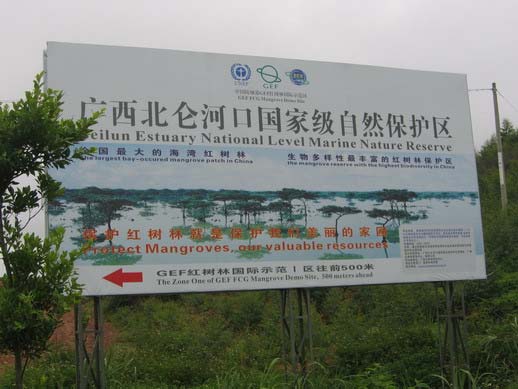
Sign to Beilun Estuary National Level Marine Nature Reserve
Government and Guangxi Provincial Government was
allocated to the reserve. In total the money allocated to
The Fangchenggang demonstration site launched its
the reserve following the GEF project was seventeen
local mangrove website (www.mangrove.org.cn) in
times greater than the funds the reserve received for
September 2004, and in 2006 a photograph from the
Beilun Estuary National level Marine Nature Reserve
the fifteen years before the project.

UNEP/GEF Project: Reversing Environmental Degradation Trends in the South China Sea and Gulf of Thailand
Fanchenggang Mangrove Demonstration Site, Guangxi, China
In January 2008, the reserve was designated as a
from September 2008. A Plan is being prepared for
Scientific issues need to be considered together with
Ramsar Site, which will further enhance the prospects
implementation after the UNEP/GEF project period.
national conditions, administrative structure, and
for sustainability of the reserve. Public awareness
cultural characteristics in order to ensure acceptability
regarding the importance of mangroves has been
of the proposals.
enhanced through replanting campaigns, the
production of newsletters, and fostering the
development of a "Mangrove friendly association" at the
community level.
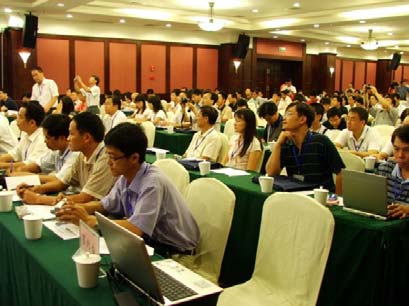
The China Mangrove Wetland Forum 2007
The Guangxi Mangrove Research Centre successfully
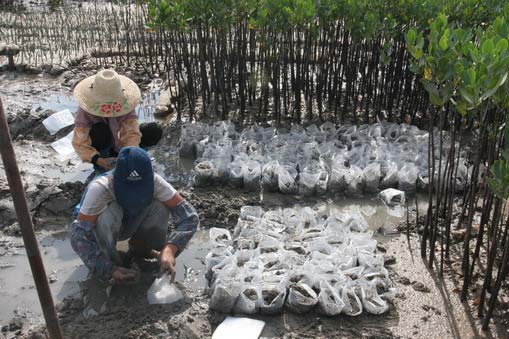
Mangrove nursery for Heritiera
convened and organised the China Mangrove Wetland
Forum in Beihai in 2007 and is preparing plans for
Potential for Replication
exchange between young mangrove researchers
Regional cooperation is appreciated and supported by
including sponsoring two or three young mangrove
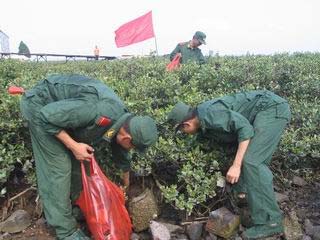
Removing marine litter from Fangchenggang mangroves
the Chinese government both at central and provincial
researchers in the region to come to China and work in
government levels to improve conservation, restoration
Planning and Initial Actions to Foster Further
the centre and the Fangchenggang Site for two or three
and rational use of coastal wetlands, and to boost
Regional Cooperation on Mangrove and Coastal
months.
education. We believe that our good practice in
Ecological Research and Education
Rationale for the Approaches Taken
managing coastal ecosystems can be shared with other
Financial support from government is vital to ensure
UNEP/GEF project implementing parties to address
that non-profit research facilities such as the Guangxi
The rapidly expanding economy in China has caused
similar environmental issues, even where diverse
Mangrove Research Centre (GMRC) can carry out
more and more serious environmental problems, while
political systems and cultures exist.
research and regular monitoring on mangroves. The
at the same time the Chinese government has realised
Contact Details
Guangxi Mangrove Research Centre was not among
that natural resources and the environment are
the key institutes supported by local government in the
important factors that can influence economic
Guangxi Mangrove Research Center
past, but its role was re-evaluated following
sustainability of the nation. To address environmental
92 Chang Qing Dong Lu
implementation of the GEF project. The centre has
issues, the Chinese government is striving to explore
Beihai 536000
played a key role in, and contributed to, raising
new approaches to establish more effective
Guangxi, China
Email: mangrovecenter@sina.com
awareness of governments regarding the significance
environmental management systems, to create
Tel: 0086-779-2055294
and economic importance of mangroves and other
appropriate management mechanisms, and to improve
Fax: 0086-779-2065609
coastal wetland systems.
scientific research and education.
In 2007, the Guangxi Key Lab for Mangrove
Ideally natural resources should be used as the basis
conservation was approved within the GMRC to:
for the national sustainable development strategy but
strengthen research into mangroves for improving
the ideas and views of local officials, experts, and
management of marine ecosystems; and training
stakeholders in the private sector and local
experts and improving expertise. In Beihai, the
communities concerning how these resources are to be
establishment of the Guangxi Marine Environment,
used and managed need to be taken into account by
Resource and Economics School was approved by the
the government in decision-making.
provincial government and 100 students will be enrol ed