UNEP/GEF Project: Reversing Environmental Degradation Trends in the South China Sea and Gulf of Thailand
Thi Nai Lagoon Demonstration Site, Binh Dinh Province, Viet Nam
Rehabilitation of Habitats and Sustainable Use of
becoming shallower; the aquaculture industry facing
It is also necessary for the plan to be agreed at al
Fisheries Resources in the Con Chim Area, Thi Nai
more frequent disease outbreaks; the lagoon
levels from provincial government down to the grass-
Lagoon
landscape having been adversely affected; and bird
root levels; for the communities to achieve a high
"sanctuaries" having become abandoned. These
degree of understanding of the reasons behind the
Project Summary
changes have resulted in lost potential to develop
designs chosen; to establish links and mechanisms for
Thi Nai Lagoon covers an area of 5,060 ha and
ecotourism which is viewed as a major source of
co-cooperation among all sectors, especially between
represents a major wetland ecosystem in Binh Dinh
income for most of the central provinces of Viet Nam.
the fisheries and forestry sectors; to involve and have
Province. The significant areas of mangrove and
support from scientists, institutes and relevant
The ecological and economic problems resulted in the
seagrass are essential to the viability of local fisheries
organizations that can provide expertise and advice;
provincial authorities attempting to develop feasible
in the lagoon but past levels of unregulated resource
and to diversify involvement from central to grass-root
solutions to partially rehabilitate depleted natural
exploitation have led to the ecosystem functions being
levels, and from international and private organizations.
resources, enhance the economic benefits, and
lost. Natural fisheries production is around 36 tonnes of
conserve the natural resource base. This project on
To address the problems associated with the conflicting
fin-fish, 75 tonnes of crustacean and 600 tonnes of
rehabilitation and sustainable use of the aquatic
uses of the lagoon a zoning map for future resource
molluscs annually, whilst the forest supports 10
resources of Thi Nai lagoon is expected to provide
uses in Con Chim has been developed, that clearly
resident bird species and some 37 species of migratory
solutions to the problems of resource management.
demarcates zones for conservation of mangroves and
water-birds use the habitats of the lagoon.
seagrass, environmentally friendly aquaculture, as bird
Practices Implemented by the Demonstration Site
Con Chim Marine Sanctuary, with an area of 480 ha,
sanctuaries, and for fishing using appropriate gear.
Project
has been developed by the Binh Dinh Fisheries
Establishing Sustainable Aquaculture Practices
Department in collaboration with the local coastal
Attempts to solve the environmental problems of Con
and Local Livelihood Assistance
communes whose livelihoods rely heavily on marine
Chim lagoon requires determination and a recognition
resources. The long-term objective is to stabilize the
of the scale and extent of the chal enges associated
Activities have included the identification of
ecosystem of Thi Nai Lagoon and the immediate aim
with designing a management plan that is both
environmentally and economically sound aquaculture
was to establish a zone of ecological rehabilitation and
acceptable to all stakeholders and will at the same time
techniques for appropriate species that can be
natural resource conservation in Con Chim and the
take into consideration the environmental and socio-
employed by the local communities. This is based on
neighbouring areas, where the ecosystems of the
economic complexities of the lagoon system and its
trials to assess various models for multi-species culture
mangrove forest and sea-grass beds could be
multiple uses.
and development and implementation of best practices
rehabilitated and protected. The conservation of these
amongst the local aquaculture practitioners in the area.
natural resources and their sustainable use support the
In addition, through development of a co-management
sustainable development of the area.
system involving the local communes in planning and
7
implementing activities fishers previously involved in
Issues and Challenges
destructive practices have been encouraged to move
Thi Nai Lagoon once supported a mangrove forest of
2
3
4
5
into areas of sustainable aquaculture production,
1,000 ha with associated seagrass beds over an area
4
8
2
through provision of funds for the purchase of seed and
of 200 ha. These ecosystems resulted in high
grow-out facilities, as well as technical assistance.
1
6
biodiversity and provided favourable conditions for an
abundance of aquatic species which supported the
1
8
livelihoods of human communities adjacent to the
9
lagoon, especially the population of Quy Nhon City.
Unfortunately, the area and condition of the mangrove
forest has degraded drastically, with as much as one-
third of the lagoon area being converted into
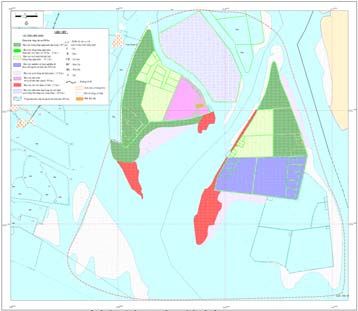
Zones of Con Chim Marine Sanctuary: 1 seagrass and
aquaculture. In addition the increasing discharge of
resource protection (15 ha); 2 environmental friendly
wastes from the city and port of Quy Nhon and
aquaculture plus re-planted mangroves (25.1 ha); 3 bird
neighbouring areas has accelerated the pace of
protection and office site (9.4 ha); 4 concentrated mangroves
environmental degradation. The consequence of these
(38.7 ha); 5 integrated mangroves and aquaculture (10 ha); 6
research and fisheries resource recovery (26.2 ha); 7
adverse changes has been marked economic losses
sustainable aquaculture extension (in Con Gia 33.4 ha); 8
caused by: the lagoon bottom and navigable channels
mollusc farming (11.6 ha); 9 for capture fisheries (310 ha).
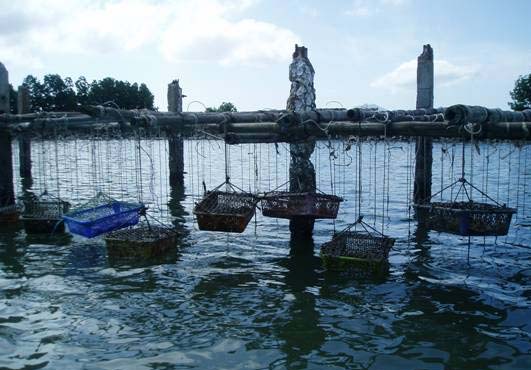
Local oyster species using rack or ground culture methods


UNEP/GEF Project: Reversing Environmental Degradation Trends in the South China Sea and Gulf of Thailand
Thi Nai Lagoon Demonstration Site, Binh Dinh Province, Viet Nam
Rehabilitation of Mangrove and Seagrass
tourism trips to the Con Chim Marine Sanctuary,
planting, shrimp and tilapia farming, and oyster culture
awareness and understanding of the involved
have proved successful. It is hoped that developing
To address the problems of habitat degradation
individuals has been enhanced.
tourism while recovering significant habitats of
community based re-planting schemes for both the
mangroves and seagrass will help to improve local
intensive and integrated use zones of mangroves have
livelihoods.
been developed and the local community has been
directly involved not merely in re-planting but also in
The present efforts however, represent only the first
protection and management of the newly established
stage in the rehabilitation of significant habitats and
young mangrove forests. Species diversity within the
protection of fisheries resources in the Con Chim
mangrove has been enhanced through the
Marine Sanctuary and Thi Nai lagoon. Education to
establishment of multi-species mangrove seedling
raise local awareness of the problems and potential
nurseries. The degradation of seagrass habitats has
solutions has only just begun. Outbreaks of shrimp
been addressed through increasing the awareness of
disease are still occurring at a high frequency, and
the local communities to the vulnerability of seagrass
economic development of the local people is still at a
beds to destructive fishing gear and the identification
low level. A major constraint has been the lack of
and protection of core areas of seagrass in the lagoon.
adequate and sustainable financing.
Potential for Replication
Raising awareness of conservation and fisheries issues
Experiences in developing the Thi Nai Sanctuary
through education programmes, pamphlets and posters
provide examples of co-management approaches to a
Rationale for Approach Taken
complex environment and ecosystem facing threats
from multiple uses. As such they serve as a model for
The ecological complexity of the lagoon system with its
potential replication in other threatened coastal lagoons
mosaic of mangroves, seagrass and soft sediment
both in Viet Nam and elsewhere in the region.
benthic communities reflects the natural variation in
topography and sediment characteristics of the lagoon
Contact Details
floor, which has been greatly altered by past
Fisheries Department,
aquaculture activities. The seagrass and mangroves
Binh Dinh Province
are critical nursery habitats for the larvae of aquatic
110 Tran Hung Dao Street, Quy Nhon,
species such as crustaceans and molluscs, which have
Binh Dinh, Viet Nam
been adversely impacted by changes in water quality
thuhaqn@gmail.com,
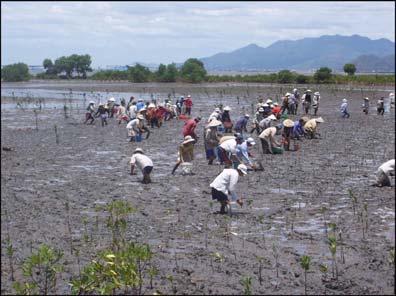
Community based mangrove re-planting and protection
and sediment characteristics. Past overfishing and the
ngliensts@binhdinh.gov.vn
programmes
Management Board
use of destructive fishing gear have altered the
Con Chim Marine Sanctuary Thi Nai Lagoon
Community Education and Awareness
structure of the animal and plant communities whilst
238 Tran Hung Dao Street., Quy Nhon,
removal of mangroves and changes in sediment
One of the underlying causes of the environmental
Binh Dinh, Vietnam
characteristics have necessitated trials to ascertain
thinaisanctuary@yahoo.com
degradation in the area was the lack of community
whether particular areas are suitable for replanting
awareness of the significance and role of the natural
mangrove and whether changes in practices will result
The Thi Nai Sanctuary is included within the South
habitats in sustaining fisheries production in the lagoon.
in natural recovery of some communities.
China Sea network of demonstration sites as a "self-
As a consequence a programme of community
funded" project
awareness was developed to foster an understanding
The project has benefited from favourable policies and
of conservation issues and sustainable practices
finance from the Provincial People's Committee,
amongst the local communities. This programme
domestic as well as overseas organizations, and from
included education of children at local schools, the
international expertise in mangrove recovery and
development of educational posters, pamphlets and
coastal fisheries conservation. The co-management
displays on the environment, particular species of
approach which has directly involved local fishing
importance, and conservation activities and their use in
communities has worked well. Initial outcomes in terms
the Con Chim information centre. Through involvement
of mangrove restoration and adoption of new models of
of the local community in the planning of small scale
shrimp farming and oyster rearing plus mangrove re-