
R
EBYC
Reduction of Environmental Impact from Tropical Shrimp Trawling, through the introduction of By-catch
Reduction Technologies and Change of Management
(EP/GL
O/201/GEF)
Colombia
Progress report to the project coordinator
EP/GLO/201/GEF
July-December 2005
___________________________________________________________
FOOD AND AGRICULTURE ORGANIZATION OF THE UNITED NATIONS
REBYC
Reduction of Environmental Impact from Tropical Shrimp Trawling, through the introduction of By-catch
Reduction Technologies and Change of Management
(EP/GLO/201/GEF)
Progress Report to the Project Coordinator EP/GLO/201/GEF
Country: Colombia.
Reporting period: 6-months from July to December 2005.
Reporting Officer = Mario Rueda, Ph.D.
1. List the meetings of the National Steering Committee held: (gives dates, places):
a) Meeting on the Pacific coast: September 26, Agropesquera Industrial BAHIA CUPICA
(Fishing Industry), Buenaventura, Colombia.
b) Meeting on the Atlantic coast: November 18, SENA (Technical Fishery Education
Institution), Cartagena, Colombia.
summarize the main points from these meeting, and please provide separately a copy of the
minutes, including names/titles of the participants:
a) The main points discussed in this meeting were:
1) To present to representatives of the industrial fishing and fishery management the
results of the shrimp trawling fishery workshop, focused on the design, build and
operation of prototype trawl nets using the fish eye as by-catch reduction device. This
workshop was held from June 27 to July 11 2005 in the SENA from Buenaventura
being the consultant Mr. Rafael Basto from Mexico. 24 gear technologists received
training in design and building of shrimp trawl nets. Two trawl nets were built,
whereas two demonstrative cruises on board shrimp commercial vessel were
conducted for rigging and operation of the prototype. After the workshop two
additional trawl nets were built by the technologists trained, thus 4 nets were
completed to conduct the experimental fishing surveys.
2) To analyze the preliminary results of the first experimental survey, where 100 hauls
were carried out comparing old nets vs. prototype nets including the effect of the BRD
used (fish eye). Without have to the date a sound analysis of data, among the
participants was consensus that the prototype nets had good operation. However, the
new trawl doors had not optimum performance, thus the complete trawl system did
not work 100%. Potential good results for fishers was a save fuel consuming of 23%
(data by corroborate), whereas the initial effect of fish eye indicated a reduction of by-
catch of 20% (data by corroborate). Fishers indicate that al sizes of fish could escape
through the device, so they afraid decrease their revenues of the fishing activity.
However, the project staff explained to the fishers about the need of doing a complete
analysis with economic data to discuss the true impact of the new technologies.
Final y, the project staff with fishers did agree join efforts to do modifications on the
trawl doors and net to overcome problems occurred during the first survey. This
activity was done taking recommendations of the NET SYSTEM (manufacturer)
mainly and the consultant (Mr. Basto).
3) To arrange the logistic for the second experimental survey using two commercial
vessels during November 2005.
1
4) To give a short explanation on the importance of adopting in law the shift of fishing
technology.
5) To col ect information about the current status of the shrimp fishery.
List of participants of the meeting on the Pacific coast:
NAME
INSTITUTION
TITLE
Mario Rueda
INVEMAR
National Coordinator
Walter Álvarez O.
SENA
Fishing Professor
Wilberto Angulo V.
INCODER
Researcher
Jorge Augusto Angulo INVEMAR
Researcher
Enrique Herrera U.
INCODER
Fishing Manager
Farit Rico M.
INVEMAR
Fishing Engineer
Wilson González
INVEMAR
Fishing Technician
Hernando Hurtado
INVEMAR
Fishing Technician
Agustín Martínez
A. Martínez y CIA Fishing industry
Nayibe Madrid
INVEMAR
Biologist
Galo Martínez
ALIMAR
Fisher
Joaquín Chang
LATIN # 2
Captain
Werner E. Bejarano
ALIMAR
Fisher
Carlos A. Rodríguez
ACODIARPE
Fishing industry
Martha L. De la Pava
ACODIARPE
Fishing industry
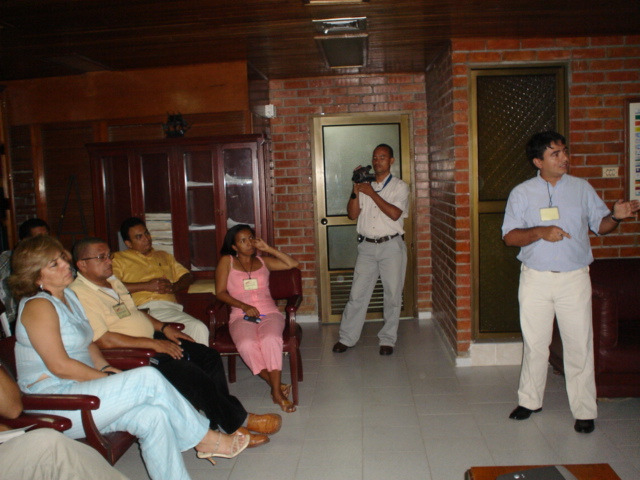
Figure 1. Participants attending the meeting on the Pacific coast.
2
b) The main points discussed in this meeting (Atlantic coast) were:
1) To present to representatives of the industrial fishing and fishery management the
results of the shrimp trawling fishery workshop, focused on the design, build and
operation of prototype trawl nets using the fish eye as by-catch reduction device. This
workshop was held from July 12 to 26 2005 in the SENA from Cartagena being the
consultant Mr. Rafael Basto from Mexico. 29 gear technologists received training in
design and building of shrimp trawl nets. Four (4) trawl nets were built, whereas one
demonstrative cruise on board shrimp commercial vessel was conducted for rigging
and operation of the prototype. After the workshop 4 additional trawl nets were built
by the technologists trained, thus 8 nets were completed to conduct the experimental
fishing surveys. Note: the vessels on the Atlantic coast use 2 trawl nets by side.
2) To analyze the preliminary results of the first experimental survey, where 80 hauls
were carried out comparing old nets vs. prototype nets including the effect of the BRD
used (fish eye). Compared with the Pacific coast, any more problematic was the
operation of prototype nets using new trawl doors. The doors did not work
satisfactorily. Potential good results for fishers was a save fuel consuming of 18%
(data by corroborate), whereas the initial effect of fish eye indicated a reduction of by-
catch of 22% (data by corroborate). Also fishers indicate that al sizes of fish could
escape through the device, so a more detailed analysis is needed to test the
hypothesis of fishers. Final y, the project staff with fishers did agree join efforts to do
modifications on the trawl doors and net to overcome problems occurred during the
first survey. This activity was done taking recommendations of the NET SYSTEM
(manufacturer) mainly and the consultant (Mr. Basto).
3) To arrange the logistic for the second experimental survey using two commercial
vessels during November 2005.
4) To give a short explanation on the importance of adopting in law the shift of fishing
technology.
5) To col ect information about the current status of the shrimp fishery.
List of participants of the meeting on the Atlantic coast:
NAME
INSTITUTION
TITLE
Mario Rueda
INVEMAR
National Coordinator
Luís O. Duarte
University of Magdalena
Researcher
Jorge Viaña Tous
INCODER
Fishing Engineer
María Consuelo
INCODER
Fishing Manager
Corchuelo
Francisco Machado
SENA
Fishing Professor
Philippe Thiriez
Pesquera Continental S.A
Fishing Industry
Alfonso Fal a
Fal a Najera y CIA
Fishing Industry
Harley Zúñiga
University of Magdalena
Fishing Engineer
SZ. Filmar Martínez
Capitanía Del Puerto
Fishing Manager
Fabio Zapata
Escuela Naval Alm. Padil a Fishing Manager
Janeth Rodríguez
COLCIENCIAS
Biologist
Argiro Ramírez A.
INCODER
Fishing Manager
3
Continuation:
Rafael Bonil a Sánchez
Wil iam Velez
Fisher
Yuihi Saijo
OCEANOS
Fisher
Hikaru Ful i
OCEANOS
Fisher
Mónica Silva
SENA
Fishing Professor
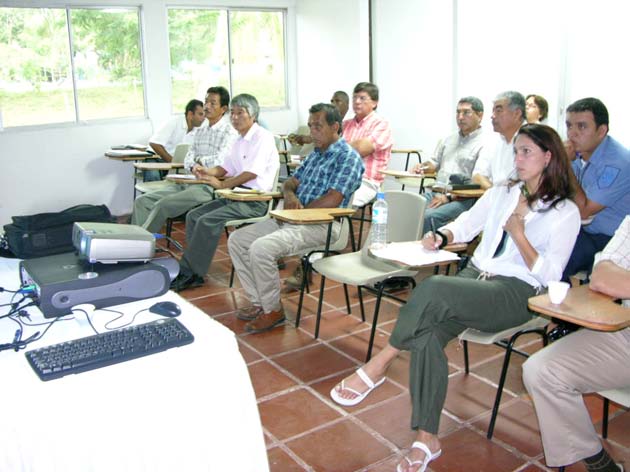
Figure 2. Participants attending the meeting on the Atlantic coast.
2. Describe the progress of each national project activity
(as listed in the project document, section 4.5 General Workplan and Timetable)
Activities of the workplan during the second six months of 2005.
a) Conduction of the experimental fishing surveys on both Pacific and Atlantic coasts. Using 2
vessels by coast, surveys were conducted covering different fishing grounds for a total of
more than 200 hauls. Each survey took around 20 days and part of samples was proceeding
on board.
b) Identification of fishes, crustaceans, mol usc and other organism in laboratory, which were
harvested from the experimental hauls.
c) Construction of data base with data on by-catch, discards and economic aspects.
The activities as scheduled under the LOA with FAO, are fol ows:
a) Establishment of the National Steering Committee: completed.
This committee was formed in March 2004 and it is integrated by 11 persons among
representatives of fishing industry, fisheries management, academy, support agencies, and
fisheries research. Document of the constitution of the steering committee was sent to FAO in
2004 as part of the Progress Report No. 1.
4
b) Col ection of information about fishing technology of the shrimp-trawling fleets on both
coasts: completed.
This information was col ected from January to July 2004. Technical report with this
information was sent to FAO in 2004 as part of the Progress Report No. 2.
c) Shipment of the fishing technology information to FAO Rome: completed.
Technical report (including schemes of the trawl nets) was sent to FAO in August 2004. This
report joined information about vessels, fishing machinery, trawl nets, composition of catches,
costs and revenues of the fishing activity. This information was sent to FAO in 2004 as part of
the Progress Report No. 2.
d) Execution of two workshops and conduction of fishing trials with prototype nets including
BRDs: completed.
These activities were undertaken during 2005. Details of these workshops were sent to FAO
in the Progress Report No. 3.
e) Conduction of the experimental fishing surveys: completed.
This activity carried out during the second six months of 2005, was resumed in this Progress
Report (No. 4).
f) Execution of workshops to present results of the project directed to fishers and managers:
Not yet initiated.
g) Presentation of the final technical report: Not yet initiated.
We hope to conduct fishing monitories of by-catch after fishing experiments, once FAO give
economic funds for this activity during 2006.
3. Describe briefly any workshops, training, or demonstration activities undertaken.
Indicate location, and number of participants and days.
No activities as mentioned above were undertaken.
4. Give other general comments on the current status of the shrimp-trawling industry.
The number of trawling vessels operating on the Colombian coasts has decreased during the
last 14 years. For example on the Atlantic coast, in 2005 only 17 of the 42 registered vessels
showed fishing activity. In 1990 the fleet included 120 vessels, decreasing to 52 vessels in
1995 and 60 in 1997. In 1999, 84 vessels were operating, while in 2004 only 53 of them were
registered. On the Pacific coast the fleet have decreased of 109 vessels in 1990 to
47 in 2004.
The reduction in the number of fishing vessels were brought about by the decreasing trend in
their profits as a consequence of: a) the reduction of the fishing rates, b) the reduction of the
shrimp price in the international trade system and c) the high operating costs, mainly
represented by fuel costs.
On the Atlantic coast most of the Korean fleet operating at the beginning of the 1990's left the
area and in 2005 the most important of the five fishing companies closed by such low profits.
In 2005, three of the remaining trawling vessels were modified in order to use them for the
long-line fishery of tuna and large pelagic fish. At present 80% of the fleet concentrate its
effort in the southern fishing zone of the Colombian Caribbean Sea.
5
5. List the financial inputs (in-kind, in US$)
a) by government, for this reporting period:
Item
In-kind
In US$*
Total
Professional staff
33327
29027
62354
Support staff
0
5032
5032
Travel expenses
0
8672
8672
Operating expenses
3500
10428
13928
Equipment
1353
6000
7353
Other
830
1067
1897
Total
39010
60226
99236
* For al cases, it has been used a change rate of 2271.55 (January 19th, 2006).
b) by government, from the beginning of the project:
Item
In-kind
In US$
Totals
Professional staff
122866
66500
189366
Support staff
0
83332
83332
Travel expenses
0
25872
25872
Operating expenses
8200
62500
70700
Equipment
10412
6300
16712
Other
1621
6603
7924
Totals
143090
251107
394197
c) by the industry, for this reporting period:
Item
In-kind
In US$
Totals
Professional staff
0
0
0
Support staff
0
11200
11200
Travel expenses
0
0
0
Operating expenses
0
23728
23728
Equipment
8805
1700
10505
Other
0
3200
3200
Totals
8805
39828
48633
d) by the industry, from the beginning of the project:
Item
In-kind
In US$
Totals
Professional staff
0
75815
75815
Support staff
0
44800
44800
Travel expenses
0
28094
28094
Operating expenses
0
61746
61746
Equipment
8805
3450
12255
Other
0
9147
9147
Totals
8805
223052
231857
6. Estimation of by-catch reduction:
a) Total Number of shrimp trawlers:
On the Atlantic coast: 53 (main fleet, headquarters in Cartagena). Minor fleet: 7 (operating
with only 1 trawl net, headquarters in Tolú, Gulf of Morrosquil o).
6
On the Pacific coast: 47 (main fleet, headquarters in Buenaventura). Minor fleet: 10
(headquarters in Tumaco).
b) Number of shrimp-trawlers that used BRDs when the project started: zero (0) on both
coasts.
c) Number of shrimp-trawlers currently using BRDs: (expand by major-type of shrimp-trawler,
if possible):
shrimp trawlers: 2 (during the experimental stage) by coast.
fish trawlers: There aren't.
pair trawlers: There aren't.
7. List all equipment purchased, indicating date of purchase, serial number, quantity,
cost in US$, and any remarks (for vehicles, give mileage report).
No equipment was purchased on both coasts during this period.
7