|
1
|
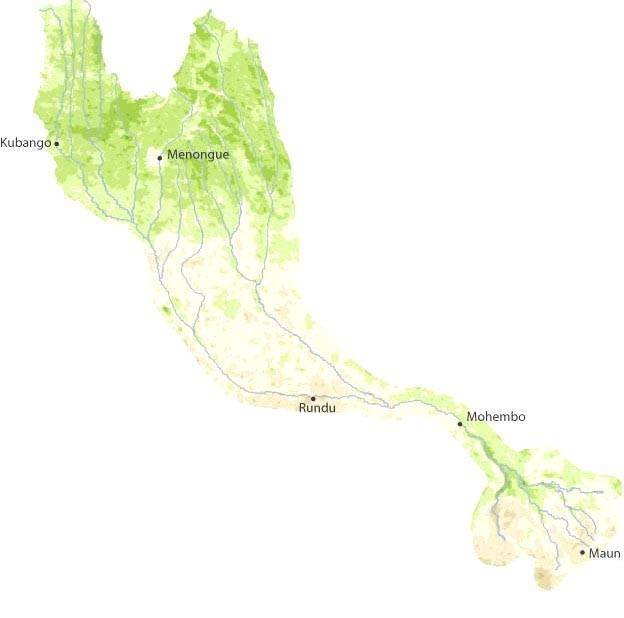
- In the context of the Okavango
|
|
2
|
|
|
3
|
|
|
4
|
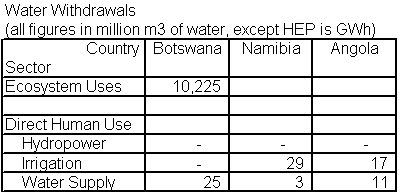
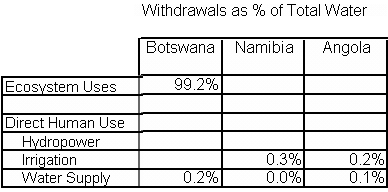
- water use in Angola and Namibia is minimal! Then most of the water ends
in Botswana where it is “used” for tourism.
- this is not going to remain so, there are development needs in the basin
and all three will increase use for basic needs and for development
- expect demand for diversions (i.e. agriculture or inter basin
transfers), storage (resulting changes in flow regimes) or even landuse
change that can affect the quality and quantity of the flow regime
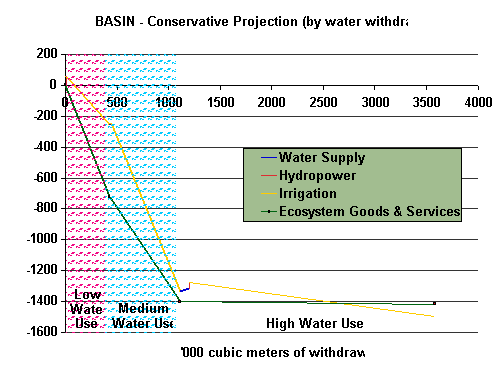
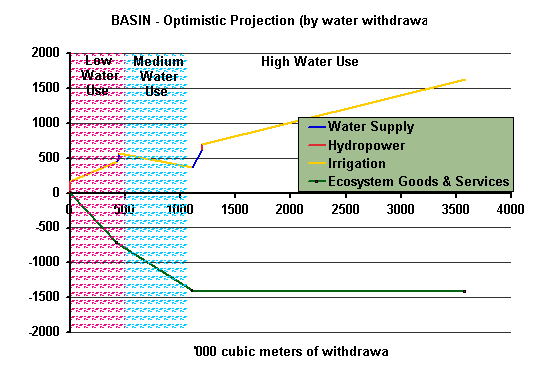
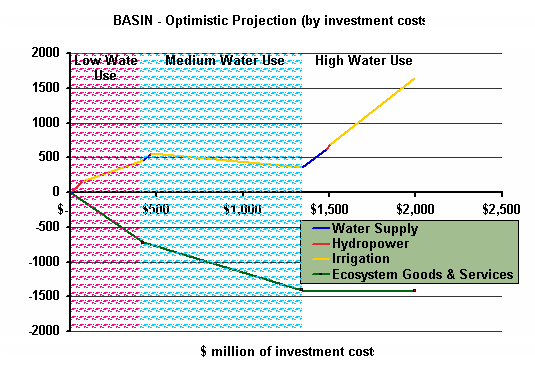
- There will be gains and losses. The TDA shows the gains will be upstream
and the losses will be downstream.
|
|
5
|
|
|
6
|
|
|
7
|
- within the scope of the analysis (irrigation. HEP and WatSan) difficult
to increase the net benefits generated by the river.
- Benefits to share or compensation based on a resource allocation
agreement?
|
|
8
|
|
|
9
|
|
|
10
|
|
|
11
|
- Is there a more sensible alternatives to water resources development?
- What is the basin comparative advantage? Which uses can generate the
most benefit per unit of water? (more benefit per drop)
- invest in a low water withdrawal future?
- one that involves maintaining the health and functioning of the
Ecosystem, while investing in WatSAN, low cost run-of-river hydropower
schemes, and only the most economically promising irrigation schemes?
- liberate large amounts of investment capital for use in other productive
activities in the basin?
|
|
12
|
- current state of the river creates a comparative advantage for the
region in the tourism and wildlife sector.
- In the short term, the relative comparative advantage lies in the
tourism sector in Botswana and Namibia (this can change)
- a comprehensive settlement that both acknowledges equitable access by
countries to the water resource and provides for using water in a
productive manner and sharing of the resulting benefits would allow
countries to gain the most
- then you can have benefit sharing
|
|
13
|
|
|
14
|
- but how much to share and who?
- Does Botswana pay because they were historically “using” the water?
- Does Angola, which is still to generate value from the river, share
their benefit downstream? Is that fair?
- Problem 1: if you show large benefits then you can use more of the
water!
- Problem 2: if you show large benefits then you have to share those
benefits!
|
|
15
|
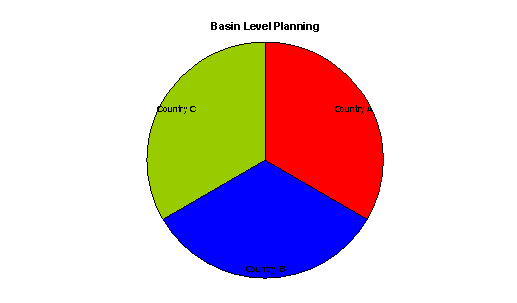
- Set aside water for basic human needs including WatSan, some irrigation,
power and ecosystem services
- Use the rest of the water to develop joint Muti-Sectoral Investments
where the countries share the benefits and the costs of the most
productive investments selected at a basin level within an agreed basin
development framework
|
|
16
|
|
|
17
|
- The Okavango
Strategic Action Program
- Starring: the people of the Okavango
- Produced and directed by: OKACOM
|
|
18
|
|

 Notes
Notes