Pollution and human health
A mother nurtures her child with love, energy, nutrients, fluids, protection against disease, and
physical warmth. In recent years, many women have become concerned that during pregnancy
and through breast feeding, they also expose their children to environmental contaminants. This
concern is justified. Many contaminants are present in our bodies, and a pregnant or nursing
woman will transfer some of these to her child. While the known benefits of breast feeding are
still thought to greatly outweigh the possible risk, we know that human health can be affected by
contaminants. Because our health is intimately connected with the food we eat, the water we
drink, and the air we breathe, we pay a price when the environment around us and our sources
of nourishment become tainted. The presence of contaminants in umbilical cord blood, in
human milk, in food, air, and water presents a political, social, and public health challenge.
In the context of environmental health and with special attention to the role of traditional foods
in the Arctic, this chapter presents an assessment of contaminants and human health, including
the first results of AMAP's Human Health Monitoring Program.
AMAP's circumpolar human health assessment addresses eight persistent organic pollutants,
three heavy metals, several radionuclides, and ultraviolet radiation. In addition, national reports
present detailed discussions of contaminants issues in specific regions.
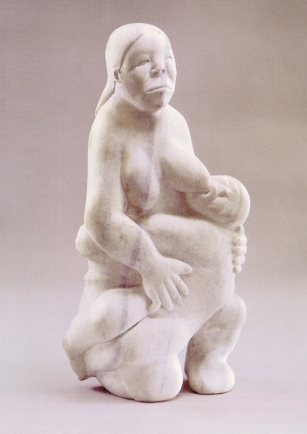
Mother and child. Quartzite sculpture by Kovinatilliak Parr
There are no illnesses yet reported in the
172
Pollution
Environmental health
Arctic for which contaminants are known to
and human health
н an introduction
be a direct cause. However, a lack of readily-
visible illness does not mean that the exposure
Many factors contribute to health and illness
of indigenous peoples in the Arctic is without
in the Arctic: socioeconomic conditions, health
medical consequence. Moreover, the exposure
services, societal and cultural factors, individ-
situation is highly complex as many stressors
ual lifestyles and behaviors, and genetics. Con-
interact with one another. As described in the
taminants enter this already complex scene,
box on this page, it is difficult to scientifically
with the capacity to have physical, mental, and
prove the connection between contaminants
social impacts on health. For example, fear of
and disease in small population groups, even
contaminants and changes in traditional ways
when such connections are known to exist
of living can affect both community social
from studies of larger groups. For these rea-
structure and individual mental well-being.
sons, high levels of contaminants in blood and
This report focuses on the role of contami-
tissue or subtle biochemical changes in the body
nants in people's physical health. The major
should be taken as significant health warnings.
concerns are long-term, subtle effects, such as
Listening to these warning signals may be the
how contaminants might influence our ability
only way to avoid illness from contaminants.
to conceive and carry children, reduce our
The information to date already provides a
defense against diseases, affect children's men-
strong reason to aggressively seek internatio-
tal development, or increase the risk of cancer.
nal agreement on the reduction or elimination
The growing fetus and the new-born child
of the manufacture and release of persistent
are especially sensitive to the toxic effects of
organic pollutants and some toxic metals.
many persistent organic pollutants and heavy
metals. Several of these substances move from
Public health advice
mother to fetus via the umbilical cord and to
must include insight about local culture
the child via mother's milk.The levels of such
contaminants in the mother's blood give an
In the Arctic, formulating public health advice
indication of the risk her child faces.
about contaminants in food is complicated by
the key role that indigenous foods play in peo-
ple's social, spiritual, and cultural identity.
Contaminant burden is high enough
Indigenous foods also provide excellent nour-
to justify international action
ishment, vitamins, and minerals, and help pro-
Observations indicate that most regions of the
tect against several diseases. Public health
Arctic are far from pristine. In fact, long-range
advice must therefore include insight about
transport and biomagnification of some sub-
native cultures and local lifestyles. Moreover,
stances in Arctic food webs have led to conta-
these aspects of health and well-being need to
minant levels in people that can be 10 to 20
be given an equal hearing in any discussion of
times higher than in most temperate regions.
overall public health. Dialogue with local peo-
Indigenous people who rely on traditional
ple, not just among scientists, becomes essen-
diets are likely to be more exposed to several
tial in this process, and communication must
toxic substances than the majority of people
be based on both respect and knowledge.
elsewhere in the world.
Such insight and communication is best
developed at the local level. One aim of this
Constraints of epidemiology
chapter is to provide a source of basic infor-
Epidemiology examines the causes and risks of disease in a population. By studying
mation. Then, local and regional authorities
large groups of people, it is possible to identify important risk factors that increase the
can use the information to address the specific
occurrence of certain health effects. Sometimes it is possible to identify a major cause,
needs of their communities.
for example a particular bacterium or an industrial chemical. By themselves, however,
the results from epidemiology can only rarely establish a conclusive link between a
disease in an individual and a specific cause. In studying environmental health in
Arctic communities, the lack of evidence from epidemiological studies cannot be used
to rule out the presence of actual health effects. There are several important limita-
Toxicology of contaminants
tions to these epidemiological studies:
Several of the previous chapters describe the tox-
The population groups in the Arctic are small, making it difficult to involve enough
icology of contaminants in some detail. Often
people to confirm statistically valid associations between risk factors and health effects.
It is also difficult to find a `control group' that has similar important ethnic, social, or
the main concerns are summarized in catch
economic characteristics but that has not been exposed to the same contaminants.
words such as `neurological effects', `reproduc-
Not enough is known about the toxicology of many contaminants to ensure that
tive effects', `immunosuppression', or `carcino-
an epidemiological study looks for the most sensitive health effects. For example,
genic effects'. The following are short explana-
some studies may look only for higher cancer rates associated with higher contami-
tions of what these terms mean for human health.
nant exposure, while subtle effects on the immune system go undetected.
Epidemiological studies provide only part of the information necessary to establish
a connection between cause and effect. Health assessments also have to take into
account results from controlled animal studies and knowledge about each contami-
Neurological effects
nant's mechanism of action on the body.
Neurological or neurobehavioral effects of
For epidemiological studies to be effective, health effects must already have
occurred in the population. These studies are not good predictors of disease. Rather,
contaminants mostly concern effects on the
they report illness that has already occurred.
brain. The brain of a fetus or a young child is
rapidly growing and thus especially sensitive
ated will grow into tumors. Most of the find-
173
to environmental contaminants. In the context
ings concerning carcinogens come from studies
Pollution
of environmental contaminants, the damage
in animals.
and human health
may be subtle, and the effects have to be stud-
ied using complex psychological and behav-
Tolerable daily intakes
ioral tests. Such tests of groups of newborns as
include a safety factor
well as older children can reveal a higher oc-
currence of slight handicaps in memory or in
Most of the knowledge about toxic effects of
the ability to learn or to pay attention. Some
contaminants comes from laboratory studies
studies have also looked at school perfor-
where animals are fed high doses of a single sub-
mance.
stance. There are also some epidemiological
studies of people who have been exposed to high
doses of a single compound at work or follow-
Reproductive effects
ing accidents. In the environment, the situation
Reproductive effects cover an array of differ-
is quite different. People are exposed to a mix-
ent problems, and the connections between the
ture of many different compounds at the same
contaminant and the effects are not always
time, often at low levels and over their whole
clear. A major concern is that some substances
lives. In spite of the difficulties in translating cur-
interfere with or mimic sex hormones. For the
rent knowledge about toxic effects into public
growing fetus, a high burden of such contami-
health advice, there have been several attempts to
nants might disturb the balance that steers the
define exposure levels below which people should
development of sex organs. Lower sperm count,
not have to be concerned about health effects.
and thus reduced fertility, is one of the sus-
One example is tolerable daily intake (TDI).
pected effects on men. For women, the same
Differences between humans and experi-
contaminants might make it difficult to become
mental animals and between the different ex-
pregnant or to carry a pregnancy to term. The
posure situations are sources of uncertainty in
contaminant levels at which reproductive effects
estimating health effects of contaminants on
may occur in humans are poorly understood.
humans. Therefore, tolerable daily intake fig-
As with all other aspects of human health, cont-
ures for people usually include substantial
aminants are hardly the only factor affecting
safety factors. For example, if the highest daily
fertility. For example, lifestyle choices such as
exposure that is known not to cause effects in
smoking and alcohol consumption have well-
animals is 100 micrograms of a substance per
documented and profound effects on repro-
kilogram body weight, a safety factor of 100
duction.
would make the tolerable daily intake for hu-
The hormone-disrupting effects of contami-
mans 1 microgram per kilogram body weight.
nants may also increase or decrease the risk of
The greater the uncertainty in the toxicology,
some forms of cancer.
the larger the safety factor.
The safety factor is an attempt to account
for the unknown, and as such it might exag-
Immunosuppression
gerate the perceived risk. Nevertheless, when
Several contaminants can damage the body's
the intake of contaminants in food exceeds tol-
immune system, its defense against disease.
erable daily intakes or other similar `action
When the immune system is suppressed, the
levels', it is a warning that health effects can-
body is less able to fight infectious agents such
not be ruled out and that the situation has to
as bacteria and viruses. Moreover, there are
be examined more closely.
suggestions that immunosuppression is
The tolerable daily intake values for persis-
involved in an increased risk for cancer. Effects
tent organic pollutants and tolerable weekly
on the immune system are often studied by
Tolerable daily intake for persistent organic contaminants.
looking at subtle changes in the cells that are
нннннннннннннннннннннннннннннннннннннннннннннннннннннннннннннннннннннннннннн
involved in the body's defense against disease.
TDI in g /kg
Substance
body weight
Reference
Although it is difficult to connect the immuno-
нннннннннннннннннннннннннннннннннннннннннннннннннннннннннннннннннннннннннннн
suppressive effects of contaminants with any
DDT
20
WHO 1984
particular disease, they may lead to increases
Total PCB
1.0
Provisional TDI, Health Canada 1996
Chlordane
0.05
Health Canada 1996
in the rates and duration of infections.
Hexachlorocyclohexane 0.3 (total HCH)
Provisional TDI, Health Canada 1996
8 (gamma-HCH)
WHO 1989
Dioxin (2,3,7,8-TCDD)
0.00001 (10 pg)
WHO 1992
Cancer
Toxaphene
0.2
Provisional TDI, Health Canada 1996
Mirex
0.07
Provisional TDI, Health Canada 1996
Several contaminants can cause cancer and
нннннннннннннннннннннннннннннннннннннннннннннннннннннннннннннннннннннннннннн
these are referred to as carcinogens. Some of
Tolerable weekly intake for heavy metals
нннннннннннннннннннннннннннннннннннннннннннннннннннннннннннннннннннннннннннн
them directly damage the hereditary material
TDI in g /kg
of cells and are called initiators. These initia-
Substance
body weight
Reference
нннннннннннннннннннннннннннннннннннннннннннннннннннннннннннннннннннннннннннн
tors potentially turn normal cells into cancer
Total mercury
5
WHO
cells. Others act as cancer promoters. Promo-
Methyl mercury
3.3
WHO
ters do not start a cancer by themselves but
Cadmium
7
WHO
Lead
50
WHO
enhance the risk that cells that have been initi-
нннннннннннннннннннннннннннннннннннннннннннннннннннннннннннннннннннннннннннн
intake values for metals are summarized in the
individual vitamins or minerals in the tradi-
174
tables below. Note that tolerable daily or
tional diets of Arctic people.
Pollution
and human health
weekly intake values should by multiplied by
In general, traditional diets provide a strong
the body weight of a person to determine the
nutritional base for the health of Arctic peo-
maximum daily or weekly intake. The values
ples. Market foods from outside the Arctic
can change when new and better toxicological
often have less protein and iron, but more fat
information becomes available.
and carbohydrates. Moreover, changes in food
habits are often accompanied by tendencies to
a more sedentary life style, in which people
Health benefits
spend less time hunting. Therefore, a move
of traditional food
away from traditional foods could contribute
to poor health, and specifically to a higher risk
While this report focuses on contaminants in
of diabetes and cardiovascular diseases.
the circumpolar region, it is important to
remember the benefits that traditional diets
provide. The most striking example is that
The circumpolar study
marine mammals and fish are rich in polyun-
saturated fatty acids. In both Greenland and
In the first-ever circumpolar study of contami-
Canada, a diet high in these fatty acids has
nants in people, AMAP has analyzed blood
been associated with lower risk for heart dis-
samples from mothers in ten regions of the
ease. Among Inuit living in Greenland and on
Arctic. The following countries have partici-
the shore of Hudson Bay in Canada, death
pated so far: Canada, Denmark, Finland, Ice-
from heart disease is uncommon.
land, Norway, Russia, and Sweden. The infor-
Marine foods, especially whale skin, are
mation from Finland is not yet available. Dis-
also rich in selenium. This is important be-
cussions with the United States are on-going.
cause selenium may reduce the toxic effects of
The maternal blood level reflects what the
metallic compounds such as arsenic, cadmium,
mother can potentially transfer to her fetus in
mercury, and lead. Selenium is especially im-
the womb or to her child during breast feed-
portant in the body's antioxidant defense and
ing. The reported values are averages (geomet-
may protect against cancer and possibly
ric means). There will thus be women with both
against heart disease
higher and lower contaminant levels. Even if
While some selenium in the diet is good,
the mean value is below known effect limits, a
high selenium intake may, in some cases, cause
proportion of the women may still have levels
negative health effects. For some Arctic popu-
that are high enough to cause concern.
lations, especially in northern Greenland, the
To date, the results are preliminary, and lit-
local diet contains very high amounts of sele-
tle of the supporting demographic information
nium, which has raised concern that the sele-
has been analyzed. The next step will be to
nium could become toxic. However, there are
confirm the findings with additional samples
no signs of chronic selenium poisoning among
and to assess whether traditional foods are
Greenlanders. This might be because the sele-
responsible for these high levels.
nium is bound in animal proteins in the food.
The traditional diet of all Arctic groups is
high in animal foods, which are rich sources of
protein as well as many vitamins and essential
Persistent organic pollutants
elements. For example, a study in Canada
DDT
showed that Inuit and Dene/Mщtis get most of
their protein from traditional foods and more
DDT is a pesticide. In humans, animals, and
than adequate amounts of iron, zinc, vitamins
the environment, it is converted to DDE. Both
D and E, and several of the B-vitamins. High
substances accumulate in fat. People may be
levels of vitamin A are found in animal liver
exposed through the food they eat or directly
and blubber.
when the pesticide is sprayed. The human
Traditional foods also provide a substantial
body can only get rid of DDT and DDE very
portion of peoples' energy requirements. For
slowly, mostly via urine and feces. DDT and
example, they account for 47 percent of the
DDE can cross the placenta to a growing fetus.
daily requirement for people along Hudson
A nursing mother also excretes these sub-
Bay, 29 percent on Baffin Island, and 19 per-
stances in her breast milk and can pass them
cent in central Arctic Canada.
on to her child in this way as well.
Traditional diets are low in a few essential
DDT and DDE have a range of effects, the
substances, providing barely enough to meet
most serious of which relate to reproduction,
nutritional requirements. They include cal-
development, the nervous systems, and cancer.
cium, vitamin C, and vitamin B6. People who
DDT can mimic the effects of estrogen (a
depend mostly on land-based mammals rather
female hormone), and DDE can be anti-andro-
than marine mammals may have marginal
genic (counteracting the male hormone). The
deficits of selenium in the diet. However, there
effects of these contaminants may only be seen
have been no documented overt deficiencies of
later, during an individual's reproductive years.
Total DDT (DDT+DDE) in maternal blood, geometric mean.
Total PCBs in maternal blood, geometric mean.
175
нннннннннннннннннннннннннннннннннннннннннннннннннн
нннннннннннннннннннннннннннннннннннннннннннннннннн
Pollution
g total DDT/
g total PCBs/
and human health
liter blood
liter blood
Region
plasma
Region
plasma
нннннннннннннннннннннннннннннннннннннннннннннннннн
нннннннннннннннннннннннннннннннннннннннннннннннннн
Western Northwest Territories, Canada
0.9
Western Northwest Territories, Canada
1.6
North-central Northwest Territories, Canada 1.4
North-central Northwest Territories, Canada 4.3
Nunavik (northern Quebec) Canada
4.6
Nunavik (northern Quebec), Canada
10.0
Northwest Greenland
4.0
Northwest Greenland
14.8
Northern Sweden
0.9
Northern Sweden
6.1
Northern Norway
0.7
Northern Norway
3.6
Iceland
0.9
Iceland
4.6
Nikel, Russia
3.4
Nikel, Russia
4.2
Salekhard, Russia
0.7
Salekhard, Russia
4.8
Norilsk, Russia
0.9
Norilsk, Russia
6.4
нннннннннннннннннннннннннннннннннннннннннннннннннн
нннннннннннннннннннннннннннннннннннннннннннннннннн
There is some evidence that breast milk
Canadian Arctic have the highest levels of
with DDE levels as low as 4 micrograms per
PCBs, which most likely reflects their diet of
gram lipid can suppress reflexes in newborns.
sea mammals, fatty fish, and perhaps eggs
Similar DDE levels have also been correlated
from seabirds.
with a shorter breast-feeding period. However,
According to other studies, neurobehavioral
in neither of these cases is it completely clear
effects in children can occur when the mother
that DDE is the cause.
has a blood level of approximately 10 micro-
The table above shows the levels of total
grams per liter blood. This indicates that there
DDT (including both DDT and DDE) in moth-
might be a concern for fetal and childhood
ers' blood in different Arctic regions. Along
development in some regions of the Arctic.
the west coast of Greenland, in Nunavik, Ca-
Even in areas other than Greenland and the
nada, and in Nikel on the Kola Peninsula of
eastern Canadian Arctic, a proportion of the
Russia, blood levels are only a factor of ten
population is likely to be in this risk range.
lower than the levels that are known to cause
A study of Inuit boys in Canada showed
neurological effects in babies. Reproductive
that their birth weight was lower if the mother
effects and an increasing risk for breast cancer
had high levels of PCBs in her breast milk.
may be associated with these levels, but the
Moreover, ear infections and other infectious
links have not been proven.
diseases were much more common among 1-
A closer analysis of the components of total
year-old Inuit who had been exposed to high
DDT points to different sources of contamina-
levels of PCBs in the womb, which might indi-
tion in Greenland and Nunavik than in Nikel.
cate that their immune systems were weaker
In Greenland and Nunavik, the break-down
than those of other children.
product DDE dominates, indicating that the
DDT has accumulated in the food chain. In
Chlordane
Nikel, there is relatively more DDT than in the
other samples, which is a pattern that indicates
Chlordane is a mixture of several components
a direct exposure to DDT through the local
and is used as a pesticide. In the environment
use of pesticides or indirect exposure via food
and in the body, chlordane can break down to
contaminated by current use of DDT in other
other toxic substances. Its major effects are on
parts of Russia.
the liver, the nervous system, and the immune
system. It is also a probable human carcino-
gen. The body can excrete chlordane through
PCBs
feces and breast milk.
PCBs are a family of compounds similar to one
The table below shows that the geographi-
another and all called polychlorinated biphe-
cal pattern of chlordane exposure is similar to
nyls. PCBs were produced and sold as mix-
that of PCBs. The majority of the chlordane is
tures. They have been used in a variety of
Concentration of chlordanes in maternal blood,
applications, for example as electrical trans-
geometric mean.
former fluids, lubricants, and plasticizers.
нннннннннннннннннннннннннннннннннннннннннннннннннн
PCBs are highly persistent and accumulate in
g total clordanes/
liter blood
fatty tissues. PCBs are only slowly excreted,
Region
plasma
mainly via breast milk.
нннннннннннннннннннннннннннннннннннннннннннннннннн
Some PCBs have dioxin-like effects. PCBs
Western Northwest Territories, Canada
0.1
have been implicated in effects on the liver,
North-central Northwest Territories, Canada 0.7
Nunavik (northern Quebec), Canada
1.4
reproduction, birth weight of infants, neurobe-
Northwest Greenland
1.6
havioral development, and the immune sys-
Northern Sweden
0.1
tem. PCBs may also cause cancer.
Northern Norway
0.1
The table above the right column shows the
Iceland
0.1
preliminary results from the circumpolar study
Nikel, Russia
0.1
Salekhard, Russia
0.5
of maternal blood. Women from an area that
Norilsk, Russia
0.5
includes western Greenland and the eastern
нннннннннннннннннннннннннннннннннннннннннннннннннн
in the form of the break-down product trans-
hexane, also called lindane, can affect the liver,
176
nonachlor. Very little is known about the long-
the nervous system, the kidneys, the reproduc-
Pollution
and human health
term effects of chlordane, especially of trans-
tive system, and perhaps also the immune sys-
nonachlor. It is therefore difficult to assess the
tem. Lindane is a possible human carcinogen.
health risks from elevated levels of total chlor-
Due to its persistence, beta-hexachlorocyclo-
dane found in people in some Arctic regions.
hexane has been measured in the circumpolar
Dietary studies from Canada together with
study of maternal blood, see table below left.
measurements of elevated levels of chlordane
One of the regions, Nikel, stands out with much
in animals suggest that some indigenous
higher levels than any other region. These blood
groups are exposed to levels that are signifi-
values would lead to higher levels in breast
cantly above tolerable daily intakes.
milk and higher exposure of nursing infants.
Hexachlorobenzene
Dioxins and furans
Hexachlorobenzene (HCB) is a pesticide and is
Dioxins and furans are two related families of
also used as an industrial chemical. It has a range
substances. Some dioxins are extremely toxic
of toxic effects in laboratory animals, including
to animals. The major concerns are effects on
Hexachlorobenzene in maternal blood, geometric mean.
the development of the fetus and the newborn,
нннннннннннннннннннннннннннннннннннннннннннннннннн
reproduction, and the immune system. Another
g total hexa-
concern is cancer.
chlorobenzene/
There are several studies of how dioxins and
liter blood
Region
plasma
furans affect people. Levels found in most pop-
нннннннннннннннннннннннннннннннннннннннннннннннннн
ulations have not been associated with any ex-
Western Northwest Territories, Canada
0.2
cess disease incidence. However, workers who
North-central Northwest Territories, Canada 0.5
Nunavik (northern Quebec), Canada
0.7
have been exposed during accidents have devel-
Northwest Greenland
0.9
oped a skin disease called chloracne. High ex-
Northern Sweden
0.2
posure in the workplace has also been associ-
Northern Norway
0.2
ated with some types of cancer. Recent studies
Iceland
0.3
of infants who have been exposed in the womb
Nikel, Russia
0.5
Salekhard, Russia
0.4
or via breast milk show that dioxins and furans
Norilsk, Russia
0.4
can affect some hormone-regulating systems.
нннннннннннннннннннннннннннннннннннннннннннннннннн
Different dioxins and furans can vary more
damage to the liver, the skin, and the immune
than ten-thousand-fold in toxicity. To adjust
system. It can also cause neurological changes,
for these differences, the different compounds
cardiovascular effects, and reproductive effects.
are assigned toxic equivalence factors (TEFs),
The circumpolar study of mother's blood
relating them to the most toxic dioxin. For
finds the highest levels in Greenland, followed
estimates of risk, the amount of each dioxin
by intermediate levels in the Canadian and
and furan is multiplied by its specific TEF, and
Russian Arctic. Also, concentrations of hexa-
the results are then added together. The final
chlorobenzene in the blood of newborn Inuit
sum is expressed as toxic equivalents (TEQ).
from Arctic Canada are two to three times
Current exposure to dioxins and furans is at
higher than those seen in southern Canadian
or just below tolerable daily intakes in most
population groups.
circumpolar nations. Some PCBs also have
dioxin-like activity and can be included in the
total TEQ values. This pushes the combined
Hexachlorocyclohexane/ lindane
exposure well above tolerable daily intakes.
Hexachlorocyclohexanes are a group of com-
The average levels of dioxins and furans in
pounds that are primarily used as pesticides.
breast milk are similar for Arctic and non-Arc-
They accumulate in fatty tissues and people
tic populations: 0.00001 to 0.00002 micro-
are exposed via food. The body excretes them
grams (10 to 20 picograms) per gram lipid in
slowly via breast milk, feces, and urine. The
the milk.
most toxic form, gamma-hexachlorocyclo-
Beta-hexachlorocyclohexane in maternal blood,
Toxaphene
geometric mean
нннннннннннннннннннннннннннннннннннннннннннннннннн
Toxaphene, also known as camphechlor, is a
g beta-HCH /
complex mixture of chemicals used as a pesti-
liter blood
Region
plasma
cide. It enters the Arctic through long-range
нннннннннннннннннннннннннннннннннннннннннннннннннн
transport. People ingest it via their food, and
Western Northwest Territories, Canada
0.1
the highest levels occur in marine mammals.
North-central Northwest Territories, Canada 0.1
The body can break down some components
Nunavik (northern Quebec), Canada
0.1
Northwest Greenland
0.1
of toxaphene, but other components are very
Northern Sweden
0.1
persistent and accumulate in fatty tissues.
Northern Norway
0.1
In animals, high doses of toxaphene affect
Iceland
0.3
the nervous system, the liver, and the kidneys.
Nikel, Russia
1.7
Some components of the toxaphene mixture
нннннннннннннннннннннннннннннннннннннннннннннннннн
bind to the estrogen receptor and can interfere
cultural, and physical well-being. After weigh-
177
with hormones important for reproduction. In-
ing the uncertainty of some of the values for
Pollution
termediate and long-term exposure may affect
tolerable daily intake for POPs against the
and human health
the adrenal glands, the immune system, and the
benefits of traditional food gathering and con-
developing fetus. It is also a possible carcinogen.
sumption, most Arctic jurisdictions still advise
There are very few measurements of toxa-
people to continue to eat as they have before.
phene in people, but current intake scenarios
To develop better advice, it is necessary to
suggest that some indigenous groups are ex-
learn more about the quantity and kind of food
posed to levels that are significantly above the
people consume and the contaminant levels in
tolerable daily intake.
different food products. There is also an urgent
need for an in-depth assessment of the toxic ef-
fects of all persistent organic contaminants, in-
Mirex
cluding the combined effects of these substances.
Mirex is a pesticide that has entered the Arctic
via long-range transport. It is highly persistent.
Breast feeding should continue
Sensitive body organs include the liver, the kid-
in spite of POPs in the milk
neys, the eyes, and the thyroid. It is also a pos-
sible human carcinogen and is toxic to the
Almost all of the organic pollutants studied
growing fetus.
can be detected in breast milk, sometimes at
Mirex is present at low levels in human tis-
levels at which the child's short-term exposure
sues throughout North America and Green-
is higher than tolerable daily intakes calculated
land. Because it is persistent and accumulates
for lifetime adult exposure. The effects of these
in the aquatic food chain, Mirex levels in
contaminants on developing babies are poorly
breast milk are above average in communities
understood. Because a child gets breast milk
that consume large amounts of fish, seabird
for only a short period, from a few months to
eggs, or marine mammals. There is not enough
a couple of years, this exposure contributes
information on the toxicology of Mirex to
only a little to the total lifetime body burden.
allow an accurate assessment of the implica-
Nevertheless, the relative exposure is high at a
tions for human health.
sensitive stage of growth and development.
Breast feeding has great benefits, including
enhancing the bond between mother and child,
PAH
providing nutrients, and helping the child's
Polycyclic aromatic hydrocarbons (PAHs) are
immune system get a good start. Breast feeding
of concern because they can cause cancer. The
also reduces the risk that children will get in-
important sources for humans are local, with
testinal upsets from contaminated water used
tobacco smoke as the main exposure route.
to prepare formulas. At this time, the studies
Wood smoke and smoke from other fuel sources
that have evaluated the potential effects of per-
also contribute to exposure both indoors and
sistent organic pollutants in breast milk are
outdoors.
limited and not conclusive. Currently, most
The potential daily exposure for adult males
health agencies advise that the benefits of
generally averages about 3 micrograms but can
breast feeding outweigh the known risks from
be up to 15 micrograms, and for smokers twice
persistent organic contaminants, and that
that amount. Exposure to PAHs through ciga-
breast feeding should continue.
rette smoke has been associated with reduced
fertility and with low birth weight in children.
Mother's life-time burden
PAHs are also a major factor in lung cancer.
determines fetal exposure
For non-smokers, PAHs in smoked or fried
foods are by far the most important source.
A growing fetus is exposed to contaminants in
Their concentration depends on how the food
the womb, and its dose of persistent organic
is prepared, with barbecuing increasing the
pollutants will be determined by the levels in
levels. Smoked fish also has higher levels than
the mother's body. By the time a woman is
uncooked products. The daily intake from food
pregnant, she can only partially influence this
has been estimated at 2 to 20 micrograms. In
dose by changing her food habits. Most of the
spite of the high intake, there appears to be lit-
exposure comes from persistent organic pollu-
tle risk to health from this source.
tants she has accumulated in her body since
she was born. The most important way to re-
duce fetal exposure to POPs is therefore to en-
Benefits of traditional foods have to be
sure that contaminant levels in the environment
weighed against risks from POPs
decrease drastically by cutting emissions. In ad-
The current levels of exposure to persistent
dition, it is important to develop dietary advice
organic contaminants in the Arctic are clearly
for girls, women of child-bearing age, and
of great concern, but it is still not clear what
pregnant women to promote the use of less-
public health measures should be taken. The
contaminated local foods to help reduce POP
dilemma is especially difficult in communities
intake without losing the nutritional, cultural,
where traditional foods are vital to spiritual,
and spiritual benefits of traditional foods.
178
Heavy metals
Methyl mercury may also affect the immune
system, though existing data is not conclusive.
Pollution
and human health
AMAP's circumpolar study of human health
Based on the mercury levels found in people
includes an assessment the impacts of mercury,
from several Arctic communities, immunosup-
cadmium, lead, and nickel. The results are pre-
pressive effects cannot be ruled out.
liminary, but it is already clear that mercury lev-
Mercury levels in people living today in
els in some areas are high enough to put chil-
Northwest Greenland are up to three times
dren's health at risk. Cadmium levels are also
higher than those that can be calculated from
high enough to cause public health concerns.
archeological hair samples from the late 1400s.
In general, metal levels are highest in people
Recent time trends are more difficult to assess.
who eat large amounts of organ meats, includ-
Some recent Canadian studies indicate lower
ing kidney, liver, and muscle from marine mam-
levels in the mid 1990s than a decade earlier.
mals and some freshwater fish, and kidney
Changes in diet or geographical and seasonal
from terrestrial animals.
differences may also explain the apparent trend.
The high mercury levels in some population
groups and in certain marine foods have raised
Mercury
questions about the need for public health
The major source of mercury is through meat,
measures to protect the growing fetus and the
in which it is found as methyl mercury. Methyl
nursing infant. It is recommended that local
mercury is easily taken up through the intesti-
authorities develop dietary guidelines to help
nal wall, and blood concentrations will reflect
pregnant and nursing women avoid the most
the daily intake. The major concern is damage
contaminated foods. It is important that such
to the brain and to the nervous system.
guidelines are made within the context of the
Methyl mercury easily passes through the
benefits of traditional foods and local cultures.
placenta and can affect a growing fetus. Such
exposure can cause neurological damage in the
Cadmium
child, which is evident both from structural
changes in the brain and from changes in
Cadmium accumulates in the kidney and the
behavior. The growing brain is much more
liver. The main concern is its toxic effects on
sensitive than the adult brain.
the kidney. Kidney damage leads to a loss of
proteins and essential minerals, even at modest
Mercury in maternal blood, geometric mean.
нннннннннннннннннннннннннннннннннннннннннннннннннн
exposures. Cadmium-induced kidney damage
g mercury/
is irreversible.
liter whole
Region
blood
The main source of cadmium for people is
нннннннннннннннннннннннннннннннннннннннннннннннннн
tobacco. One cigarette contains 1 to 2 micro-
Western Northwest Territories, Canada
1.7
grams cadmium. Other sources are traditional
North-central Northwest Territories, Canada 3.5
foods, especially kidney and liver from cari-
Nunavik (northern Quebec), Canada
13.7
Northwest Greenland
19.8
bou, reindeer, and whale. The exposure from
Northern Sweden
1.6
diet is difficult to estimate, as less than five
Northern Norway
2.3
percent of the cadmium in the food is taken up
Iceland
2.9
by the intestine. The iron and protein content
Nikel, Russia
2.3
нннннннннннннннннннннннннннннннннннннннннннннннннн
of the diet also affects uptake.
The table above summarizes the levels of
Cadmium in maternal blood, geometric mean.
mercury in maternal blood. The levels are
нннннннннннннннннннннннннннннннннннннннннннннннннн
highest among people who eat a lot of marine
g cadmium /
food, especially in the eastern Canadian Arctic
liter whole
and in Greenland. The range of values shows
Region
blood
that the levels in some women indicate daily
нннннннннннннннннннннннннннннннннннннннннннннннннн
Western Northwest Territories, Canada
0.7
intakes close to those that cause concern for
North-central Northwest Territories, Canada 1.8
possible neurological damage in children.
Nunavik (northern Quebec), Canada
3.9
These findings confirm earlier studies that
Northwest Greenland
1.3
found several groups of people with blood lev-
Northern Sweden
0.1
els above acceptable values. Some of the values
Northern Norway
0.5
Iceland
0.4
in these findings are above those that are asso-
Nikel, Russia
0.1
ciated with a known risk for neurological
Salekhard, Russia
0.4
damage. The most exposed groups include Po-
Norilsk, Russia
0.3
lar Inuit in North Greenland and Inuit and
нннннннннннннннннннннннннннннннннннннннннннннннннн
Cree in the eastern Canadian Arctic. A dietary
The growing fetus is protected from cadmi-
survey of eastern Canadian Inuit shows that
um because the placenta accumulates the metal
29 percent of the women have daily intakes of
and acts as a partial biological barrier. However,
mercury that exceed WHO tolerable daily in-
if cadmium levels are very high, as in a smoker,
take recommendations. While neurological
the placenta will only partially protect the fe-
signs have been observed in some highly ex-
tus. Cadmium can also have indirect effects by
posed indigenous people, it has not been possi-
upsetting the uptake of zinc, which could pos-
ble to prove that methyl mercury is the cause.
sibly lead to a zinc deficiency in the child.
The circumpolar study of maternal blood
The major concern is an increased incidence of
179
shows that cadmium levels are highest in Inuit
cancer of the lungs and nose. Nickel can also
Pollution
from Nunavik in the eastern Canadian Arctic;
be toxic to the kidneys, and mild effects have
and human health
see table on the previous page. Based on the
been seen in people exposed in the work envi-
WHO guidelines, these levels should not cause
ronment or by drinking contaminated well
health concerns. However, recent research sug-
water.
gests that effect levels are lower than those used
to develop the guideline. The implication is
that some people in the eastern Canadian Arc-
Radiation
tic and Greenland have cadmium levels in their
kidneys that are high enough to cause mild
The health effects of radiation are presented in
damage. To test these suspicions, cadmium
the chapter Radioactivity, including a dose
and protein levels in urine need to be assessed.
assessment for different population groups.
To reduce cadmium exposure, the most
The main concern for public health is that
important public health advice is to reduce
chronic exposure to natural and anthropo-
smoking.
genic radionuclides will lead to an increased
risk of cancer. In regulating nuclear activities,
the dose limit for public exposure to anthro-
Lead
pogenic radionuclides is 1 millisievert per year,
The exposure pathways for lead are not clear,
which corresponds to an estimated increased
but air, food, and drinking water are probably
risk for fatal cancer of one in 20 000.
the major sources. Lead is toxic to the process
that builds red blood cells, leading to anemia.
Anthropogenic radionuclides
The most disconcerting damage, however, is
are declining
on children's neurological development. The
growing brain seems to be highly sensitive to
The levels of human exposure to anthropo-
lead, and several studies indicate that children
genic radionuclides in the Arctic have declined
in polluted areas have deficits in speech and
since the cessation of above-ground tests of
language processing, attention, and classroom
nuclear bombs. However, because of the accu-
performance. This effect persists several years
mulation of some radionuclides in Arctic food
after exposure.
chains, the exposure is generally higher in the
Lead concentration in maternal blood, geometric mean.
Arctic than for populations in northern tem-
нннннннннннннннннннннннннннннннннннннннннннннннннн
perate latitudes.
g lead/
Radiocesium is the most important anthro-
liter whole
Region
blood
pogenic radionuclide from a human-health
нннннннннннннннннннннннннннннннннннннннннннннннннн
perspective. In biological systems, radiocesium
Western Northwest Territories, Canada
28.3
behaves in a manner similar to potassium,
North-central Northwest Territories, Canada
36.1
which is an essential nutrient. The cesium is
Nunavik (northern Quebec), Canada
82.9
Northwest Greenland
51.4
almost completely absorbed by the intestines
Northern Sweden
19.7
and becomes distributed throughout the body.
Northern Norway
12.4
It is cleared from the body with a biological
Iceland
16.2
half-life of two to three months. The major
Nikel, Russia
22.8
biological pathways are lichen to caribou/rein-
Salekhard, Russia
24.9
Norilsk, Russia
18.6
deer to humans, and freshwater to fish to
нннннннннннннннннннннннннннннннннннннннннннннннннн
humans.
The table above shows lead levels in mothers'
The average lifetime cumulative dose to
blood. These levels are similar to levels in south-
Arctic populations is 0.7 to 11 millisieverts.
ern populations in the northern hemisphere and
For some groups of people who consume large
below guideline values of 100 micrograms per
quantities of caribou, the range is 10 to 150
liter blood. Current lead levels do not pose a
millisieverts, with the latter being an upper
significant threat to the health of Arctic people.
limit for individual lifetime exposure.
Moreover, lead levels are decreasing, though
Virtually all the cumulative radiocesium
there are some exceptions in Arctic Russia.
dose has already been received. Unless there
are new major inputs from accidents or from
new atmospheric bomb testing in spite of
Nickel
international bans, the impact on future gener-
For the general public, the main concern with
ations will be minimal.
nickel is that it can cause an allergic reaction,
Strontium-90 is chemically similar to cal-
especially on the skin. The skin allergies can be
cium and becomes integrated in the bone. It is
exacerbated by nickel in the drinking water or
concentrated in the food chain from grass to
food. Worldwide, 7 to 10 percent of all females
cows to milk to humans. The impact on Arctic
and 1 to 2 percent of all males suffer from nickel
people is no greater that on other population
allergies
groups. The doses are much smaller than for
Occupational exposure is a problem at the
radiocesium, 0.1 to 0.4 millisieverts, with 4 mil-
nickel-copper smelters in the Russian Arctic.
lisieverts as the highest dose in selected groups.
The chronic exposure of the eyes to excess
180
Natural isotopes
ultraviolet radiation can increase the risk of
Pollution
contribute most to lifetime exposure
and human health
some types of cataracts, a clouding of the lens
Two natural radioactive isotopes, lead-210
in the eye. Cataracts can eventually lead to
and polonium-210, make a greater contribu-
blindness.
tion to present-day exposure of Arctic popula-
tions than all the anthropogenic radionuclides
Skin and immune effects
combined. They become airborne as a result of
the decay of radon gas seeping from the soil.
The acute effect of ultraviolet radiation on
The isotopes are transported via the air and
the skin is that too much can cause a sunburn.
accumulate in the lichen-caribou/reindeer-
A more serious concern is that chronic expo-
human food chain. Some Canadian studies
sure to ultraviolet radiation increases the risk
have estimated doses of up to 10 millisieverts
of skin cancer. A person's total lifetime expo-
per year for Arctic residents. Since these nat-
sure to sun is the most important factor for
ural isotopes are ubiquitous in the environ-
the two most common skin cancers, basal cell
ment, these doses have probably remained the
carcinoma and squamous cell carcinoma.
same for the 10 000 to 20 000 years that peo-
These are usually treatable. The more danger-
ple have lived in the Arctic.
ous skin cancer, malignant melanoma, has
been connected to sunburns, especially during
childhood.
Ultraviolet radiation
The risk for skin cancer depends very much
on natural skin complexion. Light-skinned
Depletion of ozone will increase the amount of
people who sunburn easily are much more sen-
ultraviolet radiation reaching the Earth's sur-
sitive than those with naturally darker skin.
face, in particular the shorter wavelengths that
Lifestyle is another important factor, especially
are most damaging to living systems. As dis-
the extent to which the body is protected by
cussed in the chapter Climate change, ozone
clothing. Greenlanders only have 15 percent of
depletion, and ultraviolet radiation, reflective
the incidence of tumors found among Danes in
snow cover can make the effects especially
Denmark. The major reasons are probably
pronounced in the Arctic. The eyes are most
their darker complexion, greater protection
vulnerable, with definite risks of snowblind-
from clothing, and that they are less likely to
ness, and an increasing concern about the inci-
vacation in southern sunny areas.
dence of cataracts. Clothing protects the skin
Sunlight also plays an important role in
and prevents skin cancer.
aging the skin, making it less elastic and caus-
ing wrinkles. Such changes are common in the
faces of Inuit hunters, whose skin is smooth
Snow blindness and eye disease
and unblemished where it has been protected
The acute effect of excess ultraviolet radiation
by clothing.
on the eye is that the surface of the eyeball
Ultraviolet radiation can suppress the
becomes inflamed. In severe cases, this causes
immune system, especially in the skin. This
snow blindness. This painful condition has
suppression makes the body less able to recog-
been known since ancient times in the Arctic
nize tumor cells and may thus be a factor in
and is usually linked to the strong light of
the increased risk of skin cancer. Immunosup-
spring, when snow reflects the solar rays.
pression related to ultraviolet exposure has
Fortunately, the eyes heal after only a few
also been connected to outbreaks of cold sores
days. Repeated episodes of snowblindness,
caused by the Herpes simplex virus and in the
however, may lead to an increased risk of
development of a wart virus that gives rise to
other eye diseases.
flat benign tumors in the exposed skin.
National reports
As a complement to the overall assessment,
CLAESSON
this chapter also provides national reports
about regional and local environmental health
RIKKE
issues.
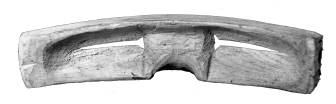
Traditional Inuit slit gog-
Because the diffusely-reflected ultraviolet
Canada
gles from Greenland that
radiation comes from all sides, it is difficult to
protect the eyes against
protect the eyes, though tight-fitting, UV-
In response to concern about contaminants in
ultraviolet radiation.
absorbing sunglasses with side flaps may help
traditional foods, the Canadian government
significantly. Traditional Inuit slit goggles pro-
launched the Arctic Environmental Strategy,
vide very effective protection and allow less
Northern Contaminants Program in 1992. A
than one percent of the damaging ultraviolet
general conclusion from this initiative is that
radiation to reach the eye.
the indigenous peoples of Canada's North are
exposed to higher levels of persistent organic
Another study of Inuit women showed that
contaminants and metals than the general pop-
the intake of chlordane, toxaphene, and to a les-
ulation in Canada. Moreover, some groups of
ser extent PCBs may also exceed tolerable dai-
Northwest Territories surveys
people have high enough body burdens of con-
ly intakes. This is in contrast to people living
taminants to cause health concerns.
in southern Canada, where market foods have
Northern Quebec surveys
negligible levels of persistent organic pollutants.
Southern Quebec surveys
Persistent organic pollutants
One of the least studied contaminants is
The immediate sources of persistent organic
toxaphene. The intake depends completely on
pollutants are marine mammals and fish in the
HCB, ╡g / liter
DDE, ╡g / liter
PCBs, ╡g / liter
diet. The major concern is that these contami-
0.20
1.0
2.0
nants are passed on to the developing fetus
and to breast-feeding children. The figure to
0.16
0.8
1.6
the right shows the levels of hexachloroben-
0.12
0.6
1.2
zene, DDE, and PCBs in the cord blood of
newborns. For some Inuit populations, the lev-
0.08
0.4
0.8
els are two to four times higher than for the
southern population of Canada.
0.04
0.2
0.4
In breast milk, the concentration of DDE is
four to five times higher in Inuit women in
0
0
0
northern Quebec than women in southern Ca-
Inuit
Inuit
Inuit
nada, reflecting the fact that the Inuit women's
Dene/Mщtis
residents
Dene/Mщtis
residents
Dene/Mщtis
residents
food includes animals high in the food web.
Inuit, Nunavik
Inuit, Nunavik
Inuit, Nunavik
Non-indigenous
Non-indigenous
Non-indigenous
People from the north shore of the Gulf of St.
Southern Quebec
Southern Quebec
Southern Quebec
Lawrence, who eat large amounts of fish and
food: narwhal and beluga blubber in the east-
Levels of persistent
gull eggs, have intermediate levels. There is too
ern Canadian Arctic are the most contami-
organic pollutants in
little data to analyze time trends, but so far
nated. A recent analysis of dietary surveys
blood plasma from dif-
ferent populations in
there is no indication that the DDT/DDE levels
from the late 1980s shows that the daily intake
Canada.
are going down, as they have in southern Cana-
of toxaphene often exceeded the tolerable
da. In the late 1960s, DDT levels in breast milk
daily intake. However, there is a large uncer-
from women in southern Canada were three
tainty factor in the tolerable daily intake value
times higher than they are in the Arctic today.
(TDI) for toxaphene due to the lack of infor-
Several studies also point to elevated levels
mation on its toxicity.
of PCBs. Most of the dioxin-like activity in the
For all the persistent organic contaminants
milk samples seems to come from dioxin-like
there is as yet very little scientific information
PCBs. A large Dutch study of contaminants in
linking harmful effects to these levels of expo-
breast milk and child development has shown
sure. When weighing this uncertainty against
that similar levels of dioxin-like activity, but
the known benefits of traditional foods, the
from other sources, have subtle effects on the
recommendation is usually to continue eating
immune systems and the neurological develop-
traditional foods, though a recent health eval-
ment of children. A preliminary report from a
uation has recommended that women of
Baffin Inuit
study on Canadian Inuit children showed an
reproductive age should consume less contami-
Tolerable daily intake
association between increasing PCB/dioxin/furan
nated traditional food, e.g. more caribou and
Mean
levels and immune system deficits, which could
less beluga. Women are also advised to con-
Median
lead to an increased susceptibility to disease.
tinue breast feeding.
Sahtu Dene/Mщtis
Several other POPs are also five to ten times
Average intake, ╡g / day/person
higher in the breast milk of Inuit women than
10000
in that of women from southern Canada.
1000
These include Mirex, chlordane, and hexa-
chlorocyclohexane.
100
A few studies have also tried to estimate the
10
intake of persistent organic pollutants by using
1
diet surveys. The figure to the right shows the
0.1
intake for a group of Inuit from Baffin Island,
who rely heavily on marine mammals and fish,
0.01
compared to Sahtu Dene/Mщtis, who rely heav-
0.001
ily on caribou and fish. For the Inuit group,
0.0001
intakes of chlordane and toxaphene exceed the
Hexa-
Hexa-
Chlor-
DDT
Dieldrin
Toxaphene
PCBs
chloro-
chloro-
danes
tolerable daily intakes. The intakes of hexa-
benzenes
cyclo-
chlorobenzene, hexachlorocyclohexane, and
hexane
PCBs are below but within a factor of ten of
Ranges of intake of per-
the tolerable daily intakes. For the Sahtu
Heavy metals
sistent organic pollutants
Dene/Mщtis, the values for toxaphene and
High mercury exposure is common in the Cana-
as estimated by diet sur-
veys among Baffin Inuit
chlordane are approximately one tenth of the
dian Arctic. In a large survey of people in more
and Sahtu Dene/Mщtis in
tolerable daily intakes, while the other conta-
than 500 aboriginal communities across Cana-
relation to tolerable
minants are well below these limits.
da, 57 percent of the Inuit and 20 percent of
daily intake levels.
182
Mercury in blood, ╡g / liter
Pollution
50
and human health
45
Inuit from Northwest Territories
40
First Nation Canadians
Time trend of mercury
concentrations in blood
35
from Inuit in Northwest
Territories and First
Nation Canadians.
1975
1980
1985
1989
the Dene had blood mercury levels above the
5 millisieverts per year in the 1960s and also
acceptable limit. The highest levels occur among
with a natural background radiation from all
Inuit from the eastern Northwest Territories
radioisotopes of 2 millisieverts per year.
and Nunavik and among northern Quebec
The major source of radiation for people in
Cree. In general, the levels of methyl mercury
the Canadian Arctic is from naturally occur-
are higher in northern and eastern Inuit com-
ring isotopes of polonium and lead, which
munities, where people eat large amounts of
accumulate in the muscle, liver, and kidney of
fish and sea mammals. Two recent dietary sur-
caribou. Some residents in northern commu-
veys indicate that Inuit women's daily intake
nities may be receiving radiation doses up to
of mercury exceeds the tolerable daily intake.
10 millisieverts per year from ingested polo-
Cadmium is a concern for smokers and for
nium.
people who eat large amounts of liver and kid-
Radon in buildings is probably less of a
ney from hoofed animals, especially caribou
problem in the Arctic than in southern Cana-
and muskox. A recent risk assessment suggests
da, since permafrost and snow tend to keep
that mild kidney damage may occur at intake
radon in the ground. The common practice of
levels that were previously considered safe.
building houses on pilings rather than directly
This may mean that even some non-smokers
on the ground also retards the buildup of
are at risk of mild kidney damage. Cadmium
radon in indoor air.
levels in smokers are as much as 20 times
higher than in non-smokers, and are high
Greenland
enough that they may have some impact on
kidney function.
Exposure to environmental contaminants in
Some indigenous communities in Canada
Greenland comes mostly from eating marine
have already addressed the health issues con-
mammals. For cadmium, smoking is also a
nected with cadmium. For northern Quebec
major source.
Cree, food intake puts cadmium levels close to
the tolerable daily intake, and one pack of cig-
Persistent organic pollutants
arettes a day pushes it above the limit. The Cree
A few studies of levels of organic pollutants,
Regional Authority has recommended that the
along with dietary surveys, show that expo-
use of traditional food does not have to be
sure to persistent organic pollutants is very
changed if smoking habits can be modified.
high, both compared with other countries and
Caribou in the Yukon herd and in the herds
in relation to the levels that may cause effects
between Great Slave Lake and Hudson Bay in
in people. The table below shows the levels of
the Northwest Territories also have very high
some organic contaminants in abdominal fat.
levels of cadmium in their kidneys. A risk
Mean levels of organochlorines in the fat of autopsies
assessment that has been endorsed by commu-
from Inuit; Greenland 1993.
nity leaders concludes that the most important
нннннннннннннннннннннннннннннннннннннннннннннннннн
action is to reduce tobacco smoking, which
Contaminant
g / kg
leads to excessive cadmium levels regardless of
нннннннннннннннннннннннннннннннннннннннннннннннннн
beta-HCH
109
the contribution from traditional foods.
Chlordane
874
Current levels of lead do not cause any
DDT+DDE
3987
immediate concern in Canada, but because
Hexachlorobenzene
676
lead can have such severe effects on children,
Mirex
153
PCBs
15 700
monitoring should continue in order to detect
нннннннннннннннннннннннннннннннннннннннннннннннннн
any increases.
Heavy metals
Radioactivity
For methyl mercury, high consumption of
The levels of radiocesium in freshwater fish
marine mammal meat leads to a high body
and caribou are below internationally-agreed
burden. In North Greenland, 16 percent of the
acceptable levels in meat. Whole body mea-
population have blood concentrations of mer-
surements of radioactivity show that the radia-
cury that exceed the levels at which toxic
tion dose from radiocesium is about 0.4 mil-
effects in the most susceptible persons might
lisieverts per year. This can be compared with
occur; see graph at opposite page, top left.
Mercury in blood, ╡g / liter
Cadmium in blood, ╡g / liter
183
250
8
Greenlanders in:
Greenlanders in:
Pollution
North Greenland
North Greenland
and human health
Northwest Greenland
7
Northwest Greenland
200
Southwest Greenland
Southwest Greenland
East Greenland
6
East Greenland
Mercury and cadmium
Greenlanders in Denmark
Greenlanders in Denmark
in blood from Green-
150
5
landers showing the pro-
portion, in percent, of
4
the population that has
100
blood values above a
3
certain level. The left fig-
ure shows that all North
2
Greenlanders have levels
50
above the blood concen-
1
tration that causes con-
25
cern (approximately 25
0
0
micrograms per liter),
10
50
90 95 99
10
50
90 95 99
and that almost all
Percentiles
Percentiles
Greenlanders living in
Denmark fall below this
Thus, the body burdens of both persistent
Local pollution
level. For cadmium, it is
organic pollutants and mercury are at levels
A few cases of local pollution have raised
difficult to relate level of
that might have a negative impact on people's
health issues in Greenland. The Black Angel
concern to blood con-
health. Although there are no examples of
zinc mine, situated close to the small village of
centrations.
overt toxic effects from environmental pollu-
Ukussissat in northern West Greenland, has
tants, the subtle effects likely to exist would be
contaminated the nearby fjord with zinc, lead,
very difficult to detect, easily overlooked, or
and cadmium. There have been some claims
easily masked by other factors.
that this has caused an increased incidence of
In spite of this disconcerting picture, most
disease in the local population, but this has not
health professionals with knowledge about
been verified.
Greenland agree that the positive health and
The second point source is the US Air Force
social aspects of traditional food far outweigh
bomber carrying nuclear weapons that crashed
any negative health effects of pollutants in the
on the sea ice and spread radioactive material
diet. More information from dietary surveys
in the marine sediments near Thule Air Base in
and about the contaminant levels in specific
1968. Danish workers employed in the clean-up
animal organs will make it possible to estab-
have claimed that they suffer from higher can-
lish more specific dietary guidelines for vulner-
cer mortality and reduced fertility as a result of
able subgroups in the population, such as
radiation exposure. However, several well-con-
women of reproductive age, pregnant women,
ducted epidemiological investigations have
and children.
failed to confirm these claims. Only a few Green-
A few studies have looked for decreases in
landers were employed in the clean-up and the
mercury levels. One study of blood from
accident happened far from Inuit villages.
mothers did not show any time trends. How-
A current source of local contamination is
ever, maternal and cord blood analyzed within
waste disposal and incineration in towns and
the AMAP monitoring program showed lower
villages, which is not well controlled.
levels than have been previously found in
northwest Greenland. One explanation might
Faroe Islands
be that pregnant women are eating less marine
foods than in past years. Monitoring of sele-
Mercury, PCBs, and DDT are the contami-
nium levels also points to decreasing consump-
nants of major concerns in the Faroe Islands.
tion of marine food.
The major route of exposure is through high
Cadmium levels in people from East and
consumption of whale meat.
North Greenland are the same as those for
The median level of mercury in newborn
Greenlanders living in Denmark, whereas West
cord blood in a recent study was 24.2 micro-
Greenlanders have higher levels; See graph at
grams per liter, and about one fourth of the
the top right. The concentrations are lower
samples had levels above 40 micrograms per
than have been previously reported, but are
liter. This is higher than the normal acceptable
still high enough to cause concern about mild
range. Moreover, a very recent study by the
kidney damage. To minimize cadmium intake,
Faroe Islands health authorities have shown
action should be taken to reduce smoking.
that of a thousand women examined at child-
Lead levels among Greenlanders do not dif-
birth, 15 percent had hair-mercury concentra-
fer much from people in industrialized areas of
tions above the tolerable limit.
Europe. The levels have decreased since the
The intake of PCBs and DDE from whale
elimination of lead from gasoline, indicating
blubber is high. For example, average daily
strongly that the lead in the blood of Green-
intake of PCBs is estimated to be more than
landers most probably comes from long-range
200 micrograms, which is an order of magni-
transport.
tude higher than in Scandinavia.
industry. One study also raises the concern
184
Iceland
that the occupational environment in nickel
Pollution
and human health
According to AMAP's circumpolar study, the
refineries may cause adverse effects on repro-
levels of persistent organic pollutants and
duction and development. A thorough follow-
heavy metals in Iceland are marginally higher
up of pregnancies and new-born babies has
than those in Swedish and Norwegian women
been initiated.
and markedly less than in Greenlandic women.
Indigenous people in Russia are mostly
This supports some earlier studies of PCBs and
occupied in their traditional activities of herd-
organochlorine pesticides in breast milk and in
ing, hunting, and fishing and thus are more
fat tissue collected during autopsies, which
exposed through the food chain than through
also indicate intermediate levels.
their workplace.
Persistent organic pollutants
Norway, Finland and Russia
There are several studies of persistent organic
The national reports of Norway, Finland, and
pollutants, including a survey of maternity
Russia are partly integrated because of joint
patients carried out by AMAP. The results
efforts to assess the effects of contaminants on
from Nikel on the Kola Peninsula of Russia
human health.
show very high levels of beta-hexachlorocyclo-
The most severe environmental problems
hexane and total DDT in plasma from deliver-
are related to local industrial pollution in the
ing women. These levels may also be in the
Norilsk region of Siberia and in the Kola Pen-
range of the lowest-observed-adverse-effect-
insula of Russia, including the regions close to
levels for neurological effects in babies report-
the Norwegian/Russian/Finnish borders. As
ed from other regions. Reproductive effects
discussed in the chapters Acidification and
and increasing risk of breast cancer may also
Arctic Haze and Heavy Metals, the air concen-
be associated with these DDT levels. Breast
trations of sulfur dioxide, nickel, and copper
milk from these women is being analyzed.
can be extremely high close to the metal-smel-
There are several regional studies of breast
ter complexes. Locally, sulfur dioxide levels
milk, summarized in the table on top of oppo-
sometimes twenty times higher than permissi-
site page. The levels of persistent organic pol-
ble limits. The increased incidence of respira-
lutants in breast milk from Norway are gener-
tory diseases, asthma, and allergies is probably
ally very low from a global perspective, and
related to the high sulfur dioxide levels.
far below the lowest-observed-adverse-effect-
The table below summarizes the potential
level. The concentrations of chlorinated pesti-
point sources in Russia. In Norway, the only
cides in breast milk from Eastern Europe are,
point source has been an iron-producing plant,
except for chlordane, generally significantly
Syd-Varanger. The plant closed permanently in
higher in all the sampling areas. The high con-
1996, but previous releases of dioxins are
centration of DDT in relation to the break-
being investigated.
down product DDE points to some current
In industrial areas, occupational exposure
source. One source for the high levels of DDT
to contaminants is a serious concern. In Rus-
and hexachlorocyclohexane in the Russian
sia, this includes people in coal and metal min-
samples may be current Russian use of insecti-
ing and in gas and oil production. For exam-
cide mixtures that contain concentrated solu-
ple, lung and nasal cancer are recognized as
tions of DDT and hexachlorocyclohexane.
chronic occupational diseases in the nickel
Exposure during a woman's stay at the mater-
nity clinic cannot be ruled out since these
Industrial cities of the Russian Arctic.
insecticides are regularly used in hospitals
ннннннннннннннннннннннннннннннннннннннннннннннннннннннннннннннннннннннннннн
against domestic insects such as cockroaches.
Region
City
Population
Main industrial activity
ннннннннннннннннннннннннннннннннннннннннннннннннннннннннннннннннннннннннннн
Breast milk samples from Fennoscandia
Murmansk Oblast
Murmansk
473 000
Harbor, ship repair,
show a slight decrease in persistent organic
Severodvinsk
66 000
Ship building
contaminants over the past decade. The de-
Kandalaksha
54 000
Aluminium industry
crease may be the result of bans and other
Apatity
89 000
Extraction of apatite
restrictions on the use of several organic pesti-
Kirovsk
43 000
Extraction of apatite
cides and PCBs in western countries.
Monchegorsk
68 000
Nickel industry
Olenegorsk
47 000
Extraction of iron
Kovdor
31 000
Extraction of iron
Metals
Zapolyarnyy
23 000
Nickel industry
Information about metal levels comes from
Nikel
22 000
Nickel industry
AMAP's Human Health program presented
---------------------------------------------------------------------------------------------------------------
earlier in this chapter in the circumpolar
Komi Republic
Vorkuta
117 000
Extraction of coal
assessment of heavy metals in the Arctic. Mer-
Inta
61 000
Extraction of coal
---------------------------------------------------------------------------------------------------------------
cury levels do not seem to pose any health
Yamalo-Nenets
New Urengoy
105 000
Gas extraction
risks in the joint Norwegian-Russian study
Autonomous Okrug
Nadim
52 000
Gas extraction
areas, which included Norway, Kola, and
---------------------------------------------------------------------------------------------------------------
Arkhangelsk. Mercury levels in delivering
Taimyr
Norilsk
169 000
Nickel, copper, cobalt, and
women from the Norwegian town of Ham-
Autonomous Okrug
other non-ferrous industry
ннннннннннннннннннннннннннннннннннннннннннннннннннннннннннннннннннннннннннн
merfest are moderately higher than elsewhere
in the region and point to fish as the major
Organic pollutants in breast milk from several different studies. The results are in
source of mercury.
nanograms per gram fat.
Cadmium levels in blood from all three
ннннннннннннннннннннннннннннннннннннннннннннннннннннннннннннннннннннннннннн
Total
Ratio
countries are generally very low compared
Total
chlor-
Total
DDT/
Total
with known effect levels. As expected, smokers
Region
HCB
HCH
dane
DDT
DDE
PCB
have significantly higher levels of cadmium,
ннннннннннннннннннннннннннннннннннннннннннннннннннннннннннннннннннннннннннн
with a few individuals reaching lowest known
Russia
effects limits. A Finnish study of reindeer
Severodvinsk 1996
95
467
35
1336
0.16
517
Arkhangelsk 1996
99
558
27
2088
0.20
516
herders showed rather high cadmium levels,
Murmansk 1993
129
858
59
1615
0.14
484
and there has been speculation as to whether
Monchegorsk 1993
111
745
33
1154
0.16
535
this could be connected to pollution from the
Norilsk 1995
457
nickel smelters on the Kola Peninsula. More
Salekhard 1995
406
recent studies have not confirmed that the
Norway
Kola smelters are the source of the cadmium.
Troms° 1993
39
34
42
328
0.06
383
Lead levels in the study area were mostly
ннннннннннннннннннннннннннннннннннннннннннннннннннннннннннннннннннннннннннн
below the health reference values, though lead
would not be expected to have adverse effects
levels were significantly higher in children and
until they exceed 200 to 300 becquerels per
mothers in Russia than in Norway. Russia still
kilogram, but a thorough cancer-risk assess-
uses leaded gasoline, but because it has fewer
ment for the Norwegian Saami population of
cars than many other countries, lead levels are
Finnmark has not yet been carried out. Figures
lower than those found in Western Europe 20
from the Norwegian Cancer Registry, however,
years ago.
do not point to any increased cancer risk in
Children are especially sensitive to lead. In
Finnmark. Unverified data from the Russian
some Russian communities, the blood levels in
city of Naryan Mar, near Novaya Zemlya, show
children are high enough to cause concern.
a very high incidence of cancer and congenital
This includes the communities of Krasnochelie
malformations in both the indigenous and gen-
and Lovozero. Traffic is not a likely source as
eral populations. These results must be investi-
the levels are higher than in big cities. The lead
gated more thoroughly as soon as possible.
might come from meat contaminated by lead
ammunition.
Sweden
Nickel levels in urine are significantly higher
in the Russian study groups than in the Nor-
Very few studies of contaminants have been
wegian groups, and the Russian values are
carried out in the Swedish Arctic. Therefore,
above normal. Compared with the levels of
the following conclusions are based on levels
nickel in people working in the nickel smelters,
in the general Swedish population. A recent
the exposure of the general population is mild
report on environmental health listed five pri-
to moderate. Although the health consequen-
ority problem areas. These include asthma and
ces are not believed to be of concern, these ob-
respiratory tract problems from indoor and
servations need to be examined more closely.
outdoor air pollution; lung cancer from air
The levels do not correlate with the distance
pollution, radon, and passive smoking; malig-
from the nickel smelters, and the possible
nant melanoma (skin cancer) connected with
sources therefore need to be investigated. One
sun bathing habits; accidents; and the accumu-
source might be contaminated drinking water.
lation of persistent environmental toxins.
Radionuclides
Persistent organic contaminants
In northwestern Russia and in Fennoscandia,
In general, the levels of several persistent organ-
the Chernobyl accident has resulted in a high
ic contaminants seem to be declining. Never-
dietary intake of radiocesium for some popula-
theless, a risk assessment for PCBs concluded
tion groups. This is in addition to historical
that it cannot be ruled out that the current ex-
contamination from nuclear weapons tests in
posure of the Nordic population approximates
Novaya Zemlya.
the level which may give small but measurable
Levels of radiocesium in placentas collected
effects on children's behavioral and intellectual
from the Norwegian and Russian Arctic range
performance. The most recent measurements
from below the detection limit to 83 bec-
of PCBs in breast milk, from 1986, found lev-
querels per kilogram placenta. The levels seem
els of 580 nanograms per gram lipid.
to correlate with the Chernobyl fallout zone,
The high levels of persistent organic conta-
with the highest counts in people who eat large
minants in some foods have prompted the
amounts of traditional food. The Saami popu-
Swedish Food Administration to recommend
lation of Finnmark, which is outside the Cher-
that Baltic herring, wild salmon, and sea trout
nobyl high-fallout zone but consumes large
from the Baltic and the Gulf of Bothnia should
amounts of traditional food, has levels that are
not be eaten more than once a week on aver-
similar to the general Norwegian population
age, and that girls and women of reproductive
within the Chernobyl zone.
age should limit their consumption to once a
Based on the most recent literature, radioce-
month. Liver from cod and burbot should be
sium concentrations in placental fresh tissue
avoided altogether.
Heavy metals
opment, reproductive impacts, and effects on
186
Mercury levels in Swedish women are very low
the immune system. Several of these effects
Pollution
and human health
compared with the levels in fish-eating popula-
may be mediated through the hormone-dis-
tions in other parts of the world, and do not
rupting properties of some contaminants.
cause any health concern. However, to further
For certain geographic areas, current
reduce the risk to the fetus, the Swedish Food
dietary exposure to persistent organic pollu-
Administration advises pregnant women to
tants, to methyl mercury, and to cadmium are
restrict their intake of mercury by avoiding
high enough to indicate a need for public
some freshwater fish.
health measures. For example, elevated levels
Lead exposure is low and is unlikely to be a
of toxaphene, PCBs, and chlordane coupled
major health problem in Sweden.
with current intake scenarios suggest that
Cadmium levels in the Swedish diet are a lit-
some indigenous groups are exposed to levels
tle less than half of those which can lead to
that exceed tolerable daily intakes.
cadmium-related kidney diseases in a small
Human exposure to radionuclides has
fraction of the population. Cadmium levels in
declined since the cessation of above-ground
smokers are higher than in non-smokers.
nuclear weapons testing. However, Arctic peo-
ples are exposed to higher levels of radionu-
Radioactivity
clides than people in the temperate zone.
After the Chernobyl accident, radiocesium has
Moreover, radiation from natural sources has
been measured both in breast milk and as
resulted in certain indigenous groups having
whole-body content. The average whole body
higher radiation risks than the general public.
count for the general population varied
The goal of public health actions should be
between 1100 and 2000 becquerels. For the
to reduce exposure to contaminants without
Saami population the range was 3400 to
threatening the social, cultural, spiritual, and
25 000. It seems that less of the Chernobyl fall-
physical well-being that is connected to collect-
out is taken up by people than was the case
ing, sharing, and consuming traditional foods.
with nuclear weapons fallout. The radiocesium
The current traditional diet of Arctic indige-
might behave differently in the environment,
nous people provides a substantial proportion
but it might also be a result of effective coun-
of energy and protein requirements as well as
termeasures, such as dietary advice and strin-
most vitamins, essential elements, and miner-
gent regulations concerning permissible levels
als. The high consumption of fish and marine
of radiocesium in food.
mammals may contribute to the lower inci-
dence of heart disease among indigenous peo-
ples in Alaska, Greenland, and Arctic Canada.
Summary
Weighing these known benefits against the
suspected, but not yet fully understood, effects
Several groups of people in the Arctic are high-
of contaminants, the conclusion at present is
ly exposed to environmental contaminants.
that consumption of traditional foods should
Persistent contaminants are carried to the Arc-
continue. However, consideration should be
tic via long-range transport and accumulate in
given to developing dietary advice to promote
animals that are used as traditional foods.
the use of less-contaminated traditional food
Traditional foods have known nutritional
items which will also maintain nutritional
value and there is as yet little conclusive scien-
benefits. Such guidelines should be developed
tific evidence directly linking effects in adults
at the local level within the context of local
to the levels of exposure that have been
cultures.
observed in the Arctic. Therefore it is not
Although there is both scientific and public
always clear what public health measures
concern that breast feeding will transfer conta-
should be taken to reduce the exposure of pop-
minants from the mother to her child, present
ulations who rely on traditional foods.
knowledge clearly indicates that the known
The growing brain is particularly sensitive
benefits of breast feeding outweigh the cur-
to contaminants, and the influence on fetal
rently-known risks from contaminants. To
development is of special health concern.
date, there have been no proposals to limit the
Methyl mercury and several persistent organic
duration of breast feeding.
pollutants cross the placental barrier, and in
The long-term reduction of exposure to per-
some groups of people PCB and mercury levels
sistent organic pollutants can only be accom-
in mother's blood approach and exceed those
plished through international conventions on
thought to cause developmental effects in chil-
bans and restrictions in production and use of
dren. Preliminary results indicate that the aver-
these substances. The relative importance of
age umbilical cord blood levels of several per-
natural and anthropogenic sources of heavy
sistent organic pollutants and methyl mercury
metals in the Arctic needs to be determined,
are two- to ten-fold higher in newborns from
and appropriate controls implemented.
the AMAP region than in newborns from
regions farther south.
For a number of persistent organic pollu-
tants, health concerns also include child devel-