Go back to opening screen
9
Chapter 2
Physical/Geographical Characteristics
of the Arctic
Contents
2.2.1. Climate boundaries
2.1. Introduction . . . . . . . . . . . . . . . . . . . . . . . . . . . . . . . . . . . . . . .
9
On the basis of temperature, the Arctic is defined as the area
2.2. Definitions of the Arctic region . . . . . . . . . . . . . . . . . . . . . . .
9
north of the 10°C July isotherm, i.e., north of the region
2.2.1. Climate boundaries . . . . . . . . . . . . . . . . . . . . . . . . . . . . .
9
2.2.2. Vegetation boundaries . . . . . . . . . . . . . . . . . . . . . . . . . . . .
9
which has a mean July temperature of 10°C (Figure 2·1)
2.2.3. Marine boundary . . . . . . . . . . . . . . . . . . . . . . . . . . . . . . .
10
(Linell and Tedrow 1981, Stonehouse 1989, Woo and Gre-
2.2.4. Geographical coverage of the AMAP assessment . . . . . . .
10
gor 1992). This isotherm encloses the Arctic Ocean, Green-
2.3. Climate and meteorology . . . . . . . . . . . . . . . . . . . . . . . . . . . .
10
land, Svalbard, most of Iceland and the northern coasts and
2.3.1. Climate . . . . . . . . . . . . . . . . . . . . . . . . . . . . . . . . . . . . . .
10
2.3.2. Atmospheric circulation
. . . . . . . . . . . . . . . . . . . . . . . . .
11
islands of Russia, Canada and Alaska (Stonehouse 1989,
2.3.3. Meteorological conditions . . . . . . . . . . . . . . . . . . . . . . . .
11
European Climate Support Network and National Meteoro-
2.3.3.1. Air temperature . . . . . . . . . . . . . . . . . . . . . . . . . .
11
2.3.3.2. Ocean temperature . . . . . . . . . . . . . . . . . . . . . . .
12
logical Services 1995). In the Atlantic Ocean west of Nor-
2.3.3.3. Precipitation . . . . . . . . . . . . . . . . . . . . . . . . . . . .
12
way, the heat transport of the North Atlantic Current (Gulf
2.3.3.4. Cloud cover . . . . . . . . . . . . . . . . . . . . . . . . . . . . .
13
Stream extension) deflects this isotherm northward so that
2.3.3.5. Fog . . . . . . . . . . . . . . . . . . . . . . . . . . . . . . . . . . .
13
2.3.3.6. Wind . . . . . . . . . . . . . . . . . . . . . . . . . . . . . . . . . .
13
only the northernmost parts of Scandinavia are included.
2.4. Physical/geographical description of the terrestrial Arctic
13
Cold water and air from the Arctic Ocean Basin in turn
2.4.1. General geographical description . . . . . . . . . . . . . . . . . . .
13
push the 10°C isotherm southward in the region of North
2.4.2. Geology and physiography . . . . . . . . . . . . . . . . . . . . . . .
15
America and northeast Asia, taking in northeastern Labra-
2.4.3. Permafrost and soils . . . . . . . . . . . . . . . . . . . . . . . . . . . . .
16
dor, northern Quebec, Hudson Bay, central Kamchatka, and
2.5. Arctic freshwater environments . . . . . . . . . . . . . . . . . . . . . .
17
2.5.1. Rainfall and snow . . . . . . . . . . . . . . . . . . . . . . . . . . . . . .
17
much of the Bering Sea (Stonehouse 1989).
2.5.2. Groundwater . . . . . . . . . . . . . . . . . . . . . . . . . . . . . . . . . .
17
Another geographical indicator of the Arctic region that is
2.5.3. Wetlands . . . . . . . . . . . . . . . . . . . . . . . . . . . . . . . . . . . . .
17
partially determined by climate is the presence of permafrost
2.5.3.1. Lowland polygon bogs and fens . . . . . . . . . . . . . .
17
2.5.3.2. Peat mound bogs . . . . . . . . . . . . . . . . . . . . . . . . .
18
(Barry and Ives 1974). The southern boundary of continu-
2.5.3.3. Snowpatch fens . . . . . . . . . . . . . . . . . . . . . . . . . .
18
ous permafrost is shown in Figure 2·11.
2.5.3.4. Tundra pool shallow waters . . . . . . . . . . . . . . . . .
18
2.5.3.5. Floodplain marshes . . . . . . . . . . . . . . . . . . . . . . .
18
2.5.3.6. Floodplain swamps . . . . . . . . . . . . . . . . . . . . . . .
18
2.5.3.7. Wetland occurrence . . . . . . . . . . . . . . . . . . . . . . .
18
2.5.4. Rivers . . . . . . . . . . . . . . . . . . . . . . . . . . . . . . . . . . . . . . .
18
2.5.5. Lakes . . . . . . . . . . . . . . . . . . . . . . . . . . . . . . . . . . . . . . . .
19
2.5.6. Estuaries . . . . . . . . . . . . . . . . . . . . . . . . . . . . . . . . . . . . .
20
2.6. Arctic marine environment. . . . . . . . . . . . . . . . . . . . . . . . . . .
20
2.6.1. Geographical area and bathymetry . . . . . . . . . . . . . . . . .
20
2.6.2. Hydrographic conditions in the Arctic . . . . . . . . . . . . . . .
21
2.6.3. Ocean currents . . . . . . . . . . . . . . . . . . . . . . . . . . . . . . . . .
23
2.6.4. Sea ice . . . . . . . . . . . . . . . . . . . . . . . . . . . . . . . . . . . . . . .
23
Acknowledgments . . . . . . . . . . . . . . . . . . . . . . . . . . . . . . . . . . . . .
23
References . . . . . . . . . . . . . . . . . . . . . . . . . . . . . . . . . . . . . . . . . . . .
23
2.1. Introduction
The vast region of the Arctic extends across northern North
America, northern Europe and northern Asia, taking in eight
countries and the expanses of sea and ocean in between. The
terrestrial, freshwater and marine environments throughout
this area exhibit considerable variation in climate, meteoro-
logy and physical geography. This chapter describes this di-
versity as a background to discussions on contaminants and
AMAP area
other stressors in these environments.
Arctic marine boundary
Arctic circle
2.2. Definitions of the Arctic region
10 C July isotherm
Figure 2·1. The Arctic as defined by temperature (after Stonehouse 1989),
The Arctic is often delimited by the Arctic Circle (66°32'N)
and the Arctic marine boundary, also showing the boundary of the AMAP
(Figure 2·1), which approximates the southern boundary of the
assessment area.
midnight sun. Such a definition, however, is simplistic, given
variations in temperature, presence of mountain ranges, distri-
2.2.2. Vegetation boundaries
bution of large bodies of water, and differences in permafrost
occurrence. Outlined below are some definitions of the Arctic
A floristic boundary used to delimit the terrestrial Arctic is
region which take into account physical, geographical and/or
the treeline (Figure 2·2) (Linell and Tedrow 1981). Simply
ecological characteristics. Following these, the Arctic region, as
defined, the treeline is the northern limit beyond which trees
defined for the purposes of the AMAP assessment, is discussed.
do not grow. More accurately, it is a transition zone between
10
AMAP Assessment Report
76°N. Warm Pacific water passing through the Bering Strait
meets the Arctic Ocean water at approximately 72°N, from
Wrangel Island in the west to Amundsen Gulf in the east
(Stonehouse 1989). However, once it passes through the
Bering Strait, Pacific water begins to undergo modification
on the broad Chukchi shelf due to ice-related processes
(freezing, melting, cooling) and the addition of runoff.
Modified water becomes incorporated into the surface
mixed layer or subducts and flows down the undersea can-
yons to contribute to the halocline. Recognizing the diffi-
culty of assigning a distinct boundary separating Pacific
water from Arctic water, the boundary is arbitrarily drawn
across Bering Strait as the point at which modification is
likely to commence. Similarly, for the purposes of the AMAP
assessment, and recognizing other factors which may be
used to define the Arctic marine area, such as Arctic marine
biology and sea ice cover, the AMAP marine area to the
south of the region as defined above also includes: Davis
Strait, the Labrador Sea and Hudson Bay; the Greenland,
Iceland, Norwegian, Barents, Kara and White Seas; and the
Bering Sea.
2.2.4. Geographical coverage
High Arctic
Subarctic
of the AMAP assessment
Low Arctic
Treeline
Given the different definitions of the Arctic, based on phys-
ical-geographical characteristics as described above, and
Figure 2·2. Arctic and subarctic floristic boundaries (Bliss 1981, Linell and
Tedrow 1981, Nordic Council of Ministers 1996).
those based on political and administrative considerations
within different countries, no simple delineation of the Arc-
continuous boreal forest and tundra, with isolated stands of
tic region was applicable for the purposes of the AMAP as-
trees. In North America, the tundra-forest boundary is a nar-
sessment. To establish a geographical context for the AMAP
row band, but in Eurasia this region can be up to 300 km
assessment, therefore, a regional extent was defined based
wide (Stonehouse 1989). It corresponds with the climatic
on a compromise among various definitions. This incorpo-
zone where the Arctic air masses meet the air masses orig-
rates elements of the Arctic Circle, political boundaries, veg-
inating from the south over the subarctic (Bryson 1966 in
etation boundaries, permafrost limits, and major oceano-
Larsen 1973).
graphic features. The region covered by AMAP is, therefore,
The treeline roughly coincides with the 10°C July iso-
essentially the terrestrial and marine areas north of the Arc-
therm (Stonehouse 1989, Woo and Gregor 1992). How-
tic Circle (66°32'N), and north of 62°N in Asia and 60°N in
ever, in some areas, the treeline lies 100-200 km south of
North America, modified to include the marine areas north
the isotherm, adding western Alaska and the western Aleu-
of the Aleutian chain, Hudson Bay, and parts of the North
tians to the Arctic region (Stonehouse 1989).
Atlantic Ocean including the Labrador Sea.
The Arctic region is often divided by ecologists into the
As stated above, the AMAP boundary was established
High Arctic and the Low Arctic as shown in Figure 2·2
to provide a geographical context for the assessment, in
and described in chapter 4, section 4.4.1. South of the
particular source-related assessment issues, i.e., considera-
Arctic is the subarctic, the region lying between the closed-
tion of sources within and outside the Arctic. The relevance
canopy boreal forests to the south and the treeline to the
of the AMAP boundary (Figure 2·1) varies when consider-
north (Figure 2·2). This region, which combines character-
ing different issues, and it has therefore been applied ac-
istics of both the boreal forest and the Arctic tundra, is
cordingly. Thus, contaminant levels in biota are addressed
also referred to as the taiga or forest tundra. The southern
in relation to the geographical occurrence of the species
boundary of the subarctic generally corresponds with the
concerned; demographic data are discussed in relation to
southern limits of discontinuous and sporadic permafrost.
administrative regions on which, for example, census data
Thus, permafrost is present throughout most of the sub-
are collected.
arctic (Linell and Tedrow 1981).
2.3. Climate and meteorology
2.2.3. Marine boundary
2.3.1. Climate
Based on oceanographic characteristics, the marine bound-
ary of the Arctic is situated along the convergence of cool,
The polar areas are characterized by low air temperatures.
less saline surface waters from the Arctic Ocean and warm-
This is because they receive, on an annual basis, less solar
er, saltier waters from oceans to the south (Figure 2·1). In
radiation than other parts of the world. However, the radia-
the eastern Canadian Arctic Archipelago, this zone exists
tion levels vary greatly depending on the season. In the win-
approximately along a latitude of 63°N, and swings north
ter months, there is a total lack of incoming solar radiation,
between Baffin Island and the west coast of Greenland. Off
while in the summer, the poles receive higher levels of solar
the east coast of Greenland, the marine boundary lies at ap-
radiation than any other place on Earth.
proximately 65°N. The warming effect of the North Atlan-
The annual amount of solar radiation received is less than
tic Current deflects this boundary north of 80°N west of
that which is lost to space by long-wave radiation, since a
Spitsbergen, while it moves southward in the Barents Sea to
large part of the solar radiation that reaches the Earth is re-
Chapter 2 · Physical/Geographical Characteristics of the Arctic
11
flected by extensive cloud, snow and ice cover. This radia-
2.3.2. Atmospheric circulation
tion imbalance produces low temperatures and results in a
redistribution of heat from southern latitudes via air and
The pattern of mean sea-level pressure for January in the
ocean currents (Varjo and Tietze 1987). This energy regime
Arctic shows a low-pressure area over the North Atlantic
is the fundamental factor driving the Arctic climate.
Ocean around southern Greenland and Iceland (Icelandic
The effect of macro-scale topography of the Earth's sur-
Low) and a low-pressure area over the Pacific Ocean south
face, in particular the distribution of land, sea and moun-
of the Aleutians (Aleutian Low) (Figure 2·3). The influence
tains, is important for regional and local climatic conditions
of the Icelandic Low extends to the North Pole, while that
in the Arctic. The frequency and the preferred tracks of the
of the Aleutian Low is effectively blocked by the mountains
persistent Pacific and Atlantic low-pressure systems and the
of Alaska and northeast Siberia (Barry and Hare 1974). The
position of the persistent high-pressure systems not only
large-scale air circulation over the North Atlantic Ocean is
play an important role in the existence of the regional and
determined by the Icelandic Low and the high-pressure areas
local climates in the Arctic, but also link the Arctic climatic
over Greenland and the Central Arctic Basin. The prevailing
system to the world climatic system.
winds are westerly or southwesterly between Iceland and
Scandinavia, transporting warm and humid air from lower
latitudes toward the Arctic. Farther north, the circulation is
1000
Aleutian Low
generally anticyclonic around the pole with easterly and
northeasterly prevailing winds. Strong winds over large
1004
areas are associated with intense depressions. These winds
1008
1012
are most frequent in the Atlantic sector of the Arctic where
1016
they follow a track from Iceland to the Barents Sea in the
winter. In January, the anticyclones are most frequent and
High
strongest over Siberia and Alaska/Yukon, with a weaker
1024
1020
system over the central Arctic Basin and Greenland.
1020
High
In July, the Aleutian Low disappears and the low-pressure
area off Iceland shifts to southern Baffin Island in Canada
1016
(Canadian Low) (Figure 2·4). The pressure is low over Cen-
tral Siberia and a weak ridge of high pressure over the Arctic
1032
Ocean separates this low from the Canadian Low. High-
1012
1028
pressure areas are located around the North Pole and north
1008
of the Pacific Ocean (Barry and Hare 1974). Atmospheric
1000
1020
Icelandic Low
1024
circulation patterns are further discussed in chapter 3, sec-
1004
tion 3.2.
Elevation
2.3.3. Meteorological conditions
2 000 m
1016
1020
1 000 m
2.3.3.1. Air temperature
Climate conditions in the Arctic are divided into maritime
and continental subtypes. A maritime climate is characteris-
Figure 2·3. Mean atmospheric sea-level pressure (mb) in the Arctic in Jan-
uary (after Barry and Hare 1974).
tic of Iceland, the Norwegian coast, and the adjoining parts
of Russia. These areas have moderate, stormy winters. The
summers are cloudy, but mild with mean temperatures of
about 10°C. The average winter temperatures are 2°C to
1°C in the Icelandic lowland, 2°C at Bodø on the Norwegian
coast, and 11°C at Murmansk on the Russia coast (Barry
1024
1020
and Chorley 1992, EEA 1996). Figure 2·5 shows the distri-
bution of January and July air temperatures in the Arctic.
1016
1012
A maritime climate is also found directly along the Alas-
kan coast. This zone is very narrow because of the moun-
tains of the Alaska and Coastal Ranges. Winters here are
Low
moderate and the summers are mild, but cloudy. The average
1004
temperature at Anchorage ranges from 5°C in winter to
1008
10°C in summer.
Canadian
Continental climate is found in the interior of the Arctic
Low
from northern Scandinavia toward Siberia, and from eastern
1008
Alaska toward the Canadian Arctic Archipelago, with much
lower precipitation and significant differences between sum-
mer and winter conditions (July means of 5-10°C; January
1012
means of 20° to 40°C) (Prik 1959). Over the ice-covered
Arctic Ocean, both the ice and the underlying sea have a
1016
1020
regulating effect on temperature. The minimum air tempera-
Elevation
1024
ture is moderated by heat conducted from seawater below
the ice. Generally, in the central Arctic, the average tempera-
2 000 m
High
1 000 m
ture is between 30° and 35°C in winter and between 0°
and 2°C in summer.
Moving depressions, and heat transported by ocean cur-
Figure 2·4. Mean atmospheric sea-level pressure (mb) in the Arctic in July
(after Barry and Hare 1974).
rents, have a warming effect on the climate which becomes
12
AMAP Assessment Report
2.3.3.2. Ocean temperature
January
90°E
As in the atmosphere, there is both annual and interannual
180°
variability in ocean temperature. This is most pronounced in
the warmer water masses. Variability in cold Arctic waters is
small, but important. In the North Atlantic, the ocean ap-
pears to alternate between warm and cold states. The length
of these states may vary, but fluctuations with periods of 3-5
years are most frequent. The varying temperature condition
in the western North Atlantic is opposite to that in the east-
ern North Atlantic. This means that when the Barents Sea is
in a warm state, the coast of Newfoundland is in a cold state
(Sundby pers. comm.). This feature is also found in the dis-
tribution of ice. When there are heavy sea ice conditions in
the northeast Atlantic, there is little ice in the Labrador Sea,
and vice versa (Gloersen et al. 1992). There is also large var-
iability in ice distribution in the Bering Sea, but at present,
there is no evidence that this is linked to the variability in
the Atlantic.
The temperature state of the ocean appears to be closely
linked to atmospheric circulation, with a positive feedback
0°
90°W
mechanism existing between the atmospheric and oceanic
circulations. It appears that high atmospheric pressure is as-
sociated with low temperatures in the ocean while low pres-
-48 -43 -38
-33
-28 -23
-18
-13
-8
-3
2
7
9.5 °C
sure is related to a warmer ocean. Changes in ocean climate
influence transport mechanisms and ice cover. In warm
years, there is an increased transport of warm water masses
to the Arctic, resulting in decreased ice cover. In cold years,
July
transport of warm water to the Arctic is reduced and sea-ice
90°E
180°
coverage is greater (Ikeda 1990a, 1990b, Aadlandsvik and
Loeng 1991).
2.3.3.3. Precipitation
The total annual precipitation in the Arctic is generally less
than 500 mm and typically between 200 and 400 mm (Losh-
chicov 1965) (Figure 2·6). Along the Arctic coast, the pre-
cipitation is higher, and over the central Polar Basin it is
lower. Cold air contains less moisture, therefore, although
the frequency of precipitation may be high, the overall inten-
1000
400
600
600
400
800
200
600
600
600
800
300
800
600
600
600
400
300
600
0°
90°W
800 1000
300
150
600
300
200
-13
-8
-3
2
7
9.5 °C
600
800
Figure 2·5. Mean January and July surface air temperatures (°C) in the
Arctic (Parkinson et al. 1987).
apparent if one compares temperatures among stations at
600
1600
similar latitudes. The average January temperature of a sta-
400
tion in the Canadian Arctic Archipelago is approximately
20°C lower than the January temperature of a station at the
1200
400
same latitude on Svalbard. The warming effect of the mov-
600
1000 800
800
1600
ing depressions extends as far as the northeastern parts of
1600
1000
the Barents Sea. During the summer season, temperature
1200
1600
variations along the latitudes are much reduced, due to the
moderating effect of the sun's heat.
Figure 2·6. Distribution of precipitation (mm/y) in the Arctic (AARI 1985).
Chapter 2 · Physical/Geographical Characteristics of the Arctic
13
sity is low. This explains why the total accumulation of
nyas. Winds, or more precisely differences in air pressure
snow is relatively low in winter over much of the Arctic.
which cause winds, are often closely related to ocean circu-
The spatial precipitation pattern in the Arctic can be ex-
lation as discussed by Ikeda (1990b) and Aadlandsvik and
plained in terms of the effects of elevation changes and
Loeng (1991).
proximity to maritime sources of moisture. Precipitation
Surface winds are greatly affected by the presence of tem-
levels decline with increasing distance inland from the oceans,
perature inversions. In Greenland, katabatic winds are formed
and in general, levels decrease in a west-east direction across
as air in the dense, cold inversion layer flows down the slopes
the continents in the direction of movement of most low-
of the ice sheet toward the coast under the influence of gra-
pressure systems.
vity. These winds are especially well developed in winter
The lowest precipitation levels on land are approximate-
when the air comes into contact with the ice surface and is
ly 140 mm/y, occurring in eastern Siberia, northern Canada
chilled. With the exception of these parts of Greenland, wind
and Greenland. In general, total precipitation increases to
speeds are generally slowed by temperature inversions as the
above 600 mm/y from these areas toward the Atlantic and
air is effectively isolated from faster-moving air currents
Pacific Oceans (Sugden 1982).
above (Sugden 1982).
Maritime areas in the subarctic have much higher preci-
Two dominant air currents in the Arctic are associated
pitation. In southern Iceland, the annual precipitation ranges
with cold air flowing in winter from the high-pressure zone
from below 800 mm to over 3000 mm, and on mountains
over northern Siberia to the Pacific, and air flowing northwest
and glaciers it can exceed 4000 mm (Einarsson 1984). The
from the high-pressure area over the Canadian Arctic toward
precipitation decreases toward the east and north, with 700-
the low pressure over the Atlantic. These winds result in very
2000 mm/y at Bodø to less than 400 mm/y at Murmansk,
severe climatic conditions in the Arctic, and in Canada, these
Russia and Longyearbyen, Svalbard (EEA 1996).
conditions persist into the early summer (Sugden 1982).
2.3.3.4. Cloud cover
2.4. Physical/geographical description
An important climatic feature of the Arctic is the presence
of the terrestrial Arctic
of persistent and extensive stratus cloud cover over the po-
2.4.1. General geographical description
lar oceans. The cloud cover occurs in well-defined layers
separated by clear interstices. The structure of the clouds is
The vast Arctic terrestrial landscape, covering an area of ap-
related to the large-scale transport of relatively mild, humid
proximately 13.4
106 km2 within the AMAP boundary, is
air into the Arctic Basin, the boundary layer turbulence, and
very diverse (Figure 2·7), with large tracks of land covered
the optical properties of the liquid water droplets. Clouds
by glacial ice. Glaciers are large masses of ice that flow un-
are formed largely during the summer season; the cloud
der their own weight. They form where the mean winter
cover varies from a summer amount of 70-90% to 40-60%
snowfall exceeds the mean summer melting. Melting, re-
in winter (Landsberg 1970).
freezing and pressure gradually transform the snow into ice.
During periods of cold air outbreaks from the Arctic Ba-
Greenland, often described as the largest island in the
sin, clouds are formed by cooling of the boundary layer air
world, is actually comprised of numerous mountainous is-
previously at higher temperatures because of the relatively
lands almost entirely covered with a permanent ice cap up to
warm sea surface underneath. Characteristic cloud strips fol-
3000 m thick (Stonehouse 1989, Bjerregaard 1995). It spans
lowing the wind direction cover large areas of the open sea.
24 degrees of latitude (2670 km), is 1200 km across at its
widest point, and covers an area of some 2 186 000 km2.
The main tracts of ice-free land are in the southwest, the
2.3.3.5. Fog
north (Peary Land) and the northeast (north of Scoresby-
A characteristic feature of Arctic weather is fog. Parts of the
sund). Along the Greenland coast, outlet glaciers flow from
Arctic are extremely foggy due to the juxtaposition of cold
the ice sheet to the sea. Glaciers terminating in the sea per-
air overlying warmer ocean waters in some areas and warm
iodically break off, or calve, forming icebergs.
air overlying cold ice in others. In some areas, it is typical to
Iceland is located south of the Arctic Circle (66°32'N).
have more than 100 days per year with fog (SCOR 1979).
This mountainous and volcanically active island lies on the
In summer, the ice retreats northward, exposing open water,
mid-Atlantic ridge. Its average height is approximately 500
and warm air moves in over the ice and cold water. Sublima-
meters above sea level. One quarter of the country is less
ting ice and condensing water form thick fog fields that en-
than 200 m above sea level. It has an area of 103 000 km2,
velop the marginal ice zones, with peaks in relative humidity
with 11% of its surface covered by glaciers and more than
over water in August. In winter `sea smoke' or steam fog
50% of its land surface unvegetated (Stonehouse 1989, Min-
forms over open water leads in the pack ice (SCOR 1979).
istry for the Environment 1992).
The Faeroe Islands, with a total area of 1399 km2, are lo-
cated 430 km southeast of Iceland. The terrain is mountain-
2.3.3.6. Wind
ous with an average elevation of 300 m.
Winds are particularly important for the Arctic surface en-
Svalbard and Franz Josef Land are Arctic archipelagos
vironment, as they can greatly augment the chilling effect of
of 63 000 and 10 000 km2, respectively. These mountainous
low temperatures. The generally open landscape of the Arc-
islands, and others lying to the north of Eurasia, are about
tic region means that winds are not greatly slowed by fric-
90% covered by ice.
tion at the ground level (Sugden 1982). Wind is an impor-
The Fennoscandian Arctic area covers roughly 300 000
tant factor in snow distribution, causing scouring in exposed
km2, but most of this area is subarctic due to the warming
areas and deposition in sheltered locations (Killingtveit and
influence of the Gulf Stream extension (Stonehouse 1989,
Sand 1991).
Encyclopedia Britannica 1990).
In the marine environment, wind affects sea surface sta-
The Kola Peninsula (ca. 145 000 km2) on the Russian
bility and increases mixing in the water column. It also in-
mainland is also subarctic and contains many lakes. Perma-
fluences ice drift (Vinje 1976) and the formation of poly-
frost is absent, except for sporadic occurrences at the tip of
14
AMAP Assessment Report
P a c i f i c
lands
Is
O c e a n
Kamchatka
leutian
A
Amur
Y
Koryaks
Okhotsk
u
Bering
k
Mts.
Sea
o
Sea
n
e
R
g
i
n
v
e
Kolyma
a
r
R
Mts.
ALASKA
Bering
e
Alaska
Strait
g
(USA)
Alda
id
n
Kolyma River
R
Chukchi
i
Sea
e
R o c k y M o u n t a i n s
g
Mackenzie
rooks Range
L
d
e
B
hersky
i
na
Mountains
East
C
R
R
Siberian
iver
M
Sea
ackenzie River
Great Slave
Beaufort
Lake
Sea
Verkhoyansk
New
Lake
Siberian
Lena River
Great Bear
Athabasca
Islands
Lake
Lake
Canada
Laptev
Baikal
Banks
Basin
A r c t i c
CANADA
Sea
Island
O c e a n
Victoria
Island
C e n t r a l
Tay
Makarov
mir
S i b e r i a n
Lake
Pen
Winnipeg
Basin
in
U p l a n d
su
Severnaya
la
Amundsen
Zemlya
Alpha Ridge
Basin
Yenisey
Hudson
Ellesmere
Yenisey River
O
Bay
Island
b R
RUSSIA
iv
Lomonosov Ridge
Nansen
e
Foxe
r
Franz
Kara
River
Basin
Basin
b
James
Josef
Sea
O
Bay
Nansen Gakkel Ridge
Land
W e s t
Baffin
Island
S i b e r i a n
Novaya
P l a i n
Irtysh River
Fram
Zemlya
Ob
Baffin
Riv
GREENLAND
Strait
e
Bay
Svalbard
r
Irtysh
L a b r a d o r
(Denmark)
Spitsbergen
Ri
U
v
Davis
e
Barents
r
r
a
Strait
Lake
Bear Island
Sea
l M
Saint Jean
Greenland
o u
Sea
n
K
t
a
a
Kola
m
i
a
n
Peninsula
s
Jan Mayen
R
White
iv
Sea
N
e
ort
r
h Dvina
Lake
Onega
olga River
ICELAND
V
Norwegian
FINLAND
Sea
Lake
Ladoga
V
Gulf of
o
Faeroe Islands
Bothnia
lga
A t l a n t i c
O c e a n
NORWAY
SWEDEN
Baltic
Sea
North
DANEMARK
Sea
Rhein
- 5 000 - 3 000 - 2 000 - 1 000
- 500
- 100
0
50
100
200
300
500
1 000
1 500
2 000
3 000
4 000 m
Figure 2·7. Topography and bathymetry of the Arctic (based on the ETOPO5 data set, NOAA 1988).
the peninsula, and the coasts are ice-free (Ives 1974, Luzin et
ered by glaciers and a small ice cap. The southern island is
al. 1994). The Russian Arctic west of the Ural Mountains
smaller (33 000 km2), largely ice-free, and characterized by
shows much variation in landscape, but large areas consist of
large coastal plains, especially in the southern parts.
flat, poorly drained lowlands with marshes and bogs. The Si-
Alaska's Arctic, according to the AMAP definition, ex-
berian coast is generally flat and includes the deltas of many
tends over an area of 1.4
106 km2, and is dominated by
large, north-flowing rivers. Ice-covered mountains are char-
rugged mountain ranges that stretch across the state in the
acteristic of the Russian peninsulas of Taimyr and Chukotka.
south and north, reaching a maximum height of 6194 m at
In eastern Siberia, there are several mountain ranges (e.g.,
Mount McKinley. Extensive glaciers are found in the south
Verkhoyansk, Chersky and Momsky) with peaks reaching
central and southeastern mountains. These ranges give way
heights of over 2500 m. The entire area of Arctic Russia
to foothills and low-lying coastal tundra plains in the south-
within the AMAP boundary is approximately 5.5
106 km2.
west and along the northern coast of Alaska. Extending
The numerous islands of the Russian Arctic cover an area
westward into the Pacific Ocean beyond the Alaska Penin-
of 135 500 km2. The largest of these is Novaya Zemlya, an
sula are the volcanic Aleutian Islands (Stonehouse 1989).
archipelago with two main islands. The northern island is
The Canadian Arctic landscape covers an area of approx-
mountainous, with about half of the 48 000 km2 area cov-
imately 4
106 km2, comprised of the northern Canadian
Chapter 2 · Physical/Geographical Characteristics of the Arctic
15
mainland in the south and the Arctic archipelago to the
north. At the most western boundary of the mainland is the
Yukon Plateau, consisting of rolling uplands with valleys
and isolated mountains. Southwest of this plateau are the
Coast Mountains with extensive glaciers. To the northeast
East Siberian
Highlands
are the Mackenzie Mountains. These mountain ranges give
North American
Cordillera
way to the Interior Lowlands, comprised of plateaus rang-
Interior
ing in height from 1200 m in the west to 150 m in the east.
Plain
This region, which is transected by the Mackenzie River, is
characterized by extensive wetlands. The large Great Bear
Central
Hudson
Siberian
Lowlands
and Great Slave Lakes extend from the Interior Lowlands
Arctic
Plateau
Islands
eastward into the Canadian Shield. The Shield extends to
the east coast and contains numerous lakes and the vast ex-
West Siberian
Lowland
panse of Hudson Bay (National Wetlands Working Group
Canadian Shield
Ural
1988, Prowse 1990).
Mountains
East European
The Canadian Arctic Archipelago extends far to the north
Plain
of the mainland. Flat to rolling terrain is characteristic of
Baltic
Shield
the High Arctic islands in the western and central archipe-
North
Atlantic
lago (e.g., Banks, Melville, Victoria, Bathurst and Prince of
Islands
Wales Islands). The northeastern islands (Baffin, Devon,
Ellesmere and Axel Heiberg) contain rugged, ice-capped
mountains up to 2000 m in height (Prowse 1990, Woo and
Gregor 1992, Sly 1995).
AMAP boundary
AMAP
Figure 2·8. Geologic and physiographic regions of the Arctic (after Linell
2.4.2. Geology and physiography
and Tedrow 1981, by permission of Oxford University Press).
The major physiographic regions and bedrock geology of
the Arctic are presented in Figures 2·8 and 2·9, respectively.
Greenland, and a vast region of the Canadian Arctic,
from the Atlantic Ocean in the east to Great Bear Lake and
Great Slave Lake in the west, is underlain by the Canadian
Shield. This Precambrian, crystalline rock mass is exposed
in some areas and covered by glacial deposits and thin soil
in others. The Canadian Shield extends northward to in-
clude Baffin Island. The remaining islands in the Canadian
Arctic Archipelago are primarily made up of Paleozoic and
Mesozoic sedimentary rocks. Along the southwest coast of
Hudson Bay are the Hudson Lowlands, comprised mainly
of Lower Paleozoic rock and covered by Quaternary sedi-
ments. To the west of the Shield are the Interior Plains made
up of Devonian and Cretaceous sedimentary formations.
The North American Cordillera, a wide belt of high moun-
tains and plateaus of Paleozoic, sedimentary origin, extend
along western Canada and Alaska. In Alaska, these moun-
tains merge to the north with the Arctic Foothills, which
descend still farther north into a coastal plain (Linell and
Tedrow 1981, Prowse 1990, Natural Resources Canada
1994).
Iceland has been created by volcanic activity along the
mid-Atlantic ridge during the last 20 million years. New
volcanic rock is constantly being added and about one-
Mainly sedimentary rocks
Intrusive and metamorphic terrains
tenth of Iceland is covered by lava deposited since the last
Mixed volcanic,
Tectonic assemblages,
ice age (Einarsson 1980). The Aleutian Islands to the west
pyroclastic and sedimentary
schist belts, melanges
of Alaska are also volcanic.
Mainly volcanic rocks
Ice
Northern Fennoscandia and the Kola Peninsula are com-
Plutons
prised of ancient, crystalline rocks forming the Baltic Shield.
Unclassified
East of this region, from the White Sea to the Ural Moun-
Figure 2·9. Bedrock geology of the Arctic (Geological Survey of Canada
tains, lies the East European Plain, made up of sedimentary
1995).
rock covered by a deep layer of glacial drift. The Ural Moun-
tain complex, which includes Novaya Zemlya, is a region
Anabar Shield and peripheral sedimentary rocks. To the
of folded Paleozoic bedrock, covered thinly with glacial de-
north, the Taimyr Peninsula contains a folded mountain
posits. The other Russian Arctic islands are also primarily
complex of sedimentary rocks, overlain by shallow soils.
formed by sedimentary formations of the Paleozoic Era.
The region east of the Lena River is similarly comprised of
The West Siberian Lowland, comprised of till-covered sedi-
folded sedimentary mountains, with some volcanic rocks.
mentary rocks, extends from the Urals to the Yenisey River.
Glacial drift is discontinuous in this region (Linell and Te-
From here, eastward to the Lena River, is the Central Sibe-
drow 1981). Low plateaus and plains are characteristic of
rian Plateau. This till-covered region is underlain by the
the region through which the Lena River passes and of the
16
AMAP Assessment Report
Sand
Clay and silt
Gravel
Well drained
site
Permafrost
Active layer
Impervious layer at surface forces
water to percolate through
Depth of summer thaw (bottom of active layer)
unfrozen sections (taliks) within
permafrost
Water percolating only
Water percolating
A
during the warm season
throughout the year
B
Poorly
drained
A - Groundwater above the permafrost (suprapermafrost water)
site
B - Groundwater within the permafrost (intrapermafrost water)
C - Groundwater below the permafrost (subpermafrost water)
C
B
Small
lake
Permafrost with much ice
C
River
C
C
Figure 2·10. Occurrence of groundwater in permafrost areas (after Mackay and Løken 1974, Linell and Tedrow 1981).
reach depths of 600-1000 m in the coldest areas of the Arc-
tic (Stonehouse 1989).
The distribution of permafrost is broadly determined by
climate, particularly air temperature and the resultant en-
ergy balance between the air and the ground. Several sec-
ondary factors which affect permafrost occurrence include
elevation, composition and color of the ground surface,
ground aspect, soil moisture, and extent and type of plant
cover. Permafrost is generally not found under large bodies
of water greater than three meters deep, the maximum depth
to which winter ice develops. The insulating effects of gla-
ciers and extensive snow cover also reduce permafrost devel-
opment (Ives 1974). Figure 2·11 shows distribution of con-
tinuous and discontinuous permafrost north of 50°N. Per-
ennially frozen ground occurs throughout the Arctic and ex-
tends into the forested regions to the south. Along the north-
ern coastlines, frozen grounds meet the sea, with permafrost
extending under some shelf seas.
Permafrost influences soil development in the north. In
general, Arctic soils are either poorly drained and under-
lain by solid, ice-rich permafrost, or well drained and situ-
ated over dry permafrost. Poorly drained soils are found in
Continuous permafrost
85-90% of the Low Arctic and in the few wet meadows of
Discontinuous permafrost
the High Arctic. Well-drained soils are common in the ex-
Ice cap/glacier
tensive, sparsely vegetated areas of the High Arctic, and
are scattered throughout the Low Arctic in areas where
Figure 2·11. Circumpolar permafrost distribution (CAFF 1996).
water can escape, such as on steep slopes and beach ridges.
Oxidation processes in these drier soils result in lower or-
northern margin of Siberia from the Taimyr Peninsula to
ganic matter content compared to wetter soils (Rieger 1974,
the Kolyma River (Sachs and Strelkov 1961 in Linell and
Everett et al. 1981).
Tedrow 1981).
During the summer, the upper layer of soil in the Arctic
thaws and is termed the active layer. Its depth varies accord-
ing to temperature, ground material, soil moisture content
2.4.3. Permafrost and soils
and plant cover, ranging from as little as several centimeters
Permafrost, or perennially frozen ground, is defined as ma-
in far northern wet meadows to as deep as a few meters in
terial that stays at or below 0°C for at least two consecutive
warmer, more southern, dry areas with coarse-grained soils
summers (Woo and Gregor 1992). It may consist of soil,
(Ives 1974) (Figure 2·10). Soil-forming processes are largely
bedrock or organic matter. Spaces within the ground mater-
restricted to the active layer, which is unstable due to frost
ial may be filled with ice in the form of ice lenses, veins, lay-
action during repeated freezing and thawing. Frost action
ers and wedges. When very little or no ice is contained in
results in characteristic surface features, such as frost scars,
the frozen substrate, this is referred to as dry permafrost
stone circles, mud circles, solifluction lobes and stone stripes
(Figure 2·10) (Linell and Tedrow 1981). Permafrost may
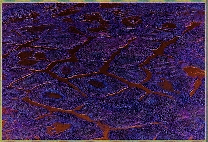
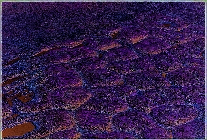
(Rieger 1974, Stonehouse 1989).
Chapter 2 · Physical/Geographical Characteristics of the Arctic
17
2.5. Arctic freshwater environments
growing before the end of winter. Icings formed by dis-
charge from intra- or subpermafrost groundwater continue
2.5.1. Rainfall and snow
to build until temperatures climb above 0°C in spring. In
The Arctic is characterized by short summers and therefore
cases of large icings, spring melt and runoff can result in sig-
short periods with rainfall. The remaining precipitation falls
nificant redistribution of groundwater (van Everdingen 1990).
as snow, which accumulates as snowpack over the winter.
Groundwater is quite extensive in the Arctic. For exam-
Snowpack duration, away from the moderating influences
ple, approximately two-thirds of the Yukon in the Canadian
of coastal climates, ranges from about 180 days to more
Arctic is underlain by aquifers (Hardisty et al. 1991). The
than 260 days (Grigoriev and Sokolov 1994).
largest groundwater aquifers in Iceland have been mapped
High levels of solar radiation reaching northern latitudes
in Elíasson (1994). These are generally found in highly per-
in spring result in rapid snowmelt. Spring runoff comprises
meable lava. Groundwater represents an important source
80-90% of the yearly total, and lasts only two to three weeks
of water in some Arctic countries.
(Linell and Tedrow 1981, Rydén 1981, Marsh 1990). Infil-
tration of this flush of water into the ground is constrained
2.5.3. Wetlands
by the permafrost. Thus, spring meltwater may flow over
land and enter rivers, or accumulate into the many mus-
Wetlands and saturated soils are characteristic features of
kegs, ponds and lakes characteristic of low lying tundra
the Arctic since moisture received from rain and snowmelt
areas (van Everdingen 1990). Summer sources of water in-
is retained in the active layer above the permafrost barrier.
clude late or perennial snow patches, glaciers, rain, melting
Due to the higher levels of precipitation received at lower
of permafrost, and groundwater discharge (Rydén 1981,
latitudes, wetlands are more common in the Low Arctic
van Everdingen 1990).
than the High Arctic. In general, wetlands are sparsely dis-
tributed throughout the Arctic, but tend to have significant
local concentrations.
2.5.2. Groundwater
Arctic wetlands are distinct due to the unique climatic
Groundwater levels and distribution within the Arctic are
conditions under which they were formed. Permafrost un-
greatly influenced by permafrost. Permafrost affects the
derlies almost all Arctic wetlands. A number of different
amount of physical space in which groundwater can be held
forms of wetlands exist in the Arctic and are described be-
and the movement of water within drainage systems. There
low (National Wetlands Working Group 1988).
are three general types of groundwater: suprapermafrost,
intrapermafrost and subpermafrost (Figure 2·10). Supra-
2.5.3.1. Lowland polygon bogs and fens
permafrost water lies above the relatively impermeable per-
mafrost table in the active layer during summer, and year-
Two types of lowland polygons are found in the Arctic, those
round under lakes and rivers that do not freeze. Intraper-
with a low center and those with a high center (Figure 2·12).
mafrost water resides in unfrozen sections within the per-
When soil temperatures fall below 15°C in winter, the ice
mafrost, such as tunnels called `taliks', located under allu-
within the soil contracts forming cracks and eventually ice
vial flood plains and under drained or shallow lakes and
wedges. Low-center polygons are bowl-shaped with the
swamps. Subpermafrost water is located beneath the per-
mafrost table and its depth below the surface depends on
the thickness of the permafrost. In this latter case, the perma-
frost acts as a relatively impermeable upper barrier. These
three types of aquifers, which may be located in bedrock or
in unconsolidated deposits, may interconnect with each
other or with surface water (Mackay and Løken 1974, van
Everdingen 1990).
Generally low levels of annual precipitation in the Arctic
restrict the recharge of groundwater. In addition, infiltra-
tion of water to aquifers is restricted by permafrost year-
round and by the frozen active layer for up to ten months
of the year. Frozen substrate does not entirely prevent water
MCLEOD
from seeping through to aquifers, but slows the rate of infil-
tration by one or more orders of magnitude compared to
KATHERINE
unfrozen ground (van Everdingen 1990).
The degree of groundwater recharge is influenced by the
material comprising the substrate. Recharge is greatest in
regions with coarse-grained, unconsolidated material and
areas with exposed bedrock containing channels or frac-
tures which allow passage of water. Infiltration, and there-
fore recharge, is least in areas covered by fine-grained de-
posits such as silt and clay (van Everdingen 1990).
Groundwater is discharged via springs, base flow in
streams, and icings. These discharges can be fed by supra-,
intra- or subpermafrost water. Perennial springs are gener-
ally fed by subpermafrost aquifers and less commonly by
intrapermafrost water. Icings (also known as aufeis or na-
MCLEOD
leds) are comprised of groundwater that freezes when it
reaches the streambed during winter when base flow freezes.
KATHERINE
When fed by suprapermafrost water, icings generally stop
Figure 2·12. Low and high-center polygons.
18
AMAP Assessment Report
Sphagnum peat
Sedge-moss peat
Permafrost table
Mineral soil
Ice
a
2.5.3.3. Snowpatch fens
In the High Arctic, snow patches form below the brows of
hills on the lee side. With accumulations of up to 2 m, melt-
ing of this snow can provide water to the slopes below
throughout the summer. If the slope of the hill is gradual,
this meltwater will flow in sheets, creating wetlands along
its course.
Low-center polygons
5 m
Amorphous peat
Organic-mineral mixture
2.5.3.4. Tundra pool shallow waters
Sphagnum peat
Sedge-moss peat
Mineral soil
b
Permafrost table
Ice
Dotted throughout the landscape of the northern Low Arctic
and the High Arctic are small ponds, usually less than 1 ha
in area and less than 0.5 m deep. The edges of these pools
tend to be peaty.
2.5.3.5. Floodplain marshes
High-center polygons
Floodplain marshes are located in active floodplains along-
side river channels. These marshes tend to have high water
Figure 2·13. Low-center and high-center polygon development (after Nat-
ional Wetlands Working Group 1988).
levels during spring melt and low levels in the fall. Water
levels in floodplain marshes located in estuaries and deltas
edges pushed up by surrounding ice wedges (Figure 2·13a).
near the sea are additionally affected by the tide. Due to
The depressed centers of these polygons fill with water, cre-
high sedimentation loads in these marshes, the build-up of
ating small ponds. The peat layer in low-center polygons is
organic matter is limited.
thin. Over time, the peat builds up, gradually filling the de-
pression and forming a raised or high-center polygon. High-
2.5.3.6. Floodplain swamps
center polygons, therefore, represent a more advanced stage
of lowland polygon development (Figure 2·13b). These po-
Similar to floodplain marshes, floodplain swamps are found
lygons vary in size, but are commonly about 8 m in diame-
in river deltas, but have open drainage due to an unrestricted
ter (National Wetlands Working Group 1988).
connection to the river channel. Water levels in these swamps
Bogs and fens are both referred to as mires, i.e., areas
are highest in spring and gradually decline until the fall.
with appreciable peat accumulation. When the peat is fairly
Again, due to heavy sedimentation, little organic matter ac-
acid (pH 3.0-5.0) the wetland is called a bog. The peat in
cumulates in the soils of these swamps.
fens is more neutral due to regular flooding with base-en-
riched waters (Moore 1981).
2.5.3.7. Wetland occurrence
In the Canadian Arctic, approximately 3-5% of the land
2.5.3.2. Peat mound bogs
area is covered by wetlands. Areas of high occurrence (be-
Peat mound bogs are simply peat-covered mounds, 1-5 m in
tween 20 and 75% coverage) include the Yukon coastal
diameter, that rise about 1 m above ground (Figure 2·14).
plain, the Mackenzie Delta, and parts of the Arctic islands
As peat builds up in an area of a wetland, the insulating ef-
(National Wetlands Working Group 1988).
fect causes thinning of the active layer beneath, and growth
Mires are uncommon in Greenland, and in Alaska they are
of segregated ice under and within the peat, thereby form-
restricted to the northern mountains. In Norway, only 0.9%
ing a dome.
of the Arctic region is classified as wetland and bog area.
Sweden reports 21% of its Arctic land area as mire (CAFF
1994). In Finland, approximately half of the original wet-
Fen
Peat mound bog
Fen
land area has been disturbed for forestry, leaving about 15%
of the country covered by wetlands (Keltikangas et al. 1986).
In the Russian Arctic, large areas are dominated by bogs
and marshes including the Kola Peninsula, West Siberia, the
0
0
Yamal Peninsula and the lowlands of the Yana, Indigirka,
and Kolyma River basins (Plancenter Ltd. 1991, Bliss and
Matveyeva 1992).
1 m
1 m
2.5.4. Rivers
Two main types of rivers occur in the Arctic, those that have
2 m
2 m
headwaters within the Arctic and those with headwaters far-
0
1
2
3
4
5
6
7
8
9
10
11 m
ther south (Woo 1992). Most of the large Arctic rivers begin
Fibric sphagnum peat
Humic peat
their flow south of the Arctic, including the major rivers of
Siberia (Ob, Yenisey, and Lena) and the Mackenzie River in
Fibric brown moss peat
Mineral soil
Canada (Mackay and Løken 1974). The mean annual runoff
Mesic brown moss peat
to the Arctic Ocean from the largest Arctic rivers is shown
Permafrost table
in Figure 2·15.
Flow in Arctic rivers is largely influenced by rain, snow-
Figure 2·14. Cross-section of a peat mound bog (after National Wetlands
Working Group 1988).
melt and ice melt because of the drainage barrier of the per-
Chapter 2 · Physical/Geographical Characteristics of the Arctic
19
Freeze-up in Arctic rivers begins with the drop in tempe-
ratures in the fall. The progression of freeze-up in rivers is
similar to that of lakes (refer to section 2.5.5). In addition
to the wind and wave action which causes vertical mixing
of lake and river water, turbulent flow in rivers can have the
Yukon River
same effect, thereby creating a thicker surface cooling layer
210 km3/y
Kolyma
in the autumn. Mean dates for river freeze-up in the Arctic
132 km3/y
are shown in Figure 2·17 (Mackay and Løken 1974).
Mackenzie
Lena
333 km3/y
525 km3/y
Yenisey
603 km3/y
1.V
20.IV
Nelson River
10.V
75 km3/y
Ob
1.IV
10.IV
404 km3/y
20.V
Pechora
1.V
10.V
140 km3/y
1.VI
10.III
20.V
Northern Dvina
106 km3/y
10.VI
20.III
1.V 10.V
1.V
20.IV
20.V
1.VI
1.IV
10.VI
10.IV
20.IV
1.V
10.VI
Discharge
20.VI
Watershed
20.IV
10.VI
1.VI
Catchment areas
1.VI
20.V
20.V
10.V
1.V10.V
Figure 2·15. Arctic Ocean watershed and catchment areas of some rivers
1.V
and annual runoff (km3/y) of major rivers to the Arctic Ocean.
20.IV
mafrost and the limited water storage capacity of the thin
active layer (Newbury 1974 in Woo 1992). River flow is
also affected by lake/reservoir storage and by groundwater
input (e.g., the Lena River in winter) (Gordeev and Sidorov
1993). Most Arctic rivers exhibit an Arctic nival regime,
meaning that their main flow takes place during the period
Figure 2·16. Mean dates of river break-up in the Arctic; month number in
Roman numerals (after Mackay and Løken 1974).
of spring melt. When the melt is completed, water levels in
the river drop to base flow only. Some northern rivers dis-
play a proglacial regime, flowing throughout the summer
due to input from glacial melt. Rivers flowing through wet-
lands follow a wetland or muskeg regime, with the main
21.XI
1.XII
20.XI
1.XI
flow occurring with the spring snowmelt when the ground
10.XI
20.X
10.XI
1.XI
is still frozen (Woo 1992).
10.XI
1.XI
10.XII
10.X
10.I
20.XI
20.X
In some areas, such as the Canadian Cordillera, rivers
10.XI
10.X
1.I
20.X
tend to be erosive, undercutting their banks and creating
20.XII
10.XII
1.XII
large, braided channels. Therefore, these rivers have large
1.XII
20.XI
10.XI 20.XI
sediment loads and leave behind deposits of this sediment
10.XI
along their course as braided channels and eventually as
1.XI
20.X
large deltas (Stonehouse 1989), and contribute to bottom
1.X
10.X
10.XI
sediments in lakes and reservoirs. Other parts of the Arctic,
20.X
20.XI
1.XI
such as the Precambrian shield, lack the surficial deposits
10.XI
20.XI
necessary to provide a source of river sediment.
The break-up of ice in Arctic rivers begins at the river
edge as melt water flows in from adjacent river banks and
20.XI
10.XI
10.XI
slopes. Increased flow onto the surface breaks the ice cover
1.XII
10.XI
into pieces. Leads develop across the river at locations of in-
20.XI
coming streams. Intermittent and slow flow of the river be-
gins as the ice edge gradually loosens from the riverbank. Ice
jams form at narrow and shallow areas of the river, eventu-
ally giving way under the pressure of water coming in from
tributaries and with continued melting and ice abrasion.
Figure 2·17. Mean dates of river freeze-up in the Arctic (after Mackay and
When the ice jams break up there is an initial surge of water
Løken 1974).
followed by a drop in water level, which leaves pieces of ice
stranded along the river bank. Mean break-up dates of Arctic
2.5.5. Lakes
rivers are shown in Figure 2·16 (Mackay and Løken 1974).
Arctic rivers tend to remain cool throughout the short
The eastern and central North American and western Eur-
summer season due to the addition of cold melt waters.
asian Arctic regions were covered with glaciers during the
Small, shallow streams may be quickly warmed by solar
Pleistocene epoch. Glaciation of eastern Asia was less exten-
radiation to 10-20°C, but these warm waters have little ef-
sive. These large glaciers carved out the land as they moved
fect on the low temperatures of larger rivers systems.
over it, gouging out topsoil and broken rock. The many de-
20
AMAP Assessment Report
pressions left behind filled with water when the glaciers
With the onset of cooler weather and fall storms in mid-
melted, forming lakes.
August, Arctic lakes lose heat rapidly and mix completely
Following the retreat of the continental glaciers, the land
throughout their depth. Because the lakes are unprotected
which had been pushed downward by the weight of the ice,
by trees and high winds are common, Arctic lakes tend to
began to rise, a process called isostatic rebound. This re-
cool well below the temperature of maximum density (4°C),
bound is still occurring today, and though it is at a much
with the entire water column often reaching 0°C before
slower rate than when it began, eastern Hudson Bay, for ex-
there is significant ice formation at the surface. Freeze-up oc-
ample, continues to rise at a rate of one meter per century.
curs between the first week in September and mid-October,
New lakes are thus still being formed as gouged land rises
depending upon the latitude and size of the lake. Ice thick-
up out of the sea. Lakes closer to sea level are often younger
ness increases linearly until April or May, reaching depths
than those at higher elevations (Welch and Legault 1986).
between 1.5 and 2.5 m (first year ice). Ponds with depths
Other types of natural lakes exist in the Arctic. Kettle
less than maximum ice thickness (typically 2.0-2.2 m) freeze
lakes result from the thaw of buried glacier ice (Washburn
to the bottom. Thus, Arctic lakes are partly frozen for 9-12
1979). Thermokarst lakes are formed in depressions that
months of the year (Welch et al. 1987, Welch 1991).
result from permafrost melting. Ice-dammed lakes are more
common in the Arctic than elsewhere and in Greenland all
2.5.6. Estuaries
the larger lakes are of this type. These lakes are prone to
periodic draining (Mackay and Løken 1974).
Estuaries are semi-enclosed, coastal bodies of water, con-
There are innumerable small lakes in the Arctic. In the
nected to the open ocean, and containing seawater diluted
Province of Murmansk in Russia, there are over 100 000
by freshwater from land drainage (Lauff 1967, Pritchard
lakes, the largest of which is Lake Imandra with an area of
1967). In a broad sense, river deltas, fjords and bays may be
812 km2 and a maximum depth of 67 m (NEFCO 1995).
considered as estuaries, and they are important parts of the
Iceland, Sweden and Finland have approximately 2.7, 5.2
coastal zone. With the exception of Norwegian and Icelan-
and 5.8%, respectively, of their land area occupied by lakes.
dic fjords, they are influenced by ice cover for most of the
Only about 0.5% of Alaska is covered by freshwater (CAFF
year. Fast ice often starts to develop in October, and remains
1994). The Canadian Arctic contains many lakes, including
in place until break-up in June (Macdonald et al. 1995, Pfir-
the large Great Bear (31 326 km2) and Great Slave (28 568
man et al. 1995). Thus, for most of the year in the Arctic,
km2) Lakes located on the mainland (Mackay and Løken
river runoff enters the ocean under an ice cover.
1974). In the central Canadian Arctic, 20% of the land sur-
The coastal zone is the interface between the terrestrial/
face is covered by water.
freshwater processes and the oceanic processes. Deltas and
There are also artificial lakes or reservoirs within the
estuaries play an important role in sedimentation in fresh-
Arctic that have been created along Arctic rivers for the
water systems and strongly influence contaminant transport
purpose of hydroelectric power generation. In Canada and
to oceans. There is a significant difference between summer
Russia, some of these reservoirs are quite large, for exam-
and winter regimes of estuarine zones. The summer regime
ple, those for the James Bay project in Canada, and the
is characterized by maximum river discharge, intensive
Kransnoyarskoye Reservoir on the Yenisey River in Siberia.
chemical and biological processes, and high sedimentation
The time at which Arctic lakes become ice-free is largely
rates. During winter, the freshwater runoff and fluxes of sus-
dependent on June temperature and windspeed (Welch et al.
pended and dissolved substances are low.
l987). Ice thaw begins when meltwater from the surrounding
watershed flows out onto the lake ice and enters cracks and
holes in its surface. Shore leads then develop along the lake's
2.6. Arctic marine environment
perimeter, eventually breaking the connection of ice with the
2.6.1. Geographical area and bathymetry
edges and bottom of the lake. The water on the ice surface
gradually melts through the free-floating ice. A combination
The circumpolar Arctic region is dominated by the Arctic
of melting temperatures and weather activity continue the
Basin. The Arctic marine area within the AMAP boundary
thawing process (Mackay and Løken 1974). Ice-out in Arctic
includes the Arctic Ocean, the adjacent shelf seas (Beaufort,
lakes ranges from early July in the south to mid-August in the
Chukchi, East Siberian, Laptev, Kara, and Barents Seas), the
High Arctic, with some lakes at very high latitudes remaining
Nordic Seas (Greenland, Norwegian, and Iceland Seas), the
partly or entirely ice-covered throughout the year (Rust and
Labrador Sea, Baffin Bay, Hudson Bay, the Canadian Arctic
Coakley 1970, Schindler et al. 1974, Welch et al. 1987).
Archipelago and the Bering Sea. This represents an area of
The period of peak incoming solar radiation has already
approximately 20
106 km2. The connection with the shal-
passed by the time the ice is off Arctic lakes, and much of
low Bering Sea (and the Pacific Ocean) occurs through the
the radiation received prior to this time is used to melt the
narrow Bering Strait, while the main connection with the At-
ice (Schindler et al. 1974, Welch et al. 1987). Therefore,
lantic Ocean is via the deep Fram Strait and the Nordic Seas.
water in Arctic lakes has little opportunity for warming.
The Arctic Ocean is divided into two deep basins, the
Freshwater is densest at 4°C and sinks below water that is
Eurasian and the Canadian, by the transpolar Lomonosov
warmer or colder than this temperature, thereby producing
Ridge (Figure 2·7). The Canadian Basin is transected into
stratification. Weak thermal stratification is found in Low
the Makarov and Canada Basins by a ridge in the north, the
Arctic lakes where surface water has greater opportunity to
Alpha Cordillera, and reaches depths of more than 3500 m.
warm up, compared to the High Arctic, where lakes tend to
The continental shelf is narrow off most of Arctic North
be vertically mixed (Mackay and Løken 1974, Welch et al.
America, extending only 50-100 km from the coast, except
1987). Small, shallow lakes throughout the Arctic, which
in the southeastern Beaufort Sea, where it reaches some 150
lose their ice quickly, may become quite warm (> 10°C).
km offshore (French and Slaymaker 1993).
Such lakes do not stratify due to surface wind mixing. Max-
The Eurasian Basin is smaller but deeper than the Cana-
imum surface water temperatures range from about 15°C
dian Basin, reaching depths of 4000 m. It is bisected by the
in small lakes near the treeline, to 4 - 6°C in ice-free lakes
narrow Nansen Cordillera into the Amundsen and Nansen
north of 75°N (Welch, unpubl.).
Basins. North of Siberia, the continental shelf is vast and
Chapter 2 · Physical/Geographical Characteristics of the Arctic
21
8.0
1.0
5.0
0.0
-1.0
12.0
5.0
-1.7
-1.5
3.0
10.0
-1.0
0.0
-1.5
1.0
2.0
0.0
-1.8
-1.0
2.0 1.0
-1.8
-1.65
3.0
-1.8
4.0
-1.7
5.0
-1.5
-1.7
-1.7
5.0
-1.6
-1.8
-1.5
-1.4
-1.3
-1.7
-1.2
-1.1
-1.8
-1.5 -1.7
-1.0
-1.8
1.0
0.0
-1.7
0.0
-1.6
-1.4
-1.0
-1.3
-1.5
-1.7
Winter
16.0
15.0
5.0
19.0
2.0
15.0
10.0
12.0
0.0
15.0
5.0
0.0
11.0
10.0
6.0
0.0
5.0
4.0
-0.5
1.0
5.0
15.0
10.0
17.0
-1.7
-1.0
3.0
-0.5
10.0
-1.5
0.0
-1.0
1.0
2.0
-0.5
0.0
1.0
10.0
3.0
12.0
5.0
2.0
5.0
10.0
8.0
8.0
3.0
4.0
10.0
10.0
4.0
12.0
5.0
13.0
Summer
10.09.0
13.0
Figure 2·18. Winter and summer surface water temperatures (°C) in the Arctic Ocean and adjacent seas (USSR Ministry of Defense 1980).
extends up to 900 km from the coast (Sugden 1982, Mac-
rature between winter and summer. Due to ice coverage,
donald and Bewers 1996).
the temperature in this area is close to the freezing point
year-round. In the shelf areas, surface water temperatures
in winter are close to freezing (just below 1°C), while dur-
2.6.2. Hydrographic conditions in the Arctic
ing summer they may increase to 4-5°C due to heating from
Ocean temperatures within the AMAP area show large var-
the sun. In areas influenced by Atlantic and Pacific water,
iation depending on latitude and the influence of warm At-
there may be greater seasonal variability, for example in the
lantic and Pacific water. Figure 2·18 shows surface ocean
northeast Atlantic and parts of the Bering Sea. In these areas
temperatures in the Arctic during winter and summer. In
the temperature remains higher than 0°C throughout the
the Arctic Ocean, there are only small variations in tempe-
year (USSR Ministry of Defense 1980).
22
AMAP Assessment Report
33.5
34.0
34.5
32.0 33.0
35.0
34.0
35.5
31.5
32.5
35.0
31.0
30.0
33.0
34.0
32.5
34.5
30.5
32.0
35.0
31.0
31.5
35.0
32.0
35.0
33.0
31.0
33.0
34.0
30.0 29.0
34.0
25.0
20.0
34.5
34.5
34.0
32.0
33.0
15.0
30.0
31.0
29.0
30.0
25.0
33.0
34.0
20.0
32.0
Winter
34.5
34.0
33.0
31.0
32.0
35.5
35.0
32.5
31.0
32.0
32.0
31.5
27.5
28.0
29.0
31.0
31.5
29.0
29.5
32.0 31.0
31.0
34.0
33.0
30.0
31.0
30.5
34.0
30.0
34.5
35.0
30.0
33.0
31.5
32.0
32.5
31.0
32.5
30.0
34.0
29.0
32.0
32.0
33.0
25.0
31.0 30.5
20.0
34.0
30.0
18.0
29.0
15.0
32.0
33.0
31.0
30.0
25.0
10.0
25.0
25.0 30.0
20.0
32.0
20.0
33.0
15.0
28.0
30.5
20.0
10.0
30.0
31.0
10.0
30.0
32.0
31.0
30.0
Summer
32.0
Figure 2·19. Winter and summer surface water salinity in the Arctic Ocean and adjacent seas (USSR Ministry of Defense 1980).
In general, surface water salinity in the Arctic Ocean and
annual runoff of the Russian rivers is approximately 2100 km3
the adjacent shelf seas is relatively low compared to other
(Aagaard and Carmack 1989). In the Canadian Arctic, the in-
oceans (Figure 2·19). In the Arctic Ocean itself, surface sa-
fluence of the Mackenzie River is evident during summer,
linity varies between 30 and 33, and decreases in the area of
when the salinity drops to 27 in the surface layer. Salinity in
the shelf seas to below 30. In general, the salinity is lower
the Arctic Basin increases with depth, reaching levels between
during summer than winter due to input of freshwater from
32.5 and 34.5 at 100 m (USSR Ministry of Defense 1980).
rivers and ice melt. Close to where the large Russian rivers
A more detailed description of the hydrographic condi-
enter the Kara Sea and the Siberian shelf, the salinity is below
tions of the marine areas within the AMAP region is given
20 throughout the year and drops to as low as 10 during the
in chapter 3, with more focus on vertical structure, mixing
summer (USSR Ministry of Defense 1980). The average total
processes and transport of water masses.
Chapter 2 · Physical/Geographical Characteristics of the Arctic
23
Flaw leads or coastal polynyas occur at the landfast ice
border where offshore winds separate the drift ice from the
pack ice. Polynyas are open water regions that persist with-
in closed sea ice cover, ranging in area up to thousands of
Alaska C.
square kilometers. These areas often have a high rate of pri-
mary production of phytoplankton and are among the rich-
Tra
est marine areas in the world. They represent areas of high
nspol
energy exchange between ocean and atmosphere during the
arD
Beaufort
r
winter months when the sea ice cover effectively prevents
i
f
Gyre
t
exchange between water and air. Permanent polynyas have
been found near Cape Bathurst (Beaufort Sea), Baffin Bay,
northeastern Greenland and a region extending east and
west of the northern part of the New Siberian Islands.
1
Labrador C.
East
The two main ice circulation systems in the Arctic Basin
Greenland C.
are the clockwise Beaufort Gyre in the Amerasian Arctic,
North
Cape C.
and the east to west Transpolar Drift in the Eurasian Arctic
(Aagaard and Carmack 1989) (see Figure 3·23). Sea ice
often circulates for more than five years in the Beaufort Gyre
North
Atlantic C.
before being incorporated in the Transpolar Drift (Thorn-
dike 1986, Rigor 1992). Most ice transported by the Trans-
Atlantic currents
polar Drift exits the central Arctic Basin through Fram Strait,
Other currents
1 : West Spitsbergen Current
Atlantic currents
although some is lost through the Barents Sea. Transport
Other currents
1 : West Spitsbergen Current
Figure 2·20. Surface ocean currents in the Arctic.
from the northern Kara Sea to Fram Strait may take as little
as nine months, but averages two years (Rigor 1992, Pfir-
man et al. 1997).
2.6.3. Ocean currents
The annual and year-to-year distribution of pack ice is
In a simplified picture, waters flowing north to the Arctic
determined by temperature, winds, and ocean currents, such
regions are comprised of warm currents originating from the
as the Alaska Current, the Labrador Current, the East Green-
Atlantic and Pacific Oceans, while cold currents flow out of
land Current, the West Spitsbergen Current and the North
the Arctic. Atlantic water enters the Arctic Ocean through
Cape Current. Warm water transported north by the West
Fram Strait and the Barents Sea, while Pacific water enters
Spitsbergen and North Cape Currents cause embayments in
via Bering Strait. Water leaves the Arctic largely via Fram
the ice distribution in the Greenland and Barents Seas. The
Strait, but also through the Canadian Arctic Archipelago
North Cape Current also keeps the southern Barents Sea
(Macdonald and Bewers 1996) (Figure 2·20). Most of the
and the harbor of Murmansk free of ice during the winter.
water in the Arctic Ocean originates from the Atlantic Ocean
Sea ice is further discussed in chapter 3.
(79%). The inflow through the Bering Strait is very modest
(19%). The main water outflow is via the East Greenland
Current (75%) and the outflow via the Canadian straits is
Acknowledgments
relatively small (25%). Inflow from rivers represents only
Editor
2% and although this is a small percentage of the total, it is
Janine L. Murray.
much higher than in other oceans (Sugden 1982). For further
detail about Arctic currents, refer to chapter 3.
Authors
Janine L. Murray, Louwrens Hacquebord, Dennis J. Gregor,
Harald Loeng.
2.6.4. Sea ice
Contributors
Sea ice forms from ocean water and floats on its surface. It
C.F. Forsberg, D.J. Henry, H. Jensson, J. Kämäri, M. Lange,
forms when the temperature of the sea falls below the freez-
R. Macdonald, E. Nikiforov, B. Njåstad, J.B. Ørebæk,
ing point. The freezing point is dependent on the salinity of
S. Pfirman, S. Pryamikov, O. Salvigsen, J.I. Solbakken,
the seawater (1.8°C for a salinity of 33) (Doherty and Kes-
H. Welch, A. Zhulidov.
ter 1974). The extent of ice cover changes with the seasons,
with an average maximum of 15
106 km2 in March and
an average minimum of 8
106 km2 in September (Gloer-
References
sen et al. 1992) (see Figure 3·23).
Aadlandsvik, B. and H. Loeng, 1991. A study of the climate system of the
In the Arctic Basin, it is possible to distinguish three dif-
Barents Sea. Polar Res. 10(1): 45-49.
ferent areas of sea ice: the drifting pack ice, the marginal ice
Aagaard, K. and E.C. Carmack, 1989. The role of sea ice and other freshwa-
ter in the Arctic circulation. J. geophys. Res. 94: 485-498.
zone and landfast ice. Perennial pack ice encompasses an
AARI, 1985. Atlas arktiki (Atlas of the Arctic). Treshnikov, A.F. (ed.). Arctic
area of approximately six million square kilometers. The
and Antarctic Research Institute, State Committee of the USSR for Hy-
pack ice is broken up by leads, which vary from 1% open
drometeorology and Environmental Monitoring, Directorate-General for
Geodesy and Cartography of the USSR Council of Ministers, Moscow,
water in winter to about 10-20% open water in summer
204p. (In Russian, English summaries).
(Gow and Tucker 1990). The ice, which averages between
Barry, R.G. and R.J. Chorley, 1992. Atmosphere, weather and climate. Rout-
ledge, New York.
2.5- 4 m in thickness, is intersected by pressure ridges which
Barry, R.G. and F.K. Hare, 1974. Arctic climate. In: J.D. Ives and R.G. Barry
are much thicker. The marginal ice zone is the region where
(eds.). Arctic and alpine environments, pp. 17-54. Methuen, London.
pack ice meets the open water. This area shifts with the sea-
Barry, R.G. and J.D. Ives, 1974. Introduction. In: J.D. Ives and R.G. Barry
(eds.). Arctic and alpine environments, pp. 1-13. Methuen, London.
sons, and is often an area of high biological productivity.
Bjerregaard, P., 1995. Health and environment in Greenland and other cir-
Along the edges of many continents and archipelagoes, fast
cumpolar areas. Sci. Total Environ. 160/161: 521-527.
ice develops each year and extends offshore. The edge of
Bliss, L.C., 1981. North American and Scandinavian tundras and polar des-
erts. In: L.C. Bliss, O.W. Heal and J.J. Moore (eds.). Tundra ecosystems:
this landfast ice is found at an ocean depth of about 22 m.
A comparitive analysis, pp. 8-24. Cambridge University Press, Cambridge.
24
AMAP Assessment Report
Bliss, L.C. and N.V. Matveyeva, 1992. Circumpolar Arctic vegetation. In:
(eds.). Northern hydrology. Canadian perspectives, pp. 37-61. National
F.S. Chapin III, R.L. Jeffries, J.F. Reynolds, G.R. Shaver, J. Svoboda and
Hydrology Research Institute, Environment Canada, Saskatoon, NHRI
E.W. Chu (eds.). Arctic ecosystems in a changing climate. An ecophysio-
Science Report No. 1.
logical perspective, pp. 59-89. Academic Press Inc., Toronto.
Ministry for the Environment, 1992. Iceland, National Report to UNCED.
CAFF, 1994. The state of protected areas in the circumpolar Arctic 1994.
Skerpla, Reykjavik, 189p.
Conservation of Arctic Flora and Fauna, Directorate for Nature Man-
Moore, J.J., 1981. Mires. In: L.C. Bliss, O.W. Heal and J.J. Moore (eds.).
agement, Trondheim, Habitat Conservation Report No. 1.
Tundra ecosystems: A comparative analysis, pp. 35-37. Cambridge
CAFF, 1996. Proposed protected areas in the circumpolar Arctic 1996. Con-
University Press, Cambridge.
servation of Arctis Flora and Fauna, Directorate for Nature
National Wetlands Working Group, 1988. Wetlands of Canada. Sustainable
Management, Trondheim, Habitat Conservation Report No. 2.
Development Branch, Environment Canada, Ottawa, Ontario, and Poly-
Doherty, B.T. and D.R. Kester, 1974. Freezing point of seawater. J. mar. Res.
science Publications Inc., Montreal, Quebec, Ecological Land Classifica-
32(2): 285-300.
tion Series No. 24, 452p.
EEA (European Environment Agency), 1996. The state of the European Arctic
Natural Resources Canada, 1994. Geology and Canada. Department of En-
evironment. J.R. Hansen, R. Hansson and S. Norris (eds.). European Envi-
ergy, Mines and Resources, Ottawa, 32p.
ronment Agency, Copenhagen, EEA Environmental Monograph No. 3.
NEFCO, 1995. Proposals for environmentally sound investment projects in
Einarsson, M.A., 1984. Climate of Iceland. World survey of climatology, Vol.
the Russian part of the Barents Region. V. 1 Non-radioactive contamina-
15. Elsevier, Amsterdam.
tion. AMAP Report. AMAP Secretariat, Oslo, 147p.
Einarsson, T., 1980. Geology (in Icelandic). Mal og Menning, Reykjavik, 240p.
NOAA, 1988. Data Announcement 88-MGG-02, Digital relief of the surface of
Elíasson, J., 1994. Northern hydrology in Iceland. In: T.D. Prowse, C.S.L.
the Earth. NOAA, National Geophysical Data Center, Boulder, Colorado.
Ommaney and L.E. Watson (eds.). Northern hydrology: International
Nordic Council of Ministers, 1996. The Nordic Arctic Environment Unspoilt,
perspectives, pp. 41-80. Environment Canada, Saskatoon, Saskatche-
Exploited, Polluted? Nordic Council of Ministers, Copenhagen. Nord
wan, NHRI Science Report No. 3.
1996:26. 240p.
Encyclopedia Britannica, 1990. The New Encyclopedia Britannica, Chicago.
Parkinson, C.L., J.C. Comiso, H.J. Zwally, D.J. Cavalieri, P. Gloersen and W.J.
Vol. 14, pp. 288-292.
Campbell, 1987. Arctic sea ice, 1973-1976: Satellite passive-microwave ob-
Environmental Defense Fund, 1996. Surface ocean currents. Environmental
servations. Scientific and Technical Information Branch, National Aeronau-
Defense Fund, New York. (1 map)
tics and Space Administration, Washington D.C., NASA SP-489, pp. 32-33.
European Climate Support Network and National Meteorological Services,
Pfirman, S.L., J. Koegler and B. Anselme, 1995. Coastal environments of the
1995. Climate of Europe. Recent variations, present state and future
western Kara and eastern Barents Seas. Deep-Sea Res. 42(6): 1391-1412.
prospects. 72p.
Pfirman, S.L., J.W. Koegler and I. Rigor, 1997. Potential for rapid transport
Everett, K.R., V.D. Vassiljevskaya, J. Brown and B.D. Walker, 1981. Tundra
of contaminants from the Kara Sea. Sci. Total Environ. 202: 111-122.
and analogous soils. In: L.C. Bliss, O.W. Heal and J.J. Moore (eds.).
Plancenter Ltd., 1991. Synthesis report. Environmental Priority Action Pro-
Tundra ecosystems: A comparative analysis, pp. 139-179. Cambridge
gramme for Leningrad, Leningrad Region, Karelia and Estonia. Plan-
University Press, Cambridge.
center Ltd., IVO International Vesi-Hydro Consulting Ltd., Enviro Data
French, H.M. and O. Slaymaker, 1993. Canada's cold environments. Mc-
Ltd., Outukumpu EcoEnergy Ltd., September 1991, 191p.
Gill-Queen's University Press, Montreal and Kingston.
Pritchard, D.W., 1967. Observations of circulation in coastal plain estuaries.
Geological Survey of Canada, 1995. Generalized geological map of the
In: G.H. Lauff (ed.). Estuaries. Am. Ass. Adv. Sci. Publs Vol. 83: 37-44.
world, and linked databases. Open File 2915d.
Prik, Z.M., 1959. Mean position of surface pressure and temperature distribution
Gloersen, P., W.J. Campbell, D.J. Cavalieri, J.C. Comiso, C.L. Parkinson
in the Arctic. Tr. Arkticheskogo Nauch.-Issled. Inst. 217: 5-34. (In Russian).
and H.J. Zwally, 1992. Arctic and Antarctic sea ice, 1978-1987: Satellite
Prowse, T.D., 1990. Northern hydrology: an overview. In: T.D. Prowse and C.S.L.
passive microwave observations and analysis. National Aeronautics and
Ommanney (eds.). Northern hydrology: Canadian perspectives, pp. 1-36. En-
Space Administration, Washington D.C., NASA SP511.
vironment Canada, Saskatoon, Saskatchewan, NHRI Science Report No. 1.
Gordeev, V.V. and I.S. Sidorov, 1993. Concentrations of major elements and
Rieger, S., 1974. Arctic soils. Pp. 749-769 In: J.D. Ives and R.G. Barry (eds.).
their outflow into the Laptev Sea by the Lena River. Mar. Chem. 43: 33-46.
Arctic and alpine environments. Methuen and Co. Ltd., London.
Gow, A.J. and W.B. Tucker III, 1990. Sea ice in the polar regions. In: W.O.
Ries, T., 1994. The Republic of Karelia. The first years after the USSR: some
Smith (ed.). Polar oceanography, Part A: Physical science, pp. 47-117.
basic data. Report from the Norwegian Foreign Department, Oslo, 86p.
Academic Press Inc., San Diego.
Rigor, I., 1992. Arctic Ocean buoy program. ARCOS Newsletter 44: 1-3.
Grigoriev, V.Y. and B.L. Sokolov, 1994. Northern hydrology in the Former
Rust, B.R. and J.P. Coakley, 1970. Physico-chemical characteristics and post-
Soviet Union (FSU). In: T.D. Prowse, C.S.L. Ommaney and L.E. Watson
glacial desalination of Stanwell-Fletcher Lake, Arctic Canada. Can. J.
(eds.). Northern hydrology: International perspectives, pp. 147-179. Envi-
Earth Sci. 7: 900-911.
ronment Canada, Saskatoon, Saskatchewan, NHRI Science Report No. 3.
Rydén, B.E., 1981. Hydrology of northern tundra. In: L.C. Bliss, O.W. Heal
Hardisty, P., V. Schilder, T. Dabrowski and J. Wells, 1991. Yukon and
and J.J. Moore (eds.). Tundra ecosystems: A comparative analysis, pp.
Northwest Territories groundwater database. In: T.D. Prowse, C.S.L.
115-137. Cambridge University Press, Cambridge.
Ommaney and L.E. Watson (eds.). Northern hydrology: International
Schindler, D.W., H.E. Welch, J. Kalff, G. Brunskill and N. Kritsch, 1974.
perspectives, pp. 465-482. Environment Canada, Saskatoon, Saskatche-
Physical and chemical limnology of Char Lake, Cornwallis Island (75°N
wan, NHRI Science Report No. 3.
Lat.). J. Fish. Res. Bd Can. 31: 585-662.
Ikeda, M., 1990a. Decadal oscillation of the air-sea-ocean system in the
SCOR, 1979. The Arctic Ocean heat budget. University of Bergen, Geophys-
northern hemisphere. Atmosphere-Ocean 28: 106-139.
ical Institute, Norway, Working Group 58, Report No. 52, 98p.
Ikeda, M., 1990b. Feedback mechanism among decadal oscillations in the
Sly, P.G., 1995. Human impacts on the Hudson Bay region: present and
northern hemisphere atmospheric circulation, sea ice and ocean circula-
future environmental concerns. In: M. Munawar and M. Luotola (eds.).
tion. Ann. Glaciol. 14: 120-123.
The contaminants in the Nordic ecosystem: Dynamics, processes and fate,
Ives, J.D., 1974. Permafrost. In: J.D. Ives and R.G. Barry (eds.). Arctic and
pp. 171-263. SPB Academic Publishing, Amsterdam.
alpine environments, pp. 159-194. Methuen and Co. Ltd., London.
Stonehouse, B., 1989. Polar ecology. Blackie, London, 222p.
Keltikangas, M., J. Laine, P. Puttonen and K. Seppala, 1986. Vuosina 1930-
Sugden, D., 1982. Arctic and Antarctic; A modern geographical synthesis.
1978 ojitetut suot: Ojitusalueiden inventoinnin tuloksia. Acta Forestalia
Basil Blackwell, Oxford.
Fennica 193. (In Finnish).
Thorndike, A.F., 1986. Kinematics of sea ice. In: N. Untersteiner (ed.). Geo-
Killingtveit, Å. and K. Sand, 1991. On aerial distribution of snowcover in a
physics of sea ice, pp. 489-550. Plenum Press, New York, NATO Ad-
mountainous area. In: T.D. Prowse and C.S.L. Ommanney (eds.). Northern
vanced Studies Institute Series B, Physics 146.
hydrology: Selected perspectives, Proceedings of the Northern Hydrology
USSR Ministry of Defense, 1980. The Atlas of the Oceans - Arctic Ocean.
Symposium, 10-12 July, 1990, Saskatoon, Saskatchewan, pp. 189-203.
USSR Ministry of Defense.
Environment Canada, Saskatoon, Saskatchewan, NHRI Symposium No. 6.
van Everdingen, R.O., 1990. Groundwater hydrology. In: T.D. Prowse and
Landsberg, H.E. (ed.), 1970. World survey of climatology. Vol. 14. Elsevier,
C.S.L. Ommanney (eds.). Northern hydrology. Canadian perspectives, pp.
Amsterdam.
77-101. National Hydrology Research Institute, Environment Canada,
Larsen, J.A., 1973. Plant communities north of the forest border, Keewatin,
Saskatoon, NHRI Science Report No. 1.
Northwest Territories. Can. Field-Nat. 87: 241-248.
Varjo, U. and W. Tietze (eds.), 1987. Norden. Man and environment. Gebr.
Lauff, G.H. (ed.), 1967. Estuaries. American Association for the Advance-
Borntraeger, Berlin, Stuttgart.
ment of Science, Washington D.C., 757p.
Vinje, T.E., 1976. Sea ice conditions in the European sector of the marginal
Linell, K.A. and J.C.F. Tedrow, 1981. Soil and permafrost surveys in the
seas of the Arctic, 1966-1975. Norsk Polarinst. Årbok, 1975: 163-174.
Arctic. Clarendon Press, Oxford, 279p.
Washburn, A.L., 1979. Geocryology. A survey of periglacial processes and
Loshchicov, V.S, 1965. Snow cover on the ice of the central Arctic. Probl.
environments. Edward Arnold Ltd., London, 406p.
Arktiki 17: 36-45. (In Russian).
Welch, H.E, 1991. Comparisons between lakes and seas during the Arctic
Luzin, G.P., M. Pretes and V.V. Vasiliev, 1994. The Kola Peninsula: geogra-
winter. Arct. alp. Res. 23: 11-23.
phy, history and resources. Arctic 47: 1-15.
Welch, H.E. and J.A. Legault, 1986. Precipitation chemistry and chemical lim-
Macdonald, R.W. and J.M. Bewers, 1996. Contaminants in the Arctic marine
nology of fertilized and natural lakes at Saqvaqjuac, NWT. Can. J. Fish.
environment: priorities for protection. ICES J. mar. Sci. 53: 537-563.
aquat. Sci. 43: 1104-1134.
Macdonald, R.W., D.W. Paton, E.C. Carmack and A. Omstedt, 1995. The
Welch, H.E., J.A. Legault and M.A. Bergmann, 1987. Effects of snow and ice
freshwater budget and under-ice spreading of Mackenzie River water in
on the annual cycles of heat and light in Saqvaqjuac lakes. Can. J. Fish.
the Canadian Beaufort Sea based on salinity and 18O/16O measurements
aquat. Sci. 44: 1451-1461.
in water and ice. J. geophys. Res. 100(C1): 895-919.
Woo, M.K., 1992. Arctic streamflow. In: M.K. Woo and D.J. Gregor (eds.).
Mackay, D.K. and O.H. Løken, 1974. Arctic hydrology. In: J.D. Ives and
Arctic environment: Past, present and future, pp. 105-111. McMaster
R.G. Barry (eds.). Arctic and alpine environments, pp. 111-132. Meth-
University, Department of Geography, Hamilton.
uen and Co. Ltd., London.
Woo, M.K. and D.J. Gregor, 1992. Arctic environment: Past, present and
Marsh, P., 1990. Snow hydrology. In: T.D. Prowse and C.S.L. Ommanney
future. McMaster University, Department of Geography, Hamilton, 164p.
Document Outline
- Go to opening screen
- 2.1. Introduction
- 2.2. Definitions of the Arctic region
- 2.2.1. Climate boundaries
- 2.2.2. Vegetation boundaries
- 2.2.3. Marine boundary
- 2.2.4. Geographical coverage of the AMAP assessment
- 2.3. Climate and meteorology
- 2.3.1. Climate
- 2.3.2. Atmospheric circulation
- 2.3.3. Meteorological conditions
- 2.4. Physical/geographical description of the terrestrial Arctic
- 2.4.1. General geographical description
- 2.4.2. Geology and physiography
- 2.4.3. Permafrost and soils
- 2.5. Arctic freshwater environments
- 2.5.1. Rainfall and snow
- 2.5.2. Groundwater
- 2.5.3. Wetlands
- 2.5.4. Rivers
- 2.5.5. Lakes
- 2.5.6. Estuaries
- 2.6. Arctic marine environment
- 2.6.1. Geographical area and bathymetry
- 2.6.2. Hydrographic conditions in the Arctic
- 2.6.3. Ocean currents
- 2.6.4. Sea ice
- Acknowledgments
- References