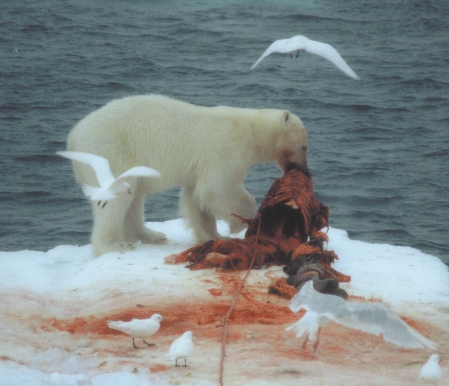
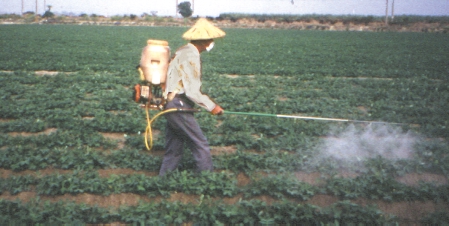
Unintentional targets
THOMAS NILSEN
Persistent
Organic Pollutants
The evidence that persistent organic pollutants
legacy of past emissions, and given enough
affect Arctic wildlife is accumulating. On Sval-
time they will decline. However, some of the
bard, recent results indicate that polar bears
already-regulated persistent pesticides appear
with high levels of PCBs suffer from impaired
to have been used recently, and PCBs from old
defense against infections. High PCB levels
uses and equipment are still spreading in the
may also be affecting cub survival. Effects of
environment. Moreover, additional persistent
persistent organic pollutants have been docu-
pollutants have started to arrive in the Arctic,
mented in other Arctic species as well, includ-
and some of these are currently being pro-
ing the northern fur seal, glaucous gull, pere-
duced in large quantities.
grine falcon, and dogwhelk.
This chapter highlights sources of old and
PCBs and a number of other organic pollu-
new persistent organic pollutants in the Arctic
tants have been regulated for several decades
environment, their pathways, and their levels.
in Arctic countries. Recently they have also
It also discusses possible effects on wildlife.
been regulated under a global convention.
Effects on human health are treated in the
The levels in the environment are mostly a
Human Health chapter of this report.
Intentional use
WRENMEDIA

8
Persistent
Sources and regulatory status
Organic Pollutants
The class of persistent organic pollutants,
or POPs for short, covers a large number
of chemicals with some common charact-
eristics that make them potential problems
in the environment. By definition, POPs
R
E
D
are persistent, which means that they break
N
A
X
down slowly in the environment. Persistent
E
L
A warning sign for high
A
chemicals are more likely to travel over long
Y
R
levels of PCBs at an old
R
E
DEW line station. Mel-
distances and reach remote regions such as
H
C
ville Peninsula, Nunavut,
the Arctic. Once in the Arctic, some com-
&
N
Canada. PCBs were used
A
pounds may last even longer in the cold and
Y
R
at many military radar
B
dark environment than they would in more
stations.
temperate climates.
Many POPs are taken up by organisms,
PCBs are ubiquitous in the Arctic
either directly from their surroundings or via
food. If the chemicals cannot be broken down
PCBs, or polychlorinated biphenyls, are a
or excreted as fast as they are taken up, they
group of heat-resistant and very stable chemi-
will accumulate in the organisms' tissues. Most
cals that have been used in a number of indus-
POPs are poorly soluble in water but readily
trial applications. The manufacture and use of
soluble in fat and therefore become concentrated
PCBs have been banned, but they are still pre-
in the fat of animals. At high enough levels,
sent in some existing products, such as sealants,
many POPs can have adverse effects on wildlife
paints in older buildings, and old electrical
and on human health, including effects on repro-
equipment. Most of the historical use of PCBs
duction, development, and resistance to disease.
has occurred in the northern hemisphere.
The previous AMAP assessment showed
PCBs have undoubtedly reached the Arctic
that a number of POPs are present throughout
via long-range transport, but there are a num-
the Arctic, including in regions where they
ber of local sources as well. In several Arctic
have never been used. In addition to these
regions, mineral exploration, coal mining, and
`legacy' POPs, most of which have been regu-
heavy industry account for the highest input.
lated, there are a number of persistent organic
At Svalbard, Norwegian and Russian settle-
chemicals that are still in use. This section
ments are both sources to the local environment.
briefly describes the sources and regulatory
Harbors are newly identified sources, and
status of most POPs covered in the updated
high levels of PCBs have been found in the sed-
2002 AMAP scientific assessment.
iment of harbors in northern Norway and
Conventions regulate some POPs
At a national level, the use and emissions of many POPs have been restricted since the 1970s.
In 1998, the United Nations Economic Commission for Europe (UN ECE) negotiated a regional
protocol on POPs under the Convention on Long-range Transboundary Air Pollution, the
Aarhus POPs Protocol, which covers Europe, all states of the former Soviet Union, and North
America. All AMAP countries except Russia are signatories to this convention. As of August 1,
2002, the following AMAP countries had ratified the POPs Protocol: Canada, Denmark, Nor-
way, and Sweden.
The regional UN ECE agreement paved the way for global negotiations on banning POPs
under the auspices of the United Nations Environment Programme. The Stockholm Convention
on Persistent Organic Pollutants was opened for signature in May 2001. All AMAP countries
have signed the Stockholm Convention. As of July, 2002, Canada, Iceland, Norway, and Sweden
had ratified it.
Both agreements identify a number of specific POPs to be banned or whose use or emissions
are to be restricted. They include industrial chemicals and by-products, such as PCBs, dioxins,
furans, and hexachlorobenzene. Also included are a number of organochlorine pesticides: aldrin,
chlordane, dieldrin, DDT, endrin, heptachlor, mirex, and toxaphene. Together, these are often
called the `dirty dozen'. Some POPs, most notably the pesticide hexachlorocyclohexane (HCH),
are covered in the UN ECE Protocol but not the Stockholm Convention. For several of the listed
substances, some limited use is allowed, for example DDT for fighting malaria.
The conventions also define criteria for including new chemicals based on their persistence,
bioaccumulation, potential for long-range transport, and adverse effects. The Arctic is well
suited as an indicator region for long-range transport. Monitoring data that provide information
about the fate of chemicals in the Arctic will therefore be critical in identifying new POPs to be
considered under the agreements.

9
Persistent
Organic Pollutants
PCB usage,
tonnes /grid cell
< 1
1-5
5-10
10-50
50-100
100-500
500-1000
> 1000
Estimated cumulative
global usage of PCBs
(1930-2000). Most of
the use was in the north-
ern temperate region.
Russia. Because of much higher concentrations
tant into the environment. The Arctic Council
relative to non-harbor areas, harbors probably
Action Plan to Eliminate Pollution of the
constitute a source for PCBs in the Arctic
Arctic (ACAP) has initiated a cooperative pro-
Svea Mine, Svalbard.
marine environment.
ject to assist Russia in phasing out PCB use
Mining activities are a
Other sources within the Arctic include
and in handling PCB-contaminated waste.
local source of PCBs.
abandoned military sites, specifically parts of
the radar network established under NATO
and built in the 1950s to detect missiles head-
ing toward North America (e.g. DEW Line
sites). In recent years, high levels of PCBs in
soil have been found at two additional former
military locations, Saglek Bay in northern
Labrador and Resolution Island at the south-
eastern tip of Baffin Island. In Alaska, a large
number of sites have been identified as known
or potential sources of contaminants, not only
of PCBs, but also of pesticides and polycyclic
aromatic hydrocarbons (PAHs). Thule Air
Base in Greenland is a local source of PCBs.
On Jan Mayen, north of Iceland, old, dumped
PCBs contaminate the local environment.
Signs of contamination pointing to local PCB
sources have recently been detected near small
settlements in southern Greenland. Remedial
action is underway for several of the sources
mentioned above.
A recent inventory of PCB use in Russia
shows that PCBs remain in many electrical
installations, which slowly release this pollu-
BIRGER AMUNDSEN

them are known to behave in a way that is
10
Declining use
similar to PCBs. PBDEs seem to travel over
Persistent
of other chlorinated technical products
Organic Pollutants
long distances in the atmosphere and some
Chlorinated naphthalenes (PCNs) are chemi-
studies have shown that they can be toxic to
cally similar to PCBs and have many similar
the immune system and can affect neurobehav-
industrial applications. These include use in
ioral development. The environmental proper-
electrical equipment, lubricants, solvents, dyes,
ties of other brominated flame retardants have
and sealants. They are also present as impuri-
not yet been very well investigated.
ties in technical PCB and are formed during
The use of brominated flame retardants has
anthropogenic combustion processes.
increased drastically in the past decade, and
One of the largest PCN producers ceased
annual worldwide production is over 200 000
production voluntarily in the late 1970s.
tonnes. Most of the use is in the industrial
Otherwise, there is a general lack of informa-
areas of the northern hemisphere that are po-
tion about production volumes and history.
tential source regions to the Arctic. The tech-
Use has declined in the past few decades, but
nical product penta-BDE is used primarily in
in most countries PCNs are not prohibited.
North America but is being phased out in
Air levels are highest in winter and the distrib-
Europe, whereas other PBDE products are
ution pattern in the Arctic suggests a combus-
still widely used globally.
tion source. PCNs have been detected in air
In areas outside the Arctic, PBDEs have
and in marine mammals and birds.
shown up in human breast milk as well as in
Some PCNs have toxic properties similar
the tissues of several animal species. In North
to those of chlorinated dioxins, furans, and
America levels are increasing. In Europe,
dioxin-like PCBs, and their proposed relative
levels in biota increased up until the mid-
toxicities can be expressed as toxic equiva-
1980s and in humans until the late 1990s.
lents (TEQs), see box below. A study of be-
In the Arctic, PBDEs have been detected in
luga from the Canadian Arctic showed that
air and in biological samples from remote
PCNs can account for a substantial portion
areas, although their levels are much lower
of the TEQs.
than levels of some legacy POPs, such as
PCBs. Recent results from southern Green-
land also point to local PBDE contamination,
Toxic equivalents (TEQs)
possibly from consumer products used in the
Dioxins, furans, and some PCBs and PCNs
settlements.
are thought to act via a similar toxic mecha-
nism. The levels of these substances are some-
times expressed relative to the most toxic
dioxin congener, TCDD. Toxic equivalents
(TEQs) are the sum of the concentrations or
amounts of different dioxin-like substances
multiplied by their relative toxicities.
Other technical products are short-chain
chlorinated paraffins, which are added to
fluids used in metal-working to keep the
fluids functioning at extremely high temper-
atures. They are also used in paints and
sealants and in the leather-working industry.
Computers can be a
They can travel over long distances and have
source of brominated
been detected in Arctic sediment and biota.
flame retardants.
POLFOTO / PREBEN KIRKHOLT
Because of concern about their toxicity, the
use of these chemicals is declining in favor of
Perfluorooctane sulfonates
alternative products.
are extremely persistent
In regard to the environment, organic com-
Use of brominated flame retardants
pounds with fluorine have until recently been
is on the rise
discussed only in the context of ozone-deplet-
To prevent fabrics and equipment from burn-
ing chemicals such as CFCs. However, the
ing, many materials are treated with chemicals
compound perfluorooctane sulfonate (PFOS)
that contain bromine. Examples are polybro-
has come into focus because of its extreme per-
minated diphenyl ethers (PBDEs), hexabromo-
sistence. It does not seem to break down under
cyclododecane, and tetrabromobisphenol-A
any circumstances. PFOS is mainly used as a
(TBBPA). They are present in consumer prod-
stain repellent.
ucts such as TV-sets, computers, building mat-
PFOS can leach from the materials in which
erials, foam cushioning, and textiles.
it is used. Although not volatile itself, it seems
In some cases, brominated flame retardants
to be capable of long-range transport by some
can leach into the environment, where some of
as yet unknown mechanism. Little is known
11
Persistent
Organic Pollutants
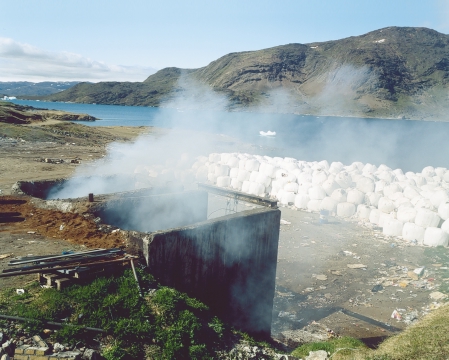
Waste incineration at
Narsaq, Greenland.
Uncontrolled incinera-
tion is an important
FINN LARSEN
local source of dioxins.
about its potential to bioaccumulate or whether
Generally, air concentrations are low. The pre-
animals can break it down, but it has been
dicted deposition in eight communities in
detected in polar bears and seals in the North
Nunavut, Canada, is highest in the south and
American Arctic and Svalbard.
east of Nunavut because of the preponderance
The annual US production of PFOS was
of dioxin sources in the eastern United States
2943 tonnes in 2000. The sole US producer
and Canada. Russian and northern European
plans to phase out production completely by
sources are regarded as insignificant for Nuna-
2003. Production in other parts of the world
vut in comparison with those in the United
is not well documented.
States, Ontario, and Quebec.
Products that are chemically similar to
Several other industrial POPs are found in
PFOS are still in production. Their environ-
the Arctic. Hexachlorobenzene (HCB) is a by-
mental fate is being investigated, but they
product in the production of chlorine gas and
have been detected in the air in regions out-
chlorinated compounds, including several pes-
side the Arctic.
ticides. It is also a by-product of the metallur-
gical industry. It has been used as a fungicide.
Known emissions cannot account for the levels
Industrial by-products
of HCB in the atmosphere, so there may be
are still not under control
sources that have not yet been identified. An al-
Some POPs are produced as unintentional by-
ternative explanation is that previously depos-
products in industrial processes. They include
ited HCB is being revolatilized into the air.
dioxins (PCDDs) and furans (PCDFs). Impor-
A compound related to HCB is pentachloro-
tant sources are waste incineration without
benzene, which has been used in dielectric flu-
efficient temperature control and flue-gas
ids in PCB-containing transformers. Older PCB-
cleaning, wood-burning stoves, metallurgical
containing devices are thus a potential source
industries, and chlorine bleaching in pulp and
of this contaminant.
paper production.
Breakdown products of octachlorostyrene
A UNEP review of global emission inven-
have recently been detected in the Arctic.
tories for dioxin and furan emissions from
Emissions of this compound probably peaked
northern Europe, Canada, the United States,
in the 1960s. Historically important sources
and Japan points to the United States and
are magnesium production and chlorine pro-
Japan as the most important global source
duction using a method that was abandoned
regions. Their releases amount to several kilo-
in the 1970s.
grams of TEQs annually, whereas Canadian
Polycyclic aromatic hydrocarbons (PAHs)
emissions are estimated at only a few hundred
are a large group of compounds that are pre-
grams. Sweden, the only Nordic country in the
sent in unburned petroleum and are produced
survey, had emissions of only 22 grams.
when organic matter burns. Sources are ubiq-
A model using information on sources and
uitous and include the burning and coking of
pathways shows the close relationship between
coal, production of aluminum, internal com-
source regions and the geographical distribu-
bustion engines, cooking on fire or hot coals,
tion of deposition for dioxins and furans.
cigarette smoking, and forest fires.
1980
2000
alpha- + beta-HCH emissions,
tonnes / grid cell
0.0-0.1
0.1-0.5
pesticide residues, which are still being re-
0.5-2
Many persistent pesticides
leased to the atmosphere. Patterns of chlor-
2-10
have been banned
dane and a metabolite, heptachlor epoxide,
10-50
A number of chlorinated pesticides are very
in Arctic air sampled during the mid-1990s
50-100
persistent in the environment.
suggest such release from soils.
100-250
DDT is an insecticide. It was banned in
250-600
many countries in the 1970s and 1980s. A few
Lindane and endosulfan
Estimated emissions of
countries, such as China and India, still pro-
are still in widespread use
alpha- plus beta-HCH in
duce DDT for use in controlling malaria and
1980 and 2000, showing
other insect-borne diseases. The previous
The use of technical hexachlorocyclohexane
a drastic decrease over
AMAP scientific assessment suggested some
(HCH) began in 1943, and global consump-
this period.
continuing use of DDT in Russia.
tion during the period 1948-1997 has been
Toxaphene is another insecticide. It was pri-
estimated at a total of 10 million tonnes.
marily used in the cotton belt of the United
Technical HCH is a mixture of mainly alpha-,
States, but was banned in the United States in
beta-, and gamma-HCH, which differ in their
1986. In Nicaragua, production continued until
chemical structures. Gamma-HCH is an insec-
the early 1990s. The former Soviet Union and
ticide, whereas alpha- and beta-HCH are by-
former East Germany were also major produc-
products from the production of gamma-HCH
ers of this type of pesticide, but compared with
and present in the technical product.
the United States, use in Europe was limited.
Technical HCH was banned in most west-
Chlordane, heptachlor, dieldrin, endrin,
ern countries in the 1970s and in the Soviet
aldrin, and mirex are other chlorinated pesti-
Union in the late 1980s. China has been a
cides covered by the Stockholm Convention.
major user but switched to lindane, which is
Chlordane has been used extensively in the
pure gamma-HCH, in 1984. Lindane is also
United States for agriculture, home lawns and
used in North America, Europe, and Asia, for
gardens, and termite control, and to a lesser
seed treatment and other applications.
extent in Western Europe, the former Soviet
Endosulfan, a widely used insecticide, is
Union, and tropical Asian countries. In 1997,
also used in some Arctic countries. It is very
the sole US manufacturer voluntarily ceased
toxic but less persistent than some other
production in all its national and international
organochlorine pesticides.
facilities. There is still some production in Singa-
pore and China. World sales of aldrin and diel-
Butyltin compounds
drin ceased in 1991, while endrin production
are only partially regulated
ceased in the mid-1980s. However, old stocks
of these chemicals, particularly dieldrin, were
Tributyltin (TBT) is a broad-spectrum pesti-
donated to African countries from the mid-
cide used against algae, mites, fungi, and
1980s to the 1990s for insect control. Releases
insects. TBT has been most widely used as a
to the environment have therefore continued.
marine antifoulant on small boats, ships, and
Because chlorinated pesticides were deliber-
marine structures such as aquaculture pens,
ately applied to control insects, many agricul-
offshore oil rigs, and underwater pipelines.
tural and some non-agricultural soils contain
It may also enter the sea in runoff from agri-
cultural areas, from boat repair yards, and from
deposition onto land and water. However,
13
municipal wastewater and sewage sludge.
they can revolatilize when weather conditions
Persistent
Mono- and dibutyltins are used primarily as
change, re-entering the atmosphere for further
Organic Pollutants
heat and light stabilizers in the production of
transport. Higher temperatures, storms, snow-
PVC plastic. The organotins have been shown
melt, or icemelt in spring can also encourage
to leach from PVC and other materials leading
revolatilization of POPs. Soils contaminated
to contamination of food, drinking water, mun-
with PCBs in the past via atmospheric deposi-
icipal water, and sewage sludge. Mono- and
tion are now releasing them back into the air
dibutyltins are also breakdown products of
to begin the transport process anew.
TBT in higher organisms.
The role of atmospheric transport varies
TBT breaks down fairly quickly in water
with the seasons. Generally, atmospheric long-
but can remain for a long time in sediments,
range transport to the Arctic from source areas
especially in cold climates. Contaminated sed-
in North America and Eurasia is much higher
iments are therefore potential environmental
in winter and early spring than in summer.
reservoirs for TBT, and may continue to be a
source long after the industrial use of TBT has
Ocean transport is slow but important
been curtailed.
Because it is extremely toxic to some marine
The role of ocean currents in transport is prob-
invertebrates, many developed countries have
ably more important for contaminant levels in
restricted the use of TBT. Regulations vary, but
the Arctic than was previously thought. Water-
generally, only controlled release formulations
soluble chemicals that are efficiently removed
are permitted and TBT-based antifoulants are
from the air by precipitation or air-to-sea gas
prohibited for boats smaller than 25 meters.
exchange may reach the Arctic primarily via
The United Nations International Maritime
ocean currents. Beta-HCH is an important
Organization has agreed to a global ban, be-
example.
ginning in 2003, on the new use of TBT on
Ocean transport is relatively slow and it
ship hulls. After 2008, TBT-based antifouling
can take many decades before POPs released in
paints must be removed from ship hulls or
other parts of the world show up as pollution
sequestered with an impermeable paint so that
in the Arctic. This can create a time lag between
no leakage to the environment can occur.
emissions and increasing levels and possible ef-
fects in the Arctic and, conversely, between emis-
sions reductions and decreasing levels in the Arc-
Pathways to the Arctic
tic environment. It also raises questions about
how modern pesticides, which normally degrade
Even if there are local sources of POPs within
fairly rapidly, behave in cold Arctic waters.
the Arctic, they cannot explain current envi-
The precise importance of ocean transport
ronmental levels. In many cases, the main
for each compound depends on that sub-
sources are in mid-latitude industrial and agri-
stance's physical properties (see box below).
cultural areas, and the contaminants travel to
the Arctic with air and water currents. Migrat-
ing animals also carry POPs to the Arctic.
Water-solubility determines importance of ocean transport
Long-range transport and subsequent biomag-
Alpha- and beta-HCH were significant contaminants in technical HCH
nification in Arctic food webs account for
and were released to the environment with this pesticide. They differ in
most of the concern regarding contamination
one important physical property: the solubility of the gaseous compound
in water. The greater solubility of beta-HCH profoundly influences the
of the Arctic by these substances.
relative importance of different pathways to the Arctic. Specifically, alpha-
Pathways can change with shifts in climate
HCH is transported efficiently both by the atmosphere and ocean cur-
regime or long-term climate change. This is
rents. Initially, when emissions were still substantial, air transport was
discussed further in the chapter Changing Path-
most important. The solubility of gaseous HCH in water is greater at
ways, including some specific changes that
lower temperatures and the cold waters of the Arctic Ocean and the mar-
have occurred during the 1990s.
ginal seas became a sink. Alpha-HCH levels in air declined during the
mid-1980s and 1990s because of a drop in technical HCH emissions, and
ocean currents took over as the major transport route. Today, the Arctic
The atmosphere
Ocean has reached equilibrium with the atmospheric alpha-HCH concen-
provides a fast transport route
trations, and in some areas is releasing it back to the atmosphere. In the
central Arctic Ocean, the ice cap prevents this outgassing.
Air is the most important transport route for
Due to its greater water solubility, beta-HCH is more efficiently scav-
volatile and semi-volatile pollutants. Under
enged by rain and snow than alpha-HCH. Most of its emissions have
favorable weather conditions, air masses can
therefore been deposited closer to the source regions in high precipitation
transport contaminants from mid-latitudes to
areas in the northern North Pacific, from where the Alaska coastal cur-
the Arctic within a few days or weeks.
rent can transport beta-HCH farther north into the Bering Sea. Thus,
Most POPs are semi-volatile and their trans-
even during the years of high technical HCH emission, beta-HCH was
port is complex. In temperate and tropical
most likely carried to the High Arctic mainly via ocean currents. With
regions, they are picked up by the winds as
ocean transport being relatively slow, it will likely take longer for envi-
gases. When temperatures drop, they condense
ronmental levels of beta-HCH than alpha-HCH to reach equilibrium
onto atmospheric particles and other surfaces,
with emissions.
reaching the ground via rain, snow, or direct
in the environment are influenced by proximity
14
Rivers and sea ice
to known or suspected source regions. Gener-
Persistent
can carry contaminated sediment
Organic Pollutants
ally, levels of HCHs are higher in the western
A route for contaminants that has been in-
North American Arctic than farther east, re-
creasingly recognized in the past few years is
flecting emissions in eastern Asia. By contrast,
sea ice that carries sediment from large rivers.
PCB levels are higher in the Eurasian part of
Several great rivers flowing through industrial
the Arctic, especially around eastern Green-
and algricultural regions drain into the Arctic
land, Svalbard, and the Kara Sea. Evidence
Ocean. When their sediments reach the coast,
from seabirds and several marine mammals
some are incorporated into coastal ice.
points to releases of PCBs in Russia.
The general movement of sea ice north
In the previous AMAP assessment, there
of Eurasia is from the coast of the Kara Sea
was little information on toxaphene. New
northward to the Siberian branch of the trans-
data show that this pesticide occurs through-
polar drift between the Franz Josef Land and
out the Arctic, in some cases at rather high
Severnaya Zemlya archipelagos. Ice-bound
levels. Moreover, there are data that suggest
particles possibly laden with contaminants
current releases of regulated pesticides, speci-
may thus be carried out of the area and re-
fically DDT and toxaphene, mostly in the
leased when the ice melts. The main melting
Russian Arctic.
areas are east of Svalbard and in the Fram
New contaminants are also showing up in
Strait. The importance of sea ice for contami-
the Arctic. These include brominated flame
nant transport remains an open question.
retardants in Canada, Greenland, the Faroe
Islands, Norway including Svalbard, and Swe-
den, as well as PFOS in North America and
Levels
Svalbard. TBT-related compounds have been
and geographical patterns
detected in several species.
The following sections provide details about
Levels in the environment can be used to piece
levels in different animals and compartments
together a picture of how pathways distribute
of the environment.
POPs throughout the Arctic from their sources.
The emerging picture suggests that differ-
Air and precipitation data
ences in biological pathways may be much
indicate fresh DDT use
more important than was previously realized.
Specifically, the fact that the same species may
New data on POPs in air are available from
have different diets in different parts of the
several land-based stations. The results for
Arctic seems to be important in explaining dif-
HCHs, chlordanes, and DDTs suggest rather
ferent contaminant burdens in some popula-
uniform, low concentrations in Arctic air dur-
tions. There is also new evidence that animals
ing the mid-to-late 1990s. DDT levels at St๓r-
can carry contaminants between areas and envi-
h๖fdi, Iceland, suggest a fresh source. At Ta-
ronmental compartments, creating a biological
gish, Canada, there is some inflow of DDTs
Zeppelin station at Ny-
pathway of as yet undetermined significance.
that is linked to trans-Pacific transport. The
ลlesund, Svalbard, is
Another picture, which is consistent with
DDT pattern at Amderma, Russia, differed
part of AMAP's air mon-
itoring network.
the previous AMAP assessment, is that levels
from most other sites, suggesting recent use.
Concentrations of PCBs
and HCB at Zeppelin (Ny-
ลlesund), Svalbard, are
higher than at the Canadian
sites. The results suggest
that the European Arctic
continues to receive ele-
vated PCBs compared to
the North American Arctic.
The data also indicate long-
range transport of PAHs
from Eurasian sources, with
a signature typical of coal
and oil combustion.
Many new contaminants
have been detected in Arctic
air. They include several
current-use pesticides (en-
dosulfan, methoxychlor, tri-
fluralin, and pentachloro-
anisole), industrial by-prod-
ucts (trichloroveratrole,
TORUNN BERG
tetrachloroveratrole, and
octachlorostyrene), chlori-
Concentration, pg/ m3
Concentration, pg/ m3
nated naphthalenes, PBDEs,
200
12
and short-chain chlorinated
alpha-HCH
DDT
10
150
paraffins.
8
Snow accumulating on top
100
6
of glaciers has been used to
4
50
look at deposition of POPs.
2
There are data from the sum-
0
0
mit of the Greenland ice cap
50
10
and from Lomonosovfonna
gamma-HCH
DDE
40
8
on Svalbard. The high flux of
30
6
DDTs at Lomonosovfonna,
nearly nine times greater than
20
4
that at Summit, suggests a
10
2
possible local source. HCHs,
0
0
dieldrin, and endosulfan fluxes
were also higher at Svalbard.
Alert 1996
Alert 1998
Alert 1996
Alert 1998
The highest input of PCBs was
Pallas 1996
Pallas 1998
Pallas 1996
Pallas 1998
St๓rh๖fdi 1996
St๓rh๖fdi 1998
Zeppelin 1996
Zeppelin 1998
St๓rh๖fdi 1996
St๓rh๖fdi 1998
Zeppelin 1996
Zeppelin 1998
at Summit.
marine environments of the Arctic. New data
Tagish
for several terrestrial species from West Green-
Barrow
Predatory birds and some Russian reindeer
land confirm that POP levels in herbivores are
stand out in the terrestrial environment
very low. In soil, plants, and herbivores, the
Alert
Amderma
Zeppelin
With the exception of predatory birds and
most prevalent POPs are HCB, HCHs, and
Pallas
organisms impacted by local sources, the
lower-chlorinated PCBs. In predators, higher-
St๓rh๖fdi
Arctic terrestrial environment is among the
chlorinated PCBs, chlordanes, and DDTs are
least POPs-contaminated ecosystems in the
more pronounced.
Average annual concen-
world. Predatory birds that feed on migratory
Since the previous AMAP assessment, some
tration of HCHs and
waterfowl have high levels of many legacy
plant and soil data from four regions of Russia
DDTs in air. Bars indi-
POPs, such as DDTs. New data from peregrine
have become available. Levels are generally
cate range in values.
The map shows the mon-
falcons in northern Norway and Sweden and
low but an order of magnitude higher than
itoring station network
from several other birds of prey in northern
lichen in the Canadian Arctic. There were no
for POPs in the Arctic.
Norway show that brominated flame retar-
strong spatial trends within Russia. However,
dants are now also present.
some recent data on Russian reindeer and
Concentrations of POPs in terrestrial biota
mountain hare indicate elevated dioxin and
other than predatory birds are generally orders
furan levels on the Kola Peninsula, probably
of magnitude lower than in the freshwater and
connected to local emissions from smelters.
PCB concentration, ng/g wet weight
1.8
Concentrations of PCBs
in terrestrial animals (liver
1.6
tissue), berries, lichens,
1.4
mosses, and soils from
regions within Russia
1.2
sampled in 2000-2001.
1.0
0.8
Reindeer
0.6
Hare
0.4
Ptarmigan
0.2
0
Lovozero
Nelmin Nos
Dudinka
Khatanga
Kanchalan
Lavrentiya
PCB concentration, ng/g dry weight
Lavrentiya
Kanchalan
14
12
Khatanga
Dudinka
10
Nelmin Nos
Lovozero
8
6
Berries
4
Lichen
2
Mosses
Soil
0
Lovozero
Nelmin Nos
Dudinka
Khatanga
Kanchalan
Lavrentiya
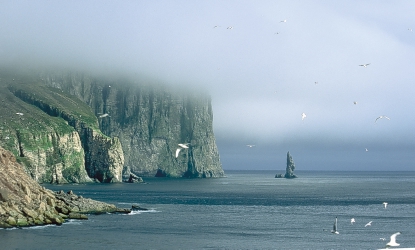

Bj๘rn๘ya (right) and
Ellasj๘en (below).
GUTTORM N. CHRISTENSEN
Birds connect marine and freshwater environments
In 1994, it became clear that fish in the lake Ellasj๘en on Bj๘rn๘ya had exceptionally high levels of
POPs. In 1999, Norwegian researchers initiated a study to investigate why. One question was the role
of long-range transport, as there were no local sources on the island. Levels of POPs in air samples
seem to be very similar to the levels measured in air samples from Svalbard, and levels of POPs in
snow and rainwater samples from Bj๘rn๘ya are comparable with levels found in other Arctic areas.
GUTTORM N. CHRISTENSEN
However, levels in fog are relatively high, leading to a suggestion that a relatively high precipitation
rate and a high frequency of fog in this part of Bj๘rn๘ya could lead to a high deposition of the air-
Meteorological Station
borne contaminants.
Another explanation for the high levels found in Ellasj๘en could be the thousands of seabirds
that breed close to the lake or use it as a resting area. Their guano contains elevated levels of POPs,
especially PCBs, and they deposit it directly into the lake or in the catchment area of the lake.
Ellasj๘en
In another lake on Bj๘rn๘ya, with no nearby seabird colonies, levels of POPs are several times lower
than in Ellasj๘en.
One conclusion from this study is that seabirds can serve as a biological pathway carrying conta-
minants from the marine to terrestrial and freshwater environments. Data from a lake on Jan Mayen,
5 km
an island north of Iceland, show that this pathway is not unique to Bj๘rn๘ya.
There are also some additional Russian and
Local pollution is a problem
Alaskan data from soil and plants from the
in some freshwater environments
early 1990s. The levels are generally as low in
Russia and Alaska as in the rest of the Arctic,
Freshwater biota in the Arctic generally have
and several POPs could not be detected. The
low levels of POPs compared with marine
levels of higher-chlorinated PCBs and several
birds and mammals. The exceptions are fish
pesticides were higher in samples from the Kola
in lakes and rivers that are contaminated via
and Ural sites than in the Alaska and Taymir
other routes than through the atmosphere.
sites, which probably can be explained by prox-
One example is in the lake Ellasj๘en on Bj๘rn-
imity to urban areas and industrial activities.
๘ya, south of Svalbard, where seabirds have
been shown to transport contaminants from
the marine environment (see box above).
Another example is higher DDT and PCB
levels in burbot from a lake near Fairbanks
than in other lakes in interior Alaska, reflect-
Concentration,
ng/g lipid weight
ing historical use of these compounds in the
3000
city of Fairbanks. Burbot from the Taymir-
Dudinka area in Russia had similarly high lev-
2000
els. In other freshwater fish from Russia, POP
levels, except for dioxins, are comparable to
1000
other parts of the Arctic. Dioxin levels in the
Kola freshwater fish are elevated, similar to
those in reindeer. Across the Arctic, toxaphene
0
PCBs Toxaphene
and PCBs are the contaminants that predomi-
nate in freshwater animals.
Spatial trends for PCBs
In the abiotic environment, new data from
and toxaphene in burbot
Russia confirm elevated POP levels in fresh-
in the Canadian, Russian,
and Alaskan Arctic.
water compared with levels observed in Canada
and Norway. PCBs were the dominant POP in
17
both water and sediment, followed by DDTs
Persistent
and chlorobenzenes. At one site, Nelmin Nos,
Organic Pollutants
DDT concentrations in sediment were 70 times
higher than elsewhere. The high levels suggest
fresh input into the environment in this region.
With this exception, POP concentrations in
sediment were similar to those previously re-
ported for other areas of the Arctic.
HCHs, PCBs, and toxaphene
dominate in seawater
Several scientific cruises have gathered data on
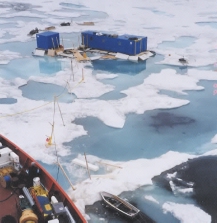
The SHEBA research lab
seawater since the previous AMAP assessment.
barely afloat. During the
SHEBA project an ice-
HCH levels are higher north of North America
breaker was frozen into
than north of Eurasia. This geographical pat-
the pack ice and left to
tern is best explained by proximity to source
SHEBA PROJECT OFFICE
drift for a year.
regions in Asia.
HCH concentration,
Levels in marine invertebrates
ng/liter
reflect food habits
5
4
Marine invertebrates provide a link from phy-
toplankton to fish, seabirds, and mammals in
3
the Arctic marine food web. They carry not
2
only nutrients, but also POPs. Understanding
1
the dynamics of POPs in marine invertebrates
0
is therefore a key to understanding POP trends
in the marine ecosystem.
In general, marine invertebrates have low
POP levels, consistent with their place low in
the food web and their short life span. How-
ever, longer-lived bottom-dwelling inverte-
brates that scavenge the remains of fish and
mammals have higher contaminant loads.
One group of organisms that has been exten-
Concentrations of
sively sampled since the previous AMAP
sum-HCHs in seawater
assessment is the calanoid copepods, a zoo-
1996-2000.
plankton group that dominates in open water
For PCBs, there are too few measurements
in the high-latitude marine environment.
to assess spatial trends. There are some other
Copepods feed on phytoplankton. The most
interesting observations, however. PCB con-
common POPs in these animals were relatively
centrations are lower under the permanent
water-soluble compounds such as HCHs and
pack ice than in open nearshore surface waters.
some PCBs, followed by less water-soluble
This suggests that levels are related to air-sea
compounds such as DDTs, chlordanes, and
exchange and possibly to biological activity.
HCB. The concentrations of DDTs and chlor-
The highest PCB concentrations were found in
danes were higher in the copepods than in the
the nearshore waters of the Canadian Arctic
surrounding water, indicating some bioconcen-
archipelago, southern Beaufort Sea, and north-
tration.
ern Baffin Bay. Measurements from the Surface
Heat Budget of the Arctic Ocean (SHEBA)
Project show that PCBs seem to be delivered
to the Bering Sea via runoff and spills, whereas
the interior Arctic Ocean owes a significant
portion of its PCB content to condensation
and air-sea exchange.
Toxaphene data suggest a fresher, less de-
graded input to the White Sea than the other
places where toxaphene has been measured.
DDTs, chlordanes, dieldrin, and HCB are
present at much lower levels than toxaphene,
PCBs and HCHs. Sea-air exchange and melt-
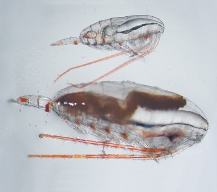
Two species of calanoid
copepods, Calanus fin-
ing snow and ice are important sources for
marchicus (above) and
DDTs and chlordanes to the marine environ-
3 mm
Calanus hyperboreus
ment.
WERNER HANNAPELL
(below).
The levels for ice-associated invertebrates
PCB concentration, ng/g lipid weight
were as low as those for the zooplankton.
50
No clear geographical trend was apparent for
Calanoid copepods
PCBs, DDTs, and toxaphene. The only geo-
Barrow
40
graphical difference was higher alpha-HCH
Holman Island
levels in Fram Strait compared with the area
Northern Baffin Bay
Hudson
30
Svalbard
north of Svalbard.
Bay
Barents Sea
Greenland Sea
The study of ice-dwelling amphipods has
20
increased understanding of their ecology and
its relation to contaminant burden. The differ-
10
ing levels of fat-soluble POPs in these creatures
indicate that diet may play an important role
0
in the bioaccumulation of POPs. For example,
the highest POP levels were found in a long-
Barrow
Svalbard
lived species that, as it grows larger, switches
Hudson Bay
Barents Sea
Holman Island
Greenland Sea
from eating phytoplankton to eating other
Barents Sea POP levels
Northern Baffin Bay
zooplankton.
remain unexplained
Bottom-dwelling, or benthic, invertebrates
Seabirds and marine mammals from the Barents Sea, Svalbard, and East
have a larger range of sizes and feeding eco-
Greenland have higher PCB and DDT levels than animals from Canada
logies than those living in the water column.
and Alaska. There are many ideas about the cause of this difference, in-
cluding transport by contaminated ice from Russian rivers, but as yet no
Since the previous AMAP assessment, a num-
clear-cut answers have been found. The in-depth study of zooplankton
ber of new benthic invertebrates have been ana-
and ice-associated amphipods does not show any clear geographical pat-
lyzed for POPs. Those that feed on animal car-
tern that could provide an explanation. For example, PCB levels are higher
casses can have very high POP concentrations.
in these organisms in the North American Arctic than in the Greenland
For example, the amphipod Anonyx nugax
Sea and north of Svalbard. Food web structure may be part of the expla-
has concentrations in the same range as Arctic
nation. More research is thus needed to understand the dynamics of con-
cod and the dovekie, a seabird. PCBs are the
taminant transport around the Barents Sea, Svalbard, and East Greenland.
contaminant of greatest concern, but chlordane
and DDT levels were also high in some species.
The geographical pattern for POPs in zoo-
POP levels in the filter-feeding blue mussel
plankton shows higher levels of HCB and
are available for several locations. With one
HCHs in Alaskan and western Canadian
exception, the levels are low. PCBs are the
Averaged concentrations
of HCHs, DDTs and
waters compared with other parts of the
most prominent contaminant, probably
PCBs in benthic and
Arctic. This probably reflects the proximity to
because they adhere to the sediments that the
pelagic invertebrates
recent sources in Asia. Toxaphene levels were
mussels filter to gather food. The one area
from northern Baffin Bay
lower at Alaskan sites than those in the eastern
with high contaminant levels was Kuujjauq in
(1), northern Quebec (2),
northern Alaska (3), and
Canadian Arctic, reflecting proximity to North
northern Quebec. This can probably be
Cumberland Sound (4).
American sources.
explained by a local PCB source. High TBT
levels have been reported in blue mussel in
B E N T H I C
P E L A G I C
harbors in northern Norway.
Concentration, ng/g lipid weight
400
HCHs
The Greenland shark
300
stands out among marine fish
200
Arctic cod is an important link from inverte-
brates to marine mammals and seabirds. It is
100
included in AMAP's monitoring program be-
cause of its circumpolar distribution. The geo-
0
graphical pattern indicates higher DDT levels
300
in northern Baffin Bay than elsewhere in the
250
Arctic. PCB levels were somewhat higher in
DDTs
200
North American Arctic cod, consistent with
zooplankton but not with what has been seen
150
in seabirds and marine mammals (see graph
100
left on opposite page).
50
For some long-lived predatory fish, POP
levels are high. The previous assessment men-
0
1000
tioned high toxaphene levels in Greenland hal-
PCBs
ibut from eastern Canada. Recent data from
800
West Greenland confirm high POP levels in this
600
species. New data on Greenland shark caught
in Davis Strait and Cumberland Sound show
400
levels in the same range as in other top Arctic
200
predators, such as polar bear and glaucous gulls
0
(see graph right on opposite page). DDT levels
(2)
(1)
(1)
(1)
M. longa (1)
Shrimps
A. nugax (1,4)
E. glacialis (1)
T. libellula (1)
G. arcticus (1,4)Blue mussel
Blunt gaper
C. crispatus (1)
S. entamon (3)
M. occulata (1)
Arrow worm
C. hyperboreus (1)
Y. thrachiaeformis (1)
Concentration, ng/g lipid weight
Concentration, ng/g lipid weight
400
100
Arctic cod
HCHs
PCBs
80
Barrow
60
Cumberland
Baffin Bay
300
Sound
Davis Strait
Barents Sea
40
Jan Mayen
20
0
5000
200
Concentrations of HCHs,
PCBs
DDTs and PCBs in Arctic
4000
cod.
3000
Concentrations of HCHs
DDTs
and PCBs in Arctic
100
2000
marine fish from Davis
HCHs
1000
Strait and Baffin Bay, and
Greenland shark from
0
Cumberland Sound.
0
Barrow
Northern
Jan Mayen Barents Sea
RedfishCapelin
Arctic cod
Starry ray
Baffin Bay
Atlantic cod
Spotted wolffish
Shorthorn sculpin
Greenland halibut
Greenland shark
were among the highest ever measured in Can-
Atlantic region in winter, and the other two
adian Arctic animals. The explanation is prob-
migrate as far south as southern Europe.
ably a combination of slow metabolism, long
Levels are also high in the ivory gull and
life span, and a high position in the food web.
northern fulmar, both of which scavenge.
The most prevalent contaminants are PCBs,
DDTs, and chlordanes, but relative levels of
Scavenging seabirds
these and other POPs vary by species. New
can have very high loads of POPs
data show that toxaphene is present in Can-
There are about fifty species of Arctic seabirds.
adian, Greenland, and northern Norwegian
Their levels of contamination depend to a large
seabirds, with levels as high as those of PCBs.
extent on their different feeding habits. Some
For some dioxins, furans, and dioxin-like
birds migrate to southern areas and their con-
PCBs, the levels in Arctic seabirds exceed levels
taminant load also reflects what they eat dur-
in marine mammals by several orders of mag-
ing their migrations. For example, Greenland
nitude and are comparable to levels in seabirds
and Canadian kittiwakes, which overwinter in
from temperate North America and Europe.
European waters and off the North American
The levels are especially high in glaucous gulls
east coast, have high POP levels, as do kitti-
from Bj๘rn๘ya. Some new chemicals have also
wakes from several sites in the Barents Sea.
been detected, most notably PBDEs. The levels
In the Arctic, POP levels are highest in the
of this chemical in Norwegian and Canadian
glaucous gull, the great skua, and the great
Arctic birds are higher than in marine mam-
black-backed gull, which are all birds that
mals in Canada but lower than in birds from
scavenge and prey on other seabirds and oc-
the polluted Baltic Sea. Some individual glau-
casionally on carcasses of marine mammals.
cous gulls from Bj๘rn๘ya have PBDE levels as
The glaucous gull migrates to the northern
high as those of seabirds in the Baltic Sea.
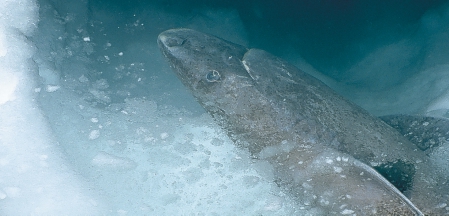
The Greenland shark is
the largest fish and the
only shark known to
inhabit Arctic waters.
Very little is known
about its ecology, but
there is some evidence
that this shark can live
more than 100 years.
They eat seal pups and
beluga whales, and thus
GEORGE W. BENZ
live high in the food web.
A number of studies have measured toxa-
phene in ringed seals, and the data show that
this pesticide is an important contaminant
PCB concentration,
throughout the Arctic. In some cases the levels
ng/g lipid weight
are higher than for PCBs. The levels in ringed
10 000
seals are highest in the Canadian Arctic, prob-
ably reflecting the extensive past use of toxa-
phene in North America. Harp seals on the ice
Thick-billed
edge east of Svalbard have surprisingly high
5000
murre
toxaphene levels. This suggests that they are
Black guillemot
Concentration,
Black-legged
ng/g lipid weight
kittiwake
2000
0
1500
1000
500
0
DDT PCB
Concentrations of PCBs
in liver and eggs (faded,
outlined columns) of
different species of
marine birds.
Mono-, di-, and tributyltins have also been
found in these glaucous gulls. Polychlorinated
naphthalenes (PCNs) have been detected in
herring gulls and black-backed gulls in north-
Concentration,
ng/g lipid weight
ern Norway.
500
POP levels in seabirds that do not migrate
400
and have a circumpolar distribution, such as
300
200
black guillemot, can be used to look at spatial
100
trends. New data are available from Alaska,
0
the Bering Sea, Baffin Bay, Greenland, Iceland,
Chlordane HCHs
the Faroe Islands, Jan Mayen, and Svalbard.
HCH levels were highest in the Baffin Bay
birds, reflecting the generally higher levels of
this contaminant in the Canadian Arctic and
more recent use in Asia. PCB levels were high-
est at Jan Mayen, Norway. Glaucous gulls
only migrate within very limited areas.
The spatial trend for glaucous gulls shows the
highest PCB levels at Franz Josef Land, Russia.
Concentration,
ng/g lipid weight
100 000
Seal data reveal high POP load
Concentration,
75 000
in parts of the Arctic
ng/g lipid weight
40
50 000
The most abundant and widely distributed seal
30
25 000
in the Arctic is the ringed seal. It feeds on fish
0
and crustaceans. The most prominent contami-
20
DDT PCB
nants in ringed seals are PCBs, chlordanes, and
10
Concentrations of DDTs
DDTs. Old and new data give a similar geo-
0
and PCBs in glaucous
graphical picture of the contaminant load. Lev-
Toxaphene
gull liver.
els of PCBs and DDTs increase from west to
congener 26
congener 50
east, with the lowest levels in Alaska and east-
ern Russia (Chukotka), moderate levels in the
eastern Canadian Arctic and West Greenland,
and higher levels in East Greenland and around
Svalbard. The Svalbard seals have PCB levels
Concentrations of DDTs
four times higher than seals from the western
and PCBs (upper), chlor-
Canadian Arctic and Alaska. In the Russian
danes and HCHs (middle),
and toxaphene (lower) in
White Sea and the more easterly Kara Sea, levels
ringed seal blubber.
were even higher than in the seals from Svalbard.
continuously exposed to fresh toxaphenes and
migrations. The bowheads are exposed to a
21
may indicate the use and production of these
variety of contaminants via their prey, which
Persistent
compounds in spite of bans.
is mostly plankton, but contaminant levels
Organic Pollutants
Low but detectable levels of mono- and di-
are generally low. The pattern of different
butyltins have been found in Svalbard ringed
POPs in bowheads matches the contaminant
seals and in Alaskan Steller's sea lions, in which
load in the surface waters of the Bering and
tributyltins were also found.
Beaufort Seas.
Baleen whales have low loads of POPs
Toothed whales can be very contaminated
The North Atlantic minke whale is found
The beluga or white whale is a small toothed
across the Atlantic in both polar and northern
whale feeding near the top of the marine food
temperate waters. It feeds mostly on fish and
web. It is relatively long-lived. Belugas are
krill. PCB and DDT levels generally increase
found throughout the Arctic. The major POPs
from west to east with the highest levels in the
in beluga are PCBs, DDTs, chlordanes, and
North and Barents Seas. The levels in recent
toxaphene. Levels are generally lower in south-
measurements from the northeast Atlantic
ern Alaska and higher in the eastern Canadian
Concentration,
ng/g lipid weight
5000
4000
3000
2000
1000
0
Chlordanes
PCBs
DDTs
Concentrations of PCBs
and DDTs in minke whale
(left) and DDTs, PCBs,
and chlordanes in beluga
blubber (right).
are two-to three-fold lower than those made
Arctic and around Svalbard. Samples from
in the early 1990s. The decline in POPs in these
Nunavut have also been analyzed for chlori-
minke whales may reflect a change in feeding
nated naphthalenes, which accounted for about
habits to almost exclusively krill after a col-
one tenth of the TEQs in those beluga. PBDEs
lapse of the capelin stocks. The geographical
are another new contaminant group present in
differences in levels may reflect proximity to
measurable quantities in beluga.
sources as well as differences in migration
In Alaska, free-ranging transient killer
patterns and food habits, which are not well
whales, which feed on marine mammals, have
studied.
high POP levels compared with resident killer
Gray whales make an annual round-trip
whales in Prince William Sound, which stay
migration between their breeding grounds in
in one area and prey mostly on fish. The dif-
Baja California and the southern Gulf of Cali-
ference in contaminant burdens is probably
fornia and their major feeding area in the
caused by the different diets. The levels in the
northern Pacific Ocean. Gray whales mostly
transient killer whales are similar to the popu-
eat bottom-dwelling prey and thereby also
lations in the Strait of Georgia/Puget Sound
ingest sediment and other bottom material.
area at the border between Canada and the
The only data on contaminants are from 17
United States.
whales sampled in Russian waters of the Be-
PCB and DDT levels in harbor porpoises
ring Sea in 1994 and in one gray whale from
off the west coast of Norway are comparable
Chukotka in 2000. DDT and PCB levels were
to those in porpoises from the polluted Baltic
comparable to other baleen whale species in
Sea and the Kattegat-Skagerrak passage be-
other parts of the Arctic.
tween the Baltic and North Seas. Some of the
The bowhead whale lives in Arctic waters.
porpoises from western Norway may have
The largest stock migrates between summer
been exposed to local PCB sources. Levels
grounds in the eastern Beaufort Sea and Amund-
in harbor porpoises from Greenland are
sen Gulf and winter habitat in the Chukchi
much lower.
and northern Bering Seas. The traditional na-
Norwegian and West Greenland harbor
tive harvest occurs during the spring and fall
porpoises and Dall's porpoises from the Aleu-
tian Islands have detectable levels of mono-,
eastwards and westwards from this region.
22
di-, and tributyltins.
This may imply a significant source of PCB
Persistent
Organic Pollutants
PCB levels in pilot whales from the Faroe
pollution in Russia. The contaminant load in
Islands are higher than for most other whales.
these polar bears also indicates that there may
Levels of several other POPs are also compara-
be significant sources of DDT and chlordane
tively high. PBDE concentrations are an order
in this part of Russia.
of magnitude higher than in other Arctic mar-
There are also new polar bear data from
ine mammals examined to date.
Alaska, where PCB levels are lower than in
Narwhal from West Greenland and the Can-
polar bears from Hudson Bay, Canada, and
adian Arctic have similar POP levels, whereas
Svalbard. In Alaska, the highest levels were
levels of PCBs, DDTs, and chlordanes were
in bears from the southern Beaufort Sea.
considerably higher in narwhal from Svalbard.
The Alaska bears had higher HCH levels
Levels of HCHs, HCB, and toxaphene were
than polar bears elsewhere in the Arctic.
Concentrations of PCBs
quite consistent across the sites sampled.
There have been several suggestions to ex-
and HCHs in adult fe-
plain why some polar bear populations have
male polar bears. Data
much higher PCB levels than others. These
from AMAP phase 1
Polar bear PCB levels
(fat) and recent studies
include proximity to sources and contaminant
point to possible regional sources
(blood). At Svalbard,
transport by ice from source regions. New in-
PCB levels measured in
Polar bears are top predators in the marine
formation about what polar bears eat might
fat are approximately
food web. They are distributed throughout the
shed more light on the issue. Most polar bears
five times higher than in
Arctic and range over large areas in search of
feed on ringed seal, especially the blubber.
blood from the same ani-
mals. If this relationship
food. They follow their main prey, ringed seals
However, east of Svalbard, an unusually high
is the same in other areas,
and bearded seals, as the edge of the sea ice
number of bears feed on harp seals. These
high fat PCB concentra-
moves south in fall and winter and north in
seals migrate from the Russian White Sea and
tions can be expected in
spring and summer. Often, polar bears eat
may serve as a biological pathway from Russia
bears in the Russian
only the blubber from the seal, and are thus
to Svalbard. Moreover, blubber from adult
Arctic.
exposed to higher loads of POPs because the
harp seals has higher POPs concentrations
Concentration,
blubber carries more fat-soluble pollutants
during the molting season in June, compared
ng/g lipid weight
40 000
8000
500
than other tissues.
with ringed seals sampled at the same time.
The previous AMAP assessment reported
The results suggest that the season, availabil-
400
30 000
6000
high levels of PCBs and DDTs in polar bears
ity, and biological condition of polar bear prey
from the east coast of Greenland and around
may play an important role in biomagnifica-
300
20 000
4000
Svalbard. Recent studies have revealed even
tion of POPs in the marine food web.
200
higher levels in polar bear from Franz Josef
Though PCBs have been the major contami-
10 000
2000
Land and the Kara Sea, with decreasing trends
nant of concern in polar bears, other POPs are
100
present as well. Most notable is PFOS. Levels
0
0
0
in some polar bear liver samples from northern
PCBs, fat
Alaska are high enough to make this one of
PCBs, blood
HCHs, fat
the most prominent POPs. PFOS has also been
HCHs, blood
detected in blood of ringed seals in eastern
Canada and in Svalbard and in Alaskan north-
ern fur seals.
Recent measurements show the presence
of toxaphene in Svalbard bears. Their fat also
contains PBDEs, along with several uniden-
tified brominated compounds.
Arctic fox
Arctic foxes are very opportunistic in their
food habits and can be part of both the marine
and terrestrial food webs. On land, the foxes
feed on lemmings, birds, bird eggs, and cari-
bou carcasses, whereas coastal foxes may also
eat marine invertebrates and fish in summer.
During the winter and spring they scavenge on
the remains of seals killed by polar bears and
on seal placentas. Arctic fox also prey on new-
born seal pups. Their feeding habits influence
both their position in the food web and their
contaminant load. Foxes in Canada, inland
Iceland, and Alaska generally have lower POP
levels than do foxes along Iceland's coast and
on Svalbard. Iceland's coastal foxes have PCB
levels higher than Svalbard polar bears.
alpha-HCH air concentration, pg/m3
Time trends
HCH emissions, tonnes/ year
1000
200 000
Comparing previous and current levels of con-
Air concentration
taminants can give an indication of new sources
800
160 000
as well as information about the effects of
Global emissions
bans or other political actions to limit emis-
600
120 000
sions. Interpretation of time trends must also
take into account possible changes in path-
400
80 000
ways, as is discussed in the chapter Changing
Pathways. This is especially true for trends
200
40 000
comparing the 1990s with previous decades,
because of a shift in climate regime that has
0
0
1980
1985
1990
1995
affected wind patterns, precipitation, and
ocean currents.
Emissions of technical
Ice cores show declining input
HCH and concentra-
In general, the levels of several banned per-
tions of alpha-HCH in
sistent organic pesticides have declined or oth-
Snow collected in glaciers and transformed
Arctic air.
erwise mirror historical usage. However, there
into ice can give a historical record of POPs
are some notable increases in air during the
deposition. In the spring of 2000, a core of ice
1990s for DDTs, dieldrin, and endosulfan.
was collected at the Lomonosovfonna Ice Cap
Increases for endosulfan have also been seen
on Svalbard that represents a historical record
in beluga
of the past 70-80 years. It gives the first de-
Some HCHs have not declined as much as
tailed picture of deposition in the European
expected based on decreased use. In fact, levels
Arctic. For all the measured contaminants, the
of beta-HCH have increased in some areas,
maximum concentration occurred below the
probably because old emissions are only now
snow surface, indicating that inputs have de-
reaching parts of the Arctic via ocean transport.
clined in recent years.
The time trend for toxaphene is also complex,
The results indicate that DDT levels prob-
with both increases and declines reported.
ably peaked before the 1970s in most of the
For PCBs, levels have generally decreased,
areas that are sources to Svalbard. The levels
but with varying rates in different parts of the
were unusually high compared with some
Arctic. In polar bears and belugas, the decline
other pesticides, which may reflect past DDT
has leveled off since the mid-1990s.
use in nearby communities. An unexpected
Not all contaminants are decreasing. Data
result was that the concentration of HCHs in
from seabirds, belugas, and seals indicate that
the ice core was higher than for the other POPs.
levels of the brominated flame retardant PBDE
The highest concentrations were similar to
are increasing. This product is still in use.
1993 levels in water from the Yenisey River,
The following sections give more detailed
the most contaminated of the large Russian
information about the different time series.
rivers. HCHs, being volatile, would normally
evaporate and the levels may thus have been
Air samples show trends
even higher when the snow fell. The snow near
in atmospheric concentrations
the surface, reflecting recent input, had levels
that were similar to current levels in lake and
Air sample data mirror atmospheric transport
river water. The recent downward trend in
of contaminants. The most reliable time trend
HCHs is consistent with what has been seen
data are from Alert, Canada. At Alert, DDT
in air and water samples.
concentrations increased significantly over the
period 1993 to 1998, and the chemical signa-
Falcon eggs and freshwater fish
ture implies a continued source of technical
show declining POP levels
DDT entering the Arctic atmosphere. HCHs
declined during the same period, as did chlor-
Eggs from Alaskan peregrine falcons have been
dane levels. Dieldrin concentrations increased
analyzed to look at time trends for the terres-
significantly. The concentrations of alpha-
trial environment. From 1979 to 1995, the lev-
endosulfan also increased significantly at Alert,
els of dieldrin, DDTs, chlordanes, and PCBs
which can probably be explained by continued
declined. The trend was weaker for PCBs than
use in North America.
for the other contaminants.
For PCBs there was a definite reduction in
In the North American Arctic, some time
air concentration at Alert from 1992 to 1998,
trend conclusions can be drawn by comparing
whereas other stations showed no clear down-
burbot liver samples collected in Fort Good
ward trend. Also, for PAHs, there was no con-
Hope in the years 1986, 1988, 1994, and 1999.
sistent trend.
Slow declines in all major organochlorines and
Longer time-trend data for HCHs clearly
toxaphene were observed, although the rate of
show how reduced use has an impact on air
change varied with the chemical and the year.
transport to the Arctic, decreasing the load to
Russian burbot data from 1988 and 1994 indi-
the environment.
cate declines in HCHs and DDTs.
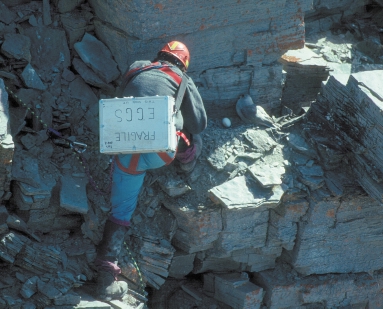
the Baltic Sea. Chlordane, dieldrin, and mirex
Seabird eggs
levels decreased in kittiwake eggs, but not in
provide wealth of time trend data
the eggs of other birds.
Climber on cliff with
northern fulmar and egg.
One way to look at time trends is to analyze
The story about HCHs in the North Amer-
Bird eggs collected on
archived samples. One such a study has been
ican Arctic is mixed and provides a lesson
Prince Leopold Island in
carried out on seabird eggs collected between
about the role of biomagnification in temporal
the Canadian Arctic pro-
1975 and 1998 from Prince Leopold Island in
trends. For total HCHs, the levels in bird eggs
vide important informa-
the Canadian High Arctic. During egg forma-
increased, driven by beta-HCH. Alpha-, beta-,
tion about temporal
trends of POP levels.
tion, POPs are transferred to the egg via lipids.
and gamma-HCH all continue to be delivered
to the Arctic by seawater flowing through the
Bering Strait. Moreover, the Arctic Ocean may
work as a major reservoir of these contami-
nants. However, only beta-HCH biomagnifies,
and this component drives the temporal trends
for total HCHs in higher-trophic-level organ-
isms. In other words, the decline in total HCHs
that would be expected based on reduced global
use is delayed partly because beta-HCH bio-
magnifies. Another reason for the delay is that
ocean currents are still delivering beta-HCH
into the Arctic Ocean from the Bering Sea.
Some measurements in bird livers from
Prince Leopold Island provide data on dioxins,
furans, and dioxin-like PCBs in kittiwakes,
fulmars, and murres. Reported as TEQs, levels
were lower in 1993 than in 1975. Within this
general picture of declining levels, however,
there was an increase in dioxins and furans in
murre livers and an increase of dioxin-like PCBs
in fulmar livers.
The Canadian data also suggest that levels
of toxaphene and PBDEs have increased from
1975 to 1993.
Another time trend in several seabird spe-
BIRGIT BRAUNE
cies was carried out in northern Norway, look-
The contaminant burden in the egg reflects resi-
ing at eggs from 1973, 1983, and 1993. There
dues assimilated by the female over a long per-
was a significant decline in PCBs and DDTs.
iod. In migratory birds, eggs also integrate the
exposure from a number of different locations.
Model based on seals
Levels of PCBs, DDTs, and HCB decreased
predicts future DDT and PCB declines
in all the bird species studied during this per-
Concentrations of DDTs
iod. The most dramatic declines were in kitti-
Ringed seals collected by hunters in the three
and PCBs in seabird eggs
wake eggs. These birds migrate to industrial
Canadian communities of Ausuittuq and Ika-
collected between 1975
and 1998 on Prince
areas, and the declines are similar to what has
jutit in Nunavut and Holman in the Northwest
Leopold Island.
been seen in birds from polluted areas such as
Territories have been used to compare current
contaminant levels to those in the 1970s. The
Concentration, micro-g/g lipid weight
most striking declines are for DDTs and PCBs.
16
HCH concentrations showed no significant
change, but the proportion of beta-HCH in-
14
DDTs in eggs
creased over this time period. A similar increase
Black-legged kittiwake
in beta-HCH has been reported for seawater
Northern fulmar
12
Thick-billed murre
during the 1980s and 1990s. Chlordane levels
PCBs in eggs
increased in Holman and Ausuittuq, in con-
10
Black-legged kittiwake
trast to falling PCB and DDT concentrations.
Northern fulmar
Thick-billed murre
The concentration of dioxins, furans, and
8
dioxin-like PCBs remained constant between
1981 and 2000.
6
What will happen to ringed seal contami-
nant levels in the future? By modeling the his-
torical input to the environment along with
4
biological factors that affect the levels in the
animals, it has been possible to make some
2
predictions. Contaminant levels in ringed seals
do not seem to lag behind inputs, probably
0
1975
1980
1985
1990
1995
2000
because the seals can excrete the contaminants
Concentration, ug/g lipid weight
been seen in ringed seal from Holman Island,
25
10
Canada, with a doubling of concentration in
Observed
Persistent
Sum-PCBs
4.5 years, and in seabirds from Prince Leopold
Organic Pollutants
Predicted
Aroclor
Island, Canada. If nothing is done to reduce
emissions and current trends continue, PBDEs
may reach the same levels as PCBs in a few
decades.
1
There are no temporal trends for PBDEs in
the European Arctic, but data from the Baltic
Sea indicate declines after a previous exponen-
tial increase in the 1980s. The penta-BDE
product has been withdrawn in Europe and
this shows the close relationship between dis-
0.1
continued production and use and decreased
10
environmental concentration.
Observed
Sum-DDTs
Predicted
Declining concentrations in polar bear
are leveling off
In the Canadian Arctic, the most striking time
1
trend is a strong decrease in DDTs in polar
bears from Hudson Bay from 1968 to 1999.
The decline started from comparatively high
Observed and predicted
DDT levels, probably connected to use in local
trends for PCBs and
communities and a military base to control
DDTs in ringed seal from
Holman Island, North-
insects during the 1950s and 1960s. After a
west Territories.
0.1
ban on DDT and the closing of the military
1970
1980
1990
2000
2010
base in the mid-1970s, local DDT input into
and because of population turnover. There-
the environment decreased drastically. For other
fore, PCB and DDT levels are predicted to
contaminants, trends could only be detected
decline substantially over the coming decade.
from 1991 to 1999. HCB, alpha-HCH, and
The predicted rapid decline should not be
PCBs decreased, whereas there were no signi-
extrapolated to other species as lifespan and
ficant changes in chlordanes, DDTs, dieldrin,
position in the food web have a major influ-
beta-HCH, and total HCHs. In spite of the
ence. For example, levels in polar bears and
recent declines, PCB levels in Hudson Bay
belugas do not decline as fast. Neither should
polar bears were almost as high in the late
the expected decline be extrapolated over
1990s as they were in the late 1960s. This is
longer time frames or to other contaminants.
in sharp contrast to the large declines in PCB
contamination in the Great Lakes and in the
North Atlantic.
Worldwide penta-BDE production,
tonnes/year
In Svalbard polar bears, PCB levels de-
PBDE concentration, ng/g lipid weight
creased rapidly in the early 1990s, more so
10 000
than in the bears from Hudson Bay. However,
16
Production
the decrease has now leveled off and PCBs in
Beluga
Svalbard polar bears have probably reached
Ringed seal
12
a steady state with the global distribution of
PCBs. Current results indicate that further
5000
decreases in PCBs in the Arctic may be slow.
Comparison of temporal
8
In contrast to the bears from Hudson Bay,
trends of PBDEs in ringed
beta-HCH did decline in the Svalbard bears.
seal and beluga in the
Canadian Arctic with
4
estimated global produc-
tion of penta-BDE over
0
0
1980
1985
1990
1995
2000
Biological effects
the same period.
PBDEs are on the rise
POPs have a range of potential effects on ani-
mals. A sensitive target is the immune system,
Not all contaminants are decreasing. Studies
where new information reveals that effects are
of beluga blubber from southeastern Baffin
apparent among some Arctic populations of
Island, Canada, show that the levels of PBDEs
polar bear, northern fur seals, and glaucous
have increased from 1982 to 1996. The levels
gulls. Current contaminant levels may also
are low compared to PCBs in the same animals,
pose a threat to reproduction and brain devel-
but the levels doubled in only three years.
opment in wildlife. POPs interacting with hor-
The trend parallels PBDE increases in fish and
mones, especially during development in the
in herring gull eggs from the Great Lakes in
womb or at a very young age, is probably a
North America. A similar increase has also
common link between many effects.


26
Many sensitive targets
Persistent
Hormone disruption
Organic Pollutants
may be a common link
The toxic properties of POPs on wildlife have
New information on the mechanisms be-
been recognized since the 1960s. The effects of
hind the toxic effects of POPs points to
POPs on reproduction are numerous. In birds,
common underlying mechanisms involv-
they include eggshell thinning, decreased egg
ing disruption of the hormone system.
production, dead or deformed chick embryos,
Thyroid hormones have been a particular
and changes in mating and parental behavior.
focus. These hormones control fetal brain
In mammals, POPs are known to alter hor-
development and behavior, as well as
mone levels, reduce sperm production, and
growth, metabolism, and reproduction
decrease the survival of offspring. In fish, doc-
throughout the life of the animal.
umented effects of POPs include decreased sur-
Some of the effects on the thyroid seem
vival of eggs and larvae, failure to mature sex-
to be caused not by the contaminants
themselves but by substances that the
ually, and smaller-than-normal gonads.
body has created in trying to detoxify the
Even more sensitive than the effects on
contaminants. Of special importance are
reproduction may be the influence of POPs
metabolites that attach to the protein
on the immune system. Several parts of the
complex that normally transports thyroid
immune system are known to be vulnerable
hormone and vitamin A in the body. This
and the insidious result is to reduce an organ-
leads to imbalances of thyroid hormones
ism's defense against infections. The immune
or vitamin A or both. Imbalance in vita-
system is especially vulnerable during develop-
min A can cause a suppression of the im-
ment before and just after birth. In mammals,
mune system, increased susceptibility to
the period after birth coincides with exposure
cancer, and skin lesions, and can disrupt
via milk from the mother, which can contain
reproduction, growth, and development.
Some POPs, especially dioxins and PCBs,
high levels of POPs.
are known to affect vitamin A balance in
The brain is another sensitive target for
the body.
POPs, especially during pregnancy and just
POPs can also influence the levels of
after birth. During this period, a disruption
thyroid hormones by increasing or
that may result from relatively low levels of
decreasing the normal breakdown of this
POPs can cause permanent damage to the
hormone in the body. The PCB metabo-
brain in a way that similar low POP levels
lites hydroxy-PCBs can influence a regula-
would not do in an adult.
tory pathway that is important in fetuses,
An effect of POPs that has been documented
and can thus affect fetal brain develop-
since the publication of the previous AMAP as-
ment. Additionally, exposure to POPs is
known to lead to greater production of
sessment is on bone development. Dioxin-like
specific enzymes in the liver, which are
substances appear to decrease bone density. Arc-
involved in the breakdown of thyroid
tic studies on effects on bone have just started.
hormones.
A common link between many effects may
Several POPs also affect sex hormones,
be disruption of the hormone system (see box
for example by binding to the receptor for
on left).
estrogen. Sometimes the result is an estro-
gen-like activity, sometimes the opposite.
Slight changes in the levels of sex hor-
Females transfer POPs to their young
mones can have dramatic effects on an
Females transfer substantial amounts of POPs
animal.
to the next generation. In birds and fish, this
occurs via the eggs, and in mammals, directly
I
to the fetus and via breast milk.
Cl
In marine mammals, mother's milk can have
H
H
extremely high fat content to help the young
C
C
C
C
H
H
animal grow rapidly during the short summer
O
O
C
C
season. Because POPs dissolve in fat, they con-
C
C
centrate in the fat of mother's milk and thus
C
C
C
C
transfer readily to the nursing young. In some
H
H
species, such as harp seal, the transfer via milk
is accentuated because the female does not eat
Cl
I
during the nursing period and POPs are fur-
ther concentrated in her diminishing fat stores,
including her milk.
The figure shows the similarity between a hy-
For many of the effects of POPs, including
droxy metabolite of some PCBs (left) and the
hormone thyroxin (right). This structural simi-
behavioral, immune, reproductive, and neuro-
larity allows hydroxy-PCB to fit into a hormone
toxic effects, there may be critical developmen-
receptor, which in turn can lead to a range of
tal windows, where effects in the young occur
effects.
at lower exposure levels than in adults. Expo-
sures in the womb and via breast milk are thus
likely to be especially problematic.
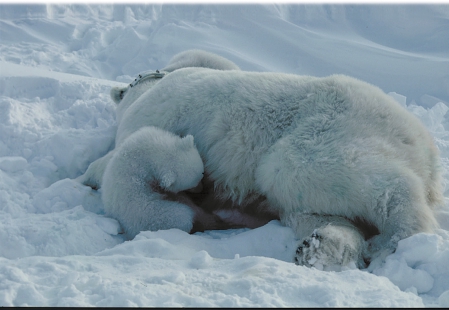
27
Persistent
Organic Pollutants
Mother's milk is a major
source of POPs for new-
ุISTEIN WIIG
born marine mammals.
New data from Alaska covering the period
Starvation can lead to high POP levels
1979 to 1995 complement this picture. In eggs
Ranges of concentrations
of PCBs in Arctic bird
Most POPs dissolve in fat and accumulate in
from the American peregrine, which nests in
eggs (or otherwise indi-
the fatty tissues of animals, such as the liver or
the forested interior, a number of POPs were
cated tissues) compared
parts of the body that specifically store fat.
detected. Although concentrations declined
with thresholds for avian
Some of the contaminants are in the blood or
over time, there was evidence for both cumula-
effects. The comparison
should be used with cau-
other organs. In the Arctic, many animals go
tive and individual contaminant effects. Egg-
tion because of problems
through periods of fasting, when they use
shells were still thinner than normal eggshell
with extrapolating data
stored fat for energy. This leads to an increase
thickness in the pre-DDT era. Moreover, levels
across species and differ-
in contaminant concentrations in the remain-
ences in quantifying
ing fat, as well as in the blood and in other
PCBs.
PCB concentration,
17.4
13.0
25.5
ug /g wet weight
organs. This increases the risk that sensitive
11
systems, such as the brain or reproductive
10.9 Reproduction*, night heron
organs, will be exposed to toxic levels.
A study of Arctic char showed that females
10
can lose about 80% of their fat during spawn-
ing and overwintering. Males lost a little more
than 50%. Another study of Arctic char
9
showed that this fat loss can have dramatic
consequences for contaminant levels in sensi-
8
8.0 Reproduction**, common tern
tive organs. At the same time that the overall
7.6 Hatching success**,
PCB concentration in the body dropped by
common tern
20%, PCB concentrations in the brain in-
7
creased six-fold and concentrations in the
liver doubled.
6
Experiments on Arctic char have also shown
5.7 Deformities**,
that the combination of high PCB levels and
double-crested cormorant
long-term fasting that is typical for high-lati-
5
5.0 Egg mortality, deformities**,
herring gull
tude fish can compromise their response to
stress and disease.
4
4.0 Egg mortality**, bald eagle
3.5 Egg mortality**,
Birds of prey are still vulnerable
double-crested cormorant
3
Birds of prey are known to be very sensitive
to some persistent organic pollutants. Their
2.3 Hatching success*,
2
Forster's tern
health in relation to POP levels has been fol-
lowed for many years. The previous AMAP
assessment found that Canadian peregrine
1
* No-observed-effect level (NOEL)
falcons still had high levels of many POPs.
** Lowest-observed-effect level
For PCBs and chlordanes, levels in the 1990s
(LOEL) or lowest-observed-
adverse-effects level (LOAEL)
were even higher than in the 1980s. Eggshell
0
)
)
ot
ar
Range
quality had not improved and the conclusion
urre
ake
erlin
ius
uscle)
Shag
Fulm
M
was that this Canadian population might still
yrfalcon
anatum
Single average
ray heron
Kittiw
G
tundr
G
Bald eagle
be threatened.
olden eagle
G
Eiders (m
Black guillem
egian peregrine
Thick-billed m
laucous gull (liver)
G
hite-tailed sea eagle
Norw
W
Alaskan peregrine (
Alaskan peregrine (
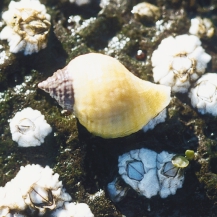
of dieldrin, oxychlordane, and PCBs were
Bj๘rn๘ya, where high PCB levels affect liver
28
higher in unsuccessful nests (nests without
enzymes.
Persistent
Organic Pollutants
chicks) than in nests that produced at least one
The previous AMAP assessment noted that
young. The PCB levels exceed those known
toxaphene levels in burbot in some Canadian
to cause reproductive problems in other wild
lakes were high enough to potentially affect
bird species. Eggs from unsuccessful nests also
bone development. New Canadian data show
had higher mercury concentrations, which may
a slow decline in toxaphene levels in Lake La-
also have affected reproduction, see chapter
berge in the Yukon Territory and in the Mac-
Heavy Metals.
kenzie River in the Northwest Territories.
New data on bald eagles from the Aleutian
Researchers looking for effects on bone devel-
Islands indicate that the population on Kiska,
opment did not find any problems.
one of four studied islands, had reduced repro-
An Alaskan study of burbot has compared
duction that was associated with high levels
POP levels in 1999 with those in 1988. The
of DDE.
data imply that most of the contaminants in
Several waterfowl species in Canada also
the fish are from older releases into the envi-
had POP levels high enough to cause concern
ronment. Moreover, the levels have for the
about reproductive effects according to the
most part decreased. The levels did not exceed
previous AMAP assessment.
known effect levels. However, PCBs in burbot
For European birds of prey, the previous
from Fairbanks, Yukon Flats, and Lake La-
AMAP assessment concluded that Fenno-
berge were close to or exceeded the levels that
scandian merlin and white-tailed sea eagles
are known to induce liver enzyme activity in
in Norway, Sweden, and Russia had contami-
other fish species (see map on page 16).
nant levels that could affect their reproduction,
even if the Norwegian and Swedish popula-
Imposex found in marine invertebrates
tions seemed to be recovering from previous
declines caused by pollution. New data on
For most contaminants, levels in marine inver-
organochlorines in Norwegian birds of prey
tebrates are low enough not to cause any con-
show similar contaminant levels today.
cern for biological effects. The exception is
PBDEs are present in Norwegian white-tailed
TBT, a compound that is toxic to some species
sea eagle and peregrine falcons in Norway and
at extremely low levels. In dogwhelk, a small
Sweden at fairly high levels, but there are no
mollusk, TBT causes the females to develop a
effects thresholds for PBDE with which the
penis and also makes them sterile. This condi-
levels can be compared.
tion is called imposex, and has been observed
in harbors in West Greenland, Iceland, north-
ern Norway, the Faroe Islands, and Svalbard.
Mixed picture for terrestrial mammals
A study of dogwhelk in harbors along the
The previous AMAP assessment concluded that
Norwegian coast has revealed that some de-
mink in northern Quebec and otters in north-
gree of imposex occurred everywhere except
ern Sweden, both of which feed mainly on fish,
for four of the study locations in northern
have PCB levels high enough to cause concern
Norway. In Iceland, the level of imposex de-
about effects on reproduction as well as on neu-
creased considerably from 1992-93 to 1998,
robehavioral development of the young. There
after the use of TBT as an anti-fouling agent
is no new information about these species.
had been restricted in 1996. Imposex in Faroe
There is new information, however, about
Island dogwhelks is widespread and no change
POP levels in Canadian wolverines and wolves,
has occurred from 1996 to 2001. In West
where the wolverines have PCB levels high
Greenland harbors, elevated TBT levels were
enough to raise concern about subtle neuro-
found in blue mussel in 1999.
behavioral effects.
For terrestrial herbivores (ptarmigan, hare,
reindeer, sheep, and muskox), new data from
West Greenland, the Faroe Islands, and Russia
generally show very low POP levels that are
nowhere near known effect levels. However,
dioxin levels in some reindeer and mountain
hare from the Kola Peninsula are rather high
in relation to effects thresholds in other species,
but potential effects are difficult to evaluate.
Local contamination
may cause concern for freshwater fish
In most freshwater environments, POP levels
are not high enough to cause concern for the
The dogwhelk is a marine
mollusk that is extremely
health of the fish. But there are exceptions.
sensitive to TBT.
One is Arctic char in the lake Ellasj๘en on
JORUNDUR SVAVARSSON
PCB concentration, ng /g wet weight
29
20 000
10 000
5 0 0 0 Peregrine falcon, highest
no-effect concentration
in food
1000
1 6 0 US EPA guideline
100
1 0 0 IJC guideline
7 2 Mink, highest no-adverse-effect
concentration in food
10
7 . 6 Canadian freshwater guideline
6 . 0 Canadian marine guideline
1
Range
Single average
0.1
n
e
on
y
a
uscle)
uscle) uscle) uscle)uscle)
M
n
alleyeuscle) uscle) uscle) ussels
apelin
uscle)
a
C
Ranges of concentrations
/J
W
. salm
a
ab (liver)
y
fish (liver)
iv
๘
isco (liver)
D
of PCBs in Arctic animals
D
Burbot (liver)
rn
C
olf
Pike (m
uscle + skin)
j๘
Blue m
reenland cod
as food items compared
B
Sculpin (liver)
G
W
edfish (m
hitefish (m
rayling (m
ayen fish (liver)Sturgeon (liver)
Seabirds (eggs)
Seabirds (liver)
Inconnu (m
Arctic cod (liver)
Starry ray (liver)
G
R
with no-effect concentra-
Atlantic cod (liver)
heckered eelpout
arp seal (blubber)
Lake trout (m
C
Arctic char (m
Arctic char (m
ussian fish (m
H
inged seal (blubber)
tions and environmental
Long rough dab (liver)
reenland shark (liver)
R
Lake w
. R
reenland halibut (liver)
. Jan M
G
quality guidelines for
iv
G
iv
D
Arctic char (m
D
protecting fish-eating/
aquatic wildlife.
F R E S H W A T E R
M A R I N E
Environmental quality
guidelines for protecting
fish-eating wildlife have
been established by sev-
increased time spent away from their nests.
PCBs disturb nesting behavior
eral organizations and
The results suggest that individuals with high
in some seabirds
countries. They are based
PCB loads need more time to gather food than
on contaminant levels in
At the time of the previous AMAP assessment,
do birds with lower loads. The underlying
fish and known thresh-
it was clear that contaminant levels among
cause could be that PCBs disrupt the birds'
olds for effects in fish-
eating wildlife. Biomag-
several seabirds were high enough to raise con-
hormone systems or affect their nervous sys-
nification rates for differ-
cerns about effects on reproduction. This as-
tem. New results confirm hormone effects in
ent substances have then
sessment confirms this conclusion. Moreover,
this glaucous gull population. The end result is
been used for back-calcu-
in some species, some contaminant effects on
that the birds do not have sufficient energy to
lating the fish concentra-
behavior and reproduction have been studied
reproduce successfully.
tions that should not
cause effects in fish-eating
in more detail.
Moreover, females with high PCB levels in
species.
Even in the early 1970s, there were observa-
their blood were more likely to have non-
tions that glaucous gulls on Bj๘rn๘ya did not
viable eggs in their nests than females with
behave normally. Bj๘rn๘ya is a hot spot of
lower PCB levels. The chicks of females with
PCBs (see box on page 16) and levels are
high PCB levels were also in worse physical
higher than at most other studied sites in the
condition. Finally, high PCB levels decreased
Arctic. Recently, high PCB levels in Bj๘rn๘ya
the probability of survival of adult birds. In
glaucous gulls have been correlated with
long-lived birds, population growth rate is
Overview of toxic properties of various POPs. = suppression or decrease,
= induction or increase.
ญญญญญญญญญญญญญญญญญญญญญญญญญญญญญญญญญญญญญญญญญญญญญญญญญญญญญญญญญญญญญญญญญญญญญญญญญญญญญญญญญญญญญญญญญญญญญญญญญญญญญญญญญญญญญญญญญญญญญญญ
Reproductive/
Effects on
developmental
Neurotoxic
Liver
Immune
thyroid and
effects
effects
enzymes
effects
vitamin A
Cancer
Other
ญญญญญญญญญญญญญญญญญญญญญญญญญญญญญญญญญญญญญญญญญญญญญญญญญญญญญญญญญญญญญญญญญญญญญญญญญญญญญญญญญญญญญญญญญญญญญญญญญญญญญญญญญญญญญญญญญญญญญญญ
Aldrin and
Reproduction
Induces liver
Suppresses
Non-mutagenic.
dieldrin
enzymes
immune system
Increased
liver tumors
ญญญญญญญญญญญญญญญญญญญญญญญญญญญญญญญญญญญญญญญญญญญญญญญญญญญญญญญญญญญญญญญญญญญญญญญญญญญญญญญญญญญญญญญญญญญญญญญญญญญญญญญญญญญญญญญญญญญญญญญ
Chlordanes
Reproduction
Induces liver
Suppresses
Non-mutagenic
enzymes
immune system
tumor promoter
ญญญญญญญญญญญญญญญญญญญญญญญญญญญญญญญญญญญญญญญญญญญญญญญญญญญญญญญญญญญญญญญญญญญญญญญญญญญญญญญญญญญญญญญญญญญญญญญญญญญญญญญญญญญญญญญญญญญญญญญ
DDT and
Egg-shell thinning
Induces liver
Suppresses
Thyroid
Overstimulation
metabolites
in bird eggs.
enzymes
immune
weight
of adrenal cortex
Reproduction
system
ญญญญญญญญญญญญญญญญญญญญญญญญญญญญญญญญญญญญญญญญญญญญญญญญญญญญญญญญญญญญญญญญญญญญญญญญญญญญญญญญญญญญญญญญญญญญญญญญญญญญญญญญญญญญญญญญญญญญญ
HCB
Fetotoxic.
Induces liver
Suppresses
Thyroid
Non-mutagenic
Porphyria
Deformities.
enzymes
immune
hormones.
tumor
(a blood disease
Reproduction
system
Thyroid
promoter
causing skin
stimulation
and nerve
hormone.
damage)
Thyroid weight
ญญญญญญญญญญญญญญญญญญญญญญญญญญญญญญญญญญญญญญญญญญญญญญญญญญญญญญญญญญญญญญญญญญญญญญญญญญญญญญญญญญญญญญญญญญญญญญญญญญญญญญญญญญญญญญญญญญญญญญญ
alpha-HCH
No information
Induces liver
Non-mutagenic
enzymes
tumor promoter
ญญญญญญญญญญญญญญญญญญญญญญญญญญญญญญญญญญญญญญญญญญญญญญญญญญญญญญญญญญญญญญญญญญญญญญญญญญญญญญญญญญญญญญญญญญญญญญญญญญญญญญญญญญญญญญญญญญญญญญญ
beta-HCH
Estrogenic
Induces liver
Suppresses
Thyroid
Non-mutagenic
enzymes
immune weight
tumor
promoter
system
ญญญญญญญญญญญญญญญญญญญญญญญญญญญญญญญญญญญญญญญญญญญญญญญญญญญญญญญญญญญญญญญญญญญญญญญญญญญญญญญญญญญญญญญญญญญญญญญญญญญญญญญญญญญญญญญญญญญญญญญ
gamma-HCH Estrogenic and
Induces liver
Non-mutagenic
(lindane)
antiestrogenic.
enzymes
tumor promoter
Reproduction
ญญญญญญญญญญญญญญญญญญญญญญญญญญญญญญญญญญญญญญญญญญญญญญญญญญญญญญญญญญญญญญญญญญญญญญญญญญญญญญญญญญญญญญญญญญญญญญญญญญญญญญญญญญญญญญญญญญญญญญญ
Mirex
Reproduction
Induces liver
Suppresses
Non-mutagenic.
enzymes
immune system
Induces tumors
ญญญญญญญญญญญญญญญญญญญญญญญญญญญญญญญญญญญญญญญญญญญญญญญญญญญญญญญญญญญญญญญญญญญญญญญญญญญญญญญญญญญญญญญญญญญญญญญญญญญญญญญญญญญญญญญญญญญญญญญ
Toxaphenes
Fetotoxic.
Induces liver
Suppresses
Thyroid-
Mutagenic,
Bone brittleness
Reproduction
enzymes
immune
weight.
potent carci-
in fish.
system
Thyroid- nogen.
Overstimulation of
stimulating
Inhibits cell-to- adrenal gland
hormone
cell commu-
nication
ญญญญญญญญญญญญญญญญญญญญญญญญญญญญญญญญญญญญญญญญญญญญญญญญญญญญญญญญญญญญญญญญญญญญญญญญญญญญญญญญญญญญญญญญญญญญญญญญญญญญญญญญญญญญญญญญญญญญญญญ
Endosulfan
Fetotoxic.
Induces liver
Suppresses
Non-mutagenic
Reproduction
enzymes
immune system
ญญญญญญญญญญญญญญญญญญญญญญญญญญญญญญญญญญญญญญญญญญญญญญญญญญญญญญญญญญญญญญญญญญญญญญญญญญญญญญญญญญญญญญญญญญญญญญญญญญญญญญญญญญญญญญญญญญญญญญญ
Dioxin, Fetotoxic. Permanent
Induces
liver
Thymic
Thyroid
Non-mutagenic
Porphyria
furans,
Deformities.
changes
enzymes
atrophy.
hormones.
tumor pro-
dioxin-like
Reproduction
in learning,
Suppresses
Vitamin A
moters.
PCBs, and
behavior,
immune
Affects cell-to-
metabolites
memory
system
cell communi-
cation
ญญญญญญญญญญญญญญญญญญญญญญญญญญญญญญญญญญญญญญญญญญญญญญญญญญญญญญญญญญญญญญญญญญญญญญญญญญญญญญญญญญญญญญญญญญญญญญญญญญญญญญญญญญญญญญญญญญญญญญญ
Other PCBs
Fetotoxic.
Permanent
Induces liver
Suppresses
Thyroid
Non-mutagenic
Porphyria
Deformities.
changes
enzymes
immune hormones.
tumor
pro-
Overstimulation
Reproduction
in learning,
system
Vitamin A
moters.
of adrenal cortex
behavior,
Affects cell-to-
memory.
cell commu-
Decreased nication
dopamine
(a neurotransmitter)
ญญญญญญญญญญญญญญญญญญญญญญญญญญญญญญญญญญญญญญญญญญญญญญญญญญญญญญญญญญญญญญญญญญญญญญญญญญญญญญญญญญญญญญญญญญญญญญญญญญญญญญญญญญญญญญญญญญญญญญญ
Short-chain
Fetotoxic
Motor
Induces No
Thyroid
Non-mutagenic.
chlorinated Deformities.
perform-
liver
information
hormone.
Peroxisome
paraffins
Reproduction
ance
enzymes
Thyroid-
proliferation.
stimulating
Inhibits cell-to-cell
hormone
communication
ญญญญญญญญญญญญญญญญญญญญญญญญญญญญญญญญญญญญญญญญญญญญญญญญญญญญญญญญญญญญญญญญญญญญญญญญญญญญญญญญญญญญญญญญญญญญญญญญญญญญญญญญญญญญญญญญญญญญญญญ
Poly-
Embryotoxic. Induces
liver
chlorinated
Reproduction
enzymes
naphthalenes
ญญญญญญญญญญญญญญญญญญญญญญญญญญญญญญญญญญญญญญญญญญญญญญญญญญญญญญญญญญญญญญญญญญญญญญญญญญญญญญญญญญญญญญญญญญญญญญญญญญญญญญญญญญญญญญญญญญญญญญญ
PBDE
Estrogenic and
Permanent
Induces liver
Suppresses
Thyroid
Non-mutagenic
(flame
antiestrogenic
changes
enzymes
immune
hormone.
retardant)
in learning,
system
Vitamin A
behavior,
memory
ญญญญญญญญญญญญญญญญญญญญญญญญญญญญญญญญญญญญญญญญญญญญญญญญญญญญญญญญญญญญญญญญญญญญญญญญญญญญญญญญญญญญญญญญญญญญญญญญญญญญญญญญญญญญญญญญญญญญญญญ
PFOS/PFOA
Reproduction
Non-mutagenic,
tumor promoter .
Peroxisome
proliferation.
Inhibits cell-to-cell
communication
ญญญญญญญญญญญญญญญญญญญญญญญญญญญญญญญญญญญญญญญญญญญญญญญญญญญญญญญญญญญญญญญญญญญญญญญญญญญญญญญญญญญญญญญญญญญญญญญญญญญญญญญญญญญญญญญญญญญญญญญ
TBT
Imposex in
Inhibits liver
Suppresses
May be carcinogenic
and
invertebrates.
enzymes
immune system
metabolites
Deformities.
Reproduction
ญญญญญญญญญญญญญญญญญญญญญญญญญญญญญญญญญญญญญญญญญญญญญญญญญญญญญญญญญญญญญญญญญญญญญญญญญญญญญญญญญญญญญญญญญญญญญญญญญญญญญญญญญญญญญญญญญญญญญญญ
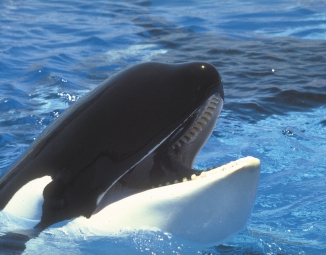
very sensitive to adult survival rates. This sug-
TCDD equivalents,
31
gests that high exposure to PCBs may have a
pg TEQ /g wet weight
considerable effect on the size of this glaucous
10 000
gull population. Another study found signs of
suppression of the immune system in these
2200 LD50, pheasant embryo; hatching success**, Forster's tern
same gulls, indicating that they may suffer
decreased resistance to infections.
1000
750 LD50, Caspian tern embryo
Laboratory studies in which glaucous gulls
550 LD50, double-crested cormorant embryo
chicks were fed Arctic cod and seabird eggs
from the Barents Sea indicate effects on heredi-
200 Reproduction*, Forster's tern; **, bald eagle
tary material (the chromosomes). The impor-
100
100 Liver enzyme induction*, bald eagle
tance of POPs and other contaminants for
these effects needs to be confirmed.
Black guillemots near a PCB-contaminated
20 Reproduction**, wood duck
former military site at Saglek Bay, Canada,
10
10 Reproduction*, herring gull
show multiple effects on the liver. This implies
that PCBs affect the health of these birds.
4.6 Reproduction*, double-crested cormorant
Effects of POPs have also been observed in
* No-observed-effect level (NOEL)
shag from the central Norwegian coast. PCBs in
or no-observed adverse-effects-level (NOAEL)
eggs seem to affect the weight of the hatchling.
1
** Lowest-observed-effect leve (LOEL)
or lowest-observed adverse-effects level (LOAEL)
There may also be a correlation with effects on
vitamin A in the hatchling. The observed effect
Range
of PCBs on hatching success in shag is consist-
Ranges of concentrations
Single average
ent with known effect levels in other birds.
of dioxin-like substances
For most bird species, there are no studies
as TEQs in Arctic bird
ay)
ay)
eggs and glaucous gull
of effects, and the only way to judge the po-
anada)anada)orw orw anada)
liver compared with
tential impact of POPs is to compare contami-
thresholds for avian
ar (C
nant levels with levels that are demonstrated,
ake (C
urre (C ot (Faroe Is.)
effects. The comparison
through laboratory or field studies, to affect
Fulm
should be used with cau-
Kittiw
rey heron (N
the health of other bird species (see diagram
G
tion because of problems
on guillem
with extrapolating data
on page 27). Based on such comparisons, grey
m
across species and differ-
heron from the Norwegian west coast have
Thick-billed m
om
C
laucous gull (liver) (Svalbard)
ences in calculating
G
PCB levels high enough to raise concern about
TEQs.
Black-backed herring gull (N
hatching success. PCB levels in great skua,
great black-backed gulls, and some glaucous
this AMAP assessment are high enough to
gull populations (particularly from Bj๘rn๘ya)
cause concern about subtle neurobehavioral
exceed most thresholds for reproductive effects
effects and effects on reproduction and on
in other bird species. Levels of POPs with
vitamin A metabolism. In cases such as harbor
dioxin-like activity may be approaching values
porpoises from northern Norway, some resi-
high enough to cause concern about reproduc-
dent killer whales and all transient killer
tive effects in Canadian thick-billed murres,
whales from Alaska, and some long-finned
Killer whale. One of the
kittiwakes, and fulmars, and in grey herons
pilot whales from the Faroe Islands, there
toothed whales where
from the west coast of Norway. Dioxin-like
may also be concern about PCBs affecting
PCB levels are a source
PCBs in glaucous gulls from Svalbard are above
the immune system and reproduction.
of concern.
all thresholds for reproductive effects as well
as the threshold for effects on liver enzymes.
Eiders and alcids (guillemots, murres, and
dovekies) feed lower in the food web. With the
exceptions noted above, their contaminant lev-
els are below known effect levels. However, an
analysis of POP levels in their diet show that
DDT and PCB levels in some of their potential
prey exceed environmental quality guidelines
for protecting fish-eating wildlife (see diagram
on page 29).
PCB levels in toothed whales
raise concern about toxic effects
A comparison between observed levels in Arc-
tic species and known-effect levels in other
species raises concerns about effects in Arctic
toothed whales. For most species (long-finned
pilot whale, beluga, killer whale, narwhal, and
harbor porpoise), the PCB levels reported in
POLAR PHOTOS / HENNING THING
32
Persistent
Calanus (copepod)
Trophic level
Organic Pollutants
Themisto (amphipod)
1
2
3
4
5
Arctic cod
Black guillemot
Glaucous gull
Polar bear
Ringed seal
Birds
Concentration, ng/ g lipid weight
Polar bear (male)
Ringed seal
10000
HCHs
PCBs
Bearded seal
1000
Vertebrates
Beluga
100
Narwhal
Fish
10
Walrus
1
2 2.6 3.6 4.3 4.6 4.5 5.5 Trophic level
Sunstars
2ฐ amphipods
Decapods
Water
Sea anemones
Invertebrates
Starfish
0.0001
1ฐ amphipods
Mysids
Copepods
Air
Bivalves
Kelp
Primary
Ice algae
producers
10000
Particulate organic matter
Chlordane
DDTs
1000
100
10
1
The marine food web structure
observed during the North-
water Project. Shown in the
0.0001
panels are average concentra-
tions of selected compounds in
air, water, and biota at various
trophic levels.
Food web studies provide insight about biomagnification
Animals can eliminate some contaminants, whereas other contaminants accumulate in their bodies
in higher concentrations than in the surrounding environment. When they fall prey to carnivores,
the contaminants are passed up the food web. If the predator cannot get rid of the contaminants,
the contaminant load will be higher in the predator than in the prey, reflecting the sum of all the
contaminants it has ingested from all its prey. This is called biomagnification and is an important
criterion when judging whether a chemical is a potential environmental problem. Contaminants
with high biomagnification factors are more likely to reach toxic concentrations in top-level preda-
tors, including people, and are thus good candidates for regulatory action.
Two new food web studies provide insight into the fate of POPs in the marine environment.
One is from the Barents Sea near Bj๘rn๘ya looking at copepods and euphausiids at the lowest
trophic level, followed by predatory amphipods, fish, and avian predators. The concentrations
of POPs were low in zooplankton and fish, but were biomagnified by 10-1000 times in seabirds,
with the highest concentrations in glaucous gulls.
The other food web study was done in the Northwater Polynya in northern Baffin Bay.
A polynya is an area of open water surrounded by sea ice that remains open throughout the win-
ter. The contaminant levels were highest in seabirds and ringed seals and much lower in zooplank-
ton at the lower trophic levels, which is consistent with previous food web studies in both Arctic
and temperate waters.
As judged by the biomagnification factors obtained from these studies, significant biomagnifi-
cation takes place when seabirds prey on fish and zooplankton. The seabirds have to eat large
amounts of fish and zooplankton to get enough energy. Moreover, they have no way of returning
the contaminants back to the water and are thus dependent on metabolizing and excreting them.
Fish, on the other hand, can to a certain degree sustain equilibrium with the surrounding water
via their gills.
Seabirds in the Barents Sea have higher contaminant levels than seabirds in the Northwater
Polynya, despite levels in fish and zooplankton being fairly similar. The explanation is probably
that the diets of Svalbard seabirds include a larger percentage of higher-trophic-level organisms.
The extremely high biomagnification factor in glaucous gulls suggests that they scavenge as well,
ingesting the tissues of other top-level predators.
The relative contribution of different POPs also changes between the different trophic levels.
In fish and zooplankton in the study, HCHs, HCB, and chlordanes predominated. This is consist-
ent with zooplankton and fish having a very limited ability to metabolize POPs. In seabirds and
mammals, in contrast, DDTs, PCBs, and breakdown products of HCB and chlordane became
more important, especially those breakdown products that are not readily excreted.
PCB concentration, ng /g lipid weight
500 000
8 0 0 0 0 - 1 2 0 0 0 0
E C 50 kit survival, mink liver
7 7 0 0 0
Reproductive success, ringed seal
100 000
4 0 0 0 0 - 6 0 0 0 0
E C 50 litter size, mink muscle
2 5 0 0 0
Reproductive success,
harbor seal blood
2 1 0 0 0 Immune effects**,
Rhesus monkey blood
1 6 5 0 0 Immunosuppression,
depressed vitamin A,
10 000
harbor seal blubber
1 2 0 0 0 Decreased kit production**,
kit body weight, mink muscle
1 1 0 0 0 Vitamin A reduction**,
otter liver
9 0 0 0 Mink kit survival*,
muscle
7 5 0 0 Otter reproduction*,
1000
muscle
4 0 0 0 Vitamin A reduction*,
otter liver
1 0 0 0 Visual memory*,
rhesus monkey offspring
blood serum
500-1000 Short-time memory**,
rhesus monkey blood serum
100
* No-observed-effect level (NOEL)
or no-observed adverse-effects-
level (NOAEL)
** Lowest-observed-effect level
(LOEL) or lowest-observed
adverse-effects level (LOAEL)
10
Range
Single average
1
b
olf
hal
W
hale hale hale
hale
uskox
Lam
alrus
laska)
ussia)
M
W
arw
olverine
ray seal
Beluga
anada)
anada)
/reindeer
arp seal
N
W
inged seal
H
arbor seal
G
's sea lion
inke w ray w
G
Pilot w
ountain hare
R
H
head w
Bearded seal
M
M
hale (resident)
orthern fur seal
hale (transient)
arbor porpoise
Bow
Ranges of concentration
Caribou
StellerN
H
ea otter (A
S
of PCBs in Arctic animals
iller w
Polar bear (Alaska) Polar bear (R
Arctic fox (C Arctic fox (Iceland)
Arctic fox (Alaska)
K
T E R R E S -
Killer w
Polar bear (C
Polar bear (Svalbard)
compared with thresh-
T R I A L
M A R I N E
olds for mammalian
effects. The comparison
A look at the contaminant load in the diets
robehavioral effects. At some sites, contami-
should be used with cau-
of these animals shows that DDT and PCB lev-
nant levels were also close to levels that could
tion because of problems
with extrapolating data
els exceed some or all environmental quality
be associated with effects on the immune sys-
across species and differ-
guidelines for protecting fish-eating wildlife.
tem. The species included in the assessment
ences in quantifying
Baleen whales generally have much lower
were harp, ringed, harbor, and grey seals.
PCBs.
POP levels than toothed whales. However,
Based on comparisons with effects levels in
minke whales have high enough PCB levels to
other species, the new assessment confirms this
raise concern about subtle neurobehavioral
picture. The mean PCB levels also raise con-
effects and effects on reproduction and on vit-
cerns about effects on the levels of vitamin A
amin A metabolism. Gray whales have levels
and on reproduction.
that are high enough to raise the possibility of
The new assessment also includes some dis-
subtle neurobehavioral effects.
concerting information about the health of
northern fur seals in relation to environmental
contaminants. A large part of the world's popu-
Seals, sea lions, and walrus:
lation of northern fur seals has its breeding rook-
immune effects seen in northern fur seal
eries on the two largest Pribilof Islands, St. Paul
The previous AMAP assessment concluded
and St. George, in the Bering Sea. The current
that PCB levels in several seal species were
stock is only half of its historical size and is
high enough to raise concern about subtle neu-
listed as depleted under the US Marine Mammal
Protection Act definition. The St. George sub-
Bay and Svalbard, the levels were also high
34
population underwent an unexplained decline
enough to raise concerns about reproduction,
Persistent
Organic Pollutants
of 4-6% per year for more than a decade prior
based on a comparison with effects in mink.
to a study that started in 1997. Long-term
New data show that walrus from East Green-
monitoring has suggested that the population
land should be included in this group. For
decline is, at least in part, due to pups dying at
eastern Hudson Bay walrus, which had the
sea just after they have been weaned.
highest contaminant load, there were also
The Aleut population of the villages on St.
concerns about levels being high enough to
George and St. Paul are dependent on an
suppress the immune system.
annual subsistence harvest of subadult male
fur seals, both as part of their culture and as a
High PCB loads
major source of protein. Aleut concern over
put the health of polar bears at risk
the population decline prompted a closer look
into the cause and its possible connection to
In polar bears, there have been strong suspi-
contaminants. The study revealed that fur seal
cions that contaminants might affect their abil-
pups with higher POP levels in their blood also
ity to fight infections as well as their ability to
had immune systems that were less able to
reproduce. New studies confirm these suspi-
respond to infections. Moreover, PCB levels
cions and the results indicate that the popula-
were correlated with reduced levels of vitamin
tion status and health of polar bears from
A and thyroid hormone, which can indirectly
McClure Strait and eastern Hudson Bay in
affect immune function. The high POP levels
Canada, East Greenland, Svalbard, Franz
can probably be explained by fur seals' feeding
Joseph Land, and the Kara Sea may be at risk.
on fish that are high in the food web. Perhaps
The contaminants that raise the most con-
more important is their extensive migrations as
cern in polar bears are PCBs. Previous con-
far south as California and Japan, where they
cerns about health effects were in part based
feed on fish that are even more contaminated.
on comparing PCB levels to contaminant loads
The role of POPs is also being investigated
that are known to affect the health of other
in the decline of the population of Steller sea
species. Such comparisons have inherent
lions in the eastern Aleutian Islands. Steller sea
weaknesses, particularly for polar bear. One
lions in the eastern Gulf of Alaska and south-
reason is that the mix of contaminants in polar
eastern Alaska are flourishing, whereas those
bears is different from other species, because
in the western Gulf of Alaska and the Aleutian
polar bear are able to metabolize some PCBs
Islands are endangered. The Steller sea lions
better than others. Another reason is that
from the eastern Aleutian Islands excrete much
polar bears have delayed implantation, which
higher levels of PCBs and DDTs in their feces
would allow a contaminant to act on a fertil-
than animals elsewhere. Recent data indicate
ized egg for some time before implantation.
correlations between POP levels and immune
Many species with delayed implantation are
effects similar to those seen in northern fur
known to be especially sensitive to reproduc-
seals. The high POP levels in the Steller sea
tive effects of contaminants. A third reason is
lions are probably related to a local source or
that polar bears go through periods of fasting,
a strong influence from the Bering Sea.
during which POP levels in the blood and sen-
In another part of the Arctic, the northwest
sitive organs may reach much higher levels
Barents Sea, east of Svalbard, the focus has
than in an animal with consistent fat levels.
been on harp seals. These seals have elevated
Periods of fasting may also correspond with
liver enzyme activity, a biomarker that can in-
decreased disease resistance because of nutri-
dicate a challenge by contaminants. Although
tional deficiency.
no correlation was found between liver enzyme
To better understand the biological effects
activity and PCB levels, there was a correlation
of POPs on polar bears, researchers in Norway
between the activity of an enzyme controlling
and Canada have looked for direct signs of
the male hormone testosterone and the conta-
health effects in the polar bears. The physio-
minant toxaphene.
logical parameters used in this study included
For walrus, there have been no studies of
a number of hormones and components of the
effects, and the assessment has to be based on
immune system that contaminants are known
comparisons between contaminant levels and
to affect. Another sign of effects is how often a
effects thresholds in other species. Generally,
female reproduces and whether her cubs sur-
contaminant levels are known to correlate
vive. In this study, the females could be fol-
with the diet of walrus. Individuals or popula-
lowed via satellite transmitters. Because only
tions that feed on other marine mammals have
pregnant polar bears den for the entire winter,
high levels, whereas walrus that eat mostly
the denning of a particular female indicated
shellfish have much lower levels. In the previ-
that the animal was reproducing.
ous assessment, concern was raised about
The study compared Svalbard polar bears
PCBs being high enough to cause subtle neu-
that had high PCB levels with Canadian bears
robehavioral affects in walrus from eastern
that had lower levels. At Svalbard, an unusual
Baffin Island, eastern and northeastern Hud-
number of cubs did not survive, and there
son Bay, and Svalbard. For eastern Hudson
were indications that the female's reproductive
cycle was shorter than the normal three years.
cination containing a few common viruses and
35
The fact that the females in Svalbard could
a bacterial toxin. Four to six weeks later the
Persistent
breed sooner also suggests that cub survival
animals were recaptured to look for antibodies
Organic Pollutants
may be impaired. One reason could be that the
against these viruses and the toxin. The results
cubs receive a high load of PCBs from milk at
from the vaccination experiments suggest that
a vulnerable period of growth and develop-
PCBs are indeed associated with decreased
ment. PCB levels were higher in cubs-of-the
resistance to infections, and that the health of
year than in their mothers. There are, however,
polar bears with high PCB loads may be at risk.
other possible explanations for poor cub sur-
The previous AMAP assessment reported
vival rates, such as high population density.
cubs with abnormal genitalia, so-called pseu-
It is therefore not yet possible to make a causal
dohermaphrodites. The first two were found at
link with PCBs.
Svalbard in 1996, and since then several more
There are some other signs in the Svalbard
cases have been reported from Svalbard and
polar bear populations that reproduction may
from other parts of the Arctic. The frequency
be impaired. Specifically, there is lack of older
at Svalbard is 2-4% of the females, but the sev-
females with cubs-of-the year compared with
erity of the condition is variable. The females
some other polar bear populations.
appear to reproduce normally. It is still un-
Other studies have also shown associations
known whether pseudohermaphrodism in polar
between contaminant loads and possible re-
bears has any connection to contaminants.
productive effects, but it is difficult to draw
An assessment of contaminant levels in po-
firm conclusions about how contaminants
lar bears as they relate to known effect levels
in other species complements the picture of a
Concentrations, ng/g lipid weight
species under threat from pollution. PCB levels
10 000
in polar bears are high enough to raise concern
about subtle neurobehavioral effects and ef-
fects on vitamin A. At several sites in Alaska,
Canada, East Greenland, Svalbard, and in Rus-
sia, levels are high enough to raise concerns
about reproduction. At Franz Josef Land, the
Kara Sea, and Svalbard, levels are high enough
1000
to cause concern about suppression of the im-
mune system. The source of contaminants is
the diet, with PCBs in blubber from ringed and
Mother
harp seal exceeding all environmental guide-
lost cubs
lines for protecting aquatic wildlife.
Mother
kept cubs
Concentrations of POPs
in polar bear milk of
PCB levels in Arctic fox
females with cubs after
100
raise concern about toxic effects
emerging in March
from dens in the Cape
In the previous AMAP assessment, PCB levels
Churchill area, Hudson
in Arctic fox from Svalbard raised concern
Bay. The data are
about subtle neurobehavioral effects as well
grouped according to
whether the female still
as effects on reproduction, cub survival, and
had her cubs the follow-
immune suppression. At the time, data for
ing fall, or had lost
Arctic fox were only available from Svalbard.
them.
10
DDTs
HCHs
Chloro-
Chlor-
PCBs
New data are available on contaminant levels
benzenes
danes
in Arctic fox from Barrow and the Pribilof
affect the health of the animals. In a Canadian
Islands, Alaska; Holman Island, Northwest
study of polar bears from southwestern Hud-
Territories, Canada; and inland and coastal
son Bay, females who had lost their cubs had
areas of Iceland. The PCB levels in the popu-
higher contaminant concentrations than fe-
lations from Alaska, Canada and inland Ice-
males whose cubs survived. In another study,
land are considerably lower than those re-
the levels of the male hormone testosterone
ported earlier for Svalbard foxes. Arctic fox
were low in male bears with high loads of
from coastal Iceland have much higher PCB
PCBs. This hormone plays a crucial role in
levels, which are more comparable to those
sexual development. Vitamin A and thyroid
seen previously on Svalbard. Compared with
hormones are also lower when the PCB load
effects levels in other species, there is some con-
is high. However, it is unknown whether this
cern about the potential for subtle neurobe-
affects the bears' health or ability to reproduce.
havioral effects and effects on vitamin A levels.
In the Norwegian-Canadian study, there
The Canadian foxes may also be at risk for re-
was a correlation between contaminant levels
productive effects and decreased cub survival.
and effects on the immune system. To follow
In addition, the coastal Iceland foxes are at
this up, an experiment was conducted to see
risk for immunosuppression. Data on dioxin-
how the immune system responded to a chal-
like contaminants in Pribilof Arctic foxes also
lenge. The researchers gave the animals a vac-
indicate a possible risk for immunosuppression.
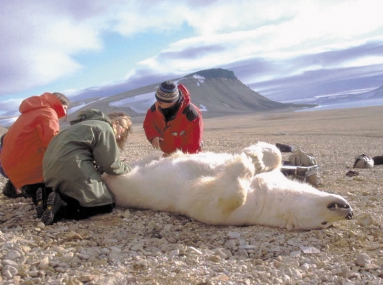
closer to Russia, for northern fur seals in the
Bering Sea, and for glaucous gulls on Bj๘rn-
๘ya, south of Svalbard. In the glaucous gull
population, PCBs also affect nesting behavior
and adult survival. In many animals, there is
no documentation of effects, but based on
knowledge from effects levels in other species,
PCB levels are high enough to raise concerns
about effects on resistance to disease, repro-
duction, and neurobehavioral development.
PCBs are banned by both regional and global
regulations. Local sources are indicated in the
region of the White Sea, the Kara Sea, and the
eastern Barents Sea. A recent inventory of uses
in Russia shows that PCBs remain in many ex-
isting electrical installations. There are also ex-
amples of local PCB contamination in Alaska,
Canada, Greenland, and Norway (including
Jan Mayen and Svalbard), mostly from mili-
tary sites, earlier uses, or dumped material.
There is thus a need for more remedial actions
for PCBs within the Arctic.
Levels of dioxin-like substances raise con-
ELISABETH LIE
cern about reproductive effects in some Arctic
Polar bear sampling to
study the effects of PCBs.
On individuals and populations
seabirds and about effects on the immune sys-
tem in Arctic fox, killer whales, and northern
It is difficult to establish a causal link between
fur seals. Some sources, such as waste incinera-
contaminants and effects in wild animals. It is
tion and the metallurgical industry, have not
clear, however, that there is a correlation be-
yet been adequately addressed.
tween high loads of contaminants in some ani-
Many persistent organic pesticides have
mal populations in the Arctic and effects on
been banned and their levels in the environ-
their resistance to infection, reproduction, and
ment are declining. However, there are several
behavior. Some of these effects are only appar-
signs of fresh input of DDT in the Barents
ent as subtle changes in the physiology of an
region and of toxaphene in the White Sea.
animal, for example changes in the immune
This shows either that these pesticides are still
system or hormone levels. Nevertheless, AMAP
used or that old stocks are leaking into the
considers the evidence strong enough to con-
environment and thus need attention. DDTs
clude that contaminants do have effects on
are still a concern for the reproductive health
some species of Arctic wildlife in that they can
of birds of prey. The pesticide lindane, or
threaten the survival and reproductive success
gamma-HCH, is still used in source regions to
of individual animals.
the Arctic. Its levels in the marine environment
The extent to which these effects can
have not declined.
threaten local populations is another question.
For persistent organic pollutants that are
Here, there is no clear answer. If effects on
now regulated on a global and regional basis,
individuals are sufficiently widespread, a pop-
the situation in the Arctic is likely to improve.
ulation can become vulnerable, especially if it
This is not the case for other POPs, including
is exposed to other stresses, such as new dis-
brominated flame retardants (PBDEs). Levels
ease-causing organisms or changes in access to
of PBDEs are still low compared with PCBs,
prey. In such cases, the margin of safety for a
but are likely to rise unless there is a change
population may no longer exist. The conclu-
in the expected increase in world production.
sion is thus that some contaminants, particu-
In addition, the extremely persistent com-
larly PCBs, dioxin-like substances, DDTs, and
pound PFOS, used as a stain repellant and
TBT, may pose a population-level threat to
in other applications, is present at elevated
some Arctic wildlife populations.
levels in some Arctic animals. Very little is
known about the behavior in the environment
of chemicals of this kind and their potential
Summary
effects.
Several important steps have already been
Persistent organic pollutants are present
taken to address the threats POPs pose to the
throughout the Arctic environment.
Arctic environment, such as the Stockholm
PCB levels in some areas are high enough
Convention and the UN ECE POPs Protocol.
to affect the health of individual animals, par-
This AMAP assessment shows the continued
ticularly their ability to fight infections. This
need to bring Arctic concerns about POPs to
is true for polar bears around Svalbard and
the attention of these international policy fora
probably also for polar bear populations
to ensure continued emphasis on Arctic needs.