NILSSON
ANNIKA
Abisko, Sweden
Climate change,
ozone depletion,
and ultraviolet radiation
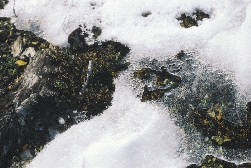
When the sun returns after the long, dark winter and the snow starts to melt in
the Arctic, the local environment changes dramatically. Gradually, the white,
reflective snow disappears, revealing dark soil that absorbs the sun's energy.
Soon, plants unfold their green leaves to start the new growing season, trying
to make the most of the brief Arctic summer.
If the average air temperature during this time of year were consistently a
few degrees warmer or a few degrees colder, the consequences could be pro-
found for both plants and animals living along the edge of the receding snow
cover. But that would not be the end of the story. Arctic snow is important for
the energy balance of the whole globe. An earlier snowmelt might allow Earth
to absorb more energy from the sun, affecting far more than a thin band in the
far north.
This example illustrates how the Arctic plays a key role in one of the major
environmental issues of today: global climate change. This chapter discusses
the signs of climate change in the Arctic and the long-term implications for
polar people and ecosystems.
In the north, reflective snow is also a key to understanding the effects of
another global environmental threat: increased ultraviolet radiation caused by
depletion of the ozone layer. This chapter addresses changes in ozone and the
implications for the Arctic environment.
160
Signs of climate change
Less ice and warmer air would allow the air
to pick up moisture from the water, which
Climate change
Concerns about climate change stem from the
might make the Arctic cloudier. This would
increasing concentration of greenhouse gases
probably change regional weather patterns,
in the atmosphere. These gases keep heat from
but no one really knows how it would influ-
dissipating into space. According to the Inter-
ence climate on a larger scale. Today, the role
governmental Panel on Climate Change (IPCC),
of clouds is one of the main uncertainties in
a continued increase at current rates could
climate models.
raise the average global air temperature be-
Sea ice also limits the exchange of carbon
tween 1 and 3.5ฐC by 2100. The average rate
dioxide between water and air as well as the
of warming would likely be greater than any
penetration of light into the water. Thus changes
seen in the past 10 000 years.
in sea ice would affect the productivity of algae.
Climate change will not be evenly distrib-
uted over the globe. Its effects are likely to be
Temperature records
greater in some areas and less significant in
point to both warming and cooling
others, but current understanding of global cli-
mate patterns is insufficient for making reliable
Do observations from the Arctic reveal any
regional predictions.
signs of changes in climate? The question is
IPCC has drawn some general conclusions
difficult to answer for many reasons. Obser-
about the consequences of an increasing green-
vations are not always completely comparable
house effect. These include that sea level will
over time and trends are therefore hard to
rise somewhere between 15 and 95 centimeters
determine. Moreover, it is almost always im-
by 2100. Sea-level rise is caused by a combina-
possible to tell whether any observed changes
tion of melting glaciers and the fact that water
are related to global warming or are part of a
expands as it warms. Another prediction is
natural variation. With these limitations in
that there will be more extremely warm days
mind, the following can be said. Surface air
and fewer extremely cold days. The probabil-
temperatures seem to have increased by about
ity of both droughts and floods is expected to
1.5ฐC per decade over continental Central
increase. The largest temperature increases are
Siberia and over continental North America.
predicted for winters in the northern part of
In Fennoscandia, the records do not indicate
the northern hemisphere.
any significant changes, whereas Baffin Bay
has cooled by 1.5ฐC per decade. North of
70ฐN, temperature observations are sparse.
High latitude climate
There are indications, however, of warming
is sensitive to changes
around the northern continental rims of cen-
The effects of global climate change on Arctic
tral and western North America and central
temperatures and precipitation patterns are
Asia over the past century. For eastern North
very difficult to predict, but most studies sug-
America through the North Atlantic, there is a
gest that the Arctic, as a whole, will warm
cooling trend.
more than the global mean.
Since 1979, satellites have been used to
Current understanding is that greenhouse-
monitor temperature at different heights in the
induced warming will cause substantial de-
atmosphere. These measurements show that
creases in the extent of snow and sea ice and in
the lower troposphere, the air mass closest to
the thickness of the ice. Such changes can in
Earth, has become 0.05ฐC warmer per decade.
turn affect local weather patterns, the distribu-
This warming in the Arctic troposphere is
tion of clouds, ocean circulation, and climate
more pronounced than for the global tropos-
on a global scale. The consequences of the
phere as a whole. When greenhouse gases trap
changes for the climate in different feedback
heat in the troposphere, the air higher up, in
loops are not well understood and represent a
the stratosphere, is expected to get cooler.
major uncertainty in models of climate change.
Greenhouse gas emissions are global
The sources of greenhouse gases are global. Burning of
Sea ice is critical to energy exchange
fossil fuels and deforestation contribute carbon dioxide.
between ocean and atmosphere
Methane adds to warming of the atmosphere with emis-
sions from rice paddies, farm animals, and wetlands.
Sea ice plays a critical role in the energy bud-
Exploitation of natural gas also contributes methane.
get of the Arctic and thus in the region's cli-
Nitrous oxide is a naturally-produced greenhouse gas,
mate. Snow-covered ice is highly reflective. If
but the flux has increased, mainly because of heavy fer-
the ice extent decreases, more solar energy will
tilizer use on farmland. CFCs are man-made and highly
efficient as greenhouse gases. However, because of their
be absorbed by the ocean as less is reflected
detrimental effect on the ozone layer, their net contribu-
back to space. Decreasing sea-ice cover can
tion to global warming is difficult to determine. Other
thus enhance a warming trend.
greenhouse gases include ozone and a range of CFC-
Sea ice is also a physical barrier between the
related compounds.
ocean and the atmosphere. For example, it
One type of human emission, sulfur dioxide, seems
to reduce warming over industrialized areas, since it
dampens the interaction of winds and water
forms sulfate aerosols that act as a screen against the
and thus limits exchange of energy.
sun.


CH3
CO2
Temperature records for the lower stratos-
phere in the Arctic reveal dramatic changes
since 1979: ญ1.01ฐC per decade for the area
from 67.5ฐN to the pole, with the most rapid
CO2
decreases over Russia. This is the steepest
decline on the entire planet.
The Arctic Ocean has warmed slightly in
the past decade. In the Nordic Seas, however,
there is a cooling trend in the upper 1000 me-
1
2
3
4
5
6
ters, along with a decrease in salinity.
The Arctic affects the global climate
Measuring temperature profiles in perma-
Global climate change will affect the Arctic, but the opposite is also true ญ the
frost can provide a climate record that goes
Arctic environment can have profound effects on global climate. The figure summa-
back hundreds of years at a particular site.
rizes the mechanisms by which the polar region could enhance or dampen the
Such measurements from Alaska indicate a
warming caused by the emission of greenhouse gases.
warming of 2 to 4ฐC over the past hundred
1. Warming could thaw permafrost under the tundra. If the soil remains waterlogged,
microbes in the soil could increase their emissions of the greenhouse gas methane.
years. This warming has been confirmed by
The warming of permafrost can also release geologically trapped methane to the
observations that the discontinuous perma-
atmosphere. The potential quantitative impact of this methane release on climate
frost in Alaska is thawing. Inuit in Barrow,
change is unknown, but it could contribute to rising Arctic temperatures, which in
Alaska, have seen their ice cellars, which are
turn could lead to further thawing and release of methane, and thus accelerate
dug into the permafrost, drip water for the
warming in a feedback loop.
first time in anyone's memory.
2. Nature's contribution to carbon dioxide emissions is likely to change. For the past
10 000 years, tundra ecosystems have taken carbon dioxide out of the atmosphere
Glaciers leave tell-tale signs of past climate
and stored it in the soil. The tundra and boreal region hold about 14 percent of the
changes by depositing moraines at the limit of
world's soil carbon. A warmer climate could allow microbes to decompose dead
their advances. Examining glacier lengths gives
plant matter at a higher rate, releasing carbon dioxide. There are indications that at
indications of global warming that are consis-
least some parts of the Arctic have switched from being sinks of carbon dioxide to
tent with, and independent of, other records of
being sources. If all the stored carbon were released, it could increase the atmos-
global warming for this century. In some cases,
pheric concentration of carbon dioxide by more than the cumulative contribution
from fossil fuels through 1995.
however, the interpretation is complicated by
3. Plants, on the other hand, will probably capture carbon dioxide more efficiently,
the lag time between climate change and the
since photosynthesis is more efficient at higher temperatures. Release of nutrients
glaciers' response. Moreover, the patterns of
from the soil, which is more efficient in warmer and wetter conditions, may also
change vary geographically, with increased
promote higher plant productivity, but the feedbacks between production and
melting in some areas of the Arctic, while
decomposition are complex and uncertain.
other areas show growth because of increased
4. Polynyas provide a surface of open water at which the ocean and atmosphere can
interact. If polynyas become larger and more numerous, more moisture will evapo-
precipitation or no trend at all.
rate, leading to more cloud cover. These clouds can have a significant impact on the
The ice sheets of Greenland and Antarctica
amount of solar radiation reaching the Earth, and can effectively counteract the
hold immense amounts of water. It is very dif-
warming. The role of clouds is one of the major uncertainties in current climate
ficult to measure their volumes, but so far they
models.
do not seem to be shrinking, and might even
5. Snow, on land or ice, has a profound impact on how much energy is reflected back
to space without heating the Earth. A receding snow cover could thus enhance the
be growing slightly. This does not necessarily
warming process. Less snow cover on land would also allow for faster warming of
contradict indications of a warmer climate,
soil in spring, which would affect both plants and microbes, as described in points 2
since increased snowfall adding more mass to
and 3.
the top of the glacier may compensate for any
6. The northern North Atlantic plays a key role in the formation of deep ocean water,
extra melting and calving of icebergs. These
a process driven by the cooling of warm surface water as it reaches the Arctic.
huge ice sheets also respond much more slowly
Higher temperatures and lower salinity are likely to slow this down. Since the for-
mation of deep water serves as a motor for the warm North Atlantic Current, its
to climate change than do small glaciers.
diminishing efficiency could lead to a colder climate, especially in Scandinavia and
northwest Russia. There are some signs that the North Atlantic pump has become
Precipitation has increased
weaker in recent years, but it is too early to tell whether this is connected to climate
change or simply part of natural variation.
Precipitation has increased in high latitudes
by up to 15 percent during the past 40 years.
sorbing ground will be exposed, as is further
On the North American tundra, there is a
described in the box above.
trend toward earlier spring snowmelt. South
of the subarctic, the area of land with contin-
Cores of ice
uous snow cover during winter, which fol-
tell of dramatic climate history
lows both temperature and precipitation, has
retreated by about ten percent during the past
Climatic changes are nothing new to the
20 years.
Arctic. Cores of glacier ice have been used to
Snow plays a key role in protecting plants
get a picture of the past. Such records reveal
and animals from cold and dry winter condi-
gradual changes of a few degrees over cen-
tions. It is also important for the seasonal
turies, but also abrupt shifts of 6 to 10ฐC in
water cycle. Changes in snow cover may there-
less than two decades. These dramatic shifts
fore have a profound impact on plant and ani-
are larger and faster than anyone had previ-
mal life in the Arctic. Moreover, a shrinking
ously suspected, and they indicate that the
snow cover is expected to speed up the warm-
Arctic climate can be very unstable. Thus, the
ing process, since more of the dark, sun-ab-
time during which human agriculture and indu-
stry has developed in the world seems to be an
ence sea ice and the circulation of water in the
162
unusually calm period in climate history.
ocean.
Climate change
Plant and animal remains in sediments give
another clue about climate in the past.
Higher temperatures
Analysis of sediment cores shows that the tim-
could disrupt permafrost
ing and magnitude of past climate changes do
not follow a uniform pattern around the polar
Much of the permafrost in the Arctic is close
region.
to 0ฐC and therefore particularly sensitive to
temperature changes. Thawing could thus
degrade permafrost. Such changes are likely to
Future impact
allow increased erosion and damage to surface
vegetation. Thermokarsts, which are depres-
The impacts of climate change on the Arctic
sions resulting from the thawing of ground ice,
are difficult to predict because of the intricate
could become one of the most important
interactions between physical and biological
forces acting on the terrestrial environment.
factors. The following section describes some
Erosion could also expose dark soil surfaces,
of the potential changes that might occur if
which are more efficient in absorbing solar
there is a significant warming of the region.
energy than the vegetation cover, and thus
result in more permafrost thawing and
thermokarst.
Melting ice caps and warmer water
Any changes in the permafrost will also
raise sea level
affect the movement of water over and in the
The shrinking and growth of glaciers are
soil. A lower permafrost table would, for ex-
tightly coupled to climate. In the Arctic, many
ample, favor formation of groundwater in-
smaller glaciers have been shrinking during the
stead of surface runoff. Most streams and
past century and global warming will acceler-
rivers in the Arctic get their water from surface
ate their demise. The most immediate effect is
runoff, and permafrost is a major reason that
that they contribute to a rising sea level. The
the flow of water in the terrestrial environment
mass balance of glaciers is controlled not only
changes abruptly with precipitation and
by temperature but also by snowfall and the
snowmelt.
physical processes of ice motion. Therefore,
changes in glacier size typically lag behind cli-
Warmer soils
mate changes by years to decades for moun-
may enhance nutrient cycling
tain glaciers and longer for larger ice sheets.
Higher water temperatures in the ocean will
Biological productivity in the soil is highly
further increase sea-level rise. This is caused by
dependent on temperature and moisture. In
the fact that water expands when it warms up.
addition to permafrost, the cold combined
Sea level rise is likely to aggravate erosion
with too much or too little water currently
and inundate low-lying areas along Arctic
limits decomposition of organic matter. A
coasts. Moreover, the huge amount of freshwa-
warmer climate could thus increase decompo-
ter from melting glaciers is likely to affect sea-
sition and make more nutrients available for
water salinity and thus the mixing of water
plants. Chemical weathering of the bedrock is
masses and ocean currents.
also increased at higher temperatures. More-
over, a deeper active layer would allow the
roots of some plants to reach mineral horizons
Winds and water currents
in the soil that were previously blocked by the
are likely to change
permafrost.
Global warming is likely to affect weather pat-
Increased microbial activity in the soil
terns caused by the movement of low-pressure
would allow for more nitrogen fixation from
systems, but these changes are not yet well
the air. Some projections point to a 65 to 85
understood. According to some simulations of
percent increase, which would minimize nitro-
future climate, global warming could reduce
gen limitations on plant growth in the pro-
barometric pressure in the Arctic. In combina-
jected climates. But one should be cautious
tion with a northward push of mid-latitude
with predictions. Enhanced release of nutrients
storm tracks, such a weakening of the Arctic
does not necessarily lead to increased uptake
high-pressure system would cause more cyclo-
in plants.
nic storm systems, especially in winter. We
Plant productivity is difficult to predict,
might perceive this change as more day-to-day
since it depends on a combination of factors of
variability in wind, but it will be very difficult
which climate is only one. Higher tempera-
to detect amid the large normal fluctuations
tures along with higher carbon dioxide con-
already seen. It is uncertain whether there
centrations would probably increase produc-
would be any systematic changes in the inten-
tivity, but only if other factors such as nutrient
sity of the storms or the strength of the winds.
or moisture availability are not limiting.
Changes in wind patterns in turn affect tem-
perature and humidity. The winds also influ-
Southern invaders
Lakes and ponds
163
might out-compete native species
will have a longer growing season
Climate change
Many Arctic plants are compact and grow
Lakes and ponds in the High Arctic are partic-
slowly. They are extremely frugal with the lim-
ularly sensitive to changes in climate. Today,
ited nutrients available. Those plants that are
their biological productivity is limited to a
stressed by the harsh environment will do bet-
period as short as a few weeks because snow-
ter in a warmer climate. However, plants that
covered ice limits the penetration of solar rays
are best adapted to the extremes might be out-
into the water. With a longer ice- and snow-
competed by other species in a warmer, more
free season, the water will also get warmer.
nutritive climate. In fact, such competition
Moreover, unfrozen ground around the lake
may be a greater threat to Arctic flora than the
and more microbial activity in the soil would
changes in the physical environment. A special
allow a higher input of nutrients. These chang-
threat is when thermokarst disrupts the plant
es would probably lead to higher productivity
cover. This opens up new ground for coloniza-
for the existing life in the water. A longer
tion, which might favor immigrant species.
growing season and higher productivity might
The migration of southern species will prob-
also allow for more complex food webs.
ably be slower than one would predict from
For some shallow lakes and ponds, a war-
the temperature increase, which suggests that a
mer climate could have dramatic effects. If
warming of 2ฐC would result in a 400 to 500
evaporation increases more than precipitation,
kilometers northward shift of vegetation types
or if there is not enough runoff to supply the
by the year 2020. Eventually, the predicted cli-
lakes with water, they could simply dry up and
mate change might allow the taiga forest to
disappear. Inland lakes with salt water are rare
completely displace tundra on the Eurasian
but extremely sensitive to even slight changes
mainland.
in the balance between evaporation and pre-
Any long-term shift in forest productivity or
cipitation.
the area covered by commercially valuable
Higher air temperatures, increased precipi-
trees will affect the forest industry, which is
tation, and increased groundwater flow will
economically very important in several Arctic
change the environment in rivers and streams.
countries.
Glacier-fed rivers will probably become colder
while small streams might become warmer.
Some streams may become more suitable for
Animals are sensitive
migrating fish than they are today, which
to changing food supplies
could benefit freshwater and salmon fisheries.
Arctic animals are ultimately dependent on
plants for energy and nutrients. However, the
Northern fisheries
effects of climate on primary productivity are
will benefit from warmer seawater
uncertain. Migratory mammals and birds can
probably adjust to changes in the quantity and
Ocean fisheries in northern seas have always
quality of plants and prey, but some grazing
been sensitive to changes in climate. In Nor-
animals, both vertebrates and invertebrates,
way, where the fishing industry is very impor-
may face problems if the quality of the food
tant economically, past experience shows that
becomes poorer. Extreme events, such as
a warming of the sea can drastically change
droughts and ice layers over winter forage, will
both productivity and species composition.
also play a role.
Unless greenhouse warming is counteracted by
Non-migratory animals could be severely
other factors, North Sea fish, such as cod and
affected by direct changes in their environ-
herring, are likely to move northward out of
ment, such as changing snow conditions in the
the North Sea. Under the various climate
winter, which could make it hard to find food,
change scenarios predicted for the next 40
water, and shelter.
years, the Norwegian commercial catch in the
Invertebrates with short generation times
Barents and Norwegian Seas may triple. In the
may be able to take advantage of the changing
North Sea, overall productivity would proba-
climate. This would be especially true for
bly remain similar to today, but a change in
insects whose eggs are sensitive to low temper-
species composition would make the catches
atures during the winter. One example is win-
less valuable. Changes in productivity and
ter moth larvae that sometimes defoliate large
species composition would also have a dra-
parts of the Fennoscandian subarctic birch for-
matic influence on other regions that are eco-
est. Warmer winters could lead to increased
nomically dependent on fishing and the fish
populations and greater defoliation. Other
industry.
organisms that cause damage or carry diseases
may also find their way into the Arctic if the
People depend on stable climate
climate becomes milder.
The survival of Arctic peoples has always been
intricately linked to climate. Arctic settlements
are typically located close to food, water, and
shelter, all of which are affected by climate. To
tion is intense but brief. The population den-
164
the extent that people continue to harvest
sity of seals, for example, is correlated with the
Climate change
plants and animals and live permanently or
distribution of coastal sea ice. The separate
seasonally on coastal spits or along river banks
and combined effects of the warming of land
and lake shores, climate change will directly
and water will most assuredly affect ice forma-
impact their lives. Even if modern resources
tion and thereby the distribution and breeding
can mitigate some effects, climate change is
of animals hunted for food and materials.
likely to disrupt culturally important hunting
In Fennoscandia and Eurasia, domestic rein-
and fishing activities.
deer herding is a source of employment and
Coastal erosion has already forced native
food, as well as a foundation of cultural her-
communities in Alaska to relocate. A rise in
itage among indigenous people. Changes in
sea level would threaten many more communi-
temperature, precipitation, and the carbon
ties, especially in Russia and Alaska where
dioxide concentration in the atmosphere could
they are often located on low-lying coastal
affect the growth and spread of plants that the
plains and on river deltas. Coastal erosion
reindeer depend on for fodder, but it is difficult
would also cause great changes to the geogra-
to foresee the overall effect on reindeer herding
phy of river deltas.
as a livelihood.
Temperature and humidity changes will
People in the Arctic have had to adapt to
probably affect the local physical environment.
changing climates in the past, sometimes suc-
A decrease in snowfall or rain could reduce
cessfully, sometimes not. The demise of the
water supplies for villages and towns. On large
Norse settlement in Greenland in the Middle
areas of the coastal plains and wet tundra, an
Ages may be an example of the inability to
increase in precipitation could make land
adapt to a drop in temperature. The Norse,
unusable. It might also shift the migration pat-
who were dependent on sheep farming, may
terns of terrestrial mammals and alter the
not have been unable to survive the longer
breeding and molting areas of birds.
winters. Inuit in the same area continued to
Changes in snow cover would alter travel-
thrive because they were able to shift their eco-
ing conditions over the tundra, making it
nomic base toward seal hunting.
potentially more difficult for hunters to reach
inland locations in spring and fall. A change in
either direction would also affect the abun-
The thinning ozone layer
dance and distribution of freshwater and
anadromous fish.
Ozone is a gas in the atmosphere, which plays
For communities on the coast, changes in
a critical role in blocking harmful ultraviolet
sea ice might have dramatic impacts by shift-
(UV) radiation from reaching the Earth. The
ing the migration routes of marine mammals.
highest concentration of ozone is in the strato-
Even if animal life seems abundant, it is often
sphere, 25 to 40 kilometers above Earth's sur-
made up of seasonal migrants on their way to
face. The amount of ozone in the stratosphere
specific feeding grounds where food produc-
is currently decreasing, especially in the polar
regions, which has raised concern that plants
Ultraviolet radiation
and animals will be damaged by increased
Cl Chlorine atom
O
ultraviolet radiation. Moreover, a decrease in
ozone also affects the temperature structure of
the atmosphere and therefore has implications
Cl
Cl
Cl
O
Cl
for climate. Also, climate change may enhance
O
Chlorine
ozone depletion by cooling the stratosphere
C
monoxide
and by changing circulation patterns in a way
that brings low-ozone air into the Arctic.
Cl
F
O
O
O
O
O
O
The major emissions responsible for deple-
CFC
Ozone
Oxygen
tion of the ozone layer are chlorofluorocar-
Chlorine plays a key role in ozone destruction
bons (CFCs), but there are several other man-
The chlorine responsible for ozone destruction comes from man-made compounds
made compounds that also contribute. The use
that are extremely stable and can spread all around the globe. When they reach the
and production of such substances are con-
stratosphere, the energy from ultraviolet radiation in sunlight splits off the chlorine
trolled by the Montreal Protocol on Sub-
atoms (Cl). The chlorine, which is very reactive, proceeds to attack ozone (O3), split-
ting off one of its oxygens (O). The reaction leads to the formation of chlorine
stances that Deplete the Ozone Layer.
monoxide (ClO) and ordinary oxygen gas (O2).
Chlorine monoxide is not stable, and the chlorine atom will soon be free to attack
another ozone molecule. The only way to stop the destruction is for the chlorine to
Several severe ozone depletions
form some stable reservoir molecule, which, at mid-latitudes, eventually happens. In
have occurred in the Arctic
the polar regions, ice crystals in polar stratospheric clouds can make it impossible for
the reservoir molecules to hold on to the chlorine. When the sun returns in spring, the
The ozone-depleting chemicals are spread
free chlorine can again attack ozone molecules. Inside the polar vortex, the high con-
globally in the atmosphere, but ozone deple-
centration of active chlorine in spring sets up the severe destruction that can lead to an
tion is much more severe in the polar areas
ozone hole.
than closer to the equator. The extreme case is
Aerosols in the stratosphere can serve the same function as the ice in polar stratos-
pheric clouds. In 1991, the Mount Pinatubo eruption emitted enough such aerosols to
the Antarctic ozone hole, which appears every
speed up ozone depletion for several years.
spring over an area that includes the southern
6 January
14 January
165
Climate change
15 January
17 January
Dobson units
225 250 275 300
325 350 375 400
425 460 475
500
This ozone hole in January, 1996 evolved
in just a few days and was primarily
22 January
26 January
caused by the dynamic atmospheric circu-
lation and then augmented by chemical
reactions.
January 6: normal Arctic ozone pattern as
measured in Dobson units showing higher
ozone values in green. Light grey area indi-
cates no data.
January 14-15: influx of low-ozone air
from lower latitudes after which this air
starts to be pinched off by the strong
winds of the developing polar vortex.
January 17: The polar vortex isolates the
low-ozone air over northern Fennoscandia
and Kola, forming an ozone hole.
January 22: Chemical reactions enhance
ozone depletion in the isolated hole.
January 26: The ozone hole dissipates.
end of South America. The stratospheric chem-
istry over Antarctica has been studied exten-
Chemistry and air movement
sively, and one of the contributing factors to
provide two explanations
the hole is the extremely low temperatures
inside the polar airmass, which is insulated
It has been possible to distinguish two differ-
from other air by a strong polar vortex.
ent types of Arctic ozone holes. One type is
The Arctic, while similar in general climate,
primarily caused by the same chemical mecha-
does not exhibit the same sort of distinct
nisms as in Antarctica and the other primarily
yearly ozone hole. The major reason is insta-
by changes in circulation patterns in the
bility of the northern polar vortex, which usu-
atmosphere; see the maps above.
ally does not allow temperatures to drop far
Chlorine monoxide is a reactive, intermedi-
enough for the very special chemistry that
ate chemical that can be used as a signal for
occurs in the Antarctic atmosphere.
chemically-induced ozone holes; see the box
The most common form of Arctic ozone
on the opposite page. In 1995, a cold polar
depletion can better be described as a Swiss
vortex formed over the European Arctic in
cheese, where smaller holes occur from time to
which stratospheric clouds and chlorine
time, especially during the late winter and
monoxide were present. The ozone loss in the
early spring. The ozone depletion in these
vortex was up to 60 percent in certain layers
holes can be severe, up to 40 percent, but they
of the atmosphere. Several other chemically-
normally cover only a few hundred kilometers
induced ozone lows have been recorded, for
in diameter and last only a few days.
example in February and March of 1993.
Many of the Arctic ozone holes have oc-
Arctic were 10 percent lower than in the late
166
curred outside the polar vortex, where chemi-
1970s, according to surface monitoring of
Climate change
cal destruction is unlikely to play a direct role.
ozone.
One example is a hole that moved eastward
Ozone is particularly effective in blocking
over the European Arctic in January 1992.
out the most damaging ultraviolet radiation;
Studies of air movement suggested that this
see the diagram below left. The downward
ozone-poor airmass came from the subtropics,
trend in ozone therefore raises questions about
leaving a latitude of 20ฐN four days before
how the light environment in the Arctic is
reaching Gardemoen in southern Norway.
changing and how this in turn may affect the
health of people and ecosystems.
Altitude
km
Ozone, 27 January 1992
UV monitoring sites in the Arctic.
30
ญญญญญญญญญญญญญญญญญญญญญญญญญญญญญญญญญญญญญญญญญญญญญญญญญญ
Location
Coordinates
Established
ญญญญญญญญญญญญญญญญญญญญญญญญญญญญญญญญญญญญญญญญญญญญญญญญญญ
25
Troms๘, Norway
70ฐN, 19ฐE
1987
Ny-ลlesund, Norway
79ฐN, 12ฐE
1990
Ozone measurements
Longyearbyen, Norway
78ฐN, 16ฐE
1991
20
from Gardemoen, south-
Barrow, Alaska
71ฐN, 156ฐW
1990
ern Norway, when
Resolute, Canada
75ฐN, 95ฐW
1992
ozone-poor air was pass-
15
Alert, Canada
82ฐN, 62ฐW
1992
ing over the area. The
Eureka, Canada
80ฐN, 86ฐW
1993
loss occurred at lower
Thule, Greenland
76ฐN, 69ฐW
1994
altitudes than is typical
10
S๘ndrestr๘m, Greenland
67ฐN, 51ฐW
1990
for a chemically-induced
Abisko, Sweden
68ฐN, 19ฐE
ozone hole and below
Kiruna, Sweden
67ฐN, 21ฐE
1989
the altitudes where low
5
Sodankylไ, Finland
67ฐN, 27ฐE
1989
temperatures are typi-
Varrio, Finland
67ฐN, 30ฐE
1995
cally observed.
ญญญญญญญญญญญญญญญญญญญญญญญญญญญญญญญญญญญญญญญญญญญญญญญญญญ
0
0
5
10
15
Based on a general understanding of the
Ozone concentration in an ozone hole, Gardemoen, Norway
effects of ultraviolet radiation, it is clear that
the increase in biological damage can be great-
Normal ozone concentration
er than the percent decrease in ozone. How-
The depletion was also at a lower altitude than
ever, each biological system is unique in its re-
is typical of chemically-induced ozone loss; see
sponse to ultraviolet radiation, and any dam-
graph above.
age is the result of a combination of factors. A
A number of other ozone anomalies in recent
particular risk in the Arctic is reflected light.
years have also been connected to warm tem-
peratures. In fact, most `holes' in the ozone
Snow cover
layer over the European Arctic can probably
will increase the ultraviolet dose
be explained by the dynamic movement of
ozone-poor airmasses, rather than the chemi-
One of the most striking ways in which the
cal mechanisms typical of Antarctica. The inci-
Arctic light environment differs from other
dence of such ozone holes could be connected
parts of the world is that the sun never reaches
to changing patterns of atmospheric circula-
very high in the sky, even in summer. The rays
tion, but there are as yet no clear explanations.
therefore have to travel much farther through
the atmosphere than if the sun was directly
overhead. If these direct-but-low rays were the
Earth's atmosphere ab-
Downward trend
only source of ultraviolet radiation, the atmos-
sorb sunlight, in particu-
has led to increasing ultraviolet radiation
lar wavelengths shorter
pheric filter would lower the ultraviolet dose
than 320 nanometers.
Ozone depletion does not occur only in occa-
enough that it would not be a major concern
Losses in ozone open up
sional holes in the sky. There is also a general
for the health of people and animals.
the atmospheric window
downward trend in the Arctic greater than 8
However, snow cover changes the situation
for shorter wavelengths
to reach the Earth's
percent per decade in winter and spring. In the
drastically. New snow can reflect as much as
surface.
early 1990s, the average yearly values for the
90 percent of all the incoming ultraviolet radi-
ation. Moreover, a thin cloud cover can cause
Solar radiation
ultraviolet rays to bounce back and forth
between the snow and the clouds, increasing
the ultraviolet dose in all directions.
200 nm
300 nm
400 nm
700 nm
Unfortunately, some of the protective adap-
Ultraviolet
Visible
Infrared
tations people have against the sun do not
O2 O+O O3
O+O2
shield us very effectively from the horizontal
rays. Our eyebrows mostly shield the light
280 nm
320 nm
coming from above. Also, we usually turn our
UV-B
Mid-stratosphere
faces toward the ground rather than toward
the sky. But reflected light will reach a human
Ozone cutoff
face from all sides, which explains how the
Earth's surface
low polar sun can cause snow blindness and
how one can get a sunburn in the Arctic; see
UV dose
At the equator, most
the graph right.
kJ/m2
ultraviolet radiation
Reflected light is especially important when
2 500
reaching a horizontal
the terrain is open. The snow-covered tundra
surface comes directly
from sun above (top
in spring is thus an extreme light environment
line). At higher latitudes,
compared with many other situations. In fact,
2 000
horizontal surface
the role of this ultravio-
snow cover can double UV-exposure. The graph
let radiation decreases
bottom right illustrates the effect of snow on
and the light coming in
the capacity of the sun to make skin turn red
1 500
at slanted angles be-
comes relatively more
with sunburn during different parts of the year.
important as is evident
Reflected light is more important when the
when measuring incom-
1 000
skies are covered by thin clouds than on a
ing light on a vertical
clear day. Heavy clouds, on the other hand,
vertical surface
surface (bottom line).
can shield ultraviolet radiation very effectively.
500
Calculations of increased risk for some skin
cancers also emphasize how intense reflected
light can be. For each one percent decrease in
0
ozone, the risk for squamous cell carcinoma in
0
10
20
30
40
50
60
70
a white population would increase by about
Latitude
2.5 percent if the exposure was only to a flat,
ฐN
horizontal surface, such as a sunbather or a
Ultraviolet radiation has always been a
bald head. By adding the effect of reflected
stressor in the environment, and some organ-
light to a vertical surface, such as the face of a
isms have developed various strategies to pro-
standing person, the increase in risk jumps to
tect themselves. For example, many plants and
3.2 percent. The effects of ultraviolet radiation
animals can produce their own sunscreen in
on people are further discussed in the chapter
the form of protective pigments, and most cells
Pollution and Human Health.
also have some ability to repair UV damage.
Rather than looking at the immediate impact
UV models emphasize the role
Daily dose
UV on a horizontal surface with normal ozone
of clouds and aerosols
kJ/m2
UV on a vertical surface with normal ozone
4 000
Understanding future changes of ultraviolet
radiation in the Arctic requires integrating a
number of different factors. A model looking
3 000
at the combined role of ozone depletion and
clouds shows that stratus clouds provide a
substantial shield against UV exposure.
Stratospheric aerosols have a similar shielding
2 000
effect, but at low solar elevations, they might
increase the dose because of their ability to
bounce snow-reflected light back down to the
1 000
ground. Tropospheric aerosols (Arctic haze)
shield against UV exposure, even when reflec-
tion is taken into account.
0
1 Jan 1 Feb 3 Mar 3 Apr 4 May 4 Jun 5 Jul 5 Aug 5 Sep 6 Oct 6 Nov 7 Dec
Effects of increased
of ultraviolet radiation on isolated cells or
The amount of energy
ultraviolet radiation
organisms, research on effects of ultraviolet
from ultraviolet radia-
radiation has therefore put increasing empha-
tion reaching a horizon-
tal surface peaks around
That ultraviolet radiation can damage living
sis on ecological studies, where various adap-
midsummer. The amount
cells is well known. One of the most striking
tations are implicitly taken into account.
of energy from ultravio-
examples is how direct and reflected sunlight
let radiation reaching a
on a bright spring day can cause a painful
vertical surface peaks in
Cold climate and low sun
inflammation of the surface of the eyeball and
the early spring, in part
make polar life extra vulnerable
because the snow reflects
snowblindness.
light very efficiently. An
One of the primary targets for UV damage
Several factors might make Arctic ecosystems
ozone depletion at this
is the hereditary material, the DNA, in all liv-
especially vulnerable to changes in the light
time could increase the
ing cells. Other sensitive molecules include
environment. Because the sun is low, ultravio-
energy from ultraviolet
proteins that function as building blocks or as
let exposure has never been very high and the
radiation to a vertical
surface by a factor of
chemical helpers in the cells, for example, the
increase in damaging radiation becomes pro-
two. The dashed red line
photosynthetic machinery that makes it possi-
portionally greater than at southern latitudes.
shows the situation if
ble for plants and phytoplankton to capture
There are several examples showing that
there were no snow in
solar energy and grow. Ultraviolet radiation
plants and plankton in polar areas are adapted
the Arctic.
can also damage cell membranes and affect the
to low light conditions, including only low
ability of cells to take up nutrients.
doses of ultraviolet radiation. They also seem
to have less protective pigment than organisms
phere. But sensitivity seems to vary, both in
168
from other regions.
time and among different plankton communi-
Climate change
Temperature is another factor. Low temper-
ties. With current knowledge, it is therefore
atures make repair mechanisms sluggish. UV
difficult to predict any overall effects on algae
damage, on the other hand, is not temperature
productivity in the Arctic Ocean.
dependent.
In the shelf areas, sea grasses and macroal-
gae also play an important role and account
for more that 50 percent of primary productiv-
Shrubs grow more slowly
ity. Moreover, they are known to produce
Knowledge about UV effects on terrestrial
compounds that might be important in the
ecosystems comes from controlling the light
trace-gas chemistry of the atmosphere. But
reaching plants or by illuminating with extra
again, it is impossible to estimate how large an
light. Such studies show that some species of
impact ozone depletion could have on these
low subarctic brush will react. The leaves of an
plants, even if ultraviolet radiation is known to
evergreen bush became thicker while the decid-
inhibit their growth and productivity.
uous leaves of dwarf shrubs grew thinner. The
growth of shoots also seemed to be slower, at
Sunlight can damage
least after several years of increased exposure.
zooplankton and fish
Some mosses thrived under extra ultraviolet
radiation, but only as long as they also got
Zooplankton, as well as their eggs and the
extra water. Other mosses did not fare well.
drifting nauplii, can be very sensitive to sun-
One conclusion from these studies is that
light. In experiments with short-term expo-
the responses of subarctic plants to ultraviolet
sures, even normal levels of ultraviolet radia-
radiation are subtle and sometimes surprising.
tion can kill some species. However, some of
They also vary from species to species. There-
the zooplankton will probably be able to adapt
fore, the most likely long-term consequence is
to increases in ultraviolet radiation by using
a change in the composition of the plant com-
protective pigments, by avoiding the surface
munity as the UV-tolerant species get a new
water, or by better repair mechanisms. The
competitive edge.
most likely change in the marine ecosystem is
Another conclusion is that the decomposi-
therefore that sensitive species will decrease in
tion of plant litter worked less efficiently after
abundance, which could change the food webs.
UV exposure, because the UV changed the
Fish are also vulnerable. The most threat-
chemical content of the plants, making them
ened species would be those that have eggs or
richer in hard-to-decompose tannins. More-
larvae in shallow waters in the early spring or
over, some fungi that are responsible for
pelagic eggs floating close to the sea surface.
decomposition also seem to be UV-sensitive.
This includes many commercially important
Increased ultraviolet radiation could thus slow
fish such as herring, pollock, cod, and salmon.
nutrient cycling, which is already a limiting
The solar rays can also damage the adult fish
factor for plant growth in the Arctic.
by causing lesions on the skin and gills.
For higher animals, whether terrestrial or
marine, the effects of ultraviolet radiation have
Lake life is often stressed by high UV
hardly been studied. One of the major con-
In some freshwater ecosystems, ultraviolet
cerns would probably be damage to the eyes
radiation already seems to be an important
and any skin that is not protected by fur or
stress factor for plankton. A further increase
feathers.
could therefore be detrimental, especially in
clear, shallow lakes, where organisms have no
Cycling of carbon may change
protection from the light. Studies from Nor-
way and Canada show that ultraviolet radia-
Organic matter that gives water a brown color
tion affects the flagella of certain plankton,
is very efficient in absorbing ultraviolet radia-
which are important for movement, as well as
tion. Sunlight might therefore play a key role
the uptake of phosphorous and the growth
in the cycling of carbon in aquatic ecosystems
rate and structure of the cell wall. The changes
by breaking down complex molecules to smal-
in the cell wall also seem to make the phyto-
ler ones. The small organic compounds are
plankton less digestible for the zooplankton
important food for bacteria in the water, and
that normally eat them.
making them more abundant could stimulate
the bacteria that use them as fuel. This has led
to some speculation about ozone depletion
Marine plants
worsening the greenhouse effect. The dissolved
are inhibited by extra radiation
organic matter in the oceans is one of the larg-
Numerous studies have shown that the algae
est global carbon reservoirs. If ultraviolet radi-
at the base of the marine food web are sensi-
ation really limits the rate of carbon cycling in
tive to ultraviolet radiation. For example, the
this process, an increase in UV could lead to
ozone hole in Antarctica reduces their ability
greater production of carbon dioxide in lakes,
to sequester carbon dioxide from the atmos-
wetlands, rivers, and marine waters. This might
amount to a significant increase in atmospheric
anomalies, spatial resolution of UV measure-
169
carbon dioxide concentration, and thus a rein-
ments, and integrated assessment of the effects
Climate change
forcement of the greenhouse effect.
of increased UV radiation and other stressors
The dissolved organic matter also affects the
on ecosystems and humans in the Arctic.
balance of many micronutrients in the water,
Examining the direct effects of UV radiation
such as iron, manganese, copper, and aluminum.
requires immediate attention, particularly with
respect to eye damage, immunosuppression,
and skin disorders in humans. Assessments are
Plastics will degrade faster
needed of the potential redistributions of pol-
Many building materials degrade under sun-
lutants that may result from climate-change-
light. Plastics, for example, get yellow and
induced alterations of atmospheric and ocean
brittle with age, mostly as a result of ultravio-
currents, sea-level rise, and frequent extreme
let radiation. Currently, different additives are
climatic events.
used to stabilize the material. Within limits,
similar technology should be able to compen-
sate for increases in ultraviolet radiation, but
Summary
for existing structures one can expect shorter
technical lifetimes.
Climate change is likely to be more pro-
nounced in the Arctic than in other areas of
the world. Feedback mechanisms that can
Research and
enhance the warming caused by greenhouse
monitoring needs
gases also make the Arctic important for
understanding global climate change.
AMAP has been asked to assess the need for
Observations from snow cover, and per-
research and monitoring of climate change,
mafrost cores suggest that some warming is
ozone depletion, and ultraviolet radiation in
already taking place in the Arctic, while tem-
the Arctic. Despite the particular sensitivity of
perature records show warming in some areas
the Arctic to climate change and ultraviolet
but cooling in others. Glacial melting, along
radiation, the effects of these changes have not
with warmer water temperatures, has raised
been given adequate attention. Some particu-
sea level globally and this sea-level rise is
larly high priority areas have been identified.
expected to continue.
In regard to the assessment of climate
The polar environment is sensitive to
change, stratospheric ozone depletion, and
changes in temperature and precipitation. This
ultraviolet radiation, many international fora
is especially true for marine areas governed by
have emphasized the importance of the Arctic
sea ice and terrestrial environments governed
in understanding these processes. Moreover,
by permafrost. Effects on animals include
these global atmospheric changes are likely to
changes in migration routes and changes in
be most pronounced in the polar regions. This
species composition. Arctic peoples are direct-
emphasis on the Arctic needs to be reinforced,
ly dependent on climate for access to game
especially considering the current lack of infor-
animals, fishing and hunting grounds, and
mation about Arctic processes. For instance,
suitable places for settlement.
there are, at present, no international programs
Ozone depletion has been more severe in
focusing on the development and application
the polar regions than elsewhere in the world.
of climate models for predicting future changes
However, Arctic ozone depletion is poorly
in the Arctic. Research and modeling are also
understood at present, making it difficult to
needed to improve our understanding of com-
estimate the risk of future ozone holes.
plex feedback interactions involving terrestrial
Ozone depletion leads to increases in ultra-
and marine systems as well as snow and ice.
violet radiation that is damaging to living cells.
Monitoring of changes in the Arctic is also a
This increase is accentuated in the Arctic
high priority. This should include intensive
because of the reflective snow cover. The most
studies of particular sites or systems as well as
important long-term effect on Arctic ecosys-
extensive observations throughout the circum-
tems may be changes in species composition.
polar area. Detection of permafrost by remote
Effects on humans are discussed in the chapter
sensing and ground networks is critically
Pollution and Human Health.
needed, along with studies of sea-ice extent
In regard to climate change, stratospheric
and thickness. Several other issues need to be
ozone depletion, and ultraviolet radiation,
more adequately addressed. These include
there is a clear need for more basic research
hydrological and trace gas cycles, mechanisms
and monitoring to better understand processes
responsible for recently-documented ozone
and effects in the Arctic.