


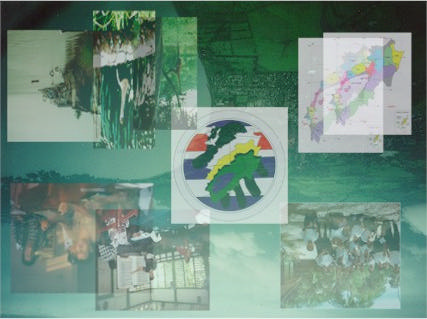

Integrated Management of Water Resources and
Sustainable Development of the San Juan River Basin
and its Coastal Zone (SJRB)
Gender-oriented public
Environmental Education
participation
Coordinated bilateral planning
Sustainable development
Basin-wide information system
Costa Rica and Nicaragua
Ministry of the Environment Ministry of the Environment and United Nations Global Environment Unit for Sustainable Development
and Energy (MINAE) the Natural Resources (MARENA) Environment Programme Facility and Environment
Government of Costa Rica Government of Nicaragua (UNEP) (GEF) General Secretariat of the
Organization of American States
(USDE/OAS)
Integrated Management of Water Resources and Sustainable
Development of the San Juan River Basin and its Coastal Zone (SJRB)
Costa Rica and Nicaragua
January 2001
This document has been prepared by the Unit for Sustainable Development and Environment of the General Secretariat of the Organization of American States, as the
regional executing agency for the SJRB project, in collaboration with the United Nations Environment Programme (implementing agency for the Global Environment
Facility), and the Ministry of the Environment and Energy of Costa Rica and the Ministry of the Environment and the Natural Resources of Nicaragua, as the national
executing agencies. The document summarizes the preliminary findings resulting from the PDF-Block B phase of the Project which included the preparation of a
Transboundary Diagnostic Analysis (TDA). It also describes the components and working elements for the formulation of a Strategic Action Program for the Integrated
Management of Water Resources and the Sustainable Development of the San Juan River Basin and its Coastal Zone. The contents of the document are still
preliminary, and do not necessarily reflect the opinion of the Ministry of the Environment and Energy of Costa Rica and the Ministry of the Environment and the
Natural Resources of Nicaragua, the United Nations Environment Programme, the General Secretariat of the Organization of American States, or the Global
Environment Facility.

The San Juan River Basin and its Coastal Zone
(SJRB)
The San Juan River Basin project area covers some
38,500 km2 in the basin itself, plus its associated coastal
zone on the Caribbean Sea. Of the land area, 64% is in
southern Nicaragua and 36% in northern Costa Rica.
The planning area covers the subbasins of Lake
Nicaragua and of the San Juan River, and also four
smaller but nevertheless significant subbasins with
Caribbean Sea
natural links to this system--the Indio and Maíz river
basins in Nicaragua and the Colorado and Tortuguero
Pacific Ocean
river basins in Costa Rica. Although not included in the
project area, Lake Managua is being taken into
consideration because it sometimes connects with the
SJRB. The torrential rainfall associated with Hurricane
Mitch in October 1998, for example, caused it to
The waters of the Lake Nicaragua-San Juan River
overflow its banks, flooding the surrounding areas and
watershed flow through at least eight distinct terrestrial
sending water into Lake Nicaragua.
ecosystems: (1) dry tropical forest to the east, north, and
west of Lake Nicaragua; (2) cloud forest in the high
areas of the Central Volcanic
This transboundary basin constitutes
Cordillera of Costa Rica; (3) moist
tropical forest to the south and
the most significant freshwater
southwest of Lake Nicaragua and in
reserve in Central America
the eastern foothills; (4) very moist
tropical forest in the San Juan Valley
This transboundary basin constitutes the most significant
and on the coastal plains; (5) gallery
freshwater reserve in Central America. Lake Nicaragua
forest along river banks; (6)
alone covers an area of 8,000 km2 and has a volume of
wetlands to the south of Lake
104,109 hm3. Regional studies now being carried out by
Nicaragua and at the confluences of the Colorado and
the Regional Committee on Water Resources (CRRH),
Tortuguero rivers with the San Juan; (7) second-growth
with international cooperation, lead to the conclusion
forest, meadows, and farmland in extensive areas of the
that the fresh water
Basin; and (8) coastal forest and mangrove swamps on
in the San Juan
the Caribbean coast. The Indio and Maíz river basins are
River Basin is the
covered mainly by moist and very moist tropical forest.
only source
capable of meeting
the foreseeable
The SJRB is a meeting ground for
development
species from the subarctic areas of
needs of the
semiarid Pacific slope of Central America, the region's
North America and others from the
most populated area.
subtropics of South America
Groundwater is abundant and
Because of this range of ecosystems and associated
habitats, the SJRB has a wealth of biodiversity. Its
of high quality
location in the natural biological corridor running the
length of Central
The annual rainfall in the SJRB varies from 1,500 mm to
America has made it
6,000 mm. The flow in the Lake Nicaragua-San Juan
a meeting ground
River watershed ranges from 475 m3/s at the outlet of
for species from the
Lake Nicaragua to 833 m3/s within the Basin, and
subarctic areas of
increases to 1,308 m3/s at the river mouth. Groundwater
North America and
is abundant and of high quality. Most of the land area of
others from the
the Basin is less than 500 m above sea level and is
subtropics of South
characterized by extensive plains that climb slowly from
America. To preserve this unique biodiversity, 51
the Atlantic Coast to the Central Volcanic Cordillera
protected areas, comprising the Meso-American
(1,500 to 3,000 m).
1

Biological Corridor, have been identified: 33 in Costa
development in both countries is based predominantly
Rica, covering 4,257 km2, and 18 in Nicaragua, covering
on the
4,555 km2.
primary
sector, at the
The Basin population is generally very
expense of
poor, and lacks access to safe drinking
the existing
vegetation
water, adequate sanitation, and schools
coverage. In
Nicaragua
deforestation
The people of the SJRB and their living
rates reach over 150,000 ha a year; in Costa Rica the
conditions
figure is 18,500, and the forests are now almost gone.
The SJRB has a total population of about 1,100,000,
73% of whom are in Nicaragua. The population density
Political origin, regional context, and technical
on the Nicaraguan side is approximately 46
cooperation background
inhabitants/km2, with 55% of the population living in
Support for a regional approach in the management of
rural areas. In Costa Rica, the population density is
the SJRB was seen as early as the XIII Summit of
approximately 22 inhabitants/km2, 85% rural.
Central American Presidents, held in Panama in
Population growth is high, averaging 4.1% a year in
December of 1992. The Central American Action Plan
Nicaragua and 3.7% in Costa Rica.
for the Development of Border Zones, in which the San
Juan River Basin was named as a priority area, led to a
An imbalance in employment and income-
1994 request by the governments of Costa Rica and
Nicaragua to the United Nations Environment
generating opportunities between the
Programme (UNEP) and the Organization of American
two countries exacerbates the poor
States (OAS) to assist them with a diagnostic study of
the SJRB environment. That study was carried out
sanitation and health conditions
during 1995 and 1996 by the ministries of environment
of Costa Rica (MINAE) and Nicaragua (MARENA), and
The Basin population is generally very poor, and lacks
published in 1997 as the "Diagnostic Study of the San
access to safe drinking water, adequate sanitation, and
Juan River Basin and Guidelines for an Action Plan."
schools. All economic and quality-of-life indicators in
the Basin area are
The execution of the SJRB project
significantly
below the national
contributes to the implementation of the
averages for both
priorities set under the Central American
countries. An
imbalance in
Alliance for Sustainable Development
employment and
income-generating
opportunities between the two countries--the Nicaraguan
The execution of the SJRB project contributes to the
side has even lower incomes and a subsistence economy-
implementation of the priorities set under the Central
-and uncontrolled migration exacerbate the situation by
American Alliance for Sustainable Development, agreed
exceeding the capacity of existing institutions to meet all
by the Central American Presidents in October 1994.
the sanitation, health, and educational needs created.
These include a variety of economic goals, such as the
development of border areas, the conservation of natural
resources, and the protection of biodiversity, with
Economic development in both countries
specific reference to strengthening the Meso-American
Biological Corridor, achieving sustainable use of water
is based predominantly on the primary
resources, and protecting the integrity of drainage
sector, at the expense of the existing
basins. It will further contribute to the Action Plan for
Integrated Water Resources Management of the Central
vegetation coverage
American Isthmus (PACADIRH), which is being
The consolidation of agriculture in Costa Rica and the
implemented by the CRRH as Technical Secretariat of
advance of the agricultural frontier in Nicaragua,
the Water Group created by the System for Central
particularly in the Indio and Maíz river basins, increase
American Integration (SICA) in response to the
the pressure on the natural ecosystems. Economic
devastation caused by Hurricane Mitch.
2
In 1998, the governments of Costa Rica and Nicaragua,
· The accelerating degradation of transboundary
with the technical assistance of UNEP and the Unit for
ecosystems. In the traditional uses of the main
Sustainable Development and Environment (USDE) of
ecosystems of the area, human activities have exerted
the OAS, negotiated and were granted funds from the
pressures on the environment and led to conflicts
GEF PDF Block B to prepare a project brief for the
among the various groups involved, with negative
formulation of a Strategic Action Program for the
consequences for the quality of water resources. These
Integrated Management of Water Resources and the
consequences include inadequate urban, industrial, and
Sustainable Development of the San Juan River Basin
agroindustrial wastewater treatment systems;
and its Coastal Zone. As an integral part of the project
migratory agriculture, extensive grazing, and the
brief, which was completed in November 1999, the two
consequent expansion of the agricultural frontier;
technical units in MINAE and MARENA, with the
widespread cutting of trees for timber; unregulated
technical assistance of UNEP and the USDE, also
ecotourism; non-conservationist farming practices; the
prepared a Transboundary Diagnostic Analysis (TDA)
introduction of aggressive exotic species such as
that identifies the major environmental issues of the
Tilapia
SJRB, its root causes, and the causal chain, as well as the
mossambica;
transboundary elements.
and
uncontrolled
Conclusions from the initial phases of the
fires in the
project
drier forests
· Water bodies and associated biodiversity and natural
and in
ecosystems have inherent global value.
grassland.
· The integration of land and water issues is necessary in
An emerging
the planning and management of water basins.
problem is
· An intersectoral focus is necessary in addressing
the growing use of small and very small hydropower
causes of Basin deterioration.
plants to tap the considerable hydroelectric potential of
· There is a need for comprehensive Basin-wide
the region.
information on quality, quantity, and hydrologic
· Overexploitation of valuable natural resources. The
processes that affect sustainable development in the
problems here are related to poor land use, especially
region.
the farming of hillside areas and wetlands, the
· Strategic planning must incorporate actions based on
construction of poorly designed roads, unregulated
local, national, and international interests in order to
fishing, overexploitation of valuable moist tropical
address transboundary issues.
forest species, and the destruction of plant cover in
· There is a need to promote and strengthen civil
fragile areas, causing erosion and land degradation.
society, increase the participation of women, and
The result is a loss of potential income from
involve more people in making decisions on
agriculture, fishing, and tourism, a threat to
sustainable development of the region.
biodiversity and the natural productivity of the
· Common objectives in the management of natural
ecosystem, and a change in coastal and inland
resources must be defined, and agreement on access to
waterway dynamics. There are signs that three marine
and the use of water resources needs to be reached.
and freshwater species are being overexploited:
· Institutional capacity is inadequate for controlling and
Carcharhinus leucas, locally called "bull shark" or
ensuring compliance with environmental legislation.
"freshwater shark" because of its unique behavior of
·
migrating between the Caribbean Sea and Lake
Strong political will exists.
Nicaragua; Macrobrachium carminus or freshwater
Present and emerging environmental issues
shrimp; and Panalirus argus or spiny lobster.
identified in the TDA
· Soil degradation and increasing sedimentation. Part
The TDA, carried out with the active participation of key
of the
stakeholders, pointed to a number of current and
sedimentation of
emerging problems that threaten the sustainability of
the San Juan
development in the San Juan River Basin and ultimately
River and its
the quality of life of the people who live there. These
coastal zone is a
environmental issues are closely interrelated, but in the
result of natural
interest of seeking solutions they were broken down as
processes,
follows:
according to
historical
3






























































































































































































































documents. Nevertheless, road construction, the
· Weak institutions. Although both countries have quite
advancing agricultural frontier, and hillside farming
comprehensive legislation on environmental
without adequate soil-conservation techniques
management and the sustainable use of natural
exacerbate sedimentation. Problems are also emerging
resources, a paucity of financial and human resources
from open-pit mining and the extraction of
on the local level and the poverty in which most of the
construction materials.
population lives makes compliance difficult.
· Pollution of water bodies. The main causes of water
· Insufficient human and institutional capacity. Natural-
pollution are the indiscriminate use of pesticides and
resources management is inefficient, and it will not be
fertilizers, especially where intensive farming
possible to strengthen environmental command-and-
practices are used, and urban, industrial, and
control mechanisms without first creating local
agroindustrial waste discharges. The water bodies
economic foundations and training people.
being affected in Nicaragua are Lake Nicaragua, the
·
San Juan River and its coastal zone, and the wetlands
Limited stakeholder participation. Stakeholders
to the south of Lake Nicaragua. In Costa Rica the
currently have only limited participation in sustainable
Caño Negro wetlands, the Colorado River, and the
development
Tortuguero channels are suffering the consequences of
because
degraded water quality. Sporadic die-offs of aquatic
decision-
fauna and flora give evidence of such degradation, as
making is
do small-scale and occasional studies of water quality
centralized.
that have been carried out in some parts of the SJRB.
Both
governments
· High vulnerability to natural hazards. This is
are trying to
apparent in the devastating impact of hurricanes and
change this
tropical storms on the region's ill-housed populations,
situation, which, added to reductions in the size of
on its
government, has hampered local action.
infrastructure, and
·
on crops grown in
Extreme poverty. Extreme poverty, combined with
areas where the
high population growth, low incomes, and a
forest has been
subsistence economy, poor sanitation, and an
cleared and the
imbalance in employment and income-generating
soil is fragile--
opportunities between the two countries, characterizes
areas exposed to
the current level of economic development in the
landslides caused
SJRB. Uncontrolled migration exacerbates the
by hurricanes,
situation by exceeding the capacity of existing
tropical storms, and seismic or volcanic activity.
institutions to meet all the sanitation, health, and
Natural hazards can have a drastic, and dramatic,
educational needs created. The economic conditions
effect on the watercourses of the region.
force the inhabitants to move to the mountainsides and
practice slash-and-burn agriculture just to survive.
These transboundary environmental problems manifest
This behavior contributes to the environmental
themselves both individually and collectively and often
degradation of the SJRB, but could be addressed, in
have common roots.
part, through building institutional capacities and
· Inadequate planning and management. There are no
creating economic instruments, neither of which now
mechanisms for coordinating management and control
exists.
across the international border and
Looking to the future: formulation of a
thus no ongoing institutional
Strategic Action Program (SAP) for the
approach to water resources
Integrated Management of Water Resources
management in the SJRB. The
and the Sustainable Development of the SJRB
lack of comprehensive up-to-
The ultimate objective of the SAP is to ensure the
date data on the SJRBhow it is
availability of the goods and services provided by water
structured, how it works, what its
resources for conserving natural ecosystems and social
socioeconomic dynamics are, how
and economic development in order to satisfy present
information is managed at the local levelmakes it
and future demands as agreed by all parties involved. A
impossible to proceed with the minimum certainty
coordinated program of action conducted jointly by the
needed.
two countries will minimize conflicts over the use of the
goods and services generated by SJRB ecosystems.
4
The major components of the SAP formulation include:
each other, establishing the basis for the development of
·
institutional arrangements to implement the SAP.
Creating a well-
coordinated
bilateral
Demonstration projects will provide an
planning process
assessment of both the cost and the
for the SJRB
· Building
feasibility of replicating such projects
capacity for
throughout the SJRB
sustainable
development
planning and
The demonstration projects will illustrate methodologies
management,
and technologies, and institutional arrangements and
improving infrastructure, equipping institutions, and
participatory approaches, providing an assessment of
designing mechanisms to increase revenues of local
both the cost and the feasibility of replicating such
and regional institutions
projects throughout the SJRB. More particularly, they
·
will provide a more accurate estimate of the baseline
Strengthening a Basin-wide information system that
investments and incremental costs needed for the
provides mechanisms for gathering and disseminating
data adequate for making decisions on integrated
implementation of the SAP. The demonstration projects
Basin management
will be executed in collaboration between NGOs, local
·
governments, and governmental institutions. Thus, like
Strengthening public institutions and private
the basic studies, these projects will also foster the
organizations to achieve a more active and effective
development of local and regional alliances and
participation in the sustainable development of the
technical cooperation agreements. Furthermore, they
region
·
will promote the participation and appropriation of the
Implementing a gender-oriented public-participation
Project of all the stakeholders in the SJRB.
process
· Formulating and implementing environmental
education activities
Public participation workshops will
· Promoting strategic actions, such as sustainable
allow for the exchange of information,
agricultural production, and the restoration of
deforested lands
experiences and ideas among the
The formulation of the SAP relies on three working
various stakeholders
elements identified by the TDA during the PDF Block B
phase. Those elements are (1) basic studies,( 2)
The public participation workshops will allow for the
demonstration projects, and (3) public participation
exchange of information, experiences, and ideas among
workshops.
the various stakeholders. They will also serve to follow
up and evaluate the progress of the different components
of the Project. Within a much broader and long-term
Basic studies will provide additional
objective, the public
information for a more precise
participation
workshops will
characterization of the main
foster the
transboundary problems
participation of all
the stakeholders in
The basic studies were designed to provide additional
the SJRB, in
information for a more precise characterization of the
particular the civil
main transboundary environmental problems identified
society, with a focus
in the TDA. This information, which comprises
on gender.
scientific data and data on institutional and human
In addition to these three elements, a monitoring and
capacity, will allow for a quantification and assessment
evaluation process will be put in place with the
of the most relevant transboundary environmental issues,
participation of national and international consultants
and for the formulation of programs and projects to
who will also assist the local governments, governmental
address them. The proposed studies will be carried out
institutions, universities, and research institutions with
by universities, research institutes, and governmental
the execution of the basic studies and demonstration
institutions, which, in many cases, will collaborate with
5
projects. The process will also provide the mechanisms
A Consultative Committee made up of national
to incorporate the results of all the Project activities into
institutions involved in the management of the SJRB,
the SAP.
private organizations taking part in the project, and
academic institutions has been set up in each country, to
Organizational Structure for the Formulation of
promote the active participation of the institutions and to
the SAP
advise on the orientations of the project. It is chaired by
The project continues to be executed by the governments
the national directors and serves as a mechanism for the
of Costa Rica and Nicaragua, through MINAE and
coordination of national actions.
MARENA respectively. A series of well-defined
activities are being carried out in each country and
Expected results
throughout the SJRB, under the coordination of the two
The main result expected from this new phase of the
technical units in the national executing ministries.
project is the completion of a Strategic Action Program.
UNEP and the OAS support the execution of the project.
A coordinated program of action conducted jointly by
the governments of Costa Rica and Nicaragua, with the
Various mechanisms have been designed and established
participation of local governments, non-governmental
for the coordination of the activities and decision-
organizations, the private sector, and organized civil
making of the Project. A Steering Committee has been
society groups, will serve to guide and coordinate the
established for the project, composed of the ministers of
investment in the SJRB, so that conflicts related to the
MINAE and MARENA, a representative of each
use of the goods and services generated by the SJRB
country's Foreign Ministry, representatives of
ecosystems are minimized, and agreed present and future
associations of municipalities, the Director of OAS/
water demands are met.
USDE, the Director of the Division of Environmental
Information Assessment and Early Warning of UNEP,
Specific results will be:
and the project's two national directors. Observers
·
include the other two GEF implementing agencies (the
Identification of incremental costs to achieve global
World Bank and the United Nations Development
benefits
·
Programme), the technical coordinators, and other
Identification of baseline investment--domestic
cooperation agencies willing to be part of the SAP. This
development plans
board is the highest organ of the project and meets at
· Identification of partners for the execution of the
least twice a year to approve the work plans of the
Strategic Action Program
technical units, the terms of reference of demonstration
Integrated into the SAP are two elements that are the
projects and studies, and any advisory opinions that
foundation for its formulation and execution, and have
OAS/USDE may present in concert with the national
received particular attention throughout the execution of
directors and the technical coordinators. It also approves
the project: (1) a public participation program, and (2)
any significant change to programs and budgets.
binational, national, and local institutional arrangements.
WORLD BANK
MINAE
Contributions to regional initiatives, such as the
AND UNDP
PACADIRH and the strengthening of the Meso-
MARENA
American Biological Corridor (MBC), are also expected.
DONORS, BANKS &
COOP. ORGS.
GEF Programming Context
MINISTRIES OF
UNEP
FOREIGN AFFAIRS
This Project conforms to the GEF Operational Strategy
and Operational Programs, in particular the water-body
MUNICIPALITIES
USDE
based Operational Program #8. It will illustrate how
GS/OAS
freshwater-basin and coastal management can be
STEERING
COMMITTEE
integrated to resolve transboundary issues and will also
serve as a demonstration project for the implementation
TECHNICAL UNITS
CONSULTATIVE COMMITTE E
CONSULTATIVE COMMITTEE
of the Global Programme of Action for the Protection of
§ National Director § National Director
COSTA RICA
NICARAGUA
Costa Rica
Nicaragua
the Marine Environment from Land-Based Activities
CIVIL SOC., ACADEMIA, LOCAL
§ Technical Coord.
§ Technical Coord.
CIVIL SOC., ACADEMIA, LOCAL
Costa Rica
Nicaragua
GOV. & GOVERNMENTAL INST.
GOV. & GOVERNMENTAL INST.
(GPA) in Latin America. The Strategic Action Program
§ Consultants
to be formulated under this project will contribute to the
conservation of natural ecosystems and to social and
PUBLIC
DEMONSTRATION
economic development in order to satisfy present and
BASIC STUDIES
PARTICIPATION
PROJECTS
WORKSHOPS
future demands, minimizing water conflicts.
STRATEGIC ACTION PROGRAM FOR THE INTEGRATED MANAGEMENT OF WATER RESOURCES
AND THE SUSTAINABLE DEVELOPMENT OF THE SJRB
6