Responses to GEF Council Comments on
Yellow Sea Large Marine Ecosystem
(Reference: GEF/C.15/3 7 April 2000)
Comments from the Constituency of Australia, New Zealand and Republic of Korea
General Commentaries
Constituency has reviewed the International Waters project proposals and has no strong
objections to any of them. Support the endorsement of the project proposals.
Response
Reference in the
Project Document
The primary target beneficiary of this project is the population of the
Section I.C. ("Target
Yellow Sea countries, in particular the population that lives in the coastal Beneficiaries")
zone. Successful implementation of the project would have direct
benefits in terms of the improvement and protection of public health and
the general quality of the coastal zone. In the short-term, governments
and institutions would benefit from institutional strengthening as a result
of networking, training programmes, the provision of key items of
equipment, and in particular from the development of National Yellow
Sea Action Plans. As such, endorsement and launch of the project
would provide benefits to the population and countries in the Yellow Sea
region.
Comments from Switzerland
III.
General Commentaries
·
Extensive preparatory work was done and involved both governments
·
From a political point of view, we consider the promotion of regional collaboration and
stakeholders co-operation a very positive move.
·
Though not immediately obvious from the Project Brief, the purpose of the project appears
to be national and regional co-ordination of related activities (in order to make progress
towards an environment-sustainable management and use of the YSLME)
Main Concerns (1 out of 4)
Reducing the Stress to the Ecosystem is one of main focus and one of the four Immediate
Objectives of the project; corresponding activities include diagnostic, monitoring, etc. of
contaminants. Nevertheless, the project document seems to contain only one short paragraph
(out of 21 pages) on contaminants. And no mention is made of the evolution and projection of
human population, of economic growth, of pollution and its costs.
Response (1 out of 4)
Reference in the
Project Document
Final ProDoc 19.06.02
The project document has added some more discussions of the
contaminant issue. This issue is somewhat difficult, as the PRC does
not wish to include the entire watershed in the project (since the
watershed is so large and would be prohibitively expensive), but rather
just the river mouths and the coastal areas. However, coastal sources
of pollution will be assessed and solutions recommended for the SAP.
As one of the project objectives, the project will establish a contaminant ·
Components IIIC and
and ecological monitoring system for the long-term success of SAP and
IIID, Section III (Dev't
National Action Plan (NAP) implementation.
Objective)
To meet this objective, the project will establish a regional thematic
·
Annex V: TOR for
working group on contaminant control and management that will
the regional thematic
coordinate the development of regional system of effective marine
working group on
contaminant reduction and mitigation.
contaminant control and
management
Also the project document mentions that approximately 600 millions of
people live in the area that drains into the Yellow Sea. 600 millions is
·
Section I.A:
10% of the population of the entire globe (6.1 billion, according to the
Description of the
"State of World Population 2001," published by the UNFPA), and as
Region and the
such the Yellow Sea Large Marine Ecosystem is identified to have a
Subsector
large population contributing to the pollution. The project will
incorporate population and economic growth measurements into the
indicators to be developed.
Main Concerns (2 out of 4)
Under Legislative and Institutional Issues, no mention is made of problems or weaknesses
within one or the other national context. Is this correct to assume that this issue was
voluntarily left aside to be addressed fully during the participatory diagnostic stage of the
project?
Response (2 out of 4)
Reference in the
project document
The full assessment of policy, legal and regulatory gaps will be done as
·
Objective I, Section
part of the full project.
III: Component IE
·
Objective II, Section
Relevant objectives of the full project are summarizing legislation and III: Components IID and
regulatory mechanisms for fisheries, biodiversity and eco-system, and IIE
developing regional strategy for the protection of fisheries, biodiversity ·
Objective III, Section
and eco-system. Due activities will be taken to meet those objectives.
III: Components IIIA
and IIIH
Main Concerns (3 out of 4)
The total cost of the project is of USD 25 millions (14.7 to be funded by GEF, 1.4 by UNDP
and 8.9 by the two governments); the rationale behind this burden sharing is not immediately
apparent.
Response (3 out of 4)
Reference in the
project document
Government co-financing table is included in the project document. The Section V.A. Government
GEF portion was derived after considering available baseline and other inputs
co-financing, and represents an incremental cost.
The incremental cost consists of both the GEF intervention and the co-
ii
Final ProDoc 19.06.02
financing provided by the countries. The baseline combined with the
intervention provides the full costs of the alternative scenario. The
baseline scenario is $162,063,857, whereas the (final post-appraisal)
increment represents $24,288,148 ($9,893,965 for country, IA and donor
co-financing and $14,394,183 for GEF financing), combining for a final
alternative of $186,352,005.
Main Concerns (4 out of 4)
Cultural and political attitude towards information and transparency could be a factor
limiting the impact of the project. In the project document, the diffusion of information and
public participation are recognised as critical. Immediate Objectives IV A (Stakeholders) and
IV F (Public Awareness and Participation) are given detailed treatment in the project
document and its annexes. Nevertheless, Annex G (Baseline Activities and Co-Financing)
shows that neither government intends to allocate even one USD to project activities
corresponding to these two objectives. This casts a doubt on the commitment of both
governments to effectively promote broad stakeholders participation in the project
implementation and beyond.
Response (4 out of 4)
Reference in the
project document
Broad stakeholder involvement took place during the project preparation N.A.
phase, as is documented by the various stakeholder meeting reports
provided by both countries. Although cultural and political inhibitions to
full stakeholder involvement may exist, it was not apparent during
project preparation. Lack of co-financing budget for objectives IVA
(Stakeholders) and IVF (Public Awareness and Participation) may
reflect more a lack of equivalent government budget line for this activity,
than lack of commitment.
Conclusions and Recommendations
This seems to be a good, carefully prepared project. Care should be taken to insure that the
information not presented in the project document was not overlooked by GEF/UNDP staff.
Given the numerous geographical references in the text, a map would definitively be a plus.
Responses
References in the
project document
A map of the project area is provided in the project document
Annex IX
Comments from France
General commentaries
The project methodology follows the classical pattern for International Waters projects:
transboundary diagnostic study, national action plans, and strategic action plan. This is a very
academic approach. It is also planned to implement the recommendations of the strategic
action plan, for which US$3 million have been set aside.
Specific commentary (1 out of 3)
The Democratic People's Republic of Korea refused to participate in the project. This is a
serious problem, and will mean that some activities (particularly those relating to regional
fisheries management) will be more difficult to carry out.
Response (1 out of 3)
Reference in the
project document
iii
Final ProDoc 19.06.02
Every effort is taking place to include the DPRK in the project, by Section C ("Prior and on-
making linkages to the East Asian Seas GEF project ("Partnerships in going assistance"), Chapter
Environmental Management for the Seas of East Asia: PEMSEA") I ("Context")
that has one demonstration site at Nampo in the DPRK, and also to the
proposed GEF Medium-sized project in the DPRK ("Biodiversity
Management in the Coastal Area of DPRK's West Sea") that has
been submitted to GEF Council for approval. YSLME project will retain
close contacts with the PEMSEA, perhaps sharing some common
Steering Committee members, and will also have close cooperation with
the DPRK Biodiversity project, once it is approved.
In fact, some meetings have included DPRK personnel in the PDF-B
period, and UNDP/DPRK was represented at several Steering
Committee meetings. Even if DPRK's involvement is only partial,
DPRK's sector of the Yellow Sea is relatively small compared to the
remainder. Though not an optimal solution, the absence of the DPRK
will still permit significant advances in addressing the problems of the
Yellow Sea.
Specific Commentary (2 out of 3)
It is recommended that priority should be given to studies and research by the national
institutes of the two countries. The share of the budget allocated to international consultants is
too high.
Responses
Reference in the
project document
The participation of international consultants has been minimized to the N.A.
extent possible, according to the wishes of the region. International
consultants include primarily the staff of the Project Coordination Unit
(since the individuals, regardless of nationality, will be internationally
recruited, they will be paid according to the international UNOPS scale),
and for overview/review of the regional work plans and work products.
National experts, as recommended by France, will accomplish most of
the work.
Specific Commentary (3 out of 3)
The budget is not very clear. It is difficult to figure out how much funding will be devoted to
investments, technical assistance, and operations. The proposed activities seem to fall mainly in
the categories of regional coordination and knowledge acquisition (nearly US$12 million). In
view of the amounts involved, the share of the budget allocated for pilot projects (still to be
identified at this point) could be increased substantially.
Response
Reference in the
project document
The budget accompanying the project document includes an output- Section XI Budgets
based budget, which clarifies the types of interventions to be made (e.g.,
technical assistance, investments, operations), as requested by France.
RESPONSE TO GEFSEC COMMENTS AT TIME OF WORK
PROGRAM ENTRY
Specific Commentary (4 out of 4)
"By the time of CEO endorsement, the project Document will contain
iv
Final ProDoc 19.06.02
actions aimed at clarifying the possible influences/relations among the
Bohai Sea, the Yellow River, and the Yellow Sea ecosystem."
And
"..clarify in the prodoc...that analyses of Bohai influence and Yellow
River influence on the environment of the (Yellow) Sea and coastal
nursery areas should be included in the (full/final) TDA so that
everyone understands (all the possible) root causes of degradation."
Response
Reference in the
project document
The Project Document acknowledges that the YSLME includes the
p.15
Bohai Sea. However, most activities related to the Bohai Sea and the
B.L. 21.09
Yellow River are part of the baseline, and/or the co-financing by the
Chinese side. Therefore, the GEF activities include a few, but not
extensive, activities on the Bohai Sea. However, it is the intent (see
below) that all information required for the TDA and SAP for the Bohai
will be provided by the Chinese side.
The Chinese government has just awarded approximately U.S. $140
million to the Bohai Sea, including studies of the ecosystem. The GEF
project will liaise closely with this Chinese programme, to assure the
information pertinent to the ecosystem approach to the YSLME is
available to the GEF project. The timing of the two projects is ideal, in
the sense that both projects will start at the same time.
The Project Document includes reference to the Steering Committee
Meeting of January 2000, wherein the Meeting agreed that the activities
described in the Project Document include activities in all associated
Seas (East China Sea, DPRK's West Sea, Bohai, etc.: see p. 15 of the
ProDoc). Therefore, the budget describes activities which will include
these Seas to the extent possible (DPRK West Sea) and necessary
(Bohai Sea). In particular, Component IIA, Habitat Conservation,
contains a separate budget line (21.09) under Activity One specifically
addressing linkages with the Bohai Sea. Other budget lines for different
activities are not specific to the Bohai Sea, but include it in the general
agreement from the January 2000 Steering Committee Meeting.
As further proof of the Chinese willingness to share data and
information on the Bohai Sea with this GEF project, the Preliminary
TDA contains considerable data on fisheries, habitat, conservation
areas, and contamination from the Bohai Sea.
v
PROJECT BRIEF
1. IDENTIFIERS
PROJECT NUMBER
PROJECT NAME
Preparation and Preliminary Implementation of a
Strategic Action Programme for the Yellow Sea Large
Marine Ecosystem
DURATION
5 years
IMPLEMENTING AGENCY
UNDP
EXECUTING AGENCY
UNOPS
REQUESTING COUNTRY
People's Republic of China and Republic of Korea
ELIGIBILITY
Eligible to receive UNDP technical assistance and
participation in the restructured GEF:
PRC - 16 May 1994; ROK - 3 May 1994;
GEF FOCAL AREA
International Waters
GEF PROGRAMMING FRAMEWORK
GEF Operational Strategy for International Waters, as
well as for the Waterbody Based Operational
Programme (#8), Large Marine Ecosystem component
2. SUMMARY
Among the 50 large marine ecosystems (LMEs) in the world ocean, the Yellow Sea LME has been one of
the most significantly affected by human development. Today the Yellow Sea faces serious environmental
problems, many of a transboundary nature, that arise from anthropogenic causes. Approximately 600
million people (nearly 10% of the world's population) live in the basins that drain into the Yellow Sea.
Large cities near the sea having tens of millions of inhabitants include Qingdao, Tianjin, Dalian, Shanghai,
Seoul/Inchon, and Pyongyang-Nampo. People of these large, urban areas are dependent on the Yellow
Sea as a source of marine resources for human nutrition, economic development, recreation, and tourism.
The Yellow Sea receives industrial and agricultural wastes from these activities.
The Yellow Sea LME is an important global resource. This international waterbody supports substantial
populations of fish, invertebrates, marine mammals, and seabirds. Many of these resources are threatened
by both land and sea-based sources of pollution and loss of biomass, biodiversity, and habitat resulting from
extensive economic development in the coastal zone, and by the unsustainable exploitation of natural
resources. Significant changes to the structure of the fisheries has resulted from non-sustainable fisheries,
reducing catch-per-unit effort. A fisheries recovery plan is essential to the continuation of the exploitation
of this important resource. The three littoral countries, with their massive populations living in the
Yellow Sea drainage basin, share common problems with pollution abatement and control from municipal
and industrial sites in the Yellow Sea basin, as well as contributions from non-point source contaminants
from agricultural practices. All of the littoral countries are urgently seeking to address problems of
reduced fish catch and shifts in species biomass and biodiversity (caused in part by overfishing), red tide
outbreaks, degradation of coastal habitats (caused by explosive coastal development), and effects of
climate variability on the Yellow Sea Large Marine Ecosystem.The objective of the project is: Ecosystem-
based, environmentally-sustainable management and use of the YSLME and its watershed by reducing
development stress and promoting sustainable exploitation of the ecosystem from a densely populated,
heavily urbanized, and industrialized semi-enclosed shelf sea.


Final ProDoc 19.06.02
3. COSTS AND FINANCING (US$)
GEF:
- Project :
14,394,183 US$
[of which administrative cost is :
1,066,236 US$
- PDF :
349,650 US$
Subtotal GEF :
14,394,183 US$
Co-Financing:
Government
8,914,065 US$
UNDP
1,300,000 US$
Total Project
24,608,249 US$
Cost:
4. Associated Financing (US$)-BASELINE: $162,063,857
5. GEF Operational Focal Point Endorsement(s)
People's Republic of China
Mr. Yang Jin Lin
GEF Operational Focal Point
Ministry of Finance
Dated:
Republic of Korea
Mr. Choi Jai-Chul
Director of Environment Cooperation Division
Ministry of Foreign Affairs and Trade
Dated:
6. Implementing Agency Contact
Tim Boyle, GEF Regional Coordinator
Regional Bureau for Asia and the Pacific
DC1-2368, One United Nations Plaza
New York NY 10017
Tel: (212) 906-6511
Fax: (212) 906-5825
e-mail: tim.boyle@undp.org
ii
Final ProDoc 19.06.02
UNITED NATIONS DEVELOPMENT PROGRAMME
Regional Project with participation from the governments of:
People's Republic of China and Republic of Korea
Project Budget Number: RAS/00/G31
Summary of UNDP and Cost-Sharing
Project Title:
UNDP:
Current
Previous
Change
Reducing Environmental Stress in the Yellow Sea
TRAC (1&2)
-
Project Short Title:
TRAC (3)
-
YSLME
Other (GEF)
$14,394,183
Regional Program
-
GEF Implementing Agency:
UNDP
Cost Sharing:
Executing Agency:
Government
-
UNOPS
Financial Inst.
-
Lead National Implementing Agencies:
Third Party
-
Korea Ocean Research & Development Institute,
PRC State Oceanic Administration
Sub Total
$14,394,183
Project Site: Korea Ocean Research and
Development Institute
AOS:
Estimated Start Date: Oct. 2002
Estimated End Date: Oct 2007
Other
Parallel Co-
Financing
Government
$8,643,965
UNDP
$650,000
NOAA
$600,000
Sub-total
$9,893,965
GRAND TOTAL
$24,288,148
Classification Information:
* ACC sector & sub-sector:
* Primary type of intervention:
- Natural resources
- Capacity-building
- Water resources planning & management
- Institution-building
* DCAS sector & sub-sector:
Secondary type of intervention:
- Natural resources
- Water resources planning
* Primary areas of focus/sub-focus
Primary target beneficiaries:
- Promoting environment and natural resources
- Group: Target place (environmental habitat)
sustainability
- Sub-group: Natural features
- Promotion of sustainable natural resources
- TB code: coastal zone
management
* Secondary areas of focus/sub-focus:
Secondary target beneficiaries:
iii
Final ProDoc 19.06.02
iv
Final ProDoc 19.06.02
Brief Description:
Three countries (Democratic People's Republic of Korea - DPRK, People's Republic of China -PRC, and Republic
of Korea - ROK), with their massive populations living in the Yellow Sea drainage basin, share common problems
with pollution abatement and control from municipal and industrial sites in the Yellow Sea basin, as well as
contributing non-point source contaminants from agricultural practices. All of the littoral countries are urgently
seeking to address problems of reduced fish catch and shifts in species biomass and biodiversity (caused in part by
overfishing), red tides outbreaks, degradation of coastal habitats (caused by explosive coastal development), and
effects of climate variability on the Yellow Sea Large Marine Ecosystem.
The objective of the project is: Ecosystem-based, environmentally-sustainable management and use of the
YSLME and its watershed: reducing development stress and promoting sustainable exploitation of the ecosystem
from a densely populated, heavily urbanized, and industrialized semi-enclosed shelf sea.
In order to achieve this objective this project will prepare a Transboundary Diagnostic Analysis (TDA), National
Yellow Sea Action Plans (NYSAPs), and a regional Strategic Action Programme (SAP). This project will also
initiate and facilitate the implementation of the SAP. The SAP will consist of a series of legal, policy and institutional
changes and investments to address the priority transboundary issues identified in the TDA/SAP formulation
process.
On Behalf of
Signature
Date
Name/Title
Governments of:
People's Republic of China
____________________
_________
_______________
Republic of Korea
____________________
_________
_______________
On behalf of:
UNDP
____________________
_________
_______________
UNOPS
____________________
_________
_______________
v
Final ProDoc 19.06.02
LIST OF ACRONYMS
ADB
Asian Development Bank
APEC
Asia-Pacific Economic Cooperation Forum
CBD
Convention on Biological Diversity
CD
Compact Disc
CCRF
Code of Conduct of Responsible Fisheries
DIM
Data and Information Management
DPRK
Democratic People's Republic of Korea
EAS
East Asia Seas GEF Project
EIA
Environmental Impact Assessment
FAO
Food and Agricultural Organization
GEF
Global Environment Facility
GIS
Geographic Information System
GOOS
Global Ocean Observing System
GPA
Global Programme of Action for the Protection of the Marine Environment from Land-based Activities
GRID
Global Resources Information Database
HAB
Harmful Algal Bloom
IMO
International Maritime Organization
IOC
Intergovernmental Oceanographic Commission
IUCN
International Union for Conservation of Nature and Natural Resources
IW
International Waters
LEARN
Learning Exchange and Resource Network
NEAP
National Environmental Action Plan
NFP
National Focal Point
NGFPA
National Government Focal Point Agencies
NGOs
Non-Governmental Organizations
NYSAP
National Yellow Sea Action Plans
NOWPAP
Northwest Pacific Action Plan
PCU
Project Coordination Unit
PDF
Project Development Fund
PIP
Priority Investment Portfolio
PIR
Project Implementation Review
PPER
Project Performance and Evaluation Review
PRC
Peoples Republic of China
QA
Quality Assurance
QC
Quality Control
ROK
Republic of Korea
SAP
Strategic Action Programme
SC
Steering Committee
SGP
Small Grants Program
SMC
Strategic Management Advisory Committee
SOA
State Oceanic Administration
TDA
Transboundary Diagnostic Analysis
TOR
Terms of References
TPR
Tri-partite Review
TRADP
Tumen River Area Development Programme
UNCLOS
United Nations Convention on Law of the Sea
UNDP
United Nations Development Programme
UNEP
United Nations Environment Programme
UNOPS
United Nations Office for Project Services
WWW
World Wide Web
vi
Final ProDoc 19.06.02
YSLME
Yellow Sea Large Marine Ecosystem
TABLE OF CONTENTS
I. CONTEXT
1
A. Description of the Region and the Sub-sector
1
B. Host Country Strategies
2
C. Prior and On-going Assistance Directed at the Same Sub-sector
4
II. PROJECT JUSTIFICATION
6
A. The Problem to be Addressed: The Present Situation
6
1. The Need for a Regional Environment Project
6
2. The Preliminary Transboundary Diagnostic Analysis for the Yellow Sea LME
11
B. End of Project Situation
12
C. Target Beneficiaries
12
D. Project Strategy and Sustainability
13
1. Strategy
13
2. Sustainability
14
E. Reasons for UNDP Assistance
15
F. Special Consideration
16
G. Counterpart Support Capacity
16
III.
DEVELOPMENT OBJECTIVE
17
IV.
IMMEDIATE OBJECTIVES, COMPONENTS, OUTPUTS AND ACTIVITIES
18
Objective 1
Develop Regional Strategies for Sustainable Management of Fisheries, and Mariculture
A. Stock Assessment
B. Carrying Capacity in Fisheries and Mariculture
C. Mariculture Production
D. Disease in Mariculture
E. Regional Fisheries Agreements and National Laws
F. Fisheries Management Plan
Objective 2
Propose and Implement Effective Regional Initiatives for Biodiversity Protection
A. Habitat Conservation
B. Vulnerable Species
C. Genetic Diversity
D. Introduced Species
E. Biodiversity Regulations
F. Regional Biodiversity Assessment & Regional Biodiversity Action Plan
Objective 3
Propose and Implement Actions to Reduce Stress to the Ecosystem, Improve Water Quality, and
Protect Human Health
A. Stressors to Ecosystem
B. Carrying Capacity of Ecosystem
C. Contaminant Inputs
D. Contaminant Levels
E. Harmful Algal Blooms and Emerging Disease
F. Hot Spot Analysis
G. Emergency Planning and Preparedness
vii
Final ProDoc 19.06.02
H. Legal and Regulatory
I. Fate and Transport Analysis to Facilitate SAP Analysis
Objective 4
Develop and Pilot Regional Institutional and Capacity Building Initiatives
A. Stakeholder Involvement
B. Regional Coordination
C. National Institutions
D. Financial Instruments
E. Data and Information Management
F. Public Awareness and Participation
V. INPUTS
30
A. Government Inputs
31
B. GEF Inputs
32
C. UNDP Inputs
32
D. Donor Inputs
32
VI. RISKS
32
VII. PRIOR OBLIGATIONS AND PREREQUISITES
33
VIII. INSTITUTIONAL FRAMEWORK, COORDINATION AND ADMINISTRATION
33
A. Institutional Arrangements
33
1. Regional Institutions
33
2. National Institutions
34
3. Project Execution
35
B. Coordination Arrangements
35
IX. PROJECT REVIEWS, REPORTING AND EVALUATION
35
X. LEGAL CONTEXT
38
XI. BUDGET
39
A. Budget Lines
39
B. Project Costs
39
C. Budget Description
42
D. Abbreviated Terms of Reference
42
E. Subcontracts
44
LIST OF ANNEXES
46
ANNEX I
Terms of Reference for the PCU and Job Descriptions for the PCU Staff
47
ANNEX II
Proposed Structure for Governance, Coordination and Implementation
62
ANNEX III
Terms of Reference Steering Committee and Interministerial Coordinating Function
63
ANNEX IV
Terms of Reference Strategic Management Advisory Group
67
ANNEX V
Terms of Reference Regional Thematic Working Groups
68
ANNEX VI
Composition of Major Institutions
72
ANNEX VII Logical Framework Matrix
73
ANNEX VIII List of Office Equipment
83
ANNEX IX Map of Yellow Sea Region
84
viii
Final ProDoc 19.06.02
ADDENDUM (Available from UNDP) Preliminary TDA
ix
Final ProDoc 19.06.02
I.
CONTEXT
A. Description of the Region and the Subsector
For millennia the Yellow Sea ecosystem provided food and livelihood to the civilization in East Asia. Shallow but rich
in nutrients and resources, it is most favorable for coastal and offshore fisheries, and its waters are the highway for
vast international shipping activity. The Yellow Sea is a classic example of a semi-enclosed area, but remarkable for
its massive population and increasing anthropogenic pressure.
Three countries (Democratic People's Republic of Korea - DPRK, People's Republic of China -PRC, and Republic
of Korea - ROK) share the natural heritage of the Yellow Sea. Despite their political and social diversity, the people
of the region express a common concern for the Yellow Sea. Today the Yellow Sea faces serious environmental
problems, many of a transboundary nature, that arise from anthropogenic causes. The three countries of the region
are confronting difficult economic and administrative adjustments that complicate environmental management and
natural resource protection efforts. The three littoral countries share common problems with pollution abatement and
control from municipal and industrial sites in the Yellow Sea basin, as well as contributing non-point source
contaminants from agricultural practices. All of them are urgently seeking to address problems of reduced fish
catches (caused in part by overfishing), red tide outbreaks, degradation of coastal habitats (caused by intensive
coastal development), and effects of climate variability on the Yellow Sea Large Marine Ecosystem.
Approximately 600 million people live in the area that drains into the Yellow Sea. Large cities near the sea with tens
of millions of inhabitants include Qingdao, Tianjin, Dalian, Shanghai, Seoul/Inchon, and Pyongyang/Nampo. People of
these large, urban areas are dependent on the Yellow Sea as a source of marine resources for human nutrition,
economic development, recreation, and tourism.
The present project area has been defined as agreed in the Preliminary Transboundary Diagnostic Analysis, as
follows:
The Yellow Sea water body is defined by:
· to the south, the line connecting the north bank of the mouth of the Chang Jiang (Yangtze River) to the
south side of Cheju ;
· to the east, the line connecting Cheju Island to Jindo Island along the coast of the ROK; and
· to the north, the line connecting Dalian to Penglai (on the Shandong Peninsula). This latter line
separates the Bohai Sea from the Yellow Sea.
The coastal/upland boundary is defined as the mouths of the major rivers (as conduits of contaminant input), whereas
coastal zones are defined according to existing national programs.
Although the Bohai Sea is recognized as a portion of the YSLME from a scientific perspective, specific studies and
management activities are now taking place in this territorial sea. Consequently, the GEF intervention has not
focused on the Bohai Sea.
In few other enclosed or semi-enclosed seas are multilateral measures for marine pollution control so deficient as in
the Yellow Sea. However, there might now be opportunities for improvement. Both ROK and China acknowledge
that threats to the commons from pollution and overexploitation of living resources could have serious, perhaps
irreversible, economic consequences. China, DPRK, and ROK have to decide how to adjust national initiatives to be
compatible with emerging international legal and technical obligations, or, conversely, the extent to which each state
wishes to ignore or deviate from international practice.
There is also a lack of a formal infrastructure to bring about international collaboration and cooperation in monitoring
and research activities on YSLME shared marine resource issues. The lack of a formal structure prevents the
1
Final ProDoc 19.06.02
development of well-coordinated cooperative resource assessments, baseline studies, and coordination in
emergencies (such as a spill of oil or of other toxic and hazardous materials). Monitoring and research programs are
not as effective as they should be because they stop at some disputed governmental border, rather than at some
ecosystem or natural boundary. Effective studies of transboundary contamination and living marine resource
assessments require excellent coordination, cooperation, and synchronization of sampling to enable integration of data
across the region.
An objective of the project is to implement an ecosystem-based approach to reduce development stress on the
ecosystem, and to initiate recovery actions leading to the long-term sustainability of the environment and resources of
the YSLME.
B. Host Country Strategies
The PRC, ROK, and DPRK already cooperate in many regional initiatives such as the Northwest Pacific Action
Plan (NOWPAP), the Tumen River Area Development Programme (TRADP), the Asia-Pacific Economic
Cooperation (APEC), Fisheries and Marine Resources Conservation Working Groups, and the GEF/UNDP/IMO
East Asia Seas project. These pre-existing institutional structures will play a crucial role in the development of a
SAP, by providing the umbrella agreement between the countries under which specific cooperative activities can be
planned and implemented.
The countries are engaged in a number of national, donor and Implementing Agency (UNDP) financed activities that
are directly or indirectly related to the Yellow Sea LME; some of these activities represent `baselines' in the context
of the current project. These activities can be summarized as follows:
People's Republic of China
Bohai Sea GLOBEC (1997-2000)
Stock Monitoring in the Yellow Sea (1998-2000)
Yellow Sea and East China Sea GLOBEC(1999-2004)
The relationship between Japanese anchovy recruitment and environment (1999-2004)
Sino-Norway joint "Bei Dou"project (1998-2004)
Ecosystem carrying capacity of Bays and environmental optimization---China "Nine-five-year" plan project (1998-
2000)
Carrying capacity and mariculture's impacts on environment of Chinese bays(1998-2002)
Carrying capacity of scallops in Jiaozhou Bay1997-1999
Five projects related to mariculture, including nutrition, hatchery, culture techniques in fish, shrimp and shellfish
etc.---China National Marine Hi-tech 863 project (1998-2000)
Health culture method of shrimps---China "Torch" plan (1998-2000)
Large-scale mariculture technique in bays---China "Nine-five-year" plan project (1998-2000)
Study on food of shrimps---China "Nine-five-year" plan project (1998-2000)
Isolation technique of organisms in mariculture---China "Nine-five-year" plan project(1999-2000)
Endocrine adjustment and control and physiological function of shrimp reproduction---China national climbing-B
project (1998-1999)
Biological study of shrimp mating embryo development---China national climbing-B project(1998-1999)
Key techniques of the fry and culture of red seabream and flounder---China national climbing-B project(1998-
1999)
Study on nutritional physiology during early development of marine species---China national climbing-B project
(1998-1999)
Developmental biology of clam larvae ---China national climbing-B project (1998-1999)
Microbiological isolation method and mechanism of organisms in shrimp ponds (1998-2000)
Shrimp and fish diseases inspection technique---China National Marine Hi-tech 863 project (1998-2000)
2
Final ProDoc 19.06.02
Prevention and cure technique of explosive epidemic disease in shrimps---China "Nine-five-year" plan project
(1998-2000)
Study on virus and pathogenic diagnosis and epidemiology in shrimps and shellfishes---China national climbing-B
project (1998-1999)
Fishery Biodiversity and its conservation in the Bohai Sea (1997-2000)
Establishment of Dagong Is., Changmen Is. and Yadao Is. as marine nature reserves (2000-2004)
Natural reserve establishment and management (1999-2004)
Marine biodiversity conservation action plan (1999-2004)
Water circulation of China Seas and its impacts on environmental resources (1999-2004)
Bio-optic characters of the shallow sea and its relationship with primary productivity (2000-2004)
Sino-America joint research on bio-optics in the Southern Yellow Sea (2000)
Sino-DPRK joint research of numerical model for shallow sea tides, waves, and storms (1995-1999)
Sino-ROK joint research of marine sedimentation dynamics (1998-2000)
Large scale zoning of sea regions (1999-2004)
Coastal resource conservation and environment protection project (1999-2000)
Second environmental baseline assessment of China (1999-2000)
Routine environmental monitoring activities and management of monitoring stations (1999-2004)
Study on cause and inspection of virus and ecology of shrimp
---China "Nine-five-year" plan project (1998-
2000)
Fundamental research on disease occurrence and resistance of commercially important organisms in mariculture
(2000-2004)
Mechanism and treatment of red tides in typical cultivated sea regions (1999-2004)
Mesocosm study of eutrophication's effects on marine phytoplankton community (1999-2001)
Harmful algal bloom monitoring and study (1999-2004)
Blue sky and clean sea action (1999-2004)
Benthic larval bioassay in marine environmental assessment (2000-2002)
Circulation and long term process of nutrient transport in the Yellow Sea (1998-2001)
National Institutional Capacity-building Programme (SOA) 1999-2004
GIS of mariculture in Miaodao Archipelago (1999-2002)
Data management and exchange for the marine database and network (SOA)
1999-2004
Republic of Korea
Survey on the marine living resources in the Yellow Sea
Survey on oceanographic conditions in the Yellow Sea
Community structure of the fisheries resources in the Yellow Sea
Changes in oceanographic conditions and ecosystem in the Kunsan Waters
Water quality control in marine ranching
Seed Release
Seed (larval fish) release
Development of polyculture system
Survey on fan shell resources in the Yellow Sea
Mullet culture
Survey on the abundance and habitat of Manila clam
Development of shrimp culture technique
Development of culture technique of croaker
Maintenance of marine living resources in the Yellow Sea
Production of seed
Kelp culture in the Yellow Sea
3
Final ProDoc 19.06.02
Study on the habitat of Venus clam
Study on the disease of shrimp in the Yellow Sea
Impact assessment and policy after fisheries agreement
Tidal flat ecosystem study
Rehabilitation of a Rose in the coastal area
Formation of habitat for migratory birds
Restoration of degraded coastal ecosystem
Development of seed culture
Study on species conservation and culture species
Seed bank of Laver and Kelp
Development of preservation and biotechnological application technologies of marine organisms
State of the environment of the Yellow Sea (Ship time)
Joint study on the Yellow Sea environment between Korea and China
Mitigation of the pollution in the coastal waters of the Yellow Sea
Basic plan of designation and management for marine protected area
Coastal process study for marine pollution in the Yellow Sea
A study on contained trace metal of useful algae in the Yellow Sea
Formation of monitoring network of marine environment in the Yellow Sea
Monitoring of harmful algal blooms along coastal areas in the Yellow Sea
Construction of water quality monitoring vessel
Development of monitoring methods for mariculture farm
A study on the development of ocean environment and meterological remote measurement system
Development of on -site systems for marine environmental monitoring
Development of monitoring strategy for marine environmental radioactivity
Yellow Sea Large Marine Ecosystem Project
Automatic detection of red tide
Red tide occurrence and dynamics in the coastal waters off Kunsan.
Environmental assessment of dumping site in the Yellow Sea
Development of monitoring technology for the wastes disposal sea areas
A study on the environmental changes of Shihwa Lake
A study for improvement and integrated development of Lake Shihwa
A study on the environmental changes of Shihwa Lake by outer seawater inflow
Hydrodynamic and sedimentary processes of suspended matter offshore of the Saemankeum dike
Development of practical application technology for environmentally safe reduction of oil pollution
The prior study of the in situ application of the bioremediation technique applied to the oil polluted environment of
the coast of the Yellow Sea and Bohai Sea
National plan for marine environmental conservation
4
Final ProDoc 19.06.02
Simulation and validation of three-dimensional coastal currents in the western coast of Korea
A study on marine circulation of the East China Sea
Development of integrated model coupled with hydrodynamic and water quality for coastal development in
Kyunggi Bay
An assessment of environmental fate of contaminants in the Yellow Sea
Integrated coastal zone management project
A study on construction of ocean environment database
A study on ocean environment information integration system and Korea marine database center operation
A study for establishment of the marine scientific research data and information service system on the national
basis
Conservation of tidal flat public participation campaign
Construction of migratory bird watching facility
Construction of recreational fishing ground in the tidal flat
Public relations for marine environmental protection
Education of marine environmental protection for children
Studies for Sustainable Use of Tidal Flats in Korea (1999-2003)
C. Prior and On-going Assistance Directed at the Same Subsector
The present GEF project can contribute to and benefit from several of the UNEP Regional Seas Programme's
Northwest Pacific Action Plan (NOWPAP) proposed regional activity centres, including Regional Marine and
Coastal Information System; Monitoring and Assessment of Marine, Coastal and Associated Freshwater
Environments; and the Biodiversity and Specially Protected Areas. The present project has little focus on Marine
Pollution Preparedness and Response, so NOWPAP will have the lead here. The East Asia Seas GEF Project
("Partnerships in Environmental Management for the Seas of East Asia: PEMSEA") has two demonstration projects
in or adjacent to the YSLME project area: one in the Bohai Sea of PRC, and one at Nampo in DPRK. The YSLME
GEF Project will retain close contacts with each of these existing programmes, perhaps sharing some common
Steering Committee members. In addition, the present project will liaise closely with other efforts in the region,
including the ROK GEF project for the "Conservation of Globally Significant Wetlands in the ROK," the GEF
Project on Wetland Biodiversity Conservation and Sustainable Use in China (both currently under preparation using
GEF PDF-B funds), the existing GEF Project on the Tumen River (Preparation of Strategic Action Programme
(SAP) and Transboundary Diagnostic Analysis (TDA) for the Tumen River Area, its coastal regions and related
Northeast Asian Environs), and the Ballast Water GEF Project (which has a Pilot Demonstration Project In Dalian,
PRC, within the YSLME). The project will also continue to liaise with the World Wildlife Fund PRC-ROK Yellow
Sea Eco-region activities. Other related projects include the NEAR-GOOS (North-east Asian Region Global Ocean
Observing System), and other IOC/WESTPAC activities. Finally, the project will have close cooperation with the
proposed Medium-sized project Biodiversity Management in the Coastal Area of DPRK's West Sea which has
been recently approved by the GEF Secretariat.
The PDF-B for Yellow Sea LME was initiated in April 1999. The objective of the PDF-B was to prepare a full
Project whose objective will be to complete a Transboundary Diagnostic Analysis (TDA) and Strategic Action
Programme (SAP) for the Yellow Sea region. The SAP will identify priority actions to be taken by the participating
countries to restore and preserve the YSLME. The outputs of the PDF-B included a Preliminary Transboundary
Diagnostic Analysis (PTDA), a Project Brief, and a Project Document for the full GEF Project. The process for
carrying out the PDF-B includes full stakeholder consultation and participation, technical analysis and review of
existing conditions, decisions about governance and institutional arrangements, budgeting including incremental cost
analysis and baseline cost determination, and preparation of the requisite documents for consideration by the GEF
Council, after Country consensus.
More specifically the PDF project was responsible for:
5
Final ProDoc 19.06.02
1. undertaking a comprehensive review, synthesis, and analysis of existing data and information concerning the
sources and fate of transboundary pollution as a building block on which to design appropriate actions;
2. identifying degraded and threatened habitats, point and non-point pollution sources, overexploited living
marine resources, and exotic species of concern;
3. reviewing existing national and regional environmental legislation relating to the Yellow Sea and its
surrounding environment; and
4. providing a framework to strengthen the institutional, legal and regulatory structure in the YSLME.
Financial support to-date has included GEF preparatory (PDF-B) funding of $369,650.
The early concepts supporting the YSLME were the result of meetings held in 1992, sponsored by the World Bank
and the National Oceanographic and Atmospheric Administration (NOAA). During the ensuing years, the project
was approved for a PDF-B project development by the Global Environment Facility (GEF) under UNDP's
implementation. In April 1999, the Chief International Consultant held his inception mission. In June and July of
1999, the countries held their first Interministerial Coordinating Meetings for this project, as well as their First
National Stakeholders' Meetings. In August 1999, the 1st Steering Committee Meeting was held in Beijing, PRC.
Finally, in September and October of 1999, the two countries completed first drafts of their National Reports, which
are to be part of the technical basis for the PDF-B outputs. The ROK and PRC conducted their 2nd National
Stakeholders' Workshops, to discuss the Preliminary TDA.
The Regional workshops to discuss the National Reports and prepare the Preliminary TDA were held in Seoul,
ROK, October 1999 and Beijing, PRC, January 2000. The second Steering Committee was held in Seoul, ROK,
October 1999 and the Third Steering Committee was held in Beijing, PRC, January 2000.
The outputs of the PDF-B include:
1. Report of the 2nd Regional Workshop and the Third Meeting of the Steering Committee of the Yellow Sea
Large Marine Ecosystem (YSLME), held on 18-20 January 2000 in Beijing, PRC.
2. Report of the 1st Regional Workshop and the Second Meeting of the Steering Committee of the Yellow Sea
Large Marine Ecosystem (YSLME), held on 26-29 October 1999 at Seoul, ROK.
3. Report on the First Meeting of the Steering Committee of the Yellow Sea Large Marine Ecosystem (YSLME),
held on 10-11 August 1999 at Beijing, PRC.
4. Report on the Regional Workshop for the Project Brief of the Yellow Sea Large Marine Ecosystem (YSLME),
held on 5-6 November 1999 at Qingdao, PRC
5. Report Of The Second National Stakeholders' Workshop held on 28 September at Seoul, ROK.
6. Report Of The Second National Stakeholders' Workshop-PRC.
7. Report Of The First National Stakeholders' Workshop-held on 15 July 1999 at Seoul, ROK.
8. Report Of The First National Stakeholders' Workshop-held on 10 June 1999 at Qingdao, PRC.
9. Yellow Sea LME Preliminary Transboundary Diagnostic Analysis, February 2000
10. National Report of PRC "Yellow Sea LME"
11. National Report of ROK "Yellow Sea LME"
12. Final Inception Report of the Inception Mission from 13-27 April 1999 in ROK and PRC.
II.
PROJECT JUSTIFICATION
A. The Problem to be Addressed: The Present Situation
1. The Need for a Regional Project
The Yellow Sea is that semi-enclosed body of water bounded by the Chinese mainland to the west, the Korean
Peninsula to the east, and a line running from the north bank of the mouth of the Yangtze River (Chang Jiang) to the
south side of Cheju Island. It covers an area of about 400,000 km2 and measures about 1,000 km (length) by 700 km
(maximum width). The floor of the Yellow Sea is a geologically unique, post-glacially submerged, and shallow
portion of the continental shelf. The seafloor has an average depth of 44 m, a maximum depth of about 100 m, and
6
Final ProDoc 19.06.02
slopes gently from the Chinese continent and more rapidly from the Korean Peninsula to a north-south trending
seafloor valley with its axis close to the Korean Peninsula. This axis represents the path of the meandering Yellow
River (Huang He) when it flowed across the exposed shelf during lowered sea level and emptie d sediments into the
Okinawa Trough. The Sea annually receives more than 1.6 billion tons of sediments, mostly from the Yellow River
(Huang He) and Yangtze River, which have formed large deltas.
The Yellow Sea is connected to the Bo Hai Sea in the north and to the East China Sea in the south, thus forming a
continuous circulation system. Major rivers discharging directly into the Yellow Sea include the Han, Yangtze,
Datung, Yalu, Guang, and Sheyang. The Liao He, Hai He, and Yellow River around the Bo Hai have important
effects on salinity in the western Yellow Sea, whereas the Yangtze River exerts strong influence on the hydrography
of the southernmost part of the Sea. All rivers have peak runoff in summer and minimum discharge in winter.
The Yellow Sea LME is an important global resource. This international water-body supports substantial populations
of fish, invertebrates, marine mammals, and seabirds. Many of these resources are threatened by both land and sea-
based sources of pollution and habitat loss resulting from extensive economic development in the coastal zone, and
by the unsustainable exploitation of natural resources (primarily overfishing). Additionally, there is significant
international shipping traffic through the waters of the Yellow Sea, with associated threats from spills and collisions
with marine mammals.
Biotic communities of the south-eastern Yellow Sea are complex in species composition, spatial distribution, and
community structure possibly due to the complicated oceanographic conditions of the area. Faunal communities are
composed of various taxonomical groups of warm and cold-water species as well as cosmopolitan and amphi-Pacific
ones. Yet the diversity and abundance of the fauna are comparatively low. Marked seasonal variations are the
main characteristics of all components of the biotic communities. Turbidity and sediment type appear to be the major
parameters that affect the distribution of planktonic and benthic organisms in the coastal waters of the Yellow Sea.
Although primary productivity is important as a fundamental property of an ecosystem, no reasonable large-scale
estimates are available for the Yellow Sea. Existing estimates based on local measurements vary from 68~320 g C
m-2 yr-1 (Yang, 1985; Choi et al, 1988, Chung and Park, 1988). The primary productivity of the Yellow Sea seems to
vary widely depending on the location and season.
The phytoplankton populations are composed mainly of neritic diatoms. The dominant species are Skeletonema
costatum, Coscinodiscus, Melosira sulcata, and Chaetoceros. Their composition shows a distinct seasonal shift.
Blooms occur in late winter to early spring, and summer to early autumn, and are concentrated to the southern coast
of Liaoning and Shandong and the coast of Jiangsu. The average bio-mass in the northern region and the southern
region in the sea is 2460 x 103 cells m-3 or cells/m3 and 950 x 103 cells m-3 or cells/m3, respectively, lower than that
of the Bo Hai and East China seas.
The average benthic biomasses in the northern Yellow Sea Cold Water Mass and the southern Yellow Sea are 41
g/m2 and 20g/ m2, respectively. Out of the total benthic biomass, mollusks are most important (about 50 percent),
echinoderms second (about 20 percent), polychaetes third (about 11 percent), and crustaceans fourth (about 9
percent). Among these bottom animals, most are important food items in the Yellow Sea ecosystem, and some are
commercially important species (e.g., fleshy prawn, southern rough shrimp, and Japanese squid).
The fauna of resource populations in the Yellow Sea are composed of specie s groupings associated with various
ecotypes, such as warm water species, warm temperate species, cold temperate species, and cold-water species.
Warm temperate species in the Yellow Sea fauna are the major components of the biomass and account for more
than 70 percent of the total abundance of resource populations; warm water species and boreal species account for
about 10 percent. The fauna in the Yellow Sea are recognized as a sub-East Asia province of the North Pacific
Temperate Zone. Because most of the species inhabit the Yellow Sea year round, the resource populations in the
fauna have formed an independent community.
7
Final ProDoc 19.06.02
Fish are the main living resource and 276 fish species are found. Of these, 45 percent are warm water forms, 46
percent warm temperate forms, and 9 percent cold temperate forms. The number of species of crustaceans is
relatively small--only 54 species--of which warm water and boreal forms account for 65 and 35 percent,
respectively. Because of the cold temperature, some warm water shrimps do not enter the northern Yellow Sea
(e.g., Metapenaeus joyneri, Parapenaeopsis tenellus), while some cold-water shrimps are not found in the northern
East China Sea (e.g., Crangon affinis, Crangon orangon).
The species structure of the fish component of the ecosystem changed during the past 30 years. Overfishing of high
quality bottom fish species has led to their replacement by lower value, smaller pelagic species. The project will
develop a recovery strategy for depleted fish stocks based on an ecosystem-based perspective. The cephalopods
are composed of only 14 species. Warm water forms and warm temperate forms account for 65 and 35 percent,
respectively; there are no cold-water species. Of the warm temperature species, Sepia andreana and Euprymna
morsei, are endemic to the Yellow Sea and do not appear in the East China Sea. Of about 11 mammal species (e.g.,
minke whale, sperm whale, humpback whale, fin-less porpoise), most are cold temperature forms (e.g., harbor seal,
northern fur seal, Steller's sea cow lion, fin whale, blue whale, right whale, and gray whale). Of these, fin whale and
right whale migrate into the northern Yellow Sea to 39°N in winter and spring, and harbor seal migrate into the
northern Bo Hai in winter and spring for reproduction.
The habitats of resource populations in the Yellow Sea can be divided into two groups--nearshore and migratory.
Nearshore species include skates, greenline, black snapper, scaled sardine, and spotted sardine. These species are
mainly found in bays, estuaries, and around islands, and they move to the deeper waters in winter. The migratory
species (e.g., small yellow croaker, hairtail, and Pacific herring) have distinct seasonal movements and some (e.g.,
chub mackerel, Spanish mackerel, and filefish) migrate out of the Yellow Sea to the East China Sea in winter. The
distribution of these two groups often overlap, especially in over-wintering and spawning periods.
When water temperatures begin to drop significantly in autumn, most resource popula tions migrate offshore toward
deeper and warmer waters and concentrate mainly in the Yellow Sea depression. There are three over-wintering
areas: The mid-Yellow Sea, 34 to 37°N, with depths of 60 to 80 m; the southern Yellow Sea, 32 to 34°N, with
depths about 80 m; and the northern East China Sea. The cold temperate species (e.g., eel-pout, cod, flatfish, and
Pacific herring) are distributed throughout these areas, and many warm temperate species and warm water species
(e.g., skates, gurnard, Saurida elongata, jewfish, small yellow croaker, spotted sardine, fleshy prawn, southern rough
shrimp, and cephalopods) are also found there from January to March. In the southern Yellow Sea, all species are
warm temperate and warm water species (e.g., small yellow croaker, Nibea alibiflora, white croaker, jewfish,
Septipinna taty, red seabream, butterfish, and chub mackerel). Their main over-wintering period is from January to
April. The deep-water areas of the central Yellow Sea and northern East China Sea are the over-wintering grounds
for most species that migrate over long ranges.
There is still relatively little data available on the populations of seabirds supported by the Yellow Sea. Seabirds of
the families Phalacrocoracidae, Procellariidae and (preferentially-pelagic) Laridae, appear not to be especially well
represented. However, both the northeast Asian endemic Temminck's Cormorant Phalacrocorax capillatus and
the northern Pacific endemic Pelagic Cormorant Phalacrocorax pelagicus nest on islands, largely in the northern
Yellow Sea and the Bohai, and there are significant breeding populations of Streaked Shearwater Calonectris
leucomelas and the Near-threatened Swinhoe's Storm Petrel Oceonodroma monorhis especially towards the
southwest. Amongst the subfamily Alcidae, Ancient Murrelets Synthliboramphus antiquus nest in small numbers
on uninhabited islands north to Dagong Island, Shandong Province, with smaller numbers of the Vulnerable Crested
Murrelet Synthliboramphus wumizusume in the Taehuksan island chain off southwest Korea. Other preferentially
pelagic Laridae include small numbers of Pacific Black-legged Kittiwakes Rissa tridactyla and a significant
percentage of the total population of the east Asian endemic Black-tailed Gull Larus crassirostris, which nests on
rocky islands and often forages near fishing boats through the non-breeding season. Other Larini species of note
include the Vulnerable Relict Gull Larus relictus, which migrates from inland breeding areas to spend the non-
8
Final ProDoc 19.06.02
breeding season in intertidal areas. The highest counts globally away from breeding grounds include >800 in Hebei
Province, and 143 in Incheon, South Korea. The Vulnerable Saunders's Gull Larus saundersi is confined as a
breeding bird to salt-marshes of the Yellow and Bohai Seas, with the majority of the total population (ca 7000) also
spending the non-breeding season in Yellow Sea intertidal areas. Although terns appear to be very poorly
represented these include the Critically Endangered Chinese Crested Tern Sterna bernsteini. This species was
previously suspected of nesting off the Shandong Peninsula, and although it had not been recorded globally with
certainty for several decades it was rediscovered nesting off Taiwan in 2000, suggesting that it might still be extant in
the Yellow Sea. In total approximately 40-45 species of bird (broadly definable as seabirds) have been recorded in
the Yellow Sea since 1950.
The Yellow Sea, the East China Sea, and the East Sea/Sea of Japan were seasonally occupied by some of the large
whales: fin whale (Balaenoptera physalus), humpback whale (Megaptera novaeangliae), and gray whale
(Eschrichtius robustus). The gray whale may be part of a nearly extinct northwest Pacific population that summers
in the Okhotsk Sea. If any of these species are seen in these waters now, they represent just a remnant of the pods
that used to migrate and breed there. ROK has designated the gray whale as one of its national treasures. Other
endangered marine mammals that live in the region are the black right whale (Eubalaena glacialis), whitefin dolphin
(Lipotes vexillifer), Kuril harbor seal (Phoca kurilensis), and Japanese sea lion (Zalophus clifornianus japonicus).
The striped dolphin (Stenella coeruleoalba, northwest Pacific stock) is believed exploited beyond sustainable yield.
In the western Yellow Sea, pollution sources include industrial wastewater from Qingdao, Dalian, and Lianyungang
port cities; oil discharged from vessels and ports; and oil and oily mixtures from oil exploration. More than 100
million tons of domestic sewage and about 530 million tons of industrial wastewater from coastal urban and rural
areas are discharged into the nearshore areas of the Yellow Sea each year. The major pollutants carried by sewage
and wastewater are oils, mercury, cadmium, lead, COD, and inorganic nitrogen.
The eastern Yellow Sea has bad pollution in the shallow inlets of its southern coastline where the many islands inhibit
mixing with open ocean water and red tides persist. The chaetognatha (Sagitta crassa and S. enflata) and the
copepods (Acartia clausi, Paracalanus parvus, and Centropages abdominalis) decreased significantly in 1981
compared with 1967 figures due to an increase of marine pollution levels in Jinhae Bay. The area affected included
several famous swimming beaches, tourist hotels, and places of interest. Mass mortalities of the hard clam Meretrix
lusoria populations in the Jeonbug Farming Area of Gyewhari and Naechodo, in the western region of ROK, were
coincident with high densities of the pathogenic bacteria Vibrio anguillarum, the parasitic cercaria Bacciger
harengulae, and a high concentration of pesticides.
Harmful Algal Blooms (HAB) occurring in the coastal waters off southern and eastern ROK have caused loss to
the aqua-culture industry and probably large-scale mortality of natural fin- and shellfish. However, the frequency and
the area of the outbreak of HABs in the coastal waters off western ROK (Yellow Sea) are lower than those off
southern and eastern ROK. High turbulence intensity and turbidity caused by strong tidal current might inhibit the
growth of HAB organisms.
Recently, however, the frequency and the area of the outbreaks have increased in the Yellow Sea coast, particularly,
in the area where huge artificial constructions such as an underwater dam or dike were built. The constructions
might restrict the circulation of water and reduce the turbulence intensity and turbidity. Under this circumstance red
tide organisms grow fast and form red tide patches. The number and frequency of the trade ships between western
cities in ROK and eastern cities in China have continuously increased. Therefore, the transport of red tide organisms
in ballast waters might be partially responsible for the increase in the frequency and the area of red tides. Needless
to say, currents can carry seeds across the basin and such transport should be appropriately monitored.
Throughout the millennia of civilization in East Asia, periods of prosperity have been those in which the nations
bordering the Yellow Sea have used the Sea cooperatively and efficiently. Such was certainly the case in the Tang
dynasty of China, the Shilla dynasty of Korea, and the Nara period of Japan. Conversely, when there was bad or
9
Final ProDoc 19.06.02
inefficient use of this resource, all the coastal nations suffered. As the Yellow Sea coastal countries strive to
develop and improve the welfare of their people, an optimal use of Yellow Sea resources could be the beginning of a
new era of cooperation.
The commercial utilization of the living resources in the Yellow Sea dates back several centuries. With the
introduction of bottom trawl vessels in the early twentieth century, many stocks began to be intensively exploited by
Chinese, Korean, and Japanese fisherman and some economically important species such as the red seabream
declined in abundance in the 1920s and 1930s (Xia 1960). The stocks remained fairly stable during World War II.
However, due to a great increase in fishing effort throughout the entire Yellow Sea, nearly all the major stocks were
being heavily fished by the mid-1960s. Since then, the composition of the fish catch has changed greatly, and the
catch-per-unit-square kilometer has decreased to 2.3 MT in recent years.
The Yellow Sea is one of the most intensively exploited areas in the world. The number of species commercially
harvested is about 100, including cephalopods and crustacea. The abundance of most species is relatively small, and
only 23 species exceed 10,000 MT in annual catch. These are the commercially important species and account for
40 to 60 percent of the annual catch. Demersal species used to be the major component of the resources and
accounted for 65 to 90 percent of annual total catch. The resource populations of demersal species such as small
yellow croaker, hairtail, large yellow croaker, flatfish, and cod declined in bio-mass by more than 40 percent when
fishing effort increased threefold from the early 1960s to the early 1980s.
Overfishing has also caused a decline in stock abundance for searobin, red seabream, Otolithoides mijuy, Nibea
albiflora, and white croaker. However, under the same fishing pressure, the abundance of some species such as
cephalopods, skates, and daggertooth pike-congers appears to be fairly stable. This may be due to their scattered
distribution or their tolerant nature.
Shifts in species dominance in the Yellow Sea are outstanding. The dominant species in the 1950s and early 1960s
were small yellow croaker and hairtail, whereas Pacific herring and chub mackerel became dominant during the
1970s. Some smaller-bodied, fast-growing, short-lived, and low-value fish (e.g., Setipinna taty, anchovy, scaled
sardine) increased markedly in about 1980 and have taken a prominent position in the ecosystem resources
thereafter. As a result, some larger-sized and higher trophic level species were replaced by smaller-bodied and
lower trophic level species, and the resources in the Yellow Sea declined in quality. About 70 percent of the bio-
mass in 1985 consisted of fish and invertebrates smaller than 20 cm, and the mean body length in the catches of all
commercial species was only 12 cm while the mean body length in the 1950s and 1960s exceeded 20 cm. The
trophic levels in 1985 and in the 1950s were estimated to be 3.2 and 3.8, respectively. Thus it appears that the
external stress of fishing has affected the self-regulatory mechanism of the Yellow Sea ecosystem.
Aquaculture is a major use of the coastal waters of the Yellow Sea. Mariculture is commonly practiced in all
coastal provinces of China, and it is most advanced in Shandong and Liaoning provinces. In both the Qingdao and
Dalian regions the same fishery communes that culture invertebrates also cultivate seaweed. The major species of
invertebrates cultured are oysters, mussels, razor clams, cookies, short-necked clams, pearl oysters, scallops, and
hard clams. The area in mariculture in 1978 was 1.48 x 10⁵ ha, and 5.4 x 10⁵ ha in 1997. The yield of fresh flesh
from bivalves was 2.0 x 10⁵ t, 44 percent of the total mariculture yield in 1978; in 1997 it was 3 x 10⁵ t. Sea
cucumbers (Stichopus japonicus) live below Laminaria and/or Mytilus and are harvested by divers after two years'
growth. Meretrix meretrix, Mactra antiquata, Brachydontes senhousei, and Aloidis sp. are also cultured in some
regions, and the large Chinese shrimp (Penaeus orientalis) also grows successfully in the coastal regions of the
Yellow Sea.
The total yield of invertebrate mariculture of ROK in 1997 was 301,873 metric tons (MT) representing 29.7% of
ROK's total mariculture production (1,015,134 MT), including 200,973 MT of oysters (20 percent) and 63,572 MT of
mussels (6.3 percent) (Ministry of Maritime Affairs & Fisheries, 1998, Annual Report of Fisheries Trend. 286p.)
Major species of mariculture include oyster, mussel, abalone, hard clam, short-necked clam, Cyclina, Mactra, ark
10
Final ProDoc 19.06.02
shell (Anadara broughtonii), pen shell (Atrina pectinata), and hen clam (Mactra sulcataria ). Various abalones
(Haliotis discus hannai, H. discus, H. sieboldi, H. gigantea, H. japonica) are in high demand.
Seaweed is an important crop in the Yellow Sea. Seaweed grows naturally on the lower rocks of the intertidal/sub-
intertidal region; most prefer subtropical conditions. Sargassum pallidum is dominant and Plocamium telfairiae is
common in the west Yellow Sea. There, Pelvetia siliquosa is locally abundant. Bryopsis plumosa is a minor species,
and Dictyopteris undulata is rare. Pelvetia siliquosa is found on the Shandong Peninsula, the Liaodong Peninsula, and
the Korean Peninsula. The seaweed grows more luxuriantly in the Korean waters, and for hundreds of years the
Koreans have exported large quantities of this seaweed to China. It was sold in North China markets under the
name of deer-horn vegetable. The seaweed's availability has declined, and now the seaweed Ishige okamurai and
seaweed Sargassum (Hizikia) fusiforme are marketed as substitutes--also called Lujiaocai.
The most important cultivated seaweed in China is the brown Laminaria japonica introduced from Hokkaido, Japan.
The cold water kelp is now grown in more than 3,000 ha of China's coastal waters, with a production of 10,000 dry
tons/year. Half of this is consumed directly and half is used for extraction of alginates. There are 15 hatcheries on
the north China coast, and the young plants are transferred to the growing frames in the sea when the seawater
temperature drops below 20°C. L. japonica grows 3-m fronds at Quingdao and 5-m fronds at Dalian where the
water cools down more quickly in fall and the growing season is longer. The respective yields are 30 and 50 dry
tons/ha/year.
Oil exploration has been successful in the Chinese and DPRK portions of the Yellow Sea. In addition, the sea has
become more important with the growth in trade among its bordering nations. The main Chinese ports are Dalian and
Qingdao; the main ROK port is Inch'on, the outport of Seoul; and that for DPRK is Namp'o, the outport for
P'yongyang.
Tourism is an industry in its infancy in both China and Korea. Several sites of pic turesque beauty around the
coastlines of these countries could be promoted as tourist attractions. As access to China and Korea becomes
easier for foreign visitors, the tourist industry will expand. The karst coast near Dalian, the granite mountains of the
western Liaoning coast in China, and the islands and swimming beaches of ROK, in particular Cheju Island, will be
in even greater demand.
The Yellow Sea is a major source of income and food supply for the local communities on both shores. As such, the
progressive and rapid deterioration of the Yellow Sea natural resources is having a serious impact on the livelihoods
of these communities, obliging the community members to look for alternative means of income and endangering
both family and community structures. Not only the livelihoods of the fishermen would be affected, but women, as
the most vulnerable group will be more severely affected. If not reverted, this deterioration will have increasingly
critical impact.
The Yellow Sea is an international water-body and many of its problems can be solved only through international
cooperation. The management of the Yellow Sea is especially complicated in that it is surrounded by nations that
share some aspects of their historical and cultural background, but differ in internal political systems, external political
and economic alignment, and levels of economic development.
For the future of the Yellow Sea, it is thus imperative for the coastal nations to realize the importance of regional
cooperation. There are currently several agreements for bilateral regulation or development of the Yellow and East
China Seas, but none of them are binding on all the coastal nations. This means that there are insufficient
consultations among the coastal nations. In addition, many of the existing national management policies or bilateral
management programs for the Yellow Sea have been designed and carried out with insufficient attention to the
transnational nature of the resources and industries that the Yellow Sea harbors and supports.
11
Final ProDoc 19.06.02
Of course, cooperation among the countries in the region is possible only when each nation in the region is convinced
that it will be at least no worse off by cooperating than by going its own way. In the case of the Yellow Sea, it
would appear that all nations bordering it would gain more from cooperation than they would without it.
2. The Yellow Sea Preliminary Transboundary Diagnostic Analysis
During the project preparation phase, the Yellow Sea countries, with GEF support, agreed on the priority
transboundary issues that should be considered under the YSLME Project. The final priority setting will be
determined through the TDA formulation process. The final list is expected to include several of the following issues
identified in the PDF-B phase:
· Decline of commercial fisheries;
· Degradation of biodiversity, loss of coastal habitats, loss or imminent loss of endangered species and their
genomes;
· Water quality deterioration;
· Unsustainable mariculture;
· Poor or unsatisfactory human health quality, unsanitary conditions in many beaches and bathing waters,
contaminated fish and sea products;
· Harmful algal blooms (HAB's) emerging disease; and
· Inadequate capacity to assess ecosystem.
a) Root Causes of the Identified Problems
1. Rapid growth in coastal population and urbanization
2. Poor or ineffective legal instruments at the regional level, inadequate implementation of national regulatory
instruments; lack of regional harmonization of regulations
3. Inadequate knowledge and infrastructure base
4. Inadequate planning and management practices
5. Poor or insufficient public involvement
6. Insufficient financing mechanisms and support
7. Lack of political will
b) Priority Areas of Future Interventions
1. Fisheries, including Mariculture
2. Biodiversity Protection
3. Reduce Stress to the Ecosystem
4. Improve Water Quality and Protect Human Health
5. Regional Institutional and Capacity Building
B. End of Project Situation
The end of the project situation can be summarized as with the following series of improvement of knowledge,
enhanced capacities and legal, policy and institutional reforms:
· Strong regional institutional framework to enhance stakeholders' communication, cooperation and
coordination to address transboundary environmental impacts;
· National Yellow Sea Action Plans and Regional Strategic Action Programme, with countries and donor
commitments and incremental interventions identified;
· Increased public awareness and support for regional environmental issues. Enhanced overall effectiveness
of environmental awareness programmes through the organisation of concerted region-wide activities, and
exchange of lessons learned through an active regional network of NGOs and community groups;
·Summary of existing state of knowledge of fisheries and mariculture; and identification of knowledge and
legislative gaps and uncertainties in fisheries management
12
Final ProDoc 19.06.02
·Draft fisheries management plans, based on carrying capacity analysis and regional stock assessment; Draft
regional agreement for fisheries management; and Drafts of strengthened national fisheries laws and
regulations.
·Improved fisheries management in the YSLME; regional communication of mariculture improvements; and
regional agreement enforced.
·Regional biodiversity assessment; list of existing legal and regulatory framework for biodiversity, including
identification of gaps; and understanding of the state-of-knowledge of introduced species in the YSLME.
·Regional Biodiversity Action Plan including investment strategy; and proposals for regulation and control of
exotic species.
·Implementation of Biodiversity Action Plan; control of exotic species and protection of vulnerable species.
·Solid understanding of regional contaminant sources, flows, and levels built into TDA; and high quality data
collected and broadly disseminated.
·Proposals in NYSAP/SAP for national commitments and donor support to upgrade regional monitoring network.
· Actions taken to improve water quality; reformed and enforced legal and regulatory basis; and regional
emergency planning and preparedness strategies agreed.
· Final Transboundary Diagnostic Analysis with broad stakeholder participation.
· A strategy for stakeholder and institutional participation, regional and national coordination, and public
awareness.
· A working network at the local, national, and regional level of involved stakeholders and institutions, and an
aware public; National Yellow Sea Action Plans; and endorsed Strategic Action Programme.
· An ongoing programme of regional and national intersectoral cooperation, and financial mechanisms to
sustain public awareness and participation.
· Improved knowledge and assessment of the status of the Yellow Sea ecosystem.
· Implementation of the SAP commenced and sustainable funding secured for ongoing implementation.
C. Target Beneficiaries
The primary target beneficiary of this project is the population of the Yellow Sea countries, in particular the fishing
communities with the emphasis on women. The coastal zone population should benefit from each of the success
criteria, which are expected to be improved water quality, rehabilitation of the fishery resources, sustainable
mariculture, and improved biodiversity protection. Successful implementation of the YSLME should have direct
benefits in terms of the improvement and protection of public health, of livelihoods of the local communities, and of
the general quality of the coastal zone. Through these achievements, tourists in the region will enjoy clean and
aesthetically pleasing recreational facilities. In the short-term, governments and institutions will benefit from
institutional strengthening as a result of networking, training programmes, the provision of key items of equipment,
and in particular from the development of NYSAPs. Proper environmental assessments and pre-investment studies
should facilitate the release of vital credits for improving waste management and for stimulating the development of
key sectors.
The direct recipients of the project objectives will be:
· Governments of the region;
· National Focal Points;
· regional scientific and technical organizations
· national, local and municipal governments in cooperating countries;
· technical organizations, universities, research institutes and private sector organizations (tourism, agriculture,
fisheries, oil and gas industry, environmental consultancy firms, etc. in coastal states); and
· non-governmental organizations concerned with environmental management and conservation of natural
resources.
The target beneficiaries will be:
13
Final ProDoc 19.06.02
· the resident population, and especially women, of the Yellow Sea coastal zone, who will benefit from
improved water quality, enhanced fishery resources (both as food and income supply), recreational
opportunities (both at personal as well as income generating levels) and strengthened protection and
management of natural habitats, improved basic access to food, sustainable income and livelihoods, and
enhanced condition of and opportunities for women;
· fishermen whose livelihoods will benefit from the improved environmental quality as the result of the reduced
transport of pollutants to the sea following implementation of new policies and investments; in addition, they
will benefit from the sustainable management of the YSLME fisheries.
· regional tourists who visit the Yellow Sea coastal zone and adjacent areas for a wide range of purposes;
· future generations of the human population both within and beyond region who will benefit from the
opportunities created by the conservation of biodiversity in the region - the present project enables the
present generations to respect the rights of future ones instead of transferring the consequences of irrational
development to them; and
· the world population at large will benefit through the direct contribution made to the improvement of an
important international water body and the demonstration effect which this project will have for other
regional seas.
D. Project Strategy and Sustainability
1. Strategy
The basic strategy of this project is to complete enabling activities for the Preparation and Preliminary
Implementation of a Strategic Action Programme for the Yellow Sea Large Marine Ecosystem.
The Activities of the project are divided into three phases:
I.
Assessing stress to the ecosystem/TDA: This phase leads directly to the TDA, and is comprised of capacity
building, assessments, and reviews of existing knowledge, combined with judicious and limited filling-in of the
major gaps in knowledge. Data should be assessed from a gender-disaggregated approach.
II.
Reducing stress to the ecosystem/NYSAP & SAP: This phase leads to definition of actions that will be
undertaken as part of the NYSAPs and SAP formulation. This phase will include development of
management plans, agreements, strategies, and demonstration projects, and will also look at solutions from a
gender-disaggregated perspective.
III.
SAP Implementation: This two-year final phase of the project is focused on facilitation of the
implementation of the SAP, including demonstration projects and coordination. The segue from SAP
approval to SAP implementation is a critical juncture: one that if not faciliated may lag in time, reducing
effectiveness, government commitment, and urgency to address the environmental issues. The decision to
include a post-SAP implementation phase to this GEF project was made based on lessons learned from other
IW GEF Projects which suffered such a lag (e.g., Black Sea Environment Programme). The SAP
implementation phase, therefore, is a bridging period to assist the countries and the region to implement the
activities of the SAP. In other words, the SAP implementation will assist legal, policy and institutional
changes and investments to address sectoral causes of transboundary issues, by establishing an operational
institutional mechanism already established. The project strategy will also promote active multi-stakeholder
participation, particularly empowering women in fishing/coastal communities.
The project strategy will also include development of the institutional framework; enhanced technical capacity for
dealing with pollution in each of the YSLME countries; effective regional network of Governmental representatives,
scientific and other experts and non-governmental organizations; and willingness of the international community to
assist in the efforts to rehabilitate and protect the Yellow Sea.
14
Final ProDoc 19.06.02
This strategy could be successful only if all major players (Governments of the region, the Project Coordination Unit,
donors, and NGOs) work together in a concerted effort. Therefore, the Project will ensure close consultations with
local governments and communities, both in the analysis phase and in the identification of options and solutions. To
this effect, special attention will be given to ensuring that a gender sensitive approach is taken.
2. Sustainability
The explicit commitment made by PRC and ROK and actions they have already undertaken are the best indication
of the sound foundation for this Project.
The countries bordering the Yellow Sea already cooperate in many regional initiatives such as UNEP Regional Seas
Programme's Northwest Pacific Action Plan (NOWPAP) and the Environmental Memorandum of Understanding
between the five member countries of the Tumen River Area Development Project (TRADP), the Asia -Pacific
Economic Cooperation Forum (APEC), Fisheries and Marine Resources Conservation Working Groups, and the
GEF/UNDP/IMO East Asia Seas project. The East Asia Seas project (known as PEMSEA) has developed a
Strategy for Sustainable Development in Seas of East Asia. As the Yellow Sea is a very important component of
the East Asia Seas, the Strategy developed by PEMSEA may provide the framework to help ensure the
sustainability of the YSLME project. The PEMSEA project which started in 1999 has in addition accumulated a
wealth of information, experience, know-how and training capacity which can be tapped on by the YSLME project
and enhance its effectiveness (both substantive and cost wise). As part of regional integration process, it is critical
that the YSLME establishes clear linkages with the PEMSEA initiative. Further cooperation between YSLME and
PEMSEA projects will be initiated during the inception phase of the project. The PEMSEA project has provided
useful comments to strengthen the implementation of the YSLME project, and these will be considered by the CTA
in his Inception Report.
In addition, the present project will liaise closely with other regional efforts, including the proposed GEF Project on
Wetland Biodiversity Conservation and Sustainable Use in China (one site of which, Yancheng Coast, is on the
Yellow Sea), the existing GEF Project on the Tumen River (Preparation of Strategic Action Programme (SAP) and
Transboundary Diagnostic Analysis (TDA) for the Tumen River Area, its coastal regions and related Northeast
Asian Environs), and the Ballast Water GEF Project (which has a Pilot Demonstration Project In Dalian, PRC,
within the YSLME). Contact has already been made with the Programme Coordination Unit for the
GEF/UNDP/IMO Global Ballast Water Management Programme, and suggestions have been made for collaboration
in the Yellow Sea. These links will be strengthened during the inception phase.
Other related projects include the NEAR-GOOS (North-east Asian Region Global Ocean Observing System), and
other IOC/WESTPAC activities. Finally, the project will have close cooperation with the proposed Medium-sized
project Biodiversity Management in the Coastal Area of DPRK's West Sea which has been recently approved by
the GEF Secretariat. These pre-existing institutional structures will play a crucial role in the development of a SAP,
by providing the umbrella agreement between the countries under which specific cooperative activities can be
planned and implemented.
As a further demonstration of the national commitment, the third meeting of the Steering Committee of YSLME,
held in Beijing (PRC) in January 2000, provided agreement on the following:
1. The Meeting accepted the conclusions and recommendations of the 2nd Regional Workshop, including the
Project Brief, PTDA, and the Project Budget, as modified during the Workshop and Meeting, and based on
comments provided in writing to the CIE by 2 February 2000.
2. The Meeting requested a one-page summary of the Interministerial Coordination process within each
country.
3. The Meeting encouraged all parties to continue to contribute to helping the DPRK to eventually join the
YSLME Project.
15
Final ProDoc 19.06.02
4. The Meeting suggested describing activities in all associated seas (e.g., East China Sea, DPRK's West Sea,
Bohai, etc.) as part of the Project Brief.
5. The Meeting agreed that this GEF project will provide a basis for a sustainable Regional Coordination
Mechanism, for which the countries agreed to take financial responsibility at an appropriate time.
6. The Meeting agreed that the Countries should proceed expeditiously towards a decision on the location of
the PCU and the Chairs of the Working Groups.
The countries' ownership of the project is also shown by the endorsement of the GEF Project Brief. PRC and ROK
have committed significant financial resources in support of the project, including in-kind contributions. The
governments will also provide necessary scientific expertise to the YSLME Project from the national organizations,
at-sea facilities for data collection, ship time, and meeting space as required.
E. Reasons for UNDP Assistance
The present project is consistent with the GEF Operational Strategy of April 1996, specifically with the GEF's
strategic emphasis on International Waters and Biodiversity, as well as April 1997 GEF Operational Programme for
water-body based large marine ecosystems. The project will incorporate the priorities delineated in the relevant
environmental agreements to which any or all of the participating countries are involved.
The proposed project will help the riparian countries of the YSLME to overcome institutional and other barriers to
collaboration and help them to identify and resolve the priority transboundary environmental concerns identified in the
TDA and SAP process. The proposed project coordinates among implementing agencies, regional development
banks, countries, and other stakeholders, and generates programmatic benefits for the global environment that would
not otherwise be achievable.
GEF funds will support the identification and ultimate mitigation of transboundary issues that would be neglected if
addressed only from a national perspective. The TDA and SAP will involve international donors, national and local
governmental institutions, industries, and other key stakeholders that have important actions to take in restoring and
protecting the YSLME environment.
The GEF International Waters Operational Programme referred to above emphasizes "institutional building ... and
specific capacity-strengthening measures so that policy, legal and institutional changes can be enacted in sectors
contributing to transboundary environmental degradation." This project supports institutional capacity building for
long-term regional cooperation as well as helping to strengthen regional capacities in environmental management,
monitoring of priority pollutants, public awareness, and preservation of transboundary living resources.
The development of the TDA and SAP for YSLME will further GEF goals for waterbody-based international waters
operational programmes by:
· Providing a conceptual and planning framework within which enabling activities consistent with national and
regional priorities may be implemented;
· Designing a sustainable institutional structure that is regional or supranational in scope, thereby ensuring global,
local, and national environmental benefits
· Promoting a rigorous scientific monitoring and assessment programme in the YSLME in order to reduce the
uncertainty involved in management and policy making
· Utilizing collaborative TDA and SAP formulation, and
· Stakeholder analysis and involvement.
The principal reason for UNDP involvement in this project is that this project falls under two of the key UNDP
mandates i.e. regional cooperation and environmental protection. The project, involving People's Republic of China
and Republic of Korea brings the countries closer together in achieving common goals. Currently there is a need to
16
Final ProDoc 19.06.02
protect the environment in the Region since economic growth is bound to accelerate in the coming years, and there
will be high possibility of environmental degradation if effective protective measures are not taken.
Another reason for UNDP assistance is the comprehensiveness and neutrality UNDP can play in the Region.
UNDP has offices in all three countries, and as a multi-lateral organization, it can work disinterestedly for the benefit
of the participating countries. UNDP is currently supporting a large number of National Projects in all Yellow Sea
countries. There is a regional recognition that the UNDP should work diligently to include the Democratic People's
Republic of Korea (DPRK) into the Project.
Considering UNDP's mandates, its comprehensiveness and neutrality, and experience in the region, UNDP has a
comparative advantage in supporting this project.
F. Special Consideration
For the sustainability of the project, special consideration will be given in following each country's national practices.
For example, when the project introduces new methodologies, the project will make sure that it is adapted to each
country's practices.
In addition, the project will also give special consideration to having broad coverage of people participating in
meetings and workshops. In particular, the project encourages involvement of the private sector, NGOs, and
women.
G. Counterpart Support Capacity
Driven by the governments of the PRC and ROK, this project is a regional and national priority in the PRC and
ROK, and is consistent with their national environmental policies. The countries have fully demonstrated their
willingness to cooperate in the area of regional environmental protection and management by endorsing NOWPAP,
initiating various national marine environmental programmes, and participating in regional GEF environmental projects
such as the TDA and SAP for the Tumen River Area and UNDP/GEF/IMO East Asian Seas Project.
DPRK has demonstrated its willingness to cooperate in regional environment initiatives through their active
involvement in the TDA and SAP for the Tumen River Area project, East Asian Seas Project, and NOWPAP.
Protection of the Yellow Sea is also a priority to DPRK and the government has indicated DPRK may participate in
the project at a later date.
Representatives of numerous institutions from PRC and ROK have actively participated and greatly contributed to
the success of the PDF-B phase of the project. All of them strongly endorsed the present project proposal and will
cooperate and contribute to the implementation of the full phase of the project. Among many some of the
participating institutions are:
People's Republic of China:
· UNDP/PRC
· State Oceanic Administration, Beijing
· First Institute of Oceanography (SOA), Qingdao
· Yellow Sea Fisheries Institute, Bureau of Fisheries, Ministry of Agriculture, Qingdao
· National Marine Environmental Monitoring Center (SOA), Dalian
· Bureau of Fisheries, Ministry of Agriculture
· State Environmental Protection Administration
· Ministry of Communication
Republic of Korea:
· UNDP/ROK
17
Final ProDoc 19.06.02
· Korea Ocean Research and Development Institute (KORDI)
· Korea Maritime Institute (KMI)
· Ministry of Maritime Affairs and Fisheries (MOMAF)
· Ministry of Foreign Affairs and Trade (MOFAT)
· Ministry of Environment
· National Fisheries Research and Development Institute
· Various NGOs
· Various Universities
This wide participation of stakeholders will ensure that they not only understand and support the SAP, but that they
will ensure their commitment to its implementation.
III.
DEVELOPMENT OBJECTIVE
The Yellow Sea LME Project is being developed as a comprehensive response to the key environmental problems
facing the region with GEF helping to address the priority transboundary issues. The long-term objective of the
project is: ECOSYSTEM-BASED, ENVIRONMENTALLY-SUSTAINABLE MANAGEMENT AND USE
OF THE YSLME AND ITS WATERSHED: REDUCING DEVELOPMENT STRESS AND
PROMOTING SUSTAINABLE DEVELOPMENT OF THE ECOSYSTEM FROM A DENSELY
POPULATED, HEAVILY URBANIZED, AND INDUSTRIALIZED SEMI-ENCLOSED SHELF SEA.
In order to achieve this objective this project will prepare a Transboundary Diagnostic Analysis (TDA), National
Yellow Sea Action Plans (NYSAPs), and a regional Strategic Action Programme (SAP). This project will also
initiate and facilitate the implementation of the SAP. The SAP will consist of a series of legal, policy and institutional
changes and investments to address the priority transboundary issues identified in the TDA/SAP formulation
process.
The preparation of the TDA will be based on the preliminary TDA undertaken during the preparatory phase of this
project. The TDA will be used as a basis for focusing on the threats, their root causes and the sectoral activities that
endanger the critical ecosystem of the YSLME to implement selected components of the SAP, as appropriate. The
SAP will identify priority actions to be taken by the participating countries to restore and preserve the YSLME. The
SAP will adopt a comprehensive approach and will address land and sea-based sources of marine pollution,
degradation of critical habitats, and over-fishing.
The SAP will be developed in cooperation with the National Yellow Sea Action Plans which will be the National
Plans focusing on Yellow Sea issues, both national and transboundary. The SAP and NYSAPs will be developed
concurrently.
The SAP will fully assess the impact of economic growth in the region, map out alternative development scenarios
that protect global environmental resources, and enable the three member states to reach a consensus on priorities,
targets, programmes, and projects to protect the shared resources of the YSLME. The SAP will include an
estimation of the required financial resources and a strategy to mobilize these resources. GEF project proposals to
implement selected transboundary elements of the SAP will be prepared using the incremental cost approach. The
SAP is expected to play a key role in ensuring that global environmental benefits are provided in tandem with
facilitating sustainable and environmentally sound economic development in the area over the coming decades.
The preparation of the SAP will be carefully designed to ensure that the SAP is action-oriented, locally owned,
government supported, sustainable, and responsive to the local conditions. This, and the close attention to be paid to
18
Final ProDoc 19.06.02
mobilizing resources to the SAP, will assure that it is implemented and not stored on shelves. As a first step for the
formulation of the TDA and SAP, the project will strengthen existing mechanisms for regional cooperation in
regional, national, and local bodies and develop their capacity for project identification, formulation, and management.
It will also immediately compile, from existing sources, a comprehensive database on international waters and
biodiversity in the region and support an in-depth study on environmental research systems and information systems
in the area.
The project will rely on a strong participatory approach to formulate the SAP and NYSAPs. A series of
consultation meetings will be held at the local and grassroots levels to identify environmental priorities, generate and
validate information and assure widespread support to the approaches proposed in the SAP and NYSAPs. An
awareness-raising programme on transboundary environmental issues will be carried out to prepare the TDA and
this will foster local support for the preparation and implementation of the SAP and NYSAPs.
In addition to providing global environment benefits and shaping the development of the region into the next century,
the capacity built under the project will be of general use to development and environmental management in the
region. In particular, the capacity to cooperate effectively on a regional level will be useful for all future
environmental initiatives involving two or more of the concerned countries. Moreover, the databases developed
under the project will be of use to many local, national and regional initiatives in both the environmental and economic
spheres.
Following completion of the TDA, NYSAPs, and SAP, this Project will initiate and facilitate the Implementation of
the SAP. Previous experience in IW GEF Projects has shown that a Project focusing solely on TDA, NYSAP, and
SAP will likely leave a significant time lag between formulation of the SAP and its implementation, thereby reducing
regional ownership and government commitment. To avoid this problem the present project also proposed to initiate
and facilitate the SAP implementation process in the Region.
IV.
IMMEDIATE OBJECTIVES, COMPONENTS, OUTPUTS AND ACTIVITIES
The immediate foci of the overall GEF Project are:
Objective 1
Develop Regional Strategies for Sustainable Management of Fisheries, and Mariculture
Objective 2
Propose and Implement Effective Regional Initiatives for Biodiversity Protection
Objective 3
Propose and Implement Actions to Reduce Stress to the Ecosystem, Improve Water Quality, and
Protect Human Health
Objective 4
Develop and Pilot Regional Institutional and Capacity Building Initiatives
Consistent with the GEF Operational Strategy, such an initial strategic project is often necessary to gain agreement
among cooperative countries in identifying priorities for future GEF funded activities. Following such an initial
process, GEF would expect to support the agreed incremental costs of measures to address the priority
transboundary issues.
The Activities of the project are divided into three phases:
1. Assessing stress to the ecosystem/TDA
2. Reducing stress to the ecosystem/NYSAP & SAP
3. SAP Implementation
19
Final ProDoc 19.06.02
The Activities were derived from a series of meetings and consultations with the Region. During a Regional
Stakeholders' Workshop, held in October 1999, in the ROK, the Preliminary Transboundary Diagnostic Analysis was
discussed and improved. During this process, the Major Perceived Problems of the Yellow Sea were identified.
Though there were discussions on some items, the list of Problems was derived on the consensus principle. Once
the Major Perceived Problems were identified, the Root Causes were agreed upon. Associated with each Root
Cause was a list of specific features of the root cause that clarified the different aspects that contribute to the
Perceived Problem. Finally, based on this list of Perceived Problems and Root Causes, the Priority Areas for Future
Intervention were developed, grouped into five major categories. Following this process, the Steering Committee
then ranked each of the Intervention areas in terms of their priority within the region, and in terms of their
transboundary importance.
Once the above process was completed, a second meeting identified specific Activities that could be implemented as
part of the GEF Intervention, to assist the Region in addressing the Perceived Problems and Root Causes. These
Activities are presented below, and form the basis for the GEF Intervention.
The following pages provide a summary list of activities for each objective, with Responsible Parties and Associated
Partners. It should be noted that the list of activities is not exhaustive. In some cases the project budget provides
more detail of the activities that are expected to be required. Furthermore, in a small number of cases (see
Component IIIA) there are multiple Responsible Parties.
Detailed workplans for each component, including a complete list of activities, detailed budgets, and clear lines of
responsibilities will be prepared by the Chief Technical Advisor (CTA), in consultation with relevant parties, as part
of the Inception Report. These workplans will be submitted to the Steering Committee for endorsement before work
commences on the components. After that, the component workplans will be incorporated into the workplans of the
Regional Thematic Working Groups.
20
Final ProDoc 19.06.02
OBJECTIVE I. Regional Strategies for Sustainable Management of Fisheries, and Mariculture
This component will summarize knowledge of the status of fisheries stocks, including legislation and regulatory mechanisms; create common regional
methodologies and database for fisheries, including pilot projects; develop regional agreements, national laws and regulations, and fisheries management plans;
develop and demonstrate sustainable mechanisms for effective fisheries management. Particular attention will be given both in the analysis phase as well as
in proposals for remedial actions (legal, policy, etc.) to reflect impacts on and perspectives from both gender groups, respectively, using gender disaggregated
data and statistics.
Outputs:
TDA
Summary of existing state of knowledge
Identification of legislative gaps
SAP
Draft fisheries management plans
Draft regional agreement for fisheries management
Drafts of strengthened national fisheries laws
Fisheries database
Pilot projects
SAP Implementation
Regional agreement
Component IA. Stock assessment
Success Criteria: Increased baseline information and strengthened national capacity for sustainable fisheries management. Regional Stock Assessment.
Sustainable use of transboundary stocks, building on sound stock assessment and region-wide monitoring. Effective mechanism for regional annual stock
assessment.
Activities:
Responsible Parties
Associated Partners
Activity 1. Review of existing data and diagnosis of condition of stocks.
Fisheries WG
FAO
Activity 2. Perform demonstration of a Regional Survey.
Fisheries WG
FAO
Activity 3. Develop common methodology for joint regional stock assessment
Fisheries WG
FAO
and perform initial joint regional stock assessment.
Activity 4. Perform initial joint regional stock assessment
Fisheries WG
FAO
Activity 5. Create mechanism for regional annual multi-species stock
Fisheries WG
FAO
assessment, by introducing legal/policy changes to overcome existing barriers.
Note: The regional survey should cover environment, ecosystem and biodiversity aspects besides fishery.
21
Final ProDoc 19.06.02
Component IB. Carrying capacity
Success Criteria: Increased baseline information on carrying capacity. State-of-the-art-knowledge on carrying capacity analysis. Performed re-iterative
series of regional analysis of carrying capacity. Mechanism for annual regional carrying capacity determination.
Activities:
Responsible Parties
Associated Partners
Activity 1. Review of existing state-of-knowledge and preliminary carrying
Fisheries WG
FAO
capacity analysis (retrospective) and define gaps
Contaminant Control WG
Ecosystem Management WG
Activity 2. Fill the knowledge gaps for carrying capacity analysis.
Fisheries WG
FAO
Contaminant Control WG
Ecosystem Management WG
Activity 3. Perform iterative series of analysis of carrying capacity
Fisheries WG
FAO
Contaminant Control WG
Ecosystem Management WG
Activity 4. Annual carrying capacity determination
Fisheries WG
FAO
Contaminant Control WG
Ecosystem Management WG
Component IC. Mariculture Production
Success Criteria: The activities will increase baseline information on status and trends in mariculture. New mariculture techniques will be developed. Pilot
demonstration projects in place. Joint applied research programme for mariculture adopted.
Activities:
Responsible Parties
Associated Partners
Activity 1. Review existing status and trends of mariculture.
Fisheries WG
FAO
Activity 2. Develop joint applied research program for sustainable mariculture.
Fisheries WG
FAO
Activity 3. Pilot demonstration projects in mariculture
Fisheries WG
FAO
Activity 4. Assist region to implement mariculture techniques.
Fisheries WG
FAO
Component ID. Disease in Mariculture
Success Criteria: Increased baseline information of disease in mariculture, particularly on emerging diseases. Regional early-warning system about new
diseases to reduce transboundary implications will be established.
Activities:
Responsible Parties
Associated Partners
Activity 1. Review existing state of knowledge of disease in mariculture,
Fisheries WG
FAO
particularly emphasizing emergent diseases.
Contaminant Control WG
Ecosystem Management WG
Activity 2. Joint development and demonstration of new methods for diagnosis,
Fisheries WG
FAO
prevention, and control.
Contaminant Control WG
Ecosystem Management WG
22
Final ProDoc 19.06.02
Activity 3. Facilitate communication about new diseases, diagnoses, and control
Fisheries WG
FAO
techniques.
Ecosystem Management WG
Component IE. Regional Agreements and National Laws
Success Criteria: National fisheries laws and regulations strengthened and enforced. Developed and endorsed bilateral or regional agreement for sustainable
use of fisheries resources.
Activities:
Responsible Parties
Associated Partners
Activity 1. Review existing national laws and regulations on fisheries and
Fisheries WG
FAO
mariculture, and pertinent international agreements
Activity 2. Develop regional agreement for sustainable use of fisheries
Fisheries WG
FAO
resources.
Activity 3. Propose measures for strengthening laws and regulations,
Fisheries WG
FAO
Component IF. Management Plan
Success Criteria: Strengthened national capacity for effective fisheries management. Improved fisheries management in the YSLME. Sustainable use of
transboundary stocks building on management plans.
Activities:
Responsible Parties
Associated Partners
Activity 1. Development of Regional fisheries management/implementation
Fisheries WG and PCU
FAO
plans, including regional recovery programme.
Ecosystem Management WG
Activity 2. Implementation of Regional Fisheries and ecosystem
Fisheries WG and PCU
FAO
Management/Implementation Plans, including regional recovery programme.
Ecosystem Management WG
OBJECTIVE II Effective Regional Initiatives for Biodiversity Protection
This objective will summarize status of biodiversity in the YSLME, and laws and regulation addressing biodiversity; develop regional strategy for Protection of
Biodiversity in the YSLME; prepare and implement regional Biodiversity Plan and investment strategy.
Outputs:
TDA
· 2.1 Regional biodiversity assessment.
· 2.1 List of existing legal and regulatory frameworks for biodiversity in the YSLME.
SAP
· 2.2 Regional Biodiversity Action Plan, including Regional Strategy for Conservation Areas, regional strategies for protection of vulnerable species, and
regional consensus on the conservation of gene pool.
· 2.2 Investment strategy.
· 2.2 Proposals for regulation and control of exotic species.
SAP Implementation
23
Final ProDoc 19.06.02
· 2.2 New laws for regulation and control of exotic species identified.
· 2.3 Funded biodiversity projects responding to the priority actions of the Regional Biodiversity Action Plan.
Component IIA. Habitat Conservation
Success Criteria: Increased baseline information on existing national status and practices of coastal habitat use, conservation, and restoration. National
biodiversity conservation programmes in accordance with NEAPs. Institutional strengthening through training. Implemented Regional Strategy for
Conservation Areas, including identification of priority locations for the creation of new protected areas. Conservation of habitats of global significance.
Regional network of protected areas as a part of global scenario.
Activities:
Responsible Parties
Associated Partners
Activity 1. Review existing national practices of coastal habitat use,
Biodiversity WG
conservation, and restoration.
Activity 2. Develop regionally coordinated strategies of conservation and
Biodiversity WG
restoration of habitats.
Activity 3. Implement Regional Strategy for Conservation Areas.
Biodiversity WG
Component IIB. Vulne rable Species
Success Criteria: Increased baseline information on existing status of vulnerable species and vulnerable tropic linkages. National biodiversity conservation
programmes in accordance with NEAPs. Institutional strengthening through training. Implemented regionally coordinated strategies for protection of
vulnerable species. Conservation of species of global significance.
Activities:
Responsible Parties
Associated Partners
Activity 1. Conduct national review of status of vulnerable species and
Biodiversity WG
CBD, IUCN
vulnerable trophic linkages.
Activity 2. Develop regionally-coordinated strategies for protection of
Biodiversity WG
CBD, IUCN
vulnerable species.
Activity 3. Implementation of regionally coordinated strategies for protection of
Biodiversity WG
CBD, IUCN
vulnerable species.
Component IIC. Genetic Diversity
Success Criteria: Increased baseline information of genetic degradation of important bio-resources. Implemented recommendations for conservation of
specific gene pool.
Activities:
Responsible Parties
Associated Partners
Activity 1. Determine situations of genetic degradation of important bio-
Biodiversity WG
resources.
Activity 2. Develop regional consensus on the requirements for conservation of
Biodiversity WG
CBD
gene
24
Final ProDoc 19.06.02
Activity 3. Prepare recommendations for conservation measures
Biodiversity WG
CBD
Component IID. Introduced Species
Success Criteria: Increased baseline information on introduced exotic species and their pathways, assessment of impacts and risks. National rules for
regulations and control of exotic species. Identified actions to mitigate threats from possible introduction of exotic species to the YSLME transboundary
biodiversity.
Activities:
Responsible Parties
Associated Partners
Activity 1. Document introduced exotic species and their pathways, assess
Biodiversity WG
IMO, CBD
impacts and risks.
Activity 2. Develop proposals for regulation and control of exotic species.
Biodiversity WG
IMO, CBD
Activity 3. Implement strategies for regulation and control of introduction of
Biodiversity WG
IMO, CBD
exotic species, including necessary legal, policy, and institutional reforms at
national and regional levels.
Component IIE. Regulations
Success Criteria: Reviewed national regulations and effectiveness of protected measures. Strengthen existing laws and regulations. Adoption of new laws. Regionally
coordinated strategies for biodiversity protection developed and implemented. Regional agreements in place. Special attention will be given to ensure a holistic approach
taking into account sustainable livelihoods of the local communities and impact on both genders.
Activities:
Responsible Parties
Associated Partners
Activity 1. Review national regulations and effectiveness of protection
Biodiversity WG
CBD
measures.
Activity 2. Develop regionally coordinated strategies
Biodiversity WG
CBD
Component IIF. Regional Assessment and Regional Biodiversity Plan
Success Criteria: Clarified national YSLME biodiversity protection priorities. Improve, through training, national institutions for implementation of national
YSLME action plans. Regional Biodiversity Action Plan, including investment strategy, implemented.
Activities:
Responsible Parties
Associated Partners
Activity 1. Coordinate above activities into biodiversity assessment, regional
Biodiversity WG
CBD
Action Plan, and investment strategy.
OBJECTIVE III Actions to Reduce Stress to the Ecosystem, Improve Water Quality & Protect Human Health
This component is designed to collect data through special investigations to fill in the gaps for the regional assessment and to set priorities for transboundary
environmental issues in the region during the TDA process; identify corrective measures and long term strategies including investment strategies for
remediation; establish a contaminant and ecological monitoring system for the long-term success of SAP and NAP implementation.
25
Final ProDoc 19.06.02
Outputs:
TDA
· 3.1 Data on identified stresses
SAP
· 3.2 Proposals for upgrading the regional monitoring network
SAP implementation
· Regional planning and preparedness strategies
Component IIIA. Stressors to Ecosystem
Success Criteria: Natural and human-induced stresses on the ecosystem identified and ranked. Identified data and information gaps. Corrective measures
to minimize the human-induced stress identified and implemented. Regional policies and legal measures identified and implemented.
Activities:
Responsible Parties
Associated Partners
Activity 1. Identify and rank stresses on the ecosystem; identify data and
Contaminant Control WG
information gaps
Ecosystem Management WG
Activity 2. Identify corrective measures to minimize the human-induced stress.
Contaminant Control WG
Ecosystem Management WG
Activity 3. Identify policies and legal measures to reduce the stress.
Contaminant Control WG
Ecosystem Management WG
Activity 4. Develop strategy to identify long-term sustainable investments to
Contaminant Control WG
improve the YSLME.
Ecosystem Management WG
Activity 5. Implement corrective measures to minimize the human-induced
Contaminant Control WG
stress.
Ecosystem Management WG
Component IIIB. Carrying Capacity of Ecosystem
Success Criteria: Assessment of carrying capacities of the ecosystem. Identification of root causes of environmental degradation on the YSLME and
possible mitigation actions. Establishment of regional scientific and technical framework for monitoring the changing status of YSLME and its transboundary
impacts.
Activities:
Responsible Parties
Associated Partners
Activity 1. Assess the carrying capacities of the ecosystem under changing
Ecosystem Management WG
Contaminant Control WG
human-induced and natural variability; identify data and information gaps:
including demonstration of new and innovative technologies.
Activity 2. Identify information gaps
Ecosystem Management WG
Contaminant Control WG
Activity 3. Develop strategies for monitoring changing status of ecosystem and
Ecosystem Management WG
Contaminant Control WG
its transboundary impacts.
Activity 4. Prepare state-of-ecosystem reviews and reports.
Ecosystem Management WG
Contaminant Control WG
26
Final ProDoc 19.06.02
Activity 5. Facilitate implementation of strategies for improving the ecosystem
Ecosystem Management WG
Contaminant Control WG
status.
Component IIIC. Contaminant Inputs
Success Criteria: Strengthen national capacities for effective marine contaminant reduction and mitigation. Regional system of effective marine contaminant
reduction and mitigation. Regional quality and assurance system established.
Activities:
Responsible Parties
Associated Partners
Activity 1. Assess and monitor the contaminant and nutrient levels.
Contaminant Control WG
Activity 2. Develop regional priorities and strategies to reduce contaminant and
Contaminant Control WG
Ecosystem Management WG
nutrients levels
Activity 3. Facilitate implementation of these strategies; investment promotion
Contaminant Control WG
Investment WG
activities including transfer/development new technologies.
Component IIID. Contaminant Levels
Success Criteria: Fully operational, upgraded, and strengthened national monitoring system in each country. Highly qualified trained staff. Ratification and
implementation of international conventions by each country. Network of monitoring centres throughout the region. Reliable data to catalyze reduction of
existing and prevention of new types of contamination.
Activities:
Responsible Parties
Associated Partners
Activity 1. Develop baseline data and summarize contaminant and nutrient
Contaminant Control WG
levels in the YSLME.
Activity 2. Develop regional monitoring network strategy.
Contaminant Control WG
Activity 3. Develop funding mechanism to implement the monitoring strategy.
Contaminant Control WG
Ecosystem Management WG
Investment WG
Component IIIE. HABs and Emerging Diseases
Success Criteria: Increased baseline information on HABs and emerging diseases. Comparative analysis of cause patterns and impacts on bio-resources and
human health. Strengthened institutions through training. Established, well-functioning monitoring network for HABs and emerging diseases. Regional
management and mitigation strategies developed and implemented.
Activities:
Responsible Parties
Associated Partners
Activity 1. Undertake comparative analysis of causes and impacts of HABs
Ecosystem Management WG
Contaminant Control WG
and Emerging Diseases on bio-resources and human health.
Activity 2. Monitor HABs
Ecosystem Management WG
Contaminant Control WG
Activity 3. Develop management and mitigation strategies
Ecosystem Management WG
Contaminant Control WG
Activity 4. Facilitate regional management and mitigation implementation.
Ecosystem Management WG
Contaminant Control WG
27
Final ProDoc 19.06.02
Component IIIF. Critical Spot Analysis
Success Criteria: Strengthen national capabilities to determine and rank critical spot sources of water quality degradation, and impact on health and
livelihoods of local communities. Regional procedures for remediation and prevention adopted. Financial resources secured.
Activities:
Responsible Parties
Associated Partners
Activity 1. Determine and rank critical spot sources of water quality
Contaminant Control WG
degradation.
Activity 2. Develop procedures for remediation
Contaminant Control WG
Activity 3. Develop investment strategies
Contaminant Control WG
Activity 4. Facilitate implementation of procedures for re-mediation and
Contaminant Control WG
prevention.
Component IIIG. Emergency Planning and Preparedness
Success Criteria: National marine pollution preparedness, response, and contingency plans enforced. Major reduction in risks of regional environmental
degradation. YSLME Regional contingency plan. Strong regional network of responsible authorities.
Activities:
Responsible Parties
Associated Partners
Activity 1. Assess national emergency and contingency capabilities for
Contaminant Control WG
transboundary contaminants.
Activity 2. Develop strategies for rapid and long-term regional responses to
Contaminant Control WG
catastrophic causes of pollution;
Activity 3. Facilitate regional actions to enable contingency planning.
Contaminant Control WG
Activity 4. Harmonize customs, training.
Contaminant Control WG
Component IIIH. Legal and Regulatory
Success Criteria: Legal framework for addressing transboundary problems established. Institutions strengthened through training in environmental planning
and management. Existing national and international laws and conventions surveyed. Coordinated proposals drafted for improved water quality legislation and
regulation.
Activities:
Responsible Parties
Associated Partners
Activity 1. Review and compare national regulations and laws on water quality
Ecosystem Management WG
and pollution control, develop proposals.
Contaminant Control WG
Activity 2. Facilitate coordinated actions to improve regional water quality
Ecosystem Management WG
legislation and regulation
Contaminant Control WG
28
Final ProDoc 19.06.02
Component III i. Analysis of the Fate and Transport of Contaminants to Facilitate SAP Analysis
Success Criteria: Increased baseline information of fate and transport of contaminants and nutrients. Strengthened national capabilities through training.
Performed fate and transport analyses for management and policy development, including EIA process and ICZM. Regional training activities for
environmental risk assessment implemented.
Activities:
Responsible Parties
Associated Partners
Activity 1. Review existing understanding of fate and transport of
Ecosystem Management WG
contaminants,
Contaminant Control WG
Activity 2. Develop regional assessment strategies
Ecosystem Management WG
Contaminant Control WG
Activity 3. Perform fate and transport analyses for management and policy
Ecosystem Management WG
development, including EIA process, ICZM.
Contaminant Control WG
Activity 4. Develop regional training activities for environmental risk
Ecosystem Management WG
assessment; facilitate use of risk assessment in investment decisions.
Contaminant Control WG
OBJECTIVE IV Development of Regional Institutions and Capacities
This component will create a functioning network of institutions and individuals to address the YSLME environmental issues and root causes; identify the
process for evolving institutional arrangements from the support of the GEF to ownership by Region; and develop strategies to sustain the effective network
of institutions and individuals to address the YSLME environmental issues and root causes.
Outputs:
TDA
· 4.1 Stakeholder and institutional participation strategy
· 4.1 Final TDA
SAP
· 4.2 Network of local, national and regional stakeholders
· 4.2 National Yellow Sea Action Plans
· 4.2 Strategic Action Programme, including assigning M&E indicators to each intervention/activity
SAP implementation
· 4.3 Programme of regional and national intersectoral cooperation
· 4.3 Financial mechanism to sustain public awareness
29
Final ProDoc 19.06.02
Component IVA. Stakeholders
Success Criteria: Identified and strengthened capacities for stakeholders' involvement in the YSLME. Effective involvement of stakeholders, with the
emphasis on women, in environmental and resource management, as well as the decision-making process, to address the YSLME environmental issues and
root causes.
Activities:
Responsible Parties
Associated Partners
Activity 1. Identify stakeholders and asses their capacities for contributing to
PCU
NPC
environmental management and decision-making.
All WGs
Activity 2. Strengthen stakeholder capacities
PCU
NPC, All WGs
Activity 3. Encourage stakeholder involvement in environmental and resource
PCU
NPC
management and decision-making.
All WGs
Component IVB. Regional Coordination
Success Criteria: Effective co-ordination and implementation of national activities, as well as integration of these environmental activities into national
policies and investment programmes. Strengthened institutional and human capacity through training and active involvement of national experts in the TDA
and SAP preparation. Effective regional coordination mechanism for the YSLME sustained through regional agreements
Activities:
Responsible Parties
Associated Partners
Activity 1. Create a functioning regional coordination mechanism to carry out
PCU
SMAG, NFPs
the YSLME Project
Activity 2. Identify modes to sustain the regional coordination mechanism.
PCU
SMAG, NFPs,
Activity 3. Assist the Region in maintaining an effective regional coordination
PCU
SMAG, NFPs
mechanism for the YSLME.
Component IVC. National Institutions
Success Criteria: Strengthened national institutions, as well as enhanced ability to contribute to environmental management and decision-making. Effective
regional network of institutions to address the YSLME environmental issues and root causes.
Activities:
Responsible Parties
Associated Partners
Activity 1. Strengthen capacity to contribute to environmental management and
NFPs
SMAG, PCU
decision-making
Activity 2. Facilitate ongoing management.
NFPs
SMAG, PCU
30
Final ProDoc 19.06.02
Component IVD. Financial Instruments
Success Criteria: Improved national capacities and training in environmental project identification and preparation. Small environmental grants programme
developed, with priority investment projects developed for each country. Implemented pre-feasibility studies of promising technologies and industries to help
achieve the goals of the YSLME, to create an investment portfolio (Priority Investment Portfolio). Long term environmental investment to implement the SAP
and NYSAPs established.
Activities:
Responsible Parties
Associated Partners
Activity 1. Develop a regional matched small grants program
Investment WG
Activity 2. Provide training in environmental project identification and
Investment WG
preparation.
Activity 3. Provide funding for pre-feasibility studies of promising technologies
Investment WG
and industries to help achieve the goals of the YSLME, to create an investment
portfolio (Priority Investment Portfolio).
Activity 4. Identify a mechanism for participation by international development
Investment WG
banks to learn of investment opportunities in the YSLME.
Component IVE. Data and Information Management
Success Criteria: Strengthening or creation of national environmental data centres and institutions through provision of equipment, training, and networking.
Easy and reliable access to electronic means of communication, data, and information exchange. Stakeholders trained and willing to use GIS and information
systems. Regional YSLME Networking Information System including data on institutional capacities, scientists, environmental projects, environmental data
sets in the region, and GIS, accessible via Internet to the world community. High quality, reliable data on YSLME environmental issues. Sustainable regional
mechanism for DIM for effective management of the YSLME.
Activities:
Responsible
Associated Partners
Parties
Activity 1. Determine regional data and information management capabilities.
PCU
GRID
Activity 2. Develop an effective regional DIM strategy to help achieve the goals of the
PCU
GRID
YSLME.
Activity 3. Implement the regional DIM strategy, including equipment, facilities, and
PCU
GRID
communications
Component IVF. Public Awareness and Participation
Success Criteria: Increased environmental awareness at the national and community levels. Local environmental NGOs and community groups obtain
grants to carry out projects. Increased public awareness and support for regional environmental issues. Enhanced overall effectiveness of environmental
awareness programmes through the organization of concerted region-wide activities, as well as exchange of lessons learned through an active regional
network of NGOs and community groups.
Activities:
Responsible Parties
Associated Partners
Activity 1. Develop a public awareness campaign
PCU, Investment WG
NPC, All WGs
31
Final ProDoc 19.06.02
Activity 2. Demonstrate regional public awareness/participation campaign.
PCU, Investment WG
NPC, All WGs
Activity 3. Encourage ongoing public awareness and participation activities to
PCU, Investment WG
NPC, All WGs
help achieve the goals of the YSLME.
32
V.
INPUTS
It is expected that inputs to the Yellow Sea Project will come from following sources: (1) the country governments;
(2) UNDP (GEF and non-GEF); and (3) other donor countries/organizations.
A. Government Inputs
Each of the two participating countries has developed a legal and institutional framework for nature conservation and
control of environmental degradation and pollution (see Preliminary TDA). Both countries are signatories of
international conventions to protect biodiversity, international waters and wetlands, among others. These
international commitments are reflected in national policies and legal arrangements. Through active participation in
the formulation process for this project, the participating governments have demonstrated their strong commitment to
taking part in the SAP preparation process and to implementing joint strategies and activities to protect common
ecosystems and resources.
PRC has agreed to make information available from component II.A (activity 1) Habitat -- as well as other
pertinent national environmental information for the Bohai Sea for use in the YSLME TDA and regional
assessments.
Co-financing contributions consist of government provision of office space, facilities, personnel, and other actions
directly supporting the GEF YSLME Project both generally and specifically. Co-financing contributions from each
country are as follows (see separate pdf files with each country's letter of co-financing commitment):
Republic of Korea
$2,077,500
People's Republic of China
$6,566,465
Total
$8,643,965
PRC co-financing contributions (Unit: US$ --- 1US$ = 8.3RMB )
ITEMS
1st year
2nd year
3rd year
4th year
5th year
Staff1
491,968
491,968
491,968
316,265
316,265
Services2
527,577
527,577
527,577
339,157
339,157
Equipment3
182,309
182,309
182,309
117,199
117,199
Other4
274,096
274,096
274,096
176,204
176,204
Operational Costs5
56,225
56,225
56,225
36,145
36,145
Sum
1,532,175
1,532,175
1,532,175
984,970
984,970
Sub-total
6,566,465
ROK co-financing contributions (Unit: US$ --- 1 US$ = 1,250KRW)
ITEMS
1st year
2nd year
3rd year
4th year
5th year
Project Coordination Unit
31,000
6,000
6,000
6,000
6,000
Fisheries Surveys6
380,834
380,834
190,416
190,416
-
Ecosystem/Water Quality
320,000
160,000
160,000
160,000
-
Analysis 7
1 20 senior scientists and 25 technicians X 12 months/year
2 Lab analysis and experiment, cultivation and hatchery, and fish sampling
3 National fisheries surveys, and ship time
4 Lab, hatchery station, and office space (50m2)
5 Energy and communications for the lab, hatchery station, and the office
6 Stock assessment, surveys, ship time, salary (7 scientists/30%), carrying capacity analysis
7 Carrying capacity of ecosystem, contaminant levels
33
Data Management
20,000
20,000
20,000
20,000
-
Sum
751,834
566,834
376,416
376,416
6,000
Sub-total
2,077,500
B. GEF Inputs
The Global Environment Facility (GEF) has allocated a total of US$14,394,183 for the Yellow Sea LME Project
Programme, for a five-year period from 2002.
UNDP as Implementing Agent for the GEF Grant will provide the following specific inputs:
1. Personnel
Chief Technical Adviser (CTA),
Scientific Officer
Economist/ Investment Specialist
Local support staff for the PCU, Public Awareness, and Participation Officer
UNDP will pay for salaries, any associated costs and official travel for the above PCU staff.
2. Operating costs
Those costs of administrating the PCU which are not covered by the host country.
3. Equipment
Necessary office equipment will be supplied to the PCU, secretariats of Interministerial Coordinating Functions and
to the chairmen of the WG.
4. Promotion
UNDP will provide assistance for promoting of the Project, including a regular newsletter, WWW, and other
publications.
5. Consultants
UNDP will hire consultants in key Project areas. Consultants will come both from within the region and outside the
region.
C. Non-GEF UNDP Inputs
UNDP is providing a $650,000 in co-financing through support to marine pollution monitoring to the Government of
Korea (see UNDP project document cover page; separate pdf file)
D. Donor Inputs
NOAA is providing $600,000 in assistance in the form of scientific and technical training in the areas of satellite
imagery, advanced survey technologies, fish assessment methodologies, ecosystem carrying capacity and ecosystem
modeling including governance and socioeconomic elements (see NOAA co-financing commitment letter; separate
file).
VI.
RISKS
34
The long-term success of regional water body management Projects such as the YSLME depends, inter alia, on the
political willingness of the Countries to cooperate and on the availability of national and international financial
resources.
The possible political risks are greatly minimized as the present political climate and economic achievements in the
region are in favor of environmental protection and sustainable use of the marine and coastal resources. The project,
in fact, responds to the common environmental concerns of the countries in the region. Compared with other IW
projects, the risks may be smaller in the YSLME, due to the small number of countries participating. Only three
countries border the YSLME, so legal, policy, and institutional changes may be easier to implement than in other IW
projects, where anywhere from five to 16 countries participate. Regional changes with large numbers of countries
inherently present larger risks.
During the last several years, the countries have demonstrated a willingness to co-operate in matters relating to the
environment of the Yellow Sea both through bilateral programmes; through active participation in regional
programmes including NOWPAP, Tumen River Area Development Project (TRADP: including the SAP/TDA for
the Tumer River Area), the Ballast Water Project (with a pilot site in Dalian), and UNDP/GEF/IMO East Asian
Seas Project (having two demonstration sites in the YSLME: one at Nampo, DPRK, and the second in the Bohai
Sea). There is increasing recognition that the benefits resulting from co-operative actions in managing the
environment of the Yellow Sea are not dependent on a resolution of the unresolved issues, hence the risks of
potential disruption to the project seem likely to be minimized.
A substantial proportion of the assured co-financing by governments is derived from the existing staff and recurrent
budgets of the involved ministries and government departments. It is anticipated that project activities will strengthen
the influence of these ministries at a national level and hence encourage substantial increases in the recurrent
budgets of the departments concerned in the future. The countries already contribute financially to regionally
coordinated actions and such contributions are anticipated to increase as a consequence of this project.
Regarding the sustainability of activities and components beyond the life of the project, a number of the proposed
activities during the first three years of the project are preparatory in nature with a defined life span. The need for
such actions reflects the inadequacy of the present data and information available to asses priorities in an totally
objective manner. In elaborating the data and information in parallel with refining the SAP, mechanisms will be put in
place that require minimal recurrent inputs at the national level to ensure their continued operation beyond the life of
the project. It is anticipated that the regional framework for co-operation will be strengthened through undertaking
this project, such that the recurrent costs of subsequent regional co-ordination will be met from within the region.
The SAP facilitation-bridging period is intended to smooth the transition from the pre-SAP to the SAP
implementation phase.
VII.
PRIOR OBLIGATIONS AND PREREQUISITES
The participating governments have taken a number of preparatory measures, including budgetary allocations for the
government contribution in kind, and have designated a senior official as a YSLME National Focal Point in each
country. The remaining obligations and/or prerequisites for work to commence on the YSLME Project are as
follows:
· approval of the Project Document by the Governments of all participating countries;
· designation by the NFPs of technical experts who will work on various aspects of the project, together
with their responsibilities and reporting requirements; and
· provision of the co-financing contributions to activities as specified in this document and agreed by the
GEF Council.
35
VIII. INSTITUTIONAL FRAMEWORK, COORDINATION AND ADMINISTRATION
A. Institutional Arrangements
1. Regional Institutions
The YSLME Steering Committee will direct the activities of the YSLME Project. The Steering Committee is the
highest decision-making and policy body within the YSLME Project. Decisions will be made within the framework
of UNDP rules and regulations, as well as GEF rules, criteria and norms of practice. The Steering Committee will
make decisions based on the consensus principle. Detailed tasks and membership of the Steering Committee are
elaborated in the TOR of Annex III.
The initial membership of the Steering Committee will be finalized during the Inception Phase of project
implementation. Nominations will be made by the National Focal Point Agencies to the Chief Technical Advisor,
who will in turn prepare a proposal to the PPR. The PPR will consult with the UN Resident Coordinator, Beijing
before confirming selections. Invitations will then be sent to the initial Steering Committee members by the PPR.
The Strategic Management Advisory Group (SMAG) will be responsible for providing strategic input to Project
implementation in the interim between Steering Committee meetings. The SMAG is responsible for providing
management advice to the PCU, and serves as a link between the PCU, NFP and the Steering Committee. The
SMAG operates on the consensus principle. Detailed tasks and membership of the SMAG are elaborated in the
TOR of Annex IV.
The Project Coordination Unit (PCU), once formed, would provide a coordination and management structure for the
development and implementation of the Yellow Sea Project in accordance with the rules and procedures of
GEF/UNDP consistent with directions provided by the Steering Committee. The PCU will be responsible for
regional integration and synthesis. In carrying out this, the PCU will liaise closely with those national institutions and
agencies which have been designated responsibility for such interministerial coordination (see National Institutions
below). Detailed tasks of the PCU are elaborated in the TOR of Annex I.
Regional Thematic Working Groups will be responsible for: development of a work plan and implementation of
activities in respective thematic area, regional coordination within area of competency, relevant regional
recommendation development, guidance and strategy within area of competency, assistance in development of the
TDA, assist in development and implementation of the Yellow Sea National Action Plans (NYSAPs) and Strategic
Action Programme (SAP). The Working Groups (WG) will be formed by representatives of the participating
countries, nominated by their governments. The chair person of each WG will be nominated by the NFP of the
country hosting the WG, in collaboration with CTA. The nomination will be reviewed and endorsed by the first
Steering Committee meeting. Each Working Group will have two scientists and two additional experts, from both
countries, as members (i.e., 4 members plus 1 Chair). Detailed tasks of WGs are elaborated in the TOR of Annex V.
The ROK will chair the Ecosystem Management Theme and the Biodiversity Theme. The PRC will chair the
Fisheries Theme, the Contaminant Control Theme, and the Investment Theme.
2. National Institutions
National Government Focal Point Agencies:
For the PRC, the State Oceanic Administration (SOA) is the National Government Focal Point Agency.
For Republic of Korea the National Government Focal Point Agency is the Ministry of Foreign Affairs &
Trade (MOFAT), while the Korea Ocean Research and Development Institute (KORDI) will act as the
lead national implementing agency. Each National Government Focal Point Agency will appoint and fund a
National Focal Point. The National Focal Point will be a senior official, capable of making high-level day-to-day
decisions on behalf of the National Government Focal Point Agency. Detailed Terms of Reference are set out in
Annex III.
36
The National Government Focal Point Agencies (NGFPA) have established their Interministerial Coordination
Committee and provide guidance and ensure coordination of a wide range of National institutions and organizations
directly responsible for the development and implementation of the Programme at the National level.
During the PDF-B, the Interministerial Coordination Committees were established in both PRC and ROK. In PRC,
the Interministerial Coordination Committee consists of three policy organizations and four implementation agencies:
Ministry of Foreign Affairs (MFA)
Ministry of Finance (MOF)
Ministry of Science and Technology (MOST)
State Oceanic Administration (SOA)
State Environmental Protection Agency (SEPA)
Ministry of Communications (MOC)
Ministry of Agriculture, Bureau of Fisheries (MOA/BF)
The Committee is led by a Deputy Administrator of SOA, which is the National Focal Point for the YSLME Project.
The Committee supports the YSLME, and will meet periodically according to the demands of the Project.
The ROK established its Interministerial Coordinating Committee in 1999 also. The Committee consists of eight
members:
Ministry of Foreign Affairs and Trade (MOFAT)
Ministry of Marine Affairs and Fisheries (MOMAF)
Ministry of Environment (MOE)
Ministry of Science and Technology (MOST)
National Fisheries Research and Development Institute (NFRDI)
Korea Maritime Institute (KMI)
Korea Ocean Research and Development Institute (KORDI)
UNDP/Seoul
Interministerial Coordinating Function (IMCF) in each of the participating countries will provide guidance and assure
coordination of a wide range of National institutions and organizations directly responsible for the development and
implementation of the Programme at the National level. The Interministerial Coordinating Function will have a full
time, small secretariat (national and donor-supported) reporting to the National Focal Point. Project funding to the
Secretariat will provide a Coordinator and a clerk/secretary. As well as serving the National Focal Point and
Interministerial Coordinating Function, the Secretariat will also assist with matters pertaining to national expert
participation in the Project, assistance to the PCU in monitoring the tracking and timeliness of work on contracts
issued by the PCU, quality control of nationally-prepared materials for the Project, and intersectoral coordination
progress. Detailed tasks of the IMCF are elaborated in the TOR of Annex III.
As was done during the design of the Preliminary TDA during the PDF-B, the governments will nominate National
TDA Experts for finalization of the Transboundary Diagnostic Analysis. These experts will assist the
Interministerial Coordinating Function in each country and advise the Project on background information,
transboundary environmental problem analysis, root causes, and needed sectoral and institutional changes for the
successful management of Yellow Sea LME resources.
3. Project Execution
The UN Office for Project Services (UNOPS) served as Executing Agency during the PDF-B phase and will
continue to serve as Executing Agency for the project. The UNOPS will be responsible for tasks set out in Annex
IX, including hiring of international staff. The costs for these services (including all costs associated with recruitment
and procurement) will be covered by the AOS. The selection of CTA will be undertaken in collaboration with the
37
PPR, UNDP-GEF and NFPs. The recruitment of other international consultants will be done in consultation with the
PPR.
B. Coordination Arrangements
In order to facilitate coordination, reporting, and communications with the participating Governments, other UNDP
Resident Representatives and donor agencies involved in the project, and in order to ensure proper project monitoring
and evaluation, the Representative of UNDP/ROK, is designated the Principal Project Representative (PPR) for this
project. In this role, the PPR will assume the primary responsibility for ensuring that activities of this project are
coordinated with initiatives being supported under other government or donor programmes of a similar nature, and
that proper monitoring, reporting, and evaluation of project activities are undertaken.
Activities to be supported under the YSLME will be carefully reviewed with all parties involved to make certain they
do not conflict with or duplicate activities being supported by participating governments or international institutions.
IX.
PROJECT REVIEWS, REPORTING AND EVALUATION
Monitoring and evaluation includes a series of linked activities, including a complete Project Document, Tripartite
Reviews, Annual Project Reports (and thence to the GEF Project Implementation Review Process), and mid-term
and final project Evaluations. Monitoring and evaluation begins with preparation of the Project Document, complete
with logical framework matrix (LogFrame) developed according to strict M&E procedures, including clear indicators
of implementation progress and means of verification. This Project Document includes the required LogFrame
matrix with progress indicators and verifiers.
Reporting (annual and quarterly) will be done in accordance with UNDP and GEF rules and regulations. The annual
programme/project report (APR) is designed to obtain the independent views of the main stakeholders of a project
on its relevance, performance and the likelihood of its success. The APR form has two parts. Part I asks for a
numerical rating of project relevance and performance as well as an overall rating of the project. Part II asks for a
textual assessment of the project, focusing on major achievements, early evidence of success, issues and problems,
recommendations and lessons learned. The APR will be prepared by the Chief Technical Adviser, after consultation
with the relevant Stakeholders, and will be submitted to the OPS for certification and the PPR for approval.
Quarterly progress reports will be prepared in the same procedures. The Stakeholder review will focus on the
logical framework matrix and the performance indicators. Stakeholders could include a letter to the PPR that they
have been consulted and their views taken into account.
In line with UNDP-GEF requirements, the YSLME project will be subject to annual tripartite review (TPR). The
tripartite review (TPR) is a policy-level meeting of the parties directly involved in the implementation of a project.
The participants include the Government (NFPs), UNOPS, UNDP (Country Offices and GEF), and project
management (Steering Committee Chair, SMAG Chair, WG Chairs, and NPCs). On these occasions, the CTA will
submit an updated workplan (if required) and the latest Annual Project Report (APR), and formulate
recommendations for eventual adjustments of strategies and activities. A draft APR shall be prepared at least two
months in advance of the TPR to allow review by UNDP prior to the meeting. The Executing Agency (UNOPS)
assures that the recommendations of the TPR are carried out. The TPRs can be scheduled to take place back-to-
back with other meetings, such as Steering Committee meetings or the Strategic Management Advisory Committee
meetings. The TPR will be chaired by PPR, while the location will alter annually between the ROK and the PRC.
Full procedures for conducting the TPR are presented in the M&E Info Kit.
The project will also participate in the GEF Project Implementation Review (PIR) process. The PIR is mandatory
for all GEF projects that have been under implementation for at least a year at the time that the exercise is
conducted. Due to recent changes in reporting requirements by the GEF Secretariat, the APR will serve as the
38
basic document for the PIR. Based on future bilateral discussions between UNDP/GEF and the GEF Secretariat,
specific minor additions to the APR may be required to ensure consistency with the GEF's reporting requirements.
. As per GEF guidelines, the PPR will also prepare quarterly operational reports (QORs), in consultation with the
CTA, and submit them to the UNDP-GEF Regional Office, Kuala Lumpur, Malaysia.
UNDP, as an Implementing Agency of the GEF, is responsible to the GEF Council for the proper use of the GEF's
contribution to the project budget. Therefore, UNDP-GEF is accountable for the efficient and effective use of GEF
funds. As a result UNDP-GEF is responsible for ensuring GEF funds are used to achieve the project's objectives,
as set out in the project document and in accordance with GEF principles particularly the principle of
incrementality. UNDP-GEF will appoint a Task Manager to supervise the implementation of the project and
backstop the PPR. This will include interaction with the PCU, Working Group Chairs, and National Focal Points as
required and in consultation with the PPR.
A mid-term and final project evaluation will be conducted. At the end of year 3, the mid-term evaluation will be
made. It focuses on relevance; performance (effectiveness, efficiency and timeliness); issues requiring decisions
and actions; and initial lessons learned about project design, implementation and management. Towards the end of
year 5, a final independent evaluation of the project will be carried out by project evaluation specialists selected by
UNDP-GEF. The final evaluation, which occurs at the end of project implementation, focuses on the same issues as
the mid-term evaluation but also looks at early signs of potential impact and sustainability of results, including the
contribution to capacity development and the achievement of global environmental goals. It should also provide
recommendations for follow-up activities. It is anticipated that ex-post evaluation will be conducted approximately 3
years after the end of the Project, with external GEF monitoring & evaluation funds to assess sustainability of
activities undertaken and initial impact, and to draw lessons for other projects.
In summary tabular form, the M&E process for the YSLME will be as follows:
M&E ACTIVITIES, TIMEFRAMES,
AND RESPONSIBILITIES
ACTIVITY
RESPONSIBILITIES
TIMEFRAMES
1. Drafting Project Planning
Documents: Prodoc, Logframe Project proponent together with UNDP/GEF
During project design stage
(including indicators), M&E
staff and consultants and other stakeholders
Plan
2. Quarterly Operational
PPR
Quarterly
Reports (QORs)
3. Annual Programme/Project
CTA in consultation with Project
Reports (APRs) and Quarterly
stakeholders
Annually/Quarterly
Progress Reports
4. Tripartite Review (TPR)
The Government, UNDP Country Office,
project team, beneficiaries and other
Annually
stakeholders
5. Project Implementation
UNDP Country Office, UNDP/GEF
Annually, between June and
Review (PIR)
headquarters, project team, GEF's M&E
September
team
6. Mid-term and Final
At the mid-point and end of
Project team, UNDP/GEF Kuala Lumpur
evaluations
project implementation,
39
In addition to the standard UNDP and GEF procedures outlined above, the project will benefit from (at minimum)
annual Steering Committee Meetings. As outlined in the TOR for the Steering Committee, they are the primary
policy-making body for the YSLME Project. The CTA will schedule and report on Steering Committee Meetings.
Meetings can also be organized ad hoc at the request of the CTA and/or on request by one of the participating
countries. The Steering Committee will approve the final results of such meetings.
Working in concert with appropriate scientific and technical institutions and government agencies in the region and in
line with emerging GEF policies, the project will develop a set of "environmental indicators" to track the short and
long-term impacts of this project. Key environmental indicators will include process (e.g., policy, legal, institutional,
etc. reforms), stress reduction (e.g., reduced pollutant loads, fishing pressure, etc.), and environmental status (e.g.,
cleaner waters/sediments, restored habitats, sustainably managed fisheries, etc.). The development of these
indicators is part of the NYSAP and SAP process.
Periodic Status Reports would be prepared at the request of the Steering Committee for presentation at key
meetings associated with the Project; however, to the extent possible, the APRs should be used for this purpose.
The project will also participate in the UNDP-GEF International Waters (IW) Learning, Exchange and Resource
Network Program (IW: LEARN). IW:LEARN is a distance education program whose purpose is to improve global
management of transboundary water systems. It will allow participants in GEF IW projects to share learning related
to oceans, coastal zone management and river basins throughout the world. For environmental professionals working
on GEF related projects IW:LEARN will greatly expand opportunities for peer to peer, collaborative research with
physically distant colleagues, opportunities to exchange best practices and training modules among projects, and the
delivery of short courses. Many of the ideas presented in this Project Document have benefited from lessons
learned from past GEF projects. These ideas cover the project implementation modality, the M&E process, the
identification of objectives and tasks, and the public participation component.
X.
LEGAL CONTEXT
For both participating countries, Republic of Korea and People's Republic of China, this Project Document shall be
the instrument referred to as such in Article 1 of the Standard Basic Assistance Agreement (SBAA) between these
governments and the United Nations Development Programme, signed by the parties previously. The host countries'
implementing agencies shall, for the purpose of the SBAA, refer to the governments' cooperating agencies described
in that Agreement.
The following types of revisions may be made to this Project Document with the signature of the Principal Project
Representative (PPR) only, provided that he/she has verified the agreement thereto with the Executive Coordinator,
GEF Unit, UNDP (or designated Officer-in-Charge/ representative) and is assured that the other signatories to the
Project Document have no objection to the proposed changes:
1. Revisions in, or addition of, any of the annexes of the Project Document.
2. Revisions that do not involve significant changes in the immediate components, objectives, outputs or activities of
the project, but are caused by the rearrangement of the inputs already agreed to or by cost increases due to
inflation.
3. Mandatory annual revisions that rephrase the delivery of agreed project inputs or increased expert or other costs
due to inflation or take into account agency expenditure flexibility.
40
XI.
BUDGET
A. Project Number: RAS/00/G31
B. Project Title: Preparation and Preliminary Implementation of a Strategic Action Programme for the Yellow Sea Large Marine Ecosystem
(Unit: US$)
Budget
Description
Year 1
Year 2
Year 3
Year 4
XII.
YEAR 5
Total
m/m
$
m/m
$
m/m
$
m/m
$
m/m
$
m/m
$
10.00
Personnel
11.00 International Experts
11.01 CTA
1/12
171,919
1/12
180,515
1/12
189,541 1/12
191,364 1/12
200,932 1/60
934,271
11.02 Economist
1/12
109,200
1/12
114,660
1/12
120,393
-
-
1/36
344,253
11.03 Scientific Officer
1/12
109,200
1/12
114,660
1/12
120,393
-
-
1/36
344,253
11.04 Public Advisor
1/12
80,000
1/12
84,000
1/12
88,200
-
-
1/36
252,200
Short-term Consultants
11.51 Carrying Capacity Consultant (IB)
1/1
17,900
1/1
17,900
-
-
-
1/2
35,800
11.52 Habitat Consultant (IIA)
1/2
20,000
1/2
20,000
-
-
-
1/4
40,000
11.53 Stakeholders NGO (IVA)
1/2
25,000
1/2
25,000
-
-
-
1/4
50,000
11.54 Biodiversity Consultant (IIB, IIC, IIF)
-
2/4
60,000
2/2
35,000
-
-
2/6
95,000
11.55 Evaluation Consultant (IVB)
-
-
2/1
20,000
- 2/1
20,000
2/2
40,000
11.56 TDA/SAP Consultant (IVB)
1/1
19,500
1/2
39,000
1/1
19,500
-
-
1/4
78,000
11.57 PIP Consultant (IVD)
2/2
46,400
2/2
46,400
2/1
46,400 2/1
23,200 2/1
23,200
2/7
185,600
13.01 Secretary
1/12
24,742
1/12
25,993
1/12
27,306 1/12
28,684 1/12
30,130
1/60
136,855
13.02 Driver
1/12
17,242
1/12
18,118
1/12
19,037 1/12
20,001 1/12
21,015
1/60
95,413
13.03 Adm. Asst.
1/12
28,742
1/12
30,193
1/12
31,716 1/12
33,314 1/12
34,992
1/60
158,957
13.04 Adm. Officer
1/12
39,742
1/12
41,743
1/12
43,843 1/12
46,048 1/12
48,363
1/60
219,739
13.05 Receptionist
1/12
17,242
1/12
18,118
1/12
19,037 1/12
20,001 1/12
21,015
1/60
95,413
15.00 Duty Travel
15.01 PCU/International Expert Travel
77,800
85,800
77,800
27,700
27,700
296,800
16.00 Mission Costs
16.01 Annual Tri Part Review (IVB)
8,000
8,000
8,000
8,000
8,000
40,000
Interviews/Travel (CTA Prospects)
16.03 (IVB)
20,000
-
-
-
-
20,000
(Nat'l Project Professional Personnel)
17.00 NPPP
17.01 Mariculture Advisor (IC, ID)
1/12
9,000
1/12
9,000
3/12
24,000 3/12
24,000 2/12
15,000
3/60
81,000
17.02 Biodiversity Advisor (IIB)
-
2/6
25,500
2/6
25,500 2/6
25,500
-
2/18
76,500
17.03 Ecosystem Advisor (IIIB)
-
-
1/4
10,000 1/4
10,000 1/4
10,000 1/12
30,000
41
17.04 NCU Coordinator and Secretary (IVC)
2/12
89,077
2/12
93,549
2/12
98,243 2/12
51,425
-
2/48
332,294
17.05 TDA NPPP (IID)
-
2/6
25,500
2/6
25,500
-
-
2/12
51,000
17.06 DIM Consultants (IVE)
3.5/8
59,178
3.5/8
59,179
9/3
57,054 9/3
57,054
-
9/22
232,465
19.00
COMPONENT TOTAL
989,884
1,142,828
1,106,463
566,291
460,347
4,265,813
21.00
Subcontracts
Mariculture Demonstrations/Grants (IC,
21.01 ID)
-
-
10,000
50,000
-
60,000
21.02 Matched Grants (IVD)
100,000
115,000
130,000
-
-
345,000
Local Institutions/Consultants -
21.03 Fisheries
340,992
338,868
204,993
37,118
37,118
959,089
21.04 Ship Rental - Fisheries (IA)
268,113
268,113
268,113
-
-
804,339
Local Institutions/Consultants -
21.05 Biodiversity
127,367
151,868
100,868
15,868
15,868
411,839
Local Institutions/Consultants -
21.06 Ecosystem
441,868
461,868
244,118
83,868
28,618
1,260,340
Local Institutions/Consultants - Reg'l
21.07 Coord
71,118
37,118
49,868
62,618
62,618
283,340
21.08 IMO (IID, IIE)
30,000
10,000
10,000
-
-
50,000
21.09 Habitat study (IIA)
50,000
50,000
-
-
-
100,000
21.10 Editors (IVA)
17,000
17,000
17,000
17,000
17,000
85,000
Local subcontract: habitats (IIA,
21.11 Activity I)
25,500
-
-
-
-
25,500
21.12 Matched Grants Administration (IVD)
20,000
23,000
26,000
-
-
69,000
21.13 PIP Local Institution (IVD)
25,500
25,500
51,000
51,000
51,000
204,000
21.14 PIP Demonstration (IVD)
-
-
400,000
650,000
700,000
1,750,000
21.15 Public Awareness Publications (IVF)
40,000
20,000
20,000
20,000
20,000
120,000
29.00
COMPONENT TOTAL
1,557,458
1,518,335
1,531,960
987,472
932,222
6,527,447
30.00
Training
32.01 Local Training
140,000
140,000
125,000
67,500
27,500
500,000
32.02 Meetings
252,436
308,341
275,121
102,657
74,070
1,012,625
39.00
COMPONENT TOTAL
392,436
448,341
400,121
170,157
101,570
1,512,625
40.00
Equipment
45.01 Expendable Equipment (PCU, NCU)
39,900
36,300
31,300
31,300
18,500
157,300
Non-Expendable Equip (seagoing,
45.02 office)
525,032
41,000
41,000
21,000
5,000
633,032
45.03 Office Operation & Maintenance
9,000
9,000
9,000
9,000
11,000
47,000
45.04 Communications
28,800
28,800
28,800
22,800
6,000
115,200
49.00
COMPONENT TOTAL
602,732
115,100
110,100
84,100
40,500
952,532
42
50.00
Miscellaneous
52.01 Reporting Costs
14,000
19,000
25,000
11,000
15,000
84,000
52.02 Publications, dissemination
26000
37000
18000
18750
18750
118500
53.01 Sundries/Miscellaneous
26000
37000
18000
18750
18750
118500
59.00
COMPONENT TOTAL
66,000
93,000
61,000
48,500
52,500
321,000
Subtotal
3,608,510
3,317,604
3,209,644
1,856,520
1,587,139
13,579,417
93.00
UNOPS Support Costs (6% )
216,511
199,056
192,579
111,391
95,229
814,766
99.00
Total Budget
3,825,021
3,516,660
3,402,223
1,967,911
1,682,368
14,394,183
43
C. Budget Description
The UNDP will be executed by UNOPS. Brief descriptions of aspects of the budget are included below:
International Experts:
These International Experts will be recruited internationally, using processes and procedures well established by the
UNOPS and accepted by the United Nations member states. Their salaries and expenses will be paid according to
scales reviewed regularly by the UNOPS for UNDP operations worldwide. Four international experts are
anticipated by the project, in support of the YSLME. Detailed Job Descriptions are available in Annex I.
Chief Technical Advisor: This individual will be responsible for the field implementation of the Project.
The Scientific Officer (fisheries/ecosystems): The Scientific Officer will assist in regional coordination, data
management and information dissemination, development of data and information management tools. He/She will
also oversee and coordinate the Fisheries component of the project.
Environmental Economist/Investment Expert: The Economist will assist in focusing effort on the environmental
analyses associated with successful achievement of the goals of the YSLME and develop the PIP component of the
project. He/She will be also responsible for the coordination of biodiversity component of the project.
Public Awareness and Participation Expert: The Public Awareness Expert will be responsible for the project
elements designed for enhancing public awareness and participation in the YSLME activities.
Equipment:
Equipment will be purchased for the project, including, but not limited to:
Office equipment to support the National Coordination Unit
Office equipment to support the PCU
Limited office equipment to support the Chairs of the five Themes
Ship-board equipment to assist in fisheries stock assessment
Ship-board equipment (CPRs, others) to assist in assessment of carrying capacity
Ship Rental:
Ship rental is required to provide for ships to conduct the annual regional fisheries stock assessments (for three
years) and for carrying capacity assessment.
D. Abbreviated Terms of Reference for Short-term International Consultants, Local PCU Staff and
National Project Professional Personnel (NPPPs)
1. Short-term International Consultants
Short-term international consultants will give technical inputs to the national and regional working groups, act as
resource persons, and give methodological guidance in organizing meetings and workshops. International expertise
will be required in the following themes (detailed Terms of Reference will be prepared by the Chief Technical
Adviser during project implementation):
Carrying Capacity Consultant
Evaluates existing data sets, needs and data gaps, monitoring programmes and monitoring capabilities. Assists the
region to prepare the regional assessment of contaminant sources. Helps establish and/or strengthen links between
monitoring centres. Contributes significantly to the TDA preparation process.
Biodiversity Consultant
Coordinates the preparation of the regional strategies for protection of vulnerable species, recommendations for
42
conservation of gene pool, proposals for regulation and control of exotic species. Contributes significantly to the
TDA preparation process. Coordinates the preparation of regional biodiversity assessment and action plan.
Habitat Consultant
Evaluates existing protected areas and habitat protection status. Contributes significantly to the TDA preparation
process. Coordinates the preparation of regional Habitat Conservation Strategy and Action Plan
TDA/SAP Consultant
Assists the CTA to finalise the TDA, based on the Preliminary TDA prepared during PDF-B. Facilitates the
preparation of contributions to the TDA from the Thematic Working Groups. Assists in drafting, refining and
finalizing regional Strategic Action Programme. Assists countries in preparing the draft National Yellow Sea
Strategic Action Plans.
PIP Consultant
Performs preparatory work for sound environmental investment. Facilitates implementation of pre-feasibility studies
of promising technologies and industries to help achieve the goals of the YSLME, to create an investment portfolio
(Priority Investment Portfolio). Assists the Economist and CTA to establish long-term environmental investment to
implement the SAP and NYSAPs.
Stakeholders NGO
Provides technical support to the CTA in preparing Public Awareness and environmental education campaign.
Helps organize the international NGO network and annual NGO forum. Assists in developing a small grants program
for NGO's and community organizations. Assists in preparing and distributing educational/awareness materials.
Facilitates the dialog with the industry representatives.
Mid-term and Final Evaluation Consultant
Evaluates the performance and achievements of the project by the end of the project cycle.
2. Local PCU Staff
The GEF/UNDP has made a commitment to hire local staff to carry out important functions of the PCU. Local
staff will include a secretary, a driver, and Administrative Assistant, an Administrative Officer, and a Receptionist.
Their Job Descriptions are included in Annex I.
Duty Travel
These funds are for travel of the PCU staff throughout the region and elsewhere in support of the Project. Local
travel funds are primarily for regional personnel to attend workshops, meetings, training, and other functions
throughout the region.
Mission Costs
These expenses are to pay for National Focal Points and government stakeholders to attend Tripartite Reviews and
other review sessions during the course of the Project. UNOPS costs will be funded from the AOS. UNDP
mission costs will not be funded from the project budget.
3. National Project Professional Personnel (NPPP)
National Professionals and Consultants will be recruited from qualified candidates from the participating countries to
work at the national level. National Consultants will play an important role in the NYSAP/SAP planning process so
that SAP is country-driven and can reinforce the responsibility of the participating countries to produce a coherent
strategic plan for sustainable environmental management in the Region. The following National Professionals and
Consultants will be recruited. The detailed Terms of References will be prepared by the Chief Technical Adviser
(CTA) during early project implementation.
43
NCU NPPPs
Each country will receive funding for a National Project Coordinator, who will work closely with the National Focal
Point and a mid-level secretary/clerk to support the Interministerial Coordinating Function. The National Project
Coordinator will be responsible to the National Focal Point to help assure national coordination, and to maintain
consistent communication with the PCU and Working Groups chairs, as well as to assure the quality of the products
produced by experts in his/her country. The secretary/clerk will assist the National Project Coordinator in carrying
out his/her functions.
TDA NPPP
This individual will assist the PCU in final preparation, compilation, editing, and publication of the Transboundary
Diagnostic Analysis.
Mariculture Advisor NPPP
Assists the Fisheries WG Chair to develop joint applied research program for sustainable mariculture. Facilitates the
Pilot demonstration projects in mariculture. Assists region to implement more broadly proven sustainable mariculture
techniques.
Biodiversity Advisor NPPP
Assists the Biodiversity Consultant and the Habitat Consultant to coordinate the preparation of the regional strategies
for protection of vulnerable species, recommendations for conservation of gene pool, proposals for regulation and
control of exotic species. Facilitate the TDA preparation process. Assists in the preparation of regional biodiversity
assessment and action plan. Helps to evaluate existing protected areas and their protection status.
Ecosystem Advisor
Provides technical expertise. Contributes to the development of the TDA. Facilitates the SAP and NYSAP
preparation. Evaluates existing data sets, needs and data gaps, monitoring programmes, and monitoring capabilities.
DIM Consultant
Assists the Information Officer and the CTA with the implementation of DIM activities. Facilitates the development
of information systems, GIS, databases, web pages and Newsletter.
E. Subcontracts
The majority of the work being done both by international agencies and by the countries will be conducted under the
mechanism of subcontracts. Subcontracts will be executed with the individual institutions, agencies, NGO or other
recognized, legal entity to perform specific activities associated with the GEF/UNDP project. The subcontract will
be based on specific terms and scope of work, agreed to prior to executing the contract.
Training:
Training will be made available through small grants, for a variety of mechanisms. In addition, meeting expenses are
included in this category, to cover the local costs (not travel and DSA) associated with hosting meetings in the
region.
Equipment:
Equipment costs include that required for establishing the PCU, the Interministerial Coordinating Functions, and the
Working Groups. Most equipment is expected to be available and purchased within the region. However, provision
is made to purchase some equipment internationally, if not available within the region. Equipment costs include both
permanent equipment as well as expendable supplies and equipment. Communications costs are budgeted for the
44
PCU, Interministerial Coordinating Functions, and Working Groups. Finally, Office Operations and Maintenance
costs are provided for the PCU.
Miscellaneous Costs:
Costs are included for reporting costs (publications, technical documents) for the PCU and the Working Groups.
Sundries are for PCU-associated items not falling under previous categories.
Support Costs:
Six percent (6.0%) of the costs of the Project Budget are made available for Project Execution by UNOPS, by way
of the AOS. It is expected that a portion of this will be reimbursed by UNOPS to UNDP Country Offices for the
actual costs of assisting UNOPS with project execution services as requested by UNOPS. It is anticipated that
UNDP assistance will be required for Budget Lines 10 ("Personnel," particularly 13 "PCU Local Staff" and 17
"NPPP"), 20 ("Sub-contracts") and 30 ("Training").
45
LIST OF ANNEXES
· Annex I: Terms of Reference
- Yellow Sea LME Project Coordination Unit (PCU)
- Job Descriptions for the Project Coordination Unit Staff:
A. Professional Staff
(a) CTA
(b) Scientific Officer
(c) Environmental Economist/Investment Expert
(d) Public Awareness and Participation Advisor)
B. Local Staff
(a) Administrative Officer
(b) Administrative Assistant
(c) Receptionist
(d) Driver and General Assistant
- General PCU Policies and Procedures
· Annex II: Proposed Structure for Governance, Coordination and Implementation for the UNDP/GEF
YSLME Project Executed by OPS
· Annex III: Terms of Reference
- Yellow Sea LME Steering Committee
- National Focal Point
- Interministerial Coordinating Function
- National Project Coordinator
· Annex IV: Strategic Management Advisory Group
· Annex V: Regional Thematic Working Groups
· Annex VI: Composition of Major Institutions
· Annex VII: Logistical Framework Matrix
· Annex VIII: Terms of Reference Yellow Sea LME List of Equipment
· Annex IX: Map of Yellow Sea Region
46
ANNEX I
TERMS OF REFERENCE
Yellow Sea LME
Project Coordination Unit (PCU)
Background: The PCU will provide a coordination and management structure for the development and
implementation of the Yellow Sea LME in accordance with the rules and procedures of GEF/UNDP based on
directions provided by the Steering Committee. The PCU is also responsible for facilitating regional integration and
synthesis.
Tasks:
· Assistance in networking between National Focal Points, Interministerial Coordinating Function in both countries
and Strategic Management Advisory Group;
· Organization of technical cooperation activities between Regional Thematic Working Groups;
· Organization of consultative meetings for introducing and implementing project activities;
· Collection and dissemination of information on policy, economic, scientific and technical issues related to the
project;
· Provision of support for the preparation of technical and pre-investment studies;
· Preparation of progress reports (administrative and financial) concerning project activities;
· Establishment of and assistance in networking between specialized institutions in participating countries and
technical specialists from elsewhere;
· Assistance in implementing pilot projects for the environment;
· Coordination of international, multi-lateral and bi-lateral environmental activities in the Yellow Sea, where
appropriate;
· Directly coordinate "Public Awareness and Participation":
- Facilitate effective involvement of stakeholders in environmental and resource management, as well as the
decision-making process, to address the YSLME environmental issues and root causes.
- Increase public awareness and support for regional environmental issues. Enhance overall effectiveness of
environmental awareness programmes through the organization of concerted region-wide activities, as well as
exchange of lessons learned through an active regional network of NGO'ss and community groups.
· Also directly coordinate " Data and Information Management":
- Development of Regional YSLME Networking Information System including data on Institutional capacities,
scientists, environmental projects, environmental data sets in the region, and GIS, accessible via Internet to the
world community. High quality, reliable data on YSLME environmental issues. Sustainable regional mechanism
for DIM for effective management of the YSLME.
· Project management (financial, logistical and strategic)
Location: Korean Oceanographic Research and Development Institute (KORDI), Ansan, ROK.
47
ANNEX I (continued)
Job Descriptions for the Project Coordination Unit Staff
A. Professional Staff
-Chief Technical Advisor (CTA)
General Job Description
The CTA shall be responsible for the overall coordination, management, monitoring and supervision of all aspects of
the GEF Yellow Sea LME Project (YSLME), under the policy/technical guidance of the Steering Committee.
He/she shall liaise directly with the National Project Coordinators and the representatives of the GEF partners, in
order to develop the annual and quarterly work plans and budgets for the project. He/she shall be responsible for all
substantive, managerial and financial monitoring and reporting of the Project. He/she will provide overall supervision
for all staff in the Project Coordination Unit as well as guiding and supervising all external policy relations. He/she is
responsible for the coordination and monitoring of international inputs. While he/she is directly accountable to OPS,
the CTA shall consult with, coordinate closely with, and report as appropriate to the Principal Project Representative
(UNDP Representative in the ROK), the RR of UNDP in the PRC, UNDP-GEF Task Manager, national focal
points, senior representatives of partner agencies as well as the respective UNDP officers. He/she will also seek
additional funding and partners, and integrate their inputs to project workplans and budgets. Funding could be cost-
shared or in parallel. He/she should closely liaise with other complementary or parallel initiatives to ensure maximum
complementarities.
Duties
The CTA will have the following specific duties:
(2) Project implementation and management:
· to prepare the annual and quarterly work plans and budgets of the Project on the basis of the Project Document,
in close consultation and coordination with the National Project Coordinators, Working Group Chairs to
coordinate and monitor the activities described in the work plans, and ensure timeliness and quality of outputs.
Workplans will be prepared and reviewed in consultation with the PPR before forwarding to UNOPS and
UNDP-GEF Task Manager. UNDP PPR will do the final endorsement;
· to review the annual and quarterly workplans and budgets of WGs, and collate them into country-specific
workplans to be forwarded to the National Focal Point for monitoring;
· to prepare quarterly financial reports, progress reports and annual programme reports, for certification by OPS,
approval by UNDP, and then forwarding to UNDP-GEF;
· to coordinate and oversee the preparation of the substantive and operational reports from the project, integrating
the reports from NPCs and WG Chairs into the overall project report;
· to develop and coordinate NYSAPs and SAP in close collaboration with NPCs
· to assure consistency between the various project elements and related activities provided or funded by other
donor organizations;
· to identify synergies and collaboration platform and establish close working relationships with other related
national and/or regional (e.g., Partnerships in Environmental Management for the Seas of East Asia:
PEMSEA)/international initiatives to maximize efficiency and reduce duplication;
· to maintain the overall responsibility for the efficient, cost-effective use of project funds, in accordance with
UNDP/GEF rules and regulations;
· to prepare an Equipment Register with indications of international or local procurement;
· to prepare and submit to UNDP via the Executing Agency an annual report of non-expendable equipment
purchased for the project within 30 days following 31 December and shall be included by the PCU in the main
inventory for the project;
· to prepare and oversee the development of Terms of Reference for consultants and contractors, select in
consultations with UNDP PPR, NPCs, the international consultants and contractors; and
· to provide technical assistance in his/her area of competence as required.
48
· To undertake an Inception mission and complete inception activities, as agreed by the PPR, UNDP-GEF Task
Manager and NFPs.
2) Supervisory functions:
· to supervise the work of international consultants (long-term and short-term) to be based at the PCU; and
· to manage the PCU, its staff, budget, and imprest fund;
3) Coordinating functions:
· to liaise with the NFPs, NPCs, UNDP (both in China and Korea), and GEF
· to liaise with other donors to ensure maximum synergy, avoid duplication with existing initiatives, and also seek
additional funding for the project
· to act as Secretary for the Regional Steering Committee;
· to act as Chairman for the Strategic Management Advisory Group; and
· to foster and establish links with other regional International Waters programmes.
Skills and Experience Required
· post-graduate degree in Environmental Management or a directly related field (e.g. applied marine science,
natural resources economics, etc.);
· at least ten years experience in fields related to the assignment.
· at least five years experience at a senior project management level, preferably in a complex (sub-regional)
setting.
· proven knowledge of the sub-region and, in particular, of the coastal countries would be a strong asset;
· familiarity with the goals and procedures of international organizations, in particular those of the GEF partners
(UNDP, UNEP, World Bank);
· demonstrated diplomatic and negotiating skills;
· excellent interpersonal skills;
· sensitivity to cultural and political differences; and
· excellent knowledge of English, and knowledge of one of the languages of the coastal countries, an asset.
Duty station: PCU in the ROK
Duration: 2-year renewable contract for 5 years
Suggested post level: D1
49
ANNEX I (continued)
Job Descriptions for the Project Coordination Unit Staff
Scientific Officer (fisheries/ecosystems)
General Job Description
The Scientific Officer will be responsible for information capture, exchange and networking between a wide range
of participants in the YSLME including government officials, scientists, non-governmental organizations and the
public at large. He/she will work closely with institutional focal points, Strategic Management Advisory Group
(SMAG), Regional Thematic Working Groups, specialized UN Agencies, international NGOs (such as WWF,
IUCN), and will cooperate with and encourage activities of other donors in this field. He/she shall work under the
supervision of the Chief Technical Adviser (CTA) within the Project Coordination Unit (PCU).
Duties
The Scientific Officer will have the following specific duties:
· to coordinate and supervise the Fisheries component of the project.
· to liaise with donors, specialized UN Agencies (such as IOC of UNESCO, UNEP, WMO), international
NGOs (such as WWF, IUCN) and other organizations involved in establishing and managing scientific
research programmes in the YSLME;
· to generate and maintain a directory of all persons and institutions engaged in work related to the
implementation of the project;
· to supervise data exchange and the maintenance of the data communications network between
cooperating institutions;
· to edit a regular information bulletin on the project (issued in English and widely distributed);
· to supervise the development of a library for the PCU;
· to supervise the development and maintenance of information management tools (Information Systems,
DBMS,GIS);
· to develop and maintain a Home page of the project;
· to supervise the production of the Technical Series publications; and
· to assist with the administration of other information-related technical issues where required by the
Coordinator.
Skills and Experience Required
The incumbent should be fully fluent (including a proven writing and editing ability) in English.
Other requirements are as follows:
· post-graduate degree in environmental science, information management or a directly related field;
· at least three years experience in similar international posts dealing with information exchange and
international scientific/environmental management projects;
· proven experience with computer data bases, GIS, web design and information systems;
· experience in training other specialists; and
· familiarity with the problems of the YSLME region would be advantageous.
Duty station:
Duration: Three years on a fixed-term contract
Suggested post level: P3
50
ANNEX I (continued)
Job Descriptions for the Project Coordination Unit Staff
Environmental Economist/Investment Expert
General Job Description
The Environmental Economist/Investment Expert will contribute to the environmental economics and sustainable
development aspects of the project. He/She will be responsible to oversee the PIP component of the project.
He/she will work under the supervision of the Chief Technical Adviser (CTA) within the Project Coordination Unit
(PCU).
Duties
The Environmental and Resource Economist will have the following specific duties:
· help define the economic benefits associated with sound environmental management in the YSLME
region;
· to identify and define economic benefits associated with the YSLME;
· to develop investment strategy for the sustainable management of YSLME;
· to train personnel in the region including each thematic area to incorporate economic benefit arguments
and develop investment proposals;
· to support IMCF and National Focal Points in bringing sustainable resource management arguments to
relevant Ministries;
· to be actively involved in capacity building programmes, institutional development, EIA, development of
economic tools;
· to analyze the economic and technical reports to be used as a strategic framework (or background
information) on economic, environmental, policy and legislative issues for the YSLME project;
· to coordinate with the Scientific Officer in the capture and management of national and regional
economic and technical information within the project database;
· to assist in the completion of reports related to environmental economics, including priority investments
and pollution hot spots, with special emphasis on costs and benefits of actions aimed at ameliorating the
environmental degradation of the YSLME;
· to coordinate activities and outputs of the economic and technical studies, including liaising with
consultants and relevant international agencies;
· to assist in the design of research on environmental awareness in the region; and
· to assist with the other economic issues where required by the Coordinator.
Skills and Experience Required
· post-graduate degree in economics, business administration and, preferably additional qualifications in
environmental management;
· at least two years experience in similar posts in international organizations dealing with environmental
management projects;
· familiarity with goals and procedures of international organisations, in particular of the GEF partners;
· familiarity with problems of the YSLME; and
· full fluency in English.
Duty station:
Duration: Three years on a fixed-term contract
Suggested post level: P3
51
ANNEX I (continued)
Job Descriptions for the Project Coordination Unit Staff
Public Awareness and Participation Advisor
General Job Description
The Public Awareness and Participation Advisor will be responsible for the project elements designed for enhancing
public awareness and participation in the YSLME activities. He/she will work closely with Governmental and Non-
Governmental Organizations and will liaise with corresponding activities of other donors in this field. He/she shall
work under the supervision of the Chief Technical Adviser (CTA) within the Project Coordination Unit (PCU). The
Public Awareness and Participation Advisor will coordinate closely with the Scientific Officer in the dissemination of
all technical information.
Duties
The Public Awareness and Participation Advisor will have the following specific duties:
· to establish and coordinate technical support to the YSLME NGO network;
· to assist in the design of a comprehensive public awareness programme, with special emphasis on
schools and local communities;
· to coordinate the organization of social assessments of human populations particularly affected by the
changing environmental state of the YSLME or contributing to its decline;
· to coordinate the GEF support to small-scale pilot projects of regional/global significance;
· to liaise with other donors on the implementation of projects which support public participation/ public
awareness in the YSLME region; and
· to assist with the administration of other Public Awareness and Education issues where required by the
Coordinator.
Skills and Experience Required
· post-graduate degree in environmental studies or a directly related field;
· at least two years direct experience with the establishment and management of NGOs;
· familiarity with the problems of the YSLME; and
· full fluency (spoken and written) in English and Korean or Chinese.
Duty station:
Duration: Three years on a fixed-term contract
Suggested post level: P2
52
ANNEX I (continued)
Administrative Structure of the PCU
The administrative staff of the PCU will consists of at least five persons: two assisting with financial management,
one providing secretarial and public relations support, a receptionist, and one driver. The job descriptions are
established in such a manner as to allow certain flexibility in order that either of the staff involved with financial
management can cover the other's basic duties in case of absence and likewise with the secretarial staff. A collegial
rather than hierarchical approach has been adopted which refle cts the high degree of professional skill and integrity
expected of the staff (i.e. differences in grading between posts will be small in order to create a team rather than a
layered bureaucracy). In the case of the secretarial staff, clerical duties have been minimized in order to further
integrate the staff in the basic operations of the PCU and eventually promote career development.
Brief job descriptions of the staff are provided in the following pages. All staff will be encouraged to familiarize
themselves with these descriptions in order to understand each other's roles and to avoid eventual
misunderstandings. The descriptions will be reviewed and, if necessary updated, on an annual basis. Additionally, in
times of exceptional workload or where specia list support is required, some part-time or temporary support may be
hired. Information on office hours and special conditions may be found on the final page of this document.
Additional local staff may be added if the work load so designates (e.g., LAN Administrator.)
53
ANNEX I (continued)
Job Descriptions for the Project Coordination Unit Staff
B. Local Staff
Administrative Officer
General Job Description
Under the supervision of the Chief Technical Adviser (CTA), the Administrative Officer will manage the day-to-day
operations of the PCU, particularly with respect to finances, technical services, procurement (including importation,
permits, etc.) and personnel matters (in close cooperation with the counterpart staff of UNOPS and the UNDP
Country Office in Beijing). The post holder will be the principal line of liaison between the PCU and the UNOPS
PMO in all financial and administrative matters.
Duties
1. Administrative Functions
The incumbent will assure the proper day-to-day functioning of the PCU by supervising the provision of all
necessary supplies and services including maintenance contracts, office supplies and communications. He/she will
personally supervise the driver and assure the correct and appropriate use of the PCU vehicle. He/she will
personally supervise the Administrative Assistant. He/she shall be responsible for the proper running and upkeep of
the PCU hardware including the computers, copiers, etc.
2. Finances
The Administrative Officer will administer the petty cash and imprest account on behalf of the Chief Technical
Adviser (CTA) and prepare relevant documents including monthly cash statements, requests for replenishment and
budget reviews and revisions. He/she shall oversee the work of the Administrative Assistant regarding financial
issues.. The Administrative Officer shall also be responsible for paying DSAs, etc., for participants in all project-
financed workshops organized by, or on behalf of, the PCU. He/she shall be responsible for preparing all relevant
documents for administering the imprest account for final approval by the Chief Technical Adviser (CTA), in
conformity with the stipulations of the financial regulations of UNOPS.
3. Procurement
The incumbent will undertake all duties relevant to local procurement. He/she will maintain records of suppliers,
obtain competitive bids for the consideration of the Chief Technical Adviser (CTA) and complete the relevant
documentation including that pertinent to the tax status of the PCU. In close contact with the UNOPS PMO, he/she
will arrange for customs clearance of imported goods and for shipping documents in the event of supply of locally
purchased equipment to the regional institutional network. He/she will maintain precise records of all goods
purchased on behalf of the Project. The incumbent will also be responsible for maintaining proper equipment
inventories as well as for ensuring the proper labeling and recording of equipment delivered to the field. Records will
also be maintained of all materials purchased by the other donors and used within the regional network.
4. Personnel Matters
The Administrative Officer shall assist all the PCU staff with personnel matters relevant to the performance of
official duties. This work, with support from the driver and general officer, will include the obtaining of visas (a
service to be limited to duty travel). Such assistance will be provided in consultation with the Chief Technical
Adviser (CTA) and in close liaison with the UNOPS PMO and the relevant sections of UNDP. Assistance will
include, supply of forms for personnel services (including medical reimbursements) and advice on their completion
where
54
ANNEX I (continued)
Job Descriptions for the Project Coordination Unit Staff
requested. Assistance to newly arriving or departing staff for shipment of their personal effects, opening bank
accounts, etc. (assistance to be provided at the discretion of the Chief Technical Adviser ). The incumbent will also
supervise keeping records of time and attendance and informing staff of vacation periods and any other UNDP-
related administrative functions as required by the Chief Technical Adviser (CTA).
Skill and Experience Requirements
· higher educational diploma in administration or a directly relevant field;
· three years proven experience in administration and budget management;
· fluency in English and Korean;
· proven experience in the management of computer or other office technology equipment; and
· good knowledge of UNDP policies and regulations.
Recommended Grading: G7
55
ANNEX I (continued)
Job Descriptions for the Project Coordination Unit Staff
Administrative Assistant
General Job Description
The Administrative Assistant will perform two major tasks requiring a knowledge of computer data base
management: (1) in association with the Administrative Officer and Technical Specialist to maintain the project
accounts; and (2) to assist the Chief Technical Adviser (CTA) and the Technical staff with the maintenance of
computer-based statistics regarding the management of the project (particularly contracting), project activities and
use of the outputs.
Duties
1. Accounting
The incumbent will prepare and maintain the local records of project accounts, particularly those pertaining to the
imprest fund. He/she shall prepare all relevant documents for administering the imprest account for final approval by
the Chief Technical Adviser (CTA), in conformity with the stipulations of the financial regulations of the executing
agency. He/she shall prepare bank reconciliations and records of total project expenditure (including, where possible,
full records of counterpart contributions to the project). He/she will assume the duties of the Administrative Officer
during his/her periods of absence.
2. Management Information
The Assistant will work closely with the Chief Technical Adviser (CTA), the Scientific Officer, and Technical Staff
on the development and maintenance of a statistical data base on project management. This work will include inter
alia, records of all contracts (including Inter-Agency Agreements - IAAs), participation in YSLME events, records
of all MODs opened, information regarding the project expenditures within each budget category and for each
project thematic area.
3. Budget Management
The incumbent will monitor Project expenditures with reference to the approved budget. He/she will prepare budget
proposals and also attend to all financial and budgetary aspects of the implementation of the Project including the
following specific duties:
· to monitor expenditures - this will entail monitoring the IAAs (i.e. liaising with the agencies and the PMO),
monitoring special Components of the YSLME and, review of the executing agency finance records of
expenditures against MODs and budget lines;
· to prepare draft budget revisions and working budgets in consultation with the Portfolio Manager at UNOPS
(PMO) and the Chief Technical Adviser (CTA);
· to assist the project staff to prepare budgets for meetings and activities and to review incoming
authorizations to ensure adequate recording against budget lines (and take appropriate action to correct
and/or revise requests and alert UNOPS); and
· to assist the Coordinator to prepare special budget and financial statements (for Steering Committee and
Donor meetings, etc.) and to regularly brief the Coordinator on the financial status of the project.
Skills and Experience Required
· higher educational diploma in a directly relevant field;
· proven experience in accounting or the management of computer data bases;
· fluency in English and Korean; and
· availability to travel to outside meetings when required.
Recommended Grading: G5/G6
56
ANNEX I (continued)
Job Descriptions for the Project Coordination Unit Staff
Secretary
General Job Description
The Secretary, working under the close supervision of Administrative Officer, will have responsibility for a variety of
tasks essential to maintaining the efficient operation of the PCU. These include communications tasks, assisting with
travel arrangements, and general secretarial duties. The post requires language abilities, experience with PCs, good
communication skills, and a capacity for clearly discerning priorities under irregular work pressure. The incumbent
will be required to keep regular working hours in order to assure the proper manning of the PCU reception.
Duties
1. Communication tasks
The incumbent will be responsible for the external communication of the PCU. This includes: (a) managing
telephone, fax and electronic mail communication and the PCU address book; (b) updating the mailing; and (c)
organizing outgoing official mail, particularly the mailing of all circulars, invitations to meetings and meeting reports.
2. Staff travel
The Secretary will organize staff travel in close cooperation with the Administrative Officer and following the
current staff travel rules. He/she will assist the staff and consultants with the advance planning of travel,
investigating routes, connections and hotel arrangements. He/she will also assist the project staff with the travel
plans for external meetings. He/she shall organize, together with the Administrative Officer, the hotel arrangements
and programme of activities for participants in meetings organized by the PCU.
3. General Secretarial Duties
The incumbent will be requested to assist with the maintenance of project files and the photocopying of specific
documents. He/she will also prepare and type texts for the project staff where there is an urgent need and where
the work plan permits.
Skills and Experience Required
· higher educational diploma in a directly relevant field;
· proven computer skills; and
· fluency in English and Korean.
Recommended Grading: G3/G4
57
ANNEX I (continued)
Job Descriptions for the Project Coordination Unit Staff
Receptionist
General Job Description
The Receptionist, working under the supervision of the Administrative Officer, will have responsibility for answering
telephones and greeting visitors to the PCU. In addition, the receptionist will support the Secretary in a variety of
tasks essential to maintaining the efficient operation of the PCU. These include communications tasks, assisting with
travel arrangements and general secretarial duties. The post requires language abilities, experience with telephone
systems and PCs and good communication skills. The incumbent will be required to keep regular working hours in
order to ensure the proper manning of the PCU reception.
Duties
1. Communication tasks
The incumbent will be responsible for the external communication of the PCU. This includes managing telephone,
fax, and electronic mail communication and the PCU address book.
2. Staff travel
The Receptionist will assist the secretary in coordinating travel arrangement for staff and consultants (i.e.,
investigating routes, connections and hotel arrangements). He/she will also assist the project staff with the travel
plans for external meetings. He/she shall organize, together with the Administrative Officer, the hotel arrangements
and programme of activities for participants in meetings organized by the PCU.
3. General Secretarial Duties
The incumbent will be requested to assist with the maintenance of project files and the photocopying of specific
documents. He/she will also prepare and type texts for the project staff where there is an urgent need and where
the work plan permits.
Skills and Experience Required
· higher educational diploma in a directly relevant field;
· proven computer skills; and
· fluency in English and Korean.
Recommended Grading: G2
58
ANNEX I (continued)
Job Descriptions for the Project Coordination Unit Staff
Driver and General Assistant
General Job Description
The driver will be responsible for transporting project personnel and consultants on missions approved through the
Chief Technical Adviser (CTA). He/she will also be required to transport personnel and goods during the day to day
operations of the PCU as indicated by the Administrative Officer. He/she will be responsible for the correct
maintenance and cleanliness of the project vehicle. He may also be assigned to other general duties where required
and as specified by the Administrative Officer.
Duties
1. During missions away from the PCU
The driver will be responsible for the safe conduct of passengers and equipment carried in the project vehicle.
He/she will plan all travel in advance with the Administrative Officer and will consult with him/her before making
any substantial modifications to such plans.
2. At the duty station
The driver will be required to transport personnel and goods as indicated in a daily work plan designed by the
Administrative Officer.
3. General duties
The driver will be responsible for filling in daily vehicle logs including maintenance records. He/she will present the
vehicle for daily inspection by the Administrative Officer who will countersign the vehicle logbook. He/she will be
responsible for the security of the passengers and for their compliance with security provisions (use of seat belts,
etc.).
4. Additional duties
The driver may be requested to assist the Administrative Officer with general office and maintenance duties from
time to time according to the daily work plan.
Skills and Experience Required
· at least ten years professional driving experience;
· a clean driving license and a valid passport;
· sufficient knowledge of English; and
· availability to travel to outside missions when required.
Recommended Grading: G2
59
ANNEX I (continued)
General PCU Policies and Procedures
GENERAL CONDUCT
All personnel should conduct themselves in a professional manner
OFFICE HOURS
A system of flexible office hours will be established as follows:
Working day: 8 hours (40 hours per week) with a compulsory one-hour lunch break to be taken between 13:00 and
14:30.
Core time: Presence of all staff is obligatory from 9:00 to 17:00
Flexible time: 1 hour daily to be taken outside core time and transferable from day-to-day within the period of the
week.
Meeting and special events: Office hours to be determined by the Chief Technical Adviser (CTA).
ATTENDANCE / PUNCTUALITY
Whatever your job, you have an important daily role at the PCU; therefore, attendance and punctuality are essential
for every member of the staff. All employees are expected to be at their appointed work stations on time, fully
ready and able to work at their starting time. There may be times when you are unable to work due to illness or
personal emergency, or may be late for work. If this happens, call your supervisor at the office before 10.00. If your
absence extends for more than three (3) days, you should on return to work provide your supervisor with a letter
from your doctor explaining the reason for your absence. The Administrative Officer will maintain the time and
attendance records.
SMOKING
The PCU is a non-smoking environment for staff and visitors. A smoking area will available outside of the PCU.
The non-smoking rule also applies to the project vehicle.
PHONE USAGE
Although it may be necessary occasionally to use the PCU phone for personal business, these calls should be local
calls conducted during break and lunch periods. Calls should be of a limited duration so as not to disturb daily
activity. A supervisor will counsel an employee if personal phone calls interfere with office/work productivity or
become excessive. Continued abuse of phone privileges may lead to disciplinary action.
CELLULAR PHONES
During working hours, all personal cellular phones must be switched off or used ONLY for official purposes.
INTERNET / E-MAIL USE
Internet/ e-mail can be used for the official purposes ONLY. If the employee abuses this rule, the privilege of
having an access to internet/ e-mail may be cancelled, and disciplinary action taken. Access to obscene or offensive
materials on the Internet may be grounds for dismissal.
60
COPY MACHINE
The Copy machine is a high technology piece of equipment that must not be abused.
The copy machine is for use in official activities only. With some exceptions, if limited personal use is required, the
copier may be used while logging your usage on the accompanying log sheet. You will be billed $0.05 per copy for
personal usage.
COMPUTER EQUIPMENT
Computer games are strictly forbidden during the working day, including breaks and lunch. No floppy disks from any
sources other than the PCU are allowed to be used on the PCU computers, without first being disinfected by the
receptionist. All PCU visitors' floppy disks before use MUST be checked by the receptionist prior to use. The
receptionist is in charge of checking all the floppy disks. All PCU staff must back their files on the CD every Friday.
PCU should be careful when opening e-mail attachments, as viruses may be present. Do not open attachments from
individuals unknown to you.
SECURITY AND SAFETY
It is the responsibility of each individual to observe all security regulations. Please make sure when you le ave your
desk that all equipment you work with is switched off. If you leave the office last, please make sure that all lighting
in the office is switched off, and entrance doors are locked properly.
Because of the value of the PCU's equipment, the front door should remain closed at all times to avoid people with
no need to know examining our equipment. Also, for personal security reasons, each of us should question people
who appear to be wandering with no purpose within the PCU confines. Since personal computers are easily and
frequently stolen, be careful to be alert to suspicious activities regarding computers.
Your valuables (purses, wallets, checkbooks) are easily stolen. Please place all valuables in drawers where they
cannot be seen.
ANNUAL LEAVE
All staff members while in full pay status accrue annual leave at the rate of 30 working days per year (two and a
half days a month)
SICK LEAVE
All staff members can have uncertified sick leave up to seven working days per fiscal year (March through April).
Please note sick leave of more than three consecutive days must be supported by an appropriate medical certificate.
An appropriate medical certificate must support sick leave of five consecutive working days or more while on annual
leave.
Staff members may also use all or part of the uncertified sick leave, up to the maximum of seven working days per
fiscal year, to attend to family-related emergencies, or for paternity leave in case of birth or adoption of a child.
CONFIDENTIALITY
During your employment at the PCU, you may have access to confidential information, relating to intergovernmental
relations. Both during and after your employment at the PCU, you must respect and maintain the confidentiality of
this information, and not use it to your benefit and gain, or that of anyone else.
HOLIDAYS
61
The PCU will observe official UN holidays approved by the UN Resident Representative/Coordinator.
62
ANNEX II
Proposed Structure for Governance, Coordination and Implementation for the UNDP/GEF YSLME Project Executed by OPS
Steering Committee
NFP
IMCF
NPC
Strategic Management
Advisory Group
WG
· Fisheries
· Ecosystem
· Biodiversity
· Contami-
PCU
Nant
Control
· Investment
NPC: National Project Coordinator; NFP: National Focal Point; IMCF: Interministerial Coordinating Function; WG: Working Group; PCU: Project Coordination Unit
63
ANNEX III
Terms of Reference
Yellow Sea LME
Steering Committee
Background: The YSLME Steering Committee will direct the activities of the YSLME Project. The Steering
Committee is the highest decision-making and policy body for the YSLME Project within UNDP and GEF rules and
regulations. The Steering Committee will make decisions based on the consensus principle. The Steering Committee
will meet as required, but at least once a year, to be coordinated with Project start-up and TPRs.
Membership: Initial Steering Committee membership will include:
(i) a leading scientist for the YSLME, National Focal Agencies, and National Implementing Agencies;
(ii) OPS as the project executing agency;
(iii) UNDP (Country Offices and GEF); and
(iv) reps from the Private Sector and NGO community (at a later date).
The Chief Technical Adviser (CTA) will act as Secretary for the Steering Committee. Additional members can be
added at the discretion of the Steering Committee. The Steering Committee will consider adding representatives
from the Private Sector and NGO community at a later date.
Tasks:
· Provide overall strategic policy and management direction to the Project;
· Facilitate Project coordination and ensure that Project activities meet national environmental concerns and priorities
· Annually review and approve the work plan and the budgets of the Project, and provide strategic direction on the
work plan;
· Annually review and assess the progress of the Project;
· Facilitate and promote regional and national inter-project coordination
· Provide guidance to the SMA Group and the PCU in coordinating and managing the Project;
· Create mechanisms for interaction with the Private Sector (e.g., participation in Steering Committee, co-funding of
projects and activities, solicitation of investment ideas and investment funding); and
· Share and disseminate Project-funded and Project-generated results and experiences, and seek additional funding to
support the outputs and activities of the Project.
64
ANNEX III (cont'd)
Terms of Reference
Yellow Sea LME
NATIONAL FOCAL POINT
(NFP)
Background: The National Focal Point is the high level government official from each country who bears
responsibility for quality and timely implementation of the YSLME project in that country. This position should be
held by senior official at a decision-making level. The individual must carry authority not only due to his/her high
rank, but also because he/she represents the most relevant organization in that country concerned with the fisheries
and ecosystem issues related to the project.
Tasks:
· Assures effective interministerial coordination;
· Assures the Government and Parliament (or equivalent) is continuously briefed on the YSLME, and is
aware of the policy and legislative interventions that may be proposed by the project;
· Assures national ownership of the TDA/NYSAP/SAP process, by the Government, by communicating to
the YSLME project the concerns and interests of the Government;
· Maintains regular oversight of the National Project Coordinator, remains current on the status of the
YSLME project, and maintains regular communication with the CTA.
· Assists where necessary in solving of national and regional issues and constraints to project success;
· Serves as Steering Committee Member;
· Facilitate communication with his/her counterpart in the other country, and assists in harmonizing points of
view of the region.
65
ANNEX III (cont'd)
Terms of Reference
Yellow Sea LME
INTERMINISTERIAL COORDINATING FUNCTION
(IMCF)
Background: The Interministerial Coordinating Function (IMCF) will provide guidance and ensure coordination of a
wide range of national institutions and organizations directly responsible for the implementation of the Project at the
national level. The IMCF will be facilitated by the National Project Coordinator reporting to the National Focal
Point. One IMCF will exist in each country. The IMCF is basically a national function, which will coordinate with
the PCU through the NPC.
Membership: The IMCF is not a committee, per se, but rather a function that may be carried out within a committee
framework. Some countries already have strong interministerial coordination, and thus the IMCF may already be taken care
of there. Some countries may need to set up ad hoc committees to carry out this coordination. In this case, committees
should be comprised of all Ministries having a major stake or interest in the Project, including resource ministries, foreign
ministries, economic/ finance ministries, environmental ministries, transport ministries, industrial ministries, etc. As such, the
IMCF will have the above key Ministries and a full time, small secretariat (national and donor-supported) headed by the
National Project Coordinator reporting to the National Focal Point,
Tasks:
Ensure an integrated and coordinated approach to facilitating the sectoral changes needed for the long-term rehabilitation of
the YSLME;
· Identify appropriate national modalities for the implementation of various components of Project, according to
national capabilities, division of national responsibilities, and other national considerations;
· Coordinate country actions across ministries;
· Develop national positions on policy issues;
· Coordinate and assure timely delivery of national contributions to and national expert participation in the Project;
(v) Assume responsibility for national contributions to Transboundary Diagnostic Analysis (TDA) and Strategic Action
Programme (SAP), and preparation of National Yellow Sea Action Plan (NYSAP);
(vi) Facilitate timely national and donor contributions to necessary `baseline' activities needed to rehabilitate the YSLME;
and
(vii) Assist the PCU in monitoring the tracking and timeliness of work on contracts issued by the PCU, quality control of
nationally-prepared materials for the Project, and intersectoral coordination progress.
· Liaise with NFP, SMA Group and PCU through the NPC
· Assist with the development of Priority Investment Portfolio (PIP), by assuring broad dissemination of PIP materials,
and identifying possible projects for the PIP.
66
ANNEX III (cont'd)
Terms of Reference
Yellow Sea LME
NATIONAL PROJECT COORDINATOR
(NPC)
Background: The National Project Coordinator will serve as secretary to the Interministerial Coordinating Function
(IMCF), reporting to the National Focal Point. The NPC will serve as the primary national contact with the SMAG
and PCU, and will be the lead national for operational purposes. The NPC will assure full participation of needed
resources in each country, and control the timeliness and quality of the products provided during the project.
Therefore, this individual must have the broad recognition as a high level expert in the Yellow Sea, and cognizance of
the various Ministries. This is a full-time position.
Tasks:
1) In the IMCF:
· As the secretary to IMCF, works with national governments and agencies to bring necessary human and other
resources to the Project;
· Assists the NFP by coordinating the IMCF meetings, and keeping detailed notes of their outcomes;
· Supervises the IMCF secretariat activities;
2) At the national level:
· Ensures national sub-contracts and other project funded activities are undertaken in a timely fashion and in
accordance with the national quarterly work plans;
· Monitors the progress of national experts and helps assure timely completion of activities;
· Serves as lead national individual for coordinating inputs into the NYSAP and Regional SAP;
· Promotes wide stakeholder participation in the project;
· Generally assures full coordination of national inputs; and
· Liaises continuously with and supports the CTA on matters regarding the conduct of the project, including
early warning of potential deviations from quarterly workplans and implementation difficulties.
3) In the SMAG:
· As a Strategic Management Advisory Group member, helps review/discuss quarterly workplans and
budgets, and reviews progress reports.
67
ANNEX IV
Terms of Reference
Yellow Sea LME
Strategic Management Advisory Group
(SMAG)
Background: The Strategic Management Advisory Group (SMAG) will be responsible for providing national input
to Project implementation in the interim between Steering Committee Meetings. SMAG will be chaired by the Chief
Technical Adviser (CTA), and will have as members the National Project Coordinators. International recruited staff
of the PCU and Working Group Chairs will also be members of SMAG. Additional members may be added in the
future, at the discretion of the PCU
The Strategic Management Advisory Group is responsible for providing Management Advice to the PCU, and
serves as a link between the PCU and the NFP and the Steering Committee. The SMAG operates on the
Consensus Principle.
The Strategic Management Advisory Group is expected to meet approximately 3-4 times yearly, preferably for the
quarterly and annual review, and to maintain close electronic mail contact to assure each member is aware of
ongoing activities within the PCU and the YSLME project.
Tasks:
· Assists in development of an approach to management of the YSLME
· Provides country input into Project Implementation
· Assists in identifying management problems and providing solutions
· Coordinates country input to the TDA/ NYSAP/SAP/ PIP process
· Helps assure coordination between all Working Groups under the YSLME
· Assists the Steering Committee in reviewing documents prepared by the Secretariat
· Assists the Steering Committee in reviewing annual and quarterly work plans and coordinating them
· Helps identify other sources of funding for YSLME projects and activities
· Reports on National Interministerial Coordination Function
STRATEGIC MANAGEMENT ADVISORY GROUP
management organization
consensus-building body
develops strategic management approach
incorporates country input into pcu operations
problem identifier/solver
coordinates country input to TDA/ NYSAP/ SAP
68
ANNEX V
Terms of Reference
Yellow Sea LME
REGIONAL THEMATIC WORKING GROUPS
Background: Each of the five Regional Thematic Working Groups (Ecosystem, Biodiversity, Fisheries,
Contaminant Control, and Investment) will include two scientists (social and natural) and two additional experts
drawn from the legal, regulatory, investment, and/or environmental management fields, from both countries. The
Chairman of the Working Group will be nominated by the respective NFP, in collaboration with CTA, and will be
reviewed and endorsed at the first Steering Committee meeting. The Working Group Chairs will be members of the
SMA Group. Each Working Group will operate on the basis of working parties involving participation of experts
from all coastal countries together with external experts where this is considered necessary. The Working Groups
report to the PCU, though they may also have national reporting requirements from NPCs.
Working modalities: The Working Group is not an institution in itself. In essence, the WG is headquartered where
the Chair is located. The Working Group will represent the regional perspective and not just national perspective.
Working "without walls," the Working Group will communicate primarily through email, with one or two working
meetings annually. Working group members, except the Chair, are part-time, and are compensated based on specific
scientific tasks undertaken in support of the working group. The Chair is also part-time, but will be provided partial
support for his/her coordination activities.
Tasks:
· Provide technical inputs/comments for the project workplans in their respective areas of competency
· Develop annual and quarterly work plans and implement activities in respective thematic area, based on and
fully integrated in the project workplan, and make annual and quarterly progress reports
· Be responsible for regional coordination within area of competency
· Facilitate creation of effective national thematic network
· Organize and conduct working parties and training within area of competency
· Develop relevant regional recommendations, guidance and strategy within area of competency
· Contribute scientific knowledge in the area of expertise to the development of the TDA
· Assist in development and implementation of the National Yellow Sea Action Plans (NYSAPs) and Regional
Strategic Action Programme (RSAP)
· Contribute to the development of the Priority Investment Portfolio (PIP)
· Assist, through the Chair, in effective Project Management by assisting with scheduling, scoping, and
budgeting for various interlinked activities
· Contribute scientific and technical advice to the formulation of proposals for national and regional actions and
donor funding
· Network with national and international institutions and specialists in respective focal area
· Prepare and implement regional pilot projects
· Liaise closely with PCU, through WG Chairs
· Contribute scientific and technical expertise to YSLME information system development, public awareness
activities and stakeholder participation
· Cooperate with other Thematic Working Groups
· Develop and maintain a Database within area of competence
69
WORKING GROUPS
develop work plans
carry out work plans
representation from each country
chairs are members of SMAG
work in close cooperation with the PCU
70
ANNEX V (cont'd)
MAJOR RESPONSIBILITIES OF REGIONAL THEMATIC WORKING GROUPS
1. Fisheries Management Working Group
Location of WG Chair: People's Republic of China
Tasks:
· Develop common methodology for Regional stock assessment strategy and region-wide monitoring. Perform
initial joint stock assessment. Elaborate an effective mechanism for regional annual stock assessment.
· Performed re-iterative series of regional analysis of carrying capacity. Develop mechanism for annual
regional carrying capacity determination.
· Develop joint applied research program for sustainable mariculture. Pilot demonstration projects in
mariculture. Assist region to implement more broadly proven sustainable mariculture techniques.
· Coordination of Joint development and demonstration of new methods for diagnosis, prevention, and control.
Development of regional early-warning system about new diseases to reduce transboundary implications.
· Facilitate developed and endorsed bilateral or regional agreement for sustainable use of fisheries resources.
· Facilitate Improvement of fisheries management in the YSLME. Develop strategies for sustainable use of
transboundary stocks building on management plans.
2. Biodiversity Management Working Group
Location: Republic of Korea
Tasks:
· Develop and implement Regional Strategy for Conservation Areas, including identification of priority
locations for the creation of new protected areas. Facilitate conservation of habitats of global significance.
Establish regional network of protected areas as a part of global scenario.
· Facilitate implementation of regionally coordinated strategies for protection of vulnerable species. Develop
approaches for conservation of species of global significance.
· Develop and facilitate implementation of recommendations for conservation of specific gene pool.
· Facilitate implementation of identified actions to mitigate threats from possible introduction of exotic species
to the YSLME transboundary biodiversity.
· Develop and implement regionally coordinated strategies for biodiversity protection. Assistance for provision
of Regional agreements.
· Coordinate preparation and implementation of Regional Biodiversity Action Plan, including investment
strategy.
3. Contaminant Control and Management Working Group
Location of WG Chair: People's Republic of China
Tasks:
· Coordinate the development of Regional system of effective marine contaminant reduction and mitigation.
Facilitate the establishment of Regional quality and assurance system.
· Establish and support a well functioning Network of monitoring centres throughout the region. Collect reliable
data to catalyze reduction of existing and prevention of new types of contamination.
· Develop a Hot Spots Analysis. Prepare, adopt and implement Regional procedures for remediation and
prevention.
· Develop Regional Emergency Planning And Preparedness. Facilitate the preparation of YSLME Regional
contingency plan. Establish strong regional network of responsible authorities.
71
4. Ecosystem Management Working Group
Location of WG Chair: Republic of Korea
Tasks:
· Identify and coordinate implementation of corrective measures to minimize the human-induced stress.
Facilitate development and implementation of Regional policies and legal measures. Establish Regional
scientific and technical framework for monitoring the changing status of YSLME and its transboundary
impacts.
· Establish a well-functioning monitoring network for HAB's and emerging diseases. Regional management
and mitigation strategies developed and implemented.
· Facilitate review of existing national and international laws and conventions. Coordinate drafting of
proposals for improved water quality legislation and regulation.
· Facilitate performance of fate and transport analyses for management and policy development, including EIA
process and ICZM. Prepare and implement Regional training activities for environmental risk assessment.
5. Investment Portfolios Working Group
Location of WG Chair: People's Republic of China
Tasks:
· Perform preparatory work for sound environmental investment.
· Implement pre-feasibility studies of promising technologies and industries to help achieve the goals of the
YSLME, to create an investment portfolio (Priority Investment Portfolio). Establish long-term environmental
investment to implement the SAP and NYSAP's.
72
ANNEX VI. Composition of Major Institutions
Institutions
Timeframe
Membe rs
of Meetings Secretary/Chair
Steering
At least once CTA (Secretary) (i) 3 reps from each riparian country (a leading scientist for
Committee
a year
YSLME, National Focal agency, and national
implementing agency);
(ii) OPS as the project executing agency;
(iii) UNDP (Country Offices and GEF); and
(iv) reps from the Private Sector and NGO community (at a
later date)
IMCF
Not
NPC (Secretary) (i) IMCF Secretariat (NPC and assistant)
mentioned in
(ii) Nat'l ministries (resource, foreign, economic/finance, env't,
the TOR
transport, industrial, etc.)
SMAG
3-4 times a
CTA (Chair)
(i) NPCs, Int'l staff of PCU, WG Chairs
year
(ii) Additional members may be added, at the discretion of the
PCU
Regional
One or two
WG Chair (Chair) (i) two scientists (social and natural) and two additional
Thematic WGs
working
experts (legal, regulatory, investment, env'tal
meetings
management), from both countries
annually
73
ANNEX VII
Logical Framework Matrix
Component
Intervention Logic
Objectively Verifiable Indicators
Sources of Verification
Assumptions and Risks
Long-term development /
0.1 Defined regional ecosystem;
Steering Committees (SC) annual
Assume continued national commitment to the regional program
environment Objectives:
management framework
reports; PCU documents;
at each sector level, including offer of national resources. The
environmentally -sustainable
implemented by year;
PCU and technical reports;
ability of the SC and PCU to formulate and implement
management and use of the
0.2 Improvements in catch-per-unit
Working groups reports;
community-based solutions relies on the support of national
YSLME and its watershed:
effort by year 5;
Interministerial Coordinating
agencies through coordinated (but independent) actions. The
reducing development stress and
0.3 Improved water quality for target
Committee reports;
GEF project will create a model that can be adopted in the future
promoting sustainable
contaminants by year 5;
For Biodiversity, pentadal census.
as a permanent activity of the individual national sectors. Broad
development of the ecosystem
0.4 Reversal in trend of proliferation of
Stakeholder Participation.
from a densely populated, heavily
HABs by year 5;
urbanized, and industrialized semi-
0.5 Loss of Biodiversity slows by year 5;
enclosed shelf sea
0.6 Final TDA prepared and agreed, end
of year 2;
0.7 Strategic Action Programme (SAP)
formulated and endorsed at
ministerial level in each country, end
of year 4;
0.8 Yellow Sea Large Marine Ecosystem
National Action Plans (YSNAPs) for
each country formulated and
endorsed by end of year 3;
0.9 Agreed set of indicators (process,
stress reduction, environmental
status) to monitor progress of SAP
implementation by end of year 4.
Project purpose: Formulation of a
TDA published and broadly
Remedial actions can be costly and/or unpopular in some sectors.
Transboundary Diagnostic Analysis
disseminated;
A well-designed monitoring program will provide objective
(TDA) , National Yellow Sea
Countries endorse SAP;
technical information with which to assess the success (or failure)
Action Plans and a Strategic
National and donor commitments to
of specific management actions and can be used to adjust future
Action Programme (SAP).
financing SAP and YSNAP
actions.
Facilitation of the initial steps of
implementation;
the implementing SAP to manage
PCU and technical reports.
shared marine resources and
achieve sustainable development
for the Yellow Sea Large Marine
Ecosystem.
Develop a mechanism to
objectively measure effects of
management actions
74
ANNEX VII. LOGFRAME MATRIX (continued)
Objective I. FISHERIES/MARICULTURE
Objectively Verifiable Indicators
Sources of Verification
Assumptions and Risks
OUTPUTS
XIII.
TDA
·
1.1 Summary of existing state
Delivery of report by end of yr2
Project files
of knowledge
Working group reports.
·
1.1 Identification of
legislative gaps
XIV.
SAP
Draft disseminated to regional
·
1.2 Draft fisheries
stakeholders and governments by end of
management plans
yr3
·
1.2 Draft regional agreement
Working group reports.
for fisheries management
NCU records
·
1.2 Drafts of strengthened
national fisheries laws
Database outputs used by NCUs by end of
·
1.2 Fisheries database
yr3
Interministerial Coordinating
·
1.3 Pilot projects
Committee reports
XV.
SAP IMPLEMENTATION Endorsed by governments by end of yr4
·
1.2 Regional agreement
ACTIVITIES
A. Stock Assessment
Fisheries stocks status reports.
Project files
The countries will agree to perform a joint stock assessment.
·
1.1 Review existing data and
Working group reports.
The risk is low since this is one of their priority actions identified
diagnose condition of stocks
Procurement records of PCU
during the PDF-B phase.
·
1.1 Perform demonstration
Equipment purchased by yr1
Project files
of regional survey
Survey results written up by end of yr2
·
1.2 Develop common
Methodology for joint regional stock
methodology for joint regional
adopted by both countries by end of yr3
stock assessment
Publication reference provided by
·
1.2 Perform initial joint
Assessment published by end of yr1
PCU
regional stock assessment
·
1.2 Create mechanism for
Assessments are undertaken annually by
Relies on political will to find ongoing regional efforts.
regional annual stock
end of yr5
assessment
B. Assessing Carrying Capacity
Report published and widely distributed.
Publication reference provided by
Carrying Capacity gaps defined and process developed to fill in
·
1.1 Review existing
PCU
knowledge gaps.
knowledge and identify gaps
Working group reports.
·
1.1 Complete knowledge gaps
·
1.1 Perform iterative series
Analysis results available to PCU by end
Project files
of analysis
of yr3
Regional agreements on methodology to assess carrying capacity.
·
1.2 Undertake annual
Carrying capacity estimates published
Government or regional body
carrying capacity
annually after yr3
publication records
Relies on political will to find ongoing regional efforts.
determination
Interministerial Coordinating
Committee reports
75
C. Mariculture Production
Scientific reports published.
Project files
Existing status and trends reviewed regularly.
·
1.1Review existing status and
Progress reports completed annually.
trends
First reports of joint research programme
Working group reports.
·
1.2 Develop joint research
published by end of yr5.
Interministerial Coordinating
Full stakeholder participation to ensure acceptability of new
program
Committee reports
mariculture techniques.
·
1.3 Undertake pilot
demonstrations
·
1.3 Assist region to
implement mariculture
techniques
76
ANNEX VII. LOGFRAME MATRIX (continued)
Objective I. FISHERIES/MARICULTURE
Objectively Verifiable Indicators
Sources of Verification
Assumptions and Risks
ACTIVITIES
D. Disease in Mariculture
Progress reports completed annually.
Project files.
Joint development and demonstration of new technology between
(CONT')
·
1.1 Review existing
Working group reports.
countries, which results in increased communication regarding
knowledge
Countries agree to use new technology by
emerging diseases, diagnosis, and control.
·
1.1 + 1.3 Develop and
end of yr3.
demonstrate new technology
for diagnosis, prevention and
Early-warning system operative by end of
Interministerial Coordinating
Full Stakeholder participation.
control
yr5
Committee reports
·
1.2 Facilitate communication
E. Regional Agreements and
Commitment of countries to development and endorsement of
National Laws
Status report published.
Project files.
regional agreements, as well as the strengthening of existing
· 1.1 Review existing national
regulations.
laws and international
agreements
Regional agreement endorsed by end of
Interministerial Coordinating
· 1.2 Develop regional
yr3
Committee reports.
agreement for sustainable use
of fisheries resources
Parliament records and NCU files.
· 1.2 Propose measures for
New laws enacted nationally by end of
strengthening laws
yr5.
F. Management Plan
Status report published by end of yr2.
Project files.
Maintenance of sustainable fish populations will require the
·
1.2 Develop regional fisheries
Country endorsement and implementation Interministerial Coordinating
reduction of system stresses, including chemical contamination
management plans
of management plan by end of yr5
Committee reports.
and fishing pressure. Such remedial actions directly affect
·
1.3 Implement plans
individuals or organizations now doing business in the region and
early identification/ education of stakeholders will be necessary
for compliance with these actions. Some mechanism to
compensate the affected stakeholders must be found to gain their
cooperation.
77
ANNEX VII. LOGFRAME MATRIX (continued)
XVI.
OBJECITVE: II. BIODIVERSITY
Objectively Verifiable Indicators
Sources of Verification
Assumptions and Risks
PROTECTION
XVII.
OUTPXVIII.
TDA
UTS
·
2.1 Regional biodiversity
Delivery of assessment by end of yr2.
Project files
assessment.
List prepared by end of yr1.
Working group reports.
·
2.1 List of existing legal and
regulatory frameworks for
biodiversity in the YSLME.
Interministerial Coordinating
XIX.
SAP
Action Plan and investment strategy
Committee reports
· 2.2 Regional Biodiversity
endorsed by government by end of yr3.
Action Plan, including Regional
Strategy for Conservation Areas,
regional strategies for protection
of vulnerable species, and
regional consensus on the
conservation of gene pool.
· 2.2 Investment strategy.
· 2.2 Proposals for regulation and
Parliament records
control of exotic species.
XX. SAP IMPLEMENTATION
New laws passed by relevant government
· 2.2 New laws for regulation and
mechanisms by end of yr4
Copies of project documents or govt.
control of exotic species
commitment on project files.
identified.
Signed project documents, or evidence of
· 2.3 Funded biodiversity projects
financial commitment from govts, for
responding to the priority actions
Regional Strategy actions by end of yr5
of the Regional Biodiversity
Action Plan.
ACTIVITIES
A. Habitat Conservation
Regional Strategy for Conservation Areas
Copy of signed strategy on project
Countries adopt regional strategy, and financial mechanisms are
· 2.1 Review existing practices
adopted by end of yr3.
files.
identified.
· 2.2 Develop regionally
5 new protected areas identified by end of
Acknowledgement of new protected
coordinated strategies
yr2.
areas by relevant Ministries.
· 2.3 Implement Regional Strategy
Signed project documents, or evidence of
Interministerial Coordinating
for Conservation Areas
financial commitment from govts, for
Committee reports.
Regional Strategy actions by end of yr5
Copies of project documents or govt.
commitment on project files.
B. Vulnerable Species.
National review completed by end of yr2.
Project files.
Regional agreement is reached in line with national priorities.
·
2.1 Conduct national review of
Strategies for protection of vulnerable
SC minutes.
The risk in minimized since both countries have ratified several
status
species adopted by SC and endorsed by
Interministerial Coordinating
international conventions for protection of vulnerable species.
·
2.2 Develop regionally
relevant Ministries by end of yr3
Committee reports.
coordinated strategies
Signed project documents, or evidence of
Copies of project documents or govt.
·
2.3 Implementation of
financial commitment from govts, for
commitment on project files.
regionally coordinated strategies
regional strategies by end of yr5.
78
C. Genetic Diversity.
National determinations done by end of
Project files.
Protection of natural gene pools (including non-commercial
·
2.1 Determine degradation of
yr2.
Working group reports.
species which support economically valuable resources) by a
important bio -resources
Agreement between countries signed by
Copy of signed agreement on project
variety of mechanisms will be needed to address this issue.
·
2.2 Develop regional consensus
end of yr3.
files.
on conservation requirement
Recommendations endorsed by countries
Endorsement on project files.
·
2.3 Prepare recommendations
by end of yr5.
for conservat ion measures
79
ANNEX VII. LOGFRAME MATRIX (continued)
XXI.
OBJECTIVE: II. BIO DIVERSITY
Objectively Verifiable Indicators
Sources of Verification
Assumptions and Risks
PROTECTION
ACTIVITIES
D. Introduced Species
Documentation completed by end of yr2
Project files.
Proposals for regulation and control of exotic species agreed
(CON'T)
·
2.1 Document introduced exotic
Ballast water treatment and prevention
Ratification of agreement gazetted by
upon by countries (and/or countries adopt and ratify anticipated
species
agreement ratified and distributed by end
protocol/convention secretariat.
new IMO ballast water protocol or convention)
·
2.2 Develop proposals for
of yr4.
Copies of project documents or govt.
regulation and control.
Signed project documents, or evidence of
commitment on project files.
·
2.3 Implement strategy for
financial commitment from govts, for
Interministerial Coordinating
regulation and control
implementation of regulat ory strategy by
Committee reports
end of yr5.
E. Regulations.
Review completed by end of yr1.
Project files.
Effective environmental resource protection derives from a
·
2.1 Review national regulations
Biodiversity conservation agreement
Copy of signed agreement on project
combination of regulatory and non-regulatory actions. Before
and assess effectiveness
signed and ratified by end of yr3.
files.
recommendations for effective regulatory changes can be made, a
·
2.2 Develop regionally
Interministerial Coordinating
survey of existing national and international regulations needs to
coordinated strategies
Committee reports
be performed.
F. Regional Assessment and
see indicators for OUTPUTS
Ratification of the Regional Biodiversity plan. The risk is
Regional Biodiversity Action
minimized since both countries have ratified the CBD.
Plan
Donors' commitments secured.
·
2.2 Coordinate above activities
into a biodiversity assessment,
Regional Biodiversity Action
Plan, and investment strategy.
80
ANNEX VII. LOGFRAME MATRIX (continued)
Objective III. REDUCING STRESS
Objectively Verifiable Indicators
Sources of Verification
Assumptions and Risks
OUTPUTS
XXII.
TDA
·
3.1 Data on identified stresses
Reports completed by end of yr2
Working group reports.
XXIII.
SAP
·
3.2 Proposals for upgrading
Proposals submitted to potential donors
Project files.
the regional monitoring
by end of yr4
network
XXIV.
SAP IMPLEMENTATION Funding identified by end of yr5.
Letters of intent/commitment from
·
3.2 Regional planning and
countries and donors.
preparedness strategies
ACTIVITIES
A. Stressors to Ecosystem
Once data and information gaps are identified, implementation of
·
3.2 Identify and rank stresses
Technical report published by end of yr2
Working group reports.
new measures to reduce stressors will take place.
·
3.2 Identify corrective
Progress reports published annually
measures
·
3.2 Identify policies and legal
measures
·
3.2 Develop strategy for
long-term sustainability of
investments
·
3.3 Implement corrective
measures
B. Carrying Capacity of the
State of the environment report published
Working group reports.
Regional strategies must be developed for monitoring the
Ecosystem
by end of yr5.
changing status of the ecosystem. Countries will have to
·
3.1 Assess carrying capacities
facilitate implementation of new strategies for constantly
under changing stresses
improving the ecosystem.
·
3.1 Identify information gaps
·
3.2 Develop strategies for
monitoring changes
New carrying capacity methodology must be developed and
·
3.1 Prepare state-of-
agreed regionally.
ecosystem reviews and
reports
·
3.3 Facilitate implementation
of strategies
C. Contaminant Inputs
[Regional quality control and assurance
Working group reports
Countries will have to agree upon regional priorities and strategies
·
3.1 +3.3 Assess and monitor
system establishedby end of yr2.
Project files.
to reduce contamination to sustainable levels, including
contaminant and nutrient
Annual contaminant input reports
promotion activities which involves sharing new developments
levels
published.
and technologies.
·
3.2 Develop regional
priorities and strategies to
Letters of intent/commitment from
reduce levels
countries and donors.
·
3.3 Facilitate implementation
of strategies
81
D. Contaminant Levels
Monitoring data reports and annual
Working group reports
A well-designed monitoring program will provide objective
·
3.1 Develop baseline data
reports published.
Project files
technical information with which to assess the success (or failure)
·
3.2 Develop regional
of specific regional management actions and can be used to guide
monitoring network strategy
Donors and country commitments to the
Letters of intent/commitment from
future actions. In-country and international sources of support
·
3.2 Develop funding
regional monitoring network confirmed
countries and donors.
will need to be identified and secured to assure acceptance and
mechanism to implement
by end of yr5.
implementation.
monitoring strategy
82
ANNEX VII. LOGFRAME MATRIX (continued)
Objective III. REDUCING STRESS
Objectively Verifiable Indicators
Sources of Verification
Assumptions and Risks
ACTIVITIES
E. Harmful Algal Blooms and
Working group reports
Countries will have to facilitate regional management and
(CON'T)
Emerging Disease
Monitoring data reports and annual
Project files
mitigation implementation of the causes, patterns, and impacts
·
3.1 Undertake comparative
reports published.
of HABs and Emerging Disease on bio-resources and human
analysis of causes and impacts
health.
·
3.3 Monitor HABs
·
3.2 Develop management and
mitigation strategies
Strategies agreed upon and
Interministerial Coordinating
·
3.3 Facilitate regional
implementation begun by end of yr5
Committee reports
management implementation
F. Hot Spots Analysis
Working group reports.
Facilitation of procedures for re-mediation and prevention of hot
·
3.2 Determine and rank hot
Technical report published by end of yr2
Project files.
spots can result only through securing financial commitments.
spot sources of water quality
degradation
·
3.2 Develop procedures for
Procedures agreed upon by end of yr3
Interministerial Coordinating
remediation
Committee reports
·
3.2 Develop investment
strategies
SAP commitments to hot spot
Letters of intent/commitment from
·
3.3 Facilitate implementation
remediation confirmed by end of yr5.
countries and donors.
of procedures
G. Emergency Planning and
Countries agree to cooperation on joint emergency preparedness
Preparedness
Working group reports.
and response.
·
3.1 Assess national
Technical reports published by end of yr2. Project files.
emergency and contingency
capabilities
Strategy agreed by governments by end of
Interministerial Coordinating
·
3.2 Develop strategies for
yr3
Committee reports.
rapid and long-term regional
Regional actions discussed at SC meetings
SC minutes and workshop reports.
responses
and workshops.
·
3.2 Facilitate regional actions
to enable contingency
planning
·
3.2 Harmonize customs,
training.
H. Legal and Regulatory
Countries will agree to take coordinated approach , in spite of
·
3.1 Review and compare
Technical report published by end of yr1.
Working group reports.
socio-economic and political differences.
national regulations and laws
Project files.
on water quality develop
proposals for coordination of
regulations
Regional actions discussed at SC meetings
SC minutes and workshop reports.
·
3.3 Facilitate coordinated
and workshops.
actions to improve legislation
and regulation
83
ANNEX VII. LOGFRAME MATRIX (continued)
Objective III. REDUCING STRESS
Objectively Verifiable Indicators
Sources of Verification
Assumptions and Risks
ACTIVITIES
I.
Fate and Transport Analysis
Governments and institutions must make available results from
(CON'T)
to Facilitate SAP Analysis
previous studies, and apply existing models.
·
3.1 Review existing
Technical report published by end of yr2.
Working group reports.
understanding of fate and
Project files.
transport of contaminants
·
3.2 Develop regional
Strategies accepted by SC by end of yr3.
SC minutes.
assessment strategies
·
3.2 Perform fate and
Analyses published by end of yr4.
Working group reports.
transport analyses for
management and policy
development, including EIA
process and ICZM
5 number of training activities held by end
Project files.
·
3.3 Develop regional training
of yr5
activities
84
ANNEX VII. LOGFRAME MATRIX (continued)
Objective IV. Regional Institutions and
Objectively Verifiable Indicators
Sources of Verification
Assumptions and Risks
Capacities
OUTPUTS
XXV.
TDA
·
4.1 Stakeholder and
institutional participation
Strategy included in final TDA, which is
SC minutes. UNDP TPR meeting
strategy
approved by SC and UNDP by end of yr2.
minutes.
·
4.1 Final TDA
XXVI.
SAP
500 stakeholders attend working group
Working group reports.
· 4.2 Network of local,
meetings by end of yr3.
national and regional
NYSAPs approved by governments by end Interministerial Coordinating
stakeholders
of yr3.
Committee reports
· 4.2 National Yellow Sea
Action Plans
SAP approved by governments and UNDP SC minutes. UNDP TPR meeting
·
4.2 Strategic Action
by end of yr4.
minutes.
Programme
SAP implementation committed by
Letters of intent/commitment from
XXVII.
SAP IMPLEMENTATION countries and donors by end of yr5.
countries and donors.
· 4.3 Programme of regional
and national intersectoral
cooperation
· 4.3 Financial mechanism to
sustain public awareness
ACTIVITIES
A. Stakeholders
Stakeholders identified and involved in
Stakeholders' participation report.
Routine and effective involvement by stakeholders in planning,
· 4.1 Identify stakeholders and
working groups by end of yr1.
management and decision-making can only be accomplished by
assess their capabilities for
on-going encouragement, strengthened capacities, and financial
contributing to
commitment by donors and countries.
environmental management
5 training workshops for stakeholders by
Project files.
· 4.3 Strengthen stakeholder
end of yr3.
capabilities
Barriers to broaden stakeholder participation must be removed.
· 4.1 + 4.3 Encourage
stakeholder involvement
B. Regional Coordination
T he program (i.e., SC and PCU) must effectively communicate
· 4.1 Create a functioning
Coordination office opened and staff hired
Project files.
the issues and the suggested remedies to the national sectors and
regional coordination
by end of yr5.
Terms of Reference (TORs) and
be responsive to national real and perceived needs.
mechanism
10 regional coordination meetings held by
meeting reports.
· 4.2 Identify modes to sustain
end of yr5.
Letters of intent/commitment from
regional coordination
Funds committed for long-term
countries and donors.
mechanism
sustainability of mechanism by end of yr5.
· 4.3 Assist in maintaining
effective regional
coordination
C. National Institutions
40 institutions participate in 10
Meeting attendee lists showing
Financial and motivational means must be identified to develop
· 4.1+ 4.3 Strengthen capacity
stakeholder project meetings over the life
national institution participation.
these national institutions into sustainable contributors of the
to contribute to
of the project
YSLME.
environmental management
and decision-making
· 4.3 Facilitate ongoing
management
85
86
ANNEX VII. LOGFRAME MATRIX (continued)
Objective IV. Regional Institutions and
Objectively Verifiable Indicators
Sources of Verification
Assumptions and Risks
Capacities
ACITIVITIES
D. Financial Institutions
Priority Investment Portfolio prepared by Summary report on PIP published.
Financial support for recommended actions needs to be integrated
(CON'T)
· 4.1 Develop regional small
end of yr5.
Progress reports published.
into YSLME recommendations from the beginning. While
grants program
Feasibility study on economic instruments
Project files.
international and national government support is anticipated,
· 4.1 + 4.2 Provide training
completed by end of yr5.
private commercial and industrial activities must supply
· 4.3 Provide funding for pre-
substantial funds to the Programme.
feasibility studies
· 4.1 Identify a mechanism for
participation of development
banks
E. Data and Information
Regional YSLME Information System
Progress reports published.
Access of data and information for all Stakeholders.
Management
including meta-level data used by 100
Website administration records.
· 4.1 Determine regional data
stakeholders per month by end of yr5.
Distribution records of GIS available
Government commitments to make available and distribute data
and information management
YSLME activities and data broadly
on CD and web.
broadly.
capabilities
disseminated via Internet.
· 4.1 Develop regional DIM
strategy
· 4.3 Implement regional DIM
strategy
F. Public Awareness and
Public awareness and environmental
All recommendations made by the YSLME regional program for
Information
education materials (print and on-
remedial and resource protection action will require trade-offs and
·
4.1 Develop public awareness
line);
will negatively affect someone. To gain cooperation and
campaign
Strong Regional NGOs network established Reports from annual NGO forum,
compliance, the rationale for action and the real costs incurred
·
4.2 Demonstrate regional
by end of yr4.
NGO directory (print and on-line).
need to be fully understood by the affected groups. YSLME needs
public awareness campaign
Major Stakeholders participate in
to actively assist these groups in finding support to attenuate the
·
4.3 Encourage ongoing public
TDA/NYSAP/ SAP process.
List of SAP contributors.
negative effects of resulting changes.
awareness
87
ANNEX VIII
Yellow Sea LME
LIST OF OFFICE EQUIPMENT
The budget includes the following office equipment for the differe nt administrative functions. Some of
this equipment may be provided by national contributions, in which case the monies can be re -assigned
by the CTA. These lists indicate the minimum requirement for each function. No substitutions can be
made without the approval of the CTA. Costs for the equipment is outlined in the detailed project
budget maintained by the PCU.
For the PCU:
Fax
5 computers
1 GIS Workstation
1 laser printer
1 E-size printer
GIS Software
Digitizing table
Photocopier
Furniture
Meeting table
Misc. Chairs
Phone system
Computer network
Library materials
Automobile
Plus: annual expenditures in years 2-4 of $10,000, and year 5 of $5000.
For the National Coordinating Units:
Fax
2 computers
1 GIS workstation
Laser printer
Color Printer
GIS Software
Digitizing Table
Photocopier
PLUS: Annual expenditures in years 2-5 of $1000/year.
For the Chairs of Working Groups:
Yr. 1 expenditure of $2000 each
Yrs. 2-5 expenditures of $1000/year
88
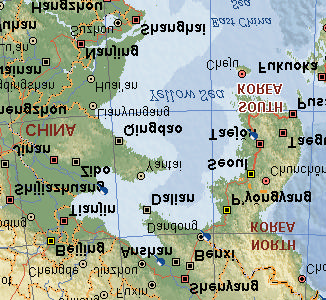
Annex IX
MAP of YELLOW SEA REGION
89