
GEF
UNDP/GEF PROJECT ENTITLED "REDUCING ENVIRONMENTAL STRESS IN THE
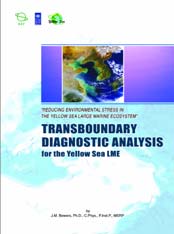
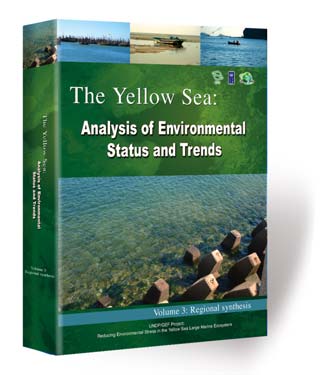
YELLOW SEA LARGE MARINE ECOSYSTEM"
UNDP/GEF/YS/RSP.4/4
Date: 2 November 2007
English only
Fourth Meeting of the Regional Scientific and Technical Panel
for the UNDP/GEF Yellow Sea Project
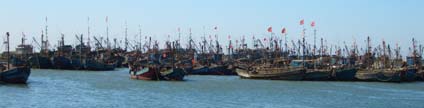
Guangzhou, China, 26-28 November 2007
and
Fourth Meeting of the Project Steering Committee
for the UNDP/GEF Yellow Sea Project
Guangzhou, China, 29-30 November 2007
PROJECT MANAGER'S REPORT ON
2007 PROJECT IMPLEMENTATION
TABLE OF CONTENTS
1
INTRODUCTION....................................................................................................................................... 1
2
MAJOR ACHIEVEMENTS SINCE THE LAST MEETING ................................................................ 1
2.1
FINALISATION AND PUBLICATION OF THE TRANSBOUNDARY DIAGNOSTIC ANALYSIS ......................... 2
2.2
DISCUSSION AND AGREEMENT ON REGIONAL TARGETS AND MANAGEMENT ACTIONS FOR THE
STRATEGIC ACTION PROGRAMME ...................................................................................................................... 2
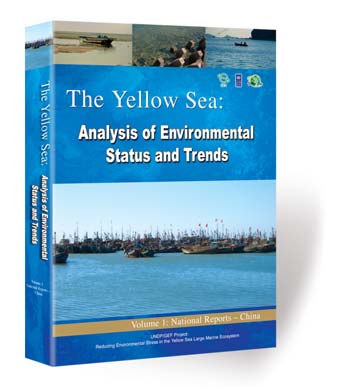
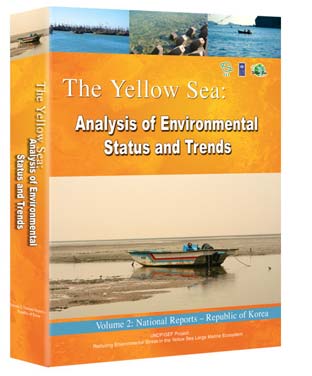
2.3
REGIONAL CO-OPERATION IN DATA INFORMATION SHARING OCEAN COLOUR................................. 3
2.4
PUBLIC AWARENESS AND PARTICIPATION THROUGH EFFECTIVE CO-OPERATION IN THE YELLOW SEA
PARTNERSHIP ..................................................................................................................................................... 5
2.5
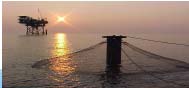
DISCUSSION ON THE PROJECT'S SECOND PHASE - IMPLEMENTING THE STRATEGIC ACTION
PROGRAMME ...................................................................................................................................................... 5
3
PROJECT IMPLEMENTATION ............................................................................................................. 6
3.1
PUBLICATION OF DATA REPORTS, REGIONAL SYNTHESES AND GOVERNANCE ANALYSES .................. 6
3.2
FOURTH ROUND OF RWG MEETINGS................................................................................................... 6
3.3
FISHERIES COMPONENT........................................................................................................................ 7
3.3.1
Report on stock assessment methodology ....................................................................................... 7
3.3.2
Sustainable mariculture symposium ............................................................................................... 7
3.3.3
Determination of carrying capacity for mariculture ...................................................................... 8
3.3.4
Diagnosis and prevention of mariculture disease........................................................................... 9
3.4
BIODIVERSITY COMPONENT ............................................................................................................... 10
3.4.1
Gene pool...................................................................................................................................... 10
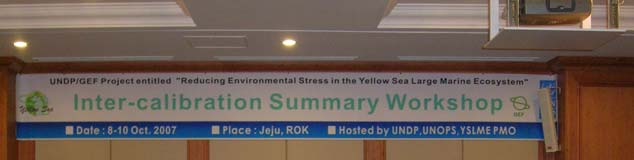
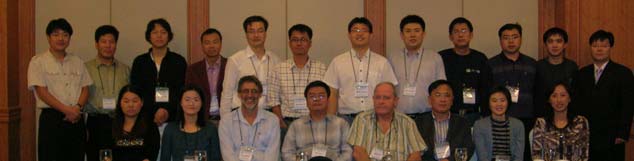
3.5
ECOSYSTEM COMPONENT .................................................................................................................. 11
3.5.1
Ocean colour algorithm development........................................................................................... 11
3.5.2
Primary productivity estimation ................................................................................................... 11
3.5.3
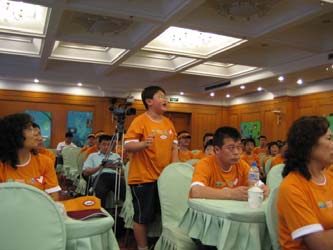
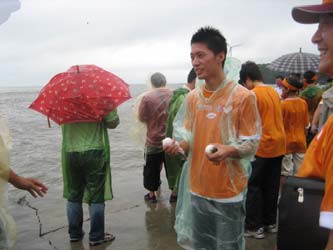
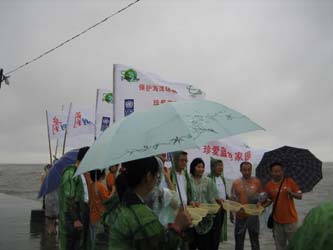
CPR survey ................................................................................................................................... 12
3.6
POLLUTION COMPONENT.................................................................................................................... 13
3.6.1
Data quality assurance - Inter-calibration exercises (nutrients, metals, organics)...................... 13
3.6.2
Inter-calibration summary workshop............................................................................................ 14
3.7
INVESTMENT COMPONENT ................................................................................................................. 15
3.7.1
Yellow Sea Partnership, including YSP Session at EAS Congress ............................................... 15
3.7.2
Youth Programme......................................................................................................................... 16
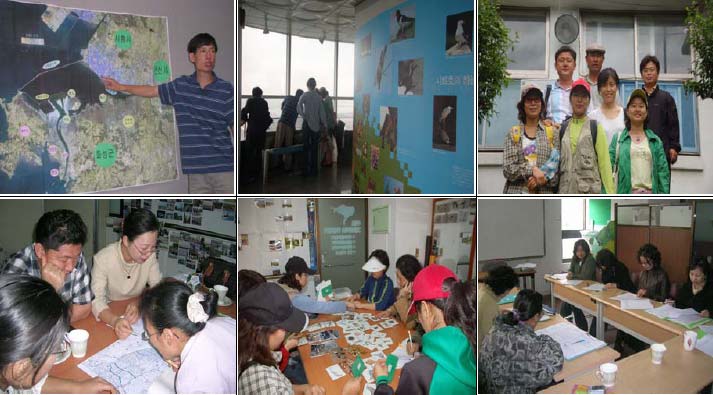
3.7.3
Involvement of local government .................................................................................................. 17
3.7.4
Involvement of parliamentary organisations ................................................................................ 17
3.7.5
Voluntary Internship Programme ................................................................................................. 17
3.7.6
Internship Programme.................................................................................................................. 18
3.7.7
Small Grants Programme ............................................................................................................. 18
3.7.8
Data and information management .............................................................................................. 20
3.7.9
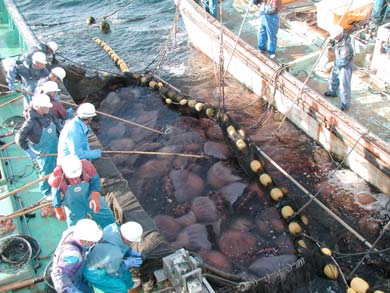
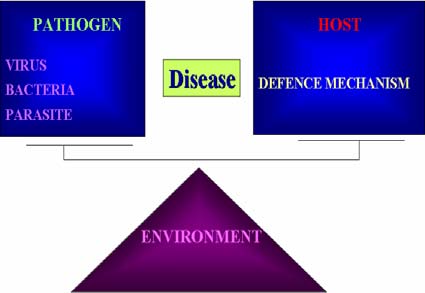
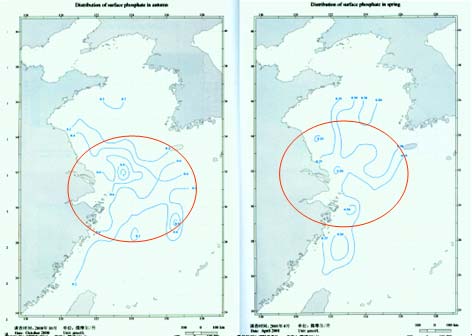
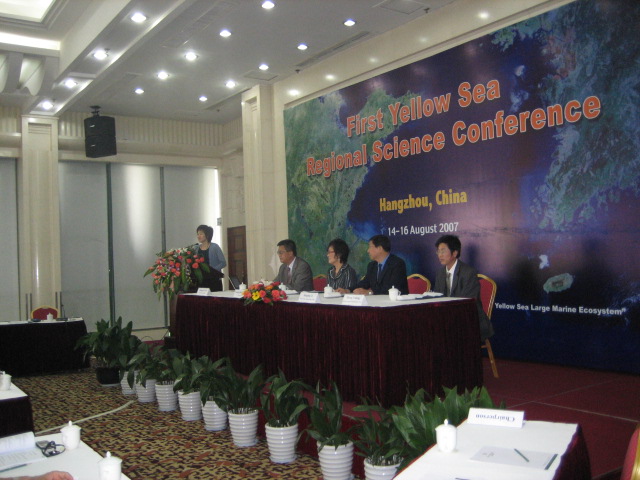
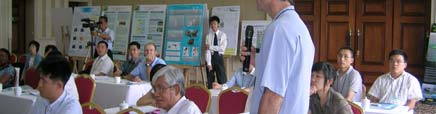
Guidelines for cost-benefit analysis of management actions ........................................................ 20
3.7.10
Regional governance analysis.................................................................................................. 21
3.7.11
National co-ordination and implementation ............................................................................ 21
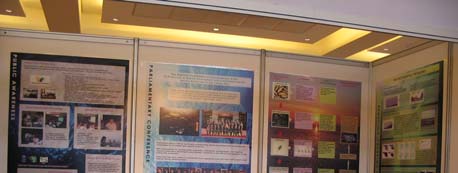
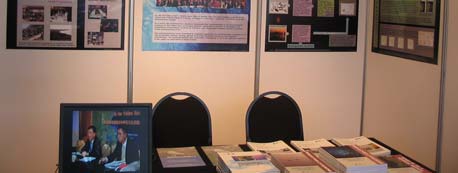
3.7.12
Report Writing Workshop for Environmental Practitioners .................................................... 21
3.8
CROSS COMPONENT ISSUES................................................................................................................ 22
3.8.1
First Regional Science Conference............................................................................................... 22
3.8.2
Exhibition of "Parliamentary Conference 2006" during the GEF IWC-4 ................................... 24
3.9
CO-OPERATIVE CRUISES..................................................................................................................... 25
3.10
MID-TERM EVALUATION ................................................................................................................... 25
3.11
INTERNAL AUDITING.......................................................................................................................... 26
4
INVOLVEMENT OF DPR KOREA IN THE PROJECT..................................................................... 27
5
FINANCIAL REPORT ............................................................................................................................ 27
6
REPORT ON THE PROJECT MANAGEMENT OFFICE ................................................................. 28
6.1
OFFICE & FACILITIES ......................................................................................................................... 28
6.2
STAFF RECRUITMENT AND INTERN PROGRAMME ............................................................................... 28
6.3
PROJECT WEBSITE, PARTNERSHIP WEBSITE, E-DISCUSSION GROUP AND NEWSLETTER .................... 28
6.4
OPERATION OF THE OFFICE ................................................................................................................ 30
7
CO-OPERATION WITH OTHER ORGANISATIONS AND PROJECTS........................................ 31
7.1
EXCHANGE OF MEMORANDUM ON CO-OPERATION ............................................................................ 31
7.2
CO-OPERATION WITH NOWPAP IN MARINE LITTER ISSUES .............................................................. 31
7.3
SYNERGY WITH WWF ON SELECTION OF DEMONSTRATION PROJECTS AND SMALL GRANTS ............ 32
7.4
PROPOSED WETLAND MEETING WITH OTHER UNDP/GEF FUNDED PROJECTS ................................. 32
8
CHALLENGES TO PROJECT IMPLEMENTATION........................................................................ 33
9
RECOMMENDATIONS FOR FUTURE IMPLEMENTATION ........................................................ 34
ANNEXES
Annex I
List of Meetings and Workshop-Related Activities Convened by the Project in
2007
Annex II
Expenditure Report for 2007
Annex III
PMO's Inventory List
Annex IV
List of Acronyms
UNDP/GEF/YS/RSP.4/4
Page 1
1 INTRODUCTION
1.
The Implementation of the UNDP/GEF Project on "Reducing Environmental Stress in
the Yellow Sea Large Marine Ecosystem (YSLME)" since the last Regional Scientific
and Technical Panel (RSTP) and the Project Steering Committee (PSC) has been
smooth and successful, according to the workplan approved by the PSC at its Third
Meeting (Jeju Island, Republic of Korea, 20-22 November 2006).
2.
The Transboundary Diagnostic Analysis (TDA) (Fig. 1)
has been finalised and published as a major project
outcome, which provided updated scientific and social
economic information of the Yellow Sea ecosystem.
The preparation of the Strategic Action Programme
(SAP) has been initiated, and the regional targets for
the management actions have been identified through
the SAP Ad-hoc Working Group and the Regional
Working Groups. Management actions have also
been identified, including the technical, institutional
and legislative actions. Through the Yellow Sea Figure 1. The cover of the TDA.
Partnership (YSP) framework and implementation of
the public awareness and communication strategy, co-
operation and co-ordination with other organisations and projects show encouraging
progress with substantive financial support generated during the inter-sessional
period. With identification of the regional targets and management actions, the
preparation of the National Strategic Action Plans (NSAP) have also been initiated.
3.
The achievements of the project have been recognised by a wide range of
stakeholders and other organisations and projects during the Fourth GEF
International Water Conference and the Second Global Large Marine Ecosystem
Conference. With the successful implementation and recognition of the major
achievements, it was recommended that a Yellow Sea Commission should be
established with the major task to implement the SAP, which requires financial
support from GEF for the project's second phase. After 5 years initials
implementation, the Commission would be self-sustainable with financial support
from the participating countries.
4.
Involvement of Democratic People's Republic of Korea (DPRK) is still under
negotiation. Following receipt of official endorsement from DPRK, the formal
involvement of DPRK depends on the formal acceptance of the current participating
countries, and the recommencement of UNDP operations there. Some activities
have been discussed and planned using funding from other sources.
2
MAJOR ACHIEVEMENTS SINCE THE LAST MEETING
5.
As with previous years, there were many outputs and outcomes produced by the
project in 2007, ranging from technical activities to capacity building and regional
collaboration. The major achievements realised by the project are described in the
following sections, and a list of meetings, activities, and events convened under the
auspices of the project in 2007 is attached as Annex 1.


UNDP/GEF/YS/RSP.4/4
Page 2
2.1
Finalisation and Publication of the Transboundary Diagnostic Analysis
6.
Following the discussion and approval from the last RSTP and PSC meetings, the
TDA has been finalised and published. The TDA collected relevant data and
information about the Yellow Sea which contributed to:
(i)
Identification of the regional environmental problems in the Yellow Sea with
agreed regional formats and expected contributions from the participating
countries;
(ii)
Identification of the priority environmental problems using regionally agreed
criteria and processes;
(iii)
Analysis of the transboundary nature of the environmental problems following
the internationally accepted guidelines and processes;
(iv)
Identification of causes of the environmental problems with carefully designed
and implemented procedures; and
(v)
Suggestions for potential management actions to address the root causes of
the environment problems.
7.
The TDA was distributed widely to all stakeholders and other international and
regional projects, and received compliments from the readers. The TDA provided
the scientific basis for preparing the SAP.
2.2
Discussion and Agreement on Regional Targets and Management
Actions for the Strategic Action Programme
8.
The Project organised three preparatory
meetings in 2007 for SAP development:
Consultation Meeting and two Ad-hoc
Working Group Meetings. The
Consultation Meeting prepared the
"Conceptual Procedure" which
describes the objective and central
theme of the Project's SAP, the
procedure and mechanism of preparing
the SAP, and the timelines and
responsible parties to prepare the SAP.
The First and Second Ad-hoc Working
Group Meetings identified "Regional
Targets" (Fig. 2) (also known as Figure 2. Reduction of fishing boats in China by
Ecosystem Quality Objectives) and 30% is one of the regional targets the SAP will
"Management Actions," respectively.
address.
By definition, the Regional Targets are
"the ecological state that is aimed for by the year 2020" (Document
UNDP/GEF/YS/AWG.2/2, Annex 2), while the Management Actions aim to achieve
those targets.
9.
A draft structure of the SAP which includes discussions of the Regional Targets and
Management Actions was presented to the First Ad-hoc Meeting. The Second Ad-
hoc Meeting prepared guidelines for demonstration activities and for two components
of feasibility studies (i.e. cost-benefit analysis [CBA], political and social acceptance
analysis [PSA]). The second Meeting also established an SAP drafting group
UNDP/GEF/YS/RSP.4/4
Page 3
consisting of five members: three natural scientists, one social scientist, and the
Project Manager.
10.
A Call for Proposals for demonstration activities will be advertised in early 2008. An
external review panel will evaluate proposals and decide which ones to fund. The
implementation of selected proposed demonstration activities is expected to start in
September 2008 and end in December 2009.
11.
The RWG meetings organised after the above three preparatory meetings, reviewed
and finalised both the Regional Targets and Management Actions. The RWG
meetings of natural science components assessed technical feasibility of the
proposed Actions, while the RWG-I Component prepared implementation plans of
the CBA and PSA. The RWG-I also prepared guidelines for preparing NSAPs and
for conducting CBA of Management Actions.
12.
In summary, the Project produced the following outputs in 2007 to develop SAP and
NSAPs:
· Conceptual
Procedure
finalised;
· Regional Targets identified;
· Management Actions identified;
· SAP Structure drafted;
· Guidelines for demonstration activities prepared;
· SAP Drafting Group established;
· Call for Proposals for Demonstration Activities prepared;
· Technical Feasibility Study of Proposed Management Actions conducted;
· Implementation Plans of the CBA and PSA prepared;
· Guidelines for NSAPs development prepared; and
· Guidelines for CBA prepared.
13.
Meetings of the SAP Drafting Group are scheduled three times in 2008 (January,
March, and May 2008). Special RSTP and PSC Meetings will be convened in April
2008 to review the final draft of the SAP. The Yellow Sea Project aims to obtain an
endorsement of the SAP in the second half of the year 2008 from the governments of
China and ROK.
2.3
Regional Co-operation in Data Information Sharing Ocean Colour
14.
The RWG-E has been implementing an activity on developing/refining a regional
ocean colour algorithm for the Yellow Sea. This activity was initiated because such
an algorithm was needed in the region that can be used for better assessment and
future monitoring of primary productivity in the Yellow Sea.
15.
The activity has been contracted to Tohoku University to co-ordinate relevant
activities in the region. Thus far, 2 of 3 planned workshops have been convened to
advance the activity. The "First YSLME Ocean Color Workshop" (YOC-1) was held
on 4th June 2007 in Ansan, ROK. Scientists from China, ROK, and Japan gathered
to examine available data to formulate or refine ocean colour algorithms for Yellow
Sea turbid waters. Participants gave presentations showing the available data,
existing OC algorithms, current problems, and future directions. A working strategy
was developed, where the currently scattered in-situ data sets would be merged and
stored in a data server hosted by the PMO. These data are available for the
scientists to download for validation of in-situ algorithm.
UNDP/GEF/YS/RSP.4/4
Page 4
16.
The YSLME PMO established an in-situ data sever which will be used exclusively by
the Ocean Colour group members.
17.
Considering the characteristics of OC remote sensing and reliability of the in-situ
parameters taken together with in-situ optical measurements, the OC algorithms for
retrieval of chl-a, TSS, and CDOM was examined first. At a later stage of the activity,
the OC atmospheric correction algorithm would be considered. After the first
workshop, the contractor produced a map showing all the contributed data as shown
in Figure 3, which covers a wide area of the Yellow Sea, as well as parts of the East
China Sea.
18.
The "Second YSLME Ocean
Color Workshop" (YOC-II) was
held from 1st to 2nd September
2007 at Nagasaki University,
Japan. Following the YOC-I
Workshop, scientists from
China, Republic of Korea, and
Japan gathered to examine
the progress of data analysis,
working towards the validation
and refinement of a regional
ocean colour algorithm for
Yellow Sea turbid waters. The
YSLME Project presented the
common dataset where bio-
optical data contributed by the
scientists are stored in one
common data server and
accessible by all members of Figure 3. Location of data points contributed by OC activity
the YOC group. The database members.
was reviewed and additional
variables were agreed to be added (coloured dissolved organic matter at different
wavelengths, temperature and salinity). It was also discovered that some data were
inconsistent for the same variables due to differences in sampling/analytical
methods. Finally, scientists were tasked to contribute more data for the previously
agreed variables.
19.
Regional collaborative efforts in ocean colour algorithm development are gradually
expanding. In addition to the "core members" of this activity, there has been some
progress to examine how to include other regional experts into this activity. The final
workshop will include participation by other ocean colour scientists in the region, and
the workshop will spend some time to investigate how other OC projects can be
incorporated to improve the regional algorithm.
20.
This activity not only contributes to the development of regional co-operation in
developing regional algorithm, but also shows the co-operative spirit of the
participating countries in data and information sharing to achieve a common goal.
The agreement from the second workshop to share additional data shows that this
kind of regional co-operation will ultimately produce a product that can be used by
scientists working in the same field, and also scientists working in related issues (see
also Section 3 for Ecosystem Component's implementation).
UNDP/GEF/YS/RSP.4/4
Page 5
2.4
Public Awareness and Participation Through Effective Co-operation in
the Yellow Sea Partnership
21.
The Project implemented a number of public awareness activities in 2007, according
to the "Public Awareness and Communication Strategy" that was discussed and
agreed by the First YSP Workshop (Beijing, China, 15-16 March 2006). Targeting a
wide range of stakeholders from decision-makers to school children, the activities
included organising a conference and a training workshop; providing lectures, hands-
on activities, and site visit opportunities; and granting small-scale financial
assistance. Specifically, the following activities were conducted to raise the
awareness of environmental issues in the Yellow Sea
·
Yellow Sea Partnership, including YSP Session at EAS Congress;
· Youth
Programme;
·
Local Government Training;
·
Regional Conference (Follow-up Meeting of Parliamentary
Conference);
·
Voluntary Internship Programme;
·
Full-time Internship Programme; and
·
Small Grants Programme.
22.
For more information about each activity, see Section 3.5 in this report. The
activities, co-ordinated under the YSP, are expected both to invite more stakeholder
participation in the Project and to strengthen the understanding and capacity of
various sectors of society to initiate marine conservation efforts. Co-operation
through the YSP would enable the Project to reach out to stakeholders effectively
and efficiently so as to secure their support for future Project implementation. A
broad and strong support obtained through the YSP's public awareness activities will
help in endorsing the SAP.
2.5
Discussion on the Project's Second Phase - Implementing the Strategic
Action Programme
23.
During the Fourth GEF International Waters Conference, a meeting was organised
with relevant officers from the GEF Secretariat, UNDP/GEF Unit and UNDP/GEF
Regional Co-ordinating Office to report on YSLME's progress and explore the
possibility for a second phase to implement the YSLME SAP. The following
elements were reported:
(i)
TDA has been finalised with several new findings in the Yellow Sea. The
causal chain analysis identified major problems and causes of the problems.
The major problems are within the GEF's new priority areas, such as
enrichment of nutrients, biodiversity conservation, etc.
(ii) The
SAP
Ad-hoc Working Group identified tangible management targets for
SAP, with some management actions falling within national plans and
policies, e.g. reduction of 30% of fishing boats, and reduction of 10% nutrient
discharge every 5 years in China; and no new reclamation projects in
Republic of Korea will be approved. Most of these tangible targets are
approved by the governments, with clearly defined actions and budgets.
(iii)
The necessity of GEF involvement in the implementation of YSLME SAP, the
second phase of the project, and associated co-financing from the
participating governments.
UNDP/GEF/YS/RSP.4/4
Page 6
(iv)
Proposed mechanism for implementation of SAP, e.g. establishment of a
YSLME Commission, which would be a non-legal binding mechanism.
24.
GEF Secretariat and UNDP/GEF expressed their satisfaction with the implementation
of the project so far. Discussion was held on how to finance the second phase of the
YSLME project. As the GEF4 funding will terminate at the end of 2009, and GEF5
funding will start in 2010, the timeframe for Phase 2 implementation matches
perfectly with GEF's funding cycle. There was a positive response that during the
GEF5 funding, GEF will support the 2nd phase of the YSLME project, i.e.
implementation of the SAP.
3 PROJECT
IMPLEMENTATION
3.1
Publication of Data Reports, Regional Syntheses and Governance
Analyses
25.
The national data and information collection, regional data syntheses, and national
governance analyses reports were finalised in 2006. Editors were hired to edit these
reports, and the PMO prepared them for printing. The data and syntheses reports
were published in 3 separate volumes: 1) Vol. 1 - China National Report; 2) Vol. 2 -
Republic of Korea National Report; 3) Vol. 3 - Regional Syntheses (Fig. 4). The
governance analyses will be published as Volume 4 once the Regional Governance
Analysis is finalised.
Figure 4. Draft of data reports and regional syntheses book covers.
3.2
Fourth Round of RWG Meetings
26.
The fourth round of RWG meetings was held during September to November 2007.
In all meetings, the members reviewed and finalised the SAP regional targets and
management actions. Technical feasibility studies were carried out by the natural
science components, while RWG-I considered how to carry out cost-benefit analysis
of management actions, and political and social acceptance analyses of the SAP
itself. The RWGs also suggested some demonstration activities to implement to test
the effectiveness and benefits of the management actions. The details of each
RWG meeting and respective component's activities during the year will be reported
UNDP/GEF/YS/RSP.4/4
Page 7
by the Chairpersons of each group. These documents are also available as Working
Document UNDP/GEF/YS/RSP.4/6a-e.
3.3 Fisheries
Component
3.3.1 Report on stock assessment methodology
27.
Following comments from the 3rd RWG-F Meeting, the report on stock assessment
methodology was modified as agreed, and finalized. The report includes: i) A
comprehensive report on current methods of assessing fisheries stocks; ii) A list of
the sources of data and information collected throughout the report; iii) A list of major
issues and priorities that need to be addressed in the Yellow Sea region; and iv)
Recommendations for stock assessment in the Yellow Sea Large Marine
Ecosystem.
28.
The report highlights the major problems in Yellow Sea stock assessment, which
are:
a. The lack of agreed methods such as those used by ICES;
b. The availability of data at a regional level is limited, including insufficient
fisheries data and survey data;
c. The different coverage, targeted species, methods and gear used in surveys
result in incomparable results preventing effective stock assessment; and
d. The different standards in catch statistics.
29.
The report recommends a number of steps for overcoming these problems:
First step is to establish several scientific working groups (WG), such as
Fisheries data WG, responsible for: collection of fisheries data; data
standardization, etc.
Survey methods WG, responsible for: comparison of survey methods used
by the different countries; calibration to ensure consistent survey methods
are used to estimate the biomass of stocks; development of better
observation tools and survey strategies.
Fisheries biology WG responsible for; collection of fisheries biology data;
data standardization; biological characteristics of major species, e.g.
growth, mortality, migration and distribution, spawning, feeding, wintering,
etc.
Stock assessment WG responsible for: selecting adequate mathematical
models for the fish stocks in the Yellow Sea ecosystem; prediction of stock
size of commercially important species; providing sound estimates of
allowable biological catch (ABC) and total allowable catch (TAC) for
fisheries management.
Second step is to establish a mechanism to exchange survey data and fisheries
data.
Third step is to establish a joint survey mechanism based on analysis all the
historical individual surveys performed by countries from the working groups.
3.3.2 Sustainable mariculture symposium
30.
The Sustainable Mariculture Symposium/Workshop was hosted by the West Sea
Mariculture Research Center, Taean, Republic of Korea on 18-19th June 2007.
31.
During the symposium, scientists, mariculture farmers and policy makers listened to
talks during two sessions:
UNDP/GEF/YS/RSP.4/4
Page 8
· "Aquaculture technologies for
reducing environmental stress"
covering polyculture experiences
in ROK and China, fish culture
seawater recirculation systems
and open sea/deep sea cage Figure 5. Off-shore mariculture, presented by Dr.
culture (Fig. 5).
Lee Jung Uie at the symposium.
· "Best management practices for
aquaculture" covering
heterotrophic pond culture of shrimp, artificial food chain construction in pond
culture, sustainable cage culture and advances in shellfish culture.
32.
During the workshop, experts gave short presentations followed by extensive
discussions on the major obstacles to increase sustainability in mariculture in the
Yellow Sea. Previously mentioned topics were revisited, and in addition, further
presentations on best management practices for feeds and feeding and how
mariculture scientists can contribute to the preparation of the SAP for were given.
Experts discussed the challenges faced by the industry and how these problems had
been addressed on both sides of the Yellow Sea. The outcomes of the discussion
are all available online as the workshop report.
3.3.3 Determination of carrying capacity for mariculture
33.
A workshop was held in Rongcheng City hosted by the Yellow Seas Fisheries
Research Institute with the aim of exchanging modelling methodologies of carrying
capacity estimation, and suggesting regional activities to determine the carrying
capacity for mariculture.
34.
Mariculture scientists from China and ROK defined "Carrying Capacity" as the
maximum productivity and maximum economic benefit. This method balances the
nutrient budgets and primary productivity to set appropriate densities and diversity of
culture species. The framework and methods presented at the workshop will be a
useful management tool for the planning of mariculture and could be employed as a
demonstration activity of the Project's SAP management actions.
35.
The workshop reviewed progress on development of carrying capacity models for
mariculture (Fig. 6). To facilitate understanding, simple carrying capacity models on
single trophic level culture such as bivalve mariculture, macro-algae mariculture, and
finfish mariculture were presented and the parameters and reliability explained.
Multi-species carrying capacity models were also presented. Detailed discussions
followed, comparing the models used and parameters required, resulting in a good
exchange of ideas and suggestions for improvement.
UNDP/GEF/YS/RSP.4/4
Page 9
Figure 6. Conceptual diagram of the mariculture carrying capacity model from Sungo Bay, Shandong
Province (from Nunes et al, 2003).
36.
The workshop report outlines the various methodologies available for modelling
carrying capacity and presents a model that may be useful in the estimation of
carrying capacity for embayments around the Yellow Sea. It is a major step forward
in assisting in reducing the environmental impact of mariculture.
3.3.4 Diagnosis and prevention of mariculture disease
37.
The aim of the activity was to facilitate the exchange of information on the
developments in mariculture disease diagnosis, prevention and control. A workshop
was held in Jeju and hosted by Jeju National University on 16 - 17 October 2007.
38.
Experts reported on the development of new methods for rapid diagnosis of
mariculture disease and the identification of emerging diseases. Novel methods for
the prevention and control of fish and shellfish disease were also reported including
some promising work on the use of bacteriophages, selection of genetically disease
resistant strains of culture organisms and probiotics.
39.
Important discussions followed on the need for a regional early warning mechanism
to prevent the outbreak of new diseases. Members agreed that the current system,
where occurrence of notifiable diseases is reported four times a year to the Network
of Aquaculture Centres in Asia-Pacific (NACA), was probably effective in preventing
disease outbreaks. However, the list of notifiable diseases was thought to be too
limited and may not include regionally important diseases and the reporting
mechanism may be too slow. The participants agreed that a yearly regional disease
workshop was needed to discuss developments in the identification, prevention and
control of emerging diseases.
UNDP/GEF/YS/RSP.4/4
Page 10
3.4 Biodiversity
Component
3.4.1 Gene pool
40.
A workshop, in which twelve experts gave presentations on genetic diversity in the
Yellow Sea, was held in Busan, Republic of Korea on 14-15th May 2007, hosted by
the Project.
41.
The various techniques used in genetic analysis were reviewed and the
development of micro-satellite markers and DNA chip technology were highlighted
as promising. Other topics included genetic diversity in microbes, differences in
diversity between hatchery-raised and wild stocks of fish, shrimp and gastropods.
This is particularly important as the greater the genetic diversity, the greater the
evolutionary potential which may be especially important given the impacts from both
climate change and pollution, and the greater the resistance to diseases. Moreover,
the loss of locally adapted ecotypes can impact on the productivity of the system.
Selective breeding can reduce genetic diversity as a result of genetic bottlenecks,
this not only impacts on the fitness of cultured stocks, but also genetically similar
escapees from culture facilities and restocking programs can impact on the diversity
in wild populations through interbreeding.
42.
The use of DNA barcoding and chip technology to separate morphologically similar
species eg. skate species in the Yellow Sea where different species command
different prices even though looking remarkably similar, was reported. Other
important papers described the use of mitochondrial DNA for the separation of
stocks. Fisheries management requires knowledge of the area used by each stock
of commercial species in order to set exploitation levels that are sustainable.
43.
One of the major problems facing cultured animals is the spread of disease; the
identification of genes controlling disease response in scallops is a step towards the
development of disease resistant stocks and prevention of the annual losses that
occur currently (Fig. 7). Other researchers used Amphioxus, a possible ancestor of
all chordates with a genome uncomplicated by extensive genetic duplication, in the
study of the genetic control of development and disease response.
100
50
0
5
87
89
2
4
96
198
1986
19
1988
19
1990
1
991
199
1993
199
1995
19
1997
1
998
1999
2
000
Figure 7. Reduction in scallop production (105 tonnes) in China in 1998 caused by disease (presented
by Song Lincheng at the Gene Pool Workshop).
UNDP/GEF/YS/RSP.4/4
Page 11
44.
The threats to genetic biodiversity and the conservation measures necessary to
preserve genetic diversity in the Yellow Sea were discussed during the final day.
The main threats that specifically affect genetic diversity come from aquaculture
escapees and restocking practices, where selective breeding and limited brood stock
numbers result in reduced genetic diversity that is then passed onto the wild
population. Other threats that also affect biodiversity generally (species, habitat and
genetic diversity) come from pollution, over-harvesting and fishing, introduction of
non-indigenous species and loss of habitat from reclamation and destructive fishing
practices. Thus, for management, species and genetic diversity can be considered
together as the threats and conservation measures required to preserve diversity are
the same, with the exception of the threat from aquaculture.
45.
As the study of genetic diversity is relatively new and development of micro-satellite
markers is expensive, there is insufficient data to measure changes in genetic
diversity in wild stocks in the Yellow Sea, with the possible exception of the fleshy
shrimp. Lastly, the participants agreed that the study of genetic diversity could be
aided by the compilation of a list of links to genetic data bases around the Yellow
Sea that were not included in the more common genetic databases such as that
hosted by the IUCN. The PMO is compiling a list of websites sent in by participants
and will construct a webpage that will be distributed to the participants' institutions.
This will also be available on the project website.
3.5 Ecosystem
Component
3.5.1 Ocean colour algorithm development
46.
As already mentioned in Section 2.3, this activity was initiated in 2007, with 2
workshops already convened in ROK and Japan to first examine the available data,
then to start improving on existing algorithms, or developing a new regional one.
Validation of some algorithms was discussed. At the time of preparing this report,
activity members had agreed to contribute more data so that the validation of
algorithms could be more robust.
47.
A third and final workshop will be held in January 2008, where the final product will
be delivered. Additional participant(s) from China who are also working in ocean
colour, but who are not part of the core members, are planning to attend, to examine
how this activity might expand its collaboration to include other relevant scientists
and research groups. This is yet another example of the success of this activity both
in the technical context, as well as for regional co-operation.
3.5.2 Primary productivity estimation
48.
This activity has just gotten underway, and aims to provide basin-scale estimation of
primary production as a potential baseline figure, and develop a regional algorithm
for long-term monitoring. The results will useful for higher trophic level productivity
estimation and also identify areas that management could target to maintain
acceptable productivity levels. An FRRF is being manufactured, and will be used for
in-situ measurements in 2008. The proposed outputs of the activity include monthly
and annual primary productivity maps and inter-annual variability of primary
productivity in the Yellow Sea.
UNDP/GEF/YS/RSP.4/4
Page 12
3.5.3 CPR
survey
49.
A plankton survey was carried out by FIO in April 2006, using the CPR, with a final
report showing data on temperature, salinity, DO, pH, fluorescence, and
phytoplankton & zooplankton abundance. The fronts for some oceanographic
variables was observed. The results of this activity were reported at the 4th RWG-E
Meeting where members agree that further surveys were needed, and perhaps can
be carried out during the co-operative cruise. Some results from the survey are
shown in Figures 8-10, which were borrowed from the activity report.
123.6
123.7
123.8
123.6
123.7
123.8
0
Figure 8. Temperature (), salinity (psu), DO
-20
(mg/L), pH, and Chlorophyll-a concentration (g/L)
in Transect 1 of the Nv-shuttle cruise in the central
-40
8 ~ 8.5
8.5 ~ 9
33 ~ 33.2
southern Yellow Sea in 2007.
9 ~ 9.5
33.2 ~ 33.4
9.5 ~ 10
33.4 ~ 33.6
-60
10 ~ 10.5
33.6 ~ 33.8
10.5 ~ 11
Temperature
33.8 ~ 34
Salinity
0
-20
-40
7.75 ~ 7.85
5.92 ~ 6.5
7.85 ~ 7.95
6.5 ~ 7
7.95 ~ 8.05
7 ~ 7.5
8.05 ~ 8.15
-60
7.5 ~ 8
8.15 ~ 8.25
8 ~ 8.4
DO
8.25 ~ 8.35
pH
123.6
123.7
123.8
0
-20
-40
1 ~ 4
4 ~ 7
7 ~ 10
10 ~ 15
-60
15 ~ 25
25 ~ 40
Chlorophyll
Figure 9. Phytoplankton abundance in the seven
stations during the Nv-shuttle cruise in the central
southern Yellow Sea in Spring.
UNDP/GEF/YS/RSP.4/4
Page 13
Calanus sinicus
Paracalanus parvus
140
)
100
)
Figure 10. Abundance of dominant zooplankton
3 m
3
120
m
80
100
species at the sampling stations during the Nv-
(ind/
80
(ind/
60
60
nce
nce
40
shuttle survey in the central southern Yellow Sea
40
unda
20
20
unda
in spring, 2007.
Ab
Ab
0
0
T11
T13
T21
T23
T31
T11
T13
T21
T23
T31
Oithona similis
Parathemisto gaudichaudi
300
)
8
)
3
3
250
d/m
d/m 6
200
(in 150
(in 4
100
dance
dance 2
50
Abun
Abun
0
0
T11
T13
T21
T23
T31
T11
T13
T21
T23
T31
Sagitta crassa
Oikopleura dioica
8
)
100
)
3
3
80
6
d/m
nd/m
60
4
e (in
ce (i
40
2
danc
ndan
20
Abu
Abun
0
0
T11
T13
T21
T23
T31
T11
T13
T21
T23
T31
Salpa fusiformis
Euphausia pacifica
12
)
) 500
Adult
3
3
Furcilia
10
d/m
400
d/m
Calyptopis
8
Nauplius
(in
300
(in
6
Egg
200
4
dance
dance
2
100
Abun
Abun
0
0
T11
T13
T21
T23
T31
T11
T13
T21
T23
T31
3.6 Pollution
Component
3.6.1 Data quality assurance - Inter-calibration exercises (nutrients,
metals, organics)
50.
The second round for "Nutrients in Seawater Inter-calibration" activity was completed.
The same four labs from China and three labs from ROK that participated in Round 1,
continued with the activity by analyzing nutrient concentration of certified reference
materials (ammonia, filterable reactive phosphorus, nitrate, nitrite, silicates) obtained
from a lab in Australia contracted to implement the activity. The Queensland Health
Scientific Services, Australia, co-ordinated the activity on behalf of the Yellow Sea
Project, by supplying the reference materials to each lab, collecting and analysing the
results, and preparing the final reports containing the summary results and
recommendations for future improvement. Similar to Round 1 carried out in 2006,
the results from Round 2 also were very good, with a high acceptance rate of the
results, with nearly all labs meeting the acceptable level for all nutrients.
51.
Inter-calibration exercises for metals and organic compounds in sediment and biota
started in 2007 with participation by 4 labs in China for both metals and organics
analyses, 4 labs from ROK for each metals and organics analyses. The IAEA-MEL
co-ordinated the activity, by supplying the reference materials to each lab, and
collecting and analysing the results. Full results of these exercises will be available in
December 2007. However, preliminary data submitted from a few labs showed that
the results are very good, with most labs achieving the acceptance levels.
52.
Although the results were good, participating labs still had some minor problems, and
would like to improve their capacity in these chemical analyses (Fig. 11). Further
inter-calibration activities are planned for 2008.
UNDP/GEF/YS/RSP.4/4
Page 14
Figure 11. Results showed the necessity for further inter-calibration exercises. Results for analysis of TN (left), TP, (middle)
and silicate (right).
3.6.2 Inter-calibration summary workshop
53.
An inter-calibration summary workshop was held from 8-10 October 2007 in Jeju
(Fig, 12). The objectives of the workshop were to:
· Review and summarise the two nutrient inter-calibration exercises organised
by YSLME and QHSS.
· Review results-to-date for metals & organics inter-calibration exercise.
· Assess the degree of comparability of the results obtained by the participating
labs.
· Exchange experiences on and lessons learned from problems related to
analytical chemistry, and to apply lessons learned to future work.
54.
Participants presented their results, SOPs, QA/QC methods, problems encountered,
and exchanged ideas on improving analytical skills, such as methods for validating
data, precision data, repeatability, reproducibility, bias, and uncertainty. The co-
ordinators for the exercises participated in the workshop to make recommendations
to participants on improving analytical skills, and obtain information from participants
on technical and capacity gaps in their laboratories.
55.
Participants requested the PMO to consider hosting another summary workshop in
late 2008/early 2009 to review results of the next rounds of the exercise.

UNDP/GEF/YS/RSP.4/4
Page 15
Figure 12. Participants of Inter-calibration Summary Workshop.
3.7 Investment
Component
3.7.1 Yellow Sea Partnership, including YSP Session at EAS Congress
56.
One of the highlights of the YSP activities was the "Yellow Sea Partnership for
Enhanced Public Awareness and Participation" session which was organised in the
East Asian Sea Congress, Haikou, China, 12-16 December 2006. This event
focused on how public awareness and participation activities undertaken through the
joint efforts of partners can reach out to a wider stakeholdership. The session shared
experiences of the various partner's public awareness activities, and also how to
improve the function of the partnership for the benefit of the entire Yellow Sea region.
57.
Another highlight was the second YSP Workshop, hosted by NOWPAP that was
organised in Busan, ROK, 1st October 2007. The meeting reviewed the completed
and on-going co-operative activities, discussed co-operative activities from 2007 and
onwards, and discussed the management mechanism of the YSP. The Project
assisted NOWPAP in organising this annual meeting by providing ideas on meeting
agenda, joint activities, and administrative mechanism. All the partners attended the
workshop with their own budget.
58.
The Workshop agreed to exchange further information for joint activities in 2008, host
regular meetings by rotation, and use both the YSP logo (Fig. 13) and each
organisation's logo on the organisation's
publications. The next Workshop will be held back-
to-back with the meeting of Ramsar Convention in
Changwon, ROK, from 28 October to 4 November
2008.
59. The Project conducted its public awareness
Figure 13. Draft YSP logo.
activities, as mentioned below, in co-operation with
YSP members and in line with the Strategy for Public Awareness and
UNDP/GEF/YS/RSP.4/4
Page 16
Communication. It should be noted that the co-operation between WWF and the
Project under the YSP successfully resulted in the second phase of
"WWF/KORDI/KEI Yellow Sea Eco-Region Planning Programme," now called
YSESP. The Project provided the WWF with ideas on the implementation structure
of YSESP, the demonstration activities to protect habitats in the Yellow Sea, and the
small-scale grant programme. The two projects--YSLME and YSESP--will actively
collaborate so as to produce maximum outputs from their activities. For example, the
timing and sites of demonstration activities implemented under those two projects will
be co-ordinated well in advance, and the data and information collected through the
demonstrations will be mutually shared. As a result, both projects will make their
activities more efficient and effective, eliminating unnecessary duplication. For more
information about the co-operation with YSESP, see Section 7.3 in this report.
3.7.2 Youth
Programme
60.
Following the success of the Youth Programme in ROK, 2006, in co-operation with
the Liaoning Fisheries Research Institute, the Dandong Ocean & Fisheries Bureau,
and the Liaoning Province Ocean & Fisheries Bureau, the Project organised the
second Youth Programme in Dandong, China, from 11-12 August 2007 to provide
youth in the region with opportunities to deepen their understanding of environmental
issues in the Yellow Sea. About 50 students (aged 12-16) from Dandong #6 Middle
School and their two teachers participated in this activity (Fig. 14).
61.
The Programme consisted of two components: lecture session and hands-on activity
session. In the first session, regional experts provided indoor lectures on the Yellow
Sea's ecosystem, and the second session, the participants conducted field activities
of cleaning marine litter, releasing juvenile puffer fish stocks into the sea, and visiting
the Donggang National Nature Reserve located in Yalu River estuary.
62.
Amway International and Amway Dandong Office sponsored the hands-on activities
and visit to the Dongang Nature Reserve. Over 30 Amway staff participated in the
event, as they also wished to improve their understanding on marine environmental
problems and potential solutions. This is a success story to involve the private sector
into project activities.
63.
China Central Television's main station, CCTV-1, reported the event during the 7PM
news, one of the main news broadcasts. China Ocean News also wrote an article
about the event. Those news reports--the video clip and the newspaper article--are
available online in the Project's website at http://www.yslme.org/.
Figure 14. From left to right: Middle school student asking questions to lecturers during lecture session of Dandong
Youth Programme; releasing juvenile puffer fish stocks; Amway employees and Project Manager getting ready to
release puffer fish.
UNDP/GEF/YS/RSP.4/4
Page 17
3.7.3 Involvement of local government
64.
The "Second Training Workshop for Local Government Officers" was organised in
Qingdao, China, from 10 to 12 July 2007 with the theme of "Marine Spatial Planning:
How to Manage the Sea and Coast?" The workshop focused on the Marine Spatial
Planning approach, and provided the participants with an opportunity to gain practical
skills to address coastal development issues in a holistic manner, which might greatly
affect the environment as well as society. Through lectures, case studies, and group
discussions, the participants deepened their understanding about the processes and
techniques of managing marine and coastal resources in order to not only secure
their valuable ecosystem, but also promote sustainable use of the resources.
65.
Eighteen local government officials from the Yellow Sea's coastal provinces and
cities: eight officials from China and ten officials from ROK attended the workshop.
Scholars with expertise in marine functional zoning, coastal sea protection, and sea
use management were invited as lecturers from prominent governmental and
academic institutions in China.
3.7.4 Involvement of parliamentary organisations
66.
As reported in the Project Manager's Report during the third RSTP/PSC meeting
(Jeju, ROK, 20-24 November 2006), the Parliamentary Conference, held in Qingdao,
China, March 2006, received considerable attention from the international community
because this meeting was the first event in GEF projects where the parliamentarians
addressed transboundary environmental issues. GEF/IW:LEARN published a
document about this activity, to disseminate the lessons learned from its
implementation to a wide range of audiences (GEF/IW:LEARN [2006]. International
Waters Experience Note, 1 [available at http://www.iwlearn.net/]).
67.
Given the successful implementation of the Parliamentary Conference and the
agreement made by its participants, the "Regional Conference on Protection of the
Marine Environment and Sustainable Use of Marine Resources in the Yellow Sea"
was organised as a follow-up meeting of the Parliamentary Conference in Incheon,
ROK, 11-13 October 2007. With prominent regional scientists as well as
representatives from national and municipal assemblies in China and ROK invited,
the Regional Conference focused on socio-economic aspects of the Yellow Sea's
ecosystem, such as legislation, economy, and public awareness. The conference
also explored the possibility and mechanism to secure continuous dialogue at the
highest level of decision-making among the two participating countries and other
relevant countries.
3.7.5 Voluntary Internship Programme
68.
The Project and Yonsei University Graduate School of International Studies (GSIS)
initiated the "Voluntary Internship Programme" in June 2007. The objective of the
Programme is to allow graduate students to voluntarily engage in hands-on
experiences in implementing international project activities. The Programme consists
of three activities:
· Introductory session on U.N. System and UNDP/GEF Yellow Sea Project;
· Participation in Project's international meetings and workshops; and
· Summary and reporting session.
UNDP/GEF/YS/RSP.4/4
Page 18
69.
Through the Programme, it is expected that the participants develop a basic
understanding of not only the managing marine ecosystem in a sustainable manner,
but also the procedure of implementing U.N. environmental projects.
70.
The first activity, the Introductory Session, was organised in the University's Seoul
campus with the participation of 17 Yonsei students as well as officials from GSIS,
UNDP-Seoul, and the Yellow Sea Project. For the second activity, the Yellow Sea
Project invited graduate students to the "Regional Conference." While the students
attended the Conference as observers, they greatly assisted in organising the
meeting smoothly by providing administrative supports and translation services.
After the Conference, the third activity was held, where the participating students
gave presentations on lessons learned from the internship and on suggestions for
improving both Project implementation and conservation activities in the Yellow Sea.
The interns suggested facilitating more co-operation in the region, NGO and youth
participation, and DPRK involvement in the Project activities. The interns also
recommended strengthening the Voluntary Internship Programme to encourage
more participation from university students in the Project.
3.7.6 Internship
Programme
71.
To provide an opportunity for young government officers and young scientists to
become intimately familiar with the operational procedures of United Nations'
international projects, the Project invited two interns to this year's "Internship
Programme." The interns were selected by National Project Co-ordinators.
Stationed in the PMO, those interns assist in implementing various activities under
the Project. For example, the interns help the Project Manager and Programme
Officers organise international meetings, draft meeting documents, and review
output reports from contracted work.
72.
An intern with training in political science, invited from KORDI, currently serves his
six-month internship in the PMO. Another intern from Ocean University of China,
who has expertise in legal issues, is expected to start her internship in December
2007.
3.7.7 Small Grants Programme
73.
Out of six organisations funded by the Small Grants Programme in 2006, the
following four organisations successfully completed their activities, while the other
two contractors are currently preparing their final reports.
· Citizens' Institute for Environmental Studies, ROK, facilitated knowledge and
information exchange among local residents in the area affected by large-
scale reclamation and development.
· Dalian Maritime University, China, mobilised university students to educate
local communities on coastal and marine ecosystem.
· Liaoning Ocean and Fishery Department, China, reached out to a number of
local stakeholders, including school children, businessmen, and other
residents by offering, for example, environmental education courses, business
seminars, street-level educational campaigns, and drawing and essay
contests.
· Shihwa Lake Saver, ROK, trained school teachers to prepare environmental
education courses at local schools, providing technical support for developing
curriculum and educational materials (Fig. 15).
UNDP/GEF/YS/RSP.4/4
Page 19
Figure 15. Training workshop for school teachers, organised by Shihwa Lake Saver, ROK.
74.
The Project will publish a summary report of the Programme in early 2008, compiling
the process and results of all the projects completed in 2007.
75.
Following the successful implementation of the Small Grants Programme in 2006,
the Project decided to fund six projects under the Programme in 2007. The
proponents of six funded projects, selected from 14 submitted proposals by the
External Review Panel, include university, local government, and local
environmental NGO. Table 1 shows the projects funded under the Small Grants
Programme in 2007.
Table 1. Projects awarded under the Small Grants Programme in 2007.
Project Title
Organisation
Capacity Building for Local Sea-Water
Yantai University-Shandong
Cultivation Proprietors in the Participation
and Management of Marine Protected
Areas around Yantai Region
Fishermen's self monitoring of marine litter
Korea Marine Rescue Center Corp.-
in Boryeong, W Korea
Chungcheongnam-do
Promoting Civil Participation in Coastal
Eco-Horizon Institute-Seoul
Conservation Utilizing the Muan Tidal flat
Center
Enhancing the Ability of Local Stakeholders Shandong Province-Rongcheng
to Effectively Understand the Impacts and
Technical Ways of Sustainable Mariculture
in San Gou bay
Capacity Building of Local stakeholders of
Korean Federation for Environmental
Ganghwa tidal-flat Through Establishing
Movement (KFEM)-Seoul
UNDP/GEF/YS/RSP.4/4
Page 20
Project Title
Organisation
a Ganghwa Tidal-flat Community Action
Network (GTCAN)
Building the Partnership between
Liaoning Ocean and Fishery Department
Government Departments and Enterprise
on Protecting the Marine Environment of
Yalujiang River Estuary
3.7.8 Data and information management
76.
In 2006, the Project in co-operation with the China-Korea Joint Ocean Research
Center (CKJORC), established the regional GIS and meta databases, located in the
CKJORC, to facilitate the effective data and information management in the region.
Entrusted by the Third RSTP Meeting, the Project contracted the CKJORC again in
2007 to assume the main responsibility of conducting the operation and
maintenance of the regional GIS and meta databases, considering the Center's
expertise and experience in this field.
77.
The databases have been established in CKJORC, with linkages with relevant
global, regional and national databases. The databases need to be improved in
structure and formats, and enhancing system functions for easy inquiry and
presentation of the data and information. With necessary arrangements and
improvements made, the regional databases (equipped with spatial-information
technologies to store, manage, and display multi-source and heterogeneous data
and information) are expected to offer users a "one-stop shopping" service, enabling
them to access enormous quantity of data at various regional data centres by
providing data sharing functions such as metadata query, data query, and map-
based query. The databases will provide, as much as possible, the relevant data and
information regarding the Yellow Sea from relevant data sources.
78.
The mirror sites of the databases should be located in ROK and PMO; the location in
ROK will be decided after NPC for ROK finishes co-ordination and consultation with
relevant agencies.
3.7.9 Guidelines for cost-benefit analysis of management actions
79.
The PMO prepared guidelines for economic analysis of management actions, which
explain how to value environmental quality and how to measure costs and benefits
of the actions (Fig. 16). Specifically, the guidelines define the "value" of ecosystem
in economic terms, explain the concept of "negative externality," and provide
possible valuation techniques based on internationally recognised literature. The
guidelines also outline a multiple-step procedure for cost-benefit analysis of the
management actions, including net present value calculation and sensitivity analysis.
A draft report of the Project's mid term evaluation mentioned that,
"This is a first attempt to develop guidance for GEF projects to incorporate
economic aspects into environmental decision-making, in particular for SAP
development. . . . The Guidelines should not only help assess the economic
impact of recommended
UNDP/GEF/YS/RSP.4/4
Page 21
management actions for the
Yellow Sea, but also serve as
guidance for economic analyses in
other GEF projects."
80.
The guidelines will be used as a
reference to assess, as case studies,
the economic feasibility of some
proposed management actions in the
SAP. The guidelines will also be
used for selected demonstration
activities to check their efficiency and
appropriateness.
Figure 16. Cost-benefit analysis of management
action.
3.7.10 Regional governance analysis
81.
The Project conducted a Regional Governance Analysis in co-operation with the
Center for International Law and Policy of Myongji University to understand the
underlying root causes of the Yellow Sea's ecosystem problems through analysis of
the political environment and to provide the basic foundation for identifying possible
future interventions as part of the preparative work for the development of the SAP.
82.
The Analysis examined stakeholders, international co-operative mechanisms,
legislative status in the participating countries, and institutional arrangements in the
context of the Yellow Sea. Based on those examinations, the Analysis then
recommended creating "a YS LME Commission as a central mechanism to address
the [environmental] issues identified" in the Yellow Sea (Chung, 2007, Draft Report
of Regional Governance Analysis, clause 188). The YSLME Commission, "a soft,
non-legally binding, cooperation based institution" (ibid, clause 192), is expected to
facilitate the SAP implementation and to secure a sustainability of conservation
efforts in the Yellow Sea."
3.7.11 National co-ordination and implementation
83.
Project implementation at national level was carried out by the NPCs in each
country. The NPCs nominated participants to workshops and meetings, and also
attended some project activities. Details on national co-ordination and
implementation can be found in the NPC's reports (Document
UNDP/GEF/YS/RSP.4/5a-b).
3.7.12 Report Writing Workshop for Environmental Practitioners
84.
The Project organised the "Proposal and Report Writing Workshop for Environmental
Practitioners: Keys to Effective Writing" in Ansan, ROK, 22-23 October 2007, to
strengthen the capacity of government agencies and research organisations to
prepare high-quality proposals and reports for securing the integrity and
sustainability of environmentally-related research activities that the organisations
implement. Eighteen professionals who deal with marine and coastal management
participated in the Workshop: ten from China and eight from ROK. A professor from
a university in USA was invited to serve as the workshop lecturer. The lecturer has
expertise in freshwater and estuarine wetlands ecology and a proven track record of
publishing dozens of peer-reviewed journal papers.
UNDP/GEF/YS/RSP.4/4
Page 22
85.
The workshop, consisting of lectures and hands-on exercises, covered how to write
effective proposals, research papers, and abstracts. The lectures described tips for
writing proposals, including proposal organisation, experimental design and
statistics, and presentation of data (figures and tables). The hands-on exercises
illustrated how to present data as figures and tables and how to organise and list
references (in-text citations and bibliographic list). Tips for writing a research paper,
including the structure of the paper, composing the abstract and use of SI units,
were also covered. A writing exercise to compose abstracts for presentations,
proposals and research papers was conducted as part of the hands-on exercises.
3.8
Cross Component Issues
3.8.1 First Regional Science Conference
86.
The "First Yellow Sea Regional Science Conference" was organised in Hangzhou
(14-16 August 2007) in association with China Ocean News and State Oceanic
Administration's Second Institute of Oceanography. The conference consisted of
presentations focusing on the current knowledge of the ecosystem's provisioning,
regulating, and cultural services. Oral presentations and posters explained the
status of the services with respect to fisheries, mariculture, biodiversity, pollution,
and overall ecosystem structure and function. The presentations also provided
scientific information and suggestions on how to manage the Yellow Sea in order for
the ecosystem to continue providing its services. Natural and social science topics
were presented, such as educational issues and public awareness and participation.
The conference allowed scientists to exchange knowledge, learn experiences from
other regions, and obtain an update on Yellow Sea's ecosystem status (Figs. 17-20).
Socio-economic
Shipping & Offshore Oil
Fisheries & Aquaculture
Tourism
Yellow Sea LME
LME World Average
Figure 17. Some presentation slides shown at the Science Conference. Left: jellyfish caught in fishing nets (Dr.
Uye Shin-ichi), right: Activity index values for three major marine sectors and the HDI ("socioeconomic") in
comparison to the LME world average (Dr. Jin Di).
UNDP/GEF/YS/RSP.4/4
Page 23
Figure 18. Observed (left) and Simulated SST
(right) in August (presented by Dr. Qiao Fangli).
Figure 19. Left: Concept of mariculture disease control (Dr. Park Soo-il). Right: Distribution of phosphate in the
surface seawater of the Yellow Sea (left: autumn 2000, right: spring 2001) (Dr. Kim Hak-Gyoon).
87.
All together, there were 3 Keynote Speeches, 19 Invited Speakers, and 10
Contributing Speakers. The poster exhibition contained posters displayed by 10
groups of authors, including the PMO, local government officers, NGOs, and young
scientists. The Question and Answer session and Discussion period on the oral
presentations saw active participation from the audience in asking clarification,
providing suggestions and general lively talks about the presentations.
88.
During the conference summary given by the Chairperson of the Conference
Organising Committee, participants were asked to contribute ideas for:
· future directions in management of the physical, chemical and biological
environments;
· enhancement of cultural services; and
· incorporation of legislative, political and institutional issues into management.
89.
Some of these ideas were considered and incorporated by the SAP Ad-hoc Working
Group as possible management actions to be included in the SAP.
90.
The conference provided a forum for scientists from within and beyond the region to
exchange views and information and to build up co-operation amongst each other.



UNDP/GEF/YS/RSP.4/4
Page 24
Figure 20. Left: Opening ceremony of the Regional Science Conference. Right: Poster Session.
3.8.2 Exhibition of "Parliamentary Conference 2006" during the GEF
IWC-4
91.
At the GEF IWC-4 Conference in Cape Town, South Africa, 31 July 3 August 2007,
the Project organised an exhibition with the focus on the Parliamentary Conference.
Displaying publications, newsletters, posters, and promotional items for raising public
awareness, the Project's exhibition booth attracted a number of visitors from around
the world who attended the IWC-4 (Figs. 21-22). A short video depicting the
Parliamentary Conference was shown in the booth and was introduced at this GEF
meeting's film show.
Figure 21. The project's exhibition booth at IWC-4 about Parliament Conference and public awareness.

























































































UNDP/GEF/YS/RSP.4/4
Page 25
Figure 22. Four new posters developed by PMO.
3.9 Co-operative
Cruises
92.
Following the instruction from the last PSC meeting, the PMO continued to facilitate
negotiation on the co-operative cruises. The Project Manager organised several
individual discussions and negotiations with the governments and experts of the
participating countries on this important issue. Several informal meetings were
organised with participation of the relevant experts and governmental officers.
93.
At the time this report was prepared, initial agreements had been reached, and had
been submitted for the final approval of the participating governments, according to
the relevant national regulations.
94.
It is expected that the winter cruise would be organised from 5-25 January 2008.
Upon receiving the final approval, a technical meeting will be organised prior to the
cruise to discuss technical details.
3.10 Mid-Term
Evaluation
95.
As planned in the Project Document approved by the GEF Council, and the workplan
approved by the PSC, a mid-term evaluation was implemented, guided by UNDP
Office in Korea. Dr. Alan Fox and Dr. Ong Jin-Eong were assigned to carry out this
task (Fig. 23).
96.
The purpose of the Mid-Term Evaluation was to examine the performance of the
project since the beginning of its implementation. The review included both the
evaluation of the progress in project implementation, measured against planned
outputs set forth in the Project Document in accordance with rational budget
allocation, and the assessment of features related to the process involved in
achieving those outputs, as well as the initial and potential impacts on the project.
"The Mid-term Evaluation Report (MTE report) constituted the combined
outcome of a literature review and evaluation mission, including a series of interviews
of selected stakeholders from ROK and China carried out in August 2007. The
evaluation was carried out on behalf of UNDP and UNOPS, the project's
implementing and executing agencies, respectively.
A review of work plans and budget documents, coupled with interviews of
stakeholders and the project team gave evidence that the YSLME project





UNDP/GEF/YS/RSP.4/4
Page 26
management office (PMO) is well-managed and includes an experienced and
effective project team. Appropriate financial and project management structures
have been set in place based on GEF/UNDP/UNOPS guidelines. Expectations for a
well-functioning Project Steering Committee (PSC) Regional Science and
Technology Panel, and Regional Working Groups (RWGs) have been fulfilled. The
PMO is working with an accomplished array of scientists and managers in key
institutions in China and ROK.
The project has chalked up some notable achievements, in particular the
completion and approval of the TDA, and successful efforts to engage
parliamentarians from both countries. The project has also faced some setbacks,
most notably an inability of the partner countries to agree on the scope of activities to
be carried out during a planned cooperative cruise, even there are positive signs in
the negotiation. At the halfway point, roughly 1/3 of the project budget has been
utilised.
A great opportunity may be presented in the near future to expand the Yellow
Sea partnership to include the Democratic People's Republic of Korea (DPRK).
Within UNDP/GEF-approved parameters and timeframes, the project team and
partner countries should make every effort to engage the DPRK as a full and active
partner in the YSLME. The partner countries should also consider establishing a
Yellow Sea Commission and Secretariat, to serve as the frame for future joint efforts
and international support."1
97.
The final report of Mid-Term evaluation is listed as one of the information documents
for this meeting.
Figure 23. Left: Ong Jin-Eong, one of the mid-term evaluators, speaking to Yoo Sinjae and Uye Shin-ichi.
Right: Alan Fox, another mid-term evaluator, engaging in discussion during the Science Conference.
3.11 Internal
Auditing
98.
In October, following the request from UNDP-Seoul Office, the PMO was audited by
Deloitte Anjin LLC that was nominated by UNOPS headquarter as an internal auditor.
The result of overall assessment was "Satisfactory" out of 3 categories which were
satisfactory, partially satisfactory, and unsatisfactory. The audit area and scope
were general organisation, treasury, fixed asset, purchasing, human resources &
payroll, financial reporting, travel and other expenses for 2004 to September 2007.
1 Quoted from MTE Report.
UNDP/GEF/YS/RSP.4/4
Page 27
99.
The executive level observations were as follows: "In general, the operations and
management of the Project Office are well controlled, with some control
weaknesses/opportunities for improvement." There were some minor points for
improvement stated in the report of the internal audit, mainly for purchasing goods.
PMO agreed with those minor recommendations, and will soon implement some of
the relevant recommendations.
4
INVOLVEMENT OF DPR KOREA IN THE PROJECT
100. During the last PSC meeting, this issue was discussed, and the meeting agreed that,
"the PSC should welcome the participation of DPRK, and prepare for DPRK's
participation in the Project by taking the opportunity of Mr. Li, NPC of China, and Mr.
Jiang, Project Manager's, upcoming visit to DPRK." However, due to the fact that the
operation of UNDP in DPRK was stopped in May 2007, it was not possible to
continue the visit.
101. Efforts to involve DPRK in the project have continued. The Project Manager had a
meeting with a DPRK government official in Dalian, China, on 10 August 2007.
Following the exchange of views on the involvement of DPRK in the project, it was
agreed that before a final decision is made by the PSC, some co-operative activities
should be carried out under a bi-lateral framework, including:
· Collecting PCs and some analytical equipment to be used by the institutions
of DPRK through a Chinese NGO;
· Organising a marine pollution monitoring training in China funded by bilateral
resources; and
· Organising a training course on mariculture techniques in China funded by
bilateral resources.
102.
The implementation of these activities is currently being planned.
5 FINANCIAL
REPORT
103. Since
2007's
3rd quarter, the project began using the Atlas system at the buyer level,
which is the main ERP system of UNOPS headquarter to create and maintain POs
on a quarterly basis. Access to Atlas helps maintain a higher level of accuracy for
the figures in the BRIO report.
104.
UNOPS decided to move another step forward in setting up the project with an Atlas
account, such that PMO will manage many of its own transactions through to actual
payment rather than just the PO. Right now, UNOPS is processing an Atlas account
for the PMO.
105. Due to many of the transactions through Imprest being increased in value, the
project's Imprest level of local currency was increased from U$30,000 to U$70,000
equivalent.
106.
The expenditure report for 2007 is attached as Annex II.
UNDP/GEF/YS/RSP.4/4
Page 28
6
REPORT ON THE PROJECT MANAGEMENT OFFICE
6.1
Office & Facilities
107. With thanks for the generous support from KORDI, the PMO office moved to
Research Building #3 in the KORDI compound in June 2007. The new office is
bigger and brighter than the previous one. PMO would like to express its
appreciation to KORDI's continuous and generous support for the new office space.
Some additional furniture was purchased based on the new office setup.
108. The PMO's physical address is as follows:
UNDP/GEF Yellow Sea Project
Rm3113, KORDI, 1270, Sa2-Dong, Sangnok-Ku
Ansan-Shi, Kyungki-Do, R.Korea (426-744)
Tel: 82-31-400-7829
Fax: 82-31-400-7826
109. The Inventory Report in Annex III lists the PMO's assets.
6.2
Staff Recruitment and Intern Programme
New PMO Staff
110. Mr. Mark Walton, new Environment Officer in charge of Fisheries and Biodiversity
components, joined the project in January 2007 as successor to Mr. Jeff Archer who
resigned from the project.
111. Mr. Walton holds a PhD in mangrove rehabilitation and fisheries productivity from the
University of Wales, Bangor, UK. He has worked in fisheries management and
aquaculture in Asia and Central America.
Internship Programme
112. Mr. Seong Hwan Pae and Ms. Wei Yan successfully completed their internship in
2006. This year, Mr. Yunil Kim joined the project on 1st October as the new intern
from Republic of Korea. Ms. Yu Ming from China is expected to join the project in
December 2007. The PMO is pleased to host 2 interns as planned, although there
was some delay in the selection and arrival the interns. The interns will assist with
organisation of at least one Regional Working Group Meeting and enhance their
skills to work in an international project through assisting the Project Manager and
Programme Officers with activity implementation.
6.3
Project Website, Partnership Website, E-Discussion Group and
Newsletter
113. After three years of operation, the project website www.yslme.org continues to run
smoothly. The aim of "information dissemination" is fully sufficient and works as a
linkage among the UNDP/GEF Yellow Sea members. It disseminates background
information about the project, the staff and partners, the latest news on
implementation, project reports and meeting documents, and relevant stories about
the Yellow Sea.
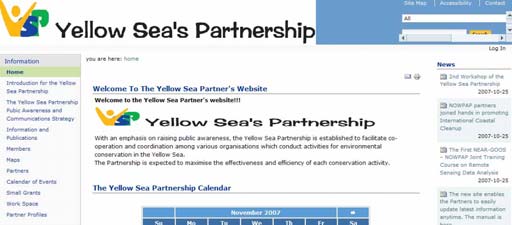
UNDP/GEF/YS/RSP.4/4
Page 29
114. Based on a recommendation from the "1st Yellow Sea Partnership Workshop" in
Beijing, China, 15-16 March 2006, the PMO established the Partnership website
http://partnership.iwlear
n.org/ (Fig. 24). The
website helps to
promote
environmentally-
sustainable
management and use of
the marine and coastal
resources in the Yellow
Sea for the Yellow Sea
Partners (Table 2).
Technically, the
platform takes
advantage of the free
tools and services
offered by IW:LEARN
website toolkit, which
aims to: (1) Enable any
GEF project to have a
powerful and easy to
Figure 24. The Partnership website http://partnership.iwlearn.org/.
manage website; and (2) Utilize the internet based GIS Map server and standards for
information exchange. The biggest benefit of the website is that the partners can
update their news and schedule by themselves with provided ID and Password so it
reduces the YSLME PMO's work load. The right side of the main page shows news
from the Yellow Sea partners and the main section automatically produces real time
news on the Yellow Sea from GOOGLE.COM, using RSS technique and shows a
GIS map of the sea.
Table 2. The list of registered partners for the Yellow Sea Partnership website.
Birds Korea
Citizens' Institute for Environmental Studies (CIES)
Cooperative Young Marine and Coastal Scholar Society (CYMCSS),
Dalian
DMZ Eco Research Centre
Global Village of Beijing (GVB)
Kanghwa People's Network
Korea Federation for Environmental Movement (KFEM)
Korea Marine Rescue Center (KMRC)
Korea Ocean Research and Development Institute (KORDI)
Marine Stewardship Council (MSC)
Partnerships in Environmental Management for the Seas of East Asia
(PEMSEA)
Shihwa Life Saver
The Nature Conservancy (TNC), Beijing
UNEP Regional Seas Programme Northwest Pacific Action Plan
(NOWPAP)
UNDP/GEF Yellow Sea Large Marine Ecosystem (YSLME) Project
United Nations Development Programme (UNDP), China
Wetlands International (WI)
Worldwide Fund for Nature (WWF) China, Hong Kong, and Japan
WWF/KORDI/KEI Yellow Sea Eco-Region Planning Programme (YSEPP)
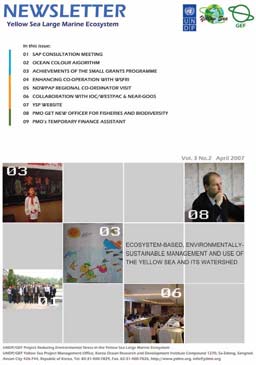
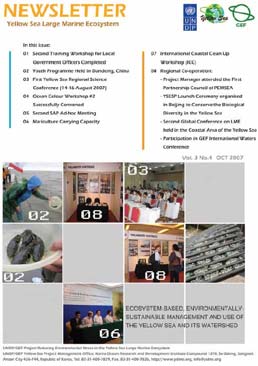
UNDP/GEF/YS/RSP.4/4
Page 30
115. In addition to the partnership website, an E-discussion group email serves as a
forum to exchange views among the Yellow Sea Partners. If a group member sends
any news, announcements, queries to partnership@yslme.org, the e-mail address
redirects all incoming e-mail to each registered participant's e-mail account. For
registration for the partnership website and email group, please contact
info@yalme.org or euidea@yslme.org.
116.
Quarterly paper- and electronic-based newsletters (Vol.3 No.1 Vol.3 No.4) for this
year were issued in January, April, July, and October (Fig. 25). The newsletter for
the last three months of the year will be published in January 2008. The full list of
newsletters is linkable on the website www.yslme.org. It presents all past events,
workshops, and activities implemented through the PMO. The PMO continues to
seek better ways to communicate with the public and transmit information.
Suggestions in this regard are welcome.
Figure 25. The Newsletter Vol.3 No.1 Vol.3 No.4.
6.4
Operation of the Office
117. The PMO continues to operate within the rules and regulations of UNOPS.
118. A Temporary Finance Assistant was hired to replace Ms. Kyungsuk Lee who was on
maternity leave for 4 months from Feb to May 2007. Ms. Kyungyun Lim joined the
PMO on 10 January 2007, and managed the project's accounting and assisted with
administrative issues.
119. Language Exchange Programme: PMO continued the lessons to share the basic
communication skill in English, Chinese, Korea and Spanish with PMO staffs and
KORDI on a regular basis.
120. New posters: PMO produced 4 new posters indicating the environmental problems in
each component, diagram for handling the problems, and achievements of public
awareness such as Yellow Sea Partnership, Local Government Training, Youth
Programme, Small Grants Programme, Internship Programme, and Parliamentary
Conference. The posters were displayed at GEF IW4 and the Regional Science
Conference in Hangzhou.
UNDP/GEF/YS/RSP.4/4
Page 31
121. Entry visa to ROK and China: With strong support from Ministry of Foreign Affairs
and Trade in Korea and State Oceanic Administration in China, PMO facilitated the
visa process for the meeting participants. Following extensive discussion with
relevant organisation, it seems not possible to issue a re-entry visa for the experts of
the projects, according to the national regulation.
7
CO-OPERATION WITH OTHER ORGANISATIONS AND PROJECTS
7.1
Exchange of Memorandum on Co-operation
122. The Yellow Sea Project has been actively seeking partnership with relevant
organisations not only participating governments and their affiliated agencies, but
also regional projects, NGOs, and universities to pursue more effective conservation
activities.
123. During and since the 3rd PSC Meeting, the Project signed an MOU with the following
organisations:
· IOC Sub-Commission for the Western Pacific (IOC/WESTPAC) on 23
November 2006;
· UNDP/GEF Project on "Biodiversity Management in the Coastal Area of
China's South Sea (SCCBD)" on 13 December 2006;
· Yonsei University Graduate School of International Studies on 8 March 2007;
· Myongji University on 19 June 2007; and
· Oceanic and Fisheries Administration of Shandong Province, China, on 6
August 2007.
124. The Project also signed a Letter of Co-operation (LOC) with PEMSEA on 16
December 2006, and an LOC with NOWPAP RCU on 24 May 2007.
125. The MOUs and LOCs state the partnership between the Project and the
organisations mentioned above, specifying activities and focal areas to collaborate
on.
126. The MOU signed on 7 March 2005 between the Project and the WWF/KORDI/KEI
Yellow Sea Eco-Region Planning Programme was reviewed; then, the "Review
Document and Future Implementation of Complementary Activities" was exchanged
between the two projects on 25 June 2007. With current and future co-operative
activities examined, the Review Document describes: (i) potential areas for co-
operation; (ii) co-operation mechanism; and (iii) major areas for future co-operation.
7.2
Co-operation with NOWPAP in Marine Litter Issues
127. The Project has been strengthening co-operation with NOWPAP in a variety of areas,
especially in the area of marine litter. Programme Officers of the PMO contributed to
International Coastal Cleanup Campaigns that NOWPAP organised in Rizhao, China,
June 2007 and in Busan, ROK, September 2007 by giving presentations, attending
panel discussions as panelists, and conducting coastal cleanup.
128. Those contributions not only enhanced collaboration between the two international
projects, but also provided opportunities for the Project to expand its partnerships to
relevant organisations such as local NGOs in China and ROK.
UNDP/GEF/YS/RSP.4/4
Page 32
7.3
Synergy with WWF on Selection of Demonstration Projects and Small
Grants
129. During a meeting, between Mr. Tobai of WWF and Mr. Jiang and Mr. Walton of
YSLME at the PMO in February 2007, a list of complementary activities was drawn
up.
130. The meeting produced a review document of the future implementation of joint
activities which included three sections: potential areas for co-operation; co-
operation mechanisms; and major areas for future co-operation. Important future co-
operation will involve representation at both projects' PSC meetings, attendance of
WWF personnel at SAP Ad-Hoc meetings and RWG-B meetings. WWF will
continue to review YSLME small grants proposals and YSLME will assist in the
reviewing of the proposals for small grants offered by the new WWF/YSESP project,
which will be aimed at the protection of endangered and endemic species, one of the
priority problems identified in the TDA.
131. WWF and YSLME have already adopted a common planning framework for the
protection of habitats in the Yellow Sea. To assist in the selection of suitable sites
for the demonstration of SAP management actions, WWF will perform an
assessment of MPA/national nature reserve management effectiveness, with the
results used in conjunction with the report from the contracted Biodiversity Advisors.
This report will identify the best examples of RAMSAR habitats located in the Yellow
Sea.
132. Finally, WWF and YSLME have agreed that a single SAP drafted by the YSLME
project will be used for the protection of biodiversity and habitats in the Yellow Sea.
The WWF have already provided considerable input into the SAP, attending all the
YSLME SAP meetings to date.
7.4
Proposed Wetland Meeting with Other UNDP/GEF Funded Projects
133.
A meeting was proposed on "Exchanging experiences in biodiversity protection in
coastal wetlands" between the UNDP/GEF funded projects in the region. Other
important projects and NGO's involved in wetland protection are also to be invited to
participate in the meeting. The objectives of the meeting are to:
i) Promote the exchange of information between the projects, and update each
other on the progress and scheduled events;
ii) Share experiences and lessons in implementing project activities in wetland
protection and management, including public awareness and capacity
building activities;
iii) Explore possibilities of co-operation and co-ordination of the relevant project
activities to improve effectiveness and maximize benefits of project
implementation; and
iv) Prepare, if applicable, a joint workplan and/or activities for better protection
and management of coastal wetlands in the region.
134. An invitation of interest was sent out to UNDP offices in China and ROK and WWF
on 28th September 2007. Participants have suggested a meeting during the first
quarter of 2008.
UNDP/GEF/YS/RSP.4/4
Page 33
8
CHALLENGES TO PROJECT IMPLEMENTATION
135. After over two years of project implementation, there seems to be improvement with
fewer challenges faced during project implementation. To continuing smooth project
implementation, national and regional co-ordination must continue to be efficient and
effective to ensure that the project's SAP objective is met.
136. In order to ensure successful project implementation in the remaining 2 years, it is
critical that challenges in improved national and regional co-ordination are addressed
now. The RSTP and PSC are requested to pay attention to these challenges, to take
action to eliminate them, or at least lessen their negative impacts on implementation.
The challenges to project implementation are listed in Table 3.
Table 3. Challenges to project implementation.
Issue
Situation
Need to enhance the
The IMCCs have been established in both countries with regular
roles of the IMCC
meetings. However, participation from a wide range of
government agencies should be strengthened, especially since
SAP will be submitted for approval in the middle of next year.
Expand participation Since project inception, the membership of NWGs, RWGs, and
in the national and
project partners have expanded to include more institutions.
regional working
However, the new members are still limited in number or only on a
groups, to include
short-term basis (Small Grants Programme). Considering the
other stakeholders
future of the project (SAP approval and subsequent
such as NGOs
implementation), it would be more effective and beneficial to the
region if additional institutions, especially NGOs, have long-term
involvement in the project. It should be noted that expanding
long-term participation to more institutions, would not only bring
more expertise and human resources to the project, but also bring
more attention to the environmental problems faced by the Yellow
Sea.
Unstable NWG and
The members of some Regional Working Groups are still
RWG membership
somewhat unstable with membership changes, although there
was improvement in 2007. Consistent membership will lead to
better understanding of the project for the individual, and also for
the affected project component. Stable membership can help the
implementation of project activities.
Lack of institutional
While a stable membership of most RWGs has happened, the
incentives
issue of lack of incentives has not been solved. It was reported
that some RWG members were unwilling to attend RWG meetings
because of lack of incentives. Institutional incentives should be
pursued, while financial incentives (e.g., consulting fee for
attendance) are neither appropriate nor available. The
institutional incentives are conditions such that RWG meetings are
a priority; the members get credits for participation. The
participating governments should make sure that the importance
of RWGs is understood clearly by the top management of
organisations which dispatch the RWG members. Those
UNDP/GEF/YS/RSP.4/4
Page 34
Issue
Situation
organisations have to recognise the RWGs as a task with high
priority.
Little regard for
There continues to be a few delays in meeting milestones stated
previously agreed
in legally signed contracts for activities, although this has
meeting dates,
improved. It is understood that contracted parties have busy
deadlines and
schedules with their regular jobs; however, to take on a contract
attention to
signifies a commitment to delivering the services on time. The
reminders
delay in submission of some SGP reports has impacted the
contractor's chance to receive future contracts.
Contracted parties need to maintain a sense of urgency in order to
maintain efficient project implementation.
Agreements made for future meeting dates need to be observed.
This year, only one RWG had its meeting during its previously
agreed dates. The shifting of dates creates unnecessary extra
work and co-ordination for all parties involved.
Need more attention
The RWG, RSTP, and PSC Meetings are the fora for project
and action on
partners to meet annually and agree on future project
agreements from
implementation. The discussions and agreements reached at
various meetings
these meetings should be addressed and acted upon, to minimize
delay in project implementation. Postponing activities is not and
efficient way for implementation.
More attention
The implemented activities should produce useful results that
should be given to
meet the project's objectives and contribute to better management
the quality of project of the YS ecosystem. It is preferred to spend a little more time to
deliveries
find a good contractor that will produce good results, rather than
focus on spending project money within the allotted time and
compromise the quality of project delivery.
139. As the project moves towards the approval of the SAP and potential implementation
of the SAP, the challenges above illustrate a need for a continued sense of
commitment by all parties to the project and a faithful and optimistic outlook that the
project, with an SAP in place, will indeed provide the expected benefits to the
region's marine environment.
140. Recommendations for future implementation to overcome the challenges are
described in Section 9.
9
RECOMMENDATIONS FOR FUTURE IMPLEMENTATION
141. Recommendations for future implementation to overcome the challenges listed in
Section 8 remain similar to previous years for the same challenges. Table 4 shows
the challenges, recommendations, and improvements from previous years.
142.
With the SAP under development, and potential for implementation starting within 3
year's time, it is not too early to develop a solid foundation to strengthen inter-
agency co-operation and co-operation with other stakeholders. The trust among all
UNDP/GEF/YS/RSP.4/4
Page 35
project partners and stakeholders seems to have improved, and should continue to
build in order to ensure widespread regional collaborative efforts to produce the best
possible results for the region's environmental management schemes. This,
compounded with respect for deadlines and wise-use of donor funds will sustain
good environmental protection and management of the Yellow Sea long into the
future.
143.
Some recommendations from the Mid-Term Evaluators are mentioned below.
YS Commission
144.
The "Regional Governance Analysis" proposed the establishment of a Yellow Sea
Commission and Secretariat to oversee the implementation of SAP and the
sustainability of the management actions until 2020. The MTE Draft Final Report
suggested that the costs and benefits and management mechanisms for establishing
a Yellow Sea Commission and Secretariat should be listed to allow consideration for
this option to be included in the SAP. "A Commission can enable the partner
countries to normalise their joint efforts and provide a long term repository for
bilateral and multilateral financial support.1"
Communications and Public Awareness Officer
145. The project has made advances in enhancing public awareness and participation
through the Yellow Sea Partnership. It is important for the other YS Partners to see
this initiative as also benefiting their specific activities and interests, so that it
becomes more of a mutually shared effort, and less of a YSLME-directed effort. The
MTE suggested to consider adding a communications expert for the PMO. This
person would take direct responsibility for public relations, web content, special
events, educational programmes, the Yellow Sea Partnership and the Small Grants
Programme. One or both of the partner countries could second a communications
expert for this effort, perhaps on a rotating basis.
146. Future YS Partnership activities should continue to expand private sector support
mechanisms, such as those already developed with Panasonic on the YSESP and
Amway international on the Dandong Youth Programme.
DPRK Involvement
147.
The MTR reiterated the importance of DPRK's full involvement in the project, "It is
vital to the long-term sustainability of the Yellow Sea ecosystem that the DPRK
becomes a partner in this regional effort." All project partners realise this issue and
should strive to find a solution whereby DPRK can become fully involved in the
project as soon as possible.
Project Extension
148. As mentioned in the 4th RWG-I Meeting Report, the members recommended the
consideration of a no-cost extension for the project before starting Phase 2. This
transition period would be used to prepare the initiation of Phase 2.
Table 4. Challenges to project implementation, recommendations, and areas of improvement.
Issue
Recommendations
Improvement seen
Further action
from last/previous
needed
years
Need to enhance the Further enhance
roles of the IMCC
national co-ordination
1 From MTE Draft Final Report.
UNDP/GEF/YS/RSP.4/4
Page 36
Issue
Recommendations
Improvement seen
Further action
from last/previous
needed
years
and roles of IMCC
Expand participation
Consider to
in the national and Further increase in
include additional
regional working
incentive of the
stakeholders
groups, to include national participating
other stakeholders
institutions
such as NGOs and
universities
Further strengthen
communication
Unstable NWG and among all the project
mostly
There is still the
RWG membership
partners
occasional change
in membership
Lack of institutional Further ensure the
incentives
qualities of the project
outcomes produced
Reduction in
for overhead
Need further
institutional overhead
reduction
information on co-
fees for contracts
financing uses
and reporting on use
of co-financing
Need for better
understanding of the
UN and GEF
financial rules and
operational
mechanisms
Little regard for
mostly
Can still be
deadlines and
improved somewhat
attention to
reminders
Need more attention
some
Can still be
and action on
improved somewhat
agreements from
various meetings
Communication
between contracted
parties/WG members
and PMO
Quality of output
mostly
Can still be
results
improved somewhat
Inadequate sense of
some
Can be improved
trust among project
partners
UNDP/GEF/YS/RSP.4/4
Annex I
Page 1
Annex I
List of Meetings and Workshop-Related Activities
Convened by the Project in 2007
6 - 8 Feb
SAP Consultation Meeting, Jinghong, China
10 - 12 April
First SAP Ad-hoc Working Group Meeting, Hongchun, ROK
14 - 15 May
Gene Pool Analysis Workshop, Busan, ROK
4 June
1st Yellow Sea Ocean Colour Workshop, Ansan, ROK
18 - 20 June
Sustainable Mariculture Workshop, Taean, ROK
19 June
Voluntary Internship Programme (VIP) Introductory Session, Seoul,
ROK
10 - 12 July
2nd Local Government Officials Workshop on Sea-use Regulations,
Qingdao, China
11 - 12 Aug
Dandong Youth Public Awareness Programme, Dandong, China
14 - 16 Aug
First Yellow Sea Regional Science Conference, Hangzhou, China
18 - 20 Aug
Second SAP Ad-hoc Working Group Meeting, Hangzhou, China
1 - 2 Sept
2nd Yellow Sea Ocean Colour Workshop, Nagasaki, Japan
4 - 6 Sept
Mariculture Carrying Capacity Workshop, Rongcheng, China
17 -19 Sept
4th Regional Working Group Meeting - Biodiversity, Ansan, ROK
1 Oct
2nd Yellow Sea Partnership Meeting, Busan, ROK
3 - 5 Oct
4th Regional Working Group Meeting - Ecosystem, Ningbo, China
8 - 10 Oct
Inter-calibration Summary Workshop, Jeju, ROK
11 - 13 Oct
4th Regional Working Group Meeting - Pollution, Jeju, ROK
11 - 13 Oct
Regional Conference on Protection of Marine Environment and
Sustainable Use of Marine Resources in the Yellow Sea, Incheon,
ROK
16 - 19 Oct
4th Regional Working Group Meeting - Investment, Jeju, ROK
16 - 17 Oct
Regional workshop on mariculture disease control and prevention,
Jeju, ROK
22 - 23 Oct
Proposal and Report Writing Workshop, Ansan, ROK
26 Oct
VIP Reporting Session, Ansan, ROK
UNDP/GEF/YS/RSP.4/4
Annex I
Page 2
7 - 9 Nov
4th Regional Working Group Meeting - Fisheries, Seokcho, ROK
26 - 28 Nov
4th RSTP Meeting, Guangzhou, China
29 - 30 Nov
4th PSC Meeting, Guangzhou, China
UNDP/GEF/YS/RSP.4/4
Annex II
Page 1
Annex II
Expenditure Report for 2007
Available upon request
UNDP/GEF/YS/RSP.4/4
Annex III
Page 1
Annex III
PMO's Inventory List
Jan.
Jul. 2007
917.00
2007
928
Feb.
Aug.
903.00
2007
925
2007
Mar.
Sep. 2007
940.00
UN
2007
928
EXCHANGE
Apr.
Oct. 2007
RATE
2007
941
May.
Nov. 2007
2007
917
Jun.
Dec. 2007
2007
920
PROJECT EXPENDITURE
EXPENDITURE AMOUNT
Authorizati
Period
Ref
BUDGET
on
ACCOUNT
ACCOUNT DESCRIPTION
LC
US$ equi
LINES
LCD
PLC-
KRW
Dec.04 4205
72800 Office
O-04-001
3,361.82 34
Equipment
Projector
XT15KA(SANYO)
3,540,000
EPSON Perfection
Dec.04 4205
72800 Office
Scanner
O-04-002
KRW 102,000
96.87 34
Equipment
1270
Inculding OS
Lap-top
KRW
Dec.04 4201
72800 IT
I-04-001
Toshiba
1,861.35 34 Software(130,
Equipment
Computer
1,960,000
000)
Inculding OS
Lap-top
KRW
Dec.04 4201
72800 IT
I-04-002
Toshiba
1,861.35 34 Software(130,
Equipment
Computer
1,960,000
000)
Dec.04 4302
72200 Furniture
Partition
F-04-001
KF124 * 2
KRW 354,400
336.56 34
Disposal on
Jul.05 4302
72200 Furniture
Partition
F-04-001
(KF124 * 2)
-KRW 91,314
(89.17)
2005
Dec.04 4302
72200 Furniture
Partition
F-04-001
KF104W * 5
KRW 775,500
736.47 34
UNDP/GEF/YS/RSP.4/4
Annex III
Page 2
PROJECT EXPENDITURE
EXPENDITURE AMOUNT
Authorizati
Period
Ref
BUDGET
on
ACCOUNT
ACCOUNT DESCRIPTION
LC
US$ equi
LINES
Disposal on
Jul.05 4302
72200 Furniture
Partition
F-04-001
(KF104W * 5)
-KRW 28,904
(28.23)
2005
Dec.04 4302
72200 Furniture
Partition
F-04-001
KF084W *2
KRW 266,000
252.61 34
Dec.04 4302
72200 Furniture
Connector F-04-001
KF5214 T * 2
KRW 35,800
34.00 34
Dec.04 4302
72200 Furniture
Connector F-04-001
KF5114 L * 1
KRW 15,200
14.43 34
Dec.04 4302
72200 Furniture
Connector F-04-001
KF6014 * 6
KRW 49,800
47.29 34
KRW
Dec.04 4302
72200 Furniture
Partition
F-04-001
KF126 * 5
1,001.90 34
1,055,000
Disposal on
Jul.05 4302
72200 Furniture
Partition
F-04-001
(KF126 * 5)
-KRW 42,527
(41.53)
2005
Dec.04 4302
72200 Furniture
Partition
F-04-001
KF106 * 2
KRW 357,200
339.22 34
Disposal on
Jul.05 4302
72200 Furniture
Partition
F-04-001
(KF106 * 2)
-KRW 15,649
(15.28)
2005
Dec.04 4302
72200 Furniture
Connector F-04-001
KF5216 T * 1
KRW 21,400
20.32 34
Dec.04 4302
72200 Furniture
Connector F-04-001
KF5116 L * 1
KRW 20,000
18.99 34
Dec.04 4302
72200 Furniture
Connector F-04-001
KF6016 * 5
KRW 48,500
46.06 34
Disposal on
Jul.05 4302
72200 Furniture
Partition
F-04-001
(KF6016 * 4)
-KRW 5,706
(5.57)
2005
Dec.04 4302
72200 Furniture
Multi-Bar
F-04-001
KA0012 * 6
KRW 103,200
98.01 34
Dec.04 4302
72200 Furniture
Multi-Bar
F-04-001
KA0008 * 1
KRW 12,400
11.78 34
Horizontal
Dec.04 4302
72200 Furniture
F-04-001
KA0101 * 7
KRW 28,700
27.26 34
Shelf
Supplies
Dec.04 4302
72200 Furniture
F-04-001
KA0104 * 7
KRW 24,500
23.27 34
Shelf
Pencil
Dec.04 4302
72200 Furniture
F-04-001
KA0106 * 7
KRW 14,700
13.96 34
Case
Dec.04 4302
72200 Furniture
Shelve
F-04-001
KT3312 * 3
KRW 429,000
407.41 34
Dec.04 4302
72200 Furniture
Chair
F-04-002
CH2301
KRW 112,500
106.84 34
Dec.04 4302
72200 Furniture
Shelve
F-04-001
KT3010 * 3
KRW 130,200
123.65 34
Dec.04 4302
72200 Furniture
Cabinet
F-04-003
SC0085W5 * 2
KRW 252,400
239.70 34
Dec.04 4302
72200 Furniture
Cabinet
F-04-004
SB0082W2 * 2
KRW 95,400
90.60 34
UNDP/GEF/YS/RSP.4/4
Annex III
Page 3
PROJECT EXPENDITURE
EXPENDITURE AMOUNT
Authorizati
Period
Ref
BUDGET
on
ACCOUNT
ACCOUNT DESCRIPTION
LC
US$ equi
LINES
Dec.04 4302
72200 Furniture
Cabinet
F-04-005
SC0085W5 * 4
KRW 505,200
479.77 34
Dec.04 4302
72200 Furniture
Cabinet
F-04-006
SC0082W2 *1
KRW 86,900
82.53 34
Cabinet
Dec.04 4302
72200 Furniture
F-04-004
SB0082W2 * 5
KRW 238,500
226.50 34
Door
Dec.04 4302
72200 Furniture
Conferenc
F-04-007
SR118
KRW 214,500
203.70 34
e Table
Dec.04 4302
72200 Furniture
Chair
F-04-008
CH0011AF * 6
KRW 605,400
574.93 34
Folding
Dec.04 4302
72200 Furniture
F-04-009
CR9006 * 1
KRW 116,800
110.92 34
Table
Dec.04 4302
72200 Furniture
Cabinet
F-04-0010
SC982F 800
KRW 111,000
105.41 34
Dec.04 4302
72200 Furniture
Cabinet
F-04-0011
SC982C 800
KRW 367,600
349.10 34
Motor
Hyundai Trajet 2.0
KRW
Dec.04 4302
72200 Vehicle
V-04-001
22,881.29 30
Vehicle
A/T
24,094,000
Office
Windows XP Pro
PO%19281-
krw 355,000 *
Jul.05 4104/4201
72800
IT
I-05-001
354.65
Equipment
Software
(Kor)
355,000
44,45
1ea
Office
MS windows XP
PO%19281-
krw 385,000 *
Jul.05 4104/4201
72800
IT
I-05-002
1,153.85
Equipment
Software
Pro (Eng)
1,155,000
44,45
3ea
Office
MS windows XP
PO%19281-
krw 565,000 *
Jul.05 4104/4201
72800
IT
I-05-003
3,386.61
Equipment
Software
Pro - OLP NL (Eng) 3,390,000
44,45
6ea
Office
H Office 2003 Pro
PO%19281-
krw 456,000 *
Jul.05 4104/4201
72800
IT
I-05-004
455.54
Equipment
Software
- OLP NL (Kor)
456,000
44,45
1ea
Office
Acrobat 7.0 Std
PO%19281-
krw 300,000 *
Jul.05 4104/4201
72800
IT
I-05-005
899.10
Equipment
Software
(Eng)
900,000
44,45
3ea
Office
MS Project 2003
PO#29386-
Nov.05 4104
72800 IT
I-05-006
623.20
1ea
Equipment
Software
Std - OLP NL (Eng) 650,000
14
Lap-top
Fujitsu S6240-
PO#29386-
Nov.05 4201
72800 IT
I-05-007
1,629.91
Equipment
Computer
SDM16
1,700,000
13
Portable
PO#19281-
Apr.05 4201
72800 IT
I-05-008
CNY 640
77.91
Equipment
Hard Disk
44
Lap-top
KRW
PO#19281-
May.05 4201
72800 IT
I-05-009
Fujitsu S7011SF16
1,777.60
Equipment
Computer
1,760,000
44
UNDP/GEF/YS/RSP.4/4
Annex III
Page 4
PROJECT EXPENDITURE
EXPENDITURE AMOUNT
Authorizati
Period
Ref
BUDGET
on
ACCOUNT
ACCOUNT DESCRIPTION
LC
US$ equi
LINES
DVD
PO#19281-
Jun.05 4201
72800 IT
Read/Writ
I-05-0010
198.98
Equipment
44
er
Copy
PO#17811-
Mar.05 4204
72200 Office
O-05-001
Cannon IC-D380H
KRW 550,000
550.00
Equipment
machine
01
Digital
PO#19281-
Apr.05 4210
72200 Office
O-05-002
Nikon Coolpix3700
KRW 279,000
281.36
Equipment
Camera
38
Type
ET-3800
PO#17811-
Apr.05 4210
72200 Office
O-05-003
KRW 200,000
201.69
Equipment
Writer
Kyungbang Co.
07
Bum Il ESD-
Safety
PO#19281-
May.05 4210
72200 Office
O-05-004
104A(Digital
KRW 299,000
301.99
Equipment
Box
38
Double Locking)
Conferenc
PO#19281-
May.05 4210
72200 Office
O-05-005
SoundPointPro225
KRW 370,000
372.38
Equipment
e Call
38
Machine
Task
CH0011AF * 8
PO#19281-
Jul.05 4302
72200
Furniture
F-05-002
KRW 896,000
883.72
KRW 112,000
Chair
(615*530*785)
39
Famillia
CH2301 * 1
PO#19281-
Jul.05 4302
72200
Furniture
F-05-003
KRW 125,000
123.29
KRW 125,000
Chair
(620*595*870~970)
39
TD016 * 2
PO#19281-
Jul.05 4302
72200
Furniture
Desk
F-05-004
KRW 426,000
420.16
KRW 213,000
(1600*800*720)
39
Extension
SD912F * 1
PO#19281-
Jul.05 4302
72200
Furniture
F-05-005
KRW 139,000
137.09
KRW 139,000
desk
(600*1200*720)
39
Endless
SC982C * 2
PO#19281-
Jul.05 4302
72200
Furniture
F-05-006
KRW 204,000
201.20
KRW 102,000
cabinet
(800*290*1920)
39
Square
SR024S * 1
PO#19281-
Jul.05 4302
72200
Furniture
F-05-007
KRW 312,000
307.72
KRW 312,000
table
(2400*900*720)
39
CR9006 * 1
Folding
PO#19281-
Jul.05 4302
72200
Furniture
F-05-008
(590~610*480~520
KRW 113,000
111.45
KRW 113,000
Table
39
*720)
KF104W * 9
KRW
PO#19281-
Jul.05 4302
72200
Furniture
Partition
F-05-001
1,535.65
KRW 173,000
(1000*66*1370)
1,557,000
39
UNDP/GEF/YS/RSP.4/4
Annex III
Page 5
PROJECT EXPENDITURE
EXPENDITURE AMOUNT
Authorizati
Period
Ref
BUDGET
on
ACCOUNT
ACCOUNT DESCRIPTION
LC
US$ equi
LINES
Partition
KF0104 * 2
PO#19281-
Jul.05 4302
72200
Furniture
F-05-001
KRW 96,000
94.68
KRW 48,000
Frame
(1000*34*1370)
39
Partition
KF0124 * 5
PO#19281-
Jul.05 4302
72200
Furniture
F-05-001
KRW 265,000
261.37
KRW 53,000
Frame
(1200*34*1370)
39
Partition
KF1106 * 4
PO#19281-
Jul.05 4302
72200
Furniture
F-05-001
KRW 104,000
102.57
KRW 26,000
tile
(1000*14*600)
39
Partition
KF1126 * 10
PO#19281-
Jul.05 4302
72200
Furniture
F-05-001
KRW 300,000
295.89
KRW 30,000
tile
(1200*14*600)
39
L Shape
KF5114 L * 6 (H:
PO#19281-
Jul.05 4302
72200
Furniture
F-05-001
KRW 96,000
94.68
KRW 16,000
connector
1370)
39
KF6014 * 10 (H:
PO#19281-
Jul.05 4302
72200
Furniture
Endong
F-05-001
KRW 90,000
88.77
KRW 9,000
1370)
39
PO#19281-
Jul.05 4302
72200
Furniture
Leg
F-05-001
KF8001 * 2
KRW 44,000
43.40
KRW 22,000
39
KT3010 * 2
PO#19281-
Jul.05 4302
72200
Furniture
Shelf
F-05-001
KRW 96,000
94.68
KRW 48,000
(1000*360*200)
39
System
SONY
Case_Portavrace
PO%35736-
Mar.06 4210
72200 Office
O-06-001
NZD 419.61
309.84
Equipment
Camcoder
DSR with Matte
10
Box
Headphone_Sennh
SONY
PO%35736-
Mar.06 4210
72200 Office
O-06-001
eiser HD202
NZD 56.00
41.35
Equipment
Camcoder
10
Closed back
monitor
SONY
PO%35736-
Mar.06 4210
72200 Office
O-06-001
Video Camcoder
NZD 4,747.50
3,505.55
Equipment
Camcoder
10
SONY
Video Light
PO%35736-
Mar.06 4210
72200 Office
O-06-001
NZD 112.50
83.07
Equipment
Camcoder
HVL20DW2
10
SONY
Battery Pack -
PO%35736-
Mar.06 4210
72200 Office
O-06-001
NZD 483.76
357.21
Equipment
Camcoder
NPF970
10
SONY
AC Adaptor and
PO%35736-
Mar.06 4210
72200 Office
O-06-001
NZD 237.96
175.71
Equipment
Camcoder
Power Charger
10
UNDP/GEF/YS/RSP.4/4
Annex III
Page 6
PROJECT EXPENDITURE
EXPENDITURE AMOUNT
Authorizati
Period
Ref
BUDGET
on
ACCOUNT
ACCOUNT DESCRIPTION
LC
US$ equi
LINES
ACVQ1050D
SONY
Wireless Lavaliere
Mar.06 4210
72200 Office
O-06-001
NZD 686.25
PO%35736-
506.73
Equipment
Camcoder
Mike Kit UWPC1
10
SONY
PO%35736-
Mar.06 4210
72200 Office
O-06-001
Tripod/Stand
NZD 151.88
112.15
Equipment
Camcoder
10
SONY
DVCAM Tapes
PO%35736-
Mar.06 4210
72200 Office
O-06-001
NZD 239.00
176.48
Equipment
Camcoder
VF58CPKS
10
SONY
PO%35736-
Mar.06 4210
72200 Office
O-06-001
IEEE DV Cable
SGD 145.00
89.51
Equipment
Camcoder
10
SONY
Headphone port
PO%35736-
Mar.06 4210
72200 Office
O-06-001
SGD 12.00
7.41
Equipment
Camcoder
adaptor
10
SONY
PO%35736-
Mar.06 4210
72200 Office
O-06-001
Memory Stick
SGD 95.00
58.64
Equipment
Camcoder
10
SONY
Rain Cofer +
PO%35736-
Mar.06 4210
72200 Office
O-06-001
99.90
Equipment
Camcoder
Shipping
10
Lap-top
Toshiba M50-
KRW
PO%35736-
Feb.06 4201
72800 IT
I-06-001
1,452.28
Equipment
Computer
03601S
1,400,000
15
PO%41557-
AS-PE1800 - Dell
Office
KRW
12,
Jun.06 4201
72800 IT
I-06-002
TM Power Edge
4,252.95
Equipment
Server
3,968,000
PO%35736-
TM 1800 Server
15
Office
Expert Choice
KRW
PO%53903-
Dec.06 4104
72800 IT
I-06-003
4,190.98
Equipment
Software
Software
3,900,000
03
LCD
PO%46928-
Nov.06 4205
72200 Office
O-06-002
Sony CX20
1,560.00
Equipment
Projector
08
PO%46928-
Nov.06 4203
72200 Office
Printer
O-06-003
Cannon I90 Printer
250.00
Equipment
08
Scanner HP
PO%46928-
Nov.06 4210
72200 Office
Scanner
O-06-004
KRW 653,600
688.00
Equipment
Scanjet7650
08
Shelving units for
PO%61923-
Jun.07 4302
72200 Furniture
Shelves
F-07-001
KRW 170,000
184.78
container
16
Jun.07 4302
72200 Furniture
Container F-07-002
Container
KRW
1,304.34 PO%61923-
UNDP/GEF/YS/RSP.4/4
Annex III
Page 7
PROJECT EXPENDITURE
EXPENDITURE AMOUNT
Authorizati
Period
Ref
BUDGET
on
ACCOUNT
ACCOUNT DESCRIPTION
LC
US$ equi
LINES
1,200,000
16
Double
TP0312W
Jun.07 4302
72200
PO%61923-
Furniture
F-07-003
KRW 264,000
286.96
2EA
drawer
(420*560*570)
16
Farmilar
CH2301
PO%61923-
Jun.07 4302
72200 Furniture
F-07-004
KRW 126,000
136.96
1EA
Chair
(620*595*870~970)
16
Topline
TD016
PO%61923-
Jun.07 4302
72200 Furniture
F-07-005
KRW 213,000
231.52
1EA
Desk
(1600*800*720)
16
L-shape
PO%61923-
Jun.07 4302
72200 Furniture
F-07-003
KF5514 (H:1370)
KRW 19,000
20.65
1EA
Connector
16
KF068W
PO%61923-
Jun.07 4302
72200 Furniture
Partition
F-07-003
KRW 154,000
167.39
1EA
(600*66*1770)
16
KF108W
PO%61923-
Jun.07 4302
72200 Furniture
Partition
F-07-003
KRW 220,000
239.13
1EA
(1000*66*1770)
16
KF128W
PO%61923-
Jun.07 4302
72200 Furniture
Partition
F-07-003
KRW 256,000
278.26
1EA
(1200*66*1770)
16
L-shape
PO%61923-
Jun.07 4302
72200 Furniture
F-07-003
KF5118 (H:1770)
KRW 24,000
26.09
1EA
Connector
16
Ending
PO%61923-
Jun.07 4302
72200 Furniture
F-07-003
KF6018 (H:1770)
KRW 24,000
26.09
2EA
Connector
16
Folding
CR9006
PO%61923-
Jun.07 4302
72200 Furniture
F-07-006
KRW 260,000
282.61
2EA
Table
(630*525*720)
16
Total Amount as of
$74,169.69
Aug 2007
IT Equipment
$24,176.26
Furniture
$13,924.50
Vehicle
$22,881.29
Office Equipment
$13,187.65
TRUE
UNDP/GEF/YS/RSP.4/4
III
Annex
Page 8
PROJECT EXPENDITURE
EXPENDITURE AMOUNT
Authorizati
Period
Ref
BUDGET
on
ACCOUNT
ACCOUNT DESCRIPTION
LC
US$ equi
LINES
Svc fee
PO%61923-
Jun.07 4302
72200 Furniture
for
F-07-001
KRW 330,000
358.70
16
installation
UNDP/GEF/YS/RSP.4/4
Annex IV
Page 1
Annex IV
List of Acronyms
CBA
cost-benefit
analysis
CDOM
coloured dissolved organic matter
CKJORC
China-Korea Joint Ocean Research Center
CPR
continuous
plankton
recorder
DO
dissolved
oxygen
DPRK
Democratic People's Republic of Korea
EAS
East
Asian
Seas
ERP
Enterprise Resource Planning
GEF
Global Environment Facility
GEF IWC-4
GEF's 4th International Waters Conference
GEF/IW:LEARN
GEF/International Waters:Learning Exchange and Resource Network
GIS
geographic information system
IAEA-MEL
International Atomic Energy Agency-Marine Environmental Laboratory
ICES
International Council for the Exploration of the Sea
IMCC
Inter-ministerial Co-ordinating Committee
IUCN
World Conservation Union
KORDI
Korea Ocean Research and Development Institute
LOC
Letter of Co-operation
MOU
Memorandum of Understanding
MTE
mid-term
evaluation
NACA
Network of Aquaculture Centres in Asia-Pacific
NGO
Non-Governmental
Organisation
NOWPAP
Northwest Pacific Action Plan
NOWPAP RCU NOWPAP Regional Co-ordinating Unit
NPC
National Project Co-ordinator
NWG
National Working Group
NSAP
National Yellow Sea Action Plan
OC
ocean
colour
PEMSEA
Partnerships in Environmental Management for the Seas of East Asia
PMO
Project Management Office
PSA
political and social acceptance
PSC
Project Steering Committee
QA/QC
quality assurance/quality control
QHSS
Queensland Health Scientific Services
ROK
Republic
of
Korea
RSS
Any format of: Really Simple Syndication (RSS 2.0), RDF Site Summary
RSS 1.0 and RSS 0.90), or Rich Site Summary
RSTP
Regional Scientific and Technical Panel
RWG
Regional Working Group
RWG-F,
E,
B,
I
Regional Working Group Fisheries, Ecosystem, Biodiversity,
Investment
SAP
Strategic Action Programme
SI
Le Système international d'unités (International System of Units)
SOP
standard operating procedures
TDA
Transboundary Diagnostic Analysis
TSS
total suspended solids
UN
United
Nations
UNDP
United Nations Development Programme
WWF
World Wide Fund for Nature
YOC
Yellow Sea ocean colour
UNDP/GEF/YS/RSP.4/4
Annex IV
Page 2
YSESP
Yellow Sea Ecoregion Support Project
YSLME
Yellow Sea Large Marine Ecosystem
YSP
Yellow Sea Partnership
Document Outline
- þÿ
- þÿ
- þÿ
- þÿ
- þÿ
- þÿ
- þÿ
- þÿ
- þÿ
- þÿ
- þÿ
- þÿ
- þÿ
- þÿ
- þÿ
- þÿ
- þÿ
- þÿ
- þÿ
- þÿ
- þÿ
- þÿ
- þÿ
- þÿ
- þÿ
- þÿ
- þÿ
- þÿ
- þÿ
- þÿ
- þÿ
- þÿ
- þÿ