Regional Working Group Report
INVESTMENT
UNDP/GEF Project Entitled "Reducing
Environmental Stress
in the Yellow Sea Large Marine Ecosystem"
Report of First Meeting
Yantai, China, 17~20 May 2005
GEF
About this publication:
This publication contains the report of the First Meeting of the Regional Working Group for
the Investment Component, under the UNDP/GEF Project, "Reducing Environmental Stress
in the Yellow Sea Large Marine Ecosystem." The report includes a summary of the
discussions and agreements from the Meeting. Proposals for data management, socio-
economic analysis, stakeholder involvement, and public awareness campaigns are included
in the report.
For reference purposes, this report may be cited as:
UNDP/GEF 2005. Reducing Environmental Stress in the Yellow Sea Large Marine
Ecosystem, Report of the First Meeting of the Regional Working Group for the Investment
Component. UNDP/GEF/YS/RWG-I.1/3.
Cover design:
Ms. YUN Euidea
Photo credits:
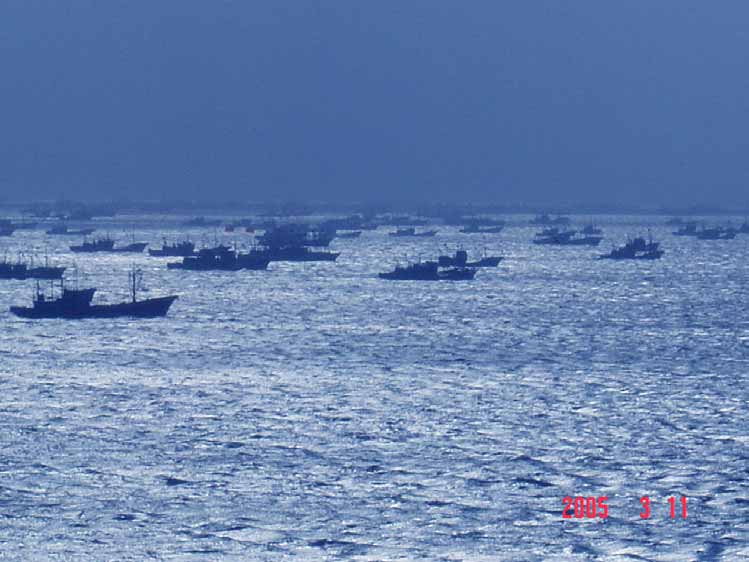
Fishing boats on the Yellow Sea near Jeju Island in the southern part
of Republic of Korea, March 2005. Courtesy of Mr. Yihang JIANG.
REDUCING ENVIRONMENTAL STRESS
IN THE YELLOW SEA
LARGE MARINE ECOSYSTEM
Report of the First Meeting of the
Regional Working Group for the Investment Component
UNDP/GEF Yellow Sea Project
Yantai, China, 17th to 20th May 2005

GEF
UNDP/GEF Project entitled "Reducing Environmental Stress in the
Yellow Sea Large Marine Ecosystem"
UNDP/GEF/YS/RWG-I.1/3
Date: 20 May 2005
English only
First Meeting of the Regional Working Group
for the Investment Component
Yantai, China, 17-20 May 2005
Meeting Report
TABLE OF CONTENTS
1
OPENING OF THE MEETING ....................................................................................................... 1
1.1
WELCOME ADDRESSES............................................................................................................. 1
1.2
INTRODUCTION OF MEMBERS .................................................................................................... 1
2
ORGANISATION OF THE MEETING............................................................................................ 1
2.1
DESIGNATION OF OFFICERS...................................................................................................... 1
2.2
DOCUMENTATION AVAILABLE TO THE MEETING .......................................................................... 1
2.3
ORGANISATION OF WORK ......................................................................................................... 1
3
ADOPTION OF THE MEETING AGENDA .................................................................................... 2
4
DRAFT TERMS OF REFERENCE FOR THE REGIONAL WORKING GROUP FOR
INVESTMENT (RWG-I) .................................................................................................................. 2
5
OVERALL PROJECT AND COMPONENT OBJECTIVES ........................................................... 2
5.1
GENERAL DESCRIPTION OF ACTIVITIES CONTAINED IN THE PROJECT IMPLEMENTATION PLAN ........ 2
5.2
REPORTING RESPONSIBILITIES OF THE RWG-I........................................................................... 2
5.3
REQUIRED OUTPUTS AND OUTCOMES FROM THE 1ST RWG-I MEETING......................................... 3
6
NATIONAL AND REGIONAL CO-ORDINATING MECHANISMS................................................ 3
6.1
NATIONAL CO-ORDINATING MECHANISMS.................................................................................. 3
6.2
REGIONAL CO-OPERATION AND CO-ORDINATION........................................................................ 4
7
DATA AND INFORMATION MANAGEMENT FOR YLSME......................................................... 6
8
STAKEHOLDER INVOLVEMENT AND PUBLIC AWARENESS AND PARTICIPATION ........... 7
9
FINANCIAL INSTRUMENTS ......................................................................................................... 8
10 REQUIRED ACTIONS AND WORKPLAN .................................................................................... 8
10.1
REQUIRED ACTIONS TO FULFIL PROJECT OBJECTIVES................................................................. 8
10.2
WORKPLAN FOR 2005 TO 2006 ................................................................................................ 8
11 OTHER BUSINESS........................................................................................................................ 9
12 DATE AND PLACE FOR NEXT RWG-I MEETING....................................................................... 9
13 ADOPTION OF THE MEETING REPORT..................................................................................... 9
14 CLOSURE OF THE MEETING ...................................................................................................... 9
ANNEXES
Annex I
List of Participants
Annex II
Agenda
Annex III
Revised Terms of Reference for the UNDP/GEF Yellow Sea Project Regional
Thematic Working Group - Investment
Annex IV
Revised Terms of Reference for the UNDP/GEF Yellow Sea Project Inter-
ministerial Co-ordinating Committee
Annex V
Revised Terms of Reference for the UNDP/GEF Yellow Sea Project National
Project Co-ordinators
Annex VI
Project Stakeholders
Annex VII
Revised List of Activities for the Investment Component
Annex VIII
Workplan for 2005-2006
UNDP/GEF/YS/RWG-I.1/3
Page 1
1
OPENING OF THE MEETING
1.1 Welcome
addresses
1.1.1 On behalf of the United Nations Development Programme (UNDP) and United
Nations Office for Project Services (UNOPS), Mr. Yihang Jiang, Project Manager,
opened the meeting and welcomed the members of the Regional Working Group-
Investment (RWG-I) to Yantai, China. He informed participants of the results of the
previous four meetings of the Regional Working Groups (Pollution, Fisheries,
Biodiversity, Ecosystem), and highlighted the objectives of this Meeting. He
mentioned that this component's responsibilities were different from those of the
natural science components, in that it covered a wider range of topics, particularly the
socio-economic aspects.
1.2
Introduction of members
1.2.1 RWG-I members were invited to introduce themselves and give a brief introduction
on their background and roles in the Project. The list of participants is attached to
this report as Annex I.
2
ORGANISATION OF THE MEETING
2.1
Designation of Officers
2.1.1 Mr. Hak-Bong Chang nominated Mr. Mingyuan Zhu as Chairperson. Members
agreed and Mr. Zhu was duly elected as Chairperson. The PMO was responsible for
secretariat functions of the Meeting.
2.2
Documentation Available to the Meeting
2.2.1 Mr. Mingyuan Zhu invited the Secretariat to introduce this agenda item. Mr. Jiang of
the Project Management Office (PMO) introduced the Meeting's working and
information documents.
2.3
Organisation of Work
2.3.1 The PMO presented the provisional working programme for the Meeting (Document
UNDP/GEF/YS/RWG-I.1/inf.3), stating that this was a general guide for the Meeting.
The PMO added that the working programme was flexible, and could be changed
according to the Meeting's progress.
2.3.2 The Chairperson informed the Meeting of the organisation of work. It was agreed
that, due to the nature of the agenda items to be discussed, the Meeting would be
organised in plenary as far as possible. Sessional working groups would be formed if
deemed necessary.
2.3.3 The meeting was conducted in English.
UNDP/GEF/YS/RWG-I.1/3
Page 2
3
ADOPTION OF THE MEETING AGENDA
3.1
The Chairperson introduced the Provisional Agenda (Document UNDP/GEF/YS
/RWG-I.1/1) and Annotated Provisional Agenda (Document UNDP/GEF/YS/RWG-
I.1/2), prepared by the PMO.
3.2
Members did not suggest any changes, and adopted the agenda that is attached as
Annex II to this report.
4
DRAFT TERMS OF REFERENCE FOR THE REGIONAL WORKING GROUP FOR
INVESTMENT (RWG-I)
4.1
The Chairperson invited Mr. Jiang to introduce the Terms of Reference (TOR) for the
RWG-I, as listed in the Project Document. Mr. Jiang explained that from the time of
writing the TOR to the present, conditions of project implementation had changed.
Members were asked to review the TOR, and make suggestions to revise the TOR to
better reflect the current status of the RWG-I and Project objectives.
4.2
Members reviewed the TOR and agreed to make some changes. The revised TOR
will be submitted to the Project Steering Committee (PSC) for approval. The revised
TOR is attached to this report as Annex III.
5
OVERALL PROJECT AND COMPONENT OBJECTIVES
5.1
General description of activities contained in the Project Implementation Plan
5.1.1 Due to the member's differences in familiarity of the Project, Mr. Jiang gave a
presentation on the Project, including the goals of producing the Transboundary
Diagnostic Analysis (TDA) and Strategic Action Programme (SAP), and highlighted
the investment component's activities.
5.1.2 Mr. Sang-Go Lee commented that social economic analysis should be targeted
differently to governments, the general public, and the market. He mentioned that
the Project needed to prepare its activities as early as possible in order to properly
target the different groups. He noted that it would be appropriate if the name of the
Regional Working Group could be changed to "Governance" to better reflect the
tasks charged to the group.
5.1.3 The members noted the information provided, in particular the relevant parts in
preparing the TDA and SAP.
5.2
Reporting responsibilities of the RWG-I
5.2.1
The Chairperson invited the Secretariat to introduce Document
UNDP/GEF/YS/RWG-I.1/inf.5. Mr. Jiang gave an overview on contracting
procedures and reporting responsibilities of the contractors. Members noted that as
the Project operates within the framework of United Nations, relevant UN rules and
procedures should be followed.
5.2.2 Mr. Jiang emphasised the bidding process used by the United Nations in issuing
contracts, and explained that this procedure is used to ensure a transparent contract-
UNDP/GEF/YS/RWG-I.1/3
Page 3
issuing process, and to obtain the best value for money. He also explained that
countries could recommend a waiver of bidding with ample justification.
5.2.3 Members took note of the reporting requirements that will be applied during
implementation of project activities.
5.3
Required outputs and outcomes from the 1st RWG-I Meeting
5.3.1 The Chairperson invited Mr. Jiang to introduce this agenda item. Mr. Jiang explained
the required outputs and outcomes of this Meeting, and how the outputs would
contribute to the later stages of the Project, particularly the TDA/SAP development.
Members were invited to consider whether these outputs and outcomes are realistic
for the Meeting to achieve in four days.
5.3.2 Some members felt that the TOR for the National Project Co-ordinator (NPC) and
Inter-ministerial Committee Function (IMCF) was not the responsibility of the RWG-I
to decide on. However, after discussion and understanding on the national and co-
ordinating responsibilities of this component, participants agreed to review and revise
the TORs, during the next agenda item, for submission to the PSC for approval.
6
NATIONAL AND REGIONAL CO-ORDINATING MECHANISMS
6.1
National Co-ordinating Mechanisms
6.1.1 The Chairperson invited the PMO to present Documents UNDP/GEF/YS/RWG-I.1/inf.
6 and UNDP/GEF/YS/RWG-I.1/inf. 7. Members were invited to review and revise the
TORs for the IMCF and NPC. Members agreed that the IMCF should be renamed
IMCC (Inter-ministerial Co-ordinating Committee).
6.1.2 The revised TORs are attached to this report as Annex IV and Annex V.
6.1.3 The Chairperson invited members to give country presentations on the progress of
national project co-ordination. Mr. Wenxi Zhu gave an overview of China's national
co-ordination, emphasising that institutional capacity building is a very important
issue to be considered during project implementation. He summarised the situation
on the national co-ordination in China as follows:
· The NPC has been appointed.
· The IMCC will be established, after finalisation of IMCC TOR, and should
consist of the various ministries: finance, agriculture, transportation, and
environment. In the second part of this year, the IMCC will be established.
· Involve provincial governments into the implementation of the project
activities is under consideration as a very important issue.
· National working groups have been set up.
6.1.4 Mr. Chang gave the presentation for Korea, and summarised:
· The national partners and possible partners that could join the Project;
· The progress of national co-ordination, including the appointment of the NPC,
and meetings between NPC and members of the national working groups;
· Difficulties in national co-ordination: 1) the need for financial support to
national working groups; 2) no information at national level about how the
UNDP/GEF/YS/RWG-I.1/3
Page 4
PMO deals with contracts and consultancy; 3) delayed contracts; and 4) need
for more information on the procedure of issuing contracts.
Mr. Chang suggested that early contracting and combining projects, where possible,
would be one way to use the Project money wisely.
6.1.5 Mr. Jiang commented that the draft contracts for NPC and national co-ordination had
been given to the NPCs and the respective governmental agencies, and the PMO
was awaiting the budget breakdown from the NPCs for the use of funds in national
co-ordination functions. He also explained the UN's procedure to issue contracts,
where TORs will be circulated, through the NPCs, to obtain project proposals from
potential contractors. The TORs will not include the budget, but instead, will ask
proponents to suggest the budget breakdown.
6.1.6 Mr. Jiang agreed that combining projects is a good idea, but the PMO would need
details from members on how to combine projects and activities.
6.1.7 Mr. Wenxi Zhu asked about the composition of the IMCC in Korea. Mr. Chang
replied that it was not yet established, but should contain membership from the
Ministries of Maritime Affairs and Fisheries, Foreign Affairs and Trade, Environment,
and Finance.
6.1.8 Mr. Zhu also asked how local governments could get involved in the Project,
especially during the implementation of the Strategic Action Programme (SAP). Mr.
Lee mentioned fishing grounds in Korea are managed by fishing communities, and
could be a framework for this Project.
6.1.9 Mr. Jiang gave an example of the South China Sea Project where local provincial
government officers participate in the IMCC as full time members. He gave another
example of local government efforts in coral reef protection in Viet Nam. Mr. Jiang
concluded by stating that local government involvement is usually successful after
building up trust and a sense of ownership on the part of the local government.
6.1.10 The Chairperson invited Mr. Wenxi Zhu to give an overview of local government
participation in the Bohai Sea demonstration site through the PEMSEA Project, and
the approval of a Bohai Declaration. The project was able to convince high level
government agencies on the idea of effective management of marine environment
and resources, and thus was successful in incorporating local government
involvement. Mr. Zhu mentioned that training courses and study tours for the officers
in the local authorities are some methods to enhance their understanding of the
environmental problems and necessary management skills. Mr. Zhu commented that
the IMCC should maintain its existence after the Project, in order to continue the
long-term benefits of the Project.
6.1.11 Following the discussions, the Meeting noted the importance of local government's
involvement in the Project and agreed that this should be included in Project
implementation, and the detailed actions should be discussed in the agenda item 10.
6.2
Regional Co-operation and Co-ordination
6.2.1 The Chairperson invited Mr. Jiang to introduce this agenda item. Mr. Jiang described
the tasks of the RWG-I, and invited the members to consider how the RWG-I should
be involved in TDA/SAP preparation, how to co-ordinate with other RWGs, and
UNDP/GEF/YS/RWG-I.1/3
Page 5
whether the Project needs a new data information system or use existing ones in the
region.
6.2.2 In terms of co-ordination with other regional programmes, Mr. Jiang mentioned the
Memorandum of Understanding (MOU) that was signed between the Project and
World Wide Fund for Nature's (WWF) Yellow Sea Eco-region Planning Programme
(YSEPP). Under the MOU, the two projects have agreed to share information, such
as through the use of WWF's GIS database.
6.2.3 Mr. Jiang also mentioned the existing regional programmes with which the Project
should consider co-operating UN Environment Programme Northwest Pacific
Action Plan, IOC/WESTPAC's harmful algal bloom and NEAR-GOOS activities.
6.2.4 Mr. Chang asked who will prepare the TDA. The Secretariat replied it would be a
collective effort by all partners, but that a consultant would be hired to write the text
for the TDA, with the information and inputs coming from the RWGs and contractors
that would collect the data and information. Preliminary causal chain and
governance analysis should be carried out for each component at national levels;
Regional Working Groups will review data and information collected by the national
institutions and suggest necessary improvement; the Regional Working Groups,
Regional Scientific and Technical Panel (RSTP) and the Project Steering Committee
will review the draft, amend and approve it.
6.2.5 There was discussion on the role of the RWG-I in TDA preparation. Mr. Lee
suggested that the legal and economic valuation aspects of the other project
components could be analysed all together, rather than separately by components.
6.2.6 Other suggestions included:
1. Each component should do its own entire causal chain and governance analysis.
2. Other components should do only causal chain analysis and RWG-I will be
responsible for governance analysis.
3. RWG-I will review the socio-economic aspects of all the identified environmental
problems in an integrated manner.
6.2.7 The pros and cons of the different options were extensively discussed. Members
agreed on Option #3 from above. Mr. Lee and Ms. Jingmei Li were charged with the
task of suggesting methods for socio-economic analysis. Ms. Li presented the
qualitative and quantitative methods that could be used. Qualitative methods would
be problem oriented to do root cause analysis, and include information on: 1)
government behaviour; 2) economic behaviour; 3) human / social behaviour; and 4)
cultural behaviour. The damages to environment may be seen from inappropriate
behaviour or lack of appropriate policies.
6.2.8 Quantitative methods would be based on benefit-cost analysis. The estimation of
benefits may use many methods. However it is difficult to decide at this point, which
method to be used for the Project without defining the targets of the social economic
analysis. It was recommended that the benefit-cost analysis will be needed for the
preparation of the SAP and would likely be the best method to use.
6.2.9 After extensive discussion, members agreed to propose a plan for socio-economic
analysis. The general procedure was to answer some basic questions, in order to
formulate the plan, as listed below:
UNDP/GEF/YS/RWG-I.1/3
Page 6
The following actions and steps need to be considered by the Regional Working
Group-I:
1. Identify targets of economic analysis wait for other RWGs results, but can
start now for certain targets
2. decide methodology to meet targets after get RWGs results, and collect
additional data not included in RWGs results
3. produce data for economic analysis use RWGs results and collected data
from #2 to predict future value
4. breakdown of costs and benefits, calculate / estimate costs and benefits
5. comparison of cost/benefits
6. What data are needed? Some data can be known after #1 is completed.
Data known and can be collected at this point:
Household expenditure
Household income
GNP
Tourism income
Fisheries household income
Government expenditure for environmental protection
R & D expenditure for ocean issues
6.2.10 Members realised that this group should take a different approach from all other
RWGs, as socio-economic and governance analysis have special requirements to
define the targets and methods to be used. It was agreed that:
1. The integrated governance analysis should be carried out by the special
institutions in the participating countries to cover the cross component issues
and the entire Yellow Sea ecosystem.
2. Each Regional Working Group needs to carry out their own causal chain
analysis, with assistance from the Investment group. Considering the fishery
component would have comparatively sufficient data, the initial effort will
focus on the fishery component to provide experiences to other components.
3. A TOR should be prepared based on the required actions described in this
section, and relevant institutions will be invited, through a bidding system, to
propose target, method, and data and information required, together with a
proposed budget to carry out the activities. Contracts will be issued to the
selected institutions to carry out the necessary work.
4. As some of the data and information listed above are needed for carrying out
such an analysis they should be added to the data and information
requirements of the Fishery component.
5. As the above proposed steps include other Project Components, the meeting
agreed to submit the proposed plan to the RSTP for approval before
proceeding with the actual analysis.
7
DATA AND INFORMATION MANAGEMENT FOR YLSME
7.1
The Chairperson invited Mr. Jiang to introduce this agenda item, presenting the
major national and regional data centres and the data and information exchange
UNDP/GEF/YS/RWG-I.1/3
Page 7
systems that are relevant to the project. Mr. Jiang concluded his presentation by
presenting some data and information management (DIM) options and structures for
the Project: 1) GIS database, using YSEPP's GIS database as an example; 2)
negotiate with other databases for co-operation; and 3) develop a data information
decision making system.
7.2
Mr. Jiang expressed his appreciation to WWF's YSEPP project in sharing their
database with this Project.
7.3
Ms. Connie Chiang stated that the Project should also consider a meta database.
Mr. Aiping Feng agreed, and added that members need to consider what happens to
the database when the Project ends. He also mentioned that standardisation of
contributed data is an important element to consider.
7.4
Mr. Mingyuan Zhu emphasised that sharing of data is a priority for the Project.
Allowing public access to the Project's data will be one indicator of the Project's
success. Members agreed on:
(i) Meta database and GIS database should be established within the framework
of this project. "Data and information for decision-making" system could be
established;
(ii) Close linkage with existing data centres and regional data and information
exchange systems should be explored, to avoid duplication of efforts and best
use the valuable data and information;
(iii) The meta database and GIS database could be hosted at the PMO or another
institute. The First Institute of Oceanography, China, expressed their desire
to host the databases. The meeting felt that the host place of the databases
should consider long-term existence of the system and maximising benefits
from the Project.
(iv) The guidelines on the operation and access to the project databases should
be prepared, and presented to the 2nd meeting of RWG-I.
8 STAKEHOLDER INVOLVEMENT AND PUBLIC AWARENESS AND
PARTICIPATION
8.1
The Chairperson invited Mr. Jiang to present Document UNDP/GEF/YS/RWG-I. 1/6,
documenting a proposed strategy in implementing the stakeholder involvement and
public awareness activities. Mr. Jiang stated that the objective of these activities is to
educate the public and instil a sense of ownership of the Yellow Sea ecosystem to all
stakeholders.
8.2
Members reviewed the strategy and agreed on the proposal without additional
changes.
8.3
Members also recommended that public awareness activities should co-operate with
those of relevant NGOs and the public media.
8.4
Members also prepared a list of stakeholders and how to involve them in the Project
(Annex VI).
UNDP/GEF/YS/RWG-I.1/3
Page 8
9 FINANCIAL
INSTRUMENTS
9.1
The Chairperson invited Mr. Jiang to introduce this agenda item. Mr. Jiang explained
that the purpose of this agenda item was to examine: 1) how to ensure sustainable
benefits of the Project existed into the long-term; 2) ways to achieve regional
mechanisms of sustainability; and 3) how to ensure better regional co-ordination after
the end of the Project. He also explained that the benefits were not limited to the
Project itself, but included the infrastructure put in place by the Project, and their
long-term survival for the good of the region.
9.2
Mr. Jiang proposed some instruments for financial sustainability of the Project: 1)
intergovernmental fora; 2) regional fora; or 3) other mechanisms.
9.3
The ensuing discussion revolved around incentives for stakeholders to invest in the
Project, implementation of regional legal instruments, benefit-cost analysis, co-
operative mechanisms, stakeholder involvement.
9.4
The Meeting recognised that the outcomes of the benefit-cost analysis will be helpful
for the financial sustainability of the Project.
9.5
Members noted that financial sustainability is important to uphold the benefits the
Project would contribute to the region. Members agreed that a regional strategy
should be drafted at a later stage of the Project.
9.6
Members briefly discussed training needs in project proposal preparation and fund
raising. Members felt that training activities should be discussed during the next
agenda item.
10
REQUIRED ACTIONS AND WORKPLAN
10.1 Required actions to fulfil Project objectives
10.1.1 Mr. Jiang briefly introduced Document UNDP/GEF/YS/RWG-I.1/7 and mentioned the
purpose of preparing a document on regional calculation of activity costs, namely, the
2nd Regional Technical Meeting charged the PMO with the task. Mr. Jiang also
informed the Meeting that previous RWGs had felt that this task was beyond their
responsibility, and the document was introduced here just for information purposes.
10.1.2 In the interest of time, each member was charged with reviewing and amending the
actions under a sub-component of the list of activities resulting from the two Regional
Technical Meetings. Upon return to the plenary, each member reported on the
suggested revised list of actions.
10.1.3 The agreed activity list is attached to this report as Annex VII.
10.2 Workplan for 2005 to 2006
10.2.1 Members discussed and agreed on the revised investment component's workplan for
2005 to 2006. The workplan is attached to this report as Annex VIII.
UNDP/GEF/YS/RWG-I.1/3
Page 9
11 OTHER BUSINESS
11.1 The Chairperson invited participants to raise any other issues that needed to be
considered by this meeting. There was no other business raised by the members.
12
DATE AND PLACE FOR NEXT RWG-I MEETING
12.1 The Chairperson invited members to consider the date and place for the 2nd RWG-I
Meeting.
12.2 Members agreed to have the next RWG-I Meeting 14-17 November 2005 in Jeju,
Korea. The PMO will contact all members, should there be any changes.
13
ADOPTION OF THE MEETING REPORT
13.1 The Chairperson led the discussion of the draft meeting report prepared by the
Secretariat. The report was reviewed, amended, and adopted by the Meeting.
14
CLOSURE OF THE MEETING
14.1 The Chairperson thanked all participants from China and Korea and the PMO staff
for their hard work.
14.2 Mr. Chang expressed his thanks to the PMO for organising the Meeting. He
expressed his appreciation for the co-operative efforts by all participants, given the
tough agenda, and felt that the implementation of the Project will be successful.
14.3 On behalf of all participants, Mr. Jiang thanked the Chairperson for his leadership.
He also thanked all participants for their contributions to the discussions and
agreements.
14.4 The Meeting closed at 11:05 hours on 20th May 2005.
UNDP/GEF/YS/RWG-I.1/3
Annex I
Page 1
Annex I
List of Participants
People's Republic of China
Mr. Mingyuan ZHU
Mr. Wenxi ZHU
Professor
Deputy Director
First Institute of Oceanography, SOA
Department of International Cooperation
6 Xianxialing Road Hi-Tech Industrial Park
State Oceanic Administration
Qingdao, Shandong 266061
1 Fuxingmenwai Ave.
Tel: 86-532-8896-7447(O)
Beijing 100860
86-532-8899-3320(H)
Tel: 86-10-6804-8051; 86-10-6801-9791
Mobile: 86-136-0898-3422
Fax: 86-10-6804-8051
Fax: 86-532-8896-7447
Email: wxzhu@soa.gov.cn
Email: myzhu@public.qd.sd.cn
Mr. Aiping FENG
Ms. Jingmei LI
Research Fellow
Associate Professor
First Institute of Oceanography, SOA
College of Economics
Xianxialing Road Hi-Tech Industrial Park
Ocean University of China
Qingdao, Shandong 266061
23 Hong Kong East Road
Tel: 86-532-8896-7874
Qingdao 266077
Fax: 86-532-8896-9933
Tel: 86-532-8590-1559(O)
Email: fengap@fio.org.cn
86-532-8581-2346 (H)
Mobile: 86-138-6395-0669
Fax: 86-532-8590-1560
E-mail: jingmeili66@yahoo.com
Republic of Korea
Mr. Hak-Bong CHANG
Mr. Seong-Wook PARK
Head
Senior Research Scientist
Marine Environment Policy Research Team
Policy Coordination Dept.
Marine Environment & Coastal Management
Korea Ocean Research and Development
Research Division
Institute (KORDI)
Korea Maritime Institute (KMI)
1270 Sa-2dong, Sangnok-gu
1027-4, Bangbae 3-dong, Seocho-gu
Ansan City
Seoul 137-851
Gyeonggi Province 426-744
Tel: 82-2-2105-2763
Tel: 82-31-400-6504
Fax: 82-2-2105-2779
Mobile: 82-11-9568-2472
Email: hbchang@kmi.re.kr
Fax: 82-31-400-6505
Email: swpark@kordi.re.kr
UNDP/GEF/YS/RWG-E.1/3
Annex I
Page 2
Mr. Sang-Go LEE
Professor
Marine Business and Economics
College of Fisheries Sciences
Pukyung National University
599-1, Daeyeon3-Dong, Nam-Gu
Busan 608-737
Tel: 82-51-620-6636
Fax: 82-51-621-8168
Email: sglee@pknu.ac.kr
Project Management Office (PMO)
Mr. Yihang JIANG
Ms. Connie CHIANG
Project Manager
Environment Officer
UNDP/GEF Yellow Sea Project
UNDP/GEF Yellow Sea Project
Korea Ocean Research and Development
Korea Ocean Research and Development
Institute
Institute
1270 Sa-dong, Sangnok
1270 Sa-dong, Sangnok
Ansan City
Ansan City
Gyeonggi Province 426-744
Gyeonggi Province 426-744
Republic of Korea
Republic of Korea
Tel: 82-31-400-7825
Tel: 82-31-400-7833
Fax: 82-31-400-7826
Fax: 82-31-400-7826
email: yihang@yslme.org
email: connie@yslme.org
Ms. Kyung-Suk LEE
Administrative Assistant
UNDP/GEF Yellow Sea Project
Korea Ocean Research and Development
Institute
1270 Sa-dong, Sangnok
Ansan City
Gyeonggi Province 426-744
Republic of Korea
Tel: 82-31-400-7827
Fax: 82-31-400-7826
email: kyungsuk@yslme.org
UNDP/GEF/YS/RWG-I.1/3
Annex II
Page 1
Annex II
Agenda
1.
OPENING OF THE MEETING
1.1 Welcome
addresses
1.2 Introduction
of
members
2.
ORGANISATION OF THE MEETING
2.1 Designation
of
Officer
2.2
Documentation Available to the Meeting
2.3
Organisation of Work
3.
ADOPTION OF THE MEETING AGENDA
4.
DRAFT TERMS OF REFERENCE FOR THE REGIONAL WORKING GROUP
FOR INVESTMENT (RWG-I)
5.
OVERALL PROJECT AND COMPONENT OBJECTIVES
5.1
General description of activities contained in the Project Implementation
Plan
5.2
Reporting responsibilities of the RWG-I
5.3
Required outputs and outcomes from the 1st RWG-I Meeting
6.
NATIONAL AND REGIONAL CO-ORDINATION MECHANISMS
6.1
National co-ordinating Mechanisms
6.2
Regional co-operation and Co-ordination
7.
DATA AND INFORMATION MANAGEMENT FOR YLSME
8. STAKEHOLDER INVOLVEMENT AND PUBLIC AWARENESS AND
PARTICIPATION
9. FINANCIAL
INSTRUMENTS
10.
REQUIRED ACTIONS AND WORKPLAN
10.1 Required actions to fulfil Project objectives
10.2 Workplan for 2005 to 2006
11. OTHER
BUSINESS
12.
DATE AND PLACE FOR NEXT RWG-I MEETING
13.
ADOPTION OF THE MEETING REPORT
14.
CLOSURE OF THE MEETING
UNDP/GEF/YS/RWG-I.1/3
Annex III
Page 1
Annex III
Revised Terms of Reference for the UNDP/GEF Yellow Sea Project
Regional Thematic Working Group - Investment
Background:
To facilitate the achievement of the goals and objectives of the YSLME Project, Regional
Thematic Working Groups (RWG) for each component (Ecosystem, Biodiversity,
Fisheries, Pollution, and Investment) shall be established with overall responsibility for
ensuring effective management and implementation of project activities.
Membership:
Each of the five RWGs will include:
· four scientists (social and natural), two from each country;
· two additional experts drawn from the legal, regulatory, economic/financial
and/or environmental management fields, one from each country;
· One additional expert will be elected and serve as the Chairperson, as agreed in
the Project Document;
· The Working Group Chairpersons will be members of the Regional Science and
Technical Panel.
Working modalities:
Each RWG will represent the regional perspective. Working "without walls," the RWGs
will communicate primarily through email, with one or two working meetings annually.
Each RWG will operate on a consensus basis. The RWGs report to the Regional
Scientific and Technical Panel through the Chairperson.
Meetings:
The Project Management Office, in consultation with the Chairpersons, shall convene
meetings of the RWGs according to an agreed schedule. The RWG Meetings should be
included as part of the agreed work plan and timetable of the Project.
The Project Management Office shall act as Secretariat to the RWGs, and shall ensure
that reports of the meetings and other activities are circulated to all members of the
working groups, and are copied to the members of the RSTP.
Tasks:
· Co-ordinate relevant activities and contribute scientific knowledge in the area of
expertise to the development of the TDA
· Assist in development of the Regional Strategic Action Programme (SAP) and
National Yellow Sea Action Plans (NYSAPs), and implementation of agreed
demonstration/pilot activities
· Contribute to the development of the Priority Investment Portfolio (PIP)
UNDP/GEF/YS/RWG-I.1/3
Annex III
Page 2
· Provide technical inputs/comments for the project workplans in their respective
areas of competency
· Develop annual and quarterly work plans and assist with implementing activities
in respective thematic area, based on and fully integrated in the project workplan
· Monitor and evaluate the implementation through reviewing the annual and
quarterly progress reports, and provide advice where necessary
· Be responsible for regional coordination within area of competency
· Facilitate creation of effective national thematic network
· Identify the needs for necessary capacity building and training for all
stakeholders of the Project, and facilitate implementation of identified activities on
capacity building and training
· Assist, through the Chair, in effective Project Management by assisting with
scheduling, scoping, and budgeting for various interlinked activities
· Contribute scientific and technical advice to the formulation of proposals for
national and regional actions and donor funding to continue implementation of
approved SAP
· Liaise closely with PMO
MAJOR RESPONSIBILITIES OF REGIONAL THEMATIC WORKING GROUPS
5. Investment Working Group
Location of WG Chair: People's Republic of China
Tasks:
· Facilitate effective involvement of stakeholders in the Project
· Identify and assist in development of necessary regional and national co-
operation and co-ordination mechanisms
· Identify needs for and assist in governance analysis and socio-economic analysis
of Yellow Sea ecosystem
· Assist in and facilitate establishment of data information management, and
provide guidance in potential linkages with other regional data and information
management systems
· Promote public awareness and participation
· Facilitate the strengthening of national institution's capacities for environmental
management and decision making
· Provide guidelines in preparing long term financial sustainability mechanisms for
SAP / NYSAP implementation
UNDP/GEF/YS/RWG-I.1/3
Annex IV
Page 1
Annex IV
Revised Terms of Reference for the UNDP/GEF Yellow Sea Project
Inter-ministerial Coordinating Committee (IMCC)
Background: The Inter-ministerial Coordinating Committee (IMCC) will provide guidance
and ensure coordination of a wide range of national institutions and organizations directly
responsible for the implementation of the Project at the national level. One IMCC will exist in
each country. The IMCC is basically a national function, which will coordinate with the PMO
through the NPC.
Membership: The IMCC should be comprised of all Ministries having a major stake or
interest in the Project, including resource ministries, foreign ministries, economic/ finance
ministries, environmental ministries, transport ministries, industrial ministries, etc. As such,
the IMCC will have the above key Ministries and a full time, small secretariat (national and
donor-supported) headed by the National Project Coordinator reporting to the National Focal
Point.
Tasks:
· Ensure an integrated and coordinated approach to facilitating the necessary national
co-ordination needed for the long-term health of the Yellow Sea ecosystem;
· Identify appropriate national modalities for the implementation of the Project,
according to national capabilities, division of national responsibilities, and other
national considerations;
· Coordinate national actions across ministries;
· Co-ordinate and prepare national positions on policy issues to be considered by the
Project Steering Committee (PSC);
· Co-ordinate and facilitate national contributions to Transboundary Diagnostic
Analysis (TDA) and Strategic Action Programme (SAP), and preparation of National
Yellow Sea Action Plans (NYSAP);
· Facilitate timely national and donor contributions to necessary `baseline' activities
needed for the health of the Yellow Sea ecosystem; and
· Assist with the development of Priority Investment Portfolio (PIP), by assuring broad
dissemination of PIP materials, and identifying possible projects for the PIP.
UNDP/GEF/YS/RWG-I.1/3
Annex V
Page 1
Annex V
Revised Terms of Reference for the UNDP/GEF Yellow Sea Project
National Project Coordinator (NPC)
Background: The National Project Coordinator (NPC) will serve as secretary to the Inter-
ministerial Coordinating Committee (IMCC), reporting to the National Focal Point. The NPC
will serve as the primary national contact with the Regional Scientific and Technical Panel
(RSTP) and PMO, and will be the lead expert for operational purposes. The NPC will assure
full participation of needed resources in each country, and ensure the timeliness and quality
of the products provided during the project, through regular communication with the
contractors. The NPC is a member of the RSTP.
Tasks:
1) In the IMCC:
· As the secretary to IMCC, works with national agencies to bring necessary human
and other resources to the Project;
· Assists the NFP by coordinating the IMCC meetings, and keeping detailed notes of
their outcomes; and
· Supervises the IMCC secretariat activities.
2) At the national level:
· Ensures contracts and other project funded activities are undertaken in a timely
fashion and in accordance with the work plans;
· Monitors the progress of implementation of the project activities at national level ;
· Assist in promoting wide stakeholder participation in the project; and
· Liaises continuously with and supports the Project Manager on matters regarding the
conduct of the project, including early warning of potential deviations from quarterly
workplans and implementation difficulties.
UNDP/GEF/YS/RWG-I.1/3
Annex VI
Page 1
ANNEX VI
Project Stakeholders
Stage of
Stakeholder
How to involve in Project
involvement*
IMCC, training courses, study tours, SAP,
NYSAP development, local inter-agency
government at all levels
network 1-4
local residents
training, public media, hands-on activities
3-4
coastal industries
public media
2-4
fisheries co-operatives
training, public media, hands-on activities
2-4
tourism industry
public media, hands-on activities
2-4
NGOs
co-operate with their activities
2-4
RWG, NWG, RSTP, PSC, resource
scientists
persons 1-4
Notes: * 1-project design; 2-TDA; 3-SAP; 4-SAP demonstration
UNDP/GEF/YS/RWG-I.1/3
Annex VII
Page 1
Annex VII
Revised List of Activities for the Investment Component
OBJECTIVE V. Development of Regional Institutions and Capacities
Activities Agreed
Actions to be taken
VA. Stakeholders
Activity 1. Identify stakeholders and
Contract to institutions(experts)(Contract)
assess their capacities for contributing to
Produce a regional list (PMO)
environmental management and decision-
making
Activity 2. Strengthen stakeholder
capacities
Prepare training materials for all stakeholders (contract)
Training for decision makers (Training 1)
Training for community trainers (Training 2)
Training for local governmental officers (training 3)
Intern programme
"The Yellow Sea and Youth"
Activity 3. Encourage routine and effective
involvement of stakeholders in
Publish newsletters of the project
environmental and resource management
Printing newsletters
and decision-making
Regular stakeholders conference (1/yr)
VB. Regional Coordination
Activity 1. Create a functioning regional
coordination mechanism to carry out the
Programme Coordinator
YSLME Project
Economist
Scientific Officer
Public Advisor
Local Staff at PMO:
Secretary
Driver
Administrative Assistant
Administrative Officer
IT Supporting staff
Activity 2. Prepare TDA
Review preliminary TDA, and suggest improvements
(consultant)
Discuss draft, and decide new format (WG meeting 2)
Gathering data & info from national review report on the
project components (PMO)
Second draft of TDA (consultant)
2nd discussion on the draft (correspondence, and WG
meeting 3)
Revise the TDA
Finalise TDA (RSTP, PSC)
Printing the final TDA
Activity 3. Prepare nat'l SAP
Assess all national information & prepare for a framework of
NYSAP (contract)
National meetings-1 on NYSAP
Revise NYSAP
Finalise NYSAP
Print NYSAP
UNDP/GEF/YS/RWG-I.1/3
Annex VII
Page 2
Activity 4. Prepare Regional SAP
Prepare a draft regional SAP (consultant)
Discuss the draft at the WG meeting
Revise the draft SAP & prepare version #2
Discuss version #2, & finalise the regional SAP (RSTP,
PSC)
Revise the draft SAP, & prepare version #3
Discuss version #2, & finalise the regional SAP (RSTP,
PSC )
Printing regional SAP
Activity 5. Partners of the Yellow Sea
Create partnerships with other organisations and projects
VC. National Institutions
Activity 1. Review and assess national
institutions to support YSLME
Contract to institutions (Contract)
Finalise the review report (WG meeting )
Activity 2. Facilitate national institutions to
Enhance communications
be effective stewards of the YSLME
Provide technical trainings
Seminars for research community
Local project office, Provision of necessary equipment
Study tours for govt officials 1/yr (local govt)
Activity 3. Establish National Coordination
Establish IMCC (meeting to decide)
Unit within existing framework to assure
Appoint NPC
intersectoral coordination in
Establish NCU (need equipment, staff)
TDA/NYSAP/SAP process
Establish NWGs
Activity 4. Develop proposals to
strengthen national institutions to enhance Together with Activity 2
their ability to contribute to environmental
Strengthen national institutions to be part of TDA
management and decision-making
development
VD. Financial Instruments
Activity 1. Review status and potential for
financial sustainability of YSLME regional
Contract to institution (contract)
institutional framework
Discuss & finalise the review report (RSTP, PSC)
Activity 2. Provide training in
environmental project identification and
Identify the training needs (WG meeting2)
preparation
Training #1 Project document preparation
Training #2 Fund raising
Activity 3. Assist and encourage the
continuation of project preparation and
Prepare draft proposal (consultant)
feasibility studies for long-term
PSC to discuss
environmental investment to implement
the SAP and NYSAPs
Activity 4. Provide matched fund for small
Identify the topics of small grant project (PMO)
grant project1
Provide matched funds for the approved projects
(contracts)
Matched grants
Activity 5. Provide funding for pre-
feasibility studies of promising
Prepare pre-feasibility studies (consultant)
1 The Meeting recognised the importance of this activity, and would implement it when funds are available.
UNDP/GEF/YS/RWG-I.1/3
Annex VII
Page 3
technologies and industries to help
Discuss & finalise pre-feasibility study(WG meeting, RSTP)
achieve the goals of the YSLME, to create Submit to PSC for approval
an investment portfolio (Priority
Demonstration projects (contracts)
Investment Portfolio)
VE. Data and Information Management
Activity 1. Determine regional data and
information management capabilities
Review regional data & info systems, i.e. regional data
centre, NEAR-GOOS, NOWPAP DINRAC, (consultant)
Prepare a proposal for DIM (consultant)
Activity 2. Develop an effective regional
Decide where database should be hosted
DIM strategy to help achieve the goals of
Discuss and approve DIM proposal, including guidelines
the YSLME
(WG meeting 1, RSTP)
Equipment (GIS software, hardware)
Training on DIM
Operation of DIM
Activity 3. Implement the regional DIM
To identify sustainable means for the DIM
strategy, including equipment, facilities,
and communications
VF. Public Awareness and Participation
Activity 1. Develop a public awareness
campaign
Prepare public awareness campaign (PMO)
Agree on the campaign (WG meeting 1)
Activity 2. Demonstrate regional public
awareness/participation campaign
Organise public awareness conferences (contracts)
Prepare public awareness materials (Contracts)
Produce multi-media, e.g. project pins, mouse pads,
posters, etc.
Public awareness training-twice
Provide multi-language information through public media
Public advertisement and programmes through radio and
TV
Activity 3. Encourage ongoing public
awareness and participation activities to
help achieve the goals of the YSLME
UNDP/GEF/YS/RWG-I.1/3
Annex VIII
Page 1
Annex VIII
Revised Workplan for Investment Component
2005
2006
2007
2008
2009
Q1
Q2
Q3
Q4
Q1
Q2
Q3
Q4
Q1
Q2
Q3
Q4
Q1
Q2
Q3
Q4
Q1
Q2
Q3
Q4
Prepare final TDA
Regional SAP
Natl SAP
Demonst of reg. SAP
Annual Project Steering Comm. Meetings
Regional STC
1 Contract to institutions (experts)
Act Produce a regional list (PMO)
Prepare training materials for al
stakeholders (contract)
rs
Training for decision makers (Training 1)
y
2
vit Training for community trainers (Training 2)
Acti Intern programme
a
k
e
holde
St
Site visits by local governmental officials
"The Yellow Sea and Youth"
publish newsletters of the project
t
3 printing newsletters
Ac regular stakeholders conference (1/yr)
UNDP/GEF/YS/RWG-I.1/3
Annex VIII
Page 2
Review preliminary TDA, and suggest
improvements (consultant)
Discussing draft, and decide new format
(WG meeting 2)
Gathering data & info from national review
report on the project components (PMO)
Second draft of TDA (consultant)
Activity 2 2nd discussion on the draft
(correspondence & WG meeting 3)
Revise the TDA
Finalise TDA (RSTP, PSC)
Printing the final TDA
Assess all national information & prepare
tion
for a framework of NYSAP (contract)
dina
i
t
y 3
v National meetings-1 on NYSAP
oor
cti Revise NYSAP
A
l C
Finalise NYSAP
Printing NYSAP
giona
Prepare a draft of regional SAP
e
R
(consultant)
Discuss the draft on the WG meeting 3
Revise the drft SAP, & prepare version #2
ty 4
vi Discussing version #2, & finalise the
ti regional SAP (RSTP, PSC)
Ac
Revise the drft SAP, & prepare version #3
Discussing version #2, & finalise the
regional SAP (RSTP, PSC)
Printing regional SAP
Create partnerships with other
Act 5 organisations and projects
UNDP/GEF/YS/RWG-I.1/3
Annex VIII
Page 3
Contract to institutions
t
1
Ac Finalise the review report (WG meeting)
Enhance communications
provide technical trainings
y 2 Seminars for research community
ions
local project office, provision of necessary
i
v
it
ct equipment
t
itut
A Study tours for govt officials 1/yr (local
govt)
l Ins
Establish IMCC (meeting to decide)
y
3
t
i
ona
Appoint NPC
a
N
i
vit Establish NCU (need equipment, staff)
Act Establish NWGs
4
i
ty Together with activity 2, strengthen
national institutions to be part of TDA
c
tiv
A development
Contract to institution (contract)
t 1 Discuss & finalise the review report (RSTP,
Ac PSC)
Identify the training needs (WG meeting 2)
i
t
y
2
i
v
Training #1 Project document preparation
Act Training #2 Fund raising
3 Prepare draft proposal (consultant)
Act PSC to discuss
Identify the topics of small grant project
l Instruments
4 (PMO)
i
t
y
Provide matched funds for the approved
a
ncia
tiv projects (contracts)
Fin
Ac Matched grants
Prepare prefeasibility studies (consultant)
5 discuss & finalise prefeasibility study (WG
meeting, RSTP)
c
tivity
A Submit to PSC for approval
Demonstration projects (contracts)
UNDP/GEF/YS/RWG-I.1/3
Annex VIII
Page 4
Review regional data & info systems, i.e.
nt
regional data centre, NEAR-GOOS,
t
y 1
me
NOWPAP DINRAC, (consultant)
ivi
a
ge
ct
n
A Prepare a proposal for DIM (consultant)
n Ma
Decide where database should be hosted
t
io
2 Discuss and approve DIM proposal (WG
i
t
y
meeting 1, RSTP)
tiv Equipment (GIS software, hardware)
Ac
d Informa
Training on DIM
n
a
Operation of DIM
ta
3
Da
Act To identify sustainable means for the DIM
Preparation of public awareness campaign
n
t
y
1 (PMO)
io
at
c
t
i
vi
A Agree on the campaign (WG meeting 1)
i
c
ip
rt
Organise public awareness conferences
Pa
(contracts)
d
Preparation of public awareness materials
an
(Contracts)
ess
y
2 Produce multi-media, e.g. project pins,
n
mouse pads etc.
r
e
a
i
vit
Public awareness training-twice
w
Act
A
Provide multi-language information through
l
ic
public media
b
Public advertisement and programmes
Pu
through radio and TV