GEF
UNDP/GEF PROJECT ENTITLED "REDUCING ENVIRONMENTAL STRESS IN THE
YELLOW SEA LARGE MARINE ECOSYSTEM"
UNDP/GEF/YS/PC.2/3
Date: 13 October 2007
English only
The Regional Conference on Protection of the Marine Environment and
Sustainable Use of Marine Resources in the Yellow Sea
Incheon, Republic of Korea, 11-13 October 2007
Report of the Meeting
UNDP/GEF/YS/PC.2/3
Page 1
Summary of the
Regional Conference on Protection of Marine Environment and
Sustainable Use of Marine Resources in the Yellow Sea
Following the successful implementation of the "Parliamentary Conference" (Qingdao,
China, 28-30 March 2006) and the agreement made by its participants, the UNDP/GEF
Yellow Sea Project organised the "Regional Conference on Protection of the Marine
Environment and Sustainable Use of Marine Resources in the Yellow Sea" in Incheon,
Republic of Korea (ROK), 11-13 October 2007 as a follow-up meeting of the Parliamentary
Conference.
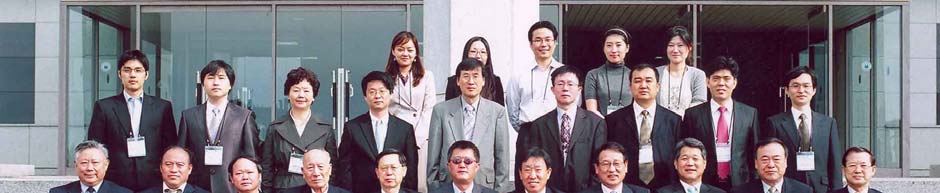
Twenty five participants attended this meeting, including prominent regional scientists as
well as eight members of national and municipal assemblies in China and ROK. The list of
participants is attached as Annex I to this document, while the "Conference Programme" with
presenters' names and affiliations is attached as Annex II.
During the Opening Ceremony of the Conference, Mr. Eun LEE, Vice Minister, Ministry of
Maritime Affairs and Fisheries (MOMAF), ROK gave a welcome speech, followed by Mr.
Dunxin HU, Member of the National People's Congress, China, who gave an opening
speech on behalf of the Chinese parliamentarians.
Mr. Seoung-Yong HONG, President of Inha University and Host of the Conference,
welcomed all the participants from China and ROK. Joining Mr. Hong to welcome the
participants, Mr. Yihang JIANG, Project Manager, UNDP/GEFYellow Sea Project, thanked
Inha University, MOMAF, and the ROK National Assembly Ocean Forum for their support
and efforts to organise the Conference.
Mr. Jong Geel JE, Member of the National Assembly, ROK, gave a keynote speech on
regional co-operation and the role of parliaments for protecting the Yellow Sea ecosystem.
The abstracts of speeches of Mr. Je and other speakers are attached to this document as
Annex III.
The Regional Conference focused on socio-economic aspects of the Yellow Sea's
ecosystem, such as legislation, economy, and public awareness. Specifically, the
Conference addressed the following issues:
· Regional co-operation and the role of parliaments for protecting the Yellow Sea
ecosystem;
· Legislation and law enforcement for marine environmental protection and sustainable
resource use in the Yellow Sea;
· Economic valuation as a tool to support preparation and enforcement of legislation;
· Public awareness and participation in protection of marine environment and
sustainable use of coastal and marine resources; and
· Regular Conference as a mechanism for continuous contribution to sound
environment management of the Yellow Sea.
Through presentations and panel discussions, the Conference:
UNDP/GEF/YS/PC.2/3
Page 2
· Enhanced regional co-operation, particularly the co-operation of the parliamentary
bodies in the Yellow Sea region, in protecting the marine environment and
sustainable use of marine and coastal resources in the Yellow Sea;
· Served as a mechanism to exchange views and information between the
parliamentary organisations about protection of marine environment and sustainable
use of marine and coastal resources;
· Contributed to strengthening an understanding of a systematic management of
coastal and marine resources in the Yellow Sea;
· Contributed to realising a need to mobilise necessary financial support for the
integrated management of the marine and coastal resources; and
· Encouraged the participation of the public sector, NGOs, and research communities
to raise public awareness of the environmental issues in the Yellow Sea.
The highlight of the Conference was the discussion on how to maintain the momentum
created from the two meetings--the Parliamentary Conference and the Regional
Conference--to muster strong political will to solve environmental problems in the Yellow
Sea.
The participants shared the view that it is important to continue dialogues at the highest level
of decision-making among the two participating countries and other relevant countries.
Exploring various ways for this purpose, the participants came to an agreement that the
Regional Conference would serve as an appropriate mechanism to maintain and expand the
dialogues between the two parliamentary bodies in China and ROK. The participants then
decided to consult with existing organisations under each parliamentary body (e.g.,
environment-related committee) as well as other relevant government agencies to formalise
the Conference and organise it on a regular basis.
When materialised, the regular conference would be the first formal structure under GEF
projects where the parliamentarians addressed transboundary environmental issues, and
also the strong force to facilitate conservation efforts in the Yellow Sea, including the ones
implemented under the UNDP/GEF Yellow Sea Project's Strategic Action Programme.
The Yellow Sea Project will further support the national assemblies in China and ROK to
strengthen their relationship for a better environment in the Yellow Sea by facilitating smooth
communication between the two bodies and by providing necessary secretariat support
within the project period.
UNDP/GEF/YS/PC.2/3
Annex I
Page 1
Annex I
List of Participants
PEOPLE'S REPUBLIC OF CHINA
Mr. HU Dunxin
Mr. MAI Kangsen
Member of the National People's Congress
Member of the National People's Congress
Academician
China Ocean University
Chinese Academy of Sciences
5 Yu Shan Road
Institute of Oceanology
Qingdao 266003
Chinese Academy of Sciences
Shangdong Province
7 Nan Hai Road
Tel: 86-532-8203-2495
Qingdao 260771
Fax: 86-532-8203-2805
Shangdong Province
Email: kmai@ouc.edu.cn
Tel: 86-532-8289-8677
Fax: 86-532-8289-8612
Email: dxhu@ms.qdio.ac.cn
Mr. NING Shuchen
Mr. ZHAI Shikui
Member of the National People's Congress
Member of the Shandong People's
Ocean and Fishery Administration, Tianjin
Congress
12, First Avenue, Economic and
Vice President
Technological Development district
Ocean University of China
Tianjin, 300457
5 yushan road, Qingdao,
Tel: 86-22-6629-7661
Shandong 266003
Fax: 86-22-6629-7704
Tel: 0532-82032865
Email: gsgai@263.net
Fax: 0532-82032865
Email: zhaishk@public.qd.sd.cn
zhaishk@ouc.edu.cn
Ms. SUN Xiuqin
Mr. LIU Ruiyu
Member of the Shandong People's Congress
Academician
Researcher
Institute of Oceanology
First institute of oceanography, SOA
Chinese Academy of Sciences
6 Xianxialing Road Hi-Tech Industrial Park
7 Nan Hai Road
Qing Dao, Shandong 266001
Qingdao 260771
Tel: 0532- 88967449
Shangdong Province
Fax: 0532- 88967447
Email: xiuqin@vip.sina.com
xiuqin_sun@fio.org.cn
Mr. JIN Xianshi
Mr. LI Liyuan
Director
Deputy Director
Divsion of Stock Assessment and Ecosystem Marine and Fishery Bureau of Dandong
Yellow Sea Fisheries Research Institute
130 Siwei Road, Zhenxing District,
106 Nanjing Road
Dandong, Liaoning Province
Qingdao 266071
Tel: 86-415-2126940
Tel: 86-532-8584-9430
Fax: 86-415-2163175
Fax: 86-532-8581-1514
Email: liliyuan@vip.sina.com
Email: jin@ysfri.ac.cn
UNDP/GEF/YS/PC.2/3
Annex I
Page 2
REPUBLIC OF KOREA
Mr. JE Jong Geel
Mr. HAN Kwang Won
Member of the National Assembly
Member of the National Assembly
Member of the National Assembly Ocean
Member of the National Assembly Ocean
Forum
Forum
Vice-Chairman of Environment & Labor
Member of Agriculture, Forestry, Maritime
Committee
No.731 Member' Office B/D
Affairs and Fisheries Committee
The National Assembly
No.204 Member' Office B/D
1 Yeouido-Dong, Yeongdeungpo-Gu, Seoul
The National Assembly
150-702
1 Yeouido-Dong, Yeongdeungpo-Gu, Seoul
Tel: 82-2-788-2608
150-702
Fax: 82-2-788-3731
Tel: 82-2-788-2842
Email: jgje@assembly.go.kr
Fax: 82-2-788-3204
Email: hkwams@assembly.go.kr
Mr. YOON Hwa Sub
Mr. LEE Eun
Member of Gyeonggi Provincial Council
Vice Minister
Member of Economy & Investment Committee Ministry of Maritime Affairs and Fisheries
Gyeonggi Province Council, 63
140-2 Gye-Dong, Jongno-Gu
Docheongapgil, Paldal-Gu, Suwon-City,
Seoul, 110-793
Gyeonggi-do, Republic of Korea
Tel: 82-2-3674-6210
Tel: 82- 31-493-2626
Fax: 82-2-3674-6213
Fax: 82- 31-493-2621
Email: leeeun0808@momaf.go.kr
Email: wsyoon-21@hanmail.net
Mr. HONG Sun-Bae
Mr. HONG Seoung-Yong
Assistant Director
President
Marine Environment Division
Inha University
Marine Policy Bureau
253 Yonghyun-dong, Nam-gu, Incheon 402-
Ministry of Maritime Affairs and Fisheries
751, Korea
140-2 Gye-Dong, Jongno-Gu
TEL : +82-32-860-7000
Seoul, 110-793
FAX : +82-32-874-5582
Tel: 82-2-3674-6544
Email: presi@inha.ac.kr
Fax: 82-2-3674-6546
Email: hong0610@momaf.go.kr
Mr. CHOI Joong Ki
Mr. HUH Hyung-Tack
Director of Center for Coastal Environments
Dept. of Oceanography
of the Yellow Sea (CCEYS),Inha University
Sr. Scientist Emeritus, KORDI
Deartment of Oceanography, Inha
Fellow, Korean Academy Of Science &
University,Incheon,402-751,Korea
Technology
Tel:82-32-960-7704
Chairman, IOC/WESTPAC
Fax:82-32-874-2023
Korea Ocean Research and Development
Email:jkchoi@inha.ac.kr
Institute
1270 Sa-dong Sangnok-gu Ansan-si
Gyeonggi-do 426-744
Republic of Korea
Tel: 82-31-400-6201
Fax: 82-31-408-5934
Email: hthuh@kordi.re.kr
UNDP/GEF/YS/PC.2/3
Annex I
Page 3
Mr. CHUNG Suh-Yong
Mr. Sukjae KWON
Assistant Professor
Director
Division of International Studies
Policy Research Department
Korea University
Korea Ocean Research and Development
5-1, Anam-dong, Seonbuk-gu,Seoul, 136-701 Institute
Tel: 82-2-3290-2424
1270 Sa-dong, Sangnok
Fax: 82-2-303-7838
Ansan City, Gyeonggi Province 426-744
Email: mahlerchung@korea.ac.kr
Republic of Korea
Tel: 82-31-400-6502
Fax: 82-31-400-6505
Email: sjkwon@kordi.re.kr
Mr. JO Kang Hee
Mr. KIM Gab-Kon
Secretary General
General Secretary
Incheon Federation for Environmental
Korean Network for Coastal Conservation
Movement
(CKN)
1530-8 Juan 8-dong Nam-gu Incheon Korea
#301, HD B/D, 445-17 Wolpi-dong, Ansan
Tel: 82-32-426-2767
city, Gyeonggi-do, 426-853
Fax: 82-32-426-2768
Republic of Korea
Email: jokh@kfem.or.kr
Tel: 82-31-484-3301
Fax: 82-31-487-1881
Email: coastalkorea@hanmail.net
PROJECT MANAGEMENT OFFICE (PMO)
Mr. Yihang JIANG
Mr. Isao ENDO
Project Manager
Environmental Economics Officer
UNDP/GEF Yellow Sea Project
UNDP/GEF Yellow Sea Project
Korea Ocean Research and Development
Korea Ocean Research and Development
Institute
Institute
1270 Sa-dong Sangnok-gu Ansan-si
1270 Sa-dong Sangnok-gu Ansan-si
Gyeonggi-do 426-744
Gyeonggi-do 426-744
Republic of Korea
Republic of Korea
Tel: 82-31-400-7825
Tel: 82-31-400-7793
Fax: 82-31-400-7826
Fax: 82-31-400-7826
Email: yihang@yslme.org
Email: isao@yslme.org
Ms. Euidea YUN
Ms. Junghwa KIM
IT Specialist
Secretary
UNDP/GEF Yellow Sea Project
UNDP/GEF Yellow Sea Project
Korea Ocean Research and Development
Korea Ocean Research and Development
Institute
Institute
1270 Sa-dong Sangnok-gu Ansan-si
1270 Sa-dong Sangnok-gu Ansan-si
Gyeonggi-do 426-744
Gyeonggi-do 426-744
Republic of Korea
Republic of Korea
Tel: 82-31-400-7830
Tel: 82-31-400-7829
Fax: 82-31-400-7826
Fax: 82-31-400-7826
Email: euidea@yslme.org
Email: junghwa@yslme.org
UNDP/GEF/YS/PC.2/3
Annex I
Page 4
Mr. Yun Il KIM
Intern
UNDP/GEF Yellow Sea Project
Korea Ocean Research and Development
Institute
1270 Sa-dong Sangnok-gu Ansan-si
Gyeonggi-do 426-744
Republic of Korea
Tel: 82-31-400-7831
Fax: 82-31-400-7826
Email: kevin@yslme.org
UNDP/GEF/YS/PC.2/3
Annex II
Page 1
Annex II
Conference Programme
DAY 1 11TH OCTOBER 2007
09:00 09:30
REGISTRATION
09:30 10:00
OPENING CEREMONY
Facilitator: Mr. HUH Hyung-Tack
Welcome speech by the Host Government
Mr. LEE Eun
Vice Minister
Ministry of Maritime Affairs and Fisheries
ROK
Opening speech by the representative of Chinese parliament
members
Mr. HU Dunxin
Member of the National People's Congress
Academician
Chinese Academy of Sciences
Institute of Oceanology
Chinese Academy of Sciences
China
Welcome address by the representative of Ocean Forum
Mr. YI Young-ho
Member of the National Assembly
Representative of the National Assembly Ocean Forum
Member of the People's Solidarity for the Democratization of the
Economy and the Peaceful Reunification
ROK
Welcome address by the representative of Host University
Mr. HONG Seoung-Yong
President
Inha University
ROK
Project Manager's address
Mr. JIANG Yihang
Project Manager
UNDP/GEF Yellow Sea Project
UNDP/GEF/YS/PC.2/3
Annex II
Page 2
10:30 11:00
KEYNOTE SPEECH
Chair: Mr. JIANG Yihang
Regional co-operation for sustainable development in the Yellow Sea:
Creating momentum from the parliaments
Mr. JE Jong Geel
Member of the National Assembly
Member of the National Assembly Ocean Forum
Vice-Chairman of Environment & Labor Committee
ROK
11:00 15:00
PLENARY PRESENTATION 1
Legislation and law enforcement for marine environmental protection and
sustainable resource use in the Yellow Sea
Chair: Mr. JE Jong Geel
Current legislation and status of enforcement in Republic of Korea:
Prospects and challenges for the future
Mr. HAN Kwang-Won
Member of the National Assembly
Member of the National Assembly Ocean Forum
Member of Agriculture, Forestry, Maritime Affairs and Fisheries
Committee
ROK
On-going and planned activities in harmonizing legislation:
Recommendations for strengthening and harmonizing national legal
institutions
Mr. CHUNG Suh-yong
Assistant Professor
Division of International Studies
Korea University
ROK
Panel discussion on the harmonization and reform of regional
policies, laws, and institutions for better management of marine and
coastal resources
Panel members:
Mr. JE Jong Geel (Chair)
Mr. HU Dunxin
Mr. MAI Kangsen
15:30 17:00
PLENARY PRESENTATION 2
Economic valuation as a tool to support preparation and enforcement of
legislation
Chair: Mr. MAI Kangsen
Economic Analysis of Environmental Management Actions
Mr. ENDO Isao
Environmental Economics Officer
UNDP/GEF Yellow Sea Project
UNDP/GEF/YS/PC.2/3
Annex II
Page 3
Economic analysis of coastal development: How to incorporate
economic aspects into environmental decision-making
Mr. KWON Sukjae
Director
Policy Research Department
Korea Ocean Research and Development Institute
ROK
Panel discussion on the use of economic data to enhance
environmental decision-making and legislative actions.
Panel members:
Mr. MAI Kangsen (Chair)
Mr. Zhai Shikui
Mr. KWON Sukjae
Mr. ENDO Isao
DAY 1 12TH OCTOBER 2007
09:30 10:30
JOINT ACTIVITY with
"The 7th International Symposium on the Marine Sciences of the Yellow
Sea and East China Sea (ISMY-7)"
Attendance at the opening ceremony of ISMY-7
10:30 12:00
PLENARY PRESENTATION 3
Public awareness and participation in protection of marine environment and
sustainable use of coastal and marine resources
Chair: Mr. JE Jong Geel
Raising public awareness of marine environment: Activities of local
communities
Mr. JO Kang-Hee
Secretary General
Incheon Federation for Environmental Movement
ROK
Enhanced youth participation in environmental protection for the
Yellow Sea
Mr. LI Liyuan
Deputy Director
Marine and Fishery Bureau of Dandong, Liaoning Provincial
Government
China
Panel discussion on how to improve awareness and participation of
civil society in marine conservation
Panel members:
Mr. JE Jong Geel (Chair)
Mr. NING Shuchen
Ms. SUN Xiuqin
Mr. YOON Hwa Sub
Mr. KIM Kap Geon
UNDP/GEF/YS/PC.2/3
Annex II
Page 4
13:30 15:00
PANEL DISCUSSION
Regular Conference as a mechanism for continuous contribution to sound
environment management of the Yellow Sea
Continuation and improvement of the Conference mechanism to
advance dialogue and co-operation between the two countries at the
parliamentary level
Panel members:
Mr. HU Dunxin (Chair)
Mr. NING Shuchen
Mr. JE Jong Geel
Mr. JIANG Yihang
15:30 16:30
CONFERENCE SUMMARY
Co-chairs: Mr. HU Dunxin & Mr. JE Jong Gee
DAY 3 13TH OCTOBER 2007
08:30 15:00
FIELD TRIP AROUND THE SHIHWA LAKE AREA
Organised by Korean Water Resource Corporation
UNDP/GEF/YS/PC.2/3
Annex III
Page 1
Annex III
Abstracts of Speeches
UNDP/GEF/YS/PC.2/3
Annex III
Page 3
Welcome speech by the Host Government
Mr. LEE Eun
Vice Minister
Ministry of Maritime Affairs and Fisheries, Republic of Korea
Before starting my welcome address, I would like to express my warmest welcome to
Honorable Congressmen, Mr. HU Dunxin, Mr. MAI Kangsen, Mr. NING Shuchen, Mr.
ZHAI Shikui, Ms. SUN Xiuqin of the People's Republic of China. Thank you for
attending this event.
I would also like to thank Assemblymen, Mr. JE Jong Geel and Mr. HAN Kwang Won,
Representatives of the ROK National Assembly for your participation.
In particular, I wish to express my special thanks to Dr. Hong, Seoung-yong, President
of Inha University, for opening this regional conference on the Yellow Sea.
I would also like to thank Assemblyman, Mr. YOON Hwa Sub, Representative of the
Gyeonggi Provincial Council, Korean and Chinese experts in government, academia,
research and civic fields and YSLME staffs for attending this conference.
It is my pleasure and an honor to participate in today's Regional Conference on
Parliamentary Roles in Protection of the Marine Environment and Sustainable Use of
Marine Resources in the Yellow Sea and to deliver my welcoming speech to all of you.
The Yellow Sea is an important region for both China and Korea in economic, cultural,
and historical terms. It has been the main trade route for two countries for a long time
and it still stands as an important economic arena for both countries.
The Yellow Sea is abundant with various fishery and marine resources and it also
possesses healthy marine ecosystem.
Furthermore, the expectations on the development of alternative energy in the Yellow
Sea is rising recently due to its abundant clean energy resources such as tide, wave
and wind.
However, due to the active economic activities of both countries and reckless coastline
development, the marine environment of the Yellow Sea is faced with some serious
threats such as marine pollution and decreased fishery resources.
In this sense, the two governments have been conducting joint researches on the
marine environment of the Yellow Sea through the 'Korea-China Joint Committee on
Environment Cooperation' since 1994. We are planning to expand international
research activities on sharing reliable data and and also to establish a more diversified
cooperative measures in protecting the marine environment of the Yellow Sea.
As a part of our cooperative measures, we have launched the YSLME Project (Yelow
Sea Large Marine Ecosystem Project) since 2005.
Through the YSLME project, we plan to set up a `Management Plan for the
Environment of the Yellow Sea', which focuses on five areas such as marine pollution,
fisheries, marine ecosystem, biodiversity and investment on the Yellow Sea. Once the
plan is prepared, the two countries will set up an agreed implementation plan
authorized by the government and start off the joint project starting from 2012.
At this juncture, it is very meaningful and timely that the legislative branches in both
countries are interested in the environment of the Yellow Sea and have decided to hold
this conference, which is an arena of discussion and cooperation on the environment of
the Yellow Sea.
Honorable Guests!
UNDP/GEF/YS/PC.2/3
Annex III
Page 4
At the last year's first meeting, the conference focused on sharing information on the
environmental situation of the Yellow Sea and the value of marine ecosystem. It was
also an opportunity to discuss cooperative measures for the congress, local
governments, academia and the industry to manage the environment of the Yellow Sea.
Meanwhile, the second meeting we are having this year is focused more on producing
substantial progresses, such as establishing legislatures for protecting the environment
of the Yellow Sea.
I believe that your efforts will greatly contribute to strengthening bilateral cooperation
on improving the environment of the Yellow Sea.
I hope this conference will be an arena for vibrant discussions and serve as a great
opportunity for creating a foundation of a more cleaner and fruitful Yellow Sea.
Thank you.
UNDP/GEF/YS/PC.2/3
Annex III
Page 5
Opening speech by the representative of Chinese parliament members
Mr. HU Dunxin
Member of the National People's Congress, China
Ladies and Gentlemen:
I have the great honor to participate in the Regional Conference on Protection of the
Marine Environment and Sustainable Use of Marine Resources in the Yellow Sea, and
to give a speech at the opening ceremony.
As all we know, the Yellow Sea is so important to both Korea and China since she
links the two great nations, furnishing transportation, providing fish and seaweeds to
eat, and offering many marine products to use. However, the Yellow Sea undergoes
natural disasters, such as storms and ENSO (El Nino/Southern Oscilation), which can
be extremely severe, and anthropogenic impacts, such as riverine discharges of
artificial materials, especially heavy metals, over-fertilization-produced nutrients, and
waste dumping, which are potentially harmful to the marine environment and coastal
ecosystem. Facing the problems, we do have to urgently have measures to deal with.
This is the reason why we get together here today to discuss what we should and can
do jointly with the present issues. I do believe that through discussion we can find a
harmonic and effective way to improve the present situation on protection of the
marine environment and sustainable use of marine resources in the Yellow Sea.
Ladies and gentlemen, to do this the burden is heavy and the road is long, but I do
believe that we will get there anyway. I wish the Conference a great success!
UNDP/GEF/YS/PC.2/3
Annex III
Page 6
Welcome address by the representative of Host University
Mr. HONG Seoung-Yong
President
Inha University, Republic of Korea
Vice Minister LEE Eun of Ministry of Maritime Affairs and Fisheries,
Honorable Lawmakers of the Parliaments, the People's Republic of China and the
Republic of Korea,
Excellencies, ladies and gentlemen!
On behalf of INHA University, it's my great pleasure to welcome all of you to join "The
Regional Conference on the Protection of the Marine Environment and Sustainable
Use of Marine Resources in the Yellow Sea."
Distinguished participants, Welcome!
After 15 years of normalized diplomatic relations between the People's Republic of
China and the Republic of Korea, we have witnessed rapid changes in political,
economic, and cultural areas. Bilateral trade amounted to U$118 billion last year,
marking a 19-fold increase from the U$6.3 billion in trade in 1992. Last year, 4.8 million
people from both countries visited the other, marking a 36-fold rise since 1992.
In a similar vein, academic exchanges in the field of maritime affairs, fisheries, and
ocean science have also expanded among universities and oceanographic institutions.
Since 1989, INHA University has developed strong academic ties with the Institute of
Oceanology, Chinese Academy of Sciences.
Distinguished participants!
While communities have continued to develop most rapidly around the coasts, that
growth has accelerated to a point that is now dangerously unstable. Today, most of the
world's seas are suffering from a wide range of human-caused assaults, in a variety of
lethal combinations. In the world's most biologically productive and diverse bodies of
water, ecosystems are on the verge of collapse and in some cases have already
collapsed.
There are about 35 major seas in the world, some coastal and some enclosed by land.
According to the report in the World Watch Journal in 1995, it is the seven dying seas,
including the Yellow Sea, which illustrates the panoply of ills.
Sustainable use of the oceans, more than most other ocean goals, depends on
effective action by coastal states. Yet the enactment and implementation of satisfactory
sea use agreements and conservation measures are contentious and time consuming.
The Yellow Sea Large Marine Ecosystem (LME) is an important global resource. The
Yellow Sea's biodiversity, including its fishery resources, however, has been
deteriorating for decades due to shortsighted economic activities and unsustainable
uses of the natural resources in the region. Indeed, Yellow Sea LME has been most
significantly affected by human development among the 63 LMEs in the world's
oceans. It is time for all stakeholders to join together in promoting transnational
cooperation to protect, conserve, and manage the Yellow Sea by reducing
development stress and promoting sustainable exploitation of its resource.
UNDP/GEF/YS/PC.2/3
Annex III
Page 7
I heard that the first regional parliamentary conference in Qingdao enabled
parliamentary members to deepen their understanding of the serious environmental
issues in the Yellow Sea and to recognize the strong need for taking action to address
the problems.
We have no doubt that the National Assembly of the Republic of Korea and the
National People's Congress of the People's Republic of China shall play important
roles in setting their national regulations, national infrastructure and national budget for
the protection of the marine environment of the Yellow Sea. Their roles are very
important for the preparation and approval of the Strategic Action Program and the
National Yellow Sea Action Plans. It is also important to set up appropriate dialogues
among politicians, scientists and all relevant stakeholders, including NGO's, for the
better understanding of marine environmental problems of the Yellow Sea.
I believe this conference will be successful in seeking closer regional cooperation to
encourage wider and more active participation of all stakeholders in the protection of
the environment and sustainable use of marine resources in the Yellow Sea.
I am sure that this conference will provide a framework for better appreciation of how
such goals can be achieved, and, in particular, how bilateral cooperation between the
parliaments of the People's Republic of China and the Republic of Korea, can be
improved.
Finally, I would like to express my sincere appreciation for the hard work of numerous
people behind the scenes. My special thanks go to the organizing committee, UNDP,
and GEF (Global Environment Facility). Without their valuable sponsorship and
contribution, this conference would have been impossible.
Thank you very much!
UNDP/GEF/YS/PC.2/3
Annex III
Page 8
Project Manager's address
Mr. JIANG Yihang
Project Manager
UNDP/GEF Yellow Sea Project
Good morning,
Distinguished Friends and Colleagues,
Ladies and Gentlemen,
It is my pleasure and honour to participate in this regional Conference on protection of
marine environment in the Yellow Sea, with focus on the parliamentary roles in the
process. First of all, on behalf of the UNDP/GEF Yellow Sea project, I would like to
express my sincere appreciation to the National Assembly of Republic of Korea, the
Government of Korea for hosting this important conference. I would like also to
welcome all the participants from both China and Korea to attend this important event.
I would like to thank Inha University for organising the Conference in beautiful campus
of the University.
As most of you know, and some of you participated in, the Parliamentary Conference
was organised last year in Qingdao, China. The Parliamentary Conference upgraded
understanding of the marine environmental problems in the Yellow Sea, and created
strong political support from the parliamentary organisations in the participating
countries. There were number of good suggestions from the conference to continue
the momentum generated from the conference, and to move forward to have the co-
operative mechanism being regular and self-sustainable.
Marine Environmental Problems in the Yellow Sea have received attentions from the
Governments of all the coastal countries, the relevant scientists and experts, the non-
governmental organisations and the general public. It is urgent to take necessary
actions to stop the degradation of the marine environment in the Yellow Sea.
Necessary management actions are under consideration of the UNDP/GEF Yellow Sea
project as well as other efforts currently going on the region.
To identify the management actions, it is well understandable that the parliamentary
organisations in the participating countries have very strong roles to play in define the
management actions including legislative, institutional and financial arrangements for
better management of the ecosystem in the Yellow Sea. Close co-operation among
the parliamentary organisations in the coastal countries will certainly enhance the
design and implementation of these critical management actions.
Ladies and gentlemen,
We have a wonderful dream to have clear marine environment around us; we would
like enough, fresh and healthy seafood for our families, friends and next generations;
we would like to bring our families during holidays to the sea side to enjoy clean
beaches and waters those provided by nature to us. For our wonderful dream, we
need to work hard and work together.
We understand now that
UNDP/GEF/YS/PC.2/3
Annex III
Page 9
·
total investment to the protection of environment in general is less than 1%
of total GNP in most countries in the world, including developed and
developing countries;
·
existing legislations in protecting marine environment and sustainable uses
of marine and coastal resources require improvements and harmonisation;
·
the institutional arrangement for more effective management of marine and
coastal environment still require extensive investigation and consideration of
the coastal countries;
The tasks in front all of us are important, urgent and meaningful. All stakeholders need
to joint hands together to achieve our overall objectives. Again, dialogues and co-
operation among the parliamentary organisations will be a fundamental requirement for
us to achieve our goals.
I do wish draw attention of the all distinguished participants that we need to have all the
countries involved in the process to have full geographic coverage of our working areas
in the Yellow Sea. Therefore, it is necessary and critical to involve the DPR Korea to
work together with us. I am pleased to inform you that DPR Korea has expressed their
interests in and decision of joining in the UNDP/GEF Yellow Sea project.
Finally, I wish we would have fruitful discussion and successful conference. I hope all
of you will enjoy your stay in Korea.
Thank you for your attention.
UNDP/GEF/YS/PC.2/3
Annex III
Page 10
Regional co-operation for sustainable development in the Yellow Sea: Creating
momentum from the parliaments
Mr. JE Jong Geel
Member of the National Assembly, Republic of Korea
Good morning. Dear esteemed members of the parliaments from China and South
Korea, speakers and representatives from YSLME,
It is a great honor to be the first speaker of the first session of the Seminar for Korean
and Chinese Parliament Members.
As you know, at the summit meeting between South and North Korea that was held in
Pyongyang a few days ago, there was an agreement to establish a Special Region for
Peaceful Co-operation in the West Sea Borderline Area between South and North
Korea. It has fostered an unsurpassed level of a reconciliatory mood. Yellow Sea was
once an area where different policies and ideologies competed with each
other. Viewed from a historical perspective, it is also an area where there has been
much interaction between the cultures as well as material and human resources of
each region, for thousands of years.
This seminar can be viewed as a very meaningful event which provides an opportunity
for members of the parliaments from China and South Korea to share their
philosophies and to strengthen relationships concerning the Yellow Sea. I sincerely
hope that this seminar will provide us with insights on how to regard the Yellow Sea
and allow us to prepare a plan of important actions that must be undertaken, not only
for this generation but also for our descendents. Also I hope that North Korea, another
concerned party regarding the Yellow Sea, will attend the next seminar.
I. Value of the Yellow Sea
First, I would like to tell you about several unique values concerning the ecosystem of
the Yellow Sea, from the perspective of an ocean ecologist who spent some time as a
youth trying to understand the ocean before becoming a member of the National
Assembly.
Yellow Sea possesses great bio diversity and productive capacity for organisms that is
incomparable to any other region in the world. About 2,000 species, including
approximately 150 types of commercial fish and 200 types of birds, live in the Yellow
Sea. Apart from just being a statistic, what makes them special is that a great number
of them are indigenous to the Yellow Sea or are endangered species.
What characteristic of the Yellow Sea allows so many species to live there?
First, a large tidal range that results from a semi closed geographic characteristic has
formed vast tidelands in may coastal areas. Second, warm current and cold current
intersect seasonally and massive rivers located in the coastal areas provide plentiful
inflow of organic matter.
The tideland, a boundary area where the sea and land meet, is not only a habitat and
spawning ground for diverse marine life, including fish and shellfish. It also serves an
important role as a feeding ground for migratory birds. Not only from a bio diversity
point of view but also from the economic value perspective, it is a well known fact that
productivity per unit area for tideland is more than ten times higher than that of
agricultural land.
II. Distress Signal Being Sent by the Yellow Sea
In both South Korea and China, demand for development, in which land is expanded or
converted for other uses, is increasing. The Yellow Sea is sending a distress signal
UNDP/GEF/YS/PC.2/3
Annex III
Page 11
concerning the pressure due to the continuous development aimed at socioeconomic
advancement.
Over 65% of the West Coast tideland of South Korea, one of the top five tidelands in
the world, has disappeared because of the industrialization that was pursued in the
name of economic development. I need not point out that numerous marine life that
lived in the tideland has vanished along with it as well.
Important fishery resource like cod, herring and yellow corvina that used to migrate
and spawn following the warm current and cold current have lost their commercial
value due to over fishing, long time ago. Moreover, it has been estimated that the
fishery resource population in the Yellow Sea has been reduced by more than 40%
between 1960 to 1980. This is self evident in the reality of the reduced Catch Per Unit
of Fishing Effort (CPUE) for both South Korea and China, in spite of the expanded
operation area and an increase in the number of fishing vessels.
In addition to the coastal development and resource over fishing, another source of
threat faced by the Yellow Sea is pollution caused by material originating from the
land. Currently, a population that approaches 10% of the world population live in the
coastal areas of the Yellow Sea. Including Incheon, where this seminar is being held,
large cities with population in the millions or even tens of millions like Seoul, and
Chinese cities from which some of you may have come from such as Tianjin, Dalian,
Tsingtao and Shanghai are distributed all along the coast. Pollutants from these
large cities all flow into the Yellow Sea. Over 80% of the pollution in the Yellow Sea
originate from activities on land. Pollutants originating from the land increase the
organic matter excessively in the Yellow Sea and has become the cause for the red
tide. Because of this red tide, fish hatcheries and farms in Korea lose 10 million
dollars each year. In China, Liaoning province alone loses 20 million dollars each
year from such damages.
Appearance of marine organisms that have been exposed to environmental hormones
and heavy metals and degradation of water quality are clear evidence concerning
continuous change that has been going on in the Yellow Sea environment.
III. Regional Co-operation for Sustainable Development
We have an obligation to pass on the Yellow Sea, the bountiful natural resource we
inherited from our ancestors, to the next generation, in the same condition. I have
searched for several programs of cooperation in order to carry out such duties.
We know by experience that environmental problems are part of our vast social and
cultural system. Because environmental problems include many parties with often
conflicting interests, a multi-dimensional consideration is essential for finding a viable
solution. Within the large scope of conservation of the Yellow Sea, co-operation
between local authorities, government ministries and countries is very
important. The role of the parliament is also important. The parliament must
play the role of combining the interests of various parties, determining the priority
of values, adjusting conflicting legal, institutional and financial systems and
ultimately harmonizing and merging them.
Co-operation between members of the parliaments from China and South Korea are
needed for the following reasons.
First, South Korea and China must make an effort for North Korea, another
geographical party regarding the Yellow Sea, to become actively involved. Because
Yellow Sea is a great sphere ecosystem that is organically connected, it is important for
us to have a complete geographical knowledge and understanding about it in order to
UNDP/GEF/YS/PC.2/3
Annex III
Page 12
improve this ecosystem. From this point of view, the three countries must prepare
systematic procedures for active participation. As the summit meeting between South
Korea and North Korea showed, if there is a will to achieve a goal, it is not that hard to
realize.
Second, South Korea and China must make an effort to draft common policies that will
become the legal basis for maintaining and managing the Yellow Sea. For example,
we can think of establishing a common marine protection region to guarantee a
sustainable marine production, which is the ultimate goal of the YSLME project. This
will become the first step in protecting the habitat for marine life that has already been
destroyed by human activities.
Third, we must share the information and experience gained by each country about the
Yellow Sea, through continuous exchanges and co-operations. As I mentioned earlier,
this is because the Yellow Sea is a great sphere ecosystem that is not isolated.
Finally, I hope that this seminar will become a meaningful place where realistic
proposals of co-operation can be agreed to. I believe that this seminar is a wonderful
opportunity that will provide new visions and ideas for better management of the Yellow
Sea. Thank you.
UNDP/GEF/YS/PC.2/3
Annex III
Page 13
Current legislation and status of enforcement in Republic of Korea: Prospects
and challenges for the future
Mr. HAN Kwang-Won
Member of the National Assembly, Republic of Korea
Korea actively endeavors to improve the national marine environmental laws and
regulations, which includes the recent enactment of "the Law on the Conservation and
Management of Marine Ecosystem" in October, 2006 and "the Marine Environmental
Law" in January, 2007.
Along with the growing global concern on the importance of marine environment, it is
also increasing nationwide. The mode of regulations is also shifting from the Command
and Control Approach to the Precautionary Integrated Management Approach.
These institutional changes in Korea have implications in that it has started to
internalize the Sustainable Development Principle and the Precautionary Principle in
the form of 'law' and 'policy.'
The enactment efforts for conservation and sustainable use of marine environment will
continue as the legal demand of public for coastal erosion prevention and climate
change mitigation increase. This calls for robust revision for more logical framework
and coherence of marine environment laws and regulations as well as efficient
implementation of policies.
In addition, it is strongly required that the effort should now take account of the
transitional ecosystem where terrestrial and marine ecosystems coexist. Systematical
research and survey, laws and policies should be taken accordingly for effective
conservation.
UNDP/GEF/YS/PC.2/3
Annex III
Page 14
On-going and planned activities in harmonizing legislation: Recommendations
for strengthening and harmonizing national legal institutions
Mr. CHUNG Suh-yong
Assistant Professor
Korea University, Republic of Korea
Yellow Sea environment is under pressure due to the rapid economic development and
population growth without adequate balance with the environment protection. Pollution,
threats to biodiversity, decreasing fishing stocks and deteriorating ecosystem in the
Yellow Sea can be counted as the major issues.
The transnational nature of the Yellow Sea environmental issues requires cooperative
efforts among the coastal states. However, focus and interests of each state such as
China, South Korea and North Korea are widely different, posing difficulties in
establishing effective cooperative mechanisms. Futhermore, the roles of international
organizations, private sectors, NGOs and parliaments, which could be equally
important to build up effective cooperative efforts, remain limited. Futhermore, non-
environmental issues such as the North Korea's nuclear arms test, adds more
difficulties and complexities to the regional efforts.
On the other hand, existing institutions reveal their ineffectiveness as well. Relevant
international treaties such as the United Nations Convention on the Law of the Sea,
MARPOL Convention and London Convention don't play their proper roles as the main
regulatory standards to address the marine environmental issues in the region.
Bilateral treaties such as Agreement on Fisheries between China and Korea and
Agreement on Environmental Cooperation between China and Korea contributed their
limited impacts to the protection of the environment. Weak regional governance in the
Yellow Sea region concerning the marine environmental protection can be also found
in relatively ineffective intergovernmental cooperative mechanisms such as NOWPAP,
and PEAMSEA.
Therefore, the Yellow Sea region needs to find out a better way of strengthening its
regional governance. Creating the Yellow Sea LME Commission may be an example.
This Commission may serve as a main body to address various issues related to the
marine environmental protection in the Yellow Sea including strengthening and
harmonizing national legal institutions.
UNDP/GEF/YS/PC.2/3
Annex III
Page 15
Economic Analysis of Environmental Management Actions
Mr. ENDO Isao
Environmental Economics Officer
UNDP/GEF Yellow Sea Project
This presentation introduces the basics of economic analysis of environmental
management actions, explaining the valuation of environmental quality and the cost-
benefit analysis of conservation activities. The presentation also discusses, as a case
study, the economy of introducing environmentally-friendly mariculture practices.
"Economic value" can be defined as the sum of "consumer surplus" and "producer
surplus." The consumer and producer surpluses are derived from the demand and
supply curves of concerned environmental goods or services, respectively. Society is
well-off when the economic value is maximised at least in terms of economy.
There are various techniques available to estimate the demand and/or producer
surpluses (i.e., economic value), including empirical technique, travel cost method
(TCM), and contingent valuation method (CVM). The empirical technique is for market
goods (e.g., commercial fish), while the TCM and CVM are for non-market goods (e.g.,
scenic views).
Environmental degradation might decrease the economic value of environmental
goods. For example, reduced fish stock size due to overexploitation may increase
fishing cost; as a result, the economic value of commercial fisheries declines.
The benefit of management actions to mitigate environmental problems can be defined
as the prevented future loss measured in economic value, while the cost of
management actions is defined as the cost incurred to implement proposed actions.
Analysing the benefits and costs of proposed management actions helps decision-
makers decide whether to implement the actions. Estimating the net benefits (i.e., the
difference between [gross] benefits and costs) of management actions under two
scenarios, with or without the actions, cost-benefit analyses compare what would
happen if management actions were implemented to what would have happened if they
were not. According to normative economics, comparing the gains (benefits) with the
losses (costs) of an action, if the former exceeds the latter, a rational decision should
support the action; otherwise, the decision should oppose it.
The procedure of a cost-benefit analysis consists of various steps, including: predict
future environmental degradation, list expected benefits and costs of the actions,
monetise the benefits and costs, calculate the net present value of the benefits and
costs, and conduct a sensitivity analysis to check the robustness of analytical results.
According to the cost-benefit analysis of introducing different management schemes in
mariculture production, "polyculture," a type of aquaculture to grow different
complementary species (i.e., finfish, shellfish, and marine plants) together, is expected
to increase revenues as well as to reduce environmental impacts by removing excess
nutrients. The preliminary result of the analysis shows that the net benefit of the
polyculture (i.e., culturing scallop and kelp) over the monoculture (i.e., culturing scallop
only) is approximately 500 to 2,000 Chinese yuan per hectare.
UNDP/GEF/YS/PC.2/3
Annex III
Page 16
Economic analysis of coastal development: How to incorporate economic
aspects into environmental decision-making
Mr. KWON Sukjae
Director
Korea Ocean Research and Development Institute, Republic of Korea
Externalities are a ubiquitous problem in modern societies. Research to estimate
damages and potential efficient solutions therefore is important for addressing such
problems. Since various developments in modern world bring external effects, there
exist huge social losses if decision maker does not produce the policy, which is to
internalize environmental costs. The ideal way to derive the optimal level of sustainable
development is to make mitigation market failure. Finding the optimal level of
development is to start from calculating abatement cost(or implementation policy cost
to avoid damage) and benefits from policy implementation (or damage from
development).
This study estimates the potential external costs from heavy-duty truck traffic noise in
the context of a proposed container port development. The study also explores
economic valuation methods including theoretical concepts and a comparison of
hedonic model specifications for estimating losses.
The results of a hedonic property model (n=712) for TF Green Airport, show that noise
has a statistically significant and quantitatively important negative effect on property
values. The key results for the best model show that damages (in year 2000 dollars)
are - $5000 * (ln dB), where dB is noise measured in decibels, allowing for the
influence of other factors. Because ln(dB) is a strictly concave function, the "noise
damage function" exhibits diminishing marginal effects with noise.
Aggregate estimated property damages to single family homes exposed to incremental
port traffic noise along the main port connector road ranges from $34,873 to $38,590
(in year 2000 dollars), depending upon the discount rate (5.875% or 3%) used. The
results of sensitivity analyses show that using the 5.875% discount rate, across cases
damages range from a low of $20,666 for a Base Case with a 25 mph speed enforced
for trucks, to a high of $106,404 - $95,823(depending upon the discount rate used) for
the "worst case".
The costs of a noise dampening barrier are considerably larger than the benefits
gained from damage avoided in all cases considered. Areas along the main route for
least-cost shipment of containers by truck were divided into north (N) and South (S)
sides each with tiers indicating distance from the road. For example, area S2 has the
highest estimated damages ($15,093), but a least-cost noise barrier of even three
meters to protect S2 from noise is $349,800. Thus, a barrier cannot be justified based
only on the incremental traffic and the associated noise from the container port cases
considered. A stronger case for installing noise barriers can be made if all residential
development, not just single family homes, is considered. Several apartment
complexes exist along the connector road. Taking estimated noise damages to multi-
unit residential structures into account $20,069 to $34,873, the overall costs of
$1,062,123 for the 3 meter barrier and $54,962 (with 5.875% discount rate) are closer
to the benefits which would be realized by reducing noise to all residential units.
Further, although costs exceed benefits for incremental noise because of the
UNDP/GEF/YS/PC.2/3
Annex III
Page 17
hypothetical port, the case for a barrier is stronger when all sources of noise, and not
just incremental noise from a new port, are considered.
UNDP/GEF/YS/PC.2/3
Annex III
Page 18
Raising public awareness of marine environment: Activities of local communities
Mr. JO Kang-Hee
Secretary General
Incheon Federation for Environmental Movement, Republic of Korea
IINTRODUCTION
KFEM(Korean Federation for Environmental Movement) Ocean Committee was made
in 2005, when IWC meeting was held in Korea, and originated from two special
committees, Special Committee for Conservation of Whales and Special Committee to
Save Ocean. Now most of the sea-fronted KFEM branches are campaigning together
to conserve whales and to stop ocean dumping.
CAMPAINGING
- Stopping Ocean Dumping
- Saving
Whales
- Stopping Sea Dredging
- Stopping Reclamation of Wetlands
1. Stopping Ocean Dumping
Korea has dumped wastes in the sea since 1990. And 8,481km2 (14times of Seoul)
area has been used for ocean dumping and 730million tons of wastes have been
dumped into the sea. This sludge caused contamination of seawater and ocean lives.
KFEM has campaigned to stop ocean dumping as early as 2012 and is propose
recycling wastes.
2. Saving Whales
Since IWC meeting in Korea, KFEM has campaigned to protect whales. 87% of whale
by-catch is occurred by Korea and Japan. In Korea, mink and dolphins are illegally
fished and even butchered on the deck to disguise crimes. KFEM is proposing whale
tour instead of whale catch and is emphasising Protected Area for Whales to conserve
whales.
3. Stopping Sea Dredging
KFEM has campaigned against sea dredging for many years. Dredging sea sand and
gravels has been occurred in large quantities to construct ports and apartments. And
dredging is periodically taken place to build and maintain sea ports. Dredging has
drastically destructed ecosystems and diminished sea lives and other species. KFEM
suggests that unnecessary dredging should be stopped immediately. And to avoid
unnecessary dredging in the sea, laws and systems are to be revised, ex. recycling of
sea sand and gravels by dredging on the construction site.
4. Stopping Reclamation of Wetlands
Korea has reclaimed more than 20% of coastal wetlands for 20 years. And 1,136 km2
of wetlands is in crisis. KFEM has campaigned to stop reclamation of wetlands, ex.
Save Our Saemangum Campaign, Janghang wetland Campaign. And KFEM has also
campaigned to protect wetland habitat for birds and has monitored wetlands for years.
In recent times Janghang wetland was saved from reclamation and KFEM is working
for its alternative project. KFEM is also campaigning to stop bills for reclamation, ex.
Special Law for the Development of Coastal Areas, Specail Law for the Development
and Encouraging Invest of Southwest Areas and other Underdeveloped Areas.