


Small Grants Programme
2006 Final Reports
UNDP/GEF Project entitled "Reducing Environmental Stress
in the Yellow Sea Large Marine Ecosystem"
Ansan, Korea, April 2008
GEF

GEF
DISCLAIMER:
The contents of this book do not necessarily reflect the views and policies of
UNDP/GEF. Information presented was provided by the authors. Use of appropriate
byline/photo/image/data credit is requested. UNDP/GEF Yellow Sea Project provides
no warranty, expressed or implied, as to the accuracy, reliability or completeness of
furnished data. Some of the information in the reports may contain references to
information created and maintained by other organisations. Please note that
UNDP/GEF Yellow Sea Project does not control and cannot guarantee the relevance,
timeliness, or accuracy of these outside materials.
For reference purposes, this report may be cited as:
UNDP/GEF 2008. Small Grants Programme, Final Reports 2006. UNDP/GEF
Yellow Sea Project, Ansan, Republic of Korea (88 pages).
Cover design: M. Otero
Photo credits: Cover page by M. Otero, Inside pages by individual grant holders
1
Table of Contents
Foreword.................................................................................................................... 5
The public propaganda and education for ecosystem protection around the
northern Yellow Sea.................................................................................................. 7
1. Summary
8
2. Background of activities
8
3. Objectives of activities
9
4. Target audiences
9
5. Activities implemented
9
5.1. School publicity
9
5.2. Popular science propaganda week 10
5.3. Seminar on environmental laws and regulations 10
5.4. Community propaganda 11
5.5. Media propaganda 11
5.6. Booklet 11
5.7. Data and information collection 11
5.8. Interim report 11
5.9. Final report 11
5.10. Financial statement 12
6. Produced outputs and outcomes 12
7. Evaluation: Effectiveness of implemented activities 12
8. Conclusions and recommendations for future work 13
Annex 1. Contact information of implementing institutions 13
Annex 2. References 14
Annex 3. Materials produced 14
Welcome to the green Olympics and protect the Yellow Sea surrounding us--
Coastal community education and public participation...................................... 15
1. Summary 16
2. Background of activities 16
3. Objectives of activities 16
4. Target audiences 16
5. Activity implemented 17
5.1. Community networking: 17
5.2. Training workshop for environmental monitoring: 17
5.3. Environmental campaign: 18
5.4. Forum for marine environmental protection: 19
5.5. Publicity activities 22
6. Evaluation: Effectiveness of implemented activities 24
7. Conclusions and recommendations for future work 25
7.1. Conclusions 25
7.2. Recommendations for future work 25
Annex 1. Contact information 26
2
Community-based conservation of coastal ecology in Dalian, China ............... 27
1. Summary 28
2. Background of activities 28
3. Objectives of activities 30
4. Target audiences 30
5. Activities implemented 30
5.1. Training for Trainers 30
5.2. Site visits to beach area 31
5.3. Site visits to aquaculture area 33
5.4. Beach Cleanup: 34
5.5. Hand-on experiment 35
5.6. Environmental campaign 35
6. Produced outputs and outcomes 36
7. Evaluation: Effectiveness of implemented activities 37
8. Conclusions and recommendations for future work 38
Annex 1. Contact Information 38
Annex 2. Materials produced 39
Program for exchanging information and experience about reclamation work
among local communities in west coast of Korea - For a sustainable Yellow Sea
.................................................................................................................................. 40
1. Summary 41
2. Background of activities 41
3. Objectives of the activities 44
4. Target audiences 44
5. Activities implemented 44
6. Produced outputs and outcomes 51
7. Evaluation: Effectiveness of implemented activities 52
7. Evaluation: Effectiveness of implemented activities 52
8. Conclusions and recommendations for future work 52
Annex 1. Contact information 53
A Training project report Liyashan oyster reef ecosystem protection .............. 54
1. Summary 55
2. Background of activities 55
3. Objectives of activities 56
4. Target audiences 57
5. Activities implemented 57
6. Produced outputs and outcomes 60
7. Evaluation of implemented activities 61
8. Conclusions and recommendations for future work 61
Annex 1. Contact information 61
Annex 2. List of references 61
Annex 3. Materials produced 62
3
Education programs for strengthening the local capability of Lake Sihwa
watershed ................................................................................................................ 63
1. Summary 64
2. Background of Activities 65
3. Objectives of Activities 66
5. Activities Implemented 66
6. Produced Outputs and Outcomes 73
7. Evaluation: Effectiveness of the Implemented Activities 79
8. Conclusions and Recommendations for Future Work 81
Annex 2. Comments or opinions by field participants 82
Annex 3. Content of Instruction Materials 86
4
Foreword
This publication contains the reports of "Small Grants Programme 2006"
conducted under the UNDP/GEF Project entitled, "Reducing Environmental Stress in
the Yellow Sea Large Marine Ecosystem" (YSLME). It provides information on the
activities carried out by the groups and organisations funded by the Small Grant
Programme under YSLME Project in 2006.
The YSLME project's role is to support the structures to achieve better
environmental management as well as reduce environmental stress in the Yellow
Sea. This involves working with a range of partners, from national stakeholders to
local communities. YSLME Project recognizes the importance of helping people,
especially local communities, in understanding environmental issues and developing
solutions. The Small Grants Programme, launched in 2006, is one of the ways in
which the project aims to achieve this.
The overall objective of the Small Grants Programme is to help increase local
capacity and participation in the Yellow Sea's management by providing small funds
to organisations and local groups. Specifically, the programme aims to:
Encourage and educate local communities of the Yellow Sea's coastal
area to facilitate marine conservation efforts;
Provide the coastal communities with opportunities to observe the
biodiversity and ecosystems in the Yellow Sea; and
Build the capacity of the local communities to manage the marine and
coastal environments.
In 2006, the Small Grants Programme focused on enhancing education for the
coastal communities. Six projects implemented by local organisations from China
and Republic of Korea (ROK) were supported:
"The Public Propaganda and Education for Ecosystem Protection around
the Northern Yellow Sea", Liaoning Ocean and Fishery Department, Liaoning
Province, China.
"Welcome to the Green Olympics and Protect the Yellow Sea surrounding
Us; Costal Community Education and Public Participation", Global Village,
Beijing, China.
"Community-Based Conservation of Coastal Ecology in Dalian, China".
Environmental Science and Engineer College Environmental Protection
Association of Dalian Maritime University, China.
"Programme for exchanging information and experience about
reclamation work among local communities in west coast of Korea - For a
sustainable Yellow Sea". Citizens' Institute for Environmental Studies (CIES),
Korea.
5
"A Training Project Report Liyashan Oyster Reef Ecosystem Protection,
Nantong China", Haimen Ocean and Fisheries Bureau (OFB) in Nantong,
Jiangsu Province, China.
"Education Programs for Strengthening the Local Capability of Lake
Sihwa Watershed", Sihwa Lake Savers, Korea.
This publication is a collection of final reports prepared by individual grant holder
groups, local NGOs and institutions, responsible for the implementation of the small
grant projects.
The Small Grant holders made a huge effort to publicise the importance of
protection of marine environment and sustainable use of coastal and marine
resources in the Yellow Sea. A diverse activities were carried out by the programme,
including educational trips along the coast and competitions for school children,
seminars on environmental laws and regulations, workshops with local and volunteer
organisations, beach clean ups, development of local stakeholder committees,
dialogues and information exchange with local officials, and a large production of
educational materials. This document summarises the grant holder's approaches,
results and solutions to address environmental issues within their communities.
The achievements of the Small Grant Programme in 2006 demonstrated
effectiveness of the Programme in upgrading knowledge of protection of marine
environment and sustainable use of marine resources in the Yellow Sea. Wide
participation by different organisations and institutions encouraged the YSLME
project to continue the Small Grant Programme in later years.
We would like to express our sincere appreciation to all partners who
participated in and supported to the Small Grants Programme for their contribution to
a better Yellow Sea ecosystem.
Project Management Office
6
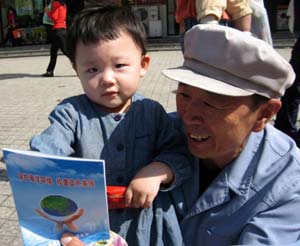
The public propaganda and
education for ecosystem
protection around the northern
Yellow Sea
Liaoning Ocean and Fishery Department, China
7
1. Summary
From 24th July 2006 to 31st January 2007, Liaoning Ocean and Fishery
Department carries out a project entitled "the Public Propaganda and Education for
Ecosystem Protection around the Northern Yellow Sea". A series of activities are
organized, including school publicity, community propaganda, popular science
propaganda week and seminar on environmental laws and regulations, media
propaganda. This programme is implemented with grant support from UNDP/GEF
Yellow Sea Large Marine Ecosystem (YSLME) Project.
So far, all the public awareness activities have been implemented successfully.
Colourful school publicity has made young students recognise the importance of
marine protection. The popular science propaganda week, community propaganda
and media propaganda have enlarged the positive impact on public people in
Dandong City. The related information and knowledge about ocean usage and ocean
environment has been transferred to the enterprises involving in sea and seawater-
culturists, and tourists, etc. By implementing these activities, especially the education
to the youth, the public consciousness and enthusiasm for protection ocean
environment have been promoted and encouraged.
2. Background of activities
The Yellow Sea is an important part of the world ocean and the basis of the
residents' survival in the Yellow Sea coastal area. But because of little aware of the
marine ecosystem and lacking effective management in this area, the biology
resource and biology diversity is decreasing, and environment and ecosystem is
degenerating, which is threatening the continuable development of the Yellow Sea
large marine ecosystem. The UNDP/GEF Yellow Sea Large Marine Ecosystem
(YSLME) Project aims to protect, conserve and manage the Yellow Sea.
The water and sand from rivers in north Yellow Sea Area play an important role
in shaping coast, continental sediment, hydrology and the marine ecosystem. The
estuary area is an important marsh, biologic habitat and field for the valuable
hydrophily organisms as spawning and feeding ground, and the naissance area of
marine ecosystem. Therefore the estuary area is a very important component of
large marine ecosystem. The Yalujiang river estuary is the biggest river in North
Yellow Sea, and its contribution to Yellow Sea marine ecosystem is the largest. As
the increase of population and economy in recent decades, the environmental
problem is becoming more and more serious. Some anthropogenic activities such as
discharge of pollutants, over fishing and coastal engineering are continuously
breaking the marine ecosystem; moreover some natural changes are making
ecological cycle and continuable using face huge threats.
People have done much to exploit marine resources for many years, but done
less to protect the marine environment and resources, and knew less about the
8
change of the ecosystem in this area. Therefore it is very important to strengthen the
publicity to the publics and to improve their awareness for joining in the protection of
the marine environment.
3. Objectives of activities
The objectives of the project are: to promote the public awareness in schools,
communities and factories and/or fishing area, involving thousands of pupils and
citizens.
4. Target audiences
Target audiences were public people (young students were the majority), local
community, local government and local enterprises in Dandong City.
5. Activities implemented
5.1. School publicity
The lecturing activities in the theme of the marine and coastal environment in the
Dandong City/Yalujian River estuary were organized at Experiment School on 12
September 2006 and at Jintang School on 18 September 2006. The lectures were
followed by 187 teachers and 3833 pupils of two elementary schools in Dandong city.
Three thousand booklets on marine protection and management were distributed in
two elementary schools and used as reference book.
A drawing competition with the theme of "taking the ocean protection to heart"
was conducted in Dandong city on 18 September 2006. The competition was
followed by 500 school children of two elementary schools in Dandong city. Ten
winners were chosen and received a trophy, gift and certificate.
"How much you know about the ocean?" aiming at this, the knowledge contests
were held by five classes on 19 September 2006 at Experiment school and five
classes on 27 September 2006 at Jintang school. There were 622 students
participating. From the contests we know that a small number of students in
elementary schools think the ocean is so big that it can't be polluted.
At Experiment school and Jintang school, class meetings whose theme were
"protect the ocean environment, cherish our blue home" were conducted. There were
684 students joining in. A composition exercise and photo showing were also
introduced during the class meeting. These activities aroused great enthusiasm in
the students.
These activities mentioned above were organised in co-operation with Dandong
Education Committee and Dandong Newspaper Press.
9
5.2. Popular science propaganda week
The activity was organised in co-operation with Dandong science and
technology association. Once activity with the theme of ocean knowledge was
organised in Dandong Business walking street, and it was lasting from 17 to 24
September 2006. The target audience included five thousand persons from pupils,
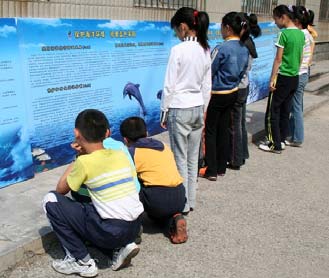
workmen, peasants and businessmen, etc. Thirteen awareness boards and twelve
awareness banners were installed in the street. Two thousand booklets on marine
protection and management were distributed. Besides, the questions about ocean
were explained by 2 staff of Dandong Marine and Fishery Bureau on the scene.
5.3. Seminar on environmental laws and regulations
This activity was conducted on 20 September 2006 and took place at Donggang
Port, Donggang city. The theme of the seminar was "protecting the ocean
environment, cherishing our blue home". At this seminar, 4 lectures were given:
(1) 'An introduction to fishery ecological environment and protection of the Yalujiang
river estuary' presented by Wang Nianbin; (2)'Laws and regulations about the
protection of marine and coastal environment and the management of the ocean
project' pres
Seminar in Donggang Port
ented by Wen Quan; (3)'Marine environment protection regulation of
Liaoning province' presented by Meng Dexin and Zou Xiaochun; (4)`Marine
environment management and protection of Dandong city' presented by Sun Yaquan.
2 lectures in electronic edition had been transferred to Donggang port for reference
materials. The target audience included 55 persons from aquaculture, coastal
industries and local government, etc.. Sixty booklets on marine protection and
management were distributed. After the presentations, participants had a discussion
and showed a high level of interesting ocean protection and management. The
activity had strengthened compliance with the laws and regulations and promoted
active participation of the enterprises in environmental protection.
Table1. Participants in seminar on environmental laws and regulations
Organization
Name
Position
Speaker or
audience
Liaoning Marine and
Meng Dexin
Officer
Speaker
Fishery Institute
Zou Xiaochun
Officer
Speaker
National Marine
Wen Quan
Research Professor
Speaker
Environmental
Monitoring Centre
Liaoning Provincial
Wang Nianbin
Research Professor
Speaker
Marine and Fishery
Administration
Li Ai
Assistant Professor
Audience
Dandong Marine and
Sun Yaquan
Officer
Speaker
Fishery Bureau
Han Zaiqi
Officer
Audience
Donggang Port
38 participants
Employee
Audience
Other organizations
10 participants
Culturist and tourist
Audience
10
5.4. Community propaganda
As one of public awareness activities, the community propaganda was organized
in Dandong city, from 22nd September to 30th October 2006. The objective of this
community propaganda activity was for local publics to learn the protection of marine
environment in the Yellow Sea and the sustainable use of its natural resources. An
exhibition was an excellent opportunity for reaching out to a wider audience. There
were thirteen awareness boards and twelve awareness banners installed in
Qinghuayuan Community, Dongshengliyuan Community, Linjiang Street and
Jinxiuhuayuan Community. The staff from Liaoning Provincial Marine and Fishery
Administration and Dandong Marine and Fishery Bureau explained the related
information and knowledge about ocean to audience on the scene. Two thousand
booklets on marine protection and management were distributed. Then, the
knowledge contest was held by four communities with the theme of "How much you
know about the ocean". During this activity, the main problem was that most of the
residents did not realize the current environmental status.
5.5. Media propaganda
In order to promote the public awareness, Dandong Newspaper pressed reports
of "Protecting our ocean" and "Organizing the public propaganda for the
management of sea area uses in our city (Dandong city)" on 20th October and 6th
December 2006. The reports focused on encouraging and educating local residents
of Dandong City to conserve the marine environment and scientifically use the ocean.
5.6. Booklet
A booklet was pressed and provided to the publics through the related activities.
Booklets were distributed in School, Public Placestreet and communitiesand
Corporation.
5.7. Data and information collection
The existing data and information about the environment in the Yalujian River
Estuary were collected to identify and analyse the status and problems of the
environment. The collected data and information were used as a basis for the above
proposed activities.
5.8. Interim report
Submit the results-to-date as an interim report to the Yellow Sea Project
Management Office (PMO) by 31st October, 2006.
5.9. Final report
Submit the final report, incorporating all the comments and recommendations
on the report from the PMO by 31st December, 2006.
11
5.10. Financial statement
Submit the both interim and final financial report to the PMO by 31st December,
2006.
6. Produced outputs and outcomes
The main produced outputs and outcomes of this project are as follows:
- Publicity materials including: 8000 booklets on marine protection and
management were pressed and provided to the publics through the related activities;
13 awareness boards and 12 awareness banners were constructed and installed in
Dandong Business walking street, Qinghuayuan Community, Dongshengliyuan
Community, Linjiang Street and Jinxiuhuayuan Community; 2 reports named
"Protecting our ocean" and "Organizing the public propaganda for the management
of sea area uses in our city (Dandong city)" were published on Dandong Newspaper.
- Collected works include 148 drawings, 146 essays and 118 photos from the
pupils of Experiment School and Jintang School. A total of 187 teachers and 3833
pupils participated in school publicity.
- Imagery products include 6 digital videos and 902 digital photos recording the
finest details of the activities named "the school publicity, popular science
propaganda week, community propaganda and seminar on environmental laws and
regulations". Nearly 10,000 people participated in these activities.
- Reports "An introduction to fishery ecological environment and protection of the
Yalujiang river estuary" (in Chinese) and "Laws and regulations about the protection
of marine and coastal environment and the management of the ocean project" (in
Chinese) were presented at the seminar on ocean environmental laws and
regulations, 2006-09-20, Donggang, Dandong city. In total there were 55 participants
from local government, aquaculture and coastal industries.
- A collection of selected photos from all the public awareness activities was
compiled.
7. Evaluation: Effectiveness of implemented activities
In general, the public awareness activities were successfully held. The lectures
introduced the ocean knowledge to the youth and other colourful activities of school
publicity encouraged their enthusiasm for ocean protection. The popular science
propaganda week, community propaganda and media propaganda enlarged the
positive impact on public people in Dandong City. Seminar on environmental laws
and regulations provided an important chance for enterprises involving in sea and
seawater-culturists to learn about the laws and regulations of marine, and to
exchange and discuss protection and development measures of ocean.
12
But a longterm propaganda and education programme for the Yalujiang river
estuary is still urgently needed and it seems possible with more effort from various
stakeholders.
8. Conclusions and recommendations for future work
By the public awareness activities, we can conclude that the activities encourage
public enthusiasm for protection of ocean environment, and make them joining in of
one's own accord.
The recommendations for future work of this project are as follows:
- The Yalujiang river estuary has an important significance in ecology, including
important spawning and breeding grounds for fishes, shrimps and shellfishes in the
past as well as at present, so it should be given more attention of protection and
management than before.
- It is very important to build up the partnership among stakeholders, including
local coastal industries, aquaculture, local government and related research institutes,
for the Yalujiang river estuary protection.
- Take some concrete measures for the Yalujiang river estuary protection, such
as enforcement monitoring capacity, organizing more public education to the persons
whose activities are often involved in the sea.
Annex 1. Contact information of implementing institutions
Implementing
Address
E-mail, telephone and fax
institutions
Liaoning Ocean and
2, Taiyuan Street, Shenyang
lnhyhbc@vip.163.com
Fishery Department
Liaoning Province,
Tel. 82- 24-23448518
China, 110001
Fax. 86- 24-23448519
Dandong Ocean and
Dandong, Liaoning 180000,
ddhyglk@126.com
Fishery Bureau
China
Liaoning Ocean and
50, Heishijiao Street, Dalian,
wang_nb0415@yahoo.com.
Fishery Science Research
China, 116023
cn
Institute
lmfem@mail.dlppt.ln.cn
13
Annex 2. References
Wang Nianbin (2003). Distribution of Inorganic nitrogen contents and
environmental quality assessment in north Yellow Sea Estuary Area, Journal of
Dalian Fisheries University, 2003, 18(4):282-286.
Wang Nianbin (2004). Distribution of active phosphate contents and
environmental quality assessment in north Yellow Sea Estuary Area, Journal of
Fishery Sciences of China, 2004, 11(3)
UNDP/GEF Yellow Sea Project (2006). Report of the First Training Workshop for
Local Government Officers Coastal Development vs. Protection of Marine
Environment: How to make a decision?
Annex 3. Materials produced
Materials produced
Number
Publicity materials
Booklets 8000
Awareness boards
13
Awareness banners
12
Newspapers 2
Collected works
Drawings 148
Essays 146
Photos 118
Imagery products
Digital videos
6
Digital photos
902
Reports
"An introduction to fishery ecological environment and
1
protection of the Yalujiang river estuary" (in Chinese)
"Laws and regulations about the protection of marine
1
and coastal environment and the management of the
ocean project"(in Chinese)
A collection of selected photos
1
14
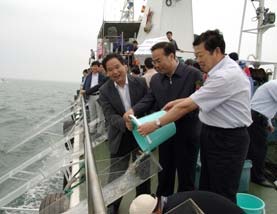
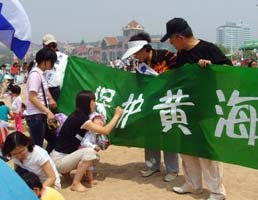
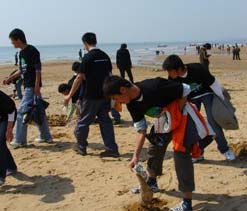
Welcome to the green Olympics
and protect the Yellow Sea
surrounding us--Coastal
community education and public
participation
Global Village, Beijing, China
15
1. Summary
Global Village of Beijing and Greenera jointly organized an activity for the locals
in the Qingdao Tiantai Olympic Garden. The aim of the activity was to build an
environment council and improve the environmental awareness of local residents.
The main activities were lectures about oceans, screening of environmental
education films, outdoor activities, aquarium visits and more.
2. Background of activities
The 2008 Olympic Sailing Competition will be launched in Qingdao.
Consequently, environmental protection has recently become a significant issue for
the local government in Qingdao. Water quality in the Yellow Sea is extremely
important to both the Olympic Sailing Competition and the whole ecological
environment in China. Qingdao has been honored with the title of "Oriental
Switzerland". In 2005, 600,000 foreign tourists and 23,000,000 domestic visitors went
to Qingdao. Overall, tourism has placed a severe ecological pressure on the Yellow
Sea in China. Local residents in Qingdao have a strong responsibility to protect the
Yellow Sea surrounding them.
3. Objectives of activities
To organize an environment council in Qingdao;
To educate local communities in the Yellow Sea region about environmental
problems in the Yellow Sea;
To provide the coastal communities with opportunities to observe the
biodiversity and ecosystems in the Yellow Sea; and
To build the capacity of the local communities to manage the marine and
coastal environments.
4. Target audiences
1 Local Residents in Tiantai Olympic Garden Community, Qingdao
Description - the Tiantai Olympic Garden Community is located in Chengyang
District, Qingdao.
2Tourists and Visitors in Qingdao
Description - Qingdao, dubbed "Oriental Switzerland", is located in the Southeast
of Shandong Province. In 2005, up to 600,000 foreign tourists and 23,000,000
domestic visitors came to Qingdao.
16
5. Activity implemented
5.1. Community networking:
A network of Tiantai Olympic Garden community members working toward
marine environmental protection was established on December 22, 2007. The
members, local residents of the Tiantai Olympic Garden community concerned about
local environmental issues, were eager to initiate environmental conservation
activities, and were willing to encourage their fellow community residents to
participate in these activities. These members named their network the "Local
Environmental Council." As a volunteer group, the environment council is composed
of community residents and staff of the property management company. They have
concerns about community issues and the environment surrounding the community.
The members of the environment council have a close relationship, and
communicate with each other 3 times per month. Thus, they are able to organize and
motivate local residents to actively participate in environmental activities and contact
local NGOs.
5.2. Training workshop for environmental monitoring:
We organized workshops every month, a total of 12 times, training the local
residents to conduct simple monitoring activities and analyses. The
trainees/residents observed and recorded ecological changes and the pollutants
released along the coast. The following graph illustrates the concentrations of various
pollutants recorded over one year, from September 2006 to August 2007. The water
sample extractions were sent to the Institute of Oceanology, Chinese Academy of
Sciences. Once analyzed and tested by scientists, the results were published to
residents.
Generally speaking, the process of water sample extraction was comparatively
difficult for local residents, especially those without technical education background.
It also took a long time to do research, which resulted in complicated statistics which
were hard for the locals to understand.
Venue
Time
PO4-P
SiO3-Si
NO3-N
NO2-N
NH4-N
(mol/L) (mol/L) (mol/L) (mol/L) (mol/L)
Nov 2006
0.42
1.22
2.32
0.28
4.42
Dec 2006
0.46
6.24
1.67
0.40
4.68
Dec 2006
0.5
10.32
1.42
0.45
4.92
Jan 2007
0.98
4.42
3.62
0.72
5.12
Feb 2007
0.59
2.32
2.92
0.83
1.32
17
Mar 2007
0.44
11.92
3.72
0.63
5.32
Apr 2007
0.22
2.0
3.42
0.88
2.12
May 2007
0.48
7.42
3.42
1.52
17.82
Jun 2007
0.26
4.6
0.52
1.62
0.78
Jun 2007
0.29
4.03
0.94
1.57
0.99
Jul 2007
0.35
3.82
1.82
1.52
1.12
Aug 2007
0.54
4.2
3.8
0.30
2.82
5.3. Environmental campaign:
We organized six education campaigns for local residents to disseminate to
visitors and tourists about the marine environment and how to protect it. The local
residents distributed printed materials and participated in a beach cleanup activity.
Campaign (1)
Date:
2007.03.10
Venue: May Wind Square
Target volunteers: The residents, members of the environmental council,
and volunteers
Objective: to recruit new volunteers and promote our activity
Activity: Our first Environmental campaign at Qingdao Wusi Square, where
we handed out bimonthly newsletters and manuals to the passengers
Campaign (2)
Date:
2007.04.08
Venue: Stone Elder bathing beach
Target volunteers: The residents, members of the environmental council,
and volunteers
Objective: to improve the environmental awareness of visitors
Activities: pick up rubbish and conduct a seminar on the beach, aiming to
alert tourists to consciously protect the beach environment.
Campaign (3)
Date:
2007.04.21
Venue: Lao Mountain
Target volunteers: The residents, members of the environmental council,
volunteers, and visitors.
Objective: to improve the environmental awareness of visitors
Activities: Residents from Tiantai Olympic Garden Community and many
volunteers participated in the million people mountaineering activities
organized by the Qingdao Olympic Sailing Committee
18
Campaign (4)
Date:
2007.05.27
Venue: Top Bathing Beach
Target volunteers: The residents, members of the environmental council,
volunteers, and visitors.
Objective: to improve the environmental awareness of visitors
Activities: Led by the Qingdao Youth Association of Environmental
Protection, residents from the Tiantai Olympic Garden Community and many
volunteers went to the Top Bathing Beach to explain the importance of the
protection of the Yellow Sea to the local people and tourists, and distribute
relevant printed materials.
Campaign (5)
Date:
2007.06.16
Venue: Huang Island
Target volunteers: The residents, members of environmental council
Objective: to clean the island's bathing beach
Activities: Qingdao Youth Association of Environment Protection organized a
"protecting the Yellow Sea, loving the Golden Sands" activity involving many
volunteers and members of the environmental council. They picked up
garbage, handed out bimonthly newsletters and questionnaires. Through
various activities, they promoted knowledge of environmental protection and
the importance of protecting the Yellow sea to the tourists.
Campaign (6)
Date:
2007.07.8
Venue: Top Bathing Beach
Target volunteers: The residents, members of the environmental council
Objective: to improve the environmental awareness of visitors
Activities: On the afternoon of July 8, a volunteer team from the residents of
Taoyuan Community went to the Top Bathing Beach, where they promoted
the importance of the protection of the Yellow Sea to tourists and handed out
publicity materials. Influenced by their behavior, over 400 local people joined
in their activity.
5.4. Forum for marine environmental protection:
We organized six forums for the local residents to learn about the status and
problems of the marine and coastal environment in the Yellow Sea. Regional experts
from universities and research institutions attended the forums and delivered
presentations.
Forum (1)
Date:
2006.11.02
19
Venue: Institute of Oceanology, Chinese Academy of Sciences
Target volunteers: The residents and members of the environmental council
Trainer: Xu Jun
Objective: To provide the residents with opportunities to observe the
biodiversity and ecosystems in the Yellow Sea
Topics: Ocean biodiversity conservation, the variety of specimens,
information of Antarctic Pole investigations, historical cases and information
on red tide, the impact of marine pollution, etc
Result of the Forum: The activity aroused the enthusiasm of residents in
protecting the Yellow Sea. More and more people are willing to join in the
activity of protecting the Yellow Sea which helps them have a better
understanding of the ocean.
Forum (2)
Date:
2006.12.22
Venue: Tiantai Olympic Garden
Target volunteers: The local residents
Trainer: Chen Yang and Cheng Fangping
Objective: To educate local residents of the Yellow Sea region about
environmental problems in the Yellow Sea and to introduce information
regarding the environmental council to the residents of Tiantai Olympic
Garden.
Topics: red tide and marine pollution; a water sample extraction and
detection methods
Result of the Forum: residents had a good discussion about the marine
pollution, especially in relation to their own lives. Through games and water
sample extraction, they all have a better understanding of the issue.
Forum (3)
Date:
2007.01.25
Venue: Tiantai Olympic Garden
Target volunteers: The residents and members of the environmental council
Trainer: Zhang Zongmin
Objective: To educate local residents of the Yellow Sea region about
environmental problems in the Yellow Sea through a training session and a
marine environmental education film.
Topics: Conducted discussion on the ecological marine environmental and
showed films on marine science.
Result of the Forum: residents exchanged their viewpoints after seeing the
films.
Forum (4)
Date:
2007.04.08
Venue: Stone Elder Bathing Beach
20
Target volunteers: The residents, members of the environmental council,
and volunteers
Trainer: Jing Yan
Objective: To educate local residents of the Yellow Sea region about
environmental problems in the Yellow Sea
Topics: participants put forward their ideas on marine environmental
protection, meanwhile listening to experts.
Result of the Forum: Participants understood the ocean better. This activity
attracted passersby and other visitors as well. After the forum, they cleaned
the beach.
Forum (5)
Date:
2007.05.20
Venue: Chinese Marine Academy of Science
Target volunteers: The residents and members of the environmental council
Trainer: Chen Yang and Cheng Fangping
Objective: To provide the residents with opportunities to observe the
biodiversity and ecosystems in the Yellow Sea
Topics: spread knowledge and history about marine life through pictures and
a biological samples exhibition.
Result of the Forum: the visit to Tong Dizhou and Zeng Chengkui Memorial
Room, and other exhibitions related to the marine environment, helped local
people obtain knowledge about the marine environment and awaken their
love for the ocean.
Forum (6)
Date:
2007.05.27
Venue: Top bathing beach
Target volunteers: The residents, members of the environmental council,
and the volunteers
Trainer: Jing Yan
Objective: to educate local residents and volunteers of the Yellow Sea
region about environmental problems
Topics: case study on environmental marine protection, both domestic and
international.
Result of the Forum: due to the case study, residents had a broader vision of
the marine environmental protection. After the training, they had more useful
and meaningful information to reach more people.
21
Forum (7)
Date: 2007.05.31
Venue: The playing field of the 2008 Olympic sailing competition
Target volunteers: The residents and members of the environmental council
Objective: To provide the residents with opportunities to help the Yellow
Sea renew the quantity of shoal
5.5. Publicity activities:
Implementing publicity activities, as detailed below, to reach out to and raise
awareness amongst local residents about the status and problems of the marine
environment in the Yellow Sea. We conducted the following activities:
(a) Poster exhibitions;
Download from the following link
http://www.yellowsea.ngo.cn/download/poster.rar
http://www.yellowsea.ngo.cn/zyxz.html
(b) Bulletin board;
Download from the following link
http://www.yellowsea.ngo.cn/download/display boards
(c) Website with an online discussion board
www.yellowsea.ngo.cn
(d) Shop-window
We rented a shop-window from November 2006 to August 2008
The shop window will be updated once per month, for a period of one year, with
details on training information, upcoming activities, hot issues about the Yellow Sea,
as well as the information about the character of the Yellow Sea's environment and
its biodiversity. The long-term increase in marine knowledge and education aims to
target community residents and other citizens as well.
(e) Outdoor publicity activities (the members of the local Environmental Council
exhibited the bulletin board, distributed printed materials to the residents, and
organized actives to promote the program.).
We organized six outdoor publicity activities in Tiantai Olympic Garden.
Outdoor Activity (1)
Date:
2006.10.30
22
Venue: Tiantai Olympic Garden
Target volunteers: The residents and members of the environmental council
Objective: to let more residents know our activity
Activities: the residents' environmental council organized publicity and
conducted education on marine issues in front of the entrance of the Tiantai
Olympic Garden Community.
Outdoor Activity (2)
Date:
2007.02.28
Venue: Tiantai Olympic Garden
Target volunteers: The residents and members of the environmental council
Objective: to inform more residents about our program
Activities: the residents' environmental council came to the recreational
center to publicize the marine environmental protection. They handed out
posters and paper fans to residents.
Outdoor Activity (3)
Date:
2007.05.26
Venue: Tiantai Olympic Garden
Target volunteers: The residents and members of the environmental council
Objective: to inform more residents about our program
Activities: The staff of Qingdao Youth Association of Environment Protection
and volunteers from Qingdao University worked together to carry out
education and publicity on marine environmental protection to the local
residents in the recreational center. To show their support and determination
to the marine environmental protection, all the residents signed their name
on the posters.
Outdoor Activity (4)
Date:
2007.07.08
Venue: Tiantai Olympic Garden
Target volunteers: The residents and members of the environmental council
Objective: to inform more residents about our program
Activities: a speech to the residents. Residents then hung a poster on the
shop window and signed their name on it, in order to pledge to marine
environmental protection.
Outdoor Activity (5)
Date:
2007.07.14
Venue: Tiantai Olympic Garden
Target volunteers: the primary school students who live in Tiantai Olympic
Garden
Objective: To inform more residents about our program
Activities: with the help of American volunteer Kate Szewczyk ,and young
23
volunteers from the community, Qingdao Youth Association of Environment
Protection came to TainTai Community again. They handed out bimonthly
newsletters and other publicity materials and promoted knowledge of
environmental protection to the residents.
Outdoor Activity (6)
Date:
2007.07.26
Venue: Tiantai Olympic Garden
Target volunteers: The residents and members of the environmental council
Objective: To inform more residents about our program
Activities: The volunteers, consisting of residents from Tiantai Community,
went to Huangdao to conduct publicity activities and help do some cleaning
there. Additionally, they performed a drama, named "Ocean Guard", which
they created themselves.
5.6. Publications
We published and distributed newsletters to the local residents six times. The
newsletter, issued bimonthly, provided information about pollution in the Yellow Sea.
Those publicity materials were popular.
Results (including materials produced)
Helping the residents gain knowledge about the ecological marine environment
and understand the importance of protecting it.
Advocating the spirit of "Green Century, Olympics, Qingdao and Home",
highlighting the task of Yellow Sea protection and leading the local residents to get
involved in protection of their environment.
Expanding local residents' knowledge about marine ecology.
6. Evaluation: Effectiveness of implemented activities
6.1. Founding the environmental council of local residents in the Olympic Garden
Community
As a volunteer group, the environmental council is composed of community
residents and staff of the local property management company. These members are
all concerned about community issues and the environment surrounding the
community. The members of the environmental council maintain a close relationship,
communicating with each other at least twice a month. Thus, they are able to
organize and motivate local residents to actively participate in environmental
activities and to contact local NGOs.
24
6.2. Effectiveness of implemented activities between August 2006 - August 2007.
Activity
Number of Events
Forums for marine environmental protection
6
Environmental campaigns
7
Training workshops for environmental monitoring 12
Outdoor publicity activities
6
6.3. Effectiveness of implemented promotional material
Promotional material
State
Posters Completed
Brochures Completed
Display boards
Completed
Banner Completed
T-Shirts Completed
Souvenirs (CD-ROM)
Completed
Caps Completed
Bimonthly Newsletters
6
7. Conclusions and recommendations for future work
7.1. Conclusions
The action of local residents' environmental council is aimed at encouraging
the local residents to pay more attention to the environmental issues in the
Yellow Sea.
With support from the environmental council and project team, the residents
in Tiantai Olympic Garden have had increased opportunities to learn about
the Yellow Sea and observe its biodiversity and ecosystems. This knowledge
and awareness about the urgency of protecting the Yellow Sea has spread to
the surrounding communities.
7.2. Recommendations for future work
We will invest more time and resources to encourage and support the
outstanding members of the local residents' environmental council. Our hope is that
25
eventually, the local environmental council will able to organize the activities
independently.
Annex 1. Contact information
Implementing Institution: Global Village of Beijing
Contact person: Zhang Kai
Address: Room 301, C Building, Huazhan international Apartment, No.12 Yumin
Road, ChaoYang District, Beijing 100029, P.R. China
Tel: 86-10-82252046 ext. 822
Fax: 86-10-82252045
Email: zhangkai@gvbchina.org.cn
26

















Community-based conservation
of coastal ecology in Dalian,
China
Environmental Science and Engineer College, Dalian
Maritime University and Environmental Protection
Association of Dalian Maritime University.
27
1. Summary
This project is university-level, community-based program to offer educational
and training activities which raise community awareness, knowledge or skills on
coastal and marine conservation issues. The program assists local communities to
form partnerships with local managers by encouraging them to join in the protection,
management and rehabilitation of Dalian's coastal and marine environments.
The mainly education contents:
1) The importance of marine environment,
2) The basic knowledge of marine ecology,
3) The impacts of human activities on the environment,
4) The ways to restore and recovery the damaged marine ecosystems.
5) The way of marine environment management and planning.
2. Background of activities
Dalian is located in the south part of Liaodong peninsula, surrounded by the
ocean on three sides, with the Yellow sea to its east and the Bohai sea to the west,
facing southward Shandong peninsula across the ocean, has a coastline of 1900
kilometers, along which there are more than two hundred islands. Dalian people
depend heavily on the seas for the improvement of their economies and standard of
living, so they really care about the marine environment, but some of them lack of
professional and systemic knowledge. This project will promote the conservation of
coastal zone by providing the education for local communities.
Project duration: 14 months
Project
member
Project leader: Professor Lin jianguo.
Project assistant: Guo Ping and Qu Heng
Project volunteers (around 40 person): teachers of Dalian maritime
university; members of a student association : Environmental Protection
Association of Dalian Maritime University, and anybody who were willing to
participate in the community education activities
Project
area
28
Figure 1. The project area focus on the yellow sea's coastal zone in Dalian
29
3. Objectives of activities
The project aims to encourage and educate local communities of the Yellow
Sea's coastal area in Dalian to facilitate marine conservation efforts. The overall
objective is to maintain the biological diversity and ecological functions of coastal
ecosystems in Dalian coastal zone of Yellow Sea, while supporting the livelihood and
economic opportunities of the communities living in these areas.
4. Target audiences
We have conducted a number of activities and each activity may have diffident
target audience. The target audiences of "training for trainers" are the "trainers" who
is willing to participate in the community education activities. The local residenters
are the most important target audiences in our activities. For example, the local
fishermen are the target audiences in the activity "site visits to fishery village"; the
local people are the target audiences in the activity "the Environmental campaign in
residential community". Some activities are organized in the water-front parks, so the
visitors are the audiences in these activities. Undergraduate students of Dalian
Maritime University are also our important audiences, such as in the activity" the
Environmental campaign in campus". The staffs of some administration branches are
another special audiences.
On the other side, all members of our program are audiences as well, we learn
a lot from our target audiences.
5. Activities implemented
Six kinds of activities were carried out during the past year:
- Training for Trainers
- Site visits to beach area
- Site visits to aquaculture area
- Beach Cleanup
- Oily-water treatment
- Environmental campaign
5.1. Training for Trainers
"Training for trainers" is the activity that provides project volunteers some
lessons. 20 lectures have been conducted, and the topic was marine ecosystem
conservation. The teachers are the people who are professional on marine ecology.
The trainers could be anybody who is willing to participate in the community
30
education activities. Actually, most of our trainers are undergraduate students. We
arranged three kind of teaching styles: formal class, competition and stage play
5.1.1 Formal class
Fourteen lessons are arranged as formal class. From these professional courses,
we could learn the systematic knowledge of marine ecology. The topics of these
lessons are the following:
The basic knowledge of marine ecology
Management and planning for marine environment
marine life zones
the ecology of rocky shore
the ecology of sandy beach
ecological invasion
aquaculture pollution
oil pollution in the sea
over
fishing
marine biodiversity conservation
Red tide
Restoration and recovery of the damaged marine ecosystems
Marine pollution
Typical marine ecosystem
5.1.2 Stage play
The organisms in the ocean are so magic for us, from the microplankton to big
whale. So we learn this part knowledge in an attractive way: stage play! The topic of
each stage play should belong to conservation of marine organisms. 60 volunteers
attend this activity, 15 volunteers are in one group, and responds to one stage play.
So all of us are "actors", we design the contents and actions under the guidance from
our teacher.
5.1.3 Competition
After the above teaching actives, we learned lots of useful knowledge on marine
ecosystem conservation. Now, it's time to check our result! For this reason, two
activities were carried out at the end of the "Training for trainers". The first activity
was just like normal examination: we prepared some examination paper with the
questions and let our "trainers" answer these questions. The second activity was
competition: we have five groups and each group select four trainers to join the
competition. The competition has two parts: 1st questions must be answered, 2nd
quick fire question, and the group that get more points is winner.
5.2. Site visits to beach area
Local communities, accompanied by staffs of this project, walk along the beach
to familiar with different coastal ecosystems. Educate local communities how an
31
ecosystem works and the interaction between organisms and their environment.
Educate them about the importance of these marine ecosystems. The task for each
of us: 1 Observe the coastal ecosystem; 2 promote the knowledge to the person
whom we meet there; 3 Try to find the most important environmental issue and
discuss how to restore the ecosystem;
5.2.1 The first activity: "natural observation"
The first outdoor activity was arranged on 2006/09/23, 2 groups (about 25
person) attended. We walked along the coast together from Ling Shui bathing spot to
Xinghai Park. The education emphasis is let people familiar with different coastal
ecosystems and how human activities affect the marine ecology.
The first site we visited was Ling Shui Bay, which is a very small bay but has
sandy beach, rocky coast and a very beautiful cliff. Actually, this is a less-artifical bay.
But the seawater here looks not very clean, due to the Undaria pinnitafida
aquaculture and land-wastewater input.
The next site was Heishi reef, there is a very beautiful waterfront residence
community, and people who live here even can smell the sea in their room and walk
to the coast in two minutes. Of cause, they care about this coastal zone more than
others, so we can have a nice interact with them. The coast line is very dirty here due
to the man-made waste, such as waste-papers and plastic bags.
The final destination was Xinghai Park, which is a typical in city coastal
park .The park consists of a 0.15 million-square-meter garden and an 800-meter-long
bow-shaped man-made beach. Lots people come to here for relax every day.
5.2.2 Second activity: "Teaching and Cleaning"
Time: 2006/10/11
Site: Dalian (Tiger plaza; Xinghai plaza; Heishi reef)
Lvshun (Laotieshan, CoastalGuard park)
Subject: Teaching and Cleaning
Participator: 30 volunteers, they work in 5 groups, and each group go to one site.
The role of this activity is let more people care about our coast! Each staff has 5
query forms, which mean one staff should contact at least 5 local communities and
spread the knowledge of yellow sea ecosystem to them. After this teaching work, our
volunteers should clean up the site they visited.
5.2.3 Third activity: "observation on coastal species"
Time: 2006/11/26
Site: Qixianling
Participants: 11 volunteers.
32
Subject: Observation on coastal species
The main task of this activity is to observe coastal species, and learn how these
species interact with their environment. We arrived to there around 3:00p.m, because
that time is the lowest tidal time, so we can find more organisms in inertial zone.
There were many local people, and they came to here to collect some marine
organisms to cook, e.g: crabs and oysters. We had a very nice time with these
people, actually we learning from each other. They teach us the capture skill, and we
teach them how those coastal organisms interact with their environment.
5.3. Site visits to aquaculture area
Organize site visits to aquiculture area to educate local people about how
human activities affect the ecosystem, how to recover the damaged ecosystem, and
how important the sustainable use of natural resources in the marine environment is.
So the role for this activity is to educate local people how to utilize the limited natural
marine resource and develop sustainable fishery and aquaculture.
5.3.1 Pre-work
Three volunteers did some pre-work. They went to some fishery villages to
investigate the current situation of coastal ecosystems there. On the other side, they
went to some administration branches to study the related policy of marine
environment protection, and familiar with how the government branches work on
marine management. From this practice, we may have a better understanding on
marine management policy and process. These pre-works are very necessary for our
following work.
5.3.2 First activity: "One day study trip"
Time: 2007/04/06
Site: Longwangtang, Baoyudu village, Bolanzi village, Laotieshan, qixianling
aquaculture factory
Participants: About 10 volunteers.
Subject: Contact with local people, try to familiar with their life, discuss how to
protect marine ecosystem with them.
5.3.3 Second activity:Ffishery village
Time: 2007/04/26
Site: Longwangtang
Participants: 12 volunteers.
Subject: Contact with local fishery men, discuss how to protect marine
ecosystem with them. The emphasis of this activity is "sustainable fishery". From this
activity, we found that some fishery men think that the fish in the ocean is infinite, and
33
even some fishery men know the terrible impact of over fishing, they still think that
was not their business.
5.3.4 Third activity: Aquaculture village
Time: 2007/05/26
Site: Baoyudu village,
Participants: 14 volunteers.
Subject: Contact with local men, discuss the impact of aquaculture and how to
reduce the aquaculture pollution.
5.4. Beach Cleanup:
This is a great way for families, students, service groups, and neighbors to join
together and take care of our fragile marine environment: Clean up the rubbish and
remove seaweeds and other undesirable plants from beach. The problems of marine
debris and pollution are just as unsightly as they are damaging; affecting the smallest
ocean organisms to the largest marine mammals.
We arranged the specialized beach cleanup activity four times. Some volunteers
suggest that we should pick up the rubbish whenever we walk along the beach, so
we also cleanup the beach during other activities.
5.4.1 The first site: Xinghai Park
Time: 2006/11/04
Site: Xinghai Park
Participants: About 10 volunteers.
Subject: Cleaning the beach
Xinghai Park is a public in-city park, and lots people come to here for relax.
There are many specialized cleaning-workers in this park, but the place is not so
clean.
5.4.2 The second site: Lijiao Bay
Time: 2007/05/26
Site: Lijiao Bay
Participants: 30 volunteers.
Subject: Cleaning the sandy beach
Lijiao Bay is a very nice bathing spot, has long sandy beach.
5.4.3 The third site: Heishi resident community
34
Time: 2007/04/07
Site: Heishi resident community
Participants: About 10 volunteers.
Subject: Cleaning the resident community
Heishi resident community is a very beautiful waterfront residence community,
and people who live here even can smell the sea in their room and walk to the coast
in two minutes.
5.4.4 The fourth site: Longwangtang
Time: 2007/06/03
Site: Longwangtang
Participants: about 50 volunteers.
Subject: cleaning the coast
There is no specialized cleaning-worker in this area, so the coast is very dirty.
5.5. Hand-on experiment
DaLian is a harbor city, so the oil pollution from ship is one of the major
pollutants. As our initial plan, we should organize lab experiments to show people the
impacts of oil spills and the ways to treat the oily water. But we are lucky, the factory
director of the oily- water treatment plant of Dalian port allowed us to visit their factory.
So we could learn oily water treatment in the real way instead of in the lab.
Time: 2006/12/02
Site: Oily- water treatment plant of Dalian port
Participants: About 40 people.
Subject: Oily- water treatment
Firstly, the technician of this factory explained to us the impacts of oil spills and
the general ways to treat the oily water. Then we visited factory following with him, he
showed us how the oil was removed step by step and how these large equipments
work. After this activity we have a sense of the real oily-water treatment technology.
5.6. Environmental campaign
5.6.1. Environmental campaign in campus
A five-day campaign was held in the second weekfrom 13th to 17thof
November at Dalian Maritime University to disseminate the knowledge and
information of marine conservation through the exhibit and distribution of educational
materials. We prepared some blackboards and banners in a teaching building to
35
show the marine ecology knowledge to the students who are passing by here. Every
morning our volunteers made some speeches to explain the knowledge to the pass-
by people, and distribute educational materials to them and invite them to join our
project if they are interested in. At night, we also displayed some environmental
protection movies in the classroom for students who are interested in.
5.6.2 Environmental campaign in residential community
After the campaigns in campus, we arranged four campaigns in residential
community in Apr.2007. We prepare lots blackboards to show the residents the
knowledge of marine environmental protection. Because the education levels of
those residents are so difference, we think out some ways to make the knowledge
more easily to understand and more attractive to learn, such as we draw more
pictures and cartoons on the blackboard, prepare some small presents to the people,
make a music show...
The first activity:
This activity was arranged at Heishijiao residential area on 2007/04/14, and
around 30 volunteers joined it. Heishijiao residential area is a big community
and near to the shore, so people who live here are more care about the
marine environment. That's why we select here.
The second activity
This activity was arranged at Dayou residential area on 2007/04/15, and
around 30 volunteers joined it. Dayou residential area is a new community
and most residents are the teachers of University, so the emphasis of this
activity is to collect the suggestions on management and planning of marine
environment from those people.
The third activity
This activity was arranged at Shuzhou residential area on 2007/04/21, and
around 20 volunteers joined it. Shuzhou area located in business central,
and has high population.
The fourth activity
This activity was arranged at Ligong residential area on 2007/04/19, and
around 10 volunteers joined it. ligong area located near to Dalian university
of technology, lots students pass by here everyday.
5.6.3 Environmental campaign in park
This activity was arranged at Eastsea park on 2007/04/21, and around 40
volunteers joined it. Eastsea Park is a very beautiful and famous park in Dalian, and
lots visitors come to here everyday. The emphasis of this activity is to collect the
suggestions on marine protection from the visitors.
6. Produced outputs and outcomes
1) Well-trained volunteers
36
2) Started a Beachcare group
3) To further galvanise the volunteer spirit and enthusiasm in the community, and to
harness it to help implement the Program.
4) Better understanding of the local communities on the importance of the
ecosystem of the Yellow Sea
5) Materials produced: T-shirt and cap with the CoastCare logo; brochures and CDs
with the knowledge of marine ecology; posters, banners and blackboards for
display; query forms. Bookmarks, feedback informations.
6) Building good relationship with some government branches, such as Dalian
Environmental Protection Bureau, Dalian Oceanic and fishery Administration,
Dalian Aquaculture Administration.
7) Two undergraduate thesis and one master thesis (on-going)
7. Evaluation: Effectiveness of implemented activities
Passive points:
· Most of activities were held not on timetable exactly.
At the beginning, we didn't consider that the August is the holiday for students,
so lots group members were not available in that month. And for each activity, we
need to do some pre-work and need to consider lots things: such as weather
condition, so it's impossible to follow the initial timetable. But we did all the activities
that we mentioned in contract.
· Most of activities were held not in five subgroups exactly.
According to the inception report, we will have one group leader, 10 group
members and 40 group volunteers. They are working in 5 independed subgroups.
But we found this is not reasonable after we started the work. For example, some
volunteers only want join the activities which they are interested in, and some
volunteers maybe want visit the sites which they like. Finally, we decide that we still
have 5 subgroups, but the members of each group are exchangeable. Volunteers
could attend the same activity more times if they like and not attend even once if they
are not available. The five subgroups could work together for some activities
depending on real conditions. And we accepted more volunteers to join our work.
Positive points:
· We are a very unitive group now, and enjoy the environmental education
actions.
· More than 800 local people that we had teach via our activities, which raise
community awareness, knowledge or skills on coastal and marine
conservation issues.
· We design all the propaganda materials by ourselves, e.g. CDs, posters...
· We try to contact with some government branch and get lots help from them.
37
· More volunteers joined our work.
8. Conclusions and recommendations for future work
What we did has encouraged and educated lots local communities of the Yellow
Sea's coastal area in Dalian to facilitate marine conservation efforts, which helps
increase awareness about environmental sustainability.
Training for trainer
The Training work was hold in tree styles: formal class, competition and stage play.
We found that the best way was stage play. By this way, the trainers joined this
activity more actively.
Site visits to beach area
Most of the sites what we have visited are in the Dalian city, normally these sites are
man-made costal line, so the ecosystems are not so "natural". For further work,
people should visit some small places to found more natural marine ecosystem.
Site visits to aquaculture area
It's most difficult work in all the activities. Actually, we are not so welcome, because
most local people only care current income, and sometimes this high income also
brings passive impact to marine ecosystem.
Environmental campaign
We held this activity in our campus, in community and in park. The most successful
activity was in resident community.
Educational materials
We prepared some kinds of educational materials to give to local people, and we
found lots people prefer we give them CD instead of just a piece of paper.
Annex 1. Contact Information
Implementing Institution: Environmental Science and Engineer CollegeDalian
Maritime University & Environmental Protection Association of Dalian
Maritime University
Contact person: Guoping
Address: Environmental Science and Engineering College
Dalian Maritime University, 1 Linghai Road, Dalian, 116026
Tel: 0086-0-13795147092 and 0086-0411-88314929
E-mail: guoping214@126.com
38
Annex 2. Materials produced
Materials produced T-shirt and cap with the CoastCare logo; brochures and CDs
with the knowledge of marine ecology; posters, banners and blackboards for display;
query forms.
We designed and made lots bookmark, give them to local people as small gift. The
knowledge of marine ecology was printed on these bookmarks. It's a good way to promote
knowledge.
Query forms and feedback information: Get suggestions from local people. There are
some different kinds of forms we designed: query form of aquaculture, query form of
fishery, query form of resident community.
39
















Program for exchanging
information and experience about
reclamation work among local
communities in west coast of
Korea - For a sustainable Yellow
Sea
Citizens institute for environmental Studies (CIES)
40
1. Summary
Although tidal flat is very important for ecology and fishery in west coast of Korea, It
has been highly threatened by human activities, such as reclamation works and pollution.
Public work, such as reclamation, gave a huge damage to life of local people as well as
natural environment.
This program was planned to help local community to find strategies for conserving
ecosystems of tidal flat and sustaining human life in the west coast of Korea (Yellow Sea).
Three local regions were selected from coastal area of western Korea based on the stage
of reclamation work: Seocheon (planned), Buan (ongoing) and Hwaseong (completed).
We also have several cooperative organizations in three regions to make us contact local
people easily.
We suggested three objectives in this program: 1) Establishing sustainable strategy
for ecosystem and local community in Yellow Sea area, 2) Preparing educational and
interactive programs for local people in Yellow Sea area, 3) Providing information and
news to locals.
This Program gave a chance for local people to see themselves situations in the
diverse views. It could play a role to help them find out what lacks in their activities based
on the experience of former experienced locals. The news-letter contained the diverse
local information that was collected by referencing and interviewing. Through interviewing
local people, we could document and introduce the activity and philosophy of them,
showing the current situation practically. Our news-letter appears to help local peoples
have a hope to get over the challenging situation in the cooperation of each other.
Visiting to Lake Sihwa by Saemangeum folks is to provide a chance to compare the
past and the present of both folks. Saemangeum folks appeared to confirm that the
government could not keep the commitment in Lake Sihwa, the economical development
by reclamation of tidal flat. Visiting to Julpo Bay and Hajeon village in Gochang could help
Saemangeum folks figure out how to make a strategy for sustainable development of tidal
flat and their own community. They recognized themselves the example that both
preserving tidal flat and increasing the economical income could be done at the same time.
Local people seemed to be able to understand their own situation objectively by the
workshop with experts. Examples of sustainable development introduced during the
workshop were to realize the importance of work protecting ecosystem and culture.
Sharing information and experience are to provide the useful tools to understand the
situation regardless of the scale. Similar experience has very important implication to the
person concerned. Thus, the program of sharing information and exchange should be
conducted more extensively.
2. Background of activities
Tidal flat has a very peculiar origin, which makes its distribution limited. It can be
formed mainly in estuaries and inlets under macrotide, gentle bottom slope and enough
sediment. Lots of indigenous marine lives inhabit in the intertidal soft bottom. Fishes and
invertebrates use this place as a spawning and nursery grounds. Nutrient recycling
41
function of tidal flat is very famous for the best economic value among all kinds of
ecosystems.
Yellow Sea has, fortunately, the best condition for tidal flat formation and is well
known to have the second largest tidal flat in the world next to North Sea in Europe. Total
about 5,900 km2 size of tidal flat develops well in the west coast of South and North Korea.
Such a huge ecosystem of tidal flat in Yellow Sea has been highly threatened by
reclamation as well as pollution. For example, 40 % of tidal flat in South Korea has been
already reclaimed and changed into land (Table 1). Therefore, conservation of tidal flat in
Yellow Sea is urgently needed for conservation of marine ecosystem.
Table 1. Details for reclamation works in coastal zone of Korea after 1970
Name
Location
Total size Lake size
Dike length Work
(ha)
(ha)
(km)
period
Saemangeum Buan
etc.
40,100 11,800 33.0
1991~2004
Jeollabukdo
(2011)
Sihwa Siheung, 17,300 6,100
12.7
1987~1996
Hwaseong
Seosan Seosan, 15,600 4,000
7.7
1980~1995
Chungnam
Gunjang
Gunsan, Janhang
15,000
Ongoing
Nat'l.
work on
Complex
stages
Yeongsan
Yeongam,
12,800 4,300
2.2
1988~1993
River -1
Jeonnam
Yeongsan
Yeongam,
10,800 3,460
8.6
1978~1982
River
Jeonnam
Daeho Seosan, 7,650 2,200 7.8
1981~1985
Chungnam
Yeongsan
Haenam,
7,400 2,300 2.1
1989~2005
Rriver -2
Jeonnam
Hwaong
Hwaseong,
6,220
13.8
1991~2001
(Namyang
Gyeonggi
Bay)
Yeongjong
Yeongjong
4,650
Int'l Airport
island
Dongjin-
Buan, Jeonbuk
3,970
12.8
1963~1967
Gyehwa
Gimpo Gimpo,
3,800
9.2
1980~1989
Seoul
Seokmun Dangjin,
3,740 1,000 10.6
1987~1998
Chungnam
Namyang Hwaseong, 3,600 800
2.1
1971~1973
42
Gyeonggi
Asan Hwaseong,
3,200 2,800 2.6
1970~1973
Gyeonggi
Goheung Goheung, 3,100 750
2.8
1991~1996
Jeonnam
Haenam Haenam, 3,000 830
1.9
1985~1988
Jeonnam
Haechang
Goheung,
2,700
3.4
1978~1992
Bay
Jeonnam
Sapgyo Asan,
2,600 2,000 3.4
1976~1979
Chungnam
Songdo
Songdo, Incheon
1,770
New Town
Donga Gimpo, 1,725
Gyeonggi
Hongbo Boryeong, 1,646
2.9
1991~2004
Chungnam
Daebul Ind.
Yeongsan River
1,500
Complex
Iweon Taean,
1,350
2.9
1990~1998
Chungnam
Busa Boryeong,
1,240 430
3.5
1986~1997
Chungnam
Gunnae Jingo,
Jeonnam
900
3.2
1991~1996
Sanae Gangjin, 820
3.2
1989~1997
Jeonnam
Nampo Boryeong, 666
7.7
1985~1997
Chungnam
Jinchon Baekryeong 504
0.8
1991~1997
island
Wando Wan
island,
370
1.1
1989~1996
Jeonnam
Mandeok Gangjin,
315
3.0
1989~1996
Jeonnam
Bojeon Jingo,
Jeonnam
290
0.9
1987~1995
Yaksan Wan
island, 257
1.3
1987~1996
Jeonnam
Gogeum Wan
island, 243
1.7
1992~1996
Jeonnam
Gangsan Goheung, 209
1.3
1988~1994
Jeonnam
Reference:: Tidal fiat in Korea(Koh, Cheol-hwan, 2001); KARICO, 1996.
Most of people, going through a big development project where they live, suffer from it
and get commonly confused at first. They often dispute and have different opinions among
themselves resulting from scanty of specific information on the current situation. Therefore,
43
the exchange of the past and present experiences makes people understand their own
situations better. The exchange can be achieved by the visit to share experiences, the
comparative analysis of local situations, and the regularly published newsletters.
Supporting local people to communicate and discuss with each other can be the best
solution for looking for strategy for sustainable ecosystem in local community.
3. Objectives of the activities
We suggested three objectives in this program:
Establishing sustainable strategy for ecosystem and local community in Yellow
Sea area,
Preparing educational and interactive programs for local people in Yellow Sea
area,
Providing information and news to locals.
Six activities were proposed as follows:
To prepare dialogues of local people in three regions respectively
To prepare visiting program of local people to each other region
To prepare workshop for local people
To review and summarize existing data and information on Saemangeum case
To publish news letters to share information
To document the whole procedure
4. Target audiences
Fishermen usually show weaker unity power and interaction than that of another
social group because of lack of local union. Limited communication and isolation from
information are also characteristic of local fishery village.
We tried to have local fishermen share their own experience and information, focusing
on the reclamation project of tidal flat in Yellow Sea, the west coast of Korea. For instance,
Sihwa that suffered from the completed reclamation work, Saemangeum that is running
through the ongoing the reclamation, and Seocheon that is planned to have reclamation
work in the near future, were selected.
5. Activities implemented
5.1. Preliminary fieldwork
We carried out two field trips for the preparation of this project.
1) To Saemangeum and Secheon area on the purposes of investigating the current
situation on local communities in July 5-7, 2006.
2) to Sihwa area to understand the development of inner lands and seek the possible
contacts for discussing with Saemangeum fishermen in September 5th, 2006.
44
5.2. Review and summary of existing data
We collected data and information on the reclamation projects of Sihwa,
Saemangeum, and Seocheon, from mainly referencing of relevant local organizations, and
partly seeking Internet and newspaper.
Three projects in Saemangeum, Sihwa, and Seocheon were summarized and
compared in Table 2.
Table 2. Comparison of three reclamation projects
Content
Sihwa
Saemangeum
Seocheon
Location
Siheung-si, Ansan-si, and
Gunsan-si, Gimje-si
Gunsan-si, Jeollabuk-do
Whaseong-gun, Gyeonggi-do
and Buan-gun,
and Janghang-eup,
Jeollabuk-do
Chungcheongnam-do
Size
Total: 17,300ha
Total: 40,100ha
Total: 9000 ha
-land: 11,200ha
-land: 28,300ha
-lake: 6,100ha
-lake: 11,800ha
-dike: 12.7km
-dike: 33km
Purpose
Distributing population and
Enlargement of land,
Industrial complex
company in Seoul
rice production, and
Metropolitan
water resource
Enlargement of land, rice
production, and water
resource
Period
1987~1994
1991~2001
1989~2006
(extended by 2011)
(extended by 2015)
Expense
USD 400
USD 3 billion
-
million (construction)
(estimated)
USD 745 million (water
quality)
Managing KWRCa
MAFd
KLCe
(KACb, Gyeonggi-do,
(KAC, Jeollabuk-do)
MOCTc)
Remarks
- water pollution in 1996
- completion of dike
- completion of entering
- discussion on the inner land
in 2006
road and compensation for
use in progress
- enforcement of dike
fishermen
in progress
- change of plan
-plan for the inner
land use in progress
aKorea Water Resources Corporation; bKorea Agriculture Corporation ; cMinistry of Construction
and Transportation; dMinistry of Agriculture and Forestry ; eKorea Land Corporation
45
5.3. Exchanging information among local people
Saemangeum fishermen visited to Sihwa area in Oct. 11-12, 2006 to meet Sihwa local
people and share experiences. In Jan. 04, 2007, they also made a visit to Julpo and
Hajeon village which are famous for good examples of sustainable wetland area. Mutual
visiting programs by fishermen at Saemangeum and Seocheon area suggested by project
proposal were not performed due to the conflict situation in Seocheon.
54.3.1. Sihwa artificial wetland and the Museum of Ecology in Sihwa
Ms. Lee, Gye-suk (member of People for Lake Sihwa) was guiding kindly and giving
the introduction of the present situation in Sihwa to Saemangeum folks. They discussed
about ongoing construction of tidal power plant in Sihwa. Saemangeum fishermen doubted
the construction whether it considered the folks' profit or not. She answered that the
government could not find other plan but the ongoing one as a compromising plan due to
the extremely deteriorated water quality. Also it seemed not even to include local people in
the process of discussing development plan, she said. An alternative plan was composed
in the partnership with civilians and NGOs, but never gained attention of the government
and the public.
The big issues in Sihwa area are the development of MTV (Multi Techno Valley), the
disposal of sediment dredged from Sihwa Lake, and the development of Tan Island. She
expected that the dispute in Saemangeum area would begin in environmental problem and
turn the direction to inner development issues.
5.3.2. Daebu Island
Mr. Kim, Jong-seon (executive officer in Daebu island folks group) gave a comment
on difficulties for the last decade in Daebu island community. He pointed out the most
difficult work was to unite diverse opinions of folks because of the compensation money
issue. If they came together into one opinion, it would be different in present situation, he
said.
Gyehwa island of Saemangeum and Daebu island of Sihwa have a completely
different geographical location. After completion of reclamation work, the former will be
completely circled by land, but the latter is still surrounded half by land and half by sea.
Even if Daebu Island has suffered from the reclamation work, it is fast recovering from the
damage, changing industry structure from fisheries to tourism.
5.3.3. Oi Island
An officer of Oi Island fishery committee and Ms. Lee, Gyeong-jin, elderly resident in
Oi Island, welcomed our visiting and introduced the past history of Oi Island in
developmental process. As the compensation, one resident received about USD 5000
cash and a right to purchase the reclaimed land for the original price. They have required
more compensation to government for last 10 years, but finally it came into nothing. The
compensation issue seemed to be the most difficult problem to get over during the
developmental process.
Saemangeum folks visited to Julpo on Jan. 4th, 2007, meeting with Mr. Gi, U-hun,
chief of Julpo village, and walking around the Julpo Bay tidal flat designated as WPA. They
46
showed a great interest in what prompted Julpo folks to accept and enhance the
designation of WPA. And it was also noted whether dispute occurred during the
implementing procedure.
According to saying of Mr. Gi, it was 3.5 km2 size of tidal flat to be designated as
WPA, which is a tiny fraction of the whole Julpo Bay tidal flat. Most part of Julpo tidal flat
has been owned privately since the early 20th century because the right of property
possession tranferred from public to private sectors during that period by Japanese
conquers. Private-owned tidal flats are excluded from the designation as WPA. Gochang-
gun has a large part of Julpo Bay tidal flat which also has yet to be designated. Gochang
folks, however, began to discuss on the designation of their tidal flat as WPA, said Mr. Gi.
5.3.5. Hajeon village
Hajeon village is widely known as the spectacular scenery of coast and the highest
production of short-necked clam (local name: bajirak) in Korea. It is located in Hajeon-ri,
Simweon-myeon, Gochang-gun, Jeollabuk-do. Recently, eco-touring to tidal flat became
popular to visitors who planned originally their family vacation to come by the nearby
famous temple, Seonun-Sa.
Saemangeum folks visited to Hajeon village on Jan. 4th 2007, seeking the way to
invigorate their own villages suffering from the reclamation project. They stopped by visitor
center of Hajeon and met with Mr. Lee, Su-yong, one of the leaders in visitor center of
Hajeon. We summaried the conversation (Q & A) among them as following:
Q: Hajeon village is known as a good example of both protecting tidal flat and
facilitating local economy. What is the strong point of this village?
A: Our tidal flat had been called of 'gray-colored sea' due to the huge amount of short-
necked clams long before even if the production reduced recently. In addition, eel, tiger
shrimp, oyster, gray mullet, laver and raspberry are famous.
We are conducting ourselves several eco-touring programs, such as riding taxi in tidal flat,
self-catch of clams. Our village was selected as one of 100 beautiful fisheries town in
Korea. We demonstrated that fisheries and eco-touring could enhance substantially local
economy.
Q: How much can you earn out of fisheries and eco-touring program?
A: We have 220 families in our village. 169 members among 600 people are in our fisheries
community, who cultivate short-necked clam and venus clams. 70 % of short-necked clams
production, whose annual sum is 4,000 ton, is being exported to Japan. Tiger shrimp and
oyster are also cultivated. We did not produce laver any more after the compensation
money was given by a nearby nuclear power plant. We are cultivating ourselves 99 Ha
which is less 10 % of total fishery area in Gomso Bay. More than 90 % of Gomso fishery
area is owned privately. In average, our members earn thirty to forty million won ($
300,000 - 400,000) in annual basis.
47
Tidal flat eco-touring makes lower profits yet in comparison of its popularity. During last
two years, 5-10 % of total revenue came from eco-touring that more than 30 thousands
visitors are enjoying annually from March to October.
Q: What kind of difficulties did you run into while planning and implementing eco-touring
program?
A: Surely, we had a kind of difficulties but finally got over them. At beginning stage, we
tried home-staying for visitors should stay at village so as to increase profits. However, it is
impossible to carry out the home staying system because most of members start to work at
dawn in their own fisheries area. We worked out this problem as conducting eco-touring
program to bring visitors to our working place at dawn and let them to enjoy outdoor
activities in tidal flat. Currently we are extending accommodating facilities by building new
houses and renting village center.
Our initial worrying about tidal flat eco-touring disappeared as we recognized its
possibility to succeed and thus we could reach to the consensus of all members on the
program. Saemangeum folks would be welcomed at any time. We hope our story help
encourage them to sustain the community.
5.4. Workshop with local people and experts
5.4.1. 1st. Workshop
Title: Role of local people in the sustainable development of reclaimed tidal flat area
Date: Thursday, November 9th 2006, 5 pm
Location: GeuRae (tidal flat educational center), Gyehwa-myeon,
Buan-gun, Jeollabuk-do
Lecturer: Mr. Choi, Jong-in from Sihwa and Mr. Park, Hui-jun from Nami island
The first workshop was held in GeuRae, tidal flat educational center in Gyehwa Island,
on Nov. 19th 2006. Mr. Choi, Jong-in, well-known conservationist of Lake Sihwa, and Mr.
Park, Hui-jun, director of Nami Island, gave lectures and discussed with participants. The
contents are summarized as follows.
Choi: When I visited to Saemangeum in 2000, I did not think that local people could work
in companies and factories which would be established on the reclaimed land. In case of
Lake Sihwa, even though the geographical and economical background is far better than
Saemangeum. I cannot, however, be still sure of the economical success in local people of
Lake Sihwa. When industrial complex comes in, the existing system can collapse. There is
no authority to be in charge to solve this problem, and thus the deprived were left alone.
48
Saemangeum folks will get hopeless soon. We, Siihwa folks, did not know the value of tidal
flat either. When we lost money in gambling then, we just went out to get some money by
catching clams from tidal flat. What will Fishermen who depend wholly on tidal flat do for
a living?
I am suggesting that changes in tidal flat observed and recorded by local people will be
necessay. We have been monitoring in Lake Sihwa and regret that there is no data right
after completing Sihwa dike. Local people can monitor changes in tidal flat. Fishermen
know better than experts in some cases. We discovered the dinosaur fossil area over 4
million pyeong in Lake Sihwa. We should have a faith on kindling charcoal to make a fire.
Once animal cannot live, human cannot live either. Even a bird's footprint can give an
opportunity to survive our hope. You should prove it.
Park: Nami Island has begun to obtain public attention recently. It was known as a picnic
place for college students in the 1980s and an amusing park for families in the 1990s.
When Mr. Gang, U-hyeon took a charge of management, everything started to change.
We were to change our philosophy as to change totally the island. First, we adopted
'hungry spirit.' If no money, we should earn. If no material, we should recycle. If no skill,
we should learn. We change our perspective of nature. As you believe that human is unable
to make tidal flat, we had the nature of island remain untouched. We determined to stop
using pesticide.
It was a self-discipline management philosophy that contributed largely in the success. We
regarded the courage to get over ourselves as the real courage. Finding-fault man could
not survive in our community. We started our career as a janitor for first three months with
no exception. Also I started my career to work cleaning job and finally became a director
in 18 months.
5.4.2. 2nd. Workshop
Title : Changes in local community due to reclamation project
Date : January 3rd, 2007
Location: Village center, Ha-ri, Gyehwa-myeon, Buan-gun, Jeollabuk-do
Lecturer: Dr. Kim, Jun (Mokpo National University),
Mr. Yeo, Gil-uk (chief executive officer of KFEM in Seocheon.
Dr. Kim, working at the center of islands culture in Mokpo National University, has
been studying on the culture of western islands in Korea as well as Saemangeum area for
10 years. Recently, he began to monitor the business district in Gunsan, Gimje and Buan.
Based on Saemangeum anti-reclamation movement, he divided three stages of period in
changes of economical aspects in the business district.
As a consequence of his study, Buan declined substantially its income. Economy of
Gunsan increased due to golf course, but seafood restaurants had a significant loss in
49
profit. In case of Bieung-do, although the land for tourist complex was already sold out, the
local people left separately, remaining ships abandoned inside of dike. Fishermen in
Seonyu-do strived to transfer to tourism with their fishing boat and house. Fisheries
community near Gunsan area could be incorporated in Gunsan city or transferred to
tourism. However, those in Gimje and Buan are losing vitality without any proper measure,
pointed out Dr. Kim.
Moreover, what is urgently needed is to prepare plans of the professional training and
the counseling program for fishermen. We should not let the fishermen deprived but make
them work out the problem themselves for the future, emphasized Dr. Kim in his
conclusion.
Mr. Yeo, chief executive officer in Seocheon branch of KFEM, doing a movement
against reclamation of Janghang tidal flat commented the problem of Saemangeum and
Lake Sihwa in perspective of the problem of Seocheon.
Janghang tidal flat in Seocheon is located in the north of Saemangeum. Its
reclamation process was similar to Saemangeum. Lack of financial budget due to no
economical and environmental merits brought the extended construction period. During
the process, local people disputed on the compensation money and misunderstood the
situation by the work of politicians who wanted to get rid of the public opinion against the
reclamation.
Seocheon folks have fully studied the background of Saemangeum reclamation
project in order to work out their problem in Janghang tidal flat. They tried to make logics in
the scope of ecology, culture and economy, and research to demonstrate the value of the
tidal flat. Saemangeum folks had to monitor and document their tidal flat, said Mr. Yeo.
Most fishermen participated in the workshop expected that it would be difficult for local
people to take the lead of anti-movement because they had been exhausted and
discouraged by loss of income. What the system of community collapsed and traditional
fishery rules, such as no catch of juvenile fish, no use of illegal fishing gears and proper
working time, was not observed were worried as well.
5.5. Newsletter publication
We have published the newsletter 'sustainable Saemangeum' in Korean. It was issued
as online to inform readers of abruptly changing situation in Saemangeum as fast as
possible. The corresponding paper newsletter was also released to local people in
reclaimed area.
Online newsletter designed in the form of Webzine was distributed to NGOs,
professional society, mass media etc. More than 1000 copies of paper newsletter were
printed and released to local people through active organizations and persons in Buan,
Gimje and Gunsan (Saemangeum area).
50
6. Produced outputs and outcomes
51
7. Evaluation: Effectiveness of implemented activities
As Saemangeum and Sihwa reclamation works are perceived as completed, the
public showed less concern than before. In case of Seocheon, the dispute has greatly
grown in local community, but other civilians exhausted by the repetitive and fruitless
social debate are unlikely to pay attention to these affairs.
Suffice to say that there has been no chance to share experience with local
communities. Most local press has supported absolutely the development project. They
usually address the effect of the development work on the economy, culture and ecology
in local scale with the warped scope favoring the development.
In light of this situation, what shares the information that is collected by referencing
and interviewing has the important meaning. It can give a chance for local people to see
themselves situations in the diverse views. It can play a role to help them find out what
lacks in their activities based on the experience of former experienced locals.
We published the news-letter two times during our project as planned. The news-letter
contained the diverse local information that was collected by referencing and interviewing.
Through interviewing local people, we could document and introduce the activity and
philosophy of them, showing the current situation practically. Our news-letter appears to
help local peoples have a hope to get over the challenging situation in the cooperation of
each other.
Visiting to Lake Sihwa by Saemangeum folks is to provide a chance to compare the
past and the present of both folks. Saemangeum folks appeared to confirm that the
government could not keep the commitment in Lake Sihwa, the economical development
by reclamation of tidal flat.
Visiting to Julpo Bay and Hajeon village in Gochang would help Saemangeum folks
figure out how to make a strategy for sustainable development of tidal flat and their own
community. They recognized themselves the example that both preserving tidal flat and
increasing the economical income could be done at the same time. However, late timing
and limited participation in visiting could be the deficit of our implementation.
Local people seemed to be able to understand their own situation objectively by the
workshop with experts. Examples of sustainable development introduced during the
workshop were to realize the importance of work protecting ecosystem and culture.
Saemangeum folks would like to visit to Hajeon village again, and also have a chance to
visit to Nami Island. Therefore, our two activities, visiting to other tidal flat area and
workshop with experts, can be evaluated to accomplish the planned objectives.
8. Conclusions and recommendations for future work
Sharing information and experience are to provide the useful tools to understand the
situation regardless of the scale. Similar experience has very important implication to the
person concerned. Thus, the program of sharing information and exchange should be
conducted more extensively.
Lake Sihwa, Saemangeum and Seocheon have partly the same and partly the
different situation. Lake Sihwa is standing on the stage of discussing development after
52
reclamation and Saemangeum is on the stage of completing dike. Seocheon has yet to
decide the start of construction. Many remain to be done for conserving integral ecology,
including nature and human beings in the corresponding scale.
As commented by several experts, monitoring and documenting ecosystem including
nature and human beings by local people should be carried out continuously. These data
can be excellent references to be used on the time to make the solution of new challenge.
They can be helpful for the research of experts critically.
Furthermore, we suggest that visiting to a developed country by local people bring a
significant advance in working out the controversy of development versus conservation.
For instance, Germany designated the tidal flat as national park to protect it. It is
necessary to understand what caused the switching of German policy from reclamation to
conservation of tidal flat, how it affected residents and tidal flat, how residents participated
into the process and worked, how they satisfied on the present management, and what
can be adapted into our situation. Such a visiting program can bear a significant
implication that local people have a chance to seek the application to their own cases from
examples observed and learned in the developed country.
Annex 1. Contact information
Implementing Institution: Korea Citizens' Institute for Environmental Studies (CIES)
Contact person: Dr. Ahn ByungOk and Ms. Lee Seungmin
Address: 110-761 #1009 Pierson BLDG, 89-27 Shinmunro2-ga, Chongro-gu, Seoul, Korea
Citizens' Institute for Environmental Studies (CIES)
E-mail: Dr. Ahn ByungOk (ahnbo@kfem.or.kr)
Ms. Lee Seungmin (leesm@kfem.or.kr)
53
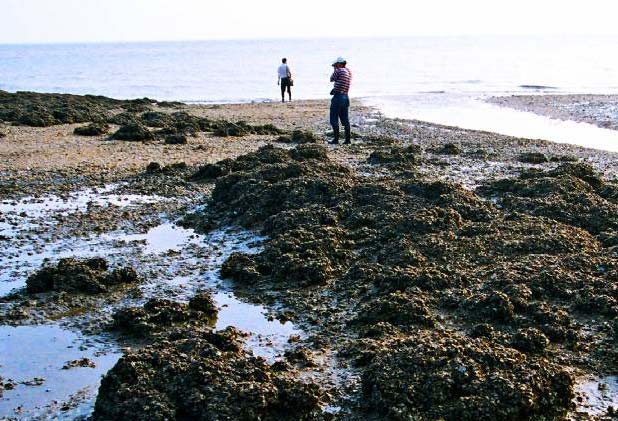
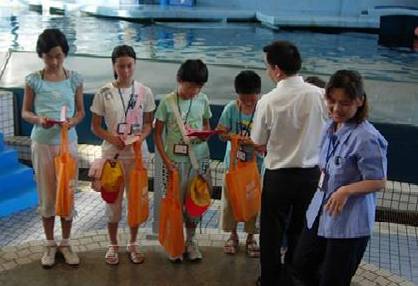
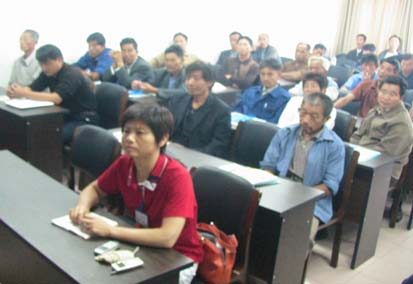
A Training project report Liyashan
oyster reef ecosystem protection
Haimen Ocean and Fisheries Bureau
Nantong, China
54
1. Summary
This project is carried out from July, 2006 to June, 2007. This project is carried out
according to the protection plans, to enhance the local government and inhabitants sense
of ocean environment protection, to make the local social institutes concerned pay more
attention to the tendency of the environment deterioration. The support institutes include
assisting the competent administrative departments Marine Management, environmental
supervision and law enforcement personnel management, coastal primary and secondary
school teachers and student representatives, grass-roots management cadres, township
enterprises in the relevant staffs. All of them make up the marine and environmental
activists. They adopt diversified flexible manners to do a series of activities, including
environmental training, alternative skills training, summer schools, management of cadres
training, Fishermen Culture Festival, seminars, field studies and communion with wetland
protection project in Yancheng, Jiangsu Province, etc.
2. Background of activities
Liyashan Oyster Reef is located in northern Jiangsu Province with an area of 3.5km2
(Fig1. 2).The natural background of the reef is unique. The reef is surrounded by tidal
lands, underwater sand and islands with diversified animals taking it as their habitat such
as fish, birds and mollusks bottom animals. Liyashan Oyster Reef is one of the rare live
oyster reefs in China. It is the typical Oyster reef ecosystem which idiosyncrasy is in
evidence and is surrounded with diversified animals.
119°E
120°E
121°E
122°E
35°N
34°N
33°N
32°N
0
50
100km
Fig1 Situation I of Oyster reef in
Dongzao Harbor, Xiaomiaohong of
55
Fig2 Situation II of Oyster reef in Dongzao Harbor, Xiaomiaohong of Haimen, Jiangsu
Fig3 Sight I of Oyster reef
Fig4 Sight II of Oyster reef
Inhabitants nearby, reinforced by fishermen quitted from fishing boats, make a living by the
main means of collecting oysters. Longtime and unrestrained picking up of oysters has
seriously damaged reef surface where oysters grow. And contamination thus drained by
the coastal enterprises as well as fertilizers and chemicals thus applied not only make the
ocean be rich in nutrition, but also make the red tide easily emerge. Both of them damage
the environment and the resources further.
Because of environment vicissitude and human development activities enhanced,
Liyashan Oyster Reef ecosystem is gradually degenerating. This phenomenon arouses
the government's attention. Then the government appropriates funds to researching it and
prepares to construct the ocean special reserve around Liyashan Oyster Reef. On Dec.
30th, 2005, a report of Argumentation of selecting Haimen Liyashan Oyster Reef as
Oceanic Specially Protected Areas has passed the judgment of the experts organized by
National Ocean & Fisheries Bureau.
3. Objectives of activities
This project is carried out according to the protection plans, to enhance the local
government and inhabitants sense of ocean environment protection, to make the local
social institutes concerned pay more attention to the tendency of the environment
deterioration, then to make no effects to renew the Oyster Reef Ecosystem, in order to
make the coastal fishermen nearby gain the substituting skills.
This project has cooperated with the plan of the construction of Oceanic Specially
Protected Areas, and has taken remarkable effect through ameliorating oyster
56
environment and strictly forbidding overwhelming collection. In November, 2006, Liyashan
Oyster Reef has been permitted as Special National Marine Protected Areas by People's
Republic of China SOA. With the growth of oyster resources and the growth of unit body,
the recession of Liyashan Oyster Ecosystem has been ceased effectively, and the Oyster
Reef Ecosystem is recovering.
4. Target audiences
This project is carried out from July, 2006 to June, 2007. The support institutes
include assisting the competent administrative departments Marine Management,
environmental supervision and law enforcement personnel management, coastal primary
and secondary school teachers and student representatives, grass-roots management
cadres, township enterprises in the relevant staffs. All of them make up the marine and
environmental activists.
5. Activities implemented
According to the plan of this project, during Sep, 2006 to Jun, 2007, there has
been one summer school, five marine environmental protection and marine environmental
protection volunteers training courses, five terms of oyster artificial breeding technology,
Harmless Green Farming Technique, ecotourism service training and four seminars, with
United Nations Development Programme (UNDP) and the higher-level departments in
charge of support and guidance.
5.1. Grouped summer camp in student summer vocation for once.
(in class training and scene inspection included)
In Aug, 2006, during 3rd to 7th, a five-day summer camp was held, in class training
and scene inspection included.
In Aug, 2006, during 3rd to 7th , at Haimen Dongzaoxiang primary school and
Liyashan, a summer camp of 33 students and teachers from Dongzao Central Primary
school was held, in which training teacher introduced information about oyster and the
origin of oyster reef and promoted ocean knowledge to students and teachers of the camp.
There was a outdoor inspection, a site tour to the oyster reef, which gave students the
chance to experience the spectacular of the oyster reef. The students were lead to take a
tour to the oyster museum where exhibited oyster samples from around the world, and
students' perceptual understand and knowledge were greatly fulfilled. Through the
introductions that explain the profound things in a simple way, the outdoor inspections,
students knowledge was greatly fulfilled, their interests to sense and explore the nature
and improved students' awareness of ocean protection.
5.2. Five marine environmental protection and marine environmental protection
volunteers training courses
From Sep-Dec, 2006 to Jan, 2007, five terms of marine environmental protection and
marine environmental protection volunteers training courses were to foster marine
environmental protection laws and regulations, pollution monitoring and control methods,
train volunteer duties, to investigate the township enterprises in marine pollution.
57
1. From Sep 14th to 15th, 2006,
The Agricultural Cadres Training School in Haimen gives marine laws, regulations,
and environmental monitoring and pollution control knowledge training courses to 28
township ocean management cadres at present. The trainer Chen Liping gives the training
courses.
.From Dec,22th to 23th,2006,
The Agricultural Cadres Training School in Haimen gives a training to 58 people
including teachers and students from the central primary school in Dongzao Harbor, ocean
management cadres, interested in marine environmental protection volunteers.
The main contents of the training are environmental protection and marine
ecosystems, as well as basic knowledge of the local marine resources and the
environment Overview.
3From Jan,26th to 27th, 2007
The Agricultural Cadres Training School in Haimen gives a training to 52 people
including teachers and students from the central primary school in Dongshe Harbors and
interested in marine environmental protection volunteers. The main contents of the training
are environmental protection and marine ecosystems, which are to guide the volunteers to
publicize marine environmental protection.
4From Mar, 16th to 17th, 2007
The Agriculture Cadres Training School in Haimen gives a training to association
cadres engaging the work relative with ocean environment protection and the inhabitants
cherishing with the sense of ocean environment protection. The main contents are on
ocean laws, environment monitoring and pollution controlling.
5On Apr,12th, 2007,
The Agriculture Cadres Training School in Haimen give a training to 18 cadres of
supervising the reserve areas. The main contents are on laws and rules of ocean
environment protection and the provision of supervising the reserve.
Through the training, the trainees can realize the local ocean resources all-around
characteristics, the main problems of the ocean environment and the relationship between
ocean exploitation and protection. The trainers coach the volunteers in many forms to
publicize the knowledge of ocean environment protection to the local people and help
them set the sense of ocean environment protection, enhance their senses of laws and
rules, in order to improve their skills on environment monitoring and pollution controlling.
5.3. Five terms of oyster artificial breeding technology
Between October-December in 2006 to March-April in 2007, the training school
organize the substituting skills trainees to investigate practically, and is in the form of
protection to foster the skills on oyster manual and green un polluted breeding aquatics,
and services on ecotourism, etc.
58
5.3.1 From Oct,19th to 20th ,2006
The school give a training on Harmless Green Farming Techniques (The training
materials are in the in closure 5152).
From Oct, 19th to 20th , 2006
The Agricultural Cadres Training School in Haimen gives a training course to 65
fishermen on Harmless Green Farming Technique.
5.3.2. On Apr,18th, 2007
The class of Harmless Green Farming Techniques.
On Apr,18th,2007
The Agricultural Cadres Training School in Haimen gives a training course to 55
fishermen on Harmless Green Farming Techniques.
Through the training, it improves the fishermen's breeding techniques, makes them
make a living by alternative skills. And it can make the fishermen rely less on the wild
oyster's resources, reduce the fertilizers and chemicals to pollute the ocean environment,
then to protect the ocean environment efficiently.
5.3.3. From Nov,17th to 18th ,2006A training on ecotourism service training.
From Nov,17th to 18th ,2006the Agricultural Cadres Training School in Haimen
gives a training course to 55 fishermen on ecotourism service training , including Hotel
services and cicerone services.
5.3.4. From Mar,8th to 9th,2007the class of ecotourism service training.
From Mar,8th to 9th,2007the Agricultural Cadres Training School in Haimen gives a
training course to 48 fishermen on ecotourism service training . And the main content is on
tourism skills development.
Through the training, it improves the fishermen's tourism skills, increases their
opportunities of employment and promotes the development of the local tourism. It props
up the local fishermen to utilize the unique scene of oyster reef, to explore the ecotourism
products, then to achieve the two-win of ocean ecosystem protection and resources
exploitation.
5.3.5. From Dec,14th to 15th, 2006a training on oyster manual breeding.
From Dec,14th to 15th, 2006, the Agricultural cadres training schools in Haimen gives
a training course to 52fishermen on skills of oyster manual breeding.
Through the training, it improves the fishermen's oyster artificial breeding technology,
enhance their skills of protecting the environment. It fosters the local inhabitants to breed
the oyster and extends oyster artificial breeding technology as an alternative way of
making a living. And it can make the fishermen rely less on the wild oyster resources, then
to protect the oyster reef ecosystem efficiently.
59
5.3.4. Ecotourism service training and four seminars
On Oct, 2006 and Apr,2007, it has held 3 seminars on forming reasons of Liyashan
oyster reef, special topic on ecosystem protection and management of marine protected
areas .
5.3.4.1. On Oct,15th,2006it was held a seminar on forming reasons of Liyashan
oyster reef and special topic on ecosystem protection in the meeting room of Haimen
Ocean& Fisheries Bureau. The 15 participants include EP from Nanjing Normal University,
leaders from ocean administrative department and EP from Ocean Aquaculture Institute.
The EPs discuss the forming mechanism, characteristics and the value of the local oyster
reef and propose the thought and measures on environment protection and continuant
utilization, aiming at the present ecosystem crisis.
5.3.4.2. On Oct, 27th, it invited EPs, scholars and leaders from Nanjing Normal
University, provincial Ocean& Fisheries Bureau, provincial Halobios Institute and Nantong
Ocean& Fisheries Bureau to attend the seminar on forming reasons of Liyashan oyster
reef and special topic on ecosystem protection in Haimen. The participants discuss the
forming reason of the Liyashan and propose many valuable advices on protecting the
Liyashan oyster reef.
5.3.4.3. On Apr, 27th, 2007, it organized EPs, scholars and leaders from Jiangsu
Province Ocean& Fisheries Bureau, Geography Science College of Nanjing Normal
University, Nantong Ocean& Fisheries Bureau, Haimen Ocean& Fisheries Bureau,
Halobios Institute, Haimen Halobios Instructing Institute and Dongzao Harbor Town
government in Haimen to attend the seminar on Ocean Special Reserve around Liyashan
oyster reef. Through the discussion, it was explored some effective supervising measures
on reserve area.
6. Produced outputs and outcomes
6.1. Through the training and educating, coastal people in all walks of life, students
and the administers all improve to realize the significance of its protection, master the
basic skills of environment monitoring and pollution controlling, publicize the knowledge of
environment protection. And it formed a good tendency of public environment protection.
6.2. Through a series of training such as teaching the Environmental knowledge ,
environmental protection skills, Harmless aquaculture technology, oyster farming
technology, tourism services, we have enhanced coastal fishermen's awareness of
environmental protection, the skills of environmental resources protection, in the original
collection oyster fishermen have switched engaged in aquaculture and pollution-free
service. And 53 of them were breeding razor clam, 38 of who were breeding clam, 12 ones
in Hotel services and 5 ones in tourism services. Original Oyster protect both the mountain
oyster resources and the surrounding marine environment, and mitigation of the Original
Oyster Mountain oyster reef capturing pressure, the Mountain Oyster Original Oyster
individual increasing, the number has been increasing.
6.3. Through the whole year's publicizing, training, educating and managing, it stops
the inhabitants to pick oysters from Liyashan, and regulate the industry pollution around,
Quality status of the water have greatly inproved, and Ecological Environment of Liyashan
Oyster Reef is getting better and better gradually .
60
6.4. In Nov, Liyashan Oyster Reef is authorized as Special national marine protected
areas by the People's Republic of China SOA .
6.5. General Science Book: Approaching Oyster Reef.
7. Evaluation of implemented activities
Through the activities of students summer camp, ocean environment protection
training and ocean environment protection volunteers training, substitution technique
training and specific seminar, know ledges about ocean ecology, environment and related
laws have been promoted, which served as good promotion and draw the attention of local
government and the public to the ecology pressure encounters the oyster reef eco-system.
Trained seashore communities and related workers, improved their sense of value
resources and environment protection, and give them the knowledge and skills for ocean
environment protection. Provided with substitutive industry and other incoming ways to
shore fish men and improved the sense and ability of resources on going utility.
8. Conclusions and recommendations for future work
Since one year ago when this project began, the society's sense of
environment protection has been greatly enhanced, surrounding waste discharge has
been dealt with, the Liyashan oyster reef eco-system has been handled and Liyashan
oyster reef has been permitted as national ocean special reserve successfully, through
efficient activities like training programs, seminars and summer camp. Ocean Department
director general Sun Zhihui and vice nomarch Hang Lixin came Haimen for the open
ceremony of "National Jiangsu Haimen Liyashan Oyster Reef Ocean special Reserve".
Now, Haimen Ocean & Fisheries Bureau is applied to the local government for the specific
management entity for the ocean special reserve, and this project has succeeded just as
expected.
In following work, we shall take one further step to cooperate with technique
institution and universities, keep in touch with other implementation unit of environment
project, learn from their advanced experiences, do better to protect ocean resources and
ocean ecology environment and facilitate the on-going development of ocean related
economy.
Annex 1. Contact information
Contact information of implementing institution(s):
Annex 2. List of references
1
,2006
2
vol.18.No.5.2005.10.
3vol.29.No.3.2005
61
Annex 3. Materials produced
Approaching Oyster Reef
62
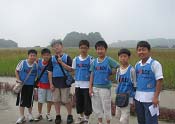
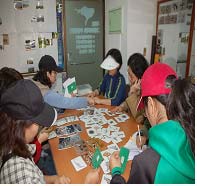
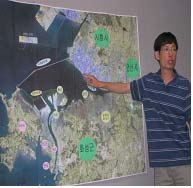
Education programs for
strengthening the local capability
of Lake Sihwa watershed
Sihwalakesaver, Korea
63
1. Summary
The purpose of this project was to help the youth and general citizens have correct
understanding of Lake Sihwa, to enable them to make right decisions and actions about
Lake Sihwa problems, and further to strengthen the watershed management capability of
the region by utilizing and reprocessing the database about Lake Sihwa that has been
accumulated as a result of Lake Sihwa marine improvement projects
This project consisted largely of Marine Environmental Education for Teachers,
Support for the Trained Teachers' Field Study on Lake Sihwa, Operation of Teachers'
Study Group on Lake Sihwa, Teachers' Workshop for Evaluating the Environmental
Education at Schools, and Production and Distribution of Teaching Materials, among
which the Support for the Trained Teachers' Field Study on Lake Sihwa and the Operation
of Teachers' Study Group on Lake Sihwa were financially supported by YSLME.
1.1. Operation of the Teachers' Study Group on Lake Sihwa
Sihwalakesavers prepared "A Plan for Environmental Education on Lake Sihwa" in
2004 and then performed the teachers' training during the summer vacation in July 2006
using this plan.
The reason why we adopted the method of training the teachers, not the youth
themselves, and then making the teachers train the youth was because we believed that it
would make sustainable education possible for the youth to understand the historical
background and the current situations and problems.
We organized a' study group on Lake Sihwa with teachers from the Sihwa coastal
area and educated them so that sustainable education can be provided at the place of
education (10 teachers including Keumjae Park, a teacher from Sung-an High School and
the lecturer on Lake Sihwa from Sihwalakesavers). The Teachers' Study Group on Lake
Sihwa served as the opinion leader for Lake Sihwa, evaluated and corrected the previous
education programs about the Lake Sihwa marine environment, and produced a new
education plan and a tool (The Destiny of Lake Sihwa: Game Title).
1.2. Support for Education on Lake Sihwa for the Youth
Sihwa Lake Lifekeepers intended to support the teachers, who completed the
environmental education course on Lake Sihwa for teachers, to lead the environmental
education course on Lake Sihwa for the youth at their schools. As it was almost impossible
for them to educate all their students about Lake Sihwa through one-time course, we
arranged the instructors from Sihwalakesavers to educate the youth.
We provided the in-class lectures and the tour to Lake Sihwa to the students from
total 4 schools including Dongsan High School, and distributed "Workbook for the Youth: 7
Years of Mystery" to each of those schools.
We are planning to solidify the environmental education for the youth through the
educational support for the teachers and the financial support, and to support the teachers
to think of new subjects about Lake Sihwa together with the youth.
64
2. Background of Activities
2.1. Lake Sihwa
The Gyeonggi Bay, where Lake Sihwa was constructed by reclamation in the early
1990's, was a lively and prosperous area full of sea-based activities and interaction with
different cultures since the Neolithic Age. But as a dike was built to create a freshwater
lake and blocked interchange of seawater, it caused serious water quality degradation and
tidal flat destruction within only a few years. While these problems remain unresolved,
there are even a number of additional development projects being planned around Lake
Sihwa watershed and they are threatening marine environment of the region.
2.2. Who owns Lake Sihwa?
Local residents have had more drastic changes in the course of Lake Sihwa
construction than any others. It is obvious that they have the most stakes than any other
stakeholders. Yet, even after 12 years of its construction, they are being excluded and
alienated from decision-making processes that would transform the environment of the
Lake Sihwa Watershed and could make an impact on their own lives. We believe that this
is mainly because the information we get is so overflowing, complicated and technical that
instead of being helpful, it is rather hampering sensible decision-making by ordinary
people. The status of local residents is still guest not host.
2.3. Marine environmental education for bringing up the future host
Education is the key to bring up the local youths who will take care of Lake Sihwa and
its watershed in the near future. The local youth should have rights and opportunities to
have accurate understanding and make rational decisions, and ultimately should be the
host who decide the sustainable future of their living environment on their own.
2.4. How do we educate them?
The environmental education programs targeting youth groups have been generally
made as extracurricular activities outside the school and inevitably there were difficulties to
perform them in continuous and systematic ways. Instead, we designed an education
program to be implemented as an official school curriculum, to inform about it and
persuade its necessity to teachers, and to train the teachers who want to join the program.
For the past few years, we have collaborated with several researchers in the Korea
Ocean Research and Development Institute (KORDI) as a partner of the Lake Sihwa
Marine Environmental Project. Now we have our own know-how and experience and also
a wide network of experts to transform the scientific, technical data and information into
understandable, adequate ones for the youth.
We also have accumulated knowledge and experience from previous extracurricular
education activities. Designing the "Proposal for Lake Sihwa Environmental Education,"
we developed teaching plans for trainee teachers and education materials for students.
With the developments we have made so far, we now want to initiate this project and
contribute to promote the environmental capability of the region.
65
3. Objectives of Activities
The objectives of environmental activities concerning Lake Sihwa are to help the
youth and general citizens have correct understanding of Lake Sihwa, to enable them to
make right decisions and actions about Lake Sihwa problems, and further to strengthen
the marine environmental capability of the region by utilizing and reprocessing the
database about Lake Sihwa that has been accumulated as a result of Lake Sihwa marine
improvement projects
To make the marine environmental education to be continued systematically within
the public education system and thus educate the youth to take the initiative for
sustainable development of Lake Sihwa, by providing the teachers in charge of educating
the youth with the marine environmental education about Lake Sihwa.
4. Target Audiences
Teachers and the Youth in the Lake Sihwa Watershed
5. Activities Implemented
5.1. Teachers' Training for Marine Environmental Education for the Youth
5.1.1. Contents of Teachers' Training Workshop
Environmental education about Lake Sihwa for the middle- and high-school teachers
in the Sihwa Watershed (Shiheung, Ansan and Hwaseong).
As intended for trainees to apply what they learn directly to the field of environmental
protection activities after training, this program shall be provided for teachers who are
already working in the field of education, and the staff in charge of ecology, culture, and
environmental projection in the cities of Shiheung, Ansan and Hwaseong.
The environmental education workshop for Lake Sihwa consists of 7 lectures and 1
day field trip over 4 days.
Teaching materials and curriculum for the Teachers' Workshop were those developed
with the support of the Ministry of and Maritime Affairs and Fisheries in 2004 and 2005.
5.1.2. Timetable of the Teachers' Training Workshop
Date and Time
Lecturer
Subject
Content
Bonjoo Koo
Types of Benthos
10:00
(Korea Ocean
Changes in the Tidal Flat after the
July 24
Benthos in
-
Research &
Construction of Lake Sihwa
(Mon)
12:00
Lake Sihwa
Development
Life on Tidal Flat of the Sihwa
Institute)
Watershed
July 24 12:00
Lunch
(Mon)
- 1:00
66
Oceanic Culture
Types of Fisheries in Sihwa
Watershed
Joon Kim (Institute
Oceanic
Historical Significance of Gyeonggi
July 24 1:00 - of Island Culture,
Culture and
Coast
(Mon)
3:00
Mokpo Univ.)
Fishery
Traditional Fishing Culture in
Gyeonggi Coast
Traditional Life Economy in
Gyeonggi Coast
Gapgon, Kim
Reclamation
July 24 3:00 - (Korean Network for
and History of
History of Reclamation
(Mon)
5:00
Coastal
Lake Sihwa
History of Lake Sihwa
Preservation)
10:00
Halophytes in the Sihwa Watershed
July 25
Byeongkwon Park
Halophytes in
-
(Tue)
Halophytes in Dinosaur Egg Fossil
12:00
(Kyunghee Univ.)
Lake Sihwa
Site
July 25 12:00 nch
(Tue)
- 1:00
Atmospheric Standard
July 25 1:00 - Euichan Jeon
Atmosphere of
Current Conditions of the
(Tue)
3:00
(Sejong Univ.)
Lake Sihwa
Atmosphere of Sihwa-Banwol
Industrial Complex
Presentation of
July 25 5:00 - Sihwalakesaver
Related
Creating a Pollution Map for in
(Tue)
6:00
Each Area
Activities
Shiwan Lee
10:00
July 26
(Korean Institute of
Water Birds at
Plans to Preserve Water Birds in
-
(Wed)
12:00
Environmental
Lake Sihwa
Lake Sihwa
Ecology)
July 26 12:00
Lunch
(Wed)
- 1:00
Eunsoo Kim
Current Condition of Water Quality
of Lake Sihwa
(Korea Ocean
July 26 1:00 -
Water Quality
Research and
Change in Water Quality after the
(Wed)
3:00
of Lake Sihwa
Construction of Lake Sihwa
Development
Institute)
Change in Water Quality after the
Construction of Tidal Power Plant
Presentation of
July 26 3:00 - Sihwalakesavers
Related
(Wed)
4:00
Quiz on Lake Sihwa
Activities
67
July 27
Departure
10:00
Sihwalakesaver
(Thur)
from City Hall
Field Trip to the Sihwa Watershed
Observatory in
the North Side
July 27 10:30
Sihwalakesaver
of Reclaimed
View of the Sihwa Watershed
(Thur)
Land in Lake
Sihwa
Lake Sihwa
July 27
History of Lake Sihwa Reclamation
11:30
Sihwalakesaver
Ecology and
(Thur)
Culture of the Sihwa Watershed
Culture Center
July 27 12:00
Lunch
(Thur)
- 1:00
July 27 2:00
Sihwalakesaver Tando
Island
Natural Coast Line and Stratum
(Thur)
Keejin Cho
July 27
Wooeumdo
4:00
People of Lake Sihwa
(Thur)
(Head of Uhdo
Island
Fishers' Union)
July 27
Return to City
5:00
(Thur)
Hall
5.1.3. Participants in the Teachers' Training Workshop
No.
Name
School
TEL No.
E-Mail
1
B. H. Song Wongok High School
011-9037-2700
sbh888@hanmail.net
2
H. K. Kim
Wongok Middle School
017-345-9691 julie345@hanmail.net
3
D. E. Hong Bono Middle School 011-9703-1690
hde21@hanmail.net
4
G. J. Park
Chogi High School
019-9027-5393
pansori4u@paran.com
5
J. I. Kwon
Bugog Middle School
011-9141-5248
kji1965@hanmail.net
6
I. S. Kim
Howon Primary School 016-210-7072 in8379@hanmail.net
68
7
J. O. Kim
Wongog High Schoo
011-723-5600
thwjdtn@hanmail.net
8
S. J.
Bonwon Primary School
017-351-6164
jinsil6164@hanmail.net
Chung
9
K. K. Lee
Bongwon Middle School,
02-502-4409 lkwangg@chol.com
Seoul
10
J. U. Le
Institute for Forest
011-9532-6245 jinug0415@yahoo.co.kr
Studies
11
H. G. Lee
Oedo Fishers' Union,
011-336-4028 leehkn@naver.com
Shiheung
12
B. Y. Park
Seohae Middle School,
011-9968-8404 pqueen70@netian.com
Shiheung
13
S. H. Pak
Ansan Storyteller
017-228-2825
shsh74@hanmail.net
14
H. S. lEE
Institute for Forest
016-380-0980 emfvnf1024@hanmail.net
Studies
15
S. M. Park
Sihwalakesaver
016-328-9960
sunnysmp@naver.com
16
M. S. Han
Sihwalakesaver
011-9568-8127
symother@intizen.com
17
M. S. Kim
Sihwalakesaver
011-9748-7054
jasin88@hanmail.net
18
K. Y. Ahn
Sihwalakesaver
017-755-8326
19
S. K. Lee
Sihwalakesaver
016-9355-8268
codemjkl@hanmail.net
20
K. H.
Sihwalakesaver 011-9684-4747
Hwang
21
K. S. Lee
Sihwalakesaver
017-347-4958
5.2. Supports for Field Trips to Lake Sihwa led by Trained Teachers
5.2.1. Support for Field Trips to Lake Sihwa
When the teachers who have completed the Teachers' Workshop for the
Environmental Education on Lake Sihwa give lessons to students, we provide them with
education program on Lake Sihwa, and necessary teaching materials and aids.
As a means of supporting the education program on Lake Sihwa for the Youth
designed for the size of one class (consisting of 45 students/teacher), we produce and
69
lend teaching materials and aids necessary for the field trip and provide information about
Lake Sihwa.
5.2.2. In order to facilitate the environmental education at the field, we produce audiovisual
aids (CD ROM in PPT format, for teachers) available at the field, teaching materials
(materials made for teachers with the support of the Ministry of Maritime Affairs and
Fisheries in 2004 and 2005, consisting of narrations, commentary on student's workbook,
basic information on Lake Sihwa, and contributions from local residents) and game boards
(games created with the support of YSLME in 2007), and lend them free of charge to the
teachers for the environmental education on Lake Sihwa.
5.3. Teachers' Study Group on Lake Sihwa
5.3.1. Objectives and Results of Teachers' Study Group on Lake Sihwa
The Teachers' Study Group, organized mainly with the teachers who completed the
maritime environmental education on Lake Sihwa, aims at supporting the environmental
education on Lake Sihwa in the regional schools, forming a foundation for sustained
education at school, and collecting and providing data about Lake Sihwa or maritime
environmental education for efficient operation of the study group.
The teachers who completed the maritime environmental education on Lake Sihwa
(10 teachers including Mr. K. J. Park from Sungan High School) and Sihwalake instructors
from Shiwhalakesavers organized the Teachers' Study Group, who ensured sustainable
environmental education at school, revised and supplemented 'Workbook for the Youth'
developed in 2005, and developed a Lake Sihwa related game.
70
5.3.2. Activity Plan for the Teachers' Study Group on Lake Sihwa
Schedule
Content
Remarks
June 8 (Thur), 2006
Discuss about the Workbook on Lake Sihwa 7 years of mystery
Program for the Youth.
June 20 (Tue), 2006
Discuss about the Workbook on Lake Sihwa 7 mysterious things that save
Program for the Youth.
water quality
Sept. 19 (Tue), 2006
Evaluate Teachers' Workshop for Lake
Drawing the pollution map
Sihwa, Workbook on Lake Sihwa for the
for each area
Youth, and Hands-on Experience at Lake
Sihwa.
Nov. 10 (Wed), 2006
Execute the Workbook on Lake Sihwa
Drawing the food chain at
Program for the Youth by example, and
the Lake Sihwa Watershed
evaluate the result.
Nov. 22 (Wed), 2006
Workshop to evaluate the youth education
at Lake Sihwa, identify the problems, and
suggest alternatives.
Mar. 19 (Mon), 2007
Discuss about the Workbook on Lake Sihwa Quiz on Lake Sihwa
Program for the Youth.
Project meeting for the development of
instruction materials
5.4. Teachers' Workshop
For Promoting the Environmental Education on Lake Sihwa: Debate for Evaluating the
Courses for Environmental Education on Lake Sihwa
Teachers who participated in the environmental education on Lake Sihwa,
environmental advocacy experts, and environmental organization staffs in charge have a
debate to share and evaluate the results of the environmental education on Lake Sihwa,
and to propose more positive alternatives for future development.
71
The following is the summary of what was discussed at the debate:
5.4.1. Results of the Debate
Establish sustainable and systematic education programs about Lake Sihwa.
One- or two-day education programs are not enough to make people recognize all the
problems concerning Lake Sihwa. Thus,7 it is necessary to educate the youth who have
engaged in environmental advocacy clubs like Green Scouts through a year-long
programs, in cooperation with the experts.
The programs should include both theoretical education about political, economical,
social and historical significances of Lake Sihwa and hands-on education such as
environmental experiments, field trips and debates.
5.4.2. Arrange the field trip to be done in various forms without hurry.
Field trips to Lake Sihwa had been arranged to look around the entire Sihwa
Watershed in a day, so that students could not have enough time to think. As even the
places to visit were selected without consideration to the students, their participation was
mostly passive.
It was the limit of short-term program. So, if we could design a long-term program that
can reflect students' voluntary decisions made through preliminary theoretical education
and discussions, it would be possible to arouse more interests and have more educational
effects.
Even if they were to visit only one place, it would be better for them to have more time
to observe, investigate, and experiment on their own about a certain mission or task. A
method of instruction, which encourages students to discuss about their observations or
experiments and requires them to submit reports about the results, would make voluntary
and active learning possible. In addition, the field trip should be arranged to be preceded
by voluntary homework by the students.
5.4.3. Require outcome that anybody can understand.
A year-long education program should require a formal journal, observations and
debate minutes to be recorded by the educatees, that is, by the youth. The youth would be
political decision-makers in the future, so that the environmental education program about
Lake Sihwa should also contribute to helping them to have a sound value on ecology.
The problems of Lake Sihwa are present problems but also an environmental issue
that will affect our future. Therefore, the environmental education on Lake Sihwa should be
designed to equip the youth with the ability to deal all environmental problems from the
ecological point of view in relation to the impact on our future.
While past participants prepared their reports based on given materials and a few
photos, future participants would be able to form their own opinions about Lake Sihwa or
environmental problems through in-depth theoretical education and discussions. If they
could become voluntary opinion leaders in the environmental advocacy movements, the
environmental education on Lake Sihwa could be said true education for the future of Lake
Sihwa and the future environment.
72
5.4.4. Need sustainable follow-up programs after the education.
All education programs are planned and made progress with good intentions while
they are in progress. When they are over, however, they become forgotten. In order to
prevent this from happening in the environmental education program for Lake Sihwa,
sustainable follow-up meetings or activities concerning Lake Sihwa should be provided.
Ongoing study group, monitoring newspaper articles on Lake Sihwa and other similar
environmental issues, and online debate on green activities movements are some
examples.
It is also necessary to link field education and classroom education so that the youth
can grow being aware of environmental issues.
5.4.5. Design the education program to be completed by participants' efforts, rather than to
be crammed up to them.
The past teaching method, which gives various benefits to participants simply
because they participate, might give the youth a wrong sense of value. Though
participation in the environmental education program for Lake Sihwa is meaningful in itself,
participants' voluntary involvement and efforts are essential in the future environmental
education program. The participants would be required to have minimum hours of
volunteering for Lake Sihwa or its environment, or the equivalent efforts.
i. Actions to Be Taken
ii. Design the program to be preceded by preliminary investigation or discussion.
iii. Organize a follow-up study group.
iv. Include various hands-on experiments in the environmental education program
such as water quality measurement or pollution level check.
Conditions
v. The subject of environmental education program should be selected from those
who have expressed their interest in it and those who have been members of
environmental advocacy clubs.
vi. Each education activity should be designed in a way that the program participant
can produce his own outcome.
vii. Homework activity should be arranged to be done autonomously and voluntarily.
viii. Participants should be allowed during the education program to freely exchange
their opinions through their own online community.
6. Produced Outputs and Outcomes
6.1. Teacher's Training for Marine Environmental Education for the Youth
Maritime environmental education was performed mainly by 10 teachers and other
ecology instructors working in the region. These people organized the Teachers' Study
73
Group on Lake Sihwa, and they supported the environmental education on Lake Sihwa for
the Youth.
Though limited within the area of Ansan, this Group established a 'network for the
environmental education on Lake Sihwa in the region' through meeting of teachers and
instructors in charge of first-hand environmental education on Lake Sihwa.
It focuses its energy on strengthening the personal and regional capabilities regarding
the environment of Lake Sihwa through continuous meetings and data exchange, and
support for environmental education programs.
6.2. Support for Field Trips to Lake Sihwa by the Trained Teachers
Originally it was planned to support the teachers who completed the teachers' training
for environmental education on Lake Sihwa to give lessons on Lake Sihwa at school,
However, the instructors specialized in the environmental education on Lake Sihwa took
charge of the environmental education for the youth due to the lack of teachers'
experience in that matter. Though the teachers were trained at the Teachers' Workshop for
Promoting the Environmental Education on Lake Sihwa, it was beyond their ability to learn
how to educate students about Lake Sihwa through one-time workshop even though they
are teachers.
The following section describes the contents of each school's trip to Lake Sihwa.
The field trip will provide thematic descriptions during one day visit to the Lake.
The purpose is to just take a glance at the site, to enable visitors to guess what a
background the Lake would have, to inform them of the past and the present of the Lake,
and further to think of its future and some alternatives.
The details are summarized as follows and the sites to visit may vary depending on
the nature or the site of field trip.
Location
Description
The location is at the junction of the streams of Banwol, Donghwa and
Samhwa, where water flows from river and is purified and then flow into
Lake Sihwa.
The location is sometimes used for education for elementary school pupils
Reed marsh park that focuses on the development history of the Lake, water pollution and
at Lake Sihwa
revival of the eco system, although it is presently not much frequented for
the field trip to the Lake.
The place is mainly available for observation of migratory birds, which would
take about one and half to two hours, and yet it takes about 30 to 40
minutes only for the field trip to Lake Sihwa.
74
The observatory overlooks Sihwa & Banwol Industrial Complex, Ansan-Si
and Hwaseong-Si. Here, the history of development and the past at and
Industrial
around Lake Sihwa is provided together with description of workers at the
Complex
industrial complex.
observatory
The roles as a military strategic point and the center of fishery in the
western coast is discussed.
It takes about 40 minutes to give a presentation.
The location overlooks seas around Island Oedo, sandbanks and Lake
Oedo
Sihwa, surrounded by sea dikes.
Observatory
Here, descriptions are provided on past and present residents who engaged
in fishery at the Lake. It takes about 15 to 20 minutes.
The sea dikes connect Oedo at Siheung with Daebudo at Ansan. The
location overlooks seas around Oedo and sandbanks and Lake Sihwa. While
Sea
dikes
at in a vehicle, brief descriptions are provided, such as the length of sea
Lake Sihwa
dikes, comparisons to Saemangeum (the largest banking site in the western
coast) and how to overlook the lake.
While in a vehicle, description is provided. It is difficult to make an on-site
Tidal power
trip as construction is underway.
generating
plant
Description is given on how the power plant, intended to improve water
quality of the lake, is run and how huge it is.
The location is used for promotional activities since Water Resources
Environment
& Corporation has constructed sea dikes at Lake Sihwa. The place overlooks
Culture Hall at transmission tower which passes over inland sea around Lake Sihwa.
Lake Sihwa
Visitors can get a glance of the history of development and the present and
the past at Lake Sihwa.
The location, previously called Masan Waterway, is neighbored by both
quarry at which footsteps were discovered, and some part of which are
designated as cultural asset of Gyeonggido, and a fishers' village exhibition
Tando
made by Ansan-Si. Located there is Port Jeongok at the entrance of travel
to the western coast and Nuaeseom (Lighthouse museum).
Descriptions are given on historical events of Masan Waterway while in a
vehicle or waking on Tando dikes.
75
The location overlooks Ansan-Si and its industrial complexes, and is
designated as natural monument over large areas as the dinosaur's fossil
Dinosaur's fossil egg site was discovered from the past sea.
egg site
Description is provided on its geology, fossils, dinosaurs and phenomena of
natural shift. Visitors can have such feel as if they were on grassland.
The school which made field trips to Lake Sihwa in the way that was discussed above
were as follows:
1) Bugok Middle School
The school made a field trip on 22 July, 2006 which teachers and students, totaling 35,
participated in.
2) Wongok Middle School
The school made a field trip on 28 October, 2006 which teachers and students,
totaling 33, participated in.
3) Bonwon Elementary School
The school made a field trip on 15 November, 2006 which teachers and pupils,
totaling 45, participated in, focusing on the history and the ecological advantages of Lake
Sihwa and observations of migratory birds, rather than its problematic issues.
4) Dongsan High School: Class Lecture
Description on development and future of Lake Sihwa was presented through PPT,
which was developed by the Ministry of Maritime Affairs & Fisheries in 2004 and 2005)
before making a field trip on 7 April, 2007 which teachers and students, totaling 30, led by
a hobby club.
5) Dongsan High School: Field Trip to Lake Shihwa
The school makes a field trip on 2 May, 2007 which teachers and students, totaling 27,
participated in.
6.3. Teachers' Study Group on Lake Sihwa
6.3.1. "Destiny of Lake Shihwa"
The "Destiny of Lake Shihwa": Who will be responsible for the destiny of Lake
Shihwa? was developed by Teachers' Study Group on Lake Sihwa.
The purpose of the game is to give an opportunity for us to think of its future focusing
on the coexistence and balance of development and preservation of the lake while playing
the game.
76
The front side of the game board describes how to play the game and the complete
view of the lake's basin area, while the back cover the photographic views of preserving (a
draft of sustainable development by citizen) and developing (a plan by the Ministry of
Construction) the lake.
There are also respective cards representing its development and preservation, which
are available for expanding the land area while playing the game.
6.3.2. Workbook for the Youth, `7 Year-long Mystery' : What happened at Lake
Sihwa?
The study group examined whether the workbook which was developed in 2005 is
appropriate or not, targets to be reviewed, materials or resources fit for implementation of
the program, and other better alternatives and proposed improvements. Some issues and
measures to be taken are as follows:
Lesson
Correction and Evaluation
It was about paraphrasing difficult words in the section about the history of
7 years of
Lake Sihwa into those people can understand easily, rather than about
mystery
evaluating the program. (The workbook should be written for the people,
not for representing the view of the government)
Drawing the
Difficult to identify correct spatial boundaries (ex. farms and orchards)
pollution map for Hard to identify pollutants from factories (because there are too many)
each area
Can attract the youth's interest easily as it is related to the science
Water that mixes curriculum.
on its own
Can utilize various experiment tools.
7 mysterious
things that save Can also be applicable to junior students.
water quality
Drawing the
Can be linked to the history curriculum, though a bit difficult for middle
course of cargo school students.
boats
77
Difficult to finish at one time. Interviews with local residents and
Locating a port researches on pictures and literature should be done attentively over
with its place several times. It would be better to make this course as one-year intensive
name
course.
Difficult to get old maps.
As data about marine life and ecology is insufficient, it is hard to draw an
Food chain at accurate food chain.
Lake Sihwa
Referred to "The World of Sea - where you can learn while playing" (2002)
by the Ministry of Maritime Affairs and Fisheries."
It would be better if the students were instructed to make the newspaper
Making a
through several planning and production meetings.
newspaper
Applicable to junior students too.
Quiz on Lake Let the youth make quiz questions on their own.
Sihwa
It would be interesting if the students could talk about the future of Lake
What can we do Sihwa through questionnaire or through pictures or stories for junior
for Lake Sihwa?
students.
6.4. Teachers' Workshop
For Promoting the Environmental Education on Lake Sihwa: Debate for Evaluating the
Courses for Environmental Education on Lake Sihwa
Teachers, professionals and staff working for environmental groups were convened to
examine how environmental education should make progress and what programs will be
prepared in relation to the lake.
In conclusion, the followings are presented as a result of the discussion.
First, long term and systematic education should be provided: For this, the
prospective trainees should take interest in the lake or participate in environment
clubs, mainly led by their teachers in charge.
Second, various field trip courses should be developed: the blueprints were
proposed at onset of the development of the program;
78
i. Historical and cultural course that includes Byeomang-seongji, shell mounds,
General Nami's Tomb, Hyeongdo Bongsudai, Dangseong, and Jaenmeori
Seonghwangdang
ii. Course connecting Tando with dinasauers' fossil egg site
iii. Course that covers Masanpo, Doksal, salt fields, port joining natural coastline
and fishing techniques
iv. Course for inland sea of Lake Sihwa
v. Course for open sea of Lake Sihwa
Third, prior study activities should be conducted voluntarily and considered in
relation to later programs, resulting in outcomes that anybody can understand. It is
possible when continued and systematic training is provided for the prospective
trainee. Respective comments or opinions from one time field trip visitors are not of
greater use in that they feature a little bit accounts of travel or essays. This
workbook should be completed by using 'the Lake Sihwa Workbook for the youth.'
Fourth, the program should not be unilaterally beneficial one but combined with
the service mind-set and efforts of the participants. Lake Sihwa could not be
described without addressing maritime environment. It is therefore, advisable to
motivate them to take interests in such issues as maritime wastes and pollution as
well as to participate in maritime waste disposal campaigns.
7. Evaluation: Effectiveness of the Implemented Activities
7.1. Teachers' Training for Marine Environmental Education for the Youth
This training course was provided mainly for the teachers and the environmental
advocacy leaders in the area, and serves as a foundation for education and public
relations on Lake Sihwa.
In reality, most teachers recognized the area as a place of their work, not as a place
of their living. Also, they had recognized Lake Sihwa only through mass media and
vaguely as a polluted lake. This training provided an opportunity for the participating
teachers to recognize the possibility to preserve Lake Sihwa in its natural condition and its
importance.
An opportunity should be provided after training teachers in charge of Lake Sihwa
related training so that they can become leaders who can properly educate the youth. If
the training is provided as an one-time event like now, however, it would be difficult to
expect them to act as leaders though it may have publicity effect. In one session, it was
even difficult to identify the location and present conditions of Lake Sihwa. Therefore, the
follow-up study should be provided to ensure continuous education and study.
7.2. Establishment of Sustainable Marine Environmental Education Program
For the Youth through Teachers' Training
79
This training course paved the way for a condition to improve the quality that the youth
leaders would have. Also, discussions were made with teachers in charge of training the
youth, resulting in preparing a foundation on how the lake related training would have to go
forward. As a result, it could be said that the environmental education program has helped
the participants for the training have interest in what is going on in their area and take
initiative for pending problems.
We tried to provide an opportunity so that young participants in the training course
may understand and think about the problems concerning Lake Sihwa. Generally, until
now, the environmental education on Lake Sihwa for the youth was focused on the trip to
Lake Sihwa which was passive in its nature as it did not give them time to think on their
own.
The main reason to organize the teachers' workshop on Lake Sihwa and the teachers'
study group on Lake Sihwa was to make the education on Lake Sihwa done not only in the
field but also in the classroom through discussion and thinking. It was limited for teachers
to make their own teaching plans through one session of the teachers' workshop on Lake
Sihwa, so that it was regretably difficult for them to educate the youth to discuss and think
about Lake Sihwa. Therefore, more specific pre- and post-sessions are needed for the
workshop so that the training course may be well established.
7.3. Teachers' Study Group on Lake Sihwa
The study group put more emphasis on teacher oriented education in order to
strengthen the regional capability. It is important because they could provide the youth with
better education in quality and quantity than that to be possibly provided by civil
organizations when the same training was given for the same teachers in the region. The
fact that the teachers organized a workshop on Lake Sihwa is expected to serve as a
cornerstone for training the youth leaders.
The workbook on Lake Sihwa for the youth, written by teacher's study group in 2004,
was made for the environmental advocacy leaders of Lake Sihwa through the program
planning meeting without actually implementation. In this sense, the teachers' workshop
provided an opportunity to evaluate and correct the program before the workbook is
actually used for the youth, and to suggest alternatives.
Another product of this study group is the game that would help people understand
Lake Sihwa more easily. Participants in the game, "Destiny of Lake Sihwa' get a chance to
perceive the opposite concepts of development and preservation. It means to give an
opportunity for the residents around the Lake Sihwa, including the youth, to think of the
future of the Lake Sihwa watershed.
Though it is very meaningful that the study group organized the workshop at and
around Lake Sihwa, it is a pity that the workshop was limited only to the schools in Ansan-
shi, part of the lake area without covering the entire area of the lake. It was also
regrettable that the teachers did not have a chance to actually teach the students. It will be
our impending work to help the teachers who joined the teachers' workshop educate the
future youth leaders. The workshop can also serve as an opportunity for the teachers to
think of new subjects on Lake Sihwa and create a better future of Lake Sihwa and extend
the scope of knowledge thereof, together with the youth
80
7.4. Teachers' Workshop
For Promoting the Environmental Education on Lake Sihwa: Debate for Evaluating the
Courses for Environmental Education on Lake Sihwa
This workshop presented a new direction of the education on Lake Sihwa and showed
a possibility to develop new education program on Lake Sihwa. By letting the teachers
think about the given conflicts concerning Lake Sihwa and giving them choices, they could
make reasonable decisions rather than having vague expectation or necessity.
8. Conclusions and Recommendations for Future Work
8.1. Education for the Youth on Lake Shihwa
A prior in-class education is basically needed for an on-site trip to the lake; the
participants should be given lectures on knowledge and backgrounds of the lake in terms
of history, economy, culture and environment, by utilizing materials of ppt. It is also
necessary to share comments or opinions with the participants or their teachers after the
trip. Lake Sihwa related training covers in-class lectures, field trips and follow-ups,
including preparing 'Workbook for the youth' and studying the results of the training. It was
verified by teachers' study group that the teachers in charge rather than outsourcing
lecturers are more qualified for better training for students or participants. Its sucess or
failure depends on whether the teachers will choose to do so. It is mandatory that
continued education be provided for the teachers, interests in the lake be shared, and
supports be provided for their students.
8.2. Teachers' Study Group on Lake Shihwa
It is difficult to educate the environmental advocacy leaders on Lake Shihwa through
one-time teachers' workshop (12 class lectures and one trip to Lake Shihwa). Continuous
education should be provided. For this, financial resources should be provided for the
teachers to educate the youth.
There are difficulties in convening teachers for the study. Teachers are primarily
responsible for teaching their students. They should have spare time to give them training
on the lake and conduct it passionately.
And institutional supports are necessary, such as granting them merits when they take
training courses on Lake Sihwa; for instance, good merit rating for the teachers would be
adopted so that teachers are motivated to take interest in the lake and study it with their
students.
8.3. Conclusions
Programs that can encourage people's participation should be developed. : The
environmental education programs have been limited to the teachers, excluding the
participation of general citizens. Therefore, programs that include general citizens'
participation should also be developed.
Theme tour to Lake Sihwa should be developed. : Environmental education programs
should be developed for various target groups and with various themes.
81
For example, they can be a course on the natural coast line and the fishing industry in
the west coast, a course for watching the migratory birds in the Lake Sihwa watershed, a
course on the exploration of life in the Lake Sihwa watershed, a course centering on the
northern reclaimed land, a course on the southern reclaimed land and the dinosaur egg
fossil site, course for making known the past history of the lake area, and etc.
Leaflets for general citizen : Leaflets that brief the history, current conditions, and the
future of Lake Sihwa should be made and used for education. The leaflet for each theme
course is also needed.
The concept of the environmental education center for Lake Sihwa should be
introduced. : A system to ensure the education on Lake Sihwa for each subject and theme
should be provided. The content of education, qualified instructors, and necessary data
should be accumulated. A web site that can be a foundation for the accumulating these
data should be built first.
A system for the youth education should be provided. : As pointed out in the
evaluation of the teachers' workshop, the education for the youth is focused on the short-
term field trips. If possible, it would be better for the teachers, who participated in the
teachers' workshop on Lake Sihwa, to educate the youth on Lake Sihwa once every year.
If the trip to Lake Sihwa is e accompanied with sufficient discussion and theoretical
education before and after the trip, it would serve as a proper education program on Lake
Sihwa for the youth.
Annex 1. Contact information
Mrs. Mi-jeong Lim
Cooperate Representation
Shihwa Lake Saver
Hyundai shopping 301
Wolpi-dong 445-17, Sangnok-gu
Ansan, Gyeonggi,
Republic of Korea 426-854
Tel. 82-31-401-5601
Fax. 86-31-487-1881
Email: shihwalakesaver@hanmail.net
Annex 2. Comments or opinions by field participants
1. Younghye Ryu (Grade 2, Dongsan High School)
The fact that I am not a citizen of Ansan made the tour of Sihwa lake and the regions
around it even more interesting. Thanks to the club activities that I signed up for, I was
able to take part of a lecture concerning Sihwa Lake and the governmental policies
82
concerning it. I learned about the lake and the state at hand, the quality of the water, and
the measures the government took to cleanse the water to how it was before. But because
it was only a lecture, an indirect way of learning, I couldn't really understand how bad the
current situation was.
But the day of the tour, I was able to not only learn many things that I didn't know of
before but also understand deep inside what was really import!ant. I have only heard about
Sihwa Lake through my Social Studies textbook; that it was a failure of the government's
policy, or so people say. The lake soon rotted because of the lack of circulation. I didn't
actually have much interest in the lake, even though I got to go to a highschool in the
district. Eventually through this tour, I was able to get a new insight view on the
environment, and get to know how crucial it is for us to be cautious when handling it.
Our tour group went to the top of an observatory. Before us outstretched the industrial
complexes of Sihwa and Banwol. These two put together forms the greatest industrial
complex in our country. The industrial sewage from all of these factories were sent to
Sihwa Lake, but now is sent to the sea surrounding it. It's no wonder Sihwa Lake's waters
turned almost black with unpleasing white foams. Though the government says they will
work to enhance the environment by placing sanitizing facilities, I don't think that can
actually put a stop to water pollution. Even though they can't solve the problem at hand,
the government plans on setting up even more factories and golf courses on the land they
will retain from drainage. In this situation, no matter what policies the government will set
up, it's sure as fact that it will worsen the water pollution.
As I got to know the government's wish to develop even more, the more I felt that this
type of development was none other than endless selfishness. Here we are, draining the
shores to retain more land than that we are given, going against mother nature for the
profits that come from the land. But if you take a careful look at what is going on, these
measures are actually destroying what is valuable. The foreshore of our western sea has
lots of marine products that are available as resources. But we are destroying the habitats
of these resources for the profits that may seem great, but are actually temporary. We
must consider the environment beforehand.
While riding the bus to transport to another point of the tour, we were lucky enough to
see a small elk prancing away. We also saw some birds from far away. Not only that, we
were able to see small saltworts close up. Looking at these creatures, beautiful creations,
with my own eyes made me want to protect them even more. It also made me feel that us
humans must be careful when we make decisions that will not only influence us, but also
the small inhabitants around us.
The only positive effect that came from the tide embankment was probably the
discovery of dinosaur fossil eggs. We were able to visit the site of the great discovery. The
fact that I was looking at a fossilized egg that should of hatched hundreds of thousands of
years ago was simply amazing. We had a great time roaming the salty grounds filled with
halophytic plant communities. It was a great pity that not many people knew about this
place. It would have been great if they got a chance to roam the grounds that dinosaurs
once roamed before.
This tour of Sihwa Lake gave me many new experiences and new thoughts. It had a
new impact on my life concerning my attitude towards the environment. I now have a new
viewpoint of Sihwa Lake, and more knowledge about it than before. Thanks to the tour and
83
the teacher who provided our brains with very detailed explanations, I now sit in a new
position facing the problems concerning our environment.
2. Jihye Park (Grade 2, Dongsan High School)
A while back, we were able to take part in a lecture concerning the Sihwa Lake thanks
to our club activities. Before listening to that lecture, I think I simply had positive thoughts
about 'development'. I was also for land reclamation by drainage because I thought about
the many ways that land could be used. But after I heard that lecture and actually went to
Sihwa Lake, looking around and experiencing many things, I felt that a lot of data just got
reorganized in my head.
Unfortunately, Sihwa lake, which was made by sudden decisions from above, isn't
functioning correctly. As amendments to prevent further damage of the lake, the
government planted a marsh of reeds, installed a tidal power plant and opened the
floodgate, letting in seawater into the lake. But I really do wonder if these changes will be
able to solve Sihwa Lake's water pollution. Even if we have sewage disposal facilities that
sanitize the waste water coming from the endless industrial complexes, the chemical
pollutants will remain in that water. That waste water will relentlessly defile not only Sihwa
Lake, but also the ocean beyond. Expecting the waters of Sihwa Lake to purify without
settling the matter at hand is probably just our selfishness.
Not only that, the land, estimating to about 9,256,198 meters squared (about 2287
acres), that will be retained by drainage will be used as the foundations of even more
industrial complexes and golf courses which will worsen the current state. Ansan that we
saw at the observatory was a place surrounded by smoking chimneys of factories. Even
worse, a new city was built right next to factories. I can't believe that they set up even more
factories here! Our teacher informed us that 10 years later, when we students become
adults, the empty fields before us will change into another place. I can't imagine what he
said. While we were riding on the tour bus, transporting to another site, we were lucky
enough to see a small elk quickly hopping away in such a cute manner. Are we going to be
able to see these cute elks, the blackfaced spoonbill, an international rare species, or the
many other migratory birds after the new industrial complexes come in?
The way to the site where dinosaur egg fossils were discovered was so amazing, it
made me exclaim, 'I can't believe there was a place like this in Ansan.' It has been a long
time since I was able to feel free thanks to a spacious sight as this. Our teacher told us
that the site containing dinosaur egg fossils was on a global scale, meaning that it is quite
large. An object that was very familiar to that of a rock and looked worthless on the outside
was actually a 130,000,000 year old fossil! It was so marvelous that we were able to
actually see it.
I'm not implying that retaining land by draining our lakes has only bad sides. All I want
to see is slow and steady development that cares and considers the environment, not
relentless development with no carefully planned procedures. We should immediately stop
polluting the environment that we must hand down to our descendants instead of being
blinded by the instant profit we can gain.
My focused viewpoint was scattered into many various points through this experience.
Through this tour, no matter what problems I face, I am now able to face it with a wider
view. I also think that I now am able to think and care for the environment in a new way.
84
Though it was a short day, I was able to learn and feel many things through today. I am
looking forward to keeping an eye on the future Sihwa Lake, dreaming about a clean future
and the day we are able to get closer to nature.
3. Jooyoung Kang (Grade 1, Dongsan High School)
Though I lived in Ansan for over 10 years, I never even visited the famous Sihwa Lake.
I only knew for a fact that it was a dirty lake that the government policy failed to enhance.
This tour was very interesting for me who didn't fully understand the exact existence and
import!ance of Sihwa Lake. The 6 hour tour went over the observatory that looked over the
industrial complex to the site where dinosaur egg fossils were discovered. The guide
teacher's fully detailed explanations and the hands on experiences made the tour a lasting
memory. Through the teacher's lecture a while ago, we were able to get to know a lot of
information concerning the total expenditure concerning the developments of Sihwa Lake,
the different opinions that came from each individual affiliated organizations of the
government, the associations put up for the improvements of the quality of water forming
Sihwa lake, the import!ance of the Oido region, and many other data regarding Ansan and
the district neighboring it. Even though it is the place I had lived in since I was young, there
were many new facts that I got to know for the first time. Especially the fact that the tide
embankment of Sihwa was the longest in the world, before the Saemangum and also that
the now building tidal power plant produces the largest scale of electricity in the world, but
only satisfies about one third of Ansan's demand was very interesting. Not only that, I got
to know for the first time that our country's foreshore is large enough to be ranked in the
top five, and that the rare halophyte communities were widely distributed in this area's very
foreshore.
Through this tour, I felt that though our effort to make Sihwa Lake clean again is
necessary, but the most important thing is that we must take interest in where we live and
understand it to make it an area we can all enjoy. It was a day that made me understand
that the reclaimed land along the shore around Sihwa Lake isn't a total industrial complex
built for development in a quantitative respect but a region we must protect and preserve.
4. Hyeyeon Yang (Grade 2, Dongsan High School)
Even during the lecture about Sihwa lake, the fact that factories or industrial
complexes were to be built on that land, or that parks or a golf course will be constructed,
and all the other uses of the land that would be retained wasn't of interest to me. I just
thought, 'I guess it's happening,' and shook my head in understanding. My heart wasn't
moved. The reason of my lack of interest probably was because I didn't see it with my own
eyes.
But through the Sihwa Lake tour, I was able to see the grounds filled with halophyte
communities where the small elks inhibited and even visited the site where dinosaur eggs
were discovered. I began to think that maybe if this place was used as an ecological park it
would be educational and helpful to many people. I soon felt that Sihwa Lake was a place
more useful and had many functions beyond my imagination.
The Sihwa Lake that I imagined in the past was a desolate place, filled with a foul
smell, white foam floating around with no life able to be found. But, after I was able to
actually see it, I came to think that I was not only disinterested about Sihwa Lake, but also
85
didn't know anything about it. If only I had a little bit of interest, then I could have known.
On those terms, I think that this tour of Sihwa lake was a very valuable experience. A
picture is worth a thousand words, they say.
People say that the major term for environmental pollution was Sihwa Lake, the place
where turned into a dead lake within 3 years it was made because of the lake of water
circulation and the inflow of industrial sewage and waste water from family homes. The
lake got a lot better than before, but we still have a long way to go. Instead of raising more
factories and golf courses that will add to the already overflowing pollution, I really want
the government to consider using this place, this valuable land to create an ecological park
that can be used as a tourist attraction.
Annex 3. Content of Instruction Materials
(which was developed for teachers in 2004 and 2005)
Subject of
Target
Course Title
Content of Course
Course
Group
Current
Teachers
Past, present and
Current conditions of Lake Sihwa
Condition
future of Lake
Development process of Lake Sihwa
of Lake
Sihwa
Sihwa
Current
Students
7 years of mystery
Preparations for field trip
Condition
Understanding the background of the construction of
of Lake
Lake Sihwa, and its development process
Sihwa
Water
Teachers
Is the water in
Understanding of the water quality of Lake Sihwa and
Quality of
Lake Sihwa
the basin
Lake Sihwa
clean?
Water
Students
Water that mixes
Preliminary activities
Quality of
on its own
Experiments to understand stratification
Lake Sihwa
Water
Students Drawing
the
Follow-up activities
Quality of
pollution map for
Understand the relationship between water quality
Lake Sihwa
each area
and basin
Water
Students 7
mysterious
Identify things in daily use that are related to water
Quality of
things that save
quality
Lake Sihwa
water quality
History of
Teachers From
Gunja
Bay Historical background of Lake Sihwa area
Lake Sihwa
to Lake Sihwa
Historical relics of Lake Sihwa area
86
History of
Students Drawing
the
Preliminary activities
Lake Sihwa
course of cargo
Find the course of cargo boats
boats
History of
Students
Locating a port
Follow-up activities
Lake Sihwa
with its place
Locate ports with their place names on old maps
name
Life in Lake
Teachers Plants,
insects Plants in Sihwa Watershed
Sihwa
and wild animals
Insects in Sihwa Watershed
in Sihwa
Mammals in Sihwa Watershed
Watershed
Tidal Flat of
Teachers
Is the tidal flat of
Development of Lake Sihwa and the change in its
Lake Sihwa
Lake Sihwa safe?
tidal flat
Current conditions of Benthos in Lake Sihwa
Tidal Flat of
Students
Food chain in
Understand the food chain in Lake Sihwa and its
Lake Sihwa
Lake Sihwa
organization
Birds at
Teachers
Lake Sihwa and
Current conditions of water birds in Sihwa Watershed
Lake Sihwa
Water Birds
Plan to preserve water birds in Sihwa Watershed
Birds at
Students Making
a
Inform the activities to protect birds at Lake Sihwa by
Lake Sihwa
newspaper
making a newspaper
Field Trip to
Teachers Guiding
the
Information about the course for hands-on
Lake Sihwa
course for hands-
experience at Lake Sihwa
on experience at
Lake Sihwa
Field Trip to
Students
Quiz on Lake
Field application program
Lake Sihwa
Sihwa
Simple quiz available for the teachers during the field
trip to Lake Sihwa
Field Trip to
Students
What can we do
Follow-up activities
Lake Sihwa
for Lake Sihwa?
Let the students think of alternatives for Lake Sihwa
problems.
87
Appendix -
Teachers Ecology
and
Current conditions of the ecology of tidal flat in
Culture and
current conditions
Gyeonggi Coast
History of
of Gyeonggi
Current conditions of the local coastal culture
Lake Sihwa
Coast
resources
Basin
Appendix -
Teachers
History of tidal flat
History of the tidal flat in Gyeonggi Bay from the
Culture and
and Gyeonggi Bay
prehistoric period to the present
History of
Lake Sihwa
Basin
Appendix -
Teachers Records
about Keejin Cho (Head of Uhdo Fishers' Union)
Culture and
fishermen
Youngbae Yoon (Head of Wooeumdo Fishers' Union)
History of
Lake Sihwa
Basin
88

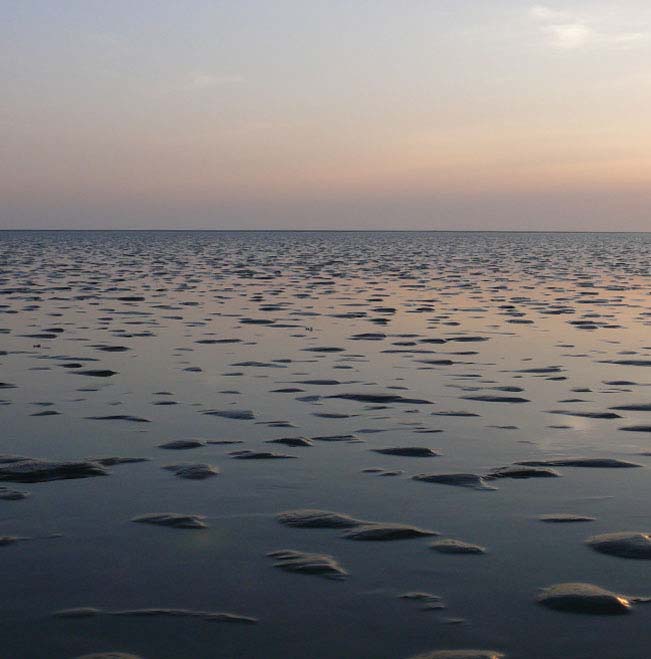
Reducing Environmental Stress
For a copy of the publication, please contact the
Project Management Office at info@yslme.org
in the Yellow Sea Large Marine Ecosystem
UNDP/GEF Yellow Sea Project Management Office
c/o Korea Ocean Research and Development
Institute
1270, Sa-2dong, Sangnok,
Ansan City 426-744, Republic of Korea
Tel. 82-31-400-7829
Fax. 82-31-400-7826,
www.yslme.org