

BeGLOBALENVIRONMENT current news
F A C I L I T Y
nguela
THE NEWSLETTER OF THE BENGUELA CURRENT LARGE MARINE ECOSYSTEM PROGRAMME
July 2006 Issue 4
Inside News
BCLME Programme BCLME experience will help Namibia
3
Benguela Current Commission
4-5
looks ahead to
Training and capacity building
6-7
Taking a closer look at the Angola Benguela Front
8
The spectre of climate change
9
a second phase
PIRATA buoy deployed off Angola
10
Noctiluca launched in Namibia
11
CSIR entrega pacote de poluição marinha
12-13
Developing nations are tackling water issues head on
14-15
by Dr Mick O'Toole
Projects supported by the BCLME Programme
16-21
Feike and BENEFIT collaborate on SEIS project
21
T
Namibia earmarks funds for shellfish sanitation
22-23
he Benguela Current Large
The Interim Agreement wil open
Hake tops the shared stocks agenda
24
Marine Ecosystem (BCLME)
the way for a new framework for
A new beginning for BENEFIT
25
Programme is now entering
regional cooperation in marine sci-
Projecto EAF conta com participação valiosa
26-28
its final phase, with a little over a
ence and policy in which BENEFIT
Taking a closer look at the southern boundary
29
year left before completion.
wil be transformed into the sci-
Melhorar a previsibilidade e prognóstico no BCLME
30-31
entific arm of the Commission. In
Over the past four years, we
Public Relations
32-33
time, the implementation of the
have invested over US$10 mil ion
Forthcoming events
34
ecosystem approach wil involve
(about R65 mil ion) in support of
new and adaptive management
75 projects. The projects are pav-
systems, joint monitoring of
ing the way for the three countries
shared fish stocks, use of early
of the Benguela to manage the
warning systems in response to
region's valuable marine and coast-
environmental variability and cli-
al resources at the ecosystem
mate change, use of "State of the
level, and to better balance human
Ecosystem" information systems
needs with conservation issues.
and contingencies, and the moni-
The centre pages of this news-
toring of transboundary pol ution.
letter detail the projects that
have received support from the
The fact that the Global
BCLME Programme over the past
Environment Facility is consider-
four years. The majority of these
ing funding a second phase of the
projects are now complete, or are
BCLME Programme, from 2008
nearing completion, signifying that
to 2012, bodes wel for the future
the BCLME Programme is in the
success of the BCC. The planned
process of winding down.
second phase wil focus on two
With less time being dedicated
components: the development
to the management of projects,
of institutional capacity and the
one of the Programme's major
strengthening of the BCC, and
thrusts over the past six months
the adaptation of the BCLME to
has been to draft an agreement
climate change, particularly in rela-
between the three countries that
tion to fisheries.
wil lead to the establishment of
This is an exciting and chal enging
a Benguela Current Commission
time for the BCLME Programme
(BCC). Thanks to the cooperation
and nowhere is this more evi-
and goodwil of a number of senior
dent than in the pages of this
officials in the three countries,
newsletter which is packed with
this process has proceeded very
information about the BCLME
smoothly and we are now at the
Programme's activities over the
point where we are anticipating
past year. We trust it makes for a
that an Interim Agreement wil be
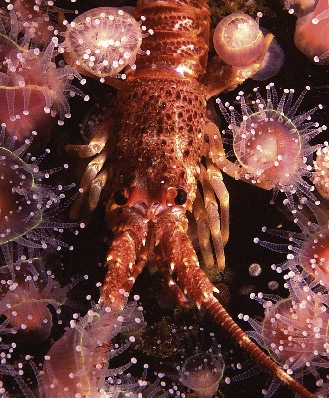
A west coast rock lobster, Jasus lalandi, takes shelter among pink
good read.
anemones. This photograph, by well known underwater photog-
signed by Angola, Namibia and
rapher, Geof Spiby, is included in a new, 20 panel display on the
South Africa by year-end.
BCLME Chief Technical Advisor
BCLME Programme that is to be launched in Cape Town in August.
(Programme Coordinator)
Turn to p.33 for the full story.
1
O Programa BCLME olha em
frente para uma segunda fase
abrir caminho para os três países do
Comissão. Ao longo do tempo, a
BCLME gerirem os ricos recursos
implementação da abordagem de
marinhos e costeiros ao nível do
ecossistema irá envolver sistemas
ecossistema e para melhor equili-
de gestão novos e adaptáveis, a
brarem as necessidades humanas
monitorização conjunta de stocks
com aspectos de conservação.
pesqueiros, o uso de sistemas de
alerta antecipado para responder à
As páginas centrais deste boletim
variabilidade ambiental e alterações
descrevem os projectos que rece-
climáticas, o uso de sistemas de
beram apoio do Programa BCLME
informação e contingência sobre
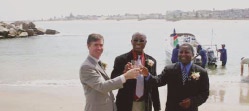
Dr Mick O'Toole, chief technical advisor to the BCLME Programme, toasts ao longo dos últimos quatro anos.
o "Estado do Ecossistema" e a
the launch of the ski-boat Noctiluca with Simon Nhongo, UNDP Resident A maioria destes projectos estão
monitorização da poluição transfron-
Representative in Namibia and Dr Abraham Iyambo, Minister of Fisheries agora finalizados, ou quase a serem teiriça.
and Marine Resources in Namibia. Turn to p.11 for the ful story.
finalizados, o que significa que o
Programa BCLME entrou num proc-
O facto de que o Fundo de
esso de desaceleração.
Ambiente Global (GEF) está a con-
por Dr. Mick O'Toole
siderar financiar uma segunda fase
O Programa do Grande
Com menos tempo dedicado à
do Programa BCLME, de 2008 a
Ecossistema Marinho da Corrente
gestão de projectos, um dos objec-
2010, é um bom sinal para o futuro
de Benguela (BCLME) está agora
tivos principais do Programa ao
sucesso da BCC. A segunda fase
a entrar na sua fase final, tendo
longo dos últimos seis meses tem
que está planeada concentrar-se-á
pouco mais de um ano até terminar.
sido a elaboração de um acordo
em dois componentes: o desen-
entre os três países que conduz-
volvimento de capacidade instituci-
Ao longo dos últimos quatro anos,
irá ao estabelecimento de uma
onal e fortalecimento da BCC, por
investimos cerca de US$10 milhões
Comissão da Corrente de Benguela
um lado, e a adaptação do BCLME
(cerca de R65 milhões) no apoio a
(BCC). Graças à cooperação e boa
às alterações climáticas, particular-
75 projectos. Os projectos foram
vontade de uma série de oficiais
mente no que diz respeito às pes-
concebidos para desenvolver a
seniores nos três países, este
cas, por outro.
informação científica e económica
processo tem corrido bem, estando
de base sobre o que se sabe acerca
agora no ponto em que se aguarda
Esta é uma altura excitante e desa-
do BCLME, como está a mudar ao
a assinatura de um Acordo Interino
fiante para o Programa BCLME, o
longo do tempo e qual o melhor
por Angola, Namíbia e África do Sul
que é evidente nas páginas deste
modo de lidar em toda a região com
até ao final do ano.
boletim que está carregado de
os problemas de gestão transfron-
informação acerca das actividades
teiriça relacionados com a pesca,
O Acordo Interino abrirá caminho
do Programa BCLME ao longo do
exploração mineira, exploração
para um novo quadro de cooper-
último ano. Acreditamos que é uma
petrolífera, desenvolvimento
ação regional na ciência e política
boa leitura.
costeiro, biodiversidade e poluição.
marinha, no qual o BENEFIT será
Em resumo, os projectos estão a
transformado no braço científico da
Bengu
curr e
ent l
n a
ews
2
Be
B n
e g
n u
gcurre
ent l
n a
curr e
ent new
e s
w
BCLME experience
wil help Namibia
The lessons learnt from the implementation of the BCLME Programme will
help Namibia to participate meaningfully in other transboundary environ-
ment projects, such as the Orange River Basin Programme.
This is the opinion of Simon Nhon-
pol ution and land degradation al
Mr Nhongo is satisfied that the
go, UNDP Resident Representative
pose a threat to the quality of life
BCLME Programme is directly ad-
in Namibia, who has taken a strong
in the Orange River Basin.
dressing key targets of the World
interest in the implementation of
Summit on Sustainable Develop-
the BCLME Programme since his
"I see a lot of potential for the
ment and the Mil enium Develop-
appointment in January 2005.
Benguela Current Commission
ment Goals, especial y the goals
and, further down the line, a
of eradicating poverty, ensuring
"The BCLME Programme uses a
similar `Orange River Commission',
environmental sustainability and
regional y integrated ecosystem
especial y in the context of SADC,"
developing a global partnership for
approach," notes Mr Nhongo.
says Mr Nhongo.
development.
"Using the same approach, Namibia
stands to benefit immensely from
"The establishment of an inter-
Mr Nhongo is confident that An-
country commission would culmin-
Simon Nhongo
participating in other transbound-
gola, Namibia and South Africa wil
ary projects like the Orange River
ate in more comprehensive agree-
negotiate a ful y-fledged Benguela
Basin Programme."
ments and conventions, supported
Current Commission that wil help
by sustainable funding mechanisms
the three countries to engage at
Currently in the early stages of
and underpinned by contributions
a political level on the manage-
implementation, the Orange River
from the countries themselves."
ment of transboundary marine
Basin programme is working
resources.
towards the development of an
Although the BCLME Programme
integrated water resources man-
is a multinational initiative, the
"Given the significance of the eco-
agement plan for the Orange River.
location of the Programme Co-
nomic benefits to the respective
Namibia, South Africa, Lesotho
ordination Unit (PCU) in Windhoek
countries' economies, the political
and Botswana al depend on the
has led to a close working relation-
commitment of the member
Orange River for their hydro-power
ship between the PCU and the
countries is almost assured," he
generation, industrial production,
Environment Unit of UNDP Namibia.
concludes.
agriculture and economic growth.
UNDP Namibia focuses intensely
Yet, declining average rainfal ,
on eradicating poverty and
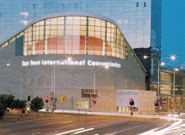
High level GEF meeting for Cape Town
Ministers and high-level gov-
also provides an opportunity for
will signal their
ernment delegations from 176
prominent environmentalists,
committment
nations will attend the Assembly
parliamentarians, business lead-
to the establish-
of the Global Environment
ers, scientists, and NGO leaders
ment of the
Facility (GEF) which is scheduled
to discuss global environmental
Benguela Current
to take place at the Cape Town
challenges within the context
Commission.
International Convention Centre
of sustainable development and
from 29 to 30 August.
other international development
Since 1991 the
goals.
GEF has provided
The GEF, one of the key spon-
$4.5 billion
sors of the BCLME Programme,
The hosting of the Assembly in
(R27 billion) in
was established in 1991 with
Cape Town, presents the BCLME
grants and gener-
the goal of assisting developing
Programme with a unique oppor-
ated $14.5 billion
countries to fund projects that
tunity to showcase its work to
(R87 billion) in co-
protect the global environment.
the GEF's member countries and
financing from other partners for
It holds an Assembly once every
key figures in the environmental
projects in developing countries
three to four years.
sphere.
and countries with economies
in transition. In 2002, 32 donor
At the Assembly meeting, mem-
As a result, the BCLME
countries pledged $3 billion
ber countries come together to
Programme will host one of
(R18 billion) to fund operations
review and evaluate the GEF's
the key side events of the GEF
between 2002 and 2006.
general policies, operations and
Assembly: a ministerial event
membership. The Assembly
during which the countries
3
Benguela Current Commission:
Ministers prepare to sign Interim Agreement
The Benguela Current Commission (BCC) - a formal institutional structure that wil facilitate the
understanding, protection, conservation and sustainable use of the Benguela Current Large
Marine Ecosystem - wil be established by Angola, Namibia and South Africa by year-end.
An Interim Agreement is to be
a Management Board, compris-
as expert advice concerning the
signed by Angola's Minister of
ing a delegation from each
conservation and sustainable use
Fisheries, Salomão José Luheto
country;
and development of the BCLME.
Xirimbimbi, Namibia's Minister
The Secretariat plays an adminis-
of Fisheries and Marine Living
a Secretariat, comprising an
trative role.
Resources, Dr Abraham Iyambo,
Executive Secretary and a co-
and South Africa's Minister of
ordinator; and
The Interim Agreement wil take
Environmental Affairs and Tourism,
an Ecosystem Advisory
effect once it has been signed by
Marthinus van Schalkwyk.
Committee consisting of
the Angolan ministers of Fisheries,
Urbanisation and Environment
"The signing of the Interim
experts nominated by each of
and Petroleum; the Namibian
Agreement by the three Ministers
the three countries.
ministers of Fisheries and Marine
wil set in motion one of the world's
The Ministerial Conference is
Resources, Environment and
first commissions based on the
the ultimate decision-making
Tourism and Mines and Energy;
LME approach to ocean govern-
body of the BCC. The role of
and the South African ministers of
ance," says Dr Mick O'Toole, Chief
the Management Board is to
Environmental Affairs and Tourism.
Technical Advisor to the BCLME
promote a regional approach to
Programme. "It wil also lead to the
the management of the BCLME
The first meeting of the man-
establishment of the various
and the task of the Ecosystem
agement Board wil be held
committees that make up the
Advisory Committee is to sup-
within three months of the Interim
Benguela Current Commission."
port decision making by provid-
Agreement entering into force. At
The committees include:
ing the Management Board, the
that meeting, the Management
Ministerial Conference and each of
Board wil adopt rules and pro-
a Ministerial Conference, made
the three countries with the best
cedures for itself and determine
up of a Minister from each of
available scientific, management,
the initial composition of the
the three countries;
legal and other information, as wel
Ecosystem Advisory Committee.
Comissão da Corrente de Benguela:
Ministros preparam-se para assinar o Acordo Interino
A Comissão da Corrente de
Dr Mick O'Toole, Assessor Técnico
para a gestão do BCLME, equanto
Benguela (BCC) uma estrutura
Principal do Programa BCLME.
a tarefa do Comité Assessor do
institucional formal que facilitará o
"Conduzirá ainda ao estabelecimen-
Ecossistema é apoiar a tomada de
conhecimento, protecção, conser-
to dos vários comités que fazem
decisão ao fornecer ao Conselho de
vação e uso sustentável do Grande
parte da Comissão da Corrente de
Gestão, à Conferência Ministerial e
Ecossistema Marinho da Corrente
Benguela."
a cada um dos três países a melhor
de Benguela será estabelecida
Os comités incluem:
informação científica, de gestão,
por Angola, Namíbia e África do Sul
legal ou outra disponível, bem
até ao final do ano.
uma Conferência Ministerial,
como apoio especialista no que diz
constituída por um Ministro de
Em Agosto será assinado um
respeito à conservação e ao uso e
cada um dos três países;
Acordo Interino pelo Ministro das
desenvolvimento sustentável do
Pescas de Angola, Salomão José
um Conselho de Gestão, consti-
BCLME. O Secretariado desem-
Luheto Xirimbimbi, o Ministro das
tuído por uma delegação de cada país;
penha um papel administrativo.
Pescas e Recursos Marinhos Vivos
um Secretariado, constituído
O Acordo Interino entrará em
da Namíbia, Dr Abraham Iyambo, e
por um Secretário Executivo e um
vigor assim que for assinado
o Ministro do Ambiente e Turismo
coordenador; e
pelos ministros angolanos das
da África do Sul, Marthinus van
um Comité Assessor do
Pescas, Urbanismo e Ambiente e
Schalkwyk.
Ecossistema formado por peritos
Petróleo; os ministros namibianos
"A assinatura do Acordo Interino
nomeados por cada um dos três
das Pescas e Recursos Marinhos,
pelos três Ministros permitirá
países.
Ambiente e Turismo e Minas e
arrancar com uma das primeiras
A Conferência Ministerial é o orgão
Energia; e os ministros sul africanos
comissões no mundo baseada
fundamental de decisão da BCC.
do Ambiente e Turismo.
na abordagem de LME para a
O papel do Conselho de Gestão é
A primeira reunião do Conselho de
governação dos oceanos", diz o
promover uma abordagem regional
Gestão será realizada durante os
Bengu
curr e
ent l
n a
ews
4
Bengu
curr e
ent l
n a
ews
The main thrust of the BCC wil
the coordination of regional
the adoption and enforcement
be to implement an ecosystem
efforts to conserve species
of harmonised regulatory frame-
approach to managing the BCLME.
such as sea birds which are not
works for the discharge of
For instance, the Commission
harvested;
sewage, pol utants, waste and
may consider and make recom-
other pol ution control measures;
mendations to the three countries
the prevention of the introduc-
tion of harmful and invasive
guidelines on water quality
concerning the optimum levels
alien species;
standards;
of harvesting in respect of stocks
which are known, or suspected, to
maritime safety and related
responses to harmful algal blooms;
be shared by two or more of the
matters with the potential to
three countries. Other subjects
environmental impact assess-
impact on the BCLME; and
around which the Commission
ment and other procedures for
the responsibilities, procedures
may provide recommendations
the planning and approval of
and routines for the exchange
are:
new projects and activities
of information and liaison
which have the potential to
between the three countries.
the monitoring, control and sur-
impact on the BCLME;
veil ance of marine fisheries;
Once the Interim Agreement is
processes and standards for
signed, the countries wil work
the conservation of the biologi-
minimising and remediating the
together with the assistance of
cal diversity of the BCLME;
environmental impacts arising
donor partners to build the capacity
from marine prospecting, mining
of the Management Board, Secre-
the implementation of integrated
and dredging and from the
tariat and the Ecosystem Advisory
coastal management and the
exploration and development
Committee. Thereafter they wil
ecosystem approach to fisher-
of oil and gas fields, including
work towards implementing the
ies management;
their associated pipelines;
Strategic Action Programme and
the establishment of a system
negotiating a binding legal instrument
of marine protected areas;
contingency plans for dealing
that wil establish a permanent and
with extreme events and
sustainable Benguela Current
the rehabilitation of environ-
threats such as major oil spil s;
Commission.
mental y degraded areas;
três meses seguintes à entrada
o estabelecimento de um siste-
mos tais como grandes derrames
em vigor do Acordo Interino. Nessa
ma de áreas marinhas protegidas;
de petróleo;
reunião, o Conselho de Gestão irá
a reabilitação de áreas ambien-
a adopção e fiscalização de
adoptar as suas próprias regras
talmente degradadas;
quadros regulamentares harmoni-
e procedimentos e determinar
zados para a descarga de esgotos,
a composição inicial do Comité
a coordenação dos esforços
regionais para conservar espécies
poluentes, resíduos e outras medi-
Assessor do Ecossistema.
tais como aves marinhas que não
das de controlo de poluição;
O objectivo principal da BCC será
são exploradas;
directrizes para os padrões de quali-
implementar uma abordagem de
a prevenção da introdução de
dade de água;
ecossistema para a gestão do
espécies prejudiciais e invasoras;
segurança marítima e aspectos
BCLME. A Comissão poderá, por
relacionados com potencial para
exemplo, analisar e apresentar
resposta aos florescimentos de
algas tóxicas;
resultar em impactes no BCLME; e
recomendações aos três países
sobre os níveis óptimos de explo-
avaliação de impactes ambien-
as responsabilidades, procedi-
ração dos stocks que se sabe ou
tais e outros procedimentos para o
mentos e rotinas para a troca de
que se pensa serem partilhados
planeamento e aprovação de novos
informação e ligação entre os três
por dois ou mais dos três países.
projectos e actividades que são
países.
Outros temas em torno dos quais a
potenciais causadores de impactes
Assim que o Acordo Interino seja
Comissão poderá apresentar reco-
no BCLME;
assinado, os países trabalharão jun-
mendações são:
tos com a assistência de parceiros
processos e padrões para mini-
doadores para capacitar o Conselho
a monitorização, controlo e
mizar e remediar os impactes ambi-
de Gestão, o Secretariado e o
vigilância da pesca marinha;
entais resultantes da prospecção,
Comité Assessor do Ecossistema.
exploração mineira e dragagem
a conservação da diversidade
Subsequentemente trabalharão
marinhas e da exploração e desen-
biológica do BCLME;
para a implementaçao do Programa
volvimento de campos de petróleo
Estratégico de Acção e a nego-
a implementação da gestão
e gás, incluindo os oleodutos e
ciação de um instrumento legal
costeira integrada e da abordagem
gasodutos associados;
obrigatório que estabelecerá uma
de ecossistema para a gestão da
planos de contingência para
Comissão da Corrente de Benguela
pesca;
lidar com ameaças e eventos extre-
permanente e sustentável.
5

Training and Capacity Building
Thinking out of the box
After working at sea for several years,
It has taken time and effort to get this
at educating the learners at four sec-
Namibian fisheries inspector, Asser
far, says Mr Katunahange, who began
ondary schools in Walvis Bay about
Katunahange is finaly doing what he
his career as a fisheries observer.
the marine environment. At the same
wants to do encouraging an interest
"I was a desperate young man
time he applied to, and was accepted
in fish and fishing among the youth of
searching for a job," he recals, admit-
to study at the Cape University of
his country.
ting that he never thought that the
Technology.
A peculiar feature of Namibian life
sea-going job he reluctantly accepted
Mr Katunahange's worries about
is that, regardless of the critical role
in 1992 would spark an abiding inter-
financing his studies were resolved
that fisheries play in the country's
est in fish, fishing and the marine
by Dr Hashali Hamukuaya, then the
economy and the fact that thousands
environment.
director of the BCLME Programme's
of Namibians find work in the fishing
Mr Katunahange spent eight years
Activity Centre for Marine Living
industry, there is very little awareness
at sea, recording the catches of
Resources. Dr Hamukuaya arranged
of the country's marine environment
commercial trawlers that catch
for the BCLME Programme to award
Asser Katunahange
among Namibian youth.
hake, monk and horse mackerel off
Mr Katunahange a bursary.
This is an incongruity that Mr
Namibia. During this period he was
Today Mr Katunahange is back in
Katunahange, a fisheries inspector
selected by the MFMR to undertake
Walvis Bay, completing the practi-
working for Namibia's Ministry of
a year of special training that improved
cal component of his diploma and
Fisheries and Marine Resources
his fish identification skils and enabled
working hard to expand his education
(MFMR), has set out to change.
him to take comprehensive biological
programme to other coastal schools.
samples from the catches of the com-
Mr Katunahange is soon to complete
His final-year project is entitled
mercial fishing fleet.
a three-year diploma in Fisheries
Communication: specialising in marine
Resource Management at the Cape
After coming ashore in 1999, Mr
and coastal environmental education.
Town University of Technology. At
Katunahange began to develop his
Mr Katunahange is determined to
the same time, he is enthusiasticaly
ideas for transferring knowledge
generate a passion for the marine
setting up an education programme
about the marine environment to
environment among secondary
aimed at encouraging the youth of
learners at Namibian secondary
school learners with the purpose of
Namibia to better understand the
schools. Eventualy he put his ideas
helping to groom future fisheries man-
ocean environment and consider a
down on paper and sent them off to
agers and leaders.
career in marine science or fisheries
the Minister of Fisheries and Marine
management.
Resources, Dr Abraham Iyambo.
"With the vast ocean and the resourc-
Within three days he was sitting
es we have in Namibia we should
Mr Katunahange's university educa-
in the Minister's office and explain-
realy try to maximise our human
tion was made possible by a bursary
ing the concept to Dr Iyambo and
capacity," says Mr Katunahange.
from the BCLME Programme and
the Permanent Secretary, Nangula
he is achieving his goal of becoming
He is grateful for the assistance of the
Mbako.
a marine and coastal educator with
BCLME Programme and would like to
the assistance of his employer, the
Before long, Mr Katunahange had
work more closely with the BCLME and
MFMR.
developed a pilot programme aimed
BENEFIT programmes in the future.
Training and Capacity Building Summary
The fol owing activities were funded
V Hashoongo - US$920
MSc Degree Aquatic Fisheries Man-
English Writing Skil s Course
by the BCLME Programme during the R Lemke
US$920
agement, University of Hul
Cape Town 24-28 April 2006
first six months of 2006:
S Kashava
US$920
United Kingdom, September 2005-
Henriet e Nsilulu, INIP
LMR/CF/NANSEN/05/02
Total Cost:
US$4 600
September 2006 (final payment)
Filomena Vaz Velho, INIP
Sea Al owances:
Phytoplankton Course:
Hilda Khoeses, MFMR
Domingos Neto, INIP
NatMIRC cruise members
Naples 31 March-26 April 2005
Total Cost:
US$22 792
Kumbi Kilongo, INIP
Transboundary pelagic survey
50% sponsorship
Large Marine Ecosystem assess-
Pedro Tchipalanga, INIP
(Angola and Namibia)
Deon Louw, NatMirc
ments in relation to climate change
Total Cost:
US$16 678
JP Roux
US$400
Total Cost:
US$2 548
upwel ing, fisheries and coastal
B Dundee
US$400
communities
Hake Otolith Reading and Validation
H Mupupa US$200
R/V Tombua INIP, Luanda
Trieste, Italy 20-25 March 2006
Mini-Workshop
M Uumati
US$200
Modification of R/V Tombua official Anja Kriener, NatMIRC
Cape Town, 15-19 May 2006
Total Cost:
US$1 200
visit to Luanda
Margit Wilhelm, NatMIRC
Alan Robertson,
Total Cost:
US$3 994
Total Cost:
US$667
LMR/CF/NANSEN/05/03
Arcon Management Services
Wildscreen Festival
Sea Al owances:
Total Cost US$2 472
BCLME Current of Plenty entry
Optical Mooring Demo Workshop
NatMirc cruise members
Total Cost:
US$341
Lamberts Bay/Cape Town 16-17 May 2006
Transboundary hake survey
BCLME Post-Doctoral Scholarship
Isabel Rangel, INIP
(Orange River and Lüderitz)
Award
ODINAFRICA seminar
Quilanda Fidel, INIP
R Cloete
US$920
Barbara Pat erson
Brussels, Belgium 24-26 April 2006
Total Cost:
US$3 824
P Kainge
US$920
Total Cost:
US$14 198
Domingos Azevedo, INIP
Total Cost:
US$2 203
6
Bengu
curr e
ent l
n a
ews
Formação e Capacitação
Cientistas angolanos beneficiam de
Alguns dos tópicos incluíram:
formação sobre escrita
escrever claramente e com grande
impacto, utilizar técnicas organiza-
Seis cientistas do Instituto de
tivas para melhorar a estrutura dos
pescas angolano, INIP, receberam
relatórios, e escrever com estilo.
formação intensiva sobre escrita
prática quando participaram recente-
Os seis participantes ganharam
mente num curso de cinco dias na
experiência prática durante o curso de
Cidade do Cabo.
cinco dias e levaram para Angola livros
de texto e exercícios detalhados de
O tutor do grupo foi o Dr Helmke
modo a poderem melhorar as suas
Hennig, co-autor de Practical Writing
capacidades de escrita no futuro.
for Practical y Everybody (Escrita
Prática para Praticamente Toda a
"Foi muito intensivo", admitiu o
Gente) e escritor independente com
Dr Hennig.
muitos anos de experiência.
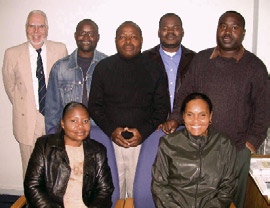
Legenda: Os cientistas que partici-
The scientists who participated in the writer training programme
O Dr Hennig apresentou um curso
param no programa de formação
are (back row), tutor Dr Helmke Hennig, Domingos Neto, Kumbi
que foi concebido para responder
sobre escrita são (fila de trás), tutor
Kilongo, Quilanda Fidel, Pedro Tchipalanga. In front are Henriette
às necessidades específicas dos
Dr Helmke Hennig, Domingos
Lutuba Nsilulu and Filomena Vaz Velho.
cientistas angolanos. Abordou duas
Neto, Kumbi Kilongo, Quilanda
áreas principais: como escrever
Fidel, Pedro Tchipalanga. À frente
relatórios científicos e como dar
Henriette Lutuba Nsilulu e Filomena
apresentações científicas.
Vaz Velho
Angolan scientists benefit from writer training
Six scientists from the Angolan
Dr Hennig presented a course
niques to improve the structure of
fisheries institute, INIP, received
that was tailor made to meet the
reports and writing with style.
intensive training in practical writ-
particular needs of the Angolan
The six participants gained practi-
ing when they attended a five-day
scientists. It addressed two main
cal experience during the five-day
course in Cape Town recently.
focus areas: how to write scientific
course and took detailed work-
reports and how to give scientific
The group's tutor was Dr Helmke
books and textbooks back to
presentations.
Hennig, co-author of Practical
Angola so that they can work on
Writing for Practical y Everybody,
Some of the topics covered
their writing skil s in the future.
and a freelance writer with many
included writing clearly and with
"It was very intensive," admitted
years of experience.
high impact, using organising tech-
Dr Hennig.
OLRAC COURSE Management
Short Term Training Courses at
IIFET Conference
Overtime NANSEN Cruise
Living Marine Resources
INIAP/IPIMAR
University of Portsmouth,
Angola-Namibia Pelagic
Cape Town, 24-26 May 2006
Lisbon, Portugal May/June/July
UK 11-14 July 2006
Transboundary Survey
Henriet e Nsilulu, INIP
duration 2/3 Months
Hel en Amupolo, MFMR
Martha Uumati, NatMIRC
Samantha Petersen, Birdlife SA
Bernardo Moises da Silva Fernandes
Wilbard Nashindi, MFMR
Helvi Mupupa, NatMIRC
Total Cost:
US$3,959
Zooplankton 2 Months
Total Cost :
US$3 317
Total Cost:
US$2 336
Justino Masseu Sequesseque
SADCO MEETING
Icthyoplankton 3 Months
Training in use of CPR and Aqua-
BCLME Staff members' Training
Cape Town 31 May 2006
Enoque Canganjo
shut le, Rhode Island University,
Professional Receptionist Training
Domingos Azevedo, INIP
Narragannset Lab USA, 9-19 July 2006 Windhoek, February-May 2006
Total Cost:
US$1 724
Nutrients 2 Months
Antonio Unza
Hans Verheye, MCM
Evelyne Museke,
Total Cost:
US$5 607
PCU Front Office Assistant
Summer Institute in Coastal
Instrumentation 3 months
Course Fees: US$587
Management, Rhode Island,
Zabaka Roberto
Clivar Workshop
USA 29 May 16 June 2006
Chromatography 3 months
Tanzania, 10-13 July 2006
Project Management Course
Nkosi Luyeye, INIP
Isabel Cativa Eunice
Larry Hutchings, MCM
Cape Town, March-June 2006
Total Cost:
US$10 032
Chromatography 3 months
Total Cost:
US$2 138
Cristina Cicognani,
Total Cost :
US$35 424
Admin Assistant EVAC
30th Virginia Law of Sea Conference
Course Fees: US$582
Dublin, Ireland 12-14 July 2006
Albert Hof mann, MME (International
Tribunal for the Law of the Sea)
continued.../28
Total Cost:
US$3 331
7
Taking a closer look at
the Angola Benguela Front
Namibia's Deputy Minister of Fisheries and Marine Resources, Kilus Nguvauva,
delivered the opening address at the Angola Benguela Front Workshop that was
held in Swakopmund in April.
Speaking to the oceanographers
These events occurred on aver-
nursery grounds and over 300 000
and fisheries biologists who had
age every ten years during the
seals died of starvation. The breed-
gathered at the National Marine
20th century. Oceanographers
ing cycles of marine birds such as
Information and Research Centre
have been watching closely to see
cormorants and penguins were
(NATMIRC) to share knowledge
whether the warm event that was
also severely disrupted.
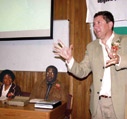
Dr Nevil e Sweijd, director
about the Angola Benguela Front,
documented off Namibia between
of the BENEFIT Programme,
outlines the objectives of the
Mr Nguvauva noted that the trans-
January and March 2006 - which
One of the objectives of the
workshop.
boundary region is of great impor-
was a consequence of reduced
Angola Benguela Front Workshop
tance to both Namibia and Angola.
upwel ing favourable winds - devel-
was to plan research activities that
wil eventual y help scientists to
"It has rich fisheries resources
ops into a ful y fledged Benguela
predict the occurrence of extreme
comprising pilchard, horse macker-
Niño.
environmental events, such as
el, anchovy, sea bream, sardinel a,
One session of the Workshop was
Benguela Niño. It is hoped that an
deep water crab, tuna and hakes,
dedicated to piecing together the
"early warning system" wil alert
al of which are commercial y
knowledge of physical and chemi-
managers and decision-makers before
exploited by local as wel as foreign
cal oceanographers in the region
a major oceanographic event takes
vessels," said Mr Nguvauva.
in an effort to throw more light
place, building on Namibia's exist-
"Understanding the mixing proc-
on the phenomenon of Benguela
ing excel ent "state of environ-
esses, dynamics and impacts on
Niños. The session was chaired by
ment" reporting system.
fisheries in the region, as wel as
Professor Vere Shannon who first
Key components of the early warn-
predicting decadal events such
coined the term "Benguela Niño"
ing system are an Atlas buoy that
as Benguela Niños and low oxy-
in the 1980s.
has been deployed off Angola and
gen water anomalies is of major
Oceanographers' understanding of
several tide gauges that wil be set
concern to fisheries managers in
Benguela Niño has grown consid-
up at a number of locations along
Angola and Namibia."
erably since 1995 when a massive
the coast of South Africa, Namibia
The Angola Benguela Front usu-
intrusion of warm water was docu-
and Angola.
al y occurs between 14 and 16°S,
mented in northern Namibia.
The Atlas buoy and tide gauges
where the cold, northward flowing
The Benguela Niño of that year
have been purchased by the
Benguela Current meets the sub-
was preceded by an invasion of
BCLME Programme to enhance
tropical, southward flowing Angola
low oxygen water over much
oceanographic and metereological
Current.
of the shelf (in 1993 and 1994).
observations with the ultimate goal
It is one of the most productive
The two extreme environmental
of improving the predictability of
regions of the Benguela Current
events had a dramatic impact on
unusual environmental events in
Large Marine Ecosystem (BCLME).
the northern Benguela ecosystem
the Benguela region.
The Angola Benguela Front
and serious repercussions for the
The Atlas buoy is part of an extension
Workshop was hosted jointly
fishing industry. An estimated two
of the PIRATA buoy system into
by the BCLME Programme and
bil ion juvenile hakes were kil ed by
the southeast Atlantic. (See p. 10)
BENEFIT, and focused on describ-
low oxygen water in the inshore
ing the physics, chemistry and biol-
ogy of the frontal zone.
Some of the oceanographic work
that has been undertaken in
the frontal zone has focused on
Benguela Niños, sustained warm-
ing events that are characterised
by large swathes of warm, highly
saline water moving into northern
and central Namibia from Angola.
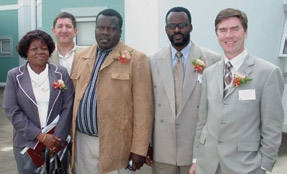
The Workshop was of icial y opened by Kilus Nguvauva, the deputy
minister of Namibia's Ministry of Fisheries and Marine Resources (centre).
The deputy minister is pictured with Ms Francisca Delgado, director
general of Angola's fisheries institute, INIP, Dr Nevil e Sweijd, Dr Moses
Maurihungirire, director of Resource Management at MFMR and Dr Mick
O'Toole, chief technical advisor to the BCLME Programme.
8



Bengu
curr e
ent l
n a
ews
THE SPECTRE OF CLIMATE CHANGE
Climate change is a subject that is beginning to receive ster from the traditional fishing grounds on the west
increased attention among scholars of the Benguela.
coast to the southeast coast. Seabird biologists have
Environmental monitoring in Angola, Namibia and also documented changes in the breeding patterns of
South Africa, coupled with recent outputs from the several seabirds. For instance, populations of Cape
BCLME Programme, provide a growing body of evi- gannet Morus capensis appear to have fol owed the
dence which shows that significant changes have taken sardine shoals east. In 1956, only seven percent of
place in the Benguela ecosystem over the past half century. southern Africa's gannet population occurred in the
Eastern Cape. This number has jumped to 67%, while
Environmental parameters such as sea surface tempera- the number of gannets breeding on Namibia's of shore
ture have shown a pronounced warming trend in the islands has plummeted.
northern Benguela, a cooling inshore in the south, and
warming of shore near the southern boundary of the Other seabirds that have moved their breeding locali-
BCLME since the early 1980s.
ties eastward are the endemic crowned cormorant
Phalacrocorax coronatus, which now breeds at
There has been an increased frequency of warm events, Tsitsikamma National Park, 355km east of its tra-
including Benguela Niños in the northern Benguela ditional nesting sites. Similarly, the Hartlaub's gul
and the occurrence of low oxygen water and sulphur Larus hartlaubi has established two breeding colo-
eruptions appear to have been more frequent of Namibia, nies in the vicinity of Port Elizabeth; it is breeding
with severe implications for fisheries resources.
550km further east than it did 10 years ago.
Scientists are beginning to talk about a "regime shift" If recent oceanographic and ecosystem studies are cor-
in the Benguela and are tentatively suggesting that the rect, an eastward and poleward shift in the Benguela
changes that have been observed in the Benguela could ecosystem may be taking place. The shift might explain
be associated with global climate change. They also sug- the changes that fishermen are reporting from the
gest that climate change or at least climate variability fishing grounds and the dramatic changes in seabird
- may be behind the eastward movement of sardines and distribution. It could also signal serious consequences
other species around the Cape peninsula.
for the Benguela, an ecosystem that has, until recently,
The eastward movement of sardines has been wel docu- sustained large scale fisheries.
mented. Senior specialist scientist at Marine and Coastal Most important for Angola, Namibia and South Africa
Management, Carl van der Lingen confirmed in April are the hake, sardine, horse mackerel and rock lobster
that catches of sardines taken of Mossel Bay have leapt up fisheries which support thousands of jobs and earn
from 2110 tons to 121 536 tons in five years.
valuable foreign currency. Large scale environmental
Other species have also shown an eastward movement. change has the potential to alter these industries, with
Most notable has been the shift of west coast rock lob- substantial ef ects on national economies.
An eastward movement of sardines in the
Populations of Cape Gannet (Morus capensis)
southern Benguela has been well documented.
appear to have followed the sardine shoals east.
9
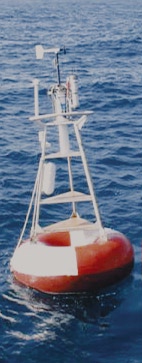
PIRATA buoy deployed of Angola
The oceanographic information that is being relayed in real time from an ATLAS buoy
off the coast of northern Angola may help oceanographers to unravel some of the
secrets surrounding Benguela Niños - large scale warming events that have severe
impacts on the climate and fisheries of Namibia and Angola.
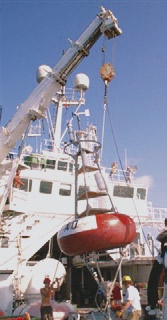
The Atlas buoy, named Kizomba,
The ATLAS buoy is capable of
Prior to the deployment of the
was deployed in June by French
transmitting a wide variety of
new ATLAS buoy, the closest
scientists from IRD working from
oceanographic measurements in
PIRATA mooring to the Benguela
the research vessel Atalante. It
real time. It is fitted with a cur-
region was at 0°; 0°.
is moored at 6°S; 8°E, at a depth
rent meter and several underwa-
Mathieu Rouault of the
of 4100m.
ter temperature and conductivity
Kizomba is the name of an
University of Cape Town,
sensors. These are deployed
Angolan dance. The buoy's name
points to the approximate
The BCLME Programme provid-
between 20 and 180 metres
was suggested by Maria de
position off Angola where
ed funding for the construction
below sea surface. Two temper-
Lourdes Sardinha, director of the
the PIRATA buoy, Kizomba, and transport of the ATLAS buoy
was deployed in June.
ature/pressure sensors are also
Activity Centre for Biodiversity,
which effectively extends the
fitted at 300 and 500 metres.
Ecosystem Health and Pollution.
PIRATA project into the south-
A meterological station on top
Each of the 13 Atlas buoys in the
east Atlantic.
of the mooring measures wind,
PIRATA array is named after a
traditional dance.
PIRATA (Pilot Moored Array in
air temperature, humidity, solar
the Tropical Atlantic) is a coop-
radiation and rainfall.
· Visit the Pirata South East
erative project between Brazil,
Dr Rouault explains that the
Atlantic extension web site:
France and the USA. Since
southeast extension of the
http://www.egs.uct.ac.za/
1997, PIRATA has deployed 12
PIRATA array is regarded as a
~rouault/piratase.html
ATLAS buoys with the purpose
pilot project. There is concern
of monitoring, describing and
that the buoy might be tampered
understanding oceanographic
with or destroyed by vandals,
processes in the tropical Atlantic.
even though the area where it is
The extension of the PIRATA
moored is devoid of fisheries.
Kizomba is capable of
array into the southeast Atlantic
transmitting a wide range
is expected to improve ocean
"This is a test," he says.
of oceanographic measure-
The buoy was deployed from the
models and climate predic-
"If the buoy is not vandalised,
ments in real time.
French research ship, Atalante.
tion and help scientists in the
we will try to make it permanent
Benguela region to better under-
and perhaps consider extending
stand ocean processes, particu-
PIRATA to the South.
larly anomalous events such as
Benguela Niño.
The oceanic and meteorological
observations that are gathered
"This will provide the missing
by the buoy's instruments are
link between the equator - the
transmitted to shore via satel-
source of Benguela Niño - and
lite and are available in near
the area that is affected by the
real-time on the internet. They
event," explains University of
are communicated to the Global
Cape Town oceanographer,
Telecommunication System and
Dr Mathieu Rouault.
are readily available for ocean
"It will also be helpful for the
and weather prediction models.
Gulf of Guinea as major warm
"The extension of PIRATA is
events in the tropical Atlantic
essential to any ocean fore-
often start as Benguela Niños."
casting system that aims to
be beneficial to society," says
It is hoped that by better under-
Dr Rouault.
standing the mechanism behind
Benguela Niños, scientists will
"At the moment there is a
ultimately be able to predict
big data gap off Angola and
when they will occur.
Namibia."
10
Bengu
curr e
ent l
n a
ews
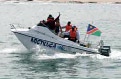
Noctiluca launched in Namibia
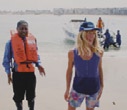
At a fun-filled event that saw Namibia's Minister of Fisheries and Marine Resources,
Dr Abraham Iyambo, and UNDP Resident Representative, Simon Nhongo, donning
lifejackets and going to sea, the 5.5m environmental monitoring boat, Noctiluca,
was launched in Namibia.
The BCLME Programme funded
as brackets for storing SCUBA
NATMIRC scientists wil use
Noctiluca
the construction and delivery of
apparatus.
Noctiluca to carry out other water
takes to sea.
Noctiluca and a second, identical
quality tests to check for bacterial
ski-boat, for the purpose of improving
Noctiluca wil largely be used for
or chemical pol ution and to monitor
environmental monitoring off
monitoring of water quality, the
sulphide events. These are natural
Namibia and Angola.
benthos, harmful algal blooms,
events that can be harmful to fish
pol ution and near-shore fisheries.
and other living organisms.
Noctiluca is named after a micro-
It may also be used for training
scopic dinoflagel ate (a type of
purposes and to build capacity
Sampling wil be carried out using
plankton) that gives off biolumi-
in fisheries and environmental
a Niskin bottle over the side.
nescence at night. She was offi-
research.
Plankton net samples may also be
cial y launched in Swakopmund in
taken over the side of Noctiluca.
February.
"As its name implies the boat
wil be used mainly for red tide
The facilities for storing diving
Noctiluca was built by Z-Craft boat
sampling - to routinely sample the
equipment wil enable researchers
builders in Empangeni, South
inshore waters and complement
to conduct underwater research
Namibia's Minister of Fisheries
Africa. The boat is powered by
the shore-based monitoring we do
and to maintain scientific equipment and Marine Resources, Dr Abra-
twin Yamaha 90 hp outboard
for aquaculture," says Bronwen
which is moored to the ocean floor. ham Iyambo prepares to go
to sea with Bronwen Currie,
motors and was supplied with a
Currie of the National Marine
chief biologist in NatMIRC's
heavy duty trailer which wil al ow
Research and Information Centre
As part of the package, a two- to
aquaculture directorate.
it to be launched at slipways at
(NATMIRC).
three-day training course in the
Swakopmund and Walvis Bay.
operation and maintenance of the
"It wil be especial y useful when
ski-boat wil be presented to key
The boat is equipped with fish
we have a visible bloom beyond
staff of NatMIRC by Z-Craft.
hatches, fishing rod racks as wel
the surf zone."
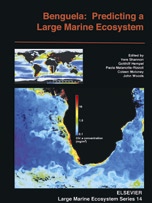
Benguela: Predicting a Large Marine Ecosystem Uniquely, the book includes a CD-
ROM containing a wealth of sup-
plementary information such as
Benguela: Predicting a Large Marine Ecosystem is soon to details about the Benguela Fore-
be published by Elsevier as Volume 14 of their Large Marine cast Workshop, observations,
Ecosystem series.
animations and model outputs,
The book is a product of the International Workshop on Fore- several papers presented at the
casting and Data Assimilation in the Benguela and Comparable Workshop and comprehensive
Systems which was held in Cape Town in November 2004. The information about the BCLME
workshop was sponsored by the BCLME Programme, in partner- Programme, BENEFIT, SANCOR
ship with nine other international and regional agencies.
(the South African Network for
Oceanic Research) and SADCO
It is jointly edited by Vere Shannon of the BCLME Programme, (the South African Data Centre
Gotthilf Hempel of the Centre for Marine Tropical Ecology in for Oceanograpy).
Bremen, Germany, Coleen Moloney of the University of Cape
Town, Paola Rizzoli of the Massachusetts Institute of Techno- With a foreword by Mick O'Toole, chief
logy and John Woods of Imperial College, London. Dr Sally technical advisor to the BCLME Programme, and
Adams of the National Oceanic and Atmospheric Administra- endorsement by the ministers responsible for fisheries and marine
tion in the USA is the technical editor.
resources in Angola, Namibia and South Africa, the 400 page
book and CD-ROM is dedicated to Kenneth Sherman who de-
Each chapter has been subjected to an international peer review veloped the concept of Large Marine Ecosystems as a practical
process.
means of implementing the ecosystem approach to ocean gover-
The book is in four parts and captures the essence of the think- nance and strongly supported the establishment of the BCLME
ing and knowledge emanating from the workshop. It is regard- Programme.
ed as the definitive work on the variability and predictability Information about its publication date, availability and price
of the BCLME.
can be found on the Elsevier website (www.elsevier.com).
11

CSIR entrega pacote
de poluição marinha
OConcelho Sul Africano para a Investigação Científica e Industrial (CSIR) preparou
uma página de internet exaustiva e de fácil utilização que contém uma grande
quantidade de informação valiosa sobre a gestão da poluição marinha na região
da Corrente de Benguela.
A página www.wamsys.co.za/
garantindo-se desta forma que se
um conjunto de directrizes de
bclme é apenas um dos recursos
mantenha em dia.
qualidade da água e sedimentos
que foram desenvolvidos pelo
para a região; e obter protocolos de
CSIR durante a implementação
Um aspecto importante é que a
melhores práticas para a aplicação
de dois projectos BCLME sobre
maioria do conteúdo da página está
destas directrizes de qualidade.
poluição marinha proveniente de
disponível em inglês e português.
fontes terrestres. Ambos os pro-
Os objectivos foram atingidos em
O líder de projecto, Susan Taljaard,
jectos foram geridos pelo Centro
larga medida através da preparação
uma cientista sénior da divisão de
de Actividade da Biodiversidade,
de um quadro genérico para a
Recursos Naturais e Ambiente do
Saúde do Ecossistema e Poluição
gestão da poluição marinha na
CSIR, explica que a página integra
região do BCLME. Este quadro
Susan Taljaard
em Luanda. A página de internet
os resultados de dois projectos:
deverá ser um recurso extrema-
promove uma abordagem base-
uma avaliação de base das fontes
mente valioso para profissionais
ada no ecossistema, em vez de
e gestão da poluição marinha na
envolvidos na gestão diária da polu-
se focar em fontes individuais de
região do BCLME; e o desenvolvi-
ição, bem como para cidadãos de
poluição marinha. O quadro iden-
mento de um conjunto comum de
Angola, Namíbia e África do Sul que
tifica os componentes chave que
directrizes de qualidade recomen-
têm interesse em assuntos relacio-
devem ser considerados na gestão
dadas para as áreas costeiras do
nados com a poluição marinha.
da poluição marinha tais como
BCLME.
legislação, objectivos de qualidade
A página contém um inventário da
Os projectos foram implementados
ambiental e estudos de avaliação
informação e dados disponíveis
simultaneamente e pretenderam
e descreve as ligações entre eles.
relacionados com a gestão da polu-
atingir quatro objectivos principais:
ição marinha proveniente de fontes
São incluídos no quadro programas
uniformizar a abordagem e metod-
terrestres em Angola, Namíbia e
de medição de base e de monitori-
ologia utilizadas para gerir as fontes
África do Sul. A página permite
zação a longo prazo, sendo estes
de poluição marinha na região do
que grupos de interesse autoriza-
aspectos de gestão da poluição
BCLME; recomendar protocolos
dos actualizem a informação de
descritos ao pormenor.
para a concepção de programas
base sobre as origens e a gestão
de medição de base e de monitori-
O quadro proposto tem ainda
da poluição marinha na região,
zação a longo prazo; recomendar
que ser aprovado e adoptado
CSIR hands over marine pol ution package
South Africa's Council for Scientific
The website contains an inventory
opment of a common set of rec-
and Industrial Research (CSIR) has
of available information and data
ommended quality guidelines for
put together a comprehensive and
related to the management of land-
the coastal areas of the BCLME.
easy-to-use website that contains a
based marine pol ution in Angola,
Both projects are part of the
host of valuable information on the
Namibia and South Africa. It al ows
portfolio managed by the
management of marine pol ution in
authorised stakeholders to update
Activity Centre for Biodiversity,
the Benguela region.
baseline information on sources
Ecosystem Health and Pol ution.
and management of marine pol u-
The website
tion in the region, thereby ensuring
The projects were implemented
www.wamsys.co.za/bclme is
that it remains current.
concurrently and aimed to achieve
just one of a number of resourc-
four major objectives: to standard-
es that were developed by the
Importantly, most of the contents
ise the approach and methodol-
CSIR during the implementa-
of the website are available in
ogy by which land-based marine
tion of two BCLME projects on
English and Portuguese.
pol ution sources in the BCLME
land-based marine pollution. It
Project leader, Susan Taljaard,
region are managed; recommend
should prove to be a highly valu-
a senior scientist at the
protocols for the design of baseline
able resource for professionals
CSIR's Natural Resources and
measurement and long-term moni-
involved in the day-to-day man-
Environment division, explains that
toring programmes; recommend a
agement of pollution, as well as
the website integrates the results
set of water and sediment quality
for citizens of Angola, Namibia
of two projects: a baseline assess-
guidelines for the region; and obtain
and South Africa who have
ment of sources and management
best practice protocols for the appli-
an interest in marine pollution
of land-based marine pol ution in
cation of these quality guidelines.
issues.
the BCLME region; and the devel-
Bengu
curr e
ent l
n a
ews
continued.../15
12
Bengu
curr e
ent l
n a
ews
pelas autoridades governamentais
ição na região do BCLME uma
A rede costeira deverá ser mantida
responsáveis na Namíbia e Angola
oportunidade para partilharem as
através da página de internet, ofer-
e, segundo a Sra Taljaard, os país-
suas experiências e melhorar o seu
ecendo, assim, um instrumento
es poderão ter que refinar e ajustar
conhecimento dos instrumentos,
de apoio à tomada de decisão e
o quadro para responder a neces-
capacidade e apoio técnico dis-
educativo muito útil para a gestão
sidades específicas. Do mesmo
poníveis neste ramo.
da qualidade da água marinha nas
modo, as directrizes de qualidade
áreas costeiras do BCLME.
da água e sedimentos precisam
"Conseguimos pôr as pessoas a
de ser oficialmente aprovadas e
falarem umas com as outras", diz
A Sra Taljaard está satisfeita por
adoptadas nos três países.
a Sra Taljaard.
os dois projectos terem lançados
as bases de trabalho para uma
"Até à altura em que um quadro
A rede foi estabelecida durante
melhor gestão da poluição marinha
de gestão e directrizes de quali-
as sessões de trabalho que foram
proveniente de fontes terrestres
dade tenham sido incorporadas
organizadas pelo CSIR e seus
na região, mas realça que cabe aos
nas políticas oficiais dos governos,
parceiros na Namíbia e Angola e
governos da região implementar e
propõe-se que o quadro de gestão
realizadas em cada país. Nestas
refinar os quadros e protocolos.
e directrizes de qualidade propos-
sessões de trabalho, foram apre-
tos sejam aplicados como instru-
sentados o quadro de gestão pro-
"O objectivo final da gestão dos
mentos preliminares para melhorar
posto, bem como as directrizes e
recursos aquáticos costeiros é
a gestão da qualidade da água
protocolos de qualidade propostos,
manter um ambiente adequado
nas áreas costeiras da região do
tendo sido dada oportunidade aos
para todos os usos designados
BCLME", sugere a Sra Taljaard.
participantes para contribuirem.
tanto usos existentes como
futuros", diz a Sra Taljaard.
Ela acredita que um dos principais
Seguiram-se seminários de tra-
resultados dos dois projectos foi
balho em cada um dos três países,
o estabelecimento de uma rede
onde foi dada formação preliminar
de qualidade da água costeira
a grupos de interesse chave sobre
na região. A rede ofereceu aos
a aplicação do quadro de gestão e
especialistas em gestão da polu-
directrizes de qualidade.
Fact File:
Land-based threats to the marine environment
Coastal developments and coastal mining activities which contribute to
the modification and destruction of coastal habitats;
Water abstraction, such as the damming of rivers. This results in a
reduction in freshwater inflow to the marine environment and causes a
reduction in the amount of sediment and nutrients that would natural y
have reached the sea;
Inappropriate agricultural practices, such as the excessive use of pesti-
cides and fertilizers. This results in a deterioration of the quality of river
water entering the marine environment and increased suspended solid
loads as a result of soil erosion;
Contaminated stormwater runof from large urban areas introduces
toxic substances such as trace metals and oils (hydrocarbons) to the marine
environment;
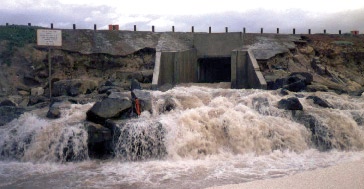
Stormwater discharge at Monwabisi near Cape Town.
Industrial wastewater discharges, predominantly from fish factories and
Land-based activities pose an increasing threat to the sustainability of the
oil refineries. Industry introduces a range of pol utants to the marine envi-
ecological, social and economic functions of the marine environment. The
ronment, depending on the industry type;
fol owing are major threats to the marine environment in southern Africa:
Fossil fuel fires from large informal set lements and traf ic emissions
from large urban areas my introduce pol utants to the marine environment
Disposal of untreated sewage, either through dif use inputs from infor-
mal set lements or through ef luents discharged from malfunctioning sew-
via the atmosphere.
age treatment plants;
13

Developing nations are tackling
water issues head on
Water. How to use it. How to share it. How to manage it in the face of a changing climate.
These are some of the key issues that the Global Environment Facility (GEF) has been help-
ing developing nations to tackle since its inception in 1991. Dr Alfred Duda, Senior Advisor
for the GEF's International Waters portfolio, shares some of his perspectives on transboundary water
resources with Claire Attwood.
It's no surprise that the person
Namibia and South Africa. In the
GEF funding is complemented by
responsible for the management
desert landscape of southern
US$3 bil ion (R18 bil ion) in additional
of water resources in the GEF a
Namibia and the Northern Cape,
funds, including in-kind contributions
multi-bil ion US dol ar fund that spe-
the Orange provides commercial
from participating nations, loans and
cialises in the global environment -
farmers with a golden opportunity
bi-lateral assistance.
is a hydrologist by profession. Over
to farm intensively on the banks of
the years, however, Dr Al Duda's
the river. But, with vast quantities
The BCLME Programme is
focus has shifted from the manage-
of water being extracted for irriga-
undoubtedly one of the success
ment of rivers and groundwater to
tion purposes, there is little left
stories of the IW portfolio, says Dr
Duda. It is one of two GEF-funded
Al Duda
the governance of oceans and other
in the river by the time it reaches
transboundary water resources.
the parched landscape of the
LME projects that have taken sig-
Richtersveld.
nificant strides towards instituting
Dr Duda's introduction to trans-
an ecosystem approach to ocean
boundary water management
"Projects like the Orange River
governance.
issues came in the late 1980s
Basin programme are al about
when he headed the bi-national
helping countries to balance differ-
The other project is the GEF
secretariat of the International Joint
ent water uses, be they irrigation,
International Waters Project of the
Commission between Canada and
mining, environment protection, or
Pacific Smal Island Developing
the United States. The Commission
even tourism and leisure," explains
States (SIDS) which has been highly
was tasked with resolving existing
Dr Duda.
successful in negotiating an ecosys-
disputes, and preventing future
tem-based treaty under the 1995
wrangles between the two nations
Large Marine Ecosystem projects,
United Nations Agreement on the
over water. In 1992 Dr Duda joined
another key focal area of the IW
Conservation and Management of
the World Bank and in 1995 he was
portfolio, are no different. The
Straddling and Highly Migratory Fish
asked to assist with the develop-
BCLME Programme, for instance,
Stocks. The Pacific treaty provides
ment of the GEF.
helps Angola, Namibia and South
an opportunity for the 15 island
Africa to better balance industrial
states and their distant fishing part-
"I was there from the start in
activities like commercial fishing,
ners to manage one of the world's
developing the GEF's strategy," he
diamond mining and oil extraction
largest tuna fisheries through an
recal s, explaining that from very
in the Benguela, while al the time
ecosystem-based approach.
early on the GEF was concerned
ensuring the health of the ecosys-
with how to manage large trans-
tem and sustainable benefits for
The Pacific SIDS are a step ahead
boundary water bodies- from Large
coastal communities.
of the BCLME Programme because
Marine Ecosystems (LMEs) like the
they have already established
BCLME, to river basins and shared
Dr Duda notes that the global real-
the Western and Central Pacific
ground water resources like the
ity of climate change is increasingly
Fisheries Commission (WCPFC) as
Nubian aquifer in North Africa.
being factored into IW projects.
a joint management institution and
GEF is now funding capacity build-
Dr Duda assisted the GEF Council
"Countries are realising that these
ing of the SIDS and their commis-
the GEF's governing board that
large water systems are critical
sion to implement the convention.
represents 176 countries to
for their sustainable future but the
Dr Duda is excited to hear that the
develop its Operational Strategy.
fluctuating climate is increasingly
BCLME Programme is rapidly mov-
He was later appointed to head the
becoming a constraint. So, they
ing in a similar direction:
International Waters (IW) part of the
realise that they have to work
GEF.
together to minimise the impacts
"If the BCLME Programme is
of climatic variations on their shared
moving towards a science-based
In Dr Duda's words, the primary
water systems," he explains.
commission for joint management
goal of the IW portfolio is to assist
of the LME and a treaty expressing
countries so that they can jointly
Looking back over the past ten
their commitments to it, then it wil
manage and sustainably use their
years, Dr Duda is encouraged by
certainly live up to GEF's expecta-
shared water resources and thereby
the progress that developing coun-
tions," he says.
derive benefits from them into the
tries have made in this area. Today,
future.
136 countries are working together
Dr Duda believes the experience
on transboundary water projects.
of the BCLME Programme is very
He cites the Orange River as an
These countries have secured
important for the African continent
Bengu example. The Orange River forms a US$900 milion (R5.4 bilion) in GEF as a whole, saying that the agen-
thick, snake-like boundary between
grants to help them do this. This
cies involved in the establishment
curr e
ent l
n a
ews
14
Bengu
curr e
ent l
n a
ews
of the Agulhas and Somali Large
African continent with the benefit
late July 2007 (see p. 34).
Marine Ecosystem (ASLME)
of South Africa's experience in the
Programme have been asked to
BCLME."
"These portfolio meetings provide
fol ow the model of the BCLME
an opportunity for GEF waters
Programme.
Dr Duda looks forward to showcas-
projects to exchange experiences
ing the BCLME Programme at two
with each other in a South-to-South
"The Benguela region was very
important international meetings
setting" he says.
fortunate," he says. "They had
that are scheduled to take place in
the BENEFIT Programme that built
Cape Town in the next 12 months.
"The BCLME Programme is a
country capacity to better under-
The first is the GEF Assembly
critical project for the global oceans
stand how the LME works and
which takes place in August (see
community and for the 121 coun-
GEF was able to build on that. Now
p. 3). The second is the Fourth
tries that are now working together
we're replicating that step-by-step
GEF Biennial International Waters
with GEF support to balance com-
approach on the other side of the
Conference, which is scheduled for
peting uses of 17 other LMEs."
proposed management framework
decision-support and educational
12/...continued
be applied as preliminary tools
tool for marine water quality man-
towards improving the manage-
agement in the coastal areas of the
The objectives were achieved
ment of the water quality in coastal
BCLME.
largely through the preparation of
areas of the BCLME region," sug-
a generic framework for the man-
gests Ms Taljaard.
Ms Taljaard is satisfied that the two
agement of marine pol ution in the
projects have laid the groundwork
BCLME region. The framework
She believes that one of the most
for improved management of land-
promotes an ecosystem-based
important outcomes of the two
based sources of marine pol ution
approach, rather than focusing
projects was the establishment of a in the region, but she points out
on individual sources of marine
coastal water quality network in the
that it is up to the governments of
pol ution. It identifies the key com-
region. The network has provided
the region to implement and refine
ponents that should be addressed
pol ution management specialists in the frameworks and protocols.
when managing sources of marine
the BCLME region with an oppor-
"The ultimate goal in the manage-
pol ution such as legislation,
tunity to share their experiences
ment of coastal water resources
environmental quality objectives
and improve their awareness of the
is to keep the environment suit-
and assessment studies and
tools, capabilities and technical sup-
able for al designated uses both
describes the links between them.
port available in the field.
existing and future uses," says Ms
Baseline measurement and long-
"We have got people talking to one Taljaard.
term monitoring programmes are
another," says Ms Taljaard.
included in the framework and
these aspects of pol ution manage-
The network was established at
ment are outlined in ful .
the work sessions that were organ-
ised by the CSIR and their partners
The proposed framework has yet
in Namibia and Angola, and hosted
to be approved and adopted by the
in each country. At the work ses-
responsible government authorities
sions, the proposed management
in Namibia and Angola and, says
framework, proposed quality guide-
Ms Taljaard, it may wel be that the
lines and protocols were introduced
countries require the framework
and participants were given the
to be refined or adjusted to meet
opportunity to provide their input.
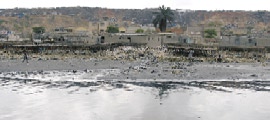
Land-based pollution, Luanda Bay.
their specific needs. Similarly, the
recommended water and sediment
This was fol owed by training
quality guidelines need to be offi-
workshops in each of the three
cial y approved and adopted in al
countries, where key stakeholders
three countries.
were given preliminary training in
the application of the management
"Until such time as a management
framework and quality guidelines.
framework and quality guidelines
have been incorporated into official
The coastal network is to be
government policy, it is proposed
maintained through the website,
that the quality guidelines and the
thereby providing a very useful
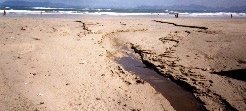
Stormwater discharge at Strand near Cape Town.
15

Projects supported by
the BCLME Programme
The BCLME Programme has allocated more than US$10 million (R65 million) in support
of 75 projects. The projects are being implemented by a wide variety of clients, includ-
ing government institutes, universities, private consultancy companies and the regional
scientific programme, BENEFIT. Each project has been designed to address transboundary
environmental problems and contribute to the integrated and sustainable management of the
Benguela Current Large Marine Ecosystem.
Completed Projects
Final reports for the following
BCLME/LMR/CF/03/06
EV/LS/02/04
projects have been submitted and
Potential shared hake stocks
Participation in the Climate Vari-
approved and, in most cases, posted
research planning meeting
ability Programme (CLIVAR/OOPC)
to the BCLME Programme's website: (Namibia and South Africa)
Workshop on South Atlantic Climate
www.bclme.org.za. Where final
Project value: US$53 048
Observing System in Angra dos
reports are under review, this is
Contracted to: BENEFIT
Reis, Brazil
indicated.
Completion date: May 2006
Project value: US$3 160
Completion date: March 2003
PCU/TCB/03/01
BEHP/BAC/WORKSHOP/04/01
Training and capacity building
Ecosystem mapping and biodiversity EV/LS/02/02
needs assessment for the BCLME
consultative workshop
Feasibility study of the south-east
region
Project value: US$47 095
extension of PIRATA (Pilot Moored
Project value: US$26 230
Contracted to: BENEFIT
Array in the Tropical Atlantic)
Contracted to: Anchor Environmental Completion date: May 2004
Project value: US$29 900
Consultants
Contracted to: UCT
Completion date: September 2003
BEHP/IA/03/03
Completion date: November 2003
Harmonisation of national envi-
PCU/AVM/03/01
ronmental policies and legislation
EV/SADCO/03/01
Publicising the BCLME Programme
for marine mining, dredging and
SADCO holdings of Namibian data:
through audio visual media
offshore petroleum exploration and
Assessment of historical oceano-
Project value: US$16 000
production activities in the BCLME
graphic data available from SADCO
Contracted to: Francois Odendaal
region
Project value: US$2 400
Productions
Project value: US$39 697
Contracted to: Ms Fiona Duncan,
Completion date: September 2004
Contracted to: SAIEA
contracted through UNDP-SA
Completion date: July 2004
Completion date: October 2003
PCU/BCC/04/01
Institutional review and analysis
BEHP/LBMP/03/01
EV/Provare/02/01
for Benguela Current Commission
Baseline assessment of sources and
Feasibility assessment for the use of
(BCC)
management of land-based marine
a towed undulating oceanographic
Project value: US$63 425
pollution in the BCLME
recorder (TUOR) in the BCLME
Contracted to: EnAct International
Project value: US$85 000
Project value: US$5 850
Completion date: December 2004
Contracted to: CSIR
Contracted to: Dr Chris Reid, Foun-
Completion date: January 2006
dation for Ocean Science
PCU/BCC/04/02
Completion date: November 2003
Economic study and cost benefit
BEHP/LBMP/03/04
analysis of cooperative research and The development of a common
EV/PROVARE/02/02(a)1
management of the BCLME
set of water and sediment quality
The Lüderitz Upwelling Cell/Orange
Project value: US$30 100
guidelines for the coastal zone in the River Cone (LUCORC) Workshop
Contracted to: Fisheries Economics
BCLME region
Project value: US$31 000
Research Unit, UBC
Project value: US$80 000
Contracted to: BENEFIT
Completion date: October 2004
Contracted to: CSIR
Completion date: April 2006
Completion date: January 2006
Synthesis report under review
PCU/TCB/06/01
Integration and review of training
BEHP/CEA/03/03
EV/HUMBOLDT/04/01
and capacity building in the BCLME Assessment of the cumulative effects Ichthyoplankton distribution,
Programme
of sediment discharge from on shore monitoring and training, northern
Project value: US$8 500
and near shore diamond mining
Namibia/southern Angola; oceano-
Contracted to: Anchor Environmental activities on the BCLME
graphic, hydrological and benthos
Consultants
Project value: US$140 000
monitoring in Angolan waters
Completion date: March 2006
Contracted to: CSIR
Project value: US$130 000
Completion date: June 2006
Contracted to: Baltic Sea Research
Institute
Bengu
curr e
ent l
n a
Completion date: July 2004
ews
16
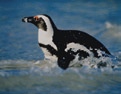
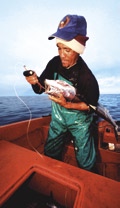
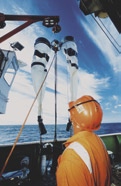
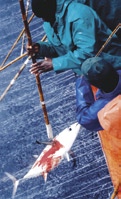
Bengu
curr e
ent l
n a
ews
EV/HAB/02/01
EV/HAB/05/01
EV/ANGOLA/03/05
Harmonisation of regulations for
Investigation into the diversity and
Build capacity for Angola
microalgal toxins for application in
distribution of cysts of harmful algal Project value: US$7 000
countries bordering the BCLME
blooms within Luanda Bay (Angola) Contracted to: INIP
Project value: US$69 323
and Lüderitz Bay and Walvis Bay
Completion date: July 2005
Contracted to: MFMR
(Namibia)
Completion date: April 2005
Project value: US$29 994
EV/ANGOLA/03/06
Contracted to: UCT
Upgrade communication systems for
EV/HAB/02/02a
Completion date: November 2005
Angolan BCLME core partner institutions
Development of an operational capac-
Project value: US$8 000
ity for monitoring of Harmful Algal
EV/HABSCON/04/01
Contracted to: INIP
Blooms (HABs) in countries bordering 11th International Conference on
Completion date: July 2005
the northern part of the BCLME
Harmful Algal Blooms (Cape Town)
EV/ANGOLA/05/01
Project value: US$36 260
Project value: US$8 000 (sponsorship)
Provision of basic English courses to
Contracted to: MFMR
Donated to: Secretariat (ICHA 2004)
Angolan institutions participating in
Completion date: April 2005
conference organisers
the BCLME Programme
Project value: US$17 840
EV/HAB/04/Shellsan
EV/LOW/02/01
Contracted to: INIP
Development of a shellfish sanita-
Critical review of the biophysi-
Completion date: April 2006
tion programme model for applica-
cal processes and variability that
tion in consort with the microalgal
characterise the low oxygen water
LMR/COM/02/01
toxins component
(LOW) variability and an improved
Henties Bay Community project
Project value: US$27 925
monthly State of the Environment
Project value: US$ 4 051
Contracted to: MFMR
(SOE) reporting on low oxygen
Contracted to: Henties Bay Community
Completion date: April 2005
water in the BCLME
Completion date: Project terminated
Shellsan project included in
Project value: US$46 250
LMR/COM/03/01
EV/HAB/02/01 & EV/HB/02/02a
Contracted to: UCT and CSIR
An assessment of means of involving
reports available at www.bclme.org
Completion date: April 2006
coastal communities in the BCLME
Programme
EV/HAB/02/03
EV/FORECAST/04/01
Project value: US$ 30 000
Investigation into the diversity and
International Workshop on Forecast-
Contracted to: Eco-Africa
distribution of cysts of Harmful
ing and Data Assimilation in the
Completion date: March 2004
Algal Blooms (HABs) within the
Benguela and Comparable Systems
BCLME
Project value: US$80 000 (sponsorship) LMR/COM/03/02
Project value: US$25 420
Completion date: November 2004
Introducing the BCLME Programme
Contracted to: UCT
to the wider audience within the
Completion date: January 2005
EV/ANGOLA/03/01
coastal communities
Compilation of inventory and acqui- Project value: US$16 000
EV/HAB/02/05
sition of oceanographic environmen- Contracted to: Eco-Africa
Development of an operational
tal data in the Angola sector of the
Completion date: June 2004
capacity for real-time observation
BCLME. Phase one (inventory)
and forecasting of Harmful Algal
Project value: US$20 000
LMR/COM/04/01
Blooms (HAB) in the BCLME: Detec- Contracted to: INIP
Development of a demonstration
tion of HABs through the deploy-
Completion date: July 2005.
website for the Artisanal Fisheries
ment of bio-optical moorings. Phase
Institute, Angola
1: Demonstration project in Namibia EV/ANGOLA/03/02
Project value: US$ 5 000
and South Africa
Comprehensive review and reinterpre-
Contracted to: Eco-Africa
Project value: US$135 035
tation of oceanographic information on Completion date: December 2005
Contracted to: UCT
the Angola sector of the BCLME
Completion date: July 2005
Project value: US$20 000
LMR/AFSE/03/01
Contracted to: INIP
Review of institutional arrangements
EV/HAB/02/06
Completion date: July 2005
and provision of baseline information
Development of an operational
in respect of artisanal fisheries, includ-
capacity for real-time observation
EV/ANGOLA/03/03
ing socio-economic surveys of coastal
and forecasting of Harmful Algal
Assessment of the present state
communities
Blooms (HABs) in BCLME: utility of of oceanographic environmental
Project value: US$194 120
models in forecasting HABs events
monitoring in the Angolan sector of
Contracted to: Environmental
Project value: US$30 700
the BCLME
Evaluation Unit, UCT
Contracted to: UCT and CSIR
Project value: US$10 000
Completion date: The project has
Completion date: April 2006
Contracted to: INIP
three components: a) January 2005
Completion date: July 2005
b) March 2006 c) March 2005
continued.../18
17
Completed Projects continued...
LMR/CF/03/07
LMR/MC/03/02
LMR/NANSEN/05/02
Determination of optimal harvest-
Classification of coastline for aquac-
Transboundary survey of pelagic
ing strategies for the hake trawl and ulture development
fish particularly horse mackerel and
longline fisheries in Namibia and
Project value: US$50 000
pilchard in southern Angola and
South Africa
Contracted to: BENEFIT
northern Namibia
Project value: US$98 100
Completion date: Project incorpo-
Project value: US$76 500
Contracted to: Fisheries Economics
rated into BEHP/BAC/03/01
Contracted to: IMR
Research Unit, UBC
Completion date: October 2005
Completion date: October 2005
LMR/NANSEN/04/01
Survey of transboundary demersal
LMR/NANSEN/05/03
LMR/CF/03/04
fish stocks in southern Namibia with Transboundary survey of hake and
Feasibility study into the appli-
special reference to hake
hake ichthyoplankton in the trans-
cation of genetic techniques for
Project value: US$110 500
boundary area between the Orange
determining fish stock identity of
Contracted to: IMR
River and Lüderitz
transboundary populations in the
Completion date: May 2004
Project value: US$59 500
BCLME
Contracted to: IMR
Project value: US$6 906
LMR/NANSEN/04/02
Completion date: January 2006
Completion date: November 2003
Assessment of variability of
transboundary pelagic fish stocks
LMR/SKI/04/01
LMR/CF/03/01
particularly sardinella from Gabon
Supportive services for inshore
Feasibility study into the establishment to central Angola
water quality monitoring program in
of a permanent regional fish ageing
Project value: US$115 000
Namibia
centre in one of the BCLME countries
Contracted to: IMR
Project value: US$43 700
Project value: US$11 520
Completion date: October 2004
Contracted to: Z-Craft, South Africa
Contracted to: BENEFIT
Completion date: September 2005
Completion date: November 2003
LMR//NANSEN/04/04
Transboundary study with emphasis LMR/SKI/04/02
LMR/CF/03/02
on deep water hake in the Lüderitz Supportive services for inshore
An assessment of the state of com-
Orange River cone area
water quality monitoring program
mercial Fisheries catch data in the
Project value: US$105 000
in Angola
BCLME
Contracted to: IMR
Project value: US$43 700
Project value: US$11 240
Completion date: November 2004
Contracted to: Z-Craft, South Africa
Contracted to: BENEFIT
Completion date: September 2005
Completion date: May 2004
LMR/NANSEN/05/01
Transboundary survey between
LMR/CF/03/08
Namibia and South Africa with
Assessment of the ecological im-
focus on shared stocks of hake
portance of pelagic fish and pelagic
Project value: US$174 000
gobies in the functioning of the
Contracted to: IMR
BCLME region - a desktop review
Completion date: November 2004
Project value: US$300 000
Contracted to: BENEFIT
Completion date: September 2005
Final report under review
LMR/CF/03/11 b
Retrospective analysis of sardinella
fisheries in Angola
Projects Administered by the
Project value: US$23 780
Contracted to: INIP
Programme Coordination Unit
Completion date: February 2005
LMR/CF/03/12
PCU/TOMBUA/06/01
PCU/Polytech/05/01
A review of the impacts of seismic
Supervision and overall manage-
Assessing potential for producing fi-
surveying and toxicity of oil prod-
ment of modifications work to
nal ocean colour maps for Namibia's
ucts on the early life history stages
Angolan fisheries research vessel
marine environment
of pelagic fish, the benthos and the
Tombua in Cape Town
Project value: US$2 625
pelagic ecosystem with potential ap-
Project value: US$10 000
Contracted to: Polytechnic of
plication to the sardinella fishery
Contracted to: Arcon Management
Namibia
Project value: US$22 666
Services
Completion date: September 2006
Contracted to: INIP
Completion date: March 2007
Completion date: May 2005
18
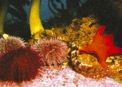

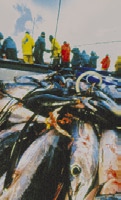
Be
B n
e g
n u
gcurre
ent l
n a
curr e
ent new
e s
w
Biodiversity, Ecosystem Health & Pol ution Projects
BEHP/CEA/03/01
BEHP/BAC/03/01
BEHP/CD/03/01
Data gathering and gap analysis for
Marine biodiversity status assess-
Development of institutional capac-
modeling the cumulative effects of
ment and conservation planning for
ity for biodiversity research in the
offshore petroleum exploration and
the BCLME
countries of the BCLME
production activities on the marine
Project value: US$134 905
Project value: US$ 100 000
environment of the BCLME region
Contracted to: BENEFIT
Contracted to: BENEFIT
Project value: US$95 000
Completion date: April 2007
Completion date: April 2007
Contracted to: CSIR
Completion date: May 2006
BEHP/BAC/03/02
BEHP/ML/03/01
Mapping of the shoreline, shallow
Marine litter
BEHP/OSCP/03/01
water, estuarine and offshore habi-
Project value: US$50 000
Regional oil spill contingency plan-
tats of the BCLME
Contracted to: Eco-Africa
ning in the BCLME
Project value: US$95 185
Completion date: November 2006
Project value: US$142 000
Contracted to: BENEFIT
Contracted to: CSIR
Completion date: October 2006
BEHP/BW/03/01
Completion date: May 2006
Ballast water programme
BEHP/BAC/03/03
Project value: US$35 000
BEHP/CEA/03/02
Identification of communities,
Contracted to: GISP
Data gathering and gap analysis for
biotopes and species along the
Completion date: December 2006
assessment of the cumulative effects BCLME shoreline and shallow
of marine diamond mining activities sub-tidal zone, and assessment of
BEHP/WRF/04/01
on the BCLME
offshore biodiversity
Assessment of the need for waste
Project value: US$76 000
Project value: US$216 761
reception facilities in ports across
Contracted to: PISCES Environmental Contracted to: BENEFIT
the BCLME region
Consultants
Completion date: April 2007
Project value: US$10 000
Completion date: September 2006
Contracted to: To be identified
BEHP/BAC/03/04
Completion date: April 2007
BEHP/CEA/03/04
Baseline surveying of species and
Assessment of the cumulative im-
biodiversity in estuarine habitats
BEHP/BTA/04/01
pacts of scouring of sub-tidal areas
Project value: US$99 929
Analysis of threats and challenges
and kelp cutting by diamond divers
Contracted to: BENEFIT
to marine biodiversity and marine
in near-shore areas of the BCLME
Completion date: December 2006
habitats in Namibia and Angola
Project value: US$66 400
Project value: US$36 308
Contracted to: PISCES Environmental BEHP/LBE/04/01
Contracted to: BENEFIT
Consultants
Luanda Bay Ecosystem Project
Completion date: November 2006
Completion date: January 2007
Project value: US$80 000
Contracted to: INIP
BEHP/Survey/06/01
BEHP/EEF/03/01 02
Completion date: February 2007
Transboundary pol ution monitoring
By-catch of threatened seabirds,
Project value: US$100 000
sharks and turtles in long-line fish-
BEHP/MC/03/02
Contracted to: IMR
eries in the BCLME: an integrated
Classification of coastline for aqua-
Completion date: January 2007
approach
culture development
Project value: US$113 299
Project value: US$50 000
Contracted to: WWF-South Africa
Contracted to: BENEFIT (incorpo-
Completion date: August 2006
rated into BEHP/BAC/03/01)
Completion date: April 2007
Abbreviations
CSIR: The Council for Scientific and Industrial
MCM: Marine and Coastal Management (South Africa)
Research (South Africa)
MFMR: Ministry of Fisheries and Marine Resources (Namibia)
FAO: Food and Agriculture Organisation of
NOAA: National Oceanic and Atmospheric Administration
the United Nations
(USA)
GISP: Global Invasive Species Programme
SAIEA: Southern African Institute for Environmental
IMR: Institute of Marine Research (Norway)
Assessment
INIP: Instituo Nacional de Investigação Pesqueira (Angola)
UBC: University of British Columbia (Canada)
IRD:
Institut de reserche pour le développement (France)
WWF: Worldwide Fund for Nature
UCT: University of Cape Town
1?9
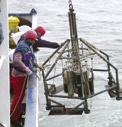
Environmental Variability Projects
EV/LS/02/03
EV/PROVARE/04/01
EV/PROVARE/06/01
Analysis of Benguela dynamical
Characterising the spawning habitat Development of satellite remote
variability and assessment of pre-
(temporal, spatial and in terms of
sensing products for operational
dictability of warm and cold events
physical and biological attributes)
application.
in the BCLME
of harvested pelagic species (Sardi-
Project value: US$112 152
Project value: US$150 000
nops sagax, Trachurus sp., Engraulis
Contracted to: BENEFIT
Contracted to: UCT
capensis) using Continuous Under-
Completion date: September 2007
Completion date: February 2006
water Fish Egg Sampler (CUFES)
Final report under review
and net sampling
BCLME/EEWS/05/01
Project value: US$93 003
Development of and making opera-
EV/LOW/02/03
Contracted to: BENEFIT
tional a viable and integrative En-
Assessment of key transboundary
Completion date: February 2007
vironmental Early Warning System
processes and measurement scales
(EEWS) for the BCLME
in respect of low oxygen water
EWS/TG/02/02
Project value: US$116 770
(LOW) variability: preliminary
Purchase and installing tide gauges
Contracted to: UCT
implementation and examination of
in the BCLME
Completion date: November 2007
the role of large scale and trans-
Project value: US$100 000
boundary hydrodynamic control of
Contracted to: To be identified
BCLME/SEIS/05/01
LOW variability
Development of and making
Project value: US$62 750
EV/MODEL/03/01
operational a viable and integrative
Contracted to: UCT and CSIR
A cross-cutting simulation-model-
State of the Ecosystem Information
Completion date:
ling capability for the BCLME
System (SEIS) for the BCLME
Extended to April 2006
Project value: this project - US$126
Project value: US$87 242
Final report under review
935 plus additional US$36 000 (2004);
Contracted to: BENEFIT and Feike
US$35 000 (2005) hardware expenditure
Completion date: August 2006
EV/LOW/02/04
Contracted to: UCT
Assessment of key transboundary
Completion date: March 2007
BCLME/Boundary/05/01a
processes and measurement scales
Angola/Benguela Front Workshop
in respect of low oxygen water
EV/HAB/05/02
part A: assessment of the structur-
variability: implementation of the
Development of an operational
ing and functioning of the Angola-
LOW generation areas simula-
capacity for monitoring of Harmful
Benguela Frontal System and its
tion that provide inputs to trans-
Algal Blooms in countries border-
implications for the sustainable re-
boundary models in LOW project
ing the northern part of the BCLME: source management in the BCLME:
EV/LOW/02/03
Phase 1 Design: component pilot
phase I initial study
Project value: US$122 500
monitoring in the Lüderitz area
Project value: US$45 000
Contracted to: UCT and CSIR
Project value: US$4 015
Contracted to: BENEFIT
Completion date:
Contracted to: MFMR
Completion date: July 2006
Extended to April 2006
Completion date: March 2006
Final report under review
Final report under review
BCLME/Boundary/06/01
Southern Boundary Workshop
EV/LS/02/06
EV/LS/02/02b
Project value: US$30 000
Diagnosis of large scale South
PIRATA SE Extension purchase,
Not contracted out as the EVAC is
Atlantic modes that impact on the
deployment and retrieval of a
involved directly
transboundary BCLME: investi-
moored buoy off the coast of Angola
Completion date: Workshop: 3 to
gating the potential for improved
Project value: US$100 000
5 May 2006. Completion of SBWS
predictability and sustainable
Contracted to: NOAA, IRD and
product expected 4 months later
management
Dr Mathieu Rouault
Project value: US$87 959
Completion date: July 2007
Contracted to: UCT
Completion date: January 2007
EV/HAB/06/01
Development of an operational
EV/PROVARE/02/05
capacity for a shellfish sanitation
Retrospective analysis of plankton
monitoring program in countries
community structure in the BCLME
bordering the northern part of the
to provide an index of long-term
BCLME: phase II - implementation
change in the ecosystem
Project value: US$90 743
Project value: US$105 849
Contracted to: MFMR
Contracted to: BENEFIT
Completion date: March 2007
Completion date:
Be
B n
e g
n u
g
Extended to March 2007
curr e
ent l
n a
curr e
ent new
e s
w
?
20
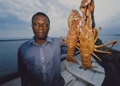
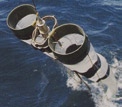
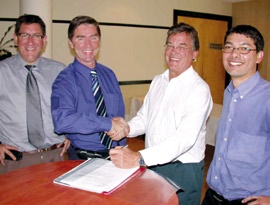
Bengu
curr e
ent l
n a
ews
Living Marine Resources Projects
LMR/CF/03/16
LMR/SE/03/04
LMR/EAF/03/02
Development of a management plan Harmonisation of socio-economic
A regional ecosystem monitoring
for bronze whaler shark resources in policies and legal provisions for
programme: top predators as
the BCLME region
effective implementation of the
biological indicators of ecosystem
Project value: US$77 869
BCLME Programme
change in the BCLME
Contracted to: BENEFIT
Project value: US$135 000
Project value: US$217 994
Completion date: January 2007
Contracted to: Enviro-Fish Africa
Contracted to: MCM
Completion date: March 2007
Completion date: December 2006
LMR/SE/03/02
An economic and legal study to
LMR/SE/03/05
LMR/MC/03/01
assess the policy prospects for for-
An analysis of revenue raising
Development of a responsible aqua-
mulating a balanced development of instruments of the important com-
culture policy for the BCLME
trade in fish and fish products from
mercial fisheries in the BCLME
Project value: US$92 734
the BCLME
countries
Contracted to: Enviro-Fish Africa
Project value: US$133 260
Project value: US$91 228
Completion date: May 2005 (Delayed
Contracted to: Enviro-Fish Africa
Contracted to: Enviro-Fish Africa
final report to be delivered)
Completion date: December 2006
Completion date: December 2005
(Delayed deliverables outstanding)
LMR/CF/03/10
LMR/SE/03/03
Development and harmonization of
An analysis of right-based micro-
LMR/EAF/03/01
research and management on trans-
economic systems and governance
Ecosystem approaches for fisheries
boundary pilchard stocks between
of the important commercial fisher-
(EAF) management in the BCLME
Angola and Namibia
ies in the BCLME countries
Project value: US$257 270
Project value: US$50 000
Project value: US$229 914
Contracted to: MCM and FAO
Contracted to: To be identified
Contracted to: Enviro-Fish Africa
Completion date: December 2006
Completion date: A workshop is
Completion date: December 2006
planned for late 2006 or early 2007
Feike and BENEFIT col aborate on SEIS project
Feike, a consultancy with exper-
recording trends in catches,
tise in fisheries and environmen-
catch values, spawner biomass
tal management, has teamed up
and jobs sustained by the fishery;
with BENEFIT to design a set of
four ecosystem information sys-
State of Negative and Adverse
tems for the BCLME.
Impacts information system
which will identify threats to
Through the State of the
the BCLME such as ballast
Ecosystem Information System
water discharges, sewage out
or "SEIS" project, the follow-
falls and marine mining;
ing four web-based information
systems will be designed and
State of the Ecosystem infor-
populated with the latest data
mation system which will
available for the three countries
provide access to all of this
of the Benguela:
data through a website.
a State of the Environment
It is anticipated that the popula-
information system which wil
tion of these databases will ulti-
provide data trends for oceano-
mately provide the users of the
graphic measurements such
BCLME for example, fisheries
as sea surface temperature,
managers and members of the
salinity and wind speed and
fishing industries of the three
Dr Neville Sweijd, director of BENEFIT, Dr Mick O'Toole, chief tech-
direction;
countries with a single location
nical advisor to the BCLME Programme and Horst Kleinschmidt
State of the Marine Living
on the internet where a host of
and Shaheen Moolla of Feike, signing the SEIS project contract.
Resources information system,
relevant data may be sourced
which will provide data on a
and interpreted, in order to iden-
species basis for each country,
tify possible ecosystem threats.
21
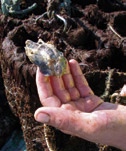
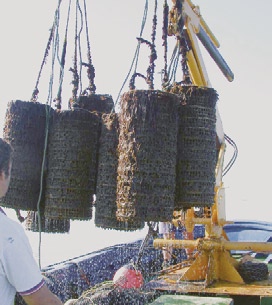
Namibia earmarks funds
for shel fish sanitation
Namibia's oyster farming industry is looking to new markets in the Far East and gear-
ing up for substantial growth. The introduction of a structured shellfish sanitation pro-
gramme will help the industry to achieve its ambitions.
Oyster farming is the most
the added benefit of clean water;
and it's not satisfactory. We need a
established aquaculture activity
no rivers empty into the sea along
one day turnaround time."
in Namibia with six farms cur-
the desert coast, dramatical y
rently in operation at Walvis Bay,
reducing the potential for con-
Test results can take up to three
Swakopmund and Lüderitz. Both
tamination from land-based marine
weeks to be returned from Cape
Pacific oysters (Crassostrea gigas)
pol ution.
Town and the lack of local labora-
and European oysters (Ostrea edulis)
tories inhibits Namibia's ability to
The importantance of clean water
meet the food safety requirements
Namibian oysters are said to are grown. The estimated production
shouldn't be under-estimated.
of potential trading partners, such
be the best in the world!
of the Namibian oyster industry in
2004 was 6 mil ion oysters, worth
As mol uscan bivalves filter and
as the European Union (EU).
approximately N$12 mil ion (R12M).
ingest particulate matter in the
"I definitely feel that this relatively
Some farmers are experimenting
seawater around them, they con-
smal issue is preventing some
with alternative species such as
centrate bacteria, viruses and other
massive development," says Mr
scal ops (Argopecten purpuratus)
potential y dangerous biological
West.
and one operation in Walvis Bay is
contaminants that can make con-
harvesting wild clams, (Venerupis
sumers sick. Another risk to shel -
Although the oyster culture indus-
corrugatus) and fattening them for
fish consumers is from blooms of
try is understandably frustrated
the export market.
toxic algae (harmful algal blooms
by the lack of laboratory serv-
or HABs); as they filter seawater,
ices, a great deal of progress has
There are a number of factors
oysters can accumulate potent bio-
been made in the last two years.
that make Namibia an ideal loca-
toxins in their tissues.
With funding from the BCLME
tion for oyster farms. For a start,
Programme and assistance from a
the nutrient-rich waters of the
Because of the dual threat to con-
team of international scientists, the
Benguela Current encourage rapid
sumers from algal toxins and
National Marine Information and
growth. Oysters grow to market
microbial and other contaminants,
Research Centre (NatMIRC) has
size in eight or nine months in
international regulations and pro-
succeeded in introducing a shel -
Namibia, in contrast with Europe
cedures have been developed to
ensure that shel fish are harvested,
fish sanitation programme mod-
Oysters are cultivated in bags where they are typical y cultivated
eled on the food safety regimes of
or plastic baskets like these. for 24 months. Namibia also has
handled, processed and shipped
under conditions to guarantee
other shel fish producing nations
consumer safety. HAB monitoring
such as the EU, New Zealand and
programs are typical y embedded
the United States. Water quality
within comprehensive shel fish
in Walvis Bay's Aquapark 1 250
safety programs which are often
hectares of sea space in Walvis
termed "shel fish sanitation pro-
Bay harbour which is reserved for
grams".
aquaculture activities - is tested
once every two weeks and similar
Namibia and Angola have begun
tests are conducted in Lüderitz.
to develop basic capacity for the
Oysters are tested for bacterial
implementation of shel fish sanita-
contamination and heavy metals,
tion programs. The two countries
but NatMIRC stil lacks the equip-
have been working together
ment to carry out routine tests for
through the BCLME Programme
biotoxins.
to develop a shel fish sanitation
programme for the Benguela
Bronwen Currie, chief biologist at
region. The next step for Namibia
NatMIRC's aquaculture directorate,
is to build and equip the industrial
is wel aware of the oyster pro-
laboratories it needs to carry out
ducers' frustrations, but she
mandatory tests that certify its cul-
is encouraged by the fact that
tured shel fish products are uncon-
Namibia's Ministry of Trade and
taminated and safe for human
Industry and the Ministry of
consumption.
Fisheries and Marine Resources
have jointly earmarked funds for
"We've been trying for five years
the construction of the required
to get a laboratory in place," says
laboratories. Presently, microbiology
James West, chairman of the
and phytoplankton laboratories dedi-
Namibian Mariculture Association,
cated to aquaculture are being set
"we're stil relying on Cape Town
up at NatMIRC, while biotoxin
Bengu
curr e
ent l
n a
ews
22
Bengu
curr e
ent l
n a
ews
laboratories wil jointly be funded
toring, NatMIRC scientists have
testing of water quality in the
by the Ministry of Trade and
found no evidence of biotoxins in
Aquapark, coupled with tests on
Industry and The Ministry of
Namibian oysters. Even though the
cultivated oysters, have al proved
Fisheries and Marine Resources:
waters of Namibia are extremely
negative for dangerous bacteria,
rich in phytoplankton, regular tests
heavy metals and phytoplankton
"This is a huge step forward
have so far proved negative for bio-
toxins.
because the Ministry of Trade
toxins that could cause poisoning
and Industry, as the competent
syndromes in consumers. A spe-
"This is very good news for the
authority, has realised how serious
cies such as Alexandrium catenel a,
industry," says Ms Currie.
the situation is and has prioritised
could cause paralytic shel fish poi-
these laboratories," she says.
A worker at an oyster farm
soning (PSP), whilst some species
outside Swakopmund pre-
Ms Currie has no doubt that the
of Dinophysis and Pseudo-nitzschia
pares oysters for market.
industry wil get the laboratories it
can cause diarrhetic shel fish poi-
needs, but she concedes that con-
soning (DSP) and amnesic shel fish
structing and equipping of the labs
poisoning (ASP) respectively.
wil take time.
"We don't think that biotoxins
In the meantime, the oyster pro-
are a problem here, even though
ducers are investigating a number
we've got the species," says Ms
of stop-gap measures which would
Currie.
al ow the industry to meet the food
The scientist's tests have verified
safety requirements of its trading
the fact that the water off Namibia
partners.
is exceptional y wel suited to the
Ironical y, after two years of moni-
cultivation of oysters. Regular
A traditional Spanish raft
is used to cultivate oysters,
scallops and clams in Walvis
Bay's Aquapark.
Oyster farmers plan for
Both of the farms that utilise the longline system of culture are preparing to
substantial growth
dramatical y increase the number of lines available for oyster culture.
James West of Namibia Aquaculture (Namaqua) is planning to increase the
Spurred on by the advantage of clean, phytoplankton-rich water and strong production of Namaqua's farm to a mil ion oysters per month.
demand from emerging markets, Namibia's oyster farmers are preparing for "We have a wel established production system," says Mr West, so expanding
substantial growth.
our production wil simply mean doing more of the same."
The Aquapark at Walvis Bay, which is reserved by Namibia's port authority, Henning du Plessis of Joe's Oysters is establishing 300 longlines in the
Namport, for aquaculture activities, was recently expanded from 500 to 1 250 Aquapark with the same goal of producing a mil ion oysters per month.
hectares of sea space. The park is situated between three and four nautical
miles from the quays of the fishing companies that dominate the northern Gregory Swartz who produces oysters at the extensive Walvis Bay Salt
fringe of the harbour. It is protected from the prevailing south westerly swel Refiners is also gearing up to produce larger quantities of oysters:
by the sand spit of Pelican Point.
"We produce a mil ion oysters per year and we're looking at expanding and
Three farms are currently utilising the Aquapark for the cultivation of oysters. producing a mil ion-and-a-half," he says.
Two farms use the longline system for cultivating oysters, while a third farm The industry's col ective plans to expand oyster production are being driven
uses the traditional Spanish raft method.
by strong demand from markets in the Far East. Namaqua already sel s oys-
The longline system is a very simple method of culture. Horizontal lines ters into Beijing, and Mr West is encouraged by avid demand for Namibian
are strung across the water and kept afloat by large plastic drums. Racks of oysters from the Chinese market.
oysters are then suspended from the horizontal lines. Each rack holds about "In China you have a huge developing economy, a huge population and
1 000 medium-sized oysters. With the raft system, bags and racks of oysters people moving into an income bracket where they can af ord to eat oysters,"
are suspended from the wooden beams of a sturdy raft. The floating raft is explains Mr West, "the market is there."
anchored to the seabed.
23
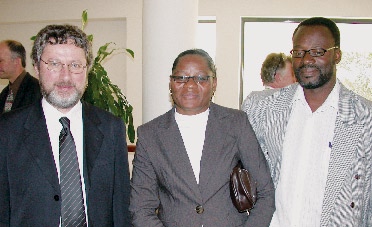
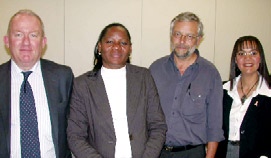
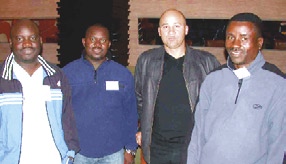
Hake tops the shared stocks agenda
Genetic analysis is just one of a range of tools that scientists from Namibia and South Africa
wil employ over the next two years in a bid to ascertain with reasonable certainty whether
the two countries share a single stock of deep-water hake (Merluccius paradoxus).
The decision to intensify genetic
Although scientists have studied
studies of deep water hake
hake for more than 50 years, their
stocks was taken at a three-day
research has tended to focus on
stock assessment workshop
the assessment of biomass (stock
that brought South African and
size), rather than the movement of
Namibian scientists together in
hake in the Benguela ecosystem.
Cape Town in May.
The new interest in hake movement
has been initiated by the BCLME
The scientists were meeting for
Programme which is looking at
the first time to discuss the pos-
ways of managing fish stocks that
sibility of working more closely on
straddle the national borders of
the management of valuable fish-
Angola, Namibia and South Africa.
eries resources such as hake.
The workshop concluded that,
Hake and horse mackerel are
while there is evidence to suggest
believed to be shared by South
Paul Nichols and Nangula Mbako represented the Namibian ministry that South Africa and Namibia do
Africa and Namibia and Namibia and
of Fisheries and Marine Resources at the workshop. They are pictured not share stocks of shal ow water
Angola respectively. But fisheries
with their South African counterparts, Johann Augustyn and Theresa
hake (M. capensis), the situation
managers cannot begin to talk about
Akkers of the Department of Environmental Affairs and Tourism.
with deep water hake (M. para-
future sharing arrangements before
doxus) is less certain.
scientists can say with a degree of
certainty that the stocks are in fact
Further research is warranted
shared by two or more countries.
because, if the stock is shared by
the two countries, over fishing in
"Scientists in the Benguela region
one country could affect catches in
need to look to new scientific tech-
the other.
niques, such as genetics and in-situ
fish tagging to help them to deter-
"The possibility that the stocks are
mine whether deep water hake
shared should be taken seriously
stocks are, in fact, shared by South
by both countries," concluded
Africa and Namibia," explains Dr
Dr Tony Smith, one of three inter-
Mick O'Toole, chief technical advisor
national experts in fisheries stock
to the BCLME Programme.
assessment who were invited to
Larry Hutchings, chief specialist scientist at Marine and Coastal
the workshop to provide advice
"This is one of the most important
Management, Tim Reddell, chair of the South African Deep-Sea
and to steer the discussions.
research questions in the region."
Trawling Industry Association (SADSTIA) and Roy Bross, secretary
of SADSTIA.
Tony Smith of the Australian Commonwealth Scientific and Research Namibian participants in the Workshop included Paul Kainge and Johnny
Organisation (CSIRO) chaired the hake workshop. He is pictured
Kathena of the MFMR's demersal section, Heinrich Lesch of Hangana Fisheries
with Nangula Mbako, permanent secretary of the Ministry of
and Titus Iilende, deputy director at MFMR.
Fisheries and Marine Resources (MFMR) and Moses Maurihungirire,
director of Resource Management at the MFMR.
24
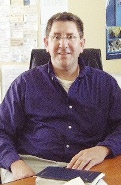

Bengu
curr e
ent l
n a
ews
A new beginning for BENEFIT
Structures to be integrated with the BCC
In the eight years of its existence, the BENEFIT Programme has matured and
is now a wel - established and international y recognised research programme,
attracting several col aborative efforts from a number of countries.
ities of the Nansen Programme's
from both Namibia and South
by Neville Sweijd
engagement with BENEFIT. The
Africa and represented an
BENEFIT has served as a vital
funds acquired are fairly sub-
important first step towards the
stepping-stone for the establish-
stantial and wil help to position
proposed joint management of
ment of the BCLME Programme
BENEFIT as the focal point for
deep-water hake stocks. Based
and over the past three
stakeholders in the region and
on the strong recommendations
years, has executed projects
international y thus fulfil ing the
of the meeting, BENEFIT has
worth US$750 000 (R4.8 mil-
original aims of the Programme.
proposed that eight activities
lion) on behalf of the BCLME
(with a total cost of US$574 000)
BENEFIT is rapidly moving closer
Programme. Formally, the
be implemented over the next
to the goals and objectives of the
BENEFIT programme is sched-
18 months with a view to determin-
BCLME Programme's Strategic
uled to terminate at the end of
ing with more certainty whether
Action Programme (SAP) and it is
2007 and plans are well under-
stocks of deep-water hake,
essential that close co-operation
way to develop the programme
Merluccius paradoxus, are in fact
continues to be maintained, espe-
so that regional scientific co-
shared between Namibia and
cial y on resources and environ-
operation can continue under the
South Africa. At least 70 per cent
mental matters.
auspices of the Benguela Current
of the research costs would be
Commission (BCC). The plan for
Two successful workshops
funded by BENEFIT and would
BENEFIT is that it be absorbed
be directed towards covering
into the BCC and that it becomes
In the past six months, BENEFIT
the costs of transboundary ship-
a part of the BCC structures
has organised two important
based research surveys.
under a new name. This vision
workshops on behalf of the
has been incorporated into the
BCLME Programme. The first
A benefit to BENEFIT
Interim Agreement that is to be
of these - the Angola Benguela
signed by ministers from Angola,
Pavs Pil ay, the smiling and effi-
Front Workshop - was hosted
Namibia and South Africa.
cient face behind the SANCOR
in Swakopmund in April and
secretariat for four years, was
BENEFIT's Management Action
backed onto the annual BENEFIT
recently appointed as BENEFIT's
Committee has already recognised
Forum. It was a highly successful
training officer.
that the Programme will need
meeting which focused on the
to transform from a science-
northern boundary of the BCLME,
Ms Pil ay took up her position
driven programme into a more
where the cold, northward flow-
at the BENEFIT secretariat in
management-driven one whose
ing Benguela Current meets the
Swakopmund in May and is
research activities are determined
warm, tropical, southward flow-
already implementing the new in-
by management priorities.
ing Angolan Current. The frontal
service training plan for BENEFIT.
Therefore, I am happy to report
region is highly productive and
The plan consists of a series of
the Norwegian government has
very important to both Namibia
workshops on ship-board training,
signed a proposal to fund a
and Angola.
hydroacoustics, report writing,
two-year bridging programme
stock assessment, language
The Workshop provided an ideal
Pavs Pillay is BENEFIT's
that is to assist BENEFIT to
courses and instrumentation.
opportunity to gain an enhanced
new Training Officer.
transform into a scientific body
understanding of the mixing proc-
Ms Pil ay has also undertaken a
that addresses both the national
esses and their impacts on the
retrospective study with the pur-
and the transboundary manage-
fisheries of the region. It also pro-
pose of quantifying the training
ment issues, and orients the
vided researchers with an opportu-
and capacity building activities that
programme towards the goals
nity to take a closer look at decadal
have been conducted by BENEFIT
the BCC.
events such as Benguela Niños
and the BCLME Programme since
The Norwegian government has
and low oxygen water anomalies,
their inception. She is focusing on
also agreed to maintain Norwegian
both of which are of concern to
student training, training courses,
co-funding of the BENEFIT
fisheries managers in Angola and
workshops and conferences.
Secretariat in 2006 and 2007 and
Namibia.
The position of training officer is
support a re-focused training effort
The Joint Hake Research
co-funded by BENEFIT and the
via the Secretariat. The training
Workshop took place in Cape Town
BCLME Programme.
project aims to amalgamate the
in May. It was well attended by
residual research and training activ-
scientists and fisheries managers
25
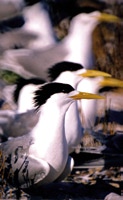
Projecto EAF conta
com participação valiosa
Oprojecto BCLME para investigar a viabilidade da implementação de uma Abordagem de
Ecossistema para as Pescas (EAF) na Corrente de Benguela está a chegar ao fim, com
uma data de finalização planeada para Dezembro de 2006.
informação e ideias essenciais.
identificados nos seminários de
por Kevern Cochrane
avaliação de risco.
A maioria das pescarias principais
Durante o passo seguinte do
na região foram incluídas no pro-
projecto que chegou ao ponto
As implicações biológicas, ecológi-
jecto. Estas são:
fulcral da avaliação da viabilidade
cas, sociais, económicas e de
da implementação da EAF foi
gestão dessas opções precisam
Angola: as pescas de arrasto
necessário identificar nas longas
de ser avaliadas para assegurar
demersal, artesanal e de pequenos
listas os aspectos que se podem
que quaisquer decisões tomadas
pelágicos;
considerar um resultado da expan-
sobre a implementação da EAF
Namíbia: a pesca de pescada,
são de uma abordagem de espécie
serão baseadas na melhor e mais
pesca de rede de pequenos pelági-
única para uma abordagem de
completa informação. Participaram
cos e pesca de arrasto de carapau
ecossistema, independentemente
dezanove pessoas no seminário e,
em águas intermédias;
de serem já considerados na
mais uma vez, tivemos a sorte de
gestão ou não.
contar com uma boa participação
África do Sul: pesca de espécies
de gestores, cientistas, membros
demersais, pequenos pelágicos e
Essa foi a primeira tarefa do
da indústria pesqueira e outros.
lagosta do Cabo.
seminário regional acolhido pelo
Instituto de Investigação Pesqueira
O BCLME encontra-se, sob muitos
Apesar deste grupo de pescarias
de Angola, INIP, em Luanda em
aspectos, a explorar novo terreno
ser representativo das principais
Março de 2006. O seminário
ao tentar realizar uma análise
pescarias comerciais na região,
prosseguiu com o início das
custo-benefício rigorosa e exaus-
existem lacunas importantes que
análises de custos e benefícios das
tiva da implementação da EAF
deveriam ser consideradas no
potenciais opções de gestão para a
e, tanto quanto sei, nunca antes
futuro.
implementação da EAF.
se tentou uma análise de uma
As avaliações de risco formais
forma tão integrada. Como tal,
Os custos e benefícios estimados
foram finalizadas numa série de
esta análise está a atrair bastante
para as opções de gestão e
seminários específicos que tiveram
atenção a nível internacional. Como
para a combinação de opções de
lugar nos três países durante o
exemplo, o Sr Mick O'Toole foi
gestão que poderá ser necessária
ano de 2005. As avaliações de
convidado a fazer uma apresen-
para satisfazer os objectivos de
risco geraram uma lista exaustiva
tação sobre o projecto BCLME
uma abordagem de ecossistema
de problemas, fraquezas e falhas
e a EAF no Processo Consultivo
determinarão, em última análise,
verificadas nas pescarias, cuja
Aberto Informal sobre Oceanos e a
quais as abordagens que serão
prioridade foi estabelecida de
Lei do Mar das Nações Unidas em
utilizadas bem como a viabilidade
acordo com a magnitude do risco
Junho, onde o trabalho que está a
geral da implementação da EAF.
que colocam para o uso óptimo e
ser realizado pelo projecto foi rece-
Darão informação, por exemplo,
sustentável dos recursos do ecos-
bido com bastante interesse.
sobre as implicações positivas e
sistema do BCLME.
negativas de opções como áreas
De modo a ter sucesso, têm que
Os seminários reuniram cientistas,
fechadas, modificações nos mate-
ser confrontados dois problemas
gestores, membros da indústria
riais ou práticas de pesca, estações
chave. O primeiro é a complexi-
pesqueira e grupos de con-
de encerramento e outras medidas
dade da identificação e, em última
servação, que contribuiram com
para resolver aspectos da EAF
análise, a integração das opções
FAO publication simplifies EAF
Although the principles of the ecosystem approach to fisher-
The booklet is writ en in plain language and should help
ies (EAF) are not new, there is very lit le practical experi-
people to bet er understand EAF and make progress with
ence in their implementation. A new publication from the
implementing an ecosystem approach to fisheries, says Dr
Food and Agriculture Organisation (FAO) of the United
Kevern Cochrane of the FAO's Marine Resources Service.
Nations should help to remedy that.
Put ing into practice the ecosystem approach to fisheries
The booklet, Put ing into practice the ecosystem approach was put together by three South Africans: Kevern Cochrane
to fisheries, provides a concise and non-technical outline
of the FAO and writers, Karoline Hanks and Claire
of the purpose and meaning of the ecosystem approach
At wood. It is available from the FAO in hard copy, but
to fisheries. It is essential y an abridged version of the
may also be downloaded from the FAO's website:
FAO Fisheries Technical Guidelines No 4.2: Fisheries
www.fao.org.
Management - The ecosystem approach to fisheries.
26
Bengu
curr e
ent l
n a
ews
de gestão potenciais para lidar
como resultados e conclusões
BCLME, necessidades de investi-
com os muitos aspectos de
finais e validados. No entanto,
gação futura, meios de melhorar
grande prioridade que foram iden-
eles serão altamente informativos
a tomada de decisão e potenciais
tificados em todas as pescarias.
e deverão oferecer uma boa indi-
incentivos para a implementação
O segundo problema é realizar
cação geral sobre as potenciais
da EAF. Um terceiro seminário
análises de custo-benefício com
opções e as suas implicações,
regional agendado para Novembro
significado face à informação limi-
que terão que ser consideradas à
de 2006 na Cidade do Cabo ajudará
tada e grande incertezas. Quando
medida que se continua a avançar
a coordenar e sintetizar toda esta
este boletim for publicado, as
para a implementação concreta da
informação. O programa é aper-
análises custo-benefício deverão
EAF na região do BCLME.
tado, mas espera-se um relatório
estar finalizadas para cada pescaria
final informativo e estimulante que
em estudo nos três países. Estas
A finalização das análises custo-
deverá dar informação valiosa e
análises estão a ser realizadas prin-
benefício e a extracção de resulta-
abrangente aos decisores políti-
cipalmente através de seminários,
dos e conclusões é a grande tarefa
cos, gestores e outros grupos de
mas complementadas quando
restante no projecto e utilizará a
interesse sobre o que é necessário
necessário por consultas estrutura-
maior parte do tempo disponível
para a implementação da EAF e o
das. Mais uma vez, a participação
dos atarefados líderes e colabora-
que tal poderá significar.
de grupos de interesse múltiplos
dores nacionais.
tem sido crucial. Os resultados
Como conclusão, este é um pro-
Para além disso, é preciso com-
serão preliminares e, como um
jecto ambicioso e, apesar de se ter
pletar outros estudos específicos,
todo, precisam de ser encarados
já atingido bastante, existe ainda
incluindo estudos sobre indica-
como indicativos apenas e não
trabalho fundamental considerável
dores adequados para a EAF no
a realizar até ao final do ano.
EAF project enjoys valuable participation
gaps that should be fol owed-up in
approach, whether or not they are
by Kevern Cochrane
the future.
already being addressed in man-
The BCLME project investigating
agement.
The formal risk assessments were
the feasibility of implementing an
completed at a series of dedicated
That was the first task of the
Ecosystem Approach to Fisheries
workshops held in the three coun-
regional workshop hosted by the
(EAF) in the Benguela is now draw-
tries during the course of 2005.
Angolan Institute of Fisheries
ing to a close, with a scheduled
The risk assessments generated
Research, INIP, in Luanda in March
completion date of December
a comprehensive list of the prob-
2006. The workshop went on to
2006.
lems, weaknesses and oversights
begin the analyses of the costs
Most of the major fisheries in the
experienced in the fisheries, and
and benefits of potential manage-
region have been included in the
prioritised them on the basis of the
ment options for the implementa-
project. These are:
magnitude of risk they pose to the
tion of EAF.
optimal and sustainable use of the
Angola: the demersal trawl,
BCLME's ecosystem resources.
The estimated costs and benefits
artisanal and smal pelagic
of management options, and of
fisheries;
The workshops brought together
the combination of management
scientists, managers, members of
options that may be required in
Namibia: the hake fishery,
the fishing industry and conserva-
order to satisfy the goals of an eco-
purse-seine fishery for smal
tion groups, al of whom provided
system approach, wil ultimately
pelagics and the midwater trawl
essential information and ideas.
determine which approaches
fishery for horse mackerel;
should be used, and the overal
During the next step in the project
South Africa: the demersal,
feasibility of implementing EAF.
- which gets to the heart of evalu-
smal pelagic and rock lobster
They wil provide information, for
ating the feasibility of implement-
fisheries.
example, on the positive and nega-
ing EAF - it was necessary pul out
tive implications of options such as
Although this group of fisheries is
of those long lists those issues
closed areas, modifications to gear
representative of the major com-
that can be considered as arising
or fishing practice, closed seasons
mercial fisheries in the region,
from the expansion from a single-
there are clearly some important
species approach to an ecosystem
continued.../28
27
taken in the project was greeted
Completion of the cost-benefit
27/...continued
with considerable interest.
analyses and extracting results and
and other measures to resolve EAF
conclusions is the single biggest
In order to be successful, two key
issues identified in the risk assess-
task remaining for the project and
problems have to be confronted.
ment workshops.
wil absorb much of the available
The first is the complexity of
time of the long-suffering and very
The biological, ecological, social,
identifying, and ultimately integrat-
busy national leaders and contribu-
economic and management impli-
ing, the potential management
tors to the project.
cations of such options need to be
options for addressing the many
evaluated to ensure that any deci-
high priority issues that have been
In addition, some other specific
sions made about the implementa-
identified across al fisheries. The
studies also need to be complet-
tion of EAF wil be based on the
second problem is to undertake
ed, including studies on suitable
best, comprehensive information.
meaningful cost benefit analyses
indicators for EAF in the BCLME,
Nineteen people participated in
in the face of limited information
future research needs, means
the workshop and we were again
and high uncertainties. By the
to improve decision-making and
fortunate to enjoy good participa-
time this newsletter is published,
potential incentives for imple-
tion from managers, scientists,
cost-benefit analyses should have
mentation of EAF. A third regional
members of the fishing industry
been completed for each fishery
workshop scheduled to be held
and others.
being studied in al three countries.
in Cape Town in November
They are being completed mainly
2006 will help to coordinate and
BCLME is, in many respects,
through workshops but supple-
synthesise all this information.
treading new ground in attempt-
mented where necessary through
The programme is tight but an
ing a rigorous and comprehen-
structured consultations. Again,
informative, thought-provoking
sive cost-benefit analysis of the
multi-stakeholder participation has
final report is anticipated that
implementation of EAF and, to the
been crucial. The results wil be pre-
should provide valuable and broad
best of my knowledge, it has not
liminary and, as a whole, need to be information to the policy-makers,
been attempted in such an inte-
seen as being indicative only, rather
managers and all other interested
grated manner before. As such, it
than as final and validated results
groups on what is required for
is attracting considerable attention
and conclusions. Nevertheless,
the implementation of EAF and
international y. For example, Dr
they wil be highly informative
what it could entail.
Mick O'Toole was invited to make
and should provide a good, broad
In conclusion, this is an ambitious
a presentation on the BCLME proj-
indication of potential options, and
project and although much has
ect and EAF at the UN Open-ended their implications, that wil warrant
been achieved, there remains a lot
Informal Consultative Process on
consideration as the move towards
of critical work to do before the end
Oceans and the Law of the Sea in
actual implementation of EAF in the
of the year.
June, where the work being under-
BCLME region continues.
7/...continued
Training and Capacity Building (2005)
The BCLME Programme recently sponsored the fol owing training fel owships, Aina Iita , NatMIRC (Namibia), Train-Sea Coast Managing Marine Pol ution
at endance at short courses and international meetings:
Course, Cape Town, 23rd May 3rd June
Bronwen Currie, NatMIRC (Namibia); IOC training course on qualitative and
Wilma Gaweses, MWTC (Namibia), Train-Sea Coast Managing Marine
quantitative determination of algal toxins, Germany, 22 February 3 March 2005; Pol ution Course, Cape Town 23rd May -3rd June
Chris Reason (UCT-South Africa): International Geophysical Union AGM,
Pedro Tchipalanga, (I M-Namibe) and Tima Lutumba (I M), Argo Meeting,
Vienna, May 2005
Cape Town, 12-14 May 2005
Tim Eiman, Namport, Walvis Bay (Namibia); Train-Sea Coast Managing
David Uushona (Municipality of Walvis Bay). International Course in Environ-
Marine Pol ution Course, Cape Town, 23rd May-3rd June
mental Management, Israel, 19th May 6th June (ticket only)
Grilo Antonia, (MoUAE -Angola), Train-Sea Coast Managing Marine
Pol ution Course, Cape Town, 23rd May-3rd June
Approximately US$25,600.00 was commit ed to covering the costs of the above
activities.
Silvana Manuel Faria (INIP-Angola), Train-Sea Coast Managing Marine
Pol ution Course, Cape Town, 23rd May 3rd June
The Training and Capacity Building Advisory Group approved the bursary
amount of US$12,000.00 to Stephen Ambambi, Deputy Director of Opera-
Paulo Alexandre da Conceicao Alfonso (MinPet- Angola), Train-Sea Coast
tions, Ministry of Fisheries and Marine Resources, Namibia to at end a train-
Managing Marine Pol ution Course, Cape Town, 23rd 3rd June
ing course at the World Maritime University, Sweden in 2005 to 2006.
Natalino Mateus, (Port Authority -Angola), Train-Sea Coast Managing
Mr Ambambi's course is co-financed by the Ministry of Fisheries, BENEFIT
Marine Pol ution Course, Cape Town, 23rd May 3rd June
and the EU-MCS Programme.
28
Bengu
Taking a closer look at
curr e
ent l
n a
ews
the southern boundary
The meeting and mixing of the Benguela and Agulhas currents
off the southern tip of Africa came under the spotlight in
May when oceanographers and fisheries scientists met for a
three-day workshop in Cape Town.
Participants in the Southern
coast. Seabird biologists have
Boundary Workshop reviewed
also documented changes in
recent advances in understanding
the breeding patterns of several
the influence that environmental
seabirds, including the African
processes have on the southern
penguin, Cape gannet, crowned
boundary of the BCLME.
cormorant and hartlaub's gull.
The boundary area is generally
The Southern Boundary Workshop
accepted as being in the vicinity
provided the BCLME community
of the Agulhas retroflection area
with an opportunity to examine
which lies south of Africa.
the changes that have taken
Catherine Kuske and Cristina Cicognani of the BCLME Programme
It is here that several important fish
place in the southern part of the
helped to organise the Southern Boundary workshop. They were assist-
species, such as hake, sardines and
BCLME over the past five or six
ed by Noni Kulati, a student at Tygerberg Col ege.
south coast rock lobster are fished
years.
commercial y.
"It is essential that the state of
Over the past five or six years,
knowledge and understanding of
significant shifts in the distri-
this part of the ecosystem should
bution of marine resources
be re-examined within the con-
have caused scientists to look
text of the greater Benguela eco-
more closely at this region. For
system and its management,"
instance, a dramatic eastward
said Dr Mick O'Toole, chief
shift in the sardine resource
technical advisor to the BCLME
has been well documented.
Programme.
Whereas sardines were tradition-
ally fished off the west coast of
The Workshop also provided
South Africa, catches taken off
the BCLME community with an
Mossel Bay have leapt up from
opportunity to build links with
2110 tons to 121 536 tons in five
the Agulhas and Somali Large
years.
Marine Ecosystems (ASCLMEs),
Other species have also shown
an initiative that will pull together
an eastward movement. Most
the efforts of several east African
Mathieu Rouault of the University of Cape Town, John Pope of Marpro
notable has been the shift of
nations in addressing the most
Fishing and Lesley Staegemann, director of the BCLME Programme's
west coast rock lobster from the
pressing environmental chal-
activity centre in Cape Town.
traditional fishing grounds on
lenges facing the east coast of
the west coast to the southeast
southern Africa.
Coleen Moloney of UCT and Mark Gibbons of UWC.
Laurent Drapeau of IRD and John Field of UCT.
29
Melhorar a previsibilidade e
prognóstico no BCLME
O BCLME é caracterizado por um nível elevado de variabilidade natural. A esta variabilidade
juntam-se as alterações causadas por actividades humanas tais como a pesca, exploração
mineira, poluição e, talvez mais recentemente, as alterações climáticas. O resultado é um
ecossistema que sofreu alterações substanciais durante os últimos 50 anos e que se está a tornar
cada vez mais complexo e difícil de gerir de modo sustentável. Face a estas realidades houve
necessidade de acelerar o trabalho na previsibilidade do ecossistema e seus componentes.
do Seminário Internacional
Com base nestes dados e con-
por Vere Shannon
A avaliação da variabilidade ambi-
sobre Previsão e Assimilação de
hecimento, estamos agora a
ental, impactes no ecossistema
Dados no Sistema da Corrente
passar para a próxima etapa no
e melhoria da previsibilidade con-
de Benguela e Sistemas
desenvolvimento e implemen-
stituem acções políticas chave do
Comparáveis. (O livro Benguela:
tação de um EEWS custo-eficaz
Programa de Acção Estratégico
Predicting a Large Marine
para a região, para complementar
(SAP). Dois componentes impor-
Ecosystem Benguela: Previsão
o sistema regional de informação
tantes do SAP são o desenvolvi-
num Grande Ecossistema
do estado do ecossistema (SEIS)
mento de um sistema de alerta
Marinho é o produto deste
em desenvolvimento.
ambiental antecipado (EEWS) e
Seminário. Ver pág. 11.)
O EEWS consistirá numa gama
a melhoria da previsibilidade de
Os peritos que participaram neste
de indicadores físicos simples
eventos extremos.
seminário sugeriram que existem
e robustos que permitirão à
Desde 2003, oPrograma BCLME
áreas em que pode ser desen-
Comissão Interina da Corrente de
tem vindo a encomendar um con-
volvida a capacidade de previsão.
Benguela (IBCC) tomar decisões
junto de projectos que pretendem
Estas incluem o controlo ambi-
informadas.
fornecer as bases essenciais para
ental de stocks de peixe pelág-
O projecto EEWS foi lançado em
o desenvolvimento e implemen-
ico, alerta antecipado de Niños
concurso durante a última parte
tação do EEWS planeado para a
Benguela, pré-condicionamento
de 2005, tendo sido adjudicado ao
região do BCLME.
de baixos níveis de oxigénio,
previsão de florescimentos de
concorrente vencedor: Centro de
Em Novembro de 2004 foi dado
algas tóxicas e "nowcasting"
Estudos Marinhos na Universidade
um passo significativo com a
operacional de estados do mar
da Cidade do Cabo. O Dr Pierre
realização na Cidade do Cabo
costeiros.
Florenchie é o líder do projecto.
Improving predictability and forecasting in the BCLME
environmental early warning sys-
environment controls of pelagic
by Vere Shannon
tem (EEWS) and the improvement
fish stocks, advanced warning
The BCLME is characterised by a
of predictability of extreme events.
of Benguela Niños, low oxygen
high degree of natural variability.
water pre-conditioning, prediction
Since 2003 the BCLME
Superimposed on this are the
of harmful algal blooms and opera-
Programme has commissioned a
changes caused by human activi-
tional "nowcasting" of coastal sea
suite of projects that are intended
ties such as fishing, mining, pol u-
states.
to provide the essential building
tion and, more recently perhaps,
blocks for the development and
Drawing on this knowledge and
climate change. The result is an
implementation of the envisaged
understanding, we are now
ecosystem which has undergone
EEWS for the BCLME region.
embarking on the next step in the
substantial changes over the past
development and implementation
50 years and which is becoming
A significant step forward was
of a cost-effective EEWS for the
increasingly complex and difficult
taken in November 2004 when
region to complement the emerg-
to manage sustainably. These
the International Workshop
ing regional state of the ecosystem
realities have necessitated the
on Forecasting and Data
information system (SEIS).
fast-tracking of work on the pre-
Assimilation in the Benguela
dictability of the ecosystem and its
and Comparable Systems, was
The objective of the present proj-
components.
held in Cape Town. (The book
ect is to develop a sustainable and
Benguela: Predicting a Large
user-friendly EEWS for the BCLME
The assessment of environmental
Marine Ecosystem is the product
region. The idea is to provide the
variability, ecosystem impacts and
management agencies in the three
of this Workshop. See p. 11.)
improvement of predictability are
BCLME countries with targeted
key policy actions of the BCLME
Experts who participated in the
information and early warning of
Strategic Action Programme (SAP).
workshop suggested that there are
extreme or anomalous events and
Two important components of the
areas in which predictive capability
their evolution at various time and
SAP are the development of an
might be developed. These include
space scales.
Bengu
curr e
ent l
n a
ews
30
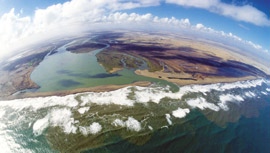
Bengu
curr e
ent l
n a
ews
Foi estabelecido um pequeno
o futuro desenvolvimento de um
comité director sob a direcção de
sistema de previsão de LOW);
Lesley Staegemann, directora do
Centro de Actividade do BCLME
Monitorização de redemoinhos e
para a Variabilidade Ambiental,
filamentos variabilidade da fron-
costa do BCLME, e o sistema de
para orientar e rever o progresso
teira a Sul do BCLME;
detecção remota por satélite são
do projecto.
Florescimentos de algas tóxicas;
componentes vitais de ambos os
projectos de monitorização (SEIS)
As previsões de grande priori-
Previsão do estado do mar.
e previsão (EEWS) do Programa
dade, ou as tecnologias necessári-
BCLME, tendo estes três com-
as para as previsões que o pro-
Todo este trabalho será integrado
ponentes sido bastante apoiados
jecto EEWS deverá produzir até
de perto com o trabalho do pro-
pelo Programa.
Novembro de 2007 são:
jecto parceiro SEIS. De facto,
ambos os projectos dependerão
Numa fase mais avançada, pre-
Alerta antecipado de Niños
um do outro o EEWS depend-
tende-se que o EEWS seja alar-
Benguela;
erá do SEIS para a informação e
gado para um sistema de alerta
Variabilidade da frente Angola/
dados de observações, e o SEIS
antecipado do ecossistema inte-
Benguela;
dependerá do EEWS para mod-
gral e em conjunto com um SEIS
elação e previsões.
operacional. Este é o passo lógico
Variabilidade na área do cone
a tomar de seguida no processo,
Luderitz-Rio Orange;
O conjunto PIRATA de bóias anco-
radas no mar alto no Atlântico
esperando-se que aconteça
Pré-condicionamento de água
equatorial/tropical e a sua exten-
durante a próxima fase que se
com baixo nível de oxigénio
são para sul, a rede de medidores
espera do Programa BCLME, sob
(LOW) (como antecedente para
de maré planeada ao longo da
os auspícios da IBCC.
The EEWS wil consist of a range
by November 2007 are as fol ows:
and data, SEIS on EEWS for model-
of simple and robust physical
ling and predictions.
indicators which wil enable the
Advance warning of Benguela
envisaged Benguela Current
Niños;
The PIRATA deep-sea moored
Commission (BCC) to make
buoy array in the equatorial/tropi-
Variability of the Angola/
informed decisions.
cal Atlantic and its southwards
Benguela front;
extension, the planned tide gauge
The EEWS project was put out
Variability in the Lüderitz-Orange
network along the BCLME coast,
to tender during the latter part of
River cone area;
and satel ite remote sensing are
2005 and the tender was subse-
vital components of both the moni-
quently awarded to the success-
Low oxygen water (LOW) pre-
toring (SEIS) and predicting (EEWS)
ful bidder: the Centre for Marine
conditioning (as a prelude to the
projects of the BCLME Programme
Studies at the University of Cape
future development of a fore-
and al three components have
Town. Dr Pierre Florenchie is proj-
cast system for LOW);
accordingly been strongly sup-
ect leader.
Tracking Agulhas eddies and
ported by the Programme.
A smal steering committee
filaments - variability of the
At a later stage it is envisaged that
under the chairmanship of Lesley
BCLME's southern boundary;
the EEWS wil be expanded into
Staegemann, director of the
Harmful algal blooms;
a ful y fledged ecosystem early
BCLME's Activity Centre for
warning system and dovetailed
Environmental Variability, has been
Forecasting of sea state.
with an operational SEIS. This is
established to guide and review
Al of this work wil be closely
the logical next step in the pro-
the project's progress.
meshed with that of the companion
cess, and hopeful y it wil happen
during the anticipated next phase
The high priority forecasts, or fore-
SEIS project. Indeed, both projects
of the BCLME Programme, under
cast enabling technologies which the
wil rely on one another EEWS on
the auspices of the BCC.
EEWS project is required to deliver
SEIS for observational information
31
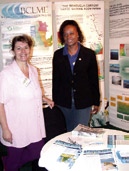


Public Relations
Cooperation with DLIST-
Copies of the summaries have also
about key environmental issues.
Benguela
been made available on the BCLME
By linking up with DLIST Benguela,
website.
the BCLME Programme has an
Links between the BCLME
The idea is that anyone who is inter-
opportunity to disseminate project
Programme and DLIST Benguela
ested in the outcome of BCLME-
findings and recommendations to
the Distance Learning and
funded projects can log onto the
people and communities outside of
Information Sharing Tool website
DLIST or BCLME websites and very
its immediate constituency of sci-
have been strengthened with the
quickly learn what individual projects
entists and environmentalists. And
compilation of a set of concise and
have achieved. If they are inter-
by showcasing the results of the
easy-to-read summaries of BCLME
ested, they simply download a copy
BCLME projects, DLIST Benguela
project reports.
of the ful project report.
achieves its mandate of sharing
The two-page summaries were
DLIST is a website where anyone
information.
compiled by Claire Attwood,
who is interested in the BCLME
Both DLIST Benguela and the
media consultant to the BCLME
region - and coastal development in
BCLME Programme are funded
Programme, and translated into
particular - can exchange information.
by the Global Environment Facility
Portuguese by Raquel Garcia of Eco-
It targets some of the most remote
(GEF) and focus exclusively on the
Africa. To date, 28 project reports
areas of the Benguela region, the
Benguela region. Therefore, there
have been summarised and 20
Richtersveldt and southern Angola
are real advantages to sharing infor-
are available in both English and
with the aim of helping people in
mation and resources between the
Portuguese on the DLIST website.
these far-flung places to stay informed
two projects.
Fish Africa 2005
cased the Programme to the inter-
Staegemann, al helped to manage
Cristina Cicognani, administrative
national fishing industry. In total,
the BCLME stand at different stag-
assistant to the Activity Centre for
3 784 visitors from 40 countries
es of the expo. Cristina Cicognani
Environmental Variability and Maria
visited the Fish Africa Expo. Many
and Claire Attwood manned the
de Lourdes Sardinha are pictured at
showed a keen interest in the
stand for the duration of the show
the Fish Africa exhibition which took
BCLME Programme.
and Antonio Barradas of the Instituto
place in Cape Town in October 2005.
Nacional Investigação Pesqueira
The directors of the three Activity
(INIP) also lent a hand. A number of
The BCLME Programme erected
Centres, Maria de Lourdes Sardinha,
newsletters, maps, brochures and
a display at Fish Africa and show-
Moses Maurihungirire and Lesley
stickers were given away.
BCLME profile printed
The BCLME profile was later
updated and printed in English
A 12-page profile of the BCLME
and Portuguese. It was circulated
Programme, which describes the
to the PCU and the three Activity
objectives, structure and achieve-
Centres and is being used as a
ments of the Programme, was
high quality brochure to present to
included on the CD-Rom that
international and regional partners.
wil be circulated with the book
Benguela: Predicting a Large
Marine Ecosystem.
Portuguese material
the latest BCLME Programme bro-
chure and profile.
Early in 2006, a special effort was
made to enhance the quantity of
The translations of these publi-
public relations material on the
cations was handled by Raquel
BCLME Programme that is avail-
Garcia of Eco-Africa.
able in Portuguese.
Al of the publications and video
A Portuguese version of the docu-
material were circulated in
mentary, Current of Plenty, was
Angola via the Activity Centre for
produced on CD and circulated in
Biodiversity, Ecosystem Health
Angola.
and Pol ution in Luanda.
Additional Portuguese copies of
the Strategic Action Programme
were printed, as were copies of
32

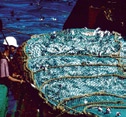
Bengu
curr e
ent l
n a
ews
Striking photographs are a Mr van Dalsen used his own pho-
are working together through the
hallmark of a new BCLME
tographs, plus high quality images
BCLME Programme to improve
display
provided by photographers Claudio
the management of the BCLME.
Velásquez, Geoff Spiby, Pat Morant
The planned Benguela Current
The head of Marine and Coastal
and the Oceana Group to compile
Commission is outlined briefly on
Management's busy reprograph-
the striking display.
two panels.
ics section, Tony van Dalsen, has
It describes, in 20 panels, the
played a key role in designing
unique physical features and spec-
Fol owing the launch of the fixed
and printing a new display on the
tacular biodiversity of the BCLME.
display, a smal er, portable display
BCLME Programme.
It also il ustrates the most impor-
wil be printed. This wil al ow Dr
Mick O'Toole and the directors of
The display is to be launched at
tant industries in the Benguela
the Activity Centres to carry a dis-
the Two Oceans Aquarium in
such as oil and gas production,
play with them when they attend
August at a side event of the GEF
diamond mining, fisheries and
international meetings.
Tony van Dalsen of MCM has
Assembly (see p. 3).
aquaculture and explains how
produced a new display for the
Angola, Namibia and South Africa
BCLME Programme.
Photographer goes to sea
Claudio enjoyed his five-day voy-
voyage and Claudio had to con-
age and produced some excel-
tend with big swells and a rolling
Well-known photographer,
lent images for the display, as
ship.
Claudio Velásquez, went to
well as for the BCLME website
sea on the hake trawler Sveinn
and newsletter. He compliment-
Once he had compiled a set
Jonsson to capture images of
ed Captain Leon Henry and the
of images for the use of the
deep-sea fishing for a new dis-
crew of the Sveinn Jonsson for
BCLME Programme, Claudio pro-
play on the BCLME Programme.
their cooperation and hospitality.
vided Viking Fishing and the crew
of the Sveinn Jonsson with their
Claudio's trip was made possible
"The crew work incredibly long
own sets of images. He also
by Tim Reddell, chairman of the
hours under really difficult condi-
handed over a copy of his book
South African Deep-Sea Trawling
tions," said Claudio who snapped
Current of Plenty to Tim Reddell
Industry Association (SADSTIA),
away with his digital camera as
and skipper Leon Henry as a
A ful bag of hake is
and Viking Fishing.
they worked. Weather conditions
token of thanks for a once-in-a-
hauled on board the
were bad for the duration of the
lifetime experience.
trawler Sveinn Jonsson.
UNDP film maker visits
shared fisheries resources. He
the region
also filmed a pilchard packing
Boaz Paldi films Dr Larry
plant on the Cape Peninsula and
Hutchings, Chief Specialist
The UNDP's broadcast specialist,
the offloading of rock lobster and
Scientist at MCM.
Boaz Paldi, visited the Benguela
linefish at Kalk Bay. In Namibia
region in May to gather material
he visited Cadilu Fishing, a large
for the production of four short
hake processing plant.
films on GEF-funded projects
that are being implemented by
One of the highlights of Mr
UNDP in southern Africa.
Paldi's trip to Namibia was visit-
ing and filming the seal colony
The BCLME Programme was one
at Cape Cross where upwards
of these projects and Mr Paldi
of 300 000 Cape fur seals
spent several days in Namibia
Arctocephalus pusillus pusillus
Boaz Paldi filmed fish work-
and South Africa filming fishing
haul out onto the beach.
ers of loading pilchards on the
activity and the unique land-
Cape Peninsula.
scapes of the region. A tight
Mr Paldi's film on the BCLME
schedule prevented him from
Programme focused on cli-
visiting Angola.
mate change and its impact on
fisheries in the region. It was
Mr Paldi's visit to South Africa
distributed to two news agen-
coincided with the Joint Hake
cies, APTN and Reuters TV, and
Research Planning workshop
through them reached over 500
which was hosted by the BCLME
broadcasters worldwide; incred-
Programme in Cape Town in May.
ible international exposure for the
As a result, he got to experience
BCLME Programme.
first hand how the countries
of the Benguela are beginning
to negotiate on the subject of
33
Forthcoming events
IW:2007 set for Cape Town
experiences and best practices for
- and provide a forum for identifying
international waters management.
opportunities for cooperation,
The Global Environment Facility
At nearly US$3 bil ion, the GEF IW
col aboration and synergies.
(GEF) and its implementing
portfolio represents a significant
agencies (UNDP, UNEP, and the
body of practical experience.
Exhibit opportunities wil be available
World Bank) will host the Fourth
for GEF projects and partners who
Biennial International Waters
Primary objectives of the
are encouraged to visual y display
Conference in Cape Town, South
conference are to foster knowledge
their work to Conference attendees.
Africa from July 31 to August 3,
sharing and col aboration between
During the Third International
2007.
GEF International Waters projects,
Waters Conference, there
government partners, GEF
were approximately 30 exhibits
It is anticipated that approximately
implementing and executing
showcasing projects from al over
350 participants from more than
agencies, and increasingly civil
the world. The First International
100 countries wil attend this
society and the non-profit and
Waters Conference was held in
invitation only event, including
private sectors. Participants wil
Budapest, Hungary in October 2000,
GEF International Waters project
engage in dialogue with peers from
the Second International Waters
managers and senior staff,
around the world and contribute to
Conference was held in September
Implementing Agencies (UNDP,
generating feedback to the GEF on
2002 in Dalian, China, and the Third
UNEP, World Bank) and Executing
emerging needs and priorities.
biennial conference was held in
Agencies (UNIDO, FAO, IMO, OAS,
Salvador, Bahia Brazil.
NGOs, etc.), donor partners, and
Discussion sessions wil focus
secretariats to many regional sea
on practical experience in
Sponsorship opportunities wil be
and river basin conventions. Also
building capacity to strengthen
available for this event through GEF-
in attendance wil be ministerial
transboundary institutional and
IW:LEARN. The Global Environment
level representatives from over 130
legal frameworks. The conference
Facility is providing core funding
countries that participate in GEF's
wil focus on common issues
for the Fourth Biennial International
International Waters portfolio, as
and chal enges among projects
Waters Conference, but private-
wel as senior officials of the South
at various stages in the TDA/SAP
sector leadership is essential. Past
African government.
process, within and across regions,
sponsors include The Coca-Cola
among similar types of projects
Company, Inogen, WaterLeaders,
The purpose of the conference is
- freshwater basins, groundwater
Itaipu, and Chesf.
to review GEF's global International
systems, large marine ecosystems
Waters portfolio and share
by Janot-Reine
Mendler de Suarez
Pan-African Forum of Large The main objective of the Workshop provide an opportunity to exchange
Marine Ecosystems
on Operational Oceanography and
information on lessons learned and
Remote Sensing is to cement the
best practices, to coordinate the
A series of three back-to-back
cooperation between GOOS-Africa
development of regional coastal
meetings that are to be held at
and the Pan-African LMEs, and to
observing systems, identify capacity
the University of Cape Town in
equip young African scientists and
building needs and to identify
November wil enhance cooperation
managers to fast-track their effective
funding priorities and sources of
between African Large Marine
implementation. The Leadership
funding. The Forum wil look to the
Ecosystem (LME) programmes and
Workshop wil build on African
lessons learnt in Africa to see the
develop links between the LMEs
capacity in marine sciences and
real advantages of working more
and the Global Ocean Observing
technology in general and ocean
closely with LME programmes to
System (GOOS).
remote sensing in particular.
implement coastal GOOS.
The meetings are scheduled as
The objective of the Pan-African
It is anticipated that the three
fol ows:
Forum of Large Marine Ecosystems
meetings wil provide a unique
is to enhance cooperation between
opportunity to bring together the key
Pan-African LMEs / GOOS-
Africa Leadership Workshop
the five LME programmes that are
stakeholders interested in promoting
on Operational Oceanography
being implemented in Africa. These
sustained coastal ocean observing,
and Remote Sensing 6 to 10
are the Canary Current, Guinea
monitoring and forecasting systems.
November 2006;
Current, Benguela Current, Agulhas
While each meeting has its own
and Somali Currents, and the Red
objectives, there is a LME thread
The Pan-African Forum of
Sea Large Marine Ecosystem
linking al the meetings together.
Large Marine Ecosystems
programmes.
Through common participation
13 November 2006; and
and appropriate reporting from
The Third Forum of GOOS Regional
one meeting to the next, the LME
Third Forum of GOOS Regional
Al iances is a key activity of the
thread wil become clear and
Alliances 14 to 17 November
Global Ocean Observing System
valuable to al .
2006.
and it is anticipated that it wil
Bengu
curr e
ent l
n a
ews
34
Bengu
curr e
ent l
n a
ews
Second Global Conference
recovery and sustainability of marine
on LMEs
resources and their environments.
The port city of Qingdao in China,
The Second Global Conference
wil provide a backdrop for the
on LMEs wil examine scientific
second Global Conference on
advances made in ecosystem
Large Marine Ecosystems which is
assessment from LME activities
scheduled for 11 to 13 September
around the globe; analyse the role
2007.
of the LME approach in the field
of marine science; introduce LME
The Large Marine Ecosystem (LME)
assessment and management
approach was first introduced in
methodologies for experts
1984. Since then, it has come to
interested in ecosystembased
represent a radical shift in thinking
approaches; and look towards
that cal s for a more holistic
increased interaction between LME
To date, 64 LMEs have been
approach to ocean governance and
activities in different parts of the
described. In this map, the BCLME
Assessment and monitoring of
managing marine ecosystems.
globe.
is highlighted in yel ow.
LMEs;
The new "ecosystem approach"
The Conference wil provide review
State of Environment and
aims to manage resources at the
lectures on the results of the GEF-
Ecosystem Information Systems in
larger ecosystem level and balance
supported LME projects underway
LMEs;
human needs with conservation
in Africa, Asia, Latin America and
Integrating socio-economics,
issues. The LME approach uses
Eastern Europe. Invited speakers
science and governance in LMEs;
a five modular approach that
wil deal with the theoretical
addresses productivity, fish and
background of the LME approach
Developing international
fisheries, ecosystem health and
and its role in present day marine
partnerships in science and
pol ution, socio-economics and
science. Papers and posters are
management in LMEs;
governance.
invited on each of the fol owing
Changing states of LMEs in
regional seas: a global perspective
Since the mid-1990's, the Global
themes:
Environment Facility (GEF) in
LME's at risk: adaptation to
The Large Marine Ecosystem
partnership with several UN
(LME) approach to assessment and
climate change;
For more information contact
agencies, has assisted many
management of marine resources
Complementarities among LME
Dr Kenneth Sherman
economical y developing
(theory and background);
assessments, GOOS-GEOSS and
(Kenneth.sherman@noaa.gov)
coastal states to introduce LME
GLOBEC; and
Implementation of the ecosystem
or Dr Mick O'Toole
assessment and management
approach in LMEs;
Towards a LME network.
(otoole@bclmenamibia.org).
methods for projects directed at the
The Benguela story
programme, BENEFIT. Shortly
Benguela and has worked tirelessly
afterwards they began to talk to
to ensure that the ecosystem is
In 1995, when Namibia and South
about managing the Benguela
managed cooperatively into the
Africa were both new democracies
ecosystem cooperatively through
future.
and Angola was stil embroiled in
a Large Marine Ecosystem (LME)
a civil war, scientists from Angola,
Programme.
The Benguela Story wil describe the
Namibia and South Africa met for
development of BENEFIT and the
the first time in Swakopmund,
Now, a little more than ten years
BCLME Programme in three time
Namibia, to share knowledge and
later, four individuals who have
periods, each of which spanned
understanding of the Benguela
been intricately involved in the
approximately five years.
Current ecosystem.
establishment of BENEFIT and the
BCLME Programme are putting pen
The book wil also document
"It was real y surprising to see
to paper and writing "The Benguela
the growth of the three national
how much good wil there was,
Story", a historical record of marine
marine research programmes
both within governments and the
cooperation in the Benguela Current
over the last decade and the role
scientific institutes," remembers
system.
of international partnerships in
German biologist, Gotthilf Hempel,
the success of BENEFIT and the
reflecting that not long before,
Through the pages of The Benguela
BCLME Programme. It wil conclude
Angola, Namibia and South Africa
Story, Drs Mick O'Toole, Nevil e
with recommendations for the next
had been bitterly divided by the
Sweijd, Tore Strømme and Gotthilf
decade of cooperation and some
aggression by the former apartheid
Hempel, hope to document the
thoughts on the ways in which
government.
development of BENEFIT and
marine research can contribute to
the BCLME Programme over the
sustainable development and peace,
At the Swakopmund meeting, the
past decade. Each of the authors
both in the Benguela region and
three countries laid the groundwork
has spent decades studying the
around the globe.
for the cooperative marine science
35



The BCLME Programme
The BCLME Programme is a joint initiative by ballast water of ships moving through the region,
the governments of Angola, Namibia and South
and pollutants or harmful algal blooms that can be
Africa to manage and utilise the resources of the
advected by winds and currents from the waters of
Benguela Current Large Marine Ecosystem in a sus-
one country into another.
tainable and integrated manner.
The Programme is funded by the Global Environment
Facility (GEF) which has contributed US$15.2 million
The Programme is designed to improve the structures
through the United Nations Development Programme
and capacities of Angola, Namibia and South Africa
(UNDP) for the regional initiative. The GEF's funding
to deal with the environmental problems that occur
complements an investment of US$16 million by
across the national boundaries, in order that the eco-
the three countries, and over US$7 mil ion from other
system may be managed as a whole.
sources such as the Benguela Environment Fisheries
These transboundary problems include the migration
Training Interactions Programme, BENEFIT.
of valuable fish stocks across national boundaries,
The BCLME Programme is administered by a
the introduction of invasive alien species via the
Programme Co-ordinating Unit.
BCLME PROGRAMME CO-ORDINATING UNIT
WINDHOEK, NAMIBIA
Tel:
+264 (0)61 246 948
Fax:
+264 (0)61 246 803
Chief Technical Advisor: Dr Mick O'Toole
Email:
otoole@bclmenamibia.org
ACTIVITY CENTRE:
BIODIVERSITY, ECOSYSTEM HEALTH AND POLLUTION
LUANDA, ANGOLA
Tel:
+244 228 742122
Fax:
+244 222 309330
Director: Ms Maria Sardinha
Email:
bclme.behp@nexus.ao
ACTIVITY CENTRE:
LIVING MARINE RESOURCES
Swakopmund, NAMIBIA
Tel:
+264 (0)64 410 1106
Fax:
+264 (0)64 410 1188
Director: Mr Frikkie Botes
Email:
fwbotes@benguela.org
ACTIVITY CENTRE:
ENVIRONMENTAL VARIABILITY
Cape Town, SOUTH AFRICA
Tel:
+27 (0)21 402 3418
Fax:
+27 (0)21 402 3351
Director: Ms Lesley Staegemann
Email:
bclmeevg@deat.gov.za
Feedback:
Please send your comments,
Design and DTP:
suggestions and stories to:
Günther Komnick Studio
Claire Attwood
Tel: +27 (0)21 531 7798
Tel:
+27 (0)21 788 5453
Fax:
+27 (0)21 788 3500
Portuguese Translation:
e-mail: cattwood@mweb.co.za
Raquel Garcia
Photography:
Bengu
www.bclme.org
Claudio Velásquez, Claire Attwood
curr e
ent l
n a
ews
36