

BeGLOBALENVIRONMENT current news
F A C I L I T Y
nguela
THE NEWSLETTER OF THE BENGUELA CURRENT LARGE MARINE ECOSYSTEM PROGRAMME
Inside News June 2005 Issue 3
BCLME Programme New director for Namibian Activity Centre
3
Study recommends structure for BCC
4-5
Regional co-operation makes economic sense
6
enters its fourth year Documentary launched in Angola and Namibia
7
Specialists gather for Forecasting Workshop
8-9
A passion for development
10-11
by Dr Mick O'Toole
Workshop puts EAF project on the map
12-14
Projects supported by the BCLME Programme
15-19
Nansen to sample from Cape Town to Senegal
20-21
hree years after the imple-
to strengthen the Programme in the
Extensive biodiversity project for BENEFIT
22
mentation phase of the BCLME
future and formulate "lessons
Public Relations
23
TProgramme began, it is time learned" that could be applied to Plankton collection could hold key to ecosystem change 24-25
for reflection. In May, the BCLME
other GEF funded Large Marine Eco-
community met in Cape Town for a
system Programmes worldwide.
Climate change could trigger degradation
two-day "Highlights Symposium".
of upwelling systems
26-27
The purpose of the meeting was
A favourable mid-term review wil
to turn the spotlight onto some of
provide everyone associated with
the key achievements and results
the BCLME Programme with inde-
of the Programme to date, and to
pendent affirmation of their work.
lay the foundation for future actions.
While enormous progress has been
made in creating a platform for
At the Highlights Symposium the
regional co-operation in managing
BCLME community had a unique
the Benguela ecosystem, it is
opportunity to learn about the wide
already clear that to take root, long-
range of projects that are being
term sustainable funding wil be
funded by the BCLME Programme,
required. The participating countries
and hear from senior representatives
have recognised that it wil take more
from each of the three countries
than five years to ful y institutionalise
about the chal enges that lie ahead.
the new paradigm for transboundary
ecosystem management.
The Highlights Symposium was
seen as an essential component of
The Programme Steering Committee
the mid-term review. This process
(PSC) has accordingly tasked the
began in May, with the purpose
Programme Co-ordination Unit (PCU)
of evaluating the achievements of
with approaching the GEF and other
the BCLME Programme against its
donors to secure funding for a
TUOR to boost monitoring programmes
original objectives.
second phase. This would build
capacity within the planned
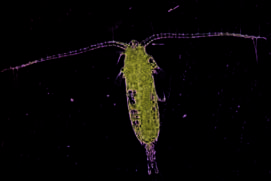
Calanoides carinatus (pictured above) is a zooplankton species
The mid-term evaluation is being
Benguela Current Commission,
that is commonly found in the Benguela Current Large Marine
conducted by Dr David Vousden, a
across the spectra of ecosystem
Ecosystem (BCLME).
sustainable development and man-
management functions and build
agement advisor from the UK and
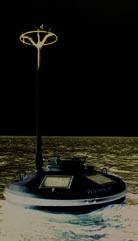
Plankton sampling in the BCLME is to receive a boost following
the capacity of countries to adapt
Dr Magnus Ngoile, director general
the recent purchase by the BCLME Programme of a towed under-
management practices in the face
of the National Environment Manage-
way oceanographic recorder (TUOR). The TUOR will be delivered
of climate change. The PSC has
ment Council of Tanzania. Both
to the Benguela region by the Chelsea Technologies Group. It is
emphasised that movement to a
evaluators have extensive know-
fitted with a MiniPack CTD-F to measure conductivity, temperature,
second phase would necessarily
ledge of environmental and develop-
depth and fluorescence, as well as an Autonomous Plankton
be conditional on the realisation
Sampler (APS).
ment issues, as wel as GEF procedures.
of several outcomes. These include,
The use of TUORs is seen as a key activity in monitoring long
It is expected that the evaluators
in particular, the creation of an Interim
term trends within Large Marine Ecosystems. When deployed from
wil produce a document which wil
Benguela Current Commission (IBCC)
"ships of opportunity", the instruments can provide very large
assess the progress of the BCLME
as a prelude to the formal incorp-
datasets at reduced costs.
Programme and outline the extent
oration of the Benguela Current
to which the objectives have been
Commission (BCC).
For more about plankton studies in the BCLME, turn to p.25.
met and where gaps are evident. It
wil also provide recommendations
continued.../2
1

mental and legal consultants that
potential economic opportunities
1/...continued
an IBCC should be established as
that could promote the develop-
soon as possible, within the life-
ment of sustainable livelihoods
time of the BCLME Programme.
within the coastal communities of
A complementary study by a team
the BCLME.
of economists from the University
of British Columbia has shown
A key event for the BCLME Pro-
that it makes good financial sense
gramme is the GEF Third Biennial
to establish the BCC and move
International Waters Conference
towards the co-operative manage-
which is to be held in Salvador,
ment of the Benguela. (See p. 6.)
Brazil in June 2005. This Inter-
national gathering wil bring together
The main thrust of the BCC wil
a broad range of experiences,
be to implement an ecosystem
viewpoints and approaches from
Shake on it! Maria de Lourdes Sardinha, director of the BCLME Pro-
approach to managing the BCLME.
diverse stakeholders in the GEF
gramme's Activity Centre for Biodiversity, Ecosystem Health and
Its focus wil be on regional co-
International Waters programmes.
Pollution, Neville Sweijd, director of Benefit, and Mick O'Toole, chief
operation between the three
Its aim wil be to foster knowledge
technical advisor of the BCLME Programme are pictured at the sign-
countries, specifical y with regard
sharing and col aboration between
ing of the contract between UNOPS and BENEFIT for the implemen-
to the harvesting of shared fisher-
GEF International Waters projects,
tation of a major biodiversity project.
ies resources and improving the
UN agencies, participating govern-
In terms of the contract, BENEFIT will manage and integrate the results
management of human impacts on
ments and the private, academic
from a suite of biodiversity projects and produce a conservation planning
the Benguela region. The proposed
and non-profit sectors. The BCLME
tool that may be applied by al three countries of the Benguela region. See p. 22.
BCC wil include scientific research,
wil feature prominently on the
monitoring and training, as wel
agenda and wil be one of the main
1/...continued
state of the environment reporting
GEF-sponsored LME programmes
and an early warning system for
to be highlighted at the conference.
The BCLME Programme Steering
harmful algal blooms, low oxygen
See p.11.
Committee has approved a recom-
water and Benguela Niños. The
BCLME Chief Technical Advisor
mendation from a team of environ-
BCC may also include advice on
(Programme Co-ordinator)
O Programa BCLME entra no seu quarto ano
Por Dr. Mick O'Toole
Três anos passados desde o início
ados do Programa BCLME em
aprendidas" que poderão ser
da fase de implementação do Pro-
relação aos seus objectivos iniciais.
aplicadas a outros programas de
grama BCLME, é altura para reflexão.
Grandes Ecossistemas Marinhos
Em Maio, a comunidade BCLME
A avaliação de médio prazo está
(LME, Large Marine Ecosystem) a
reuniu-se na Cidade do Cabo para
a ser conduzida pelo Dr David
nível mundial financiados pelo GEF.
um "Simpósio de Destaques"
Vousden, um consultor sobre desen-
durante dois dias. O objectivo desta
volvimento e gestão do Reino Unido,
Uma revisão de médio prazo
reunião foi chamar a atenção para
e Dr Magnus Ngoile, director geral
favorável permitirá que todas as
alguns dos sucessos e resultados
do Conselho Nacional de Gestão
pessoas associadas com o Programa
do Programa até à data, bem como
do Ambiente da Tanzania. Ambos
BCLME tenham uma confirmação
lançar as bases para acções futuras.
os avaliadores possuem um vasto
independente do seu trabalho.
conhecimento sobre assuntos de
Embora tenha havido grande pro-
Este Simpósio foi uma oportunidade
ambiente e desenvolvimento, bem
gresso na criação de uma plata-
única para a comunidade BCLME
como sobre os procedimentos do
forma para a cooperação regional
tomar conhecimento de uma vasta
Fundo de Ambiente Global (GEF,
na gestão do ecossistema da
gama de projectos que estão a ser
Global Environment Facility).
Corrente de Benguela, torna-se
financiados pelo Programa BCLME
evidente que será necessário financia-
e para ouvir os representantes
Pretende-se que os avaliadores
mento sustentável para a sua sólida
séniores de cada país exporem os
preparem um documento que avalie
implantação. Os países participantes
desafios que existem.
o progresso do Programa BCLME
reconheceram que serão precisos
e descreva em que medida os
O Simpósio de Destaques foi con-
mais do que cinco anos para insti-
objectivos do Programa têm sido
siderado como uma componente
tucionalizarem este novo paradigma
atingidos e quais as falhas evidentes.
essencial da revisão de médio prazo.
de gestão transfronteiriça do ecos-
O documento apresentará recomen-
Bengu Este processo começou em Maio,
sistema.
dações para fortalecer o Programa
com o objectivo de avaliar os result-
no futuro e formulará "lições
curr e
ent l
n a
ews
2

Be
B n
e g
n u
gcurre
ent l
n a
curr e
ent new
e s
w
New director for
Namibian Activity Centre
Dr Moses Maurihungirire has been appointed as the director of the
BCLME Programme's Activity Centre for Marine Living Resources in
Swakopmund, Namibia.
Dr Maurihungirire, who holds a
of executive secretary of the
role in the establishment of an
doctoral degree in Marine and
South East Atlantic Fisheries
Interim Benguela Current Com-
Estuarine Environmental Sciences Organisation (SEAFO) in Walvis
mission (IBCC) which will be set
from the University of Maryland
Bay. See p.25.
up by the three countries of the
in the USA, joins the BCLME
Benguela region within the next
Programme from the Namibian
As director of the Activity Centre
two years.
Ministry of Fisheries and Marine
for Marine Living Resources, Dr
Living Resources where he held
Maurihungirire will be responsible
Dr Maurihungirire takes up his
the position of deputy director
for managing one of the BCLME
position with the BCLME Pro-
responsible for inland fisheries
Programme's key interventions;
gramme on 10 May 2005.
and research administration.
that is, how best to manage fish
stocks that are shared by two or
He replaces Dr Hashali Hamuku-
more countries of the BCLME
Dr Moses
aya who has taken up the position region. He will also play a central
Maurihungirire
Assim, o Comité Director do Pro-
lecer a BCC e caminhar no sentido
do GEF. O seu objectivo será
grama (PSC, Programme Steering
da gestão cooperativa da Corrente
fomentar a partilha de conhecimento
Committee) incumbiu a Unidade
de Benguela. (ver página 6).
e a colaboração entre projectos de
de Coordenação do Programa (PCU,
Águas Internacionais do GEF, agên-
Programme Coordination Unit) de
O grande impulso para o BCC será
cias das Nações Unidas, governos
contactar o GEF e outros doadores
a implementação de uma abordagem
participantes e os sectores privado,
para assegurar o financiamento de
de ecossistema para gerir o BCLME.
académico e sem fins lucrativos.
uma segunda fase. Esta segunda
O seu foco será a cooperação
O BCLME terá lugar de realce na
fase permitiria a capacitação den-
regional entre os três países, par-
agenda e será um dos principais
tro da Comissão da Corrente de
ticularmente no que diz respeito à
programas LME apoiados pelo GEF
Benguela para a gama de funções
exploração de recursos pesqueiros
a ser destacado durante a confer-
de gestão do ecossistema, bem
partilhados e à melhoria da gestão
ência. Ver página 11.
como fortaleceria as capacidades
dos impactes humanos na região
dos países para adoptarem práticas
da Corrente de Benguela. O BCC
de gestão face às alterações cli-
proposto incluirá pesquisa científica,
máticas. O PSC frisou que a pas-
monitorização e formação, bem
sagem para uma segunda fase
como elaboração do relatório do
seria necessariamente dependente
estado do ambiente e um sistema
do alcance dos vários objectivos.
de aviso prévio para florescimentos
Estes objectivos incluem, em
de algas tóxicas, água com baixo
particular, a criação da Comissão
nível de oxigénio e Niños Benguela.
Interina da Corrente de Benguela
O BCC poderá ainda incluir informação
(IBCC, Interim Benguela Current
sobre potenciais oportunidades
Commission) como um prelúdio para
económicas que poderão promover
a constituição formal da Comissão
o desenvolvimento de meios de
da Corrente de Benguela (BCC).
subsistência sustentáveis nas
comunidades costeiras do BCLME.
O Comité Director do Programa
BCLME aprovou já a recomendação
Um evento chave para o Programa
de uma equipa de consultores
BCLME será a Terceira Conferência
ambientais e legais para que se
Bienal do GEF sobre Águas Inter-
estabeleça uma Comissão Interina
nacionais, a realizar em Salvador,
da Corrente de Benguela o mais
no Brasil, em Junho de 2005. Esta
cedo possível. Um estudo comple-
conferência internacional reunirá
mentar realizado por uma equipa
uma vasta gama de experiências,
Dr Magnus Ngoile and Dr David Vousden visited the Benguela
de economistas da Universidade
pontos de vista e abordagens de
region in May to conduct a mid-term evaluation of the BCLME
de British Columbia mostrou que
diversos grupos de interesse dos
Programme on behalf of the Global Environment Facility.
faz bom sentido financeiro estabe-
programas de Águas Internacionais
3
Study recommends structure
for Benguela Current Commission
News A team of experts has recommended that an Interim Benguela Current Commission
(IBCC) should be established as soon as possible, during the life of the BCLME
Programme, as a precursor to a permanent Benguela Current Commission.
Angola and Namibia have
announced the maritime
boundary markers between
The recommendation was
lack of capacity to identify priori-
activities that impact negatively
their two countries, reports
made by Cormac Cul inan, Svein
ties at an ecosystem level and to
on the BCLME. Other reasons for
The Namibian.
Munkejord and Heidi Currie of
ensure that priority issues are
establishing a BCC include:
Angolan president José Edu-
EnAct International, consultants
addressed throughout the ecosys-
the need to fulfil the international
ardo Dos Santos and his Na-
in environmental law and policy.
tem.
obligations of the three countries;
mibian counterpart, President
They completed an investigation
The authors found that Angola,
Sam Nujoma, received the
into whether there is a need to
Namibia and South Africa al have
the need to develop a better
final report of the joint com-
establish an institutional structure
gaps in their legal frameworks
understanding of the functioning of
mission for delimitation and
to facilitate regional co-operation
which undermine the protection
the BCLME;
demarcation of the boundary
between Angola, Namibia and
of the BCLME at national level.
the need to improve the man-
in February.
South Africa and ensure the
sustainable management of the
For instance, there are few laws
agement of human impacts on the
The maritime boundary is
BCLME.
dealing with environmental impact
BCLME;
defined as the line of latitude
assessments (EIAs) for projects
the need to facilitate regional
seventeen degrees, fifteen
Their findings are contained in a
that may have transboundary
capacity building; and
minutes and zero seconds
report which was presented to
impacts. Equal y, legislation gov-
the BCLME Programme Steering
erning integrated coastal manage-
south of the equator, which
the need to increase the bene-
Committee in December 2004,
ment or regional co-operation
commences at its intersec-
fits derived from shared fish stocks.
revised and approved in March
with regard to the conservation of
tion joint with the line of low
2005.
marine ecosystems is inadequate
The report suggests that a regional
water at the Kunene River
or non existent.
institution can only be established
mouth and runs westwards
The report suggests that the
by agreement between Angola,
for a distance of two hundred
existing governance systems for
They conclude that in order to
Namibia and South Africa. It pro-
nautical miles.
marine resource management are
implement an ecosystem approach
poses that this should be a binding
not adequate to ensure the long-
to managing the BCLME, it wil
agreement that is recorded in writ-
A report by Birdlife Interna-
term protection and ecological y
be necessary to establish institu-
ing; that is, a treaty.
tional and the Royal Soci-
sustainable use of the BCLME.
tional arrangements which, at the
This is primarily as a result of a
very least, deal with those human
When formulating a proposed
ety for the Protection of Birds
suggests that longline fishing
boats might be kil ing some
species of albatross faster
Estudo recomenda estrutura para a
than they can reproduce.
Al 21 albatross species are
Comissão da Corrente de Benguela
classed as under threat of
extinction.
Uma equipa de peritos recomendou
cional para facilitar a cooperação.
Namíbia e África do Sul apresentam
The elegant white gliders are
o estabelecimento de uma Comissão
falhas nos seus enquadramentos
famed for their large wing-
Interina da Corrente de Benguela
Os resultados da investigação encon-
legais, pondo em causa a protecção
tram-se descritos num relatório que
span and long ocean jour-
(IBCC) o mais cedo possível, durante
do BCLME ao nível nacional. Por
foi apresentado ao Comité Director
neys. The northern royal alba-
o período de vida do Programa
exemplo, existem poucas leis que
do Programa BCLME em Dezembro
tross can fly up to 1 800km in
BCLME, como percursora de uma
lidam com a avaliação de impactes
de 2004, e revisto e aprovado em
24 hours and the grey-headed
Comissão da Corrente de Benguela
ambientais (AIA) de projectos que
Março de 2005.
albatross can circle the globe
permanente.
poderão ter impactes transfrontei-
in 42 days.
riços. De igual modo, a legislação
Esta recomendação foi apresen-
O relatório sugere que os sistemas
acerca da gestão costeira integrada
tada por Cormac Cul inan, Svein
de governação existentes para a
The official inquiry into Na-
ou cooperação regional no que diz
Munkejord e Heidi Currie de EnAct
gestão de recursos marinhos não
respeito à conservação de ecos-
mibia's most serious maritime
International, consultores em direito
são adequados para assegurar a
protecção a longo prazo e o uso eco-
sistemas marinhos é inadequada ou
disaster the sinking of the
e política ambiental. Esta equipa
logicamente sustentável do BCLME.
ausente.
MFV Meob Bay near Lüderitz
investigou se os sistemas actuais
Tal fica a dever-se principalmente à
in 2002 was concluded re-
de governação para a gestão dos
Os autores concluem que a imple-
falta de capacidade para identificar
cently when Namibia's Court
recursos marinhos são adequados
mentação de uma abordagem de
prioridades ao nível do ecossistema
of Marine Enquiry found that
para assegurar o uso sustentável
ecossistema para gerir o BCLME
e para assegurar que os temas pri-
neither the boat's skipper nor
do BCLME; se a cooperação entre
dependerá do estabelecimento de
oritários são abordados em todo o
its crew were responsible for
Angola, Namíbia e África do Sul é
estruturas institucionais que, no
ecossistema.
the accident.
desejável; e se existe necessidade
mínimo, se dediquem às actividades
de estabelecer uma estrutura institu-
0s autores verificaram que Angola,
humanas com impactes negativos
4


Bengu
curr e
ent l
n a
ews
structure for the BCC, the authors
Conference to determine policy,
each country identifies a lead
drew on the experiences of Norway
a Joint Management Board to
Ministry and mandates specific offi-
and the UK which negotiated
co-ordinate the development and
cials to drive the co-ordination of
the co-operative management
implementation of the Strategic
the national activities necessary to
of shared oil and gas resources.
Action Programme, three Joint
promote the overal objectives of
They also looked at South Africa,
Management Committees sup-
the BCC;
Zimbabwe and Mozambique
ported by task-specific working
it is implemented in a manner
which are in the process of
groups, and research support
that reflects the critical success
establishing the Great Limpopo
being provided by a restructured
factors identified in the report; and
Transfrontier Park.
BENEFIT.
the performance of the struc-
The authors developed three
The authors say that if the three
ture is reviewed after an initial
possible scenarios for the co-
countries are committed to mov-
period and adjustments are made
operative management of the
ing from a focus on joint research
where appropriate.
BCLME. The first is the establish-
and information exchange towards
The report recommends that once
ment of a research-orientated
active co-operation on manage-
an appropriate institutional option
Benguela Current Commission; the
ment issues, then they should
has been agreed to, it would be
second option is a management-
establish an institutional structure
best to adopt a phased approach
orientated structure and the third
similar to that proposed in option
to establishing an IBCC.
is a minimalist option which envis-
two.
ages regional co-operation based
The report concludes with the
on a network of bilateral or trilateral
They suggest that the BCC is likely
recommendation that the BCLME
agreements.
to be both viable and sustainable,
Programme's existing institutional
provided that:
structures should function as sup-
The authors favour the second
porting structures to the IBCC until
option which is the establishment
it receives high-level support
new structures are operational.
of a BCC made up of a Ministerial
from each of the countries;
no BCLME. Outras razões para o
tado por escrito; ou seja, um tratado.
é uma estrutura orientada para a
estabelecimento da BCC incluem:
gestão e a terceira é uma opção
Para formular a estrutura proposta
minimalista em que a cooperação
necessidade de cumprir obriga-
para a BCC, os autores basearam-
regional é baseada numa rede de
ções internacionais dos três países;
se nas experiências da Noruega
acordos bilaterais e trilaterais.
necessidade de melhorar o
e Reino Unido países que nego-
entendimento do funcionamento do
ciaram a gestão cooperativa dos
Os autores preferem a segunda
BCLME;
recursos de petróleo e gás natural.
opção, ou seja, o estabelecimento
Os autores consideraram ainda o
de uma BCC constituída por uma
necessidade de melhorar a
exemplo da África do Sul, Zimbabué
Conferência Ministerial para deter-
gestão dos impactes humanos no
e Moçambique, países que se
minar as políticas, uma Direcção
BCLME;
encontram a estabelecer o Parque
Conjunta de Gestão para coordenar
necessidade de facilitar a capaci-
Transfronteiriço de Great Limpopo.
o desenvolvimento e implementação
tação regional; e
do SAP, três Comités Conjuntos de
Os autores desenvolveram três
necessidade de aumentar os
Gestão apoiados por grupos de trab-
cenários possíveis para a gestão
benefícios decorrentes dos stocks
alho específicos para cada actividade,
cooperativa do BCLME. O primeiro
pesqueiros partilhados.
e apoio ao nível da pesquisa forne-
cenário é o estabelecimento de uma
cido por um BENEFIT restruturado.
O relatório defende que só se poderá
Comissão da Corrente de Benguela
estabelecer uma instituição regional
orientada para a pesquisa, tal como
Os autores afirmam que se os três
através de um acordo entre Angola,
é recomendado pelo Programa
países estiverem comprometidos a
Namíbia e África do Sul. É proposto
Estratégico de Acção (SAP) do
um acordo obrigatório que seja regis-
Programa BCLME. A segunda opção
continuação.../6
5


Regional co-operation
makes economic sense
An economic study has shown that the benefits of managing the Benguela's shared fish-
eries resources co-operatively, far outweigh the costs of establishing and maintaining a
regional management structure such as an Interim Benguela Current Commission.
The economic study was under-
shared between Angola and
able in the long-term. The econo-
taken in September 2004 by
Namibia, as are red crabs and
mists recommend that current
Rashid Sumaila, Gordon Munro
bronze whaler sharks. Big eye, yel-
levels of funding by international
and Heather Keith of the Fisheries
lowfin and longfin tunas are also
donors be continued until a point
Economics Research Unit at the
shared by the three countries of
in time when the national govern-
University of British Columbia.
the BCLME, both in their respec-
ments of Angola, Namibia and
tive exclusive economic zones and
South Africa wil take over the ful
They found that the potential
on the high seas.
funding of the Commission.
for obtaining net benefits from
regional co-operative management
Based on the number and value of
Other recommendations are that,
of the BCLME are "huge" and
shared stocks, and the results of
when designing the structure of
Dr Rashid Sumaila they recommend that the estab-
economic studies that have dem-
the IBBC, care should be taken to
lishment of an Interim Benguela
onstrated the benefits of managing
ensure that the sovereignty issue
Current Commission (IBCC) should
shared stocks co-operatively, the
does not become a significant
be pursued.
economists believe that the region-
problem. Similarly, the fact that the
al management of the BCLME is
member states are unlikely to have
The economists suggest that there
justifiable.
identical resource management
are two main benefits of regional
goals should be taken into account.
co-operative management: it wil
They recommend that the IBCC
help to minimise the wasteful use
should be implemented on a mod-
The economists stipulate that
of shared stocks and it has the
est scale, using the experience
the IBCC wil require high quality,
potential to increase catches by
gathered over the years from
credible research and suggest that
organising fishing in such a way
the BCLME and BENEFIT pro-
sustainable funding and strong
that shared stocks are al owed
grammes. This approach, they sug-
political commitment should be at
to grow to their ful est economic
gest, wil al ow for learning and the
the centre of the development of
potential.
building of confidence and mutual
the IBCC. They also recommend
trust between the parties which
that the new Commission should
Current knowledge of the BCLME
are crucial for the success of the
work out a way to col aborate with
indicates that the deep water
Commission.
international organisations such
hake stock (Merluccius paradoxus)
as the International Commission
is shared by South Africa and
A fundamental issue that must be
for the Conservation of Atlantic
Namibia and the shal ow water
agreed upon is how to fund the
Tunas (ICCAT), the Southern
stock (Merluccius capensis) is also
IBCC sustainably. Ultimately, the
African Development Community
shared, if only indirectly through
resources for running the IBCC wil
(SADC) and the South East Atlantic
cannibalism of juveniles. Pilchard
have to come from the region if
Fisheries Organisation (SEAFO).
Dr Gordon Munroe and horse mackerel stocks are
the Commission is to be sustain-
seja implementada de um modo
tos de gestão deverão ser postos em
5/...continuação
que reflicta os factores críticos de
funcionamento seguindo a ordem
passar de um foco na pesquisa con-
sucesso identificados no relatório;
de prioridades determinada pelas
junta e partilha de informação para
o desempenho da estrutura
necessidades mais prementes. Nos
uma cooperação activa em temas de
seja revisto após um período ini-
próximos passos, o Comité Director
gestão, então deverão estabelecer
cial e sejam feitos ajustes quando
do Programa BCLME deverá discutir
uma estrutura institucional semel-
necessário; e
e seleccionar uma estrutura institu-
hante à proposta pela opção dois.
cional aconselhável e submetê-la à
a estrutura seja operacionalizada
aprovação ao nível Ministerial de cada
Eles sugerem que a BCC será
de modo faseado.
país. Um acordo provisório poderá
provavelmente viável e sustentável
O relatório recomenda que assim
então ser preparado para negociação
desde que:
que seja seleccionada e aprovada
e assinatura numa cimeira ministerial.
receba apoio ao mais alto nível
uma opção institucional apropriada,
de cada um dos países;
O relatório termina com a reco-
o melhor será adoptar uma aborda-
mendação segundo a qual as actuais
cada país identifique um
gem faseada para estabelecer uma
estruturas institucionais do Programa
Ministério director e atribua mandatos IBCC. A primeira prioridade será
BCLME deverão funcionar como
a oficiais específicos para conduzir a
preparar, negociar e assinar o acordo
estruturas de apoio à IBCC até que
coordenação das actividades nacio-
necessário entre os três países do
as novas estruturas se encontrem
nais necessárias para promover os
BCLME. Seguidamente, os vários
operacionais.
objectivos gerais da BCC;
grupos de trabalho e comités conjun-
6





Bengu
curr e
ent l
n a
ews
Lançamento de um
documentário em Luanda
AVice-Ministra das Pescas de Angola, Dra Victória de Barros
Neto, lançou oficialmente a versão portuguesa de Current
of Plenty ("Corrrente de Abundância") numa cerimónia
decorrida em Luanda no dia 4 de Outubro de 2004.
O documentário foi bem recebido
sentação do Programa BCLME e da
pelos representantes de alto nível
sua posição no conjunto de projec-
do governo, indústria, Universidade
tos apoiados pelo PNUD Angola.
Agostinho Neto e corpos diplomáti-
cos que estiveram presentes no
Durante a cerimónia foram distribuí-
lançamento.
das cópias da versão portuguesa
do documentário. O documentário
Pierre Francois Pirlot, UNDP Resident Representative; Dr Victo-
O
Representante
Residente
Current of Plenty será provavel-
ria de Barros Neto, Deputy Minister of Fisheries and Mr Domin-
do PNUD em Angola, Mr Pierre
mente transmitido na televisão
gos Graciano, Deputy Minister of Urban Affairs and Environment
Francois Pirlot, fez uma breve apre-
nacional Angolana em breve.
are pictured at the launch of Current of Plenty in Angola.
Documentary launched in Luanda
Angola's Deputy Minister of Fish-
industry, Agostinho Neto Univer-
that are supported by UNDP in
eries, Dr Victoria de Barros Neto,
sity and the diplomatic corps who
Angola.
official y launched the Portuguese
attended the launch.
version of Current of Plenty at a cere-
Copies of the Portuguese ver-
mony in Luanda on 4 October 2004.
The UNDP Resident Representa-
sion of the documentary were
tive in Angola, Mr Pierre Francois
distributed at the ceremony and it
The documentary was well
Pirlot, gave a short presentation
is likely that Current of Plenty will
received by the high ranking
on the BCLME Programme and
shortly be screened on Angolan
representatives of government,
its location in the suite of projects
national television.
Minister launches documentary
Namibia's Minister of Fisheries and
Current of Plenty was produced
Speaking at the launch of Current
Marine Resources, Dr Abraham
for the BCLME Programme by
of Plenty, Dr Iyambo confirmed
Iyambo, was the keynote speaker
Francois Odendaal Productions.
that a Benguela Current Commission
at a function in Windhoek that
Copies of the documentary have
would be set up by Namibia, Angola
marked the launch of Current of
been widely circulated to environ-
and South Africa in a few years time.
Plenty, a 25 minute documentary
mental educators in the region.
on the Benguela current.
Namibia's Minister of Fisheries and
Dr Neville Sweijd, director of the
Professor Josephine Msangi of the
Marine Resources, Dr Abraham
BENEFIT Programme, Timo Mufeti
University of Namibia, Ms Anna
Iyambo, hands over copies of the
of NACOMA and Paul Nichols,
Kaduma and Dr Jacqui Badcock, the
documentary Current of Plenty to
ministerial advisor in Namibia's
former United Nations' resident rep-
John Mutorwa, Minister of Basic
Ministry of Fisheries and Marine
resentative in Namibia.
Education, Sport and Culture.
Resources.
7


Specialists gather for
Forecasting Workshop
In November 2004 the International Workshop on Forecasting and Data Assimilation in the
Benguela and Comparable Systems was held in Cape Town. Sponsored by the BCLME
Programme in partnership with nine other international, regional and national organisations, the
workshop addressed a key policy action of the BCLME, namely the assessment of environmental
variability, ecosystem impacts and improvement of predictability.
Two cornerstones of this policy
what was known about variability
Specialist Sessions
action are the development of
in the BCLME and ascertain
an early warning system and the
which aspects are amenable to
Eight themes were identified
improvement of predictability of
forecasting of value. In order to
for the specialist and integrating
extreme events and their impacts
make optimal use of time and the
sessions. A brief description of the
in the BCLME.
available knowledge and expertise,
content of the sessions fol ows:
a programme was devised
Participation in the four-day
whereby definitive overviews
Aspects of BCLME variability
meeting was by invitation, and
of the state of knowledge and
amenable to forecasting of value
over 100 leading international and
understanding of the BCLME
The focus was on operational
regional experts took part.
variability were presented in
management and economic
Objectives
plenary on the first day, fol owed
aspects of forecasting and
by eight paral el specialist
applications for planning.
An overarching objective of the
discussion, review and planning
workshop was to contribute to the
sessions on the remaining three
Oceanic transboundary
management of the BCLME by
days. Regular report-backs were
influences on the Benguela
improving assessment of variability
made in plenary to inform and
This session considered those
and developing an effective and
promote integration.
modes of ocean-atmosphere
affordable forecasting capability
variability which impact on the
for the region. To achieve this,
The Overviews
Benguela, examined various
the workshop had to assess
models which show promise for
Dr Kenneth Sherman gave the
predicting extreme events such
keynote address entitled "Assess-
as Benguela Niños, addressed
ment and management of Large
problems associated with
Marine Ecosystems Indicators of
downscaling from basin to shelf,
changing states of LMEs". Then
and proposed what should be done
came the six invited overview
regional y in terms of model ing
papers. The overviews provided a
and data assimilation.
sound foundation for the specialist
sessions on days two to four.
Detecting and forecasting long-
The topics of the papers were:
term ecosystem changes
Resource and ecosystem
This session focused on
variability, including regime
ecosystem indicators that can
shifts in the BCLME;
detect and monitor ecosystem
changes. The data requirements
Large scale variability in the
for an ecosystem observing
physical environment of the
system were discussed and likely
Piers Chapman, Louisiana State University, USA; Andy Cockroft, Marine
Benguela;
products identified. A schedule for
and Coastal Management, South Africa; and Paola Rizzoli, MIT, USA.
implementation was proposed.
Forecasting low oxygen water
variability in the Benguela system;
The requirements for forecasting
Variability of plankton in the
harmful algal blooms (HABs) in
BCLME;
the Benguela
This was addressed in two
The variability and potential
for prediction of harmful algal
parts. Part 1: Identification of the
blooms in the southern
physical processes important to
Benguela ecosystem; and
the development of HABs and
identification of physical-biological
Variability and change in
couplings underlying HABs. Part 2:
comparable systems lessons
Real-time observation, model ing
learned.
and prediction of HABs.
Hans Verheye, Marine and Coastal Management South Africa;
Neville Sweijd, BENEFIT; Juergen Alheit, IOW, Germany.
8

Bengu
curr e
ent l
n a
ews
Forecasting shelf processes in
required by models and to enable
respect of low oxygen water
forecasting, said Professor Woods.
(LOW) hypoxia/anoxia, etc
He concluded by expressing the
A pre-requirement for forecasting
opinion that we ARE now ready to
LOW variability and its impact
design an operational system for
on services and living marine
forecasting in the BCLME.
resources is the ability to deal
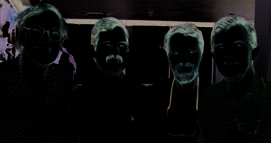
Workshop organisers, Lesley Staegemann, director of the BCLME
The Workshop was closed by the
with the extreme range of scales
Programme's Activity Centre for Environmental Variability and
"Grandfather" of both BENEFIT
Vere Shannon, University of Cape Town (UCT).
involved.
and the BCLME Programmes,
Professor Gotthilf Hempel - an
Forecasting shelf processes
incisive, witty and charming con-
of relevance to living marine
clusion to what was by consensus
resources (LMR)
a very successful meeting.
The focus was on environmental
changes and events that can affect
Outputs of the Workshop
the abundance and/or distribution
of LMR on the shelf, or result in
The information, knowledge,
localised fish mortalities.
wisdom and advice emanating
from the Workshop is being
Maritime operations in the
captured in a definitive peer-
Benguela coastal ocean
reviewed book entitled "The
The offshore industries demand
Benguela: Predicting a Large
better forecasting capabilities.
Marine Ecosystem". This book is
Geof Bundrit, UCT; Ed Urban, Scientific Committee on Oceanic Research,
How their expectations, as wel
being edited by Gotthilf Hempel,
USA; Pierre Freon, IRD, France; and John Field, UCT, South Africa.
as those of the responsible
Paola Malanotte-Rizzoli, John
management agencies, can best
Woods, Coleen Moloney and
be satisfied was the focus of this
Vere Shannon and will be pub-
objectives, but also a blueprint for
session.
lished international y in 2005 by
application in other LMEs around
Elsevier. The book wil not only
the world.
Towards a future integrated
be a significant contribution to
forecasting system
the BCLME Programme and
by Vere Shannon
This theme brought al the other
its sustainable management
sessions in the Workshop together
to design an early warning system
Fact File:
for the BCLME.
Why Forecast?
Conclusions
Permanent, continuously operating real-time regional ocean
Professor John Woods of Imperial
prediction systems are increasingly required to support a variety
Col ege, London, presented a
of critical activities in the ocean and coastal environments,
stimulating paper at the end of
including:
the Workshop in which he sum-
fisheries management
marised the proceedings from his
navigation and marine operations
perspective. He made the point
response to oil and hazardous material spil s
that the BCLME is important
search and rescue
economical y, is highly complex
prediction of harmful algal blooms and other ecosystem or
and under-sampled, but it may be the
water quality phenomena
historic watershed which enables
us to progress from the diagnostic
Implementation of such systems requires advanced technologies
to the prognostic. Monitoring
in sensors and observing systems, and numerical models and
is essential to provide the data
data assimilation, as wel as the infrastructures necessary to use
them. Hydrodynamic and ecological models for regional systems
are beginning to show considerable skil s.
9

A passion for development
In the 1950s, German biologist, Gotthilf Hempel, changed the focus of his
research from grasshoppers to fish. The scientist's early decision proved to
be a fortuitous one for the Benguela region, which today honours Professor
Hempel as the "grandfather" of the BENEFIT and BCLME programmes.
Professor Hempel first visited
At the time, South Africa was
countries to carry out marine research.
Namibia soon after the south-
isolated from the international
west African nation celebrated its
community because of its policy
Professor Hempel recal s that
independence in 1990. He had
of apartheid, and Angola was em-
BENEFIT was established fairly
been working as a biologist for the
broiled in a long and bloody civil war.
soon after the initial meeting in
Inter-governmental Oceanographic
However, the recommendations
Swakopmund. Two research ships,
Commission (IOC) in the 1960s
sowed the seed for future discussions
the Russian ship, Petr Kottsov
and his role was to help developing
around regional co-operation in
from Germany, and the Norwegian
countries to establish expertise in
marine science.
ship, Dr Fridtjof Nansen, provided a
marine science.
platform for the first ever BENEFIT
By 1995, many of the political
cruise. Young scientists from
Meanwhile he had become one of
problems that had prevented An-
Angola, Namibia and South Africa
the leading biological oceanographers
golan, Namibian and South African
participated in the cruise, which
in Germany.
scientists from working together
had a strong focus on environ-
had been overcome and scien-
mental variability off the coast of
On his visit to Namibia, Professor
tific col aboration began to seem
Namibia and Angola. The cruise
Hempel formed part of a four-man
more feasible. A first meeting was
was fol owed by an extended
commission which was sent by
arranged in Swakopmund, by the
workshop for the analysis of data
UNESCO - the Educational, Scientific
Namibian Ministry of Fisheries and
and samples. Afterwards, young
and Cultural Organisation of the
Marine Resources, to talk about
scientists from Angola and Na-
United Nations - to offer advice on
scientific co-operation:
mibia received advanced training
the building of institutional and
in Germany and Norway.
"It was real y surprising to see how
educational infrastructure and hu-
much good wil there was, both
A second research cruise, this time
man capacity in marine science and
within governments and the (scien-
on board South Africa's flagship
fisheries management in the newly
tific) institutes," he remembers.
research vessel, Africana and the
independent country. One of the
German ship, Poseidon, fol owed.
UNESCO commission's strongest
At the Swakopmund meeting, the
recommendations was that marine
three countries laid the groundwork
Although Professor Hempel didn't
science in Namibia should be streng-
for a co-operative programme.
participate in the research cruises,
thened through close co-operation
Professor Hempel worked hard to
he made sure that he was present
with South Africa and Angola.
ensure that it contained a prominent
at the official launch of BENEFIT in
training and capacity building com-
April 1997:
"This was an ecological y correct
ponent because it was obvious to
approach, but it was not political y
him that there were real discre-pan-
"I was very keen on the overal
correct," recal s Professor Hempel.
cies in the capacity of the three
concept, especial y the focus on
training," he says.
During this period, a number of
German specialists worked on
research cruises on board the re-
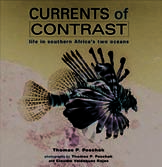
Currents of Contrast
search ship Meteor in the Benguela
region. In this way, scientists from
A new book on the marine ecosystems of the Benguela
the region were exposed to some
and Agulhas Currents has been published in South
of the finest German expertise,
Africa. Currents of Contrast - Life in Southern
while the German scientists got to
Africa's Two Oceans is written by marine biologist,
work in one of the most dynamic
Thomas Peschak. The BCLME Programme is one of
ecosystems in the world.
the book's seven corporate sponsors.
The Swakopmund meeting proved
The stunning photographs in Currents of Contrast
to be propitious for another reason
were taken by the author and Claudio Velasquez
it encouraged Ken Sherman,
Rojas, the film director who produced the documen-
whose pioneering work on large
tary, Current of`Plenty for the BCLME Programme
marine ecosystems helped to de-
in 2004.
fine the LME concept, to develop a
keen interest in establishing a LME
project in the Benguela.
10

Bengu
curr e
ent l
n a
ews
The Benguela was, of course,
to become the scientific arm of the
ing to see what has been achieved
particularly wel suited to the
proposed Benguela Current Com-
in the Benguela.
development of a LME project: the
mission (BCC). Professor Hempel
ecosystem is shared by only three
believes that the establishment of a
Through his work with UNESCO
countries, the marine environment
strong environmental and fisher-
and, more recently, through the
has been relatively wel studied
ies commission with a dedicated
establishment of the Centre for
and the Benguela is characterised
scientific arm bodes wel for the
Marine Tropical Ecology in Bremen,
by very interesting transboundary
future of the Benguela.
Professor Hempel has developed
fisheries which are affected by
an abiding passion for building
overfishing, Benguela Niño and
"When I talk to my students or
strong partnerships with develop-
regime shifts. So the Benguela was
to administrators and politicians, I
ing nations. He visits the Benguela
wel positioned to become a show-
often use the Benguela as a shin-
region almost every year, mostly
case for the LME philosophy.
ing example of how science can
accompanied by his wife Irma who
be an instrument for overcoming
shares his interest in southern
Although there was some trepida-
problems between countries," he
Africa's people and in the beauti-
tion about running a LME project
enthuses.
ful landscapes and wildlife of the
concurrently with the BENEFIT
region.
Programme, it was hoped that the
"BENEFIT has been a very impor-
two programmes would comple-
tant political instrument because
Good scientific co-operation is
ment each other.
it has demonstrated how a region
important, he maintains, yet he
can adopt common scientific, fish-
cautions that developing nations
"We put some effort into it and
eries and environmental policies."
should always participate ful y and
it was amazing to see how Mick
equal y in scientific partnerships:
(O'Toole) picked it up and got it
After a lifetime of scientific endeav-
moving," tel s Professor Hempel.
our, and having travel ed to the four
"You don't want to fal back into
corners of the world in an effort to
scientific colonialism," he remarks,
The BCLME Programme is now in
help developing nations build ca-
"there must be real benefits for the
its third year of implementation and
pacity in marine science, Professor
region."
the BENEFIT Programme is poised
Hempel says that it is very gratify-
BCLME Programme showcased at Brazil conference
The Global Environment Facility (GEF) will cal advisor to the BCLME Programme, will
host its third biennial International Waters describe the process of devising a transboundary
Conference from 20 to 25 June in Salvador, diagnostic analysis (TDA) and strategic action
Bahia, Brazil.
programme (SAP) for the BCLME Programme.
The conference will review the GEF's global He will also detail the implementation of key
International Waters portfolio, share successes projects in the BCLME region. Later on that
and experiences and encourage collaboration day, in a break away session on Large Marine
across the International Waters portfolio.
Ecosystems, Dr Johann Augustyn, chief director
of Research, Antarctica and Islands at Marine
The conference will feature presentations by and Coastal Management in South Africa will
senior representatives from the GEF Secretariat, share knowledge, experience and advice with
implementing agencies (UNDP, UNEP, World other LME and coastal programmes.
Bank), executing agencies, funding partners and
GEF International Waters project managers. Dr O'Toole will be accompanied by Ms Lesley
Also in attendance will be ministerial level Staegemann, director of the Activity Centre
participants from many of the over 130 coun- for Environmental Variability, Ms Francisca
tries that participate in GEF's International Delgado, director of the Angolan Institute of
Waters portfolio.
Marine Research (IIM), Mr Nkosi Luyeye, dep-
uty director of IIM and Dr Johann Augustyn,
In a plenary session on the second day of chief director of Research, Antarctica and
Günther Komnick
the conference, Dr Mick O'Toole, chief techni- Islands at Marine and Coastal Management.
The Third Bienniel International
Waters Conference is hosted by Brazil.
Pictured here is Rio de Janeiro.
11


Workshop puts
EAF project on the map
As signatories to the World Summit on Sustainable Development, Angola, Namibia and
South Africa have committed themselves to introducing an ecosystem approach to fisheries
management (EAF) by 2010. The launch of a BCLME-funded project to test the feasibility
of introducing EAF to the Benguela region represents a first step towards meeting this target.
project isn't driven only by science
For instance, one of South Africa's
but that stakeholders are involved,"
policies is to conduct the demersal
says Dr Cochrane.
trawl fishery at levels that main-
tain the target populations and
The purpose of the regional work-
associated ecological community
shop was to ensure that there is
relative to its potential productivity.
good communication between the
Workshop participants identified
participants in the three countries,
a number of important ecological
to share knowledge about trans-
objectives related to this policy in
boundary fish stocks and exchange
addition to objectives for the target
ideas on EAF.
Gabriella Bianchi of the FAO and Angolan participants, Adriana
species alone.
Paes Costa, Filomena Vas Velho and Armenio Alexander Lopes
According to Dr Cochrane, work-
For example, the importance of
consider the implications of applying an ecosystem approach to
shop participants ascertained that
maintaining adequate abundance
Angola's demersal fishery.
Namibia and Angola are slightly
of forage species for hake and the
behind schedule, but in South
need to consider the impact of
In September 2004, a first regional
Africa the project is moving ahead
fisheries on the benthic biota were
workshop was held in Windhoek to
very nicely.
identified as important issues.
review the progress that the three
"Namibia and Angola wil need
countries have made with the EAF
The process enabled groups of
to catch up in 2005," says Dr
project. The workshop was held
specialists from each country to
Cochrane.
after the countries had each had an
identify the ecosystem issues that
opportunity to convene scientific
One of the most constructive
are most important in each fishery.
and management committees to
outcomes of the workshop was
"The process was very construc-
drive the EAF project forward.
the completion of a simple risk
tive," reports Dr Cochrane. "In
assessment exercise for one of the
International co-ordinator of the
the eyes of most participants, the
major fisheries in each of the three
EAF project, Kevern Cochrane of the
EAF project was transformed into
countries, as a way of introducing
FAO's Marine Resources Service,
something practical and sensible,
the method to the participants. The
explains that separate scientific and
rather than just a vague idea."
exercise al owed the workshop
management committees are nec-
participants to analyse high level
One goal of the workshop was to
essary to ensure that stakeholders
policy goals and identify what impli-
teach participants how to conduct
participate in the project.
cations these goals have on an
the risk analysis exercise so that
"We wanted to make sure that the
ecosystem and operational level.
they could return to their countries
Minister opens EAF workshop
Dr Abraham Iyambo, Namibia's Minister of Fisheries
"In time, we should be able to better manage the
and Marine Resources, opened the first regional work-
impacts of, and achieve sustained yields from, a range
shop on Ecosystem Approaches for Fisheries Manage-
of interacting fisheries. Even from a single fisheries
ment in the BCLME.
perspective, EAF can assist in making better informed
He noted that BENEFIT and the BCLME Programme
decisions, for example in regard to fisheries impacts on
have supported the research and management of the
relations between predators and prey species," noted
living marine resources of the Benguela in an integrat-
Dr Iyambo.
ed and sustainable fashion.
The Minister is aware that EAF depends on the avail-
"Adoption of EAF is a logical next step in the work of
ability of expertise and data on individual fisheries
these organisations," said Dr Iyambo.
and ecosystems:
The Minister stipulated that the EAF project will not
"EAF is clearly a `data-hungry' approach to fisheries
be making management recommendations on EAF to
management! The availability of expertise and data
the three countries of the Benguela region, but would
varies in the three countries...I believe we have the
provide information and tools to national fisheries sci-
knowledge and expertise as well as the political will to
entists and managers which will enable them to apply
make real progress in applying EAF, ultimately to the
an ecosystem approach.
benefit of all three countries," he concluded.
12

Bengu
curr e
ent l
n a
ews
and repeat it with a wider spec-
the commercial fisheries of the
trum of stakeholders. By doing so,
Benguela region.
each of the countries wil be able
to identify the priority ecosystem
"We don't want to alarm the fish-
issues for each fishery.
ing industry and this project wil
definitely not be introducing any
"We want to get to the point
changes in fisheries management,
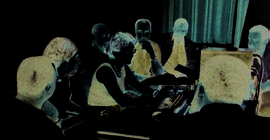
Workshop participants from the FAO and South Africa (above)
where we've identified key issues
simply providing information on the
and Namibia (below) in intense discussion.
in each fishery and are able to put
feasibility of implementing EAF and
forward some options for address-
the potential costs and benefits of
ing them," explains Dr Cochrane.
the approach," he says.
The question of by-catch is pertinent
In fact, the ecosystem approach
to most fisheries in the Benguela
that is described by the FAO is
region and it is likely to become a
neither inconsistent with, nor a
high priority issue for the EAF project.
replacement for, current fisheries
In many commercial fisheries, by-
management approaches. Instead,
catch is unrecorded and so it is very
it is likely to be adopted as an
difficult to evaluate the impact that
incremental extension of current
a fishery has on non-target species.
fisheries management approaches.
One of the goals of the EAF project
is to improve scientific information
Dr Cochrane says that the EAF
on subjects such as by-catch and
project wil use the best available
identify practical ways to address
information to highlight areas
He believes that 2005 wil be a
these problems.
where improvements in the
critical year for the project. The
management of fisheries in the
focus wil be on scientific analysis
Dr Cochrane emphasises the fact
Benguela are needed. The aim of
and gathering the best available
that the EAF project is a feasibility
the project is to identify a range of
information on each fishery.
study. The project's goal is to plan
alternative management options
for the implementation of EAF,
and detail the socio-economic and
"We've got to do the bulk of the
rather than to implement EAF in
ecological implications of each.
work this year," he says.
Workshop regional dá o primeiro
passo para o projecto EAF
Como signatários da Cimeira
após cada um dos países ter tido
objectivos garantir que existe boa
Mundial sobre o Desenvolvimento
a oportunidade de convocar comités
comunicação entre os participantes
Sustentável, Angola, Namíbia e
científicos e de gestão para dar
dos três países, partilhar conheci-
África do Sul comprometeram-se
um impulso ao projecto EAF.
mentos acerca dos stocks pesqueiros
a introduzir uma abordagem de
transfronteiriços e trocar ideias
ecossistema para a gestão de
O coordenador internacional do
sobre EAF.
pescas (Ecosystem Approach to
projecto EAF, Kevern Cochrane do
Segundo o Dr Cochrane, os parti-
Fisheries Management, EAF) até
Serviço de Recursos Marinhos da
cipantes do workshop concluíram
2010. O lançamento de um pro-
FAO, explica que os comités
que tanto a Namíbia como Angola
jecto financiado pelo Programa
científicos e de gestão são
se encontram ligeiramente atras-
BCLME para testar a viabilidade
necessários em separado para
ados, enquanto na África do Sul
da adopção da EAF na região da
assegurar a participação dos gru-
o projecto avança a bom ritmo.
Corrente de Benguela representa
pos de interesse no projecto.
o primeiro passo nessa direcção.
"A Namíbia e Angola precisam
"Nós queríamos ter a certeza de
apanhar o comboio até 2005",
Em Setembro de 2004 realizou-
que o projecto não é apenas guiado
afirmou o Dr Cochrane.
se em Windhoek o primeiro work-
pela ciência mas conta com a
shop regional para avaliar o pro-
participação dos grupos de inter-
Um dos resultados mais constru-
gresso dos três países no projecto
esse", afirmou o Dr Cochrane.
tivos do workshop foi a realização
EAF. O workshop realizou-se
O workshop regional teve como
continuação.../14
13

New head for Angolan institute
Francisca Delgado has been appointed director of the Angolan Institute
of Marine Research, Instituto de Investigação Marinha (IIM).
Ms Delgado was appointed fol ow-
Ms Delgado believes that some of
an ecosystem approach to fisheries,
ing the promotion of Dr Victoria
the important short-term chal enges
greater investments in academic
de Barros Neto - the former head
facing IIM are to continue assess-
education and the implementation
of IIM - to the position of Deputy
ing the major commercial marine
of an Interim Benguela Current
Minister of Fisheries in Angola.
and freshwater fisheries in Angola,
Commission.
to strengthen the national sampling
Ms Delgado holds a post graduate
programme, improve the quality of
Ms Delgado believes that the BCLME
degree in marine biology from the
fishery products that are exported
Programme can help Angola to
University of Agostinho Neto in
from Angola and improve regional
meet these chal enges by helping
Angola and has worked as a sci-
and international co-operation.
IIM to build capacity, creating oppor-
entist at IIM since 1986. In 1990
tunities for involving Angolan scien-
she was appointed as a senior
In the medium-term and long-term
tists in the international scientific
Francisca Delgado
scientist and between 1991 and
she would like to see an improve-
community and by assisting with
2004 she headed the Aquaculture
ment in environmental monitoring
the management of shared fish
Department at IIM.
in Angola, the implementation of
stocks.
News
maioria dos participantes, o projecto
jecto é planear a implementação da
13/...continuação
EAF transformou-se em algo
EAF, e não implementar a EAF nas
South Africa's Department
de um simples exercício de
prático e racional, e não apenas
pescarias comerciais na região da
of Environmental Affairs and
avaliação de risco para uma das
uma ideia vaga."
Corrente de Benguela.
Tourism has released the sec-
maiores pescarias em cada um
Um dos objectivos do workshop
"Não queremos alarmar a indústria
ond in a series of booklets on
dos três países, o que constituíu
foi ensinar os participantes a
pesqueira; este projecto não vai introduzir
Transformation in the South
um modo de apresentar o método
conduzir exercícios de análise
alterações na gestão pesqueira, mas
African Fishing Industry.
aos participantes. Através deste
de risco de modo a que possam
simplesmente fornecer informação
exercício, os participantes tiveram
The booklet focuses on the ef-
repetir os exercícios nos seus
sobre a viabilidade de implementar a
a oportunidade de analisar os
fort-controled fisheries, namely
países com uma gama mais
EAF e sobre os potenciais custos e
objectivos de políticas a elevado
the squid and line fisheries.
alargada de grupos de interesse.
benefícios da abordagem", afirmou o
nível e identificar as suas implicações
The first booklet in the series
Deste modo, cada um dos países
Dr Cochrane.
ao nível do ecossistema e ao nível
focused on the quota-controled
será capaz de identificar os temas
operacional. Por exemplo, uma das
De facto, a abordagem de ecossis-
fisheries, including the hake,
relacionados com o ecossistema que
políticas sul africanas determina
tema que é descrita pela FAO não
pelagic, rock lobster and aba-
são prioritários para cada pescaria.
que a pesca de arrasto demersal
é inconsistente com as abordagens
lone fisheries.
deve ser conduzida a um nível
"Queremos atingir uma situação
actuais da gestão pesqueira, nem
Both booklets were published
que mantenha as populações alvo e
em que tenham sido identificados
as substitui. Pelo contrário, será pro-
under the banner of the 10
comunidade ecológica associada
os temas chave em cada pescaria
vavelmente adoptada como uma
Years of Freedom campaign
relativamente à sua produtividade
e em que sejamos capazes de
extensão incremental das abordagens
and are available free of
potencial. Os participantes do
apresentar algumas soluções",
actuais para a gestão de pescas.
charge from the Department.
workshop identificaram uma série
explica o Dr Cochrane.
de objectivos ecológicos impor-
O Dr Cochrane afirma que o projecto
tantes relacionados com esta
A questão das capturas acidentais
EAF utilizará a melhor informação
política, para além dos objectivos
é relevante para a maioria das
disponível para destacar áreas onde
definidos para as espécies alvo
pescarias na região da Corrente
se revela necessário melhorar a
em si. Por exemplo, a importância
de Benguela e poderá tornar-se
gestão de pescas na região da
de manter uma abundância ade-
uma prioridade para o projecto
Corrente de Benguela. O projecto
quada de espécies de que a pes-
EAF. Em muitas pescarias comer-
pretende identificar uma gama de
cada se alimenta e a necessidade
ciais a captura acidental não é regis-
opções alternativas de gestão e
de considerar o impacte da pesca
tada, tornando-se difícil avaliar o
descrever as implicações sócio-
na biota bêntica foram considera-
impacte da pescaria nas espécies
económicas e ecológicas de cada
dos temas importantes.
que não são alvo. Um dos objec-
uma dessas opções.
tivos do projecto EAF é melhorar
Este processo permitiu aos grupos
a informação científica sobre temas
O Dr Cochrane acredita que 2005
de especialistas de cada país
como capturas acidentais e iden-
será um ano crítico para o projecto.
identificar os temas relacionados
tificar modos práticos de abordar
O foco será a análise científica e
com o ecossistema que são mais
estes problemas.
a recolha da melhor informação
importantes em cada pescaria.
disponível sobre cada pescaria.
O Dr Cochrane realça o facto de
"O processo foi muito construtivo", que o projecto EAF é um estudo
"Temos que fazer a maior parte do
Bengu
curr e
ent l
n arelatou o Dr Cochrane. "Para a
de viabilidade. O objectivo do pro-
trabalho este ano", afirmou.
ews
14




Bengu
curr e
ent l
n a
ews
Projects supported by
the BCLME Programme
The BCLME Programme has allocated more than $5.5 million (R33 million) in support
of 75 projects and activities. The projects are being implemented by a wide variety
of clients, including government institutes, universities, private consultancy compa-
nies and the regional scientific programme, BENEFIT. Each project has been designed
to address transboundary environmental problems and contribute to the integrated and
sustainable management of the Benguela Current Large Marine Ecosystem.
Biodiversity, Ecosystem Health & Pol ution Projects
BEHP/LBMP/03/01
BEHP/CEA/03/04
BEHP/BAC/03/04
Baseline assessment of sources
Assessment of the cumulative im-
Baseline surveying of species and
and management of land-based
pacts of scouring of sub-tidal areas
biodiversity in estuarine habitats
marine pollution in the BCLME
and kelp cutting by diamond divers
Project value: US$100 000
Project value: US$85 000
in near shore areas of the BCLME Awarded to: BENEFIT
Contracted to: CSIR
Project value: US$66 400
(contract to be finalised)
Completion date: Nov. 2005
Contracted to: Pisces Environ-
Completion date: December 2006
BEHP/LBMP/03/04
mental Consultants
BEHP/MC/03/02
The development of a common
Completion date: March 2007
Classification of coastline for
set of water and sediment qual-
BEHP/OSCP/03/01
aquaculture development
ity guidelines for the coastal
Regional Oil Spill Contingency
Project value: US$50 000
zone in the BCLME
Planning in the BCLME
Contracted to: BENEFIT
Project value: US$80 000
Project value: US$142 000
(to be incorporated into project
Contracted to: CSIR
Contracted to: CSIR
BEHP/BAC/03/01)
Completion date: Nov. 2005
Completion date: (to be finalised)
Completion date: September 2006
BEHP/CEA/03/01
BEHP/EEF/03/01 - 02
Data gathering and gap analysis
By-catch of threatened seabirds,
for modeling the cumulative effects
sharks and turtles in longline
of offshore petroleum exploration
fisheries of the BCLME: An inte-
and production activities on the
grated approach
marine environment of the BCLME Project value: US$113 299
Project value: US$95 000
Contracted to: WWF South Africa
Contracted to: CSIR
Completion date: April 2006
Completion date: September 2005
BEHP/BAC/03/01
BEHP/CEA/03/02
Marine biodiversity status assess-
Data gathering and gap analysis
ment and conservation planning
for assessment of the cumulative
for the BCLME
effects of marine diamond mining
Project value: US$134 905
activities on the BCLME region
Awarded to: BENEFIT
Project value: US$76 000
Completion date: December 2007
Contracted to: Pisces Environmental
Consultants
BEP/BAC/03/02
Completion date: September 2006
Mapping of the BCLME shoreline,
shal ow water and estuarine habitats
BEHP/CEA/03/03
Project value: US$140 000
Assessment of the cumulative ef-
Awarded to: BENEFIT
fects of sediment discharge from (contract to be finalised)
onshore and near shore diamond Completion date: September 2005
mining activities on the BCLME
Project value: US$140 000
BEHP/BAC/03/03
Contracted to: CSIR
Identification of communities,
Completion date: March 2006
biotopes and species along the
BCLME shoreline and in the
BEHP/LBE/04/01
shallow subtidal zone, and assess-
Luanda Bay Ecosystem Project
ment of offshore biodiversity
Project value: US$80 000
Project value: US$160 000
Contracted to: IIM
Awarded to: BENEFIT
(contract to be finalised)
(contract to be finalised)
Completion date: April 2006
Completion date: December 2006
15



Living Marine Resources Projects
LMR/AFSE/03/01/C
LMR/EAF/03/01
LMR/CF/03/16
Socio-economic baseline surveys of
Ecosystem approaches for fisheries
A review of the impacts of seismic
coastal communities in the BCLME (EAF) management in the BCLME
surveying and toxicity of oil pro-
Project value: US$93 246
Project value: US$257 270
ducts on the early life history
Contracted to: Environmental
Contracted to: MCM and FAO
stages of pelagic fish, the benthos
Evaluation Unit, UCT
Completion date: December 2006
and the pelagic ecosystem with
Completion date: February 2006
potential application to the sar-
dinella fishery in Angolan waters
LMR/CF/03/07
LMR/EAF/03/02
Project value: US$22 666
Determination of optimal har-
A regional ecosystem monitoring
Contracted to: IIM
vesting strategies for the hake
programme: top predators as bio-
Completion date: March 2005
trawl and longline fisheries in
logical indicators of ecosystem
Namibia and South Africa
change in the BCLME
LMR/CF/NANSEN/05/02
Project value: US$98 100
Project value: US$217 994
Transboundary survey of pelagic
Contracted to: Fisheries Econom-
Contracted to: MCM
fish particularly horse mackerel
ics Research Unit, UBC
Completion date: December 2006
and pilchard in southern Angola
Completion date: October 2005
and northern Namibia
LMR/MC/03/01
Project value: US$76 500
LMR/SE/03/02
Development of a responsible
Contracted to: IMR, Norway
An economic and legal study to
aquaculture policy for the BCLME
Completion date: August 2005
assess the policy prospects for
Project value: US$92 734
LMR/CF/NANSEN/05/03
formulating a balanced develop-
Contracted to: Enviro-Fish Africa, Investigation of the pelagic fish
ment of trade in fish and fish
Rhodes University
stock resources in the Orange River
products from the BCLME
Completion date: May 2005
region - transboundary survey
Project value: US$133 260
Project value: US$59 500
Contracted to: Enviro-Fish Africa, LMR/CF/03/16
Contracted to: IMR, Norway
Rhodes University
Development of a management
Completion date: October 2005
Completion date: December 2006
plan for bronze whaler shark
resources in the BCLME region
LMR/CF/03/08
LMR/SE/03/03
Project value: US$77 869
Assessment of the ecological im-
An analysis of right-based micro-
Contracted to: BENEFIT
portance of mesopelagic fish and
economic systems and governance
Completion date: July 2006
pelagic gobies in the functioning
of the important commercial
of the BCLME desk-top reviews
fisheries in the BCLME countries LMR/SKI/04/01
Project value: US$55 000
Project value: US$229 914
Construction and delivery of two Contracted to: BENEFIT
Contracted to: Enviro-Fish Africa, catamaran type ski-boats (5.5 m)
(contract to be finalised)
Rhodes University
for inshore environmental and
Completion date: September 2005
Completion date: December 2006
fisheries sampling in coastal
LMR/SOE/04/01
waters of Namibia and Angola
LMR/SE/03/04
Development and drafting of a
Project value: US$85 702
Harmonisation of socio-economic
state of the BCLME ecosystem
Contracted to: Z-Craft, South Africa
policies and legal provisions for
reporting system including both
Completion date: September 2005
effective implementation of the
oceanographic, biological and
BCLME Programme
pollution components
LMR/CF/NANSEN/05/01
Project value: US$135 000
Project value: US$20 000
Transboundary survey between
Contracted to: Enviro-Fish Africa,
Contracted to:
Namibia and South Africa with
Rhodes University
Anchor Environmental Consultants
focus on shared stocks of hake
Completion date: March 2007
(contract to be finalised)
Project value: US$174 000
Completion date: August 2005
LMR/SE/03/05
Contracted to: IMR, Norway
An analysis of revenue raising
Completion date: May 2005
LMR/CF/03/10
instruments of the important com-
Development and harmonisation
mercial fisheries in the BCLME
LMR/CF/03/11B
of pilchard assessment and manage-
countries
Retrospective analysis of sardinella ment between Angola and Namibia
Project value: US$91 228
fisheries in Angola
Project value: US$50 000
Contracted to: Enviro-Fish Africa, Project value: US$23 780
Contracted to: OLRAC
Rhodes University
Contracted to: IIM
(contract to be finalised)
Completion date: December 2005
Completion date: February 2005
Completion date: September 2005
16




Be
B n
e g
n u
gcurre
ent l
n a
curr e
ent new
e s
w
Environmental Variability Projects
EV/LS/02/03
EV/LOW/02/04
EV/ANGOLA/03/03
Analysis of Benguela dynamical
Assessment of key transboundary
Assessment of the present state
variability and assessment of
processes and measurement scales of oceanographic environmental
predictability of warm and cold
in respect of low oxygen water
monitoring in the Angolan sector
events in the BCLME
variability: implementation of
of the BCLME
Project value: US$150 000
the LOW generation areas simu-
Project value: US$10 000
Contracted to: UCT
lation that provide inputs to trans-
Contracted to: IIM
Completion date: February 2006
boundary models in LOW
Completion date:
project EV/LOW/02/03
Extended to July 2005
EV/HAB/02/05
Project value: US$122 500
Development of an operational
Contracted to: UCT and CSIR
EV/ANGOLA/03/05
capacity for real-time observation
Completion date: November 2005
Build capacity for Angola
and forecasting of Harmful Algal
EV/PROVARE/02/05
Project value: US$7 000
Blooms (HAB) in the BCLME:
Retrospective analysis of plankton
Contracted to: IIM
detection of HABs through the de-
community structure in the BCLME
Completion date:
ployment of bio-optical moorings.
to provide an index of long-term
Extended to July 2005
Phase 1: Demonstration project
changes in the ecosystem
in Namibia and South Africa
Project value: US$111 985
EV/ANGOLA/03/06
Project value: US$125 916
Contracted to: BENEFIT
Upgrade communication systems
Contracted to: UCT
Completion date: December 2006
for Angolan BCLME core partner
Completion date: July 2005
EV/PROVARE/04/01
institutions
Project value: US$8 000
EV/HAB/02/06
Characterising the spawning habitat
Contracted to: IIM
Development of an operational
of harvested pelagic species using
Completion date:
capacity for real-time observation
CUFES and net sampling
Extended to July 2005
and forecasting of Harmful Algal
Project value: US$93 003
Blooms (HABs) in the BCLME:
Contracted to: BENEFIT
utility of models in forecasting
Completion date: February 2007
HABs
EV/LS/02/06
Project value: US$30 700
Diagnosis of large scale South
Contracted to: UCT and CSIR
Atlantic modes that impact on the
Completion date: September 2004 transboundary BCLME: investi-
·Final report under review
gating the potential for improved
predictability and sustainable
EV/HAB/05/01
management
Investigation into the diversity
Project value: US$87 959
and distribution of cysts of harm-
Contracted to: UCT
ful algal blooms within Luanda
Completion date: January 2007
Bay, Lüderitz Bay and Walvis Bay
EV/ANGOLA/03/01
Project Value: US$29 994
Compilation of inventory and ac-
Contracted to: Centre for Marine
quisition of oceanographic environ-
Studies, UCT
mental data in the Angola sector of
Completion date: November 2005
the BCLME. Phase one (inventory)
Project value: US$20 000
EV/LOW/02/03
Contracted to: IIM
Assessment of key transbound-
Completion date:
ary processes and measurement
Extended to July 2005
scales in respect of low oxygen
EV/ANGOLA/03/02
water (LOW) variability: pre-
Comprehensive review and re-
liminary implementation and
interpretation of oceanographic
examination of the role of large
information on the Angola sector
scale and transboundary hydro-
of the BCLME
dynamic control of LOW variability
Project value: US$20 000
Project value: US$62 750
Contracted to: IIM
Contracted to: UCT and CSIR
Completion date:
Completion date: Oct. 2005
Extended to July 2005
1?7



Completed Projects
PCU/TCB/03/01
LMR/AFSE/03/01/A
LMR/COM/03/01
Training and capacity building
Review and audit of the institu-
An assessment of means of in-
needs assessment for the BCLME
tional arrangements that impact
volving coastal communities in
Project value: US$16 000
on the artisanal fisheries sector
the BCLME Programme
Contracted to: Anchor Environ-
in the BCLME
Project value: US$30 000
mental Consultants
Project Value: US$35 280
Contracted to: Eco-Africa
Completed: February 2004
Contracted to: Environmental
Completed: March 2004
·Final report available at
Evaluation Unit, UCT
·Final report available at
www.bclme.org
Completion date: January 2005
www.bclme.org
·Final report under review
PCU/AVM/03/01
LMR/COM/03/02
Publicising the BCLME Programme LMR/AFSE/03/01/B
Introducing the BCLME Pro-
through audio visual media
Overview and analysis of social,
gramme to the wider audience
Project value: US$20 000
economic and fisheries informa-
within the coastal communities
Contracted to: Francois Odendaal tion to promote artisanal fisher-
Project value: US$16 000
Film Productions
ies management in the BCLME
Contracted to: Eco-Africa
Completed: May 2004
Project Value: US$65 594
Completed: July 2004
· Film released in September 2004 Contracted to: Environmental
LMR/COM/04/01
Evaluation Unit, UCT
PCU/BCC/04/01
Development of a demonstration
Completion date: February 2005
Institutional review and analysis
website for the Artisanal Fisher-
·Final report under review
for Benguela Current Commission
ies Institute, Angola
(BCC)
LMR/CF/Nansen/04/01
Project Value: US$5 000
Project value: US$63 425
Survey of transboundary demer-
Contracted to: EcoAfrica
Contracted to: EnAct International
sal fish stocks in Namibia with
Completion date: December 2005
Completion date: November 2004
special reference to hake
·IPA website now in operation
· Final report available at
Project value: US$110 500
LMR/CF/03/01
www.bclme.org
Contracted to: IMR, Norway
Feasibility study into the
Completed: July 2004
establishment of a permanent
PCU/BCC/04/02
·Final report available at
regional fish ageing centre in one
Economic study and cost benefit
www.bclme.org
of the BCLME countries
analysis of co-operative research
LMR/CF/NANSEN/04/02
Project value: US$11 520
and management for the BCLME Assessment of variability of
Contracted to: BENEFIT
Project value: US$30 100
transboundary pelagic fish
Completed: November 2003
Contracted to: Fisheries Econom-
stocks particularly sardinella
·Final report available at
ics Research Unit, UBC
from Gabon to central Angola
www.bclme.org
Completion date: November 2004
Project Value: US$115 000
LMR/CF/03/02
BEHP/IA/03/03
Contracted to: IMR, Norway
An assessment of the state of
Harmonisation of national environ-
Completion date: October 2004
commercial fisheries catch data
mental policies and legislation for ·Final report under review
in the BCLME
marine mining, dredging and off-
LMR/CF/NANSEN/04/04
Project value: US$11 240
shore petroleum exploration and
Transboundary study with
Contracted to: BENEFIT
production activities in the BCLME
emphasis on deep water hake
Completed: May 2004
Project value: US$39 697
in the Luderitz / Orange River
·Final report available at
Contracted to: SAIEA
Cone area
www.bclme.org
Completed: October 2004
Project Value: US$102 000
·Final report available at
Contracted to: IMR, Norway
LMR/CF/03/04
www.bclme.org
Completion date: November 2004
Feasibility study into the application
·Final report under review
of genetic techniques for deter-
BEHP/BAC/WORKSHOP/04/01
mining fish stock identity of trans-
Ecosystem mapping and biodi-
LMR/COM/02/01
boundary populations in the
versity consultative workshop
Henties Bay Community Project
BCLME region
26 to 27 April 2004
Project value: US$4 051
Project value: US$6 906
Project value: US$47 095
Contracted to: Henties Bay
Contracted to: BENEFIT
Contracted to: BENEFIT
Community
Completed: November 2003
Project terminated
Be
B n
e g
n u
g
Completed: May 2004
· Final report available at
· Final report available at
www.bclme.org
www.bclme.org
curr e
ent l
n a
curr e
ent new
e s
w
?
18



Bengu
curr e
ent l
n a
ews
EV/LS/02/04
EV/HUMBOLDT/04/01
EV/LOW/02/01
Participation in the Climate
Icthyoplankton distribution,
Critical review of the biophysical
Variability Programme (CLIVAR/ monitoring and training, north-
processes and variability that
OOPC) Workshop on South Atlantic ern Namibia/southern Angola;
characterise the low oxygen water
Climate Observing System in
oceanographic, hydrological and (LOW) variability and an improved
Angra dos Reis, Brazil
benthic monitoring in Angolan
monthly State of the Environment
Project value: US$3 160
waters (AHAB leg 9)
(SOE) reporting on low oxygen
The BCLME Programme provided Project value: US$130 000
water in the BCLME.
co-sponsorship for Mr Quilanda
Completed: July 2004
Project value: US$46 250
Fidel of Angola and Ms Aina Iita
· Cruise report under review
Contracted to: UCT and CSIR
of Namibia to attend the CLIVAR
Completion date: July 2004
workshop in Brazil between 6 and EV/HAB/02/01
· Final report under review
8 February 2003.
Harmonisation of regulations
EV/FORECAST/04/01
EV/LS/02/02
for microalgal toxins for applica-
International workshop on Fore-
Feasibility study of the south-east
tion in countries bordering the
casting and Data Assimilation in
extension of PIRATA (Pilot Moored
BCLME
the Benguela and comparable
Array in the Tropical Atlantic)
Project value: US$69 323
systems.
Project value: US$29 900
Contracted to: MFMR
Project value: US$80 000
Contracted to: UCT
Completion date: April 2005
Administered by: PCU
Completed: November 2003
· Final report under review
Completion date: November 2004
·Final report available at
www.bclme.org
EV/HAB/02/02a
Development of an operational
EV/SADCO/03/01
capacity for monitoring of Harmful
SADCO holdings of Namibian
Algal Blooms (HABs) in countries
data: Assessment of historical
bordering the northern part of
oceanographic data available
the BCLME.
from SADCO
Project value: US$36 260
Project value: US$2 400
Contracted to: MFMR, Namibia
Contracted to: Ms Fiona Duncan, Completion date: April 2005
through UNDP-SA
· Final report under review
Completed: October 2003
· Final report available at
EV/HAB/04/Shellsan
www.bclme.org
Development of a shellfish sani-
EV/PROVARE/02/01
tation programme model for
Feasibility assessment for the
application in consort with the
Abbreviations
use of a towed undulating ocea-
microalgal toxins component
nographic recorder (TUOR) in
Project value: US$27 925
CSIR The Council for Scientific
the BCLME
Contracted to: MFMR
and Industrial Research
Project value: US$5 850
Completion date: April 2005
(South Africa)
Contracted to: Philip Reid
· Final report under review
IIM
Instituto de Investigação Marinha
Completed: November 2003
(Angola)
· Final report available at
EV/HAB/02/03
IMR Insititute of Marine Research
www.bclme.org
Investigation into the diversity
(Norway)
and distribution of cysts of
UCT University of Cape Town
EV/PROVARE/02/02(a)1
Harmful Algal Blooms (HABs)
MCM Marine and Coastal
The Luderitz Upwelling Cell/
within the BCLME region
Management (South Africa)
Orange River Cone (LUCORC)
Project value: US$25 420
MFMR Ministry of Fisheries and
Workshop
Contracted to: UCT
Marine Resources (Namibia)
Project Value: US$31 000
Completion date: January 2005
SAIEA Southern African Institute
Contracted to: BENEFIT
· Final report available at
for Environmental Assessment
Completion date: 30 Sept. 2004
www.bclme.org
UBC University of British Columbia
(Canada)
WWF World Wildlife Fund
19

Dr Fridtjof Nansen to
sample from Cape Town to Senegal
For the first time, the Norwegian research ship, Dr Fridtjof Nansen, is to
conduct a sweep of scientific surveys down the west coast of Africa.
The Dr Fridtjof Nansen wil
the ship docked briefly in Cape
LME. Furthermore, the Canary
spend an estimated 301 days
Town ahead of a 12-day survey
Current LME, which involves Cape
in 2005 surveying the fisheries
of transboundary hake stocks
Verde, Gambia, Guinea, Guinea-
resources of countries as diverse
(including major prey species such
Bissau, Mauritania, Morocco and
as Mauritania, Cote de Ivoire and
as pelagic gobies). He explained
Senegal, recently entered the
South Africa. She wil provide
that the Nansen Programme is
preparation (PDF Block B) phase
a research platform for a wide
currently in a "transitional phase";
and the Dr Fridtjof Nansen wil
range of studies, including stock
the Norwegian government is
undertake a 52-day survey of
assessment studies of fisheries
assessing the existing role of the
pelagic resources in that LME in
resources in the Gulf of Guinea
ship and planning its future use.
November and December.
countries, investigations into the
Dr Tore Strømme
early life biology of deep-water
It is possible that the Food and
Dr Strømme explains that for
hake off Namibia and South Africa,
Agriculture Organisation (FAO)
al research cruises, the ship
and surveys of ecosystem health
of the United Nations wil take
operates with a core staff of two
and pol ution off Angola.
over responsibility for the Dr
to three Norwegian scientists,
Fridtjof Nansen and the ship wil
plus the electronic engineers
In the first quarter of the year, the
become an important platform
who operate the acoustic survey
Dr Fridtjof Nansen focused her
for conducting research into the
equipment. However, the ship has
research efforts on the resources
growing number of Large Marine
accommodation for 19 scientists
of the BCLME region, but she was
Ecosystem (LME) programmes
and it is customary for the
scheduled to steam north in May
that are being supported by the
countries whose marine resources
and begin a month-long survey
Global Environment Facility and the
are being surveyed to deploy their
of the fish resources of Cote de
FAO.
own scientists on the Nansen.
Ivoire and Togo. A second month-
A local and a Norwegian chief
long survey of the fish resources
The Dr Fridtjof Nansen has
scientist are appointed for each
of the Gulf of Guinea is scheduled
conducted annual surveys in the
voyage.
for June.
BCLME since the early 1990s and
the forthcoming cruise off Cote
"The Nansen Programme places a
Dr Tore Strømme, head of the
de Ivoire and Togo may herald
lot of emphasis on training," says
Nansen Programme, spoke to
an increasing involvement by the
Dr Strømme.
Benguela Current News when
research ship in the Gulf of Guinea
International delegates meet to discuss illegal fishing
Approximately 100 regional and
the Southern African Development
international delegates attended a
Community (SADC) region. It is
two-day symposium on the moni-
funded by the European Union and
toring, control and surveillance of
the participating SADC nations.
fishing activities which was held
in Cape Town early in February.
The symposium was attended
by senior MCS managers from
Over 30 speakers highlighted
Angola, Namibia, South Africa,
global strategies to combat ille-
Mozambique and Tanzania, with
gal, unregulated and unreported
the purpose of sharing information
(IUU) fishing, as well as regional
about the state of MCS activities
achievements in the fight against
in the global sphere, on the region-
IUU fishing.
al stage, as well as in individual
The symposium was hosted by
countries. It also provided an
the Monitoring, Control and
excellent forum for MCS manager
Surveillance (MCS) Programme, a
to meet and exchange ideas and
regional initiative which is work-
information.
Januario Marcos of Cefopescas, Angola; Professor Denzil Miller,
ing to implement cost-effective
executive secretary of CCAMLR; and Carlos Palin, programme
and sustainable MCS activities in
manager of the SADC-EU Monitoring, Control and Surveillance
Programme are pictured at the MCS symposium.
20
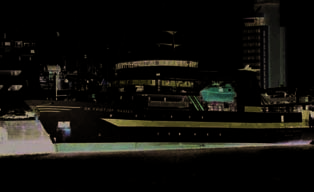

Bengu
curr e
ent l
n a
ews
The Dr Fridtjof Nansen is designed
ship carries standard
for fisheries and oceanographic
sampling equipment
research. Built in 1993 at the
such as a CTD (seabird
Norwegian shipyard, Flekkefjord
with rosette sampler),
Slipp & Maskinfabrikk, the
ADCP, current meters
ship carries the latest acoustic
and a fluorometer. There
instrumentation, gear for bottom
is a 12m2 wet laboratory,
trawling and pelagic trawling,
an 11m2 biological lab, a
plankton samplers and probes, as
22m2 environmental lab,
wel as samplers for the analysis of
and a 20m2 hydrographic
hydrographic conditions.
lab on board. Sorting and
measurement of samples
The 1 450GRT ship is powered by
is usual y done on deck.
between Namibia and South
The Norwegian research
a two stroke Wärtsilä Wickman
Africa, and Namibia and Angola
vessel, Dr Fridtjof Nansen
engine that delivers 2 700 HP.
Dr Strømme is hopeful that the Dr
respectively.
was photographed in
She steams at 13 knots, slowing
Fridtjof Nansen's new programme
Cape Town in March
down to 10 or 11 knots to conduct
wil be initiated in 2006 and that the
after completing a
· In 2004, the BCLME
acoustic surveys. Her trawl winches
ship wil be available to provide a
transboundary hake
Programme funded two
can pul 40 tons and carry 2 500m
research service to African LMEs
survey of Namibia and
transboundary hake surveys
of 28mm wire. The ship can
until at least 2010. Although the
South Africa.
and a survey of sardinella stocks
trawl to a depth of about 1 200m.
individual LMEs wil be required to
which are shared by Angola,
A SCANMAR system is used to
pay for the ship's service, costs wil
Congo and Gabon.
monitor trawl gear.
be kept at an affordable level.
To date the BCLME Programme
The Dr Fridtjof Nansen's scientific
The BCLME Programme has
has spent in excess of
instrumentation includes three
chartered the Dr Fridtjof Nansen
US$500 000 on transboundary
SIMRAD EK500 echosounders
to carry out three transboundary
research cruises that have been
(18,38 and 120 kHz), two Bergen
surveys in 2005. The surveys wil
conducted from the deck of the
Echo Integrators and a SIMRAD
be conducted on hake and horse
Dr Fridtjof Nansen.
SA950 multibeam sonar. The
mackerel, stocks that are shared
New chief for MCM
Dr Monde Mayekiso, a familiar face
One of Dr Mayekiso's first tasks at
Dr Mayekiso's career in marine
in the marine science communi-
MCM wil be to guide the al oca-
science has been marked by a
ty, has been appointed as Deputy
tion of long-term rights to the R3
commitment to ensure that young
Director General in the South
bil ion-a-year fishing industry. The
scientists from historical y disad-
African Department of Environmental
process is already underway and it
vantaged universities, such as Fort
Affairs and Tourism. Dr Mayekiso
is anticipated that fishing rights in
Hare, Transkei and the Western
wil head the Marine and Coastal
most of the commercial fisheries
Cape, are afforded opportunities
Management (MCM) branch.
wil be al ocated by January 2006.
to further their careers in marine
science. He was instrumental in es-
Dr Mayekiso, who holds a PhD in
Over-and-above the important
tablishing a scholarship programme
Marine and Estuarine Environmental
task of seeing that this process is
with the Norwegian government
Science from the University of Mary-
administered fairly and according
which resulted in a number of
land in the USA, returns to MCM
to tight deadlines, Dr Mayekiso
young South Africans completing
after a year-long stint as Programme
believes that some of the biggest
their masters degrees in fisheries
Manager of CSIR/Environmentek's
chal enges facing MCM are the es-
science at the University of Bergen.
Dr Monde Mayekiso
Oceans and Coasts division.
tablishment of an effective marine
The scholarship system is stil
research and fisheries compliance
Prior to his appointment at CSIR/En-
producing top calibre fisheries sci-
component within MCM.
vironmentek, Dr Mayekiso was Chief
entists and has recently been com-
Director of Research, Antarctica and
"Right across the board there is a
plemented by the establishment of
Islands within the MCM branch.
need to do extraordinary things to
a bursary fund by the South African
increase capacity," he says.
fishing industry.
21


Extensive Biodiversity Project
to be implemented by BENEFIT
BENEFIT has signed its first major biodiversity
contract with the BCLME Programme.
Over the coming two years,
The ultimate goal of the MOM
suitable candidate is appointed to
BENEFIT will be steering the
project is to produce a strategic
this position.
Management and Orchestration
planning tool that is capable of
Meta project which provides an
providing advice on the protection
Still on the subject of human
exciting opportunity to integrate
of sensitive areas and vulnerable
resources, BENEFIT was sad to
the results from a suite of biodi-
species and possible sites for
bid farewel earlier this year to
versity projects, and produce a
marine protected areas and aqua-
Filipe Vianda, a key member of the
conservation planning tool that may
culture installations. One of the
team over the past three years.
be applied by all three countries
most critical aspects of this project
Filipe has moved to Cape Town
of the Benguela region.
is that information is packaged in
where he has registered for a
such a way that it is accessible to
Masters degree in oceanography.
Dr Neville Sweijd
The title of the Management and
planners and conservation officials
We wish him wel with his studies.
Orchestration Meta project has been
in the appropriate ministries of
Rather than filling Filipe's position
aptly shortened to "MOM". Like
Angola, Namibia and South Africa.
of administrative officer, we have
any good mother, the project will
chosen instead to appoint Dr Antonio
be tasked with co-ordinating the
To this end, a process of interac-
Da Silva to the position of research
activities of its offspring in this
tion and consultation with the
officer. Antonio is BENEFIT's first
case, four biodiversity assessment
end-users, plus a training compo-
PhD graduate; he achieved his
and mapping projects that have
nent, have been factored into the
doctoral degree through the Institute
been commissioned by the BCLME
MOM project.
of Baltic Sea Research at the University
Programme's Biodiversity, Eco-
of Rostock last year. He wil play a
system Health and Pollution
T&CB Co-ordinator
key role in BENEFIT by taking respon-
Activity Centre in Luanda.
BENEFIT has very recently adver-
sibility for the management and co-
ordination of several research projects.
The four projects wil be concerned
tised the position of Training and
with assessing and mapping
Capacity Building Co-ordinator.
BENEFIT is still working closely
the biodiversity of the estuarine,
Once appointed, the training
with the BCLME Programme
coastal, nearshore and offshore
co-ordinator will be responsible
and we are encouraged by the
environments of the BCLME,
for managing BENEFIT's day-to-
fact that there has been good
and identifying suitable sites for
day training activities, assisting
progress with the discussions
aquaculture.
the Director with raising funds
around the proposed Benguela
for training and tracking and
Current Commission. BENEFIT's
Figure 1, below, provides a graphic
assessing the impact of training
role, either as BENEFIT or as a
representation of the ways in
activities on the region. BENEFIT
new entity, is integral to these
which the five biodiversity and
has high hopes that training and
discussions and I believe that
conservation planning projects
capacity building initiatives will go some exciting prospects lie ahead.
will be integrated.
from strength to strength once a
by Neville Sweijd
BEHP/BAC/03/05 + BEP/BAC/03/02 = BEHP/BAC/03/02
BEHP/BAC/03/04
MOM PROJECT
Physical Mapping and Assessment
Surveys of Estuaries
BEHP/BAC/03/01
· Sources data (offshore, near shore and coastal)
Collate and collect data
· Defines scales and specifications of GIS data
· Identifies data gaps
and information on
· Integrates information and produces
· Produces habitat maps
estuaries in the
conservation tool
· Receives and integrates data from biological mapping
BCLME region.
BEHP/BAC/03/06 + BEHP/BAC/03/03 = BEHP/BAC/03/03
Biological Mapping and Assessment
BEHP/MAR/04/01
· Sources data (offshore, near shore and coastal)
classification
· Identifies data gaps, designs field surveys
of coast for
· Produces habitat maps, guides and habitat classification
mariculture
· Produces and delivers GIS data for physical mapping
Figure 1: Schematic diagram showing the relationship between the individual projects in the suite of five biodiversity assessments.
22



Bengu
curr e
ent l
n a
ews
Public Relations
The work of Oceanographer, Dr
impact of El Niño on Southern
Mathieu Rouault of the University
Hemisphere rainfal has increased
of Cape Town, pictured left, was
during the last 25 years.
featured in a recent edition of the
university's Monday Paper.
As a result, the spatial extension and
intensity of droughts have increased
The article focused on the role that
a
p
e
r
.
considerably in southern Africa.
the oceans play in determining
weather patterns in southern Africa.
This article and 40 other articles
o
n
d
a
y
P
Dr Rouault and his co-workers at
about the BCLME Programme are
T
M
C
U
UCT have demonstrated that the
available at www.bclme.org/news
A new brochure on the BCLME
which wil enable Angola, Namibia
Programme was printed and dis-
and South Africa to engage con-
G L O B A L
E N V I R O N M E N T
F
tributed in March. The six-page,
structively in resolving the trans-
A C I L I T Y
ful colour brochure describes
boundary issues that threaten the
the three main industries in the
integrity of the BCLME.
Benguela region the fishing,
It wil be widely disseminated at
diamond mining and oil and gas
the forthcoming GEF International
industries - and shows how the
Waters Conference which takes
ANGOLA
BCLME Programme is forging
place in Brazil in June.
NAMIBIA
links with resource users in these
SOUTH AFRICA
industries.
Copies of the brochure are avail-
able from the PCU
An African Partnership in
The brochure also includes
(cathy@bclme.un.na) or from the
Marine and Coastal Management
information about the proposed
ANGOLA, NAMIBIA and SOUTH AFRICA are working together through the BENGUELA CURRENT LARGE
BCLME Programme website.
MARINE ECOSYSTEM PROGRAMME to manage their shared marine resources in an integrated and
sustainable way. Scientists, resource managers and stakeholders have joined hands to work towards a
sustainable future for the Benguela region.
Benguela Current Commission
Plenty. Only a few months later,
areas al received a copy of the film.
an additional 1 000 copies of the
Current of Plenty describes the
documentary were produced on
abundance of life that occurs in the
CD ROM, to cater for the demand
coastal regions of the Benguela and
from environmental educators and
shows how humans are utilising
the general public.
the marine and coastal resources
The production of the additional
of the Benguela. It was produced
CD ROMs was partly funded by
for the BCLME Programme by
Marine and Coastal Management,
Francois Odendaal Productions in
the South African fisheries author-
both English and Portuguese.
ity. MCM found the documentary
Limited copies of Current of Plenty
to be a particularly useful resource
In June 2004, the BCLME
are available. To order yours, please
for environmental educators and
Programme produced 1 000 copies
contact the PCU at
ensured that educators in coastal
of the documentary Current of
cathy@bclme.un.na
A special website that was
and also provided them with al
developed for the International
the information that they needed
Workshop on Forecasting and
to prepare for the workshop. Five
Data Assimilation in the Benguela
keynote papers were posted to
and Comparable Systems provided
the website and these outlined the
a user-friendly registration facility
major topics that were covered at
for the delegates who were invited
the workshop.
to attend the Workshop.
After the workshop, delegates
The website was accessible via a
were able to download print qual-
link from the BCLME Programme
ity photographs that were taken at
home page, but it was also pos-
the two social events a welcome
sible to access the site via www.
party at the V&A Waterfront and a
bclme.org/forecast.
dinner at the Kirstenbosch National
The website al owed participants
Botanical Garden.
to register for the workshop online
23
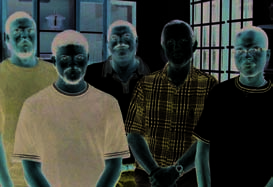
Plankton col ection could
hold key to ecosystem change
Tucked away in a dusty warehouse in Cape Town are thousands of tiny glass jars containing
plankton samples that date back to as early as the 1950s. The samples were collected
monthly for almost two decades off the coast of Namibia and they form part of one of
the most comprehensive plankton collections in the world.
Since then, the project has grown
the period 1972 to 1989, almost
in scope and received the support
the exact years in which South
of the BCLME Programme. A
Africa halted the routine plankton
second student, Tebel o Mainoane,
monitoring programme that was
has also completed an analysis of
initiated in 1951 when its pelagic
a few hundred SWAPELS samples
fishing industry developed. Simply
and like Sakhile wil soon complete
put, the SWAPELS collection
his Master's thesis on plankton
straddles the gap in South Africa's
variability in the northern Benguela.
otherwise very comprehensive
Recently, Ignatius Kauvee of
plankton time-series.
Namibia, who is registered for
a Master's degree, joined the
"We know that the northern and
project team after completing
southern Benguela are different
a B.Sc. Honours degree at the
in a number of respects, but
University of the Western Cape,
using the data from Sakhile and
which was based on the analysis
Tebello's analyses, as well as
of a small portion of SWAPELS
published data from the 1950s
samples. A fourth student,
and data from the past few years,
Back row: Master's student, Tebello Mainoane and curator, Philip Fabienne Cazassus of France, is
we have managed to do a very
de Vos. Front row: Master's student Sakhile Tsotsobe, Dr Hans
soon to analyse quite a sizeable
rough reconstruction of zooplank-
Verheye and Master's student Ignatius Kauvee.
portion of this collection for her
ton abundance in the northern
(Not present: sample analyst, Ferdi Kotze).
PhD degree. This team of scien-
Benguela," explains Dr Verheye.
tists and students is backed up
"We have learned that, at a crude
Preserving and cataloguing these
by sample analyst, Ferdi Kotze,
decadal scale, there has been a
samples is the job of curator,
who diligently assists them with
long-term increase in zooplankton
Philip de Vos. Philip is slowly but
the microscopic analysis of the
abundance there. This seems to
steadily working his way through
enormous collection.
match the increasing trend that
each and every sample in the
So what exactly is it that makes
I documented for the southern
collection, some of which have
this dusty collection of diminutive
Benguela a few years ago."
never been analysed or properly
glass jars so fascinating?
In addition to the long-term in-
catalogued. As Philip works through
crease in abundance, there has
the jars, he tops them up with
According to Dr Hans Verheye,
also been a change in the com-
formalin, renews their labels and
who is steering the BCLME project
munity structure of zooplankton.
stores them according to a logical
entitled "Retrospective Analysis
Interestingly, this coincides with
system. So far Philip has processed
of Plankton Community Structure
a change in the dominance of
5 500 sample jars; eventually, he
in the BCLME", the SWAPELS
pelagic fish species in the BCLME;
News will make sure that the entire collection has the potential to in the 1950s and 1960s, sardines
stock is properly classified and
provide important clues about the
South Africa launched two
were more abundant than anchovy,
recorded on a digital database.
functioning of the BCLME and
new fishery protection ves-
how this is changing over time.
but this was reversed in the 1970s
sels in 2004: the inshore pro-
Philip is one of the key members
and '80s. And, over the past ten
tection vessel, Lilian Ngoyi
of a scientific team which is under-
As a plankton specialist, Dr Verheye
years, zooplankton abundance in
and the offshore protection
taking a comprehensive analysis
is understandably enthusiastic
the southern Benguela has de-
vessel, Sarah Baartman. Two
of the plankton collection which
about the SWAPELS collection,
creased markedly, a reversal in
more inshore protection ves-
is commonly referred to as the
but his arguments for the impor-
the long-term trend which happens
sels, Ruth First and Victoria
SWAPELS or South West African
tance of studying it become
to coincide with a massive growth
Mxenge, wil be delivered
Pelagic Eggs and Larvae Survey
very convincing when he points
in the anchovy stock and a sub-
collection. The project is funded
out that almost every fish in the
stantial growth in the sardine stock.
by mid-year. The ships are
by the BCLME Programme and
sea relies on plankton as a food
named after South African
Ultimately, improved understand-
has a strong training and capacity
source at some stage of its life-
heroines.
ing of plankton dynamics in the
building component.
cycle; study the plankton, and
you are likely to find out some-
Benguela should help scientists
Two years ago, Master's student,
thing important about the fish.
to make predictions about future
Sakhile Tsotsobe, started to analyse
catches of pelagic fish, but Dr
a portion of the SWAPELS collec-
But the main reason why the
Verheye is careful to point out
tion in a systematic way as part
SWAPELS collection is so impor-
that the Benguela is a complex
of a BENEFIT-funded pilot study.
tant is because the samples span
system and predicting catches
Bengu
curr e
ent l
n a
ews
24



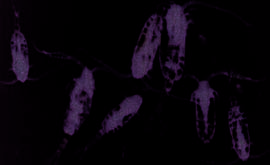
Bengu
curr e
ent l
n a
ews
Hamukuaya to head SEAFO
Dr Hashali Hamukuaya has been appointed as the first executive secretary
of the South East Atlantic Fisheries Organisation, SEAFO. He took up his
position in March, after two-and-a-half years with the BCLME Programme.
Dr Hamukuaya formerly headed
The SEAFO Convention focuses
Between 1991 and 1998 he
the Activity Centre for Marine
on the management of deep-sea
worked as a fishery biologist at the
Living Resources in Swakopmund
species such as orange roughy,
National Marine Information and
and was a key member of the
armourhead, alfonsino, wreckfish
Research Centre in Swakopmund,
BCLME Programme's executive.
and red crab. It was signed in
Namibia. He was later promoted
Windhoek in 2001 by Angola, the
to deputy director and stationed
"We are going to miss Hashali
European Community, Iceland,
in Windhoek. As the director of
very much and we wish him the
Namibia, Norway, South Africa,
the Activity Centre for Marine
best with his new and chal enging
United Kingdom and the United
Living Resources, Dr Hamukuaya
position," said Dr Mick O'Toole,
States of America.
was responsible for co-ordinating
chief technical advisor to the
dozens of regional projects.
Dr Hashali
BCLME Programme.
Dr Hamukuaya has considerable
Hamukuaya
experience in fisheries
During his career, he served as
"No doubt his appointment wil
management and international
a Commissioner to ICCAT and
serve to strengthen ties between
relations. He obtained his
CCAMLR and has been intricately
the BCLME Programme and
Master of Science degree in
involved in the BENEFIT and
SEAFO, as wel as other regional
Marine Environment at the
Nansen programmes. He was
programmes such as BENEFIT and
State University of New York
a member of the team that
the SADC/EU Monitoring, Control
and a doctorate in zoology at
negotiated the SEAFO Convention
and Surveil ance programme."
the University of Port Elizabeth.
and the SADC Fisheries Protocol.
from year to year is no easy task:
to manage and consolidate the
plankton data in the BCLME. IOI-
"There is no one parameter that
SA has been tasked with not only
can determine anything about
col ating the disparate databases,
trophic levels," he cautions.
but also transcribing them into a
The classification and analysis of
format that is compatible with the
the SWAPELS col ection is only
Southern African Data Centre for
one aspect of the Retrospective
Oceanography (SADCO) where the
Analysis project. There are other
data wil ultimately be stored.
pieces that must fit into the zoo-
Since it can take a full day to
plankton puzzle, such as retrieving
thoroughly analyse one plankton
and validating plankton data that
sample jar, this is to be a deman-
were col ected by Russian, Spanish
ding and time consuming task.
and Portuguese scientists off
But, as Dr Verheye points out,
Namibia in the past 50 years. Any
the project is about more than
hydrographic and fisheries data
just plankton:
A few specimens of the Calanoid Copepod Centropages sp.,
that was col ected at the same
showing both male and female individuals.
time should also be classified and
"We hope to be able to say some-
catalogued. And the South African
thing significant about ecosystem
variability of plankton in widely
plankton col ection of the 1950s
change once this project is com-
separated ocean regions and to
and 1960s that is stored at the Iziko
plete," he says.
see whether these plankton trends
South African Museum in Cape
coincide with fisheries trends.
Town needs to be revisited and
The international scientific com-
further analysed.
munity has shown great interest
"The world is waiting for some
in the Retrospective Analysis project
data to come out of the northern
Very recently, the International
because there is a global trend
Benguela," says Dr Verheye,
Ocean Institute Southern Africa
towards analysing plankton time-
"and we are making visible
A Calanoid Copepod.
(IOI-SA) at the University of the
series to examine similarities and
progress."
Western Cape was appointed
differences in the low-frequency
A Euphausi d.
25


Climate change could trigger the
degradation of intense upwel ing systems
A recent paper by Andrew Bakun and Scarla Weeks suggests that climate change may influence
the size and frequency of sulphur eruptions off the coast of Namibia and, the incessant build-up
of greenhouse gases in the atmosphere may cause other intense coastal upwel ing systems to
switch to similar, undesirable states, especial y when coupled with overfishing.
Maintaining healthy sardine stocks
During the first year of observation,
coast. Planktonic grazers cannot
may be one approach to mitigating
one or more major eruption signal
cope with this immense build up
this process, say the authors of
was visible "more often than not"
of phytoplankton biomass which is
the paper which was published in
somewhere along the coast of
therefore under-utilised and most
Ecology Letters in 2004.
Namibia, report Bakun and Weeks.
of it sinks to the sea floor where it
Events have been observed to
decomposes.
The paper is entitled "Greenhouse
extend over more than 20 000km2
gas buildup, sardines, submarine
of ocean surface - an area about
The accumulation of organic mat-
eruptions and the possibility of
two thirds of the size of Belgium!
ter on the sea floor results in
abrupt degradation of intense
extensive areas where dissolved
marine upwel ing ecosystems".
The eruptions typical y occur
oxygen concentrations are very
It focuses on the Nambian coast
downstream of Lüderitz, the most
low or entirely lacking. Methane
where gas eruptions of methane
intense upwel ing centre in the
(CH4) gas and poisonous hydrogen
carry hydrogen sulphide into the
world. Bakun and Weeks describe
sulphide gas (H2S) are produced
water column. The resultant sulphur
a process whereby upwel ing
within a metres-deep layer of
in surface waters provides a clear
favourable winds move surface
anoxic diatom sludge. Under
visual marker of this phenomenon
water offshore and replace it with
immense pressure, methane
and developments in satel ite
deep, nutrient rich water. This natu-
effervesces into tiny gaseous bub-
observation capacity have made it
ral process of fertilisation causes
bles which become sufficiently
possible for scientists to measure
vigorous phytoplankton growth.
buoyant to move upward. The
the scale and frequency of the
But the winds are so strong around
bubbles expand rapidly as they
sulphur eruptions that occur off the
Lüderitz that surface waters are
rise, because hydrostatic pressure
Namibian coast.
shunted offshore and along the
decreases exponential y along their
Massive sulphur eruption
A
B
MODIS quasi-true colour images showing the rapid initiation of a
of milky turquoise colouration indicate high concentrations of sus-
hydrogen sulphide eruption along the Namibian coastline in April 2005: pended sulphur granules in surface waters. (Images provided by Scarla
(a) 19 April, afternoon; (b) 20 April, morning. The images were gener-
Weeks. MODIS data courtesy of the Modis Rapid Response Team,
ated from MODIS Aqua and Terra satellite data, respectively. The areas NASA/GSFC.) the region."
26
Bengu
curr e
ent l
n a
ews
upward journey, causing them to
favourable winds near the coast.
Bakun and Weeks note that the
rise faster. According to Bakun and
Stronger winds create an intensi-
sardine biomass off Namibia is
Weeks, the accelerated upward
fication of coastal upwel ing and
estimated to have been as much
movement of bubble-infused
the possibility that intense regional
as 10 mil ion tons. Since the col-
waters would induce an additional
upwel ing ecosystems might be
lapse of the sardine resource in the
lowering of hydrostatic pressure
switched to undesirable states
1970s, the Namibian sardine popu-
in the surrounding water, causing
similar to that which currently
lation has never exceeded a tenth
a spreading of effervescence and
exists off Lüderitz.
of those levels and in recent years
bubble expansion. This explains
the population has almost van-
the huge spatial extension of sul-
In a classic positive feedback loop,
ished. They propose that an abun-
phur eruptions.
the upwel ing releases greenhouse
dant regional sardine population
gas into the atmosphere.
may act as a particularly efficient
H2S is highly toxic to marine organ-
conduit of nutrients and primary
isms and also has the effect of
However, Bakun and Weeks sug-
production from the upwel ing
stripping dissolved oxygen from
gest that there may be a biological
zone to the higher trophic levels
the water column, say Bakun and
buffering process available to help
of the broader marine ecosystem,
Weeks. Mortalities of nearshore
avoid such undesirable Lüderitz-
as wel as a buffer against the
animals occur annual y off Namibia,
type states. They propose that
development of a degraded coastal
with varying degrees of intensity,
if the phytoplankton-consuming
ecosystem state.
and coastal residents have to live
sardines are present in sufficiently
with noxious smel s and the cor-
large numbers, they could reduce
Although the authors do not claim
rosive effects of the sulphurous
the phytoplankton biomass and set
that there were no gaseous erup-
gases that are released from the
in motion a steep decline in the
tions at al in earlier years, they
sea into the atmosphere.
local primary production.
believe that changes in global cli-
mate could have an impact on the
In Ecology Letters, Bakun and
Sardines are noteworthy among
size and frequency of eruptions.
Weeks propose that the sulphur
smal pelagic fish because their
The associated intensification of
eruptions that are degrading
very fine-meshed gil raker struc-
anoxia and hypoxia has important
Namibia's marine and coastal envi-
tures al ow them to filter and
consequences for marine fauna.
ronment might be duplicated in
directly consume microscopic
They conclude that, given the
other parts of the world.
phytoplankton. Moreover, sardines
are very strong swimmers for
potential global importance of nutri-
They suggest that the build up of
their size and so are capable of
ent cycling in coastal upwel ing
greenhouse gases in the atmos-
overcoming the strong offshore-
systems, it would be worthwhile
phere and the consequent warm-
directed surface flow near the
supporting further studies into the
ing of the land, has led to a multi-
upwel ing zone.
sulphur eruptions off Namibia.
decadal increase in upwel ing-
Fact File:
Journal of ers insight into ecosystem management
The idea that commercially exploited fish stocks form part of The journal comprises 18 contributions which describe
a complex marine ecosystem and that fisheries management a number of ecosystem studies and highlight the
should take a broader, more holistic view of the oceans' importance of incorporating ecosystem models into
resources, is rapidly gaining momentum.
fisheries management advice.
It is very useful, therefore, to have an extremely informative The Department of Environmental Affairs and Tourism
and highly topical volume on the subject of the ecosystem has circulated limited copies of the African Journal of
approach to fisheries management (EAF) published by the Marine Science in the region, but additional copies are
South African Department of Environmental Affairs and available. Interested readers may contact the Journal's
Tourism.
editor, Stan Pillar, at: scpillar@deat.gov.za or log onto
The Department has dedicated a volume of the African the website of the National Inquiry Service at www.
Journal of Marine Science to the subject of "Ecosystem nisc.co.za.
approaches to fisheries in the southern Benguela".
27



The BCLME Programme
that can be advected by winds and currents from the
Benguela
The BCLME Programme is a joint initiative by the
governments of Angola, Namibia and South Africa
waters of one country into another.
to manage and utilise the resources of the Benguela
The Programme is funded by the Global Environment
Current Large Marine Ecosystem in a sustainable and
Facility (GEF) which has contributed US$15.2 million
integrated manner.
through the United Nations Development Programme
The Programme is designed to improve the structures (UNDP) for the regional initiative. The GEF's funding
and capacities of Namibia, Angola and South Africa
complements an investment of US$16 million by
to deal with the environmental problems that occur
the three countries, and over US$7 mil ion from other
across the national boundaries, in order that the eco-
sources such as the Benguela Environment Fisheries
system may be managed as a whole.
Training Interactions Programme, BENEFIT.
These transboundary issues include the migration
The BCLME Programme is administered by a Programme
or straddling of valuable fish stocks across national
Co-ordination Unit, which is based in Windhoek,
boundaries, and pollutants or harmful algal blooms
Namibia.
BCLME PROGRAMME CO-ORDINATING UNIT
WINDHOEK, NAMIBIA
Tel:
+264 (0)61 246 806
Fax:
+264 (0)61 246 803
Chief Technical Advisor: Dr Mick O'Toole
Email:
otoole@bclme.un.na
ACTIVITY CENTRE:
BIODIVERSITY, ECOSYSTEM HEALTH AND POLLUTION
LUANDA, ANGOLA
Tel:
+244 (0)2 30 9330
Fax:
+244 (0)2 30 9330
Director: Ms Maria Sardinha
Email:
milu_sardinha@yahoo.com
ACTIVITY CENTRE:
LIVING MARINE RESOURCES
Swakopmund, NAMIBIA
Tel:
+264 (0)64 410 1106
Fax:
+264 (0)64 410 1188
Director: Dr Moses Maurihungirire
Email:
mmaurihungirire@benguela.org
ACTIVITY CENTRE:
ENVIRONMENTAL VARIABILITY
Cape Town, SOUTH AFRICA
Tel:
+27 (0)21 402 3418
Fax:
+27 (0)21 402 3351
Director: Ms Lesley Staegemann
Email:
bclmeevg@deat.gov.za
Portuguese translations by
Luis Anapaz
Special thanks to Claudio
Feedback:
Please send your comments,
Design & DTP:
Velásquez Rojas who sup-
suggestions and stories to:
Günther Komnick Studio
plied many of the photo-
Claire Attwood
Tel: +27 (0)21 531 7798
graphs in Benguela Current
Tel/Fax: +27 (0)21 788 3500
News.
Portuguese Translation: Raquel Garcia
Email: cattwood@mweb.co.za
Photography:
Bengu
Claudio Velásquez, Claire Attwood, Kevern Cochrane,
Hans Verheye, Helen Theron, Gabriella Nascimento,
www.bclme.org
Catherine Kuske
curr e
ent l
n a
ews
28