

Benguela
G L O B A L
E N V I R O N M E N T
current news
F ACILITY
THE NEWSLETTER OF THE BENGUELA CURRENT LARGE MARINE ECOSYSTEM PROGRAMME
Inside News
Key BCLME projects Message from the Angolan Minister of Fisheries
3/5
Interview with Dr Ken Sherman
4/6/8
Message from the Namibian Minister of Fisheries
7/9
set to begin
Public Relations
10
Profile of Dr Mick O'Toole
12/14
Message from the South African Minister of
Environmental Affairs and Tourism
13/15
by Dr Mick O'Toole
BCLME holds key to Indian Ocean LMEs
16/18
Strong Support from UNDP Namibia
17/18
After several months of inten- tem health, marine pollution socio- Profiles of Activity Centre Directors
19-21
sive planning and preparation,
economics and governance.
Four Focus Areas for Angola
22-24
the real work of the BCLME
The steps taken so far bode well for
The Role of UNOPS
25
Programme has begun! In July and
the future. Since the start of the
Data Centre Could Provide Assistance
26-27
August the United Nations Office for
implementation phase in March
UNDP Supports Artisanal Fishers
28-29
Project Services (UNOPS) finalised
2002, the BCLME Programme has
BENEFIT Expands its Focus
30-31
contracts for nine projects in the field
been instrumental in harnessing the
Biodiversity Project Planned for Angola
32-33
of environmental variability; and late
skills, expertise and enthusiasm of
Mining Companies Embrace the BCLME Programme
34-35
in June, seven priority projects -
a wide range of scientists, resource
which have been designed to
managers and stakeholders across
address some of the key issues
the entire Benguela region. Three
influencing the Benguela region's
Advisory Groups have been estab-
commercial and artisanal fisheries
The Benguela Current Large Marine Ecosystem is the central
lished and project proposals have
- were advertised. Contracts will
feature of the free poster that is inserted inside the newsletter.
been formulated and in many
be issued shortly. Over the same
cases approved - using the best
period, a number of key projects
available advice from a number of
were awarded to the Benguela
highly focused consultative fora.
Fisheries Interaction Training Pro-
gramme (BENEFIT), which will act
Other important achievements that
as a lead agent in certain study areas.
the BCLME Programme has re-
Projects in the areas of biodiversity,
corded during the first year of im-
ecosystem health and pollution are
plementation are the establishment
currently being developed and will
of a Programme Coordination Unit
be considered by the Programme
(PCU) in Windhoek, Namibia, as
Steering Committee (PSC) in
well as three Activity Centres, one
November.
each in Angola, Namibia and South
Africa. The Strategic Action Plan
The awarding of the first BCLME
(SAP) and Transboundary Diagnostic
Programme project contracts is an
Analysis (TDA) have been printed
exciting step in the process of
and circulated within the region,
developing baseline scientific and
and a brochure that details the key
economic information on the
objectives of the Programme has
BCLME, how it is changing over
been developed and printed. In
time and how the transboundary
addition, the BCLME Programme
29
management problems associated
website has been updated and is
with fishing, mining, oil explo-
fully operational, containing all in-
ration, coastal development, bio-
formation on recent developments
diversity and pollution can best
including advertisements, tender
be addressed across the entire
documents and detailed terms of
Benguela region. Over the next
reference for the projects.
three-and-a-half years the BCLME
Programme will support about 80
At the World Summit on Sustain-
projects in the fields of environ-
able Development, which took
mental variability, marine living
place in Johannesburg in August
resources, biodiversity, eco-sys-
continued/...2
FREE POSTER INSIDE
1
and September 2002, the BCLME
This newsletter is the first in what
Pro-gramme was showcased
is to be a bi-annual communiqué
alongside the Global Environment
with our stakeholders. The co-
Facility (GEF), United Nations
operation and enthusiasm that have
Development Programme (UNDP)
been a hallmark of the BCLME Pro-
and the International Maritime
gramme since it was first conceived
Organisation (IMO) and shared a
in 1995 have been inspiring and we
stand with the Gulf of Guinea LME,
hope that the newsletter will capture
the IMO and South African environ-
the key achievements of the BCLME
mental consultants, EcoAfrica. A
Programme and that, over time, the
poster exhibition which was dis-
newsletter will provide an insight
played at the Two Oceans
into the development of a really
Aquarium in Cape Town provided
viable LME approach to the Benguela
the BCLME Programme with valu-
Current region.
able exposure and in October we
A special word of thanks is due to
have an ideal opportunity to show-
Catherine Kuske and Maureen Louw,
case the Programme at the Fish
who are responsible for the admin-
The Programme Coordination Unit in Windhoek is responsible for
Africa exhibition which takes place
istration of the BCLME Programme's
the overall administration of the BCLME Programme. Pictured here
in the Cape Town International
Windhoek office. Their assistance
are Catherine Kuske, administrative officer, Dr Mick O'Toole, chief
Convention Centre. More recently,
in the setting up of the PCU office,
technical adviser, Evelyne Museke, office assistant and Maureen
a presentation on the BCLME
the establishment of Activity Centres
Louw, administrative assistant.
Programme and marine protected
in Luanda, Swakopmund and Cape
areas was given at the World Parks
Town, and the day-to-day running
Congress in Durban, under the
of the BCLME Programme has been
1/continued...
theme: "Marine Themes and Large
invaluable.
Marine Ecosystems".
BCLME Chief Technical Advisor
(Programme Co-ordinator)
A Chave do Grupo de Projectos
do BCLME Começa
Após vários meses de planificação
projectos nas áreas de biodiversi-
biodiversidade, saúde do ecossis-
e preparação intensivas, começou
dade, saúde do ecossistema e
tema, sócio-economia da poluição
o trabalho real do Programa BCLME!
poluição, que serão avaliados pelo
marinha e regulamentação.
Em Julho e Agosto o Gabinete das
Comité Director do Programa
Por enquanto os passos dados
Nações Unidas para Apoio aos
(PSC) em Novembro.
auguram um bom futuro. Desde
Projectos (UNOPS) finalizou os
A concessão dos primeiros con-
o início da fase de implementação
contratos para nove projectos na
tratos de projectos do BCLME é
em Março de 2002, o Programa
área da variabilidade ambiental; e
uma etapa emocionante no pro-
BCLME foi instrumental no apro-
em finais de Junho, sete projectos
cesso de desenvolvimento de in-
veitamento das habilidades, perí-
prioritários - concebidos para re-
formação científica e económica
cia e entusiasmo de um grande
solver algumas das questões-chave
de base sobre o BCLME, como é
número de cientistas, gestores de
que influenciam as pescas com-
que está a mudar ao longo do
recursos e partes interessadas
ercial e artesanal da região da
tempo e como os problemas trans-
em toda a região da Corrente Fria
Corrente Fria de Benguela - foram
fronteiriços de gestão associados
de Benguela. Foram criados três
publicitados, devendo os contratos
com a pesca, exploração mineira
Grupos Conselheiros e foram for-
ser emitidos brevemente. Durante
e petrolífera, desenvolvimento
muladas propostas de projectos -
o mesmo período, uma série de
costeiro, biodiversidade e poluição,
e em muitos casos aprovados
projectos-chave foram concedidos
podem ser melhor geridos em
através da utilização do melhor
ao Programa de Formação sobre
toda a região da Corrente Fria de
conselho disponível de um fórum
a Interacção das Pescarias de
Benguela. Nos próximos três anos
consultivo altamente focalizado.
Benguela (BENEFIT), que agirá
e meio o Programa BCLME apoiará
como principal agente em deter-
Outras realizações importantes
aproximadamente 80 projectos
minadas áreas de estudo. Actual-
que o Programa BCLME registou
nos domínios da variabilidade am-
mente estão a ser desenvolvidos
durante o primeiro ano da sua
biental, recursos marinhos vivos,
Benguela
continuação.../11
current news
2
Be
B nguela
e
current news
ANGOLAN MINISTER
Mensagem do
Sr Salomão José Luheto Xirimbimbi
Com o advento da paz, Angola está a entrar agora numa nova era de estabilidade e de desen-
volvimento socio-económico. Entretanto, a implementação da estrutura de ajustamento
económico tem sido muito difícil, especialmente se nós tivermos em conta que a guerra civil
destruiu as infra-estruturas, deslocou as populações e provocou a fome e a pobreza.
Entre os objetivos mais importantes do governo angolano estão: atingir da estabilidade
económica, reduzir a pobreza e eliminar a fome. O sector das pescas joga um papel muito
importante na realização destes objetivos. De facto, o sector das pescas de Angola constitui
uma base essencial da produção de alimentos para o país, e é considerado também como
uma fonte de moeda estrangeira através da exportação de produtos de boa qualidade para o
mercado internacional.
O sector das pescas de Angola está a ser reestruturado. Um novo mandato alargou o âmbito
do Ministério das Pescas às pescas em águas continentais, que antes eram da responsabili-
dade do Ministério da Agricultura e Desenvolvimento Rural. Além disso, uma nova lei está a
ser esboçada e as provisões para a co-gestão e gestão dos stocks transfronteiriços deverão
ser introduzidas.
As prioridades actuais para o sector são: contribuir para a segurança, o emprego e o assenta-
mento das populações. Isto deve ser feito através da gestão sadia de recursos naturais das
águas marinhas e continentais. Nós pretendemos também começar o desenvolvimento da
aquacultura como um sub-sector de produção de alimentos.
A exploração de petróleo é a actividade mais importante realizada no mar ao largo de Angola
e temos a certeza que outras actividades, como a exploração de diamantes e o turismo, se
desenvolverão a curto prazo. Actividades similares estão a ser realizadas na Namíbia e na
África do Sul. Todas estas actividades no ambiente marinho não poderão ser desenvolvidas
sem harmonização. A gestão integrada e sustentável vai permitir que nós maximizemos as
interacções sinérgicas entre os sectores e minimizemos as antagónicas. O mais importante
é que isto permitirá que nós protejamos o ambiente e os recursos marinhos vivos para o uso
das gerações actuais e futuras.
É por todas estas razões que eu estou entusiasmado com relação à implementação do
Programa BCLME. Eu acredito que o Programa, em muitas maneiras, ajudará os três países
membros a ter um melhor conhecimento do sistema, que por sua vez facilitará a gestão sus-
tentável e protecção do Grande Ecossistema Marinho da Corrente de Benguela no seu todo.
Algumas áreas de interesse particular para Angola são a gestão de recursos compartilhados,
com vista a uma optimização dos benefícios socio-económicos para os países; o desenvolvi-
mento da pesca artesanal com a execução de projectos de demonstração que podem
fornecer soluções aos problemas enfrentados pelos pescadores nos países participantes;
desenvolvimento da maricultura a fim de aumentar a produção de alimentos para o consumo
nacional e para as exportações; manutenção da saúde do ecossistema e da protecção da
diversidade biológica para manter o potencial produtivo da região; e por último mas não
menos importante, desenvolvimento dos recursos humanos e elevação da capacidade dos
quadros nacionais. Do nosso ponto de vista, isso é o elemento crucial para o desenvolvimen-
to sustentável e equitativo da região da Corrente Fria de Benguela.
Eu estou confiante de que o Programa BCLME fará uma contribuição significativa os nossos
países, facilitará e melhorará a gestão sustentável do ecossistema de Benguela e permitirá
que nós optimizemos a utilização de recursos naturais para melhoria das condições de vida
dos nossos povos, a curto prazo. Como Ministro das Pescas de Angola, eu gostaria de sub-
linhar o engajamento do meu governo em suportar inteiramente o programa.
Eu gostaria também de aproveitar esta oportunidade para expressar a minha gratidão à Global
Environment Facility pelo apoio financeiro ao Programa.
Estou certo que o Programa BCLME será um sucesso e beneficiará a região inteira.
O Honorável Salomão José Luheto Xirimbimbi
Ministro das Pescas
ANGOLA
3
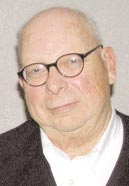

The LME Concept Comes of Age
Dr Ken Sherman, whose pioneering work on large marine ecosystems helped to define
the concept, attended the BENEFIT Forum in Swakopmund in April. He spoke to
Claire Attwood about LMEs, sustainable development and the future of the
Benguela Current Large Marine Ecosystem.
Could you describe how the LME
meant taking a good hard look at
It wasn't a flash of lightening that
concept developed?
the various fisheries laboratories
came out of the blue. I had been
around the country and what
thinking about how MARMAP
KS: The idea came from my own
they were doing. I was part of a
could be applied to the country
experiences. It grew out of 30
group of about 20 people in
and maybe even other places
years of practice with fisheries
Washington, who did a lot of
around the world, but it was real-
assessment and fisheries man-
brainstorming and reached the
ly just a thought. But then he
agement which was very highly
conclusion that it would be use-
was being so annoying, telling
sectorised; both on the discipli-
ful to have a generic approach to
me how to rake my lawn that I
nary side - with biologists and
fisheries management around
thought, "well okay I'll drop one
fishery oceanographers and
the whole country. And that led
on you!"
marine geologists and biological
to the formation of a programme
oceanographers and on the
I was really surprised because he
called Marine Resources
management side.
was very encouraging. So, we
Monitoring Assessment and
went to the Dean at the Graduate
I was a plankton expert studying
Prediction (MARMAP).
School of Oceanography and put
plankton in relation to the food-
We developed an intricate plan to
forward a proposition and asked
web; and while I was studying
amalgamate fisheries laboratories
him if he would sponsor a sym-
my plankton, there were gather-
into fisheries centres, with the
posium, so that we could bring
ings of fisheries specialists, on
idea that those centres would be
people in from management,
species, industries and age
responsible for given geographic
from law, from economics and
groups and on translating landing
areas. That approach proved to
from science and address this
statistics into what they called
be feasible. But the part of the
issue of a large marine ecosys-
"useful approaches to fisheries
country where this was adopted
tem as a geographic construct
management". It was quite short
most effectively was the north-
for the application of science to
sighted and very limited in scope.
east, an area of 260 000 km2
the improvement of manage-
At the time that NOAA (the Nat-
between the Gulf of Maine and
ment practices. He provided us
ional Oceanic and Atmospheric
Chesapeake Bay.
with $3 000 and we convened
Administration) was created, in
the first symposium and invited
By 1983 I had returned from
1970, the fisheries service was
specialists from different parts of
Washington and established a
under pressure to bring to NOAA
the world. The head of NOAA give
MARMAP Centre at the
its national plan. Of course they
the keynote address and it was a
University of Rhode Island. And
didn't have one! And so that
really good session. Later the
one day in 1983, I was out in my
proceedings of the symposium
garden mowing my lawn, when
were turned into a book, authored
my neighbour comes over and
by Sherman and Alexander. That
Fact File:
tells me how to rake my lawn. I
was my neighbour Lou Alexander!
told him that he was being a real
pain, and said: "Why don't you
Large Marine Ecosystems
come over here and have a drink
At the time, how did you define or
because there's something I
delineate large marine ecosystems?
Large Marine Ecosystems (LMEs) are regions of ocean space
want to discuss with you?"
encompassing coastal areas from river basins and estuaries to the
KS: At the symposium, 260 000km2
seaward boundaries of continental shelves, enclosed and semi-
Now my neighbour was a geog-
was determined to be about the
rapher on leave from his profes-
right size for a large marine eco-
enclosed seas, and the outer margins of the major current systems
sorship of geography at the
system. The bird biologist, Riekliefs
as shown on the enclosed map. They are relatively large regions
University of Rhode Island; one
determined that evolution is most
on the order of 200 000 km2 or greater, characterised by distinct
of his specialities was regional
important on a regional level. His
bathymetry, hydrography, productivity, and trophically depend-
management. So I said, "Lou,
thinking led to the identification
ent populations. Within these 64 LMEs, 95% of the global
what do you think about the
of 260 000km2 as the most appro-
marine capture fisheries are found as well as most of the ocean
assessment and management of
priate size for a large marine eco-
pollution and coastal habitat alteration.
a large marine ecosystem?" And
system. Four criteria were identi-
Source: Duda, D.A. and Sherman, K. A new imperative for improving management of large
to my surprise, he said, that that
fied to distinguish large marine
marine ecosystems. Ocean & Coastal Management 45 (2002). P. 797-833.
could probably have some useful
ecosystems: Bathometry (bottom
(Available at www.bclme.org)
applications.
For more on large marine ecosystems visit
continued.../6
www.edc.uri.edu/lme
Benguela
current news
Message from
Mr Salomão José Luheto Xirimbimbi
With the advent of peace, Angola is now entering a new era of stability and socio-eco-
nomic development. However, the implementation of the economic adjustment frame-
work has been difficult, especially if we are to recognise that the civil war has
destroyed infrastructure, displaced populations and caused starvation and poverty.
Among the most important goals of the Angolan Government are to achieve economic
stability, reduce poverty and eliminate famine. The fisheries sector plays an important
role in the fulfillment of these goals. In fact, the Angolan fisheries sector constitutes an
essential basis of food production for the country, and it is also regarded as a source of
foreign currency through the export of good quality products to the international market.
The fisheries sector in Angola is being restructured. A new mandate has extended the
scope of the Ministry of Fisheries to inland fisheries that were previously the responsi-
bility of the Ministry of Agriculture and Rural Development. Furthermore, a new law is
being drafted and provisions for co-management and the management of transboundary
stocks are to be introduced.
The current priorities for the sector are to contribute to food security, employment and
settlement for the population. This should be done through the sound management of
natural resources from marine and inland waters. We also intend to start the develop-
ment of aquaculture as a food-producing sub-sector.
Oil exploitation is the most important activity carried out in the sea off Angola and we
are sure that other activities, like mining for diamonds and tourism, will develop in the
short term. Similar activities are being carried out in Namibia and South Africa. We
cannot develop all these activities in the marine environment without harmonisation.
Integrated and sustainable management will allow us to maximize the synergetic inter-
actions among the sectors and minimise the antagonistic ones. Most importantly, it will
allow us to protect the environment and living marine resources for the use of present
and future generations.
It is for all these reasons that I am enthusiastic about the implementation of the BCLME
Programme. I believe that the Programme will, in many ways, support the three mem-
ber countries in attaining a better knowledge of the entire system, which in turn will
facilitate the sustainable management and protection of the Benguela Current Large
Marine Ecosystem as a whole.
Some areas of particular interest to Angola are the management of shared resources,
with a view to optimising the socio-economic benefits for the countries; development
of artisanal fisheries through the implementation of demonstration projects that may
provide solutions to the problems faced by fisherfolk in the participating countries;
development of mariculture in order to increase the food production for national con-
sumption and exports; maintenance of ecosystem health and protection of biological
diversity to maintain the productive potential of the region; and last but not least, devel-
opment of human resources and capacity building. In our view, that is the key element
for the sustainable and equitable development of the Benguela region.
I am confident that the BCLME Programme will make a significant contribution to our
countries, facilitate and improve the sustainable management of the Benguela
Ecosystem and allow us to optimise the use of natural resources for improving the liv-
ing conditions of our people, in the short and long term. As Minister of Fisheries in
Angola, I would like to stress the engagement of my Government to fully support the
Programme. I would also like to take this opportunity to express my gratitude towards
the Global Environment Facility for the financial support to the Programme.
I am sure that the BCLME Programme will be a success and benefit
the entire region.
The Honourable Salomao Jose Luheto Xirimbimbi
Minister of Fisheries
ANGOLA
5
typography); hydrography (the
oping countries. This represented
KS: We had preliminary discus-
4/continued...
physics of the water column);
the transfer of more funding than
sions with Mick O'Toole and Vere
productivity (the production of
was ever available...for countries
Shannon and Les Clark, the advi-
carbon); and trophodynamics
to do things that they ultimately
sor to the Namibian Minister of
(trophic relationships in the food
would not be able to do without
Fisheries and Marine Resources,
web, from bottom to top).
the funding.
Dr Abraham Iyambo. The GEF
suggested that there was inter-
Ninety five percent of the world's
est from South Africa, Namibia
fish catches come from 64 large
Why is the large marine ecosys-
and Angola in a large marine
marine ecosystems and virtually
tem concept so appealing to
ecosystem project. So we met
all the pollution issues are con-
developing nations?
and simply described the
tained within them; so in terms
KS: I think because developing
approach from a scientific point
of prioritising issues that need to
nations see the large marine
of view and they then carried the
be addressed, they've proved
ecosystem concept as a bottom-
ball forward from their side. It
rather useful.
up, rather than a top-down
was a country driven project.
approach. It was something that
NOAA made a commitment to
How did the Global Environment
developing nations were asking
provide scientific and technical
Facility (GEF) come to be
for, rather than somebody saying
advice to the countries. And for
involved with large marine
"here's a silver bullet for you and
the most part it has been in-kind
ecosystems?
you should love us forever!"
support with both technical
KS: In 1993, a senior person in
Also, the notion of pooling coun-
assistance and training.
the GEF secretariat contacted
try resources, be they human or
me, asking if I was the Ken
technical, is especially appealing
In your view, what are some of
Sherman who knew about large
to developing nations.
the major challenges facing the
marine ecosystems. I said that I
Benguela Current Large Marine
I have to give developing coun-
was and he wondered if we
Ecosystem?
tries an enormous amount of
could meet. That was the begin-
credit; they are the leaders in this
KS: The challenge that can be
ning of a lot of associations with
application of an ecosystem-
met is to sustain an annual fish-
the GEF!
based approach to sustainable
eries harvest of between 1.2 mil-
In fact, if you asked me what
development. They're way ahead
lion and 1.4 million tons in a bal-
was one of the most useful
of the economically more
ance between the species that
things to come out of UNCED
advanced countries. And the
are valuable for export purposes
(the United Nations Conference
numbers are quite astounding; at
and species that are important
on Environment and
present, there are 72 countries
for food security. That's an enor-
Development) in 1992, I would
with approved GEF projects and
mous resource.
have to say it was the GEF. It is
54 more countries have projects
What the BCLME Programme
significant that in this period of
in the preparation phase. If you
can bring to the Benguela region
"world unrest" that donor coun-
add those up, that's 126 coun-
is an ability to predict the environ-
tries, mainly northern countries,
tries involved in securing the
mental factors that have an influ-
agreed to provide literally billions
future of their shared large
ence on these resources before
of dollars in assistance to devel-
marine ecosystems and they're
they occur.
all from developing parts of the
world.
A total of $39 million (R300 million)
is available to the BCLME Pro-
Under the International Waters
gramme, with the full expectation
programme, the GEF is providing
that if sufficient progress can be
over $200 million to those coun-
demonstrated, there will funding
tries that can demonstrate a
for a second five year period. In
country driven approach to a
our experience it takes at least a
large marine ecosystem project.
decade in order to move from
sectorised science and sectorised
How did you come to be involved
management to multi-disciplinary
in the Benguela Current Large
science and multi-sectoral manage-
Marine Ecosystem?
ment.
continued.../8
Benguela
current news
6
Benguela
current news
Message from Dr Abraham Iyambo
It is an honour and a privilege to be responsible for the stewardship of Namibia's fish-
eries and marine living resources. This is especially true at a time when Namibia,
Angola and South Africa are working so enthusiastically towards the sustainable man-
agement and protection of the Benguela Current Large Marine Ecosystem, through the
BCLME Programme.
The area of interest for the BCLME Programme stretches from Cabinda Province in
Angola, to just east of Port Elizabeth in South Africa and encompasses the full extent of
Namibia's marine environment. Therefore, it is not surprising that my ministry has been
at the forefront of regional efforts to establish the BCLME Programme. We are proud to
host the Programme Co-ordination Unit in Windhoek and the Activity Centre for Marine
Living Resources in Swakopmund. At the same time, I acknowledge the hard work and
commitment of my colleagues: the ministers of Mines and Energy and Environmental
Affairs and Tourism in Namibia; the ministers of Fisheries, Environment and Petroleum
in Angola; and the ministers of Environmental Affairs and Tourism and Mineral and Energy
Affairs in South Africa, all of whom have played a leading role in the development of the
BCLME Programme.
In Namibia we are cognisant of the fact that our exclusive economic zone (EEZ) is
among the most productive in the world and that our marine fisheries are greatly influ-
enced by the Benguela Current. For example, our fisheries sector is well known for the
high quality fish products that we produce; products that are sold and enjoyed on five
continents. Namibia's policy of encouraging on-shore processing has seen the contribu-
tion of the fisheries sector to Gross Domestic Product (GDP) grow at over 35% per year
since the early 1990s. Today, the fisheries sector is one of the most important contribu-
tors to Namibia's GDP, and is second only to the mining sector in terms of exports.
In fact, the fishing industry has become an economic mainstay of the Benguela region,
accounting for 10% of GDP in Namibia, 4% in Angola and 0.37% in South Africa in 2000.
Of course, fisheries are not the only riches of the Benguela region. The continental
shelf contains petroleum, natural gas and mineral deposits, notably diamonds, for which
prospecting and development activities are underway; while tourism capitalises on the
area's exceptional natural beauty, biodiversity and cultural attractions.
It is encouraging to note that the people of Namibia, Angola and South Africa are not
prepared to stand by and watch as the natural resources of the Benguela region are
increasingly threatened by factors such as habitat loss, pollution, over-exploitation of
fish stocks and the introduction of alien invasive species. Instead, they have embarked
on a country-driven initiative that will address some of the most pressing environmental
problems in the Benguela region. It has been a pleasure to participate in the develop-
ment of the BCLME Programme and to watch it grow from an idea into a fully-funded,
vibrant programme. I look forward to reading about the progress that is made by the
BCLME Programme over the next three-and-a-half years in the pages of this newsletter.
Congratulations to the BCLME Programme Co-ordinator, Dr Mick O'Toole, his perma-
nent staff, and the talented and dedicated individuals in Namibia, Angola and South
Africa, who are working together tirelessly for the benefit of the Benguela region.
May the BCLME Programme go from strength to strength.
The Honourable Abraham Iyambo
Minister of Fisheries and Marine Resources
NAMIBIA
7
6/continued...
o Amadurecimento do Conceito de LME
O Dr. Ken Sherman, pioneiro no
quatro critérios para distinguir
126 países envolvidos na preser-
trabalho com grandes ecossis-
grandes ecossistemas marinhos:
vação do futuro dos seus grandes
temas marinhos, que ajudou a
Batimetria (tipografia inferior);
ecossistemas marinhos compar-
definir o conceito, participou no
hidrografia (a física da coluna de
tilhados e todos eles são países
Fórum do BENEFIT em Swakop-
água); produtividade (a produção
em desenvolvimento.
mund em Abril. Ele falou com
de carbono); e trofodinâmica
Através do International Waters
Claire Attwood sobre os LMEs,
(relação trófica na cadeia alimen-
Programme, o GEF dispõe de mais
o desenvolvimento sustentável
tar, da base ao topo).
de 200 milhões de dólares para os
e o futuro do Grande Ecossistema
Nos finais dos anos 80, foi criado
países que consigam apresentar
Marinho da Corrente de Benguela.
um comité de geógrafos marin-
um projecto na área de grande
Seguese um sumário da entre-
hos e cientistas para proceder à
ecossistema marinho, numa abor-
vista.
recolha de toda a informação que
dagem a impulsionar pelo país.
O conceito de LME extravazou
nos permitisse usar os quatro
Eu envolvi-me no Programa BCLME
as minhas próprias expectativas.
critérios para descrever os 50
depois de discussões com Mick
Ele cresceu ao longo de 30 anos
grandes ecossistemas marinhos.
O'Toole, Vere Shannon e Les Clark,
de prática em avaliação e gestão
Subsequentemente nós poder-
assessor do Ministro das Pescas
de recursos pesqueiros.
íamos usar esses critérios para
e Recursos Marinhos da Namíbia,
determinação dos 64 grandes
Durante os anos 70, eu organizei
Dr. Abraham Iyambo. Nós encon-
ecossistemas marinhos. Noventa
um simpósio sobre grandes ecos-
tramo-nos e simplesmente descre-
e cinco por cento das capturas
sistemas marinhos que juntou
vemos o método de um ponto de
mundiais de pescado provêm destes
especialistas em gestão, legislação,
vista científico e eles, por seu lado,
64 grandes ecossistemas marinhos
economia e ciência provenientes
tocaram a bola para a frente. Era
e virtualmente todas as questões
de todo mundo.
um projecto para ser impulsionado
de poluição estão inseridas dentro
pelo país.
Posteriormente os procedimentos
deles; o que, em termos de priori-
do simpósio foram transformados
dade das questões que necessitam
O maior desafio que o BCLME
em livro, tendo como autores
de ser abordadas, provaram ser
enfrenta é conseguir manter uma
Sherman e Alexander.
de grande utilidade.
captura anual de recursos pesqueiros
entre os 1.2 e 1.4 milhões de
No simpósio, determinou-se que
A Global Environment Facility (GEF)
toneladas num equilíbrio entre as
o tamanho certo para um grande
começou a interessar-se pelos
espécies mais valiosas para ex-
ecossistema marinho seria
grandes ecossistemas marinhos em
portação e as espécies importantes
260 000km2. Foram identificados
1993.
para a segurança alimentar.
Na minha opinião o conceito de
O que o Programa BCLME pode
grande ecossistema marinho é
trazer à região de Benguela é a
atractivo para as nações em desen-
capacidade de previsão dos factores
volvimento uma vez que as nações
ambientais que têm influência
em desenvolvimento encaram este
sobre esses recursos antes deles
conceito mais como uma abordagem
ocorrerem.
de gestão, das "bases-para-o-topo"
do que "do-topo-para-a-base. Para
Cerca de $39 milhões de dólares
além disso, a ideia de conjugar
(R300 milhões) estão disponíveis
recursos de mais do que um país,
para o Programa BCLME, com a
sejam eles técnicos ou humanos,
grande expectativa de que, caso
é especialmente atractivo para os
se consiga demonstrar suficiente
países em desenvolvimento.
progresso, haja mais financiamento
para um segundo período de cinco
Eu tenho que dar um enorme crédito
anos.
aos países em desenvolvimento;
são eles os líderes na aplicação
* Para mais informação em
da abordagem de desenvolvimento
grandes ecossistemas marin-
sustentável com base no ecos-
hos visite o site
sistema. Actualmente existem
www.edc.uri.edu/lme
Benguela
current news
8
Benguela
current news
Mensagem do Dr Abraham Iyambo
Isto é uma honra e um privilégio ser responsável por estar à frente das pescas e recursos
marinhos da Namíbia. Isto é especialmente verdade numa altura em que a Namíbia, Angola
e África do Sul se encontram a trabalhar tão entusiasticamente rumo à gestão sustentável e à
protecção do Grande Ecossistema Marinho da Corrente de Benguela, através do Programa
BCLME.
A área de interesse para o Programa BCLME estende-se desde a Província de Cabinda, em
Angola, até Port Elizabeth, na África do Sul e abarca toda a extensão do ambiente marinho da
Namíbia. Por isso, não é surpresa que o ministério esteja à frente dos esforços regionais
para criação do Programa BCLME. Nós sentimo-nos orgulhosos de hospedar a Coordenação
da Unidade do Programa em Windhoek e o Centro de Actividade para os Recursos Marinhos
Vivos em Swakopmund. Ao mesmo tempo, reconheço o grande esforço e o empenho dos
meus colegas: os ministros das Minas e Energia e Questões Ambientais e Turismo na
Namíbia, os ministros das Pescas, Ambiente e Petróleos em Angola, e os ministros para as
Questões Ambientais e Turismo e de Minas e Energia na África do Sul, todos eles a jogarem
um papel de liderança no desenvolvimento do Programa BCLME.
Na Namíbia estamos cientes do facto de que a nossa zona económica exclusiva (ZEE) está
entre as mais produtivas do mundo e que as nossas pescarias marinhas são grandemente
influenciadas pela Corrente de Benguela. Por exemplo, o nosso sector pesqueiro é bem con-
hecido pela alta qualidade dos produtos que produzimos; produtos que são vendidos e apreci-
ados nos cinco continentes. A política da Namíbia de encorajar o processamento em terra tem
visto as contribuições do sector pesqueiro para o Produto Interno Bruto (PIB) crescer mais de
35% ao ano desde o princípio dos anos 90. Hoje, o sector das pescas é um dos maiores
contribuintes para o PIB, e é o segundo, depois do sector mineiro, em termos de exportações.
De facto, a indústria pesqueira tornou-se num esteio económico da região de Benguela, rep-
resentando 10% do PIB da Namíbia, 4% de Angola e 0,37% da África do Sul em 2000.
É claro que as pescarias não são as únicas riquezas da região de Benguela. A plataforma
continental contém depósitos de petróleo, gás natural e minerais, particularmente diamantes,
pelos quais decorrem actividades de prospecção e desenvolvimento; enquanto o turismo
capitaliza as áreas de beleza natural excepcional, biodiversidade e atracções culturais.
É encorajador verificar que as populações da Namíbia, Angola e África do Sul não estão pre-
parados para se levantarem e observarem como os recursos da região de Benguela estão sob
crescente ameaça de factores como perda do habitat, poluição, sobre-exploração dos stocks
de peixe e a introdução espécies invasoras. Pelo contrário, eles embarcaram numa iniciativa
nacional que irá debruçar-se sobre alguns dos problemas mais prementes da região de Benguela.
Tem sido um prazer participar no desenvolvimento do Programa BCLME e vê-lo crescer a par-
tir de uma ideia até um programa vibrante, totalmente financiado. Estou ansioso por ler sobre
os progressos feitos pelo Programa BCLME ao longo dos próximos três anos e meio nas
páginas desta revista.
Parabéns ao Coordenador do Programa BCLME, Dr. Mick O'Toole, ao seu staff permanente,
e às pessoas talentosas e dedicadas da Namíbia, de Angola e da África do Sul, que conjunta-
mente trabalham incansavelmente em benefício da região de Benguela. Faço votos para que
o Programa BCLME se torne cada vez mais forte.
O Honorável Abraham Iyambo
Ministro das Pescas e Recursos Marinhos
NAMÎBIA
9

Public Relations
The website of the BCLME Pro-
site clicked on the advertisements
gramme has been gradually updated
for the 16 projects that have been
and improved over the past six
advertised by the Activity Centres
months and in October a new look
for Environmental Variability and
site - featuring more colour, new
Marine Living Resources. The site
photographs and Portuguese trans-
contains terms of reference for all
lations was launched.
16 projects.
The website is available at
Over the coming months, more of
www.bclme.org. It is hosted by
the website text will be translated
the International Ocean Institute
into Portuguese, making it easier
at the University of the Western
for scientists and managers from
Cape and managed by Claire
Angola to navigate the site. Other
Attwood, media consultant to the
plans for the website include the
BCLME Programme.
compilation of country profiles for
Angola, Namibia and South Africa,
In four months, between May and
and the regular posting of minutes
September, the BCLME Programme
and reports that emanate from the
website recorded 2 345 site visits.
three Activity Centres.
The majority of visitors to the
An informative and attractive bro-
chure, that captures the essential
features of the Benguela region
and the aims and objectives of the
BCLME Programme, was pub-
lished in June in both English and
Portuguese.
Also published in June were ref-
erence copies of the Strategic
Action Programme (SAP) and the
Transboundary Diagnostic Analysis
(TDA) of the BCLME Programme.
Both documents are available in
English and Portuguese.
Copies of the brochure, SAP and
TDA are available from the Pro-
gramme Coordination Unit and
electronic copies have been
posted to the website.
10
Benguela
current news
Understanding Marine System
is Vital for Future Planning
by Naheed Haque
The Benguela Current Large
The UNDP office in Windhoek is
Significantly,the experience from
Marine Ecosystem (BCLME)
the lead country agency. UNDP
the BCLME Programme can con-
Programme aims to improve our
South Africa offers administrative
tribute to the marine component
knowledge of the functioning of
support to the BCLME Programme
of the South African Cape Action
the Benguela Current system.
through co-operation with the
Plan for People and the Environ-
Environmental Variability Activity
ment (CAPE).The CAPE initiative
Understanding the system is crucial
Centre based in Cape Town. The
aims to develop an integrated
for any efforts to manage the
BCLME Programme is the first
landscape management system
fisheries and other elements of
project of its kind to be supported
for the Cape Floral Kingdom
the system. Without integrated
by UNDP South Africa. The Pro-
the smallest and most threatened
management,based on reliable
gramme forms part of UNDP 's
floral kingdom in the world - while
information,sound decisions can-
commitment to promoting sus-
contributing to the generation of
not be made,especially in relation
tainable development while en-
income and sustainable livelihoods
to sustainable livelihoods for people
suring the integrity of the natural
for communities. Another UNDP-
living on the west coast of southern
Naheed Haque
resource base. Lessons learned
supported project,which is being
Africa.
from this project are expected to
implemented on the west coast,
The BCLME Programme is being
inform similar initiatives within
the South African Wind Energy
implemented by the United Nations
the region and globally,including
Project which has a pilot in Darling.
Development Programme (UNDP)
the Agulhas-Somali Large Marine
Deputy Resident Representative
and executed by the United Nations
Ecosystem Programme currently
UNDP South Africa
Office for Project Services (UNOPS).
under preparation.
BCLME esteve exposto ao lado
que tem como alvo os nossos
2/continuação...
da Global Environmental Facility
parceiros interessados. A coop-
implementação são o estabeleci-
(GEF), do Programa das Nações
eração e o entusiasmo que têm
mento de uma Unidade de Co-
Unidas para o Desenvolvimento
caracterizado o Programa BCLME
ordenação do Programa (PCU)
(UNDP) e da Organização Marítima
desde que foi concebido pela
em Windhoek, Namíbia, bem
Internacional (IMO) e compartilhou
primeira vez em 1995 têm sido
como três Centros de Actividade,
um "stand" com o LME do Golfo
muito animadores e esperamos
um em Angola, outro na Namíbia
da Guiné, a IMO e os Consultores
que o Boletim de Notícias seja
e outro na África do Sul. O Plano
Ambientais da África do Sul, Eco-
capaz de transmitir as principais
de Acção Estratégica (SAP) e a
Africa. Uma exibição de "posters"
realizações do Programa BCLME
Análise Diagnóstica Transfronteiriça
no Aquário dos Dois Oceanos na
e, ao longo do tempo, permitir a
(TDA) foram impressos e postos
Cidade do Cabo deu ao Programa
compreensão do desenvolvimento
a circular pela região, e foi elabo-
BCLME uma valiosa visibilidade e
de um método de LME realmente
rado e impresso um folheto que
em Outubro deste ano teremos
viável para a região da Corrente
detalha os principais objectivos
uma oportunidade ideal para dar a
Fria de Benguela.
do Programa. Para além disso,
conhecer o Programa na Exposição
Uma palavra especial de agradec-
foi actualizado o website do
de Peixes de África, que deverá
imento vai para Catherine Kuske
Programa BCLME e está inteira-
ter lugar no novo Centro de Con-
e Maureen Louw, responsáveis
mente operacional, contendo toda
venções Internacionais da Cidade
pela administração do Escritório
a informação sobre os recentes
do Cabo. Mais recentemente, foi
do Programa BCLME em Windhoek.
desenvolvimentos incluindo anún-
proferida uma palestra sobre o
A sua ajuda na criação do Gabinete
cios, documentos sobre abertura
Programa BCLME e as áreas marin-
do PCU, a criação dos Centros de
de concursos e termos de referência
has protegidas, no Congresso sobre
Actividade em Luanda, Swakopmund
detalhados para os projectos.
Parques Mundiais em Durban, sob
e Cidade do Cabo, e o trabalho
o tópico "Temas Marinhos e Grandes
Na Cimeira da Terra sobre Desen-
quotidiano de direcção do Programa
Ecossistemas Marinhos".
volvimento Sustentável, que teve
BCLME têm sido inestimáveis.
lugar em Joanesburgo em Agosto
Este Boletim de Notícias é o prim-
Coordenador do Programa BCLME
e Setembro de 2002, o Programa
eiro de um comunicado bianual,
11
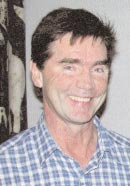
Profile of the
BCLME Programme Co-ordinator
Dr Mick O'Toole
The co-ordinator of the BCLME
After five years at the Sea
Training Programme (BENEFIT).
Programme, Dr Mick O'Toole,
Fisheries Research Laboratory,
Today BENEFIT plays a leading role
has over 30 years of experience
Mick moved to South Africa
in funding and supporting marine
in oceanographic research and
where he continued his work
science in the Benguela region.
marine resource management.
with the Sea fisheries Research
In 1997 Mick became interested
Institute in Cape Town and was
In 1972, after graduating from
in the concept of ocean manage-
awarded a PhD in Zoology from
the National University of Ireland
ment using Large Marine Eco-
the University of Cape Town for
(Galway) with a Master's degree
systems as a tool for the sustain-
his research on the ichthyoplank-
in marine biology, Mick O'Toole,
able management of living resources
ton of the Benguela Current.
embarked on the first of many
and protection of the marine en-
journeys to southern Africa. He
He returned to Galway in 1978 to
vironment. He prepared a grant
travelled to Walvis Bay, the cen-
take up a post-doctoral position
application proposal seeking funds
tre of Namibia's booming pilchard
at University College, Galway, and
from the United Nations Develop-
fishing industry, where he took
joined the National Board for
ment Programme (UNDP) to develop
up a position as a fisheries
Science and Technology in Dublin
a PDF Block B Programme for the
research officer at the Sea
in 1980 where he was project
Benguela Current LME. Following
Fisheries Research Laboratory.
manager in the marine division.
grant approval, he was appointed
Here he conducted fish egg and
In 1984 Mick established himself
regional co-ordinator of the pro-
larval surveys and studied the
as a freelance consultant working
gramme and went on to develop
spawning patterns of commer-
primarily on fisheries resource
a successful submission to the
cially important fish in relation to
assessment, environmental moni-
Global Environment Facility on behalf
environmental processes.
toring, mariculture development and
of Angola, Namibia and South Africa.
community training programmes.
Recounting his early experiences
In 2000, following the completion
in Namibia, Mick describes the
He returned to Namibia in 1992
of the Benguela Current LME PDF
thrill of working as a marine bio-
and joined the Ministry of Fisheries
Block B Process and fulfilment of
logist in an environment that was
and Marine Resources as head of
his contract, Mick returned to
alive with shoaling fish, seabirds
the Demersal Fisheries Division
Ireland and engaged himself in
and mammals.
at the new National Marine Infor-
consultancy work. Shortly there-
mation and Research Centre
after he was appointed by the
"It was a great privilege to work
(NATMIRC). Part of his role was
FAO as Regional Coordinator to
in Namibia at that time when the
to assist with building and devel-
develop the Bay of Bengal LME
northern Benguela Current
oping research capacity in fisheries
Programme and moved to Chennai,
ecosystem was bursting with
and oceanography at the new
in India where he was based for
marine life," he says.
institution. From 1995 to 1997 he
six months. It was in India that
Namibia has one of the most pro-
played a key role as Acting Chief
he received the news that his
ductive marine environments in
Executive Officer in the develop-
application for the post of Chief
the world.
ment of the Benguela Environ-
Technical Advisor to the BCLME
ment Fisheries Interaction and
Programme had been successful
and he returned to southern Africa,
taking up his position in May 2002.
Since then Mick has been enthu-
siastically pursuing the goals of the
BCLME Programme, helping to
establish Activity Centres in each
of the three countries and ensur-
ing that a number of priority proj-
ects are developed, advertised
and implemented.
Mick keeps to a rigorous schedule,
travelling constantly between Angola,
Namibia and South Africa, while
all the while finding opportunities
to visit his wife and large family
who are based in Galway, Ireland.
Benguela
continuação.../14
current news
12
Benguela
current news
Message from Mohammed Valli Moosa
The establishment of the Benguela Current Large Marine Ecosystem Programme in
March 2002, represented the culmination of many years of co-operative planning and
preparation by teams from Angola, Namibia and South Africa.
These three countries were former colonies of European powers, separated by war or
linked in unwilling partnerships; or they were enemies, bearing the brunt of aggression
by the former apartheid regime against those who fought for freedom and democracy.
The independence of Angola in 1975 and Namibia in 1989, and the election of a fully
representative government in South Africa in 1994 enabled the three countries to put
aside former differences and work together to promote better governance and sustain-
able development in the Benguela Current Large Marine Ecosystem.
Although the legacies of the turbulent past still persist - in the form of depleted
resources, poor infrastructure, and above all limited human capacity to cope with the
complexity and variability which characterise the Benguela Current LME - the BENEFIT
and BCLME programmes stand as concrete examples of true partnership between
African countries.
Since 1995, scientists from Angola, Namibia and South Africa have been working
together through the Benguela Environment Fisheries Interaction and Training (BENE-
FIT) Programme which has provided a strong foundation for the BCLME Programme.
With considerable encouragement and assistance from a number of donor countries,
particularly Norway and Germany, the BENEFIT Programme has focused on the key
fisheries resources of the region and the influence of the environment on the distribu-
tion and productivity of these resources. Training and capacity building programmes
remain a key component of the BENEFIT Programme, but one of the key achievements
of BENEFIT has been to facilitate co-operation between scientists in the three countries,
allowing them to get to know one another after years of isolation, and in spite of lang-
uage barriers. There has been considerable exchange of knowledge and technology
between the three countries which has led to more even capabilities and expertise
throughout the Benguela region.
Nevertheless, there is still much work to be done. There are many problems and issues
that extend across the national boundaries of the three countries. For example, hake,
tuna, rock lobster and pilchards are fish stocks caught on either side of the borders.
Large scale environmental influences, which alter ocean conditions throughout the
region, can greatly affect the productivity and yields from any one country. There are
common or adjacent mineral resources and subsequent boundary disputes. There
needs to be harmonisation of policies and management protocols for fisheries, for min-
ing of diamonds, for oil and gas exploration and extraction, and coastal litter and pollu-
tion of natural bays and harbours.
One of the major goals of the BCLME Programme is to finally establish a Benguela
Current Commission which will enable the three countries to engage constructively and
peacefully in resolving these issues in a true partnership of African countries.
The BCLME and BENEFIT programmes, which are conducted under the SADC banner,
are concrete and constructive initiatives towards the New Partnership for Africa's
Development (NEPAD) and contribute materially to sustainable and responsible develop-
ment of the rich oceanic resources of southern Africa. Parallel initiatives in the western
Indian Ocean will not only complete the regional management of the oceans around
southern Africa, but will provide shining examples to the rest of Africa to complement
each individual country's skills and resources for the benefit of the whole continent.
The Honourable Mohammed Valli Moosa
Minister of Environmental Affairs and Tourism
SOUTH AFRICA
13
12/continuação... o Coordenador do Programa do BCLME
O coordenador do Programa do
A Namíbia possui um dos ambi-
Ecossistemas Marinhos como
BCLME, Dr. Mick O'Toole, tem
entes marinhos mais produtivos
um instrumento para a gestão
mais de 30 anos de experiência
no mundo.
sustentável dos recursos vivos e
em pesquisa oceanográfica e na
protecção do ambiente marinho.
Após cinco anos no Laboratório
gestão de recursos marinhos.
Ele preparou um requerimento
Marinho de Investigação
de proposta para concessão de
Em 1972, após graduar-se na
Pesqueira, Mick mudou-se para a
financiamento buscando fundos
Universidade Nacional da Irlanda
África do Sul onde continuou o
do Programa das Nações Unidas
(Galway) com um grau de Mestre
seu trabalho no Instituto Marinho
para o Desenvolvimento (PNUD)
em Biologia Marinha, Mick
de Investigação Pesqueira em
para realização do Programa PDF
O'Toole, embarcou na primeira
Cape Town, sendo-lhe outorgado
do Bloco B para o LME da
das muitas viagens para a África
o grau PhD em Zoologia na
Corrente de Benguela. Depois
Austral. Viajou para Walvis Bay,
Universidade de Cape Town pela
da aprovação da concessão, foi
o centro da indústria pesqueira
sua pesquisa sobre o ictioplânc-
nomeado Coordenador Regional
da sardinha da Namíbia em fran-
ton da Corrente de Benguela.
do Programa e prosseguiu real-
co crescimento, onde foi ocupar
Ele regressou a Galway em 1978
izando uma submissão bem
o lugar de técnico superior de
para ocupar uma posição de pós-
sucedida ao Global Environment
investigação pesqueira no
doutoramento numa faculdade da
Facility em nome de Angola, da
Laboratório Marinho de
Universidade de Galway, e jun-
Namíbia e da África do Sul.
Investigação Pesqueira. Aqui
tou-se ao Conselho Nacional de
conduziu pesquisas sobre ovos e
Em 2000, na sequência da con-
Ciência e Tecnologia em Dublin
larvas de peixe e estudou os
clusão do Processo PDF do
em 1980 onde foi gestor de pro-
padrões de desova de peixes
Bloco B do LME da Corrente de
jectos na direcção marinha. Em
comercialmente importantes em
Benguela e cumprimento do seu
1984 Mick estabeleceu-se como
relação aos processos ambien-
contrato, Mick regressou à
Consultor Independente, trabal-
tais.
Irlanda e recomeçou o seu trabal-
hando principalmente em avali-
ho de consultoria. Depois disso,
Relembrando as suas experiên-
ação de recursos pesqueiros,
foi logo nomeado pela FAO para
cias anteriores na Namíbia, Mick
monitoração ambiental, desen-
Coordenador Regional para o
descreve a emoção que era tra-
volvimento da maricultura e pro-
desenvolviemento do Programa
balhar como biólogo marinho
gramas de formação da comu-
LME da Baía de Bengal e mudou-
num ambiente exuberante, cheio
nidade.
se para Chennai, na Índia, onde
de cardumes de peixes, aves
Em 1992 retornou à Namíbia e
esteve baseado durante seis
marinhas e mamíferos.
ingressou no Ministério das
meses. Foi na Índia que recebeu
"Isto era um grande privilégio tra-
Pescas e Recursos Marinhos
a notícia de que a sua candidatu-
balhar na Namíbia naquele tempo
como Chefe da Divisão das
ra para o posto de Assessor
quando o ecossistema setentri-
Pescarias de Demersais no novo
Técnico Chefe para o Programa
onal da Corrente de Benguela
Centro Nacional de Investigação
BCLME tinha sido bem sucedida
estava a fervilhar de vida marin-
e Informação Marinha (NAT-
e voltou para a África do Sul, para
ha" diz ele.
MIRC). Uma parte do seu papel
ocupar essa posição em Maio de
era ajudar na elevação da capaci-
2002. Desde então Mick tem
dade investigativa nos domínios
perseguido entusiasticamente os
das pescas e oceanografia na
objetivos do Programa BCLME,
nova instituição. De 1995 a 1997
apoiando a criação dos Centros
jogou um papel crucial como
de Actividade em cada um dos
Chefe Executivo em Exercício no
três países e assegurando-se que
desenvolvimento do Programa de
os vários projectos prioritários
Formação e Interacção Pesqueira
sejam desenvolvidos, anunciados
e Ambiental da Corrente de
e executados.
Benguela (BENEFÍT). Hoje o
Mick mantém uma programação
BENEFIT joga um papel funda-
muito rigorosa, viajando constan-
mental no financiamento e apoio
temente entre Angola, Namíbia e
à ciência marinha na região de
África do Sul, e buscando sem-
Benguela.
pre que possível uma oportu-
Em 1997 Mick interessou-se pelo
nidade para visitar suas esposa e
conceito de gestão do oceano
numerosa família que se encon-
usando os Grandes
tram em Galway, na Irlanda.
Benguela
current news
14
Benguela
current news
Mensagem de Mohammed Valli Moosa
O estabelecimento do Programa do Grande Ecossistema da Corrente de Benguela em
Março de 2002,representou o culminar de muitos anos de planificação e preparação
conjunta levada a cabo por equipas de Angola,Namíbia e África do Sul.
Esses três países foram antes colónias de potências Europeias,separados pela Guerra
ou ligadas por parcerias relutantes; ou eram inimigos,que arcaram com a maior parte do
peso da agressão realizada pelo anterior regime do apartheid contra aqueles que
lutaram pela liberdade e democracia.
A independência de Angola em 1975 e da Namíbia em 1989,e a eleição de um governo
plenamente representativo na África do Sul em 1994 permitiu que os três países
pusessem de parte as suas anteriores diferenças e trabalhassem juntos na promoção
de melhor governação e desenvolvimento sustentável no Grande Ecossistema da
Corrente de Benguela.
Embora as heranças de um passado turbulento ainda persistam -em forma de recursos
esgotados,infra-estruturas pobres, e acima de tudo capacidade limitada para lidar com a
complexidade e variabilidade que caracterizam o LME da Corrente Fria de Benguela os
programas BENEFIT e BCLME destacam-se como exemplos concretos da verdadeira
associação entre países Africanos.
Desde 1995,cientistas de Angola,Namíbia e África do Sul têm trabalhado juntos no
Programa de Formação e Interacção das Pescarias do Ambiente de Benguela (BENE-
FIT)que tem proporcionado uma base sólida para o Programa BCLME.
Com o encorajamento e apoio consideráveis de uma série de países doadores,particular-
mente Noruega e Alemanha, o Programa BENEFIT tem-se concentrado nos principais recur-
sos pesqueiros da região e a influência do ambiente na distribuição e produtividade desses
recursos.Os programas de formação e elevação da capacidade continuam sendo as compo-
nentes-chave do Programa BENEFIT,mas uma das principais realizações do BENEFIT foi a
de facilitar a cooperação entre os cientistas nos três países,permitindo-lhes conhecer-se uns
aos outros depois de anos de isolamento,e apesar da barreira da língua.Houve uma consid-
erável troca de conhecimentos e tecnologia entre os três países que resultou num aumento
das capacidades e perícia na região da Corrente Fria de Benguela.
Apesar de tudo,ainda há muito trabalho por fazer.Existem muitos problemas e questões
que se estendem para além das fronteiras nacionais dos três países.Por exemplo,a
pescada,o atum,a lagosta da pedra e a sardinha pilchard são "stocks "de peixes captura-
dos em qualquer dos lados da fronteira.As influências ambientais em grande escala,que
alteram as condições oceânicas por toda a região,pode afectar grandemente a produtivi-
dade e o rendimento de qualquer um dos países. Existem recursos minerais comuns ou
adjacentes e subsequentes disputas fronteiriças.Há necessidade de se harmonizarem as
políticas e os protocolos sobre pescas,exploração de diamantes,sobre exploração e
extracção de petróleo e gás e lixo costeiro e poluição das baías naturais e portos.
Um dos principais objectivos do Programa BCLME é estabelecer finalmente uma
Comissão para a Corrente de Benguela que seja capaz de engajar construtivamente os
três países e pacificamente resolver essas questões numa verdadeira associação de
países Africanos.
Os programas BCLME e BENEFIT,que são conduzidos sob égide da SADC,são iniciativas
concretas e construtivas rumo à Nova Parceria para o Desenvolvimento de África (NEPAD)e
contribuem materialmente para o desenvolvimento sustentável e responsável dos ricos
recursos oceânicos da África austral.Iniciativas paralelas no Oceano Índico ocidental não
irão apenas completar a gestão regional dos oceanos ao redor da África austral,mas irão
proporcionar exemplos brilhantes para o resto de África para complementar as aptidões
individuais e recursos de cada um dos países para o bem de todo o continente.
O Honorável Mohammed Valli Moosa
Ministro do Ambiente e do Turismo
ÁFRICA DO SUL
15
BCLME holds key to Indian Ocean LMEs
Some of the lessons learnt in the process of establishing the BCLME Programme will
be highly applicable in other parts of Africa, and will undoubtedly assist with the
establishment of the Agulhas and Somali Current large marine ecosystem (LME)
programmes.
This is the opinion of Nik Sekhran,
and Mozambique, while the Somali
largely intact; however pressures
regional co-ordinator of the Global
Current LME washes the shores
on the system are accelerating and
Environment Facility (GEF) Bureau
of Kenya and Tanzania.
it is vulnerable to environmental
for Development Policy in south-
perturbation.
"It is not intended that GEF funds
ern Africa.
will fix everything, but the intention
"For example, shifts in circulation
Both the Agulhas Current and
is to intervene to establish cost-
and heat transfer have an impact
Somali Current LMEs have secured
effective management of these
on biota, as well as a marked im-
PDF Block B funding from the GEF
LMEs," says Mr Sekhran.
pact on economies and livelihoods
and will be established according
He says that the GEF is the world's
in the three countries," says
Nik Sekhran
to the same process that was
largest multilateral fund which is
Mr Sekhran.
followed in the establishment of
aimed at assisting developing
He believes that partnerships are
the BCLME Programme; namely
nations to meet their commitments
key to the success of the BCLME
the development of a Transboundary
under global agreements.
Programme and points to the
Diagnostic Analysis (TDA) for
possibility of the private sector
analysing information on trans-
"The GEF has been committing
funding on-going research in the
boundary concerns and their root
resources to protecting large
field of sustainable development.
causes, and the formulation of a
marine ecosystems and the BCLME
country-driven Strategic Action
Programme is funded under that
"We hope to create a stakeholder
Programme (SAP) for determining
effort," he explains.
constituency and watchdog func-
the policy, legal and institutional
Sekhran says that the GEF is in-
tion and thereby ensure that best
reforms and investments that are
terested in the Benguela Current
environmental policies are followed,"
needed to address these concerns.
LME because it is a highly pro-
he concludes.
ductive, cold water upwelling
The Agulhas Current LME is shared
system whose integrity remains
between South Africa, Madagascar
Fact File:
grants and leveraged an additional $12 billion
G L O B A L
(R84 billion) in co-financing from other sources
to support more than 1 000 projects in over 140
E N V I R O N M E N T
developing nations and countries with economies in
F ACILITY
transition.
In 1995, the GEF Council included the concept of
The Global Environment Facility (GEF) forges
LMEs in its Operational Strategy, as a vehicle for
international co-operation and finances actions to
promoting the ecosystem-based management of
address six critical threats to the global environ-
coastal and marine resources, within a framework
ment: biodiversity loss, climate change, degrada-
of sustainable development
tion of international waters, ozone depletion, land
In August 2002, 32 donor nations pledged nearly
degradation, and persistent organic pollutants.
$3 billion (R21 billion) to fund the work of the
The GEF has allocated $4 billion (R28 billion) in
GEF for the next four years.
16

Benguela
current news
Strong Support from UNDP Namibia
The Environment Unit of the United Nations Development Programme (UNDP) in Namibia
played an important role in supporting the establishment of the BCLME Programme,
and it continues to play a role in the development of the regional initiative.
UNDP Namibia is the implement-
Summit, world leaders agreed to
efforts to achieve sustainable
ing agent for the BCLME Pro-
a set of targets for combating
development.
gramme and the Environment
poverty, hunger, disease, illiteracy,
Dr Badcock says that UNDP
Unit offers administrative and
environmental degradation and
Namibia is proud of the leading
advisory support to the Programme,
discrimination against women.
role that Namibia has played in
through close co-operation with
The targets are now called the
the development of the BCLME
the Programme Co-ordinating Unit
Millennium Development Goals
Programme.
and the Programme Steering
and are placed at the heart of the
Committee.
global agenda.
"When a regional programme is
based in your country, there always
According to the Resident Repre-
UNDP Namibia focuses intensively
Dr Jacqui Badcock
tends to be more focus on it; so
sentative of UNDP Namibia,
on eradicating poverty and the
we have to ensure that South
Dr Jacqui Badcock, the BCLME
Environment Unit falls within the
Africa and Angola have their voice
Programme is the first project in
ambit of UNDP's poverty eradica-
and the UNDP insists on that,"
the marine environment to be
tion portfolio. The Unit strives to
she says.
supported by UNDP Namibia.
mainstream environment in
development activities in order to
Another regional environment
"The BCLME Programme is a
ensure their sustainability through
programme that is supported by
fairly unique programme for this
policy dialogues and by creating
UNDP Namibia is OKACOM, a
region," says Dr Badcock. "It fits
awareness at all levels of society.
project that aims to improve trans-
so well into the UNDP's focus on
Resource mobilisation for environ-
boundary joint management of
the Millennium Development Goals,
mental and poverty relief efforts
the Okavango basin, in order to
especially the goals of eradicat-
in Namibia is also an important
achieve sustainable use of water
ing extreme hunger and striving
role of UNDP. The Programme
and aquatic resources. It is a
for environmental sustainability."
strives to solicit international
regional project involving Namibia,
Dr Badcock explains that in 2000,
funding sources for both govern-
Angola and Botswana.
at the United Nations Millennium
ments and civil society in their
Fact File:
Millenium Development Goals
The Millennium Development Goals provide a frame-
work for the entire UN system to work coherently
together toward a common end. The Millennium
Development Goals that are to be achieved by 2015 are:
Eradicate extreme hunger and poverty
Achieve universal primary education
Promote gender equality and empower women
Reduce child mortality
Improve maternal health
Combat HIV/AIDS, malaria and other diseases
Ensure environmental sustainability
Develop a global partnership for development
17
Programa BCLME - a chave para a com-
preensao dos LMES da corrente das
Agulhas e Somalia
Algumas das lições aprendidas
assegurar o financiamento do
A Global Environment Facility
no processo de criação do Programa
Bloco B do PDF do GEF e será
A Global Environment Facility (GEF) incentiva a cooperação inter-
BCLME serão grandemente aplicá-
estabelecido de acordo com o
veis noutras partes de África, e
mesmo processo que foi seguido
nacional e financía acções para resolução das seis ameaças críticas
ajudarão na criação do Programa
na criação do Programa BCLME.
para o ambiente global: perda da biodiversidade, alteração climática,
para o Grande Ecossistema Marinho
O LME da Corrente das Agulhas
degradação das águas internacionais, deplecção do ozono, degra-
(LME) da Corrrente das Agulhas
e Somália é compartilhado entre
dação da terra, e poluentes orgânicos persistentes.
e Somália.
a África do Sul, Madagáscar,
O GEF adjudicou $4 biliões (R28 biliões) em concessões e acres-
Moçambique, Quénia e Tanzânia.
Esta é a opinião de Nik Sekhran,
centou uns $12 biliões adicionais (R84 biliões) ao co-financiamento
coordenador regional do Departa-
O GEF é o maior fundo mundial
de outras fontes para apoiar mais de 1 000 projectos em mais de
mento da "Global Environment
multilateral que visa apoiar as
140 nações e países com economias em transição.
Facility" (GEF) para a Política de
nações em desenvolvimento a
Em 1995, o Conselho do GEF introduziu o conceito de LMEs na
Desenvolvimento para a África
tornarem-se capazes de poder
Austral.
honrar os seus compromissos no
sua estratégia operacional, como um veículo para promoção da
que concerne a acordos globais.
gestão costeira e dos recursos marinhos, baseada no ecossistema,
O LME da Corrente das Agulhas
numa perspectiva de desenvolvimento sustentável.
e Somália está em processo de
Em Agosto de 2002, 32 nações doadoras prometeram quase $3 biliões
(R21 biliões) para financiar o trabalho do GEF nos próximos quatro anos.
O Pnud da Namibia dá forte Apoio ao
Programa BCLME
A Unidade Ambiental do Programa
O PNUD Namíbia concentra-se
Millennium Devlopment Goals
das Nações Unidas para o Desen-
essencialmente sobre a erradicação
Os Objectivos de Desenvolvimento para o Milénio fornecem um
volvimento (PNUD) na Namíbia
da pobreza e a Unidade Ambiental
representou um papel muito impor-
enquadra-se no âmbito das activi-
quadro para todo o sistema da ONU para se trabalhar coerente-
tante no apoio à criação do Pro-
dades do PNUD para a erradicação
mente em conjunto em prol de um fim comum. Os Objectivos
grama BCLME e continua a apoiar
da pobreza. A Unidade procura
de Desenvolvimento para o Milénio a alcançar até 2015 são:
o desenvolvimento da iniciativa
enquadrar o ambiente nas suas
Erradicação da fome extrema e da pobreza
regional.
principais actividades de desen-
volvimento, pretendendo deste
Obtenção da educação primária universal
De acordo com o Representante
modo assegurar a sua sustenta-
Promoção da igualdade do género e emancipação da mulher
Residente do PNUD na Namíbia,
bilidade através do diálogo políti-
Redução da mortalidade infantil
Dr. Jacqui Badcock, o Programa
co e do despertar de uma con-
Melhoria da saúde materna
BCLME é o primeiro projecto sobre
sciência ambiental a todos os
Combate ao HIV/SIDA, paludismo e outras doenças
ambiente marinho a ser apoiado
níveis da sociedade. A mobiliza-
pelo PNUD da Namíbia. "O Pro-
Garantia da sustentabilidade ambiental
ção de recursos para os esforços
grama BCLME é um programa
Desenvolvimento de uma parceria global para o desenvolvimento
ambientais e alívio da pobreza na
exclusivo para esta região," diz o
Namíbia é também uma tarefa
Dr. Badcock. "Ele enquandra-se
importante do PNUD. O Programa
muito bem no enfoque do PNUD
luta para encontrar fontes de
relativamente aos Objectivos de
financiamento internacional para
Desenvolvimento para o Milénio,
os governos e sociedade civil, nos
especialmente nos objectivos de
seus esforços para consecussão
erradicação da fome extrema e
do desenvolvimento sustentável.
da luta pela sustentabilidade
ambiental.
Benguela
current news
18
Benguela
current news
Profiles of Activity Centre Directors
Maria de Lourdes Sardinha
Maria de Lourdes Sardinha, or "Milu"
The task of the Biodiversity, Eco-
oped by the task groups, and to
as she is better known within the
system Health & Pollution Activity
give advice for submission to the
marine science community, is the
Centre, as outlined in the BCLME
Programme Steering Committee.
director of the Biodiversity, Eco-
Programme's Project Document,
This process is well under way
system Health & Pollution Activity
is to develop and co-ordinate the
and it is expected that the first
Centre in Luanda, Angola.
work of the Advisory Group on
projects to be developed by the
Biodiversity, Ecosystem Health &
Biodiversity, Ecosystem Health &
A fisheries biologist by training,
Pollution. This includes the co-
Pollution Activity Centre, will be
Maria holds a masters degree in
ordination of projects aimed at
advertised by year-end.
fisheries biology and management
producing indices of ecosystem
from the University of Bergen in
"I have high expectations for the
health, assessing biodiversity
Norway. Prior to her appointment
BCLME Programme," says Maria,
status, identifying threatened
as director of the Activity Centre,
"because it will help to improve
communities, species and habi-
she held a research position at the
the management plans and skills
tats and preventing, reducing,
Instituto de Investigacao Marinha
at regional level."
controlling and monitoring all
(Institute of Marine Research) in
sources of transboundary pollu-
Maria spends her leisure time
Luanda for 15 years. During this
tion in the BCLME area.
reading, watching television or
period she was appointed National
exercising. She enjoys reading
Co-ordinator of the BCLME Pro-
Maria says that one of the most
fiction and non-fiction in both English
gramme, a position she has relin-
important tasks of the Advisory
and Portuguese and is able to
quished to Nkosi Luyeye since
Group has been to provide tech-
communicate well in French.
joining the Programme on a full
nical support for the assessment
time basis.
of the project proposals devel-
Maria de Lourdes Sardinha, ou
Biodiversidade, Saúde do
Maria, "porque ele ajudará a mel-
"Milú" como é mais conhecida
Ecossistema & Poluição. Isto
horar os planos de gestão e as
pela comunidade científica marin-
inclui a coordenação dos projec-
capabilidades regionais.
ha, é a Directora do Centro de
tos que visam a produção de
Maria ocupa o seu tempo de
Actividades de Biodiversidade,
índices sobre saúde do ecossis-
lazer lendo, vendo televisão ou
Saúde do Ecossistema &
tema, avaliação do estado da bio-
fazendo exercícios. Ela gosta de
Poluição em Luanda, Angola.
diversidade, identificação das
ler ficção e não só, tanto em
comunidades, espécies e habi-
Bióloga pesqueira de formação,
Inglês como em Protugues e é
tats ameaçados e prevenção,
Maria possui o grau de Mestrado
capaz de se expressar bem em
redução, controle e monitoriza-
em biologia pesqueira e gestão
Francês.
ção de todas as fontes de
atribuído pela Universidade de
poluição transfronteiriça na área
Bergen, na Noruega. Antes da
de BCLME.
sua nomeação como Directora
do Centro de Actividades, ela tra-
Diz Maria que uma das tarefas
balhou como investigadora no
mais importantes do Grupo
Instituto de Investigação Marinha
Consultivo tem sido o apoio téc-
em Luanda durante 15 anos. Ao
nico prestado na avaliação das
longo desse período foi nomeada
propostas de projecto desenvolvi-
Coordenadora Nacional do
das pelos Grupos de Trabalho, e
Programa BCLME, uma posição
a assessoria que dá quando da
que passou para Nkosi Luyeye
sua submissão ao Comité
desde que assumiu o Programa
Director do Projecto. Este
em tempo integral.
processo está no bom caminho e
espera-se que os primeiros pro-
A tarefa do Centro de
jectos relativos à componente do
Actividades de Biodiversidade,
BCLME sobre Biodiversidade,
Saúde do Ecossistema &
Saúde do Ecossistema &
Poluição, como tal como está
Poluição serão anunciados no
Maria de Lourdes Sardinha and Gabriela Nascimento of UNDP
descrita no Documento do
final do ano.
Angola, are pictured here on a field trip to an artisanal fishing
Procjeto do Programa BCLME, é
village at Buraco, South of Luanda. UNDP Angola provides
desenvolver e coordenar o trabal-
" Eu tenho expectativas elevadas
administrative and advisory support to the Activity Centre for
ho do Grupo Conselheiro sobre
para o Programa BCLME" diz
Biodiversity, Ecosystem Health and Pollution.
19
Lesley Staegemann
Lesley Staegemann is the director
her two children, now 18 and 21,
to monitoring the physical, chemical
of the Environmental Variability
Lesley took up a position in the
and biological changes which under-
Activity Centre which is based in
Oceanography Department at
pin the utilisation of the resources
Cape Town, at the offices of the
the University of Cape Town.
of the Benguela. In October the
Department of Environmental
She remained at the University
Activity Centre was expecting to
Affairs and Tourism.
for 12 years, working in the Ocean
award an initial nine project con-
and Climatology group.
tracts for studies in the area of low
Lesley took up her position with
oxygen water and harmful algal
the BCLME Programme late last
The task of the Environmental
blooms. A further initial 6 projects
year, after working for the Pro-
Variability Activity Centre is to
are being contracted to BENEFIT.
gramme on a contractual basis
help develop a comprehensive
for several months. Like Hashali
environmental monitoring system
Lesley is enthusiastic about her
and Maria, Lesley has many years
throughout the Benguela Eco-
work with the BCLME Programme,
of experience in marine science,
system. The centre will coordinate
saying that she is "thoroughly
having begun her career at the
baseline monitoring studies of the
enjoying" the challenges of regional
Council for Scientific and Industrial
marine environment undertaken by
work.
Research (CSIR) in 1981, after com-
Angola, Namibia and South Africa;
In her free time, Lesley enjoys the
pleting her honours degree in
develop environmental monitoring
outdoors, traveling and reading.
science. After taking a break
expertise where it is currently
from her career in order to raise
lacking; and develop new approaches
Lesley Staegemann é a Directora
ciência marinha, tendo começado a
de Climatologia e Oceanos.
do Centro de Actividade de
sua carreira no Conselho de
A tarefa do Centro de Actividade de
Variabilidade Ambiental que se
Investigação Científica e Industrial
Variabilidade Ambiental é apoiar o
encontra situado em Cape Town,
(CSIR) em 1981, após ter terminado
desenvolvimento de um sistema de
nos escritórios do Departamento
seu o grau de honra em ciência.
monitorização ambiental detalhado
para as Questões Ambientais e do
Após ter feito um intervalo na sua
ao longo de todo o Ecossistema de
Turismo. Lesley ocupou a posição
carreira para criar as suas duas cri-
Benguela. O centro irá coordenará
no Programa BCLME no fim do ano
anças, agora com 18 e 21 anos,
estudos de base de monitorização
passado, depois de ter estado a tra-
Lesley ocupou uma posição no
do ambiente marinho realizados por
balhar para o Programa numa base
Departamento de Oceanografia na
Angola, Namíbia e África do Sul;
contratual durante vários meses.
Universidade de Cape Town. Ela
desenvolver a competência em
Tal como Hashali e Maria, Lesley
permaneceu 12 anos na
monitorização ambiental ali onde
tem muitos anos de experiência em
Universidade, trabalhando no Grupo
actualmente não exista; e desen-
volver novos métodos de monitor-
ização das alterações físicas, quími-
cas e biológicas que alicercem a uti-
lização dos recursos da Corrente
Fria de Benguela. Em Julho e em
Agosto de 2003, espera-se que o
Centro de Actividade assine nove
contratos iniciais de projectos para
estudos no domínio das águas com
baixo teor de oxigénio e de eclosão
de algas tóxicas. Mais cerca de 6
projectos adicionais estão a ser
negociados com o BENEFIT, para
adjudicação dos respectivos con-
tratos. Lesley é entusiástica acerca
do seu trabalho no Programa
BCLME, dizendo que está a "gostar
enormemente" dos desafios do tra-
balho regional. Nos seus tempos
livres, Lesley gosta de ficar ao ar
livre, de viajar e de ler.
Members of the Consultative Group on Environmental Variability relax
after a meeting in Cape Town.
20
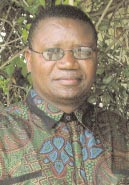
Benguela
current news
Dr Hashali Hamukuaya
Dr Hashali Hamukuaya is the director
Hashali headed the hake research
living resources; the improvement
of the Marine Living Resources
programme at NATMIRC. In 1998
of the fisheries resource assessment
Activity Centre which is based in
he relocated to Windhoek where
of the BCLME; the development
Swakopmund, Namibia.
he was appointed deputy director
of projects for the conservation,
of resource management at the
protection and rehabilitation of
Hashali trained in the United States,
Ministry of Fisheries and Marine
marine living resources; and the
first at Dillard University in New
Resources.
development of specific techniques
Orleans, where he received a
for mariculture that do not harm the
Bachelor of Science degree, and
In 2002, Hashali left the Ministry
environment or biological diversity.
later at the State University of
to take up a full time position with
New York where he received a
the BCLME Programme.
Hashali says that the work of the
Master of Science degree in Marine
Activity Centre is well underway.
The task of the Advisory Group on
Environmental Science. Hashali
In total, 7 high priority project pro-
Marine Living Resources, for which
completed his Doctoral degree
posals have been approved by the
Hashali's office is a focal point, is
through the University of Port
Programme Steering Committee
to provide technical support for
Elizabeth in 2000.
and advertised internationally. A
the sustainable management,
further 11 projects are being con-
Hashali has been involved with
utilisation and protection of fish-
tracted to BENEFIT.
marine living resources for all of
eries and other living marine
his professional life. He spent
resources of the BCLME. This
Hashali spends most of his free
seven years as a researcher at
involves the co-ordination, at a
time with his children, Dilona, 12,
the National Marine Information
regional level, of a legal and
and Hashali, 11.
and Research Centre (NATMIRC)
institutional framework for the
in Swakopmund; for five years,
sustainable utilisation of marine
O Dr. Hashali Hamukuaya é o
das Pescas e Recursos Marinhos.
foram aprovadas pelo Comité
Director do Centro de Actividade
Director do Programa e postas a
Em 2002, Hashali deixou o
de Recursos Marinhos Vivos, situa-
concurso internacional. Contratos
Ministério para ocupar um lugar em
do em Swakopmund, na Namíbia.
para uns outros 11 projectos adi-
tempo integral no Programa
Hashali formou-se nos Estados
cionais estão a ser negociados com
BCLME. A tarefa do Grupo
Unidos, primeiramente na
o BENEFIT.
Conselheiro para os Recursos
Universidade de Dillard em New
Marinhos Vivos, para o qual Hashali
Hashali passa a maioria do seu
Orleans, onde recebeu o grau cien-
é o ponto focal, é prestar apoio téc-
tempo livre com as suas crianças,
tífico de Bacharel, e mais tarde na
nico sobre gestão sustentável, uti-
Dilona, 12, e Hashali, 11.
Universidade do Estado de New
lização e protecção das pescas e
York onde recebeu o grau científico
de outros recursos marinhos vivos
de Mestrado em Ciência Ambiental
do BCLME. Isto envolve a coorde-
Marinha. Hashali terminou o seu
nação, a nível regional, de um
Doutoramento na Universidade de
quadro legal e institucional para a
Port Elizabeth em 2000.
utilização sustentável dos recursos
Hashali esteve envolvido com os
marinhos vivos; a melhoria da avali-
recursos vivos marinhos ao longo
ação dos recursos pesqueiros do
de toda sua vida profissional. Ele
BCLME; o desenvolvimento dos
trabalhou sete anos como investi-
projectos para a conservação, pro-
gador no Centro Nacional de
tecção e recuperação dos recursos
Investigação e Informação Marinha
marinhos vivos; e desenvolvimento
(NATMIRC) em Swakopmund;
de técnicas específicas de maricul-
durante cinco anos Hashali dirigiu o
tura que não prejudiquem o ambi-
programa de investigação da
ente ou a diversidade biológica.
pescada no NATMIRC. Em 1998
Hashali diz que o trabalho do
mudou-se para Windhoek onde foi
Centro de Actividade está no bom
nomeado Director Adjunto de
caminho. No total, 7 propostas de
Gestão de Recursos do Ministério
projecto de prioridade elevada
Dr Larry Hutchings, South African Co-ordinator of the
BCLME Programme, and Dr Mick O'Toole, Chief Technical
Advisor, are pictured at the launch of the BCLME Programme
poster exhibition at the Two Oceans Aquarium in Cape Town.
21

A Directora Sublinha Quatro Áreas
Importantes para Angola
Ocompromisso de Angola para com o Programa BCLME advém do desejo de trabalhar
para a gestão sustentável do Grande Ecossistema Marinho da Corrente de Benguela;
contudo, há quatro áreas principais que são particularmente importantes para o país.
Estas são a pesca artesanal, a aquacultura, a gestão de recursos compartilhados e a
elevação do nível de competência dos seus quadros.
A importância destas quatro questões
Estima-se que existam em Angola
O Desenvolvimento da
foi destacada pela Dra. Victória
cerca de 20 000 pescadores arte-
Aquacultura
de Barros Neto, presidente do
sanais que capturam uma grande
Comité Director do Programa
variedade de espécies, incluindo
A Dra. Barros Neto diz que o
BCLME, e Directora Geral do
garoupas, cachuchos, carapaus,
desenvolvimento e a gestão da
Instituto Angolano de Investigação
sardinhas, camarão e lagosta. As
aquacultura é uma outra prioridade
Marinha (IMM). A Dra. de Barros
suas capturas fornecem rendimentos
para Angola e para a região da
Neto falou em Luanda para a revista
directos a aproximadamente 100
Corrente Fria de Benguela. As
Victoria
"Noticias da Corrente de Benguela"
000 pessoas, a maior parte delas
águas tropicais e subtropicais ao
de Barros Neto
em Agosto.
mulheres que processam e ven-
largo de Angola parecem fornecer
dem o pescado.
Ela disse que o desenvolvimento
numerosas oportunidades para o
da pesca artesanal em Angola é
"Anteriormente o apoio do Governo"
desenvolvimento da aquacultura,
uma prioridade nacional e que a
foi dado à pesca industrial, mas
incluindo a cultura de camarão e
participação de Angola no Programa
agora nós estamos muito interes-
de mexilhão. Em Angola existe
BCLME terá implicações impor-
sados nas comunidades piscatórias;
uma série de iniciativas privadas
tantes para a gestão da pesca
isto é particularmente importante
para desenvolvimento de "fazen-
artesanal da região. Espera que
à luz das prioridades globais, tais
das de peixes" (fish farms) e o
os estudos da pesca artesanal
como a redução da pobreza extrema",
Ministério das Pescas de Angola
que estão a ser realizados pelo
diz a Dra. de Barros Neto.
está preocupado porque não existe
Programa BCLME em Angola
actualmente nenhuma estrutura
Alguns dos problemas enfrenta-
produzam lições valiosas para a
que monitorize e regulamente
dos pela pesca artesanal em Angola
gestão da pesca artesanal noutras
essas actividades.
incluem a falta de instalações
partes da região. A pesca arte-
básicas nos locais de descarga, e
"O objectivo seria desenvolver um
sanal é muito limitada na Namíbia,
quase nenhumas instalações de
quadro legal para o desenvolvi-
mas na África do Sul continuam os
refrigeração ou de processamen-
mento destas actividades e para
debates acesos sobre os direitos
to, com a resultante perda do
harmonizar as políticas de aqua-
da pesca artesanal.
valor do pescado.
cultura na região" diz a Dra. de
Director Outlines
Four Focus Areas for Angola
Angola's commitment to the
chairperson of the BCLME Pro-
BCLME Programme stems from
gramme Steering Committee,
a desire to work towards the
and the General Director of the
sustainable management of the
Angolan Instituto de Investigacao
Benguela Current Large Marine
Marinha (IIM). Dr de Barros Neto
Ecosystem; however, there are
spoke to Benguela Current News
four areas of focus that are par-
in Luanda in August.
ticularly important to the country.
She says that the development
These are artisanal fisheries,
of Angola's artisanal fisheries is a
aquaculture, the management of
national priority and that Angola's
shared resources and capacity
participation in the BCLME
building.
Programme will have important
The significance of these four
implications for the management
issues was highlighted by Dr
of artisanal fisheries across the
Benguela
Victória de Barros Neto, the
region. She hopes that studies of
current news
22
Benguela
current news
Barros Neto. O desenvolvimento
em aquacultura.
da capacidade humana é uma outra
A Dra. de Barros Neto diz que com
prioridade para Angola. A Dra.
a troca de conhecimentos na região
de Barros Neto esclarece que há
e o incentivo que é a formação
uma diminuição evidente de
em domínios especializados, o
capacidade - quer humana como
Programa BCLME contribuirá para
infra-estructural - de sul a norte
construir uma ponte sobre a "gap"
da região da Corrente Fria de
existente entre Angola e seus
Benguela. Ela espera que o Pro-
vizinhos. Da mesma forma, ela
grama BCLME contemple esse
acredita que os recursos compar-
aspecto.
tilhados, tais como a sardinha de
"A questão da criação de capaci-
Moçâmedes, a pescada e o caran-
dade deve ser vista urgentemente,
guejo devem ser geridos conjun-
se se pretende que Angola seja
tamente de forma a facilitar uma
realmente um parceiro igual na
utilização sustentável.
região do BCLME" diz a Dra. de
"Nós acreditamos que o
Barros Neto. O Instituto de
Programa é muito importante e
Investigação Marinha (IMM) em
nós estamos a trabalhar para a
Luanda emprega 200 pessoas,
realização de seus objetivos; não
muitas das quais estão colocadas
somente para o benefício das
em estações de campo no Namibe
gerações actuais, mas também
e Tômbwa no sul do país, e no
para as gerações futuras" explica
Lobito e Benguela no centro de
a Dra. de Barros Neto.
Angola.
"Nós temos uma grande respon-
As principais áreas de investigação
sabilidade"... enquanto represen-
são recursos, utilização de recur-
tantes do Governo de Angola nós
sos, aquacultura e oceanografia.
estão a fazer o nosso melhor
Os investigadores realizam cruzeiros
para conseguirmos estes obje-
de avaliação de "stocks" comer-
importantes. Estes incluem a cri-
tivos."
ciais, incluindo pequenos pelágicos,
ação dos três Centros de
demersais e crustáceos, e inves-
A Dra. de Barros Neto acredita
Actividade, dos Grupos
tigam formas de mais valia para
que o Programa BCLME está a
Conselheiros e da formulação de
os peixes e produtos derivados
progredir bem e que na primeira
uma série de projetos, alguns
de peixe, além da investigação
etapa do processo da sua imple-
dos quais submetidos a concurso
oceanográfica e das experiências
mentação foram realizados feitos
público e adjudicados.
artisanal fisheries that are con-
shrimps and lobsters. Their catch
Some of the problems faced by
ducted by the BCLME
provides a direct income for
artisanal fishers in Angola include
Programme in Angola will pro-
approximately 100 000 people,
a lack of basic facilities at landing
vide valuable lessons for the
many of them women who
sites, and little or no refrigerating
management of artisanal fish-
process and sell the catch.
or processing facilities, with a
eries elsewhere in the region.
resultant loss of catch value.
"Previously our Government's
There are very limited artisanal
support was for the industrial
fisheries in Namibia, but in South
Aquaculture development
fisheries, but now we are very
Africa the rights of artisanal fish-
concerned with the fishing com-
Dr de Barros Neto says that the
ers continue to be hotly debated.
munities; this is especially impor-
development and management
There are an estimated 20 000
tant in the light of global priori-
of aquaculture is another priority
artisanal fishers in Angola who
ties, such as the alleviation of
for Angola and the Benguela
catch a wide variety of species,
extreme poverty," says Dr de
region. The sub tropical and tropi-
including groupers, sea breams,
Barros Neto.
horse mackerel, pilchards,
continuação.../24
23
"Our goal would be to develop a
addition to oceanographic research
legal framework for the develop-
and aquaculture experiments.
ment of these activities and to
Dr de Barros Neto says that by
harmonise aquaculture policies
sharing knowledge across the
across the region," says Dr de
region and encouraging training
Barros Neto.
in specialised fields, the BCLME
The development of human capacity
Programme will contribute towards
is another priority for Angola.
bridging the gap between Angola
Dr de Barros Neto points out that
and its neighbours. Similarly, she
there is a distinct decrease in
believes that shared resources,
capacity both human and infra-
such as pilchards, hake and crab
structure from south to north in
should be jointly managed to
the Benguela region. She hopes
facilitate sustainable utilisation.
that this will be addressed by the
"We believe that the Programme
BCLME Programme.
is very important and we are work-
"The issue of capacity building
ing towards achieving its objectives;
must be urgently addressed if
not only for the benefit of current
Angola is to be an equal partner
generations, but future genera-
in the BCLME region," says Dr
tions," explains Dr de Barros Neto.
de Barros Neto.
"We have a big responsibility...
The Instituto de Investigacao
as representatives of the Govern-
Marinha (IMM) in Luanda employs
ment of Angola we are going to do
200 people, many of whom are
our best to see that these objec-
deployed at field stations in Namibe
tives are achieved."
and Tombwa in the south of the
Dr de Barros Neto believes that
country, and at Lobito and Benguela
cal waters off Angola would
the BCLME Programme is pro-
23/continuação...
in central Angola.
appear to provide numerous
gressing well and that important
opportunities for aquaculture,
Key research areas are resources,
achievements have been made
including the culture of shrimps
utilisation of resources, aquacul-
in the first stage of the imple-
and mussels. A number of pri-
ture and oceanography. Researchers
mentation process. These
vate initiatives to develop fish
carry out stock assessment sur-
include the setting up of the
farms have begun in Angola and
veys of commercial stocks, in-
three Activity Centres, the estab-
the Angolan Ministry of Fisheries
cluding small pelagics, demersal
lishment of the advisory groups
is concerned that there is currently
stocks and crustaceans, and
and the formulation of a number
no framework in place for monitoring
research ways of adding value to
of projects, some of which have
and regulating these activities.
fish and fish products. This is in
been advertised and allocated.
Fact File:
Resources of the BCLME
Marine life that is not harvested, such as whales,
dolphins and seabirds is increasingly recognised
The productive waters of the BCLME support a
as a valuable resource for nature-based tourism.
number of commercially exploited fish, including
The BCLME's nearshore and shelf environments
hake, anchovy, pilchard (sardine), horse mackerel,
have rich reserves of oil, gas and minerals, parti-
tuna and snoek, as well as crustacean fisheries for
cularly diamonds. While Angola is already a sig-
rock lobster in the south and shrimp and deep-sea
nificant oil producing nation, Namibia and
crab in the north.
South Africa are actively developing their own
Artisanal and small-scale fisheries provide an im-
oil and gas industries. The marine diamond min-
portant livelihood and food source for coastal com-
ing industry in Namibia and South Africa yields
munities in some areas, while recreational fishing
close to a million carats of diamonds each year.
for various species of linefish is a popular past-time.
Benguela
current news
24

Benguela
current news
The Role of UNOPS
by Margaret Chi
The United Nations Office for
been with UNOPS for ten years,
Project Services is pleased to
including two years in the
have been invited by UNDP to
Finance and Budget Division, and
serve as executing agency for
eight years in ENVP where she
the GEF-funded BCLME
has managed projects in the field
Programme. As executing
of environment, health and devel-
agency, our responsibility is to
opment, microfinance and pover-
carry out projects and pro-
ty alleviation. Prior to working
grammes on behalf of our UN
with UNOPS, Margaret was an
clients, with a view to efficiency,
English instructor in China at the
cost-effectiveness, and in accor-
Beijing Foreign Language
dance with UN operational and
Institute. She holds a Masters
financial guidelines.
Degree in International Affairs
Margaret Chi
from Columbia University and a
Within UNOPS, the project is
Bachelors Degree in Literature
managed by the Division for
from Binghamton University,
Environmental Programmes
New York.
(ENVP). ENVP has had a success-
ful history in supporting UNDP in
Laura Arcila, Operations
the implementation of GEF
Assistant, has been with ENVP
International Waters Programmes
for five years, during which time
since the early 1990s, beginning
she has provided operations sup-
with the Danube River Basin
port to the Montreal Protocol and
Programme, and through the
International Waters portfolios.
years, the Dnieper, Tumen and
Prior to joining UNOPS, Laura
Nile Rivers, Lake Tanganyika, the
worked with the UNDP Regional
Black, Red, Aral and Caspian
Bureau for Latin America and the
Seas. In addition to International
Caribbean. Laura holds a
Waters projects, the Division
Bachelors Degree in Accounting
executes projects in the areas of
from the University of Quindio,
biodiversity, Montreal Protocol,
Columbia.
energy and climate change, and
Both Margaret and Laura are
regional and global poverty allevi-
delighted to be part of the
ation and capacity building.
Laura Arcila
BCLME Programme team and
Margaret Chi, Portfolio Manager,
feel privileged to be involved
is the UNOPS focal point for the
with such an interesting, impor-
BCLME Programme. She has
tant and challenging Programme.
25
Data Centre Could Provide Assistance
The Southern African Data Centre for Oceanography (SADCO) is well placed to
assist with the data management needs of the BCLME Programme, writes
Marten Gründlingh.
African Council for Scientific and
Resources. These organisations
Industrial Research (CSIR) and is
contribute to the costs of the
based in Stellenbosch, South Africa.
Data Centre, and their members
are provided with a wide range of
SADCO's experience with region-
services, such as providing data
al organisations and the environ-
products and scouting for data
ment provides a useful basis for
that is not held by SADCO.
the effective and cost efficient
management of oceanographic
Some examples of the data that
data.
are stored and manipulated by
SADCO are: physical data, such as
The Centre's role is to store,
hydrographic stations - including
manipulate and provide reports
conductivity-temperature-depth
on marine data for the benefit of
(CTD) measurements, nutrients,
the organisations that form part
oxygen, chemistry - surface weather
of the SADCO consortium. At
and wave observations, current
SADCO team members, Ursula von St Ange, Mario August
present the SADCO consortium
and Marten Gründlingh
meters and weather stations.
comprises the South African
An inventory of cruises and other
Department of Environmental
surveys is also maintained and
Affairs and Tourism, South
SADCO is in the process of storing
SADCO has been in existence, in
African Navy, CSIR, National
underway Acoustic Doppler Current
one form or another, since the 1960s.
Research Foundation - which rep-
Profiler (ADCP) data. Other data-
In 1990 it was re-organised into its
resents all South African universi-
bases, such as plankton, can be
present form and today the Data
ties - and the Namibian Ministry
created.
Centre is managed by the South
for Fisheries and Marine
o Centro de Dados Podera Prestar Apoio
O Centro de Dados Oceanográfi-
mam parte do consórcio do
Vantagens para o
cos da África Austral (SADCO)
SADCO.
Programa BCLME
está bem situado para prestar
Actualmente o consórcio do
assistência às necessidades em
SADCO compreende o
Ao longo do ano passado o
gestão de dados do Programa
Departamento Sul Africano para
SADCO esteve envolvido nas dis-
BCLME, escreve Marten
as Questões de Turismo e
cussões sobre o Programa
Gründlingh.
Ambiente, a Marinha Sul
BCLME, especificamente no que
O SADCO existe, duma forma ou
Africana, o CSIR, a Fundação
concerne aos aspectos da gestão
doutra, desde os anos 60. Em
Nacional de Investigação - que
de dados. A mensagem que o
1990 ele foi reorganizado na sua
representa todas as universi-
SADCO passou ao Programa
forma actual e hoje o Centro de
dades Sul Africanas - e o
BCLME foi a de que as carac-
Dados é gerido pelo Conselho
Ministério das Pescas e
terísticas de um centro de dados
Sul Africano para a Investigação
Recursos Marinhos da Namíbia.
pequeno, mas inteiramente
Científica e Industrial (CSIR)
Estas organizações contribuem
operacional tal como o SADCO
sedeado em Stellenbosch, África
para os custos do Centro de
poderia ser de considerável bene-
do Sul.
Dados, e os seus membros
fício para o BCLME:
recebem uma variada gama de
O papel do Centro é armazenar,
O SADCO pode tratar da maioria
serviços, tais como o forneci-
manipular e fornecer relatórios
dos dados que são recolhidos
mento de produtos de dados e
sobre dados marinhos para bene-
durante os estudos que são
de busca de dados que o SADCO
fício das organizações que for-
financiados pelo Pograma
não dispõe.
BCLME.
Benguela
current news
26
Benguela
current news
SADCO recently embarked on a
SADCO can handle most of the
Data management is very sensi-
process of full web-enablement,
data that will be collected during
tive to interruptions, and there
and this is nearing completion for
the course of the studies that are
may be risks involved with ad
the already established databas-
funded by the BCLME Programme.
hoc attempts at data manage-
es. This will make data and data
It is modern, committed and
ment.
products available on-line to all
effective, with on-line access
The funding model of SADCO
consortium members, and repre-
via internet and the options of
has considerable benefit to
sents a significant modernisation
flagging the data with password
organisations that wish to join
of the Data Centre.
protection.
the consortium.
Advantages to the
Via the SADCO Steering Com-
The Data Centre has succeeded
mittee, users are provided with
in maximising the cost efficiency
BCLME Programme
a say in the operational and
of operations.
Over the past year SADCO has
strategic aspects of the data
It is believed that SADCO can pro-
been involved in the discussions
centre.
vide the type of service required to
around the BCLME Programme,
Being in close contact with the
make the BCLME Programme
specifically where aspects of
user community, SADCO has
efficient and have a legacy of well-
data management are concerned.
the facilities to customise prod-
managed, useful data. The SADCO
The message that SADCO has
ucts, e.g. to produce historic
Steering Committee fully endorses
taken to the BCLME Programme
and ongoing indices of oceano-
the data centre's participation in
is that the characteristics of a
graphic conditions in designated
the BCLME Programme and looks
small, yet fully operational data
areas.
forward to expanding this role in
centre such as SADCO could be
To establish even a small data
the future.
of considerable benefit to the
centre from scratch would be
BCLME Programme:
costly and time consuming.
É moderno, engajado e eficiente,
A gestão de dados é muito
ticipação do Centro de Dados no
com acessos através da Internet
sensível às interrupções, e
Programa BCLME, e perspectiva
e opções de sinalização de
pode haver riscos associados
a expansão deste papel no
dados com códigos de protecção
com as tentativas had hoc de
futuro.
gestão de dados
Por intermédio do Comité
Director do SADCO, os usuários
O modelo financiado do SADCO
têm uma palavra a dizer quanto
traz benefícios consideráveis às
aos aspectos operacionais e
organizações que desejem juntar-
estratégicos do centro de dados
se ao consórcio.
Estar em contacto estreito com
O Centro de Dados conseguiu
a comunidade de usuários, o
maximizar a eficiência dos seus
SADCO tem a possibilidade
custos de operação.
para "customise" produtos, por
Acredita-se que o SADCO possa
exemplo, produzir índices históricos
fornecer o tipo de serviços
e em curso das condições oceano-
requeridos para tornar eficiente o
gráficas em determinadas áreas
Programa BCLME e para possuir
A criação, mesmo de um centro
um legado de dados úteis bem-
de dados tão pequeno, seria
geridos. O Comité Director do
dispendioso e levaria tempo
SADCO apoia plenamente a par-
27

o PNUD Apoia a Pesca Artesanal
OPrograma BCLME é o primeiro projecto ambiental com um enfoque marinho a
receber apoio do Programa das Nações Unidas para o Desenvolvimento (PNUD)
em Angola.
O PNUD Angola presta assesso-
em Angola. Dentro da estrutura
O país esteve em guerra durante
ria e apoio administrativo ao
deste programa, o PNUD desen-
aproximadamente 40 anos, con-
Programa BCLME e existe um
volveu dois projectos - em
sequentemente a elevação da
elevado grau de cooperação
mamíferos marinhos e em tar-
capacidade e o desenvolvimento
entre o PNUD Angola e o Centro
tarugas marinhas - que estão liga-
sustentável são cruciais para o
de Actividade para a Biodiversidade,
dos agora ao Programa BCLME.
papel do PNUD em Angola.
Saúde do Ecossistema e Poluição
O Ministério do Plano também
Em linha com as políticas do
em Luanda, a Unidade de Gestão
está envolvido na execução
Governo Angolano para redução
do Programa na Namíbia e o
deste projecto.
da pobreza e promoção do
Comité Director do Programa.
O Sr. Camara diz que o Programa
desenvolvimento, gestão e pro-
De acordo com o Representante
BCLME é importante para Angola
tecção do LME da Corrente Fria
Boubou Dramane
Residente Interino do PNUD em
porque se destina à gestão sus-
de Benguela, o PNUD lançará
Camara
Angola, Boubou Dramane
tentável do LME da Corrente Fria
brevemente um projecto de
Camara, o Programa BCLME
de Benguela. Ele acredita que a
pesca artesanal no Ambriz, a
complementa os projectos ambi-
degradação da zona litoral e a
norte de Luanda. O projecto
entais do PNUD em várias áreas
sobre-exploração de recursos
será executado pelo Ministério
diferentes. Por exemplo, o
marinhos vivos, quer pela pesca
das Pescas, em parceria com o
PNUD está actualmente a imple-
industrial como artesanal, são
Ministério do Plano.
mentar um programa de ele-
dois dos problemas ambientais
O Ambriz está situado na
vação da capacidade, executado
mais prementes por resolver
Província do Bengo, a 185km de
pelo Ministério do Urbanismo e
pelo Programa BCLME.
Luanda. A cidade tem uma forte
Ambiente, que visa melhorar o
Ele sublinha a importância da ele-
tradição de pesca, com aproxi-
planeamento ambiental e a con-
vação da capacidade, dizendo:
madamente três quartos dos
servação da diversidade biológica
UNDP Supports Artisanal Fishers
The BCLME Programme is the
instance, the UNDP is currently
resources, by both industrial and
first environmental project with a
implementing a capacity building
artisanal fisheries, are two of the
marine focus to be supported by
programme, executed by the
most pressing environmental
the United Nations Development
Ministry of Urban Affairs and
problems to be addressed by the
Programme (UNDP) in Angola.
Environment, that aims to
BCLME Programme.
improve environmental planning
UNDP Angola provides adminis-
He stresses the importance of
and conservation of biological
trative and advisory support to
capacity building, saying:
diversity in Angola. Within the
the BCLME Programme and
framework of this programme,
"The country was at war for
there is a high degree of co-oper-
the UNDP has developed two
approximately 40 years, therefore
ation between UNDP Angola and
projects - on marine mammals
capacity building and sustainable
the Activity Centre for
and marine turtles - that are now
development are key to the
Biodiversity, Ecosystem Health
linked to the BCLME
UNDP's role in Angola."
and Pollution in Luanda, the
Programme. The Ministry of
Programme Management Unit in
In line with the Angolan govern-
Planning is also involved in the
Namibia and the Programme
ment's policies of reducing
execution of this project.
Steering Committee.
poverty and facilitating the devel-
Mr Camara says that the BCLME
opment, management and pro-
According to the Interim
Programme is important for
tection of the Benguela Current
Resident Representative of the
Angola because it addresses the
LME, the UNDP will soon launch
UNDP in Angola, Boubou
sustainable management of the
an artisanal fisheries project at
Dramane Camara, the BCLME
Benguela Current LME. He
Ambriz, north of Luanda. The
Programme complements UNDP
believes that the degradation of
project will be executed by the
environment projects in a num-
the coastal zone and the over-
Ministry of Fisheries, in partner-
Benguelaber of different areas. For
exploitation of marine living
ship with the Ministry of Planning.
current news
28
Benguela
current news
seus 15 000 habitantes vivendo
O novo projecto alargará as per-
O novo projecto tem cinco com-
da pesca e de actividades associ-
spectivas do projecto anterior
ponentes, incluindo a pesca arte-
adas tais como produção de sal.
através da criação de oportu-
sanal, a agricultura, a elevação da
nidades para o desenvolvimento
capacidade e a assistência técni-
O projecto do PNUD visa prestar
de 30 micro empresas adicionais
ca, os projectos comunais e a
apoio à comunidade de pesca-
na cooperativa de pescadores.
reabilitação das estradas ter-
dores artesanais do Ambriz, ele-
Prevê-se que as actividades de
ciárias. Enquanto que as activi-
var a capacidade das mulheres
cultivo de subsistência sejam
dades do projecto anterior foram
da comunidade e estimular a
incentivadas através do forneci-
realizadas num contexto de guer-
actividade económica na área.
mento de instrumentos de trabal-
ra e de insegurança, o novo pro-
Ele será erigido sobre um outro
ho e apoio financeiro a aproxi-
jecto está fortemente orientado
projecto de desenvolvimento que
madamente 50 famílias, e que a
para o desenvolvimento num
foi empreendido no Ambriz entre
reabilitação de uma salina de um
cenário de pós-guerra e contem-
1997 e 2002. Este projecto foi
hectare forneça oportunidades
pla actividades como elevação da
executado com fundos do PNUD
adicionais para as populações do
capacidade e reabilitação das
e do sector privado, mas foi sus-
The grouper in these
Ambriz. Para além disso, pelo
actividades da comunidade. O
penso por causa da guerra em
photographs were landed
menos três projectos comunais
Governo Angolano tem demon-
Angola e dos resultantes proble-
by artisanal fishers at
integrados estão planificados
strado muinto interesse em
mas de segurança. Uma das
Ambriz, in northern
com vista a assegurar às popu-
reproduzir este modelo pelas
suas principais realizações seria a
Angola. The weight of
lações do Ambriz e das comunas
demais comunidades de
promoção da criação de uma co-
the fish varied between
circunvizinhas o acesso aos prin-
pescadores ao longo de toda a
operativa de pescadores (Sanga-
25 and 35 kilograms.
cipais serviços sociais básicos
costa do país.
Kia N'Ganga Ponta) bem equipa-
tais como a educação, a saúde,
da, com pequenos barcos motor-
a água e o saneamento.
izados e instalações de refrigeração.
Ambriz is situated in Bengo Province,
men's cooperative (Sanga-Kia
basic social services such as edu-
185km from Luanda. The town
N'Ganga Ponta) which is well
cation, healthcare, water and
has a strong fishing tradition, with
equipped with small, motorised
sanitation.
approximately three quarters of the
boats and refrigeration facilities.
The new project has five compo-
town's 15 000 inhabitants earning
The new project will widen the
nents, including artisanal fishing,
a living from fishing and associated
perspectives of the former proj-
agriculture, capacity building and
activities such as salt production. ect by creating opportunities for
technical assistance, commune
The UNDP project aims to pro-
the development of an additional
projects and tertiary roads reha-
vide support to the artisanal fish-
30 micro enterprises in the fish-
bilitation.
ing community in Ambriz, build
ermen's cooperative. It is envis-
While the activities of the former
capacity among the women of
aged that subsistence farming
project were carried out in a con-
the community and stimulate
activities will be encouraged by
text of war and insecurity, the
economic activity in the area. It
supplying tools and financial sup-
new project has a strong focus
will build on another develop-
port to about 50 families, and
on development in the post-con-
ment project that was undertak-
that the rehabilitation of a one
flict scenario and includes capaci-
en in Ambriz between 1997 and
hectare salt mound will provide
ty building and community reha-
2002. This project was imple-
additional opportunities for the
bilitation activities. The Angolan
mented with UNDP and private
people of Ambriz. Furthermore,
government has shown interest
sector funds, but suspended
at least three integrated commu-
in reproducing this model in the
because of the war in Angola and
nal projects are planned with a
fishing communities along the
resultant security concerns. One
view to ensuring that the people
country's coastline.
of its main achievements was to
of Ambriz and surrounding com-
facilitate the creation of a fisher-
munes have access to major
29
BENEFIT Expands its Focus
The Benguela Environment Fisheries Interaction and Training Programme, BENEFIT,
has expanded its mandate, both geographically and in terms of its research focus,
in order to facilitate a closer working relationship with the BCLME Programme.
BENEFIT's management commit-
the mechanisms through which the
Furthermore, BENEFIT has an
tee resolved that the Programme's
two programmes will interact. For
established infrastructure and a
area of interest is extended from
instance, a BENEFIT/BCLME liaison
proven system of operating across
15°S to 5°S - thereby including the
committee has been established
the region and it is logical for the
full extent of Angola's coastline -
and it has been decided that BENE-
BCLME Programme to utilise that
and approved the expansion of
FIT will act as a lead contractor on
system, says Dr Sweijd.
BENEFIT's mandate to include new
behalf of the BCLME Programme
BENEFIT operates primarily in the
fields of study, such as aquaculture,
in fields where it is competent. A
three marine science institutions,
ecosystems approaches to fish-
number of projects in the fields of
namely the Instituto de
eries management and others.
marine living resources and envi-
Investigacao Marinha (IIM) in
ronmental variability have already
Dr Neville Sweijd
The BENEFIT Programme is a
Angola, the National Marine
been assigned to BENEFIT, howev-
regional partnership between
Information and Research Centre
er in the new fields of biodiversity,
Namibia, Angola and South Africa
(NatMIRC) in Namibia and Marine
pollution, coastal development and
which focuses on research into the
and Coastal Management in South
offshore mining, new initiatives
major shared fish resources of the
Africa. It is also active in the univer-
need to be established. This is why
three countries and the profound
sities in the three countries.
the BCLME Programme has put 16
influence that environmental vari-
projects out to tender.
Since one of the BCLME
ability has on the productivity and
Programme's main objectives is to
distribution of these stocks. It has
Dr Sweijd believes that over the
have a lasting impact on the three
a strong training component and
next four years BENEFIT will move
research institutions in the region,
receives generous funding from its
closer to the BCLME Programme
this will be facilitated by working
two main donors, the Norwegian
and will probably merge with the
closely with BENEFIT.
development agency NORAD, and
latter Programme eventually. He
the German agency for technical
says that when the Benguela
Dr Sweijd says that one of the key
cooperation, GTZ.
Current Commission comes into
BENEFIT projects is the develop-
being, there will be a need for a
ment of a strategic science pro-
In contrast, the scope of the
regional research agency and this
gramme for the IIM, an institution
BCLME Programme is much wider
would be a role that BENEFIT could
that lags behind Namibia and South
than BENEFIT and primarily
neatly fill.
Africa both in terms of human
addresses the broader transbound-
capacity and infrastructure.
ary fisheries and environmental
The establishment of the Benguela
management concerns. The BCLME
Current Commission is one of the
Another project that he is particular-
Programme also includes both
highlights of the BCLME
ly enthusiastic about is the pro-
renewable and non-renewable
Programme's Strategic Action Plan.
posed establishment of centers of
resources, such as minerals,
It will be negotiated between the
scientific capacity, including a
coastal development and pollution
three participating countries and is
regional fish aging center and a
and biodiversity issues.
scheduled to become a fully func-
regional plankton center. Fish aging
tioning commission, with a sup-
is a highly specialised field and
According to BENEFIT director,
porting secretariat, within a period
there is a distinct lack of skilled pro-
Dr Neville Sweijd, forging a relation-
of five years after the commence-
fessionals in this field across the
ship between the two sister pro-
ment of the BCLME Programme.
region.
grammes has been a challenge.
He says that at the time that the
Trust and cooperation
Dr Sweijd believes that both BENE-
BCLME Programme entered the
FIT and the BCLME Programme
implementation phase, there were
An international review of the BEN-
have exciting and challenging pro-
a lot of unanswered questions:
EFIT Programme that was under-
grammes ahead of them. He says
taken in 2001, found that one of
that BENEFIT is gearing up to
"When people asked what the rela-
the Programme's key achieve-
ensure that the BCLME projects
tionship between BENEFIT and the
ments has been to create a spirit of
that have been allocated to BENE-
BCLME Programme was, we didn't
trust and cooperation between
FIT are implemented, monitored
know!'" admits Dr Sweijd.
partner institutions in Angola,
and completed within the specified
He says that the relationship is
Namibia and South Africa. This has
time frames.
developing "slowly and carefully"
provided a solid basis on which to
and a priority has been to establish
build the BCLME Programme.
Benguela
current news
30
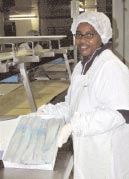
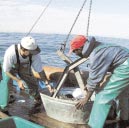
Benguela
current news
o BENEFIT alarga a sua área de intervenção
O Programa de Formação e Interacção
BENEFIT e o Programa BCLME, nós
mitiu criar uma base sólida na qual
das Pescarias do Ambiente de Ben-
não sabíamos!" admitiu o Dr. Sweijd.
se poderá desenvolver o Programa
guela BENEFIT expandiu o seu
BCLME. Além disso, o BENEFIT
Ele diz que as relações se estão a
mandato, quer em termos geográ-
tem uma infra-estrutura criada e um
desenvolver "devagar e com cuida-
ficos como no enfoque investigati-
sistema comprovado para operar na
do" e a prioridade é criar mecanis-
vo, a fim de facilitar um relaciona-
região e seria lógico que o Programa
mos, através dos quais, os dois pro-
mento de funcionamento mais
BCLME utilizasse esse sistema, diz
gramas interagirão. Por exemplo,
estreito com o Programa BCLME.
o Dr. Sweijd.
foi criado um Comité de Ligação
O Comité Director do BENEFIT
BENEFIT/BCLME e decidiu-se que
O BENEFIT opera principalmente
decidiu que a área de interesse
o BENEFIT actuaria como um con-
em três instituições de investigação
para o Programa se estendesse dos
tratante dessa ligação, em nome
marinha, nomeadamente o Instituto
15ºS aos 5ºS incluindo, desse modo
do BCLME, nos domínios em que
de Investigação Marinha (IIM) em
toda a extensão da costa de Angola
ele é competente. Foram já atri-
Angola, o Centro Nacional de Investi-
- e aprovar a expansão do manda-
buídos ao BENEFIT uma série de
gação e Informação Marinha (Nat-
to do BENEFIT para incluir novos
projectos nos domínios dos recur-
MIRC) na Namíbia e o Centro de
campos de estudo, tais como os
sos marinhos vivos e da variabili-
Gestão Costeira e Marinha na África
métodos de aquacultura e ecossis-
dade ambiental, porém, nos novos
do Sul. Ele está também activo
temas aplicados à gestão pesqueira
domínios da biodiversidade, poluição,
nas universidades dos três países.
e outros.
do desenvolvimento costeiro e ex-
Como um dos principais objectivos
O Programa BENEFIT é uma parceria
ploração mineira offshore, é nece-
do Programa BCLME é exercer um
regional entre a Namíbia, Angola e
ssário criar novas iniciativas. É por
impacto duradouro sobre as três
África do Sul que se debruça sobre
essa razão que o Programa BCLME
instituições de pesquisa da região,
a investigação dos principais recur-
colocou a concurso público 16 pro-
este seria facilitado através do tra-
sos de peixes compartilhados pelos
jectos.
balho estreito com o BENEFIT.
três países e a enorme influência
O Dr. Sweijd acredita que daqui há
que a variabilidade ambiental tem
O Dr. Sweijd diz que um dos pro-
quatro anos o BENEFIT estará mais
sobre a produtividade e distribuição
jectos chave do BENEFIT seria o
próximo do Programa BCLME e pro-
desses recursos. Ele compreede
desenvolvimento de um programa
vavelmente se fundirá eventual-
uma componente forte de formação
estratégico de investigação cientí-
mente com este Programa. Ele
e recebe o financiamento generoso
fica para o IIM, uma instituição que
disse que quando for criada a Comi-
dos seus dois principais doadores;
está atrás da Namíbia e à África do
ssão para a Corrente de Benguela,
a Agência Norueguesa para o Desen-
Sul em termos de capacidade
haverá a necessidade de uma
volvimento NORAD, e a Agência Alemã
humana e de infra-estruturas.
agência regional de investigação e
para a Cooperação Técnica, GTZ.
este seria um papel que o BENE-
Um outro projecto de que ele é
Por outro lado, o âmbito do Programa
FIT poderia perfeitamente assumir.
particularmente entusiasta está
BCLME é muito mais alargado do
relacionado com a proposta de cri-
A criação da Comissão para a Cor-
que o BENEFIT e concentra-se
ação de centros de capacitação
rente de Benguela é um dos de-
fundamentalmente sobre as grandes
científica, incluindo um centro
staques do Plano de Acção Estra-
preocupações da gestão ambiental
regional de determinação de idade
tégica do BCLME. Isto deverá ser
das pescas transfronteiriças. O
dos peixes e um centro regional de
negociado entre os três países
BCLME inclui também os recursos
plâncton. A determinação de idade
participantes e está planificado para
renováveis e não-renováveis tais
dos peixes é um campo altamente
se transformar numa Comissão
como minerais, desenvolvimento
especializado e existe uma falta
inteiramente funcional, com um
costeiro, bem como poluição e
notória de profissionais experientes
secretariado de apoio, após o começo
questões sobre biodiversidade. De
neste campo por toda a região.
do Programa BCLME, dentro de
acordo com o director do BENEFIT,
um período de cinco anos.
O Dr. Sweijd acredita que o BENE-
o Dr. Neville Sweijd, forjar um
FIT e o Programa BCLME têm pro-
relacionamento entre os dois pro-
Confiança e Cooperação
gramas emocionantes e grandes
gramas irmãos foi um desafio. Ele
Em 2001 foi feita uma revisão in-
desafios pela frente. Diz que o
disse que naquele tempo em que
ternacional ao Programa BENEFIT
BENEFIT é uma engrenagem segura
o Programa BCLME entrou na sua
que constatou que uma das princi-
que garante que os projectos do
fase de implementação, foram lev-
pais realizações do Programa foi a
BCLME que lhe foram atribuídos
antadas muitas questões que
edificação de um espírito de confi-
sejam executados, monitorados e
ficaram por responder:
ança e de cooperação entre as
concluídos dentro dos períodos
" Quando as pessoas perguntaram
instituições sócias em Angola,
temporais especificados.
qual era o relacionamento entre o
Namíbia e África do Sul. Isso per
31
Um Projecto Fascinante Sobre Bio-
diversidade Planeado Para Angola
Após 40 anos de guerra civil, muito pouco se sabe sobre a biodiversidade de Angola
e a situação dos seus recursos naturais. Contudo, uma iniciativa do governo de
Angola no sentido de fazer o mapeamento dos recursos naturais do país, e desse
modo ajudar a priorizar as actividades de desenvolvimento, promete produzir informações
bastante reveladoras sobre o ambiente natural do país.
A pessoa encarregada para con-
similar nos Balcãs, após a guerra
estudo do ambiente marinho e
duzir o processo de obtenção de
no Kosovo, e que a agência se
costeiro de Angola provável-
financiamento e apoio para este
manifestou entusiasmada relati-
mente representa uma compo-
projecto é Carlos dos Santos,
vamente à possibilidade de con-
nente primordial deste projecto.
Director Nacional do Ambiente,
duzir um estudo similar em
O Sr. dos Santos diz que a con-
do Ministério Angolano do
Angola. O Sr. Dos Santos acredi-
sciência ambiental é um conceito
Urbanismo e Ambiente. O Sr.
ta que o Programa BCLME tem
relativamente novo em Angola.
dos Santos diz que a avaliação
potencial para desempenhar um
Somente em 1993, após a
geral do ambiente é uma priori-
papel muito importante no pro-
Cimeira da Terra no Rio, é que o
dade para Angola: "O mapea-
jecto de avaliação ambiental.
Carlos dos Santos
Governo de Angola criou um
mento será o primeiro passo e o
"Nós queremos envolver o
organismo ambiental sob a forma
segundo passo será o estudo do
Programa BCLME nesta grande
de uma Secretária Geral do
que temos; que tipo de recursos,
tarefa" diz ele. "A informação
Ambiente. Em 1997, o
que tipo de áreas. Por exemplo,
sobre o ambiente marinho e
Secretário Geral foi elevado ao
se houver um derrame de
costeiro que é produzida pelo
nível de Ministro, e em 1999 foi
petróleo, quais são as areas mais
Programa BCLME será bastante
criado o Ministério das Pescas e
sensíveis... nós não temos essa
útil".
Ambiente. Em 2002, este
informação" diz ele.
Ministério foi desmantelado e
Um dos projectos prioritários
O Sr. dos Santos diz que o
dois novos ministérios foram cria-
para o Grupo Conselheiro do
Governo de Angola apelou ao
dos: o Ministério das Pescas e o
Programa BCLME para a
Programa das Nações Unidas
Ministério do Urbanismo e
Biodiversidade, Saúde do
para o Ambiente (PNUA) para
Ambiente.
Ecossistema e Poluição é a real-
apoiar na realização de uma avali-
ização de uma avaliação da biodi-
De acordo com o Sr. dos Santos,
ação geral do ambiente terrestre
versidade marinha da região da
o bom relacionamento de trabal-
e marinho do país. Diz ele que o
Corrente Fria de Benguela. Um
ho forjado entre o Ministério do
PNUA conduziu uma avaliação
Fascinating Biodiversity Project
planned for Angola
After 40 years of civil war, very
Mr dos Santos says that a gener-
He says that UNEP conducted a
little is known about Angola's bio-
al assessment of the environ-
similar assessment in the
diversity and the status of its nat-
ment is a priority for Angola:
Balkans, following the war in
ural resources. However, an ini-
Kosovo, and that the agency has
"Mapping will be step one and
tiative by the Government of
shown enthusiasm for the possi-
the second step will be to study
Angola to map the country's nat-
bilities of conducting a similar
what we have; what kind of
ural resources, and thereby help
survey in Angola. Mr Dos Santos
resources, what kind of areas.
it to prioritise development activi-
believes that the BCLME
For example, if we were to have
ties, promises to reveal a wealth
Programme has the potential to
an oil spill, what areas are the
of knowledge about the country's
play a key role in the environ-
most sensitive... we don't have
natural environment.
mental assessment project.
that information," he says.
Leading the drive to acquire fund-
"We will want to involve the
Mr dos Santos says that the
ing and support for this project is
BCLME Programme in this big
Government of Angola has
Carlos dos Santos, the director of
task." he says. "The information
appealed to the United Nations
the environment portfolio within
about the marine and coastal
Environment Programme (UNEP)
the Angolan Ministry of Urban
environment that is generated by
for assistance with a general
Planning and Environmental
the BCLME Programme will be
assessment of the country's ter-
Affairs.
very useful."
Benguela
restrial and marine environment.
current news
32
Benguela
current news
Ambiente e o Instituto de
preocupado com o desenvolvi-
Investigação Marinha (IIM) entre
mento desordenado da costa que
1999 e 2002 assegurará a
se verifica actualmente nos
manutenção dos fortes laços que
arredores de Luanda. Ali as
o novo ministério mantém com o
casas estão a ser construídas
Programa BCLME. E diz que seu
somente a alguns metros da
ministério vê o Programa BCLME
linha de água e com pouca con-
como uma das instituições que
sideração pelos mangais que
podem ajudar Angola a melhor
crescem "à beira mar". Diz que
gerir o seu ecossistema marinho.
o seu Ministério está a lutar para
O Sr. dos Santos diz que um dos
assegurar que no futuro este o
maiores desafios que Angola
tipo de desenvolvimento seja
enfrenta é a falta de infrastruc-
proíbido. Acredita que Angola
turas e de capacidade humana e
poderia beneficiar da experiência
enfatiza a importância da criação
da Namíbia e da África do Sul
de laços entre o ministério e os
neste domínio, através da harmo-
projectos ambientais tais como o
nização das leis e políticas que se
Programa BCLME, com vista a
aplicam ao ambiente marinho na
superar estas condicionantes.
região da Corrente Fria de
Benguela.
difusão massiva, tais como a
Um outro desafio importante
televisão e a rádio que provaram
para Angola é a actual falta de
O Ministério do Urbanismo e
ser bem sucedidos no destaque
leis e de regulamentos ambien-
Ambiente atribui uma importância
que dão às questões ambientais.
tais detalhados. Embora o país
muito grande à educação ambi-
tenha aprovado a Lei de Bases
ental, e acredita que haja neces-
"No passado as prioridades
do Ambiente em 1998, a sua apli-
sidade de uma sensibilização
estavam viradas para a guerra e
cação foi pobre e a própria lei
geral dos Angolanos para as
para as implicações sociais da
provou ser demasiado
questões ambientais tais como a
guerra. Mas agora é tempo para
abrangente para tratar adequada-
gestão do lixo e o desenvolvi-
o desenvolvimento; e quando
mente a grande diversidade de
mento sustentável. Os esforços
falamos de desenvolvimento, nós
desafios ambientais. Por exemp-
desenvolvidos no sentido de se
temos que falar do ambiente"
lo, o Sr. dos Santos está muito
utilizarem meios electrónicos de
conclui o Sr. dos Santos.
One of the priority projects for
Secretary for the Environment. In
maintains strong links with the
the BCLME Programme's Activity
1997, the General Secretary was
BCLME Programme. And he
Centre on Biodiversity,
elevated to the level of Minister,
says that his ministry perceives
Ecosystem Health and Pollution
and in 1999 the Ministry of
the BCLME Programme as one
is to conduct an assessment of
Fisheries and Environmental
of the facilities that can help
the marine biodiversity of the
Affairs was established. In 2002,
Angola to better manage its
Benguela region. A study of
this Ministry was unbundled and
marine ecosystem.
Angola's marine and coastal envi-
two new ministries were creat-
Mr dos Santos says that one of
ronment is likely to form a major
ed: the Ministry of Fisheries and
the biggest challenges facing
component of this project.
the Ministry of Urban Planning
Angola is a lack of infrastructure
and Environmental Affairs.
Mr dos Santos says that environ-
and human capacity and he
mental awareness is a relatively
According to Mr dos Santos, the
emphasises the importance of
new concept in Angola. It was
good working relationship that
creating links between the
only in 1993, after the Earth
was forged between the Ministry
Ministry and environmental proj-
Summit in Rio, that the
of the Environment and the
ects such as the BCLME
Government of Angola estab-
Instituto de Investigacao Marinha
Programme, with a view to over-
lished an environmental authority
(IIM) between 1999 and 2002
coming these constraints.
in the form of a General
will ensure that the new ministry
33

Mining Companies
Embrace the BCLME Programme
Collaboration between mining companies and the BCLME Programme should improve
our understanding of the environmental impacts of marine diamond mining in the
Benguela region.
Marine diamond mining companies
Benguela region, and formulated a
BCLME Programme," she says.
in South Africa and Namibia have
series of project proposals which
The task group meets regularly in
supported the BCLME Programme
address these concerns.
Luanda, Angola, the centre of the
since its inception in 1995, through
BCLME's Biodiversity, Ecosystem
The representative of marine min-
to the endorsement of a Strategic
health and Pollution Activity Centre.
ing companies at the BCLME
Action Plan which was signed by
Programme, Dr Patti Wickens of
"At this point we're looking at four
seven ministers from the participat-
De Beers, explains:
projects that will address environ-
ing countries in 1999. More recent-
mental issues in the marine dia-
ly, members of the Marine
"Because there are many stake-
mond mining sector."
Diamond Miners Association
holders in the marine diamond min-
(MDMA) of South Africa, and
ing industry, we got together and
The four project proposals cover a
Dr Patti Wickens
Namdeb Diamond Corporation in
created a forum outside the
wide range of environmental issues
Namibia, have identified and
BCLME Programme that was
that are pertinent to the exploration
reached consensus on the core
tasked with formulating project pro-
and extraction of marine minerals.
environmental concerns around
posals to present to the mining and
For instance, a project on policy
marine diamond mining in the
petroleum task group of the
harmonisation proposes to test the
as Companhias Mineiras Abraçam o
Programa BCLME
A colaboração entre as compan-
no Programa BCLME, Dr Patti
de exploração mineira no mar é
hias mineiras e o Programa
Wickens diz:
a avaliação recomendada dos
BCLME deve melhorar a nossa
efeitos cumulativos da descarga
"Como há muitas partes interes-
compreensão sobre os impactos
de sedimentos junto à costa,
sadas na indústria diamantífera
ambientais da exploração de dia-
derivados da exploração diaman-
marinha, nós reunimo-nos e criá-
mantes marinhos na região de
tífera no ecossistema da
mos um forum fora do Programa
Benguela.
Corrente de Benguela. Embora
BCLME, que tinha como objecti-
haja muitos estudos individuais
As companhias de exploração de
vo formular propostas de projec-
para testar o impacto da explo-
diamantes marinhos na África do
to para apresentar aos grupos de
ração diamantífera sobre as
Sul e Namíbia têm apoiado o
trabalho sobre as indústrias
comunidades bênticas - e sobre
Programa BCLME desde o seu
mineira e petrolifera do Programa
o recurso da lagosta-da-rocha da
início em 1995, através do
BCLME"
costa ocidental em particular - os
endosso de um Plano de Acção
Até ao momento nós temo-nos
efeitos cumulativos da explo-
Estratégica assinado em 1999
debruçado sobre quatro projectos
ração diamantífera permanece
pelos sete ministros dos países
que tratarão de questões ambi-
por estudar.
participantes. Mais recente-
entais do sector mineiro diaman-
mente, os membros da
Diz Dr Wickens que o grupo de
tífero marinho" diz Dr Patti Wickens.
Associação Mineira de
trabalho sobre exploração mineira
Diamantes Marinhos (MDMA) da
As quatro propostas de projecto
e petrolífera do Programa BCLME
África do Sul, e Namdeb
cobrem uma ampla escala de
contém uma forte componente
Diamond Corporation na Namíbia,
questões ambientais que são
relacionada com a indústria e
identificaram e obtiveram con-
pertinentes à exploração e à
existe potencial para que os pro-
senso relativamente às preocu-
extracção de minerais marinhos.
jectos iniciados sob a bandeira do
pações ambientais nucleares em
Por exemplo, um projecto sobre
BCLME sejam co-financiados
torno da exploração do diamante
harmonização de políticas propõe
pela indústria quando o Programa
marinho na região de Benguela, e
estudar as diferenças das políti-
BCLME estiver a terminar em
formularam uma série de pro-
cas e legislações ambientais
2007.
postas de projecto orientadas
entre os três países participantes
· O Dr. Patti Wickens da De
para essas preocupações.
e recomendar as áreas em que a
Beers substituiu Ralton Maree
harmonização de políticas seria
O representante das companhias
como representante das com-
benéfica.
Benguelaque desenvolvem actividade de
panhias mineiras marinhas no
exploração de diamantes no mar
Outra das propostas do projecto
Programa BCLME.
current news
34
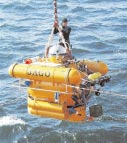
Benguela
current news
differences in environmental policy
ferent areas, but seldom is this
She says that it would be desirable
and legislation between the three
information collated and the broad
for diamond mining companies to
participating countries and to rec-
picture examined. This isn't justi-
support long-term monitoring proj-
ommend areas in which policy har-
fied by their budgets, simply
ects through the supply of data.
monisation would be beneficial.
because it is not a pre-requisite for
Mining companies very often gen-
individual operations."
erate valuable information during
"The project will highlight the gaps
the prospecting process and the
in legislation between the three
The Programme also provides a
potential exists for this information
countries and make recommenda-
unique opportunity for mining com-
to be used for other purposes. For
tions," explains Dr Wickens. "The
panies to collaborate, says Dr Wickens.
instance, seabed mapping is costly,
idea is that the BCLME Programme
"We have got all the stakeholders
but may also be useful to oceanog-
puts the structures in place, gener-
involved... so if the projects are
raphers or marine biologists.
ates the activities that highlight the
accepted (by the BCLME
(legislative) differences and provides
The management focus of the
Programme Steering Committee)
a platform from which to motivate
BCLME Programme is particularly
and go ahead, that will contribute
for the changes that may be needed."
important, says Dr Wickens. Project
to the co-operation between com-
proposals that are submitted to the
Another of the marine mining proj-
panies, because they have all been
BCLME Programme must meet
ect proposals is a recommended
part of this process."
strict criteria and should strive to
assessment of the cumulative
Dr Wickens says that the mining
answer clearly formulated questions
effects of sediment discharge from
and petroleum task group of the
relating to the management of the
near-shore diamond mining on the
BCLME Programme contains a
BCLME. Studies should also be of
Benguela current ecosystem.
strong industry component and
a transboundary nature and result
Although there have been many
there is potential for the projects
in benefits for at least two of the
individual studies to test the impact
that are initiated under the banner
participating nations.
of diamond mining on benthic com-
of the BCLME Programme to be
munities - and the west coast rock
"The BCLME Programme is not
co-funded by industry when the
lobster resource in particular - the
about collecting knowledge for
BCLME Programme comes to an
cumulative effects of diamond min-
knowledge sake," concludes Dr
end in 2007.
ing, remain untested.
Wickens, "but to address issues
"The BCLME Programme does not
that will improve the management
"The BCLME Program provides a
intend to fund long-term monitoring
of the Benguela Current ecosys-
unique opportunity to collate a
studies, but may fund baseline sur-
tem as a whole."
range of different information,"
veys designed to provide vital, new
says Dr Wickens.
· Dr Patti Wickens of De Beers
information. In order to follow base-
has replaced Ralton Maree as the
"For instance, mining companies
line sampling with monitoring proj-
representative of marine mining
are obliged to complete an environ-
ects we will need some sort of
companies for the BCLME
mental impact assessment before
commitment from Government
Programme.
they begin mining... so they may
and/or industry to fund long-term
conduct several EIAs in several dif-
projects," explains Dr Wickens.
The heads of five fisheries projects that operate with-
ordinator of the BCLME Programme.
in the South African Development Community
This was the first time that the regional programme
(SADC), met in Gaborone, Botswana, in June to
managers met formally to share information about
review the projects, aims, work plans and outputs of
one another's programmes and their relationship
their respective programmes, and to identify the
with SADC. Some of the key issues raised at this
ways in which they relate to the objectives of SADC
meeting were the harmonisation of policies by
and the SADC Protocol for Responsible Fisheries.
SADC coastal states in relation to foreign research
The photograph shows Dr Neville Sweijd, director
cruises operating in exclusive economic zones; the
of BENEFIT, Carlos Palin, project manager of the
legal status of the BENEFIT Programme within
SADC Monitoring, Control and Surveillance
SADC; and the important issue of SADC visas for
Programme, Chris Ninnes, director of the SADC
facilitating travel between countries participating in
Regional Fisheries Information Systems project,
regional programmes. This is a particularly impor-
Sandy Davies, fisheries officer for FANR, Eusebio
tant issue for participants in the BENEFIT and
Sequila, director of Fisheries and Natural Resources
BCLME programmes.
(FANR) for SADC and Dr Mick O'Toole, co-
35


The BCLME Programme
The BCLME Programme is a joint initiative by the via the ballast water of ships moving through the
governments of Angola, Namibia and South Africa
region, and pollutants or harmful algal blooms that
to manage and utilise the resources of the Benguela
can be advected by winds and currents from the
Current Large Marine Ecosystem in a sustainable and
waters of one country into another.
integrated manner.
The Programme is funded by the Global Environment
Facility (GEF) which has contributed $15.2 million
The Programme is designed to improve the structures
through the United Nations Development Programme
and capacities of Namibia, Angola and South Africa
(UNDP) for the regional initiative. The GEF's funding
to deal with the environmental problems that occur
complements an investment of $16 million by the
across the national boundaries, in order that the eco-
three countries, and over $7 million from other sources
system may be managed as a whole.
such as the Benguela Environment Fisheries Training
Interactions Programme, BENEFIT.
These transboundary issues include the migration or
straddling of valuable fish stocks across national
The BCLME Programme is administered by a Programme
boundaries, the introduction of invasive alien species
Co-ordinating Unit.
BCLME PROGRAMME CO-ORDINATING UNIT
WINDHOEK, NAMIBIA
Tel:
+264 -(0) 61-246 948
Fax:
+264 -(0) 61-246 803
Chief Technical Advisor: Dr Mick O'Toole
Email:
otoole@bclme.un.na
ACTIVITY CENTRE:
BIODIVERSITY, ECOSYSTEM HEALTH AND POLLUTION
LUANDA, ANGOLA
Tel:
+244 -(0) 92-50 8200
Fax:
+244 -(0) 92-50 8200
Director: Ms Maria Sardinha
Email:
milu_sardinha@yahoo.com
ACTIVITY CENTRE:
LIVING MARINE RESOURCES
Swakopmund, NAMIBIA
Tel:
+264 -(0) 64-410 1106
Fax:
+264 -(0) 64-410 740
Director: Dr Hashali Hamukuaya
Email:
hhamukuaya@benguela.org
ACTIVITY CENTRE:
ENVIRONMENTAL VARIABILITY
Cape Town, SOUTH AFRICA
Tel:
+27 -(0) 21-402 3418
Fax:
+27 -(0) 21-421 7406
Director: Ms Lesley Staegemann
Email:
bclmeevg@mcm.wcape.gov.za
Feedback:
Please send your comments, suggestions
Benguela Current News is produced by
and stories to:
Claire Attwood in association with
Claire Attwood
Günther Komnick Studio
Tel/Fax: +27 21 788 3500
Tel: +27 21 424 6340
Email: cattwood@mweb.co.za
Email: komnick@iafrica.com
Benguela
current news
36