Ministry of Agriculture of Georgia
Ministry of Environment Protection
and Natural Resources of Georgia
Code of Good Agricultural Practices
of Georgia
Tbilisi, Georgia
2007


Ministry of Agriculture of Georgia
Ministry of Environment Protection and Natural Resources
of Georgia
Code of Good Agricultural
Practices of Georgia
Tbilisi 2007
1
Contributing Experts:
David Bedoshvili
Gizo Gogichaishvili
Marina Gvinepadze
Irine Tsomaia
Zaur Julukhidze
Petre Naskidashvili
Avtandil Korakhashvili
Alverd Chankseliani
Alexander Mindorashvili
Rusudan Khubutia
Guram Aleksidze
Goderdzi Goderdzishvili
Michael Kutalashvili
Leri Chakhava
Legal Entity under the Public Law The World Bank Financed Georgian
Agriculture Development Projects Coordination Center (PCC):
Ioseb Murvanidze, Nino Inasaridze
The World Bank
The World Bank: Darejan Kapanadze
© 2007. Ministry of Agriculture of Georgia.
2
STATEMENT
of
Petre Tsiskarishvili, Minister of Agriculture of Georgia and
David Tkeshelashvili, Minister of Environment Protection and
Natural Resources of Georgia
on publication of the Code of Good Agricultural Practices of Georgia
Georgia is one of the countries with oldest agriculture. Over thousands of years Georgian peasant had
been caring for and protecting the environment in which he lived and worked. His tireless labor resulted
in the creation of a number of varieties of crops and animal species. Georgia's agricultural landscapes,
that have developed through harmonizing agriculture with cultural life and natural settings, are attracting
viewers from all over the World with their variety and unique beauty.
Unfortunately, nowadays even some basic rules of agricultural practice are not being followed in many
farms of Georgia, resulting in environment pollution and exhaustion of natural resources. The scale of
soil erosion in agricultural plots has dramatically increased, soil fertility has dropped, pests, deceases and
weeds have spread and surface and ground waters as well as air have got polluted. All the aforesaid
endangers human health, future sustainability of agricultural production and development of tourism.
The Constitution of Georgia requires from the citizens to take care of natural and cultural environment of
the country. The State in its turn assumes responsibility for ensuring efficient nature management and while
taking into consideration economic and ecological interests of population of Georgia obligates everyone -
including agricultural producers - to protect the environment. The Law on Environment Protection of Georgia
(1997) requires utilization of mineral fertilizers as well as growth stimulating of plant protection preparations
within the limits that do not endanger human health as well as plants, animals, nature and soil.
The Ministry of Agriculture of Georgia and the Ministry of Environment Protection and Natural
Resources of Georgia hereby present the Code of Good Agricultural Practices of Georgia.
The proposed document aims at providing information on environment friendly agricultural production
rules and increasing public awareness of the importance of adhering to them.
Notwithstanding the fact that the Code is not a legally binding act, it is of crucial importance in terms
of socio-economic development of the country and its integration into the EU.
The Code of Good Agricultural Practices compiles obligations prescribed by law, recommendations, and
practical advice noteworthy for small farms alike large agricultural enterprises, providers of agricultural
service and extension i.e. for everyone related to agricultural production and environment protection.
By developing and introducing the Code of Good Agricultural Practices, Georgia has made a step
forward towards harmonizing with the environment friendly agricultural practices introduced in the
EU and other developed countries. Georgia is willing to support further development of agricultural
sector and as well as take care of environment protection and sustainable utilization of natural resources.
Signed by:
Petre Tsiskarishvili David Tkeshelashvili
Minister of Agriculture of Georgia Minister of Environment Protection and
Natural Resources of Georgia
3
Table of Contents
1. Introduction
5
3.3.5. Using manure in agriculture 32
1.1. Essentialis, Importance and
3.3.6. Manure and slurry as pollution
Purpose of the Code 5
sources in agriculture 33
1.2. Brief overview of the history
3.3.7. Biological waste management
and present status of the
in animal husbandry 34
Georgian agriculture 5
3.4. Plant protection from pests 35
1.3. Types of farms, production
3.4.1. Legal framework 35
and landownership structure
3.4.2. Methods of Plant Protection 36
in Georgia 8
3.4.3. Threats from pesticide
2. Soil protection from erosion
application 36
and degradation 9
3.4.4. Types and preparations of
2.1. The present status of the soil
pesticides 36
cover in Georgia 9
3.4.5. Pesticide purchase and labeling 37
2.2. National legal framework
3.4.6. Safe transportation and
for soil protection 10
storage of pesticides 38
2.3. Water erosion 11
3.4.7. Safe use of pesticides 38
2.4. Wind erosion 13
3.4.8. Personal safety of operators 40
2.5. Soil chemical reaction (pH) 16
3.4.9. Safe disposal of pesticide waste 41
2.6. Chemical degradation of soil 17
3.5. Protection of the environment
2.7. Degradation of the soil
from pollution from sewage
physical structure 17
water and waste 43
2.8. Soil salinization 18
3.5.1. Legal framework 43
3. Protection of water from
3.5.2. Waste from primary processing
agricultural pollution
19
of agricultural produce 43
3.1. Introduction 19
3.5.3. Reduction of waste in
3.2. Application and storage of
processing units 44
fertilizers 19
3.5.4. Human domestic waste 44
3.2.1. Plant nutrition 19
3.5.5. Application of sewage and sludge
3.2.2. Mineral fertilizers 22
for irrigation and fertilization 47
3.2.3. Soil fertility management 24
3.5.6. The passing of effluent from
3.2.4. Estimation of fertilizer
fish production ponds to
application rate 24
urface water 47
3.2.5. Dates and methods of
4. Protection of atmospheric air
48
fertilizer application 25
4.1. Introduction 48
3.2.6. System of fertilizer use in
4.2. Emission of ammonia and other
crop rotations 26
odorous substances 49
3.2.7. Practical recommendations to
4.3. Emission of greenhouse gasses 49
reduce the loss of nutritive
4.4. Air pollution caused by the
elements in the soil 27
application of pesticides 50
3.2.8. Environment protection
4.5. Pollution of air by dust and smoke 52
measures 28
5. Glossary
53
3.2.9. Influence of fertilizers on
6. Relevant Legal Acts
54
yield quality and food safety 28
6.1. Plant protection 54
3.2.10. Purchase and storage
6.2. Soil protection 55
of fertilizers 29
6.3. Water protection 55
3.3. Organic fertilizers and management
6.4. Protection of Atmospheric Air 56
of biological waste in Animal
6.5. Land Property 56
husbandry 30
6.6. Livestock laws 56
3.3.1. Introduction 30
6.7. Other Laws 57
3.3.2. Organic fertilizers 30
7. Laboratories Accredited
3.3.3. Rotted manure 31
by the Accreditation
3.3.4. Slurry 32
Centre of Georgia 58
4
Introduction
1.1. Essentialis, Importance and Purpose of the Code
The Code of Good Agricultural Practice (CGAP) contains legal obligations, recommendations
and practical advice envisaged for individual growers and farmers, large agricultural companies,
agriculture service and extension employees and for everyone who is involved in agricultural
production and preservation of the rural environment.
The aims of the CGAP is to reduce the negative influence of farming on the environment to
prevent the irrational use and impoverishment of the main natural resources (soil, water and air)
and to promote environmentally friendly practices in Georgia. As in the European Union (EU)
and other developed countries, implementation of the Code of Good Agriculture Practice (CGAP)
is voluntary in Georgia.
CGAP comprises all main sectors of agricultural activities that are critical in causing water, air,
and soil pollution. It gives advice for the prevention or decrease of pollution. A successful
implementation of CGAP has to be based on three integrated basic principles, which can be
defined as economically viable, environmentally friendly, and socially acceptable. Introduction
of environment-friendly agricultural practices will facilitate not only production of quality and
healthy food, but also conservation of biodiversity, improvement of the environment for living
and recreation, promotion of Georgian agricultural products in international markets and the
growth of attractiveness of Georgia's agricultural landscapes for tourists.
The recommendations and practical advice provided in the Georgian CGAP are placed in the
frame of the national legislature, which is less restrictive in terms of environment protection
compared to that of the EU-member countries. Nevertheless, the code represents the first attempt
to harmonize the Georgian agricultural practices with the production rules and standards adopted
in the EU and other developed countries. By developing the Code, Georgia is conforming to the
Nitrate Directive EEC/91/676, which binds the EU member-countries in having a code of good
agricultural practice to reduce the negative impact of agriculture on the environment.
The recommendations and practical advice of the Georgian CGAP are based on the recent scientific
achievements and modern production practices of Georgia and provide for environmental
protection in the rural areas. The Code is subject to regular updates and revision that will
accommodate expected changes associated with the scientific, as well as social, economic and
political development of the country.
The Georgian CGAP is acknowledged as a statement of goodwill by Georgia to promote further
agricultural development without causing ecologically adverse consequences on the national,
regional, and global scales.
1.2. Brief overview of the history and present status of the Georgian agriculture
The Georgians have been cultivating land since the ancient times. The diversity of the climate
and the rich soils supported a great variability of crop production. Herodotus mentioned in the
5th century BC that the population of the eastern coast of the Black Sea used ploughs and
acknowledged the importance of rotating cereals with legume crops for maintaining soil fertility.
Georgia has old traditions in viticulture. Archeological excavation provides evidence that the
local population was engaged in wine-making in the 3rd-4th centuries BC. Up to 500 local grape
varieties are still preserved in Georgia. The Caucasus and Western Asia belong to the area where
wheat was believed to have originated. Three out of 12 wild or cultural varieties of wheat have
been preserved only in Georgia: Asli, Makha and Zanduri.
5
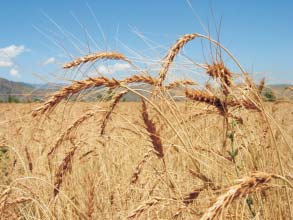
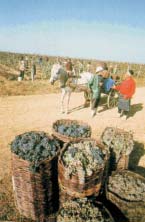
Photo 1: Grape harvest in Kakheti
Photo 2: Akhaltskhe Red Doli wheat
The total area of Georgia is 69.7 thousand km2. The lowlands and foothills occupy about 13%
and 33% of its area respectively, while the remaining 54% is occupied by mountains. The arable
land is about 790 thousand ha (11.5%), while the permanent crops cover about 268 thousand ha
(3.8%). Hay meadows spread over 142 thousand ha, while the pastures occupy 1,800 thousand
ha. All agricultural lands along with forests occupy as much as 85% of the total area of Georgia.
The environment of Georgia is characterized with a diversity of soils and climate expressed in
vertical belts. All climate types ranging from wet and dry subtropical to permafrost are found in
Georgia. Various soil types have been identified in the country starting from red and yellow
podzols, which is typical for wet subtropics, through grey-brown soils of the dry subtropics and
primitive soils of the high mountains. According to the variability of the environment, Georgia
is subdivided to 13 zones and 6 sub-zones which have different agricultural specializations. The
lowlands of East Georgia receive about 400-600 mm of rainfall during the growing season,
which hardly sufficient for plant production. The annual precipitation increases from East to
West, towards the Black Sea, and reaches 1,500-1,200 mm in the coastal zone.
Most of the East Georgian lowlands used to be irrigated, pre-dominantly by flooding. The present
status of the irrigation system is unsatisfactory and most of it is not functioning. As a result, most
of the crops are grown under dry-land conditions in the East. In the West, all crops are rain-fed
so irrigation is not used because of the sufficient and excessive rainfall. The variability of soils
and climate in Georgia provides for opportunities for growing many different crops. Georgia
can produce crops of high export potential, such as seed and stone fruits, grape, citruses, tea,
nuts, hazelnuts and chestnut. The Georgian environment is very favorable for growing sugar
beet, tobacco, cereals, forage, potato, sunflower, vegetables, and melons, as well as for producing
of various aromatic and medicinal plants.
Tea, citruses, sub-tropical fruits, nuts, chestnut and tobacco areas are mostly located in West
Georgia. West Georgia is rich in rare grape varieties, which are used for the production of expensive
wines. Among the annual crops in the West, maize is the most widespread and there are a number
of local food varieties. Maize is often inter-planted with kidney beans. The soybean area has also
6
increased during recent times. Most of the seed, stone fruit and grape areas are located in East
Georgia. The major field crops of East Georgia are winter wheat and sunflower. Maize for feed,
beans and alfalfa are sown frequently in irrigated areas. Potato and barley are important crops in
the mountain areas of West and East Georgia. The irrigated part of South Georgia is specialized
in early vegetables and early potato growing.
Large areas of Georgia are covered by meadows and pastures which provides favorable conditions
for the development of livestock production. Cattle, sheep and pig production have always been
important sectors in Georgian agriculture and there are several high capacity poultry farms in
Georgia. Besides livestock, Georgian honey is known for its outstanding quality and Georgia
has resources for the development of fish production. There are about 856 lakes and 44 artificial
water reservoirs, with total area of about 8,800 and 7,800 ha, respectively. Also, there are numerous
rivers with 1400 ha suitable for fishing.
The production of fruits is less than half of what it was before the disintegration of the Soviet
Union and disruption of the ties with Georgia's traditional markets. Grape production is a third,
citruses one eight and tea has declined by 20-times. According to official data, namely the
Agricultural Census of 20041, the area of fruit production was as big as 130.5 thousand ha in
1988, but has declined to as little as 37 thousand ha. During the same period, the area of grapes
has reduced from 117.7 ha to 37.7 thousand ha, citrus from 27.1 ha to 8.7 thousand ha and tea
plantations from 65 ha to 11.5 thousand ha. In contrast, the area under annual crops, such as
maize, wheat and sunflower has almost doubled. Nevertheless, the total area of utilized arable
land has decreased from 785 to 421 thousand ha, which is largely due to reduction of the area
under feed crops (from 344.8 to 20.3 thousand ha). There was significant reduction in the numbers
of cattle during the same period from 1,650 thousand to 1,250 thousand. For pigs and sheep the
numbers reduced from 1,150 to 730 thousand and 2,000 to 700 thousand respectively.
Farmers experienced significant problems with increased prices on inputs and decreased prices
on commodities as a result of the collapse of the centralized supply system of the Soviet Union
and transition to free market. The competitiveness of the Georgian agricultural products was
adversely affected as was the income of Georgian farmers. Following the break-up of the Soviet
agricultural system many farms in Georgia are now managed inefficiently because of land
fragmentation, lack of machinery, deficit of good quality seed and planting material, and often
the inefficiency is due to the lack of appropriate farming knowledge and experience. The produce
from such farms is inferior compared to imported products in terms of quality and competitiveness.
Most farmers, especially the small ones, use minimal or no agricultural inputs. In the 1980s
about 600 thousand tones of mineral fertilizer and up to 800 thousand tones of peat were used in
Georgia annually, as well as 3.5 million tones of manure, which were collected from local cattle
and poultry farms. By mid the 1990s, only 12 thousand tones of mineral fertilizer were applied,
while manure was not even collected. At present, growth of fertilizer application is being observed;
however the amount of applied fertilizer is far below of the amount applied in the 1980s. Sole
application of nitrogen has become characteristic of many farms. The drastic reduction of the
amount of applied fertilizer has negatively affected the balance of the nutritive elements and
fertility of soils in Georgia. Similar to fertilizers, the application of pesticides has also declined.
As much as 35 thousand tones of pesticides were applied in the 1980s, while not more than 1
thousand tones were applied in mid 1990s.
1 Agricultural Census of Georgia Ministry pf Economic Development of Georgia. Tbilisi 2005.
7
Historically, as well as during the Soviet period, much attention was paid to crop rotation and its
importance in maintaining soil fertility and controlling weeds and pests. Nowadays, seed rotation
is almost abandoned as it is hard to apply it to small pieces of land. Undeveloped marketing
channels restrict the choice of cash-crops and farmers cannot afford to plant crops that provide
little or no income but which are necessary for the improvement of soil productivity and for
controlling weeds and pests, e.g. green manure and cover crops. Therefore mono-culture has
spread widely in Georgia which requires higher amounts of inputs and reduces significantly the
competitiveness of agricultural production and environmental sustainability.
Many farmers do not pay sufficient attention to safety rules while working with fertilizers and
pesticides, which results in the pollution of the environment. It is often found in rural areas that
sewage and waste water from residential buildings and livestock farms are directed to rivers and
other surface water bodies without treatment. Although the application of fertilizers and pesticides
has declined in Georgia, the agricultural sector remains an important source of pollution. The
importance of observing sanitary and hygienic standards in regard to food safety must also be
emphasized. The degradation of agricultural land has been progressing at a high rate in Georgia
since the beginning of the last century. The total area of arable land diminished by as much as
400 thousand ha from 1936 to 1988, caused mostly by erosion. The area of degraded forests is
about 330 thousand ha. The illegal cutting of forest amounted to as much as 200 thousand m3,
which has caused damage estimated at 4 million GEL.
1.3. Types of farms, production and landownership structure in Georgia
The introduction of the system of collective and state farms by the Soviet government in 1929 to
1930 radically altered the traditional structure of landownership in Georgia. Most of the
agricultural land was transferred to big farms, which employed modern large-scale machinery
and equipment and high amounts of the inputs were supplied under the centralized investment
program. A land privatization reform is ongoing in Georgia since 1992 so that agricultural land
is being transferred back to farmers.
At the beginning of the land reform process, 681.1 thousand families, who were the former
employees of the state and collective farms, received on average about 1.25 ha of land in private
property. In total, they received as much as 772.6 thousand ha. Plots of land were also transferred
to the rural population, which had not been engaged in agricultural production. Employees in the
education, health care and cultural sectors received on average 0.51, 0.68 and 0.61 ha, respectively.
The residents of urban areas, which were economically closely affiliated with rural areas, also
received about 0.22 ha of land (about 329 thousand families)2.
Since the adoption of the law `Lease of Agricultural Land', about 825 thousand ha has been
leased to legal entities and individual farmers. Out of this total area, 322.2 thousand ha was
rented by 44 thousand individual farmers (in average 7.3 ha), while 5 thousand legal entities
rented about 502.8 thousand ha (on average 100 ha). The land reform has resulted in drastic
changes in the structure of land ownership. The former 2,063 big farms (including 821 collective
and 1,029 state farms, 116 inter-farm associations and 28 farmer cooperatives) were abolished
and replaced by new owners: private entrepreneurs, land tenants, small private farms, farmer
groups etc. At present, the government is undertaking privatization of the remaining land. During
2 Khutishvili Koba, Akhalbedashvili Iveri Results of the reform implemented in the agrarian sector
of Georgia and the ways of overcoming the existing problems. http://www.csp.org.ge/ge/pages/
news.html (downloaded on August 25, 2006)
8
the Soviet era, there was about 7% of agricultural land in private use (not private ownership).
While more than 25% of agricultural land was passed to private ownership and as much as 30%
of agricultural land was leased to private farmers by 2003.
According to the Agricultural Census of 2004, there are about 730 thousand private farms
registered in Georgia, out of which 691.5 thousand farms own agricultural land (including hay-
meadows and pastures). The share of small farms that use less than 1 ha of agricultural land is as
much as 75%. About 23% of farms use from 1 to 5 ha land. Only 2% of farms use more than 5 ha
land in agricultural production. The percentage of farms with less than 1 ha of arable land is
almost 85%, while the proportion of farms with more than 5 ha arable land is only 1%. Among
the vegetable, fruit, grape, citrus and melon producing farms the share of small farms is even
higher; horticultural enterprises including orchards of less than 1 ha are managed by almost 98-
99% of farmers involved in fruit, grape, citrus and melon production.
Only 55% of the farms in Georgia keep cattle and of those 34% keep pigs. The overwhelming
majority of the farms raising livestock are small. The share of farms having from 1 to 4 cattle is
almost 86%; those farms having more than 100 cattle are owned by 47 farmers. The share of
farms having 1-4 pigs is as big as 94%; only 8 farms have been registered with more than 100
pigs. The share of the big and medium size farms is higher among the sheep farms. The share of
the small farms with 1-4 sheep is only 42%, while the share of those with 5-20 sheep is 46%.
There are about 32 trout farms that produce 250 tons of trout per year and 128 lakes which cover
as much as 2,650 ha and produce 550 tons of fish annually. In conclusion it is evident that small
farms dominate in Georgia at present. Almost 82% of farms consume most of their own produce,
while only 18% of farms sell most of their products in the market.
2. Soil protection from erosion and degradation
2.1. The present status of the soil cover in Georgia
According to data of the 1980s, there are as much as 650 thousand ha of eroded pastures and 380
thousand ha of eroded arable land in Georgia. As much as 90 thousand ha of land is experiencing
lateral erosion because of flooding caused by un-protected rivers. In total, more than 1 million
ha are eroded, which as about a third of the total agricultural land. In East Georgia, soil erosion
is caused by both wind and water, while in West Georgia water is the main cause of erosion.
Overgrazing, cutting of tree shelterbelts, plowing of steep slopes and plowing down slopes has
resulted in dramatic reductions of soil fertility.
Increased soil salinity is observed on 7% of agricultural land. At present, large-scale secondary
soil salinization is observed in the Alazani valley due to the malfunctioning drainage system and
non-compliance of irrigation rules and dates. As much as 7-8% of agricultural land suffers from
water-logging because of the malfunctioning drainage systems. Acid soils occupy about 11% of
the agricultural land in Georgia. The area of the very acid soils, which cannot support viable
agricultural production, has increased up to 37 thousand ha.
During the last 15 years, the content of organic matter in the soils of Georgia has declined by
0.8-1.25%. More than 80% of the arable land is deficient in phosphorus, while 60-70% is deficient
in potash. Soil fertility is managed inefficiently on many farms without observing elementary
rules or, application of fertilizers is completely abandoned due to an absence of appropriate
machinery or knowledge. Very few soil tests are conducted which are necessary in order to
recommend the type of fertilizers to be applied and their application rates.
9
Water erosion is very strongly evident and becomes a real threat in the foothill zone of both the
wet and dry subtropical areas of Georgia. It has been identified that as much as 200-300 tones of
soil may be washed out per year when the slopes are between 10-20 degrees. The gullies formed
by surface water may reach 0.5-meter in depth or even more, which may gradually evolve into
deep ravines and gorges. Water erosion is especially intensive on slopes without vegetative cover
in East Georgia, and which is explained by high susceptibility to erosion of the soil cover. In
these areas, slopes of 6-12 degrees may loose about 30-40 tons of soil in regular years and as
much as 100-200 tones in the years with heavy rainfall. During the last decades of the last
century the erosion process intensified on irrigated lands due to malpractice in irrigation.
Particularly the irrigation of slopes without observing the rules has resulted in the washing out
of the most fertile layer of soil. Land fragmentation requires careful observation of the irrigation
rules and methods.
Wind erosion is widespread in East Georgia. Economic losses caused by wind erosion exceed
tens of millions of lari. Wind erosion results in soil drying and dusting, which facilitates
translocation of soil particles to other places. As a result of wind erosion, the most fertile layer,
rich in soil nutrients, is lost to plants. The intensity of wind erosion is determined by the climate,
soil type, wind strength, presence of shelterbelts etc. Wind erosion is especially strong in winter
and early spring, when land is not covered by plants leaving soil unprotected. Wind erosion
processes intensify if soil is plowed with a moldboard plow, when the soil clod is turned so that
the upper layer, which is more compact and protected by plant roots, goes underneath while the
more susceptible lower layers are turned to the surface. Wind erosion is widespread in Gare
Kakheti and Shida Kartli regions, where strong winds are common with wind speed being equal
to 18-28 m/sec or more.
2.2. National legal framework for soil protection
The Georgian legislature clearly distinguishes agricultural lands from non-agricultural lands.
All obligations and relations in regard to agricultural lands are regulated by the Georgian law
dated 1996 on Proprietorship of Agricultural Land and Civil Code of Georgia. The Georgian
law dated 1997 on the Protection of Environment obligates everybody, including agricultural
producers (farmers), to protect the environment and requires that the application of mineral
fertilizers, pesticides, growth stimulators and other substances at rates that won't threaten human
health, plants, animals and soil.
Soil protection in Georgia is considered as a priority for the state and its importance is emphasized
in the 1994 law of Georgia on Soil Protection. This law prohibits using fertile soil for non-
agricultural purposes and bans actions that may result in declining soil fertility, e.g. cutting
shelterbelts, overgrazing pastures, and the application of non-registered fertilizers and pesticides.
The 2003 law of Georgia on Soil Conservation and Restoration-Improvement of its Fertility
defines clearly those activities and methods, as well as restrictions and prohibitions that are
necessary for the promotion of soil fertility, its restoration and improvement. This law calls for
active participation of the government in soil protection and improvement and obligates the land
owners to abide by the law and respective subordinated acts, regulations and orders. The law
also requires farmers to submit data from soil tests that have been carried out and on the amounts
and types of applied fertilizers and pesticides to the appropriate regulation bodies.
The 1998 Georgian law dated November 25, on Pesticides and Agrochemicals covers the adverse
impact on the environment while using pesticides and agrochemicals. On January 26, 2005, the
Minister of Agriculture signed the Order #7 which approved the standards and rules for importing,
storing and application of agrochemicals. It includes all the necessary rules and standards, which
10

must be observed by all farmers while working with agrochemicals. Following the 2003 law of
Georgia on Soil Conservation and Restoration-Improvement of its Fertility, the Ministry of
Agriculture issued the order #2-244 on the Measurement of Soil Fertility Levels and approval of
Regulations for Soil Conservation and Fertility Monitoring. This order lays the ground for the
underlying principles which are used for soil fertility evaluation and monitoring in our country.
Following the law of Georgia on Soil Conservation and Restoration-Improvement of its Fertility,
the Minister of Agriculture approved its Recommendations for Soil Protection From Erosion
through the order of #2-277 on November 25, 2006. This document describes in detail the natural
processes and human activities which facilitate development of soil erosion and provides a
complete list of detailed recommendations for soil protection from erosion and for the restoration
and improvement of soil fertility.
The above-mentioned laws and subordinated acts require that all individuals and corporate entities:
·
Use agricultural land only for agricultural purposes;
·
Protect land from erosion and degradation;
·
Maintain and improve soil fertility;
·
Protect environment, human health, biodiversity and soil.
All farmers are obliged to protect soil from erosion and degradation.
2.3. Water erosion
Water erosion causes damage both to the surface and deeper layers of soil and results in leaching
and translocation of mineral nutrients from soil to surface water. Water quality is especially
threatened due to biogenic elements such as substances containing nitrogen and phosphorus.
Therefore, activities, which are carried out to protect soil from water erosion, apply also to water
protection.
Photo 3: Formation of gullies due to water erosion in the pasture
Well-planned farming represents the most efficient approach in order to protect
soil from degradation and to combat water and wind erosion.
11
The farming system must make provision for the effective use of the soil and for the control of
erosion. Maintenance of plant cover and plant residues on the soil surface, selection of crops,
taking into account the slope steepness, the erosion threat level and the biological properties of
the plants can be considered as the most important anti-erosion measures.
Farmers can prevent land erosion significantly if they organize crop production properly and
apply agricultural treatments aimed at combating erosion. Lands with slopes greater than 15°
should be permanently grassed or afforested. Lands with slopes between 6 and 15° may be used
for field production, provided some agricultural measures are taken regularly preventing them
from erosion. Lands with slopes of less than 6°, especially those on long slopes are less threatened
with water erosion, but it is advisable to cultivate such lands with care.
The intensity of water erosion depends on the amount and frequency of rainfall, slope, soil type
and vegetation cover. The susceptibility of soil to erosion is connected with its mechanical
composition, structure and organic matter content. High susceptibility to erosion is characteristic
of light soils. Loamy soils are intermediately susceptible, while heavy clay soils are the most
erosion resistant.
Field crops can be divided into three groups based on their ability to prevent erosion: 1) crops that
control erosion efficiently (perennial grasses), 2) intermediate crops (most of the small grains)
and 3) crops that don't control erosion (mostly row crops). It should be mentioned that planting
row crops on land with a slope of more than 15 degrees is not recommended, but marginally
admissible in cases of land insufficiency, if erosion control measures are implemented. The tillage
system for slopes has to be planned to give the best possible solution to reduce or control erosion
throughout the whole growing season. Therefore, it is important to apply those tillage systems
that contribute to improving the water-holding capacity and the water infiltration rate of the soil.
One such system is considered to be deep plowing combined with forming ridges.
In East Georgia, when the maize-winter wheat-winter wheat system is applied to slopes of 4-5
degrees, soil has to be plowed crosswise applying the following technique: plowing should be
carried out at the depth of 30-32 cm and ridges should be formed for maize in the first year. In
the next year, deep plowing (30-32 cm) without ridging is recommended for winter wheat, while
shallow plowing (up to 22 cm) without ridging can be applied to winter wheat planted in the
third year. Ridges can be formed by fixing a prolonged wing on the moldboard plow to produce
ridges after every 1.5 meters, which will provide for soil erosion control.
Planting different crops in strips across the slope can also reduce erosion. Strips can be formed
by planting small grain and row crops, perennial grass and annual crops. Broad strips (35-50 m)
can be used on slopes of 3-50, while the width of the strips must be reduced to 10-20 and 20-30
meters on slopes of 5-80 and 8-120, respectively. On light soils, the strip width should be adjusted
by narrowing it by as much as 15-20%. Soil erosion may be reduced and soil fertility enhanced
considerably if a legume crop is planted as a catch crop after harvest of an earlier crop. Such
crops not only utilize free land between the major cash crops, but also protect soil from erosion
and enrich it with biomass, which promotes soil fertility.
Buffer strips are an effective means to reduce erosion on slopes of 10-120, which implies leaving
strips without tillage across the slopes, while planting perennial grasses or small grains on the
tilled strips. The buffer strips disperse water flow running on the soil surface, reduce its speed
and strength, and slow down the erosion processes. Good strips are formed by planting mixtures
of perennial grasses such as alfalfa, ryegrass, sainfoin, etc. Trees and bushes can also be used for
buffer strips: raspberry, blueberry, hazelnuts etc. The width of the buffer strips depends on the
12
slope; however it doesn't have to exceed 5-10 meters, while the distance between them should
be 20-30 meters.
One of the most efficient ways of controlling erosion is under-sowing winter small grain crops
with perennial grasses in early spring. Such practice has great advantages as, firstly, pre-plant
plowing and cultivating are not required for under-sowing perennial grasses providing for
considerable saving in machinery and labor, and secondly, after harvesting the small grain crop
the soil remains protected by stubble until the perennial grass crop forms a dense canopy. In
contrast, if perennial grass is planted after the harvest of a winter small grain crop the soil will be
plowed in the fall and will have to remain without plant cover during the winter until the next
spring.
Terracing is one of the radical measures to control erosion on land with a slope of more than 100.
It means that steep slopes can be included in agricultural production and it also helps the
accumulation of moisture in the soil, reduction of surface water flow speed and prevention of
soil degradation. There are many types of terraces including plantage-plowed, stepwise, ditch,
ridge and individual types. To establish terraces, professional help is needed to assess the slope
and to develop a terracing project.
One of the most important measures to control erosion is regulation of water flow on the soil
surface with help of ditches that deviate water flows from the fields. For such purpose, special
ditches are dug in the upper and other parts of the field, and are connected to water collection
ditches that take water eventually to rivers, springs and gorges. The beds of the ditches must be
covered by tiles or stones. Mulching is also considered as an important practice for soil protection.
Mulch protects soil particles from being destroyed by rain drops and from being washing out by
water. Mulch also protects soil from compaction during heavy rains so that a soil crust is not
formed and more water permeates soil. Crop residues, turf, dry fern and even special mulching
paper can be used for mulching. Mulching can be applied to fields occupied by both permanent
and annual crops.
Sub-soiling combined with ridging may be applied to soils strongly susceptible to erosion. Its
aim is to increase water retention and the speed with which water soaks into deeper layers of the
soil. Deep cuts are made across the slope with a special tool - a subsoil plough. Irrigation erosion
is observed not only during flooding (horizontal soaking), but also during the flowing of water
(vertical soaking) in the furrows. Erosion processes are much more intensive when slopes are
irrigated. The best irrigation practices avoid water flows. Drip, sprinkler and subsurface irrigation
practices cause almost no soil erosion.
2.4. Wind erosion
Wind erosion blows away small particles
from the soil surface, damages plants
mechanically, exposes the root system and
finally pollutes the environment as dust
particles contain mineral and organic
substances and pesticide residues (Photo 4).
Soils eroded by wind are often put out of
agricultural operation and special treatments
are required to restore their fertility and put
them back into production.
Photo 4: Soil particles blown away by wind
13
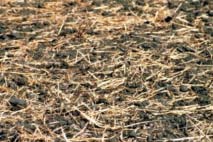
Wind erosion causes most damage in Dedoplistskaro, Sighnaghi, Sagarejo, Gardabani, Gardabani,
Khashuri, Qareli, Gori and Mtskheta districts, where in total, the eroded area reaches as much as
79 thousand ha. The characteristic of wind-caused erosion depends on the status of the soil
surface, the canopy density and the wind strength. Soil which is covered by a dense canopy is
not susceptible to wind erosion. In contrast, if the soil surface is not covered by plants or crop
resides it is very much susceptible to wind erosion. Its resistance to erosion is totally dependent
on its properties, structure and texture.
To implement anti-erosion practices efficiently, it is recommended to carry out a quantitative
and qualitative assessment of the fields to identify their degree of susceptibility to erosion and
group them according to these parameters. This will provide for a more precise planning of the
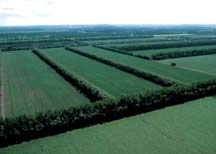
necessary measures to improve soil fertility. Establishment of shelterbelts of bushes and trees to
reduce strength of wind at the soil surface seems to be a very effective measure to protect soil
from wind erosion.
For soils and areas especially threatened with
wind erosion the soil tillage system should
be changed radically to minimize the
disintegration of soil turf, avoid the turning
of soil clods and retain as much crop residues
as possible on the soil surface. It is well
known that using a moldboard plow together
with disk and teeth harrows results in the full
incorporation of residues into the soil;
however, it also contributes to the
disintegration of the soil structure and to
dusting, which raises the threat of erosion.
Therefore, in regions of wind erosion,
Photo 5: Planted shelterbelts
cultivator-rippers (Photo 6) should be used
for the primary soil tillage operation instead of moldboard plows. Cultivator-rippers retain a
large proportion (60-80%) of residues (Photo 7) on the surface while they loosen the soil to the
depth of 30 cm. Using cultivator-rippers results in less dusting of the soil, less impact of wind on
the soil surface and promotes the accumulation of snow resulting in a decline of wind erosion.
Photo 6: Cultivator ripper
Photo 7: Plant residue on the soil surface,
coverage 65%.
14
To reduce wind erosion, all types of disk harrows and rippers must be replaced by a blade
cultivator. It is used for light soils during primary tillage, as well as at the pre-plant stage.
To till autumn plowed soil, needle harrows (Photo 8) are more recommended than toothed or
zigzag harrows. Needle harrows till soil superficially and leave up to 90% of the plant residues
on the surface after tillage (Photo 9).
Photo 8: Needle harrow
Photo 9: Tilling soil with residues
by a needle harrow
If the above mentioned implements are used for tillage, as much as 80% of the previous crop
resides are retained in the field. In such fields a special planter (!·-2.1m) can be used for planting
winter small grain crops, as its drills can work efficiently in soils covered by plant residues of
wheat or maize. The planter provides for equal distribution of seed and for soil rolling into rows.
Wind erosion can be controlled by reducing the number of machinery operations and amount of
traffic in the field, e.g. by using a planter-cultivator (Photo 10), which performs 4 operations in
one pass: pre-plant tillage, seeding, soil rolling into rows and the application of mineral fertilizers.
It can work in fields with residues (Photo 11).
Photo 10: Planter-cultivator Photo 11: Planter-cultivator working in residues
The importance of using subsurface implements is not restricted just to erosion control. Using
these implements can increase yield (0.1-0.2 tons/ha) and lead to significant savings in fuel and
lubricants, as well as machinery maintenance and depreciation.
Cross seeding of small grain crops is an important practice to control soil erosion on arable land.
In such case, seed is distributed equally in the field and the plants which are distributed crosswise,
slow down the wind speed at the soil surface. Soil rolling right after the planting of spring small
15
grain crops is an important practice to control wind erosion. If the crop is planted after a good
predecessor crop and under favorable water and fertility conditions, seed germination, seedling
emergence and root development proceed well; this integrates soil particles and reduces its
susceptibility to erosion.
Planting small grain with higher seeding rates (by as much as 10-15%), using bigger seeds for
planting and increased depth of the seedbed (8-10%) are all methods that can be considered as
important practices that can control wind erosion. The usage of sub-surface (blade) cultivators is
limited under the Georgian conditions of shallow and stony soils. Among other important anti-
erosion practices are the no-tillage and minimum tillage systems for dry-lands and raised-bed
planting for irrigated farming systems.
2.5. Soil chemical reaction (pH)
Soil reaction is determined by the soil-forming rocks, soil type and the natural processes taking
place in the soil. Assuming there is enough carbonic lime in the soil, its interaction with acids
produces neutral salts, which provides for neutral or low acidic reaction of the soil. Gradually,
the soil carbonic lime content may decline because of plant absorption and leaching from the
upper soil layer. The increase of soil acidity is associated with the reduction of the carbonic lime
content in the soil.
The soil reaction exerts a great impact on the development of plants and soil microorganisms, as
well as on the biological and chemical processes in the soil. Absorption of nutrients by plants,
mineralization of organic substances, decomposition of soil mineral substances, dissolving of
not readily soluble compounds, etc. depends on soil chemical reaction. On the one hand the
efficiency of the applied fertilizers is largely determined by soil reaction. On the other hand,
fertilizers may exert an influence on the soil and cause changes in soil reaction.
Soil reaction depends on the balance of hydrogen cathions (H+) and hydroxyl ions (OH-). The
hydrogen concentration in solution is expressed through pH values, which is the negative logarithm
of the value of the concentration. Depending on the hydrogen cathion concentration the soil may
have a different reaction: very acid (pH=3-4); acid (pH=4-5); slightly acid (5-6.5); neutral (6.5-
7); slightly alkaline (7-8); alkaline (8-9) and very alkaline (>9) Black soils have neutral reaction;
alkaline reaction is characteristic of chestnut, grey and saline soils. Slight acid, acid and very
acid reaction is found in leached black soils, sod podzols, subtropic podzols, red soils and some
turf soils.
Crops can normally grow and produce good yields in soils of neutral reaction that have enough
nutrients available for plants. Most crops can adapt to slightly acid and slightly alkaline soils.
Tea, subtropical crops and lupine can tolerate very acid soils.
·
To improve soil fertility of acid and very acid soils, it is recommended to apply once
in every 7-8 years up to 10 ton/ha of lime containing ameliorants such as limestone,
marl, glauconitic limestone, dolomites, also sugar beet residues, slurry etc.
·
The exact application rate of lime is estimated through the assessment of soil actual
and exchange acidity, which is done by laboratories for soil testing. Excessive liming
may result in a decline of soil fertility and reduction of crop productivity.
·
Lime fertilizer must be applied through a special well-calibrated distributor and then
be incorporated into the soil at the 30-35 cm depth soon after application. Uneven
application of lime may result in fragmental liming of the soil
16
·
It is necessary to avoid direct interaction between lime and organic fertilizers (manure)
as it may result in high nitrogen losses.
Liming provides for the improvement of physical and chemical properties of the soil. Crops
respond to liming with higher yields. In West Georgia, where citrus, maize, vegetables, melons,
grape and fruits are grown, liming of large areas of acid soils is a very essential management
practice, which can improve drastically the soil fertility and promote growth in yields by as
much as 25-40%.
2.6. Chemical degradation of soil
Chemical degradation - is heavy soil contamination caused by harmful chemical substances
such as heavy metals, polycyclic hydrocarbons, and pesticide residues. Under particular
circumstances, high and excessively high rates of mineral and organic fertilizers (manure) can
also have adverse effects on soil. Soils with elevated contents of heavy metals (naturally or due
to contamination) require special treatments that are recommended by local agro-chemical and
soil specialists. Slurry must not be applied to soils that have an increased content of heavy
metals.
In order to avoid contamination of soil with pesticides and agro-chemicals, it is essential to take
the following measures before they are applied:
·
estimate precisely the health condition/infestation level of the particular crop,
·
analyze the possibilities of applying integrated protection, which may need to be only
supplemented by pesticides,
·
avoid applying pesticides which decompose slowly, or are of low selectivity, or those
which are recommended to be used at high rates,
·
approved regulations and instructions must be observed. It is necessary to read them
carefully in advance.
·
use biological methods to control pests.
·
rates of pesticide applications used in fields should vary according to the level of
infestation and anticipated harm. In cases where plants are grown in wide rows,
herbicides may be sprayed in strips to reduce the amount of the pesticide which may
pollute the soil.
·
Observe optimal rates, application methods and dates for applying agrochemicals.
2.7. Degradation of the soil physical structure
The soil structure, which is a result of the soil properties and soil management, governs the soil
air-water relations.
Soil with a good structure can provide proper air-water relations essential for
development of plants and various soil organisms
The soil structure influences agricultural production to a great extent. The following practices
may improve the soil physical structure:
·
including legume and green manure crops in rotations;
·
carrying out various tillage operations, which make soil loose.
·
changing soil reaction,
·
applying organic (manure) fertilizers,
·
reducing the tillage operations;
·
removal of excess water through an efficient drainage system.
17
Agricultural measures should be conducted as often as it is necessary to provide plants with
optimum growth conditions, but at the same time their intensity should be as low as possible.
Excessive soil compaction, especially in the deeper soil layers, limits root growth and water
percolation and can also lead to soil erosion. Such soils may also get flooded after heavy rains.
Limited air access to the deeper layers reduces biological activity which in turn influences its
fertility and reduces the availability of nutrients for plants.
Plough pan
A
B
Drawing 1: Soil profile:
A) Poorly structured soil with plough pan;
B) Well-structured soil.
To avoid soil compaction, especially on wet soils avoid using heavy machinery. However, if it is
not manageable otherwise, use broad tires or double tires that lower the pressure on the soil.
Plowing, when it is done at the same depth for many years, especially on clay soils, results in the
development of a plough pan. The plough pan can prevent water, air and plant roots from
penetrating into deeper layers of the soil. The soil physical properties may be improved by using
tines in the furrow bottom, which breaks-up the plough pan and loosens the subsoil. If a bad soil
structure (thick/compact) is accompanied by a low content of organic matter, it is advisable to
grow a mixture of grass and legume plants for 2-3 years.
It is desirable to include crops requiring different management practices, which improves soil
aeration and water-holding capacity. Farmers, using drained lands, should feel responsible for
and take care of any network of drainage ditches on their fields. The maintenance of water
management systems (drainage and irrigation) should be conducted by qualified water service
technicians according to technical-agricultural principles.
2.8. Soil salinization
Soil salinization is a process of accumulation of water soluble salts in the soil in such amounts,
which are toxic to plants. Saline soils are often found in dry lowlands, where mineralized ground
water is close to the soil surface. Secondary salinization is observed on irrigated lands, if either
18
rock or ground water are highly mineralized and, especially, if excessive irrigation is applied.
Solonchak and solonetz soils belong to soils with elevated salinity.
The soil salinization process can be stopped, if an appropriate farming system is applied. The
most efficient method for salinity reduction is the washing of saline soil with excessive irrigation
water, which as accompanied by the removal of waste water and ground water from the field
using a drainage system.
3. Protection of water from agricultural pollution
3.1. Introduction
According to Georgian law, the community has a right to claim access to pure water for drinking,
bathing and recreation purposes. At the same time, all inhabitants of Georgia must provide for
the protection and rational use of water, and must mitigate against its pollution or depletion.
Industry, the municipal economy and agriculture are considered as the major sources of water
pollution in the world. However, most factories and plants are not functioning in Georgia, and
therefore, the industry is not a major source of pollution. This is confirmed by the fact that
contamination by hexacloran, heavy metals and oil carbohydrates in water samples taken in
2002-2003, were lower than the prescribed rates. In contrast, it was found that there is a high
concentration of biogenic, particularly nitrogen-containing substances, in many rivers of Georgia,
which are mainly caused by the municipal economy and agriculture. This happens when waste
water from cow-sheds and biological and household wastes flow directly to surface waters without
prior filtering or disinfection. Mismanagement of pesticide storage facilities or misapplication
of pesticides in agricultural fields promotes pollution of ground and surface waters including
rivers, lakes as well as the Black Sea. Non-observance of elementary individual safety rules
while working with pesticides results in accumulation of harmful substances in the environment,
which presents a threat to the health of human beings and animals.
The Georgian legislature emphasizes the importance of purity of water and in this regard, the
water law is the most important law. Water quality is determined by the Georgian Sanitary
Standards. According to the standards, 1 litre of drinking water must not contain more than 45
mg of nitrogen nitrate or 0.5 mg of ammonium nitrate and must be microbiologically pure (24).
In 1993, the Georgian Parliament ratified the Convention on the Protection of the Black Sea
against Pollution and through this act it undertook responsibility for preventing pollution of the
Black Sea. According to the convention, special attention must be paid to the elimination of the
pollution sources, which are located on land. In the framework of the convention, a special
protocol has been developed, which underlines the importance of reducing agricultural pollution.
3.2. Application and storage of fertilizers
3.2.1. Plant nutrition
There are sixteen identified elements that are essential for plant growth. Three of these elements
are obtained mostly from air and water; they are carbon (C), hydrogen (H), and oxygen (O). The
other thirteen essential elements come from the soil solids and are the elements we tend to focus
more on in plant fertility management. The thirteen essential plant nutrients have been divided
into three categories based on the amount of element required for plant growth: primary nutrients,
secondary nutrients and micro-nutrients. Nitrogen (N), Phosphorus (P) and Potassium (K) belong
19
to the primary nutrients, which are required by plants in high amounts. The secondary nutrients
are required in lesser amounts by plants Calcium (Ca), Magnesium (Mg) and Sulphur (S). Micro-
nutrients are needed only in small amounts: Iron (Fe), Manganese (Mn), Boron (B), Molybdenum
(Mo), Copper (Cu), Zinc (Zn), and Chlorine (Cl).
Nitrogen (N) is one of the most important nutritive elements for plants. It is contained within
numerous organic substances including proteins. Plants can absorb nitrogen mainly in the form of
nitrate anions (NO -) or ammonium cathions (NH +). The lack of nitrogen results in the slowing of
3
4
plant development and a declining yield. Plants, which experience lack of nitrogen, are characterized
by small pale (light green) leaves. The lack of nitrogen in wheat results in a low grain protein
content and a low sugar content in maize. Naturally, nitrogen is mostly present in organic substances
therefore a lack of nitrogen is especially evident in soils which are poor in organic matter.
Phosphorus (P) is also one of the most important nutritive elements for plants and is held in the
soil by numerous organic substances. Phosphorus facilitates plant development and improves
yield. If it is sufficiently available it provides a high content of oil, dry matter, sugar and starch
in oil crops, tomatoes, sugar beet and potatoes, respectively. Phosphorus promotes drought and
frost resistance in plants, as well as creating a better resistance to pests and diseases. Plants that
lack phosphorus lag in development behind those that have a sufficient supply of it. Leafstalks in
phosphorus deficient plants are covered by brown spots and leaves become dry and black and a
lack of phosphorus hinders protein synthesis. The soil phosphorus content generally varies from
0.3 to 2.0 %. The highest phosphorus content is observed in soils rich in organic matter, however
it should be noted that most soil phosphorus is not available for plants. The plant absorbs
phosphorus in form of anions (H PO - or HPO 2-) and uses it in all stages of its development and
2
4
4
is usually required by the plant in especially high amounts at the early stages of development.
Potassium (K) is important for plants. In contrast to nitrogen and phosphorus, potassium is not
contained in organic substances but is found in the form of anions dissolved in water. It is known
that young plants contain more potassium than adult plants. Potassium facilitates the absorption
of water by plants. Plant frost resistance increases when there are sufficient levels of potassium.
Potassium facilitates many of the biological processes: photosynthesis, vitamin synthesis,
deposition of sugar and starch in fruits and it improves the quality and transportability of
agricultural produce. Potassium is particularly important to enable plants to fully synthesize
nitrogen, for example crop responses to nitrogen fertilizer applications are very much improved
if the crop is provided with sufficient amounts of potassium. If potassium is supplied at insufficient
levels then plant development slows, small grain crops start intensive tillering but without
producing productive tillers. Lack of potassium hinders protein synthesis. Particularly large
amounts of potassium are required by vegetables, root and tuber crops. Insufficient levels of
potassium in the soil affect plant development and a deficiency becomes visible in the leaves,
which dry and change color to yellowish-brown.
The role of calcium (Ca) is also important in plant nutrition and the lack of it affects negatively
plants. Leaves of vegetables and orchard crops become yellow, while their leafstalks start to go
rotten, the result of which is a decline in yield and quality. Calcium is particularly important for
soil and its presence considerably improves soil properties.
Magnesium (Mg) a lack of magnesium also affects plants negatively. Insufficient provision of
magnesium results in cholorosis, yellowing of leaves which eventually covers the whole leaf
surface. Leaves fall earlier than usual and there is an increase to susceptibility of plants to frosts
and with a decline in yield.
20
Sulfur (S) used as an oxidizing agent, in chlorophyll formation and photosynthesis and therefore
it is of major importance for plant growth and development.
Microelements promote synthesis of sugars, starch, protein and amino acids in plants. The lack
of microelements results in different disorders. E.g. iron and copper deficiency may result in
leaf chlorosis. Zinc deficiency may reduce plant growth and development, while boron deficiency
hinders flowering.
Demand for nutritive elements depends on the plant biological properties, the development stage,
the yield level and quality. The only nutritive elements that are available for plants are those
contained in moving soluble substances. The absorption of nutritive elements by plants is
influenced by soil type, soil moisture content, temperature, soil reaction and other environmental
factors.
Different plants require nutritive elements in different amounts and depending on yield at harvest
time they remove different amounts of nutritive elements from the field (see Table 1). Naturally,
the higher the yield the larger amounts of nutritive elements that are removed from the soil.
Incorporation of crop residues (straw) in soil has a positive effect, as a part of the nutritive
elements are returned to the soil. However, that is not enough for maintaining the required level
and the balance of the nutritive elements in the soil.
Table: Removal of nutritive elements by yield of crop, kg/ton)
According to the above table farmers should be able to estimate how much of the nutritive
elements are removed from soil depending on the harvest and how much nutrients are then
needed to replenish the soil to maintain the nutrient balance. There are several approaches for
that to happen:
21
a)
application of mineral and organic fertilizers,
b)
crop rotation,
c)
green manure crops,
d)
Leave fallow.
It is important to maintain the balance of the nutrients in soils which can be done through the
application of fertilizers. One should be aware that excessive supply of one of the nutritive
elements may raise plant requirement for other elements which could result in their deficit.
3.2.2. Mineral fertilizers
In Georgia, application of fertilizers is an important pre-condition for obtaining high and quality
yields. It is impossible to achieve sustainability in agricultural production without maintaining
the balance of nitrogen, phosphorus and potassium.
Application of fertilizers is associated with high costs, while misapplication results not only in
the reduction of agricultural competitiveness but also in pollution of the environment and
particularly to water pollution. Therefore all decisions regarding fertilizer application must be
made in the light of reliable economic data, the type of crop management system being employed
and soil test results.
Mineral fertilizers are very active substances. Their application may raise crop
yield and improve crop yield quality, maintain soil fertility and set favorable
grounds for the development of agricultural production. However, misapplication
of fertilizers may harm plants and soil and promote environmental pollution.
Periodically, the catalogue of the approved agro-chemicals is published in Georgia. The catalogue,
which is valid at present, has been approved for 2006-2010. The most widely used mineral
fertilizers in Georgia are nitrogen, phosphorus and potassium fertilizers, complex fertilizers and
micro-fertilizers.
Nitrogen fertilizers
There are different types of nitrogen fertilizers: nitrate, ammoniacals, nitrate-ammonia, amide-
nitrogen and liquid nitrogen.
In the nitrate fertilizers, nitrogen is presented in the form of NO . The industry produces sodium
3
nitrate and calcium nitrate, the nitrogen content of which is equal to 15-16%. Nitrates dissolve in
water easily and rain can easily wash them out of soil. Therefore, it is recommended that nitrates
are applied to soil just before planting or top-dressed at later stages of crop development.
Ammonium sulphate is one of the most popular ammoniacals, where nitrogen is presented in
form of the ammonium cathion (NH +). The nitrogen content in ammonium sulphate is up to 20-
4
21%. Crop plants absorb nitrogen from ammonia slower than from nitrates. Therefore, it is more
efficient to apply ammonium sulphate at plowing or planting. It dissolves in water well, is less
hygroscopic and can be easily scattered over the field. Ammonium chloride, liquid ammonia and
aqua-ammonia also belong to the ammoniacals.
Ammonium-nitrate fertilizers contain nitrogen not only in the form of nitrate, but also in the
form ammonia. Ammonium nitrate is the most widespread fertilizer among the ammonium-
nitrate fertilizers. Its nitrogen content is 33-34% and is applied for all types of crops in agriculture.
It is manufactured in a granulated form, which has improved physical properties and therefore is
22
less clogging at the time of application. However ammonium nitrate is more demanding it terms
of storing conditions: it has to be stored in polyethylene bags in a dry building.
Urea belongs to the amide-nitrogen fertilizers. Its nitrogen content is as high as 46%. In urea, nitrogen
transforms gradually to a form available for plant absorption. This reduces nitrogen leaching and
allows for its gradual absorption by plants. In all crops, urea is applied to the soil before planting. It
is possible to use urea for top-dressing, but it should be incorporated in the soil. Urea contains
biuret, a toxic substance, which may harm plants, especially during the few days after its application.
Biuret is decomposed in 10-12 days after the application of urea therefore it is recommended that it
is applied to the field one month before planting. Granulated urea is usually used as it contains less
buiret as compared to crystal urea (approx. less than 1%) and doesn't harm plants.
Phosphorus fertilizers
All phosphorus fertilizers used in agriculture are phosphoric acid salts of calcium. The main raw
materials for phosphorus fertilizer production are the minerals: apatite and phosphorite. Milled
phosphorites, which contain up to 18-20% of P O , can be applied directly as fertilizer only to
2
5
acid soils. In acid soils, phosphorus containing water-insoluble substances dissolve so that
phosphorus becomes available for absorption by plants.
Ordinary superphosphate is the most widespread form of phosphorous fertilizer. It mostly consists
of monocalcium phosphate and its P O content is about 18-20%. It has a grey color with a smell
2
5
of sulfuric acid. It is used for all crops and all types of soil and applied at plowing time. Phosphates
from the ordinary superphosphate are easily absorbed by the soil and are converted to the insoluble
form so only about 25-30% of phosphorus is actually absorbed by plants. The industry
manufactures both powder and granulated ordinary superphosphates, the latter being preferable
as it has a higher effect on plants and it is easier to transport.
Triple superphosphate is a concentrated phosphorus fertilizer, the P O content of which is as
2
5
high as 42-45%. It is used for all crops and all types of soil and applied at plowing. Because of
the high phosphorus concentration, its transportation and application is more cost-efficient than
that of ordinary superphosphate. Its application rate has to be relatively low so that its potential
harm to the soil is relatively reduced.
Potassium fertilizer
Among the potassium fertilizers, the most widespread are, potassium sulphate, potassium magnesia
and potassium mixed salts. Potassium chloride (KCl) contains up to 54-60% of K O. Potassium
2
chloride is manufactured in form of fine-grained crystals, large grains and in the granulated
form. It is applied at plowing to all crops, but especially in those crops, which respond positively
to chlorine. The negative influence of chlorine on the crops can be avoided if potassium chloride
is applied in advance (in the fall).
Potassium sulphate contains up to 45-48% of K O. Potassium sulphate is manufactured in the
2
form of fine-grained powder, which doesn't clump. It is recommended that potassium sulphate be
applied to crops that are sensitive to chlorine (e.g. potato, flax, tobacco, buckwheat and oil crops).
Potassium magnesia (Shenit) contains 28-30% of K O and 8-10% of Mg O and also some mixture
2
2
of potassium chloride and sodium chloride. Its main advantage is the presence of potassium and
sodium and its low content of chlorine. Potassium mixed salt is a mixture of sodium and potassium
chlorides (KCl+NCl) and contains as much as 40% of K O. It has a grey color with some insertions
2
of rose crystals. It is not hygroscopic and form lumps. It is a major potash fertilizer, which is
applied to all crops at plowing.
23
Microfertilizers
Microfertilizers are used to replenish microelements in soil. They are boron, copper, zinc,
manganese, cobalt and other microfertilizers. Salts of microelements and metallurgy waste (slags)
are used as microfertilizers. Microfertilizers are applied at planting, when they are banded together
with seeds in rows. Foliar application of microfertilizers is also possible.
Complex fertilizers
Fertilizers that provide two or more nutritive elements are called complex fertilizers. Complex
fertilizers are easy for handling and application and convenient in transportation. Because of the
high concentration of the nutritive elements, they are applied at lower rates and frequency as
compared with the conventional fertilizers. Because of these reasons they are more cost-efficient
and less harmful for the environment. Complex fertilizers include: ammophos (N-12%, P-52%),
monoammonniphosphate (N-12%, P-52%), diammophos potassium (N-10%, P-26%, K-26%),
nitroammophos potassium (N-16%, P-16%, K-16%), etc.
In each case, it is necessary to select the most appropriate and efficient fertilizer.
This will provide for yield increase, yield quality improvement and reduction of
environmental pollution.
Cristalon is a new generation of complex fertilizers, which is unique by its composition. It
contains not only nitrogen, phosphorus and potassium but also the secondary elements and
microelements (Mg, Ca, Fe, Cu, Mb, Zn, Bo, Mo). Cristalon is readily soluble in water and is
highly absorbed by water. It can not only increase crop yield but also yield quality. Cristalon is
compatible with pesticides and it can be combined with pesticide for foliar application.
3.2.3. Soil fertility management
The order of the Georgian Ministry of Agriculture #2-7, issued on January 26, 2005, states that
fertilizer application rates must be based on results of soil tests, leaf diagnostics and scientifically
grounded recommendations and standards.
Soil fertility management implies the following:
·
Selection of appropriate crops for different types of soil;
·
Development and implementation of crop rotation systems;
·
Assessment of soil, identification of soil fertility level, development of recommendations
on the use of agrochemicals based on test results.
·
Selection of agrochemicals and their application according to the recommendations;
·
Development of measures to protect soil, conserve biodiversity and maintain ecological
equilibrium.
3.2.4. Estimation of fertilizer application rate:
Soil tests must be carried out every 5-6 years by appropriate laboratories. Soil
fertility levels and the necessary amount of nutritive elements to be applied to the
soil are determined based on the soil test results taking into account the
requirements of the target crop.
After the assessment of soil fertility, the farmer determines the type of the fertilizer, its application
rate and the necessary amount to be applied. Fertilizer application rates can be estimated based
on the crop requirements and their demand for nutritive elements taking into account the amount
24
of the nutritive elements removed by the previous crop. However, this fertilizer rate estimation
method is not accurate and eventually will require the farmer to periodical take soil tests to avoid
soil degradation and ineffectual costs. This is particularly relevant to soils of low and intermediate
fertility which will require applications of fertilizers at high rates.
The nutritive element content in soils and the fertilizer application rates necessary for maintaining
its balance can be determined based on soil testing. Different fertilizers are characterized by
their different content of nutritive elements (active ingredients). The rate of fertilizer to be applied
per hectare (physical weight) can be determined based on the recommended amount of the nutritive
element and the nutritive element content in the fertilizer to be used. E.g. the nitrogen (active
ingredient) content in ammonium nitrate is 34.5%. The recommended amount of nitrogen to be
added per ha is 90 kg. To determine the ammonium nitrate application rate, 90 kg must be
divided by 34.5 and multiplied by 100, which is about 260 kg/ha.
If mineral fertilizers are applied in combination with organic fertilizers, the mineral fertilizer rates
must be adjusted considering the content of the nutritive elements in the organic fertilizers. It is
necessary to apply nitrogen, phosphorus and potassium to soil in a balanced way to observe the
well-known law in crop husbandry of "minimum, optimum and maximum". Otherwise, the balance
of the nutritive elements may get distorted and the soil fertility and crop yield may decline.
3.2.5. Dates and methods of fertilizer application
Application of fertilizers at optimal dates and with the right method is very important for their
efficient use and for environmental protection. Fertilizer application methods and optimal dates
have to be determined according to the results of long-term studies. The fertilizer application
method must be selected based on agronomic, economic and ecological considerations. All applied
fertilizers must be incorporated into the soil to make them more accessible for plant roots and
avoid losses through volatilization.
The main dates for fertilizer application are associated with plowing, planting and the stages of
active vegetative development. Under dry-land conditions in Georgia, nitrogen, phosphorus and
potassium fertilizers must be applied to the soil before plowing. Under irrigation, phosphorus
and potassium must be applied before plowing, while nitrogen fertilizer must be split into two
applications and applied at planting and top-dressed at a later stage of plant development.
Pre-plough (main tillage operation) application of fertilizer is called the "main fertilization" of
the soil. During plowing the fertilizer is incorporated into the soil and accumulates at the bottom
of the plow layer. At plowing the only fertilizers applied are those which are not soluble in water
and do not leach. Such fertilizers are phosphorus and potassium fertilizers. Urea is also
recommended for pre-plowing application and incorporation in the soil. After incorporation,
urea releases ammonia, which is transformed into soil nitrate. Application of urea without
incorporation in soil results in high losses of nitrogen through volatilization of ammonia. Under
dry-land conditions, when rainfall is not available before spring, soluble nitrogen may also be
applied at plowing. This will then readily dissolve under rainfall as without proper moisture
content nitrates may not be available for plants.
Pre-plant water soluble nitrogen fertilizers are applied. Water soluble superphosphate and
potassium salts can also be applied as the short roots of young plants can not reach the bottom of
the plow furrow to access the pre-plough applied nutritive elements. If fertilizers are applied
during planting, it is recommended they be incorporated in the seed rows to facilitate its absorption
25
by crop plants. Fertilizer application into rows may require the rate to be reduced by as much as
3-times compared to when fertilizer is broadcasted on the surface.
Top-dressing of fertilizers is carried out after the emergence of crop plants to stimulate plant
development at those later stages when plants require high amounts of nutritive elements: at
tillering, heading, fruit formation/grain filling, etc. At these stages, nitrogen can be applied in
the form of a dry preparation (powder or granules) or dissolved in water.
Water soluble superphosphate and potassium salts can also be applied at later stages of crop
development if it is possible to incorporate them in ridges or rows, close to the plants. Similarly,
it is possible to apply complex fertilizers at plowing, planting and at the later stages of crop
development.
For the efficient utilization of fertilizers, it is necessary to broadcast them evenly over the field
area. Because of this, it is recommended to apply fertilizers mechanically: by planters or sprayers.
Pre-plough and pre-plant applied fertilizer must be broadcasted on the soil surface and incorporated
into the soil during plowing or cultivation. Before application, one must check on the mechanical
implements to make sure that they are in good order. Application of fertilizer by hand is admissible
only in the case of small plots with hilly and uneven surfaces.
Uneven distribution of fertilizer may result in uneven development of crop plants, lodging,
pollution of ground water, etc. The effective distribution of fertilizer onto the soil surface depends
on what implements are used, quality of fertilizer (its physical properties), field conditions,
application method, weather, qualification of the operator, etc.
Fertilizers must be applied in a way to avoid losses due to volatilization and
leaching. It is recommended that mineral fertilizers be applied when absorption of
nutritive elements by plants reaches the highest level. It is prohibited to apply
water soluble fertilizers a long time before planting, especially at autumn plowing.
It is possible to mix nitrogen, phosphorus and potassium fertilizers to lower the fertilizer
application costs and to protect the soil from excessive traffic and dusting. However, certain
rules must be observed, while mixing fertilizers:
·
It is prohibited to mix nitrates with ash or slack lime as ammonia is released, which
volatilizes easily.
·
It is prohibited to mix nitrate with super-phosphate as phosphorus transforms to the
insoluble form and becomes unavailable for plants.
·
Preparation of a fertilizer mixture must start with the mixing of super-phosphate with
potassium salts, which can be followed by mixing with nitrogen fertilizer.
·
Application of complex fertilizers is an effective practice to enhance soil fertility,
which may reduces costs, augment yield and improve quality of produce.
3.2.6. System of fertilizer use in crop rotations
Plants respond to fertilizer applications through their faster growth and production of more
biomass and yield. This is especially true in high-input farming systems, when the soil is well
tilled, the field is free from weeds, the soil has an optimal content of moisture, well-adapted
varieties are grown and when all crop management operations are carried out at optimal dates
and according to prevailing conditions. Under such circumstances, the application of fertilizers
is at its most efficient.
26
The application of fertilizers may influence not only the crop to which it is applied but also on the
next crop. The reason is that the present crop plants can not utilize all the nutritive elements available
in the soil. A part of the nutrients is absorbed by soil and they may become available for the next crop.
Significant adjustments must be made to dates and rates of mineral fertilizer applications, if
manure is used together with mineral fertilizers. A positive impact of manure on crops may last
for as much as 3-4 years after its application, which is explained by the slower and gradual
mineralization of the nitrogen-containing organic substances of the manure in the soil. Manure
has a positive impact on the soil physical and chemical properties and on the organic matter
content. However, the nutritive element content is often unbalanced in manure and it can negatively
influence the soil. The manure nutritive element content can be balanced if manure is applied
together with mineral fertilizers. Manure is applied to black soils together with nitrogen fertilizer.
Nitrogen and phosphorus fertilizers are added to nitrogen if applied to podzol soils. In light
sandy soils, the phosphorus fertilizer rate is reduced, while the potassium fertilizer rate is raised.
The requirement for mineral fertilizers can be reduced if green manure crops are used in crop production.
Soil fertility can be improved if residues of the previous crop are plowed back into the soil. The soil
nitrogen content can be improved if nitrogen fixing legumes are included in the rotation.
3.2.7. Practical recommendations to reduce the loss of nutritive elements in the soil
Losses of nutritive elements in soils are caused by leaching, volatilization and transformation of
nitrogen substances to forms which cannot be used by plants. Losses due to leaching are significant
in case of water soluble fertilizers, such as nitrate fertilizers. Volatilization is more characteristic
to ammonia fertilizers and its risk is especially big in alkaline soils. In acid soils, phosphorus
often transforms to substances that are not soluble and can not be used by plants.
Application of either organic or mineral fertilizers is prohibited:
to soils which are flooded or water saturated to full field capacity;
to soils which are frozen or covered with snow,
to bare soils located on slopes, if there is no possibility of mixing them with the soil
immediately,
to permanent grasslands if the level of ground water reaches 20 - 40 cm below the
surface;
It is necessary to avoid applying either organic or mineral fertilizers:
·
if heavy rain is expected. Rain will facilitate leaching of nutritive elements and pollute
ground water.
·
in case of prolonged droughts. The nutritive elements will not be available for plants.
·
at late stages of crop development, when plants require diminishing amounts of nutritive
elements. Nitrogen will accumulate in the soil and after harvest will pollute ground
water as soon as rain comes. Late application of nitrogen at low rates is advisable only
for those crops whose yield needs to have higher protein content following the industry
requirements.
To reduce losses of nutrients it is necessary to:
·
apply fertilizers when plant requirement for nutritive elements is high (at emergence,
tillering, heading, flowering, etc.);
·
incorporate fertilizer into the soil;
·
plant a cover crop which covers the field during winter, protects it from erosion and
reduces leaching of nutritive elements from the soil.
27
·
apply lime to acid soils, which improves absorption of nutritive elements by plants;
·
estimate application rates based on soil tests and leaf diagnostics;
·
split the rate and apply fertilizer in portions several times during the later stages of
crop development in case of light and eroded soils.
3.2.8. Environment protection measures
It is prohibited to apply fertilizers either through broadcasting or incorporation into soils in protected
areas next to rivers. The width of the protection zones depends on the length of the rivers: for the
smallest rivers (< 25 km long) the zone width is 10 metres, rivers of less than 50 km long it is 20
metres, rivers of less than 75 km long it is 30 metres and rivers longer than 75 km it is 50 metres.
It is prohibited to store mineral fertilizers in the environmental protection zones of resorts or
drinking water sources. Such zones are determined based on geo-structural and geomorphologic
properties of the area and often include watersheds or whole valleys to exclude any negative
impact on drinking water and recreational resources. Soil and plants may be fertilized only with
fertilizers that have gained appropriate market access and are listed in the official register.
3.2.9. Influence of fertilizers on yield quality and food safety
Application of fertilizers is important for obtaining high yields. Fertilizers have a positive impact
on such quality traits such as the content of protein, sugar, starch and oil. Fertilizers may also
influence taste, processing and storage properties. However, it is widely known that excessive
use of fertilizers may have a negative impact on yield and promote accumulation of detrimental
substances in the produce. High nitrogen content in vegetables is the result of excessive and late
application of nitrogen fertilizer and may harm human health. Therefore top-dressing of nitrogen
fertilizers must be completed at least one month before the harvest. For crops with a short
vegetative season (e.g. herbs), nitrogen fertilizers must be applied once only at planting. It is
prohibited to dissolve nitrogen fertilizer and apply it to crops 1-1.5 months before harvest.
Table: Allowed nitrate content in different crops (mg/kg) (54)
28
3.2.10. Purchase and storage of fertilizers
Fertilizers may be purchased only in specialized retail outlets. The buyer must be provided with
instructions on efficient and safe use of the fertilizer. A Georgian label must be attached to the
fertilizer. The label must indicate:
·
Name and chemical formula of the active ingredient;
·
Content of the fertilizer including all elements with names and percentage;
·
Full name of the manufacturer, its contact details and trade mark (if available);
·
Weight of the fertilizer and percentages of the elements.
·
Content of heavy metals and chlorine, if available;
·
Registration certification copy;
·
Explosive substance content and toxicity, if available;
·
Manufacturing date and expiration date;
·
Conditions for storage;
·
Rules and terms for application;
·
Name of the regulation or standard;
·
In case of the complex fertilizers, it is necessary to list all elements both in words and
chemical formulas in the following order: nitrogen (N), phosphorus (P O or P), potassium
2
5
(K O or K), calcium (CaO or Ca), magnium (MgO or Mg), and sulfate (SO or S).
2
3
·
Those fertilizers that contain calcium, magnesium and sulfur, must have the following
content:
CaSO CaO 25%;
4
SO 35%;
3
MgSO - 15%;
4
SO 28%.
3
Mineral fertilizers must be stored in warehouses, which are allocated for fertilizer storage. It is
very important to select a suitable place for a fertilizer warehouse. This place must be dry,
elevated and located far from other buildings. Its capacity must fit the requirements of the farm.
Fertilizers can be stored together with pesticides in one warehouse only if they are separated
from each other.
Mineral fertilizer warehouses must be well protected from water. The warehouse must be
surrounded by banked earth and ditches to avoid penetration by surface water flow in the building.
The bottom of the warehouse must be water-tight. For that purpose, a 30-cm soil layer must be
removed and replaced by gravel, which must be covered by asphalt. The fertilizer storage facility
must be roofed. Fertilizers must be stored in original containers and packages, which have the
fertilizer name and expiration date on it. Each type of fertilizer must be placed in stacks on
wooden pallets, the height of which may not exceed 2 meters. The warehouse must be ventilated.
After spreading the fertilizer, its certificate must be destroyed to avoid repetitive use of its
container.
Explosive fertilizers (nitrates and nitrate-derived fertilizers) must be stored in separate warehouses
or in special sections of a warehouse, which are separated by fire separation walls and which are
located in side parts of the building. The warehouse must have a set of fire-fighting equipment.
Mineral fertilizers are chemically active substances, which can cause corrosion. It is not
recommended to roof the warehouse with metal roofing as it will be corroded. To work with
fertilizer by hand, it is necessary to use protective glasses, working clothes and gloves. It is not
recommended that fertilizers be applied in strong wind.
29
3.3. Organic fertilizers and management of biological waste in Animal husbandry
3.3.1. Introduction
The management of natural organic fertilizers and biological waste, which are produced as a
result of animal husbandry, is crucial for protection of the environment from a pollution viewpoint.
Manure, slurry, carcass processing waste etc. may contain great amounts of water soluble and
volatile substances, as well as micro-organisms, which may threaten human health.
3.3.2. Organic fertilizers
To maintain domestic animals in good condition for animal production purposes they require feed in
great amounts. Unfortunately farm animals assimilate only a part of the nutritive elements contained
in animal feed. The rest of the nutritive elements are excreted from the animal organism together with
the excrements and represent a significant source of environmental pollution. Domestic animals
assimilate only up to 50% of dry matter, 20-30% of nitrogen, 20% of phosphorus and 5% of potassium.
If excrements of domestic animals are collected, stored in a right way and applied to soil in the right
time, significant amounts of nitrogen, phosphorus and potassium will return to the soil.
Manure represents a mixture of the solid and liquid excrements of domestic animals. It is rich in
nutritive elements, required by plants. One cow, which weighs about 500 kg, produces about 10-
15 tons of manure per year. Manure with bedding contains 0.5%, 0.25% and 0.6% of nitrogen
(N), phosphorus (P O ) and potassium (K ·), respectively. Ten tones of manure contain about 50
2
5
2
kg of nitrogen, 25 kg of phosphorus and 60 kg of potassium. However, these figures may vary
depending on the duration of stabling, animal breed, type of feed and quality, etc.
Nitrogen in manure is presented in the form of ammonia (contributed by urine) and the organic
substances result from grain and straw. In the soil, ammonia is transformed to nitrate. Nitrate is
readily soluble and can be easily absorbed by plants. Other organic components of manure
transform to nitrates slowly and gradually and provide plants with nutritive elements over a
certain period of time.
Phosphorus is also contained in manure in form of organic molecules, which are absorbed by
soil particles soon after manure is incorporated into the soil. Transformation of immobile
phosphorus to water soluble phosphates is a slow and gradual process. Therefore, nitrogen and
phosphorus leach less in soil if they are applied in the form of manure rather than in the form of
mineral fertilizers. Manure can provide plants with nutritive elements for longer time.
There are two types of barnyard manure: manure with bedding and manure without bedding.
Straw and peat are mostly used for animal bedding, rarely leaves, sawdust, etc. Bedding is used
to maintain cleanness of the animal in the barnyard. Manure without bedding is more liquid and
is difficult for storing and usage. Manure can be solid, semi-liquid and liquid depending on the
method of removing manure from the stable. Solid manure is produced in deep barnyards and
contains large amounts of bedding material. Its dry matter content is not less than 20%. It can be
piled up and stored.
Solid manure can be fresh, semi-rotted and rotted. One m3 of fresh, semi-decomposed manure
will weigh 0.3-0.4 tons and well-rotted (completely decomposed) manure will weigh, 0.8 -0.9
tons. Semi-liquid manure is produced at big farms, where water is used for washing the stables.
Dry matter content of semi-liquid manure varies from 12 to 20%. It can not be piled up so
special measures need to be taken to dispose of it. It may be mixed or not with bedding material.
30
Slurry is mostly produced at big farms, where bedding is not used. Its dry matter content is less
than 12%. Its fertilization value depends on the amount of water, which is used for removal of
solids from the barnyard.
3.3.3. Rotted manure
Rotted manure is preferred to fresh manure in agriculture. Fresh manure contains nutritive elements
mostly in the water soluble forms, which can be leached easily from soil. Fresh manure may contain
seeds of weeds, disease causing microorganisms, and residues of pesticides, antibiotics, hormones
etc., which are usually absent in rotten manure. Humus, which is produced as a result of rotting of
fresh manure, is a chemically active and stabile fraction, rich in nutrients. It is a "safe" fertilizer,
which contains less water soluble salts than fresh manure and therefore doesn't "burn" plants.
Manure may be collected and stored on areas which have water tight bottom surfaces and are
surrounded by water drainage ditches or it may be stored in up to 2-metre deep dung pits. Dung
pits must have poured-in-place concrete on the bottom surface and its walls must be covered by
blocks or bricks. In dung pits, manure must be protected from drying and flooding. The area
around the manure-pit as well as the roads to livestock houses must be hardened (e.g. by gravel
or concrete), which makes it easier to bring manure and keep the surroundings clean.
Manure dung pits must be located at least as far as 50 meters from the stable and at least 200
meters from residential buildings. It is recommended that dung pits must be big enough for
storing manure during 6 months. In such case, the farmers will have enough flexibility to use
manure at optimal dates based on plant requirements. The dung-pit size must be planned according
to the assumption that manure produced by each large cow would occupy 3-m2 area. Of course,
the dung pit's volume will depend on the height of the manure heap.
A typical 300-ton capacity dung pit must have a width of 9 m, length 21 metres and depth 0.5-1.0
m. Soil, which is dug out of the hole, is used for making an embankment along the longer sides.
The bottom of the dung pit must have a slope towards a water tight tank, where all outflows will
be diverted and collected (Drawing 2). The bottom and the road to the dung pit must be covered
by concrete. The height of heap can be up to 2 meters in such dung-pits.
Drawing 2: Dung pit with a slope to the liquid manure tank
To obtain rotted manure, manure must be stored for at least several months using a special
method depending on the farmer's objectives. There are three major methods of storing manure:
firm, semi-loose and loose.
31
When the "firm" method is used for storing, manure is placed in the pit in layers (piles, about 1
m thick) and each layer is rolled. When the height of the pile reaches 1.5-2.5 meters, it is covered
by straw, peat or soil (8-15 cm thick). Using this method, semi-rotted manure can be obtained in
3-4 months with minimal losses of nitrogen.
If the "semi-loose" method is used for storing, manure is placed in the pit in piles but without
rolling. Manure is rolled again later, only when its temperature reaches 60-70° C. After rolling,
manure is placed in piles again, which drops the temperature to as low 30-35 ° C. The "semi-
loose" method is used when it is urgent to obtain rotted manure or when it is necessary to
eradicate microorganisms and weed seeds.
Manure is not rolled at all when the "loose" method is used. Its decomposition goes very fast at
high temperature with participation of aerobic bacteria and results in high nitrogen losses.
Nitrogen losses during manure rotting are 11-12% (firm), 21-24% (semi-loose) and 31-32 % (loose).
3.3.4. Slurry
Slurry is a mixture of urine, solid excrements of animals and water and is produced at big farms.
Slurry is accumulated in water-tight tanks, which are connected to the barnyards. The outflow
from manure pits can also be considered as slurry. Water tight tanks are connected to the dung
pits to accumulate slurry. It is liquid and doesn't contain bedding material and is an efficient
organic fertilizer. It contains nitrogen (0.25%) and potassium (0.5%). The efficiency of slurry
can be increased if 10-15 kg of superphosphate is added per one m3 of slurry.
At small farms, slurry is produced through dissolving rotted or fresh manure in water. Firstly,
manure and water are mixed in the proportion of 1 to 1 and the slurry is stored for one week.
Afterwards, slurry is dissolved in water again at a proportion of 1 to 5. Most of the nutrients in such
slurry are readily dissolved in water and therefore it is used only for top-dressing or foliar application.
All liquid excrements of domestic animals must be stored in special water-tight reservoirs, far
from residential buildings and beyond the borders of agricultural fields. The capacity of the
slurry storage tank must be big enough to store slurry for 6 months and provide for optimal dates
of slurry application to agricultural fields. It is estimated that about 1 m3 capacity is necessary
for storing slurry produced by a large animal.
3.3.5. Using manure in agriculture
Manure is the best fertilizer to improve fertility of soil. It provides soil with all necessary nutrients
and organic substances. Manure is rich in nitrogen, phosphorus and potassium. It facilitates
biological processes in soil and improves soil water holding capacity and physical properties.
It is recommended that manure be applied to soil before plowing. It is possible to apply liquid
manure and slurry at planting and at later stages of crop development. Manure must be applied
to soil at least 2-3 months before harvest to avoid pollution of food. In general, manure is a good
fertilizer for all crops. Regarding crop types, the highest response to manure is observed for
potatoes, sugar beet, vegetables, orchard crops and citruses.
Manure must be broadcasted in the field and afterwards it must be incorporated into the soil. In
case of permanent crops, manure can be applied between the rows or around the trunks of trees
at about of 0.5-m distance and incorporated in soil.
32
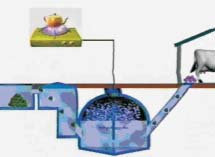
Manure should always be incorporated into the soil. Manure, which has been left
on the soil surface looses as much as 21% of nitrogen during 4 days, while
manure, which is incorporated in soil looses only 5 %.
It is possible to use manure and mineral fertilizers simultaneously. This may happen for several
reasons. Adding mineral fertilizer may be necessary to correct a misbalance of nutritive elements
in the manure which may be as a result of feeding animals with certain types of feeds. Another
reason for using both sources of nutrients would be if the crop requires greater amounts of all
three major elements: nitrogen, phosphorus and potassium or if one of them becomes limiting.
Manure can be used as a source of energy to produce biogas. Anaerobic processes in manure
produce methane in big quantities, which can be used as fuel by households. However, to produce
methane from manure, it is necessary to build a biogas plant (Drawing 3). A biogas plant will
provide an optimal environment for anaerobic processes to produce methane. The manure, which
is left after methane production, is a good fertilizer and can be applied to soil.
3.3.6. Manure and slurry as pollution
sources in agriculture
Manure and slurry are important organic
fertilizers and, if they are used in the right way,
soil fertility can be improved without pollution
to the environment. The problems vis-à-vis
possible pollution come from the fact that
ammonia volatilizes very fast and nitrates leach
in great quantities from manure which is left
open to weather conditions. Nitrates dissolves
in water and flow together with it and so can
easily bypass the root zone and enter ground
water and eventually flow to rivers and surface
water reservoirs.
Drawing 3: Biogas plant
The digestive tracts of domestic animals contain numerous microorganisms which are also found
in manure. Among them are microorganisms that can cause diseases and may harm human beings
and other domestic animals. These microorganisms can live in water and move together with it
posing a threat to human beings.
The main objective for farmers in terms of environmental protection is to protect manure and
slurry from surface water flows and to reduce ammonia volatilization as mush as possible. The
livestock producer must pay great attention to flows of surface water in his farmyard and around
his farm buildings. Water flows along slopes, infiltrates soil and enters ground water. Dung-pits
if flooded can therefore become sources of infection for humans and animals.
Pollution of water by livestock can be prevented much more efficiently if cow-sheds and dung-
pits are located and constructed according to special rules. All solid waste must be accumulated
in pits with water-tight floors and walls and which should be located in isolated places and be
periodically disinfected. Manure and slurry must be collected from cow-sheds, stored in special
pits and tanks, and transported and applied to fields in a way to minimize losses of nitrogen.
33
Storage containers for semi-liquid and liquid manure must have water-tight walls and floors. It
is prohibited to direct slurry to a public sewage system. It is recommended to reduce the amount
of slurry that is produced at farms. This can be done through the economic use water for washing
stables, by fixing water leaking from feeding-troughs and by using bedding in cow-sheds. Storing
manure in the field is not acceptable because it may result in pollution of ground water with
nitrogen and phosphorus substances.
With regard to sewage, for farms which are provided with a mains water supply but which are
not connected to the public sewage system it is necessary to build cesspits or septic tanks with
water-tight walls and floors. Farms which have a mains water supply use more water and produce
greater amount of sewage. Livestock access for drinking at river banks can be limited by fences
so that only a part of the herd may drink water simultaneously the result of which will be less
manure is dropped into the river.
Effluent which results from fermentation of silage must be collected in a special sedimentation
tank connected to a silo bin, to avoid pollution of water. Fermentation of one metric ton of silage
can produce up to 0.2 m3 of liquid which can be used as an organic fertilizer.
3.3.7. Biological waste management in animal husbandry
Biological waste from animal husbandry practices includes carcasses of dead animals and birds,
aborted embryos or dead-born fetuses, entrails of slaughtered animals, veterinary remains
(confiscated products resulting from veterinary-sanitary examinations) and other waste which
may be generated during the processing raw materials of animal origin.
Destroying animal husbandry waste may be carried out in special animal waste processing plants
under veterinary hygiene guidance or it can be buried in exceptions. Carrions of infected animals
must be incinerated. Carcasses, entrails and skin must be incinerated if a sudden infectious
disease is identified (e.g. anthrax, malignant carbuncle, malignant edema, lyssa, glanders, cattle-
plague, tetanus, botulism etc.).
In the case of the death of a domestic animal or upon finding of an aborted embryo or dead-born
fetuses, the owner of the animal must inform a veterinary surgeon who will make a
recommendation on the safest way to dispose of the waste. Animal carcasses must be isolated
from humans, other animals and insects. Is not allowed to cut or open a carcass of a dead animal.
If disposal of carcasses by incineration is not possible, carcasses can be buried according to the
following rules:
·
An animal burial pit must be at least 250m away from any well, borehole or spring
that supplies water for human and animal needs;
·
An animal burial pit must be at least 50m from any river or other non-drinking water
source and at least 10m from a drainage system;
·
A burial pit has to be at least 500m from a settlement;
·
The bottom of the pit must be dry and free of standing water;
·
A burial pit has to be of such depth that after burying the carcass there would be at
least 1m of soil layer above it;
·
It is prohibited to throw dead animals to rubbish-dumps, dung-yards and compost
sites.
·
In exceptional cases and under the supervision of a responsible institution, carcasses
can be used for research purposes, fed to zoo and circus animals, fur animals and
hunting dogs.
34
Slaughter-houses and slaughtered animal processing units must have a concrete water-tight floor
covered by tiles; such places must be provided with hot and cold water. Water used for processing
of slaughtered animals and meat must be of drinking water standard. If the slaughter-house is
not provided with a sewage system, waste water must be disinfected with a disinfection solution.
Only healthy animals can be slaughtered. If a sudden disease is identified at the
slaughter-house, the whole facility must be treated with a disinfection solution.
All labour employed in a slaughter-house must wear working clothes, treat any wounds obtained
during their work with medical disinfection and anti-bacterial solutions and undergo medical
checks regularly. All equipment and implements used in slaughtering must be made from materials
which can be easily washed, cleaned and disinfected and must not have any negative impact on
the quality of the meat products. Working tables must have covers made from stainless steel,
ceramic tiles or from specialized synthetic materials.
Slaughter-houses must have refrigerators for meat storage. There must be a special refrigerator
and sterilization equipment for meat which is conditionally considered as edible. After slaughtering
or at the end of each working day it is necessary to clean and sterilize thoroughly all equipment,
implements, storage facilities, repositories and containers for transportation with soda ash or
sodium hydrate.
3.4. Plant protection from pests
3.4.1. Legal framework
Protection of plants from pests is a matter of state and public importance. Efficient plant protection
must provide for not only sustainability of agricultural production and food security, but also for
the reduction of environmental pollution and the leaving of a safe environment (1).
The state policy covering the efficient application and safe use of pesticides and agro-chemicals has
been developed and is implemented by the Ministry of Agriculture, although some aspects related to
the safe use of the pesticides are regulated by the Ministry of Environment and Natural Resources and
by the Ministry of Health and Social Protection. These bodies implement state control and the
surveillance of pesticide-related activities in the respective fields of their competence (2).
A set of the laws and subordinated acts have been approved for the effective use of pesticides
and agro-chemicals, which are mandatory to all land-users and those who are involved in activities
with pesticides and agro-chemicals. The list of the laws and subordinated acts is provided in the
attachment.
Pesticides which are registered by the Georgian State are listed in "State Catalogue of Pesticides
(Plant Protection Products and Growth regulators), Which are Approved for Use from 2005-
2009 in Georgia" (3, 4).This document describes the mandatory regulations, hygienic and
ecological standards related to the use of pesticides. The state catalogue is published every five
years. Amendments to this catalogue are made and published annually.
In Georgia it is legal to import, store, transport, sell and use only those pesticides
which have been registered by the National Service for Food Safety, Veterinary
and Plant Protection of the Ministry of Agriculture.
35
3.4.2. Methods of Plant Protection
Plant Protection (pest control) methods are applied to reduce the negative impact of pests, diseases
and weeds on crop plants. Good agricultural practices imply not only obtaining high yields, but
also the reduction of the negative influence of pest control practices on the environment. Plant
protection in agricultural production can be carried by a number of different methods including
agro-technical, chemical, biological, physical-mechanical and through quarantine.
The agro-technical method means the growing of agricultural crops by providing optimal
conditions that induce plants to grow and develop rapidly and so stimulate their own natural
resistance to pathogens. The negative influence of pathogens can be reduced through planting
resistant varieties, applying the right tillage and crop rotation systems, removing plant residues
from the field, using quality planting material, applying the right irrigation schemes and providing
crops with balanced nutrition.
The chemical method is the use of chemical preparations, generally known as pesticides.
Pesticides are normally used in three ways: for the eradication of plant diseases, pests and weeds,
for the limitation of the abundance and harm caused by plant diseases, pests and weeds and for
the regulation of plant growth.
The biological method is the use of natural enemies, i.e. insects, nematodes and ticks;
microbiological preparations from bacteria, fungi or viruses, as well as applications of plant
extracts to stop or to limit the spread of harmful organisms and their harmful effects.
The physical-mechanical method is the collection of pests by hand or by specialized equipment
for their elimination; the eradication of pests by heating, cooling or drying, removal of damaged
plants from crop fields and applying radiation methods of sterilization.
Integrated Plant Protection is the integrated use of all plant protection methods valuable for a
particular case giving preference to non-chemical measures versus chemical methods used to
raise plant resistance and maintain natural equilibrium. Integrated plant protection systems are
based on knowledge of the biology of insects, pathogens, weeds and beneficiary organisms and
the relationships between pests and beneficial organisms. Biotechnological methods of pest
population prognosis (pheromone catchers) are used in conjunction with estimations of the
economic damage thresholds. Usually complete eradication of the pest is not the objective of
Integrated Plant Protection but the reduction of its population and the keeping of economic
damage to a minimum.
3.4.3. Threats from pesticide application
Pesticides, which are active chemical compounds, can pollute surface and ground water and soil.
If not used properly, pesticides can damage human and animal health and the environment;
induce undesired changes in ecosystems, particularly the eradication or reduction of populations
of beneficial organisms which naturally control numbers of pests. Pesticide residues can easily
penetrate the human organism through polluted water and plants, which are used for food.
Risk-free chemicals do not exist but there are safe ways of using them!
3.4.4. Types and preparations of pesticides
The type of pesticide is defined according to the target organism: herbicide (weeds), insecticide
(insects), acaricide (ticks), fungicide (fungal diseases), rodenticide (rodents) and others. Growth
36
regulators are also included in pesticides. All plant protection products have different forms of
preparation. Some of them are powders and others are granulated powders or water insoluble
concentrated emulsions. Respectively, they are packaged in different types of containers.
Pesticides can be used in accordance with the regulations that are indicated in the State Catalogue
of Approved Pesticides and according to the recommendations on the label of the container
provided by the manufacturer.
3.4.5. Pesticide purchase and labeling
Pesticides can purchased only at specialized retail outlets!
Before purchasing a pesticide the buyer must require a product quality certificate and make sure
that the container is not damaged. The pesticide, once purchased, must be accompanied by
instructions and additional information about the product in the language the purchaser can
understand. He may also request a leaflet about the pesticide. Violation of the rules concerning
the trade of pesticides is punishable by the law (5,6).
The purchaser must examine the container of the pesticide. It must be plugged hermetically and
the cap must have an undamaged protection ring. It is prohibited to buy pesticides in open
unpacked containers. The label must be read carefully from the beginning to the end! Store and
use plant protection products according to the instructions on the container. Never use pesticides
which have expired or are prohibited by the State (7).
Pesticides must have a label with the following information on it:
·
General name;
·
Active ingredient;
·
Preparation form and active ingredient concentration;
·
Type (insecticide, fungicide, herbicide);
·
Target pest, crop and type of facility (greenhouse, warehouse etc);
·
Compatibility with other preparations;
·
Amount of preparation;
·
Toxicity class, threat signs and threat pictograms;
·
Antidote;
·
Restrictions;
·
Full name of producer, trade mark and address;
·
State registration number;
·
Production date and expiration date, coding of the lot for traceability;
·
Storage conditions;
·
Prohibition statement on reusing the container and guidance for its safe disposal and
utilization.
Attention must be paid to the following symbols that indicate the threat associated with its
storage, transportation and application of the pesticide:
E explosive;
T+ - very toxic
O oxidizing;
C - corrosive
F - very inflammable;
Xn harmful;
F+ - extremely inflammable;
Xi irritant;
T toxic;
N dangerous for the environment.
37
The user must read very carefully the safety instructions given on the label and the simple rules
for the application of first aid, which is provided in case of poisoning by the pesticide.
3.4.6. Safe transportation and storage of pesticides
It is important to follow the safety rules during the transportation and storage of pesticides.
Pesticides must be transported by the transportation means specifically designated for pesticide
transportation. Pesticides must be stored and transported in their original intact containers which
must have appropriate labels. Pesticides must be stored in a specially designated warehouse (5).
Violation of the pesticide transportation and storing rules are punishable by the law (6).
While transporting the pesticides they must be kept at a distant from any passengers, animals
and food. After transportation, the vehicle must be cleaned and washed thoroughly. The loading
and unloading of pesticides must be carried out carefully. To avoid damage to the pesticide
containers and the spilling of the pesticide nothing heavy should be placed on the containers.
Before loading the pesticides in the vehicle the floor should be checked for nails and other things
which may damage the container. The vehicle floor must be smooth.
It is prohibited to store pesticide together with food and feed!
Pesticide warehouses must be located far away from residential buildings and be unreachable
for children. Pesticides must be stored in a cool, dry, well-ventilated, well-roofed and light
protected room. Pesticides must be isolated from inflammable substances such as fertilizers.
Household chemical goods must be stored separately from the pesticides.
Never purchase more pesticides then it is necessary for the current season. This will avoid storage
of excessive and residual amounts of pesticides. Pesticides must be stored far away from sources
of drinking water and sewage systems. Baits, impregnated by rodenticides, must be stored
separately from herbicides. Seed treated with pesticide must be labeled appropriately to avoid
mixing with grain intended for food.
Pesticide containers must be checked regularly for damage and leaks.
In the case of pesticide spills or leaks:
·
Exclude access of humans and animals to the polluted areas.
·
Do not smoke or make fires near the polluted area.
·
Sawdust or soil must be spread over the polluted area which must be swept up and dug
into soil;
·
Polluted vehicles must be washed far away from surface water;
·
Working clothes must be worn during the cleaning;
·
Polluted food must be dug into soil or burnt. Polluted food must never be used and
must not be given to animals. It can cause death!
3.4.7. Safe use of pesticides
Before purchasing a pesticide, the user must assess the problem through the
identification of the pest and the extent of the crop damage in consultation with a
specialist.
The decision to apply a pesticide must be made based on the assessment of the crop damage
potential versus costs related to the application of the pesticide. Pesticide application is justifiable
38
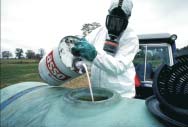
only if the spread of the pest exceeds a scientifically grounded threshold. The date and method of
pesticide application is determined based on the prognosis for the pest development and its spread.
The required pesticide application rate can be reduced significantly if some preventive
measures are included in the crop management system:
·
It is very important to have healthy planting stock and seeds, and healthy soil.
·
Growing crops that are adapted to the local climate, soil and topography may reduce
pesticide application rates;
·
Inclusion of the right crops in a crop rotation system (that don't have common pests)
may provide for a better control of the pest through disrupting their life cycles.
·
Growing crops that are resistant to diseases/pests and competitive to weeds varieties.
·
Application of the right crop management practices in order to establish a favorable
environment for crops to express their natural resistance to pests.
·
Plants must be observed at least once every 2 weeks. Less pesticide is required if it is
applied in the early stages of disease or weed development.
Before using the pesticide the operator must understand the following instructions carefully in
order to get familiar with the necessary information and the application rules for the pesticide:
·
The purpose of the pesticide: i.e. which is the target pest;
·
Application time: when it is allowed and when it is prohibited to apply the pesticide:
month, crop growth stage, pest development stage etc.;
·
Where it is permissible to use the pesticide: which crops, regions, etc.;
·
Restriction of use: weather, minimal period between the application and harvest dates,
waiting period etc.;
·
Possibility of joint application with other chemicals, if necessary;
·
How to avoid damage to beneficial insects (e.g. bees and wild insects) and wild plants;
·
Recommended application rates.
·
Possibilities of development of resistance to the herbicide in the target pest populations
and how avoid it.
The preparation of the pesticide solution and its application to the field requires skilful
operators who are familiar with sprayers, who can select the right nozzle and who can
define the distance and direction of spraying.
Preparation of a working solution
Preparation of pesticide solutions requires the
exact observance of the indicated concentration
and rules for mixing. Containers and implements
used for the preparation of pesticide solutions
cannot be used for other purposes. After washing
the implements and containers used in the
solution preparation, water can be added to the
sprayer's tank. It is prohibited to use the empty
pesticide container for any other purposes and
they must not be burnt or buried.
Photo 12: Adding the preparation to the
Before the application of pesticides the operator
sprayer's tank
needs to prepare the appropriate spraying
equipment and check its readiness. After, we need to pour required amount of water in the tank,
fill it up to the required level and add the preparation to the tank (Photo 12).
39
The instructions on the label must be read in order to select the concentration rate for the solution. The
recommended application rates and rules for dissolving the pesticide must be adhered to. It is important
to remember that excessive rates will not provide a bigger effect but reduced rates will be less effective.
Powder or granules should be added to the sprayer's tank in a solution of water. The required
amount of an emulsion must be put into the tank first and then water should be added afterwards.
The tank should never be filled to the rim to avoid spilling of the pesticide during its field application.
Only enough solution should be prepared for carrying out a single application operation.
Safety advice for pesticide use:
·
The direction of spraying must take in account the drifting of pesticide to neighboring
plots and the inhalation of by the operator of the pesticide droplets. Pesticide should
be applied in the morning or evening, when air the humidity is relatively high.
Application of pesticides is not efficient on windy (>4m/sec) days. In the case of
moderate wind, the operator should account for its direction and strength to avoid
harming neighboring fields, especially if susceptible crops are grown there.
·
Herbicide should not be applied during rain as most of the herbicide will be washed
out and flow into the soil and surface water so the effect will be reduced.
·
Humans and animals must not enter the newly treated fields. The treated fields can be
entered only after a certain period, which is indicated in the instructions.
·
The pesticide residue level of the crop must not exceed the allowed rate. To avoid
pollution by pesticide residues, it is important to observe the necessary "waiting period"
between the last application of the pesticide and harvest date. The waiting period is
indicated in State Catalogue (3, 4).
·
If the waiting period is not observed, the pesticide will not disintegrate and the crop product
will be polluted with pesticide residue. This is considered as detrimental to human health.
Selling unsafe food is strictly prohibited and such food must be destroyed (9, 10).
The application of pesticides is not recommended at a distance less than 5 meters from residential
buildings, nor at a distance less than 20 meters from gardens, bee hives, surface waters or safe
zones of water collection systems. Application of pesticides to soils (granulated, solutions, powder,
dense vapor) must carried out by a special fumigator and operator. It is prohibited to apply
pesticides to soils using a planter.
Violation of the pesticide application rules are punishable by law (5,6).
3.4.8. Personal safety of operators
All pesticide products are accompanied by a Guide for Safe Usage, which must be read carefully
by the operator in advance of pesticide application. The guidance includes safety measures and
precautions.
The following rules must be observed while preparing pesticide solutions:
·
The operator must be dressed in working clothes including the following clothing
items to preserve individual safety: rubber gloves, rubber boots, protective cap, glasses,
and respirator.
·
The preparation of pesticide solutions must be carried out far away from residential
houses and domestic animals. Children and animals must not be allowed to approach
the solution.
·
Surface water must not be polluted with pesticides as it can be used for watering
animals.
40
·
Use specialized implements for the preparation of pesticide solutions: measuring
glasses, plastic scoops (to take powder). Solutions must not be touched by unprotected
hands and mixing implements must not be used for any other purposes.
·
Only pure water must be used for the preparation of pesticide solutions.
·
The sprayer's tank must be filled with water carefully to avoid spilling. Powder must
be added to the tank with great precaution to avoid scattering. Attention should be
paid to the wind direction to avoid inhaling of harmful substances.
·
The pesticide container and sprayer should not be left unattended! The pesticide
containers should not be left open.
After application of the pesticide
·
After completion of the work, the equipment must be cleaned and washed and
maintained regularly.
·
The pesticide container must be capped well to avoid spilling or scattering. The pesticide
must be stored in its original container. It must not be moved to other vessels or bottles.
·
Used containers must be washed out at least three times and water should be poured in
the sprayer's tank and applied through the nozzles.
It is prohibited to work with pesticides without using personal protection!
Things to remember about personal safety while working with pesticides:
·
It is forbidden to eat, smoke and drink water while working with pesticides or being
nearby pesticides;
·
It is necessary to protect the eyes. If pesticide falls into an eye, the eye must be washed
with abundant water;
·
It is necessary to protect the respiratory tract: it is very harmful to breath or smell
pesticides or the smoke obtained from its burning;
·
Contact with pesticides on the skin is not desirable. Polluted clothes must be taken off
as fast as possible.
·
Special clothes (coveralls, aprons), rubber shoes, eye-glasses, rubber gloves and respirator
must be used during the application of pesticides. Bandages or cotton cloth can be used
to cover the mouth and nose if a respirator is not available.
·
It is prohibited to clean polluted nozzles and sprayer filters by blowing using the mouth.
·
After completion of work, the operator must first wash hands without taking off the
rubber gloves with disinfectant solution (e.g. 0.3% CaSO ), and then takes off the
2
glasses and respirator, clothes and shoes. Afterwards, the operator must wash hands
again and only after that takes off the gloves. Finally, hands are carefully washed by
soap and then the operator should take a shower.
·
The working clothes must be aired for 8-12 hours and washed by washing soda or soap.
3.4.9. Safe disposal of pesticide waste
The safe disposal of pesticide waste is carried out according to the Georgian Law on Pesticides
and Agrochemicals. According to international practices and recommendations3 farmers must
not accumulate pesticide waste and obsolete pesticides in big quantities. Farmers should therefore
avoid the purchasing of excessive amounts of pesticides. The accumulation of pesticide waste
must be destroyed following the instructions of the Environmental Protection Authorities and
instructions given on the pesticide container labels.
3 Global Plant Protection Federation and European Plant Protection Association recommendations on
pesticide waste management.
41
There are five types of pesticide waste: 1) surplus products, 2) containers, 3) excess mixtures, 4)
rinse water from containers and application equipment, and 5) materials generated from the
cleanup of spills and leaks.
Surplus pesticide: According to international practices, surplus pesticide must be destroyed through
incineration at a temperature higher than 1000 C° using special equipment at licensed waste
treatment premises, or that it is buried at licensed landfills strictly following all safety instructions.
When licensed waste treatment premises and landfills are not available, small quantities of leftover
pesticide can be buried in a special site, allocated by the Environmental Protection Authorities
for a group of farms, observing the following rules:
·
Pesticide leaching and surface water pollution by pesticides must be avoided;
·
Pesticide waste can be buried in places only where water lodging is excluded. The site
must be fenced and marked by a caution sign;
·
The hole for burial must be concave, with a diameter and depth being equal to 2-3 and
1-1.5 meters, respectively. The bottom of the hole must be 2 meters above the surface
of ground water;
·
The bottom of the hole must be clayed with a 10-cm thick clay layer and covered by a
3-cm thick layer of lime;
·
Pesticide leftover must be placed in the hole in 10-15 cm layers in rotation with layers
of lime and domestic waste which is subject to biological decomposition;
·
To facilitate biological decomposition, the hole must be covered by a 50-cm layer of
compost or soil and planted with shrubs to avoid disturbance.
Pesticide containers must be destroyed at a licensed landfill. If a licensed landfill is not available,
used pesticide containers must be buried at a site, allocated by the Environmental Protection
Authorities, observing the following safety rules:
·
Metal containers must be rinsed three times, pierced to avoid their re-use, squeezed to
reduce volume and buried in a landfill. Holes must not be made in aerosol pesticide
containers!
·
Plastic containers must be rinsed three times, pierced and buried in a landfill or, except
for polyvinyl chloride containers, burnt.
·
Paper and cardboard containers must be burnt or buried. Sites for burning and burial
must be far away from residential places and water reservoirs. Care should be taken
not to swallow smoke from burning the containers!
Excess mixture is diluted pesticide that is left over in the spray tank after a pesticide application.
It usually cannot be stored so one should not generate excess mixtures. If there are excess mixtures
the way to dispose of it is to use it on a designated and labeled site. To avoid the problem of
excess mixture the required amount should be properly estimated and the spraying equipment
carefully calibrated. The spray tank should be filled with only the amount required to do the job.
If rinse water from the application equipment is improperly disposed of it has a great potential
for causing ground and surface-water contamination. Therefore:
·
One must not discharge rinse water to the ground;
·
One must not discharge rinse water to septic systems this will increase the chance
that it will get into the ground water;
·
One must not discharge rinse water to ditches or streams it is illegal and may cause
damage to neighbor's crops, trees, or be a serious hazard to fish and other wildlife.
42
·
One must not bury rinse water it may contaminate ground water;
·
The amount of rinse water should be kept to a minimum wash out equipment only
when necessary;
·
One must not apply rinse water to a treated field. This will not result in an applied
concentration above the label's recommendation. Rinse water should be disposed of
in the same way as waste water generated as a result of the clean-up of pesticides from
stained or contaminated surfaces.
Material generated from cleanup of spills and leaks: Materials such as soil, sand, sawdust, or
other absorbent materials should be used to adsorb liquid pesticides. These materials, and soil
contaminated with a spill should be collected in a container and delivered to a licensed landfill or
if that is not possible, buried in hole at a specially designated site strictly following safety rules.
3.5. Protection of the environment from pollution from sewage water and waste
3.5.1. Legal framework
According to the Georgian Water Law of 1997, a permit is required to direct industrial sewage,
household sewage and drain water to surface water. The permit can be given only if sewage
water has been purified to a level which meets the requirements stipulated by the Environmental
Protection Authorities.
According to Georgian Law on Environmental Protection (1997), all subjects involved in
economic activity are obligated to understand waste reduction, disinfection, utilization, correct
disposal and landfill and to follow the environmental protection and epidemiologic requirements.
It has to be emphasized that landfill is allowed only in specially assigned places.
Centralized sewage water purification systems consist of several steps and includes collection of
sewage water (sewage system), filtration of large solid particles, settling of small particles,
mineralization of organic substances (through adding bacteria and oxygen), and the sedimentation
of the products of mineralization and disinfection. The modern solid waste utilization and
sterilization system is even more complex. Often, rural households and processing units don't
have access to a centralized sewage and waste collection system. Therefore they are responsible
themselves for disposal of waste and used water.
3.5.2. Waste from primary processing of agricultural produce
Primary processing of agricultural commodities generates waste. The generation of each type of
waste is related to the properties of the raw materials and the technology that is used in processing.
E.g. fruit peels and pips from fruit processing units, bones and blood from meat processing
units, and bran and grain flour scattered on the floor in bakeries.
Waste can be also generated through the failure of equipment, labor malpractice and
mismanagement of the unit. Some good examples of such types of waste would be the rejected
outputs resulting from the mistakes in dosing ingredients, transporting or storing of products.
Such waste may consist of unprocessed, partly processed or fully processed products.
Large amounts of water are used by processing units. Waste water is generated through washing
raw materials, processing equipment, storage facilities and mopping floors. Depending on the
waste products, its amount and the amount of water used in processing the waste water can be
liquid or be a thick like sludge.
43
3.5.3. Reduction of waste in processing units
Large amounts of waste are often associated with mismanagement of the processing unit and/or
usage of an inefficient technology, which results in economic losses. Raw materials must be
stored in appropriate conditions and used efficiently in processing. The proportion of rejected
product must not exceed 5% of the total processed.
Pollution of the environment by waste from agricultural processing can be reduced and profitability
of processing units increased if waste is recycled: organic waste can be used for production of
methane in biogas equipment or compost. Organic waste obtained from the processing of certain
types of agricultural produce can be used as feed. It is recommended that expert opinions are
sought to better understand the economic viability and in some cases the safety of recycling
organic materials.
To utilize waste, it is necessary to sort organic waste from other types of waste and store it
separately. Fewer detergents must be used for washing processing units where waste is managed
for recycling.
Processing units which have a centralized water supply but are not connected to centralized
sewage systems produce waste water in particularly big amounts. The amount of waste water
can be reduced if:
·
dry and liquid waste is stored separately;
·
dry substances scattered on floors is cleaned up by using brushes or brooms;
·
high pressure sprayers are used to raise water pressure and which reduce water consumption.
3.5.4. Human domestic waste
Domestic waste includes household garbage, waste water and human biological waste. It is
necessary to accumulate organic and non-organic waste separately. Organic waste can be used as
feed or raw material for the preparation of compost. Compost can be prepared not only from
organic waste but also from hay and dry grass residues. Compost is used as organic fertilizer.
Metal, glass, plastic and other solid (non-organic) waste cannot be included in compost but it
must be accumulated in a specially designated place and transported and dumped at a special site
near designated by the local authorities. If it is not possible to recycle paper and cardboard they
can be burnt also at a designated place and the resultant ash can be used for soil fertilization. Ash
is rich of potash.
Human biological waste represents a dangerous source of contamination and potential spread of
infection. Human biological waste entering rivers without prior disinfection is strictly prohibited.
If a centralized sewage system is not available, the simplest although considered a temporary
solution is an outhouse, which should be set over a hole that has been dug to at least 1.5 meters
into the ground. The outhouse should be constructed at least 15 meters from the house for hygienic
and odor reasons. More importantly, the outhouse must be at least 20 meters away from any
water well to avoid contamination of drinking water. If the hole ever fills up, it will be necessary
to dig another and drag the outhouse over the top of it. In some regions of Georgia, a special
service is available, which pumps out human biological waste and transports it with tanks to a
special site for processing.
Even if waste water doesn't contain much waste it is prohibited to direct it to surface water
without further processing. Cesspits are used for processing of waste water. A cesspit is a hole
with its bottom filled by gravel. Waste water is directed to the cesspit by a pipe and it becomes
44
filtered when it infiltrates gravel and soil and
is naturally purified by the time it reaches
ground water. A waste water disinfection
system can be improved significantly if
waste water passes a septic tank before it is
drained into the soil. Such a system is called
septic tank-soil absorption system (Drawing
4).A household sewage pipe can be
connected to septic tank-soil absorption
system. This system is widely used in rural
areas of developed countries where
centralized sewage systems do not exist.
Drawing 4: Septic tank soil absorption system
Raw waste water from the bathroom, kitchen
and laundry room flows into the tank where
the solids separate from the liquid. Light
solids, such as soap suds and fat, float to the
top and form a scum layer (Drawing 5). This
layer remains on top and gradually thickens
until the tank needs to be cleaned. Heavier
solids settle to the bottom of the tank where
they are gradually decomposed by bacteria.
But some non-decomposed solids remain,
forming a sludge layer that eventually must
be pumped out. After passing the septic tank,
effluent flows to the soil absorption system,
Drawing 5: Septic tank with effluent filter
which works as a sanitation well. It further
filters water and distributes water in soil to facilitate its purification.
The tank size is determined by the family
size in the house and water consumption rate
per person and taking into account that waste
water must stay in the septic tank for at least
48 hours before it passes to the soil
absorption system possibly a waste water
drain in a drain field. The accumulated
sludge must be pumped out at least once a
Drawing 6: Waste water drain
year and sterilized.
Further treatment of wastewater occurs in the soil beneath a drain field (Drawing 6). A drain
field consists of long underground perforated pipes or tiles connected to the septic tank (Drawing
7). The network of pipes is laid in gravel-filled trenches. A typical trench is about 40-70 cm
wide. The length of the pipes can reach as much as 50 meters. If the area available is not enough,
a cesspit can be constructed instead. The soil below the drain-field provides the final treatment
and method of disposal of the septic tank effluent. After the effluent has passed into the soil,
most of it percolates downward and outward, eventually entering the groundwater. A small
percentage is taken up by plants through their roots.
45
Gravel and heavy clay soils are not suitable
for soil absorption and may not provide for
complete treatment of waste water. In such
cases, reed-sand filters can be used for
completion of waste water treatment. One-
square meter of the reed-sand filter can treat
up to 30-50 litres of water per day.
The reed-sand system consists of a siphon
and a reed-sand hole, which are connected
Drawing 7: Drain field
to each other by a pipe (Drawing 8)4. Waste water first flows to the siphon, where mechanical
mixtures form sediment, and after enters the reed-sand whole, where it is completely treated.
Drawing 8: The reed-sand water filter system
The siphon represents a 0.5m x 0.5m x 0.5m size cube, which is made of concrete (Drawing 9).
The siphon is partly buried in soil. Concrete has to be 10 cm above the soil surface. The siphon
is covered by a metal or plastic.
Drawing 9: Siphon
The reed-sand filter represents a 40-cm hole, which is filled by sand up to about 20 cm (Drawing
10). The distance between the reed plants is 20 cm. It is recommended that the reed hole be
surrounded by fence to avoid contact of humans and animals with waste water.
4 The reed-sand filter system drawing has been provided by NGO "Civil Society to Peasants (President
Koba Khutsishvili).
46
Drawing 10: The reed-sand filter-hole
3.5.5. Application of sewage and sludge for irrigation and fertilization
Sewage and sludge can be used in agriculture to irrigate and fertilize agricultural land under
certain circumstances. Each person who wants to use sewage for this purpose is obliged to
obtain a waste-disposal license, issued by the competent departments for environmental protection.
Sanitation requirements for sewage and sludge that are intended for use in agriculture are presented
in the Sanitation Regulations (20). It is not allowed to apply sewage on soils containing higher
than admissible amounts of heavy metals.
Sewage cannot be used on slopes inclined more than 10 degrees and on grasslands more than 20
degrees. It must not be applied on arable lands or on grasslands if the level of ground water is
less than 1.5m from the surface. It is not allowed to use sewage for plants (fruits, vegetables) that
will be eaten in the raw state. According to legal regulations slurry and liquid manure are not
regarded as sewage and they must be applied in the same way as natural fertilizers.
3.5.6. The passing of effluent from fish production ponds to surface water
Fish production ponds accumulate floating and dissolved organic substances in large amounts,
e.g. fish excreta and uneaten food. Large concentrations of antibiotic residues, chemicals for
controlling growth of mollusk and algae and detergents for cleaning cages can also be observed
in fish production ponds. A small fish production pond, which produces up to 500 tons of fish,
can accumulate and pass to surface waters as much organic waste as a community consisting of
5-7 thousand inhabitants. Fish can fall sick in production ponds and this sickness may spread to
natural populations of fish. Water from fish production ponds is rich in microorganisms but it is
deficient in oxygen. Such water, if it passes to a natural water reservoir, may cause eutrophication
and promote abnormally large growths of algae.
To improve the quality of fish pond water and enhance the productivity of fish ponds, it is
necessary to apply slaked or burnt lime to the bottom of the ponds either after emptying them in
the fall or 2-3 weeks before filling the ponds in the spring. It is also recommended to apply low
rates (0.2-0.3 ton/ha) of burnt lime to ponds during hot days in summer. Lime application promotes
the reduction of pond water acidity and facilitates mineralization of organic residues and hinders
the development of algae and "water bloom".
47
Pollution of surface waters by fish production ponds will be reduced, if:
·
the frequency of water changes in fish production ponds is reduced. The necessity of changing
water in fish production ponds is exaggerated as it is possible to use the same water many
times for fish production;
·
effluent must be held in a retention pond for 48 hours before its release to surface water
where most of the organic contaminants settle on the bottom;
·
if possible effluent should flow through a bog before release to surface water. Wetlands
represent a natural biological filter as effluent becomes purified while being retained by a
bog. It is not difficult to make an artificial wetland and to pass to it fish pond effluent
before eventual release to surface water.
·
fish must be fed with good quality feed. High quality feed facilitates digestion and less
nutritive elements are released by fish.
·
water circulation is important as this improves the oxygen content. A good oxygen supply
raises the appetite of fish and reduces the amount of uneaten food in water.
·
fish pond water can be used for irrigation of crops. There is about 0.9-1.2 kg of nitrogen in
1 cm of water per ha available for plants. About 27-36 kg/ha of nitrogen will be applied to
the soil if the field is irrigated at the rate of 300 mm/ha.
·
fish ponds must be kept away of surface water flows. Pond water must not overflow the
pond banks and flow into surface waters or water reservoirs.
4. Protection of atmospheric air
4.1. Introduction
There are many air-polluting substances that may come from agriculture: greenhouse gases
(methane, nitrogen oxides and ammonia), odor substances associated with livestock production
(volatile nitrogen compounds of unpleasant smell that come from the decomposition of animal
excrement), dust (soil particles), smoke (from burning organic and non-organic residues and
waste) and other substances.
According to recent data, agriculture is not considered as a significant source of air pollution in
Georgia compared to transport, public utilities and industry in this respect. This opinion is based
on the decline of agricultural production and in particular the drastic reduction in use and import
of the pesticides as compared with the 1980s. Unfortunately recent agricultural production
practices do not incorporate care and attention to the reduction of environmental pollution.
Therefore the anticipated growth in agricultural production, some signs of which have been
observed in recent years, will result in significant growth of pollutant emissions to the atmosphere.
The 1999 Georgian Law on Atmospheric Air Protection provides the legal framework for air
protection in Georgia. This law states the major criteria according to which the ambient air
quality is determined. This refers to the air content of dust, sulfur dioxide, nitrogen oxide, carbon
dioxide and hydrates. The law states the upper limits for air components according to the European
Union Directive N96/62/EC issued on September 27, 1996. The marginal concentration rates of
pollutants in ambient air of residential districts are given in the respective air hygiene standards,
which have been approved by Ministry of Labor, Health and Social Protection (33). The Georgian
Law on Environmental Protection obliges everybody who is involved in any activity that they
pay due attention to the law in matters of waste reduction, disinfection, in all forms of disposal
and landfill following the hygienic and epidemiologic standards and rules.
48
4.2. Emission of ammonia and other odorous substances
Unpleasant smells can not be completely eliminated from livestock production. The most
unpleasant odors are characteristic of pig and poultry farms. However, taking some precautions
may reduce the emission of bad odors to the atmosphere and therefore reduce their detrimental
impact on the environment.
Livestock production produces nitrogen containing substances such as ammonia, nitric oxide,
nitrogen oxide, nitrogen dioxide, as well as more than 330 substances with unpleasant odors. As
much as 50% of all ammonia emitted to the air is related to agricultural activities, primarily
because of domestic animal production. Ammonia in the air causes chemical reactions, produces
acids and returns to surface in form of "acid rain".
Nitric oxide, nitrogen oxide and nitrogen dioxide is emitted to the atmosphere from animal
farms, manure storage sites and fields fertilized with manure. Emission of ammonia from manure
reduces the nitrogen content in the fertilizer. Ammonia (in form of a gas or ammonium salts) can
enter into water and cause water pollution. Pollution of soil with ions of ammonium may increase
the acidity of the soil.
Ammonia and other nitrogen containing substances are emitted in great quantities from animal
excrements. Emission of ammonia by volatilization depends on the surface area. Also the dryer
the manure the faster the volatilization proceeds. Emission of ammonia is reduced if farmers
remove manure often from cow-sheds to dung heaps. It is better to store manure in a concave
dung heap and to avoid spreading manure on a flat surface. Manure must be removed from cow-
sheds every day. Slurry should be also removed from yards and passed to specially closed water
tight tanks (lagoons) for storage and used later as liquid organic fertilizers.
The highest losses of ammonia happen during the transportation and spreading of manure and
during the 12 hours after its application to the soil. Emission of ammonia will decline if organic
fertilizer is mixed with soil right after application. It is not recommended that urea is applied to
neutral and alkaline soils as it promotes losses of ammonia. Emission of ammonia is greater if
the period between urea and lime application is less than one year.
The high content of ammonia and other nitrogen containing substances in animal excrement is
related to the incomplete digestion of feed. Lower nitrogen levels in feed may reduce the nitrogen
content in animal excrements without lowering the production level. The nitrogen content in
animal excrement may decline if the diet (especially for pigs) is adjusted to animal requirements
at different periods of development (stages of feeding). Nitrogen absorption may improve if
maize silage is used as feed.
4.3. Emission of greenhouse gasses
Methane, carbon dioxide and nitrogen oxides are regarded as greenhouse gases. It is estimated
that on average 30% of emitted greenhouse gases come from agriculture. Agriculture is especially
responsible for 50% of the emission of methane. The greenhouse gases gather in the upper layers
of the atmosphere and promote the warming of the climate.
Carbon dioxide is emitted in large quantities as a result of the consumption of fuel by internal-
combustion engines and the burning of waste and crop residues.
To reduce the emissions of carbon dioxide, it is essential to:
·
ban the burning of plant resides;
49
·
reduce fuel consumption (lower powered tractors with fewer empty journeys and
agricultural treatments) and change systematically fuel filters and fuel injectors;
·
use non-conventional sources of energy for heating (biogas, solar energy, wind and
water power);
·
reduce losses of heat from buildings through insulation.
Emissions of carbon dioxide can also be reduced through the implementation of conservation
agriculture systems which implies the reduction of fuel consumption through the minimization
of the amount of tillage.
Methane is a scentless, colorless, invisible but inflammable gas and is emitted as a product of
the metabolic processes of farm animals. Its greenhouse effect is stronger than that of carbon
dioxide by as much as twenty times. Most of the methane is released by ruminants, especially
dairy cows, during their digestion of feed. Some amount of methane is released by bacteria when
manure is stored and applied to soil. Emission of methane may also take place during anaerobic
fermentation of organic substances. Reduction of methane emission through changes of the animal
diet is impossible.
The most feasible way of reducing methane emissions is through controlled fermentation of
manure in air-tight tanks. Such tanks are called biogas plants. Methane produced in biogas-
plants can be used as fuel for household needs.
Nitrogen oxides emission is related to soil cultivation, application of mineral and organic
fertilizers and fuel combustion by internal-combustion engines. Their greenhouse effect is stronger
than that of carbon dioxide by as much as 300 times. Emission of nitrogen oxides can be reduced
to a minimum if nitrogen (mineral and organic) fertilizer application rates are determined as
accurately as possible based on crop requirements. Emission of nitrogen oxides are observed in
soils with excessive moisture, the latter can be reduced though the improvement of the soil
water-air holding properties.
4.4. Air pollution caused by the application of pesticides
The protection of atmospheric air must be done by the strict observance of plant protection
technology requirements, environmental protection and hygienic standards.
Pesticides are especially harmful to living organisms when their concentration is higher than the
recommended usage rate. Therefore the exact amount of pesticide must be dissolved in water as
is indicated in the instructions. Pesticide drift, which is the physical displacement of pesticide in
the form of particles or droplets from the intended target to non-target plants during application,
is the most frequent problem in environmental pollution.
The operator, who is spraying a pesticide, must observe all safety rules and exclude any drift of
pesticides to non-target plants. Therefore, it is necessary that the operator familiarizes him/
herself with the weather forecasts, select the right application rate, check the working condition
of the spraying equipment in advance, select the right position for the nozzles and apply the right
speeds and pressures while spraying. Only in such circumstances will the pesticide will be applied
equally at the desired rates to targeted plants.
The operator must avoid spraying on areas already treated. It is better that the wind is blowing
with the spraying direction. It is better to apply pesticide when wind is weak as the chances of
drift are much bigger when the wind is strong.
50
Table: Weather conditions as they influence the application of pesticides
Application of pesticides is prohibited, when the speed of wind is higher than 3-5 m/sec. Never
spray pesticide against the wind!
It is less damaging to the environment when pesticides are applied using small-sized hand and
tractor-mounted equipment. These are more efficient technologies which reduce pesticide losses
by as much as 50%. This results in sharp reductions in environmental pollution as well as in the
lowering of plant protection costs.
When pesticides are applied in open fields they must be applied not less than 100m from buffer
zones, recreation zones and areas of organic agricultural production. Large fields that require
many applications of pesticides must not be closer to residential areas than 200 m. Special attention
must be paid to the hydrology of the area to the directions of seasonal winds and to the wind
speed during the application.
Pesticide mist generators and aerosol generators with a regulated dispersion may be used only if
the aerosol flows won't reach residential communities and when the wind is blowing in an
opposite direction to the residential communities. The application of pesticide aerosols with
elevated rates is prohibited when misters are used indoors (greenhouses and storage facilities). It
is prohibited to stay next to the mister or at the target building closer than 5 meters. While using
misters, the recommended application rates for the crop must be observed strictly to minimize
dispersion of the aerosol into the atmosphere.
While applying pesticides attention must be paid to the operating mode of the machinery and
equipment so as to provide an application at the required rate. In the pesticide application area,
the content of pesticide in the air must not exceed the designated limit.
51
Aeroplanes for pesticide application are used when it is necessary to treat large areas in a relatively
short period of time. In such cases, preference is given to light aircraft, which can fly as low as
2-5 m above the plants and which can spray as little as 1-10 liters of working solution per ha.
Through such aircraft, it is possible to apply pesticides precisely and accurately to crops and
avoid pollution to nearby areas and crops. Light airplanes, the weight of which do not exceed
3,000 kg, can take off from a strip on firm soil or a grassy field and do not need a special
aerodrome. Such planes are equipped with small-sized spraying equipment.
When such small-scale aircraft are used for pesticide application, at least a 500-m wide buffer zone
must be observed from drinking water sources, livestock and poultry farms, pastures, reserved
areas and national parks. For bee hives the buffer zone must be about 2-5 km. Application of
pesticides using aircraft is allowed if the wind speed does not exceed 3-5 m/sec at the flying level.
Lower pesticide rates are used for carrying out fumigation indoors (rooms, storage facilities)
because there is no pesticide drift. However the operator must be very careful as chances of
poison inhalation are very high. The application of pesticides in greenhouses is allowed only
after completion of the daily crop management work.
Fumigation safety rules must be observed when carrying out fumigation in greenhouses.
Fumigation (gasing) is carried out simultaneously in the whole compartment. Fumigation is not
allowed during harvest. The preparation of pesticide solutions for greenhouses, with areas larger
than 5 ha, must be carried out in special compartments with ventilation and foul drainage.
Operators using hand-sprayers and in greenhouses must keep a distance from each other of at
least 10 m and spray in one direction only. Greenhouses must be kept closed for some period of
time after the application of pesticides. The period depends on the pesticide and its purpose. A
sign should be placed at the entrances with the inscription: "Caution: treated with pesticide!"
Entering treated greenhouses is allowed only after a certain period which is indicated in State
Catalogue. In emergency cases or as may be stipulated in the pesticide instruction, in the first
few days, greenhouse labor may enter greenhouses only when using personal means of protection.
Regular work in greenhouses after fumigation and disinfection can be resumed only after aeration
of the greenhouse. The operator must be provided with personal protection such as respirator,
protection glasses and working clothes (protective apron with sleeves, rubber gloves with knitted
lining and rubber boots). Air sample tests on pesticide content are taken and analyzed according
to the requirements of the environmental protection and sanitation rules.
4.5. Pollution of air by dust and smoke
Air can be polluted with dust as a result of wind erosion, fertilizer (especially lime and powdery
superphosphate) transportation and untimely agricultural movements. Agricultural machinery
moving on dry soil and many harvesting operations may also lead to air pollution from dust. It is
not recommended for people to breathe air polluted with dust or chemical substances as it may
harm their health.
To reduce air pollution from dust, it is necessary to obey the following rules:
·
conduct soil tillage and other operations involving machinery when the soil moisture content
is favorable;
·
cover fertilizers that are transported in bulk to avoid their dusting;
·
apply powdery fertilizers on windless days with high relative air humidity. Such conditions
usually occur during the evening hours or early in the morning.
52
·
only leave soil without plant cover for as little of the year as possible.
To reduce pollution with smoke, the following recommendations must be used:
·
Use organic waste for production of compost in prescribed conditions;
·
Reduce burning of waste and rubbish as much as possible. It is more advisable to dispose of
farm waste at designated sites and processing units;
·
Burn only those wastes which cannot be safely managed and that do not contain harmful
substances.
·
Re-use containers and foil whenever possible. Preferably use bio-degradable containers
and foils when available.
It is not admissible to burn plant residues in fields, pastures, fallow lands and ditches or beside
roads. It is also not admissible to burn straw if it can be used as feed or bedding for animals.
5. Glossary
Anti-erosion measurements methods and means by which maximum or certain (acceptable)
levels of erosion controls are achieved.
Bedding straw, peat, sometimes sawdust, plant leaves etc., used to cover floors in cow-sheds,
stables etc. Bedding is important for maintenance of animal cleanliness.
Classification of soil assessment of soil and its classification according to many traits such as
fertility, acidity, salinity, resistance to erosion, water-holding capacity, etc.
Crop rotation rotation of crops by time and area; use of arable land by division into fields of
similar size and fertility. Crops in these fields are changed according to an order determined in
advance to achieve optimum soil fertility and crop production.
Ground water waters below the ground level, in the saturation zone, and which maybe in
direct contact with the soil and subsoil.
Liquid manure fluid that separates from manure (animal urine and rainwater washed from
manure).
Nitrogen fertilizer fertilizer containing nitrogen in nitric, ammoniacal or ureic form or as a
combination of ureic-ammoniacal or nitric-ammoniacal-ureic forms.
Pesticide drift the physical displacement of a pesticide in the form of particles, or droplets
from the intended target area during the application.
Pesticides includes chemical and biological preparations which are used for controlling plant
diseases and the disease carriers, pests and weeds. Pesticides are also used for ware-housed
agricultural commodity diseases and pests, animal parasites as well as for plant growth regulation,
leaf removal (defoliants) and drying plants (desiccants) before harvest. Other uses include
disinfection of warehouses, transportation, greenhouses, soils, plants and other products subject
to phyto-sanitation control.
Phosphorus fertilizer fertilizer, in which phosphorus is present in the form of primary,
secondary or tertiary calcium phosphate.
53
Rotted manure decomposed manure, which is prepared from fresh manure through fermentation
(rotting) with the participation of aerobic and anaerobic bacteria. Completely decomposed manure
is very similar to soil humus by its composition and is a very efficient organic fertilizer.
Salinization accumulation of water-soluble salts in soil.
Semi-solid manure - manure that has 12-20 % of dry material. It cannot be heaped and has to be
stored in special manure storage facilities until it is taken out to the fields. It may be with or
without litter.
Slurry manure that arises in barns and yards without bedding. It is a mixture of solid and
liquid faeces from animals. Its fertilization value depends on the amount of water. Slurry has
less than 12 % of dry matter.
Soil fertilization the application of fertilizer at the major tillage operation, namely plowing.
Soil water erosion the washing out of soils from slopes by temporary flows of water (e.g. rain,
melted snow and irrigation water).
Soil wind erosion the picking up and carrying of soil particles (sometimes crop plants) from
the surfaces of fields (plots) and their translocation to other places by wind.
Solid manure manure that has a dry matter content of no less than 20%. Solid manure is
usually stored in deep heaps with a large amount of bedding material.
Surface waters interior and marine, stagnant and flowing waters, where the water surface is in
direct contact with ambient air.
6. Relevant Legal Acts
6.1. Plant protection
1.
Georgian Law "On Protection of Plants from Pests" (Georgian Parliament, October
12, 1994);
2.
Georgian Law "On Pesticides and Agrochemicals" (Georgian Parliament, November
25, 1998);
3.
State Catalogue of 2005-2009 of the Allowed for Use Pesticides (Plant Protection
Products and Growth Regulators), (approved by the order #2-168 of the Ministry of
Agriculture on July 11, 2005);
4.
Additions and Changes to the order #2-168 of the Ministry of Agriculture on July 11,
2005, which approved State Catalogue of 2005-2009 of the Allowed for Use Pesticides
(Plant Protection Products and Growth Regulators), by the order #2-100 of the Ministry
of Agriculture on June 19, 2006;
5.
The Rules of Storing, Transporting, Selling and Using Pesticides And Agrochemicals"
(approved by the order #2-211 of the Ministry of Agriculture on November 30, 2006).
6.
Georgian Code of Administrative Violations (Articles 97-100; Georgian Parliament,
August 1, 2000);
7.
The list of dangerous chemical substances, production, use and import/export operations
of which are prohibited or are subject to severe restrictions (approved by the order
#133/n of the Ministry of Labor, Health and Social Protection on March 26, 2001);
54
8.
The rule of labeling of pesticides and agro-chemicals (approved by the order #2-150
of the Ministry of Agriculture on August 7, 2006);
9.
Georgian Law on Food Safety and Quality, (Georgian Parliament, December 27, 2005);
10. The rules of unhealthy food destruction (approved by the order #2-146 of the Ministry
of Agriculture on August 7, 2006);
6.2. Soil protection
11. Georgian Law on Soil Protection (Georgian Parliament, May 12, 1994)
12. Georgian Law on Soil Conservation and Soil Fertility Restoration-Improvement
(Georgian Parliament, May 8, 2003)
13. Regulations on Soil Conservation and Soil Fertility monitoring (Approved by the
Georgian Ministry of Agriculture, Order #2-244, October 19, 2005);
14. Regulations for Soil Fertility Level Assessment (Approved by the Georgian Ministry
of Agriculture, Order #2-244, October 19, 2005);
15. Recommendations of Integrated Practices for Soil Protection from Erosion (Approved
by the Georgian Ministry of Agriculture, Order #2-277, November 25, 2005);
16. Regulations for Conservation of Agricultural and Other Lands, Degraded as result of
Pollution with Toxic Residues and Radioactive Substances (Approved by the Ministry
of Environment and Natural Resources, Order #36, March 18, 2005);
17. Regulations for Removal, Storing, Use and Re-cultivation of Soil Fertile Level
(Approved by the Ministry of Environment Protection and Natural Resources, Order
#113, May 27, 2005);
18. Assessment of Risk of Contamination of Soil with Chemical Substances (Methodical
Recommendations 2.17 004-03; Approved by the Ministry of Labor, Health and Social
Protection; Order #38/n, February 24, 2003);
19. Hygienic Assessment of Soil Status at Residential Areas (Methodical Recommendations
2.17 004-03; Approved by the Ministry of Labor, Health and Social Protection; Order
#38/n, February 24, 2003);
6.3. Water protection
20. Hygienic Requirements on Use of Waste Water and Its Sediments for Irrigation and
Soil Fertilization (Soil, Cleaning of Residential Areas, Household and Industrial Waste.
Soil Sanitary protection. 2.1.7 001-01 From Sanitary Regulations. Approved by the
Ministry of Labor, Health and Social Protection; Order #297/n, August 16, 2001);
21. International Convention on Protection of the Black Sea from Pollution (April 21,
1992);
22. Georgian Law on Water (Georgian Parliament, October 16, 1997);
23. Hygienic Assessment of Materials, Reagents and Technologies Used in Water Supply
Systems (Methodical Recommendations 1.4. 007-04; Approved by the Ministry of
Labor, Health and Social Protection; Order #16/n, January 22, 2004);
24. Hygienic Requirements on Water Quality for Non-Centralized Supply Systems
(Drinking Water and Provision of Residential Areas with Water. From Sanitary
Regulations 2.1.4 002-01. Approved by the Ministry of Labor, Health and Social
Protection; Order #297/n, August 16, 2001);
25. Sanitary Protection Zones for Drinking Water Sources and Piped Drinking and
Industrial Purpose Water Supply Systems (Drinking Water and Provision of Residential
Areas with Water. From Sanitary Regulations 2.1.4 003-01. Approved by the Ministry
of Labor, Health and Social Protection; Order #297/n, August 16, 2001);
26. Sanitary Norms and Rules for Protection of Surface Waters from Pollution (Protection
of Water Reservoirs in Residential Areas. From Sanitary Regulations 22.1.5 001-01.
55
Approved by the Ministry of Labor, Health and Social Protection; Order #297/n,
August 16, 2001);
27. Protection of the Coastal Strip of the Sea from Pollution in the Areas of Water use
(Protection of Water Reservoirs in Residential Areas. From Sanitary Regulations 22.1.5
002-01. Approved by the Ministry of Labor, Health and Social Protection; Order #297/
n, August 16, 2001);
28. Methods of Calculation of Threshold Values of Norms for Polluting Substances
Directing to Water Reservoirs Together with Water Flows (Approved by the Ministry
of Environment Protection and Natural Resources, Order #105, August 12, 1996);
29. Regulations on the rules of and conditions for Releasing Permits for Obtaining Water
from Water Objects or Directing Water to Surface Water Objects (Approved by the
Georgian Government, Decree #137, August 11, 2005);
30. Regulations on the Rules of Exploiting Water reservoirs with Irrigation Purpose
(Approved by the Georgian Ministry of Agriculture, Order #2-25, February 19, 2001);
6.4. Protection of Atmospheric Air
31. Georgian Law on Protection of Atmospheric Air (Georgian Parliament, June 22, 1999);
32. Hygienic Requirements for Protection of Atmospheric Air in the residential Areas
(Atmospheric air and Air of Covered Areas. Sanitary Protection of Air"; From Sanitary
Regulations 2.1.6 001-01. Approved by the Ministry of Labor, Health and Social
Protection; Order #297/n, August 16, 2001);
33. Threshold Values for Concentrations of Polluting Substances in the Residential Areas
(Hygienic norms; From Sanitary Regulations 2.1.6 002-03. Approved by the Ministry
of Labor, Health and Social Protection; Order #297/n, February 24, 2003);
6.5. Land Property
34. Georgian Law on Ownership of Land of Agricultural Purpose (Georgian Parliament,
March 22, 1996);
35. Georgian Law on Ownership of Land of Agricultural Purpose (Georgian Parliament,
cancelled in November 25, 1997);
36. Regulations on the Rules of Leasing out of Publicly Owned Agricultural Land
(Approved by the President of Georgia by Order #446, August 2, 1998);
37. Georgian Law on Privatization of Publicly Owned Land of Agricultural Purpose
(Georgian Parliament, July 29, 2005);
38. Regulations on the Rules of Privatization of Publicly Owned Land of Agricultural
Purpose (Georgian Ministry of Economic Development, September 23, 2005);
39. Georgian Law on Reimbursement of the Costs of Developing Equivalent Land and
Damages Incurred as a Result of the use of Agricultural Land for Non-agricultural
Purposes (Georgian Parliament, October 2, 1997);
40. On the Reform of the Land of Agricultural Purpose (Georgian Cabinet of the Ministers,
Decree #48, January 18, 1992);
6.6. Livestock laws
41. Georgian Law on Livestock Husbandry (Georgian Parliament, September 5, 1996);
42. Georgian Law on Veterinary (Georgian Parliament, September 16, 1997);
43. The Rules for Destruction of Recognized as Not Edible Livestock Products, Infected
by Pathogens Causing Epizootic, Zoonotic and Zooanthorponosic Diseases and
Biological and Chemical-Pharmaceutical Preparations (Approved by the Georgian
Ministry of Agriculture, Order #2-236, October 11, 2005);
56
44. Quarantine Rules for Domestic Animals (Approved by the Georgian Ministry of
Agriculture, Order #2-71, May 1, 2006);
45. Rules for a Typical Slaughterhouse (Approved by the Georgian Ministry of Agriculture,
Order #2-218, September 16, 2005);
46. Veterinary and Sanitary Rules for Livestock Commodity and Product Producing (in a
industrial way) Processing, Storing and Selling Units (Approved by the Georgian
Ministry of Agriculture, Order #2-206, September 7, 2005);
47. Rules for Checking Animals for Slaughtering and Sanitary-Veterinary Expertise of
Meat Products (Approved by the Georgian Ministry of Agriculture, Order #2-235,
October 11, 2005);
48. Veterinary-Sanitary Rules for Animal Driving and Translocation (Including to Summer
and Winter pastures) (Approved by the Georgian Ministry of Agriculture, Order #2-
190, August 17, 2005);
6.7. Other Laws
49. Constitution of Georgia of August 24, 1995;
50. Georgian Law on Environment Protection (Georgian Parliament, December 20, 1996);
51. Georgian Law on Licenses and Permits (Georgian Parliament, June 24, 2005);
52. Georgian Law on Health Protection (Georgian Parliament, December 10, 1997);
53. Georgian Sanitary Code (Georgian Parliament, May 8, 2003);
54. Hygienic Requirements on Food Commodity and Food Product Quality and Safety.
From Sanitary Regulations 2.3.2 000-00. Approved by the Ministry of Health and
Social Protection; Order #301/n, August 16, 2001);
55. Georgian Law on Food and Tobacco (Georgian Parliament, June 25, 1999);
56. Georgian Law on Protection of Consumer's Rights (Georgian Parliament, July 22,
2003);
57. Georgian Law on the Bases of Space Arrangement and Town-planning (Georgian
Parliament, June 2, 2005);
58. Georgian Law on the System of Protected Areas (Georgian Parliament, March 7, 1996);
59. Georgian Law on Crop Variety Release, and Quality of Seed and Planting Material
(Georgian Parliament, June 25, 1999);
60. Georgian Law on Beekeeping (Georgian Parliament, May 18, 2002);
61. Georgian Law on Grape and Wine (Georgian Parliament, September 30, 1998).
57
e of Georgia
editation Centr
Accr
Accreditation Centre)
edited by the
Accr
ranscripts from the Registrar of the
7. Laboratories (T
58
59
60
Document Outline
- Cover_ENG.pdf
- BOLO VARIANTI- kodeksi_ENG.pdf