The Impacts of Introductions and Stocking of Exotic Species in the Mekong Basin and Policies for Their Control
The Impacts of Introductions and Stocking of Exotic Species in the Mekong Basin and Policies for Their Control
The Impacts of Introductions and Stocking of Exotic Species in the Mekong Basin and Policies for Their Control
THE IMPACTS OF INTRODUCTIONS
AND STOCKING OF EXOTIC SPECIES IN
THE MEKONG BASIN AND POLICIES
FOR THEIR CONTROL
By
Robin L. Welcomme and Chavalit Vidthayanon
The Impacts of Introductions and Stocking of Exotic Species in the Mekong Basin and Policies for Their Control
Published in Phnom Penh in May 2003 by
the Meking River Commission
This document should be cited as:
Welcomme, R. and Chavalit Vidthayanom. 2003. The impacts of introductions and stocking of exotic
species in the Mekong Basin and policies for their control. MRC Technical Paper No. 9, Mekong
River Commission, Phnom Penh. 38 pp. ISSN: 1683-1489
The opinions and interpretations expressed within are those of the authors and do not necessarily
reflect the views of the Mekong River Commission
Layout: Boonruang Song-ngam
© Mekong River Commission
P.O. Box 1112, 364 M. V. Preah Monivong Boulevard
Phnom Penh, Cambodia
Telephone: (855-23) 720-979; Fax: (855-23) 720-972
E-mail: mrcs@mrcmekong.org
Website: www.mrcmekong.org
ii
The Impacts of Introductions and Stocking of Exotic Species in the Mekong Basin and Policies for Their Control
Acknowledgements
This study was commissioned by the MRC Fisheries Programme. The field aspect of the study was
undertaken during site visits to Cambodia, Lao PDR, Thailand and Viet Nam in June 1999. We are
grateful for the assistance and information provided by all counterpart staff of the Fisheries Programme.
In particular, we thank Keeree Kohanantakul (Thailand), Nguyen Van Hao (Viet Nam), Ly Kim Han
(Cambodia) and Singkham Phonvisay (Lao PDR) for facilitating travel arrangements, site visits and
contacts within their respective countries. Maurice Kottelat kindly provided information based on his
extensive knowledge of the fish of the Mekong Basin. Photographs were supplied by Maurice Kottelat
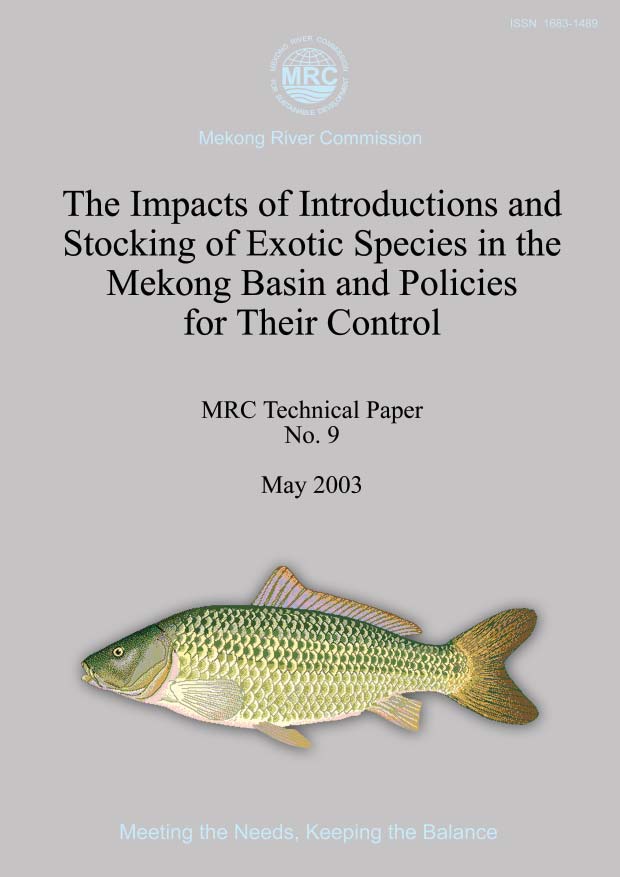
and the Thailand Department of Fisheries. The painting of Cyprinus carpio on the front cover is by
Robbie Cada, and is produced with the permission of FishBase.
iii
The Impacts of Introductions and Stocking of Exotic Species in the Mekong Basin and Policies for Their Control
iv
The Impacts of Introductions and Stocking of Exotic Species in the Mekong Basin and Policies for Their Control
Table of Contents
Summary - English ................................................................................................................... vi
Summary - Khmer .................................................................................................................... ix
Summary - Lao ........................................................................................................................ xi
Summary - Thai ....................................................................................................................... xv
Summary - Viet Nam ............................................................................................................. xvii
REPORT .................................................................................................................................... 1
1. INTRODUCTION ....................................................................................................................... 1
1.1 Background to project .................................................................................................. 1
1.2 History of introductions ................................................................................................ 1
1.3 Definitions .................................................................................................................... 2
2. REASONS FOR INTRODUCTIONS AND STOCKING ........................................................................... 3
2.1 Introductions .................................................................................................................. 3
2.2 Stocking ......................................................................................................................... 4
2.3 Strategic approaches to fishery management ............................................................... 4
3. RISKS FROM INTRODUCTIONS AND STOCKING .............................................................................. 5
3.1 Introductions .................................................................................................................. 5
3.2 Stocking ......................................................................................................................... 6
4. FISH FAUNA OF THE MEKONG ................................................................................................... 8
4.1 Characteristics of the system ........................................................................................ 8
4.2 Assemblage characteristics ........................................................................................... 8
5. HUMAN INTERVENTIONS ......................................................................................................... 11
5.1 Damming .................................................................................................................... 11
5.2. Reservoirs .................................................................................................................. 11
5.3. Channelization ............................................................................................................ 12
5.4. Agriculture.................................................................................................................. 12
5.5. Pollution/Eutrophication .............................................................................................. 13
5.6 Fisheries ..................................................................................................................... 13
5.7. Aquaculture ................................................................................................................ 13
5.8. Enhancement ............................................................................................................. 14
5.9. Aquarium fish trade .................................................................................................... 14
5.10 Local traditions .......................................................................................................... 15
6. CAPACITY OF LOCAL FISH POPULATIONS TO ADAPT ................................................................... 16
6.1. Pelagic communities................................................................................................... 16
6.2. Rheophilic vs. Limnophilic habit ................................................................................. 16
6.3. Preferred species for aquaculture.............................................................................. 16
v
The Impacts of Introductions and Stocking of Exotic Species in the Mekong Basin and Policies for Their Control
6.4 . Preferred species for stocking .................................................................................. 17
6.5. Evaluation ................................................................................................................... 17
7. PRESENCE AND IMPACT OF KNOWN INTRODUCTIONS .................................................................. 18
7.1. List of species introduced into the mekong basin ....................................................... 18
7.2. Introductions in adjacent waters ................................................................................ 27
8. POLICY ISSUES ..................................................................................................................... 29
8.1. Policy of individual member nations of the Basin Commission .................................. 29
8.2. International agreements ............................................................................................ 29
8.3. Education, training and extension ............................................................................... 30
9. CONCLUSIONS AND RECOMMENDATIONS ................................................................................... 31
9.1 Environmental concerns .............................................................................................. 31
9.2. Establishment of species ............................................................................................ 31
9.3. Present impact ........................................................................................................... 31
9.4. Potential impact .......................................................................................................... 33
9.5. The aquarium fish sector ........................................................................................... 33
9.6. Suggestions for action ................................................................................................ 34
REFERENCES ........................................................................................................................ 35
ANNEX I
EXTRACT FROM HTTP://WWW.FAO.ORG/FI/STATIST/ ................................................ 37
FISOFT/DIAS/INDEX.HTM SHOWING SPECIES INTRODUCED
INTO COUNTRIES OF THE MEKONG BASIN
vi
The Impacts of Introductions and Stocking of Exotic Species in the Mekong Basin and Policies for Their Control
Summary
A preliminary study was carried out in mid 1999 on the status and potential impact of the introduction
of exotic fish species in the Mekong Basin. Introductions have been made for four main purposes:
aquaculture, stocking into lakes and reservoirs, pest control (mosquito) and the aquarium fish trade.
Introductions of exotic species and movements of large quantities of fish for stocking are accompanied
by risks to the environment, the possibility of native fish species declining through competition, predation
or genetic interference, and the possible spread of disease.
The native fish fauna of the Mekong is extremely rich and diverse. It consists of many hundreds of
species adapted to a wide range of environments. The fauna appears to have adapted well to the
changes made so far both in impounded waters and in the modified flows downstream. High fishing
pressure and an increasing number of engineering interventions in the basin will inevitably alter its
character and with it the composition and abundance of its component species.
Seventeen species were identified as having been introduced into the Mekong Basin that had either
formed established populations or have strong possibilities of doing so. Eight species, mostly of small
headwater fish, have a status that is unclear in that they may have entered the North of the basin
along with fry of other species or they may have extended beyond their previously recorded natural
range. Five species may possibly be introduced into the basin, as they are in current use in adjacent
systems. A large number of species are also moving within the basin as part of the aquarium fish
trade. Six significant introductions have been made of aquatic animals other than fish.
The present impacts of introduced species appear relatively minor. Oreochromis mossambicus is
considered a local nuisance in the Mekong Delta. There are some suggestions that hybrid Clarias
are contributing to the decline in the native Clarias batrachus and that established populations of
Labeo rohita may damage native species of the same genus. Other established species such as
Oreochromis niloticus, Hypostomus plecostomus, Poecilia reticulata and Gambusia affinis appear
to have no notable adverse consequences. This lack of impact may well change if the system is
altered or if over-fishing heavily modifies the fish stocks. However, in such an event, the fault will lie
more with the change in environment than with the species. The positive impacts of the introductions
have far outweighed any negative effects to date. Aquaculture in the basin relies heavily on the
introduced species and will probably continue to do so unless satisfactory alternatives are found
among the native species.
The greatest risks at present lie in the uncontrolled movement of species and genetic strains into and
within the basin. It is a matter of some urgency that the present lack of policy be addressed. It is
therefore suggested that that the basin countries move towards establishing harmonized policies to
reduce the risks of species introductions and transfers through:
· A Code of Conduct to reduce the impacts of future introductions of exotic species;
· Regional Guidelines on Quarantine and Health Certification;
· Regional Guidelines on Broodstock management.
vii
The Impacts of Introductions and Stocking of Exotic Species in the Mekong Basin and Policies for Their Control
It is further suggested that consideration be given to organizing education, training and extension to
inform workers in the fisheries sector and the general public of the dangers of unregulated movement.
Eventually, any control of such movements will be through action by the people themselves rather
than through centrally imposed laws.
Further studies of the fisheries sector should report any introduced species found in the catch. Other
workers in the sector, such as aquaculturists, should be encouraged to record the natural occurrence
of exotic species. The genetic status of certain species that are crucial for aquaculture particularly
Oreochromis and Cyprinus is now very confused. Studies to identify and determine the origins
and affinities of wild stocks and cultured stocks of these species groups are urgently needed,
particularly as more strains are being added to the local gene pools. An effort should be made to
harness the expertise of local scientists through workshops, collecting programmes and a network to
develop a database on the status and trends of introduced species.
Measures to improve health certification and security of aquarium fish rearing installations are
desirable.
viii
The Impacts of Introductions and Stocking of Exotic Species in the Mekong Basin and Policies for Their Control
ix
The Impacts of Introductions and Stocking of Exotic Species in the Mekong Basin and Policies for Their Control
x
The Impacts of Introductions and Stocking of Exotic Species in the Mekong Basin and Policies for Their Control
xi
The Impacts of Introductions and Stocking of Exotic Species in the Mekong Basin and Policies for Their Control
xii
The Impacts of Introductions and Stocking of Exotic Species in the Mekong Basin and Policies for Their Control
xiii
The Impacts of Introductions and Stocking of Exotic Species in the Mekong Basin and Policies for Their Control
xiv
The Impacts of Introductions and Stocking of Exotic Species in the Mekong Basin and Policies for Their Control
xv
The Impacts of Introductions and Stocking of Exotic Species in the Mekong Basin and Policies for Their Control
xvi
The Impacts of Introductions and Stocking of Exotic Species in the Mekong Basin and Policies for Their Control
xvii
The Impacts of Introductions and Stocking of Exotic Species in the Mekong Basin and Policies for Their Control
xviii
The Impacts of Introductions and Stocking of Exotic Species in the Mekong Basin and Policies for Their Control
REPORT
1. INTRODUCTION
1.1
Background to project
The objectives of the study were to:
· Review the potential impact of the introduction of exotic fish species to the Mekong Basin;
· Identify the need for further studies and activities;
· Recommend policies and strategies for the Mekong Basin in relation to the introduction of
exotic fish species.
The question of exotic species and their impact is associated with policies and practices regarding
stocking and movements of genetic material within the basin. We therefore also considered aspects
of current practice regarding the movement of fish associated with the enhancement of fisheries in
water bodies and aquaculture.
This report should be regarded as a preliminary evaluation, defining the general status of exotic fish
in the Mekong Basin in mid-1999.
1.2
History of introductions
Fish species have been moved from their place of origin for aquaculture and improved capture
fisheries since ancient times. The earliest such introductions were those of common carp in Europe
by the Romans and the later dissemination of the species by mediaeval (5th to 15th Century) monks.
Most likely, similar movements of Chinese carps accompanied the early development of aquaculture
in the East. The pace of introductions has increased in recent years (Welcomme, 1985) as part of the
development of aquaculture and as a means of slowing declines in fish production brought about by
the increasing pressure on natural resources. As a result, certain species have become global in their
distribution and are now the key species for aquaculture. Many of the introductions have been
recorded as having had negative impacts on the receiving fish stocks and environments.
In view of the importance of introduced species in today's aquatic ecosystems, FAO has developed
a database at: <http://www.fao.org/fi/statist/fisoft/dias/index.htm>.
All introductions reported to FAO from the Mekong River Commission countries are presented in
Annex I of this report. These introductions have not necessarily been made into the Mekong Basin
itself. They may have been made into adjacent basins. The pace of species introductions over the
past three decades gives the impression that most introductions have already been made. While
1
The Impacts of Introductions and Stocking of Exotic Species in the Mekong Basin and Policies for Their Control
there is still room for further introductions related to aquaculture and raising ornamentals, the current
direction of aquaculture would seem to suggest that the bulk of future movements will be at lower
levels of genetic organisation, involving strains and races specifically developed for aquaculture.
Global concerns for biodiversity resulted in the formulation and adoption of the Convention on
Biological Diversity (CBD) by over 160 countries. The Convention calls for control on the
dissemination of exotic species and other types of genetic material. A subsidiary body of the
Convention, the Subsidiary Body in Science, Technology and Technical Advice (SBSTTA) addressed
the question on inland water biodiversity as a matter of priority. According to the spirit of the
Convention, species do not necessarily have to have negative impacts. Establishment alone alters
the native species structure and as such contravenes the principles of protection of biodiversity.
Cambodia, Lao PDR and Viet Nam1 are parties to the CBD. As `parties', these countries accept the
CBD as a legally binding document, and commit to fully implementing all aspects of the Convention.
Thailand is a signatory (a step preceding being a `party') to the CBD. A `signature' verifies that the
country supports the general objectives of the Convention and would not overtly do anything to
undermine those objectives, but it is not legally bound by the Convention.
1.3
Definitions
The terminology surrounding movements of species is confused because several terms are in current
use as synonyms for the same type of action while the same word may be used for several different
actions. The following terminology is used in this report:
Exotic species &
A species occurring outside its natural range.
Introduced species
Introductions
The human-assisted movement of an aquatic animal to an area outside its
natural range (typically across international boundaries but also referring to
movements into river or lake basins from which the animal was previously
absent).Introductions are usually one-off operations that are discontinued
once the animal is established in the receiving system.
Native species &
A species forming part of the naturally occurring fauna.
indigenous species
Stocking
The release of aquatic animals into a river, lake or reservoir to achieve a
specific goal related to fishery or conservation. Stocking may form part of
an introduction, either with native species or with exotic species that are
unable to breed in the receiving environment. Stocking may be a one-off
operation in some cases but more usually consists of a repeated exercise in
support of a specific management strategy.
Transfers
The movement of an aquatic animal to an area within its established range.
These definitions have traditionally applied to species. However, modern perceptions of biological
diversity imply that similar definitions and provisions should apply to lower taxonomic units such
as sub-species, aquaculture strains and varieties.
1 These four countries contain the Lower Mekong Basin. The Upper Mekong Basin stretches into China and
a small area in Myanmar.
2
The Impacts of Introductions and Stocking of Exotic Species in the Mekong Basin and Policies for Their Control
2.
REASONS FOR INTRODUCTIONS AND STOCKING
2.1
Introductions
Several main reasons are usually offered for introducing a new species into a lake or river:
Create new fisheries that are more resistant to fishing pressure or have greater market value than
native fish. In commercial fisheries, such introductions have often involved large predators intended
to benefit from smaller species of no value to the fishery. In other cases, species of known value,
such as the tilapias, have been favoured. New species are introduced into recreational fisheries to
improve the variety available to anglers or to insert a species of particular trophy or sporting value
into an area.
Fill a `vacant niche' where existing species do not fully use the trophic and spatial resources available.
In some natural waters, geographic conditions have resulted in few native species, as in some islands,
or areas where faunas have been wiped out through glaciation. More commonly, the need for
introductions arises as a consequence of human activities. For example, in Latin America many new
reservoirs lack native species capable of fully colonising lentic waters. In many river basins, regulation
of flow by dams has eliminated or drastically reduced the native rheophilic faunas leaving the waters
open to colonisation by introduced species.
Control pests - several species have been introduced in an effort to biologically control pests and
vectors of human disease. For example, the widespread introduction of Poecilia and Gambusia spp
to control mosquito larvae and several species, including Astatoreochromis alluaudii, for the control
of the snails that carry schistosomiasis.
Control water quality - where suitable phytoplankton-eating species are lacking, species such as
Aristichthys nobilis, Hypophthalmichthys molitrix and Oreochromis niloticus may be introduced to
remove excessive algae in eutrophied systems.
Develop aquaculture - this remains one of the main motives for the movement of species around
the world. Many species have been introduced for culture. These include rainbow trout, common
carp and tilapias, which together account for a large share of inland aquaculture production. Escapes
from aquaculture installations have contributed to many successful introductions into the wild.
There has been a tendency in most countries to introduce a few species whose culture is well
known rather than to try and develop local species. This tendency can be overcome through
programmes to identify and develop local species, which often correspond more to local tastes
and have higher market values.
Fulfil aesthetic and other reasons - ornamental species are now widely distributed throughout the
tropical world through escapes from rearing installations and aquaria. Some species have also been
introduced for particular religious or cultural reasons.
3
The Impacts of Introductions and Stocking of Exotic Species in the Mekong Basin and Policies for Their Control
2.2
Stocking
Inland waters are stocked for several reasons, including:
Mitigation - to counter a disturbance to the environment caused by human activities such as
dam-building or removal of spawning substrates;
Maintenance - where fish are regularly stocked to compensate for excessive fishing which removes
more fish than can be generated through natural reproduction;
Enhancement - to maintain the fisheries productivity of a water body at the highest possible level or
to increase the proportion of a species particularly favoured by a fishery;
Conservation - to retain stocks of a species threatened with extinction;
Restoration - to restore damaged habitats in which species composition has been disturbed.
Water quality control - in eutrophied systems, phytoplankton-eating species are regularly stocked to
remove excessive algae and thus to lower nutrient concentration. This usually forms part of a management
package, including the removal of predatory species (which prey on the phytoplankton eaters) and
zooplankton-eating species, which remove algal-eating zooplankton (see Figure 1). The main
zooplankton-eating species in Mekong reservoirs is the native Clupeichthys aesarnensis although this
species is also insectivorous. Two main phytoplankton-eating species, both of which are introduced
are Chinese carps (which do not breed in lakes and reservoirs and need repeated stocking) and
Oreochromis niloticus, which is able to breed in certain reservoirs in the region.
In the Mekong Basin, the major motive for fish introductions has been aquaculture and the associated
enhancement of dams and reservoirs. Many species are maintained in captivity in the basin for the
aquarium fish trade. Several species have been introduced to control pests, mosquitoes and invasive
vegetation.
2.3
Strategic approaches to fishery management
The circumstances leading to decisions to use introductions or stocking, among other strategies, for
the development and management of fisheries, are summarized in Figure 2.
4
The Impacts of Introductions and Stocking of Exotic Species in the Mekong Basin and Policies for Their Control
3. RISKS FROM INTRODUCTIONS AND STOCKING
Any large-scale movement of species and genetic material poses risks for the receiving fauna. In the
case of wild fish, the major risks are from human interventions in river and lake basins and with
current fisheries management practices. Both have had a negative impact on the structure of existing
assemblages. By comparison, introductions and transfers for fisheries and aquaculture seem to have
had relatively little impact, especially in the Mekong to date. These introductions do, however,
aggravate already stressed communities and in some cases the invaders benefit from the altered
conditions. In fact, there is considerable evidence to show that the worst cases of fish proving a
nuisance after their insertion into new habitats have occurred where those habitats have already
been subject to other externally imposed stresses.
3.1
Introductions
Introductions pose special problems because they insert a totally new element into the fauna. The
consequences are difficult to predict, but they can include the following:
3.1.1 Environmental disturbance
Introduced species can disturb habitats and in so doing, alter ecosystem characteristics to such a
degree that native species are threatened. A notable example of such behaviour is the common carp,
which `digs' for food in the muddy bottoms of lakes and rivers, stirring up sediment and biological
oxygen demand (BOD). This can lead to turbid conditions that reduce light penetration and plankton
production. Another form of behaviour is burrowing. Many introduced crayfish varieties can seriously
damage pond banks and river levees.
3.1.2 Predation
The introduction of new predatory species is one of the major causes of the negative impacts reported.
There is the notorious case of the Nile perch introduced into Lake Victoria. This allegedly caused
the disappearance of large numbers of the cichlid species. Species disappearances have also been
associated with introductions of trout in many areas and of Cichla ocellaris in Latin America.
3.1.3 Competition
Competition between the introduced species and native species is frequently cited as another cause
of potential difficulty. Competition may be for food, or for breeding sites among nest-building species.
The disappearance of some tilapias, following the introduction of O. niloticus, is a case in point.
While rarely leading to species disappearance, the second major negative impact has been the
explosive expansion of populations of small `r' selected species. This is often accompanied by
stunting, leading to dense populations of small individuals of little use to a fishery and which then
compete with and reduce the numbers of more useful species. O. mossambicus shows this behaviour
to a certain extent as do several cyprinids and sunfishes.
3.1.4 Introduction of disease
There have been many examples of diseases and other parasitic organisms that have accompanied
introduced fish species to their new home. The introduced species is often more resistant to the
disease organism through long cohabitation. Species in the receiving environment are more sensitive
5
The Impacts of Introductions and Stocking of Exotic Species in the Mekong Basin and Policies for Their Control
and readily transmit the new pathogen outside the original area of the introduction. Diseases can
have a disastrous economic impact on aquaculture, as has been repeatedly illustrated in the shrimp,
salmon and trout industries.
3.1.5 Genetic contamination/hybridization
The most extreme genetic effect is hybridization. Many fish species regularly hybridize with closely
related species and frequently with those of greater geographic and taxonomic divergence. Hybrids
may be:
i) Self-fertile and will breed true, in which case an essentially new species is created such as
the various `red tilapia'. Self-fertile strains can eventually revert to their parental forms
through backcrossing.
ii) Not self-fertile but capable of producing viable offspring with one or both of the parental
species.
iii) Sterile.
Hybridization among species in the natural environment can pose risks because valuable adaptive
characteristics, such as timing of migration and the ability to locate natal streams may be lost in the
host species. Alternatively, the hybrid can prove more successful and vigorous than the parents, in
which case they may disappear through competition.
Genetic mixing of different stocks through inter-basin transfers of the same species poses similar
risks of loss of adaptive characters. Naturalized stocks of exotic species, especially the tilapias and
common carp are also likely to be affected by contamination with genetic material from the various
specialized strains being used in aquaculture and the aquarium fish trade.
3.1.6 Co-introduction of nuisance species
Where fish are introduced as juveniles, there is a serious risk that fry of other species are also
included. If proper precautions are not taken, these can readily acclimatize to the receiving habitat.
The arrival of Pseudorasbora parva and several other species, in Europe for instance, are thought to
have originated from contaminated batches of Chinese carp fry imported for aquaculture and weed
control. Some of the recently recorded species from the North of the basin may have arrived in Lao
PDR by the same mechanism.
3.2
Stocking
Stocking usually poses fewer problems than introductions. Inland reservoirs, lakes and rivers are
usually stocked with one or more of three categories of fish:
· Native species;
· Introduced species that are already well established in the environment;
· Introduced species that do not breed in the receiving environment.
In most cases, the potential for serious environmental impacts that may be caused by introductions
are not high, but the large quantities involved in stocking and the repeated nature of the operation
considerably raises the following risks.
6
The Impacts of Introductions and Stocking of Exotic Species in the Mekong Basin and Policies for Their Control
3.2.1 Genetic effects
Risks of genetic effects on host populations are greater in stocking than with introductions. These
arise from two sources:
· Stocking with the species that are native to the host water body, and
· Stocking with introduced species.
Where stocking is carried out with species that are already in the receiving water body, there is a risk
of `genetic swamping', whereby the original genetic characters of the host stock are lost to the
stocked material. Where particular sub-stocks of fish adapted to the local conditions exist, this may
cause problems with some aspects of behaviour such as timing and location of breeding. Escapees of
the modified genetic strains from the reservoir or river-reach may subsequently dilute the genetic
effectiveness of the species over a wide area. In Thailand, where stocking material is drawn from a
wide area and inter-basin transfers of species occur, risks of such effects are particularly high. For
this reason, careful selection of broodstock for the production of stocking material is advised. Material
to be stocked should be derived only from parents drawn from the receiving basin.
In contrast to the widening of the genetic base beyond that which is adaptive for any stock, there is
also a risk from too little diversity. Stocking derived from too few breeders can result in a narrow
genetic base (low heterozygocity) which will lead to rapid degradation of the material used for
stocking aquaculture ponds and reservoirs, which in turn will lead to poor growth and reproductive
potential.
3.2.2 Disequilibrium of fish population
Stocking with one or more target species can produce imbalances in the population, thus disrupting
food chains and threatening the survival of non-target species. This effect is often sought deliberately
to bias the fishery towards high value species or to influence the trophic status of the stocked water
body.
3.2.3 Disease
Risks from disease dissemination by stocking are very high and aquaculture has a long history of
financial crashes caused by the introduction or transfer of diseases along with movements of fish
seed. The only way this can be avoided is through greater care and control and by certification.
3.2.4 Strategic issues
Current stocking rates into reservoirs and dams in the basin are generally low due to a shortage of
fish seed. However, in some parts of Thailand, realistic stocking rates of around 6000 fish/ha are
used. About 25 million individuals were stocked into lakes and reservoirs in 1998 in Northeast
Thailand. An outline for decision making with respect to stocking is presented in Figure 3.
7
The Impacts of Introductions and Stocking of Exotic Species in the Mekong Basin and Policies for Their Control
4.
FISH FAUNA OF THE MEKONG
The characteristics of the receiving system and host fauna are important to the readiness with which
introduced species can acclimatize and insert themselves into the native assemblages. In Islands east
of the Wallace Line (for instance, Australia and Papua New Guinea) the impoverished endemic
faunas have been readily invaded by introductions. The establishment rate of exotics introduced into
complex existing faunas is much lower.
4.1
Characteristics of the system
The Mekong River is the twelfth longest in the world. It rises on the Tibetan Plateau and flows through
six countries (China, Myanmar, Lao PDR, Thailand, Cambodia and Viet Nam) before discharging into
the South China Sea in Southern Viet Nam. The river is divided into three geographical regions2:
i) The upper basin which includes headwaters in Yunnan Province and China as far as the
Myanmar-Lao PDR border;
ii) The middle basin from the Myanmar/Lao PDR border to Khone Falls;
iii) The lower basin from Khone Falls to the mouth, a region which includes the Tonle Sap
system in Cambodia.
The main tributaries of the Mekong drain the uplands of Lao PDR, which contribute 35% of the runoff.
Other major tributaries rise in Thailand and Cambodia, which each contribute 18% of the runoff.
There are two main floodplain areas in the system, the Tonle Sap/Grand Lac system which extends
over about 50,000 km2 in the lower basin and the smaller Songkram River basin in the middle Mekong
in Thailand. Apart from these major systems, there are smaller flooded areas all along the main stream.
The river and its tributaries are used to irrigate extensive rice growing areas throughout the basin.
4.2
Assemblage characteristics
4.2.1 Diversity
The fish fauna of the Mekong is the third most diverse freshwater river fauna in the world, with a
total of at least 1200 known species. Of these, only about 700 species have been formally described.
The Mekong Fish Database currently includes 915 species. Freshwater fish faunas can be divided
into primary and secondary species, according to their evolutionary origin and salinity tolerance.
Primary species such as the cyprinids, most catfishes, loaches, snakeheads and gouramies are relatively
intolerant of saline environments, as they have evolved entirely in fresh water. Secondary species,
which evolved in marine environments and later adapted to freshwater habitats, are generally more
tolerant of salinity. The upper and middle reaches of the Mekong are occupied mainly by primary
species over 400 species of carps, barbs and minnows, 350 species of loach, 150 species of catfish
from 10 families, 15 species of anabantoids and snakeheads and 5 species of bony tongue and
featherbacks. This portion of the Mekong may also be colonised by some secondary species such as
stingrays, sardines, ricefish and pipefish. However, the secondary species are more abundant in the
lower reaches, including the Delta where there are over 120 species of goby, about 40 species of
croaker and 25 species of mixed origins (see Figure 4).
2 This differs from the usual MRC definition of the Lower Mekong Basin, which includes the Mekong basin of the four
MRC member countries, i.e. Cambodia, Lao PDR, Thailand and Vietnam.
8
The Impacts of Introductions and Stocking of Exotic Species in the Mekong Basin and Policies for Their Control
4.2.2 Size composition
Fish in the Mekong fauna range in size from the world's third smallest, a minnow Boraras micros of
1.35 cm SL, to the largest, Pangasianodon gigas, which attains lengths of up to 2.5 m and the
stingray Himantura chaophraya, which reaches 3 m in width and 600 kg in weight. Any assemblage
of fish conforms to a log-normal distribution of species as classified by the maximum length attained.
This distribution is shown in Figure 5 for the Mekong species, described by Rainboth (1996). Several
hundred species remain to be described but, as these are mostly species from headwater streams,
their inclusion would increase the percentage of small fishes. This figure is of interest in showing
where an exotic species would fit in the general size structure of the existing assemblage. For example,
a species such as Clarias gariepinus, at 150 cm maximum length, would be exceeded by only 10
species and matched by another 4. A species such as Oreochromis niloticus, at 45 cm, would be
exceeded by 84 species.
Length alone is not significant for ease of establishment or degree of impact. In fact, with the present
trend in parts of the basin for the fish assemblage to become `fished down', size may be a disadvantage
in the long term. This coincides with the results of an analysis of known introductions worldwide,
which indicates that smaller species have a better chance of becoming established.
4.2.3 Zonation
The ease with which species can become established and their impact will differ in the Mekong
system according to the fauna present in the different zoogeographical sub-basins and the proportion
of certain types of habitats such as major floodplains and rapids. The Mekong Basin fauna has
affinities with four aquatic zoogeographic zones (Figure 4):
· The headwaters of the river on the Tibetan Plateau and the upper reaches share elements
with the Salween and Ganges Rivers to the West and the Red River and East Asian elements
to the East;
· The Middle and Lower basins have many endemic species but also share elements with the
Thai-Chao Phrya system;
· The Delta has some similarities to the Sundaic sub-region (Malay Peninsula and North
Borneo).
Large species (> 70 cm SL), including the pangasiid, bagrid and siluroid catfishes, the large cyprinids
and large channids, most often occupy the main channels of the river and the larger tributaries where
they tend to dwell in deeper pools. During the flood season, these species may move to deeper areas
of the floodplain to forage and to find nursery areas for the juveniles. Medium size species (30-70
cm SL) inhabit a wide range of areas from main stream habitats and tributaries to floodplains,
marshland and rice fields. This group includes most of the carps, barbs medium sized catfishes,
featherbacks and the sand goby Oxyeleotris marmoratus. Small species (< 30 cm SL) tend to have
much more restricted habitats and show a great degree of endemism, especially in the highland
tributaries. Here there are several species of balitorid loaches, stream gobies, Rhinogobius spp.,
some sisorids, Oreoglanis spp. and Exostoma spp.. Marshlands, permanent floodplain lakes and rice
paddies tend to attract specialised faunas of small species, including Boraras micros (endemic to
Northeast Thailand), Indostoma sp., dwarf pipefish, Nandus spp., small anabantids, Betta spp.,
Trichopsis spp. and small gobies.
9
The Impacts of Introductions and Stocking of Exotic Species in the Mekong Basin and Policies for Their Control
4.2.4 Biology
The Mekong fish fauna includes species showing most known feeding and breeding strategies. The
fauna is divided into two main components:
· Blackfish, which are associated with the floodplain and swamp systems. These fish show
limited migrations between floodplain habitats and local river channels. They often have
supplementary breathing mechanisms that allow them to breath low dissolved oxygen, and
complex parental care to safeguard the young fish from predators and adverse environmental
conditions. These species probably have populations that are isolated from one another
because of their inability to survive in the main channel.
· Whitefish, which migrate for long distances in the main channel to move between breeding
and feeding habitats. These species are possibly separated into migratory sub-populations
that are adapted to specific reaches of the river.
An assessment of the sub-specific structure of the species in the basin is needed to provide information
for conservation and management. It is also an important element in evaluating the vulnerability of
a species to competition from exotics.
10
The Impacts of Introductions and Stocking of Exotic Species in the Mekong Basin and Policies for Their Control
5.
HUMAN INTERVENTIONS
This section does not aim to provide a detailed analysis of the impacts of various human activities in
the Mekong Basin. Rather, it examines activities only insofar as they might influence the likelihood
of establishment and the impacts of introduced species.
5.1
Damming
Damming rivers has severe effects on river fish faunas. These effects arise from two main sources:
interruptions to migratory pathways and control of flow.
Interruptions to migratory pathways can directly impact whitefish species, preventing them from
moving between their reproductive and feeding habitats. Dams can also interrupt the drift so that the
young fish fail to reach the floodplains.
The control of flow can have biotic effects by changing the magnitude and timing of flooding.
Where fish species are closely attuned to the flood regime of a river for their breeding and migratory
patterns, such changes can send inappropriate signals causing fish to mature sexually at the wrong
time of year, or not to mature at all. Flow control also has morphological effects in that it frequently
reduces or suppresses flooding on the floodplain and thereby causes the disappearance of floodplain
(blackfish) spawning species. In such cases, introduced species may be able to adapt better than
natives. Other effects are also common. Deposition of silt in dams changes the productivity of the
floodplains downstream, thus inducing changes in vegetation patterns, which in turn can influence
the capacity of native phytophilous fish to survive.
The net effect of damming is to convert previously free-flowing rivers with pronounced pulse
behaviour into rivers with flows that are evened out over a longer period than before construction of
the dam. In extreme cases, peaks in the hydrograph are suppressed to a point where little flooding
occurs. This transition has resulted in cases of infestation with common carps in South American,
South African and Australian rivers and Western coastal rivers of the United States. The suppression
of the native rheophilic faunas has generally favoured the expansion of more limnophilic forms such
as the common carps, goldfish and tilapias. However, elements of the Mekong fauna have shown a
capacity to form limnophilic faunas in reservoirs and could probably, in a similar way, make the
same transition in rivers.
5.2
Reservoirs
The mass of water behind a dam forms a new lake. In many systems the natural river fauna is unable
to adapt to the new situation and fails to colonize the new waterbody. In others, the original fauna
may maintain itself by ascending inflowing tributaries to breed; but such species are at risk if a
second dam is constructed upstream of the first, thereby cutting these species off from spawning
sites. Other species are able to fully colonize the reservoir. Native species have been able to cope
well with impoundment in the Mekong system (Virapat et al. 2000). In some cases, Ubolratana in
Thailand and some upland Vietnamese dams for instance, Oreochromis niloticus form important
populations. Several other introduced species appear in many reservoirs in Thailand without
contributing greatly to the catch.
11
The Impacts of Introductions and Stocking of Exotic Species in the Mekong Basin and Policies for Their Control
Most reservoirs and lakes are stocked in Thailand, although no clear strategy for stocking is applied
due to the shortage of fry. Fry are generally stocked as a public service by Government hatcheries at
no cost to the fishermen. In South Viet Nam, stocking is also now common practise. Here reservoirs
are managed by a contractual agreement with the Government, whereby a manager is assigned the
right to stock and manage the fishery in return for payment of an agreed fee.
5.3
Channelization
Channelization has the effect of reducing habitat diversity by eliminating meander bend, point bar
and island structures in the main channel in favour of a straight and more or less featureless water
course. The loss of diversity threatens specialized species, whose habitats disappear, and favours
generalists. Channelization also cuts the river channel off from the floodplain by raising levees into
embankments to prevent overspill, thereby endangering blackfish species. It also accelerates flow
down the restricted channel, which may have negative effects on whitefish species with semi-pelagic
eggs or whose larvae form part of the drift. Species with fixed eggs and static fry such as those
species showing parental care would be less affected. In other systems that have been heavily
channelized, distortions in fish populations have occurred with losses in diversity of native fish
assemblages and increases in the numbers of exotic species such as common carps. As projects for
poldering floodplain areas or raising levees for flood control become more widespread in the basin,
problems of this type will increase.
5.4
Agriculture
5.4.1 Rice
Rice culture, a main feature of Asiatic floodplains, replaces natural floodplains with an
artificially flooded habitat. Many species of fish can live with this situation but have problems
with the large quantities of pesticides and fertilizers that are used in rice cultivation. Rice-fish
culture, where ponds, ditches are used to retain fish, is another common feature of the region.
This practice usually relies on natural incursions of fish and there is an abundance of native
blackfish to fill this role. In some areas the rice fields may be stocked with native or exotic
species.
The greatest impact from irrigated farming is the gradual elimination of the flooded forest in
the lower part of the basin along with the reduction in flooded area associated with the poldering
of certain areas. Drastic changes in the nature of floodplain habitats together with the loss of
floodplain area may result in the disappearance of many of the species that depend on these
habitats, although in other river systems fish faunas have adapted well to similar threats.
5.4.2 Hill slope/siltation
Dry land agriculture on hill slopes together with deforestation usually accelerates the transport
of silt to the river from the surrounding land. Excessive silt can smother breeding substrates and
food organisms and drastically affect the survival of species adapted to cleaner waters.
12
The Impacts of Introductions and Stocking of Exotic Species in the Mekong Basin and Policies for Their Control
5.5
Pollution/Eutrophication
Although these are two separate phenomena, the whole question of reduction in water quality is
important. The Mekong is not a heavily polluted system but intense agriculture, particularly in
Thailand, is adding a quantity of pesticides and fertilizer to the river and to associated reservoirs
through percolation and runoff. At the same time, the growth of urbanization in the basin means
that sections of the river are eutrophied by urban waste and that urban drains accumulate polluted
material. Severe degradation of water quality affects fish directly and the more sensitive species
will disappear while species with supplementary breathing adaptations will increase. The spread
of contaminated water in and around towns seems to encourage the expansion of a limited set of
species that can cope with the degraded conditions. This includes three introduced species
stunted Oreochromis niloticus, Poecilia reticulata and Pterygoplichthys plecostomus and one
native Trichogaster tricopterus. Eutrophication of reservoirs, with the accompanying blooms of
blue-green algae, will also eliminate many of the more sensitive native species. Heavily eutrophied
lakes, dams and reservoirs are likely to attract populations of common carps, Oreochromis niloticus
as well as native snakeheads.
5.6
Fisheries
The Mekong system is heavily fished (van Zalinge et al. 1999). As a result many of the larger,
predatory species are disappearing from the Mekong as part of the fishing-down process. As the
larger species tend to be predators, fishing down the assemblage involves a shift from predatory to
lower food chain fishes. The failure of many potential introductions to establish has been attributed
to predators. If this is correct, lowering the percentage of predators in the system would lower this
barrier, leading to a greater naturalization rate. On the other hand, large species such as Clarias
gariepinus and Labeo rohita should be equally vulnerable to the tendency to eliminate the larger
species from the fish assemblage as the native ones. The ability of some species, such as the tilapias,
to reduce their size under fishing pressure enables them to profit from the fishing-down by forming
stunted populations. It is possible therefore, that as fishing pressures increase, stunted tilapias will
appear more in the catches.
5.7
Aquaculture
Aquaculture draws heavily on a limited range of species whose culture is well understood. Foreign
experts have frequently been called upon to advise people in the region on aquaculture, and local
personnel have been sent abroad to study. There has been a tendency for such externally oriented
specialists to rely on species with which they were familiar rather than to risk failure through the
development of new, local species. This means that a number of species have been introduced into the
countries of the region for culture, and that present culture practices are firmly rooted in these species.
Inevitably, cultured fish have escaped from fish farms and some have become established in the wild.
In Lao PDR, supplies of fish seed for aquaculture are low and the country depends largely on material
imported from Thailand, China and Viet Nam. The Thai seed is usually of satisfactory quality but
seed from China and Viet Nam appears to be mainly mixtures of wild, caught species, many of
which are of little value.
13
The Impacts of Introductions and Stocking of Exotic Species in the Mekong Basin and Policies for Their Control
5.8
Enhancement
The practice of stocking reservoirs, smaller dams, rice paddies and temporarily impounded channels
is widespread throughout the region. Further enhancement may be carried out through the fertilisation
of such water bodies, especially in Thailand and Viet Nam. Enhancement of fisheries in this manner
is one of the cornerstones of rural fisheries development and is often seen as the quickest way to
increase food production from aquatic systems. The direction of enhancement programmes is towards
the creation of artificial faunas using the Chinese/Russian model of stocking a mix of species to
exploit all levels of the food chain. If applied, this methodology would radically alter fish populations
in the smaller dams and reservoirs.
It is Government policy in some countries of the basin to subsidize capture fisheries by free distribution
of seed or fry. In these cases, the same species are used as for aquaculture. As an example of the
magnitude of Government sponsored stocking programmes, about 720 million common carps, tilapia,
puntius, and Indian carps were stocked into Thai waters in 1998. Even so, stocking requires an
enormous number of fry that exceeds the production capacity of local hatcheries. As a result, fry are
withdrawn from wild stocks or are traded within and between countries. In Thailand, this trade is
mainly between the Mekong and Chao Phrya Basins, where much mixing of genetic strains of the
same species may result in the possible loss of locally adapted stocks. In Lao PDR, the cross-border
trade with China and Viet Nam has resulted in the appearance of several non-native fishes from the
Red and other rivers.
5.9
Aquarium fish trade
Thailand and Viet Nam are both important centres for the aquarium fish trade in the region. Urban
areas of these countries are major markets and there are several hatcheries breeding and rearing
aquarium fish around Bangkok and Ho Chi Minh City. Fish move from these centres all over the
region and are exported to Japan, Germany, France and the USA. The trade is completely uncontrolled.
Some species of exotic ornamental species have already appeared in the natural environment,
particularly two species of Poecilia and Gambusia, which are also used for mosquito control, and
the black sucker (Loricaridae).
The fact that such species are small does not mean that they do not have nuisance value. The
cyprinodonts and poeciliids for instance are though to be the cause of egg and fry predation in areas
to which they have been introduced. The cichlid Petenia krausi has caused serious infestation problems
after it spread through the Orinoco River. Inspection of the species on sale in the weekend market in
Bangkok and the aquarium fish sellers in Ho Chi Minh City shows a range of exotic cichlids, including
some notorious predators such as Cichla ocellaris, which have also been implicated in species
destruction. In general, ornamental species are kept in aquaria in towns. Owners sometimes release
fish when they get too large. Many such introductions are made into polluted waters unsuitable for
survival. However, most of the rearing centres are in less urban areas and there is a fair chance of
escape from ponds through drainage systems to the natural environment. Escaped ornamentals can
survive in natural habitats as shown by Professor Mai Dinh Yen, who recorded several species in
Lake Sun Hun in the highlands of Viet Nam.
Species do not necessarily have to have negative impacts on becoming established. The fact of
establishment alone alters the native species structure and as such contravenes the principles of
protection of biodiversity. The lack of restriction on the ornamental fish trade therefore carries the
risk of contaminating the local biodiversity with additional exotic species and the possibility of
introducing a new nuisance species or co-introducing disease organisms.
14
The Impacts of Introductions and Stocking of Exotic Species in the Mekong Basin and Policies for Their Control
5.10 Local traditions
As part of their Buddhist tradition, the peoples of both Thailand and Lao PDR release wild creatures
into the wild during certain festivals, particularly birds and fish. In the case of fish, they draw
heavily on fry production stations, as well as on fish caught in the wild and transported around the
country for this purpose. Many of the fish are released into polluted waters near temples. Some are
released into village ponds and reservoirs and can thus result in genetic mixing and the establishment
of non-native fishes in new environments.
Local eating taste can also play a part in the choice of species and the speed with which they are
adopted. An example is Colossoma macropomum, which, despite its excellent qualities for culture,
is too bony and does not suit local tastes in Northeast Thailand. The species has so far failed to be
adopted in Lao PDR and Thailand, although it is widely cultured in China and in the South of
Thailand. Its general acceptance in central Thailand, including the Bangkok area, indicates that
tastes are not fixed and that an eventual change in acceptability might occur. In general and throughout
the region, native species are preferred to introduced ones and captured species are more popular
than those produced by culture. Some species such as Oreochromis niloticus and the hybrid clarias
have gained a measure of acceptance.
15
The Impacts of Introductions and Stocking of Exotic Species in the Mekong Basin and Policies for Their Control
6.
CAPACITY OF LOCAL FISH POPULATIONS TO ADAPT
Visits to two reservoirs (Nam Ngum and Ubolratana) and reports from others have revealed that
local species are well able to make the transition to lacustrine conditions. For example, some 70
species have adapted to Nam Ngum with no breeding exotic species. One hundred and twenty species
are found in Ubolratana of which only one, O. niloticus (the third species in abundance), is the
single exotic to form a significant proportion of the population.
6.1
Pelagic communities
All but the smallest reservoirs develop populations of the planktonophage Clupeichthys aesarnensis
or Parambassis siamensis, which form the basis for light fisheries. Other cyprinids, particularly the
predatory Hampala spp. also occupy the pelagic zone but, as their numbers have dwindled in response
to heavy fishing, so have populations of the smaller species risen.
6.2
Rheophilic vs. Limnophilic habit
At present, most species are able to continue breeding in reservoirs. Some species are said to be
ascending inflowing tributaries to breed, whilst others are said to be able to breed within the lake
itself. It is an open question whether species that migrate would be able to further modify their
behaviour should the inflowing streams themselves be dammed. Similar questions will eventually
arise as the number of large dams on major tributaries increases or when main stream dams control
the flow in the main river channel.
6.3
Preferred species for aquaculture
In Thailand, most aquaculture uses Labeo rohita (introduced), Oreochromis niloticus and its hybrids
(introduced), common carps (introduced), Barbodes gonionotus (native) and hybrids between Clarias
macrocephalus (native) and C. gariepinus (introduced). Three varieties of exotic Chinese carps and
two further Indian major carps are also used. Most of the species used for aquaculture have escaped
and have either established or give strong indications of having done so. Large concentrations of
tilapias are found near hatcheries and the hybrid Clarias is now thought to be partly responsible for
greatly diminished catches of native Clarias batrachus.
Labeo rohita is preferred to native labeos for aquaculture, as it is easier to breed artificially, survives
handling better and has much better growth rates.
No clear preferences have yet emerged for aquaculture in Cambodia or Lao PDR. In Viet Nam a
wide range of fish are cultured. These include three Chinese and three Indian carps (all introduced),
tilapias (introduced), giant gourami (semi-native as an albino strain has been introduced from
Indonesia), Barbodes gonionotus (native), Pangasius (native), common carps (introduced) and hybrid
catfish (one component introduced).
There is a growth in specialized strains of Oreochromis. The GIFT tilapia is now reared in and
distributed from the Government hatchery in Khon Kaen (Thailand), which is further developing
the strain to meet local conditions. Several private hatcheries are now licensed to produce this fish
for sale to both pond and cage culture locations. GIFT tilapia is also being investigated in Viet Nam,
in collaboration with the GIFT foundation at Central Luzon State University. The `red tilapia' is also
16
The Impacts of Introductions and Stocking of Exotic Species in the Mekong Basin and Policies for Their Control
part of common aquaculture practice in both pond and cage culture. The Khon Kaen hatchery uses
supermales to create mono-sex hybrids in conjunction with the Egyptian Manzalla strain of
Oreochromis niloticus. Red tilapia, supermale, Chitlada and Manzalla strains are all in use in Viet
Nam. All this implies that, as aquaculture becomes more sophisticated throughout the region, so will
the number of specialized strains in use. It implies too, that with the inevitable escapes, stocks in the
wild will undergo a considerable degree of genetic mixing.
Attempts are being made to identify and promote further local species for aquaculture. This initiative
is commendable and is certainly preferable to further imports of new species. However, the major
introduced species for aquaculture are well established throughout the region and further problems
are likely to arise through genetic mixing of stocks. It is also evident that aquaculturists, even in the
rural sector, are well aware of the competitive advantage between strains of the same species. An
example is the popularity of a strain like the GIFT tilapia, which confers a growth advantage of
about 10%. Any local species that are developed will have to compete on equal terms at this level of
advantage. At present, only one species, Barbodes gonionotus is popular and competes with the
introduced species in ponds. Two main native species are used for cage culture in rivers, Channa
and Pangasius. O. niloticus however is still preferred for cage culture in reservoirs.
6.4
Preferred species for stocking
Mixtures of fish used for stocking are similar to those used for pond aquaculture, since the stocking
material is likely to come from the same source.
6.5
Evaluation
On the whole, the native fauna of the Mekong has adapted well to the changes brought about by
impoundment and to other changes within the basin. They are forming populations within the
reservoirs that are reaching levels of productivity comparable to those of tropical reservoirs elsewhere
in the world. Therefore, it would appear that introduced species are unnecessary under the present
levels of impoundment.
In aquaculture, the situation is somewhat different. With the exception of Barbodes, the native
species tried so far do not match the ease of culture, resistance and general growth rate of introduced
species. On the other hand, in riverine cage culture, native species are again predominant. The
degree to which the gains from aquaculture in Thailand and Viet Nam and the potential for
development in the other two countries justify the environmental risk of introducing new species is
a matter for debate. However, without the stimulus provided by reliable and easy-to-culture species
such as the tilapias, carps and clarias, it is doubtful whether the aquaculture and enhanced fisheries
sectors would have made the gains they have. Certainly, future potential for expansion and
development to meet growing demand would be severely compromised.
17
The Impacts of Introductions and Stocking of Exotic Species in the Mekong Basin and Policies for Their Control
7.
PRESENCE AND IMPACT OF KNOWN INTRODUCTIONS
7.1
List of species introduced into the mekong basin
This section is based on data from:
a) The FAO database on introduced species (DIAS) which has also been incorporated into
FISHBASE
b) Information provided by M. Kottelat from his own experience and from photographs
c) Reported information from national colleagues during this mission
The superscripts after the species names in the following section refer to the primary sources of
information listed above.
7.1.1 Finfish
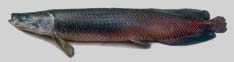
Arapaima gigas c) (Arapaima)
This species is commonly found in the aquarium
fish trade. Some experiments have been made for
its culture. Escapees have been found occasionally
in natural waters in central Thailand. The species
is long-lived and grows to a very large size. It is a
voracious predator and a mouth brooder. Its natural habitat in the forested river closely resembles
parts of the Mekong.
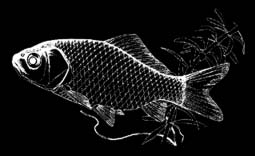
Carassius auratus a, b) (goldfish)
Introduced into Thailand as an ornamental fish from
China around 1300 AD and into Viet Nam at an
unknown date. The species reproduces naturally in
captivity but does not apparently do so in the wild
in Thailand. More recently, a variety of this species
was recorded as diffusing into the Mekong Basin
from the Red River Basin in Viet Nam and from
Lao PDR, and is presumed to be breeding naturally.
The wild form of this species (`funa' in Japan) was
introduced to Thailand from Japan but later
disappeared. The wild form has posed a threat to Japanese endemic species through competition and
hybridization. The gibelio sub-species has formed massive populations of stunted fish in the Danube in
Europe. Goldfish are a generalized feeder and stick their eggs onto aquatic plants.
18

The Impacts of Introductions and Stocking of Exotic Species in the Mekong Basin and Policies for Their Control
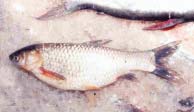
Cirrhinus cirrhosus a, b) (Mrigal, Indian major carps)
This Indian major carp was introduced for aquaculture
into Lao PDR (1977) and Thailand (1979) from India,
and into Viet Nam (1984) from Lao PDR. The species
is also used for stocking dams. It is thought to be
breeding naturally within the basin, since its fry have
been found in the main stream of the Mekong in Northeast Thailand. However, no natural stocks or
impacts have been clearly identified. There are two native species of Cirrhinus, which have better
eating qualities, but do not respond well to culture in ponds. The species is still used for aquaculture
throughout the basin, where it is regarded as generally beneficial. The mrigal lays demersal eggs and
feeds on detritus and periphyton.
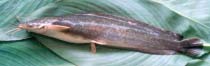
Clarias gariepinus a, b) (African catfish)
The African catfish was first introduced into Viet Nam
from the Central African Republic in 1974 for
aquaculture. It has since been introduced into other
countries of the basin by internal transfer. It has been
widely used for aquaculture and has been hybridized
with the native Clarias macrocephalus (C. gariepinus male x C. macrocephalus female). It is recorded
as established in the wild throughout the basin, although its status is unclear. There is little reason
why this species should not enter the Mekong fauna as a permanent element. No immediate detrimental
environmental effects have been noted in the Mekong or other areas to which the species has been
introduced. The status of the hybrid is equally in doubt, since some report the hybrids as being self-
fertile to at least F4. Others say that the hybrid is self-sterile but may backcross with both parents. As
the hybrid readily escapes from aquaculture stations and is stocked into the wild, its capacity to
breed is important. This should be clarified especially since there are reports that the hybrid may be
responsible for a decline in the abundance of C. batrachus in the Chao Phrya and Mekong Basins.
Commercially, the species is not as popular as the native clarias, although the hybrid is preferred to
native species both for its better growth under culture conditions and its eating qualities. Clarias
have a wide range of feeding habits from predation to generalized benthic feeders. They migrate to
shallow flooded areas to spawn large quantities of adhesive eggs. Both the African parent and the
hybrids are highly tolerant of poor water quality and deoxygenated conditions. This tolerance gives
the species and the hybrid a competitive advantage over native clariids.
Ctenopharyngodon idella a, b) (Grass carps, Chinese carps)
The grass carp was one of the first species introduced in
the region. It was moved from China and Hong Kong to
Thailand in 1932, to Viet Nam from China in 1958 and
to Lao PDR at an undetermined date. The species is used
for aquaculture throughout the basin and is highly
appreciated by consumers. It may also be stocked into
reservoirs as a control for invasive, aquatic vegetation in
ditches and canals. The species does not breed naturally
in any of the countries and is maintained by artificial
reproduction and continuous stocking. There is, however, a risk that it might acclimatize in parts of
the Mekong, as it has already done in the Danube and the Mississippi. As its name suggests, the
grass carp is one of the few fish to feed primarily on higher vegetation. It lays numerous semi-
pelagic eggs and the young enter the drift.
19

The Impacts of Introductions and Stocking of Exotic Species in the Mekong Basin and Policies for Their Control
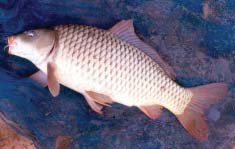
Cyprinus carpio a, b) (Common carps)
There is evidence that C. carpio is not one species but
rather a complex of species with two clearly
differentiated groups the silver varieties originating
from Southern China and Northern Viet Nam and the
yellow varieties originating from Eastern Europe. The
Common carp has been the keystone of many
aquaculture development projects and as such has been
introduced into the region from several sources on
several occasions. It was introduced into Thailand from
1913 onwards from China, Japan, Israel and Germany, into Lao PDR from Thailand and India in
1977, and into Viet Nam from Hungary during the period 19691975. There is considerable movement
of C. carpio from Thailand and China into Lao PDR as stocking material for aquaculture and
reservoirs. The species complex is widely established in the wild and in many areas is now regarded
as a permanent element of the fauna. Despite the disfavour with which this species is regarded in
many areas, it is not perceived as an immediate problem in the Mekong. However, there are some
local concerns about this species in Southern Lao PDR where fishermen blame it for declines in
local fish species because it eats the eggs of other fish. Common carps are notorious for the way
their populations rapidly increase following environmental disturbances by dams. Their habit of
digging around in the bottom and muddying the water can seriously alter the environment to the
detriment of other species. Given that the species is now firmly established, there seems little that
can be done to eradicate this potentially troublesome fish. Common carps are basically detritus and
mud feeders. They breed on the vegetated margins of lakes and rivers where they deposit their
adhesive eggs on submerged vegetation.
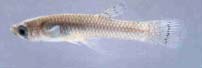
Gambusia affinis a, b) (Mosquito fish)
Gambusia was introduced throughout the basin at an
unknown date for mosquito control. It was widely
disseminated in drainage ditches from which it has been
washed into the main rivers. It is now found at the
margins of most water bodies including rice fields and
floodplain lakes. It is tolerant of salinity. It is not regarded as detrimental although its habit of eating
eggs and larvae of other fish may do some damage to fish stocks. Gambusia feeds on surface-living
insects and other particulate matter falling on the surface. It is a live-bearer.
Gilbelion (Catla) catla a, b) (Catla, Indian major carps)
This species was introduce into Lao PDR (1977) and
Thailand (1979) from India. Subsequently, some of Lao
stock were introduced to Viet Nam (1984) for
aquaculture purpose. The species is also used for
stocking dams. It is recorded as breeding naturally within
the basin but no natural stocks have been clearly reported.
Due to its low growth rate, culture of this species has
been largely abandoned in Thailand and Viet Nam. There seems to be no reason why this species
cannot establish in the Mekong, which is similar ecologically to its native Ganges River system, although
sufficient individuals may not have been added to the system to form a critical breeding mass. The
Catla feeds on phytoplankton and detritus and normally lays demersal eggs in the main stream of the
Ganges. The fry later swim up to form part of the drift.
20
The Impacts of Introductions and Stocking of Exotic Species in the Mekong Basin and Policies for Their Control
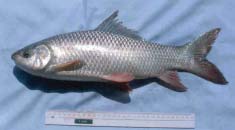
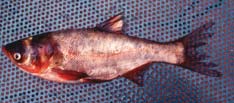
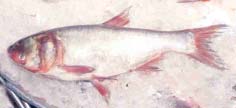
Hypophthalmichthys molitrix a, b) (Silver carp, Chinese carp)
This species was introduced into Thailand from
China in 1913 and into Viet Nam in 1958 from the
same source for aquaculture. The species is widely
used throughout the basin for aquaculture and is
artificially bred for this purpose. The species is
recorded as having established in the Saigon River.
Its fry have been found in the Mekong, indicating
that it has possibly established in that river as well.
The species feeds on detritus and phytoplankton and may compete with species of similar habit in
the Mekong. It lays semi-pelagic eggs that form part of the drift.
Hypophthalmichthys nobilis a, b) (Bighead carp, Chinese carp)
This species was introduced into Thailand from
China in 1932 and into Viet Nam in 1958 from the
same source for aquaculture. The species is widely
used in Thailand. The species does not breed
naturally in ponds and continues to be artificially
reproduced. However, the species is recorded as
having established in the Red river and the Saigon
River. Its fry have been found in the Mekong indicating that it has possibly established in that river as
well. The species feeds primarily on phytoplankton. It lays semi-pelagic eggs that form part of the drift.
Hypostomus plecostomus c) (Black sucker catfish)
This species was apparently introduced throughout the region for the aquarium fish trade. It appears
to be naturalized in many areas and has been found in rice fields in Northeast Thailand for at least
ten years. It is also particularly visible in small urban water bodies. In its natural environment, the
species ranges from rapids to floodplain pools. Therefore it can be anticipated that it will spread
throughout the Mekong and its tributaries. The situation regarding this species is complicated, as a
number of colour varieties and body forms have been seen. In addition, at least three other Loricariid
catfishes have been identified in aquaria and at aquarium rearing stations. Loricariid catfishes scrape
algae off rocks and other surfaces as well as ingesting detritus. They are also implicated in attacking
egg masses of phytophilous fishes. They are nest builders and brood guarders.
Labeo rohita a, b) (Rohu, Indian major carp)
This species was introduced for aquaculture into
Thailand in 1968 from India, into Lao PDR in 1977
from Thailand and India, and into Viet Nam during
the period 1982-84 from Lao PDR. The species is
widely used throughout the basin for aquaculture
and for stocking dams and reservoirs. It is preferred
to the native species because it is easier to breed
artificially and responds better to handling. Its fry
are occasionally found in the main stream of the
Mekong, indicating that the species is breeding naturally although some fry may be released from
culture installations. Labeos are generally periphyton and detritus feeders and lay semi-pelagic eggs
that enter the drift.
21
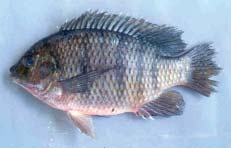
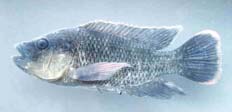
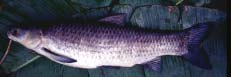
The Impacts of Introductions and Stocking of Exotic Species in the Mekong Basin and Policies for Their Control
Mylopharyngodon piceus b) (Black carp)
Introduced for aquaculture from China into
Thailand in 1913 and in 1980 and has since
disappeared. No natural stocks or impacts have
been reported.
Oreochromis aureus b)
This species was introduced into Thailand in 1970
from Israel. It was not used for aquaculture as
intended and there is no evidence of its having
reached the Mekong Basin. It is however listed as
established, a fact which is indicated by naturally
breeding populations in reservoirs on Mekong
tributaries in Northern Thailand. These populations
are still in existence and the spread of the species
further downstream cannot be excluded. O. aureus
is a generalized feeder with a preference for detritus
and decanted phytoplankton. It also eats small fish
and fish larvae. The species is a maternal mouth brooder that constructs nests in shallow water for
breeding and fertilization. For this reason, it is vulnerable to rapid changes in water level and depends
on suitable substrates for nest building.
Oreochromis mossambicus a, b) (Red throat tilapia)
This tilapia is one of the most widespread species
used for aquaculture and stocking of reservoirs in
the region. It was first introduced to Thailand in
1949 from Malaysia and into Viet Nam from
Africa and the Philippines during the period 1951-
55, into Lao PDR in 1955 from Thailand and into
Cambodia at an unknown date. It has escaped from
its original environments and may possibly form
established stocks in the Mekong system, particularly in saline environments such as Lake Nont
Bo in Northeast Thailand, as well as throughout the Delta. O. mossambicus is notorious for forming
dense populations of stunted fish, particularly in brackish water areas and small canals and lakes,
as has happened in the Mekong Delta. It has become one of the pan-tropical species but is regarded
as a pest in many areas of the world, where unsuccessful attempts have been made at its elimination.
The species is not appreciated as highly as O. niloticus for its eating qualities and its former
popularity for aquaculture has waned in favour of the latter species. O. mossambicus is a generalized
feeder with a preference for detritus and decanted phytoplankton. It also eats small fish and fish
larvae. The species is a maternal mouth brooder that constructs nests in shallow water for breeding
and fertilization. For this reason it is vulnerable to rapid changes in water level and depends on
suitable substrates for nest building.
22
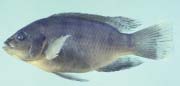
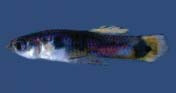
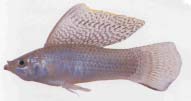
The Impacts of Introductions and Stocking of Exotic Species in the Mekong Basin and Policies for Their Control
Oreochromis niloticus a, b) (Nile tilapia)
This introduced species is one of the most popular for aquaculture and for stocking into dams and
reservoirs throughout the tropical world, including the Mekong region. It was introduced into Thailand
from Japan in 1965, into Viet Nam in 1973 and 1994 from Taiwan, the Philippines and Thailand, and
into Lao PDR and Cambodia at an unknown date. It is widely disseminated as fry from numerous
hatcheries and is part of established commercial practice in support of stocking and aquaculture. O.
niloticus is established in rivers and reservoirs throughout the region, although in some areas it has
tended to disappear. It is not known to have any detrimental environmental impact throughout its
introduced range and has become one of the pan-tropical species, although small native species in
Southern Thai streams disappeared once this species became established. O. niloticus is a generalized
feeder with a strong preference for phytoplankton. It is one of the few species that can readily digest
blue green algae and as such is of value in the control of eutrophication. It also eats detritus and can
feed on small fish and fish larvae. The species is a maternal mouth brooder that constructs nests in
shallow water for breeding and fertilization. For this reason it is vulnerable to rapid changes in water
level and depends on suitable substrates for nest building.
The GIFT strain of O. niloticus is now reared in and distributed from the Government hatchery in
Khon Kaen (Thailand), which is further developing the strain to meet local conditions. Several
private hatcheries are licensed to produce this fish for sale to both pond and cage culture locations.
The Khon Kaen hatchery maintains the Egyptian Manzalla strain of Oreochromis niloticus.
Red tilapias c)
Red tilapias have been formed from hybrids between O.
niloticus and O. mossambicus, introduced from Latin
America via Florida (U.S.A), and from O. niloticus and O.
hornorum, bred in Central Thailand, which is saline
tolerant. Both hybrids breed true but tend eventually to
revert to their parental strains through backcrossing. Red
tilapia is popular in Thailand and is also moved into Lao
PDR for aquaculture and cage culture.
Poecilia reticulata a) (Guppy)
This is an ornamental species introduced into Thailand for
the aquarium trade and also for mosquito control It has
escaped and become established in the wild throughout the
region in small streams and ditches, at the margins of rice
fields and other shallow, still water habitats. The species is
a live bearer and feeds mainly on surface material, including
small insects.
Poecilia velifera c) (Sailfin molly)
The Sailfin molly was first introduced into Thailand for
the aquarium fish trade around 1970 and in 1987 from
Taiwan as a control on algal flocs in shrimp ponds in the
Gulf. The species is also found in the Mekong Delta in
Viet Nam. The species is a live bearer and is a microphagous
omnivore.
23
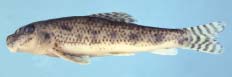
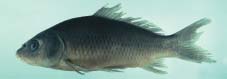
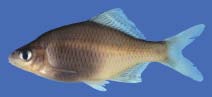
The Impacts of Introductions and Stocking of Exotic Species in the Mekong Basin and Policies for Their Control
Tilapia rendalli b) (Red cheek tilapia)
This was introduced into Thailand from Belgium in 1955 for aquaculture. Established populations
of this species exist in reservoirs around Sakhon Nakhon in Northeast Thailand. Tilapia rendalli is
known to eat higher vegetation and has been used for weed control. It also feeds on detritus and is
not particularly efficient at keeping down invasive plants. It is a parental guarder that lays its eggs in
a series of small pit-like nests. It is vulnerable to fast changes in water level, which may be the
reason it has not spread further that the area of original stocking.
7.1.2 Species whose distributional status is unclear
Abottina rivularis a) (mud gudgeon)
This species is spreading into the Mekong Basin in
Northern Lao PDR from China, either with fry for
aquaculture or as natural diffusion. It was recorded
in the Mekong in 1995 when a few specimens were
obtained from the main stream in N. Thailand and
tributaries in Yunan, China. The species feeds on
periphyton and detritus. It lays demersal eggs on
coarse sandy bottoms.
Acheilognathus sinensis a) (Chinese bitterling)
This species is spreading into the Mekong Basin in Northern Lao PDR from China either with fry
for aquaculture or as natural diffusion. Its presence has been established from photographic evidence
only. This species may pose a threat to related endemic species. In Japan, it has contributed to the
decline of other species through competition and hybridisation. The species is a zooplankton feeder,
which lays its eggs in the mantle cavity of freshwater mussels. The mussel does not suffer any
damage.
Acheilognathus barbatulus a)
This species is spreading into the Mekong Basin
in Northern Lao PDR from China either with fry
for aquaculture or as natural diffusion. Its presence
has been established from photographic evidence
only.
Cyprinus sp. a)
An introduction into Lao PDR whose status is
unclear, it was recorded by M. Kottelat.
24
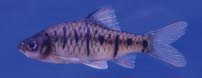
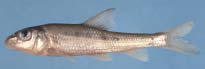
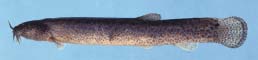
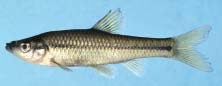
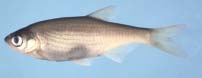
The Impacts of Introductions and Stocking of Exotic Species in the Mekong Basin and Policies for Their Control
Hemibarbus labeo a)
This species is spreading into the Mekong Basin in Northern Lao PDR from China, either with fry
for aquaculture or as natural diffusion. Its taxonomic status in the Mekong is unclear but the records
of this species may represent an extension of its natural range.
Hemibarbus maculatus a)
This species is spreading into the Mekong Basin in
Northern Lao PDR from China, either with fry for
aquaculture or as natural diffusion. Its taxonomic status
in the Mekong is unclear but the records of this species
may represent an extension of its natural range.
Misgurnus anguillicaudatus a) (Loach)
This species is spreading into Northern Lao
PDR from the Red River Basin in Viet Nam
and Lao PDR. Its taxonomic status in the
Mekong is unclear but records of this species
may represent an extension of its natural range.
Pseudorasbora parva a)
This is spreading into the Mekong Basin in Northern
Lao PDR from China either with fry for aquaculture or
by natural diffusion. The species is primarily a plankton
feeder that lays adhesive eggs on rocky substrates. The
records of this species may represent an extension of its
natural range.
Puntius semifasciolatus a)
This is spreading into Northern Lao PDR from the Red
River Basin in Viet Nam and Lao PDR. The records of
this species may represent an extension of its natural
range. The species is primarily a plankton feeder that
lays adhesive eggs on rocky substrates.
Rasborinus lineatus a)
This is spreading into the Mekong Basin in Northern
Lao PDR from China, either with fry for aquaculture or
by natural diffusion.
Rhinogobius sp. a)
One species of this genus is possibly present in stocking material spreading into the Mekong Basin
in Northern Lao PDR from China.
25
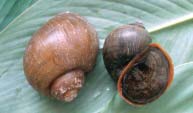
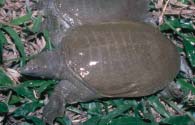

The Impacts of Introductions and Stocking of Exotic Species in the Mekong Basin and Policies for Their Control
7.1.3 Other organisms
Pomacea canaliculata b)
Introduced into all countries of the basin for aquaculture and ornament from 1988 onwards.
Pomacea gigas b)
Introduced into Thailand and has established in the wild.
Apple snails have a major impact on aquatic habitats,
including rice paddies, through their habit of destroying
the growing stems of aquatic plants at the base. They
cause enormous economic losses for rice farmers and
degrade natural wetland habitats by stripping
vegetation. They have a very broad spectrum of feeding
habit, using most aquatic plants including water
hyacinths. Habitats thus denuded lose their fish populations. In addition, the introduced snails compete
with natural forms such as Pila spp., which are relatively benign in their effect, since they only
attack already moribund plants. Apple snails are tolerant of salinity and are thus able to penetrate
coastal habitats. The species are preyed upon by open-bill storks, which are then at risk as they
accumulate toxic material picked up by the snails. For the same reason, duck farmers who have used
crushed snails as feed have suffered mortalities among their flocks. The case of the apple snail is an
example of the disastrous consequences that can follow from an inappropriate introduction.
Procambarus clarkii b) (Louisiana crayfish)
Introduced into Thailand from an unknown source for aquaculture, this species is reported as
established in the wild where it is regarded as a nuisance.
Pelodiscus sinensis c} (Chinese soft shell turtle)
This turtle has been introduced in Thailand on several
occasions since 1977. It is now regularly reproduced
in captivity and has formed natural populations. These
have impacted on native turtle species. In Viet Nam
the species was also introduced to the basin from the
north of the country.
Pseudemys scriptac c} (American painted turtle)
This turtle was introduced to Thailand in 1975 for the
aquarium trade. It is now bred in captivity and has
formed natural populations in Central Thailand. It is
probably in the Mekong watershed because there is a
tendency on the part of owners to release them when
they have grown beyond an acceptable size.
26
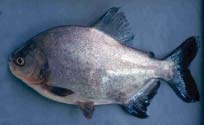
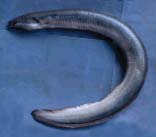
The Impacts of Introductions and Stocking of Exotic Species in the Mekong Basin and Policies for Their Control
Rana catesbiana b) (American bullfrog)
The American bullfrog was introduced into Thailand
for aquaculture. It has become established in the wild
although not in the Mekong Basin. Its ecological
impact is unknown although it is thought that it will
prove to be a nuisance. As the species can spread
overland, its eventual appearance in the basin here is
possible. The species is apparently already in the basin
in Viet Nam (introduced from Cuba), having been
released by farmers when it was apparent that the
culture of this species was not profitable.
7.2
Introductions in adjacent waters
7.2.1 Finfish
Commercial species
Anguilla japonica b) (Japanese eel)
Introduced into Thailand in 1973 for aquaculture, this
species is rarely used for culture and there is no
indication that it has entered the Mekong Basin. A few
escapees from culture were found in Central Thailand
in the 1980s, after which no further individuals have
been found.
Colossoma macropomum c) (Pacu)
The pacu is a species of growing importance for
aquaculture in the region. Its use is widespread in China,
Indonesia and Central Thailand. The species is not
popular in Northeast Thailand at present because its
bony nature and taste are not appreciated and it has not
been adopted for culture. However, it is cultured in the
central region of the country, where it is found in regular
markets and supermarkets. This indicates that it is
potentially acceptable and may eventually be cultured
in the Mekong Basin. As a large species whose native
habitat resembles parts of the Mekong system, it could become established, given the right conditions.
Four or five individuals have been caught from the Chao Phraya River system. Colossoma are primarily
known for their fruit-eating habit in flooded forests and could compete with native fruit eaters such as
Tor, Pangasius and some cyprinids, should it ever become established. It undertakes migrations to
marginal flooded zones for breeding.
27
The Impacts of Introductions and Stocking of Exotic Species in the Mekong Basin and Policies for Their Control
Ictalurus nebulosus b) (American catfish)
This species was introduced into Viet Nam, probably from the USA at an unknown date and for an
unknown purpose. Its fate and impact of introduction are still unclear. There are also proposals to
introduce this species into Thailand for aquaculture. It is a generalized bottom feeder that can adopt
predatory habits. It builds a nest for its eggs, which are later guarded by the parents.
Ictalurus punctatus b) (Channel catfish)
This was first introduced into Thailand in 1989 from
the USA for aquaculture. It was also introduced into
Central and Northern Thailand where it was cultured
experimentally. All fish escaped during the great flood
of 1995 and were later found in the natural habitat.
However, there are no further records of the fate of this
introduction. This species is a generalized bottom feeder
that can adopt predatory habits. It builds nests for its
eggs, which are later guarded by the parents.
Onchorhynchus mykiss b) (Rainbow trout)
The Rainbow trout was introduced into Thailand from Canada in 1963 to establish a sport fishery in
the mountainous area in the North of the country. The introduction was unsuccessful and did not
affect the Mekong system. However, similar proposals surface from time to time in the interests of
tourism and some eggs have been introduced into Northern Thailand for experimental culture. It is
doubtful that this species would establish in the lower reaches of the river but may do so in the high
mountainous tributaries in China. It has shown itself in other areas to be of value for recreational
fisheries and cold water aquaculture at high altitudes in the tropics. Trout feed on insect larvae and
small fish and have the potential to compete with and predate on native upland stream species. They
have eliminated small native species in Asian, Southern African, New Zealand and South American
localities where it has been introduced. Trout spawn in redds cut in fine gravel bottoms and depend
on an even flow of well-oxygenated water for hatching and survival of fry.
Ornamental species
A large number of small, medium-sized and potentially large species are cultured and sold through
the aquarium fish trade. Among these are additional ornamental strains of several of the species
currently used in aquaculture which, although valid for ornament, may not have genetic qualities
satisfactory for aquaculture. As the custom is to release unwanted fish, especially when they grow
too large for the home aquarium, there is a clear possibility that eventually some species will establish.
This risk is heightened because there are several enterprises culturing native and exotic species for
export and local markets. These enterprises are making little effort to prevent escapes into nearby
natural waters.
28
The Impacts of Introductions and Stocking of Exotic Species in the Mekong Basin and Policies for Their Control
8. POLICY ISSUES
The following two basic principles should be recognised:
· Any introduction of a species into a river basin for whatever purpose, even into a secure
installation, should be regarded as an introduction into the wild;
· Inter-basin introductions from adjacent rivers or lakes are potentially as risky as introductions
that cross international boundaries.
8.1
Policy of individual member nations of the Basin Commission
Thailand has a policy of not permitting further introductions from regions outside its immediate
neighbours. Cambodia and Laos have no policy on introductions and, while Viet Nam would prefer
to use local species for aquaculture and fisheries wherever possible, it does not exclude the possibility
of further introductions. Thus the four countries of the basin have very different approaches to
further introductions of exotic species.
The situation with regard to transfers and material for stocking is even more open. In this case, all
countries permit free movement of material within their countries, irrespective of whether or not it
is crossing basin boundaries. Free movement of material between the countries of the basin is also
permitted, as is importation from the other basin countries, China and Myanmar.
8.2
International agreements
The confused and generally uncontrolled movement of genetic material within the basin increases
the risk of introducing nuisance species, genetic degradation of stocks and dissemination of disease.
The solution lies not in a blanket ban on all future introductions, although this is certainly one
possibility. Blanket bans of this type have proved almost impossible to enforce. Furthermore, in an
area with a heavy dependence of fish and a growing aquaculture sector, such regulations limit
possibilities for future development. The mission therefore considers it important that this issue be
addressed by the Mekong River Commission. The following actions are possible.
8.2.1 Adoption of a Code of Conduct to reduce the impacts of future introductions of
exotic species.
Formal Codes of Conduct adopted by countries sharing the same river or lake basin avoid the
possibility of introductions effected by one country having negative effects on the other states.
It also provides individual countries with a framework for the consideration of new introductions
into their own national territories. This issue is considered a high priority by the Convention on
Biological Diversity. Such a Code has already been developed by the International Council for
the Exploration of the Sea (ICES) (ICES, 1995) and adopted in modified form by the European
Inland Fisheries Advisory Commission (EIFAC) (Turner, 1988). The ICES/EIFAC Code has
been offered for consideration to other Inland Regional Bodies. It has been accepted by the
IPFC Working Party on Inland Fisheries as a possible basis for developing such a code for the
Southeast Asian Region. It was recognized at that time that some of the provisions of the Code
as developed for Europe were not appropriate for developing economies. The development and
adoption of codes of this type are now consistent with the requirements of the Convention on
29
The Impacts of Introductions and Stocking of Exotic Species in the Mekong Basin and Policies for Their Control
Biological Diversity and the emerging policy that all countries and regions should develop basin
management plans. Figure 6 presents a decision-making tree summarizing some of the steps that
should be taken in considering a new species for introduction.
8.2.2 Regional Guidelines on Quarantine and Health Certification
Regional Guidelines on Quarantine and Health Certification for the Responsible Movement
(Introductions and Transfers) of Live Aquatic Animals in Asia are being negotiated by the
Regional Expert Working Group of the Regional Programme on Quarantine, Health
Certification and Information Systems for the Responsible Movement of Live Aquatic Animals
in Asia. It is recommended that the Commission consider its formal participation in this code
as a means of reducing the risks of the spread of disease through uncontrolled movement of
stocking material.
8.2.3 Broodstock management
The genetic status of several of the species forming part of current aquaculture and stocking
practice is extremely complex. Several strains of Oreochromis and common carps are in use as
are hybrids of Clarias. In addition, different strains of the same species are mixed between the
Mekong and adjacent basins and between various reaches of the Mekong itself. The potential
ecological penalties for such indiscriminate mixing of stocks and the investment that resides in
the development of high yielding strains suggests that greater care is needed in the transport,
keeping, rearing and release of this material. To this end it is suggested that a protocol for
broodstock management be developed for the basin to ensure a common approach to these
issues.
8.3
Education, training and extension
Many of the uncontrolled movements of fish in the Mekong Basin are made because the general
public and many in the fisheries and aquaculture sectors are ignorant of the dangers. It is suggested
that consideration be given to preparing training and extension material and promoting public
awareness campaigns to inform interested groups of the problems with the movement of genetic
material of fish. NGOs as well as other conservation and rural-extension-interest agencies could
also be involved in these efforts.
30
The Impacts of Introductions and Stocking of Exotic Species in the Mekong Basin and Policies for Their Control
9.
CONCLUSIONS AND RECOMMENDATIONS
9.1
Environmental concerns
Present levels of environmental modification do not appear to be causing any problems for the native
fish fauna of the Mekong, although excessive fishing is causing classic signs of a fishing down of the
species assemblage, especially in Cambodia. Plans for damming plus river training, together with
growing pollution and the impact of encroachment of agriculture on the floodplains of the basin are
likely to produce severe environmental stress in the future. Therefore, the present low impact of the
introduced species is likely to change, as will the balance of existing native populations.
9.2
Establishment of species
The following introduced species now seem to have established breeding populations in all or part
of the basin:
Cirrhinus cirrhosus
Clarias gariepinus
Gambusia affinis
Helostoma temminki (albino strain introduced from Indonesia)
Labeo rohita
Oreochromis mossambicus
Oreochromis niloticus
Poecilia reticulata
Pterygoplichthys plecostomus (more than one species may be present)
The following species have an ongoing presence for aquaculture; fry have been recorded, at times,
from the Mekong main stream, indicating possible establishment:
Hypophthalmichtys molitrix (breeding in Northern Viet Nam rivers)
Aristichthys nobilis
The following species are used widely for aquaculture but have not shown any evidence of having
established in the Mekong:
Ctenopharyngodon idella
Gilbelion (Catla) catla
Numerous aquarium species
9.3
Present impact
Most introductions recorded from the Mekong system appear to have been absorbed by native
populations with little difficulty. Most do not form significant populations anywhere although
Oreochromis niloticus may form a high proportion of catches in some dams and reservoirs.
Oreochromis mossambicus is causing a nuisance in the coastal shrimp farms and waterways in Viet
Nam by forming dense populations that are competing with the shrimp for food. The mosquito
fishes Poecilia and Gambusia are everywhere in shallow fringing areas and drainage ditches. A
specialized poor water quality fauna has emerged in urban habitats, which contains two introduced
species Hypostomus plecostomus and Oreochromis.
31
The Impacts of Introductions and Stocking of Exotic Species in the Mekong Basin and Policies for Their Control
Most of the species that have become established in the Mekong are fairly generalized feeders,
usually preferring bottom living organisms and detritus. As this is the most widespread and common
feed available in the basin, it probably does not cause any competition, despite the fact that many
of the native species are also benthic feeders. Should this food source become limited because of
restrictions to the floodplain, acceleration of flow preventing deposition, or inorganic sediment
degrading the quality of the detritus, competition may increase with unpredictable results.
9.3.1 Negative impacts
Following an introduction or transfer, there are four categories of impact:
1. Severe effects causing economic or environmental damage
2. Establishment of species leading to local extinction of native species
3. Establishment of species with genetic mixing with local stocks, or production of viable
hybrids between introduced and native species
4. Establishment of species with no noticeable impacts
The only impact noted that would fall into category 1 is the local damage to shrimp farms in the
Mekong delta by O. mossambicus.
There is a possibility that C. gariepinus, together with the hybrid Clarias, may be producing
declines in the native C. batrachus and that Labeo rohita may be affecting native labeos. However,
until further evidence is forthcoming, the introduction of C. gariepinus should be regarded as a
possible category 3 impact and that of L. rohita as a case of category 4.
Introductions of Oreochromis and C. carpio are of special interest, in that they are both well
established in many areas and should be regarded as fully incorporated into local faunas. Their
genetic status is complex because the species have been introduced in several waves of diverse
origin. Much genetic mixing has occurred between these different strains (or even possibly
different species), giving local stocks a distinct character that has yet to be evaluated. At present,
these species seem to be classifiable as category 4.
Most other introductions pass without comment, although species such as Hypostomus
plecostomus appear widespread in certain types of habitat, while guppies and mosquito fish are
present in all suitable habitats. This would suggest that serious impacts have not been registered
either officially or by local fishermen.
One cause for concern is the aquarium fish trade that is disseminating large numbers of exotic
fish around the region, without any apparent control. Many of these species could potentially
find their way into the local waters and establish themselves. Most such species are of no recorded
danger but some, Cichla ocellaris for example, have caused local damage in other areas to
which they have been introduced.
9.3.2 Positive impacts
On the positive side, several of the introductions are highly successful economically and socially.
Thus, while native fishes are well acclimatized in natural reservoirs, introduced species (tilapias,
hybrid clarias, L. rohita, and Chinese and Indian major carps) are preferred for aquaculture and
stocking in reservoirs. Without major introductions, it is doubtful whether there would be a
viable aquaculture industry of any size in the freshwaters of the region.
32
The Impacts of Introductions and Stocking of Exotic Species in the Mekong Basin and Policies for Their Control
9.4
Potential impact
The present assessment is valid for existing levels of environmental impact in the Mekong. At present
the river is not heavily impacted by river engineering or by pollution. Native species are therefore
not heavily stressed by environmental effects and have shown themselves capable of adapting to
those impacts which do exist, such as impoundment and pollution. However, many records of nuisance
from introduced species in other areas of the world have coincided with excessive levels of
environmental stress. Therefore, the present low impact scenario from introduced species cannot be
guaranteed, should major changes occur in the future.
9.4.1 Negative impacts
Based on the history of other river basins, the following possible future negative impacts may
arise if the Mekong River environment becomes degraded:
· A rise in abundance of the common carps in the river as a major element of the fauna;
· Development of stunted populations of tilapias in reservoirs;
· Emergence of an unforeseen pest species, drawn either from the native fauna or from
existing and future exotics.
The niche filled by the pest may not be filled by native species. Thus, were the pest not there,
there would be a net loss in productivity within the system and the risk of even greater biotic
degradation.
Given the chaotic nature of current practices for species introductions and species movements
within the basin, there is a serious risk of:
· Dissemination of diseases within the aquaculture sector;
· Degradation of the genetic quality of wild stocks and of the species and strains used
for aquaculture.
9.4.2 Positive impacts
There is every sign that the capture fisheries within the basin will continue their present
decline in quantity and quantity. In a region that is heavily dependent on fish, the anticipated
shortfall can only be met from aquaculture. In Thailand, the culture sector already supplies a
significant part of the consumption. In other areas of the basin, the sector is still relatively
undeveloped, although there are signs of rapid expansion in Viet Nam. At present, aquaculture
depends heavily on introduced species and, while these do not meet with universal approval
in the face of competition with wild caught fish, tastes may change as the quality of the
natural fish stocks declines. There appear to be few native species that can fully replace those
already forming part of culture practice and the economic role of the exotic aquaculture species
is expected to increase.
9.5
The aquarium fish sector
This sector is at present completely unregulated. Some controls are necessary in view of the potential
of the trade to transmit diseases throughout the region, to introduce through escapes potentially
troublesome species and to further confuse the genetic status of some species used in aquaculture.
The trade is an important earner of foreign currency and attempts at imposing regulations may
33
The Impacts of Introductions and Stocking of Exotic Species in the Mekong Basin and Policies for Their Control
lessen the competitive edge compared to other exporting countries. However, some degree of
regulation, particularly with regard to disease certification, would improve the market image of fish
exported from the basin. At present, farms rearing these fish have ready access to natural stocks of
local fish species. Some control of potential escapes is also needed.
9.6
Suggestions for action
It is suggested that that the countries of the basin move towards establishing harmonized policies to
reduce the risks of species introductions and transfers through:
· A Code of Conduct to reduce the negative impacts of future introductions of exotic species.
· Regional Guidelines on Quarantine and Health Certification
· Regional Guidelines on Broodstock management.
It is further suggested that education, training and extension be used to inform workers in the fisheries
sector the general public of the dangers of unregulated movement of species, races or strains.
Eventually, effective control of such movements will be through action by the people themselves
rather than through centrally imposed laws.
Further studies of the fisheries sector should clearly report any introduced species found in the
catch. In addition, other workers in fisheries, such as aquaculturists and fishermen, should be
encouraged to record any exotic species found in natural waters.
These studies could be supplemented by a workshop bringing scientists from the region together to
assess the present impact of introduced species within aquaculture and on the natural environment.
Both Thailand and Viet Nam, for instance, have much more information on these topics than could
be developed in this report. An initiative of this type could provide the basis for a network to compile
information and establish a basin-wide database on species introductions, their economic evaluation
and impact assessment.
The genetic status of certain species that are crucial for aquaculture, particularly Oreochromis and
Cyprinus, is now very confused. Studies to identify and determine the origins and affinities of wild
stocks and cultured stocks of these species groups are urgently needed, particularly as more strains
are being added to the local gene pools.
It is considered a matter of urgency that better controls of the aquarium fish trade be established.
These should include health certification and measures to reduce the chances of fishes escaping
from aquarium fish-rearing installations.
34
The Impacts of Introductions and Stocking of Exotic Species in the Mekong Basin and Policies for Their Control
References
Cowx I.G. 1994. Stocking strategies. Fisheries Management and Ecology 1: 15-30.
Food and Agriculture Organization of the United Nations. 1995. Code of Conduct for Responsible
Fisheries. Food and Agriculture Organization of the United Nations, Rome, Italy.
Food and Agriculture Organization of the United Nations. 1995. Precautionary Approach to Fisheries.
Part I: Guidelines on the precautionary approach to capture fisheries and species introductions. FAO
Fisheries Technical Paper 350/1.
Froese, R. 1990. FISHBASE: An information system to support fisheries and aquaculture research.
Naga, December 1990: 21-24.
International Council for the Exploration of the Sea. 1995. ICES Code of Practice on the Introductions
and Transfers of Marine Organisms - 1994. ICES Co-operative Research Report No. 204.
Kohler, C.C., and J.G. Stanley. 1984. A suggested protocol for evaluating proposed exotic fish
introductions in the United States. p. 387-406. In W.R. Courteney and J.R. Stauffer editors. The
Distribution, Biology and Management of Exotic Fishes. Baltimore, John Hopkins University Press.
Kottelat, M. 2001. Fishes of Laos. WHT Publications, Colombo. 198 pp.
Rainboth, W.J. 1996. FAO species identification field guide for fishery purposes. Fishes of the
Cambodian Mekong. Food and Agriculture Organization of the United Nations, Rome, Italy. 265 pp.
Turner, G. editor. 1988. Codes of Practice and Manual of Procedures for Consideration of Introductions
and Transfers of Marine and Freshwater Organisms. - EIFAC Occasional Paper No. 23. European
Inland Fisheries Advisory Commission. Food and Agriculture Organization of the United Nations,
Rome, Italy.
Van Zalinge, N., P. Degen and Nao Thuok. 1999. Fisheries management challenges in Cambodia.
Mekong River Commission Document. 17 pp.
Virapat, C, U. Phinomonbutra and C. Chantarawaratid. 2000. Fishery and fisheries management in
Thai reservoirs. Mekong River Commission. MRF II Component report no 5. 48 pp.
Welcomme, R.L. 1985. River Fisheries. FAO Fisheries Technical Paper 262. 330 pp.
Welcomme, R. L. 1988. International Introductions of Inland aquatic Species. FAO Fisheries Technical
Paper 294.
35
The Impacts of Introductions and Stocking of Exotic Species in the Mekong Basin and Policies for Their Control
The Impacts of Introductions and Stocking of Exotic Species in the Mekong Basin and Policies for Their Control
Socio economic
impact
beneficial
beneficial
beneficial
adverse
Unknown
unknown
unknown
unknown
unknown
unknown
beneficial
adverse
yes
Ecological
impact
probably
unknown
unknown
adverse
unknown
unknown
unknown
unknown
unknown
unknown
unknown
adverse
e
used
used
used
used
used
for
t would be appreciated if they could
Use
aquacultur
widely
widely used
widely used
rarely
rarely
rarely
rarely
widely used
unknown
reprod'n
r
ough
Established
t
h
unknown
unknown
unknown
unknown
natural
natural reprod'n
unknown
unknown
unknown
Established
in the wild
unknown
unknown
unknown
unknown
y
e
s
y
e
s
unknown
unknown
unknown
unknown
unknown
unknown
/aquaculture
ANNEX I
Reason
aquaculture
aquaculture
aquaculture
aquaculture
aquaculture
aquaculture
aquaculture
aquaculture
aquaculture
unknown
aquaculture
ornament
e
a
r
amend the database at the website above using the form provided.
Y
1982
unknown
unknown
1990s
1977
1977
1980
1977
1977
1955
unknown
1992
The introductions listed have not all been made into the basin itself.
o
m
g/fi/statist/fisoft/dias/index.htm showing species introduced into countries of the Mekong basin.
oduced fr
.fao.or
iet Nam
iet Nam
Intr
V
unknown
unknown
Asia
Thailand, India
Thailand, India
V
Thailand, India
Thailand, India
Thailand
unknown
Asia
http://www
hosus
omis mossambicus
omis niloticus
ohita
omis mossambicus
omis niloticus
hinus cirr
r
eochr
r
eochr
r
eochr
r
eochr
Extract from
This and other information in this report may be based on outdated and superseded information. If the reader is aware of this i
Species
Cambodia
Clarias gariepinus
O
O
Pomacea canaliculata
Lao PDR
Catla catla
Cirr
Clarias gariepinus
Cyprinus carpio
Labeo r
O
O
Pomacea canaliculata
The Impacts of Introductions and Stocking of Exotic Species in the Mekong Basin and Policies for Their Control
unknown
unknown
unknown
beneficial
unknown
unknown
unknown
unknown
beneficial
unknown
unknown
unknown
unknown
unknown
unknown
unknown
unknown
unknown
unknown
unknown
unknown
unknown
unknown
yes
yes
Socio economic
impact
unknown
unknown
unknown
probably
unknown
unknown
unknown
unknown
probably
unknown
unknown
unknown
unknown
unknown
unknown
unknown
unknown
unknown
unknown
unknown
Adverse
adverse
adverse
adverse
unknown
Ecological
impact
used
used
used
used
used
used
used
used
used
used
rarely used
rarely
rarely
unknown
rarely
unknown
rarely
widely
unknown
rarely used
rarely
unknown
rarely
rarely
rarely
adverse
rarely
Use for
restocking
restocking
e
reprod'n
reprod'n
reprod'n
reprod'n
natural reprod'n
natural reprod'n
continuous
natural
natural
natural reprod'n
continuous
natural reprod'n
natural reprod'n
natural reprod'n
natural reprod'n
natural reprod'n
natural reprod'n
natural
natural
Established
aquacultur
no
yes
ough
no
y
e
s
probably no
probably no
y
e
s
probably
probably no
unknown
probably
yes
yes
y
e
s
no
Established
probably yes
unknown
probably no
no
no
no
y
e
s
y
e
s
y
e
s
probably no
yes
y
e
s
y
e
s
y
e
s
probably yes
thr
aquaculture
ornament
aquaculture
aquaculture
ornament
aquaculture
aquaculture
aquaculture
aquaculture
aquaculture
mosquito control
ornament
aquaculture
aquaculture
aquaculture
aquaculture
aquaculture
aquaculture
aquaculture
aquaculture
aquaculture
aquaculture
unknown
ornament/aquaculture
unknown
aquaculture
aquaculture
aquaculture
Reason
in the wild
1973
1692-1697
1980
1979
1950s
1980
about 1987
unknown
1932
1913 +
unknown
1950s
1913
1932
1989
1968
1913
1973
1981
1970
1949
1965
unknown
1990
unknown
ca 1987
1977
1955
ear
Y
R.
gentina
Ar
om
fr
A
S
A
S
oduced
Japan
China
Japan
Bangladesh
Brazil Amazon
Japan
Laos
unknown
China and Hong Kong
China, Japan, Israel and Germany
unknown
Paraguay and
China
China
U
India
China/Hong Kong
Canada
Japan
Israel
Malaysia
Japan
unknown
T
aiwan
T
aiwan
U
USA.
Belgium
Intr
us
hodur
eus
r
hosus
ocephalus
us clarkii
ohita
omis aur
omis mossambicus
omis niloticus
endalli
hynchus mykiss
hynchus r
onemus goramy
rhinus cir
ocambar
Thailand
r
eochr
r
eochr
r
eochr
Anguilla japonica
Carassius auratus
Carassius carassius
Catla catla
Cichlasoma octofasciatum
Cir
Clarias gariepinus
Clarias macr
Ctenopharyngodon idella
Cyprinus carpio carpio
Gambusia affinis affinis
Gymnocorymbus ternetzi
Hypophthalmichthys molitrix
Hypophthalmichthys nobilis
Ictalurus punctatus
Labeo r
Mylopharyngodon piceus
Oncor
Oncor
O
O
O
Osphr
Pomacea canaliculata
Pomacea gigas
Pr
Rana catesbeiana
T
ilapia r
Species
The Impacts of Introductions and Stocking of Exotic Species in the Mekong Basin and Policies for Their Control
unknown
undecided
beneficial
undecided
beneficial
beneficial
beneficial
beneficial
unknown
beneficial
unknown
beneficial
beneficial
Socio economic
impact
unknown
undecided
beneficial
undecided
beneficial
beneficial
beneficial
beneficial
unknown
beneficial
unknown
beneficial
beneficial
Ecological
impact
used
used
used
used
used
used
used
used
used
widely
widely
rarely
widely used
widely
widely used
widely
widely
rarely
widely
widely
Use for
e
reprod'n
reprod'n
reprod'n
reprod'n
reprod'n
Established
aquacultur
unknown
natural reprod'n
natural reprod'n
natural
both
natural
both
natural
unknown
natural
continuous restocking
natural reprod'n
natural
ough
Established
thr
unknown
y
e
s
y
e
s
y
e
s
y
e
s
y
e
s
y
e
s
probably yes
unknown
y
e
s
y
e
s
y
e
s
y
e
s
aquaculture
aquaculture
aquaculture
aquaculture
aquaculture
aquaculture
aquaculture
aquaculture
unknown
aquaculture
aquaculture
aquaculture
aquaculture
Reason
in the wild
1984
1994
unknown
1984
1984
1974
1958
1969, 1975
1958
1958
unknown
1982,
unknown
1951,1955
1973,
ear
Y
om
. of China),
fr
oduced
China
Laos
Laos
Central Africa
China
Hungary
China
China
USA probably
Thailand, Laos
China
Africa, Philippines
T
aiwan (Prov
Philippines, Thailand
Intr
r
hosus
ohita
omis mossambicus
omis niloticus
iet Nam
rhinus cir
r
eochr
r
eochr
V
Carassius auratus
Catla catla
Cir
Clarias gariepinus
Ctenopharyngodon idella
Cyprinus carpio
Hypophthalmichthys molitrix
Hypophthalmichthys nobilis
Ictalurus nebulosus
Labeo r
Mylopharyngodon piceus
O
O
Species

The Impacts of Introductions and Stocking of Exotic Species in the Mekong Basin and Policies for Their Control
For further information please contact:
Mekong River Commission
P.O. Box 1112, 364 M. V. Preah Monivong Boulevard
Phnom Penh, Cambodia
Telephone: (855-23) 720-979; Fax: (855-23) 720-972
E-mail: mrcs@mrcmekong.org
Website: www.mrcmekong.org